The cover image was created by the transcriber and is placed in the public domain.
Nugget—"A diminutive mass of precious metal"
26 VOLS. NOW READY
For full list see end of this volume
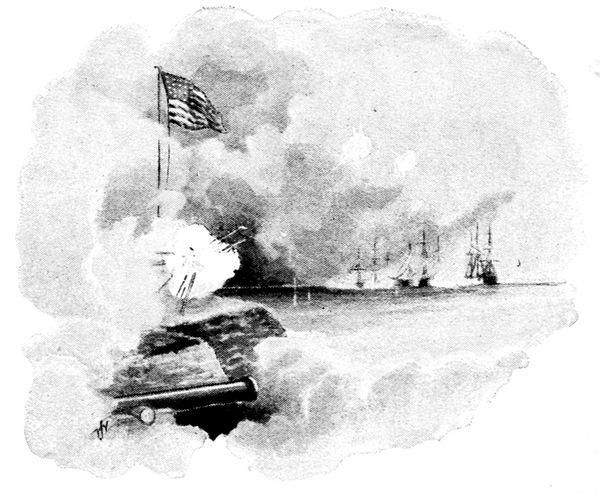
Gave proof through the night that our flag was still there."
AMERICAN WAR BALLADS AND LYRICS A COLLECTION OF THE SONGS AND BALLADS OF THE COLONIAL WARS, THE REVOLUTION, THE WAR OF 1812-15, THE WAR WITH MEXICO AND THE CIVIL WAR
EDITED BY
GEORGE CARY EGGLESTON
VOLUME I.

NEW YORK AND LONDON
G. P. PUTNAM'S SONS
The Knickerbocker Press
Copyright
G. P. Putnam's Sons
1889
The Knickerbocker Press, New York
Electrotyped and Printed by
G. P. Putnam's Sons

CONTENTS
| PAGE | |
|---|---|
| Acknowledgement | 1 |
| Preface and Introduction | 3 |
| The Colonial Wars | 11 |
| Lovewell's Fight | 13 |
| The Song of Braddock's Men | 19 |
| The Revolutionary War | 21 |
| Liberty Tree | 23 |
| Free America | 25 |
| Emancipation from British Dependence | 28 |
| Paul Revere's Ride | 32 |
| Warren's Address | 38 |
| Nathan Hale | 40 |
| The Ballad of Nathan Hale | 43 |
| The Battle of Trenton | 46 |
| The Fate of John Burgoyne | 48 |
| The Progress of Sir Jack Brag | 51 |
| War and Washington | 53 |
| Columbia | 57 |
| Taxation of America | 60 |
| The Battle of the Kegs | 72 |
| Carmen Bellicosum | 77 |
| The Yankee Man-of-War | 80 |
| Paul Jones' Victory | 83 |
| The Royal Adventurer | 87 |
| Eutaw Springs | 90 |
| An Ancient Prophecy | 92 |
| The Dance | 94 |
| Song of Marion's Men | 97 |
| Hail Columbia | 102 |
| The War of 1812-15 | 105 |
| Truxton's Victory | 107 |
| The "Constellation" and the "Insurgente" | 110 |
| The Wasp's Frolic | 113 |
| "Constitution" and "Guerrière" | 115 |
| The "United States" and "Macedonian" | 118 |
| The "United States" and "Macedonian" | 121 |
| Perry's Victory | 126 |
| Yankee Thunders | 128 |
| Ye Parliament of England | 131 |
| Comrades! Join the Flag of Glory | 135 |
| Our Navy | 136 |
| The Star-Spangled Banner | 138 |
| Sea and Land Victories | 141 |
| Old Ironsides | 144 |
| The Mexican War | 147 |
| Monterey | 149 |
| Buena Vista | 151 |
| The Bivouac of the Dead | 159 |
| The Civil War | 165 |
| Brother Jonathan's Lament for Sister Caroline | 167 |
| The Twelfth of April | 170 |
| Men of the North and West | 174 |
| Rhode Island to the South | 176 |
| Our Country's Call | 178 |
| A Cry to Arms | 181 |
| The Banner of the Stars | 184 |
| The Flag of the Constellation | 186 |
| The Stars and Stripes | 188 |
| The Bonnie Blue Flag | 189 |
| The Stripes and the Stars | 191 |
| Dixie | 193 |
| The Oath of Freedom | 197 |
| Civil War | 200 |
| The Massachusetts Line | 202 |
| Bethel | 204 |
| The Charge by the Ford | 209 |
| Manassas | 212 |
| Upon the Hill before Centreville | 214 |
ILLUSTRATIONS.
| PAGE | |
|---|---|
| The Star-Spangled Banner | Frontispiece |
| The Colonial Wars | 11 |
| Lovewell's Fight | 14 |
| The Song of Braddock's Men | 19 |
| The Revolutionary War | 21 |
| Paul Revere's Ride | 33 |
| The Ballad of Nathan Hale | 43 |
| The Battle of Trenton | 46 |
| The Fate of John Burgoyne | 48 |
| Carmen Bellicosum | 79 |
| The Yankee Man-of-War | 80 |
| Paul Jones' Victory | 83 |
| Song of Marion's Men | 97 |
| The War of 1812-15 | 105 |
| Truxton's Victory | 107 |
| "Constitution" and "Guerrière" | 115 |
| The Star-Spangled Banner | 139 |
| Old Ironsides | 145 |
| The Mexican War | 147 |
| Monterey | 149 |
| Buena Vista | 152 |
| The Civil War | 165 |
| The Twelfth of April | 171 |
| The Banner of the Stars | 184 |
| Civil War | 200 |
| The Massachusetts Line | 202 |
| Bethel | 204 |
Typogravures by W. Kurtz.

ACKNOWLEDGMENT.
The editor of these volumes makes grateful acknowledgment of the courtesy of Messrs. Houghton, Mifflin, & Co., Harper & Brothers, Ticknor & Co., and D. Lothrop & Co., in freely permitting him to make use of poems of which they own the copyright, and of their other good offices. He feels himself indebted also to the living authors of many poems here presented, for their readiness in consenting to the use of their writings, and for the care that many of them have taken to furnish him with correct versions of poems commonly printed in inaccurate forms. He is under special obligations in this regard to General Albert Pike, who has furnished a transcript, from his own copy of a rare, privately printed volume, of the stirring ballad "Buena Vista," for which a vain search had been made.
PREFACE AND INTRODUCTION.
In the preparation of these volumes there has been no attempt at completeness. The literature from which the materials are drawn is much too vast to be compressed into two little volumes like these. The aim has been simply to make the collection fairly representative in character, and to include in it those pieces relating to our several wars which best reflect the spirit of the times that produced them.
The work of selection in such a case must always be difficult and the result more or less unsatisfactory. There are many reasons for this, some of which no one who has not undertaken a task of this kind can fully appreciate. There is no fixed standard of judgment by which to make a certainly just comparative estimate of the quality of several poems, some of which must be taken and the others left. Merit, in the case of war poems, is the composite result of so many different things that no criticism can hope to make an entirely satisfactory qualitative analysis of such literature. The poetic quality of some pieces entitles them to editorial acceptance, quite irrespective of other considerations, while there are other pieces having very little poetic quality, or none at all, whose claim to consideration on other grounds is incontestable. Mr. Stedman's "Wanted—A Man," Mr. William Winter's exquisitely tender poem "After All," Miss Osgood's "Driving Home the Cows," and Mr. George Parsons Lathrop's "Keenan's Charge," may serve as examples of pieces which no editor with the least capacity of poetic appreciation would hesitate to include in such a collection on the ground of merit even if their character were somewhat at variance, as in this case it is not, with the scheme of the collection. On the other hand there are such things as "Three Hundred Thousand More," several of the rude songs of the war of 1812, and many other pieces, which make equally imperative claims to favor on grounds that have no relation to the question of poetic merit.
The song concerning the "Constitution and Guerrière," for example, is very nearly as destitute of poetic quality as metrical writing can be, and yet no editor of a collection like this would think of omitting a piece that had for so many years stirred the hearts of patriots and moved them to rejoice in the achievements of their country's heroes.
The complex nature of the considerations that must determine the choice of poems for inclusion is but one of several difficulties encountered in the execution of such a task as this. In any event, many things must be omitted which merit insertion, and the reader who misses a favorite piece is prompt to point to others which seem to him less worthy, and to ask why these were not made to give place to the one omitted. There are three answers to be made to the challenge of such a reader: first, that his judgment in the matter may be wrong; second, that the editor, being human, may have erred in his choice; and third, that in a collection intended to be broadly representative rather than complete, preference must sometimes be given to the less worthy piece which happens to reflect some phase of sentiment not otherwise presented, even at the cost of sacrificing the worthier one which illustrates aspects otherwise sufficiently shown.
So much by way of explanation, not of apology; for if a book be in need of apology, no apology can be sufficient for it.
In the matter of arrangement the poems naturally fall into five principal groups. Within the groups the chronology of the events referred to has been adopted as a general rule of arrangement, while for the most part poems that have no reference to particular events or epochs have been placed at the end of the groups to which they belong. No rule of arrangement, however, has been permitted to dominate other considerations where other considerations have seemed the more important.
In presenting the ballads and lyrics of the civil war, it has been thought best not to give those from the North and those from the South in separate groups. There are several objections to such an arrangement, of which it is perhaps sufficient to mention a single one, namely, that by the separation of poems relating to the same events or the same aspects of the struggle, much of their historical significance is lost, and the comparison which the reflective reader naturally wishes to make between the moods, impulses, aspirations, and points of view of the poets on opposite sides is rendered much more difficult and less satisfactory.
It would be a special pity, for example, not to place in juxtaposition Bryant's "Our Country's Call" and Timrod's "A Cry to Arms." An essay of no little value to the student of the inner springs of history might be written upon these two poems with their strange similarities and their still stranger contrasts. Indeed a critic of creative ability might almost reconstruct the history of the events which produced the war, and discover the characters and circumstances and, above all, the points of view of the people on either side of the contest, by a study of these two appeals, even if all other sources of information were lost. For this and other reasons it has been thought best to make but a single group of the poems of the civil war, bringing together all those that relate to the same or to like subjects, and indicating the origin of the southern pieces by printing the word "Southern" at the end of each.
In the South during the civil war, almost all the adult males, with some who were rather adolescent than adult, were under arms. As a consequence, the men who wrote the poetry of the Southern side were necessarily soldiers. But in less peculiar circumstances the men who write the poetry of war, the men who make the songs that soldiers love to sing, the men who irresistibly stir patriotism in the blood of youth, the men who embalm heroic deeds in thrilling verse, and touch all hearts to pity and all eyes to tears by the tender pathos of their chronicles of suffering, are not the men who do the fighting. It was not a soldier who wrote "The Charge of the Light Brigade," and it was the gentle master of Abbotsford that interpreted the daring deeds of knightly times in song and story. So in our civil war the most and the best of the poems, except as the matter was determined at the South by peculiar circumstances, were the work of men who were not themselves combatants. Cynical reflections have sometimes been indulged in on this score, but they are unjust and shallow, as cynical reflections are apt to be. The qualities that make one a poet are not those that make one a soldier. Sometimes the two characters are united in one person, but that is rare; and the man who has the gift to write the poetry of a war which involves human liberty as its issue, best serves the cause by writing it. His part is as important as that of the soldier who bears arms, and his influence upon the result is quite as great. The patriotism and the courage of the Greeks owed more to Homer than to the warriors whose deeds he chronicled, and Paul Revere did far less for his country by what was after all a commonplace horseback journey, than Longfellow long afterward did by telling the story of that ride in quite other than commonplace poetry.
Of the extent to which the war songs and ballads of a people influence the character and destiny of that people, much has been written, and the truth is not yet half told. Our present concern with this literature, however, has less regard to its influence than to its value as historical material. History records the events in a nation's life; poetry, and especially ballad poetry, reflects the character, the aspirations, the passions, and the purposes of a people; and viewed in this light a study of the war ballads and lyrics of our country must fill every reader's mind with hope and courage. Many of the poems presented in these little volumes are rude, some of them being scarcely better than doggerel, while much of the material is poetry of a very high order; but there are certain characteristics common to all the poems, and these are the characteristics that distinguish a virile race which encounters difficulty with stalwart courage and confronts danger with an unruffled mind. It is the poetry of strength and manly self-reliance. There is not a plaint of weakness anywhere in it. It is inspired from beginning to end by a high and unfaltering faith in the truth of the doctrines of human liberty that underlie our entire history and constitute the vital principle of our institutions.
The ruder poems are a trifle truculent now and then perhaps, but some little truculence may be allowed as a poetic license to the poet who sings of his countrymen's prowess in just wars. In preparing this little collection the editor has had occasion to read anew the entire body of American war poetry of the ballad and lyric class, and he ends the examination with a feeling of intense satisfaction in the knowledge that there is not an unmanly or a cowardly line in it and scarcely an ungenerous one.


THE COLONIAL WARS
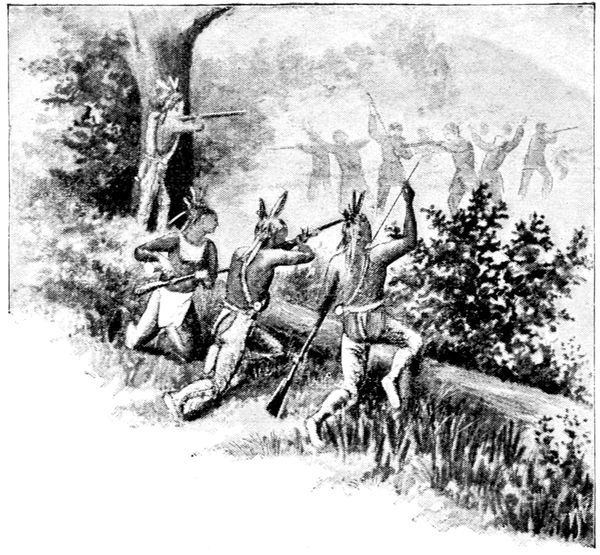
LOVEWELL'S FIGHT.
[This ballad, written in 1725, soon after the battle of May 8th, in that year, was said by a contemporary writer to be "the most beloved song in all New England," though "Chevy Chace" had been known there almost as well as in old England. The name of the author is lost to us, but his work has been preserved in Penhallow's "History of the Wars of New England with the Eastern Indians," 1726. The ballad is rude and destitute of poetic quality; but it has extraordinary interest as the earliest American war ballad known to us as having been dear to the hearts of the people who sang or recited it. It has interest, also, as a reflection of manners. The commendation bestowed upon the chaplain for scalping Indians as well as killing them is suggestive.—Editor.]
LOVEWELL'S FIGHT.
How valiantly he served his country and his king;
He and his valiant soldiers did range the woods full wide,
And hardships they endured to quell the Indian's pride.
They spied a rebel Indian soon after break of day;
He on a bank was walking, upon a neck of land,
Which leads into a pond as we're made to understand.
Until they met the Indian, who boldly stood his ground;
Then up speaks Captain Lovewell: "Take you good heed," says he,
"This rogue is to decoy us, I very plainly see.
In order to surround us upon this neck of land;
Therefore we'll march in order, and each man leave his pack;
That we may briskly fight them, when they make their attack."
As soon as they came nigh him, two guns he did let fly,
Which wounded Captain Lovewell, and likewise one man more,
But when this rogue was running, they laid him in his gore.
Where they had laid their packs down, but there they found them not.
For the Indians having spied them, when they them down did lay,
Did seize them for their plunder, and carry them away.
So that an English soldier did one of them espy,
And cried out, "Here's an Indian"! with that they started out,
As fiercely as old lions, and hideously did shout.
To show the rebel Indians they feared them not a straw:
So now the fight began, and as fiercely as could be,
The Indians ran up to them, but soon were forced to flee.
"Fight on, my valiant heroes! You see they fall like rain."
For as we are informed, the Indians were so thick
A man could scarcely fire a gun and not some of them hit.
But they could not accomplish it, because there was a pond,
To which our men retreated, and covered all the rear,
The rogues were forced to face them, although they skulked for fear.
Without being discovered, they could not get away;
Therefore our valiant English they travelled in a row,
And at a handsome distance, as they were wont to go.
And fiercely did continue until the setting sun;
Excepting that the Indians some hours before 't was night
Drew off into the bushes and ceased awhile to fight.
Shouting as in the morning, but yet not half so loud;
For as we are informed, so thick and fast they fell,
Scarce twenty of their number at night did get home well.
To see whether the rebels would have another fray;
But they no more returning, they made off towards their home,
And brought away their wounded as far as they could come.
And of the rebel Indians there were about fourscore,
And sixteen of our English did safely home return,
The rest were killed and wounded, for which we all must mourn.
They killed Lieutenant Robbins, and wounded good young Frye,
Who was our English chaplain; he many Indians slew,
And some of them he scalped when bullets round him flew.
Endeavoring to save a man, a sacrifice he fell:
But yet our valiant Englishmen in fight were ne'er dismayed,
But still they kept their motion, and Wymans captain made.
Then set his men in order, and brought off the retreat;
And braving many dangers and hardships in the way,
They safe arrived at Dunstable, the thirteenth day of May.
THE SONG OF BRADDOCK'S MEN.
Fort DuQuesne Expedition, 1755.
Hark how the drums do roll it along!
To horse, to horse, with valiant good cheer;
We'll meet our proud foe before it is long.
Let not your courage fail you;
Be valiant, stout, and bold;
And it will soon avail you,
My loyal hearts of gold.
Huzzah, my valiant countrymen!—again I say huzzah!
'T is nobly done,—the day's our own—huzzah, huzzah!
The battle is begun as you may fairly see.
Stand firm, be bold, and it will soon be over;
We'll soon gain the field from our proud enemy.
A squadron now appears, my boys;
If that they do but stand!
Boys, never fear, be sure you mind
The word of command!
Huzzah, my valiant countrymen!—again I say huzzah!
'T is nobly done,—the day's our own—huzzah, huzzah!
See how they are scattered all over the plain!
Now, now—now, now, our country will adore us!
In peace and in triumph, boys, when we return again!
Then laurels shall our glory crown
For all our actions told:
The hills shall echo all around,
My loyal hearts of gold.
Huzzah, my valiant countrymen!—again I say huzzah!
'T is nobly done,—the day's our own—huzzah, huzzah!

THE REVOLUTIONARY WAR
LIBERTY TREE.
By THOMAS PAINE.
(Published in the Pennsylvania Magazine, 1775.)
The Goddess of Liberty came;
Ten thousand celestials directed the way,
And hither conducted the dame.
A fair budding branch from the gardens above,
Where millions with millions agree,
She brought in her hand as a pledge of her love,
And the plant she named Liberty Tree.
Like a native it flourished and bore;
The fame of its fruit drew the nations around,
To seek out this peaceable shore.
Unmindful of names or distinction they came,
For freemen like brothers agree;
With one spirit endued, they one friendship pursued,
And their temple was Liberty Tree.
Their bread in contentment they ate,
Unvexed with the troubles of silver and gold,
The cares of the grand and the great.
With timber and tar they Old England supplied,
And supported her power on the sea;
Her battles they fought, without getting a groat,
For the honor of Liberty Tree.
How all the tyrannical powers,
Kings, Commons, and Lords, are uniting amain,
To cut down this guardian of ours;
From the east to the west blow the trumpet to arms,
Through the land let the sound of it flee,
Let the far and the near, all unite with a cheer,
In defence of our Liberty Tree.

FREE AMERICA.
[This poem first appeared in the newspapers in 1774, and was ascribed to Joseph Warren.—Editor.]
And earth's proud mistress, Rome;
Where now are all their glories?
We scarce can find a tomb.
Then guard your rights, Americans,
Nor stoop to lawless sway;
Oppose, oppose, oppose, oppose,
For North America.
And lo, the desert smiled!
A paradise of pleasure
Was opened in the wild!
Your harvest, bold Americans,
No power shall snatch away!
Huzza, huzza, huzza, huzza,
For free America.
Beneath this western sky,
We formed a new dominion,
A land of liberty:
The world shall own we're masters here;
Then hasten on the day:
Huzza, huzza, huzza, huzza,
For free America.
And numerous lords before;
To Picts, to Danes, to Normans,
And many masters more:
But we can boast, Americans,
We've never fallen a prey;
Huzza, huzza, huzza, huzza,
For free America.
And through its vast domain
May hosts of heroes cluster,
Who scorn to wear a chain:
And blast the venal sycophant
That dares our rights betray;
Huzza, huzza, huzza, huzza,
For free America.
And swear with proud disdain,
The wretch that would ensnare you,
Shall lay his snares in vain:
Should Europe empty all her force,
We'll meet her in array,
And fight and shout, and shout and fight
For North America.
The masters of the main,
Our fleets shall speak in thunder
To England, France, and Spain;
And the nations over the ocean spread
Shall tremble and obey
The sons, the sons, the sons, the sons,
Of brave America.


EMANCIPATION FROM BRITISH DEPENDENCE.
By PHILIP FRENEAU.
[The following note explanatory of references to proper names, etc., in this poem is copied from Duyckinck's edition of Freneau.—Editor.]
Note.—Sir James Wallace, Admiral Graves, and Captain Montague, were British naval officers, employed on our coast. The Viper and Rose were vessels in the service. Lord Dunmore, the last royal governor of Virginia, had recently, in April, 1775, removed the public stores from Williamsburg, and, in conjunction with a party of adherents, supported by the naval force on the station, was making war on the province. William Tryon, the last Royal governor of New York, informed of a resolution of the Continental Congress: "That it be recommended to the several provincial assemblies in conventions and councils, or committees of safety, to arrest and secure every person in their respective colonies whose going at large may, in their opinion, endanger the safety of the colony or the liberties of America," discerning the signs of the times, took refuge on board the Halifax packet in the harbor, and left the city in the middle of October, 1775.
EMANCIPATION FROM BRITISH DEPENDENCE.
By PHILIP FRENEAU.
Not only from British dependence, but also,
Whose schemes disappointed have made them look sour;
From the lords of the council, who fight against freedom
Who still follow on where delusion shall lead 'em.
And fools that are waiting for further submissions;
From a nation whose manners are rough and abrupt,
From scoundrels and rascals whom gold can corrupt.
To murder and plunder, but never to swing;
From Wallace, and Graves, and Vipers, and Roses,
Whom, if Heaven pleases, we'll give bloody noses.
Who plunder Virginians at Williamsburg city,
From hot-headed Montague, mighty to swear,
The little fat man with his pretty white hair.
From slaves that would die for a smile from the throne,
From assemblies that vote against Congress' proceedings,
(Who now see the fruit of their stupid misleadings).
And swelled with importance, disdains the committee;
(But since he is pleased to proclaim us his foes,
What the devil care we where the devil he goes.)
From our noble King Log, with his toothful of brains,
Who dreams, and is certain (when taking a nap)
He has conquered our lands as they lay on his map.
I send up to Heaven my wishes and prayers
That we, disunited, may freemen be still,
And Britain go on—to be damn'd if she will.
1775
PAUL REVERE'S RIDE.
BY HENRY WADSWORTH LONGFELLOW.
Of the midnight ride of Paul Revere,
On the eighteenth of April, in Seventy-five;
Hardly a man is now alive
Who remembers that famous day and year.
By land or sea from the town to-night,
Hang a lantern aloft in the belfry arch
Of the North Church tower as a signal light,—
One, if by land, and two, if by sea;
And I on the opposite shore will be,
Ready to ride and spread the alarm
Through every Middlesex village and farm,
For the country folk to be up and to arm."
Silently row'd to the Charlestown shore,
Just as the moon rose over the bay,
Where swinging wide at her moorings lay
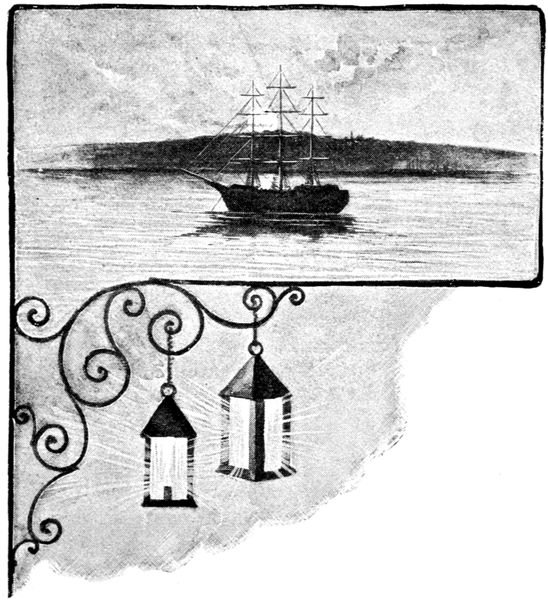
A phantom ship, with each mast and spar
Across the moon like a prison bar,
And a huge black hulk, that was magnified
By its own reflection in the tide.
Wanders and watches with eager ears,
Till in the silence around him he hears
The muster of men at the barrack-door,
The sound of arms, and the tramp of feet,
And the measured tread of the grenadiers
Marching down to their boats on the shore.
By the wooden stairs, with stealthy tread,
To the belfry-chamber overhead,
And startled the pigeons from their perch
On the sombre rafters, that round him made
Masses and moving shapes of shade,—
By the trembling ladder, steep and tall,
To the highest window in the wall,
Where he paused to listen and look down
A moment on the roofs of the town,
And the moonlight flowing over all.
In their night-encampment on the hill,
Wrapp'd in silence so deep and still
That he could hear, like a sentinel's tread,
The watchful night-wind, as it went
Creeping along from tent to tent,
And seeming to whisper, "All is well!"
A moment only he feels the spell
Of the place and the hour, and the secret dread
Of the lonely belfry and the dead;
For suddenly all his thoughts are bent
On a shadowy something far away,
Where the river widens to meet the bay,—
A line of black that bends and floats
On the rising tide like a bridge of boats.
Booted and spurr'd, with a heavy stride
On the opposite shore walk'd Paul Revere.
Now he patted his horse's side,
Now gazed at the landscape far and near,
Then, impetuous, stamp'd the earth,
And turn'd and tighten'd his saddle-girth;
But mostly he watch'd with eager search
The belfry-tower of the Old North Church,
As it rose above the graves on the hill,
Lonely and spectral and sombre and still.
And lo! as he looks, on the belfry's height
A glimmer, and then a gleam of light!
He springs to the saddle, the bridle he turns,
But lingers and gazes, till full on his sight
A second lamp in the belfry burns.
A shape in the moonlight, a bulk in the dark,
And beneath, from the pebbles, in passing a spark
Struck out by a steed flying fearless and fleet;
That was all; and yet, through the gloom and the light
The fate of a nation was riding that night;
And the spark struck out by that steed in his flight
Kindled the land into flame with its heat.
And beneath him, tranquil and broad and deep,
Is the Mystic, meeting the ocean tides,
And under the alders that skirt its edge,
Now soft on the sand, now loud on the ledge,
Is heard the tramp of his steed as he rides.
It was twelve by the village clock
When he crossed the bridge into Medford town.
He heard the crowing of the cock,
And the barking of the farmer's dog,
And felt the damp of the river's fog,
That rises after the sun goes down.
When he galloped into Lexington.
He saw the gilded weathercock
Swim in the moonlight as he pass'd,
And the meeting-house windows, blank and bare,
Gaze at him with spectral glare,
As if they already stood aghast
At the bloody work they would look upon.
When he came to the bridge in Concord town,
He heard the bleating of the flock,
And the twitter of birds among the trees,
And felt the breath of the morning breeze
Blowing over the meadows brown.
And one was safe and asleep in his bed
Who at the bridge would be first to fall.
Who that day would be lying dead,
Pierced by a British musket-ball.
How the British regulars fired and fled,—
How the farmers gave them ball for ball,
From behind each fence and farmyard wall,
Chasing the red-coats down the lane,
Then crossing the fields to emerge again
Under the trees at the turn of the road,
And only pausing to fire and load.
And so through the night went his cry of alarm
To every Middlesex village and farm,—
A cry of defiance, and not of fear,
A voice in the darkness, a knock at the door,
And a word that shall echo for evermore!
For, borne on the night-wind of the past,
Through all our history to the last,
In the hour of darkness, and peril, and need,
The people will waken and listen to hear
The hurrying hoof-beats of that steed,
And the midnight message of Paul Revere.
WARREN'S ADDRESS.
By JOHN PIERPONT.
Will ye give it up to slaves?
Will ye look for greener graves?
Hope ye mercy still?
What's the mercy despots feel?
Hear it in that battle peal!
Read it on yon bristling steel!
Ask it,—ye who will.
Will ye to your homes retire?
Look behind you!—they're afire!
And, before you, see
Who have done it! From the vale
On they come!—and will ye quail?
Leaden rain and iron hail
Let their welcome be!
Die we may,—and die we must:
But, oh where can dust to dust
Be consign'd so well,
As where Heaven its dews shall shed
On the martyr'd patriot's bed,
And the rocks shall raise their head
Of his deeds to tell?

NATHAN HALE.
By FRANCIS M. FINCH.
A soldier marches by;
There is color in his cheek,
There is courage in his eye,
Yet to drum-beat and heart-beat
In a moment he must die.
He seeks the Briton's camp;
He hears the rustling flag,
And the armèd sentry's tramp;
And the starlight and moonlight
His silent wanderings lamp.
He scans the tented line;
And he counts the battery guns,
By the gaunt and shadowy pine;
And his slow tread and still tread
Gives no warning sign.
It meets his eager glance;
And it sparkles 'neath the stars,
Like the glimmer of a lance—
A dark wave, a plumed wave,
On an emerald expanse.
And terror in the sound!
For the sentry, falcon-eyed,
In the camp a spy hath found;
With a sharp clang, a steel clang,
The patriot is bound.
He listens to his doom;
In his look there is no fear,
Nor a shadow-trace of gloom;
But with calm brow and steady brow
He robes him for the tomb.
He kneels upon the sod;
And the brutal guards withhold
E'en the solemn word of God!
In the long night, the still night,
He walks where Christ hath trod.
He dies upon the tree;
And he mourns that he can lose
But one life for Liberty;
And in the blue morn, the sunny morn,
His spent wings are free.
They burn, lest friendly eye
Should read how proud and calm
A patriot could die,
With his last words, his dying words,
A soldier's battle-cry.
From monument and urn,
The sad of earth, the glad of heaven,
His tragic fate shall learn;
And on Fame-leaf and Angel-leaf
The name of Hale shall burn!
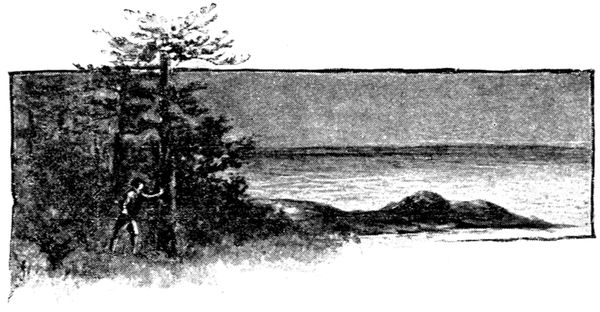
THE BALLAD OF NATHAN HALE.
(Moore's "Songs and Ballads of the American Revolution." 1856.)
A-saying "oh! hu-ush!" a-saying "oh! hu-ush!"
As stilly stole by a bold legion of horse,
For Hale in the bush, for Hale in the bush.
In a nest by the road; in a nest by the road.
"For the tyrants are near, and with them appear
What bodes us no good, what bodes us no good."
In a cot by the brook; in a cot by the brook.
With mother and sister and memories dear,
He so gayly forsook; he so gayly forsook.
The tattoo had beat; the tattoo had beat.
The noble one sprang from his dark lurking-place,
To make his retreat; to make his retreat.
As he passed through the wood, as he passed through the wood;
And silently gained his rude launch on the shore,
As she played with the flood; as she played with the flood.
Had a murderous will; had a murderous will.
They took him and bore him afar from the shore,
To a hut on the hill; to a hut on the hill.
In that little stone cell; in that little stone cell.
But he trusted in love, from his Father above,
In his heart, all was well; in his heart, all was well.
Sat moaning hard by; sat moaning hard by:
"The tyrant's proud minions most gladly rejoice,
For he soon must die; for he soon must die."
The cruel general! the cruel general!—
His errand from camp, of the ends to be gained,
And said that was all; and said that was all.
Down the hill's grassy side; down the hill's grassy side.
'T was there the base hirelings, in royal array,
His cause did deride; his cause did deride.
For him to repent; for him to repent.
He prayed for his mother, he asked not another,
To Heaven he went; to Heaven he went.
As he trod the last stage; as he trod the last stage.
And Britons will shudder at gallant Hale's blood
As his words do presage, as his words do presage.
Go frighten the slave; go frighten the slave;
Tell tyrants, to you their allegiance they owe.
No fears for the brave; no fears for the brave."
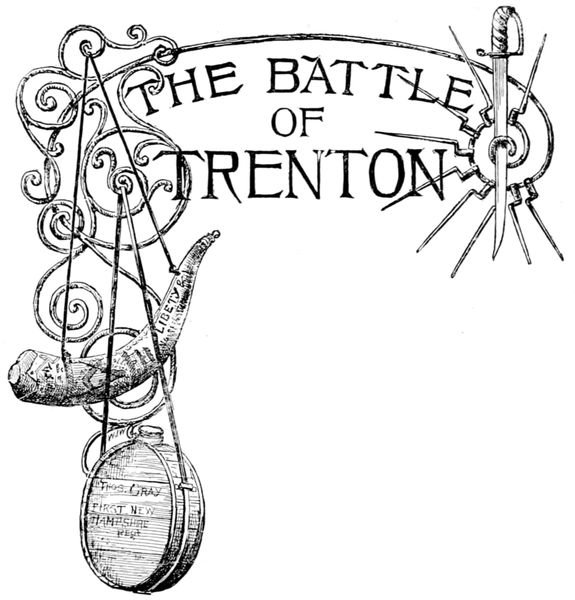
THE BATTLE OF TRENTON
(From Griswold's "Curiosities of American literature." 1843.)
Our ragged troops, with bayonets fixed,
For Trenton marched away.
The Delaware see! the boats below!
The light obscured by hail and snow!
But no signs of dismay.
That dared invade fair freedom's land,
And quarter in that place.
Great Washington he led us on,
Whose streaming flag, in storm or sun;
Had never known disgrace.
Each soldier panting for the fight,
Though quite benumbed with frost.
Greene on the left at six began,
The right was led by Sullivan
Who ne'er a moment lost.
That rebels risen from the dead
Were marching into town.
Some scampered here, some scampered there,
And some for action did prepare;
But soon their arms laid down.
With all their colors, guns, and tents,
Were trophies of the day.
The frolic o'er, the bright canteen,
In centre, front, and rear was seen
Driving fatigue away.
Let's sing deliverance from the hands
Of arbitrary sway.
And as our life is but a span,
Let's touch the tankard while we can.
In memory of that day.
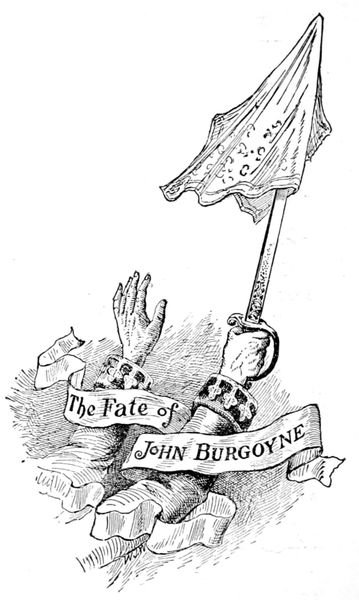
The Fate of John Burgoyne
(From Griswold's "Curiosities of American Literature.")
Was going to his duty,
Through all the crowd he smiled and bowed
To every blooming beauty.
In Portugal and Flanders,
And all the town thought he'd be crowned
The first of Alexanders.
To kiss great George's hand, sirs;
Then to harangue on state affairs
Before he left the land, sirs.
To hear his grand oration;
And "all the peers," with loudest cheers,
Proclaimed him to the nation.
Next to Ticonderoga,
And quitting those away he goes
Straightway to Saratoga.
To gain his wished-for station,
While far and wide his minions hied
To spread his "Proclamation."
Of "pardon on submission;
But savage bands should waste the lands
Of all in opposition."
This boasted son of Britain,
When mounting his triumphal car,
With sudden fear was smitten.
His hostile bands confounded,
And when they'd fain have turned their back
They found themselves surrounded!
Their chief, humane and tender,
To save the rest soon thought it best
His forces to surrender.
Knew what the fates portended;
And Arnold and heroic Gates
His conduct have defended.
With honor be rewarded,
And be the fate of all her foes
The same as here recorded.
THE PROGRESS OF SIR JACK BRAG.
(McCarty's National Song-Book.)
Tullalo, tullalo, tullalo, boys!
These rebels their course very quickly will rue,
And fly as the leaves 'fore the autumn tempest flew,
When him who is your leader they know, boys!
They with, men have now to deal,
And we soon will make them feel—
Tullalo, tullalo, tullalo, boys!
That a loyal Briton's arm, and a loyal Briton's steel,
Can put to flight a rebel, as quick as other foe, boys!
Tullalo, tullalo, tullalo,
Tullalo, tullalo, tullalo-o-o-o, boys!
Tullalo, tullalo, tullalo, boys!
He began to see the grubs, in the branches of his fame,
He began to have the trembles, lest a flash should be the flame
For which he had agreed his perfume to forego, boys!
No lack of skill, but fates,
Shall make us yield to Gates,
Tullalo, tullalo, tullalo, boys!
The devils may have leagued, as you know, with the States,
But we never will be beat by any mortal foe, boys!
Tullalo, tullalo, tullalo,
Tullalo, tullalo, tullalo-o-o-o, boys!

WAR AND WASHINGTON.
(As sung during the Revolution.)
By JONATHAN MITCHELL SEWARD.
By land your conquering legions, your matchless strength at sea,
Since we, your braver sons incensed, our swords have girded on,
Huzza, huzza, huzza, huzza, for war and Washington.
Loud bellowing Tea and Treason, and George was all on flame,
Yet sacrilegious as it seems, we rebels still live on,
And laugh at all their empty puffs, huzza for Washington!
You have for thirty pieces betrayed your country's blood.
Like Esop's greedy cur you'll gain a shadow for your bone,
Yet find us fearful shades indeed inspired by Washington.
The blundering schemes of Britain their folly, pride, and zeal,
Like lions how ye growl and threat! mere asses have you shown,
And ye shall share an ass's fate, and drudge for Washington!
Our children rout your armies, our boats destroy your fleet,
And to complete the dire disgrace, cooped up within a town,
You live the scorn of all our host, the slaves of Washington!
Through Europe, Afric, India? whose navy ruled a world?
The lustre of your former deeds, whole ages of renown,
Lost in a moment, or transferred to us and Washington!
To rend your bands asunder, or cast away your cords,
'Tis heaven-born freedom fires us all, and strengthens each brave son,
From him who humbly guides the plough, to god-like Washington.
Your armies should be doubled, in numbers, force, and fire.
Then might the glorious conflict prove which best deserved the boon,
America or Albion, a George or Washington!
To view the stern contention, the gods desert their skies;
And Wolfe, 'midst hosts of heroes, superior bending down,
Cry out with eager transport, God save great Washington!
And madly arm half Europe, yet still we would defy
Turk, Hessian, Jew, and Infidel, or all those powers in one,
While Adams guards our senate, our camp great Washington!
To swords we'll beat our ploughshares, our pruning-hooks to spears,
And rush, all desperate, on our foe, nor breathe till battle won,
Then shout, and shout America! and conquering Washington!
While every warlike nation would court alliance here;
And George, his minions trembling round, dismounting from his throne
Pay homage to America and glorious Washington!

COLUMBIA.
By TIMOTHY DWIGHT.
(From Kettell's "Specimens," 1829. Written during the author's service as an army chaplain, 1777-78.)
The queen of the world, and the child of the skies;
Thy genius commands thee; with rapture behold,
While ages on ages thy splendor unfold,
Thy reign is the last, and the noblest of time,
Most fruitful thy soil most inviting thy clime;
Let the crimes of the east ne'er encrimson thy name,
Be freedom, and science, and virtue thy fame.
Whelm nations in blood, and wrap cities in fire;
Thy heroes the rights of mankind shall defend,
And triumph pursue them, and glory attend,
A world is thy realm: for a world be thy laws,
Enlarged as thine empire, and just as thy cause;
On Freedom's broad basis, that empire shall rise,
Extend with the main, and dissolve with the skies.
And the east see the morn hide the beams of her star.
New bards, and new sages, unrivalled shall soar
To fame unextinguished, when time is no more;
To thee, the last refuge of virtue designed,
Shall fly from all nations the best of mankind;
Here, grateful to heaven, with transport shall bring
Their incense, more fragrant than odors of spring.
And genius and beauty in harmony blend;
The graces of form shall awake pure desire,
And the charms of the soul ever cherish the fire;
Their sweetness unmingled, their manners refined,
And virtue's bright image, instamped on the mind,
With peace and soft rapture shall teach life to glow,
And light up a smile in the aspect of woe.
The nations admire and the ocean obey;
Each shore to thy glory its tribute unfold,
And the east and the south yield their spices and gold.
As the day-spring unbounded, thy splendor shall flow,
And earth's little kingdoms before thee shall bow;
While the ensigns of union, in triumph unfurled,
Hush the tumult of war and give peace to the world.
From war's dread confusion I pensively strayed,
The gloom from the face of fair heaven retired;
The winds ceased to murmur; the thunders expired;
Perfumes as of Eden flowed sweetly along,
And a voice as of angels, enchantingly sung:
"Columbia, Columbia, to glory arise,
"The queen of the world, and the child of the skies."

TAXATION OF AMERICA.
By PETER ST. JOHN, of Norwalk, Conn.
[In Moore's "Songs and Ballads of the Revolution," this poem bears date as of 1765, but the references in it to Burgoyne's surrender, to Brandywine, etc., indicate a much later date. It is possible that a part of the poem was written and published about 1765, and that additions making reference to revolutionary incidents were made afterward. But, internal evidence renders even this assumption improbable, and suggests that the date Moore gives is the result of some mistake.—Editor.]
Americans give ear;
Of Britain's fading glory
You presently shall hear;
I'll give a true relation,
Attend to what I say
Concerning the taxation
Of North America.
Who glory in their shame,
The project they have hit on
They joyfully proclaim;
'Tis what they're striving after
Our right to take away,
And rob us of our charter
In North America.
Who rule in Parliament,
Who ever have been seeking
Some mischief to invent;
'Twas North, and Bute his father,
The horrid plan did lay
A mighty tax to gather
In North America.
Of the infernal pit,
To find among their legions
One who excelled in wit;
To ask of him assistance,
Or tell them how they may
Subdue without resistance
This North America.
Who rules the burning lake,
Where his chief navigator,
Resolved a voyage to take;
For the Britannic ocean
He launches far away,
To land he had no notion
In North America.
It was his soul's intent
Great George's throne to sit on
And rule the Parliament;
His comrades were pursuing
A diabolic way,
For to complete the ruin
Of North America.
To bring his schemes about,
At length the gloomy project
He artfully found out;
The plan was long indulgèd
In a clandestine way,
But lately was divulgèd
In North America.
Addressed the British court,
All three were undersigners
Of this obscure report—
There is a pleasant landscape
That lieth far away
Beyond the wide Atlantic,
In North America.
Who sojourn in that land,
Their churches all with steeples
Most delicately stand:
Their houses like the gilly,
Are painted red and gay:
They flourish like the lily
In North America.
Continually doth flow,
The want of food or money
They seldom ever know:
They heap up golden treasure,
They have no debts to pay,
They spend their time in pleasure
In North America.
Most frequently they dine,
With gold and silver dishes
Their tables always shine.
They crown their feasts with butter,
They eat, and rise to play;
In silks their ladies flutter,
In North America.
They do themselves adorn,
The rubies deck their faces,
Refulgent as the morn:
Wine sparkles in their glasses,
They spend each happy day
In merriment and dances
In North America.
When we address your throne;
O King, this wealthy country
And subjects are your own,
And you, their rightful sovereign
They truly must obey,
You have a right to govern
This North America.
Of what we now subscribe:
Is it not just and equal
To tax this wealthy tribe?
The question being askèd,
His majesty did say,
My subjects shall be taxèd
In North America.
My publicans shall go,
The tenth of all their current
They surely shall bestow;
If they indulge rebellion,
Or from my precepts stray,
I'll send my war battalion
To North America.
By water and by land,
My light dragoons and horses
Shall go at my command;
I'll burn both town and city,
With smoke becloud the day,
I'll show no human pity
For North America.
You need not fear of ill—
There's Hutchinson and Rogers,
Their functions will fulfill—
They tell such ample stories,
Believe them sure we may,
One half of them are tories
In North America.
To waft you o'er the flood,
And in my cause be steady,
Which is supremely good.
Go ravage, steal, and plunder,
And you shall have the prey;
They quickly will knock under
In North America.
I never will revoke,
Although they are neglected,
My fury to provoke.
I will forbear to flatter,
I'll rule the mighty sway,
I'll take away the charter
From North America.
You'll by experience find
The laws you have enacted
Are of the blackest kind.
I'll make a short digression,
And tell you by the way,
We fear not your oppression
In North America.
While in their native land;
By tyrants were oppressèd
As we do understand;
For freedom and religion
They were resolved to stray,
And trace the desert regions
Of North America.
While on the roaring tide,
Kind fortune their director,
And providence their guide.
If I am not mistaken,
About the first of May,
This voyage was undertaken
For North America.
This country to explore,
They landed in November
On Plymouth's desert shore.
The savages were nettled,
With fear they fled away,
So peaceably they settled
In North America.
For liberty we'll fight,
The claim to independence
We challenge as our right;
'T is what kind Heaven gave us,
Who can take it away?
O Heaven, sure it will save us
In North America.
O George! we do not fear
The rattling of your thunder,
Nor lightning of your spear;
Though rebels you declare us,
We're strangers to dismay;
Therefore you cannot scare us
In North America.
We never will consent,
Although your troops are landed
Upon our continent;
We'll take our swords and muskets,
And march in dread array,
And drive the British red-coats
From North America.
Who fears not sword or gun,
The second Alexander,
His name is Washington.
His men are all collected,
And ready for the fray,
To fight they are directed
For North America.
To manage in the field,
A gallant train of footmen,
Who'd rather die than yield;
A stately troop of horsemen
Trained in a martial way,
For to augment our forces
In North America.
All in a dirty cause,
A cruel war have wagèd
Repugnant to all laws.
Go tell the savage nations
You're crueler than they,
To fight your own relations
In North America.
And twice ten millions more;
Our riches you intended
Should pay the mighty score.
Who now will stand your sponsor,
Your charges to defray?
For sure you cannot conquer
This North America.
If you'll attend awhile;
We've forced your bold Sir Peter
From Sullivan's fair isle.
At Monmouth, too, we gainèd
The honors of the day—
The victory we obtainèd
For North America.
Hard by the Brandywine;
We laid him fast in fetters
Whose name was John Burgoyne;
We made your Howe to tremble
With terror and dismay;
True heroes we resemble,
In North America.
That black infernal name
In which Great Britain glories,
Forever to her shame;
We'll send each foul revolter
To smutty Africa,
Or noose him in a halter
In North America.
Who handle sword and gun,
To Greene, and Gates, and Putnam,
And conquering Washington;
Their names be wrote in letters
Which never will decay,
While sun and moon do glitter
On North America.
In Holland, France, and Spain,
Who man their ships and galleys,
Our freedom to maintain;
May they subdue the rangers
Of proud Britannia,
And drive them from their anchors
In North America.
Of these United States,
Who glory in the conquests
Of Washington and Gates;
To all, both land and seamen,
Who glory in the day
When we shall all be freemen
In North America.
That rules with gentle hand,
To trade and navigation
By water and by land.
May all with one opinion
Our wholesome laws obey,
Throughout this vast dominion
Of North America.

THE BATTLE OF THE KEGS.
By FRANCIS HOPKINSON.
(From "The Miscellaneous Essays and Occasional Writings," 1792.)
[This ballad was occasioned by a real incident. Certain machines in the form of kegs, charged with gunpowder, were sent down the river to annoy the British shipping then at Philadelphia. The danger of these machines being discovered, the British manned the wharfs and shipping, and discharged their small-arms and cannons at every thing they saw floating in the river during the ebb tide.—Author's Note.]
Trill forth harmonious ditty,
Strange things I'll tell which late befell
In Philadelphia city.
Just when the sun was rising,
A soldier stood on a log of wood,
And saw a thing surprising.
The truth can't be denied, sir,
He spied a score of kegs or more
Come floating down the tide, sir.
This strange appearance viewing,
First damned his eyes, in great surprise,
Then said: "Some mischief's brewing.
Packed up like pickled herring;
And they're come down to attack the town,
In this new way of ferrying."
And scared almost to death, sir,
Wore out their shoes, to spread the news,
And ran till out of breath, sir.
Most frantic scenes were acted;
And some ran here, and others there,
Like men almost distracted.
But said the earth had quakèd;
And girls and boys, with hideous noise,
Ran through the streets half nakèd.
Lay all this time a snoring,
Nor dreamed of harm as he lay warm,
*****
Awaked by such a clatter;
He rubs both eyes, and boldly cries:
For God's sake, what's the matter?
Sir Erskine at command, sir,
Upon one foot he had one boot,
And th' other in his hand, sir.
"The rebels—more's the pity,
Without a boat are afloat,
And ranged before the city.
With Satan for their guide, sir,
Packed up in bags, or wooden kegs,
Come driving down the tide, sir.
These kegs must all be routed
Or surely we despised shall be,
And British courage doubted."
All ranged in dread array, sir,
With stomach stout to see it out,
And make a bloody day, sir.
The small arms make a rattle;
Since wars began I'm sure no man
E'er saw so strange a battle.
With rebel trees surrounded,
The distant woods, the hills and floods,
With rebel echoes sounded.
Attacked from every quarter;
Why sure, thought they, the devil's to pay,
'Mongst folks above the water.
Of rebel staves and hoops, sir,
Could not oppose their powerful foes,
The conquering British troops, sir.
Displayed amazing courage;
And when the sun was fairly down,
Retired to sup their porridge.
Or more upon my word, sir,
It is most true would be too few,
Their valor to record, sir.
Against these wicked kegs, sir,
That years to come, if they get home,
They'll make their boasts and brags, sir.
CARMEN BELLICOSUM.
By GUY HUMPHREY McMASTER.
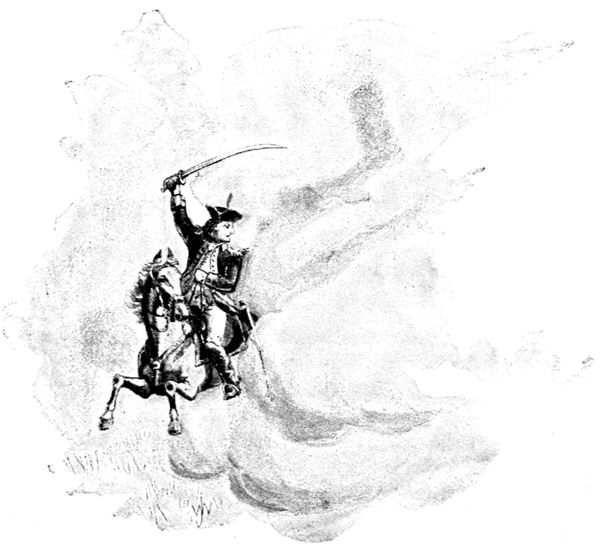
Stood the old Continentals,
Yielding not,
When the grenadiers were lunging,
And like hail fell the plunging
Cannon shot;
When the files
Of the isles
From the smoky night-encampment bore the banner of the rampant
Unicorn,
And grummer, grummer, grummer rolled the roll of the drummer,
Through the morn!
And with guns horizontal
Stood our sires;
And the balls whistled deadly,
And in streams flashing redly
Blazed the fires;
As the roar
On the shore,
Swept the strong battle breakers o'er the green sodded acres
Of the plain;
And louder, louder, louder cracked the black gunpowder,
Cracking amain!
Worked the red Saint George's
Cannoneers;
And the "villainous saltpetre"
Rung a fierce, discordant metre
Round their ears;
As the swift
Storm drift,
With hot, sweeping anger, came the horse guard's clangor
On our flanks.
Then higher, higher, higher burned the old-fashioned fire
Through the ranks!
Galloped through the white, infernal
Powder cloud;
And his broad sword was swinging,
And his brazen throat was ringing
Trumpet loud.
Then the blue
Bullets flew
And the trooper jackets redden at the touch of the leaden
Rifle breath;
And rounder, rounder, rounder roared the iron six-pounder
Hurling death!
THE YANKEE MAN-OF-WAR.
[Descriptive of the daring bravery of Captain John Paul Jones, in his cruise in the Irish Channel in 1778.]
(From Admiral Luce's "Naval Songs.")
And the whistling wind from the west-nor'-west blew through the pitch-pine spars,—
With her starboard tacks a-board, my boys, she hung upon the gale,
On an autumn night we raised the light on the old head of Kinsale.
As gaily over the sparkling deep our good ship bowled along;
With the foaming seas beneath her bow the fiery waves she spread,
And bending low her bosom of snow, she buried her lee cat-head.
And under the press of her pond'ring jib, the boom bent like a hoop!
And the groaning water-ways told the strain that held her stout main-tack,
But he only laughed as he glanced aloft at a white and silv'ry track.
And the mist hung heavy upon the land from Featherstone to Dunmore,
And that sterling light in Tusker Rock where the old bell tolls each hour,
And the beacon light that shone so bright was quench'd on Waterford Tower.
Her spanker and her standing jib—the courses being fast;
"Now, lay aloft! my heroes bold, let not a moment pass!"
And royals and top-gallant sails were quickly on each mast.
'Tis time our good ship hauled her wind a-breast the old Saltee's,
For by her ponderous press of sail and by her consorts four
We saw our morning visitor was a British man-of-war.
"Haul snug your flowing courses! lay your topsail to the mast!"
Those Englishmen gave three loud hurrahs from the deck of their covered ark,
And we answered back by a solid broadside from the decks of our patriot bark.
And the swiftest keel that was ever launched shot ahead of the British fleet,
And a-midst a thundering shower of shot with stun'-sails hoisting away,
Down the North Channel Paul Jones did steer just at the break of day.
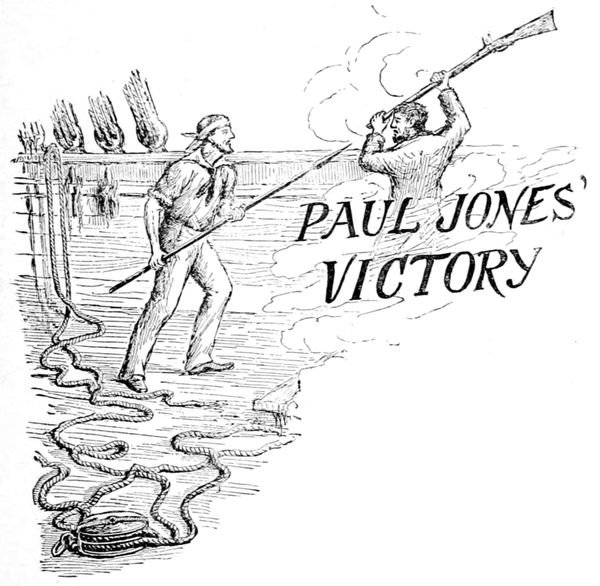
PAUL JONES' VICTORY
(Battle between the Bon Homme Richard and the Serapis, September 23, 1779.)
With guns mounting forty, The Richard by name,
Sailed to cruise in the channels of old England,
With a valiant commander, Paul Jones was his name.
Hurrah! Hurrah! Our country forever, Hurrah!
A large forty-four, and a twenty likewise;
Well manned with bold seamen, well laid in with stores,
In consort to drive us from old England's shores.
Hurrah! Hurrah! Our country forever, Hurrah!
With a loud speaking trumpet, "Whence came you?" he cried:
"Return me an answer—I hailed you before,
Or if you do not, a broadside I'll pour." Hurrah!
"Let every true seaman stand firm to his gun!
We'll receive a broadside from this bold Englishman,
And like true Yankee sailors, return it again." Hurrah!
And the sea seemed to blaze, while the cannon did roar.
"Fight on, my brave boys," then Paul Jones he cried,
"And soon we will humble this bold Englishman's pride." Hurrah!
The first one that shrinks, through the body I'll run,
Though their force is superior, yet they shall know,
What true, brave American seamen can do." Hurrah!
"Have you yet struck your colors? then come alongside!"
But so far from thinking that the battle was won,
Brave Paul Jones replied: "I've not yet begun!" Hurrah!
Till seventy bold seamen lay dead on the spot.
And ninety brave seamen lay stretched in their gore,
While the pieces of cannon most fiercely did roar.
"We gain water quite fast and our side's in a flame."
Then Paul Jones said in the height of his pride:
"If we cannot do better, boys, sink alongside!"
Which caused the bold hearts of our seamen to ache:
Our shots flew so hot that they could not stand us long,
And the undaunted Union-of-Britain came down.
The fame of Paul Jones to the world shall be known,
His name shall rank with the gallant and brave,
Who fought like a hero—our freedom to save.
Who hear of this combat that's fought on the sea,
May you all do like them, when called to do the same,
And your names be enrolled on the pages of fame.
And to you she will look from all dangers to save,
She'll call you dear sons, in her annals you'll shine,
And the brows of the brave shall green laurels entwine.
A large 44, and a 20 likewise!
Then God bless the mother whose doom is to weep
The loss of her sons in the ocean so deep.
1813.
THE ROYAL ADVENTURER.
By PHILIP FRENEAU.
[In the year 1781, Prince William Henry (afterward William IV.), third son of George III., came to New York as a midshipman, accompanied by Admiral Digby. The tory authorities of the city overwhelmed the boy—he was just sixteen years old—with adulation, recording it as their conviction that his gracious presence in the country would shame the patriots out of their rebellion and win them to submission and loyalty.—Editor.]
To witness George's sad disgrace
The royal lad came over,
Rebels to kill, by right divine—
Derived from that industrious line,
The beggars of Hanover.
In vanquishing the rebel states,
So many nobles fell,
That George the Third in passion cried:
"Our royal blood must now be tried;
'Tis that must break the spell;
To Digby said], dear friend of mine,
To you I trust my boy;
The rebel tribes shall quake with fears,
Rebellion die when he appears,
My tories leap with joy."
But never reached the continent,
An island held him fast—
Yet there his friends danced rigadoons,
The Hessians sung in high Dutch tunes,
"Prince William's come at last!"
"Our labors now will be repaid—
Dominion be restored—
Our monarch is in William seen,
He is the image of our queen,
Let William be adored!"
With poems groaned the royal press,
And all in William's praise—
The youth, astonished, looked about
To find their vast dominions out,
Then answered in amaze:
Friends, for my soul I cannot see;
'Tis but an empty name;
Three wasted islands and a town
In rubbish buried—half burnt down,
Is all that we can claim;
But what, my sons, can princes do,
No armies to command?
Cornwallis conquered and distrest—
Sir Henry Clinton grown a jest—
I curse—and quit the land."
EUTAW SPRINGS.
TO THE MEMORY OF THE BRAVE AMERICANS, UNDER GENERAL GREENE, IN SOUTH CAROLINA, WHO FELL IN THE ACTION OF SEPTEMBER 8, 1781, AT EUTAW SPRINGS.
By PHILIP FRENEAU.
Their limbs with dust are covered o'er—
Weep on, ye springs, your tearful tide;
How many heroes are no more!
Can yet be thought to claim a tear,
O smite thy gentle breast, and say
The friends of freedom slumber here!
If goodness rules thy generous breast,
Sigh for the wasted, rural reign;
Sigh for the shepherds, sunk to rest!
You too may fall and ask a tear;
'Tis not the beauty of the morn
That proves the evening shall be clear—
The flaming town, the wasted field;
Then rushed to meet the insulting foe;
They took the spear,—but left the shield.
The Britons they compelled to fly;
None distant viewed the fatal plain,
None grieved, in such a cause to die—
Who, flying still their arrows threw;
These routed Britons, full as bold,
Retreated, and retreating slew.
Though far from Nature's limits thrown,
We trust they find a happier land,
A brighter sunshine of their own.
AN ANCIENT PROPHECY.
By PHILIP FRENEAU.
(Written soon after the surrender of Cornwallis.)
Forces stamps upon paper and folks to drink tea;
When these folks burn his tea and stampt-paper, like stubble,
You may guess that this King is then coming to trouble.
And sends over the ocean an army and fleet,
When that army, half famished, and frantic with rage,
Is cooped up with a leader whose name rhymes to cage;
When that leader goes home, dejected and sad;
You may then be assur'd the King's prospects are bad.
This King will do well if he saves his own bacon:
In the year Seventeen hundred and eighty and two
A stroke he shall get, that will make him look blue;
And soon, very soon, shall the season arrive,
When Nebuchadnezzar to pasture shall drive.
And he shall eat turnips that grow in Hanover;
The face of the Lion will then become pale,
He shall yield fifteen teeth and be sheared of his tail—
O King, my dear King, you shall be very sore,
From the Stars and the Stripes you will mercy implore,
And your Lion shall growl, but hardly bite more.—
THE DANCE.
(Published soon after the surrender of Cornwallis.)
The like was never seen, sir,
Much retrograde and much advance,
And all with General Greene, sir.
Joined hands, then off they run, sir,
Our General Greene to Charlestown,
The earl to Wilmington, sir.
And got a mighty name, sir,
Cornwallis jigged with young Fayette,
But suffered in his fame, sir.
Most like a lordly dancer,
And on his courtly honor swore
He would no more advance, sir.
With footing country dances,
They never at St. James's shone,
At capers, kicks or prances.
While sauntering on parade, sir,
Or wriggling o'er the park's smooth green,
Or at a masquerade, sir.
For stumps and briars meet, sir?
Or stand they chance with hunting-shirts,
Or hardy veteran feet, sir?
At minuet or all 'amande,
And lessons for a courtly ball
His guards by day and night conned.
A set who had the bon ton,
De Grasse and Rochambeau, whose fame
Fut brillant pour un long tems.
Whom easy nature taught, sir,
That grace which can't by pains be won,
Or Plutus's gold be bought, sir.
This ever-dancing peer, sir;
Their gentle movements soon confound
The earl as they draw near, sir.
His feet can move no more,[1] sir,
And all his bands now curse the day
They jiggèd to our shore, sir.
Come—is not this a griper,
That while your hopes are danced away,
'Tis you must pay the piper?
1781.
[1] In all the versions of this poem examined by the editor this line reads "His feet can no more move, sir"; but the reading is so clearly wrong that it seems proper to amend it so that the obviously intended rhyme between "more, sir" and "shore, sir" shall appear. There is the greater justification for the taking of this liberty of correction because the poem originally appeared in carelessly edited contemporary prints.—Editor.
SONG OF MARION'S MEN.
By WILLIAM CULLEN BRYANT.
[A very interesting bit of literary history attaches to this poem. The piece appeared in Mr. Bryant's first collected volume of poems about 1831. Mr. Bryant sent the volume, with a letter, to Washington Irving, then in London, with whom he had no personal acquaintance, and invoked his good offices in inducing Murray to bring out an English edition of the work. The time being peculiarly unpropitious, Murray declined to undertake the venture, but Irving found another publisher, and himself introduced the volume in the most favorable manner, with a dedicatory letter of his own. While passing the book through the press the publisher observed in this poem the lines:
When Marion's name is told,"
and assured Irving that he could not offer a work containing such a statement to a British public. It was impossible to consult the author, three thousand miles away, and Irving ventured to change the objectionable passage so that it should read:
When Marion's name is told."
There is no reason to believe that Mr. Bryant ever resented the liberty or regarded it otherwise than as an act of friendly intervention; but some years later William Leggett, who had long been Mr. Bryant's editorial associate in the office of the Evening Post, but had severed his connection with that paper, made a virulent assault upon Irving in the Plaindealer on account of the change he had made, even going so far as to intimate that both that and his dealings with one of his own works were dictated by mean sycophancy and cowardice on Irving's part.—Editor.]
SONG OF MARION'S MEN.
Our leader frank and bold;
The British soldier trembles
When Marion's name is told.
Our fortress is the good greenwood,
Our tent the cypress tree;
We know the forest round us;
As seamen know the sea;
We know its walls of thorny vines,
Its glades of reedy grass,
Its safe and silent islands
Within the dark morass.
That little dread us near!
On them shall light at midnight
A strange and sudden fear;
When, waking to their tents on fire,
They grasp their arms in vain,
And they who stand to face us
Are beat to earth again;
And they who fly in terror deem
A mighty host behind,
And hear the tramp of thousands
Upon the hollow wind.
From danger and from toil;
We talk the battle over,
And share the battle's spoil.
The woodland rings with laugh and shout,
As if a hunt were up,
And woodland flowers are gathered
To crown the soldier's cup.
With merry songs we mock the wind
That in the pine-top grieves,
And slumber long and sweetly
On beds of oaken leaves.
The band that Marion leads,—
The glitter of their rifles,
The scampering of their steeds.
'Tis life to guide the fiery barb
Across the moonlight plain;
'Tis life to feel the night wind
That lifts his tossing mane.
A moment in the British camp—
A moment—and away
Back to the pathless forest,
Before the peep of day.
Grave men with hoary hairs;
Their hearts are all with Marion,
For Marion are their prayers.
And lovely ladies greet our band
With kindliest welcoming,
With smiles like those of summer,
And tears like those of spring.
For them we wear these trusty arms,
And lay them down no more
Till we have driven the Briton
Forever from our shore.

HAIL COLUMBIA.
By JOSEPH HOPKINSON.
(First sung at the Chestnut Street Theatre, Philadelphia, in 1798.)
[This song was inspired by the troubles with France, which threatened but did not actually result in open war. For convenience it is classed with the ballads and lyrics of the Revolution, to the actors in which its references point, though, strictly speaking, it belongs to none of the groups into which this collection is divided.—Editor.]
Hail! ye heroes, heav'n-born band,
Who fought and bled in freedom's cause,
Who fought and bled in freedom's cause,
And when the storm of war was gone,
Enjoyed the peace your valor won;
Let independence be your boast,
Ever mindful what it cost,
Ever grateful for the prize,
Let its altar reach the skies.
Rallying round our liberty,
As a band of brothers joined,
Peace and safety we shall find.
Defend your rights, defend your shore;
Let no rude foe with impious hand,
Let no rude foe with impious hand
Invade the shrine where sacred lies
Of toil and blood the well-earned prize;
While offering peace, sincere and just,
In heav'n we place a manly trust,
That truth and justice may prevail,
And ev'ry scheme of bondage fail.—Chorus.
Let Washington's great name
Ring thro' the world with loud applause!
Ring thro' the world with loud applause!
Let ev'ry clime to freedom dear
Listen with a joyful ear;
With equal skill, with steady pow'r,
He governs in the fearful hour
Of horrid war, or guides with ease
The happier time of honest peace.—Chorus.
Once more to serve his country stands,
The rock on which the storm will beat!
The rock on which the storm will beat!
But armed in virtue, firm and true,
His hopes are fixed on heav'n and you.
When hope was sinking in dismay,
When gloom obscured Columbia's day,
His steady mind, from changes free,
Resolved on death or liberty.—Chorus.

THE WAR OF 1812-15
TRUXTON'S VICTORY
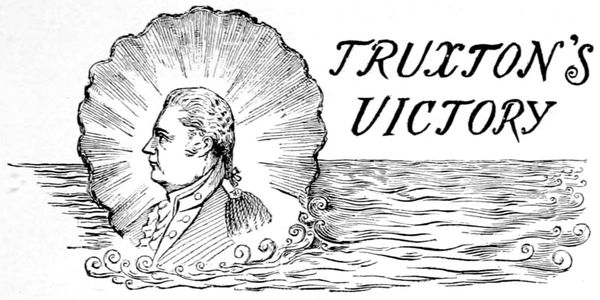
(Action between the Constellation and the Insurgente, 9 Feb., 1799.)
[This song and the one that follows it relate to a naval conflict of 1799, during the troubles which for a time threatened war between France and the United States. As the second of the two songs was written in 1813, and both were much sung at that period, it has been thought best to present both of them where one properly belongs, namely, among the poems of the last war with Great Britain.—Editor.]
Defying each foe whom her rights would invade,
Columbia's brave sons swore those rights to maintain,
And o'er ocean and earth to establish her reign;
United they cry,
While that standard shall fly,
Resolved, firm, and steady,
We always are ready
To fight, and to conquer, to conquer or die.
And deluged the earth with an ocean of blood:
While by faction she's led, while she's governed by knaves,
We court not her smiles, and will ne'er be her slaves;
Her threats we defy,
While our standard shall fly,
Resolved, firm, and steady,
We always are ready
To fight, and to conquer, to conquer or die.
A tribute demands, or sets bounds to our trade;
From our young rising Navy our thunders shall roar,
And our Commerce extend to the earth's utmost shore.
Our cannon we'll ply,
While our standard shall fly;
Resolved, firm, and steady,
We always are ready
To fight, and to conquer, to conquer or die.
When Truxton, brave Truxton off Nevis's shore,
His ship mann'd for battle, the standard unfurl'd,
And at the Insurgente defiance he hurled;
And his valiant tars cry,
While our standard shall fly,
Resolved, firm, and steady,
We always are ready
To fight, and to conquer, to conquer or die.
They fought for their country, their freedom and laws;
From their cannon loud volleys of vengeance they pour'd,
And the standard of France to Columbia was lower'd.
Huzza! they now cry,
Let the Eagle wave high;
Resolved, firm, and steady,
We always are ready
To fight, and to conquer, to conquer or die.
To the fair Constellation, and all her brave Crew;
Be Truxton revered, and his name be enrolled,
'Mongst the chiefs of the ocean, the heroes of old.
Each invader defy,
While such heroes are nigh,
Who always are ready,
Resolved, firm, and steady
To fight, and to conquer, to conquer or die.
THE "CONSTELLATION" AND THE "INSURGENTE."
(Action of 9 February, 1799.)
'Tis time to try your courage and humble haughty France,
The sons of France our seas invade,
Destroy our commerce and our trade,
'Tis time the reckoning should be paid!
To brave Yankee boys.
We had a bold commander and Truxton was his name!
Our ship she mounted forty guns,
And on the main so swiftly runs,
To prove to France Columbia's sons
Are brave Yankee boys.
The invaders of our commerce, to burn, sink, and destroy;
Our Constellation shone so bright,
The Frenchmen could not bear the sight,
And away they scamper'd in affright,
From the brave Yankee boys.
And there we spy'd the Insurgente just at the break of day,
We raised the orange and the blue,
To see if they our signals knew,
The Constellation and her crew
Of brave Yankee boys.
With well prim'd guns, our tompions out, well spliced the main brace.
Soon to the French we did draw nigh,
Compelled to fight, they were, or fly,
The word was passed, "Conquer or die,"
My brave Yankee boys.
And death upon our bullets' wings that drenched their decks with gore,
The blood did from their scuppers run,
Their chief exclaimed, "We are undone!"
Their flag they struck, the battle won,
By the brave Yankee boys.
The grand salute was fired and answered from the fort,
John Adams in full bumpers toast,
George Washington, Columbia's boast,
And now "the girl we love the most!"
My brave Yankee boys.
1813.

THE WASP'S FROLIC.
(Action of 18 October, 1812.)
[From "Naval Songster," 1815.]
We set sail from Delaware Bay,
To cruise on Columbia's fair coast, sirs,
Our rights to maintain on the sea.
When the Frolic came up to our view;
Says Jones, "Show the flag of our nation";
Three cheers were then gave by our crew.
Whose cannon began for to roar;
The Wasp soon her stings from her side ran,
When we on them a broadside did pour.
'Twas minutes past forty and three,
When fifty bold Britons were slaughter'd,
Whilst our guns swept their masts in the sea.
Acknowledged the battle we'd won,
On us then bright laurels bestowing,
When to leeward they fired a gun.
With a crew for to answer the same;
Eighteen was the number we mounted,
Being served by the lads of true game.
All in for Columbia's fair shore;
But fate on our laurels was frowning,
We were taken by a seventy-four.
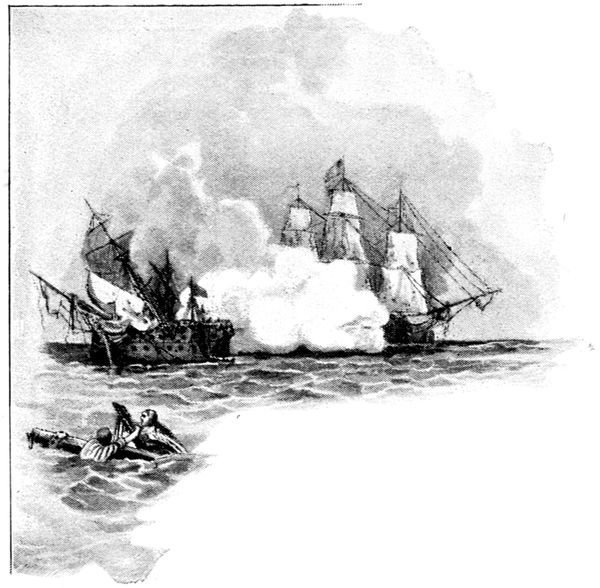
"CONSTITUTION" AND "GUERRIÈRE."
(Action of 19 August, 1812.)
That the British seamen bold,
Could flog the tars of France so neat and handy, oh!
But they never found their match,
Till the Yankees did them catch,
Oh, the Yankee boys for fighting are the dandy, oh!
On the foaming ocean rolled,
Commanded by proud Dacres, the grandee, oh!
With as choice a British crew,
As a rammer ever drew,
Could flog the Frenchmen two to one so handy, oh!
Says proud Dacres to his crew,
"Come clear ship for action and be handy, oh!
To the weather gage, boys, get her,"
And to make his men fight better,
Gave them to drink gun-powder mixed with brandy, oh!
"Make this Yankee ship your prize,
You can in thirty minutes, neat and handy, oh!
Twenty-five's enough I'm sure,
And if you'll do it in a score,
I'll treat you to a double share of brandy, oh!"
Which the Yankees answered not,
Till they got within the distance they called handy, oh!
"Now," says Hull unto his crew,
"Boys, let's see what we can do,
If we take this boasting Briton we're the dandy, oh!"
Carried her mainmast by the board,
Which made this loftly frigate look abandon'd, oh!
Then Dacres shook his head,
And to his officers said,
"Lord! I didn't think those Yankees were so handy, oh!"
That their fore and mizzen fell,
Which dous'd the Royal ensign neat and handy, oh!
"By George!" says he, "we're done,"
And they fired a lee gun,
While the Yankees struck up Yankee Doodle Dandy, oh!
To deliver up his sword,
Tho' loth was he to part with it, it was so handy, oh!
"Oh keep your sword," says Hull,
"For it only makes you dull,
"Cheer up and take a little drink of brandy, oh!"
And we'll drink to Captain Hull,
And so merrily we'll push about the brandy, oh!
John Bull may toast his fill,
But let the world say what they will,
The Yankee boys for fighting are the dandy, oh!
THE "UNITED STATES" AND "MACEDONIAN."
(Action 25 of October, 1812.)
To emulate such glorious deeds and nobly take a part;
When sailors with their thund'ring guns,
Prove to the English, French, and Danes
That Neptune's chosen fav'rite sons
Are brave Yankees boys.
When we beyond all precedent, from Britons bore the sway,—
'Twas in the ship United States,
Four and forty guns the rates,
That she should rule, decreed the Fates,
And brave Yankee boys.
When off the Western Islands they to and fro did sweep,
The Macedonian they espied,
"Huzza! bravo!" Decatur cried,
"We'll humble Britain's boasted pride,
My brave Yankee boys."
The tompions out, the guns well sponged, the Captain now commands;
The boys who for their country fight,
Their words, "Free Trade and Sailor's Rights!"
Three times they cheered with all their might,
Those brave Yankee boys.
And many a gallant sailor's blood runs purpling in the tides;
While death flew nimbly o'er their decks,
Some lost their legs, and some their necks,
And Glory's wreath our ship be-decks,
For brave Yankee boys.
And busy are our gen'rous tars, the conquered foe to save,
Our Captain cries "Give me your hand,"
Then of the ship who took command
But brave Yankee boys?
For ev'ry shot with death was winged, which slew her men so fast,
That they lost five to one in killed,
And ten to one their blood was spilled,
So Fate decreed and Heaven had willed,
For brave Yankee boys.
The old and young with rapture viewed our sailors' noble prize;
Through seas of wine their health we'll drink,
And wish them sweet-hearts, friends, and chink,
Who 'fore they'd strike, will nobly sink
Our brave Yankee boys.
1813.
THE "UNITED STATES" AND "MACEDONIAN."
(Action of 25 October, 1812.)
While the silver-tipt surges in low homage curled,
Flashing bright round the bow of Decatur's brave bark,
In contest, an "eagle"—in chasing a "lark."
The bold United States,
Which four-and-forty rates,
Will ne'er be known to yield—be known to yield or fly,
Her motto is "Glory! we conquer or we die."
The ship cleared for action, in chase of a sail;
The foemen in view, every bosom beats high,
All eager for conquest, or ready to die.
The bold United States,
Which four-and-forty rates,
Will ne'er be known to yield—be known to yield or fly.
Her motto is "Glory! we conquer or we die."
And battle-hounds "strain on the start" for the game;
The blood demons rise on the surge for their prey,
While Pity, rejected, awaits the dread fray.
The bold United States,
Which four-and-forty rates,
Will ne'er be known to yield—be known to yield or fly,
Her motto is "Glory! we conquer or we die."
Waving light on the breeze as the stranger we near;
And now could the quick-sighted Yankee discern
"Macedonian," emblazoned at large on her stern.
The bold United States,
Which four-and-forty rates,
Will ne'er be known to yield—be known to yield or fly,
Her motto is "Glory! we conquer or we die."
But to waste ammunition is no Yankee plan;
In awful suspense every match was withheld,
While the bull-dogs of Britain incessantly yelled.
The bold United States,
Which four-and-forty rates,
Will ne'er be known to yield—be known to yield or fly,
Her motto is "Glory! we conquer or we die."
While the foe seemed enwrapped in a mantle of flame;
When, prompt to the word, such a flood we return,
That Neptune aghast, thought his trident would burn.
The bold United States,
Which four-and-forty rates,
Will ne'er be known to yield—be known to yield or fly,
Her motto is "Glory! we conquer or we die."
With a tempest of iron and hail-storm of lead;
And our fire on the foe we so copiously poured,
His mizzen and topmasts soon went by the board.
The bold United States,
Which four-and-forty rates,
Will ne'er be known to yield—be known to yield or fly,
Her motto is "Glory! we conquer or we die."
They thought that their cannon had set us on fire,
"The Yankee's in flames!"—every British tar hears,
And hails the false omen with three hearty cheers.
The bold United States,
Which four-and-forty rates,
Will ne'er be known to yield—be known to yield or fly,
Her motto is "Glory! we conquer or we die."
And were glad to surrender and fall in our wake;
Her decks were with carnage and blood deluged o'er,
Where welt'ring in blood lay an hundred and four.
The bold United States,
Which four-and-forty rates,
Will ne'er be known to yield—be known to yield or fly,
Her motto is "Glory! we conquer or we die."
With blood they had scarcely encrimsoned our deck;
Only five valiant Yankees in the contest were slain,
And our ship in five minutes was fitted again.
The bold United States,
Which four-and-forty rates,
Will ne'er be known to yield—be known to yield or fly,
Her motto is "Glory! we conquer or we die."
For the trident of Neptune is ours, if we please,
While Hull and Decatur and Jones are our boast,
We dare their whole navy to come on our coast.
The bold United States,
Which four-and-forty rates,
Will ne'er be known to yield—be known to yield or fly,
Her motto is "Glory! we conquer or we die."
Which gilds Hull's, Decatur's and Jones's bright name;
Fill a bumper, and drink, "Here's success to the cause,
But Decatur supremely deserves our applause."
The bold United States,
Which four-and-forty rates,
Shall ne'er be known to yield—be known to yield or fly,
Her motto is "Glory! we conquer or we die."
1813.
PERRY'S VICTORY.
(Battle of Lake Erie, 10 September, 1813.)
[This ballad, clumsy as it is in construction, was very popular in its day, mainly, perhaps, because of the peculiarly dramatic character of the action it was written to celebrate.—Editor.]
To find British bullies or get into their wake,
When we hoisted our canvas with true Yankee speed,
And the brave Captain Perry our squadron did lead.
In the cause of Columbia our brav'ry to show,
To be equal in combat was all our delight,
As we wished the proud Britons to know we could fight.
We could see not, nor find them by day or by night;
So cruising we went in a glorious cause,
In defence of our rights, our freedom, and laws.
Huzzah! says brave Perry, huzzah! says his crew,
And then for the chase, boys, with our brave little crew,
We fell in with the bullies and gave them "burgoo."
We brought them to action before it was night;
We let loose our thunder, our bullets did fly,
"Now give them your shot, boys," our commander did cry.
"Well done," says brave Perry, "for quarter they'll cry,
Shot well home, my brave boys, they shortly shall see,
That quite brave as they are, still braver are we."
And put the proud Britons in a terrible plight,
The brave Perry's movements will prove fully as bold,
As the fam'd Admiral Nelson's prowess of old.
For our country, her glory, the vict'ry was won,
So six sail (the whole fleet) was our fortune to take,
Here's a health to brave Perry, who governs the Lake.
1813.
YANKEE THUNDERS.
Float proudly o'er the tide,
And fairly wave Columbia's stripes,
In battle side by side.
And ne'er did bolder seamen meet,
Where ocean's surges pour;
O'er the tide now they ride,
While the bell'wing thunders roar,
While the cannon's fire is flashing fast,
And the bell'wing thunders roar.
Whose blood congenial flows,
By Heav'n created to be friends,
By fortune rendered foes;
Hard then must be the battle fray,
Ere well the fight is o'er;
Now they ride, side by side,
While the bell'wing thunders roar,
While her cannon's fire is flashing fast,
And the bell'wing thunders roar.
Bold D'Acres' streamers fly;
And for Columbia, gallant Hull's
As proudly and as high;
Now louder rings the battle din,
And thick the volumes pour;
Still they ride, side by side,
While the bell'wing thunders roar,
While the cannon's fire is flashing fast,
And the bell'wing thunders roar.
That waked the wat'ry war?
Why stays the gallant Guerrière,
Whose streamers waved so fair?
That streamer drinks the ocean wave,
That warrior's fight is o'er!
Still they ride, side by side,
While the bell'wing thunders roar,
While the cannon's fire is flashing fast,
And the bell'wing thunders roar.
Ne'er bolder warrior kneeled!
And ne'er to gallant mariners
Did braver seamen yield.
Proud be the sires, whose hardy boys
Then fell to fight no more:
With the brave, mid the wave;
When the cannon's thunders roar,
Their spirits then shall trim the blast,
And swell the thunder's roar.
Their hearts did vainly swell,
Where virtue, skill, and bravery
With gallant Morris fell.
That heart so well in battle tried,
Along the Moorish shore,
And again o'er the main,
When Columbia's thunders roar,
Shall prove its Yankee spirit true,
When Columbia's thunder's roar.
Those oaks our mountains yield;
'Tis mighty Heaven's plain decree—
Then take the wat'ry field!
To ocean's farthest barrier then
Your whit'ning sail shall pour;
Safe they'll ride o'er the tide,
While Columbia's thunders roar,
While her cannon's fire is flashing fast,
And her Yankee thunders roar.
1813.

YE PARLIAMENT OF ENGLAND.
[This rudely constructed song—evidently composed in the forecastle, where poets are not exigent in the matter of rhymes, is included in this collection, notwithstanding its imperfections, because of the hold it took upon the minds of patriotic people. It was still a favorite song in many parts of the country as late as 1859, and it is valuable as a reflection of the spirit in which the War of 1812-14 was regarded by those who fought it.—Editor.]
You lords and commons, too,
Consider well what you're about,
And what you're going to do;
You're now to fight with Yankees,
I'm sure you'll rue the day,
You roused the sons of liberty,
In North America.
And said our ships shant trade,
You next impressed our seamen,
And used them as your slaves;
You then insulted Rogers,
While ploughing o'er the main,
And had not we declarèd war,
You'd have done it o'er again.
And Yankees could not fight,
Until brave Hull your Guerrière took
And banished her from your sight.
The Wasp then took your Frolic,
We'll nothing say to that,
The Poictiers being of the line,
Of course she took her back.
No finer ship could swim,
Decatur took her gilt-work off,
And then he sent her in.
The Java, by a Yankee ship
Was sunk, you all must know;
The Peacock fine, in all her plume,
By Lawrence down did go.
To box us all about,
But we had an Enterprising brig
That beat your Boxer out;
We boxed her up to Portland,
And moored her off the town,
To show the sons of liberty
The Boxer of renown.
Where Perry had some fun,
You own he beat your naval force,
And caused them for to run;
This was to you a sore defeat,
The like ne'er known before—
Your British squadron beat complete—
Some took, some run ashore.
Will burn, sink, and destroy;
The Congress, on the Brazil coast,
Your commerce will annoy;
The Essex, in the South Seas,
Will put out all your lights,
The flag she waves at her mast-head—
"Free Trade and Sailor's Rights."
Far distant is the day,
When you'll regain by British force
What you've lost in America;
Go tell your king and parliament,
By all the world 'tis known,
That British force, by sea and land,
By Yankees is o'erthrown.
And strive to make a peace,
For Yankee ships are building fast,
Their navy to increase;
They will enforce their commerce,
The laws by heaven are made,
That Yankee ships in time of peace,
To any port may trade.
1813.
COMRADES! JOIN THE FLAG OF GLORY.
Cheerily tread the deck of fame,
Earn a place in future story,
Seek and win a warrior's name.
While the roaring mountain wave
Teems with carnage—they are strangers
To a deed that is not brave.
Splendidly o'er freemen burn,
Till the night of war is over,
Till the dawn of peace return.
1813.
OUR NAVY.
The sound of battle came,
The gallant Hull in glorious fight
Has won the wreaths of fame.
With hearts united rise,
Swear to protect their native land
Till sacred freedom dies.
With patriot ardor glow,
And in the garb of vict'ry drest
Triumphant blast the foe.
Chorus.—Let brave, etc.
O'er the wide ocean ride,
To prove their loyal spirits true,
And crush old Albion's pride.
Chorus.—Let brave, etc.
With roaring broadsides hail;
And while the thunder rends the air
See Briton's sons turn pale.
Chorus.—Let brave, etc.
The great commander cries,
While all responsive roar huzza!
With pleasure-sparkling eyes.
Chorus.—Let brave, etc.
Her heaven-born eagle soar;
Her deeds of glory shall be read
When tyrants are no more.
Chorus.—Let brave, etc.
1813.

THE STAR-SPANGLED BANNER.
By FRANCIS SCOTT KEY.
[Written during the bombardment of Fort McHenry, below Baltimore, by the British fleet, 1814, the author being at the time forcibly detained on board one of the British ships.—Editor.]
What so proudly we hailed at the twilight's last gleaming?
Whose broad stripes and bright stars through the perilous fight,
On the ramparts we watched were so gallantly streaming;
And the rocket's red glare, the bombs bursting in air,
Gave proof through the night that our flag was still there.
O say, does the star-spangled banner yet wave
O'er the land of the free and the home of the brave?
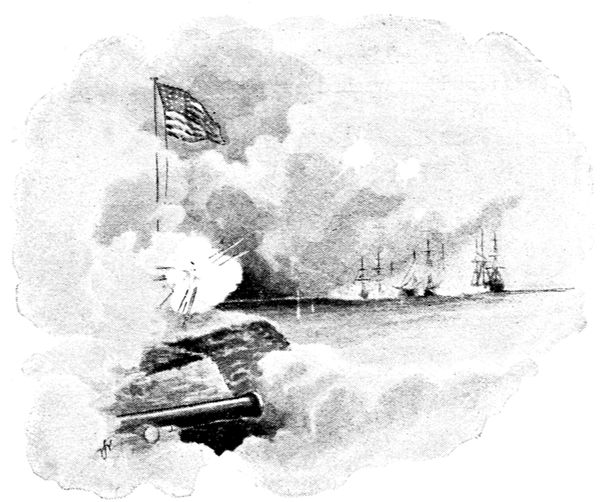
Where the foe's haughty host in dread silence reposes,
What is that which the breeze, o'er the towering steep,
As it fitfully blows, half conceals, half discloses?
Now it catches the gleam of the morning's first beam,
In full glory reflected now shines on the stream.
'Tis the star-spangled banner! O long may it wave
O'er the land of the free and the home of the brave!
That the havoc of war and the battle's confusion
A home and a country shall leave us no more?
Their blood has washed out their foul footsteps' pollution.
No refuge could save the hireling and slave,
From the terror of death and the gloom of the grave.
And the star-spangled banner in triumph shall wave
O'er the land of the free and the home of the brave!
Between their loved homes and the war's desolation;
Blest with vict'ry and peace, may the heaven-rescued land,
Praise the power that has made and preserved us a nation.
Then conquer we must, for our cause it is just.
And this be our motto: "In God is our trust."
And the star-spangled banner in triumph shall wave
O'er the land of the free and the home of the brave.
SEA AND LAND VICTORIES.
(From "The Naval Songster," 1815.)
See Perry on the midland lake,
The unequal combat dare;
Unawed by vastly stronger pow'rs,
He met the foe and made him ours,
And closed the savage war.
In ships outnumbered, guns, and men,
Saw dangers thick increase;
His trust in God and virtue's cause
He conquer'd in the lion's jaws,
And led the way to peace.
Whose deeds have swelled the files of fame,
Requires immortal powers;
Columbia's warriors never yield
To equal force by sea or field,
Her eagle never cowers.
Or Erie laves our Northern shores,
Great Brown, thy fame shall rise;
Outnumber'd by a veteran host
Of conquering heroes, Britain's boast—
Conquest was there thy prize.
Where gallant Macomb held command,
The unequal host oppose;
Provost confounded, vanquished flies,
Convinced that numbers won't suffice
Where Freemen are the foes.
While we attempt thy matchless praise,
Carolina's godlike son;
While Mississippi rolls his flood,
Or Freemen's hearts move patriots' blood,
The palm shall be thine own.
In countless numbers gain the strand,
"Beauty and spoil" the word—
There Jackson with his fearless few,
The invincibles by thousands slew,
And dire destruction poured.
Of Jackson's deeds by fame enrolled,
Should grief and madness rise,
Remember God, the avenger, reigns,
Who witnessed Havre's smoking plains,
And Hampton's female cries.

OLD IRONSIDES.
By OLIVER WENDELL HOLMES.
[This poem was inspired by the announcement that the frigate Constitution was to be dismantled. Though written later it belongs among the poems of the War of 1812, as the Constitution's fame was won in that war.—Editor.]
Long has it waved on high,
And many an eye has dimmed to see
That banner in the sky;
Beneath it rung the battle shout,
And burst the cannon's roar;—
The meteor of the ocean air
Shall sweep the clouds no more.
Where knelt the vanquished foe,
When winds were hurrying o'er the flood,
And waves were white below,
No more shall feel the victor's tread,
Or know the conquered knee;—
The harpies of the shore shall pluck
The eagle of the sea!
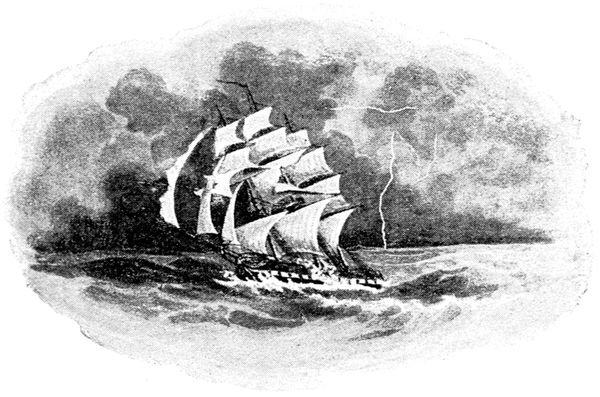
Should sink beneath the wave;
Her thunders shook the mighty deep,
And there should be her grave;
Nail to the mast her holy flag,
Set every threadbare sail,
And give her to the god of storms,
The lightning and the gale!
1836.

THE MEXICAN WAR
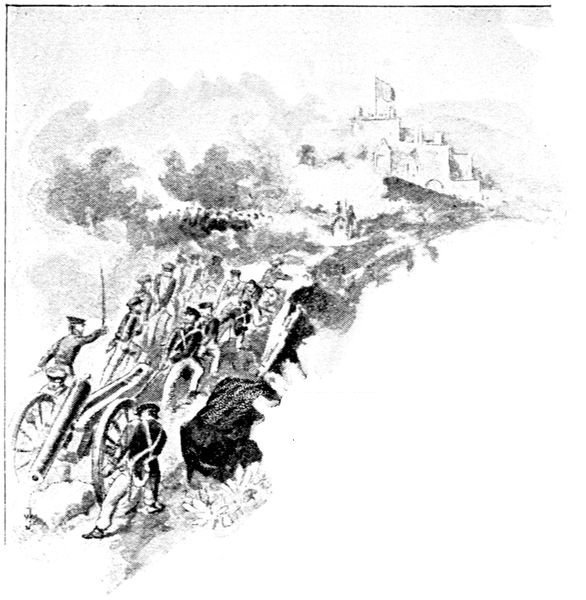
MONTEREY.
By Charles Fenno Hoffman.
Before the iron sleet that day:
Yet many a gallant spirit would
Give half his years if but he could
Have with us been at Monterey.
In deadly drifts of fiery spray,
Yet not a single soldier quail'd
When wounded comrades round them wail'd
Their dying shout at Monterey.
Through walls of flame its withering way
Where fell the dead, the living stept,
Still charging on the guns which swept
The slippery streets of Monterey.
When, striking where he strongest lay,
We swoop'd his flanking batteries past,
And braving full their murderous blast,
Storm'd home the towers of Monterey.
And there our evening bugles play:
Where orange-boughs above their grave
Keep green the memory of the brave
Who fought and fell at Monterey.
Beside the brave who fell that day—
But who of us has not confess'd
He'd rather share their warrior rest
Than not have been at Monterey?
BUENA VISTA.
[By some strange oversight, this fine ballad appears in none of the popular collections. So far as the editor can discover, indeed, it exists nowhere in print except in a volume privately printed by General Pike some years ago, and to his courtesy the editor is indebted for the copy from which the piece is here reproduced.—Editor.]
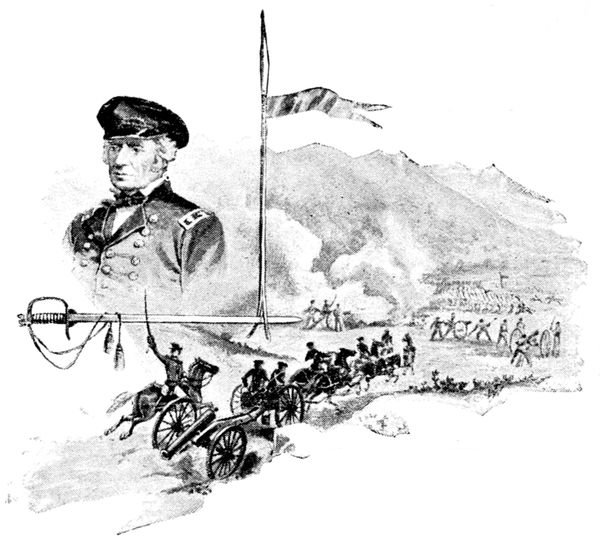
BUENA VISTA.
By ALBERT PIKE.
Let all exult! for we have met the enemy again;
Beneath their stern old mountains we have met them in their pride,
And rolled from Buena Vista back the battle's bloody tide;
Where the enemy came surging swift, like the Mississippi's flood,
And the reaper, Death, with strong arms swung his sickle red with blood.
His Lancers through Saltillo should pursue us fierce and fast:—
On comes his solid infantry, line marching after line;
Lo! their great standards in the sun like sheets of silver shine:
With thousands upon thousands,—yea, with more than three to one,—
Their forests of bright bayonets fierce-flashing in the sun.
And Guadalajara's chosen troops!—all veterans tried before.
Lo! galloping upon the right four thousand lances gleam,
Where, floating in the morning-wind, their blood-red pennons stream;
And here his stern artillery climbs up the broad plateau:
To-day he means to strike at us an overwhelming blow.
Comes, thundering like an avalanche, deep, terrible and wide.
Now, Illinois, stand steady! Now, Kentucky, to their aid!
For a portion of our line, alas! is broken and dismayed:
Great bands of shameless fugitives are fleeing from the field,
And the day is lost, if Illinois and brave Kentucky yield.
Till their cavalry and infantry outflank us on the left;
Our light troops, driven from the hills, retreat in wild dismay,
And round us gather, thick and dark, the Mexican array.
Santana thinks the day is gained; for, now approaching near,
Miñon's dark cloud of Lancers sternly menaces our rear.
Who strove to stay those cravens, when before the storm they reeled.
Fire, Washington, fire fast and true! Fire, Sherman, fast and far!
Lo! Bragg comes thundering to the front, to breast the adverse war!
Santana thinks the day is gained! On, on his masses crowd,
And the roar of battle swells again more terrible and loud.
Kentucky, to the rescue! Mississippi, to the fray!
Again our line advances! Gallant Davis fronts the foe,
And back before his rifles, in red waves the Lancers flow.
Upon them yet once more, ye brave! The avalanche is stayed!
Back roll the Aztec multitudes, all broken and dismayed.
And we have few troops there to check their vehement career.
Charge, Arkansas! Kentucky, charge! Yell, Porter, Vaughan, are slain,
But the shattered troops cling desperately unto that crimsoned plain;
Till, with the Lancers intermixed, pursuing and pursued,
Westward, in combat hot and close, drifts off the multitude.
While shattered with a sudden fire, the foe already reel:
They flee amain!—Now to the left, to stay the torrent there,
Or else the day is surely lost, in horror and despair!
For their hosts pour swiftly onward, like a river in the spring,
Our flank is turned, and on our left their cannon thundering.
Through rain, cold hail, and thunder, now nerve each gallant arm!
What though their shot fall round us here, yet thicker than the hail?
We'll stand against them, as the rock stands firm against the gale.
Lo! their battery is silenced! but our iron sleet still showers:
They falter, halt, retreat!—Hurrah! the glorious day is ours!
And on stout Mississippi, the thick Lancers charged in vain:
Ah! brave Third Indiana! you have nobly wiped away
The reproach that through another corps befell your State to-day;
For back, all broken and dismayed, before your storm of fire,
Santana's boasted chivalry, a shattered wreck, retire.
For back, like broken waves, along our left your hordes are tossed.
Still faster roar his batteries,—his whole reserve moves on;
More work remains for us to do, ere the good fight is won.
Now for your wives and children men! Stand steady yet once more!
Fight for your lives and honors! Fight as you never fought before!
Stands firm before the storm of balls that fill the astonished air:
The Lancers dash upon them too! The foe swarm ten to one:
Hardin is slain; McKee and Clay the last time see the sun:
And many another gallant heart, in that last desperate fray,
Grew cold, its last thought turning to its loved ones far away.
Crushes those noble regiments, reluctant to retire!
Speed swiftly! Gallop! Ah! they come! Again Bragg climbs the ridge,
And his grape sweeps down the swarming foe, as a strong man moweth sedge:
Thus baffled in their last attack, compelled perforce to yield,
Still menacing in firm array, their columns leave the field.
And on the dead and dying came the evening shadows fast.
And then above the mountains rose the cold moon's silver shield,
And patiently and pitying she looked upon the field.
While careless of his wounded, and neglectful of his dead,
Despairingly and sullenly by night Santana fled.
And thus our brave old General another battle won.
Still, still our glorious banner waves, unstained by flight or shame,
And the Mexicans among their hills still tremble at our name.
So, honor unto those that stood! Disgrace to those that fled!
And everlasting glory unto BUENA VISTA'S DEAD!
February 28, 1847.

THE BIVOUAC OF THE DEAD.
By THEODORE O'HARA.
[Originally written on the occasion of the erection of a monument to the Kentucky volunteers who fell at Buena Vista.—Editor.]
The soldier's last tattoo;
No more on Life's parade shall meet
That brave and fallen few.
On Fame's eternal camping-ground
Their silent tents are spread,
And Glory guards, with solemn round,
The bivouac of the dead.
Now swells upon the wind;
No troubled thought at midnight haunts
Of loved ones left behind;
No vision of the morrow's strife
The warrior's dream alarms;
No braying horn nor screaming fife
At dawn shall call to arms.
Their plumèd heads are bowed;
Their haughty banner, trailed in dust,
Is now their martial shroud.
And plenteous funeral tears have washed
The red stains from each brow,
And the proud forms, by battle gashed,
Are free from anguish now.
The bugle's stirring blast,
The charge, the dreadful cannonade,
The din and shout are past;
Nor war's wild note, nor glory's peal,
Shall thrill with fierce delight
Those breasts that nevermore may feel
The rapture of the fight.
That sweeps his great plateau,
Flushed with the triumph yet to gain,
Came down the serried foe.
Who heard the thunder of the fray
Break o'er the field beneath,
Knew well the watchword of that day
Was "Victory or Death."
O'er all that stricken plain,
For never fiercer fight had waged
The vengeful blood of Spain;
And still the storm of battle blew,
Still swelled the gory tide;
Not long our stout old chieftain knew,
Such odds his strength could bide.
Called to a martyr's grave
The flower of his belovèd land,
The nation's flag to save.
By rivers of their fathers' gore
His first-born laurels grew
And well he deemed the sons would pour
There lives for glory too.
O'er Angostura's plain—
And long the pitying sky has wept
Above its mouldered slain.
The raven's scream or eagle's flight
Or shepherd's pensive lay,
Alone awakes each sullen height
That frowned o'er that dread fray.
Ye must not slumber there,
Where stranger steps and tongues resound
Along the heedless air.
Your own proud land's heroic soil
Shall be your fitter grave;
She claims from war his richest spoil—
The ashes of her brave.
Far from the gory field,
Borne to a Spartan mother's breast
On many a bloody shield;
The sunshine of their native sky
Smiles sadly on them here,
And kindred eyes and hearts watch by
The heroes' sepulchre.
Dear as the blood ye gave,
No impious footstep here shall tread
The herbage of your grave;
Nor shall your story be forgot,
While Fame her record keeps,
Or Honor points the hallowed spot
Where Valor proudly sleeps.
In deathless song shall tell
When many a vanished age hath flown,
The story how ye fell;
Nor wreck, nor change, nor winter's blight,
Nor Time's remorseless doom,
Shall dim one ray of glory's light
That gilds your deathless tomb.

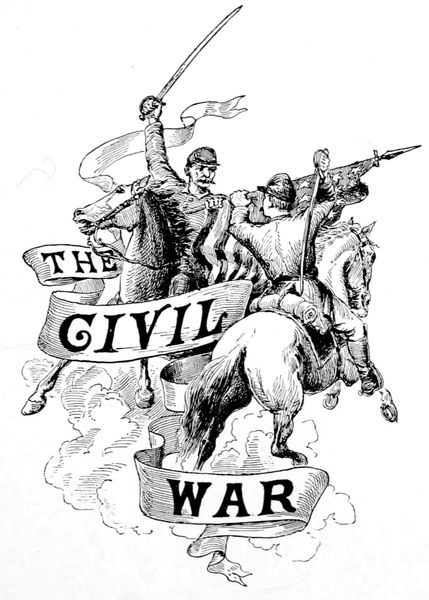
THE CIVIL WAR
BROTHER JONATHAN'S LAMENT FOR SISTER CAROLINE.
By OLIVER WENDELL HOLMES.
(Written in December, 1860, when South Carolina adopted the Ordinance of Secession.)
Our stormy-browed sister, so long at our side!
She has torn her own star from our firmament's glow,
And turned on her brother the face of a foe!
We can never forget that our hearts have been one,—
Our foreheads both sprinkled in Liberty's name,
From the fountain of blood with the finger of flame!
But we said: "She's a beauty—she does not mean much."
We have scowled when you uttered some turbulent threat;
But Friendship still whispered: "Forgive and forget."
Has the curse come at last which the fathers foretold?
Then Nature must teach us the strength of the chain
That her petulant children would sever in vain.
Till the harvest grows black as it rots in the soil,
Till the wolves and the catamounts troop from their caves,
And the shark tracks the pirate, the lord of the waves:
Their fortunes must flow in one channel at last,
As the torrents that rush from the mountains of snow
Roll mingled in peace in the valleys below.
Man breaks not the medal when God cuts the die!
Though darkened with sulphur, though cloven with steel,
The blue arch will brighten, the waters will heal!
There are battles with fate that can never be won!
The star-flowering banner must never be furled,
For its blossoms of light are the hope of the world!
Run wild in the sunshine away from our roof;
But when your heart aches and your feet have grown sore,
Remember the pathway that leads to our door!

THE TWELFTH OF APRIL.
A.D., 1861.
By EDMUND CLARENCE STEDMAN.
[Peculiar interest attaches to this piece as the first poem written after the actual outbreak of the Civil War and inspired by its events. The poem appeared in the evening edition of the New York World, on April 16, 1861.—Editor.]
When the God to whom we pray,
Gave the soul of Henry Clay
To the land;
How we loved him—living, dying!
But his birthday banners flying,
Saw us asking and replying,
Hand to hand.
Round the fort at Charleston bay,
Hung the dark impending fray,
Soon to fall;
And that Sumter's brave defender
Had the summons to surrender:
Seventy loyal hearts and tender—
That was all.
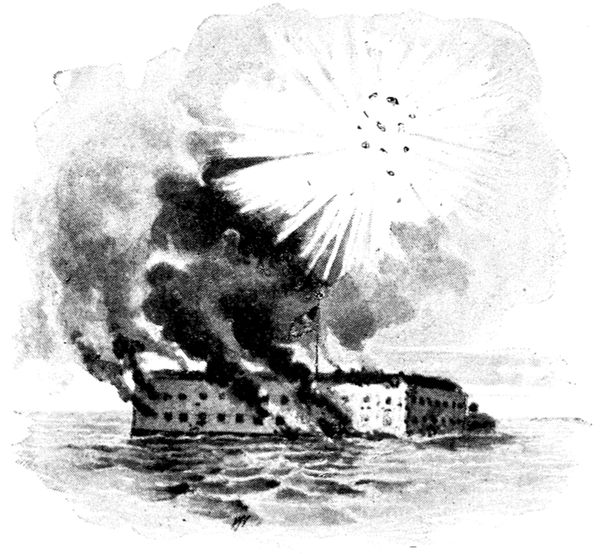
Lit the length of many a gun—
Hosts of batteries to the one
Island crag;
Guns and mortars grimly frowning,
Johnson, Moultrie, Pinckney, crowning,
And ten thousand men disowning
The old flag.
Even then was at its height!
Yet no breath from noon till night
Reached us here;
We had almost ceased to wonder,
And the day had faded under,
When—the echo of the thunder
Filled each ear!
As we crowded on the street,
Hot to gather and repeat
All the tale;
All the doubtful chances turning,
Till our souls with shame were burning,
As if all our bitter yearning
Could avail!
Was the fort by traitors won?
Was there succor? What was done,
Who could know?
And once more our thoughts would wander
To the gallant, lone commander,
On his battered ramparts grander
Than the foe.
On their own heads be their fate,
Who against the hallowed State
Dare begin;
Flag defied and compact riven!
In the record of high Heaven,
How shall southern men be shriven
For the sin!

MEN OF THE NORTH AND WEST.
By RICHARD HENRY STODDARD.
[This poem was the second piece that appeared in print after the fall of Fort Sumter. It was published in the World on the day after the appearance of Mr. Stedman's "The Twelfth of April."—Editor.]
Wake in your might.
Prepare, as the rebels have done,
For the fight!
You cannot shrink from the test;
Rise! Men of the North and West!
They have trampled the laws;
They have stifled the freedom they hate,
For no cause!
Do you love it or slavery best?
Speak! Men of the North and West!
Shall the murder be done?
They cry: "We are two!" And you?
"We are one!"
You must meet them, then, breast to breast;
On! Men of the North and West!
And tears they despise;
But with swords in your hands, and death
In your eyes!
Strike home! leave to God all the rest;
Strike! Men of the North and West!


RHODE ISLAND TO THE SOUTH.
By General F. W. LANDER.
And o'er a southern plain,
Our fathers fought for sovereign rights,
That working men might reign.
The great Jehovah's name;
By those sweet lips that ever nerve
High hearts to deeds of fame;
The household hearth a throne,—
Take back the idle scoff ye fling,
Where freedom claims its own.
Upon Manassas' plain,
Where Slocum stood with gallant Sprague
And gave his life in vain,—
Our old forefathers gave,
Or wrong New England's hallowed dust,
Or grant the wrongs ye crave,—
The shore we love to tread,
That woman's eyes shall fail to weep
O'er man's unnumbered dead.

OUR COUNTRY'S CALL.
By WILLIAM CULLEN BRYANT.
Leave in its track the toiling plough;
The rifle and the bayonet-blade
For arms like yours were fitter now;
And let the hands that ply the pen
Quit the light task, and learn to wield
The horseman's crooked brand, and rein
The charger on the battle-field.
To where the blood-stream blots the green;
Strike to defend the gentlest sway
That Time in all his course has seen.
See, from a thousand coverts—see
Spring the armed foes that haunt her track;
They rush to smite her down, and we
Must beat the banded traitors back.
And moved as soon to fear and flight,
Men of the glade and forest! leave
Your woodcraft for the field of fight.
The arms that wield the axe must pour
An iron tempest on the foe;
His serried ranks shall reel before
The arm that lays the panther low.
By grassy steep or highland lake,
Come, for the land ye love, to form
A bulwark that no foe can break.
Stand, like your own gray cliffs that mock
The whirlwind; stand in her defence:
The blast as soon shall move the rock,
As rushing squadrons bear ye thence.
Swift rivers, rising far away,
Come from the depth of her green land
As mighty in your march as they;
As terrible as when the rains
Have swelled them over bank and bourne,
With sudden floods to drown the plains
And sweep along the woods uptorn.
Her ports and hamlets of the strand,
In number like the waves that leap
On his long-murmuring marge of sand,
Come, like that deep, when, o'er his brim,
He rises, all his floods to pour,
And flings the proudest barks that swim,
A helpless wreck against his shore.
Won the fair land in which we dwell;
But we are many, we who hold
The grim resolve to guard it well.
Strike for that broad and goodly land,
Blow after blow, till men shall see
That Might and Right move hand in hand,
And Glorious must their triumph be.
A CRY TO ARMS.
By HENRY TIMROD.
Ho, dwellers in the vales!
Ho, ye who by the chafing tide
Have roughened in the gales!
Leave barn and byre, leave kin and cot,
Lay by the bloodless spade;
Let desk and case and counter rot,
And burn your books of trade!
And till he flies or fears,
Your fields must grow but armèd bands,
Your sheaves be sheaves of spears!
Give up to mildew and to rust
The useless tools of gain,
And feed your country's sacred dust
With floods of crimson rain!
With musket, pike, or knife;
He wields the deadliest blade of all
Who lightest holds his life.
The arm that drives its unbought blows
With all a patriot's scorn,
Might brain a tyrant with a rose
Or stab him with a thorn.
To some brave maiden's eyes,
And catch the holy fires that burn
In those sublunar skies.
Oh, could you like your women feel,
And in their spirit march,
A day might see your lines of steel
Beneath the victor's arch!
When thoughts like these give cheer?
The lily calmly braves the storm,
And shall the palm-tree fear?
No! rather let its branches court
The rack that sweeps the plain;
And from the lily's regal port
Learn how to breast the strain.
Ho, dwellers in the vales!
Ho, ye who by the roaring tide
Have roughened in the gales!
Come, flocking gayly to the fight,
From forest, hill, and lake;
We battle for our country's right,
And for the lily's sake!
[Southern.]
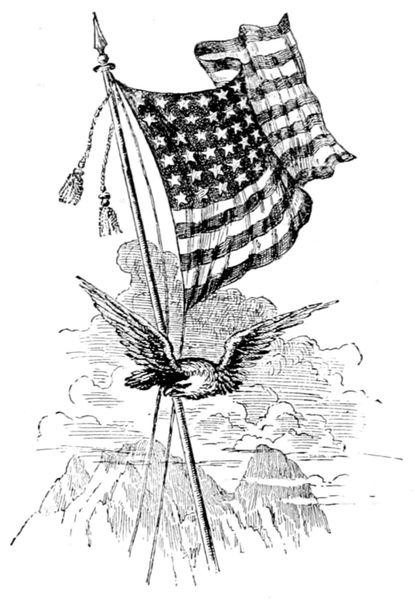
THE BANNER OF THE STARS.
By R. W. RAYMOND.
Let the enemies of freedom see its folds again unfurled.
And down with the pirates that scorn upon the seas
Our victorious Yankee banner, sign of Freedom to the World!
The true flag, the true flag, the Red, White, and Blue flag,
Hurrah! boys, hurrah! we will carry to the wars,
The old flag, the free flag, the Banner of the Stars.
And what tho' its stripes shall be shredded in the storms?
To the torn flag, the worn flag, we'll keep our promise good,
And we'll bear the starry blue field, with gallant hearts and arms.
May the God of Hosts be with us, as we smite the traitor down!
And cursed be he who would hesitate or lag,
Till the dear flag, the fair flag, with Victory we crown.
THE FLAG OF THE CONSTELLATION.
By T. BUCHANAN REID.
With the iris of heav'n are blended,
The hands of our sires first mingled those fires,
By us they shall be defended!
Then hail the true—the Red, White, and Blue,
The flag of the Constellation;
It sails as it sailed, by our fore-fathers hailed,
O'er battles that made us a nation.
One star or stripe of its bright'ning;
To him be each star a fiery Mars,
Each stripe a terrible lightning.
Then hail the true—the Red, White, and Blue,
The flag of the Constellation.
It sails as it sailed, by our fore-fathers hailed,
O'er battles that made us a nation.
Till the fiercest of foes surrender;
The storm gone by, it shall gild the sky,
As a rainbow of peace and splendor.
Then hail the true—the Red, White, and Blue,
The flag of the Constellation,
It sails as it sailed, by our fore-fathers hailed,
O'er battles that made us a nation.
Tho' we shun not a field that is gory;
At home or abroad, fearing none but our God,
We will carve our own pathway to glory!
Then hail the true—the Red, White, and Blue,
The flag of the Constellation,
It sails as it sailed, by our fore-fathers hailed,
O'er battles that made us a nation,
Florence, Italy, May, 1861.
THE STARS AND STRIPES.
By JAMES T. FIELDS.
Give it to the breeze!
That's the banner we bore
On the land and seas.
Let the traitors brag,
Gallant lads, fire away!
And fight for the flag.
Ours is the true one;
Up with the Stars and Stripes!
Down with the new one!
Guard them day and night;
For victory is liberty,
And God will bless the right.
THE BONNIE BLUE FLAG.
By ANNIE CHAMBERS KETCHUM.
The bravest of the brave
Sends forth her ringing battle-cry
Beside the Atlantic wave!
She leads the way in honor's path;
Come brothers, near and far,
Come rally round the Bonnie Blue Flag
That bears a single star!
The Yankee gibe and sneer,
Till Yankee insolence and pride
Know neither shame nor fear;
But ready now with shot and steel
Their brazen front to mar,
We hoist aloft the Bonnie Blue Flag
That bears a single star.
And close beside her come
Her sisters by the Mexique Sea,
With pealing trump and drum;
Till answering back from hill and glen
The rallying cry afar,
A Nation hoists the Bonnie Blue Flag
That bears a single star!
By each beleaguered town,
We swear to rest not, night nor day,
But hunt the tyrants down!
Till bathed in valor's holy blood
The gazing world afar
Shall greet with shouts the Bonnie Blue Flag
That bears the cross and star!
[Southern.]


THE STRIPES AND THE STARS.
By EDNA DEAN PROCTOR.
Though trampled by traitors and basely defied,
Fling out to the glad winds your red, white, and blue,
For the heart of the Northland is beating for you!
And her strong arm is nerving to strike with a wall,
Till the foe and his boastings are humbled and still!
Here's welcome to wounding and combat and scars
And the glory of death—for the Stripes and the Stars!
There's seed to be sown in God's furrows to-day!
Row landward, lone fisher! stout woodman come home!
Let smith leave his anvil and weaver his loom,
And hamlet and city ring loud with the cry:
"For God and our country we'll fight till we die!
Here's welcome to wounding and combat and scars
And the glory of death—for the Stripes and the Stars!"
Oh, where treads the foot that would falter for thee?
Or the hands to be folded, till triumph is won
And the eagle looks proud, as of old, to the sun?
Give tears for the parting—a murmur of prayer—
Then forward! the fame of our standard to share!
With welcome to wounding and combat and scars
And the glory of death—for the Stripes and the Stars!
Where battle is hottest, in warfare divine!
The cannon has thundered, the bugle has blown—
We fear not the summons-we fight not alone!
O lead us, till wide from the gulf to the sea
The land shall be sacred to freedom and Thee!
With love for oppression; with blessing, for scars—
One country—one banner—the Stripes and the Stars!

DIXIE.
By ALBERT PIKE.
Up, lest worse than death befall you!
To arms! To arms! To arms, in Dixie!
Lo! all the beacon-fires are lighted—
Let all hearts be now united!
To arms! To arms! To arms, in Dixie!
Advance the flag of Dixie!
Hurrah! hurrah!
For Dixie's land we take our stand,
And live or die for Dixie!
To arms! To arms!
And conquer peace for Dixie!
To arms! To arms!
And conquer peace for Dixie!
Northern flags in South winds flutter!
To arms!
Send them back your fierce defiance!
Stamp upon the accursed alliance!
To arms!
Advance the flag of Dixie!
Lift up rifle, pike, and sabre!
To arms!
Shoulder pressing close to shoulder,
Let the odds make each heart bolder!
To arms!
Advance the flag of Dixie!
At your cannon's ringing voices!
To arms!
For faith betrayed, and pledges broken,
Wrongs inflicted, insults spoken,
To arms!
Advance the flag of Dixie!
Back to their kennels hunt these beagles!
To arms!
Cut the unequal bond asunder!
Let them hence each other plunder!
To arms!
Advance the flag of Dixie!
Never to submit or falter!
To arms!
Till the spoilers are defeated,
Till the Lord's work is completed,
To arms!
Advance the flag of Dixie!
Secures among earth's powers its station
To arms!
Then at peace, and crowned with glory,
Hear your children tell the story!
To arms!
Advance the flag of Dixie!
Victory soon shall bring them gladness.
To arms!
Exultant pride soon vanish sorrow;
Smiles chase tears away to-morrow.
To arms! To arms! To arms, in Dixie!
Advance the flag of Dixie!
Hurrah! hurrah!
For Dixie's land we take our stand,
And live or die for Dixie!
To arms! To arms!
And conquer peace for Dixie!
To arms! To arms!
And conquer peace for Dixie!
[Southern.]
THE OATH OF FREEDOM.
By JAMES BARRON HOPE.
By Heaven, we will be free!
By all the stars which burn on high—
By the green earth—the mighty sea—
By God's unshaken majesty,
We will be free or die!
Then let the drums all roll!
Let all the trumpets blow!
Mind, heart, and soul,
We spurn control
Attempted by a foe!
By Heaven, we will be free!
And, vainly now the Northmen try
To beat us down—in arms we stand
To strike for this our native land!
We will be free or die!
Then let the drums all roll!
By Heaven, we will be free!
Our wives and children look on high,
Pray God to smile upon the right!
And bid us in the deadly fight
As freemen live or die!
Then let the drums all roll!
By Heaven, we will be free!
And ere we cease this battle-cry,
Be all our blood, our kindred's spilt,
On bayonet or sabre hilt!
We will be free or die!
Then let the drums all roll!
By Heaven, we will be free!
Defiant let the banners fly,
Shake out their glories to the air,
And kneeling, brothers, let us swear
We will be free or die!
Then let the drums all roll!
By Heaven, we will be free!
And to this oath the dead reply—
Our valiant fathers' sacred ghosts—
These with us, and the God of hosts,
We will be free or die!
Then let the drums all roll!
[Southern.]

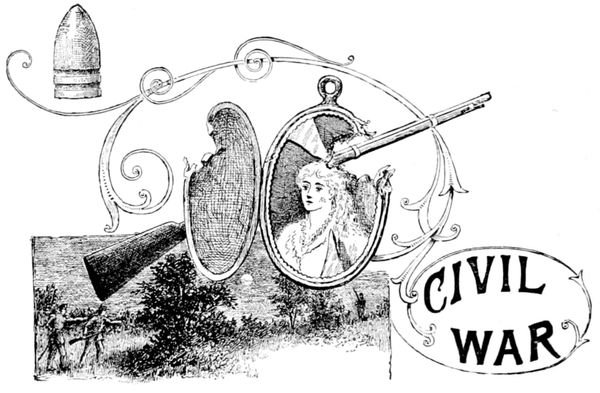
CIVIL WAR
By CHARGES DAWSON SHANLY.
[In many collections this poem is entitled "The Fancy Shot." It was first published in London, in the paper called Once-a-Week, and was there entitled "Civile Bellum." It is believed to be the work of Charles Dawson Shanly, who died in 1876.—Editor.]
Straight at the heart of yon prowling vidette;
Ring me a ball in the glittering spot
That shines on his breast like an amulet!"
There's music around when my barrel's in tune!"
Crack! went the rifle, the messenger sped,
And dead from his horse fell the ringing dragoon.
From your victim some trinket to handsel first blood;
A button, a loop, or that luminous patch
That gleams in the moon like a diamond stud!"
When I gazed on the face of that fallen vidette,
For he looked so like you, as he lay on his back,
That my heart rose upon me, and masters me yet.
An inch from the centre my lead broke its way,
Scarce grazing the picture, so fair to behold,
Of a beautiful lady in bridal array."
My brother's young bride,—and the fallen dragoon
Was her husband—Hush! soldier, 'twas Heaven's decree,
We must bury him there, by the light of the moon!
War is a virtue, weakness a sin;
There's a lurking and loping around us to-night;—
Load again, rifleman, keep your hand in!"
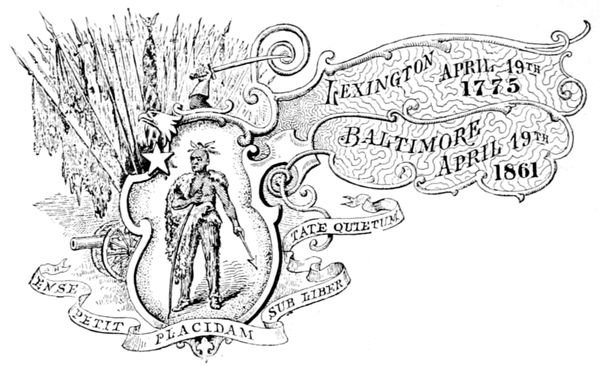
THE MASSACHUSETTS LINE.
By ROBERT LOWELL.
Let Massachusetts muster;
Give her the post right next the foe;
Be sure that you may trust her.
She was the first to give her blood
For freedom and for honor;
She trod her soil to crimson mud;
God's blessing be upon her!
Nor ever will hereafter;
Fling up her name with all your might,
Shake roof-tree and shake rafter!
But of old deeds she need not brag,
How she broke sword and fetter;
Fling out again the old striped flag!
She'll do yet more and better.
Her mills shake every river;
And where are scenes so fair as these
God and her true hands give her?
Her claim in war who seek to rob?
All others come in later;—
Hers first it is to front the mob,
The tyrant, and the traitor.
Let her have her way in battle!
She'll go where batteries crash with fate
Or where thick rifles rattle.
Give her the Light and let her try,
And then who can may press her;
She'll go straight on or she will die;
God bless her, and God bless her!
May 7, 1861.
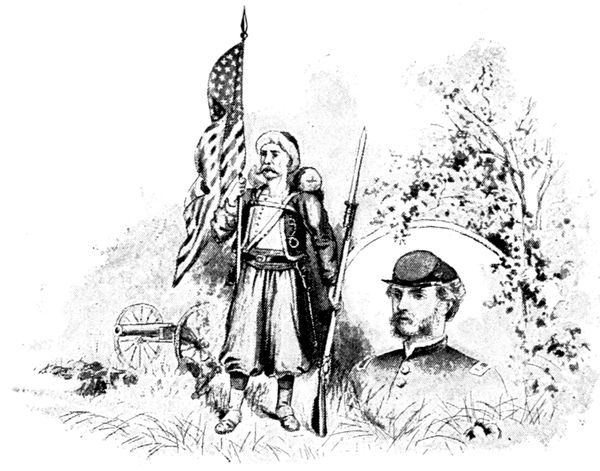
BETHEL.
By A. J. H. DUGANNE.
[Theodore Winthrop, a brilliant young man of letters, was killed at Big Bethel, on June 10, 1861.—Editor.]
And the whisper went round of a fort to be stormed;
But no drum-beat had called us, no trumpet we heard,
And no voice of command, but our colonel's low word—
"Column! Forward!"
From the beaches of Hampton our barges were borne;
And we heard not a sound, save the sweep of the oar,
Till the word of our colonel came up from the shore—
"Column! Forward!"
As ye dance to soft music, so trod we that night;
Through the aisles of the greenwood, with vines over-arched,
Tossing dew-drops, like gems, from our feet, as we marched—
"Column! Forward!"
So we skipped from the shadows, and mocked their pursuit;
But the soft zephyrs chased us, with scents of the morn,
As we passed by the hay-fields and green waving corn—
"Column! Forward!"
And the flowers and the foliage with sweets were in tune;
And the air was so calm, and the forest so dumb,
That we heard our own heart-beats, like taps of a drum—
"Column! Forward!"
And the buskins of morn brushed the tops of the trees,
And the glintings of glory that slid from her track
By the sheen of our rifles were gayly flung back—
"Column! Forward!"
And the blue-crested hill-tops with rose-light were kissed,
And the earth gave her prayers to the sun in perfumes,
Till we marched as through gardens, and trampled on blooms—
"Column! Forward!"
Of the greenwood with low-brooding vapors of death;
O'er the flowers and the corn we were borne like a blast,
And away to the forefront of battle we passed—
"Column! Forward!"
And the sun was like lightning on banners and blades,
When the long line of chanting Zouaves, like a flood,
From the green of the woodlands rolled, crimson as blood—
"Column! Forward!"
With the "Star-Spangled Banner" swelled over the leas;
And the sword of Duryea, like a torch, led the way,
Bearing down on the batteries of Bethel that day—
"Column! Forward!"
And like corn by the red scythe of fire we were mown;
While the cannon's fierce ploughings new-furrowed the plain,
That our blood might be planted for Liberty's grain—
"Column! Forward!"
But their rarest and best breathe no fragrance like ours;
And the sunshine of June, sprinkling gold on the corn,
Hath no harvest that ripeneth like Bethel's red morn—
"Column! Forward!"
Drank the first kiss of Danger and clasped her in death;
And the heart of brave Winthrop grew mute with his lyre,
When the plumes of his genius lay moulting in fire—
"Column! Forward!"
And the grass where he slept shall be green as his fame;
For the gold of the pen and the steel of the sword
Write his deeds—in his blood—on the land he adored—
"Column! Forward!"
And the flowers and the grass-blades his memory upbear;
While the breath of his genius, like music in leaves,
With the corn-tassels whispers, and sings in the sheaves—
"Column! Forward!"

THE CHARGE BY THE FORD.
By Dr. THOMAS DUNN ENGLISH.
Rode on the enemy's track,
Rode in the gray of the morning:
Nine of the ninety came back.
Lighter each moment the way:
Careless and tearless and fearless
Galloped they on to the fray.
Loud on the stirrup-irons rang,
Clinked as the men rose in saddle,
Fell as they sank with a clang.
Jaded and weary and weak,
Gray-backs—a cross on their banner—
Yonder the foe whom they seek.
Tarrying there by the marge:
Forward! Draw sabre! Trot! Gallop!
Charge! like a hurricane, charge!
Fire like the deep pit of hell!
Volley on volley to meet them,
Mixed with the gray rebels' yell.
Tracing the enemy's track,—
Ninety had ridden to battle,
Nine of the ninety came back.
Honor the heroes who came
Scathless from five hundred muskets,
Safe from the lead-bearing flame.
Lie on the field of the slain—
Lie on the red field of honor:
Honor the nine who remain!
There where their life-blood was spilt;
Back come the living, each sabre
Red from the point to the hilt.
Let the flags wave as they come!
Give them the blare of the trumpet
Give them the roll of the drum!
MANASSAS.
July 21, 1861.
By CATHERINE M. WARFIELD.
Meet in heaven,
And the Northmen back and bleeding
Have been driven:
And their thunders have been stilled,
And their leaders crushed or killed,
And their ranks with terror thrilled,
Rent and riven!
They are lying;
In the moonlight, in the midnight,
Dead and dying:
Like those leaves before the gale,
Swept their legions, wild and pale;
While the host that made them quail
Stood, defying.
Flags were flaunted,
And "swift vengeance on the rebel"
Proudly vaunted:
Little did they think that night
Should close upon their shameful flight,
And rebels, victors in the fight,
Stand undaunted.
In our passes!
Light be the earth above them;
Green the grasses!
Long shall Northmen rue the day
When they met our stern array,
And shrunk from battle's wild affray
At Manassas.
(Southern.)
UPON THE HILL BEFORE CENTREVILLE.
July 21, 1861.
By GEORGE H. BOKER.
I heard the great guns, far away,
Boom after boom. Their sullen sound
Shook all the shuddering air around;
And shook, ah me! my shrinking ear,
And downward shook the hanging tear
That, in despite of manhood's pride,
Rolled o'er my face a scalding tide.
And then I prayed. O God! I prayed,
As never stricken saint, who laid
His hot cheek to the holy tomb
Of Jesus, in the midnight gloom.
Great squares of men, with standards thrust
Against their course; dense columns crowned
With billowing steel. Then bound on bound,
The long black lines of cannon poured
Behind the horses, streaked and gored
With sweaty speed. Anon shot by,
Like a lone meteor of the sky,
A single horseman; and he shone
His bright face on me, and was gone.
All these with rolling drums, with cheers,
With songs familiar to my ears,
Passed under the far-hanging cloud,
And vanished, and my heart was proud!
Extended; and a steady roar,
As of some distant stormy sea,
On the south-wind came up to me.
And high in air, and over all,
Grew, like a fog, that murky pall,
Beneath whose gloom of dusty smoke
The cannon flamed, the bombshell broke.
And the sharp rattling volley rang,
And shrapnel roared, and bullets sang,
And fierce-eyed men, with panting breath,
Toiled onward at the work of death.
I could not see, but knew too well,
That underneath that cloud of hell,
Which still grew more by great degrees,
Man strove with man in deeds like these.
At noon, behold! on every hand
The dark brown vapor backward bore,
And fainter came the dreadful roar
From the huge sea of striving men.
Thus spoke my rising spirit then:
"Take comfort from that dying sound,
Faint heart, the foe is giving ground!"
And one, who taxed his horse's powers,
Flung at me, "Ho! the day is ours!"
And scoured along. So swift his pace,
I took no memory of his face.
Then turned I once again to Heaven;
All things appeared so just and even;
So clearly from the highest Cause
Traced I the downward-working laws—
Those moral springs, made evident,
In the grand, triumph-crowned event.
So half I shouted, and half sang,
Like Jephtha's daughter, to the clang
Of my spread, cymbal-striking palms,
Some fragments of thanksgiving psalms.
Upon the land. O'er hill and dell
Failed every sound. My heart stood still,
Waiting before some coming ill.
The silence was more sad and dread,
Under that canopy of lead,
Than the wild tumult of the war
That raged a little while before.
All nature, in her work of death,
Paused for one last, despairing breath;
And, cowering to the earth, I drew
From her strong breast my strength anew.
Another dusty vapor draw,
From the far right, its sluggish way
Toward the main cloud, that frowning lay
Against the western sloping sun:
And all the war was re-begun,
Ere this fresh marvel of my sense
Caught from my mind significance.
And then—why ask me? O my God!
Would I had lain beneath the sod,
A patient clod, for many a day,
And from my bones and mouldering clay
The rank field grass and flowers had sprung,
Ere the base sight, that struck and stung
My very soul, confronted me,
Shamed at my own humanity.
O happy dead! who early fell,
Ye have no wretched tale to tell
Of causeless fear and coward flight,
Of victory snatched beneath your sight,
Of martial strength and honor lost,
Of mere life bought at any cost,
Of the deep, lingering mark of shame,
For ever scorched on brow and name,
That no new deeds, however bright,
Shall banish from men's loathful sight!
Ere this vile scandal opened wide
A wound that cannot close nor heal.
Ye perished steel to levelled steel,
Stern votaries of the god of war,
Filled with his godhead to the core!
Ye died to live, these lived to die,
Beneath the scorn of every eye!
How eloquent your voices sound
From the low chambers under ground!
How clear each separate title burns
From your high-set and laurelled urns!
While these, who walk about the earth,
Are blushing at their very birth!
And, though they talk, and go, and come,
Their moving lips are worse than dumb.
Ye sleep beneath the valley's dew,
And all the nation mourns for you;
So sleep till God shall wake the lands!
For angels, armed with fiery brands,
Await to take you by the hands.
It rose, and joined itself unto
The main cloud with a sudden dash.
Loud and more near the cannon's crash
Came toward me, and I heard a sound
As if all hell had broken bound—
A cry of agony and fear.
Still the dark vapor rolled more near,
Till at my very feet it tossed,
The vanward fragments of our host.
Can man, Thy image, sink so low,
Thou, who hast bent Thy tinted bow
Across the storm and raging main;
Whose laws both loosen and restrain
The powers of earth, without whose will
No sparrow's little life is still?
Was fear of hell, or want of faith,
Or the brute's common dread of death
The passion that began a chase,
Whose goal was ruin and disgrace?
What tongue the fearful sight may tell?
What horrid nightmare ever fell
Upon the restless sleep of crime—
What history of another time—
What dismal vision, darkly seen
By the stern-featured Florentine,
Can give a hint to dimly draw
The likeness of the scene I saw?
I saw, yet saw not. In that sea,
That chaos of humanity,
No more the eye could catch and keep
A single point, than on the deep
The eye may mark a single wave,
Where hurrying myriads leap and rave.
Men of all arms, and all costumes,
Bare-headed, decked with broken plumes;
Soldiers and officers, and those
Who wore but civil-suited clothes;
On foot or mounted—some bestrode
Steeds severed from their harnessed load;
Wild mobs of white-topped wagons, cars,
Of wounded, red with bleeding scars;
The whole grim panoply of war
Surged on me with a deafening roar!
All shades of fear, disfiguring man,
Glared through their faces' brazen tan.
Not one a moment paused, or stood
To see what enemy pursued.
With shrieks of fear, and yells of pain,
With every muscle on the strain,
Onward the struggling masses bore.
Oh! had the foemen lain before,
They'd trampled them to dust and gore,
And swept their lines and batteries
As autumn sweeps the windy trees!
Here one cast forth his wounded friend,
And with his sword or musket-end
Urged on the horses; there one trod
Upon the likeness of his God,
As if 'twere dust; a coward here
Grew valiant with his very fear,
And struck his weaker comrade prone,
And struggled to the front alone.
All had one purpose, one sole aim,
That mocked the decency of shame,—
To fly, by any means to fly;
They cared not how, they asked not why.
I found a voice. My burning blood
Flamed up. Upon a mound I stood;
I could no more restrain my voice
Than could the prophet of God's choice.
"Back, animated dirt!" I cried,
"Back, on your wretched lives, and hide
Your shame beneath your native clay!
Or if the foe affrights you, slay
Your own base selves; and, dying, leave
Your children's tearful cheeks to grieve,
Not quail and blush, when you shall come,
Alive, to their degraded home!
Your wives will look askance with scorn;
Your boys, and infants yet unborn,
Will curse you to God's holy face!
Heaven holds no pardon in its grace
For cowards. Oh! are such as ye
The guardians of our liberty?
Back, if one trace of manhood still
May nerve your arm and brace your will!
You stain your country in the eyes
Of Europe and her monarchies!
The despots laugh, the peoples groan;
Man's cause is lost and overthrown!
I curse you, by the sacred blood
That freely poured its purple flood
Down Bunker's heights, on Monmouth's plain,
From Georgia to the rocks of Maine!
I curse you, by the patriot band
Whose bones are crumbling in the land!
By those who saved what these had won—
In the high name of Washington!"
Then I remember little more.
As the tide's rising waves, that pour
Over some low and rounded rock,
The coming mass, with one great shock,
Flowed o'er the shelter of my mound,
And raised me helpless from the ground.
As the huge shouldering billows bear,
Half in the sea and half in air,
A swimmer on their foaming crest,
So the foul throng beneath me pressed,
Swept me along, with curse and blow,
And flung me-where, I ne'er shall know.
Made rivulets across the plain;
And it was dark—oh, very dark.
I was so stunned as scarce to mark
The ghostly figures of the trees,
Or hear the sobbing of the breeze
That flung the wet leaves to and fro.
Upon me lay a dismal woe,
A boundless, superhuman grief,
That drew no promise of relief
From any hope. Then I arose,
As one who struggles up from blows
By unseen hands; and as I stood
Alone, I thought that God was good,
To hide, in clouds and driving rain,
Our low world from the angel train,
Whose souls filled heroes when the earth
Was worthy of their noble birth.
By that dull instinct of the mind,
Which leads aright the helpless blind,
I struggled onward, till the dawn
Across the eastern clouds had drawn
A narrow line of watery gray;
And full before my vision lay
The great dome's gaunt and naked bones
Beneath whose crown the nation thrones
Her queenly person. On I stole,
With hanging head and abject soul,
Across the high embattled ridge,
And o'er the arches of the bridge.
So freshly pricked my sharp disgrace,
I feared to meet the human face,
Skulking, as any woman might,
Who'd lost her virtue in the night,
And sees the dreadful glare of day
Prepare to light her homeward way,
Alone, heart-broken, shamed, undone,
I staggered into Washington!
Since then long sluggish days have passed,
And on the wings of every blast
Have come the distant nations' sneers
To tingle in our blushing ears.
In woe and ashes, as was meet,
We wore the penitential sheet.
But now I breathe a purer air,
And from the depths of my despair
Awaken to a cheering morn,
Just breaking through the night forlorn,
A morn of hopeful victory.
Awake, my countrymen, with me!
Redeem the honor which you lost.
With any blood, at any cost!
I ask not how the war began,
Nor how the quarrel branched and ran
To this dread height. The wrong or right
Stands clear before God's faultless sight.
I only feel the shameful blow,
I only see the scornful foe,
And vengeance burns in every vein
To die, or wipe away the stain.
The war-wise hero of the west,
Wearing his glories as a crest,
Of trophies gathered in your sight,
Is arming for the coming fight.
Full well his wisdom apprehends
The duty and its mighty ends;
The great occasion of the hour,
That never lay in human power
Since over Yorktown's tented plain
The red cross fell, nor rose again.
My humble pledge of faith I lay,
Dear comrade of my school-boy day,
Before thee, in the nation's view,
And if thy prophet prove untrue,
And from our country's grasp be thrown
The sceptre and the starry crown,
And thou, and all thy marshalled host
Be baffled and in ruin lost;
Oh! let me not outlive the blow
That seals my country's overthrow!
And, lest this woful end come true,
Men of the North, I turn to you.
Display your vaunted flag once more,
Southward your eager columns pour!
Sound trump, and fife, and rallying drum;
From every hill and valley come.
Old men, yield up your treasured gold!
Can liberty be priced and sold?
Fair matrons, maids, and tender brides
Gird weapons to your lovers' sides;
And though your hearts break at the deed,
Give them your blessing and God-speed;
Then point them to the field of flame,
With words like those of Sparta's dame;
And when the ranks are full and strong,
And the whole army moves along,
A vast result of care and skill,
Obedient to the master will;
And your young hero draws the sword,
And gives the last commanding word
That hurls your strength upon the foe—
Oh! let them need no second blow.
Strike, as your fathers struck of old;
Through summer's heat, and winter's cold;
Through pain, disaster, and defeat;
Through marches tracked with bloody feet;
Through every ill that could befall
The holy cause that bound them all!
Strike as they struck for liberty!
Strike as they struck to make you free!
Strike for the crown of victory!
END OF VOL. I.
Knickerbocker Nuggets. — In Preparation.
Nugget—"A diminutive mass of precious metal."
| "Little gems of bookmaking."—Commercial Gazette, Cincinnati. | |
| "For many a long day nothing has been thought out or worked out so sure to prove entirely pleasing to cultured book-lovers."—The Bookmaker. | |
| I—Gesta Romanorum. Tales of the old monks. Edited by C. Swan | $1 00 |
| "This little gem is a collection of stories composed by the monks of old, who were in the custom of relating them to each other after meals for their mutual amusement and information."—Williams' Literary Monthly. | |
| "Nuggets indeed, and charming ones, are these rescued from the mine of old Latin, which would certainly have been lost to many busy readers who can only take what comes to them without delving for hidden treasures." | |
| II—Headlong Hall and Nightmare Abbey. By Thomas Love Peacock | $1 00 |
| "It must have been the court librarian of King Oberon who originally ordered the series of quaintly artistic little volumes that Messrs. Putnam are publishing under the name of Knickerbocker Nuggets. There is an elfin dignity in the aspect of these books in their bindings of dark and light blue with golden arabesques."—Portland Press. | |
| III—Gulliver's Travels. By Jonathan Swift. A reprint of the early complete edition. Very fully illustrated. Two vols. | $2 50 |
| "Messrs. Putnam have done a substantial service to all readers of English classics by reprinting in two dainty and artistically bound volumes those biting satires of Jonathan Swift, 'Gulliver's Travels.'" | |
| IV—Tales from Irving. With illustrations. Two vols. Selected from "The Sketch Book," "Traveller," "Wolfert's Roost," "Bracebridge Hall." | $2 00 |
| "The tales, pathetic and thrilling as they are in themselves, are rendered winsome and realistic by the lifelike portraitures which profusely illustrate the volumes.... We confess our high appreciation of the superb manner in which the publishers have got up and sent forth the present volumes—which are real treasures, to be prized for their unique character."—Christian Union. | |
| "Such books as these will find their popularity confined to no one country, but they must be received with enthusiasm wherever art and literature are recognized."—Albany Argus. | |
| V—Book of British Ballads. Edited by S. C. Hall. A fac-simile of the original edition. With illustrations by Creswick, Gilbert, and others | $1 50 |
| "This is a diminutive fac-simile of the original very valuable edition.... The collection is not only the most complete and reliable that has been published, but the volume is beautifully illustrated by skilful artists."—Pittsburg Chronicle. | |
| "Probably the best general collection of our ballad literature, in moderate compass, that has yet been made."—Chicago Dial. | |
| VI—The Travels of Baron Münchausen. Reprinted from the early, complete edition. Very fully illustrated | $1 25 |
| "The venerable Baron Münchausen in his long life has never appeared as well-dressed, so far as we know, as now in this goodly company." | |
| "The Baron's stories are as fascinating as the Arabian Nights."—Church Union. | |
| VII—Letters, Sentences, and Maxims. By Lord Chesterfield. With a critical essay by C. A. Sainte-Beuve | $1 00 |
| "Full of wise things, quaint things, witty and shrewd things, and the maker of this book has put the pick of them all together."—London World. | |
| "Each of the little volumes in this series is a literary gem."—Christian at Work. | |
| VIII—The Vicar of Wakefield. By Goldsmith. With 32 Illustrations by William Mulready | $1 00 |
| "Goldsmith's charming tale seems more charming than ever in the dainty dress of the 'Knickerbocker Nuggets' series. These little books are a delight to the eye, and their convenient form and size make them most attractive to all book-lovers."—The Writer, Boston. | |
| "A gem of an edition, well made, printed in clear, readable type, illustrated with spirit, and just such a booklet as, when one has it in his pocket, makes all the difference between solitude and loneliness."—Independent. | |
| IX—Lays of Ancient Rome. By Thomas Babington Macaulay. Illustrated by George Scharf | $1 00 |
| "The poems included in this collection are too well known to require that attention should be drawn to them, but the beautiful setting which they receive in the dainty cover and fine workmanship of this series makes it a pleasure even to handle the volume."—Yale Literary Magazine. | |
| X—The Rose and the Ring. By William M. Thackeray. With the author's illustrations. | $1 25 |
| "'The Rose and the Ring,' by Thackeray, is reproduced with quaint illustrations, evidently taken from the author's own handiwork."—Rochester Post-Express. | |
| XI—Irish Melodies and Songs. By Thomas Moore. Illustrated by Maclise | $1 50 |
| "The latest issue is a collection of Thomas Moore's 'Irish Melodies and Songs,' fully and excellently illustrated, with each page of the text printed within an outline border of appropriate green tint, embellished with emblems and figures fitting the text."—Boston Times. | |
| XII—Undine and Sintram. By De La Motte Fouqué. Illustrated | $1 00 |
| "'Undine and Sintram' are the latest issue, bound in one volume. They are of the size classics should be—pocket volumes,—and nothing more desirable is to be found among the new editions of old treasures."—San José Mercury. | |
| XIII—The Essays of Elia. By Charles Lamb. Two vols. | $2 00 |
| "The genial essayist himself could have dreamed of no more beautiful setting than the Putnams have given the Essays of Elia by printing them among their Knickerbocker Nuggets."—Chicago Advance. | |
| XIV—Tales from the Italian Poets. By Leigh Hunt. Two vols. | $2 00 |
| "The perfection of artistic bookmaking."—San Francisco Chronicle. | |
| "This work is most delightful literature, which finds a fitting place in this collection, bound in volumes of striking beauty."—Troy Times. | |
| "Hunt had just that delightful knowledge of the Italian poets that one would most desire for oneself, together with an exquisite style of his own wherein to make his presentation of them to English readers perfect."—New York Critic. | |
| The first series, comprising the foregoing eighteen volumes, in handsome case, | $19 00 |
| XV—Thoughts of the Emperor Marcus Aurelius Antoninus. Translated by George Long | $1 00 |
| "The thoughts of the famous Roman are worthy of a new introduction to the army of readers through a volume so dainty and pleasing."—Intelligencer. | |
| "As a book for hard study, as a book to inspire reverie, as a book for five minutes or an hour, it is both delightful and profitable."—Journal of Education. | |
| "It is an interesting little book, and we feel indebted to the translator for this presentation of his work."—Presbyterian. | |
| XVI—Æsop's Fables. Rendered chiefly from original sources. By Rev. Thomas James, M.A. With 100 illustrations of John Tenniell | $1 25 |
| "It is wonderful the hold these parables have had upon the human attention; told to children, and yet of no less interest to men and women."—Chautauqua Herald. | |
| "For many a long day nothing has been thought out or worked out so sure to prove entirely pleasing to cultured book-lovers."—The Bookmaker. | |
| "These classic studies adorned with morals were never more neatly prepared for the public eye."—The Milwaukee Wisconsin. | |
| XVII—Ancient Spanish Ballads. Historic and Romantic. Translated, with notes, by J. G. Lockhart. Reprinted from the revised edition of 1841, with 60 illustrations by Allan, Roberts, Simson, Warren, Aubrey, and Harvey | $1 50 |
| "A mass of popular poetry which has never yet received the attention to which it is entitled."—Boston Journal of Education. | |
| "The historical and artistic settings of these mediæval poetic gems enhance the value and attractiveness of the book."—Buffalo Chronicle Advocate. | |
| XVIII—The Wit and Wisdom of Sydney Smith. A selection of the most memorable passages in his Writings and Conversations. | $1 00 |
| XIX—The Ideals of the Republic; or, Great Words from Great Americans. Comprising:—The "Declaration of Independence, 1776." "The Constitution of the United States, 1779." "Washington's Circular Letter, 1783." "Washington's First Inaugural, 1789." "Washington's Second Inaugural, 1793." "Washington's Farewell Address." "Lincoln's First Inaugural, 1861." "Lincoln's Second Inaugural, 1865." "Lincoln's Gettysburg Address, 1863." | $1 00 |
| XX—Selections from Thomas De Quincey. Comprising:—"On Murder Considered as One of the Fine Arts." "Three Memorable Murders." "The Spanish Nun." | $1 00 |
| XXI—Tales by Heinrich Zschökke. Comprising:—"A New Year's Eve," "The Broken Pitcher," "Jonathan Frock," "A Walpurgis Night." Translated by Parke Godwin and William P. Prentice. | |
| American War Ballads. A selection of the more noteworthy of the Ballads and Lyrics which were produced during the Revolution, the War of 1812, and the Civil War. Edited, with notes, by Geo. Cary Eggleston. With original illustrations. | |
| French Ballads. Printed in the original text, selected and edited, with notes, by Prof. T. F. Crane. | |
| German Ballads. Printed in the original text. |
G. P. PUTNAM'S SONS, Publishers
New York and London
TRANSCRIBER'S NOTES
Silently corrected simple spelling, grammar, and typographical errors.
Retained anachronistic and non-standard spellings as printed.