A MODERN DINNER.
George Baxter and his wife returned to New York, after
a winter spent in California just a week before Mrs. Baxter's
sister and her husband were preparing to start for a second
summer in Europe. A third sister, Alice Smith, decided to
give the travelers a
small dinner, to
which only the
family should be invited.
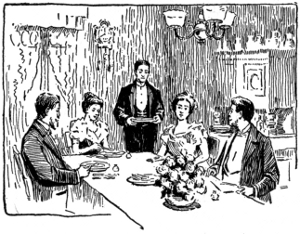
A DINNER PARTY.
When the evening
arrived, eleven
members of the Atwood
family gathered
about the table in
Mr. Smith's capacious
dining room,
the seat of honor
being given to the
mother, Mrs. Atwood. Besides the three married couples,
Frank and Alice Smith, Albert and Mary Fremont, and George
and Lucy Baxter, there were the four unmarried children.
James, the oldest son, was a banker in the city; Walter,
next younger than Lucy, was a student fitting for Columbia
University; Fred and Mabel were still classed as school
children.
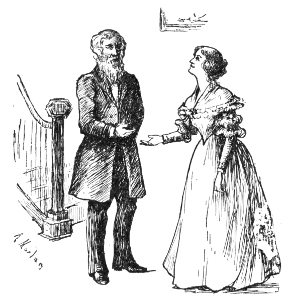
After the trim waiter had brought on the soup, the moment's
quiet was broken by George Baxter, who said to the
hostess: "How good to get back to New York once more, if
only to get a soup that one can eat without burning the
mouth with the sharp condiments. You have no seasoning
at all in the soup, have you, Alice?"
"Oh, yes," replied the hostess," it is a very simple soup,
but there is the usual pepper and salt. What have you been
in the habit of having?"
"I am sure that I could tell what we did not have in some
of our Mexican soups much easier than what we did have. I
should think that there must have been both kinds of pepper,
ginger, garlic, mustard, horseradish, Worcestershire sauce,
and everything else. I cannot understand why people living
in the tropics want to season their food with such hot stuff."
"What do you mean by two kinds of pepper, brother
George?" asked Mabel.
"Cayenne pepper and black pepper," was the reply.
"Oh, yes, I know!" said Fred. "Cayenne pepper comes
from Cayenne in French Guiana. But where do we get black
pepper?"
"Nearly all of it comes from Sumatra," said Mary. "Do
you know where Sumatra is, Mabel?"
"Sumatra is one of the large islands south and southeast
of Asia, which are called the East Indies," replied the schoolgirl.
The conversation had now become general, and Mr. Smith
called attention to the distance that these condiments travel
in reaching us.
"Sumatra is almost exactly on the opposite side of the
earth from us," said he. "Fred, how would the black pepper
be brought to New York from Sumatra?"
"Across the Indian Ocean and the Red Sea, through the
Suez Canal and the Mediterranean Sea, I suppose. But I do
not know whether it would then come straight across the
Atlantic Ocean, or first go to England."
"Usually," said Mr. Smith," it would go to England
first."
"Alice," broke in Mabel," what else is in the soup beside
pepper? Oh, I know, salt. Is salt also brought half-way
round the world?"
"I know where salt comes from," said Fred;" up State.
It is dug out of the ground near Syracuse."
"That is right, Fred," said James. "But New York State
does not supply all the salt used in this country. For years
many ships and barks have come yearly into Gloucester harbor
from Sicily, bringing salt for the fishing-schooners.
Steamers even are being used to bring salt from the Mediterranean
Sea, in order that the Gloucester fishermen may send
salt fish all over our country."
"We must not forget," said Mrs. Smith, "that there is
rice in our soup also. That comes from South Carolina."
Just then the plates were removed and the fish was
brought on.
"This is a rarity," said the hostess. "Can you tell us
what it is, James?"
"I think so. It is halibut, is it not?"
"Why do you call it a rarity?" asked Mary.
"This halibut came from the Grand Banks," said Mrs.
Smith. "I do not understand how they get it here so fresh."
James, who seemed to be quite familiar with the Gloucester
fisheries, said: "The fishermen brought their load of halibut
to the Gloucester wharves last night and immediately loaded
it upon the Boston steamer. Three o'clock in the morning
was its time for sailing, and at six it was being unloaded in
Boston. The six-hour trains brought some of it to New
York in time for our dinner."
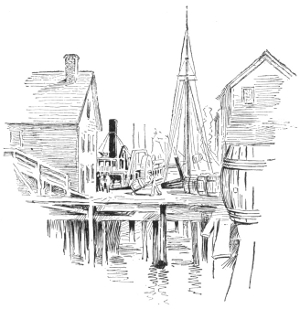
LOADING FISH AT GLOUCESTER.
"Steamers and railroad trains seem necessary for our dinner,
do they not?" said Albert. "But this fish sauce contains
only articles from
nearer home, I am
sure."
"Do not be too
certain of that," said
Mr. Smith. "Alice,
what is there in this
sauce?"
"First, there are
eggs."
"Those came
from our Long Island
farm, of course," said
her husband.
"Then there is
olive oil."
"That comes
from Italy," said Mr. Smith. "That is not a home product.
The olives that you are eating are, of course, from Italy
also."
"I doubt that," said George. "I was just about to remark
that these olives had come from California. I can easily detect
the taste."
"Yes, "the hostess added. "These olives I bought just
to see if George and Lucy would notice that they were not
our usual queen olives. They are said to have come from
Pomona."
"That is a great olive center," said George.
"What else is there in the sauce, Alice?" asked her
husband.
"Pepper and salt, vinegar——"
"Cider vinegar, I suppose," broke in Mrs. Baxter. "How
much nicer apple vinegar is than grape vinegar! Most of the
vinegar that we had in California was made from wine. That
State is becoming a great grape-producing region. But do
you know, Frank, where the apples were grown?"
"No," said Mr. Smith, "but probably they were raised
either in Vermont or New Hampshire. Last year the New
York apple orchards gave but a poor yield, while those of
New England did much better. Probably this season will
prove an off year for Vermont apples, but we shall have all
that we can use in our own State."
"A little lemon ends the list," said the hostess.
"Lemons from Sicily, I suppose," remarked Mr. Baxter.
"Have you tried the California lemons yet?"
"Yes," said Mr. Smith. "We can sometimes get very
fine lemons from California, but not always. If the growers
of lemons were more particular about the quality of the fruit
that they send out, there would be a better trade in California
lemons."
While this conversation was going on, the fish was removed
and a roast of beef was placed on the table, and with
it the vegetables. The different members of the family had
become quite interested in the discussion by this time, and it
was continued as a matter of course.
"This is a good piece of beef," remarked James Atwood.
"What are we going to do for meat when the natural increase
in the amount of land devoted to cultivation uses up all the
grazing regions?"
"You need not fret about that," said Mr. Baxter; "that
will not come in your day. You ought to take a trip through
Texas, New Mexico, and Arizona, through Wyoming and
Montana, or other sections of the Rocky Mountain region,
and you would not fear for our cattle-raising interests."
"Here, again, the railroads are important," said Mr. Fremont.
"What numbers of long freight trains daily come
east, loaded with cattle for
New York and Boston,
and even for Great Britain
and the Continent. The
European consumption of
our cattle is of great and
rapidly growing importance."
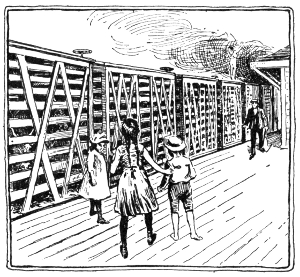
A CATTLE TRAIN.
"These new potatoes
came from the Bermudas,"
remarked the host.
"And the peas from
Maryland," added the
hostess. "Do you not
think that these are remarkably fresh after having been
brought so far?"
"How about the lettuce?" asked James. "That must
have come from some greenhouse."
"Without doubt, though I did not inquire," replied Mrs.
Smith.
Not willing to leave anything out of the conversation,
Mabel here inquired about the macaroni and tomatoes.
"The macaroni comes from Italy," replied her sister
Mary. "Much of it is shipped from Genoa, the city which
claims to have been the birthplace of Columbus. You would
find it interesting, Mabel, to read about the production and
preparation of macaroni."
"The tomatoes were canned on our farm last autumn,"
said Mrs. Smith. "We think them much superior to any
that we can buy."
After this the conversation turned upon the bread. There
were two kinds, white and brown. One of the ladies remarked
that she never ate white bread; bread from whole wheat flour
was so much more wholesome. Another said that graham
bread was good enough for her. They talked about the
white flour, made in Minneapolis, from Dakota wheat.
They spoke of the Indian meal made from corn grown in
Iowa. They wondered why so little rye was used in this
country, since it is the staple grain in Russia. They then
inquired concerning the other substances used in making the
two kinds of bread.
"Where does the butter come from?" asked Mrs. Fremont.
"This particular box is marked from Delaware County,
New York," replied the hostess. "Most of the creameries
that send butter to New York City are located at some distance
from the railroads. The farms nearer the railroads send all
their milk to the city. But the farmers that are too remote
profitably to send in the milk make the cream into butter
and cheese. They then feed the buttermilk to the pigs."
"That is a new thought to me," said James. "So it seems
that some products are made only where there are no railroads."
"Or where there is no great city within a few hundred
miles," added Walter.
"I suppose there is molasses in this brown bread," said
Lucy Baxter.
"Molasses comes from Porto Rico," said Mabel, who was
studying the West Indies just at this time in her geography
lessons at school.
"Some of it," said her oldest sister. "But most of the
sugar comes from Cuba."
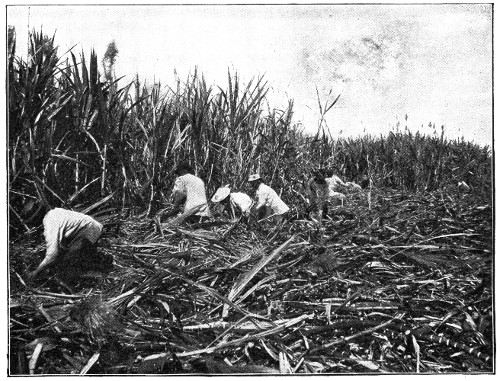
"But not all," said James. "This sugar has been traveling
for nearly two weeks to reach New York. First a sea
voyage of more than two thousand miles, and then a railroad
journey of more than three thousand miles, and yet the section
where it grew is a part of the United States."
"It must have come from Honolulu then," said Walter.
"I wonder whether the Sandwich Islands, being now a part
of the United States, will interfere with the raising of sugar cane
in our Southern States?"
"Very little probably, but now that the United States
possesses Hawaii and Porto Rico, it will scarcely be necessary
for us to import any sugar and molasses," said Fred.
When the dessert and fruit were brought on, new subjects
for conversation were found.
"What do you call this pudding, Alice?" asked her husband.
"It is a peach-tapioca pudding," was the reply. "The
peaches are from Delaware; canned, of course."
"Here, again, the West Indies are represented," said
James; "the tapioca came from Hayti."
"And the East Indies also," added Walter, "for I taste
nutmeg, which comes from the Molucca Islands. These
islands furnish such an amount of spice that they are commonly
called the Spice Islands."
The discussion of foods continued throughout the dinner.
The oranges, almost the last of the season, had been brought
from California. Florida oranges were scarce that year. The
bananas were from Mexico and almost a luxury. The war
with Spain had destroyed trade with Cuba, from which island
the great bulk of bananas had usually come.
Among the nuts were almonds that had been imported
from Italy, filberts that had been sent across the ocean from
England, and walnuts that had come from California. Finally
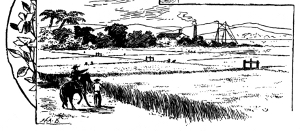
the coffee was from the island of Java.
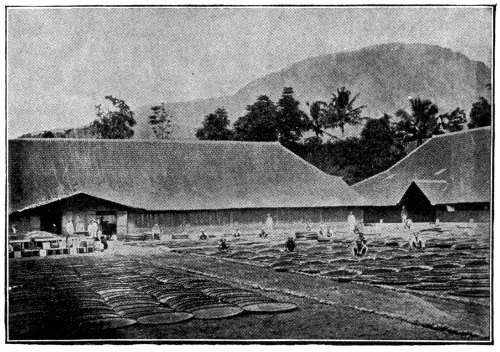
DRYING COFFEE IN JAVA.
Before the dinner party broke up, Mr. Smith reviewed
the facts which had been learned in the conversation. He
especially called attention to the small number of articles
that are not profitably raised in the United States.
"We should miss our coffee very much," he said, "if our
country were blockaded at any time. The loss of the banana
would be the loss of a luxury. Had we no macaroni or
tapioca we should still have enough to eat. Perhaps our
taste would become more natural were we deprived of pepper.
No other of the foods on this table should we be entirely
deprived of, even were we separated wholly from the
rest of the world. California could furnish us with olives,
lemons, and almonds, as well as Italy does. We need not
go to England for filberts, and even if we had not of late
obtained new colonies, we could produce in time all the sugar
we needed to supply the entire country. No other nation in
the world is so well prepared to furnish its own food."
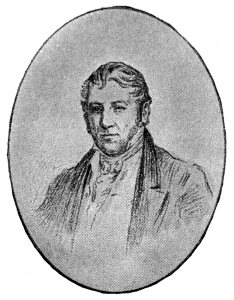
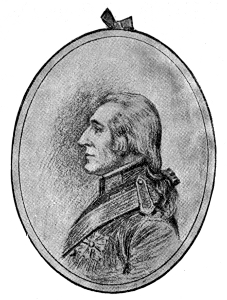
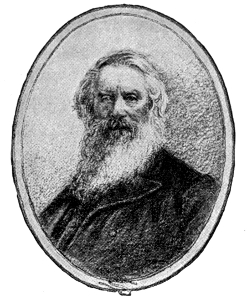
ELI WHITNEY.
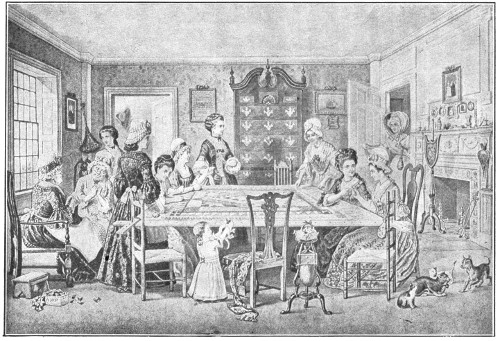
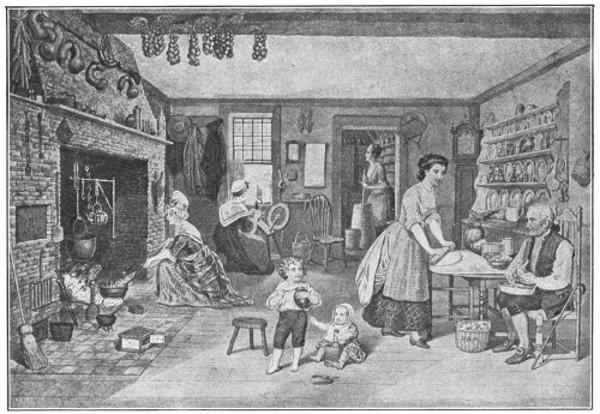
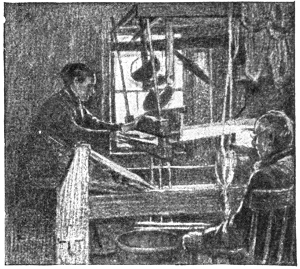
A QUILTING BEE IN THE OLDEN TIME.