Herbs with watery or resinous sap and alternate, opposite or basal
leaves; flowers perfect, pistillate or neutral; borne on a common
receptacle forming heads, surrounded by an involucre of few to many
bracts in one or more series; calyx tube attached to the top of the
ovary, the limb (pappus) of bristles, awns, teeth, scales, crown-like
or wanting; corolla tubular, usually 5-lobed or -cleft, the marginal
flowers frequently expanded into a ligule (ray); when the ray flowers
are absent the head is said to be discoid, when present, radiate; the
tubular flowers form the disc. The largest of all the families of
flowering plants comprising about 760 genera and not less than 10,000
species, represented in the region by the following:
| Anthers not tailed at the base; heads rayed or rayless. |
| Style branches of the perfect flowers flattened, with terminal appendages. |
| Rays yellow or sometimes wanting. |
|
| Pappus double, the outer very short. |
Chrysopsis. |
| Pappus simple; panicle compact. |
Solidago. |
| Rays white, purple, or blue, rarely wanting. |
|
| Involucral bracts in 1—2 series, narrow; rays usually narrow and numerous. |
| |
Erigeron. |
| Involucral bracts in 2—5 series; rays broader and less numerous. |
|
| Scales of the involucre dry, papery and appressed. |
Eucephalus. |
| Scales of the involucre more or less herbaceous, and spreading. |
Aster. |
| Style branches of the perfect flowers straight edged or with hairy tips. |
| Involucre not scarious. |
|
| Pappus never capillary; receptacle chaffy or bristly. |
|
| Receptacle conic, chaffy; pappus none. |
Rudbeckia. |
| Receptacle flat, chaffy; tall herbs; pappus 2 scales. |
Helianthus. |
| Receptacle bristly; pappus a crown of scales |
Gaillardia. |
| Pappus capillary. |
|
| Leaves all or mostly opposite. |
Arnica. |
| Leaves alternate. |
|
| Flowers white or pinkish; leaves large. |
Petasites. |
| Flowers yellow, leaves small. |
Senecio. |
| Involucre scarious. |
|
| Receptacle chaffy; rays short. |
Achillea. |
| Receptacle naked; rays conspicuous. |
Chrysanthemum. |
| Receptacle naked; rays none. |
Artemisia. |
| Anthers with tails at the base; heads without rays. |
|
| Receptacle not bristly; corolla not deeply cleft. |
|
| Pappus hair-like in pistillate flowers; club shaped in staminate. |
Antennaria. |
| Pappus of all the flowers similar. |
Anaphalis. |
| Receptacle long bristly; corolla deeply cleft. |
|
| Leaves and usually the involucral bracts prickly |
Carduus. |
| Leaves and involucral bracts not prickly. |
Saussurea. |
Chrysopsis hispida (Hook.) Nutt. Hispid Golden
Aster.
Stems numerous from a woody rootstock, rough-hairy throughout,
spreading, 6—12 inches long. Leaves spatulate to oblong, entire,
spreading, ¾—1½ inches long, obtuse at the apex, narrowed at the base,
often into petioles half as long as the blade or more. Heads very
numerous, about ½ an inch broad; involucre less than ½ an inch high,
its bracts lanceolate, rough-hairy; ray flowers bright yellow, ¼ of an
inch or more long.
In dry soil through the lower valleys throughout the Rockies; flowering
in midsummer.
Solidago multiradiata Ait. Northern Goldenrod.
Stems smooth or somewhat hairy above, slender, 6—15 inches high.
Leaves firm, smooth or nearly so, the basal and lower ones spatulate
or oblanceolate, entire or sparingly serrate, obtuse, finely
reticulate-veined, 3—5 inches long, the upper smaller and narrower,
entire. Heads about ⅓ of an inch high, usually few in a rather compact
terminal cyme; bracts of the involucre thin, linear-lanceolate, acute,
smooth; rays 8—15, large.
On open hillsides throughout the region; flowering in July.
Solidago decumbens Greene. Field Goldenrod.
Stems clustered at the summit of a strong, perpendicular root, stout,
decumbent, 6—18 inches high, usually dark red and sparsely hairy.
Leaves spatulate-obovate to oblanceolate, obtuse or acutish, more
or less distinctly serrate toward the summit, upper cauline leaves
similar but few and reduced, all rough on the margins. Heads large in
a thyrsoid panicle; bracts of the involucre glandular-viscid, linear,
obtuse, of firm texture, nerved; rays large.
Solidago missouriensis Nutt. Missouri
Goldenrod.
Smooth, rather slender, 3—5 feet high. Leaves firm or thick, those of
the stem linear-lanceolate and sessile, acuminate at the apex, narrowed
at the base, 2—4 inches long, rough-margined, triple-nerved, entire
or sparingly serrate with low sharp teeth, the basal and lowest ones
longer, spatulate and petioled. Heads ⅛—¼ of an inch high on one side
of the spreading or recurving branches of the short panicle; bracts of
the involucre oblong, greenish-tipped, obtuse; rays 6—13, short.
In dry soil on the edges of woodland at the lower altitudes throughout
the Rockies; flowering in August.
Solidago canadensis L. Canada Goldenrod.
Stout, rough-hairy or slightly so, 2—8 feet high. Leaves lanceolate,
triple-nerved, acute at each end, the lower ones sharply serrate and
petioled, 3—6 inches long, ⅓—1 inch wide, the upper smaller, entire.
Heads small, ⅛ of an inch or less high, very numerous on one side of
the spreading or recurved branches of the usually large and dense
panicle; involucral bracts linear, obtuse or acutish; rays 9—15 small.
In open usually dry soil at the lower altitudes throughout the Rockies;
flowering during July and August.
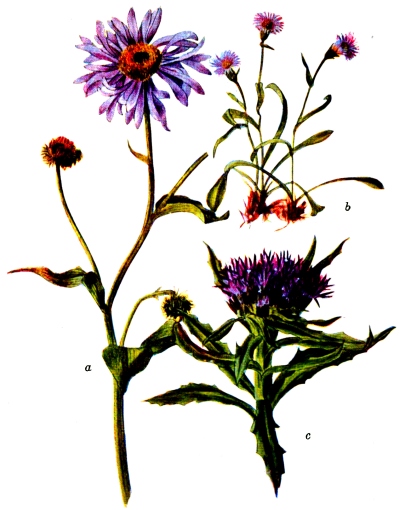
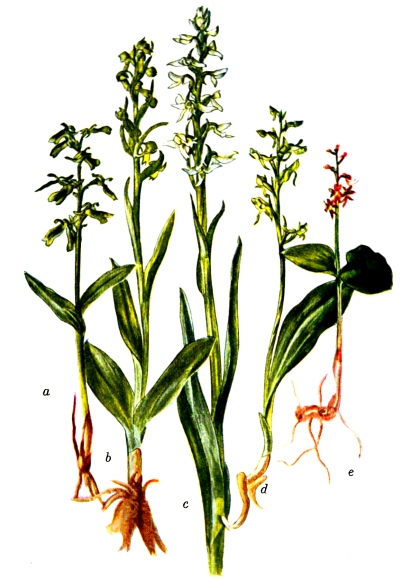
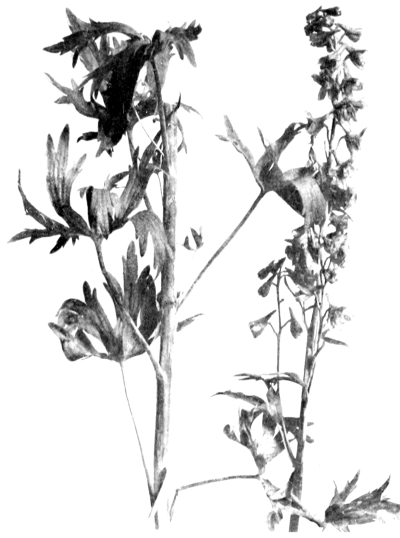
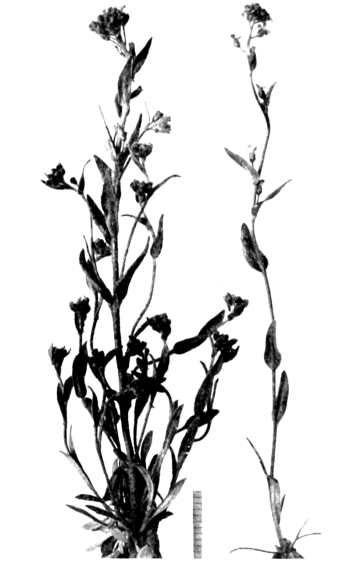
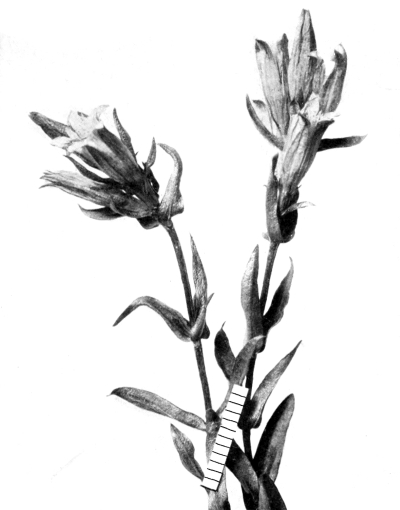
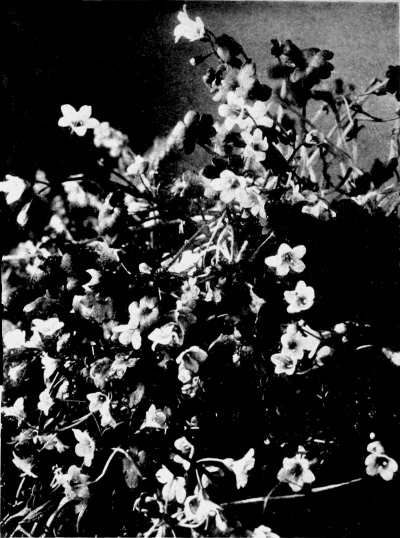
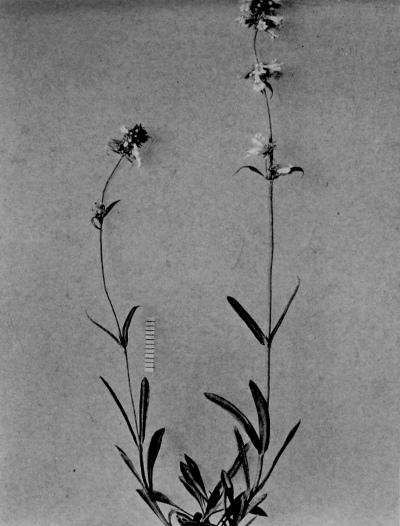
a Erigeron salsuginosus (Rich.) A. Gray.
Large Purple Fleabane.
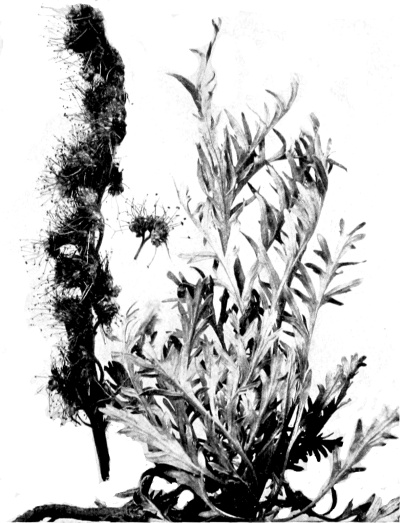
b Erigeron acris L. Blue Fleabane.
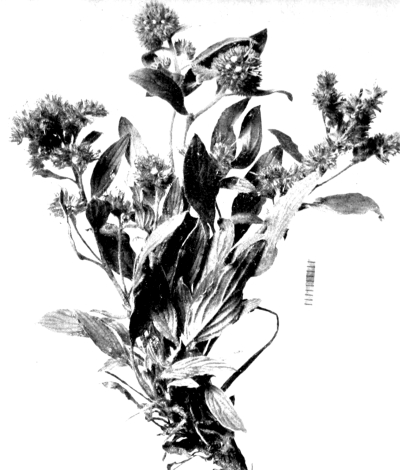
c Saussurea densa Hook. Saussurea. (⅗ Nat.)
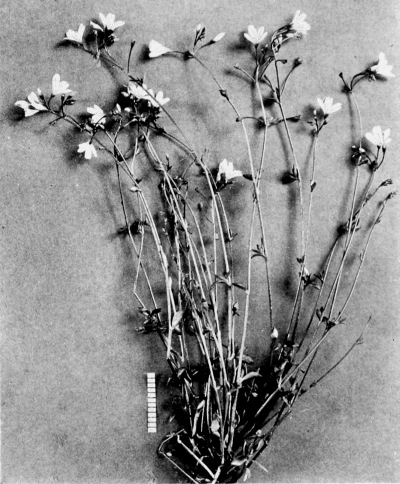
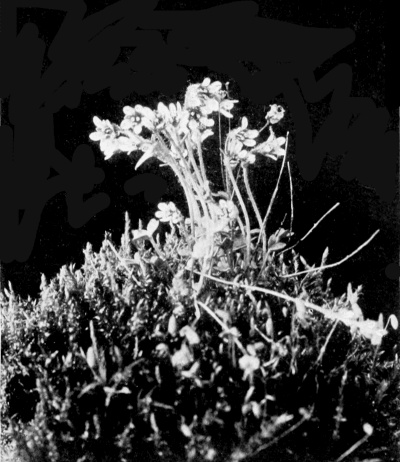
Erigeron simplex Greene. Arctic Fleabane.
Stems 1—6 inches high, several from the same root. Leaves few, the
basal spatulate or oblanceolate, 1—2 inches long; stem leaves linear
and few. Heads ⅓ of an inch in diameter, solitary; involucre usually
rough-hairy as well as woolly, bracts linear acute, rather close, rays
¼—⅓ of an inch long, white, very numerous.
An alpine plant in dry ground at the higher elevations, among stones
and on the moraines, flowering in July.
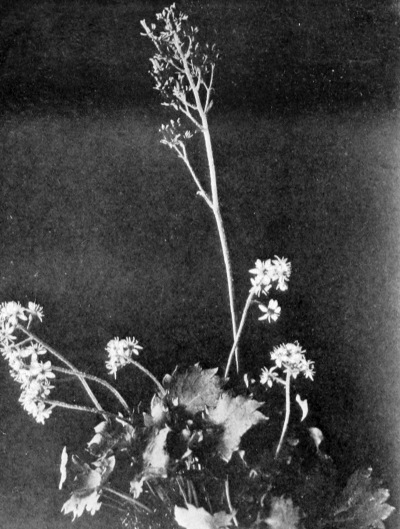
Erigeron salsuginosus (Richards) A. Gray. Large
Purple Fleabane.
Soft hairy above, 12—20 inches high. Leaves smooth, thick,
bright green, spatulate or nearly ovate, acute or conspicuously
bristle-tipped, the uppermost small and bract-like. Heads over 1½
inches in diameter; rays 50—70, purple or violet, ½—¾ of an inch
long; disc bright yellow; involucral bracts linear, attenuate and
spreading, glandular-hairy.
A most striking violet or purple daisy on moist banks, slopes, and in
moist, open woodlands; flowering during July.
Erigeron asper Nutt. Rough Fleabane.
Stem simple or branched above, more or less hairy, sometimes roughly
so, 6—24 inches high. Leaves smooth, hairy or fringed on the margin
with hairs, entire, the basal ones spatulate, obtuse, 2—4 inches long,
narrowed into a margined petiole; stem leaves oblong-lanceolate or
linear-lanceolate, obtuse or acute, the upper smaller. Heads several or
solitary, slender peduncled, ⅓—½ an inch broad; involucre hemispheric,
its bracts linear, acute, or rough-hairy; rays 100—150, very narrow,
violet-purple or nearly white, ⅓ to nearly half an inch long.
In dry soil in the lower valleys and slopes of the Rockies; flowering
in July.
Erigeron cæspitosus Nutt. Tufted Fleabane.
Stems tufted, closely white-hairy from a deep root; simple or
branched above, 6—12 inches high. Leaves white-hairy, entire,
narrowly oblanceolate or spatulate, obtuse or acutish, 1—3 inches
long; stem-leaves linear or linear-oblong, acute or obtuse, the
upper gradually shorter. Heads solitary or several, short-peduncled,
⅓—½ an inch broad; involucre hemispheric its bracts lanceolate or
linear-oblong acute, white-hairy; rays 40—60, ¼—⅓ of an inch long,
white or pinkish.
In dry open places in the Rockies at the lower altitudes, a pretty
tufted plant resembling an Aster; flowering during July.
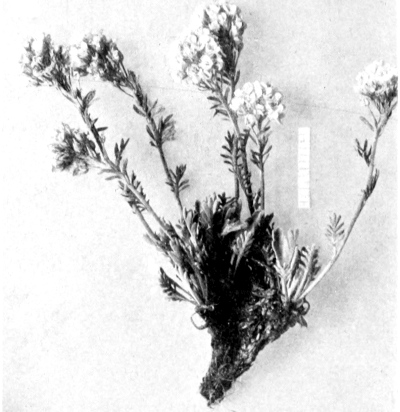
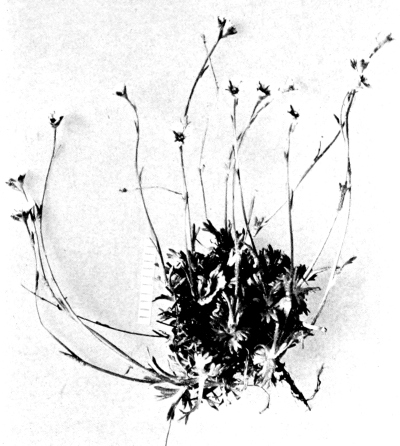
Erigeron multifidus Rydb. Daisy Fleabane.
Rough-hairy or somewhat smooth, stems slender, numerous, 3—6 inches
high. Leaves crowded on the crowns of the caudex, usually twice
ternately parted into linear or spatulate hairy lobes; an inch long or
less including the petiole; stem-leaves narrow or scale-like. Flowers
solitary at the top of the nearly leafless hairy stem; involucre ¼ of
an inch high and nearly ½ an inch in diameter, outer bracts shorter and
spreading; rays 40—60, white, purple or violet, from ⅛ to nearly ½ an
inch long.
On dry rocks throughout the Rockies up to 6000 feet elevation or above,
flowering during June or July.
Erigeron multifidus discoideus (A. Gray.) Rydb., differing from
the species in the entire absence of ray flowers and smaller heads,
and Erigeron multifidus nudus Rydb., differing from the species
in being almost entirely smooth except a few hairs on the petioles
and involucral bracts, are found in similar localities throughout the
Rockies, often growing with the species and frequently much more abundant.
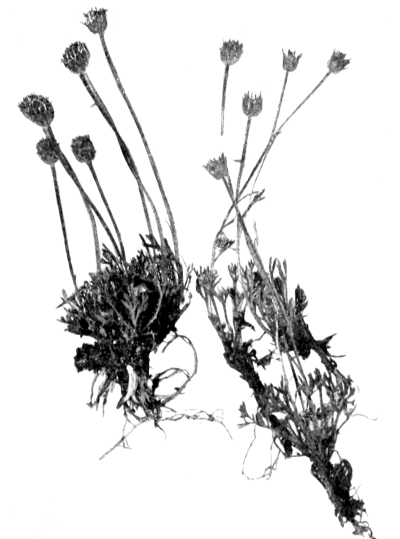
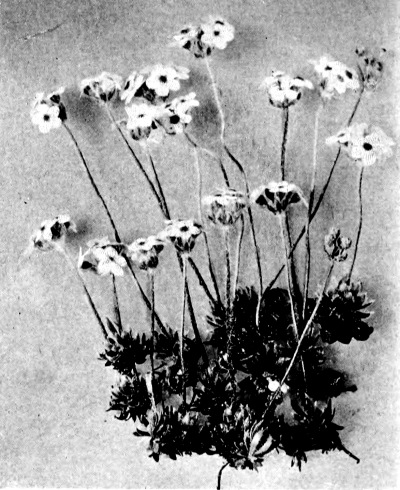
Erigeron discoideus Rydb.
Erigeron multifidus Rydb.
(½ Nat.)
Cut-Leaved Fleabane.
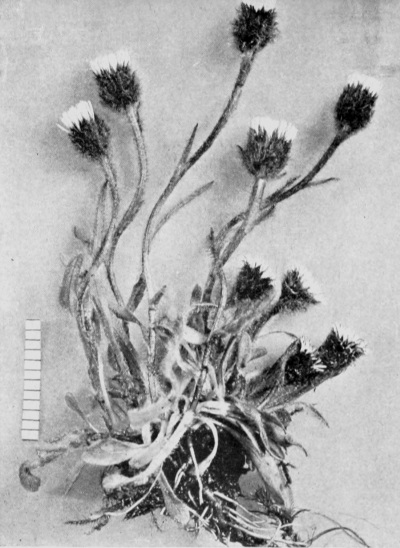
Erigeron melanocephalus A. Nelson.
(¾ Nat.)
Black-Headed Fleabane.
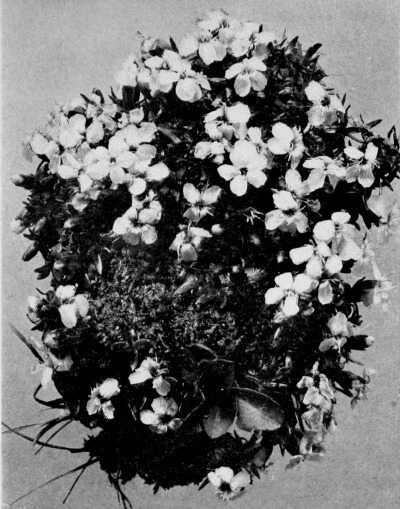
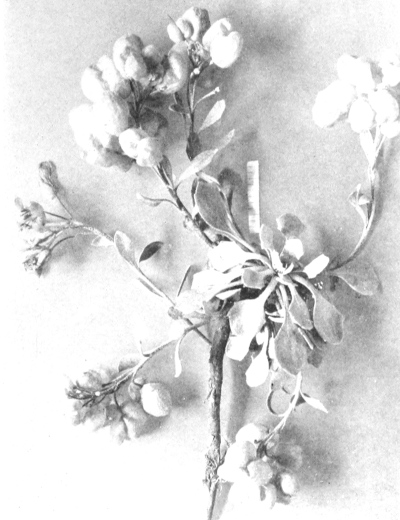
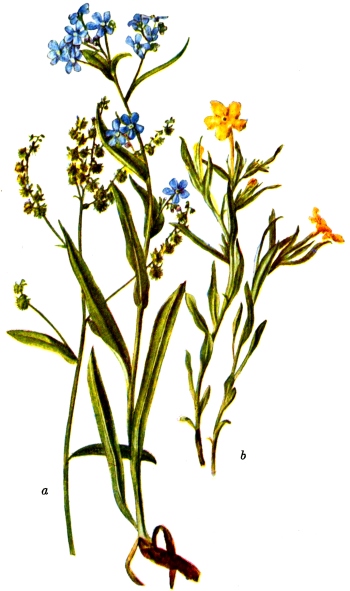
Erigeron aureus Greene Golden Fleabane.
Ashy-hairy, 3—6 inches high from a tufted caudex. Leaves ovate,
spatulate or roundish, an inch or more long, contracted into a petiole;
stem leaves ¼ of an inch long, few, and very narrow. Flowers solitary,
about ⅓ of an inch high and broad; involucre usually reddish or
purplish, covered with woolly hairs; bracts nearly equal, lanceolate,
rather loose; rays numerous, ¼—⅓ of an inch long, deep golden yellow.
In open ground on alpine meadows and among rocks, at the higher altitudes,
throughout the region; a striking little plant, flowering in July.
Erigeron melanocephalus A. Nelson. Black-woolly
Fleabane.
Stems few or several, slender, erect, 2—6 inches high, with
purplish-black hairs. Leaves numerous, elliptic or narrowly oblong,
¾—1½ inches long, nearly smooth; stem leaves broadly linear,
acuminate, ¾—1 inch long, hairiness similar to that of the stem. Head
solitary, ⅓ of an inch broad; involucral scales nearly equal, with
attenuate tips, densely covered with purplish-black wool; rays 50—60,
white or pinkish, ⅛ of an inch long.
In open stony or more or less grassy ground at the high altitudes;
flowering during July.
Erigeron acris L. Blue Fleabane.
More or less hairy, varying to smooth, 3—18 inches high, simple or
branching. Leaves spatulate or lanceolate, obtuse, 1—3 inches long,
hairy and entire. Heads ¼ of an inch or more broad, single or several,
more or less paniculately disposed; involucre hemispheric, its bracts
linear and hairy; rays numerous, very narrow, only slightly exceeding
the yellow disc, blue or purple.
In dry stony ground and slopes throughout the region, very variable as
to size; flowering during July.
Erigeron drobrachiensis O. Muell.
Nearly or quite smooth, 1—2 feet high, usually paniculately branched.
Leaves spatulate to lanceolate, acute, rather numerous. Heads on
peduncle-like branches, an inch or more long, involucre, ⅓ of an inch
or more broad, scales narrowly lanceolate, attenuate and glandular,
green; rays numerous and thread-like, pink, but slightly exceeding the
disc.
On banks and more or less shaded places at the lower altitudes
throughout the Rockies; flowering during July.
Erigeron philadelphicus L. Philadelphia
Fleabane.
Soft-hairy or sometimes nearly smooth, stems slender, mostly branched
above, 1—3 feet high. Leaves spatulate or obovate, obtuse or acute,
dentate or entire, 1—3 inches long. Heads several or numerous,
corymbose-paniculate, ¼—⅓ of an inch broad; involucre depressed
hemispheric, its bracts linear with roughened margins; rays 100—150,
¼—⅓ of an inch long, bright rose-colour.
In open grassy and wet places at the lower altitudes, throughout the
Rockies; flowering in June and July. This species, the most widely
distributed of any member of the genus, is found throughout North
America; though locally rare, where found it is usually in great abundance.
Aster Richardsonii Spreng. Richardson’s Aster.
Hairy, often much branched from the base, 3—12 inches high. Leaves
oblong, spatulate to broadly lanceolate, more or less sharply serrate,
an inch or more long. Heads solitary, terminating the stem or branches;
involucre broadly campanulate, ¼ of an inch high, shorter than the
disc; the bracts narrowly lanceolate, with mostly acute and loose
herbaceous tips; rays nearly half an inch long, violet-purple.
In gravelly ground and river bottoms frequent in the region; flowering
during July.
Aster conspicuus Lindl. Large Purple Aster.
Rough, stout, and rigid, 2 feet high. Leaves firm, ovate, oblong,
or the lower obovate, acute, 4—6 inches long, 1½—4 inches broad,
acutely serrate, reticulate-veiny. Flowers numerous in a broad head,
involucre, broadly campanulate, equalling the disc, half an inch high;
bracts in several series, minutely glandular, lanceolate, acute, the
greenish tips a little spreading; rays ½ an inch long or more, violet.
The most showy of all the Asters, frequent in the Rockies at the lower
altitudes, on slides and on gravelly river banks, forming great masses
of colour when flowering in late July and early August.
Aster major (Hook) Porter. Great Northern
Aster.
Stem stout, leafy to the summit, densely long-hairy, or rarely smooth,
branched above, 2—6 feet high. Leaves rather thin, lanceolate, partly
clasping by a narrowed base, acuminate at the apex, sharply serrate
with low distant teeth, dark green and lightly hairy above, densely
soft-hairy on the veins beneath, 3—5 inches long, ½ to nearly an inch
wide. Heads mostly solitary, at the ends of short branches, 1½ inches
broad; involucre hemispheric, its bracts little imbricated, green,
linear-subulate, densely glandular; rays 35—45 purple, about ½ an inch long.
In moist soil in the valleys of the Selkirks; flowering during August.
Aster Lindleyanus T. & G. Lindley’s Aster.
Stem usually stout, smooth, or sparingly hairy, 1—3 feet high,
branched above. Leaves rather thick, smooth or slightly hairy,
especially on the veins, the lower and basal ones heart-shaped at the
base, sharply serrate, ovate-acute or acuminate, 2—4 inches long, with
slender, naked petioles; upper leaves ovate-lanceolate or lanceolate,
more or less serrate or entire, sessile or with margined petioles.
Heads usually not numerous, ⅓ of an inch or more high; involucre
broadly top-shaped; bracts linear-lanceolate, acute, rather loosely
imbricated, smooth or nearly so, their tips green, rays 10—20, blue or
violet, ¼—½ an inch long; pappus nearly white.
In open places and along the rivers throughout the region; flowering
during July and August.
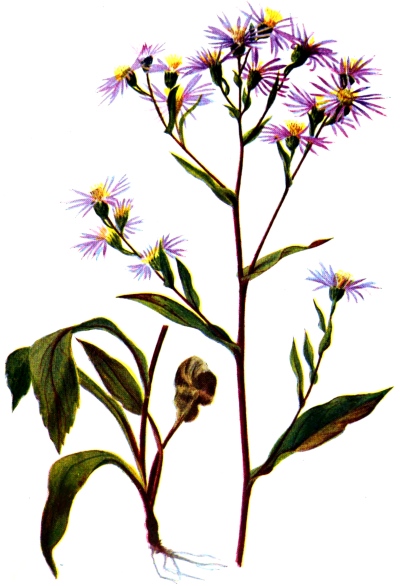
Aster Lindleyanus T. & G. (⅔ Nat.)
Aster ciliomarginatus Rydb.
Stems 1—2 feet high, round, slightly striate and tinged with red,
smooth below, more or less hairy in lines above. Basal leaves smooth
except the hairy-fringed margins, thin, distantly serrate or subentire,
tapering into wing-margined petioles, oblanceolate-acute, 4—8 inches
long; the upper oblong or lanceolate sessile. Heads about ½ an inch
high, ½—¾ of an inch in diameter, rather few in an open panicle;
involucral bracts linear, fringed with hairs on the margins, the upper
part foliaceous and the outer somewhat spreading; rays numerous ½ an
inch long, light blue.
In moist, more or less shaded places, edges of woods and thickets,
throughout the Rockies; flowering in late July and August.
Aster frondeus (A. Gray) Greene. Leafy-bracted
Aster.
Simple, stem smooth, with sparing, erect, flowering branches. Leaves
few, broadly lanceolate to oblong or spatulate, entire or nearly
so, the lower tapering into winged petioles. Heads solitary or few,
on naked peduncles; involucre ⅓ of an inch high, or less; bracts
linear-lanceolate, loose, all equalling the disc; rays violet or
purple, nearly ½ an inch long.
In wet places and along streams throughout the Rockies; flowering
during July and August.
Eucephalus Engelmanni (D. C. Eaton) Greene.
Engelmann’s Aster.
Slightly hairy or smooth, simple or somewhat branched, 18 inches
to 2 feet high, bright green. Leaves thin, ovate-oblong to broadly
lanceolate, 2—4 inches long, loosely veined, tapering at the apex
into a slender-spined tip, the larger sometimes with a few small acute
teeth. Heads ½ an inch high, hemispherical, either racemosely disposed
on slender axillary peduncles, or somewhat cymose; involucral bracts
mostly acute or acuminate, some outer ones loose, narrow, and partly
herbaceous, or with loose pointed tips; inner purplish; rays about ½ an
inch long, spreading, violet or pinkish.
In open woods and on slopes, principally in the Rockies at the higher
elevations; flowering during July.
Rudbeckia hirta L. Black-eyed Susan, Yellow
Daisy.
Rough-hairy throughout, stems simple or sparingly branched, often
tufted, 1—3 feet high. Leaves thick, sparingly serrate with low teeth
or entire, lanceolate or oblong, the lower and basal ones petioled,
mostly obtuse, 3—5-nerved, 2—7 inches long, ½—2 inches wide, the
upper sessile, narrower, acute or acutish. Heads commonly few or
solitary, 2—4 inches broad; rays 10—20, deep yellow or orange; bracts
of the involucre very rough-hairy; spreading or reflexed, much shorter
than the rays; disc globose-ovoid, purple-brown.
Throughout the region, not infrequent along the railway from Field west
to the valley of the Columbia at Beavermouth; flowering in July and August.
Helianthus scaberrimus Ell. Stiff Sunflower.
Stems simple or a little branched, rough-hairy or only slightly so,
1—8 feet high. Leaves thick, leathery, serrate, rough-hairy on both
sides, 2—7 inches long, ½—2 inches wide, acute at the apex, narrowed
at the base, the lower ovate or ovate-oblong, petioled, the upper
lanceolate or oblong-lanceolate, sessile or short-petioled, all
opposite, or the uppermost bract-like and alternate. Heads solitary or
few, 2—3 inches broad, involucre hemispheric, its bracts ovate, acute
or obtuse, fringed with hairs; disc brown or purple; rays 15—25, light
yellow.
Frequent along the railway in the valley of the Kicking Horse River and
in the valley of the Columbia at Beavermouth; flowering in August.
Helianthus Nuttallii Torr and Gray. Nuttall’s
Sunflower.
Stem smooth, except the summit which is soft-hairy, slender, mostly
simple, 2—4 feet high. Leaves rough on both surfaces, lanceolate or
the upper linear, 3—6 inches long, ¼—¾ of an inch wide, frequently
opposite, serrulate or entire. Heads ½ an inch high, scattered; bracts
of the involucre linear-lanceolate with a subulate tip, hairy at the
base; rays narrow, acute, deep yellow, 1—1½ inches long.
In moist grounds and on river banks throughout the Rockies at the lower
altitudes; flowering during July.
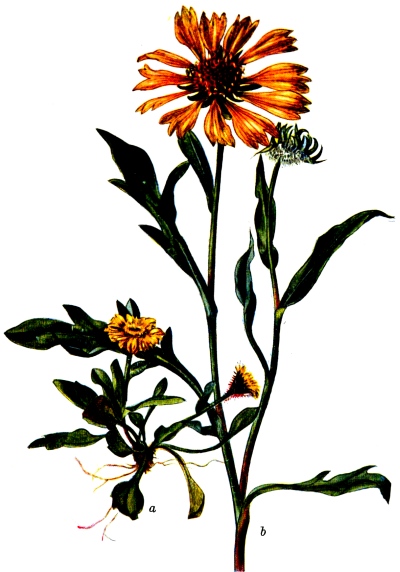
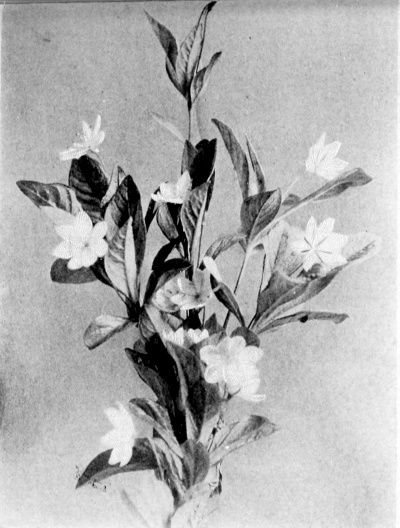
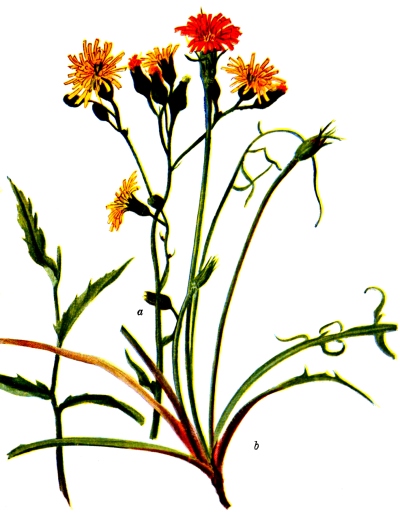
a Erigeron aureus Greene.
Golden Fleabane.
b Gaillardia aristata Pursh. (⅗ Nat.)
Great-flowered Gaillardia.
Gaillardia aristata Pursh.
Great-flowered
Gaillardia.
Rough-hairy, stems simple or little branched, 1—3 feet high. Leaves
firm, densely and finely hairy, the lower basal ones petioled, oblong
or spatulate, laciniate-pinnatifid or entire, mostly obtuse, 2—5
inches long; upper leaves sessile, lanceolate or oblong, entire or
dentate, rarely pinnatifid. Heads 1½-4 inches broad, long peduncled;
bracts of the involucre spreading, lanceolate, acuminate, rough-hairy,
rays 10—18, bright yellow, wedge-shaped, deeply 3-lobed; disc
reddish-purple.
One of the most showy of the midsummer plants, in the lower valleys of
the Rockies, in dry ground and on slopes, especially in the Bow Valley
at Banff and in the open country around Golden.
Arnica cordifolia Hook. Heart-leaved Arnica.
Somewhat hairy, stem simple or sparingly branched, 1—2 feet high.
Leaves hairy, the basal ovate or orbicular, obtuse or acute, deeply
cordate at the base, dentate, 1—3 inches long with slender sometimes
margined petioles; stem leaves in 1—3 pairs, ovate or oblong, sessile
or short-petioled, much smaller. Heads 1—8, 2—3 inches broad, bracts
of the involucre, acute or acuminate, ½—¾ of an inch long; rays 12—16,
deep yellow, an inch or more long, toothed at the apex; pappus white.
In woods and thickets at the lower altitudes throughout the Rockies;
flowering in June.
Arnica gracilis Rydb. Slender Arnica.
Smooth, slender and branched, 6—12 inches high. Leaves with short
glandular hairs on both surfaces or smooth, the basal broadly ovate,
petioled, dentate, 3-ribbed; stem-leaves about 2 pairs, similar, the
upper sessile. Heads several on slender glandular peduncles, disc ½ an
inch or less high; involucral bracts, 12—15, lanceolate, acuminate,
glandular-hairy as are also the seeds; pappus white; rays about ¾ of an
inch long, narrow, bright yellow with a single notch at the apex.
On alpine slopes throughout the Rockies; flowering in July, not common.
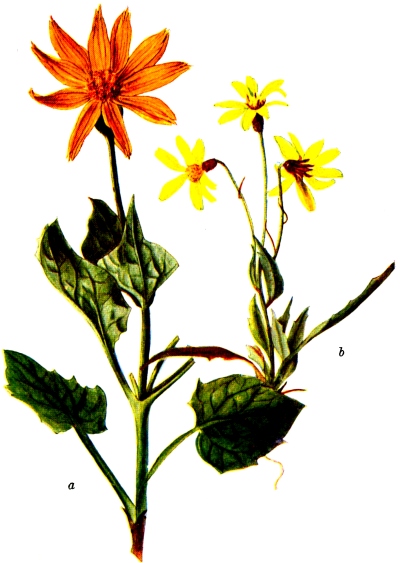
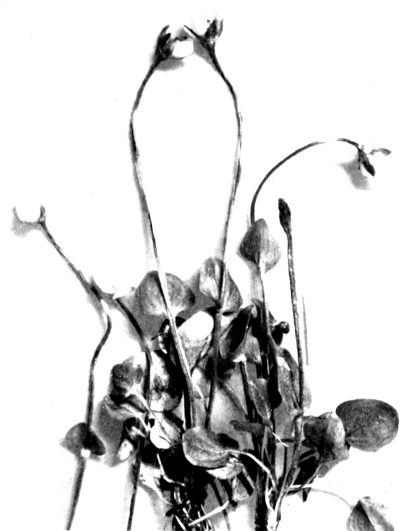
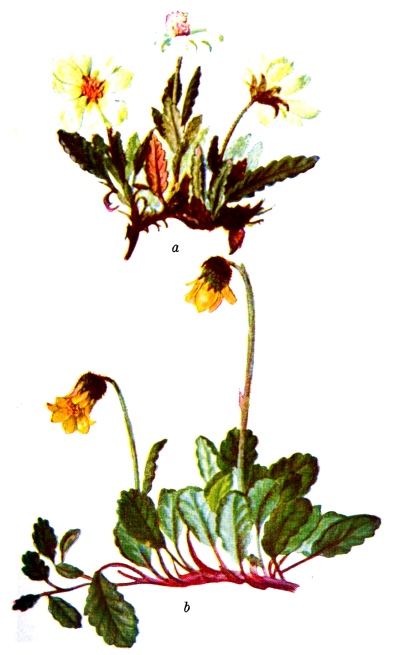
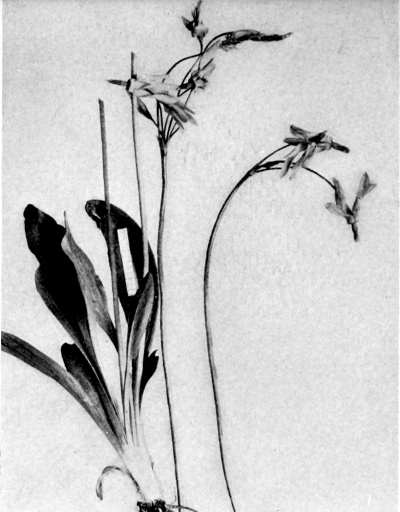
a Arnica cordifolia Hook. Heart-Leaved Arnica.
b Arnica louiseana Farr. Pale-Flowered Arnica.
(⅗ Nat.)
Arnica latifolia Bong. Broad-leaved Arnica.
Minutely hairy or nearly smooth, simple or branched. Leaves thin,
nearly smooth, or with long scattered hairs; the lower cordate; stem
leaves in 2—3 pairs, equal, ovate or oval, sharply dentate, closely
sessile by the broad base, or the lowest with contracted bases. Heads
¾ of an inch high on long, slender, hairy peduncles; involucral bracts
½ an inch or more long; oblong-lanceolate, acuminate, with scattered
hairs, rays yellow, ¾ of an inch long, with 2 notches at the apex;
achenes nearly smooth; pappus white.
Throughout the region in woods and open ground usually at an elevation
of 5000 to 7000 feet; flowering during July.
Arnica Chamissonis Less. Chamisso’s Arnica.
From lightly hairy to densely so or nearly smooth, 1—2 feet high.
Leaves rather thin, hairy, oblong to oblong-lanceolate, dentate or
denticulate, acute or obtuse, lowest tapering into a margined petiole,
upper broad at the base and somewhat clasping. Heads ½ an inch or more
high, single or several on hairy peduncles; involucral bracts ⅓ of an
inch or more long, oblong-lanceolate, acuminate, glandular-hairy; rays
bright yellow, ½ an inch or more long with a single notch at the apex,
rather broad; achenes with a few scattered hairs; pappus tawny.
On the borders of streams and wet places at the lower altitudes
throughout the region; flowering in July.
Arnica louiseana Farr. Pale-flowered Arnica.
Slender, hairy, 3—8 inches high. Leaves in about 3 pairs, the two
lowest at the base of the stem, 1½—2 inches long, elliptical or
obovate, entire or denticulate, glandular-hairy on both surfaces, as
are the margins. Heads of flowers, 1—3, nearly half an inch broad,
on long, slender, nodding, hairy peduncles; rays 8—10, light yellow,
about ½ an inch long; involucre ⅓ of an inch high, campanulate, densely
glandular-hairy at the base, brownish-purple, the bracts lanceolate,
acute, with scattered white hairs; pappus white.
Among loose stones at the base of Mt. Fairview at Lake Louise;
flowering in July.
Arnica fulgens Pursh. Alpine Arnica.
Glandular-hairy throughout, 8—12 inches high. Leaves oblong lanceolate
to lanceolate, acute, the lower denticulate and petioled, the upper
sessile and entire. Heads of flowers several on long, slender,
glandular-hairy peduncles; involucres campanulate, ½ an inch high,
bracts lanceolate acute, glandular and with long white hairs; rays
bright yellow ¾—1 inch long, ¼ of an inch wide, twice notched at
the apex; achenes hairy; pappus white.
On stony alpine slopes at the higher altitudes throughout the Rockies;
flowering in July.
Arnica eradiata (A. Gray.) Heller. Rayless
Arnica.
Densely soft-hairy throughout; simple or branched, 12—18 inches high.
Leaves oblong, ovate-lanceolate or the upper ones lanceolate, obtuse
or acute, entire or sharply denticulate, 1—3 inches long. Heads of
flowers on short, hairy peduncles, without rays; involucre ½ an inch
high, bracts lanceolate, acute; achenes black, smooth or nearly so;
pappus tawny.
On grassy alpine slopes through the Rockies at the higher elevations;
flowering in July.
Senecio pseudaureus Rydb. Western Golden
Ragwort.
Smooth from a creeping rootstock, 1—2 feet high. Leaves smooth,
basal broadly ovate, somewhat cordate, serrate, 1½—3 inches long,
long-petioled; stem leaves more or less laciniate at the base, the
upper sessile. Heads of flowers ⅓ of an inch high in a flat-topped
corymb, rays bright orange-yellow, ⅓ of an inch long.
In moist ground and borders of woods and slopes throughout the Rockies
at the lower altitudes; flowering during June and early July.
Senecio discoideus (Hook.) Britton. Northern
Squaw-root.
Smooth except for the small tufts of wool in the axils of the lower
leaves; stem rather stout, 1—2 feet tall. Basal leaves oval or ovate,
thin, sharply dentate, abruptly narrowed into petioles longer than the
blade; stem leaves few, small, more or less irregularly cut. Heads few
or numerous, corymbose; bracts of the involucre narrowly linear, nearly
½ an inch high; rays very short or wanting; achenes smooth.
Frequent throughout the Rockies on river shores and borders of woods
and thickets; flowering in July.
Senecio flavovirens Rydb. Western Balsam
Groundsel.
Light or yellowish-green, slender, woolly in tufts at the base of
the leaves or smooth in age; stem 12—18 inches high, striate, pale.
Leaves 1—3 inches long, at the base obovate or broadly oval, generally
tapering into the petiole but sometimes truncate at the base, obtuse,
crenate or sinuate, light green; lower stem-leaves lanceolate in
outline and petioled, the upper lanceolate or linear and sessile,
deeply pinnatifid with narrow oblong or linear segments, cymes
contracted, corymbose. Heads ¼ of an inch or more high; bracts linear,
acute, yellowish-green and occasionally with brownish tips; rays pale
yellow, ½ an inch long, 4-nerved or often lacking.
In the lower valleys of the Rockies, on the borders of woods, thickets,
and marshes; flowering in July.
Senecio canus Hook. Silvery Groundsel.
Permanently silvery-hairy with felted hairs; stems several, 6—12
inches high from a woody base. Leaves sometimes all undivided, the
radicle and lower from spatulate to oblong or roundish-oval, ½—1½
inches long, slender-petioled, sometimes laciniate-toothed, or
pinnatifid. Heads of flowers few and terminal, ⅓ to nearly half an inch
high; rays yellow, nearly ½ an inch long.
In stony dry ground and slopes throughout the Rockies at the lower
altitudes; flowering in June.
Senecio lugens Richards. Black-tipped
Groundsel.
More or less woolly when young, soon smooth; stem stout, 1—3 feet
high. Basal and lower leaves oblong or oval, obtuse or acute,
denticulate or dentate, 2—5 inches long, ½—1½ inches wide, narrowed
into margined petioles; upper leaves few, sessile, small and
bract-like. Heads of flowers several or numerous, corymbose, often
short-peduncled, ½ to nearly an inch broad; involucre campanulate, ¼—⅓
of an inch high, its bracts lanceolate to oblong-lanceolate, acute,
green with conspicuous black tips; rays 10—12, bright yellow, ½ an
inch long.
In moist soil at the lower altitudes throughout the Rockies; flowering
in June.
Senecio triangularis Hook. Giant Ragwort.
Rather stout, simple, 2—5 feet high. Leaves thin, all more or less
petioled and dentate, deltoid-lanceolate or the lower triangular-hastate
or deltoid-cordate, the uppermost lanceolate, with cuneate base. Heads
of flowers about ½ an inch high, numerous in a flat open cyme; involucre
campanulate; rays 8—12, bright yellow, oblong-linear, ¼—⅓ of an inch long.
In wet ground and along the borders of streams and wet slopes at 5000
to 6000 feet elevation throughout the Rockies; at much lower altitudes
in the Selkirks where it is a very abundant plant; flowering in June
and early July.
Petasites palmata (Ait.) A. Gray. Palmate-leaved
Coltsfoot.
Scape slender and scaly, 6—24 inches high. Leaves nearly orbicular
in outline, 3—12 inches broad, deeply 7—11-cleft to much beyond
the middle, green and smooth above, densely white-woolly beneath, at
least when young; the lobes oblong to obovate-acute, often somewhat
wedge-shaped, sharply dentate or cut. Heads mostly diœcious, numerous,
corymbose, ⅓—½ an inch broad; flowers usually white, fragrant, the
marginal ones of the pistillate heads with narrow pinkish or white rays
about ¼ of an inch long; cottony in fruit.
In wet places and along streams at the lower altitudes throughout the
Rockies; flowering in May and early June before the leaves appear.
Petasites sagittata (Pursh.) A. Gray. Arrow-leaved
Coltsfoot.
Scape slender and scaly, 6—12 inches high. Leaves deltoid-ovate or
reniform-ovate, persistently white-tomentose beneath; smooth or nearly
so above, 4—10 inches long, thin, margins sinuate-dentate, not cleft
or lobed. Heads diœcious, loosely corymbose, involucre campanulate,
⅓ of an inch high; flowers nearly white, the marginal ones of the
pistillate heads with white rays.
In similar situations to the preceding; in wet places and along streams
at the lower altitudes throughout the Rockies; readily distinguished by
the shape of its leaves; flowering in May and early June.
Petasites frigida (L.) Fries. Arctic
Coltsfoot.
Scape very, scaly, 3—10 inches high. Leaves thin, hastate-reniform to
triangular-ovate, 1—4 inches long, irregularly and angulately lobed
and incised, smooth and green above, persistently white-woolly beneath,
the lobes entire or few-toothed. Heads usually few, ½ an inch or more
high in a capitate corymb; involucre short, campanulate; flowers nearly
white and fragrant, the marginal ones of the pistillate heads with
white or pinkish rays ¼ of an inch or more long.
In shaded wet places and along alpine brooks at the high altitudes
throughout the region; flowering during June and July with the
expanding leaves.
Achillea lanulosa Nutt. Yarrow.
Woolly throughout; stems simple, 6 inches to 2 feet high. Leaves
narrowly oblong in outline, bi-pinnately dissected into numerous small
linear divisions. Heads numerous, crowded into a rather contracted cyme;
involucre oblong, nearly ¼ of an inch high; bracts lanceolate, green
with brown translucent borders; rays 4—5, white, broadly obovate,
notched and spreading, about the length of the involucre.
Open ground, slopes and meadows throughout the region; flowering during
July.
Chrysanthemum leucanthemum L. Ox-eye Daisy. White
Daisy.
Smooth, simple, 1—3 feet high, often tufted, the branches nearly
erect. Leaves smooth, the basal oblong or spatulate, coarsely dentate
or incised, narrowed into long, slender petioles; stem-leaves mostly
sessile or partly clasping, 1—3 inches long, linear, pinnately-incised
or toothed, the uppermost small, nearly entire. Heads few or solitary,
1—2 inches broad on long naked peduncles, rays 20—30, white and
spreading; disc flat, bright yellow, bracts of the involucre lanceolate
or obtuse, smooth with translucent margins.
In open ground throughout the region; flowering during July.
Artemisia frigida Willd Pasture Wormwood.
Simple or branching, silky-hairy and silvery throughout; stems numerous
and spreading, about a foot high. Leaves mainly twice ternately divided
into linear crowded lobes. Heads globular, about ⅛ of an inch in
diameter, numerous, in more or less racemose heads; involucre pale,
greenish-yellow, woolly; bracts narrow and herbaceous.
In open dry ground and on banks throughout the Rockies at the lower
altitudes; flowering in July.
Artemisia discolor Dougl. Green Wormwood.
Stems slender, 9—12 inches high, spreading from a woody base. Leaves
pinnately parted into narrow, linear or lanceolate, entire or spreading
cut divisions and lobes, white beneath with cottony hairs, green and
nearly smooth above. Heads ⅛ of an inch high, numerous in a wand-like
panicle; involucre hemispherical-campanulate, greenish and smooth or
nearly so, 20—30 flowered.
On Rocky slopes throughout the region; flowering in June or July.
Antennaria lanata (Hook.) Greene. Alpine
Everlasting.
Densely white-woolly; stem simple, 2—6 inches high. Lower leaves
spatulate-lanceolate, 1—1½ inches long, the upper linear with
conspicuous papery tips. Heads several in a close cluster at the end
of the stem, ½ an inch high; involucre nearly ¼ of an inch high,
conspicuously woolly at the base, the inner bracts with conspicuous
white tips, the outer straw-colour or greenish.
An alpine plant in meadows and on slopes from 7000 feet up; flowering
during July.
Antennaria pulcherrima (Hook.) Greene. Tall Alpine
Everlasting.
White-woolly throughout, stem simple, 6—18 inches high. Leaves
spatulate to lanceolate or linear, 1—4 inches long, acute, nerved.
Heads numerous in a close capitate cluster, ½—1 inch high, outer
bracts of the involucre straw-colour or greenish, rounded and often
notched at the apex; inner ones nearly white.
In moist open ground in the Rockies at the lower elevations; flowering
in July.
Antennaria racemose Hook. White Everlasting.
Lightly woolly, becoming smooth, stems 6—20 inches high, slender,
sparsely leafy. Leaves thin, the radicle broadly oval, an inch or two
long, obscurely 3-nerved at the base, rather veiny, the lower stem
leaves oblong, the upper smaller and lanceolate. Heads of flowers
about ¼ of an inch high, all on slender peduncles in a loose raceme,
involucral bracts, thin and translucent, greenish-yellow or brownish.
On shaded slopes throughout the Rockies, at the higher altitudes;
flowering in June.
Antennaria Howellii Greene. Howell’s
Everlasting.
More or less woolly; stem 6—10 inches high. Leaves rather thin, the
lower spatulate, acute, 1—2 inches long, green above, woolly beneath;
stem leaves lanceolate, clasping, 1 inch long, becoming smaller toward
the summit. Heads in a compact capitate cluster, ½ an inch or more in
diameter, woolly at the base; involucral bracts very narrow, acute,
thin, and translucent, straw-colour, the outer ones densely woolly and
occasionally rosy.
In dry ground and on slopes, frequent in the Rockies at the lower
altitudes.
Antennaria parvifolia Nutt. Mountain
Everlasting.
Plant silvery throughout, freely spreading; stems prostrate and leafy,
forming mats of considerable extent; flowering stems 2—8 inches high.
Leaves from obovate to spatulate, ½ an inch or less long, persistently
white-woolly. Heads in compact terminal clusters about ⅓ of an inch
broad; involucral bracts, lanceolate, obtuse, thin and translucent,
yellowish.
In dry sterile ground at the lower altitudes throughout the Rockies;
flowering in June, frequently growing with the next species which it
closely resembles in manner of growth.
Antennaria rosea (D. C. Eaton) Greene. Pink
Everlasting.
Silvery throughout, stems prostrate and leafy, forming broad mats;
flowering stems 6—15 inches high. Leaves very thin in texture, densely
hairy, lanceolate to linear, ½—1½ inches long, acute. Heads small,
closely compacted into a rounded terminal cluster, ½ an inch or more in
diameter; involucral bracts in 2 series, lanceolate, the outer greenish
and woolly, the inner from pink to bright rose-colour.
In dry sterile or moist open ground throughout the Rockies up to an
elevation of 6,000 feet; flowering in June and July.
Anaphalis subalpina (A. Gray) Rydb. Pearly
Everlasting.
A foot or two high in tufts, very leafy, the white tufts of woolly
hairs rarely becoming tawny. Leaves 2—5 inches long, broadly
lanceolate, green above, white-woolly beneath. Heads numerous, ¼ of
an inch high in a contracted corymb; involucral bracts numerous,
ovate-lanceolate, pearly white, spreading in age.
Abundant throughout the region in dry or moist ground and on slopes up
to an altitude of 7000 feet; flowering in June and July.
Carduus Kelseyi Rydb. White Thistle.
Stems 18 inches to 4 feet tall, striate, more or less cobwebby-woolly.
Leaves linear, sinuately toothed and fringed, with rather weak
spines, green above, cottony beneath. Heads several in a leafy spike,
1—1½ inches high, subtended by linear, cut and bristly-fringed and
cobwebby-hairy leaves; bracts rather unequal, lanceolate, a few of the
outermost with weak spines, the rest unarmed but with a long slender
tip; corolla cream-colour.
Open ground and on slopes at the lower altitudes throughout the
Rockies; flowering in July.
Carduus undulatus Nutt. Wavy-leaved Thistle.
Persistently white-tomentose, 1—3 feet high, branching. Leaves rarely
pinnately parted, moderately prickly. Heads of flowers about 1½ inches
high, usually solitary at the ends of the branches; principal
bracts of the involucre mostly thickened on the back by the broader
glandular sticky ridge, comparatively small and narrow, tipped with a
short spreading prickle; corollas rose-colour or pale purple.
In open grounds throughout the Rockies at the lower altitudes;
flowering during July and August.
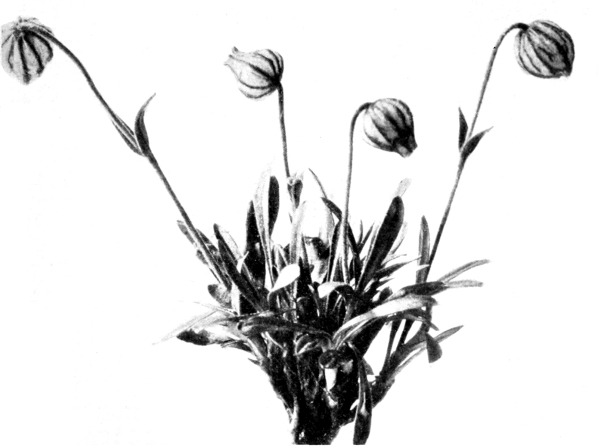
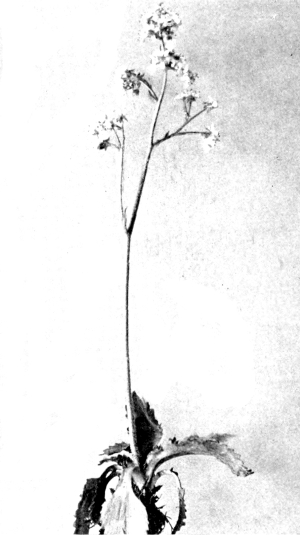
Saussurea densa Hook. Saussurea.
Nearly smooth, with a decumbent base; 3—12 inches high. Leaves thin,
oblong-lanceolate, acuminate, sinuate-dentate, or entire. Heads of
flowers several in a compact terminal corymb, involucre campanulate,
½ an inch high; bracts lanceolate, acuminate, nearly equal; corolla
purple or violet-blue.
On stony slopes or on the moraines at the higher altitudes throughout
the Rockies, not common, but frequent in the region around Lake Louise;
flowering during July.