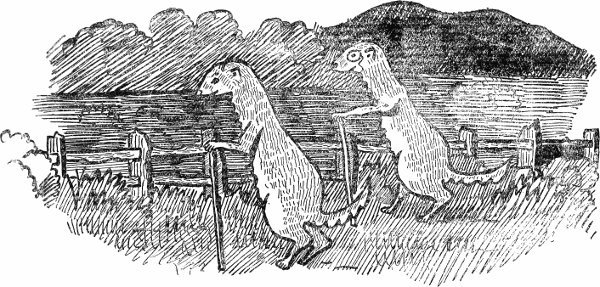
The cynical, and, as he is generally acknowledged, villainous old rat,
is a near kinsman of as innocent and peaceful a community as the
squirrels, rabbits, and hares are, at least the natural histories unite
in telling us that they all belong to the Rodentia or gnawing animal
family. The three great subdivisions of rat are the Black, Brown and
Water varieties. With the latter we have nothing to do, as it is an
innocent field animal that never goes near man or his works, and is not
properly one of the "whiskered vermin race" or rat breed. The dock rats
belong to the Brown brigade.
Regarding the rat's history and antecedents we are informed in some
books on this subject, very positively, that the common or Brown rat was
brought from Norway, while other naturalists insist with a pertinacity
peculiar to the tribe that the animal originally comes from Persia and
India. We feel justified in believing with the majority that this kind
of vermin has its origin in Asia, that venerable continent of cholera,
Heathen-Chinee, and Old Testament. But again, whatsoever the different
opinions may be, it is certainly found that this species of rodent is
distributed over every country on the face of the earth in a very near
equal way, because every ship that leaves port takes in its cargo of
rats just as regularly as it does its cargo of provisions and
merchandise, and thus it can be readily seen how this delicate tender
blossom is carefully though unwittingly transplanted. In this way the
Brown rat, which is now the strongly predominant rat party, was brought
to New York and America in 1775 from England, which would doubtless give
great pleasure to that part of the population with an Anglo-maniac
tendency and would probably reconcile them much more to this sect of
vermin. In Europe the latter made their appearance in 1730, and then
spread out to every inhabitable country. "For men may come and men may
go, but I go on forever" would at the first glance seem to be the case
with the rat tribe as well as with the musical brooklet of Tennyson, yet
the history of the rat nations is like unto the history of man—one clan
waging a long and bitter war of conquest and extermination against the
other until hardly any trace of the conquered but once mighty and
ambitious race remains. The Black or Indigenous rat had things all its
own way in North America as well as through the rest of the civilized
earth, before the Brown species' sweeping invasion, the former having
been entirely subdued and are now very scarce. It was easy enough for
the brown rats to do this, because they were bigger, bolder, and more
ferocious. Their multiplying powers, too, were sixteen times greater
than the vanquished nation whose origin is shrouded in the darkest and
most complete mystery.
The writer has on several occasions observed a dark colored rat on
vessels coming from Brazil and other States of South and Central America
that was unlike any specimen of this animal he had remembered ever
seeing before. It was of a deep bluish tint, had an abnormally long
tail, very large ears, and sharp, fiery, bead-like eyes, that looked in
the dark like small electric lamps. Its agility and desperate
nervousness was something marvelous, and its bump of destructiveness was
largely developed also. This is probably a stray representative from
some struggling colony of the dethroned black rat nation. Small numbers
of them are occasionally brought to our own shores by these vessels. The
rats generally escape from the ships, whereupon, as soon as the vessel
is about to sail away again, their places are promptly filled by their
brown brethren. Then the desolate black rats stray to the sewers of the
city, where they are speedily overwhelmed and dispatched by members of
the other faction, their inveterate foes and conquerors.
Although this black rat is inferior to the brown tribe in strength,
size, and breeding powers, yet it must have been formidable also, for it
was formerly thought necessary in England to institute the queer court
position of rat catcher to the King. This was probably the case in other
countries, too, but no records of it have been kept. According to an old
historian this English rat catcher was a very dignified and mysterious
individual, generally with gypsy blood in his veins, as it was thought
necessary for him to know something of the Dark Science to properly
perform his duties. He was attired in a rich manner, wearing a scarlet
coat embroidered with yellow worsted on which were designed figures of
rats and mice destroying wheatsheaves. He was looked at with much awe
by the populace, as he turned out with a stately tread and great pomp,
carrying a heavy staff with the insignia of his exalted office, whenever
he took part in the royal pageants. This he did regularly, and it is
also stated that he had an attendant, who never took part in the
processions but who did the main part of the work, always with as much
mystery as possible, upon the munificent stipend of tuppence a month,
while the gentleman in the red coat superintended the job and received
the glory—differing radically in this respect from the rat catchers of
the present day.
Animals of nearly all kinds are fond of each other's society, and in
their natural wild state are always found in herds. The city rats live
in tribes or colonies of from twenty-five to sixty individuals, in the
winter more and in the summer less. In the cold weather, when they are
idle or at rest, they lie in one heap for the purpose of mutually
heating each other. They change from the bottom to the top and alternate
their positions very frequently, so as to give each one an opportunity
to enjoy the warmer place at the bottom. The warmer the locality the
less individuals there are in a heap. These rats live peacefully enough
amongst themselves when they have enough to eat, but the minute they are
apprised of a slightly vacant feeling in the region of the stomach they
become the most savage of animals.
The mother rat is very careful and fussy about her young until they get
to a certain age. When they have passed this period, however, and the
mother should, on some bright day, feel a trifle hungry, she would as
readily devour her offspring as the children would make a meal of her,
thus returning the compliment neatly. Individual cases of this kind
occur also amongst the canine family, where dog-bitches have dined
royally on a majority of their newly born pups. This tends to show that
man is not the only intelligent animal who occasionally uses his
fellow's carcass for fodder. Cannibalism, in the rat's case, takes place
generally when they are unable to get any other diet, but then they will
devour one another with gusto, skin, tail, bones, feathers, and all; the
stronger killing the weaker and sucking the blood first. Hot blood is
one of their greatest delicacies. The rats are born blind and naked, and
their bodies are at this time of their life in a wobbly and unformed
state. In this condition they would probably not be looked on by
outsiders as things of beauty or delicate morsels, yet they are eagerly
sought after by the old male rat to furnish him with his Sunday dinner
dessert. The male pigs, cats, ferrets, and rabbits also indulge in the
same pastime. This is made still more of a highly prized food for the
old man rat by its rarity, as the mother will fight to protect her young
with the boldness and savageness of a lioness defending her cubs. She
will even go to the pathetic extent of chewing up her young ones herself
rather than let them fall into the hands of her oppressor. The rats have
an arrangement amongst them similar to the old Greek health law of
killing off all sickly infants, that is, they eat their dead and infirm.
This accounts for the fact that rats are never found at large sick,
diseased, or disabled. Although, as a rule, it isn't considered the
correct thing with us to dine or breakfast from our departed
fathers-in-law or uncles, yet in the present case, peculiar as it may
seem, it is the only admirable trait about the rat. It forms a safeguard
to man against their increase, yet we must add, in a hurry, that the
check put upon their growth by their cannibalism is lamentably small
when compared to their enormous multiplying powers, which surpass those
of any other animal.
The writer had a curious experience in regard to the rat's sociability
and companionship. He had once confined in a cage a company of twelve
big slaughter-house rats and happened to neglect feeding them one
evening. The next morning he was rather astonished to find a well
polished backbone, a stubby remnant of tail, and only eleven other rats,
all huddled up together compactly, in the congregation. He then gave
them some food to stop them from further feeding on each other, but they
rudely refused this, and he was again surprised to see ten of the number
make a combined attack, that looked as if agreed upon, upon one
unfortunate but especially large sized rat. The latter tried desperately
enough to hold his own against such fearful odds, with much horrible
squealing and screaming among them and a great deal of severe
scratching, dashing, and tumbling against the tin-lined sides and the
wire roofing of the cage. In a few seconds they were ranged all around
in a circle feeding ravenously on the remains of the brave but ill-fated
warrior. The writer has noticed, in numerous instances where numbers of
rats were kept together in a cage, that they would on some occasions,
just as the humor seemed to strike them, prefer their relatives and
brethren as food to anything else. It did not matter, either, what
other form of diet or delicacy had been set before them.
Great quantities of rats are trapped and poisoned and hunted down by all
animals larger than themselves; they are driven out of their homes, and
systematically destroyed by paid vermin-destroyers; still all this seems
to make but very slight impression on their numbers as they constantly
pop up serenely from below just as if "Sure Pop" and rat-traps had only
a mythic existence in fairy tales. They multiply prodigiously, the
female breeding on the average about eight times a year, and having as
many as fourteen at a litter, though in some instances this record has
been badly beaten. A writer on this subject calculates that from a
single pair of New York rats, living in moderately good circumstances,
there will spring in three years' time a snug, happy little family of
650,000 rodents, including mother, father, children, grandchildren,
great-grandchildren, etc., and making due allowance for emergencies,
accidents, and for a few hundred of them having been overpowered and
used for food by the rest of this most worshipful company. He allows an
average of eight young at a litter, half male and half female, the young
ones having a litter at six months old. One cause of their being so
prolific is that they flourish and breed as well on an abundance of
swill, refuse, and garbage, as if they were carefully and tenderly fed
three times a day.
Next to the ostrich, the rat possesses the most capacious and
accommodating kind of stomach. He will swallow anything, digestible or
otherwise, although he can appreciate good things with much
intelligence, when he comes across them. His bill of fare ranges all the
way up from tallow-candles and shingles to roast-partridge and old
boots. Rats are broadly omnivorous, and their food varies widely with
their situation. They will eat soap, from the harsh and strong smelling
washerwoman's kind to the richly perfumed and tinted toilet variety.
With a vast and admirable toleration, they will feed upon bacon,
sponges, ham, roots, flour, pork, roast-fowl, from boarding-house
chicken to the microscopic quail; they will consume confectionery,
potatoes, tomatoes, turnips, other vegetables, fruit of every
description, from huckleberries to watermelons, raw, boiled, broiled, or
fried fish, suet, eggs, bread, mutton, cheese, and butter. Also raw,
cooked, boiled, broiled, fried, smoked, or roast-beef, and they swallow
with keen relish wines of all brands and vintages, beer, whisky, gin,
and brandy, and evince a loving fondness for all grades of oil, from the
dirtiest, coarsest whale's blubber to the finest olive. The rat is
verily a most cosmopolitan glutton, and enjoys the favorite dishes of
the various nations with much the same hearty appreciation throughout,
hugely delighting himself with frog's hind-legs in France, pickled
herrings in Holland, potatoes roasted on the hearth in Ireland,
pumpernickel and sourkrout in Germany, anise-seed, garlic, and olla
podrida in Spain, birds'-nest, sharks' fins, and meat furnished by the
rat's own brethren in China, caviare and candles with the Russians,
roast-beef and ale in England, and pork-and-beans and peanuts with the
people of a certain division of North America.
Drawing the line at a particular point in the rats' endeavors to obtain
"belly timber," as Sancho puts it, is an obsolete custom with them, for
they devour putrid carrion, and human flesh, too, comes within this
category, a further account of which will be found in the course of the
next chapter.
The rat is dangerously ferocious when aroused, and is capable of being
wrought up to a pitch of white heat fury. If he should be caught, his
tail cut, his hair burnt, or if he should be wounded in any other way,
but not sufficiently to weaken his system or momentary capacity, and he
is then let loose, he will, through sheer madness and pure "cussedness,"
hunt up, fight, and overpower his brethren individually, or else put
them to flight in a body, without much ado. In fact, when he is worked
up to this state, he wouldn't hesitate for a moment to attack an entire
army of rats, or of other far bigger and more terrible objects. In many
cases like this, rats have often obligingly rid premises of their own
kind. If the tortured or maimed rat is in a weak condition afterwards,
he will be promptly overpowered by the other members of the rat
community upon general principles.
We are often regaled in the newspapers with "brutally frank" accounts of
people leaving their babies alone at home, and, upon returning, finding
them frightfully lacerated by rats, slowly and reluctantly escaping from
the scene. In like manner, they have become bold enough to attack
solitary invalids in houses, who had work enough to defend themselves
from, and to drive off, these ferocious little beasts, driven on by
hunger like the true wolves of the wilderness.
Living or dead, man is bound to furnish food for the rat; and in
church-yards, where, ghoul-like, they choose the night as their time of
appearing, they demolish the skeletons, littering the ground with
remnants of the white, shining bones.
The writer, in the course of his many rat-hunting expeditions, has had
occasion to observe the rats in the lower cellars of many large New York
breweries, where beer was about all they could get to live on. The sage
old rodents, I observed, that had become accustomed to this diet—and
had noted scientifically its queer effects in large doses on the rat
system—indulged in a moderate way, and became aged, good-natured, and
fat, like some jovial, bald-headed old merchant of the human type. The
young rats, however, that had been recruited from the neighboring
houses, would proceed immediately to paint a limited part of the town
quite crimson with much hilariousness and quantities of beer, after
which they could be killed or caught without much bother, lying around
through the passage-ways in a beastly intoxicated state. Here they lay,
squealing faintly, and without concern, on their backs. We may find in
this, if we care to look for it, a really valuable temperance lesson;
for, when the rodents imbibed with moderation, they were of a strong and
healthy race, and greatly looked up to in the gnawing community; but,
when they quaffed too heavily, they became poets, and cared not for the
affairs of this small earth, whereupon they were ignobly killed with a
club by some base son of man. In slaughter-houses, they become so
unconscious after having gorged themselves with a hearty dinner of hot
blood and other warm offal, that hundreds of them could be picked up and
massacred with but very faint resistance on the otherwise cautious rat's
part.
In old markets, rats yet do valuable service as sanitary inspectors, by
demolishing the amount of refuse and garbage; but in other channels they
are the very demons of destruction. They are especially fond of cheese;
and in the cheese-dealers' stalls they go at their work of procuring
this in a highly artistic way. They drill holes through the flooring
beneath the largest cheeses, and then work their way up and eat into
them, consuming pounds upon pounds in a single night. The men sometimes
find a large cheese with the interior scooped entirely out, leaving the
rind, in hollow mockery, simply an empty, worthless shell. In the
butchers' shops, the rats are connoisseurs in the quality of meat,
always seeking out the primest portions of the beef in preference to any
others.
Around barn-yards they destroy the grain, oats, and every species of
fowl, from the smallest to the largest specimen. In going at their work
of destruction, they spring upon the neck of the victims, and pierce and
bite it through with their teeth. They then suck the blood first, or
else eat into the flesh as they would into a cheese, often contenting
themselves with the blood and leaving the carcass. In stables the
harness and the axle grease, even, suffice to make a square meal for
them in default of better fodder; they also make the horses frantic by
fiendishly gnawing at their hoofs.
In a neat and cleverly written little book on Spain, it is observed that
"in the wine cellars the bungs in the heads of the butts containing
sweet wines had little square pieces of tin nailed over them. This was
to protect them from the rats who otherwise get upon the edge of the
butt, and lick the sweet wine which oozes through, then begin to nibble
the bung, and go on, if they are let alone, till out rushes the wine in
a stream." The effects of the rats' ingenuity seems to bear rather a
kind intention toward his two-legged brother, described in the
following: "This happened not long ago to a large tonel of the finest
Pedro Jimenez, which, was stored with others in the ground-floor of a
house, the owner of which was away in Seville, with the key, which he
would trust to no one, in his pocket. One morning out came the bung,
long nibbled by rats, and, about three hundred gallons of the wine ran
out into the gutter. It was a queer sight, people rushing to dip it up
with any vessel that came to hand, some of them presently using mops,
and the small boys, who had found it was sweet, and lapped up as much as
they could get at, lying around the street in various stages of
intoxication," after the manner of our frisky friends, the joyous rats
of the brewery cellars.
The rat's bite, and especially that of old rats, is very poisonous, and
its teeth are finely adapted for severe, quick, sharp, and deep cutting.
It forms an urgent natural necessity for them, owing to the peculiar
structure and growth of their teeth, to keep them incessantly working.
The idea never comes to the rats of a possible breaking off of their
tusks in attacking such flexible objects as bricks or lead, and the
writer has seen cases in which the rats cheerfully went to work gnawing
off corners of bricks and granite, in a persistent manner, so that they
could make an opening large enough for their admission into a house.
Nothing is exempt from their merciless teeth. They mutilate the woodwork
on the valuable drawing-room chair just as readily as they would the
dingiest, most plebeian sort of washtub, and they make sad havoc of
upholstery of all kinds. They seem to have an especially lasting grudge
against the transmission of knowledge, for books are gnawed and
mutilated by them in immense quantities. They gnaw paper, from legal
documents of the highest value (and many an important writing has been
hopelessly destroyed by their agency), to the most worthless treatise on
"Four-Fingered Mike; or, The Terror of Hoboken." Our clothing, shoes,
hat-gear, etc., is turned out by the rats in a pitifully dilapidated
condition. They also eat into lead pipes for the purpose of obtaining
water, which it is hard for them to do without, although we have found
that they can be without food for a much greater length of time. When
the rats are pressed for drink on board ship, they lay low in the
day-time, but in the evening they stealthily come out on the deck from
the hold, in a long row, single file, in order to sip the moisture from
the rigging.
By examining the Fire Marshal's Report of New York City from 1868 to
1882, we learn that rats have been the cause of 79 fires during 12
years, making an average of five fires a year. This is on account of the
rats' strong propensity for nibbling matches. In the same report is a
warning against the loose and careless manner in which matches are left
in pantries and closets infested by rats and mice with a fondness for
this kind of diet. The great attraction for the rodents in the matches
is the phosphorus, which these useful articles contain in abundance, and
which the rats are able to scent out from a great distance.
If you were lunching on something similar in taste to roast partridge,
and some one told you, after you had finished, that it was only domestic
house rat, your interior machinery would probably be disarranged—to
such an extent is the bare mention of the word rat repugnant to our
senses and stomachs.
In the course of an experiment, the writer has cooked and boiled rats,
and has found that their meat is of a very tender quality, and of a
white, inviting appearance, withal, although he never went the length of
partaking of it. Our objection to the rat's serving as food is too
deeply rooted and profound to be removed, although there are a great
many animals whose flesh forms our staple food that have habits much
dirtier, and who do not nearly live upon as cleanly a diet (and this is
a broad statement) as our despised house rat. From this eulogium we
gently but firmly exclude the rat gentry of the sewers. We must give the
Chinese credit for having overcome the effete European prejudice against
the rat as food. Seemingly, it is the most highly prized dish that the
sons of leprosy have in their bill of fare. The crews of the American
and English vessels lying in Canton harbor used to amuse themselves
greatly in catching a rat, and then holding the kicking animal by the
tail so that the Celestials in the junks alongside could get a good view
of it. The Mongolians would then get very much excited, utter
exclamations of a gobbling, clucking sound, and as soon as the
spluttering, frightened rat was flung from the ship an uproarious
scramble followed, that made them look like so many monkeys quarreling
over a cocoanut.
A writer tell us, in a well-written magazine article, that he has lived
fifteen years in China, and has had "experience at public banquets,
social dinners, and ordinary meals, in company with all classes of
people, but was exceedingly surprised at never having seen cat, dog, or
rat served up in any form whatsoever." We are sorry the gentleman
neglects to state whether he'd know the difference. The odds are
twenty to one that he wouldn't; because, as he knows himself, the
Chinese are excellent cooks, and can prepare a good meal from what in
other countries would be thought offal. He makes the admission, however,
that "there are some peculiar people in China, as well as
elsewhere—credulous and superstitious—some of whom believe that the
flesh of dogs, cats, and rats, possesses medicinal properties. For
instance, some silly women believe that the flesh of rats restores the
hair; some believe that dog meat and cat meat renews the blood, and
quacks often prescribe it. What the Chinese really do eat does not vary
much from that found on American tables; but there are certain dishes
not on our programmes that are considered delicacies by everybody—such
as edible bird's-nests and sharks' fins." To this we can add
conscientiously, and upon weighty private authority—fried split rat,
stewed dog, and curried cat with rice. In this place it would be
appropriate of us to say something of the peculiarities of Chinese
food—of the way the dogs and cats are carefully bred for the palates of
the Chinese epicures; how these former animals are invitingly exposed
for sale in the marketplaces; and we would willingly describe the
methods of the dog and cat breeders, and the manner of curing and
cooking the rats—but want of space forbids. We will merely state that
there are many cases in which rats were eaten much nearer home than
China; but, as the persons undertaking the experiment were slowly
starving to death, and would have quickly eaten each other rather than
accept the jolly alternative of dying by hunger, these instances are not
of a remarkable nature, and are consequently unworthy of note in the
present annals.
Rats are impartial in their building sites—they have contentedly built
their nests in the wretched and filthy peasant's hovel and in the most
palatial and luxurious residences of kings, and a human habitation must
indeed be in the extreme of squalor, dirt and decay where they are not
found sprawling. Shakespeare pithily expresses this in the "Tempest:"
"In few they hurried us aboard a bark,
Bore us some leagues to sea, where they prepar'd
A rotten carcass of a boat, not rigg'd,
Nor tackle, sail nor mast—the very rats
Instinctively had quit it."
The rat living in a house prefers warm, soft quarters, and invariably
gets within comfortable distances of stoves, ranges, heaters,
steam-pipes, etc. This is a very dangerous habit, because his nest is
always constructed of inflammable materials. At times he also lugs
matches into it, and then if the steam-pipes should become overheated,
the matches blaze up and spread the flames. We have read in the
newspapers of a great many fires afterwards found to have been caused in
this way. The rat's nest is made of black and colored silk, of linen,
woolen and cotton materials, bits of canvas, dirty rags, fur, silk
stockings, and antique lace of much value jumbled together with string
and crumpled paper. In one instance we knew of a rat to make use of a
building material more out of the ordinary run than these, as it
consisted simply of fifteen hundred dollars in greenbacks that had been
put under the carpet of a room for safe keeping, and which was
afterwards found in mutilated fragments, thatched together, forming this
queer old mercenary rat's abode. The rat uses his nest too as a
storehouse, and here he lays by quantities of edibles for a rainy day.
The writer came across a nest, once upon a time, the sole building
materials of which were those undergarments, both masculine and
feminine, fashioned so slenderly, but which we dare not mention. This
nest contained a peck or so of beans, though in the house where it was
built beans had not been stored nor used, the writer found out, for at
least three months. Out of doors or in fields the rats' nests are built
of hay, leaves, shavings, and wool. The rat is, besides his other
praiseworthy qualities, an inveterate old thief, and in decorating his
dwelling picturesquely he becomes quite lavish, as gold rings, diamonds,
jewels of every value, and gold and silver watches, that had been
missed, were found in rat nests. Here they were generally discovered set
off with much taste by a piece of salt bag. In one rat's nest I found a
set of false teeth in perfect condition. The rat could not have wanted
to use them himself, because they were several sizes too big for him. He
probably wanted them for a tool-box or jewel-case or some other equally
useful object. The writer remembers reading in some odd book of a
good-natured person who had discovered a family of young rats in a piano
that stood in a room for some time unfrequented. They had made
themselves so much at home in the interior of the instrument that the
owner was unwilling to disturb them by playing upon it. The female rat
probably wanted to get her young to some safe place away from her liege
lord, and had succeeded in gnawing up through the leg of the piano. She
had brought with her, in which to build a nest, a dirty striped
stocking big enough to have belonged to some distinguished Dime Museum
fat lady.
Rats love sweet, soft, melodious tones, and a great many experiments
have been made in taming rats thereby, but only with indifferent success
upon the sharp-witted rodents, in spite of all the pretty stories to the
contrary in the reading-books. So high is the rat's musical
understanding rated, that there is a proverb among the people that rats
immediately disappear from the house as soon as a young lady begins
taking lessons on the piano. A mouth-harmonica seems to be the rat's
favorite musical instrument, and its gentle strains exert the most power
over him, far more than the tones of any other instrument. If the music
be soft, mild, and pathetic, the rat will listen and come very near, for
he is a very susceptible sort of beast, and, if closely observed, tears
of sorrow, or of sad and tender reminiscence, will be seen coursing
slowly down his cheeks. But if, on the contrary, the music be harsh,
shrill, and discordant, such as would most likely be ground out by
beginners, or if it proceed from a brass instrument, or drum, or if it
be occasioned by a shotgun report, or explosion, it may drive the
impressionable animals from places where they had been used to frequent.
If, however, one is unsuccessful in trying to scare off the rats by
noise at the first inning, a repetition will be of no avail.
The rat will take up his nest in all and any out-of-the way places, as
he shuns the light and lives wholly in the dark and gloom. This is the
cause of his poor sight; he can hardly see at all in the daytime, and in
the night a little better. If you should meet with a rat by day, looking
square in your face, depend upon it he isn't able to see you at all, in
spite of the pretty gleam in his black eyes. His minutely acute ears,
however, do him good service instead of eyes, so that he has very little
occasion to miss the latter at all.
The rat is generally very timid, and extremely nervous, the slightest
disturbance repelling him and making him shrink into obscurity and
shadow. Yet it is his great peculiarity that he can adapt himself to any
extremity of climate or description of place; he is found making himself
at home in hotels, factories, public gardens, and other haunts of loud
and constant noise, bustle, and confusion.
The Lord in making the rats is imputed to have done so to have them
serve as scavengers for his wandering, wasteful tribes of children. But
in our own day, as the majority of us do not wander, nor have wandered
continually for the last two or three thousand years or so, and have
slapped up many supposedly permanent villages like London, New York, or
Paris, the restless, ambitious rat took into his head not to limit
himself to such dirty kind of work exclusively. He then formed the
resolution, and further carried out the purposes of his creator by
taking upon himself the philosophic office of keeping man's pride in
check. This he did by literally chipping a large proportion of the gilt
off man's earthy grandeur, and by destroying his works and belongings at
every possible opportunity, with right hearty good-will and much
perseverance. "Therefore," says a writer, "whatever man does, rat always
takes a share in the proceedings. Whether it be building a ship,
erecting a church, digging a grave, plowing a field, storing a pantry,
taking a journey, or planting a distant colony, rat is sure to have
something to do in the matter; man and his gear can no more get
transplanted from place to place without him, than without the ghost in
the wagon that 'flitted too'."
In the merry days of old, rats were regarded as undisputed signs of
witchcraft, and even scholars acknowledged this—at least they were
compelled to, by the help of a blazing pile of faggots, or similar mild
means known only to the good old times. What caused this belief among
the people was, that an animal appearing to them so small should be the
cause of such intense and continual annoyance to them. There was no
barrier through which the rat could not effect its way to get at a
certain object, thanks to its wonderful powers of gnawing. It was so
omnivorous, ferocious, and destructive, that the people endowed the rat
with superhuman qualities, and regarded it as a true child of the Devil,
put upon this earth to be always pestering them. In regard to the rat's
superhuman qualities, it appears to have certainly displayed more
reason and acuteness, fighting in the daily battle of life, than any one
of these thick-skulled humans could lay claim to. It was looked on with
a great and most unreasonable aversion and loathing, born of
superstition and fear, and which we find vehemently expressed in all the
ancient books on the subject. This feeling, we cannot help believing, is
not dead yet, according to the astounding anecdotes brought forth and
widely copied in a great many of our American newspapers. The facts and
data given in these learned articles about the rat's size, weight, and
habits, in general, would make his hair stand on end with horror if he
were to read them. As a matter of fact, the ordinary brown rat, which we
find everywhere near man, is a pretty black-eyed, softly robed, and
delicately constructed little animal; and although his fur may be
plainly colored, like the plumage of the sparrow amongst birds, yet it
is of the finest texture, and, when possible, is always kept
scrupulously clean. In solitary captivity he is continually sitting on
his haunches, cleaning his fur like a cat; and the writer has found, by
actual experiment, the weight of twelve full-grown, well-fed New York
city rats to amount to exactly twelve and a half pounds.
Formerly, in European countries, there was a general belief in the
existence of strange and mysterious relations between this great slimy
monster and the high-priests of witchcraft and sorcery. It was thought
that this was the animal best adapted to carry out the diabolical plots
of his Satanic majesty. In one part of Norway, the peasants used
devoutly to hold a fast day once a year, trusting thereby to get rid of
the pests of rats and mice. They had a Latin exorcism which they used
on these occasions, beginning with the words, "Exerciso nos pestiferos,
vermes mures," etc. Anything a rat left its trace upon was an omen of
ill to the owner; and when by any chance a rat was ever seen on a cow's
back the poor animal was doomed to pine slowly to death in consequence.
In Ireland it was believed that premises could be rid of rats by
reciting a rhyme over their holes, which was commonly called "rhyming
rats to death."
But since these times the people have succeeded in getting rid of a
great quantity of superstition attached to the subject. It has also been
learned gradually that the actions of the rat are prompted much more by
natural than by diabolical instinct. However timorous and innocent
looking we have found the rat to be upon impartial observation, yet his
is a case of wolf in sheep's clothing, for he is the one of the whole
brute creation that does the most undermining damage in every way to the
homes, workshops, counting-rooms, store-houses and cultivated fields and
acres of man. The rat is also at times his very ferocious personal
enemy. The rat's code of morals will be found rather deficient, as we
have tried to explain in the preceding rambling remarks. In fact, there
are condensed in this small animal all the vices of the animal world. We
have shown him in the pleasant light of a cannibal briefly making an end
of all family ties by transferring his relatives down his stomach. We
have traced a faint outline of his great food greediness and his
intemperance in strong drink, which is pretty near up to the human
standard. We have pictured his strong liking for the hot blood of man
and his utterly lacking an organ of veneration, digging up man's bones
from their final resting-place to have them serve as food.
The strongest weapon the rats have against man, ranking even above their
wonderfully constructed teeth, are their prodigious multiplying powers,
"and," says Richardson, "if the rats were suffered to increase in
numbers, unchecked, the time would not be far distant when the entire
globe would but suffice to furnish food for their rapacious appetites to
the exclusion of the human race." The only way man can hold his own
against their mighty ravages and prevent his whole social organization
from being undermined by them, is to wage a steady and unrelenting war,
by the help of his own arts and the animals specially assigned by nature
to do service for him as police, against the most bloodthirsty, cruel,
and acute of enemies.