By “relation thereto” I mean that
my paper will first speak of myself—my personality and my
belongings—and then recall to your memory a few of those
changes and events of interest which have taken place in my
neighbourhood and surroundings.
Perhaps I ought to apologize for bringing before such a
learned branch of the Church of England Young Men’s
Society, as is this its Literary Class, so many familiar facts
and events as are here alluded to. But nevertheless, I have
thought that there might be some considerable interest in
grouping and recalling to our minds a few such items connected
with one city centre, and especially as they might be supposed to
be noted by such an eyewitness as I have suggested myself to
be. A knowledge of our city, of its specialities, its
changes, and developments, is always good mental store. And
although it might be said—are not many of these things to
be found recorded in the City Archives, and in the volumes of
City History? yet almost certainly many of the members of this
class will not have studied these. And therefore, it may
fairly be hoped that this little paper may stimulate the
historical bump of some of the brains here present, and arouse in
them a desire to further study such archæological facts and
local histories.
And here let me quote some lines of the Suffolk poet, Bernard
Barton, in reference to the survey or study of past events or
history. He says:—
“No useless, or ignoble toil,
To him who in ‘the past’ delights,
Seems it—from dark Oblivion’s spoil
To cull whate’er our taste invites,
Of by-gone legends, parted rites,
In earlier days believ’d as true;
And bid our old ‘Historic Sites’
Peopled afresh, to charm anew.
“That is no true Philosophy
Which does not love at times to trace,
With glowing heart and moisten’d eye,
Time honoured haunts, whose chiefest grace
Is to have been their dwelling-place
Whose names in history’s page are shrined,
Whose memories time can ne’er erase
From many a fond admiring mind.”
Well—my name and title is
The Tower of
St. Giles’s Church,
and as such I shall speak of
some of the many things which I have seen.
As you may suppose, from the prominent position which
I—the Tower—have for so many centuries occupied in
this old city of ours, I have long since ceased to suffer from
the undue modesty which so often accompanies equally deserving
but less conspicuous merit. I can only hope that you will
agree with my reasons for anticipating from you
some of that appreciation and interest which I certainly take in
myself. And I propose to introduce my subject in the novel
way of speaking of myself as personal, and as having noted,
during my long life, various matters to which I shall call your
attention.
As an introduction, I am proud to think that I need only say,
once again, that I am the Tower of St. Giles’s Church,
Norwich. And surely there cannot be many of our citizens
who are in the habit of passing up our broad street, St.
Giles’s (the lower Newport as it used to be called), who
have not been struck with the fine proportions of my structure,
standing as I do at the head of this fine thoroughfare, and
looking and being an object of admiration for my beauty and my
striking position. Many are the beautiful views which I
present to the passer-by in the varying lights of the day, but my
beauty and grandeur are, I think, seen best of all, when in the
evening the sun is setting behind me in the west, or the moon
with her paler light throws down along the length of the main
street of St. Giles, those shadows, which—produced by my
intervening tower—are so well worthy of the admiration of
all who have eyes to see, and minds to appreciate, the glory of
evening views. [101]
Let me say here in passing that Saint Giles, the saint after
whom I am named, appears to have lived in France; and history
relates that he was adopted as the typical Patron of
the crippled portion of humanity from his being himself lame, and
from his having been said to have effected a miraculous cure of a
sick beggar. As such Patron, parishes which, like mine,
were located on the outskirts of towns, have frequently been
given the name of St. Giles, as having had the duty, in the olden
time from their position, of contributing to the needs of passing
wayfarers, and of those requiring Christian charity. And
thus, in Norwich, not only was my own parish named after this
saint, but the so-called “Old Man’s Hospital,”
in Bishopgate Street, at the other end of the city, was also
formerly called St. Giles’s Hospital.
Well, I am the Tower of St. Giles’s Church, and I have
stood in my present position for at least five hundred years,
having been built (or rather rebuilt) in the time of King Richard
the Second (who ceased to reign in 1399). I am twenty-six
feet square, and I am also one of the tallest church towers in
Norwich. And not only so, but I stand in one of the most
conspicuous positions in the city, on the top of St.
Giles’s Hill. I am a square Tower, built like the
adjoining Church, largely of flint stone, nearly 120 feet high,
battlemented at the top, and having also a small cupola or
bell-cup in the centre of my roof, with a conspicuous
weather-cock above this. In earlier times, in consequence
of my height and conspicuous position, I was used as a
Beacon-tower, i.e. a pail containing fuel was hung at one
of my corners, ready to be lighted as a danger signal in case of
invasion or other serious emergency. Such a beacon, as you
may know, was often called a “Cresset,” from the
French “Croisette,” which was a pail with a
cross on its top.
I am proud of my public spirit and loyalty, for on royal and
other special occasions, I raise on my summit a tall flag-staff,
and float from it a large and handsome flag. In this, I am
sorry to say, I have too few imitators or companions amongst our
church towers, perhaps for the reason that even such loyalty as
this is expensive, and costs, I am told, some few shillings for
each such display. Amongst my various public uses, you have
probably all seen soldiers from the barracks on my roof
practising flag-drill in connection with others in Chapel
Field.
I have said that I am largely built of flint stone, which is
of a very enduring nature. In consequence I am thankful to
say that I have a very excellent constitution, and have stood the
wear and tear of a long life without requiring much fortifying or
repairing. I can only venture to hazard the bold suggestion
that my excellent health may also, in some mysterious way, have
been due to the near presence of so many Norwich doctors,
residing as they have so largely done in the neighbouring Bethel
and St. Giles’s Streets!! At any rate, for a long
time past I had scarcely wanted professional assistance, until
about two years ago, when two of my windows (or eyes, as I call
them) needed technical help and repair.
Speaking of flint for building, we all know that some of the
finest flint work in the kingdom is to be seen in this city,
notably in St. Miles’s Church, and in a wall in Bridewell
Alley. My flint work is inferior to these, but still
handsomely faced. No doubt the large use of flint stone in
building our Norwich churches was due to the abundant supply of
this material which has existed in the neighbourhood. And
with regard to myself it may well have been that my flints, or
some of them, may have been extracted from the ancient chalk
excavations which until lately existed just beyond St.
Giles’s Gates. Mr. Walter Rye, as you perhaps know,
has also suggested that flints from these caves may have been
used in the building of both the Cathedral and the Norwich
Castle.
As
curiously illustrating local specialities, one of my parishioners
has told me that when travelling some few years ago in Cornwall,
where granite and other hard rocks prevail, but no gravel or
flints, he asked one of the residents whom he met, if she knew of
flint stones, to which she replied, “Oh! yes, I know
flints, I have seen one in the Museum at Torquay.” I
much fear that not even one flint is to be seen in our grand
Museum on the Castle Hill!
Whilst on the subject of myself (the Tower), I may mention
the Clock, which has so long existed
on my eastern face, and which, judging from the constant
reference made to it by the passing throngs, is an undoubted
public boon. To the parish it is a source of some
expense.
This Clock was restored and re-coloured at the general
restoration of the Church in 1865–6, when the figure of
Old Time, holding a scythe in his hand (as many of us will
remember), was removed. The Clock face and Clock hands do
not look to the passer-by to be very large; but I find, on
measurement, that the diameter of the Clock face is 10 ft., that
the Roman letter numbers on it measure 1½ ft., that the
length of the large hand is 6 ft. 5½ in., with a weight of
21 lbs., and that of the small hand 3 ft. 4 in., with a weight of
8 lbs. My Clock has belonging to it a special Clock
Bell.
Then, as to my contents. As this is an Autobiography,
and as all Autobiographers are necessarily egotistical, you must
allow me to dwell a few minutes more upon my personal
specialities. And first, as to my Peal of Bells,
eight in number, which are naturally of great interest to myself,
and which hold a high place among the various peals of
Norwich. These, according to the high authority of the late
Mr. L’Estrange, were placed in me between the years 1593, or
earlier, and 1738, and they were renovated and restored in 1870,
at the expense of Messrs. Browne, Bridgman, and Firth,
parishioners of St. Giles. (One of these bells is what is
called a Gabriel Bell—the “Angel Gabriel
brought the good tidings to the Virgin Mary.”) And
think for a moment what phases of life these bells have taken
part in during all these hundreds of years. I find that
since 1538, when our parish registers begin, some 2,524 entries
of marriage have been made in them. And it is
reasonable to suppose that at a fair proportion of these,
especially in earlier times, my bells have rung out their merry
chimes, and in their special language have wished all joy and
happiness to the newly wedded pairs. You remember how Byron
speaks of this: “And all went merry as a marriage
bell.”
On the other hand, during the same period, or, rather, up to
1856, when interments in the Churchyard ceased by Act of
Parliament, i.e. in 318 years, nearly ten thousand (9,770,
as roughly counted) entries of burials here are made in
the parish register books. And it is almost certain that
one of my bells has announced first the fact of the death, and
then that of the mournful ceremony of interment, in each of these
cases. Just think, as I do, of all these ten thousand dead
lying at my foot, waiting, as Baring Gould has so beautifully
said, for the “Resurrection morning,” when
“soul and body meet again.” Such an
accumulation of mortal remains in so limited a space may well
arouse much and solemn reflection. How well a Suffolk poet
reverently describes such a disused graveyard as mine now is,
where he says:—
“The gathered ashes of long centuries
rest;
A few white tombstones and a few dim-gray,
Mark names that have not yet quite passed away.”
Nor
can I fail to quote to you Gray’s beautiful words, so
applicable to such a disused churchyard:—
“Hark! how the sacred calm, that breathes
around,
Bids every fierce tumultuous passion cease,
In still small accents whispering from the ground,
A grateful earnest of eternal peace.”
The graveyard of St. Giles, which lies beneath and around me,
is, as I have already said, no longer used for burials. It
is quite full and crowded with graves and many memorial
tombstones. The names upon these, as far as legible, are
fully and completely given in the book which has been published
by a parishioner of mine, [106] upon the
“Parish of St. Giles.”
It is historically interesting to know that the burial
registers, by the increased number of interments in some of the
long past years, point unmistakably to the prevalence in Norwich
at those times of the dread Pestilence or Plague, which is
recorded as having ravaged the city from time to time.
Thus, in 1603, no less than 112 persons were buried here; and in
1666, some 79—both of these “Plague
years”—instead of a normal average of twenty or
thirty. As you may suppose, I (the Tower) shared acutely in
the distress which then reigned in the city, intensified as it
was to me by the fact of three or four burials occasionally
taking place here in the same day. In some other years, an
increase of burials may probably have arisen from this place of
mortal rest having been a favourite one, and, therefore, selected
for the interment of some who had not been resident in the
parish. This was certainly so in the fifty years preceding
the closure of the churchyard, when fifty, sixty, or seventy were
often annually interred here.
But
to return to my bells. The perpetuation of the old custom
of ringing each night what is called the Curfew Bell in my
Tower is well known to us all. This Curfew ringing is now
an anachronism, but it doubtless was a great boon at the time of
its foundation, seeing that so many legacies were left in various
places, as here, for the purpose of having a “Curfew”
rung each night in perpetuity.
My Curfew Bell, instituted and endowed in 1457, by Mr. John
Colston, and who was buried in St. Giles’s Church, has now
rung continuously for some 450 years. And although some
people may think this evening tolling of a bell for a quarter of
an hour a nuisance, it has in this particular case this merit,
that it acts, or has done, as a sort of daily almanac, seeing
that the day of the month is told at the end of the quarter of an
hour’s ringing, each evening, by a number of strokes on a
different bell, corresponding to the day of the month.
The name “Curfew,” you doubtless know to be
derived from the French Couvre-feu, or cover fire.
And also that the custom in olden times of a public ringing of a
bell, or sounding a horn, for the putting out of fires and
retiring into houses for the night, arose from the out-door
dangers of those less civilised times, and from the inflammable
nature of many of the wooden and thatched houses then
existing. One such fire in Norwich (in 1507) is said to
have destroyed seven hundred houses, including many in my own
parish. Who does not know Gray’s lines on this Curfew
custom?
“The Curfew tolls the knell of parting
day,
The lowing herd winds slowly o’er the lea;
The ploughman homeward plods his weary way,
And leaves the world to darkness and to
me.”
And
we doubtless also remember Longfellow’s beautiful verses on
this old custom:—
“Solemnly, mournfully,
Dealing its dole,
The Curfew Bell
Is beginning to toll.
“Cover the embers,
And put out the light;
Toil comes with the morning,
And rest with the night.
“Dark grow the windows,
And quenched is the fire;
Sound fades into silence;
All footsteps retire.
“No voice in the chambers,
No sound in the hall;
Sleep and oblivion
Reign over all!”
With all this, and what I have now said, I think I may claim
that I—the Tower—have fully discharged the general
duty of public usefulness, and am a great public
benefactor. My beacon pail is no longer required; but by my
weather-cock I tell the direction of the wind; by my clock I tell
the time of day; and by the final strokes of my curfew bell at
night, I act as an almanac, and tell the day of the
month—for the benefit not only of my neighbours, but to the
great multitude of the passers-by. [108] And let it
not be forgotten that all this implies not only the discharge of
public duty, but also the expenditure of money, necessary
to keep the various arrangements for these in correct and working
order—money which has to be provided by the parish of St.
Giles.
Opinions as to the desirability of the ringing of the
Church Bells in towns differ, as we know,
considerably. And every now and then we read a letter in a
newspaper in condemnation of them. But I believe that those
who think thus are in a very small minority. I have said
how well they emphasize such occasions as weddings, and
funerals. And I think they most appropriately add to the
expression of public rejoicing on such occasions as the election
of a new Mayor, or a royal visit, or a royal anniversary—or
especially on the eve of such a great Christian festival as
Christmas or Easter. But beyond all this, I (the Tower)
consider that they are in the best sense public music, and that
when well rung this music is of a very high order indeed.
Who does not recognise the grandeur of the great twelve-bell peal
of St. Peter Mancroft, as rung by the skilled ringers of that
church, or the solemnity imparted to a public mourning by the
muffled peal occasionally rung, on the departure from this world
of some great local or national citizen?
In country villages I know that the possession of a good peal
of church bells is usually very highly appreciated, and the
practice of the ringing cannot be otherwise than an excellent
musical training for the young men of the parish.
It is curious how little regard Jackdaws pay to the
noise of clanging bells. In my tower, as elsewhere, they
habitually build their nests, and rear their young, apparently
quite free from alarm at the noise. From their constant
selection of church towers as breeding places, may
we not suppose that these birds have ears for music, or may even
practice singing amongst their family parties, to the
accompanying chimes?
I have windows on all four of my sides, and until lately
(1866), when the Church was so thoroughly restored, I had an eye
in my lower eastern portion which enabled me to view the changes
which have taken place in the interior of the Church. Long,
long ago, I noted the dilapidation of the Chancel, and its final
demolition and removal (in 1581), on a bargain being made by
which the parish was allowed to take all the remaining lead,
stone, and other materials (for some parochial charity) belonging
to it, on condition that the Dean and Chapter were no longer to
be held liable for its repair. This Chancel I had
the pleasure of seeing rebuilt in 1866, mainly through the
beneficence of Rev. Canon Ripley, then incumbent of the vicarage,
when also the Church was finely restored, and reseated.
You are aware that the years 1903–4 represent the
five-hundredth anniversary of the giving of a Mayor to the City
of Norwich. Several St. Giles’s inhabitants have held
this important office, as well as that of Sheriff, during all
those centuries, but I will only specially mention the names of
Richard Purdaunce and of Robert Baxter, who were
very early Mayors, in 1420 and 1424 respectively, and who were
interred in the nave of this Church, with brasses over their
tombs. These still remain, and are of considerable interest
as showing the costumes of the period.
And now as to the parish of St. Giles itself, in which I
stand, I cannot but recall with satisfaction the large number of
residents who have been in their day most important and
influential citizens in various departments of life. As
public men I will only mention the names of a few such departed
neighbours whose careers and public services I have
watched. Let us only recall the names (given
alphabetically) in public life of such examples as Baxter,
Beevor, Bolingbroke, Cadge, Chapman, Churchman, Cole, Crosse,
Day, Foster, Herring, Kinghorn, Johnson, Lubbock, Offley,
Purdaunce, Ranking, Rigby, Suffield, Taylor, Wilkins; or as
ornaments of the literary and artistic world, such names as
Brand, Blomefield, Borrow, Crossgrove, Charlotte Elizabeth,
Daniel, Ninham—and now we may add that of Bateman.
This, you will agree with me, is a goodly list, and marks out St.
Giles’s parish as having been one of the most important
residential districts in the city, and as having largely
contributed to its welfare and general reputation. And in
this regard we may well regret that so many of the fine parish
residences have been or are being absorbed by public companies or
other bodies; and that in consequence, the most actively
important men of the city are gradually being driven to other and
more distant localities. And we may even note here how the
neighbouring and almost historical old “Norfolk
Hotel” has been swept away, and its site occupied by a
modern variety theatre.
Further, as a sign of the times, I may mention to you a spot
in St. Giles’s Street, situated behind
“Mortimer’s Hotel,” which was long known as
“Mack’s Yard.” Mr. Mack was for a
long period the enterprising proprietor of some carrier waggons,
which made a weekly journey to and from London, carrying parcels
and goods. This was in the days when the stage coaches to
London occupied two days in the journey; and when the starting of
these coaches, as well as of Mack’s waggons, was an
interesting incident of Norwich life.
So
much for my immediate personal relations. Let me now look a
little further around and beyond me.
No doubt, almost everyone present this evening, when crossing
Mousehold Park, or when passing along the roads on the outskirts
of the city, will have noted how I—the Tower—stand
out more prominently than any other object than the Castle or the
Cathedral spire. And, on the other hand, those of our
younger citizens who may have ascended to my summit, can bear
testimony to the wide and expanded views from it of the
surrounding country. In fact, I command a view, not only of
much of the city, but also of the neighbourhood for many miles
around. And this commanding position has enabled me to note
most of those great changes, and improvements, which have taken
place—by slow degrees and with many fluctuations—in
the city generally. And, of course, I have keenly felt the
change in my own position which the recent spread of the city all
around me has produced. Not so very long ago I was situated
in its very outskirts, and very close to the boundary City
Walls. Now, I am almost in the heart of Norwich, and from
my summit I can see the lines of houses extending a mile or more
beyond me, and, I fear, detracting by their extent from the
conspicuous dignity of the position which I had so long
enjoyed.
Of the many more distant but important Norwich events of the
past centuries, which from my lofty position I have been enabled
to witness, I will only mention two or three which have specially
impressed me, thus:—
In King Edward VI.’s reign, I was able to note many of
the incidents connected with Kett’s Rebellion.
A little later, I saw the reflection of the fires at the
Lollard’s pit, when Bilney and others were there burnt for
their religious opinions.
I saw
the processions attending the visits to Norwich of Queen
Elizabeth, and of King Charles II. And you will remember
that it was on this latter occasion that our distinguished
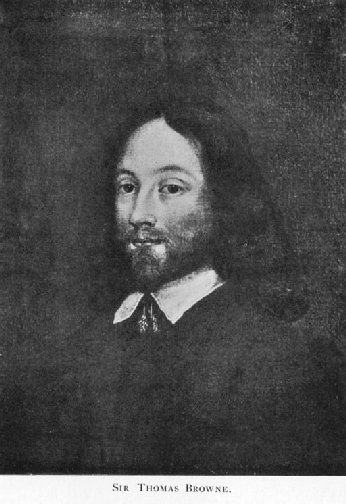
citizen, Sir Thomas Browne, to whom we have so recently erected a
statue, received the honour of Knighthood from his Sovereign.
Then again, I was cognizant of the blowing down of the
Cathedral spire, during a great storm, in 1601; and of the spire
of the St. Andrew’s Hall tower.
And, shall I say, with how much regret in quite later times, I
witnessed the riotous and disgraceful scenes which took place at
some of the Parliamentary elections held in
Norwich—followed, as we know, by the exciting but not too
pleasant “Chairing” of the elected candidates.
In my more immediate neighbourhood I have watched the
foundation (in 1714) and the subsequent career of that beautiful
example of Christian charity, the well-known Bethel Hospital for
the poorer class of insane patients. We all know that in
those earlier times, simply to remove from the general community
and to house those suffering from mental derangement, was all
that was known to be able to be done for those thus
afflicted. But I have been charmed to note from my
window-eyes how greatly their treatment has been improved in
latter times, and to watch with pathetic interest the great
changes which have been made, and are still continually being
made, for the comfort and recreation and general welfare of the
patients in this beneficent institution. [113]
Very numerous and historically important are the changes and
advances and improvements which have taken place in our city during the
last 150 years, and which I have witnessed from my lofty
summit.
In 1770, I saw the first Norfolk and Norwich Hospital
built, and I have seen the old building replaced (in
1879–1881) by a larger and handsomer structure.
In 1792, I saw our St. Giles’s Gate, along with
many others, taken down and removed; whilst, in 1867, I saw much
of the neighbouring City Wall demolished, only a small
piece of it being left in the Chapel Field Road, and in the
adjacent “Duck Lane.”
You will remember that this defensive wall was built around
the city between the years 1294 and 1319, and was broken down
between the St. Stephen’s and St. Giles’s Gates by
Earl Warwick’s army, in the time of Kett’s
Rebellion.
Then I have seen numerous churches and chapels, factories, and
other large buildings, arise in various parts of the
city—these latter including the Norwich Union Workhouse,
the Jenny Lind Infirmary, and (in the far distance) the Hellesdon
Asylum.
I have also witnessed the laying-out of the new Norwich
Cemetery, and its more recent enlargement. And at my very
foot I have noted the erection of our Volunteer Drill Hall, and
the removal of the old City Gaol. The closure of this
latter, and of the Castle as a prison, and their replacement by a
single model prison on Mousehold Hill, marking the advances of
the times and the progressive development of political
humanity.
Of the grand Castle Museum, which is in my full view, I need
say nothing. Its influence in spreading knowledge, and in
developing the higher and better faculties of the mind, are
obvious to all. I am pleased to learn of the interest taken
in it by the public, as shown by the visiting of it by the more
than 100,000 persons who annually resort to it.
If I
do not weary you, I would now like to claim your attention for a
very few minutes to what may fairly be termed my “Home
Circle,” that is, to the events which I have witnessed
immediately around me in recent times. Several of
these have been closely connected with the neighbouring
“Chapel Field,” formerly a real and open
field, but now a charming recreation garden, and one of the
beauty spots of our city, with the present handsome palisading
around it, erected in 1866. The avenues of trees which
adorn this field are, or were, one of its great features.
And it is worth noting that Norwich history relates that the
main west avenue was planted in 1746 by Sir Thomas Churchman,
then a resident in St. Giles’s parish and an important
citizen. The ordinary age of elm trees is (I believe) not
greatly more than a century and a-half, and consequently some of
these trees have decayed in their branches or trunks. But
until a few months ago a long row of the elms towered up to their
eighty or ninety feet of height, in great beauty and apparent
vigour. I need not say with what pain I looked down upon
the process of lopping and topping which was carried out upon
these, or how I grieved over such a dire necessity for this
operation as was alleged to exist.
One other example of tree grandeur existed until the other day
in the northern avenue, namely, a splendid specimen of the
Aspen Poplar, towering nearly one hundred feet high, and
an object of extreme beauty to all who could appreciate such
arboreal grandeur. Even so long ago as 1841 this tree was
figured by Grigor in his work on “The Remarkable
Trees of Norfolk,” as a fine example of this poplar.
And we may well feel how the further sixty-three years of its
life had added to its size, its dignity, and its grandeur.
I greatly regret that since the late great gale it has
been thought necessary to remove several of its upper branches,
and so destroy all its grandeur. But the old line,
“Woodman, spare that tree” for the greatest possible
length of time was, I hope, fully in the minds of those who
presided over its fate.
The splendid Horse-Chestnut tree near the centre of the
field is familiar to us all, and I have watched its growth and
circular uniformity with pleasure and interest.
This Chapel Field, as you may know, takes it name from a
Chapel of St. Mary, which formerly existed on the site of the
present Theatre and High School buildings. At that time the
ground was really an open field; and it seems to have been
acquired by the Corporation in the sixteenth century.
Probably few, and perhaps none, of those present in this room,
can remember as I do the big water reservoir of the proprietors
of the Norwich Water Works of that date, which formerly existed
in Chapel Field, near its centre, on ground leased by them from
the Corporation. This reservoir was large, nearly three
hundred yards in circumference, and had on its north side a
tower, into which water was forced to gain height for supplying
the higher portions of the city. It remained here from 1792
until 1852, just sixty years, when the lease of the ground was
surrendered, the works demolished, and the new and enlarged
reservoirs of the present Norwich Water Works Company, at
Lakenham, were substituted.
I may mention here a rumour which reached me, and which I have
no doubt was true, that in April, 1852, the Corporation of
Norwich proposed to place the statue of Lord Nelson, which had
just then been executed for Norwich, “on an elegant
fountain pedestal in the centre of this reservoir,” which was then
about to be disused. [117]
I have, of course, noted many public events which have taken
place in the Chapel Field—martial, agricultural, and
otherwise. But naturally, a great impression has been made
upon me by observing the historical visits of their Royal
Highnesses the Prince and Princess of Wales (now our gracious
King and Queen) in 1866 and 1884, on both which occasions they
entered Norwich by St. Giles’s Gates. The visit of
1866 was, as you will remember, the first they had paid to
Norwich, and they were then entertained by Lord and Lady
Stafford, at Costessey Hall. The royal party then included
the Queen of Denmark (mother of the Princess), and the Duke of
Edinburgh; and the procession entered our street under a
triumphal arch erected on the site of the old St.
Giles’s Gate. They then attended a morning concert of
the Musical Festival then being held; and afterwards returned to
Chapel Field, where the Prince and Princess each planted a
“Wellingtonia” tree, and afterwards formally opened
the new Drill Hall.
In 1884 they again attended our Musical Festival, and entered
and left the city by St. Giles’s Street.
On both these occasions I noted with great pleasure the large
crowds of citizens who lined the route of the processions, and
the enthusiastic manner in which they welcomed our royal
visitors.
All will remember the recent visit of T.R.H. the Duke and
Duchess of York (now the Prince and Princess of Wales),
when they came to open our new Castle Museum. But my views
of the royal procession were from my position unfortunately
considerably limited. I am glad, however, to know that one
of my parishioners was Mayor of Norwich, and as such had the
honour to receive and entertain the distinguished party.
I—the Tower—have several eyes, but no proper ears,
only vibratory sensations, and consequently can only hear
indistinctly the sweet sounds of the various bands and singers
that now delight so many thousands of Norwich citizens during the
summer season in Chapel Field. But that these musical
entertainments are appreciated, I can see by the large
numbers of persons who attend the concerts and listen to the
music provided for them. It is not to be doubted that these
frequent musical treats constitute a veritable branch of mental
education.
In the city generally, I have during the last half century
noted the opening of several parks and public recreation grounds,
and I have watched with pleasure the gradually increasing numbers
of citizens, old and young, who avail themselves of the
opportunities which these afford for obtaining fresher air,
exercise, health, and vitality. Amongst these, you may be
sure of the special and daily delight I take in watching the
games and gymnastics of the children, in the corner of Chapel
Field just below me, which has been allotted to them, and which
was so kindly fitted up for them by the late Mr. Henry
Birkbeck.
I will only further say, of the many vast changes and items of
social progress in latter years, that I have seen with wonder and
astonishment the advent of steam carriages, and the opening in
Norwich of three railway stations, receiving trains, some of
which have travelled more than fifty miles an hour. Also
that as an illuminant, I was long familiar only with the use of
oil, shedding its feeble light, this being superseded by the gas
derived from coal. But, quite recently, I have opened my
eyes to their widest to observe the lighting of our windows and
streets with electric light, and the working of tram carriages
upon rails through our main streets (including my own street of
St. Giles) by means of the electric current.
Norwich generally, like other cities and towns, has in the
centuries marched along the line of steady and continuous
developments. Such a brief mention as I have made of some
of these is all that can now be given. To give a larger
local history of these latter eventful times would occupy
us too long, and would not only be tedious to such an audience as
this, but would be beyond my present purpose. I shall be
more than satisfied if, by the little I have said, I have shown
how much of interest there is in the study of even one locality
in an ancient city like Norwich, and in recalling some of the
half-forgotten facts connected more or less intimately with it;
and if, as a secondary result, it should create, or revive, in
the members of this literary class a wish to include amongst its
contributed papers and subjects for future consideration and
discussion, that branch of literature which is included under the
name of local Archæology. For we must not forget that
past history includes the study, not only of work done and
changes executed, but also a consideration of the men, the human
minds, through whose agency this work and the resulting changes
were carried out. And I trust that we shall all agree with
Dr. Johnson that “Whatever makes the past, the distant, or
the future, predominate over the present, advances us in the
dignity of human beings.”
And I would venture here to quote the following from a late
learned writer on Norwich (Mr. Mark Knights), who has said:
“Wonderful is the amount of thought enveloped in the
buildings and history of Norwich. Would that every citizen
had the power to evoke from the monuments of the past the spirit
which gave them form, that they might read their
story.”
Let me conclude by quoting the following opinion from the
well-known pages of “Gilbert White of Selborne,” with
reference to such a local and parochial history as I have
ventured to place before you this evening. This great
authority expresses very strongly the view that “stationary
men should pay attention to the districts in which they reside,
and should publish their thoughts respecting the objects that
surround them.” And again, that a writer upon these
(as he himself so learnedly was), if he should “have lent a
helping hand towards the enlargement of the boundaries of
historical and topographical knowledge; or if he should have
thrown even some small light upon ancient customs and manners,
his purpose would have been fully answered.”
Gentlemen, it is for you to judge whether I have succeeded in
placing before you any interesting facts “respecting the
objects which surround us,” and have “contributed to
the enlargement of the boundaries of (your) historical and
topographical knowledge.”
I have expressed some opinions, and placed before you many
facts. I hope these may provoke some profitable comments or
discussion.