A Tale of Wandering Days Among the Mountains of Bolivia and the Jungles of the Upper Amazon
Illustrated by the Author
NEW YORK OUTING PUBLISHING COMPANY
MCMXII
Copyright, 1912, by OUTING PUBLISHING COMPANY
All rights reserved
Thanks are due to Harper and Brothers and to the Century
Company for permission to incorporate as chapters in this
volume, articles appearing in Harper’s Magazine and The Century,
and to the latter for the drawings and paintings accompanying
such articles.
THE TROPICS
“The legion that never was listed,”
The soft-lilting rhythm and song,
The starlight, and shadowy tropics,
The palms—and all that belong;
The unknown that ever persisted
In dreams that were epics of bliss,
Of glory and gain without effort—
And the visions have faded, like this.
From dusk to dawn, when the heat is gone,
The home thoughts nestle and throb,
And the drifting breeze through the dim, gray trees
CHAPTER I OLD PANAMA, AGAMEMNON, AND THE GENIAL PICAROON
ANNOUNCED THAT A PERSON, A SOMEBODY, WAS AWAITING ME BELOW.
It was in Panama—the old Panama—and in
front of the faded and blistered hotel that I
met him again. A bare-footed, soft-voiced
mozo had announced that a person, a somebody,
was awaiting me below. Down in the broken-tiled
14
lobby a soured, saffron clerk pointed scornfully
to the outside. Silhouetted against the hot
shimmer that boiled up from the street was a
jaunty figure in a native, flapping muslin jacket,
native rope-soled shoes, and dungaree breeches,
carefully rolling a cigarette from a little bag of
army Durham. It turned and, from beneath
the frayed brim of a native hat, there beamed
upon me the genial assurance of Bert, one time
of the Fifth Army Corps, Santiago de Cuba,
and occasionally of New York; and within my
heart I rejoiced. Without, I made a signal that
secured a bottle of green, bilious, luke-warm
native beer and settled myself placidly for entertainment.
A panicky quarantine stretched up and down
some few thousand miles of the West Coast that
left the steamer schedules a straggling chaos.
For fifteen dull, broiling days I had swapped
hopes and rumors with the polyglot steamship
clerk or hung idly over the balcony of the Hotel
Marina watching the buzzards hopping about
the mud flats or grouped hopefully under the
quarter of a slimy smack. Once I had inspected
the Colombian navy that happened to be lying
off the Boca and observed a bran-new pair of
15
white flannels go to their
ruin as a drunken Scotch
engineer
teetered
down an
iron ladder
with a lidless coal-oil
lamp waving in discursive
gestures; once I had
met a mild, dull, person
who had just come up
Magdalena River way
with a chunk of gold that
he assured me—without
detail—had been hacked
off by a machete, but here
his feeble imagination flickered out and he
wrapped the rest in a poorly wrought mystery
until finally he fluttered over to Colon for the
next steamer of innocent possibilities.
POINTED SCORNFULLY TO THE OUTSIDE
With these the respectable amusements were
exhausted and I therefore rejoiced as I confronted
that cheerful, raconteuring adventurer
under the battered Panama. A ship’s purser, a
16
drummer of smoked hams, a Coney Island
barker, a soldier, a drifter, and always a teller
of tales, he had lain in the trenches on Misery
Hill before Santiago in support of Capron’s
Battery with a gaunt group around him as he
wove the drifting thread of adventure from the
Bowery to the Barbary Coast in a series of robust
anecdotes. And they bore the earmarks of
truth.
Now, in the genial silhouette framed against
the tropic glare, I realized that whatever days
of waiting might be in store they would no
longer be dull. A true rumor had put him in
a lone commercial venture somewhere down
these coasts and here at my elbow was to be
placed all the shift and coil of petty adventure,
whimsical romance, and the ultimate results of
two years of adroit piracy in and out of the
Spanish Main that had ended, as I observed, in
dungaree breeches, rope-soled alpargatas, and a
battered Panama hat.
Therefore through the ministrations of an occasional
bottle of the native bilious beer and
other transactions that shall remain private, the
days sped themselves swiftly and unheeded
guided by the adept hand of Romance. Again,
17
as in the trenches, I viewed the world under Asmodean
influences, but what I heard has no
place in these pages; it is worth an endeavor all
its own. Then, one morning, the news spread
that at last the Mapocho lay at the Boca and the
hour of departure for the first stage to the interior
of South America was at hand; the night
before was the last I saw of my genial friend.
In the morning he did not appear, and it was
strange, for I had expected to do the proper
thing, as I saw it, realizing that dungarees and
alpargatas are poor armor and that our consulates
offer but a desperate and prickly hospitality.
In the afternoon I went aboard, crawling
down a gangway that dropped to the deck like
a ladder where, in the morning, it had reared
itself with equal steepness against the Mapocho’s
sides. Such are the Pacific tides at the Boca.
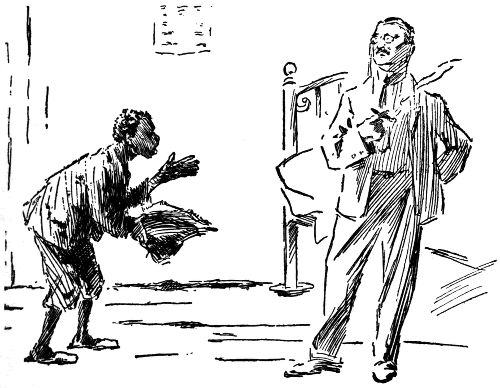
Agamemnon, the shriveled little Barbadoes
darky, scuttled about importantly, stowing our
baggage and giving an occasional haughty order
to some steward in a nondescript patois that
passed mainly as Spanish and that often served,
as I learned, better than the purest Ollendorfian
Castilian. Later it appeared that Agamemnon
18
had left one of these same
steamers under a cloud—a
trifling matter of a few
sheets and pillow cases—and
now to return clothed
with trust and authority
over “de fixin’s an de
baggage of gent’mens”
swelled him with an inarticulate
triumph.
AGAMEMNON
In the long months
that followed none could
have given more faithful
service or loyalty than
this skimpy Barbadoes
darky. That is within
his limitations, for he
could no more resist
liquor than a bear can
honey, but nevertheless
when he had transgressed,
his uncertain legs
would bring him back to
his duties, speechless perhaps,
but with arms wavering in gestures of extenuation.
19
Also to Agamemnon wages meant nothing;
a shilling now and again—sometimes even the
equivalent of a whole dollar—advanced him
with the specific understanding that it was for
gambling and not for liquor. Once, in La Paz,
he won a hundred and fifty dollars, Mex, and became
an impossible animal until it had been
frittered away. In the same city he went to the
bull fight and joined in the play against the final
bull that is “dedicated to the people” and fought
so cleverly that we became prominent by reflection
and gave a party at the corrida the following
Sunday to see Agamemnon’s promised performance.
By this time Agamemnon had become a character
and a score of little boys scrambled over
the barrier eager to hold his hat, his coat, and
his cuffs. With a flourish he handed each to its
eager guardian and then, with a coat held as a
capa, gave a flourish and advanced toward the
bull. The crowd applauded. Agamemnon
made a bow and a flourish and waggled the coat.
The bull snuffed briskly and charged. Alas!
The hand had lost its cunning, for Agamemnon
shot ten feet skyward, turned an involuntary somersault
at the apex of his flight, and then
20
sprawled back to earth. A half dozen of the
toreros drew off the bull; the small boy custodians
flung his garments at him scornfully, while
the Bolivian audience laughed itself hoarse as
the dusty, dishevelled figure hobbled out of the
ring and away from the crowd.
For himself Agamemnon asked but little although
where he felt that the dignity of his position
was involved he became a tower of strength.
It was in the same city that he felt the hotel people
were not treating him fairly, as they were
not, and his remonstrance was met by a Cholo
mozo who hurled a sugar bowl at his head and
followed it up with a knife. Agamemnon
dodged and beat down the Indian with a chair;
on the instant a half dozen Cholos poured at
him and the kitchen was in a riot. Backing
away, he denuded the dining tables of service
and used it as a light artillery fire. By the aid
of an earthenware jar, some handy crockery, and
a chair he was able to retreat safely across the
patio and up the stairway that led to our rooms.
A water pitcher laid open a skull and a wash-bowl
stopped the rush long enough for him to
grab a gun from the pillow when we arrived,
together with some stubby Bolivian police and
21
the bony Russian proprietor; order was restored,
fortunately, for it might have been serious.
Agamemnon explained satisfactorily and incidentally
showed only a minor bump or so, but
his Cholo and Aymara antagonists bore most
proper marks of the conflict. That night in the
midst of his shoe-polishing and packing he remarked
briefly: “If you gent’mens hadn’t er-come
jes’ den I cer’nly would have licked dem
fellers, bahs!” Apparently no victory was
complete to his mind until he had accomplished
a massacre.
At another time he waded into a crowd of
Cholos in the interior and took from them their
machetes and shot-guns, acting on his own initiative,
because he knew that in that far interior
laborers were too precious to waste by their own
fighting. From our tent we heard two shots
and the rising yells of a small riot and then, before
there was time to grab a gun or gather the
few white men, the figure of Agamemnon staggered
up the crest of the river bank with his
arms full of the commandeered machetes and
trade-guns.
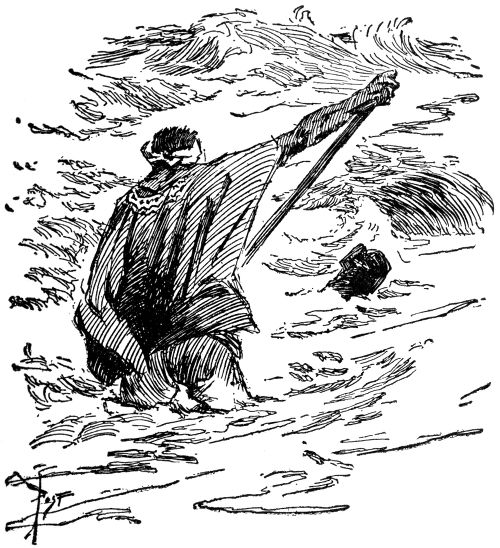
There was the time when a balsa upset in a
boiling eddy and Agamemnon jumped in as a
22
faithful rescuer only to still further complicate
matters; also when—but it is useless, Agamemnon
is a story in himself. Tireless, uncomplaining,
honest, loyal, yet of the aimless tribe of
bandar-log, apparently only merely the mouse
of a man in a wrinkled black skin and yet the
paragon of retainers. Peace be to him wherever
he has drifted.
At the table that evening on the Mapocho the
few passengers looked each other over in the
customary, stand-offish way,—a couple of fresh
faced young Englishmen adventuring to clerkships,
a German commercial traveler—an expert
in those Latin countries who makes one blush
for the self-complacent, brusque, greaser-hating
jingoes that are only too typical of our export efforts—three
mining engineers, a returning Peruvian
diplomat for whose presence we later
blessed him and a couple of native Ecuadorean
families, wealthy cacao haciendados, who
flocked by themselves in a slatternly, noisy
group.
But by the next evening, drawn together by
the prospect of a tedious, uncertain voyage
through erratic quarantines, we were one large
family. We lay back in our canvas chairs under
23
the galvanized iron roof of the upper deck—so
generally peaceful are those seas that the
awning is permanent—and watched the Southern
Cross flickering dimly above the southern
horizon. The cigars glowed in silence for,
though it was the hour for yarning, each bashfully
hung back. Then an engineer started.
The Philippines, Alaska, the boom camps,
Mexico rose in successive backgrounds and then
the talk shifted round to our respective objectives
down this long coast. One was for the
nitrate fields, one for the Peruvian silver mines,
and one for the rich placer banks of the far interior.
The one who was bound for an examination
of Peruvian silver mines—a mountain of
a man—finally made a confidence:
“Gold,” he remarked as an obvious preliminary,
“gold—or silver, I’m a Bryan man—is
generally good enough for anyone, but if I had
my choice I don’t mind saying that I’d rather
have a coal mine down here in South America
than either or anything!”
The others sighed enviously. A coal mine in
South America where there is no coal except
that from Australia and Wales and where
a couple of hundred miles from the coast it is
24
worth twenty dollars, gold, a ton! A coal mine—well—it
is the stuff of which dreams are made
in South America.
“Yessir,” he went on raptly, “coal is the
thing. And I don’t mind admitting that I’ve
got it.”
He hauled a black object from his pocket
and held it out. Eagerly it was snatched from
his hand. There it was, hard, shiny, black,
varying in no way from those in the kitchen
scuttle at home—a splendid sample of anthracite
coal! It was too good. They laughed.
“Bring it from home?” they asked pleasantly.
The mountainous engineer chuckled contentedly.
“That’s anthracite and as fine a specimen
as I ever saw. I don’t mind talking a little
freely since I’ve got it covered in an iron-clad
contract.
“You see,” he went on good-naturedly, “I’m
always wide awake and the morning we left the
Boca a young chap came aboard—American,
too, and right pleasant spoken—where I was
sort of loafing and we got acquainted. To make
a long story short, he’d been wandering around
up in the back country of Colombia and had
25
located this coal. He didn’t have any special
idea of what coal meant down these ways—he
was from Pennsylvania, son of a pit boss or
something and coal was as common to him as
water to a duck—but when he pulled out a
couple of these samples you bet I froze fast.
He tried to be mighty quiet and mysterious
when he saw I was interested—you know how
such a chap is when he thinks he’s got a good
thing, and he was sort of on the beach, down
on his luck you know—but I pumped him all
right.
“He had a fool idea of going home as best he
could and then taking the family sock and combining
it with other family socks and coming
back and opening up his coal mine.” The big
engineer chuckled again. “Why there’s a
king’s fortune in that mine, so your Uncle Jim
stepped right in and tied him up close. I cabled
my principals and I’ll get a cable when we reach
Callao. This coal makes their silver look like
thirty cents. Of course, I wasn’t going to take
any chances at this stage—it might be phony—but
that fellow is on the level. Said he wouldn’t
take any money down—not that I’d have given
it by a long shot—but after I got back he’d join
26
me and come back into Colombia. He gave me
a map of the location in case of accident.”
“Gave him no money—poor fellow, art for
art’s sake?” asked one.
“Well, yes,” the big man nodded good-humoredly,
“thirty dollars—enough to take
him back to the States steerage—I felt almost
ashamed. Said he didn’t need any more to get
home with—that sounded on the level, didn’t it?
He’d had a tough time all right—fever, grub
and etcetery back in the country—and was down
to dungaree breeches, rope-soled shoes, and one
of these slimpsey native calico jackets.”
“And he could roll a cigarette with one hand
better than most can with two?” I asked.
The big engineer paused for an instant’s
thought and then suddenly sat up. No wonder
my friend of the Fifth Army Corps and the
dungaree breeches, alpargatas, and battered
Panama and muslin jacket had suddenly disappeared.
Thirty large, golden dollars of real
money, good at par in the States or for three
pecks of local paper collateral anywhere on the
Mosquito Coast! And all that for one paltry
little yarn.
27
CHAPTER II THE FIGHTING WHALE AND CHINAMEN IN THE CHICKEN COOP
The hot days drifted by in easy sociability,
dividing themselves into a pliant routine.
The morning was devoted to golf on the
canvas covered deck over a nine-hole course
chalked around ventilators, chicken-coops and
deck-houses. Crook-handled canes furnished
the clubs and three sets of checkers were lost
overboard before we reached the Guayas River,
the little round men skidding flatly over the
deck with a pleasing accuracy only at the end
to rise up maliciously on one ear and roll, plop,
into the sea. In the white-hot afternoon, when
the scant breeze would quite as likely drift with
us, the hours were sacred to the siesta, and the
evenings were devoted to standardizing an international,
polyglot poker.
A rope stretched across the after-deck marked
28
off the steerage. There was no second class
as a thrifty French tailor, a fine young man, and
his soft-voiced Mediterranean bride found out.
They had bought second class through to Lima
and at the Boca were flung in aft among the
half-breeds, a squabbling lot of steerage scum,
together with a gang of Chinamen. A line of
piled baggage ran lengthwise, on one side of
which were supposed to be the bachelors’ quarters,
though somewhere between decks were
hutches where, if one really insisted on privacy,
the tropical night could be passed in a fetid
broil.
Through a surreptitious connivance this
couple were allowed quarters forward and evening
after evening the little bride would bring
her guitar out and play—and such playing!
She had been on the stage, it seemed, and from
opera to opera she drifted and then off into odd,
unheard folk songs, or the vibrant German or
Russian songs. Never before or since have I
heard such playing of a guitar or felt its possibilities.
For us the guitar is an instrument
lazily plunked by the end man against two
mandolins. Yet there was a time when Paganini
deemed it worthy of mastery.
29
She was playing late one afternoon and we
were all gathered around in the dining hall.
There came a rush of feet overhead and a shrill,
excited chattering. We broke for the deck, expecting
a mutiny among the Chinamen at the
very least, and there in full view, not five hundred
yards away, was a battle between a whale
and three thrasher sharks. In a great circle the
sea was churned to a foam, boiling with the
stroke of fin and fluke as the sharks outflanked
and harried the whale.
In a steady succession the sharks would shoot
high out of the water in a graceful, deadly curve
and, as they fell back, suddenly stiffen in a whip-lash
bend that instantly straightened at the moment
of impact, sending a flying mass of spray
like that when a solid shot ricochets in gun practice.
A few such blows and even a bulky, blubber-coated
whale would feel it. Sometimes a
shark would strike fair, though more often he
would waste his energy on the empty water as
the whale dove.
But the steadiness of the battering attack,
sometimes all three sharks in the air as though
by a signal, sometimes a steady procession pouring
up from the sea in a wicked arc as regular
30
as a clock’s ticking, and sometimes the frantic
whirling of the whale showed the submarine
strategists at work, while only a single shark shot
up in a well-aimed, whip-lash stroke. In desperation
the whale would stand on its head and
beat the air in terrific blows with its flukes while
the sharks would merely wait till the flurry was
over and then renew their steady, wearing,
pounding battle.
Off at one side of the circle of beaten foam
was a little dark patch that paddled nervously
about and that we had overlooked—a whale-calf.
And now it was apparent why the fight
was fought in the diameter of a ship’s length;
always the bulk of the grim old mother was between
the attack and her clumsy baby; there
was the reason why she did not make a running
fight of it that would have given her a more even
break—for the speed of a squadron is that of its
slowest ship. All the advantage lay with the
sharks; it was easy to see they were wearing the
whale down. Less often she stood on her head
to batter the foam hopefully with her ponderous
flukes; the sharks redoubled their efforts until
they curved in a steady, leaping line.
Along the rail of the Mapocho the passengers,
31
deck and cabin, cheered the battle as their tense
sympathies dictated or drew whistling breaths
as some crashing whip-lash went home. The
deep sapphire of the sea rippling under the brisk
evening breeze, the turquoise heaven that swept
down to the horizon softly shifting against the
sapphire contrast to a mystery of fragile green,
the field of battle boiling and eddying in the
mellow orange glow of the long rays of the setting
sun and bursting into masses of iridescent
spray made a noble setting worthy of the cause,
and in it eighty tons of mother-love and devotion
measuring itself in horse-power and foot-tons
was slowly drooping under the hail from a slim,
glittering, iridescent arc.
Smaller grew the fight in the distance—a mile—a
mile and a half—then two-thirds of the
whale’s bulk shot clear of the surface and she
fell back heavily. Once more the head went
down and the flukes raised themselves, lashing
the air in frantic desperation. The curving,
confident line of sharks shot upward in a graceful
curve, but this time, overconfident, they had
miscalculated. The great tail caught one shark
and he hurtled through the flying spray with a
broken back; the flukes crashed down on a second
32
as he struck the water. Once only the surviving
shark leaped and missed. Alone he
could do no more; the whale in one lucky stroke
had won. Through the glasses we could make
out its low mass slowly swimming off, every now
and then spouting a feather of spray from her
blow-hole as though saluting her own victorious
progress with a steam-whistle.
Five days out from Panama and we awoke to
find the Mapocho swinging to her anchor in the
Guayas River and awaiting the pleasure of the
port-doctor. On one side a distant shore loomed
through the heated, humid haze, on the other a
sluggish tide-water creek disappeared in the
jungle of the bank an easy rifle-shot away. A
ramshackle church with a huge crucifix showed
at one side of the port-doctor’s house and here
and there a few houses and thatched roofs appeared
above a stretch of white beach. A few
black pigs wandered about, showing the only
signs of life. Somewhere beyond this dismal
outpost was Guayaquil. Already in the captain’s
quarters was a conference of the skipper,
the young Chilean ship’s doctor fresh from
school and on his first trip, and the port doctor.
Presently they emerged, the captain feebly
33
expostulating. We were to be held “under observation”
for forty-eight hours as yellow fever
and bubonic suspects. That Guayaquil should
quarantine against anything is—at the least to an
ordinary sense of humor—funny, for Guayaquil
has never seen the time that it was likely to catch
anything it did not already have, except a clean
bill of health.
We learned for the first time that there were
three Chileans abroad who were being returned
to Chile by their consul. They were anemic,
destitute and sick with malarial fever; although
the whole coast was in a panic over yellow fever
and the bubonic, yet this time had been chosen
to ship them home some two thousand miles to a
Chilean hospital! They had been stowed between
decks and the young ship’s doctor had
made the mistake of attempting to gloss over
their existence, or at any rate to split the difference
between truth and expediency, and had
succeeded only in exciting a peevish suspicion in
a marooned gentleman who had some power.
He did not even look at the cases—quarantine
forty-eight hours, and then he would return with
advices from the government.
A few of us went down to take a look at the
34Chilenos whose appearance had held us up.
There was no formal hospital on board so a little
compartment had been hastily thrown up between
decks. It was built of the loose planks
on which the cattle stand during the voyage; it
was closed on all four sides, windowless, and
with but a single opening for a doorway curtained
by a filthy piece of canvas. This black
hole, reeking with filth, was the hospital; a
couple of figures lay on the floor and looked up
dully at the sudden flare of a match while, from
an open cargo port, the third was tottering, a
shrunken wreck with the ghastly teeth of a skull
and socketed eyes.
At noon the purser presented each first cabin
passenger with a little bill for half a sovereign—two
dollars and a half, gold—which amount we
were charged for as demurrage every day in any
quarantine. The deck steerage paid a shilling,
gold, each day.
35
THOSE WHO REFUSED TO PAY WERE THROWN INTO THE CHICKEN COOP.
The purser, a pleasant young Chilean with an
Irish name, yet who spoke no word of English,
was the one busy man on the idle ship. In expectation
of quarantine the occupants of the port
chicken coop had been transferred and now the
purser appeared with the first officer, the boatswain,
and a few of the crew. They climbed
the rope and the purser jangled a chain and padlock
suggestively. One by one the shillings
came out. He reached the Chinamen; some
were dragged from below or hauled out from
the partition of baggage in which they had tried
to hide, all protesting sullenly. Those who refused
to pay were thrown into the chicken coop
until about a dozen were jammed into its close
quarters. It was too low for even a small man
to stand upright, while its condition made it impossible
to lie down so that the Chinamen squatted
on the floor or huddled up on the perches.
36
Then as they decided to pay, if the purser had
nothing on hand more pressing he would come
up and let them out.
Of those who witnessed this wretched steamship
extortion the German really enjoyed it; he
clucked and mimicked before the coop with
great gusto and then scuttled below for his
camera. He had scarcely focussed before the
free Chinamen who knew a camera were chattering
shrilly in hostile groups, the caged Chinamen
clacking angrily back, and the first officer
pounced upon the photographic outfit. This
collecting of shillings from the Chinamen and
the method of enforcement is no light-hearted
morning’s pleasure and is likely at any time to
end seriously. Also it could be noted that in the
immediate background were others of the officers
and crew following operations, and the
arms rack aft of the chart-room was unlocked.
37
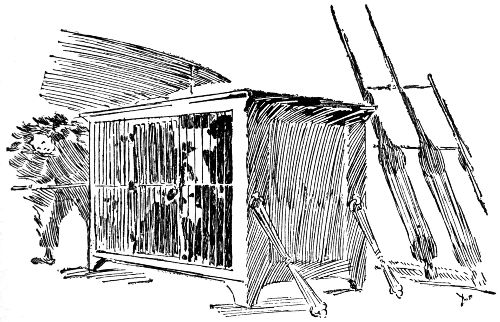
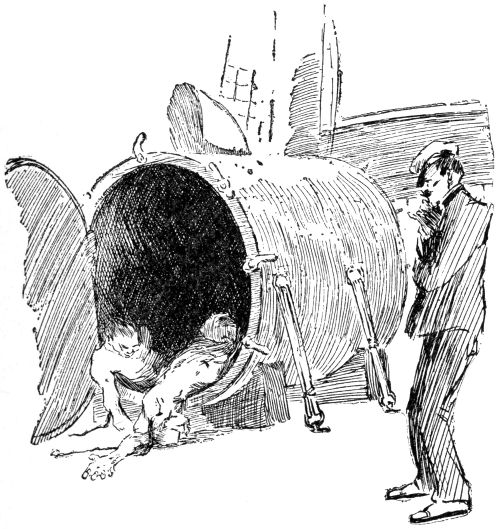
WHEN THE END-LID WAS TAKEN OFF, THE BODIES OF EIGHT DEAD CHINAMEN WERE TAKEN OUT.
Much may be said in favor of the chicken
coop method for there was one time, the purser
related, that another purser in collecting the
shillings used the fumigating boiler of the upper
deck. Eight obstinate Chinamen were
shoved in and the end-lid clamped on. An
hour of a dark dungeon would be better than
the airy chicken coop, argued the astute collector—for
the chicken coop has been known to prove
so alluring that Chinamen have begun serving
on their second day’s shilling before they had
paid the first—and he was pleased at the frantic
scrabbling that sounded through the iron sides.
Then it died down—ah, the sullen apathy of the
race—and when the end-lid was taken off the
38
bodies of eight dead Chinamen were taken out,
suffocated. It was no end of trouble to that purser
for he had to juggle with his passenger sheet
and the various port officials so that the ship
wouldn’t be held in quarantine and make the
captain and owners peevish and thereby lose his
job. Caramba, it was lucky they were Chinamen!
Slowly the forty-eight hours on the broiling
river passed away. In the morning of its close
we looked anxiously to the nearer shore for the
sign of official life. Except for the straggling
black pigs, all was lifeless beach and jungle.
The hours passed. It was noon. We breakfasted
at that late Latin hour irritably. Presently
the placid captain sent a string of signals
up the foremast. Still the creek, the strip of
beach, and the jungle gave forth no signs of life
other than the black pigs. More time passed
and the captain had the whistle blown at intervals.
No result. As a desperate measure he
had the capstan turned—a bluff for it was free
of the cable—but as the dismal clank of the
pawls carried to shore, half a dozen figures scuttled
down to the creek and tumbled into the official
boat. A few minutes later it was at the
39
companion ladder and the port doctor was
mounting haughtily.
Why this uproar? The sanitary junta had
been notified of our arrival—what could one
more? A reply had been received this morning—or
was it the day before?—that the sanitary
junta was very busy, but would consider the
quarantine of the Mapocho at a meeting this
very night. In the meantime——! He spoke
with a patient, restrained peevishness as to an unreasonable
child.
The august sanitary junta sat augustly at Guayaquil.
From this port doctor’s station to Guayaquil
was some distance. To telegraph one
made one’s report, then it was paddled across the
muddy tide-water creek in a dugout; then it was
carried on foot across the island—for this strip
of beach and home of the straggling black pigs
was but a portion of an island of some size—and
then across more water in a dugout and there was
a telegraph station! Naturally all this took
time. The port boat put back and the captain
returned to his quarters. From the stern again
came the sickening pop of firecrackers where the
Chilean crew resumed their fishing, hauling in
a slender, stupid variety of catfish and then tossing
40
it back with a well-timed firecracker thrust
in its gaping throat.
We watched the shabby boat run on the beach
and the port doctor disappear in the jungle path.
The crew gathered up the oars when suddenly
the doctor darted back, the crew tumbled into
the boat, and in a flurry of ragged rowing they
came splashing toward us. Hope revived—a
release from the august sanitary junta! A biscuit
toss off they stopped. The doctor rose in
the sternsheets and grandly ordered us out of
Ecuadorean waters; if we did not leave at once
we would be fired upon—by what there was no
intimation, it might have been a black pig from
a bamboo catapult for there was nothing else
in the way of artillery—but it sounded formal
and terrible. So we left. And with us went
five thousand packages of freight and ninety
sacks of mail intended for Guayaquil, and the
furious Ecuadorean passengers.
The Peruvians were complacent. “It is better
for us,” they said, “than to have to put into
that wretched Guayaquil. Had we touched
that fever-infected port we would have had
much trouble in the Peruvian ports. Now we
have our clean bill of health from Panama.”
41
It was beautiful optimism. I took another
look at the reeking hospital between decks and
wondered if we could ever get into any port and,
as I turned away, two wretched, tottering skeletons
passed on their way to the open cargo port.
They were convalescing. I hoped for the third.
Some time during the night we passed over to
the Peruvian coast and anchored off Payta early
the next morning. Two miles away a white
thread of slow surf broke on a thin line of blazing
yellow beach; beyond rose a low range of
brown-and-yellow bluffs, the hot and arid fringe
of the long dessert that edges the west coast of
South America. Back from the edge of surf
spraddled a shabby, sand-blown, flea-bitten town
with only here and there a patch of gay red-tiled
roof; nowhere a strip of green or frond of
palm to relieve the arid deadliness of the brown-and-yellow
hills.
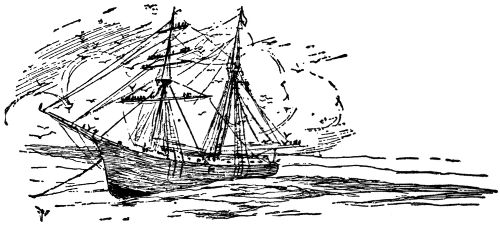
Off shore—there was neither bay nor bight in
the even line of surf—a deserted brigantine at
anchor dipped slowly with the long Pacific
swells, its yards and decks whited like a leper
from the unmolested frigate-birds and sea fowl
that made it home. Beyond, here and there, a
patched sail of no particular size or shape was
42
barely filled by the lightest of breezes; occasionally,
as one crept past, the outfit developed
into a raft on the after part of which was a rough
platform of palm on which were housed the
Indian fisherman and his crew or family. A
few abandoned square tins—the well known export
tins of Rockefeller—held the drinking
water, an earthen pot their food, and on this
flimsy contraption they would put out miles to
sea. In beating to windward a loose board or
piece from a packing case is poked through the
crevices to act as centerboard.
A DESERTED BRIGANTINE AT ANCHOR DIPPED SLOWLY WITH THE LONG PACIFIC SWELLS.
Slowly creeping over the ground swells was
the port officer’s boat; it had a uniformed crew
and rowed well. The Peruvians watched it
contentedly; por Dios, no such stupid work here
43
as in that Guayas River—buenos dias, Señor
Comandante, buenos dias, Señor Doctor—and
they stood aside as the captain led the way into
his quarters, the procession closing with the nervous
ship’s surgeon and a steward with a bottle
of warm champagne—for there was no more ice.
Presently they emerged amiably and the port
officers put back to shore. We would be incommunicado
until that very afternoon and then we
would hear. The little boats that had clustered
around the Mapocho with Panama hats, fruits,
and suspicious looking native candy were waved
ashore in a cloud of disappointment. In the afternoon
back came the boat and the young surgeon
prepared to meet them ceremoniously at
the foot of the companion ladder. He could
have spared himself the trouble; the little boat
stopped fifty feet off while the port doctor
handed out a judgment of five days’ quarantine.
Twelve dollars and a half a head for the first
cabin and a dollar and a quarter, gold, for the
steerage, and all additional! Going into quarantine
was not, from a purely business standpoint,
without its profits. And also the Ecuadorans
and the Peruvians once more met with a
common bond of sympathy.
44
A barefooted Chileno sailor who had been already
to haul down the big yellow pest flag at
the foremast belayed the halliards permanently
to the bridge pin rail and trotted off to help in
putting over a small boat. This boat flying a
small yellow flag, was anchored a half-mile away
and during the days of quarantine was the only
means of communication with the shore. Each
morning through the medium of this anchored
boat we did the ship’s business with the shore
and from it the steward would return with watermelons,
eggs, turkeys, ducks, and vegetables and
quinine for the doctor. Occasionally from day
to day the port doctor, the port captain, or a
member of the sanitary junta would be rowed
out in the official boat to look us over and the
tottering wrecks between the decks would be
mustered at an open cargo port for a distant and
sceptical inspection. The local steamship agents,
through the daily messages in the anchored boat,
kept us interested with the daily rumors—we
were a plague ship, a floating charnel house plying
our way shamelessly from port to port, a
leper of the high seas shunned even by Guayaquil—and
one vague and indefinite that seemed
to suggest that a port official contemplated a sea
45
trip in a week or so and was engineering this
means of giving us the pleasure of his company
when he was ready. It was interesting.
46
CHAPTER III THROUGH A TROPICAL QUARANTINE
One morning when the official sanitary
junta—the port doctor, the town druggist,
and three shopkeepers, all of whom
except the first, were contentedly selling us supplies—were
making their inspection within easy
hailing distance the returning Peruvian diplomat
dealt himself a hand in the game. In a
few pointed remarks he demanded that they
send a doctor on board to make an examination.
The port captain returned an indignant oration
in which, after paying tribute to the ancestral
deeds of the diplomat’s forebears, he hurled
shame at the diplomat for his selfish lack of
patriotism in so distrusting the conclusions and
acts of his countrymen, obviously he had been
so enervated by effete foreign associations that—that—well,
it sounded like good oratory anyway.
There was no doubt in their minds that
we were concealing yellow fever.
47
Slowly the five days of quarantine passed with
this solemn official mockery. The Chinamen
ceased from troubling and yielded the daily
shilling, the chicken coop was returned to the
authority of the steward—although once, for
variety, a Chinaman shared it with a couple of
turkeys for some hours—and then the final day
arrived.
Leisurely the official boat rowed out. The
passengers for Ecuador, it announced, were to
be transferred to the leprous-looking brigantine
where they would remain in quarantine until
they could be transfered to a northbound
steamer. Incidentally they were privileged to
pay twelve sols a day, each, for board. Then
the official boat was rowed back; and that was
all.
Indignantly the passengers met and decided to
pay no more daily quarantine charges—it seemed
as if the company needed a little stimulating,
perhaps; the purser chuckled sympathetically
and then a self-appointed committee looked over
the chicken coop with a speculative eye. It was
heartening, for at least the monotony would be
broken. That night an unofficial boat stole out
of the darkness alongside; confirmed the rumor
48
that the port captain was holding us for a week
longer to suit his convenience; then the messenger
disappeared in the night. This was
interesting as pure news matter and that was
all.
Came the morning of the sixth day without
change. And then the diplomat’s cables to
Lima had effect. A doctor had been appointed
on a cabled order from Lima to make a real examination;
he came out accompanied by a sanitary
junta of very sour officials, climbed on
board, and began his work. They pulled away
and returned in the afternoon.
The young ship’s surgeon and the new doctor
shouted the report across the water. Barring
the three cases of malarial fever between decks
we had a clean bill of health. The official boat
drew a trifle nearer; in the stern sheets the port
doctor scanned a formidable looking medical
volume that lay open on his knees and the druggist
bent his head over the same pages. Solemnly
they accepted little test tubes that the
ship’s surgeon passed across to them and examined
them gravely. They turned a few pages
of the book and asked a question. The new doctor
answered it promptly. Again they shuffled
49
the pages and came
back with another;
another answer, and
then more hasty
poring.
WHAT THE DIPLOMAT SAID WAS DIRECT AND VOLUBLE.
At length came
their decision: it
was true that the excellent
doctors had
described no such
symptoms as were
standardized for
either yellow fever
or the peste bubonica,
but there was
nothing to prevent
those doctors from
stating and confirming that which was not true;
therefore be it resolved that we had yellow
fever, but were concealing it! They were the
incorruptible guardians of a nation’s health.
What the diplomat said was direct and voluble
and carried perfectly across the calm evening
sea: Heaven was a sad witness of his unpatriotic
perfidy for he threatened them with a touch of
patriotism direct from Lima upon the hour of
50
his arrival—however distant or uncertain that
might be. A little conference and they voted on
our admission, two and two—could anything be
fairer! Their honest hearts thanked Heaven
for the thought of this simple and adroit deadlock
that preserved their official activities and at
the same time kept us in a profitable quarantine.
Tersely it was pointed out by the diplomat that
by virtue of the cabled commission the new
doctor was a member of the board—vote again!
That evening we wandered through the dust
and sand of Payta and rode grandly, and briefly,
to the out-skirts of the town in the single mule-and-rope
tram that skirted the beach. It is well
in the troubled times of quarantine on the West
Coast always to travel with an accredited diplomat
on board.
A Wide, Dusty Canal Which in the Intervals Between Showers Serves as a Market
51
All next day the whirr and clatter of the steam-winches
and the bang of cargo kept up and again
we visited the dusty port, wading through the
lines of Panama hat sellers that lined up to greet
the landing of our small boat. Of hotel runners
there were none, this being due to the fact that
there was but one hotel to which the stray custom
is bound to drift. At the hotel we saw a few
palms and tropical blooms in tubs and in a carefully
irrigated patio, for Payta is—like all that
West Coast—rainless. As a cold matter of
meteorological fact it does rain sometimes; I accidentally
started an acrimonious discussion by a
merely polite remark on the weather as to
whether it had been nine, eleven, or fourteen
years since the last rain. In apparent proof of
this there is a wide, dusty canal bulkheaded with
piling on either side which in these intervals between
showers serves as a native market. Little
red flags flutter from the chicherias where the
opaque, yellow, Indian corn beer is sold, ranging
in flavor and potency from warm buttermilk
to the wicked “stone-fence” of New Jersey.
Back of the town a trail wades through the
sand to the crest of the long bluffs; the feet of
countless pack trains have worn a driveway
through the ridge until, stepping through, there
are suddenly spread before the view the endless
stretches of a dried and dusty desert that has been
an ocean’s prehistoric bed. The hot airs quiver
and boil from the twisting valleys or ridges of
blistering sand and rock and through the pulsing
heat the occasional pack train in the distance
turns to a wavering, shimmering thread. To
the imagination a desert rises as a dull, gray expanse
52
endless in its colorless monotony; here
there was a riot of color, every hue, raw and
gorgeous—except green—from the soft purples
and cool sapphire of the shadows to the blazing
yellows and reds and white of the open spaces.
And in the garish stretch of a dead ocean there
slowly rises like a parching thirst a longing for
a sweep of tender green.
CLOSE RESEMBLANCE TO AN ARMY OF DRUNKEN BUGS.
The little governmental touch from Lima
had cleared the path of quarantine and we began
a dot-and-carry-one course down the coast from
Payta; every day our winches whirred and clattered
off some dusty, sand-blown port. Before
our anchor had touched bottom in the open road-stead
a fleet of lanchas, heavy, double-ended,
open lighters of from ten to twenty-five tons capacity
were crawling over the water; the dozen
long oars that were their means of locomotion—and
that were manipulated on an independent
53
competitive basis—spraddled on each side gave
the fleet a close resemblance to an army of
drunken bugs struggling forward on uncertain
legs. There was always a race to the Mapocho’s
side and the first to get there caught the heaving
line.
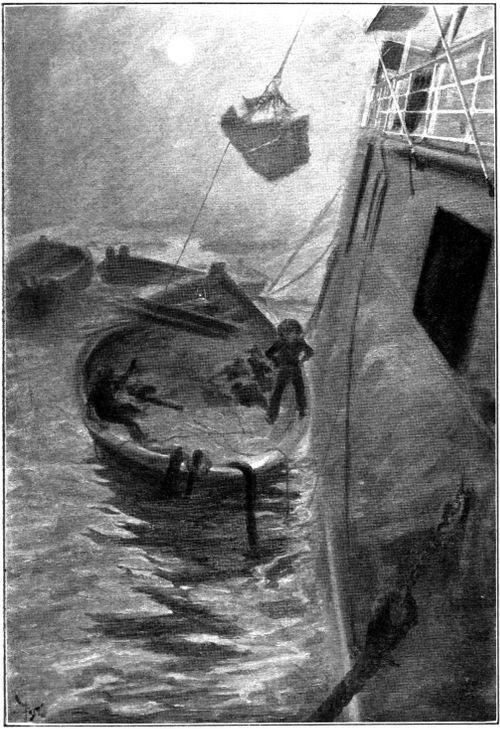
Once a lancha defeated in a close finish came
on and cut the heaving line so that its rival was
left with the useless section while it hurriedly
hauled in on the hawser. Instantly a fine naval
engagement was in progress as the lanchas
locked like a couple of old Carthaginian galleys.
By the aid of force peace was established
and the rightful and original award of the
hawser sustained; had it not been, as the first
officer explained, they would need a new heaving
line at every port.
The bluffs of the coast gave way to hills and
these in turn to higher ones; the Andes were
closing in on the Pacific. At times the great
mountain chain towered from the very water’s
edge in a succession of steep cliffs, each receding
tier softening in the distance and rising through
the slowly shifting strata of clouds until only
the gashes of white snow picked out the towering
peaks. Here and there steep, rocky islets
fringed the coast line and we stood far out to save
the chances, and yet there was no appreciable
54
change in the proportions of the tremendous
mountain range. The sense of proportion and
distance was lost in the comparison of these vast
reaches. A rocky islet, a steep sugar-loaf affair,
rose from the ocean perhaps five feet—not much
as an island or a mountain peak. Through the
binoculars a tiny unknown speck at the base developed
into a full-rigged bark with tapering
masts above which the sugar-loaf rock rose for
thousands of feet in the clear air, and on it was
a wretched colony of guano workers.
Then the coast opened out into level reaches
again with occasional lines of irrigation ditches
showing a thread of green. Occasionally—twice
I think—there was actually a landlocked
harbor. It was one of these, Chimbote, that
James G. Blaine proposed to use or secure as a
naval base and coaling station. It is perfectly
sheltered with a narrow, bottle-neck entrance
guarded by a rocky island in the middle which is
covered with a wriggling film of seals that are
perfectly indifferent to the close passage of ships
or men.
Every Day our Winches Whirred and Clattered off some Dusty, Sand-blown Port
55
In this harbor rode the queerest of sea-going
craft. In Mexico I had once seen a Chinaman
fit himself up a home from about eight feet of
one end of a hopelessly wrecked dugout, take in a
partner, and then the two of them paddle off up
the river in the fishing business, sleeping and
eating aboard the flat-iron shaped thing. Here
in this case was a bow and stern bolted together
without a midship section. And both the bow
and stern were those of a fairly full size tramp
freighter. The bow was the ram bow of a war
ship and back of it there was barely room to
squeeze in a capstan and a tiny hatch; the foremast
shared the bridge, a funnel and whistle
jammed themselves up against the bridge, while
the short distance to the stern rail gave room for
a squat cabin out of which rose the mainmast.
A score of Chimbote lanchas were as big—bigger—and
where this telescoped liner would find
room for cargo or coal after providing for engines
and a galley is a mystery. Yet it does
carry cargo and ambles along from port to port
a tragic marvel of compression.
The day before, off Huanchazo, where a storm
far out had piled up a heavy, oily groundswell,
that even put the racks on the tables, a wealthy
old Peruvian lady had been hoisted abroad in a
cask clinging to her son. She was a garrulous
old soul, powdered like a marshmallow, with
56
three chins and a little moustache, and her son
was the very apple of her eye. Therefore, son
was what one might expect. His adolescent and
mature ambition was to be the amorous cut-up of
the coast and so far he had succeeded generously
in making a smug, self-satisfied nuisance of himself.
He counted doting mother’s allowance
publicly, drank warm champagne noisily when
thrifty mother was not around, and dressed in
the Huanchazo idea of French fashions for men.
In the morning he did not appear. Mother explained
fondly—but not the truth. She did not
know it.
Passengers are warned not to go between decks
after dark, the steerage hutches and the crew
have the freedom of that deck. Son prowled
down on some shifty little romantic project of
his own. In the darkness he suddenly felt two
sharp little pricks in the skin of his back and one
sharp little prod in front; they felt very, very
much like the points of knives. Up went son’s
hands promptly and in the blackness he felt
heavy hands pulling out his maternal allowance—the
beautiful money with which he was to
flaunt his fascinations in Lima. Hence no Limanean
gay life—mother it seemed was a thrifty
57
Spartan in money matters—and son was in his
berth, weeping. A steward told us the latter,
confidentially of course.
Samancho, Chimbote, Salivari, Suppe, and
then at last, in the daybreak of the morning after
the last named and in the midst of a soft, clouded
day, Callao. There was the usual customs
search of the baggage—a maddening process to
an Englishman, mildly irritating to a Frenchman,
and accepted meekly and placidly by
Americans as a matter of course from a thorough
training in our own home ports. I have never
passed through any country that could give as
close an imitation of our own thorough methods
of dock robbery and tariff brigandage as Peru.
A quarter of an hour by train through a rich
soil that can be worked only by irrigation and
Lima, the first halt on the continent, has been
attained.
For two weeks there was nothing to do but to
idle in Lima. A delightful city full of the old
contrasts of highly civilized, sybaritic pleasures
alongside of the squalid, aimless poverty of the
survivors of a devastated empire. There is the
Bois where fashionable equipages with cockaded,
copper-colored lackeys—possibly in bare or sandaled
58
feet—on the box, silver-mounted harness
and heavy, Chilean bred coach horses jingle past
in procession on Sunday afternoons while some
gallant Peruano lopes alongside with huge silver
stirrups and a saddle almost solid with bullion;
the sodden side streets where the buzzard and the
scavenger pig are man’s best friend; the cathedral
where lies the dessicated body of Pizarro
in a marble casket like an aquarium, the one open
side covered with glass through which may be
seen the remains of that treacherous old buccaneer,
with his head re-fastened by a silver wire
to guard against a repetition of the theft; the
cathedral itself with its murky interior smoked
by the votive candles of millions of conscript
converts; its queer carvings where the ecclesiastical
memories of architecture have been freely
rendered by the Indian stone-cutters; the clubs,
the cafés—and the ambrosial coffee—chapels
with the bullion covered walls, the wretched
tobacco at high tariff—extorted prices—all these
and then the Hotel Maury.
Lima, a Delightful City of Contrasts
59
Peace be to Savarin, to Delmonico, and to
Chamberlain. They did well in their way. But
they never served a squid, or cuttlefish, floating
like a small hot-water bottle, tender and delicious
in an inky sauce of their own founding; nor
a starfish sprawled in a five-pointed dream of
savory, lobster-like succulence; nor “señoritas”—a
delicate species of scallop—each with its
tiny scarlet tongue draped across the pearl-white
bivalve bosom and that, steamed or not, melted
in one supreme ecstatic flavor; nor five inch
langostin fresh from the cold waters of the Andean
hills, nor compounded or invented a strawberry
gin cocktail of surpassing allurement—cooled
by a piece of ice kept in a flannel-lined
drawer and returned thereto after stirring.
None of these things had they and so by just
that much they fell short.
In the Hotel Maury there was a written bill
of fare for those who could merely read. But
for the expert, the fastidious—or the adventurous—there
was a redoubt in the main room
whose flanking bastions and crest were a solid array
of great joints and little joints, steaks, chops,
unnamed fish in platoons and señoritas in brigades,
fruits, vegetables and all of the foregoing—and
more—laid out in tiers and terraces whose
foundations were of cool, inviting seaweeds and
mosses, and still further seductively embellished
with a variety of paper ribbons and crests and
60
cockades until one almost lost sight of the pagodas
of gaudy, many-storied cakes and confections
that rose like watch towers at judicious intervals
along the battlements. It was a salon.
To the shuffling, woolen-capped, sandaled, or
bare-footed Indian at one’s heels the directions
were given, you chose what you would as they
thus reposed in the altogether and then repaired
to await in a sawdust-floored cavern at one side
and in a state of serene and expectant bliss the
certain pleasures of the very immediate future.
You waited, it is true, at a warped table with a
stained cloth on which a bent cruet supplied the
only note of elegance. And, lest any of the precious
viands be lost in transit or breakage, you
knew that you would be served with a substantial,
hard-shell crockery only slightly more vulnerable
than reinforced concrete. Presently your
Indian reappeared in a shuffling trot scattering
sawdust from the prow of each sandal like a harbor
pile-driver under full speed—the hard-shell
crockery is white hot, but he has the hands of a
salamander—and then with a flourish he drops
an assorted collection of tableware somewhere
within reach—you are served. And what a repast!
Peace be to Savarin, Delmonico and—enough.
61
Comparisons are invidious and the
Maury can stand alone in the continent of his
choosing.
Very shortly the sailing day came for, since
it was not possible to land in Mollendo owing to
that port being afflicted with a quarantine, it had
been necessary to catch a steamer that would put
us through the surf at Quilca, a hole in a cliff
that has its only function in these times of quarantine.
A farewell inspection of the redoubt and
bastions, a recharging of the bottle of salicylic
acid and alcohol, which while it had in no
way abated the fleas of the Hotel Maury, yet had
mitigated their consequences, and Lima and Callao
drifted into the background with the closing
day. From Quilca in some way we would connect
by muleback and packtrain across the desert
to the desert station of La Joya with the railroad
to Arequipa and thence to Lake Titicaca and
across to La Paz.
62
CHAPTER IV A FORCED MARCH ACROSS THE DESERT OF ATACAMA
The stand-by bell of the Limari tinkled
from her engine-room, our baggage and
freight were safely stowed in the wallowing
Peruvian lanchas alongside, and the Bolivian
mail followed. The Captain of the Port and
the Inspector of Customs balanced down the
swaying gangway and dropped into the gig
alongside. We followed.
Before us stretched the long, barren line of
rocky coast, fading away in the soft mist of a
Peruvian winter. For it is winter here, damp
and chill, in September. Directly ahead is a
narrow, ragged break in the cliffs. Inside is
Quilca, the side door to La Paz in days of quarantine.
We cross the barrier of half-concealed rock
before us, and soon we are in the smooth waters
of the cañon beyond. On either side the red volcanic
63
bluffs rise for perhaps two hundred feet,
their faces scarred and seamed or beaten into
grotesque forms by the Pacific of ages past. Up
this defile we rowed for several hundred yards,
then we rounded a ragged promontory, and the
full glories of the metropolis of Quilca burst
upon us. A broken flight of steps led from the
water, and, back of it all, two thin straggling
lines of woven-cane huts bounded the solitary
street. Two houses, more dismally pretentious
than the rest, with mud walls and corrugated-iron
roofs, marked the local seat of government.
In the distance rose the red volcanic hills, dull,
flat, and shadowless under the clouded sky of
the tropical winter. This was all of Quilca.
We had cabled from Lima for horses and a
pack-train to meet us and bring us over the
desert of San José, where we could get the train
to the interior.
The morning after our arrival we were awakened
by the clatter of the pack-mules as they
passed our quarters, and the “Hola, hola!
Huish, huish!” of their arrieros. It was our
train.
In the middle of the lone street the arrieros
were busy lashing our smaller packages in rawhide
64
nets. Scattered about in the sand were the
larger cases of freight—prospecting machinery
and mining hardware—amounting to a little
over a ton in weight; and still under the guard
of Agamemnon in our quarters of the night was
the personal equipment—trunks, instruments,
rifles, shotguns, cartridges and powder and shot—making
nineteen hundred pounds more. And
blocking the only thoroughfare of Quilca were
the twelve pack-mules—long-haired, disconsolate
animals, with pepper-and-salt complexions,
save where patches of bare hide showed
the chafing of the pack-ropes. They looked as
though our own regulation army load of two
hundred pounds per mule would be far too great.
And they were to divide four thousand pounds
among them.
It was eleven o’clock in the forenoon when the
last diamond-hitch was thrown and the last pack
lashed in place. The arrieros swung their long,
knotted rawhide thongs, the saddle-galled bell-mare
clanged as she led the way, and we climbed
into our saddles and fell in behind the straggling
mules as they led the way up the dismal street
and out into the desert.
The trail rose sharply as it left Quilca, and
65
then wound around to the right, where it joined
the old desert road used by the Spaniards after
their conquest, and for centuries before that by
the Incas in their barter with the coast. On each
side rose white walls of rotten rock, higher than
our heads as we rode by, the path between them
worn down by plodding hoofs for untold ages.
Upon this path the rock was ground to a fine
white powder that rose in clouds and covered
us until we looked ahead as through the mists
of a fog. Vaguely, over the walls, the ragged
volcanic hills silhouetted against the sky.
We kept on ascending between these winding
walls, at length emerging on a narrow table-land—the
top of the cliffs we had seen from the decks
of the Limari. A short distance over the level
ground, and then from the farther edge we
looked down on the flat, stony bottom of the
Vitor Valley—a ragged gorge that wound a tortuous
course through the desert. A narrow trail
with short, sharp angles zigzagged down a steep
gully to the bottom. The mules carefully picked
their way down among the loose stones, halting
inquiringly at times to choose perhaps a shorter
cut. If it seemed to their instinct feasible, they
gathered their hind legs under them, their front
66
hoofs sticking stiffly out in front, and slid down
on their bellies, in a cloud of dust, carrying with
them a small avalanche of loose shale as they
landed in a section of the trail below.
You sit back in your saddle—all saddles in
these parts have cruppers and breastplates to prevent
your sliding over the animal’s ears as you go
down or slipping off behind as you go up a mountain
path—and as you watch the tossing line of
packs below, the speculation forces itself as to the
consequences of a mule’s misstep. That it is not
all idle speculation is shown by the scattered
skeletons below in the valley, bleached to varying
degrees of dull white.
We do not descend to the pavement of river-washed
stones on the bed of the valley. Twenty
yards above, the trail leads abruptly off to the
left into a narrow ditch worn in the face of the
cliff, which in places has been scooped out to allow
for the width of the packs, leaving an insecure
overhang of rock above.
For miles we followed the contour of the valley,
clinging to the steep slopes and the sides of
the cliffs that hedged it in. Then down a clayey
bank the trail started diagonally across the bottom
of the valley to the farther side. Occasionally
67
we would come suddenly on a little clearing
where two or three Indians, grisly through the
ashen grime, were burning charcoal—little twigs
scarcely bigger than one’s finger. We came out
at the farther side of the valley against the cliffs
of the mesa beyond. On the little stony flat before
them, three straggling huts of woven cane
with thatched roofs of barley straw marked a
lonely hacienda. A few dirty Indians and their
slatternly wives lounged about. A short distance
beyond, the trail led over the steep talus at
the base of the cliffs; then on up through a narrow,
wedge-shaped crevice that wound back and
forth in short ascending turns, till it disappeared
over the edge of the mesa a thousand feet above.
For miles on either side it was the only break in
the cliff; and as we looked at the stiff prospect
ahead of us, the rocky descent of a few hours before
seemed like gentle morning exercise in the
park.
For a short distance the trail ran straight up
over the loose shale; then the real ascent began.
Ten yards to the right, then ten to the left, and
steeper with each change. The mules humped
their backs and scratched along on the toe of the
hoof, choosing their foothold with the nice precision
68
of a cat crossing a sprinkled street. Two
turns to the right, then two to the left; then a rest
of half a minute, when without urging they
would recommence the ascent. Slowly and tediously
we climbed, and finally rode out on a
broad, level plateau that stretched away and
merged with the desert hills of the distance. Below
us toiled our pack-train, tediously weaving
back and forth on the zigzag trail. As each
section reached the level ground, the arriero dismounted
and went among his animals, talking
mule-talk and easing loads to a better balance or
tightening the stretched cinches. All the unkempt,
hairy sides were heaving with heavy
breaths. A few lay down—a bad sign in a pack-animal.
But in twenty minutes every mule was
apparently as fresh as ever, wandering about and
foraging on the stiff, wiry bunch-grass of the
arid soil. And when we started they stepped off
easily under their loads, with their long ears
briskly flapping. The two small arrieros left us
here and returned to Quilca, for the chief difficulties
were passed, and the rest was but persistent
plodding over the desert to San José.
The trail over the plateau had been worn in
parallel furrows like the thin strip of a newly
69
ploughed field. Each mule chose his furrow
and insistently walked there, resenting the effort
of any of the others to get in ahead of him.
When a collision occurred you could hear the
rattle of nail-kegs and the clatter of shovels,
picks, and hardware a half-mile off as they
butted and shoved for the right of way. Our
two remaining arrieros rode in the rear, muffled
in their gaudy woolen ponchos. Occasionally a
lean arm would shoot out from under its folds
and the knotted thong bite the flank of some lagging
mule. These mule-drivers’ thongs are long,
braided strips of rawhide spliced into the curb-rein—they
use no snaffle—ending in a heavy
knot. Its twelve or fourteen feet lie coiled in
the bridle-hand until called into service. Then
with a twist of the wrist, it feeds rapidly out
through the right hand, humming like a sawmill
as it circles round his head, and landing with a
thwack that generally corrects the indisposition
for which it is intended. Often the arrieros imitate
its vicious hum, and it will frequently prove
sufficient.
The trail was distinct enough—there was no
fear of wandering away from it—a slender ditch
worn in the bed of the arroyo. Here and there
70
a ragged little hole dug in the soft walls of white
rock marked the lonely home of some desert badger;
and again we would ride past whole colonies
of them. In these badger villages the holes
fairly honeycombed the sides of the trail and the
bluff walls of the arroyos, and the shuffling claw-marks
of the badger trails scarred the dust in all
directions. There were no other signs of life;
not even the scaly windings of a lizard were to
be seen, and the sparse patches of bunch-grass
had long since disappeared.
Mile after mile we pushed up these narrow
valleys. The badger-holes disappeared, and
strange desert growths began to appear from
time to time. As we had ascended, the clouds
had seemed to lower, and now we could see on
either hand the light mists floating about us.
One more steep loomed ahead. We pushed
through the damp strata of mists clinging to its
sides, and came out on the flat land above in the
long level rays of the setting sun. Below us,
over the clouds, it cast its cold, blue shadows
and sparkling high lights, transforming those
shifting, unstable vapors into rippling waves of
golden foam. To the east the whole desert
glowed with color. The long furrows of the
71
trail wove themselves in patterns of orange and
purple. Rolling shadows, rich in their changing
violets, faded slowly and softly away to the
left. Gorgeous reds and scarlets, madders,
oranges, crimsons—every brilliant color of the
palette—spread in glowing masses, changing
with each minute of the dying day. The saddle-stiffness,
cracked lips, and parched throat, dry
with the alkaline dust, were forgotten—even the
dismal clank of the bell-mare slowly toiling in
the lead mellowed to a far-off chime—and in
those few brief moments of the vanishing day we
felt the subtle desert spell.
The shadows grew colder and merged one into
another; the desert dimmed, a few stars glistened,
and, as though a door had closed behind us, we
passed into the night. Twilight is short in the
tropics. Down by the horizon on our right the
Southern Cross slowly lighted up—four straggling
points of light that feebly struggled with
the blazing stars about them. We closed in behind
the swaying shadow of the mules, from
which came the subdued rattle of packs and
creaking cinches, that were the only sounds to
disturb the dark stillness. It was but a little way
now; in another hour we would be in camp.
72
Out of the shadow ahead came the clash of
picks and shovels, the rattle of a load as it struck
the sand, and the swaying shades of the mules
divided around a black mass stretched on the
trail. It was the first note of exhaustion. For
twelve hours the mules had plodded at the same
steady gait, rested only by the halt on the cliff,
miles back, and the wonder of it was that, with
their loads, none had dropped before. As we
rode up we could see against the faint starlit
ground the sprawling silhouette of the beast,
lying as he fell, the long, expressive ears limp
on the desert sand. The arrieros dismounted
and pried him on his feet again, and patiently he
hit the trail. In the next half-hour four more
went down. At one time half our mules were
down, and we strung out over the desert for two
miles picking them up.
A few minutes later we swung off to the right,
stumbling through a series of broken ditches—the
remains of the old Inca irrigation systems
that ran for miles back into the Andes. Then
we dropped down steep winding paths, our
shoulders scraping against walls of sand as we
turned to the right or left around the corners.
The mules apparently understood that a camp
73
was not far ahead, and seemed fresher. Soon
we rode out on a flat, sitting straight in our saddles
once more, with the hard rattle of stones
underfoot and the cool wet sound of running
water just ahead. Then the noiseless, padded
ground of a corral, and the mules lay down and
we climbed out of our saddles. It was the camp
at last.
A dried old Indian appeared from somewhere,
and by the light of his tallow dip I made out
the time—half past three in the morning. We
had come seventy-six miles without water or rest.
At a little after six we were awake. The sun
was rising above the cliffs that lined the valley,
though the chill of the night air still lingered.
Coffee awaited us in the openwork cane hut of
the Indian proprietor of this hacienda, and as
soon as we finished it we would start. In the
daylight we could see that we were in a broad
level valley. Through the center of the valley
ran a brook—a portion of the same Vitor River
of the day before, but now dwindled to a tiny
thread. About us clustered a few buildings with
low walls of broken stone from some Inca ruin.
A short distance off was the mission church of
the desert, announced by a cross of two twigs tied
74
with a strip of rawhide and surmounting an excrescence
of broken stones evidently intended as
a steeple. We drank the thick, black coffee, for
which the Indian refused both money and presents,
and at seven o’clock we started.
It was all white sand now, and everywhere the
same hot, white glare hedged us in. There was
not a breath of air, and as the sun rose higher
it beat down with a constantly growing heat.
Then once more out on the flat desert above.
For endless miles it stretched, quivering in the
heated air of the morning. Away down in the
east the long line of the ragged, snow-covered
Andes loomed up, their summits thrust through
the low banks of clouds along the horizon. All
signs of a trail had disappeared. The little furrows
left by the passing pack-trains were filled in
by the hot desert winds that blow always from
the west. It is the unvarying steadiness of these
winds that causes the curious crescent-shaped
dunes of sand found on this desert. There were
thousands of these shimmering in the long distances
of the heated glare, from little ones just
blown into existence and not six inches from tip
to tip up to great banks forty feet high and with
two hundred feet between the horns. Superheated
75
puffs of air blew from them that struck
like a breath from the first run of molten slag.
The heat crept between your closed teeth and
dried your tongue. When you spoke it was from
the throat, and the words seemed to shrivel in
your mouth.
For twenty miles we plodded over the scorching
glare, and then, far ahead, a small dark patch
appeared. Slowly it developed and became a
dull, dusty green—scraggly palms and a few
peach-trees; then a railroad station with a hot
galvanized-iron roof. It was San José.
In the half-hour to train-time our saddles were
off and stored, the baggage and freight separated
and shipped, and we ourselves stretched comfortably
in the shade of the agent’s thatched
porch. The Arequipa train backed in, and the
agent and conductor loaded the one box car, and
we followed our outfit in.
76
CHAPTER V AREQUIPA THE CITY OF CHURCHES
The baking heat of the desert boiled in
through the open doors of the freight car,
the blazing sun beat down upon the roof,
and, inside, a thousand essences from its variegated
life simmered and blended. Together
with some half dozen of assorted native passengers
we had jammed ourselves in among a jumble
of food-stuffs and mining hardware in transit.
The box car banged and groaned and occasionally
halted on the desert at the hail of some
wayfarer whom we helped cordially up and
stirred into the odoriferous oven. Sociably we
rode in this freight car up from the desert oasis
of San José because this freight car constituted
the whole of the train. Farther on at Vitor
there was hope of a real train.
In the scant space left by the cargo I had
wedged myself against a stack of dried fish while
77
my feet reposed easily on the body of a newly
dead pig on his way to the market in Arequipa
joggling in time to the uncertain swaying of the
car; Agamemnon fitted his saddle-stiff joints into
a niche in the freight and went peacefully to
sleep, indifferent to the broken barrel of lime
that sifted its contents over him. And so it was
that we pulled in to Vitor, a town that hung on
the edge of the desert from which rose the foothills
of the first Andean range to the eastward.
Stiffly we climbed down and out into the heated,
but untainted air and idled in the station shadow
until the train should signify its readiness to receive
us.
I was passing through the patio of the station
when I was briefly conscious of a rush, a choked
snarl, and in the same instant my whole right
leg seemed to have stepped into a vise clamped to
a jig-saw; the impact spun me half around and
I found myself helpless in the grip of a huge,
flea-bitten mongrel that just lacked, by what appeared
to be a mere shadow of a margin, sufficient
power to shake me rat fashion. I judged
that it was about eight years afterward when an
Indian leisurely appeared and clattered at the
brute. Adroitly it let go and disappeared before
78
I could get a sufficiently able-bodied rock out of
the pavement for I was unarmed, having packed
my gun when preparing
to leave San
José.
AN AREQUIPA CARRIER
But it turned out
to have been purely
illusion after all, as
was apparent on the
assurances of the
lean buccaneer who
had the restaurant
privilege and acted
as station master.
There was not a
dog about the place
no, señor! I
pointed to the dorsal
facade of my
battle-scarred person.
Caramba—investigation,
prontissimo!
The lean
buccaneer called
and an Indian responded.
It was
79
the same Indian who had driven off the dog.
He listened to the buccaneer. Then he replied
at length and with gestures. I listened, but it
was in Quechua they spoke, a dialect that sounds
not unlike German interspersed with an occasional
vocal imitation of a brass band. The
buccaneer again turned to me:
“Señor, it is as I said. There is no dog,—there
has been no dog,—I have no dog—it is a
very great pity,—I sympathize!”
It revealed to me a power of imagination I had
not suspected myself of possessing, though Agamemnon
who was pinning up the rents and counting
the punctures still regarded it as an actual
occurrence.
The blistering hours on the trail across the
desert had left us as parched as a dried sponge,
crackly and dusty and with brittle, peeling skins
ravenous for moisture. Outside the newly made-up
train on either side straggled a collection of
grimy, sand-blown Indians—mainly women—peddling
queer, uncertain foods from earthen
pots or battered tin cans that were in great demand
among the sophisticated natives while, on
a higher plane of dignity, a fat, placid Cholo
sent the first native urchin on whom his eye fell
80
into the station presently to deliver to you a bottle
of unripe, bilious beer as warm as the hot
shadow in which it had been kept. Its color,
foam, and the characteristic shape of the bottles
were means of identification, but, with the eyes
closed, it did not differ materially from catnip
tea or any of the old home remedy stand-bys.
And never did an orange look more nobly luscious,
for the round, unripe, green skin of the
native product enfolds a heart of nectar.
From Vitor on we wound through twisting
gorges or steep valleys, barren of all save cactus
and the desert shale and boulders. Steadily the
train climbed. Always on one side or the other
were the traces of the old Inca empire and its
industrious dominion; here a fragmentary stretch
of road and a ruined gateway, now and again the
almost obliterated ruins of some old town or village,
but always, running along the sides of the
steep hills or through the valleys, the dusty remains
of a tremendous system of irrigation
ditches. Where once has been a busy land, soft
with the green of growing things, there are the
cactus and the badger and the occasional baked-mud
hut of an Indian wringing a dull living
from the desert, Heaven knows how, where his
ancestors once farmed and throve in multitudes.
In Arequipa the City of Churches
81
The contrast stirs the dullest fancy. And on
the side of the spoilers for their gains? Only
the dessicated remains of a treacherous old pirate
that may be viewed—for a very moderate tip—through
the side of a marble aquarium back in
Lima as a cathedral curio and, in Europe, an
asthmatic and toothless Spain drained to decrepitude
by her own remorseless greed and predaceous
piety.
In the long rays of the sunset the train rolled
across the level stretches of the high valley in
which lies the city of Arequipa. The low, flat
houses—more or less earthquake proof—and the
red tile roofs were radiant in the mellow glow.
Beyond rose the dull, volcanic slopes of Misti in
an immense cone, while best of all, in the one
story hotel of rambling patios in that city of
earthquakes we were once more able to collect
sufficient water at one time to accomplish a bath.
In Arequipa the first train stops exhausted;
mañana, or at the worst only a few days later,
a second train leaves to climb the first high pass
and leave its passengers on the shores of Lake
Titicaca.
Throughout the city there is scarcely a building
82
that cannot show patched cracks or gaping
cornices that are the scars of earthquakes; here
and there a heap of rock and plaster or fragmentary
walls abandoned to the Indian beggars mark
the years of great temblors. Rarely does a private
house attempt a second story and the marvel
is how the churches or the cathedral, with their
high walls and towers, have been able to survive
at all! Though often cracked and battered, yet
in some way they have weathered the subterranean
gales.
And what a city for churches! On every
street, on all but every turn, there rises an ecclesiastical
edifice with its grim walls of faded,
peeling kalsomine and its porticos, perhaps ornamented
with odd stone carvings that preserve a
strong Indian flavor in spite of the old monkish
guidance. Whole blocks in the heart of the city
are bounded by enormous walls enclosing the
sacred precincts of a convent or monastery. I
was informed that out of every twelve inhabitants,
men, women, and children, one was in some
of the many orders behind the high walls. Each
day in some part of the city is a fiesta in honor of
some particular saint who is heralded and honored
by a vast popping of firecrackers, squibs,
83
and rockets and a grand procession through the
neighborhood. Often several saints’ fiestas fall
on the same day and from all directions come the
rattle of firecrackers and the plop of the daylight
bombs or rockets and any casual stroll will bring
one against a procession heavy with the smoke
of incense or uncanny with the thin, wailing
chanting of the celebrants.
HARDLY A DAY WITHOUT ITS SAINT’S FIESTA.
The whole city centers around an extraordinarily
large central plaza on one side of which is
the ancient cathedral with its tiers of bells in the
bell tower still lashed to the massive beams by
84
rawhide thongs. The remaining three sides are
business arcades of small shops, the pastries, and
cafés; the bullet chipped arches still confirming
the earnestness with which many a civil election
has been contested between the liberal and the
clerical elements after the returns were counted—or,
quite as often, during that process.
The chief industry is in a few machine shops
and central supply houses for the mines of the interior.
Outside of this there is nothing. A few
small shops with the cheapest and shabbiest of
stocks cluster around the plaza; on Sunday that
same plaza is scantily filled with the select of
Arequipa while the stocky police keep it cleared
of the tattered urchins and Indians of the weekdays.
There is the dull, oppressive sense of
wretched poverty or genteel destitution. It is in
the sharpest contrast with the general run of
other and typical Latin cities; the whole city
seems to have become encysted in a hopeless
poverty in which any form of local energy is
permitted to find expression only in ecclesiastical
fireworks or mystical parades of wailing and
incense.
The start from Arequipa up to Lake Titicaca
is made in the early morning. The huge cone
85
of Misti—looking for all the world like a vast
slag dump—stands forth with telescopic detail
in the high, rare air mellowed in the cool morning
sun. Prickling and glistening on the even
slopes or in the purple shadows, the frost still
clings like a lichen to the barren rocks and there
is a thin touch of briskness in the air like the
taste of fall on a September morning back home.
AN ANDEAN TOURING CAR
Down at the station the departure of the train
is in the nature of an event like the sailing of a
steamer. Already the train—one first-class and
86
two second-class coaches—is filled, aisles and
seats, with a shuffling crowd already in the ecstacy
of a noisy and mournful, but interminable
leave taking. Their view of the hazards of a
journey by rail may not be so far out of the way
for on the steep grades of these Andean roads a
train has been known to break in half and go
scuttling back down hill until the hand-brakes
take effect; also, and later, on the ancient engine
I observed with interest the native engineer
screw down his throttle and then, in starting,
bang it open with a monkey wrench.
Presently, as the hour of departure drew near,
the conductor appeared and began sorting out
the passengers. Rebozo-muffled ladies and
Peruvian gentlemen who failed to show tickets
and who had been picnicking in the seats burst
into one final explosion of embracings and goodbyes
before descending to the tracks where they
took up a position alongside the car windows.
The second-class were not admitted to their hard
benches except on proof of actually possessing
a ticket, but the stubby trainmen had their hands
full in keeping the car door clear for they were
continually choked with Cholo or Indian groups
committing last messages to memory. Their
87
windows were jammed with heads and clawing
arms exchanging or accepting dripping foods
wrapped in platano leaves, bottles of checha, or
earthen pots containing Heaven knows what.
At last the whistle screamed from the engine,
a bell tinkled, and the train moved out in state to
the demonstrations of the populace. The car
was but moderately filled; a couple of padres
from Ecuador—one a political refugee—a tonsured
monk, a couple of black-robed nuns, and
three engineers, together with an assortment of
Peruvians—the women in the shrouding, tightly
drawn rebozo of funeral black against which the
heavy face-powdering showed in ghastly contrast—and
a couple of small children who turned
up at intervals from under the seats, grimed with
train cinders and ecstatically sticky with chancaca,
a raw sugar sort of candy. And in every
vacant seat was baggage, native, hairy rawhide
boxes shapeless from the many pack-mule lashings,
paper bags, and pasteboard hat boxes and
bandanna bundles and somewhere in the collection
each Peruvian seemed to be able to draw
on an inexhaustible supply of the Arequipa
brewed, bilious, green beer.
88
CHAPTER VI THROUGH THE INCA COUNTRY
Slowly at first we rose, skirting the great
foothills or gently ascending valleys and always
crossing some dismantled relic of the
dead Inca empire. Then we plunged boldly
into the mountain chain teetering over spidery
bridges across gorges whose bottom was a ribbon
of foam or where the rails followed a winding
shelf cut in the face of the mountain, where an
empty beer bottle flung from the car window
broke on the tracks below over which the train
had been crawling a quarter of an hour before.
With the increasing altitude—the summit of the
pass was still ahead and something over fifteen
thousand feet above sea level—the soroche,
mountain sickness, began to be manifest in the
car in deathly, nauseating dizziness until it
closely resembled the woebegone cabin of a sightseeing
steamer at a yacht race.
89
The engineers had been discussing the traces
of the old Inca works with special reference to
their irrigation systems, of which there was generally
a ruin visible out of one window or the
other. Special emphasis had been laid on the
total lack of survival of any instruments or
methods by which this hydraulic engineering
had been calculated or performed. There is a
trace of one irrigation ditch something like one
hundred and twenty-five miles in length—a set of
levels for such a project even to-day would be a
matter for nice calculation. The Incas simply
went ahead and did it, some way. Their engineering
had been turned over and over and
compared with the great engineering works of
antiquity.
“Cut and try,” said one engineer in conclusion;
“that was the way these old Inca people
made their irrigation systems. Put a gang of
Indians to digging a ditch from where the water
supply was to come; then let in the water as they
dug—in a little ditch—and dig deeper or dike
it up to the water level as it showed in the trench.
When they had that little ditch finished there
was their level; all they had to do was to dig it as
big and deep and wide as they wanted.”
90
It looked reasonable; there was no dissent.
We swung around a curve and a vista opened out
of a ragged valley, broken by gorges and cañons
with sheer walls of soft rock.
One of the other engineers chuckled. “Look
at that!” He pointed up the valley and his
finger followed one of the cañons. “How did
they cut and try on that proposition?”
There, for as far as the eye could follow the
turnings of the cañon way was the line of a ditch,
an aqueduct, that hung some twenty to fifty feet
below the edge of the cliff. It had been cut into
the wall of rock, leaving a lip along the outer
edge to hold in the current. Here and there,
where the ragged trace of the cañon made projecting,
buttressing angles, the aqueduct had been
driven as a short-cut tunnel straight through.
Here and there great sections of the cañon walls
had fallen, while occasionally it appeared as
though the outer lip had been destroyed by man-made
efforts—one of the old Spanish methods of
hurrying up a little ready tribute—but never had
there been a possibility of using any “cut and
try” method of its construction.
“Well,” remarked the first, “there goes that
theory—and it isn’t original with me either—for
91
I reckon they had to run that level first and chalk
it up on the rock to cut by in some kind of a
way.”
It is a trifle staggering, when you think of it,
that a nation that was able to solve engineering
difficulties like these, to turn an arid desert into
a teeming farm and to organize and administer
a vast empire, should have been wantonly destroyed
all for the lack of a little knowledge of
the combination of saltpetre, sulphur, and charcoal.
And the wretched waste! Think of that
church-benisoned riffraff of the medieval
slums, recognizing only the greed for raw gold,
wasting a whole people in torture to satisfy the
rapacious gluttony of a Spanish court.
Sometimes the train crawled along no faster
than a bare walk, so steep were the grades and
sharp the turns. There was nothing of the scenic
splendor such as one may get in the railroads
among the Alps of Switzerland and where, as
one climbs, one may look down and back into the
green landscape of a panorama. The scale was
too great, the sense of proportion and distance
was subdued; a stretch great enough for a Swiss
panorama was one vast gorge twisting its way
among the vaster masses of the Andes. The
92
crest of the pass itself was higher than Mount
Rainier.
Sometimes the train passed over high plateaus
where occasionally in the distance could be seen
the low house of some hacienda or the grouped
huts of Indians while beyond in the great distance
the plain was rimmed with a jagged line
of snow-capped peaks. The winds swept across
the level stretches, raising an assortment of sand-spouts
and dusty cyclones. They were of all
sizes, from tiny remolinos that died in a few
puffs to towering whirlwinds that spiraled fifteen
hundred feet in the air with a base of fifty
feet that juggled boulders in its vortex like so
many cork chips. They would move leisurely
for a short space and then dart like a flash in an
erratic path. Sometimes fifteen or twenty of
these would be in sight at the same time. Herds
of llamas grazed over the plain, sometimes a
flock of sheep or an occasional horse, each with
a wary eye on the whirlwinds; if one approached
too near they galloped off. Not infrequently a
herd of guanacos would gallop off at the approach
of the train or could be seen grazing in
the distance.
From beyond the high plain the grades lessened
93
and the train rolled along at a fine speed—for
South America. At rare intervals there was
a station and a short stop, usually the lonely outpost
of some mining company. Then the grades
began to slope our way and in place of the dry
bunch grass there were rolling hills and gentle
valleys of soft green grass. Little lakes nestled
in the hills, their cold waters black with wildfowl
that scarcely fluttered up as the train shot
by. We were making the slight drop down to
that vast inter-Andean plateau that stretches
from Bolivia on up into Ecuador.
A cold winter sunset sank beyond the cold
purple of the western peaks; a couple of feeble,
smoking and smelling oil lamps irritated the
darkness and added their fragrance to the close
atmosphere—for in the bitter winds and biting
cold of the high altitude the windows had long
since been closed.
Juliaca was reached, a junction by which one
may connect for Cuzco, the old Inca capital. It
showed in the blackness as a few dingy lights.
Here the car emptied itself of all but half a
dozen bound for Bolivia across the lake. Once
again we wheezed under way and presently with
a grand celebration from the engine’s whistle
94
the train pulled slowly into the train yards of
the terminal at Puno and as we climbed out
there came the light, musical splash of freshwater
surf and the unmistakable smell of water.
Dimly under the starlight there loomed the form
of a boat and the dim reflecting surface of the
water was picked out by the dark patches of the
native Indian craft. It was the great Lake Titicaca.
Down at the end of the stone dock lay the
Yavari a slim, patched boat, twice lengthened,
whose hull and engines had been packed piecemeal
on the backs of burros, llamas, and mules
over the Andes to the Titicaca shores over fifty
years ago. It had taken a year to do it. It was
the first steamer on the lake and wonderful was
the amazement of the native population as they
beheld this veritable monster of the seas—some
sixty feet in length—shoot mysteriously through
the water at the prodigious speed of some seven
miles an hour.
Forward, on either side, was an array of tiny
staterooms, each about the size of a wardrobe
into which penetrated a most grateful warmth
from the boilers. A scrap of tallow candle
threw the suspicious looking bunks into shadow
95
and it was not long before I was in one under
my own blankets. From the little cabin aft
came the clatter of the native travelers over a
late lunch served by a bare-legged Quechua
sailor; it was in the main some kind of a hash
preparation loaded with aji, a venomous pepper
that will penetrate the stoutest stomach. I had
tried it and having been both warned and punished
in the same mouthful, I was glad to seek
the wardrobe bunk to weep it out of my system
in cramped solitude.
In the first streaks of dawn the Yavari backed
out from the long dock and swung out upon the
crystal-clear, blue waters of Lake Titicaca. On
the other side of the dock at a disabled angle
and under repairs lay the more pretentious
steamer Coya—literally the Inca Queen—with
diminutive bridge and chart-house and all the
trappings of a deep sea liner shrunk and crowded
into small compass. Varieties of water fowl
dotted the water’s edge in large flocks busily at
breakfast and almost indifferent to the occasional
straw or rather reed canoe of the Indians.
All day the Yavari skirted a coast that rolled
back in long hills or at times came down to the
lake in a steep bluff. Very slowly the lake is receding.
96
Old Inca towns once evidently on the
shore line are back from the water; since Pizarro’s
time the distance is a matter of miles. In
the little party on the boat the old tales of the
Inca gold and Atahualpa’s tribute became naturally
a leading topic. The country from the
highlands of Colombia down to Chile are filled
with legends of secreted treasure and lost mines
or caches, for Pizarro did not wait for Atahualpa
to pay his ransom—he burned him at the stake
when he realized that the Inca emperor could actually
get together a council chamber packed to
the ceiling with raw gold.
There were scores of llama trains coming
down the Andes from the uttermost parts of the
empire, a veritable flood of gold was on its way
to secure the release of the sacred Inca chief.
It never arrived and somewhere up and down
some three thousand miles of Andes there are
legends galore of Inca tribute treasure concealed
by the Indians on the burning of their king.
There are legends of monkish parchment maps
left by early missionaries that locate rediscoveries
with apparent exactness up to certain points,
of mines relocated by accident; in one case, a
drunken Scotch donkey-engine driver took up
97
and finally married a wretched Aymará mine-woman,
a half-human creature; she finally revealed
to him the location of one of the old concealed
mines and the two worked it together.
As the story runs, they acquired fabulous wealth,
he longed for Scotland and went back taking
her with him and importing for her use the
chuno and chalona that was her only food. He
played fair. Finally he died there and his
widow managed to get back to her own mountains
where she was finally poisoned for her
money or her secret.
Legend also has it that around the city of
Cuzco—the seat of the Incas—there was a great
golden chain and that this, upon the approach of
Pizarro, was dropped into Titicaca. It is always
a steamer discussion as to how soon the lake
will have receded enough to make its discovery
a matter of possibility. At the possible place
where it was dropped in the engineer of the
Coya holds that the lake has receded some six
miles since the conquest.
There is also the legend of the immense treasure
train coming down in sections from what is
now Colombia and Ecuador which was on the
mountain trails at the time of Atahualpa’s death;
98
evidence is said to exist of the despatch of this
gold which would have more than completed the
ransom. It never arrived, it was never heard of
again after the burning at the stake, but it is a
common belief to-day that there are many Indians
to whom these matters are tribal secrets.
There are common tales of odd Indians, neither
Quechua nor Aymará, those being the two great
Indian divisions, suddenly appearing from time
to time and taking part in some Indian fiesta of
peculiar importance, although evidently all the
fiestas now have been given an ecclesiastical significance—and
then as completely disappearing.
There are rumors of tribes and even cities buried
in the eastern slopes of the Andes from which
these irregular excursions come.
Skirting the shore until the late afternoon, the
Yavari struck out into the ocean horizon that
stretched away in the blue distance, until we
raised the Island of the Sun and the Island of
the Moon. The former is reputed to have been
the summer residence of the Incas and there still
remain the ruins of palaces together with a great
basin or reservoir hewn from the solid rock and
traditionally known as the Inca’s bath tub. To
the other island is ascribed the home of the wives
99
and concubines of the Incas, or perhaps a training
school where they were domiciled until, like
an army reserve, they were called to the colors.
From each of them the Yavari took on a little
freight, a few sacks of cebada, barley, and chuño,
the little, dried up, original, native American
potato, not much larger than a nutmeg. The
cargo was on board a heavy, sluggish reed boat,
a big affair in which burros and even bullocks
are carried to or from these lake islands—of
which there are many scattered here and there—and
the mainland.
All the western slopes of the Andes are treeless,
the high plains are treeless, and the few
poles that are used in the thatched roofs of the
Indian huts are dragged out from the montaña,
as the interior over the final Andean passes is
called. These skinny little poles are regular
articles of trade. Therefore, the Lake Titicaca
Indian has evolved his reed canoe and boat.
The reed, which grows along the shores of
the lake, is bound in round bundles tapering at
both ends; these bundles in turn are lashed
together to form the canoes, from the little
bundles to the larger boats that can carry
freight. Sometimes a mat sail, also from these
100
same reeds, is hoisted on a couple of poles lashed
together at the apex and at the base braced
against the inside of the clumsy craft. The
steering is done with an oar made from a pole
and a board, while similar oars are used by the
crew who drive a wooden pin for an oarlock at
any convenient spot along the reed-bundle
gunwale. In this kind of an outfit they put out
on the lake fishing for the little fish that alone
seem to have survived in the cold waters, or
shuffling across the waves from the coast to one
little sugar-loaf island after another in their
native trade. In Pizarro’s day it was probably
the same—costume, craft, and barter.
In Pizarro’s Day It Was Probably the Same—Costume, Craft, and Barter
101
One more night in the cramped wardrobe of
the Yavari—during which my solution of alcohol
and salicylic acid procured in flea-bitten
Lima—against other similar emergencies—did
valiant service, and in the morning we awoke to
the clatter of the Indian mate and his Quechua
crew as they made the little steamer fast to the
dock at Guaqui. From here a railroad runs
over a continuation of the level high plain and
past the ruins of Tiajuanaca to the edge of the
plateau above La Paz. The valley of La Paz
is a vast crack torn in the level plain as by some
primeval cataclysmic blast; on the farther side
there is the tremendous peak of Illomani with a
cape of perpetual snow far down its grim
flanks; far off in the ragged valley and some
two thousand feet below the railroad terminal is
the capital of Bolivia, La Paz. Once no trolley
wound its way down the steep sides, and in those
days there still gathered at the station every
Deadwood and express coach that had ever
existed at the north. A crew of runners would
meet the train, pile all the freight and passengers
that were possible inside, lash the rest
on the roof, and then with their four or six
horse teams—never an animal free from a collar
gall—on a dead run race for a place at the
edge of the mesa in order to be the first on the
winding trail that led downward to the city.
Whips cracking, horses on the jump, coaches
swinging and banging, here a hairy rawhide
trunk goes off, and there an Indian hotel mozo
is snapped straight out in the rush as he tries to
crawl up on the baggage rack behind; and then
the dropping trail in a whirl of dust over a road
scarcely better than a dry creek bottom until, at
last, over the rough cobbles of La Paz itself, to
pull up at the door of the hotel with the rough
102
horses in a lather and with white eyes and heaving
sides. That was the way it was once. Now
it is different; you can ride down sedately in a
trolley car and walk into the hotel with never a
hair turned.
103
CHAPTER VII OUT OF LA PAZ BY PACK TRAIN
Here in La Paz were completed the final
arrangements for reaching the interior;
this was the last of the easy traveling,
from now on it would be by pack train and
saddle, raft and canoe, and to gather them we
advanced from one interior town to another as
best we might. It was the third and last of the
Andean series that was to be crossed, and it was
also the highest and hardest. Daily we haggled
with arrieros over pack mules or rode to their
corrals in the precipitous suburbs of the city and
between times there were the odds and ends of
a big outfit to be filled in and the commissary to
be stocked. It was the last place where the little
things of civilization could be procured, for
there was but one more real settlement, Sorata
over the first pass, that could be counted upon
for anything that had been overlooked. And
then one day it appeared as though we were
complete.
104
HAGGLED WITH ARRIEROS OVER PACK MULES.
The arriero came around and weighed the
cargo and divided it in rawhide nets, equally
balanced, according to each individual mule’s
capacity and then even before daybreak on the
following morning we were off.
It seemed like midnight. The dead, still
blackness of the night, with the lighter crevice
of gloom that marked the dividing-line between
the curtains at the window gave no indication
of dawn, and only the echo of the little tin
alarm-clock, with its hands irritatingly pointing
to the hour of necessity, indicated that at
105
last the time was at hand for the actual entry
into the vague interior of South America. A
thin tallow candle glimmered in the high-ceilinged
room and illumed flickering patches between
the areas of cold, uncertain darkness, and
by its light I scrambled into breeches, puttees,
and spurs, and buckled my gun under my heavy,
wool-lined jacket. Down in the patio I could
hear an Aymará scuffling about in his rawhide
sandals, and as I stepped out on the balcony
above the patio, a thin drift of acrid smoke
floated up from where he was cooking our tin
of coffee over a clay fire-pot with llama dung
for fuel.
Below my window, up from the narrow
street there came the shuffling noises of the pack-train—the
creak of rawhide cinches, the thud
and strain of the packs as they came in restless
collision and now and again the “Hola! hola!”
or “Huish!” of an arriero or more often the
long-drawn hiss of a rawhide thong. Then the
pack-train lengthened in file, and the noise
died away up the crooked, narrow street. The
few final necessities of the trail I jammed in my
saddle-bag as the last mule was packed; then
had a cup of coffee, steaming hot, although only
106
comfortably warm to the taste from the low-boiling
point of the high altitude, and we
climbed into the saddle and were off.
The city of La Paz was still in darkness, but
above the rim of the great crack in the depths
of which it rests there was a suggestion of a
silver haze that dimmed the stars. The
streets were deserted except for an occasional
scavenger pig grunting restlessly on its way.
Sometimes a little Bolivian policeman, in heavy
coat and cape, and muffled to the eyes in a
woolen tippet, would peer sleepily from the
shelter of a great Spanish doorway, and then,
observing our solemn respectability, sink back
into the comfortable shadow. By the time we
had rejoined the main body of the pack-train
we were in the shabbier outskirts of La Paz,
where the Aymarás and the Cholos—the latter
the half-breed relatives of the former—live in
their squalid mud-brick hovels.
Prisoners Along the Trail up from La Paz
107
The streets were wider now, in fact they were
nothing but a series of ragged gullies, along
whose dry banks straggled the grimy dwellings.
Always, in some of them, there is a fiesta of some
kind, a birth, a wedding, a death, a special
church celebration, or perhaps some pantheistic
festival that still lingers in their dulled history
and has prudently merged itself with the
piously ordained occasions. The orgy of the
night is past, yet from here and there come the
feeble tootings of a drunken flute, an instrument
that every Aymará seems to be able to play as a
birthright, whose mournful and monotonous
strains drift through the thin air from some less
stupefied celebrant.
The Aymará love of their primitive music is
very strong; it is universal among them and,
while their primitive flute, pandean pipe and
crude drum interpret the joy ordinarily, yet
they take cheerfully to any new form of musical
instrument, and in some miraculous way learn,
in time, to produce the same series of ragged,
droning sounds. The accordion, concertina and
mouth organ are much beloved and once I even
heard a self-taught Aymará band of brass horns,
cornet, tenor horn, bass, and a slide and key
trombone, playing the Aymará airs with their
own home-made orchestration. The government
bandmaster had drilled a large military
band that used to give concerts twice a week in
the plaza and there was not an approach to a
white man in the outfit, it was composed wholly
108
of Cholos and Aymarás from the little boy
drummers to the great horns that curled like a
blanket-roll over the shoulder.
Rapidly the first silver of the morning deepened
to richer tints and glowed above the purple
silhouette of the rim of the great gorge,
while Illimani, the perpetually snow-capped
mountain that overshadowed La Paz, burst into
splendid prismatic bloom as the first direct rays
of the sun shimmered over its slopes and ice
peaks; below, the gorge and the city slowly
lightened and glimmered in detail through the
frosty, early morning mists. The thin bitter air
of the night was gone; it was cold still, but the
thin high air held in some indefinable way the
promise of a seductive warmth.
The long line of pack mules climbed steadily
upward; the rambling, hovel-lined streets were
gone and only now and then we passed a little
mud hut with its one door as the sole aperture,
the headquarters of the tiny Aymará truck
farm. The acrid smoke from their cooking-fire
leaked through the blackened roof and rose
in little spirals straight up through the still air,
while the members of the household squatted in
the chill sun, muffled to the eyes in ponchos and
109
with woolen cap and superimposed hat drawn
down to meet the mufflings, squatted in the
chilly sunlight. They muffle themselves in this
way at the slightest suggestion of chill in the
air; but from the thighs down they are indifferent
to cold or storm. It makes no difference if
they are in a blizzard blowing over one of the
high Andean passes, they will trudge along with
legs bare to above the knees, but with heads and
throats muffled deep in woolens. I have seen
them make a camp in a driving snow-storm and
go peacefully to sleep with their heads carefully
enshrouded, and awake at daybreak none the
worse for the experience, though their bare legs
were drifted over with snow and their sandals
stiffened with ice.
Along the road that climbed up the side of
the great crack in the high plateau that formed
the valley of La Paz, little groups of Aymarás
who had camped there during the night were
packing their trains of llamas and burros for
the last short distance in to the La Paz markets.
Often, without taking the trouble to cook, they
would gnaw on a piece of raw chalona—the
split carcass of a sheep dried in the sun and cold
of the high plateaus—which has about as much
110
flavor as an old buggy whip. Sometimes they
ate parched corn or chuño—the latter the
native potato, shrunken and small after the drying
in the high air in the same treatment as the
chalona receives—and tasting very much like a
cork bottle stopper. But always they chewed
coca, the leaf that furnishes cocaine. Leaf by
leaf they would stow it away, and add a little
ashes and oil scraped out of a pouch with a
needle of bone. Among the older Aymarás,
the cheek frequently has developed a sagging
pouch from the years of distention with coca.
Aside from that, it seems to have no effect upon
them.
The Aymará pack-trains of burros would pass
us with indifference, half hidden in great
sheaves of cebada—barley—or with chickens
slung in ponchos on either side and with only
their heads visible and swaying in time to the
gait of the burro. But the llamas would go
mincing past, crowding as far as possible against
the other side of the road with an obvious assumption
of fright. Their slitted nostrils
would twitch and their slender ears wiggle in an
agony of nervousness, while their eyes, the most
beautiful, pleading, liquid eyes in the animal
111
world would be
humid with hysterical
fear. Yet from
their infancy they
have seen men and
horses, pack-trains,
and all the travel
of the mountains
and plateaus. But
the apparent gentleness
of the llama
is purely superficial;
for it can spit
with unpleasant accuracy
to repel a frontal approach, while its rear
and flanks are guarded by padded feet that are
vicious in their power and uncertainty. To the
Aymará the llama is transportation, food, wool,
and fuel. An Aymará child can do anything
with a llama, and with nothing more than her
shrill little voice; but in the presence of a white
man it is a creature of hysterical and timid
peevishness.
AYMARÁ DRIVER OF PACK LLAMAS.
112
MEMBERS OF A GANG OF PRISONERS.
As we filed by these pack-trains, the Aymará
driver would remove his native hat of coarse
felt, leaving the head still covered by his gay,
woolen nightcap
with its flapping
ear-tabs, and murmur
a respectful
“Tata!” to which
we would politely
return a “Buenos
dias, tata,” unless
the driver happened
to be a
woman, in which
case we would substitute
the corresponding
“Mama”
for the “Tata.”
The women would
plod along barefooted while they spun yarn
from a bundle of dirty, raw wool held under
one arm. As the yarn was spun, it was
gathered on a top-like distaff dangling at the end
of the woolen thread. In some miraculous way
it was never permitted to lose its spinning twirl,
and at the right moment always absorbed the
additional thread, so that it never was permitted
to drag along the trail. At her little home
somewhere on the inter-Andean plateau, she will
113
afterwards dye the wool and knit one of those
night-caps or weave a poncho, according to some
rough tribal pattern, so tight that it will shed
water as well as a London raincoat. Her loom
will be two logs laid on the ground, on which
the warp is stretched; the shuttle will be carved
from the bone of a sheep, and the threads will
be beaten into place with the sharpened shin-bone
of a sheep. Weeks may be spent in the
patient weaving. Whether she is on the trail
or is weaving, she has usually a pudgy, expressionless
baby of a tarnished copper color held in
the fold of the poncho that is knotted across her
shoulders. Sometimes a prosperous Aymará
gentleman, with his pack animals, passed us
and then he was apt to be accompanied by several
Aymará women and their assortment of tarnished
copper babies, the women being his
wives, who assist in the heavier work of driving
and packing with complaisant domestic affection.
This road up from the great, raw gulch of La
Paz was full of life; pack-train after pack-train
passed, loaded with the daily supplies for that
city. All of the trails of the high plateau above
converge to feed it and it broadens out into a
114
real road, no longer a trail, under the needs of
the heavier traffic. A group of sandaled
soldiers was apparently detailed to act as road-masters;
and they would stop the Aymarás and
enforce a bit of labor in aid of the gang of
prisoners under their guard. The instant dull
and sullen submission of the Indians at once indicated
their position in the Bolivian scale.
THE GUARD FOR THE ROAD MENDERS.
Steadily during the early morning hours we
climbed, until the rim of the high plateau itself
was only a short distance ahead. Worn
through the rim by generations of plodding
115
hoofs was a crooked trail, so narrow that the
mules bumped and scrabbled along, and we
emerged, as through a trap-door, out on the endless
distances of the vast inter-Andean plateau.
Below, losing itself in the distant haze, stretched
the ragged crack that made the valley of La Paz
and miles away, quivering in the slowly warming
air, was the city itself, a tiny clutter of gaudy
houses and red-tiled roofs, with the brilliant
green of the little park making a sharp contrast
in color. Elsewhere the slopes of the valley
were as destitute of verdure as when they were
blown into existence by the terrific forces of
primeval nature. Yet in this desert barrenness
there was no lack of color; in the cool of the
morning the shadows were soft in every delicate
variation of purple and amethyst; the bare soil
and the jagged slopes blended and shifted in
ochers and vermilions, in golden tints and copper
hues and, scattered here and there, were
little patches of greens where some little, irrigated
Aymará truck-farm was breaking into the
world against the moist chocolate-colored soil.
Beyond—and in their immensity there was no
suggestion of their great distance—rose the
jagged fangs of the last and most interior range
of the Andes, with their black cliffs and scarred
flanks disappearing under the everlasting
mantles of snow; over all, was the clear, shimmering
turquoise heaven of the high altitudes.
116
WHILE RODRIGUEZ AND HIS CHOLO HELPERS TIGHTENED THE RAWHIDE CINCHES AND REPLACED THE PACKS.
117
Down in that valley were the little cafés, the
little shops with imported trinkets, the plaza
Sunday afternoons with the band and the parading
élite and all the little functions of civilization,
yet this city is fairly balanced on the edge
of the frontier, while beyond were the high
passes and the vague interior of South America,
the last of the great primitive domains, where
men still exist by means of bow and arrow or
stone club, and where the ethical right and the
physical ability to survive are yet indistinguishable.
From this edge of the plateau the narrow
trails run in all directions like the sticks of a fan.
Trained from many previous trips, the pack-animals
halted or wandered aside, nibbling at
the tufts of dry bunch-grass, while Rodriguez
and his two Cholo helpers tightened the rawhide
cinches and replaced the packs that had
shifted in the long climb and scramble through
the narrow gully. Then, with the bell on the
leading pack-animal tinkling monotonously, began
the steady plodding in single file along one
of the furrowed trails.
118
CHAPTER VIII THE BACK TRAIL AMONG THE AYMARAS
At first the plateau was dotted with the
lines of converging burro- and llama-trains,
but, as the morning passed, there
was nothing but the lonely distance of the
plateau, with here and there a tiny speck of a
solitary pack-train. The air had warmed
rapidly under the sun; the light breeze had the
touch of a northern spring, and I yielded to the
seductive suggestion and strapped my heavy
woolen coat to the saddle. Five minutes later I
halted and gladly put it on once more, for the
thin air was treacherous in its allurements.
Somewhere about the middle of the day we
halted for breakfast at Cocuta, a native tambo
or wayside inn, though the pack-train pushed on
slowly, nibbling the bunch-grass as it went.
The tambo was surrounded by a high, thick
mud-brick wall that inclosed something over an
acre of ground, and inside this fortress were the
119
little mud buildings, granaries, and corrals. An
old Aymará woman cooked our breakfast over a
llama-dung fire in one corner of the room, and
it was served on a rough table over by a dried
mud bench that was built against two of the
walls. The filthy room was lighted only by the
small, low doors, the high, mud sills of which
still further shut out light and ventilation, and
the fetid atmosphere was rich in its ethnological
and entomological suggestion. A chicken soup,
reeking with the mutton tallow of chalona and
with the head and feet of the fowl floating in
the grease, made the first course; then came
lomita (the tenderloin of a steak), and eggs
fried in mutton tallow. We produced some
coffee from the saddle-bags and the old woman
fluttered about and brewed a pretty fair article.
It was at this same Cocuta, on another occasion,
that, in riding to La Paz, I ran into a
band of drunken ladrones and, as some of the
band took the trail after me, it gave a most unwelcome
and interesting zest to the rest of that
night ride.
That night we slept in a second tambo,
smaller, but also with a thick mud wall inclosing
the collection of mud huts. The mules
120
were turned loose on the plateau to graze till
morning, their hobbled feet a guarantee of their
not straying. At sunset came the piercing cold,
when even the barricaded door of the mud room
and the steaming human warmth inside proved
grateful. A wide platform of mud-bricks was
the bed—it was the sole furniture—and on it
we piled the sheepskins from the pack-saddles,
and over an alcohol lamp we made a thin tea and
warmed up some tinned things. An old
Aymará woman was apparently the sole caretaker
of this tambo, but she viewed us with unlovely
eyes and would furnish nothing. Sullen
and surly that night, she was all ingratiating
smiles the next morning when she saw my
camera. She scuttled inside her hut and then
reappeared in some hasty finery, in which she
trotted anxiously about with conciliatory grimaces
and pleadings in guttural Aymará that her
picture be taken. How she knew what a
camera was for and, further, why she was not
afraid of it were mysteries, for invariably I
found all other Aymarás hostile against the
evil witchcraft of the little black box. As it
was yet only early dawn, there was not sufficient
light, but I satisfied her by clicking the shutter.
121
After the heated air in the dark hut, the first
moment outside in the pure, still cold was like
breathing needles; the long stretch of plateau
was soft with white frost, every grimy straw in
the thatched roofs glistened like silver with its
coating of ice, and the morning ablutions were
performed through a hole broken in the crust of
ice in a near-by brook. A cup of tea boiled over
the alcohol lamp was the only breakfast, and
then we started. As we climbed into the
saddles the old Aymará woman hovered in the
gateway clucking pleased Aymará benedictions
for her photograph.
For some reason of his own Rodriguez elected
to leave the main trail beyond this tambo and
take one of the little-used back trails to Sorata.
It was very much shorter but, as we afterward
learned, is little used on account of the surly,
hostile attitude of the Aymarás of that district
and, except for a large outfit, is not considered
safe. Here the Aymarás are more secluded and
view intrusion with aggressive suspicion; three
months before they had attacked an outfit and
killed the trader. Those who passed no longer
greeted us with the “Tata!” Instead, they
would turn sullenly out of the trail to avoid us
122
as we passed, or stop and view us with unmistakable
hostility. When we halted for a hasty bite
by the side of a cold brook, Rodriguez held the
whole pack-train and the arrieros close by, and
did not allow them to go ahead, as on the day
before.
Just before branching off into this unused
trail we came upon a large party of Aymarás
carrying, in relays, a stretcher on their shoulders
that was inclosed with cloth, so that it resembled
a sort of palanquin; six of them were carrying it
at a time in a ground-eating dog-trot and about
each half-mile they would be relieved by six
others, the transfer of the stretcher being
effected without jolt or jar. It proved to be a
wealthy Bolivian haciendado who was ill, and
was being carried in this simple ambulance to
the doctors in La Paz by his own Indians. The
trot and the burden were nothing to them; I
have seen an Aymará boy carry forty pounds on
his back and trot hour after hour without apparent
difficulty and come into camp at night but
little behind the mounted man he was accompanying.
Yet at this altitude, unless one has
become gradually accustomed, even walking is a
heavy effort.
123
AYMARA HERDERS PLAYED THEIR WEIRD FLUTES.
On the new trail the dead level of the plateau
gave way to more rolling country, the ragged,
snow-capped line of mountains at the horizon
came closer; Huayna-Potosi loomed on our
right, and, growing more impressive every hour,
was the great, white mass of Mount Sorata, dead
ahead. Then the rolling country closed in, and
narrower valleys succeeded, with the rugged
foot-hills on each side. In this part was an
enormous breeding-ground for llamas; for miles
the hills were dotted with them. Baby llamas,
very new, and still blinking at the strange world,
huddled timidly in behind a tuft of bunch-grass
or behind some small boulder, while the queer,
goose-necked mother stood near with apparent
indifference; little llamas in all stages of adolescence
and awkwardness gamboled on the hillsides,
124
and herds dotting the slopes looked for all
the world like big, stiff-necked, grotesque sheep.
Among them were the Aymará herders who,
like traditional shepherds, played their weird
and mournful flutes or pipes. Over and over
again came the same strain, which carried for
miles in the thin, still air.
One of its little phrases curiously reminded
me of that chanted taunt of my boyhood, “Over
the fence is ou-oot!”
Rarely does the Aymará make his own flute or
pipe, simple though it is; their manufacture is a
native industry by itself. Like a true musician,
the Aymará must have his instrument just so,
and up in the higher altitudes the flutes are made
and brought down to be sold in the market on
the days of fiesta. His single weapon, a sling of
the pattern made famous by David and Goliath,
is of twisted llama-wool, and will throw a stone
the size of a lemon. They develop a wonderful
skill in its use.
On this lonely trail we came upon a castle, a
veritable castle of the story books! Alone, grim
and battlemented, it stood boldly outlined
against the landscape. It was not large, but it
was, or had been, perfect in every medieval detail,
125
and was constructed of mud bricks from
outer walls to keep. There was a moat, dry and
unkept and now fallen upon evil days; the high
surrounding wall was loopholed, and the fringe
of battlements had been eaten away in places by
the driving storms. The keep was visible rising
above the wall, while galleries and overhanging
balconies showed the purposes and possibilities
of protection, even should the outer wall be successfully
stormed by some ancient foe; the
single, heavy outer gate in the wall was barred,
and not a sign of life or of a retainer was to be
seen. For miles around the country was deserted
and bare, and in the desolate mountains
remained this substance of the past like a grim,
dramatic ghost of ancient days. Back on this
unused trail it is but little known; Rodriguez
knew of it, but that was all, except that he had
a very positive idea that its owner or occupant
did not care for visitors—but it was occupied.
Monotonously through the afternoon the
pack-train wound through the narrow valleys,
and closer came the mountains and more chill
the air sweeping downward from their fields of
snow. The melting snows flooded the slopes
and valleys in innumerable brooks; often the
126
trail itself was lost in wide expanses of icy water.
The sun set, and with growing darkness came
the increased bitterness of the piercing cold.
Along this trail there was no shelter except here
and there the little mud huts of the Aymará.
The clouds rolling low overhead left the
night pitch-black; a gale of wind sprang up and
hurled itself in our teeth, varying its monotony
now and again with a squall of snow that stung
like a blizzard. Without a stumble the sure-footed
mules kept the trail in the darkness up
and down through abrupt gullies or fording
some icy stream that left their bellies a fringe of
icicles, while, during some lull in the blast, the
tinkle of the bell on the leading pack-animal
would drift back to us.
At last the old, deserted tambo for which we
had been aiming was reached. By the aid of a
few matches—for the lantern was carefully
packed on some mule indistinguishable in the
blackness—half a dozen Aymarás were found
sleeping in the litter on the floor of the mud
room, for here there was not even a mud bench.
There was no barricade to close the door, and a
score of eddies whirled in from the broken
thatch overhead. The arrieros drove the
127
Aymarás out—they were part of a pack-train,
and not natives of that district—and threw the
sheepskin pads over the muddy ground. The
alcohol-lamp, screened from drafts by saddles,
sheepskins, and hats, finally furnished a lukewarm
tin of soup, some thin, warm tea, and some
eggs, which though warm, could hardly be considered
cooked. The bitter wind swept through
the openings, and no candle could survive, so
purely by a sense of touch the frozen spurs and
puttees were unbuckled for the instant sleep that
came, clothes and all.
At the break of day we were again in the
saddle. The trail the previous day had been
hard and rough, but following a general level;
but from now on it began steadily to rise. Early
in the morning we had gained upon Mount
Sorata; in the deceptive distance it loomed apparently
only a few miles ahead, yet its nearest
snow-field was thirty miles away. Lake Titicaca
is only a few miles distant, and one of its long
arms reaches back into the country in a vast,
shallow lagoon covered with a water growth
through which swim myriads of fearless water-fowls.
In some ancient time a causeway was
built over this long arm, solid and substantial,
128
and on each side, as we passed over, ducks and
snipe and waders eyed us impudently, the length
of a fishing rod away, and one, a snipe, flickered
along almost under the heels of the pack-mules.
Off in the distance was the old Aymará city of
Achicachi, still surrounded by the remains of an
old mud wall that dates from before Pizarro,
where the frosted thatch and tile roofs glittered
in the sunlight against the distant cold blue horizon
of Lake Titicaca.
Beyond the causeway the trail rose steadily to
the mountain pass. The cold mists from Sorata
swept down and the line of mules disappeared
in its chill fog. It thins, slender wraiths of
eddying vapor drift past, and we ride through
the ruins of an ancient Aymará town where
there was nothing left but the rectangular lines
of stone débris; the few streets were still plainly
marked, though the village has been dead these
many centuries. Its name is lost; it is not even
a tradition. From under some ruined rubbish
an Aymará head was thrust out, framed in the
acrid, thin smoke from the wretched, make-shift
hut; a few sheep were herded within the ruined
inclosures, and other small flocks were grazing
near. The head proved to belong to their shepherd,
tending them until the time of their transmutation
into chalona.
The Few Streets Were Still Plainly Marked, Though the Village Has Been Dead These Many Centuries
129
Now and again an Aymará shrine loomed
through the mist beside the trail, in its niche an
offering of wilted flowers and some cigarette pictures,
and above, in a crevice of the stones and
dried mud, a crooked twig cross. Sometimes we
met an Aymará, with a bundle of reeds, sitting
in the shelter of a rough stone wind-break making
and testing his reed flutes. He whittled the
reed and tested each finger-hole as he scraped it
larger. He looked up, and again we were
saluted with the respectful “Tata!” for in order
to reach the last stage of the mountain pass we
had swung back on the main trail, where the Indians
were more sociable. More stone and mud
shrines appeared, each with its offering of propitiation
to the gods of these higher places and
each with its twig cross above.
Higher, rougher, and steeper grew the trail,
often in a zigzag up some precipitous gorge. A
tiny, scattering Indian village came in sight,
Huaylata, perched on a high, rolling part of this
Andean pass. Its mud huts were smaller,
grimier, and drearier, if possible, than those that
we had passed on the great plateau. A few
130
Aymarás appeared and tried to sell us cebada, or
barley, for the mules; an old woman, squatting
on the ground, weaving a poncho on her log
loom, stopped long enough to look over our
cavalcade curiously out of her bleared eyes red
with smoke. Through the little door of her hut
the interior was visible, stacked with chalona
half prepared and waiting for the sun to shine
before it was moved out into the open ground
for further drying.
Indifferently she watched me extract the
camera from my saddle-bag, but when the brass
lens pointed in her direction, she clattered
vigorously in her dialect and scuttled into the
house to hide. The other Aymarás were instantly
hostile, and I worked a scheme that had
often succeeded. I turned my back to them and
reversed the camera, with the lens pointing backward
under my arm. This would almost invariably
get the picture. If it did not, I would
stand behind the broad shoulders of one of the
party while I adjusted the camera, and then
have him step suddenly to one side as I pressed
the button. Otherwise they would scatter like
a flock of Chinamen under similar conditions,
and with angry mutterings.
131
CHAPTER IX OVER THE FIRST GREAT PASS
The intermittent fog and mist turned to a
cold rain that drove in stinging gusts
square in our faces. Slowly we climbed,
and went a few miles beyond the divide. A
huge pile of loose stones marked the spot, a tribute
to the particular god of this high place that
had slowly accumulated with the offerings of
Aymarás that had passed the spot. The pile
was larger than an Aymará hut, and on the summit
was a little cross of twigs from which a few
strips of calico fluttered in the gale. At the
base were curious little altars made by two flat
stones laid edge up, and with a third long, flat
stone across them. They symbolized a house
and were erected by some prospective Aymará
bridegroom or house-builder in propitiation
for his enterprise. The cross that surmounted
all of these shrines and piles of stone has been
readily adopted by the pantheistic Aymará, who
132
is only too fearful lest some unknown god may
have escaped his efforts at placation. Around
the base of the cairn were the withered and
frost-bitten remains of floral offerings and also
the scraps of cigarette pictures, the latter, from
their invariableness, apparently one of the chief
delights of the gods.
133
BLIZZARDS BLOWING OVER THE ANDEAN PASSES.
At rare intervals some eddying rift would be
blown in the mists, and for a brief moment
Mount Sorata would stand clear and sharp
against the blue patch of sky, with its great white
shoulder scarcely more than five miles away
across a precipitous gorge. High above our
world it seemed to rise, a titanic, bulking,
cataclysmic mass, magnificent in its immensity.
Enormous cliffs of snow towered above the
scarred, black gorges of its flanks, glittering in
the flash of momentary sunlight and iridescent in
the purple shadows. High against its face
clouds were born and were shredded in the blast
of an unseen gale; now and again an avalanche
of snow broke from some slope and was whirled
in a feathery spray into the shadows of a gorge
thousands of feet below. It could blanket a
dozen villages, yet it was diminished on the tremendous
slopes until it seemed no more than the
tiny avalanche on a tin roof at home; before it
can fall to the depths of the gorge a gale has
caught it and it is blown in a stinging blizzard
half way across the mountain’s face. Vertically,
nearly two miles above the trail across the
divide, rose the white fang of the summit, that
has still defied all efforts at scaling; there, according
to the Aymará belief, is the chief treasure
of the god of the mountain, a great golden
bull. The generous pantheism of the Aymará
has given a similar golden treasure to the summit
134
of Illomani back near La Paz, but in that
case, in order that the balance of conflicting religions
might be kept, it is a huge cross of gold.
The difficulties and inaccessibility of these
mountains conveys, to the Aymará mind, the
idea that they are inhabited by the most powerful
and exclusive of the gods. That hint of exclusiveness
is enough for them and only with the
greatest difficulty have they been prevailed upon
to accompany the few climbing expeditions,
while weird stories still circulate among them as
to the howling and malignant devils that ride
the storms in the great gorges high up. The
Aymará is already supplied with enough lesser
deities that require continuous and troublesome
propitiation so that he does not care to go out of
his way up into Sorata and incur another, and
possibly hostile and irritated theistic burden.
After the cairn that marks the divide is
passed, the trail leads abruptly downward. At
first it is a relief to lean back in the saddle and
feel the strain come on the crupper while the
breast-strap flaps loosely once more, but hour
after hour of constant descent and the constant
straining back in the saddle become more irksome
and monotonous than was the leaning forward
135
on the upward climb. The mists and cold
rains blow in lighter patches and with a softer
touch; even occasionally the deep valleys below
can be seen marked out in irregular surfaces of
soft green where the Aymará farms are budding.
The descent is rapid; the pack-train coils about
among the buttresses of the mountains along a
broad shelf that is often cut into the steep slopes,
and always plunging downward. We were almost
below the line of clouds, and a few moments
later they were drifting past just overhead,
and there, far below us, stretched the deep,
crooked valley of Sorata.
It was the very heart of the Andes. In the
wedge-shaped channel of the tortuous valley a
slender thread of white torrent narrowed and
disappeared in the haze of depth and distance;
the huge mountains swept upward like the sides
of a great bowl, while delicately floating strata
of fleecy clouds seemed to mark off and measure
and then accent their enormous altitudes. Beyond
and above them rose other peaks and the
jagged fangs of interlocking mountain-ranges
that formed this colossal Andean maze; there
was no sense of distance; even the feeling of
space seemed to be for the instant gone, and under
136
the long, mellow rays of the afternoon sun,
with this vast, shattered universe spread before
us, it was as though we had been suddenly translated
and left dizzy and bewildered in an opalescent
infinity.
The Aymará huts that clung to the steep
slopes with their little patches of corn were
shrunk to miniature; the single bull plowing
with a crooked tree-trunk was a diminutive bug,
prodded along the furrow by a microscopic insect.
All the air was filled with the low roar
of cascades; every slope and valley was scarred
with the slender, white threads of torrents from
the melting snows above. Far ahead, where the
buttress of a mountain projected like a hilly
peninsula into the Sorata valley, a toy village of
scarlet tile and thatched roofs was compactly
lodged on the flattened crest. It was the village
of Sorata, clinging like a lichen to a spur of the
huge, overhanging mountain from which it
takes its name.
Late in the afternoon, although the gorge had
long since been cool in the shadows of the inclosing
mountains, we crossed the old Spanish stone
bridge that still spans the torrent of melted
snows, where an ancient mill remains to testify
137
to the enterprise of the early Spanish adventurers.
A short climb up the steep promontory to
the village, and we clattered over the paved
streets and on into the patio of the sole posada,
the old bell-mule leader trotting in with the easy
familiarity of many previous trips.
The proprietress, a plump Cholo lady, made
still plumper by the many skirts of her class, all
worn at once, so that she swayed and undulated
like an antebellum coquette, fluttered about in
welcome. Her pink stockinged legs—the skirts
come just below the knees—and fancy slashed
satin shoes, with the highest of high French
heels, teetered about the patio and over the
rough floors, giving orders to a drunken Aymará
cook and a small Aymará boy, who proved to be
the chambermaid. Gracefully she joined in a
bottle of stinging Chilean wine and bawled further
orders for our comfort out into the shuffling
kitchen. At supper we had soup—chicken soup,
with the head and feet floating with the chalona
and chuño. There followed a kind of melon,
scooped out and loaded with raisins and scraps
of pork and whatever other scraps and vegetables
were at hand, blistered with aji, the fiercest and
most venomous pepper known to man.
138
A real lamp and
some flowers
graced the bare
table and, after the
filthy mud huts and
smoke-impregnated
tambos, with their
acrid smoke ingrained
in the walls
and thatch, the
tinned food
warmed by the futile
flame of an alcohol lamp, this posada
glowed with a gaiety and cheer that
could not be duplicated. Damask and cut glass
could have added nothing to the table; even the
smelly lamp glowed with a seductive radiance
in the balmy atmosphere, and reminded us, by
contrast, of the tallow candles on the plateau
above, where the icy wind blew them to a thin
spark of incandescence.
SOLDERING THE FOOD IN TIN CANS.
Here it was necessary to stop and rest the
mules for the second and hardest stage of the
journey over this Andean pass. Besides, with
the more difficult trail ahead the loads of the
139
mules must be lessened. More mules were
needed, and more supplies—the staples—corn,
chalona, chuño, and rice, and those to be soldered
in tin cans where the storms of the mountains
and the rapids in the cañons of the interior
could not spoil them. Rodriguez pastured the
outfit somewhere up the valley until it was again
ready; then one day the arrieros were busy
weighing the packs, balancing them and lashing
them in the nets of rawhide for the easier packing
and adjustment.
Again it was in the pitch blackness that precedes
the break of day that we climbed into the
saddles for the long pull over this highest and
hardest pass that leads into the great tropical
basin, the heart of South America. Salmon, a
huge black who had drifted in from Jamaica
and who baked Sorata bread and attracted the
Aymará custom in the plaza on fiestas by whirling
in a grotesque dance of his own devising,
shuffled down the steep street from his oven to
see us off. The huge muscles of his half-naked
body rippled in massive shadows in the fading
darkness; heavy silver rings dangled from his
ears against the black, bull neck and matched
the brass and silver with which his fingers were
loaded.
140
He spoke no connected language, for his wandering
had left him with a scanty and combined
vocabulary of English, Spanish, Caribbean
French patois, and a sprinkling of Aymará.
He was nothing more than a pattering savage, although
never for an instant did he forsake the
proud dignity of his British citizenship. Once,
as a gift, he prepared for us a salad; but as there
was no oil to be had in Sorata, with sublime unselfishness
he dedicated one of his own bottles of
heavily scented hair-oil to the salad dressing!
He stuffed a bottle of atrocious brandy into
my saddle-bag, and added a pious “Lord bless
ye, sar!” for he was a Methodist, and on Sunday
afternoons, in support of his orthodoxy, appeared
in the plaza loaded down with massive
silver ornament, a frock-coat, a battered silk hat
balanced on his shaven, bullet-head, a heavy, silver-studded
stick, and a black volume under his
arm. As there was no chapel, this illusive
church stroll was purely a surviving symbolism.
The jam of pack animals in the narrow street
straightened out under the stimulus of the arrieros’
rawhide thongs and we clattered by the
little plaza and on up a narrow, rain-washed
gully flanked with the thatched mud huts of the
Aymarás, on past the walled cemetery and into
141
the steep trail that led up the
mountains. High above us the
peaks were still hidden in soft
masses of clouds that were already
golden under the first rays of the
morning sun. The trail wound
in and out, following
the trace
of the steep foothills
that buttress
Mount Sorata, but always rising, sometimes
abruptly, and then again in a series of steadily
ascending dips along a succession of narrow
ledges.
SCATTERED IN HYSTERICAL FLIGHT UP AND DOWN THE PRECIPITOUS SLOPES.
142
On one of these narrow
ledges we came
around a corner suddenly
on a large pack-train of
llamas and on the instant
they scattered in
hysterical fright up and
down the precipitous
slopes with the sure-footedness
of mountain-goats.
An hour later we could
still see their Aymará
drivers, far below us,
crawling over the slopes
with the slings hurling
pebbles at the stupid
beasts in their efforts to
collect them on the trail.
SKIRTED THE BASE OF AN UNBROKEN CLIFF.
Rapidly the semi-tropical
vegetation that
flourished in the lower
altitude of the village of
Sorata disappeared;
more rugged and hardier
shrubs succeeded, and
these, too, in their turn
143
disappeared and nothing was left but the storm
scarred patches of high pasture. Above these
the wet, black rocks of the Andes thrust their
jagged masses into the air in sullen cliffs surmounted
by snow-capped minarets and pinnacles.
Only once I saw a condor, for they are
not common, sailing lazily a couple of hundred
feet below us. It was a distinct disappointment.
The white puff of downy feathers about
the neck identified it, but amid these impressive
surroundings it seemed no more than a sparrow
flitting about in a down-town city street.
For miles we skirted the base of an unbroken
cliff that rose three hundred feet sheer from the
trail, and then suddenly came upon a ragged
break in the wall that accommodatingly opened
a passage where the trail climbed to meet it.
The narrow passageway was as dim as the dusk
of evening; it zigzagged through the cliff in a
series of high steps cut or worn in the rock; the
high walls on each side and its tortuous turnings
shut out all light except such as fell from the
illuminated strip of sky above. Here and there
tumbled walls of stones suggested the possibility
of ancient barricades, and no more weird a setting
could be devised to set a fanciful adventure
afloat in fiction.
144
That night we made camp in the open in a
little gorge, and sheltered ourselves in the lee of
an enormous boulder. The packs were piled in
a wall, and over this the tent was thrown and
held down by heavy stones. A blinding snow-squall
roared through the narrow gorge as
through a pipe; later it changed to a stinging
blizzard, where the tiny particles of ice stung
like a sand-blast. There was no fuel for a fire,
and only by carefully barricading the alcohol
lamp could a little thin tea be warmed. That,
together with cold tinned things and a nip of
Salmon’s effective brandy made shift for dinner.
The tough little mules, hobbled and turned
out to graze among the shale and thin, snow-covered
grass, made no effort to seek a lee
shelter and wandered about, indifferent to the
gale. An Aymará family, driving a few burros
packed with rubber, spent the night in the lee
of a small, overhanging rock. There was a
baby not two years old in the family, yet, without
a fire and with nothing but raw chalona,
they made their customary camp. Their heads
were heavily muffled as usual, but the dawn
found their bare legs drifted over with five
inches of snow, and apparently comfortable and
indifferent to the fact.
145
CHAPTER X THE TOLL GATE AND MAPIRI
Packing the mules in the bitter winter
dawn was slow work. The rawhide lashings
were frozen stiff; our saddles were
covered with sleet, before we could mount
and swing into them; two arrieros were drunk
together with Agamemnon, but the latter alone
was helpless and useless after the tender care
he had bestowed on a secreted bottle of alcohol.
His usual chocolate grin was lost in the agonies
of “de mis’ry in de haid, sar,” and, utterly dejected,
he rode along with his wooly skull naked
to the sleet and with an ice-coated sock as a
bandage to keep it within the normal circumference.
146
ANDEAN MOUNTAINEER.
Whatever course the trail turned, the blizzard
seemed to shift to meet us again square in
the teeth. The shale and débris along the narrow
ledge of trail was treacherous with an icy
glare. The saddle buckles were knots of ice,
and every now and then we beat our hats against
147
the mule to break the ice that encrusted them;
on my poncho the sleet froze in a thin sheet that
would crackle with any movement and rattle off.
The particles of ice and snow did not fall as in
a self-respecting gale, but were whipped along
in the blast in streaks that never seemed to drop.
In the high, thin air, the bitter cold of the storm
seemed to bite like an acid. Even though the
mules were mountain-bred, the rare air of this
high pass affected them and as we climbed
higher, they began to halt every fifty yards for
breath, with their icicled flanks heaving in distress.
In a moment they would start on again
of their own accord, yet sometimes in the fiercer
blasts of the storm only the constant spur would
keep them in the trail and headed for the pass
above.
At last there was the feel of a level stretch
under hoof, and there loomed the big mound of
stones, with a twig cross on top and its strips of
calico whipped to shreds; the summit of the
pass had been reached. The small house-builders’
altars at the base were drifted over with
snow; a few twig crosses sticking out of the
snow marked the Aymará graves of some who
had been of mark among their people, for it is
148
a great and desirable honor to be buried high
up among the mountain gods. The lesser
Aymarás, dying on the trail, are left, or rolled
over a convenient steep slope. In the lee of the
stone cairn a solitary Aymará was resting; his
coarse, woolen trousers rolled above his knees,
his feet bare. His eyes grinned at us from out
the poncho mufflings, and I recognized him as
a little Indian who was picked out to carry for us
a long cross-cut saw that was too awkward to be
lashed on a mule. He dug the saw out of a
drift to show us that it was still safe, and for less
than two dollars he delivered the saw after a
six-days’ journey across the pass and into
Mapiri, his only equipment for the trip being a
small bag of parched corn, a chalona rib, and
the invariable pouch of coca.
Late in the afternoon we rode into the
Aymará village of Yngenio. There had been
but a slight drop since leaving the summit and
the rocky pocket in which the village exists was
covered with a light snow. The Aymarás here
are miners and looked with unfavoring eyes on
the outfits passing through. There was an
empty house of dry-laid stones with a tattered
roof of blackened thatch that was used as a public
shelter by any passing party, and a walled
corral into which the mules were driven.
There Loomed the Big Mound of Stones, with a Twig Cross on Top
149
In this village the huts were chiefly of stone
chinked with mud and grass; some even rose to
the dignity of two stories with a rough ladder
leading above. Three mountain torrents joined
in this gulch to form the Yngenio River. The
Aymarás bed these torrents with flat stones in
the dry season and after the next high water has
passed, wash the fresh gold brought down in
their wooden pans. But all about were the
ruins of elaborate ancient gold workings that
indicated that this was one of the centers from
which the Incas drew their enormous golden
treasure. All along the gulch as we rode in
there were the broken openings of tunnels and
drifts high up on the mountain-sides. Some
had been concealed by walling up and this had
been torn away by some later Spanish prospector
or had tumbled in during the course of time.
There were the remains of a great flume and
of the stone-laid troughs where the streams were
diverted and laid their nuggets in the crude riffles—even
as they still do in other Aymará workings.
Near the junction of the three torrents
there was an immense rectangular pile of carefully
150
laid stones, with carefully constructed
ramps leading from one level to the next.
Throughout this district there were also many
little, low, round stone huts that reminded one
forcibly of the Esquimaux igloo; they were of
great age, their arches had fallen in, and the
stones were black with the centuries of aging.
The present day Aymarás raise a little corn
and potatoes for chuño, some sheep for chalona,
while a few muscular pigs make the razor-back
seem fat by comparison. The arrieros foraged
among the huts for cebada for the mules and a
chicken or some eggs for us, but the Aymarás
either had none or else surlily refused to sell,
but there was fuel and with that a fine hot tinned
dinner was prepared.
The following day the pack-mules filed from
one hog-back mountain ridge to another, crawling
up the steep ascents or gingerly picking
their way downward over an intricate system of
connecting mountain series. Hour after hour
the bitter winds blew without rest. At times we
would be a long column on some ridge that
dropped away on either side in a steep declivity;
the great depths, whenever they became visible
through a rift in the clouds below, gave the
151
valleys beneath the blue haze of distance, while
a glass revealed the heavy vegetation, the palms,
and the mellow glow of warm sunlight. Farther
on the trail would cling, a mere ledge, to
the side of cliffs where the melted snow, dripping
from the stirrup, would fall a couple of
hundred feet sheer.
On the narrow ledges of the trail there were
the most abrupt turns and sharp angles and often
a rough series of steps up which the mules would
clamber in plunging jumps. There was no danger
as long as one put faith in the mule and did
not attempt to over-balance him by leaning too
far to the cliff; those sure-footed animals have
no desire to kill themselves or slip carelessly and
they may be implicitly depended upon. In one
particularly bad descent known as the “Tornillo”
no one rode down. It was a zigzag trail
apparently cut in the face of an almost perpendicular
cliff, and the arrieros took the pack-train
down in sections, so that, in the event of
one mule stumbling, it would not bump half
the others over the edge.
Just beyond the “Tornillo” we passed a llama
train. One of the Aymarás came toward us, one
arm supporting the other at the wrist and his
152
face drawn with pain and fright, chiefly fright,
out of all proportion to the simple sprain. He
stopped uncertainly, a short distance off, and repeated,
“Tata! Tata!” over and over, plaintively
pointing to his injured wrist. It was a
simple matter to bind it up and throw in a few
impressive and magic gestures, and with a distinctly
beneficial effect, for he began to grin
cheerfully. The pain was nothing; it was the
fact that he had fallen that had worried him.
The Aymará, as sure-footed as a goat or one of
his own llamas, a mountaineer by birth, is worried
when he stumbles and falls; it is one of the
very local gods clutching at him, and every one
knows the powerlessness of a mere mortal when
a god gets after him.
Months later, in a little interior village in the
montaña, I met this same Aymará. He came
forward grinning and beaming and then, about
ten feet off, shuffled from one foot to the other
in respectful and embarrassed gratitude. Evidently
the magic gestures had done their work
well and had so far frustrated the peevish god
who had been after him. In bandaging him my
hand had slipped over the muscles of the arm
and, although they lay without tension, they
153
were like bundles of steel cables; in that stubby,
squat figure lay the strength of a gorilla. In
La Paz I had seen the Aymará cargadores walk
off with three hundred pounds of flour—sometimes
more,—and carry it with ease half a mile
in that rarified atmosphere. Another time, at
Guaqui, a cargadore picked up with his shoulder
rope a piano in its case, and carried it across
the tracks of the railroad yard.
That night we camped in a tiny stone hut built
by the government on a high, mountain promontory
where the clearest weather known is a dull,
depressing, drizzling rain. An outfit of Aymarás
were already crowded in and Rodriguez
hustled them out again, in fact, they were already
packing up their scanty outfit preparing
to move when they saw the mules coming. Outside
in the mud, there were the remnants of a
human skeleton, picked clean by the eagles and
tramped carelessly in the mud. The skull hung
from a stick jammed into the wall of the hut.
“Aymará!” remarked Rodriguez contemptuously,
as he pried it out and tossed it over into
the cañon below. That was his delicate tribute
to the sensitiveness of the gringoes who, he thinks
may not fancy a skull as a wall ornament.
154
With this camp, the last of the high pass was
over and in the gray dawn we began the long
descent out of the clouds, the sleet, the snow, and
the bitter rains. The bare cliffs and slopes gave
way, and stunted shrubs appeared now and then
even a gaunt tree reared itself, and, perched on
a dead branch, an occasional buzzard or eagle
looked with a speculative eye at the mules and
the steep descents. We dropped through long
distances of sunlight that glowed with a grateful
and novel warmth, and once in a while a brilliant
little bird flashed past, while gorgeous butterflies
began to flutter about the mud-holes. The
eastern side of the Andes drop in a succession of
forest-clad cliffs; looking up and back, it seemed
at times hardly possible that a trail could cling
to the steep face. Many of the hardest have
names—Amargarani, the “hill of bitterness”—Cayatana-y-huata,
the “place where Cayatana
fell” are directly suggestive.
There is no more telling strain than leaning
back hour upon hour as the mule picks his way
downward, but it is forgotten in the relief of
basking in the mellow rays of the long afternoon
sun, and it was grateful that night to be able
to undress in place of turning in “all standing,”
155
except for spurs, and in place of the howling
gale and the snow that sifted through the crevices,
to hear the soft rustling of the night-blown
palms. An open-work hut of split palm and
cane was kept here by a Bolivian who was under
some kind of vague government subsidy, and under
his palm roof we slung our hammocks.
His Aymará wife was stolidly indifferent to
our presence, but a little daughter—a mere baby
she would be considered back in the States—had
an unbounded curiosity in the white men—white
men especially who wore queer, transparent
stones set in glittering frames before their natural
eyes. A watch was even more mysterious,
“Ah,” she announced, “there is a bug inside!”
Following the matter up, she decided that the
watch was a bug itself and marveled greatly
that a full-grown man should bother to carry a
bug about on the end of a little string, unless—aha!
it was a magic, and she dropped the watch,
nor would she touch it again. Thereat she
showed me a scapular and offered to take me
up the trail a bit where there were some graves
and I could see some ghosts, and perhaps talk
with them, as she did. Not among any of the
Aymarás was I ever able to notice any particular
156
interest or fear in regard to their dead. Their
trails are scattered with graves and mountain
tragedies, they believe in spirits, but the almost
universal fear of ghosts, dead spirits, or cemeteries
after dark is apparently lacking. In fact,
in Sorata, it was no common thing to hear them
drinking and celebrating under the cemetery
walls far into the late hours.
Pleasantly from here the rest of the trail ran
on down into Mapiri. The giant foothills of the
Andes surrounded us, but they were covered
with forest and jungle, and for miles we would
ride in the cool shade where the trees were
matted overhead by the interlocking jungle-vines.
Little trails opened off now and again
from the main road, and often would be seen
the cane hut of some pioneer. Down the valleys
were patches of sugar-cane, with the smoke of a
falca, alcohol-still, rising close by, and as we
rode closer, the smell of burned sugar where
chancaca, something like maple-sugar in appearance,
was being poured into molds gouged out
of a dry log.
Occasionally, in the forest, a thin column of
blue smoke showed where some rubber-picker
was smoking his morning’s collection of rubber
157
milk. On all this the sun beat with its full,
tropical strength, and the raw fogs and blizzards
of the high pass seemed to be months behind us.
Coffee, tea, and tinned things, but now comfortably
warmed or gratefully cool, were served
alongside the trail at the brief noon-day halt and
what was left of a bunch of bananas cut from the
patch in the camp of the previous night added
the final touch. In the cool of the early evening
we rode into the village of Mapiri, and the saddles
were taken off and oiled and packed for the
last time. From here on the journey would be
by raft and batalon on the rivers. The mountain
trail was ended.
The village has a long, grass-grown plaza on
two sides; toward the muddy Mapiri River the
plaza is open, and the entering end is blocked by
a mud church with a mud-walled yard, loopholed
and battlemented. Once a year a priest
makes the trip to Mapiri and down the river,
performing his offices as they are needed. He
blesses the graves of the dead, christens the living,
and performs canonical marriages for those
who desire, and can afford, the luxury.
A squat Cholo welcomed us; he was the head
man of the settlement and gave us one of his
158
houses for our headquarters. While he talked
with us, a monkey climbed up his leg and coiled
its tail affectionately about his neck. A pink-faced
little marmoset, with a black-tipped tail,
overcame his first nervousness and chattered at
us from the refuge of the eaves, while a thin,
waving spider-monkey cooed with weird, sprawling
gestures at the end of his tether, and from
the high, peaked roof a dozen parrots shrieked
their evening songs to the sunset. The Cholo’s
wife, a thin, shrewish Aymará, viewed us with
disfavor; for days she refused to sell us eggs
while we were waiting for the rafts to arrive,
and then she threw away five dozen that had
spoiled on her hands. When her Cholo husband
saw this lost profit he said nothing, but that night
sounds that suggested a primitive family discipline
arose in his household and pierced the little
village.
159
CHAPTER XI WAITING FOR THE LECCOS
FOR a month we waited in this tiny straggling
rectangle of thatched huts before the
balsas or callapos could get up to us to
move our outfit down the river. Somewhere
below us on the turbulent river Lecco crews
were toiling up against the current, dragging
and clawing their way through narrow cañons,
hanging fast in places to the bare rock, and again
helped by the long, tropical vines that drooped
to the swift water. Twice they had been beaten
back by sudden rises in the river; the third time
they got through, although two balsas had been
wrecked and for the past two days they had lived
mainly on the berries and leaves along the jungle
banks.
A splendid lot of half-civilized people, tremendous
of muscle and capable of prodigious
feats of strength and endurance on their rivers;
160
ashore sober and diffident, afloat on their rafts,
by right of an immemorial custom they are always
drunk and serenely confident in their intuitive
skill.
For twenty-four hours after they arrived on
the hot stone beach below the bluff on which
Mapiri lived they drank and feasted and slept
and then their head man, a Bolivian refugee, announced
that all was in readiness. The gang of
workmen we had chartered were collected and
counted and then assigned to the three callapos,
a queer lot, but in the main fairly promising for
our purposes.
One was a negro who had been a rubber picker
down the river before. During his absence his
wife had left him preferring a gentleman of
lighter color, but who had only one eye; some
frontier mechanic had hammered a patch out
of a silver coin and then engraved with a nail
the ragged outlines of an eye, which the owner
proudly wore as a most elegant makeshift. Both
of these gentlemen were in the outfit and ordinarily
both would boast in the utmost good nature
of their fascinations with the ladies—except
when they were in process of getting drunk.
And on the Bolivian frontier getting drunk is recognized
161
as a perfectly legitimate pastime.
There are no games, no concerted forms of
amusement, the montaña offers nothing except
these little gatherings with some childish hopping
as a dance and then the tin cans of cañassa
and the ensuing drunkenness.
There was another man in the gang, a stocky,
loose-jointed fellow, Segorrondo, who was never
sober, except during his working hours, but during
that time he was worth any two of the other
men—and he never failed to turn up sober for
that allotted period. His capacity was nothing;
three times in one afternoon in Mapiri he was
sober and drunk, with the lines of demarcation
startlingly distinct. He rarely joined in the little
hoppings to the reed whistle with his face
daubed with clay or charcoal and decorated with
bits of twigs or leaves, yet he was perfectly sociable
and never dangerous. Later, in the established
camp down the river, there came a three
day fiesta for which he prepared in advance.
There was a falca—a still for making the cañassa
from a half-wild sugar-cane—up the river,
and he drove his bargain before the fiesta began.
He was, for the sum of one Boliviano—about
half a dollar, gold—to be allowed to drink all he
162
chose during the three days, but was to carry
none away.
Long before dawn on the first day he was at
the falca; for three days he never moved from
the litter of crushed sugar-cane, lying in a stupor
from which he only roused himself to reach out
shakily for a tin cup of warm alcohol as it
dripped from the still-worm. We expected a
wreck to show up, but on the morning of the
fourth day he returned, grinning cheerfully, and
worked as though nothing had occurred.
Also there was Nosario, a stocky boy of about
twelve or fourteen, who had been added as general
utility around the cook or camp. He was
worthless and it later developed that his wife,
a Cholo lady of some thirty or forty years, had
prodded him into the effort in order to add to her
matrimonial support.
Agamemnon viewed the whole collection with
great scorn. “These yer pipple ain’t noways
fitten, ba’s,” he would remark. The other darky
was included in his disfavor.
Agamemnon always swelled with pride at the
thought that he was a Britisher by birth—born
in Barbadoes—and he counted Americans as being
too subtly differentiated to be separated;
163
humbly accepting his place as assigned in their
eyes, he looked down with scorn on these shambling,
good natured animals.
During the four weeks of delay in Mapiri
we had seen much of a neighboring rubber
baron, old man Violand, whose barraca was a
half day’s ride over the steep trails. The old
man was as typically Teutonic as though he had
but just pushed his mild, blue-eyed way into the
jungle. His headquarters—a square of palm-thatched
and palm-walled buildings—was self-sustaining
from the coarse flour that a row of
Indian women were grinding between heavy
stones in one corner of the patio to his coffee and
also a superior brand of cañassa distilled in a
wooden worm, cooled in a hollow palm log,
which really had the flavor of a fine liqueur.
He had been the chief figure in a couple of rubber
wars over disputed territory with his nearest
neighbor some thirty miles away and he showed
a spattering of bullet holes in every room of his
house with delighted pride. The dispute was a
trifle complicated, but as the result, his opponent
was a fugitive from Bolivia while Violand himself
tiptoed into Sorata or occasionally La Paz
with some caution.
164
Often during the month we rode down to see
him—he would have had us stay there for life.
No sooner did our mules round the shoulder of
the hill than we could see some small Indian
boy darting off with the news. The familiar
figure of the old man would bulk in the doorway
to confirm the news and then his voice would begin
booming out orders; chickens squawked,
sheep blatted, and at once the place was a turmoil
of pursuit. From an outbuilding would
come the blue smoke of fresh fires and the shrill
clacking of the well-grimed Aymará cook summoning
her family help. Always were we
greeted thus and always there was a ready crowd
of Indians at our heels on the crest of the boom
to take the mules when we arrived and feed
and water or put them up for the night.
The formalities over or properly supervised,
Violand would seat himself at a huge table with
the top a single plank of solid mahogany three
inches thick and before the ingredients for a gin
cocktail. At his elbow a tiny little girl, one of
the daughters of the Aymará cook, took her position
to trot out for anything lacking in the first
array. A gin cocktail is sugar, Angostura bitters,
and gin—and I have seen it served in full
165
goblets. All the rest of the forenoon the host
would busy himself compounding this. It made
not the slightest difference whether anyone else
in the party joined him or not, genially he would
attend to it himself in little sips whose cumulative
effect was prodigious. As the midday
breakfast hour approached he would roar for
pisco, a species of Peruvian brandy, and then,
as the little Aymará maiden announced the final
hour of nutrition, champagne.
And then the dinner, half a sheep, or a whole
pig and once the head of a young bullock to
whose cooking the old man had given personal
attention, waddling back and forth from the mahogany
table to the cook house accompanied by
the little Aymará girl fluttering in a state of ecstatic
excitement. For the rest there were the
chickens and the native foods, the chalona slowly
simmered for a day to make it taste like food,
with the chuña floating in it like so many old
medicine corks, the chickens, the platanos, boiled
green and pith-like or better in their black, melting
over-ripeness and to be eaten with a spoon,
baked and delicious, native bread from home
made flour, and imported preserves for dessert.
Also there was champagne and whiskey and
166
pisco and cañassa and gin cocktails again until
in final triumph a little beer—everything lukewarm
or tepid from the shallows of the tropical
brook.
By and by the old man would venture on a
German song or two and then beckon to the little
beady-eyed Aymará girl; off she would dart to
return with a couple of heavy footed Indian
women. The host would rise—with assistance—and
trolling some uncertain song march off
to his bedroom to doze. And the rest of the time
would be spent with his son and manager, both
fine, pink cheeked young Germans who looked
after affairs. It sounds like a wassail, though
as a matter of fact, it was old Violand who was
the chief performer—he was an old man, civilization
was far away, eight days to La Paz over
pass and plateaus and blizzard and after that
to Germany—six months for a letter and an answer!
Later he would reappear suddenly, generally
clad in a shrimp pink bath gown, a patent, German
Emperor-moustache-shaper over his moustache,
and groping for his spectacles. When
they were found he once more settled himself for
a pleasant time, generally having to go through
167
a second search for a key so that another bottle
of bitters could be produced.
The morning after, he would appear, fresh
and blue-eyed and solicitous.
“You hef a goot time—yes?” then he would
chuckle until he shook in ponderous ripples and
go on in Spanish, “I do not remember much—after
dinner—yesterday—a good dinner—yes?
A good dinner is much in this country of the
black gold—the rubber—yes—we drink a little
for the digestion, la, la—yes. Hoi, mozo—” the
little Indian girl clattered inside for the bottles—“just
one little cocktail before the saddle—yes?”
His face would beam in its frame of thin
whiskers with the proudly upstanding German-emperor-moustaches
the center of their radiations.
In the jungles across the river from Mapiri
was another rubber barraca in which a Bolivian
owner held court. Every morning we could see
a dozen thin threads of blue smoke trickling
above the forest where his pickers were smoking
their morning collection of rubber milk. Over
there the cañassa was always on draft for all at
all times, while half the week was a fiesta and
Sunday a brawling bedlam.
168
Slowly the days dragged on with an occasional
rumor of the progress of the Leccos and the
callapos. Once, as much to furnish a variation
as anything else, I routed out a couple of jars
of mincemeat and ventured on some pies. An
oven was heated, a big clay dome, such as our
great-great-grandmothers used, from out of
which the fire was drawn and on a long handled
paddle I shoved in a load of pies. Almost instantly
they browned and then passed to a crisp
black before the paddle could maneuver them
out again. The native population, however, appreciated
them highly. It was small loss as the
manufacture of pie crust is somewhat of an undertaking—at
least in that tropical temperature.
The lard, native or imported, is a beautiful amber
liquid that is bought or carried in bottles
and pours with no more deliberation than so
much water.
A little later a general fiesta in Mapiri helped
out the dull waiting a little. We noticed an extra
number of candles burning before the altar
in the little mud-walled church and for some
days before there had been the thrumming of
hollow-tree drums from the little huts of the
village. The night before the great day, while
169
it was scarcely dark, the big drums began booming
with a typical Indian rhythm; from the line
of huts came the droning wail of the guests that
rose and fell in fitful bursts, while now and again
a straggling line of drunken Cholos, men and
women, in a weaving single file, trotted in a staggering
hop around the grass grown plaza.
There was feasting and drinking and noise; from
the barraca across the river came a delegation to
lend a joyous hand. Toward morning it died
down, slumbered uneasily during the forenoon,
and then began working to a frenzy of excitement
as evening approached.
All the drums had been concentrated in the
church, tallow dips lined the walls, attached by
their own tallow to the sun-baked clay, and cast
uncertain masses of shifting shadows that flickered
in the hot and smoky drafts; overhead a
flood of bats chittered in amazement at the invasion
of their domain. On one side of the
church were squatted all of the old women in
Mapiri with dull, cañassa bleared eyes and
cheeks distended with coca leaves hammering
out a monotonous rhythm on the drums.
Before the altar and facing it side by side were
two lines of the smaller boys with the tallest at
170
the front and then shading down to the rear, each
naked to the waist but for some cheap necklaces
of gay beads. Each had a forked twig like those
we used for our juvenile sling-shots, and strung
on a wire or twisted bark thread that connected
the forks were a dozen little bits of flat tin hammered
out of old sardine cans. Like castanets
they jiggled the forked stick in rhythm with the
drums and as they jiggled shuffling in a hopping,
dancing lock-step in single file up to the altar,
and then back in the same way half the depth of
the beaten earth floor. As one file advanced the
other jiggled back and so on alternately. For
hours they had kept it up and there was no sign
of either a stop or a rest.
The rest of the villagers flitted in or out as
ordinary spectators, still nibbling at portions of
the feast or sharing a continuously filled bottle
of cañassa with the drumming old women. It
was not until daybreak that Mapiri dropped into
an exhausted rest.
During this fiesta there had been no shooting
of dynamite—that is quarter pound sticks with a
short fuse like a fire-cracker. This once more
popular amusement had been dampened by the
last really important fiesta they had celebrated.
171
A Cholo gentleman had, it seemed, zigzagged
out into the grass grown plaza with his stick of
dynamite, lighted it from his cigarette, and then
in a drunken effort to throw it away had dropped
it. He did not notice this trifling difference in
his program and swinging dizzily round with the
effort of his throw fell sprawling upon the cartridge.
His demise is still spoken of with awe on
that river. Therefore it was that Mapiri celebrated
a quiet fiesta.
And then the balsas arrived. Their Lecco
crew gorged and slept and drank for a day and
then were as fresh as ever, busy in lashing each
three balsas together with cross logs to make callapos
for the down-stream voyage. Three of
these callapos we had and, when loaded with
their freight, crews and workmen passengers,
their logs were four inches under water, the little
platforms on which the baggage was piled and
carefully lashed, rising like a little island on
stilts above the current.
172
CHAPTER XII OFF ON THE LONG DRIFT
SLOWLY THE RAFTS SANK UNDER THE WEIGHT.
A long line of half-naked Leccos trotted
across the grass-covered bluff and disappeared
over the edge and down the steep
path to the river, where our clumsy rafts swung
and eddied in the boiling current. They grunted
and sweated and laughed as they threw the heavy
packages of our outfit on their shoulders, for they
could swing a hundred and fifty or two hundred
pounds as carelessly as you could handle a valise.
Steadily the raised platforms on the rafts
173
piled higher with the accumulating baggage,
while slowly the rafts sank under the weight,
until the logs were entirely covered by the muddy
current. As the last package was put aboard,
the Leccos began lashing the cargo in place with
our spare rope and the long vines which they
used for towing the rafts up-stream. They used
as much care in throwing and tightening the lashings
as though stowing the pack on a “bad”
mule for a mountain-trail, rather than a cargo
raft that was only to drift with the current. It
seemed absurd.
“Here, good,” grunted a Lecco, waving a
hand toward the mill-race current; “below,
very bad, patrón, muy peligroso—yes.”
When later we struck the “bad places,” and
waist-deep in the boiling, angry waters of the
cañons, clung to those same lashings, to keep ourselves
from being washed overboard, the need of
lashing for the baggage was plain.
174
THE SHREWISH LEATHER-SKINNED INDIAN WIFE.
The intendente, the jefe politico, and the only
postmaster for many leagues of this virgin interior
came down to tender us his farewell embraces;
for as a strict matter of fact those three
functionaries resided in the single person of that
one short, stocky Cholo half-breed, who had
given all the hospitality in his power during the
dreary weeks of waiting in his little palm-thatched
domain, but whose Aymará wife had
viewed us with such sullen hospitality. Officially
he noted with
approval that we
had already complied
with the
Bolivian regulations
in regard to
navigation, and at
the bow floated the
green, yellow, and
red flag of Bolivia,
and with much
curiosity he viewed
our American flag
fluttering at the
stern. It was the
first he had ever
seen. It gained,
too, much approval from the Leccos, its decorative
scheme of stars and red and white bars
drawing admiring comment, and we could have
sold it many times over as dress goods or as
175
strictly high-class shirting. As a special mark
of favor the shrewish, leather-skinned Indian
wife of the Cholo jefe came down to see us off,
and while we patted her lord on the back in
our mutually polite embracings, she fluttered
in the background, clacking unintelligible, but
cordial, Aymará farewells.
When first we had dismounted in this tiny settlement
of Mapiri this Aymará woman had
borne us a fierce dislike that was kept from literal
and open war only by the strong hand of her
Cholo lord. A little later, unfortunately, one
of our men, in making his offering of candles in
the little mud-walled chapel, had ignited a saint.
When I saw the saint shortly after, his vestments
were charred shreds, he was as bald as a
singed chicken, and his waxen features had coagulated
into limp benevolence, out of which his
sole remaining glass eye stared mildly. He had
been placed on a little table up against a mud
wall, and the Indian women were weeping and
wailing before him in abject apology. They
were hastily offering flowers, candles, and libations,
but with this last straw the Aymará lady’s
dislike had become even a more fixed, fanatical
hatred.
176
Shrewish, unattractive, and savage though she
was, she was devoted in her love for her Cholo
husband. Some time after the burying of the
saint, one night their son developed a difference
with his father in which each tried to kill the
other. The father had just reached his gun and
would have been successful when, being thick-necked,
violent, and full-blooded, he toppled
over in a stroke of apoplexy. There being no
doctor, not even an Aymará yatari within three
hundred miles, the old lady turned to us in a
panic, and, probably despite our amateur efforts,
the Cholo pulled through. In the meantime the
poor old woman fluttered about in an agony of
helpless fear and love, eagerly hanging on the
slow words of translation that came to her, for
she spoke nothing but Aymará, and everything
had to be translated first into Spanish and then
into her own tongue. That very night she
burned a box of candles before the charred saint,
while in the morning we had for our breakfast a
fine chicken apiece. Her gratitude endured,
and in the quivering furnace heat she had come
to see us depart, and as we waded aboard she
followed us and laid on the cargo a pair of live
chickens as a final gift.
177
The Cholo handed us a small sack of mail,
asking us to distribute it on our way down the
Rio Mapiri, these irregular trips being the sole
means of mail communication with the rubber
barracas of this far interior; the Leccos cast off
the vine ropes that moored us, and a few strokes
of their heavy paddles swung us out into the full,
swift current of the river. As we struck it there
was no feeling of speed or even of motion, but
immediately the green walls on each side of the
river began flitting past in a shimmering ribbon
of confused green jungle. In a moment, far behind,
came the crackling of rifle-shots. It was
the Cholo and his Winchester in salute; even
while we were pulling our guns to reply he and
his wife had dwindled to tiny dots that the sound
of our guns could have reached only as a faint
echo. Then a bend in the river hid them from
view, and my river voyage had begun.
The balsas were slender rafts of very buoyant
logs spiked together with heavy pins of black
palm; they had a rough bow made by the
crooked center log, which turned up in a snout-like
projection, giving the affair a curiously animal-like
and amphibious expression. For the
return voyage three of these balsas were lashed
178
side by side with cross-logs and strips of the inner
bark of some tree. The callapo, as this combination
is called, is entirely submerged and except
for the cargo platform and the turned-up
snouts, nothing is visible above the muddy river.
As we disappeared around the bend in the
swift current, the hills against the background
seemed to close in upon us, and as they narrowed,
the muddy river snapped and crackled in peevish,
little waves. The banks grew steeper, and
the air damp and cool, and although directly
overhead there was the glaring blue sky of the
forenoon, yet we moved swiftly through an atmosphere
of evening. Long, trailing creepers
drooped from the overhanging trees into the current
near the banks and cut the water like the
spray from the bow of a trim launch; the soft
murmur of rapidly moving water rose, and was
broken only now and then by the shrill cries of
parrots flying high overhead; sometimes a pair of
macaws, with their gaudy plumage flashing in
the high sun flitted across the gorge. But
though the river doubled and twisted among the
hills, there were yet, according to Lecco standards,
no “bad places,” and they passed the bottle
of cañassa sociably around among themselves,
179
inspecting their passengers with interest and
chuckling over their own comments. They had
never seen a man with eye-glasses before, and I
was a matter of fine interest and guesswork.
What were those panes of glass for? Cautiously
they would make a little circle with their fingers
and thumbs and peer through it to see what effect
of improvement might result. I received my
name, “the four-eyed patrón,” promptly.
THERE WERE, ACCORDING TO THE LECCO STANDARDS, AS YET NO “BAD PLACES.”
The whole crew of Leccos was amiably drunk;
it is the custom of the river, and it seems in no
way to impair their efficiency. It has become
180
their right by long custom, and one that it is not
prudent to disregard; for a trader, being of a
thrifty turn and not caring to buy the cañassa,
decided to run the river on a strict prohibition
platform. Every one of his callapos was curiously
enough wrecked in the same rapids on the
day after he announced his thrifty principles.
The general allowances is about two quarts a day
for three men, and perhaps, if the day has been a
hard one, a small teacupful each in the camp.
Money to them has no value compared with cañassa.
Once, when trying to buy a fine bead neckband
from a Lecco, I offered him money up to
a dollar, Bolivian, the equivalent of eight bottles
of cañassa, and he refused, for his Lecco
sweetheart had made it; then I began to barter
all over again by offering him a bottle of cañassa,
and at once he handed me the neck-band
without question.
While the current was swift, from eight to
ten miles an hour, we had not come to the bad
rapids. Sometimes the river would open out
into broad shallows, where the callapo would
bump and scrape along over the bottom, and
then would close up into another gorge that in
its turn would merge into tortuous cañons with
181
bluff walls of rock. Drunk though the Leccos
were, yet their river skill did not seem to be affected.
When we floated along the quieter
reaches, they would play like silly children. Occasionally
one would be tumbled into the river,
and would swim alongside in sheepish embarrassment
until he decided to climb aboard, amid
the pleased cackles of the rest.
LECCOS LOWERING THE CALLAPO THROUGH SHALLOWS.
One, a young Lecco about seventeen or eighteen
years old, who handled one of the stern
paddles, accidentally stepped off backward into
the river. The others shrieked with delight as
the Lecco struck out for shore. We saw him
land, pull his machete out from under his shirt,
and start chopping down some saplings. Perhaps
182
fifteen minutes later, in the next milder
stretch of river, down came the Lecco like a cowpuncher
on a pony, only his pony was a bundle
of mere sticks lashed together with vine, and in
place of a rope he swung a bamboo pole, using
it as a paddle. He was standing up like a circus-rider
on his frail raft, shifting it with his
pole over to where the current was swiftest, and
he coasted down the inclined glissade between
rocks, avoiding every little eddy and catching
only the roughest and swiftest
places, until presently he
had worked his way alongside
and stepped aboard
again. His little bundle of
sticks did not number ten,
and not one was as thick as
your wrist, while merely
two bits of vine at each end
held them together.
THE LECCO OF THE TWIG RAFT.
I asked what would
have happened had the
vine lashings broke. When that was translated
to the Leccos, they roared with laughter. That,
it was explained to me, was what they were hoping
for, so that then he would have had to swim.
183
Swim! A fine joke to swim rapids and whirlpools
that looked like sure death or worse mangling.
But I found later that any one of them
could have done it on even worse passages. If
they are sure to be caught in a whirlpool, they
will dive, and the fury of the rapid itself troubles
them not the least. A Lecco once, to avoid a
whipping by his rubber boss, threw himself into
the river and swam six miles in the worst section
of the river without a thought. A German
later attempted to swim the mildest of these, and
his broken body was picked up in an eddy three
miles below.
184
CHAPTER XIII THE LECCO TRIBE
THESE LECCOS ARE AMONG THE FINEST INDIANS.
These Leccos are among the finest Indians,
or semi-civilized savages, I have met.
They are sturdy and muscular, with a distinctly
Malaysian suggestiveness, and very superior
to any of the
surrounding savage
tribes of the interior.
Yet they
have neither religion
nor superstition;
they have no
legend or tradition,
and their only historical
recollection
is from the time
when quinine bark
was the main river
commerce instead
of rubber—the
time of the “Great
185
Quina” they call it,—about half a century ago.
They are brave and loyal, although not a fighting
race, and have made but a poor showing
against the neighboring tribes. Their life is on
the river, chiefly this Rio Mapiri, and they stick
close to its banks. Their sole work is transportation
with these balsas and callapos up and
down the river.
For months in the year the stream is virtually
closed by reason of the rains and the impassable
cañons. Down stream is simple and finely exciting,
but against the currents up-stream, portaging
or hauling the balsas through the cañons,
where there is often barely a hand-hold on the
naked walls of rock, and often vines must be
lowered from above, drenched during the day
and sleeping on the sand playas at night, is the
hardest kind of labor. As had happened while
they were trying to reach me on this trip, the
food gives out—it is not a game country—and
unless they are near enough to the goal to live on
nuts and berries, as they did for two days on this
occasion, they have to go back, replenish, and
start over again, with all the previous labor lost.
And there is scarcely a free Lecco among them;
they are always in debt to the rubber barracas,
who by the sale and purchase of their debts pass
186
them as veritable chattels. With thriftless, unthinking
good nature, they accept this condition
and at the end of each trip will squander their
credit-wages on worthless trifles. A Lecco
friend of mine once squandered the wages of a
whole hard trip up-stream on a woman’s straw
hat and its mass of pink-ribbon bows that he
wore for two days in great pride on the drift
down-stream until it was lost overboard in one
of the worst rapids. He watched it whirling off
in the spray and foam with a childish pleasure
and no sense of loss, but rather with the calm
complacency of a man who had lost a trifle and
could with easy labor earn another.
The Indians whom I had met before were the
Quechuas and the Aymarás, the great tribes of
the high plains; heavy-boned, stocky, and powerful
peoples, who, in feature and color strongly
resemble our own Sioux and Apache type.
These Leccos, on the contrary, were slender,
well-built men, with a direct, soft quickness of
movement that revealed the perfect strength that
lay behind it. In feature they were absolutely
Malay—a perfect reproduction of any of the
Malay tribes that fringe the coast of Asia.
Other rivers have the balsa and the callapo
too, and the long rapids through narrow gorges,
187
but the Indians of those rivers lie down and
clutch for safety when they go through them.
Your Lecco goes into the boiling smother of a
cataract with a grinning yell of pure joy, and
keeps his feet like a Glo’ster skipper in a high
gale.
The balsa of the Leccos is a raft made of the
light, corky wood from which it takes its name.
Eight-inch logs of this balsa wood are pinned
together with palm spikes from the hard,
black palm that is also used as arrow-points and
for bows. When floating in the water it looks
like some unwieldy amphibian that has risen to
the surface for a fresh supply of air. It is generally
about twenty-five feet long and about four
feet wide. The Leccos lash three balsas together,
broadside on, by means of stout cross-logs
tied with strips of bark or vine, and this result
is called a callapo. It is a structure that is
capable of carrying some three tons of cargo—that
is if handled by Leccos.
The first thing that impressed me about these
Leccos was the distinctness with which they represented
another race. It was not the mere
divergence of tribe; it was more fundamental—it
was a racial difference. There was nothing
in it to suggest even a remote relation to any of
188
the tribes with whom I had come in contact up
to that time, or, for that matter, with any of
those that I subsequently met. To begin with,
the Leccos looked clean—a condition that one
seldom finds in the Quichua or Aymará nations;
although cleanliness is almost an invariable condition
of all river peoples. Their complexion
was of the soft, warm brown of the Hindu or
the Filipino, having no suggestion of the dull
chocolate of the negro or the weather-beaten
copper of the Aymarás or of our own Western
Indians.
NAPOLEON A LECCO CHIEF.
Their features again are decidedly Malaysian—straight
high nose with thin nostrils; forehead
fairly high and well
shaped; finely cut thin lips,
and the narrow, though not
slanting eyes of the East.
The hair is oily jet-black,
thick, and grows to a point
on the forehead, in the style
made known by Aguinaldo,
and is kept neatly cut in a
straight, bristly pompadour.
They do not care for the
gaudy feather head-dresses
189
of their savage neighbors—not
even ear-rings—and
for head decorations are
content with the brilliant
bandanna of the trader,
twisted and tied in a band
about the head in very much
the same manner as used by
our own Apaches of Arizona.
A band necklace of
bright beads, strung and designed
in simple patterns by
their own women, on threads of wild cotton, is
their only ornament. These are almost invariably
worn by the men only and are tied tightly
about the throat.
A LECCO TYPE.
Another striking point about the Leccos, one
in which they differ from all of the “barbaros,”
or the savages of the Amazon tributaries, is their
muscular development. The barbaro in this
respect is very deficient. He is strong almost
beyond belief, but it is the strength of sinew and
not of muscle. It is like the strength of the
monkey, that is not made visible by the ordinary
signs of muscular development. The barbaro
has no apparent deltoid, no biceps, no triceps,
190
none of the finely developed muscles of the
leg and thigh that with us make for strength.
He is built like an undeveloped boy who has
suddenly suffered from too rapid growth. The
Leccos, on the contrary, are beautifully developed
physically; knotted muscles shift and
play evenly under the soft skin and suggest a
swift sureness of movement and a strength of
endurance that are demanded in their life on the
river.
The likeness of these people to the Malays is
still further accented by their costume. They
wear rather tight breeches of white tucuyo, a
coarse muslin, that taper to the ankle, and above
it a short shirt of gaudy red, yellow, or blue,
or even sometimes white, though the red is
popularly regarded as the most aristocratic.
The shirt is cut square with the armholes in the
two upper corners. The hole for the head is
emblazoned by a border of crude design cut
from varied-colored calicos and sewed on. In
the course of many days’ association with them,
I discovered that the little chipa, or bag of
native-woven wild cotton, which every Lecco
carries with him on any of his river expeditions,
is filled with clean clothing. The muddy water
191
of the Rio Mapiri and the Rio Kaka—which
the Mapiri becomes farther down—soils everything
it touches, and so the Leccos, who are as
much in the water as out of it, regularly changed
their garments daily, only making an exception
when some extra-hard passages would have
made it a useless extravagance.
In my contact with the South American Indians,
whether among the high plains of the
Andes or among the forests drained by the tributaries
of the Amazon, I received rather the impression
of inert, passive races; of peoples who
were patiently hoping for the return of the
legendary days of their fathers, yet who, dimly,
in some way felt that the hope was vain. It
might poetically be interpreted as a vague consciousness
of their doom of ultimate extinction.
The Lecco is probably doomed to extinction as
well, but he is by no means a despondent specimen.
On the contrary, no more cheery, indeed
hilarious, outfit can be imagined than that with
which we embarked on our callapos at Mapiri.
Candor compels me to own that this exuberance
of spirits was probably largely alcoholic, for it
is one of the few rights to which he clings
tenaciously—that of being allowed to keep
192
drunk while making a voyage on the river. For
the Lecco will not work to any good purpose if
kept sober; they feel that they have been defrauded
and cheated of an inalienable right, and
at the first convenient opportunity they will
avenge the injury by running the callapo on a
rock in a rapid, while they themselves will swim
through it like otters and make the shore below
safe and unrepentant. Unlike all other savages,
who become treacherous and turbulent under
the influence of liquor, the Lecco becomes even
more genial and jovial when in his cups. He is
pre-eminently a man of peace.
From the moment that we shoved out into the
stream everything was a huge joke. If one
slipped on the submerged logs of the callapo
and floundered overboard, the rest hailed it with
yells of delight, and they dug their heavy
paddles into the water and tried to pull the callapo
beyond his reach. The victim would dive
and come up in some unexpected place, where
the effect of the black pompadour and the beady
eyes suddenly popping above the opaque depths
of an eddy, followed by a damp, sheepish grin,
was irresistibly funny.
They are perfectly at home in the water, and
193
will swim any rapid and the dangerous whirlpools
that are constantly forming below them,
without hesitation—places that it would be fatal
for a white man to attempt. There is a story of
a Lecco who went through the most dangerous
of the rapids with his wife and baby and a mule—the
mule and baby inclosed in a framework
of palm amidships on the balsa, and the wife
helping with a paddle at the stern. They made
the passage safely, but it was the survival of the
mule that excited their admiration.
Their huts are one-roomed affairs with the
floor of beaten clay, upon which, at night, are
laid woven grass mats that serve as beds. The
walls are of charo—a kind of poor relative of
the bamboo—lashed to a slender framework of
the same material by split strips of the mora, the
typical hut of the tropical frontier. Stout posts
sunk at the corners give the strength to support
the roof. The huts are about ten by fifteen feet.
The steep-pitched roof is thatched with split
palm-leaves that render it water-proof even in
the heavy tropical thunder-storms. A high
broad shelf at one end serves as a second story
and a place of storage. In some there is a low
shelf of charo along one side that serves as the
194
family bed, though these latter are only in the
houses of the more ambitious Leccos. All cooking
is done at one end over an open fire, the
smoke escaping as best it may through the interstices
between the layers of charo. A single
door is the only opening.
Near by is the little platano or plantain
patch, and a few yuccas. A few scrawny chickens
use the house as their headquarters, and are
reserved for fiestas. A pot or two, purchased
from the traders complete the household equipment.
Invariably they boil their food, even to
the platanos that are so much better roasted.
This is in striking contrast to the barbaros of the
farther interior, who are without the knowledge
of boiling food; they either eat it raw or roast it
slightly.
The Lecco women are also as distinctly Malaysian
in appearance as the men. They have
fine figures and retain the free gracefulness of
carriage of the nude savage, and, up to the time
they are sixteen, if not absolutely pretty in feature,
are distinctly pleasing. One, however,
that I saw in the rubber barraca of Caimalebra,
living with a Bolivian refugee murderer, was
an absolute beauty by any standards of comparison.
195
They were living happily, and on one
trip I enjoyed their hospitality for five days.
The single garment of the women is an exaggeration
of the Lecco shirt, reaching nearly to
the ankles. It is pleasing in its effect, and sets
off the graceful beauty of their figures in a way
that recalls the simple fashions of the Hawaiian
and Polynesian peoples. The women of other
tribes are apt to adopt slatternly skirts after
their introduction to the frontier civilization.
The girls are fully developed at fourteen, and
they usually mate a year or so later with a Lecco
boy of about their own age. The boy at that
time is a full-fledged balsero and able to hold his
own in the struggle with the river—their only
test of arrival at man’s estate.
Sometimes a mission priest comes down the
river, and then, if the family has prospered,
there will be a grand fiesta and a marriage will
be performed according to the rites of the
Church. This will cost forty bolivians—about
eighteen dollars—for the priest’s fee, and considerably
more for the drunken orgy that follows.
To have been married according to the
ceremonies of the Church is a great distinction,
and also a rare one.
196
Of any form or ceremonial that the Leccos
may have had at one time, there is not a trace left.
All vestiges of their own original superstitions
have long disappeared. Nominally they are
Catholics, and are claimed as such by the
padrés, but in reality they are without religion
or belief. The rites of baptism and marriage
seem to appeal to them, but apparently more on
the ground of the superior dignity that is lent to
the following fiesta. Baptism is performed by
any trader who happens to be passing on the
river, and to their complete satisfaction, while
his crew is impressed as godfathers. I was invited
to perform it once, but declined, to their
evident disappointment.
There are no ceremonies attending the death
and burial of a Lecco. During the last illness
the neighbors may drop in on a visit of sympathy,
and cañassa will be handed around.
When death occurs, one member of the family,
the husband, son, or son-in-law, wraps the body
in a piece of tucuyo, and carries it on his shoulder
to a secluded place in the jungle, and there
buries it. The slight mound above the grave is
its only mark, and that disappears after the lapse
of a season or two. Apparently there is no idea
197
of spirits haunting these places, for the Leccos
pass them without hesitation after nightfall—something
that the Cholos do not care or are
afraid to do.
The Lecco families are small. Two or, at the
most, three babies are the rule, and it is not at all
uncommon to find a childless family. Cañassa
and the frequent drunken fiestas that are their
only relaxation seem to be the means by which
they are accomplishing the suicide of their race.
Girl babies are preferred to boys; for when a
daughter marries, her husband will eventually
have to support her parents. But with a son it
is recognized that his duty is to his wife and her
people. The women are faithful to their men,
if their men care for them and guard them; but
if the men become careless or apparently indifferent,
the women regard it as a tacit relinquishing
of the rights of fidelity, and establish such
casual relations as suit them.
With rare exceptions the men are, in effect, in
a state of slavery. The debt system prevails,
and they are easy victims. The trader spreads
his gaudy stock of trade stuffs before the Lecco,
and the Lecco buys recklessly whatever attracts
him at the moment. The trader gives him full
198
swing at first, and the Lecco gets himself heavily
in debt. And that debt is allowed to the exact
extent of each particular Lecco’s value as a balsero
or rubber-picker. A well-to-do balsero has
a debt of two thousand bolivians; poorer ones
less. And the Leccos are valued as slaves in the
terms of the debt. The Lecco never gets free
from his debt.
Of his race the Lecco has no knowledge. He
has no written language—not even primitive
hieroglyphs or crude pictures. He is even
without a primitive instrument for making
music. To all questions about themselves, as to
where their fathers lived before them, or as to
where their families came from even before that,
or to the flattering questions as to the time when
the Leccos “were a great people,” they have but
one date to give. That is the “time of the Great
Quina,” when the bark of the quinine was worth
a dollar and ten cents a pound, gold, on the
river. This is their only date, and it was about
sixty or seventy years ago.
They rigidly retain their own dialect, which
they call the Riki-Riki, although they have acquired
a Spanish patois in their dealing with the
traders on the river. The Riki-Riki is strongly
199
labial, though with many guttural sounds, and,
like most barbaric tongues, is impossible to reproduce
with our alphabet. The counting reduplicates
systematically and on the basis of five,
instead of ten as in our system.
200
CHAPTER XIV DRIFTING DOWN THE RIO MAPIRI
That night we made camp on a sand bar
in one of the more open reaches of water
and close to the river’s edge. With their
short machetes the Leccos cut some canes, unlashed
our tentage from the platforms, and
rigged a rough shelter. In the balmy air of the
sunset there was no indication that it was needed,
but during this season a tropical rain comes up
with the suddenness of a breeze, and pitching a
tent in a driving downpour in the darkness of
perdition is no light pleasure. For themselves,
the Leccos simply threw a matting of woven
palm-leaves on the sand and their camp was
made. The bank was lined with a fringe of
driftwood, and Spanish cedar and mahogany
made admirable fuel, and gave one at the same
time a sense of wanton, extravagant luxury that
the humbler cooking fires of our North never
201
obtain. Presently little fires crackled into life
along the playa while gathering around each
were groups of Leccos in their loose, flapping,
square shirts, or else stripped to the waist in the
hot evening air, intent on the small pots of boiling
rice, platanos, and chalona. Quickly the
velvet darkness of the tropics fell, and the high
lights flickered on naked skins; slowly the moon
rose above the purple hills of the background,
transforming the muddy surface of the swirling
river into a shimmer of molten silver.
The smooth, sandy playa softened in the mellow
light, while, in the foreground, the campfires
threw in strong relief the easy play of naked
muscles in the shifting groups of savage figures;
beyond were other figures silhouetted against the
night or merged with the bulk of the callapos,
gently swaying at the river’s edge, to the low
roar of the current. The subdued chatter of the
Leccos, the crackling of the driftwood flames,
the occasional cry of some morose tropical bird
of the night, and once in a while the far-off,
snarling howl of a jaguar in the hills beyond
blended like the carefully studied tones of some
painting, and the peace that passeth the understanding
of cities descended.
202
The very pleasing moon also added to the enthusiasm
of the sand fleas and sand-hoppers;
diabolical out of all proportion to their physical
capacity and by the aid of the fourth dimension
triumphing over my netting, they made of sleep
a periodic and exhausting labor.
I looked out and envied the impervious Leccos;
half naked to the night they sprawled on
their patches of palm matting and only awakened
in response to an itching thirst and then
prowled round to locate the extra ration. Somewhere
back in the hills were the savages, the
Chunchos and the Yungus, but they rarely come
down to this river. It is too populous, according
to their standards, and precautions against
them are rarely needed. Farther on, when we
got into the Rio Kaka and the Rio Beni, some
care was essential; and it was necessary to camp
on the largest sand bars and close to the water’s
edge, where the camp could not be rushed in a
sudden dash from the jungle.
203
WE SEEMED TO MOVE WITH INTOLERABLE SLOWNESS.
The next morning, with the first faint trickle
of dawn along the rim of purple hills, the camp
was astir. A single fire was stirred into activity,
and in the dim, gray light there was a hasty cup
of tea and a raw platano, and again we waded
aboard the callapo and swung out into the current.
The cool gray-green of the early morning
had faded to a delicate sapphire; the purple
hills loomed nearer in the soft haze; above them
shimmering waves of amethyst overspread half
the skies. A faint glow as of soft coral flickered
over the crests of a stray cloud, that, close after,
flushed with the bolder brilliancy of the ruby
and the topaz. There was no pause; one color
after another, exquisite in its gorgeousness or
delicacy, as though from the slowly opening
door of a prismatic furnace—crimson, violet,
deep-sea blues, and old-gold—shifted and coiled
204
above the purple hills. A thread of silver
tipped their crests and then, at their center, there
was for an instant the gleam of molten gold,
and a second more above the low morning mist
there floated the glowing mass of the sun. The
day had begun.
For hours we drifted down the swift current.
Now and then a snake or perhaps an otter glided
silently into the eddies as we drifted by. We
seemed to move with intolerable slowness and
yet when we watched the jungle on each side
slipping by, we could see the speed—six, eight,
and sometimes ten miles an hour. The sun rose
higher; it beat down on the unsheltered callapo
like the hot blast from a furnace; the animal
sounds in the forests ceased; the faint morning
airs died away, and nothing broke the stillness
but the occasional shrill flocks of parrots. The
muddy surface of the river turned to a heated
brazen glare, and the long breakfastless hours
of the forenoon crawled past.
Presently as we swung around a bend there
appeared a tiny cane-walled hut surrounded by
a few platano and yucca trees. Splashing in
the river were naked little babies, and as our
Leccos set up a shout a woman trotted down to
205
the bank and waved back. We paddled out of
the current and made a landing, while the young
Lecco who had run the river on the bundle of
sticks took on a sack of clean clothes.
The Leccos are very particular in these matters;
each morning from out their home-woven
cotton sacks they would don clean trousers and
shirt, and at every opportunity, going up or
down the river, they would stop and turn over
to the Lecco wife the soiled ones and take aboard
a clean supply. When a trip is too long for a
complete outfit, they would get busy at each
midday breakfast and wash their own. The
sack they carried would hold about as much as
a small keg, and it was always crowded to its
capacity with their queer, square shirts and tight
ankled trousers. Their only other baggage was
a plate, a spoon, and a tiny kettle for rice.
Clean clothes every day is a peculiar hobby for
a primitive tribe.
This Lecco woman, or, rather, girl, who
trotted down to the water’s edge was about sixteen,
wore only a single long garment, a chula,
that came to above the ankles and had no sleeves.
Some forest flower was in her black hair, and
she was a beauty, not by any of the savage standards
206
alone or by the easy imagination that gives
some youthful savages a certain attractiveness
as a matter of pure contrast, but she was beautiful
by any of those standards that obtain in our
home countries. Along with her regular features,
delicate nostrils, soft eyes, and regular,
curving lips, with a soft, light-coppery, tawny
complexion, so soft and light that the color came
and went in her cheeks like a fresh-blown débutante,
she had the carriage of a queen, though
that was nothing to a race of women who carry
burdens on their heads from babyhood and who
can swim like otters. I saw later very many
Lecco women, and while all were superior in
type to those of the neighboring tribes, there
was but one that could compare with the features
of this first Lecco girl and the two might
have been sisters, so close was the type of their
beauty.
More Lecco homes appeared, and at each
some one of the crew received his new stock of
clean clothes and packed his pouch with them.
Then Guanai appeared, or rather we stopped
under the river bank close by, for the straggling
collection of huts lies some distance back from
the river. A few rubber-traders, half-breeds,
207
and Cholos live here, and control the Leccos.
Most of them, when I was there, were refugees
from the other side of the Andes, and here are
beyond the reach of the Bolivian authorities.
Once in a while some one of them is caught and
taken out in chains by the soldiers sent in for the
special purpose, but as a rule that followed only
as the result of internecine difficulty and resulting
treachery.
The head man came down to the bank to meet
us with his neck stiff and awkward in some
home-made bandage. He was still half-drunk,
but very hospitable. The night before, it seems,
there had been a fight, and when the candles
were stamped out in the little hut it became very
confusing, he explained, hence the stab in the
neck and somewhere a couple of men were nursing
bullet-holes. We handed over the few letters
from the Cholo at Mapiri, and he was eager
to get news of La Paz and the outside world.
For years he had lived here, a refugee from the
law, and unmolested; some day he will meet
with as sudden a death as he had often bestowed,
and another head man will fill his uncertain
shoes. A torn straw hat, cotton shirt, and Lecco
trousers were his sole costume, and he hunts
208
barefoot and runs the river as readily as any of
the Lecco tribesmen.
Below Guanai the Rio Mapiri is reinforced
by the Rio Coroico and the Rio Tipuani, clear,
cold streams. All along little brooks and mountain
torrents have also been adding to the
volumes of our river, so that it had grown to a
goodly size. Below this settlement of Guanai
were the worst and most dangerous passages.
Any of the rapids are bad, but they are less to be
feared than the great whirlpools that form below
each one of them. It is these remolinos that
are more likely to catch the rafts and tear them
apart. The rough water of the rapid can be
watched, and the callapo can be kept head on
in the current, but below there are no means of
judging when a whirling vortex will form that
will drag the callapo under and perhaps later
throw it out farther down in scattered fragments.
209
BUT IT IS THOSE PARTS OF THE RIVER THAT THE LECCOS FAIRLY LOVE.
For fifty miles the hills crowded in, and there
were only rarely any open, slower reaches of
river. Huge masses of rock had broken from
above and hurled themselves into the gorges,
where the current was choked in masses of high-flung
spray. The Leccos know that on one certain
side of these rocks there was disaster and
with their heavy paddles they pried the raft in
the proper currents. At first the water was
smooth—smoother than in the broader reaches—but
the banks moved past more swiftly, and
from out of the water itself came a little rattling,
crackling sound—the sound of boulders on the
210
river-bed crashing together as they were swept
down-stream. Then the surface of the river
broke up in snapping little ripples, while under
our feet there was the feel of the raft straining
in the eddying thrust of the current. But it is
these parts of the river that the Leccos fairly
love; their eyes sparkled and they laughed and
chattered with excitement.
Ahead there was a roaring smother of foam,
which curled back in a crested wave; the
paddles, with the callapo snouts as a fulcrum,
swung the course to the right, and a second later
there came a rush and a crash as a mass of boiling
water climbed over the starboard cargo and
we careened until the crew on the lower side
were breast-deep in the smother. It was only
for a second, and the raft drifted out among the
eddying whirlpools that formed below. One, a
fairly small one, caught us at the stern, and we
were drawn under as if caught by a submarine
claw; the waters rose to the breasts of the stern
crew, while they, braced against their paddles,
grinned back at us cheerfully. Then the vortex
broke and very slowly the cargo rose
dripping into view.
Every rapid, bend, or cataract in this part has
211
its name, an honor denied the
distances up the Mapiri of the
day before. We passed the
Conseli, and entered Kirkana—the
spelling is phonetic—a
magnified mountain brook
that boiled through the tortuous
passages for miles.
There was not a mile that did
not have its channel choked
with rock, through
which we shot in a
smother of foam like
a South Sea Islander
on his surf-board.
Then came a cañon,
with walls of gray
rock on which were
stains or symbols
that in a rough way
suggested some of the old Inca forms, to which
the Leccos have given the name of “Devil-Painted”
rapids. Beyond lie the rapids of the
“Bad Waters,” and then the Ysipuri Rapids,
where there was a large rubber barraca in charge
of an English superintendent.
A RUBBER PICKER.
212
The night’s camp was at Ysipuri, a rubber
barraca that was complaining bitterly at the
time that it was overstocked with marmalade
and snakes. If you have never lived on marmalade
for six months hand-running when
transportation is practically cut off—and a
cheap, tin-can marmalade made mainly for the
calloused tongues of a half-breed trade at that—you
do not know what real desolation in a
rubber jungle is. Also it was the hatching season
for snakes and there was never a day, even
scarcely an hour, when a few feet or less of snake
was not being untangled from the cane walled
thatch of the house. Two were fished out of the
kettles in the cook-shack as the Lecco lady-cook
started to prepare the midday breakfast and even
the ordinary security of a hammock was no
guarantee against them. Rarely were they big,
some were mere babies and others but adolescent
boas; one of eight feet in length was killed, but
this was an exception, for the general run were
juveniles of from a few inches to two or three
feet. Also eight feet was not a big snake, not in
a country where you can hear tales of thirty and
forty foot reptiles.
The chief in this barraca was a white man; he
213
had a well kept place with its out-buildings and
little Indian quarters laid out with some system.
There was sweet corn, real sweet corn, and not
the choclo of the Aymará, an unripe ear of common
field corn; melons, yuccas, bananas, and the
best attempt at a garden that could be made in
a tropical jungle. Also, before dinner that
evening a Lecco boy came in with a log of wood
which he dumped in the cook house; with a
machete he chopped it up—for firewood as I
thought. Presently, at dinner there was a most
delicious vegetable, hot and looking like cold-slaw
or sourkrout. It was my old friend the log
of wood, the bud of the cabbage palm chopped
by a rubber picker somewhere out in the forest.
214
CHAPTER XV SHOOTING THE RATAMA
At daybreak we left the Ysipuri barraca
and emptying our rifles in salute to the
Englishman’s Winchester, we started on
for the next rapids, the greatest rapids on the
river—the Ratama.
Two miles above the Ratama the walls of the
gorge began to close in steep cliffs. Here and
there shrubs clung on little niches, while from
the high edges long vines hung down and were
whipped taut in the swift, glassy current below.
The air began to cool in the deep shadows, and
there was a damp chill in it like the breath from
a cavern. The Leccos were not chattering now,
for this place may on any trip prove to be serious,
and the silence of the smooth drifting was
only broken by an occasional kingfisher, which
clattered by like a flying watchman’s rattle.
Slowly a dull roaring, echoing from the distance,
215
steadily obtruded itself; the current was
still glassy, but as it moved it snapped against
the walls of the cañon in angry ripples. Every
Lecco in the crew was poised, with his paddle,
as tense as a strung bow. Now we knew who
was the captain of the crew. It was the forward
Lecco on the right; he was the only one who
had anything to say. It was no childish joking
now; there were commands. Occasionally he
grunted his order, and the paddles dipped as
they held the raft true, bow on, in the middle of
the current. With a grand sweep we swung
round a bend between the walls of rock and
there far ahead the white waves of the Ratama
were snapping like great fangs against the dusk
of the cañon, while above them hung a heavy
mist that blurred the outlines of the gorge beyond.
The callapo increased its speed; the Ratama
seemed to be springing toward us with each
leaping wave; the roaring water deepened, and
the voices were drowned. The Lecco captain
dipped his paddle, and the rest followed the
signal, and gently the callapo was held true,
with the three upturned snouts headed straight
for the foaming center. The cliffs had closed
216
in like the walls of a corridor, and they flew
past like the flickering film of a moving-picture;
the spray from the trailing vines was
whipped in our faces and floated upward to
form rainbows in the slanting sunlight high
overhead. Then for a second we seemed to
pause on the edge of a long slide of polished
water, the edge of the cataract.
The Leccos crouched for the shock, and we
could fairly feel their toes gripping the submerged
callapo logs, while their paddles were
poised above their heads. Then came the brief
coast down the smooth water and the plunge
into the great wave that loomed above our
heads, only to break with a drenching roar
over us and the lashed freight. The Leccos
dropped on their knees, gripping a hold as best
they might; their eyes glittered with excitement,
and I could see their wide-open mouths in a yell
of wild joy, though every sound was drowned
in the crash and roar of waters. The paddles
swung in powerful circles, and at each dip the
paddlers went out of sight, head and shoulders
in the smother of foam.
The water was above my waist, and somewhere
below the surface I was hanging on to
217
the cargo lashings, with my feet braced against
the logs. Under the boiling smother of foam
I could feel the callapo writhe and twist in the
strain; a keg broke loose, and a Lecco lost his
paddle in recovering it. His paddle was of no
consequence, for he could whittle another, and
he fondly believed the keg held the beloved
alcohol—cañassa—though he was wrong, for it
held nothing but pickled beef, and worthless, as
I later found.
Sometimes a Lecco’s shoulder would rise
above the boiling smother, with the brown
muscles playing in hard knots; sometimes we
would slew side on to the current, and no power
could hold us straight until a bursting wave
would throw us back; sometimes for an instant
the dripping snouts of the callapo would be
flung high in the air and fall back with a crash
that made itself heard above the roar, and the
raft would quiver and strain with the impact.
One saw nothing; we might have been standing
still. There was nothing but the lashing sting
of the whirling spray and the thunder of the
cataract. Then, in an instant, the roar and the
tumult were behind, the waves calmed, and the
callapo shot out into the calmer waters below,
218
where the whirlpools and eddies shifted and
coiled.
Vortices into which one might lower a barrel
without wetting it whirled lazily past within
paddle-reach, and sometimes one would suddenly
form ahead and the Leccos would watch
them intently as to their possible direction, and
then paddle to shift our course. These they can
generally avoid. It is when one forms or suddenly
comes up from underneath that there is
danger. A few did catch us this way and the
Leccos would stand with braced feet, reading by
the straining logs the possible strength of the
vortex, and the callapo would grind and slowly
sink, until by sheer mass it broke the force of the
whirl. Often we would go down by the stern
until the after Leccos kept only their heads
above water, and even we, farther forward,
would be submerged up to our shoulders.
There was nothing to do but wait until the vortex
broke of itself.
In the Ratama the roar and excitement
drowned any emotion, but this was slowly waiting
in uncertainty and speculating on how far
one could really swim before being drawn under
like a chip. Not far, that was certain, and
219
the Leccos watched this shifting, coiling passage
in a silent gravity that they had shown nowhere
else on the river. It is the breaking up
of the logs and cargo that make the danger, at
least to the Lecco—greater than the power of
the river itself—and a white man would have
no chance.
From the Ratama the river and the country
back of it opened out, and the last of the eastern
Andean foot-hills were almost passed. A few
more rapids were left—the Nube, the Incaguarra,
the Beyo, and the Bala—but after the
Ratama they dwindled to harmless riffles. The
Beyo Cañons resound with a deafening roar, but
it is from the thousands of macaws that have
their nests in the soft sandstone cliffs, and it is
their clatter that carries for miles in the soft
evening airs.
Presently the chief of the Lecco crew chattered
with the others. They argued each according
to his recollection, for down somewhere
on this stretch of the river—it was the River
Kaka now since being joined by the River Tipuani
and the Coroico River, mountain torrents
both—there was an old camp that was our objective.
The jungle had long since wiped out
220
every trace and there was nothing to depend
upon but the memory of the Leccos. As a matter
of fact, there probably is nothing that could
be more reliable; it is the one thing they know,
is this river, and every turn, every eddy, every
tree or drooping vine along the banks is marked
down in their primitive minds with the vividness
of painted signs. The callapos strung out
each in the wake of the other drifting around a
long turn of smooth, swift water. The chief
grunted, the crew clattered and grunted back in
obvious affirmation. The paddles dipped, and
from the following callapos came a yell as they,
too, began to splash and pry their way out of the
current. One after the other they swung round
and bumped into shallow water on the heavy
gravel of a playa; beyond rose a steep bank overgrown
with masses of creeper and jungle.
The Leccos chopped a way in with their
machetes, and with a grunt a Lecco announced
a find. There was a tent peg, a broken kettle, a
broken bottle neck, and a bit of rope. It was
the proof of the site of the previous camp in its
exact location. Five minutes later the lashings
were off the freight and a splashing line of Indians
and Cholos were bringing the freight
221
ashore. Here was to be established the permanent
camp; the long journey from the coast
had reached its goal.
The Leccos and the Cholo workmen were still
splashing through the muddy shallows from the
grounded callapos packing the freight for the
camp when Agamemnon announced himself as
cook. Before this moment he had idly occupied
himself as valet, butler, laundress—at
least since leaving La Paz—faithful adviser,
major domo, village gossip, and occasionally
the village drunkard. And now when he announced
himself as cook no husk of humility
could conceal the fact that he regarded all other
cook possibilities in that camp on the Rio Kaka
with a scornful contempt.
Later it developed that at this particular time
his sole knowledge of cooking was confined to
an ability to make guava jelly, an accomplishment
which, in view of the fact that we were
somewhere around five hundred miles by trail
and raft from civilization, was of no service at
the moment.
The difficulty over the cook situation had
arisen suddenly in the first hour of making
camp. Back in Mapiri there was a certain
222
fat little Cholo who had sewed a strip of
red flannel down his trouser legs in sign of
the fact that under some circumstances he
was the Mapiri police force; what these circumstances
might be never developed for during
our long wait he was busy at nothing
more official than taking care of the sugar-cane
distillery that belonged to the intendente. Before
that, rumor had it, he had taught school in
Guanai down the river with a row of empty
cañassa bottles by means of which he illustrated
addition and subtraction. This was as far as
the school went; with that course completed, it
issued its diploma. This little Cholo urged
himself as cook and, as we needed a cook, he
was added. As it turned out he was probably
the only man in Bolivia who could not cook, or
at any rate the only one who had never passed
the stage of being able to boil water.
When the callapos swung in to the playa and
grounded on the shallow beach the cook started
to get his first meal. The water was brought
to a boil successfully in a large kettle between
two logs. Presently it began to exude half-cooked
rice and cheerfully the fat Cholo added
another kettle to hold the overflow. Presently,
223
also, both kettles began to exude half-cooked
rice and two more kettles were added to the
logs. Once again the pots seethed and frothed
and again came forth the overflow of half-cooked
rice, still swelling, from four interminable
geysers.
Dully the Cholo beat at it with an iron spoon
and the Leccos grinned at him as they filled
their little pots with the overflow. Heaven
alone knows how much rice the cook started
with, but in the end half the fire was drowned
out, every Lecco had his little pot of half raw
rice, a row of big jungle leaves had each their
little mound of rice alongside the fire log, and
the hot tropic air was drifting sluggishly with
the odor of burnt rice. And every pot and
kettle in camp held remnants of the salvage.
Therefore, it was that Agamemnon became
cook.
224
CHAPTER XVI OPENING UP THE JUNGLE
Among the Cholo workmen it developed
that each preferred to cook for himself
with his own little pot and over his own
individual fire. It was too great a waste of
time and energy to have eighteen men building
eighteen fires three times a day in order to cook
their fifty-four meals. So a compromise was effected.
The original Cholo cook—who was
good for nothing—kept up one long fire on
which the row of pots simmered. After each
meal enough would be issued to each pot owner
for the next meal. In the early morning the
general day’s rations were issued. The Cholos
wrapped them in smudgy bandanas and laid
them away beneath their bunks—their bunk
shack of cane, charo, being the first thing attended
to—and then traded back and forth according
to fancy, a little rice for a gristly shin
225
bone of chalona, or some chancaca for a bit of
coffee or chuño. Coca formed a regular part
of the ration and was regularly used by all the
workmen.
Agamemnon as a cook developed famously.
As to results one could never properly place the
blame upon him. With the exact and retentive
memory of the utterly illiterate he followed
directions with absolute fidelity. He was of the
same family as that famous cook who, after having
been instructed by the missus in cake-making,
invariably threw away the first two eggs because
in the original effort the first two had
proved to be undesirable citizens. Agamemnon
was of this order, yet he never failed to throw in
all the frills of table service he could think of.
This came from his days of stewarding on the
Pacific coasters.
Every morning he appeared with a box lid
for a tray set forth in fresh green jungle leaves
and on it a species of muffin that he had developed
or the boiled green platanos that took
the place of bread, a tin can of jam, or some
turtle eggs if we had been lucky in a trade with
some passing batalon of Leccos. Coffee he
served with a flourish and from his camp fire
226
below the bank on which our tent was pitched
he would bring up a bucket of hot water with
which he could keep a continual service of clean
camp plates.
In the intervals at meals he stood back and
fanned off the wild bees that flocked to the jam
and condensed milk tins. Two little holes
pricked in the milk tins guarded them, but with
the jam it was different; often a half tin of jam
had to be thrown away, the contents solid with
reckless, greedy bee suicides. They would light
on the jam while it was on the way to your lips
or stow away on the under side of the jammed
muffin, compelling the utmost vigilance on the
penalty of a diet of raw bees. With all the reckless
handling they received, not one of them
stung.
It was the ant that was the irritable, hot-weaponed
party who went out a-jousting from
the sheer lust of battle. They were infinite in
variety from the sluggish white-ant that left the
table a hollow shell of sawdust on up to the leaf-cutters
and army ants to whom nothing was so
precious as the straight line in which they were
going. But the worst, the most vicious and accursed
was the large black variety one of whom
227
made a murderous attack upon me in the darkness.
He is nearly an inch in length. To the Leccos
he is known as buno-isti and they also assert
that he lives in very small communities in holes
in the ground, not building the ordinary nests.
Agamemnon had been stung and had promptly,
darkey fashion, tied a rag around his head and
stayed in his tent all night groaning. A Cholo
boy was stung and he too tied a rag around his
head and groaned throughout the night. It
seemed absurd for a mere sting to have that effect
and I looked upon them with a proper
scorn. I have been stung by hornets and scorpions
and the latter seemed to me, at the time,
as the ultimate of all stinging sensations. I was
wrong.
For some reason these buno-istis seemed to
have a love for passing themselves in review up
the guy rope, along the ridge pole, and down
the other guy rope of the tent. By observing I
noticed that no sooner did the buno-isti reach
the bottom of the guy rope than he started back
to the front guy and began another tour. One
evening I stepped out in the darkness, my foot
caught on a root and I stumbled; I clutched for
228
the guy rope to save myself and the instant my
hand touched the forefinger connected with a
high voltage current that gave all the sensations
of a red-hot sausage grinder. I had caught a
buno-isti on his way up the guy rope.
A delayed lantern revealed a crippled buno-isti
and a finger with an almost invisible sting
on the first joint. There was no swelling nor
did any follow at any time. Yet the pain was
intense; I could feel it spreading from the finger
to the hand and then, slowly with an acute torture
that brought no relieving numbness up to
the shoulder. There it halted. But for hours,
as the camp watch showed, there was no sleep
possible, not until the exhaustion from pain
paved the way. For three days the effects
lingered in the form of a bruised sensitiveness
that made that arm all but useless. A scorpion
sting is a gentle tickle compared with the buno-isti.
Slowly the camp grew. A patch of jungle
was cleared on the high bank above the river beyond
the reach of any sudden freshet. In the
early days of the camp one of these freshets descended
from the Andean foot-hills and before
the last of the outfit had been carried to the high
229
bank the Cholos were struggling in a current up
to their belts or portaging by the aid of poles
held out to steady them. Where the first hasty
camp had been was a torrent of muddy waters
and a tiny island cut off from us by a creek torn
in the bank by the flooding river. The water
rose five inches a minute for about eight feet
and then slowly went back during the night a
few inches.
For something like eleven miles down this
river there was placer gold. Wherever a sand-bar
or a sand bank showed it was of black, gold-bearing
sand. Anywhere you washed you got a
trace or color in the pan and sometimes thirty
or forty bright flecks of gold glittering against
the rusty iron bottom. But with that current,
the uncertain rise of freshets, the distance from
civilization and main supplies, only an Indian
could wash out dirt and make a living at it. The
plan was to prospect the placer area extensively
and establish a basis for the permanent working
camp that was to follow. The gold was there,
but how deep to bed rock or hard pan, whether
it were best to work by dredge or shaft or open
workings, these were the questions that had
arisen back in the world of civilization and were
230
solved on the basis of the results of this first
camp.
From the bank at the water’s edge there
stretched back a mass of matted jungle, creepers,
vines, and underbrush and above, a mass of vines
that tangled the treetops in great patches of
aerial islands. Paths had to be cut, some kind
of a working map made, the natural difficulties
and conditions set forth, and the beginnings of
the permanent camp put in form.
The eighteen men were swallowed up in the
jungle. The clearing was scarcely made and
burned before the jungle was again closing in
and rising from the ground like sown dragon’s
teeth. And slowly progress was made and up
and down the river the camp became known and
voyaging rubber traders and crews stopped as at
a port of call.
One expedition passed the midday breakfast
with us. Its head was an Englishman, a wiry,
frontier hardened man who was on a punitive
expedition at the head of his men, rubber pickers,
balseros, and headquarters men from his
barraca. Somewhere in the hundreds of thousands
of acres that represented the rubber
domain of which he was chief there was a boundary
231
dispute. His trees had been raided and
here, like a feudal baron—or rather like a
salaried feudal baron, the fief of a plush-cushioned,
rocking chair lord of a board of directors
the half of seven seas away—he was at
the head of his two callapos and fourteen Winchesters
and a scattering of twenty bore, miserable
trade-guns with their trade powder in
gaudy red tins and a month’s rations for the
expedition.
Again, a couple of Englishmen who had
drifted down to Rurrenabaque, the last settlement
of the frontier from this side of the continent,
stopped as they were slowly poling up
the river with a couple of new dugouts. Their
crew was of Tacana Indians and these dugouts
were the first known on the river. In effect
these men had independently invented the
“whaleback.”
The endless series of rapids made the callapo
with its baggage platform a poor freighter.
In their mahogany dugouts they had a series of
deck hatches that, when the cargo was on board,
were bolted down over rubber gaskets—rubber
pure as it came from the tree and spread with a
bundle of parrot feathers over a sheet of coarse
232
muslin and then smoked in a hot, blue palm
smoke. With a couple of these dugouts lashed
together they proposed to shoot the little cañons
and the Nube, the Incaguarra, the Diablo Pintado
and the Ratama. And they did, too,
dropping paddles and clinging with tooth and
claw to the bare wet decks on which they had
omitted to put cleats or rope holds. But it was
an eminently successful venture and they slowly
chipped away with adze and ax until on their
next trip they had a fleet of seven dugouts, each
some thirty-five to forty feet in length, and from
a single log of caobo, mahogany, or palo-maria,
with which they could run the river in either
the dry or wet season. With balsas and callapos,
as our long delay in Mapiri showed, only
under the pressure of emergency was it possible
to get up the river.
As the work progressed it became evident
that our original outfit was not sufficient to
make any adequate preliminary development.
It was not possible to get to bedrock without
some machinery, a pump, and some means of
sawing lumber for sheet piling. The Cholos
were perfectly useless at whip-sawing a log.
We tried them and the work was too gruelling.
233
They were curiously inefficient in any line outside
of their narrow experience. A block and
tackle was an unsolved riddle, although they
recognized its power. They would take it
along cheerfully in the morning and then later
send for some one to come up and work it; they
could never fathom which rope to pull. Main
strength and awkwardness were their reliance
and when these failed—carramba, what more
could be done?
According to the custom of the montaña they
had been contracted for six months before a
judge, an intendente, and amid all sorts of
mystic ceremonials of red tape without which
Bolivian law and custom looks askance. Five
weeks had been a dead loss in Mapiri and two
weeks more for gathering them and the time of
actual transportation and then almost two
months of work in camp came perilously near
the expiration of their contracts when it was
considered necessary to bring in a new gang.
These were hungry to get back to their little
villages and join in the high class carnivals and
drunken dances. Some of the Cholos were
worthless, while others would come back again
after a rest on the other side of the Andes.
234
Segorrondo, the squat little drunkard, was one
of the best men in the gang and he had added a
new adornment to his peculiarly unattractive
exterior. In a fight with the major domo he
had had his head laid open with a machete from
over his right eye to almost the back of his
neck. It was a mere scalp wound, fortunately
for Segorrondo as the machete glanced.
It took six men to hold him while he was
stitched up with six stitches. Beauty was to
him no object compared with the pain of stitching,
and when our surgical job was over, the effect
of only six irregular stitches in a twelve
inch cut may be imagined. Then we bandaged
him securely, gave him an extra drink of
cañassa, and once more he grinned cheerfully.
Later he and his antagonist appeared for another
drink, each affectionately embracing the
other. Without the slightest difficulty the
wound healed, leaving an interesting scalloped
pattern that was a source of much pride to its
owner.
But it was obviously necessary to get out to
the coast for machinery, supplies and another
gang of workers. A proprio, a messenger, was
sent overland up the river to notify the Lecco
235
rivermen a few miles above and a week later
four balsas and ten Leccos swung around the
bend under the bank in the dawn and we
started.
The crew of a balsa is two men, one fore and
one aft of the platform with poles or a jungle
vine for a drag rope. It is not safe for more
than one passenger to each balsa for the narrow
raft of a wood almost as light as cork is lightly
balanced as a canoe. There is no freight
worked up river, except rubber, and of that the
big bolachas are wedged in under the stilts of
the platforms.
Slowly the little fleet of balsas hugged the
shore, poling against the current. Then across
the river appeared a stretch of narrow beach
and the poles were dropped and the balsa swung
out across the current to the other side. Here
the vine drag rope would come in use with one
Lecco pulling and the other poling, and fairly
rapid progress could be made. There was a
short stop at a tiny Lecco settlement at Incaguarra
where the chief Lecco, the cacique,
lived. He was a shy, bashful, good natured old
man who invited us into his hut where we gave
him the customary drink.
236
On a grass matting was an old woman, a very
old woman, his mother, the cacique explained.
She was past all intelligence and in the last
stages of senile dissolution; huddled up in a
corner, she murmured and clucked to herself,
meanwhile playing aimlessly with an empty pot
and a few bits of grass. The dulled eyes gave
no signs of interest or understanding when the
old man spoke to her; she suggested more an
animal, an aimless, warped little monkey rather
than a human being.
A few months later she died of old age and
the old cacique, her son, came with her body
wrapped in a frayed matting and borrowed a
pick to dig a grave. He obviously was deeply
grieved in the subterranean Indian way, and
yet there was not the slightest vestige of ceremonial
or belief connected with her death. She
was dead, a hole in the ground was necessary,
and there alone and by himself and full of grief
the old man dug it in the remote jungle without
any more curiosity in death or religious expression
than he would have felt in digging a post-hole
for a new hut.
We bought a few platanos and yuccas from
this place and made our breakfast there. Two
237
hours after leaving a freshet from the rains in
the mountains ahead suddenly made itself felt
and we were forced to camp till it went down a
little. We did not move until the next morning.
238
CHAPTER XVII TWENTY-THREE DAYS AGAINST THE CURRENT
The next day the river was harder and
steeper and the banks offered more difficulties
either for poling or dragging.
From one side to the other we shifted, losing
hundreds of yards in crossing as we swept down
with the muddy current. And yet these crossings
were never made until the last moment
when the poles could find no bottom and the
steep bank came down like a cliff into from fifteen
to fifty feet of water. The little rapids
that were nothing more than riffles coming
down—that is, in comparison with the real
cañons and rapids—were slowly poled and
dragged through with double crews, inch by
inch around some jutting, strategic rocky point
and into the upstream eddy beyond. Boils of
water burst from under the balsas until you balanced
with the Leccos on the straining raft like
rope dancers on the same strand.
239
Once—and no one would suspect a clumsy
looking balsa of tippiness—an extra heavy boil
of water burst under the balsa ahead and shot
Agamemnon and the Leccos into the water.
Fortunately it was at the edge of an eddy and no
serious consequences resulted except that it kept
the Leccos diving in ten feet of opaque, muddy
water, for half an hour to recover a rifle. And
it took a half a day to get the rifle in shape
again.
That night we reached Caimalebra, a rubber
pickers’ shack, where was collected the rubber
from a still further sub-divided picket line of
rubber pickers, and here we camped, exhausted.
The Ratama was just ahead and this could only
be made if the river was below a certain stage.
It was curious to watch the Leccos read every
river sign; by this bush and that boulder they
knew the height of water in any rapid above.
Here in Caimalebra they announced that unless
the river went down at least the span of
a man’s hand, six inches, it would not be
possible to get through the Ratama cañon
and rapids.
That afternoon they shook their head against
going on, the six inches made it impossible. By
240
morning it would be lower as they read the
weather signs. A little stick was stuck in near
shore to measure. In the dawn the river had
risen six feet and was raging past the camp,
carrying the usual collection of swirling dead
driftwood and newly uprooted trees. Food
was running low for we had taken nothing
from the main camp, as they would need it all
before we could get back. The Leccos had a
little rice that was giving out, here and there we
could get platanos from a rubber hut along the
river, but the main reliance was to be on the
country between these points. The day before
a wild turkey, shot with a rifle for the shot cartridges
swelled so that a shot gun was useless,
was delicious but scanty. This day I took a
balsa across the river to try for pig or parrot or
turkey, or monkey if we were lucky, or something
anyway, for the Caimalebra place was
vacant of platano or food except for the small
family there.
All day I tramped over the hardest kind of
country with four of the Leccos, swinging down
ledges by the jungle vines or wriggling through
the masses of tangled growth in the trail of a
Lecco with a short machete. And as a result—nothing.
241
Once there was a parrot motionless in
the fork of a tree high up and across an impassable
gully and not worth while.
The river had dropped two feet and risen
three later; all day it had been playing at this
game and the heavy clouds in the hills made
the prospects discouraging. It was a scanty
meal that night. After darkness had settled a
tropical downpour came up that showed no
signs of abating. Steadily it poured until after
daybreak and all hands slept as best they might,
soaked to the skin. The shelter tent was in a
thin, widespread brook that the upper trenching
did not stop or divert. As fast as one built a
little protecting dam it was washed away and
the bank poured a steady stream into the river
as from the eaves of a roof. And the river rose
ten feet in the night. It seemed impossible that
we could ever get around the Ratama, but
there was not a half day’s rations left in
camp.
It seemed as if it was useless to wait for the
river and essential that we should get to the big
barraca of Ysipuri where there were ample supplies
for our party. There was no overland
trail, it was through a jungle, six, ten, fifteen
242
miles, you could take your choice of the Lecco
guesses. So with a couple of Leccos we started.
The others were to try the cañon when they
would, and reliance was well placed in them;
there are no finer rivermen to be found anywhere
in the world.
The hunting of the day before had seemed
hard going, but it was nothing to this; up and
down over gullies and waist deep in the tumbling
brooks at their bottom; down sheer cliffs
where the tropical vegetation grew so rank that
a natural ladder would be formed by the tangle
of interlaced roots or hanging mora, and skirting
the face of ravines clawing a hand and foothold
step by step. I carried only a rifle and
twice I had to pass it to a Lecco and then had
no easy task left. As for the two Leccos, they
carried somewhere around a fifty pound pack
each and barefooted swung along among the
vegetation as easily as might a couple of monkeys.
Perhaps the river went down suddenly,
though it is more likely that it was the removal
of the diffidence that our presence entailed; at
any rate, the Leccos themselves pulled through
that night and reached Ysipuri with the balsas.
243
For thirteen days we were held in Ysipuri, the
river persistently refusing to lessen its height,
while a succession of rains sent down a series of
heavy freshets. It was not a dull time.
A Lecco was held as a prisoner by the agent
on a charge of attempted murder. I saw him as
in the dusk of evening he sat in the doorway of
his prison hut taking the air. His wife and
small boy sat with him and kept his legs muffled
in an old poncho so that the heavy iron shackles
riveted upon his ankles would not show. He
was a fine looking Lecco and obviously of enormous
strength. It seems that another Lecco was
found with his back cut to ribbons, apparently
from one of the twisted bull whips of that country,
and with his breast beaten in.
The victim lived and this Lecco had disappeared.
Presently he was captured and held in
leg shackles, waiting for some indefinite arraignment.
However, while we were at the
barraca he escaped, leg shackles and all, and was
not heard of until, some months later, he turned
up below at our camp and we became good
friends. There was the gravest doubt as to his
guilt, the Leccos are most peaceful, and the
whole affair was the result of a drunken fiesta of
244
mixed breeds in which not one was fit to remember
anything.
In addition there was a serious fight among
the Cholos, Leccos, and rubber pickers one Sunday
evening in which shots were fired, a dog
killed, and a couple of men wounded slightly,
while numerous others nursed unseen sore heads
and bruises. An appeal for help was sent over
the little creek that ran through the barraca and
the agent called on us; so our little party of three
white men, a half dozen of the more reliable employees,
and the messenger splashed back
through the darkness with our guns in our hands—in
addition my heart was in my mouth—and
reestablished order. It was a drunken fight
over the favors of an old Lecco lady, a bleared
old party of some fifty coquetting years.
In one day in the main shack two snakes were
killed, one in a room and the other in the kitchen,
both of the deadly German-flag species. Beautiful,
slender reptiles they were, with broad
bands of black broken at regular intervals with
narrow bands of cream and vermilion stripes,
and of exceeding venom. That same night as I
threw open my blanket preparatory to turning
in a third German-flag made a graceful letter
245
S on the blue wool. Alarmed he darted off
through the cane walls into the next room, the
store-room. Two successive rooms were emptied
before the snake was at last killed. There
was not a man in the place who would have gone
to sleep with that snake in the place, if it took
all night to get him.
Then, just as we were about to start, a young
boy was brought in, half Lecco and half Cholo,
the son of a man who had been murdered while
working in his little yucca patch up across the
Uyappi River. He had been shot from behind
through the stomach and had lain helpless until
he died, although this boy, from his own account,
was in the hut less than a hundred feet away all
the time. The boy, he was not twelve, stuck to
his story that he had heard no shot, nothing out
of the ordinary. The chief agent in the barraca
consulted with the Lecco crews who had brought
him in.
“He did it,” they responded; “make him
tell.”
He was flogged with a knotted rope’s end and
though he still clung to his palpably false story—and
also he had been heard to make threats
against the old man. After the flogging he was
246
locked up to face another later unless he should
have repented.
Up here in nicely civilized and sensitive surroundings
the flogging reads like the brutality of
a savage tribe. It was revolting and yet—what
would you have done? The intendente would
have had him flogged with a twisted bull whip—do
you know what that is or what that means? A
twisted thong of rawhide whose blow, drawn
skillfully in the delivering, cuts a strip from the
flesh; where fifty lashes properly laid on are
equivalent to death. And to have turned him
over to the legal authorities—the legal authorities
east of the Andes! They are there in name—but
their functions are a joke. The best the
boy could have hoped for would have been to
march wearily day after day in leg shackles and
chained to his guards or to any other adult
prisoner, over the snows and blizzards of the
high passes and then to rot dully in a Bolivian
jail. Probably he could not have undergone
the rigors of the march, and lucky for him if he
could not.
As it was, he had the benefit of a civilized
doubt and received only what the sentiment of
his own people demanded. And he was not too
247
old but what he could profit by it. By strict
adherence to legalized forms, or those of them
that would have been applied, he would have
been killed by slow, indifferent inches.
At last the river went down enough and we
were off. We poled steadily along through an
unending series of rapids, crossing from one side
to the other through cañons and losing in the
crossing all and more of the hard won ground.
In one place in three hours we did not gain
one hundred yards. And then came the rains
again.
We barely made the farther side of the Uyappi
when the river laid siege. It rose twelve
feet in the night and held us three days in a little
hut at the junction of the two rivers, raining for
two of them. The agent at Ysipuri had joined
with us as he too was going out on business,
and his balseros combined with ours made a
very respectable expedition. The tiny hut was
built by one man for himself and into it each
night crowded some twenty Indians. They held
a dance, a queer, shuffling trot with dull, droning
mumbles that passed among the Leccos as song,
one night and the next day they spent in celebrating
the birthday of one of the crew. Cane platforms
248
were built in the hut until there were three
floors, or tiers, to the eaves and on these we all
crowded sociably.
Their shy diffidence gave way, they laughed
and joked openly and with a childish innocence
over any man being able to see out of glasses.
They asked me questions of my home, my tribe,
and my rivers, but the answers were Greek to
them. They had no means of knowing the outside
world. They answered my questions cheerfully,
through an interpreter each way, of course.
They taught me to count in the Lecco tongue,
the Riki-riki as they call their dialect:
One—Bera
Two—Toi
Three—Tsai
Four—Dirai
Five—Bercha
Six—Ber-pachmo
Seven—Toi-pachmo
Eight—Tsai-pachmo
Nine—Ber-pela
Ten—Ber-beuncay
Eleven—Beri-beuncay-ber-hotai
Twelve—Beri-beuncay-toi-hotai, etc., etc., etc.
249
Twenty is simply Toi-bencai and beyond this
few Leccos could go with certainty, while some
were at sea even up to this point. Yet they had
no difficulty in actual counting; it was simply
over names for the higher numbers that they
stumbled.
Once more we began the poling and dragging.
This stretch of the river had given us no concern
coming down, yet it was one of the hardest
we encountered on the long pull up. One rock
that jutted from the shore took my balsa an hour
and a half to pass. Time and time again the
vine parted and my Lecco and I were swept
down with the current and around in the eddies,
to repeat the process after we had paddled ashore
and tried again.
In another place we had to work the balsa up
into the very spray from a cataract only four feet
high, but over which the river poured in a thunderous
volume, then cast loose with one mighty
shove, and paddle for the opposite bank, while in
the meantime the balsa was being tossed in the
bursting boils of water at the surface or spun
and dragged like a chip by the whirlpools that
floated with the current. Three times this swept
my balsa half a mile below—only one balsa made
250
the crossing at the first try—and it looked more
than once as though we would be upset for an uncertain
swim.
That night we made camp at Tiaponti. Here
a new cane shack had just had the triumphant
finish to a palm thatch roof and everyone in that
little finca was already drunk. From somewhere
we got one precious chicken for ourselves
and the Lecco crews laid down to sleep, scarcely
bothering the cook; they were so exhausted. It
was the only time I ever saw any of them
decline the opportunity for one of these festal
drunks.
Early the next morning we started. One more
day that was a little easier and for hours we poled
upstream against a gentle current along the bank
and picked wild guayavas from the overhanging
trees. It is a delicious fruit—although never
since have I been able to find its kind, even in the
cultivated tropics. This wild guayava looked
somewhat like a small, gnarled quince on the
outside; on the inside it had a most delicate pink
pulp beyond a little rind, a delicious pulp that
combined the melting flavor of the strawberry
with the texture and modifications of a superior
watermelon. It was good.
251
That night we landed in Guanai,—twenty-three
days of baffled progress against the same
river and the same current that had flicked us
down from this same Guanai in two days.
252
CHAPTER XVIII BY PACK MULE THROUGH THE JUNGLE
It was useless to attempt to battle with the
river further. Above, before Mapiri could
be reached, were narrower cañons where
there were only handholds and often not that,
where the cañons were often nothing more than
a polished flume of rock. It had taken the Leccos
two failures and over a month of the most
gruelling work when they finally reached us
before in that village, and then they had been
living on berries and roots and palm-nuts for
the last two days. So we decided on the overland
trail to Mapiri. There we could get
our saddles and outfit for the trail over the high
passes.
Up to Guanai there was no trail, not even a
Lecco foot-path, and it was a relief to give the
orders for mules and see the sure-footed, flop-eared
253
brutes come ambling to our doorway.
For a saddle there was a wreck, a dried leather
cast-off that would go after some piecing with
rope. An arriero, dressed in a suit made from
old flour sacks with the brand still showing in
faded blue, had a pack train that was just going
out with some rubber and it was his cargo mules
that we hired. His ordinary route lay through
the Tipuani country and he charged us some outrageous
sum—something like five dollars apiece,
silver—for going out via Mapiri over the worst
trail in Bolivia and some sixty or eighty miles
out of his way.
Officially, both Mapiri and Guanai recognize
that they are connected by a land trail yet we
had not left Guanai a half hour before the last
vestige of a trail was gone and the mules plunged
into a wilderness of low scrub and tall ferns.
The Andean foothills twisted themselves in a
maze of huge convolutions through and up and
down whose great gullies and jungled ravines
we slipped and scrambled. By intuition or obscure
landmarks the Cholo arriero found his
way and presently we zigzagged down a slope
where once more appeared the overgrown remains
of a trail. Then that too disappeared and
254
we followed up the bed of a mountain brook,
struck off to one side, again plunged into the
brook, climbed a hill, struck another foaming
torrent and skirted its banks or followed its
windings—the ravine through which it flowed
being impassable in any other way—and at last
struck a tiny, grass grown, level glade. It was
not late, yet overhead the tops of the trees were
matted in jungle growths until but scant light
filtered through, there was the cool dampness of
evening and the perpetual sound of the creaking
chirping bugs that, in the open world, only tune
up for night concerts.
The rains had left the jungle dripping with
water; we ourselves were as wet as though we
had been out in a storm, and even the blankets
from the tent pack were clammy and damp. By
morning they were wringing wet and all hands
were soaked to the skin. A night storm and a
hasty camp were responsible, although how a
camp could be made on a spongy soil up against
a mountain that shed its waters like a roof on
your camping bed, and for one night in a march,
is a matter of engineering and not of travel.
In the morning all the wood was too wet to
burn and a cold breakfast of leftover tea from
255
the night before, some soggy galletas, crackers,
and chancaca added no zest to the opening day.
Like the day before this was spent in climbing
through the jungle-matted hills or taking advantage
of occasional brooks. Here and there
the trail reappeared, generally in a series of steps
cut in a slippery clay hill, steps three and four
feet high and with their tread banked by a log
to keep it from washing away. It was killing
work for the mules and generally we dismounted
and climbed alongside. They would go up in a
series of goat-like jumps, throwing the watery
mud in a shower with every plunge. Walking
up such places was safer for they were really of
about the pitch of a ladder and a single slip on
the wet, greasy clay would have sent both mule
and rider in a broken mass to the bottom of the
gully.
Early in the afternoon—it was not two o’clock—we
were blocked by the Mariapa River; it was
a creek, broad and shallow and turbulent and
swollen with the recent rains. The only ford
was impassable, so once more we sat down to
wait for a river to go down. It rose instead and
that night we camped by the ford, wet from the
afternoon rain and caked with mud.
256
There was no wood dry enough to burn and
a cold supper with a tin of Chicago’s most famous
clammy beef stew—“roast beef”—purchased
in Guanai set forth the camp banquet log.
It was already dusk above the tree tops when we
made camp and darkness below so that the Cholo
arriero had not noticed where we hung the shelter
tent from the bushes and lay down together.
In the morning we awoke covered with a multitude
of scurrying, inquisitive ants of some large
red species. They did not bite and were inoffensive
so far as that was concerned, but our
belts, our holsters, our shoes, our gauntlets, everything
of leather, looked as though it had broken
out with small-pox. Tiny disks, perfectly
round, had been cut out of the surface of the
leather; and in some apparently choice spots
where the surface leather had become exhausted
they had started cutting out disks in deeper
layers. One gauntlet was worthless and the upper
of one shoe was on the verge of dissolution.
By morning the river had gone down enough
to make it possible to attempt it. The cargo
mules were packed with their packs high on
their backs and driven in. As the pack mules
took to the water, our riding mules—who had
257
always carried cargo with the others—came
scrambling down the bank and before they could
be stopped were out in the ford. Thereupon we
undressed, cut long stout poles, hung our clothes
about our necks, and started for the farther bank.
The water was from the mountains, cold and
icy, and the river bottom was rough with boulders.
With the pole we groped along after the
cautious fashion of a tripod while the cold current
rose and chilled rib and marrow and made
the matter of balance one of delicacy. There
was no danger of drowning, but to be swept off
one’s feet meant broken bones among the white
waters below. Not until it was too late to retreat
did these phases loom up clearly. Often
one stood poised and balanced by the pole with
its hold down stream while the current boiled
around the up stream armpit, not daring to grope
for the next step lest the pressure of water would
carry one off. It was different with that tough
old arriero; he cut himself a pole, hung his
clothes around his neck and came briskly across
the water through which I had been teetering
uncertainly for twenty minutes.
Another camp, high and, for a wonder, in the
open from which we could see the rolling Andean
258
foot-hills stretching like a billowing sea to
the horizon. Three months of steady traveling
would not bring one to those farther hills that
were within vision.
The smoke of a rubber picker’s hut drifted up
from a little gully below us and the arriero came
back with a chicken, a bunch of platanos and
some onions. The grub box was empty and for
that day we had been going on a handful of rice
for breakfast, and parched corn and Indian
cigarettes. Not a sign of game had been encountered
since leaving Guanai, not even a bird
big enough to eat. The mules were thin and
gaunt, for them there had been only what they
could forage in the jungle or here and there
along the trail.
From here on there was a fairly defined trail.
There was also a continuation of small rivers and
half the time we seemed to be fording. An occasional
rubber picker’s hut was in plain view
and the late morning smoke from their curing
fires rose from many points in the forest. A
sugar-cane finca with its distillery alongside for
cañassa spread beyond a broad, muddy river.
The mules forded this river, as did the arriero,
but there was a bridge there, a rough tower and
platform on either side of the river and a rope
stretched across. On the rope a trolley worked
back and forth from which was suspended a tiny
platform for the passenger to straddle. On the
farther platform an Indian ground the windlass
that produced the ferriage. It cost four cents,
gold, to be hauled across high in the air, over
this affair.
On the Rope a Trolley Worked Back and Forth from which was Suspended a Tiny Platform
259
The old Indian at the distillery sold us some
real bananas, some platanos, and three eggs.
This latter is one of the rarest of articles in any
Indian or Cholo’s shack, for always there is a pet
monkey and the monkey is more fond of eggs—quite
as much for the delicious thrill of breakage
as for their flavor—than the Indian; also he
is far more adept at finding them and it is a very
vigilant hen indeed that can guard her full original
setting of eggs once the monkey’s agile suspicions
are aroused. One more camp in the
hacienda of Villa Vista, a place very similar
to the hacienda of old Violand, where at last
we had real beds, or those saw-buck cots of native
make. I recalled how clumsy these same
cots had looked as we had come into the montaña
and left civilization behind us. Now they
seemed to our sophisticated eyes like the most alluringly
260
æsthetic devices for inducing and encouraging
sleep that were ever invented.
From the comforts of Villa Vista it was but
one day into Mapiri, and here we got out our
own saddles, rubbed the mould off, saw that
bread enough was baked to last us out to Sorata,
and started. It had been exactly one month
since we stepped on board the balsas at the camp
down the river. And that same distance from
Mapiri to the camp had been made on rafts on
our voyage with the current and shooting the
rapids and cañons, in three days—a day’s travel
down the river being equal to ten days’ slow
work against the same current.
Again the slow, killing climb over the high
pass; the toll gate with its queer little Indian
child, the drizzly promontory of Tolopampa,
Yngenio, and then the final blizzards and snows
at the summit of the pass. From this summit it
is less than a half day’s ride into Sorata, a trail
that takes the best part of two days’ climbing to
make the other way.
At Sorata we changed mules and took the
regular trail, not this time that rarely used, but
shorter back trail where the sullen, hostile Aymarás
have their homes, and on the third day
261
were once more above the valley of La Paz. We
looked down on its warm red roofs and the little
green patch of its park with the masses of low
dobe houses through which there ran the feeling
of rectangular streets with pavements and the
lazily drifting throngs with actual stiff, starched
collars and shoes with soles and laces instead
of the patch of leather with a pucker string
around the top, and thick crockery plates instead
of enamelled tin, and pastry and roasts, and twice
a week a real band in the plaza—all the effete accomplishments
of civilization. It is no wonder
the Bolivians solemnly assure you that La Paz is
the Little Paris of South America. When you
approach it from the eastern slopes of the Andes,
it is a little Paris, a little London, a little old
New York.
Two weeks later I was on my way back into
the montaña while the chief engineer was on his
way to Iquiqui or Callao after machinery. A
Mr. and Mrs. Jackson had their headquarters in
Sorata where the former represented a rubber
company and they, together with Drew, a wiry
little Englishman, who had packed into the
country with nothing but a blanket and the
ragged clothes he walked in, and myself, combined
262
to charter a tiny stage-coach, the “mosquito”
as it was known. This, with six horses to
haul it to the top of the alto and then with horses
in relays at each tambo would bring us to Achicachi
on the southern shores of Lake Titicaca in
one single day of from before dawn till sunset.
From there it would be muleback over the first
pass and down the trails into Sorata.
The mosquito was just big enough for four
and a tight fit at that. This was fortunate for
the little coach—from the outside it looked more
like a packing case—with slits of side windows
slung above a pair of axles on top of which
perched two barefooted Aymarás, one to drive
and the other, a boy, to sling the long thonged
whip pitched and tumbled in the steady gallop
over the rough trails of the plain like a motor
boat in a choppy seaway.
At the mud walled tambo of Cocuta the first
change of horses was made. Before we reached
Machicomaca, the next tambo for new horses
where we ate breakfast in a mud walled, windowless
room, the brake broke or fell off and
had been lost somewhere on the rough trail.
The steady gallop of the tough, rough mountain
horses kept time to the steady singing and punctuating
263
crack of the whip. And yet rarely was
a horse struck. An Aymará will drive a crippled
animal or leave it to die of starvation on a
lonely trail without a thought, but it is rarely
that he will abuse a beast with actual violence.
After the change of horses at Copencara there
came a steep descent something under a mile
long. The driver stopped just over the crest
and pointed to the broken brake. Drew spoke
a little Aymará, but the sight of the broken brake
and the steep hill was enough. We began untangling
ourselves to descend. Drew climbed
out stiffly and was followed by Jackson, this
freed his wife, but she had scarcely put her foot
to the step when the mosquito gave a lurch forward
and we were off. There had not been even
time to jump. It happened in an instant; the
door was banging with the plunging coach; Mrs.
Jackson was thrown in one corner and above the
noise of flying stones and rattling of the coach
could be heard the Aymará yelling at his horses
and the crack of the whip.
Unused to breechings, these mountain horses,
half wild—at least as far as harness was
concerned—had felt the mosquito press forward
against them. They were off in a flash and
264
jumping down this hill with an unbraked coach
bouncing at their heels. If the horses could not
outrun the coach we stood a certain chance of
piling up in a wreck, horses, Aymará, coach,
and two perfectly good and useful Americans.
So it was that the Aymará held his horses at
their top speed.
Never was there such a ride—not even in the
rapids of the Ratama. In one instant of lurching
we looked fairly down upon the swift,
blurred ground over which we sped, and in the
next there flashed past the rim of snow-capped
mountains and then the cold, deep blue of the
high heavens. The flying stones from the horses
banged against the mosquito in a vicious storm.
Inside my voice could not be heard above the
uproar. I had somehow wadded all the ponchos
and blankets and wedged Mrs. Jackson in
one corner of the mosquito in very much the
same way as one packs china; if we smashed the
wadding might help a little. Then I braced
myself with my feet against a corner of the roof
with all the purchase I could secure and pushed
against the bundle I had made. It was the only
thing I could think of, and at any rate, it held
us both firm against the terrific bouncing.
Never Was There Such a Ride—Not Even in the Rapids of the Ratama
265
Presently,—though it seemed an hour—we
could feel that the bottom of the hill was reached
and then came the slow lessening of speed as the
Aymará brought the horses gradually to a stop.
We climbed out, the Aymará got down off his
perch and looked over the horses curiously, and
waved his hands in expressive pantomime at the
mosquito and back at the hill, a steep water-worn
trail of ruts on either side of which the ground
dropped in rough slopes. Luckily it was
straight, the lightest curve, at the pace we had
gone, would have shot the outfit halfway across
the gorges before we struck the ground. One
horse was lame and the others sagged until we
made the last change at Guarina, another old
time Aymará village.
266
CHAPTER XIX THE INDIAN UPRISING
It was in the cold dusk of the high altitude
and tingling with the chill winds that blew
from Mount Sorata when we clattered
through the streets of Achicachi. Little crystals
of ice were already forming in the stagnant pools
and little flurries of snow stung as it whistled
through the dull streets of this ancient town. On
the edge of Lake Titicaca, this ancient town of
Achicachi is the home of petty smugglers who
can run their contraband in the native straw
boats across from the Peruvian shores. The remains
of the old mud wall that surrounded it in
the days of the Incas are still fairly preserved
in places and its population is still practically
Aymará, with only a sprinkling of half-breed
Cholos.
On fiesta days the little police are held in their
barracks on the big open plaza and sally forth
267
only in parties. The Aymarás gather in great
numbers from a score of tribal divisions and
unite in the typical drunken dances and festivities.
Factions forget and renew old differences
and toward evening little battles break out in the
streets or the plaza. The streets are unsafe and
the few white Bolivians and better Cholos stay
within. Always there is the danger of an Indian
uprising and that occasionally takes form.
Between times in the fiestas the Aymarás are
handled without regard, at the first word—or
less—they are clubbed and for but little more
shot.
The dusk of fiesta is filled with drunken, sullen
Indians among whom wander here and there
dishevelled creatures with clotted wounds. Occasionally
the sullen buzz rises, a little restless
movement begins from some section of the big
plaza, and in a moment a knot of Bolivian police
are plunging in to come back with bloody carbine
butts. Always there is the dull hatred of
the Bolivian by the Aymará which comes easily
to the surface at these times. And there is not
a Bolivian statute governing the sale of liquor
to an Aymará; if he gets dangerous when drunk,
beat him; if too dangerous, kill him.
268
In the “hotel” in Achicachi the rooms are
windowless and range around the four sides of
the patio. You furnish your own bed and bedding
and each holds a heavy log with which
to bar the door. In the patio and in and out of
the open rooms some native razor-back hogs
wandered at their will and off on one side, more
exclusive, was a friendly peccary who would
sidle up and grunt sociably in return for a little
back scratching. Over by one of the rooms and
tied outside was the queerest animal; from across
the patio it looked like a very small bear with
heavy, long fur yet with queer indefinable difference
that explained itself when a closer approach
developed a monkey! He was a capucin,
the most friendly and delightful of the monkey
tribe, and here he was, miles from his warm,
tropical home, cheerfully chattering by the side
of a tin can that was already filmed with ice and
sticking out his pink tongue to lick off the flakes
of snow that gathered on his fur—a fur that had
grown to enormous length and thickness and left
him peering with a brown, quizzical face out
from it like a shrivelled winter-clad chauffeur
of some stock broker’s quean.
The next evening we arrived in Sorata—and
269
from there on the difficulties began to pile themselves,
one on the other. A big, abrupt and
surly egotist had been carefully chosen by some
Board of Directors back in the States to manage
a rubber proposition—in a frontier country like
that every one depends for countless things on
neighbors, though neighbors may mean separations
that measure hundreds of miles—yet this
gentleman had left a trail of hostility from the
coast, besides a record for both Scotch and rye
whiskey that could hardly be surpassed. He
wore khaki clothes and a Colt with a nine inch
barrel on his strolls in Sorata and he published
conspicuously in bad Spanish and English,
which he ordered translated, his opinion of all,
Bolivian, Cholo, Aymará, or American.
His company had committed unutterable follies
from a leather director’s chair seven thousand
miles away and he proposed to see those follies
carried out to the letter. Sometimes we
have wondered why our efforts in South American
trade and development have met with such
scanty success. He was one of the reasons.
Rumors came that he had become hostile to our
camp down the river, that they encroached on
his privileges or were using men whom he had
270
contracted, though we were miles from his properties
or influence. As a matter of fact the
leather chair directors had made a contract for
callapos at a figure below cost to the balseros—and
for an advance payment—and had been
swindled. The leather chair directors had
merely swindled themselves in what was at best
an oversharp Yankee bargain—and in a country
where the law does not run east of the Andes
and only primitive justice prevails! In default
of either of the latter, he proposed to dictate to
any one who went into the montaña and down
the river when and how they might or might
not use callapos offered by balseros. But I had
at that time other things to think of.
A pack train of some fifty mules with supplies
had come in from La Paz for our camp. Also
some fifteen Cholo laborers, and a mechanic for
the camp and among them a Jap, a queer, silent,
pink-cheeked Jap. He was immaculate in appearance
and always dapper; how or why he ever
drifted into that part of the world was a mystery.
He had a little baggage in a nice little lacquered
box which, as was revealed later in the rainswept
stone hut of Tolopampa, contained the secret of
his pink cheeks. In that dull dawn he had out
271
a little mirror and a bit of carmine and charcoal
with which he was adding beautifying touches.
On down the river in camp he always appeared
the same; but he was a fine workman and could
go teetering along on the ridgepole of a house
as easily as a Lecco could run along the river
bank. And this outfit arrived with no money to
pay for itself, money that the company should
have, and had promised to send in.
The agent left by the engineer in La Paz had
sent no money and the outfit promptly began eating
its head off. The single wire that irregularly
kept La Paz in touch with Sorata was down—very
likely one of the times when an Aymará
had needed some wire in wrapping his iron
ploughshare fast to the crooked tree trunk or for
tying on his roof tree—and I could not reach the
agent. Another day and no wire fixed. On
the third came the news from the village of
Illabaya, some fifteen miles away that the Aymarás
had broken loose and there was an Indian
uprising. From the valley of Sorata we
could see the mountains with tiny fires flickering
at night, apparently as signals, and occasionally
an Indian driving a string of cattle into hiding
along some far off Andean trail. The householders
272
in Sorata began storing water in ollas in
their patios and rifles and cartridges tripled in
price. And still there was no wire to La Paz
by which either I or the intendente—who
wanted soldiers—could get a message through
from Sorata.
The men were boarded out and money was
absolutely essential to keep their rations going
and to pay any more bills that might come in
with more pack trains. Once let the slightest
suspicion get the air that there was no money at
hand and the workmen would have fled like quail
and it would have been a matter of the utmost
difficulty to secure them, or any others, again.
It meant a very serious emergency for the camp.
What had happened in La Paz I did not know,
but it became imperative to find out, Aymará
outbreak or not. The only man available to go
with me, Skeffington, was a great tall man, proportionately
built, and a splendid fellow, whose
weight would be a handicap to a horse in any
emergency. So I decided to go alone.
I started at dawn on a little, tough mountain-bred
horse and had passed the divide early in the
afternoon. At Huaylata I stopped for breakfast—a
tin of salmon and some cakes of Aymará
273
bread—a little outside the sprawling collection
of mud huts, and an Indian woman came
out and sold me a sheaf of barley for the horse.
There were no signs of Indian trouble here.
The horse ate and then drank and as he finished
drinking he threw up his head and the blood
trickled in a heavy stream from his nostrils and
he trembled.
If the horse was frightened he was not more
so than I. To be horseless and on foot in an
Indian plain and with the uncertain rumors of
Aymará outbreaks that might have spread like
a flame among that dull, hostile population was
the most unpleasant situation I have ever faced.
The little Indian towns where I expected to
camp, Copencara and the tambo of Cocuta, were
safe enough, but the thought of getting even to
Achicachi—where I might be able to get a fresh
horse—gave me five minutes of cold and clammy
quivers of panic at the pit of my stomach. The
horse stood with the blood dripping in a steady
patter on the cold ground while a puddle slowly
grew into a great red blot; he looked at me with
what, to my understanding, appeared to be his
final vision from dulling eyes; the straggling
population of the scattering huts of Huaylata
274
seemed to have become raised to the final power
of sinister hostility; there was no doubt that I
was frightened. I took a box of cartridges from
my saddle bags and distributed them in my
pockets so their weight bore evenly and waited.
There was nothing else to do. There was no
use in starting on foot till the horse was surely
dead.
Presently the horse went back to the spring,
took a little drink, and then turned to the cebada
and began nibbling. I felt better for no seriously
deranged animal would eat in its final moments.
The trickling of blood grew less and
the animal showed in better shape. If he could
only last to Achicachi, that was all that I wanted.
I did not think it wise to start on foot and
leading the horse—that would advertise the fact
that I was crippled—while I could wait in
Huaylata without betraying anything more than
a sluggish and lazy disposition. I tried mounting
at last and the horse grunted and then started
slowly. How I nursed him those miles; out of
sight of Huaylata I walked; the bleeding had
stopped, but he seemed weak; I took his temperature
with my hand, I petted him, I gave him
a bite of chocolate, and when any Aymará huts
275
or little parties hove in sight I mounted and rode
by.
Steadily the horse improved and at times responded
to a test trot without difficulty so that
I rode through Achicachi without stopping.
Only once had I had the sign of trouble and that
was a little group of Aymarás near the beginning
of an old Inca causeway that cuts across one
arm of Lake Titicaca. They were drunk and I
could hear snatches of their thin, wailing songs
while they were still dots in the distance. As I
rode by they were at one side of the trail where
an old mud building held forth as a chicharia
and struggling in that aimless drunken fashion
that seems so common to all topers and that divides
all wassailing bands into those prudent
souls who are already drunk enough and know it
and those who won’t go home until morning or
till daylight, or the day after, doth appear.
They started for me uncertainly, one reached for
a stone, but an Aymará rushed out of the house
and knocked it from his hand. Some of the
more sober came, too, and again the wrangling
started, apparently as to whether they should
rush me or not. And in the meantime I had ridden
out of reach.
276
There was nothing to fear in that incident,
at least so far as my immediate safety had been
concerned. But the critical point lay in avoiding
trouble; no one Indian or similar group
would have had a chance, unarmed as they were,
against any man with a gun, but in a peculiarly
abrupt Indian fashion the countryside is aroused
and trouble is apt to close in on the trail ahead in
a particularly congested and fatal manner.
I had planned to camp in Copencara, but the
delay left me plodding along in the cold darkness
and I was glad when I reached Guarina.
In the blackness I rode into a pack-train of
sleepy llamas before they knew it—or I either
for that matter—and on the instant I could hear
the patter and thud of their padded feet as they
scattered in a panic stricken flight, while from
out of the night came the hissing herd-calls of
the Aymará drivers trying to hold them together.
Off from the highway that led through the town
and from somewhere beyond the walled streets
there came the dull beating of many Aymará
drums and the mournful tootling of their flutes.
Now and again there was the bang of a dynamite
cartridge and the pop of firecrackers. An
Aymará flitted by in the streets and I called to
277
him for the way to the house of the corregidor—the
chief official. All I could get of his reply
was the respectful “Tata” as he disappeared.
There was not a light that gleamed through a
chink in any window or door, the wretched
streets were deserted, and only the noises of the
fiesta and the occasional glow from a big bonfire
down some alley showed where the only signs
of life existed. It was possible that the corregidor
was barricaded in his house as in
the very recent affair at Illabaya and I had no
mind to intrude on any collection of Aymarás
beating tom-toms and raising drunken memories
of their abused ancestors. It looked ominous.
Presently another dim figure pattered through
the darkness and again I asked for the way to the
corregidor. The Aymará gave explanations
that I could not have followed in daylight and
then started off to lead the way, straight down
an alley to the plaza where were the bonfires
and the drums and the dancing and the explosions.
Along one side we skirted until the farther
side was reached. It was a big plaza—almost
as big as the town—and it was filled with
Aymarás from miles around. A mass of shifting
groups shuffled in their trotting dance around
278
the fires and hundreds of unattached guests wandered
drunkenly about or lay stupefied as they
fell with their faithful wife—or wives—taking
care of the bottle of alcohol till they should revive
afresh and athirst.
At one end of this plaza my guide stopped, he
was a tattered ragged Aymará—a pongo—a carrier
of water and of the lowest caste, and left me
at the headquarters of the corregidor to whom
I had the customary right of the country to appeal
for shelter. When there is no corregidor
you go to the padre. He was a Cholo, a heavy,
thick-set man with a strong face, dressed in the
ordinary clothes of a white man, whose peculiar
dull complexion alone marked him as Cholo.
A couple of tattered police lounged in the doorway
and a half dozen Cholos were idling around
this headquarters. A Winchester leaned against
the corregidor’s chair, some of the others carried
theirs as they shuffled about, and back in the
dimness of the room could be seen extra carbines
leaning against the walls, and from every belt
there was the bulge under the coat that indicated
a revolver.
The corregidor looked at me curiously; a lone
traveler at night on the high plateaus in these
279
uncertain times and speaking bad Spanish was
something of a novelty. One of the ragged
policemen took me in charge and once again I
was back in the dark alleys. Before a door in a
long wall we stopped and then a rusty key
squeaked and both horse and I walked through
into the walled patio around whose sides opened
the windowless rooms. The policeman brought
in a bundle of cebada for my horse and a bowl of
native Bolivian soup-stew, stinging with aji and
grateful in its warmth. For the food and forage
I paid, but for the house and shelter the corregidor
would accept nothing. There was no
bed nor did I need any, with my saddle and
blankets. After the door had been barricaded
with the log used for the purpose, I was asleep
at once to the lulling of drums and flutes and
banging dynamite.
280
CHAPTER XX AMBUSHED BY LADRONES
Early in the morning I was off; some of
the celebrants of the night before were
strewn along the streets, still drunk, and
among them the sociable hogs rooted or wandered.
The horse I looked over anxiously, but
he was sound as a dollar and even a little frisky
in the keen air. Once in a while an Indian
was to be seen plowing a tiny patch of the Andean
plateau with a bull and a crooked tree
trunk or here and there a single figure plodding
the trail. In the afternoon I caught up with a
Spaniard, the manager of a gold mine back in
the mountains he said, and together we rode
comfortably along. Until we met I had no idea
of the enormous craving for companionship that
can develop in the human mind. Bolivian
fashion, he had galloped and exhausted his horse
in the early morning and now it could not be
urged off a tired walk.
281
At Cocuta we stopped and had a little supper,
some fried eggs and a hot stew, mainly of aji,
while the horses rested with loosened girths.
La Paz was only some twelve miles distant and
to the edge of the high plain from which its
lights could be seen even less. I was going on
so that I could get in that night. The Spaniard’s
idea was to stop in one of the mud rooms
of the tambo and ride in, freshened, foam-bedecked,
and prancing in the morning. The
mud rooms, acrid with llama-dung smoke from
the cooking fires and infested as well, made no
appeal to me. My companion went outside to
look over his horse and came back in a state of
suppressed excitement. He beckoned me over
in one of the mud rooms:
“There are here a gang of ladrones—highwaymen,”
he said. “We must go on at once
I know them. They killed the mail carrier on
the trail last month. We dare not stop here—we
will saddle slowly and ride on as if we had
not noticed them. Then we can see if they follow.”
We tightened the girths and the Spaniard’s
Indian boy picked up his bundle and swung
alongside on foot—he could keep up with the
282
horse at the end of a day’s march on the trails.
As we rode out of the corral there was a group
of Cholos and Bolivians mud spattered and
dusty who had evidently just arrived. Their
animals wandered around while their riders
with a bottle of alcohol and some bottles of native
beer were getting drunk as rapidly as possible.
One of them had on an old style blue army
overcoat of the United States and, so far as looks
went, they easily lived up to the reputation of
brigands that my Spanish friend had just given
them.
The interesting question for us was whether
they would follow and overtake us. The cold
afterglow of sunset was almost at our backs and
we carefully watched the long, level horizon
on which Cocuta long remained in sight for
signs of horsemen. The Spaniard was for
covering ground as fast as possible, but I insisted
on keeping to a walk; his horse was played
out and needed to be saved up to the last minute
if we were really in for a bad time.
It grew dark, and the thinnest possible silver
of moon gave only an accent to the night. No
following horsemen had appeared and we were
feeling quite relieved when the Indian boy spoke
283
to the Spaniard. Off on our right, perhaps a
couple of hundred feet from the trail furrows,
rode a little group of horsemen. There were
four or five, in the night it was uncertain, but
they were off the trail—for nothing that one
could imagine except of a sinister purpose since
everyone follows the trail—and suiting their
pace to ours, were walking abreast without closing
in. We had dismounted to ease our horses
and now we climbed back into the saddles. The
figures did not close in nor did they give any sign.
“They are trying to count us,” said my friend,
and then he added, “have you another pistol,
señor, one that you could lend me—I have not
one.”
I had not. And I remember to this day the
cold, clammy undulations of my spine as I realized
that the only gun between us belonged to
me and that whatever responsibilities the situation
developed the field of action was also to be
wholly mine.
The hold-up in these parts is not practiced
with the gentle chivalry of the “hands up” or
stand-and-deliver method; you are first shot up
and, if the aim has been successful from the
chosen ambush, your remains are searched.
284
Spanish—or the surviving Bolivian procedure—places
a very high value on the testimony of
surviving principals, so much so that one of the
effects of any form of hold-up is to see that there
are no surviving principals.
The little figures off the trail kept pace with us
and gave no sign. Presently they gradually
quickened their gait and disappeared in the
darkness ahead. The Spaniard laid his hand
softly on my arm:
“They have gone ahead to await us in an
arroyo, señor,” he said. “Be sure that your
pistol is in order.”
These arroyos are gashes in the high plateau,
sometimes only six or eight feet deep and more
often deep gullies with a dried watercourse at
the bottom into which one rides in steep zigzags
like the mountain trails, and by reason of having
the only gun it became my part to ride ahead.
Presently we came to one—deep and as dark as
the inside of a cow. There was nothing else
to do so I cocked my gun, a forty-four, Russian
model, and shoved the spurs in so that my horse
would take the trail, down into the arroyo first.
There was not a sound except the rattle of stones
from my horse’s feet; there was not a thing that
285
could be seen in the darkness; I was on edge for
the slightest sound.
“If you hear a sound, señor, shoot!” said my
fellow traveler as I spurred ahead.
It seemed an age before I rode out on the plain
on the other side—and it was only a little arroyo.
And there were some eight or ten more of these
ahead. How many we passed I do not remember,
but it was from the opposite bank of one
deep gully that I heard the rattle of displaced
gravel and I swung my gun into the direction of
the sound and blazed away. Down the last
slope of the near side my horse slid and then in
a rattling gallop stumbling and pitching over
the dried watercourse on up the opposite side
while I banged away in the direction of the first
sound. More gravel poured down and then
there came the sounds of scurrying and of hoof
beats pounding on hard ground. Close behind
me came the Spaniard in a clatter of flying stones
and still further behind the noise of his Indian
boy scuttling down the bank and trying to keep
up.
On the farther bank we halted and took stock.
To this day I do not know how many shots I
fired for I broke the gun, dumped out all the
286
shells, and reloaded without taking stock of expended
ammunition. But the tension was gone;
we looked at each other in the darkness and the
rest of the trail seemed easy.
“They will not likely appear again,” he said.
“But there are one or two bad places yet.”
There were narrow zigzags with sharp turns
guarded by jutting rocks where a man could be
hidden until the horse pivoted for the sharp turn
and this constant riding with a cocked gun into
a black gash that maybe contained something
that never appeared wore on the nerves. How
much I did not know until, as we rode into the
outskirts of La Paz, a couple of fighting bulls
broke loose in the streets and a loose fighting
bull is very dangerous. A man on horseback
was perfectly safe, but at the shrill, terrified
cries of “los toros! los toros!” and the low bellow
of the bulls, I spurred on a law-breaking
gallop through the streets of La Paz and did not
stop until I had clattered into the patio of the
hotel. My nerve was gone.
The trouble over the lack of company funds
was soon located. Our agent in La Paz, a hard
drinking old man of many exaggerated politenesses
and a teller of tales that began with a
British commission in a Bengal lancers regiment
287
and drifted through Sioux and Blackfeet raids, a
man who was utterly delightful across a club
table, had been seized with a madness for power.
The poor old fellow, as honest as he was shiftless,
a genteel drifter for years, had become an
appointed and accredited resident agent and
with a full company cash box felt for the first
time in years the thrill of responsibility as
“agent” and had been for days shifting from
club to hotel and back to the club maudlin with
boasts and Scotch-and-sodas. It did not take
long to straighten out affairs and soon I was
headed for the interior.
Once more I was back in Sorata. One of the
men, our only mechanic, an Englishman, was
quarantined in a little house on the outskirts,
down with the smallpox. We had shared the
room in the Sorata posada together before I
started across the high plain, and he had become
sick twenty-four hours after I left. The intendente
of Sorata was irritated at him, he was some
trouble with his smallpox. They had locked an
old Indian woman in the house on the outskirts
to which he had been removed and kept a guard
at the door so she could not escape. She was
cook and nurse.
The queer official government doctor who ran
288
a queer medicine shop and barely kept alive under
the government subsidy, shuffled up to the
house each day and called inquiries through the
window that were answered by the sick man.
Fortunately he was not very ill, and he pulled
through. While the peeling or shedding process
was on we would go up and sit across the alley
from his window and smoke some pipes with the
patient.
At night he used to be annoyed while he was
helpless, by the Aymarás, who would hold little
dances and celebrations under his windows, tooting
the doleful flutes and beating the drums.
While he was sickest he was helpless; one of his
first messages was to the intendente to chase off
the Indians. It had the usual result—nothing.
His first convalescent act was to crawl over to the
window one night with his gun and open fire.
Two muffled echoes from the night proved that
he had punctured two drums and he was left in
peace. True, the Aymarás complained but the
intendente came back with the information that
a crazy smallpox patient was a free agent and
they had better keep away. Thereafter no more
drums or flutes broke the night’s peace.
289
CHAPTER XXI THE MUSIC OF THE AYMARÁS
This Indian music is interesting and I was
fortunate in being able to have some preserved
in musical form for repetition. In
the remains of the vast Indian nation shattered
by Pizarro, the Empire of the Incas, every man
and boy, almost from the age when he can walk,
is an adept on their simple reed flutes and Pandean
pipes; the drum he merely thumps. They
are a musical race; there are songs and airs for
each season, for the planting, for the harvest, for
the valorous deeds of the vanished caciques, for
their gods of old to whom a new significance has
been given by a pious Church, and the long-drawn
chants by means of which, at their yearly
gatherings, they pass down the history of their
race. As there is no written language, there is
no written music; it is handed down from generation
to generation by the ear alone.
Their national instruments are but three in
290
number: the flute—a reed about eighteen inches
in length, with six holes, and a square slit at the
end for a mouthpiece, played after the manner
of a clarionet; the Pandean pipes—a series of
seven reed tubes that, in the large ones, are four
feet in length, and in the smaller ones scarcely
as many inches; and the drum. The last is the
universal instrument of all peoples; there are
few races so low in the scale of human society as
not to possess it. The Pandean pipes are in a
double row, and at the time of preparation for
the Indiads, or the intertribal wars, the outer
series is filled with cañassa, the native liquor, and
the player receives the benefit of the intoxicating
fumes without the delay incidental to drinking
from the bottle. Only the men play, the women
and girls never; their part is in the chanting and
in the hand-clapping that measures the weird
rhythm, although before marriage the girls are
allowed to join in the dances and the drinking
that goes with them.
In the cities and villages there are the constant
beating of the drums and sound of the
flutes. Every community or group has its
special festival days. Now it is a wedding or a
christening with the hosts of “compadres”—godfathers—or
291
the Church day of some obscure
saint celebrated by the mission padre, then a village
fiesta or house-raising, and from day to day
the sounds of barbaric strains stretch in an endless
chain throughout the year. In riding over
the high plains in the Indian country one is
seldom beyond the sound of the thin flutes.
Every llama and sheep herder passes the
monotonous hours with his playing. In the still
air it carries for miles and softens in the long
distances with a weird pleasing effect. The
strain is short, but one bar, and for hours it is repeated
with unvarying exactness.
Even in the bitter cold and snow of the trails
of the high passes the presence of the Indians
is announced long before their appearance by the
echoing flutes. They plod along in single file,
muffled in their ponchos, driving the llamas or
burros before them; one of them supplies the
music, but as the air is thin in these high altitudes
and breath is precious, they relieve each
other at frequent intervals. There is no marked
292
cadence to the music; it is a weary minor air unlike
the sturdy measures we associate with
marching music, but it undoubtedly stimulates
its audience in some mysterious way with an inspiring
effect.
But it is in the great fiestas that one has the
best opportunity of hearing the Indian music. I
was waiting in the Indian town of Achicachi for
the arrival of my mule to carry me over the pass
to the village of Sorata. The fiesta was for the
birthday of the town and in honor of the ancient
gods of the place; at daybreak the Indians
gathered within its walls from miles.
With the light of dawn the streets began filling
with dancing bands of Indians in their gaudy
festival attire. They were there in thousands.
The plaza was a weaving mass of brilliant
293
ponchos and feathers; Indians with contorted
masks, and jaguar-skins trailing from their
shoulders, performed dances in the cramped
spaces cleared for their benefit; silver and gold
bullion decorations glinted in the clear atmosphere
along with cheap tinsel and tin mirrors;
and above all rose the sound of the Pandean
pipes, the flutes, and the drums, filling the air
with a confused discordant roar.
Often several groups of Indians would band
together and in single file follow the pipes and
drums in a little jerky, dancing step. Sometimes
they went through simple evolutions,
figure eights and circles, or divided and came
together in the pattern of the “grand march”
of the East Side balls. The players would
dance as well, and occasionally some inspired
individual would halt the line while he whirled
dizzily around in one spot to his own music.
The others would watch these performances
with approval, chanting in a high wailing key
and clapping their hands in accompaniment.
With the darkness of the night the dancing
and playing in the plaza became less and less.
The groups withdrew to their ’dobe huts and
squatted on the mud floors. A tallow dip or a
294
smoky wick floating in a dish of grease furnished
what light there was. The wind from
Lake Titicaca blew fresh and keen, but in the
lurid gloom of their squalid huts the air was
foul with the crowded Aymarás. The chanting
took the place of the dance, and the flutes
and pipes led in the air; the drums were silent.
With the finish of each verse or section the note
ended in a prolonged maudlin wail that continued
until it became the opening note of the
succeeding stanza.
This song is also popular with the Cholos—the
half-breeds. They hate the whites, and
sing it with either Spanish or Aymará words
of foul denunciation. In Sorata one time they
marched past below my window, singing it for
my benefit. Between verses they cursed the
“gringos” in vulgar Spanish.
It was in this same village of Sorata that I
was present at its greatest Indian fiesta. It is
the fiesta of the harvest and generally lasts for
an entire week. The mission padre pronounces
it the feast of Todos Santos, but to the Indians
that is a matter of indifference. The maize and
the “choque” (potatoes) have been gathered,
and the “chalona” (frozen mutton) prepared
for the ensuing season; the year has ended; it is
the fiesta of the harvest. They go to confession
on the morning of the first day, but the remainder
is spent in their own customs.
The little parties organized themselves after
the early-morning visit to the ’dobe church and
paraded with their odd trotting dance-steps
through the lanes of the town. There was the
usual collection of thin drums and shrill flutes,
with here and there the mellower tone of a Pandean
pipe. One band stood out conspicuously
296
in the crowding throngs. This band had been
carefully trained by its host, who did not play
himself, but with a proud dignity directed its
evolutions. A huge Aymará headed the party;
he played Pandean pipes with tubes four feet in
length. A great drum swung by a rawhide
thong from his shoulders. Its shell was from a
log, the core of which had been burned out.
Following him was the line of Indians in a reducing
scale, each with a smaller set of pipes
and a smaller drum.
Each Indian contributed but a few notes to
the air; the range of the pipe was limited. The
drums never rested; they marked the sonorous
rhythm of the measures. The training was perfect;
there was never a break in the succession
of notes; the effect was much like that of a calliope,
but more mellowed and pleasing. They
played but two airs, and these seemed to be reserved
for that peculiar form of orchestra.
White squares of cloth hung from the shoulders
of the players like the capes of the old
Crusaders, and with their brilliant new ponchos
298
and the bright green of the parrot-feather decorations
they made a most picturesque effect.
The weird and barbaric music was rather attractive
at first as it rose from the distance and
swelled in volume while the procession came
nearer, but after eight or ten hours it palled,
and the prospect of a week more of it was not
cheerful. But an outbreak in the Indian town
of Illabaya, ten miles off over the mountains,
brought it to a close much earlier.
To Mrs. Arthur T. Jackson, of Boston, the
wife of a prominent rubber-dealer in Bolivia,
who was in Sorata at the time, the only white
woman within hundreds of miles, I am indebted
for the transcript of the Indian music.
An accomplished musician, she was much interested
in the subject, and at different times
during her months on the Indian frontiers she
had gathered and noted the airs as she heard
them in the fiestas.
299
CHAPTER XXII BACK HOME
More difficulty developed when I, in an
amiable frame of mind bought a chance
in a watch from a Sorata man, for when
a man moves from a village he raffles off all his
household goods and his own and his wife’s
jewelry. This raffle was made famous by the
fact that I won something. I won the watch;
and the next morning was arrested by the intendente
on the complaint of a thrifty Soratañian
that the whole machinery of the raffle had
been undermined and debauched, and Bolivia
dishonored in order that the dice might give me
this marvelous watch. The watch, by the way—I
will keep it for years as proof that I am
Fortune’s favorite—did strongly resemble gold
in a dim light and when wound would tick for
quite a while, but in its general aspect was on
the order of those given as a premium with two
300
cakes of scented soap for a quarter by the slick
corner spieler of a gang of pickpockets.
At last we were to start the next day over the
pass to Mapiri with our outfit and men. The
surly American with his ever-present extraordinarily
long barrel Colt sent a messenger to me
to announce that his home office, easy chair,
contract on the Mapiri River happened to cover
all of the available balsas and callapos and that
I could not use any. Presently we met in the
plaza and he remarked with a suggestive
emphasis, “You got my message about my callapos?”
I replied briefly that I had and that I
would act as my judgment dictated when I arrived
in Mapiri. “Very well,” he said suggestively;
“then you know the consequences and
can take them.”
That night a friend came to our party with
the information that this man had shipped in to
his barraca recently some dozen Winchesters
and considerable ammunition and that he was
arranging to ship more. That gave their barraca
some twenty-six rifles—a pretty heavy
armament for merely a peaceful rubber company.
His ignorance of the country and his
truculent vanity and the carelessness with which
301
he talked “fight,” drunk or sober, made it a matter
of no little concern. And he neither knew
nor respected the rights and customs of river
travel, although he attempted to dictate them.
Like many patriots he was willing to fight as
long as he could hire his fighting done for him—an
absentee bravo.
We bought four Mausers and a thousand
rounds of ammunition and started back to our
camp, with five white men and some thirty-five
Cholo workmen and three pack-trains of supplies.
Once again we climbed sleepily into the
saddles at daybreak and began crawling up to
the final pass over this third and last great
range of the Andes. The first night’s camp was
hardly below the snow line in a little sheltered
cove on the mountain flank; the next morning
a slippery climb in a blizzard that coated every
mule in ice as though with armor brought us to
a ragged, narrow cleft in a long fin of rock
through which we passed as through a gateway.
It was the summit of the pass. There was on
the farther side the usual votive cairn of stones
built by the Aymarás with the twig cross at its
apex while, leaning against the fin of protruding
302
rock as far as the eyes could penetrate the
blizzard, were narrow, spear-head pieces of
shale placed on end as further efforts in worship
or propitiation of the great god of the
mountain.
From the pass the trail dropped a trifle and
we crowded for that night into the tambo in
Yngenio. They were a surly lot and viewing
with a hostile suspicion—doubtless with causes
inherited from the remote past of the conquistadores—any
outfit of wayfarers.
Again followed a day of sleet and snow-squall
with an occasional rift in the clouds when, thousands
of feet below, could be seen the soft greens
and the waving palms of inviting tropical
warmth and dryness. The narrow trail zigzagged
up the bare mountain steeps, followed
for a distance the wanderings of the crest, and
then dropped in another series of zigzags to
lower levels. For hours there was this constant
rise and fall. In a cold rain we camped in a
stone hut, Tolopampa, a place that has the reputation
of perpetual mud and rain where the
skull of some deserted Aymará packer still
kicked around in the cold mud outside.
And then at daybreak began the drop into
303
the warmer zones where there was sunlight and
a riot of tropical color. For two days it was
one unbroken descent while the back grew weary
and exhausted leaning against the cantle and the
stirrups interfered with the mule’s waggling
ears. The clayey mud of the wallowing trails
rose up and wrapped us in its welcome until
boot-lacings, spur and puttee buckles blended in
shapeless, indistinguishable masses. And then,
five days after leaving Sorata, we plodded into
the straggling line of palm thatched huts that
is credited on Bolivian maps with being the
town of Mapiri. For two days the mules were
rested while the arrieros passed the time in
keeping mildly drunk. Below the high bank on
which the town stood, the River Mapiri boiled
past in muddy eddies; here in a cane hut we
camped and oiled and packed the saddles; from
now on it would be rafts, callapos, until we
again reached the main camp.
In Mapiri the callapos were waiting and we
embarked. One camp on a sand bar, one camp
in Guanai and the next day we shot more rapids
and came into the country of the truculent one
with the long barreled Colt. The barraca lay
just around the bend where the river broke in
304
some small rapids and then saved itself in miles
of smoothly coiling eddies for the grand smother
of the Ratama. It was here at this chief barraca
of his company that there might be trouble—we
had been warned that if we attempted to
round this bend in any unapproved, uncensored
callapos we would be fired on. The four
Mausers had been issued and the case of ammunition
unscrewed. There were four callapos
with the white men on the one in the lead. It
was rather exciting, this uncertainty, but it was
accompanied by the invariably clammy spinal
undulations and the strong desire that I was
somewhere else or that what that jungled river
bed held for us was an incident of the past rather
than of this imminence.
As though casually the freight had been
loaded on the callapo platforms so that it made
an informal breastwork and quite as informally
we loafed behind it. And then the callapos
drifted silently around the bend—we had not
fired the salute that is ordinarily made when approaching
a barraca at which one is going to
stop and call—and the clearing with its collections
of huts and palm thatched roofs broke into
view. A little figure scuttled across the clearing
305
and disappeared. The edge of the clearing
on the bank was within a stone’s throw and not
a sound broke the stillness. A word to the Leccos
and their heavy paddles began working us
over to the bank where a little path ran down to
the water’s edge. If the two camps were in for
a frontier war, a feud, it might as well be found
out at once. Before there had been only the
threats of a foolish man—here was the place and
here were the men under his control. How far
would they back his stupidities?
In single file we climbed the steep path to the
clearing; at the top the head man came forward
cordially.
“What’s this about firing on us as we came
around the bend—you getting in Winchesters
by the crate?”
He laughed cheerfully:
“Oh, phut! If it amuses that old fool outside
to send them in I don’t mind, but if he wants
to start any fighting let him come on in and do
it himself.”
We told him of the rumors and the threats
that came from Sorata.
“Sure, I know,” he said; “that old cuss
didn’t do much else but talk fight with me when
306
I was out; how many rifles, how we’re going to
run things—you know him—and I’ll bet he’s
never heard anything more than a firecracker
go off in his life. He’d fire me if he thought I
had you at my table. Bring up the hammocks
and come on into grub!”
And so like most other really serious things
it faded away on a close approach. But it had
held all of the serious elements.
The next morning we swung out into the river
and again shot the rapids of the Ratama and
drifted out where the whirlpools drew the callapos
under neck-deep. As we approached the
site of our camp we turned loose the rifles and
shortly came the answering pop of guns. The
callapos grounded on the shallows at the foot of
the bank, the old Cholo workmen swarmed
around the new comers and waded ashore with
the new freight. Where we had left the beginnings
of a palm thatched roof was a long bunk-house;
a patch of young platanos was opening
its long leaves with its promise of our own base
of supplies; a hen clucked around with one lone
chick—the rest having succumbed to snakes—the
result of some trading with the cacique; under
a palm thatch there drifted the blue wisps
307
of smoke from a bank of charcoal burning and
a well defined trail stretched through the jungle
to a clearing farther down where the placer
workings would be finally located.
It was like the Swiss family Robinson—it was
coming home. The Cholo with the one silver
eye, the drunken shoemaker with the scalloped
scar, and all the others crowded around and
chattered in a happy excitement. The proper
native custom is to celebrate so according to
formula a tin of alcohol was ordered for the
night and the workmen decked themselves with
leaves and shuffled round in what passes for a
dance until exhausted. The next day the time
expired ones started up-river with the callapos.
It had been five months since I left the camp
and we began that slow, heart-breaking struggle
against the current. It was with all the feelings
of having at last reached my restful home that I
turned into my hammock that night. Rapidly
the camp grew under the influx of the new men;
the song of the whip-saw rose in the forest and
long clean timbers began piling themselves
along the trail; now and again the roar of some
huge tree shook the air as it mowed a swath of
jungle in its fall; a tiny store was opened and
308
now and again Leccos came to trade—out from
the original jungle of the year before had come
a tiny, fragmentary community hanging on to
the frontier.
And three weeks later I started on a callapo
down the river to cross the interior basin of
South America, over the Falls of the Madeira
and then down the Amazon and to London.
Two days and two night camps with a callapo
and a crew of Leccos and one forenoon we
drifted and scraped on the gravel beach of Rurrenabaque.
Here was the last touch of a town,
or of a straggling settlement that I would sleep
in for many days.
309
CHAPTER XXIII OFF ACROSS THE CONTINENT IN A BATALON
A clumsy cart, with its two wheels cross-cut
from a single mahogany log, and slowly
dragged by a pair of mud covered oxen,
crawled across the open space before the settlement
that had been left, after the Spanish custom,
in crude reminder of a plaza. Under the
midday tropic sun the quivering heat-waves
boiled up from the baking ground and through
them the straggling line of high-peaked, palm-thatched,
cane houses shimmered in the glare.
Under the torrent of heat the jungle sounds
were silenced, and only in the distance, from
the river’s edge, came the splashing and clatter
of the Tacana woman, with the happy
shrieks of the sun-proof, naked babies.
The wooden axles of the cart cried aloud
for grease as a ragged Tacana prodded the lumbering
oxen; on the raw hides in the cart lay a
310
tiny sack of mail and beside it the tawny mottlings
of a fresh stripped jaguar skin. The cart
stopped before the cane house of the intendente
and that functionary rolled lazily from his hammock
and signed a paper; the half-breed roused
himself from the corrugated floor of split palm
logs, and disappeared in the jungle paths of the
scattered settlement to gather his crew, and by
that I knew that at last my time for embarking
on the muddy, swirling current of the Rio Beni
had arrived.
Eight hundred miles back, through cañon and
mountain torrent, over the giant passes of the
inner Andes, lay the Bolivian capital of La Paz,
the last civilization from the Pacific shore.
Two thousand miles to the eastward from this
little frontier nucleus of Rurrenabaque lay the
civilization that groped its way westward from
the Atlantic, while between were long reaches
of desolate rivers, and primitive jungle.
The few whites—refugee mostly; two, I knew,
had a price on their heads on the other side of
the Andes—popped out of their cane shacks to
see me off. Even in these remote parts, where
distance is counted in so many days’ travel, the
long river-trail to the Atlantic is reckoned out
311
of the ordinary. My big canoe would take me
only to the Falls of the Madeira, and yet it
would be three months before the crew would
return to Rurrenabaque on their slow trip
against the current.
My Rurrenabaque host, a dried-up little Englishman
who had packed alone on foot over the
high passes to this interior, and whose reckless
nerve will pass into ultimate legend, flapped
about in half-slippered feet as he supervised the
loading of my baggage on the batalon that was
sluggishly swinging to its vine moorings in the
current. His Cholo wife with her flaring skirts,
high-heeled, fancy shoes, and pink stockings,
fluttered amiably about, while a green macaw
and its inseparable companion, a big, gaudy
blue-and-yellow macaw, crawled affectionately
over her shoulders. Such idle Tacanas, Mojos,
or Leccos who incautiously and curiously approached
were pounced upon by my host, whose
reckless Spanish was somehow intelligible and
efficacious. He impressed a little Tacana man
to carry my cartridge-belt.
“Wot ho, chico, ’ere you are, grab ’old! Wot
ho, sokker el rifle y los balas, ’urry hup—pronto,
de prisa, vamonos!” And the naked little Tacana
312
baby—for he was scarcely more than that—trotted
proudly along under the little load.
“Abaht t’ leave us, wot ho, yus! Goin’ ’ome—I’m
goin’ ’ome myself, next year.”
Next year! Wherever you go, however far
off the main traveled trails you may drift even
into those unmapped spaces where the law is
carried in a holster and buckled on the hip, you
will find them, American or English, those who
are scattered on the fringe of the world—and
always they are going home, and always next
year! Home! Their home is where they are;
their lives, their affections, and the loyal little
interests that intertwine and make the home are
all about them. And they realize it only
vaguely, when they have finally set a date for departure
and it begins to loom in the future like
approaching disaster in the multitude of little
separations. Like my friend they may be compadre—godfather—to
half the river; little disputes
are laid away unto the day of their arrival,
and their word is righteousness to the simple
Indian mind; in the land where there is no law
they are ready in emergencies to carry justice in
the breech of a rifle; they have earned the trust
of the weaker, white or native, and stand forth
313
in the full cubits of their real stature—and always
they are looking forward to going home,
next year! Born from out of poverty and the
slums, with a pathetic loyalty they dream of the
land in which they have neither ties nor friends
and where a fetid alley in some sweated city is
hallowed in their vague desire.
314
THE TACANA BRIDES ADJUSTED FOR THEMSELVES COMFORTABLE NICHES IN THE CARGO.
Down on the gravel beach the Tacana crew
was gathering. Each had his own paddle, a
light, short-handled affair, with a round blade
scarcely larger than a saucer and crudely decorated
with native forest dyes. The paddle, a
plate, a spoon, a little kettle, a short machete,
bow and arrows, or perhaps a gaily painted
trade-gun and a red flask of feeble powder, constituted
his entire equipment for the many weeks
on the river. Indifferent to the white-hot gravel,
they pattered in bare feet and tattered
clothes—for unlike the Lecco, his near neighbor,
the Tacana is careless in his dress—and dumped
a bunch of fresh-cut, green platanos in the bow.
The soldered tins of rice, strips of charqui, and
the boxes of viscocha—a double baked bread as
hard as cement that does not mould in the tropic
humidity, had already been stored. Two Tacana
girls, still children in years, but brides of
two of the boys of the crew, waded out and
climbed aboard the canoe; the half-breed threw
aboard the little sack of mail; I waded out; the
vine moorings were cast off, and with a splashing
of paddles and the last clattering farewells, we
swung out into the Beni’s muddy current. The
lonely little group of aliens on the beach fired
their rifles in salute, their diminishing figures
quivered and blurred in the heated air that
boiled up from the hot gravel shore as I emptied
my magazine rifle in response, and then they
315
turned and plodded slowly back to their cane
shacks.
The sun blazed down on the open canoe, and
on each side the heavy jungle dropped to the
water’s-edge without the ripple of a leaf, and
only our progress fanned the air with a thin, hot
zephyr. The Tacana brides adjusted themselves
to comfortable niches in the cargo, and
chattered gaily with the crew. Once in a while
there was a tortuous passage choked with snags
that required careful work on the part of the
helmsman while the crew, perched on the
thwart six on a side, hit up a rapid stroke to fifty-five
and once to sixty. The half-breed and I
swung our feet over the tiny deck aft and broiled.
AT THE TILLER PRESIDED A HUGE TACANA.
The batalon
was a huge, heavy
canoe, thirty feet
in length, with a
beam of about
ten feet while
the bow and stern
were blunt, giving
the canoe the effect
of a pointed
scow. At the stern
316
was a rudder with a high rudderpost, and at the
tiller presided a huge Tacana upon whose face
were the traces of the painted stains from some
recent celebration. Every stick in the batalon
was heavy, hand-sawed mahogany. The cargo
was piled high amidships, with a view to its possible
use as a breastwork in the event of an encounter
with savages, and it was not lashed in
place, for there were no more rapids, and the excitement
of shooting them was past.
The first day was short, for to make an actual
start was most important, and then on succeeding
days the daily work from dawn to sunset
flowed easily along. We stopped for the night
at Alta Marani, where two Englishmen had a
little headquarters of their own. They had a
fleet of dugout mahogany canoes with which
they shot the river between Mapiri and Rurrenabaque.
Four canoes were lashed side by
side, the cargo was bolted under the decks, so
that in principle, independently invented here
and by them, they were diminutive whalebacks
like those of the Great Lakes, and the gaskets
and cargo tarpaulins were of pure rubber.
The years of frontier life had browned them
like Tacanas; they spoke half a dozen native
317
dialects; barefooted and half naked, they could
run the river or hunt with any Indian, and their
toughened skins were indifferent to sand-fleas
and mosquitos. One, a mighty hunter, painted
his face in ragged streaks after the manner of
the Tacanas when on the hunt. Wild animals,
he claimed, seemed to have less fear of him, and
in some way he believed it blended the man with
the flickering sunlight of the forest. It may be,
for I have seen the brilliantly mottled jaguar
skin flung on the ground in the forest become
merged to practical invisibility fifty feet away.
Half the night they sat naked to the waist in
clouds of mosquitos and insects, talking. The
single tiny candle flickered in the cane-walled
darkness of their shack; the glittering eyes of the
Mojo and Tacana retainers gathered in the doorway
to listen to the peculiar noises made by white
men in conversation. Here and there on the
walls was some splintered arrow—the idle souvenir
of some little fight, a tapir wallowed
through the jungle across the river; and the occasional
wail of a wandering jaguar came to us
as we talked for hours of Thackeray, Stevenson,
Dickens, Scott, Kipling, and “Captain Kettle!”
318
The last was first in adventure, but least in
charm. “That fellow,” they said, “’e certainly
did know a ship!” A few tattered books were
there, their covers long since gone, for they had
been traded about over hundreds of miles of this
interior, and among them were Laura Jean Libbey
and Bertha Clay. Naïvely they asked me
about the latter. “They’re books all right—but
there don’t seem to be much to them.” And
they were pleased to learn that their prejudice
was rather shared by the academic standards
of the distant outer world.
The lives, of these men, as they looked at the
matter were filled with trivial routine; romance,
character, adventure—were the things bound in
books. “After the Ball” and “Daisy Bell” still
lingered as great popular triumphs of ballad and
the Indians shuffled and grinned as these calloused
ditties quavered through the darkness.
If I would stay, I was promised all kinds of
hunting—jaguar, tapir, monkey, wild hog, big
snakes, and, as an additional lure, only half a
day’s march back from the river a brush with the
savages! The palm roof of these men was the
last that I was to sleep under for many days.
319
NEVER WAS SUCH AN EXHIBITION IN THE HISTORY OF FIREARMS.
Before dawn the next morning the little campfires
of the crew sprang up along the bank; the
Tacanas shivered in the soft, cool morning air as
though it were a biting blast, and then, with the
first rays of the rising sun, we waded aboard
once more and were off. Well into the forenoon
the Tacanas suddenly stopped paddling.
“Capibarra, patrón!” they whispered excitedly.
On the bank, not forty yards away, stood the
capibarra, an amphibious, overgrown, long-legged
guinea-pig sort of creature, which blinked
at us with startled eyes. From the steady platform
of the drifting canoe I fired, and missed.
320
The second shot also missed. In brief, I emptied
the magazine while the capibarra darted
about in a panic, attempting to climb the steep
bank. The bullets spurted dirt above, behind,
below, and before him.
The ninth shot at last laid him out dead.
Never was there such an exhibition in the history
of firearms. The crew in the meantime had
unlimbered their shotguns and arrows, and were
also pouring in a heavy fire, and with equally unsuccessful
results; it sounded like a fair-sized
skirmish. At noon, when we tied up to the
bank, the crew quietly departed into the jungle
for game while I was busy; they would take no
further chances with the larder with me along.
“Why did you not tell me?” I spoke sternly
to the crew chief, but he only shuffled uneasily
on his huge bare feet; it was later that I learned
it was believed that my eye-glasses were the evil
influence that made my rifle useless.
321
CHAPTER XXIV THROUGH THE RUBBER COUNTRY
As we tied up, the next day, I saw the crew
quietly sneaking their bows and arrows
and feeble shot-guns out of the batalon.
I stopped them, and, buckling on my cartridge-belt,
prepared to go along. We all went,
though it was a very hopeless party of Tacanas;
but my luck had turned. Not a hundred yards
from the bank we ran into a troop of six big,
black spider-monkeys, and I got the entire troop;
only one needed a second shot. It was pure
luck, for shooting these monkeys is virtually
wing-shooting with a rifle. They dash over
their arboreal paths faster than a Tacana can
follow them on the ground, and one’s only
chance is when they pause to swing from one
branch to the next. Never again was I able to
approach the record of that morning, but after
that the Tacanas always left their own weapons
322
in the batalon when we hunted for the larder.
They could pick up game-signs as they paddled,
and read the indications of animal life
as though it were writ large in the silent forests.
When we went ashore, they would string out in
a long, silent line of skirmishers, and presently
there would come the grunting coo of a monkey,
the scream of a parrot, or some long-drawn
animal-call. The big Tacana helmsman, who
kept near me, would say, “There are three
spider-monkeys over there, patrón,” or perhaps
a red roarer monkey, whose bellowing love-song
at sunrise and sunset carries through the still air
for miles. Always it was as the Tacana said.
The line of Tacanas could fairly talk with one
another in an animal language that did not alarm
the forest and would deceive any but a Tacana
ear.
Sometimes there would be a wild hog, sometimes
wild turkey, or a big, black bird very much
larger and more delicious in flavor; but it was
the monkey that was the standard diet for many
days. With seventeen able-bodied appetites in
the outfit, the hunt was a necessity, and monkey
the most accessible game. If there ever
seemed to be a trifle too much, the Tacana crew
323
would rouse themselves during the night and
have additional feasts, until by dawn the supply
was gone. On sand-bars they would forage for
turtle-eggs, and every day they usually collected
a bushel or two of these. But it was monkey
that furnished them with the greatest delicacy
and the keenest pleasure in the hunt.
BUT IT WAS MONKEY THAT FURNISHED THEM WITH THE GREATEST DELICACY.
Though monkey-shooting was necessary and
there was for the moment, the thrill of skilful
shooting, yet the element of pathos dominated.
A clean shot stirs no thought, but to wound first,
as must happen in many cases, gives a queer little
324
clutch at the heartstrings that can never be
shaken off. The little monkey, the frightened,
hopeless agony of death stamped on its tiny,
grotesque features, dabbles aimlessly with little
twigs and leaves, stuffing them at the wound;
sometimes it feebly tries to get back among the
branches that make his world, and, as you approach,
there is never any savage, snarling stand
where he meets extinction with the cornered
heroism that seems for the moment to balance
the scene. Instead, he pleads with failing gestures
of forlorn propitiation, and with hoarse,
cooing little noises, for the respite that would be
far less merciful than the coup de gráce.
Never will I forget one; it was a question of
seconds only and as he lay there on the ground
he waved the little hands at me as if to motion
me back, he turned the little twisted face away
with an appealing, deprecating coo from which,
in this supreme moment, even terror was subdued.
I have watched men on the field of battle
with the death sickness upon them and where,
even under these surroundings, while a spirit is
struggling into the great mystery there comes the
inevitable awe that lingers like a vision in the
recollection.
325
That was human. Yet even here, before this
sprawling, almost human figure, the feeble gesture,
and the soft, caressing coo of final request
I felt an emotion rising with a solemn dignity;
it was life itself that was passing from the pathetic
little body. I held back the Tacana who
rushed up and the picture is still vivid of the
flickering sunlight in the jungle forest, a few
fallen leaves flecked with a mortal red, while a
full grown white man and an Indian stood back
silently in response to the fading appeal of a
little, dying monkey.
For the daily hunt the canoe was moored
where the jungle met the river, but every evening
at early sunset the camp was made at the
edge of some broad, sandy playa as far from the
forest as possible. Long before camping the
Tacanas had kept a shrewd lookout for recent
signs of savages, and after chattering among
themselves would indicate a playa that seemed
proper and secure. The savages, primitive and
nomadic, scarcely more than animals, offered no
menace by daylight, but in the darkness lies their
opportunity. With instinctive adroitness they
can crawl through the jungle without a sound
and be in the midst of a camp before it is awakened;
326
but in the open spaces they are timid.
They will line up fifty yards away and open with
an ineffective volley of screeches and arrows.
OFTEN WE PASSED THE LITTLE SHELTER OF PALM LEAVES.
Secure in this custom, the Tacanas set no
watch, and we all slept peacefully depending on
any savages that might come to furnish the alarm
for their own attack. Though signs of them
were all about, we were never molested. Often
we passed a shelter of palm-leaves by the shore
that had been used by some party that had come
down to the river to fish; for only in the interior
and on the smaller and absolutely virgin rivers
327
and tributaries did they have their headquarters.
Sometimes there would be a tiny dugout against
the bank, and their camp-fire would send up a
thin, blue column of smoke against the purple
jungle shadows. The Tacana helmsman would
throw the canoe beyond arrow-range, while the
crew would cease paddling and call “Ai-i! ai-i!”
across the river, the recognized call of amity.
Sometimes there would be the glimpse of a
timid, naked figure darting from one shadow to
the next, a head peeping from behind a tree,
and perhaps a wailing “Ai-i! ai-i!” in response,
but rarely more.
Once we came upon a little party working
their way in a dugout against the current under
the bank. The Tacanas looked to their arrows
and put fresh percussion-caps on their shot-guns,
but the instant the savages spied us they scuttled
up the bank and remained in its shadows till we
drifted past.
Day after day passed in the slow monotony
of routine. The low, flat country never varied;
the hot, brazen glare of the Beni’s muddy current
rambled in a twisted aimless course ever
to the eastward. Always at the dawn the viscocha,
or hard biscuit, was soaked to edibility
328
in hot tea, and then we started in the soft, cool
stirring of early sunrise. Slowly the cool breeze
disappeared, the chatter of the parrots died
away, the water fowl aligned themselves in motionless,
drying groups, incurious and fearless as
we paddled past their sand-bars and, like the
opening door of a furnace, there came the fierce
heat of the tropic day. The muddy river gave
no hint of its depth or channel, and sometimes
the canoe would run aground and the Tacanas
would tumble overboard, laughing and splashing,
to ease her off and then line out, with wide
intervals, as skirmishers, to locate a channel that
would pass us through the maze of submerged
sand-bars. Not a thought was given to the alligators
that infested the river, and the Tacana
who located the channel would swim carelessly
about with huge enjoyment. Again would come
the steady splashing of paddles and the double
line of rhythmic, swaying Tacana backs; then
at noon the daily hunt and the drowsy resting
in the forest shade while the Tacana girls busied
themselves with the breakfast where a pig, a
capibarra or a row of monkeys were slowly roasting
on the hot coals.
A Night Camp on the Rio Beni on the Way Out
329
Rapidly the afternoon wears away until
cooler, more mellow glow announces the approaching
sunset and then the chatter among the
Tacanas as they discuss the signs for the night’s
camp. The little tolditas, the mosquito nettings,
would sway from their poles in the gentle breeze,
a quick supper would evolve from the remains
of the noon breakfast and be followed by the
issue of the cane-sugar alcohol. Sometimes after
dark the Tacanas would paint their faces in
streaks with the berries foraged at noon, and
grimace and hop about the glowing embers of
the fire with shrieks of joy. Any odd grimace
or ridiculous streaking caused a riotous outburst,
for their minds were as simple as infants’. Once—and
it gave them delirious pleasure for a
whole night—they set fire to an island of charo,
the cane from which the walls of their shacks
are made, and all through the darkness it
crackled and burst in little explosions, as though
a nervous picket-line were protecting our flank.
330
IT WAS ONLY THE SHACK OF A LONELY RUBBER PICKER.
Slowly the days passed, and it was with the
most cheerful emotions that we at last picked up
the first signs of the frontier toward which we
were working. It was only the shack of a lonely
rubber-picker, and the poorly made hut was bare
to the verge of destitution. Its whole outfit was
scarcely more than that of one of the Tacana
crew; there was a cheap shot-gun, some powder
and ball, yet the bow and arrows were his hunting
mainstay to save the expensive use of the
other. Near by there was an uncultivated patch
of rice, corn, a few yuccas, bananas, and some
tobacco-plants. Under the cane bunk was a
pair of primitive rubber shoes, made of the pure
rubber mixed with a little gunpowder, and
smoked on a block of wood roughly hewn to the
shape of a foot. I often saw these curious rubber
shoes, which apparently can serve no purpose
with their callous-footed wearers except
331
that of stylish ornament. In one corner were a
few, brown bolachos of rubber, which would be
valued at twelve or fifteen hundred dollars in the
market, but for which the picker would receive
from his patrón not enough to free him from
debt for his past and future supplies meager as
they are.
As we tied up to the bank, he and a boy helper
had just gathered the rubber sap and were busy
smoking it. A huge tin basin, a giant counterpart
of the tin basin that sits on the wash bench
outside every American farm-house, was half
full of a white fluid that looked for all the world
like a rather chalky milk; before it, in a little
pit, was a tin arrangement something like a milk
can with an open top out of which poured a thin,
blue, hot smoke; and above the pit was a frame
on which rested a round stick that held a globular
mass of yellowish rubber previously smoked
and cured. The round stick was rolled over the
basin, a cupful of the new rubber was ladled
over the mass as it was rolled back into the
smoke, and there held and manipulated until the
whole surface was thoroughly smoked. In the
thin, blue smoke it at once turned a pale yellow.
Layer by layer the bolacho is built up with
332
each day’s gathering of sap, and months after,
when it is cut open and graded, the history may
be read in the successive layers; this day’s sap
was gathered in the rain, the paler, sourer color
showing that water had trickled down the bark
and into the little cups; the dirt and tiny chips
show that this day was windy; and there in the
darker oxidization of the layer, is revealed the
fact of a Sunday, a fiesta or drunken rest before
the succeeding layer was added.
IN THE THIN BLUE SMOKE IT AT ONCE TURNED A PALE YELLOW.
Sometimes as the batalon of the patrón makes
its regular trip for collection, nothing will be
333
found but a gummy residue of burned rubber,
a rectangle of black ashes where the hut had
been, and near by broken and mutilated remains
of the picker; for the feeble trade-gun is only
one degree better than the enemies with which
the rubber-picker has to contend. In such an
event the patrón curses the savages and, when
these losses become too frequent, may return on
a punitive expedition; for labor is scarce in these
remote districts, and the loss is economic, not
sentimental.
JUSTICE IS ADMINISTERED ACCORDING TO THE STANDARDS OF HIS SUBMISSIVE DOMAIN.
334
Farther down the river is the barraca of the
patrón, a large clearing in the forest back from
the bank of the river. Here survives feudalism,
and justice is administered according to the
rough standards of his submissive domain.
Somewhere you will find the stocks, with the
rows of leg-holes meeting in a pair of great
mahogany beams. A pile of chain-and-bar
leg-irons lie in a near-by corner, and a twisted
bull-hide whip hanging from the thatch above.
In an open, unguarded shed beyond was piled
thirty thousand dollars’ worth of rubber,—it is
only a fraction of the crop,—awaiting shipment,
and in the early moonlight we sat with the patrón
himself, a bare-footed, cotton-dressed overlord
who was scarcely distinguishable from his
own debt-slaves. And he, in his turn, was in almost
hopeless debt to the commission-houses,
who hold him by their yearly advances in trade.
Rarely now did the tolditas swing from their
poles in a night camp on a playa; on down the
river it became a series of visits—sometimes the
daily voyage was longer in the darkness—but
vigilance was now no longer needed in choosing
a camp, and every night the Tacanas carried our
outfit up the bank, where we slept serenely in a
335
rubber-shed. Coffee reappeared, and the Indian
wife of the picker or patrón served it at once
on our arrival, and then rolled cigarettes from
home-grown tobacco. Rubber was the talk—rubber
and savages. There was no outside
world, and I was a curiosity. The Brazilian
boundary was yet a month’s journey with the
current to the east, and Rurrenabaque, against
the stream, was six weeks of hard travel to the
westward. To them La Paz was a vague name,
the metropolis of the world, perhaps, if their
primitive existence has ever stirred to the idea
of a metropolis.
Rubber and savages made their universe!
Were the savages bad coming down? Well—they
are bad this year down the river farther—a
picker was killed last week only a half day’s
march from the river. One of his men shot another
the other day among the cattle, but two
more got away! What will be the price of rubber?
The last known price is already three
months old in the quotations in Manaos.
Money, real money, it was useless. Never had
a gold coin looked so feeble and futile as on this
river, where merchandise was needed. I
bought a big rubber sheet and a rubber bag,
336
and I paid a box of cartridges, a package of pencils,
and a fountain-pen such as are peddled on
the streets of New York; I was supposed to have
the worst of the bargain!
337
CHAPTER XXV A NEW CREW AND ANOTHER BATALON
One night we made no camp at sunset, but
steadily paddled in the darkness; for the
journey was nearly over for the Tacanas,
and their paddles dipped in happy, eager
rhythm. Then the canoe was beached under
what, in the dim starlight, appeared to be a
cliff; the crew carried the cargo up the high
bank, and there, in scattered groups of twinkling
lights, spread the settlement of Riba Alta.
It is purely a trading-center where the big rubber
houses have their headquarters in widely
scattered, high-fenced compounds. There was
a church of mud, with a tiny bell; a small detail
of Bolivian soldiers and their officer, who,
wonderful to relate, spoke English; there were
enormous warehouses stacked with goods at
startling prices, with French, German, and English
338
clerks who could chatter with the natives in
half a score of primitive dialects, and then, in the
cool evenings, sip huge gin cocktails from high
tumblers and indulge in local slanders. In the
room of each was a huge pile of accumulated
newspapers from home that they carefully read,
one each day, following the successive dates—and
the latest was three months old! It was
as isolated as a Hudson Bay post of a century
ago.
I presented my letters and had a room, a
hammock, a shower bath, and filtered water to
drink in place of the coffee colored river, and
I was disappointed, for the clear, crystal fluid
was insipid and tasteless after the long weeks on
the Beni. The Tacanas were to rest there a few
days and then begin their long slow return to
Rurrenabaque and, during that time, I arranged
for the last stage of this interior journey on down
over the Falls of the Madeira where a river
steamer was to be met and the actual frontier
had its beginning, or ending. From Riba Alta
the Beni becomes the Madeira River, by the addition
of the Madre de Dios, the Orton, the
Mamoré and the Abuna. And a day’s journey
beyond Riba Alta are the first of the Falls of the
339
Madeira. There are fourteen of them scattered
along the river for two or three hundred miles,
and ordinarily only two can be run, the others
being weary portages, and fourteen portages
with a heavy mahogany canoe is no light, frivolous
trip.
The last canoe that had come up over the
falls reported that a steamer from Manaos
would arrive and leave the village of San Antonio,
at the foot of the last falls, in less than a
fortnight, and every effort must be strained in
order to make it. If I missed that, there would
be six long weeks in that unkempt Brazilian village
before the next transport from civilization
would arrive. A railroad has now been built
around the falls, starting from near San Antonio,
and steamers are a little more frequent. Now
that road is completed it opens up one of the
greatest virgin territories of rubber in the world.
A German rubber-trader in Riba Alta was
fortunately leaving for Europe, and we were to
join forces. He hunted up a little canoe, about
fifteen feet long, but with a disproportionately
wide beam that made it look like a coracle. It
was as heavy as a scow, and we stowed a block
and tackle to drag it over the portages. We
340
needed four paddles and a pilot, for speed and
safety cannot be secured without a pilot. His
wages were equal to those of our whole crew, a
bonus of the cargo space for the return trip, a
rifle, and cartridges and also the amount of alcohol
necessary to get him into this amiable
frame of mind. He knew the cataracts and
their condition in the varying stages of high and
low water like a book, he could take advantage
of the speed of the current and then swing into
the portage at the last moment; he shot the possible
passages and chose the right bank for a portage;
to miss the latter and then work slowly up
stream far enough to make a crossing and not
get caught in the falls is slow work; while an
error of skill in choosing the cataract that may
be run may fairly be considered as fatal.
The crew had to be rationed for a six weeks’
trip, down and back, while the persistent rumors
of savages made a rifle and cartridges a necessity
for their return. The traders in the settlement
regarded it as hazardous for us to attempt the
trip over the falls with so small a party, but my
German friend felt that in the speed with which
we could pass each cataract with a light boat
there was security, and the crew were indifferent,
341
or confident in the presence of white patróns,
and so we started.
In Riba Alta there were two young savages
that had been captured in a recent raid far up
one of the tributary rivers. One was an Araona
and the other was a Maropa. Reared in the dim
twilight of the jungles, their eyes were unaccustomed
to the brilliant tropic light of the open,
and since their capture they would hide in the
houses by day and venture forth only in the evening.
Their skins were rough and calloused
from the jungle growths, and clothing was a delightful
novelty, though only a toy. They
would array themselves in any garments they
could for short play-spells, and then discard
them and step blissfully forth in their comfortable
nothing.
The tribes of this part of South America are
among the most primitive in the world. Though
they had no knotted muscular development, each
of these savage children already possessed the
strength of a man, and in their aimless play
could shift boulders that would tax the strength
of a Lecco or Tacana. They could scale any one
of the branchless trees in the compound like a
monkey, and with as little apparent effort.
342
Sometimes when they were not watched too
closely, they would use bow and arrow with
native skill; like a flash the arrow would be
loosed and a lizard would be split as it ran, or a
fleeing chicken skewered. I was told that after
a savage child is captured, the greatest care must
at first be used in feeding it, as it is totally unaccustomed
to salt, and even the slight amount
used in bread has a poisonous effect upon it.
The Maropa had ulcers that were attributed to
this fact. The food, platanos, is rubbed in ashes
to slowly accustom them, and after about six
months there is no further difficulty.
The night before we left Riba Alta an Indian
was brought around to tell me an experience.
He was a rubber scout who hunted up possible
new areas of rubber trees; he corresponded to a
“timber cruiser” in our own Northwest. Somewhere,
about a couple of hundred miles back in
the interior from this settlement, he had come
across the trail of an animal unfamiliar to him—and
from his savage infancy such forest lore had
been his sole academic curriculum; it was a trail
“like a snake—but not a snake.” It was approximately
three feet in width judged by his
gesture of measurement, and there were feet
343
marks on either side of the trail like a turtle’s
flippers—but only two. He had not followed
it for he was afraid. About a week later in the
shallow lagoon of one of the great lakes that are
known to exist in that part, although no white
man has yet penetrated to them, he saw a long
neck raise itself out of the water—a long neck!
And it had a head on it. A snake’s neck, he was
asked. No, he insisted it was not a snake, he
knew snakes, it was a neck with a head on it,
something new. Then he fired at it, and it disappeared—and
that was all.
He had described, in the combined circumstances,
a possible plesiosaur. What he saw I do
not know, but when an Indian wants to romance,
his animals have the regulation iridescent eyes
and spout flames. No combination of two overlapping
trails could deceive him, he was adept
on animal trails, nor would such a common
place incident as an overlapped trail stir his
imagination. He had never seen a circus poster,
or an illustrated treatise on paleontology, but he
indicated the existence of some animal closer, at
least, to the plesiosaur than any known and distant
descendant.
The crew had been gathered that same night
344
and slept on the beach beside the monteria so
that we were able to start with the dawn. Our
first day was unlucky. The heavy canoe, with
scarce eight inches of freeboard, was swept on a
snag that started one of the planks. The inner
bark of a tree that is used for calking, and which
is always carried for such emergencies, could
not keep the water down, and we were forced to
beach the canoe for repairs. This delay, with
the constant vision of a lost steamer below the
falls, kept the German and myself toiling in the
blazing sun by the side of the crew emptying
cargo, patching and then reloading. The canoe
still made water, but we hoped farther down the
river to exchange it. That night we had to
camp on a sand-bar, and it was not until the next
day that we made the first of the falls,—or
cachuelas, the Falls of Esperanza.
At this cataract is the headquarters of the largest
single rubber {baron} in South America. His batalones
and even tiny river steamers ply from Esperanza
throughout the enormous watershed
gathering the rubber and sending it out over the
falls in large expeditions. Here he has little
machine shops, a fair sized village of employees
all under his control, while off in one corner by
345
the edge of the jungle is a marble shaft surrounded
by a little rusted iron railing that he
has erected to the memory of his wife. The
shaft and its pedestal have been slowly dragged
around the portages in a labor that lasted months,
and, as it stands, the tender tribute represents
somewhere near its weight in silver bullion. A
little tramway of his runs around this cataract
and by its use we saved many hours of portage;
even the monteria was hoisted with borrowed
labor on the tiny car and hauled around.
At this Cachuela Esperanza I observed that it
was not a falls such as we picture in connection
with the word, a veritable Niagara or Victoria
where the water drops sheer in a mass of foaming
thunder; it is a gorge or a series of little
cañons channeled through mountains of buried
rock lying at right angles to the course of the
river. The series of the Falls of Madeira seem
to be all of this character—parallel mountain-chains
of rock at irregular distances from one
another, which come near enough to the surface
to act as dams until the ages of insistent current
have worn their narrow channels. In high
water the rock is often entirely covered, and
nothing shows but the shift and coil of great
346
eddies and whirlpools to mark the choked gorges
beneath. Each main cataract is guarded by a
smaller one above and a second one below, often
quite as dangerous, and making an average of
twenty portages necessary.
In three days we reached Villa Bella, a tiny
settlement on the peninsula formed by the Mamoré
River joining the Madeira. In this little
wilderness town, a sort of half-way between Riba
Alta and San Antonia, the few streets were already
laid out with rectangular primness, each
house was compelled to keep a light burning
outside until the late hour of 9 P. M., and there
was a street-cleaning department of one, whose
duty included keeping the weeds out of the
streets. There were also rudimentary sidewalks.
The night of our arrival there was a dance
given in the cane-walled house that combined
the functions of club, café, billiard-room, and
hotel. The sole music was by an accordion, and
stately, shuffling, swaying dancers simpered and
coquetted and performed all the polite maneuvers
to its jerky rhythm, while the dust rose from
the corrugated floor of split palm-logs, and the
smoking kerosene lamps and tallow candles battled
and triumphed over the soft evening atmosphere.
347
Every chink and crevice and window
held its glittering, enraptured Indian eye, and
even the élite caught their breath at the reckless
pop of warm imitation champagne at ten dollars
a bottle. Truly it was a grand affair. Ice for
the champagne had been hoped for, and the gentleman
who owned an ice-machine, as he fondly
believed, showed it to me and asked my assistance
in operating it. Naïvely he had bought an
ice-cream freezer, but so far it had proved obdurate
to his labor, and had brought forth no
ice.
We exchanged our leaking canoe for a sound
one, a trifle larger, and pushed on. A few hours
below over the Falls of the Madeira proper—a
minor one of the series guarding the little
rapids at the head we ran, while a short portage
brought us into the clear river again. Three
batalones were running their cargo of rubber
through the gorges at the side of the cataract.
The bolachas of rubber were threaded on long
ropes, like a string of beads; one of the crew
would take the end of the rope in his teeth, and,
swimming or wading, guide it through the eddies
near shore. Often he would have to let go,
and with a rush it would be sucked into the cataract
348
like a long, knotted, water-snake, while
others of the crew would swim out and recover
it below.
THE BOLACHAS OF RUBBER ARE THREADED ON LONG ROPES.
At this cataract the lightened batalones themselves
could be run through, and the whole of
three crews would be concentrated in one for the
passage. Out into the eddies it would sweep
with thirty paddles straining over the high freeboard,
giving it, in the distance, the appearance
of some huge and absurd water-bug. Six weeks
it would be before they would land in San Antonio,
and then two, perhaps three months more
with their cargo of merchandise working back
against the river. With the killing work in the
349
blazing sun, swimming or portaging from the
crack of dawn until dark, and a palm mat thrown
on the sand-bar at night, it is small wonder that
rarely a crew comes back from a trip with its
full roster. Even their rugged animal physique
is not proof against the continuous exposure and
hardship. In addition, there are the savages.
One expedition is still talked of where out of
three batalones that started with their crews,
only three men returned.
350
CHAPTER XXVI THE FALLS OF THE MADEIRA AND HOME
Slowly cataract after cataract was passed
Madeira, Misericordia, Riberon—with
three long portages that consumed a day
and a half—Araras, Tres Hermanos, Perdonera,
Paredon, Calderon de Infierno (“Kettle
of Hell”), which was a series of cool, shaded
channels among a multitude of islands, and
finally resulted in but a single portage around a
tiny cascade, although in high water the Calderon
de Infierno lived well up to its name;
then came Geraos and Teotonio, two cataracts
that challenged comparison with the rapids below
Niagara, though shorter.
351
DRAGGING A “BATALON” AROUND A PORTAGE OF THE MADEIRA FALLS.
Between two of the cataracts from up a little
tributary river there had been reports of newly
discovered rubber forests; the frontier had
blazed as though over a bonanza gold field; tremendous
tales of the daily pick were told,
thirty, forty pounds of pure rubber a day! Expeditions
outfitted for a long stay were following
one another to claim territory and we knew
at the mouth of that river was a rough headquarters
where there would be company in the
night’s camp and the pleasant interchange of
rumor. So we made no camp at sunset, though
the crew murmured. It was pitch black, the
overcast sky shrouded even the faint starlight.
We literally felt our way close by the high
bank, while the paddles slipped through the
water with scarcely an audible drip. The little
animals of the night scuttled on the bank, and
out of the darkness would gleam tiny, scared
eyes.
352
Suddenly from near the bow came the heavy
lap of a tongue upon the current not a paddle’s
length away. An Indian dashed a paddleful of
water at the sound, and with a startled crash
against the brush there was a heavy leap to the
bank above, and there came the low, rippling
snarl of a jaguar and the sound of scattering
leaves as its angry tail whipped the undergrowth.
With cocked rifles we waited for the
gleam of eyeballs—to have fired without that
much chance would have made the spring certain—and
motionless the crew let the canoe
drift past. It seemed an age!
An hour more, and we came to the mouth
of the little tributary. A dozen batalones were
moored along the narrow beach vaguely outlined
in the camp-fires along the bank, and back
of them were the rough huts that a Brazilian
had already erected at this point. Here and
there the feasting crews were gorging themselves
on monkey and half-burned strips of
tapir, while a tin can of alcohol and a gourd
dipper were free to all. A short distance up
the river the savages had appeared that morning,
and one of their men lay dead back in the
jungle, while another was in one of the huts
353
with an arrow-hole through his breast. In the
main shack a few rods off was a woman, white,
pure Brazilian, who spoke in the low, soft
modulations of a far-off civilization, and who,
by any of the standards of all the ages, was a
beauty. She wore the simple, single gown of
the frontier, with an undergarment; her black
hair was coiled in a flowing mass that curved
low over her forehead, and over one ear was the
brilliant blossom of some jungle-flower. She
was playing a guitar, swinging with white,
slender bare feet in an elaborate hammock
against a background of rubber-traders, native
adventurers, and half-breeds, where the smoking
candles dimly outlined their rifles and
belted cartridges. A drunken, half-savage
woman, her maid probably, whined a maudlin,
gibberish, and over all rose the pungent smell
of rubber from the bolachas piled in the farther
shadows of the hut. It was like the touch of
fantastic fiction.
At the cataract of Geraos a Brazilian rubber-trader
was trying to portage his batalon and
cargo with a half-mutinous, lazy crew of Brazilian
negroes. A couple of the crew would work
shiftlessly while the rest dozed in the shade; it
354
was the last hard portage, and we offered the
Brazilian our block and tackle if his crew
would help us.
“Look at them!” he said hopelessly. “Talk
to the head-man. If they will do it, I shall be
glad. Two days have they loafed like this, and
it will be two days more.” He swore fluently
in Portuguese. “If I beat them or shoot one,
they will have me put in jail in San Antonio. I
am losing money, but it is better than jail.”
Obviously we were nearing civilization; up-river
no lazy mutiny was possible.
The head-man refused surlily unless we
would stop and loan them our crew.
One of the idling crew—it was not a strike;
they were just tired and wanted rest—sauntered
over to me. He was a powerful negro, with
the smooth, supple muscles rippling under a
skin of oiled coal. He was a man without a
language, although he could be barely intelligible
in three.
“Me ’Melican, bahs, tambien.” He
thumped his naked bosom like a war-drum, but
he was friendly; to his mind we were two fellow
Americans greeting in an out-of-the-way
place. He pointed to his companion: “Him
355
B’itish, ho, yaas.” Then, like a chieftain chanting,
he recounted their voyage on the river:
“Ribber him belly bad. Muchas wark—belly
ha’d. Me bahs him belly ha’d; go far topside
ribber. Me seeck; you got him li’ly rum, cañassa?
Wanee catchem li’ly d’ink.” And his
British confrère added also a pleading for a
“li’ly d’ink.”
He insisted that he was an American, although
born in the Guianas, but he admired
America so much he had adopted it; and he
would translate the heated gibberish of unknown
patois with his friends as his noble defence
of our superior America and wind up
with a plea for a “li’ly d’ink.”
At this same cataract, in a wretched hut, lived
some kind of a broken down, human derelict,
blear eyed and worthless and nondescript,
whose desolate fortunes were shared by a poor,
wretched Frenchwoman and their unkempt,
pitiful children. Between them they stood off
the savages from time to time and in the intervals
squabbled drunkenly with each other. Six
weeks before a battle between two crews at this
portage had been fought around their shack.
One of the crew had stolen a woman belonging
356
to an Indian of the other outfit and when the
trouble died down twelve men had been shot,
together with the woman who was the cause of
the friction. A new crew had to be sent down
to help out with the batalones.
But the cataract of Geraos is one of the finest
of the whole system. The buried mountain
system of rock lies open to the sky; it has been
channeled in deep cañons, above which the
waves are lifted in angry fangs. Their roar
carries through the jungle on each side like the
steady thunder of a storm; whole trees that have
lazily swept down-stream are caught in the
clutch of the great cañon, and are tossed high
above the cañon walls as though they were only
straws caught in a thresher.
At the Falls of Teotonio we paddled up to
the very brink of the cataract and beached
snugly in a little eddy at the side. Here a
broken-down contractor’s railway made the
portage an easy matter, even though it was done
in one of the hardest tropical rainstorms that I
have ever seen. The lightning and the thunder
were continuous, and the rain drove in a steady,
blinding sheet, like the deluge from a titanic
nozzle.
357
The little news that came up from San Antonio
drove us to greater haste to catch the
steamer; the steamer was there, stuck on a mud-bank;
it had gone; it was coming. Every uncertain
rumor added to our haste and desire.
We had not stopped to hunt, and supplies were
running low. Coffee was gone, the viscocha
can almost empty, platanos and charqui were
running low and it was necessary to keep the
crew well fed for their hard and steady work.
Twice we had scared a capibarra from the
bank, each time beyond possible rifle shot, and
now we were looking for even a cayman, for a
big meal of baked alligator tail would go a long
way toward helping out the commissary.
Knowing our need, apparently, the game was
perverse in its determination to annoy us by its
absence; and then at last, on a playa, far down
the river, the crew made out a little group of
three capibarra. It was the only time I ever
knew of the necessity of stalking that simple
animal, and when the capibarra fell, kicking,
and the others darted off to seek the bottom of
the river, the problem of our larder was solved.
The rapids at the Falls of Macaos we ran and
then below there remained but the last. We
358
had expected to portage about the Falls of San
Antonio, but as we scanned the distance below,
there, against the brilliant green of the forest,
was the rusty funnel of the river steamer, with
a slender, wispy feather of steam rising beside
it. Steam was already up, and how much time
had we to portage? If we portaged, it might
mean six long weeks of dreary waiting in a
frontier village that had none too pleasant a
reputation. Should we run the rapids? The
pilot shook his head doubtfully, but said he
would try. As we paddled along in the swifter
current it did not look bad—a few curling
waves crested with spray and then long, oily
stretches of coiling, boiling water. It seemed
possible, and it was worth the chance. We
would try, and the pilot swung the canoe for
the crested wave and the channel.
We threw off our shoes, unbuckled our belts,
and stripped, to be ready to swim in an emergency.
We emptied our rifles and revolvers in
a fusillade, hoping to attract the steamer’s attention
and hold it, but no answering whistle came
back. An instant later we struck the long
plunge down the glassy slope of water at the
entrance to the rapids, and a foaming cataract
359
burst over the bow, drenching us with spray.
Then came the slower strain and wrestle with
boiling waters that burst upward from below,
while the crew paddled like mad, with the pilot
braced in his cramped quarters aft and chattering
at them for still greater effort. The boiling
water threw us broadside on, and the whirlpools
caught us in a grip that the frantic paddling
could not seem to break. It seemed as though
we were standing still in the turmoil, and yet
a glance at the rocky, boulder-strewn sides
showed that they were shooting past like a
train.
Broadside on we darted for a second glassy
slope of water, and only in the last moment did
the canoe swing round so as to take it bow on,
while the wave that broke over us half filled
the canoe. Had we been heavily loaded, we
would have had our swim. It was the last of
the rapids, and a second later we drifted out
into the calm current, where before us loomed
the high decks of the river steamer. We could
have made a portage without risk, and with
ample time, for she did not leave until the next
day.
With San Antonio village fading behind us
360
in the soft, blue distance of the tropic morning,
civilization began slowly to reconstruct itself,
though still side by side with the most primitive.
Brazilian ladies teetered foolishly over the
gangplank that was run out to the mud-bank
shore with their high heeled shoes radiant with
suggestion of the highly cultured centers of
fashion; again I beheld silks and fancy parasols
and poudre de riz and heard the frou-frou of
real garments, immaculate and bristling with
frills. Sallow gentlemen of wealth and
haughtiness came aboard with their retinue of
family who, in turn, had their retinue of half
savage servants, to escort their rubber shipments
and sling their hammocks from the stanchions
of the cool forward deck along with mine.
All day we broiled sociably together and in
the nights—when we anchored in the river—slept
softly in the balmy night airs. Together
we listened to the Madeira pilots swear as they
ran us on a mud-bank and then clattered aft
bossing the dumping of the anchor from the
steamer’s dinghy in order to warp us off again.
In perfect harmony we used the bathroom together
and splashed in the overhead shower
early in the morning, for later the sun warmed
361
the tank above to a stinging heat, and threaded
our way among the score of turtles that were
herded there until sacrificed to our appetites.
Closer we moved to the equator and hotter
blazed the sun. And then, at last, early in the
dawn we swung steadily out of the great mouth
of the Madeira River and into the greater
waters of the Amazon, hugging the shore. The
little river steamer breasted the current up to
Manaos, while on either side the little dugouts
of the Indians dotted the river in the cool
morning shooting turtles with a bow and arrow
for the market at Manaos. And then in that
city, still almost a thousand miles from the Atlantic,
there was civilization at last—trolleys,
electric lights, little cafés, with their highly
colored syrups, a theater and gay shops with all
the gimcrack luxuries and necessities, a band
and the shimmering, swaying endless parade
that encircled it weaving in the dense black
shadows and on into the luminous mosaics cast
by the arclights in the leaves overhead. Dim,
in the background, the chaperons purred together
but with an unrelaxed and rigid vigilance.
It was civilization—all but the vernacular.
362
La Paz seemed half the world away, for it
had been three months and twenty-one days
since I climbed the long trail to the high
plateau above that Bolivian capital.
THE END
Transcriber’s Notes
Retained publication information from the printed edition: this eBook is public-domain in the country of publication.
In the text versions only, italicized text is delimited by _underscores_.
Corrected some palpable typographical errors; restored apparently missing words are delimited by {brackets}
Note that one illustration listed in the contents is missing from the book as printed.