CABO NEGRO—HOME NEWS—CIVILISATION AGAIN—OUR DISREPUTABLE
APPEARANCE—PUCHO MISSING—THE COMING
OF PUCHO—PUCHO'S CHARACTERISTICS.
We had still three days to wait till the date for
the arrival of the steamer, and as we by no means
liked the idea of having to pass them in Sandy
Point, we resolved to remain at Cabo Negro for a
couple of days more, and only get into the colony
in time to settle with our guides, and make ourselves
look a little civilised against going on
board.
But as we were naturally most anxious to
get our correspondence, my brother rode into
Sandy Point to fetch it. He returned, bringing a
bagful of letters and newspapers, and we devoted a
whole afternoon to their perusal, and to discussing
their contents. These letters seemed to bring us
back to the world again, to the world and its
almost forgotten responsibilities, pains, and pleasures,
which but the day before had seemed as
remote to us as if we had quitted the earth
altogether, and were living in some other planet.
How many things seemed to have happened since
we had been away, and how the interest in these
events was magnified, hearing of them as we did,
thousands of miles away from home, after so long
an absence! Occurrences which, in the bustle and
noise of ordinary existence, would hardly have
excited more than few exclamations of surprise, or
scarcely a passing thought, now seemed to assume
the most important proportions, and were discussed
at inordinate length, and with the keenest
interest. There was a letter from the gamekeeper,
telling with interminable prosiness how
cleverly he had surprised, in flagrante delicto,
the man whom he had long and so wisely suspected
of poaching; how, notwithstanding every
care on his part, the severe winter had proved too
much for a favourite old setter; and, thanks to his
efforts, how extraordinary a number of pheasants
there was in the copses, etc. Another from
the head stable-man, with intelligence of a
similar nature from his department; lengthy
documents from the agent, telling how one tenant
couldn't pay his rent, how another wouldn't
though he could, how one lot of cottages required
repairing, and how advantageous to the property,
if a fresh lot were built; the peculiarity of all these
epistles being the predominance of the bad over
the good news. Then were letters telling how
A. had married, and "the very last woman one
would have thought, too;" how B. had got a divorce,
"and no wonder, one might have seen that all
along;" how C. had gone off to shoot big game
in the Rocky Mountains; and how D. had merely
gone and shot himself—and so forth, and so forth;
every trivial item affording us a goodly space for
lengthy gossip, a luxury which, since our departure
for the plains, had so signally failed us. It is
only when unable to indulge in it that we find
what an important factor the tittle-tattle and small
talk of ordinary life is, in general conversation.
There were several papers too in our budget,
and we devoured their three-months' old intelligence
with no less avidity and eagerness than
that with which we had perused our letters.
That day passed, and the next, and then the
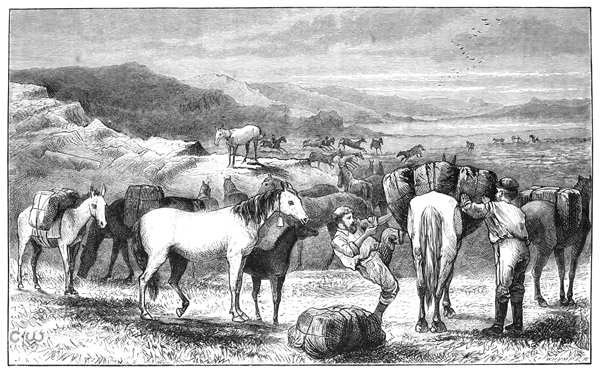
hour came for us to saddle up once more, and
ride in to Sandy Point. As may be imagined, this
time we did not jog along behind the pack-horses.
Leaving these to the care of the guides, to come
on at their leisure, we cantered merrily on alone—along
the familiar path by the shore of the Straits.
As the huts of Sandy Point came in sight, we
began to realise that at last we were getting
back to civilisation, and prospectively to England,
and already plans of what we were to do on
arriving home were formed and discussed. There
was only one night more to pass before setting
foot on board the steamer which was to take us
back to the world; but so impatient were we, that
even that short time seemed all too long, and we
wondered if it ever would pass.
Soon we were trotting along the streets of
Sandy Point; and, reaching Pedro's house, dismounted,
and found ourselves under a roof once
more! Pedro, advised of our coming, had prepared
breakfast for us, and, without more ado, we
sat down to it. We handled our knives and forks
very awkwardly at first; it required almost an effort
to eat in a civilised manner, and, accustomed of
late to take our meals in a recumbent position, we
by no means felt very comfortable in our chairs.
And now, for the first time, the scales fell from
our eyes, and the sight of the clean table-cloth and
neat room caused us to become aware of our own
personal appearance, and the enviable "giftie" was
ours, of seeing ourselves as others saw us. The
sight was certainly not a delectable one. Our
looks and garments were not out of keeping with
our late life in the pampas, but, surrounded by
cleanliness and civilisation, they were decidedly
out of place. We had performed our ablutions as
often and as thoroughly as circumstances would
permit, but they had not permitted much. The
men of our party, particularly, were unpleasant to
look at. Their hair had grown long and elfin;
their faces were tanned to a dark red-brown, which
the dust, and the smoke from the camp-fires had
deepened into—well—black; and their unshaven
chins were disfigured by a profuse growth of
coarse stubble. Our clothes did not bear close
inspection, the blood of many a guanaco, the
grease of many an ostrich-dinner, the thorn of
many a califaté bush, had left their marks; and,
altogether, a more ruffianly, disreputable lot than
we looked it would be hard to imagine. But hot
water, soap, and razors, and a change of raiment,
did wonders; and when, after several hours' hard
work, we met again we were scarcely able to
recognise one another.
We passed the day in settling with the guides,
and in packing up our few traps in anticipation of
the arrival of the steamer early next morning.
Feeling tired, I went to sleep early, but the
comfort I expected from lying between sheets
again was by no means vouchsafed me, and the
soft mattress and cool sheets, instead of inviting
slumber, seemed to frighten it away. I felt half
inclined to get up and go to sleep on the floor.
However, my eyes closed at last; and from a
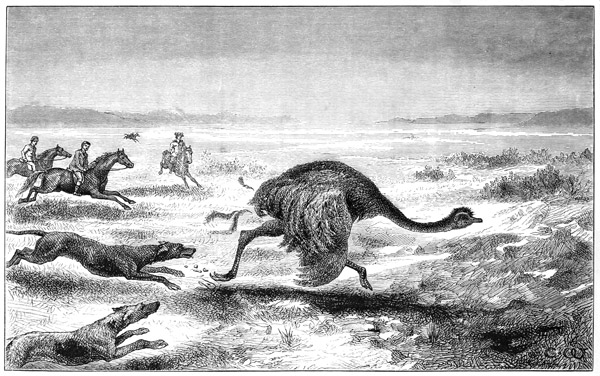
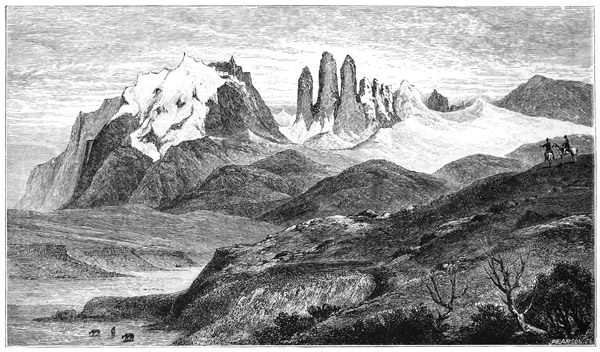
dream, in which I was once more chasing the
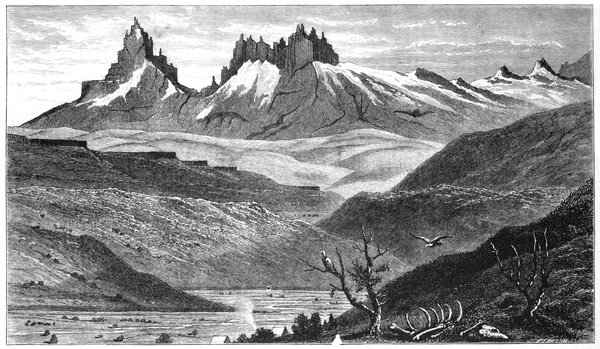
ostrich in sight of the memorable Cleopatra Peaks,
I was awakened by Mr. Dunsmuir banging at my
door, telling me that the steamer had arrived and
that it was time to be off. I jumped up and
dressed hurriedly, and found all the others ready
to go on board. The luggage had already been
put into a boat, and there was nothing further to
be done but to say good-bye to our guides and
walk down to the jetty to embark.
I had only one regret on leaving Sandy Point.
The day we arrived at Cabo Negro one of our
dogs, called "Pucho," who was rather a favourite
of mine, and whom I wished to take with me to
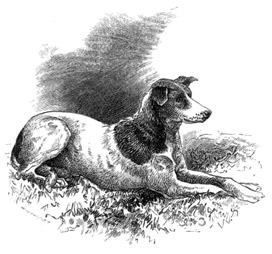
England, was suddenly missing. Pucho, a peculiar
dog, had joined us under peculiar circumstances at
our camp at Laguna Larga. We were quietly
sitting round the camp-fire after dinner, when
suddenly the dogs jumped up and began to bark
furiously at some unseen enemy. We got up and
peered out into the dusk, but could see nothing,
though it was evident that something there was,
for the growls of our dogs increased in earnestness
and fury every instant. "A puma!" suggested
somebody, but our horses were grazing quietly,
so it could not be a puma. "An Indian, or some
trader, perhaps!" was another equally unfounded
surmise. What could it be? Here, as if to settle
the mystery at once, the dogs all rushed out of
one accord, and for a few moments we could hear
a terrible snarling and growling going on in the
distance. It came nearer and nearer, and then
the cause of the commotion was explained.
Surrounded by our dogs, who were giving it a
by no means friendly welcome, a strange dog
walked slowly towards the camp-fire. It bore its
tail between its legs, seeming half-humbly, half-defiantly,
to crave admission into our circle.
Its humble demeanour, however, only bore
reference to us, for the defiant manner in which
it occasionally bared its white teeth, and turned
on our dogs whenever they came too near,
showed that it cared little for them. We
called out in friendly tones, and this settled its
bearing for once and for all. It turned round,
made one savage dash at one or two of its tormentors,
and then calmly made its way towards
the fire, looked out for the most comfortable
spot, stretched itself leisurely, and lay down with
its head resting on its crossed paws, seemingly as
much at home as if it had known us all its life. I
ventured to stroke it, but my advances were
received in a most unfriendly, and, considering its
position of alien outcast, audaciously impertinent
manner, for it snapped viciously at me. But from
the first "Pucho," as we called him, made it a point
of distinctly refusing to be patronised. He joined
us, he gave us to understand, not on sufferance, not
as a suppliant for our favours, not as a guest even,
but as an equal; and this status he claimed as
regards us only, for as to our dogs, he ignored
them completely, though willing, as subsequently
appeared, to make use of their good services.
He looked sleek and fat, a circumstance which
led us to think highly of his powers of speed, as
it is by no means easy for a dog to run down a
guanaco singly, and most dogs who lose their
master, as this dog had evidently done, soon die
of starvation. We therefore congratulated ourselves
on his arrival, as we hoped he would be able
to afford our own dogs help in the chase. But
we had grievously reckoned without our host.
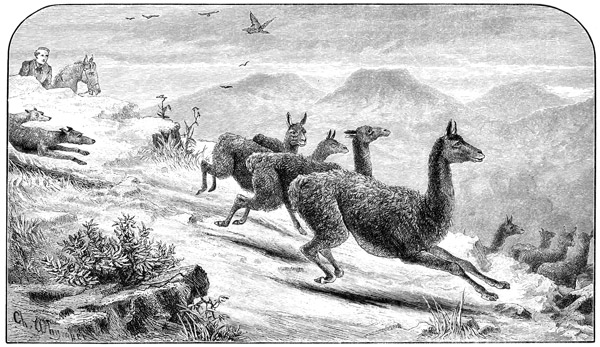
The next day, on the march, a guanaco was
sighted close to us. Now was the time. "Choo!
choo! Pucho!" we shouted, expecting to see him
speed out like an arrow after the guanaco. But
nothing could have been further from his thoughts.
He looked first at us and then at the guanaco for
a moment, not without interest, perhaps, but
certainly without showing the slightest inclination
to hostile demonstration. Then, with another look
at us, which said as plainly as words could, "Well,
that's a guanaco, no doubt, but what then?" he
quietly trotted on. We were very angry at seeing
our hopes deceived, besides being surprised at his
extraordinary demeanour; but Gregorio, giving the
dog the benefit of the doubt, said that perhaps it
had only been trained to run ostriches, as Indians
frequently teach their dogs to do. This seemed
plausible enough, and our confidence in Pucho was
momentarily restored. Presently an ostrich started
up. Now then: "Choo! choo! Pucho!" was the
excited cry again. All the other dogs flew out like
the wind after the bird, and Pucho followed them.
But only at a trot, and apparently merely to judge
how the other dogs behaved, for he soon stopped,
and contented himself with watching the chase
till it disappeared from view, and then he leisurely
came back to his usual post at my horse's heels.
Everybody was enraged with him; Francisco
suggested that being a "bouche inutile," Pucho
should be knocked on the head with the bolas;
but I could not hear of this, and Pucho's life was
spared. And so he remained with us, and I had
ample opportunities for studying his peculiar
character. As on the first day, so he continued.
Although generally there or thereabouts when a
distribution of the spoils took place, he never once
helped the dogs in the chase. That this did not
arise from inability or want of speed, but rather
from a sense of his own superior dignity, was
shown by the fact of his once having been seen to
pursue and catch a fox, a feat none of our other
dogs were capable of. Amongst other peculiarities
he had a way of mysteriously disappearing if
the day's march was too long. "Where is Pucho?"
was a frequent cry, and "Thank God, he's gone
at last!" was an ejaculation often heard on these
occasions. But so sure as the guanaco-rib for
dinner was done to a turn, the soup ready, and
the fire blazing comfortably, so sure would Pucho
suddenly appear on the scene, look out for the
most cosy spot near the fire, and cheerfully await
his supper, as if nothing had happened.
When, therefore, he was missing at Cabo
Negro, I took little notice, thinking he would be
sure to turn up. But dinner-time came, and no
Pucho; nor did he appear again, even when we
went on to Sandy Point.
This was the thought that was troubling me
as I walked down to the pier, for I had taken a
liking to this dog, or I had better say I held him
in reverential awe; for I think he would object
himself to the term "like," as savouring of patronage.
Half absently, therefore, before going down
the ladder into the boat, I turned round to take a
last look for Pucho. Surely that is a dog coming
down the street, I thought, as I looked up; and
right enough it was a dog, and what is more,
Pucho himself! There was no mistaking the
calm mien, the leisurely trot. He picked his way
along the battered pier, half wagged his tail as he
saw me—a great condescension, and then, without
a moment's hesitation, led the way down the
ladder into the boat, much to the surprise of my
companions, who had thought and hoped that
they had really seen the last of him.
I took him, or rather he came to England
with me, and as I write this he is sitting in the
cosiest corner by my fire, a privilege he allows
my pet terrier to share with him, an act very
foreign to his usual nature, and one for which I
have never been able to account.
So here we are on board at last. We say
good-bye to Mr. Dunsmuir, the anchor is weighed,
the screw goes round, and we are off. Sandy
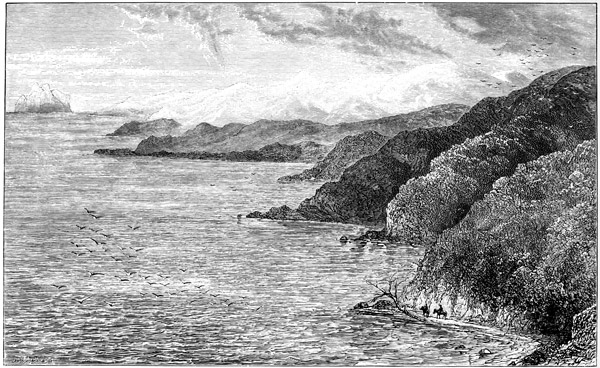
Point disappears from view; one by one Cape
Negro and Cape Gregorio are passed, and
before I know it—so engrossed am I in the
thoughts that crowd into my mind at the sight
of these well-known points—we are abreast of
Cape Virgins. It fades again astern, there is
no land on either side, and Patagonia, bleak and
silent and solemn, with the days we spent on its
mysterious shores, is behind us.
As I write, these days come vividly to my
mind again, and in fancy I once more behold
that distant desert land,—the land of the lonely
plains, where the guanaco and the ostrich and the
Red Indians roam far from the ken of mankind,
and where I spent a careless, happy time, which
I can never forget. I remember the days when,
after a long and weary ride, I slept, pillowed on my
saddle, the open sky above me, a sounder and
sweeter sleep than I had ever slept before; I remember
those grand mountain-scenes, where we
traced the wild horse to his home, through beechwood
glens, by lonely lakes, by mountain torrents,
where no mortal foot had ever trod before me. I
remember many an exciting chase and many a
pleasant evening spent round the cheery camp-fire.
I remember, too, many a discomfort—the earthquake,
the drenching rains, the scorching sun, the
pitiless mosquitoes, and the terrible blasting winds.
But from the pleasure with which I look back on
my wild life in Patagonia, these unpleasant
memories can detract but little. Taking it all
in all, it was a very happy time, and a time
on whose like I would gladly look again.
THE END.
Printed by R. & R. Clark, Edinburgh.
A SUPPLEMENT TO MESSRS
RICHARD BENTLEY & SON'S
CATALOGUE OF NEW
AND
STANDARD WORKS
OCTOBER 1880
A LIST OF FORTHCOMING WORKS
FOR THE NEW SEASON
Spottiswoode & Co., Printers, New-street Square, London
The EDITOR of
TEMPLE BAR
Begs to announce that
A NEW SERIAL
ENTITLED
THE FRERES
BY
MRS. ALEXANDER
(The Author of 'The Wooing o't' &c.)
WILL BE
COMMENCED
IN
THE JANUARY 1881 NUMBER
OF
The Temple Bar Magazine.
'One can never help enjoying TEMPLE BAR.'—Guardian.
October 15, 1880.
MESSRS. RICHARD BENTLEY & SON'S
LITERARY ANNOUNCEMENTS
FOR THE AUTUMN.
BY LORD ELLENBOROUGH.
A Diary kept while in Office, 1828-1830,
By Edward Law, Earl of Ellenborough. Edited by Lord Colchester.
Containing Anecdotes of George the Fourth, William the Fourth, the Dukes
of Cumberland, Wellington, and Richmond, Lord Hardinge, Sir Robert
Peel, Lords Brougham, Grey, Bathurst, and Palmerston, Huskisson, Sir
Wm. Knighton, Marchioness of Conyngham, Sir Henry Halford, Lord
Aberdeen, Grant, Lord Melville, &c. In two volumes, demy 8vo.
BY H.H. PRINCE METTERNICH.
The Memoirs of Prince Metternich, 1815-1848.
Containing particulars of the Congresses of Laybach, Aix la Chapelle, and
Verona, the Eastern War of 1829, and the Revolutionary period of 1848, &c.
Edited by his Son, Prince Richard Metternich. The papers being
classified and arranged by M. A. de Klinkowström. Translated by
Robina Napier. In two volumes, demy 8vo.
BY DR. THIRLWALL.
Letters of the late Dr. Thirlwall, Bishop
of St. David's.
Edited by Dean Stanley and Dean Perowne. In two volumes, demy 8vo.
BY DR. DUNCKER.
The History of Antiquity.
From the German of Professor Max Duncker, by Dr. Evelyn Abbott,
Balliol College, Oxford. The Fourth Volume, containing the History of
India from the Earliest Times down to the Reign of Azoka. It describes
the movements of the Aryas from the Indus to the Ganges and their settlements
in the South of India, and gives an account of the Conquests of
Alexander and the Empire of Chandragupta. The various forms of Indian
philosophy and religion are also traced, among which the life and teaching of
Buddha occupies a prominent place. A short Summary is also given of the
Indian Epos and the Institutes of Manu. In demy 8vo. 21s.
*** This volume should form a valuable assistance to students preparing for Indian
Civil Service Examinations.
BY COL. WARREN.
The Temple or the Tomb.
By Charles Warren, R.E., Author of 'Underground Jerusalem.' In
demy 8vo. with Illustrations, 10s. 6d.
BY LIEUT. CONDER.
Tent Work in Palestine.
By Lieut. Claude R. Conder, R.E. A Popular Edition, in crown 8vo.
with Illustrations, 7s. 6d.
BY THE REV. R. W. R. STEPHENS.
Dean Hook: His Life and Letters.
Edited by the Rev. R. W. R. Stephens, Vicar of Woolbeding, Author of
'Life of St. John Chrysostom' &c. The Popular Edition, in one volume,
crown 8vo. with Portrait, 6s.
BY FREDERICK WEDMORE.
Studies in English Art.
By Frederick Wedmore, Author of 'Masters of Genre Painting' &c.
The Second Series, containing Romney, Constable, David Cox, George
Cruikshank, Meryon, Burne Jones, and Albert Moore. In one volume,
large crown 8vo. 7s. 6d.
BY LADY FLORENCE DIXIE.
Across Patagonia.
By Lady Florence Dixie. In demy 8vo. with numerous Illustrations
from Sketches by Julius Beerbohm, and engraved by Whymper and Pearson.
BY CHARLES WOOD.
Round about Norway.
By Charles W. Wood, Author of 'Through Holland' &c. In demy 8vo.
with numerous Illustrations.
BY H. STONEHEWER COOPER.
The Coral Lands of the Pacific.
Being an Account of nearly all the Inhabited Islands of the Pacific, their
Peoples and their Products. By H. Stonehewer Cooper. In two
volumes, demy 8vo. with Illustrations.
BY M. BURDO.
A Trip up the Niger and Benueh.
By Adolphe Burdo, one of the leaders of the present Belgian Expedition
to Central Africa. Translated by Mrs. George Sturge. In demy 8vo.
with Illustrations, 10s. 6d.
BY MISS G. FORDE.
A Lady's Tour in Corsica.
By Gertrude Forde. In two volumes, crown 8vo. 21s.
BY M. TISSOT.
Unknown Hungary.
By Victor Tissot, and translated by Mrs. Brodie. In two volumes,
crown 8vo. 21s.
BY ADELAIDE KEMBLE.
Past Hours.
By the late Adelaide Sartoris. Edited with a Preface by her Daughter,
Mrs. Gordon. In two volumes, small crown 8vo.
BY REV. R. H. BARHAM.
The Ingoldsby Lyrics.
By the Rev. Richard Harris Barham, Author of 'The Ingoldsby
Legends.' Edited by his Son, the Rev. R. Dalton Barham. In one
volume.
BY REV. R. D. BARHAM.
The Life of the Rev. Richard Harris Barham,
Author of 'The Ingoldsby Legends.' A new Edition, revised and rewritten
by his Son, the Rev. Dalton Barham. In one volume, crown
8vo. 6s.
ADDITIONS TO BENTLEY'S FAVOURITE NOVELS.
BY MRS. PARR.
Dorothy Fox.
By Mrs. Parr, Author of 'Adam and Eve.' The Popular Edition, with
Illustrations, in crown 8vo. 6s.
BY MISS BROUGHTON.
Second Thoughts.
By Rhoda Broughton, Author of 'Cometh up as a Flower,' 'Good-bye,
Sweetheart!' &c. The Popular Edition, in crown 8vo. 6s.
NOTE.
Misunderstood, Illustrated Edition, now 7s. 6d.
The Great Tone Poets, now 6s.; and
He would be a Soldier, now 6s.
Some alteration will probably be made shortly in the price of the above works.
New Works of Fiction.
I
The Wellfields.
By Jessie Fothergill, Author of 'The First Violin,' 'Probation,' &c.
In 3 vols. crown 8vo. [Just ready.
II
Johnny Ludlow.
Second Series. By Mrs. Henry Wood, Author of 'East Lynne,' 'The
Channings,' &c. In 3 vols. crown 8vo. [Just ready.
III
A Red Rag.
By R. Mounteney Jephson, Author of 'The Girl He Left Behind Him,'
'A Pink Wedding,' &c. In 2 vols. crown 8vo. [Just ready.
IV
Adam and Eve.
By Mrs. Parr, Author of 'Dorothy Fox' &c. In 3 vols, crown 8vo.
[Just ready.
V
The Mysteries of Heron Dyke.
By T. W. Speight. In 3 vols. crown 8vo.
VI
Queenie's Whim.
By Rosa Nouchette Carey, Author of 'Nellie's Memories,' 'Heriot's
Choice,' &c. In 3 vols. crown 8vo.
VII
Hiram Greg.
By J. Crother Hirst. In 3 vols. crown 8vo.
VIII
Folly Morison.
By Frank Barrett. In 3 vols. crown 8vo.
IX
A Child of Nature.
By Robert Buchanan, Author of 'The Shadow of the Sword' &c.
In 3 vols. crown 8vo.
X
The Mystery in Palace Gardens.
By Mrs. Riddell, Author of 'George Geith of Fen Court' &c. In 3
vols. crown 8vo.
AT ALL BOOKSELLERS'.
BENTLEY'S EMPIRE LIBRARY.
New Volume, ready early in December.
HERBERT MANNERS.
AND OTHER STORIES.
By FLORENCE MONTGOMERY,
Author of
'Misunderstood,' 'Seaforth,' &c.
FORMING THE XIVth VOLUME OF THIS SERIES.
In cloth, price 2s. 6d.
Each volume can be obtained separately in cloth, price 2s. 6d.
I
Land o' the Leal.
By the Author of 'Comin' thro' the Rye.'
II
A Very Simple Story, and Wild Mike.
By Florence Montgomery, Author of 'Misunderstood' &c.
III
A Blue Stocking.
By Mrs. Annie Edwardes, Author of 'Archie Lovell' &c.
IV
Ralph Wilton's Weird.
By Mrs. Alexander, Author of 'The Wooing o't' &c.
V
As He Comes up the Stair.
By the Author of 'Comin' thro' the Rye.'
VI
Five Years' Penal Servitude.
By One who has Endured it.
VII
A Rogue's Life.
By Wilkie Collins.
VIII
A Victim of the Falk Laws.
The Narrative of a German Priest.
IX
A Vagabond Heroine.
By Annie Edwardes, Author of 'Ought We to Visit Her?'
X
My Queen.
By Mrs. Godfrey, Author of 'Dolly, a Pastoral.'
XI
Archibald Malmaison.
By Julian Hawthorne.
XII
Twilight Stories.
By Rhoda Broughton.
XIII
The Mudfog Papers, &c.
By Charles Dickens. (Not hitherto republished.)
To be obtained at all Booksellers'.
Transcriber's Note:
Obvious typographical errors have been corrected.
Inconsistent spelling and hyphenation in the original
document have been preserved.
On page 15, Paõ de Agucar possibly should be Paõ de Azucar.