CHAPTER VIII
PERENNIALS
Some of the perennials to be sown yearly
in the seed-bed from about April first
to tenth, are the following:
Columbines of all varieties, yellow, white,
shading from pink to red and from pale
blue to darkest purple.
Of Columbines every garden should have
plenty. Blooming about May twentieth for
three weeks, they are a perfect delight.
They are very hardy, germinate readily in
the seed-bed, are easy to transplant and need
but little care. I have never been able to
get them much over three feet in height,
but then I have often a dozen stalks of
bloom on a single plant, which is very satisfactory.
The first dozen plants were sent to
me by a friend from his garden on Long
Island; now I have hundreds of them,—single
and double, white, yellow, all shades of
red and pink, pale blue, and a blue one
with a white center almost like an Orchid;
many shades of purple, also purple and white.
Hollyhocks, single and double, of all colours.
In order to get the desired colour effect with
these, keep each variety separate.
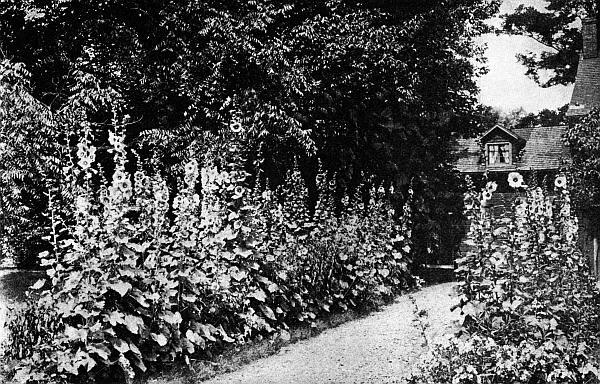
Hollyhocks in blossom
July twelfth
No one can have too many Hollyhocks.
Plant them at the back of the borders among
the shrubbery, along fences, and in great
clumps in any odd corner, or around buildings;
they are never amiss, and always beautiful.
I find that a Hollyhock cannot be
counted upon to bloom more than three
years. First-year stalks are about four feet
high; afterwards, if in good soil, they will
be from six to eight feet. There were hundreds
of this size in my garden last summer,
each plant with from three to five towering
stalks of bloom. As soon as they have gone
to seed, I save what seed I want and the
stalks are then cut down and burned. By
sowing the seeds as soon as thoroughly ripe
and dry, plants can be raised which will be
large enough to transplant in October, and
will bloom the next year. These young plants
should be given a slight covering the first
winter, that they may not be winter-killed.
When in a border, the Hollyhock, which
will flourish in any soil, grows to such an
extent that Lilies or Phloxes, or anything else
near by, are likely to be crowded out, unless
care is taken to cut off the lower leaves, which
become enormous. I have this done usually
three times before they bloom, beginning
early in May, and great wheelbarrow-loads of
leaves are taken away at each cutting.
Sweet Williams, red, white and pink. These
will grow from eighteen inches to two feet.
The stems are straight and stiff, and the
trusses of bloom about five inches across,
with individual flowers as large as a nickel;
they keep well in water and make a beautiful
edging for a border, or give great effect
when planted in masses. They bloom for
three weeks or more, and make fine decorations
for church or house.
Platycodon Mariesi, beautiful blue; they
resemble Canterbury Bells, and, as they
blossom after the Canterbury Bells, are valuable
in continuing the period of blue flowers,
with the advantage of being perennials.
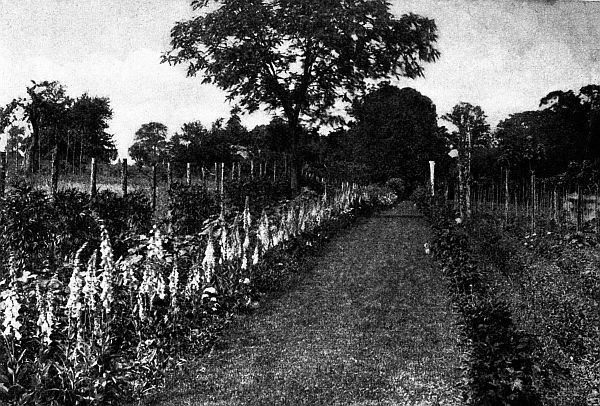
Delphiniums, perennial Larkspurs, all varieties.
These seeds I have found more difficult
to make germinate than any others, so
I do not rely upon what I raise, but purchase
many plants. My best results have come
from saving the seeds from the first crop
of blossoms, drying thoroughly, and then sowing
at once. I have found these seeds more
sure to germinate than those bought in early
spring. Perhaps nature intends them to be
sown in this way, instead of nine months later.
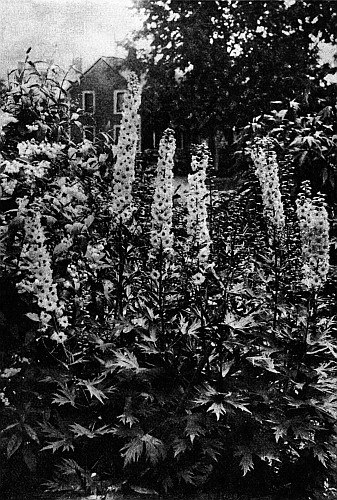
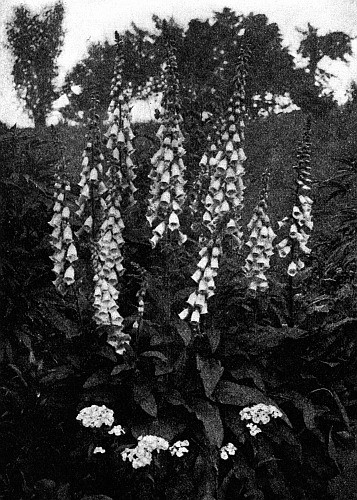
A single plant of Delphinium (Perennial Larkspur)
June twenty-first
One can never say enough in praise of
Delphiniums. Three-year-old plants will
send up eight to ten beautiful great spikes
of the richest blue, four feet high. The
moment a blossom withers, cut the stalk
down to the ground; another will immediately
spring up. I had four crops of blossoms
from some of my Delphiniums last
summer, so that, from the end of June
until the middle of October, there were
always some of them in blossom. Some
varieties of tall English Delphiniums are
very beautiful. Among them is one, Cœlestinum,
of the loveliest shade of light blue,
with very large, double individual flowers.
As I have said before, the Delphinium blossoms
at the same time as Lilium candidum,
and should be planted near by. Great
bunches of these two flowers, in tall vases,
are lovely as well as unusual.
There is a horrid small white worm which
attacks the roots of the Delphinium, and
gives no sign until you see the plant dying.
I have found that keeping the soil around
the plant well covered with coal ashes is
a preventive. Delphiniums are hardy and
long-lived (unless the worm gets them),
and, once planted, they live a dozen years.
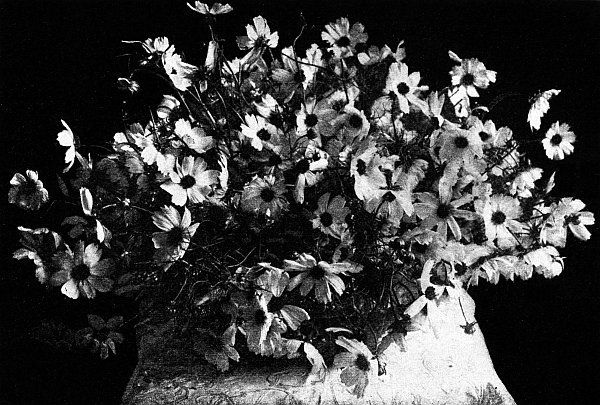
Coreopsis (Grandiflora). Every one knows
the Coreopsis, which, by continual cutting,
will give abundant bloom for three months.
The variety with velvety maroon centers is
particularly fine.
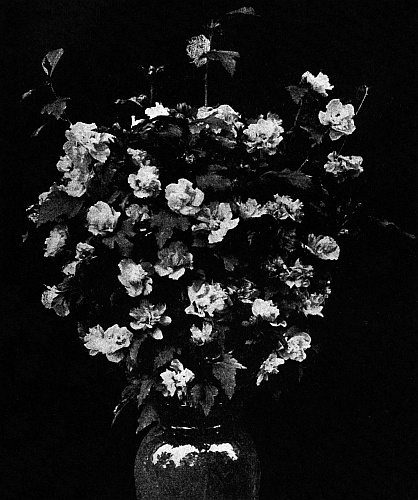
Hibiscus is very easy to raise, and should
be planted among and along the edge of
shrubbery. The plants are quite hardy, grow
four feet high, and masses of them in pink
or white are fine. They bloom in August
and September.
Rockets, white and purple. These increase
tremendously from self-sowing, so be careful
or they will suffocate all that grows near
them. I have many plants, all of which
have come from a single one that a colored
woman gave me a few years ago. She is a
nice comfortable old “mammy,” black as the
ace of spades, with a great love for flowers
and a nice patch of them. We have exchanged
plants several times. Some of the
nicest things I have in my garden came to
me in this way, and it is great fun.
Whenever, in driving about, I see a particularly
fine plant in a dooryard, I make
friends with its owner, and later suggest that
if she (it is usually “she”) will give me a
small root of this or that, I will bring her
some plants or bulbs from my garden, of a
kind which she has not. So we are both
equally benefited. In this way I was once
given a plant of Valerian, which has a tall,
beautiful white flower with a most delicious
odour like vanilla. It blooms for three weeks
in late May and early June. From this one
plant there are now in the garden a number
of large clumps several feet in diameter, and
I have given away certainly fifty roots.
Valerian is a small white flower in good-sized
clusters on long stems, seen now-a-days only
in old-fashioned gardens. I am told it cannot
be bought of horticulturists.
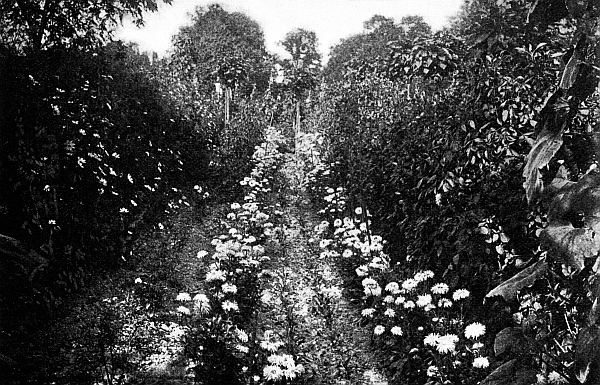
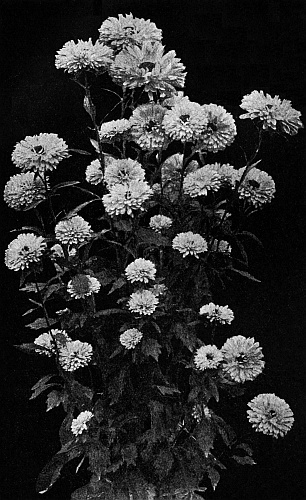
One must have Chrysanthemums, but where
the thermometer falls below zero there are
not many to be bought, other than the pompon
varieties, that will blossom in the garden
before being killed by frost, or that will
survive the winter. Year after year I have
bought dozens of the so-called “September-flowering
Chrysanthemums,” and have only
succeeded in making them blossom by the
middle of October, by planting them on the
south side of a building, in richest soil, giving
abundance of water, and covering on all
cold nights. But I have beautiful plants of
perfectly hardy, good-sized blossoms of yellow,
white, pink and red, the roots of which
have come from the gardens of my farmer
friends. I have never been able to buy this
old-fashioned hardy kind. In the spring, as
soon as the plants begin to sprout, divide
them, setting out three or four sprouts together.
In this way the stock will increase
wonderfully.
Chrysanthemums require very rich soil,
must have sun, and do best against a building
or a wall. About the first of July and
the first of September have a couple of
trowelfuls of manure carefully dug in about
the roots of each plant. Buds should not
be allowed to form until September, and the
new shoots should be pinched back until
then, to make the plants strong and bushy.
I do not envy any one who has only the
great, solemn, stiff flowers of the prize-show
variety. An armful of the hardy garden
ones, with their delicious odour, is worth a
green-house full of the unnatural things
which are the professional gardener’s pride.
When you can keep twenty or more vases
filled from your own garden with these last
blossoms of the year, in all their lovely
colours, and not miss one of them from the
plants, you will agree with me that they are
the only kind to raise.
Perennials, sown in rows in the seed-bed
in April, will be nice little plants by July,
when they should be lifted and transplanted
some six inches apart. The portion of the
seed-bed where the annuals were raised can
be used now for the purpose. This is particularly
necessary for Larkspur, Columbines,
Monkshood, Platycodon, Coreopsis, Hibiscus
and Pinks. If, when transplanting, each plant
is set with a trowelful of manure, the result
will be plants twice as large by the first of
October, when they can be again transplanted
to their permanent places.
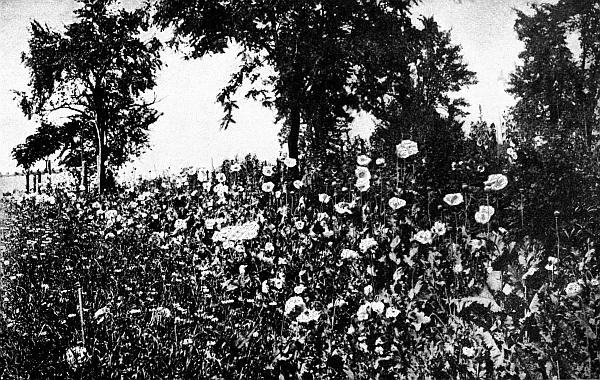
Oriental Poppies and Pinks should also
be sown in the perennial seed-bed.
Oriental Poppies, with great blossoms as
large as a tea plate borne on strong stems,
make a grand show about the end of May
and beginning of June.
Pinks, too, should be in every garden, if
only for their delicious, spicy odor. The
Chinensis, or China Pinks, are the best.
Sweet Williams and Oriental Poppies need
not be moved from the time they are sown
until finally transplanted in the autumn.
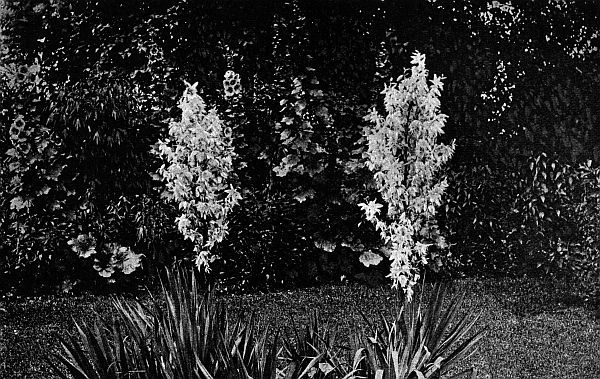
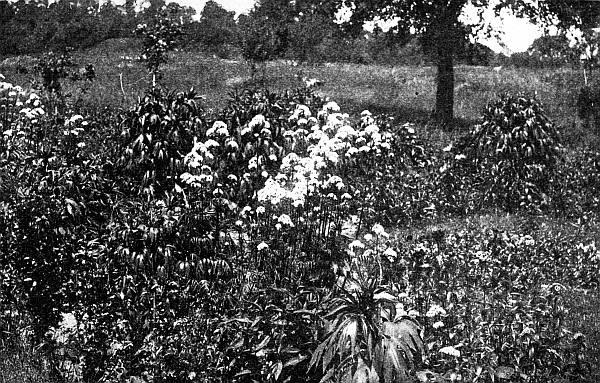
Yuccas in blossom
July twelfth
Yucca filamentosa, the hardy native of
Mexico, sends up, about the tenth of July,
great stalks six to eight feet high, bearing
masses of white flowers. The individual
blossoms are of creamy waxy texture and as
beautiful as an orchid. A single stalk of
Yucca, in a tall vase, will last nearly a
week, and is as unusual as it is beautiful
for house decoration. Yuccas are perfectly
hardy, need no protection in winter, no fertilizer,
no water in dry weather. In my
garden, at least, they have not been attacked
by insects and have grown placidly on,
needing absolutely no care but to have the
stalks cut down when they have finished
blossoming. They are most effective when
grown in clumps, but look very well along
a fence with Hollyhocks at the back. The
plants are so inexpensive that I have bought
mine, but see no reason why they cannot
be raised from seed. Small plants form near
the parent stem, and these can be separated
and transplanted. A late spring frost will
sometimes nip the flower stalk that has
just started, and there will be no bloom that
year. To avoid such a disaster, whenever,
in late spring, a frosty night is suspected,
cover the plants with a piece of burlap.
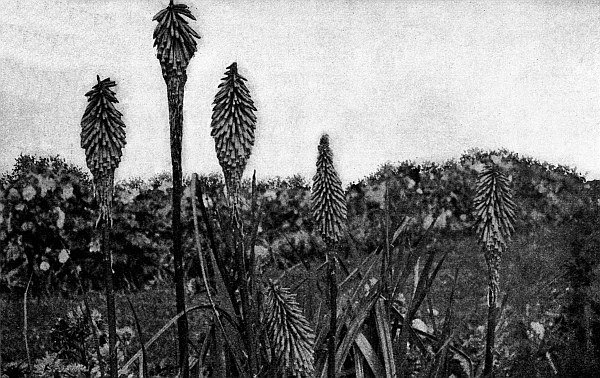
Tritomas (Red-hot Poker Plant) bloom in
September and October, and should always
be planted in masses, and in full sun. They
must be well covered with leaves or stable
litter late in November, or they will be
winter-killed. They increase rapidly.
Gaillardias bloom all summer, and keep
fresh in water for days. The plants are
covered with long-stemmed, yellow flowers
with dark crimson centers, and should also
be protected in winter.
Veronica longifolia, a most beautiful dark
blue flower, which grows in long spikes.
Veronica remains in bloom during the month
of August, and is one of the most showy
flowers in the garden at that time.
Iris, Japanese and German, do well when
naturalized in the grass. These plants increase
so, that every four years they can be
separated. Beginning with the German Iris,
flowering the end of May, they can be had
in bloom until the Japanese Iris finishes
blossoming the middle of July. No Orchids
are more beautiful than the Japanese Iris.
A couple of weeks before and during the
period of bloom they must be kept very
moist.
Both the German and the Japanese Iris
are perfectly hardy and increase rapidly. The
English Iris, of which the white variety,
known as Mont Blanc, is the most beautiful,
and the Spanish Iris, in all its varieties, are
not hardy. But with careful winter covering,
about equal to that given to the everblooming
Roses, they will generally survive,
and are well worth the trouble. The roots
of all varieties of Iris are very long, and
care must be taken to give them plenty of
room and to plant deep.
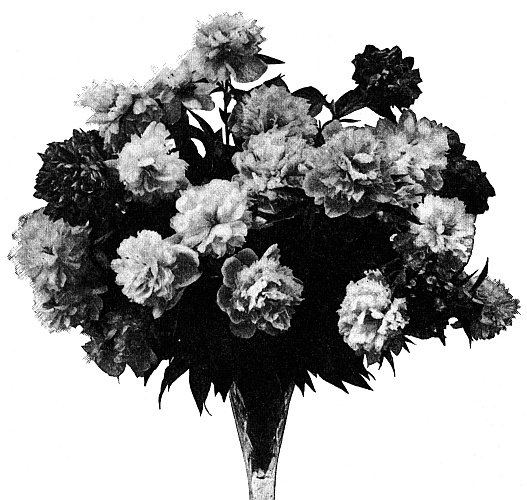
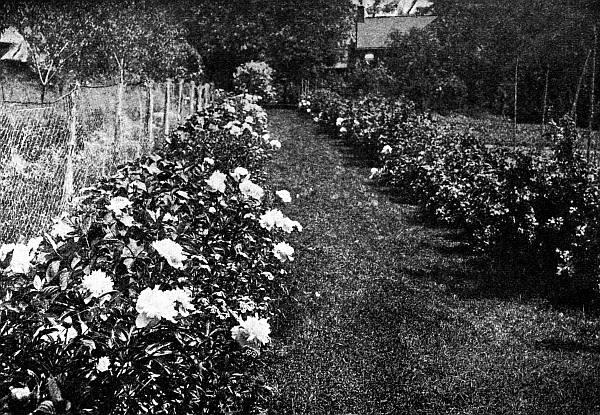
Peonies. For beauty and usefulness Peonies
rank with Phloxes. Large plants will
frequently bear twenty great blossoms. By
raising both early and late varieties, their
period of bloom can be continued for a
month. The old, dark crimson variety is the
first to bloom; the old-fashioned double pink
and double white are beautiful enough to
satisfy any one, but the new varieties give
immense choice as to colour and form.
The Japanese Tree Peonies do not die to
the ground every year, like the herbaceous
kinds, but form woody branches and grow
like a small shrub. The blossoms of these
Tree Peonies are truly wonderful; the only
care needed is a little fertilizer in the autumn
and a slight winter covering. They are best
grown in front of the shrubbery. They
blossom before the herbaceous varieties. The
herbaceous Peonies can be grown in large
beds by themselves, in borders with other
plants, or as single specimens in the grass
or among the shrubs.
Peonies start so early in the spring that
they should be manured in the fall, or there
is danger of breaking the tender shoots.
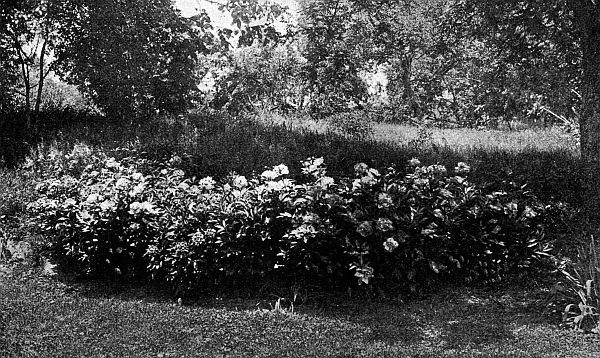
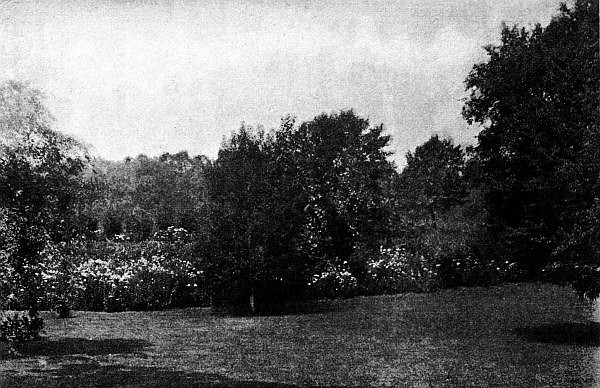
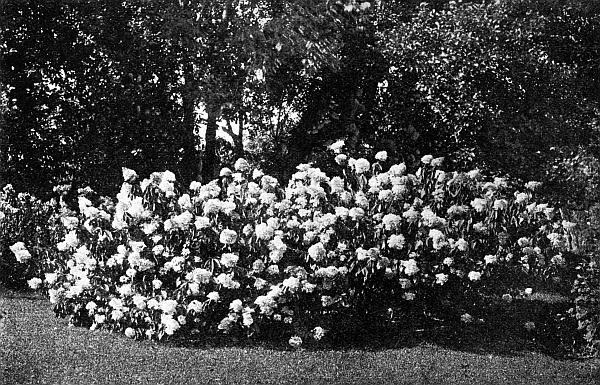
Bed of Peonies on edge of lawn
June sixth
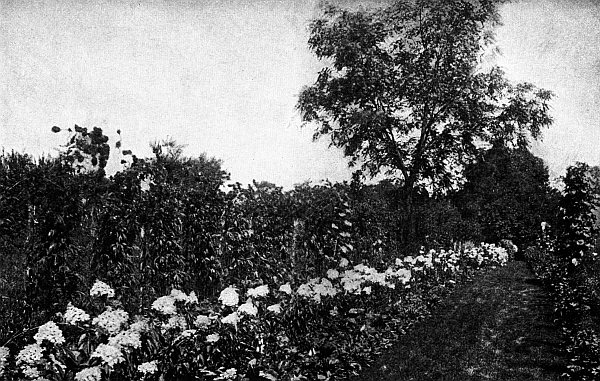
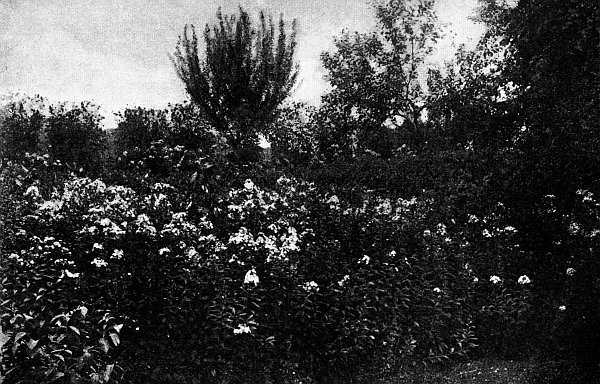
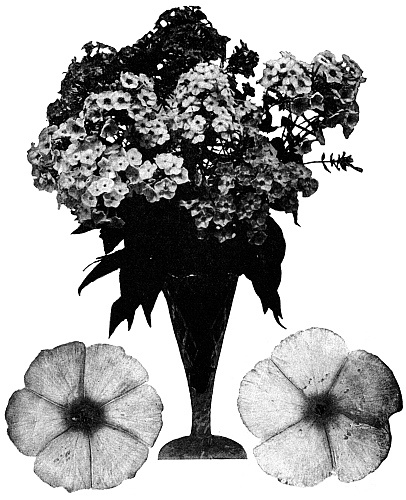
Phlox. There is no flower in the garden
more beautiful, more easily cultivated, or giving
so much bloom as the Phlox. I could
certainly never have a garden without it.
In mine there must be a couple of thousand.
I have a great mass, of probably two hundred
herbaceous Phloxes, growing together
in one corner of my garden, the very tall
varieties over four feet high. About the
fifteenth of July, every year, this corner is
a superb sight. Most of these plants are
over fifteen years old. They have been kept
fine by heaviest top-dressing every year, and
by lifting all the plants every three years
and digging in quantities of manure, and
also by separating each plant into three, by
cutting the roots with a spade, or pulling
apart with the fingers.
The newer varieties of Phlox come in the
most beautiful colours,—dark crimson, fiery
scarlet, many shades of pink, pink striped
with white, and pink with a white eye; all
shades of lilac, lilac with white and purple,
the beautiful pure white, and the white with
the scarlet eye. Of all the varieties, my
favorites are the snowy white, and the
salmon-pink with the dark red eye. Buy
fifty large field-grown plants; at the end
of three years separate them, and you have
a hundred and fifty. They present a picture
of progression much surer than the tale of
the eggs that were to do so much.
Many of the individual blossoms of my
Phloxes are larger than a fifty-cent piece;
a number of them larger by measurement
than a silver dollar, and the heads also are
very large. Always erect, neat and smiling,
never needing to be staked (such a task in a
large garden), when once grown they must
always be dear to a gardener’s heart. By
breaking off the heads of Phlox immediately
after blooming, a second crop of flowers
will appear in about three weeks. The heads
will not be so large as the first, but they
will amply repay the slight trouble.
Every owner of a garden has certain favorites;
it really cannot be helped, although
the knowledge that it is so makes it seem
almost as unfair as for a mother to have
a favorite child.
A real lover of flowers finds it difficult
to cast away a plant that has bloomed its
best, even though the blossom is unsatisfactory.
In my garden there are, at present,
some plants that I am longing to dig up
and burn. There are two climbing Roses
that came by mistake in a large order and
were set out. They have thriven as no
others, cover a very large space on a trellis,
and in June bear thousands of a most hideous,
small, purplish crimson Rose. The
other plant is Scabiosia Caucasica. Beware
of the same. The description of it in a
catalogue caused me to feel that without
it the garden was nothing. A dozen were
ordered and set out in a border, in two
clumps. They grew and waxed strong, and
fairly clambered over everything within
several feet of them, seeming to be like
gigantic thistles. Finally in August, on
stems two feet long, the eagerly looked-for
blossoms appeared. These were described in
the catalogue as “a large head of pale blue
flowers.” But, to my despair, it developed a
round green ball about three inches in circumference,
with white thistle-like petals.
And yet the plants had surpassed themselves.
It seems a poor reward to turn
them out to die.
Lychnis (London Pride). I cannot now
recall any perennial except the Cardinal
Flower, which has blossoms of so brilliant a
scarlet as Lychnis, or London Pride, growing
tall and erect, with its bright colour. It is
most effective when grown in large clumps.
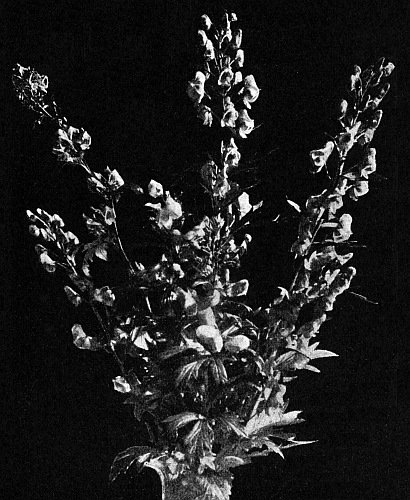
Monkshood (Aconitum Napellus) grows
four feet high, and has a beautiful blossom
of rich blue growing in quite large clusters.
The name must come from the resemblance
each individual blossom bears to the capuchin
of a monk. These plants should be grown
under tall trees, for they cannot stand too
strong sun, and will blossom very late
in the autumn if protected by the trees
from frost. I gathered them last year in
November.
Phloxes, Rudbeckias, Monkshood, Valerian,
Lychnis, Tritomas, Iris, Peonies and Veronica
are best raised, not from seed, but by
buying the plants, and then after a time,
as I have said before, dividing them. For
instance, take a fine large plant of Phlox
of some choice variety, divide all the roots
and set out each one separately. From one
plant you may, in two years’ time, get twenty
splendid ones, and the same with the other
varieties I have mentioned.
Rudbeckias, of the Golden Glow variety,
grow from six to eight feet high, and must
be staked, or when heavy with blossoms
they will blow down or be beaten down by
the rain. Each plant will bear quantities of
long-stemmed double yellow blossoms, which
resemble a double Dahlia. These will keep
nearly a week in water. When the plant
has finished blossoming, cut down the tops,
and in October there will be a second crop
of blossoms just above the ground.
The Golden Glow should be divided every
other year, and in this way it is even more
remunerative than the Phlox. I started
with fifty plants, and think it will soon be
possible to have a farm of them.
List of Hardy Perennials, with Height, Colour and Time
and Period of Blooming, Arranged Alphabetically.
Aquilegia, or Columbine, all colours; one
to two and one-half feet; tenth of May to
first week in June.
Chrysanthemums, all colours but blue; three
feet; end of September until very cold
weather.
Delphiniums, all shades of blue; three to
four feet; July; later crops after cutting
down.
Dianthus barbatus (Sweet William), red,
pink, white; one to two feet; June.
Dicentra spectabilis (Bleeding Heart), red
and white; one to two feet; May.
Gaillardia, yellow, red center; two feet;
July, August and September until killed
by frost.
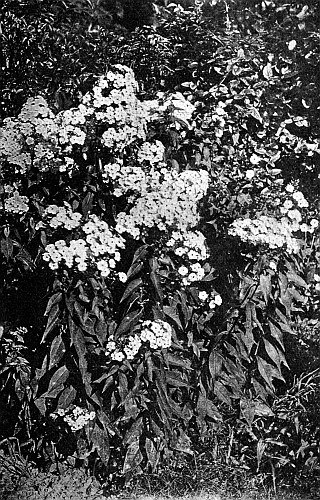
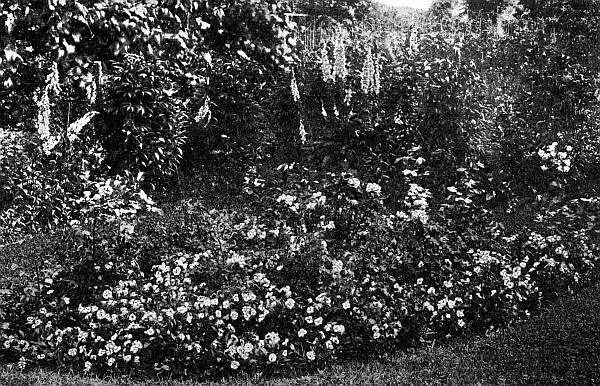
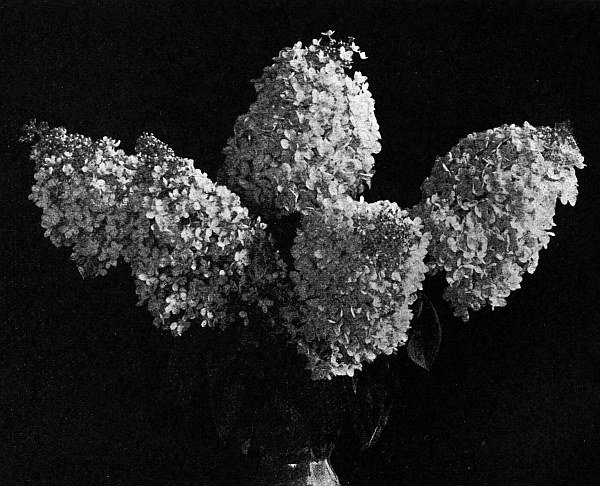
A single plant of Phlox
August twenty-fifth
Helianthus multiflorus plenus, hardy double
Sunflower; yellow; four to five feet; all
summer.
Hibiscus, pink, white; four to five feet;
August and September.
Hollyhocks, all colours but blue; single,
double, four to eight feet; tenth of July to
middle of August; two to five stalks on a
plant.
Hyacinthus candicans, white; four feet;
last three weeks of August.
Iris Germanica, all colours; two to three
feet; end of May to first of June.
Lychnis (London Pride), scarlet; two and
one-half feet; July.
Oriental Poppy, scarlet, also pink; three
feet; end of May and first of June.
Peonies, all colours but blue; two to two
and one-half feet; end of May, for three
weeks.
Pentstemon, many colours; three feet;
August and September.
Phlox, all colours; two to four feet; early
July until killed by frost, if the heads are
cut as soon as finished flowering.
Platycodon Mariesi, blue; one and one-half
feet; August.
Rocket (Hesperis Matronalis), white and
purple; two feet; May.
Rudbeckia (Golden Glow), yellow; five to
eight feet; middle of July to September
first; second crop in October.
Tritoma (Red-hot Poker Plant), orange-scarlet;
three to four feet; September and
October until killed by frost.
Valerian, white; three feet; May and
June.
Veronica longifolia, blue; two feet; August.
Yucca filamentosa, white; three to five feet;
second and third weeks in July.
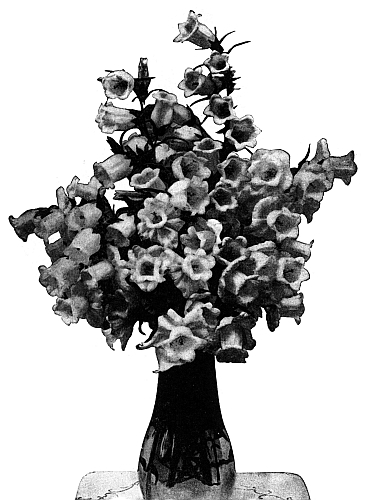
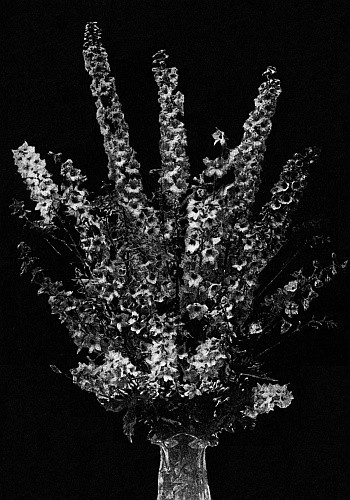
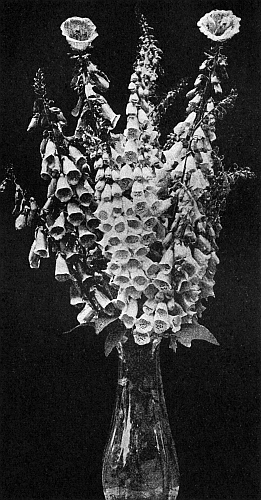
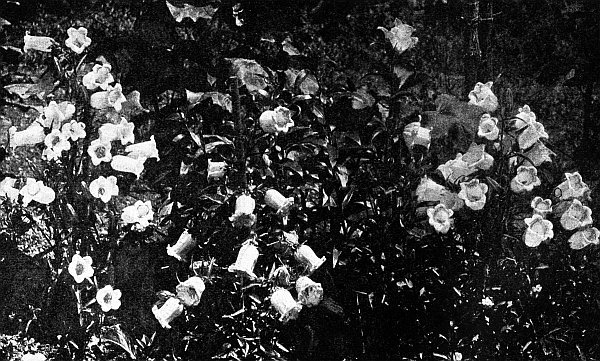
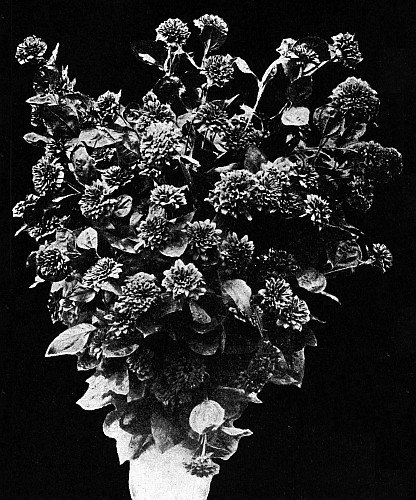
Vase of Canterbury Bells
June twenty-first