Footnotes have been moved to follow the paragraphs in which they
are referenced. Photographic illustrations are also moved to fall
on paragraph breaks.
Minor errors, attributable to the printer, have been corrected. Please
see the transcriber’s note at the end of this text
for details regarding the handling of any textual issues encountered
during its preparation.
Any corrections are indicated using an underline
highlight. Placing the cursor over the correction will produce the
original text in a small popup.
A map at the end of the text serves as a link to a larger version for
closer inspection of details of the Wa-Kikuyu territory.
Any corrections are indicated as hyperlinks, which will navigate the
reader to the corresponding entry in the corrections table in the
note at the end of the text.
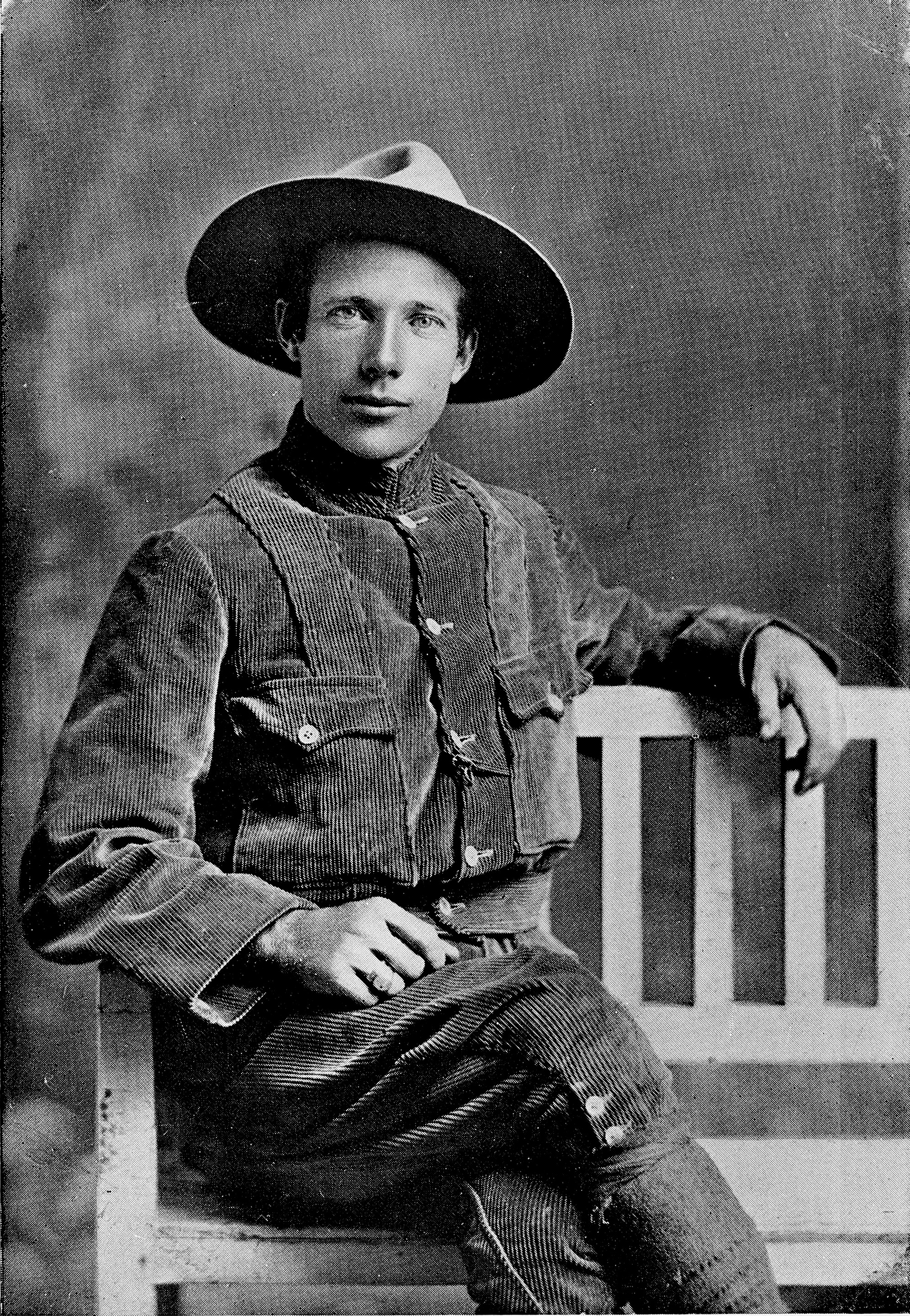
A WHITE KING
IN EAST AFRICA
I
JOHN BOYES
THE REMARKABLE ADVENTURES OF JOHN BOYES,
TRADER AND SOLDIER OF FORTUNE, WHO
BECAME KING OF THE SAVAGE WA-KIKUYU
WRITTEN BY HIMSELF
EDITED BY
C. W. L. BULPETT
WITH TWELVE ILLUSTRATIONS AND A MAP
NEW YORK
McBRIDE, NAST & COMPANY
1912
(All rights reserved.)
TO
WILLIAM NORTHROP McMILLAN
IN MEMORY OF MANY
TRAMPS TOGETHER
EDITOR’S PREFACE
vii
The following pages describe a life of
adventure in the more remote parts of
Africa—adventures such as the explorer
and sportsmen do not generally encounter. The
man to whom the episodes narrated in this book
refer has been personally known to me for ten
years. We have hunted big game and explored
together many a time in the African jungle;
and as it is principally at my instigation that
he has put the following account of his experiences
into writing, I think it is due to him and
to the public that I should make known my
responsibility in the matter.
It seemed to me that the adventures John
Boyes underwent were something quite out of
the common; in these matter-of-fact days they
may be said to be almost unique. In the days
viiiof exploration and discovery, when Captain Cook
and such heroes lived and thrived, they were
perhaps common enough; but every year the
opportunities of such adventure get more and
more remote, and as the uttermost parts of the
earth are brought under the influence of civilization
will become ever more impossible. For
this reason alone a story such as told here seems
to be worth recording.
There is no attempt at literary style. The
man tells his tale in a simple, matter-of-fact way,
and, as his Editor, I have thought it better from
every point of view to leave his words as he
has written them.
The reader will judge for himself as to the
interest of the adventures here related, but I
think any one will admit that no ordinary force
of character was necessary to carry them through
to a successful issue. The whole life of the
author during the time he was a wanderer in
the Kikuyu country, and later while he was
practically supreme ruler of the tribe—a tribe
numbering half a million of people—was one of
imminent daily risk.
ixEach hour he went about with his life in his
hands, and if he came out scatheless from the
mêlée, he has only to thank his courage, nerve,
and resource. All these qualities he obviously
possessed in a high degree.
He appears to have been harshly treated by
the British East Africa authorities. Doubtless
much that he did was grossly misrepresented to
them by more or less interested parties. He
certainly did yeoman’s service to the colony in
its early days by opening up an unknown and
hostile country which lay right on the borderland
of the Uganda Railway, at that time in
course of construction. His energetic action
enabled the coolies on the line to work safe
from many hostile attacks. He supplied them
with the food without which they would have
starved—all for a very small reward, and at
great personal risk to himself. But the love
of adventure was in him, and such people do
not work for profit alone. The life itself brings
its own reward.
An impartial observer will perhaps be able
to understand the point of view of the British
xAdministration, and will appreciate their difficulty,
indeed their ability, to allow an
independent white power to rule beside their
own; but the public will judge for themselves
whether they set about to do what they did with
regard to John Boyes in the most tactful way,
or whether they treated a brave fellow-countryman
in the manner he deserved.
Early youth—I run away to sea on a fishing-boat—Hardships of the life—Take service on a tugboat—Life on board a tramp—First view of tropical African coast—A collision at sea—Land at Durban, 1895
I work my way up-country to Matabeleland—Employed as fireman on engine—Reach Johannesburg—Trek the rest of the way to Bulawayo on foot—Take service in the Matabeleland Mounted Police—Join the Africander Corps engaged in putting down the rebellion—Go into trade in Bulawayo—Return to the coast—I take to the stage—Work my way on an Arab dhow to Mombasa, February, 1898—Cool official reception
1898—Determine to organize a transport caravan on the Uganda Railway route, to carry provisions for the coolies working on the railway—Man-eating lions at railway construction camps—Reach the borderland of the Masai and Kikuyu tribes—Desertion of my men—Return to Railhead—Start out again with convoys for Uganda—Loss of my transport animals—Decide to enter the Kikuyu country.
xiiGovernment official tries to prevent me going into the Kikuyu country—Give the official the slip—My first acquaintance with the Kikuyu—Meet Karuri, the Kikuyu chief—Hospitable reception—Kikuyu village attacked because of my presence in it—I help to beat off the attack—Successful trading—Build a house in the Kikuyu village—Native theory as to the origin of the Kikuyu race—I help defend my Kikuyu friends from hostile raids, and beat off the enemy—Benefit of my conciliatory counsels—Pigasangi and blood-brotherhood
Am established in the country—Native festivities and dances—Troubadours—Musical quickness of the natives—Dearth of musical instruments—My attempts at military organization—Hostile rumours—Preparations for resisting attack—Great battle and defeat of the attacking tribes—Victory due to skilful tactics of my Kikuyu force—Succeed in taking a large convoy of provisions into the starving Government stations—White men attacked and killed—Am supreme in the tribe—Native poisons—Although I am supplying the Government stations with food, I get no recognition at the hands of the officials
Determine to extend my operations into more remote districts of the Kikuyu country—New friends—Native taste for tea—Plague of ants—Curious superstition with regard to milking cows—The Kalyera reject my friendly overtures—Trouble at headquarters—Tragic interview with a recalcitrant chief—Gain further prestige thereby—Further plans—Take my Kikuyu followers down to Mombasa—Their impressions in contact with civilization
Back again in the Kikuyu country—Kalyera raid—Effect of a mule on the native nerve—Does it eat men?—Prepare for a new expedition—Dress my men in khaki and march under the Union Jack—A hostile medicine man—Around Mount Kenia—Native drinks—Treacherous native attack on my camp—Lucky capture of the hostile chief saves the camp—Pursuit after stolen cattle—Another attack on my camp—Change of attitude of natives on account of rain—Peace again—Bury my ivory—The forest slopes of Mount Kenia—Wagombi’s—A powerful chief—Precautions—Establish myself and erect a fort
xiiiThe Wanderobo—Visit from the Wanderobo chief—Native bartering—A grand meeting of surrounding tribes for blood-brotherhood under my auspices—Dancing frenzy—Native ideas of a future life—Again trek for the unknown—Attacked by natives—Chief’s admonition—Decide to visit the Wanderobo chief Olomondo—Wanderobo gluttony—The honey bird—Wanderobo methods of hunting—Massacre of a Goanese safari—My narrow escape—General uprising of hostile tribes—Rise of the Chinga tribes against me—My precarious position—Successful sally and total defeat of the enemy—My blood-brother, the Kikuyu Chieftain, comes to my aid with thousands of armed men—Total extinction of the Chinga people
My control over the whole country now complete—Get back with my ivory to Karuri’s—Recover all the property of the murdered Goanese—My position recognized by all the chiefs—Violent death of my enemy, the Rainmaker—Peaceful rule—Try to improve the agriculture of the country—Imitators of my schemes cause trouble in the country—Troubles of a ruler—Outbreak of smallpox—Famine—My attempts at alleviating the distress misunderstood—Daily routine in a native village—"Sin vomiting"—Native customs—Native hospitality among themselves—Adventures with lions
Government send an expedition into my country to take over the administration—Go with my followers to meet the Government officials—Am asked to disarm my followers by the Government officials, who are in a state of panic—Consent to this to allay their fears, and am then put under arrest—Am charged with “dacoity”- -Am sent down to Mombasa to be tried, and placed in the gaol—Am released on bail—Tried and acquitted—I am appointed intelligence officer and guide to a Government expedition into the Kalyera country
Early youth—I run away to sea on a fishing-boat—Hardships
of the life—Take service on a tugboat—Life on board
a tramp—First view of tropical African coast—A collision
at sea—Land at Durban, 1895
This book is simply an attempt to set
down, in a plain and straightforward
manner, some account of the various
experiences and adventures of the author during
a period of some fifteen years spent in hunting,
trading, and exploring, principally on the eastern
side of the African continent. The title has been
suggested by some episodes in the narrative, the
main facts of which are within the recollection
of many of the white men now in British East
Africa. These episodes caused somewhat of a
stir at the time, and the author had to stand his
trial before the local courts on a capital charge
as a direct consequence of the facts here
narrated.
2I was born at Hull, in the East Riding of
Yorkshire, on 11 May, 1874, so that at the time
of writing this book I am still a comparatively
young man. I lived there with my parents until
I was six years of age, when I was sent to
Germany to be educated at the little town of
Engelfingen, where my parents had some
relatives living, and it was here that I received
all the schooling I have ever had. This early
education has left its mark on me, and even
at the present day I sometimes find it difficult
to express myself correctly in English—a
fact, I hope, an indulgent public will take into
consideration.
At the age of thirteen my schooling in
Germany ended, and I returned home to my
parents, who wished me to continue my school-days
in Hull, as I had received no English
education whatever; but I strongly objected to
going to school again, and, evading their efforts
to control me, spent most of my time about the
docks, watching the vessels in and out.
By this time my mind was bent on a seafaring
life, and I lost no opportunity of scraping
acquaintance with sailors from the different ships,
whose tales of the various countries they had
visited and the strange sights they had seen fired
my imagination and made me more determined
than ever to follow the sea.
I practically lived on the docks, and one of
3my greatest delights was to pilot a boat round
them, or to get some of my many friends among
the sailors to allow me to help with odd jobs
about a vessel, such as cleaning up the decks or
polishing the brasswork; and I was fully determined
to get away to sea at the first opportunity.
My keenest desire, at this time, was to enter
the Navy, but my parents would not hear of my
going to sea, and without their consent I could
not be accepted, so that idea had to be abandoned.
I was determined to be a sailor, however,
and kept my eyes open for a chance of getting
away on one of the fishing-vessels sailing out of
Hull, among which were still many of the old
sailing-boats, which have now been almost
entirely displaced by the steam-trawlers. When
I had been at home about six months the longed-for
chance came. I got to know that one of
the trawlers was to sail at a very early hour one
morning, so, stealing out of the house before
any of the other members of the family were
about, I made my way down to the docks. This
being before the days of the large tonnage steam-trawlers,
the vessels carried only about five
hands, and finding that the boat on which I
had set my mind was in need of a cook and
cabin-boy, I offered my services, and was duly
signed on. My knowledge of the work was nil,
but, to my surprise and delight, the captain asked
no awkward questions, and I found myself
4enrolled as a member of the crew of my first
ship, which was bound for the North Sea fishing-grounds,
and was expected to be away for about
three months.
I was very seasick on this first voyage—the
only time in my life that I have ever suffered
from that complaint—and the life proved less
attractive than I had expected. In those days
the lads on the fishing-boats were very badly
treated, and though I had not so much to complain
of in this respect, I found it a very trying
life at the best. The work itself was very hard,
and I was liable to be called up at any hour
of the day or night to prepare hot coffee or do
anything that any member of the crew wanted
me to do.
It was on this voyage that I had a very narrow
escape of being drowned in a gale which we
encountered. We had taken in the second reef
of the mainsail, which hung over like a huge
hammock, and I was ordered aloft to perform
the operation known as reefing the lacing. As
I was crawling along the sail a heavy sea struck
the ship, carrying the boom over to the weather
side, which caused the sail to flap over and pitch
me head first into the sea. Fortunately for me,
the accident was witnessed by the crew, one of
whom seized a boathook, and, as I came within
reach, managed to catch me by the belt, and
so succeeded in hauling me on board again,
5feeling very miserable and, of course, drenched
to the skin, but otherwise none the worse for
my adventure.
With this exception, there was little out of
the ordinary in my life on the trawler, unless
I mention an experience I had when we were
lying off the then British island of Heligoland.
It was the custom for the captains of the
various boats to go ashore all together, in one
boat, on Sundays, and the crew also often took
advantage of the opportunity of a run ashore.
One Sunday they had all gone ashore, leaving
me in sole charge of the ship, my principal duties
being to prepare the dinner and stoke the boiler
of the donkey-engine so as to keep steam up
ready for hauling up the anchor at a moment’s
notice. Soon after they had gone some lads
came off in a shore-boat, and as I could speak
German we were soon on the best of terms, and
of course I had to give them biscuits and show
them round the ship. So engrossed was I with
my new-found friends that I forgot all about
the boiler, until I noticed a strong smell of
burning. We all raced to the engine-room, to
find that the boiler was red hot and had set
fire to the woodwork round it. Not knowing
what else to do, we chopped away the woodwork
and threw it overboard, and so prevented
the fire spreading. Scenting trouble ahead, my
friends took to their boat and cleared out, while
6I decided that it would be wise to disappear for
a time also, and so hid myself in a part of
the ship where I thought I was least likely to
be found. The captain made a big fuss when
he discovered the damage, and I heard him
calling loudly for me, but I thought it would
be wise to remain out of sight until he had
had time to cool down; so I stayed where I
was, turning up again next morning. He did
not say much when I appeared, probably because
he thought awkward questions might be asked
if any bother was made as to why a youngster
like myself had been left in sole charge of the
vessel.
I returned to Hull after six months with the
fishing fleet, fairly sick of life on a trawler, and
with my mind made up to try for something
better in the seafaring line.
My great idea was to get abroad and see
something of the world, and I should, so I
thought, stand a better chance of doing this if
I went to Liverpool and tried to get a ship there.
Having no money—my entire worldly possessions
consisted, at this time, of a few spare clothes—I
set out to walk the whole distance from Hull.
For a lad of fifteen this was no light undertaking,
but, as in other instances in my career,
the very difficulties only seemed to make the
idea more attractive; so I started boldly off.
Having no very clear idea of the route to be
7followed, I made for York, and then continued
my journey by way of Leeds and Manchester.
I had no money, so, to procure the little food
I could allow myself, I pawned my spare clothes
at different places on my way, and helped out
my scanty meals with an occasional raw turnip
or carrot; and though I had to go on rather
short commons towards the end of my journey,
I managed to get through without being reduced
to begging. Of course I had nothing to spare
for lodgings, and used to sleep out during the
day, continuing my journey at night, and as it
was early in the year—about the beginning of
May—I found the cold at times bitter, but this
was my greatest hardship.
After a rather weary journey I eventually
arrived in Liverpool, very footsore but in good
spirits, and finding a lodging-house in the sea-men’s
quarter of the town, kept by an old sailor
who was willing to take me in on trust until
I got a ship, I took up my quarters there,
agreeing to repay him as soon as I got a berth.
I still had a strong inclination for the Navy,
so I applied at the recruiting office, but, as I
could not show my parents’ consent, they refused
to accept me, and I had to look elsewhere.
At last I got a berth on a tugboat, called the
Knight of St. John, which was going out to
Rotterdam to tow a barque, the Newman Hall,
into Liverpool.
8While at Rotterdam I managed to get into
another scrape, but, fortunately, it was not a
very serious one, though I suffered some discomfort.
It was known on board that I could speak
German well, so I was sent ashore to buy cigars
and tobacco for the officers and crew. I must
have been longer away than they expected, as
when I got back to the quay the boat was gone.
Having no money left, I was in a fix for a
night’s lodging, until I noticed a small wooden
hut on the beach, apparently unoccupied, so,
taking shelter in this, I made myself as comfortable
as possible and went to sleep. On waking
the next morning I was astonished to find the
shanty surrounded by water. It turned out to
be a hut built for the use of bathers, and at
high tide was always surrounded by the sea;
consequently I had to stay where I was and
wait more or less patiently until the tide went
down far enough to enable me to wade ashore.
While I was wondering what to do next I saw
the tug coming along close inshore, and shouting
until I attracted attention, I was soon aboard
again.
Having got our tow-line aboard the barque,
we started on our return journey to Liverpool,
but had scarcely got clear of land before it commenced
to blow heavily, and the sea became so
rough that we had to part company with the
barque, which, fortunately, drifted back to
9Rotterdam, while we found ourselves with only
sufficient coal to take us into Dover.
I did not stop long with the tug, as I came
to the conclusion that there was little chance of
getting on in my profession if I was content to
simply knock about from ship to ship. If I was
ever to get an officer’s certificate, I must start
by getting a berth as A.B. (able seaman), in
an ocean-going ship, so that I could put in the
four years’ regular sea service which I should
have to show before going up for my certificate,
of which at least twelve months had to be on a
sailing ship trading to foreign ports. I therefore
looked out for a suitable berth, and at last
shipped on a barque, the Lake Simcoe, trading
to South America.
I had, as usual, my share of incident during
the voyage.
Whilst trading in Brazil, we made a trip up
the River Amazon, during which I got a touch
of yellow fever, and on arriving at LagunaLaguna, where
we had to take some logwood on board, I was
put ashore to go into hospital. I do not know
what alterations have been made since I was
there, but at that time the hospital was a gloomy
enough building, with heavily barred slits in the
wall for windows, and used indifferently as hospital,
lunatic asylum, and gaol, while the strong
resemblance to a prison was heightened by the
fact that the place was always guarded by a
detachment of soldiers.
10The hospital arrangements were disgusting and
reckless, no regard being paid either to sanitation
or the prevention of infection. All manner
of diseases were mixed indiscriminately in the
same ward, while the duties of orderlies and
attendants on the patients were undertaken by
some of the more harmless among the lunacy
cases!
One gruesome discovery which I made soon
after my entry was that the establishment possessed
only one coffin, which had to do duty for
each fatal case in turn, being made with a sliding
bottom, which reduced the work of lowering the
corpse into the grave to a minimum. When a
case ended fatally, the corpse was placed in this
coffin—which was always kept in the ward—and
taken out for burial, the coffin being afterwards
returned to its place in the hospital, in full view
of the other patients! As there were generally
three or four funerals every day, it may
be easily imagined that the effect on those left
behind was not the most cheering.
One other custom in the hospital struck me as
very peculiar. When a patient became very bad
the attendant generally gave him a spoonful of
a substance which, from the smell, I have since
thought must have been opium. Whether or not
this was merely given to relieve pain I cannot
say: I only know that the patient invariably died
soon after taking it.
11One day the spoon was brought to me, so I
asked the attendant, one of the harmless lunatics,
to place it on the table by my bedside. Occupying
the adjoining pallet was a Brazilian soldier,
who, waking up in the night, asked if he might
have the stuff in the spoon, as he was in terrible
pain. Thinking it might relieve him, I made no
objection, and he eagerly swallowed the lot. The
next morning he was dead!
After this experience, I was anxious to get out
of my present quarters as rapidly as possible, and
a chance came a day or two afterwards of which
I at once took advantage. It happened to be
Sunday, and my bed being close to one of the
slits which served for windows, I heard the voices
of some of the crew of the Lake Simcoe outside.
I at once shouted to attract their attention, and
begged them to get me out of this awful hole.
Recognising my voice, they threw themselves on
the soldiers guarding the place, and, after a
struggle, managed to get in, and carried me off.
I was fearfully weak, and scarcely able to stand,
but they managed to get me aboard ship
at last, where, with proper attention, I soon
recovered.
On the homeward voyage we had terribly
rough weather in the Atlantic, and the ship became
top-heavy, listing to such an extent that
the fore-yard-arms were practically in the water
the whole time. For days we were drenched to
12the skin with the big seas which broke over the
vessel continually, and the hull being practically
under water, I wrapped myself in a blanket—having
no dry clothing left—and kept my watch
seated on the mast, which dipped in and out of
the water with every roll of the ship.
To add to our misfortune, scurvy broke out
very badly among the crew, owing to the
wretched quality of the food, and, altogether,
we were very thankful when we at last made
Falmouth harbour.
Shortly after my return I joined the Royal
Naval Reserve, in which I had to put in a
month’s drill every year, as I was still bent
on getting into the Navy, if possible, and I
thought that, if I could work my way up to
a Lieutenancy in the Reserve, I might manage
it that way.
By this time I had done my twelve months in
a sailing ship; so, by shipping on steamers trading
to different parts, I was able to visit many
interesting places. For twelve months I was on
a boat trading between the various ports on the
coast of India, and on another voyage was in
a ship taking pilgrims from Port Said to Jedda.
Our passengers on this voyage were chiefly Arabs
and Turks on their way to Mecca. For another
trip I shipped in one of the Royal Niger Company’s
boats, and we went up the West Coast of
Africa with trading goods, chiefly old flint-lock
13rifles and gunpowder. We also had on board two
or three white men, who were going on an exploring
trip into the interior.
I was very much impressed with this part of
the world, the tropical scenery was so magnificent
on either side of the rivers, while I was
intensely interested in the natives who came down
to trade with the ship. I made up my mind that
I would go into the interior myself some day,
and get to know more about the country and
its people. As it turned out, a good many
things were to happen before this intention was
carried out.
During this trip I contracted malarial fever,
and not being able to shake it off, had to go into
hospital at Rotterdam on our return. On my
recovery I spent some time on coasting vessels
trading out to Guernsey, and one night,
when we had put into Dungeness, through
stress of weather, I had another startling experience.
Roused out of my sleep—it was my watch
below—by a shout of “All hands on deck!” I
rushed up, just in time to see another ship coming
directly towards us. We shouted, but she kept
on her course, and in a few seconds crashed into
us. Apparently everybody lost their heads at
once, and a scene of utter confusion followed,
nobody appearing to know what to do. I saw
that the yards of the two vessels had become
14entangled, and expected every minute to see them
fall, and crush the boat, which was stowed away
on deck; so I made my way to the poop, and
shouted to the crew to get the boat out at once.
So great was the confusion that it is almost
impossible to say what really happened. I only
know that I eventually found myself in a boat
with only one other man, and as we pulled off
we saw the ship which had done the mischief
apparently drifting away. Pulling to her, we
managed to scramble aboard, and, to our great
surprise, found that there was not a single soul
on board, and we then remembered seeing her
crew jumping on board our vessel at the time of
the collision. Everything was in apple-pie order,
and the lamp lit, and we could not find anything
the matter with the ship, so that her crew must
have been seized with a sudden fit of panic, and
abandoned her in their fright. We were on board
just in time to steer her clear of a steamer,
and then we dropped anchor. The following
morning her crew returned on board, looking
rather foolish, and we were transferred to
our own vessel, which was then towed to
London.
I put in a claim on account of salvage, and
after a good deal of delay, found that the owners
had settled for salvage, demurrage, and loss
with the captain of the barque, who was also the
owner. I had left the ship when we reached
15London, but happened to meet the captain later
on in Hull, when he invited me to accompany him
to Guernsey, to see about my share of the salvage
money. At the last minute I found that I could
not go, so he promised to write me on the matter,
but on the homeward voyage his boat was lost,
and he went down with it, so the letter never
arrived. Although very disappointed at the loss
of my expected windfall, I was very glad I had
not been able to go with the captain, or I should
have lost my life as well.
Since my last voyage I had been working up
for my certificate, attending a Navigation School
on Prince’s Dock Side, in Hull: but I was
doomed to disappointment, as, when I came to
be medically examined, the doctor found that
my eyesight was affected, and could not pass me.
This was the result of the yellow fever from which
I had suffered in Brazil.
After this I had to give up all hopes of the sea
as a career, unless I was willing to remain before
the mast all my life, and that was by no means
my idea; so my thoughts turned to Africa, and
I remembered the impression made on my mind
by the little I had already seen of it, and the
attraction which the idea of its huge unexplored
districts had always had for me since my school-days,
and I decided to see what I could do out
there.
Being again at the end of my money, the only
16way I could get there was by working my
passage, and as I could not get a berth in any
boat going from Hull, I went to London, and
being successful, landed at Durban, in Natal, just
after the Jameson Raid.
CHAPTER II
17
I work my way up-country to Matabeleland—Employed
as fireman on an engine—Reach Johannesburg—Trek
the rest of the way to Bulawayo—Take service in the
Matabeleland Mounted Police—Join the Africander Corps
engaged in putting down the rebellion—Go into trade in
Bulawayo—Return to the coast—I take to the stage—Work
my way on an Arab dhow to Mombasa, February, 1898—Cool
official reception
Learning that the Matabele War had
broken out, I made every effort to get up
to the front; but as I had had no previous
experience, the military authorities would not
take me on. However, I was determined to get
to Bulawayo somehow, and with this idea made
a start by taking the train for Pietermaritzburg,
having just enough funds left to pay the fare.
On arriving I was lucky enough to get a job to
look after the engine and boiler at a steam
bakery, and with the money I thus earned I was
able to move on, a fortnight later, to Charlestown.
I had now just enough money to pay for
a night’s lodging, and the next morning I crossed
the boundary between Natal and the Transvaal,
18and moved on to Volksrust, getting a glimpse of
the famous Majuba Hill on my journey.
Of course, I was open to take any job that
offered, and it so happened that I was lucky
enough to get one that very morning, as fireman
on the railway.
On applying at the station, I was asked if I
was experienced in the work, and having just left
a steam bakery, and remembering my experience
with the trawler’s donkey engine, I modestly said
that I was, and was duly engaged and told to get
on the engine of the mail train for Standerton,
which was standing in the station, ready to start,
and get on with the work.
The driver was a Hollander who spoke very
little English, which fact I looked upon as a
stroke of luck, as he would be less likely to ask
awkward questions. He did ask me if I had done
any firing before, and I gave him the same
answer as I had given to the official on the
platform. He soon put me to a practical test
when, looking at the gauge glass, he told me to
turn on the pump to fill the boiler. I had not
the slightest idea where the pump was, but,
noticing that, as he gave the order he looked at
a handle which was sticking out, I promptly
seized that, and began working it vigorously up
and down. He at once began to shout, and I
found that I had made a mistake, the handle only
having to be lifted to a certain point, and then
19a tap turned on. Seeing that the driver seemed
to expect some explanation of my mistake, I
remarked that the arrangement was different
from those I had been used to, which was
perfectly true, and this seemed to satisfy him, as
he merely said that I should, no doubt, get used
to it in time.
But I was fated to exhibit my ignorance still
further before we started.
I was looking over the side of the engine, when
the driver gave an order which I failed to understand,
being engaged in watching the antics of
an official on the platform, who was waving his
arms and gesticulating wildly. He looked so
funny that I burst out laughing, and the more I
laughed the wilder he got. In the meantime the
driver was grumbling, and came across to find
out the cause of my laughter, and, seeing the
man on the platform, turned on me, and asked
why I had not reported the signal to start? It
then suddenly dawned upon me that the order
that had been given me was to watch for “Right
away,” but his English was so funny that I
thought he wanted me to look out for some
friend he expected.
As Standerton was two hundred miles on my
way to Bulawayo, I had thought of leaving the
train there, but my clothes had got so dirty and
greasy that I thought it best to stay on a little
longer, until I had saved enough money to get
20some more clothes and help me on my way to
Johannesburg.
This particular engine proved to be one of the
hardest for firing on the whole line, and I soon
found that I had got the job because no one
else would take it, and after a fortnight on it
I was so knocked up that I decided to take a
few days off, but on applying for my pay I was
told that I should have to go to Standerton to
get it. This suited my book exactly, and the
idea entered my head, “Why not get a free
pass to Johannesburg?” as they had given me
one to Standerton, to draw my money. So when
I drew the money the officials at Standerton were
somewhat startled when I demanded a free
pass to Johannesburg. They seemed to think I
was crazy, but I quickly assured them that I
was perfectly sane and meant to have the pass
before I left the office.
They stormed and threatened, but seeing that
I did not mean to budge, they finally gave me
the pass, with the remark that the English were
always so stupid and obstinate.
Getting some fresh clothes, I boarded the train,
and at last arrived in Johannesburg. Here I
found that most of the men in the town fire
brigade were sailors, so I soon made friends,
and had hopes of getting into the brigade, but
after waiting a day or two, and seeing no prospect
of an opening, I was advised to walk round the
21mines to see if I could get anything to do there,
but there were plenty of others on the same
job, many of them old hands, and I found that
I stood very little chance of employment.
I was still studying how to get up to Bulawayo,
which I was told would cost me about £50 by
coach, then the regular means of making the
journey. At one of the mines I was lucky
enough to meet a sailor, and getting a warm
invitation to spend a few days with him, I
accepted, on the chance that something might
turn up. Visiting the saloon which was the
meeting-place for the miners in the evening, I
became acquainted with a man named Adcock,
and as a consequence of an argument on the
strained relations between the Boers and Outlanders,
a row arose, in which I got mixed up,
and I was ordered to leave the camp. Outside I
came across Adcock, who told me that he was
going up to Bulawayo, and had his outfit—which
consisted of twenty mule wagons and one hundred
horses, which he was taking up for the Government—camped
a little distance away.
This was my chance, but at first he was inclined
to refuse my request to be allowed to go up
with him, but on my promising to make myself
as useful as possible on the journey, he finally
agreed to take me. There were six white men
in the party, in addition to Adcock and myself,
and about fifty natives, chiefly Cape boys and
22Hottentots. My duties were to look after these
natives and the stores.
Bulawayo was about six hundred miles
up-country from Johannesburg, and the order
of the march was for the white men, who were
all mounted, to drive the horses in front of the
caravan, while the wagons, under charge of the
native drivers, followed on behind.
With a crack of his long whip like a pistol
shot, each driver set his team in motion, and we
started on our long trek up-country. The natives
are very expert with these whips, being able,
from their place at the front of the wagon, to
single out any one of the ten or twelve mules
which form the team before them.
My efforts as a rider were the subject of much
sarcastic and good-humoured comment from my
companions, but before the end of our journey
I was as good a rider as any in the outfit.
The country through which we passed was for
the most part open veldt, dotted with thorn-bushes,
and the climate being dry and hot, the
scarcity of water is a continual source of anxiety
to the traveller in this part. Our animals suffered
most severely, as there was no grass to be found,
and after crossing the Limpopo they began to
fall sick, and our progress became slower and
slower with each day’s march.
When we arrived at a place called Maklutsi
the mules were all so utterly done up that they
23could go no farther, so the horses and some of
the wagons went on to Salisbury, and the natives
returned.
I had the choice of going back with the
natives or continuing my journey on foot, and,
choosing the latter course, I was provided with
a small quantity of flour and some bully beef,
and saying goodbye to my companions, I started
out on my solitary trek.
Food at Maklutsi was very dear in consequence
of the transport having been entirely disorganised
by a serious outbreak of rinderpest.
The price of an ordinary tin of corned beef
(bully beef) had risen to 5s., and bread cost 1s.
a loaf. There was no work to be got here, so
I left the settlement at once and started on my
150 miles’ tramp to Bulawayo.
Having no means of carrying my food comfortably,
I tied up the legs of a spare pair of
trousers, and putting the flour in one leg and the
beef in the other, I slung these improvised provision-bags
over my shoulder, along with my
cooking-pots, and started off.
When I had been two days on the road I was
lucky enough to fall in with a travelling
companion, in the person of an old soldier
named Grant, who was also making his way
to Bulawayo.
We agreed to travel on together, and Grant,
who saw everything in a humorous light, enlivened
24the journey with his cheery conversation
and good-natured chaff. He had run out
of food and would have been in a tight fix if I
had not come up with him; but he took everything
very philosophically, and I imagine that
his lively spirits would have kept him going to
the last gasp.
We shared the provisions as long as they
lasted, but as I had only provided for myself,
the supply gradually diminished until, stopping
one day for a rest near a water-hole we had
found in the bush, we found that we had not
a scrap of food left.
Grant had thrown himself on the ground
utterly exhausted, and I went off to the pool
to have a bathe. Stepping into the water, I felt
something slimy under my foot, and stooping
down and groping beneath my foot, I found that it
was a fish of the kind known in Africa as mudfish.
They are good enough eating, and in our
present famished condition promised a very
appetising dish, and to my delight, on feeling
round, I found that the pool was simply full of
the fish, and we need have no further anxiety
about food for the next few days.
I learned from the experience gained later
during my journeyings through Africa that the
smaller rivers all dry up after the rainy season,
leaving only a few pools, such as the one we
had struck, and, of course, all the fish naturally
25make for the deeper spots as soon as they find
the water going down. This accounted for the
large quantity of fish to be found in the pool,
which I proceeded to catch and throw on to
the bank to dry as fast as I could. Having
done this, I went back to Grant to tell him of
our good luck. By way of breaking the news
gently, I asked him if he would like a feed of
fish, to which he replied with some comical
remark to the effect that he really had no appetite,
thinking that I was only chaffing. However,
when he found it was really true, and saw the
fish I brought up to cook for our meal, he was
in no way behind me in getting to work on the
best meal we had had for some days.
Not wishing to waste the fish, of which we
could not manage to take much with us, we
stayed there for a few days and were much better
for the rest. We managed to dry a little of the
fish, which we took with us when we moved on
again.
This proved to be the turning-point of our
luck, as a few days later we were overtaken by
a Boer, going up to Bulawayo with a mule-wagon,
and exchanged some of our dried fish with him
for a little tea, flour, and a few other things,
which we had now been without for several days.
He seemed a good sort, so we begged him to
give us a lift, which he did willingly enough, so
our troubles were over for that journey.
26I was so anxious to get into Bulawayo that I
left the wagon when we were still some miles
from the end of our journey, and made my way
ahead on foot. This was a stupid thing to do,
as we were well aware that the Matabele were
already out in that district. We had found all
the forts, as the police posts were called, under
arms on the way up. These posts, which were
placed at intervals along the road, were small
positions protected by earthworks and barbed-wire
entanglements, and occupied by thirty or
forty men, with perhaps a Maxim gun. Many
of them were the scenes of desperate fights
during the rising, but their very names are unknown
to people in England, who only regarded
the Matabele rising as one of our many little
wars, and as it did not affect their everyday life,
took little or no interest in it.
I was lucky enough to get safely into Bulawayo
without adventure, arriving about two
o’clock in the afternoon, and was not surprised
to find the town under martial law. Everybody
was armed, and a big laager had been formed in
the market-place, where the women and children
gathered when an alarm was raised.
Being directed to the office of the Matabeleland
Mounted Police, I lost no time in presenting
myself before the officer in charge. I found
that the conditions of service were good, the
pay being at the rate of 10s. a day and all found,
so I was duly enrolled.
27After a good bath I discarded my old clothes
and reappeared in full war-paint, feeling the
self-respect which accompanies the wearing of
a decent suit of clothes for the first time after
some months in rags.
The police had no recognised uniform, but
all wore a khaki suit, with a slouch hat, the
different troops being known by the colour of
the pugaree. A troop consisted of from thirty
to fifty men.
Having been supplied with a Martini-Henry
rifle and fifty rounds of ammunition, I was now
fully equipped, and the next day I went out,
in all the glory of my new uniform, to meet the
mule-wagon. My improved appearance made
such an impression on Grant that he lost no time
in enlisting, and was enrolled the same day.
After three months in this troop of police, I
joined the Africander Corps, which was a body
of irregulars attached to them under Captain
Van Niekerk. As they were composed of experienced
men, well acquainted with the country
and accustomed to savage warfare, I thought
there would be a much better chance of seeing
some of the fighting.
We were scouting in the outlying district,
where the Matabele had been seen, but although
we got into touch with them here and there, we
had no serious engagement. Later on we were
sent out on the Shangani Patrol, visiting the
28district where Major Wilson and his party were
cut up during the first Matabele War.
This patrol numbered from two hundred to
three hundred police, with the mounted infantry
of the Yorks and Lancs Regiment, a detachment
of the 7th Hussars, under Colonel Paget—with
whom was Prince Alexander of Teck—and a
battalion of infantry.
The natives were lodged in the hills, and from
a position of comparative safety were able to
pour in a galling fire on the troops, while we were
unable to inflict any serious loss on them in
return. However, we lost only a few men killed,
but had several deaths from fever.
The man who gave us the greatest trouble
was a chief named Umwini, who was the leader
of the rebellion in that district. I was present
on several occasions at indabas (indaba is the
native word for a meeting to discuss any matter),
when he would come out of his stronghold and
stand on the rocks in full view of us; but when
asked to surrender, he replied contemptuously
that we were a lot of boys and that he would
never be taken by us.
His kraal was high up amongst some almost
inaccessible crags on the mountain side, and all
efforts failed to dislodge him, until a few of the
Dutch Corps, of whom I was one, managed to
steal upon him unawares. We reached his cave
in the early dawn, and saw him, through the
29opening, sitting, with only a few of his followers,
round some lighted candles which he had probably
looted from one of the stores. One of our
men, taking careful aim, shot him through the
shoulder, and then, rushing the cave, we took
him prisoner. He was tried by a court martial,
and sentenced to be shot, and when the time
came for the sentence to be carried out he
showed himself a thoroughly brave man, refusing
to be blindfolded or to stand with his back to
the firing party, saying that he wished to see
death coming.
It was about this time that I first met B.-P.—now
General Sir R. S. S. Baden-Powell, but then
only Colonel—who had been sent up to take
charge of the operations, and who confirmed the
court martial’s sentence on Umwini. I was on
water guard that day, to see that the natives did
not poison the stream, when a man whom I took
for a trooper came up and entered into conversation
with me, asking about my past experiences,
&c., and it was only when I got back to camp,
after going off duty, that I found I had been
talking to the officer in command of the expedition.
A general plan of attack was now organised,
under the direction of Colonel Baden-Powell,
and the natives were finally dislodged from the
hills and the rebellion crushed.
On the successful termination of the patrol a
30fort was built at Umvunga Drift, where I remained
for some time; but it was a most
unhealthy place, nearly every man going down,
sooner or later, with fever and dysentery. There
was absolutely no medicine of any sort in the
place, and we consequently lost several men. I
myself had a bad attack of dysentery, but
managed to cure it by making a very thin mixture
with my ration of flour and some water, which
I drank daily until the attack was cured.
In the centre of the fort stood a big tree, and
after cutting away the branches at the top we
erected a platform on the trunk, which, besides
serving as a look-out, made a splendid platform
for a Maxim gun which we mounted there, and
were thus able to command the surrounding
country within range.
During my stay here we had one or two
brushes with the natives, but they gradually
settled down; so, on a relief force being sent
up, I returned to Bulawayo, where the corps
was disbanded. I then got a post as one of
the guard over a number of murderers lying in
Bulawayo gaol awaiting sentence, all of whom
were finally hanged.
In the course of the twelve months that I
remained in Bulawayo I made the acquaintance
of a man named Elstop, who is mentioned by
Mr. F. C. Selous in one of his books. This
man was one of the oldest hands in the country,
31and had been one of the pioneers in Rhodesia,
and had also spent a good deal of time trading
and storekeeping among the natives of the
interior.
It was my acquaintance with him that finally
decided me on my future course of action. The
tales he told of his experiences in the earlier
days, when elephants and other game were to
be met with in plenty, fired my blood, and I
said that I wished I had been in the country
at that time. He said that I should probably
find the same state of things still existing farther
north. This was quite enough for me, and I
resolved to find out for myself if he was right.
I was then in partnership with a man named
Frielich, carrying on business as fruit and
produce merchants, under the name of the
Colonial Fruit and Produce Stores of Bulawayo.
I had put practically all my savings into the
business, but this did not alter my resolution to
go north, and by mutual agreement we dissolved
partnership.
I have since learned that Frielich finally made
over £100,000 out of the business. Before the
Boer War broke out he had stored an immense
amount of forage, which he was able to sell
during the war at his own price, and so amassed
a comfortable fortune, in which, of course, had
I stayed in Bulawayo, I should have shared.
Before starting out on our new venture I
32thought I would take a short holiday at the seaside;
so going down to East London, in Cape
Colony, I joined some men I had met during
the Matabele War, and we stayed there some
time, camping out on the sands.
Finding that the funds were running out, I
took to the sea again, and, getting a ship, worked
my way round to Durban. Here I had to look
round again for something to do, and finding
that a Shakespearian company was playing in the
town at the time, I presented myself at the stage
manager’s office and applied for an engagement.
They happened to have a vacancy, and I was
taken on for small parts. The company was
at rehearsal when I was engaged, and I was
told to take my place at once among the others
on the stage. As far as I could judge, I was
no worse than the other members of the company,
and for a month I appeared nightly for
the edification of the aristocracy of Durban.
Tiring of the stage, I again took to the sea,
and worked my way, from port to port, round
to Zanzibar, where I gathered all the information
I could about the interior, which did not
amount to much more than that the country was
very wild indeed.
However, my mind was made up now, and I
was not to be scared off my plan; so, as there
were no boats running to Mombasa—which is
the gateway of British East Africa—I bargained
33with an Arab for a passage on a dhow which
carried native passengers between the various
ports along the coast. The owner of the dhow
provided no accommodation for his passengers,
and I suppose one could hardly expect that he
would, seeing that the fare from Zanzibar to
Mombasa—a distance of about 250 miles—was
only two rupees, or two shillings and eightpence!
The boat had a single mast, and carried one
huge sail. It had no compass or lights, and was
navigated round the coast by keeping as close
inshore as possible all the time. There was no
place to make a fire or any provision for cooking.
It had been so, the Arab told me, in the
days of his father, and what was good enough for
his father was good enough for him and those
who chose to travel with him. This was said
in Arabic, but was translated to me by a fellow-passenger
who could speak a little English.
With fully fifty people on board the tiny craft
we started on our voyage along the coast, but
had not gone very far before we were in trouble.
With the huge sail set to catch the breeze, we
were flying merrily along, when we were suddenly
brought up all standing, and found that
we had come across some obstacle in the water.
We were very quickly informed what it was by
a shouting crowd of excited native fishermen who
swarmed round our boat, loudly demanding to
be compensated for the damage done to their
34nets, which, it seemed, formed the obstacle that
had pulled us up and which we had destroyed.
The owner of the dhow did not seem to be at
all disposed to give in to their demands, and
they were about to seize the small boat which
we were towing behind us, when I thought it
was time to take a hand in the argument, as,
in case of any accident to the dhow, this boat
was our only hope of safety, the waters in that
part being said to be infested with sharks. Picking
up an axe, which happened to be lying handy,
I jumped into the boat and threatened to brain
the first man who came within reach. Although
they did not understand English, my attitude
was evidently suggestive enough to make it clear
that they were safer at a distance, and, realizing
that they were not likely to get any satisfaction
by continuing the argument, they allowed us to
proceed on our way.
After this we made fairly good headway, with
a favourable wind, and, occupied in watching
the changing scenery opening out as we made
our way along the coast, I had almost forgotten
the incident. I was settling down to enjoy the
trip when, without any warning, we were suddenly
pulled up again with a jerk, and the dhow
came to a fullstop again.
Every one immediately got into a wild state
of excitement, shouting and gesticulating, and
making a perfect pandemonium of noise. The
35captain was shouting as wildly as the rest, and,
thinking he was giving orders, I was surprised
to see that nobody attempted to carry them out,
but on asking the passenger who could speak
some English what orders he was giving, and
why no one obeyed them, he said, “He is
not giving orders, he is praying. He is calling
on Allah to help him.” This was no use to
me, and I thought the best thing I could do
was to take charge myself; so, getting the man
to whom I had spoken to act as interpreter, I told
them what to do to put things right. They then
calmed down a good deal, and I went to take
soundings. There was no leadline on board,
so I had to make one with some old iron and
some pieces of rope that were lying about. On
sounding I found plenty of water on one side of
the ship, while on the other it was very shallow,
so that we were evidently stuck on a reef. As
soon as I was certain of this I lashed some
rope to the anchor, and had it taken out about
twenty or thirty yards from the ship, in the small
boat, and then dropped overboard. Then I made
everybody lend a hand to pull hard on the rope,
and after about six hours’ hard work we managed
to pull her off. In case of trouble I kept the
axe handy, but they were ready enough to obey
my orders, so nothing happened.
When we got her off I found that the dhow
was leaking pretty badly, so everybody was kept
36busy baling out the water, while I took the helm,
and, keeping her close in to the land, steered
towards Mombasa.
Noticing a large white building on the shore,
I asked what it was, and my interpreter told
me that it was the residence of a white man,
and that the place was called Shimoni; so I
took the boat in as close as possible and dropped
anchor. On landing I found that the house was
occupied by a British official, who offered to
put me up, so I stayed the night there. The
next morning I found that the dhow had continued
her journey, and, as Mombasa was only
thirty miles from Shimoni, I walked the rest
of the way.
Mombasa is the starting-point of the Uganda
Railway, of which so much has already been
written. At the time of my arrival the railway
was only in the initial stages of its construction,
and just beginning to stretch its track through
the almost unknown interior of British East
Africa. So far it had only advanced a comparatively
short distance into the Protectorate,
and from the very start the engineers were faced
at every step with some of the numerous difficulties
which lie in the way of railway building
in a new and savage country, from men and
animals, as well as from the climate and tropical
vegetation. The loss of life from wild animals,
as well as from the climate, was very heavy.
37In those days the European quarter of Mombasa
was only a small cluster of buildings—chiefly
Government offices—with one hotel,
which was kept by a Greek. Two or three
Europeans trading in the interior had stores here,
and the British Government was represented by
a Sub-Commissioner.
Mombasa—meaning Isle of War—is of great
interest to the student of history. It is situated
on an island, connected to the mainland by a
bridge. There is a huge native town and an
old Portuguese fort, several hundred years old,
built in the days of Henry the Navigator, in
whose reign the Portuguese ships visited all the
ports of the known world, and many others, till
then unknown.
Thinking that I should be most likely to get
the information I required from the Government,
I called on the Sub-Commissioner, and asked
him to advise me as to the best way of carrying
out my plan of visiting the interior. Very much
to my surprise, I was received with the scantest
courtesy, and given very plainly to understand
that white men, whether travellers or hunters,
were by no means welcome. They were not
wanted, he told me, under any circumstances,
and he advised me to leave the country at once.
CHAPTER III
38
1898: Determine to organize a transport caravan on the
Uganda Railway route, to convey provisions for the coolies
working on the railway—Man-eating lions at railway construction
camps—Reach the borderland of the Masai and
Kikuyu tribes—Desertion of my men—Return to railhead—Start
out again with convoys for Uganda—Loss of my transport
animals—Decide to enter the Kikuyu country
I own I was a little discouraged by this
reception, but it did not alter my determination
to remain—in spite of the veiled
threat of the official to prevent my going up-country;
so I set out to make a few inquiries
for myself.
I found that there were a number of caravans
going up to Uganda, the main road to which
place was protected by a line of forts, placed
about a hundred miles apart. North and south
of this caravan road the country was practically
unknown, being under no administration, and
chiefly inhabited by hostile tribes.
A mutiny had recently broken out among the
troops in Uganda, on account of which the whole
country was in disorder, and a lot of transport
39was required in the disaffected district. Here,
again, I thought I saw my opportunity.
At that time everything had to be carried upon
the heads of native porters, so that each load,
averaging about sixty pounds in weight, was costing
from sixty to one hundred rupees—very often
a lot more than the value of the goods carried—before
it reached its destination.
I was convinced that this state of things could
be improved on; and chancing to meet a man
named Gibbons—a white trader—as I left the
Commissioner, I talked over the question of
cheapening the cost of transport with him, and
we finally decided that it could be done by using
donkeys and wagons in the place of porters;
so we decided to try the scheme in partnership.
Having settled the bargain, we set to work
to prepare the expedition. Altogether we purchased
about thirty donkeys, which cost us about
a hundred rupees each, and got as many
wagons as we thought sufficient. In the meantime
I set to work to make the harness, as we
could not get any in Mombasa, and by using
rope and sacking I managed to turn out a
sufficient number of very creditable sets.
We also decided to take a hundred porters
with us in case of accident, as our contract provided
for a heavy fine if we did not deliver the
goods on time. These porters were chiefly
Swahili, a name meaning “coast dwellers.”
40These Swahili consider themselves more civilized
than the people of the interior. They practise
the Mohammedan religion and copy the Arabs
in their dress. Swahili porters march under a
headman of their own race, who receives his
orders and repeats them to his followers. If,
as sometimes happens, there are porters from
other native tribes in the caravan, each tribe
has its representative headman. For each ten
carriers there is an askari, or soldier, who is
armed with a rifle, and whose duty it is to keep
guard at night and protect the caravan on the
road. These askaris also act as police and keep
order generally, and bring in any deserters. As
may be easily imagined, it would hardly do to
trust merely to the askaris’ sense of duty for
the prevention of desertion, but a clearly understood
condition of their engagement in that
capacity ensures their using their best endeavours
to prevent anything of the sort. It is the recognized
rule on all safaris that, if any man of the
ten in an askari’s section deserts, and the askari
cannot bring him back, he will himself have to
carry the deserter’s load for the rest of the
journey. Apart from the unpleasantness of
having to carry a sixty-pound load in the ranks
of the porters instead of swaggering along with
no other burden than his rifle, ammunition, and
blanket, the blow to his self-importance involved
in the degradation from askari to porter is one
41that would be severely felt by any nigger, who
is probably blessed with more self-esteem than
even a circus-ring master or a newly appointed
Sub-Commissioner, and the fear of such degradation
is a wonderful spur on the askaris’ watchfulness.
A cook and a private servant completed
the outfit.
On this occasion we had two hundred loads
of Government goods to take up to Uganda, and
one hundred loads of trade goods which we were
taking up on our own account, our intention
being to deliver the Government goods at their
destination and then start on a private trading
and hunting expedition away up north, in the
direction of Lake Rudolph, where we hoped to
buy more donkeys, as we had heard that they
were very cheap in that district.
Having completed all our arrangements, we
put the whole caravan—men, donkeys, wagons,
and loads—on the train, and started for rail-head,
which was then about 150 miles from
Mombasa. This was in the year 1898. On
arriving safely at the terminus of the line we left
the train and went into camp.
We found that the district around us was
infested with lions, whose ferocity had created
such a state of panic among the Indian coolies
working on the construction of the line that the
work had practically stopped. No less than
thirty of the coolies had been carried off by them,
42and I found the remainder sleeping in the trees
and afraid to go to work.
Many stories were told of the audacity of the
lions, who prowled round the camp nightly, and
rarely left without one or more victims. In one
case an Irishman, named O’Hara, who had
charge of the coolies engaged in the construction
of the line, set himself to watch for the man-eater,
in the hope of getting a shot at him, and
took his post with his rifle by the door of his
tent, in which his wife was sleeping. The night
passed without incident, and towards morning
he must have dozed off, for his wife awakened
to see him being dragged off into the bush by
a lion. His mutilated body was eventually
found by the search party within a short distance
of the camp.
On another occasion three men with whom I
was personally well acquainted had a remarkable
experience. They were watching for lions from
a railway carriage—a construction wagon on the
line—the door of which they left open. Two
of them, Perenti and Hubner, made themselves
as comfortable as they could on rugs laid on the
floor of the carriage to rest till their turn for
watching came, while the third, a man named
Rial, took up a position near the door, where
he evidently fell asleep. A prowling lion scented
the party, and took a flying leap into the carriage.
The impact of his landing made the carriage
43oscillate, and swung the door to, caging the whole
party and their unwelcome guest. Perenti told
me that he was wakened by the curious smell
of the lion, and, putting out his hand, felt the
animal standing over him. Directly he was
touched the beast let out a terrific roar, and,
seizing Rial by the throat, sprang clean through
the window with him and made off. The body,
partly eaten, was found in the bush next morning.
Some of the dodges to kill the lions had distinctly
humorous results, and I remember being
much amused with the story of one man’s experience.
I must explain that to provide the
labourers with water, tanks were placed beside
the line, which were refilled at intervals. One
genius had the idea of lying in wait for lions
in one of these tanks, in one side of which he
made a hole in which to insert the barrel of his
rifle—quite overlooking the fact that the lion
might prefer to approach from the opposite side,
which was what actually happened. The animal,
scenting him, immediately knocked the lid off
the tank and tried to fish him out with his paw.
He was unable to get his rifle round, and could
only shrink into the smallest possible space in
the corner of the tank—fortunately beyond the
reach of the lion—and remain quiet until the beast
was driven off. He was lucky enough to escape
with a torn blanket and a few deep scratches
where the lion had just managed to reach him
44with his claws. Of course, he had to endure a
considerable amount of chaff on the result of his
original attempt at lion-hunting.
I myself had a narrow escape before leaving
railhead, for which the lions were indirectly responsible.
I had been dining with one of the
railway officials, and had stayed rather late, it
being after ten o’clock when I set out to return
to my own camp. Not expecting to be out so
late, I had not brought my rifle, so, as it was
of course pitch dark, I took a blazing brand
from the camp fire, and started to walk the two
miles to my own place. After going for some
time I saw some fires in the distance, and, thinking
they were those of my own people, I made
towards them. All at once I heard a terrific
din of shouting and beating of empty paraffin-cans.
While wondering what on earth all the
row was about I heard firing, and some shots
whizzed past, unpleasantly close to my head.
Dropping flat, I began shouting, and the firing
presently ceased. I was then able to make my
way into camp, which I found was one made
for some of the Indian coolies, who had mistaken
the light of my firebrand for the eye of
a lion. I was persuaded to stay the remainder
of the night in their boma and return to my
own camp in the morning. A boma, or zareba
as it is called in the Soudan, is a rough fence
of thorn-bushes or brushwood built round a
45camp to keep prowlers, whether two or four
footed, at a distance.
We were all very busy now, getting the wagons
and harness ready and fixing up the loads for
our journey to Uganda.
We found that if we were to get the
loads through by the time agreed upon we should
want at least five hundred porters, so we tried
to engage some natives from the Wakamba[1] to
go with us. With the native disinclination to
move except just as they felt inclined, they absolutely
refused to go; so it was arranged that
I should go on ahead with the wagons, while
Gibbons should come on later with the porters.
1. Wakamba, i.e., natives of the Kamba tribe who inhabit
that region.
I started with one hundred loads of Government
stuff on five wagons, while my camp outfit,
food, &c., was carried on another, and took about
twenty of the men with me. Being unable
to get the necessary porters, we had to leave
some of the loads behind in charge of two of
the men, intending to return for them later, but,
as it happened, we never saw them again.
I soon found that the donkey outfit did
not work by any means as smoothly as we
had hoped, the donkeys never having been
in harness before and the men being new
to the work. The drivers could not keep
on the road, wagons capsized, and things
46went wrong generally. None of the rivers we
had to cross were bridged, and when we had
got the wagons down into the hollow of the river
bed it was a terrible job to get them up on
the other side; the only way being to get all
the boys to push at the back, so that it took
several hours’ hard work at each of the rivers
before we managed to get donkeys, wagons, and
loads from one side to the other.
The country generally was dry and bushy,
being covered with thick scrub, which made our
progress so slow that, after two or three days’
travelling, we were overtaken by Gibbons with
the remainder of the men.
While we were sitting by the camp fire that
night, waiting for a meal, I was very nearly shot
by Gibbons, who was anxious to explain the
working of the Snider rifle to me. Taking a
rifle from an askari, he put in a cartridge, wishing
to show me that it was absolutely impossible for
it to go off at half-cock, and, pointing the rifle
towards me, he said, “You see, it won’t go off
now.” I objected, and was pushing the rifle to
one side, when it actually did go off, the bullet
whizzing close by my ear!
The free, gipsy-like life in the open just suited
my inclination. The absolute freedom to go
where one liked, and do as one liked, without any
of the restrictions which meet one on every side
in civilized countries, and the feeling that you
47are literally “monarch of all you survey,” appealed
very strongly to me, and I felt that I
had at last found the life suited thoroughly to
my disposition.
We started off again and made very good progress,
as, by the aid of the moon, we were able
to travel at night. We were now crossing the
Athi Plain, which extends for about one hundred
miles and teems with almost every kind of game
except elephants, so we were able to keep the
caravan well supplied with meat. Almost every
night my boys used to rouse me up with a scare
of lions, but, although I always turned out, I
never saw any cause for the excitement.
After travelling for some days, we finally
arrived at Nairobi, since become the capital of
British East Africa, and here the character of
the country completely changed. From the dry
scrub-covered plain we now entered a splendid
grazing country, with magnificent forests and
beautiful woodland scenery, making a very
pleasant change from the bare landscape of the
last few marches. What is now known as
Nairobi was then practically a swamp, and
from the nature of the surrounding country
I should never have imagined that it would
be chosen as the site for the future capital
of British East Africa. Indeed, I still
think that by going a little farther westward
a situation far more suitable in every
48way would have been found. The town of
Nairobi takes its name from a river of the same
name which rises in the neighbouring hills, the
river forming the boundary-line between the
Masai and Kikuyu countries, and the plain where
the town now stands was at this time an absolutely
uninhabited district, without a village of
any kind. We outspanned for the night on the
edge of the swamp which borders the present
town. Being thoroughly tired out with the day’s
work, I was resting in my tent, when about
six o’clock in the afternoon I heard my boys
calling me with one of the usual stories about
lions being about. Finding that they seemed
more excited than usual, I turned out to see if
there really was any cause for alarm, and saw
two lions stalking the donkeys in the gathering
dusk. They came quite close up to the camp,
and I then saw that one was a lioness, so, having
heard that if the female were shot the male would
clear off, while if the male were shot the female
became savage, and would probably attack, I
fired at the female and thought I hit her, though,
owing to the bad light and the fact that my gun—a
Martini-Metford—was a very poor one, and
could not be relied on to shoot straight, I could
not be certain. The animals turned and plunged
into the swamp, but though we saw signs of
blood and tracked them for some distance, we
had to give up on account of the gathering darkness,
49and the next morning we could find no
signs of them.
MASAI WARRIORS FROM NAIVASHA
Some of the Masai tribe were in the neighbourhood,
and visited our camp. This was the
first time I had come across any of this race, of
whom so much has been written, and I was
naturally very much interested. They seemed
very friendly, and, in spite of their warlike
reputation, we had no trouble with them at all.
Physically, they were very fine specimens of the
African native, and certainly make very good
fighting-men.
We were about to enter the practically unknown
country of the Kikuyu tribe, a people
whose reputation was such that only the most
daring of the white traders would even venture
to set foot over the boundary, and then only
at the greatest risk of their lives and goods.
Those who only know the Kikuyu people as
they are to-day may find some difficulty in crediting
many of the statements I shall make as to
their character and reputation at the time when
I spent some three or four very lively years
among them, but a short quotation from the late
Sir Gerald Portal’s book on the “British Mission
to Uganda in 1893,” dealing with the race as
they were then—which accurately describes them
as I found them five years later—may help the
doubting ones to a clearer realization of the facts.
Describing the British East Africa Company’s
50station, Fort Smith,[2] in the Kikuyu
country, Sir Gerald says:—
“The Kikuyu tribes were practically holding
the Company’s station in a state of
siege.” Later on he says: “We left the
open plain and plunged into the darkness of
a dense belt of forest, which forms the natural
boundary of the regions inhabited by the
treacherous, cunning, and usually hostile people
of Kikuyu. Warned by the state of affairs which
we had heard was prevailing at the Company’s
fort in this district, we were careful to keep all
our people close together, every man within a
couple of paces of his neighbour. One European
marched in front, one in the rear, and one in
the middle of the long line. The Wa-Kikuyu,
as we knew, seldom or never show themselves,
or run the risk of a fight in the open, but lie
like snakes in the long grass, or in some dense
bush within a few yards of the line of march,
watching for a gap in the ranks, or for some
incautious porter to stray away, or loiter a few
yards behind; even then not a sound is heard;
a scarcely perceptible ‘twang’ of a small bow,
the almost inaudible ‘whizz’ of a little poisoned
arrow for a dozen yards through the air, a slight
puncture in the arm, throat, or chest, followed,
almost inevitably, by the death of a man.
51Another favourite trick of the Wa-Kikuyu is
to plant poisoned skewers in the path, set at
an angle of about forty-five degrees, pointing
towards the direction from which the stranger
is expected. If the path is much overgrown
or hidden by the luxuriant growth of long grass,
these stakes are of much greater length and so
pointed that they would pierce the stomach of
any one advancing towards them.[3] Keeping a
sharp look-out for these delicate attentions, our
progress was inevitably slow, but at length we
arrived without further adventure at the strong
stockade, ditch, brick houses, and well-guarded
stores known as Fort Smith in Kikuyu, above
which was floating the Company’s flag.
2. Fort Smith was situated close to where the present town
of Nairobi now stands.
3. Sir Gerald was evidently misinformed on this point, as
I ascertained during my stay in the country that it had never
been the custom to use long stakes such as he describes.
“Outside the Fort itself the state of affairs
was not so pleasant to contemplate. We were
surrounded day and night by a complete ring
of hostile Wa-Kikuyu, hidden in the long grass
and bushes, and for any one to wander alone
for more than two hundred yards from the
stockade was almost certain death. On the
morning of our arrival, a porter of Martin’s
caravan, who had strayed down to the long grass
at the foot of the little hill on which the station
is built, was speared through the back and killed
within 250 paces of our tents. A short time
52before eight soldiers in the Company’s service
who were foraging for food—probably in an
illicit manner—were all massacred in a neighbouring
village; and a day or two before our
arrival the natives had even had the temerity
to try and set fire to the fort itself at night.
“It will, however, be a matter of time and
difficulty, requiring great tact, patience, and firmness,
to induce these Wa-Kikuyu to have confidence
in Europeans, and to discontinue their
practice of spearing or otherwise murdering any
defenceless Swahili porter whom they may find
straying away by himself.
“Long before I went to their country myself
I remember being told by an African traveller
of great renown that the only way in which to
deal with the Kikuyu people, whether singly or
in masses, was to ‘shoot at sight.’”
The Martin mentioned by Sir Gerald Portal
above was one of the pioneers of British East
Africa. He was a Maltese sailor, who came
to this country with Joseph Thompson, and was
the first white man to venture among the Masai.
He now manages the Mabira forest rubber estate.
Another traveller, Mr. G. F. Scott Elliott,
speaking of the Kikuyu in his book, “A
Naturalist in Mid Africa,” says: “They are only
too anxious to spear a lagging porter.”[4] He also
53describes the murder by these people of forty-nine
out of fifty men composing an Arab or
Swahili trading caravan.
4. For further reference to the Kikuyu tribe see Professor
Gregory’s excellent book “The Great Rift Valley,” 1896.
Later on I was destined to be the first white
man to live amongst this pleasant people, enter
into their daily life, and bring them into something
like close touch with European civilization.
We were warned to be very careful when we
reached the Kikuyu country, and to keep a good
guard, as they had a very bad name, being very
treacherous and not to be trusted in any way;
but, keeping a sharp look-out, we passed the
boundary without any interference from them.
We kept to the caravan road, which passed along
the outskirts of the country, as we were told
that every caravan going through the country
had had trouble with the natives, having had
porters killed and goods stolen.
About this time Gibbons left me and pushed
on ahead, as we were anxious to get the loads
through, while, the surrounding country being
splendid grazing ground, I remained about a
week to give the animals a rest before crossing
the practically uninhabited district which lay
between my present camp and the ravine—the
station on the road to Uganda for which I was
bound.
Being short of donkeys, some having died
on the road, I decided to redistribute the loads,
and make the total weight somewhat less by
54leaving some of my personal belongings behind.
Among the things I left was my tent. This I
had good cause to regret later on. We had been
gradually rising nearly all the way as we approached
the high escarpment of the Kedong
Valley, which is about five thousand feet above
sea-level, and therefore very cold, and the
absence of my tent caused me considerable
discomfort.
Arriving at the top of the escarpment and
looking down the precipitous slope on the farther
side, the first question was how we were to get
the wagons down into the valley, where we could
see a number of Masai villages, the road being
very narrow and full of holes, besides being
plentifully strewn with boulders.
I decided to camp at the top for the night
and make a start early the next morning. That
night on the top of the mountain taught me a
lesson—never again to travel without my tent.
Besides the discomfort of the cold, there is always
the danger of getting a dose of fever, and this
was what I did on the present occasion.
Rousing the camp at a very early hour, we
set to work to devise some means of getting the
caravan down the side of the escarpment. There
were no brakes on the wagons, and the donkeys
would not go down even without the wagons
unless they were absolutely driven. So, to get
the wagons down, I tried a plan of my own,
55which, at the first attempt, came very near to
killing me.
Taking the donkeys out of the wagon, I placed
a boy on each side with a rope to ease it down,
while I took hold of the shaft. When it went
too fast, I told the boys to put stones under the
wheels to check the pace, and so let it down
gradually. As I had already shown them how
to place stones at the back of the wheels in
coming up the hill to prevent the wagon running
back, I thought that they would have the sense
to see that the stones must be put in front when
going down hill. The result impressed upon me
the fact that the nigger cannot argue from
analogy, but that everything you wish him to
do must be carefully explained in the fullest
detail.
We got along all right until the hill-side began
to get very steep, and I found the boys could
not hold the wagon. They started to let go, and
I shouted to them to get the stones in place.
Their stupidity would have been laughable if
my position had not been so serious. Instead of
putting the stones in front of the wheels, they
put them at the back, as they had been taught
to do when we were getting the wagons up the
hill, and seemed surprised when the wagon ran
away from the stones, and before I could make
them understand what I wanted, the boys at the
ropes had let go. Being unable to let go myself,
56I had to hang on like grim death, while the wagon
went tearing down the slope. One minute I
was bumping on the road and the next I was
in the air, with trees and other things whizzing
past. By making the best use of my chances
when my feet touched the ground, I managed
to keep the wagon on the road until very near
the bottom of the hill, when it ran over a hole
and capsized. Luckily very little damage was
done, but it took us the whole day to get all
the wagons and animals down, and when we
camped at night every one was thoroughly tired
out with the hard day’s work.
The valley was very fertile, and made a
splendid grazing ground for cattle, the Masai
regularly bringing their stock there to graze at
certain seasons of the year, and at the time of our
arrival a large number of them were camping on
the spot with their herds of stock.
While out shooting one day in the valley, one
of my porters showed me the spot where he
said a trader named Dick, with five or six
hundred of his men, had been murdered by the
Masai. Dick himself had shot seventeen of his
assailants before he was killed. I went to
examine the ground, and found it covered with
so large a number of skulls and bones that I was
inclined to think that the boy had used less than
the usual native amount of exaggeration in telling
the story. So far as I know, no attempt has ever
57been made to punish the Masai for this massacre.
Another of the porters, on my asking him how
he had lost an eye, told me that it had been
torn out by the Masai—formerly a common practice
of theirs when they caught any Arab or
Swahili traders passing through their country.
They were habitually very offensive to strangers,
generally forcing them to camp a considerable
distance from water, which they then proceeded
to make them buy, their practice being to stick
a spear into the ground, and make the trader
pay in goods, brass and iron wire, and beads,
as the case might be, to the height of the spear,
before they would let him pass.
As I have said, there were a number of Masai
in the valley, but I had no trouble with them;
many of them came into camp with milk, which
I bought from them. I found that it had a distinctly
smoky taste, due to the gourds in which
it is carried being hung over the fire to clean
them.
The Masai always seemed well disposed towards
me, and, as is their custom when they
wish to be polite, paid me the compliment of
spitting on their hands before shaking hands with
me. The bearing of the elmoran, or warriors,
was certainly truculent and insulting, but I
managed not to give offence, and even succeeded
in trading with them for a few donkeys to replace
those of mine which had died on the road, and
58one which had been killed by a hyena; and
when the animals were sufficiently rested, we
were able to resume our journey to Lake
Naivasha, where there is a Government station,
without further incident of note.
The natives along the Uganda Road were now
beginning to get accustomed to the altered state
of things. Caravans were going through the
country regularly, and they had sense enough to
understand that the white man had come to stay,
and any attempt to oppose his coming would
probably have serious consequences for themselves,
resulting in the loss of their herds and
their best grazing-grounds. Of course they did
not realize all this at once. The old fighting spirit
of the warriors could not be entirely checked in
a moment, but it was only in isolated instances
that they dared to attack the white intruders;
they had always been accustomed to make war
on the neighbouring tribes as they pleased, and
up to recent years would raid portions of British
East African territory, and make organized
descents into German East Africa. To the
present day they will carry off cattle whenever
the opportunity offers, arguing that, as the
original owners of all the cattle in the country,
they are perfectly within their rights in helping
themselves.
AN ANT HILL
Two or three days later we camped by the
side of Lake Elmenteita, where I had a curious
59experience with a lion. It had been my custom
to give out rations about once a week, but my
men had exchanged their flour with the Masai
for milk, and we had run short of food, so I
said I would go and shoot them some meat. As
I had practically run out of ammunition also, I
took only two or three rounds out with me, and
these I had fired off without result, with the
exception of the one round which it is usual to
keep in case of emergency. On the way back
to camp I saw a zebra, which I thought would
be just the thing for the men, so I started to
crawl on hands and knees towards an ant-hill
which was about fifty yards from the zebra, thinking
that from there I could get him with one
shot. With my rifle in one hand and the cartridge
in the other, I had reached the ant-hill,
and was just looking round the corner to get
a shot at the zebra, when I saw a lion about
two yards off looking straight at me. He was
evidently after the zebra too, and the meeting
was a pretty big surprise for both of us. It is
one thing to go out hunting a lion, but quite
another to meet one unexpectedly round a corner
in this way, and I was so taken aback that I
could not find the cartridge. I was far too
surprised to be scared, and started fumbling in
my pockets and about my clothes to find the
cartridge which I held in my hand; the lion also
seemed to think there was something curious
60about the affair, as, after looking at me for a
few seconds, he walked quietly away, before I
discovered the cartridge in my hand. By this
time the zebra had also gone, and with it the
last chance of any meat that night.
The next day I got plenty of meat for the
boys, and continuing to follow the caravan road,
we moved on as far as Lake Nakuru, and from
there to Equator Camp—so called from its being
situated exactly on the Equator—where we
halted. Two days later we reached the Ravine,
where I handed over my loads at the Government
Fort. There had been a mutiny of native
troops and the Ravine was the only station which
had not been taken over by the mutineers. I
ought really to have gone on up to Uganda, but
the rains were on, and it was very difficult to
get through with the wagons, and as I was feeling
very ill, I was relieved from going through to
my proper destination.
At Ravine Fort I met Major Smith, after whom
Fort Smith was named, and found him a very
interesting man. He was an ex-Life Guardsman,
and had had a very interesting career in the early
days of British East Africa, and had lost one
hand in the course of his adventures. I also met
Martin, whom I have already mentioned in the
extract from Sir Gerald Portal’s book with reference
to the Kikuyu.
My partner, Gibbons, had gone on to Uganda,
61where he would deliver the other loads, being
able to get through more easily with porters than
I with wagons, so I thought that my best plan
would be to return to railhead—which would
be about three hundred miles back from the
Ravine—and make arrangements about the loads
we had left behind, and also secure more transport.
I had very little food for my men on the
return journey, and was unable to buy any at the
Ravine, as their supply had run short through
trouble with the Nandi natives. So we started
out with a very poor prospect in front of us, and
I myself was really not well enough to do anything.
The men, too, not having been accustomed
to the donkey wagons, were dissatisfied
with the class of work they had been doing for
me, and all the flour having given out, they were
evidently anxious to get away. I was not much
surprised, therefore, when, having turned in early
one night, feeling far from well, I woke the
next morning to find that every one of my men
had deserted. This was at Equator Camp.
No one who has not experienced it can realize
the feeling of being left absolutely alone in the
wilds, with everything on your hands. Certainly
I did not find it a pleasant one, and the fact that
I was ill did not lighten my troubles. I made
up my mind not to be beaten, however, and set
myself to make the best of a bad job. Thinking
62that if I could overtake the men I might induce
some of them to return, I went out for some
distance, but not seeing anything of them, returned
to the lonely camp. Before setting out
after the men I had untied all the donkeys, and
at night I had no difficulty in finding them again,
and having tied them up as usual, I made a big
fire round them and settled down to rest as well
as I could. I slept through the night without
being disturbed, and turned out early in the
morning, having thought out the previous night
what I should do. Not wishing to abandon the
wagons, I tied them together, one behind the
other, and put all the donkeys in front, inspanned
on the leading wagon. Having fixed the caravan
up like this I started off, and an awful time I had
of it. Sometimes the road would turn, and then
the job was to get the wagons round the bend
without capsizing—which I could not always do,
and by the time I had righted the wagons the
donkeys would be all mixed up. I started off
at six in the morning, and travelled until three
o’clock in the afternoon, by which time I had
reached the Njora River, where I halted, and
managed to shoot a buck and had a good meal,
which I thoroughly enjoyed, having been all day
without food. Tying up the donkeys, I turned
in and had a well-earned rest.
Feeling better for this, I started off early the
next morning, and soon came across a solitary
63nigger, whom I commandeered. He was a stray
porter, who had evidently deserted from some
caravan, and was nearly starving. I gave him
some meat, which he seemed uncommonly glad
to get, and we went on together. We had a
pretty long trek that day, and the next morning
we started off again as soon as it was light for
another long march, as it was thirty miles to
the next camp where we could get water, and
what with the delay caused by wagons capsizing,
and trouble with the donkeys, it was ten o’clock
at night before I got in. I arrived at my halting-place
alone, my native follower having slipped
quietly away into the darkness, and I never saw
him again. I had brought some water with me
in a bucket, but the jolting of the wagon had
upset it, and having had no food all day, and
suffering from the want of water, I was absolutely
dead beat. The first thing I did was to outspan
the donkeys and let them have a feed; then I
took a bucket and went to look for water. The
water-hole was about a mile away, and as it
was pitch dark I had no easy job to find it.
However, I succeeded at last, and just as I got
there I was startled by something jumping up and
brushing right past me. I knew from the sharp
growl that it must have been a lion which I had
disturbed when drinking. I was too done up
to pay much attention to it, and having satisfied
my thirst, I half-filled my bucket with water
64and made my way back to camp, where I had
some trouble to find enough wood to make a fire.
Eventually I managed to get one going and
turned in. Before turning in I had noticed a
fire at some little distance, which I put down
to natives, and when I turned out in the morning,
after having satisfied myself that the donkeys
had not been interfered with by lions, I started
off in the direction in which I had seen the
fire in the hope of being able to get some help.
The camp proved to be that of some East Indians,
who were taking food to a party of railway surveyors
who were out ahead, and they supplied me
with some rice and let me have a couple of boys,
and with this assistance I got started again, and
managing to pick up a few boys here and there,
I finally reached railhead, after a tiresome and
worrying journey.
My stay here was short, and I was soon on
the road again, this time taking up food for the
troops engaged in quelling the mutiny up in
Uganda. Owing to the religious prejudices of
the sepoys, all this food had to be brought from
India, and transported from the coast by carriers,
at a cost of two rupees per pound weight, so
that it must have cost the Government at least
10s. per day to keep a private soldier in food
alone, while, by comparison, the white officers
were costing practically nothing, as they were
able to live almost entirely on the country itself.
65My own experience convinces me that Indian
troops are practically useless in Africa, owing
to their not being able to live on the country,
and I hold the same opinion with regard to the
coolies working on the Uganda Railway, which I
consider could have been built much more
cheaply with white labour.
With the experience obtained on the previous
trip, I had organized my safari for the second trip
on different lines, being, among other things,
careful to select my men from different tribes.
When travelling in Africa, I have found it advisable
never to get all the men from one tribe,
as when the tribes are mixed they are less likely
to mutiny or desert, or cause trouble in other
ways. I also took care to have my tent with me
on this trip, and when the caravan was ready to
start I had, in addition to the donkey-wagons,
about 120 native porters.
I might say here that the porters of East
Africa, taking them all round, are a happy, careless
lot. They will go through the greatest hardships
on a journey, and on their return at once
forget all their troubles in the pleasure of spending
their wages as quickly as possible. They are
chiefly Swahili, with a mixture of a few other
tribes, such as the Wakamba. The Masai, however,
even to this day, will not lower themselves
to carry loads.
I had by this time learned a little of the
66language, and had hopes that by the time I
returned Gibbons would have got back, and we
should be able to start on the journey we had
originally planned. News travels quickly in
Africa—indeed, with such remarkable speed as
to be mysterious to the European mind—and I
had heard that Gibbons was still up in Uganda,
and later I received a letter to say that he
was ill.
This question of the rapid transmission of news
among the native races, both in Africa and India,
has for a long time been a favourite subject for
discussion and argument among white men who
have had much to do with the native races.
The well-known instances of the disaster to Hicks
Pasha’s force and the fall of Khartoum being
known in the bazaars of Cairo long before any
official intimation was received by the Government
are cases in point. Personally, after fifteen
years spent in close association with natives in
Africa, I have absolutely no belief in the theory
of any superhuman agency being employed. In
the first place, there is always the fact that much
of this wonderfully transmitted news is false,
which discounts the value of such news generally
and discredits its value though it turns out afterwards
to be true. The white man who has
sufficient experience of the nigger and his ways
can generally winnow the grain of truth from the
bushel of fiction with which it is wrapped about;
67while in the next place it must be borne in mind
that the natives nearly all have recognized
methods of passing news quickly from one point
to another, of which I may mention a few.
The Kikuyu shouts his news from hill to hill,
while the Masai runner thinks no more of carrying
a message sixty miles in a day than we should
of a three-mile stroll: the Congolese have a
system of whistle signals, by which they can
convey messages from one end of a district to
the other in a very short time; while the West
African native tells his news from village to
village by means of a sort of Morse code, tapped
out on drums. The Matabele uses a system of
signalling by long and short obscurations of a
fire, by means of a skin, or in daytime by long
or short puffs of smoke regulated by the same
means; while the Red Indian of North America
was in the habit of using a similar method of
communication. By these various methods it is
quite possible to convey news enormous distances
in a remarkably short space of time, and I think
that they are quite sufficient to account for the
many remarkable stories told of this sort of thing,
without calling in the theory of any unknown
agency at all.
I accomplished the trip with the food for the
soldiers without any mishap, and began the return
journey to railhead, travelling light, with nothing
on the wagons; and having by this time become
68thoroughly used to the work, and knowing better
how to handle the men, things went much more
smoothly than on the previous trip.
The nights being cooler, and much more
pleasant for travelling, we took advantage of
the moonlight for our treks, resting during the
daytime so that the donkeys could graze. There
was something very fascinating about this moonlight
travelling in the clear night air, with the
stillness only broken by the sound of the wagon
wheels and the patter of the donkeys’ hoofs,
whilst the long procession of black porters looked
ghostly in the semi-darkness. Occasionally the
surrounding silence would be broken by the
sound of some wild animal disturbed by our approach,
then all was quiet again.
As we were travelling light, it was not
necessary to have all the donkeys inspanned in
the wagons, and the spare animals were allowed
to run loose alongside, stopping occasionally as
they went along to crop a few mouthfuls of grass,
then trotting on again to join the caravan. I
was lying down on one of the wagons, half
dozing, one night, when I was roused by the
donkeys suddenly increasing their pace, and
looking up, I saw a lion stealthily approaching
one of the donkeys running loose by the roadside.
I immediately jumped off the wagon and
called to the men, but by this time the donkeys
were all bolting with fright, and it was only
69with a good deal of difficulty that the wagons
were stopped. By now the lion I had first seen
was nowhere in sight, but another, probably his
mate, was approaching the donkeys from another
direction. I could see him coming leisurely along,
evidently intent on a feed, and I prepared to receive
him. I had still the same old gun, and having
only a few cartridges, I waited for the animal to
approach near, so as to become as good a target
as possible. The brute had, so far, been facing
me, and as moonlight is deceptive, to get a good
shot I allowed him to come as close as I thought
advisable. Just as I was going to fire he stopped,
apparently uncertain what to make of the situation,
and as I hesitated for a moment he turned
slightly, and I fired immediately, and hit him
in the shoulder. With a savage growl, he gave
a jump into the air, and then began to tear up
the ground in a great rage. The sound of the
report and the growls of the lion again caused
the donkeys to bolt, which spoiled my aim for
the second shot. I could tell that I had wounded
him severely, and thought that I would go into
camp, as I had intended, a little farther on, and
then return when daylight came and find out
whether I had really killed him. It was about
three o’clock when we camped, and we remained
quiet for about two and a half hours waiting until
it was sufficiently light to go out again to look
for him. Going back to the spot where the encounter
70had taken place, we found a large
quantity of blood, which showed that I had
wounded him severely, but the lion was not to
be seen. After following the blood spoor for
about a mile I saw the animal crouching in the
scrub. We had been going very cautiously, and
had got within about twenty yards of him, before
we were made aware of his presence by a deep
growl. Kneeling down and taking careful aim,
I fired two or three shots, which I knew must
have hit him by the thud of the bullet. Past experience
had taught me not to approach too
closely until certain that the brute was dead,
as they are often most dangerous when you least
expect it, so we waited some time before approaching
the body, when we found that the last
shots had really settled him. The boys skinned
the carcass, and a great scramble ensued for the
fat, which is greatly valued for certain healing
properties it is supposed to possess. I know
myself that it is a grand thing for rheumatism.
The skin was brought back to the camp, at Lake
Elmenteita, in triumph. This camp was known
to the natives by the name of Camp Mabrook,
from the fact that a big Arab trader named
Mabrook, with all his safari, was murdered there
while on his way up to Uganda.
My present safari I had equipped with the
proceeds of my first trip to the Ravine, and as
both trips had been successful, I was doing well.
71I had also heard from Gibbons that he was not
coming back, and so the donkeys and wagons fell
to me, as my share of the partnership.
My next contract was to carry rice for the
porters accompanying the railway surveyors
going from railhead up the Molo River, the
distance being about the same as to the Ravine,
but the road in this case branched off at Nakuru,
going up more directly towards the Lake
Victoria Nyanza.
As I was getting 30 rupees a load for this transport,
and carrying 100 loads, I stood to make
£200 on the journey, my expenses not being
more than £50 for the trip. But it so happened
that I was rather unlucky. Everything went well
until I branched off at Nakuru, where I had to
leave the caravan road and strike off across
country. Here the road was so difficult for the
wagons that I could only make a few miles each
day. To add to our troubles, water was very
scarce, and when we had travelled two days
without finding any, both donkeys and men were
exhausted, and I began to feel doubtful of
getting through.
I had with me a couple of Masai who knew
the country, and they assured me that we should
find water not far away, but as we did not
come to it as soon as they had led me to expect,
I outspanned, and taking my rifle and one of the
boys, I set off to find it.
72In Africa one learns to judge from the formation
of the country and the nature and state of
the vegetation where one might expect to find
water, and I was very successful in locating it,
my judgment often proving right when the guides
assured me that there was no water near. On
this occasion it was nearly dark when we came
to a swamp, and being terribly thirsty, we at once
started drinking the dirty water, without stopping
to look any farther, and, to our great disgust,
afterwards found that there was a beautiful
stream of running water only a few yards from
where we had been drinking, which made us
repent of our haste to quench our thirst. People
who live in the civilized parts of the world can
never really appreciate the true value of water.
To the traveller in Africa it is the one thing he
learns to prize above all others, and it is not
surprising, therefore, to find the natives in some
parts worshipping it as their god, since they
know of no higher blessing.
Taking some of the water from the stream
with us, we returned to camp and gave all the
men a good drink, and early next morning I
left the wagons, and took all the donkeys to have
a good drink and a good feed as well, as there
was plenty of good grazing in the neighbourhood
of the stream. The animals appeared to be
thoroughly knocked up, and far from well, which
I put down to their having been so long without
73water, though I was by no means sure that they
had not been tampered with by the Masai drivers.
The Masai are blood drinkers, and when they have
a chance will make an incision in the jugular
vein of an animal and thus drink its blood, and
I had little doubt that this was what they had
been doing to my donkeys while I was away
looking for the water.
I brought up the wagons, and camped by the
stream throughout the next day, as I saw that
there was a good crossing over the stream, and
the country was simply full of game. What
struck me as most remarkable here was the tameness
of the zebra, who were mixed up among
my donkeys, all quietly grazing together near the
wagons.
The condition of the donkeys began to get
worse, and one by one they began to fall sick
and die. Then the boys began to desert, as
is the habit of the nigger when things begin to
go wrong, and each day saw me with one donkey
and one boy less.
It was part of my contract that the loads
should be delivered by a certain time, otherwise
I had to pay a heavy penalty—about two rupees
a load for every twenty-four hours after the time
fixed—so, as I had only some twenty-five miles
farther to go, I set to work to collect the loads,
intending to complete the rest of the journey
without the wagons, by taking the rice on the
74donkeys’ backs. By doing this I managed to
get the journey completed and the loads
delivered only a day or so after the proper time,
but when I had finished the journey I found
myself with just one donkey and three boys left!
It was impossible to take the wagons back
without donkeys, so, taking the lid off one of the
food boxes, I painted on it with wagon grease
“Dead Donkey Camp,” and having stuck this
up I left the wagons, and never saw them again,
while with my three boys and my sole remaining
donkey I started to trek back to Naivasha.
On the way back I met one or two parties
surveying, who all complained of the difficulty of
getting food, and said that their people were
more or less starving. Rice was very difficult to
get, as it had to be shipped to Mombasa and
then brought up-country, while the cost of transport,
as I have pointed out, was very heavy,
and no food was to be got from the Nandi
country, which lay between us and the Lake
Victoria Nyanza.
Everybody knew that the Kikuyu country
was full of food, but any parties which had gone
out to buy supplies there had always been killed
by the natives: in one instance a party had been
attacked within about thirty miles of the Government
station at Fort Smith, and nearly every man
killed.
Food was wanted, I found, for the Government
75stations on the caravan road, as well as
for the surveying parties on the line of the
Uganda Railway, and as it was worth a rupee a
pound, I thought I saw a good chance of making
some money by trying my luck in the Kikuyu
country.
Although I had lost all my wagons, I had
not lost my desire for further adventure, and
the opportunity of getting away into some
hitherto unexplored part of the country, where
there was a prospect of getting the adventures I
wanted, together with a chance of making enough
money to repair my misfortunes, seemed too
good to be lost.
Arriving at Naivasha, I made a few inquiries,
and found that I could get into the Kikuyu
country by going north, crossing the Kinangop
Plain, through the Masai country, and over the
Aberdare Range—the highest peak of which is
about 12,000 feet.
I thought that this would be the best point
at which to enter the country, as, for one thing,
it was the nearest to Naivasha, and if I was
lucky enough to get the food, it would be easier
to get it to the place where it was most needed.
CHAPTER IV
76
Government official tries to prevent me going into the
Kikuyu country—Give the official the slip—My first acquaintance
with the Kikuyu—Meet Karuri, the Kikuyu
chief—Hospitable reception—Kikuyu village attacked because
of my presence in it—I help to beat off the attack—Successful
trading—Build a house in the Kikuyu village—Native
theory as to the origin of the Kikuyu race—I help
defend my Kikuyu friends from hostile raids, and beat off
the enemy—Benefit of my conciliatory counsels—Pigasani
and blood brotherhood
Having made up my mind to go into the
Kikuyu country, I set about preparing my
safari, for which I decided to take with me
only seven boys, natives who knew the language,
to act as porters and carry the goods I was taking
with me for trading with the Kikuyu. Having
persuaded them that it would be all right, I
armed myself with a rifle and fifty rounds of
ammunition, and set out to explore the unknown.
When the official in charge of the station
found that I had really started, he sent out an
escort, under Sergeant Miles, to bring me back,
and, of course, I had to go. When I got back
to Naivasha, he asked me if I was trying to
77commit suicide. He said he dare not let me go,
as I was certain to get killed, and he would
then be held responsible for allowing me to
leave his district. I told him that I would give
him a written statement that I was going entirely
on my own responsibility, and if I got killed
it would not matter to him. His reply was that
it was incumbent upon him not to allow me to
leave his district. When I asked how far his
district extended, he said to the Kedong Valley,
about twenty miles from Naivasha.
I have before stated that the Government
officials were strongly opposed to white men
coming into the country, and Captain Gorges,
who was in command at Naivasha, was only
carrying out the orders of his superiors in trying
to stop me. At this time there were only about
ten white men who were independent traders and
hunters in the whole of what are now the East
African and Uganda Protectorates, besides the
Government officials and missionaries—practically
the whole of the latter class being up in
Uganda. We were told plainly that we were not
wanted, and were not even allowed to have guns
and ammunition with which to protect ourselves;
while the Arab and Swahili traders were allowed
to overrun the country as they pleased, carrying
and purchasing arms and ammunition as freely
as they liked. This state of affairs may have
been due to there being no organized administration
78in the country, off the caravan road; but
it is peculiarly consistent with the Downing Street
policy which prevails pretty well throughout our
African dependencies, and which seems to be
based on the principle that, in the eyes of
Colonial Office officials, a native is more to be
considered than any three white men.
To get beyond the jurisdiction of the official at
Naivasha I went off to the Kedong Valley, which
forms a portion of the great “rift” or depression
which seems to divide the continent of
Africa east from west into two portions, and
which in those days was the boundary between
British East Africa and Uganda. Naturally, I
did not advertise my intention, but my determination
was, as soon as I got out of his district,
to start for the Kikuyu country, and by taking
this step I avoided all further opposition and
duly set out for my Land of Promise.
It was before the end of the year 1898 that,
striking camp one morning, I entered the
Kinangop Plain, a favourite grazing-ground of
the Masai. The plain is a fine stretch of open
country, rising in a gradual slope from the
caravan road for about one thousand feet or more
to the commencement of the bamboo forest,[5]
which is known to the natives by the name of
79Menzini, “the place of bamboos.” Owing to
the elevation of this plain, rains are more frequent
here, and when the lower lands are dry and
parched, rich pasturage is to be found on the
plain, while the ground is generally moist, and,
on account of the lower temperature, its surface
is often covered with a white rime in the mornings,
and the air is cool and refreshing. The herds
of sheep and cattle browsing suggest a country
scene, such as is common in the Old Country.
5. The bamboo forests fringe the higher slopes of most of
the mountains of East Africa, between the grass line and the
windswept heights.
As I was accompanied by two Masai boys, I
met with no opposition from the warriors of that
tribe camped on the plain to look after the safety
of the herds; and during the first day’s march
we travelled about thirty miles, camping that
night about eight thousand feet up the mountainside,
where we found the air very cold. Game
was everywhere in abundance, and I also noticed
a few elephant tracks; so the next morning we
had a look round, and followed the elephant
tracks, which we found went through the forest
and over the mountain. We had great difficulty
in forcing our way through the trackless
bamboo forest. The bamboos grow as thick as
wheat in a wheatfield, and even where the
elephants had forced a way the trees they had
broken were lying across their path. Bordering
on the forest were steep precipices, the depth
of which was so great that objects in the valley
below could only be very indistinctly seen. That
80night we ascended to a height of between eleven
thousand and twelve thousand feet, and passing
over the crest of the mountain, began the descent
of the other side. Making a long day’s trek, it
was almost dark when we again camped for the
night, still in the bamboo forest which covers
the mountain-side.
So far we had met none of the Kikuyu people,
and, continuing our march, we arrived, on the
third day, in sight of the first native village.
I had heard some one cutting wood in the forest
off our road, and the news of our coming had
spread. At the first sight of us the natives had
started running away, but we soon heard the
native war-cry being taken up from hill to hill
round about, and could catch occasional glimpses
of the natives themselves as they gathered in
force towards the village. They were certainly
a wild-looking lot, with their bodies smeared all
over with grease and red clay, or, in some cases,
a kind of whitewash, in which patterns were
drawn according to the fancy of each individual,
while fastened to the leg was a rattle, with an
iron ball inside, which, as they moved about,
made a noise very much like a railway train.
Many of them wore wonderful head-dresses,
made of the skin of the colobus monkey, and
all were armed with spears and shields. These
details I managed to notice as we were moving
towards them.
81
KIKUYU WARRIOR
In a short time quite five hundred warriors,
fully armed, were drawn up outside the village,
and, getting within speaking distance, I told my
Masai interpreter to tell them that I had come
to see the chief of the district.
Never having seen a white man before, they
regarded me with something like awe, being
evidently puzzled at my appearance, and were
at a loss how to act. The fact that I had
ventured to come there alone was, in itself, quite
enough to surprise and astonish them, and, noting
the impression I had made, I knew that if I
was to succeed with them I must keep up an
attitude of fearlessness.
After my interpreter had spoken, a guide came
forward to conduct me to the chief, whose name
was Karuri. Accompanying the guide to the
chief’s kraal, I was met by Karuri, who
demanded to know what I wanted.
This important personage, who to-day collects
the hut tax for the British Administration, would
hardly be recognized as the savage warrior chief
who now stepped forward to meet the first white
man he had ever seen in his own country (as
before explained, others had thought it more prudent
to go round the outskirts). It was a strange
meeting, and one which was to have great consequences
for both of us. As time went on
Karuri was to become my friend and right-hand
supporter, while I, in turn, was to have an influence
82over him and his people which was to raise
him to the position of a great chief and myself
to supreme power in the country—a virtual King
of the Kikuyu.
Through my interpreter, I explained as fully
as possible my mission to his country, in answer
to his inquiry. I said that I had come to see
his country and was anxious to trade with him
and to buy food. He then questioned me as
to the force I had brought with me; to which
I replied that, as my mission was a peaceable
one, I had left most of my guns in the forest
to avoid trouble, but that if he harmed me, my
people would come and make war on him. This
pardonable untruth seemed to make the desired
impression on him, and he allowed me to give
him a present of cloth, which he accepted with
every appearance of pleasure. After this his
manner became more friendly, and when I signified
my intention of making a long stay in his
country he readily agreed that his men should
build a hut for me.
His people still regarded me suspiciously, but
obeyed my orders when I told them to fetch
wood, and set about the building of the hut,
under my instructions. They also brought me
a sheep and some flour and sweet potatoes, and,
as I had by this time got a fire going, I had
a good meal cooked for myself and my men, the
Kikuyu all the time looking on with much interest.
WA-KIKUYU MAIDENS
83In the meanwhile I had been looking round
and taking stock of the neighbourhood, and a
wilder scene it would be hard to imagine. The
Kikuyu country is a succession of small hills,
separated by deep valleys, lined with water-courses
fed from the higher country, while the
hills are beautifully wooded, except where the
trees have been cleared away to get patches of
ground for the cultivation of crops.
The village, which was situated on the high
ground in a large clearing in the forest, consisted
of a cluster of round huts, surrounded
by a high thorn fence, or boma, high enough
and thick enough to make any attempt at forcing
an entrance by a force unprovided with good
axes a matter of great difficulty. The entrance
through the boma was by means of a narrow
tunnel, made of large slabs of wood, sunk deeply
in the ground, with the tops interlocking at such
an angle that any one wishing to enter had to
crawl through it on hands and knees. The walls
of the huts were made of huge slabs of wood,
fashioned out of large trees by the simple process
of cutting portions off the trunk until it was
reduced to the required thickness. These slabs
were placed upright in the ground, close together,
in the form of a circle, and a thatched roof built
up over them. By the side of the huts, which
were built without any attempt at regularity, were
smaller structures, with basket floors and grass
84roofs, which I found were used as granaries, or
larders, in which to store the food.
The people who gathered round us while the
meal was being got ready were a fierce-looking
crowd, their bodies being disfigured with paint
and hung about with rough ornaments. Every
one seemed to be discussing me, and, by the
looks cast in my direction, debating whether,
after all, they should not kill me. Not knowing
what might happen, I kept my rifle near me
and my bandolier in readiness in case of a sudden
attack. After a time they became more inquisitive,
and began to examine my clothes, which
were something quite new to them, as they had
never seen anything of the sort before. The
boots puzzled them the most, as they appeared
to think they were actually part of my feet, which
they seemed to think very curiously constructed.
Some of them pushed their curiosity to the extent
of wanting to examine my rifle, but this I refused
to let go out of my hand.
My interpreter said that they thought I was
very foolish to come among them with only one
rifle, so I told him to tell them that this gun
was different from any that they had ever seen
before and far more effective than those carried
by Arab and Swahili traders. This gun, I explained,
could kill six men with one shot, and
I told them that I would show them what it
would do by firing at a tree. It happened to
85be the old Martini-Metford, so, putting in a solid
cartridge, I chose a tree that I knew the bullet
would go through and fired. They immediately
rushed in a body to see what damage had been
done, and when they found the hole where the
bullet had gone in and come out the other side
they were both considerably surprised and impressed.
I assured them that that was nothing;
if they would examine the side of the mountain
beyond they would find that the bullet had gone
right through that as well! I knew that only
sheer bluff could bring me safely out of the
position in which I had voluntarily placed myself,
and so made the best use of every opportunity
that arose of impressing them.
Turning into my hut, I kept awake practically
all night, fearing that some treachery might be
attempted, but fell asleep at last, to be awakened
early in the morning by an awful row of war-horns
and men shouting and running about in
every direction. By the time I had rubbed the
sleep out of my eyes I saw a crowd of very
excited natives rushing in a body towards my
hut, and fully expected that I was in for a tough
fight. However, far from intending to attack
me, they had come to implore my help for themselves.
It seemed that though Karuri, in his
younger days, had been a powerful chief, his
influence had waned as he grew older, and the
tribe being split up into clans, something like the
86Highlanders in the old days, in the absence of
a chief sufficiently strong to keep the various
sections in order, they were continually indulging
in petty wars among themselves. One
of the neighbouring clans had heard of my
arrival, and, objecting to the presence of any
white man in the country, had promptly attacked
Karuri’s village, with the object of disposing
of me once for all, and a big fight, in which a
number of people had already been killed, was
then in progress, while, on looking out of my
hut, I saw that a portion of the village was in
flames.
My duty was clear. These people had brought
the trouble on themselves by befriending me, and
the least I could do was to give them such help
as I could. Besides, I wished to remain in the
country, and if these people were worsted—even
if I escaped with my life, which was very unlikely—I
should have to get out and stay out,
for some considerable time, at any rate. It
did not take me long to make up my mind, and,
seizing my rifle, I made for the scene of the
fight, accompanied by a crowd of yelling savages,
delighted at my decision. When I arrived the
row was at its height and the sight of the hand-to-hand
conflict among the warriors, surrounded
by the burning huts, was a stirring one. Seeing
the reinforcements, headed by myself, coming
up, the attackers began to waver, and when I
87had fired a few shots with effect, finally turned
tail and bolted. After pursuing them for some
distance, to make sure that they were completely
scattered, the triumphant warriors returned to
the village, and made quite a hero of me, being
convinced that their victory was entirely due to
my help. This incident was of the greatest value
to me, as it fully established my reputation as
a useful member of the community, and they
became very friendly. I learned that they had
had a lot of trouble with this particular clan,
who had frequently raided them, killing many of
their men, and carrying off their cattle, and
sometimes their women.
After this Karuri came to ask me if I would
stop in his country, and I told him I would think
about it. I said that I had other work to do,
but that if he would sell me flour and other
foodstuffs I would come back to him. I told
him that the flour was for friends of mine, who
were coming along the caravan road. He said
that he did not want any more white people in
the country. I could stop as long as I liked
myself, and his people would be my friends,
but they did not mean to have any strangers.
I explained that though my friends were coming
along the caravan road they had no intention or
desire to enter the country. This explanation
seemed to satisfy them, and I told them that I
would not decide at once about staying in the
88country, but that when I had taken the flour
to my friends I would come back and talk matters
over with them. They then asked what I had
to give in exchange for the flour, and I produced
a bottle of iodoform, some of which I had used
on their wounds after the fight with good effect.
They thought it was a great medicine, and all
wanted some, and in exchange for a small
quantity, wrapped in paper, would give from ten
to twenty pounds of flour.
They looked upon me as a great medicine
man, and members of the tribe came to me daily
to be cured of various complaints during the
fortnight I stayed with them while the food
I wanted was being collected and brought in.
When it was all in I found that I had about
two hundred loads, and the trouble then was to
find porters to carry it out of the country; but
by dint of persuasion I finally succeeded in impressing
a number of the people into my service,
and started off with my loads.
On account of my little difference with Captain
Gorges I decided not to go to Naivasha, but
to carry my loads down towards the Kedong.
As the route to the Kedong Valley led through
the Masai country, my men would not go right
through with it, so I set them to build a hut on
the caravan road, where I established a store
for the flour, and within a few days I sold the
lot to the railway surveyors and caravans for
89about thirty rupees a load, which made me highly
satisfied with the result of my first venture among
the Kikuyu. It was on this journey that I first
saw the native method of starting a fire by means
of the “fire-stick,” though subsequently I found
it very useful on many occasions when, owing
to the dampness during the rainy season, my
matches would not light satisfactorily. The fire-stick
itself is a piece of hard wood, about eighteen
inches in length, of the thickness of a lead pencil
and pointed, and is carried in the quiver with the
arrows. The method of using it differs somewhat
from that practised by certain tribes who are
accustomed to use a sort of mandril in connexion
with it. The Kikuyu always carry, as
well as the fire-stick, a piece of wood of a
softer kind, about a foot long and two or three
inches wide, which, when they wish to make a
fire, they place between their feet, holding it
in position with their toes. The pointed fire-stick
is inserted into a hole in the soft wood and
rapidly revolved between the flat of their two
hands until the dust worn off the softer wood
by the friction begins to glow. This burning
dust is then quickly tossed into the middle of a
little bundle of dry bark fibre, always carried
by the owner of the drill. The little bundle is
then taken between the hands and gently blown
up until it shows signs of blazing, when it is
placed in the middle of a little heap of dried
90twigs and leaves which has been prepared in
readiness. A little careful manipulation soon
produces a blaze.
I was also able to purchase a large quantity of
trade goods, beads, cloth, &c., from Arab traders
going up to Uganda, and sent to Karuri for more
natives to carry my purchases back to Kikuyu,
where, on my return, I paid them for their
services in cloth, which seemed to make them
still more anxious for me to remain among them.
Having finally announced my decision to stay
in the Kikuyu country, at any rate for a time,
I selected a site for a house, and got them to
help me with the building. I found that they
had a sort of native axe, somewhat similar to
those in use in the South Sea Islands, made
with a very small head, which is fixed to the
club which forms the haft by a spike projecting
from the back, which is driven through the haft
and projects for two or three inches at the back—and
with these and the swords, with which every
man is armed, they cut down trees from the
forest, and a house in the European style was
built for me.
In connexion with these swords I may mention
a peculiar custom which illustrates the
treacherous nature of these people. They invariably
wear the sword on the right side, as
when worn in that position it is much easier to
make a treacherous attack on an opponent while
91approaching apparently with the friendly intention
of shaking hands!
Their method of tree-cutting was a somewhat
dangerous one, as they simply cut into the tree
near the ground, without any regard to the direction
in which it was likely to fall, so that serious
injuries during tree-felling operations were by
no means uncommon. The Kikuyu never use
nails, but by dint of careful explanation, I was
able to get the native blacksmiths to make me a
very efficient substitute.[6] The natives were very
much interested in the building operations, and
when the house was finished I used to invite the
chief and his headmen to visit me there. The
house, which was built in the bungalow style,
common to European houses in the tropics,
looked very well, and though the windows were,
of course, unglazed, I had shutters made, with
which I could close them at night.
6. I have read that the use of nails was practically unknown
in England until the latter half of the eighteenth century.
In the meanwhile I had been getting better
acquainted with the country, and found that the
people lived in a constant state of civil war.
Every day men came to me to have their wounds
dressed, and I heard of many being killed. As
I have already said, the country was very mountainous,
and each hill had its own chief, who
lived in a state of continual warfare with his
neighbours. No man was safe in travelling about
92the country, except on certain days when a sort
of general market was held, during the continuance
of which a truce seemed to exist, hostilities
being resumed again as soon as it was
over. Karuri used to visit me nearly every day,
and from him I learned all about the country.
Even he seemed afraid to go far from his own
village, and, as this state of affairs was very bad
for my plans of trading, I determined to do what
I could towards reducing the country to something
like order.
I gathered, from conversations with KaruriKaruri and
the older men of the village, that at one time
the country was believed to have been covered
with a vast forest, inhabited by a race of pigmies,
whom they called Maswatch-wanya. These
people did not cultivate the land, but lived by
hunting, and the legend said that the wife of a
Masai, who was very badly treated by her
husband, was in the habit of taking refuge in
the forest, with her little boy, from his cruelty.
At first she used merely to stay in the forest for
a time, and then return to her husband again;
but at last his treatment of her became so bad
that she left him altogether, and took refuge
with the pigmies, and it was believed that the
Kikuyu race were the descendants of the offspring
of this woman. There is certainly a good
deal of evidence to support the tradition, as they
undoubtedly have Masai blood, use the same kind
93of weapons and shield, and in each case worship
a god they call Ngai. I have also heard them
singing Masai war-songs when going out to
fight, and in a very large number of instances
the physical resemblance between the two races
is very strong.
I stayed some weeks with them this time, and
found that there was a good deal of fighting
going on, and that many of the friendly natives
were being killed through the hostility to me of
the neighbouring chiefs and their people. They
strongly resented my intrusion into the country,
and any of the natives known to be friendly
towards me, or wearing any of the cloth I had
given them, were immediately marked down for
attack.
This sort of thing went on for some time, and
they began to think that, because I took no action
against their enemies, I was afraid of them.
There were threats to kill me every day, and one
night, after some of their villages had been
burned, and a lot of the people killed, they came
to me and asked me to take their part, saying that
they had always been friendly towards me, and
that was why these people were making war on
them and robbing them.
I therefore sent a messenger to the offending
chief, to say that if he did not return the stolen
property, and pay compensation for the murders
he had committed, I should have to go and
94compel him to do so. (The law of the country
is that for every man killed a payment of one
hundred sheep shall be made, and for every
woman thirty sheep.) The chief simply returned
an insulting message to the effect that we were
afraid of him, and the next time he came he
would kill me too.
A few days later I had a consultation with
Karuri, and we came to the conclusion that the
only thing to be done was to go out and fight
the matter out with them, though I was strongly
averse to getting mixed up in any of their
quarrels. However, the matter was settled for us,
for while we were still negotiating for a peaceful
settlement of the difficulty, our enemies came
down in force one day and attacked the village.
They numbered altogether about five hundred
warriors, while we could only muster about three
hundred. They had been successful in previous
raids because the people were scattered about in
a number of small villages, and could not muster
in sufficient force to beat them off, as they could
always overwhelm a village and get away before
any help could be brought to the spot. On this
particular occasion, however, matters were a
little different, as we had been expecting trouble,
and had made arrangements to give them a
warm reception if they should venture to come.
Our spies had been out for some time, and
kept us well informed as to what was going on,
95and gave us good warning as to when we might
expect to be attacked. As soon as the news of
the approaching raid reached us, I mustered the
fighting men and got ready to receive them. We
were soon made aware of their approach by the
sound of wild war-cries and savage yells, as well
as by the flames of the burning villages, to which
they set fire as they came along, and, meeting with
no opposition, no doubt they anticipated an easy
victory.
By this time I had taught my people to hold
themselves in check, and act together, instead
of each man fighting for his own hand. Waiting
till they had got within easy striking distance,
we poured in a volley of spears and arrows and
I did service with my rifle. Following up the
surprise caused by this unexpected reception, we
were soon among them and engaged in a warm
hand-to-hand fight, which lasted until we had
beaten off the invaders and followed them right
back into their own country. The battle, which
had started in the early morning, lasted until midday,
and, having administered severe punishment,
we camped for the night in the enemy’s district.
We had had the good fortune to capture the
enemy’s chief, who was brought a prisoner into
our camp, and the next morning I consulted with
Karuri as to what was to be done with him, and
it was at last decided to hold a shauri (pronounced
showari), or council, on the matter. I
96asked them what they would have done in a case
like this if I had not been with them, and they
replied that they would either have killed him
or made him pay a heavy fine. I pointed out that
killing him or making his people pay a heavy
fine would only aggravate the enmity of these
people, and so cause more trouble later on. I
told them that it would be better to make the
chief restore everything that had been stolen by
him—not in previous years, but in the raids which
had taken place during my stay among them, and
to this course they finally agreed.
Within a few days all the stolen property was
restored to its original owners, causing much
rejoicing among them, as they had, of course,
never expected to see any of it again. Of course,
I took precautions to see that no friction occurred
during the process of retransferring the recovered
property, and having invited some of the chief
men of both districts to my camp, we got on
quite friendly terms. Seeing them sitting, eating
and drinking together amicably, it was difficult
to imagine that they had been cutting one
another’s throats only a few days previously,
but the Kikuyu, like many other African races,
are remarkably changeable, and their temper can
never be relied upon. As I learnt during my
stay among them, they are both fickle and
treacherous, and had it not been for my own
people, I should have run great risk of being
97killed on several occasions, through trusting
them too much.
I was very anxious to strengthen and maintain
my friendship with these people and the
surrounding clans, and, after some discussion
on the matter, found that they had a ceremony,
known as Pigasangi, which was supposed
to be mutually binding. If it could be
arranged for me to undergo this ceremony, there
was every prospect of a lasting friendship being
formed. This ceremony differs from that of
blood brotherhood chiefly in that, while blood
brotherhood establishes a friendly relationship
with the individual, Pigasangi establishes it with
the whole of the tribe or communities represented
at the ceremony.
After some days the assembled chiefs consented
to take part in the ceremony, and, accompanied
by the natives who had always been
friendly to me, and about fifteen of the old men
of the district, I went to the chief’s village to
make the necessary arrangements.
When we arrived at the village the people were
already waiting to receive us, and there were
signs of great festivity. Word had been sent
round to all the villages that the ceremony was
to take place, and, as it was looked upon as a
great occasion for rejoicing, much dancing and
beer-drinking were going on, and we were received
with shouts of welcome and every sign
98of friendship. A large clearing had been selected
for the occasion—the Kikuyu, like many other
savage tribes, always choosing an open space
for their ceremonies, or discussions of importance,
as they were thus enabled to detect any
would-be eavesdroppers before they could get
near enough to overhear anything or to attempt
any treachery. Nearly all native villages, I found,
have a large space set apart in the neighbourhood
for the holding of their shauris, dances, &c.
After a lot of superfluous oratory, the proceedings
began with a black goat being brought
in, with its feet tied up, and laid in the centre
of the space. The natives then grouped themselves
in a circle, with the chiefs and orators
in the centre. Everybody taking part in the ceremony
had previously disarmed, and, considering
that there were over two thousand people
present, it was remarkable how orderly and quiet
the assembly was, everything being carried out
without any hustling or disputing for right of
place.
The native never speaks at any meeting of
the tribe without a stick in his hand, and on the
present occasion each speaker was provided with
a number of sticks, having one for each subject of
discussion, the sticks being thrown on the ground
by each alternately as he went through his speech.
First one side and then the other stated the points
of the agreement, which, of course, had been
99carefully discussed beforehand, so that there
should be no chance of argument during the ceremony.
The main points were that there were to
be no hostilities between the two clans in future,
that they were to assist each other, and that
neither should molest any white man coming
through its country.
When all the sticks had been thrown down,
they were collected, and being bound up in a
bundle, were placed between the legs of the goat.
The chief orator, whose stick was more like a
club than the rest, then repeated the different
conditions, at the end of each clause dealing the
goat a heavy blow with his club whilst repeating
a formula to the effect that any one breaking the
agreement should die like that goat. By the
time he had reached the last clause the animal
was almost dead, and a particularly heavy blow
dispatched it. After that no one dare touch the
goat, which was regarded as sacred, and I learned
that this was the opportunity to obtain any confession
from a native, any one suspected of
wrongdoing being asked to swear by the goat,
when he would certainly tell the truth.
The ceremony was followed by more rejoicing
and drinking of native beer.
This function considerably enlarged the area
of friendly country, which now extended to the
banks of one of the rivers which rises in the
Aberdare Range, and flows in an easterly direction
100until it empties, as I afterwards found, into
the River Tana.
On the other hand, the fact of these people
making friends with me had the effect of increasing
the enmity of the other chiefs, who
remained outside the agreement, and feared that
the effect of it would be to lead more white men
to come into the country.
THE RIVER MORANDAT
CHAPTER V
101
Am established in the country—Native festivities and
dances—Troubadours—Musical quickness of the natives—Dearth
of musical instruments—My attempts at military
organization—Hostile rumours—Preparations for resisting
attack—Great battle and defeat of the attacking tribes—Victory
due to skilful tactics of my Kikuyu force—Succeed
in taking a large convoy of provisions into the starving
Government stations—White men attacked and killed—Am
supreme in the tribe—Native poisons—Although I am
supplying the Government stations with food, I get no
recognition at the hands of the officials.
The people in the immediate neighbourhood
of the district where I was living now
looked upon me as a great man. My
advice had been good in their councils, and I
had succeeded in bringing about peace with their
bitterest enemies. They also regarded me as
a great medicine man, on the strength of the
iodoform, and of a bottle of Eno’s fruit salts,
which they would come round in crowds to watch
me drink, saying that the white man could drink
boiling water; and they believed that I must
have a stomach like iron, and, being utterly
102ignorant, my friends were firmly convinced that
it was impossible to kill me.
The news of my presence spread all through
the country, and many threats to kill me were
uttered—it being reported that some of the hostile
chiefs were banding together for that purpose.
In the meanwhile, I invited some of the
principal witch doctors to come and live near
me, and at intervals of about ten days I would
get the natives round about to come up to my
house to dance. These dances were always held
during the daytime, and the women took no part
in them. The Kikuyu are a very musical people,
singing wherever they go, and the warriors would
come to the dances in a body, singing as they
marched along, and keeping as perfect time and
step as a regiment of trained soldiers. First of
all they would have a kind of march past, and
then, falling out, would form a huge circle, with
all the women and the old men on the
outside. First one warrior and then another
would dart out from the circle and go through
some weird evolutions. Every man was fully
armed as if going on the war-path, and the
movements took the form of a fierce fight
with an imaginary enemy, each man, as he
jumped out of the circle, rushing round and
spearing his imaginary foe. If the man was
recognized as a great warrior, he was violently
applauded by the onlookers, and, encouraged by
103the signs of approbation, would work himself
up into a perfect frenzy; but if he was a man
who had not distinguished himself in any way,
or who was not popular among the tribesmen,
his performance would be received in absolute
silence.
One peculiar point that struck me about these
people was the absence of any kind of musical
instrument, even the usual drum. All their songs
and dances were absolutely unaccompanied by
any of the usual weird noises that, with most
savage tribes, represent a musical accompaniment,
and the only musical instrument that I
ever knew of their making was a kind of whistle,
something after the fashion of those made by
boys at home from elder stems, and, I imagine,
merely a toy; certainly I never saw them used
by any but boys, and only on rare occasions by
the boys themselves. I do not include among
musical instruments the war-horn, an instrument
usually made from the horn of a bullock or the
koodoo, and which is used simply as an alarm.
One peculiar point about the applause on these
occasions was that it was confined to the women,
the men considering it beneath their dignity to
make any demonstration, whether of approval
or contempt. Although the women were not
allowed to take any part in these dances themselves,
they always appeared in full force as
spectators, rigged out in their best go-to-meeting
104suits of skins, with their bodies plentifully
smeared with grease, and wearing all their
ornaments. When any favourite warrior had the
floor, they expressed their approval by waving
bunches of grass, and at the same time raising
a musical chant of “lu-lu-lu-lu-lu.” This chant,
by the way, was the common form of welcome
among them, as, when my safaris returned from
one of my trips to Naivasha with food, the women
would all turn out as we approached a village
and greet us with this cry, which was taken
up from hill to hill as we went along.
They had some dances in which the women
joined, and these were usually held at night round
a big fire. The Kikuyu seem to have more
varieties of dances than any natives I know, and
are, on the whole, a light-hearted race, singing
all day long.
They have a class of strolling minstrels, resembling
more than anything the old troubadours
of the Middle Ages. There were only five or six
of these troupes in the country altogether, and,
like the troubadours, they were a privileged class,
travelling from place to place and extemporising
songs about local events and people—not always
without a strong tinge of sarcasm, which no one
dared to resent.
The Kikuyu were particularly clever in
picking up the songs introduced by these troubadours,
and a song that took the popular fancy
105would be taken up at its first hearing, and spread
through the country with as much, or even more
rapidity than a music-hall ditty among the
errand-boys of London, disappearing as rapidly
when a new one came out.
There was a further resemblance to the
troubadours in the fact that they dressed in a
fashion of their own, and wore a ring of small
bells strapped round each ankle, and a single
large one of iron fastened to each knee. They
seemed to be free to pass where they pleased
throughout the country, and I consequently encouraged
them to visit me—which some of them
would do every week—as they were able to keep
me informed as to what was going on all over
the country, so that I was able to meet any
emergency that might arise.
The dances I arranged as a means of bringing
the people together, so that I could talk to them
afterwards and explain various things to them
which they did not at first understand, such as
the coming of the white men, who, I explained,
did not come to raid their villages and make
slaves of them, but wished to be friends in trade
with them.
The information I got from some of my
visitors with regard to what was going on in
the outlying districts was also very useful at
times. For instance, about this time I found that
a tribe whose district lay to the north of us was
106preparing to make a big raid through the whole
country, as they did not want any white men
there at all; and I also got news from time to
time of Arab and Swahili traders being murdered
on their way down from the north from the
Turkana country.[7]
7. The Turkana country lies to the west of Lake Rudolph.
Of course, these things put me on my guard,
and I began to get the men together and to give
them some little military training, so that we
might be ready for any attack that should come.
One point in particular that gave me a lot of
trouble was teaching them to keep guard. It is
a peculiarity of the African native that even when
surrounded by the enemy and expecting attack
at any minute, he has no idea of keeping on the
alert and watching for his foe. I had a remarkable
instance of this in the case of my own
servant, a Swahili, whom I found herding sheep
for the Kikuyu, and took into my service. He
had originally come to the country with a
caravan of Swahili traders, who, with the exception
of himself, had all been murdered. I put
him among my askaris (soldiers), and one night
when he was on guard, on making my usual
round to see that all was right, I found him
lying on the ground fast asleep at his post. I
took his rifle away, and as that did not wake him I
poured a bucket of water over his head. Even
that did not disturb him much, the only effect
107being to make him shiver and pull his coat
over his head—possibly thinking it was raining—and
then go on sleeping as peacefully as ever.
So I called the other men and pointed him out
to them, and they slipped a noose round his legs
and pulled him by his feet, while I fired a shot
in the air over his head. I thought that this
would give him such a fright that he would
never go to sleep on guard again, but it did
not work and I had to find him another job. It
might have been thought that his experience
of having all his companions murdered through
not keeping a proper guard would have been
sufficient to make him keep awake, but this carelessness
of such dangers is a native peculiarity
which is very hard to overcome.
As I have said, I found it very necessary to
have the natives better organized, from a military
point of view, seeing the danger with which we
were threatened, not only in respect of keeping
guard, but also in their method of fighting.
They had never been accustomed to observe any
sort of formation in their attack, but simply made
a mad rush at the enemy, so I taught them to
keep together, forming a line with their shields
touching. I had one or two lines in front of
men armed with spears and shields, while the
bowmen, with their poisoned arrows, took their
place behind, protected by the shields of those
in front. I had very few rifles, but hearing that
108there were some in the country—a good way
farther north—which had been taken from some
Swahili traders who had been murdered, I made
a night march to secure them, and succeeded in
collecting about one hundred, but only some
thirty of them were of any real use. Having
managed to get some ammunition, I selected
the best men out of the tribe and armed them
with these rifles, taking great trouble in teaching
them how to use them. After a time I was
able to put the squad through the manual exercises
in English, though it always puzzled me
to know how they understood what I wanted them
to do, as not one of them knew a word of English,
but I suppose they simply imitated what they
saw me do when showing them the various movements,
and associated certain sounds with those
movements.
All this time the country was in a terrible
state of unrest. Every night alarming messages
were brought in that the people from the north
were coming down to attack us. One night it
would be the followers of Wagombi—a big chief
living near Mount Kenia, who could muster two
or three thousand fighting men—who were on the
war-path. This chief had raided the whole of the
country at one time or another, and, though I
had tried to get messengers through to him in
the hope of making friends with him, they were
always murdered. Another night it would be the
109people of Tato who were coming down on us.
All this time food was being collected and
brought in, and I was anxious to explore the
country still further, but was afraid to leave, on
account of these rumours of threatened attacks.
If I had gone away I should have had to take
the best of the people with me, and I knew
that during my absence the hostile tribes would
have come down on the district, burnt the place
out, and killed every one that was left. Besides,
all the people urged me to stay with them, and
not to go away just yet.
I had taken the precaution of placing outposts
to give us due warning of any attack,
which I expected would take place, if it did come,
early in the morning, just before daylight, this
being the usual time for an attack, and for this
reason the Kikuyu will not keep fowls, lest the
crowing of the cocks towards dawn should betray
their villages—which are always hidden away in
the bush—to the enemy. This practice of
delivering their attack just before dawn prevails
among savage tribes pretty well all over the
world, and I think that the chief reasons which
lead to this time being chosen are, firstly, that
the night offers the best opportunity of
gradually bringing the force up into such a
position that the enemy are surrounded before
they can discover the movement which is in
progress, and, secondly, that it is the hour at
110which vitality is at the lowest point, and consequently,
the desire for rest and sleep has
greater power over the body, and the force
attacked is likely to be less alert and less fitted
for strenuous resistance.
One night an attack was actually made on us,
though it did not turn out to be anything very
serious, and was possibly simply a piece of
bravado on the part of some of the young warriors
who were anxious for war. They had not time
to do much damage before we arrived on the
scene and repulsed them, with the loss of a few
killed.
Up to this time I had not really attached much
importance to the rumours that an attack was to
be made on us from that quarter, though I had
taken all precautions against being caught
napping; but this put me more on the alert
than ever, while my people were absolutely
terrified—especially as the latest rumour said
that the people of Tato, who were coming down
on us, had got the Masai to join them, as well
as many of the Kikuyu who lived on the other
side of the river which, as I explained before,
was the boundary of the friendly district. This
river was nearly two days’ march from the
farther boundary of the Kikuyu country, and the
inhabitants of the intervening district had made
friends with the Masai to save themselves from
being raided—indeed, those on the boundary
111were half Masai themselves, having largely intermarried
with that tribe. They would probably
be able to muster a force of about two thousand
fighting men; so having come to the conclusion
that there was something in the rumour—after
having made inquiries and carefully thought the
matter out—I saw that it was necessary that we
should be thoroughly prepared, and set to work
to make my plans accordingly. Crossing the
country through which the enemy would have
to come was a deep ravine, with a river running
through it. This river was crossed by a few
bridges consisting simply of felled trees, which
had been cut down so as to fall across the stream.
I gave orders to destroy or remove these bridges
at once, with the exception of one, against which
I kept a guard night and day, to give us full
warning of the enemy’s coming; my intention was
to destroy the bridge as soon as the opposing
force had crossed it, in the hope that I might be
able to teach them such a lesson that they would
leave us alone for the future.
At the top of the mountain overlooking the
ravine I had built another house for myself,
with a food station and trading store attached—as
I made use of every opportunity of trading—and
it was here that I decided to wait for the
invaders. I had put a good guard there, which
I visited every day myself, to see that things
were all in order. The only path up the hill
112from the bridge over the river zig-zagged up
the mountain-side, and was very rough and
steep, so that it was difficult for an enemy to
approach in a body.
The people living near this station were in
continual fear of an attack, as they had news
from their spies that a considerable number of
Masai were on the Kikuyu boundary, near Tato,
and it had been the custom of this tribe to raid
the country at least once a year, when the young
braves would come out on the war-path after the
circumcision ceremony to prove their fighting
qualities. Their main object was loot, but they
did not hesitate to kill all who opposed them,
besides burning the villages and carrying off the
cattle—and very often the women as well. I
determined if possible to put an end to this
raiding and wanton bloodshed.
A GROUP OF MASAI WARRIORS
The men guarding the bridge had been instructed
to send two of their number to bring me
word as soon as they saw the enemy approaching,
while the remainder were to stay behind in
hiding, and destroy the bridge as soon as the
invaders had crossed, so as to cut off their
retreat. The long expected attack came early
one morning, and, following out their instructions,
the watchers at the bridge gave me early
warning that a large body of warriors had crossed
the river, and we were quite ready to give them
a warm reception. They came boldly on, never
113thinking that we were waiting for them, and no
doubt expecting the same easy victory that they
had had on previous raids. But a big surprise
was in store for them. Owing to the narrowness
of the path, they could only approach in single
file, and we waited until they had almost reached
the top before letting them know we were there.
I had given strict orders that no man was to
make a move, or utter a sound, until I gave
the signal by firing my rifle. Coming steadily
on, they had got close upon us when I fired,
and my rifle-men opened on them at once, while
the bowmen followed the volley up with a flight
of poisoned arrows. The invaders were taken
completely by surprise, and before they could
recover themselves the Kikuyu warriors swept
down on them with swords and spears. Bolting
in a mad panic, they were hotly pursued down
the mountain-side, suffering severely in their
flight. Arriving at the river, they found that the
bridge was gone, and many of them jumped into
the stream, of whom some got safely across, but
a good many were drowned on the way. At
least fifty had been killed, and many wounded,
and these I gave orders were not to be killed,
but brought in as prisoners, of whom, when all
were collected, we had a very large number, so
that the victory was altogether complete, while
my force had suffered only very slight loss. The
punishment we had administered was so severe
114that the country was never again raided by these
people during the time I was with the Kikuyu.
This victory having ensured the people security
from any further raids—for a time, at any rate—I
had now the opportunity for which I had been
looking, of taking the food I had collected into
the British settlement. I had bought a lot of
flour, which I took into the Government station
at Naivasha, and very pleased they were to get
it, as I found that they were practically starving
for want of food. Not only was this the case
at Naivasha, but they were no better off at the
Ravine; and so thankful were the Government
to get these supplies that they made a contract
with me to keep them provisioned, and I heard
no more about my going into the Kikuyu country
without permission!
It was on this visit to Naivasha that I was
able to renew my acquaintance with two most
interesting people, whom I had met on some of
my journeys with food for the troops in Uganda.
They were Mr. and Mrs. Walsh, who, at the time
I first met them, were engaged, like myself,
in taking up food in donkey-wagons for the
troops. They had, I found, established the first
store in Naivasha. This was what I had wished
to do some time previously, but had been forbidden
by the official in charge—who, as I now
have reason to believe, far exceeded his legal
powers in doing so; but I was only a settler,
115and he was one of the officials who had his knife
into me.
This couple had come to East Africa from
Mashonaland, where Mrs. Walsh had been the
first white woman to enter the country, and had
started by taking up the transport business, in
which they had both had considerable experience,
and in which Mrs. Walsh took a man’s
share of the work, being the only white woman
who ever ran transport in British East Africa.
In spite of their many successful ventures, they
are not numbered among the wealthy, their
open-handed hospitality and careless, happy-go-lucky
Irish temperament being against them in the
race to accumulate riches; but there is hardly
any one who has been in British East Africa
who does not know them, and few who have not,
at one time or another, shared their generous
hospitality, which was as freely extended to the
trader or settler temporarily down on his luck
as to the Government official or missionary
travelling in luxury.
I gave the authorities a full report on the
country, telling them of the continual fighting and
the trouble I had had right through. They said
that they were quite aware of it, and that I could
expect nothing else, but that they could give me
no assistance, as they had quite enough troubles
of their own, with the natives near at hand.
It appeared that during my absence from the
116Kikuyu country my old partner Gibbons had returned
from Uganda and gone into partnership
with a man named Findlay to make a trading
expedition to the Kikuyu country; but I had
somehow missed him while transacting my business
in Naivasha, as his route had lain farther
to the east. I found that as soon as the two
had entered the country they had had trouble with
the natives, and some of their men had been
killed. They had taken with them forty or fifty
men, armed with rifles, and about one hundred
porters, intending to trade for ivory. So far
as I could gather, a chief had come to them
and told them that he had a tusk to sell. When
the Kikuyu come to sell ivory they do not show
you the tusk but give you the measurement, from
which you have to guess the weight; then, after
the bargain is struck, you pay for the ivory, and
the seller is supposed to bring it in. Gibbons
bought a tusk, and sent ten armed men back
with the chief to bring it in. These men were
Swahili, who were terribly afraid of the Kikuyu.
They had received the ivory, and were bringing
it back to camp, when they were all ambushed
and murdered. The rest of the safari lost heart
at the murder of their companions and had
scarcely courage to defend themselves, and
Gibbons saw that his only chance was to build
a boma, as the natives were coming in force
to attack him. They had barely completed the
117boma when they were attacked, and throughout
the night the improvised fort was surrounded
by a yelling horde of savages, bombarding them
with spears and arrows and trying by every
means to get through the defences. Gibbons
and Findlay kept up a plucky defence, and by
spurring on their men managed to beat off the
attack. Things, however, looked even worse in
the morning, when the natives were reinforced,
and hemmed them in on every side. It was impossible
to remain in the boma, as they could
not hope to hold it for long against the hundreds
of black fiends who surrounded them, and it was
decided to make a sortie and, if possible, cut
their way through and get out of the country.
The attempt was made, and a fierce hand-to-hand
fight ensued, in which Findlay received two
bad spear thrusts, and would have been killed
outright had not one of his boys come to the
rescue, firing his rifle so close to Findlay’s
assailant that he blew his arm clean off. Findlay
was carried back into the boma, to which Gibbons
and the few survivors also returned, and managed
to strengthen their defences sufficiently to enable
them to hold the savages at bay until a messenger
could get through to the nearest Government
station, from which a relief force of the King’s
African Rifles was sent out, and after a week
of terrible hardship Gibbons and his few remaining
followers were rescued. Findlay, however,
died later of his wounds.
118This incident gives a good idea of the
treacherous and bloodthirsty nature of the people
among whom I was now spending my life.
On returning to Karuri’s I found myself on
better terms than ever with the natives, and many
other chiefs came in to profess their friendship.
By this time I could speak Swahili well, and
had mastered the Kikuyu language sufficiently
to understand what they were saying, although
I still spoke to them through an interpreter, as
I thus had time to consider my replies. My
thorough defeat of their sworn enemies, the
Masai, had given me a great reputation among
them, which was increased by their belief that
it was impossible to kill me, a belief which had
been strengthened by my defying the witch
doctors to poison me and swallowing, in their
presence, samples of what they considered their
most deadly poisons without any ill effects. In
consequence of the reputation I had thus gained
my word was law, and I advised them that it would
be greatly to their advantage to stop quarrelling
and fighting among themselves, which advice I
backed by severely punishing any one I caught
quarrelling. With regard to my singular immunity
from the effects of the poisons of the
native witch doctors, it is, perhaps, difficult to
find a satisfactory explanation. Whenever I met
a witch doctor I always insisted on sampling
any poisons he might have with him, which were
119always prepared with honey, and appeared to me
to be a mixture of honey and the ashes of burnt
herbs—a black, sticky mess—and though not,
perhaps, the most appetising morsel one could
choose, yet not so unpleasant to the taste as to
be objectionable. But, in spite of the opportunities
thus offered them to get rid of the one
man in the country whom they both hated and
feared, I never felt the slightest ill-effects from
these experiments. On the other hand, it must
not be supposed that I ordinarily took any undue
risks of death by poison. I never accepted any
drink offered by my savage acquaintances or
hosts without first seeing that the person who
brought it carried out the usual custom of
sampling it himself before I touched it, while
I took all necessary precautions to ensure that
my food was not interfered with.
Several theories occur to my mind to account
for my immunity. One is that the concoctions
which I took, in spite of the witch doctors’
assurances that they were deadly, were not
poisons at all. I think it quite likely that they
never carried their real poisons on them, but
specially prepared them, in the secrecy of their
own huts, for each individual, and that they were
merely trying to frighten me.[8]
8. It is the Wakamba who deal in poisons and sell them to
the neighbouring tribes. They pretend to have a monopoly
of them in East Africa.
120Another is that the Kikuyu had no poisons at
all.[9] It must be remembered that the African
native is one of the most superstitious beings in
the world, and there is no doubt that many of
the deaths attributed to the action of the witch
doctors were really due to pure funk. The natives
are so oppressed with a belief in the occult powers
of the medicine man that it is well known that
it is generally quite sufficient for him to curse
an individual and assure him that his death
will take place on or before a certain time to
ensure that the man will simply give up the
ghost according to the prophecy. Instances of
this sort of thing can be quoted in connexion
with most primitive races, either in Africa or
India. I know very well that some of the native
races of British East Africa have deadly poisons,
and do not hesitate to use them, as two white
men of my acquaintance met with horrible deaths
from poison administered by some Wakamba,
while I know of more than one similar instance
occurring among white men on the West Coast.
But with the native the ingrained superstitious
fear of the medicine man is generally quite sufficient
to cause death under the influence of his
curse. So deeply rooted in the native mind is
this belief in the power of these quacks that I
121know of a native doctor, holding the post of
Assistant Colonial Medical Officer in one of our
West Coast colonies, who definitely stated that
he could do nothing for a certain man who was
ill, and of whom it was rumoured among the
natives that he had trodden on poison which
had been scattered on the floor of his house by
a native medicine man for the purpose of
poisoning him. This official was a prominent
member of the Church of England in the colony
and the possessor of several first-class European
qualifications, yet he frankly said that he could
do nothing against the arts of his heathen rival!
9. The poison put on their arrows is, I believe, innocuous if
merely swallowed; it needs to be inoculated in the blood
to be effective.
It is quite possible that a reason for my
escape may be found in the superstitious fears
of the witch doctors themselves. One of the
greatest assets of these men was the belief, which
they carefully fostered among the natives, that
any one attempting to injure them would bring
some terrible disaster upon himself. If they
actually believed this themselves—and by constant
reiteration of the fraud they may at last have
brought themselves to believe it to be a truth—it
is quite likely that they feared that any attempt
to injure me, whom they reluctantly admitted
to be more powerful than themselves, would, in
the same way, recoil on their own heads.
I may mention that the medicine men of the
Fantee and Ju-Ju systems, on the West Coast,
frankly admit that their arts are of no use
122against the white man, who absolutely disbelieves
in them, so that possibly my want of faith in
their mummery served to protect me from their
kindly attentions and from any serious attempts
at poisoning.
It should be remembered also that by
“medicine” is meant incantation—that the
drug is supposed to act rather through the
medium of the incantation than through any
potency of its own. Hence the powers of a
poison to do harm would depend more on the
magic possessed by the medicine man than on
the power of the drug. So that a poison would
have no power to injure a medicine man
possessed of more magic than the man
administering the drug.
After collecting more food, I went down with
it again to the Government station at Naivasha,
the road to which, through the bamboo forest,
was extremely difficult; but when I wanted to
improve the track the Kikuyu strongly objected,
saying that if a road were made it would make
it much easier for the Masai to raid them. As
it was, in case of a raid, they could get away
with their cattle through the bamboo forest. But
if roads were made through the forest they would
be at the mercy of the raiders. They also feared
a descent by the Kalyera, another branch of the
Kikuyu tribe, along the fringe of whose country
I had to pass when taking supplies down to
123Naivasha. Where their path joined the main
road into the Masai country my caravans were
frequently waylaid. To put a stop to this I
built a camp at the junction of the two paths,
and left some armed men in charge, but they
were continually being attacked, and several of
them were killed.
On getting the food into Naivasha I was told
that there was no limit to the quantity they would
take if I could only provide it. I again made a
report to the Government as to the difficulty I
had in obtaining the supplies; but, as usual,
no notice was taken.
CHAPTER VI
124
I determine to extend my operations into more remote districts
of the Kikuyu country—New friends—Native taste
for tea—Plague of ants—Curious superstition with regard
to milking cows—The Kalyera reject my friendly overtures—Trouble
at headquarters—Tragic interview with a recalcitrant
chief—Gain further prestige thereby—Further plans—Take
my Kikuyu followers down to Mombasa—Their
impressions in contact with civilization
On returning to my home among the Kikuyu
I found that the country was fairly quiet,
so I thought I would take the opportunity
to explore a little farther into the interior, and,
if possible, make friends among some of the
other chiefs, thus enlarging the area from which
I could draw supplies of food. My idea was
to build trading stations at various points in the
country, and, leaving a few men in charge at
headquarters, to organize a fairly large expedition
to explore other parts of the country and
induce the natives to make friends and trade
with me.
The first people I wished to come to terms
with were the Kalyera, who had given me so
much trouble on the road to Naivasha. I wished
125to prevent my people being killed when taking
the food down, and as these murders had been
on the increase, I was afraid that they would
eventually block the road. I determined to keep
the route open at all costs, it being the only
way into Naivasha. As I have already said,
the Kikuyu country is very hilly and difficult for
travelling, and to reach Kalyera we should have
to cross several mountains and rivers.
Having prepared my expedition, we set off.
All the country through which we passed was
under cultivation, by which I mean that
wherever a clearing had been made in the forest
the land was either growing food or had been
abandoned in fallow after being under cultivation
for some time; the custom of the Kikuyu
being to cultivate the land until it showed signs
of becoming exhausted and then make a fresh
clearing and repeat the process.
The first day passed without any trouble at
all from the natives, who were all more or less
friendly towards me in this part, and our first
camp was pitched in the territory of a typical
native chief, a rather stout and quite jolly sort
of fellow, who owned a large number of cattle,
sheep, and goats, and who seemed a good deal
more like a Masai than a Kikuyu. I had not
seen him before, but he had sent some of his
people to help me against the hostile tribes who
had come down to attack us. He wanted me
126to stay there altogether, but I told him that my
headquarters were at Karuri’s, and then delighted
his heart with a present of a blanket and fez,
which pleased him immensely. His people
called me Karanjai, meaning literally “Who eats
beans,” because I preferred that vegetable to
their sweet potatoes. In connection with this
nickname of Karanjai several amusing incidents
occurred before I found out what was actually
meant by it. Names of this sort, which the
natives are very clever in bestowing, once given,
rapidly become known throughout the country,
so that it was nothing unusual for me to be
greeted as Karanjai on my first visit to some
village in a part of the country quite new to
me, and it was, therefore, not unnatural that
I should think it was some form of greeting,
and for a long time, when any native addressed
me as Karanjai, I replied by repeating the word,
thinking that I was thus complying with native
etiquette. It was the more difficult for me to
get at the real meaning as my own people would
give me no satisfactory explanation, fearing that
I should be annoyed if I found that they had
given me a nickname. When I did finally discover
what it meant, it was impossible to be
annoyed, as there was nothing objectionable in
the name itself, and I could not help admitting
that it was peculiarly appropriate.
As time went on, and my power and influence
127in the country extended, it was quite usual, when
I visited a village, for several proud fathers to
bring small sons to be introduced to me, explaining
that they also had been named Karanjai
in my honour.
They had never seen a white man before, and
likened me to their god Ngai, as I was a great
medicine man, and they believed that I could
make rain. They also thought that I was unkillable,
but, knowing their treacherous nature,
I never allowed myself to be caught off my guard.
The Kikuyu will come up to you smiling and
kill you the next moment if he gets the chance.
This happened in the case of a man who went
out to buy food only about twenty miles from
Fort Smith. The chief came up to him smiling,
and while he shook hands with one hand drew
his sword with the other, and the man barely
escaped with his life, while all the men with him
were killed. As before stated, they wear their
swords on the right side, as the action of drawing
the sword is less noticeable from that side, and
their opponent has less warning of their intention.
This chief, Wunjaggi, had been notified of my
coming by a messenger sent on ahead of the
party, and sent out some of his warriors to
welcome me, who plucked handfuls of grass and
waved them as a sign of peace. The chief met
me with a huge spear in his hand, which, as
soon as he saw me, he stuck in the ground, and
128we then shook hands in the native fashion, first
spitting in our palms. I had discouraged this
practice of hand-shaking among my own people,
and taught them to make a military salute
instead, as a precaution against treachery. He
seemed very pleased to see me, and told me that
he had heard a lot about the white man. As
we entered the village his people began singing,
and my followers joined in, and there was general
jubilation.
The chief gave me a present of sheep for
myself and my men, and when we had selected
a site and pitched our tent some njohi[10] was sent
in, which I gave orders to be taken to my own
tent and gave out to the men myself, as I knew
that when they got too much they were not
responsible for their actions, and would be sure
to cause trouble. During the day quite a lot
of people came to see me, as they had never
seen a white man before, so I had a strong
guard posted round the camp, only allowing a
few natives to come in at a time, and all had
to disarm before entering the camp. Of course,
everything I had of European make was quite
new to them, even to the tent; but they seemed
most particularly interested in the knives and
forks, while the enamelled cups and saucers and
plates also excited their curiosity. Everything
I did seemed to them making magic. If I happened
129to be reading a paper, they thought I was
doing so for some occult purpose, and when I
smiled at a funny paragraph they watched me
curiously, and all began to laugh too, although
they had not the faintest idea what I was
amused at.
I invited the chief to drink tea with me, out
of a cup and saucer, and at first he took a lot
of persuading, but after tasting the tea he liked
it so much that I had reason to regret having
introduced the practice, as both he and the
various other chiefs I met got so fond of it
that they would demand it whenever they saw
me. They were also very fond of salt, which
they would eat by the handful. This fondness
for salt may seem to those who are accustomed
to use it without stint, and even waste large
quantities carelessly, rather peculiar; but it must
be borne in mind that in many parts of the
world besides the Kikuyu country salt is a very
rare article and a heavily-taxed luxury, every
grain of which must be carefully economised.
The Kikuyu obtained the requisite salt for their
animals from certain salt-pans, or, as they are
called in some parts of the world, salt-licks,
which were places where the earth was sufficiently
mixed with saline particles to give it a fairly
strong, brackish taste. This earth is dug up by
the natives and mixed with water till it is of
the consistency of liquid mud; it is then placed
130in the cattle-troughs, and it is a strange sight to
see the animals devouring this muddy mess with
every appearance of enjoyment. For their own
use they used to burn large quantities of green
papyrus reed, mixing the ashes with their food
instead of salt. This plant, although it grows
in the fresh-water lakes and streams, contains
a fair proportion of saline matter, so that the
ashes form a substitute—though, to my taste, a
very inefficient one—for salt.
As the country here was about seven thousand
feet above sea-level it became very cold at night,
and I had always a big fire lighted at sundown,
and before turning in saw that a good guard
was set.
During our first night among my new friends
we had a most unpleasant experience, in the
shape of a visitation from an army of brown
ants, which came right through the camp. These
brutes—they are about half an inch long, and
so may be rightly called brutes—have very powerful
jaws, like the claws of a lobster, and bite
most fearfully. They covered everything in their
path, and, getting into the blankets, drove me
out of my tent, and caused every one to dance
about in the most comical fashion in their efforts
to get rid of the pests. So tenacious were they
that one could hardly pull them off, and the whole
camp was in an uproar during the hours that the
army took to pass, and there was little more
131sleep that night for any one. I do not know to
what particular variety of the ant tribe these
brutes belonged, but I should think that they
must bear a strong resemblance to the kind
known as “the bull-dog ant,” which is, among
certain African tribes, looked upon as a valuable
assistant to the native surgeon, who uses it
instead of the silk thread and surgical needle of
civilization for sewing up wounds. The manner
in which they are used for this purpose is as
follows: The edges of the wound are drawn
together, and held in that position with the fingers
of the left hand, while with the right a bull-dog
ant is picked up and held so that the jaws grip
one on each side of the wound; the body of
the ant is then twisted off, while the head still
remains, tenaciously holding on to the flesh.
From this habit of holding on they have acquired
the name of bull-dog. The Kikuyu did not make
any such use of these ants, though their method
of sewing up wounds was scarcely less primitive.
In their case the edges of the wound were drawn
together and a long thorn run through both. A
fine thread, made of fibre from the bark of certain
trees, is then wound over both ends of the thorn,
in the same way that sailors wind the spare ends
of ropes round the cleats. The thorn is left
in place till the wound heals, and then drawn
out in the same way that a surgeon removes
the stitches after more civilized operations.
132Next morning we struck camp and resumed
our journey, the chief accompanying me to the
boundary of his territory. On the way he told
me that he had had a lot of trouble with the
neighbouring tribes, particularly the people I was
going to visit, the Kalyera, with whom he was
in a state of continual warfare. He parted from
me with a serious warning to be very careful,
as the people I should next meet were very
treacherous.
We had started about 6 p.m., and about five
hours’ march brought us to the village of the
next chief, named Caranja, whose looks I did
not like from the first, as he had a most truculent
and treacherous appearance, so that,
although he shook hands with me readily when
we met, I did not trust him, and ordered my men
to keep a particularly strict guard, and forbade
them to go into any of the villages. We camped
outside, and nothing of note happened, except
that the chief was most interested in my gun,
and asked me to fire a few shots at a tree to
show him how it worked—a request with which
I complied.
Starting at daybreak the next morning, the
chief himself accompanied me as guide for some
distance, and when beyond his jurisdiction I was
surprised to find that the people had all deserted
the villages along our road. I imagine that what
had happened was that the chief had sent
133messengers on ahead to say that I was coming to
fight them and raid their country; or, possibly,
the reason was that I had now got to the edge of
the Kalyera country, and they thought that I
had come to inquire into their behaviour in
killing my people and to demand compensation.
Although we shouted to them as we went along
that we had not come to fight them and waved
bundles of grass to show that our intentions were
peaceful, none of them would come near us, and
we did not interfere with them.
All the country round was thickly populated
and under cultivation, like the districts we had
already passed through. The chief who had been
guiding us had returned to his own village, and
we were making very slow progress through an
unknown country when two natives came in
sight, whom we found had been sent by another
chief to guide us to his place. They said it
was not very far away, but the native has very
little idea of distance, and I thought we were
never going to arrive at his village. I knew
from experience that a native will lead you on
for two or three days with the assurance that you
are close to your destination. Our guides kept
telling us that it was just over the next hill, and
when we had got over that it was always just
over the next. I was beginning to get tired, and
thought about camping for the night, when the
guides pointed out a village in the distance, which
134I could just make out with my glasses, so we
continued our journey, and arrived close to the
village about dusk. There was a lot of shouting
and hallooing, but we did not go in and
camped close together outside. Practically every
man was on guard that night, as we knew
nothing about the people, and could not be sure
that they would be friendly, but though we heard
a lot of shouting during the night nothing happened,
and in the morning the chief came to
see me. As soon as I saw him I liked the look
of him. He seemed a young man, though it is
very difficult to tell the age of natives—they never
know it themselves—but I took him to be about
thirty. He seemed to be quite different from
any Kikuyu I had ever seen, his features being
more of a European type, and he had not the
thick lips of the ordinary native, whilst his skin
was more of a copper colour than black. He
also seemed a good deal more intelligent than
the others I had met, and his people were not
in the least afraid, as most of the others had been.
The chief’s name was Jugana-wa-Makura, and
he had with him a friend, a neighbouring chief,
named Bartier, and we were soon very friendly
together. Makura brought his old mother to
see me—a Masai woman, who wore a dress of
skins, plentifully hung with iron-wire ornaments.
The old lady was very friendly, shaking hands
with me, and telling me that she had heard a
135lot about the white man, and that it had been
her greatest wish to see one before she died.
They gave me a lot of presents of sheep, and
also food for my men, and though I did not
allow myself to be taken off my guard by these
professions, I found that they were absolutely
genuine.
Both of these loyal chiefs, unfortunately,
paid for their friendship to the white man
with their lives. Some two years after this I
came into the country with an expedition sent
by the Government to punish the Kalyera for
some outrages, and called on Jugana-wa-Makura
and Bartier for the assistance of some of their
warriors, which was readily given. After our
expedition left the country the Kalyera ambushed
both these chiefs and murdered them for having
assisted the Government expedition. As is
usually the custom in such cases, the criminals
escaped scot-free, no steps ever being taken by
the Government to find out and punish the
murderers.
I had had great difficulty in obtaining milk
from the previous Kikuyu we had met, as, being
very superstitious, they thought that if I drank
the milk the cow from which it came would
die. I found that this superstitious objection to
giving away the milk of their cows prevailed
throughout the Kikuyu country. The people
themselves use very little, if any, milk for food
136purposes, preferring to allow the calves to have
it, and seldom or never milking the cows themselves,
so that butter was unknown in my time
among them, though they may now have been
taught to go in for dairy-farming to some extent.
They were at that time, however, perfectly convinced
that to allow a stranger to drink any of
their milk was a sure way of bringing disaster
on the cow.
Owing to milking not being a general practice,
the cows would never give their milk unless the
calf was near by, so that if the calf died it was
their practice to stuff the skin and place it by
the cow when they went to get any milk.
This chief, however, brought me plenty of
milk, and was altogether most friendly disposed,
so we camped there for several days, the natives
coming in every day to see me, and organizing
a big dance for my special benefit. They had
heard of my people being killed while going
into Naivasha, and told me that the Kalyera were
a bad lot and not long before had murdered
some Government soldiers who had been sent
out to buy food for the people constructing the
Uganda Railway.
Being now close to the Kalyera country, I tried
to get into touch with some of the chiefs, but
they would not come to see me, only sending a
lot of insulting messages in reply to my requests
for interviews, and saying that if they saw any
137of my people straying about they would kill
them. They did not attack me, however, but I
had to abandon my mission to them for the
present.
The two friendly chiefs brought me in a lot
of food, for which I traded with them, and also
several tusks of ivory, which I also acquired.
Unfortunately, my own people could not carry
all that I had bought down to headquarters, and
the chief’s people refused to go down with me,
saying that they would be killed on the way
back, the other tribes being hostile to them; so
that the food had to be stored until such time as
I could arrange to have it transferred to Karuri’s.
My followers having made friends with the
people with whom we had been staying, we were
all very sorry to leave; but it was imperative
that we should return at once, as a rumour had
reached me that my people at headquarters were
in trouble, and they had sent a message for me
to come back as quickly as possible. We had
hardly got started on the return journey when
it was rumoured among the natives that I had
gone on this expedition especially to see the
Kalyera people, and that I was returning because
I was afraid to meet them. Emboldened by this,
the tribe living to the north had attacked my
headquarters, killed a lot of the people, and
raided the country, burning the villages, and
carrying off a lot of cattle, sheep, and goats,
138as well as some of the women. On hearing this
news I hurried back as fast as possible, as I
thought it quite likely that they would burn my
place. I got back in time to prevent any further
fighting, and set myself to calm the fears of my
people, who were lamenting the loss of their
cattle, and praying me to get back their women.
I found that the whole country was up in arms,
and set to work to find out what was the cause
of all the trouble.
It seemed that my own people had been partly
the aggressors, and the old quarrelling had been
started again; so I sent out messengers to ask
the other chiefs in the neighbourhood to come
in to see me. It is the custom always to send
two messengers together, as no native will travel
alone, and I waited some time, but as neither of
the men returned, I supposed that they had both
been murdered. So I moved out and pitched my
camp at one of my trading stations on the boundary
of the country, where I had built a house, which I
found had not been interfered with. I hoped, by
staying there a few days, to get into communication
with the natives, with the object of getting the
old men of the district to come in for a shauri.
In this I was successful, and we talked over the
whole matter of the raid. They said that they
had no wish to fight, but the young warriors had
got out of hand, carrying things their own way.
The result of the palaver was that the women and
139all the stolen cattle were returned, with the exception
of a few sheep and oxen that had been
eaten, and knowing that my own people had been
the aggressors in the first instance, I did not see
that I could take any stronger action in the
matter.
However, this peaceful settlement did not
please them, and, coupled with my failure with
the Kalyera, caused a change of feeling towards
me; the people became insolent, and I had to be
more than ever on my guard. Things were
getting pretty bad, and it so happened that, just
at this time, I had to call in a rather powerful
headman, who had been causing a good deal
of disturbance in the country, to see me; so I
sent a messenger to his village to summon him to
my camp. He refused to come, and sent back
an insolent message, which was heard by all the
people round about, and caused a jeering laugh
at my expense. This headman was known as a
great warrior, who was said to have slept out in
the bush at night to kill lions with a spear, and
was supposed to have killed several in that way.
I sent further messages to him, but he absolutely
refused to come, and began to send
threatening replies. He had a following of
about one hundred fighting men, and it
became a standing joke in the country that
he had defied the white man, so that I felt that
unless I did something I should lose my
140influence in the country; I was also getting
ashamed to face my own people, who were continually
asking if I was not going to bring him
in by force. A few days later the matter was
brought to a head by a body of about five hundred
fighting men turning up at my camp to ask
me what I proposed to do in the matter. Seeing
that they were thoroughly roused, I said that I
would go and bring him in myself. They all
wanted to go with me, but I said that I would
go alone, and to show that I was not afraid of
him, I would not even take a gun, but only a
stick or knobkerrie: I took the precaution, however,
to have my revolver in my belt out of
sight.
I started off with only about ten men, and
when we got within a few hundred yards of the
mutineer’s village, I told the men to stay behind,
while I went on to talk to the headman. They
had evidently got news of my coming, and were
waiting for me, as I could see about fifty men,
all fully armed, with the chief in front, drawn
up to receive me, and I had no doubt that others
were in ambush near by. The man was a fine
big fellow, every inch a chief, and I knew that I
could only hope to succeed by showing a bold
front, bravery being about the only virtue a
savage recognizes. As I advanced alone they
appeared to be impressed, and a grunt of approbation
passed round. The crisis had arrived, and
141I knew that only sheer bluff could carry me
through; so, before the chief could guess my
intention, I sprang on him like a flash, and dealt
him a blow with the knobkerrie which laid him
senseless on the ground, at the same time shouting
to his followers to throw down their weapons,
as my men had them covered with their guns,
and they would all be shot if they attempted to
resist. Standing over the chief, with my hand
on my revolver, I was ready to face the crowd,
but, to my great surprise, they all threw down
their weapons. It must be remembered that I
was believed to possess mysterious powers, which
probably accounts in some measure for their
ready submission.
Having made the warriors put all their
weapons in a heap, I ordered them to bring in
some sheep and goats which they had stolen,
and had the chief carried to my camp, while the
sheep and goats were driven into my village, the
whole of the warriors marching ahead of me
till I reached my own people. After giving
them a good feed, I gave them a good talking
to, and dressed the wound on the chief’s head,
binding it up with some sticking-plaster; while,
to show that there was no ill-feeling, I invited
his followers to spend the night in my camp,
and return to their own village in the morning.
During the night I heard an awful row, and,
rushing out to see what had happened, I found
142that the two parties of natives had been sitting
round the fire, drinking njoi, and having imbibed
too freely, had started their quarrels all over
again. The old men of the village were fighting
with the chief I had brought in, who was defending
himself with the flat of his sword. My
appearance speedily put an end to the disturbance,
and, taking the chief into my own quarters,
I ordered my men not to allow any one to go
near him. No further trouble occurred during
the night, and the following morning the chief
returned with his own people to their village.
We parted the best of friends, and for the remainder
of my stay in the country he was one
of my best men.
Having re-established my influence, I was able
to continue my trading, and collected large
quantities of food, which I took down from time
to time to Naivasha. The possession of cloth and
other trade goods seemed gradually to have a
civilizing effect on the natives, and they would
listen attentively while I told them of our Queen
and Government, the big cities of the white
people, and the ships which crossed the seas.
They were more ready to trade than formerly,
and I found no difficulty in obtaining food, which
they were only too ready to bring in, in order to
procure the cloth and other trade goods with
which I purchased it from them.
My chief enemies were the rain-makers and
143witch doctors, who were jealous of my power,
and disliked me because I did not show them
proper respect. For anything that went wrong
they blamed the white man. When the natives
wanted rain, and grumbled because it did not
come, these witch doctors said that I was the
cause of the drought, and I found that they
were gradually stirring up trouble all round me,
and trying by every means in their power to get
me killed. They knew that they were losing
their influence and were not looked up to as they
used to be owing to my presence, and they would
have done anything to get me out of the country.
Of course, they lived by trading on the superstitions
of the natives. One of them in particular
was believed to have great supernatural powers,
and had a reputation for being able to disappear at
night, when he was supposed to go to see their
god, Ngai. Some support was given to this belief
by an incident which was said to have happened
one night. A number of the old men were drinking
njoi in a hut, when a terrible storm came on.
The witch doctor was one of the party. They
were all sitting in a circle round the fire, when
suddenly there was a tremendous flash of
lightning, and the witch doctor, who was supposed
to be still sitting among them, dropped
through the roof into the middle of the circle.
The cunning rascal had evidently crept out of the
hut unnoticed by the others, and choosing the
144moment of the lightning flash, had dropped
through into the midst of them; while they,
not having seen him leave the circle, were, of
course, amazed to see him appear in this fashion
through the roof, and quite believed his explanation
that he had just come down from their god
on the streak of lightning! In spite of the witch
doctors, however, the natives were, on the whole,
very friendly to me, wishing me to stay in the
country.
Things being once more in a fairly settled
state, I thought I should like to make a trip
north, towards Mount Kenia, to try to make
friends with some of the chiefs living in those
parts. Wagombi, the powerful chief who lived
at the foot of Mount Kenia, had a most
murderous reputation, and was reported to be
very treacherous. Several Arab and Swahili
expeditions were reported to have been completely
wiped out by him, while the King of Tato,
another neighbouring chieftain, a man named
Karkerrie, had rendered his name redoubtable
by similar murders. I gathered, however, that
there was a lot of ivory in that part of the
country, and being also anxious to open more
food stations, I was not to be scared by the
ugly rumours I had heard. Another reason why
I wished to make this journey was that I was
anxious to see the place where Gibbons’s safari
had been cut up. So I gathered all the information
145I could about the district, and talked the
matter over with Karuri and his people. They
were, without exception, altogether opposed to
the undertaking, even the old men seeming to
be afraid, and saying that we were bound to be
all killed, whilst one of the witch doctors
prophesied that I should be killed and never
return, and even went through an elaborate ceremony
to prove that it would happen. At his
request I went into the bush and got three sticks,
which I gave to him. Having first waved them
round his head, chanting “Lu-lu-lu” all the time,
he threw them on the ground, and then, picking
up each stick separately, he shook it, first taking
hold of one end then of the other. When he had
finished this performance he said he could tell
me what was going to happen, which, according
to him, was that I should have a lot of trouble
with the people of the district to which I was
going, and therefore had better not go. If I
did he assured me that I should certainly be
killed and never return.
Of course my people heard what the witch
doctor had to say, and in the face of his predictions
did not want to go with me. I pointed
out that so far nothing had happened to me
during the time I had been in the country, nor
had any harm befallen any of my personal servants;
but my arguments were of no use, they
declined to be persuaded, and begged me to
146give up the idea, saying that they would bring
me all the food I could want and that I need
not search anywhere else for it. I told them
that I wanted ivory, and they hunted up a few
tusks which I did not know they had, and these
I bought; but I was still resolved to go, so
after much persuasion they said that they would
go if I would get more rifles, as the people
living round Mount Kenia were supposed to have
a lot of rifles. They also told me that the
trade goods I had were not suitable for that
part, where they would prefer brass and iron
wire to cloth and beads. I thought, therefore,
that my best plan would be to take down my
ivory and the food I had collected, and when I
had disposed of them, to make a trip down to
the coast myself for more trade goods. I also
wished to ask the Government authorities to let
me have some rifles, so I went down to Naivasha
and delivered the food and ivory; then, finding
that the railway was approaching nearly as far
up-country as Nairobi, which would enable me
to take my men down to the coast without much
trouble, after transacting my business I entrained
with my savage followers for Mombasa. They
were much impressed with the evidences of
civilization, particularly with the railway engine,
which they thought was alive, remarking that it
seemed in a fever and wanted a drink. Arriving
at Mombasa, they were equally astonished at the
147sea and the ships, never having seen either
before.
I was able to buy all the trade goods
I required, and having finished that part of my
business, I paid a visit to the Sub-Commissioner
to ask him to allow me to have some rifles for
self-protection. He absolutely refused, repeating
what he had said when I first came to East
Africa, that white men were not wanted in the
country. I pointed out to him that the Arab
and Swahili traders possessed rifles, to which he
replied that they had not obtained them with
official sanction! Such was the class of administrator
approved by Downing Street for the
opening up of a new country!
Before leaving Mombasa, where I stayed only
a short time, I took the Kikuyu on board a ship,
which was a remarkable experience for these
people, who had spent all their lives in the
mountains and had never even seen the sea, let
alone a ship, before. If there was one thing that
puzzled my Kikuyu followers more than another
in Mombasa, it was, perhaps, the fact that everything
had to be paid for. In their own country,
when any Swahili traders came to a village they
were accustomed to give them a sheep for food,
and never thought of asking payment, but here,
among the Swahili themselves, they found that
they could get nothing unless they were prepared
to pay for it; above all, they were astonished
148that any one should have to pay for lodgings,
as it was the invariable custom among them to
set apart, or more often build, a hut for the
use of any stranger whom they welcomed to their
villages. They were very soon tired of Mombasa,
appearing to be homesick, so we returned to
Nairobi, where we camped for a few days, and
during my stay bought some cattle, which my
people told me would be useful for trading with
the natives near Mount Kenia.
CHAPTER VII
149
Back again in the Kikuyu country—Kalyera raid—Effect
of a mule on the native nerve—Does it eat men?—Prepare
for a new expedition—Dress my men in khaki, and march
under the Union Jack—A hostile medicine man—Around
Mount Kenia—Native drinks—Treacherous native attack on
my camp—Lucky capture of the hostile chief saves the
camp—Pursuit after stolen cattle—Another attack on my
camp—Change of attitude of natives on account of rain—Peace
again—Bury my ivory—The forest slopes of Mount
Kenia—Wagombi’s—A powerful chief—Precautions—Establish
myself and erect a fort
The return journey was accomplished with
considerable difficulty. On arriving at
my old camp at Menzini, where the path
branched off to the Kalyera country, an attack
was made on the men herding the cattle, with
the result that several were killed and some of
the cattle driven off. I was lying down in my
tent when the news was brought to me, so
turning out at once, I gave orders for a mule—which
I had bought at Nairobi and given into
the charge of one of my men, with orders to
be always ready to saddle up at a moment’s notice—to
be brought, and mounting quickly, I set
150off in pursuit of the cattle. The attack had been
made while they were being taken down to drink
at the river, and their tracks were plainly visible,
though the cattle were nowhere in sight. Galloping
forward, I caught sight of them just as they
were about to enter the bamboo forest, with about
a hundred Kalyera driving them on. As I fired
my revolver, and came galloping towards them
on the mule—which was a kind of animal that
they had never seen before—they bolted in a
fright. My men had been following me up in
the rear, and we drove the cattle back to the
camp, deeming it unwise to attempt to follow
the Kalyera up through the bamboo forest. After
this we reached headquarters at Karuri’s without
further incident.
When Karuri heard that we were coming he
sent men out to meet us, and our return was
the signal for great rejoicings. My mule came
in for a special share of attention, and all sorts
of funny questions were asked about it, such
as whether it ate people—the general impression
being that it was some sort of a lion—indeed, all
the natives came in to see it, and a report was
spread about the country that I went riding about
on a big lion. I had brought Karuri a kettle,
and a cup and saucer for making tea, of which
he was very fond, and he was delighted with
them, and, of course, I had also brought presents
for the other chiefs.
151During the next week or so I spent the time
preparing for my trip north. All the natives
were now anxious to go with me, but I decided
to pick only about one hundred of the best men,
and as I had by this time about thirty rifles, I
dressed the men to whom they were entrusted
in khaki suits, which I had bought on my last
visit to Nairobi, and of which the wearers were
very proud. I had also brought a Union Jack
back with me, which I took at the head of my
caravan on all my later expeditions. The Kikuyu
warriors carried their usual weapons, and the
trade goods were divided among one hundred
porters, whom I loaded lightly so that we could
move quickly if the occasion required.
The men looked very smart in their new khaki
uniforms, and with the fifty or so Kikuyu
warriors, armed with swords, spears, and shields,
and the long line of porters and camp-followers,
it was quite an imposing expedition which set out
from Karuri’s village one morning. The
warriors, armed with native weapons, acted as an
advance guard, with myself next, riding the
mule; immediately behind were ten soldiers, as
my special bodyguard, and following these were
the porters, with more soldiers distributed among
them. A little farther to the rear were the camp-followers,
followed by the cattle, then ten more
soldiers, and behind all, a rearguard of fifty
Kikuyu warriors.
152With orders to keep close together the safari
marched out in single file, the Union Jack flying
at the head, while Karuri, with the rest of the
natives who remained behind, gave us a great
send off, though the old witch doctor shook his
head as if he still had misgivings as to the
success of the enterprise.
The first day we camped at my old food station,
where we had defeated the Masai raiders, at the
top of the mountain, and resuming the march
the next morning, we went through the Chinga
country. The natives kept out of the way, though
we could see groups of them standing on the
hills watching us, and though we shouted to them
that we were friends, they only replied with
threats, saying that they did not want the white
man in their country. All the villages were
deserted, and we quite failed to get into touch
with the people at all, until we saw some of the
old men sitting on a hill-side, to whom I sent
one of my men with a present of cloth. He
went unarmed and waving a bunch of grass as
a sign of peace, and they allowed him to approach
them. After he had given each of them a present
of cloth, two of the old men accompanied him
back to my camp, and when the others saw that
they were treated as friends they also came in.
I amused them by showing them a looking-glass
and several other things that they had never
seen before, and explained to them that my object
153in coming into the country was to buy food.
I told them that my idea was to make peace
among all the natives, as complaints were coming
in to me every day of raids and murders. It
was very difficult to understand from their stories
whether the things complained of had happened
fifty years before or only the previous day, so
I advised them to let all those matters drop and
start again with a clean slate from now, and I
told them that I would do my best to settle any
differences that arose in the future. At the
same time, I impressed upon them that they must
also help me towards this end, and not go raiding
and killing each other, telling them that it was
only savages that settle their quarrels in that
way. To speak of them as not being savages
flattered their vanity, and a remarkable thing I
frequently noticed was that as soon as a native
became friends with me, or with my followers,
he immediately called all the rest of the natives
savages. It was very laughable in some
instances. I have had one of my own men come
to tell me that some washenzi (savages) wanted
to see me, and on going out to see who they
were I would perhaps find that the so-called
savages were the man’s own father and other
relatives.
I saw that what I had said about being friendly
had impressed them, and in the meantime my
followers had got hold of them and were explaining
154what my policy had done in their own
country, so that they could see that I was to be
trusted, and consequently made friends with me.
After dusk they went home, and it was evident
that they had given a good report of me, as the
next day the two principal chiefs of the district,
Bartier and Henga, came to see me, with about
fifty followers. They were both young men and
very intelligent for savages, dressed in skins,
but wearing no special finery. I gave them a
red blanket and a fez each—which was my usual
present to chiefs—and they immediately put them
on, wearing the blanket over one shoulder like
a cloak, the ends being tied on the other shoulder,
so that only one side of the body was covered.
The effect, however, was rather picturesque,
something like the old Roman toga. They were
very pleased with their new garb, but it had
the result of getting them into trouble at times
with the other natives, who looked upon it
as a badge of their friendship with the white
man.
They stayed in the camp nearly all day, and
were very friendly, explaining the features of
the country we were going through, and warning
me against the people of the district of Tato,
and their chief Karkerrie, of whom they gave
a very bad account. I asked them if any white
men had been there before, and they said no,
though they had heard of white men going
155through the country a very long time ago, but
not that part of it.
They brought me some food and told me that
they had some ivory, and they brought me the
measurements of several tusks, which they
promised to bring in the next day; but although
we waited, expecting the ivory, it did not come.
They were all still very friendly, however, and
so I suggested holding a Pigasangi, but as this
was more of a national than a local affair, they
said that it could not be done unless they first
talked it over with their other people, so I told
them that we might be able to arrange for the
ceremony on my homeward journey, and also
asked them to have the ivory ready so that I
could buy it then.
That day we had a visit from the chief rainmaker
of the Kikuyu country, a tall, fine-looking
man, who lived some distance from there, but
seemed to have a roving commission and to be
able to travel through any part of the country
without being molested, all the natives being
afraid of him, as they believed that he could
bring the rain or stop its coming at will. I
very well remember his stalking in, because he
was wearing a red blanket and fez which I had
given him. On this occasion he arrived, like
the villain of the play, just as things were going
well, and at one swoop destroyed all my castles
in the air by telling the people that it would
156do them no good to make friends with the white
man, as it would stop the rain and bring various
other misfortunes upon them. I took no notice,
but the natives evidently took him seriously and
I had a lot of trouble with him later on.
Striking camp early the next morning, we
trekked farther north towards Mount Kenia,
where the big chief Wagombi lived. The country
continued practically the same, thickly populated
and well cultivated, while here and there we
could see the sheep and cattle grazing quietly and
the people working in their shambas (gardens).
It was hard to believe that I was in the midst
of savages, and that any minute they might be
up and cutting one another’s throats and my
own too; the scene was so peaceful that you
could have almost imagined yourself amidst the
quiet surroundings of an English landscape.
We had halted to give the men a rest, and I
was having some lunch under the shade of a tree—my
practice being to start the day with only
a cup of coffee in the early morning, making
my lunch about midday my first meal—when
two or three natives were brought in, who told me
that they had been sent by a big chief, who
was also a very powerful witch doctor, named
Muga-wa-diga,[11] who begged me to come and
157camp in his village. Of course I was only too
glad to meet another friendly chief, and asked
them to take me to his village, where we arrived
quite early in the afternoon.
11. The name Muga-wa-diga means Muga, the son of Diga,
the syllable wa being the equivalent of the Russian vitch
or the Scandinavian sen, as shown in Peter Petrovitch or
Peter Petersen. In the same way, this syllable is prefixed
to the names of tribes, as in Wa-Kikuyu (the sons of the
Kikuyu), Wakamba, though in the latter case it has now
become an integral part of the name.
The chief was an old man, very active for
his years, and far more intelligent than the
majority of the natives I had met so far. His
appearance marked him out as a typical witch
doctor, and I had never before seen any chief
dressed as he was. His costume was composed
chiefly of the skins of wild cats, and he wore
a hat made of the skin of the colobus monkey;
round his ankles were the usual iron rattles,
while two small boys who were with him carried
calabashes containing various medicines. He had
evidently started off in something of a hurry to
meet me on the road, and came up to me without
any hesitation, shaking hands in a dignified sort
of way, as if the meeting with a white man was
an everyday occurrence. After we had exchanged
greetings, he conducted me to a suitable
place to camp near the village, and also
introduced me to his wives and children, which
I thought rather extraordinary for a native
meeting a white man for the first time. I could
see that he was very anxious to make friends
158with me, and he got his people to assist mine
in building the camp, at the same time telling
us to be very careful when leaving the village
to collect wood or bring in water, as some of
the natives were not to be trusted, and he felt
himself responsible that no one should get killed
while staying at his place.
Of course I was always on my guard, and
ordered my men never to go far from the camp
without taking some rifles with them, especially
as I found that my friend the chief rain-maker
had been there before me, spreading rumours
of what would happen if they had any dealings
with me. But Muga-wa-diga was evidently not
on good terms with the rain-maker, being jealous
of his power, and this accounted for his being
so willing to be friendly towards me.
Finding it a good camp, and being able to
obtain plenty of food, I decided to stay there
for some days, and in the meantime to try to
gather more information about the country and
people farther on, while at the same time getting
to know more of the people among whom we
were camped.
The chief came to my camp nearly every day,
and I got a lot of useful information from him.
One day he brought his medicines with him,
and explained all about them, which gave me
a good insight into the art of working magic.
Medicine, as we understand it, is not the kind
159of medicine used by the witch doctor of East
Africa, who relies more upon incantations than
upon the potency of any drugs to doctor the
complaints of those who seek his aid, the ailments
he is expected to cure being more of a mental
than a physical nature, as, when a native complains
that some one has given him poisoned
medicine, he really means that some one has
put some spell on him to cause something to
happen to him. Such is the superstitious nature
of the savage that, if one has been told that he
is to die at the end of three days, he will actually
accept the statement as literally true, and it would
have such an effect upon him that, unless the
witch doctor could convince him that he had
made some medicine powerful enough to counteract
the influence of the spell cast over him, he
would certainly die at the time stated.
The witch doctor also professed to be able to
say what was going to happen to any one who
sought the information from him, the mode of
procedure in this case being to spread a leopard
skin on the ground, and turn out upon it the
contents of a calabash containing a lot of stones,
lion-claws, arrow-heads, &c. These were counted
out in sections—somewhat after the style of the
game children play with plum-stones in England—and
from the balance remaining after the full
number of even sections had been completed
he read the signs. An arrow-head perhaps foretold
160that the inquirer would be killed with an
arrow, a lion’s claw that he would be killed
by a lion, and so on. They had also medicines
for the treatment of physical ailments, and antidotes
for poisons.
During my visit to Mombasa I had bought
a medicine-chest, which I always carried with
me, so I gave the chief a taste of the different
tabloids, &c. I found that he was very fond
of pepper and salt, and it was surprising to see
him take a handful of pepper and eat it up
without winking.
The natives were intensely interested in everything
I possessed, and were greatly mystified by
the trick of drawing the heat from the sun, by
means of a lens from my field-glasses focused
on their hands, and it was remarkable how some
of the warriors would stand the pain without
making a sign, letting the flesh burn without
appearing to notice it.
When I approached the chief on the question
of a Pigasangi, he promised to talk the matter
over with his people, and suggested that we
might also arrange for the ceremony of blood
brotherhood.
Whilst staying here I sent a present to Karkerrie,
the chief of Tato, and also one to
Wagombi. We were a good day’s march, in
different directions, from each of these chiefs,
and I told my messengers to say that I
161was coming into their country on a peaceful
mission. Muga-wa-diga said that he would
accompany me to Tato, where, he told me, there
was a lot of ivory; so I decided to go to Tato
first, and then go round to Wagombi’s country.
While at Muga-wa-diga’s I made the acquaintance
of a young chief named Katuni, or the Lion,
who was by far the tallest Kikuyu I had ever
seen—being considerably over six feet in height—and
got quite friendly with him, and he brought
me, among other things, a lot of honey. All the
Kikuyu keep bees, and you can see the hives
hanging on the trees, sometimes five or six on
a tree, all over the country. The hive is made
out of a log of wood, hollowed out and shaped
like a barrel, and the ends are headed up just
as a barrel would be. They are about five
feet long by eighteen inches in diameter. The
natives ferment the honey to make a drink tasting
very much like sharp cider, which they call njohi,
and on which they manage to get very drunk,
as it is highly intoxicating. It is generally made
in very large quantities when the honey is
gathered, and the headman of the village sends
out an invitation to all the old men of the district
to come in and have a big drinking bout, which
generally ends in a drunken orgie, when they
all start quarrelling and fighting with each other.
The drink is kept in big calabashes, and the
headman first pours out a hornful, which he
162spills on the ground, at the same time saying
“Ngai,” meaning “To God”- -a ceremony reminding
one of the ancient libations to the gods.
This function over, the headman first drinks himself,
to prove to his guests that there is no poison
in the brew, and then the general drinking starts.
A peculiar and somewhat unpleasant habit of
theirs is to spit on their chests after drinking,
but the reason for the practice no one could
tell me.
I found a similar kind of drink to njohi among
the Abyssinians, who call it tej, and the Kikuyu
also have another drink, not quite so intoxicating
as the njohi, and made from sugar-cane instead
of honey.
By this time the messengers whom I had sent
to Karkerrie with presents had returned, so we
packed up and moved on towards Tato, Katuni
deciding to accompany me, as well as Muga-wa-diga.
The country continued thickly inhabited,
and I noticed that the people seemed to own
more stock than elsewhere. They did not take
much notice of us, except on one occasion, when
about half a dozen old men, who had been
drinking njohi, greeted us, as we came round
the shoulder of a hill, with a shower of
arrows.
Arriving at last at Karkerrie’s village, we were
met there by the chief himself and some of the
elders of the tribe. The country had changed
163somewhat as we neared Tato, being less mountainous,
and not so thickly cultivated, but the
people owned enormous herds of cattle, sheep,
and goats. They seemed more like the Masai
than the Kikuyu, and undoubtedly have a good
deal of Masai blood in their veins. From the
reports I had heard as to their being such a bad
lot, I was quite prepared for them to try to
prevent my entering their country, but, possibly
because they had heard a lot about me, and also
on account of my having the medicine man
Muga-wa-diga and the chief Katuni with me,
they received me in a friendly way; so, finding
a good place near the chief’s village, I pitched
my camp.
I had brought about fifteen head of cattle with
me, and, of course, had a lot of trade goods, so
I opened up negotiations with the chief for some
ivory. The value of cattle varies right through
Africa, depending on the number of sheep in the
country. Among the Kikuyu a cow is reckoned
to be worth twenty sheep, whilst among the
Caramoja and Sambura tribes—whom I visited
later—it goes up as high as sixty sheep. I exchanged
the cattle at the rate of twenty sheep
for each, and when the natives came in with the
ivory, I would give, say, the value of twenty sheep
for a tusk measuring two hands. Ten rings of
iron wire, or so many hands of cloth, equalled a
sheep; so that if I bought ivory to the value of
164twenty sheep, I would give perhaps five sheep
only and the rest in trade goods.
The iron wire used in these transactions was
about the thickness of an ordinary telegraph wire,
while the rings, ten of which were the value of
a sheep, would be about nine inches in diameter,
ten of them equivalent in value to about a shilling
of our money. The standard value of a hand
of ivory, in Karkerrie’s country, was thus ten
sheep, or a hundred rings of iron wire, or sixty
hands of cloth. In Wagombi’s country the prices
were about half these, so that there a tusk
weighing from twenty-five to thirty pounds could
be bought for about a sovereign and, even
allowing for the cost of transport, &c., at an
average price of about nine shillings per pound
there was a fairly good profit to be made on
the deal. In the Wanderobo country, where most
of the ivory was in the form of the heavier tusks
of the bull elephant—that at Karkerrie’s and
Wagombi’s being mostly from the females—I
usually gave a bullock for a tusk weighing from
eighty to ninety pounds.
A few details of the native system of measurement
may be of interest. The hand, which is
their standard of lineal measure, varies with the
commodity to which it is applied, but in no case
is it the same as our hand of four inches. In
selling ivory the hand is the length of the forearm
from the elbow, with the fist doubled. In
165measuring ivory a liberal allowance is made for
the hollow portion at the root of the tusk,[12] and
also for the point, neither of which are reckoned
in the length. In buying or selling cloth the
hand is practically the same as our yard, being
measured from the centre of the chin to the
tip of the fingers, with the arm stretched out.
12. The elephant tusk is more or less hollow for a third
of its length at the thick end, measured when extracted
from the skull.
Things were progressing very favourably, and
there was any amount of ivory to be had, and I
was buying it at the rate of two or three tusks a
day, and at eight to ten shillings a pound each
tusk would be worth from £10 to £15. I was
at first at a loss to account for so much ivory
being in the country, as the natives there do
not hunt the elephant, but I found that the
Wanderobo tribe, who live on the outskirts of
the country, are great hunters; in fact, they
live entirely by hunting; and the elephants
wounded by them, and getting away, seek
cover in the forest, where many of them
die of their wounds, the wounds being made
by poisoned weapons. The Kikuyu, going into
the forest to find wild honey, find the ivory,
and as no trader had been to the country to buy
it before, this accounted for the quantity to be
had on my first visit. These facts may also
account for the remarkable stories one comes
166across sometimes of “elephant cemeteries.”[13]
Certainly, in a long and varied experience of
elephant-hunting in various parts of Africa I
have never come across anything but the slaughter
caused by the hand of man which could account
for these so-called cemeteries, nor have any of the
elephant-hunters I have met—and I know all the
chief ones—been able to confirm the “cemetery”
yarn.
13. A traveller some years since, having come across large
quantities of elephants’ skulls and bones collected together in
one place, started the theory that elephants came to particular
spots to die. The probability is that such places are scenes
of the destruction of a herd by slaughter. (See P. H.
G. Powell-Cotton’s “In Unknown Africa,” 1904.)
One day Karkerrie and his elders came across
to see me, being curious to know all about the
white man and his various possessions. Among
other things in my outfit, I had brought with me
a musical clock, which, instead of striking the
hour, played a tune, and this I had in my tent.
After I had been talking to the chief for some
time, the hour came round and the clock struck
up a lively tune. They could not understand
this, and thought there must be magic about
it, so I told them that I could make it speak
whenever I wished, and, unnoticed, moved the
lever. When the hands came round to the hour,
I said, “Now I will make it play a tune.” It so
happened that rain had been expected, and as
167the clock was playing a few drops came. Looking
up into the sky, they saw the rain, and at
once turned to me and asked if the clock could
make rain, so I said, “Certainly, it makes rain
all right.” They said that it must be a great
thing if it could make rain, and seeing that these
things seemed to amuse them, I showed them a
few sleight-of-hand tricks—never dreaming that
they took what I said seriously.
The next day Karkerrie turned up, and said
that rain was absolutely necessary, and I must
make some for them. I said that the best thing
they could do was to bring in plenty of ivory,
and go on trading, and the rain would come
of itself, as it was not possible for anybody—white
or black—to make it rain. They kept
bothering me every day, however, to make it
rain, and I kept putting them off with the excuse
that the rain was coming all right. But, unfortunately,
it did not come, and from believing
that I could make rain they turned to thinking
that I was keeping it away with the clock, and
things began to look threatening. The natives
would not bring in any more ivory, and I heard
rumours that the warriors were coming to attack
my camp. In the meantime, unknown to me,
there was a plot on foot to murder me, in which,
as I found out afterwards, one of my own men
was mixed up. It afterwards appeared that he
was a native of the very district in which we
168now were, but had been taken away in some
raid to where I had first met with him.
None of the natives came near me, but I knew
by the singing, and shouting, and feasting, that
something unusual was in the wind, and took the
precaution of having every man on guard, and
slept myself fully dressed, with my rifle handy,
so as to be ready for any emergency. One pitch-dark
night about eight or nine o’clock, a day or
two after I had noticed the change of attitude
on the part of the natives, the crisis came. There
had been an ominous stillness around the camp
for some time, when suddenly the air was rent
by a wild uproar, and we heard the war-cry of
the tribe spreading from village to village,
mingled with the shrieking of women and
children. Over all the din the hideous howl of
the hyenas could be distinguished. These
animals seem to realize when there is a feast
of human flesh in store for them, and at the
sound of the native war-cry, which warns them
of a fight being at hand, they are always on
the alert. The natives never bury their dead,
but leave them for the hyenas to eat.
All doubts as to the object of this demonstration
were removed by the cries of “Kill the
white man!” which could be heard above the
other sounds resounding in the stillness of the
night, and it may be imagined that my feelings
were somewhat mixed—planted there out in the
169wilds as I was, with a crowd of yelling savages
anxious to cut my throat swarming round my
camp. The darkness added a good deal to the
natural feeling of uneasiness, and I certainly did
not feel very sanguine as to the outcome of this
hostile demonstration; but all that I could do
was to see that a strict watch was being kept,
and make the best preparations I could to keep
the enemy out if they should attack the camp.
It was quite useless to think of packing up and
clearing out, as we should have been pretty
certain to have lost our way in the darkness,
and have run a greater risk of being killed in the
morning. Further, to have shown the white
feather in this way now would have meant
abandoning my project of going up into the
country, and I was by no means disposed to give
up my project. So I set to work as well as I
could to build a kind of fort, using the boxes
of trade goods, and anything else I could get, to
make barricades. Having got all my people inside
the enclosure, I warned them not to move
out of it on any consideration, telling them not
to be afraid, as we should come out of it all
right. All the spare ammunition was placed ready
to hand, and we were prepared for the attack
when it should come.
In the meantime, the uproar among the natives
had died down and given place to an almost
oppressive stillness, only broken now and then
170by a faint rustling, which told us that the savages
were moving about just outside the fort, and,
although we could not see them, we instinctively
felt that we were being surrounded. The sensation
of knowing that the enemy were creeping
up all round us was a good deal more trying
to the nerves than all the previous noise and
shouting had been, and it was difficult to remain
inactive as the time dragged on and no move
was made against us. I kept the men at work,
strengthening the fort, and while they were thus
engaged word was brought to me that the chief,
Karkerrie, had been seen, fully armed, going to
join a body of the natives who were collected
some distance away. Acting on the spur of the
moment, I called a couple of men, and made
my way quietly out of the fort, with the object
of intercepting him, if possible. I was just in
time to waylay him before he moved off, and
jumping on him before he was aware of my
presence, I made him a prisoner, and carried
him back to the fort. This was a piece of rare
good-fortune, and my spirits rose in consequence.
Waiting for the attack, however, was weary,
monotonous work, so I went round to each man
separately, to give him a word of encouragement,
and especially to pass away the time. It was
then that I found that one of my men was missing
from his post, and it was soon evident that
he had deserted. In the morning this man had
171been on guard over my tent, and I had then
noticed that his bearing was careless, and had
taken him to task for his lax appearance. I had
trained all my men to do things in a soldierly
manner, and the leisurely way in which he was
moving about had attracted my attention. On
my speaking to him, and telling him to walk
about properly, and not to go slouching along
as he was then doing, he smiled in a way that
annoyed me, so I took his rifle away from him,
telling him that he would have to carry a load,
as he was not fit for a soldier. It was the
memory of this incident that made me think of
the fellow, and miss him when I was going the
round of the sentries, and though I made
inquiries, no one seemed to know where he was.
I thought, at the moment, that he had deserted
on account of my taking his rifle from him, and
gave no more thought to the matter.
The night dragged on, without any attack
being made, and about four or five o’clock in the
morning we could tell, by the different noises
heard, and the sound of whispering that frequently
reached us, that we were surrounded by
Karkerrie’s people, who were only waiting for
the first peep of dawn to blot us all out. It
was evident that the critical moment was at hand,
and that it was time for me to act in some way;
so I spoke to Karkerrie, telling him that we were
surrounded by his people, and that immediately
172they attacked us, or even fired into the camp,
he would be the first man to die. To further
convince him that I was thoroughly in earnest,
I placed my revolver to his head, and told him
that at the first sign of an attack I should fire.
The chief had a pretty good regard for his own
skin, and, being quite satisfied that I should
carry out my threat, he at once shouted to his
followers, and told them of the position he was
in. Fortunately, his words, to all appearance,
had the desired effect, though the Kikuyu were
at first considerably surprised to find that their
chief was inside the fort, and were, no doubt,
badly at a loss to account for his presence there.
He had, however, evidently sufficient power over
them for his orders to be respected, and they
gradually drew off, and things quieted down once
again. When daylight came, we could tell by
the spoor on the ground, and the way everything
had been trodden down, that the fort must have
been surrounded by thousands of natives during
the night.
Karkerrie having assured me that no further
attack should be made, and repeated his professions
of friendship, I set him at liberty, and
things resumed their normal aspect. To see
the natives going about as usual made it difficult
to realize that I and my people had been
so nearly wiped out. Nevertheless, I did not
trust the chief, and had spies secretly watching
173his movements, and ready to warn me of the
slightest sign of treachery. This same Karkerrie,
soon after the country was taken over by the
Government, finding that the new Administration
were apparently unable to cope with the raiding
of Wagombi and some of the other chiefs, took
advantage of the apparent slackness of the Administration
to attack a safari belonging to some
Indian traders, and looted their goods. But in
this instance he had gone a little too far, and
an expedition was sent up to capture him, and
he was deported to Kismayu, a hot, unhealthy
spot on the coast. He did not long survive
the effects of the climate, and the change in
position in life from a powerful autocratic chief
to a closely guarded prisoner. There is now a
fort and Government station at his old place
at Nyeri, where I had first come across him.
Although the clock had undoubtedly played
a great part in provoking the natives to attack
me, yet it must be remembered, in the first place,
that they were very much averse to any white
man coming into their country; and, further,
being boundary natives—that is, natives living on
the boundary of the country—they were naturally
much more warlike than the tribes farther
in the interior. They were used to fighting practically
every day of their lives, and accustomed
to resent the coming of any strangers into their
country. The manner of my coming among
174them, so quietly, with the chief Katuni, and
Muga-wa-diga, the witch doctor, had made them,
for the moment, overlook their natural antipathy
to a stranger, and they hardly knew how to
attack me. They probably regretted having
allowed me to come into the country so quietly,
and the incident of the clock gave them the
excuse for which they were looking to vent their
natural enmity towards the stranger on me. This
uprising had also happened before I had been
able to get thoroughly acquainted with them,
and consequently I had acquired no influence
over them. I found that they had actually
arranged a plot to kill me, which was to have
been started by the man who had deserted from
my camp. How it was to have been carried out I
never learned, but it is most probable that he
was to shoot me, and the fact of my having
taken his rifle away upset all their plans. Certainly
they had sufficient inducement to wish to
get me out of the way, as many of them, no
doubt, had cast covetous eyes on the quantity
of trade goods and cattle I had with me. They
would not have hesitated to kill me for such a
store of loot, as they were accustomed to kill
Arab traders passing through the country. I
had not omitted to show them everything I had
for trade, as an inducement to them to bring
in the ivory. They naturally all took a great
fancy to my possessions, but they had not all got
175ivory to trade for them, and an attack would have
given a splendid excuse to loot the whole outfit.
I pitched my camp again as usual, and went
about as if nothing had happened, and the natives
came to trade, and mixed with my people as
before; but I was never off my guard, and
always carried my revolver with me wherever I
went.
Going on with my trading, I sent two or three
cows out in different directions to be exchanged
for sheep. It may have been a foolish thing
to do, but I let the cows go out of my camp
without sending any of my own men with them.
I had done the same thing before, and the sheep
had always been brought in, and it never
occurred to me that it might not be so again; but
on this occasion it happened otherwise: the
sheep did not come in, and the natives refused
to return the cattle. I was rather at a loss how
to act, I had such a lot of ivory in the camp.
I did not know whether it would be best to leave
the camp and go after the cattle, or what to
do. Whatever I did, however, must be done
quickly, so I decided to leave a few men in
camp—about ten askari and fifty Kikuyu—and
go after the cattle. The most remarkable thing
about the affair was that the cattle had been
taken to exchange for sheep in charge of Karkerrie’s
own men, and his son, and some of the
men who went with him, had come back
176wounded, saying that they had lost the cattle.
It was therefore now for me to find out what
had really happened, and to recover the cattle.
The wounded men were not fit to go out to
show me the place where the fight had taken
place, but another of Karkerrie’s men offered
to come with me and do so, so I saddled up my
mule, and started off ahead of the main body
of my men to the scene of the fight. On
arriving there I found the place absolutely
deserted, but, standing on a hill some little distance
away, shouting and defying me, was a
crowd of natives, who, however, did not attempt
to come any nearer. As my own temper by this
time was pretty well worked up, I pushed on
till I got pretty close to them. They did not
shift, so I slackened my pace to allow my own
men to come up, and then advanced together
to within about one hundred paces of them.
Seeing, from their attitude and gestures, that
they were preparing for a rush down on us, we
fired a volley into them; several were killed,
and a good many others must have been
wounded. This apparently satisfied them, and
they did not attempt to put up a fight, but ran
away, shouting for their friends to help them to
kill us. Realizing that it was useless to try to
get the cows back from these people, and feeling
rather uneasy about my own camp, I thought it
advisable to return and see what was going on
177there; so I hurried back, and on nearing the
camp I heard a lot of shouting and row going
on. Being on my mule, I was able to push on
quicker, and got ahead of the rest to see what
was the matter, my men following as fast as
they could. At the same time, I kept a sharp
look out as I went on either side, in case there
might be an ambush, and at intervals I fired
my revolver into the bushes. On getting in
sight of the camp, I found it was besieged by
a crowd of howling savages, who, I soon discovered,
were not Karkerrie’s men, but some
natives from another tribe. Seeing me approach,
and hearing my shout to encourage my men, they
ceased the attack, and cleared off promptly into
the bush. I found that two or three of my
men had been slightly wounded by arrows, but
none had been killed; while the other side had
suffered pretty severely, quite a number of them
having been killed. It appeared that these
natives had heard of my absence, and thought it
would be a good opportunity to attack the camp
and get some loot. They had come upon it in
a solid mass, and my men had only just managed
to keep them at bay till we came up; in
fact, the camp was practically surrounded when
I got there, and it was impossible for the
defenders to have held out much longer. Fortunately,
I returned in time to prevent the enemy
entering the camp, or all would have been lost.
178The unfriendly natives having made themselves
scarce, we settled down into camp again,
and once more things began to go along in the old
routine, as if we had had no unusual happenings.
That day the long-expected rain came, and
with it a remarkable change in the manner of
the people towards me. The day after they came
in with lots of ivory and brought me presents
of sheep and goats, telling me that I was a
very great man, as I could fight and also make
rain. They firmly believed that I was responsible
for the coming of the rain, and asked
me to live there altogether, offering to build a
house for me and do anything I wished if I
would only stay among them. Of course, I told
them that I could not stay with them, and soon
after brought my visit to Karkerrie to a close.
Having a lot of ivory, which I did not want
to carry about the country with me, I secretly
buried it at the edge of the forest, my intention
being to go on to Wagombi, the big chief
living at the foot of Mount Kenia. Before I
left all the natives were on the best of terms
with me, and said that they were willing to
Pigasangi, while the chief Karkerrie expressed
his willingness to make blood brotherhood with
me. Katuni and Muga-wa-diga had returned to
their villages some time previous to my departure
from Karkerrie’s, and I learned afterwards
that news of the happenings at Tato had
179reached my headquarters and that we had all
been reported as killed.
I had heard a lot of talk about Wagombi, and
was very anxious to visit him and, if possible,
make friends with him, as my aim was to get
all that country under control and put a stop to
the fighting and bloodshed, so that it would be
safe for caravans to pass through it and trade.
The natives were beginning to see that I had
their interests at heart and were beginning to
like me. All the way along I had made friends,
and I had hopes that, by means of the Pigasangi
and blood brotherhood, I might get all the chiefs
friendly and at peace with one another. The
three ruling chiefs at that time were Karuri, Karkerrie,
and Wagombi, and I felt that if I could
once get these three to make friends I should
soon be able to make the petty chiefs stop their
squabbling. I had already got a friendly understanding
with the two first-named chiefs, but
Wagombi was by far the biggest and most influential
of the three, and if I could get him to
come in the matter was settled and the country
too. My success, so far, was undoubtedly due
to my having Kikuyu natives with me as my
followers. Without them I should probably
never have achieved anything at all, but the fact
of my having what were practically their own
people with me gave the chiefs I met confidence
in me.
180I parted on the best of terms with Karkerrie,
and set out for Wagombi’s country. The country
we were now passing through was much more
sparsely inhabited, and we camped the first night
at the headwaters of the Tana River, where,
although no natives came to see me, I took the
usual precautions for guarding the camp. Very
shortly afterwards these precautions were amply
justified, and I was made to realize that I was
by no means in an entirely friendly country yet.
Some of my men, going down without a guard
to fetch water, were attacked by natives, and
three of them speared to death. They had
evidently been ambushed while going through
a shamba by some natives who had immediately
cleared off, and, though I made inquiries and
found traces of a good many feet in the shamba,
the murderers themselves were nowhere visible.
We buried the three bodies that afternoon, and
had no more disturbance during the night. The
next morning we had struck camp for the final
stage of the march to Wagombi’s when we saw
a lot of natives doing a war-dance and shouting.
Going to inquire what it was all about, I
found that they had dug up the bodies of the
three men we had buried the previous day, and
were having a war-dance over them; so, turning
away from such a gruesome spectacle, we
resumed our march.
I had, of course, already sent messages on to
181Wagombi, to let him know that I was coming, and
the news had spread among his own people that I
was on the way to pay him a visit. Wagombi
himself had come out a considerable distance
to meet me, about ten miles from his own village.
I found him a fine, tall fellow, in his bearing
and appearance every inch a chief, and in his
speech a good deal more brisk than any other
Kikuyu I had met. He greeted me very
heartily, shaking hands in the usual Kikuyu
fashion—first spitting in the palm—and had quite
a lot to say about himself and the country. He
had with him quite a young lad, about ten years
old, whom he introduced as his son and
successor, and who seemed a very bright little
fellow, of whom the chief appeared to be very
proud. This lad is at the present time the chief
of that district.
Wagombi brought no other followers with him
but two or three old men. He himself wore a
robe of monkey-skins, and was without any head-dress,
while he carried a huge spear. As we proceeded
towards the village he told me that he
had heard a lot about me, and was very pleased
to meet me. He said that he knew he had a
very bad reputation for his treatment of people
passing through his country, but that he was
anxious to make friends with me, and was pleased
that I had not brought any Arabs or Swahili
with me, as he did not want any people of that
182sort in his country, and would kill the lot of them.
Being some distance ahead of my party, and
noticing that we were meeting large numbers
of warriors as we went along the road, I sent
word back to my people to keep a sharp look
out, and told the chief about my men having
been murdered at the last camp. He said that
it had been done by his people all right, but that
they had been acting absolutely on their own;
in fact, he had sent messengers along our road
to tell them not to interfere with us in any way,
so that what had happened had been entirely
against his wishes, and he meant to find out
who had done it and punish them.
By the time we had got to his place we had
quite a big following, and one old man who
joined us by the way must have been the chief’s
medicine man, as when he first met us he killed
a sheep on the road, and at every stream we
crossed he sprinkled a little of the dung taken
from the sheep’s intestines on the river bank
and in the stream. (This practice figures largely
in the superstitious rites of the Kikuyu.) He
also sprinkled some on the road as we went
along, at the same time shouting a lot of
gibberish. He had previously cut two rings out
of the skin of a sheep, and given them to the
chief and myself to wear on our right arms, a
custom which, it seemed, was a sign of
friendship.
183Wagombi’s kraal was right at the top of a
smaller mountain which rises at the foot of Mount
Kenia, and from this vantage-ground a splendid
view could be obtained of the country for many
miles around. The morning after our arrival I
had an opportunity of taking in the full beauty
of the scene from our lofty situation. Spread
out as far as the eye could reach was a panoramic
view of the Kikuyu country through which I
had travelled, showing the glittering streams
threading their way through deep valleys, the
hills on either side being clothed with trees, and
dotted here and there with villages; while, where
the country was more open, cattle and sheep
could be seen quietly grazing, and the cultivated
clearings could be seen at intervals. Viewed
as a whole, the landscape presented a rugged
appearance, with deep clefts between the mountains,
innumerable streams, and thick forest land;
while between the mountains on the right could
be dimly made out the edge of the Laikipia
Plain. We were on the lower slopes of Kenia,
and for a considerable distance up the mountain
is clothed with a thick forest, so dense that,
except in a few places, it is quite impenetrable.
The most careless mind must be awed by the
majesty of Mount Kenia, as the eye ranges over
its huge bulk, from the wooded slopes near the
foot to its summit, rising many thousands of
feet in the air, crowned with a circle of perpetual
184snow, glistening in the rays of the sun.
Surrounded by Nature in her grandest form,
Wagombi might be pardoned for a conscious
pride in his magnificent heritage, which, owing
nothing to the art of the landscape gardener,
yet far surpassed the beauties of any estate to
be found in the civilized countries of the world.
I found that Wagombi had a number of rifles,
and ammunition for them as well, and all the
rifles were in good order. He told me he had
got them from the Wakamba, Arabs, Swahili,
and that class of people. Describing the Swahili
as a foolish lot of people, who attempted to come
through his country without taking any precautions,
he made no scruple of killing them, and
of taking anything they had. One thing I liked
about the chief was his absolute straightforwardness
about everything. He made no attempt
to hide anything, but would tell you quite frankly
about all his affairs, contrary to the usual practice
of the nigger.
While we were camped there thousands of
warriors came to see us, and they came stalking
into the camp in such numbers that it was absolutely
impossible to try to keep them out, as
it could not have been done without using force,
and that would have upset everything. Previously
in travelling through the country I had
always kept men on guard to prevent any one
coming into the camp unless first disarmed, but
185here they came in by hundreds, and I could
not keep them out. Knowing Wagombi’s reputation,
I thought he might be trying the confidence
trick on me by appearing so friendly, and took
steps accordingly.
I told Wagombi that I should like to build a
camp, as it was rather cold, and asked him to
get some of his people to help me. He said
he would be only too pleased, and the next day
his men started bringing in wood and grass;
and I then got a lot of them started building
a house, and told the chief that it was the white
man’s custom to put a fence round. As he made
no objection, I marked off a big open space
round the house, my real intention being to build
a kind of small fort; but it was more politic
to say that I wanted to build a house, as it
roused no suspicion as to my real intention. I
had it all planned out in my head, and first of
all had a big circular fence built, just high
enough to stand and shoot over. I then told
the chief that I had not built this fence high
enough, and should have to build another inside
it, and as he raised no objection again, I built
another, seven or eight feet high inside the first,
so that I now had a double fence all round, the
entrance to the first being at quite a different
point to that of the second. This form of
structure would be a great advantage in case
of attack, as it would be necessary, after entering
186the first fence, to walk some distance round
before coming to the entrance to the second,
and it would give us a chance, in case of a
rush, of shooting the intruders before they had
a chance of getting into the inner circle of the
fort. I also built a tower about thirty feet high,
which made an excellent look-out, and had the
advantage of enabling the defenders to cover
any portion of the fort with their rifles. The
plan aroused no suspicion, and they probably
thought that it was the way white men’s houses
were usually built.
I was rather proud of my tower, and a brief
description of it may interest the reader, so I
will give it. It was, of course, constructed of
wood. Taking four strong poles for the
corner-posts, I lashed cross-pieces between them,
diagonally, on each side with bark or fibre-rope,
which is very strong and lasts for years, and
on the top of this framework I built a platform,
and above the platform I repeated the process,
so that the tower was really a double-storied
building, with an arrangement of ladders to reach
the upper portion. Wagombi thought that the
way I had built the house was quite a good
idea, and remarked in a quiet way, “What a
good thing it would be to keep a rush of the
savages out!” Curiously enough, by “savages”
he meant his own people. I expect he tumbled
to my object, as he was a fellow who had all
187his wits about him, but he made no further comment.
My rule had always been never to
neglect any precautions, whether the natives were
friendly or otherwise; and so far I had pulled
through all right. Experience had taught me
that to do things in a dilatory or careless fashion
was to put temptation in their way, so I never
took the risk.
I camped at Wagombi’s for a considerable
time, and he told me that they had some ivory,
and on my expressing a wish to trade the ivory
came in plentifully, while the price was quite
different to what I had paid at Tato, being very
much cheaper—almost given away, in fact, in
comparison. In the meanwhile I frequently
invited Wagombi to my place, and taught him
to drink tea. His headman also came to see
me, and we got to be on very friendly terms.
After a time the chief mentioned blood brotherhood,
and asked me if I was agreeable to join
him in the ceremony. I said I thought it would
be a very good thing, and then told him about
Muga-wa-diga and Karkerrie, and suggested that
it would be a grand thing if we could all make
blood brotherhood together. I particularly
wanted to pull this off, as it would make
all the chiefs friendly with one another, and I
should then have them under my control.
Later on I managed to arrange the ceremony
of Pigasangi, which, as I have explained, is much
188more of a national affair. Of course, I first
suggested this to Wagombi, but did not manage
to get his consent without a lot of trouble, and
after going very fully into an explanation as
to why I was so anxious to bring it about. He
had a very strong objection to blood brotherhood
with Karkerrie and Muga-wa-diga, and
took a lot of talking round; in fact, I only
managed the matter eventually by the aid of
presents.
CHAPTER VIII
189
The Wanderobo—Visit from the Wanderobo chief—Native
bartering—A grand meeting of surrounding tribes for blood
brotherhood under my auspices—Dancing frenzy—Native
ideas of a future life—Again trek for the unknown—Attacked
by natives—Chief’s admonition—Decide to visit
the Wanderobo chief Olomondo—Wanderobo gluttony—The
honey bird—Wanderobo methods of hunting—Massacre
of a Goanese safari—My narrow escape—General uprising of
hostile tribes—Rise of the Chinga tribe against me—My
precarious position—Successful sally and total defeat of the
enemy—My blood brother, the Kikuyu chieftain, comes to
my aid with thousands of armed men—Total extinction of
the Chinga people
During my stay at Wagombi’s another
chief turned up, who proved to be a
man named Olomondo, chief of the
Wanderobo tribe. The Wanderobo are a race
of hunters, who live entirely by hunting, and
inhabit the country round Mount Kenia and on
the great plain adjoining Wagombi’s country,
down towards the Guasa Nyero River. Olomondo
came to see me, and, according to the
custom of the country, brought me a present
of honey. It is always customary when making
a visit to a stranger to bring a present, and the
190recipient is himself expected to return the compliment
by giving a present of at least an equal
value to the one he has received. This man
was plainly quite a different type of native to
Wagombi’s people, being rather sharp-featured
and practically the same as the Masai. I found
out, in the course of conversation, that his clan
numbered about six hundred men, besides women
and children, and that their kraal was about two
days’ march to the north-west of us. He mentioned
the Maswatch-wanya, and told me that
in the course of his hunting he had seen these
pigmy people, but had never got into communication
with them. It was Wagombi’s boast that
Mount Kenia belonged to him and the Wanderobo
were his people, and joined him if there
was a fight. I afterwards found that they were
a very timid people, but, judging from the quality
of their weapons, I should imagine that they
could put up a good fight, Olomondo’s bow and
arrows being much larger and stronger than those
of the Kikuyu, which were like toys in comparison,
while as a proof of their ability to use
them, I saw Olomondo put an arrow clean
through an antelope as big as a sheep. He
invited me out to his camp, saying that he had
some ivory for sale, and also saying that there
was any amount of game out on the plain, and
asking me to go hunting with him. This I
promised to do later on. Incidentally, he complained
191of the Kikuyu getting his ivory, as many
of the elephants his people wounded strayed away
and died in the forest, and the Kikuyu would find
their bodies and take the ivory. I told him
that I was afraid I could not do anything in
the matter, as it was quite impossible to trace
the ivory. The Wanderobo knew the commercial
value of ivory, and had sold it to the Arab
and Swahili traders.
After some discussion it was arranged that
Olomondo should make blood brotherhood with
me at the same time as the other chiefs, and the
difficulty then arose as to where the ceremony
should take place. Wagombi, being the
biggest chief, naturally wanted it to take place
at Mount Kenia, but on messages being sent to
Karkerrie and Muga-wa-diga, they refused to
come to Wagombi’s, saying that they were
enemies of each other, and that they had no
guarantee that they would not be murdered on
the way. I then suggested to Wagombi that he
should send them each a present of a goat or a
sheep, but he said that he would sooner eat
them himself. He was a bigger man than either
of the other chiefs, and it was for them to send
him a present first. For some time there was a
deadlock, but I finally got out of the difficulty
by asking Wagombi if he would give me the
presents. He replied, “Certainly, you can have
a hundred if you like. My place is yours, take
192anything you want.” I said that I did not want
anything out of the ordinary; if he would give
me one or two sheep, that was all that I wanted;
so he had the sheep brought in. I then said, “All
right, you have given me these sheep, I can do
anything I like with them.” He replied, “Yes,
they are yours, I have given them to you.” So
I then told him that I intended to send one sheep
to Karkerrie and one to Muga-wa-diga, telling
them that they were presents from him and
myself, and I also arranged with them that we
should meet about half-way, and selected a place
for the ceremony. Eventually they all agreed
to this and the day was fixed.
The site I had chosen formed a natural amphitheatre,
and was a spot I had noted on my way
to Wagombi’s from Tato. It was an open space,
which I was told was used at certain times as
a market-place, and I had an opportunity later
on of seeing one of these markets held. On that
occasion hundreds of natives collected there for
the purpose of exchanging their various goods.
The noise of haggling and bargaining was terrific.
One thing I noticed was that there was no livestock
in the market, but all other kinds of
produce were to be seen, and it was amusing to
watch a couple of old women arguing as to how
many sweet potatoes ought to be exchanged for
so many beans. One crowd would have loads
of calabashes, while another would be selling
193piles of cooking-pots made of a sort of clay,
only to be found in certain parts of the country,
which was especially suitable for that purpose;
while in another part of the market large quantities
of the red ochre—or siriga, as it is called—which
the natives used for painting their bodies
was to be had. Another peculiar thing I
noticed was the selling of the native drink njohi,
in exchange for a hornful of which I saw a native
pay over a hornful of beans. Having no money,
everything was bought and sold by means of a
system of barter, which was not accomplished
without much arguing and haggling, everybody
gesticulating and shouting at once.
A GROUP OF WA-KIKUYU PORTERS AND THE AUTHOR
It was on the site of this market-ground that
the ceremony of blood brotherhood was to take
place, and it was looked upon as a great event
in the country, and the occasion for much feasting
and rejoicing. Thousands of the natives
attended, each chief bringing a large crowd of
followers, while all the tribes in the neighbourhood
were fully represented, but no women or
children were present. Wagombi took quite a
large number of his people, and I took the bulk
of mine, leaving only a few in charge of the
camp; while Olomondo, the Wanderobo chief,
had about ten of his men with him. An immense
crowd had already gathered when we arrived,
Karkerrie and Muga-wa-diga—each attended by
hundreds of warriors—having got there in
194advance of us. It was a stirring spectacle to
see these thousands of warriors gathered together
in all their savage glory, their bodies elaborately
painted and oiled, and each man armed with
spear and shield, while their dress of skins added
to their savage appearance. The natives were
for the most part standing about, but a few of
the older men were sitting down talking matters
over, and our arrival was greeted with shouting
and singing. Such an event as this was, of course,
entirely new to them, nothing like it having
ever taken place before in the Kikuyu country,
and as it was through my influence that it had
been brought about, I was naturally the centre
of interest. I had the Union Jack with me as
usual, and as we advanced there was a lull in
the conversation, and all became quiet and
expectant.
Noticing that some had already begun drinking
njohi, I advised the chiefs that it would be much
better to leave the drinking until their return to
their homes, because, as all these natives had
previously been hostile to each other, and knowing
the native character, I was afraid that they
would be getting drunk and starting to quarrel,
which would spoil everything. The chiefs readily
fell in with my suggestion, and at once put a
stop to the drinking. At my suggestion also, all
the weapons were placed on the ground, the
warriors depositing their swords and spears in
195heaps, which four of my men were told off to
guard.
When all the people were grouped round in a
circle, with the chief actors in the middle, I
addressed them through an interpreter, and explained
the object of the gathering, telling them
that they were met together on friendly terms
to make blood brotherhood with the chiefs of
the country, and that it was for this reason that
they had been asked to lay aside their weapons.
While this was going on a fire had been lighted,
and a sheep was brought in and killed. Each
chief supplemented what I had said with some
words to the same effect—the old witch doctor,
Muga-wa-diga, being the most loquacious, and
taking full advantage of the opportunity thus
afforded him of indulging his vanity—and then
the chief orators of the tribes voiced their
opinions in turn. During the speech-making the
chiefs and myself were grouped round the fire
talking together while the process of cooking
certain parts of the sheep was going on. The
heart and liver were taken out and cut into little
pieces, which were then roasted separately on a
skewer, carefully cut and shaved clean before
the meat was put on, the result being something
like the Oriental mutton kabobs.
When the cooking was finished the orators
ceased talking, and all attention was turned on
us. Olomondo, the hunter chief, was the first
196to take a prominent part in the ceremony.
Taking one of his sharp arrows, he made an
incision in the flesh of each one who was to be
joined in blood brotherhood just above the heart.
When this had been done the meat was passed
round, each one receiving a piece, which he first
rubbed in the blood from the wound made by
the arrow, and then handed it to his neighbour,
who had already done the same with the meat he
had received. The meat was then eaten, and this
went on until each one had eaten the blood from
each and all in turn. This completed the ceremony,
and every one turned to dancing and
rejoicing, sheep and goats being killed and
roasted, and a big feast was held. In the excitement
some of my men lost their heads and
started firing their rifles in the air, an incident
which nearly precipitated a fight, and threatened
to undo all the good that had been done. As
soon as I heard the firing I rushed up, and at
once realized what had happened; but some of
the natives thought there was an intention of
foul play and began hunting for their spears,
and in spite of my explanation things looked
ugly, and it was some time before all were
reassured and things calmed down.
I advised the chiefs not to delay too long
before returning to their homes, as the temper
of the people might change, in which case there
would probably be trouble. The natives get very
197excited when dancing, and work themselves into
hysterics, when they are not responsible for what
they may do. Among my own people I had
put a stop to that sort of thing by putting any
man who showed signs of getting into that state
under restraint at once. Before taking these
steps I had seen as many as twenty men at one
time all mad with excitement, first one and then
another going clean off his head. They would
gradually work themselves up into a perfect state
of frenzy, until they trembled from head to foot,
and after jumping up and down would draw
in their breath in great gulps and suddenly grip
their spears and run amok. The other natives
thought they were possessed of a devil,[14] and
198their method of treating a man so affected was
to bear him to the ground by sheer force, and
then half a dozen or more would sit on him. I
found, however, that a little salutary punishment
very quickly cured them of that sort of thing.
14. This devil, whom they called Ngoma, appeared to correspond
more to the Christian idea of the devil than is often
the case with the deities of savage tribes. The Kikuyu were
monotheists, regarding Ngai as a benevolent deity, from
whom all benefits came, and to whom they offered sacrifices
and paid homage, with a view to favours to come; while
Ngoma, on the other hand, was a deity who brought only
evil and disaster upon them, and to whom they offered no
sacrifices and paid no homage, wherein they would appear
to be a good deal more like consistent Christians should be
than the majority of the modern professors of that faith,
including a good many native clergy, who, in spite of their
orders and profession of Christianity, still practise in secret
the heathen rites and superstitions of their ancestors.
The Kikuyu are also firm believers in a future life, though
possibly from a somewhat materialistic point of view. Their
belief is that their “heaven” is situated under the earth,
while the abode of Ngoma is above it, and that when they
die their spirit goes to the world below, where they will
lead a similar life to that which they have left on earth,
possessing the same herds of sheep, cattle, and goats as they
then had, and being joined again by their wives as they die.
It was pretty late in the afternoon when we
left the camp to return to Wagombi’s, after seeing
that all the others had started for their homes.
I prolonged my stay at Wagombi’s for some
time, and continued to trade in ivory, which,
as I have said, I bought at a very cheap rate.
I happened to have the right sort of trade goods,
and the natives were very anxious to deal. I
remember that they took a particular liking for
one special fancy cloth that I had, and there
was quite a run on it. It was a very gaudy
material, in a variety of colours, and after they
had wrapped a piece loosely round them, they
would run about like children, being delighted
to see it fluttering in the wind as it streamed
behind them like a huge blanket.
I was told that some natives living more down
towards the coast had quite a lot of ivory, and
that the trade goods which I had still left with
me—chiefly iron and brass wire—would be very
199suitable for trading with them. I also gathered
that these people were living in the part of the
country where Gibbons’s safari had been cut up,
and that if I went there I would have to take
every precaution, as I should probably find them
hostile. Wagombi agreed to provide me with
guides and gave me all the information in his
power.
As I was anxious to see the country, and to
get into touch with the people with whom
Gibbons fared so badly, I arranged to make
the journey, and proceeded to get my expedition
together. Having buried the ivory I had bought
at Wagombi’s, as I had done that at Tato, when
all was in readiness I said goodbye to the friendly
chief, and once again trekked off to parts
unknown.
The country was very much the same as that
through which I had already passed, being very
hilly and thickly wooded, but the natives had
heard of my coming and had evidently no desire
to meet me. They had deserted all their villages,
and I could not get into touch with them at all,
although at different times I got glimpses of
some of them on the tops of the hills, and though
we shouted to them that we were friends, they
would not come near us. As their attitude was
threatening, I came to the conclusion that they
were enemies of Wagombi, and each night when
we camped I took the precaution of erecting a
200boma, and would not allow any man outside the
camp unless it was absolutely necessary. The
first trouble came when the men went out to
get water. We were camped on some high
ground at a considerable distance from the river,
so I sent a good guard with the party going
for water, and as they were returning up the hill
I suddenly heard a lot of shouting. Taking some
more of my men, I rushed down to see what was
happening, and found that the party was being
attacked by a big crowd of savages, who were
shooting at them with arrows. In this part of
the country they use bows and arrows more than
spears, and I actually saw some women armed
with these weapons and using them as well as
the men. Some of the savages had got up in
the trees and were firing on my men as they
passed beneath, and before we managed to clear
them out and drive them away, one of my men
had been killed and another wounded by the
arrows. Getting back to the camp, we found that
it was surrounded by another howling mob of
niggers, and we had great difficulty in fighting
our way through and getting in. Once safely
in the camp, we turned and poured a steady fire
into the mass. This fusillade eventually drove
them off, though several very ugly rushes were
made before they finally gave up the attempt to
overpower us.
From the height on which the camp was
201pitched we could see dozens of villages all round
us, and it was very evident that the country was
very thickly populated; but feeling absolutely
safe as long as we stuck together, we were not
alarmed at the hostile demonstrations on the part
of the natives, who still threatened us from a
safe distance, so we slept there that night, nothing
happening to disturb our rest, but of course a
strict guard was kept.
The next morning the natives again gathered
round us; but it was a very half-hearted attack
that they made this time, however, as they
chiefly contented themselves with shouting insulting
remarks at us from a distance, only now
and then making a combined rush, which we
easily beat off. Not that my men did very much
damage, as the native has no idea of shooting
straight, and it is very difficult to make them
understand the sights of a rifle. My men were
all right up to a hundred yards, as I had taught
them always to aim low, whereas the native is
apt to fire high; while the ordinary native who
has had no training with a gun is absolutely
useless, generally turning his head the other way
when he pulls the trigger.
The natives kept up their hostile attitude for
some days, occasionally creeping up and dropping
arrows into the camp, while we waited, expecting
that they would either make friends or put forth
a big effort to wipe us out altogether. Our great
202difficulty was that food was beginning to run
short, our supply having been only a small one
to start with; so feeling that it was useless to
hope to make friends with these people, and that
therefore nothing was to be gained by staying
there, I decided to trek back to Wagombi’s.
Breaking camp, we started back, and although
the natives shouted at us from a safe distance,
as usual, they made no attempt to cut us off,
so we got safely back to our old camp. When
Wagombi had heard my account of what had
happened, he said that, if I liked, he would
muster his people and, as he expressively put
it, “go and clear up the whole country.” I
thanked him, but declined his kind offer, as
I felt that it was taking on too big a job, and I
was also anxious to get back to my old quarters
at Karuri’s, from which I had now been away
about six months. During the time I had been
away I had heard no definite news of what was
going on there, but it was reported that we were
all killed, and that long ago they had given up
all hope of seeing us again.
When I declined Wagombi’s offer to make
war on the tribe that had attacked us, I told him
that my idea was to get on friendly terms with
the natives without any shooting or anything of
that sort, and after I had explained this to him
he was rather disappointed with me, and said,
“Why all this humbug? The country is yours.
203What’s the use of humbugging about like a
woman?” We had a lot of talk about it, and
after a time he gave in and seemed to be convinced,
remarking that I was a white man and
must know better than he what was the best
thing to do.
Olomondo, the hunter chief of the Wanderobo,
was still staying at Wagombi’s, but he and his
people were getting restless, and wanted to get
back to their families. He was anxious that I
should accompany him, promising me plenty of
ivory and hunting if I would go with him; so,
thinking the opportunity of making friends with
his tribe, and at the same time securing more
ivory, was too good to be lost, I decided to defer
my return to headquarters until after I had paid
him my promised visit. I had left some good
men in charge at Karuri’s, who would be still
buying food in my absence, and as I had taken
a good supply into the Government stations
before I left, I had no fear that they would be
running short. I also took into consideration
the fact that I was making more money by ivory
trading, and this partly influenced me in deciding
to accompany Olomondo. In addition to all
these reasons I had a strong desire to get more
into the wilds and out amongst the game. I
was not feeling too well, as the strain of the
past few months was beginning to tell on me,
and I felt that the change from the thickly-populated
204district to the practically uninhabited
country which was the hunting-ground of the
Wanderobo would be very welcome.
We had to take a lot of food with us, and every
man had to carry a load, as no flour was to be
bought from the Wanderobo, who live entirely
upon flesh. I also got a few of Wagombi’s people
to carry some flour and other things that we
should require, but they were to return home
when we had decided upon the site for our headquarter
camp, as we should make a food station
there. Of course, I could have shot plenty of
game, but the Kikuyu would not eat it, being
in most cases vegetarians.
Having got everything ready for the expedition
and said a lot of farewells—Wagombi
being very sorry that I was leaving his part of
the country—we started off. The first part of
our journey led through forest country, and at
the end of the first day’s march all signs of
human habitation had disappeared, and we
camped that night at the edge of the forest,
while before us stretched a beautiful park-like
country, open plain with patches of forest here
and there, which struck me as an ideal district
for farming. The change from the thickly
populated Kikuyu country and the absence of
native villages was most refreshing, and I slept
very comfortably that night, with the thought
of the prospect before us, and awoke to a cool,
205fresh morning and a beautiful sunrise. Going
out of my tent, I revelled in the beauty of the
scene spread out before me, and once more
experienced the exhilarating feeling of gipsy-like
freedom, the liberty to roam where I would
at will, hunting the wild game which could be
seen in plenty from the door of my tent.
Watering the rich pasture-lands of the plain
were numerous cool streams coming down from
the mountains, and flowing through the valley to
form the Guasa Nyero. All around were the
virgin forests, while out on the open plain were
many most inviting spots for camping. The
whole country was free for us to go wherever
we wished, without any fear of interference. One
felt that one was in a different world, and
wondered how any one who had experienced this
sense of freedom from the trammels of
civilization could ever wish to go back to the
crowded cities, or be cooped up within the four
walls of a house. At that moment of exhilaration
I certainly did not envy the civilized citizen at
home.
After breakfast we set out again on the march,
and continued until the heat of the sun began
to be oppressive, when we rested for lunch,
continuing our journey afterwards through
further stretches of most beautiful scenery.
Three days’ march from Wagombi’s we came
to the village of the Wanderobo, who had been
206warned of our coming by messengers sent on
ahead of the caravan. They gave us a friendly
welcome, but it was evident that they were a
very timid people, and I was convinced that,
had Olomondo not been with me, I should never
have come in contact with them, as they would
certainly have kept out of my way entirely.
They seemed a bit scared at seeing so many of
my followers, but the chief assured them that
there was no cause for alarm. Their kraal was
a very primitive affair, being simply a lean-to
shed, without the slightest attempt at privacy—all
the married men and their wives occupying
one portion, and the young men and girls
another—while I found them the laziest and
dirtiest people I had ever met. They will not
go out hunting until they are absolutely starving,
and when they have killed some big animal, they
simply gorge themselves on it, sitting round it,
and never leave the spot until every scrap of
the meat has been devoured. I was to have an
early example of this practice. I had brought
with me ten big bullocks, and, as these people
had a fair amount of ivory, they were able to buy
the whole lot. To my surprise, no sooner had
they got the bullocks into their possession than
they killed the whole ten at once, and fires having
been lighted, a circle of savages gathered round
each bullock, and, as it cooked, cut off huge
strips of the flesh and ate them, not moving away
207until each bullock had been absolutely disposed
of. A more disgusting spectacle I never
witnessed. They live entirely on meat, but have
a drink which they make from the wild honey.
A remarkable thing in connexion with this honey
is that they are often shown where to find it
by following a bird, which they call the honey
bird. One day, when out hunting, I noticed a
small bird of a brownish colour, not much larger
than a sparrow, which was twittering on a bush
close at hand. Presently it flew towards me,
twittering overhead, and afterwards alighted on
a tree, still twittering, and the Wanderobo began
to talk to it. I had heard of the honey
bird before, but this was the first time that I had
seen one, and I was very much interested. The
natives continued to talk to it, and when it began
to fly again, they followed it as it went twittering
along, keeping just a little in advance of us, for
perhaps a couple of miles, until we came to
a hollow tree, where it stopped, and the
Wanderobo, saying that we should find some
honey there, began chopping the tree away until
they found a considerable store of wild honey.
After taking the honey out, they gave a certain
quantity to the bird—or rather, left some in
the tree for it, as they said that if they did not
do that, the bird would, on another occasion,
lead them on to a dangerous animal or a big
snake. Of course this was simply a piece of
208native superstition, which I satisfactorily proved
to have no truth in it, as I took the trouble to
test it one day when I had followed the honey
bird, by taking every bit of the honey to which
it led me, without leaving any for the bird. After
flying round two or three times, it went twittering
on again for another two or three miles, and
when it finally stopped, fluttering round a tree
as before, I found that it had simply led me to
another store of honey; so I disposed of one
native belief.
The Wanderobo women were fairly well
dressed—in skins—but the men wore hardly any
clothing at all. When necessity compels them
to move they are fairly good hunters, and will
creep up to within ten yards of an elephant, to
spear it. The spear is fashioned something after
the manner of a harpoon, the head being fixed
to the shaft in such a way that, on striking the
elephant, it becomes detached, and remains in
the wound, while the shaft falls to the ground.
It would not, of course, be sufficient to kill an
elephant but for the fact that it is poisoned;
and even then the elephant will often travel a
considerable distance before succumbing to the
poison. Singularly enough, the poison used
appears only to affect the part immediately in
the neighbourhood of the wound, and when this
has been cut out, the natives eat the remainder
of the flesh with perfect safety. Of course, as
209I mentioned before, the Wanderobo do not get
the benefit of all the elephants they wound
fatally, as many of the wounded animals manage
to wander too far away into the forest to be
tracked before they die, and any one finding
them gets the benefit of the ivory.
A DEAD RHINO
The Wanderobo are very skilful with the bow
and arrow, and can easily send an arrow right
through a buck at fifty yards’ range, while their
method of hunting these animals is distinctly
novel. Taking a donkey, they fix a pair of horns
to its head, and having carefully marked it with
charcoal, to make it look as much like an
ordinary buck as possible, they then crawl up
on the lee side of it until they get close up to
the game, which falls to an easy shot. The
donkey seems to know the business, and is a
very clever decoy.
I learned during my stay that some of the
Wanderobo had once mustered up courage to
attack some Swahili, whom they had murdered,
some of the tribe giving my men the details of
their treachery; but, as a rule, they were much
too timid to engage in anything of the sort.
One peculiar point about these people was that
they all seemed to have a cast in the eye, which
I was a good deal puzzled to account for.
Whether the meat diet on which they lived so
exclusively had anything to do with it, or
whether it was owing to their dirty habits—and
210they certainly were most abominably dirty—I
cannot say; but the peculiarity seemed almost
universal in the tribe.
I made my camp at a good distance from the
village, to escape the unpleasant odour of the
decaying meat which was left about, and to
escape the vermin, as their huts simply swarmed
with fleas, and I well remember the first time
that this was brought to my notice. I had been
going through the village, and found my clothes
covered with what I at first took to be grass
seeds; but what was my disgust to find, when I
attempted to brush them off with my hand, that
I was literally alive with fleas!
Like all the natives, the Wanderobo are very
superstitious, and if, on one of our hunting trips,
we should happen to come across the carcass
or skull of an elephant, every one of them would
spit on it, at the same time plucking a handful
of grass, and placing it on the animal’s head,
and saying “Ngai” as they did so. This they
believed would bring them luck in their hunting.
They also were firm believers in the power of
human beings to make rain, and in this
connexion I had a rather amusing experience.
Going down to the river one day for a bathe,
I noticed some quartz, which I thought was likely
to carry gold; so, selecting some pieces, I was
pounding them up and washing them, to see if
there really was any gold in it, when, chancing
211to look up, I saw quite a number of the
Wanderobo, hidden in the bush, peering at me
in a very curious fashion. I paid little attention
to the incident at the time, and after my bathe
went back to the camp, as usual. Some few
days afterwards we had a shower of rain, and
Olomondo and some of the other natives came to
thank me for making it rain. I was, naturally,
surprised, and said: “You need not thank me;
I know nothing about it”; but they said: “Oh,
yes, you do; you can’t deceive us, as we saw
you making the rain the other day, in the river.”
It is just the same if you do anything which
appears to them to be out of the ordinary—they
at once think that you are “making magic.”
I had a splendid time hunting with these
people, and nearly every day, towards evening,
I went out to shoot food for them, the country
being like a large zoo, simply full of every kind
of African game you can think of, including
huge herds of zebra, giraffes, elephants, lions,
hartebeest, eland, waterbuck, and occasional
herds of buffalo—enough, in fact, to delight the
heart of the most enthusiastic hunter. I shot
several elephants, besides innumerable smaller
game, and two lions—which animals the
Wanderobo do not kill, since, as they cannot
eat the meat, they do not consider them worth
the trouble of killing. During our hunting
together they killed some elephants, and it was
212agreed that when an elephant was killed, they
should take one tusk and I the other, and I
eventually used to get both by trading.
One of their methods of catching elephants
and other animals was by the use of pits, which
were dug wedge-shaped, so that when the animal
fell in, it could not turn round or move, and
therefore had no chance of getting out again;
while, in some cases, sharp stakes were placed,
point upward, at the bottom, with the object of
impaling any animal that should fall in. These
pits were so cleverly concealed that one had to
be very careful not to fall into them oneself: the
mouth being generally covered with sticks laid
crosswise, with dry grass on the top. They had
quite a lot of these pits, and caught a good
deal of game by means of them.
While out hunting one day, I heard shots fired
at a distance, and thinking it might be some
white men, I sent some natives to find out, and
gave them a note to carry to the strangers. They
came back saying that they had seen two white
men, and given them the note. As there was no
answer, my own idea was that my messengers
had got close up to the strangers, and then
become afraid—possibly at the men themselves,
but most likely on account of the note, which
they regarded as some kind of fetish. I found
out later that the strangers were two Germans,
a Dr. Kolb and a Lieutenant, who were out
213hunting. Dr. Kolb was afterwards killed by a
rhinoceros, and his grave, right away on the
Guasa Nyero, is marked by huge heaps of stones.
I passed it on my trip to Abyssinia, at a later
period of my travels.
I stayed some months hunting with the
Wanderobo, and so fascinating was the wild, free
life, that I could scarcely tear myself away from
it; while my followers, who shared the same
feeling, had become so friendly with the
Wanderobo that some of them had fallen into the
habit of eating meat, a thing which they had
never done before. This caused a lot of chaff
in the camp, and some of their comrades began
to call them Wanderobo, which is a term of
contempt among the Kikuyu, as the word means
a man without anything, a wanderer without any
possessions—which fairly describes the tribe in
question.
The incident of the note sent to Dr. Kolb
was recalled to me some days later, when
Olomondo presented himself at my tent, and said
that if I would give him some “medicine,” he
would give me some ivory; as he believed that,
if he got the medicine, it would enable him to
kill more elephants, while he himself would be
safe from being killed. When I asked him what
sort of medicine he wanted, he said “the same
as I had sent to the white men.” I gathered
from him that, before I sent the note to them,
214they had had bad luck, but that afterwards they
had killed a lot of game: so I gave the chief
a piece of paper, but he was not satisfied until
I had written something on it. Not knowing
what to write, I lapsed into rhyme (?), and
Olomondo departed the proud possessor of a
poetical effusion, of which the following is a
sample:—
“I am chief of the Wanderobo hunters.
Olomondo is my name,
Elephants I kill by the hundreds,
And thousands of smaller game.
I am up in the morning so early,
With my bow and arrows so sharp;
Over rivers I glide like a fairy,
Over mountains I fly like a lark.”
There were a number of verses in this strain,
but this specimen will suffice. Olomondo took
the paper, and after wrapping it up carefully,
put it in a skin pouch, which he tied round his
neck. I may say that it must have been very
good medicine, for after that Olomondo had
much better luck with his hunting than before—possibly
he had so much faith in its powers
that he went about his hunting with greater
confidence. Later on, it so happened that a
Government official got hold of this production,
and it created a lot of amusement. I don’t know
how it came about, but doubtless the chief met
215the official when out hunting, and asked him
for some medicine, at the same time showing
him the paper. As I had not been heard of
for about twelve months at the Government
station, it was reported that I had been killed;
but when they saw this paper, the joke went
round that I was not killed, but was living
somewhere around Mount Kenia, writing poetry
for the savages.
At last I absolutely had to get away, as I
had bought all the ivory the natives had, and
I was getting anxious to see how things were
going on in the Kikuyu country; so, after many
goodbyes, and promising to come back, I left
my blood brother and his friends and started
for Wagombi’s country.
Arriving at Wagombi’s village without any
special incident on the journey, I received
a very friendly welcome from the chief,
and found that nothing serious had happened
in my absence, while the natives
all seemed to be on friendly terms. Having
picked up the ivory I had buried, I was
soon on the march again for Tato, and it was
quite a pleasure to see my people and Wagombi’s
all shaking hands like brothers instead of flying
at one another’s throats. This friendship was
soon to be put to the test, though we had as
yet received no warning of the impending
trouble.
216The same friendly feeling was shown when
we arrived at Tato, and it was difficult to believe
that only a few months before one tribe was
fighting against the other and both were the
bitter enemies of my people. I had persuaded
Wagombi to send a present of sheep to Karuri,
and got the chief Karkerrie, at Tato, to do the
same, knowing that the exchange of presents was
the surest way to maintain a friendly understanding
between the different chiefs. Then,
collecting the other ivory we had buried there,
we were soon on the march again.
Just after leaving Tato the rumour reached
me that three Goanese had been murdered and
all their safari wiped out. I gathered that it was
a trading safari that had started out from Nairobi,
headed by three Goanese, who had with them
about forty Kikuyu natives from among some
living near Nairobi. They had entered the
Kikuyu country, and had been well treated by
the natives whom I had got under control, having
a really good time until they had entered the
Chinga country. It will be remembered that
these were the only natives I had never really
got into touch with. We had passed through
their country just after leaving Karuri’s, and for
the most part they kept out of my way. As
I mentioned previously, some of these people
came into my camp, and I had intended to make
blood brotherhood—or rather Pigasangi—with
217them on my way back. The Goanese, having
had a good time at Karuri’s, had, perhaps, not
reckoned on the other natives being different,
and consequently had not taken proper precautions.
They were well armed—about fifteen
of the natives carrying rifles, beside themselves—but
in spite of this the Chinga people had for
some reason attacked them and murdered the
whole party. This was the disquieting rumour
that reached me soon after leaving Tato, though
I must confess that I did not put much faith
in it, as so many similar rumours had been spread
about myself having been killed, and I had
learned not to trust every report that I heard.
I thought, however, that the Goanese might be
in some difficulty, and perhaps had some of their
men killed; so I hurried up to see if I could
give them any assistance; but the nearer I got
to the scene of the alleged massacre the more
convincing were the statements of the natives
as to the truth of the stories which I had heard.
I did not call at Muga-wa-diga’s, as I had done
on my outward journey, but took a shorter route
to Bartier’s, and when nearing his village did a
very foolish thing, which might easily have cost
me my life, and, indeed, probably would have
done so, but for the extraordinary instinct of my
mule.
Being anxious to meet Bartier to get confirmation
of the statements I had heard from
218the natives, and as it was getting late in the
afternoon, I left my men and hurried on ahead.
I had never done such a thing before, but it must
be remembered that I was carrying with me an
immense quantity of ivory—practically every man
being fully loaded up with it—and my anxiety
about the Goanese had shaken me out of my
usual caution. Taking with me only one askari,
my gunbearer, an interpreter, and the boy who
looked after my mule, I went on, telling the
rest to follow me as quickly as possible to
Bartier’s. My men knew what had happened,
and I told them to be very careful; but still,
being in a friendly country, I thought that there
could be no harm in pushing on ahead by myself.
The path ran between two hedges, which
separated it on either side from the cultivated
patches of the natives. Suddenly, as I galloped
forward, all at once my mule showed a disinclination
to proceed along the path, and seemed to
want to get off the road into the cultivated
patches. This curious behaviour would at any
other time have roused my suspicions, but though
puzzled to account for the mule’s peculiar conduct
I did not attach any special reason to it;
and, finding that it would not go along the path,
I let it have its own way, and turned into the
shamba, when it ran along without any further
trouble. I galloped along in the gardens for
some distance, near the footpath, and had not
219gone more than a mile when the mule, of its
own accord, returned to the road, and I arrived
at Bartier’s without further incident about five
o’clock. The whole village was in a state of
excitement, and I quickly received confirmation
of the murders, the natives being full of it and
appearing terribly afraid that the Chinga people
would attack them immediately because I was
there. The Chinga people were their neighbours,
and the Goanese who had been murdered being,
to the native idea, white men, were said to be
my brothers. Hitherto many of the natives had
believed that it was impossible to kill a white man,
and this idea had, to a great extent, kept me free
from attack. But now they said that they had
killed my brothers, and were only waiting for
an opportunity to kill me as well.
Bartier and his people assured me that they
were absolutely friendly to me, and that I could
rely upon them. It was the Chinga people, with
the natives from a part called Mahigga, together
with some from a district lying more to the east
of us, under the control of my old enemy, the
chief rain-maker, who had joined their forces
against the Goanese, and I had no doubt that the
rain-maker had had as much, and more, to do
with the matter than any one else. From what
I could make out there must have been some
thousands of natives in the business, and they
had completely wiped out the traders’ safari and
220taken everything they possessed—trade goods,
some cattle they had with them, and everything
that was worth looting.
Whilst Bartier was explaining all this to me,
two of the four men who had started out with
me ahead of the main body of my followers
arrived in the village. I had outdistanced them
on my mule, and had been feeling some anxiety
for their safety. When I saw that there were
only two of them, I immediately inquired what
had become of the others. It was evident from
the state of excitement they were in that something
had happened, and they at once told me
that their two companions had been killed. Their
story confirmed the suspicion which had been
growing in my mind that an ambush had been
set for me at the place where my mule had
refused to keep on the road, and it was no doubt
due to the animal’s instinct that I had not been
killed myself, as my men had kept to the road
and so fallen into the ambush. They were going
along, they said, when a number of men rushed
out on them, and before they knew what was
really happening two of their number had been
killed. The two who had escaped could only
tell me that they had been attacked by a number
of Kikuyu on the war-path, who, rushing out on
them, had speared the others and then cleared
off, while they had picked up the rifles of the
murdered men and come on to Bartier’s as fast
as they could.
221I saw that things were looking pretty bad, and
quickly concluded that the men in ambush were
some of the party who had taken part in the
murder of the Goanese; but whether they were
merely a scouting party, spying out my movements,
who had got a bit excited and started
too early, or whether they had planned to kill
me and throw suspicion on Bartier, I could only
guess. Bartier assured me that it had not been
done by any of his people, and I was quite prepared
to believe him, being fully convinced in
my own mind that it was the act of some of
the Chinga people.
As soon as I had gathered all the details from
my two followers I asked Bartier to send out
a few of his people to meet my caravan coming
along, to tell them of what had happened, and
to warn them to be very careful; also, if the two
men who had been ambushed were not dead,
to bring them in with them, and this he readily
agreed to do. My men were not very far behind,
and the caravan shortly afterwards arrived,
bringing with them one of the men still alive.
He had had two or three spears thrust right
through his back. He was not yet dead, and I
did all I possibly could for him, but he was
past human help, and, after confirming the story
which the others had already told me, he died
in an hour or two.
As soon as the caravan arrived we at once
222set to work to build a boma, and I realized that
I was now in about the tightest corner I had
ever been in. With all these men of the Goanese
safari murdered, the country was in a state of
ferment, and thousands of armed men on the
war-path all round us, so that the prospect was
not the most cheerful, and I could see that I
was in for a rough time, and how I was going
to get out of it I could not imagine. As I
have already said, I had such an immense amount
of ivory that I could only just get along, and it
was not likely that I should be disposed to
abandon it, after all the months of trouble and
worry it had cost me to collect—living entirely
among savages, and never seeing a white face
for twelve months. At any rate, I meant to
make a good fight for it, and determined, if it
were at all possible, to win my way out, though
I knew that these people, who had already dipped
their hands in the blood of my white brothers—as
they imagined them to be—would do their
utmost to blot me out, if only for the sake of
the quantity of loot which they would get.
The next step to building the boma was to
bury the ivory, and having made this as secure
as possible for the present, I cheered everybody
up by telling them that we should get through
all right—that we had not been travelling in the
country for so long to be afraid now.
It was soon evident that information of our
223arrival had spread through the hostile tribes,
whose war-cries could be heard on every side,
while bands of warriors could be seen gathering
all round us, and the whole country was soon
alive with armed natives, yelling their war-cries
and shouting what they would do to me when
they got me. They looked upon the Goanese,
who wore European dress, as being the same
as myself, and, having had a comparatively easy
victory over them, they confidently expected to
dispose of me without very much trouble,
announcing that they were fully determined to
kill me as, they said, they had killed my brothers.
Some of the natives had dressed themselves in
the clothes of the ill-fated Goanese, and proudly
paraded themselves in front of my camp, while
others were firing off the guns they had taken
in the loot. For the time being, however, they
kept at a respectful distance, and we went on
strengthening our defences; but it made my
blood boil when I saw that they had cut off the
heads of the murdered men and stuck them on
poles, which they were carrying about as
trophies. I knew what my fate would be if
I were unlucky enough to fall into their clutches,
while my anxiety was increased by the fact that
our stock of ammunition was running very low,
as we had been away from headquarters so many
months and hunting so much that we had used
it nearly all up.
224As far as I could learn, the Chinga people
could muster about five thousand fighting men,
reckoning in the other tribes who were standing
in with them, and the only course open to me
was to stand on the defensive. Bartier promised
to give me all the help he could, but I could see
that his people were terribly afraid, and I could
quite understand their feeling, as, if they befriended
me, and it should so happen that the
Chinga people wiped me out, then they would
be in for it. Bartier did, however, give me all
the information he could, and assisted me as
much as I could reasonably expect from him
under the circumstances. At the same time, I
could see that he was badly frightened, which,
perhaps, was only natural, seeing that the other
side were so strong, and seemed quite determined
to carry things on to the bitter end. They had
already commenced hostilities by murdering my
two men, and, fired by their success in wiping
out the other safari, were burning to get at me.
Since the wholesale murder of the Goanese and
their followers they had been rejoicing and feasting
and drinking a lot of njohi, and now they were
dancing about in paroxysms of mad fury, all
alike being possessed with the war fever and
ready at any moment to break loose upon us,
while we could only wait their first move and
take every precaution we could think of.
We were camping right on the boundary of
225the two countries, and could plainly hear them
shouting, so I sent out some of Bartier’s men,
with some of my own, to scout, with orders to
hang about in the bush and in the shambas and
try to find out what the plans of the enemy
were. About midnight news was brought in that
a large force of natives was gathered in one
of the clearings about a mile from camp, where
they usually held their war-dances, and were
drinking and feasting and discussing how they
should attack us. This threw all the people about
us into a state of panic, expecting every minute
that the crowd assembling in the clearing would
be rushing down on us, though I knew that this
would be a most unusual thing for them to do,
as savages very rarely rush a camp at night,
usually reserving their attack till dawn; still,
having had such success before, and having been
drinking, I thought that there was a reasonable
possibility that they might depart from their usual
rule on this occasion. Of course, sleep was out
of the question, and everybody had to stand to
arms. A large number of Bartier’s people were
in my camp, and every one was in a state of
nervous expectancy. Eventually a dead silence
reigned, the effect of which, when surrounded
by a host of armed foes, I have endeavoured
to describe before. I had experienced the same
feeling during the night we were surrounded by
the natives at Tato. The feeling of depression
226was almost unbearable, and was not lessened by
the loneliness of my position, out in the midst
of a wild country, far removed from any white
man, waiting in momentary expectation of the
rush of a frenzied horde of yelling savages thirsting
for the blood—and loot—of the white man
who had so far defied all attempts to blot him
out, and seemed only to gain fresh power in
the country after every attempt that was made
against him. The situation was nerve-trying in
the extreme, and after an hour or so of waiting
in this horrible silence I wanted to shout in sheer
desperation or do anything rather than endure
the inactivity any longer. I felt the responsibility
for the safety of the followers I had
brought into this position and the risk of losing
the whole fruits of my twelve months’ trying
experiences, and could not sit still, but had to
keep moving about. Even the movement did not
serve to relieve the tension, and I felt that if
I did not do something quickly I should be
getting hysterical, so I quickly decided to put
into action an idea which had been gradually
forming in my brain of giving my friends the
enemy a surprise, instead of waiting for them
to try to give me one.
I at once gave orders for big fires to be made
up and for everything to be done which would
give the appearance of the camp being occupied
by the whole of my force, and then, leaving
227only a few men in charge of the camp, I
mustered the remainder and stole quietly out,
my men being fully armed, to pay a visit to
the meeting in the clearing where the enemy
were said to be holding their consultation—my
object being to teach them such a lesson that
they would hesitate to make war on me again.
The enemy had evidently never imagined that
we should venture to attempt to turn the tables
on them in this manner, and in the darkness we
managed to creep right up to the edge of the
clearing without being discovered, as they had
not thought it necessary to put any sentries out.
Here we found the warriors still drinking and
feasting, sitting round their fires so engrossed
in their plans for my downfall that they entirely
failed to notice our approach; so, stealthily
creeping up till we were close behind them, we
prepared to complete our surprise. The moment
had come to deal them a crushing blow. Not
a sound had betrayed our advance, and they
were still quite ignorant of our presence almost
in the midst of them. The echoing crack of my
rifle, which was to be the signal for the general
attack, was immediately drowned in the roar of
the other guns as my men poured in a volley
which could not fail to be effective at that short
range, while accompanying the leaden missiles
was a cloud of arrows, poured in by that part
of my force which was not armed with rifles.
228The effect of this unexpected onslaught was
electrical, the savages starting up with yells of
terror in a state of utter panic. Being taken
so completely by surprise, they could not at first
realize what had happened, and the place was
for a few minutes a pandemonium of howling
niggers, who rushed about in the faint light of
the camp fires, jostling each other and stumbling
over the bodies of those who had fallen at the
first volley, but quite unable to see who had
attacked them; while, before they had recovered
from the first shock of surprise, my men had reloaded,
and again a shower of bullets and arrows
carried death into the seething, disorganized
mass. This volley completed the rout, and, without
waiting a moment longer, the whole crowd
rushed pell-mell into the bush, not a savage remaining
in the clearing that could get away,
and the victory was complete. For the time
being we were masters of the situation, only a
number of still forms and a few wounded being
left of the thousands who had filled the clearing
a little while before, and we returned jubilant
to our camp.
As may be imagined, our success was a great
relief to me, and I reckoned that I had taught them
a lesson which would make them hesitate before
interfering with me again: so leaving my buried
ivory, I started off the next morning in an attempt
to get through to my headquarters, feeling sure
229that Karuri must, by this time, have heard of
my position, and would send out a force to meet
me. Our advance was made with the utmost
caution: halting every few minutes to search
with our eyes the scrub on either side of the
path for any signs of a lurking foe, and keeping
our guns ready to fire at the sight of an enemy,
we went slowly on until we entered the Chinga
country. Skirting the edge of one of the hills,
our way led through a large patch of thick grass,
some seven or eight feet high—an ideal place
for an ambush—and I felt that if we got safely
through this there was little else to fear. Step
by step we proceeded, going dead slow, and
making scarcely a sound; but we had not gone
far before we instinctively felt that our enemies
were hidden in the long grass around us, and
our suspicions were soon confirmed. A black
form was seen for a second, and instantly disappeared.
Then shots were fired, and spears
and arrows began to whizz about our heads, and
before we had gone many yards farther, the
grass around us became alive with savages.
Whenever one showed himself, we fired, and then
suddenly, the grass became animated on all sides,
swayed and parted, and the horde of yelling
black demons was on us. We were fighting at
close quarters, and soon every man had his work
cut out to defend himself. I was loading and
firing from the hip, as fast as I could throw out
230the empty shells and shove fresh cartridges into
the breech. It was a critical moment, and it
looked very much as though it was all up with
us. So closely were we being pressed that one
of the savages had his spear poised over my
head, and the muzzle of my rifle was pressed
against his body when I fired. My first shot
seemed to paralyse him, for while he had plenty
of time to plunge his spear into my body he
failed to do so, and I had plumped two or three
bullets into him before he gave a jump into the
air, and toppled over dead. My followers were
all equally hard pressed, and on all sides was a
writhing mass of black forms, all fighting like
devils. We were in a valley, closed in by rugged
hills, and chancing to look up, I saw that the
top of the mountain above us was black with
niggers, who were evidently only waiting to see
how those below fared before making a final
rush, which must have swamped us; so I
immediately shouted to my men to charge up
the hill, thinking that if we waited much longer
they might suddenly decide to sweep down on
us, when our last chance of getting away would
be gone. We had by this time stopped the rush
of those in the valley, and now, taking the
offensive, we fought our way through them up
the mountain-side; but when the force on the
top saw us coming, they at once turned and
bolted, rushing helter-skelter down the other side
231of the hill. We had had a marvellous escape,
and though we had had several casualties, we
had come out of the affair with much smaller
loss than might have been expected. I saw that
it was useless to try to get through to Karuri’s
now, as we should have had to fight every foot
of the way, and had practically no chance of
winning through; so we returned to Bartier’s.
By this time the news had spread through the
country, and Wagombi and Karkerrie had heard
of my trouble, and had sent some men to help
me, with a promise of more if I needed them.
The whole country was thrown into a state of
excitement: the war fever was at its height:
but my blood brothers had rallied nobly to my
help, and big forces of armed warriors were
coming in every hour from the different friendly
chiefs to support me, until I had a force of
several thousands of the finest fighting men in
the country camped at Bartier’s.
I was considerably alarmed at the turn events
had taken, especially as the chiefs were determined
to have it out, and threatened to clean
up the whole Chinga country: while the hostile
natives had, in the meantime, collected more
followers, having received reinforcements from
some of the other tribes living to the east; so
that I could see that it was absolutely useless
to try to make peace until they had had a
tussle. The people who had come to help me
232were also red-hot for war, and scenes of the
wildest enthusiasm prevailed in the camp of my
force. Giving way to their savage nature, they
danced themselves into the wildest passion,
numbers of them going into hysterical fits, and
jabbing their spears into the tree-trunks in
imitation of killing their enemies, while their
breath sobbed out in great gulps. It was a
remarkable outburst of savage, uncontrolled
passion, which I was helpless to check.
When the time for action came, this army
of warriors swept through the Chinga country
from one end to the other, destroying the villages,
and wiping out of existence all who opposed
them. It was some time before peace could
be restored, and when that time came the Chinga
people, as a force to be reckoned with in the
country, had ceased to exist.
CHAPTER IX
233
My control over the whole country now complete—Get
back with my ivory to Karuri’s—Recover all the property of
the murdered Goanese—My position recognized by all the
chiefs—Violent death of my enemy, the rain-maker—Peaceful
rule—Try to improve the agriculture of the country—Imitators
of my schemes cause trouble in the country—Troubles
of a ruler—Outbreak of smallpox—Famine—My
attempts at alleviating the distress misunderstood—Daily
routine in a native village—"Sin vomiting"—Native customs—Native
hospitality among themselves—Adventures
with lions
The trouble being thus settled, I got my
ivory through to headquarters, being
met on the road by Karuri, bringing a
force to my assistance, my messengers having
acquainted him with the state of affairs. From
this time on I had complete control of the
country; everything that had been stolen from
the Goanese was given up, while their murderers
had received such punishment as they were not
likely to forget in a generation.
When matters had quieted down again, and
I had time to review the situation, I took the first
opportunity of sending messengers through to
234the Government, with a full report of the recent
occurrences; while I also communicated with
the relatives of the murdered Goanese, two
brothers who, I heard, were living at Nairobi,
sending through to them the whole of the stolen
property which I had recovered. I found out
later that, through some misunderstanding or
other, the heads of the murdered men—which had
been found after the fighting was over—had likewise
been sent in to Nairobi; which, while
serving as proof to the officials that the reports
I had been sending in from time to time as to
the character of the natives were not without
foundation, was a most regrettable occurrence,
and must, I fear, have given much pain to the
relatives.
The fighting being now over, and the Chinga
people—such as remained of them—having given
assurances of their desire and intention to live
at peace with their neighbours, the country now
settled down into a condition of quietness such
as had never been known before. My mission
through the country had served to produce a
spirit of friendship between the different clans
and tribes which effectually put an end to the
petty quarrelling and constant fighting which had
hitherto gone on; and from this time I was
looked upon as practically the king of the
country, all matters in dispute being referred
to my judgment, and I was constantly being
235called upon to give counsel and advice upon every
conceivable subject which affected the welfare
of the people. The three most powerful chiefs
in the country—Karuri, Karkerrie, and Wagombi—acknowledged
me as their leader, and chiefs
and people were now entirely under my control.
As proof of the altered condition of the country, I
could now send messengers to any one of the
chiefs or headmen without any fear of their being
attacked or molested on the way.
The reader will remember that I have several
times mentioned an individual who was known
as the chief rain-maker, a man who was by
no means well disposed towards me, on account
of the fact that my influence in the country
greatly weakened his position. He went out of
his way, on every possible occasion, to cause me
as much trouble and annoyance as he could;
while, in connexion with this Chinga trouble, I
found that my suspicions as to his having had a
large share in the matter were perfectly correct.
In fact, he had engineered the whole business,
both with regard to the murder of the Goanese
traders and the subsequent attack on my safari,
the former being really a sort of preliminary
to the latter, intended to convince the natives that
it was quite possible, as well as profitable, to
attack and murder a white man, as he carefully
explained to the people that the Goanese were
white men, and of the same kind as myself.
236This attempt having failed, like all his other
efforts to remove me, he was not content to accept
defeat and let the matter rest, but continued to
scheme for my removal until his persistence was
the ultimate cause of his own death, which
occurred in the following manner.
Some time after the Chinga business, reports
were brought in to my headquarters at Karuri’s
of serious tribal fighting and raiding in a district
some twenty miles to the east of Karuri’s, and
after a council of the principal men had been
held, it was decided that a force should be sent
to reduce the offenders to order. Consequently
I set out with Karuri, and about a thousand
warriors, for the scene of the disturbance. Soon
after we had passed the boundary of the
disturbed district, which lay partly in the chief
rain-maker’s territory—for he was a tribal chief,
as well as the principal rain-maker—he came out
to meet us, with every sign of friendliness, and
said that he had brought some of his people
to help us to put matters right. Being fully
occupied with the matter in hand, and quite ready
to welcome any friendly advances from my old
enemy, I met him in the same spirit, and told
him to let his following of some three hundred
warriors fall in with the rest of the expedition, and
we continued our march. All went well until we
reached the first of the offending villages, where
we met with strong opposition, and had to
237advance our force in extended order to attack
the enemy. The order to advance had just been
given, and the force were crossing the brow of
the hill which stood between them and the enemy,
Karuri and myself, together with some of the
principal headmen, following them more leisurely
up the hill, when I suddenly heard a shot fired
immediately behind me, and, turning round, saw
the chief rain-maker lying on the ground, while
one of the four askaris who formed my personal
escort was just reloading his rifle. On my asking
what had happened, I was told by Karuri and the
askari that the chief rain-maker had posted an
ambush of men with poisoned arrows in the bush
near, and was just signalling them to shoot me
down from behind, when my escort caught him
in the act and fired. Going over to where he lay,
I found that nothing could be done for him, as the
heavy Snider bullet had gone through his sword—which
these people wear rather high up on the
right side—and entered his body just above the
hip, so that the case was hopeless from the first,
as he himself recognized. When I spoke to
him he made no complaint about his fate, but
begged that five blankets which I had given
him at various times might be brought, and that
he might be wrapped up in them and buried,
instead of being thrown into the bush for the
hyenas to eat, as was the usual Kikuyu custom.
Having received my assurance that his last wish
238should be carried out, he died, without saying
anything further. Although the man had undoubtedly
brought his fate on himself by his
treachery, I very much regretted his death, as I
thought we were getting on better terms, and
he was one of the finest specimens of the intelligent
savage—physically as well as mentally—that
I have known. Had he been content to run
straight and work with me for the good of his
people, he would have been able to do a great
deal for them.
But we had little time to spare for regrets,
for although his death took a great deal of the
heart out of his people who had been set to
ambush us, they still attempted to carry out his
plan to wipe us all out, and as our followers were
by this time well over the brow of the hill, we
had as much as we could do to hold our own.
I managed, however, to get a couple of messengers
through the warriors surrounding us, to
summon some of our men back to our help.
On the arrival of reinforcements, those of the
rain-maker’s people who were not prepared to
give up their weapons and surrender cleared off
as rapidly as possible.
Strangely enough, in the course of the same
day’s operations I was able to do my old friend
Karuri a good turn by saving the life of his
eldest son, a boy of about eighteen, named
Cachukia, who had only recently attained to
239warrior rank, and was out on his first expedition.
We were returning from the reduction of a village
where we had met with considerable resistance,
and lost rather heavily, when I noticed that
Cachukia was not with us, and on inquiring what
had become of him, I was told that he had been
killed in the final assault on the village. Not
wishing to take any chance of the boy having
been simply badly wounded and left to bleed
to death, I took a few men with me and made
my way back to the scene of the fight, where I
found the unfortunate youngster still living, but
very seriously hurt, having two bad spear wounds
in the chest, both of which had penetrated the
lung. Although the case seemed pretty hopeless,
I could not leave him there to bleed to death,
so getting the men to make a stretcher with a
blanket and a couple of young saplings, I had
him carried back to his father’s place, where he
gradually recovered, and to-day he is as strong
and healthy a man as any in the tribe, of which
he should be the chief on his father’s death.
It may be worth while mentioning that the
man who shot the chief rain-maker was so overwhelmed
with what he had done, and the
possible consequences to himself if he remained
anywhere in the neighbourhood of the late
lamented’s district, or even where his people
could easily get at him, that he cleared out of
240that part of the country altogether, and no one
knew where he had gone. I met him some
years afterwards on the road in the neighbourhood
of Naivasha, when he recalled the incident
to my memory, telling me that he had never
ventured to go back to his own district.
Soon after my return to headquarters I
organized a big safari to take the food and ivory
I had collected down to Naivasha, and on this
journey I took about a thousand loads of food
into the Government station, which they were
very pleased to get. I was told that I could take
in as much food as I could possibly collect,
as some of the flour was required for the other
Government stations up-country, where their
supply of food had fallen off locally.
During my absence an Indian store had been
opened in Naivasha, and having sold my food
and ivory, I was able to buy everything that I
required for trading at this store, and among the
other things I purchased to take back with me
were a lot of seeds, including some of the black
wattle.
WA-KIKUYU WOMEN POUNDING GRAIN FOR MAKING NATIVE DRINK
Returning to my home in the mountains, I
settled down at Karuri’s with a prospect of calmer
days before me than I had experienced during
the previous twelve months, during which I had
been getting the country under control, and now
I had time to set about improving the country
itself, and got the natives to work making better
241roads and building bridges across the rivers, and
generally increasing the facilities for getting
about the country. I also made a very large
garden close to my camp, in which I planted
the seeds which I had bought at Naivasha, and
had the satisfaction of finding that almost every
English vegetable would grow well in that
climate, while the black wattle I had planted
also flourished splendidly, and has, I believe,
at the present day grown into quite a little forest.
With the opening up of the country by the
railway, new difficulties arose. My own success
in the country induced many traders, Somali,
Arab, and Swahili, to try their fortunes with the
natives, and so long as they stuck to legitimate
trading, all went well, but they adopted methods
which soon created a strong feeling of discontent
throughout the country. In many cases these
traders, who had very little in the way of trade
goods, represented themselves as working for
Karanjai—which was the native name by which
I was known—and instead of doing any trading,
billeted themselves on the natives, making them
keep them, and would often even steal the sheep
and other belongings of the Kikuyu. The natives
repeatedly complained to me of the misbehaviour
of these so-called traders, and when I told them
that they were not my people, and that I had
nothing to do with them, the natives sometimes
retaliated on these men who were thus robbing
242them. Wandering Swahili, and the other rascals
of their kind, came complaining to me. I told
them that if they could not get on with the
natives the best thing for them to do was to
leave the country.
Matters went on in this way for some time,
incidents of the kind becoming more and more
frequent, until the whole country was in a state
of unrest, and as I was continually travelling
about the country from one chief to another,
I was always hearing of them, and on one of
these journeys, I had personal proof of the imposition
and robbery that was being practised on
the natives by these scoundrels. I happened to
be in the neighbourhood of Mount Kenia—where
it was still necessary to have a fair number of
rifles to go about in safety—and two or three
of these Somali traders, who had not guns enough
to venture alone, had been following me on the
journey, about a day’s march behind. It appeared
that at the last village at which they had
stopped they had driven away about sixty sheep
from the native kraal, and had afterwards sat
down quietly to trade these sheep off for ivory
in my camp. As soon as the case was brought
to my notice, I at once ordered them to return
the sheep, and told them that the best thing
they could do was to get out of the country
at once, as they could not count on my assistance
if the natives attacked them. It came to my
243knowledge that they had made their way down
to Nairobi and there spread reports about my
killing natives and taking their sheep away from
them. The officials were practically ignorant of
what was going on, and I knew that the reports
of men being killed and things of that sort would
be believed by them, in all probability—especially
as I was a white man and the reports were
brought by natives. This meant trouble for me
both ways, as unless I got rid of these men they
disturbed the peace of the whole country; while
if I did so they carried misleading reports to
the Government—always ready to believe anything
to the disadvantage of a white trader—and
so, between the natives, the traders, and the
Government, my position was no sinecure.
It was about this time that the smallpox broke
out in the country, and for the time being all
my other troubles were relegated to the background,
in the face of the necessity for adequately
dealing with this awful plague. We were having
a shauri, when I noticed in the crowd an elderly
man, a stranger to that part of the country,
and a single glance was sufficient to show me
that he was suffering from smallpox. I explained
to the natives the significance of my
discovery, and told them that if he were allowed
to mix with them they would certainly get the
smallpox and die. They immediately stood
away from him and said that I ought to shoot
244him, which to their savage mind was the most
natural precaution to prevent the disease spreading.
I explained to them that such a course
was impossible, though in view of the subsequent
events, the forfeiture of this man’s life at that
time would have meant the saving of thousands
of lives which were lost in the epidemic of which
he was the cause. I told the natives what they
ought to do to avoid the infection, and arranged
for an isolation camp to be built in which the
man was placed, telling some of the people who
lived near by to leave food for him at a respectful
distance, so that he could fetch it for himself
until he got better, and also instructed them
to see that he did not, on any account, leave the
camp. Some days later I was travelling through
the country when I again saw the man in the
crowd, and in great alarm sent some of my own
men back to the isolation camp with him. But
it was too late. The disease had already spread
to others, and I saw a lot of bad cases among
the people, and though I tried to get them all
into isolation camps, it was practically no use.
When an outbreak occurred in a family they
would not report it, but continued to live and
sleep together in the same hut, with the result
that, in most cases, the whole family took the
disease and died. I sent into Naivasha for some
lymph and started vaccinating the people. They
took the matter in the proper light, and raised
245no objection, so that I was able to vaccinate
thousands of them, which must, undoubtedly,
have been the means of saving many lives; but
in spite of all I could do, thousands died, many
whole villages being wiped out.
One rather remarkable thing about this
epidemic was that Karuri’s village escaped
entirely, not a single case occurring among the
inhabitants, which Karuri claimed to be due to
certain precautions he took to ward off the evil.
He got some sticks and split them down the
middle, and then poured some black powder
in the opening, afterwards pegging the sticks
down across all the footpaths leading to the
village. It did not keep people from coming
in, and I could not see in what way the sticks
could do any good, but Karuri had great faith
in their virtues, and as no case of smallpox
occurred in the village he took the credit for
keeping it away.
Karuri told me that one of the reasons of
the respect with which he was regarded by his
people was that he possessed a most wonderful
poison. If any one even looked at this poison
it caused certain death. The secret of this drug,
he told me, had been handed down and preserved
in his family for two or three generations. The
poison itself was kept buried in the bush, one
of the tribe being specially told off to guard it
and dig up the package when it was required
246for use; but I could never learn anything about
the way in which it was used, and was very much
inclined to believe that the whole thing was a
legend, of which the old man made use to
strengthen his influence among the people. I
certainly believe that there was some box or
package buried in the bush and carefully
guarded, but whether it actually contained poison
or anything else I question whether Karuri himself
could have told any one. The old man
was always very anxious to possess samples
of the poisons contained in my medicine-chest,
but although I gave him many medicines of
various kinds, I always refused to part with any
of the poisons, as it is not improbable that he
might have taken an opportunity of testing my
immunity with some of them.
While on this subject, some account of the
native practice of protecting their shambas, or
rather the crops growing in them, from thieves
may be of interest. Of course this was done
by playing on the superstitious fears of the
savage, the usual method being to hang some
article, such as an old earthenware cooking-pot,
an old broken calabash, or best of all, the
cast-off earthenware nozzles of smith’s bellows,
on a bush or tree near the edge of the cultivated
patch, and any one pilfering in face of this
warning to trespassers was supposed to fall sick,
247or even die, as the result of his temerity. A
similar practice prevails on the West Coast, where
a stick with a piece of cloth tied to it, or inserted
in a cleft at the top, may often be seen in the
cassava patch; and it is supposed that any one
violating the protection which this ju-ju is supposed
to afford, will, at the least, suffer the loss
of some portion of his body, which will rot away
and drop off.
The old saying that “it never rains but it
pours” was abundantly verified in our case, only
in a contrary sense to the literal meaning of
the proverb. The failure of the rains in two
successive seasons—which was attributed to the
white man having brought the railway into the
country—brought about a famine, which still
further depleted the population. The country
around Karuri’s, being mountainous, was not
affected so much as the part to the east of us,
on the caravan road, and more towards the coast.
At our high elevation, surrounded by the watersheds
of Mount Kenia and the Aberdare Range,
we could always rely on a fair amount of rain,
though we had had much less than usual during
these two seasons. The general famine in the
country affected me, inasmuch as the food which
I was there to buy found its way out on the
borders of the country, and consequently my
supplies were cut off. Having occasion to go
down to Nairobi about this time, I saw hundreds
248of poor wretches dead or dying on the road,
while some of my men heard gruesome tales
of men killing and eating each other in their
desperation at the lack of food. No case of this
kind came under my personal notice, but I have
seen the natives sitting down and boiling the skins
which they wore as clothing in the effort to
soften them sufficiently to enable them to be
eaten.
Numbers of the starving people, when they
heard that food was to be got in the part of
the country from which I came, started out to
try to get there, but were robbed and killed on
the way by the Kalyera people. It sounds rather
paradoxical speaking of starving people being
robbed, but the statement is, nevertheless, perfectly
correct; as, before starting out, these poor
vagrants collected all their household goods and
took them along with them, in the hope of exchanging
them for food. A few, indeed, had sheep
and a few head of cattle with them. Thousands
of these people would start off together, and being
weak and exhausted with hunger, they fell an
easy prey to the Kalyera.
The natives begged me to take them out to
Karuri’s, and pitying their miserable condition,
I agreed to do so, and got together a caravan
of several thousands of the starving wretches,
among whom were a number of natives who
possessed a fair quantity of sheep—perhaps one
249man would have thirty sheep, and another five or
six head of cattle, while, of course, there were
numbers of others who had absolutely nothing.
It was pitiable to see these people staggering
along, first one and then another dropping out
to die on the road. Before starting out I made
it perfectly plain to them that I would only lead
them to the “land of promise” on condition
that they placed themselves absolutely under my
control and obeyed my orders in everything, and
this they promised to do. When I saw them
staggering along, almost too weak to drag one
foot before the other, and dying at the rate of
about fifty per day, I ordered those who had
cattle and sheep to deliver them up to me, and
each night when we got into camp, I had as
many killed as were required to give them just
enough food to keep them alive. Niggers have
absolutely no feelings of humanity, and the
owners of the sheep and cattle grumbled loudly
at my action in feeding the others with their
property, which they charged me with stealing.
I felt perfectly justified, however, in the course
I was adopting, although I was pretty certain at
the time that these people would some day do
their best to make trouble for me, by misrepresenting
the facts to the Government officials, who,
while always ready to accept any statements
against myself, were much less inclined to take
the responsibility for their own laxity in the performance
250of their duty. I never ate any of the
meat myself, nor did I allow any of my men to
do so, so that it could not be said that I had
any personal benefit from my action.
As I anticipated, when I took the sheep one
or two of the natives deserted from the caravan
and went back to the Government station to
report that I had been looting their sheep. After
much difficulty I got the people through to the
Kikuyu country, and distributed them to the
different villages, giving them plainly to understand
that they must behave themselves.
Not being able at this time to buy any more
food, I went about among the natives and started
improving my own camp, cultivating the land,
making roads, &c. On my visits to different
parts of the country I talked with the chiefs and
took general note of what was going on, and at
the same time bought any ivory that I heard of.
Eventually it was brought to my notice that the
people I had billeted on the different villages
when they were starving, being now healthy and
well fed, were bullying and domineering over
the natives who had helped them in their time of
misfortune. These people I had brought in had
previously lived on the edge of the country, in
touch with the white man and his civilization,
consequently they had different notions and ideas
from those amongst whom they had come to live,
who had not, as yet, come in contact with any
251white man except myself. They declined to
acknowledge my authority, and endeavoured to
assert their power over the natives by taking
charge of the villages, and, in some cases,
stealing their sheep and interfering with their
womenfolk. This led to all kinds of trouble,
and the people naturally became anxious to get
rid of their unwelcome guests, and they came
to me saying that, as I had brought them in, and
they were now all right, they ought to leave the
country. I explained this to the intruders, but
they absolutely refused to go. Amongst the
number were some Swahili, who would settle
down in a village for a twelvemonth, simply
loafing about and living on the natives; and
though they called themselves traders, they were
really deserters from some caravans. There were
also many who were wanted at the coast for
different offences, and had somehow or other
managed to get mixed up with the famine-stricken
people. They knew that I was not a Government
official, and as they refused to obey my orders I
could not get rid of them. This gave rise to a
lot of quarrelling, and a number of people were
killed on both sides; so that I could see that
the only thing for the peace of the country was
to get rid of this bad element at all costs. I
therefore gave them three days’ notice to quit,
informing them that if they were found in the
country at the end of that time I would not be
252responsible for anything that happened to them.
They took no notice of my warning, and at the
end of the three days the people took matters into
their own hands, and drove them out of the
country, when, although there was no really
serious fighting, some of them got killed and
several were wounded. The evicted ones, as I
expected that they would, went straight to the
officials and complained that I had robbed them
of their sheep and driven them out of the
country. I was first informed of this by a letter
from Mr. Gilkinson, the Government official at
Nairobi, and at once sent Karuri and some of the
other chiefs into Nairobi to explain the true facts
of the case, thinking that a personal interview
between the official and the natives would be
much more effective than any statement that I,
a white man, could make. This idea was apparently
correct, as the explanation which they
gave proved quite satisfactory—at least, this was
the impression which was conveyed to me by
the report which they made to me on their return.
The country having been rid of the disturbing
element of these alien rogues, I now settled down
once more to a peaceful mode of life, going
from village to village buying food, and sending
in supplies at more regular intervals to Naivasha,
where they were very badly needed. There was
no further difficulty in finding porters, and a
safari of from five hundred to one thousand men
253went down to the Government station regularly
about once every month to take in the food.
Some account of the ordinary routine of my
daily life among these people may prove of
interest to the general reader. Everybody turned
out, as a rule, about six a.m., and while I had
my morning cup of tea and biscuits, or possibly
a dish of porridge made from mawhali or
umkanori flour, with fresh milk, the men turned
out and cleaned up the camp thoroughly. This
over, the men were formed up for a couple of
hours’ drill and rifle exercise—a training which
every man, whether one of the askaris or not,
had to go through, so that, in the event of my
losing a few askaris, I always had trained men
ready to take their places. At first, of course,
I had to undertake this daily drill myself, but
after a time the native sergeant and corporal
became proficient enough to relieve me of
everything but superintendence of the parade.
Drill was over about ten o’clock, and then I
held a court for the trial of any serious cases of
crime, or met the chiefs and elders in consultation
with regard to measures for the general welfare
of the people. By the time this was over it
was time for lunch, which was my first real meal
of the day, and generally consisted of a dish of
mutton—and the native mutton is some of the
best in the world. This was sometimes varied
by European tinned provisions, of which I always
254kept a fairly good stock at my headquarters.
The afternoon was spent in overseeing the work
of the men in my shamba, attending to the repair
or rebuilding of any of the huts that were in need
of attention, or carrying out improvements in
the camp—unless any of the chiefs had come
in to see me, in which case the afternoon would
be given up to interviewing them. Dinner was
served about seven o’clock, in European style,
as I had been fortunate enough to get a really
good Swahili cook, who could turn out a most
appetising meal at very short notice. Of course,
I had to dine in solitary state, being the only
white man in the country, and about eight or
nine o’clock I would turn in for the night. This,
of course, was the day’s programme at headquarters,
though when out on safari I made
a point of following the same routine, as far
as the circumstances allowed. One day in each
week I had a big dance at my place; and this
day was practically a holiday, the dance taking
precedence of all ordinary work.
The daily life of a chief in times of peace
does not present much variety, and the following
account of a day out of the life of my friend
Karuri is a fair sample. He was not quite such an
early riser as myself, usually putting in an appearance
to count his cattle and other stock when they
were let out to graze, which, owing to the fogs
and damp generally prevailing at that elevation
255in the early morning, was not generally done
until about eight o’clock. There was no regular
morning meal among these people, who were in
the habit of indulging in a sweet potato or a
few bananas whenever they felt hungry. Having
finished counting his stock, the greater part of
the day would be spent in settling disputes and
hearing minor cases, which, owing to the native
love of argument, were often of interminable
length. The old gentleman took no interest in
the working of his shambas, which he left
entirely to his wives, of whom he had some
sixty or more. As the hearing of the cases was
accompanied by much drinking of njohi, both
judge and litigants were apt to be in a somewhat
foggy condition by the time the Court adjourned
for the day, which did not generally take place
until the time for the evening meal, which, as
I have mentioned, is really the only regular meal
of the day for Kikuyu. Sometimes the cases
were not even closed then, but as soon as
darkness came on judge and litigants would
adjourn to a hut, and continue the discussion
over the sweet potatoes, until it was time for
them to turn in, which they usually did about
nine o’clock.
One not infrequent interruption to the ordinary
routine of Karuri’s day was the sacrificial meal
of a sheep, in honour of their god, Ngai, which
took place sometimes as often as twice or thrice
256a week. Whether the old chief’s fondness for
roast mutton had anything to do with the
frequency of his offerings I cannot say, but he
certainly never seemed to neglect any opportunity
which served as an excuse for one of these meals.
As I was present on some of the occasions, it
may be worth while to give some description
of the ceremony, for which no extra preparations
were made on my account, as is sometimes the
case when white men are to be present at any
of their functions.
At the time appointed, Karuri, accompanied
by any others who were to take part in the
ceremony, went out into one of the “sacred
groves” in the bush, taking with them a sheep,
which, on arrival at the spot where the sacrifice
was to take place, was killed by strangling, its
throat being cut directly it was dead, and the
blood caught in a calabash, and put on one side.
A sort of wooden gridiron was then made, by
planting four upright sticks in the ground and
laying others across them, under which a fire
was lighted, and the sheep, having by this time
been cut up, was roasted on this. While the
cooking was going on, the blood, which had been
put on one side, was put into the stomach, thus
making a sort of black-pudding, which was then
roasted, and eaten after the meat. The meat
was eaten in the Abyssinian fashion, each man
taking up the joint, and biting hold of as much
257as he could get into his mouth, the mouthful
then being severed from the joint with his sword,
and the joint passed on to his neighbour, who
did the same. I managed to introduce one or
two slight modifications into the manufacture of
the black-puddings, by getting them to cut up
some of the fat, and mix it with the blood, and
boil the ingredients, instead of baking them. No
women or children were ever allowed to be
present on any occasion when the men were
eating meat, as, like the Masai, the Kikuyu do
not allow their women to touch meat, and
therefore, to keep them out of temptation, never
allow them to see the men eat it.
How much religious significance this ceremony
had I should not like to say: the fact that it
was always held in one of the sacred groves
would seem to imply that it had some connexion
with their religion, but, as there was no further
ceremony than I have described, I always had a
lurking suspicion that it was simply an excuse
for a good meal of roast mutton, and that the
groves were chosen for the meeting-place as
being more likely to be secure from interruption
from the women and children.
While on the subject of sheep-eating, it may
be worth while to mention another of their
peculiar superstitious practices, much encouraged
by the medicine men, which was known by the
somewhat unpleasant name of “vomiting sin.”
258When a man was sick, and went to the witch
doctor to be cured of his illness, he was very
often told that his illness was due to the anger
of God at some sin he had committed, and that,
if he wished to recover, the only thing to do
was for him to go through an extremely
unpleasant ceremony, which I will describe. If
he agreed to do so—and I do not think that the
man who refused would enjoy much good health
afterwards—he brought a sheep to the witch
doctor, who, having killed it, wound portions of
the entrails round the patient’s neck, wrists, and
ankles. Then, taking out the dung, he emptied
it into a calabash, and mixed it with water, until
it was quite liquid. Taking his place opposite
the patient, who squatted on the floor with his
mouth open, the witch doctor took a couple of
small bundles of twigs with the leaves on, and
commenced beating the mixture in the bowl with
them, and splashing it into the patient’s mouth
until he was violently sick, when the sin was
supposed to be got rid of, and the patient would
go away expecting to be quite well in a short
time.
On my asking one of these old frauds what
became of the sheep, he explained that he would
eat it himself, as if any one else ventured to
touch the meat, he would die at once. When
I said that I should have no objection to eating
a leg, and was certain that no ill consequence
259would follow, he replied: “Of course you could
eat it quite safely. You are a great witch doctor
like myself; but if any of these savages ate it,
they would die at once!”
In the meantime, I made friends, by Pigasangi,
with those natives with whom I had tried, on my
first journey through the country, to make
arrangements for that ceremony, and who said
at the time, it will be remembered, they would
wait. This enabled me to open up fresh food
stations, and altogether my enterprise in that
direction was progressing very satisfactorily.
The only people who now caused me any trouble
were the Kalyera, with whom I had always to be
cautious when passing the borders of their
country, as they were continually on the war-path,
and I heard that they had lately extended their
operations into close proximity to the railway,
where they had been giving a lot of trouble by
robbing and killing the Indians engaged on its
construction.
Living, as I did, in close touch with the
everyday life of the natives, I became well
acquainted with their manners and habits of
living, and I also managed to learn a good deal
of their genealogy. I found that the Kikuyu
tribe was divided into a number of clans, or
mahirriga, each of which bore a distinctive
heraldic sign on their shields. The origin of
these clans was wrapped in mystery, none of
260the natives with whom I discussed the question
being able to tell me how they originally came
into existence, or what was their real purpose.
The word “clan,” as we understand it, suggests
unity and combination, but this certainly was not
the interpretation of the term accepted by the
members of these Kikuyu clans, the members
of which were mixed up indiscriminately, and
scattered all over the country. They all knew
to which of the clans they belonged, and there
the connexion seemed to end, so far as I could
gather. The only similar instance of such
“clans” that I can call to mind is the “clan”
system which formerly existed among the Red
Indians of North America, where men of
different, and often hostile, tribes might belong
to the same “clan,” the clans being known
by the names of various animals, such as bear,
wolf, fox, &c.
All the Kikuyu worship a god called Ngai,
and I was given to understand that they had
also another god, whom they called Ngoma,
though this latter appeared to correspond more
to our idea of the devil; for example, when a
native went into a fit of hysterics at one of their
war-dances, as I have previously stated was
frequently the case, they said that it was Ngoma
who had entered into him and caused it.
I noticed, in various parts of the country, quite
a number of large trees which had been left
261standing alone, and which I took to have been
left as landmarks when the ground had been
cleared for cultivation. They were usually to
be found on the top of a hill, and stood out
prominently in the landscape. I found on
inquiry, however, that these trees were looked
upon as sacred, and had some religious or
superstitious significance. The natives had many
other curious beliefs and practices, and had many
ways of seeking the favour of their god Ngai.
Some of the chiefs, when things did not go right,
were in the habit of killing a sheep, which they
then took into the bush, and left there as a
sacrifice to Ngai; and when a sheep had been
sacrificed in this way, none of the natives would
go near it, for fear of offending the god. When
I remarked that Ngai did not eat, and therefore
did not require food, they replied, “Oh, yes,
in the morning everything is gone.” I took
the trouble to find out what became of the sheep,
and, as I expected, saw that the hyenas came
during the night and ate it; and, to prove this,
I shot a hyena one night while in the act of
devouring the sacrificial sheep. But when I told
them that this was the Ngai for whose benefit
they were making these sacrifices, it did not alter
their belief. Some of them told me that Ngai
lived on the top of Mount Kenia; but others
said that his habitation was on a mountain in
the Kedong Valley, not far from Lake Naivasha.
262This mountain, on the summit of which is the
crater of an extinct volcano, called Longanot,
is known by the name of Kilemongai, which
means “the mountain of God”; and it was said
by the natives that any one going up this mountain
would never come down again, as they were
bound to die up there. This piece of superstition
probably originated when the mountain was
active, and there was every probability that
any one going up would have but a poor chance
of getting down alive.
When going down to Naivasha I had on
various occasions noticed that the natives when
they crossed certain streams used to leave a little
food at a particular place, generally a few sweet
potatoes broken up—sometimes it was left in
the bush; and when I asked why they had
done that, they gave me to understand that they
were performing some religious rite, but I never
managed to get any satisfactory explanation
of it.
Still more curious, to my mind, were some
huge heaps of stones to be seen at certain places
as we passed along the caravan track. When
we came within sight of one of these heaps a
native would pick up a stone, or he had, perhaps,
been carrying one for some time in anticipation
of coming to the spot, and cast it on the heap,
at the same time muttering some prayer to Ngai,
as it was on these occasions that he would
263ask Ngai for anything that he was in need of.
It struck me as very remarkable that in my
later travels in Abyssinia I should come across
the same kind of heaps of stones, while some
of my Abyssinian followers went through a
similar performance of adding to the heap.
When I questioned an Abyssinian as to the
meaning of the performance, he would reply by
pointing in the direction of a church, which stood
on the top of a hill away in the distance, and
tell me that, not being able to go to the church
to make his devotions, he threw a stone on the
heap as a substitute for the performance of his
religious duty; and I noticed that while putting
the stone on the heap he would bow towards
the church. The Abyssinians are, of course,
members of a branch of the Coptic Church, and
it struck me as possible that the idea had in
some way travelled from them to the Kikuyu,
who copied it, not knowing precisely what it
meant, but understanding that it was some form
of worship of Ngai.
I have already mentioned that the practice of
spitting plays a large part in many of the Kikuyu
customs, and I also found that the same thing
prevailed among the people in the district up
towards Lake Rudolph, and in fact it was the
custom with the majority of the people up towards
the north, as I found when I came in contact
with them in my later travels. It might seem
264to Europeans a vulgar thing to enlarge upon,
but it was by no means regarded in the same
light by the inhabitants of East Africa, amongst
whom it was regarded as the highest compliment
you could pay a man if you spat on him, or,
better still, on his children. On my first introduction
to the big savage chief Wagombi, he
asked me to spit on his children; and among
both the Masai and Kikuyu a friendly introduction
was not complete unless spitting had entered
into it. They very seldom speak of their children
without spitting, and I concluded that the practice
denoted respect.
The Kikuyu had a great variety of dances;
some were for men only and some for women
only, while there were some in which it was
the custom for both sexes to take part. There
was also one particular dance, which was danced
by all the young boys before they were circumcised,
in which all who took part were painted
white from head to foot, while each wore a kind
of toy shield on the left arm and carried, in place
of the usual spear of the warriors, a white wand,
decorated with white goat’s hair. This band of
whitewashed young savages went from village
to village performing their dance, which they
did very well, keeping remarkably good time,
and as the postures were gone through each time
in exactly the same way and in precisely the
same order, it was evident that they had
265some recognized rule and method in their
dancing.
RIVER SCENERY
Although the Kikuyu are fearless fighters when
their blood is up and will slay their enemies
without the slightest compunction, they have a
most extraordinary fear of the dead, and would
not on any account touch a corpse, for which
reason they never bury their dead. I have known
a few instances of particularly wealthy or important
natives being accorded the honour of
burial, but, as a rule, when a native dies, if
he happens to be in his hut, the body is left there,
and no one ever enters the hut again. If a
poor man, or a man of no particular standing,
happens to fall sick, and they think he is likely
to die, he is carried into the bush at some distance
from the village, a fire is lighted, and a pile of
wood placed handy so that he can replenish it,
and he is then left to die.
The Kikuyu, like nearly all other African
tribes, are polygamous, and the general rule
seems to be that any ordinary individual may
have three or four wives, though, as marriage
is simply a question of paying so much for the
woman, the number is apt to vary with the man’s
wealth, some of the bigger chiefs having as
many as twenty or thirty. They do not, of
course, regard women in the same way that we
do, but look upon them more in the light of
slaves, the value of a wife being reckoned at
266about thirty sheep. The women have to do all
the work of the family and house, the man himself
doing practically nothing. They build the
huts, cultivate the shambas, and do all the field
work, though at certain times of the year when
new ground has to be cleared for cultivation the
men condescend to take a share in the work.
Each wife has her own separate hut, where she
lives with her family, and, if her husband is a
big chief, he may have a hut for his own individual
use, but, as a rule, he resides with his
different wives alternately. They have very
large families, and the children begin to take
their share of the work at a very early age—the
little girl of three years of age relieving her
mother of the care of the baby of one year,
and, as they grow older, their share in the work
increases in proportion. The very young boys
have their share in the work too, and may be
seen at a very early age tending the herds of
cattle, sheep, and goats. This practice, prevalent
almost throughout Africa, of making the woman
support the family, while the man does little
but loaf or fight, is at the root of the often openly
expressed desire of the (so-called) Christian
natives that the Church should allow polygamy
among her African converts—a desire which has
been quite as strongly expressed by the “civilized”
and educated natives on the West Coast
as among the more primitive tribes of the East
and the interior.
267On the whole, the people seemed to lead a
very happy and contented life. They are almost
vegetarians in their manner of living, their staple
food being sweet potatoes, although they include
a variety of other articles in their diet, such as
yams (which they call kigwa), matama, beans,
Indian corn (or maize), and a smaller grain
called mawhali, besides bananas, sugar-cane, &c.
They also have a very small grain like canary-seed,
called umkanori, which they grind into flour
by means of a hand-mill, composed of two stones—a
large one at the bottom, on which they place
the grain, and a smaller one on top, with which
they grind it, after the fashion of the mills
described in the Bible as being in use in the
East thousands of years ago. With the flour
made from the umkanori-seed they make a kind
of porridge, which I found very palatable. The
natives call it ujuru, and it combines the properties
of both food and drink, being left to
ferment until it somewhat resembles tywala, or
Kafir beer, and is very nourishing. When the
natives are going on a journey which takes them
any distance from their homes, or out to work
in the fields, they take a calabash of ujuru with
them, a smaller calabash, cut in half, being used
as a cup, into which the liquid is poured for
drinking.
The Kikuyu appeared to have no regular hour
for eating, except in the evening, when the day’s
268work is over. Then everybody, men, women,
and children, could be seen sitting round a huge
calabash, cut in half to form a kind of basin,
all helping themselves from the contents of the
vessel, which would, perhaps, consist of sweet
potatoes, or Indian corn, or perhaps bananas,
roasted. In connexion with this custom of the
evening meal, I may here make mention of the
open-handed hospitality which is the rule rather
than the exception among all the native races
of Africa; in fact, I make bold to say that any
man who is willing to work at all cannot possibly
be stranded in Africa, unless, it may be,
in one of the larger towns. I have often noticed
a native come into a village at the time of the
evening meal, walk up to the circle, and sit down
and help himself to sweet potatoes or whatever
there might be; and on my remarking to the
headman on the number of his grown-up sons
I have been told, “Oh, that is not one of my
sons; he is a stranger.” When I asked where
he came from, I was told that they did not know;
they had not asked him even his name, and knew
nothing whatever about him. He would settle
himself by the fire for the night, and go on
his way the next morning without his host being
any the wiser as to his name or where he came
from.
This is only one of the points in which the
ignorant heathen so often set an example worthy
269of imitation by some of the so-called civilized
Christians.
They grow a calabash which serves them for
almost every household purpose, such as storing
liquid, carrying water, or as a drinking vessel.
For carrying grain or other purposes of that
kind they make a bag from the fibre which they
obtain from certain trees, and which varies in
size according to the purpose for which it
is required; while for cooking or for storing
large quantities of water they use earthenware
pots, which are made in certain districts of the
Kikuyu country in practically the same way
as pottery was made in the early days in
our own country, being fashioned out of a
particular kind of clay and then burnt to
harden them. The method of cooking is very
much the same throughout Africa, a small
fire being made within a triangle, composed
of three large stones. An old camp may always
be recognized by these three stones, which show
where the fire was made for cooking, although
all other traces of the camp may have disappeared
under a luxuriant growth of grass,
several feet high.
The Kikuyu make all their own weapons—spears,
swords, and arrows—from the iron which
is found in various parts of the country, and
which they smelt in the old-fashioned way. I
found that the style of bellows used by them
270was the same as those I had seen in other parts
of Africa, being made out of a sheepskin,
fashioned to a pointed bag, which, when opened,
admitted the air and expelled it again when
pressed down. Two sets of bellows were worked
together, one with each hand. The native blacksmith
uses a large stone as an anvil, and
possesses a variety of hammers, some of them
being simply ordinary pieces of stone, while
others are in the form of a dumb-bell, which he
grasps in the middle when striking with it.
Singularly enough, the tongs which he uses to
hold the heated iron are practically the same as
those used by the English blacksmith. As the
smith is, of course, paid for his labour in kind,
he charges one sheep for a spear, while a sword
may be had for the same price. I found that
a lot of the iron-wire which I brought into the
country was worked up into swords and spears,
possibly because it entailed less labour than the
working up of the native iron. In addition to
the fighting weapons, they made iron rings and
chains, which were worn as ornaments.
Speaking of ornaments, one very characteristic
feature of Kikuyu adornment is the enormous size
of their ear appendages—they cannot be called
earrings. When the children are quite young a
hole is made in the lobe of the ear, similar to
the fashion in Europe of piercing the lobe for
earrings. But they are not content with the comparatively
271small ornaments that satisfy the vanity
of European women: their ambition is to have the
ear ornament as large as they can possibly
manage; so the hole in the lobe of the ear
is distended by means of a series of wooden
pegs, gradually increasing in size until it is
large enough to allow of the insertion of
a jam-jar or condensed milk tin, which are
by no means unusual ornaments for a
native to be seen wearing in the ear. And
very proud they are as they go about wearing
these extraordinary adornments, which one
would think must be decidedly uncomfortable
for the wearers; they certainly appear so to
European eyes, but the natives do not seem to
consider them so, and are quite satisfied with
the effect.
I do not think that I have mentioned that the
Kikuyu cultivate a large amount of tobacco from
which to make snuff, for, although they do not
smoke, all the men take snuff. Many of the
other tribes grow tobacco, but not to such an
extent as the Kikuyu, who know better how to
cure it than any of their neighbours; in fact,
the Kikuyu tobacco has such a reputation in the
country that to my surprise I found that the
natives about Lake Rudolph, and even right
round as far as Abyssinia, were inquiring for
Kikuyu tobacco.
The most striking incidents of my life at this
272time while I was living among the Kikuyu were
occurrences which took place on some of the
journeys down to Naivasha with the caravans
taking in food. On two occasions while marching
down I had people killed by elephants, which
were fairly numerous in the bamboo forest at
certain times of the year. With a safari of a
thousand men the long line of porters extended
for about five or six miles, winding through the
forest like a huge serpent and tailing away into
the distance; and occasionally, when an elephant
crossed the path, one of the stragglers in the
rear would find himself suddenly encircled round
the body by an elephant’s trunk and hurled
several feet in the air, to be trampled to death
under the ponderous brute’s feet when his body
crashed to the ground again. The porters
nearest to him would then set up a shout, which
was repeated all along the line until it reached
me, when I would immediately rush back as
quickly as possible, only to find, when I at length
reached the spot, that the elephant had been
lost in the forest long before I got there, the
bamboos growing so thickly that it could not
be seen for any great distance. Incidents of
this sort happened on two occasions on the road
to Naivasha.
The forest was full of animal life, including
a fair number of bushbuck and some specimens
of a very rare kind of buck known as the bongo.
273The bongo has horns like those of the bushbuck,
but very much larger, curving backwards with
one or two spiral twists, and ending in a point
tipped with white. The hide is reddish in colour,
with very narrow white stripes. There are a
few of the species to be found at the Ravine.
Among the other inhabitants of the forest I have
seen wart hogs and wild pigs, while the colobus
monkey makes his home in the bamboo forest,
and is regarded as sacred by the natives, who,
as far as I could understand, were in the habit
of placing sacrifices in the forest, which these
monkeys came and ate. The skin of the colobus
monkey is greatly prized, the hair being very
long, while the upper part of the body is jet
black, with a white stripe down each side, widening
towards the tail, which is also white, the
result of the peculiar arrangement of the two
colours being to give the animal a very curious
appearance. Guinea-fowl were very plentiful,
and I also saw some partridges, but was never
tempted to shoot any. At times we had great
difficulty in getting through the forest, in consequence
of the elephants having pulled down
a number of the bamboos and thus blocked
the path, and we frequently had to make a new
path before we could proceed on our journey.
I had some personal experiences with animals
in the forest, which added a little excitement
to the journeys. On one occasion as we were
274going along some of the boys pointed into the
bush, saying, “Yama,” which is the Swahili word
for meat, and is applied indiscriminately to any
animal. It was getting dusk, and, peering into
the bush, I could see something dark moving,
but not being able in the half-darkness to see
what it was, I thought that the best thing to
do was to try the effect of a bullet on it. I
had no sooner fired than the animal charged
out on me, and I saw that it was a huge
rhinoceros. Having only soft-nosed bullets, my
shot had not injured it, and as it was only about
ten paces from where I was standing I had only
just time to spring out of the way before it
blundered past me. Immediately every man
dropped his load and sprang up the nearest tree,
while the rhino, after passing me, slowed down
and began sniffing about among the loads which
the porters had thrown to the ground in their
hurry to get to places of safety. Although I
knew that unless I could hit him in a vulnerable
spot it was no use firing, I gave him a few
shots at random, which had the effect of driving
him off.
One night we had a peculiar experience with
a lion. With such a number of porters it was
impossible to provide tents for all the men, so
we used to bivouac at nights either on the edge
of the forest or in some deep ravine where we
were sheltered from the wind. On the particular
275evening of which I am writing we were settled
for the night in a ravine, and I was suddenly
aroused from my sleep by shouting, howling,
and the waving of firebrands, while at the same
moment a huge boulder came crashing through
my tent. Thinking that it was at least an attack
by the Kalyera or Masai or some of the other
natives, I rushed out of my tent to find that
what had really happened was that a lion had
come prowling round the camp, and was in the
act of springing on some man sleeping below
when he dislodged a boulder from the overhanging
ledge on which he was crouching for
the spring, which had dropped on my tent. The
noise made by the porters and the stone slipping
from under its feet must have scared the animal,
as he made off just as I came out. There were
quite a number of lions on the Kinangop Plain
and near Naivasha, so we always made big fires
at night to guard the camp, and never had the
bad luck to have any one taken. One day a
Masai reported that a lion had been into the
kraal and had killed thirty sheep, every one of
which had been killed by a tap of his paw, but
none of them had been eaten.
I was told of a remarkable occurrence which
had taken place at Naivasha. One of the officials
there had a white horse, and one night a prowling
lion sprang on its back. Hearing the noise, one
of the soldiers fired, and, although it was too
276dark to take an accurate aim, he was fortunate
enough to hit the lion, which dropped off the
horse’s back dead, while the horse was none the
worse, save for a few scratches from the lion’s
claws. Of course, it was purely a chance shot,
as it was much too dark for the man to see
clearly, and that was probably how he came
to kill the lion—niggers being, as a rule, atrocious
shots with a rifle.
When going into Naivasha, the country around
there being considered practically safe, I often
used to gallop on ahead of the caravan on my
mule, taking only a couple of boys with me, to
let them know that the safari was coming and
to make arrangements for it on arrival. On
one of these occasions, when crossing the
Kinangop Plain, I had a rather lively experience
with a leopard. After being cooped up in the
hills for so long it was a pleasure to get a good
gallop over the open plain, and I was riding
along, thoroughly enjoying the exercise, when,
chancing to look round to see how far my gun-bearer
was behind, I saw a leopard following
me at a distance of about thirty yards. I at
once pulled up, when the leopard immediately
followed my example, and, after looking at one
another for a minute or two, the animal began
walking slowly up and down, swishing its tail
about, and looking for all the world like a big
cat, but it did not offer to approach any nearer.
277This went on for some time, until I at last saw
the boy come into sight, carrying my gun; but
directly he saw the leopard, which was between
us, he was afraid to come any farther, and though
I waved my hand to him to make his way round
to me, he would not move. The leopard still
continued to march up and down, until presently
it saw the boy and appeared to hesitate, as if
wondering which of us to attack, though my
mule had evidently been the first attraction.
The animal seemed to be puzzled at seeing me
on its back, and apparently did not quite know
what to make of it. Seeing that the boy was
too scared to come to me, I made a detour—the
leopard still following me at about the same
distance—and as soon as I reached the boy I
dismounted quickly, and, taking my gun from
him, fired at the animal, and evidently hit him,
for he gave a bound and cleared off. Whilst he
was making off as fast as he could go I managed
to get two more shots in, and followed him until
he disappeared into some bushes. Knowing that
one does not stand a chance with a wounded
leopard in a bush, I hesitated to follow, but I
did not like to leave it; so I tried, by throwing
stones and in other ways, to find out whether it
was still alive and likely to be dangerous or
whether I had actually finished it. Hearing no
movement, I plucked up courage, after some
manœuvring, to go into the bush. Moving as
278stealthily as I could, not knowing whether the
animal might not spring out on me at any
moment, I worked my way cautiously in, but
I had not gone many yards before I found it
lying stone dead.
A wounded leopard is one of the most
dangerous animals in the world to tackle, and
two of my friends were lamed for life as a result
of following up leopards which they had only
wounded. One was a man named Hall, and
the other a hunter named Vincent. The latter
had wounded a leopard, and was following it
into the bush when the animal sprang at him
suddenly and tried to seize him by the throat,
and a hand-to-hand fight ensued. Vincent
managed to throw the animal off and fired at
it, but it flew at him again, and the struggle went
on until he had emptied his magazine into the
brute’s body, having fired ten rounds into it.
The leopard had managed in the struggle to
fasten its teeth in his knee and to bite him very
severely. As the result blood poisoning set in,
and Vincent was laid up for several months and
was lamed for life.
CHAPTER X
279
Government send an expedition into my country to take
over the administration—Go with my followers to meet the
Government officials—Am asked to disarm my followers by
the Government officials, who are in a state of panic—Consent
to this to allay their fears, and am then put under
arrest—Am charged with “dacoity”- -Am sent down to
Mombasa to be tried, and placed in the jail—Am released
on bail—Tried and acquitted—I am appointed intelligence
officer, and guide to a Government expedition into the
Kikuyu country
I had been living and trading in the Kikuyu
country for something like two and a half
years now, and during the whole of that
time had had no white visitors in the country,
when one day the news was brought in that some
white men had come into my neighbourhood.
News of an event of this sort of course spreads
very quickly, and the natives reported to me
that at Mberri, about thirty miles to the east
of my headquarters, two white men were camping
with a lot of troops, and had commenced
to build a fort. When I had made a few
inquiries, I found that they were Government
officials, who had come out to take over the
country, and when I was satisfied of this, as
soon as I could spare the time, I called all the
280chiefs together and told them that these two white
men were evidently officers of the Government
and had come to take the country over, and
that as it had hitherto fallen to my lot to settle
quarrels and disputes and generally manage the
affairs of the whole country, so now, I explained,
these new-comers had been sent for that purpose
and to take my place. I gave the chiefs some
days’ notice to be ready to go up with me, and
said that I would take them up and introduce
them to the officials.
When the time came to start for Mberri all
the chiefs did not turn up, but I found that a
good number of the thirty-six who at that time
looked to me as their head were ready to accompany
me. Each chief brought some of his
followers with him, and we started off with about
one thousand men, and, as it was too far for a
day’s march, I camped after travelling about
three-parts of the way to the fort. Resuming
our journey the next morning, we had nearly
covered the remaining portion of the distance,
when it suddenly struck me that if such a large
body of armed natives were seen approaching
the fort without any notice of their coming having
been received, they might easily be mistaken for
a hostile force coming to attack the new station,
so I called a halt about two or three miles from
the fort, and, leaving the natives behind, went
on ahead to report their arrival.
281On reaching Mberri I met one of the officers
in charge of the fort, a Mr. Hall, who turned out
to be a man I knew very well, having met him
previously at Fort Smith, when he was in charge
of that station; while Captain Longfield, who
was with him, was also known to me through my
having been in communication with him on
several occasions respecting certain happenings
in the Kikuyu country. The two officials received
me in a friendly way and invited me to have some
breakfast with them. Having reported to them
that I had brought in a number of friendly chiefs
to introduce to them, and explained my mission,
I sent a man back to my people to tell them to
come on in, and was still at breakfast when I
heard a lot of shouting and talking, and went out
to see what was the matter. On asking what
the fuss was about, I was told that my askaris
were being placed under arrest, and when I
inquired what they had been doing, was told
that they had no right to be in uniform. As a
matter of fact they were not wearing a Government
uniform, but as they were all dressed alike
in khaki, this was made a pretext for a display
of officiousness on the part of the officials, and
the officer proceeded to cut some buttons off
their tunics, and the rank badges off the arms
of the sergeant and corporal, which, as I alone
was responsible for their dress, was a needlessly
insulting piece of red tape. I had previously
282ordered my men to disarm, and they submitted
very quietly to the insulting disfigurement of their
clothes. My greatest crime of all in the eyes
of these officials, however, was the fact that I
was flying the Union Jack, which my men carried
with them, as they were accustomed to do on
all their expeditions. I mildly put the question to
the officer as to whether he expected me to fly
the Russian flag, or any other except that of
my own country, but it seemed that, to the official
mind, it was a most serious offence for an
Englishman to display the flag under which he
had been born and for which he had fought,
unless he held some position in the official
oligarchy which ruled, or was in the habit of
thinking it ruled, the country.
In the meantime a fearful row was going on
amongst my people and the other Kikuyu who
lived near Mberri, who had joined them. Mr.
Hall and Captain Longfield were in a terrible
state of panic. They asked me why I had
brought all those men there, saying that there
was bound to be a fight, and no end of trouble.
I told them that there would be no trouble with
my men, as I could manage them all right. They
asked me to disarm them, and I agreed to do
so, provided that they would be responsible for
their weapons, and on their undertaking to do so,
I explained to the chiefs that it was the white
men’s wish that they should disarm. This they
283very reluctantly consented to do, and gave up
their weapons on my assuring them that they
would be restored to them.
When my men were all disarmed, and their
weapons had been safely stowed in a tent, under
the care of a sentry, the official announced that I
was to consider myself a prisoner as well. To
this I merely replied, “All right,” feeling that
if I were to express the feelings of utter contempt
I possessed at that moment for these two
gallant specimens of British officialdom, it would
be the worse for my people and would only give
an excuse for ill-treatment. I could see too much
unpleasantness ahead for them as it was, if these
two gentlemen were fairly representative of the
class to whom the future administration of the
country was to be entrusted, if I acted with
precipitation and gave way to my natural feelings
against the mean trick that had been played on
me. I was told that I should be allowed to retain
my cook and personal servants, and that no
restraint would be put upon my movements, provided
that I would give my word of honour not
to attempt to clear out. As my real offence
was that I had brought into a state of order a
country which, previous to my coming, had such
a reputation that no official would set foot across
the border if he could help it, I had no cause
to fear the results of an investigation into my
conduct, and I made up my mind to await
284calmly the termination of this comedy. Besides,
I thought that my personal influence might very
likely be needed to prevent some “regrettable
occurrence.” Both the officials were in such
a state of unreasoning fear of the natives that it
was more than likely that they would be guilty
of some piece of foolishness which might set
the whole country in a blaze. So I retired to my
tent and amused myself for a great part of the
day with a gramophone which I had brought
with me. Of course, my men could not understand
what had happened, and, fortunately, none
of them knew that I was under arrest.
In the meantime my men were being questioned
as to what had happened in the Kikuyu
country during the time that I had been there,
and the following day an askari came to my tent
and presented me with a lengthy document,
written on blue paper, which proved to be a
summons to appear that day before the officers
in charge of the fort. The summons read something
after the following style: “I, Francis
George Hall, charge you, John Boyes, that during
your residence in the Kenia district you waged
war, set shauris, personated Government, went
on six punitive expeditions, and committed
dacoity.” I must confess that I read over this
formidable list of charges with some amusement,
though I was well aware that any one of them,
if proved, meant capital punishment. There was
285one item on the list that I could not make out,
and I took the first opportunity of inquiring the
meaning of the word “dacoity,” which was a
term I had never heard used in the country
before. I remembered reading a book called
“The Last of the Dacoits,” and it struck me
that either the title of the book was wrong, or
that the official, in his anxiety to fulfil his instructions
to pile up as heavy a list of crimes against
me as possible, had allowed his imagination to
run away with him. It was explained to me
that “Dacoit” was an Indian term, meaning
a native outlaw.
At the time appointed I presented myself at
the “court-house,” which was a primitively-constructed
mud-hut, furnished with two chairs
and a table, and as the two former were occupied
by Mr. Hall and Captain Longfield, there was
nothing left for me but to make myself as comfortable
as possible on the corner of the table,
which I did, much to the scandal of those two
important officials. The charge having been read
over to me, I was cautioned in the same
manner that an English bobby cautions a
prisoner, that anything I might say, &c., and
then I was asked what I had to say. I told
them that I certainly had nothing to say to them
one way or the other, and would reserve my
defence, and the proceedings—which were of a
purely formal character—were then over and I
returned to my tent.
286The next four days were spent in collecting
evidence against me, and as nobody could be
persuaded to go to my headquarters to collect
evidence against me on the spot, Captain Longfield
himself finally went, taking with him the
whole of his troops, while during his absence
Mr. Hall gathered all the information he
could from the chiefs and other natives at
Mberri.
When they had, as they thought, satisfactorily
arranged for sufficient evidence to secure my
conviction, the Kikuyu who had come in with
me had their arms restored to them, and I and
my personal bodyguard, together with about two
hundred native witnesses, were sent down to
Nairobi under charge of an escort of about ten
native soldiers, commanded by a black sergeant!
The situation was ludicrously Gilbertian. Here
was I, a (so-called) dangerous outlaw, being
sent down to be tried for my life on a series of
awful indictments, through a country in which
I had only to lift a finger to call an army of
savage warriors to my assistance. I was accompanied
by a personal following twenty times as
numerous as the guard of ten natives who kept
me prisoner, and who trembled every time they
passed a native village lest the inhabitants should
rush out and wipe them out of existence; while
on the first day out the humour of the situation
was considerably increased by the sergeant in
287charge of the escort handing me the large blue
envelope containing the statement of the evidence
against me, with a request that I would take
charge of it for him, as he was afraid he might
lose it! I must say that I thoroughly appreciated
the humour of the whole affair. I was the only
mounted man in the whole outfit, still having my
mule, and it struck me as distinctly amusing
that I should be practically taking myself down
to Nairobi, to be tried for my life, with the
whole of the evidence under my arm!
During the journey, which, though only sixty
miles in a straight line, took us five days, as
we had to pick a path—there being then no
road—and to avoid several swamps, some of the
soldiers tried to make my men carry their loads;
but I thought that this was going a little too
far, and would not allow anything of the sort.
We saw plenty of game along the road, and also
some lions, but as I was, of course, without
my rifle, I could not do any shooting.
When we arrived at Nairobi I presented myself
at the Government headquarters, which were then
in a little tin shanty, now used by some Indian
coolies as a wash-house, while the remainder
of the party sat down outside whilst I went in to
see the official. The Goanese clerk who inquired
my business told me that the Sub-Commissioner
was very busy just then and I could not see
him. It was quite remarkable how very busy
288these officials always were when any one, not of
the official or missionary class, wanted to see
them. I had always experienced the same difficulty
in getting an interview, and no doubt the
clerk thought that I had come to make one of
my usual complaints. On this occasion I did
not happen to be in a hurry, so telling the clerk
that I would call back in about an hour’s time,
I went for a stroll round the town, and took the
opportunity of having a look at Nairobi. On
my return I was received by the Sub-Commissioner,
who asked me what I wanted, so I handed
him the packet containing the statement of
evidence, and when he had looked through it
he said that he would make arrangements at once
to have me sent down to Mombasa.
Things were done in a different way here,
and I quickly realized the change when I got
outside the office and found myself surrounded
by a guard of six Indian soldiers with fixed
bayonets.
That same day I was taken by the afternoon
train to Mombasa, under charge of the escort
of Indian soldiers, with a white officer in
command, and on arriving there I was handed
over to another white official. After some
considerable delay, the papers apparently not
being in order in some respect, I was duly
admitted to the Mombasa jail, which was the
old Portuguese fort—a massive building, whose
289frowning walls rise sheer above the cliff
commanding the entrance to Mombasa. Many
a time, in days gone by, has the tide of battle
rolled around these grim walls, the many
sanguinary conflicts in which it has figured
having earned for Mombasa the title of the
“Isle of War.” Looked at from the outside,
the fort is a gloomy-looking place, with its huge
entrance gates guarded by sentries; but its extent
is best judged from the inside, and I found that
there was plenty of room within its massive
walls; while the apartment allotted to my use
proved to be much more comfortable than I had
expected—being, in fact, quite on a par with,
if it did not surpass, the accommodation which
the only hotel in Mombasa at that time could
provide. I found that I was perfectly free to
roam about the fort at will, though, of course,
I was not allowed to pass outside the gates.
I had been incarcerated in the fort for some
weeks before any of my friends got to know
of my arrest, and then one of them, Mr. Claude
Smith, also a trader and hunter, like myself,
hearing of my position, came down to Mombasa
to see me. After having paid me a visit, he
got the only lawyer in the country, who was a
Parsee, to conduct my defence; while a few days
later these two managed to secure my release, on
a bail of 10,000 rupees, and I left the fort and
went up to Nairobi.
290The bare statement that Claude Smith came
down to Mombasa to see me, and secured my
release on 10,000 rupees bail, will probably not
convey the idea to the general reader that he did
anything calling for special notice. But, when
the facts of the case are taken into consideration,
it will be seen that the comradeship which existed
among us early pioneers in that wild, official-ridden
territory, was of a kind which does not
usually flourish among the stay-at-home, arm-chair
critics who, from the comfort of the club
fireside or the smug atmosphere of the Exeter
Hall platform, condemn the traders and settlers
as irredeemable blackguards or, as one complacent
official described them to a gathering
of uneducated natives, as washenzi Uliya,
the translation of which is “the savages of
Europe.” In the first place, although I had no
claim on him whatever, he came down some four
hundred miles from Naivasha, where he was
hunting, leaving his expedition for the purpose,
and found the 10,000 rupees bail—which had
to be actually deposited—from his own pocket,
and remained with me until the case was
dismissed—thus sacrificing many weeks of
valuable time in my interests. Further than all
this, he incurred the bitter enmity of the official
who had instigated the whole business against
me, and who never rested until he had fabricated
a similar charge against my friend, needless to
291say with the result of triumphal acquittal for
both of us.
When my trial came on, I found that all the
charges against me, except the one of dacoity,
had been withdrawn; which fact only served to
confirm the information I had received—were any
confirmation needed—as to the origin of, and
reason for, the whole conspiracy against me.
The trial was by judge and jury, and after
hearing the evidence against me the court
acquitted me, and I left the court-house, as the
judge said, without a stain on my character—the
judge even going so far as to say that he did
not understand why the case had been brought
at all, and, finally, apologising to me for the
waste of my valuable time!
As to why the case had been brought I could
have given the judge a good deal of information
which would have enlightened him considerably,
but as I had come so triumphantly out of the
matter, I did not see that I had anything to gain
by stirring up the mud. At that time there
were not more than a dozen independent white
men in the country; all the rest were Government
officials, missionaries, or men engaged in the
construction of the Uganda Railway, and, for
some reason or other, the governing class were
always bitterly hostile to the commercial and
hunting element, and took every occasion of
impressing upon us that we were not wanted in
292the country. Further than this, the class of men
holding the Government appointments at that
time were by no means representative of the
best elements even of officialdom; being, in many
cases, unsuccessful traders with a little backstairs
influence, or the least useful class of Army officer,
with absolutely no experience of the people or
the country and no administrative training.[15] This
state of affairs is by no means peculiar to British
East Africa, but has been experienced in most
of our other African Crown Colonies, and, indeed,
prevailed in many of them up to quite recently,
and may do so yet for all I know. Fortunately,
so far as British East Africa is concerned, there
are now good prospects of the carrying out of
a saner and more intelligent policy under the
guidance of the new Governor, Sir Percy
Girouard. If the colony is ever to become
anything more than a happy hunting ground for
official inefficients, every assistance must be given
to those who are willing to invest their money
in the country, and petty officialism must be put
in its proper place in the machinery of government.
15. It must be remembered that the administration of the
country was just starting. The Government had to put up
with what officials they could get.
In my case there were many mixed motives
underlying the conspiracy to get me ousted from
the Kikuyu country, and if possible from the
293dependency, but it is perhaps better that I
should be silent about all this. One reason,
perhaps, for desiring my removal was the
apprehension that existed out there that the
authorities at home might think that after all
the man who single-handed had reduced to peace
and order a country into which no white man
had ever successfully entered before, might not
be a bad one to entrust with its future administration
in the interests of the Empire. Of
course, such an intrusion into the sacred official
class by a common trader, who actually
understood the natives—as far as a white man
may—and was able to exercise a kindly influence
over them, was to be prevented at all hazards,
even at the cost of the said trader’s life if
need be.
For my part, although no man likes to give
up practically supreme power, even among
savages, I had always recognized that the day
must come—and had been at some trouble to
prepare the natives for it—when the administration
of the country would be duly taken over by
the official bureaucracy, and my only aim was to
assist the officials as far as possible when that
day came, so that the change might be brought
about with as little disturbance to the existing
state of order as possible. Unfortunately, the
petty spite and official arrogance and inefficiency
of certain individuals defeated my object, and
294within a comparatively short period I was
grieved to find that my old friend and blood
brother, Wagombi, irritated at the tactless way
in which he was treated by the new officials,
was carrying fire and sword through the whole
country, and raiding almost up to the walls
of the boma where the new Administrator lay
trembling and afraid to venture a quarter of a
mile outside his own camp.
However, as I have already said, all those who
have the true interests of British East Africa at
heart are hoping for a better state of things
under the experienced and enlightened administration
of Sir Percy Girouard.
After the fiasco of my trial, I returned to
Karuri’s, and continued my food-buying, taking
the supplies into Naivasha as before. I still
experienced the same trouble with the Kalyera
natives on the way down with the food for the
Government stations, and finally the matter was
reported to the Governor, Sir Charles Eliot,
who resided at Zanzibar, which was then the
headquarters of the Government. As a result
of these representations, an expedition was sent
out under Captain Wake, of the East African
Rifles, with Mr. McLellan as civil officer, and I
was asked to accompany them as guide and
intelligence officer. I was only too pleased to
have this opportunity of proving to the
Government my readiness to help, and I willingly
agreed to go with the expedition.
CHAPTER XI
295
Origin of the Kikuyu—The family—Circumcision—Marriage—Land
tenure—Missionaries
It may be of interest to the general reader
if I give, in a single chapter, a brief account
of the manners and customs of the Kikuyu
people, and some description of the country in
which they live. It must be borne in mind that
the information contained in this section is not the
result of direct questioning of the people, as it
is well known to all who have any real knowledge
of the African native that to ask directly
for information of this sort from him simply
results in the acquisition of a large amount of
information which, however interesting it may
be to read, contains the smallest possible proportion
of actual truth. Therefore, the account
of the Kikuyu and their country given in the
following pages is the result of my own personal
knowledge and observation during the period
of my residence among them. It may not be as
picturesque as some other published accounts,
but I am prepared to vouch for its accuracy.
Owing to the fact that no accurate map of this
296part of Africa has yet been prepared, it is a
matter of some difficulty to give exactly the
boundaries and dimensions of the Kikuyu
country; but, roughly speaking, it is bounded on
the north by a line which almost coincides with
the Equator; on the west by the Aberdare
Range, a range of bamboo-covered hills, uninhabited
by any tribe; on the south by a kind of
debatable land, forming part of the Athi Plain,
extending from Nairobi to Fort Hall, to the south
of which lies the Wakamba country; on the east,
for a considerable distance by the Tana River,
beyond which it only extends for a short distance
towards the north-east. These boundaries may
have been somewhat modified since the opening
up of the country by the Government of British
East Africa, but in the main they are still correct.
The area of this district would be about four
thousand square miles.
As I never attempted to take any sort of
census during my “reign,” I can only give
approximately the population, but I should say,
as far as I was able to ascertain, that the total
number of the tribe would be about half a
million—rather more than less—of whom the
women outnumbered the men considerably, the
constant warfare tending to keep the number of
the male population at a fairly steady figure.
The accounts given of the origin of the
Kikuyu tribe vary considerably, and the nigger’s
297talent for fiction, and his readiness to oblige any
one—particularly a white man—who asks for a
legend, make it extremely difficult to distinguish
where truth ends and fiction begins; but I will
give the two principal accounts as they were given
to me, and my own opinion of the credibility of
both, and let the reader judge for himself.
The first story is that given me by Karuri, the
chief who was my first friend among these
interesting people, who was certainly one of
the most intelligent natives I have ever come
in contact with. His account was that the
original inhabitants of the country, a tribe called
the Asi, were hunters who took no interest in
agriculture, and that the Kikuyu were a tribe
who came into the country, and purchased tracts
of land from the Asi for purposes of cultivation.
Gradually more and more of the Kikuyu came
in until they had cleared most of the forest land
of which the country originally consisted, while
the Asi were gradually absorbed into the Kikuyu
tribe by marriage, or wandered farther afield in
search of the game which the increasing population
and the clearing of the forests had driven
away to new retreats. Karuri himself based his
strongest claim to his chieftaincy on the fact that
he was a direct descendant of these Asi.
The other account, which was given me by a
headman named Kasu, now a powerful chief
under the new regime, reminds one somewhat
298of the story of Ishmael. The legend runs that
a Masai warrior, living on the borders of what
is now the Kikuyu country, but was then a vast
forest, inhabited by a race of dwarfs, of whom
the Kikuyu speak as the Maswatch-wanya, was
in the habit of ill-treating one of his wives to
such an extent that she used from time to time
to take refuge among the dwarfs, returning to
her husband’s kraal after each flight. Finally
his treatment became so bad that she fled to the
dwarfs and remained there, giving birth to a son
shortly after her definite settlement among them.
Later on, the story runs, she had children to
her own son, which children intermarried with
the Maswatch-wanya, and from their offspring
the present Kikuyu race derive their descent.
Of the two accounts, my observation would
lead me to look for the truth rather in the
direction of the latter than the former. In the
first place, as I think I have before pointed out,
a strong physical resemblance exists between the
Kikuyu and the Masai; the former, indeed, might
almost be taken for a shorter, more stockily built
branch of the latter race, while I could easily
pick out a hundred Kikuyu who, mixed with an
equal number of Masai, could not be told from
the latter, even by an expert. Again, the weapons
and war-dress of the two races are identical—a
fact which to any one who is aware of the
unique character of the Masai weapons is a strong
299point in itself. Further, when actually on the
war-path—and only then—the Kikuyu are in the
habit of singing a Masai war-song, in the Masai
tongue, referring to a former noted warrior chief
of the Masai named Bartion. Again, their
manner of circumcising the young men is exactly
the same as that practised by the Masai, which
differs from the custom of any other race, as I
shall show later on. The name for God, Ngai, is
the same in both peoples, and they both have a
similar custom of retiring to a so-called “sacred
grove” in the bush, where they slaughter a sheep,
which is afterwards roasted and eaten in honour
of their god.
These points, to my mind, all go to show a
connexion between the Kikuyu and the Masai,
rather than, as some inquirers argue, between
the Kikuyu and the Wakamba. Of course, in
the districts bordering on the Wakamba country,
where it has been customary for the two tribes
to seize one another’s women in their frequent
raids, many of the Kikuyu show traces of
Wakamba blood, while on the Masai border the
traces of Masai influence are stronger than in
the districts more remote; but I am not arguing
on the basis of the border districts, but from
the race as a whole. Again, the Wakamba,
though not now known to be cannibals, still
follow the practice prevalent among cannibal
tribes of filing the teeth to a sharp point—a
300practice unknown both to the Masai and the
Kikuyu. The Wakamba also are eaters of raw
meat, while the Masai, though blood-drinkers,
always cook their meat, and the Kikuyu are practically
vegetarians. In the manner of dressing
the hair, too, the Kikuyu follow the Masai fashion
of plaiting strands of bark fibre into the hair,
which is then done up in a sort of pigtail, while
the Wakamba wear the covering provided by
Nature without any fancy additions.
Another custom common to both the Masai
and Kikuyu, though not practised by the
Wakamba, is that of wearing the most extraordinary
ear ornaments, which, as mentioned
earlier in the book, are sometimes as large as a
condensed milk tin, and are worn passed through
holes specially made in the lobe of the ear. The
practice is to pierce the lobe of the boys’ ears
some time in early childhood, and from that time
onwards the aperture then made is gradually
enlarged by the wearing of a succession of
wooden plugs or discs of graduated sizes, until
an object as large as a large-sized condensed
milk tin can be easily passed through it. This
operation extends over some years, and the
natural result is to convert the ring of flesh into
what looks like—and as far as feeling is concerned,
might as well be—a leather loop, which
sometimes hangs down far enough to touch the
shoulder. It is the great ambition of every
301Kikuyu youth to be able to wear a bigger ear
ornament than his neighbour, and, in order to
attain the desired end, I have known them to
pass a straight stick of wood through the hole
in the lobe of one ear, across the back of the
neck, through the lobe of the other, thus keeping
them both constantly stretched.
WAKAMBA WOMEN
The country itself is very rough, and it is
often a matter of difficulty to find a level piece
sufficiently large to pitch one’s camp on. It
is situated at an elevation of some six thousand
feet above sea-level, and consists of a series
of ranges of low hills, divided by deep valleys,
through most of which flows a stream of greater
or less magnitude, none of which ever seem to
become quite dried up, even in the driest of dry
seasons. On account of the comparatively
temperate climate, due to the elevation, and of
the extreme fertility of the soil, the country is
an ideal spot for the native agriculturist, who
gets his two crops a year with a minimum of
labour. Consequently the country is very
thickly populated; in fact, I do not know any
part where, on raising the tribal war-cry, I could
not, in an extremely short space of time, gather
at least a couple of thousand fighting men. The
principal crops are the sweet potato, kigwa (a
kind of yam of very large dimensions), and ndoma
(a vegetable something after the fashion of a
turnip, with leaves from three to four feet long
302and about eighteen inches wide at their widest
part). Bananas are the only fruit that I ever
came across, but they grow large quantities of
sugar-cane, beans of various kinds (from my
fondness for which in preference to sweet
potatoes I got my native name of Karanjai, or
“The eater of beans”) , and another vegetable,
which seemed to be a cross between a bean and
a pea and which grew on a bush; of grains
they have several, of which the principal are
maize, matama, which is the same as the Indian
dhurra and is found all over Africa, umkanori,
which resembles canary-seed in appearance, and
mawhali, a somewhat similar seed to the umkanori,
from which the fermented gruel known as
ujuru is made. The Kikuyu seem to be possessed
of a perfect mania for cultivation, their practice
being to work a plot of ground until it begins
to show signs of exhaustion, when it is allowed
to lie fallow or used only for grazing stock for
a period of seven years, new ground being
broken to take its place in the meanwhile. All
the Kikuyu keep stock of some kind, either sheep,
cattle, or goats—sometimes all three—which are
principally used as currency for the purpose of
paying fines and buying wives, the quantity of
meat eaten being very small.
The system of government is somewhat
peculiar, but appeared to be a form of the
feudal system, based on the family. A village
303generally consists of members of one family, the
headman being the father, who had originally
settled in that particular spot with his wives.
Each wife has her own hut, her own shamba,
or allotment for cultivation, and her own storehouse,
in which the proceeds of her labour are
kept. Each woman lives in her own hut, with
her family round her, until the boys are old
enough to marry, when they set up their own
hut, or huts, according to the number of wives in
which they are wealthy enough to indulge. The
headman or patriarch of the family, in my time,
ruled the village, and, within bounds, had the right
of punishing any breach of discipline—even to
the extent of killing a disobedient son and burning
his huts. The women are well treated, and,
as they perform all the work of the family, with
the exception of clearing new ground for cultivation,
prefer to marry a man with two or three
other wives rather than a bachelor, as the work
of keeping their lord and master in comfort is
thus rendered lighter.
Marriage is, as in most savage tribes, by
purchase, the usual purchase price of a woman
being thirty sheep. There is no marriage ceremony
in vogue among them, but after the
handing over of the girl by her father in exchange
for the sheep a feast is usually held to celebrate
the event. Occasionally the husband is allowed
to make the payments on the instalment plan,
304but this is not encouraged, as it is apt to lead
to quarrelling and disagreements. The youthful
marriages common among such tribes do not
prevail among the Kikuyu, as no man is allowed
to marry until he has been circumcised, which
operation usually takes place about the age of
seventeen or eighteen, and he does not generally
take a wife until two or three years later; while
the usual age for marriage among the women
is eighteen, though the operation which corresponds
to circumcision in their case is performed
as soon as they reach the age of puberty.
This practice of circumcision of the males at
such a late age appears to prevail only among
the Masai and Kikuyu, all other African races,
so far as I can learn, following the Jewish
custom and performing the operation during
infancy. The method of performing the operation
in vogue with these two tribes also differs
from that in use elsewhere, so that a description
of it may be of interest. On the day fixed for
the ceremony the boys all turn out some time
before daylight and are taken down to the river,
where they have to stand for half an hour up
to the waist in the ice-cold water until they
are absolutely numb with the cold. They are
then taken out and led to the operator, who nearly
severs the foreskin with two cuts of his knife,
then, folding the severed portion back, secures
it on the under side with a thorn driven through
305the flesh. The boy then returns to his village
and rests for a few days until the wound is
healed. No boy is supposed to utter a sound
during the operation, and it is probable that the
numbing effect of the icy bath prevents their
feeling any or very much pain. In the case
of the girls also the bath in the cold river is a
preliminary to the operation, and neither boys
nor girls ever seem to suffer any serious consequences
from this rough-and-ready operation.
In the case of the girls the operation, which
consists of the excision of the clitoris, is performed
by an old woman, whose special duty
it is to perform the operation with one of the
razors used for shaving the head.
The various sections of the tribe are ruled by
chiefs, of whom the principal during my stay
in the country were Wagombi, Karkerrie, and
Karuri, but in addition to these there were innumerable
petty chieftains, many of whom
owed no allegiance to any higher authority in
the country. Kingship, or chiefship, seemed to
be decided mainly on the principle that might
is right, though it was of great advantage for
a candidate for the headship of any section of
the tribe to have a reputation for magic—or
medicine, as they call it. Wealth and intelligence
also counted for something, and a chief
who had proved himself a brave warrior and
good administrator would generally be allowed
306to retain his headship of a district so long as he
lived, though it did not follow that his son would
succeed to his honours unless he were capable
of taking hold of the reins of government with
a firm hand. In spite of the apparent uncertainty
of succession, there is seldom any trouble with
regard to it, as it is generally pretty well known
some time before a vacancy takes place who
the next chief will be, although I never found
that there was any sort of election to the office.
The chief, once accepted, is autocratic in the
ordinary details of government, trying all cases
himself and pronouncing sentence, from which
there is no appeal; but in matters of moment
affecting the general welfare of the people he
is aided in coming to a decision by the counsels
of the assembled elders of his district, a body
something after the fashion of the old Saxon
Witan.
For ordinary infractions of the law, or offences
against his authority as chief, he pronounced such
punishment as his discretion and judgment
dictated; but for cases of wounding or murder a
regular scale of fines was laid down—fining being
the usual punishment, except in cases of open
rebellion. Open rebellion generally entailed a
descent on the offenders by the chief’s warriors,
and the wiping out of the rebellious villages and
their inhabitants. For an ordinary case of
wounding the fine was ten sheep, while for the
307murder of a woman it was thirty sheep—the price
which her husband would have had to pay for
her on marriage—and for a man a hundred
sheep. The tenure of land is very simple, the
freehold being vested in the man who takes the
trouble to make the clearing, and as there is
plenty of space for all, and the wants of the
people are few, anything in the shape of agrarian
agitation is unknown; in fact, during the whole
of my stay in the country I never knew any
instance of a dispute over land.
It must be borne in mind that many
great changes have taken place in the
Kikuyu country, and in British East Africa
generally, since the period, some ten years
since, covered by this book. In the days
when I started on my first contract for the
conveyance of food to the troops engaged in the
suppression of the Soudanese mutiny, the spot
on which Nairobi, the present capital of the
colony, stands was simply a patch of swampy
ground on the edge of the plain which extends
to the borders of the hilly Kikuyu country. Here
the railway construction people pitched one of
their settlements and put up a station, and from
this has risen the town of some fifteen thousand
inhabitants, of whom fully one thousand are
white, a larger proportion than can be found in
any settlement of the same age on the continent
of Africa, while I may add that everything
308points to an increased rather than a diminished
rate of progression!
Nairobi is no bush settlement, where one
expects to “rough it” as part of the ordinary
daily routine. On leaving the train one can
engage a cab, or even a motor, to drive one to
a good hotel; if you know any one in the town,
you can be put up for an excellent club; while
one’s commercial requirements are met by a fine
post-office, banks of good standing, and stores
where one may obtain anything that the most
fastidious European or savage tastes can require.
Undoubtedly the colony of British East Africa
has everything in its favour and, given ordinary
luck, has a great future before it. The climate
is everything that the European settler could
desire. Being about six thousand feet above
sea-level, the country is not subjected to the
extremes of heat and wet which prevail in other
parts of the continent, but has merely a good
average rainfall, while the temperature seldom
exceeds 75° in the shade, even in the hottest
weather. The soil, particularly in the Kikuyu
district, is extremely fertile, and will grow almost
any European vegetable, and most European
fruits, in addition to wheat, coffee, cocoa, tea,
sugar, and tobacco, as well as cotton, rubber, sisal
hemp, sansovera fibre, and, of course, on the
coast, the ubiquitous cocoanut. On the whole,
British East Africa presents as good an opportunity
309to the man of limited capital, with a
capacity for work, as any spot to be found in
the length and breadth of the British Empire.
In addition to agriculture, such industries as
cattle-farming, sheep-farming, pig-breeding, and
ostrich-farming are already being carried on with
great success. Under the wise administration of
the present Governor, Sir Percy Girouard, the
prospects of the country are improving by leaps
and bounds. This is principally due to two
important factors: the encouragement given by
the Governor to capitalists willing to invest
money in the colony; and his full and frank
recognition, for the first time in the history of
the colony, that the future of this valuable
dependency lies in the hands of the settlers,
rather than in those of the official caste.
The value of land is rapidly increasing,
and estates which, ten years ago, could have
been bought for 2s. 8d. an acre are now fetching
20s. an acre, though grants may still be obtained
from the Government land office.
In the Kikuyu country itself vast changes
have, of course, taken place in the ten years
which have elapsed since I was supreme there.
Four or five Government stations have been
established, roads have been opened up in various
directions, while many white settlers have come
in, and are doing well, in addition to the swarm
of missionaries of various sects who have settled
310all over the country; in fact, I gave my own
house to one of the first, I think I may say the
first—a Roman Catholic priest—who came into
the country. The people themselves have settled
down quietly under the new conditions, and pay
the hut-tax regularly, which is a by no means
inconsiderable item in the annual revenue of the
colony. The Kikuyu are excellent workers, and
are now to be met with in every part of the
dependency, and in almost every trade, while
the chiefs have taken to building stone houses
in place of their native huts, and riding mules.
In my opinion the Kikuyu will ultimately become
the most important among the native races of
this part of the continent, owing to their greater
intelligence, industry, and adaptability.
Of course, at the present day, my name is
little more than a legend among the Kikuyu,
around which many wonderful stories have been
built up by the people. In the nine years which
have elapsed since I left the country many of
the older men who knew me have died, while the
rising generation, who, as children, only knew of
me as the most powerful influence in the province,
have only vague memories of actual happenings,
which they have gradually embroidered until I
should have great difficulty in recognizing some
of the occurrences myself in their present form.
A book of this sort will probably be looked
upon as incomplete without some expression of
311opinion as to the value of missions and the missionary
influence. It must not be inferred from
the various remarks scattered through the book
that I am one of that fairly numerous body who,
with considerable experience to back their
opinion, profess to regard the missionary as the
worst curse that can fall on a newly-opened
country, but I do say that the whole system on
which these missions are conducted requires to be
thoroughly revised. The primary mistake, from
which most of the trouble springs, is the assumption,
to which all missionaries seem to be officially
compelled to subscribe, that the African negro
is, or can be made by education, the moral and
intellectual equal of the white man, and that by
teaching him to read and write and say the Lord’s
Prayer by rote the inherent characteristics resulting
from centuries of savagery can be utterly
nullified in the course of a year or two. The
deliberate and considered opinion of those best
qualified to know, the men who have to live
among these people, not for a year or two, but
for a lifetime, brought into constant and more
really intimate contact with them than the great
majority of missionaries, is, that education in the
narrow meaning of the term is a very doubtful
blessing to the average negro compared with the
enormous benefits to be conferred by a sound
course of industrial training. As an instance in
point, let us take the case of Uganda, where the
312missionary has had a free hand, such as he has
probably had in no other part of the world, for
the last twenty years. Yet, after all this time,
there is hardly a single Uganda artisan to be
found—and those of poor quality—in Uganda
itself; British East Africa has to look to the
native of India to find the skilled artisans required
for the service of the community. And it must
be borne in mind that the Waganda are undoubtedly
the most intelligent of all the native
races of East Africa, so that the settler may
fairly consider himself justified when he charges
the missionaries with neglecting, practically
entirely, one of the greatest aids to the civilization
of the native that he could possibly use.
The native, properly trained to handicrafts, and
able to understand the advantage of skill in his
particular line, would be much more likely, as
his means increased, to see the advantages of
civilization, and to appreciate the benefits of that
education which, as often as not, now lands him
in jail; while the civilized negro, become a really
useful member of the community, would also be
much more likely to prove a satisfactory convert
to Christianity than the material at present
paraded as such, of whom the average white
man with experience of Africa will tell you that
he would not have a “mission native” as a
servant at any price.
Let the missionaries turn their minds and
313funds to the industrial, as well as the moral and
religious, instruction of the natives, and they will
find every settler in the land prepared to support
their efforts, while the Empire will, undoubtedly,
benefit enormously in every way.
Finally, one of the greatest difficulties which
hampers the development of our African colonies,
and renders the task of the administrator who
really does know something of the work he has
taken in hand a heart-breaking one, is the utter
inability of the good people at home to realize
the absolutely irrefutable truth contained in
Kipling’s statement that “East is East, and West
is West, and never the twain shall meet.” The
average missionary and new-comer to Africa
generally arrives with his mind stored with the
statements contained in the reports of missionary
societies or the books of well-to-do globe-trotters,
and is firmly convinced that he knows all there is
to be known about the country and its people.
When he has been a year or two in the country
he will, if he has any remnants of common sense
left, begin to realize that it is about time he began
to try to learn something of the people among
whom his lot is cast; while at the end of ten,
fifteen, or more years he will frankly confess
the utter impossibility of the white man ever
being able to, as an able African administrator
once put it, “get inside the negro’s skin,” and
really know him thoroughly. I question if there
314have ever, in the history of the world, been twenty
pure-bred whites altogether who have really
known the native of Africa, and if you hear a
man boasting that he “knows the nigger
thoroughly,” you may safely put him down as
a man of very limited experience of the negroid
races.
The ultimate solution of the negro problem
lies, not in the “poor coloured brother”
direction, but in training him in handicrafts, and
thus making him a useful, productive member
of the community; and as soon as this fact is
recognized, and carried to its logical result, so
soon will the “colour problem”- -which at
present weighs heavily on the mind of every
thinking white man who really realizes what it
means—cease to be the ever-present bogey of
our African Administration.
And here for the moment I will end my story.
It was my intention, when I first started to write
this account of my experiences among the
Kikuyu, to have extended the period of this book
to the times of my more recent adventures on
the African continent. I found, however, that
space would not allow me to include all I wished
to put down in writing in one small volume.
I have, I think, much more to relate which might
be of interest to the general reader. I have spent
the last ten years of my life either exploring in
the wilds of the Dark Continent or have been
315occupied as a professional hunter of big game,
and should this book of mine find any favour with
the public, I hope in a short time to recommence
my labours as an author again.
My next experience immediately after the
facts related in this book was to take the
Governor of British East Africa, Sir Charles
Eliot, on a personally conducted tour to the
scenes of my adventures and throughout the
wilder parts of his domain. Later, many stirring
adventures with lion and elephant have been my
lot. My wanderings have led me across the
desert from British East Africa into Abyssinia,
into the Congo territory and elsewhere. I hope
some of the adventures which befell me in these
travels may, in the future, prove interesting to
the public.
UNWIN BROTHERS, LIMITED, THE GRESHAM PRESS, WOKING AND LONDON
Transcriber’s Note
The author refers to Laguna, Brazil, as ‘Laguña’. However, the index correctly
removes the tilde. To avoid confusion, the text was corrected.
The Index entry on p. 316, for John Boyes, garbles two subentries on line breaks:
‘join- the R.N.R.’ and ‘disappointment regards -ing certificate’. It seems
probable that the ‘-ing’ was simply misplaced. The entires have been
corrected to appear as ‘joining the R.N.R.’ and ‘disappointment regards
certificate’.
The references here are to the page and line in the original.