Abbahu, R., Agadist,
221.
Ab Beth Din, office of,
88,
191.
Academies, Palestinian,
190;
Jamnia, 183;
Sepphoris, 190;
Tiberias, 190;
Lydda, 191;
Bekiim, 137, 192;
Oosha, 217;
Babylonian, 229;
in the Diaspora, 194.
Agada, narrative,
64;
contrasted with Halacha, 187, 256;
note, 277.
Agrippa, last Jewish King,
147;
kingdom vaster than Herod's, 150;
father to his people, 150, 151;
assassinated, 151;
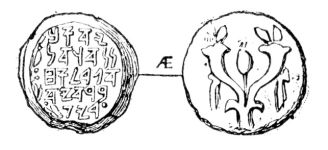
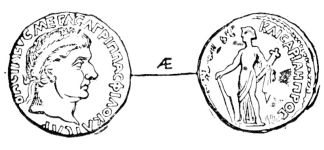
coin of, 148.
Agrippa II.,
152;
coin of, 152.
Akabiah b. Mehalalel, conscientiousness of,
191.
Akiba, R., Tanna,
206;
his wife's loyalty, 206, 207;
classifies Halachoth, 207, 208;
maxims, 208;
supports Bar Cochba, 211;
martyrdom, 215, 216.
Alabarch or Arabarch,
120;
Onias appointed, 71.
Albinus, procurator,
156.
Alexander the Great,
26,
27;
his empire divided, 28;
stories about, 28, 267.
Alexander Janneus, reign of,
85-87;
conflict with Pharisees, 86.
Alexandria, capital of Greco-Egypt,
28;
intellectual centre, 67, 68;
Delta, Jewish quarter of, 68;
school of, 136.
Am-haaretz, the ignorant,
195.
Amoraim, expounders of the law,
227.
Antigonus, last Hasmonean ruler,
101;
coin of, 101.
Antiochus Epiphanes,
33;
persecutes the Jews, 34-36;
defeated by the Maccabees, 38;
defeated in Parthia and Persia, 46;
death of, 46;
bust of, 42.
Antipater, the Idumean,
91;
made procurator of Judea, 99.
Antipas, governor of Galilee,
117;
beheads John the Baptist, 117.
Antoninus Pius,
217;
revokes Hadrian's laws against the practise of Judaism, 217.
Antony,
103,
104.
Apion, defamer of Israel,
177;
"Contra Apion," 177.
Apocalypse, prophetic vision,
53.
Apocrypha, The,
52;
contrasted with the Bible, 53.
Apollonius attacks Jews on the Sabbath,
34,
35,
37.
Aquila, proselyte,
202;
translates Bible into Greek, 202.
Arabia, Jews in,
294.
Arabians, religion of,
295.
Aramaic supersedes Hebrew,
69.
Archelaus, tetrarch of Judea,
117,
118;
deposed, 119.
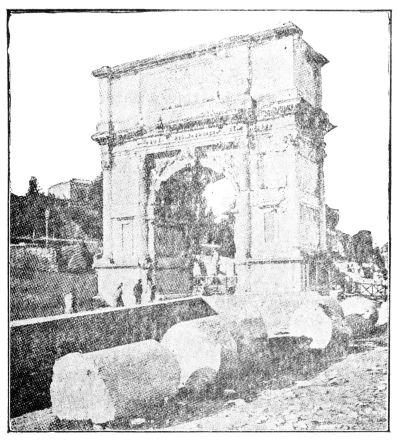
Arch of Titus, illustration,
180.
Arians, Christian heretics,
284;
tolerant to the Jews, 284.
Aristobulus I., reign of,
85.
Aristobulus II.,
91-99.
Aryans and Semites,
note,
140.
Ashi, R., begins compilation of the Talmud,
251.
Assideans (Chassidim),
32.
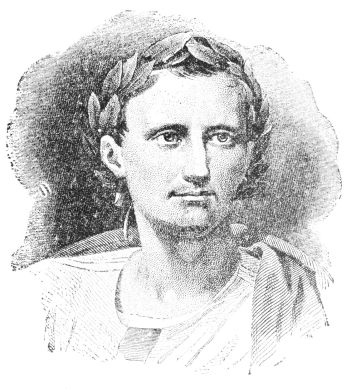
Augustus Caesar, well disposed towards Jews,
120;
tetrarch, 120;
bust of, 115.
Avitus, Bishop, persecutes Jews,
289.
Babylonia, geographical situation,
229;
history of, 230;
Jewish settlement in, 230, 231;
schools of, 229;
Jewish occupations in, 23;
Babylonian Academies become independent of those of Palestine, 232, 236.
Bar-Cochba, a Messiah,
211;
leads insurrection against Rome, 211, 212;
defeated at Bethar, 213;
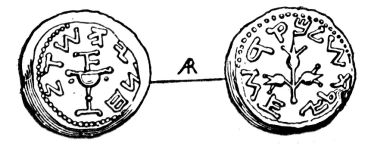
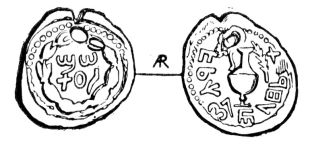
coin of second revolt, 216.
Baruch, book of,
63.
Battlement on house-top, illustration,
160.
Bedouins, character of,
293.
"Bel and the Dragon,"
64.
Ben Sirach, see Ecclesiasticus.
Beruria wife of R. Mair,
218,
219.
Beth Horon, battle of,
38.
Bethar, battle of,
213.
Bible Canon,
22;
order of books, 23;
ditto, note, 24.
Byzantine Empire = Eastern Roman Empire,
246;
Jewish persecution in, 281, 282;
conflict with Persia, 282, 283.
Caesar, Augustus, well disposed towards Jews,
120.
Caesar, Julius,
96,
97;
shows good will to Jews, 99;
Jews lament death of, 99;
portrait, 97.
Calendar, Jewish, fixed by Mar Samuel,
234;
fixed by Hillel II., 243;
"second day" of Festivals, 243, 244;
Seleucidan era, 28;
Hasmonean era, 50;
anno mundi, note, 50.
Caligula demands divine worship,
147,
148.
Canon, the Bible,
22,
23.
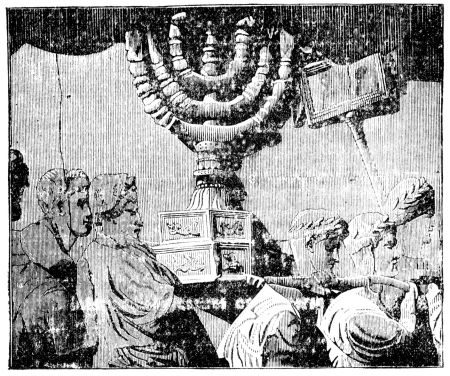
Candlestick, the golden, illustration,
169.
Celo-Syria (Palestine), Judea province of,
31.
Charity, Talmudic sayings on,
269,
270.
Chassidim (Assidean),
32.
Children and Parents, Talmudic sayings on,
261,
262.
Christianity, first meaning of,
132;
the first Christians (Jewish), 133, 197;
development of, 133, 197;
Christians, pagan, 197;
ceremonial of, 198, 199;
State Church of Rome, 239;
why accepted by pagans, 139, 140, 240, 241;
divergence from Judaism, 242;
concessions to paganism, 242;
Nicene Creed, 242, 243;
pillar saints, 249;
Christianity and Islam similar in their attitude to Judaism, 241, 305, 306;
its higher clergy less tolerant, 288, 289.
Church, Judaism and the,
197;
doctrine and Jewish Scripture, note, 200;
persecutes Judaism and the Jews, 247-249, 288.
City as dwelling place, strength and weakness of,
68.
Claudius appoints Agrippa King of Judea,
150;
grants religious freedom to Jews throughout the Roman Empire, 149.
Cleopatra,
103,
104.
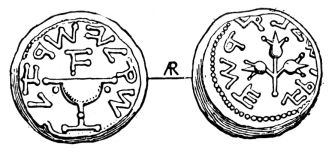
Coins, Jewish,
50,
51;
(see Illustrations.)
Constantine, Roman Emperor, accepts Christianity,
241;
persecutes Judaism, 243.
Crucifixion, of Jesus,
132.
Daniel, book of,
40-44;
compared with Apocrypha, 53;
Song of the Three Holy Children, 64.
Death and Immortality, Talmudic sayings on,
272,
275.
Delta, see Alexandria.
Diaspora, The,
67,
132;
revolt of, 202, 203;
map of (back of book).
Didache,
note,
134.
"Dispute of the Courtiers" (II. Esdras),
54-57.
Domitian, Roman Emperor,
139.
Ecclesiasticus, Book of,
60;
quotations from, 60-62;
note, 65.
Edom = Rome,
note,
110.
Education, importance of,
221,
260;
Talmudic sayings on, 261;
schools established, 89, 260.
Egypt, Greek spirit in, see Greco-Egypt;
Jews in, 67-71.
Eleazar, the martyr,
35.
Eleazar, son of Mattathias, death of,
46.
Eliezar b. Hyrcanus, loyal to traditional law,
191.
Elisha b. Abuyah,
200.
Emergency law under Hadrian's persecution,
214.
Emperors of Rome, see Rome's Emperors.
Esdras I.,
54;
"Dispute of the Courtiers," 54-57.
Esdras II.,
57.
Essenes, The,
82,
129,
130,
131,
133;
and Jesus, 129;
and John the Baptist, 129.
Esther, additions to the Book of,
60.
Felix, procurator,
154.
Festus, procurator,
155.
Florus, procurator,
156,
157.
Franks The,
288.
Galilee,
129;
taken by Romans, 162.
Gamaliel, R., the Elder,
151.
Gamaliel II., first Nasi,
190;
characteristics of, 191;
severity of, 193.
Gaul, Jews in,
288.
Gemara, see Talmud.
Gnostics, The,
199.
God, Talmudic sayings about,
257.
Golden Rule,
112.
Goths invade Rome,
246;
fall into two groups, Ostragoths and Visigoths, 247.
Greco-Egypt, Jews in,
28.
Greece, Greek and Jew,
26;
Alexander the Great, 26, 27;
note, 32;
civilization of, influence on Jews, 28, 30, 31, 67.
Greco-Syria, Judea part of,
31.
Greek and Jew,
26,
136;
influence of Greek on Jew, 137;
Greek law vs. Jewish, note, 145.
Hadrian promises to rebuild Temple,
204;
revolt against, 211-213;
persecution by, 213-215.
Halacha (legal decision,)
187.
Hannah and her seven sons,
35.
Hanukkah, Feast of,
39,
40;
Re-dedication, 45;
symbolism of the Lights, 39-40;
why called a "minor Festival," 40.
Hasmopeans,
note,
83;
their religious place, 82.
Heathen,
115;
attitude towards Jews, 136.
Hegira, the,
301.
Hellenism,
31.
Hellenists,
32,
33,
37;
Hellenist party disappears, 49;
in good sense, 137, 138.
Herod, the great,
107;
governor of Galilee, 99;
governor of Palestine, 100;
made tetrarch of Judea, 100;
made King by Roman Senate, 101;
executes Sanhedrin, 102;
executes his brother-in-law, 102;
executes his wife and mother-in-law, 103, 104;
executes his sons, 109;
rebuilds the Temple, 107;
erects strongholds, 106;
lays out cities, 107;
death of, 109;
division of kingdom, 117;
successors, 117.
High Priest, functions and powers of,
21;
heredity of, broken, 47;
in Hasmonean House, 77.
Hillel,
111;
President of Sanhedrin, 111;
contrasted with Shammai, 112, 115;
maxims, 112, 113;
as legislator, 113, 114, 116;
prosbul, 113;
last days of, 113, 114.
Hillel II., Palestian Nasi, established fixed calendar,
243.
Honesty, Talmudic sayings about,
266,
267.
Humility, Talmudic sayings on,
270,
271.
Humor of Talmudic sages,
275,
276.
Huna, Rab, Babylonian Amora,
237.
Huns under Attila invade Rome,
247.
Hyrcanus, John, reign of,
78,
79;
conquers Samaria and Idumea, 78;
imposes Judaism on Idumea, 78, 79;
coin of, 84.
Hyrcanus II., Ethnarch and High Priest,
99;
executed by Herod, 104.
Idumea,
102;
see Edom, note, 110;
conquered by John Hyrcanus, 78;
invited to join Zealots, 162.
Immortality, doctrine of, in Daniel,
43;
in other Bible books, note, 44;
Talmudic savings on, 274, 275.
Independence, won by the Maccabees,
50;
Judean, compared with American, note, 50.
Ishmael b. Elisha, R., Tanna,
194.
Islam and the Jews,
304.
Italy, passes into hands of Ostrogoths,
284.
Jamnia, Academy of,
183,
190;
a religious centre, 183, 194.
Jason buys priesthood,
33.
Jerome translates Hebrew Scriptures into Latin (Vulgate),
249.
Jerusalem, taken by Pompey,
93;
under Zealot leadership, 158;
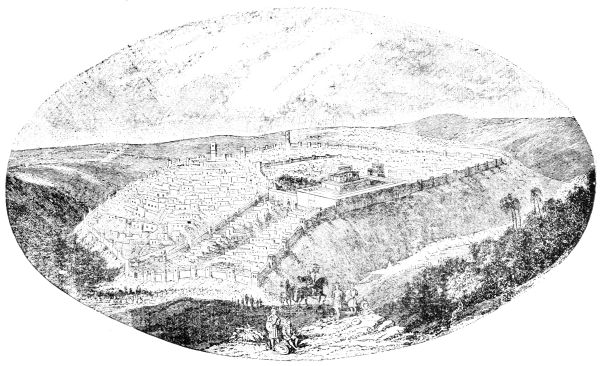
siege of, frontispiece, 161;
prey of rival parties, 162;
its physical situation, 161, 166;
fall of, 168;
effect of its overthrow, 171, 183-185;
name changed to Aelia Capitolina, 213.
Jesus of Nazareth,
127;
birth, 116;
as Messiah, 130;
character of, 131, 132;
crucified by the Romans, 132, note, 135;
apotheosis of, 133, 144;
teachings of, note, 134;
unmentioned by Josephus, note, 179.
Jochanan b. Zakkai,
183;
exponent of "Peace Party," 183, 184;
establishes an academy, 184;
replaces sacrifice by prayer, 184, 185;
maxims of, 187-189.
John the Baptist,
118.
John of Gischala, Zealot leader,
158,
162,
169.
John Hyrcanus, see Hyrcanus, John.
Jonathan succeeds his brother Judas Maccabeus as head of Judea,
48;
High Priest and Tributary Prince, 48.
Joseph, the Satrap,
30,
31.
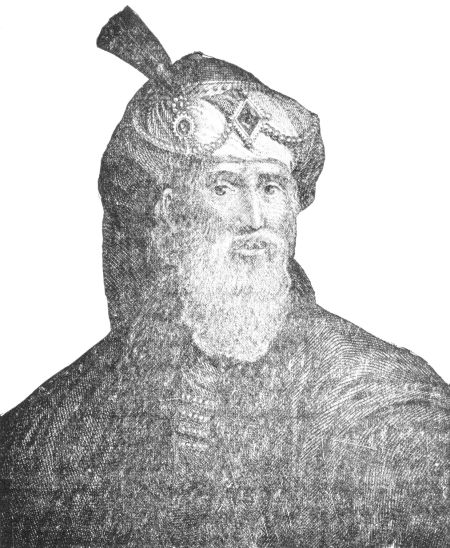
Josephus and his works,
172;
governor of Galilee, 158, surrenders to Rome, 159;
Rome's envoy to Jerusalem, 168;
pensioner of Vespasian, 173;
contrasted with Jeremiah, 174, 175;
on proselytes, 139;
"Antiquities of the Jews," 176;
"Wars of the Jews," 176;
"Contra Apion," 177;
defends Jews against slander, 177, 178;
shows humanity of the Jewish law, 178;
silent on Jesus of Nazareth, note, 179;
portrait, 173.
Joshua b. Hananiah, R.,
192;
Tana, stories of, 192, 193;
the counsellor, 193, 203;
Patriarch, 202, 203.
Joshua (Jason) 31-33.
Jotapata fortress of Sepphoris, besieged and taken,
159.
Judah, Rabbi, ha-Nasi, "the Saint,"
217;
Nasi, 218;
compiles Mishna, 219, 221;
maxims, 219;
death, 219.
Judah b. Baba, martyr,
215.
Judaism, as law,
19,
20;
note, 24;
survives the Temple's destruction, 185;
affirmative and negative precepts, 220.
Judas Maccabeus, leads revolt against Antiochus,
36;
defeats Lysias at Emmaus, 38;
victory at Beth Horon, 37, 38;
made High Priest, 47;
subdues Idumeans and Ammonites, 45;
makes treaty with Rome, 47;
death on battlefield, 48.
Judas of Gamala, Zealot,
124.
Judea, a vassal state,
15;
independent, 75;
under Rome, 181;
under Persian sway, 17;
part of Greco-Egypt, 28;
part of Greco-Syria, 31;
fights for its faith, 33;
fights for independence, 45;
under Roman suzerainty, 95;
under procurators, 119, 123, 153;
war with Rome, 157, 168;
a theocracy, 119.
Judith, Book of,
59,
60.
Julian, Roman Emperor, plans to rebuild the Temple for the Jews,
245;
note on, 249.
Jussuf, Arabian proselyte,
296.
Justinian, laws of, discriminate against Jews,
282.
Justice and Honesty, Talmudic sayings about,
266,
267.
Kindness, Talmudic sayings on,
267,
268.
"King, Strength of,"
55;
title, of, 78;
note, 84, 85.
Koran,
note,
311.
Law, The, Judaism as,
19-21;
study of, 260;
abrogated by the Church, 133;
Greek vs. Jewish, note, 146;
Josephus on, 178;
three vital principles of, 214.
Law and equity,
note,
116.
Logos,
note,
145.
Magi, religion of,
235.
Maccabees, campaigns of,
37.
Maccabees, I and II, books of,
64,
65.
Maccabeus, Judas, see Judas Maccabeus.
Mair, R., Tanna,
217-219;
maxims, 217;
his wife Beruria, 218, 219.
Mariamne,
102.
Mar Samuel, see Samuel.
Martyrdom, under Antiochus (Greek-Syrian),
35,
36;
under Hadrian (Roman), 214-216.
Masora, The,
note,
210.
Massada fortress fails,
170.
Mattathias, the patriot, resists Antiochus Epiphanes,
36.
Mazdak, the Persian, persecutes the Jews,
236.
Menelaus, a traitor,
33,
34.
Messiah, development of the doctrine of,
127-129;
Jesus regarded as, 130;
two views of, 131.
Metibta, Babylonian school,
236.
Middle Ages, Jewish,
281.
Midrash,
142,
143.
Minor Festivals, so termed,
40.
Mishna, The,
222;
its 60 subdivisions, 222, 223;
canon of Jewish law, 221;
quotations from, 224-226;
spirit of, 227.
Missionaries, Jewish,
137,
138;
Christian, 139.
Mohammed,
299;
early dreams, 299;
Jews his chief teachers, 300;
founds a new creed, 301;
Hegira to Medina, 301;
conquers Mecca ("the Conquest") 302;
political and religious head of Arabia, 303;
conquers Arabian Jews and slays 700, 306, 307;
Arabia's "Prophet," 305.
Mohammedanism, supersedes Arabian idolatry,
300;
articles of Creed, 302;
compromise with paganism, 305, 306;
early form of, patterned after Judaism, 304;
and Christianity similar in their attitude towards Judaism, 241, 305, 306;
"Koran or the sword," 306;
rapid spread of, 307, 308;
later attitude towards Jews, 308-310;
reaches the Spanish Peninsula, 310.
Nasi, office of,
190.
Nazarites,
82.
Nehemiah's service,
18.
Nerva, Emperor, removes injunctions against proselytes,
202;
coin concerning Jewish tax, 205.
"New Moon," Feast of, how regulated, see Calendar.
"Nicanor day,"
47.
Noachian laws,
note,
205.
Olympian games,
33,
107.
Onias, High Priest, and Alexander,
28.
Onias of Alexandria, builds a Temple,
69,
70;
justification for, 70;
note, 71.
Onias, Prayer of,
92.
Oral Law, The,
80.
Ostragoths rule Italy, tolerant to Jews,
284.
"Pairs," The, teachings of,
83.
Pantheon, decline of,
245.
Patience, Talmudic sayings on,
270,
271.
Palestine, Academies of,
190;
map of, front of book;
taken by the Greeks, 28;
Romans, 93;
Persians, 282;
again by Byzantines, 283;
finally by the Moslems, 308.
Parents and Children, Talmudic sayings on,
261,
262.
Paul, Apostle,
93;
abrogates the Law, 133;
note, 152.
Patriotism and Judaism,
234;
note, 238.
"Peace Party," The,
157.
Persia, Jews under Persian sway,
17;
political silence vs. religious activity, 18-22;
Persian influence, note, 24;
conquered by Greece, 18, 19;
conflict with Byzantium, 282, 283;
history of, 230;
religion of, 235, 236.
Pharisees, The,
80;
contrasted with Sadducees, 80, 81;
seven classes of, note, 83;
slandered, 81.
Philip, tetrarch of Batanea and Gaulonitus,
117.
Philo,
141;
on Pilate, 124, 125;
on proselytes, 138;
as expounder of Scripture, 141, 142;
as philosopher, 142-144;
theory of the Logos, 143, 144;
ethics of, 144-145;
pleads to emperor for Jews, 148.
Pilate, the Procurator,
123;
slaughters the Samaritans, 125;
condemns Jesus of Nazareth to death, 127.
Pompey takes Jerusalem,
93.
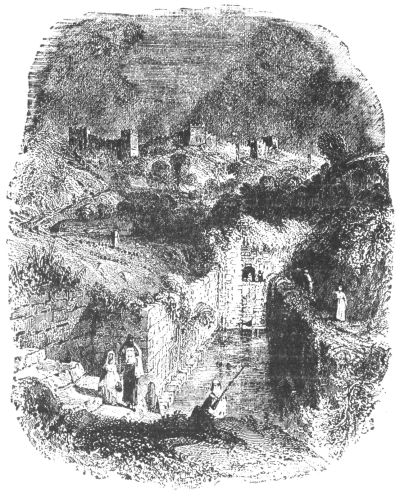
Pool of Siloam, illustration,
90.
Popes, dangerous power of,
285.
Post-exilic literature,
22.
Prayer of Manasses,
64;
of Onias, 92.
Prayer, supersedes sacrifice as sole mode of worship,
184,
185;
Talmudic sayings on, 258;
vs. sacrifice, 64.
Prayer Book, The,
194,
195;
note, 196.
Priest, and Synagogue,
21;
High P., functions and power of, 21.
Procurators, first group,
123;
last group, 153;
their treatment of the Jews, 119, 122-124;
their place in the Roman system, 147;
Albinus, 156;
Felix, 154;
Festus, 155;
Florus, 156, 157;
Pilate, 123.
Proselytes, Greek,
137,
138;
Roman, 126, 137, 201, 202;
Queen Helen of Adiabene, 139;
Aquila, 202;
Jussuf, King of Yemen, 296;
by compulsion 78, 85;
note, 205.
Providence, Talmudic sayings on,
258,
259.
Ptolemies, the,
68;
Philadelphus, 68;
Philometer 70, 71.
Pumbeditha, Babylonian Academy,
237.
Rab (Abba Areka), Babylonian Amora,
232;
establishes Sora Academy, 233;
moralist, 233.
Rabbi, title of,
194.
Rabba, classified Halachoth,
237.
Religion as law,
19-21.
Repentance, Talmudic sayings on,
273,
274.
Resh Galutha, office of,
231;
under Moslem sway, 309.
Resh Lakish, expounder,
220.
Righteousness, Talmudic sayings on,
259.
Ritual of Prayer,
194-196.
Rome, history from 146
B. C. E. to establishment of the Empire,
95,
96;
policy of, 93;
Pompey takes Jerusalem, 92;
suzerainty over Judea, 96;
Judea under, 77;
appoints procurators over Judea, 119;
Judea's wars with, 57, 168;
regime of, after Judea's overthrow, 201;
revolt against Trajan, 202-204;
suppresses the Bar Cochba revolt, 213;
decline of the empire, 239;
division of the Empire, 245;
influx of barbarians, 246;
western half of Empire succumbs to northern tribes, 247;
successors, 283-285.
Rome, Emperors of, that came in relations with the Jews: Antoninus Pius,
217;
Augustus, 120, 126;
Caligula, 147, 148;
Claudius, 149, 150;
Domitian, 139;
Julian, 245;
Hadrian, 204, 205, 209, 213;
Nero, 159;
Nerva, 202;
Alexander Severus, 239;
Tiberius, 125;
Titus, 161;
Trajan, 202, 203;
Vespasian, 159, 161, 162, 165, 173, 184.
Sabbatic year,
46.
Saboräim, 3d group of law expounders,
253,
254.
Sacrifice ceases with fall of Jerusalem Temple,
184-185.
Sacrificial worship,
note,
188.
Sadduccees,
79;
contrasted with Pharisees, 80, 81.
Salome, Alexandra, reign of,
87;
coin of her time, 87.
Samuel, Babylonian Amora,
233;
rationalist and jurist, 233, 234;
"land's law is ours," 234;
patriot, 234;
astronomer and physician, 234, 235;
maxims, 235.
Samuel, Arabian Jewish hero,
296,
297;
Sheik and poet, 296, 297.
Samaritans,
125.
Sanhedrin,
123,
127,
151;
shorn of power, 108.
Scribes, The
19,
20.
Seleucidan regime,
28;
era, 28.
Semicha (ordination),
194,
215.
Septuagint, The,
68,
69,
71.
Severus, Alexander respects Judaism,
239.
Severus, Julius, defeats Bar Cochba,
212,
213.
Shammai, contrasted with Hillel,
112,
115;
school of, 115;
against proselytism, 115.
Sicarii, The,
154,
155.
Simlai, R., enumerates 365 negative and 248 affirmative precepts,
220.
Simon b. Giora, Zealot leader,
165,
170.
Simon, the Just, High Priest,
29,
30;
Ben Sirach's description of, 29.
Simon the Hasmonean, independent Prince of Judea,
50,
77,
78;
makes treaty with Rome, 77;
coins, 50, 51.
Simon ben Shetach,
88,
89;
establishes schools, 89.
Sin, Talmudic sayings about,
271,
272.
Slave trade and the Jews,
286.
Slavery, a medieval institution,
286.
Sibylline Oracles, Judaism expressed in,
137.
"Song of the Three Holy Children,"
64.
Sora, Babylonian Academy,
233.
Spanish Peninsula,
288;
status of Jews before 6th century in, 289;
their position in 7th century in, 290, 291;
conquered by the Moslems, 292, 310.
"Susanna, History of,"
644.
Synagogue, establishment of,
21;
ritual, 19; "Men of the Great," 22.
Syria (Roman) Judea province of,
119.
Syrian governors, Vitellius, well disposed toward Jews,
147;
Petronius risks life for Jews, 148;
Cestius Gallus put to rout by Jews, 158.
Talmud, The,
250;
stories from 256, 264;
codifying commenced, by R. Ashi, 251;
Babylonian, 251;
Palestinian, 252;
the Gemara, 251;
Halacha and Agada, 252, 253;
literature on, 253;
language of, note, 254;
influenced by Roman law, note, 255.
Tannäim, the first order of expounders,
186.
Targum,
145.
Tax, Jewish,
170.
Teachers, value of, sayings about,
221.
Temple, The, as a religious centre,
21;
desecrated by Antiochus, 34;
re-dedicated by the Maccabees, 45;
invaded by Pompey, 93;
rebuilt by Herod, 107;
besieged by Rome, 168;
destroyed by Rome, 170;
heathen temple built on site, 171;
religious consequence of its overthrow:
Jewish, 183-185;
Christian, 198;
Fast, note, 196;
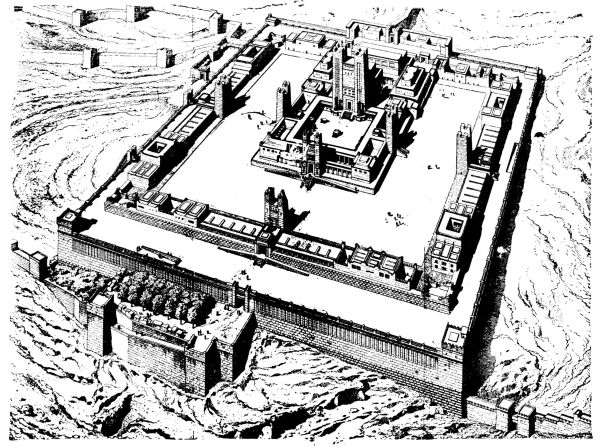
as reconstructed by Chipiez, 74;
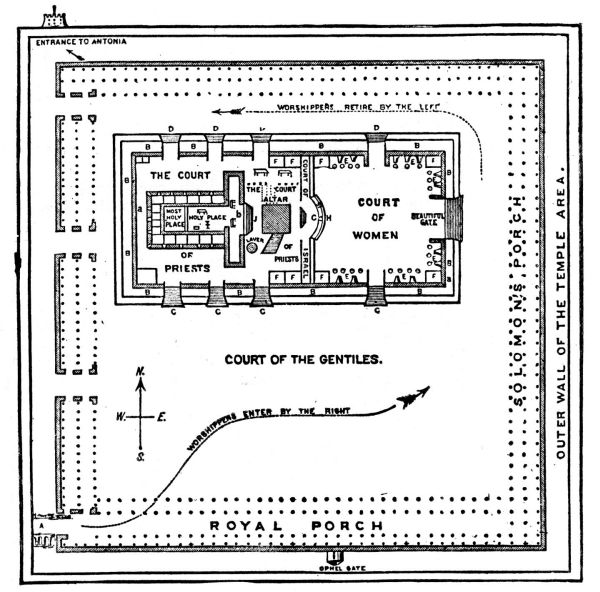
ground plan of Temple area, 75;
of Onias, 70;
justification for a temple outside of Jerusalem, 70, 71.
"Testaments, Old and New," significance of the title,
198,
199.
Tetrarch,
120.
Theocracy, defined,
119;
Roman rule antagonistic to, 119.
Theudas, a Messiah, executed,
153.
Tiberius, Roman emperor,
125.
Titus conducts war against Judea,
161,
166,
170;
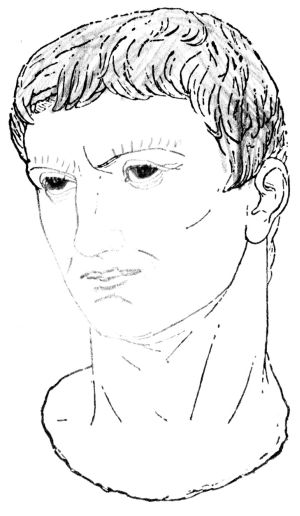
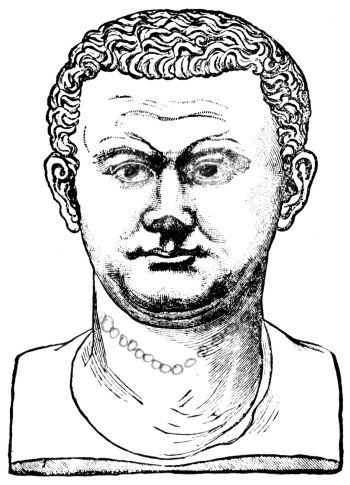
Arch of, illustration, 180;
portrait, 164;
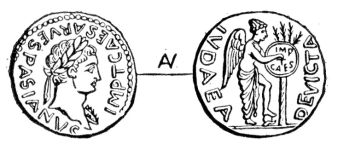
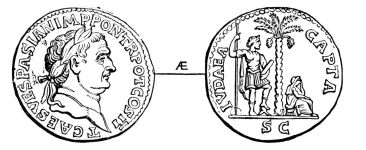
Coin of the reign of, 166.
Tobit, Book of,
57,
58;
Prayer of, 58, 59.
Traders, why Jews became,
286.
Trajan, revolt against,
202,
203.
Truth, strength of,
56,
57;
Talmudic sayings about, 266.
Vespasian, sent by Nero to quell Judean rebellion,
159;
conquers Galilean plain, 161;
conquers northern fortresses, 165;
crowned Roman emperor, 173;
grants permission to J. b. Zakkai to establish an Academy at Jamnia, 184;
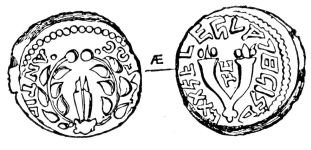
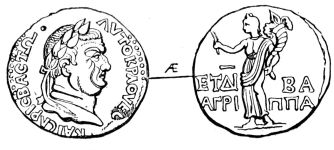
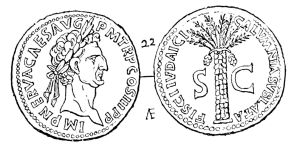
brass coin indicating Judea's overthrow, 189.
Vulgate, The, Latin translation of the Scriptures,
249.
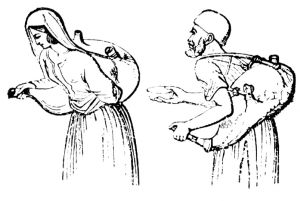
Water Bottles, Goat-skin, illustration,
66.
Water Festival (Sh'mini Atzereth,)
89.
"Wine, Strength of,"
54.
Wisdom literature,
60.
"Wisdom of Solomon,"
62;
quotations from, 62, 63.
Wit and Humor of Rabbis,
275,
276.
Woman, Jewish estimate of,
262;
Talmudic sayings on, 263;
strength of, 55, 56.
Wood Festival, Ab 15th,
89.
Work, Talmudic sayings on,
264,
265.
Zealots, The,
124,
153,
154,
165.
Zoroastrism, religion of Persia,
235,
236.