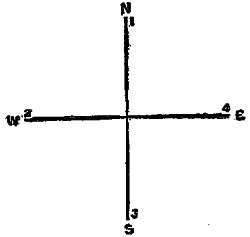
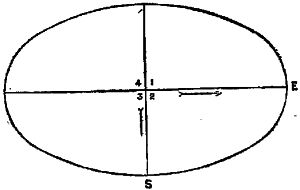
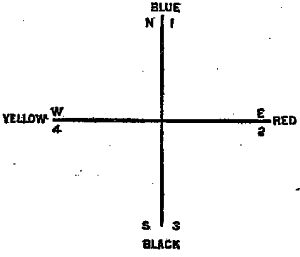
§ 92. That the Dakota tribes, before the advent of the white race,
believed in one Great Spirit, has been asserted by several writers;
but it can not be proved. On the contrary, even those writers who are
quoted in this study as stating the Dakota belief in a Great Spirit,
also tell us of beliefs in many spirits of evil. Among the earlier
writers of this class is Say, who observes:
Their Wahconda seems to be a protean god; he is supposed to appear
to different persons under different forms. All who are favored
with his presence become medicine men and magicians in consequence
of their having seen and conversed with Wahconda, and of having
received from him some particular medicine of wondrous efficacy.
The same writer records that “Wahconda” appeared sometimes as a grizzly
bear, sometimes as a bison, at others as a beaver, or an owl, or some
other bird or animal.[84] It is plain that Say mistook the generic
term, “Wahconda,” for a specific one. (See §§ 6, 21-24.)
Shea says:
Although polytheism did not exist, although they all recognized
one Supreme Being, the creator of all, * * * they nowhere
adored the God whom they knew. * * * The demons with which
they peopled nature, these alone, in their fear they sought to
appease. * * * Pure unmixed devil-worship prevailed
throughout the length and breadth of the land.[85]
§ 93. Lynd made some very pertinent remarks:
A stranger coming among the Dakotas for the first time, and
observing the endless variety of objects upon which they bestow
their devotion, and the manifold forms which that worship assumes,
at once pronounces them pantheists. A further acquaintance with
them convinces him that they are pantheists of no ordinary
kind—that their pantheism is negative as well as positive, and
that the engraftments of religion are even more numerous than
the true branches. Upon a superficial glance he sees naught
but an inextricable maze of gods, demons, spirits, beliefs and
counter-beliefs, earnest devotion and reckless skepticism,
prayers, sacrifices, and sneers, winding and intermingling with
one another, until a labyrinth of pantheism and skepticism
results, and the Dakota, with all his infinity of deities appears
a creature of irreligion. One speaks of the medicine dance with
respect, while another smiles at the name—one makes a religion
of the raw fish feast, while another stands by and laughs at his
performance—and others, listening to the supposed revelations of
the circle dance, with reverent attention, are sneered at by a
class who deny in toto the wakan nature of that ceremony.[86]
In common with all nations of the earth the Dakotas believe in a
Wakantanka or Great Spirit. But this Being is not alone in the
universe. Numbers of minor deities are scattered throughout space,
some of whom are placed high in the scale of power. Their ideas of
the Great Spirit appear to be that He is the creator of the world
and has existed from all time; but after creating the world and
all that is in it He sank into silence and since then has failed
to take any interest in the affairs of this planet. They never
pray to Him, for they deem Him too far away to hear them, or as
not being concerned in their affairs. No sacrifices are made to
Him, nor dances in His honor. Of all the spirits He is the Great
Spirit; but His power is only latent or negative. They swear by
Him at all times, but more commonly by other divinities.[87]
Yet Lynd is not always consistent, for he says on another page (71) of
the same work: “No one deity is held by them all as a superior object
of worship.”
§ 94. Pond writes:
Evidence is also wanting to show that the Dakotas embraced in
their religious tenents the idea of one supreme existence, whose
existence is expressed by the term Great Spirit. If some clans
at the present time entertain this idea it seems highly probable
that it has been imparted to them by individuals of European
extraction. No reference to such a being is found in their feasts,
fasts, or sacrifices. Or if there is such a reference at the
present time it is clear that it is of recent origin and does not
belong to their system. It is indeed true that the Dakotas do
sometimes appeal to the Great Spirit when in council with white
men, but it is because they themselves have embraced the Christian
doctrines. Still, it is generally the interpreter who makes
the appeal to the Great Spirit, when the Indian speaker really
appealed to the Taku Wakan, and not to the Wakantanka. It is true
that * * * all the Dakota gods * * * are mortal. They are
not thought of as being eternal, except it may be by
succession.[88]
The author agrees with Pond in what he says about the average Indian
interpreter of early days, who seldom gave a correct rendering of what
was spoken in council. But at the present time great improvement has
doubtless been observed.
It should be remembered that Messrs. Riggs and Pond were missionaries
to the Dakotas, while Messrs. Say, Shea, and Lynd must be classed among
the laity. Yet the missionaries, not the laymen, are the ones who make
the positive statements about the absence of a belief in one Great
Spirit.
§ 95. Riggs remarks:
The religious faith of the Dakota is not in his gods as such. It
is an intangible, mysterious something of which they are only the
embodiment, and that in such a measure and degree as may accord
with the individual fancy of the worshiper. Each one will worship
some of these divinities and neglect and despise others; but the
great object of all their worship, whatever its chosen medium, is
the TA-KOO WAH-KON, which is the supernatural and mysterious. No
one term can express the full meaning of the Dakota’s Wakan. It
comprehends all mystery, secret power, and
divinity. * * * All
life is Wakan. So also is everything which exhibits power,
whether in action, as the winds and drifting clouds, or in
passive endurance, as the bowlder by the wayside.[89]
In the mind of a Dakota * * * this word Wah-kon (we write,
wa-kan) covers the whole field of their fear and worship. Many
things also that are neither feared nor worshiped, but are simply
wonderful, come under this designation. It is related of Hennepin
that when he and his two companions were taken captive by a Sioux
war party, as they ascended the upper Mississippi one of the men
took up his gun and shot a deer on the bank. The Indians said,
“Wah-kon chi?”—Is not this mysterious? And from that day
* * * the gun has been called Mah-za wah-kon, mysterious
iron. This is shortened into Mah-za-kon. The same thing we may
believe is true when, probably less than two centuries ago, they
first saw a horse. They said “Shoon-ka wah-kon,” wonderful dog.
And from that day the horse has been called by the Sioux
wonderful dog, except when it has been called big dog, Shoon-ka
tonka. These historical facts have satisfied us that the idea of
the Great Spirit ascribed to the Indians of North America does
not belong to the original theogony of the Sioux, but has come
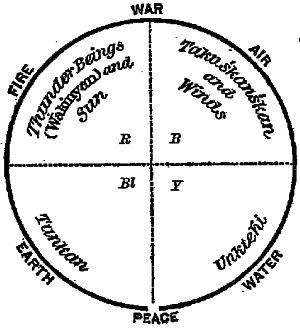
from without, like that (sic) of the horse and gun, and probably
dates back only to their first hearing of the white man’s
God.[90]
Taku Wakan.—This is a general term, including all that is wonderful,
incomprehensible, supernatural—what is wakan; but especially covering
the objects of their worship. Until used in reference to our God, it is
believed that the phrase was not applied to any individual object of
worship, but was equivalent to “the gods.”[91] As tuwe, who, refers
to persons, and taku, what, to things, the correctness of Riggs’s
conclusion can hardly be questioned, provided we add that the Dakota
term, Taku Wakan, could not have conveyed to the Dakota mind the idea
of a personal God, using the term person as it is commonly employed
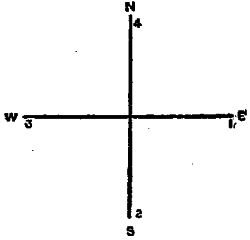
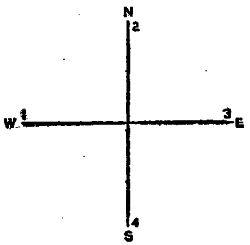
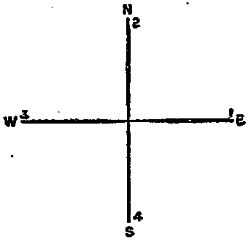
by civilized peoples.
§ 96. Lynd says:
The divinities of evil among the Dakotas may be called legion.
Their special delight is to make man miserable or to destroy him.
Demons wander through the earth, causing sickness and death.
Spirits of evil are ever ready to pounce upon and destroy the
unwary. Spirits of earth, air, fire, and water (see § 36) surround
him upon every side, and with but one great governing object in
view—the misery and destruction of the human race.[92]
§ 97. Their religious system gives to everything a soul or spirit. Even
the commonest sticks and clays have a spiritual essence attached to
them which must needs be reverenced; for these spirits, too, vent their
wrath upon mankind. Indeed, there is no object, however trivial, but
has its spirit.[93]
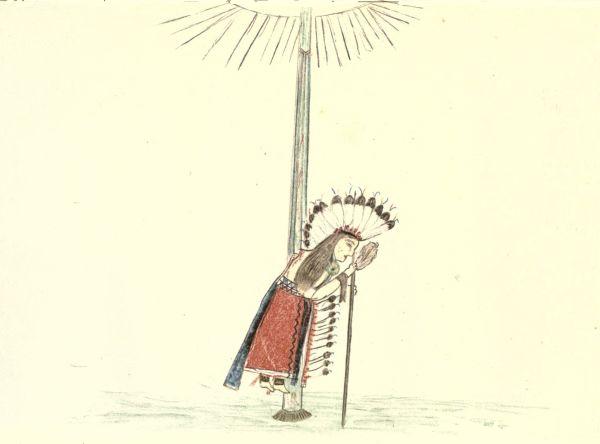
In his article on the Mythology of the Dakotas,[94] Riggs says of the
Dakota:
They pray to the sun, earth, moon, lakes, rivers, trees, plants,
snakes, and all kinds of animals and vegetables—many of them say,
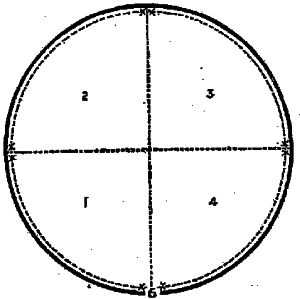
to everything, for they pray to their guns and arrows—to any
object, artificial as well as natural, for they suppose that every
object, artificial as well as natural, has a spirit which may hurt
or help, and so is a proper object of worship.
Lynd says:
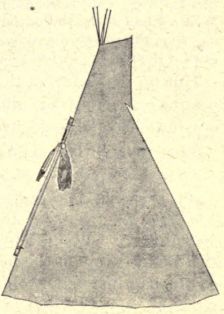
The essentially physical cast of the Indian mind (if I may be
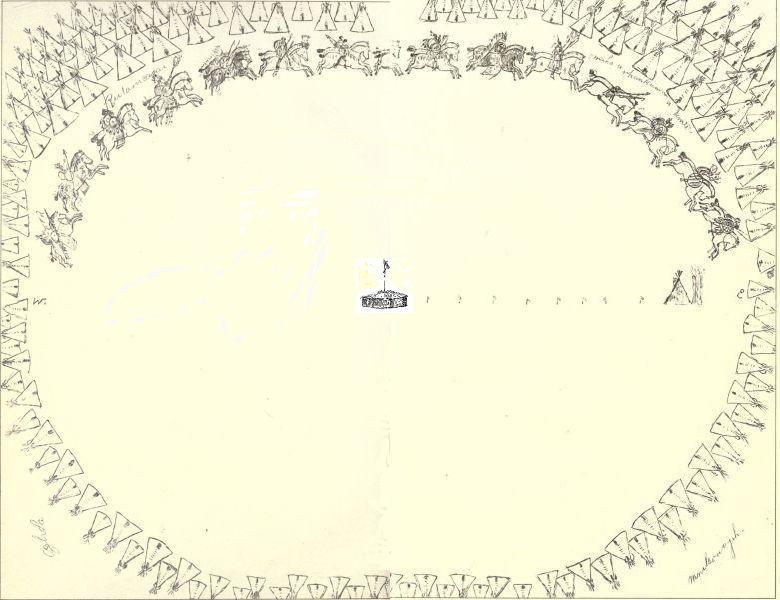
allowed the expression) requires some outward and tangible
representation of things spiritual before he can comprehend
them. The god must be present, by image or in person, ere he
can offer up his devotions. * * * Similar to this “belief in a
spiritual essence” is the general Dakota belief that each class of
animals or objects of a like kind possesses a peculiar guardian
divinity, which is the mother archetype. * * * Sexuality is a
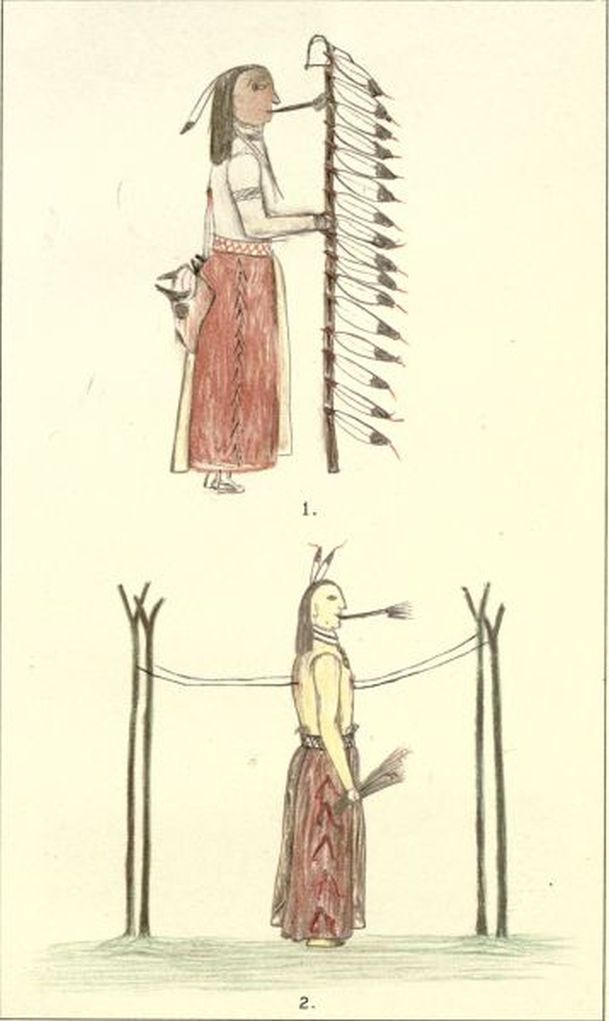
prominent feature in the religion of the Dakotas. Of every species
of divinity, with the exception of the Wakantanka, there is a
plurality, part male and part female. Even the spirits, which
are supposed to dwell in the earth, twigs, and other inanimate
substances, are invested with distinctions of sex.[95]
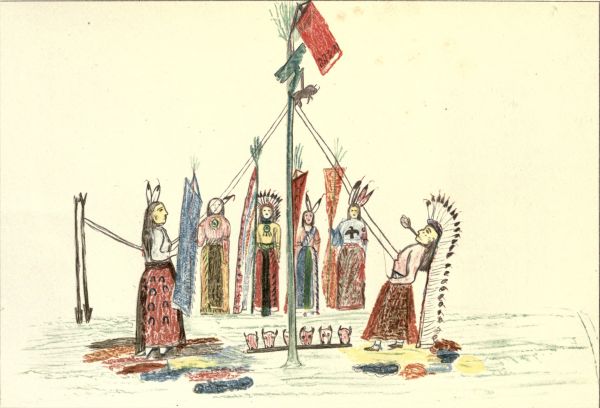
§ 98. Pond asserts that “evidence is wanting to show that these people
divide their Taku-wakan into classes of good and evil. They are all
simply wakan.”[96]
The gods of the Dakotas are of course innumerable; but of the superior
gods these are the chief: The Unkteḣi, or god of the water; the
Wakinyan, or thunder god; the Takuśkanśkan, or moving god; the Tunkan,
Inyan, or stone god; the Heyoka god; the Sun; the Moon; the Armor god;
the Spirit of the Medicine Sack; and the Wakantanka, who is probably an
intrusive deity.[97]
§ 99. The following remarks are those of a later writer, Miss Fletcher:
The Indian’s religion is generally spoken of as a nature and
animal worship. The term seems too broadcast and indiscriminate.
Careful inquiry and observation fail to show that the Indian
actually worships the objects which are set up or mentioned by
him in his ceremonies. The earth, four winds, the sun, moon,
and stars, the stones, the water, the various animals, are all
exponents of a mysterious life and power encompassing the Indian
and filling him with vague apprehension and desire to propitiate
and induce friendly relations. The latter is attempted not so much
through the ideas of sacrifice as through more or less ceremonial
appeals. More faith is put in ritual and a careful observance of
forms than in any act of self-denial in its moral sense, as we
understand it. The claim of relationship is used to strengthen
the appeal, since the tie of kindred among the Indians is one
which can not be ignored or disregarded, the terms grandfather and
grandmother being most general and implying dependence, respect,
and the recognition of authority. (See §§ 9, 100.)
One of the simplest and most picturesque explanations of the use
of the varied forms of life in the Indian worship was given to me
by a thoughtful Indian chief. He said: “Everything as it moves,
now and then, here and there, makes stops. The bird as it flies
stops in one place to make its nest, and in another to rest in its
flight. A man when he goes forth stops when he wills. So the god
has stopped. The sun, which is so bright and beautiful, is one
place where he has stopped. The moon, the stars, the winds, he has
been with. The trees, the animals, are all where he has stopped,
and the Indian thinks of these places and sends his prayers there
to reach the place where the god has stopped and win help and a
blessing.”
The vague feeling after unity is here discernible, but it is like
the cry of a child rather than the articulate speech of a man. To
the Indian mind the life of the universe has not been analyzed,
classified, and a great synthesis formed of the parts. To him
the varied forms are equally important and noble. A devout old
Indian said: “The tree is like a human being, for it has life and
grows; so we pray to it and put our offerings on it that the god
may help us.” In the same spirit the apology is offered over a
slaughtered animal, for the life of the one is taken to supplement
the life of the other, “that it may cause us to live,” one formula
expresses it. These manifestations of life, stopping places of the
god, can not therefore be accurately called objects of worship
or symbols; they appear to be more like media of communication
with the permeating occult force which is vaguely and fearfully
apprehended. As a consequence, the Indian stands abreast of
nature. He does not face it, and hence can not master or coerce
it, or view it scientifically and apart from his own mental and
emotional life. He appeals to it, but does not worship it.[98]
§ 100. Every power is prayed to by some of the Dakota and Assiniboin.
Among the accessories of prayer the Dakota reckons the following:
(a) Ceremonial wailing or crying (ćéya, to weep, wail; whence,
ćékiya, to cry, to pray, and woćékiye, prayer), sometimes accompanied
by articulate speech (§§ 177, 208); (b) the action called yuwiⁿtapi
(yuwiŋ´tapi) described in § 24; (c) holding the pipe with the
mouthpiece toward the power invoked, as the Heyoka devotees sometimes
do (§§ 223, 224); (d) the use of smoke from the pipe or the odor
of burning cedar needles (§§ 159, 168); (e) the application of the
kinship terms, “grandfather” (or its alternative, “venerable man”) to a
male power, and “grandmother” to a female one (§§ 99, 107, 239); (f)
sacrifice, or offering of goods, animals, or pieces of one’s own flesh,
etc. (see § 185).
§ 101. The radical forms of worship among the Dakota, according to
Lynd, are few and simple. One of the most primitive is that of Wocnapi
(Wośnapi) or Sacrifice. To every divinity that they worship they
make sacrifices. Even upon the most trivial occasions the gods are
either thanked or supplicated by sacrifice. The religious idea it
carries with it is at the foundation of the every-day life of the
Dakota. The wohduze or taboo has its origin there; the wiwaŋyag
waćipi or sundance (§§ 141-211) carries with it the same idea;
the wakaŋ wohaŋpi or sacred feast (feast of the first-fruits)
is a practical embodiment of it; and haŋmdepi or god-seeking of
the extreme western tribes is but a form of self-sacrifice. No Dakota
in his worship neglects this ceremony. It enters into his religious
thoughts at all times, even at the hour of death. The sacrifices
made upon recovery from sickness are never composed of anything very
valuable, for the poverty of the Indian will not permit this. Usually
a small strip of muslin, or a piece of red cloth, a few skins of
some animals, or other things of no great use or value are employed.
Sometimes a pan or kettle is laid up for a sacrifice. But after a short
time, the end for which the sacrifice was made is attained, and it is
removed. Those in need of such things as they see offered in sacrifice
may take them for their own use, being careful to substitute some other
articles. Perhaps the most common forms of sacrifice are those which
are made in the hunt. Particular portions of each animal killed are
held sacred to the god of the chase or some other deities. If a deer
is killed, the head, heart, or some other part of
it is sacrificed by
the person who has slain it. The part sacrificed differs with different
individuals. In ducks and fowls the most common sacrifice is of the
wing, though many sacrifice the heart, and a few the head. This custom
is called wohduze, and is always
constant with individuals, i. e., the
same part is always sacrificed. The other wohduze or taboo is connected
with the wotawe or armor,[99] and will be described hereafter (§ 125).
§ 102. Haŋmdepi or god-seeking.—Haŋmdepi or god-seeking
is a form of religion among the Dakotas that points back to a remote
antiquity. The meaning of the word, in its common acceptation, appears
to be greatly misunderstood by some. Literally, it means only to dream,
and is but another form of haŋma; but in its use it is applied
almost wholly to the custom of seeking for a dream or revelation,
practiced by the Sisitonwan, Ihanktonwanna, and Titonwan (Sioux), and
by the Crow, Minnetaree, Assiniboin, and other western Dakota. In this
respect it has no reference whatever to the common dreams of sleep, but
means simply the form of religion practiced.
If a Dakota wishes to be particularly successful in any (to him)
important undertaking, he first purifies himself by the Inipi or steam
bath, and by fasting for a term of three days. During the whole of
this time he avoids women and society, is secluded in his habits, and
endeavors in every way to be pure enough to receive a revelation from
the deity whom he invokes. When the period of fasting is passed he is
ready for the sacrifice, which is made in various ways. Some, passing
a knife through the breast and arms, attach thongs thereto, which
are fastened at the other end to the top of a tall pole raised for
that purpose; and thus they hang, suspended only by these thongs, for
two, three, or even four days, gazing upon vacancy, their minds being
intently fixed upon the object in which they desire to be assisted by the
deity, and waiting for a vision from above. Once a day an assistant is
sent to look upon the person thus sacrificing himself. If the deities
have vouchsafed him a vision or revelation, he signifies the same by
motions, and is released at once; if he be silent, his silence is
understood, and he is left alone to his reverie.
Others attach a buffalo hair rope to the head of a buffalo just as it
is severed from the animal, and to the other end affix a hook, which
is then passed through the large muscles in the small of the back,
and thus fastened they drag the head all over the camp, their minds
meanwhile being fixed intently, as in the first instance, upon the
object in which they are beseeching the deity to assist them.
A third class pass knives through the flesh in various parts of the
body, and wait in silence, though with fixed mind, for a dream or
revelation. A few, either not blessed with the powers of endurance or
else lacking the courage of the class first named, will plant a pole
upon the steep bank of a stream, and attaching ropes to the muscles of
the arm and breast, as in the first instance, will stand, but not hang,
gazing into space, without food or drink, for days.
Still another class practice the haŋmdepi without such horrid
self-sacrifice. For weeks, nay, for months, they will fix their minds
intently upon any desired object, to the exclusion of all others,
frequently crying about the camp, occasionally taking a little food,
but fasting for the most part, and earnestly seeking a revelation from
their god.[100]
§ 103. Similar testimony has been given respecting the Mandan, Hidatsa,
and Arikara, though this last tribe belongs to the Caddoan stock. Smet
wrote thus about them:
They cut off their fingers and make deep incisions in the fleshy
parts of the body before starting for war, in order to obtain the
favors of their false gods. On my last visit to these Ricaries,
Minataries, and Mandans I could not discern a single man at all
advanced in years whose body had not been mutilated, or who
possessed his full number of fingers.[101]
In treating of the religious opinion of the Assiniboin, Smet says:
Some burn tobacco, and present to the Great Spirit the most
exquisite pieces of buffalo meat by casting them into the fire;
while others make deep incisions in the fleshy parts of their
bodies, and even cut off the first joints of their fingers to
offer them in sacrifice.[102]
Lynd says:
§ 104. Frequently the devout Dakota will make images of bark or
stone, and, after painting them in various ways and putting sacred
down upon them, will fall down in worship before them, praying
that all danger may be averted from him and his. It must not be
understood, however, that the Dakota is an idolater. It is not the
image that he worships, * * * but the spiritual essence which
is represented by that image, and which is supposed to be ever
near it.[103]
This plausible distinction has been made by persons of different
nations at various periods in the world’s history, but it seems to be
of doubtful value.
§ 105. In the worship of their deities paint forms an important
feature. Scarlet or red is the religious color for sacrifices, while
blue is used by the women in many of the ceremonies in which they
participate (§§ 374, 375). This, however, is not a constant distinction
of sex, for the women frequently use red or scarlet. The use of paints
the Dakotas aver was taught them by the gods.[104]
For accounts of the Sun-dance and a sacrifice to the Dawn, see §§ 141,
211, 215.
§ 106. The gods of this name, for there are many, are the most powerful
of all. In their external form they are said to resemble the ox, only
they are of immense proportions. They can extend their horns and
tails so as to reach the skies. These are the organs of their power.
According to one account the Unkteḣi inhabit all deep waters, and
especially all great waterfalls. Two hundred and eleven years ago, when
Hennepin and Du Luth saw the Falls of St. Anthony together, there were
some buffalo robes hanging there as sacrifices to the Unkteḣi of the
place.[105]
§ 107. Another account written by the same author informs us that the
male Unkteḣi dwell in the water, and the spirits of the females animate
the earth. Hence, when the Dakota seems to be offering sacrifices to
the water or the earth, it is to this family of gods that the worship
is rendered. They address the males as “grandfathers,” and the females
as “grandmothers.” It is believed that one of these gods dwells under
the Falls of St. Anthony, in a den of great dimensions, which is
constructed of iron.[106]
§ 108. “The word Unkteḣi defies analysis, only the latter part giving
us the idea of difficult [sic], and so nothing can be gathered from
the name itself of the functions of these gods. But Indian legend
generally describes the genesis of the earth as from the water. Some
animal, as the beaver [compare the Iowa and Oto Beaver gentes, Paça
and Paqça.—J. O. D.] living in the waters, brought up, from a great
depth, mud to build dry land.”[107] According to the Dakota cosmogony,
this was done by the Unkteḣi, called in the Teton dialect Ŭñktcexila
or Uŋkćeġila. (Compare the Winnebago, Waktceqi ikikaratcada or
water-monster gens, and the Wakandagi of the Omaha and Ponka, see §§ 7,
77).
§ 109. The Iowa and Oto tribes have among their nikie names,
Niwaⁿcike, Water Person, and Niwaⁿcikemi, Water Person Female. If
these do not refer to the beaver, they may have some connection with
the water monsters or deities. An Omaha told the author a Yankton
legend about these gods of the waters. The wife of the special Unkteḣi
coveted an Indian child and drew it beneath the surface of the river.
The father of the child had to offer a white dog to the deity in order
to recover his son; but the latter died on emerging from the water, as
he had eaten some of the food of the Unkteḣi during his stay with the
deity. After awhile the parents lost a daughter in like manner, but as
she did not eat any of the food of the Unkteḣi, she was recovered after
an offering of four white dogs.[108]
Smet tells of offerings made by the Assiniboin to “the water” and “the
land,” but it is probable that they were made to the Unkteḣi.[109]
§ 110. The Dakota pray to lakes and rivers, according to Riggs,[110]
but he does not say whether the visible objects were worshiped or
whether the worship was intended for the Unkteḣi supposed to dwell in
those lakes and rivers.
§ 111. These gods have power to send from their bodies a wakan
influence which is irresistible even by the superior gods. This
influence is termed “tonwan.” This power is common to all the Taku
Wakan. And it is claimed that this tonwan is infused into each mystery
sack which is used in the mystery dance. A little to the left of the
road leading from Fort Snelling to Minnehaha, in sight of the fort, is
a hill which is used at present as a burial place. This hill is known
to the Dakota as “Taku Wakan tipi,” the dwelling place of the gods. It
is believed that one of the Unkteḣi dwells there.
§ 112. The Unkteḣi are thought to feed on the spirits of human beings,
and references to this occur in the mystic songs. The mystery feast and
the mystery dance have been received from these gods. The sacrifices
required by them are the soft down of the swan reddened with vermilion,
deer skins, dog, mystery feast and mystery dances.
In Miss Fletcher’s article on “The Shadow or Ghost Lodge: A ceremony
of the Ogallala Sioux,” we read that 2 yards of red cloth are “carried
out beyond the camp, to an elevation if possible, and buried in a hole
about 3 feet deep. This is an offering to the earth, and the chanted
prayer asks that the life, or power in earth, will help the father” of
the dead child “in keeping successfully all the requirements of the
ghost lodge.”[111] (See § 146.)
The subordinates of the Unkteḣi are serpents, lizards, frogs, ghosts,
owls, and eagles. The Unkteḣi made the earth and men, and gave the
Dakota the mystery sack, and also prescribed the manner in which some
of those pigments must be applied which are rubbed over the bodies of
their votaries in the mystery dance, and on the warrior as he goes into
action.
§ 113. Immediately after the production of the earth and men, the
Unkteḣi gave the Indians the mystery sack and instituted the Wakan
waćipi or mystery dance. They ordained that the sack should consist of
the skin of the otter, raccoon, weasel, squirrel, loon, one variety
of fish, and of serpents. It was also ordained that the sack should
contain four species of medicines of wakan qualities, which should
represent fowls, medicinal herbs, medicinal trees, and quadrupeds.
The down of the female swan represents the first, and may be seen at
the time of the dance inserted in the nose of the sack. Grass roots
represent the second, bark from the roots of the trees the third, and
hair from the back or head of a buffalo the fourth. These are carefully
preserved in the sack. From this combination proceeds a wakan influence
so powerful that no human being, unassisted, can resist it.
Those who violated their obligations as members of the Mystery dance,
were sure of punishment. If they went into forests, the black owl was
there, as a servant of the Unkteḣi; if they descended into the earth,
they encountered the serpent; if they ascended into the air, the eagle
would pursue and overtake them; and if they ventured into the water,
there were the Unkteḣi themselves.[112] An account of the mystery or
medicine dance is given by Pond, op. cit., pp. 37-41.
“Those Dakotas,” said Lynd, “who belong to the medicine dance esteem
the Unkteḣi as the greatest divinity. Among the eastern Dakotas the
medicine dance appears to have taken the place of these more barbarous
ceremonies (i. e., the self-tortures of the hanmdepi, piercing of the
flesh, etc.)—among the Winnebagoes entirely.”
The Omaha do not have the sun dance, but the wacicka aȼiⁿ, answering to
the Dakota mystery dance, is said to be of ancient use among them.
“Indeed, the medicine dance, though an intrusive religious form, may be
considered as an elevating and enlightening religion in comparison with
the hanmdepi.”[113]
§ 114. The Teton Dakota tell of the Miniwatu, Wamnitu,[114] and Mini
waśiću, all of which are probably names for the same class of
monsters, the last meaning “Water God or Guardian Spirit.” These powers
are said to be horned water monsters with four legs each. “They make
waves by pushing the water toward the lowlands; therefore, the
Indians prefer to encamp on or near the bluffs. They fear to swim the
Missouri River on account of the water monsters, who can draw people
into their mouths.” Can these be the Unkteḣi, whom the Teton call
Uŋkćeġila?
§ 115. “Long ago,” according to Bushotter, “the people saw a strange
thing in the Missouri River. At night there was some red object,
shining like fire, making the water roar as it passed upstream. Should
any one see the monster by daylight he became crazy soon after,
writhing as with pain, and dying. One man who said that he saw the
monster described it thus: ‘It has red hair all over, and one eye. A
horn is in the middle of its forehead, and its body resembles that of
a buffalo.’[115] Its backbone is like a cross-cut saw, being flat and
notched like a saw or cog wheel. When one sees it he gets bewildered,
and his eyes close at once. He is crazy for a day, and then he dies.
The Teton think that this matter is still in the river, and they call
it the Miniwatu or water monster. They think that it causes the ice on
the river to break up in the spring of the year.”[116]
The Teton say that the bones of the Uŋkćeġila are now found in the
bluffs of Nebraska and Dakota.
§ 116. The name signifies the flying ones, from kinyan, to fly. The
thunder is the sound of their voices. The lightning is the missile or
tonwan of the winged monsters, who live and fly through the heavens
shielded from mortal vision by thick clouds. By some of the wakan
men it is said that there are four varieties of the form of their
external manifestation. In essence, however they are but one. One of
the varieties is black, with a long beak, and has four joints in his
wing. Another is yellow, without any beak at all; with wings like
the first, except that he has six quills in each wing. The third is
scarlet, and remarkable chiefly for having eight joints in each of its
enormous pinions. The fourth is blue and globular in form, and it is
destitute of both eyes and ears. Immediately over the places where the
eyes should be there is a semicircular line of lightning resembling an
inverted half moon from beneath which project downward two chains of
lightning diverging from each other in zigzag lines as they descend.
Two plumes like soft down, coming out near the roots of the descending
chains of lightning, serve for wings.[117]
These thunderers, of course, are of terrific proportions. They created
the wild rice and a variety of prairie grass, the seed of which bears
some resemblance to that of the rice. At the western extremity of the
earth, which is supposed to be a circular plain surrounded by water,
is a high mountain, on the summit of which is a beautiful mound. On
this mound is the dwelling of the Wakinyan gods. The dwelling opens
toward each of the four quarters of the earth, and at each doorway is
stationed a sentinel. A butterfly stands at the east entrance, a bear
at the west, a reindeer [sic, probably intended for a deer.—J. O. D.]
at the north, and a beaver at the south [the beaver seems out of place
here as a servant of the Wakinyan gods, for, judging from analogy, he
ought to be the servant of the Unkteḣi (see § 108)—J. O. D.].
Except the head, each of these wakan sentinels is enveloped in scarlet
down of the most extraordinary beauty.[118]
§ 117. The Teton texts of Bushotter state the belief that “some of
these ancient people still dwell in the clouds. They have large curved
beaks resembling bison humps, their voices are loud, they do not open
their eyes except when they make lightning, hence the archaic Teton
name for the lightning, Wakinyan tunwanpi, “The thunder-beings open
their eyes.” They are armed with arrows and “maza wakan” or “mysterious
irons” (not “guns”), the latter being of different kinds. Kaŋġitame,
stones resembling coal, are found in the Bad Lands, and they are said
to be the missiles of the Thunderers. When these gods so desire they
kill various mysterious beings and objects, as well as human beings
that are mysterious. Their ancient foes were the giant rattlesnakes and
the prehistoric water monsters (Uŋkćeġila: see §§ 108, 114, 115).
§ 118. Long ago the Teton encamped by a deep lake whose shore was
inclosed by very high cliffs. They noticed that at night, even when
there was no breeze, the water in the middle of the lake was constantly
roaring. When one gazed in that direction, he saw a huge eye as
bright as the sun, which caused him to vomit something resembling
black earth moistened with water, and death soon followed. That very
night the Thunderers came, and the crashing sounds were so terrible
that many people fainted. The next morning the shore was covered with
the bodies of all kinds of fish, some of which were larger than men,
and there were also some huge serpents. The water monster which the
Thunderers had fought resembled a rattlesnake, but he had short legs
and rusty-yellow fur.
§ 119. The Thunderers are represented as cruel and destructive in
disposition. They are ever on the war path. A mortal hatred exists
between them and the family of the Unkteḣi. Neither has power to resist
the tonwan of the other if it strikes him. Their attacks are never
open, and neither is safe except he eludes the vigilance of the other.
The Wakinyan, in turn, are often surprised and killed by the Unkteḣi.
Many stories are told of the combats of these gods. Mr. Pond once
listened to the relation, by an eyewitness (as he called himself), of
a story in substance as follows: A Wakinyan measuring 25 to 30 yards
between the tips of his wings was killed and fell on the bank of the
Blue Earth river (Minnesota).
From the Wakinyan the Dakota have received their war implements, the
spear and tomahawk, and many of the pigments, which, if properly
applied, will shield them from the weapons of their enemies.[119]
§ 120. When a person dreams of the Thunderers, it is a sign that he and
they must fight. The Wakinyan are not the only gods of war; there are
also the Takuckaⁿckaⁿ (Takuśkanśkan) and the Armor gods. (See
§§ 122-3, 127-9.)
Of the circle dance, Riggs says (in Amer. Antiq., II, 267): “They cut
an image of the great bird from bark and suspend it at the top of the
central pole, which is shot to pieces at the close of the dance.” (He
probably means that the image of the great bird, a Thunder bird, is
shot to pieces, not the pole.) Sacrifices are made to the Wakinyan and
songs are sung both to the Wakinyan and the Unkteḣi.
§ 121. There seems to be some connection between the Heyoka gods and
the Wakinyan; but it is not plain. The Heyoka god uses a small Wakinyan
god as his drumstick. (See § 218.) The Wakinyan songs are sung by
members of the Heyoka dancing order.
Smet was told that the Dakota—
Pretend that the thunder is an enormous bird, and that the muffled
sound of the distant thunder is caused by a countless number of
young (thunder) birds. The great bird, they say, gives the first
sound, and the young ones repeat it; this is the cause of the
reverberations. The Sioux declare that the young thunderers do all
the mischief, like giddy youth who will not listen to good advice;
but the old thunderer or big bird is wise and excellent; he never
kills or injures any one.[120]
Next to the Sun, according to Smet, Thunder is the great deity of the
Assiniboin. Every spring, at the first peal of thunder, they offer
sacrifices to the Wakinyan.[121]
The Assiniboin, according to Maximilian, ascribed the thunder to an
enormous bird.[122]
§ 122. As each young man comes to maturity a tutelar divinity,
sometimes called “Waśićuŋ” (see § 236), is assigned to him.
It is supposed to reside in the consecrated armor then given to him,
consisting of a spear, an arrow, and a small bundle of paint. It is the
spirit of some bird or animal, as the wolf, beaver, loon, or eagle. He
must not kill this animal, but hold it ever sacred, or at least until
he has proved his manhood by killing an enemy. Frequently the young man
forms an image of this sacred animal and carries it about with him,
regarding it as having a direct influence upon his everyday life and
ultimate destiny. Parkman says (in his “Jesuits in North America,” p.
LXXI, note) that the knowledge of this guardian spirit comes through
dreams at the initiatory fast. If this is ever true among the Dakota,
it is not the rule. This knowledge is communicated by the “war
prophet.”[123] (See §§ 120, 127, 129, 305, etc.)
Ashley tells us that among the Sisseton and Wahpeton Dakota the
warrior, as such, was forbidden by custom of law to eat the tongue,
head, or heart of many beasts. There were other animals of which the
heads might be eaten, but not the tongues. A warrior about to go on the
war path could not have intercourse with women, but must go through
the purification of the inipi or sweat bath, which lasts four days.
A married warrior could not touch his own weapons until he had thus
purified himself.[124]
§ 123. The Armor god and the Spirit of the mystery sack are sometimes
spoken of as if they were individual and separate divinities; but they
seem rather to be the god-power which is put into the armor and sack
by consecration. They should be regarded as the indwelling of the
Unkteḣi or of the Takuśkanśkan. A young man’s war weapons are wakan
and must not be touched by a woman. A man prays to his armor in the
day of battle. In the consecration of these weapons of war and the
hunt a young man comes under certain taboo restrictions. Certain parts
of an animal are sacred and must not be eaten until he has killed an
enemy.[125]
§ 124. The war prophet has been referred to. In this capacity the wakan
man is a necessity. Every male Dakota 16 years old and upward is a
soldier, and is formally and mysteriously enlisted into the service of
the war prophet. From him he receives the implements of war, carefully
constructed after models furnished from the armory of the gods, painted
after a divine prescription, and charged with a missive virtue—the
tonwan—of the divinities. From him he also receives those paints
which serve as an armature for the body. To obtain these necessary
articles the proud applicant is required for a time to abuse himself
and serve him, while he goes through a series of painful and exhausting
performances which are necessary on his part to enlist the favorable
notice of the gods. These performances consist chiefly of vapor baths,
fastings, chants, prayers, and nightly vigils. The spear and the
tomahawk being prepared and consecrated, the person who is to receive
them approaches the wakan man and presents a pipe to him. He asks a
favor, in substance as follows: “Pity thou me, poor and helpless,
a woman, and confer on me the ability to perform manly deeds.” The
prophet gives him the weapons and tells him not to forget his vows to
the gods when he returns in triumph, a man. The weapons are carefully
preserved by the warrior. They are wrapped in cloth, together with the
sacred pigments. In fair weather they are laid outside of the lodge
every day. They must never be touched by an adult female.[126]
§ 125. Lynd’s account is slightly different, though in substantial
accord with the preceding one:
When a youth arrives at the age proper for going on the warpath he
first purifies himself by fasting and the inipi or steam bath for
three days, and then goes, with tears in his eyes, to some wakan
man whose influence is undoubted, and prays that he will present
him with the wotawe or consecrated armor. This wakan man is
usually some old and experienced zuya wakan or sacred war leader.
After a time the armor is presented to the young man, but until
it is so presented he must fast and continue his purifications
incessantly. It is a singular fact that nothing but the spear of
this armor is ever used in battle, though it is always carried
when the owner accompanies a war party. At the same time that the
old man presents the armor he tells the youth to what animal it is
dedicated, and enjoins upon him to hold that animal wakan. He must
never harm or kill it, even though starvation threaten him. At all
times and under all circumstances the taboo or wohduze is upon it,
until by slaying numerous enemies it is gradually removed. By some
the animal is held sacred during life, the taboo being voluntarily
retained.[127] (See §§ 101, 127.)
§ 126. These are similar to the armor gods, in that they are divinities
who act as guardian spirits. Each of these powers is appropriated by
a single individual, protecting and aiding him, and receiving his
worship. These spirits are conferred at the time of initiation into the
order of the Mystery Dance, and of course are confined to the members
of that order.[128] Each spirit of the mystery sack is not a separate
god, but a wakan power derived from the Unkteḣi, according to a
later statement of Riggs.[129]
§ 127. This is a form of the wakan which jugglers, so-called mystery
men, and war prophets invoke. In their estimation he is the most
powerful of their gods; the one most to be feared and propitiated,
since, more than all others, he influences human weal and woe. He is
supposed to live in the four winds, and the four black spirits of night
do his bidding. The consecrated spear and tomahawk (see § 124) are
its weapons. The buzzard, raven, fox, wolf, and other animals are its
lieutenants, to produce disease and death.[130] (Compare this with some
of the pictographs on the war chart of the Kansa tribe: Fig. 4, Wind
songs; the connection between the winds and war is shown in § 33. Fig.
8, Deer songs. Fig. 9, an Elk song. Fig. 10, seven songs of the Wakanda
who makes night songs. Fig. 11, five songs of the Big Rock. This is a
rough red rock near Topeka, Kans. “This rock has a hard body, like that
of a wakanda. May you walk like it.” Fig. 12, Wolf songs. The wolf
howls at night. Fig. 13, Moon songs. Fig. 14, Crow songs. The crow
flies around a dead body which it wishes to devour. Fig. 18, Shade
songs. There is a Wakanda who makes shade. Fig. 20, song of the Small
Rock. Fig. 22, songs of the young Moon. Fig. 23, songs of the Buffalo
Bull. Fig. 27, Owl songs. The owl hoots at night.[131])
§ 128. Miss Fletcher has given us a very interesting account of “The
Religious Ceremony of the Four Winds or Quarters, as observed by the
Santee Sioux.” “Among the Santee (Sioux) Indians the Four Winds are
symbolized by the raven and a small black stone, less than a hen’s egg
in size.” “An intelligent Santee said to me: ‘The worship of the Four
Winds is the most difficult to explain for it is the most complicated.’
The Four Winds are sent by the ‘Something that Moves.’”[132] There is
a “Something that Moves” at each of the four directions or quarters.
The winds are, therefore, the messengers or exponents of the powers
which remain at the four quarters. These four quarters are spoken of as
upholding the earth,[133] and are connected with thunder and lightning
as well as the wind.[134]
* * *
“My informant went on to tell me that the spirits of the four winds
were not one, but twelve, and they are spoken of as twelve.”[135] (See
§ 42.)
§ 129. In Tah-koo Wah-kon, pp. 64, 65, Riggs says:
This god is too subtle in essence to be perceived by the senses,
and is as subtle in disposition. He is present everywhere. He
exerts a controlling influence over instinct, intellect, and
passion. He can rob a man of the use of his rational faculties,
and inspire a beast with intelligence, so that the hunter will
wander idiot-like, while the game on which he hoped to feast his
family at night escapes with perfect ease. Or, if he please, the
god can reverse his influence. He is much gratified to see men
in trouble, and is particularly glad when they die in battle or
otherwise. Passionate and capricious in the highest degree, it
is very difficult to retain his favor. His symbol and supposed
residence is the bowlder (see Big Rock and Small Rock, § 127), as
it is also of another god, the Tunkan.
Pond assigns to him the armor feast and inipi or vapor bath (called
steam or sweat bath). He says:[136]
The armor feast is of ordinary occurrence when the provisions
are of sufficient abundance to support it, in which the warriors
assemble and exhibit the sacred implements of war, to which they
burn incense around the smoking sacrifice.
§ 130. In October, 1881, the late S. D. Hinman read a paper before the
Anthropological Society of Washington, entitled “The Stone God or
Oracle of the Pute-temni band of Hunkpati Dakotas.” He said that
this oracle had been seen by him while on an expedition with some
Dakotas across the James River valley in Dakota Territory. A Hunkpati
man of the party gave the history of the stone and an account of its
miraculous movement from the Sacred Hill to the old dirt lodge village.
This oracle was called the Takuśkaŋśkaŋ.
§ 131. But the Takuśkaŋśkaŋ assumed other shapes. Said
Bushotter, in one of his Teton texts:
The Lakotas regard certain small stones or pebbles as mysterious, and
it is said that in former days a man had one as his helper or servant.
There are two kinds of these mysterious stones (i.e., pebbles, not
rocks). One is white, resembling ice or glass (i.e., is probably
translucent; compare the translucent pebbles of the Iⁿ-ʞugȼi order of
the Omaha, see Om. Soc., p. 346); the other resembles ordinary stones.
It is said that one of them once entered a lodge and struck a man, and
people spoke of the stones sending in rattles through the smoke hole of
a lodge. When anything was missed in the village the people appealed
to the stones for aid, and the owner of one of the stones boiled food
for a mystery feast, to which the people came. Then they told the stone
of their loss and the stone helped them. It is said that the stones
brought back different messages. If anyone stole horses the stones
always revealed his name. Once the Omahas came to steal horses, but the
stones knew about them and disappointed their secret plans; so that
the Lakotas learned to prize the stones, and they decorated them with
paint, wrapped them up, and hung a bunch of medicine with each one.
It is very probable that the Assiniboin also worshipped the
Takuśkaŋśkaŋ; for they reverenced the four winds, as Smet tells us.[137]
§ 132. It has been said by Lynd[138] that the western tribes (probably
the Teton, Yanktonai, Yankton, etc.), neglect the Unkteḣi, and pay
their main devotion to Tunkan or Invan, answering to the Hindoo Lingam.
Tunkan, the Dakotas say, is the god that dwells in stones and
rocks, and is the oldest god. If asked why he is considered the
oldest, they will tell you because he is the hardest—an Indian’s
reason. The usual form of the stone employed in worship is round,
and it is about the size of the human head. The devout Dakota
paints this Tunkan red, putting colored swan’s down upon it, and
then he falls down and worships the god that is supposed to dwell
in it or hover near it.[139] The Tunkan is painted red (see § 136)
as a sign of active worship.[140] In cases of extremity I
have ever noticed that they appeal to their Tunkan or stone god,
first and last, and they do this even after the ceremonies of the
medicine dance have been gone through with. All Sioux agree in
saying that the Tunkan is the main recipient of their prayers; and
among the Tetons, Mandans, Yanktons, and Western Dakotas they pray
to that and the spirit of the buffalo almost entirely.[141]
§ 133. Riggs says:[142]
“The Inyan or Toon-kan is the symbol of the greatest force or
power in the dry land. And these came to be the most common
objects of worship. Large bowlders were selected and adorned with
red and green (sic) paint, whither the devout Dakota might go
to pray and offer his sacrifice. And smaller stones were often
found, set up on end and properly painted, around which lay
eagles’ feathers, tobacco, and red cloth. Once I saw a small dog
that had been recently sacrificed. In all their incantations and
dances, notably in the circle dance, the painted stone is the god
supplicated and worshipped with fear and trembling.”
§ 134. Long tells of a gigantic stone figure resembling a human
being, which he found on the bank of Kickapoo Creek. The Indians made
offerings to it of tobacco and other objects.[143]
§ 135. Rev. Horace C. Hovey says:[144]
“It was the custom of the Dakotas to worship bowlders when in
perplexity and distress. Clearing a spot from grass and brush
they would roll a bowlder on it, streak it with paint, deck it
with feathers and flowers, and then pray to it for needed help
or deliverance. Usually when such a stone had served its purpose
its sacredness was gone. But the peculiarity of the stone now
described is that from generation to generation it was a shrine to
which pilgrimages and offerings were made. Its Indian name, ‘Eyah
Shah,’ simply means the ‘Red Rock,’ and is the same term by which
they designate catlinite, or the red pipe clay. The rock itself
is not naturally red, being merely a hard specimen of granite,
symmetrical in shape, and about 5 feet long by 3 feet thick. The
Indians also called it ‘waukon’ (mystery) and speculated as to its
origin. * * * The particular clan that claimed this rude altar
was known as the Mendewakantons. Although being but 2 miles below
the village of the Kaposias, it was to some extent resorted to by
them likewise.[145] The hunting ground of the clan was up the St.
Croix, and invariably before starting they would lay an offering
on Eyah Shah. Twice a year the clan would meet more formally, when
they would paint the stone with vermilion, or, as some say, with
blood, then trim it with flowers and feathers, and dance around
it before sunrise with chants and prayers. Their last visit was
in 1862, prior to the massacre that occurred in August of that
year. Since that date, the stripes were renewed three years ago. I
counted the stripes and found them twelve in number, each about 2
inches wide, with intervening spaces from 2 to 6 inches wide. By
the compass, Eyah Shah lies exactly north and south. It is twelve
paces from the main bank of the Mississippi, at a point 6 miles
below St. Paul. The north end is adorned by a rude representation
of the sun with fifteen rays.”
§ 136. Bushotter writes thus:
“Sometimes a stone, painted red all over, is laid within the lodge
and hair is offered to it. In cases of sickness they pray to the
stone, offering to it tobacco or various kinds of good things, and
they think that the stone hears them when they sacrifice to it.
As the steam arose when they made a fire on a stone, the Dakotas
concluded that stones had life, the steam being their breath, and
that it was impossible to kill them.”
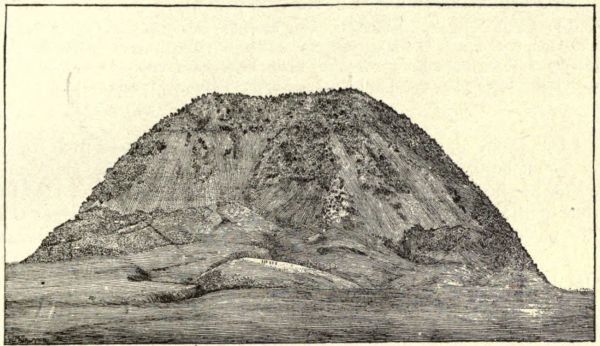
FIG. 188.—Bear Butte, South Dakota. (Copyright by
Grabill, 1890.)
§ 137. Eight miles from Fort Meade, S. Dakota, is Mato tipi, Grizzly
bear Lodge, known to the white people as Bear Butte. It can be seen
from a distance of a hundred miles. Of this landmark Bushotter writes
thus:
“The Teton used to camp at a flat-topped mountain, and pray to
it. This mountain had many large rocks on it, and a pine forest
at the summit. The children prayed to the rocks as if to their
guardian spirits, and then placed some of the smaller ones between
the branches of the pine trees. I was caused to put a stone up
a tree. Some trees had as many as seven stones apiece. No child
repeated the ceremony of putting a stone up in the tree; but on
subsequent visits to the Butte he or she wailed for the dead, of
whom the stones were tokens.” (See § 304.)
§ 138. The sun as well as the moon is called “wi” by the Dakota and
Assiniboin tribes. In order to distinguish between the two bodies, the
former is called aŋpetu wi, day moon, and the latter, haŋhepi wi or
haŋyetu wi, night moon. The corresponding term in Ȼegiha is miⁿ, which
is applied to both sun and moon, though the latter is sometimes called
niaⁿba. “The moon is worshiped rather as the representative of the sun,
than separately. Thus, in the sun dance, which is held in the full of
the moon, the dancers at night fix their eyes on her.”[146]
§ 139. According to Smet[147]—
The sun is worshiped by the greater number of the Indian tribes as
the author of light and heat. The Assiniboins consider it likewise
to be the favorite residence of the Master of Life. They evidence
a great respect and veneration for the sun, but rarely address it.
On great occasions, they offer it their prayers, but only in a
low tone. Whenever they light the calumet, they offer the sun the
first whiffs of its smoke.
This last must refer to what Smet describes on p. 136 as the great
“festival lasting several days,” during which the “high
priest” offers
the calumet to “the Great Spirit, to
the sun, to each of the four
cardinal points, to the water, and to the land, with words analogous to
the benefits which they obtain from each.
§ 140. Bushotter, in his Teton text, says:
They prayed to the sun, and they thought that with his yellow eye
he saw all things, and that when he desired he went under the
ground.
Riggs states in Tah-koo Wah-kon (p. 69):
Although as a divinity, the sun is not represented as a malignant
being, yet the worship given him is the most dreadful which the
Dakotas offer. Aside from the sun dance, there is another proof of
the divine character ascribed to the sun in the oath taken by some
of the Dakotas: “As the sun hears me, this is so.”
§ 141. Pond[148] gave an account of the sun dance obtained from Riggs,
in which occurs the following: “The ceremonies of the sun dance
commence in the evening. I have been under the impression that the time
of the full moon was selected, but I am now (1867) informed that it is
not essential.” Neither Capt. Bourke (§§ 197-210) nor Bushotter speaks
of the time of the full moon. In Miss Fletcher’s account of the Oglala
sun dance of 1882,[149] she says: “The festival generally occurs in the
latter part of June or early in July and lasts about six days. The time
is fixed by the budding of the Artemisia ludoviciana.” (See §§ 138,
150.)
§ 142. Lynd writes:[150]
The wiwanyag wacipi, or worship of the sun as a divinity, is
evidently one of the most radical bases of Dakota religion. It
has a subordinate origin in the wihanmnapi, or dreaming, and
is intimately connected with the hanmdepi, or vision hunting.
This most ancient of all worships, though it is of very frequent
occurrence among the Dakotas, does not take place at stated
intervals, as among the old nations of the East, nor does the
whole tribe participate in the ceremonies. It is performed by one
person alone, such of his relatives and friends assisting in the
ceremonies as may deem fit or as he may designate. Preparatory
to this, as to all the other sacred ceremonies of the Dakotas,
are fasting and purification. The dance commences with the rising
of the sun and continues for three days, or until such time as
the dreaming worshiper shall receive a vision from the spirit or
divinity of the sun. He faces the sun constantly, turning as it
turns, and keeping up a constant blowing with a wooden whistle. A
rude drum is beaten at intervals, to which he keeps time with his
feet, raising one after the other, and bending his body towards
the sun. Short intervals of rest are given during the dance. The
mind of the worshiper is fixed intently upon some great desire
that he has, and is, as it were, isolated from the body. In this
state the dancer is said to receive revelations from the sun,
and to hold direct intercourse with that deity. If the worshiper
of this luminary, however, should fail to receive the desired
revelation before the close of the ceremonies, then self-sacrifice
is resorted to, and the ceremonies of the hanmdepi become a part
of the worship of the sun.
§ 143. Several accounts of the sun dance have been published within the
past twenty years, but they have, without exception, been written by
white persons. The following differs in one respect from all which have
preceded it; it was written in the Teton dialect of the Dakota, by
George Bushotter, a Teton. As he did not furnish his description of
the dance in a single text, but in several, which were written on
different occasions, it devolved on the present writer to undertake
an arrangement of the material after translating it. The accompanying
illustrations were made by Mr. Bushotter.
§ 144. Object of the sun dance.—The Dakota name for the sun dance is
“Wi waⁿ-yañg wa-tci-pi (Wi waŋyaŋg waćipi),” literally, “Sun looking-at
they-dance.” The following are assigned as the reasons for celebrating
this dance: During any winter when the people suffer from famine or an
epidemic, or when they wish to kill any enemy, or they desire horses
or an abundance of fruits and vegetables during the coming summer,
different Indians pray mentally to the sun, and each one says, “Well, I
will pray to Wakantanka early in the summer.” Throughout the winter all
those men who have made such vows take frequent baths in sweat lodges.
Each of these devotees or candidates invites persons to a feast, on
which occasion he joins his guests in drinking great quantities of
various kinds of herb teas. Then the host notifies the guests of his
vow, and from that time forward the people treat him with great respect.
§ 145. Rules observed by households.—The members of the households
of the devotees always abstain from loud talking and from bad acts of
various kinds. The following rules must be observed in the lodge of
each devotee: A piece of the soil is cut off between the back of the
lodge and the fireplace, and when virgin earth is reached vermilion is
scattered over the exposed place. When the men smoke their pipes and
have burned out all of the tobacco in their pipe bowls, they must not
throw away the ashes as they would common refuse; they must be careful
to empty the ashes on the exposed earth at the back of the lodge. No
one ventures to step on that virgin earth, and not even a hand is ever
stretched toward it. Only the man who expects to participate in the
sun-dance can empty the ashes there, and after so doing he returns each
pipe to its owner.
§ 146. The “U-ma-ne.”—“The mellowed earth space, U-ma-ne in
Dakota, and called by some peculiar names in other tribes, has
never been absent from any religions exercise I have yet seen or
learned of from the Indians. It represents the unappropriated
life or power of the earth, hence man may obtain it. The square
or oblong, with the four lines standing out, is invariably
interpreted to mean the earth or land with the four winds standing
toward it. The cross, whether diagonal or upright, always
symbolizes the four winds or four quarters.”[151]

FIG. 189.—The “U-ma-ne” symbol.
Miss Fletcher uses this term, “U-ma-ne,” to denote two things: the
mellowed earth space (probably answering to the u-jé-ʇi of the Omaha
and Ponka) and the symbol of the earth and the four winds made within
that mellowed earth space. A sketch of the latter symbol is shown
in Fig. 189. (See §§ 112, 155, etc.; also Contr. N. A. Ethn., Vol.
VI,—471-475.)
§ 147. Rules observed by the devotee.—During the time of preparation
the devotee goes hunting, and if he kills a deer or buffalo he cuts
up the body in a “wakan” manner. He skins it, but leaves the horns
attached to the skull. He reddens the skin all over, and in the
rear of the lodge, in the open air, he prepares a bed of wild sage
(Artemisia), on which he lays the skull. He erects a post, on
which he hangs a tobacco pouch and a robe that is to be offered as a
sacrifice. When the devotee takes a meal everything which he touches
must be perfectly clean. He uses a new knife, which no one else dares
to handle. Whatever he eats must be prepared in the best possible
manner by the other members of the household. They make for him a new
pipe ornamented with porcupine work, a new tobacco pouch, and a stick
for pushing the tobacco down into the bowl, both ornamented in like
manner.
§ 148. The devotee must not go swimming, but he can enter the
sweat-lodge. There he rubs his body all over with wild sage; he cannot
use calico or cotton for that purpose. No unclean person of either
sex must go near him. The devotee is prohibited from fighting, even
should the camp be attacked. He must not act hastily, but at all times
must he proceed leisurely. He has his regular periods for crying and
praying.[152]
§ 149. All his female kindred make many pairs of moccasins and collect
money and an abundance of all kinds of goods, in order to give presents
to poor people at the time of the sun dance. Then they can make gifts
to whomsoever they please, and on that account they will win the
right to have a child’s ears pierced. The goods or horses, on account
of which the child’s ears are to be pierced, are reserved for that
occasion at some other place. The man whose office it will be to pierce
the children’s ears has to be notified in advance that his services
will be required. (See § 205.)
§ 150. When the devotees have performed all the preliminary duties
required of them, messages are sent to all the neighboring tribes,
i. e., the Omaha, Pawnee Loup, Cheyenne, Ree, Hidatsa, Blackfeet,
Nez Percé, Winnebago, Yankton, and Santee. The latter part of June is
fixed upon as the time for the dance. (See §§ 138, 141.) The visitors
from the different nations begin to come together in the spring, each
visiting tribe forming its separate camp. Though some of the visitors
are hereditary enemies, it matters not during the sun-dance; they
visit one another; they shake hands and form alliances. In this manner
several weeks are spent very pleasantly.
§ 151. Policemen are appointed, and a crier proclaims to each lodge
that at a specified place there is a broad and pleasant prairie where
all are expected to pitch their tents. The overseers or masters
of ceremonies have guns, and their orders are obeyed; for if one
disobeys his horses and dogs are killed by the policemen. This
punishment is called akićita wićaktepi, or, in common parlance,
“soldier-killing.”
All who join the camp must erect the upright (or conical) tents, as no
low rush or mat tents, such as are found among the Osage and Winnebago,
are allowed in the camp circle.
§ 152. At length orders are given for all the people to pitch
their tents in the form of a tribal circle, with an opening to the
north.[153] (See Pl. XLV.) It takes several days to accomplish this,
and then all the men and youths are required to take spades and go
carefully over the whole area within the circle and fill up all the
holes and uneven places which might cause the horses to stumble and
fall.
§ 153. Though Bushotter has written that this work requires several
days, it is probable, judging from what follows in his manuscript, that
only two days are required for such work. For he continues thus:
On the third day some men are selected to go in search of the
Ćan-wakan or Mystery Tree, out of which they are to form the
sun pole.[154] These men must be selected from those who are
known to be brave, men acquainted with the war path, men who have
overcome difficulties, men who have been wounded in battle, men of
considerable experience.
§ 154. The men selected to fell the mystery tree ride very swift
horses, and they decorate their horses and attire themselves just as if
they were going to battle. They put on their feather war bonnets. They
race their horses to a hill and then back again. In former days it was
customary on such occasions for any women who had lost children during
some previous attack on the camp, to wail often as they ran towards the
mounted men, and to sing at intervals as they went. But that is not the
custom at the present day. Three times do the mounted men tell of their
brave deeds in imitation of the warriors of the olden times, and then
they undertake to represent their own deeds in pantomime.
§ 155. On the fourth day, the selected men go to search for the mystery
tree. They return to camp together, and if they have found a suitable
tree, they cut out pieces of the soil within the camping circle, going
down to virgin earth. (See § 146.) This exposed earth extends over a
considerable area. On it they place a species of sweet-smelling
grass (a trailing variety) and wild sage, on which they lay the
buffalo skull.
§ 156. After this there is set up within the camping circle a good tent
known as the tent of preparation.[155] When the managers wish to set up
the tent of preparation, they borrow tent skins here and there. Part of
these tent skins they use for covering the smoke hole, and part were
used as curtains, for when they decorate the candidates they use the
curtains for shutting them in from the gaze of the people and when they
finish painting them they throw down the curtains.
In the back part of this tent of preparation are placed the buffalo
skulls, one for each candidate. A new knife which has never been used
is exposed to smoke. A new ax, too, is reddened and smoked.
§ 157. Wild sage (Artemisia) is used in various ways prior to and
during the sun dance. Some of it they spread on the ground to serve
as couches, and with some they wipe the tears from their faces. They
fumigate with the plant known as “ćaŋ śilśilya,” or else they use
“walipe waśtema,” sweet-smelling leaves. Day after day they fumigate
themselves with “waćaŋġa,” a sweet-smelling grass. They hold every
object which they use over the smoke of one of these grasses. They
wear a kind of medicine on their necks, and that keeps them from being
hungry or thirsty, for occasionally they chew a small quantity of it.
Or if they tie some of this medicine to their feet they do not get
weary so soon.[156]
§ 158. When the tent of preparation is erected, there are provided for
it new tent pins, new sticks for fastening the tent skins together
above the entrance, and new poles for pushing out the flaps beside the
smoke hole. These objects and all others, which had to be used, are
brought into the tent of preparation and fumigated over a fire into
which the medicine has been dropped. By this time another day has been
spent. Now all the candidates assemble in the tent of preparation,
each one wearing a buffalo robe with the hair outside. One who acts as
leader sits in the place of honor at the back part of the tent, and the
others sit on either side of him around the fireplace. They smoke their
pipes. When night comes they select one of the songs of the sun dance,
in order to rehearse it. Certain men have been chosen as singers of
the dancing songs, and, when one set of them rest, there are others to
take their places. The drummers beat the drum rapidly, but softly (as
the Teton call it, kpaŋkpaŋyela, the act of several drummers hitting in
quick succession).
Bureau of Ethnology. |
Eleventh Annual Report. Plate XLV |
|
GAST LITH. CO. |
|
CAMPING CIRCLE AT THE TIME OF THE SUN-DANCE. |
Three times do they beat the drums in that manner, and then they beat
it rapidly, as at the beginning of the sun dance. At this juncture,
as many as
have flutes—made of the bones of eagles’ wings,
ornamented with porcupine quills, and hung around their necks, with
cords similarly ornamented, with some eagle down at the tip ends of the
flutes—blow them often and forcibly as they dance. While the drum is
beaten three times in succession (kpaŋkpaŋyela, as has been described),
all the candidates cry aloud (ćeya), but when it is beaten the fourth
time, they cry or wail no longer, but dance and blow their flutes or
whistles.
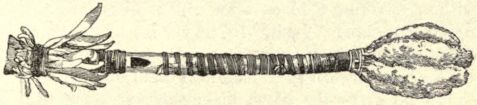
FIG. 190.—Eaglewing flute. (From original, loaned by
Capt. J. G. Bourke, U. S. A.)
§ 159. When the candidates take their seats in the tent of preparation,
they select a man to fill the pipe with tobacco. When they wish to
smoke, this man passes along the line of candidates. He holds the pipe
with the mouthpiece toward each man, who smokes without grasping the
pipe stem.[157]
When the candidates are allowed to eat, the attendant feeds them. No
one can be loquacious within the tent of preparation. If a dog or
person approaches the tent, the offender is chased away before he
can reach it. No spectators are allowed to enter the tent. And this
regulation is enforced by blows, whenever anyone attempts to violate it.
§ 160. The next morning, which is that of the fifth day, they prepare
to go after the tree that is to serve as the sun pole.[158] The married
and single men, the boys, and even the women, are all ordered to go
horseback. Whoever is able to move
rapidly accompanies the party. When
the chosen persons go to fell the mystery tree they rush on it as they
would upon a real enemy, just as tradition relates that the Omaha and
Ponka rushed on their sacred tree. (See § 42.)[159] Then they turn
quickly and run from it until they arrive at the other side of the
hill (nearest to the mystery tree), after which they return to the
tree.[160] They tie leaves together very tightly, making a mark of the
bundle, assaulting it in turn as a foe.
§ 161. The tree is reached by noon. The persons chosen to fell it
whisper to one another as they assemble around it. They approach some
one who has a child, and take hold of him. Then they bring robes and
other goods which they spread on the ground, and on the pile they seat
the child, who is sometimes a small girl, or even a large one.
§ 162. Each of the chosen men takes his turn in striking the tree.
Every one must first tell his exploits, then he brandishes the ax three
times without striking a blow, after which he strikes the tree once,
and only once, making a gash. He leaves the ax sticking in the tree,
whence it is removed by the next man. He who leaves the ax in the
tree is by this act considered to make a present of a horse to some
one. As soon as he gives the blow, his father (or some near kinsman)
approaches and hands him a stick, whereupon the young man returns it,
asking him to give it to such a one, calling him by name. For instance,
let us suppose that a young man, Mato ćuwi maza, Grizzly bear with an
Iron Side, requests that his stick be given to Psića waŋkantuya, or
Leaping High. The old man who is employed as the crier goes to the
camp and sings thus: “Mato ćuwi maza í-ya-ha-he+! Mato ćuwi maza
í-ya-ha-he+!”. The last word is a sign of a brave deed on the part of
the donor, and it is so understood by every one. On reaching the tent
of the other man, the crier says, “Psića waŋkantuya śuŋkawakaŋ waŋ hiyo
u ye+! Mato ćuwi maza ćaŋ-wakaŋ kaksa ȼa taśuŋke waŋ hiyo u ye+!”
i. e., “O Leaping High, a horse is brought to you! A horse is brought
to you because Mato ćuwi maza has given a blow to the mystery tree!”
On hearing this, Psića waŋkantuya says, “Há-ye,” or “Thanks!” as he
extends his hands with the palms towards the crier; and he brings them
down toward the ground and takes the stick representing the horse. Then
the crier passes along around the circle, singing the praises of the
donor, and naming the man who has received the present.
§ 163. After all the chosen men have told of their deeds, and have
performed their parts, the women select a man to speak of what generous
things they have done, and when he has spoken, the larger women who are
able to fell trees rise to their feet, and take their turns in giving
one blow apiece to the tree. By the time that all the women have struck
the tree it falls, and all present shout and sing. Many presents are
made, and some of the people wail, making the entire forest echo their
voices. Then those men who are selected for that purpose cut off all
the limbs of the tree except the highest one, and they do not disturb
the tree top. Wherever a branch is cut off they rub red paint on the
wound.
§ 164. They make a bundle of some wood in imitation of that for which
they have prayed, and hang it crosswise from the fork of the tree.
Above the bundle they suspend a scarlet blanket, a buffalo robe or
a weasel skin, and under the bundle they fasten two pieces of dried
buffalo hide, one being cut in the shape of a buffalo, and the other in
that of a man.
Though Bushotter did not state the circumstance, it is remarkable
that both the figures have the membrum virile rigid. The author
learned about this from two trustworthy persons, who obtained all the
paraphernalia of the sun dance, and one of them, Capt. John G. Bourke,
U. S. Army, showed him the figures of the man and buffalo used at the
sun dance at Red Cloud Agency, in 1882. In the former figure, the
lingam is of abnormal size. The connection between the phallic cult and
the sun is obvious to the student. (See §§ 19, 132, 146, 155, 169, 170,
176).
§ 165. No one of the company dare to touch the sun pole as they take it
to the camp. Before wagons were available, they made a horse carry most
of the weight of the pole, part of it being on one side of him and part
on the other, while the wakaŋ men chosen for the purpose walked on
both sides of the horse in order to support the ends of the pole. (See
§ 317.) At the present day, a wagon is used for transporting the sun
pole to the camp.[161] While they are on the way no person dares to go
in advance of the pole, for whoever violates the law is in danger of
being thrown from his horse and having his neck broken.
The married men and youths carry leaf shields on their backs, and some
of the riders make their horses race as far as they are able. Any
member of the party can appropriate the small branches which have been
cut from the mystery tree.
When they reach the camp circle, all of the party who carry branches
and leaves drop them in the places where they intend erecting their
respective tents.
§ 166. Judging from Mr. Bushotter’s first text, the tents are not
pitched when the people return with the sun pole. But as soon as they
lay the pole in the place where it is to be erected, the tents are
pitched again. Then all the objects that are to be attached to the sun
pole are tied to it, and some of the men take leather straps, such as
the women use when they carry wood and other burdens, and fasten them
to the sun pole in order to raise it into position.
§ 167. This raising of the sun pole seems to be symbolic of the four
winds, the tatúye tópa, or “the four quarters of the heavens,” as Dr.
Riggs translates the Dakota term. Those who assist in raising the sun
pole must be men who have distinguished themselves. They raise the
pole a short distance from the ground, and then they shout, making
an indistinct sound; they rest awhile and pull it a little higher,
shouting again; resting a second time, they renew their efforts,
pulling it higher still. They shout the third time, rest again, and
at the fourth pull the pole is perpendicular. Then the men around the
camping circle fire guns, making the horses flee. Those who raised the
pole have a new spade, and they use it one after another in throwing a
sufficient quantity of earth around the base of the pole, pressing the
earth down firmly in order to steady the pole.
§ 168. Next follows the building of the dancing lodge. (See Pl. XLVI.
and § 317.) Forked posts are set in the ground in two concentric
circles. Those posts forming the circle nearer the sun pole are a
few feet higher than the posts in the outer circle, thus making a
slant sufficient for a roof. From the inner circle of posts to the
sun pole there is no roof, as the dancers who stand near the pole
must see the sun and moon. From each forked post to the next one in
the same circle is laid a tent pole; and on the two series of these
horizontal tent-poles are placed the saplings or poles forming the
roof. In constructing the wall of the dancing lodge they use the leaf
shields, and probably some poles or branches of trees, the shields and
leaves stuck in the wall here and there, in no regular order, leaving
interstices through which the spectators can peep at the dancers. A
very wide entrance is made, through which can be taken a horse, as well
as the numerous offerings brought to be given away to the poor. Then
they smoke the pipe, as in that manner they think that they can induce
their Great Mysterious One to smoke.
§ 169. All having been made ready, the aged men and the chief men of
the camp kick off their leggins and moccasins, and as many as have
pistols take them to the dancing lodge, around the interior of which
they perform a dance. As they pass around the sun pole, all shoot at
once at the objects suspended from the pole (§ 164), knocking them
aside suddenly. Leaving the dancing lodge, they dance around the
interior of the camping circle till they reach their respective tents.
§ 170. This is followed by the “uuȼita.” Each man ties up the tail of
his horse and dresses himself in his best attire. When they are ready,
they proceed two abreast around the interior of the camping circle,
shooting into the ground as they pass along, and filling the entire
area with smoke. There are so many of them that they extend almost
around the entire circle. If any of the riders are thrown from their
horses as they dash along, the others pay no attention to them, but
step over them, regarding nothing but the center of the camping circle.
(See Pl. XLV.)
§ 171. By this time it is nearly sunset. The young men and young women
mount horses and proceed in pairs, a young man beside a young woman,
singing as they pass slowly around the circle. The young men sing
first, and the young women respond, acting as a chorus. That night the
tent of preparation is again erected. The candidates dance there. The
people gaze towards that tent, for it is rumored that the candidates
will march forth from it.
Bureau of Ethnology. |
Eleventh Annual Report. Plate XLVI |
|
GAST LITH. CO. |
THE DANCING LODGE.
|
§ 172. The candidates spend the night in decorating themselves. Each
one wears a fine scarlet blanket arranged as a skirt and with a good
belt fastened around his waist. From the waist up he is nude, and on
his chest he paints some design. Sometimes the design is a sunflower. A
man can paint the designs referring to the brave deeds of his father,
his mother’s brother, or of some other kinsman, if he himself has done
nothing worthy of commemoration. If a man has killed an animal, he can
paint the sign of the animal on his chest, and some hold between their
lips the tails of animals, signifying that they have scalped their
enemies. Others show by their designs that they have stolen horses from
enemies.
§ 173. Each one allows his hair to hang loosely down his back. Some
wear head-dresses consisting of the skins of buffalo heads with the
horns attached. Others wear eagle war-bonnets. Each candidate wears a
buffalo robe with the thick hair outside. He fills his pipe, which is a
new one ornamented with porcupine work, and he holds it with the stem
pointing in front of him. Thus do all the candidates appear as they
come out of the tent of preparation. As they march to the dancing lodge
the leader goes first, the others march abreast after him. He who acts
as leader carries a buffalo skull painted red. All cry as they march,
and on the way they are joined by a woman who takes the place of her
“hakata,” or cousin; and sometimes they are joined by a horse that is
highly prized by his owner.
§ 174. The first time that they emerge from the tent where they sleep
they march around it four times, and they make offerings of four
blankets, which they suspend from as many posts set up in the form
of a square within which the tent is erected. When they proceed from
the tent of preparation to the dancing lodge, one of their servants
sets up sticks at intervals, forming a straight line from the tent of
preparation to the dancing lodge, and on these sticks he places their
offerings of blankets and tobacco pouches. After the gifts are thus
suspended, none of the spectators can cross the line of sticks.
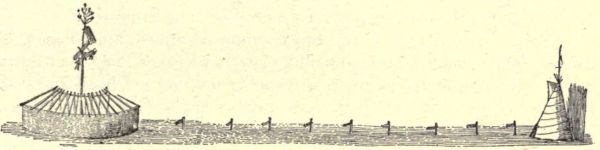
FIG. 191.—The tent of preparation and the dancing
lodge.
§ 175. Capt. J. G. Bourke has a wand that was used by one of the
heralds, or criers, during the sun dance. It was about 5 feet long, and
was decorated with beadwork and a tuft of horse hair at the superior
extremity. Whenever the crier raised this wand the people fell back,
leaving an open space of the required area.
§ 176. On reaching the dancing lodge, the candidates pass slowly around
the exterior, starting at the left side of the lodge and turning
towards the right. They do this four times and then enter the lodge.
They stretch their hands towards the four quarters of the heavens as
they walk around the interior of the lodge. They sit down at the back
part of the lodge, and then they sing.
Between them and the pole they cut out the soil in the shape of a
half-moon, going down to virgin earth, and on this bare spot they
place all the buffalo skulls. After this they paint themselves anew
with red paint, on completing which they are lifted to their feet by
their attendants. Again they walk around the interior of the lodge,
stretching out their hands towards the four quarters of the heavens.
§ 177. A song of the sun dance is started by one of the candidates,
and the others join him, one after another, until all are singing.
Meanwhile the men who have been selected for the purpose redden their
entire hands, and it devolves on them to dance without touching
anything, such as the withes connected with the sun pole or the buffalo
skulls; all that they are required to do is to extend their hands
towards the sun, with the palms turned from them.
At this time all the candidates are raised again to their feet, and
brought to the back part of the lodge, where they are placed in a row.
They soon begin to cry, and they are joined by the woman who has taken
the place of her elder brother.
§ 178. It is customary, when a man is too poor to take part himself
in the sun dance, for a female relation to take his place, if such a
woman pities him. She suffers as the male candidates do, except in one
respect—her flesh is not scarified. This woman wears a buckskin skirt,
and she lets her hair fall loosely down her back. She carries the pipe
of her brother or kinsman in whose place she is dancing.
§ 179. As the drums beat, the candidates dance and blow their flutes.
The woman stands, dancing slowly, with her head bent downward, but with
shoulders erect, and she is shaking her head and body by bending her
knees often without raising her feet from the ground. She abstains from
food and drink, just as her brother or kinsman would have done had he
participated in the dance. In fact, all the candidates have to fast
from the time that the sun pole is cut, and from that time they cry and
dance at intervals.
§ 180. If the owner of a horse decides that his steed must take part
in the dance, he ties the horse to one of the thongs fastened to the
sun pole, and stands near the animal. Whenever he wishes he approaches
the horse, takes him by the lower jaw as he stands and cries, and then
he, too, joins in the dance. This horse is decorated in the finest
manner; he is painted red, his tail is rolled up into a bundle and tied
together, and he wears feathers in the tail and forelock.
§ 181. Candidates scarified. When the time comes for scarifying
the candidates,[162] if one wishes to dance in the manner about to
be described, he is made to stand between four posts arranged in the
form of a square, and his flesh on his back being scarified in two
places, thongs are run through them and fastened to them and to the
posts behind him. His chest is also scarified in two places, thongs
are inserted and tied, and then fastened to the two posts in front of
him (see Pl. XLVII, 1, Okaśka naźin, or “He stands fastened to” or
“within”). Bushotter says nothing about the skewers used in torturing
the dancers; but Capt. Bourke obtained three ornamental ones which had
been run through the wounds of some of the devotees, in order to be
stained with blood and kept thereafter as souvenirs of the bravery of
the dancers. Besides these were the regular skewers which were thrust
horizontally through the flesh; and to the ends of these skewers were
fastened the thongs that were secured by the opposite ends to the sun
pole. The last dance allowed by the Government was in 1883, and it
would be difficult now to find any of these skewers. (See § 204.)
Bureau of Ethnology. |
Eleventh Annual Report. Plate XLVII |
|
GAST LITH. CO. |
|
1. PTEPA KIN WACI.—2. OKASKA NAZIN. |
Another man has his back scarified and a thong inserted, from which
a buffalo skull is suspended, as shown in Pl. XLVII, 2, Pte-pa ḳin
waći, or “He dances carrying a buffalo skull on his back.” He dances
thus, thinking that the weight of the skull will soon cause the thong
to break through the flesh. The blood runs in stripes down his back.
§ 182. Another man decides to be fastened to the sun pole. For the use
of such dancers there are eight leather thongs hanging down from the
pole, being fastened to the pole at a point about midway from the top.
For each man tied to the pole it is the rule to take two of the thongs
and run them through his flesh after the holes are made with the knife
(see Pl. XLVIII). After the thongs are fastened to him, the dancer is
required to look upward. When the candidate is a short man, his back is
scarified and his attendants push him up high enough from the ground
for the thongs to be inserted and tied. In this case the weight of the
man stretches the skin where the thongs are tied, and for a long time
he remains there without falling (see Pl. XLIX).
§ 183. A very long time ago it happened that the friends of such a
short man pitied him, so they gave a horse to another man, whom they
directed to release their friend by pulling at the thongs until they
broke out. So the other man approached the dancer, telling of his
own deeds. He grasped the short man around the body, threw himself
violently to the ground, breaking off the thong, which flew upward, and
bringing the short man to the ground. Then the kindred of the short
man brought presents of calico or moccasins and another horse, with
other property, and they made the old women of the camp scramble for
the possession of the gifts. The horse was given away by the act called
“Kaḣol yeyapi,” or “They threw it off suddenly.” The father of the
dancer stood at the entrance of his tent, holding a stick in his hand.
He threw the stick into the air, and the bystanders struggled for its
possession. Whoever grasped the stick, and succeeded in holding it, won
the horse. If a forked stick is thrown up and caught it entitles the
holder to a mare and her colt.
§ 184. When a young man has his flesh pierced for him, if he is beloved
by his female relations, they furnish him with many objects decorated
with porcupine quills, and these objects are suspended from the pierced
places of his flesh, this being considered as a mark of respect shown
by the women to their kinsman. Very often the women by such acts
deprive themselves of all their property.
§ 185. Pieces of flesh offered.—When the candidates have their flesh
pierced for the insertion of the thongs, a number of men who do not
intend to dance approach the sun pole and take seats near it. With a
new knife small pieces of flesh are cut out in a row from the shoulders
of each of these men, who hold up the pieces of their own flesh,
showing them to the pole. They also cover the base of the pole with
earth. If some of the women desire to offer pieces of their flesh, they
come and do so.
§ 186. Very soon after this the people who are outside of the dancing
lodge sing a song in praise of the devotees of all kinds, and the old
women are walking about with their clothing and hair in disorder, the
garments flapping up and down as they dance. The attendants hold the
pipes for the candidates to smoke, and they decorate them anew. After
they decorate them, the dancing is resumed. By this time it is past
noon, so the girls and boys whose ears are to be pierced are collected
in one place, and presents are given to all the poor people.[163]
After the children’s ears have been pierced, the attendants make the
candidates rise again and continue the dance.
§ 187. Torture of owner of horse.—The man whose horse has taken part
in the dance is tied to the tail of his horse, and his chest is pierced
in two places and fastened by thongs to the sun pole. Some of the
attendants whip the horse several times, making him dart away from the
pole, thereby releasing the man, as the thongs are broken by the sudden
strain (see § 29).
§ 188. The devotees dance through the night, and when it is nearly
midnight they rest. Beginning at the left side of the dancing lodge,
every devotee stops and cries at each post until he makes the circuit
of the lodge. By this time it is midnight, so the attendants make them
face about and stand looking towards the east, just as in the afternoon
they had made them face the west.
Bureau of Ethnology. |
Eleventh Annual Report. Plate XLVIII |
|
GAST LITH. CO. |
|
THE SUN-DANCE. |
§ 189. At sunrise they stop dancing and they leave the dancing lodge.
As they come forth, they pass out by the right side, and march four
times around the exterior of the lodge. After which they proceed
directly to the lodge of preparation, around which they march four
times prior to entering it.
§ 190. When the devotees emerge from the dancing lodge, one of their
attendants places more gifts on the line of sticks between the two
lodges, and after the procession has moved on there is considerable
disputing among the small boys of the camp for the possession of the
gifts.
§ 191. After leaving the lodge of preparation, the exhausted devotees
are taken back to their own tents, where each one is given four sips
of water and a small piece of food, and by the time that he gets
accustomed to food after his long fast, he eats what he pleases, enters
the sweat lodge, rubs himself with the wild sage, and thenceforward he
is regarded as having performed his vow.
§ 192. The spectators scramble for the possession of the blankets and
long pieces of calico left as sacrifices at the dancing lodge, and
some of them climb to the top of the sun pole and remove the objects
fastened there. The sun pole is allowed to remain in its place. The
author saw a sun pole at Ponka Agency, then in Dakota, in 1871. It had
been there for some time, and it remained till it was blown down by a
high wind.
At the conclusion of the dance the camp breaks up and the visitors
return to their respective homes.
§ 193. All who participate in the dance must act according to rule for
if one slights part of the rites they think that he is in great danger.
The men selected as overseers or managers are the persons who act as
the attendants of the candidates.
The candidates think that all their devotions are pleasing to the sun.
As they dance, they pray mentally, “Please pity me! Bring to pass all
the things which I desire!”
§ 194. During the sun dance, other dances—intrusive dances, as Lynd
terms them—are going on in the camp. Among these are the following:
The Mandan dance, performed by the Ćaŋte ṭiŋza okolakićiye, or the
Society of the Stout-hearted Ones; the Wakaŋ waćipi or mystery dance,
the Peźi mignaka waćipi or the dance of those wearing grass in their
belts, the ghost dance, the buffalo dance, and the Omaha kiyotag a-i,
popularly called the grass dance.
§ 195. When a man joins the Mandan dance as a leader, he wears a
feather headdress of owl feathers, a scarf, called “Waŋźi-ićaśke,” is
worn around his neck and hangs down his back, and he carries a pipe, a
bow, and arrows. In the Peźi mignaka waćipi, both young men and young
women take part. All these dances are held outside the lodge of the
sun dance, within which lodge only the one dance can be performed. The
grass dance is named after the Omaha tribe. As many men as are able
to participate in that dance march abreast until they reach the camp
of some gens, where they sit down facing the people whom they visit,
hence the name, meaning, “the Omaha reach there and sit down.” Then
the visitors sing while a noise is made by hitting the ground with
sticks, etc. The singers and dancers sit looking at the tents of the
gens that they have visited, and remain so until property and food are
brought out and given to them. Then they arise and probably dance. They
think that if they ask Wakantanka for anything after the conclusion of
the sun dance they will receive it. So they call on him in different
songs, thus: “O Wakantanka, please pity me! Let me have many horses!”
Or, “O Wakantanka, please pity me! Let there be plenty of fruits and
vegetables!” Or, “O Wakantanka, please pity me! Let me live a long
time!”
§ 196. During the sun dance they sing about some old woman, calling her
by name. They can sing about any old woman on such an occasion.
One of these songs has been given by Mr. Bushotter, but the writer must
content himself in giving the words without the music.
“Winŭŋ´ḣća ḳuŋ
tókiya lá huŋwo´? He´-ye-ye+!
Yatíla ḳuŋ´ śuŋ´ka wíkinićápe. Hé-ye-ye+!
E´-ya-ya-ha´ ya´-ha ya´-ha yo´-ho he´-ye-ye+!
E´-ya-ya-ha´ ya´-ha ya´-ha yo´-ho he´-ye-yâ!”
That is: “Old woman, you who have been mentioned, whither are you
going? When they scrambled for the stick representing a horse, of
course you were on hand! How brave you are!”
They sing this in a high key, and when they cease suddenly, they call
out, “Ho´wo! Ho´wo! E´-ya-ha-he+! E´-ya-ha-he+!” “Come on! Come on!
How brave you are! How brave you are!” When they have said this
repeatedly an old woman enters the circle, making them laugh by her
singing and dancing.
Thus ends the Bushotter account of the sun dance, which was read at a
meeting of the Anthropological Society of Washington, May 6, 1890.
§ 197. After the reading of the paper, Capt. John G. Bourke, U.S. Army,
remarked that he had seen the sun dance of the Dakota several times,
and once had enjoyed excellent opportunities of taking notes of all
that occurred under the superintendence of Red Cloud and other medicine
men of prominence. Capt. Bourke kindly furnished the author with the
following abstract of his remarks on this subject:
In June, 1881, at the Red Cloud Agency, Dakota, there were some
twenty-eight who went through the ordeal, one of the number being
Pretty Enemy, a young woman who had escaped with her husband from
the band of Sitting Bull in British North America, and who was
going through the dance as a sign of grateful acknowledgment to
the spirits.
The description of the dance given in the account of Bushotter
tallies closely with that which took place at the Red Cloud
ceremony, with a few very immaterial exceptions due no doubt to
local causes.
Bureau of Ethnology. |
Eleventh Annual Report. Plate XLIX |
|
GAST LITH. CO. |
|
A SUSPENDED DEVOTEE. |
§ 198. At Red Cloud, for example, there was not a separate
buffalo head for each Indian; there were not more than two, and
with them, being placed erect and leaning against a frame-work
made for the purpose, several elaborately decorated pipes,
beautiful in all that porcupine quills, beads, and horsehair
could supply. Buffaloes had at that time disappeared from the face
of the country within reach of that agency, and there was also an
increasing difficulty in the matter of procuring the pipestone
from the old quarries over on the Missouri River [sic].[164]
§ 199. First, in regard to securing the sacred tree, after the
same had been designated by the advance party sent out to look for
it. The medicine men proclaimed to the young warriors that all
they were now to do was just the same as if they were going out
to war. When the signal was given, the whole party dashed off at
full speed on their ponies, and as soon as we arrived at the tree,
there was no small amount of singing, as well as of presents given
to the poor.
Next, a band of young men stepped to the front, and each in
succession told the story of his prowess, each reference to the
killing or wounding of an enemy, or to striking coup, being
corroborated by thumping on the skin which served the medicine men
as a drum.
§ 200. The first young man approached the sacred tree, swung
his brand-new ax, and cut one gash on the east side; the second
followed precisely the same program on the south side; the third,
on the west side, and the fourth, on the north side, each cutting
one gash and no more.
§ 201. They were succeeded by a young maiden, against whose
personal character, it was asserted, not a breath of insinuation
could be brought, and she was decked in all the finery of a long
robe of white antelope skin almost completely covered with elks’
teeth, as well as with beads. She seized the ax, and, with a few
well-directed blows, brought the tree to the ground.
§ 202. In carrying the tree to the camp it was placed upon skids,
no one being allowed to place a hand upon the tree itself. Upon
reaching the summit of the knoll nearest the camp the tree was
left in charge of its immediate attendants while the rest of the
assemblage charged at full speed upon the camp itself.
§ 203. When the tree had been erected in place, it was noticed
that each of those who were to endure the torture had been
provided with an esquire, while there was also a force of men,
armed with guns to preserve order, criers to make proclamations,
and heralds and water-carriers armed with long staves tipped with
bead-work and horse-hair. These water-carriers did not carry
water for the men attached to the tree, they were not allowed to
drink, but if they happened to faint away the medicine men would
take a mouthful of water apiece and spray it upon the body of the
patient, producing coldness by the evaporation of the water.
§ 204. All the Indians on that occasion were attached to the tree
itself by long ropes of hair or by thongs, fastened to skewers run
horizontally under the flesh. (See § 181.)
§ 205. The young woman, Pretty Enemy, was not tied up to the tree,
but she danced with the others, and had her arms scarified from
the shoulders to the elbows. All this scarification was done by a
medicine man, who also slit the ear of the babies born since the
last sun dance.
§ 206. The young men were scarified in the following manner: Their
attendants, whom I have called esquires, seized and laid them on
a bed of some sagebrush at the foot of the sacred tree. A short
address was made by one of the medicine men; then another, taking
up as much of the skin of the breast under the nipple of each
dancer as could be held between his thumb and forefinger, cut a
slit the length of the thumb, and inserted a skewer to which a
rope was fastened, the other end of the rope being tied to the
tree.
§ 207. The young men placed eagle pipes, as they were called, in
their mouths. These pipes were flutes which were made each from
one of the bones in an eaglet’s wing. They had to be sounded all
the time the young man was dancing. This dancing was done in the
manner of a buck jump, the body and legs being stiff and all
movement being upon the tips of the toes. The dancers kept looking
at the sun, and either dropped the hands to the sides in the
military position of “attention,” with the palms to the front, or
else held them upward and outward at an angle of 45 degrees, with
the fingers spread apart, and inclined towards the sun.
§ 208. When laid on the couch of sagebrush before spoken of,
each young man covered his face with his hands and wailed. I was
careful to examine each one, and saw that this wailing was a
strictly ceremonial affair unaccompanied by tears.
§ 209. Before approaching the tree the victims were naked, with
the exception of blue cloth petticoats and buffalo robes worn with
the fur outside, giving them the appearance of monks of the olden
time. The buffalo robes were, of course, thrown off when the young
men were laid on the sagebrush, preparatory to the scarification.
One young man was unable to tear himself loose, and he remained
tied up to the tree for an hour and seven minutes by my watch.
He fainted four times. The medicine man put into his mouth some
of the small red, bitter, salty seeds of the Dulcamara, while
the women threw costly robes, blankets, articles of beadwork and
quillwork, and others of the skin of the elk and antelope upon the
rope attaching him to the tree, in the hope of breaking him loose.
The articles thus attached to the rope were taken away by the poor
for whom they were given. There was any amount of this giving of
presents at all stages of the dance, but especially at this time,
and the criers were calling without ceasing, “So and so has done
well. He is not afraid to look the poor women and children in the
face! Come up some more of you people! Do not be ashamed to give!
Let all the people see how generous you are!” or words to that
effect. (I had to rely upon my interpreter, who was reputed to be
the best and most trustworthy at the agency).
§ 210. One of the prime movers in the organization of this
particular dance, Rocky Bear, at the last moment, for some
particular reason, decided not to go through the terrible ordeal.
He explained his reasons to the tribe, and was excused. He gave
presents with a lavish hand, and it was understood that on some
subsequent occasion he would finish the dance. There was no sign
of dissatisfaction with his course, and everyone seemed to be on
the best of terms with him. All through the ceremony there was
much singing by the women and drumming by the medicine men, and a
feast of stewed dog, which tastes very much like young mutton, was
served with boiled wild turnips.
§ 211. By a comparison of the accounts of Miss Fletcher, Capt. Bourke,
and Bushotter it will be noticed that while there are several points of
disagreement which, as Capt. Bourke remarks, are “due no doubt to local
causes,” the accounts are in substantial agreement. Miss Fletcher says
that the opening of the camp circle was toward the east; but Bushotter
gives it as toward the north. She states that the tent of preparation
was erected on the first day after sunset; but Bushotter says it was
set up on the fourth day. She represents the selection of the men who
go to seek the tree, the departure to fetch the tree, the felling of
the tree, the bringing it and setting it up within the camp circle as
all taking place on the fourth day. Bushotter states that the men were
selected on the third day; they went to seek the tree on the fourth
day; they went to fell the tree on the fifth day, and on the same day
they brought it to the camp and set it in place. Capt. Bourke saw four
men and one girl employed in felling the tree. Miss Fletcher mentions
that five men and three girls did this in 1882; but Bushotter recorded
that several men and women took part in this performance. The ears of
the children were pierced on the fourth day after the raising of the
sun pole, according to Miss Fletcher; but Bushotter says that this
did not occur till after the devotees had been scarified and fastened
to the pole and posts, on the sixth day. Bushotter agrees with Miss
Fletcher in saying that on the sixth day the earth was “mellowed,” the
devotees scarified, and they danced with the thongs fastened to the
pole, etc., and attached to the skewers running under their flesh.
§ 212. These unfortunate beings, who have been referred to as miⁿquga
and miⁿquge in Chapter III (§ 30), are called wiŋkta by the Santee and
Yankton Dakota, and wiŋkte by the Teton. They dress as women and act
in all respects as women do, though they are really men. The terms for
sodomy, wiŋktapi and wiŋktepi, are significant, and go to prove that
the berdaches should not be called hermaphrodites. It is probable that
the Dakota regard the moon as influencing these people. (See § 353.)
§ 213. Ho-ke-wiŋ-la is a man who stands in the moon with outstretched
arms. His name is said to mean Turtle Man. When the Teton see a short
man with a large body and legs they generally call him “Ho-ke-la,”
after the man in the moon.
The Teton do not like to gaze at the moon, because at some past time a
woman, who was carrying a child on her back, gazed a long time at the
moon, till she became very weak and fell senseless.
No Teton dare look at the stars and count even “one” mentally. For
one is sure to die if he begin to count the stars and desist before
finishing. They are also afraid to point at a rainbow with the index
finger, though they can point at it with the lips or elbow. Should one
forget, and point with the index finger, the bystanders laugh at him,
saying, “By and by, O friend, when your finger becomes large and round,
let us have it for a ball bat.”
§ 214. One of Bushotter’s Teton texts reads thus:
Indians are often singing “The day and night are mysterious” or
“wakaŋ.” They do so for the following reasons: While the day lasts
a man is able to do many wonderful things at different times, and
he kills so many animals, including men, and sometimes he receives
presents, and besides he is able to see all things. But he does not
fully understand what the day is, nor does he know what makes the
light. Though the man can do various things during the day, he does not
know who makes or causes the light. Therefore he believes that it was
not made by hand, i.e., that no human being makes the day give light.
Therefore the Indians say that the day is “wakaŋ.” They do not know who
causes all these things, yet they know that there is some one thing
having power, and that this thing does it. In their opinion, that is
the sun. So they pray to the sun; and they respect both the day and the
sun, making them “wakaŋ.” On that account they usually sing some songs
about them. Then they say that the night is “wakaŋ.” When it is night,
there are ghosts and many fearful objects, so they regard the night as
“wakaŋ,” and pray to it.
§ 215. When Bushotter’s younger brother was sick on one occasion
he was made to pray to Anpao, The Dawn. The tent skins were thrown
back from the entrance and the sick boy was held up with the palms
of his hands extended towards the light, while he repeated this
prayer: “Wakaŋ´taŋka, uŋ´śimála yé! Téhaŋ wauŋ´ kte,” i. e., “O Great
Mysterious One, please pity me! Let me live a long time!” Then the
patient was laid back on his couch. While the sick boy prayed a blanket
was held up, and the next morning it was hung from the top of the tent.
When the invalid recovered the blanket and a tobacco pouch were taken
to a hill and left there as sacrifices. The boy got well, and the
people believed that some mysterious power had cured him.
§ 216. The Teton say that a giant, called Waziya, knows when there is
to be a change of weather. When he travels his footprints are large
enough for several Indians to stand while they are abreast; and his
strides are far apart, for at one step he can go over a hill. When
it is cold the people say, “Waziya has returned.” They used to pray
to him, but when they found that he did not heed them they desisted.
When warm weather is to follow Waziya wraps himself in a thick robe,
and when it is to be cold he goes nude. The members of the Heyoka or
Anti-natural Society love the acts of Waziya; so they imitate him in
always saying or doing the opposite of what might be expected under
the circumstances. Riggs says,[165] “Waziya, the god of the north, and
Itokaga, the god of the south, are ever in conflict and each in turn is
victorious.”
§ 217. Waziya and Heyoka are not fully differentiated. Heyoka,
according to Riggs,[166] is “the antinatural god.” He is said to exist
in four varieties, all of which have the forms of small men, but all
their desires and experiences are contrary to nature. In the winter
they stand on the open prairie without clothing; in the summer they sit
on knolls wrapped in buffalo robes, and yet they are freezing. Each of
them has in his hands and on his shoulders a bow and arrows, rattles,
and a drum. All these are surcharged with lightning, and his drumstick
is a little Wakinyan. The high mounds of the prairies are the places of
his abode. He presides over the land of dreams, and that is why dreams
are so fantastic.
§ 218. In speaking of the Heyoka gods, Pond says:[167]
Like the Wakinyan, there are four varieties of them, all of which
assume in substance the human form, but it would be unnecessarily
tedious to note the differences of form, especially as the
differences are unimportant. They are said to be armed with the
bow and arrows, and with deer-hoof rattles, which things are
charged with electricity. One of the varieties carries a drum,
which is also charged with the same fluid. For a drumstick he
holds a small Wakinyan god by the tail, striking on the drum with
the beak of the god. This would seem to us to be an unfortunate
position for a god, but it must be remembered that it is “wakan,”
and the more absurd a thing is, the more “wakan.”
§ 219. One of these gods in some respects answers to the whirlwind
zephyr of Greek mythology. It is the gentle whirlwind which is
sometimes visible in the delicate waving of the tall grass of the
prairie.[168]
By virtue of their medicine and tonwan powers the Heyoka render
aid to such men as revere them, in the chase, or by inflicting
and healing diseases, especially those resulting from the
gratification of their libidinous passions.
§ 220. Lynd gives an account of the Heyoka feast. He says:[169]
They assemble in a lodge, wearing tall, conical hats, being nearly
naked, and painted in a strange style. Upon the fire is placed a
huge kettle full of meat, and they remain seated around the fire
smoking until the water in the kettle begins to boil, which is
the signal for the dance to begin. They dance and sing around
it excitedly, plunging their hands into the boiling water, and
seizing large pieces of hot meat, which they devour at once. The
scalding water is thrown over their backs and legs, at which they
never wince, complaining that it is cold. Their skin is first
deadened, as I am creditably informed, by rubbing with a certain
grass; and they do not in reality experience any uneasiness from
the boiling water—a fact which gives their performances great
mystery in the eyes of the uninitiated.
§ 221. Dr. Brinton has confounded the Heyoka with the Wakinyan. The two
are distinct classes of powers, though there is some connection between
them, as may be inferred from the following stories in the Bushotter
collection.
§ 222. No Indian belonging to the Heyoka Society ever tells of his own
personal mystery. Such things are “wakaŋ,” and not even one man can be
induced to sing the Heyoka songs upon an ordinary occasion; because if
they sing one of those songs except at the proper time they say that
the Thunder-beings would kill the entire households of the offenders.
Therefore they object to singing the Heyoka songs and they do not like
to speak about them.
§ 223. It is said that the people of the olden times knew when they
were about to die, and they used to dream about their deaths and how
they would be when the time drew near. One of those men said, “When the
first thunder is heard next spring, I and my horse shall die.”
For that reason his kindred were weeping from time to time, this
man who had dreamed of his death decorated the legs of his horse by
moistening light gray clay and drawing zigzag lines down the legs. In
like manner he decorated the neck and back of the horse, and he made
similar lines on his own arms. Then he would walk about the prairie
near the camp, singing and holding a pipe with the stem pointing toward
the sky.
When the leaves opened out in the following spring, the first
thundercloud was seen. Then the man said, “Ho, this is the day on
which I am to die!” So he tied up his horse’s tail in a rounded form,
put a piece of scarlet blanket around the animal’s neck, and spread a
fine blanket over his back, as a saddlecloth, with the ends trailing
along the ground. He painted himself and his horse just as he had been
doing formerly, and, taking the pipe, he walked round and round at
some distance from the camp, pointing the pipestem towards the clouds
as he sang the Heyoka songs. The following is given as a song of the
human Heyoka man, but it is said to have been sung originally by the
mysterious and superhuman Heyoka in the thundercloud:
Ko-la, o-ya-te kin, ko-la,
wan-ni-yaŋg u-pe e-ye he+!
Ko-la, o-ya-te, kin, ko-la, wan-ni-yaŋg u-pe e-ye he+!
Ko-la, lo-waŋ hi-bu we!
Ko-la, će-ya hi-bu we!
O-ya-te waŋ-ma-ya-ka-pi ye.
He-he-he!
Ta-muŋ-ka śni ḳuŋ e-ye-ye he+!
In this song, “oyate” means the Thunder-beings; “kola,” the Heyoka
men here on earth, whom the Thunder-beings threatened to kill; “oyate
waŋmayakapi,” ordinary Indians who are not wakan; “He-he-he! tamuŋka
śni ḳuŋ,” i. e., “Alas! I hate to leave them (living Indians),” means
that the singer expects to be killed by the Thunder-beings.
The whole song may be rendered freely thus:
My friends, the people are coming to see you!
My friends, the people are coming to see you!
My friends, he sings as he comes hither!
My friends, he cries as he comes hither!
You people on earth behold me while you may!
Alas! alas! alas!
I hate to leave my own people!
On the day referred to the Heyoka man had not been absent very long
from the camp when a high wind arose, and the rain was so plentiful
that a person could not see very far. Then the Thunder-beings looked
(i. e., there was lightning) and they roared; but still the man and
his horse continued walking about over there in sight of the camp.
By and by there was a very sudden sound as if the trees had been
struck, and all the people were much frightened, and they thought that
the Thunder-beings had killed them. Some of the women and children
fainted from fear, and the men sat holding them up. Some of the people
thought that they saw many stars, and there seemed to be the sound,
“Tuŋ+!” in the ears of each person.
When the storm had lasted a long time, the Thunder-beings were
departing slowly, amid considerable loud roaring. When it was all over
the people ventured forth from their lodges. Behold, the man and his
horse had been killed by the Thunder-beings, so his relations were
crying ere they reached the scene of the disaster.
The horse had been burnt in the very places where the man had decorated
him, and his sinews had been shriveled by the heat, so he lay with each
limb stretched out stiff. The man, too, had been burnt in the very
places where he had painted himself. The grass all around appeared as
if the Thunder-beings had dragged each body along, for it was pushed
partly down on all sides. So the people reached there and beheld the
bodies.
As the men in former days used to know events beforehand, as has just
been told, it has long been the rule for no one to reveal his personal
mystery, which he regards as “wakan.”
§ 224. Bushotter gave the following account of a female Heyoka who was
killed by lightning:
A certain woman whom I saw after she had been killed by lightning
belonged to the Heyoka Society. When she walked, she carried a
pipe with the mouthpiece pointing upward, as she thought that the
Thunder-beings would put the mouthpiece into their mouths, though
the act would immediately cause her death.
§ 225. “Women used to dream about the Thunder-beings, just as the
men did, and in those dreams the Heyoka man or woman made promises
to the Thunder-beings. If the dreamers kept their promises, it was
thought that the Thunder-beings helped them to obtain whatever
things they desired; but if they broke their promises, they were
sure to be killed by the Thunder-beings during some storm. For
this reason the Heyoka members worshiped the Thunder-beings, whom
they honored, speaking of them as wakan.”
§ 226. Some of the women sing, and some do not; but all let their hair
hang loosely down their backs, and their dresses consist of a kind of
cloth or a robe sewed down the middle of the back. Sometimes the cloth
is all blue, at other times half is red and half is blue. Some times
there is beadwork on the dress. Even the Heyoka women wear the long red
cloth trailing on the ground before and behind them, in imitation of
the young dandies of the tribe.
§ 227. Lynd speaks of the “vindictive Iya” as driving the hunters “back
from the hunt to the desolation of their lodges”.[170]
And Riggs has written:[171]
A people who feast themselves so abundantly as the Dakotas do,
when food is plenty, would necessarily imagine a god of gluttony.
He is represented as extremely ugly, and is called E-ya. He has
the power to twist and distort the human face, and the women still
their crying children by telling them that the E-ya will catch
them.
§ 228. Ikto or Iktomi (in the Teton dialect) or Unktomi (in the Santee)
are the names now given to the spider by the Dakota; but the names
once belonged to a mythical character, who resembles in many respects
the Ictinike of the Omaha and Ponka, and the Ictciñke of the Iowa, Oto,
and Missouri tribes. “Ikto,” say the Teton, “was the first being who
attained maturity in this world. He is more cunning than human beings.
He it was who named all people and animals, and he was the first to use
human speech. Some call him the Waunća or Mocker, a name now applied
to the monkey.[172] If we see any peculiar animals at any place, we
knew that Iktomi made them so. All the animals are his kindred, and
they are obliged to act just as he commanded them at the beginning.”
§ 229. In enumerating the powers that delight in working ill to the
Indians, Lynd mentions Unktomi thus:
“The ubiquitous Unktomi tortures the Indians in their hunger by
bringing herds of buffaloes near the camp, which they no sooner
start to pursue than he drives away by means of a black wolf and a
white crow.”[173]
§ 230. Though Ikto was very cunning, he was sometimes deceived by
other beings. One day he caught the rabbit, and the latter was about
to fare hard, when a thought occurred to him. He persuaded his captor
to release him on condition that he taught Ikto one of his magic arts.
Said the rabbit, “Elder brother, if you wish snow to fall at any time,
take some hair such as this (pulling out some rabbit fur) and blow
it in all directions, and there will be a blizzard.” The rabbit then
made a deep snow in this manner, though the leaves were still green.
This surprised Ikto, who thought that he had learned a wonderful
accomplishment. But the foolish fellow did not know that rabbit fur
was necessary, and when he tried to make snow by blowing his own hair,
he was disappointed.
§ 231. On another occasion, Ikto reached a stream which he could not
ford. So he stood on the bank and sang thus:
|
| DAMN |
Tó-kin |
ko-wá-ka-tan | ma-ká-ni, | e-chin´chin | na-wá-zhin! |
| |
I stand, |
thinking often, | Oh that I | might reach |
the other side! |
Presently a long object passed, swimming against the current. When it
reached him it said, “I will take you across, but you must not lift
your head above the water. Should you notice even a small cloud warn
me at once, as I must go under the water.” Ikto was then told to give
the warning thus: “Younger brother, your grandfather is coming.” Before
the other bank was reached Ikto gave the warning, and so sudden was
the commotion that Ikto became unconscious. On recovering, he found
that the thunder was roaring, and the water was dashing high, but the
monster had disappeared.
It is shown in the section on Spider lore (§ 249) how the name Iktomi
has been transferred from the mythical character to the insect, who, in
turn, is invoked as “grandfather.”
§ 232. These powers have been scarcely differentiated; and some writers
speak of them as identical. They seem to have been of the nature of
bogies or boggarts. Says Lynd:[174]
Ćaŋotidaŋ draws the hungry hunters to the depths of
the wood by imitating the voices of animals, or by the nefarious
“Cico! cico!” (i. e., I invite you to a feast! I invite you
to a feast!) when he scares them out of their senses by showing
himself to them.
On the same page he distinguishes between the Ćaŋotidaŋ and
the Oḣnoġića thus:
“The stray lodge becomes the delight of the wild Ohnogica,”
implying that such lodges were haunted by this spirit for the
purpose of frightening any unwary traveler who ventured there
without a companion.
In Tah-koo Wah-kon (p. 75, note), Riggs speaks of the “Chan-o-te-dan or
Hoh-no-ge-cha. The former is a fabulous creature, dwelling usually in
the woods as the name indicates. The latter name would seem to give it
a place by the door of the tent.” With this we may compare the Omaha
invocation, “O thou who standest at the right side of the entrance!
Here is tobacco!” (§ 40). The name also reminds us of “The Dweller upon
the Threshold” in Bulwer’s “Zanoni.”
Riggs, in his “Theogony of the Sioux,” p. 270, writes thus of the
“Chan-o-te-na”:
This means, Dweller in the woods. Sometimes he is called
Oh-no-ge-cha, which would seem to assign him to a place in the
tent. Whether these are one and the same, or two, is a question in
dispute. But they are harmless household gods. The Chan-o-te-na is
represented as a little child, only it has a tail. Many Indian men
affirm that they have seen it, not only in night dreams, but in
day visions.
The name Hoḣnoġića or Oḣnoġića is called by the Teton, Uŋgnaġićala,
which is the name of the screech-owl. As the Ponka Indaȼiñga dwells in
the forest, and is said to resemble an owl, he must be identical with
the Dakota Ćaŋotidaŋ or Uŋgnaġićala. (See § 38.)
§ 233. Wonderful stories of beings with two faces are found among the
Dakota as well as among the Omaha. Lynd[175] states the belief of the
Dakota (i. e., those speaking the Santee dialect) that “women with
child are but torturing sports for the vengeful Anog-ite.”
In the Omaha legend of Two Faces and the Twins[176] the pregnant mother
of the Twins died as soon as she had gazed at Two Faces. In the Teton
legend of He-who-Has-a-Sword and Ha-ke-la, the latter is said to have
met a giant, Anuŋg-ite, or Two Faces, who pretended to be an Indian
woman nursing an infant. The infant had been stolen from its parents
by the Anuŋg-ite, who drew a rose brush across its face to make it
cry. As soon as this was done the Two Faces said, in a woman’s voice,
“A-wo! A-wo! A-wo!” that being the expression used by Teton women when
they wish to soothe crying infants.
§ 234. The Indians used to hear an Anuŋg-ite or Two Faces pass
along kicking the ground. When he kicked the ground with one foot bells
used to ring and an owl hooted, and when he kicked with the other it
seemed as if a buffalo bull was there, snorting as he does when about
to charge. At the next step a chickadee was heard, and when he moved
the other foot he made all kinds of animals cry out. The Indians had
heard this Anuŋg-ite and were afraid of him. Now and then when a
man who thought himself strong was alone when he met the Anuŋg-ite
the latter surprised him by catching him and throwing him into one of
his ears. These ears were so large that each could hold three men. No
person knew where the Anuŋg-ite made his abode, and no one cared to
follow him; no one dared to go out of doors at night. Now, there was
an old man and his wife who had a lodge to themselves, and their only
child was a willful boy. One night he was particularly ill-behaved, and
when his mother told him to do something he disobeyed her. So she said:
“I will put you out of the lodge and the Anuŋg-ite will toss you
into his ear.” She did not believe this, and merely said it to frighten
her son into obedience. Finding him heedless, she seized his arm and,
though he began to cry, pushed him out of the lodge and fastened the
entrance securely. The poor boy ran crying around the lodge, but soon
there was silence. The mother in turn began to cry, and went to seek
him, but she did not find him outside the lodge. The next morning she
and her husband, weeping, went to seek him among the people in the
neighboring camp, asking every one about him, but no one had seen him.
So they returned to their lodge, and they wept many days for their son.
One night the mother was weeping. Suddenly she heard some one say,
“Hiⁿ! hiⁿ! You said to me: Ghost, take that one. Hiⁿ! hⁿ!”
This was said often, and she noticed a rattling of small bells as the
being walked along. Just then she said: “Husband, I think now that a
ghost has taken my son.” The husband said: “Yes; you gave the boy to
the ghost, and, of course, the ghost took him. Why should you complain?
It serves you right.” Then the mother cried aloud, so that her voice
might have been heard at a distance. Then said she: “Husband, to-morrow
night I will lie hid by the wood-pile, and if the ghost comes I will
have a knife in my hand, and after I catch it by the leg I will call
to you. Be ready to come at once. You must aid me, and I will recover
my son, because I know that he threw him into his ear.” So the next
night she lay in wait for the monster. By and by something was coming,
crying out “Hiⁿ!” and making all kinds of birds and animals cry out
as it walked. She saw a very large being come and stand by the lodge.
He was very tall, his head being above the smoke-hole, down which he
peeped into the lodge. Suddenly the mother called to her husband, and
seized one leg of the monster with both hands. Then she and her husband
gashed the legs in many places, and, after tying a thong to one leg,
they pulled down the monster and bound him securely. They guarded him
till it was day. Then they beheld a hideous monster covered with thick
hair, except on his faces. They split his ears with a knife, and within
one they found their long-lost son, who was very lean and unable to
speak. He had a thick coat of long hair on him from his legs up to his
head, but his head and face were smooth. And he would have become an
Anuŋg-ite had he not been rescued. He did not survive very long.
After the parents had taken their son from the ear of the monster they
put many sticks of wood on a fire, and on this they laid the monster.
He soon was in flames, and they stood looking on. Many things were
sent flying out of the fire in all directions, just like sparks. These
were porcupine quills, bags, all kinds of feathers, arrows, pipes,
birds, axes, war-clubs, flints, stones for sharpening knives, stone
balls resembling billiard balls, necklaces of tuki shells, flints for
striking tinder, flint hide-scrapers, whips, tobacco-pouches, all kinds
of beads, etc.[177]
§ 235. It has been supposed that the Dakotas had no penates or
household gods; but according to Riggs,[178] “such have come into the
possession of the missionaries. One of these images is that of a little
man, and is inclosed in a cylindrical wooden case, and enveloped in
sacred swan’s down.”
§ 236. Each Teton may have his special guardian spirit. If such spirits
are remembered they confer great power on their favorites. The latter
may be surrounded by foes and yet escape, either by receiving great
strength, enabling them to scatter their enemies, or by being made
invisible, disappearing like a ghost or the wind. Sometimes it is said
that one is rescued by being turned into a small bird that flies off
in safety. (See §§ 122, 325.) This refers to those who “ihaŋbla” (have
intercourse with spirits) or who have guardian spirits (tawaśićuŋpi) as
servants. Bushotter’s stepfather has a guardian spirit who enabled him
to tell about lost animals, etc., and bad deeds, even when the latter
were committed in secret. So Bushotter and the other children of the
household were afraid to do wrong after they had been detected several
times by the aid of the guardian spirit.
§ 237. In several of the Siouan tribes the buffalo is considered a
“grandfather.” He figures in the traditions of the Osage.[179] Gentes
and sub gentes are named after him. His image plays an important part
in the sun dance (§ 164).
§ 238. Miss Fletcher[180] mentions a prayer used during the White
Buffalo Festival of the Hunkpapa Dakota, in which are remembered the
“powers of the earth, wind, sun, water, and the buffalo.” And in her
article on “The Shadow or Ghost Lodge; a Ceremony of the Ogallala
Sioux,” she states that 2 yards of red cloth are (were) “lifted and
offered to the buffalo, with a prayer that good may (might) be granted
to the father” (i. e., of the dead child) “during the period of the
lodge-keeping.”[181]
§ 239. In her article on the “Elk Mystery of the Ogallala Sioux”[182]
is given an important note:
Among the Santees in past times, a man who should dream of buffalo
must announce it in the following manner: He takes the head of a
buffalo he has killed, carefully removes the skin, preserving it
as nearly whole as possible, and throws away the skull and the
flesh. He then restores the skin to its natural shape and lets it
cure. When this has taken place, a few feet square of earth is set
apart at the back of the lodge, the sods cut off, and the exposed
earth made fine. This is the “U-ma-ne.” Upon this earth a new
blanket, formerly a robe, is spread. The blanket or robe must not
belong to a woman. The buffalo head is placed in the center of the
blanket, and one side of the head (is) painted blue, and the other
(side) red. Upon the blue side, tufts of white swan’s down are
tied to the hair of the head. Sometimes small eagle feathers are
substituted, and, very rarely, large feathers. Upon the red side,
tufts of down-colored red are similarly tied. These decorations
look like “a woman’s sunbonnet,” as they cover the head and
fall to the shoulders. The pipe is only filled and presented to
the head. The feast kettle is hung over the fire. When all is
in readiness, the man who prepared the head thus addresses it:
“Grandfather! Venerable man! Your children have made this feast
for you. May the food thus taken cause them to live, and bring
them good fortune.” An Indian of remarkable intelligence, whose
father before him had been a priest of the higher class, explained
that in some religious festivals the buffalo and the earth were
spoken of as one, and (were) so regarded. “Therefore if any one
should revile or ridicule the buffalo, ever so softly, the earth
would hear and tell the buffalo, and he would kill the man.”
Bushotter furnished two articles on the buffalo, translations of which
are appended.
§ 240. The buffalo originated under the earth. It is said that
in the olden times, a man who was journeying came to a hill
where there were many holes in the ground. He explored them, and
when he had gone within one of them, he found plenty of buffalo
chips, and buffalo tracks were on all sides; and here and there
he found buffalo hair which had come out when the animals rubbed
against the walls. These animals were the real buffalo, who dwelt
underground, and some of them came up to this earth and increased
here to many herds. These buffalo had many earth lodges, and
there they raised their children. They did many strange things.
Therefore when a man can hardly be wounded by a foe, the people
believe that the former has seen the buffalo in dreams or visions,
and on that account has received mysterious help from those
animals. All such men who dream of the buffalo, act like them and
dance the buffalo (bull) dance. And the man who acts the buffalo
is said to have a real buffalo inside him, and a chrysalis lies
within the flat part of the body near the shoulder-blade; on
account of which the man is hard to kill; no matter how often they
wound him, he does not die. As the people know that the buffalo
live in earth lodges, they never dance the buffalo dance in vain.
§ 241. It is said that a mythic buffalo once attacked a party of
Indians, killing one of them. The others fled and climbed a tree,
at which the buffalo rushed many times, knocking off piece after
piece of the tree with his horns till very little of it was left.
Then one of the Indians lighted some tinder and threw it far off
into the tall grass, scorching the buffalo’s eyes, and seriously
injuring his horns, causing the hard part of the latter to slip
off, so that the animal could no longer gore any one. But as he
was still dangerous, one of the men determined to fight him at
the risk of his own life, and so he slipped down from the tree,
armed with a bow and some arrows. He finally gave the buffalo a
mortal wound. Then all the men came down the tree and cut up the
buffalo after flaying him. They were about to carry off the body
of their dead comrade in a robe, when they were obliged to climb
a tree again because another mythic buffalo had appeared. He did
not attack them, but went four times around the body of the slain
man. Then he stopped and said, “Arise to your feet.” All at once,
the dead man came to life. The buffalo addressed him, saying,
“Hereafter you shall be mysterious, and the sun, moon, four winds,
day and night shall be your servants.” It was so. He could assume
the shape of a fine plume, which was blown often against a tree,
to which it stuck, as it waved repeatedly.
§ 242. The Assiniboin address prayers to the bear.[183] They offer
it sacrifices of tobacco, belts, and other esteemed objects. They
celebrate feasts in its honor, to obtain its favors and to live
without accidents. The bear’s head is often preserved in the
camp during several days, mounted in some suitable position and
adorned with scraps of scarlet cloth, and trimmed with a variety
of necklace collars, and colored feathers. Then they offer it the
calumet, and ask it that they may be able to kill all the bears
they meet, without accident to themselves, in order to anoint
themselves with his fine grease and make a banquet of his tender
flesh.
§ 243. Smet says, “The wolf is more or less honored among the Indians”
(i. e. the Assiniboin) “Most of the women refuse to dress its skin
for any purpose. The only reason that I could discover for this freak
is, that the wolves sometimes go mad, bite those they meet and give
them the hydrophobia. It is doubtless to escape this terrible disease
and to avoid the destruction of their game, that the Indians make it”
(the wolf) “presents, and offer it supplications. In other cases, he is
little feared.” The “little medicine wolf” is in great veneration among
the Assiniboin. As soon as an Indian hears his barks, he counts the
number; he remarks whether his voice is feeble or strong, and from
what point of the compass it proceeds. All these things are regarded as
good or bad omens. If the undertakings of the Indians result, as they
occasionally do, in success, after hearing the barking of the little
wolf, this animal is honored by a grand feast after the return of the
party.[184]
§ 244. That some of the Dakota reverenced the wolf is evident from the
fact that there is a society, called the Wolf Society, but known among
the white people as the Dog Society. That society has many beautiful
songs, according to Bushotter, and its membership is confined to young
men. All the wolf stories belong to this society. Three of these
stories follow this section.
§ 245. The man who met the ghost woman after fleeing from the two ghost
men[185] encountered a wolf, who pitied him and showed him the way to a
camp, where he was received and adopted into the tribe. This man always
remembered the wolf as a kind animal, and when he killed any game, he
threw a portion outside of the camp, as an offering to the wolf.
§ 246. There was once a handsome young Teton, whose wife’s father
disliked him and plotted against him. He dug a pit within his lodge,
covering it with skins. Then he invited his son-in-law to a feast.
The son-in-law met a wolf, whom he saluted, asking him the way to the
village. The young man was persuaded to recline on the skins, which
gave way, precipitating him into the pit. The father-in-law and his
two single daughters covered the skins with earth, and removed their
tent elsewhere on the morrow, when all the people started on a journey.
After some days, the wolf who had met the man went to the deserted
camping place in search of food. On reaching the place where the
accident (?) had happened, he heard a human cry. So he dug away the
earth, removed the skins, and found the man, whom he recognized. The
wolf pitied him, and said, “As you did not kill me when we met, you
shall now be saved.” So he howled, and very soon many wolves appeared.
They found a lariat, which they lowered into the pit, and by grasping
the other end with their teeth, they pulled the man up. He was very
grateful, promising never to harm a wolf. Just then a weeping woman
appeared, gazing in surprise at the man, as he was very thin, looking
like a ghost. She was his wife, and her heart was soon made glad when
he told her of his rescue.
§ 247. Once upon time a man found a wolf den, into which he dug to
get the cubs. The mother came, barking, and she finally said to him,
“Pity my children;” but he paid no attention to her. So she ran for her
husband, who soon appeared. Still the man persevered. Then the wolf
sang a beautiful song, “O man, pity my children, and I will instruct
you in one of my arts.” He ended with a howl, causing a fog. When the
wolf howled again the fog disappeared. Then the man thought, “These
animals have mysterious gifts,” and he tore up his red blanket into
small pieces, which he put as necklaces on the cubs, whom he painted
with Indian red, restoring them to their place in the den. Then the
grateful father exclaimed, “When you go to war hereafter, I will
accompany you, and bring to pass whatever you wish.” So they parted as
friends. In the course of time the man went on the war path. As he came
in sight of a village of the enemy, a large wolf met him, saying, “By
and by I will sing and you shall steal their horses when they least
suspect danger.” So they stopped on a hill close to the village, and
the wolf sang. After this he howled, making a high wind arise. The
horses fled to the forest, many stopping on the hillside. When the wolf
had howled again, the wind died away, and a mist arose; so the man took
as many horses as he pleased.
§ 248. These are well named “Cŭñka wakaⁿ (Śuŋka wakaŋ)” for they are
indeed wakaŋ. Consequently the Dakota have the Cŭñg olowaⁿ (Śuŋg
olowaŋ) or Horse Songs, and they pray to the horses (ćewićakiyapi). If
any one paints a horse in a wakaŋ manner, when he has no right to do
so, he is sure to pay the penalty: he will encounter misfortune of some
sort, or he will fall ill, or he will be slain by a foe, or he will
have his neck broken by being thrown from a horse.
§ 249. The Teton pray to gray spiders, and to those with yellow legs.
When a person goes on a journey and a spider passes, one does not
kill it in silence. For should one let it escape, or kill it without
prayer, bad consequences must ensue. In the latter case, another spider
would avenge the death of his relation. To avoid any such misfortune,
when the spider is encountered, the person must say to it, “Iktómi
Tuŋkaŋśila, Waʞiŋyaŋ niktepe
lo,” i. e., “O Grandfather Spider, the
Thunder-beings kill you!” The spider is crushed at once, and his spirit
believes what has been told him. His spirit probably tells this to the
other spiders, but they can not harm the Thunder-beings. If one thus
addresses a spider as he kills it, he will never be bitten by other
spiders.
§ 231. One of the Dakota myths tells how Unktomi
killed himself,
causing his limbs to shrivel up till they assumed the appearance of
spiders’ limbs.
§ 250. Some Dakota will not kill snakes by hitting them. He who
violates the law in this respect will dream horrible dreams about
various kinds of snakes; and occasionally it happens that such a man
has a horse bitten by a snake. The Siŋteḣla taŋka, or the Ancient of
Rattlesnakes, was one of the enemies of the Thunder-beings.
“There are some things about which it is most unlucky to dream.
Snakes are said to be terrible; they seek to enter a man’s ears, nose, or
mouth” (i.e., in the dream); “and should one succeed, it is a sure sign
of death. ‘No good comes from snakes.’”[186]
§ 251. In the olden times there was what they called “Wiŋyaŋ
nuŋ-papi-ka,” or the The Double Woman, consisting of two very tall
females who were probably connected by a membrane. They wore horned
headdresses decorated with feathers, and bunches of feathers hung from
the right shoulder of one and from the left shoulder of the other.
Instead of heel tags, each female had a turtle trailing from the heel
or quarter of one moccasin, and a feather from that of the other. In
the sketch as given by Bushotter there is a pale blue stripe around
the bottom of each skirt, and half of each trailing feather is of
that color. Each body, above the top of the blanket, is painted with
blue dots on a yellow ground. There is a blue stripe across the right
shoulder of the woman on the right, and one across the left shoulder
of the other woman, each stripe curving downward towards the opposite
side. (See Pl. L.)
They dwelt in a lodge on a very high black cliff. They were always
laughing immoderately, as if they were strangers to sorrow. On pleasant
evenings they stood on a hill, where they amused themselves by
swinging. Should any Indian see them, when he reached home he vomited
something resembling black earth, and died suddenly. These women were
skillful dancers, and they used to reflect rays of light by means of
their mirror, just as the young Indian men do in sport. They jumped
many times and sang this song:
|
| Će´-paŋ-śi |
ku- wa´- ni-to´ | Tu´-wa |
le´-ći | śi´-na | mi´-ćo-ze´. |
“Cousin, please come over here! Some one waves a robe over in this
direction at me. Ha! ha! ha!” Then they walked about. No one knew from
what quarter the Double Woman was coming, and how the two lived was a
mystery. There are many tall women found now among different Indian
tribes who imitate the behavior of the Double Woman.
John Bruyier and other Teton at Hampton, Va., regard this story of the
Double Woman as manufactured by Bushotter. But this character figures
in two Santee myths in Rev. S. R. Riggs’s collection, about to be
published by the Bureau of Ethnology.[187] (See § 394.)
BUREAU OF ETHNOLOGY |
ELEVENTH ANNUAL REPORT PL. L |
|
|
THE DOUBLE WOMAN. |
§ 252. Deer women of the Teton resemble the Wolf women of the Pawnee.
Both tempt unwary youths whom they encounter away from the camp in
solitary places. Should a youth yield to the woman’s solicitations the
result will be a sad one. As soon as he leaves her she will resume her
natural shape. The youth will appear as if drunk or insane, and he will
reach home with difficulty. His health will become impaired, and he
will soon die. So now the hunters avoid any female that they see on the
way. They hate the Deer women. The Deer women never speak, but in all
other respects they resemble Indian women.
§ 253. Dwarfs or elves are probably referred to in the following;
This [i. e. the object sought by Lewis and Clarke’s party] was
a large mound in the midst of the plain, about N. 20° W. from the
mouth of Whitestone River, from which it is 9 miles distant. The
base of the mound is a regular parallelogram, the longest side
being about 300 yards, the shorter 60 or 70; from the longest
side it rises with a steep ascent from the north and south to the
height of 65 or 70 feet, leaving on the top a level plain of 12
feet in breadth and 90 in length. The north and south extremities
are connected by two oval borders, which serve as new bases, and
divide the whole side into three steep but regular gradations
from the plain. The only thing characteristic in this hill is
its extreme symmetry, and this, together with its being wholly
detached from the other hills, which are at the distance of 8 or
9 miles, would induce a belief that it was artificial; but as the
earth and loose pebbles which compose it are arranged exactly
like the steep grounds on the borders of the creek, we concluded
from this similarity of texture that it might be natural. But the
Indians have made it a great article of their superstition; it
is called the Mountain of the Little People, or Little Spirits,
and they believe that it is the abode of little devils in the
human form, of about 18 inches high, and with remarkably large
heads; they are armed with sharp arrows, with which they are very
skillful, and are always on the watch to kill those who should
have the hardihood to approach their residence. The tradition
is that many have suffered from these little evil spirits, and,
among others, three Maha Indians fell a sacrifice to them a few
years since. This has inspired all the neighboring nations, Sioux,
Mahas, and Ottoes, with such terror that no consideration could
tempt them to visit the hill.[188]
§ 254. Bogs are very mysterious. There are various strange objects
covered with thick hair which remain at the bottom of a bog. These
objects have no eyes, but they are able to devour anything, and from
their bodies water is ever flowing. When one of these beings wishes,
he abandons his abode and reclines under ground at another place; then
there is no water issuing from the place where he used to lie, but
a spring gushes forth from the new resting place. The water of this
spring is warm in winter, but as cold as ice in summer, and before
one dares to drink of it he prays to the water, as he does not wish
to bring illness on himself by his irreverence. In the olden days one
of these strange beings was pulled up out of a bog and carried to the
camp, where a special tent was erected for him. But water flowed all
around him, which drowned almost all of the people. Then the survivors
offered him food, which he held as he sat motionless, gazing at them.
The food disappeared before the spectators were aware of it, though
they did not see the being eat it.
§ 255. The Dakota prayed to trees, because it was reported that in
former days a tree had sung at intervals. A man claimed to have
witnessed this, and from that time they have been regarded as
mysterious.
§ 256. The Teton sing on account of the unborn child, and set up a pole
inside the lodge, at the part opposite the entrance, fastening eagles’
down to the top of the pole, just as they do when a boy has advanced
toward manhood.
§ 257. Soon after birth they paint the face of the infant, whether it
be a boy or a girl, with vermilion, in the “Huŋka” style.[189]
Should they neglect to do this, it is said that the infant would become
blear-eyed or it would suffer from some kind of sickness.
§ 258. When the navel string is cut, a small bag is made of deerskin,
cut in the shape of a small tortoise, known as patkaśala. In this
bag is placed a piece of the navel string and sweet-smelling leaves,
with which the bag is filled. The infant has to carry this bag on its
back. Part of the navel string is buried, and when the child is large
enough to get into mischief they say, “He is hunting for his navel
string.”
§ 259. Prior to the naming of the infant is the ceremony of the
transfer of character. Should the infant be a boy, a brave and
good-tempered man, chosen beforehand, takes the infant in his arms and
breathes into his mouth, thereby communicating his own disposition to
the infant, who will grow up to be a brave and good-natured man. It is
thought that such an infant will not cry as much as infants that have
not been thus favored. Should the infant be a girl, it is put into the
arms of a good woman, who breathes into its mouth.
§ 260. Twins are a mystery to the Teton, who believe that they are of
superhuman origin, and must come from Twin-land. As they are not human
beings, they must be treated very politely and tenderly, lest they
should become offended and die in order to return to Twin-land.
In his MS. Teton vocabulary, sent to the Bureau of Ethnology in July,
1890, Dr. J. M. Woodburn, Jr., recently physician at Rosebud Agency,
S. Dak., makes the following statement which seems worthy of notice:
“Twins are lucky as regards themselves only; the mother is looked upon
as unfortunate. The twins may die, but they are sure to be born again
into separate families. No ordinary human being can recognize them as
twins after the new births; but twins themselves are able each
to recognize the other as his fellow-twin in a previous state of
existence. Medicine men often claim that their supernatural powers are
due to a previous existence as twins.” (See §§ 267, 287.)
§ 261. When a child is able to walk, they say that “He kicks out the
teeth of his elder brother” (or “sister,” as the case may be). The
teeth of the elder child which have been shed, probably the first set,
are buried under the entrance to the lodge so that other teeth may come
in their place. Whoever steps over the spot where the teeth have been
buried will soon have other teeth in his mouth.
§ 262. Among the Oglala Dakota, according to Miss Fletcher,[190] the
rites incident to the puberty of girls take place on the fourth day of
the sun-dance festival. In a note on page 260 of the Peabody Museum
Report, vol. III, the same authority says:
Through the kindness of Rev. A. L. Riggs I learn that among the
bands of Eastern Sioux living near Fort Sully, Dak., a feast,
called the reappearance of the White Buffalo Skin, is held for the
consecration of a girl on her arriving at puberty. The feast is
sacred and costly, and not everyone can afford it. Those who have
once made the feast become the privileged guests at every such
feast, occupy the feast tent, and are served first. A prominent
feature in the feast is the feeding of these privileged persons,
and the girl in whose honor the feast is given, with choke
cherries, as the choicest rarity to be had in the winter. The
feast can be held at any time. Bull berries, or, as the Dakotas
call them, “rabbits’ noses,” may be substituted, or finely pounded
meat mixed with fat, in case no berries are to be had. In the
ceremony, a few of the cherries are taken in a spoon and held over
the sacred smoke, then fed to the girl. The spoon is filled anew,
incensed as each person is fed. As each one is given the cherries,
he is addressed thus: “Wi-ća-śa-ya-ta-pi wo-yu-te de ya-tiŋ kte,”
[Transcriber’s note: the second hyphen in “wo-yu-te” was
at the end of a line; the word may be “wo-yute”.]
i.e., “You will eat this chief’s food.” The eaters are not chiefs;
they only partake of chiefs’ food.
§ 263. Initiation to manhood took place in one of two ways: (1) By the
wohduze ceremony, or, (2) by the bear dance, as witnessed by Long.
The former has been referred to in §§ 122-125 of this article; the
latter has been described by Long[191] as
a ceremony which they are in the habit of performing when any
young man wishes to bring himself into particular notice, and it
is considered a kind of initiation into the state of manhood.
There is a kind of flag made of fawn skin dressed with the hair
on, suspended upon a pole. Upon the flesh side of it are drawn
certain figures indicative of the dream which it is necessary the
young man should have dreamed before he can be considered a proper
candidate for this kind of initiation. With this flag a pipe is
suspended by way of sacrifice. Two arrows are stuck up at the foot
of the pole, and fragments of painted feathers, etc., are strewed
upon the ground near it. These pertain to the religious rites
attending the ceremony, bewailing and self-mortification. The
young man who has had the dream acts the bear in this dance, and
is hunted by the other young men; but the same man can not act the
bear more than once in consequence of his dreams.
§ 264. Miss Fletcher says:[192]
The maturity of the sexes is a period of serious and religious
experiences which are preparatory by their character for the
entrance of the youth or maiden into the religious and secular
responsibilities of life, both individual and tribal. Among
the tribes which hold especial public ceremonies announcing
the maturity of a girl, these rights are held not far from the
actual time of puberty, and indicate the close of childhood and
entrance of the person into the social status of womanhood. The
public festival has, however, been preceded by private religious
rites. With young men the religious training precedes and follows
puberty, and the entrance is publicly announced by the youth
joining in the dangers and duties of tribal life. According to the
old customs, a young man did not take a wife until he had proved
his prowess, and thus became enrolled among the manly element,
or braves, as they are sometimes spoken of. The initial fasts of
warriors have been mistaken sometimes for ceremonials of puberty.
§ 265. The word “wa-na-ġi” means more than “apparition.” The living
man is supposed to have one, two, or more “wanaġi,” one of which
after death remains at the grave and another goes to the place of the
departed. The writer has been told that for many years no Yankton
Dakota would consent to have his picture taken lest one of his “wanaġi”
should remain in the picture, instead of going after death to the
spirit land. The Teton Dakota apply the name of “ghost” or “shadow” to
the lock of hair cut from the forehead of the deceased and kept for
some time by the parents; and till that lock is buried the deceased is
supposed to retain his usual place in the household circle.
§ 266. Lynd[193] says that to the human body the Dakota give four
spirits:
The first is supposed to be a spirit of the body, which dies with
the body. The second is a spirit which always remains with or near
the body. Another is the soul which accounts for the deeds of the
body, and is supposed by some to go to the south, by others to
the west, after the death of the body. The fourth always lingers
with the small bundle of the hair of the deceased, kept by the
relatives until they have a chance to throw it into the enemy’s
country, when it becomes a roving spirit, bringing death and
disease to the enemy in whose country it remains. From this belief
arose the practice of wearing four scalp feathers for each enemy
slain in battle, one for each spirit.
§ 267. “Some Sioux claim a fifth scalp feather, averring that there is
a fifth spirit, which enters the body of some animal or child after
death. As far as I am aware, this belief is not general, though they
differ in their accounts of the spirits of man, even in number.
Some of these metempsychosists go so far as to aver that they have
distinct recollections of a former state of existence and of the
passage into this. The belief, as before stated, does not appear to be
general.” (See §§ 260, 287.)
§ 268. With regard to the place of abode of the four spirits of each
man—though they believe that the true soul which goes south or west
is immortal—they have no idea, nor do they appear to have any
particular care as to what may become of them after death. It may be
remarked, that the happy hunting grounds, supposed to belong to every
Indian’s future, are no part of the Dakota creed—though individual
Dakota may have learned something like it from the white men among them.
§ 269. The Assinniboin “believe that the dead migrate toward the
south,[194] where the climate is mild, the game abundant, and the
rivers well stocked with fish. Their hell is the reverse of this
picture; its unfortunate inmates dwell in perpetual snow and ice and in
the complete deprivation of all things. There are, however, many among
them who think that death is the cessation of life and action and that
there is naught beyond it.[195]
“The Assinniboine believe that their dead go to a country in the south,
where the good and brave find women and buffaloes, while the wicked or
cowardly are confined on an island, where they are destitute of all the
pleasures of life. The corpses of brave men are not deposited in trees,
but on the ground, as they will help themselves, and they are covered
with wood and stones to protect them from the wolves.”[196]
§ 270. The ghosts of the departed are not always visible to the living.
Sometimes they are heard but not seen, though in the lodge with a
mortal. Occasionally they become materialized, taking living husbands
or wives, eating, drinking, and smoking, just as if they were ordinary
human beings.
§ 271. As ghosts visit the sick at night it is customary to drive them
away by making a smoke from cedar wood, or else cedar is laid outside
the lodge. Sometimes a piece of cedar is fastened up at the smoke-hole.
(See § 42.) One Teton story shows how a female ghost disliked a bad
odor and fled from it. When they hear a ghost whistling, some one
leaves the lodge and fires a gun. Before death the lodge is surrounded
by ghosts of deceased kindred that are visible to the dying person.
All the dead man’s possessions are buried with him; his body is dressed
in good clothing. The favorite horse is decorated and saddled, and to
this day various articles belonging to the deceased are fastened to
him. The horse is shot and part of his tail is cut off and laid near
the head of the burial scaffold, as it is thought that in such a case
the ghost can ride the ghost of the horse and use all the articles
carried by that animal.
§ 272. Why the Teton stopped burying in the ground.—Long ago the
people buried some men on a hill and then removed camp to another
place. Many winters afterwards a man visited this burial place, but
all traces of the graves had disappeared. So many men came and dug
far down into the hill. By and by one said, “A road lies here.” So
they dug in that direction and made a fire underground. And there they
found a tunnel large enough for men to walk in by stooping, with many
similar intersecting ones. They followed the main one and finally came
to a place whither a strange animal, the Waḣaŋksića, had dragged the
corpses. For this reason the Lakota became unwilling to lay their dead
in the ground, so they began to bury on scaffolds which could not be
reached by beasts of prey. At the present day the Teton gives three
reasons for not burying in the ground: (1) Animals or persons might
walk over the graves; (2) the dead might lie in mud and water after
rain or snow; (3) wolves might dig up the bodies and devour them.
§ 273. Importance of tattooing.—In order that the ghost may travel
the ghost road in safety it is necessary for each Lakota during his
life to be tattooed either in the middle of the forehead or on the
wrists. In that event his spirit will go directly to the “Many Lodges.”
The other spirit road is said to be short, and the foolish one who
travels it never reaches the “Many Lodges.” An old woman sits in the
road and she examines each ghost that passes. If she can not find the
tattoo marks on the forehead, wrists, or chin, the unhappy ghost is
pushed from a cloud or cliff and falls to this world. Such is the lot
of the ghosts that wander o’er the earth. They can never travel the
spirit road again; so they go about whistling, with no fixed abode.
§ 274. If a quiet and well-behaved person dies his ghost is apt to be
restless and cause trouble, but the ghost of a bad person who dies a
natural death is never feared. The ghost of a murdered person is always
dangerous.
§ 275. If a ghost calls to a loved one and the latter answers, he or
she is sure to die soon after. If some one is heard weeping outside of
a lodge, it is a sign that a person dwelling in that lodge is doomed
to die. If a sister dies, she has a strong desire to return and carry
off a beloved brother. So in the event of a death in the family a gun
is fired or medicine is thrown on a fire to raise a smoke. If one who
is alone encounters a ghost, the latter will be apt to pull his mouth
and eyes until they are crooked. This danger is encountered only by one
who has dreamed of a ghost. He who has been harmed by a ghost always
faints, and it is long before he revives. Mothers scare bad children by
saying, “Well, wait a bit and I will tell a ghost to come and carry you
off.” Some one who has dreamed of ghosts will draw one on a skin, etc.,
to frighten the children. Such a person is said to draw his own ghost
just as he will appear in future. No one else dares to draw a ghost.
(See § 299.)
§ 276. When a son dies the parents with a knife cut off some hair
from the top of the head, just above the forehead, placing the hair
in a deerskin cover. Then they set up three poles, fastened together
at the top and forming a sort of tripod. A cord hung over the top of
these holds up the white deerskin pack containing the hair of the
deceased. This hair is called the ghost or shade (or wa-na-ġi) of the
dead person. The deerskin pack hangs horizontally from the poles and
the skin is worked with porcupine quills in many lines, and here and
there are various kinds of red and blue circular figures sewed on it.
All the sod had been cut away from the ground beneath the pack, and on
this bare or virgin earth they put a bowl and a drinking vessel, each
ornamented with porcupine work. Three times a day do they remember the
ghost, for whom they put the choicest food in the bowl and water in the
drinking vessel. Every article is handled carefully, being exposed to
the smoke of sweet-smelling herbs. The pack said to contain the ghost
is put in the ghost lodge with the knife which he used during life.
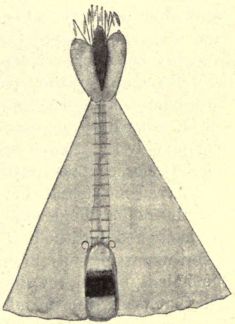
FIG. 192.—The ghost lodge.
The Indians always have observed the custom of smoking pipes and eating
while sitting in the ghost lodge. At the back of the lodge they prepare
a seat and in the middle they set up two poles similar to those erected
outside the entrance to the tents. Before they eat in the lodge, they
sacrifice part of the food. Whenever they move the camp or single tent
from one place to another all these sacred objects are packed and
carried on a horse kept for this special purpose. This horse is called
“Wanaġi taśuŋkewakaŋ,” i.e., “The ghost’s horse.” This horse has his
tail and mane cut off short; the hair on the body is shaved very close;
his body is rubbed all over with yellow clay. Some one then rubs paint
on the fingers, touching the rump gently several times, as well as the
forehead and around the neck and breast. A feather is tied to the end
of the tail. On his back they place a saddlecloth and a saddle, each
ornamented with porcupine quills. The horse must mourn—i.e., keep his
hair short—as long as the ghost remains unburied; but as soon as the
hair is removed from the pack and buried the horse’s hair is allowed to
grow long again. As soon as the people stop to encamp the ghost lodge
is set up before any of the others. The articles which are kept there
remain for a specified time, perhaps for several years, during which
period certain ceremonies are performed. At the end of the allotted
time comes the ghost feast, the Waéćŭŋpi or Wakíćaġápi, when the ghost
pack is opened and the ghost taken out and buried. Then all the people
assemble, setting up their tents near the ghost lodge. The kindred
of the deceased weep and bring food to the place. All this food has
been boiled. They set up in the ground some forked sticks, such as
are used for digging wild turnips, and straight poles are laid along
the forked sticks. On the poles are hung moccasins, and in the space
between the forked sticks are piled blankets, buffalo robes, calico,
untanned skin bags, tanned bags, porcupine quills, wild turnips, and
fruits.[198] These are distributed by women, and the people spend the
time pleasantly. They also give presents to the young women. If the
deceased was a male and a member of an order of young men, all who
belong to it are invited to a feast (there was a similar custom among
the Ponka, in 1872), where they sing songs. When they stop singing
they sit with bodies erect, but with bent head and stooping shoulders.
Then the parents of the dead youth enter the lodge, weeping as they
pass around the circle, and each one places both hands on the head
of each guest, because the son, who regarded the men as his friends,
is no longer present. If the deceased is a female, only the women
assemble, except some men who lead the singing. If horses take part in
the ceremonies, their manes and tails are shaved short, and they, too,
receive gifts. Here and there one of the kindred of the deceased gives
away all his property, and then the bag is opened and the hair or ghost
is taken out and buried. From this time the parting with his parents
is absolute. They think that, until the hair is buried, the deceased
is really present with the household, and that when this burial takes
place he dies a second time. After this burial the kindred put on their
usual clothing, and while they weep for the dead at intervals they are
at liberty to anoint and decorate themselves according to fancy.
Another account of Bushotter states that when they prepare for the
ghost feast they redden the sack containing the hair and hang the war
bonnet of feathers on the three poles at right angles with the ghost
sack. They wish to remember his deeds in war, so they also stick one
end of his war spear in the ground, with its top leaning against the
tops of the three poles. His shield is suspended from one of the poles.
The three pipes on the shield in a colored sketch prepared by Bushotter
denote that on so many expeditions the deceased warrior carried a war
pipe. The red stripes declare how many of the enemy were wounded by
him, and the human heads show the number of foes that he killed. The
half-moon means that he shouted at his foes on a certain night. Once
he threw aside his arms and engaged in a hand-to-hand struggle with a
foe; this is shown by the human hand. The horse-tracks indicate that he
ran off with so many horses. If his name was Black Hawk, for instance,
a black hawk was painted in the middle of his shield.
All these things are arranged before they open the bag containing the
hair. Then they enter the lodge, and there they open all the things
that they have brought. The kindred of the deceased are the only ones
to enter the lodge, and when they see the hair taken from the sack
they scream suddenly for a minute or two. It is at this time that they
distribute the gifts. Food has been boiled in many kettles, and is
now divided among the people not the kindred of the deceased, who are
scattered around the ghost lodge, and some food is usually given to the
young men of the order to which the deceased belonged.
A woman who attends to collecting the food, calico, bags, clothing,
etc., turns to the four posts of the scaffold in succession, and utters
one of the following sayings or prayers at each post: “If the ghosts
eat this, may I live long!” or “May the ghosts eat this, and I obtain
many horses!” or “If my nephew (or niece) eats this, may someone give
me many presents!” This woman is careful to put the best part of the
food on the bowl or dish, under the scaffold near the head of the
corpse.[199] Should any one eat before the food has been put aside for
the ghost, all the ghosts become angry with him, and they are sure to
punish him; they will make him drop his food just before it reaches
his mouth, or they will spill the water when he tries to drink, and
sometimes they cause a man to gash himself with a knife.
§ 277. Some ghosts are beneficent, but most of them are maleficent.
They know all things, even the thoughts of living people. They are glad
when the wind blows. Bushotter’s younger brother was crazy at one time,
and a doctor or peźuta wićaśa said that the sickness had been caused by
a ghost.
§ 278. Lynd says: The belief in the powers of some Dakotas to call
up and converse with the spirits of the dead is strong in some,
though not general. They frequently make feasts to those spirits
and elicit information from them of distant friends and relatives.
Assembling at night in a lodge, they smoke, put out the fire, and
then, drawing their blankets over their heads, remain singing
in unison in a low key until the spirit gives them a picture.
This they pretend the spirit does; and many a hair-erecting
tale is told of the spirit’s power to reveal, and the after
confirmation.[200]
A few ghost stories of the Teton collection will now be given.
§ 279. The ghost husband.—A young Lakota died just before marrying
a young girl whom he loved. The girl mourned his death, so she cut her
hair here and there with a dull knife, and gashed her limbs, just as
if she had been an old woman. The ghost returned and took her for his
wife. Whenever the tribe camped for the night the ghost’s wife pitched
her tent at some distance from the others, and when the people removed
their camp the woman and her husband kept some distance behind the main
body. The ghost always told the woman what to do; and he brought game
to her regularly, which the wife gave to the people in exchange for
other articles. The people could neither see nor hear the ghost, but
they heard his wife address him. He always sent word to the tribe when
there was to be a high wind or heavy rain. He could read the thoughts
of his wife, so that she need not speak a word to him, and when she
felt a desire for anything he soon obtained it for her.
§ 280. The solitary traveler.—Once a solitary traveler was overtaken
by a tremendous thunderstorm near a forest. So he remained there
for the night. After dark he noticed a light in the woods, and when
he reached the spot, behold, there was a sweat lodge, in which were
two persons talking. One said, “Friend, some one has come and stands
without. Let us invite him to share our food.” The listener fled
suddenly, as they were ghosts, and they pursued him. Though he looked
behind now and then, he could not see them; so he ran with all his
might towards a hill, and escaped from them. As he was ascending a
divide of the Bad Lands, all at once he heard the cry of a woman.
He was very glad to have company for the rest of the journey; but
no sooner had he thought about the woman than she appeared by his
side, saying, “I have come because you have just wished to have my
company.” This frightened the man, but the ghost woman said, “Do not
fear me, else you will never see me again.” So they went on silently
till daybreak. Then the man looked at her, but her legs could not be
seen, though she was walking without any apparent effort. Then the
man thought, “What if she should choke me?” Immediately the woman
disappeared like the wind. (See § 245).
§ 281. The ghost on the hill.—One day, when the people were hunting
the buffalo, a strange man appeared on a hill. He wore a winter robe,
with the hair outside. When he was descending the hill the people
became alarmed, but he continued to advance. The young men rushed to
meet him, taking bows and arrows. They could not see his face. They
tried to shoot him, but each arrow passed by him on one side or the
other. So they finally fled, as he was a ghost.
§ 282. The Indian who wrestled with a ghost.—A young man went alone
on the warpath. At length he reached a wilderness, encountering many
difficulties, which did not deter him from his undertaking. One day,
as he was going along, he heard a voice, and he thought, “I shall have
company.” As he was approaching a forest he heard some one halloo.
Behold, it was an owl. By and by he drew near another forest, and as
night was coming on he had to rest there. At the edge of the forest he
lay down in the open air. At midnight he was aroused by the voice of a
woman, who was wailing, “My son! my son!” Still he remained where he
was, and continued putting wood on the fire. He lay with his back to
the fire, placing his flint-lock gun in readiness before him. He tore a
hole in his blanket large enough to peep through.
Soon he heard the twigs break under the feet of one approaching, so he
peeped without rising. Behold, a woman of the olden days was coming.
She wore a skin dress with long fringe. A buffalo robe was fastened
around her at the waist. Her necklace was composed of very large
beads, and her leggins were covered with beads or porcupine work. Her
robe was drawn over her head, and she was snuffling as she came. The
man lay with his legs stretched out, and she stood by him. She took
him by one foot, which she raised very slowly. When she let it go it
fell with a thud, as if he was dead. She raised it a second and third
time. Still the man did not move himself. Then the woman pulled a very
rusty knife from the front of her belt, seized his foot suddenly, and
was apparently about to lift it and gash it, when up sprang the man,
saying, “What are you doing?” Without waiting for a reply he shot at
her suddenly, and away she went, screaming “Yuŋ! yuŋ! yuŋ!
yuŋ! yuŋ! yuŋ!” Then she plunged into the forest and was
seen no more.
Once again the man covered his head with his blanket, but he did not
sleep. When day came he raised his eyes, and, behold, he saw a human
burial scaffold, with the blankets, etc., ragged and dangling. He
thought, “Is this the ghost that came to me?” On another occasion he
came to a forest where he had to remain for the night. He started a
fire, by which he sat. Suddenly he heard some one making the woods
ring as he sang. The man shouted to the singer, but the latter paid
no attention to him. The man had a small quantity of wasna (grease
mixed with pounded dried buffalo meat and wild cherries) and plenty
of tobacco. So when the singer, who was a male ghost, came to him and
asked him for food, the man replied, “I have nothing whatever;” but the
ghost said, “Not so; I know that you have some wasna.” Then the man
gave some of it to the ghost and filled the pipe for him. After the
meal, when the ghost took the pipe and held it by the stem, the man saw
that his hand had no flesh, being nothing but bones. As the ghost’s
robe had dropped from his shoulders to his waist all his ribs were
visible, there being no flesh on them. Though the ghost did not open
his lips as he smoked, the smoke was pouring out through his ribs. When
he finished smoking the ghost said to the man, “Ho! we must wrestle
together. If you can throw me, you shall kill a foe without hindrance,
and steal some horses.” The young man agreed to the proposition; but
before beginning he gathered plenty of brush around the fire, on which
he put an armful. Then the ghost rushed at the man, seizing him with
his bony hands, which pained the man, but this mattered not. He tried
to push off the ghost, whose legs were very powerful. When the ghost
was brought near the fire, he became weak, but when he managed to pull
the man towards the darkness, he became very strong. As the fire got
low the strength of the ghost increased. Just as the man began to grow
weary the day broke. Then the struggle was renewed. As they drew near
the fire the man made a desperate effort, and with his foot he pushed
a firebrand suddenly into the fire. As the fire blazed again, the
ghost fell just as if he was coming to pieces. So the man won, and the
ghost’s prophecy was fulfilled; he subsequently killed a foe, and stole
some horses. For that reason people have believed whatever the ghosts
have said.
§ 283. The man who shot a ghost.—In the olden time a man was
traveling alone, and in a forest he killed several rabbits. After
sunset he was in the midst of the forest, so he made a fire, as he
had to spend the night there. He thought thus: “Should I encounter
any danger by and by, I have this gun, and I am a man who ought not
to regard anything.” He cooked a rabbit and satisfied his hunger.
Just then he heard many voices, and they were talking about their own
affairs, but the man could see nobody. So he thought, “It seems that
now at length I have encountered ghosts.” Then he went and lay under
a fallen tree, which was at a great distance from the fire. He loaded
his gun with powder only, as he knew by this time that they were really
ghosts. They came round about him and whistled, “Hyu, hyu, hyu!” “He
has gone yonder,” said one of the ghosts. They came and stood around
the man, just as people do when they hunt rabbits. The man lay flat
beneath the fallen tree, and one ghost came and climbed on the trunk of
that tree. Suddenly the ghost gave the cry uttered on hitting an enemy,
“Aⁿ-he!” and he kicked the man on the back. But before the ghost
could get away, the man shot at him and wounded him in the legs; so
the ghost gave the male cry of pain, “Au! au! au!” And finally he went
off crying as females do, “Yuŋ! yuŋ! yuŋ!” And the other
ghosts said to him; “Where did he shoot?” And the wounded one said: “He
shot me through the head and I have come apart.” Then the other ghosts
were wailing on the hillside. The man decided to go to the place where
they were wailing. So, as the day had come, he went thither, and found
some graves, one of which a wolf had dug into so that the bones were
visible, and there was a wound in the skull.
§ 284. Smet says:[201]
The belief in ghosts is very profound, and common to all these
tribes. Indians have often told me that they have met, seen, and
conversed with them, and that they may be heard almost every night
in the places where the dead are interred. They say that they
speak in a kind of whistling tone. Sometimes they contract the
face [of a human being whom they meet] like that of a person in an
epileptic fit.[201] The Assinniboines never pronounce the name
of Tchatka [i.e., Ćatka, or, Left Hand, a former chief] but
with respect. They believe that his shade guards the sacred tree;
that he has power to procure them abundance of buffalo and other
animals, or to drive the animals from the country. Hence, whenever
they pass they offer sacrifices; they present the calumet to the
tutelary spirits and manes of Tchatka. He is, according to their
calendar, the Wah-kon-tangka par excellence, the greatest man or
genius that ever visited their nation.[202]
§ 285. Riggs says[203] that the Dakota pray to the spirits of their
deceased relatives. [See §§ 67-71.] And in his account of the
Assinniboin, Smet says:
The Assinniboines esteem greatly a religious custom of assembling
once or twice a year around the graves of their immediate
relatives. These graves are on scaffolds about 7 or 8 feet above
the surface of the ground. The Indians call their dead by name and
offer to them meats carefully dressed, which they place beside
them. The ceremony of burying the dead is terminated with tears,
wailings, howlings, and macerations of all present. They tear the
hair, gash the legs, and at last they light the calumet, for that
is the Alpha and Omega of every rite. They offer it to the shades
of the departed and entreat them not to injure the living. During
their ceremonious repasts, in their excursions, and even at a
great distance from their graves, they send to the dead puffs of
tobacco smoke and burn little pieces of meat as a sacrifice to
their memory.
§ 286. Before consulting the tutelary spirits [see § 34] or
addressing the dead, they begin by kindling the sacred fire.
This fire must be struck from a flint, or it must reach them
mysteriously by lightning, or in some other way. To light the
sacred fire with a common fire would be considered among them as a
grave and dangerous transgression.[204]
§ 287. They believe in transformations, such as are described in
Ovid, and they think that many of the stars are men and women
translated to the heavens. They believe in the transmigration
of souls. Some of the medicine men profess to tell of what
occurred to them in bodies previously inhabited for at least six
generations back. [See §§ 260, 267.]
§ 288. Among the Teton it has been customary for those remaining at
home to make songs about the absent warriors, calling them by name, as
if they could hear the speakers. This Dakota custom agrees with what
has been recorded of the Omaha.[205]
Bushotter has told of another Teton custom. The kindred of a slain
warrior make songs in his honor, and sing them as they mourn for his
death.
§ 289. Lynd says:
Certain men profess to have an unusual amount of the wakan
or divine principle in them. By it they assume the working
of miracles, laying on of hands, curing of the sick, and
many wonderful operations. Some of these persons pretend to a
recollection of former states of existence, even naming the
particular body in which they formerly lived. Others assert their
power over nature, and their faculty of seeing into futurity, and
of conversing with the deities. A third class will talk of the
particular animals whose bodies they intend to enter when loosed
from their present existence [§§ 260, 267, 287]. In endeavoring
to sustain these pretensions they occasionally go through
performances which are likely to deceive the ignorant throng.[206]
Pond wrote thus of the Dakota wakaŋ men:[207]
They do not spring into existence under ordinary operations of
natural laws, but, according to their faith, these men and women
(for females, too, are wakan) first arouse to conscious existence
in the form of winged seeds, such as the thistle, and are wafted
by the * * * influence of the four winds till they are
conducted to the abode of some Taku Wakan, by whom they are
received into intimate communion. They remain there till they
become acquainted with the character and abilities of the class of
gods whose guests they happen to be, and until they have imbibed
their spirits, and are acquainted with all the chants, feasts,
dances, and rites which the gods deem necessary to impose on men.
Thus do some of them pass through a series of inspirations with
different classes of divinities, till they are fully wakanized
and prepared for human incarnation. They are invested with the
invisible wakan powers of the gods, their knowledge and cunning,
and their omnipresent influence over mind, instinct, and passions.
They are taught to inflict diseases and heal them, discover
concealed causes, manufacture implements of war, and impart to
them the ton-wan power of the gods; and also the art of making
such an application of paints that they will protect from the
powers of the enemies. This process of inspiration is called
“dreaming of the gods.” Thus prepared and retaining his primitive
form, the demi-god rides forth on the wings of the wind over
* * * the earth, till he has carefully observed the characters
and usages of the different tribes of men; then, selecting his
location, he enters one about to become a mother, and, in due
time, makes his appearance among men. * * * When one of these
wakan men dies he returns to the abode of his god, from whom he
receives a new inspiration, after which he passes through another
incarnation as before, and serves another generation. In this
manner they pass through four incarnations, * * * and then
return to their original nothingness.
§ 290. There are different persons who regard themselves as wakaŋ,
says Bushotter. Among these are those who practice medicine, those who
act as Heyoka, those who boil for the grizzly bear feasts, those who
take part in the mystery dance, those who foretell the future, those
who detect wrong-doers and find what has been lost or stolen, and those
who do various things in a cunning manner. It happens thus to them:
A man hears a human voice during the day and he does what the voice
directs to be done, or on a certain night a tree converses with him,
and the two talk about their own affairs, and what the tree tells him
to do, that he does, so he says, or, it orders him to keep some law or
custom as long as he lives. Among these superstitious notions are the
following: Some men direct the pipe to be handed around the lodge from
the left side to the right, and others vice versa. Some men dare not
gash a firebrand with a knife; and should a visitor do so heedlessly,
they say that he “cuts his finger.” Others will not kill a swallow,
lest thunder and hail ensue. Some do not allow a knife to be passed
above a kettle.
§ 291. The wakan men claim that they are invulnerable. To prove this
they assemble at stated intervals, having painted themselves in various
styles. Each one has a flute suspended over the chest by a necklace.
They wear long breechcloths, and march in single file. Two men armed
with bows and arrows rush suddenly towards the waken men and shoot
at them; but instead of wounding them they merely bend the arrows!
Sometimes the men fire guns at them, but the bullets fall to the
ground, and when they are examined they are flattened! No visible mark
of a wound can be found on the bodies of these wakan men, though when
they were hit by the bullet or arrow blood pours from their mouths.
After they wash off the paint from their bodies their flesh becomes
tender and is vulnerable. This is the excuse urged when an ordinary
person succeeds in wounding a wakan man. It is supposed that the wakan
men rub themselves with some kind of medicine known only to themselves,
making them invulnerable, and that perhaps the bullets or arrows are
rubbed with the medicine prior to the shooting. It is also supposed
that the playing of the flute aids in rendering them invulnerable. (See
§ 306, etc.)
§ 292. Bushotter names two kinds of Dakota doctors—the Mato wapiya,
or Grizzly Bear doctor, who is very wakan, and the Peźuta wapiya,
or Peźuta wićaśa, the doctor who prescribes roots. The person
who practices medicine claims to have had interviews with the spirits,
but he never reveals what the spirits have told him, though he says
that immediately after the revelation made him by the spirit he begins
to act according to its directions. And in some cases of sickness
this doctor takes the flesh of the patient into his mouth and makes a
sucking sound while inhaling, and from the patient’s side he pretends
to remove something. When he has made the sucking sound after taking
the flesh into his mouth, or when he has taken blood or something else
from the side of the patient, he spits it from his mouth. Then he sees
the patient’s mother, whom he tells what is the cause of the disease,
and whether the patient will recover or die. Such doctors pretend to
have within themselves one of the following: A small red hawk, a common
woodpecker, a real buffalo, a rattlesnake, or a grizzly bear. And when
one of these doctors kicks on the ground there is heard something
within him, singing in a beautiful voice; and so the people believe
what the doctors say about diseases.
§ 293. When the doctor has sucked the patient’s flesh a long time
without removing anything, he asks a favor of the mysterious being
dwelling within himself, and then that being cries out often, and the
doctor succeeds in his efforts. It is by the aid of these mysterious
beings that the doctors are enabled to practice medicine. In the
olden time one of the doctors was very mysterious. Once, when he was
practicing, a bowl of water was set down before him. He vomited into
the bowl and a water-snake appeared in it. But when the doctor opened
his mouth again the snake glided gently into it and disappeared down
his throat. Such exhibitions by the doctors have been observed by
the Indians, who are constrained to believe what the doctors claim
for themselves. And because they believe that the doctors are very
mysterious, the latter are able to gather together many possessions
as pay for their services. Therefore the men and women doctors try to
excel one another in their skill, as it pays them so well.
§ 294. A “peźuta wicaśa” told Bushotter to say to his step-father
that his son, Bushotter’s younger brother, had been made crazy by a
ghost. The doctor came and fumigated the patient, and after he felt a
little better he sucked at the boy’s chest and drew out some blood.
He resumed the operation, and then declared that there was in the
boy’s side a flat object resembling a serpent, the removal of which
would insure the boy’s recovery. The doctor was promised a horse if he
would attend the patient until he cured him. Acting by his directions,
Bushotter’s elder brother caught a large catfish, of the species called
“howasapa,” and handed it to his step-father, who offered a prayer and
marked the fish with a knife on the top of the head. After this the
fish was cooked, and the sick boy ate it and recovered his health. It
was after this that the same boy was cured by invoking the Dawn and
offering sacrifice, as related in § 215.
§ 295. Scrofulous sores on the neck under the jaw are said to be caused
by gophers. These animals can shoot at persons in a magical way with
the tip of a species of grass, wounding them very mysteriously, the
injured person being unconscious of the harm done till some time has
elapsed. The place swells, splits open, and becomes very bad, affecting
even the face of the sufferer. Few doctors can cure it. He who can
relieve the patient pretends to extract pieces of grass from the neck,
and then the person begins to recover. The people are so afraid of
gophers that they go around the camp with their hands over their jaws.
No one dares to go near a gopher hill except he or she be a mysterious
person. Such a one can go near it and even touch it with impunity, as
he has different remedies at his command.
§ 296. Whoever gets into the habit of eating the large intestine of
cattle, known as the taśiyaka, is sure to “be hit by
śiyaka,” i. e., he will have a boil.[208] Śiyaka is the name of the grebe or
dabchick, but what connection there is between the bird and the boil
has not been learned. The boil will be on some covered part of the
body, not on the hands or face. The Teton fear to go outside of their
lodges at night lest the cause of boils be blown to them. If a man eats
the liver of a female dog, or if a woman eats that of a male dog, the
face of the offender will break out in sores.
§ 297. Warts betray a bad person, one given to stealing. If the skin of
the hard palate peels off, it is said that the person is untruthful.
When the Teton doubt a man’s word, they ask him to open his mouth and
let them see his hard palate. He who makes a practice of eating the
calves of the legs of any species of animal will have a cramp in the
muscles of his own legs. When one wishes to extract the marrow from a
bone, he takes care not to split the bone in two, lest his own legs
should be in frequent pain, or he should become lame.
§ 298. The Dakota use “ihaŋbla” or “ihaŋmda” as the Omaha and Ponka do
“iȼa‘eȼĕ,” to describe the mysterious communications received from the
animals and spirits (§§ 8, 43-52).
Among the Siouan family of Indians there are societies, religious
in character, which are distinguished by the name of some animal.
Each society has a ritual composed of chants and songs to be sung
during different parts of the ceremonies, having words describing
in simple and direct terms the act which accompanies the music.
These musical rituals, it is often claimed, have been received in
a mysterious or supernatural manner, and are therefore regarded
as possessing a religious power * * * Some societies admit
women to membership, through their own visions, or occasionally
by those of their husbands’, but more generally by means of the
visions of male relatives. * * * Membership in these
societies is not confined to any particular gens, or grouping of
gentes, but depends upon supernatural indications over which the
individual has no control. The animal which appears to a man in a
vision during his religious fasting determines to which society
he must belong.[209]
§ 299. Those having visions or revelations from ghosts are called
Wanaġi ihaŋblapi kiŋ. It is such persons who can draw
pictures of ghosts with impunity. It is also said that the only persons
who have their faces drawn awry by the ghosts are the members of this
order. (See § 275.)
§ 300. Bushotter’s step-father belongs to the Tataŋg ihaŋblapi kiŋ, or
the Society of those who have Revelations from the Buffalo, answering
to the Omaha ┴e iȼa‘eȼĕ-ma (§§ 43, 50). In one of his visions he saw a
buffalo with cocklebur down in his hair, so the man subsequently put
such down in his own hair in imitation of the buffalo. One night he saw
(probably in a vision) a bison going toward the south with a hoop on
his head. So the man painted a small hoop red all over and wore it on
his head, giving his nephew the name Ćaŋgleśka waŋyaŋg mani, He Walks
In-sight-of a Hoop.
§ 301. Some Dakota belong to the Hećiŋśkayapi ihaŋblapi kiŋ, or the
Society of those who have Revelations from Goats. Goats are very
mysterious, as they walk on cliffs and other high places; and those who
dream of goats or have revelations from them imitate their actions.
Such men can find their way up and down cliffs, the rocks get soft
under their feet, enabling them to maintain a foothold, but they close
up behind them, leaving no trail. Members of the Wakaŋ waćipi, or the
Order of the Mystery Dance, commonly called the medicine dance, are
also reckoned among the mysterious or “wakaŋ” people (see § 113). One
of Bushotter’s texts relates to this order. Another of his articles
tells of the Miwatani okolakićiye kiŋ or The Mandan Society, which used
to be called Ćaŋte ṭiŋza okolakićiye, or Society of the Stout Hearted
Ones. It is now known as Kaŋġi yuha, Keeps the Raven. For a notice of
this order, see §§ 194, 195.
§ 302. The report of the Peabody Museum of American Archaeology and
Ethnology for 1884 contains an article on the Elk Mystery or Festival
of the Oglala, a division of the Teton Dakota (pp. 276-288). Those who
have visions of the elk are the Heḣaka ihaŋblapi kiŋ. Bushotter has
recorded articles on different societies as follows: Big Belly Society,
Iḣoka and Tokala (animal) Societies, Dog Society, Kaṭela or Taniġa iću
Society, Grizzly Bear Dance, and Night Dance; but we have no means of
learning whether any or all of them are composed of persons who had
visions of animals.
§ 303. Among these may be included the Bear Butte, referred to in §
137; and any white buffalo hide, such as has been described in “The
White Buffalo Festival of the Uncpapas.”[210]
Smet gives a description of a gathering of all the Assiniboin, and a
religious festival lasting several days:
Offerings are placed on perches that are fastened to the tops
of posts supporting certain buffalo skin lodges. A tall pole is
erected in the middle of the circle (it is between 30 and 40 feet
high), and to it they fasten the medicine bags, containing the
idols, their arrows, quivers, trophies won from their enemies,
especially scalps. Men, women, and children join in raising and
planting the pole, amid the acclamations of the tribe.[211]
§ 304. Smet also tells us that “A Sioux chief has his war wakaŋ, the
colored picture of the Russian general, Diebitsch.”[212] In speaking of
the Assinniboin, the same author states:
Each savage who considers himself a chief or warrior possesses
what he calls his wah-kon, in which he appears to place all his
confidence. This consists of a stuffed bird, a weasel’s skin,
or some little bone or the tooth of an animal; sometimes it is
a little stone or a fantastical figure, represented by little
beads or by a coarsely painted picture. These charms or talismans
accompany them on all their expeditions for war or hunting—they
never lay them aside. In every difficulty or peril they invoke
the protection and assistance of their wah-kon, as though these
idols could really preserve them from all misfortunes. If any
accident befalls an idol or charm, if it is broken or lost, it is
enough to arrest the most intrepid chief or warrior in his
expedition, and make him abandon the most important enterprise in
which he may be engaged.[213]
We may also reckon among the personal fetiches the wohduze of each
warrior (see the Armor god, §§ 122-5), and perhaps the use of the
initipi or sweat lodge, and the wild sage or Artemisia, by each of
which personal purification is supposed to be effected.
§ 305. While there are no oaths or curses as we have them, the Teton
can invoke higher powers. Thus one may say: “The Thunderers hear me”
(Waʞiŋ´yaŋ namáḣuŋwe ló, The Flying one really hears me!), and if he is
lying the Thunderers or one of their number will be sure to kill him.
Sometimes the man will put a knife in his mouth, and then if he lies he
will be stuck by a knife thereafter, and death must follow. Or, he will
say, “The horse heard me” (Śuŋ´kawakaŋ´ namáḣuŋ we ló), knowing that
the penalty for falsehood will be certain death from a horse that will
throw him and break his neck. When one says, “The Earth hears me” (Maká
kiŋ lé namáḣuŋ we ló), and he lies, he is sure to die miserably in a
short time, and his family will also be afflicted.
Smet says:[214]
The objects by which an Assinniboine swears are his gun, the skin
of a rattlesnake, a bear’s claw, and the wah-kon that the Indian
interrogates. These various articles are placed before him, and
he says, “In case my declaration prove false, may my gun fire
and kill me, may the serpent bite me, may the bears tear and
devour my flesh, and may my wah-kon overwhelm me with misery.”
In extraordinary and very important affairs, which demand formal
promises, they call upon the Thunder to witness their resolution
of accomplishing the articles proposed and accepted.
§ 306. As among the Omaha and other Siouan tribes, so among the Dakota
do we find traces of the practice of sorcery, and there is a special
word in the Dakota dictionary: “ḣmuŋġa, to cause sickness or death,
as the Dakotas pretend to be able to do, in a supernatural way—to
bewitch—kill by enchantment.” The syllable “ḣmuŋ” seems to convey the
idea of humming, buzzing, or muttering.
Jugglery or sleight-of-hand performances are resorted to by the
mysterious men and women. (See §§ 64-66, 291-4.) Some of these
practitioners claim to possess the art of making love-charms, such
potions being sold to women who desire to attract particular men of
their acquaintance. When a woman obtains such a medicine, she uses it
in one of two ways. Sometimes she touches the man on his blanket with
the medicine, at others she persuades the man to give her a piece of
chewing gum, which she touches with the medicine. Then she seizes him,
and he can not escape from her, even should he wish to leave her. So he
is obliged to marry her.
§ 307. Ringing in one ear signifies one of two things. Some one will
come without his family, and he must be entertained, or you will hear
news. The direction whence the person or news will come is shown by the
ear that is affected.
If the eye twitches involuntarily some one will weep. If any other part
of the body twitches involuntarily some one will hit the person there
or he will be stabbed or shot there. If the palm of the hand twitches
often he will soon strike some one, or else he will become angry. When
a woman has a son sick somewhere, or if he has been killed on the way
home, her breasts are often very painful.
If one sneezes once his special friend or fellow, his son or his wife
has named him; so the sneezer calls out, “My son.” If he sneezes twice
he exclaims, “My son and his mother!”
§ 308. When whip-poor wills sing together at night, saying, “Hohiŋ,
hohiŋ,” one says in reply, “No.” Should the birds stop at once it
is a sign that the answering person must die soon. But if the birds
continue singing the man will live a long time.[215]
The uŋgnaġíćala (gray screech owl) fortells cold weather. When the
night is to be very cold this owl cries out, so the Teton say, just as
if a person’s teeth chattered. When its cry is heard, all the people
wrap themselves in their thickest robes and put plenty of wood on the
fires.
The Ski-bi-bi-la is a small gray bird, with a black head, and spotted
here and there on the breast. It dwells in the forest, and is said to
answer the person who calls to it. When this bird says, “Glí huŋ wó,”
i.e., “Has it returned?” the people rejoice, knowing that the spring
is near. When a boy hears this bird ask the question, he runs to his
mother and learns from her that he must reply, “No; it has not yet
returned.” The reason for giving this reply has not been obtained.
When the people first hear the cry of the night hawk in the spring,
they begin to talk of going to hunt the buffalo, because when the night
hawks return the buffalo have become fat again, and the birds bring the
news, for they never cry in vain.
§ 309. There are some animals which are esteemed as bringing
better fortunes than others. Hawks are lucky. Bears are not so
good, as the bear is slow and clumsy, and apt to be wounded; and
although savage when cornered, is not as likely as some animals to
escape harm. Among some tribes in this family of Indians to dream
of the moon is regarded as a grave calamity.[216] See § 30.