Although the electric telegraph system of Cooke
and Wheatstone had been established as early as
1837 in England, yet no move was made to adopt
it in Canada.
After the Morse experimental line between Baltimore
and Washington had proved a success and was
thrown open for public business and wires were
being carried to the leading business centres in the
United States and a line of telegraph was projected
connecting New York City with Buffalo, public interest
was aroused in Canada, more especially in the
Western section.
Mr. Morse had failed, or probably thought Canada
at that time not important enough, to take out a
patent for his invention, hence it was open to any
or all who chose to use it.
In 1846 the first Canadian Telegraph Company
was formed with a capital of $16,000; its object was
to connect Toronto and Hamilton with the American
lines at Buffalo. The corporate name of the Company
was the “Toronto, Hamilton, Niagara & St.
Catharines Electro-Magnetic Company.”
A line was speedily erected and the desired connection
made.
At the end of this year action was taken at Montreal
to organize a telegraph company.
At a meeting of the Council of the Montreal
Board of Trade, held on Dec. 26, 1846, a Committee
was appointed to enquire into the best means
of extending the use of the electric telegraph system
into Canada. The Committee reported favorably of
the project.
After giving the subject full and earnest consideration,
on December 29, three days afterwards, a
general meeting was convened for the purpose of
forming a company to connect Montreal and Toronto
by a line of electro-magnetic telegraph, the capital
to be £12,500 in 1,250 shares of £10 each.
Among those present were L. H. Holton, D. L.
Macpherson, Fred A. Wilson, John Glass, T. W.
Middleton, Thos. Tait, Henry Starnes, John Young,
Henry Joseph, I. Taylor, William Murray, Andrew
Shaw, George Elder, jun., and Henry Chapman.
On motion of L. H. Holton, seconded by D. L.
Macpherson, Mr. Young took the chair.
The Chairman stated the object of the meeting to
be the organization of a company by parties in
favor of connecting Montreal and Toronto by electro-magnetic
telegraph, and who had proposed to take
stock in the company to be formed for that purpose
in accordance with the recommendation of the
Board of Trade.
It was moved by Mr. Elder and seconded by Mr.
Starnes, that the meeting do organize itself into a
company to be entitled the Montreal & Toronto
Magnetic Telegraph Company. This was carried.
It was then moved by Mr. Chapman, seconded by
Mr. Tait, that Messrs. Shaw, Glass, Elder and Young
be a Provisional Committee to conduct the affairs of
the Company.
Moved by Mr. Holton, seconded by Mr. Macpherson,
that the Provisional Committee be empowered
to enter into all necessary arrangements for
the early construction of the proposed line of telegraph,
the whole of the shares having been taken up.
At a meeting held on January 22, 1847, it was
moved by Mr. Lindsay that Andrew Shaw, John
Young, John Glass, George Elder, jun., and Henry
Chapman be directors for the ensuing year—Carried.
On the 6th of March, 1847, Mr. O. S. Wood was
appointed Superintendent of the Company, and immediately
took charge of the Company’s operations.
The charter was obtained on July 28, 1847, under
the amended title of the Montreal Telegraph Company.
Andrew Shaw was elected its first President, Mr.
James Dakers, Secretary.
In securing the services of Mr. Wood the new
Company was exceedingly fortunate. He had been
associated with Professor Morse, was his first
pupil, and undoubtedly the most experienced telegraph
man of that day in America, a man of great
ability and of the highest personal character.
Proceedings were immediately begun in construction
work.
The construction of the line between Montreal
and Toronto and Montreal and Quebec was awarded
to Livingston & Wells, the well-known express forwarders,
and by them pushed on with the utmost vigor
under Mr. Wood’s supervision and direction. When
the work was completed it was found to be satisfactory
in every particular, both in material and
workmanship, and became a model for future work
of the kind.
At the close of 1847, 540 miles of line had been
erected, 9 offices opened and 33,000 messages transmitted.
In 1851 Sir Hugh Allan, who had early interested
himself in the fortunes of the Montreal Telegraph
Company, became its President. This office he held
uninterruptedly until his death in 1882.
Immediately on assuming office, Sir Hugh Allan,
in concert with Mr. Wood, projected important extensions
of the lines of the Company, and in a short
time the most remote towns and villages were placed
in telegraphic connection with the chief business centres
of the country.
The Montreal Telegraph Company became one of
the leading institutions in Canada. Many companies
were started to compete in the same line of
business, but in no long time were doomed to failure,
as they neither had the skill, the men nor the money
to enable them to succeed in opposing their more
formidable rival. After placing the Company on a
high pedestal of efficiency, and after 18 years of
strenuous exertions on its behalf, Mr. O. S. Wood
retired from the management in 1865, carrying with
him the esteem and respect of the Company and the
business community generally.
Mr. James Dakers was then placed in charge of the
eastern, and Mr. Dwight of the western section of
the Company’s territory.
The advance and prosperity of the Company continued,
as the foundation had been well and truly laid
by a capable workman.
In 1875 it had in operation 20,000 miles of wire,
1,400 offices and 2,000 employees.
During the preceding year some 2,000,000 messages
were transmitted in addition to millions of
words in press despatches, and the capital increased
to $2,000,000, at which figure it still remains.
In 1881 this splendid old Company was forced
by circumstances which confronted them to lease
their business to another company.
The names of Sir Hugh Allan, O. S. Wood and
James Dakers will always be inseparably associated
with the history of the Montreal Telegraph Company.
The first company to compete against the Montreal
Telegraph Company was the Grand Trunk
Telegraph Company in 1852–3, lines were erected
from Buffalo to Quebec, following the lines of the
older Company.
After some years of an unprofitable business they
sold out lock, stock and barrel to the Montreal Telegraph
Company for $11,000.
The next venture was by the Provincial Telegraph
Company, the Canadian ally of the United
States Telegraph Company, which was then spreading
its lines over the United States; but was in 1866
absorbed by the Western Union; this ended the
career of the Provincial, and its plant was purchased
and transferred to the Montreal Company for a
nominal sum.
Some two years later the Dominion Telegraph
Company took form with a capital of $700,000.
This Company proved the most serious opponent of
the Montreal Telegraph Company, but was never
a financial success. In 1878 it was leased by the
American Union Telegraph Company, an opponent
of the Western Union. Both Companies were acquired
by the latter Company, which was busily
occupied in securing a monopoly of the telegraph
business, and succeeded, in a great measure, in
accomplishing its object.
The Dominion Telegraph Company was transferred
to the Great North Western Telegraph Company
of Canada, a subsidiary concern of the American
Company in 1881.
In the lower provinces a move for telegraphic
facilities were made almost concurrent with those of
Western Canada.
During 1847–48 the Press Association ran a
steamer between Digby, N.S., and Portland, Me.,
to carry news received by the steamships touching at
Halifax, and from thence sent overland by express
riders to Digby, 149 miles, and was sometimes accomplished
in less than eight hours and a half, or at the
rate of 17½ miles an hour, to be despatched from
thence by steamer to Portland and telegraphed to
New York from there in advance of the Cunard
steamers at Boston.
This service was managed with great vigor. The
express rider was the great event of the day as he
flew past Annapolis, his horse white with foam and
the whole population lining the road. A gun was
fired to announce his arrival to the captain of the
steamer immediately anchors were weighed. Steam
raised, the pilot took his place at the wheel and the
small boat manned by athletic seamen was sent
ashore to receive the bag of the express rider, as at
full speed he arrived at the dock.
This process, though full of éclat and splendidly
performed, was expensive, and the Associated Express
agents, offered to guarantee the payment of a
liberal subsidy to any company who would construct
a line of telegraph between Calais, Me., and Halifax,
which could be available for press matter.
The Nova Scotia Government came to the rescue
and erected a line of 125 miles in length from
Halifax to Amherst to meet the American and New
Brunswick lines. This line was completed on
Nov. 9, 1849, and Halifax was for the first time connected
telegraphically with New York.
On Oct. 4, 1847, a telegraph company was formed
in New Brunswick with $40,000 capital. Lines connecting
St. John and intervening points with Calais
and Portland were completed Jan. 1, 1849, and
connection with the Nova Scotian Government line
at Amherst was made.
The lines in New Brunswick and Nova Scotia
were acquired by the American Telegraph Company
and later by the Western Union Telegraph Company,
by whom they are now operated.
In 1847 the British North American Telegraph
Company was organized for the purpose of connecting
Quebec and the lower provinces by wire, but
the wire got no further than River du Loup, where
it terminated for a time.
A second company, bearing a similar name, erected
a line between Montreal and Quebec; both properties
were afterwards transferred to the Montreal
Telegraph Company.
In 1849 the Montreal & Troy Company built a
line from Montreal to the Canadian frontier, and
thence to Whitehall, and Troy, after working independently
for a couple years, were purchased by the
Montreal Company.
In 1850 a line from Bytown (now Ottawa) by a
company organized by Joseph Aumond; it also after
a few years became the property of the Montreal Company.
In the West about the same period the Hon. Malcolm
Cameron interested himself in a telegraph line
to connect Hamilton and London, but, after some
18 months of unprofitable labor, was abandoned.
Coming down to a later date the People’s Telegraph
Company was organized and a line erected
between Montreal and Quebec, which proved a
financial failure to the promoters, and served as a
warning to others to avoid going into isolated telegraph
ventures.
In 1881 the Canada Mutual and the Union
Mutual Telegraph Companies worked in conjunction
for a short period in the States and Canada; both
were eventually absorbed by the Western Union.
This Company was incorporated on May 7, 1880,
for the purpose of establishing and working telegraph
lines in the Northwest Territory in the district
of Keewatin, Manitoba, and to connect with
lines in the Province of Ontario.
The capital stock, $400,000 in shares of $100
each, with power to increase the capital from time to
time as necessity required, by a resolution of the
Directors, with authority to establish, construct, purchase,
lease or work lines in the Dominion of Canada
by land or water, etc. The head office at the City of
Winnipeg.
At a meeting of the Company held on June 10,
1881, Mr. Erastus Wiman was elected President.
At this meeting Mr. Wiman as President was empowered
to enter into negotiation with the Montreal,
Dominion and Western Union Telegraph Companies
as shall harmonize the interest of the several
named companies subject to confirmation of the
Directors.
Mr. Wiman thus empowered lost no time in effecting
his object.
The resolution quoted is amusing. The Western
Union owned the Dominion Telegraph Company, or
at least controlled it. There was no discord between
the Western Union and the Montreal Telegraph
Company.
A close and intimate business relationship had
been maintained between these companies for years
and nothing had arisen hitherto to disturb this good
understanding. The Dominion Telegraph Company
had been acquired as an asset of the American
Union Telegraph Company which had been purchased
by the Western Union and was a white
elephant on its hands and of which they naturally
enough were anxious to get rid of.
It was offered to the Montreal Company, but the
offer was not entertained as the wires of the Dominion
Company merely paralleled its own, and its own
wires were sufficient for its own business at that time.
Mr. Wiman, being familiar with the position of
affairs, saw a chance for a deal and the future monopoly
of the telegraph business of Canada.
He got the refusal of the lease of the Dominion
Company and to some extent his plans were approved
by the Western Union and of which they
were more or less informed. He then made his
purpose known to the Directorate of the Montreal
Telegraph Company, that they should hand over
their business to his company on a 99 years’ lease
and a compensation of 8 per cent. per annum on
the paid-up capital stock of $2,000,000 would be
paid, guaranteed by the Western Union Telegraph
Company.
The Directors, as a matter of course, were aghast
with astonishment at the audacity of the proposal.
A company with a nominal capital, recently
formed, with no one of standing in its make up to
suggest the idea, was too preposterous. However,
Mr. Wiman coolly told them they had better think
it over, that unless his terms were accepted his
Company, the Dominion and the Western Union,
behind them, would go into competition with them
for Canadian business. A meeting of shareholders
decided, after a stormy and exciting discussion, to
accept the terms offered.
The transfer was made on July 1, 1881.
The big fish swallow the smaller usually, but in
this case it was the extraordinary feat of a small
fish swallowing a bigger one.
When the agreement took effect Mr. James
Dakers resigned and was succeeded as Secretary by
Mr. D. Ross Ross.
Mr. Dwight was appointed General Manager of
the Great North-Western Company and most of the
officials and employees of the Montreal Telegraph
Company were retained by him. Owing to his able
management the Company has been successful
in every way; all its obligations have been met with
punctuality and regularity.
Mr. Wiman resigned the Presidency some ten
years ago and Mr. Dwight succeeded him.
In 1902 it had 17,838 miles of line, 35,721 miles
of wire, over 2,000 offices and transmitted 2,795,278
messages, not including press despatches.
Recently Mr. Dwight resigned the management
and was succeeded by Mr. I. McMichael.
In the charter of the Canadian Pacific Railway
Company it had power to carry on a commercial
telegraph business throughout the Dominion of
Canada.
The telegraph lines of this company were constructed
concurrently with the railway which was
begun in 1880 and completed in 1885.
The following year the company inaugurated the
commercial telegraph business and Mr. C. R.
Hosmer was appointed General Manager of this
branch of the company’s business; this selection was
recognized as a fortunate one for the company; no
better qualified man could have been found in
Canada than he to properly fill this important position.
It was no light task he had undertaken, to
equip and man the numerous stations as they
were opened up for business, covering such a vast
extent of territory as well as to enter into competition
with a long established telegraph system
through the more populous sections in the East.
About this time the Postal Telegraph Cable Company
was reorganized in the United States, and the
Commercial Cable established, and a working
arrangement made between these companies and
the Canadian Pacific Telegraph for interchange of
traffic, which has proven mutually beneficial to each
company concerned.
The lines of the Canadian Pacific System traverse
from Halifax to Vancouver, including numerous
branch lines.
The Postal Telegraph Cable Company cover
nearly every state and territory in the United States.
A direct connection is made with the Government
Cable to Australia at Vancouver and with the Commercial
Cable Company at Canso, N.S.
In 1902 the Canadian Pacific Telegraph System
had in operation 9,736 miles of line and 41,354 miles
of wire, 1,022 offices and transmitted during that year
2,053,000 messages, not including press matter or
railway messages.
The Company has two number six copper wires
extending from Montreal to Vancouver.
About four years ago Mr. Hosmer resigned; he
was succeeded by Mr. James Kent, formerly Superintendent
of the Eastern division. Under him there
are five divisional Superintendents, namely:—
|
| James Wilson, |
Vancouver. |
| B. S. Jenkins, |
Winnipeg. |
| A. W. Barber, |
Toronto. |
| P. W. Snider, |
St. John. |
| J. F. Richardson, |
Montreal. |
W. J. Camp is electrician and Joseph Townsley
Construction Superintendent.
Recently the Company erected on the former site
of its Head Offices in Montreal a handsome fire-proof
structure of white brick with Ohio stone
facings, seven stories in height, combining in its
interior every comfort and convenience for the large
staff of employees.
The operating room is spacious, well lighted from
three sides, and furnished with the latest designs of
office fittings and electrical appliances.
The telegraph service of the Company is admirably
conducted and doubtless is not the least profitable
of the many enterprises in which it has engaged
in.
It was through the continued and persistent urging
of the late Capt. Fortin, member for Gaspé, that the
Dominion Government was at length aroused to the
necessity of providing efficient telegraph facilities
in the Gulf and the lower St. Lawrence.
The splendid telegraph system, now in operation,
forms a fitting monument to his memory and is alike
creditable to the Government which created it and
carried it out.
During the past twenty years since it was first
initiated, there has been erected 5,481 miles of land
wire lines, and 225 miles of submarine cables laid.
One line on the north shore from Murray Bay to
Belle Isle is over 1,000 miles in length and there
are over 200 miles on the Island of Anticosti connecting
the various lighthouses. Extensions are
constantly being made as necessity arises.
In the Northwest territory 607 miles of line connect
Selkirk with Edmonton with intermediate
stations and from Ashcroft to Dawson 1,826 miles,
from Hazleton to Port Sampson, B.C., 200 miles.
At the end of 1902 there were 222 Government
Telegraph Stations, 89,400 messages transmitted
and a revenue of $114,266 derived. The expenditure
was $208,968.
All signal and meteorological messages are sent
without charge.
The Government Telegraph System is under the
jurisdiction of the Department of Public Works.
The commercial telegraph business of the Dominion
is carried on, and has been for many years, by
the Great North-Western, the Canadian Pacific
and the Western Union Telegraph Companies—the
latter in New Brunswick and Nova Scotia.
The Anglo-American Telegraph Company has the
monopoly in Prince Edward Island and Newfoundland.
The Canadian Government Telegraphs operate in
territory where it would not be profitable for commercial
telegraph companies to enter. The competing
companies each get a fair share of patronage
by exercising care and promptitude in handling the
business placed in their hands. The Canadian
public have every reason to feel satisfied with the
telegraphic facilities provided by these companies
and can take pride in the fact that no better exists
anywhere, or in any country.
The rates are reasonable when the great distances
covered are taken into account.
It is gratifying to know that they are doing a
thriving business, every year showing better results,
all sharing in the universal prosperity felt throughout
the country now and for years gone by.
The following sketches of prominent and well-known
telegraph men, some of whom are living, and
others who have passed away, will be of interest to
many Canadian readers.
Preceding these brief portraitures are a few reminiscent
tales recalled at random, chiefly Canadian
incidents of “days that are gone.”
I was in the service of the Montreal Telegraph
Company at the head office in Montreal. One day
the Superintendent summoned me to his presence.
He directed me to proceed at once to Sherbrooke
as the operator in charge there was very sick and
unable to discharge his duties.
I left by the first train and reached my destination
the same evening. On arrival I noticed a great
crowd of people awaiting the train. Something unusual
must have happened surely.
I immediately reported myself to the station master,
and was considerably astonished when he seized
me by the shoulder, rushed me across the passage to
the telegraph office, ordered me to call up Montreal
and enquire if the rumored fall of Sebastopol was
true. This I did and found the report confirmed.
This was on the 20th day of September, 1855. A
Cunard steamer arrived at Halifax that afternoon
bringing the news which was flashed over the wires
by the Associated Press.
Montreal sent a full report, which came in on the
old style recording instrument. A newspaper man
came in and volunteered to write it down as I read
it off the paper reel. Each sheet when finished was
read aloud to the crowd outside. The despatch
ended and the people dispersed.
Next evening the event was celebrated by illuminations,
bonfires, feu de joies, etc. The local militia
turned out en masse, headed by Captain Ibbotson,
loyal and patriotic songs sung, and universal joy
was manifested by all.
At that period the town was largely populated by
English railway men and mechanics who had been
brought here by the Grand Trunk Railway Company
when the road opened up a short time before.
There was also a considerable number of retired naval
and military veterans in the town and neighborhood,
some of whom had fought under Nelson and Wellington.
All of these took a keen interest in the fate
of the British army in the Crimea, and were
naturally overjoyed at the defeat of the enemy and
of the victory achieved.
Sebastopol fell on Sept. 8, 1855, and the war was
virtually ended.
Montreal, Toronto and every town and village
in Canada celebrated the event with the greatest
delight, but it is safe to say that nowhere was there
more hearty rejoicing than in the capital city of the
Eastern Townships on the occasion referred to.
One day during the winter 1856 I received a telegram
from Richmond, a station on the Grand Trunk
Railway, about 25 miles distant, addressed to the
High Constable at Sherbrooke to the effect that a
party of gentlemen were on the southbound train
with the object of fighting a duel when the American
frontier was reached, the party consisting of the
principals, seconds and surgeons, and to have the
whole party arrested.
Seeing the importance of the message due measures
were taken to have it delivered promptly.
The minions of the law were duly on hand and
secured their prey on the arrival of the train. The
party were much surprised, as they had taken
every precaution to keep the affair a profound secret
and were ignorant as to how the matter had leaked
out. All were placed under arrest and escorted to
the Magog House. They had come from Quebec.
The nature of the quarrel I am unable to say.
They were brought before a magistrate and admitted
the object of their journey, when each and
severally were released on their own recognances.
All promised to abandon their evil intentions and
return to the ancient capital forthwith.
Having nothing special to interest them for a time
they adjourned to the bar-room of that famous
hostlery, then carried on by Mr. Cheney, the flowing
bowl passed round with the result that a reconcilation
was effected, and the rest of the evening spent
in harmony and good feeling.
The only one who refused to come to terms of
amity was one of the sawbones of the party! He
would have none of it.
They departed from Sherbrooke the following day,
if not sadder, at least, wiser men.
In the early days of telegraphy I was employed at
an important station on the Grand Trunk Railway
as commercial and railway operator. One night,
after a busy day’s labor, I was preparing to leave when
I overheard the office call sounded from the relay,
the local battery having been disconnected, as was
then the custom when leaving for the night, for
economical reasons. I answered the call and ventured
to receive the message from the sound of the
relay, and in this found no difficulty whatever.
Whilst thus engaged the locomotive foreman stepped
in. Singular enough, the communication was for
him. He was rather astonished at my receiving a
message in this fashion and expressed his surprise.
He spoke to others about it, and the affair in time
reached the ears of the Railway Telegraph Superintendent,
who, thereupon, called me up on the wire
and gave me a severe reprimand. A “23” or circular
was sent immediately thereafter to the effect
that it had come to his knowledge that certain
operators were in the habit of reading by sound instead
of from the register, with which all stations were
provided, and warning all to desist from this dangerous
practice.
The modern operator will be inclined to smile at
this bit of ancient history.
In no very long time, after the custom became
general in both railway and commercial telegraphy,
the Recording instrument, upon the perfecting of
which Professor Morse had spent so much time and
labor, was abandoned, and the more convenient
method of reading by sound substituted.
My predecessor at a certain station on the Grand
Trunk Railway vacated his position rather suddenly
by reason of the following colloquy, and against
whom many and frequent complaints had been made.
On one occasion the General Manager happened
to step off the train to interview the station master.
Amongst other subjects spoken of was the troublesome
operator. He immediately stepped across the
passage to have audience with the obnoxious telegrapher.
In a very impressive tone he said, “Young man,
I hear a great many complaints against you. You
had better be careful or I shall have you discharged.”
The operator not knowing the General Manager
from Adam, never having seen him before, looked at
him in surprise, and said, “Who in the blank are
you, anyway?”
“I am Mr. Bidder. Be careful, sir.”
“I don’t care a blank whether you are Mr. Bidder
or Mr. Auctioneer,” turned on his heel and walked
away.
It may be explained that, although doing railway
telegraph work, he was actually employed by the
telegraph company, and believed the railway company
had nothing to do with him, in this he was
mistaken. This interview more than confirmed the
numerous complaints, and the services of the youth
were immediately dispensed with.
Mr. S. P. Bidder was the first General Manager of
the Grand Trunk Railway of Canada.
In the year 1855, when the Government of Canada
was located at Quebec, a Militia Bill was passed,
dividing the militia into active and sedentary, the
first to consist of volunteer troops of various grades
and classes. Provision was made for dividing the
country into military districts, regimental divisions
and battalion divisions, with officers for each. This
was the first step towards the organization of a
regular volunteer force in Canada.
At Sherbrooke there was considerable political
wire-pulling on behalf of those who were ambitious
of being appointed as officers of the company to be
raised at that place. One individual claimed that he
was certain of getting command of the new company
and ridiculed the idea of any one else having the
slightest chance of getting the appointment. This
rather nettled one or two who were equally ambitious
for the honor, and a conspiracy was entered into to
perpetrate a practical joke at his expense.
A certain gentleman called at the telegraph office
and requested the favor of a telegraph blank and
envelope, explaining the purpose for which they were
intended. I hesitated over the matter, but was
assured he would be responsible should any trouble
arise. I reluctantly consented. The result was
a message was concocted as coming from the
Militia Department at Quebec to the effect that the
Department were pleased to inform the recipient
that he had been appointed to the command of the
company at Sherbrooke and that his commission for
same would be duly forwarded by mail.
The victim was elated over the psuedo despatch
and took special pains to show it to those who
doubted his success.
One person, to whom he confided the contents to
and who was one of the conspirators, doubted its
being genuine, remarking, the Militia Department
was not likely to inform appointees by telegraph. He
thought it a joke, and come to think of it, this was
April Fool Day. This led the irate individual to
me, when he desired to be informed, when the message
was received, handing to me the bogus telegram.
I, of course, felt in a very awkward position. I
scanned it over for a minute and told him the message
had not come through my office. He thereupon
went off like a shot in a very dangerous mood.
He wrote the Superintendent enclosing the alleged
telegram and threatened an immediate action against
the Company for allowing its property to be the
medium of such a trick as was the one complained of.
I was in a rather bad fix. I explained the whole
matter as it occurred. The instigator of the hoax
came to my rescue and assumed all responsibility;
the threatened action was not taken and the matter
was soon forgotten, but a new rule was embodied in
the Company’s instruction book to agents and
operators forbidding inside blanks to be allowed to
go out of the office under any pretense whatever,
except on the business of the Company. This rule
is still in force.
The one actually appointed to command the Company
was the originator of the joke herein related.
One day the hired man of the village curé
handed me a sealed letter and twenty-five cents, upon
receiving which I tore open the envelope in order to
count the words in the message before transmission.
I had no sooner done this when an angry cry proceeded
from the throat of Jean Baptiste, who held
up his hands, and, with a look of terror in his face,
told me in broken English that it was not for me, but
for the priest at St. Hyacinthe. Had there not been
a high counter between us, it might have gone hard
with me.
I took in the situation, however, politely begged
pardon, I had made a mistake, and put the contents
in a fresh envelope, readdressed it and thrust the
missive into a box under the counter, the receptacle
for the paper from the recording instrument on
which messages were received, and then gave the key
a few taps, all this being within the purview of the
anxious messenger.
I now told him it was all right, the message had
gone. He then departed with a smile of satisfaction
on his face and a courteous remerci monsieur.
Shortly after I resurrected the message and sent it
over the wire in the orthodox fashion.
The little trick practiced and the ignorance shown
may seem like romancing, but at that date even
many well-informed persons on other subjects were
quite as ignorant as this simple servant man of the
modus operandi of electric telegraphy at that period.
A certain well-known colonel of militia in Montreal,
now deceased, who had been in the telegraph
service in his boyhood and an expert operator, told
me the story I am about to relate illustrative of
primitive telegraph days.
We were swapping old-time telegraph stories when
he exchanged the following: He was in the employ
of the old British American Telegraph Company.
One day, the wires down, which happened
too often, unfortunately, Bob having nothing to
occupy his time, sauntered over to the vicinity of the
Montreal Telegraph Company, on St. Sacrament
Street. It was with a feeling of envy he heard the
busy ticking of the instruments there when those of
his Company were dead as a door nail. He lingered
for a moment or two beneath the office window,
which was only a few feet above; it was in summer
and the windows were all open and he could plainly
deciper everything passing over the wire. One item
of some importance attracted his attention when the
idea struck him he had better take it down. He took
his pencil and note-book, copied the item, went back
to his office, had it manifolded and distributed to
the press. Later on the same was sent out by the
other Company, but in a more leisurely fashion; this
was refused, on the ground that it was already received
over the wires of the British American; this
caused much mortification to the older Company to
be beaten by their insignificant rival.
Reading by sound of the instrument was not a
common occurrence then, and especially on the
public highway.
The Montreal Company never became aware of
the trick that was played upon them.
When in August, 1858, the Atlantic cable had
been successfully laid, uniting two continents telegraphically,
there was universal rejoicing. The
Queen sent a congratulatory message to “Her Good
Friend,” the President of the United States, to
which a suitable reply was returned.
The brevity of the Queen’s message was somewhat
disappointing compared with the more lengthy reply
of the President, and many unfavorable comments
were made in the press and in conversation.
However, it was afterwards learned that only a
portion of the communication had been received
owing to a temporary interruption of the cable.
When at last the completed message came there was
no reason for disappointment, and general satisfaction
was evinced.
Small pieces of the unused cable of about an inch
to two or three inches in length mounted with brass
or silver ferrules were sold on the street by speculators
from 25 cents to a dollar each. The event was
celebrated with great éclat on both sides of the
Atlantic.
Banners were displayed with numerous devices
and quotations from Scripture such as, “Their line is
gone out through all the earth and their words to the
end of the world,” and from Shakespeare, “I will
put a girdle round the earth in forty minutes.”
There were torchlight processions, displays of fireworks,
illuminations, etc., etc., together with addresses
by distinguished men in honor of the event.
I refer more particularly to Ogdensburg, N.Y., where
I was then situated as operator and received the
Queen’s message over the wire.
The rejoicing unfortunately was somewhat premature.
After working more or less imperfectly for three
weeks, the cable gave out completely on the 1st of
September after the transmission of 730 messages
had been effected.
The cable operator at Heart’s Content, Newfoundland,
named De Sauty, sent daily bulletins to the
press holding out strong hopes for the restoration of
the interrupted communication, but these hopes
were not realized. The bulletins ceased and he
disappeared and was never heard of again, at least
by the public.
It is in allusion to this mysterious individual that
Dr. Oliver Wendell Holmes wrote the following
humorous lines, and in fine satirical vein thought
that with a Latin tutor and a professor of chemistry
the educated classes would understand it.
De Sauty.
An Electro-Chemical Eclogue.
Professor. Blue Nose.
PROFESSOR.
“Tell me, O Provincial! speak ceruleo Nasal,
Lives there one De Sauty, extant now among you
Whispering Boanerges, son of silent thunder
Holding talk with nations.
“Is there a De Sauty, ambulant on Tellus
Bifed cleft-like mortals dormient in nightcap
Having sight, smell, hearing, food receiving feature
Three times daily patent.
“Breathes there such a being, O ceruleo Nasal
Or is he a mythus, ancient name for humbug
Such as Livy told about the wolf that wet-nursed
Romulus and Remus.
“Was he born of woman, this alleged De Sauty,
Or a living product of galvanic action
Like the Acarus bred in Crosse’s flint solution
Speak thou Cyano Rhynal.”
BLUE NOSE.
“Many things thou askest, Jacknife-bearing stranger,
Much conjecturing mortal, pork and treacle waster
Pretermit thy whitling wheel thine earflap towards me
Thou shalt hear them answered.
“When the charge galvanic tingled through the cable
At the polar focus of the wire electric,
Suddenly appeared, a white faced man among us,
Called himself De Sauty.
“As the small opossum held in pouch maternal
Grasps the nutrient organ whence the term mammalia,
So the unknown stranger held the wire electric
Sucking in the current.
“When the current strengthened, bloomed the pale-faced stranger,
Took no food or victual, yet grew fat and rosy,
And, from time to time in sharp articulation
Said, ‘All right,’ De Sauty.
“From the lonely station passed the utterance spreading
Through the pines and hemlocks to the grove of steeples,
Till the land was filled with loud reverberations
Of ‘All right,’ De Sauty.
“When the current slackened drooped the mystic stranger,
Faded, Faded, Faded as the stream grew weaker
Wasted to a shadow with a hartshorn odor
Of disintegration.
“Drops of deliquescence glistened from his forehead
Whitened round his feet the dust of efflorescence,
Till one Monday morning when the flow suspended
There was no De Sauty.
“Nothing but a cloud of elements organic
C. O. H. N. Ferrum, Chor, Flu. Sil. Potassa
calc. Sod. Phosh mag. Sulphur Mang.? Alumin caprum
Such as man is made of.
“Born of stream galvanic with it he had perished
There is no De Sauty. Now there is no current
Give us a new cable, then again we’ll hear his cry,
‘All right,’ De Sauty.”
After a lapse of eight years another cable was
laid in 1866 and communication across the Atlantic
permanently established, but the mysterious De
Sauty never appeared.
In the fall of 1856 the Montreal Telegraph Company
laid a subaqueous cable across the St. Lawrence
connecting Ogdensburg, N.Y., with its Canadian
lines. Everything went well till the breaking up of
the ice in the spring, when the American end of the
cable was carried away from its moorings.
A man was sent from Montreal to effect the necessary
repairs. When he arrived, I, then being in
charge of the office there, decided to accompany him
and render any assistance I could. A boat was
hired to row over to the lighthouse where the cable
terminated. The craft engaged was rather frail and
shaky, with quite a heavy sea running. The Montreal
man got safely seated, clutching the side of the
boat with one hand and the testing instrument in
the other. It was a cold day in March, a stiff north-wester
was blowing. When all was ready the painter
was untied, when I jumped, and in doing so lost my
balance and went in headforemost. As I bobbed up
the heels of my friend were just visible above the
water. We succeeded in getting ashore safely, but
the testing instrument had gone to the bottom, which
we tried to recover, but failed, and the trip for the
time was given up.
My companion in this adventure was the late Mr.
Bowman, for many years the respected storekeeper
for the Montreal Telegraph Company.
In meeting we often reverted to this episode in
our telegraph experience and of our involuntary
bath in the icy St. Lawrence.
In 1857 the following amusing incident occurred
and will be remembered by some of the older inhabitants
of the pretty American city on the south
bank of the St. Lawrence where I was then the
agent of the Montreal Telegraph Company.
The villagers (it was a village at that period) had
made every preparation for the due celebration of Independence
Day with more than ordinary care, and
all were looking forward to the event with eagerness,
especially the more youthful element of the population.
The first ceremony observed at sunrise was to
raise old glory to the apex of the liberty pole, which
stood at the corner of Ford and Water Streets, but, to
the amazement of the party to whom this duty was
assigned, there was no pole to be seen. On a close
examination they found nothing remaining but the
stump of the flag-staff. The question was: Who were
the ruffians that dared to perpetuate the outrage?
None other surely that some scoundrels from the
opposite side of the river. In this surmise they
were not far from the truth. After indulging in
language more forcible than elegant, like practical
Americans, they set to work, erected a temporary
flag-staff and the ceremonies of the day were carried
out without further incident. It was discovered to
be a case of lex talionis on the part of some young
men from Prescott who rowed across the river during
the night and performed this piece of vandalism
in revenge for a foray made by some young fellows
from Ogdensburg on the previous 24th of May (the
Queen’s Birthday), when they removed the British
flag flying on the old Windmill at Prescott, and substituted
the Stars and Stripes. When this fact
became known the Ogdensburg people had to
acknowledge it was a case of tit for tat and served
them right.
Fortunately these youthful pranks were condemned
by all right thinking people on both sides of
the border and were not repeated.
On the 25th day of January, 1859, the birthday
centenary of Robert Burns, the Scottish poet, was
enthusiastically commemorated by his admirers on
both sides of the Atlantic, and, in fact, everywhere
throughout the Globe where Scotchmen were to the
fore.
It was generally observed in the form of a
banquet at which eminent literary and public men
were the speakers who paid glowing tributes to the
merits and genius of the peasant poet. Many of
these addresses are still preserved.
In the town of Brockville, where I was located, a
musical and literary entertainment was held in the
Metropolitan Hall, the chairman being the Hon.
James Morris. It was well attended by the leading
people of the town. During the progress of the
entertainment telegraphic congratulatory messages
were interchanged between the chairmen of the
different meetings then being held in Canada, and
the United States, generally couched in lines and
phrases from the poet’s works. The chairman gave
an eloquent address; other speakers also contributed
and the musical programme was excellent, but one
gentleman had prepared with much care a paper on
the Life and Character of Burns, which was admitted
to be the gem of the evening by all who heard it,
but unfortunately very few did.
The person referred to was a well-known M.D.
who was afflicted with deafness; he spoke in a very
low tone of voice, like many who suffer from a
similar infirmity. The paper was long, the night was
getting late; before he was through, the audience
showed signs of weariness, which the chairman
noticed, when he rose and begged the Doctor to
kindly curtail his paper as the night was advancing
and he had several other items on the programme
but the chairman’s request was unheard and unconsciously
ignored. The audience had to patiently
endure the martyrdom to the end, a few meanwhile
retiring in disgust.
When the end did come the people were so
delighted at being relieved of the infliction that he
was generously applauded, when with an amiable
smile, and bowing right and left in acknowledgment,
resumed his seat in happy ignorance that he had
been a very tiresome bore indeed.
When in August, 1860, H. R. H. The Prince of
Wales (now King Edward) and party had arranged
to visit Brockville, the event was looked forward to
with every manifestation of delight, and arrangements
made to give them a hearty reception.
The route of the Royal party was from Ottawa,
where a visit had been made, and recently named
the capital city of Canada by Queen Victoria; there
they embarked, sailing up the Ottawa River to
Arnprior and thence by carriages to Almonte, and
there entrained for Brockville. All the villages and
hamlets passed were prettily decorated for the occasion,
here and there evergreen arches were erected
where the loyal denizens assembled and heartily
cheered his Royal Highness in passing.
Brockville was reached about nine p.m. The
Royal party was received by the Mayor, Warden of
Leeds and Grenville and other officials. Addresses
were presented and replied to by H.R.H. Carriages
were in waiting to convey them to the steamer at
the dock, by which they were to leave at daybreak
for Kingston.
The Royal party were escorted from the railway
station to the steamboat wharf by a guard of honour,
followed by a procession of firemen and citizens
carrying torches. All the buildings on the way were
brightly illuminated, the church bells merrily ringing
with a fine display of fireworks and the loud
ovation of the people made it a memorable scene.
Instead of departing at daybreak, as had been
arranged, it was about three in the afternoon before
the steamer left. The detention was caused by
difficulties which had arisen at Kingston. The
Orange body there had erected an arch decorated
with emblems of the order and which the Royal party
would necessarily have to pass under. An address
by the Orangemen was to be presented, to which the
Duke of Newcastle was unable to assent. While the
settlement of this was being arranged by telegraph
wire, the Mayor, accompanied by many prominent
citizens, waited on the Duke and invited the Royal
party to a drive through the town, which was
graciously accepted, thus giving the people an
opportunity of seeing H. R. H. to better advantage.
In appearance he was of medium height, pale complexion,
modest in demeanor and dignified in
manner.
He wore a tall white hat, a dark morning coat,
light tweed trousers, patent leather boots and light
tan coloured gloves. He bowed in acknowledgment
to the cheers which greeted him and seemed
to enjoy the drive.
It was said the Duke remarked he was not sorry
at the detention as it had given the party the
pleasure of seeing the pretty town by daylight.
There was a large entourage of pressmen reporting
the Royal progress; one American correspondent
when writing up his report asked me among other
questions how many people were in the torchlight
procession. I told him 500, that being the number
of torches purchased by the town council. Oh! he
said, I’ll make it 5,000, and sure enough he did and
I sent this over the wire.
The whole population, men, women and children,
at that period was a trifle over 4,000. This man
afterwards became a famous correspondent during
the American Civil War.
The fearful and wonderful reports received from
the seat of war as to the extraordinary numbers of
killed, wounded and captured, especially during
the early stages of the trouble were something
incredible; the experience narrated showed the need
of a large discount being made.
The carriage the Prince of Wales drove through
Brockville, and owned by a private gentlemen until
his death, is now, or was until lately, doing duty as a
public conveyance.
Should this meet the eye of some wealthy
American, it might be a good thing for the cabby.
It was on November 8, 1861, that Admiral Wilkes,
in command of the United States frigate San Jacinto
intercepted the British R. M. Steamer Trent on her
way from the West Indies to England and forcibly
removed therefrom the two confederate States Commissioners
Mason and Slidell. When the outrage became
known there was a universal burst of indignation
felt at the affront in Great Britain and all the
British possessions. Every one believed that unless
the men were given up and the act disavowed war between
the two countries was inevitable. A large
military contingent was despatched from England
on the Steamship Persia which arrived at Rimouski
on Christmas day, Dec. 25, 1861. A Queen’s messenger
was sent to Washington bearing an ultimatum from
the British Government demanding that the men be
at once released.
The American Government were in a dilemma.
Several members of the Cabinet were in favor of
resisting this demand, but President Lincoln, with his
characteristic common sense said “One war at a
time, gentlemen, one war at a time,” and the
commissioners were surrendered and transferred to a
British man-of-war at New York on January 1st,
1862, and amende honorable made.
While the negotiations between the American and
British Governments were in progress, the government
and people of Canada were watching the trend
of events with the keenest interest, and preparations
were made for possible eventualities, flank companies
at the respective military districts were ordered to
prepare for active service.
When this order came by telegraph to the colonel
of Brockville District, I delivered it personally and
took occasion to inform him that if he would give
me a commission in the company going on active
service I was prepared to join at a moment’s notice.
This request pleased the veteran (he was out in the
rebellion) giving me a hearty grip. “You’re the right
sort. I accept your services and shall have a commission
for you within a week.”
A few days after I was much gratified when I
received a large envelope containing my promised
commission, the same being initialled by the Hon.
James Morris, the speaker of the Legislative Council
and resident of Brockville; a short time thereafter
while visiting his home he entered the telegraph office
to send a message. I took this opportunity of thanking
him for the commission he sent me. He glared
at me for a second or two and said, “The commission
is not for you; it is for John Murray the butcher.”
“Oh! indeed, I beg pardon. I was under the impression
it was for J. M.—— gentleman.” I did not
get this off in a resentful mood; it was merely repeating
the language of the document. Of course I
handed it over to my namesake, the rightful owner,
a very respectable man of the town, when my
military ambitions came to an end.
The services of the flank companies were not
required after the causes belle had been removed and
Canada once more resumed her usual peace footing.
About forty odd years ago when I was acting in
the capacity of telegraph, express and steamship
agent at Brockville, the following incident happened,
which may be worth recalling: One day an old
gentleman entered the office and desired me to furnish
a steamship ticket to Liverpool. He informed
me he was on his way to revisit his native land which
he had not seen for many years. He was in the army
previous to settling in one of the back townships.
Although well on in years he looked hale and hearty,
straight as an arrow and a remarkably handsome
old fellow.
After completing his purchase and about to depart,
he observed a pair of Fairbanks scales and requested
me to weigh him, as he would like to see whether
he lost or gained on the voyage. Whilst occupied
in this, another old gentleman walked in attentively
watching the operation; he also requested
me to do a similar favor for him. He proved very
much lighter and somewhat disappointed, and remarked:
“Well, you are heavier than I, but I think
I can beat you in length of years.” “How old are
you?” brusquely querried the old soldier. “I am
84,” looking triumphantly at his questioner. “My
young friend I am 85. I am heavier than you, older
than you and (whispering in his ear) can look at the
girls yet!”
Singular enough, the name of the latter was Mr.
Young, the former the Rev. Wm. Smart, a well-known
and respected clergyman, whose chief
weakness was a certain vanity in his length of years,
coupled with activity and good health on which he
greatly prided himself. He was therefore, considerably
humiliated at being thus so badly taken down
and his dignity ruffled by the above remark.
When in the summer of 1866 the Fenians invaded
Canada and encountered the Canadian militia at
Ridgeway, considerable alarm was felt all along the
frontier. Cornwall, Prescott, Brockville and Kingston
were strengthened with bodies of militia as
being probable points of invasion.
For a time the Government took possession of the
telegraph lines until all danger had passed.
Telegraph offices were kept open day and night
by orders from Ottawa; this continued in force for
several weeks. I was then at Brockville and found
the long hours very irksome. No one believed in
the likelihood of an attack here, but one night this
belief was rather disturbed when a communication
was received by the officer in command warning
him to be on the alert as a body of Fenians had
seized a steamer at Clayton, on the American side
of the river, with the probability of attacking Brockville
or Prescott.
Very soon the sound of the bugle was heard and
the men formed in readiness to meet the enemy.
They had been drilling for several weeks and were
in splendid fighting trim, and under the command of
an experienced officer, Lieutenant-Colonel Atcherley,
D.A.G., who had seen service in the Crimea and
India, in whom officers and men had the utmost
confidence. A home guard was hastily organized
to watch the river front and give timely notice
should any suspicious craft appear. During the
prevailing excitement some one rang the town alarm
bell, when the citizens were aroused from their beds,
and the streets were soon crowded with men, women
and children eager to learn what was the cause of
the alarm. Many amusing scenes were witnessed.
A few timid souls procured teams, loaded them with
household effects, and with their families started for
safer quarters in the back country. Many old
veterans of the Canadian rebellion were seen carrying
weapons of defense, but appeared more likely to
be offensive only to themselves.
One aged gentleman carried a sword with a rope
in lieu of belt and minus the scabbard; he refused to
waste time looking for such appendages at such a
time; the naked sword was good enough for him.
The night was dark and ominous; every one awaited
coming events with anxiety and more or less nervousness,
and dawn began to appear, but no signs of
the enemy. Meanwhile some of the home guard
got tired waiting for the Fenians, who declined to
come, and they one by one segregated to enjoy the
comforts of their own firesides or seek repose on
their downy beds at home. In this action the officer
commanding the home guard preceded his men and
was the first to retire, but one of their number a
sturdy Scot, having been placed on an eminence favorable
to scan the movements of the craft on the river,
he held on to his post, however. His family hunted
him up and had much difficulty on prevailing upon
him to come home.
The only fatality that occurred was the death of
an old lady, who, nearing the end, collapsed suddenly
when hearing the alarm bell and told the
reason for its being rung.
Shortly after the Fenian fiasco became a thing of
the past.
In 1870, when Mr. Morse had entered his eightieth
year, it was felt by many telegraph men that
some fitting recognition should be paid to the
illustrious inventor before the close of his valuable
life, which was now nearing the end.
In accordance with this general feeling action was
taken and a committee formed, when after much
thought had been given to the subject, it was at last
decided the most appropriate memorial in its
opinion would be to erect a statue and place it in
Central Park, New York. This suggestion had the
general approval of the telegraph fraternity. To
carry this out subscriptions were invited; one of the
first to contribute to the fund was Mr. John Horn,
of Montreal, then in New York, and to complete
the sum required Sir Hugh Allan was appealed to
and promptly sent the desired amount.
The ceremony of unveiling the statue took place
on June 10, 1871. Representative telegraph men
from every State and territory, as well as the
Dominion of Canada, were present, including many
civic and State officials, and addresses were delivered
by Governor Hoffman, Mayor Hall, the venerable
poet, William Cullen Bryant and others.
In the evening a public reception of the delegates
was held at the Academy of Music, which was filled
to overflowing, the Hon. William Orton, President of
the Western Union, presiding, by whom the delegates
were cordially welcomed. On the platform was a
table and a set of telegraph instruments connected
with the main office of the Western Union Company.
Punctually at 9 p.m., as previously arranged, Professor
Morse, who was present, indited the following
valedictory:
“Greeting and thanks to the telegraph fraternity
throughout the world. Glory to God in the highest,
on earth peace and good-will to men.”
S. F. B. Morse.
The message was sent over the wires by a young
lady operator and Mr. Morse transmitted the signature.
The writer was at Brockville, Ont., at the time
and received this now historic message simultaneously
with hundreds, perhaps thousands of others.
Mr. Morse did not long survive this dramatic
event. It was his last public appearance but one
previous to his death.
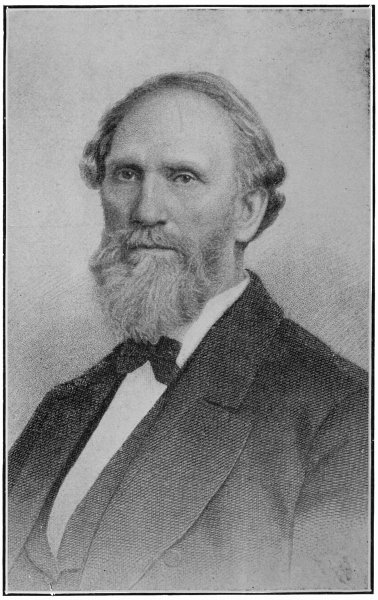
O. S. WOOD.
One of the most notable telegraph men in America,
the first pupil of Professor Morse and the first to inaugurate
an electric telegraph system in Canada on
an extensive scale.
Born in 1817, near Ithaca, N.Y., after a grammar
school and collegiate course, he studied and became
a civil engineer, and was for some time employed in
that capacity by the New York State Government.
When Mr. Morse was exhibiting his telegraph at
Washington, in 1844, Mr. Wood was induced to
join the inventor, and became his associate in constructing
and working the experimental line between
Washington and Baltimore, and the first to operate
the line when opened for public business and afterwards
engaged in constructing telegraph lines in
other directions.
Early in 1847, when the Montreal Telegraph
Company was formed, his services were sought, and
he was appointed its first General Manager. By the
end of this year a telegraph line was in operation
between Montreal and Toronto, and to Quebec the
following year, and in time extended throughout
the whole country.
Owing to Mr. Wood’s able administration the
Company became one of the most important institutions
in Canada.
After a long and successful career Mr. Wood retired
in 1865, carrying with him the good will of the
public and the respect and esteem of the directors
and employees of the Company.
He subsequently engaged in other telegraphic
enterprises in the United States, in all of which he
was equally fortunate.
After amassing a considerable fortune he retired
from active business pursuits many years ago, and is
now spending the evening of his days at a quiet
suburb of New York.
He is a man of commanding presence, tall,
dignified and face bearing a very striking resemblance
to Washington.
He possesses a highly cultured mind, a humane
and benevolent disposition, coupled with an agreeable
and attractive manner.
He is, and was always, a patriotic American citizen.
During his sojourn in Canada he never relinquished
his birthright.
The name of Orrin S. Wood will be long
remembered by telegraph men as the first telegraphist
on the continent of America, a distinction worthy
of record in the annals of telegraphy, and is the
oldest telegraph man living at the present time in
America.
Long may he be spared is the fervent hope of the
telegraph fraternity.
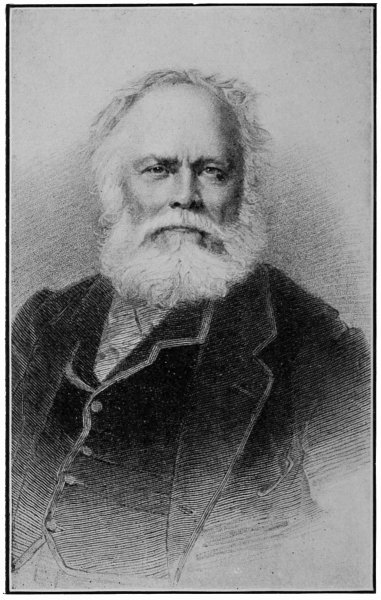
SIR HUGH ALLAN.
The name of this gentleman will be remembered
in connection with the Montreal Telegraph Company.
He was its President from 1851 until the
day of his death.
It was largely through his efforts in conjunction
with Mr. Wood that the telegraph system was extended
to the most remote points in Canada.
It may not be generally known that, although a
very busy man, he acquired a knowledge of telegraphy
and became an expert telegraphist.
He had a private wire erected from his palatial
residence, Ravenscrag, and connected with the
general telegraph office, and by this means kept in
constant touch with the inward and outward movements
of his large steamship fleet.
He was for many years a director of the Western
Union Telegraph Company, and one of the early
contributors to the first Atlantic cable, and for a time
one of its directors, but Sir Hugh Allan will be
better known as the originator of the Montreal
Ocean Steamship Company (now known as the
Allan Line.)
There was no limit to his superabundant energy;
no important enterprise was thought of unless his
name and influence was sought. He was president
or director in nearly every financial or industrial
company in Montreal. No one before or since has
occupied such a commanding position in business
life in Canada.
He received the honor of knighthood from the
late Queen personally in recognition of his great
public services; this honor was never more worthily
bestowed.
Sir Hugh Allan was a native of Scotland, born at
Saltcoats, Ayrshire, Sept. 29, 1810. His death took
place in Edinburgh while there on a visit Dec. 9,
1882.
The wonder is that some enduring mark of public
appreciation has not been formulated to perpetuate
the name of one who has done so much for the land
of his adoption.
A statue on Dominion Square would be a fitting
momento.
“Lives of great men all remind us
We can make our lives sublime,
And departing leave behind us
Footprints on the sands of time.”
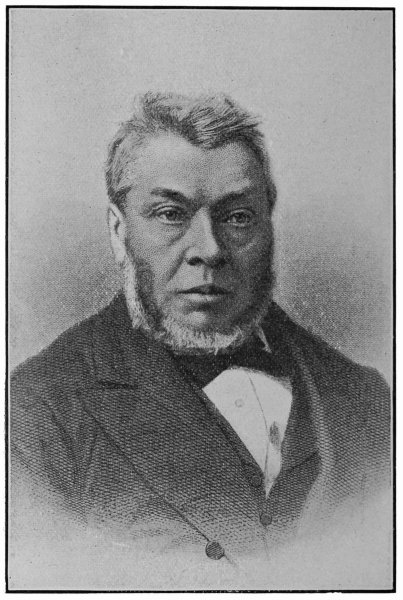
JAMES DAKERS.
Born in Forfar, Scotland, in 1811, on completing
his studies at the parochial school, he served his
apprenticeship in an attorney’s office in his native
town, and came to Canada in 1840.
He entered the service of the Montreal Telegraph
Company shortly after its organization as Secretary.
When Mr. Wood separated from the Company in
1865, Mr. Dakers was appointed Manager of the
Eastern division, acting as Secretary in addition.
Owing to his faithful and energetic services the
success of the company was greatly enhanced.
“Whatever thy hand findeth to do, do it with all
thy might,” seemed to be his guiding principle. Like
the restless sea, always moving, if not engaged at
his own special work, he would repair to the operating
department and give a helping hand, here and
there, where most needed, then to the receiving
counter attending to customers.
In the early telegraph days during a pressure of
business, he not infrequently would take a handful
of messages and deliver on his way to meals, and
kept a vigilant eye on every department of the
company’s operations.
When the Montreal Telegraph Company leased
its business to the Great North Western Company,
in 1881, he was not in accord with the directors in
this move, and resigned, retaining, however, the good
will of the shareholders, many of whom shared his
views, and the respect of the business community
by whom he was long and favourably known.
The following tribute to his worth by the late
Rev. Dr. Ormiston in a letter to a friend is deserving
a place here:
“James Dakers is in many respects a remarkable
man. Notwithstanding many disadvantages, he has
fairly earned the high position of influence, independence
and usefulness which he now occupies.
He is characterized by indomitable energy, great
force of character, unyielding tenacity of purpose,
his intellect is of a high order, and eminently practical,
inflexibly upright in all his dealings, conscientiously
faithful to all his obligations, punctual
and thorough in the performance of all his duties,
incapable of meanness, his word as good as his
bond, he is a man universally trusted; his sympathies
with the suffering and the struggling are wide and
tender.
“Many bless him for his wise counsels and efficient
aid; the extent and genuineness of his Christian
charity is as manifest as the steadfastness of his
religious life; as a true friend, he is one among a
thousand.
“Were I asked by a young man for a model of a
man, earnest and indefatigable, pure and firm in
principle, exemplary and consistent in character,
desirable and valuable in friendship, I would not
hesitate to point him to James Dakers, of Montreal.”
This was a very high testimonial of the character
of Mr. Dakers by one who knew him intimately for
many years.
After giving up his connection with telegraph
interests, with which he had been so long associated,
he lived in retirement until his death, which occurred
on April 15, 1887.
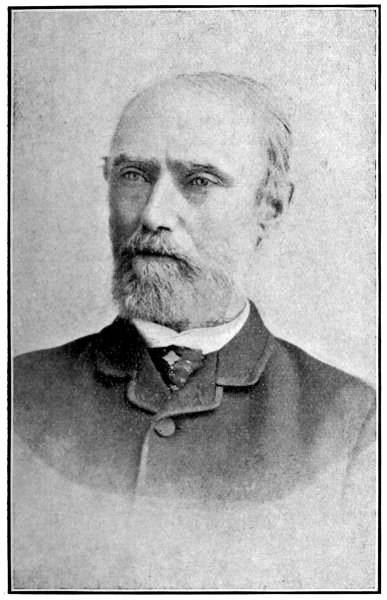
H. P. DWIGHT.
For the long period of fifty-six years Mr. Dwight
has been continuously engaged in the telegraph
service, and only quite recently retired from the
more active duties of his calling.
Born on December 23, 1828, at Belleville, Jefferson
County, N.Y., he entered the service of the
Montreal Telegraph Company in 1847, the year of
its organization, and placed in charge of the Belleville,
Ontario, Office, where he remained for a time,
and afterwards employed at the Head Office,
Montreal. When the wires connected Toronto he
was appointed agent there and soon made superintendent
of the Western Section. In 1881, when
the Montreal Telegraph Company leased its business
to the Great North Western Telegraph Company he
was appointed general manager of the latter.
When Mr. Wiman resigned the presidency of that
company, Mr. Dwight succeeded him and filled the
dual positions until a few months ago, when he
resigned the general managership, the duties being
too onerous and exacting for one at his time of life.
Mr. Dwight is associated with many other enterprises.
He is president of the Canadian General
Electric Company and a director of the Toronto
and London Electric Company, president of Birkbeck
Investment Company and chairman of the
Governors of the Royal Humane Society. He is a
man of fine physique, has lived a regular and careful
life, which accounts for the vigorous and evergreen
appearance at his time of life.
He is a keen sportsman and a devoted disciple of
Isaac Walton. Every year he finds time to spend a
few weeks in the happy summer-time, in the wilds
of Northern Ontario, in quest of the speckled beauties
of that region, or in the lower St. Lawrence,
seeking the haunts of the lordly salmon in the
Restigouche or other famous streams. In closing we
wish him long life and many years to indulge in this
his favorite recreation.
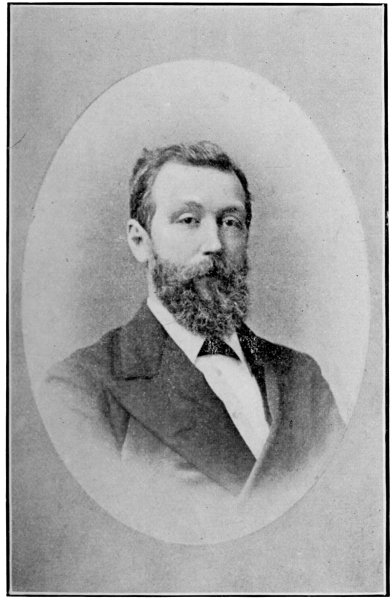
WILLIAM CASSILS.
Born in the village of Renton, Dunbartonshire,
on June 25, 1832, after acquiring a rudimentary
training in the parochial school, and equipped for a
business career, he engaged in a commercial house
for a time, but his prospects were not equal to his
youthful ambition, and his attention was directed to
Canada wherein he had relatives and was encouraged
to join them. He arrived at Montreal in 1852.
Shortly after his arrival he entered the service of the
Montreal Telegraph Company; his abilities were
soon recognized—within a short time he was appointed
manager of the Quebec Office, the second
in importance to Montreal, and later was made
superintendent of the Eastern Division; while in
this position he had the wires extended to Father
Point, the extreme eastern limit of the Company’s
system at that time.
In 1865 he left the telegraph service to engage in
a wholesale business in Montreal, but his heart was
never quite divorced from his first calling.
In 1876 he organized the Canadian District Telegraph
Company and became its president.
When the telephone first made its appearance
he foresaw its great possibilities, when he, in association
with others, established in 1878 the first telephone
exchange in Canada, which was afterwards
merged with the Bell Telephone System.
He was a Director of the Montreal Telephone
Company, President of the Canada Central Railway
and administrator of the St. Lawrence and
Ottawa Railway, both of which are now linked to
the Canadian Pacific Railway; he was also President
of the Dominion Transport Company, but his interest
and sympathies were always keenly directed
to the progress and development of telegraphy. He
himself was an expert telegraphist and always took
a lively interest in the welfare and success of the
telegraph fraternity. He was amiable in manner,
kind in disposition and generous to a fault; his purse
was ever open to the needy or unfortunate.
He possessed a fine tenor voice in his young days.
When at social gatherings he rendered the songs of
his native land with a sweetness and pathos few
could equal. He took a great interest in young men,
and many were indebted to him for advice and
assistance in beginning the battle of life.
He passed away at a comparatively early age (in
his fifty-ninth year) on December 25, 1891.
“Howe’er it be, it seems to me
’Tis only noble to be good
Kind hearts are more than coronets,
And simple faith than Norman blood.”
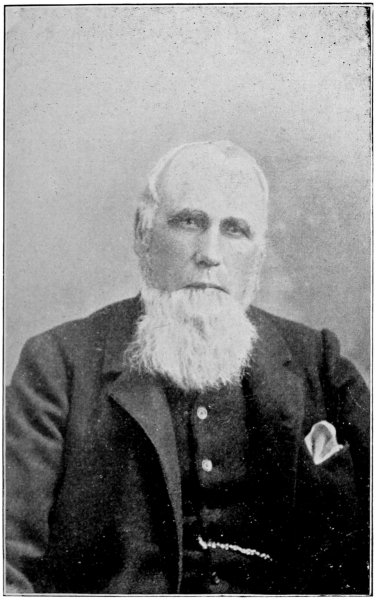
JAMES POUSTIE.
Born at Montrose, Scotland, in 1830. While yet
an infant, his parents came to Canada in the historic
brig “Favorite,” owned and commanded by the
father of the late Sir Hugh Allan.
Mr. Poustie is the pioneer telegraph line builder
of Canada. He was engaged by the Montreal
Telegraph Company shortly after its organization.
After the contractors had finished the line between
Montreal and Toronto, all line extensions
thereafter were under his personal supervision.
He would start early in the spring with gangs of
linemen, equipped with tools and provisions, live
under canvas during the building season and return
in the fall to prepare for the next year’s operations.
This continued on from one year to another
until the whole country was covered with a network
of wires.
In purchasing material Mr. Poustie was a shrewd
and careful buyer, getting the very best to be had at
the lowest figure. In hiring labor, while paying
liberal wages, he took good care to receive in return
a fair day’s work for a fair day’s wage from his men.
Though stern and exacting, he was not unkind. His
gangs of men were chiefly French Canadians; he
knew their language and could apply it forcibly, if
not elegantly, when circumstances required it.
His men were devoted to him and worked like
beavers. It is no exaggeration to say that owing to
inherent shrewdness in handling his men and purchasing
supplies the lines were constructed at half
the cost of similar work in the United States; this
fact the Company soon became cognizant of.
Finally the system became so extensive as to demand
a division of labor and responsibility when
foremen were placed in charge of important sections
of the line, and Mr. Poustie directed operations from
headquarters at Montreal and became General
Superintendent of Construction.
This position he held for many years. At length
he resigned to rest for a while. He is at present
associated with R. G. Reid & Co., of Newfoundland,
in their Montreal office.
Mr. Poustie is a man liberally endowed with good
common sense, dislikes humbug or insincerity, a keen
observer of men and possesses a retentive memory
and a happy vein of dry caustic humor with a merry
twinkle in his clear penetrating greyish blue eyes.
He can relate many interesting tales generally, from
a humorous point of view, in reference to his own
varied experience, all of which are well worth listening
to. He is still vigorous and hearty, and we hope
has many years before him. Like Yorick, “A man
of infinite jest, of most excellent fancy.”
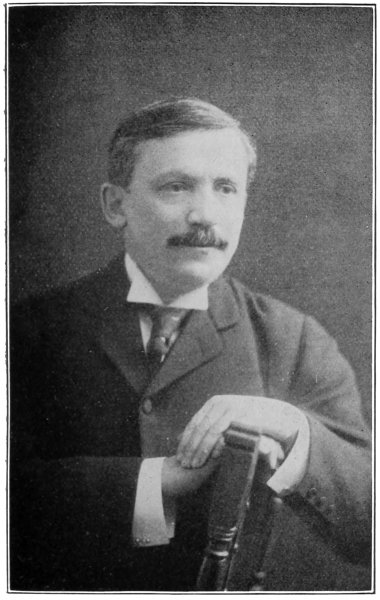
CHAS. R. HOSMER.
“Some are born great. Some achieve greatness.
Some have greatness thrust upon them.” It is no
difficult task to determine to which class Mr. Hosmer
belongs.
Born some fifty years ago in the little French
Canadian village, Coteau Landing. On receiving an
elementary training at the village school he turned
his attention to telegraphy, and, instructed in its
mysteries by the operator and agent at the railway
station there, qualifying as an operator he secured a
position with the Montreal Telegraph Company and
was in its employ for some years.
When the Dominion Telegraph Company came
into being he entered the service and rose step by
step to the highest position attainable. When that
Company merged with the Great North Western, Mr.
Hosmer was offered and accepted the offices of
President and General Manager of the Canada Mutual
Telegraph Company, then recently organized. A
few years later when the Canadian Pacific Railway
Company were about to establish a commercial telegraph
business, he was made General Manager, and
held this for some thirteen or fourteen years, during
which period he was very successful in organizing
and carrying on this branch of the Company’s business.
He was also a leading factor in exploiting the
Commercial Cable and the Postal Telegraph Cable
Companies; he is a Vice-President of the former and
a director of the Canadian Pacific Railway, director
of the Merchants’ Bank and many other financial
concerns; President of the Ogilvie Milling Company,
said to be the largest of the kind existing; a member
of St. James’ Club and at one time President;
he is also a member of Mount Royal (yclept the
millionaires’ club).
Mr. Hosmer is a recognized leader in financial
circles in Montreal; he is possessed of a cheery,
bright and winning personality, affects no airs,
gracious in manner with a pleasant word for all.
Although not actively connected with the Canadian
Pacific Telegraph System, his guiding hand is
always reached.
He is yet a young man, full of life and energy,
there is no saying the number and kind of activities
may further engage his busy and restless mind.
His motto seems to be:
“Still achieving, still pursuing,
And a heart for any fate.”
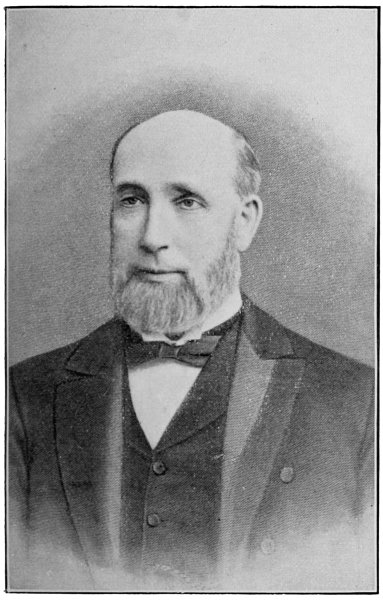
HON. GEO. A. COX.
Born at Colborne, Ont., May 7, 1840, he commenced
business life there as an operator in the service
of the Montreal Telegraph Company.
After two years spent in the office of his native
town he was in May, 1858, placed in charge of the
Peterboro office of the Company and in addition a
few years later was made agent of the Canadian Express
Company.
He took an active part in the municipal, educational
and commercial interests of the town and was
for seven years its mayor.
In 1888 he left Peterboro, and from that time has
resided in Toronto where there is a wider scope for
his energies.
He was appointed to the Senate in 1896 by Lord
Aberdeen.
Mr. Cox is a strong temperance man and a warm
supporter of the Methodist Church, of which he is a
member; is Bursar of Victoria University and
President of the Ladies’ College, Whitby; President
of the Bank of Commerce, the Canada Life Insurance
Company, the Western Fire Insurance and on
the directorate of many other companies; is one of
the leading financiers in the Dominion.
His name has been publicly mentioned as one
likely to receive honors at the hands of the King at
no distant date. As “coming events cast their shadows
before,” this is not at all improbable.
Senator Cox was one of a syndicate to build the
Canadian Pacific Railway in opposition to the
syndicate formed at Montreal. His name is now
prominently connected with the Grand Trunk
Pacific project.
His success in life has been phenomenal when his
humble beginning is considered, and is a tolerably
fair model for young Canadians to imitate in the
battle of life.
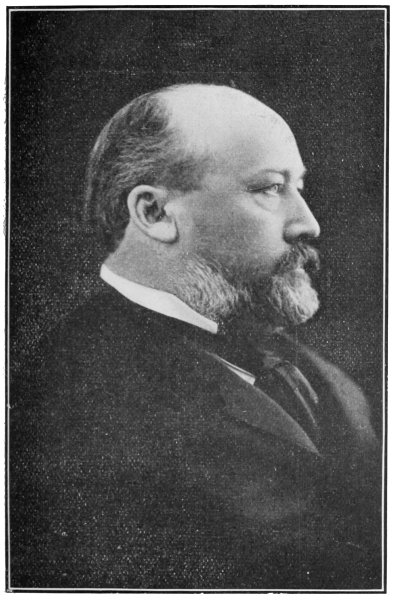
SIR WILLIAM VAN HORNE.
Born near Joliette, Ill., February 3, 1843. On
quitting school he began life as an office boy at the
Railway Station there, and later became telegraph
operator on the Illinois Central Railway. He was
afterwards despatcher then superintendent of telegraph,
and in a short time was made divisional
superintendent of the Chicago and Alton Railway,
and in 1872 general superintendent of the St. Louis
and Kansas City and Northern Railway; from
there he went, in 1874, to the Southern Minnesota
Railway as its general manager.
In 1878 he returned to the Chicago and Alton
Railway as general superintendent, but two years
later he was called to the position of general superintendent
of the Chicago, Milwaukee and St. Paul
Railway, and in 1881 he was asked to take control
of the Canadian Pacific Railway, then in process
of construction. Under his vigorous and energetic
direction the line was built in one-half of the time
required by the contract between the government
and the Company.
He has been successively Vice-President and
President of the Company and is now Chairman of
the Board of Directors.
The construction and successful management for
years of this great enterprise has not impaired his
wonderful energies. He has built a railway in the
Island of Cuba some four hundred miles in length in
the usual expeditious manner. This work being
completed, he is now, it is said, turning his attention
to the distant Philippines in order to provide Railway
facilities for the people of that country.
He is a director of many companies, including the
Postal Telegraph and Commercial Cable Company,
and a member of St. James and Mount Royal Clubs.
Sir William Van Horne is not only a famous railway
man, but possesses artistic talents of a high order.
Had he followed art as a profession he would have
taken high rank. He is looked upon as one of the
best art connoisseurs in Canada.
He was created a K. C. M. G. by the late Queen
in acknowledgment of his public services in connection
with the Great Transcontinental Railway and
Imperial Highway.
Sir William is a man of fine presence, wears his
honors with ease and dignity, affable and courteous
in manner, and approachable to all.
“Honour and shame, from no condition rise,
Act well your part, there all the honor lies.”
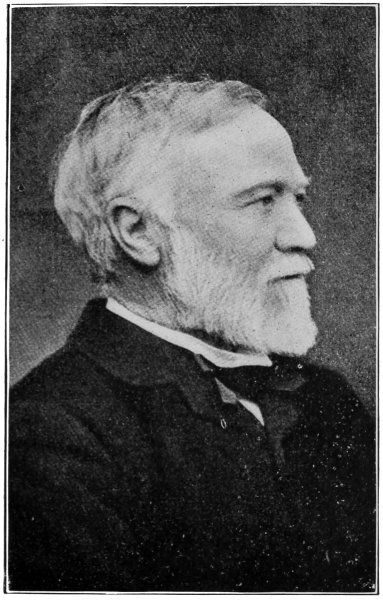
ANDREW CARNEGIE.
Born in the ancient Royal Burgh Dumfermline,
Fifeshire, in 1837. His father and mother emigrated
to the United States in 1848, settling in Alleghany,
Pa.
The senior Carnegie was a master weaver and a
man of exceptional intelligence, who was obliged to
relinquish his business owing to the development of
steam mills with which the handicraftsmen could not
hope to compete.
At the age of fourteen young Carnegie began work
as a messenger in the office of the Ohio telegraph
company; in a short time he became an operator.
When the Pennsylvania Railway was carried to
Pittsburgh he received an appointment as train despatcher
and rose to be superintendent of the Pittsburgh
division of the system.
At the outbreak of the American civil war Carnegie
was made Superintendent of military roads.
After the war he went into numerous ventures, in
all of which he was eminently successful.
His first big manufacturing venture was the organization
of the Keystone Bridge Company. Iron bridges
were coming into fashion, and he got the lead everywhere.
He soon acquired other manufacturing plants
in the iron line.
By 1888 he had control of the Homestead Steel
Works and many other plants which were capitalized
at about one hundred million dollars.
Some ten or fifteen years ago Mr. Carnegie began
to feel the oppression of wealth and its responsibilities
and made arrangements by which his employees
became sharers in his profits. After getting free of the
greater part of the personal care of the properties in
which he was the chief owner, Mr. Carnegie has
devoted himself largely to philanthropic objects, his
gifts being chiefly in the line of building public
libraries.
He takes a warm interest in everything relating
to telegraphy and telegraph men, and is rather
pleased to be remembered as an old-time telegraphist.
His chief place of residence is Skibo Castle, Scotland,
but he pays frequent visits to the United
States.
“Ring in the valiant man and free
The larger heart, the kindlier hand.
Ring out the darkness of the land,
Ring in the Christ that is to be.”
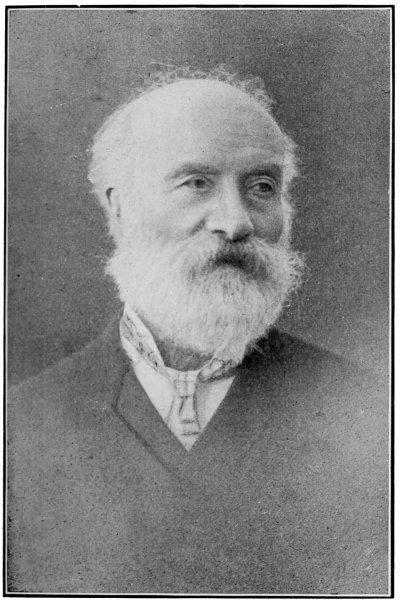
SIR SANDFORD FLEMING.
Was born at Kircaldy, Fifeshire, Scotland, on the
7th day of January, 1827. He left school at the
age of 14, and was immediately articled as a student
of surveying and engineering. At the age of 18
he came to Canada.
In 1852 he was appointed one of the engineering
staff of the Northern Railway then known as the
Ontario and Lake Huron road.
In 1863 he went to England as a representative
of the Red River settlement to invoke the aid of the
Imperial Government toward the construction of a
railway to connect with the Canadian railways, but
the scheme was not carried out.
When the Intercolonial Railway was projected he
was made Chief of Surveys and Construction. When
nearing its completion he was called upon by the
Government to undertake the survey of the proposed
route to the Pacific.
After exhaustive surveys had been made and the
construction of the Canadian Pacific had been well
advanced and some six or eight hundred miles of
the heaviest sections built, political exigencies arose,
and in 1880 he resigned. In that year he was
elected Chancellor of Queen’s University, and in
1882, while on a visit to Scotland, was presented
with the freedom of Kircaldy Burghs, and in 1884
received the honorary degree of LL.D., from St.
Andrew’s University.
In 1881 he went as a delegate from the Canadian
Institute and the American Meteorological Society
to the International Geographical Congress at
Venice, and in 1884 he was appointed a delegate
of Great Britain to represent the Dominion of Canada
at the International Prime Meridian Conference at
Washington, where he had the pleasure of finding
his views which he had been pressing on the public
for years with regard to Cosmic time and a prime
meridian for all nations, accepted by the representatives
of the civilized world.
As early as 1879 Sir Sandford submitted to the
Canadian Government a scheme for spanning the
Pacific Ocean by electric cables which would, in
connection with existing land and cable wires, complete
the electric girdle of the globe, and bring
Great Britain, Canada, Australia and New Zealand
in unbroken electric touch with each other without
passing over foreign territory. The proposition was
given due consideration and the subject was laid
before successive parliaments, but, while much interest
had been awakened, nothing practical was
accomplished, owing to the many obstacles in the
way, and the matter was, for a time, held in abeyance.
Meanwhile its energetic projector did not
despair. Year after year he took every favorable
opportunity to bring it before the public men of
Great Britain and the Colonies, travelling thousands
of miles to attend Conferences at London, Brisbane,
Ottawa and elsewhere, wherever the subject was
under review. At length the reasons and arguments
adduced on all these occasions in support of
this scheme were found to be convincing, and its
feasibility so apparent that it was finally accepted
and practically applied.
On the 31st day of December, 1900, the Imperial
and five Colonial governments joined in an interstate
partnership to carry out the work so long and
ably advocated by its originator and promoter.
Exactly twenty-two months after the agreement,
8,272 miles of cable had been manufactured and
safely embedded in the vast depths of the Pacific,
nearly a third of the earth’s circumference, on the 31st
day of October, 1902, electric communication was
successfully established between Canada, New Zealand,
Fiji and Australia, and has been uninterruptedly
maintained ever since. The success of this great
telegraph enterprise, the most stupendous ever taken,
was a fitting prelude to the dawn of the new century
and a splendid triumph to the genius and foresight
of Sir Sandford Fleming.
During nearly a quarter of a century he had given
his time and talents, as well as his private means, to
accomplish the end he had in view, and it must have
been peculiarly gratifying to him that his labors all
these years had not been in vain. His patriotic and
self-sacrificing efforts should receive some suitable
public acknowledgment in some substantial form.
In 1877 he was made a Companion of St. Michael
and St. George, and in 1897 he was promoted to be
a commander of the same distinguished order on the
occasion of the sixtieth year of Her Majesty’s reign.
“Peace hath her victories,
No less renowned than war.”
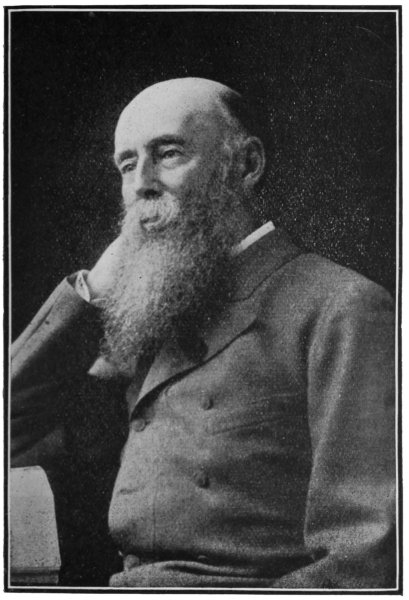
FRED. N. GISBORNE.
Was born at Broughton, Lancashire, England,
March 8, 1824, and came to Canada in 1845.
When the Montreal Company was organized he
was employed as one of its first operators, opening
the first office of the Company at Quebec.
He was afterwards engaged in various telegraph
enterprises in the Maritime Provinces.
In 1851 he laid the cable connecting New Brunswick
and Prince Edward Island, the first submarine
cable in America.
In 1856 he laid the cable connecting Cape Breton
and Newfoundland (85 miles in length), this being an
important link in the Atlantic cable system.
Previous to this he had secured a charter from the
Newfoundland Government to construct a telegraph
line across the Island, which, with the projected cable
crossing the Gulf of St. Lawrence connecting with
the land telegraphs, would provide the quickest news
on the arrival of steamers from Europe. In this project
he was associated with several American capitalists,
but financial difficulties arose, and in the winter
of 1853–4 Mr. Gisborne visited New York to secure
further capital, and there met Mr. Cyrus W. Field,
with the result that Mr. Field returned with him to
Newfoundland. The Legislature, at Mr. Gisborne’s
request, cancelled the original thirty years’ charter
granted to himself and associates, for a new charter
for a term of fifty years to the New York, Newfoundland
and London Company. The object of
this Company was to complete the land lines begun
by Gisborne, lay the cable in the Gulf of St. Lawrence
and to lay a cable across the Atlantic. The
latter attempt, however, proved a failure, and the
franchise of this Company was subsequently acquired
by the Anglo-American Telegraph and Cable
Company.
Meanwhile Mr. Gisborne dropped out of the enterprise,
probably losing all the interest in it he
possessed. Some years later he was appointed
Superintendent of the Canadian Government Telegraph
and Signal Service, which he filled until his
death, which occurred on Aug. 30, 1892.
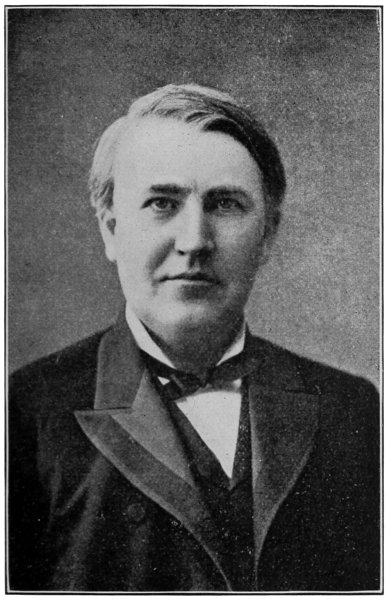
THOS. A. EDISON.
Born in Milan, Erie county, Ohio, February 11,
1847, he attended school for a few months only,
being educated at home by his mother, a woman of
superior ability and attainments.
The boy was an apt scholar, showing preference
for historical and scientific subjects.
In 1854 his father removed to Port Huron, Mich.,
where, at the age of twelve, he was engaged as a
newsboy on the Grand Trunk Railway. While thus
employed he took every occasion to watch the operations
of the telegraph at the various stations on the
line. He erected a wire between his father’s house and
that of a neighbour, himself making the instruments to
save the cost of battery material; he experimented
with a tom-cat, using the fore and hind feet as electrodes.
The connections having been duly made
he tried to start an induced current by rubbing the
back of the feline. This amusing experiment was
not a success, however, and was abandoned; later on
he was rewarded for bravery in rescuing the child
of the station master from the front of a moving
train by receiving lessons in telegraphy, which he
soon mastered, and was employed as telegraph
operator on the Grand Trunk Railway for a time,
leaving thereafter for the United States, where he
worked in various cities, meanwhile devoting
himself to the study of electrical science then little
understood in America.
While working as operator in New Orleans, La.,
he invented the automatic repeater. In 1864 he
conceived the idea, which he afterwards perfected,
of duplex telegraphy, but it was not put into practical
operation until 1872. His next important inventions
were the quadruplex and the printing telegraph
for stock quotations.
In time his inventions were numerous and varied.
On the lists of inventions at the patent office, Washington,
in 1895, no less than 600 were credited to
his name. The most notable amongst these are the
quadruplex, the phonograph and the incandescent
light.
Although Edison had acquired considerable wealth,
yet in 1896 he publicly declared that he would have
been at least $600,000 better off if he had never
taken out a patent or defended one, and that all the
money he ever made was made by manufacturing
his inventions or in their practical use.
In 1896 he established the village of Edison, N. J.,
in the very centre of an iron ore deposit, a plant for
the magnetic separation of iron from the rock in
which it is embedded in the mine, the process being
purely automatic. He first invented a crusher capable
of reducing ten tons of rock to dust every minute;
he then invented apparatus whereby the iron ore
was separated from the dust by means of a magnet,
the extracted ore being made into briquettes and
easily handled for transport to the blast furnace.
Mr. Edison is one of the simplest and unostentatious
of men, careless in his costume, abstemious and
simple in his habits, unselfish and generous in dispositions.
He married in 1874, and has four sons and one
daughter.
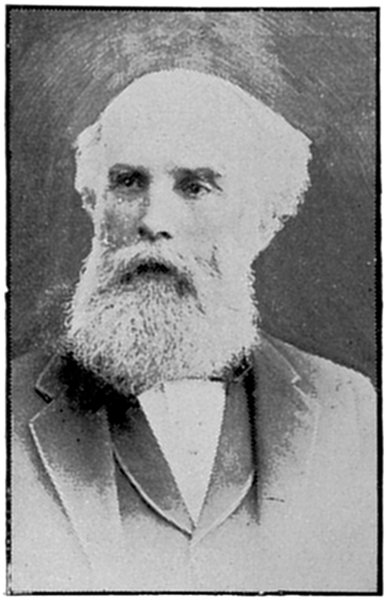
ISAAC D. PURKIS.
Was born in Laprairie, Que., in 1827. He was
son of the Rev. Isaac Purkis, who came from England
in 1821, and was a lineal descendant of the
Purkis who carried the body of King William Rufus
from the New Forest to Winchester in Hampshire,
when shot by Sir Walter Tyrell, while hunting in the
New Forest.
Mr. Purkis learned telegraphy under Mr. O. S.
Wood and was located at Prescott, Ont., from 1849
to 1851, in the employ of the Montreal Telegraph
Company. In 1851, on the very flattering recommendation
of Mr. Wood, he entered the service of
the British North American Telegraph Association
and was appointed Superintendent (equivalent to
General Manager at the present date). This company
had a line from Quebec city east, to Rivière du
Loup, thence southerly to St. John, N.B., etc. In
1853, on the recommendation of Mr. Purkis, the line
was extended to Montreal, along the north shore of
the river, and thus entered into competition with the
Montreal Telegraph Company, whose line was from
Point Levi, along the south shore to Montreal and
thence westward. Connection was first made between
Quebec and Point Levi by a long span of
wire on masts, in the spring when the ice was breaking
up. None of the linemen would attempt to
cross on the floating, broken ice. Mr. Purkis then
got a ladder, and placing himself in the centre with
the coil of wire over his shoulder succeeded in making
the passage, at the same time paying out the
wire over the edges of the ice. His exertions were
so great that he was completely exhausted when he
finally got across.
This company established at Rivière du Loup,
Que., a signal office under the Lloyd code, whereby
all vessels passing were signalled and information at
once telegraphed to the owner or agent and to the
press. In addition to this a boat manned with capable
oarsmen, swivel gun on bow to signal the approaching
steamer, more particularly at night, was
used to intercept and receive from the inward
steamer the despatches and latest newspapers from
Europe. The method was to throw a tin cylinder in
which were enclosed the despatches and newspapers
with a small flag attached to the end; this was
attached to a lanyard, and when secured by the
Telegraph boat, the steamer was given a signal and
she proceeded on her way, the despatches being
promptly brought ashore and delivered to the telegraph
and signal officer in charge.
In December 29, 1854, the British North American
Telegraph Association and the Canada Grand
Trunk Telegraph Company (whose lines extended
from Montreal westward) entered into an agreement
for the mutual interchange of business, and Mr.
Purkis was appointed Superintendent of both companies.
This position he held until both companies
were amalgamated with the Montreal Telegraph
Company in the latter part of 1856. When he left
the telegraph business in August of that year his
subordinates presented him with a signet ring, which
he wore to the day of his death.
He engaged in the forwarding and ferry business
at Prescott until 1870, when he was appointed
General Manager of the Dominion Telegraph Company,
with headquarters at Toronto. He resigned
from this position in 1874 and again returned to
Prescott taking up his former business. Besides
himself he had three brothers engaged in the telegraph
service, George, Arthur and William, all of
whom predeceased him many years since.
Mr. Purkis was a citizen of the highest type,
always eager for the welfare of the town and its inhabitants.
Personally, he was of a most genial and kindly
disposition, a true and sincere friend to all who
shared his confidence.
He passed away recently at his home at Prescott
after a brief illness, in his 78th year.