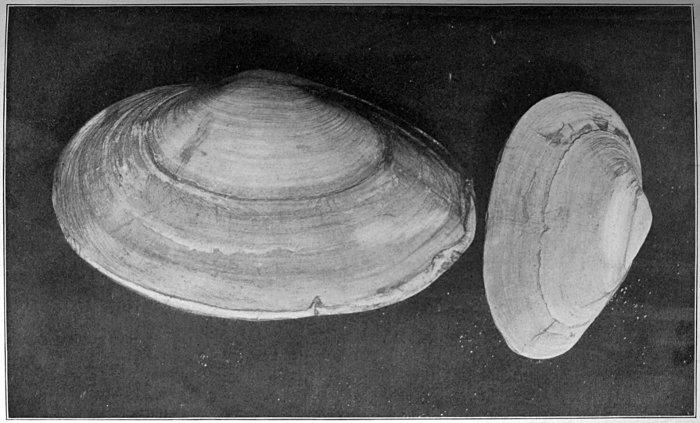
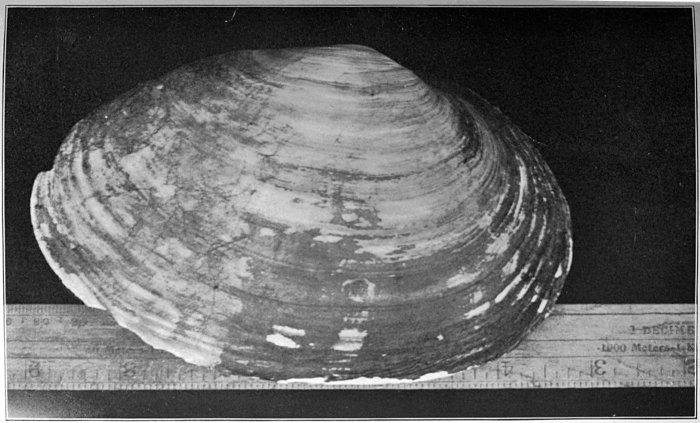
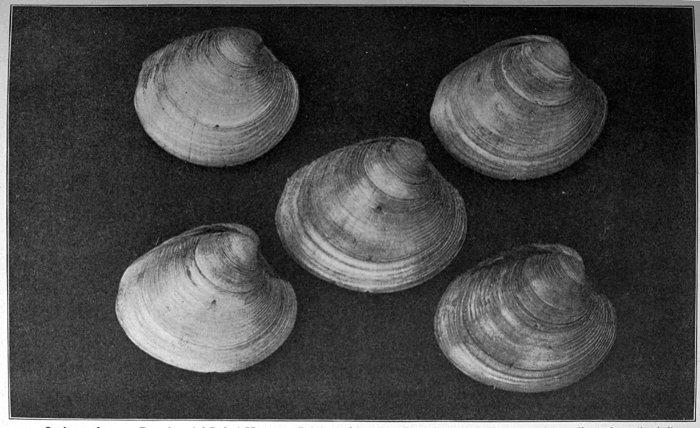
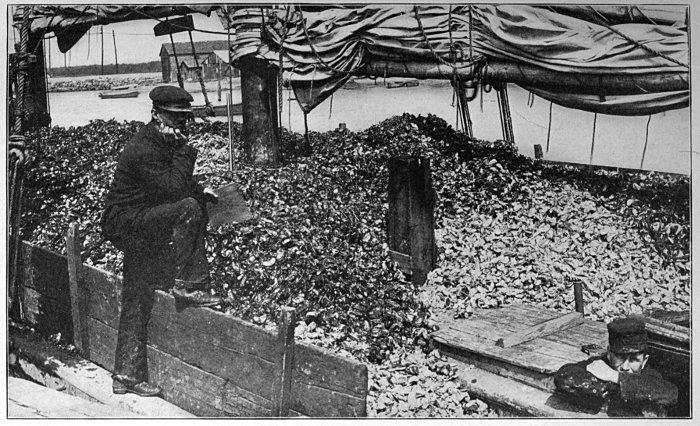
Mya arenaria, commonly known as the "soft" or "long-neck" clam,
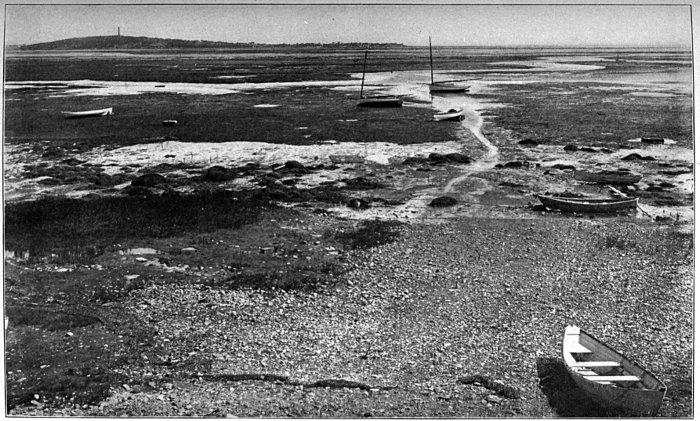
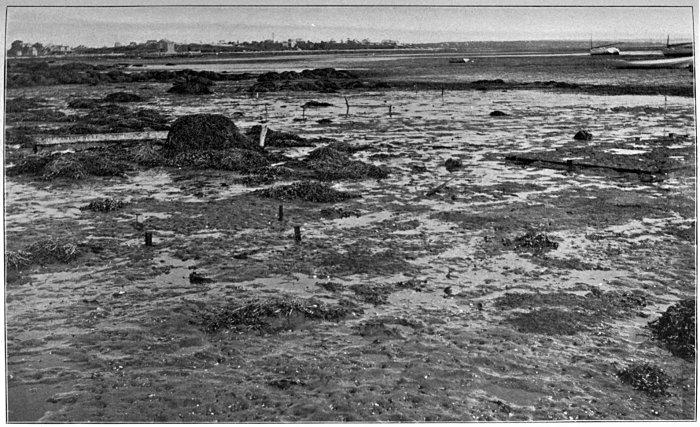
is found along the entire Massachusetts coast, wherever there is afforded
a sufficient shelter from the open ocean. Exposed beaches with open
surf are never inhabited by this mollusk, which is usually found on
the tide flats of bays, inlets and rivers, and on the sheltered beaches
between high and low tide lines. The clam occurs in various kinds of
soil, from rocky gravel to soft mud, but grows best in a tenacious soil
of mud and sand, where it lies buried at a depth of from 6 to 12 inches.
As Cape Cod marks the dividing line between a northern and a
southern fauna, it also divides the clam flats of Massachusetts into two
distinct areas. The same clam is found both north and south of Cape
Cod, but the natural conditions under which it lives are quite different.
In comparing these two areas, several points of difference are noted.
(1) The clam areas of the north coast are mostly large flats, while
those of the south shore are confined to a narrow shore strip, as Buzzards
Bay and the south side of Cape Cod for certain geological reasons
do not possess flats, but merely beaches.
(2) The rise and fall of the tide is much higher on the north shore,
thus giving an extent of available flats nearly six times the clam area
south of Cape Cod.
(3) Clam growth as a rule is much faster on the north shore. This
is due to the great amount of tide flow over the river flats of the north
shore. Current is the main essential for rapid clam growth, as it
transports the food. The average south shore flats possess merely the
rise and fall of the tide, and as a rule have not the currents of the north
shore rivers.
(4) The temperature of the northern waters is several degrees colder
than the waters south of Cape Cod. This affords, as has been shown
experimentally, a longer season of growth for the southern clam. The
north shore clam in the Essex region only increases the size of its shell
through the six summer months, while the south shore clam grows
slightly during the winter.
The present advantages lie wholly with the north shore district, as
through overdigging the less extensive areas of southern Massachusetts
have become in most parts commercially barren. Overdigging has not
occurred to the same extent on the north shore, owing to the vast extent
of the flats. Nevertheless, many acres of these, as at Plymouth,
Kingston, Duxbury, and even Gloucester and Essex, have become wholly
or partially unproductive. The only important clamming in Massachusetts
to-day is found in the towns bordering Ipswich Bay. The south
shore and a good part of the north shore furnish but few clams for
the market.
In view of restocking the barren areas through cultural methods,
the north shore possesses two advantages over the south shore:
it has a larger natural supply at present, which will make restocking
easier; it has larger areas of flats, which can be made to produce
twenty times the normal yield of the south shore flats. Although,
compared with the north shore, the clam area of the south shore seems
poor, it is above the average when compared with the clam areas of the
other States south of Massachusetts, and when properly restocked the
clam flats of southern Massachusetts should furnish a large annual production.
If the clam industry is not properly cared for, it will be totally
ruined before many years. The clammers do not realize this, because
of a mistaken impression that nature will forever furnish them with
good clamming, and they have little thought for the future; while, on
the other hand, the consumer is indifferent from lack of knowledge.
Scope of the Report.—The object of this report is to present in
brief form the condition of the clam fishery in Massachusetts. For this
purpose facts showing the present extent of the industry have been
compiled, with the view of furnishing both the clammer and consumer
with certain desirable information.
The report will consider: (1) general conditions of the industry of
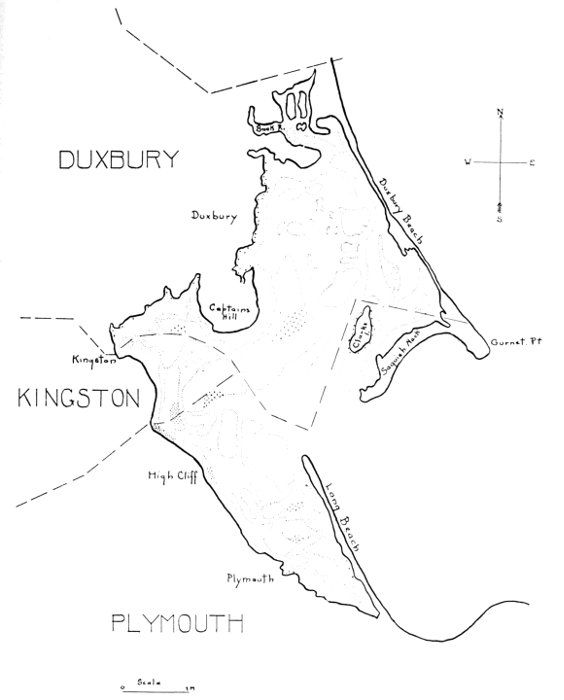
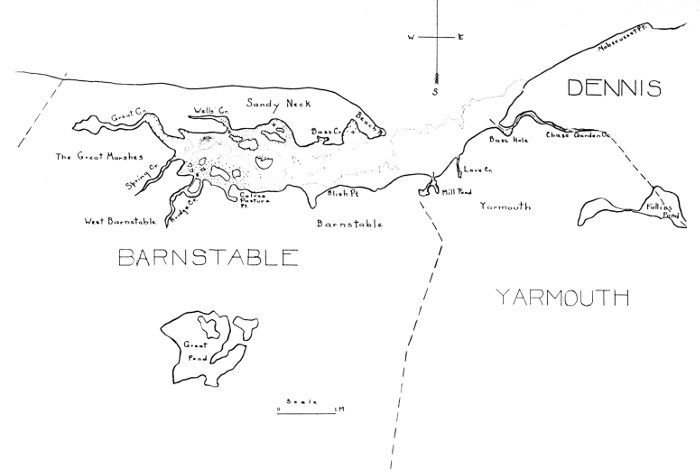
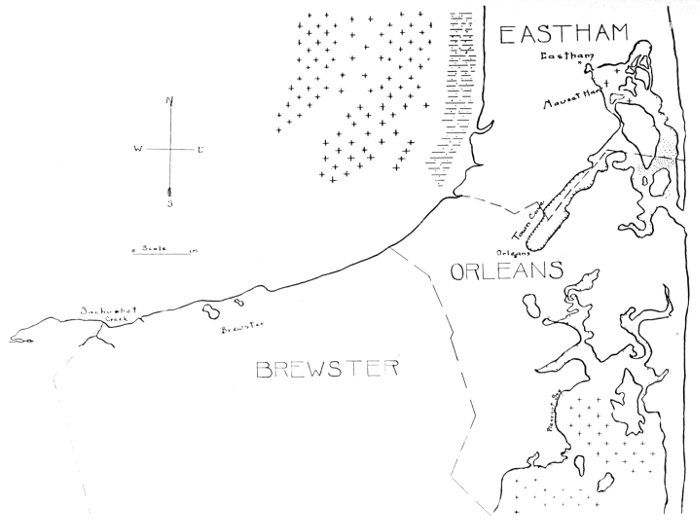
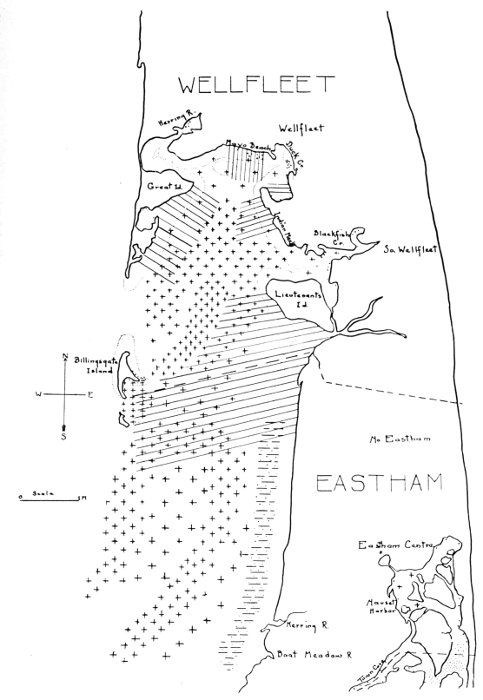
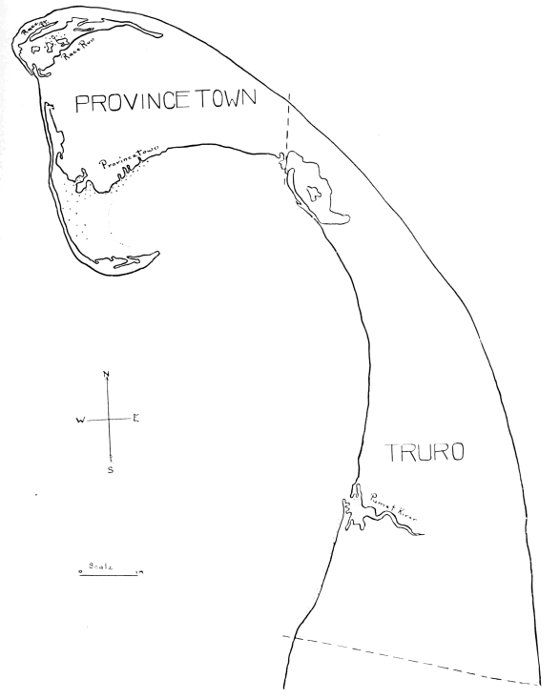
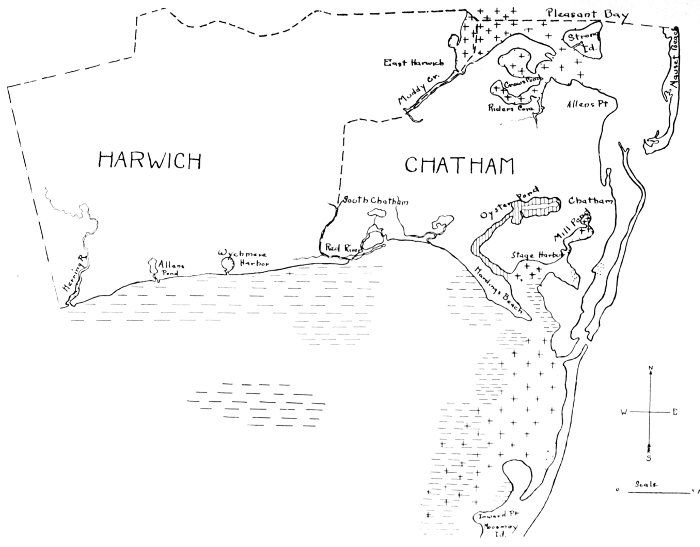
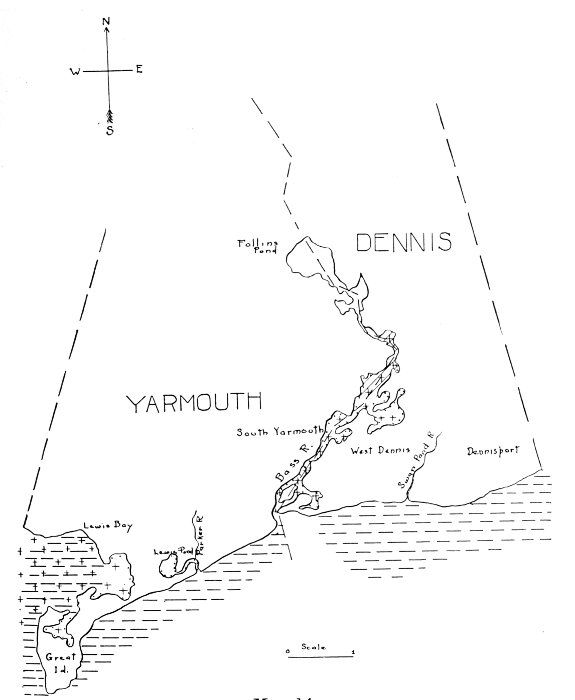
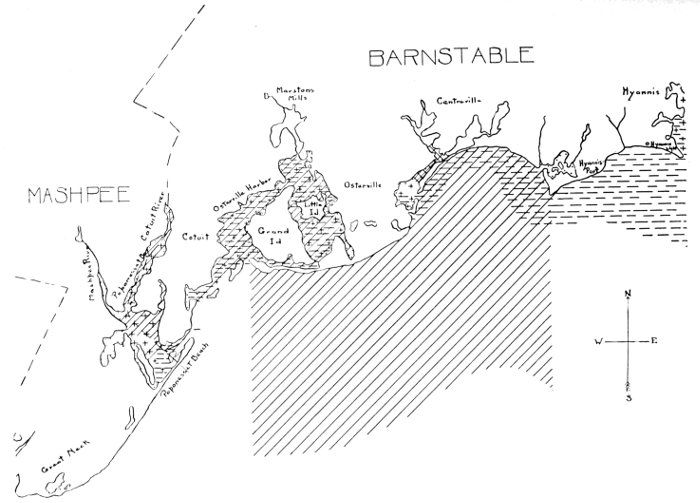
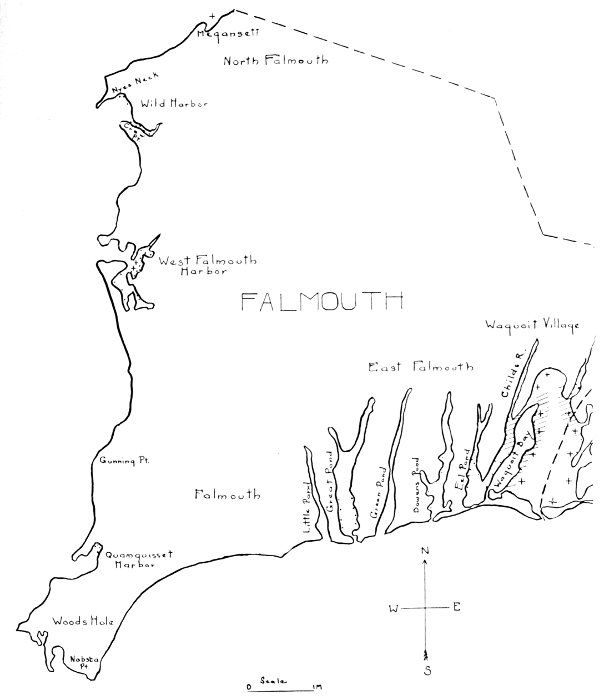
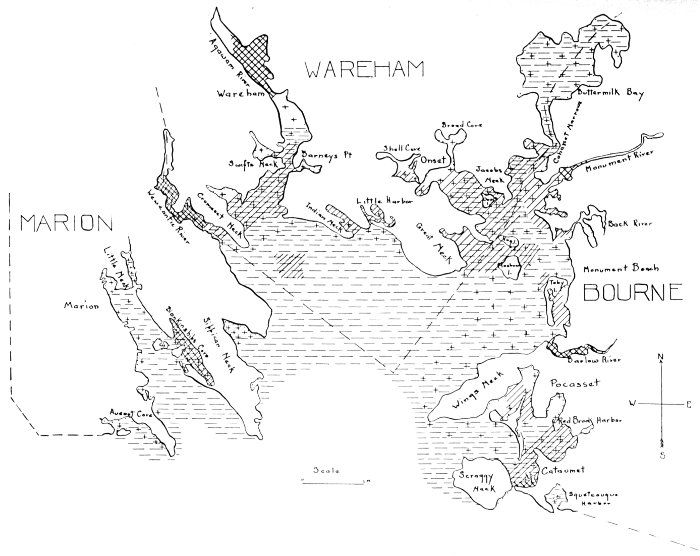
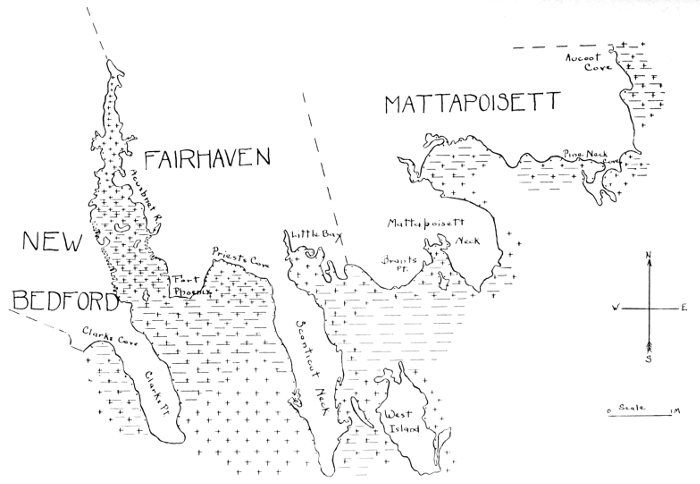
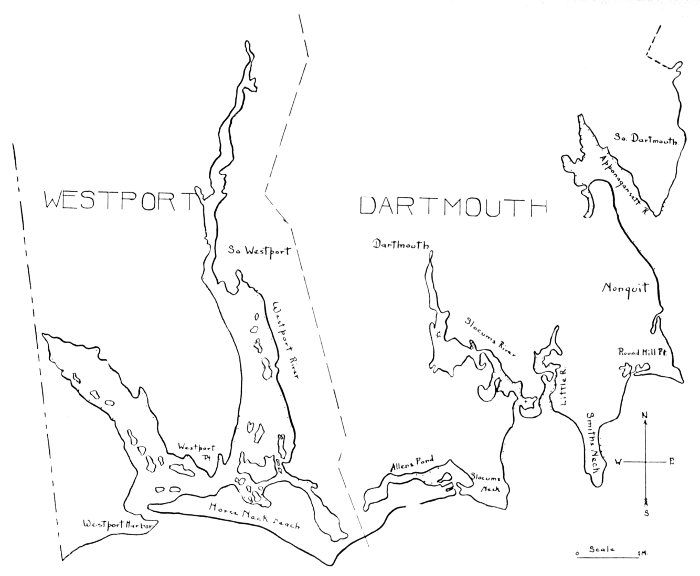
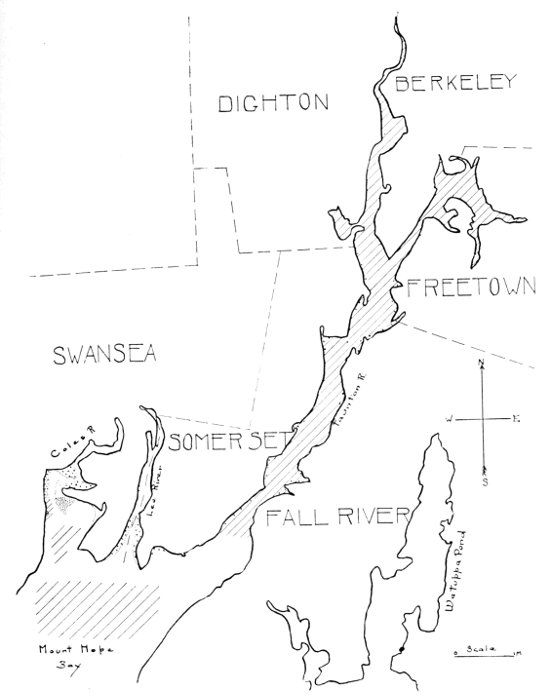
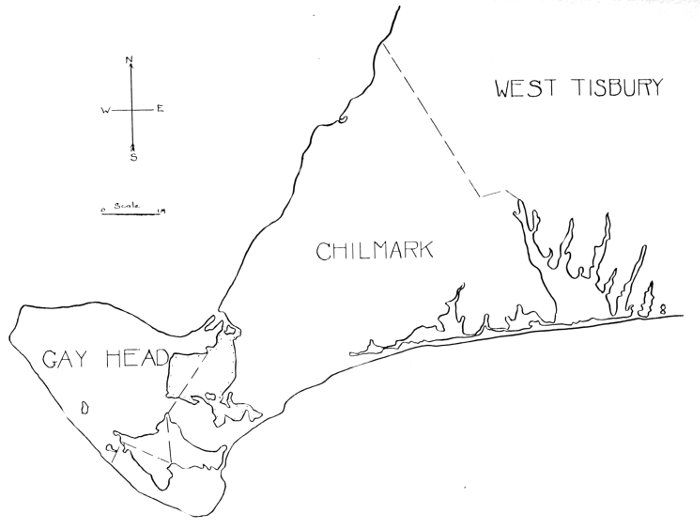
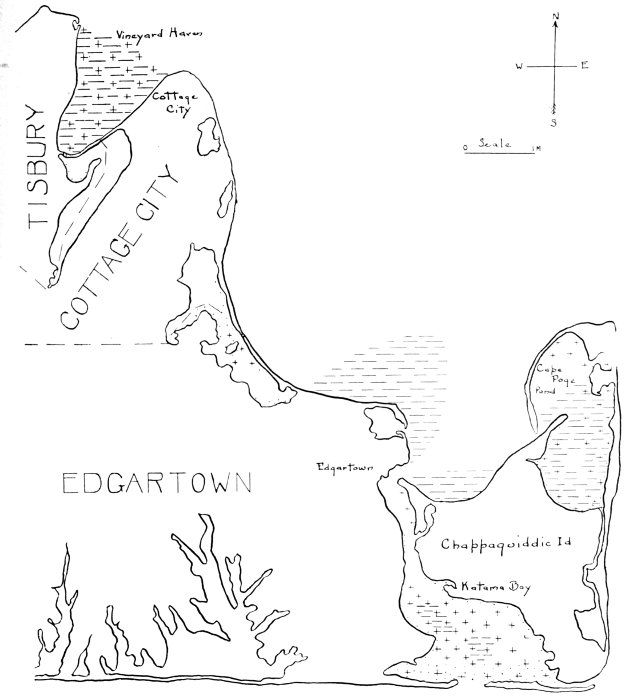
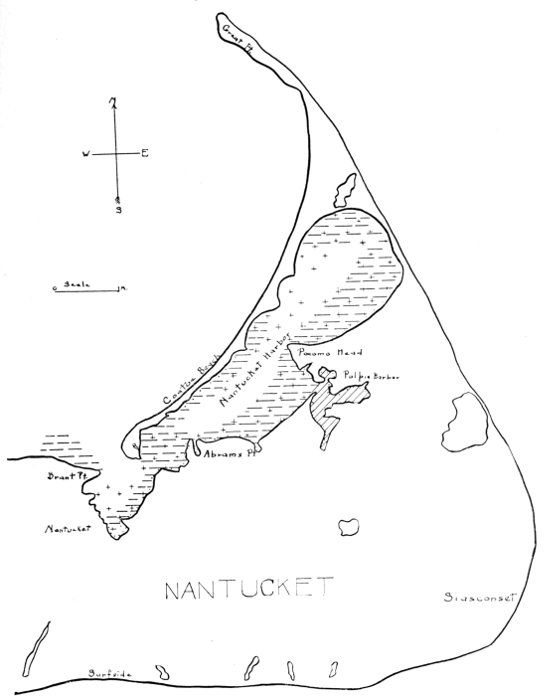
1907; (2) a survey of the clam-producing area, illustrated by maps;
(3) a plan of clam culture which will make productive many acres of
barren flats; (4) the history of the clam industry, a comparison being
made between the industries of 1879 and 1907; (5) a description of the
industry.
Methods of Work.—The same methods as used with the other shellfish
were pursued in obtaining the statistical data for the clam industry.
The clam-producing areas were examined and the observations recorded.
Town records, which were of some assistance with the other shellfish,
furnished practically no clam data, compelling the Commission to rely
upon the estimates of the clammers and clam dealers. While this
method made it difficult to secure accurate detailed information, the
statistics for each town were checked up in a variety of ways, thus
furnishing as nearly correct figures as can be obtained.
In making an historical comparison of 1879 and 1907, the report
of Ernest Ingersoll on the clam fishery of the United States, and the
report of A. Howard Clark on the fisheries of Massachusetts, as published
in the United States Fish Commission Report, Section V,
volume 2, and Section II., respectively, were of great use, as practically
all of the statistics for 1879 were obtained from these two reports.
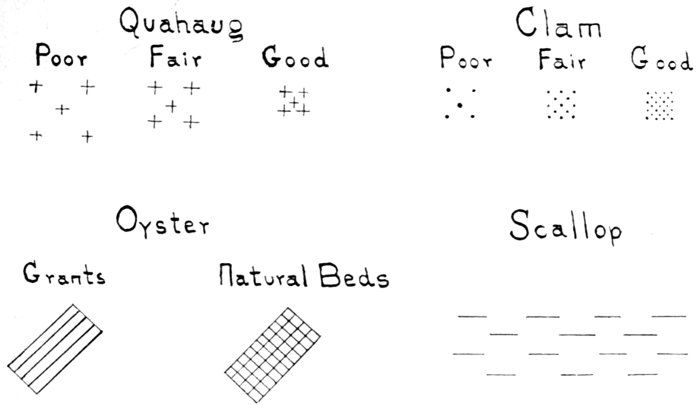
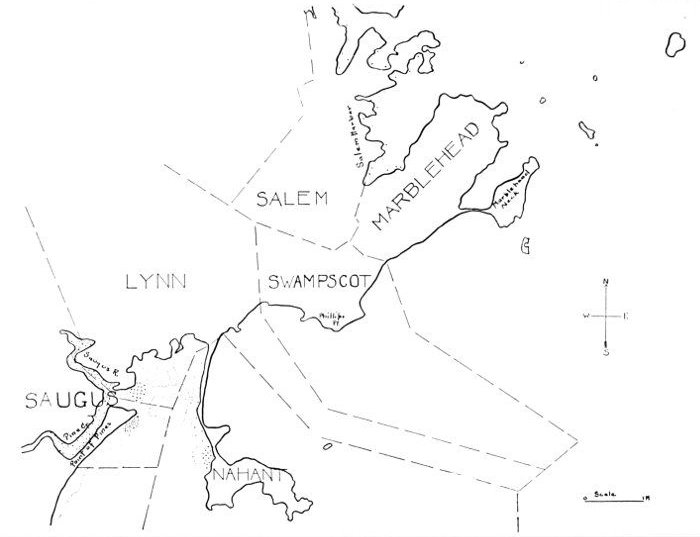
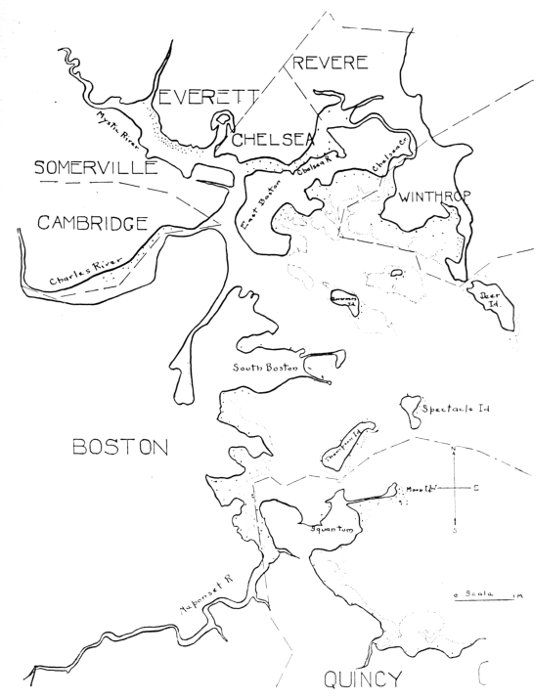
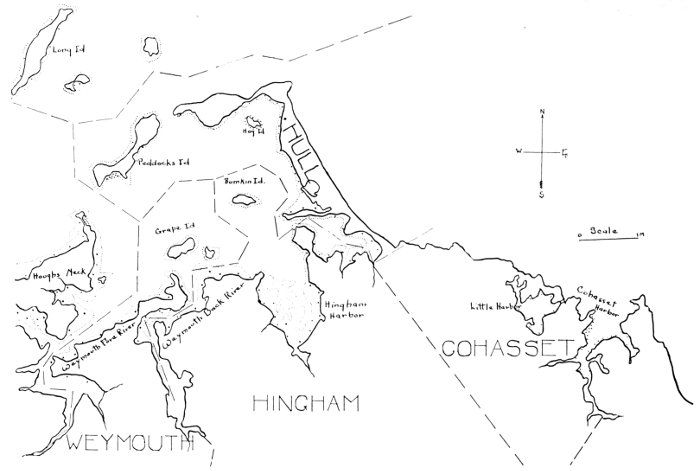
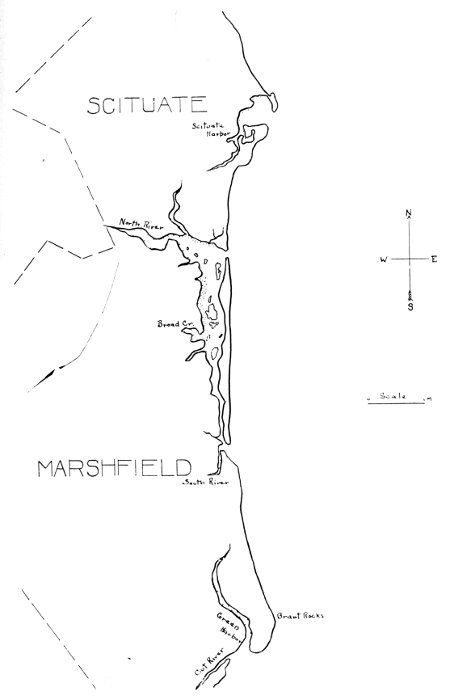
In making the survey of the clam areas, records were made of:
(1) soil; (2) food (a) in water, (b) on surface of soil; (3) rate of
currents; (4) abundance of clams and localities of set; (5) barren flats
that can be made productive. In the present report only the kind of
soil, abundance of clams and area of barren flats will be given, the
food problem being reserved for later publication.
Summary.—In the following summary the seacoast towns are arranged
in geographical order from north to south. The number of
men includes both regular and intermittent clammers who dig for the
market; all others are excluded. In determining the production of
any town it is impossible to obtain exactly correct figures, as the amount
dug for home consumption is an unestimable quantity, and the clams
are marketed in a number of ways, rendering it almost impossible to
get complete statistics. The production statistics have been obtained
in a variety of ways, and the final estimates have resulted from careful
consideration of all facts. The invested capital includes the clammer's
outfit and boat, but does not include personal apparel, such as boots and
oil skins.
The clam flats are divided into two main divisions: (1) productive;
and (2) barren. The barren areas are those where at present no clams
grow at all, not even scattering; and areas yielding even a few clams are
still considered productive flats, though to all practical purposes barren.
It was necessary to make the division thus, as otherwise no decisive line
could be drawn. The barren flats are divided into those sections that
can be made productive and those that can never be made to grow
clams. The productive flats, on the other hand, are divided into areas
of good clamming and areas of scattering clams which do not support
a commercial fishery. The normal production of the clam flats has been
carefully estimated, in view of the previous experiments of the Fish
and Game Commission, and the different classes of flats have each been
given a certain valuation in computing the total for each town. The
areas given of the clam flats are based upon calculations, as no engineering
survey was made.
The price of clams varies in different localities, and chiefly depends
upon the quality of clams and the method of marketing. In certain
towns clams are "shucked" (removed from the shell),—a process
which greatly increases their market value; while in other places they
are sold only in the shell. These two facts account for the apparent
variation in the value of the production in different localities, as each
town is given its own market price.
The following production table does not include an important factor,—the
amount of clams dug by the summer people. An unestimable
quantity is annually taken from the flats in this way, and is not
included in the production statistics. Indeed, summer people have
affected the clamming interests of several towns, as the selectmen have
refused to place closed seasons, etc., on certain depleted flats in order
to cater to the summer residents, who desire free clamming near their
cottages. The total number of licenses issued by the boards of health
of Boston and New Bedford for taking shellfish in their respective
harbors are given as representing the number of clammers. In reality,
however, only a few of these licensees make a regular business of
clamming.
Summary of the Clam Industry.
| TOWN. |
Number of Men. |
Capital Invested. |
1907 Production. |
Total Area. |
Productive Area. |
Barren Area possibly Productive. |
Waste Barren Area. |
Possible Normal Production. |
| Bushels. |
Value. |
Sand. |
Mud. |
Gravel. |
Mussels and Eel Grass. |
Total. |
Good Clamming. |
Scattering Clams. |
| Salisbury, |
66[17] |
$625 |
15,000 |
$16,500 |
34 |
216 |
— |
— |
250 |
150 |
100 |
— |
— |
$70,000 |
| Newburyport, |
175 |
2,700 |
55,500 |
61,000 |
150 |
930 |
— |
— |
1,080 |
800 |
280 |
— |
— |
250,000 |
| Newbury, |
6 |
75 |
300 |
250 |
110 |
250 |
— |
— |
360 |
— |
100 |
260 |
— |
40,000 |
| Rowley, |
15 |
800 |
2,000 |
1,500 |
250 |
150 |
— |
— |
400 |
20 |
80 |
300 |
— |
60,000 |
| Ipswich, |
136[17] |
7,500 |
25,000 |
18,750 |
390 |
500 |
55 |
25 |
970 |
400 |
420 |
125 |
25 |
200,000 |
| Essex, |
50 |
1,200 |
15,000 |
12,750 |
500 |
125 |
— |
25 |
650 |
150 |
150 |
325 |
25 |
120,000 |
| Gloucester, |
31 |
600 |
6,000 |
8,000 |
250 |
200 |
— |
100 |
550 |
75 |
100 |
275 |
100 |
70,000 |
| Manchester, |
— |
— |
100 |
100 |
10 |
10 |
— |
— |
20 |
— |
5 |
10 |
5 |
2,000 |
| Beverly, |
— |
— |
100 |
100 |
30 |
20 |
— |
— |
50 |
— |
10 |
30 |
10 |
5,000 |
| Salem, |
7 |
75 |
200 |
200 |
75 |
25 |
— |
— |
100 |
5 |
10 |
70 |
15 |
11,000 |
| Lynn, |
7 |
100 |
1,000 |
1,000 |
90 |
300 |
5 |
5 |
400 |
10 |
30 |
160 |
200 |
26,000 |
| Saugus, |
10 |
100 |
1,000 |
1,000 |
100 |
150 |
— |
— |
250 |
10 |
40 |
100 |
100 |
22,000 |
| Nahant, |
— |
— |
300 |
300 |
50 |
100 |
100 |
— |
250 |
— |
50 |
150 |
50 |
25,000 |
| Boston, |
350[18] |
2,250 |
7,500 |
6,000 |
525 |
3,325 |
1,380 |
1,095 |
6,325 |
100 |
1,180 |
1,000 |
4,045 |
376,000 |
| Cohasset, |
— |
— |
200 |
200 |
50 |
50 |
— |
— |
100 |
— |
10 |
40 |
50 |
6,000 |
| Scituate, |
— |
— |
200 |
200 |
50 |
45 |
5 |
— |
100 |
— |
20 |
40 |
40 |
8,000 |
| Marshfield, |
— |
— |
200 |
200 |
40 |
50 |
10 |
— |
100 |
— |
30 |
30 |
40 |
9,000 |
| Duxbury, |
5 |
60 |
700 |
600 |
800 |
— |
— |
2,700 |
3,500 |
5 |
10 |
800 |
2,685 |
83,000 |
| Kingston, |
4 |
50 |
500 |
450 |
150 |
— |
— |
450 |
600 |
5 |
5 |
150 |
440 |
18,000 |
| Plymouth, |
6 |
60 |
3,000 |
2,500 |
400 |
100 |
— |
1,100 |
1,600 |
10 |
50 |
440 |
1,100 |
58,000 |
| Barnstable, |
25 |
200 |
700 |
550 |
200 |
150 |
— |
50 |
400 |
10 |
10 |
330 |
50 |
39,000 |
| Yarmouth, |
5 |
40 |
600 |
500 |
25 |
15 |
10 |
— |
50 |
5 |
10 |
25 |
10 |
6,000 |
| Orleans, |
30 |
200 |
3,000 |
3,000 |
125 |
50 |
20 |
5 |
200 |
25 |
50 |
75 |
50 |
27,000 |
| Eastham, |
36 |
250 |
4,000 |
4,000 |
100 |
50 |
30 |
20 |
200 |
25 |
50 |
100 |
25 |
30,000 |
| Wellfleet, |
11 |
300 |
800 |
640 |
450 |
5 |
150 |
— |
605 |
3 |
12 |
250 |
340 |
28,000 |
| Truro, |
1 |
2 |
50 |
60 |
50 |
— |
— |
— |
50 |
1 |
2 |
47 |
— |
5,000 |
| Provincetown, |
5 |
15 |
400 |
320 |
400 |
— |
— |
— |
400 |
3 |
3 |
200 |
194 |
21,000 |
| Chatham, |
10 |
400 |
1,500 |
1,200 |
330 |
10 |
20 |
— |
360 |
10 |
50 |
300 |
— |
44,000 |
| Harwich, |
— |
— |
100 |
80 |
10 |
10 |
10 |
— |
30 |
1 |
5 |
10 |
14 |
2,400 |
| Dennis, |
— |
— |
50 |
45 |
25 |
15 |
10 |
— |
50 |
1 |
4 |
30 |
15 |
4,200 |
| Mashpee, |
2 |
20 |
50 |
45 |
20 |
5 |
20 |
5 |
50 |
2 |
8 |
30 |
10 |
5,400 |
| Falmouth, |
— |
— |
200 |
175 |
40 |
5 |
5 |
— |
50 |
2 |
8 |
40 |
— |
6,400 |
| Bourne, |
— |
— |
100 |
100 |
5 |
5 |
30 |
— |
40 |
— |
30 |
— |
10 |
6,000 |
| Wareham, |
6 |
100 |
800 |
800 |
15 |
10 |
75 |
— |
100 |
— |
50 |
— |
50 |
10,000 |
| Marion, |
1 |
15 |
100 |
100 |
— |
— |
10 |
— |
10 |
— |
10 |
— |
— |
2,000 |
| Mattapoisett, |
1 |
15 |
100 |
100 |
— |
5 |
5 |
— |
10 |
— |
10 |
— |
— |
2,000 |
| Fairhaven, |
— |
— |
100 |
100 |
— |
25 |
25 |
— |
50 |
— |
25 |
25 |
— |
7,500 |
| New Bedford, |
320[18] |
— |
300 |
225 |
5 |
5 |
15 |
— |
25 |
— |
15 |
— |
10 |
3,000 |
| Dartmouth, |
4 |
50 |
200 |
160 |
15 |
10 |
5 |
— |
30 |
5 |
15 |
— |
10 |
5,000 |
| Swansea, |
25 |
250 |
5,000 |
5,000 |
100 |
100 |
— |
— |
200 |
20 |
30 |
100 |
50 |
24,000 |
| Somerset, |
— |
— |
50 |
50 |
— |
25 |
25 |
— |
50 |
— |
10 |
20 |
20 |
4,000 |
| Dighton, |
— |
— |
40 |
40 |
— |
5 |
5 |
— |
10 |
— |
2 |
8 |
— |
1,200 |
| Berkley, |
— |
— |
25 |
25 |
— |
5 |
5 |
— |
10 |
— |
4 |
6 |
— |
1,400 |
| Freetown, |
— |
— |
100 |
100 |
— |
10 |
15 |
— |
25 |
— |
15 |
— |
10 |
3,000 |
| Fall River, |
— |
— |
100 |
75 |
— |
20 |
5 |
— |
25 |
— |
10 |
15 |
— |
3,500 |
| Nantucket, |
4 |
40 |
400 |
350 |
150 |
25 |
25 |
— |
200 |
5 |
15 |
130 |
50 |
18,000 |
| Edgartown, |
7 |
50 |
1,200 |
1,000 |
150 |
— |
50 |
— |
200 |
20 |
100 |
50 |
30 |
33,000 |
| Total, |
1,361 |
$18,142 |
153,865 |
$150,440 |
6,269 |
7,111 |
2,125 |
5,580 |
21,085 |
1,878 |
3,233 |
6,096 |
9,878 |
$1,801,000 |
Decline of the Natural Clam Supply.—The decline of the clam
supply is a matter of general knowledge. People who live along the
seashore realize that they can no longer gather the amount of clams
they once could dig with ease from the same flats. On the southern
shore of the State especially it is oftentimes difficult to obtain even
enough for family use. The consumer also realizes the loss of the
clam, as he is forced to pay higher prices.
If specific cases of this decline are demanded, the following instances
should show the exact depletion in the various localities. Even in the
best clam-producing town of the State, Newburyport, where the clam
production, according to statistics, has apparently increased during
the last twenty-five years (as a result of more men entering the fishery),
the supply has shown signs of failing. Essex now possesses many
acres of flats formerly productive which now lie in a practically barren
condition. Gloucester can no longer boast of her former clam industry,
as the flats in Annisquam River are in poor condition. Hardly 30 men
now make a business of clamming in that town, whereas 92 men were
engaged in the fishery in 1879. Passing south of Gloucester, we find
great evidence of decline in the Boston harbor flats. Even before the
edict closing the harbor from clammers was in force, the production did
not by any means equal that of 1879. Plymouth harbor, including the
three towns of Duxbury, Kingston and Plymouth, furnishes an excellent
illustration of this decline. Here an area of flats as extensive as all
the other flats of the State combined now lies practically barren,
whereas in former times great quantities of clams were taken. These
flats had already become depleted to a marked extent by 1879, and to-day
practically no clams are shipped to market from the Duxbury flats,
although you can still read "Duxbury clams" on the menus of the
hotels and restaurants, showing how important a clam industry this
town once possessed. Buzzards Bay district lies at present unproductive
except for supplying home consumption and the demands of the
summer people. The shores of Cape Cod no longer yield their former
supply of clams, and the most striking example of the extinction of a
flourishing fishery is found in the town of Chatham, which now does not
produce one-tenth part of its production in 1879. The Fall River or
Narragansett Bay district does not come up to its past productiveness,
and now chiefly yields clams which in former times would have been
considered as too small to use.
As can be seen by the following table, which gives a comparison
between the industry in 1879 and 1907, the localities south of Gloucester
all show a decline in their production, and there is no town on
the coast which has not shown some depletion in the natural clam
supply. The localities of the north shore, while indicating by their
statistics a gain in production, nevertheless have not their former
abundance, and the actual diminution of the supply is concealed by the
fact that more men have entered the industry.
| LOCALITY. |
1879. |
1907. |
| Men. |
Bushels. |
Value. |
Men. |
Bushels. |
Value. |
| Ipswich, |
75 |
11,500 |
$4,600 |
136 |
25,000 |
$18,750 |
| Salisbury and Newburyport, |
60 |
28,800 |
11,520 |
241 |
70,500 |
77,500 |
| Essex, |
75 |
11,500 |
4,500 |
50 |
15,000 |
12,750 |
| Gloucester, |
92 |
13,978 |
5,200 |
31 |
6,000 |
8,000 |
| Boston harbor, |
90 |
40,000 |
20,000 |
350[19] |
7,500 |
6,000 |
| Duxbury, |
-[20] |
5,000 |
2,500 |
5 |
700 |
600 |
| Plymouth |
-[20] |
5,000 |
2,500 |
6 |
3,000 |
2,500 |
| Harwich, |
15 |
1,125 |
400 |
— |
100 |
80 |
| Chatham, |
150 |
35,000 |
12,250 |
10 |
1,500 |
1,200 |
| Nantucket, |
-[19] |
2,253 |
872 |
4 |
400 |
350 |
| Edgartown, |
-[20] |
4,000 |
1,570 |
7 |
1,200 |
1,000 |
| New Bedford district, |
-[20] |
5,800 |
2,900 |
332[19] |
1,600 |
1,685 |
| Fall River district, |
-[20] |
3,375 |
3,121 |
25 |
5,315 |
5,290 |
Causes of the Decline.—The same cause which has been stated in
the general report has contributed to the decline of the clam supply,
i.e., the increasing demand which has led to overfishing. Thus the decline
can be directly attributed to the exploiting of natural clam resources
by man, although it must be admitted that natural agencies, such as
geographical changes, destroy the clam flats of certain localities and
build up others.
This decline has become possible through the indifference of the towns
to the welfare of their clam fishery, and by not restricting, through
town laws, the extermination of the clams in time to allow nature to
replenish the flats. Some towns, such as Ipswich, have regulated this
matter by placing closed seasons on portions of the flats, which has
been the partial means of preserving their natural supply. Thus the
town laws have proved inadequate, as most towns have no laws at all,
or have such unwise ones that they often defeat their own object.
It is again necessary to emphasize the need of reform in the clam
industry. This Commonwealth once possessed an extensive supply of
clams, and still possesses part of its former abundance; but the present
supply is diminishing at such a rate that it will not be a quarter of a
century before the natural clam fishery will be commercially extinct.
On the south shore clams are now commercially extinct, and it is only
a question of time, if the present methods are allowed to remain, before
the north shore clams will also disappear. The experiments of the
Massachusetts department of fisheries and game and the work of men
who have planted this shellfish all show that thousands of dollars can
be brought into the State by utilizing the waste clam areas, and that
the production can be so increased as to even exceed that of former
years. Immediate action is necessary, if this important industry is to
be saved.
The Remedy.—The remedy is comparatively simple, and abundant
proof of its success is at hand. By restocking the barren and unproductive
areas of the Commonwealth the present production can be increased
many times. Experiments have shown that clams can be
readily, successfully and economically transplanted, and that it is
a completely practical undertaking. Not only can the barren areas be
restocked, but the yield of the productive areas can be much increased.
Clam farming is the only practical method of restocking these areas,
and only through such means can the clam flats be made to yield their
normal harvest.
The subject of clam farming has received a good deal of attention
the past few years, and much has been said concerning the enormous
profits which would result from the cultivation of this shellfish. While
the newspaper statements have been for the most part correct, there has
been considerable exaggeration and many details have been inaccurate.
To remove any misapprehensions, the following account of clam farming
is given.
The value of clam farming has been perhaps overestimated. While
no fabulous returns are ever to be expected, the yield is large in proportion
to the labor, and steady returns are sure. The methods used
are simple, the capital required is small, the area suitable for raising
clams is extensive, and clam farming gives promise of becoming one
of the most prominent and remunerative shore industries. The profits
derived from such a system should furnish steady employment for
hundreds of men on the Massachusetts coast.
Massachusetts possesses thousands of acres of tidal flats which are
capable of producing clams. Most of these flats are practically barren,
i.e., produce no clams in paying quantities, and yet if planted with
small clams will yield in from one to two years large quantities of
marketable bivalves. This large area of barren flats should be divided
into small farms, which should be leased to individuals for the purpose
of planting and raising clams.
The Necessity of Clam Farming.—It is a well-known fact that the
natural supply of clams is becoming rapidly exhausted, and that this
important fishery will become commercially extinct unless steps are
taken to check its decline. The only practical means known at the
present time is clam farming. In the past, methods such as close
seasons and restricting the catch have been used, but with poor results,
as these have been economically wrong. The correct method in such
cases is not to restrict the demand, but to increase the supply. Clam
farming offers the only means of increasing the natural production,
and not only checking the decline, but establishing a large industry.
Is Clam Farming Practical?—Clam farming is not a theory but
an established fact. Clams will grow if planted in suitable places,
and will yield large returns. For three years the Commission of
Fisheries and Game have made numerous experiments in clam farming
in many seacoast towns. They have not only proved its complete
practicability, but have also shown that large profits result from successful
planting. Records are on file at the State House showing the
exact results of these experimental farms, which indicate the future
success of clam farming.
Besides the experiments of the Commission on Fisheries and Game,
successful clam farming is now being carried on in several towns of the
State. The leading town in this line is Essex, where at least 15 grants
are held by the clammers. The only protection given is based upon
public sentiment, which, however, is sufficient to insure the success of
the enterprise. All these grants were staked out on flats which were
producing no clams when granted, although part of this area was once
very productive. So far these grants have proved most successful, thus
proving by actual experience that clam farming is a worthy rival of
agriculture.
Historical Attempts at Clam Farming.—Clam farming has been in
existence for years. The first record of any legislation upon this subject
is found in an act to regulate the clam fishery in and around the
shores of Plymouth, Kingston and Duxbury in 1870, whereby a license
was granted for a term not exceeding five years to any inhabitant of
these towns to plant, cultivate and dig clams. This license cost $2.50,
and gave the exclusive use of the flats and creeks described to the
licensee and his heirs during the time specified, and also the right in an
action of tort to recover treble damages from any person who, without
his consent, dug or took clams from said grant. Evidently nothing was
done to follow out this law, which was soon forgotten.
In 1874 an act was passed to regulate the shellfisheries (including
clams) in the waters of Mount Hope Bay and its tributaries. The
terms of this act were practically the same as the Plymouth act, the
only difference being the substitution of the word shellfish for clam.
In 1888 an act was passed by the town of Winthrop, authorizing the
planting of clams on the shores of that town. The grant was to consist
of not over 2 acres of barren flats, situated more than 500 feet from
high-water mark. The other provisions of this act were the same as
those of the Plymouth act of 1870.
The most important clam culture law was passed in 1888. This
authorized the planting of clams on the shores of Essex. Here the
provisions of the law were followed out, and the first energetic attempt
at clam farming started. The law, the provisions of which were nearly
the same as the previous laws, reads as follows:—
An Act authorizing the planting of clams, in and around the shores
of essex.
Be it enacted, etc., as follows:
Section 1. The selectmen of the town of Essex may by writing under
their hands grant a license for such a term of years, not exceeding five,
as they in their discretion may deem necessary and the public good requires,
to any inhabitant of said town, to plant, cultivate and dig clams upon and
in any flats and creeks in said town now unproductive thereof, not exceeding
two acres to any one person, and not impairing the private rights of
any person.
Section 2. Such license shall describe by metes and bounds the flats
and creeks so appropriated and shall be recorded by the town clerk before
it shall have any force, and the person licensed shall pay to the selectmen
for the use of said town two dollars and to the clerk fifty cents.
Section 3. The person so licensed and his heirs and assigns shall for
the purposes aforesaid have the exclusive use of the flats and creeks described
in the license during the term specified therein, and may in an
action of tort recover treble damages of any person, who, without his or
their consent digs or takes clams from such flats or creeks during the
continuance of the license.
Section 4. Said town of Essex at any legal meeting called for the purpose
may make such by-laws, not repugnant to the laws of the commonwealth,
as they may from time to time deem expedient to protect and
preserve the shellfisheries within said town.
Section 5. Whoever takes any shellfish from within the waters of said
town of Essex in violation of the by-laws established by it or of the provisions
of this act shall for every offence pay a fine of not less than five
or more than ten dollars and costs of prosecution, and one dollar for every
bushel of shellfish so taken.
Section 6. This act shall take effect upon its passage. [Approved
April 9, 1888.]
In the report of the United States Commissioner of Fish and Fisheries
for 1894 Mr. Ansley Hall gives the following account of clam
culture under this act:—
During the first two years (1889-90) the people were slow to avail themselves
of the privilege of planting, for fear that after they had spent their
time and labor they would not be able to secure protection from trespassers;
but in 1891 and 1892 lots were obtained and planted. In 1892 there were
25 acres that were quite productive, about one-third of the entire catch
of the section being obtained from them. The catch from these lots is
not definitely known, but is estimated at about 2,500 barrels.
Cultivated clams possess some advantage over the natural growth, from
the fact that they are more uniform in size, and are as large as the best
natural clam. They bring $1.75 per barrel, while the natural clams sell
for $1.50 per barrel. This is the price received by the diggers. One acre
of these clams is considered to be worth $1,000, if well seeded and favorably
located so as not to be in danger of being submerged with sand. This
valuation would be too high for an average, since all the acres are not
equally well seeded and located. The clammers are generally impressed
that the industry can be extensively and profitably developed, and their
only fear is that they will not be able to secure lots permanently. The
greater part of the land available for this purpose is covered by the deeds
of people owning farms along the river, and the consent of the land owners
has to be obtained before lots can be taken up. It seems probable, however,
that the business will continue to progress unless checked by complications
that may arise relative to the occupancy of the grounds.
The result of this first practical attempt at clam culture was a
complete failure, and after a few years' trial the clam farms were all
given up. The main reason for this failure was lack of protection
both from outsiders and from one another. Nevertheless, this attempt
proved that with proper protection a most successful industry could be
made of clam farming. The following statement by Prof. James L.
Kellogg, in the United States Fish Commission Bulletin for 1899,
describes the failure of clam culture at Essex:—
It is not difficult to determine the reasons for the failure of the culture
experiment at Essex. The areas upon which clams were planted were those
which were at the time unproductive. The beds still containing clams—the
"town flats"—were free to any native of Essex. The one thing which
was absolutely necessary to the success of any planter was that the clams
on his leased ground should not be disturbed by other diggers. This protection
was apparently not given in any case by the town authorities, and,
as no person lived within sight of the majority of the beds, it was quite
impossible for any man to guard his property much of the time.
As to what followed it is not easy to obtain definite testimony from the
clammers themselves. Other citizens of the town, however, and some few
clammers, intimate that most of the men began to take clams from any
property but their own, and that in this way the full result of no man's
labor in planting was ever realized. Others who did not make clam digging
a regular business, but only dug occasionally, are said to have had no
respect for the rights of those who had leased property. It was said that
at times when vessel builders and the shoe factory released employees, many
of them, for lack of other occupation, turned their attention to clam digging,
with the result that too many clams were at the time taken from
the flats.
Another reason for the failure of the Essex experiment is that a number
of short-sighted clammers began to fear, after the clams had been planted,
that the production might suddenly become so great as to glut their market,
and, as a consequence, force prices down. Some few individuals, inspired
by this fear, are reported to have said and to have done everything
in their power to prevent the success of the experiment. In all cases, it
is said, the selectmen of the town, who issued the leases, refused their aid
in the prosecution of trespassers.
In spite of the fact, which had been demonstrated in the experiment,
that when properly planted the clams grew much more rapidly and became
much larger than on the natural beds, no applications for a renewal of the
leases were made when the first ones expired. No change in the condition
at Essex may be hoped for until there is some evidence that a law protecting
the planter will be strictly enforced. With proper protection, a
great industry might, and probably would, be quickly established, not
only in Essex, but in any region where clam flats are now unproductive
because of excessive digging.
Protection Necessary.—The same lack of protection which ruined
the Essex clam experiments has been the cause of similar failures in
other shore towns. As long as no protection is given, clam farming can
never become possible, as the whole success of the enterprise depends
wholly upon the planter's having complete control of his land. The
present law gives absolutely no protection, as according to the old free
beach law a person has a right to dig a mess of clams anywhere
between the tide lines, no matter whether natural or planted. This
practically discourages clam farming, however profitable, as no clammer
is going to the labor and expense of planting clams, if the next person
who comes along has a legal right to dig as many as he pleases. Until
a law is passed which gives to the clam planter absolute protection from
this sort of trespassing, and does away with the antiquated free fishing
law, clam culture can never become a successful industry.
Present Clam Culture.—In 1906 grants of barren flats were again
issued for the purpose of clam culture in Essex, and this time the
attempt seemed successful. Two things encouraged this: the excellent
results of the experiments in Essex River by the Commission on Fisheries
and Game, and the possible results indicated by the experiments of
1888. The only protection for these clam grants is by public sentiment,
and the mutual agreement of all the clammers to respect the rights of the
individual. So far there has been no trouble from trespassing and the
lack of protection, which caused the failure of first attempts. It is
hoped that these clam farms will become permanently successful, despite
the lack of protection, as they will greatly increase the production of
the Essex clam flats.
Clam Farming and Agriculture.—The comparison between clam
farming and agriculture is very close, and both possess many common
features, though there are several points of difference. The clam obtains
its sustenance entirely from the water, while agricultural products
obtain their nourishment chiefly from the soil. The nitrogenous waste
products of the land washed into the streams furnish the nourishment
to the little marine plants (diatoms) on which the clams feed.
Rate of Growth of the Clam.—The report of the Commission on
Fisheries and Game for the year 1906 contains the following statements:—
What is the natural growth of the clam per year?
There is great diversity in the growth of the clam, owing to the location
in respect to three essential conditions,—current, length of time submerged,
and soil. The following figures give briefly the general trend of results
from numerous experimental beds under great variety of conditions. For
simplicity, a 1-inch clam is taken as the standard.
A 1-inch clam will grow in one year to a size between 2 and 3 inches.
Under fairly favorable conditions, with a moderate current, a 1-inch clam
will increase to 2½ inches, or a gain of 900 per cent, in volume. For
every quart planted, the yield in one year will be 9 quarts. For beds without
current, 1-inch clams average about 2 inches, or a gain of 500 per cent.;
i.e., five quarts for every quart planted. Beds under exceptionally fine conditions
have shown the amazing return of 15 quarts for every quart of
1-inch clams planted. Clams increased in these beds from 1 to 3 inches
in length. Therefore, by planting clams 1 inch or over, under favorable
conditions a marketable clam can be produced in one year.
What is the maximum production per square foot?
The number of clams per square foot that can be raised to the best
advantage depends upon the location of the flat in respect to natural conditions.
Clams thickly planted (15 to 20 per square foot) in favorable
locations may show a greater growth than when thinly planted (5 per
square foot) in less favorable locations; therefore, no definite statement
can be made which will apply in all cases. The only rule that can be
given is that a flat with a current will produce a greater number of clams
per square foot than one without a current. On good flats clams can be
planted conveniently and economically from 10 to 15 per square foot, or
even a larger number.
What results can be obtained by planting on barren flats?
There are two groups of flats which come under the term barren: (1)
flats which once produced clams in great numbers, but now are practically
barren, except for an occasional clam here and there; (2) flats which never
have produced clams, and on which for physical reasons clams can never
grow. The first group of flats is alone considered in this answer.
Experimental beds were planted on certain flats in the Essex River which
come within the first group of barren flats. These once productive flats
had been cleaned out in the past, and for some reason had not seeded
naturally. Forty beds were laid out under all kinds of conditions, with
the object of finding a way to make these once more productive. Results
have been all that could be hoped for. Only 4 poor beds were found, out
of the 40 laid out; 36 beds were in thriving condition. It should be noted
that no attempt was made to choose the best places, but all conditions were
tried. Over two-thirds of the clams were re-dug, the increase averaging,
in terms of 1-inch clams, over 1,000 per cent., or 10 quarts for every quart
planted the year before.
If many acres of Massachusetts flat, idle at present, are capable of
such a yield, should such economic waste be allowed? Why should not
the towns, by the expenditure of a little money, restock flats such as these
for the benefit of their inhabitants? I do not say that all flats can be made
productive in this way, as I know of many cases where the mere sowing
of seed clams will not restock a flat; but I do say that Massachusetts possesses
enough flats of the former nature, which should be made a profit
to her clammers. Clam set occurs, as Mr. Stevenson shows in his report,
in large quantities; the transportation of seed clams is easy; planting requires
little labor, the practical way being to sow the clams, which burrow
readily; while the yield in proportion to the labor is enormous.
What sized clams are best for planting?
The size best adapted must be determined for each flat. Shore flats with
little current will allow the planting of any size, from ¼ inch up; flats
with a swift current necessitate a larger clam (1 to 1½ inches), as the
smaller will be washed out of its burrow; soft mud also demands a larger
clam, as the smaller will be stifled by the oozy silt.
What are the physical conditions that influence the growth of clams?
There appear at least three essential conditions for rapid growth of clams:
(1) a good current; (2) low and level flat; and (3) a tenacious soil, relatively
free from decaying matter.
A low flat gives the clams longer feeding periods, as the water remains
over them longer, therefore there is a greater growth. This has been experimentally
shown by Dr. A. D. Mead.
According to Prof. J. L. Kellogg, clams cannot do well in a soil which
contains much decaying organic matter, as the acids eat away the shells.
Soils of this description also facilitate the spread of infection from one
clam to another.
Current is the chief essential for successful clam culture. The term
"current" does not imply a rapid flow of water, but rather a good circulation
of water over the flat. In the Essex and Ipswich rivers the clam flats
have a continuous current. On such flats the growth is more rapid than
on flats which have no circulation of water, in addition to the mere rise
and fall of the tide. The current performs the work of (1) keeping the
flats clean and carrying away all contamination, but its most important
work is as (2) food carrier.
Value of a Clam Farm.—The value of an acre of clam flats, if
properly cultivated, is about $450 per year for the average clam flat.
Many of the more productive flats will yield a far greater amount,
while others will not yield as much. It has been often erroneously
stated that an acre of clam flats would produce $1,000 per year. This
is a decided overestimation, as it would be hardly possible for the most
productive flat to yield that amount. It is possible, however, for a
good flat to yield about $750 per year, but this is only under the most
favorable conditions. Such yields as these are large for the clammer,
whose average yearly income is only $400 (a few of the more expert
clammers make possibly $700 to $750), and a man possessing a clam
farm of 1½ to 2 acres would make a good living.
Method of operating a Clam Farm: choosing the Ground.—In
choosing a grant, the planter should have in mind three things: (1) the
accessibility of the grant, for his own convenience, and nearness to
the market, as much of the success of clam farming depends upon the
expense of marketing the product, and the ease with which it can be
disposed of; (2) the length of time allowed for labor by the exposure
of the flat (flats vary greatly in the amount of time exposed each tide,
the low flats being submerged nearly all the time, and the high flats
having a much longer exposure),—a high flat possesses the advantage
of allowing a longer working period for the clammer; (3) the natural
facilities of the flat itself as regards the growth of clams. Moreover,
the flat should be chosen in regard to (1) soil; (2) current; (3) tide.
A good flat should have a soil which is tenacious and compact, affording
at the same time easy digging. Probably the best soil is a mixture of
fine sand and mud in a ratio of one-third mud to two-thirds sand, as this
amount of mud gives the right degree of tenacity.
The growth of a clam depends upon the circulation of water over the
flat, as the current carries the food, and, therefore, the more current
the more food for the clams. Current also keeps the bed clean, and
prevents contamination and disease from spreading among the clams.
Then, again, the growth of a clam depends upon the amount of water
over the bed; i.e., length of time covered. The clam can only feed when
the tide is over the bed, and thus the feeding time is limited for the
higher flats. While experiments have shown that clams grow faster
when continually under water than when exposed part of the time, the
question of tide is not so great a factor as that of current in regard to
clam growth, and can be almost disregarded.
The best flat for clam planting is a fairly high flat with a good current
over it, as it gives nearly as rapid growth and a much longer period
to dig than a flat which is exposed only a short period. This flat must
have the right kind of soil, which must not be shifting sand or too soft
mud, but a compact, tenacious mixture.
The Seed Clams.—Nature has provided the means of stocking these
farms. The set of clams is usually restricted to certain localities,
which, however, vary from time to time, and heavy sets are found in
limited areas. These sets run as thick as 2,000 per square foot of
surface, occasionally covering an area of 3 acres. From these natural
set areas the natural clam flats are partially restocked by the washing
out of the small clams. More often these whole sets are wasted,
as the clams, instead of washing on the good flats, are carried to unproductive
places and consequently perish. Thus there are areas of
heavy set which are of no use to any one, as practically all the clams
perish before they become adults. These areas of heavy set occur in
nearly every harbor of the coast to a greater or less extent, and are
available for nearly every town.
The problem now is to make use of these large sets, and not allow
them to go to waste. It has been shown that these clams when transplanted
will grow much faster, and will not perish; therefore, clam
farming offers both the possibility of saving these natural sets and
utilizing barren ground.
Methods of spat collecting have been constantly referred to in connection
with clam farming, especially by the Rhode Island Fish Commission,
and the impression has been given that clam farming can
never become a success until some practical method of spat collecting
has been found. With the soft clam there is no need of any method
of spat collecting, as the natural set is more than sufficient for restocking
the barren flats. All that is necessary is to utilize the enormous
natural sets. If this is done, the barren flats of Massachusetts can be
made productive.
The main difficulty is in devising some method of obtaining the small
clams with sufficient rapidity. As the nature of the soil and the size of
the clams vary, no one method can apply to every case, and it depends
upon the ingenuity of the clammer. The methods used at present are:
(1) digging with an ordinary clam hoe, which is slow work; (2) digging
in shallow water, so that the clams may be washed out; (3) digging
a series of trenches across the heavy set area, and scooping out the
clams washed in these trenches; (4) carrying both sand and clams by
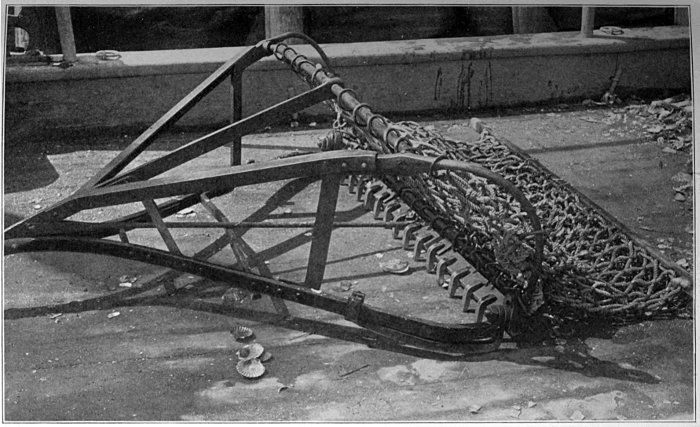
the dory load; (5) by using a sieve, in the form of a cradle, which
washes the clams out in the water. This last method is the most successful
for small clams, and has been used by the commission in obtaining
seed clams for their experimental beds. By using a cradle 3 by 2
feet, covered with sand wire netting, clams which ran 3,000 per quart,
were obtained by 3 men at the rate of 2 bushels an hour,—an amount
sufficient to plant from 1/25 to 1/10 of an acre.
Another problem of importance is the transportation of seed clams,
as in many instances the clams will have to be carried some distance.
The best method of shipping seed clams is to pack them dry in damp sea
weed, putting them in small packages, so they will not be crushed by
their own weight. The best though most expensive method is to pack
the clams in crates, such as are used for strawberries. It has been
found that clams kept in water are not in such good condition as those
shipped dry, and it is of the utmost importance that the clams be in
good condition when planted.
The length of time a clam will live out of its natural element depends
upon the temperature; in cold weather it will keep for several days,
and even weeks; while in warm weather the seed clam will be in poor
condition after one day's exposure.
Preparing the Grant.—Usually the ground needs no preparation,
and the clams can be planted at once. It is a good plan to remove any
mussels and any of the enemies of the clam from the grant.
Planting the Clams.—The planting of the seed clams is perhaps the
easiest work of the clam culturist, as it necessitates merely the sowing
of the seed on the surface of the flat. The small clams when left this
way burrow into the ground as soon as the water is over them, and
require no planting on the part of the culturist.
Working the Farm.—This style of farming requires no cultivation
for the growth of the clams. Once planted, the farmer has no further
work until the time when he is ready to dig them. The clams grow
better when undisturbed than when the soil is upturned by frequent
digging. Protection from man and the natural enemies of the clam
demand the attention of the owner at all times.
Harvesting the Clams.—The time of digging will vary as to the
size of clam desired and the rate of growth on the grant. The clam
farmer can cater to a particular trade by regulating the size of the
clams marketed. He may find it more profitable to market a small
clam after a short period of growth, or vice versa, on the same principle
that a farmer raises hogs for the market.
North of Boston, in localities favorable for fast growth, such as the
Essex and Ipswich rivers, by planting large seed of at least l½ inches
in the spring, marketable clams of 2½ to 3 inches can be obtained in the
fall after six months' growth. Here the clams grow only during the
summer months, and nothing would be gained by leaving them over
winter. In this way a crop each year can be raised on these farms.
In other localities of slower growth it will take from eighteen to twenty-four
months to raise a crop. The clam farmer will have to regulate
the size of the seed and length of growth to best suit the needs of his
farm.
Advantages of Clam Farming.—Clam culture possesses several advantages
over the old free-for-all digging: (1) steadier returns; (2)
easier work; (3) better pay; (4) more clams per man. If the clammers
of the Commonwealth only realized these facts they would make a
united effort toward clam culture.
I. Early History.—The history of the Massachusetts clam industry
began in obscurity. Even before the time of the earliest settlers the
native Indians depended largely upon this abundant mollusk for their
food supply, as is clearly indicated by the scattered shell heaps which
mark their ancient camp fires. Upon the arrival of the Pilgrims, clam
digging was incorporated among the most time-honored industries of
the Commonwealth, and in times of want the early colonists depended
largely upon this natural food supply. With the arrival of the colonists
really began the first epoch of the clam fishery as an economic factor
in this Commonwealth, a period which lasted nearly two hundred years.
This period marked the exploitation of clam grounds merely for home
consumption. Money was scarce, inland markets were practically unknown,
and the importance of this shellfish was confined merely to local
quarters.
II. Rise of the Bait Industry.—Early in the last century a growing
demand for clams as bait for the sea fisheries became apparent. Clams
had always been utilized for this purpose more or less, but an increased
demand called for the development of an important industry in this
line. Various centers of activity were established, particularly at Newburyport,
Essex, Ipswich, Boston harbor and Chatham. The clams
were mainly shucked, that is, removed from the shell, and shipped either
fresh or salted in barrels to the fishermen at Gloucester, Boston and
Provincetown. This industry opened up new fields of employment for
many men and boys, and brought considerable ready money into various
coast communities.
III. The Development of Inland Markets.—The consumption of
clams for food in the coast towns continued throughout the rise and
gradual decline of the bait industry, but the creation of inland markets
did not begin to be an important factor until 1875. It was about this
time that the clam came to be generally looked upon throughout the
State as an article of food, and consequently an important industry
was gradually evolved to meet this growing demand. This step marked
the beginning of the extensive fishery of the present day.
The mistaken policy of the average shellfish community, which
regarded clam grounds as natural gardens of inexhaustible fertility,
still persisted even after the fallacy of this policy had long proved
apparent through the depletion of extensive tracts. The same ill-advised
methods were pursued to the ultimate ruination of much valuable
territory. All wise regard for the future was overshadowed by the
immediate needs of the present; local legislation fostered the evil; State
legislation was conspicuous by its absence; and, left to the mercy of
unsystematic overdigging, these natural resources rapidly wasted away.
The disastrous tendencies which have lurked in the ruling policy of
the clam fishery have been shown in the rise and fall of the industry in
certain localities. Forty years ago Duxbury and Plymouth ranked as
the greatest clam towns of the coast. Their supply has long since
become insignificant. Newburyport and Ipswich have become the chief
producers of the State clam harvest; but Essex and Gloucester, in the
same fertile regions, have greatly declined, and the industry at Rowley
has become nearly extinct. In the Fall River district the digging of
small seed clams for food has brought the fishery to the verge of ruin.
The few resources of Buzzards Bay have become nearly exhausted,
while on Cape Cod the industry has shown here and there a temporary
increase, overshadowed by a far more extensive decline, such as at
Chatham. Furthermore, the sewage contamination of coast waters in
the harbors of Boston and several other large cities have closed extensive
regions for the production of food.
IV. Attempts to develop the Industry.—Various efforts have been
made to restrain overdigging the clam flats, by local regulations, particularly
by "close" seasons. These attempts have been productive of
little good. Other efforts, designed to develop extensive tracts made
barren by wasteful methods of fishing, have been put in operation.
These efforts have been along two independent lines: the first, an effort
on the part of the community to seed in common flats by the appropriation
of money for that purpose, as in the case of Wellfleet; the
second, an attempt to arrive at the same end by leasing private grants
to individuals, as at Essex and Plymouth. These efforts, while tending
in the right direction, have not as yet yielded the results that might
be wished for. Within the past three years the State has taken hold
of the problem, and by an extensive series of experiments is endeavoring
to devise practical means of developing the great inherent possibilities
in this extensive industry.
Clam Production Table for Massachusetts, obtained from the Reports
of the United States Fish Commission.
| YEAR. |
Bushels. |
Value. |
Price per Bushel (Cents). |
| 1880, |
158,626 |
$76,195 |
41.73 |
| 1887, |
230,659 |
121,202 |
52.54 |
| 1888, |
243,777 |
127,838 |
52.44 |
| 1889, |
240,831 |
137,711 |
57.14 |
| 1892, |
191,923 |
133,529 |
69.57 |
| 1898, |
147,095 |
102,594 |
69.74 |
| 1902, |
227,941 |
157,247 |
68.98 |
| 1905, |
217,519 |
209,545 |
96.19 |
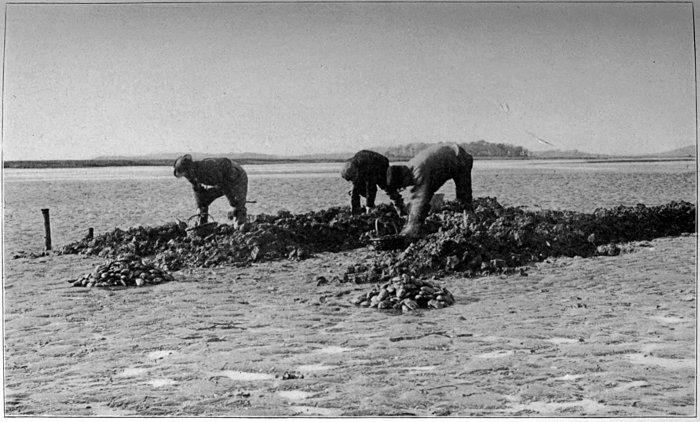
Methods of Digging.—The ordinary method of taking clams is so
simple as hardly to need explanation. Although simple, clam digging
requires considerable skill, and it takes years of experience to become
a good clammer.
There are two methods of clam digging used in Massachusetts,—the
"wet" and the "dry" digging. Wet digging is carried on when
water is over the clam beds; dry digging, which is the common method,
takes place when the flats are left exposed by the tides. The only
places in Massachusetts where wet digging is carried on regularly are
Eastham, Chatham, Swansea, and in Katama Bay, Edgartown. In
the lower end of Katama Bay is found a submerged bed of clams
which is one of the most productive beds of this class in Massachusetts.
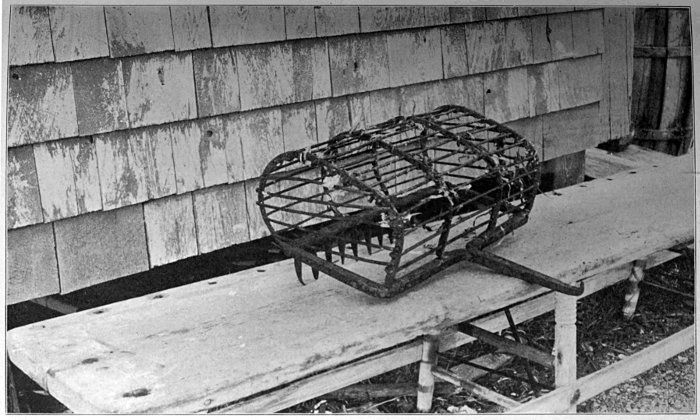
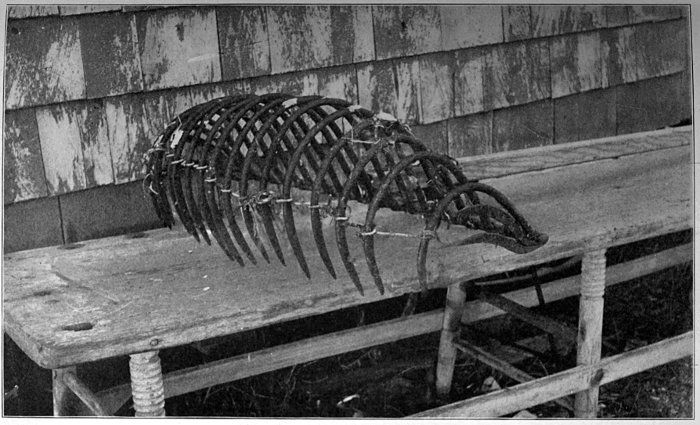
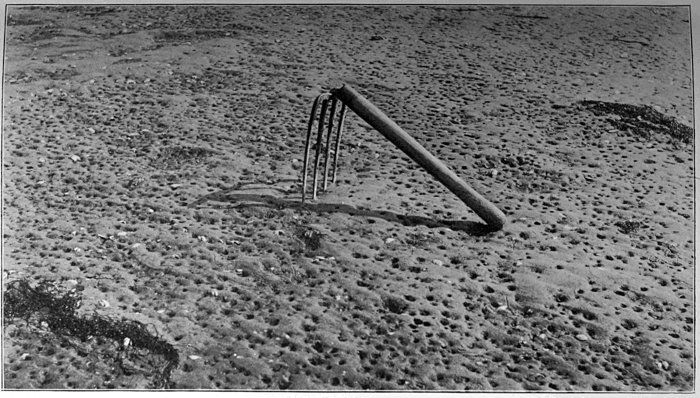
These submerged clams are taken with what is known locally as a "sea
horse," which is an enlarged clam hoe, with prongs 12 to 14 inches
long, and a strong wooden handle four feet in length. This handle
has a belt attachment which is buckled around the clammer. Two men
are required for this work. The sea horse is worked deep into the loose
sand and is dragged along by one man, who wades in the shallow water
over these submerged flats, while his partner follows, gathering the
clams which the sea horse roots out. Another method of wet digging is
called "churning," and is based on the same principle as the above
method, only the clams are turned out under water by long forks or
hoes. This method is not used in Massachusetts to any extent. Excellent
results are usually obtained from wet digging.
The methods used in dry digging depend upon the nature of the soil.
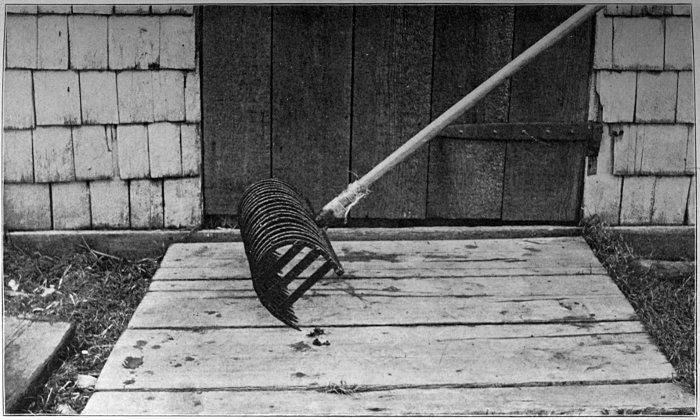
The difference lies only in the kind of digger. The clam hoe of the
south shore, where the soil is either coarse sand or gravel, has broad
prongs, some even being 1¼ inches across. The usual number of prongs
is four, but occasionally three broad prongs suffice. The clam hoe of
the north shore, often called "hooker," has four thin, sharp prongs
and a short handle. The set of this handle is a matter of choice with
the individual clammers, some preferring a sharp, acute angle, and
others a right angle. This style of clam hoe is best suited for the hard,
tenacious clam flats of the north shore. At Essex spading forks are
used for clamming, but not as extensively as the hooker. For sand
digging the forks are said to be better, while for mud digging the
hooker is preferred.
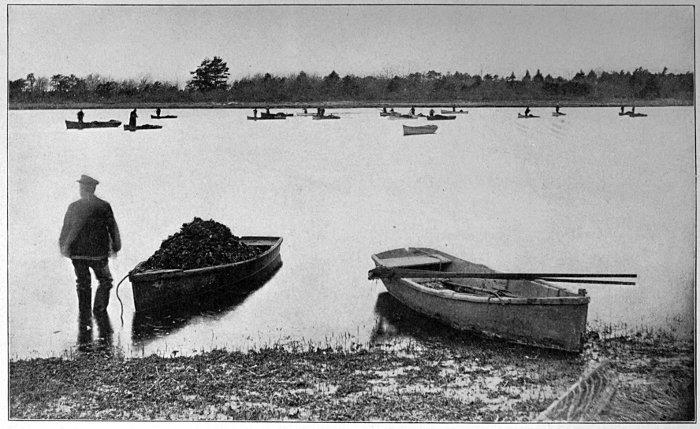
Outfit of a Clammer.—The outfit of a clammer does not require
much outlay of capital. A skiff or dory, one or two clam hoes and three
or four clam baskets complete the list. Occasionally, as at Ipswich,
where the clam grounds are widely scattered, power dories are used,
and this necessitates the investment of considerable capital; but the
investment of the average clammer does not exceed $26. Personal
apparel, such as oilskins and boots, are not considered under this head.
Clamming Outfit.
| Skiff dory, |
$22.00 |
| Two clam diggers, |
1.50 |
| Four clam baskets, |
2.00 |
| Total, |
$25.50 |
The boats most often used by the north shore clammers are called
"skiff dories," and in construction are between a dory and a skiff.
These boats are especially adapted for use in rivers.
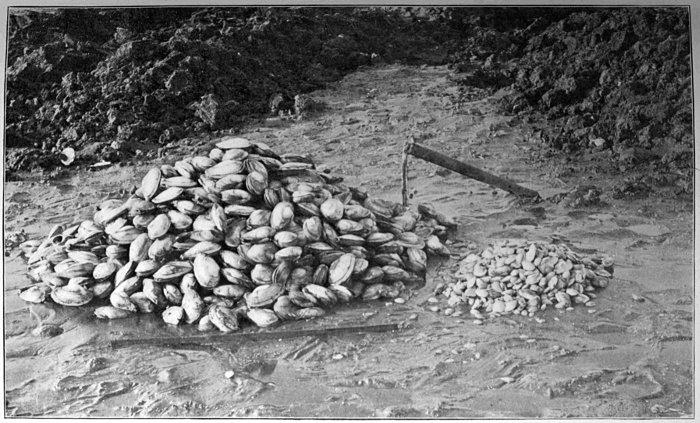
Marketing.—Clams are shipped to market either in the shell or
"shucked out." Two rules are followed by the clammers in making
this distinction: (1) small clams, or "steamers," are shipped in the
shell, especially during the summer months, while the large clams are
"shucked;" (2) the fine-appearing sand clam is usually sold in the
shell, while the unprepossessing mud clam is shucked, i.e., the shell
and the external covering of the siphon or neck are removed. This
causes on the north shore a division by locality. The Ipswich and
Essex clams, except for a few individual orders, are mostly shipped to
market in the shell, while the Annisquam River and Newburyport
clams are usually shucked in the winter. Little if any shucking is done
by the south shore clammers.
Shucking almost doubles the value, as a bushel of clams, worth in the
shell 75 cents, will furnish, when soaked, about 10 quarts of shucked
clams, which bring about 50 cents per gallon, or a total of $1.25 when
marketed. The shucked clams are put through a process of soaking in
the same way the scallop "eyes" are treated before marketing. They
absorb a sufficient quantity of fresh water, after soaking six hours, to
increase their bulk about one-third and give a plump appearance to
the clams.
While many clammers do not soak their clams, it seems to be a
universal tendency, wherever clams are shucked, to gain by this method.
Soaking of any sort impairs the flavor of the clam, and for this reason
such a practice is to be deplored, but as long as the consumer is satisfied
to take second-rate goods, this practice will continue, and it can
be stopped only by the united demand of the shellfish dealers.
Shipment.—Second-hand flour and sugar barrels are used for the
shipment of clams in the shell, while kegs and butter tubs hold the
shucked clams. In winter clams can be shipped inland without perishing;
but in hot weather they will spoil in a few days, unless iced.
Maine Clams.—Massachusetts annually consumes many thousand
barrels of Maine clams. If the demand of the Boston market were
not partially met by the influx of Maine clams, the clam flats of Massachusetts
would be subject to a greater drain.
Market.—The principal market for the clam industry of Massachusetts
is Boston. Gloucester, Newburyport, Salem and Lynn draw part
of the clam trade of the north shore, but the greater portion goes to
Boston, whence it is distributed throughout the State. In recent years
shipments have been made from the Ipswich Bay region direct to New
York, Baltimore and Philadelphia.
Price.—The price of clams is fairly constant, varying but little in
summer and winter. Naturally, this seems curious, when winter and
summer clamming are compared. The production in winter is much
smaller than in summer, which is due to (1) fewer clammers, because
of the severe work in cold weather; (2) less working days, as the
clammer is often unable to dig for weeks, and even months, and also
cannot work early or late tides, as in summer. In spite of this diminution
of supply, the winter price is practically no higher. This is due to
a smaller demand in winter, as well as to the influx of the Maine clams
at this season. In summer there is an increased demand for clams,
caused by the arrival of the summer people at the seashore; and large
quantities of this shellfish are used by hotels, cottages, etc. This increase
in demand is enough to offset the increase in supply, resulting in a stationary
price.
The price varies as to the quality of the clams, whether soaked or
unsoaked, small or large, good or poor looking shells, and fresh or stale.
The average price as received by the clammer for clams in the shell is
75 cents per bushel; shucked clams, when soaked, 45-50 cents per
gallon.
Owing to the peculiarities of the different localities, it has been
impossible to satisfactorily arrange the towns alphabetically. Therefore,
in order to present local comparisons, they have been arranged in
geographical order, starting at the northern boundary of the State.
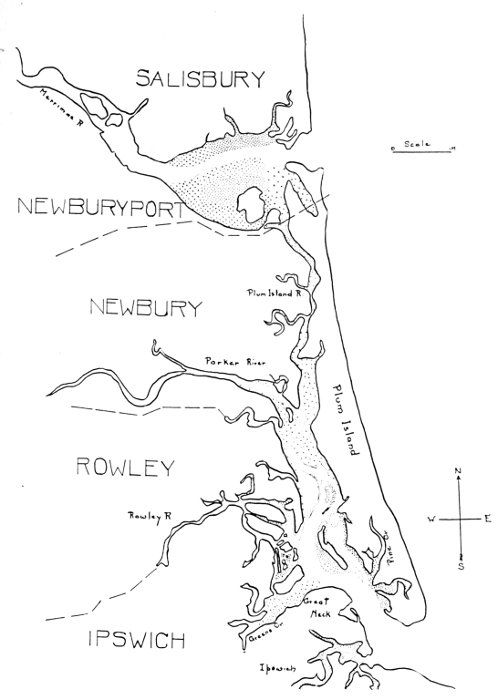
Salisbury, the most northerly town in the State, has a good clam
territory, very similar to that of Newburyport, though much smaller
in area.
Almost all the clam ground, and practically all the very good digging,
is comprised in a single flat, which extends along the northerly bank of
the Merrimac for nearly 2 miles. This flat is about 900 feet wide, on
an average, and has a total area of 216 acres. On the eastern end, and
skirting the channel, it is sandy; but for the most part it is mud
throughout, varying from a hard, smooth surface in the middle portion
to a soft, scummy soil on the west.
About 100 acres in the central section of this flat are covered with
a thick set of clams, especially from 1 to 2 inches. This territory
furnishes the bulk of the good digging, and is being constantly turned
over and the larger clams sorted out. Roughly speaking, the main east
half of the flat is sandy, or hard mud, with very good clamming, the
western half softer mud, with fair or scattering clams. This is an
exceptionally fine natural clam flat, and if properly cultivated its production
would be immensely increased. At the eastern extremity of
the flat a long, narrow cove extends in a general northerly direction
into the main land. This cove, including the outer fringing bars,
contains some 34 acres of flats, for the most part sandy and rather
poorly productive, though no considerable area is anywhere strictly
barren. The combined clam flat territory of the town aggregates 250
acres, comprising 150 acres of good clamming and 100 acres of scattering
clams; of these, 216 acres are of mud and 34 acres of sand.
While the town records show 66 licensed clammers, only about 50
make clamming their chief occupation. The industry is carried on in
much the same manner as at Newburyport; $625 is invested in boats and
implements, and some 15,000 bushels of clams, aggregating $16,500,
are annually produced.
The clam industry at Salisbury is largely stationary as regards
available territory, while the production varies considerably from year
to year. There is little or no town legislation affecting the industry,
except the issuing of permits by the selectmen. These permits cost 25
cents, and are required from every clammer.
Summary of Industry.
| Number of men, |
66 |
| Capital invested, |
$625 |
| Production, 1907:— |
| Bushels, |
15,000 |
| Value, |
$16,500 |
| Total area (acres):— |
| Sand |
34 |
| Mud, |
216 |
| Gravel, |
— |
| Mussels and eel grass, |
— |
| Total, |
250 |
| Productive area (acres):— |
| Good clamming, |
150 |
| Scattering clams, |
100 |
| Barren area possibly productive (acres), |
— |
| Waste barren area (acres), |
— |
| Possible normal production, |
$70,000 |
Newburyport is pre-eminently the clam town of Massachusetts. It
produces the most clams, gives employment to the most men, and has
on the whole the finest flats.
The total clam-growing area of this town comprises about 1,080 acres;
of this, some 800 acres are more or less productive, while the balance,
280 acres, is practically nonproductive. Scattering clams exist everywhere,
so there are, properly speaking, no truly barren flats.
The flats of Newburyport, broad, level and continuous, are peculiarly
adapted to clam culture. The general type of soil is mud, varying from
a soft, sticky variety on the west coast, and also along the shores of
Plum Island, to a firm, hard surface in the great middle section north of
Woodbridge's Island, where clams flourish most abundantly and furnish
the best digging within the city limits. Here nearly 100 acres are
covered with a heavy set of 1 to 2 inch clams. Altogether there are
some 930 acres of this mud. Much of this, especially to the west and
south, is apparently unfavorable to clams, being soft and unwholesome,
but even here at certain seasons clams are dug extensively.
The sand flats include the shifting Hump sands that fringe the
Merrimac channel and the Cove on Plum Island. These and other
minor sections comprise about 150 acres. The Hump sands are quite
productive. The other sand flats are not entirely barren, but practically
unutilized.
The clam industry at Newburyport furnishes employment for about
175 men, although over 200 depend upon it for some portion of their
income. The season lasts the year round, though on account of storms
and ice the winter's work is rather uncertain. A good fisherman will,
under favorable circumstances, dig several bushels of clams at a tide,
though the ordinary man will probably not average more than a bushel
and a half, taking the whole year into account.
The outlay of capital invested is comparatively small. A flat-bottom
boat or dory, a clam hoe or two, and three or four wire-bottom baskets,
constitute a clammer's outfit, costing altogether perhaps $15 or $20. As
two or more men frequently go in one boat, even this expenditure may
be reduced. The shore property in use, consisting of from 8 to 10
shanties, is also inconsiderable. Several power boats are used, however,
and their added cost brings the aggregate money invested up to about
$2,700.
The flats of Newburyport are a large factor in its economic wealth.
During 1907 they produced nearly 55,500 bushels of clams, exceeding
$61,000 in value. Nearly two-thirds of these clams were shucked, that
is, removed from the shell and sold by the gallon. In this form, usually
soaked to increase their volume, they retail for about 45 cents per
gallon. As clams in the shell, sold for "steamers," etc., will hardly
bring more than 65 cents per bushel, the process of shucking nearly
doubles the value to the fisherman, as a bushel of clams in the shell will
produce from 2 to 3 gallons of soaked clams. The income of the
average clammer will hardly exceed $350 per year, but a really energetic
and industrious fisherman may in the same time make from $500
to $700, or even more. Many of the men have individual orders from
dealers in Lynn, Haverhill and the neighboring cities, while the local
dealers ship largely to Boston.
The regulation of the industry by city ordinance is of very little
note. Practically the only legislation pertaining to it is the law which
requires every clammer to have a permit, but even this regulation is but
indifferently enforced. The Newbury flats are likewise free to the Newburyport
clammers, and part of the Newburyport production comes
from these outside flats.
The history of the clam industry at Newburyport is one of constant
change. Twenty years ago large areas on southwest Joppa were practically
barren; now they are quite productive. The reverse is true of
Ball's flat on Plum Island, which, though once of great importance, is
now almost waste. Though no serious inroads have as yet been made,
a slow but steady decline in the industry is distinctly noticeable.
Comparison of 1907 with 1879 (Salisbury and Newburyport).
| YEAR. |
Production (Bushels). |
Value. |
Men. |
Capital. |
Price per Bushel. |
| 1879, |
28,800 |
$11,520 |
60 |
$750 |
$0.40 |
| 1907, |
70,500 |
77,500 |
241 |
3,325 |
1.10 |
Summary of Industry.
| Number of men, |
175 |
| Capital invested, |
$2,700 |
| Production, 1907:— |
| Bushels, |
55,500 |
| Value, |
$61,000 |
| Total area (acres):— |
| Sand, |
150 |
| Mud, |
930 |
| Gravel, |
— |
| Mussels and eel grass, |
— |
| Total, |
1,080 |
| Productive area (acres):— |
| Good clamming, |
800 |
| Scattering clams, |
280 |
| Barren area possibly productive (acres), |
— |
| Waste barren area (acres), |
— |
| Possible normal production, |
$250,000 |
The town of Newbury has in itself no shellfish industry, although
there is an extensive area of suitable flats which are worked with equal
rights by the Newburyport clammers. These flats comprise some 360
acres, and extend along both sides of Plum Island Sound and Parker
River. Over 100 acres of scattering clams occur, though not in sufficient
quantities for the most part to make very profitable digging. The
remainder, some 260 acres, though almost all suitable for the production
of large quantities of clams, is practically barren.
The principal type of soil is mud, and the mud flats comprise about
250 acres. The flats of Parker River and those in its immediate neighborhood,
however, are largely sand, and altogether they aggregate about
110 acres. Of these, "the thoroughfare" is practically the only one
which furnishes clams in any quantity. Sections of the broad flats
which border on Plum Island Sound produce scattering clams of large
size. There is, however, no very good digging in town, and no consistent
effort seems ever to have been made to utilize the great wealth
which lies dormant in the clam flat territory. Six Newbury men dig
intermittently in the summer, and furnish some 300 bushels, worth
about $250, for town trade. However, this does not take into consideration
the amount taken from these flats by the Newburyport
clammers.
Summary of Industry.
| Number of men, |
6 |
| Capital invested, |
$75 |
| Production, 1907:— |
| Bushels, |
300 |
| Value, |
$250 |
| Total area (acres):— |
| Sand, |
110 |
| Mud, |
250 |
| Gravel, |
— |
| Mussels and eel grass, |
— |
| Total, |
360 |
| Productive area (acres):— |
| Good clamming, |
— |
| Scattering clams, |
100 |
| Barren area possibly productive (acres), |
260 |
| Waste barren area (acres), |
— |
| Possible normal production, |
$40,000 |
Rowley presents a more striking example of the decline in the shellfish
industry than any other town in this region.
Four hundred acres of good flats border Plum Island and Rowley
River within the town limits, but of these only 20 at most are economically
productive. Eighty acres more are not entirely barren, though
practically worthless, while the remaining 300, though almost all well
adapted for clam culture, are barren.
The main type of soil is sand, and the sand flats, for the most part
in Plum Island Sound, comprise some 250 acres. The remainder, 150
acres, is mostly mud in scattered sections along the Rowley River and
in patches on the main flats. The only really productive flats are the
little coves and creeks of Rowley River and the Knob Reefs in Plum
Island Sound. The Knob Reef clam grounds produce very large and
fine clams, which lie on the lower edge of the flat and are exposed only
a short time every tide. Knob Reefs also has the distinction of possessing
probably the finest clam set of its size in the State, which would
furnish abundant opportunity for restocking all the barren Rowley
River flats, if the town authorities had taken proper measures to transplant
this seed. As it is, this extensive set, too thick for good growth,
is rapidly wasting away.
The history of the industry is one of steady decline. Reliable evidence
exists to show that almost all the flats of Rowley once produced clams,
and that large areas now waste were formerly productive. That these
immense barren areas, possessing such an enormous latent wealth, should
be allowed to remain thus unimproved, is a most conclusive argument
for the need of radical action. No settled attempt, however, except for
a single closed season in 1906, has ever been made by the clammers
or town authorities to better the conditions, or to check the decline in
the productive territory that remains.
Summary of Industry.
| Number of men, |
15 |
| Capital invested, |
$800 |
| Production, 1907:— |
| Bushels, |
2,000 |
| Value, |
$1,500 |
| Total area (acres):— |
| Sand, |
250 |
| Mud, |
150 |
| Gravel, |
— |
| Mussels and eel grass, |
— |
| Total, |
400 |
| Productive area (acres):— |
| Good clamming, |
20 |
| Scattering clams, |
80 |
| Barren area possibly productive (acres), |
300 |
| Waste barren area (acres), |
— |
| Possible normal production, |
$60,000 |
Ipswich is second only to Newburyport in the production of clams,
and has perhaps even greater possibilities of development. The clam
territory of the two towns, while nearly equal in extent, is, however,
markedly different in general characteristics. The flats of Newburyport,
while few in number, are broad, continuous, and have a great degree
of similarity throughout. The flats of Ipswich, on the other hand,
are divided into a great number of relatively small sections, widely
diversified in character, and scattered along an extensive coast line. As
these flats are in many respects the most interesting and important of
any town in the State, it seems well to examine them in detail.
Four distinct divisions can be distinguished in the clam territory of
this town: Ipswich River, Plum Island, Green's Creek and Roger
Island, and Essex River flats.
Taken in the order named, the Ipswich River has in itself a great
variety of clam ground. Both sides of the river for nearly 3 miles are
fringed with bars, mainly of mud though sandy near the mouth. Some
of the mud flats are so soft that they are practically barren, or given
up largely to mussel beds; while much of the sand, as, e.g., the main
portion of the High Sands, is too shifting to be valuable. The larger
part of these river flats are, however, productive.
The Plum Island division comprises Lufkins, Point Peter, Appletons,
Foresides and several other minor flats. Of these, Lufkins is very
important. It occupies a semicircular depression on the coast of Plum
Island, and, owing to its peculiar location, the swift current which
flows past its outer edge makes a double eddy at both ebb and flood
tide. These eddies sweep gently over its broad surface, and deposit
a fine silt which has made the characteristic soil a hard, bluish clay.
This is the only important clay flat of this region. The total area of
Lufkins is 46 acres. The outer border to the north is mud, becoming
soft; to the south, sandy. The portion near shore is, as has been stated,
a clayey soil, and it is here that clams are found abundantly. An exceptionally
good set of 1 to 2 inch clams occupies from 3 to 4 acres
of this portion. Though clams are numerous, the exceeding hardness
of the soil makes digging rather difficult.
Point Peter, or "P'int" Peter, is also an important flat, comprising
altogether 28 acres, though about 7 acres of the outer portion extend
far into the current, and are of so shifting and sandy a nature as to
be practically worthless. Most of the remainder is mud, varying from
sand and hard mud on the outside to soft mud in the creeks that lead
into the main land. The central portion of the flat is peculiarly
adapted to the culture of clams, however, and is very productive.
Appleton's flat comprises about 6 acres of hard sand, verging into
mud, thickly strewn with old clam shells. It lies at the mouth of
Perkins and Pine Creeks, which run for about a mile into the main
land of Plum Island, and contain nearly 25 acres each of fairly productive
mud flats. Appleton's is a valuable flat, and the clams dug
here are large.
The Foresides is a thatch island a little over a mile in length, lying
in the mid channel of Plum Island Sound. The flats which surround it
on all sides are practically all sand, and comprise about 80 acres. The
whole western side is more or less productive, though the outer edge,
where the strong cross currents of the channel sweep over, is too much
rippled to be suitable for clam growth. The strip of sand along the
northern and northeastern sides, though rather narrow and limited in
area, is productive, while most of the southeastern portion, which
projects far into the channel, is barren and totally unadapted for soft
clams, though bedded with sea clams. The productive sections of this
flat are much dug, and altogether it is one of the most important of the
Ipswich clam grounds.
The west coast of Plum Island Sound, comprising the Green's Creek
and Roger Island territories, extends from the Ipswich to the Rowley
rivers. This division contains the bulk of the waste and barren flats
of the town, although there is exceptionally good clamming in Stacy's
Creek, Third Creek and the "Nutfield."
The Essex River region is rather remote for most of the clammers,
and hard to reach, but furnishes on the whole some of the very best
digging. The three main flats of this division are the Essex beach,
Wheeler's, and the Spit. Essex beach has a very good set, evenly
sprinkled over the ridgy, shifting bars that skirt the channel.
Wheeler's is an irregular sand bar, occupying about 77 acres. Fully
one-half of this is very productive, and in the main portion occurs
another thick set very similar to that on Essex beach.
The Spit, mainly sand or sandy mud, lies in the three towns of
Ipswich, Essex and Gloucester. The whole area is some 300 acres,
about a third lying within the town of Ipswich. This whole bar is
so liable to change that any calculations based on its precise area or
location are decidedly unreliable. Very good digging occurs, however,
in limited areas on the north and west sides of the Ipswich territory.
These four divisions comprise the clamming territory of Ipswich, and
aggregate 970 acres, of which 390 acres is sand and 500 mud. This also
includes 15 acres of mussels scattered along Ipswich River, Plum
Island and Green's Creek region, and about 10 acres of eel grass in
various localities. Over 800 acres is more or less productive, about half
being good clamming.
About 50 regular clammers depend upon these flats for a living,
though 136 permits were issued in 1907. Here, owing to the greater
distances to be traversed, many power boats are used. Nearly $7,500
is invested in the industry, and 25,000 bushels of clams, at a valuation
of $18,750, are annually produced. The relative decrease in price as
compared with Newburyport is due to the fact that shucking is not so
extensively practised here.
The town laws merely require a permit from every clammer, for
which no charge is made. Such permit is issued at the discretion of
the selectmen, and requires of the recipient six months' residence in
the town and two years in the State. In past years the town has made
several by-laws for the protection of shellfish, chiefly in the nature of
partial closed seasons; but unfortunately considerable difficulty has
been found in enforcing these excellent laws, and the results have been
far from satisfactory.
Ipswich has jealously guarded the rights of its clam flats, and has
protected them in every way from the invasion of outsiders, which in
part accounts for the excellent condition of these flats, which were
originally deeded to the Commoners by the Crown, and from them to
the town. Ipswich is the only town in the Commonwealth which has
thus directly received its clam flats as its own property, and naturally
has done more to improve its natural clam resources than any other
town in the State.
The history of the industry shows little change; some few flats once
considered worthless have been opened and utilized; others once productive
have been dug out and allowed to become waste. On the whole,
the industry is following the trend of the shellfisheries everywhere, and
slowly but steadily declining.
Summary of Industry.
| Number of men, |
136 |
| Capital invested, |
$7,500 |
| Production, 1907:— |
| Bushels, |
25,000 |
| Value, |
$18,750 |
| Total area (acres):— |
| Sand, |
390 |
| Mud, |
500 |
| Gravel, |
55 |
| Mussels and eel grass, |
25 |
| Total, |
970 |
| Productive area (acres):— |
| Good clamming, |
400 |
| Scattering clams, |
420 |
| Barren area possibly productive (acres), |
125 |
| Waste barren area (acres), |
25 |
| Possible normal production, |
$200,000 |
Essex, while still ranking as an important clam-producing town, has
a very imperfect development of her shellfish resources. The total
clam flat area comprises some 650 acres, and, though scarcely more than
25 acres can be considered as unfit for the growth of clams, and consequently
barren, only a little more than half the remainder is at all
productive, and of this probably less than 150 acres yields any financial
return. In other words, 325 acres of good clam flat is allowed to remain
practically barren.
The main type of soil is sand, and nearly 500 acres may be properly
classed under this head. The remaining 150 acres are mud, and are
located in the creeks along the river and in the coves north of Hog
Island. The productive sections are scattered for the most part along
both sides of the Essex River, and well-developed areas are also
found at its mouth and on the Spit. There are several good locations
of seed clams. One section of about 25 acres occurs on the west side
of the Spit. This is composed of 1 to 2 inch clams, running 10 to 40
per square foot. At the mouth of the river on the north side occurs
another set of ½-inch clams, covering about 10 acres. On the flats
west of Cross Island is found a third set of ½ to 2 inch clams, comprising
about 30 acres. Other smaller patches of set are scattered
along the river almost up to its source.
About 50 men derive an income from these flats. Some $1,200 is
invested, and the annual product exceeds 15,000 bushels, valued at
$12,750.
The town of Essex has realized the importance of the clam problem,
and has attempted through legislation to deal with it. The selectmen
are empowered to grant to citizens of the town an area consisting of
an acre or less on flats already barren, for the purpose of raising
clams, and in this manner partially restock the flats. A rental of
$2 is charged, covering a period of five years, and an additional fee
of 50 cents is required for recording. In spite of inadequate protection,
the experiment has been conducted long enough to prove that
these flats can be made profitable to the clammers.
The history of the clam industry at Essex is one of extensive decline.
There is every reason to believe that the greater part at least of the
waste area was once very productive. Prof. James L. Kellogg in the
United States Fish Commission Bulletin for 1899, says:—
We have much evidence that the clam industry in Essex has, in the past,
been extensive.... Much more testimony of a similar character may be
had to show that the flats once very productive have almost entirely failed.
Comparison of 1907 with 1879.
|
1879. |
1907. |
| Production (bushels), |
500 |
15,000 |
| Value, |
$4,500 |
$12,750 |
| Men, |
75 |
50 |
| Capital, |
— |
$1,200 |
| Price (cents), |
40 |
85 |
Summary of Industry.
| Number of men, |
50 |
| Capital invested, |
$1,200 |
| Production, 1907:— |
| Bushels, |
15,000 |
| Value, |
$12,750 |
| Total area (acres):— |
| Sand, |
500 |
| Mud, |
125 |
| Gravel, |
— |
| Mussels and eel grass, |
25 |
| Total, |
650 |
| Productive area (acres):— |
| Good clamming, |
150 |
| Scattering clams, |
150 |
| Barren area possibly productive (acres), |
325 |
| Waste barren area (acres), |
25 |
| Possible normal production, |
$120,000 |
The far-celebrated deep sea fisheries of Gloucester overshadow her
humble shellfish industry; but within her tidal flats lie undeveloped
resources, which if properly brought out would form no inconsiderable
factor in her annual revenue. Even now her clam fishery attains considerable
proportions, though by no means what it once was, or what
it might be were suitable cultural methods employed.
The main areas of clam-producing territory lie in the Annisquam
River and in the Essex River in West Gloucester. The grounds in the
Annisquam are the more productive. This river is some 4 miles long,
and is bordered for the greater part of this distance with tidal flats. Of
these the sand flats predominate, though there are large areas of mud
and extensive beds of mussels. On the extreme head of the river, known
as the Dumfudgeon region, dredging operations for the Gloucester
canal have somewhat impaired the flats, but as a whole the river seems
in every way suitable for the production of an abundant harvest of
clams.
The flats of West Gloucester, including a portion of the Essex Spit,
are largely unproductive. The Spit is the only flat of any extent in this
region which is at present of real economic value; the remaining flats,
scattered along the south shore of the Essex River and its tributary
creeks, are for the most part practically barren.
The total area of clam flats in Gloucester approximates 550 acres. Of
this, some 250 acres are sand, 200 mud, while there are about 100 acres
of mussels and eel grass, which cannot be considered at all adapted for
clam culture. Only a fraction of the whole, 75 acres, more or less, is
good clamming; a scant 100 acres produces scattering clams; 275 acres
are barren, though capable of producing clams; while 100 acres may
never be made productive.
Eight men dig regularly on these flats the year round, and 23 others
work intermittently. The capital invested amounts to over $600, and
the annual output exceeds 6,000 bushels, valued at $8,000. Most of
the clams produced at Gloucester are shucked either for market or bait.
Local legislation has no bearing on the shellfish question, and no
effort is being made either to better conditions in the clam industry or
to check its steady decline.
The industry has fallen off greatly in the past few years. In 1875
there were 90 regular clammers, and a man could dig 6 bushels to a
tide, where now 8 regular and 23 intermittent clammers find it difficult
to get from 1½ bushels to 3 bushels per tide.
Comparison of 1907 with 1879.
| YEAR. |
Production (Bushels). |
Value. |
Men. |
Capital Invested. |
Price. |
| 1879, |
13,978 |
$5,200 |
92 |
$2,000 |
$0.40 |
| 1907, |
6,000 |
8,000 |
31 |
600 |
1.33 |
Summary of Industry.
| Number of men, |
31 |
| Capital invested, |
$600 |
| Production, 1907:— |
| Bushels, |
6,000 |
| Value, |
$8,000 |
| Total area (acres):— |
| Sand, |
250 |
| Mud, |
200 |
| Gravel, |
— |
| Mussels and eel grass, |
100 |
| Total, |
550 |
| Productive area (acres):— |
| Good clamming, |
75 |
| Scattering clams, |
100 |
| Barren area possibly productive (acres), |
275 |
| Waste barren area (acres), |
100 |
| Possible normal production, |
$70,000 |
Manchester has a coast line so much exposed, and consequently so
small a territory of tidal flats, that it is not surprising to find its clam
industry of very insignificant proportions. Affairs are in much the
same state of apathy as at Beverly, though Manchester does not possess
the resources of the former town, and could not, in the nature of the
case, carry on any extensive clam business. Its facilities, however, poor
as they are, are very imperfectly utilized; hence the present state of
depletion, verging on absolute exhaustion.
Summary of Industry.
| Number of men, |
— |
| Capital invested, |
— |
| Production, 1907:— |
| Bushels, |
100 |
| Value, |
$100 |
| Total area (acres):— |
| Sand, |
10 |
| Mud, |
10 |
| Gravel, |
— |
| Mussels and eel grass, |
— |
| Total, |
20 |
| Productive area (acres):— |
| Good clamming, |
— |
| Scattering clams, |
5 |
| Barren area possibly productive (acres), |
10 |
| Waste barren area (acres), |
5 |
| Possible normal production, |
$2,000 |
Beverly has practically no clam industry. The area of tidal flats,
comprising nearly 50 acres, is at present unprofitable and nearly
worthless. As at Swampscott, some clams still continue to be dug for
bait and for local clam bakes, but any evidence of a systematic business
has long ceased to exist. Thirty years ago clams were far more
abundant, though there was never an extensive industry. The town
authorities require no licenses and make no efforts to revive the industry.
Summary of Industry.
| Number of men, |
| Capital invested, |
— |
| Production, 1907:— |
| Bushels, |
100 |
| Value, |
$100 |
| Total area (acres):— |
| Sand, |
30 |
| Mud, |
20 |
| Gravel, |
— |
| Mussels and eel grass, |
— |
| Total, |
50 |
| Productive area (acres):— |
| Good clamming, |
— |
| Scattering clams, |
10 |
| Barren area possibly productive (acres), |
30 |
| Waste barren area (acres), |
10 |
| Possible normal production, |
$5,000 |
Salem has far better natural advantages for clam culture than the
other towns in its immediate vicinity, and leads in clam production,
though the industry is of very inferior proportions. Seven men are at
present employed in digging the harbor flats, where the clams have
very recently seeded in. Many of these clams, though rather small,
are shucked, and the remainder are sold in the local markets. The
entire value of the annual production does not exceed $200, and the
capital invested amounts to but $75. This is rather poor showing for
100 acres of flats for the most part comparatively good, and capable
of yielding $11,000 annually. The Salem clammers dig also in the
Danvers River in the town of Danvers.
Summary of Industry.
| Number of men, |
7 |
| Capital invested, |
$75 |
| Production, 1907:— |
| Bushels, |
200 |
| Value, |
$200 |
| Total area (acres):— |
| Sand, |
75 |
| Mud, |
25 |
| Gravel, |
— |
| Mussels and eel grass, |
— |
| Total, |
100 |
| Productive area (acres):— |
| Good clamming, |
5 |
| Scattering clams, |
10 |
| Barren area possibly productive (acres), |
70 |
| Waste barren area (acres), |
15 |
| Possible normal production, |
$11,000 |
The city of Lynn has within its tidal flats the latent resources of an
important industry. Its clam grounds could, if properly utilized, yield
a great increase over their present inconsiderable return. No legislation
on the part of the city authorities has intervened to improve the shellfish
production or to prevent the depletion of valuable territory which has
been allowed to gradually lapse into an unsanitary desert. While at
low tide about 400 acres of flats spread over the broad harbor or border
the banks of the Saugus River, but 40 acres of this wide expanse yield
any appreciable revenue. The principal part of the digging is done
on the mud flats of the Saugus River. Here 7 fishermen work intermittently
to supply the local market during the summer months. There
is some good territory at the mouth of the river toward the north, and
scattering clams occur along the eastern shores, but the main flats of
the harbor are for the most part barren.
The deposit of sewage from the city drainage has undoubtedly had a
prejudicial effect on much of this area, as the unpleasing scum which
covers the soft, sticky mud and eel grass bears abundant witness.
Whether measures undertaken to reclaim this lost area would in the
long run yield profitable returns is an undecided question, but much
might be done, by the employment of judicious cultural methods, to
increase the yield of those flats which are properly productive. No
exact returns of the annual clam harvest for this region are obtainable,
as most of the output is disposed of at retail, but it cannot exceed 1,000
bushels, and probably falls far short of that figure; $1,000, then, or
thereabouts, represents the total monetary income from this fishery.
Summary of Industry.
| Number of men, |
7 |
| Capital invested, |
$100 |
| Production, 1907:— |
| Bushels, |
1,000 |
| Value, |
$1,000 |
| Total area (acres):— |
| Sand, |
90 |
| Mud, |
300 |
| Gravel, |
5 |
| Mussels and eel grass, |
5 |
| Total, |
400 |
| Productive area (acres):— |
| Good clamming, |
10 |
| Scattering clams, |
30 |
| Barren area possibly productive (acres), |
160 |
| Waste barren area (acres), |
200 |
| Possible normal production, |
$26,000 |
At Saugus conditions in many respects parallel those at Lynn. The
clam grounds, while they by no means equal those of the neighboring
city in area, are on the whole better, as they are freer from contaminating
sewage. Of the 250 acres which comprise the normal tide flat
area, only 100 acres, or 40 per cent., can be said to be strictly barren.
The remaining 150 acres is an undeveloped asset, as its value lies far
more in its prospects than in its present productivity. While scattering
clams occur throughout, no more than 25 acres can be accounted paying
property. This remunerative territory lies chiefly in the Saugus River
and in the vicinity of the Point of Pines. Here 10 men dig quite
regularly, particularly in the summer, though none of them depend
wholly upon this source of revenue for a livelihood. The annual output
equals that of Lynn, both in amount and valuation. To these flats,
with their undeveloped resources, local legislation gives practically no
attention.
Summary of Industry.
| Number of men, |
10 |
| Capital invested, |
$100 |
| Production, 1907:— |
| Bushels, |
1,000 |
| Value, |
$1,000 |
| Total area (acres):— |
| Sand, |
100 |
| Mud, |
150 |
| Gravel, |
— |
| Mussels and eel grass, |
— |
| Total, |
250 |
| Productive area (acres):— |
| Good clamming, |
10 |
| Scattering clams, |
40 |
| Barren area possibly productive (acres), |
100 |
| Waste barren area (acres), |
100 |
| Possible normal production, |
$22,000 |
Although Nahant has a large area of tidal flats, it is not on the whole
favorably located, and much that would otherwise be available is necessarily
waste. The territory which borders the western coast is not
barren, but most of it is not productive enough to be profitable.
A few scattered sections repay the clammer for his labor, and from
these sections perhaps 300 bushels a year are dug for home consumption.
Four or five men are employed at intervals in the summer
months, but no one of them depends upon this source of income for
more than transient employment, as the entire value of the yearly
harvest does not exceed $300. As there are nearly 250 acres of flats
in Nahant, this would be a revenue of $1.60 per acre, on an average.
However, this is not a fair comparison, for much of the territory
apparently available is, as has been stated, properly waste. Nevertheless,
an industry of far greater proportions than at present could
be attained if wise legislation were directed to that end.
Summary of Industry.
| Number of men, |
— |
| Capital invested, |
— |
| Production, 1907:— |
| Bushels, |
300 |
| Value, |
$300 |
| Total area (acres):— |
| Sand, |
50 |
| Mud, |
100 |
| Gravel, |
100 |
| Mussels and eel grass, |
— |
| Total, |
250 |
| Productive area (acres):— |
| Good clamming, |
— |
| Scattering clams, |
50 |
| Barren area possibly productive (acres), |
150 |
| Waste barren area (acres), |
50 |
| Possible normal production, |
$25,000 |
Owing to the danger arising from sewage contamination the State
Board of Health, on Dec. 6, 1906, requested the Department of Fisheries
and Game to prohibit the digging of clams for market in Boston harbor.
The region closed by this law lies to the west of an imaginary line running
from Point Shirley through Deer Island to the northeastern end
of Peddocks Island; thence in a southwesterly direction to the extreme
point of Hough's Neck. This territory includes Winthrop, Chelsea,
Charlestown, Everett, Somerville, Cambridge, Boston, East Boston,
South Boston, Dorchester, Neponset and Quincy. For convenience all
the prescribed territory is treated under the head of "Boston harbor."
The action of the State Board of Health in closing Boston harbor
was necessitated by a due regard for the public health, as it seemed
inexpedient to allow clams dug from this territory and subject to
sewage contamination to be marketed for food. Necessary as this act
may have been, the closing of 5,000 acres of flats for the production of
edible shellfish made valueless an important source of revenue, and
threw a large number of clammers out of employment. Some alleviation
of these conditions has resulted through the granting of permits
to take shellfish for bait from the prescribed waters, thus furnishing
a number of men with transient employment. The value of the law,
however, is almost completely nullified, for the danger to the public
health is actual, and not imaginary. Under present conditions it is
well-nigh impossible to make the necessary surveillance so complete as
would be necessary to prove that clams "dug for bait" are not used
as food. Further, even in the digging and handling of shellfish in
polluted waters there is positive danger of transmitting the germs by
hands of the digger to his own mouth or to other persons.
The nature of the flats permit the division of Boston harbor into
three sections: (1) the north shore, (2) the south shore, (3) and the
islands.
(1) The northern coast of the harbor has extensive mud and sand
flats, covered for the most part with eel grass or scattered mussel beds.
Much of the surface is a variety of pebbly gravel, while but little of
it appears to be good clam ground. The mud flats are mostly covered
with a sewage scum which renders them unsuitable for clams. Scattering
clams are found throughout the entire region.
The immediate vicinity of Snake Island in Winthrop and the cove
on Point Shirley furnish fairly good clamming, while clams are found
in a greater or less degree upon the extensive flats of Winthrop harbor.
The flats of the Mystic River, which are of a tenacious mud rather
unwholesome in appearance, in so far as they have not been encroached
upon for building purposes, possess scattered patches of very good
digging, and furnish transient employment to 20 or more men. The
flats in the Charles and Chelsea rivers likewise furnish fair clamming.
(2) The south shore of the harbor is much like the north, except that
the mud type of soil predominates. The large flats, mainly mud, are
not entirely barren though most of the clams are found in a narrow
strip of beach along the shore. At South Boston as well as in Dorchester
Bay clams are found in considerable numbers, though nowhere
are there any large areas of good clamming.
(3) The islands in the harbor are fringed with pebbly beach, where
scattering clams are usually found. Apple Island and Governor's
Island are surrounded with quite extensive flats, which are, however,
but sparsely productive. Much digging for bait is carried on constantly
on these pebbly beaches.
History.—Boston harbor has been in the past a good clamming
region, as the magnitude of its available flats has rendered possible
an extensive production. Naturally, the closing of the harbor by the
State Board of Health has limited the annual production of clams
from this vicinity, as now the only legal digging is for bait. Owing
to this partial closed season the clams are said to have been on the
increase during the last two years. Nevertheless, before the passage
of this act the fishery had already greatly declined. The decline of
the clam industry has been going on for years, as even in 1879 Mr.
Ernest Ingersoll mentions:—
In Boston harbor clams are much depleted, owing to the fact that they
are remorselessly dug the year through, chiefly by a class of ignorant
foreigners who go down the harbor for the purpose. July and August are
the most productive months, there being a large demand for the "clam
bakes" which picnic parties from the cities indulge in on the various
beaches. All the clams got in Boston harbor are very small, because they
are allowed little chance to grow; in March and April they are hardly
worth eating.
Comparison with 1879.
|
1897. |
1907. |
| Number of men, |
90 |
350 |
| Annual production:— |
| Bushels, |
40,000 |
7,500 |
| Value, |
$20,000 |
$6,000 |
| Number of dories, |
50 |
— |
| Capital invested, |
$1,350 |
$2,250 |
In 1879 A. Howard Clark states:—
The towns around Boston usually charge a license fee of $2 a year for
the privilege of taking clams. The clams are in some cases bought up by
small operators, who team them into the city, though the diggers sometimes
bring them to the city and sell them to the dealers direct from their boats
at the wharves.
Summary of Industry.
| Number of licenses, |
350 |
| Capital invested, |
$2,250 |
| Production, 1907:— |
| Bushels, |
7,000 |
| Value, |
$5,500 |
| Total area (acres):— |
| Sand, |
500 |
| Mud, |
2,500 |
| Gravel, |
1,000 |
| Mussels and eel grass, |
1,000 |
| Total, |
5,000 |
| Productive area (acres):— |
| Good clamming, |
100 |
| Scattering clams, |
1,000 |
| Barren area possibly productive (acres), |
900 |
| Waste barren area (acres), |
3,000 |
| Possible normal production, |
$330,000 |
Weymouth, with its two rivers, possesses an area of flats aggregating
250 acres. The shores of Fore River are stony, but in spite of the hard
digging clams are found in fair numbers. The shores of Back River
are similar, except for the mud flats on the channel, which are either
barren or but sparsely productive. A few clams are dug for bait and
home consumption.
Summary of Industry.
| Number of men |
— |
| Capital invested, |
— |
| Production, 1907:— |
| Bushels, |
150 |
| Value, |
$150 |
| Total area (acres):— |
| Sand, |
— |
| Mud, |
150 |
| Gravel, |
80 |
| Mussels and eel grass, |
20 |
| Total, |
250 |
| Productive area (acres):— |
| Good clamming, |
— |
| Scattering clams, |
30 |
| Barren area possibly productive (acres), |
50 |
| Waste barren area (acres), |
170 |
| Possible normal production, |
$11,000 |
Hingham has an area of tidal flats comprising nearly 650 acres. The
characteristic soil is of two kinds: a marginal strip of pebbly beach
extending the full length of the shore, and the broad flats of Hingham
harbor and Weir River, with their extensive areas of mud, eel grass
and mussels. The clamming territory is confined for the most part
to this narrow strip fringing the shore, though scattering clams are
found in diminished numbers on the mud flats.
The shellfish industry of the town consists mostly in procuring clams,
mussels and cockles for bait. Clams are dug to some extent for home
consumption and for the hotels at Nantasket; but the fishery is carried
on in a desultory manner by a few men who dig when other work fails,
and who do not wholly depend on clamming for a livelihood.
Summary of Industry.
| Number of men, |
— |
| Capital invested, |
— |
| Production, 1907:— |
| Bushels,. |
250 |
| Value, |
$250 |
| Total area (acres):— |
| Sand, |
25 |
| Mud, |
450 |
| Gravel, |
100 |
| Mussels and eel grass, |
75 |
| Total, |
650 |
| Productive area (acres):— |
| Good clamming, |
— |
| Scattering clams, |
100 |
| Barren area possibly productive (acres), |
— |
| Waste barren area (acres), |
550 |
| Possible normal production, |
$20,000 |
The stony shores of Hull offer but little suitable clam area, though
fair digging is found in the vicinity of Hog Island and in Weir River.
The usual type of flat is a pebbly or gravel beach, while near White
Head and Weir River there are large mud areas. Clams are dug only
for home consumption or for bait.
Summary of Industry.
| Number of men, |
— |
| Capital invested, |
— |
| Production, 1907:— |
| Bushels, |
100 |
| Value, |
$100 |
| Total area (acres):— |
| Sand |
— |
| Mud, |
225 |
| Gravel, |
200 |
| Mussels and eel grass, |
— |
| Total, |
425 |
| Productive area (acres):— |
| Good clamming, |
— |
| Scattering clams, |
50 |
| Barren area possibly productive (acres) |
50 |
| Waste barren area (acres) |
325 |
| Possible normal production, |
$15,000 |
Cohasset, though possessing sufficient suitable area to support a
clam fishery, has no industry of any importance. The greater part
of the tidal flats are barren, while the remainder are far from fertile.
The region immediately about White Head and the territory opposite
extending along Barson's beach are the most productive, while scattering
clams are found in Little Harbor.
The total acreage of available flat exceeds 100 acres. Of this, 90
acres are wholly unproductive, and the remainder, 10 acres, is not very
valuable. The main type of soil is sand, though areas of mud are found
in the coves. There are no regular clammers, though many clams are
dug by the citizens of the town for their own use. There has never
been a clam industry worthy of the name at Cohasset, and the present
state of apathy appears to be normal. No local regulations of any
kind govern the fishery.
Summary of Industry.
| Number of men, |
— |
| Capital invested, |
— |
| Production, 1907:— |
| Bushels, |
200 |
| Value, |
$200 |
| Total area (acres):— |
| Sand, |
50 |
| Mud, |
50 |
| Gravel, |
— |
| Mussels and eel grass, |
— |
| Total, |
100 |
| Productive area (acres):— |
| Good clamming, |
— |
| Scattering clams, |
10 |
| Barren area possibly productive (acres), |
40 |
| Waste barren area (acres), |
50 |
| Possible normal production, |
$6,000 |
There is no clam industry at Scituate. The selectmen of the town
have forbidden all exportation of clams for market, and consequently
the few clams dug are utilized for home consumption.
The possibilities of a future clam industry at this town, while not
alluring, give indications of some promise. Occasional clams are found
on the shores of Scituate harbor, as well as its tributary creeks. The
main undeveloped resource lies, however, along the broad flats of the
North River. These flats undoubtedly constitute a considerable asset
in the communal wealth, and the action of the selectmen in maintaining
a close season will tend to the restocking and consequent utilization
of this territory.
Summary of Industry.
| Number of men, |
— |
| Capital invested, |
— |
| Production, 1907:— |
| Bushels, |
200 |
| Value, |
$200 |
| Total area (acres):— |
| Sand, |
50 |
| Mud, |
45 |
| Gravel, |
5 |
| Mussels and eel grass, |
— |
| Total, |
100 |
| Productive area (acres):— |
| Good clamming, |
— |
| Scattering clams, |
20 |
| Barren area possibly productive (acres), |
40 |
| Waste barren area (acres), |
40 |
| Possible normal production, |
$8,000 |
Affairs at Marshfield are in practically the same state of inactivity
as at Scituate. The town has considerable natural advantages, since
the North River, which formerly made a wide sweep to the south before
emptying into the ocean, has opened a new channel within the
last ten years, forming many acres of excellent clam ground. A close
season is maintained, although there has been considerable discontent
on the part of certain individuals relative to this policy of the selectmen.
A considerable quantity of clams, probably not exceeding 200
bushels per annum, are dug for home consumption. There are no shipments
for market.
Summary of Industry.
| Number of men, |
— |
| Capital invested, |
— |
| Production, 1907:— |
| Bushels, |
200 |
| Value, |
$200 |
| Total area (acres):— |
| Sand, |
40 |
| Mud, |
50 |
| Gravel, |
10 |
| Mussels and eel grass, |
— |
| Total, |
100 |
| Productive area (acres):— |
| Good clamming, |
— |
| Scattering clams, |
30 |
| Barren area possibly productive (acres), |
30 |
| Waste barren area (acres), |
40 |
| Possible normal production, |
$9,000 |
The clam industry at Duxbury has a peculiar interest, owing to the
many perplexing problems which it presents. A vast extent of tidal
flats, far exceeding in area those of any other town in the State, and
in a measure suitable for the production of clams, lie almost wholly
barren. The enormous territory comprised in these flats exceeds 3,500
acres, or, roughly, 5½ square miles. This is greater than the combined
clam area of Salisbury, Newburyport, Ipswich, Essex and Gloucester,
which is the finest territory in the State, and produces most of the
Massachusetts clams. Duxbury, with a greater area than all these towns,
dug in 1907 about 700 bushels of clams,—an amount which could well
have been produced from 2 acres of ground. An investigation into the
history of the town shows us that this state of barrenness has not always
existed. There was a time when Duxbury was justly celebrated for
her shellfish, as is still shown by the allusions to Duxbury clams on
the menus of many hotels and restaurants. The dealers at Taunton,
Fall River and other Massachusetts cities formerly sent to Duxbury
large orders for clams, which were always forthcoming. Now, as far
as can be ascertained, not a single barrel is shipped out of the town
from year to year.
This transition from a state of prosperity to one of almost total
barrenness is replete with interest, and is difficult of solution. Doubtless
several causes may have contributed to this general decline. In the
first place, it is evident that the Duxbury flats were never in so flourishing
a state of production as those of the Cape Ann district. This
assumption is amply supported by historical records, and it is also
supplemented, at least, by the fact that a great per cent. of the
present territory is largely unfit for the production of clams in any
quantity. As these flats have changed scarcely at all for many years,
is it unreasonable to suppose that they ever have been very suitable
since the first settlement of the country?
As for the historical records referred to, the weight of evidence
everywhere tends to prove that many years ago there was a fairly
large output of clams yearly from Duxbury. But while this output was
large in itself, it was, in proportion to the possible area, exceedingly
small. Mr. Ernest Ingersoll states that in 1879 there were yearly
exported from Duxbury 5,000 bushels of clams. At that time, he
says, the industry had declined. Clamming was then prosecuted with
no such vigor as at the present time, for the price was low, and the
demand, except for bait, by no means excessive. Clams had not yet
come to be looked on as such important articles of food as at present,
and the business of digging them as carried on then could have made
little inroad on well-stocked flats. The great probability is that only
a small percentage of the whole territory was ever very productive.
An observer at the present time, viewing from an eminence the flats of
Duxbury at low tide, could not help being struck with the singular
appearance which they present. He would see spread out before him
a broad expanse apparently of green meadows, with long, narrow
streams of water winding in and out among them. These seeming
meadows, stretching on mile after mile, broken here and there by a
patch of clear sand, are the tidal flats of Duxbury, more than 2,700
acres of which are covered with a thick growth of eel grass.
How many years this eel grass has covered the flats no one knows.
It shifts somewhat, as the ice in winter sometimes plows up an immense
surface, stripping it of its green covering. For the most part it seems
to grow steadily year after year, until the roots, decaying stalks and the
fine sediment which they have collected build up a spongy crust over the
true bed of the flat. It is this spongy, clayey soil which is the predominant
type in the eel-grass region, though a large area is soft mud
with little patches of hard sand. It does not seem surprising that clams
are not abundant in this soggy medium, covered with its thick matting
of grass. Clams do exist, however, for occasionally when the ice in
the winter storms has scraped bare a section of these flats, scattering
large clams can be found.
Whether anything can be done with these eel-grass flats on a sufficiently
large scale to render the undertaking profitable, and whether
they would prove good ground for clam culture if the eel grass were
removed, is a problem. However, the sand flats free from eel grass
comprise nearly 800 acres,—an area sufficient in itself to furnish a
very large industry for the town. Smooth, hard and unshifting, they
have the appearance of being in every way suitable for the production
of an enormous amount of shellfish. Yet, barring cockles, mussels and
razor clams, shellfish are rare on most of these flats, which, in spite
of their inviting appearance, are practically barren.
The only places where clams are dug in any quantity is along the
shore. Here little scattered patches, remnants perhaps of the former
large supply, repay the clammer's toil with a scant return. Little or
no effort is made to dig them on the main flats, and few are so dug
unless they happen to be unearthed by accident when the men are
searching for razor clams for bait. The supply is hardly adequate
for home consumption and the demands for bait by local fishermen.
Whether all the great tidal territory of Duxbury can ever be reconstructed
into profitable clam ground is a difficult question. There exist,
however, no known reasons why a fishery at least as flourishing as that
of twenty years ago could not be re-established and indefinitely developed.
A great industry was once in evidence here. Outside the boggy
eel-grass marshes (doubtful territory at best) are wide expanses of
clean sand flats, suitable in every way for the cultivation of clams.
That the ingenuity of man properly administered can build up an
enormous industry on these sand flats alone, no thoughtful person can
doubt, and then utilization of these great barren Duxbury wastes will
partially, at least, be accomplished.
Comparison of 1907 with 1879.
| YEAR. |
Production (Bushels). |
Value. |
| 1879, |
5,000 |
$2,500 |
| 1907, |
700 |
600 |
Summary of Industry.
| Number of men, |
5 |
| Capital invested, |
$60 |
| Production, 1907:— |
| Bushels, |
700 |
| Value, |
$600 |
| Total area (acres):— |
| Sand, |
800 |
| Mud, |
— |
| Gravel, |
— |
| Mussels and eel grass, |
2,700 |
| Total, |
3,500 |
| Productive area (acres):— |
| Good clamming, |
5 |
| Scattering clams, |
10 |
| Barren area possibly productive (acres), |
800 |
| Waste barren area (acres), |
2,685 |
| Possible normal production, |
$83,000 |
The condition of the clam industry at Kingston is in many respects
parallel to that at Duxbury. The clam flat area (some 600 acres) is
very much smaller, but the character of the soil is essentially the same,
consisting for the most part of clay, soft mud and eel-grass marshes,
with a relatively small proportion of really suitable ground.
The two main flats of the town are Egobert's and Gray's. Egobert's,
the larger of the two, has an area of about 275 acres. Most of this is
practically waste, owing to a thick growth of eel grass; but a triangular
piece on the mid-southern section is bare. This portion of smooth,
unshifting sand comprises about 80 acres. A few patches of clams
are scattered along the outer edge, near the channel, but hardly any of
these patches produce clams enough to make it profitable to dig them.
The great bulk of this territory is entirely barren.
Gray's flat is of an entirely different type. It is a long flat, with a
fairly uniform width of about 100 yards. It runs through its entire
length parallel to the shore, while on the other side it is separated
from Egobert's by a 300-foot channel. Like Egobert's, it is covered
for the most part by eel grass, but it is essentially different in the
nature of its soil, which is mud throughout. Although the total area
of the flat is about 115 acres, an irregular section of bare mud on the
southeastern side, comprising 30 acres, is the only available clam territory.
This section is composed of soft mud on the north and south,
rather poorly suited for clam culture; but the mid section contains
several acres of hard mud, which seems well adapted, and here clams
are found in sufficient quantities to keep several men digging intermittently
through the summer months.
Along the shore a few clam grants have been given to individuals
by the local authorities. These are managed with fair success, though
no business other than that of supplying the local demand is carried
on. The possibilities of forming a clam industry here of importance
is evident, though through lack of available territory it could never
give promise of such a development as might be looked for from Duxbury
or Plymouth.
Summary of Industry.
| Number of men, |
4 |
| Capital invested, |
$50 |
| Production, 1907:— |
| Bushels, |
500 |
| Value, |
$450 |
| Total area (acres):— |
| Sand, |
150 |
| Mud, |
— |
| Gravel, |
— |
| Mussels and eel grass, |
450 |
| Total, |
600 |
| Productive area (acres):— |
| Good clamming, |
5 |
| Scattering clams, |
5 |
| Barren area possibly productive (acres), |
150 |
| Waste barren area (acres), |
440 |
| Possible normal production, |
$18,000 |
The clam industry at Plymouth is at a low ebb. The same problems
which baffle progress at Duxbury and Kingston are present here with
all their complications. The combined available territory, exceeding
1,600 acres, save for a few unimportant sections, is wholly barren.
While it is true that fully two-thirds of this great area is eel-grass
waste, and in its present state of little value for the production of
clams, there remains over 500 acres of good flats, for the most part
sand well adapted for shellfish culture. It is certain that a flourishing
industry has existed here in former times. From the earliest history
of the colony, records tell of the excellent clam flats at Plymouth; and
we learn that the Pilgrims during the darkest hours of the early settlement
depended in large measure upon these flats for support. As late
as 1879 Ernest Ingersoll reports an annual output of 5,000 bushels of
clams, and states that the industry had then greatly declined. It
appears to have gone down steadily ever since, until now it merely
furnishes transient employment to 4 or 5 men, who dig at rather uncertain
intervals for local markets.
The best clamming, probably because the most inaccessible, is around
Clark's Island. Scattering clams occur on Wind flat, the Oyster grant,
and in patches along the shore. But no considerable extent of good
clamming occurs anywhere, and the bulk of the territory is wholly
barren.
The town of Plymouth has endeavored in several ways to develop
the industry. It has appropriated money to restock the flats, a close
season has been tried, and an attempt made to solve the problem by the
giving of private grants. While these grants have not always been
run in as energetic a manner as could be desired, the experiment has
proved conclusively that there are great possibilities in such a system.
In short, there can be little doubt that in the proper administration of
private grants lies the key to the solution of the problem which confronts
this whole region. As clams were once abundant in Plymouth
harbor, and as no apparent causes other than excessive digging appear
to have brought about the decline, there seems to be no logical reason
why this amount of territory (500 acres) should not yield its proper
harvest. As for the vast extent of eel-grass flats, with all their undetermined
possibilities, they can well afford to wait until the more immediate
and pressing problems of the flats already available for clam
culture have been solved.
Comparison of 1907 with 1879.
| YEAR. |
Production (Bushels). |
Value. |
| 1879, |
5,000 |
$2,500 |
| 1907, |
3,000 |
2,500 |
Summary of Industry.
| Number of men, |
6 |
| Capital invested, |
$60 |
| Value of shore property, |
— |
| Production, 1907:— |
| Bushels, |
3,000 |
| Value, |
$2,500 |
| Total area (acres):— |
| Sand, |
400 |
| Mud, |
100 |
| Gravel, |
— |
| Mussels and eel grass, |
1,100 |
| Total, |
1,600 |
| Productive area (acres):— |
| Good clamming, |
10 |
| Scattering clams, |
50 |
| Barren area possibly productive (acres), |
440 |
| Waste barren area (acres), |
1,100 |
| Possible normal production, |
$58,000 |
The clam industry at Barnstable, while not so extensive as at Ipswich
or Essex, is nevertheless of special interest. The immensely long coast
line, stretching for many miles on both the north and south shores of
Cape Cod, gives the town a shellfish area both in Cape Cod Bay and
Vineyard Sound which renders it unrivalled throughout the State for
variety of marine life and diversity of natural environment. These
conditions, as they affect clam culture, are best suited on the northern
or bay side of the town, where the clam industry flourishes more extensively,
as the southern shore is almost wholly given up to the rival
quahaug, oyster and scallop fisheries.
On the northern shore a large harbor, nearly 5 miles long and about
2 miles broad at its widest part, extends in a general westerly direction,
ending in a vast waste of salt marshes interwoven with a network of
creeks. Up this harbor the tides rush with great velocity, and when
they sweep out to sea leave a broad expanse of flats, sandy on the
north and central portions and muddy on the south. These flats cover
an aggregate area of 400 acres, comprising 200 acres of hard sand and
150 acres of soft mud. Large stretches of these mud flats on the south
are waste, and covered for the most part with eel grass. Other sections
elsewhere are likewise waste for various causes, and are to be excluded
as unprofitable or barren; yet the total available area remaining after
making these deductions exceeds 350 acres. This is the theoretical condition,—the
real condition is far otherwise: 20 acres at the most
yield clams, and of these only 10 acres produce them in marketable
quantities.
The explanation of these conditions is interesting. In the winter
the ice and the force of storms tear out great pieces of the tough marsh
surf, and the tides sweep them down the harbor. Some of these huge
masses are torn to pieces and washed away, others find lodgment on the
broad surface of some tidal flat; these, becoming stationary, accumulate
sediment; the grass grows upon them through the summer, and gradually
a little island is formed. Surrounding these islands and oftentimes
growing over their entire surface, bedded in among the roots of
the marsh grass, we find a very thick set of clams. In short, all the
digging of any kind is in the immediate vicinity of these islands.
The deductions to be made from these facts are apparently simple.
In the spawning season, when the microscopic clam larvæ are in their
floating stage, they are carried here and there by the currents. Later,
when they tend normally to settle in some fertile tract of flat, they are
prevented from so doing by reason of the remarkable swiftness of the
tides, which sweep strongly over the broad, smooth flats, and give
the little clams no opportunity of lodgment. Only in the firm thatch of
low-lying islands can they find anything to cling to, and here, with
their slender byssus threads attached to unyielding grass or roots, they
are able to withstand the wash of the current. Thus the clams are
gathered in great numbers in these natural collectors, later are washed
on the neighboring flat, and finally a little colony grows up about every
island of this sort.
That this is actually what happens is largely borne out both by
observation and facts. It makes little difference where these islands
are located; clams grow nearby, while all about may stretch smooth,
hard flats, perfectly adapted for clams, yet altogether barren. In view
of the somewhat incomplete investigations made in this region, it is perhaps
too sweeping to point out any single factor as the sole cause for
these waste areas; but undoubtedly the swift tides and smooth, hard flats,
which offer no resting place for the young larvæ, constitute the main
causes.
Another odd circumstance in connection with the Barnstable clam industry
is the local regulations which control the industry. Almost all
digging is carried on in the winter, as a local by-law forbids the digging
of clams in summer in any quantity exceeding 6 bushels per week for
family use. This somewhat curious by-law is designed wholly for the
benefit of the majority of the clammers, and to give them employment
in that season of the year when work is most difficult to obtain. While
interfering somewhat with summer clam bakes, the law appears to meet
the approval of the townspeople.
The south shore of Barnstable possesses many of the features of
Buzzards Bay, and produces clams only in numbers sufficient for home
consumption.
Summary of Industry.
| Number of men, |
25 |
| Capital invested, |
$200 |
| Value of shore property, |
— |
| Production, 1907:— |
| Bushels, |
700 |
| Value, |
$550 |
| Total area (acres):— |
| Sand, |
200 |
| Mud, |
150 |
| Gravel, |
— |
| Mussels and eel grass, |
50 |
| Total, |
400 |
| Productive area (acres):— |
| Good clamming, |
10 |
| Scattering clams, |
10 |
| Barren area possibly productive (acres), |
330 |
| Waste barren area (acres), |
50 |
| Possible normal production, |
$39,000 |
The clam industry at Yarmouth, never extensive, has steadily declined,
until now it barely supplies the demands of home consumption. Barnstable
bar on the northern coast twenty years ago produced clams in
considerable quantities, but the soil was never well adapted for this
shellfish. Scattering clams are now found there, but the grounds are
very much exposed, and cannot properly rank as clam-producing area.
Sea clams abound there at certain seasons, and furnish a transient
business; also razor clams, which are used extensively for bait.
The best clam territory is in Mill Creek, on the south shore of the
town. Scattered patches of clams also occur along the shore of Bass
River, but the whole area really available does not exceed 50 acres,
and this is not at all well improved. There are no regular clammers,
but intermittent digging produces about 600 bushels of clams annually,
which are used either for home consumption or for bait.
No effort has been made on the part of the town authorities to better
conditions, although the advisability of giving clam grants, at least
on the northern or bay side, has been discussed. No permits are
required, and local legislation does not in any way concern itself with
the clam industry.
Summary of Industry.
| Number of men, |
5 |
| Capital invested, |
$40 |
| Value of shore property, |
— |
| Production, 1907:— |
| Bushels, |
600 |
| Value, |
$500 |
| Total area (acres):— |
| Sand, |
25 |
| Mud, |
15 |
| Gravel, |
10 |
| Mussels and eel grass, |
— |
| Total, |
50 |
| Productive area (acres):— |
| Good clamming, |
5 |
| Scattering clams, |
10 |
| Barren area possibly productive (acres), |
25 |
| Waste barren area (acres), |
10 |
| Possible normal production, |
$6,000 |
Orleans is one of the few towns in the State which shows an advance
in the clam industry. This is largely due to an increased production
on the rich flats of Nauset harbor, as the remaining available territory
in the town is declining in value. The output of 1907 is an increase of
nearly 40 per cent. over the yield of the previous year, which shows
an encouraging development.
The clam flat area of the town is divided into four rather distinct
divisions, three on the east or Atlantic side and one on the Bay or
western side. The grounds which have been dug for the longest time
and yielded uniformly the best results lie in the waters of Town Cove.
Here a strip of gravelly sand and mud about 30 feet wide extends
along the shores of this cove for 2 or 3 miles. Clams are scattered
throughout this strip, and are dug constantly.
The second division includes the bars of Nauset harbor, which at
present furnish the best digging in town. The increased value of the
town's industry is largely due to the recent development of these flats.
Clams have seeded in abundantly during the past two or three years,
and now furnish very good digging.
The third section comprises that portion of the clam flat area bordering
the coast of Pleasant Bay which crosses the town boundaries on
the southeast. Here clams are rather scarce, though dug occasionally.
This section is economically the least important of the four.
The fourth section extends along the western coast, on a belt of sand
bars well out in Cape Cod Bay. Clams are found on a strip about a
quarter of a mile in width, and lying over half a mile from shore. This
is a very exposed location. Billingsgate Point, projecting out from the
Wellfleet coast, offers some protection from northwest winds, and the
hills of the Cape break the force of the easterly gales; but the full
force of storms from the west and southwest sweeps these bars, and
would seem to render them unsuitable for the growth of clams. Clams
are here, however, in considerable numbers, though not so numerous
as three or four years ago, and are dug to some extent.
The greater part of the digging is done by intermittent clammers,
who obtain perhaps 2½ bushels per day. No permits are required, as
there are no town by-laws regulating the industry.
Summary of Industry.
| Number of men, |
30 |
| Capital invested, |
$200 |
| Value of shore property, |
— |
| Production, 1907:— |
| Bushels, |
3,000 |
| Value, |
$3,000 |
| Total area (acres):— |
| Sand, |
125 |
| Mud, |
50 |
| Gravel, |
20 |
| Mussels and eel grass, |
5 |
| Total, |
200 |
| Productive area (acres):— |
| Good clamming, |
25 |
| Scattering clams, |
50 |
| Barren area possibly productive (acres), |
75 |
| Waste barren area (acres), |
50 |
| Possible normal production, |
$27,000 |
The town of Eastham is a sparsely settled community, and the clam
fishery, while not large, plays a rather important part in its business
activity. Six men depend quite largely upon it for a livelihood, while
some 30 others dig intermittently through the summer. The same
peculiar condition as at Orleans exists on the western coast. Here far
from shore clams are found in considerable numbers on the shifting
bars. The main source of supply, however, comes from the productive
sand flats of Nauset harbor.
These flats have seeded in only in the past two or three years, but
they have already shown latent possibilities of a future increase.
In the so-called "Salt Pond" 2 men are employed nearly the year
round in digging clams under water by a method of "churning," locally
known as "rootling."
The total available area in Eastham is about 200 acres. More than
half of this is sand, which includes almost all the good digging, while
the mud flats are interspersed with stretches of gravel and scattering
patches of eel grass.
The same abuses which have nearly ruined the Swansea fishery have
begun here. Small seed clams are exported in considerable quantities
to supply the summer demand of the New Bedford and Fall River
districts. While this system has not yet made its ravages apparent, a
glance at the Swansea report will serve to convince the most casual
reader that unless some steps are taken to check this evil, the practical
annihilation of the Eastham clam industry must follow. As it is, local
legislation seems powerless to cope with the problem, and no laws of
any kind relating to the clam fishery are in force.
Summary of Industry.
| Number of men, |
36 |
| Capital invested, |
$250 |
| Value of shore property, |
— |
| Production, 1907:— |
| Bushels, |
4,000 |
| Value, |
$4,000 |
| Total area (acres):— |
| Sand, |
100 |
| Mud, |
50 |
| Gravel, |
30 |
| Mussels and eel grass, |
20 |
| Total, |
200 |
| Productive area (acres):— |
| Good clamming, |
25 |
| Scattering clams, |
50 |
| Barren area possibly productive (acres), |
100 |
| Waste barren area (acres), |
25 |
| Possible normal production, |
$30,000 |
Although possessing extensive flats, Wellfleet produces at present
a relatively small amount of clams. The inhabitants realize that these
flats are capable of producing a large harvest of clams if properly
planted, and that in this way an extensive industry can be developed,
and have undertaken to restock the flats, appropriating in 1906 for this
purpose the sum of $1,000.
At Billingsgate Island there are fair clam flats, but they are not
easily accessible, as they lie at a distance of 5 miles from town. Clams
can also be obtained in more or less abundance in the thatch which
borders the flats of Blackfish Creek, Herring River and Duck Creek.
A few clams are scattered over the flats of Blackfish Creek, particularly
toward the head of the creek. Two patches of clams covering perhaps
an acre are on the flats in front of the town: one in the stone and
gravel east of Commercial wharf; the other, a more extensive area,
just west of Mercantile wharf.
Wellfleet possesses many acres of flats which, though now barren,
are capable of excellent production if properly planted. Wellfleet
flats extend from Duck Creek to Herring River and from Herring River
along the shores of Great Island for a distance of 4½ miles, and cover
an area of 400 acres. The Great Island flats are not especially adapted
for clams, and only parts of these can ever be successfully cultivated,
while possibly all the area between Duck Creek and Herring River can
be reclaimed. South Wellfleet flats, which comprise an area of 200
acres, are much poorer flats, consisting for the most part of mud and
shifting sand. Only the firmer portions, about 50 acres, can be made
productive by planting with clams.
At Wellfleet the soft clam fishery can hardly be styled an industry.
In the winter a few men go clamming when there is nothing else to do.
The majority prefer razor clamming, which is a considerable winter
industry, owing to the demand for this bait at Provincetown. Three
men clam during the summer, doing practically all their digging at
Billingsgate, while 8 others are in this work during the winter.
The flats of Wellfleet were never very productive, but formerly were
capable of furnishing a far greater production than at present. This
decline is only accounted for by overdigging, which has brought about
the present scarcity.
Summary of Industry.
| Number of men, |
11 |
| Capital invested, |
$300 |
| Production, 1907:— |
| Bushels, |
800 |
| Value, |
$640 |
| Total area (acres):— |
| Sand, |
450 |
| Mud, |
5 |
| Gravel, |
150 |
| Mussels and eel grass, |
— |
| Total, |
605 |
| Productive area (acres):— |
| Good clamming, |
3 |
| Scattering clams, |
12 |
| Barren area possibly productive (acres), |
250 |
| Waste barren area (acres), |
340 |
| Possible normal production, |
$28,000 |
The clam flats at Truro are confined principally to the Pamet River.
At the mouth of this river near the head of the harbor bar is a sand
flat comprising several acres, where the bulk of the clams are produced.
In South Truro, Stony Bar and other similar patches of rocky beach
are fairly well bedded with clams. Scattering clams are found over
the shifting bars which skirt the main land on the bay side, but
nowhere are clams sufficiently abundant to warrant any serious attempt
at exportation. Fifteen to twenty years ago clams were everywhere
much more abundant in this region than now, and in those days some
market digging was carried on. At present the needs of the home
market are with difficulty supplied from the local production, and 100
bushels per year would cover all clams dug both for food and bait. No
effort has at any time been made by the town authorities to increase the
industry, though the clam fishery, at least in the sheltered coves of
Pamet River, is not without possibilities of development.
Summary of Industry.
| Number of men, |
1 |
| Capital invested, |
$2 |
| Production, 1907:— |
| Bushels, |
50 |
| Value, |
$60 |
| Total area (acres):— |
| Sand, |
50 |
| Mud, |
— |
| Gravel, |
— |
| Mussels and eel grass, |
— |
| Total, |
50 |
| Productive area (acres):— |
| Good clamming, |
1 |
| Scattering clams, |
2 |
| Barren area possibly productive (acres), |
47 |
| Waste barren area (acres), |
— |
| Possible normal production, |
$5,000 |
For the last five years the flats of Provincetown have produced only
a small amount of clams. Wherever clams have set in abundance they
have been quickly dug by fishermen for bait, thus checking their natural
propagation.
Clams are found in the drains among the thatch beds on the southwest
side of the harbor and in Race Run, while a considerable set is
scattered between the wharves of the town. All the extensive flats at
the southwest end of the harbor are entirely barren of clams, owing
chiefly to the shifting nature of the sand, although on certain parts of
these, especially near the thatch, clams would grow if planted. As it
is, the shifting sand makes it impossible for the young clams to set
on this area.
Summary of Industry.
| Number of men, |
5 |
| Capital invested, |
$15 |
| Production, 1907:— |
| Bushels, |
400 |
| Value, |
$320 |
| Total area (acres):— |
| Sand, |
400 |
| Mud, |
— |
| Gravel, |
— |
| Mussels and eel grass, |
— |
| Total, |
400 |
| Productive area (acres):— |
| Good clamming, |
3 |
| Scattering clams, |
3 |
| Barren area possibly productive (acres), |
200 |
| Waste barren area (acres), |
194 |
| Possible normal production, |
$21,000 |
Chatham can no longer be considered as the best clam-producing town
of southern Massachusetts. In 1879 Chatham produced a greater
quantity of soft clams than all the rest of the Cape; to-day all has
changed, and the annual output is far less than several other towns of
the Cape district.
The town of Chatham is situated in the southeastern portion of Cape
Cod, and includes that part which is commonly called the "elbow" of
the Cape. It is surrounded on the north, east and south sides by the
ocean, while on the south the peninsula known as Monomoy Island
extends for 9 miles.
The clamming territory of Chatham is situated in Stage harbor,
Pleasant Bay and at Monomoy Point.
In Stage harbor clams are found along the sides of the Mill Pond,
comprising possibly an acre, and in the eastern end of the harbor
toward the dike, where about 3 acres of flats are thickly set.
An extended area of sand flats are found in Pleasant Bay. But
small parts of this area furnish good clamming, and the Common Flats
on the inside of Monomoy Island, where once there were acres of good
clams, now lie entirely barren except for a small patch of set just
north of Brant Island, comprising about 1/5 of an acre. Here are
about 100 acres of barren flats which only need planting to be made
productive.
The commercial clam fishery, of the town is carried on at Monomoy
Point, where 5 acres of the best clamming in Massachusetts is found.
The Powder Hole flats, formed of coarse, clean sand, are thickly set
with clams of all sizes, and furnish excellent digging. A good clammer
can obtain from 5 to 6 bushels per tide from these flats.
Clams are dug at Chatham during the fishing season chiefly for bait.
Such digging lasts through the fall and winter. In the summer, clams
are dug only for food, as no cod fishing is conducted in the warm
months. From 10 to 15 men were engaged in clamming during the
summer of 1907, travelling from Chatham to Monomoy Point in power
or sail dories. Practically all the clams dug came from the Powder Hole
flats at Monomoy Point. These were purchased at Chatham wharf by
fish firms at the price of $2 per barrel.
The winter clam fishery of Chatham was once an important industry,
which started in 1875 when clams were in great demand as fish bait.
The following table shows how this industry has declined:—
|
1879. |
1907. |
| Number of men, |
150 |
10 |
| Annual production (bushels), |
35,000 |
1,500 |
| Value of production, |
$12,250 |
$1,200 |
| Price per bushel (cents), |
35 |
80 |
| Capital invested, |
$2,000 |
$400 |
Owing to the large amount of clams dug by fishing vessels, the following
restrictions were incorporated in 1881 as a State law, which
reads as follows:—
No fisherman or any other person shall take from the towns of Chatham
and Nantucket any shellfish, for bait or other use, except clams and a shellfish
commonly known by the name of horse feet, and no quantity exceeding
seven bushels of clams, including shells or one hundred of said horse feet
shall be taken in one week for each vessel or craft, nor in any case without
a permit being first obtained from the selectmen of the town.
Summary of Industry.
| Number of men, |
10 |
| Capital invested, |
$400 |
| Production, 1907:— |
| Bushels, |
1,500 |
| Value, |
$1,200 |
| Total area (acres):— |
| Sand, |
330 |
| Mud, |
10 |
| Gravel, |
20 |
| Mussels and eel grass, |
— |
| Total, |
360 |
| Productive area (acres):— |
| Good clamming, |
10 |
| Scattering clams, |
50 |
| Barren area possibly productive (acres), |
300 |
| Waste barren area (acres), |
— |
| Possible normal production, |
$44,000 |
The town of Harwich possesses but little clam area. A few clams
are obtainable on the shores of Pleasant Bay and Mud Creek in limited
localities, while in the southern waters of the town there is some digging
in Wychmere harbor and in Herring River. The total area of clam
flats is not more than 1½ acres.
There are no regular clammers engaged in the business, all the clams
dug being used only for home consumption.
In 1905 there was a town law restricting the digging in Wychmere
harbor, except for bait, to one day in the week.
Comparison of 1907 with 1879.
| YEAR. |
Production (Bushels). |
Value. |
Men. |
| 1879, |
1,125 |
$400 |
15 |
| 1907, |
100 |
100 |
— |
Summary of Industry.
| Number of men, |
— |
| Capital invested, |
— |
| Production, 1907:— |
| Bushels, |
100 |
| Value, |
$80 |
| Total area (acres):— |
| Sand, |
10 |
| Mud, |
10 |
| Gravel, |
10 |
| Mussels and eel grass, |
— |
| Total, |
30 |
| Productive area (acres):— |
| Good clamming, |
1 |
| Scattering clams, |
5 |
| Barren area possibly productive (acres), |
10 |
| Waste barren area (acres), |
14 |
| Possible normal production, |
$2,400 |
As the town of Dennis has mutual fishery rights with the town of
Yarmouth, the clam flats of Bass River, which lie between the towns,
are free to any inhabitant of Dennis. A few clams are also dug in
Swan Pond River.
Summary of Industry.
| Number of men, |
— |
| Capital invested, |
— |
| Production, 1907:— |
| Bushels, |
50 |
| Value, |
$45 |
| Total area (acres):— |
| Sand, |
25 |
| Mud, |
15 |
| Gravel, |
10 |
| Mussels and eel grass, |
— |
| Total, |
50 |
| Productive area (acres):— |
| Good clamming, |
1 |
| Scattering clams, |
4 |
| Barren area possibly productive (acres), |
30 |
| Waste barren area (acres), |
15 |
| Possible normal production, |
$4,200 |
The clam fishery at Mashpee is of hardly sufficient proportions to
rank as an industry. The shores of the Popponesset River furnish
perhaps favorable conditions for the growth of this shellfish, but the
available territory is small, not exceeding 50 acres, and of this only a
small percentage, comprising scattered patches of gravel-mud, produces
clams in any abundance.
No effort is made at exportation for market, and under the present
circumstances it is doubtful if a greater yield than that required to
supply home consumption could be expected. No effort is made on the
part of local legislation to control the industry or foster it in any way.
Summary of Industry.
| Number of men, |
2 |
| Capital invested, |
$20 |
| Production, 1907:— |
| Bushels, |
50 |
| Value, |
$45 |
| Total area (acres):— |
| Sand, |
20 |
| Mud, |
5 |
| Gravel, |
20 |
| Mussels and eel grass, |
5 |
| Total, |
50 |
| Productive area (acres):— |
| Good clamming, |
2 |
| Scattering clams, |
8 |
| Barren area possibly productive (acres), |
30 |
| Waste barren area (acres), |
10 |
| Possible normal production, |
$5,400 |
The section of Massachusetts bordering the shores of Buzzards Bay
supports a flourishing quahaug, oyster and scallop fishery, capable of
great development. The clam industry, however, never very extensive,
is of very slight significance at present, and can never attain the same
degree of importance as the other shellfisheries, owing to the limited
area available for clams. To those familiar with the harbors of Newburyport
and Duxbury and their vast tidal flats with their latent possibilities,
the shores of Buzzards Bay present indeed a notable contrast.
Bluff and hilly for the most part, and frequently rocky, nowhere do
they show extensive flats suitable for clam culture. That clams grow
wherever opportunity permits is evident, for they are found on gravelly
stretches or among rocks all along the coast, except in those localities
openly exposed to the full force of the sea. But allowing for all
possible favorable features, the lack of any considerable territory is a
disadvantage that will forever act as a barrier to any expansion.
Falmouth and Dartmouth on the east and west sides of Buzzards Bay
respectively differ materially from the remaining towns of the district,
in the fact that the characteristic soil of their clam grounds is sand;
while the other towns have little in the shape of available territory
except gravel stretches along the shores of coves, small areas of mud,
and the rocky beaches of points and headlands. The yearly output
hardly anywhere suffices for the needs of home consumption. Nowhere
is any attempt at exportation possible. The business, such as it is,
is carried on in a very intermittent fashion, chiefly in the summer,
with but a small investment of capital.
Special local regulation seems to remain aloof from the problem of
insuring a future clam supply. That the combined area of all the
towns of Buzzards Bay does not equal that of a single town in the
Cape Ann district is an undeniable truth; but the fact nevertheless
remains that an industry far more considerable than exists at present
could be supported, and it is truly to the interest of the towns of this
region to make the best possible use of their limited advantages.
Falmouth has a long coast line not only on Buzzards Bay but also on
Vineyard Sound. The flats at North and West Falmouth on the bay
side are similar to those of Wareham and Bourne, though there are
several small patches of quite good digging. On the southern shore
there are clams scattered along the coasts of the various indentations,
particularly at Waquoit Bay.
Summary of Industry.
| Number of men, |
— |
| Capital invested, |
— |
| Production, 1907:— |
| Bushels, |
200 |
| Value, |
$175 |
| Total area (acres):— |
| Sand, |
40 |
| Mud, |
5 |
| Gravel, |
5 |
| Mussels and eel grass, |
— |
| Total, |
50 |
| Productive area (acres):— |
| Good clamming, |
2 |
| Scattering clams, |
8 |
| Barren area possibly productive (acres), |
40 |
| Waste barren area (acres), |
— |
| Possible normal production, |
$6,400 |
The clam industry at Bourne is practically extinct. Scarcely any
clamming is carried on by the inhabitants of the town, even for their
own use, as clams have become so scattering that it hardly pays to dig
them. The territory is much the same in extent and general character
as that of Wareham, but it has been over-dug to a greater degree, and
has become nearly barren.
Summary of Industry.
| Number of men, |
— |
| Capital invested, |
— |
| Production, 1907:— |
| Bushels, |
100 |
| Value, |
$100 |
| Total area (acres):— |
| Sand, |
5 |
| Mud, |
5 |
| Gravel, |
30 |
| Mussels and eel grass, |
— |
| Total, |
40 |
| Productive area (acres):— |
| Good clamming, |
— |
| Scattering clams, |
30 |
| Barren area possibly productive (acres), |
— |
| Waste barren area (acres), |
10 |
| Possible normal production, |
$6,000 |
Wareham leads the towns of Buzzards Bay in the production of
clams, although its annual output is only 600 bushels. This clearly
shows the low ebb to which the industry has fallen in this region.
There are no true tide flats in Wareham, but the total area of the
mud-gravel and rocky bottom between high and low water mark where
scattering clams are found is nearly 100 acres. There are no regular
fishermen, but some half dozen quahaugers dig clams from time to
time, chiefly during the summer, to supply the home market.
The industry, such as it is, appears to be about stationary at present,
though in production it has declined notably during the last twenty
years. The town officials have attempted no measures to revive the
failing fishery, and no town laws affect it in any way.
Summary of Industry.
| Number of men, |
6 |
| Capital invested, |
$100 |
| Production, 1907:— |
| Bushels, |
800 |
| Value, |
$800 |
| Total area (acres):— |
| Sand, |
15 |
| Mud, |
10 |
| Gravel, |
75 |
| Mussels and eel grass, |
— |
| Total, |
100 |
| Productive area (acres):— |
| Good clamming, |
— |
| Scattering clams, |
50 |
| Barren area possibly productive (acres), |
— |
| Waste barren area (acres), |
50 |
| Possible normal production, |
$10,000 |
The wealthy summer residents at Marion create a demand for clams
at a very substantial price. In spite of the increased price, there is
little inducement to engage in this industry as a livelihood, and only
1 man digs steadily through the summer months, though intermittent
digging is done by others to supply the local market.
The best clamming is on the east coast of Great Neck and in Wing's
Cove. These grounds are difficult of access, and consequently have not
been so much overworked as the nearer shores of Ram's Island, Allan's
Point and Blankinship's Cove. The total area does not exceed 10 acres,
and this for the most part is very poor territory; while the clams coming
from these rock and gravel beaches are not of very good quality, the
shells being usually gnarled and crooked.
There is no town legislation relating to this industry, and though it is
becoming of less consequence every year, nothing is done to revive it.
Summary of Industry.
| Number of men, |
1 |
| Capital invested, |
$15 |
| Production, 1907:— |
| Bushels, |
100 |
| Value, |
$100 |
| Total area (acres):— |
| Sand, |
— |
| Mud, |
— |
| Gravel, |
10 |
| Mussels and eel grass, |
— |
| Total, |
10 |
| Productive area (acres):— |
| Good clamming, |
— |
| Scattering clams, |
10 |
| Barren area possibly productive (acres), |
— |
| Waste barren area (acres), |
— |
| Possible normal production, |
$2,000 |
The coast of Mattapoisett, more open and exposed than that of Fairhaven,
does not offer equal advantages to the cultivation of clams. A
similar strip of gravel-mud or sand occurs along the more sheltered
portions of the coast, and wherever an indentation in the mainland
offers shelter clams may be found, though never in sufficient quantities
to make digging profitable. There is really no industry at all; the few
clams that are dug go for home trade or are used as bait, and the
prospects of any decided improvement appear to be slight.
Summary of Industry.
| Number of men, |
1 |
| Capital invested, |
$15 |
| Production, 1907:— |
| Bushels, |
100 |
| Value, |
$100 |
| Total area (acres):— |
| Sand, |
— |
| Mud, |
5 |
| Gravel, |
5 |
| Mussels and eel grass, |
— |
| Total, |
10 |
| Productive area (acres):— |
| Good clamming, |
— |
| Scattering clams, |
10 |
| Barren area possibly productive (acres), |
— |
| Waste barren area (acres), |
— |
| Possible normal production, |
$2,000 |
The clam industry at Fairhaven suffers from the unsanitary condition
of the flats, though in a lesser degree than at New Bedford. The finest
clam grounds of this town lie in the proscribed district of the Acushnet
River, and handling or eating shellfish from this area is a positive
menace to the public health.
A strip of gravel-mud about 100 feet in average width fringes the
shores of Priest's Cove, and this strip furnishes at present the best
digging. Scattered patches of clams occur along the indentations of
Sconticut Neck, around West Island and along the coast of Little Bay.
No men are regularly employed in digging clams, though a rather
inefficient attempt is made at times to supply the local demand.
Summary of Industry.
| Number of men, |
— |
| Capital invested, |
— |
| Production, 1907:— |
| Bushels, |
100 |
| Value, |
$100 |
| Total area (acres):— |
| Sand, |
— |
| Mud, |
25 |
| Gravel, |
25 |
| Mussels and eel grass, |
— |
| Total, |
50 |
| Productive area (acres):— |
| Good clamming, |
— |
| Scattering clams, |
25 |
| Barren area possibly productive (acres), |
25 |
| Waste barren area (acres), |
— |
| Possible normal production, |
$7,500 |
The clam industry at New Bedford was never of any great importance,
but the unwise methods of sewage disposal of the city,
whereby the effluent enters the harbor in close proximity to the clam
flats, renders the taking of shellfish a positive menace to the public
health. The action of the State Board of Health in closing the Acushnet
River and Clark's Cove to the clam digger virtually annihilated the
remnant of the industry. Now practically all the available territory
of the city is proscribed, and no clams are allowed to be taken from this
area except for use as bait. Licenses are also required to take clams
even for bait from this proscribed territory. Three hundred and
twenty of these licenses have been issued since the passage of the act
in 1904. The annual yield of clams for this purpose cannot be accurately
ascertained, but probably does not exceed 250 bushels. No
important clam industry would ever have been possible at New Bedford,
under any circumstances, but the slight possibilities which once
existed have been swept away and can never return under the present
conditions, though shellfish grown in this region could, if suitable
legislation were enacted, be transplanted to a sanitary environment,
where in a month all danger of spreading typhoid germs would be
avoided.
Summary of Industry.
| Licenses for bait, |
320 |
| Capital invested, |
— |
| Production, 1907:— |
| Bushels (for bait), |
300 |
| Value, |
$225 |
| Total area (acres):— |
| Sand, |
5 |
| Mud, |
5 |
| Gravel, |
15 |
| Mussels and eel grass, |
— |
| Total, |
25 |
| Productive area (acres):— |
| Good clamming, |
— |
| Scattering clams, |
15 |
| Barren area possibly productive (acres), |
— |
| Waste barren area (acres), |
10 |
| Possible normal production, |
$3,000 |
The town of Dartmouth possesses a wide expanse of territory, but
the actual amount of available clam ground is not as large as it would
appear at first sight. Clams are found in more or less abundance at
the following places: (1) Rickerson's Point (2/3 acre); (2) Apponagansett
River (6 acres); (3) Apponagansett harbor (1 acre); (4)
Nonquit (1/10 acre); (5) Round Hill Point (1/5 acre); (6) Salter's Point
(3/4 acre); (7) Smith's Neck (3/5 acre); (8) Little River (7-1/2 acres);
(9) Slocum's River (6 acres); comprising a total of 23 acres. The best
clamming is obtained on the flats of Little and Slocum's rivers. In
Apponagansett River clams are dug in the summer for the Padanaram
clam bakes.
A town by-law placing a closed season on Slocum's River was in
force during the years 1904 and 1905. In 1906 Dartmouth, by a State
law, required permits for clamming. These permits are issued by the
selectmen free of charge.
Summary of Industry.
| Number of men, |
4 |
| Capital invested, |
$50 |
| Production, 1907:— |
| Bushels, |
200 |
| Value, |
$160 |
| Total area (acres):— |
| Sand, |
15 |
| Mud, |
10 |
| Gravel, |
5 |
| Mussels and eel grass, |
— |
| Total, |
30 |
| Productive area (acres):— |
| Good clamming, |
5 |
| Scattering clams, |
15 |
| Barren area possibly productive (acres), |
— |
| Waste barren area (acres), |
10 |
| Possible normal production, |
$5,000 |
The section of country bordering on Narragansett Bay and the
Rhode Island line comprises a territory remote from the other clam-producing
districts of the State, and possessing many characteristics
not found in any other locality. Six towns of this region enjoy the
privileges of a clam industry, situated as they are on the shores of Mt.
Hope Bay and its tributary streams, the Cole, Lee and Taunton rivers.
Beginning with the most westerly and taking them in order, these
towns comprise Swansea, Somerset, Dighton, Berkley, Freetown and
Fall River. These towns differ only in extent of resources or development
of the industry, while the general nature of the clam flats and the
methods employed in carrying on the business are essentially alike for
all. The area in this region suitable for clam culture possesses some of
the distinguishing features of the typical north shore flats, some of the
Buzzards Bay variety and some peculiar to itself. There are scarcely
any sand flats, and the prevailing type of soil is mud, as at Newburyport,
or gravel, as in Buzzards Bay; while the greater part of the clam
supply comes from a large and rather indefinite area, which is not
properly tide flat at all, but lies continuously submerged.
The methods employed in carrying on this industry include both wet
and dry digging. On the tide flats the clams are dug as elsewhere on
the south shore, with hoes or the common digger. Where, however,
clams are dug in 2 or 3 feet of water, as is most frequently the case,
an ordinary long-handled shovel and wire basket are employed. The
soil containing the clams is shoveled into the baskets, and then the clams
are sifted out under water. Several years ago an attempt was made
to dig clams by machinery. An enterprising oysterman spent several
hundred dollars in constructing a machine which was designed to farm
the under-water districts more quickly and successfully than could be
done by hand. The device had some of the principles of a suction
pump, and theoretically the clams on the submerged flats could be
washed out from the soil and collected in a receptacle. The machine
worked well enough in extracting the clams from the mud, but failed
completely when it came to collecting them. In short, after a thorough
trial it was pronounced a failure and had to be abandoned.
The main peculiarity of this region, and a far more important one
than the type of soil or the methods of digging, is the nature of the
clams which are produced. The inadequate territory and the constantly
increasing demands of the Fall River markets have led to abuses which
have had a most disastrous effect on the clam industry, and unless
checked, and soon, these abuses will certainly cause its complete annihilation.
The abuses in question are the universal custom of digging small
seed clams for food. So importunate have the markets of Fall River
and the vicinity become, that when the supply of suitable clams proves
inadequate they demand and will gladly take "anything with a shell
on," as the dealers say, so that it is no uncommon sight to see exposed
for sale in the city markets clams of only 1 inch in length. This
deplorable condition is fostered by the custom of digging under water,
for the fine mesh of the woven-wire baskets retains even the smallest
clams, which are saved for market.
No quicker or surer way of destroying the industry completely could
have been devised than this method of digging seed clams for food.
One barrel of these clams would produce 10 to 15 barrels of marketable
clams if left for one year under favorable circumstances. Thus, when
a clammer digs 1 barrel of these clams he is in reality destroying 10 or
more barrels. This is truly reaping the "seed" before it has had any
time to mature the proper harvest. Also, these "seed" clams are so
immature that in many cases they have not spawned, and thus the
clammer by destroying the clams in this manner damages irrevocably
all chances of restocking the flats.
From the inherent difficulties of the problem, however, local regulation
seems powerless to cope with the evil. The short-sighted clammers,
while they know that these methods, if pursued very far, will ultimately
destroy the industry, seem willing, nevertheless, to sacrifice the future
for the present. The other clammers are inevitably brought into line
on this mistaken policy, as they cannot but argue that if a few will
persist in exploiting a natural resource it is the right of every man
to have an equal chance, and take his share of the proceeds as long
as they last. Another potent factor in this wastefulness is the irresponsible
foreign element of the mill districts, who dig clams for their
own use, large or small, with entire indifference. It might perhaps
prove unjust and difficult to enforce laws preventing individuals
digging "seed" clams for their own use; but legislation could possibly
be enacted preventing the sale of such seed in the public market. This
would strike a blow at the abuse sufficient to rob it of its worst
features. The most casual glance at the facts in the case prove that
there is a pressing need for some legislative action. The history of the
clam industry in this region is one of steady and rapid decline. Any
clammer of the vicinity is willing to acknowledge that conditions at
present are in a very unsatisfactory state. The output of clams has
greatly diminished, both in the consensus of opinion of those interested
in the business, and also according to statistical figures. Furthermore,
the end of the industry, as far as any economic importance is concerned,
is plainly in sight, and at the present rate of destruction cannot
long be delayed. It would seem that here was a striking example of
the need of prompt and wise legislation for the protection and development
of an industry which has made large profits for the community,
and might yield still greater returns if properly regulated.
The towns of this region can never compete with the towns of the
Newburyport district in the production of clams, for the reason that
they have by no means an equal acreage of suitable flats. The Taunton
River is also a considerable factor, as its contaminated waters impair
the quality of clams grown along its shores. There remains, however,
a considerable extent of suitable territory which might yield a large
product if rightly controlled, and this territory, with its inherent
possibilities depleted to the verge of exhaustion by unwise and wasteful
methods, it is for the interest of the Commonwealth to protect and
improve.
Swansea, the most western town of this district, is by far the most
favorably located, and has the greatest possibilities of clam production.
Situated on the northern shore of Mt. Hope Bay, and containing the
majority of the flats in the Cole and Lee rivers, it possesses a greater
available territory free from the contaminating influences of the
Taunton River than any other town in this region.
Altogether, 200 acres comprise the possibly available clam area of
this town. The best of this area is located in Cole's River, and includes
Long Beach flat, the best flat of the district. Situated on the east
shore of the river just below the railroad bridge, this flat stretches south
in a broad triangle comprising some 20 acres of smooth, semihard mud.
Over the main flat is sprinkled a very thick set of ½ inch to 1 inch
clams, interspersed with some of larger growth. While this is the best
flat, other flats extend along both shores far up the river until the
clams become too "fresh" to be very good. Flats also occur in the
Lee River, and there is a large and rather indeterminate amount of
under-water territory. The total area suitable for culture is not far
from 150 acres; of this, about 20 acres are gravel and the rest practically
all mud.
No permits are necessary to dig clams on tidal flats, but permits are
required to "churn" clams under water. Twenty of these permits
were issued last year. Usually in digging under water two men work
together, one shovelling the mud into the wire baskets and the other
sifting out the clams. About 75 per cent. of the clams produced come
from these under-water areas, as the tide flats are for the most part
nearly exhausted.
The season lasts all the year round, though most of the clams are
dug in the summer time. Of late years it has become increasingly
hard for a man to earn a living by clamming, as only 1 to 1½ bushels
now comprise an average day's work under the most favorable circumstances.
Many of the clammers are leaving the business and seeking a
livelihood in other employments.
The history of the industry is one of marked decline. The most
conservative clammer estimates that at the present rate the passing of
five years will witness the complete annihilation of the industry.
Summary of Industry.
| Number of men, |
25 |
| Capital invested, |
$250 |
| Production, 1907:— |
| Bushels, |
5,000 |
| Value, |
$5,000 |
| Total area (acres):— |
| Sand, |
100 |
| Mud, |
100 |
| Gravel, |
— |
| Mussels and eel grass, |
— |
| Total, |
200 |
| Productive area (acres):— |
| Good clamming, |
20 |
| Scattering clams, |
30 |
| Barren area possibly productive (acres), |
100 |
| Waste barren area (acres), |
50 |
| Possible normal production, |
$24,000 |
Somerset, the next town in order, joins Swansea on the east and
extends several miles up the left bank of the Taunton River. Its flats
on the south and west, particularly in the Lee River, produce some
clams, though the industry is practically run out. The total clam area
comprises about 75 acres. This is mostly mud, though gravel stretches
along the shore aggregate perhaps 10 acres. The development of latent
possibilities in this territory is largely curtailed by the disastrous effects
of the Taunton River upon the clams. This water, contaminated by
the manufacturing plants of Taunton, makes the clams grown in the
northern part of the town of inferior taste and quality.
Six licenses, costing $1 apiece, were issued last year for "churning"
clams. No permits other than these are required.
Summary of Industry.
| Number of men, |
— |
| Capital invested, |
— |
| Production, 1907:— |
| Bushels, |
50 |
| Value, |
$50 |
| Total area (acres):— |
| Sand, |
— |
| Mud, |
25 |
| Gravel, |
25 |
| Mussels and eel grass, |
— |
| Total, |
50 |
| Productive area (acres):— |
| Good clamming, |
— |
| Scattering clams, |
10 |
| Barren area possibly productive (acres), |
20 |
| Waste barren area (acres), |
20 |
| Possible normal production, |
$4,000 |
Dighton has a very limited area of clam flat, comprising only about
10 acres. Clams extend but little beyond the southern boundary of the
town on the Taunton River and about ¾ mile up the Segregansett
River on the west. Practically no business is made of clamming by the
citizens of the town except for local consumption. About 40 bushels
were "churned" last year by outsiders. No permits are issued.
Summary of Industry.
| Number of men, |
— |
| Capital invested, |
— |
| Production, 1907:— |
| Bushels, |
40 |
| Value, |
$40 |
| Total area (acres):— |
| Sand, |
— |
| Mud, |
5 |
| Gravel, |
5 |
| Mussels and eel grass, |
— |
| Total, |
10 |
| Productive area (acres):— |
| Good clamming, |
— |
| Scattering clams, |
2 |
| Barren area possibly productive (acres), |
8 |
| Waste barren area (acres), |
— |
| Possible normal production, |
$1,200 |
Berkley, on the right bank of the Taunton River, opposite Dighton,
has a very similar clam territory both in extent and characteristics.
But little use is made of the clam except for bait, as the river water
renders them very unsatisfactory as food.
There is practically no industry, and there never could be any of
importance, owing to the very limited area and the contamination of
the waters.
Summary of Industry.
| Number of men, |
— |
| Capital invested, |
— |
| Production, 1907:— |
| Bushels, |
25 |
| Value, |
$25 |
| Total area (acres):— |
| Sand, |
— |
| Mud, |
5 |
| Gravel, |
5 |
| Mussels and eel grass, |
— |
| Total, |
10 |
| Productive area (acres):— |
| Good clamming, |
— |
| Scattering clams, |
4 |
| Barren area possibly productive (acres), |
6 |
| Waste barren area (acres), |
— |
| Possible normal production, |
$1,400 |
Freetown, joining Berkley on the south near the Fall River line,
possesses a number of clam flats, aggregating 25 acres. Very little
business is carried on, although conditions are better than in Berkley
or Dighton. The clams, too, are of better quality, being freer from the
disagreeable flavor of clams grown farther up the river. The possibilities
for clam culture in this town are not attractive, but the present
conditions can be vastly improved.
Summary of Industry.
| Number of men, |
— |
| Capital invested, |
— |
| Production, 1907:— |
| Bushels, |
100 |
| Value, |
$100 |
| Total area (acres):— |
| Sand, |
— |
| Mud, |
10 |
| Gravel, |
15 |
| Mussels and eel grass, |
— |
| Total, |
25 |
| Productive area (acres):— |
| Good clamming, |
— |
| Scattering clams, |
15 |
| Barren area possibly productive (acres), |
— |
| Waste barren area (acres), |
10 |
| Possible normal production, |
$3,000 |
Fall River has no clam territory on the south, owing to the wharves
and other obstructions. On the more open waters of the north towards
Freetown there is an extent of clam ground occupying about 25 acres.
The foreign element in the city dig here for food, and some clams are
likewise dug for bait, but the industry on the whole is of little consequence.
Summary of Industry.
| Number of men, |
— |
| Capital invested, |
— |
| Production, 1907:— |
| Bushels, |
100 |
| Value, |
$75 |
| Total area (acres):— |
| Sand, |
— |
| Mud, |
20 |
| Gravel, |
5 |
| Mussels and eel grass, |
— |
| Total, |
25 |
| Productive area (acres):— |
| Good clamming, |
— |
| Scattering clams, |
10 |
| Barren area possibly productive (acres), |
15 |
| Waste barren area (acres), |
— |
| Possible normal production, |
$3,500 |
At present Nantucket does not possess a clam industry of any importance.
Years ago it is claimed that clams were abundant, and that
quantities were dug for food or for bait. Now the reverse is true, and
the fisherman often finds it difficult to procure clams even for bait.
Indeed, Nantucket furnishes an excellent illustration of the decline of
the clam industry.
Practically all the flats of Nantucket are shore flats i.e., narrow flats
along the shores of the harbor and on the sides of the creeks. Thus the
area, though extending for many miles, is not great, and the clam
industry of the island, though capable of development, nevertheless can
never assume the importance of the quahaug and the scallop fisheries.
In Nantucket harbor clams are found in the creeks, and particularly
in Polpis harbor, although scattering clams are found all along the
south shore of the harbor. A few clams are found on the north side
in Coatou Creek and in First and Second Bend. The flats in Nantucket
harbor are all coarse sand or a fine gravel, except in the creeks,
where they become muddy. On the eastern and southern sides clams
are found in scattering quantities in Maddequet harbor, on the north
side of Tuckernuck and in the cove on the south side of Muskeget.
Comparison of 1907 with 1879.
| Production. |
1879. |
1907. |
| Bushels, |
2,253 |
400 |
| Value, |
$872 |
$350 |
Summary of Industry.
| Number of men, |
4 |
| Capital invested, |
$40 |
| Production, 1907:— |
| Bushels, |
400 |
| Value, |
$350 |
| Total area (acres):— |
| Sand, |
150 |
| Mud, |
25 |
| Gravel, |
25 |
| Mussels and eel grass, |
— |
| Total, |
200 |
| Productive area (acres):— |
| Good clamming, |
5 |
| Scattering clams, |
15 |
| Barren area possibly productive (acres), |
130 |
| Waste barren area (acres), |
50 |
| Possible normal production, |
$18,000 |
Although Edgartown possesses 200 acres of clam flats, it is not in a
true sense a clam-producing town. The reason for this small production
is due to the nature of the flats, which are mostly under water at low
tide, making clamming difficult. Naturally Edgartown devotes its
energies to the more profitable quahaug and scallop fisheries.
The clam flats of the town are situated along the shores of Cape
Poge Pond and in the lower part of Katama Bay, where many acres
of flats are continually submerged. The shore flats are of small area,
owing to the light rise and fall of the tide, less than 3 feet at this part
of the coast.
(1) Cape Poge Pond.—Scattering clams are found all along the
shore flats, except for a ¾-mile strip on the west side. The soil is of a
coarse sand or gravel.
(2) Katama Bay.—The best clam flats of the town are situated in
Katama Bay, and extend over a considerable territory. These flats,
consisting of a coarse, sandy soil, lie continually submerged. Here the
clams are dug by means of a "sea horse." This "animal" is nothing
more than an elongated clam hoe with a belt attachment, whereby the
clammer can "churn" out the clams at a depth of 2 to 3 feet.
The clam industry of Edgartown has fallen off considerably since
1879. However, the clammers say that it has improved during the last
fifteen years. The following comparison is made between the production
of 1879 and 1907:—
Comparison of 1907 with 1879.
| YEAR. |
Production for Food
(Bushels). |
Production for Bait
(Bushels). |
Production
(Bushels). |
Value of
Production. |
| 1879, |
1,000 |
3,000 |
4,000 |
$1,570 |
| 1907, |
625 |
575 |
1,200 |
1,000 |
The general shellfish regulations which govern the other shellfisheries
of the town apply to the clam fishery; but the industry has never been
considered important enough to need special legislation, and but slight
attention has been given to it.
Summary of Industry.
| Number of men, |
7 |
| Capital invested, |
$50 |
| Production, 1907:— |
| Bushels, |
1,200 |
| Value, |
$1,000 |
| Total area (acres):— |
| Sand, |
150 |
| Mud, |
— |
| Gravel, |
50 |
| Mussels and eel grass, |
— |
| Total, |
200 |
| Productive area (acres):— |
| Good clamming, |
20 |
| Scattering clams, |
100 |
| Barren area possibly productive (acres), |
50 |
| Waste barren area (acres), |
30 |
| Possible normal production, |
$33,000 |
In the opinion of many, doubtless, this report may appear unduly
lengthy, and to include many seemingly trivial facts and unnecessary
repetitions. To the trained observer, however, it seems of the greatest
importance in dealing with such a practical and important problem
to place on record all facts and opinions which may become of value,
and to emphasize by frequent repetitions certain fundamental facts.
Respectfully submitted,
D. L. BELDING.
The preceding report is intended to be a reliable statement
of facts, and suggestions for consideration. On such a basis of
facts the future policy of developing the shellfisheries must be
based. It is the purpose of the Commissioners on Fisheries and
Game to hold a series of public hearings in the different sections
of the State for the purpose of giving personal expositions of
the shellfish conditions and possibilities, and of giving a better
opportunity for exchanging, discussing and weighing opinions.
Meantime, in considering the conditions of the shellfisheries of
Massachusetts, and the laws necessary to improve these conditions,
the following points are of importance.
The present shellfish laws are based upon the principle of
"public" fisheries, and were made at times and at places where
there was such a superabundance that the natural increase was
sufficient to meet the market demands. Artificial cultivation was
unnecessary. The fundamental laws were made in the colonial
days. Since then the demand for shellfish as food has enormously
increased, and for many years the annual natural increase
has been entirely inadequate to meet these demands. We
have outgrown the conditions which the original conception of
that law covered. Under parallel conditions it has been found
necessary to sell or lease the public lands, in order that the yield
of food may be increased by cultivation under the immediate
direction and responsibility of individual citizens, and under
protection of State and national laws. When it was learned that
the yield of a cultivated oyster bed far exceeded the natural
product both in quantity and quality, the oyster laws were so
modified that an important industry was built up, until to-day
practically the entire oyster yield of Massachusetts, Rhode
Island and Connecticut is from cultivated beds, and the total
product is many times the total catch from the natural beds in
their palmiest days. To-day not only is it necessary to so modify
the oyster laws as to increase the opportunities for better utilizing
our bays and estuaries for oyster growing on a more extensive
scale than is done at present, but also for developing similar
methods of growing clams and quahaugs, and perhaps also
scallops. The tidal flats must, as well as the deeper waters, be
made to produce food and money by securing a larger yield per
acre, and by the utilization of thousands of acres which are now
practically idle, but which either are now adapted for growing
shellfish or can readily be made so.
Our present shellfish laws are a heterogeneous, conflicting
patchwork, devised to meet temporary and local conditions,
utterly inadequate to-day to permit the fishermen to secure a
just return for their labor, and completely sacrificing the public
interests. In many cases the responsible tax-paying citizen
cannot find a place to dig a family supply of clams or quahaugs,
neither can the industrious native fisherman get a fair day's pay
for his labor.
An entirely new code of shellfish laws is necessary, based upon
the general principles (1) that in selling the shores the State
reserved the right of fishing as "far as the tide doth ebb and
flow," and (2) that the State may now lease these fishing rights
under such conditions and restrictions as to secure to every
citizen so desiring and so deserving an opportunity to cultivate
such a definite area as may meet his needs and powers. Experience
has proved conclusively that it is a correct economic principle
for the State to give a secure title to certain carefully
defined lands to a capable man, and to say: "This land is yours.
You may raise potatoes, corn, hay or anything you choose.
Every plant, fruit or tree growing on this property is yours.
You have become responsible for its right and proper use. You
have full and complete rights in this property, and can develop
it by investing your labor and your money according to your own
judgment, and the State will protect you in these rights as long
as you do not interfere with the rights of other persons."
Equally so it is an indubitable economic fact that the landowner
finds it more profitable to plant or transplant corn, potatoes,
grass, strawberries, etc., rather than to depend upon the natural
methods and yield. Similarly, it is equally logical for the State
to give to the fisherman equal opportunities with the farmer.
The State should guarantee the tenure of the fisherman in his
definitely bounded shellfish garden, and should protect his interests
and the property on that garden as securely as if it were
potatoes or corn, and should, so far as possible, guard him from
local jealousy or the effects of petty politics so long as he continues
wisely to improve his grant in conformity to the spirit
and letter of laws which are found by experience to give the
greatest good to the greatest number.
Further, the State should protect the fishermen and the consumers
of shellfish by defining the areas which from a sanitary
point of view are (1) totally unsuitable for shellfish cultivation;
(2) those where shellfish may be grown but not eaten; and,
finally, (3) definite areas from which alone shellfish may be sold
for food. Provide suitable penalties for sale of shellfish which
have not been kept for the required time (at least thirty days) in
sanitary surroundings before going to market. The entire
question of pollution of streams and estuaries must be carefully
considered in view of the public rights and of the commercial
interests of the fishermen. Further, the laws must be so carefully
drawn that the respective rights and interests of individual
fishermen, shore owners, summer cottagers and the transient
public at the seashore are completely safeguarded against the
dangers of predatory wealth monopolizing the opportunities for
cultivating shellfish in the waters and the tidal flats.
The situation is extremely complicated on account of the
diverse conditions and the numerous conflicting interests, oystermen,
quahaugers, clammers and scallopers, native and alien
fishermen, owners of shore property, town and State rights,
local interests and petty politics, and careful judicial consideration
is necessary not alone as to the substance of the necessary
laws, but upon the methods of administering these laws.
Respectfully submitted,
G. W. FIELD.
J. W. DELANO.
G. H. GARFIELD.