A Narrative of the Captivity and Adventures of John Tanner (U.S. Interpreter at the Saut de Ste. Marie)
Whole book · 17 sections
CAPTIVITY OF JOHN TANNER — INTRODUCTION — INTRODUCTORY CHAPTER — TANNER’S NARRATIVE. — CHAPTER I.
The Project Gutenberg eBook, A Narrative of the Captivity and Adventures
of John Tanner (U.S. Interpreter at the Saut de Ste. Marie), by John
Tanner, Edited by Edwin James
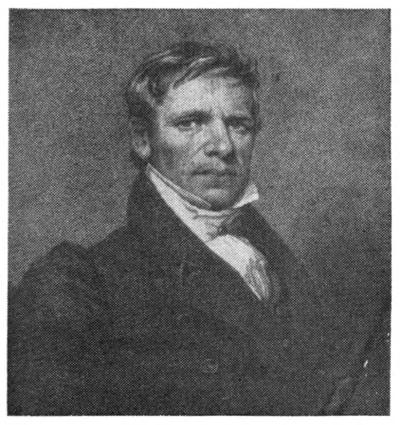
JOHN TANNER
SHAW-SHAW-WA BE-NA-SE—The Falcon
New York, Published by G. & C. H. Carvill 1830
This book is set in ten point
Times Roman type, and printed
in an edition of two thousand
copies. This is copy
Nº 1308
A NARRATIVE OF
THE CAPTIVITY AND ADVENTURES
OF JOHN TANNER
(U. S. INTERPRETER AT THE SAUT DE STE. MARIE)
DURING
THIRTY YEARS RESIDENCE AMONG
THE INDIANS
IN THE
INTERIOR OF NORTH AMERICA
PREPARED FOR THE PRESS
BY EDWIN JAMES, M.D. Editor of an Account of Major Long’s Expedition from Pittsburgh
to the Rocky Mountains
Ross & Haines, Inc. Minneapolis, Minnesota
1956
The story of John Tanner is the tragic and age-old story
of a man who had no country, no people, no one who understood
him, no place to lay his head.
His Narrative, which is the story of his thirty years’ captivity
among the Ojibways, was written a few years after
he settled once more among the civilized whites. The material
was written down and edited by Doctor Edwin James, and
James’s foreword gives a hint of the almost insurmountable
difficulties that surrounded Tanner’s attempt to establish
himself among the whites. However, the real story of John
Tanner’s long and tragic life unraveled after the book was
printed in 1830, for Tanner spent sixteen more years trying
to find a place for himself in white society.
Here was a man who had lived as a white boy only nine
years, had then been captured and had spent thirty years
among the Indians, had married an Indian woman and
produced half-breed children, had in every way—physically,
mentally, emotionally, and spiritually—lived as an Indian
for so long that he forgot his own name and could no longer
speak the English language, but still was impelled by some
ancient hunger to try to find his own people, to be a member
of the society that had borne him.
He found it—as so many other Indian captives have found
it—impossible. Though he rejected his Indian foster people
and settled among the whites, educated his halfbreed children
in white schools, still he was too much Indian to change environment.
His Indian characteristics made him “different.”
He was distrusted by the whites. He was not prepared or
equipped to make a living according to the white standard.
Confused and bewildered, his white heritage constantly fighting
with his acquired Indian environmental factors, in his
later years he was lonely and “bitter.” He is said to have
threatened violence against those who opposed him, but to
his credit it must be said that no major act of violence has
ever been proved against him; the charges have been founded
entirely on supposition, and it is obvious that a factor in those
charges was his “difference.”
What follows here is largely the story of Tanner’s life
after the publication of the Narrative, during the years of
struggle when, not understanding and not understood, he
tried desperately to be a “white” once more.
Henry R. Schoolcraft, who firmly believed Tanner had
killed his brother, said: “ ... now a grey-headed, hard-featured
old man, at war with everyone. Suspicious, revengeful,
bad-tempered.”
Elizabeth T. Baird said he was cruel and no religion could
be discussed before him.
Mrs. Angie Bingham Gilbert, who had known him as an
old man when she was a young child, said he had a strange
and terrible personality, a violent and uncontrolled temper,
but was very religious and almost noble-looking. It rather
looks as if Mrs. Gilbert, having spoken her mind, wanted to
soften her remembrance of him.
On the opposite hand, William H. Keating, journalist for
Major Long, said he never drank or smoked, was honorable,
was attached to his children, and had great affection for his
Indian foster mother and her family. The latter two items
are quite apparent even in his matter-of-fact telling of the
Narrative.
The truth probably lies in a combination of these points
of view. Keating knew Tanner in 1823, before Tanner had
a chance to become disillusioned as to his place in society.
Even before Tanner left the Indians he learned to drink, but
rather conservatively, it would seem on the whole. The other
commentators knew him later, after he had fought his personal
battle with civilization and had lost; when he had
found at last that he could not live in an Indian hut, under
Indian conditions of sanitation, follow Indian customs in
treatment of his family, and still be accepted as a white.
Here then, it might seem, was a man who, battling with his
own inner turmoil of ideas and evaluations, unaccountably
found himself in desperate conflict with the mores of his
native race. He fought back, it would seem, with considerable
restraint, considering his background, and in the end, lonely,
friendless, his oldest daughter separated from him by legislative
edict, the people of his adopted town holding him in
alternate contempt and awe, even his friends beginning to
fear violence from him, he disappeared under a cloud.
That summer of 1846 in Sault Ste. Marie was known as
the Tanner Summer; everything bad that happened was
accredited to John Tanner. He was hunted by soldiers and
bloodhounds, accused specifically of the murder of James
Schoolcraft, but he was never found. He disappeared completely,
and the time and manner of his death are yet a
mystery; the last resting place of his bones is yet unknown
to man.
Years later a skeleton was found in a swamp near Sault
Ste. Marie and was thought to be his, but there were some
doubters. Years after that an ex-army officer confessed the
killing of James Schoolcraft, but it was too late to help John
Tanner. To the people of Sault Ste. Marie he was still known
as Old Tanner, or the White Indian, or the Old Liar.
The book itself has been both praised and condemned.
The charge is made that he gives himself the benefit of all
doubts, but this, remember, means doubts from the “civilized”
point of view. It rather seems that from the Indian
point of view he was quite honest. He did not equivocate
over the fact that he had been spending his nights in Mis-kwa-bun-o-kwa’s
teepee before he married her, nor is he
in any manner boastful. He seems honest enough about his
drinking; for a long time he did not drink at all, but later on
he took it up to a certain extent. Likewise he tells in Indian
fashion—the usual word is “stoical”—about sending a little
slave girl into the cold without a blanket because she had
allowed his tent to burn down. Actually stoicism implies the
control of feelings, but it was not that with Tanner. He had
no feeling about the matter; the girl had caused them suffering;
therefore she was sent away. The element of punishment
was not as large as the element of self-protection—which was
why Tanner took the girl’s blanket from her: he and the
surviving boy would need it to keep warm. In a country
where all one’s resources are called on to maintain existence,
there is not, biologically speaking, much encouragement to
sentiment.
The Narrative has the full ring of truth and sincerity if one
remembers that this was, to all effect, an Indian speaking.
His viewpoint was Indian, his philosophy was Indian, and the
Narrative is not to be judged from “civilized” point of view,
either as of 1830 or as of 1956. And if anyone doubts Tanner’s
innate decency, he has only to read Tanner’s matter-of-fact
relation of homosexuality among the Ojibways to realize
that here was a man truly sophisticated (in that he pointed
no finger of reprehension) but also truly conventional, for
while he did not cast aspersions on those who practiced it,
neither did he want anything to do with it himself.
From various accounts of his life it is possible to reconstruct
a tentative time-table of John Tanner’s career.
He was born about 1780, and captured by Shawnees in
1789. He was married in 1800, and returned home to Kentucky
about 1817. About 1818 he must have gone back to
his Indian family; in 1819 his brother found him in Canada.
In 1820 he left Selkirk Settlement, with his wife and three
children, for Kentucky again; another child was born enroute,
and his wife stayed at Mackinac, Michigan, while he went on
to Kentucky, where one daughter, Mary, died. In 1823 he
returned to the Red River to get his wife and two other
daughters. On this occasion he apparently was not successful,
for his wife hired an Indian to shoot him, and she then ran
off with the Indian, while his daughters disappeared.
Sometime in the next few years, however, he must have
effected a reconciliation, for his wife lived with him several
years and produced two more children. In 1828 he moved
from Mackinac to Sault Ste. Marie. In 1830 Martha, his
daughter, was taken from him. In 1832 the mother left Mackinac
for good.
These are the facts as deduced from his various biographers.
Perhaps, however, they did not trouble to read the Narrative,
for still other facts appear:
He mentions a child who died of measles (this could have
been Mary); he confirms that one son was thoroughly Indian
and chose to remain with the Ojibways; he mentions a child
who died in 1821, 80 miles from Grand Prairie (this might
have been Mary); he tells us that (probably about 1810)
he had left his first wife and had taken another, by whom
he had three children; this second wife was the one who
would not go to Mackinac, it would seem. He also reveals
the great trouble caused by his second mother-in-law, for
she was often on the scene, and his wife deserted him in company
with his mother-in-law; his wife returned a year later
(sometime before 1814), and he says she “laughed” as she
resumed her place in his household.
It is worth noting that no bitterness or resentment appears
in the Narrative against either his wife, his mother-in-law,
or the medicine man who seems to have had much undue
influence in his domestic troubles. It is significant too that
during the winter when his wife was gone, he took care of
his children, hunting meat by day, repairing their clothing
by night, and he says casually that during that winter he
slept very short hours because of his many duties.
Probably in the early 1840’s, in a last desperate attempt
to secure acceptance as a white, he married a white woman
of Detroit. She bore him one child, but left him because of
what to her were squalor and brutality; eventually she was
granted a divorce by the legislature. In 1846, perhaps not too
long after his wife left him, he disappeared about the time
of James Schoolcraft’s murder. There never has been a word
from him since, and, as far as known, no human eye ever
again saw him as a living man.
He was dis-enamored of his first wife before he married
her, and his life after he returned to civilization with his
second wife was most unhappy, she wanting to return to her
people, he determined to remain with his. She wanted him
to marry her in Mackinac according to white customs, she
being a Roman Catholic by that time, but his Indian upbringing
asserted itself and he refused. Presumably she went
back to Red River and was swallowed up in the anonymity
of Indian records, which except for unusual happenings were
kept only as long as they could be heard from the mouth of
one living; three generations were the usual extent.
The third wife was variously described as a poor but respectable
member of the Baptist church, and by another
writer as a chambermaid in Ben Woodworth’s hotel (an obviously
slurring reference; again the writers’ personal sympathies
and antipathies color their writings). There seems
little doubt, however, that she could not endure conditions
in the Tanner menage, which must have been very Indian-like,
and asked men in Sault Ste. Marie to advise her. The
advice was not given, but a purse was made up to help her
“escape.”
There is likewise some confusion as to his children. Quite
likely Martha was the oldest, having been born about 1808,
and she lived a long and useful life as a teacher. Mary may
have been the second, born in 1809, and it was she who
died in 1820. Lucy, the baby born in 1820, was drowned
in a shipwreck on Lake Michigan. She had been given up
for adoption by Tanner before she was a year old, and,
Indian-like, he never more had anything to do with her.
Since there were two other children with him in 1820,
James and John must have been on the scene. One report
mentions two Johns; another says one brother was an Indian
chief, and another says John was killed at the Battle of Bull
Run. James became a minister; he was not too well spoken
of, and died in a fall from a wagon about the time of the
Riel Rebellion. Of the two children born after 1820, nothing
appears—nor of the one born to his wife from Detroit.
The killing of James Schoolcraft requires some elaboration,
for it is that crime that put Tanner under a cloud. True,
he was unsocial and often violent and had been locked up in
jail to recover from his fits of temper, but he had not committed
a felony. He had threatened Doctor James for writing
things that made people ridicule him, but no printed record
appears that he ever tried to implement the threat, though
Thomas W. Field flatly says Tanner tried to kill Doctor
James (this seems to be on the authority of Henry Schoolcraft,
who does not say that; he says Tanner “threatened”
to kill the doctor). Field’s is a strong statement, especially
so since in the same sentence Field says Tanner “actually
murdered” James Schoolcraft. A murder, of course, is a legal
conviction, and it does not seem reasonable that Tanner was
ever tried in court, for he was never found. Further, the army
officer, Lieutenant Tilden, is said by two writers to have
confessed years later to the killing of Schoolcraft, and even
the people of Sault Ste. Marie seem to have lost their strong
conviction of Tanner’s guilt in this matter after a few years.
James Schoolcraft was a “gay, handsome” man, and
Tanner was supposed to have killed him for having improper
relations with Tanner’s daughter. This would imply a young
daughter, for among Indians the value of chastity was realistically
appraised; it was common practice among many tribes
to put a higher value on a girl, for purposes of marriage, if
she was a virgin. Bear in mind that a husband invariably paid
the parents for a girl he married, and her marriage value
decreased as her sexual experience increased. In this respect
the Indians were quite civilized.
But none of Tanner’s children had lived with him for years;
all accounts agree on that. Therefore it appears that the last
two children born to his second wife must have returned
with her to her people, and likely the small child of his third
wife must have been taken with her; this last child, at any
rate, would have been too young for any normal relationship
with James Schoolcraft—and nothing else is even implied.
Therefore there was only Martha who may have been in
Sault Ste. Marie (Lucy and Mary both having died), and
Martha was probably 38 years old, and far beyond the age
where an Indian would feel impelled to kill to preserve her
value, or a white parent to protect her honor. In other words,
she had reached the age of discretion. For the record, however,
no hint is ever given that Martha was involved, and
all accounts say that she lived a good and useful life.
Who, then, did kill Schoolcraft? One account offers this
answer: Schoolcraft and Lieutenant Tilden were rivals for
the attention of a woman. Likewise, there were other bits of
evidence that seemed to indicate Tilden, while the main thing
against Tanner was his unsocial attitude. For those who consider
character in the nature of evidence, it is interesting to
know that Lieutenant Tilden was later court-martialed in
Mexico. The two reports of Tilden’s confession must be considered,
and likewise the fact that the body found years later
was presumed to be Tanner’s. If it was, how did he die?
On the whole, John Tanner is representative of a class of
persons not uncommon on the old frontier: repatriated captives.
A great many of them had a hard life, and the reasons
were several: they acquired Indian mores during their captivity,
and it was never easy for them to reconcile their Indian
ways with the new—to them—ways of the whites. Second,
anything connected with Indians was looked on with deep
suspicion by whites on the frontier; John Tanner was not
only feared but also mistrusted. It would seem the public
attitude toward him softened a great deal in retrospect, for
in after years the citizens of Sault Ste. Marie refused to give
Tilden a clean bill of health over the Schoolcraft killing.
It is, however, inescapable that Tanner’s attempt to live
among the people of his blood was a tragic experience. He
was not only a man without a country but a man without a
race.
Here, then, is John Tanner’s Narrative, as it was first
printed a hundred and twenty-six years ago. It is not a
flowery and sensational tale of adventure, as were most
Indian captivity stories of that time; it is rather a study of
Indian life and customs, and would be much better known
if it had been more readily available. But the book never
appeared in more than the first edition, and is classed as
quite rare. It was printed in New York in 1830 by G. & C. &
H. Carvill; in London also in 1830; in Paris (French translation)
in 1835 without the vocabularies; in Leipzig (German
translation) in 1840 without the vocabularies. A partial
mimeographed edition was produced in this country in 1940,
but otherwise this work, which in all respects is deserving of
the term “classic,” has been almost inaccessible to most persons.
It would seem, therefore, that the present edition is a
real service to students of the frontier.
Noel M. Loomis.
Minneapolis, Minn., Aug. 25, 1956.
John Tanner, whose life and adventures are detailed in
the following pages, is now about fifty years of age. His person
is erect and rather robust, indicating great hardiness, activity,
and strength, which, however, his numerous exposures
and sufferings have deeply impaired. His face, which was
originally rather handsome, bears now numerous traces of
thought and passion, as well as of age; his quick and piercing
blue eyes, bespeak the stern, the violent, and unconquerable
spirit, which rendered him an object of fear to many of
the Indians while he remained among them, and which still,
in some measure, disqualifies him for that submissive and
compliant manner which his dependent situation among the
whites renders necessary. Carefully instructed in early youth,
in all those principles and maxims which constitute the moral
code of the unsophisticated and uncorrupted Indians, his
ideas of right and wrong, of honourable and dishonourable,
differ, of course, very essentially from those of white men.
His isolated and friendless situation, in the midst of a community
where the right of private warfare is recognized as
almost the only defence of individual possessions, the only
barrier between man and man, was certainly in the highest
degree unfavourable to the formation of that enduring and
patient submissiveness, which, in civilized societies, surrenders
so great a share of individual rights to the strong guardianship
of the law. Accordingly, to a correct sense of natural
justice, he unites a full share of that indomitable and untiring
spirit of revenge, so prominent in the Indian character. The
circumstances into which he has been thrown, among a wild
and lawless race, have taught him to consider himself, in all
situations, the avenger of his own quarrel; and if, in the
better regulated community into which he has been recently
drawn, he has, by the consciousness of aggravated insult, or
intolerable oppression, been driven to seek redress, or to
propose it to himself, we cannot be surprised that he should
have recurred to the method, which long habit, and the
paramount influence of established custom, have taught him
to consider the only honourable and proper one. He returns
to the pale of civilization too late in life to acquire the mental
habits which befit his new situation. It is to be regretted that
he should ever meet among us with those so destitute of
generosity as to be willing to take advantage of his unavoidable
ignorance of the usages of civilized society. He has ever
been found just and generous, until injuries or insults have
aroused the spirit of hatred and revenge; his gratitude has
always been as ardent and persevering as his resentment.
But it would be superfluous to dwell on the features of his
character, which are best displayed in his narrative of those
events and scenes, to which he might, with so much propriety,
apply the hackneyed motto,
quae que ipse miserrima vidi,
Et quorum pars magna fui.
The preceding remarks would not, perhaps, have been
hazarded, had not some harsh imputations been made to rest
on the character of our narrator, in the district where he has
for some time past resided, in consequence of differences
growing, as appears to us, entirely out of the circumstance of
the Indian character, with many of its prominent peculiarities
being indelibly impressed upon him. However such a character
may, under any circumstances, excite our disapprobation
or dislike, some indulgence is due where, as in this case,
the solitary savage, with his own habits and opinions, is
brought into contact with the artificial manners and complicated
institutions of civilized men.
In an attempt to aid this unfortunate individual in addressing
his countrymen, it seemed desirable to give his narrative,
as nearly as possible, in his own words, and with his
own manner. The narrator himself is not without a share of
that kind of eloquence which we meet with among the
Indians; but as this consists more in action, emphasis, and
the expression of the countenance, than in words and sentences,
he has been followed in the style of the humblest
narration. This plainness, it is hoped, will render the history
little less acceptable to the general reader, while the philosophic
inquirer will undoubtedly prefer to trace, in the
simplest possible guise, the operations of a mind subjected
for so long a time to the influence of all the circumstances
peculiar to savage life. It ought to be distinctly understood,
that his whole story was given as it stands, without hints,
suggestions, leading questions, or advice of any kind, other
than “to conceal nothing.” The sentiments expressed in relation
to the character and conduct of individuals on the
frontiers, or in the Indian country, or on other subjects
connected with the condition of the Indians, are exclusively
his own. One liberty it has been found necessary to take,
namely, to retrench or altogether to omit many details of
hunting adventures, of travelling, and other events, which in
the simple lives of the Indians have only a moderate share
of importance, but on which, in the lack of other matter,
they learn to dwell very much at length in those long narrative
conversations with which it is their habit to amuse each
other. It is probable the narrator might have proved more
acceptable to many of his readers had this retrenchment
been carried to a greater extent; but it is to be remembered
that the life of the savage, like that of the civilized man, is
made up of a succession of little occurrences, each unimportant
by itself, but which require to be estimated in making
up an opinion of the character of either.
Some particulars in Mr. Tanner’s narrative will doubtless
excite a degree of incredulity among such as have never
attended particularly to the history and condition of the
Indian tribes. Many will find their confidence in him much
impaired, when he tells of prophetic dreams, and of the
fulfilment of indications, and promises, necessarily implying
the interference of invisible and spiritual beings. He will
appear to some, weakly credulous—to others, stupidly dishonest;—so
would any one among us, who should gravely
relate tales, which the advance of education, and the general
intelligence have, within two centuries, converted from established
doctrines to “old wives fables.” To enforce this remark,
we need not refer to the examples of Cotton Mather,
and others of his times, not less renowned for human
learning than for exemplary piety. The history of the human
mind in all ages, and among all nations, affords abundant
examples of credulity; closely resembling that which we
feel disposed to ridicule or to pity in the savage. It may be
of some importance toward a clear comprehension of the
Indian character, to be assured that the powerful mind of
our narrator, was at all times strongly influenced by a belief
in the ubiquity, and frequent interpositions in the affairs of
men, of an overruling Providence. His may have been a purer
and more consistent Theism than that of many of his untaught
companions, but in many important particulars his
belief was the same as theirs. If he was less entirely than
his Indian associates the dupe of those crafty prophets, who
are constantly springing up among them; yet it will be found
he had not, at all times, entire confidence in the decisions
of his own mind, which taught him to despise their
knavery, and to ridicule their pretensions. In all times
of severe distress, or of urgent danger, the Indians, like other
men, are accustomed to supplicate aid from superior beings,
and they are often confident that a gracious answer has
been granted to their petitions. This belief need not shock
the pious; as it certainly will not appear in any respect remarkable
to those who have accustomed themselves to close
observance of the workings of the human mind, under all
variations of circumstances. We believe there is nothing inconsistent
with true religion, or sound reason, in supposing
that the same Lord over all, is gracious unto all who worship
him in sincerity. It will be manifest also that this inherent
principle of religious feeling is made the instrument by
which superior minds govern and influence the weaker.
Among the Indians, as among all other races, from the times
of the philosophic leader of the Retreat of the Ten Thousand,
to the present day, religion has been an engine in the hands
of the few, who in virtue of intellectual or accidental
superiority, assume the right to govern the many.
Doubtless many of the representations in the following
narrative are somewhat influenced by peculiarities in the
mental constitution, and the accidental circumstances of the
narrator; yet making all admissible allowances, they present
but a gloomy picture of the condition of uncivilized men.
Having acquired some idea of those things considered
most reprehensible among us, it would be surprising if he
should not have felt some reluctance to giving an explicit
detail of all his adventures, in a community whose modes of
thinking are on many subjects so different from ours. Traits,
which must in our estimation constitute great blemishes, he
has freely confessed; whether other or greater faults remain
undivulged is unknown; but it should not be forgotten, that
actions considered among us not only reprehensible, but
highly criminal, are among them accounted shining virtues.
In no part of his narrative will he probably appear in a
more unfavourable light than when he details his severity to
an unfortunate captive girl, through whose negligence his
lodge, and all his little property, was consumed by fire in
the midst of winter. This kind of cruelty, as well as the
abandonment of the sick, the aged, and the dying, practised
so extensively by the Chippewyans, and other northern Indians,
and more or less by all the tribes, remind us how
much even in what seem spontaneous and natural courtesies,
we owe to the influence of civilization. The conduct of the
Indians in all these cases, however we may see fit to call it,
is certainly not unnatural, being in strict and implicit obedience
to that impulse of nature which prompts so irresistibly
to self-preservation. How admirable is that complicated
machinery which in so many instances avails to overcome
and control this impulse—which postpones the interest, the
happiness, or the life of the individual to the good of the
associated whole!
The sketch which the following narrative exhibits of the
evils and miseries of savage life, is probably free from
exaggeration or distortion. Few will read it without some
sentiments of compassion for a race so destitute, so debased,
and hopeless; gladly would we believe it may have a tendency
to call the attention of an enlightened and benevolent
community to the wants of those who are sitting in darkness.
In vain do we attempt to deceive ourselves, or others, into
the belief that in whatever “relates to their moral condition
and prospects, the Indians have been gainers by their intercourse
with Europeans.”[1] Who can believe that the introduction
of ardent spirits among them, “has added no new
item to the catalogue of their crimes, nor substracted one
from the list of their cardinal virtues?” Few, comparatively,
have the opportunity, fewer have the inclination, to visit
and observe the Indians in their remote haunts, or even on
our immediate frontiers; all who have done so must be
convinced that wherever, and for whatever purpose, the
Indian and the white man come in contact, the former, in
all that relates to his moral condition, is sure to become
severely and irretrievably a sufferer. Every unbiased inquirer
who will avail himself of the abundant means of information
before the public will be convinced that during
more than two hundred years, in despite of all the benevolent
exertions of individuals, of humane associations, and of governments,
the direct tendency of the intercourse between the
two races has been the uniform and rapid depression and
deterioration of the Indians.
Among the most active of the extraneous causes which
have produced this conspicuous and deplorable change must
be reckoned the trade for peltries which has been pushed
among them from the earliest occupation of the country by
the whites. The ensuing narrative will afford some views of
the fur trade, such as it formerly existed in the northwest,
such as it now exists throughout the territories claimed by
the United States. These views are certainly neither those of
a statesman, or a political economist, but they may be relied
on as exhibiting a fair exposition of the influence of the
trade upon the aborigines. Recently, the Indians in all that
wide portion of North America occupied by the Hudson’s
Bay Fur Company, have been, by the consolidation of two
rival associations, relieved alike from the evils, and deprived
of the advantages accruing from an active competition in
the trade. Among other advantageous results supposed to be
attained by this exclusion of competition one, and probably
the most important, is the effectual check it interposes to the
introduction of spirits into the Indian country. Even the
clerks and agents stationed at the remote interior posts are
forbidden to introduce the smallest quantity of spirit or wine
among their private stores. This one measure, incalculably
of more value than all that has been effected in times remote
or recent, by the interference of governments or the exertions
of benevolent associations, has originated in the prudent
foresight, and well instructed love of gain of an association of
merchants; and while it makes us fully acquainted with the
views of those best informed in relation to the effect of the
introduction of whiskey among the Indians, it shows the
possibility of remedying this great evil.
In former times, when the whole of the northwest of our
continent was open to the competition of rival traders, all
the evils and all the advantages of the system at present
existing in the United States territories were felt to the remotest
and least accessible of those dreary regions. The
Indian could probably in all instances realize a higher price
for his peltries than he can hope to do at present. The means
of intoxicating himself and his family were always to be
had at some rate, and the produce of his hunt was artfully
divided and disposed of in the manner which seemed to
promise him the greatest share of this deadly indulgence.
During the times of active competition, it was found accordingly
that the fur bearing animals, and the race of native
hunters, were hastening with equal and rapid strides towards
utter extinction. The effect of a competitionary trade, managed
as it will always be, in districts for the most part or
wholly without the jurisdiction of the governments of civilized
countries, upon the animals whose skins constitute the sole
object of the visits of the traders, must be obvious. The
vagrant and migratory habits of the Indians would render it
impossible for any individual, or any association of men, to
interrupt or even to check the destruction of animals, wherever
they could be found. The rival trader was ever at hand
to take advantage of any forbearance a prudent foresight
might dictate. Thus it will appear that districts where game
had existed in the greatest abundance, were in the course
of a few years so stripped that the inhabitants could avoid
starvation only by migrating to some less exhausted region.
Wherever the Indians went, the traders were sure to follow
as the wolves and buzzards follow the buffalo. But in the
state of things at present existing in the north, the traders
are represented to have entire control of the motions of the
Indians. The most valuable part of the territories of the
Hudson’s Bay Company is the forest country. With the Indians
of the plains, who subsist almost entirely by hunting
the buffalo, they concern themselves no further than to purchase
such robes or other peltries as they may, on their visit
to a post, offer for ready pay. The people of the plains having
few possessions beside their horses, their bows and arrows,
and their garments of skins, are so independent, and the
animals they hunt of so little value to the traders, that they
are left to pursue whatever course their own inclination may
point out, and at present they never receive credits. With
the forest Indians the case is quite different. Such is their
urgent necessity for ammunition and guns, for traps, axes,
woollen blankets, and other articles of foreign manufacture,
that at the approach of winter, their situation is almost
hopeless if they are deprived of the supplies they have so
long been accustomed to receive. A consciousness of this
dependance sufficed, even in times of competition, to some
extent, but far more at present, to render them honest, and
punctual in discharging the debts they had incurred. The
practice of the traders now is, whenever they find the animals
in any district becoming scarce, to withdraw their trading
establishment, and by removing to some other part, make
it necessary for the Indians to follow. Regions thus left at
rest, are found to become, in a few years, in a great measure
replenished with the fur-bearing animals. The two regulations
by which the clerks and agents are forbid to purchase
the skins of certain animals if killed before they have attained
their full growth, and by which the use of traps, which
destroy indiscriminately old and young, is interdicted, doubtless
contribute essentially to the attainment of this important
result. It cannot be otherwise, than that the moral condition
of the hunter population in the north must be somewhat improved
by the severe discipline which convenience and interest
will equally prompt the Company possessing the monopoly
to introduce and maintain; but whether this advantage
will, in the event, counterbalance the effect of the rigid
exactions to which the Indians may be compelled to submit,
must be for time to determine.
It is manifest that plans of government adopted and enforced
to subserve the purposes of the fur traders, will be
framed with the design of keeping the Indians in a state of
efficiency as hunters, and must thus in the end be directly
opposed to all efforts to give them those settled habits that
attachment to the soil, and that efficient industry, which
must constitute the first step in their advance towards civilization.
Such are the climate and soil of a great part of the
country northward of the great lakes, as to render it extremely
improbable that any other than a rude race of hunters
will ever be found there; and for them, it would probably
be in vain to hope for a milder government than such a
kind of despotism as can be swayed by a company of traders.
But within the country belonging to the United States are
many rude tribes distributed at intervals through boundless
forests, or along smiling and fertile plains, where it would
seem that industry and civilization might be introduced.
Here it is not probable that the fur trade can ever become a
protected and exclusive monopoly; and since, while conducted
as it is, and as it must continue to be, it is the most
prolific sources of evil to the Indians, it may be allowed us,
to look forward to the time when many among the remnants
of the native tribes shall escape from its influence by becoming
independent of the means of subsistence it offers them.
Some change may reasonably be supposed to have taken
place in the course of two centuries in the sentiments of the
European intruders towards their barbarous neighbours. In
relative situation they have changed places. Those who are
now powerful were then weak; those who now profess to
offer protection, then looked with anxiety and trembling
upon the superior strength of the race which has so soon
perished from before them. In the early periods of our
colonial history, the zeal of religious proselytism, and the less
questionable spirit of true philanthropy, seem not to have
availed, generally, to overcome the strong hatred of the
savage race, produced by causes inseparable from the feeble
and dependant condition of the colonies, and from the necessity
which compelled our forefathers to become intruders
upon the rightful possessions of the Indians. In the writings of
the early historians, particularly of the Puritanical divines
of New England, we find these people commonly described
as a brutal and devil-driven race, wild beasts, bloodhounds,
heathen demons; no epithet was considered too opprobrious,
no execration too dire, to be pronounced against them.[2] It
may be supposed, that in losing the power which made them
formidable, they became less obnoxious to the hatred of the
whites. Accordingly, we find that it was long since the fashion
to profess much good will and compassion towards this ill-starred
race. Some efforts have been made, and many more
have been talked of for their civilization and for their conversion
to the true religion. Here and there, a Penn has
appeared among our statesmen; an Elliot or a Brainerd
among our religionists—some have been incited by motives
of pure benevolence, or by a love of natural justice, to
labour perseveringly and faithfully in the work of reclaiming
and benefiting the Indians. Could we trust implicitly to the
statements of many who in our day write and speak on this
subject, we might infer that the only sentiment influencing
us, as a people, in our intercourse with our Indian neighbours,
is an ardent desire for the promotion of their best
interests. But if we estimate public sentiment by the surer
criterion of public measures, we must admit that the present
generation are seeking, with no less zeal and earnestness
than their forefathers, the utter extermination of these bloody
and idolatrous canaanites. The truth is, it has been, and still
is, convenient to consider this a devil driven race, doomed
by inscrutable destiny to sudden and entire destruction. This
opinion accords well with the convenient dogma of the moral
philosopher, who teaches that such as will make the best
use of the soil, should drive out and dispossess those who,
from ignorance or indolence, suffer it to remain uncultivated.
It is of little importance to cavil at the injustice of
such a course. The rule of vis major seems to be with almost
equal force obligatory on both parties, and it would perhaps
be now as impossible for us to avoid displacing the Indians,
and occupying their country, as for them to prevent us.
The long agitated subject, of the “melioration of the condition
of the Indians,” appears therefore to present two questions
of primary importance: 1st. Can any thing be effected
by our interference? 2d. Have we in our collective character,
as a people, any disposition to interpose the least check to
the downward career of the Indians? The last inquiry will be
unhesitatingly answered in the negative by all who are
acquainted with the established policy of our government in
our intercourse with them. The determination evinced by a
great part of the people, and their representatives, to extinguish
the Indian title to all lands on this side the Mississippi—to
push the remnants of these tribes into regions already
filled to the utmost extent their means of subsistence will
allow—manifests, more clearly than volumes of idle and
empty professions, our intentions toward them. The vain
mockery of treaties, in which it is understood, that the
negotiation, and the reciprocity, and the benefits, are all on
one side; the feeble and misdirected efforts we make for
their civilization and instruction, should not, and do not, deceive
us into the belief that we have either a regard for their
rights, where they happen to come in competition with
our interests, or a sincere desire to promote the cause of
moral instruction among them. The efforts of charitable
associations, originating as they do in motives of the most
unquestionable purity, may seem entitled to more respectful
notice; but we deem these efforts, as far as the Indians are
concerned, equally misapplied, whether they be directed, as
in the south, to drawing out from among them a few of their
children, and giving them a smattering of “astronomy,
moral philosophy, surveying, geography, history, and the use
of globes,”[3] or as in the north, in educating the half breed
children of fur traders and vagabond Canadians, in erecting
workshops and employing mechanics in our frontier villages,
or building vessels for the transportation of freight on the
upper lakes. These measures may be well in themselves, and
are doubtless useful; but let us not flatter ourselves that in
doing these things we confer any essential benefit on the
Indians. The Chocktaws and Chickasaws will not long retain
such a knowledge of astronomy and surveying, as would
be useful to guide their wanderings, or mete out their possessions
in those scorched and sterile wastes to which it is our
fixed intention to drive them. The giving to a few individuals
of a tribe an education which, as far as it has any influence,
tends directly to unfit them for the course of life they are
destined to lead, with whatever intention it may be undertaken,
is certainly far from being an act of kindness. If,
while we give the rudiments of an education to a portion of
their children, our selfish policy is thrusting back into a state
of more complete barbarism the whole mass of the people,
among whom we pretend to qualify them for usefulness,
of what avail are our exertions, or our professions in their
favour? We cannot be ignorant that in depriving the Indians
of the means of comfortable subsistence, we take from them
equally the power and the inclination to cultivate any of the
branches of learning commonly taught them at our schools.
Will the Indian youth who returns from the Mission school,
after ten or fifteen years of instruction, be likely to become
a better hunter, or a braver warrior, than those who have
remained at home and been educated in the discipline of his
tribe? Will he not rather find himself encumbered with a
mass of learning necessarily as uncurrent, and as little valued
among his rude companions, as would be a parcel of lottery
tickets or bank notes? On this subject, as on many others,
the Indians are qualified to make, and often do make, extremely
just reflections. To say that they consider the learning
of the whites of no value, would be to misrepresent them. On
the contrary, they speak in terms of the highest admiration
of some branches, particularly writing and reading, which,
they say, enables us to know what is done at a distance, to
recall with the greatest accuracy all that we or others have
said in past times. But of these things they say, as of the
religion of the whites, “they are not designed for us.” “The
Great Spirit has given to you, as well as to us, things suited
to our several conditions; He may have been more bountiful
to you than to us; but we are not disposed to complain of our
allotment.”
In relation to the other branch of this part of our subject,
namely, the practicability of benefiting the Indians by our
instructions, a few words may suffice. More than two hundred
years have passed, during all which time it has been
believed that systematic and thorough exertions were making
to promote the civilization and conversion of the Indians.
The entire failure of all these attempts ought to convince us,
not that the Indians are irreclaimable, but that we ourselves,
while we have built up with one hand, have pulled down
with the other. Our professions have been loud, our philanthropic
exertions may have been great, but our selfish regard
to our own interest and convenience has been greater,
and to this we ought to attribute the steady decline, the
rapid deterioration of the Indians. We may be told of their
constitutional indolence, their Asiatic temperament, destining
them to be forever stationary, or retrogradent; but while remaining
monuments and vestiges, as well as historical records
of unquestionable authority, assure us that a few centuries
ago they were, though rude, still a great, a prosperous, and
a happy people; we ought not to forget that injustice and
oppression have been most active among the causes which
have brought them down to their present deplorable state.
Their reckless indolence, their shameless profligacy, their
total self-abandonment, have been the necessary consequences
of the degradation and hopelessness of their condition.[4]
That there exists, in the moral or physical constitution of
the Indians any insuperable obstacle to their civilization, no
one will now seriously assert. That they will ever be generally
civilized, those who know them intimately, and who have
observed the prevailing tone of feeling of both races towards
each other, will consider so extremely improbable that they
will deem it scarce worth while to inquire what system of
measures would be best calculated to effect this desirable
object. Of what advantage could any degree of civilization
have been to those unfortunate Seminoles, who were a few
years since removed from their beautiful and fertile lands
in Florida, to those deep and almost impassable swamps in
the rear of Tampa Bay, where it has been found not only
necessary to confine them by a military force, but to subsist
them, from day to day, and from year to year, by regular
issues of provisions? Need we give them education that they
may be the better able to estimate our munificence and
generosity in suffering them to roam at large, in cypress
swamps, in sandy deserts, or wherever else we may think
the soil of no value to us?
The project of congregating the Indians, from the extended
portions of the United States, in some place not only west
of the Mississippi, but westward of the arable lands of
Missouri and Arkansaw, in those burning deserts which skirt
the eastern base of the Rocky Mountains, is, perhaps, more
pregnant with injustice and cruelty to these people than any
other. Such is the inveterate and interminable hostility existing,
time out of mind, between the people of different stocks,
portions of which are already in too near vicinity, such as
the Dahcotah and the Ojibbeways, the Osages and Cherokees,
that nothing but mutual destruction could be the consequence
of crowding them together into a region already
more than filled with warlike and jealous hunters. The region
to which Mr. McKoy, in his pamphlet, proposes to remove
the Indians, would, such is its naked and inhospitable character,
soon reduce civilized men who should be confined
to it, to be barbarism; nothing but inevitable destruction
could there await a congregation of fierce, subtle, and mutually
hostile savages.
Of all plans hitherto devised to benefit the Indians, by
far the best, though doubtless attended with great difficulty
in the execution is, to let them alone. Were it possible to
leave to them the small remnant they still hold of their
former possessions, to remove from them all the poisoning
influences of the fur trade and the military posts, and the
agencies auxiliary to it, necessity might again make them
industrious. Industry thoroughly re-established would bring
in its train prosperity, virtue, and happiness. But since we
cannot reasonably hope that this plan will ever be adopted,
the friends of humanity must continue to wish that some
middle course may be devised, which may, in a measure,
palliate the misery which cannot be removed, and retard
the destruction which cannot be prevented. The first labour
of the philanthropist, who would exert himself in this cause,
should be to allay or suppress that exterminating spirit so
common among us which, kept alive by the exertions of unprincipled
land jobbers, and worthless squatters, is now
incessantly calling for the removal of the Indians west of the
Mississippi. Many, and doubtless some of those who legislate,
may consider the region west of the Mississippi as a kind
of fairy land where men can feed on moonbeams, or, at all
events, that the Indians, when thoroughly swept into that
land of salt mountains and horned frogs, will be too remote
to give us any more trouble. But suppose those who now so
pertinaciously urge this measure completely successful, let
every Indian be removed beyond the Mississippi, how soon
will the phrase be changed, to west of the Rocky Mountains?
We may send them into the sandy wastes, but cannot persuade
them to remain there; they will soon become not less
troublesome to the settlers in the countries of Red River,
White River, and the Lower Arkansaw, than they are now
to the people of Georgia, Alabama, Missouri, and Illinois.
Is it absolutely necessary that while we invite to our shores,
and to a participation in all the advantages of our boasted
institutions, the dissatisfied and the needy of all foreign
countries, not stopping to inquire whether their own crimes,
or the influence of an oppressive government, may have
made the change desirable for them, we should, at the same
time, persist in the determination to root out the last remnants
of a race who were the original proprietors of the soil,
many of whom are better qualified to become useful citizens
of our republic than those foreigners we are so eager to
naturalize? It is certainly by no means desirable that any of
the aboriginal tribes who have retained, or acquired, or who
shall acquire so much of civilization as to be able to increase
in numbers, and to gain strength, surrounded by the whites,
should be suffered to establish independent governments,
which may, in time, acquire such strength as to be highly
troublesome to their neighbours. Could the project of colonization
be carried into complete effect, the measure, leaving
out of consideration its daring and flagrant injustice, would
be of as questionable policy as our unavailing attempt to
restore to Africa the descendants of her enslaved children.
It is believed by many that national as well as individual
crimes, are sure to be visited, sooner or later, by just and
merited punishments. Is it not probable that despite the
efforts of the Colonization Society, the African race, now so
deeply rooted and so widely spread among us, must inevitably
grow to such a magnitude as to requite, fourfold, to our
descendants, our own and our forefathers crimes against the
aborigines?
The past history and the present condition of the Indians
make it abundantly manifest that, if anything is intended on
the part of the United States, except their speedy and utter
extinction, an immediate change of measures is loudly called
for. The most important particulars of the course to be pursued
should be the prevention, as far as possible, of the evils
resulting from competition; the introduction of whiskey, and
other existing abuses in the fur trade; the encouragement of
agriculture and domestic industry which may at length render
them independent of that trade. Donations of horses, cattle,
tools, and farming utensils, handsome clothes, neat and
tasteful ornaments, bestowed as marks of honourable distinction,
and rewards for successful and persevering industry,
may by degrees, overcome the habitual indolence and contempt
of labour, so generally met with among the Indians.
With the efforts for the promotion of industry, the cultivation
of the mind, not in one out of ten thousand, as at present,
but in the whole mass of the children; and the introduction of
the English language should keep equal pace. No effort
should be spared to advance either. We deem it important
that they should not only learn the English language, but, at
the same time, lay aside and forget their own, and with it
their entire system of traditional feelings and opinions on all
subjects. Could all this be effected; could, furthermore, the
rights and privileges of citizenship be held out as a reward
for a prescribed course of conduct, or attach as a right to
the possession of a certain amount of property, the effect
would doubtless be a great and rapid elevation of the Indian
character. By a system of measures of this kind, a portion of
the remnants of these people might probably be preserved
by becoming embodied with the whites. As separate and independent
tribes, retaining their own languages, manners,
and opinions, it is probable they cannot long continue in
existence.
CHAPTER II.
Recollections of early life—capture—journey from the mouth of the
Miami to Sa-gui-na—ceremonies of adoption into the family of
my foster parents—harsh treatment—transferred by purchase
to the family of Net-no-kwa—removal to Lake Michigan.
The earliest event of my life, which I distinctly remember,
is the death of my mother. This happened when I was two
years old, and many of the attending circumstances made so
deep an impression, that they are still fresh in my memory.
I cannot recollect the name of the settlement at which we
lived, but I have since learned it was on the Kentucky River,
at a considerable distance from the Ohio.
My father, whose name was John Tanner, was an emigrant
from Virginia, and had been a clergyman. He lived
long after I was taken by the Indians, having died only
three months after the great earthquake, which destroyed a
part of New Madrid, and was felt throughout the country
on the Ohio, (1811.)
Soon after my mother’s death, my father removed to a
place called Elk Horn. At this place was a cavern—I used
to visit it with my brother. We took two candles; one we
lighted on entering, and went on till it was burned down; we
then lighted the other, and began to return, and we would
reach the mouth of the cavern before it was quite burned out.
This settlement at Elk Horn was occasionally visited by
hostile parties of Shawneese Indians, who killed some white
people, and sometimes killed or drove away cattle and
horses. In one instance, my uncle, my father’s brother, went
with a few men at night, and fired upon a camp of these
Indians; he killed one, whose scalp he brought home; all
the rest jumped into the river and escaped.
In the course of our residence at this place, an event
occurred, to the influence of which I attributed many of the
disasters of my subsequent life. My father, when about to
start one morning to a village at some distance, gave, as it
appeared, a strict charge to my sisters, Agatha and Lucy, to
send me to school; but this they neglected to do until afternoon,
and then, as the weather was rainy and unpleasant,
I insisted on remaining at home. When my father returned
at night, and found that I had been at home all day, he sent
me for a parcel of small canes, and flogged me much more
severely than I could suppose the offence merited. I was
displeased with my sisters for attributing all the blame to me,
when they had neglected even to tell me to go to school in
the forenoon. From that time, my father’s house was less
like home to me, and I often thought and said, “I wish I
could go and live among the Indians.”
I cannot tell how long we remained at Elk Horn; when
we moved, we travelled two days with horses and wagons,
and came to the Ohio, where my father bought three flat
boats; the sides of these boats had bullet holes in them, and
there was blood on them, which I understood was that of
people who had been killed by the Indians. In one of these
boats we put the horses and cattle—in another, beds, furniture,
and other property, and in the third were some
negroes. The cattle boat and the family boat were lashed
together; the third, with the negroes, followed behind. We
descended the Ohio, and in two or three days came to
Cincinnati; here the cattle boat sunk in the middle of the
river. When my father saw it sinking, he jumped on board,
and cut loose all the cattle, and they swam ashore on the
Kentucky side, and were saved. The people from Cincinnati
came out in boats to assist us, but father told them the cattle
were all safe.
In one day we went from Cincinnati to the mouth of the
Big Miami, opposite which we were to settle. Here was some
cleared land, and one or two log cabins, but they had been
deserted on account of the Indians. My father rebuilt the
cabins, and enclosed them with a strong picket. It was early
in the spring when we arrived at the mouth of the Big
Miami, and we were soon engaged in preparing a field to
plant corn. I think it was not more than ten days after our
arrival, when my father told us in the morning, that from
the actions of the horses, he perceived there were Indians
lurking about in the woods, and he said to me, “John, you
must not go out of the house to day.” After giving strict
charge to my step mother to let none of the little children go
out, he went to the field, with the negroes, and my elder
brother, to drop corn.
Three little children, beside myself, were left in the house
with my step mother. To prevent me from going out, my step
mother required me to take care of the little child, then not
more than a few months old; but as I soon became impatient
of confinement, I began to pinch my little brother, to make
him cry. My mother perceiving this uneasiness, told me to
take him in my arms and walk about the house; I did so,
but continued to pinch him. My mother at length took him
from me to give him suck. I watched my opportunity, and
escaped into the yard; thence through a small door in the
large gate of the wall into the open field. There was a walnut
tree at some distance from the house, and near the side of
the field, where I had been in the habit of finding some of
the last year’s nuts. To gain this tree without being seen by
my father, and those in the field, I had to use some precaution.
I remember perfectly well having seen my father, as
I skulked towards the tree; he stood in the middle of the
field, with his gun in his hand, to watch for Indians, while
the others were dropping corn. As I came near the tree, I
thought to myself, “I wish I could see these Indians.” I had
partly filled with nuts a straw hat which I wore, when I heard
a crackling noise behind me; I looked round, and saw the
Indians; almost at the same instant, I was seized by both
hands, and dragged off betwixt two. One of them took my
straw hat, emptied the nuts on the ground, and put it on my
head. The Indians who seized me were an old man and a
young one; these were, as I learned subsequently, Manito-o-geezhik,
and his son Kish-kau-ko[5]. Since I returned from
Red River, I have been at Detroit while Kish-kau-ko was in
prison there; I have also been in Kentucky, and have
learned several particulars relative to my capture, which
were unknown to me at the time. It appears that the wife of
Manito-o-geezhik had recently lost by death her youngest
son—that she had complained to her husband, that unless
he should bring back her son, she could not live. This was
an intimation to bring her a captive whom she might adopt in
the place of the son she had lost. Manito-o-geezhik, associating
with him his son, and two other men of his band, living
at Lake Huron, had proceeded eastward with this sole design.
On the upper part of Lake Erie, they had been joined
by three other young men, the relations of Manito-o-geezhik,
and had proceeded on, now several in number, to the settlements
on the Ohio. They had arrived the night previous to
my capture at the mouth of the Big Miami, had crossed the
Ohio, and concealed themselves within sight of my father’s
house. Several times in the course of the morning, old
Manito-o-geezhik had been compelled to repress the ardour
of his young men, who becoming impatient at seeing
no opportunity to steal a boy, were anxious to fire upon the
people dropping corn in the field. It must have been about
noon when they saw me coming from the house to the
walnut tree, which was probably very near the place where
one or more of them were concealed.
It was but a few minutes after I left the house, when my
father, coming from the field, perceived my absence. My
step mother had not yet noticed that I had gone out. My elder
brother ran immediately to the walnut tree, which he knew
I was fond of visiting, and seeing the nuts which the Indian
had emptied out of my hat, he immediately understood that
I had been made captive. Search was instantly made for me,
but to no purpose. My father’s distress, when he found I was
indeed taken away by the Indians, was, I am told, very great.
After I saw myself firmly seized by both wrists by the
two Indians, I was not conscious of any thing that passed for
a considerable time. I must have fainted, as I did not cry
out, and I can remember nothing that happened to me, until
they threw me over a large log, which must have been at a
considerable distance from the house. The old man I did not
now see; I was dragged along between Kish-kau-ko and a
very short thick man. I had probably made some resistance,
or done something to irritate this last, for he took me a little
to one side, and drawing his tomahawk, motioned to me to
look up. This I plainly understood, from the expression of
his face, and his manner, to be a direction for me to look up
for the last time, as he was about to kill me. I did as he
directed, but Kish-kau-ko caught his hand as the tomahawk
was descending, and prevented him from burying it in my
brains. Loud talking ensued between the two. Kish-kau-ko
presently raised a yell; the old man and the four others
answered it by a similar yell, and came running up. I have
since understood that Kish-kau-ko complained to his father,
that the short man had made an attempt to kill his little
brother, as he called me. The old chief, after reproving him,
took me by one hand, and Kish-kau-ko by the other, and
dragged me betwixt them; the man who had threatened to
kill me, and who was now an object of terror, being kept at
some distance. I could perceive, as I retarded them somewhat
in their retreat, that they were apprehensive of being
overtaken; some of them were always at some distance from
us.
It was about one mile from my father’s house to the place
where they threw me into a hickory bark canoe, which was
concealed under the bushes, on the bank of the river.
Into this they all seven jumped, and immediately crossed the
Ohio, landing at the mouth of the Big Miami, and on the
south side of that river. Here they abandoned their canoe,
and stuck their paddles in the ground, so that they could be
seen from the river. At a little distance in the woods they
had some blankets and provisions concealed; they offered
me some dry venison and bear’s grease, but I could not eat.
My father’s house was plainly to be seen from the place
where we stood; they pointed at it, looked at me, and
laughed, but I have never known what they said.
After they had eaten a little, they began to ascend the
Miami, dragging me along as before. The shoes I had on
when at home, they took off, as they seemed to think I could
run better without them. Although I perceived I was closely
watched, all hope of escape did not immediately forsake me.
As they hurried me along, I endeavored, without their
knowledge, to take notice of such objects as would serve as
landmarks on my way back. I tried also, where I passed
long grass, or soft ground, to leave my tracks. I hoped to be
able to escape after they should have fallen asleep at night.
When night came, they lay down, placing me between the
old man and Kish-kau-ko, so close together, that the same
blanket covered all three. I was so fatigued that I fell asleep
immediately, and did not wake until sunrise next morning,
when the Indians were up and ready to proceed on their
journey. Thus we journeyed for about four days, the Indians
hurrying me on, and I continuing to hope that I might escape
but still every night completely overpowered by sleep. As my
feet were bare, they were often wounded, and at length much
swollen. The old man perceiving my situation, examined my
feet one day, and after removing a great many thorns and
splinters from them, gave me a pair of moccasins, which
afforded me some relief. Most commonly, I travelled between
the old man and Kish-kau-ko, and they often made
me run until my strength was quite exhausted. For several
days I could eat little or nothing. It was, I think, four days
after we left the Ohio that we came to a considerable river,
running, as I suppose, into the Miami. This river was wide,
and so deep that I could not wade across it; the old man took
me on his shoulders and carried me over; the water was
nearly up to his arm pits. As he carried me across, I thought
I should never be able to pass this river alone, and gave
over all hope of immediate escape. When he put me down on
the other side, I immediately ran up the bank, and a short
distance into the woods, when a turkey flew up a few steps
before me. The nest she had left contained a number of
eggs; these I put in the bosom of my shirt, and returned
towards the river. When the Indians saw me they laughed,
and immediately took the eggs from me, and kindling a fire,
put them in a small kettle to boil. I was then very hungry,
and as I sat watching the kettle, I saw the old man come
running from the direction of the ford where we had crossed;
he immediately caught up the kettle, threw the eggs and the
water on the fire, at the same time saying something in a
hurried and low tone to the young men. I inferred we were
pursued, and have since understood that such was the case;
it is probable some of my friends were at that time on the
opposite side of the river searching for me. The Indians
hastily gathered up the eggs and dispersed themselves in the
woods, two of them still urging me forward to the utmost
of my strength.
It was a day or two after this that we met a party of twenty
or thirty Indians, on their way towards the settlements.
Old Manito-o-geezhik had much to say to them; subsequently
I learned that they were a war party of Shawneese; that
they received information from our party of the whites who
were in pursuit of us about the forks of the Miami; that they
went in pursuit of them, and that a severe skirmish happened
between them, in which numbers were killed on both sides.
Our journey through the woods was tedious and painful:
it might have been ten days after we met the war party
when we arrived at the Maumee River. As soon as we
came near the river, the Indians were suddenly scattered
about the woods examining the trees, yelling and answering
each other. They soon selected a hickory tree, which was cut
down, and the bark stripped off, to make a canoe. In this
canoe we all embarked, and descended till we came to a
large Shawnee village, at the mouth of a river which enters
the Maumee. As we were landing in this village, great numbers
of the Indians came about us, and one young woman
came crying directly towards me, and struck me on the head.
Some of her friends had been killed by the whites. Many of
these Shawneese showed a disposition to kill me, but Kish-kau-ko
and the old man interposed and prevented them. I
could perceive that I was often the subject of conversation,
but could not as yet understand what was said. Old
Manito-o-geezhik could speak a few words of English, which
he used occasionally to direct me to bring water, make a
fire, or perform other tasks, which he now began to require
of me. We remained two days at the Shawnee village, and
then proceeded on our journey in the canoe. It was not very
far from the village that we came to a trading house, where
were three or four men who could speak English; they talked
much with me, and said they wished to have purchased me
from the Indians, that I might return to my friends; but as
the old man would not consent to part with me, the traders
told me I must be content to go with the Indians, and to
become the old man’s son in place of one he had lost,
promising at the same time that after ten days they would
come to the village and release me. They treated me kindly
while we stayed, and gave me plenty to eat, which the Indians
had neglected to do. When I found I was compelled
to leave this house with the Indians, I began to cry for the
first time since I had been taken. I consoled myself, however,
with their promise that in ten days they would come for
me. Soon after leaving this trading house, we came to the
lake; we did not stop at night to encamp, but soon after
dark the Indians raised a yell, which was answered from
some lights on shore, and presently a canoe came off to us
in which three of our party left us. I have little recollection of
any thing that passed from this time until we arrived at
Detroit. At first we paddled up in the middle of the river
until we came opposite the center of the town; then we ran
in near the shore where I saw a white woman with whom
the Indians held a little conversation, but I could not understand
what was said. I also saw several white men standing
and walking on shore, and heard them talk, but could not
understand them; it is likely they spoke French. After talking
a few minutes with the woman, the Indians pushed off
and ran up a good distance above the town.
It was about the middle of the day when we landed in the
woods and drew up the canoe. They presently found a large
hollow log, open at one end, into which they put their
blankets, their little kettle, and some other articles; they then
made me crawl into it, after which they closed up the end
at which I had entered. I heard them for a few minutes on
the outside, then all was still, and remained so for a long
time. If I had not long since relinquished all hope of making
my escape, I soon found it would be in vain for me to
attempt to release myself from my confinement. After remaining
many hours in this situation, I heard them removing
the logs with which they had fastened me in, and on coming
out, although it was very late in the night, or probably near
morning, I could perceive that they had brought three horses.
One of these was a large iron-gray mare, the others were
two small bay horses. On one of these they placed me, on
the others their baggage, and sometimes one, sometimes
another of the Indians riding, we travelled rapidly, and in
about three days reached Sau-ge-nong,[6] the village to which
old Manito-o-geezhik belonged. This village or settlement
consisted of several scattered houses. Two of the Indians
left us soon after we entered it; Kish-kau-ko and his father
only remained, and instead of proceeding immediately home,
they left their horses and borrowed a canoe, in which we at
last arrived at the old man’s house. This was a hut or cabin
built of logs like some of those in Kentucky. As soon as we
landed, the old woman came down to us to the shore, and
after Manito-o-geezhik had said a few words to her, she
commenced crying, at the same time hugging and kissing
me, and thus she led me to the house. Next day they took
me to the place where the old woman’s son had been buried.
The grave was enclosed with pickets, in the manner of the
Indians, and on each side of it was a smooth open place. Here
they all took their seats; the family and friends of Manito-o-geezhik
on the one side, and strangers on the other. The
friends of the family had come provided with presents;
mukkuks of sugar, sacks of corn, beads, strouding, tobacco,
and the like. They had not been long assembled, when my
party began to dance, dragging me with them about the grave.
Their dance was lively and cheerful, after the manner of
the scalp dance. From time to time as they danced, they
presented me something of the articles they had brought, but
as I came round in the dancing to the party on the opposite
side of the grave, whatever they had given me was snatched
from me: thus they continued great part of the day, until
the presents were exhausted, when they returned home.
It must have been early in the spring when we arrived at
Sau-ge-nong, for I can remember that at this time the leaves
were small, and the Indians were about planting their corn.
They managed to make me assist at their labours, partly by
signs, and partly by the few words of English old Manito-o-geezhik
could speak. After planting, they all left the village,
and went out to hunt and dry meat. When they came to
their hunting grounds, they chose a place where many deer
resorted, and here they began to build a long screen like a
fence; this they made of green boughs and small trees.
When they had built a part of it, they showed me how to remove
the leaves and dry brush from that side of it to which
the Indians were to come to shoot the deer. In this labour I
was sometimes assisted by the squaws and children, but at
other times I was left alone. It now began to be warm weather,
and it happened one day that having been left alone, as
I was tired and thirsty, I fell asleep. I cannot tell how long
I slept, but when I began to awake, I thought I heard
some one crying a great way off. Then I tried to raise up my
head, but could not. Being now more awake, I saw my Indian
mother and sister standing by me, and perceived that my
face and head were wet. The old woman and her daughter
were crying bitterly, but it was some time before I perceived
that my head was badly cut and bruised. It appears that
after I had fallen asleep, Manito-o-geezhik, passing that
way, had perceived me, had tomahawked me, and thrown
me in the bushes; and that when he came to his camp he
had said to his wife, “old woman, the boy I brought you is
good for nothing; I have killed him, and you will find him
in such a place.” The old woman and her daughter having
found me, discovered still some signs of life, and had stood
over me a long time, crying, and pouring cold water on my
head, when I waked. In a few days I recovered in some
measure from this hurt, and was again set to work at the
screen, but I was more careful not to fall asleep; I endeavoured
to assist them at their labours, and to comply in
all instances with their directions, but I was notwithstanding
treated with great harshness, particularly by the old man,
and his two sons She-mung and Kwo-tash-e. While we remained
at the hunting camp, one of them put a bridle in
my hand, and pointing in a certain direction, motioned me
to go. I went accordingly, supposing he wished me to bring
a horse; I went and caught the first I could find, and in this
way I learned to discharge such services as they required
of me.
When we returned from hunting, I carried on my back a
large pack of dried meat all the way to the village, but
though I was almost starved, I dared not touch a morsel of
it. My Indian mother, who seemed to have some compassion
for me, would sometimes steal a little food, and hide it for me
until the old man was gone away, and then give it to me.
After we returned to the village the young men, whenever
the weather was pleasant, were engaged in spearing fish,
and they used to take me to steer the canoe. As I did not
know how to do this very well, they commonly turned upon
me, beat me, and often knocked me down with the pole of
the spear. By one or the other of them I was beaten almost
every day. Other Indians, not of our family, would sometimes
seem to pity me, and when they could without being
observed by the old man, they would sometimes give me
food, and take notice of me.
After the corn was gathered in the fall, and disposed of
in the Sun-je-gwun-nun, or Ca-ches, where they hide it for the
winter, they went to hunt on the Sau-ge-nong River. I was
here, as I had always been when among them, much distressed
with hunger. As I was often with them in the woods,
I saw them eating something, and I endeavoured to discover
what it was, but they carefully concealed it from me. It was
some time before I accidentally found some beach-nuts, and
though I knew not what they were, I was tempted to taste
them, and finding them very good, I showed them to the
Indians, when they laughed, and let me know these were
what they had all along been eating. After the snow had
fallen, I was compelled to follow the hunters, and oftentimes
to drag home to the lodge a whole deer, though it was
with the greatest difficulty I could do so.
At night I had always to lie between the fire and the door
of the lodge, and when any one passed out or came in, they
commonly gave me a kick; and whenever they went to drink,
they made a practice to throw some water on me. The old
man constantly treated me with much cruelty, but his ill
humor showed itself more on some occasions than others.
One morning, he got up, put on his moccasins, and went
out; but presently returning, he caught me by the hair of
my head, dragged me out, rubbed my face for a long time in
a mass of recent excrement, as one would do the nose of a
cat, then tossed me by the hair into a snow bank. After this
I was afraid to go into the lodge; but at length my mother
came out and gave me some water to wash. We were now
about to move our camp, and I was as usual made to carry
a large pack; but as I had not been able to wash my face
clean, when I came among other Indians they perceived the
smell, and asked me the cause. By the aid of signs, and some
few words I could now speak, I made them comprehend how
I had been treated. Some of them appeared to pity me,
assisted me to wash myself, and gave me something to eat.[7]
Often when the old man would begin to beat me, my
mother, who generally treated me with kindness, would
throw her arms about me, and he would beat us both together.
Towards the end of winter, we moved again to the
sugar grounds. At this time, Kish-kau-ko, who was a young
man of about twenty years of age, joined with him four
other young men and went on a war-party. The old man also,
as soon as the sugar was finished, returned to the village,
collected a few men, and made his preparations to start. I
had now been a year among them, and could understand
a little of their language. The old man, when about to start,
said to me, “now I am going to kill your father and your
brother, and all your relations.” Kish-kau-ko returned first,
but was badly wounded. He said he had been with his party
to the Ohio River; that they had, after watching for some
time, fired upon a small boat that was going down, and killed
one man, the rest jumping into the water. He (Kish-kau-ko)
had wounded himself in his thigh with his own spear, as he
was pursuing them. They brought home the scalp of the
man they had killed.
Old Manito-o-geezhik returned a few days afterwards,
bringing an old white hat, which I knew, from a mark in the
crown, to be that of my brother. He said he had killed all
my father’s family, the negroes, and the horses, and had
brought me my brother’s hat, that I might see he spoke the
truth. I now believed that my friends had all been cut off,
and was, on that account, the less anxious to return. This,
it appears, had been precisely the object the old man wished
to accomplish, by telling me the story of which but a small
part was true. When I came to see Kish-kau-ko, after I
returned from Red River, I asked him immediately, “Is it
true, that your father has killed all my relations?” He told
me it was not; that Manito-o-geezhik, the year after I was
taken, at the same season of the year, returned to the same
field where he had found me; that, as on the preceding
year, he had watched my father and his people planting
corn, from morning till noon; that then they all went into the
house, except my brother, who was then nineteen years of
age: he remained ploughing with a span of horses, having
the lines about his neck, when the Indians rushed upon him;
the horses started to run; my brother was entangled in the
lines, and thrown down, when the Indians caught him. The
horses they killed with their bows and arrows, and took my
brother away into the woods. They crossed the Ohio before
night, and had proceeded a good distance in their way up
the Miami. At night they left my brother securely bound, as
they thought, to a tree. His hands and arms were tied behind
him, and there were cords around his breast and neck; but having
bitten off some of the cords, he was able to get a pen-knife
that was in his pocket, with which he cut himself loose, and
immediately ran towards the Ohio, at which he arrived, and
which he crossed by swimming, and reached his father’s
house about sunrise in the morning. The Indians were roused
by the noise he made, and pursued him into the woods; but
as the night was very dark, they were not able to overtake
him. His hat had been left at the camp, and this they
brought to make me believe they had killed him. Thus I remained
for two years in this family, and gradually came to
have less and less hope of escape, though I did not forget
what the English traders on the Maumee had said, and I
wished they might remember and come for me. The men
were often drunk, and whenever they were so, they sought
to kill me. In these cases, I learned to run and hide myself
in the woods, and I dared not return before their drunken
frolic was over. During the two years that I remained at
Sau-ge-nong, I was constantly suffering from hunger; and
though strangers, or those not belonging to the family, sometimes
fed me, I had never enough to eat. The old woman
they called Ne-keek-wos-ke-cheeme-kwa—“the Otter woman,”
the otter being her totem—treated me with kindness, as
did her daughters, as well as Kish-kau-ko and Be-nais-sa,
the bird, the youngest son, of about my own age. Kish-kau-ko
and his father, and the two brothers, Kwo-ta-she and
She-mung, were blood-thirsty and cruel, and those who
remain of this family, continue, to this time, troublesome to
the whites. Be-nais-sa, who came to see me when I was at
Detroit, and who always treated me kindly, was a better
man, but he is since dead. While I remained with them at
Sau-ge-nong, I saw white men but once. Then a small boat
passed, and the Indians took me out to it in a canoe, rightly
supposing that my wretched appearance would excite the
compassion of the traders, or whatever white men they were.
These gave me bread, apples, and other presents, all which,
except one apple, the Indians took from me. By this
family I was named Shaw-shaw-wa ne-ba-se, (the Falcon,)
which name I retained while I remained among the Indians.
I had been about two years at Sau-ge-nong, when a great
council was called by the British agents at Mackinac. This
council was attended by the Sioux, the Winnebagoes, the
Menomonees, and many remote tribes, as well as by the
Ojibbeways, Ottawwaws, etc. When old Manito-o-geezhik
returned from this council, I soon learned that he had met
there his kinswoman, Net-no-kwa, who, notwithstanding her
sex, was then regarded as principal chief of the Ottawwaws.
This woman had lost her son, of about my age, by death;
and having heard of me, she wished to purchase me to supply
his place. My old Indian mother, the Otter woman, when
she heard of this, protested vehemently against it. I heard
her say, “My son has been dead once, and has been restored
to me; I cannot lose him again.” But these remonstrances
had little influence, when Net-no-kwa arrived
with considerable whiskey, and other presents. She brought
to the lodge first a ten gallon keg of whiskey, blankets,
tobacco, and other articles of great value. She was perfectly
acquainted with the dispositions of those with whom she had
to negotiate. Objections were made to the exchange until
the contents of the keg had circulated for some time; then
an additional keg, and a few more presents completed the
bargain, and I was transferred to Net-no-kwa. This woman,
who was then advanced in years, was of a more pleasing
aspect than my former mother. She took me by the hand
after she had completed the negotiation with my former
possessors, and led me to her own lodge which stood near.
Here I soon found I was to be treated more indulgently
than I had been. She gave me plenty of food, put good
clothes upon me, and told me to go and play with her own
sons. We remained but a short time at Sau-ge-nong. She
would not stop with me at Mackinac, which we passed in
the night, but ran along to Point St. Ignace, where she hired
some Indians to take care of me while she returned to
Mackinac by herself, or with one or two of her young men.
After finishing her business at Mackinac, she returned, and
continuing on our journey, we arrived in a few days at
Shab-a-wy-wy-a-gun. The corn was ripe when we reached
that place, and after stopping a little while, we went three
days up the river to the place where they intended to pass
the winter. We then left our canoes and travelling over land,
camped three times before we came to the place where we
set up our lodges for the winter. The husband of Net-no-kwa
was an Ojibbeway, of Red River, called Taw-ga-we-ninne,
the hunter. He was seventeen years younger than Net-no-kwa,
and had turned off a former wife on being married to
her. Taw-ga-we-ninne was always indulgent and kind to me,
treating me like an equal, rather than as a dependant.
When speaking to me, he always called me his son. Indeed,
he himself was but of secondary importance in the family, as
every thing belonged to Net-no-kwa, and she had the direction
in all affairs of any moment. She imposed on me, for the
first year, some tasks. She made me cut wood, bring home
game, bring water, and perform other services not commonly
required of the boys of my age; but she treated me invariably
with so much kindness that I was far more happy and content
than I had been in the family of Manito-o-geezhik. She
sometimes whipped me, as she did her own children; but I
was not so severely and frequently beaten as I had been
before.
CHAPTER III.
First attempt to hunt—measles—trapping martins—emigration to
Red River—death of my foster father and brother—arrival at
Lake Winnipek.
Early in the spring, Net-no-kwa and her husband, with
their family, started to go to Mackinac. They left me, as
they had done before, at Point St. Ignace, as they would not
run the risk of losing me by suffering me to be seen at
Mackinac. On our return, after we had gone twenty-five or
thirty miles from Point St. Ignace, we were detained by
contrary winds at a place called Me-nau-ko-king, a point
running out into the lake. Here we encamped with some
other Indians and a party of traders. Pigeons were very
numerous in the woods and the boys of my age, and the
traders, were busy shooting them. I had never killed any
game and, indeed, had never in my life discharged a gun.
My mother had purchased at Mackinac a keg of powder,
which, as they thought it a little damp, was here spread out
to dry. Taw-ga-we-ninne had a large horse-man’s pistol; and
finding myself somewhat emboldened by his indulgent manner
toward me, I requested permission to go and try to kill
some pigeons with the pistol. My request was seconded by
Net-no-kwa, who said, “It is time for our son to begin to
learn to be a hunter.” Accordingly, my father, as I called
Taw-ga-we-ninne, loaded the pistol and gave it to me, saying,
“Go, my son, and if you kill any thing with this, you
shall immediately have a gun, and learn to hunt.” Since I
have been a man, I have been placed in difficult situations;
but my anxiety for success was never greater than in this,
my first essay as a hunter. I had not gone far from the camp,
before I met with pigeons, and some of them alighted in the
bushes very near me. I cocked my pistol, and raised it to
my face, bringing the breech almost in contact with my nose.
Having brought the sight to bear upon the pigeons, I pulled
trigger, and was in the next instant sensible of a humming
noise, like that of a stone sent swiftly through the air. I
found the pistol at the distance of some paces behind me,
and the pigeon under the tree on which he had been sitting.
My face was much bruised, and covered with blood. I ran
home, carrying my pigeon in triumph. My face was speedily
bound up; my pistol exchanged for a fowling-piece; I was
accoutred with a powder horn, and furnished with shot, and
allowed to go out after birds. One of the young Indians
went with me, to observe my manner of shooting. I killed
three more pigeons in the course of the afternoon, and did
not discharge my gun once without killing. Henceforth I
began to be treated with more consideration, and was allowed
to hunt often that I might become expert.
Great part of the summer and autumn passed before we
returned to Shab-a-wy-wy-a-gun. When we arrived we found
the Indians suffering very severely from the measles; and as
Net-no-kwa was acquainted with the contagious nature of
this disease, she was unwilling to expose her family, but
passed immediately through the village and encamped on the
river above. But, notwithstanding her precaution, we soon
began to fall sick. Of ten persons belonging to our family,
including two young wives of Taw-ga-we-ninne, only Net-no-kwa
and myself escaped an attack of this complaint.
Several of them were very sick, and the old woman and
myself found it as much as we could do to take care of them.
In the village, numbers died, but all of our family escaped.
As the winter approached, they began to get better and went,
at length, to our wintering ground, at the same place where
we had spent the former winter. Here I was set to make
martin traps as the other hunters did. The first day I went
out early, and spent the whole day, returning late at night,
having made only three traps; whereas, in the same time, a
good hunter would have made twenty-five or thirty. On the
morning following, I visited my traps, and found but one
martin. Thus I continued to do for some days, but my want
of success, and my awkwardness, exposed me to the ridicule
of the young men. At length, my father began to pity me, and
he said, “My son, I must go and help you to make traps.”
So he went out and spent a day in making a large number of
traps, which he gave me, and then I was able to take as
many martins as the others. The young men, however, did
not forget to tell me, on all occasions, of the assistance I had
received from my father. This winter was passed like the
preceding; but as I became more and more expert and
successful in hunting and trapping, I was no longer required
to do the work of the women about the lodge.
In the following spring, Net-no-kwa, as usual, went to
Mackinac. She always carried a flag in her canoe, and I was
told, that whenever she came to Mackinac she was saluted
by a gun from the fort. I was now thirteen years old, or in
my thirteenth year. Before we left the village, I heard Net-no-kwa
talk of going to Red River, to the relations of her
husband. Many of the Ottawwaws, when they heard this,
determined to go with her. Among others, was Wah-ka-zee,
a chief of the village at War-gun-uk-ke-zee,[8] or L’Arbre
Croche, and others; in all, six canoes. Instead of leaving me,
in this instance, at Point St. Ignace, they landed with me in
the night among the cedars, not far from the village of
Mackinac; and the old woman then took me into the town,
to the house of a French trader, (Shabboyer,) with whom
she had sufficient influence to secure my confinement for
several days in the cellar. Here I remained, not being
allowed to go out at all, but was otherwise well treated. This
confinement seemed to be unnecessary, as subsequently,
when we were ready to go on our journey, we were detained
by head winds, at the point now occupied by the missionaries,
when I was suffered to run at large. While we remained
here, the Indians began to be drunk. My father, who was
drunk, but still able to walk about, spoke to two young men
who were walking together, and taking hold of the shirt
sleeve of one of them, he, without intending to do so, tore it.
This young man, whose name was Sug-gut-taw-gun, (Spunkwood,)
was irritated, and giving my father a rough push, he
fell on his back. Sug-gut-taw-gun then took up a large
stone, and threw it at him, hitting him in the forehead. When
I saw this, I became alarmed for my own safety; and, as I
knew that Me-to-saw-gea, an Ojibbeway chief, was then
on the island, with a party going against the whites; and, as I
had understood they had sought opportunities to kill me, I
thought my situation unsafe. I accordingly made my escape
to the woods, where I hid myself for the remainder of the day
and the night. On the following day, being pressed by
hunger, I returned and secreted myself for some time in the
low cedars near our lodge in order to observe what was passing,
and to ascertain if I might return. At length, I discovered
my mother calling me, and looking for me through the
bushes. I went up to her, and she told me to go in and see
my father who was killed. When I went in, my father said
to me, “I am killed.” He made me sit down with the other
children, and talked much to us. He said, “Now, my children,
I have to leave you. I am sorry that I must leave you so
poor.” He said nothing to us about killing the Indian who
had struck him with the stone, as some would have done.
He was too good a man to wish to involve his family in the
troubles which such a course would have brought upon them.
The young man who had wounded him, remained with us,
notwithstanding that Net-no-kwa told him it would not be
safe for him to go to Red River where her husband’s relatives
were numberous and powerful, and disposed to take
revenge.
When we came to the Saut of St. Marie, we put all our baggage
on board the trader’s vessel, which was about to sail to
the upper end of Lake Superior, and went on ourselves in
our canoes. The winds were light, which enabled us to run
faster than the vessel, and we arrived ten days before it at
the Portage. When she at last came and anchored out at a
little distance from the shore, my father and his two sons
Wa-me-gon-a-biew, (he who puts on feathers,) the eldest,
and Ke-wa-tin, (the north wind,) went out in a canoe to
get the baggage. In jumping down into the hold of the
vessel, the younger of these young men fell with his knee
upon a knot of the rope tied around a bundle of goods, and
received an injury from which he never recovered. The
same night his knee was badly swollen, and on the next day
he was not able to go out of the lodge. After about eight or
ten days, we commenced crossing the Grand Portage: we
carried him on our shoulders by fastening a blanket to two
poles; but he was so sick that we had to stop often, which
made us long in passing. We left our canoes at the trading-house,
and when we came to the other side of the Portage,
were detained some days to make small canoes. When these
were nearly finished, my father sent me, with one of his
wives, back to the trading-house to bring something which
had been forgotten. On our return, we met the two boys at
some distance, coming to tell me to hasten home, for my
father was dying, and he wished to see me before he died.
When I came into the lodge, I found that he was indeed
dying, and though he could see, he was not able to speak to
me. In a few minutes he ceased to breathe. Beside him lay
the gun which he had taken in his hand a few minutes before
to shoot the young man who had wounded him at Mackinac.
In the morning, when I left him to go to the Portage, he
was apparently well; my mother told me it was not until
afternoon he began to complain; he then came into the
lodge, saying, “I am now dying; but since I have to go, this
young man, who has killed me, must go with me. I hoped to
have lived till I had raised you all to be men; but now I
must die, and leave you poor, and without any one to provide
for you.” So saying, he stepped out, with the gun in his
hand, to shoot the young man, who was at that time sitting
by the door of his own lodge. Ke-wa-tin, hearing this,
began to cry, and, addressing his father, said, “My father, if
I was well I could help you to kill this man, and could
protect my young brothers from the vengeance of his friends
after he is dead; but you see my situation, and that I am
about to die. My brothers are young and weak, and we
shall all be murdered if you kill this man.” My father replied,
“My son, I love you too well to refuse you any thing you
request.” So saying, he returned, laid down his gun, and,
after having said a very few words, inquired for me, and
directed them to send for me, he expired. The old woman
procured a coffin from the traders, and they brought my
father’s body in a wagon to the trading-house on this side
the Grand Portage, where they buried him in the burying
ground of the whites. His two sons, as well as the young man
who killed him, accompanied his body to the Portage. This
last was near being killed by one of my brothers; but the
other prevented him, as he was about to strike.
It was but a very short time after my father died that we
started on our journey to Red River. My brother Ke-wa-tin
we carried on a litter, as we had done before, whenever it
was necessary to take him out of the canoe. We had passed
two carrying places, when he said to us, “I must die here; I
cannot go farther.” So Net-no-kwa determined to stop here,
and the remainder of the party went on. A part of our own
family chose to continue on with those going to Red River.
So that, after they had started, there remained only the old
woman and one of the younger wives of Taw-ga-we-ninne,
Wa-me-gon-a-biew, the elder brother, Ke-wa-tin, the second,
and myself; the youngest. It was about the middle of summer,
for the small berries were ripe, when we stopped here
on the borders of Moose Lake, which is of cool and clear
water, like Lake Superior. It is small and round, and a
canoe can be very plainly seen across the widest part of it.
We were only two of us able to do any thing; and being
myself very young, and without any experience as a hunter,
we had apprehension that, being left thus alone, we might
soon be in want. We had brought with us one of the nets
used about Mackinac, and setting this, the first night,
caught about eighty trout and white fish. After remaining
here sometime, we found beavers, of which we killed six;
also some otters and muskrats. We had brought with us some
corn and grease so that, with the fish we caught, and the
game we killed, we lived comfortably. But at the approach
of winter, the old woman told us she could not venture to
remain there by herself as the winter would be long and
cold, and no people, either whites or Indians near us.
Ke-wa-tin was now so sick and weak, that in going back to
the Portage, we were compelled to move slowly; and when
we arrived, the waters were beginning to freeze. He lived
but a month or two after we arrived. It must have been in
the early part, or before the middle of winter, that he died.
The old woman buried him by the side of her husband, and
hung up one of her flags at his grave.
We now, as the weather became severe, began to grow
poor, Wa-me-gon-a-biew and myself being unable to kill as
much game as we wanted. He was seventeen years of age,
and I thirteen, and game was not plentiful. As the weather
became more and more cold, we removed from the trading
house and set up our lodge in the woods that we might get
wood easier. Here my brother and myself had to exert ourselves
to the utmost to avoid starving. We used to hunt two
or three days’ distance from home, and often returned with
but little meat. We had, on one of our hunting paths, a
camp built of cedar boughs in which we had kindled fire so
often, that at length it became very dry and at last caught
fire as we were lying in it. The cedar had become so dry
that it flashed up like powder but fortunately we escaped with
little injury. As we were returning, and still a great distance
from home, we attempted to cross a river which was so
rapid as never to freeze very sound. Though the weather
was so cold that the trees were constantly cracking with the
frost, we broke in, I first, and afterwards my brother; and
he, in attempting to throw himself down upon the ice, wet
himself nearly all over, while I had at first only feet and
legs wet. Owing to our hands being benumbed with the cold,
it was long before we could extricate ourselves from our
snow shoes, and we were no sooner out of the water than our
moccasins and clothes were frozen so stiff that we could
not travel. I began also to think that we must die. But I was
not like my Indian brother, willing to sit down and wait
patiently for death to come. I kept moving about to the best
of my power, while he lay in a dry place by the side of the
bank where the wind had blown away the snow. I at length
found some very dry rotten wood which I used as a substitute
for spunk, and was so happy as to raise a fire. We
then applied ourselves to thaw and dry our moccasins, and
when partly dry we put them on, and went to collect fuel
for a larger fire than we had before been able to make. At
length, when night came on, we had a comfortable fire and
dry clothes, and though we had nothing to eat, we did not
regard this, after the more severe suffering from cold. At
the earliest dawn we left our camp, and proceeded towards
home; but at no great distance met our mother, bringing dry
clothes and a little food. She knew that we ought to have
been home on the preceding day by sunset, and was also
aware of the difficult river we had to cross. Soon after dark,
being convinced that we must have fallen through the ice,
she started, and walking all night, met us not far from the
place where the accident happened.
Thus we lived for some time in a suffering and almost
starving condition, when a Muskegoe, or Swamp Indian,
called the Smoker,[9] came to the trading house, and learning
that we were very poor, invited us home with him to
his own country, saying he could hunt for us, and would
bring us back in the spring. We went two long days journey
towards the west, and came to a place called We-sau-ko-ta
See-bee, Burnt Wood River, where we found his
lodge. He took us into his own lodge, and while we remained
with him, we wanted for nothing. Such is still the
custom of the Indians, remote from the whites; but the Ottawwaws,
and those near the settlements, have learned to be like
the whites, and to give only to those who can pay. If any
one, who had at that time been of the family of Net-no-kwa,
were now, after so many years, to meet one of the family of
Pe-twaw-we-ninne, he would call him “brother,” and treat
him as such.
We had been but a few days at the Portage when another
man of the same band of Muskegoes, invited us to go with
him to a large island in Lake Superior, where, he said, were
plenty of Caribou and Sturgeon, and where, he had no
doubt, he could provide all that would be necessary for our
support. We went with him accordingly; and starting at the
earliest appearance of dawn, we reached the island somewhat
before night, though there was a light wind ahead. In
the low rocky points about this island, we found more gull’s
eggs than we were able to take away. We also took, with
spears, two or three sturgeons immediately on our arrival;
so that our want of food was supplied. On the next day,
Wa-ge-mah-wub, whom we called our brother-in-law, and
who was, in some remote degree, related to Net-no-gua,
went to hunt, and returned at evening, having killed two
caribou. On this island is a large lake, which it took us
about a day to reach from the shore; and into this lake
runs a small river. Here we found beaver, otter, and other
game; and as long as we remained in the island, we had an
abundant supply of provisions. We met here the relations of
Wa-ge-mah-wub in eight canoes; with whom we at length
started to return to the Portage. We were ten canoes in all,
and we started, as we had done in coming, at the earliest
dawn of the morning. The night had been calm, and the
water, when we left the island, was perfectly smooth. We
had proceeded about two hundred yards into the lake, when
the canoes all stopped together, and the chief, in a very loud
voice, addressed a prayer to the Great Spirit, entreating him
to give us a good look to cross the lake. “You,” said he,
“have made this lake, and you have made us, your children;
you can now cause that the water shall remain smooth,
while we pass over in safety.” In this manner, he continued
praying for five or ten minutes; he then threw into the lake
a small quantity of tobacco, in which each of the canoes
followed his example. They then all started together, and
the old chief commenced his song, which was a religious
one; but I cannot remember exactly the meaning of what
he sang. I had now forgotten my mother tongue, and retained
few, if any, ideas of the religion of the whites. I can remember
that this address of the chief to the Great Spirit appeared
to me impressive and solemn, and the Indians seemed all
somewhat impressed by it, or perhaps by their situation,
being exposed on the broad lake in their frail bark canoes
they could not but feel their dependance upon that Power
which controls the winds and the waves. They rowed and
paddled, silently and diligently, and long before night arrived
in safety at the Grand Portage; the lake having remained
perfectly calm. At this time I was suffered to go
entirely at large, being subjected to no manner of restraint,
and might, at almost any time, have made my escape from
the Indians; but I believed my father and all my friends had
been murdered, and I remembered the laborious and confined
manner in which I must live if I returned among the whites;
where, having no friends, and being destitute of money or
property, I must, of necessity, be exposed to all the ills of
extreme poverty. Among the Indians, I saw that those who
were too young, or too weak to hunt for themselves, were
sure to find some one to provide for them. I was also rising
in the estimation of the Indians, and becoming as one of them.
I therefore chose, for the present, to remain with them, but
always intended, at some future time, to return and live
among the whites.
We were now again at the Portage, whence we had been
twice removed by the friendly hospitality of the Muskegoes;
and were left to consult about the course we would pursue.
When our mother had at length made up her mind to continue
on to Red River, according to her original plan, she
heard, by one of the traders, that her son-in-law, the husband
of one of her daughters, who had continued on from Moose
Lake, at the time we had been compelled to stop with
Ke-wa-tin, had been killed by an old man in a drunken
frolic. The traders had brought the widow as far as Rainy
Lake whence she had sent word to her mother that she
wished her to come and join her. This was an additional
inducement to us to go to Red River, and we determined
to proceed without delay.
Our canoe had been lent to the traders, and was sent on
the route towards Red River to bring packs. As they were
about to despatch more canoes, Net-no-kwa requested they
would distribute us about, one or two to each canoe, so that
we might go on until we should meet our own canoe. After
a day or two, we met the Frenchmen with our canoe; but
as they refused to give it up, the old woman took it from
them without their consent, put it in the water, and put our
baggage on board. The Frenchmen dared not make any
resistance. I have never met with an Indian, either man or
woman, who had so much authority as Net-no-kwa. She
could accomplish whatever she pleased, either with the
traders or the Indians; probably, in some measure, because
she never attempted to do any thing which was not right
and just.
At Rainy Lake, we found the old woman’s daughter in
the care of some Indians, but very poor. Net-no-kwa conferred
long with her on our situation; she talked of all our
misfortunes and losses, and the death of her husband and
son. She knew, she said, that her two little sons who remained,
were young, but were they not becoming able to
do something; and that, since she had come so far, for the
purpose of going to Red River to hunt beaver, she was not
willing to turn back. My brother and myself, although
deeply interested in these consultations, were not allowed
to have any voice.
It being determined that we should go to Red River, we
continued on to the Lake of the Woods. This lake is called
by the Indians Pub-be-kwaw-waung-gaw Sau-gi-e-gun, “the
Lake of the Sand Hills.” Why it is called “Lake of the
Woods” by the whites, I cannot tell, as there is not much
wood about it. Here we were much endangered by high
winds, the waves dashing into our canoe so fast that I was
scarcely able, with a large kettle, to throw out the water as
fast as it came in.
In the fall of the year, we arrived at the Lake of Dirty
Water, called by the whites Lake Winnepeg.[10] Here old Net-no-kwa,
being much cast down with grief, in consequence of
all the misfortunes and losses she had encountered since
she left her own country, began to drink, which was unusual
with her, and soon became drunk. We, being foolish, and unaccustomed
to direct our own motions, seeing that the wind
rose fair, determined to place the old woman in the canoe,
and cross to the other side of the lake. The traders
advised us not to attempt it in the present state of the wind,
but we would not listen to them, and accordingly pushed off
and raised our sail. As the wind blew directly off the shore,
the waves did not there run high; but we had only been out
a short time, when they began to dash with great violence
into the canoe. We now found it would be more dangerous
to attempt to turn about, and regain the shore we had left,
than to continue on directly before the wind. At this time
the sun went down, and the wind began to blow more violently.
We looked upon ourselves as lost, and began to cry.
At this time, the old woman began to wake from her drunken
fit, and presently becoming conscious of our situation, she
sprang up, and first addressing a loud and earnest prayer to
the Great Spirit, she applied herself, with surprising activity,
to the use of her paddle, at the same time encouraging us,
and directing Wa-me-gon-a-biew how to steer the canoe.
But at length, as we came near the shore, and she began
to recognize the spot we were approaching, she also began
to manifest much alarm; and said to us, “my children,
it appears to me we must all perish, for this shore before us is
full of large rocks lying in the water, and our canoe must be
dashed in pieces: nevertheless, we can do nothing but to
run directly on, and though we cannot see where the rocks
are, we may possibly pass between them.” And it so
happened, our canoe being thrown high upon a spot of
smooth sand beach, where it first struck. We immediately
sprang out, and soon dragged it up beyond the reach of the
waves. We encamped, and had no sooner kindled a fire,
than we began to laugh at the old woman for being drunk,
and for the apprehension she had manifested after she
waked. In the morning, we perceived that the shore was
such as she had described, and that in utter darkness, we
had landed, where, with such a wind, the boldest Indian
would not venture by day light. We remained at this camp
a great part of the next day, which happened to be calm
and fair, to dry our baggage, and towards evening, embarked,
and ran for the mouth of Red River. We did not
enter the mouth of the river until late at night, and perceiving
a lodge, we landed, and laid down without kindling
a fire, or making any noise to disturb the people, as we did
not know who they were. In the morning they came and
waked us, and we found them to be the family of one of the
brothers of Taw-ga-we-ninne, and the very people we had
come to seek.
CHAPTER IV.
Friendly reception among the Indians on the Assinneboin—Prairie
Portage—Net-no-kwa’s dream, and its fulfillment—meet with
Pe-shau-ba, a distinguished warrior of the Ottawwaws—journey
to Kau-wau-koning, and residence there—return towards Lake
Superior—war-party against the Minnetauks—mouth of Assinneboin
river.
After a few days, we started to go up the Red River, and
in two days came to the mouth of the Assinneboin where we
found great numbers of Ojibbeways and Ottawwaws encamped.
As soon as we arrived the chiefs met to take our
case into consideration, and to agree on some method of
providing for us. “These, our relations,” said one of the
chiefs, “have come to us from a distant country. These two
little boys are not able to provide for them, and we must
not suffer them to be in want among us.” Then one man
after another offered to hunt for us; and they agreed, also,
since we had started to come for the purpose of hunting
beaver, and as our hunters had died on the way, that each
should give us some part of what they should kill. We then
all started together to go up the Assinneboin river, and the
first night we camped among the buffalo. In the morning, I
was allowed to go out with some Indians who went to hunt
buffaloes. We killed one of four bulls which we found. We
continued to ascend the Assinneboin about ten days, killing
many bears as we travelled along. The Assinneboin is
broad, shallow, and crooked, and the water, like that of the
Red River, is turbid; but the bottom is sandy, while that of
Red River is commonly muddy. The place to which we
went on the Assinneboin is seventy miles distant by land from
the mouth; but the distance by water is greater. The banks
of the river on both sides, are covered with poplar and white
oak, and some other trees which grow to considerable size.
The prairies, however, are not far distant, and sometimes
come into the immediate bank of the river. We stopped at a
place called Prairie Portage where the Indians directed the
trader who was with them to build his house and remain
during the winter. We left all our canoes and went up into
the country to hunt for beaver among the small streams.
The Indians gave Wa-me-gon-a-biew and myself a little
creek where were plenty of beaver and on which they said
none but ourselves should hunt. My mother gave me three
traps, and instructed me how to set them by the aid of a
string tied around the spring, as I was not yet able to set them
with my hands as the Indians did. I set my three traps, and
on the following morning found beavers in two of them.
Being unable to take them out myself, I carried home the
beavers and traps, one at a time, on my back, and had the
old woman to assist me. She was, as usual, highly gratified
and delighted at my success. She had always been kind
to me, often taking my side when the Indians would attempt
to ridicule or annoy me. We remained in this place about
three months, in which time we were as well provided for as
any of the band; for if our own game was not sufficient,
we were sure to be supplied by some of our friends as long
as any thing could be killed. The people that remained to
spend the winter with us were two lodges, our own making
three; but we were at length joined by four lodges of Crees.
These people are the relations of the Ojibbeways and
Ottawwaws, but their language is somewhat different, so
as not to be readily understood. Their country borders upon
that of the Assinneboins, or Stone Roasters; and though they
are not relations, nor natural allies, they are sometimes at
peace, and are more or less intermixed with each other.
After we had remained about three months in this place,
game began to be scarce and we all suffered from hunger.
The chief man of our band was called As-sin-ne-boi-nainse,
(the Little Assinneboin,) and he now proposed to us all to
move as the country where we were was exhausted. The
day on which we were to commence our removal was fixed
upon, but before it arrived our necessities became extreme.
The evening before the day on which we intended to
move, my mother talked much of all our misfortunes and
losses, as well as of the urgent distress under which we were
then labouring. At the usual hour I went to sleep, as did all
the younger part of the family; but I was wakened again
by the loud praying and singing of the old woman, who
continued her devotions through great part of the night. Very
early on the following morning she called us all to get up,
and put on our moccasins and be ready to move. She
then called Wa-me-gon-a-biew to her, and said to him, in
rather a low voice, “My son, last night I sung and prayed
to the Great Spirit, and when I slept, there came to me one
like a man, and said to me, ‘Net-no-kwa, to-morrow you
shall eat a bear. There is, at a distance from the path you
are to travel to-morrow, and in such a direction, (which she
described to him,) a small round meadow, with something
like a path leading from it; in that path there is a bear.’ Now,
my son, I wish you to go to that place, without mentioning
to any one what I have said, and you will certainly find
the bear, as I have described to you.” But the young man,
who was not particularly dutiful, or apt to regard what his
mother said, going out of the lodge, spoke sneeringly to the
other Indians of the dream. “The old woman,” said he, “tells
me we are to eat a bear to-day; but I do not know who is
to kill it.” The old woman, hearing him, called him in, and
reproved him; but she could not prevail upon him to go to
hunt. The Indians, accordingly, all moved off towards the
place where they were to encamp that night. The men went
first by themselves, each carrying some article of baggage;
and when they arrived where the camp was to be placed,
they threw down their loads and went to hunt. Some of the
boys, and I among them, who accompanied the men, remained
with this baggage until the women should come up.
I had my gun with me, and I continued to think of the conversation
I had heard between my mother and Wa-me-gon-a-biew,
respecting her dream. At length, I resolved to go in
search of the place she had spoken of, and without mentioning
to any one my design, I loaded my gun as for a bear and
set off on our back track. I soon met a woman belonging to
one of the brothers of Taw-ga-we-ninne, and of course my
aunt. This woman had shown little friendship for us, considering
us as a burthen upon her husband, who sometimes
gave something for our support; she had also often ridiculed
me. She asked me immediately what I was doing on the path,
and whether I expected to kill Indians, that I came there
with my gun. I made her no answer; and thinking I must
be not far from the place where my mother had told
Wa-me-gon-a-biew to leave the path, I turned off, continuing
carefully to regard all the directions she had given. At
length, I found what appeared at some former time to have
been a pond. It was a small, round, open place in the woods,
now grown up with grass and some small bushes. This I
thought must be the meadow my mother had spoken of;
and examining it around, I came to an open place in the
bushes, where, it is probable, a small brook ran from the
meadow; but the snow was now so deep that I could see
nothing of it. My mother had mentioned that when she saw
the bear in her dream she had, at the same time, seen a
smoke rising from the ground. I was confident this was the
place she had indicated, and I watched long, expecting to
see the smoke; but wearied at length with waiting, I walked
a few paces into the open place, resembling a path, when I
unexpectedly fell up to my middle into the snow. I extricated
myself without difficulty, and walked on; but remembering
that I had heard the Indians speak of killing bears in their
holes, it occurred to me that it might be a bear’s hole into
which I had fallen, and looking down into it, I saw the head
of a bear lying close to the bottom of the hole. I placed
the muzzle of my gun nearly between his eyes, and discharged
it. As soon as the smoke cleared away, I took a piece
of a stick and thrust it into the eyes and into the wound in
the head of the bear, and being satisfied that he was dead,
I endeavoured to lift him out of the hole; but being unable
to do this, I returned home, following the track I had made
in coming out. As I came near the camp, where the squaws
had, by this time, set up the lodges, I met the same woman
I had seen in going out, and she immediately began again
to ridicule me. “Have you killed a bear, that you come back
so soon, and walk so fast?” I thought to myself, “how does
she know that I have killed a bear?” But I passed by her
without saying anything, and went into my mother’s lodge.
After a few minutes, the old woman said, “My son, look in
that kettle, and you will find a mouthful of beaver meat,
which a man gave me since you left us in the morning. You
must leave half of it for Wa-me-gon-a-biew, who has not
yet returned from hunting, and has eaten nothing to-day.”
I accordingly ate the beaver meat, and when I had finished
it, observing an opportunity when she stood by herself, I
stepped up to her and whispered in her ear, “My mother, I
have killed a bear.” “What do you say, my son?” said she.
“I have killed a bear.” “Are you sure you have killed him?”
“Yes.” “Is he quite dead?” “Yes.” She watched my face for
a moment, and then caught me in her arms, hugging and
kissing me with great earnestness, and for a long time. I
then told her what my aunt had said to me, both going and
returning, and this being told to her husband when he returned,
he not only reproved her for it, but gave her a severe
flogging. The bear was sent for, and, as being the first I had
killed, was cooked all together, and the hunters of the whole
band invited to feast with us, according to the custom of the
Indians. The same day, one of the Crees killed a bear and a
moose, and gave a large share of the meat to my mother.
For some time we had plenty of game in our new residence.
Here Wa-me-gon-a-biew killed his first buffalo, on which
occasion my mother gave another feast to all the band. Soon
afterwards the Crees left us to go to their own country. They
were friendly and hospitable people, and we were sorry to
part with them; but we soon afterwards went down to the
place where we had left the trader, and arrived there on the
last day of December, as I remember the following was
new year’s day.
Near this trading-house we remained for sometime by
ourselves; at length, we received a message from the trader,
and on going up found there Pe-shau-ba, a celebrated war-chief
of the Ottawwaws, who had come from Lake Huron
several years before. He, it appeared, heard in his own
country of an old Ottawwaw woman, who, with a family of
two women, two boys, and three little children, having lost
their men by death, were on the Assinneboin, and suffering
from poverty. He had come, with his three companions,
(which were what the Indians commonly call his young
men, though one of them was, perhaps, older than himself.)
These were, Waus-so, (the lightning,) Sag-git-to, (he that
scares all men,) and Sa-ning-wub, (he that stretches his
wings.) The old man, Waus-so, who was himself distinguished
as a warrior, had fallen sick, and had been left
at some distance behind. Pe-shau-ba had traced us from
place to place, by the reports of the Indians, and at last found
us at Prairie Portage. He was a large and very handsome
old man, and when we were called in, he immediately
recognized Net-no-kwa as a relative. But looking round
upon us, he said, “Who are these?” She answered, “They are
my sons.” He looked at me very closely, and said, “Come
here, my brother.” Then raising his blanket, he showed
me the mark of a deep and dangerous wound on the chest.
“Do you remember, my young brother, when we were playing
together, with guns and spears, and you gave me this
wound?” Seeing my embarrassment, he continued to amuse
himself for some time, by describing the circumstances attending
the wound, at the time he received it. He at last relieved
me from some suspense and anxiety, by saying, it was
not myself who had wounded him, but one of my brothers,
at a place which he mentioned. He spoke of Ke-wa-tin, who
would have been of about my age, if he had lived, and inquired
particularly to the time and the circumstances of my
capture, which had happened after he left Lake Huron.
This was about new year’s day, and soon after we started
together for the country of Pe-shau-ba, which was at a great
distance. The snow was deep, and our route lying, for the
most part, through open prairies, we were not able to travel
when the wind was high. When we commenced our journey,
we were hungry and in want of provisions; but soon found
plenty of buffalo, which were very fat and good. Notwithstanding
the snow was deep, and the weather severe, the
buffalo could still feed by pushing aside the snow with their
heads, and thus coming at the grass below. We had thrown
away our mats of Puk-kwi,[11] the journey being too long to
admit of carrying them. In bad weather we used to make a
little lodge, and cover it with three or four fresh buffalo
hides, and these being soon frozen, made a strong shelter
from wind and snow. In calm weather, we commonly encamped
with no other covering than our blankets. In all this
journey, Pe-shau-ba and Sa-nin-kwuh carried each one of
our sister’s little children on their backs. Thus we travelled
on as diligently as the weather would permit for about two
months and a half. In the middle of our journey, we passed
the trading-house and fort at Mouse River. The general
direction of our route was a little north of west till we
arrived, at last, at a place called Kau-wau-ko-mig Sah-kie-gun,
Clear Water Lake, from which runs a small stream,
called Sas-kaw-ja-wun, (Swift Water;) but this is not the
source or a part of the great river Saskawjawun, (Saskutchawin,)
which is farther towards the north. Clear Water
Lake is not, however, the principal source of the Little
Saskawjawun, the head of that river lying far to the north.
On the bank of this lake was the small log hut of Pe-shau-ba,
where he had lived, with the three men I have mentioned, for
some years. He had left his wife at Lake Huron; and the
other men, if they had ever been married, had no women
with them. Immediately on his arrival, he opened his sun-je-gwun,
and took out large quantities of beaver skins, dried
meat, dressed skins, etc. etc. all of which he delivered to the
women, saying, “We have long been our own squaws, but
we must be so no longer. It must now be your business to
dress our skins, dry our meat, make our moccasins, etc.”
The old woman herself took charge particularly of the property
of Pe-shau-ba, whom she called her son, and treated as
such. The daughter, and the daughter-in-law, made it their
business to look after the other three men. Wa-me-gon-a-biew
and myself were, as heretofore, under the particular
care of our mother. In hunting, I was the companion of
Pe-shau-ba, who was always kind to me, and seemed to take
pleasure in teaching me how to become a great hunter. It
must have been late in winter when we arrived at Clear
Water Lake; but the weather was still so cold that water,
when carried out of our lodge, would freeze immediately.
When going to hunt, we started long before the sun rose,
and returned long after it set. At noon, the sun would scarce
rise to the tops of the trees, though they are very low there.
The country where we were was mostly prairie, with some
low cedar and pine trees; but there are plenty of beavers
and other game. It is not very far distant from the country
of the Mandans, on the Missouri. From Mouse River a man
may walk to the Mandan villages in four days. Just before
the leaves began to appear in the spring, we started with all
our peltries, and large quantities of dried meat, and dried
beaver tails, to come down to the trading-house, on Mouse
River. In that country there is no birch or cedar fit for
making canoes, so that we were compelled to make one for
our journey of green moose skins, which, being sewed together
with great care, and stretched over a proper frame,
then suffered to dry, make a very strong and good canoe;
but in warm weather it will not last long. In a canoe of this
kind, which would carry nearly half as much as a common
Mackinac boat, (perhaps five tons,) we all embarked with
whatever belonged to us, the intention of Net-no-kwa and
Pe-shau-ba being to return to Lake Huron.
We descended the Little Saskawjawun for several days. On
this river we found a village of Assinneboins, with whom we
stopped a short time. None of us could understand them
except Waus-so, who had somewhere learned to speak their
language. When we came from the Little Saskawjawun into
the Assinneboin river, we came to the rapids, where was a
village of one hundred and fifty lodges of Assinneboins, and
some Crees. We now began to feel the want of fresh provisions,
and determined to stop a day or two to kill sturgeons
at this place, where we found a plenty of them. We went
and stood near the Assinneboins, and saw an old man,
when a sturgeon had just been drawn out of the water, cut
off the pendant part of his mouth, and eat it without cooking,
or any kind of condiment. These people generally appeared
to us filthy and brutal. Something of our dislike may perhaps
be attributed to the habitually unfriendly feeling which exists
among the Ojibbeways for the Abbwoi-nug.[12] In two
days from these rapids we came to Monk River, where
both the Northwest and the Hudson’s Bay Company have
trading-houses. Here Pe-shau-ba and his friends began to
drink, and in a short time expended all the peltries they had
made in their long and successful hunt. We sold one hundred
beaver skins in one day for liquor. The price was then
six beaver skins for a quarter of rum, but they put a great
deal of water with it. After drinking here for some time, we
began to make birch canoes, still intending to continue on
our journey. But at this time the Assinneboins,[13] and Crees,
and all the Indians of this part of the country, with whom
the Mandans had made peace, were invited by the Mandans
to come to their country, and join in a war against the people
called by the Ojibbeways A-gutch-a-ninne,[14] who live two
days distant from the Mandans. Waus-so, hearing of this, determined
to join the war-party, then assembling at Mouse
River. “I will not,” said he, “return to my country before I
get scarred once more. I will see the people who have killed
my brothers.” Pe-shau-ba and Net-no-kwa endeavoured to
dissuade him, but he would not listen, and Pe-shau-ba himself
presently began to show evidence of excitement at
witnessing the enthusiasm of his companion. After deliberating
a day or two, he said to the old woman, “I cannot
consent to return to the country of the Ottawwaws without
Waus-so. Sa-ning-wub and Sag-git-to also wish to go with
him to visit the neighbors of the Mandans. I will go also,
and I wish you to wait for me at Lake Winnipeg, where I
shall be in the fall, and you will not fail to have a keg of rum
in readiness, as I shall be very thirsty when I return.” They
left the canoes unfinished, and all went off together with the
war-party. Wa-me-gon-a-biew also accompanied them, leaving
me only with the three women and three children. But
this expedition, for which the Mandans had called assistance
from such remote regions, failed for the want of concert
and agreement between the different bands. Some of these
being the hereditary enemies of the rest, quarrels were sure
to arise, and the project was thus disconcerted, the A-gutch-a-ninne
being left at peace in their own village.
After they had gone, I started with Net-no-kwa and the
remainder of the family for Lake Winnipeg. We were compelled
still to use the old moose-skin canoe, as none of the
birch ones were finished, and we did not wish to remain
any longer at Mouse River. We had left the trading-house
but a short time, when we discovered a sturgeon, which, by
some accident, had got into such shoal water, on a sand-bar,
that considerable part of his back was to be seen above the
surface. I jumped out of the canoe, and killed him with
little difficulty; and as this was the first sturgeon I had ever
taken, the old woman thought it necessary to celebrate the
feat of Oskenetahgawin, or first fruits, though, as we were
quite alone, we had no guests to assist us.
The mouth of the Assinneboin is a place much frequented
by the Sioux war-parties, where they lie concealed and fire
upon such as are passing. We did not approach this place
until dark, intending to pass through late at night; it was,
accordingly, after midnight, when carefully avoiding either
shore, we floated silently out into Red River. The night
was dark, and we could not discern distinctly any object on
shore; but we had scarce entered Red River when the silence
was broken by the hooting of an owl on the left bank of the
Assinneboin. This was quickly answered by another on the
right bank, and presently by a third on the side of Red River,
opposite the mouth. Net-no-kwa said, in a whisper scarce
audible, “We are discovered,” and directed to put the canoe
about, with the utmost silence. In obedience to her direction,
we ascended with the utmost caution, endeavouring to keep
near the middle of Red River. I was in the bow of the
canoe, and keeping my head as low as I could I was carefully
watching the surface of the water before us, hoping to
be able to see and avoid any canoe, or other object, which
might approach, when I saw a little ripple on the surface of
the river, following a low, black object, which I took to be
the head of a man, swimming cautiously across before us. I
pointed this out to the women, and it was immediately
agreed that we should pursue, and, if possible, kill the man
in the water. For this purpose, a strong sturgeon-spear was
put into my hand, and we commenced the pursuit; but the
goose, (for it was one, with a brood of young ones,) soon
became alarmed, and flew. When we perceived our mistake,
we retraced our way up the river, with somewhat less of
fear; but could by no means venture to turn about, and go
on our way. I was, I remember, vexed at what I thought the
groundless fears of the women; but I do not know, to this
day, whether a war-party of Sioux, or three owls, frightened
us back. We returned several miles, and expecting, in about
ten days, that the traders would be on their way down, we
determined to wait for them. Here we caught great numbers
of young geese, swans, and ducks; and I killed an elk,
which, as it was my first, must be celebrated by a feast,
though there were none but our own family to partake of it.
With the traders who came, according to our expectation,
we went down to the house at Lake Winnipeg, where we remained
two months. When they were about to return to the
Assinneboin, we purchased a bark canoe, and accompanied
them. We had a good many beaver skins, and Net-no-kwa
bought a keg of rum with some of them for Pe-shau-ba.
The keg held about five or six gallons, and we gave six
beaver skins for a quart. Many of these beavers I had taken
myself. I have killed as many as one hundred in a course of
a month, but then I did not know the value of them.
CHAPTER V.
Elk hunting—beaver and buffalo hunting—endangered in killing a
buffalo cow—Fall Indians—return to Rainy Lake—Swamp
River and Portage—the Begwionusko River and Lake—honesty
and good faith in the intercourse of the Indians—hospitality—sufferings
from hunger—Red River—loss of packs—supposed
dishonesty of traders—rapacity of the traders of the N. W. company—disasters
following the loss of our peltries.
In the Assinneboin river, at one or two days above the
Prairie Portage, is a place called Ke-new-kau-neshe way-boant,
(where they throw down the gray eagle,) at which
the Indians frequently stop. Here we saw, as we were passing,
some little stakes in the ground, with pieces of birch
bark attached to them, and on two of these the figure of a
bear, and on the others, those of other animals. Net-no-kwa
immediately recognized the totems of Pe-shau-ba, Waus-so,
and their companions. These had been left to inform us
that Pe-shau-ba had been at this place, and as directions to
enable us to find them. We therefore left the traders, and
taking the course indicated by the marks which Pe-shau-ba
had caused to be made, we found him and his party at the
distance of two days from the river. They had returned from
the abortive war expedition, to the trading house on Mouse
River, finished the canoes which they had left incomplete,
and descended along to Ke-new-kau-neshe way-boant,
where, knowing there were good hunting grounds, they had
determined on remaining. We found at their camp plenty
of game; they had killed, also, a great number of beavers.
About this place elks were numberous, and it was now the
rutting season. I remember one day, Pe-shau-ba sent me
with the two young women, to bring some meat from an elk
he had killed at some distance. The women, finding that the
elk was large and fat, determined on remaining to dry the
meat before they carried it home. I took a load of meat, and
started for home by myself. I had my gun with me, and
perceiving there were plenty of elk, I loaded it, and concealing
myself in a small thicket of bushes, began to imitate the
call of the female elk; presently a large buck came bounding
so directly towards the spot where I was, and with such
violence, that becoming alarmed for my own safety, I
dropped my load and fled; he seeing me, turned and ran in
an opposite direction. Remembering that the Indians would
ridicule me for such conduct, I determined to make another
attempt, and not suffer any apprehension for my own safety
to be the cause of another failure. So hiding myself again, in
a somewhat more carefully chosen place, I repeated my
call from time to time, till at length another buck came up,
and him I killed. In this manner, great part of the day had
been consumed, and I now perceived it was time to hasten
home with my load.
The old woman becoming uneasy at my long absence, sent
Wa-me-gon-a-biew to look for me. He discovered me as I
was coming out of a piece of woods into a large prairie.
He had on a black capot, which, when he saw me, he turned
over his head in such a manner as to make himself resemble
a bear. At first I took it to be a common black bear, and
sought a chance to shoot him; but it so happened that he was
in such a situation as enabled him to see me, and I knew he
would certainly have turned and fled from me had it been a
black bear. As he continued to advance directly towards me,
I concluded it must be a grizly bear, so I turned and began
to run from him; the more swiftly I ran, the more closely he
seemed to follow. Though much frightened, I remembered
Pe-shau-ba’s advice, never to fire upon one of these animals
unless trees were near into which I could escape; also, in
case of being pursued by one, never to fire until he came
very close to me. Three times I turned, and raised my piece
to fire, but thinking him still too far off, turned and ran
again. Fear must have blinded my eyes, or I should have seen
that it was not a bear. At length, getting between him and
the lodge, I ran with such speed as to outstrip him, when I
heard a voice behind me, which I knew to be that of Wa-me-gon-a-biew.
I looked in vain for the bear, and he soon
convinced me that I owed all my terror to the disguise which
he had effected, with the aid only of an old black coat. This
affair being related to the old people when we came home,
they reproved Wa-me-gon-a-biew; his mother telling him,
that if I had shot him in that disguise, I should have done
right, and according to the custom of the Indians she could
have found no fault with me for so doing. We continued here
hunting beaver, and killing great numbers until the ice became
too thick; we then went to the prairies in pursuit of
buffaloes. When the snow began to have a crust upon it, the
men said they must leave me with the women, as they were
about to go to Clear Water Lake to make canoes, and to
hunt beaver on their way down. But previous to their going,
they said they would kill something for us to live on while
they were gone. Waus-so, who was a great hunter, went out
by himself, and killed one buffalo; but in the night the
weather became very cold and stormy, and the buffalo came
in to take shelter in the woods where we had our camp.
Early in the morning, Net-no-kwa called us up, saying,
there was a large herd close by the lodge. Pe-shau-ba and
Waus-so, with Wa-me-gon-a-biew, Sa-ning-wub, and Sag-git-to
crept out, and took stations so as nearly to surround the
herd. Me they would not suffer to go out, and they laughed at
me when they saw me putting my gun in readiness; but old
Net-no-kwa, who was ever ready to befriend me, after they
were gone, led me to a stand not far from the lodge, near
which, her sagacity taught her, the herd would probably run.
The Indians fired, but all failed to kill; the herd came past
my stand, and I had the good fortune to kill a large cow,
which was my first, much to the satisfaction of my mother.
Shortly afterwards, having killed a considerable number of
buffaloes, the Indians left us; myself, the old woman, one of
the young women, and three children, six in all, with no one
to provide for them but myself, and I was then very young.
We dried considerable of the meat the Indians had killed,
and this lasted us for some time; but I soon found that I
was able to kill buffaloes, and for a long time we had no
want of food. In one instance, an old cow which I had
wounded, though she had no calf, ran at me, and I was
barely able to escape from her by climbing into a tree. She
was enraged, not so much by the wound I had given her, as
by the dogs; and it is, I believe, very rare that a cow runs
at a man, unless she has been worried by dogs. We made
sugar this spring, ten miles above Mouse River Fort. About
this time I was much endangered by the breaking of the ice.
The weather had become mild, and the beavers began
to come up through the holes on to the ice, and sometimes
to go on shore. It was my practice to watch these holes, and
shoot them as soon as they came up: once, having killed
one, I ran hastily up on the ice to get him, and broke in; my
snow shoes became entangled with some brush on the bottom,
and had nearly dragged me under, but by great exertion
I at length escaped. Buffaloes were so numerous about
this place, that I often killed them with a bow and arrow,
though I hunted them on foot, and with no other aid than
that of dogs well trained and accustomed to hunt.
When the leaves began to appear upon the trees, Pe-shau-ba
and the men returned in birch canoes, bringing many
beaver skins and other valuable peltries. Old Net-no-kwa was
now anxious to return to Lake Huron, as was Pe-shau-ba;
but Waus-so and Sa-ning-wub would not return, and Pe-shau-ba
was unwilling to part with them. Sag-git-to had for
some time been very sick, having a large ulcer or abscess
near his navel. After having drank for some days, he had a
violent pain in his belly, which at length swelled and broke.
Pe-shau-ba said to the old woman, “it is not good that
Sag-git-to should die here, at a distance from all his friends;
and since we see he cannot live much longer, I think it best
for you to take him and the little children, and return to
Lake Huron. You may be able to reach the rapids, (Saut de
St. Marie,) before Sag-git-to dies.” Conformably to this advice,
our family was divided. Pe-shau-ba, Waus-so, and
Sa-ning-wub remained; Net-no-kwa, and the two other
women, with Sag-git-to, Wa-me-gon-a-biew, and myself, with
a little girl the old woman had bought, and three little
children, started to return to Lake Huron. The little girl
was brought from the country of the Bahwetego-weninnewug,
the Fall Indians, by a war party of Ojibbeways from
whom Net-no-kwa had bought her. The Fall Indians live near
the Rocky Mountains, and wander much with the Black
Feet; their language being unlike that of both the Sioux and
the Ojibbeways. These last, and the Crees, are more friendly
with the Black Feet than they are with the Fall Indians.
The little Bahwetig girl that Net-no-kwa had bought, was
now ten years of age, but having been some time among the
Ojibbeways, had learned their language.
When we came to Rainy Lake, we had ten packs of beaver
of forty skins each. Net-no-kwa sold some other peltries for
rum, and was drunk for a day or two. We here met some of
the trader’s canoes on their way to Red River; and Wa-me-gon-a-biew,
who was now eighteen years old, being unwilling
to return to Lake Huron, determined to go back to the north
with the trader’s people. The old woman said much to dissuade
him, but he jumped into one of the canoes as they
were about to start off, and although, at the request of the
old woman, they endeavoured to drive him out, he would
not leave the canoe. Net-no-kwa was much distressed, but
could not make up her mind to lose her only son; she determined
on returning with him.
The packs of beaver she would not leave with the traders,
not having sufficient confidence in their honesty. We therefore
took them to a remote place in the woods, where we
made a sunjegwun, or deposite, in the usual manner. We
then returned to the Lake of the Woods. From this lake the
Indians have a road to go to Red River which the white
men never follow; this is by the way of the Muskeek, or
swamp carrying place. We went up a river which the Indians
call Muskeego-ne-gum-me-we-see-bee, or Swamp River, for
several days; we then dragged our canoes across a swamp
for one day. This swamp is only of moss and some small
bushes on the top of the water, so that it quakes to a great
distance as people walk over it. Then we put our canoes into
a small stream, which they called Begwionusk, from the
begwionusk, or cow parsley, which grows upon it: this we
descended into a small Sahgiegun,[15] called by the same name.
This pond has no more than two or three feet of water, and
great part of it is not one foot deep; but at this time its
surface was covered with ducks, geese, swans, and other
birds. Here we remained a long time, and made four packs
of beaver skins. When the leaves began to fall, Sag-git-to
died. We were now quite alone, no Indians or white men
being within four or five days’ journey from us. Here we
had packs to deposit, as we were about to leave the country;
and the ground being too swampy to admit of burying them
in the usual manner, we made a sunjegwun of logs, so tight
that a mouse could not enter it, in which we left all our
packs and other property which we could not carry. If any
of the Indians of this distant region had found it in our
absence, they would not have broken it up; and we did not
fear that the traders would penetrate to so poor and solitary
a place. Indians who live remote from the whites have not
learned to value their peltries so highly that they will be
guilty of stealing them from each other, and at the time of
which I speak, and in the country were I was, I have often
known a hunter leave his traps for many days in the woods
without visiting them or feeling any anxiety about their
safety. It would often happen, that one man having finished
his hunt, and left his traps behind him, another would say
to him, “I am going to hunt in such a direction, where are
your traps?” When he has used them, another, and sometimes
four or five, take them in succession; but in the end,
they are sure to return to the right owner.
When the snow had fallen, and the weather began to be
cold, so that we could no longer kill beaver, we began to
suffer from hunger. Wa-me-gon-a-biew was now our principal
dependance, and he exerted himself greatly to supply
our wants. In one of his remote excursions in pursuit of
game, he met with a lodge of Ojibbeways, who, though they
had plenty of meat, and knew that he and his friends were in
distress, gave him nothing except what he wanted to eat at
night. He remained with them all night, and in the morning
started for home. On his way he killed a young Moose, which
was extremely poor. When this small supply was exhausted,
we were compelled to go and encamp with the inhospitable
people whom Wa-me-gon-a-biew had seen. We found them
well supplied with meat, but whatever we procured from
them was in exchange for our ornaments of silver or other
articles of value. I mentioned the niggardliness and inhospitality
of these people because I had not before met
with such an instance among the Indians. They are commonly
ready to divide what provisions they have with any who come
to them in need. We had been about three days with these
Indians when they killed two Moose. They called Wa-me-gon-a-biew
and me to go after meat, but only gave us the
poorest part of one leg. We bought some fat meat from
them, giving them our silver ornaments. The patience of old
Net-no-kwa was at length exhausted, and she forbade us
all to purchase any thing more from them. During all the
time we remained with these people, we were suffering
almost the extremity of hunger. One morning Net-no-kwa
rose very early, and tying on her blanket, took her hatchet
and went out. She did not return that night; but the next day,
towards evening, as we were all lying down inside the
lodge, she came in, and shaking Wa-me-gon-a-biew by the
shoulder, said to him, “get up, my son, you are a great
runner, and now let us see with what speed you will go and
bring the meat which the Great Spirit gave me last night.
Nearly all night I prayed and sung, and when I fell asleep
near morning, the Spirit came to me, and gave me a bear
to feed my hungry children. You will find him in that little
copse of bushes in the prairie. Go immediately, the bear will
not run from you, even should he see you coming up.”
“No, my mother,” said Wa-me-gon-a-biew, “it is now near
evening: the sun will soon set, and it will not be easy to
find the track in the snow. In the morning Shaw-shaw-wa-ne-ba-se
shall take a blanket, and a small kettle, and in the
course of the day I may overtake the bear and kill him,
and my little brother will come up with my blanket, and we
can spend the night where I shall kill him.”
The old woman did not yield to the opinion of the hunter.
Altercation and loud words followed; for Wa-me-gon-a-biew
had little reverence for his mother, and as scarce any other
Indian would have done, he ridiculed her pretensions to an
intercourse with the Great Spirit, and particularly, for having
said that the bear would not run if he saw hunters coming.
The old woman was offended; and after reproaching her
son, she went out of the lodge, and told the other Indians
her dream, and directed them to the place where she said
the bear would certainly be found. They agreed with Wa-me-gon-a-biew,
that it was too late to go that night; but as
they had confidence in the prayers of the old woman, they
lost no time in following her direction at the earliest appearance
of light in the morning. They found the bear at the place
she had indicated, and killed it without difficulty. He was
large and fat, but Wa-me-gon-a-biew, who accompanied
them, received only a small piece for the portion of our
family. The old woman was angry, and not without just
cause; for although she pretended that the bear had been
given her by the Great Spirit, and the place where he lay
pointed out to her in a dream, the truth was, she had tracked
him into the little thicket, and then circled it, to see that he
had not gone out. Artifices of this kind, to make her people
believe she had intercourse with the Great Spirit, were, I
think, repeatedly assayed by her.
Our suffering from hunger now compelled us to move;
and after we had eaten our small portion of the bear, we
started on snow shoes to go to Red River, hoping either to
meet some Indians or to find some game on the way. I had
now become acquainted with the method of taking rabbits in
snares, and when we arrived at our first camp, I ran forward
on the route I knew we should take on the following day,
and placed several snares, intending to look at them, and
take them up as we went on our journey. After we had
supped, for when we were in want of provisions we commonly
ate only at evening, all the food we had remaining
was a quart or more of bear’s grease in a kettle. It was now
frozen hard, and the kettle had a piece of skin tied over it
as a cover. In the morning, this, among other articles, was
put on my sled, and I went forward to look at my snares.
Finding one rabbit, I thought I would surprise my mother to
make a laugh; so I took the rabbit, and put him alive under
the cover of the kettle of bear’s grease. At night, after we
had encamped, I watched her when she went to open the
kettle to get us something to eat, expecting the rabbit would
jump out; but was much disappointed to find, that notwithstanding
the extreme cold weather, the grease was dissolved,
and the little animal nearly drowned. The old woman
scolded me very severely at the time; but for many years
afterwards, she used to talk and laugh of this rabbit, and his
appearance when she opened the kettle. She continued also
to talk, as long as she lived, of the niggardly conduct of the
Indians we had then seen. After travelling some days, we
discovered traces of hunters, and were at length so fortunate
as to find the head of a buffalo which they had left.
This relieved us from the distress of hunger, and we followed
on in their trail, until we came to the encampment of some
of our friends on Red River.
This was a considerable band of Crees, under a chief
called Assin-ne-boi-nainse, (the Little Assinneboin,) and
his son-in-law, Sin-a-peg-a-gun. They received us in a very
cordial and friendly manner, gave us plenty to eat, and supplied
all our urgent wants. After we had remained with
them about two months, buffalo and other game became
scarce, and the whole encampment was suffering from
hunger. Wa-me-gon-a-biew and myself started to cross
the prairie, one day’s journey, to a stream called Pond
River. We found an old bull, so poor and old that hair
would not grow upon him; we could eat only the tongue. We
had travelled very far, in the course of the day, and were
much overcome with fatigue. The wind was high, and the
snow driving violently. In a vast extent of the plain, which we
overlooked, we could see no wood, but some small oak
bushes, scarce as high as a man’s shoulders; but in this poor
cover we were compelled to encamp. The small and green
stalks of the oaks were, with the utmost difficulty, kindled,
and made but a poor fire. When the fire had remained some
time in one place, and the ground under it become dry,
we removed the brands and coals, and lay down upon the
warm ashes. We spent the night without sleep, and the next
morning, though the weather had become more severe, the
wind having risen, we started to return home. It was a hard
day’s walk, and as we were weak through hunger and cold,
it was late when we reached the lodge. As we approached
home, Wa-me-gon-a-biew was more able to walk fast than I
was, and as he turned back to look at me, we perceived, at the
same time, that each of our faces were frozen. When we
came nearly in sight of home, as I was not able to walk
much farther, he left me, and went to the lodge, and sent
some of the women to help me to get home. Our hands and
faces were much frozen; but as we had good moccasins, our
feet were not at all injured. As hunger continued in the
camp, we found it necessary to separate, and go in different
directions. Net-no-kwa determined to go with her family to
the trading-house of Mr. Henry, who was since drowned in
the Columbia River by the upsetting of a boat. This place
is near that where a settlement has since been made, called
Pembina. With the people of the fur-traders, we hunted
all the remainder of the winter. In the spring we returned, in
company with these lodges of Indians, to the lake where we
had left our canoes. We found all our property safe, and
having got all together from our sunjegwuns, and all that we
had brought from Red River, we had now eleven packs of
beaver, of forty skins each, and ten packs of other skins. It
was now our intention to return to Lake Huron, and to dispose
of our peltries at Mackinac. We had still the large
sunjegwun at Rainy Lake, the contents of which, added to
all we now had, would have been sufficient to make us
wealthy. It will be recollected, that in a former season,
Net-no-kwa had made a deposit of valuable furs near the
trader’s house on Rainy Lake, not having confidence enough
in the honesty of the trader to leave them in his care. When
we returned to this spot, we found the sunjegwun had been
broken up and not a pack or a skin left in it. We saw a
pack in the trader’s house, which we believed to be one of
our own; but we could never ascertain whether they or some
Indians had taken them. The old woman was much irritated,
and did not hesitate to ascribe the theft to the trader.
When we reached the small house at the other side of the
Grand Portage to Lake Superior, the people belonging to the
traders urged us to put our packs in the wagons and have
them carried across. But the old woman knowing if they were
once in the hands of the traders it would be difficult, if not
impossible, for her to get them again, refused to comply
with this request. It took us several days to carry all our packs
across, as the old woman would not suffer them to be carried
in the trader’s road. Notwithstanding all this caution, when
we came to this side the portage, Mr. McGilveray and Mr.
Shabboyea, by treating her with much attention, and giving
her some wine, induced her to place all her packs in a room,
which they gave her to occupy. At first, they endeavoured, by
friendly solicitation, to induce her to sell her furs; but finding
she was determined not to part with them, they threatened
her; and at length, a young man, the son of Mr. Shabboyea,
attempted to take them by force; but the old man interfered,
and ordering his son to desist, reproved him for his violence.
Thus Net-no-kwa was enabled, for the present, to keep
possession of her property, and might have done so, perhaps,
until we should have reached Mackinac had it not been for
the obstinacy of one of her own family. We had not been
many days at the Portage, before there arrived a man called
Bit-te-gish-sho, (the crooked lightning,) who lived at Middle
Lake,[16] accompanied by his small band. With these people
Wa-me-gon-a-biew became intimate, and though none of
us, at that time, knew it, he formed an attachment for one
of the daughters of the Crooked Lightning. When we had
made all our preparations to start for the Saut of St. Marie,
and the baggage was in the canoe, Wa-me-gon-a-biew was
not to be found. We sought in every direction for him and
it was not until after some days that we heard by a Frenchman
that he was on the other side of the Portage with the
family of Bit-te-gish-sho. I was sent for him but could by no
means induce him to return with me. Knowing his obstinacy,
the old woman began to cry. “If I had but two children,”
said she, “I could be willing to lose this one; but as I have
no other, I must go with him.” She gave to the widow, her
sister’s daughter, but who had lived with her from a child,
five packs of beaver, one of which was for her own use; the
remaining four packs, together with sixty otter skins, she
told her to take to Mackinac, and deliver them according to
her direction. She came down in the trader’s canoe, and
delivered them to Mr. Lapomboise, of the North West Company,
and took his due bill, as she was told it was, for the
amount. But this paper was subsequently lost by the burning
of our lodge, and from that day to this, Net-no-kwa, or
any of her family, have not received the value of a cent for
those skins. The old woman, being much dissatisfied at the
misconduct of her son, the disappointment of her hopes of
returning to Lake Huron, and other misfortunes, began to
drink. In the course of a single day, she sold one hundred
and twenty beaver skins, with a large quantity of buffalo
robes, dressed and smoked skins, and other articles, for rum.
It was her habit, whenever she drank, to make drunk all the
Indians about her, at least as far as her means would extend.
Of all our large load of peltries, the produce of so many
days of toil, of so many long and difficult journeys, one
blanket, and three kegs of rum only remained, beside the
poor and almost worn-out clothing on our bodies. I did not,
on this or any other occasion, witness the needless and
wanton waste of our peltries and other property with that
indifference which the Indians seemed always to feel.
Our return being determined on, we started with Bit-te-gish-sho
and some other Indians for the Lake of the Woods.
They assisted us in making a canoe, crossing portages, etc.
At the Lake of the Woods we were overtaken by cold
weather, and Net-no-kwa determined to remain, though
most of the others went on. Here it was found that the
attachment of Wa-me-gon-a-biew to the daughter of Bit-te-gish-sho,
was not too strong to be broken; and, indeed, it
is somewhat doubtful whether the anxiety of the traders at
the Grand Portage, to possess themselves of our packs, had
not as much to do in occasioning our return, as any thing
on the part of this young man.
After these people had left us, we found our condition too
desolate and hopeless to remain by ourselves, illy provided
as we were for the coming winter. So we repaired to Rainy
Lake trading-house, where we obtained a credit to the
amount of one hundred and twenty beaver skins, and thus
furnished ourselves with some blankets, clothing, and other
things necessary for the winter. Here a man joined us,
called Waw-be-be-nais-sa, who proposed to hunt for us,
and assist us through the winter. We acceded cheerfully to
his proposal; but soon found he was but a poor hunter, as I
was always able to kill more than he did.
CHAPTER VI.
Medicine hunting—indolence of an Indian hunter, and consequent
suffering of his family—relief from humane traders—a hunter
amputates his own arm—moose chase—hospitality of Sah-muk,
and residence at Rainy Lake—carcase of a buffalo cow watched
by a bull—severe suffering from cold—my lodge, and most of
my property, destroyed by fire.
With the deep snow and thick ice, came poverty and
hunger. We were no longer able to take beaver in traps, or
by the ordinary methods, or kill moose, though there were
some in the country. It was not until our sufferings from
hunger began to be extreme, that the old woman had recourse
to the expedient of spending a night in prayer and
singing. In the morning she said to her son and Waw-be-be-nais-sa,
“Go and hunt, for the Great Spirit has given me
some meat.” But Wa-me-gon-a-biew objected, as he said
the weather was too cold and calm, and no moose could be
approached so near as to shoot him. “I can make a wind,”
answered Net-no-kwa, “and though it is now still and cold,
the warm wind shall come before night. Go, my sons, you
cannot fail to kill something, for in my dream I saw Wa-me-gon-a-biew
coming into the lodge with a beaver and a large
load of meat on his back.” At length they started, having
suspended at their heads and on their shot pouches the little
sacks of medicine which the old woman had provided for
them with the assurance that, having them, they could not
possibly fail of success. They had not been a long time absent,
when the wind rose from the south, and soon blew high,
the weather, at the same time, becoming warmer. At night,
they returned, loaded with the flesh of a fat moose, and
Wa-me-gon-a-biew with a beaver on his back, as the old
woman had seen him in her dream. As the moose was very
large and fat, we moved our lodge to it, and made preparations
for drying the meat. This supply of our wants was,
however, only temporary, though we found a few beaver,
and succeeded in killing some. After about ten days we were
again in want of food. As I was one day hunting for beavers
at some distance from our lodge, I found the tracks of four
moose. I broke off the top of a bush, on which they had
been browsing, and carried it home. On entering the lodge, I
threw it down before Waw-be-be-nais-sa, who was lying by
the fire, in his usual indolent manner, saying, “Look at this,
good hunter, and go and kill us some moose.” He took up
the branch, and looking at it a moment, he said, “How many
are there?” I answered, “four.” He replied, “I must kill
them.” Early in the morning he started on my road, and
killed three of the moose. He was a good hunter when he
could rouse himself to exertion; but most of the time he was
so lazy that he chose to starve rather than go far to find
game, or to run after it when it was found. We had now a
short season of plenty, but soon became hungry again. It
often happened, that for two or three days we had nothing
to eat; then a rabbit or two, or a bird, would afford us a
prospect of protracting the suffering of hunger for a few
days longer. We said much to Waw-be-be-nais-sa to try to
rouse him to greater exertion, as we knew he could kill
game where any thing was to be found; but he commonly
replied that he was too poor and sick. Wa-me-gon-a-biew
and myself, thinking that something might be found in
more distant excursions than we had been used to make,
started very early one morning, and travelled hard all day;
and when it was near night we killed a young beaver, and
Wa-me-gon-a-biew said to me, “My brother, you must now
make a camp, and cook a little of the beaver, while I go
farther on and try to kill something.” I did so, and about
sunset he returned, bringing plenty of meat, having killed
two caribou. Next day we started very early to drag the
two caribous through all the long distance between us and
our camp. I could not reach home with my load, but Wa-me-gon-a-biew
having arrived, sent out the young woman to
help me, so that I arrived before midnight. We now saw it
would not be safe for us to remain longer by ourselves, and
this small supply enabling us to move, we determined to go
in quest of some people. The nearest trading-house was that
at Clear Water Lake, distant about four or five days’ journey.
We left our lodge, and taking only our blankets, a kettle or
two, and such articles as were necessary for our journey,
started for the trading-house. The country we had to pass
was full of lakes and islands, swamps and marshes; but they
were all frozen, so that we endeavoured to take a direct
route.
Early one morning on this journey, Waw-be-be-nais-sa,
roused perhaps by excessive hunger, or by the exercise he
was compelled to take to keep along with us, began to sing
and pray for something to eat. At length he said, “to-day we
shall see some caribou.” The old woman, whose temper
was somewhat sharpened by our long continued privations,
and who did not consider Waw-be-be-nais-sa a very enterprising
hunter, said, “And if you should see caribou you will
not be able to kill them. Some men would not have said, ‘we
shall see game to-day,’ but ‘we shall eat it.’” After this
conversation, we had gone but a little distance when we
saw six caribous, coming directly towards us. We concealed
ourselves in the bushes, on the point of a little island, and
they came within shot. Wa-me-gon-a-biew flashed his piece,
when he intended to fire, and the herd turned at the sound
of the lock, to run off. Waw-be-be-nais-sa fired as they ran,
and broke the shoulder of one of them; but though they
pursued all day, they returned to camp at night without
any meat. Our prospect was now so discouraging that we
concluded to lighten ourselves by leaving some baggage, in
order to make the greater expedition. We also killed our
last dog, who was getting too weak to keep up with us; but
the flesh of this animal, for some reason, the old woman
would not eat. After several days we were bewildered, not
knowing what route to pursue and too weak to travel. In
this emergency, the old woman, who, in the last extremity,
seemed always more capable of making great exertions than
any of us, fixed our camp as usual, brought us a large pile
of wood to keep a fire in her absence, then tying her
blanket about her, took her tomahawk, and went off, as
we very well knew, to seek for some method by which to
relieve us from our present distress. She came to us again on
the following day, and resorting to her often-tried expedient
to rouse us to great exertion, she said, “My children, I slept
last night in a distant and solitary place, after having continued
long in prayer. Then I dreamed, and I saw the road
in which I had come, and the end of it where I had stopped
at night, and at no great distance from this I saw the beginning
of another road, that led directly to the trader’s house.
In my dream I saw white men; let us, therefore, lose no time,
for the Great Spirit is now willing to lead us to a good fire.”
Being somewhat animated by the confidence and hope the
old woman was in this way able to inspire, we departed immediately;
but having at length come to the end of her path,
and passed a considerable distance beyond it without discovering
any traces of other human beings, we began to be
incredulous, some reproaching and some ridiculing the old
woman; but afterwards, to our great joy, we found a recent
hunting path, which we knew must lead to the trader’s
house; then redoubling our efforts, we arrived on the next
night but one, after that in which the old woman had slept
by herself. Here we found the same trader from whom we
had a credit of one hundred and twenty beaver skins at
Rainy Lake, and as he was willing to send out and bring
the packs, we paid him his credit and had twenty beaver
skins left. With these I bought four traps, for which I paid
five skins each. They also gave the old woman three small
kegs of rum. After remaining a few days, we started to
return in the direction we came from. For some distance we
followed the large hunting path of the people belonging to
the trading-house. When we reached the point where we must
leave this road, the old woman gave the three little kegs
of rum to Waw-be-be-nais-sa, and told him to follow on the
hunter’s path until he should find them; then sell the rum for
meat, and come back to us. One of the little kegs he immediately
opened, and drank about half of it before he went
to sleep. Next morning, however, he was sober, and started
to go as the old woman had directed, being in the first
place informed where to find us again. Wa-me-gon-a-biew
accompanied him. After they had started, I went on with
the women to Skut-tah-waw-wo-ne-gun, (the dry carrying
place,) where we had appointed to wait for him. We had
been here one day when Wa-me-gon-a-biew arrived with a
load of meat; but Waw-be-be-nais-sa did not come, though
his little children had that day been compelled to eat their
moccasins. We fed the woman and her children, and then
sent her to join her husband. The hunters with whom
Waw-be-be-nais-sa had remained, sent us an invitation by
Wa-me-gon-a-biew to come and live with them, but it was
necessary, in the first place, to go and get our lodge, and
the property we had left there. As we were on our return
we were stopped at the dry carrying place with extreme
hunger. Having subsisted for some time almost entirely on
the inner bark of trees, and particularly of a climbing vine
found there, our strength was much reduced. Wa-me-gon-a-biew
could not walk at all, and every one of the family had
failed more than the old woman. She would fast five or
six days, and seem to be little affected by it. It was only because
she feared the other members of the family would
perish in her absence that she now consented to let me go
and try to get some assistance from the trading-house, which
we believed to be nearer than the camp of the hunters. The
former we knew was about two ordinary days’ journey; but,
in my weak condition it was doubtful when I could reach
it. I started very early in the morning. The weather was
cold, and the wind high. I had a large lake to cross, and
here, as the wind blew more violently, I suffered most. I
gained the other side of it a little before sunset, and sat
down to rest. As soon as I began to feel a little cold, I tried
to get up, but found it so difficult that I judged it would not
be prudent for me to rest again before I should reach the
trading-house. The night was not dark, and as there was
less wind than in the day time, I found the travelling more
pleasant. I continued on all night, and arrived early next
morning at the trader’s house. As soon as I opened the
door they knew by my face that I was starving, and immediately
inquired after my people. As soon as I had given the
necessary information, they despatched a swift Frenchman
with a load of provisions to the family. I had been in the
trader’s house but a few hours, when I heard the voice
of Net-no-kwa outside, asking, “is my son here?” And when
I opened the door she expressed the utmost satisfaction at
sight of me. She had not met the Frenchman, who had gone
by a different route. The wind had become violent soon
after I left our camp, and the old woman, thinking I could
not cross the lake, started after me, and the drifting snow
having obscured my track, she could not follow it, and
came quite to the trading-house with the apprehension that
I had perished by the way. After a day or two, Wa-me-gon-a-biew
and the remainder of the family came in, having
been relieved by the Frenchman. It appeared, also, that the
Indians had sent Waw-be-be-nais-sa with a load of meat to
look for us at the dry carrying place, as they knew we
could not reach their encampment without a supply, which it
was not probable we could procure. He had been very near
the camp of our family after I left, but either through wilfulness,
or from stupidity, failed to find them. He had
camped almost within call of them, and eaten a hearty
meal as they discovered by the traces he left. After remaining
a few days at the trading house, we all went together to
join the Indians. This party consisted of three lodges, the
principal man being Wah-ge-kaut, (crooked legs.) Three of
the best hunters were Ka-kaik, (the small hawk,) Meh-ke-nauk,
(the turtle,) and Pa-ke-kun-ne-gah-bo, (he that stands
in the smoke.) This last was, at the time I speak of, a very
distinguished hunter. Some time afterwards he was accidentally
wounded, receiving a whole charge of shot in his elbow, by
which the joint and the bones of his arm were much shattered.
As the wound did not show any tendency to heal, but, on
the contrary, became worse and worse, he applied to many
Indians, and to all white men he saw, to cut it off for him.
As all refused to do so, or to assist him in amputating it
himself, he chose a time when he happened to be left alone
in his lodge, and taking two knives, the edge of one of which
he had hacked into a sort of saw, he with his right hand and
arm cut off his left, and threw it from him as far as he could.
Soon after, as he related the story himself, he fell sleep, in
which situation he was found by his friends, having lost a
very great quantity of blood; but he soon afterwards recovered,
and notwithstanding the loss of one arm, he became
again a great hunter. After this accident, he was commonly
called Kosh-kin-ne-kait, (the cut off arm.) With this band we
lived some time, having always plenty to eat, though Waw-be-be-nais-sa
killed nothing.
When the weather began to be a little warm, we left the
Indians and went to hunt beaver near the trading house.
Having lately suffered so much from hunger, we were afraid
to go any distant place, relying on large game for support.
Here we found early one morning, a moose track, not far
from the trading house. There was now living with us, a man
called Pa-bah-mew-in, (he that carries about,) who, together
with Wa-me-gon-a-biew, started in pursuit. The dogs
followed for an hour or two, and then returned; at this
Pa-bah-mew-in was discouraged, and turned back; but Wa-me-gon-a-biew
still kept on. This young man could run very
swift, and for a long time he passed all the dogs, one or two
of which continued on the track. It was after noon when he
arrived at a lake which the moose had attempted to cross;
but as in some parts the ice was quite smooth, which prevented
him from running so fast as on land, Wa-me-gon-a-biew
overtook him. When he came very near, the foremost
dog, who had kept at no great distance from Wa-me-gon-a-biew,
passed him, and got before the moose, which was now
easily killed. We remained all this spring about one day
from the trading house, taking considerable game. I killed
by myself twenty otters, besides a good many beavers and
other animals. As I was one day going to look at my traps,
I found some ducks in a pond, and taking the ball out of
my gun, I put in some shot, and began to creep up to them.
As I was crawling cautiously through the bushes, a bear
started up near me, and ran into a white pine tree almost
over my head. I hastily threw a ball into my gun and fired;
but the gun burst about midway of the barrel, and all the
upper half of it was carried away. The bear was apparently
untouched, but he ran up higher into the tree. I loaded
what was left of my gun, and taking aim the second time,
brought him to the ground.
While we lived here we made a number of packs and as
it was inconvenient to keep these in our small lodge, we left
them, from time to time, with the traders, for safe keeping.
When the time came for them to come down to the Grand
Portage, they took our packs without our consent, but the
old woman followed after them to Rainy Lake, and retook
every thing that belonged to us. But she was prevailed to
sell them. From Rainy Lake we went to the Lake of the
Woods, where Pa-bah-mew-in left us. Here, also, Waw-be-be-nais-sa
rejoined us, wishing to return with us to Rainy
Lake; but Net-no-kwa had heard of a murder committed there
by some of his relations that would have been revenged
on him, for which reason she would not suffer him to return
there. At the invitation of a man called Sah-muk, an Ottawwaw
chief, and a relative of Net-no-kwa, we returned to Rainy
Lake to live with him. Wa-me-gon-a-biew, with the two
women, and the children, went on to Red River. Sah-muk
treated us with much kindness. He built and gave us a large
bark canoe, intended for the use of the fur traders, and
which we sold to them for the value of one hundred dollars,
which was at that time the common price of such canoes in
that part of the country. He also built us a small canoe for
our own use.
The river which falls into Rainy Lake, is called Kocheche-se-bee,
(Source River,) and in it is a considerable fall, not
far distant from the lake. Here I used to take, with a hook
and line, great numbers of the fish called by the French,
dory. One day, as I was fishing here, a very large sturgeon
come down the fall, and happening to get into shallow
water, was unable to make his escape. I killed him with a
stone, and as it was the first that had been killed here,
Sah-muk made a feast on the occasion.
After some time we started from this place with a considerable
band of Ojibbeways, to cross Rainy Lake. At the
point where we were to separate from them, and they were
to disperse in various directions, all stopped to drink. In the
course of this drunken frolic, they stole from us all our corn
and grease, leaving us quite destitute of provisions. This
was the first instance in which I had ever joined the Indians
in drinking, and when I recovered from it, the old woman
reproved me very sharply and sensibly, though she herself
had drank much more than I had.
As soon as I recovered my wits, and perceived into what
a condition we had brought ourselves, I put the old woman
in the canoe and went immediately to a place where I knew
there was good fishing. The Ojibbeways had not left us a
mouthful of food, but I soon caught three dories so that we
did not suffer from hunger. Next morning I stopped for
breakfast at a carrying place where these fish were very
abundant, and while the old woman was making a fire and
cooking one that I had just caught, I took nearly a hundred.
Before we were ready to re-embark, some trader’s canoes
came along, and the old woman, not having entirely recovered
from her drunken frolic, sold my fish for rum. The
traders continued to pass during the day, but I hid away
from the old woman so many fish as enabled me to purchase
a large sack of corn and grease. When Net-no-kwa became
sober, she was much pleased that I had taken this course
with her.
In the middle of the Lake of the Woods is a small, but
high rocky island, almost without any trees or bushes. This
was now covered with young gulls and cormorants, of which
I killed great numbers, knocking them down with a stick.
We selected one hundred and twenty of the fattest, and
dried them in the smoke, packed them in sacks, and carried
them along with us. Thence we went by way of the Muskeeg
carrying place to Red River. As we were passing down this
river, I shot a large bear on shore, near the brink of the
river. He screamed out in a very unusual manner, then ran
down into the water, and sank.
At this place, (since called Pembinah,) where the
Nebininnah-ne-sebee enters Red River, had formerly been
a trading house. We found no people, whites or Indians;
and as we had not plenty of provisions, we went on all
night, hoping soon to meet with some people. After sunrise
next morning, we landed, and the old woman, while collecting
wood to make a fire, discovered some buffaloes in the
woods. Giving me notice of this, I ran up and killed a bull,
but perceiving that he was very poor, I crept a little farther
and shot a large fat cow. She ran some distance, and fell in
an open prairie. A bull that followed her, no sooner saw
me enter the open prairie, at the distance of three or four
hundred yards from her, than he ran at me with so much
fury that I thought it prudent to retire into the woods. We
remained all day at this place, and I made several attempts
to get at the cow, but she was so vigilantly watched by the
same bull that I was at last compelled to leave her. In the
rutting season, it is not unusual to see the bulls behave in
this way.
Next day we met the traders coming up to Nebeninnah-ne-sebee,[17]
and gave them a part of the meat we had taken
from the bull. Without any other delay, we went on to the
Prairie Portage of the Assinneboin River, where we found
Wa-me-gon-a-biew and Waw-be-be-nais-sa, with the other
members of our family from whom we had so long separated.
Waw-be-be-nais-sa, since they left us, had turned away
his former wife, and married the daughter of Net-no-kwa’s
sister, who had been brought up in our family, and whom
the old woman had always treated as her own child. Net-no-kwa
no sooner understood what had taken place, than she
took up what few articles she could see in the lodge, belonging
to Waw-be-be-nais-sa, and throwing them out, said to
him, “I have been starved by you already, and I wish to
have nothing more to do with you. Go, and provide for
your own wants; it is more than so miserable a hunter as
you are, is able to do, you shall not have my daughter.” So
being turned out, he went off by himself for a few days, but
as Net-no-kwa soon learned that his former wife was married
to another man, and that he was destitute, she admitted
him again into the lodge. It was probably from fear of the
old woman that he now became a better hunter than he had
been before.
That winter I hunted for a trader, called by the Indians
Aneeb, which means an elm tree. As the winter advanced,
and the weather became more and more cold, I found it
difficult to procure as much game as I had been in the habit
of supplying, and as was wanted by the trader. Early one
morning, about midwinter, I started an elk. I pursued until
night, and had almost overtaken him, but hope and strength
failed me at the same time. What clothing I had on me,
notwithstanding the extreme coldness of the weather, was
drenched with sweat. It was not long after I turned towards
home that I felt it stiffening about me. My leggins were of
cloth, and were torn in pieces in running through the brush.
I was conscious I was somewhat frozen, before I arrived
at the place where I had left our lodge standing in the
morning, and it was now midnight. I knew it had been the
old woman’s intention to move, and I knew where she
would go, but I had not been informed she would go on
that day. As I followed on their path, I soon ceased to suffer
from cold, and felt that sleepy sensation which I knew
preceded the last stage of weakness in such as die of cold. I
redoubled my efforts, but with an entire consciousness of the
danger of my situation, it was with no small difficulty that
I could prevent myself from lying down. At length I lost all
consciousness for some time, how long I cannot tell, and
awaking as from a dream, I found I had been walking round
and round in a small circle, not more than twenty or twenty-five
yards over. After the return of my senses, I looked
about to try to discover my path, as I had missed it, but
while I was looking, I discovered a light at a distance by
which I directed my course. Once more, before I reached
the lodge, I lost my senses, but I did not fall down. If I had,
I should never have got up again, but I ran around and
round in a circle as before. When I at last came into the
lodge, I immediately fell down, but I did not lose myself
as before. I can remember seeing the thick and sparkling
coat of frost on the inside of the pukkwi lodge, and hearing
my mother say that she had kept a large fire in expectation
of my arrival, and that she had not thought I should have
been so long gone in the morning, but that I should have
known long before night of her having moved. It was a
month before I was able to go out again, my face, hands,
and legs, having been much frozen.
The weather was beginning to be a little warm, so that
the snow sometimes melted, when I began to hunt again.
Going one day with Waw-be-be-nais-sa a good distance up
the Assinneboin, we found a large herd of probably 200 elk,
in a little prairie which was almost surrounded by the river.
In the gorge, which was no more than two hundred yards
across, Waw-be-be-nais-sa and I stationed ourselves, and the
frightened herd being unwilling to venture on the smooth ice
in the river, began to run round and round the little prairie.
It sometimes happened that one was pushed within the
reach of our shot and in this way we killed two. In our
eagerness to get nearer, we advanced so far towards the
center of the prairie that the herd was divided, a part being
driven on the ice, and a part escaping to the high grounds.
Waw-be-be-nais-sa followed the latter, and I ran on to the
ice. The elks on the river, slipping on the smooth ice, and
being much frightened, crowded so close together that
their great weight broke the ice, and as they waded towards
the opposite shore, and endeavoured in a body to rise upon
the ice, it continued to break before them. I ran hastily and
thoughtlessly along the brink of the open place, and as the
water was not so deep as to swim the elks, I thought I
might get those I killed, and therefore continued shooting
them as fast as I could. When my balls were all expended,
I drew my knife and killed one or two with it, but all I
killed in the water were in a few minutes swept under the
ice, and I got not one of them. One only, which I struck
after he rose upon the ice on the shore, I saved. This, in
addition to the others we had killed on the shore made
four, being all we were able to take out of a gang of not less
than two hundred. Waw-be-be-nais-sa went immediately,
under the pretence of notifying the traders, and sold the
four elks as his own, though he killed but two of them.
At this time, Wa-me-gon-a-biew was unable to hunt,
having, in a drunken frolic been so severely burned, that he
was not able to stand. In a few days, I went again with
Waw-be-be-nais-sa to hunt elks. We discovered some in the
prairie, but crawling up behind a little inequality of surface
which enabled us to conceal ourselves, we came within a
short distance. There was a very large and fat buck which
I wished to shoot, but Waw-be-be-nais-sa said, “not so, my
brother, lest you should fail to kill him. As he is the best in
the herd I will shoot him, and you may try to kill one of the
smaller ones.” So I told him that I would shoot at one that
was lying down. We fired both together, but he missed and I
killed. The herd then ran off, and I pursued without waiting
to butcher, or even to examine the one I had killed. I continued
the chase all day, and before night had killed two
more, as the elks were so much fatigued that I came up to
them pretty easily. As it was now night, I made the best of
my way home, and when I arrived, found that Waw-be-be-nais-sa
had brought home meat, and had been amusing the
family by describing the manner in which he said he had
killed the elk. I said to them, “I am very glad he has killed
an elk, for I have killed three, and to-morrow we shall have
plenty of meat.” But as I had some suspicion of him, I took
him outside, and asked him about the one he had killed,
and easily made him acknowledge, that it was no other than
the one I had shot, from which he brought in some of the
meat. He was sent to the traders to call men to bring in the
meat, and again sold all three as his own, when he had not
helped to kill even one of them. The old woman, when she
became acquainted with this conduct, persecuted him so
much that he was induced to leave us. Wa-me-gon-a-biew,
also, who had married an Ojibbeway woman in the fall, now
went to live with his father-in-law, and there remained in
our family only the old woman and myself, the Bowwetig
girl, Ke-zhik-o-weninne, the son of Taw-ga-we-ninne, now
something of a boy, and the two small children. I was now,
for the first time, left to pass the winter by myself, with a
family to provide for, and no one to assist me. Waw-be-be-nais-sa
encamped about one day from us. I had, in the
course of the fall, killed a good many beavers and other
animals, and we had for some time enough to supply all our
wants. We had also plenty of blankets and clothing. One
very cold morning in the winter, as I was going out to hunt,
I stripped off all my silver ornaments and hung them up in
the lodge. The old woman asked me why I did so. I told her
that they were not comfortable in such extreme cold weather,
moreover, that in pursuing game I was liable to lose them.
She remonstrated for some time, but I persisted, and went to
hunt without them. At the same time I started to hunt, the
old woman started for Waw-be-be-nais-sa’s lodge, intending
to be absent two days. The lodge was left in the care of
Skawah-shish, as the Bowwetig girl was called, and Ke-zhik-o-weninne.
When I returned late at night, after a long and
unsuccessful hunt, I found these two children standing, shivering
and crying by the side of the ashes of our lodge, which,
owing to their carelessness, had been burned down, and
every thing we had consumed in it. My silver ornaments,
one of my guns, several blankets, and much clothing, were
lost. We had been rather wealthy among the Indians of
that country; now we had nothing left but a medicine bag
and a keg of rum. When I saw the keg of rum, I felt angry
that only what was useless and hurtful to us was left, while
every thing valuable had been destroyed, and taking it up,
threw it to a distance. I then stripped the blanket from the
Bowwetig girl, and sent her away to stay by herself in the
snow, telling her that as her carelessness had stripped us of
every thing, it was but right she should feel the cold more
than I did. I then took the little boy, Ke-zhik-o-weninne,
and we lay down together upon the warm ashes.
Very early the next morning I started out to hunt, and as
I knew very well how the old woman would behave when
she came to a knowledge of her misfortune. I did not wish to
reach home until late at night. When approaching the place
where our lodge had been, I heard the old woman scolding
and beating the little girl. At length, when I went to the fire,
she asked me why I had not killed her when I first came
home and found the lodge burned down. “Since you did
not,” said she, “I must now kill her.” “Oh my mother do not
kill me, and I will pay you for all you have lost.” “What
have you to give? how can you pay me?” said the old
woman. “I will give you the Manito,” said the little girl, “the
great Manito shall come down to reward you, if you do
not kill me.” We were now destitute of provisions, and almost
naked, but we determined to go to Aneeb’s trading-house,
at Ke-new-kau-neshe way-boant, where we obtained
credit for the amount of one pack of beaver skins, and with
the blankets and cloth which we purchased in this way, we
returned to We-ma-gon-a-biew’s lodge, whence he and his
wife accompanied us to our own place.
We commenced to repair our loss by building a small
grass lodge in which to shelter ourselves while we should
prepare the pukkwi for a new wigwam.[18] The women were
very industrious in making these, and none more active
than Skwah-shish, the Bowwetig girl. At night, also, when it
was too dark to hunt, Wa-me-gon-a-biew and myself assisted
at this labour. In a few days our lodge was completed, and
Wa-me-gon-a-biew, having killed three elks, left us for his
own home.
After a little time, plenty and good humour were restored.
One evening the old woman called to her the little Bowwetig
girl, and asked her if she remembered what promise she
had made to her when she was whipped for burning the
lodge. Skwah-shish could make no answer, but the old
woman took the opportunity to admonish her of the impropriety
of using the name of the Deity in a light and irreverent
manner.
CHAPTER VII.
Failure of an attempt to accompany a war-party to the Missouri—removal
to Elk River—joined in my hunting grounds by some
Naudoways, from Lower Canada—hospitality of the Crees—practice
of medicine—dispute with a Naudoway—band of Tus-kwaw-go-nees—Brine
Spring, on Elk River—I receive a severe
injury by falling from my horse—involved in difficulty by my
foster brother—habits of the moose-deer—range of the moose,
the elk, and the reindeer.
At this place we remained until spring, when, at the
commencement of the sugar season, we went to Ke-nu-kau-ne-she-way-boant.
We applied to the Indians there to give
us some trees to make sugar. They gave us a place where
were a few small trees, but the old woman was dissatisfied,
and refused to remain. We therefore travelled two days by
ourselves, until we found a good place to make sugar, and
in the same district were plenty of beavers, as well as birch
for troughs. When we had been here long enough to have
finished making sugar, Wa-me-gon-a-biew came to us in distress,
with his father-in-law, and all his large family. We
were able to give them something, but old Net-no-kwa did
not present him ten of my largest and best beaver skins
without remarking, “these, and many more, have all been
killed by my little son, who is much weaker and less experienced
than either yourself or Wa-me-gon-a-biew.” She was
not very well pleased in giving, and the old man was a little
ashamed to receive her present. After a few days they left
us for the trading-house, and Waw-be-be-nais-sa joined us
when we started in company to go to the Mouse River
trading-house. Leaves were out on the trees, the bark
peeled, and we were killing sturgeons in the rivers, when
there came a snow more than knee deep, and the frost was
so severe that the trees cracked as in the middle of winter.
The river was frozen over, and many trees were killed.
At the Mouse River trading-house, the Assinneboins,
Crees, and Ojibbeways, were again assembling to go to join
the Mandans in making war upon the A-gutch-o-ninne-wug,
the people I before mentioned. This time I wished to have
accompanied them, and I said to the old woman, “I will go
with my uncles, who are going to the Mandans.” She tried to
dissuade me, but finding me obstinate, took away my gun
and moccasins. This opposition rather increased my ardour,
and I followed the Indians, barefoot and unarmed, trusting
that some among them would supply me, but in this I was
mistaken for they drove me back, and would by no means
allow me to accompany them. I was irritated and dissatisfied,
but I had no alternative but to return, and remain with
the women and children. I did not ask the old woman for my
gun again, but taking my traps, I went from home and did
not return until I had caught beavers enough to purchase
one. When I had done so, my anxiety to overtake the war-party
had subsided. Many of the women they had left
behind now began to be hungry, and it was not without
great exertion on my part, and that of the very few young
boys and old men who were left, that their wants could be
supplied.
The war-party at length returned, having accomplished
little or nothing. We then left them, and in company with
one man, a relative of Net-no-kwa, called Wau-zhe-gaw-maish-kum,
(he that walks along the shore), we started to
go to Elk River. This man had two wives. The name of
one was Me-sau-bis, (goslin’s down.) He was also accompanied
by another distinguished hunter, called Kau-wa-be-nit-to,
(he that starts them all.) Our course from Mouse
River was very near due north, and as we had six horses,
we travelled with considerable rapidity, but it was many days
before we reached the head of Elk River. Here Wau-zhe-gaw-maish-kum
left us to go to the Missouri on a war-party,
but Kau-wa-be-nit-to remained, and gave us always the
finest and best of the game he killed. He directed me also
to a beaver dam and pond, at some distance, to which I
went one day at evening, and having sat down I found a
road which the beavers were then using to bring timber into
the pond. By this road I sat down to watch, supposing I
should soon see them pass one way or the other. I had
scarce sat down when I heard, at no great distance, a sound
which I knew was that made by a woman in dressing skins.
I was a little alarmed, as I knew of no Indians in that quarter,
and was apprehensive that some of an unfriendly tribe
might have come to encamp there. But being determined not
to return home ignorant who and what they were, I took my
gun in my hands, in the position which would enable me to
fire immediately, and proceeded cautiously along the path
to examine. My eyes were commonly directed considerably
ahead, but I had not walked far, when looking to one side, I
saw in the bushes, close to my side, and not one step from the
path, a naked and painted Indian, lying flat upon his belly,
but, like myself, holding his gun in the attitude of firing. My
eyes no sooner fell upon him, than simultaneously, and
almost without knowing what I did, I sprang to the other
side of the path, and pointed my gun directly at him. This
movement he answered by a hearty laugh, which immediately
removed my apprehensions, and he soon arose and
addressed me in the Ojibbeway language. Like myself, he
had supposed no other Indians than his own family were, at
that time, in the country, and he had been walking from his
own lodge, which stood very near to the beaver pond, when
he was surprised to perceive a man approaching him through
the bushes. He had first perceived me, and concealed himself,
not knowing whether I was a friend or an enemy. After
some conversation he returned home with me, and Net-no-kwa
discovered that he was a relative of hers. The family of
this man remained with us about ten days, and afterwards
went to encamp by themselves, at a distance.
I was now left, for the second time, with the prospect of
spending the winter alone, with the exception of those of our
own family. But before the commencement of cold weather
there came from Mo-ne-ong, (Montreal) seven Naudoway
hunters, one of them a nephew of Net-no-kwa. They remained
with us, and in the fall and early part of winter, we
killed great numbers of beaver. Five of the Naudoways I
surpassed in hunting, and though they had ten traps each, and
I only six, I caught more beavers than they did. Two of the
seven men could beat me at almost any thing. In the course
of the winter, two more Naudoways came to our camp, who
were in the interest and employ of the company called by
the Indians Ojibbeway Way-met-e-goosh-she-wug, (The
Chippeway Frenchmen.) After these had been some
time with us, the game was exhausted, and we began to be
hungry. We agreed all to go one day in search of buffaloes.
At night, all had returned except a tall young man, and a
very small old man, of the Naudoways. Next day the tall
man came home, bringing a new buffalo robe, and having on
a handsome pair of new moccasins. He said he had fallen in
with seven lodges of Crees, that at first they had not known
him, and it was with great difficulty he had made them understand
him, but being received into one of the lodges, and
fed, and treated with kindness, he had remained all night.
In the morning, he folded up the buffalo robe they had given
him to sleep on, and would have left it, but they told him
they had given it to him, and observing, at the same time,
that his moccasins were not very good, one of the women had
given him a pair of new ones. This kind of hospitality is
much practised among Indians who have had but little
intercourse with the whites, and it is among the foremost of
the virtues which the old men inculcate upon the minds of
children in their evening conversations. The Naudoway had
been little accustomed to such treatment in the country
from which he came.
He had not been long at home before the old man
arrived, who pretended that he had seen fifty lodges of
Assinneboins, and had been kindly received by them, and
although he had nothing to show in proof of his assertions,
that they had plenty of meat, and were disposed to be very
hospitable. He persuaded us that he had better go to join
them. In the morning we were all ready to accompany him,
but he said, “I cannot go yet, I have first to mend my
moccasins.” One of the young men, that there might be no
unnecessary delay, gave him a pair of new moccasins, but in
the next place, he said he must cut off a piece of his
blanket, and make himself some mittens. One of them, who
had some pieces of blanket, assisted him to make some
mittens, but he still invented excuses for delaying his departure,
most of which resulted in the supplying, by some
one of the party, some of his little wants. At length we began
to suspect him of lying, and having sent some one to follow
his trail, we ascertained that he had neither travelled far,
seen Indians, nor eaten a mouthful since he left home.
Knowing it would be in vain to search for the fifty lodges
of Assinneboins, we went in pursuit of the Crees, whom our
Naudoway had seen, but we unexpectedly met with another
band of the same tribe. These were strangers to us,
but inquiring for their chief, we went into his lodge and sat
down. The women immediately hung the kettle over the
fire, and then took out of a sack a substance which was
then new and unknown to all of us, and which excited in
our party considerable curiosity. When the food was placed
before us, we found it consisted of little fishes, scarce an
inch long, and all of the same size. When put into the kettle,
they were in large masses, frozen together. These little
fishes, with the taking and eating of which we afterwards
became familiar, are found in small holes which remain
open in the shallow ponds, crowded together in such numbers
that one may scoop up hundreds of them at once with
the hands. After we had finished our meal, the woman who
appeared to be the principal wife of the chief, examined our
moccasins, and gave us each a new pair. These people were
on a journey and soon left us. We now determined to make a
sunjegwun, and deposit such of our property as would
impede us in a long journey, and go to the plains in pursuit
of buffalo. We accordingly followed the path of the Crees,
and overtook them in the Prairie.
It was about the middle of winter when we arrived among
them, and soon afterwards our tall Naudoway fell sick. His
friends applied to an old medicine man of the Crees, called
Muk-kwah, (the bear,) requesting him to do something for
his relief. “Give me,” said the old man, “ten beaver skins,
and I will use my art to relieve him.” As we had left our
peltries behind, and killed but few beaver since we started,
we could raise only nine, but we gave him a piece of cloth
which was more than equal in value to one beaver, and he
consented to begin. He prepared his lodge for the first days’
practice before the patient was admitted. He then being
brought in, was seated on a mat near the fire. Old Muk-kwah,
who was a ventriloquist of but indifferent powers, and
a medicine man of no great fame, imitated, as well as he
could, various sounds, and endeavoured to make those
standing by believe they proceeded from the breast of the
sick man. At length he said he heard the sound of bad fire
in the breast of the Naudoway, and putting one hand to his
breast, the other and his mouth to the back, he continued
for some time blowing and rubbing, when he, as if by accident,
dropped a little ball upon the ground. After again
blowing and rubbing, alternately dropping the little ball, and
rubbing it between his hands, he at length threw it into the
fire, where it burned, with a little whizzing noise, like damp
powder. This did not surprise me at all, as I saw he had
taken the precaution to sprinkle a little powder on that part
of the floor of the lodge where the ball fell. Perceiving,
probably, that what he had now done was not likely to prove
satisfactory to his employers, he pretended that there was a
snake in the breast of the sick man which he could not
remove till the following day, when with similar preparations,
and similar mummeries, he seemed to draw out of
the body of the sick man, a small snake. One of his hands he
kept for some time on the place from which he pretended
to have drawn the snake, as he said the hole could not close
immediately. The snake he refused to destroy, but laid it
carefully aside for preservation lest, as he said, it should get
into somebody else. This ill-conducted imposition did not
fail to excite the ridicule of the Naudoways, and had no
perceptible effect upon the sick man. They soon learned to
imitate his several noises, and made him a subject for sarcasm
and ridicule. Some of the more sensible and respectable men
among the Crees advised us to have nothing more to say to
Muk-kwah, as he was esteemed but a fool among them.
It was about this time that I had some difficulty with a
Naudoway Indian who was hunting for the Ojibbeway
Way-me-ta-goo-she-wug. He had arrived since I had in the
country, and his right to hunt in any part of it was certainly
no better than mine. He had, in one or two instances, complained
of me for hunting where he said I had no right to
hunt. Having now found a gang of beavers, I set my traps
for them, and, as usual, left them till the next day. On
going next morning I found he had followed my trail, taken
up all my traps, thrown them into snow, and set his own in
place of them. He had caught but one beaver, which I did
not hesitate to carry home as my own, and throwing all
his traps in the snow, I set mine again as before. The affair
soon became public, but all the band, even his own friends,
the Naudoways, sided against him, and assured me they
would support me in the course I had taken. In affairs of
this kind, the customs of the tribe are as a law to the Indians,
and any one who ventures to depart from them, can expect
neither support nor countenance. It is rare that oppression
or injustice in affairs of private right between man and man,
take place among the Indians.
We stayed about one month in the prairie, then returned
to the lodge where we had left the old woman, thence to
our trading-house on Elk River. Here a lodge of Tus-kwaw-go-mees
from Canada came into our neighbourhood. I had
now separated from the Naudoways and was living by
myself. When I first visited the Tus-kwaw-go-mees, and went
into their lodge, I did not know who they were. The man
presently went out, brought in my snow-shoes, and placed
them by the fire to dry and finding they were a little out of
repair, he directed an old man to mend them. He then
proposed to go and hunt with me until they should be repaired.
He killed, in the course of the day, several beavers,
all of which he gave me. The kindness of this family of
Tus-kwaw-go-mees continued as long as we remained near
them. Their language is like that of the Ojibbeways, differing
from it only as the Cree differs from that of the Mus-ke-goes.
When the sugar season arrived, I went to Elk River and
made my camp about two miles below the fort. The sugar
trees, called by the Indians she-she-ge-ma-winzh, are of the
same kind as are commonly found in the bottom lands on
the Upper Mississippi, and are called by the whites “river
maple.” They are large, but scattered and for this reason
we made two camps, one on each side of the river. I remained
by myself in one, and in the other were the old
woman and the little children. While I was making sugar,
I killed plenty of birds, ducks, geese, and beaver. There
was near my camp a large brine spring, at which the traders
used to make salt. The spring is about thirty feet in diameter,
the water is blue, and, with the longest poles, no bottom can
be found. It is near the bank of the Elk River, between the
Assinneboin and Sas-kow-ja-wun, about twenty days’ journey
from the trading-house at Lake Winnipeg. There are, in
that part of the country, many brine springs and salt lakes,
but I have seen no other as large as this.
At this trading post I met a gentleman who took much
notice of me, and tried to persuade me to accompany him
to England. I was apprehensive he might leave me there, and
that I should not be able to reach my friends in the United
States, even if any of them were living. I also felt attached
to hunting as a business and an amusement; therefore I declined
his invitation. Among other Indians who assembled at
this trading-house in the spring, came our old companion
and friend, Pe-shau-ba, and, as usual, they expended the
products of their winter and spring hunts, their sugar, etc.
for whiskey. After they had drank all they could purchase,
old Net-no-kwa gave them an additional ten gallon keg,
which she had hid the year before under the ashes back of
the trader’s house. Their long debauch was attended by
mischievous quarrels, and followed by hunger and poverty.
Some one proposed, as a method of relieving the pressure of
hunger, now becoming severe, that a hunting match should
be made, to see who, of all those that were assembled,
could take, in one day, the greatest number of rabbits. In
this strife I surpassed Pe-shau-ba, who had been one of my
first instructors in hunting, but he was yet far my superior
in taking large animals.
From this trading-house we returned by the way of Swan
River, and the Me-nau-ko-nos-keeg, towards Red River.
About the Me-nau-ko-nos-keeg and Ais-sug-se-bee, or Clam
River, whose head waters interlock, we stopped for some
time to trap beaver, being assisted by a young man called
Nau-ba-shish, who had joined us some time before, but at
length falling in with a trace on which Indians had passed
only two days before, I determined to try to see them.
Leaving the old woman and the family with Nau-ba-shish,
I mounted my best horse, and followed the path through
the prairie. After a few hours I passed a place where had
been a lodge the day before, and my horse was stepping
over a log which lay across the path, when a prairie hen
flew from under it. The horse being frightened, threw me, and
I fell upon the log, afterwards upon the ground, but as I still
held the bridle rein, the horse stepped with his fore foot
upon my breast. For some hours I was not able to get on my
horse. When I at last succeeded, I determined still to follow
on after the Indians, as I believed myself nearer to them
than to my own lodge. When I arrived among them I could
not speak, but they perceived that I had been hurt, and
treated me with kindness. From this hurt, which was very
severe, I have never since recovered entirely.
A part of my object in visiting this band had been to try
to hear something from Wa-me-gon-a-biew, but they had
not met with him. I now determined to leave the old woman
at Menaukonoskeeg and go to Red River by myself. I had
four horses, one of which was a very fleet and beautiful one,
being considered the best out of one hundred and eighty
which a war-party of Crees, Assinneboins, and Ojibbeways,
had recently brought from the Fall Indians. In this excursion
they had been absent seven months. They had fallen upon
and destroyed one village, and taken one hundred and fifty
scalps, besides prisoners.
Ten days after I left Menaukonoskeeg on this horse, I
arrived at the Mouse River trading-house. Here I learned
that Wa-me-gon-a-biew was at Pembinah, on Red River.
Mr. M’Kee sent a man to show me the road to the head of
the Pembinah River, where I found Aneeb, a trader with
whom I was well acquainted. One day’s journey from this
house, I found the lodge of the father-in-law of Wa-me-gon-a-biew,
but I saw nothing of my brother, and the old man
did not receive me kindly. He was living with a party of about
one hundred lodges of Crees. Perceiving that something was
not as I could have wished, I went to spend the night with
an old Cree whom I had seen before. In the morning, the
old man said to me, “I am afraid they will kill your horse,
go and see how they are abusing him.” I went as he directed,
and found that a parcel of young men and boys had thrown
my horse down upon the ground, and were beating him.
When I came up, I found some were holding him by the
head, while one man was standing on his body and beating
him. To this man I said, “my friend,[19] you must come down;”
he answered, “I won’t.” “I shall help you down,” said I,
and pushing him down, I took the bridle from those who
held him, and led him home, but he had received an injury
from which he could never recover.
I now enquired the cause of this unexpected and very unfriendly
treatment, and learned that it was on account of
Wa-me-gon-a-biew, who had turned away his former wife,
and quarrelled with his father-in-law. In this quarrel, the
old man’s horse and dog had been killed, which injury his
young friends were visiting upon my horse. The origin of
this quarrel seemed to me to be such as to leave some
appearance of right on the part of Wa-me-gon-a-biew. He
had treated his wife as well as is usual among them, and
only parted with her because her father refused to part with
her, insisting that Wa-me-gon-a-biew should accompany him
in all his movements. Rather than do this, he chose to leave
his wife altogether, and had done so in a peaceable manner,
when her relatives showed a disposition to offer him some
molestation. As I was alone, I feared they might follow me,
and try to do me some injury at my next encampment. But
they did not, and on the following day I arrived at the place
where Wa-me-gon-a-biew was now living with his new wife.
The old man, his father-in-law, whom I had seen before, met
me outside of the lodge, and was surprised to hear that I
had come from Menaukonoskego, the distance being greater
than they usually go by themselves in that country.
Here I remained four days, hunting with my friends.
Then I started, accompanied by Wa-me-gon-a-biew and his
wife, to return. We went to the village where they had tried
to kill my horse, and though the old man had moved to some
distance, he soon heard of us, and came in accompanied by
his brothers. We slept at a lodge near the trader’s tent. I
intended to have watched, as I was apprehensive that they
would attempt either to rob or otherwise injure us, but
through fatigue, I fell asleep. Late at night I was waked by
Wa-me-gon-a-biew, who said the old man had been in, and
taken his gun from over his head. He admitted that he was
awake when the old man entered, and had watched him
from under his blanket until he went out with the gun. I
reproached him for pusillanimity, telling him he deserved to
lose his gun if he would suffer an old man to take it away
while his eyes were open. Nevertheless, I made an attempt,
though an unsuccessful one, to recover the gun.
Before we reached Mouse River, my horse had become so
poor and feeble that even the woman could not ride him.
We rested two days, and then went on. We had suffered
much from hunger, having for many days killed only one
poor buffalo, when we met with a small band of Crees, under
a chief called O-ge-mah-wah-shish, a Cree word, meaning
chief’s son. Instead of relieving our wants, they treated
us in an unfriendly manner, and I overheard them talking
of killing us, on account of some old quarrel with a band of
Ojibbeways. They would sell us nothing but a small badger,
and we lost no time in escaping as far as we could from
them. We were starved for two days more when we met an
Ojibbeway, called Wawb-uche-chawk, (the white crane,)
who had very lately killed a fat moose.
With this man we lived about a month, during all which
time we had plenty of food, and slept in his lodge. He was
moving in the same direction that we were. He did not leave
us until we arrived at Rush Lake River. The old woman
had gone from the trading house where I left her, to live
with Indians, at the distance of four days. My three horses
which, before starting, I had fettered and turned out that
they might become accustomed to the place, had been neglected,
and were now dead; notwithstanding I had given
very particular charge to Net-no-kwa to take off the fetters
at the commencement of winter. She had neglected it. My
horse which I rode to Red River was also dead, and I had
none left. Net-no-kwa having apparently relinquished her
claim to me, and Wa-me-gon-a-biew now leaving me, I remained
for some time entirely alone about the trading
house. The trader, whose name was M’Glees, at length took
notice of me, and invited me to live with him. He said
so much to induce me to leave the Indians, that I felt sometimes
inclined to follow his advice, but whenever I thought
of remaining long at the trading house, I found an intolerable
irksomeness attending it. I felt an inclination to spend
all my time in hunting, and a strong dislike to the less exciting
employments of the men about a trading house.
At the head of the Menaukonoskego river was a trading
house which I started to visit, in company with five Frenchmen
and one Ojibbeway woman sent by Mr. M’Glees. We
were furnished only with enough meat for one meal, all of
which we ate on the first night after we started. About the
middle of the third day, we came to a small creek of salt
water, and on the summit of a little hill by the side of it, we
saw a man sitting. We went up to him, but he gave no
answer to our questions. We then took hold and tried to
rouse him by shaking, but we found him stiffened by the
cold, and when we took our hands off him, he tumbled to
the ground as if he had been frozen entirely stiff. His breath
still came and went, but his limbs were no longer flexible,
and he appeared in most respects like one dead. Beside him
lay his small kettle, his bag, containing steel and flint, his
moccasin awl, and one pair of moccasins. We tried all the
means in our power to resuscitate him, but all in vain. Regarding
him as one dead, I advised the Frenchmen to return
with him to the trading house from which we came, that he
might be properly buried. They did so, and I learned afterwards
that he ceased breathing an hour or two after they
started. It appeared that he had been sent away from the
trading house at the head of the river, as too indolent to be
suffered to remain. He had started almost destitute of
provisions, and come some distance to Wa-me-gon-a-biew’s
lodge. Wa-me-gon-a-biew had fed him, and offered him
plenty of provisions to take with him, but he declined, saying
he should not have occasion for it. He was then very much
enfeebled, and had been about two days in coming the
short distance to the place where we had found him. After
they started with him, I went on with the Ojibbeway woman
and soon arrived at Wa-me-gon-a-biew’s.
I had remained here about a month, hunting with my
brother, when Net-no-kwa arrived, having come in search
of me. Wa-me-gon-a-biew went by my direction, to a place
on Clam River to hunt beaver, and I returned with Net-no-kwa
to Menaukonoskeeg, where we made sugar. There were
ten fires of us together and after the sugar making was over,
we all went to hunt beavers in concert. In hunts of this kind,
the proceeds are sometimes equally divided, but in this instance
every man retained what he had killed. In three days
I collected as many skins as I could carry. But in these distant
and hasty hunts, little meat could be brought in, and the
whole band was soon suffering of hunger. Many of the
hunters, and I among others, for want of food, became
extremely weak, and unable to hunt far from home. One
day, when the ice in the ponds was covered midling
deep with water, I reached a place about a mile distant from
camp, and in a low swamp I discovered fresh moose signs.
I followed up the animal, and killed it, and as it was the first,
it was made a feast for the whole band, and all devoured in
a single day.
Soon afterwards, all the Indians came down in two days’
journey to the mouth of the river, where we were joined
by Wa-me-gon-a-biew, who had made a very successful
hunt on Clam River. We stopped at the trading house one
mile from the lake, and remained here drinking until our
peltries were all sold. Then we started, accompanied only
by Wa-me-gon-a-biew, to come down to the mouth of the
river. The distance was so short that we did not take the
dogs on board the canoes. As they ran along the shore, they
started an elk, and drove him into the water in the lake,
whence we chased him on shore with the canoe, and killed
him on the beach.
About this time, we met with an old Ottawwaw chief,
called Wa-ge-to-tah-gun, (he that has a bell,) more commonly
called Wa-ge-toat. He was a relative of Net-no-kwa,
and had with him at that time, three lodges and two wives.
One of his sons had also two wives. With him we remained
two months and almost every morning, as he was going out,
he called me to accompany him to his hunt. Whenever he
hunted with me, he gave me all, or the greater part of what
he killed. He took much pains to teach me how to take
moose and other animals which are difficult to kill. Wa-me-gon-a-biew,
with his wife, left us here, and went to Red
River.
There is an opinion prevalent among the Indians, that
the moose, among the methods of self-preservation with
which he seems better acquainted than almost any other
animal, has the power of remaining for a long time under
water. Two men of the band of Wa-ge-to-tah-gun, whom I
knew perfectly well, and considered very good and credible
Indians, after a long day’s absence on a hunt, came in, and
stated that they had chased a moose into a small pond, that
they had seen him go to the middle of it, and disappear, and
then choosing positions, from which they could see every
part of the circumference of the pond, smoked, and waited
until near evening; during all which time, they could see no
motion of the water, or other indication of the position of
the moose. At length, being discouraged, they had abandoned
all hope of taking him, and returned home. Not long afterwards
came a solitary hunter loaded with meat. He related
that having followed the track of a moose for some distance,
he had traced it to the pond before mentioned, but having
also discovered the tracks of two men, made at the same
time as those of the moose, he concluded they must have
killed it. Nevertheless, approaching cautiously to the margin
of the pond, he sat down to rest. Presently he saw the moose
rise slowly in the center of the pond, which was not very
deep, and wade towards the shore where he was sitting. When
he came sufficiently near, he shot him in the water. The
Indians consider the moose shyer and more difficult to take
than any other animal. He is more vigilant, and his senses
more acute than those of the buffalo or caribou. He is
fleeter than the elk, and more prudent and crafty than the
antelope. In the most violent storm when the wind, and the
thunder, and the falling timber are making the loudest and
most incessant roar, if a man, either with his foot or his
hand, breaks the smallest dry limb in the forest, the moose
will hear it, and though he does not always run, he ceases
eating, and rouses his attention to all sounds. If in the course
of an hour, or thereabout, the man neither moves, nor
makes the least noise, the animal may begin to feed again,
but does not forget what he has heard, and is for many
hours more vigilant than before.
Wa-ge-to-tah-gun, the chief with whom we were living,
took every opportunity to instruct me as to the habits of the
moose and other animals, and showed great pleasure when
my exertions in the chase were crowned with success. As we
were now about to part from him, he called out all the
young hunters to accompany him for one day. Several young
women went also. He killed a fat buck moose, which he
gave to me.
The country between Lake Winnepeg and Hudson’s Bay
is low and swampy, and is the region of the caribou. More
to the west, towards the Assinneboin and Saskawjawun, is
the prairie country, are found elks and buffalo. The caribou
is not found among the elk, nor the latter among the former.
CHAPTER VIII.
I receive a proposal from a chief to marry his daughter—theft and
drunkenness—manner of pursuing the elk on foot—disease and
great mortality among the beaver—second offer of marriage
from an A-go-kwa—haunted encampment, called the “place of
the two dead men”—Indian courtship—distressing sickness—insanity
and attempt at suicide—gambling—several offers of
young women in marriage—my courtship and marriage with
Mis-kwa-bun-o-kwa, (the red sky of the morning.)
The spring having now come, we returned by the way of
our old sugar camp towards Menaukonoskego, but as I disliked
to be with the Indians in their seasons of drunkenness,
I dissuaded the old woman from accompanying them to the
trading-house. I talked to her of the foolishness of wasting
all our peltries in purchasing what was not only useless, but
hurtful and poisonous to us, and was happy to find that I
had influence enough with her to take her immediately to
the place I had selected for my hunting camp. She went to
see Wa-ge-tote, to take leave of him, but when she returned,
I readily perceived by her manner that something unusual
had passed. Presently she took me to one side, and began
to say to me, “My son, you see that I am now become old;
am scarce able to make you moccasins, to dress and preserve
all your skins, and do all that is needful about your lodge.
You are now about taking your place as a man and a hunter,
and it is right you should have some one who is young and
strong to look after your property and take care of your
lodge. Wa-ge-tote, who is a good man, and one respected by
all the Indians, will give you his daughter. You will thus
gain a powerful friend and protector, who will be able to
assist us in times of difficulty, and I shall be relieved from
much anxiety and care for our family.” Much more she said,
in the same strain, but I told her without hesitation that I
would not comply with her request. I had as yet thought
little of marriage among the Indians, still thinking I should
return before I became old, to marry to the whites. At all
events, I assured her I could not now marry the woman she
proposed to me. She still insisted that I must take her, stating
that the whole affair had been settled between Wa-ge-tote
and herself, and that the young woman had said she was
not disinclined to the match, and she pretended she could
do no otherwise than bring her to the lodge. I told her if
she did so I should not treat or consider her as my wife.
The affair was in this situation the morning but one before
we were to separate from Wa-ge-tote and all his band,
and, without coming to any better understanding with the old
woman, I took my gun early in the morning, and went to
hunt elk. In the course of the day I killed a fat buck, and
returning late in the evening, I hung up the meat I had
brought before the lodge, and carefully reconnoitered the
inside before I entered, intending, if the young woman was
there, to go to some other lodge and sleep, but I could see
nothing of her.
Next morning Wa-ge-tote came to my lodge to see me. He
expressed all the interest in me which he had been in the
habit of doing, and gave me much friendly advice, and many
good wishes. After this Net-no-kwa returned again, urging
me to marry the daughter, but I did not consent. These attempts
were afterwards, from time to time, renewed, until the
young woman found a husband in some other man.
After Wa-ge-tote and his band had left us, we went to
the hunting ground I had chosen, where we spent a great
part of the summer by ourselves, having always plenty to
eat, as I killed great numbers of elks, beavers, and other
animals. Late in the fall we went to the trading-house at
Me-nau-ko-nos-keeg, where we met with Waw-zhe-kwaw-maish-koon,
who had left us the year before, and with
him we remained.
As the trader was coming to his wintering ground, the
Indians, having assembled in considerable numbers, met him
at the lake, at the distance of a few miles from his house. He
had brought a large quantity of rum, and, as was usual, he
encamped for several days that the Indians might buy and
drink what they could before he went to his house, as they
would give him less trouble at his camp. I had the presence
of mind to purchase some of the most needful articles for
the winter, such as blankets and ammunition, as soon as we
met him. After we had completed our trade, the old woman
took ten fine beaver skins, and presented them to the trader.
In return for this accustomed present, she was in the habit
of receiving every year a chief’s dress and ornaments, and a
ten gallon keg of spirits, but when the trader sent for her to
deliver his present, she was too drunk to stand. In this
emergency, it was necessary for me to go and receive the
articles. I had been drinking something, and was not entirely
sober. I put on the chief’s coat and ornaments, and taking
the keg on my shoulder, carried it home to our lodge, placed
it on one end, and knocked out the head with an axe. “I am
not,” said I, “one of those chiefs who draw liquor out of a
small hole in a cask, let all those who are thirsty come and
drink;” but I took the precaution to hide away a small keg
full, and some in a kettle, probably in all three gallons. The
old woman then came in with three kettles, and in about
five minutes the keg was emptied. This was the second time
that I had joined the Indians in drinking, and now I was
guilty of much greater excess than before. I visited my
hidden keg frequently, and remained intoxicated two days.
I took what I had in the kettle, and went into the lodge
to drink with Waw-zhe-kwaw-maish-koon, whom I called
my brother, he being the son of Net-no-kwa’s sister. He
was not yet drunk, but his wife, whose dress was profusely
ornamented with silver, had been for some time drinking,
and was now lying by the fire in a state of absolute insensibility.
Waw-zhe-kwaw-maish-koon and myself took our little
kettle and sat down to drink, and presently an Ojibbeway
of our acquaintance, staggered in and fell down by the fire
near the woman. It was late at night, but the noise of drunkenness
was heard in every part of the camp, and I and my
companion started out to go and drink wherever we could
find any to give us liquor. As, however, we were not excessively
drunk, we were careful to hide away the kettle
which contained our whiskey in the back part of the lodge,
covering it, as we thought, effectually from the view of any
that might come in. After an excursion of some hours, we
returned. The woman was still lying by the fire, insensible
as before, but with her dress stripped of its profusion of
silver ornaments, and when we went for our kettle of rum,
it was not to be found. The Ojibbeway, who had been lying
by the fire, had gone out, and some circumstances induced
us to suspect him of the theft, and I soon understood that
he had said I had given him something to drink. I went next
morning to his lodge, and asked him for my little kettle,
which he directed his squaw to bring to me. Having this
fixed the theft upon him. Waw-zhe-kwaw-maish-koon went
and recovered the ornaments of his wife’s dress. This Ojibbeway
was a man of considerable pretensions, wishing to be
reckoned a chief, but this unfortunate attempt at theft injured
his standing in the estimation of the people. The affair was
long remembered, and he was ever after mentioned with
contempt.
About this time, old Net-no-kwa began to wake from
her long continued drunkenness. She called me to her, and
asked me whether I had received the chief’s dress, and the
keg of rum. She was unwilling to believe that I had suffered
all the contents of the keg to be expended without reserving
some for her. When she came to be assured not only that
this was the case, but that I had been drunk for two days,
she reproached me severely, censuring me not only for ingratitude
to her, but for being such a beast as to be drunk.
The Indians hearing her, told her she had no right to complain
of me for doing as she herself had taught me, and by
way of pacifying her, they soon contributed rum enough to
make her once more completely drunk.
As soon as their peltries were all disposed of, so that they
were compelled to discontinue drinking, the Indians began to
disperse to their hunting grounds. We went with the trader
to his house, where we left our canoes, and thence to the
woods with Waw-zhe-kawaw-maish-koon to hunt. We now
constituted but one family, but his part of it was large, he
having many young children. Cold weather had scarce commenced,
and the snow was no more than a foot deep, when
we began to be pinched with hunger. We found a herd of
elks, and chasing them one day, overtook and killed four of
them. When the Indians hunt elk in this manner, after
starting the herd they follow them at such a gait as they
think they can keep for many hours. The elks being frightened
outstrip them at first by many miles, but the Indians,
following at a steady pace along the path, at length come in
sight of them. They then make another effort, and are no
more seen for an hour or two, but the intervals at which
the Indians have them in sight, grow more and more frequent,
and longer and longer, until they cease to lose sight
of them at all. The elks are now so much fatigued that they
can only move in a slow trot, at last they can but walk, by
which time the strength of the Indians is nearly exhausted.
They are commonly able to come up and fire into the rear
of the herd, but the discharge of a gun quickens the motions
of the elks, and it is a very active and determined man that
can in this way come near enough to do execution more
than once or twice, unless when the snow is pretty deep. The
elk, in running, does not lift his feet well from the ground,
so that, in deep snow, he is easily taken. There are among
the Indians some, but not many, men who can run down an
elk on the smooth prairie, when there is neither snow nor ice.
The moose and the buffalo surpass the elk in fleetness, and
can rarely be taken by fair running by a man on foot.
The flesh of the four elks was dried, but by no means
equally divided between us in proportion to the size and
wants of our respective families. I made no complaint as I
knew I was a poor hunter, and had aided but little in
taking them. Afterwards, I directed my attention more to the
hunting of beaver. I knew of more than twenty gangs of
beaver in the country about my camp, and I now went
and began to break up the lodges, but I was much surprised
to find nearly all of them empty. At last I found that some
kind of distemper was prevailing among these animals
which destroyed them in vast numbers. I found them dead
and dying in the water, on the ice, and on the land. Sometimes
I found one that, having cut a tree half down, had died
at its roots; sometimes one who had drawn a stick of timber
half way to his lodge was lying dead by his burthen. Many
of them which I opened, were red and bloody about the
heart. Those in large rivers and running water suffered less.
Almost all of those that lived in ponds and stagnant water,
died. Since that year the beaver have never been so plentiful
in the country of Red River and Hudson’s Bay, as they used
formerly to be. Those animals which died of this sickness
we were afraid to eat, but their skins were good.
It often happened while we lived with Waw-zhe-kwaw-maish-koon,
that we were suffering from hunger. Once,
after a day and night in which we had not tasted a mouthful,
I went with him to hunt, and we found a herd of elks. We
killed two and wounded a third, which we pursued until
night, when we overtook it. We cut up the meat and covered
it in the snow, but he took not a mouthful for our immediate
use, though we were so far from home, and it was now
so late that we did not think of moving towards home until
the following day. I knew that he had fasted as long as I
had, and though my suffering from hunger was extreme, I
was ashamed to ask him for anything to eat, thinking I
could endure it as long as he could. In the morning he gave
me a little meat, but without stopping to cook any thing, we
started for home. It was afternoon when we arrived, and
Net-no-kwa seeing we had brought meat, said, “well, my
son, I suppose you have eaten very heartily last night, after
your long fast.” I told her I had as yet eaten nothing. She
immediately cooked part of what he had given me, all of
which lasted us no more than two days. I still knew of two
gangs of beaver that had escaped the prevailing sickness, and
I took my traps and went in pursuit of them. In a day or
two I had taken eight, two of which I gave to Waw-zhe-kwaw-maish-koon.
Some time in the course of this winter, there came to our
lodge one of the sons of the celebrated Ojibbeway chief,
called Wesh-ko-bug, (the sweet,) who lived at Leech Lake.
This man was one of those who make themselves women,
and are called women by the Indians. There are several of
this sort among most, if not all the Indian tribes. They are
commonly called A-go-kwa, a word which is expressive
of their condition. This creature, called Ozaw-wen-dib,
(the yellow head,) was now near fifty years old, and had
lived with many husbands. I do not know whether she had
seen me, or only heard of me, but she soon let me know
she had come a long distance to see me, and with the hope of
living with me. She often offered herself to me, but not
being discouraged with one refusal, she repeated her disgusting
advances until I was almost driven from the lodge. Old
Net-no-kwa was perfectly well acquainted with her character,
and only laughed at the embarrassment and shame
which I evinced whenever she addressed me. She seemed
rather to countenance and encourage the Yellow Head in
remaining at our lodge. The latter was very expert in the
various employments of the women, to which all her time
was given. At length, despairing of success in her addresses
to me, or being too much pinched by hunger, which was
commonly felt in our lodge, she disappeared, and was absent
three or four days. I began to hope I should be no more
troubled with her, when she came back loaded with dry
meat. She stated that she had found the band of Wa-ge-to-tah-gun,
and that that chief had sent by her an invitation
for us to join him. He had heard of the niggardly conduct
of Waw-zhe-kwaw-maish-koon towards us, and had sent the
A-go-kwa to say to me, “my nephew, I do not wish you to
stay there to look at the meat that another kills, but is too
mean to give you. Come to me, and neither you nor my
sister shall want any thing it is in my power to give you.” I
was glad enough of this invitation, and started immediately.
At the first encampment, as I was doing something by the
fire, I heard the A-go-kwa at no great distance in the woods,
whistling to call me. Approaching the place, I found she had
her eyes on game of some kind, and presently I discovered a
moose. I shot him twice in succession, and twice he fell at
the report of the gun, but it is probable I shot too high, for
at last he escaped. The old woman reproved me severely
for this, telling me she feared I should never be a good
hunter. But before night the next day, we arrived at Wa-ge-tote’s
lodge, where we ate as much as we wished. Here, also,
I found myself relieved from the persecutions of the A-go-kwa,
which had become intolerable. Wa-go-tote, who had two
wives, married her. This introduction of a new inmate
into the family of Wa-ge-tote, occasioned some laughter,
and produced some ludicrous incidents, but was attended
with less uneasiness and quarreling than would have been
the bringing in of a new wife of the female sex.
This band consisted of a large number of Indians, and the
country about them was hunted poor, so that few even of
the best hunters were able to kill game often. It so happened
that myself and another man, who, like me, was reputed
a poor hunter, killed more frequently than others. The
Indians now collected for the solemn ceremony of the meta
or mediance dance, in which Net-no-kwa always bore a very
conspicuous part. I began to be dissatisfied at remaining
with large bands of Indians, as it was usual for them, after
having remained a short time in a place, to suffer from
hunger. I therefore made a road for myself, and set my traps
in a gang of beavers. When I signified to Wa-ge-tote my
intention of leaving him, he said he was much afraid I should
perish of hunger if I went far away by myself. I refused,
however, to listen to his advice or persuasion to remain
with him, and he then determined to accompany me to my
traps, to see what place I had selected and judge whether I
should be able to support my family. When we arrived, he
found I had caught one large beaver. He advised and encouraged
me, and after telling me where I should find his
camp in case of being pressed by poverty, he returned.
My family had now been increased by the addition of a
poor old Ojibbeway woman and two children, who being destitute
of any men, had been taken up by Net-no-kwa.
Notwithstanding this, I thought it was still best for us to live
by ourselves. I hunted with considerable success, and remained
by myself until the end of the season for making
sugar, when Net-no-kwa determined to return to Menaukonoskeeg,
while I should go to the trading house at Red
River to purchase some necessary articles. I made a pack
of beaver and started by myself in a small buffalo skin
canoe, only large enough to carry me and my pack, and
descended the Little Saskawjewun.
There is, on the bank of that river, a place which looks
like one the Indians would always choose to encamp at. In a
bend of the river is a beautiful landing place, behind it a
little plain, a thick wood, and a small hill rising abruptly in
the rear. But with that spot is connected a story of fratricide,
a crime so uncommon that the spot where it happened is held
in detestation, and regarded with terror. No Indian will
land his canoe, much less encamp, at “The Place Of The
Two Dead Men.”[20] They relate that many years ago the
Indians were encamped here, when a quarrel arose between
two brothers having she-she-gwi for totems. One drew his
knife and slew the other, but those of the band who were
present looked upon the crime as so horrid that without
hesitation or delay, they killed the murderer and buried them
together.
As I approached this spot, I thought much of the story
of the two brothers who bore the same totem with myself,
and were, as I supposed, related to my Indian mother. I
had heard it said that if any man encamped near their
graves, as some had done soon after they were buried, they
would be seen to come out of the ground, and either react
the quarrel and the murder, or in some other manner so
annoy and disturb their visitors that they could not sleep.
Curiosity was in part my motive, and I wished to be able
to tell the Indians that I had not only stopped, but slept
quietly at a place which they shunned with so much fear
and caution. The sun was going down as I arrived. I pushed
my little canoe in to the shore, kindled a fire, and after
eating my supper, lay down and slept. Very soon, I saw the
two dead men come and sit down by my fire, opposite me.
Their eyes were intently fixed upon me, but they neither
smiled, nor say any thing. I got up and sat opposite them
by the fire, and in this situation I awoke. The night was
dark and gusty, but I saw no men, or heard any other sounds
than that of the wind in the trees. It is likely I fell asleep
again, for I soon saw the same two men standing below the
bank of the river, their heads just rising to the level of the
ground I had made my fire on, and looking at me as before.
After a few minutes they rose one after the other, and sat
down opposite me; but now they were laughing, and pushing
at me with sticks, and using various methods of annoyance.
I endeavoured to speak to them, but my voice failed me.
I tried to fly, but my feet refused to do their office. Throughout
the whole night I was in a state of agitation and alarm.
Among other things which they said to me, one of them
told me to look at the top of the little hill which stood near.
I did so, and saw a horse fettered, and standing looking at
me. “There, my brother,” said the jebi, “is a horse which I
give you to ride on your journey to-morrow, and as you
pass here on your way home, you can call and leave the
horse, and spend another night with us.”
At last came the morning, and I was in no small degree
pleased to find that with the darkness of the night these
terrifying visions vanished. But my long residence among
the Indians, and the frequent instances in which I had
known the intimations of dreams verified, occasioned me
to think seriously of the horse the jebi had given me. Accordingly
I went to the top of the hill, where I discovered
tracks and other signs, and following a little distance, found
a horse which I knew belonged to the trader I was going to
see. As several miles travel might be saved by crossing from
this point on the Little Saskawjewun to the Assinneboin,
I left the canoe, and having caught the horse, and put my
load upon him, led him towards the trading house where I
arrived next day. In all subsequent journeys through this
country, I carefully shunned “the place of the two dead,”
and the account I gave of what I had seen and suffered
there, confirmed the superstitious terrors of the Indians.
After I returned from trading at the Red River, I went
to live at Naowawgunwudju, the hill of the buffalo chase,
near the Saskawjewun. This is a high rocky hill, where mines
may probably be found, as there are in the rocks many
singular looking masses. Here we found sugar trees in
plenty, and a good place for passing the spring. Game was
so abundant, and the situation so desirable, that I concluded
to remain instead of going with all the Indians to Clear
Water Lake, where they assembled to have their usual
drunken frolic. I had sent for Wa-me-gon-a-biew, and he
now joined us here with one horse, making our whole number
three. All these, all our dogs, and ourselves, were
loaded with the meat of one moose, which I killed at this
time, the largest and the fattest one I had ever seen.
Wa-me-gon-a-biew, after remaining with me four days,
went to look for Wa-ge-tote, but without telling me any thing
of his business. In a few days he returned, and told me that
he had been to see Wa-ge-tote on account of his daughter
that had been so often offered to me, and wished to know
if I had any intention to marry her. I told him I had not, and
that I was very willing to afford him any aid in my power in
furtherance of his design. He wished me to return with him,
probably that I might remove any impression the old people
might have, that I would marry the girl, and accompany
him in bringing her home. I assented without reflection, to
this proposal and as we were about making our preparations
to start, I perceived from Net-no-kwa’s countenance,
though she said nothing, that the course we were taking
displeased her. I then recollected that it was not the business
of young men to bring home their wives, and I told Wa-me-gon-a-biew
that we should be ridiculed by all the people
if we persisted in our design. “Here,” said I, “is our mother,
whose business it is to find wives for us when we want
them, and she will bring them, and show them our places in
the lodge whenever it is right she should do so.” The old
woman was manifestly pleased with what I said, and expressed
her willingness to go immediately and bring home
the daughter of Wa-ge-tote. She went accordingly, and it so
happened that when she returned bringing the girl, Wa-me-gon-a-biew
and myself were sitting inside the lodge. It appeared
that neither Wa-me-gon-a-biew, nor the old woman,
had been at the pains to give her any very particular information,
for when she came in, she was evidently at a loss
to know which of the young men before her had chosen her
for a wife. Net-no-kwa perceiving her embarrassment, told
her to sit down near Wa-me-gon-a-biew, for him it was
whom she was to consider her husband. After a few days, he
took her home to his other wife, with whom she lived in
harmony.
In the ensuing fall, when I was something more than
twenty-one years of age, I moved, with Wa-me-gon-a-biew,
and many other families of Indians, to the Wild Rice. While
we were engaged in collecting and preparing the grain,
many among us were seized with a violent sickness. It
commenced with cough and hoarseness, and sometimes
bleeding from the mouth or nose. In a short time many died,
and none were able to hunt. Although I did not escape
entirely, my attack appeared at first less violent than that of
most others. There had been for several days no meat in
the encampment. Some of the children had not been sick, and
some of those who had been sick, now began to recover, and
needed some food. There was but one man beside myself as
capable of exertion as I was, and he, like myself, was recovering.
We were wholly unable to walk, and could scarce
mount our horses when they were brought to us by the
children. Had we been able to walk, we coughed so loudly
and so incessantly that we could never have approached
near enough to any game to kill it by still hunting. In this
emergency we rode into the plains, and were fortunate
enough to overtake and kill a bear. Of the flesh of this
animal we could not eat a mouthful, but we took it home
and distributed to every lodge an equal portion. Still I continued
to get better, and was among the first to regain my
health, as I supposed. In a few days I went out to hunt
elk, and in killing two of them in the space of two or three
hours, I became somewhat excited and fatigued. I cut up the
meat, and as is usual, took home a load on my back when
I returned. I ate heartily of some which they cooked for
me, then lay down and slept, but before the middle of the
night, I was waked by a dreadful pain in my ears. It appeared
to me that something was eating into my ears, and I
called Wa-me-gon-a-biew to look, but he could see nothing.
The pain became more and more excruciating for two
days, at the end of which time I became insensible. When
my consciousness returned, which was, as I learned afterwards,
at the end of two days, I found myself sitting outside
the lodge. I saw the Indians on all sides of me drinking,
some trader having come among them. Some were quarrelling,
particularly a group amongst which I distinguished
Wa-me-gon-a-biew, and saw him stab a horse with his knife.
Then I immediately became insensible and remained so
probably for some days, as I was unconscious of every thing
that passed until the band were nearly ready to move from
the place where we had been living. My strength was not
entirely gone, and when I came to my right mind, I could
walk about. I reflected much on all that had passed since
I had been among the Indians. I had in the main been
contented since residing in the family of Net-no-kwa, but
this sickness I looked upon as the commencement of misfortune
which was to follow me through life. My hearing
was gone for abscesses had formed and discharged in each
ear, and I could now hear but very imperfectly. I sat down
in the lodge, and could see the faces of men, and their lips
moving, but knew not what they said. I took my gun and
went to hunt, but the animals discovered me before I could
see them, and if by accident I saw a moose or an elk, and
endeavoured to get near him, I found that my cunning and
my success had deserted me. I soon imagined that the very
animals knew that I had become like an old and useless
man.
Under the influence of these painful feelings, I resolved
to destroy myself, as the only means of escaping the certain
misery which I saw before me. When they were ready to
move, Net-no-kwa had my horse brought to the door of the
lodge, and asked me if I was able to get on and ride to the
place where they intended to encamp. I told her I was, and
requesting that my gun might be left with me, said I would
follow the party at a little distance. I took the rein of my
horse’s bridle in my hand, and sitting down, watched the
people as group after group passed me and disappeared.
When the last old woman, and her heavy load of pukkwi
mats, sunk behind the little swell of the prairie that bounded
my prospect, I felt much relieved. I cast loose the reins of
the bridle, and suffered my horse to feed at large. I then
cocked my gun, and resting the butt of it on the ground,
I put the muzzle to my throat, and proceeded with the
ramrod, which I had drawn for the purpose, to discharge it.
I knew that the lock was in good order; also, that the piece
had been well loaded but a day or two before; but I now
found that the charge had been drawn. My powder horn and
ball pouch always contained more or less ammunition, but
on examination, I found them empty. My knife also, which
I commonly carried appended to the strap of my shot
pouch, was gone. Finding myself baffled in the attempt to
take my own life, I seized my gun with both hands by the
muzzle, and threw it from me with my utmost strength, then
mounted my horse, who, contrary to his usual custom, and
to what I had expected from him, had remained near me
after being released. I soon overtook the party, for being
probably aware of my intentions, Wa-me-gon-a-biew and
Net-no-kwa had gone but far enough to conceal themselves
from my view, and had then sat down to wait. It is probable
that in my insane ravings, I had talked of my intention to
destroy myself, and on this account they had been careful to
deprive me of the most ordinary and direct means of effecting
my purpose.
Suicide is not very unfrequent among the Indians, and is
effected in various ways; shooting, hanging, drowning, poisoning,
etc. The causes, also, which urge to desperate act,
are various. Some years previous to the time I now speak of,
I was with Net-no-kwa, at Mackinac, when I knew a very
promising and highly respected young man of the Ottawwaws
who shot himself in the Indian burying grounds. He
had, for the first time, drank to intoxication, and in the
alienation of mind produced by the liquor had torn off his
own clothes, and behaved with so much violence that his two
sisters, to prevent him from injuring himself or others, tied
his hands and feet, and laid him down in the lodge. Next
morning, he awoke sober, and being untied, went to his
sister’s lodge, which was near the burying ground, borrowed
a gun, under pretense of going to shoot pigeons, and went
into the burying ground and shot himself. It is probable that
when he awoke and found himself tied, he thought he had
done something very improper in his drunkenness, and to
relieve himself from the pressure of shame and mortification,
had ended his days by violence. Misfortunes and
losses of various kinds, sometimes the death of friends, and
possibly, in some instances, disappointment in affairs of
love, may be considered the causes which produce suicide
among the Indians.
I reproached Wa-me-gon-a-biew for his conduct towards
me in unloading my gun, and taking away my ammunition,
though it was probably done by the old woman. After I
recovered my health more perfectly, I began to feel ashamed
of this attempt, but my friends were so considerate as never
to mention it to me. Though my health soon became good,
I did not recover my hearing, and it was several months
before I could hunt as well as I had been able to do previous
to my sickness, but I was not among those who suffered
most severely by this terrible complaint. Of the Indians who
survived, some were permanently deaf, others injured in their
intellects, and some, in the fury occasioned by the disease,
dashed themselves against trees and rocks, breaking their
arms or otherwise maiming themselves. Most of those who
survived had copious discharges from the ears, or in the
earlier stages had bled profusely from the nose. This disease
was entirely new to the Indians, and they attempted to use
few or no remedies for it.
On going to Mouse River trading-house, I heard that
some white people from the United States had been there
to purchase some articles for the use of their party, then
living at the Mandan village. I regretted that I had
missed the opportunity of seeing them but as I had received
the impression that they were to remain permanently there, I
thought I would take some opportunity to visit them. I have
since been informed that these white men were some of the
party of Governor Clark and Captain Lewis, then on their
way to the Rocky Mountains and the Pacific Ocean.
Late in the fall, we went to Ke-nu-kau-ne-she-way-bo-ant,
where game was then plenty, and where we determined to
spend the winter. Here, for the first time, I joined deeply
with Wa-me-gon-a-biew and other Indians, in gambling, a
vice scarce less hurtful to them than drunkenness. One of
the games we used was that of the moccasin, which is played
by any number of persons, but usually in small parties. Four
moccasins are used, and in one of them some small object,
such as a little stick, or a small piece of cloth, is hid by one
of the betting parties. The moccasins are laid down beside
each other, and one of the adverse party is then to touch
two of the moccasins with his finger, or a stick. If the
one he first touches has the hidden thing in it, the player
loses eight to the opposite party; if it is not in the second
he touches, but in one of the two passed over, he loses
two. If it is not in the one he touches first, and is in the last,
he wins eight. The Crees play this game differently, putting
the hand successively into all the moccasins, endeavouring
to come last to that which contains the article; but if the
hand is thrust first into the one containing it, he loses eight.
They fix the value of articles staked by agreement. For
instance, they sometimes call a beaver skin, or a blanket,
ten; sometimes a horse is one hundred. With strangers, they
are apt to play high. In such cases a horse is sometimes
valued at ten.
But it is the game called Bug-ga-sauk, or Beg-ga-sah,
that they play with the most intense interest, and the most
hurtful consequences. The beg-ga-sah-nuk are small pieces
of wood, bone, or sometimes of brass made by cutting up an
old kettle. One side they stain or colour black, the other
they aim to have bright. These may vary in number, but
can never be fewer than nine. They are put together into a
large wooden bowl, or tray, kept for the purpose. The two
parties, sometimes twenty or thirty, sit down opposite each
other, or in a circle. The play consists in striking the edge of
the bowl in such a manner as to throw all the beg-ga-sah-nuk
into the air, and on the manner in which they fall into the
tray depends his gain or loss. If his stroke has been to a
certain extent fortunate, the player strikes again, and again,
as in the game of billiards, until he misses, when it passes to
the next. The parties soon become much excited, and a
frequent cause of quarrelling is that one often snatches the
tray from his neighbour before the latter is satisfied that the
throw has been against him.
Old and sensible people among them are much opposed
to this game, and it was never until this winter that Net-no-kwa
suffered me to join in it. In the beginning, our party
had some success, but we returned to it again and again,
until we were stripped of every thing. When we had nothing
more to lose, the band which had played against us removed
and camped at a distance, and, as is usual, boasted much of
their success. When I heard of this, I called together the men
of our party, and proposed to them that by way of making
an effort to regain our lost property, and put an end to their
insolent boasting, we would go and shoot at a mark with
them. We accordingly raised some property among our
friends, and went in a body to visit them. Seeing that we
had brought something, they consented to play with us. So
we set down to Beg-ga-sah, and in the course of the evening
re-took as much of our lost property as enabled us to offer,
next morning, a very handsome bet on the result of a trial
of shooting the mark. We staked every thing we could
command. They were loath to engage us, but could not decently
decline. We fixed a mark at the distance of one
hundred yards, and I shot first, placing my ball nearly in the
center. Not one of either party came near me; of course I
won, and we thus regained the greater part of what we had
lost during the winter.
Late in the spring, when we were nearly ready to leave
Ke-nu-kau-ne-she-way-bo-ant, an old man, called O-zhusk-koo-koon,
(the muskrat’s liver,) a chief of the Me-tai, came
to my lodge, bringing a young woman, his grand-daughter,
together with the girl’s parents. This was a handsome young
girl, not more than fifteen years old, but Net-no-kwa did not
think favourably of her. She said to me, “My son, these
people will not cease to trouble you if you remain here, and
as the girl is by no means fit to become your wife, I advise
you to take your gun and go away. Make a hunting camp
at some distance, and do not return till they have time to
see that you are decidedly disinclined to the match.” I did so,
and O-zhusk-koo-koon apparently relinquished the hope of
marrying me to his grand-daughter.
Soon after I returned, I was standing by our lodge one
evening, when I saw a good looking young woman walking
about and smoking. She noticed me from time to time, and
at last came up and asked me to smoke with her. I answered
that I never smoked. “You do not wish to touch my pipe,
for that reason you will not smoke with me.” I took her
pipe and smoked a little, though I had not been in the habit
of smoking before. She remained some time, and talked
with me, and I began to be pleased with her. After this we
saw each other often, and I became gradually attached to
her.
I mention this because it was to this woman that I was
afterwards married, and because the commencement of our
acquaintance was not after the usual manner of the Indians.
Among them it most commonly happens, even when a young
man marries a woman of his own band, he has previously
had no personal acquaintance with her. They have seen each
other in the village. He has perhaps looked at her in passing,
but it is probable they have never spoken together. The
match is agreed on by the old people, and when their intention
is made known to the young couple, they commonly
find, in themselves, no objection to the arrangement, as they
know, should it prove disagreeable mutually, or to either
party, it can at any time be broken off.
My conversations with Mis-kwa-bun-o-kwa, (the red sky
of the morning,) for such was the name of the woman who
offered me her pipe, was soon noised about the village.
Hearing it, and inferring, probably, that like other young
men of my age I was thinking of taking a wife, old O-zhusk-koo-koon
came one day to our lodge, leading by the hand
another of his numerous grand-daughters. “This,” said he,
to Net-no-kwa, “is the handsomest and the best of all my
descendants. I come to offer her to your son.” So saying, he
left her in the lodge and went away. This young woman was
one Net-no-kwa had always treated with unusual kindness,
and she was considered one of the most desirable in the
band. The old woman was now somewhat embarrassed, but
at length she found an opportunity to say to me, “My son,
this girl which O-zhusk-koo-koon offers you is handsome,
and she is good, but you must not marry her for she has
that about her which will, in less than a year, bring her to
her grave. It is necessary that you should have a woman who
is strong and free of any disease. Let us, therefore, make
this young woman a handsome present, for she deserves
well at our hands, and send her back to her father.” She
accordingly gave her goods to considerable amount, and
she went home. Less than a year afterwards, according to
the old woman’s prediction, she died.
In the mean time, Mis-kwa-bun-o-kwa and myself were
becoming more and more intimate. It is probable Net-no-kwa
did not disapprove of the course I was now about to take,
as, though I said nothing to her on the subject, she could
not have been ignorant of what I was doing. That she was
not I found, when after spending, for the first time, a considerable
part of the night with my mistress, I crept into the
lodge at a late hour and went to sleep. A smart rapping on
my naked feet waked me at the first appearance of dawn
on the following morning. “Up,” said the old woman, who
stood by me with a stick in her hand, “up, young man, you
who are about to take yourself a wife, up, and start after
game. It will raise you more in the estimation of the
woman you would marry to see you bring home a load of
meat early in the morning than to see you dressed ever so
gaily, standing about the village after the hunters are all
gone out.” I could make her no answer, but putting on my
moccasins, took my gun and went out. Returning before
noon, with as heavy a load of fat moose meat as I could
carry, I threw it down before Net-no-kwa, and with a
harsh tone of voice said to her, “Here, old woman, is what
you called for in the morning.” She was much pleased,
and commended me for my exertion. I now became satisfied
that she was not displeased on account of my affair with
Mis-kwa-bun-o-kwa, and it gave me no small pleasure to
think that my conduct met her approbation. There are many
of the Indians who throw away and neglect their old people,
but though Net-no-kwa was now decrepit and infirm, I felt
the strongest regard for her, and continued to do so while
she lived.
I now redoubled my diligence in hunting, and commonly
came home with meat in the early part of the day, at least
before night. I then dressed myself as handsomely as I
could, and walked about the village, sometimes blowing
the Pe-be-gwun, or flute. For some time Mis-kwa-bun-o-kwa
pretended she was not willing to marry me, and it was not,
perhaps, until she perceived some abatement of ardour on
my part, that she laid this affected coyness entirely aside.
For my own part, I found that my anxiety to take a wife
home to my lodge was rapidly becoming less and less. I
made several efforts to break off the intercourse, and visit
her no more, but a lingering inclination was too strong for
me. When she perceived my growing indifference, she sometimes
reproached me, and sometimes sought to move me by
tears and entreaties, but I said nothing to the old woman
about bringing her home, and became daily more and more
unwilling to acknowledge her publicly as my wife.
About this time I had occasion to go to the trading-house
on Red River, and I started in company with a half breed
belonging to that establishment, who was mounted on a
fleet horse. The distance we had to travel has since been
called, by the English settlers, seventy miles. We rode and
went on foot by turns, and the one who was on foot kept
hold of the horse’s tail and ran. We passed over the whole
distance in one day. In returning, I was by myself and
without a horse, and I made an effort, intending, if possible,
to accomplish the same journey in one day; but darkness,
and excessive fatigue, compelled me to stop when I was
within about ten miles of home.
When I arrived at our lodge, on the following day, I saw
Mis-kwa-bun-o-kwa sitting in my place. As I stopped at the
door of the lodge, and hesitated to enter, she hung down
her head, but Net-no-kwa greeted me in a tone somewhat
harsher than was common for her to use to me. “Will you
turn back from the door of the lodge, and put this young
woman to shame, who is in all respects better than you are.
This affair has been of your seeking, and not of mine or hers.
You have followed her about the village heretofore; now you
would turn from her, and make her appear like one who
has attempted to thrust herself in your way.” I was, in part,
conscious of the justness of Net-no-kwa’s reproaches, and in
part prompted by inclination. I went in and sat down by the
side of Mis-kwa-bun-o-kwa, and thus we became man and
wife. Old Net-no-kwa had, while I was absent at Red River,
without my knowledge or consent, made her bargain with
the parents of the young woman and brought her home,
rightly supposing that it would be no difficult matter to
reconcile me to the measure. In most of the marriages which
happen between young persons, the parties most interested
have less to do than in this case. The amount of presents
which the parents of a woman expect to receive in exchange
for her, diminishes in proportion to the number of husbands
she may have had.
CHAPTER IX.
Preparation for a war excursion—herds of buffalo heard at a great
distance—terrible conflicts among the bulls—observances of the
young warriors—Ko-zau-bun-ziche-e-gun, or divination to discover
the situation of an enemy—Jeebi-ug, or memorials of
deceased friends to be thrown away on the field of battle; and
the design of the custom—war-party broken up by the interference
of a rival chief—stupidity of the porcupine—I save the
life of my foster brother—Albino bears—Waw-be-no—marriage
of Pi-che-to and Skwa-shish—attack of a Sioux war-party,
and pursuit to the village at Chief Mountain, and the head of the
St. Peters, etc.
Four days after I returned from Red River, we moved
to the woods, Wa-me-gon-a-biew with his two wives and his
family; Waw-be-be-nais-sa, with one wife and several children;
myself and wife, and the family of Net-no-kwa. We
directed our course towards the Craneberry River,
(Pembinah,) as we wished to select near that place a favourable
spot where our women and children might remain encamped,
it being our intention to join a war-party then
preparing to go against the Sioux. When we had chosen a
suitable place, we applied ourselves diligently to hunting,
that we might leave dry meat enough to supply the wants of
our families in our absence. It happened one morning that
I went to hunt with only three balls in my pouch, and finding
a large buck moose, I fired at him rather hastily, and missed
him twice in succession. The third time I hit but did not kill
him, only wounding him in the shoulder. I pursued, and at
length overtook him, but having no balls, I took the screws
out of my gun, tying the lock on with a string, and it was
not till after I had shot three of them into him that he fell.
We had killed a considerable quantity of meat, and the
women were engaged in drying it when, feeling curious to
know the state of forwardness of the war-party at Pembinah,
and how soon they would start, we took our horses and rode
down, leaving Waw-be-be-nais-sa with the women. When
we arrived we found forty men of the Muskegoes ready to
depart on the following morning, and though we had come
without our moccasins, or any of the usual preparations, we
determined to accompany them. Great numbers of Ojibbeways
and Crees had assembled, but they seemed, in general,
unwilling to accompany the Muskegoes, as this band is not in
very high repute among them. Wa-me-gon-a-biew was willing
to dissuade me from going, urging that we had better
put it off and go with the Ojibbeways in the fall. But I
assured him I would by no means lose the present opportunity
inasmuch as we could both go now and in the fall also.
By the end of the second day after we left Pembinah, we
had not a mouthful to eat, and were beginning to be hungry.
When we laid down in our camp at night, and put our ears
close to the ground, we could hear the tramp of buffaloes,
but when we sat up we could hear nothing, and on the
following morning nothing could be seen of them, though
we could command a very extensive view of the prairie. As
we knew they must not be far off in the direction of the
sounds we had heard, eight men of whom I was one, were
selected and despatched to kill some, and bring the meat
to a point where it was agreed the party should stop next
night. The noise we could still hear in the morning by applying
our ears to the ground, and it seemed about as far
distant, and in the same direction as before. We started
early and rode some hours before we could begin to see
them, and when we first discovered the margin of the herd,
it must have been at least ten miles distant. It was like a
black line drawn along the edge of the sky, or a low shore
seen across a lake. The distance of the herd from the place
where we first heard them, could not have been less than
twenty miles. But it was now the rutting season, and various
parts of the herd were all the time kept in rapid motion by
the severe fights of the bulls. To the noise produced by the
knocking together of the two divisions of the hoof, when they
raised their feet from the ground, and of their incessant
tramping, was added the loud and furious roar of the bulls,
engaged as they all were in their terrific and appalling
conflicts. We were conscious that our approach to the herd
would not occasion the alarm now that it would have done
at any other time, and we rode directly towards them. As we
came near we killed a wounded bull which scarce made an
effort to escape from us. He had wounds in his flanks into
which I could put my whole hand. As we knew that the
flesh of the bulls was not now good to eat, we did not wish
to kill them, though we might easily have shot any number.
Dismounting, we put our horses in the care of some of
our number, who were willing to stay back for that purpose,
and then crept into the herd to try to kill some cows. I had
separated from the others, and advancing, got entangled
among the bulls. Before I found an opportunity to shoot a
cow, the bulls began to fight very near me. In their fury they
were totally unconscious of my presence, and came rushing
towards me with such violence, that in some alarm for my
safety, I took refuge in one of those holes which are so
frequent where these animals abound, and which they themselves
dig to wallow in. Here I found that they were pressing
directly upon me, and I was compelled to fire to disperse
them, in which I did not succeed until I had killed four of
them. By this firing the cows were so frightened that I perceived
I should not be able to kill any in this quarter, so
regaining my horse, I rode to a distant part of the herd,
where the Indians had succeeded in killing a fat cow. But
from this cow, as is usual in similar cases, the herd had all
moved off, except one bull, who, when I came up, still kept
the Indians at bay. “You are warriors,” said I, as I rode
up, “going far from your own country, to seek an enemy,
but you cannot take his wife from that old bull who has
nothing in his hands.” So saying I passed them directly towards
the bull, then standing something more than two
hundred yards distant. He no sooner saw me approach than
he came plunging towards me with such impetuosity, that
knowing the danger to my horse and myself, I turned and
fled. The Indians laughed heartily at my repulse, but they
did not give over their attempts to get at the cow. By dividing
the attention of the bull, and creeping up to him on different
sides, they at length shot him down. While we were cutting
up the cow, the herd were at no great distance, and an old
cow, which the Indians supposed to be the mother of the
one we had killed, taking the scent of the blood, came
running with great violence directly towards us. The Indians
were alarmed and fled, many of them not having their guns
in their hands, but I had carefully re-loaded mine, and had
it ready for use. Throwing myself down close to the body of
the cow, and behind it, I waited till the other came up within
a few yards of the carcass, when I fired upon her. She
turned, gave one or two jumps, and fell dead. We had now
the meat of two fat cows which was as much as we wanted.
We repaired without delay to the appointed place where we
found our party, whose hunger was already somewhat allayed
by a deer one of them had killed.
I now began to attend to some of the ceremonies of what
may be called the initiation of warriors, this being the first
time I had been on a war-party. For the three first times that
a man accompanies a war-party, the customs of the Indians
require some peculiar and painful observances from which
old warriors may, if they choose, be exempted. The young
warrior must constantly paint his face black; must wear a cap,
or head dress of some kind; must never precede the older
warriors, but follow them, stepping in their tracks. He must
never scratch his head, or any other part of his body, with
his fingers, but if he is compelled to scratch, he must use a
small stick; the vessel he eats or drinks out of, or the knife
he uses, must be touched by no other person. In the two
last mentioned particulars, the observances of the young
warriors are like those the females in some bands use during
their earliest periods of menstruation. The young warrior,
however long and fatiguing the march, must neither eat, nor
drink, nor sit down by day. If he halts for a moment, he
must turn his face towards his own country, that the Great
Spirit may see that it is his wish to return home again.
At night they observe a certain order in their encampments.
If there are bushes where they halt, the camp is enclosed
by these stuck into the ground, so as to include a
square, or oblong space, with a passage, or door, in one end,
which is always that towards the enemy’s country. If there
are not bushes, they mark the ground in the same manner,
with small sticks, or the stalks of the weeds which grow in
the prairie. Near the gate, or entrance to this camp, is the
principal chief and the old warriors; next follow in order, according
to age and reputation, the younger men. And last
of all, in the extreme end of the camp, those with blacked
faces, who are making their first excursion. All the warriors,
both old and young, sleep with their faces towards their
own country, and, on no consideration, however uneasy
their position, or however great their fatigue, must make
any change of attitude, nor must any two lie upon, or be
covered by the same blanket. In their marches, the warriors,
if they ever sit down, must not sit upon the naked
ground, but must at least have some grass or bushes under
them. They must, if possible, avoid wetting their feet, but if
they are ever compelled to wade through a swamp, or to
cross a stream, they must keep their clothes dry, and whip
their legs with bushes or grass when they come out of the
water. They must never walk in a beaten path if they can
avoid it, but if they cannot at all times, then they must put
medicine on their legs, which they carry for that purpose.
Any article belonging to any of the party, such as his gun,
his blanket, tomahawk, knife, or war club, must not be
stepped over by any other person, neither must the legs,
hands, or body of any one who is sitting or lying on the
ground. Should this rule be inadvertently violated, it is
the duty of the one to whom the article stepped over may
belong, to seize the other and throw him on the ground,
and the latter must suffer himself to be thrown down, even
should he be much stronger than the other. The vessels
which they carry to eat out of, are commonly small bowls
of wood, or of birch bark. They are marked across the middle
and the Indians have some mark by which they distinguish
the two sides. In going out from home they drink invariably
out of one side, and in returning, from the other. When on
their way home, and within one day of the village, they
suspend all these bowls on trees, or throw them away in the
prairie.
I should have mentioned that in their encampments at
night, the chief who conducts the party sends some of his
young men a little distance in advance to prepare what is
called Pushkwaw-gumme-genahgun, the piece of cleared
ground where the kozau-bun-zichegun, or divination by
which the position of the enemy is to be discovered, is to be
performed. This spot of cleared ground is prepared by removing
the turf from a considerable surface, in form of a
parallelogram, and with the hands breaking up the soil, to
make it fine and soft, and which is so inclosed with poles
that none can step on it. The chief, when he is informed
that the place is ready, goes and sits down at the end
opposite that of the enemy’s country. Then, after singing
and praying, he places before him on the margin of the piece
of ground, which may be compared to a bed in a garden,
two small roundish stones. After the chief has remained
here by himself for some time, entreating the Great Spirit to
show him the path in which he ought to lead his young
men, a crier goes to him from the camp, and then returning
part way, he calls by name some of the principal men,
saying, “come smoke.” Others also, if they wish it, who are
not called, repair to the chief, and they then examine, by
striking a light, the result of the kozau-bun-zichegun. The
two stones which the chief placed on the margin of the
bed have moved across to the opposite end, and it is from
the appearance of the path they have left in passing over
the soft ground, that they infer the course they are to pursue.
At this place of divination, the offerings of cloth, beads,
and whatever other articles the chief and each man may
carry for sacrifice, are exposed during the night on a pole;
also, their je-bi-ug, or memorials of their dead friends, which
are to be thrown away on the field of battle, or if, possible,
thrust into the ripped up bowels of their enemies who may
fall in the fight. If a warrior has lost, by death, a favourite
child, he carries, if possible, some article of dress, or perhaps
some toy, which belonged to the child, or more commonly a
lock of his hair which they seek to throw away on the field
of battle. The scouts who precede a war party into an
enemy’s country, if they happen, in lurking about their
lodges, or in their old encampments, to discover any of the
toys that have been dropped by the children, such as little
bows, or even a piece of a broken arrow, pick it up, and
carefully preserve it until they return to the party. Then, if
they know of a man who has lost his child, they throw it
to him, saying, “your little son is in that place, we saw him
playing with the children of our enemies. Will you go and
see him?” The bereaved father commonly takes it up, and
having looked upon it awhile, falls to crying, and is then
ready and eager to go against the enemy. An Indian chief,
when he leads out his war party, has no other means of control
over the individuals composing it than his personal influence
gives him. It is therefore necessary they should
have some method of rousing and stimulating themselves to
exertion.
A-gus-ko-gaut, the Muskego chief whom we accompanied
on this occasion, called himself a prophet of the Great Spirit,
like the one who appeared some years since among the
Shawanees. He had, some time before, lost his son, and on
this party he carried the jebi, with the determination of leaving
it in a bloody field; but this design was frustrated by the
interference of Ta-bush-shah,[21] (he that dodges down,) who
now overtook us with twenty men. This restless and ambitious
Ojibbeway was unwilling that any but himself should
lead a party against the Sioux; more particularly, that any
of his own daring actions should be eclipsed by the prowess
of so despised a people as the Muskegoes. But on first
joining us, his professions manifested nothing unfriendly to
our undertaking; on the contrary, he pretended he had come
to aid his brethren, the Muskegoes. A-gus-ko-gaut could
scarce have been ignorant of the feelings and intentions of
Ta-bush-shah, but nevertheless he received him with the
utmost apparent cordiality and pleasure.
We journeyed on in company for some days, when in
crossing some of the wide prairies, our thirst became so excessive
that we were compelled to violate some of the rules
of the war party. The principal men were acquainted with
the general features of the country we had to pass, and knew
that water could be found within a few miles of us, but most
of the older warriors being on foot, were exhausted with
fatigue and thirst. In this emergency, it became necessary
that such of the party as had horses, among whom were
Wa-me-gon-a-biew and myself, should go forward and search
for water, and when it was found, make such a signal as
would inform the main body what course to pursue. I was
among the first to discover a place where water could be
had, but before all the men could come up to it, the suffering
of some of them had become excessive. Those who had
arrived at the spring continued to discharge their guns during
the night, and the stragglers dropped in from different directions,
some vomiting blood, and some in a state of madness.
As we rested at this spring, an old man called Ah-tek-oons
(the Little Caribou,) made a Kozau-bun-zichegun, or divination,
and announced afterwards that in a particular direction
which he pointed out, was a large band of Sioux warriors
coming directly towards us; that if we could turn to the
right or to the left, and avoid meeting them, we might proceed
unmolested to their country, and be able to do some
mischief to the women in their villages; but that if we suffered
them to come upon us, and attack us, we should be cut
off, to a man. Ta-bush-shah affected to place the most
implicit reliance on this prediction, but the Muskegoe chief,
and the Muskegoes generally, would not listen to it.
There was now an incipient murmur of discontent, and
some few openly talked of abandoning A-gus-ko-gaut, and
returning to their own country. For some days nothing
occurred except the discovery by some of our spies, of a
single Indian at a distance who fled immediately on being
seen, and was from that circumstance supposed to be one of
a Sioux war party. One morning we came to a herd of
buffalo, and being without any food, several of the young
men were dispersed about to kill some. We had now, since
the discovery of the Sioux, been travelling only by night,
keeping ourselves concealed in the day time. But the unguarded
manner in which the Muskegoes suffered their
young men to pursue the buffalo, riding about in open day,
and discharging their guns, afforded Ta-bush-shah an opportunity
to effect what was probably the sole design of his
journey, a disunion of the party, and eventually the frustration
of all the designs of A-gus-ko-gaut.
Our camp being profusely supplied with meat, we had
something like a general feast. The party was regularly
and compactly arranged, and after they had eaten, Ta-bush-shah
arose and harangued them in a loud voice. “You,
Muskegoes,” said he, “are not warriors, though you have
come very far from your own country, as you say, to find
the Sioux. But though hundreds of your enemies may be,
and probably are, immediately about us, you can never find
one of them unless they fall upon you to kill you.” In the
close of his address, he expressed his determination to abandon
the cause of a party so badly conducted, and return to
his own country with his twenty men.
When he had spoken, Pe-zhew-o-ste-gwon, (the wild cat’s
head,) the orator of A-gus-ko-gaut, replied to him. “Now,”
said he, “we see plainly why our brothers, the Ojibbeways
and Crees were not willing to come with us from Red River.
You are near your own country, and it is of little importance
to you whether you see the Sioux now, or in the fall. But we
have come a very great distance. We bear with us, as we
have long borne, those that were our friends and children,
but we cannot lay them down, except we come into the
camp of our enemies. You know well that in a party like
this, large as it even now is, if only one turns back, another
and another will follow, until none are left. And it is for this
reason that you have joined us; that you may draw off our
young men, and thus compel us to return without having done
any thing.” After he had spoken, Ta-bush-shah, without
making any answer, rose, and turning his face towards his
own country, departed with his twenty men. A-gus-ko-gaut,
and the principal men of the Muskegoes sat silently together,
and saw one after another of their own young men get up
and follow the Ojibbeways. In the first moments, this defection
of Ta-bush-shah seemed to arouse some indignation in
the breasts of some of the young Muskegoes, for they imprudently
fired upon the rear of the retiring Ojibbeways; but
though some of the latter turned to resent this treatment,
their prudent leader repressed their ardour, and by so doing,
gained the good will of those who might so readily have been
rendered dangerous enemies. For the greater part of the day
did A-gus-ko-gaut, and the few that remained firm to him,
continue sitting upon the ground, in the same spot where he
had listened to the speech of Ta-bush-shah; and when at
last he saw his band diminished from sixty to five, the old
man could not refrain from tears.
Wa-me-gon-a-biew had joined the deserting party, and
at that time I had removed to a place a few rods distant
from the chief, where I remained during the whole time. I
now rejoined the chief and told him if he was willing to go
on himself, I would accompany him, if no other would. The
other three men who remained, being his personal friends,
were willing to have gone on if he had wished it, but he said
he feared we could do very little, being so few in number,
and if the Sioux should discover us, we could not fail to be
cut off. So the excursion was abandoned, and every man
sought to return home by the most convenient and expeditious
way, no longer paying the least regard to any thing
except his own safety and comfort. I soon overtook Wa-me-gon-a-biew,
and with three other men, we formed a party
to return together. We chose, in our return, a route different
from that taken by most of the party. Game was plenty, and
we did not suffer from hunger. Early one morning, I was
lying wrapped in my blanket by a deep buffalo path, which
came down through a prairie to the little creek where we
were encamped. It was now late in the fall, and the thick and
heavy grasses of these prairies, having long before been
killed by the frosts, had become perfectly dry. To avoid
burning the grass, we had kindled our little fire in the bottom
of the deep path, where it passed through the corner of
the bank. Some of the Indians had got up, and were sitting
part on one and part on the other side of the path, preparing
something for breakfast, when our attention was called to
some unusual sound, and we saw a porcupine come walking
slowly and slouchingly down the path. I had heard much
of the stupidity of this animal, but never had an opportunity
to witness it till now. On he came, without giving any attention
to surrounding objects, until his nose was actually in the
fire. Then bracing stiffly back with his fore feet, he stood so
near that the flame, when driven towards him by the wind,
still singed the hairs on his face, for some minutes, stupidly
opening and shutting his eyes. At length one of the Indians,
tired of looking at him, hit him a blow in the face with a
piece of moose meat he had on a little stick to roast. One
of them then killed him with a tomahawk, and we ate some
of the meat, which was very good. The Indians then, in
conversation respecting the habits of this animal, related to
me what I have since seen, namely: that as a porcupine is
feeding in the night, along the bank of a river, a man may
sometimes take up some of his food on the blade of a paddle
and holding it to his nose, he will eat it without ever perceiving
the presence of the man. When taken, they can
neither bite nor scratch, having no protection or defence
except what is yielded them by their barbed and dangerous
spines. Dogs can rarely, if ever, be urged to attack them.
When they do, severe injury and suffering, if not death, is
the certain consequence.
In four days after we started to return, we reached Large
Wood River, which heads in a mountain, and running a long
distance through the prairie, and ten miles under ground,
empties into Red River. Below the place where it disappears
under the prairie, it is called by another name, but it is no
doubt the same river. Here we killed one of the common red
deer, like those of Kentucky, though this kind is not often
seen in the north.
When I returned to my family I had but seven balls left,
but as there was no trader near, I could not at present get
any more. With those seven I killed twenty moose and elk.
Often times, in shooting an elk or a moose, the ball does not
pass quite through, and may be used again.
Late in the fall I went to the Mouse River trading house
to get some goods, and there Wa-me-gon-a-biew determined
to go and live by himself, but Net-no-kwa preferred to live
with me. Before Wa-me-gon-a-biew left me, we met at the
Mouse River trading house some of the members of a
family that in times long past had quarrelled with the predecessors
of Wa-me-gon-a-biew. They were part of a considerable
band, strangers to us, and in themselves were far too
powerful for us. We heard of their intention to kill Wa-me-gon-a-biew,
and as we could not avoid being thrown more
or less into their power, we thought best to conciliate their
good will, or at least purchase their forbearance by a present.
We had two kegs of whiskey, which we gave to the band,
presenting one particularly to the head of the family who
had threatened us. When they began to drink, I noticed one
man, who, with great show of cordiality invited Wa-me-gon-a-biew
to drink, and pretended to drink with him. The more
effectually to throw my brother off his guard, this man, in
due time, began to act like a drunken man, though I could
perceive he was perfectly sober, and knew that he had drank
very little, if any thing, since we had been together. I had
no difficulty to comprehend his intentions, and determined,
if possible, to protect Wa-me-gon-a-biew from the mischief
intended him. We had, with the hope of securing the friendship
of the family of Crees, made our fire very near theirs,
and as I found Wa-me-gon-a-biew becoming too drunk to
have much discretion, I withdrew him to our camp. Here I
had scarce laid him down and thrown his blanket over him,
when I found myself surrounded by the hostile family, with
their guns and knives in their hands, and I heard them speak
openly of killing my brother. Fortunately our present of
spirits had nearly overcome the senses of all except the man
I have before mentioned, and I regarded him as the most
formidable among them. As two of them approached, apparently
intending to stab Wa-me-gon-a-biew, I stepped between
and prevented them. They then seized me by the arms,
which I allowed them to hold without any resistance on my
part, knowing that when about to stab me, they must let go
at least with one hand each, and intending then to make
an effort to escape from them. I grasped firmly in my right
hand, and at the same time kept hid in the corner of my
blanket, a large and strong knife on which I placed great reliance.
Very soon after they had seized me, the Indian on
my left, still holding my left hand by his, raised his knife
in his right to strike me in the ribs. His companion, who was
somewhat drunk, having felt his belt for his own knife, found
he had dropped it, and calling out to his companion to wait
until he could find his knife that he might help to kill me,
quitted my right hand and went towards the fire searching
for it. This was my opportunity, and with a sudden spring I
disengaged myself from the one who still held my left hand,
and at the same time showing him a glimpse of my knife. I
was now free and might have secured my own safety by flight
but was determined not to abandon Wa-me-gon-a-biew in
a situation where I knew for me to leave him, would be
certain death. The Indians seemed for a moment astonished
at my sudden resistance and escape, and not less so, when
they saw me catch up the body of my drunken companion, and
at two or three leaps, place him in a canoe on the beach. I
lost no time in passing over the small distance between their
camp and the trading house. Why they did not fire upon me
before I was out of the light of their camp fire, I cannot tell.
Perhaps they were somewhat intimidated at seeing me so
well armed, so active, and so entirely sober, which last
circumstance gave me an evident advantage over most of
them.
Shortly after this Wa-me-gon-a-biew left me according to
his previous determination, and I went to live by myself at
a place on the Assinneboin River. I had been here but a
few days when A-ke-wah-zains, a brother of Net-no-kwa,
came to stay at our lodge. He had not been long with us
when we one day discovered a very old man, in a small
wooden canoe, coming up the river. A-ke-wah-zains immediately
knew him to be the father of the men from whom
I had so lately rescued Wa-me-gon-a-biew. The old man
came promptly to the shore when called, but it soon appeared
that he was ignorant of what had passed between
his children and us. A-ke-wah-zains, as he related these
affairs to him, became excessively enraged, and it was not
without difficulty I prevented him from murdering the helpless
old man on the spot. I was content to suffer him to take
part of the rum the old man had brought, and I assisted the
latter to escape immediately, as I knew it would be unsafe
for him to remain among us after his liquor had begun to
have its effect.
The same evening A-ke-wah-zains asked me for my gun,
which was a long, heavy, and very excellent one, in exchange
for his, which was short and light. I was unwilling to
exchange, though I did not as yet know how great was the
disparity between the two pieces, and though Net-no-kwa
was unwilling I should exchange, I did not know how to
refuse the man’s request, such a thing being almost unknown
among the Indians of this country.
Shortly after this, I killed an old she bear which was
perfectly white. She had four cubs, one white, with red
eyes, and red nails, like herself; one red, (brown?) and two
black. In size, and other respect, she was the same as the
common black bear, but she had nothing black about her
except the skin of the lips. The fur of this kind is very fine, but
not so highly valued by the traders as the red. The old one
was very tame, and I killed her without difficulty. Two of
the young I shot in the hole, and two escaped into a tree. I
had but just shot them when there came along three men,
attracted, probably, by the sound of my gun. As these men
were very hungry, I took them home with me, fed them,
and gave each of them a piece of meat to carry home. Next
day I chased another bear into a low poplar tree, when I
became convinced of the worthlessness of the gun I had
from A-ke-wah-zains, for I shot fifteen times without killing
the bear, and was compelled, at last, to climb into the tree
and put the muzzle of my gun close to his head, before I
could kill him. A few days afterwards, as I was hunting, I
started at the same moment an elk and three young bears,
and two of them fell. As I thought one or both of them must
be only wounded, I sprang immediately towards the root of
the tree, but had scarce reached it, when I saw the old she
bear come jumping in an opposite direction. She caught up
the cub which had fallen nearest her, and raising it with
her paws, while she stood on her hind feet, holding it as a
woman holds her child. She looked at it for a moment,
smelled the ball hole which was in its belly, and perceiving
it was dead, dashed it down, and came directly towards me,
gnashing her teeth and walking so erect that her head stood
as high as mine. All this was so sudden that I had scarce
re-loaded my gun, having only time to raise it when she
came within reach of the muzzle. I was now made to feel
the necessity of a lesson the Indians had taught me, and
which I very rarely neglected, namely, after discharging
my gun, to think of nothing else before loading it again.
In about a month that I remained here, I killed, notwithstanding
the poorness of my gun, twenty-four bears and
about ten moose. Having now a great deal of bear’s fat which
we could not eat, I visited the sunjegwun I had made,
where I killed the twenty moose with seven balls, and put the
fat into it. At length, when provisions became very scarce, I
returned with my family to this place, expecting to live until
spring on the meat I had saved, but I found that Wa-me-gon-a-biew,
with his own family and several others, had
been there, broken it open, and taken away every pound of
meat. Being thus reduced to the apprehension of immediate
starvation, I was compelled to go in pursuit of buffalo. Fortunately
the severity of the winter now drove these animals
in towards the woods, and in a very few days I killed plenty
of them. I was now joined by Wa-me-gon-a-biew and other
Indians. We were encamped at a little grove of trees in the
prairie. It happened one night that the old woman, as well
as several others of our family, dreamed of a bear close to
our lodge. Next morning I searched for him, and found him
in his hole. I shot him, and waiting a moment for the
smoke to clear away, as I saw him lying at the bottom, I went
down head foremost to draw him out. As my body partly
filled the hole, and excluded the light, I did not perceive that
he was alive until I laid my hand on him. He then turned and
sprang upon me. I retreated as fast as I could, but all the
way he was snapping his teeth so near me that I felt his
breath warm on my face. He might have seized me at any
moment, but did not. I caught my gun as I leaped from the
mouth of the den, the bear pursuing me very closely. As
soon as I thought I had gained a little distance, I fired behind
me, and broke his jaw, and soon killed him. Afterwards I
became more cautious about going down into bear’s holes
before I had ascertained that the animals were dead. Late
in winter the buffalo were so plenty about us that we killed
them with bows, and caught some of the younger ones with
nooses of leather.
As the sugar season came on we went to Pe-kau-kau-ne
Sah-ki-e-gun, (Buffalo Hump Lake,) two days’ journey
from the head of Pembinah River, to hunt beavers. We took
our wives to the hunting grounds, but left old Net-no-kwa
with the children to make sugar. It was now our object to
kill beaver enough to enable us to purchase each a good
horse, intending to accompany the war-party against the
Sioux the ensuing summer. In ten days I killed forty-two
large and fine beavers, and Wa-me-gon-a-biew about as
many. With these we repaired to the Mouse River trading-house
to buy horses. Mr. M’Kie had promised to sell me a
very large and beautiful horse of his, which I had before
seen, and I was much dissatisfied when I found the horse
had been sold to the North West Company. I told him, since
the horse had gone to the north west, the beavers might go
there also. So crossing to the other side, I bought a large gray
mare for thirty beaver skins. This was, in some respects, as
good a horse as the other, but it did not please me as well.
Wa-me-gon-a-biew also bought a horse from the Indians,
and then we returned to Great Wood River to look for old
Net-no-kwa, but she had gone to Red River, whither we
followed her.
As we remained for some time at the mouth of the Assinneboin,
many Indians gathered around us, and among others,
several of my wife’s relatives, whom I had not before seen.
Among these was an uncle who was a cripple, and had not
for years been able to walk. As he had only heard that I
was a white man, he supposed that I could not hunt. When
he saw my wife, he said to her, “Well, my daughter, I hear
you are married. Does your husband ever kill any game?”
“Yes,” said she, “if a moose or an elk has lost his road, or
wants to die, and comes and stands in his path, he will some
times kill him.” “He has gone to hunt to-day, has he not? If
he kills any thing I shall go and bring it in, and you will
give me the skin to make some moccasins.” This he said in
derision, but I gave him the skin of the elk I killed that day
to make his moccasins, and continuing to be successful, I
gave game to all my wife’s relatives, and soon heard no
more of their ridicule. After some time, the game was exhausted,
and we found it necessary to disperse in various
directions. I went about ten miles up the Assinneboin, where
we found two lodges under a man called Po-ko-taw-ga-maw,
(the little pond.) These people were relatives of my wife.
When we first arrived, the wife of Po-ko-taw-ga-maw
happened to be cooking a moose’s tongue for her husband,
who had not yet returned from hunting. This she gave us
immediately, and would, perhaps, have farther relieved our
distress had not the man then arrived. After this, they gave
us nothing, though our little children were crying for hunger,
and they had plenty of meat about their lodge. It was now
too late, and I too much fatigued to go a hunting that evening,
nevertheless I would not suffer the women to buy meat
from them, as they wished to do. At the earliest appearance
at dawn on the ensuing morning, I took my gun, and standing
at the door of my lodge, I said purposely in a loud voice,
“Can none but Po-ko-taw-ga-maw kill elks?” My wife came
out of my lodge, and handed me a piece of dried meat,
about as large as my hand, which she said her sister had
stolen to give to her. By this time, many of the people had
come out of the lodges, and I threw the piece of meat from
me, among the dogs, saying, “Shall such food as this be
offered to my children, when there are plenty of elks in the
woods?” Before noon I had killed two fat elks, and returned
to my lodge with a heavy load of meat. I soon killed great
numbers of buffaloes, and we dispersed ourselves about to
make dry meat, preparatory to leaving our families to go
on the proposed war-party. We then returned to the woods to
select some good elk and moose skins for moccasins. The
skins of animals living in the open prairies are tender, and
do not make good leather.
As we were one day travelling through the prairie, we
looked back and saw at a distance a man loaded with baggage,
and having two of the large Ta-wa-e-gun-num, or
drums used in the ceremonies of the Waw-be-no. We looked
to our young women for an explanation, as we soon recognized
the approaching traveller to be no other than Pich-e-to,
one of the band of inhospitable relatives we had lately left.
The face of Skwaw-shish, the Bow-we-tig girl, betrayed the
consciousness of some knowledge respecting the motives of
Pich-e-to.
At this time, the Waw-be-no was fashionable among the
Ojibbeways, but it has ever been considered by the older
and more respectable men as a false and dangerous religion.
The ceremonies of the Waw-be-no differ very essentially
from those of the Metai, and are usually accompanied by
much licentiousness and irregularity. The Ta-wa-e-gun used
for a drum in this dance, differs from the Woin Ah-keek,
or Me-ti-kwaw-keek, used in the Me-tai, it being made of
a hoop of bent wood like a soldier’s drum, while the latter is
a portion of the trunk of a tree, hollowed by fire, and having
the skin tied over it. The She-zhe-gwun, or rattle, differs
also in its construction from that used in the Metai. In the
Waw-be-no, men and women dance and sing together, and
there is much juggling and playing with fire. The initiated
take coals of fire, and red hot stones in their hands, and
sometimes in their mouths. Sometimes they put powder on
the insides of their hands, first moistening them, to make it
stick; then by rubbing them on coals, or a red hot stone, they
make the powder burn. Sometimes one of the principal performers
at a Waw-be-no, has a kettle brought and set down
before him, which is taken boiling from the fire, and before
it has time to cool, he plunges his hands to the bottom, and
brings up the head of the dog, or whatever other animal it
may be which had been purposely put there. He then,
while it remains hot, tears off the flesh with his teeth, at the
same singing and dancing madly about. After devouring the
meat, he dashes down the bone, still dancing and capering
as before. They are able to withstand the effects of fire and
of heated substances by what they would persuade the ignorant
to be a supernatural power, but this is nothing else
than a certain preparation, effected by the application of
herbs, which make the parts to which they are applied insensible
to fire. The plants they use are the Wa-be-no-wusk,
and Pe-zhe-ke-wusk. The former grows in abundance
on the island of Mackinac, and is called yarrow by the
people of the United States. The other grows only in the
prairies. These they mix and bruise, or chew together, and
rub over their hands and arms. The Waw-be-no-wusk, or
yarrow, in the form of a poultice, is an excellent remedy for
burns, and is much used by the Indians, but the two when
mixed together seem to give to the skin, even of the lips and
tongue, an astonishing power of resisting the effects of fire.
Pich-e-to, with his two Ta-wa-e-guns, at length came up
and stopped with us. Old Net-no-kwa was not backward
about inquiring his business, and when she found that his
designs extended no farther than to the Bow-we-tig girl,
she gave her consent to the match, and married them immediately.
Next morning, Waw-be-be-nais-sa, who, as well
as Wa-me-gon-a-biew had come with me from the mouth of
the Assinneboin, killed a buck elk, and I a moose. I now
made a change in my manner of hunting which contributed
much towards the skill I finally acquired. I resolved that I
would, whenever it was possible, even at the expense of the
greatest exertions, get every animal I should kill at. When
I came to look upon it as necessary that I should kill every
animal I shot at, I became more cautious in my approaches,
and more careful never to fire until my prospect of being
able to kill was good. I made this resolution in the spring,
and hunted much, and killed many animals during the summer.
I missed only two that I fired at. It requires much
skill, and great caution, to be able to kill moose at all,
particularly in summer. As I began to be considered a good
hunter, Waw-be-be-nais-sa became envious of my success,
and often when I was absent, he went slily into my lodge,
and bent my gun, or borrowed it under pretence of his own
being out of repair, and returned it to me bent, or otherwise
injured.
Very early in the spring, we had much severe thunder and
lightning. One night, Pich-e-to becoming much alarmed at
the violence of the storm, got up and offered some tobacco
to the thunder, intreating it to stop. The Ojibbeways and
Ottawwaws believe that thunder is the voice of living beings,
which they call An-nim-me-keeg.[22] Some considering
them to be like men, while others say they have more resemblance
to birds. It is doubtful whether they are aware of
any necessary connection between the thunder and the lightning
which precedes it. They think the lightning is fire, and
many of them will assert, that by searching in the ground at
the root of the tree that has been struck, immediately after
the flash a ball of fire may be found. I have myself many
times sought for this ball, but could never find it. I have
traced the path of the lightning along the wood, almost to
the end of some large root, but where it disappeared I was
never able to find any thing more in the soil than what
belonged there. After the storm which I first mentioned, we
found in the morning an elm tree still burning, which had
been set on fire by the lightning. The Indians have a superstitious
dread of this fire, and none of them would go to
bring some of it, to replace ours which had been extinguished
by the rain. I at last went and brought some of it,
though not without apprehension. I had fewer fears than the
Indians, but I was not entirely free from the same unfounded
apprehensions which so constantly pursue them.
After we had killed and dried large quantities of meat,
we erected a sunjegwun, or a scaffold, where we deposited as
much as we thought would supply the wants of our women
in our absence. Before we had entirely finished the preparations
for our journey, we were fallen upon by a war-party of
about two hundred Sioux, and some of our people killed. A
small party of Assinneboins and Crees had already gone out
towards the Sioux country, and falling by accident on the
trace of this war-party of two hundred, had dogged them for
some time, coming repeatedly near enough to see the crane’s
head, used by their chief instead of stones, in the Ko-sau-bun-zitch-e-gun,
or nightly divination, to discover the position
of the enemy. This little band of Crees and Assinneboins
had not courage enough to fall upon the Sioux, but they sent
messengers to the Ojibbeways by a circuitous route. These
came to the lodge of the principal chief of the Ojibbeways,
who was hunting in advance of his people, but this man
scorned to betray fear. By retreating immediately to the
trader’s fort, he might have escaped the threatening danger.
He made his preparations to move, but his old wife, being
jealous of the younger one, which was now in higher favour
than herself, reproached him, and complained that he had
given more to the young woman than to her. He said to her,
“You have for a long time annoyed me with your jealousy,
and your complaints, but I shall hear no more of it. The
Sioux are near, and I shall wait for them.” He accordingly
remained, and continued hunting. Early one morning, he
went up into an oak tree that stood near his lodge, to look
out over the prairie for buffalo, and in descending he was
shot from below by two young men of the Sioux that had been
concealed there great part of the night. It is probable they
would have fallen upon him sooner but for fear. Now the
trampling of horses was heard, and the men who were with
the chief had scarce time to run out of the lodge when the
two hundred Sioux, on their horses, were at the door. One
of the two runners who had come forward, and had been
concealed in the hazel bushes, was an uncle of Wah-ne-taw,[23]
at present a well known chief of the Yanktongs, and
the party was led by his father. Wah-ne-taw himself was
of the party, but was then less distinguished than he has since
become. The fight continued during the day. All the Ojibbeways,
about twenty in number, being killed, except Ais-ainse,
(the little clam,) a brother of the chief, two women, and
one child.
Mr. H., the trader at Pembinah gave the Ojibbeways a ten
gallon keg of powder, and one hundred pounds of balls, to
pursue after the party that had killed the chief, his father-in-law.
Of the four hundred men that started, one hundred
were Assinneboins, the remaining three hundred Crees and
Ojibbeways, with some Muskegoes. In the course of the
first day after we left Pembinah, about one hundred Ojibbeways
deserted and went back. In the following night, the
Assinneboins left in considerable numbers, having stolen
many horses, and, among others, four belonging to me and
Wa-me-gon-a-biew. I had taken but seven pairs of moccasins,
having intended to make the whole journey on horse
back, and it was now a great misfortune for me to lose my
horses. I went to Pe-shau-ba, who was chief of the band of
Ottawwaws, to which I belonged, and told him that I wished
to make reprisals from the few Assinneboins still belonging
to our party, but he would not consent, saying very justly,
that the dissension growing out of such a measure, on my
part, might lead to quarrels, which would entirely interrupt
and frustrate the designs of the whole party. His advice,
though I knew it to be good as far as the interest of the
whole was concerned, did nothing to remove my private
grievances, and I went from one to another of the Ottawwaws,
and those whom I considered my friends among the
Ojibbeways, and endeavoured to persuade them to join me
in taking horses from the Assinneboins. None would consent,
but a young man called Gish-kau-ko, a relative of him
by whom I was taken prisoner. He agreed to watch with me
the thirteen Assinneboins remaining with our party, and, if
an opportunity offered, to assist in taking horses from them.
Soon after, I saw eight of these men lingering in the encampment
one morning, and I believed it was their intention
to turn back. I called Gish-kau-ko to watch them with me,
and when most of the Ojibbeways had left camp, we saw
them get on their horses, and turn their faces towards home.
We followed after them, though they were well armed. As
we knew we could not take their horses by violence, we
threw down our arms in our camp and followed them with
nothing in our hands. One of them stopped some distance in
the rear of the retiring party, and dismounted to hold a
parley with us, but they were too wary and cautious to give
us any opportunity of taking their horses. We tried entreaties,
and at last, as I saw there was no hope, I told them
their five companions that were left in our camp would
not be safe among us, but this, instead of having any good
effect, only induced them to send a messenger on their
swiftest horse to warn those men to beware of me.
We returned to the main party on foot, and took the first
opportunity to visit the camp of the five remaining Assinneboins,
but they were notified of our approach, and fled with
their horses. At a lake near Red River, we found hanging
on a tree in the woods, the body of a young Sioux, called the
Red Thunder. We were now on the path of the retiring war-party
which had killed our chief, and to which this young
man had belonged. The Ojibbeways threw down the body,
beat, kicked, and scalped it. Pe-shau-ba forbade me and
the other young men of his party to join the Ojibbeways in
these unmanly outrages. Not far from this place we found a
prisoner’s pole, where they had danced some prisoners,
which first convinced us that some of our friends had been
taken alive. The trail of the party was still recent, and we
thought ourselves but two or three days behind them.
At Lake Traverse, our number had diminished to one
hundred and twenty. Of these, three men were half breed
Assinneboins, about twenty Crees and as many Ottawwaws,
the rest Ojibbeways. Many of the party had been discouraged
by unfavourable divinations, among others one by
Pe-shau-ba, the Ottawwaw chief, made on the first night
after we left Pembinah. He told us that in his dream he saw
the eyes of the Sioux, like the sun. They saw every where,
and always discovered the Ojibbeways before the latter came
near enough to strike them. Also that he had seen all our
party returning, unharmed, and without scalps. But he said
that on the left hand side of Lake Traverse, opposite our
road, he saw two lodges of Sioux by themselves, which he
intended to visit on his return.
Due west from Lake Traverse, and at the distance of two
days’ travel, is a mountain called O-ge-mah-wud-ju, (chief
mountain,) and near this is the village to which the party we
were pursuing belonged. As we approached this mountain,
we moved in a more cautious and guarded manner, most
commonly lying hid in the woods during the day, and travelling
at night. When at last we were within a few miles, we
halted in the middle of the night, and waited for the approach
of the earliest dawn, the time the Indians commonly
choose for an attack. Late in the night, a warrior of high reputation
called the Black Duck, took the reins of his horse’s
bridle in his hand, and walked on towards the village, allowing
me to accompany him. We arrived at early dawn at
the little hill which sheltered our approach from the village.
Raising his head cautiously, the Black Duck saw two
men walking at some distance before him. He then descended
the hill a little, and tossing his blanket in a peculiar
manner, made a signal to the Ojibbeways to rush on. Then
followed tearing off of leggins, stripping off of blankets, and
in an instant the whole band leaped naked to the feet of
the Black Duck. And now they moved silently, but swiftly,
over the crest of the hill, and stood upon the site of the
village. The two men when they discovered the war-party,
instead of flying, came deliberately towards them, and presently
stood before the leaders—two of the young men of
their own band. They had left the party when they halted,
and, without giving notice of their intention, gone forward
to reconnoitre what they supposed to be the position of
the enemy. They found the camp had been deserted many
hours before, and when the party came up they were walking
about, and scaring away the wolves from among the rubbish.
The Sas-sah-kwi, or war whoop, was raised by the
whole band as they rushed up. This loud and piercing shout
intimidates and overcomes the weak, or those who are surprised
without arms in their hands, while it rouses the spirit
of such as are prepared for battle. It has also, as I have seen
in many instances, a surprising effect upon animals. I have
seen a buffalo so frightened by it as to fall down in his
steps, being able neither to run, nor to make resistance. And
a bear at hearing it, is sometimes so terror-stricken as to
quit his hold, and fall from the tree in utter helplessness.
The chiefs whom we followed were not willing to relinquish
the objects of the journey, and we still followed, from day
to day, along the recent trail of the Sioux. We found, at each
of their encampments, the place of their ko-sau-bun-zitch-e-gun,
from the appearance of which we were able to infer
that they knew accurately our position from day to day.
There was now manifest among the young men of our party
a prevailing disposition to desert. This the chiefs laboured to
prevent by appointing certain persons whom they could trust
to act as sentinels, both in the encampments and during the
marches. But this measure, though often tried, is always so
far from being effectual, that it seems greatly to increase the
number of desertions, perhaps because the young men despise
the idea of restraint of any kind. They, on this occasion
became more and more restless and troublesome after we
had crossed over to the head of the river St. Peters in pursuit
of the Sioux. The traders have a fort somewhere on the
upper part of this river, to which the Sioux had fled. When
we arrived within a day’s march of this place, fear and
hesitancy became manifest nearly throughout the band. The
chiefs talked of sending young men forward to examine the
position of the enemy, but no young men offered themselves
for the undertaking.
We remained some time stationary, and the opportunity
was taken to supply the wants of some who were deficient in
moccasins or other important articles. Any man who is on a
war party, and whose supply of moccasins, or of powder
and ball, or any other common and necessary article, has
failed, takes a little of what he stands in need, and if it be
moccasins, he takes a single moccasin in his hand, and
walks about the encampment, pausing a moment before such
of his companions as he hopes will supply his demand. He
has no occasion to say any thing, as those who happen to
have plenty of the article he wants, are commonly ready to
furnish him. Should this method fail, the chief of the party
goes from one man to another, and from those who have the
greatest quantity, he takes as much as may be necessary of
the article required. He is, on these occasions, dressed as for
battle, and accompanied by two or three young warriors.
After a delay of two days on that part of our path nearest
the Sioux trader’s fort, we all turned back, but not entirely
relinquishing the object of our journey, we returned to the
vicinity of the village at the Chief Mountain, hoping we
might find some of our enemies there. We had many horses,
and the young men rode so recklessly and noisily about, that
there was no chance of coming near them. After leaving
Chief Mountain, and proceeding some distance into the
plain in our way towards home, we found we were followed
by a party of about one hundred Sioux.
At the Gaunenoway, a considerable river which heads
in the Chief Mountain and runs into Red River several days’
journey from Lake Traverse, Pe-shau-ba quarrelled with an
Ojibbeway called Ma-me-no-guaw-sink, on account of a
horse I had taken from some Crees who were the friends of
the Assinneboins, by whom I had long before been robbed
of mine. This man having killed a Cree, was now anxious
to do something to gain friends among that people. It happened
that Pe-shau-ba and myself were travelling together at
a little distance from the main body, and I was leading the
horse I had taken when Ma-me-no-guaw-sink came up to
us, accompanied by a few friends, and demanded the horse.
Pe-shau-ba, cocking his gun, placed the muzzle of it to his
heart, and so intimidated him by threats and reproaches,
that he desisted. The Ottawwaws, to the number of ten, now
stopped, Pe-shau-ba remaining at their head, and fell in the
rear of the main body in order to avoid farther trouble on
account of this horse, all of them being apparently unwilling
that I should relinquish it.
There were four men of this war party who walked, in six
days, from the Chief Mountain to Pembinah, but our band,
though many of us had horses, took ten days to travel the
same distance. One of the four was an old man, an Ottawwaw,
of Wau-gun-uk-kezze, or L’Arbre Croche. When I
arrived at Pembinah, I found my family had gone down
to the mouth of the Assinneboin. After the separation of
our party, most of my particular friends having left my route
at Pembinah, my horse was stolen from me at night. I knew
who had taken him, and as the man was encamped at no
great distance, I took my arms in my hands, and went in
the morning to retake him. On my way I met Pe-shau-ba,
who, without a word of enquiry, comprehended my purpose,
and peremptorily forbade me to proceed. Pe-shau-ba
was a good man, and had great influence with the people of
his band. I might have gone on to take my horse, contrary
to his positive injunction, but I did not choose to do so, and
therefore returned with him on my way. I had now no
moccasins, and felt so much irritated on account of the loss
of my horse, that I could not eat. When I arrived at home, in
two day’s walk from Pembinah, I found I was worn out with
fatigue, my feet swollen and raw, and I found my family
starving. Three months I had been absent, my time having
been occupied in long and toilsome marches, all resulting in
nothing.
It was necessary for me to go to hunt immediately, although
the condition of my feet was such that I could not
stand without great pain. I had the good fortune to kill a
moose the first time I went out, on the morning after my
return. The same day snow fell about two feet deep, which
enabled me to kill game in great plenty.
CHAPTER X.
Visit to several Assinneboin villages, in pursuit of stolen horses—peculiar
customs—I seize a horse belonging to an Assinneboin—war
excursion to Turtle Mountain—battle at a village of the
Mandans—doctrines of the Shawnese prophet—drunkenness,
and its effects.
I had been at home but a short time when I heard that
the Assinneboins had boasted of taking my horse. As I was
preparing to go in pursuit of them, an Ojibbeway who had
often tried to dissuade me from my attempt to recover him,
gave me a horse on condition that I would not attempt to
retake my own, accordingly, for some time, I said no more
about it.
Having spent the winter at the mouth of the Assinneboin,
I went to make sugar at Great Wood River, but here it was
told me that the Assinneboins were still boasting of having
taken my horse from me, and I, with some persuasion,
prevailed upon Wa-me-gon-a-biew to accompany me in an
attempt to recover him. At the end of four days’ journey,
we came to the first Assinneboin village, ten miles from
the Mouse River trading house. This village consisted of about
thirty leather lodges. We were discovered before we came
to the village, as the Assinneboins, being a revolted band of
the Sioux, and in alliance with the Ojibbeways, are in constant
apprehension of attacks from the former, and therefore
always station some persons to watch for the approach
of strangers. The quarrel which resulted in the separation of
this band of the Bwoir-nug, or “roasters,” as the Ojibbeways
call the Sioux, originated in a dispute concerning a woman,
and happened, as we are informed, not many years ago. So
many Ojibbeways and Crees now live among them that
they are most commonly able to understand something of
the Ojibbeway language, though their own dialect is very
unlike it, resembling closely that of the Sioux.
One of the men who came out to meet us was Ma-me-no-kwaw-sink,
with whom Pe-shau-ba had quarrelled some
time before on my account. When he came up to us, he
asked whither we were going. I told him, “I am come for
our horses which the Assinneboins stole.” “You had better,”
said he, “return as you came, for if you go to the village
they will take your life.” To these threats I paid no attention,
but enquired for Ba-gis-kun-nung, the men of whose family
had taken our horses. They replied they could not tell; that
Ba-gis-kun-nung and his sons had, soon after the return of
the war party, gone to the Mandans, and had not yet come
back; that when they came among the Mandans, the former
owner of my mare, recognizing the animal, had taken her
from the son of Ba-gis-kun-nung; but that the latter contrived
to remunerate himself by stealing a fine black horse, with
which he escaped, and had not been heard of since. Wa-me-gon-a-biew
being discouraged, and perhaps intimidated by
the reception we met in this village, endeavoured to dissuade
me from going farther, and when he found he could
not prevail, he left me to pursue my horse by myself, and
returned home. I would not be discouraged, but determined
to visit every village and camp of the Assinneboins rather
than return without my horse. I went to the Mouse River
trading house, and having explained the object of my journey,
they gave me two pounds of powder and thirty balls,
with some knives and small articles, and directions to enable
me to find the next village. As I was pursuing my journey
by myself, I had occasion to cross a very wide prairie, in
which I discovered at a distance, something lying on the
ground, resembling a log of wood. As I knew there could be
no wood in such a place unless it were dropped by some
person, I thought it was most probably some article of dress,
or perhaps the body of a man, who might have perished on
a journey, or when out hunting. I made my approach cautiously,
and at length discovered it was a man, lying on his
belly with his gun in his hands, and waiting for wild geese to
fly over. His attention was fixed in the direction opposite
that on which I approached, and I came very near him
without being discovered, when he rose and discharged his
gun at a flock of geese. I now sprang upon him. The noise
of hawk bells and the silver ornaments of my dress, notified
him of my approach, but I caught him in my arms before
he had time to make any resistance, his gun being unloaded.
When he saw himself captured, he cried out “Assinneboin,”
and I answered, “Ojibbeway.” We were both glad to find
that we could treat each other as friends, and though we
could not converse on account of the dissimilarity of our
dialects, I motioned to him to sit down upon the ground beside
me, with which request he immediately complied. I
gave him a goose I had killed not long before, and after
resting for a few moments, signified to him that I would
accompany him to his lodge. A walk of about two hours,
brought us in sight of his village, and when we entered it,
I followed him immediately to his lodge. As I entered after
him, I saw the old man and woman cover their heads with
their blankets, and my companion immediately entered a
small lodge, merely large enough to admit one, and to conceal
him from the remainder of the family. Here he remained,
his food being handed to him by his wife, but though
secluded from sight, he maintained, by conversation, some
intercourse with those without. When he wished to pass out
of the lodge, his wife gave notice to her parents, and they
concealed their heads, and again, in the same manner, when
he came in.
This formality is strictly observed by the married men
among the Assinneboins, and I believe among all the
Bwoi-nug, or Dah-ko-tah, as they call themselves. It is
known to exist among the Omowhows of the Missouri. It
affects not only the intercourse between men and the parents
of their wives, but that with their aunt and uncles, and
it is the business of all parties alike to avoid seeing each
other. If a man enters a dwelling in which his son-in-law is
seated, the latter conceals his face until he departs. While the
young men remain with the parents of their wives, they
have a little separate lodge within, or a part divided off by
suspending mats or skins, and into this little apartment the
wife retires at night. By day she is the organ of communication
with those without. A man rarely, if ever, mentions the
name of his father-in-law, and it is considered highly indecorous
and disrespectful for him to do so. This custom does
not exist in any shape among the Ojibbeways, and they look
upon it as a very foolish and troublesome one.
The people of this lodge treated me with much kindness.
Notwithstanding the great scarcity of corn in the country,
they had a little reserved, which they cooked and gave me.
The young man told them how much he had been frightened
by me in the prairie, at which they all laughed heartily. This
village consisted of twenty-five lodges, but although I inquired
of many of them, none knew where Ba-gis-kun-nung
was to be found. There was another village at the distance of
about one day’s journey: he might be there. I remained a
little while at the lodge of the young man I had found in the
prairie, and then went out to start for the next village.
Geese were flying over, and I raised my gun and shot one. It
fell in the midst of a number of Assinneboins. Seeing there a
very old and miserable looking man, I motioned to him to
go and get it. But he must first come up to me to express
his gratitude, by a method I had not before seen used. He
came up, and placing both hands on the top of my head,
passed them several times down the long hair that hung
over my shoulders, at the same time saying something in his
own language which I could not understand. He then went
and took up the goose, and returning, communicated to me
by signs which I had no difficulty to understand, that I must
go to his lodge and eat with him before I could leave the
village. While he was cooking the goose, I went about from
lodge to lodge, to look at their horses, thinking I might see
mine among them, but I did not. Some of the young men of
the village accompanied me, but without any arms, and all
seemed friendly, but when I was ready to start for the
next village, I noticed that one of them, mounted on a fleet
horse, started to precede me.
When I arrived at this village, no one took the slightest
notice of me, or even seemed to see me. They were a band
with which I had previously had no acquaintance, and I
could perceive that they had been prejudiced against me.
Their chief, whom we used to call Kah-oge-maw-weet
Assinneboin, (the chief Assinneboin,) was a distinguished
hunter, but he was soon afterwards killed. He had been
unusually long absent from home, and by following his track,
they found he had been attacked by a grizzly bear in the
prairie, and killed.
Finding the people of this band decidedly unfriendly, I
went into none of their lodges, but stood about, watching
their horses, to see if I could discover mine among them. I
had heard much of the fleetness and beauty of a young
horse belonging to the chief, and I soon recognized this
animal, known to me only by description. I had a halter
under my blanket, and watching a favourable opportunity, I
slipped it on the head of this horse, mounted him, and flew
rather than fled. I was excited to this action, principally by a
feeling of irritation at the unfriendly conduct of the people
of the village, as it had not been my intention to take any
horse but the one which belonged to me. When the horse
and myself were out of breath, I stopped to look back, and
the Assinneboin lodges were scarce visible, like little specks
on the distant prairie. I now reflected that I was doing wrong,
to steal away the favourite horse of a man who had never
absolutely injured me, though he had refused the customary
dues of hospitality towards a stranger. I got down and left
the horse, but had scarce done so, when I saw thirty or
forty men on horseback, who had before been concealed in a
depression in the prairie. They were in pursuit, and very
near me. I had scarce time to fly to a thicket of low hazel
bushes, when they were upon me. They rode about for some
time on horseback searching, and this delay gave me some
little time to choose a place of concealment. At length they
dismounted, and dispersed themselves in various directions,
seeking for me. Some came near me, and then turned off to
search in other directions. My position was such that I
could watch their motions without the risk of exposing myself.
One young man stripped himself as for battle, sung his
war song, laid aside his gun, and came with only his war
club directly towards the spot where I lay. He was within
about twenty steps of me, my gun was cocked and aimed at
his heart, when he turned and went back. It is not probable he
saw me, but the idea of being watched by an unseen enemy
armed with a gun, and whose position he could not hope to
ascertain until he was almost over him, probably overcame
his resolution. They continued their unavailing search until
near night, and then returned, taking the chief’s horse to
their village.
I travelled towards home, rejoicing in my escape and
without stopping for the night, either on that or the succeeding
one, and the third night arrived at the Mouse River
trading house. The traders told me I was a fool that I had
not brought the chief’s horse. They had heard much of his
qualities, and would, as they said, have paid me a high
price for him.
In the Assinneboin village, ten miles from this trading
house, I had a friend called Be-na, (pheasant,) and when
I had passed through I requested him, while I should be
absent, to endeavour to discover my horse, or at least to
ascertain, and be able to tell me, where I could find Ba-gis-kun-nung.
When I returned thither, after visiting Mouse
River trading house, Be-na took me immediately into a
lodge where a couple of old women lived, and looking
through the crevices, he pointed out to me the lodge of
Ba-gis-kun-nung, and those of his four sons. Their horses
were feeding about, and among them we distinguished the
fine black one they had brought from the Mandans in place
of mine.
Wa-me-gon-a-biew had been to the trading house, but
returned thence to the village before I arrived, and was now
waiting for me at the lodge of some of the sons of a brother
of Taw-ga-we-ninne, who were of course his cousins, and
were very friendly to him. He had sent messengers to
Ba-gis-kun-nung, offering him a good gun, a chief’s coat,
and all the property he had about him, for a horse to ride
home on. But when I heard this, I reproved him severely,
and told him that if Ba-gis-kun-nung had accepted his presents,
it would only have occasioned additional trouble to
me, as I should have been compelled to take not only a
horse, but those presents also.
Soon after my arrival in the village, I went to Ba-gis-kun-nung,
and said to him, “I want a horse.” “I shall not give
you one,” he answered. “I will take one from you.” “If you
do I will shoot you.” With this I returned to the lodge of
Be-na, and made my preparations for starting at an early
hour in the morning. Be-na gave me a new buffalo robe to
ride home on, and I got from an old woman, a piece of
leather thong for a halter, having left mine on the chief’s
horse. I did not sleep in Be-na’s lodge, but with our cousins,
and very early in the morning, as I was ready to start I went
to Be-na’s lodge, but he was not awake. I had a very good
new blanket which I spread over him without making any
noise; then, together with Wa-me-gon-a-biew, I started.
When we came in sight of the lodge of Ba-gis-kun-nung, we
saw the eldest of his sons sitting on the outside, and watching
the horses. Wa-me-gon-a-biew endeavoured to dissuade
me from the design of attempting to take one, since we could
not do it without being seen, and had every reason to believe
they were prepared to use violent measures to prevent us
from succeeding in the attempt. I told him I would not listen
to his advice, but consented to go with him two hundred
yards on our road, and lay down our baggage. Then we
were to return together, and take the horse. When we had
proceeded as far as I thought necessary, I laid down my
load, but Wa-me-gon-a-biew, seeing me resolute in my
determination, began to run. At the same time that he started
to run from the village, I ran towards it, and the son of
Ba-gis-kun-nung, when he saw me coming, began to call out
as loud as he could in his own language. I could only distinguish
the words “Wah-kah-towah,” and “Shoonk-ton-gah,”
(Ojibbeway—horse.) I supposed he said, “an Ojibbeway
is taking a horse.” I answered, “Kah-ween-gwautch
Ojibbeway,” (not altogether an Ojibbeway.) The village
was instantly in motion. In the faces of most of those who
gathered round, I could see no settled determination to act
in any way, but there was encouragement in the countenances
of my friend Be-na and a number of Crees who were
about him. There was manifest hostility only in the Ba-gis-kun-nungs.
I was so agitated that I could not feel my feet
touch the ground, but I think I was not afraid. When I had
got my halter on the head of the black horse, I stood for a
moment hesitating to get on him, as in the act of doing so,
I must for the moment deprive myself of the power of using
my arms, and could not avoid exposing myself to an attack
behind. But recollecting that any thing like indecision would
at this time have a most unfavourable effect, I gave a jump
to mount the horse, but jumped so much higher and farther
than was necessary, that I fell sprawling on the ground on
the other side of the horse, my gun in one hand, my bow
and arrows in the other. I regained my feet as soon as I
could, and looked round to watch the motions of my enemies;
but presently an universal shout of laughter, in which all
joined but the Ba-gis-kun-nungs, gave me some confidence,
and I proceeded more deliberately to mount. I knew if they
could have ventured to make any open attack on me, it
would have been at the time I was lying on the ground,
and not in a situation to make any dangerous resistance.
The loud and hearty laughter of the Indians, convinced me
also, that what I was doing was not generally offensive to
them.
When I turned to ride off, I saw Wa-me-gon-a-biew still
running like a frightened turkey. He was almost out of sight.
When I overtook him, I said, “My brother, you must be
tired, I will lend you my horse,” and we went on together.
At length, we saw two men coming on horse back from the
village, to pursue us. Wa-me-gon-a-biew was alarmed, and
would have rode off leaving me to settle the difficulty with
them as I could, but perceiving his intention, I called to him
to leave the horse, which he did, and resumed his race on foot.
When the two men had approached within about half a
mile of me, I got down from the horse, and taking the
halter in my hand, stood with my face towards them.
They stopped in the path, at a distance from me, and looking
around in the other direction, I perceived that Wa-me-gon-a-biew
had concealed himself in the bushes. The two men
stood in the road, and I remained holding my horse nearly
in the same place until near noon. The people of the village
stood, in great numbers, on a little elevation close by the
lodges, and watched to see what would be done. The two
Ba-gis-kun-nungs, after they were tired of standing, separated,
and one came round on one side, the other on the
other, and came up opposite to me. It was then I thought
they would approach me, one on one side, the other on the
other, and thus get an opportunity to shoot me down, but
after coming near me once or twice, they went on, and got
together in the road, between me and Wa-me-gon-a-biew.
I now began to tire of their pusillanimous behaviour, and
getting on my horse, I rode toward them, but they turned out
of my way, and went around to the village. In this affair, I
found Wa-me-gon-a-biew more cowardly than it was usual
even for him to be, but it happened that the chiefs, and the
considerate men of the band to whom Ba-gis-kun-nung belonged,
were glad I had come to take a horse. Ba-gis-kun-nung
and his sons were considered troublesome and bad
men, hence it was that I was able to carry through this enterprise
without any assistance from Wa-me-gon-a-biew.
After the two men turned back, I rode along and Wa-me-gon-a-biew
joined me from the bushes where he had been
concealed. We found that night the lodge of our old friend,
Waw-so, who used formerly to live with Pe-shau-ba. The
horse I had taken I concealed in the woods, and did not
wish to tell Waw-so of what I had done. But in the middle of
the night, after I fell asleep, Wa-me-gon-a-biew began to
relate to him all that had happened the preceding day, and
when he came to hear of my jumping over the horse, of
which I had told Wa-me-gon-a-biew, the old man waked
me with his loud and hearty laughter.
We spent the night with Waw-so, and next morning continued
on our journey towards Ko-te-kwaw-wi-ah-we-se-be,
where I lived. I had now two horses, and a friend of mine
coming along who had none. I promised to give him one, but
as he was not then going home, he deferred taking it until
he should pass again. In the mean time, the horse I had
intended for him, died of a broken blood vessel, so that I
had none remaining but the black horse, which I called
Mandan, and to which I had become much attached. When the
man returned, I could do no otherwise than give him this one.
My wife cried, and I felt much regret at parting with this
valuable horse.
Three months after this, the Crees sent tobacco to the
Ojibbeways, to accompany them to the Mandans, and join
in an attack on some of the Bwoi-nug in the country of the
Missouri. As these messages were going about, I received
word from Ba-gis-kun-nung that he did not wish to have me
join in the war-party. This amounted to a threat to take my
life if I went, but I paid no attention to it.
In six days I could go from my place to Turtle Mountain,
where the Crees were assembling in considerable numbers. I
had been waiting about one month when Wa-ge-tote arrived
with sixty men on his way to the rendezvous. Here eight of
us joined him, and gave what assistance we could in provisions
to his party, who had been starving for some time. Soon
we were all suffering alike. We had travelled on two or three
days, when twenty young men were selected to go and hunt
buffalo. Wa-ge-tote insisted that I must go with them, but I
declined. He urged it upon me repeatedly, and, at last, taking
my load on his own shoulders, he said, “Now, my nephew, you
must go, and I will carry your load for you, till you join us
again.” I went forward a short distance, had the good fortune
to kill an elk. The Indians fell on it like hungry dogs,
and soon not a particle of it was left, though I believe not
more than half of those that were in starving condition tasted
of it. The twenty men that had been sent out, returned without
having killed any thing. They now became so weak from
hunger that numbers were left being unable to walk. For
many days we had no other food than the roots of the
Me-tush-koo-she min,[24] (grass berry,) an excellent root, called
Pommeblanch by the Frenchmen. I was myself about to
fail when late one night, as all were asleep, an old man, a relative
of my wife, waked me, and put carefully into my hand a
small quantity of pemmican, which he had carried concealed
about him. This enabled me to reach the Turtle Mountain,
to which place, probably, about half of Wa-ge-tote’s band arrived
at the same time. Of those that had parted from us,
some afterwards joined, some returned to their own country,
and others were no more heard of.
The Assinneboins and Crees whom we had expected to
meet at Turtle Mountain, had left it some time before, and
we had followed on their trail but a few days, when we met
them returning. They related to us that they had arrived at
the Mandan village just as a war-party of the Sioux had
reached the same place with a design to attack the town. The
Mandan chief said to them as soon as they came, “My friends,
these Sioux have come hither to put out my fire. They know
not that you are here. As they have not come against you,
why should your blood flow in our quarrel? Remain, therefore,
in my village, and you shall see that we are men, and
need no help when they come to fight us at our own doors.”
The Mandan village was surrounded by a wall of pickets, and
close to these the Sioux fought all day. At length, an intermission
took place, and the Mandan chief, calling to the
Sioux from the inside, said to them, “Depart from about our
village, or we will let out upon you our friends, the Ojibbeways,
who have been sitting here all day, and are now fresh
and unwearied.” The Sioux answered, “This is a vain boast,
made with a design to conceal your weakness. You have no
Ojibbeways in your house, and if you had hundreds, we
neither fear nor regard them. The Ojibbeways are women,
and if your village were full of them, we would, for that
reason, the sooner come among you.” The Crees and Assinneboins,
hearing these taunts, became irritated and ran out to
attack the Sioux, which the latter perceiving, fled in all directions.
The Ojibbeways, though they had little share in the
fight, were allowed to have some of the scalps taken during
the day, and one of these fell into the hands of our chief,
Wa-ge-tote, though he had not been within several days’
march of the scene of action, and with this trophy he returned
towards his own country. When we reached Turtle Mountain
on our return, we were all suffering the extremity of hunger,
and many were quite unable to travel farther. We were,
therefore, compelled to stop, and of the whole party, there
were found only four who had strength and resolution enough
remaining to undertake to hunt. These were an old man,
called Gitch-e-weesh, (big beaver lodge,) two young men,
and myself. Gitch-e-weesh, the old man, was in high spirits,
and expressed the utmost confidence that he should kill
something. “When I was yet a little boy,” said he, “the Great
Spirit came to me after I had been fasting for three days, and
told me he had heard my crying, and had come to tell me that
he did not wish to hear me cry and complain so often,
but that if ever I was reduced to the danger of immediately
perishing of hunger, then I should call upon him, and he
would hear and give me something. I have never called before,
but last night I spent in prayer and singing, and I have
assurance that I shall this day be fed by the bounty of the
Great God. I have never asked before, and I know that he
will not forget his promise.” We all started at the same time
in the morning, but went to hunt in different directions. I hunted
all day without finding any thing, and so weak was I, that I
could traverse but a very small extent of ground. It was late
when I came in. The two young men were in before me. All
began to despair, but old Gitch-e-weesh was still absent. At a
very late hour he arrived, bending under a heavy load of
meat. I was selected to cook and make an equal division of
what he had brought. Next day we went to the place where
the moose had been killed, all the remainder of which we
soon devoured.
Near this place, Wa-me-gon-a-biew discovered a large
quantity of property which had been left by a band of
Assinneboins as a medicine sacrifice. Property left in this way
is called me-tai sas-sah-ge-witch-e-gun, or puk-ketch-e-gun-nun,
and may be taken by any friendly party. But the offerings
made to ensure success in war, commonly called sah-sah-ge-witch-e-gun,
may not be taken from the place where
they are left. Wa-me-gon-a-biew having been in the top of
a tree at the time he made this discovery, and having pointed
out the place to the Indians immediately, was so late in
coming down that every blanket, every piece of cloth, and,
indeed, every thing of value, was seized and appropriated
before he came up. He said little of his dissatisfaction at this,
though it was evident enough. He went aside and sat down
by himself on a log. Disturbing with his foot a pile of dry
leaves, he found buried under it a brass kettle, inverted, and
covering a quantity of valuable offerings to the earth. These
he of course seized upon for himself, and his portion was
more valuable than that of any other. The blankets, robes,
strouding, etc. etc. were suspended in trees, but the quantity
was larger than is usually seen in places where such sacrifices
have been made. The Assinneboins had worshipped
here when on their way to the country of the Sioux. In
travelling from this place to my home, I killed no more
game, and was of course nearly famished. When I arrived,
my family were in the same situation, but next day I had
good luck, and killed an elk. Afterwards I was able, by my
own exertions, to procure a plentiful supply.
It was while I was living here at Great Wood River that
news came of a great man among the Shawneese, who had
been favoured by a revelation of the mind and will of the
Great Spirit. I was hunting in the prairie, at a great distance
from my lodge, when I saw a stranger approaching. At
first I was apprehensive of an enemy, but, as he drew nearer,
his dress showed him to be an Ojibbeway, but when he came
up there was something very strange and peculiar in his manner.
He signified to me that I must go home, but gave no explanation
of the cause. He refused to look at me, or enter into
any kind of conversation. I thought he must be crazy, but
nevertheless accompanied him to my lodge. When we had
smoked, he remained a long time silent, but at last began to
tell me he had come with a message from the prophet of the
Shawneese. “Henceforth,” said he, “the fire must never be
suffered to go out in your lodge. Summer and winter, day
and night, in the storm, or when it is calm, you must remember
that the life in your body, and the fire in your lodge, are
the same, and of the same date. If you suffer your fire to be
extinguished, at that moment your life will be at its end. You
must not suffer a dog to live. You must never strike either
a man, a woman, a child, or a dog. The prophet himself is
coming to shake hands with you, but I have come before,
that you may know what is the will of the Great Spirit, communicated
to us by him, and to inform you that the preservation
of your life, for a single moment, depends on your entire
obedience. From this time forward, we are neither to be
drunk, to steal, to lie, or to go against our enemies. While
we yield an entire obedience to these commands of the
Great Spirit, the Sioux, even if they come to our country, will
not be able to see us: we shall be protected and made
happy.” I listened to all he had to say, but told him, in
answer, that I could not believe we should all die in case our
fire went out. In many instances, also, it would be difficult to
avoid punishing our children; our dogs were useful in aiding
us to hunt and take animals, so that I could not believe the
Great Spirit had any wish to take them from us. He continued
talking to us until late at night, then he lay down to sleep in
my lodge. I happened to wake first in the morning, and perceiving
the fire had gone out, I called him to get up, and see
how many of us were living, and how many dead. He was
prepared for the ridicule I attempted to throw upon his doctrine,
and told me that I had not yet shaken hands with the
prophet. His visit had been to prepare me for this important
event, and to make me aware of the obligations and
risks I should incur by entering into the engagement implied
in taking in my hand the message of the prophet. I did not
rest entirely easy in my unbelief. The Indians generally received
the doctrine of this man with great humility and
fear. Distress and anxiety was visible in every countenance.
Many killed their dogs, and endeavored to practice obedience
to all the commands of this new preacher, who still remained
among us. But, as was usual with me in any emergency of
this kind, I went to the traders, firmly believing, that if the
Deity had any communications to make to men, they would
be given, in the first instance, to white men. The traders
ridiculed and despised the idea of a new revelation of the
Divine will, and the thought that it should be given to a poor
Shawnee. Thus was I confirmed in my infidelity. Nevertheless,
I did not openly avow my unbelief to the Indians, only
I refused to kill my dogs, and showed no great degree of
anxiety to comply with his other requirements. As long as
I remained among the Indians, I made it my business to conform,
as far as appeared consistent with my immediate convenience
and comfort, with all their customs. Many of their
ideas I have adopted, but I always found among them opinions
which I could not hold. The Ojibbeway whom I have
mentioned, remained some time among the Indians in my
neighbourhood, and gained the attention of the principal men
so effectually, that a time was appointed, and a lodge prepared
for the solemn and public espousing of the doctrines
of the prophet. When the people, and I among them, were
brought into the long lodge prepared for this solemnity, we
saw something carefully concealed under a blanket, in figure
and dimensions bearing some resemblance to the form of a
man. This was accompanied by two young men, who, it was
understood, attended constantly upon it, made its bed at
night, as for a man, and slept near it. But while we remained,
no one went near it, or raised the blanket which was spread
over its unknown contents. Four strings of mouldy and discoloured
beans were all the remaining visible insignia of this
important mission. After a long harangue, in which the
prominent features of the new revelation were stated and
urged upon the attention of all, the four strings of beans,
which we were told were made of the flesh itself of the
prophet, were carried with much solemnity to each man in
the lodge, and he was expected to take hold of each string
at the top, and draw them gently through his hand. This
was called shaking hands with the prophet, and was considered
as solemnly engaging to obey his injunctions, and
accept his mission as from the Supreme. All the Indians who
touched the beans had previously killed their dogs. They gave
up their medicine bags, and showed a disposition to comply
with all that should be required of them.
We had now been for some time assembled in considerable
numbers. Much agitation and terror had prevailed among us,
and now famine began to be felt. The faces of men wore an
aspect of unusual gloominess, the active became indolent, and
the spirits of the bravest seemed to be subdued. I started to
hunt with my dogs, which I had constantly refused to kill, or
suffer to be killed. By their assistance, I found and killed a
bear. On returning home, I said to some of the Indians,
“Has not the Great Spirit given us our dogs to aid us in procuring
what is needful for the support of our life, and can you
believe he wishes now to deprive us of their services? The
prophet, we are told, has forbid us to suffer our fire to be
extinguished in our lodges, and when we travel or hunt, he
will not allow us to use a flint and steel, and we are told he
requires that no man should give fire to another. Can it
please the Great Spirit that we should lie in our hunting
camps without fire, or is it more agreeable to him that we
should make fire by rubbing together two sticks than with a
flint and a piece of steel?” But they would not listen to me,
and the serious enthusiasm which prevailed among them so
far affected me that I threw away my flint and steel, laid
aside my medicine bag, and, in many particulars, complied
with the new doctrines. But I would not kill my dogs. I soon
learned to kindle a fire by rubbing some dry cedar, which
I was careful to carry always about me, but the discontinuance
of the use of flint and steel subjected many of the
Indians to much inconvenience and suffering. The influence
of the Shawnee prophet was very sensibly and painfully felt
by the remotest Ojibbeways of whom I had any knowledge,
but it was not the common impression among them that his
doctrines had any tendency to unite them in the accomplishment
of any human purpose. For two or three years drunkenness
was much less frequent than formerly, war was less
thought of, and the entire aspect of affairs among them was
somewhat changed by the influence of one man. But gradually
the impression was obliterated, medicine bags, flints, and
steels, were resumed, dogs were raised, women and children
were beaten as before, and the Shawnee prophet was despised.
At this day he is looked upon by the Indians as an imposter
and a bad man.
After the excitement of this affair had somewhat subsided,
and the messengers had left us to visit remoter bands, I went
with a large party of Indians to some of the upper branches
of Red River to hunt beaver. I know not whether it was that
we were emboldened by the promise of the prophet, that we
should be invisible to the Sioux, but we went much nearer
than we had formerly ventured to their country. It was here,
in a border region, where both they and ourselves had been
afraid to hunt, that we now found beaver in the greatest
abundance. Here, without the aid of my gun, I took one hundred
large beavers in a single month, by trapping merely. My
family was now ten in number, six of whom were orphan children,
and although there was no one but myself to hunt or
trap, I was able for some time to supply all their wants. At
length, beaver began to grow scarce, and I was compelled to
shoot an elk. My family had been so long unaccustomed to
hear guns, that at the sound of mine they left the lodge and
fled to the woods, believing the Sioux had fired upon me.
I was compelled to carry my traps to a greater distance, and
to visit them only in the middle of the day. My gun was constantly
in my mind. If I had occasion to do any thing, I held
my gun in one hand and labored with the other. I slept a little
by day, but during the night, and every night, I watched
around my lodge. Being again out of meat, I went to the woods
to hunt moose, and in one day killed four. I butchered and cut
them open without laying down my gun. As I was cleaning
the last, I heard a gun not more than two hundred yards
from me. I knew that I had advanced nearer to the frontier
of the Sioux than any Ojibbeway, and I did not believe there
were any of the latter tribe living near me. I therefore
believed this must be the gun of a Sioux, and immediately
called out to him, as I supposed he must have heard my
firing, but no answer was returned. I watched about me
more anxiously than before, and at the approach of night
stole toward home as silently and as cautiously as I could.
On the following day, I ventured to examine in the direction
of the place where I had heard the gun, and found the tracks
which proved to be those of an Ojibbeway, who had fired
upon a bear which he was pursuing, probably with too much
eagerness to hear me call. Soon after this, I found many
tracks, and ascertained that I was not far distant from a
place where the Ojibbeways had built and fortified a camp.
Three times I received messages from the chiefs of the band
living in this camp, stating that my situation was too exposed
and dangerous, and urging me to come in. I disliked to
live in a crowded place, and it was not until I discovered
the tracks of some Sioux that had been reconnoitering my
camp, that I determined to fly into this work. The night
before my departure was one, at my lodge, of terror and
alarm, greater even than is commonly felt among the Indians.
I had mentioned the tracks that I had seen, and I did not
doubt that a party of the Sioux were in my immediate neighbourhood,
and would fall upon me before morning. More
than half the night had passed, and not one of us had slept,
when we heard a sudden rushing without, and our dogs
came running in in evident alarm. I told my children that the
time was come for us all to die together. I placed myself in
the front part of my lodge, and raising the door a little, put
out the muzzle of my gun, and sat in momentary expectation
of the approach of the enemy. Footsteps were distinctly
audible, but the night being dark, I could as yet see nothing.
At length a little black object, not larger in appearance than
a man’s head, came slowly and directly towards my lodge.
Here again I experienced how much fear influences the power
of sight, for this little object, as it came near, seemed at one
instant to shoot up to the height of a man, and at the next,
to be no larger than it really was. When I was entirely convinced
that it was nothing but a small animal, I stepped out,
and finding it to be a porcupine, killed it with a tomahawk.
The remainder of the night was spent in the same
manner as the beginning. Early next morning, I fled to the
fortified camp. On my arrival, the chiefs councilled, and
sent two young men to look after the property left in my
lodge, but as I knew the Sioux were lurking in that direction,
and that should the young men be killed, or injured,
their friends would consider me the cause of their misfortune,
I went before them, but by a circuitous route, determining
that if any thing happened, I would be present and have a
part in it. I found my lodge safe, and we experienced no
molestation in removing my baggage to the fort.
The Sioux, from time to time, came near and looked at our
work, but never ventured to attack it. When the spring arrived,
all the Ojibbeways left it in one day, but I was compelled to
remain, having taken care of some packs for a trader who
was then absent, and which I could not remove. The
chiefs remonstrated, telling me it was little better than throwing
myself away, to remain, as the Sioux would immediately
know when the main body left, and would not lose the opportunity
of falling on me when I should be left alone. The
saddening and alarming effect of these admonitions was
somewhat increased by the many instances they related of
men, women, and children, that had been killed on this very
spot by the Sioux, but I was compelled to remain. At night I
closed the entrances to the camp as effectually as I could,
and cautioning my family to remain entirely silent, I stationed
myself by the wall to watch. The night was but little
advanced, when by the light of the moon, which then shone
brightly, I discovered two men, who came directly towards
the usual entrance, and finding it closed, began to walk
around and look at the wall. Fear strongly prompted me to
shoot them without hailing but recollecting that they might
not be Sioux, I took an opportunity when I could aim my
gun directly at them with out being much exposed, and
called out. They proved to be the trader on whose account
I had stayed back, and a Frenchman. I gladly opened my fort
to let them in, and with this addition of strength, spent a
pretty quiet night. Next morning we moved, taking the
trader’s packs, and following the path of the Ojibbeways.
I did not wish to rejoin this band, but went to live for
some time by myself in the woods. Afterwards I joined some
Red River Ojibbeways, under a chief called Be-gwa-is, (he
that cuts up the beaver lodge.) All the hunters of this band
had been for some days trying to kill an old buck moose, who
had become notorious among them for his shyness and
cunning. The first day that I went to hunt, I saw this moose,
but could not kill him. I however killed another, and next
day returned to the pursuit, with the full determination to
kill him if possible. It so happened, that the weather and
wind were favourable, and I killed the buck moose. My
success was attributable in a great measure to accident, or
to circumstances beyond my control, but the Indians gave
me credit for superior skill, and I was thenceforth reckoned
the best hunter in that band.
We now started, twelve men in number under Be-gwa-is,
to go to the Sioux country to hunt beaver, leaving our
women behind. On this hunt all the Indians became snow-blind,
and I being the only one able to hunt, fed and took
care of them for several days. As soon as the snow went off
in the spring, they began to get better. We then separated
into three parties, one of which being four in number went
to Buffalo River, where they were attacked by the Sioux,
had one man killed, and another wounded and made prisoner.
I had wounded myself by accident in my ankle bone with
a tomahawk, and became in consequence unable to travel
fast. About this time my companions became panic struck,
supposing the Sioux to be near us and on our trail. They
paid not the least regard to my situation, but fled with all
the speed they could make. It was now early in the spring.
Rain and snow had been falling throughout the day, and at
night the wind began to blow from the north-west, and the
water to freeze. I followed my companions, though at a
distance, and came up with them late at night when I found
them perishing in their comfortless camp, they being the
disciples of the prophet, and not having ventured to strike a
fire. Wa-me-gon-a-biew was one of these men, and he, as
well as the rest of them, was willing to desert me whenever
there was any apprehension of danger. Next morning ice was
strong enough in the river to walk upon, and as this cold had
been preceded by warm weather, we suffered severely. We
spent four days at the sugar camp of our women, and then
started to return to the Sioux country. On our way we met the
two who had escaped, of the party on which the Sioux had
fallen. Their appearance was that of extreme misery and
starvation.
We met also, in this journey, an American trader, whose
name I do not now recollect, but who treated me with much
attention, and urged me to leave the Indians and return with
him to the States. But I was poor, having few peltries of any
value. I had also a wife and one child. He told me the government,
and the people of the United States, would be generous
to me, and he himself promised to render me all the aid in
his power, but I declined accepting his offer, preferring for
the present to remain among the Indians, though it was still
my wish and intention ultimately to leave them. I heard from
this man that some of my relations had been as far as
Mackinac in search of me, and I dictated a letter to them
which this gentleman undertook to have conveyed to its
destination. When about to part from us, he gave to Wa-me-gon-a-biew
and myself, each a bark canoe, and some other
valuable presents.
As we were travelling towards Red River, our principal
man, Wy-ong-je-cheween, to whom we had committed the
direction of our party, became alarmed. We were following a
long river which discharges into Red River. I saw him
anxiously looking about, on one side and the other, and
attentively watching for all those indications of the proximity
of men, which could be afforded by the tracks of animals,
the flight of birds, and other marks, which they so well know
how to understand. He said nothing of fear. An Indian in
such circumstances rarely, if ever, does. But when he saw
me at night, trying to kindle a fire for our encampment, he
rose up, wrapped his blanket about him, and without saying
a word, walked away. I watched him until I saw him select a
place, combining the requisite for the entire concealment of
his person, and affording him the power of overlooking a considerable
extent of country. Knowing the motive which had
occasioned this, I followed his example, as did the remaining
men of our party. Next morning we met, and ventured to
kindle a fire to prepare a little breakfast. Our kettle was but
just hung over the fire and filled, when we discovered the
Sioux, on a point not half a mile behind us. We dashed the
contents of the kettle on the fire and fled. At some distance
below, we built a strong camp, and I set my traps.
Among the presents I had received from the American
trader, was a small keg containing sixteen quarts of strong
rum which I had brought thus far on my back. Wa-me-gon-a-biew
and the other Indians had often begged me for a taste
of it, which I had constantly refused, telling them the old
man, and the chiefs, and all, should taste it together when
we reached home. But now they took an opportunity when
I was absent to look at my traps, to open it, and when I
returned I found them all drunk and quarrelling with each
other. I was aware of our dangerous and exposed situation,
and felt somewhat alarmed when I found so many of us
totally disabled by intoxication. I tried, however, to quiet their
noise, but in so doing I endangered my own safety. As I
held two of them apart, one in one hand, the other in the
other, the third, an old man, came behind and made a
thrust at my back with a knife, which I very narrowly
avoided. They were all affronted, as I had reproached them
with cowardice, telling them they preferred remaining like
rabbits in their hole, and dared neither venture out to go
against their enemies, or even to hunt for something to eat.
In fact, I had for some time fed and supported them, and I
was not a little vexed at their foolishness. We had, however,
no more alarms immediately, and the Indians at length venturing
to hunt, we met with so much success as nearly
to load one canoe with skins. The remainder of my little cask
of rum, which I had used great care to keep out of their way,
caused them one more drunken frolic, they having stolen it
in my absence.
After we had completed our hunt, we started down together.
Approaching Red River, we heard great numbers of
guns before us, and my companions, supposing them to be
those of the Sioux, left me and fled across land, in which
way they could reach home in less than a day. As I was
determined not to abandon our property in the canoe, I continued
on by myself, and in about four days arrived safely at
home.
The Indians were now about assembling at Pembinah to
dispose of their peltries, and have their usual drunken frolic. I
had but just arrived at the encampment of our band when
they began to start, some going forward by land, and leaving
the women to bring on their loads in the canoes. I tried to
persuade Wa-me-gon-a-biew and others, which were particularly
my friends, not to join in this foolish and destructive
indulgence, but I could not prevail upon them. They all
went on in advance of me. I moved slowly along, hunting
and making dry meat, and did not reach Pembinah until most
of the men of the band had passed several days there in
drinking. As soon as I arrived, some Indians came to tell me
that Wa-me-gon-a-biew had lost his nose. Another had a
large piece bitten out of his cheek; one was injured in one
way, another in another.
I learned that my brother, as I always called Wa-me-gon-a-biew,
had but just arrived, when he happened to go into
a lodge where a young man, a son of Ta-bush-shish, was
beating an old woman. Wa-me-gon-a-biew held his arms, but
presently old Ta-bush-shish coming in, and in his drunkenness
probably misapprehending the nature of my brother’s
interference, seized him by the hair and bit his nose off. At
this stage of the affair, Be-gwa-is, an old chief who had
always been very friendly to us, came in, and seeing that a
scuffle was going on, thought it necessary to join in it. Wa-me-gon-a-biew
perceiving the loss of his nose, suddenly raised
his hands, though still stooping his head, and seizing by
the hair the head that was nearest him, bit the nose off. It
happened to be that of our friend Be-gwa-is. After his rage
had a little abated, he recognized his friend, and exclaimed,
“wah! my cousin!” Be-gwa-is was a kind and good man, and
being perfectly aware of the erroneous impression under
which Wa-me-gon-a-biew had acted, never for one moment
betrayed any thing like anger or resentment towards the man
who had thus been the unwilling cause of his mutilation. “I
am an old man,” said he, “and it is but a short time that
they will laugh at me for the loss of my nose.”
For my own part, I felt much irritated against Ta-bush-shish,
inasmuch as I doubted whether he had not taken the
present opportunity to wreak an old grudge upon Wa-me-gon-a-biew.
I went into my brother’s lodge, and sat by him. His
face and all his clothes were covered with blood. For some
time he said nothing, and when he spoke, I found that he was
perfectly sober. “To-morrow,” said he, “I will cry with my
children, and the next day I will go and see Ta-bush-shish.
We must die together, as I am not willing to live when I
must always expect to be ridiculed.” I told him I would join
him in any attempt to kill Ta-bush-shish, and held myself in
readiness accordingly. But a little sober reflection, and the
day’s time he had given himself to cry with his children,
diverted Wa-me-gon-a-biew from his bloody intention, and
like Be-gwa-is, he resolved to bear his loss as well as he
could.
CHAPTER XI.
Presence of mind and self-devotedness in an Indian mother—Indian
warfare—conversation of a chief—winter hunt on the Begwionusko
River—medicine hunting—customs, in cases of manslaughter—symbolic,
or picture writing—death of Pe-shau-ba—disaster
at Spirit Lake, and death of the Little Clam.
Within a few days after this drunken quarrel, Ta-bush-shish
was seized with a violent sickness. He had for many
days a burning fever, his flesh wasted, and he was apparently
near dying when he sent to Wa-me-gon-a-biew two kettles,
and other presents, of considerable value, with a message,
“My friend, I have made you look ugly, and you have made
me sick. I have suffered much, and if I die now my children
must suffer much more. I have sent you this present, that
you may let me live.” Wa-me-gon-a-biew instructed his
messenger to say to Ta-bush-shish, “I have not made you
sick. I cannot restore you to health, and will not accept your
presents.” He lingered for a month or more in a state of
such severe illness that his hair all fell from his head. After
this he began to amend, and when he was nearly well, we
all removed to the prairie, but were scattered about in different
directions, and at considerable distances from each
other.
After our spring hunting we began to think of going
against the Sioux, and an inconsiderable party assembled
among those who lived immediately about me. Wa-me-gon-a-biew
and I accompanied them, and in four days we arrived
at the little village where Ta-bush-shish then lived. Before
our arrival here we had been joined by Wa-ge-tote with
sixty men. After we had rested and eaten at our encampment
near Ta-bush-shish’s lodge, and were about to start,
we saw him come out naked, but painted and ornamented as
for a war, and having his arms in his hands. He came
stalking up to us with a very angry face, but none of us fully
comprehended his design, until we saw him go up and present
the muzzle of his gun to Wa-me-gon-a-biew’s back. “My
friend,” said he, “we have lived long enough, and have
given trouble and distress enough to each other. I sent to
you my request that you would be satisfied with the sickness
and pain you had made me suffer, but you refused to listen
to me, and the evils you continue to inflict on me, render my
life wearisome. Let us therefore die together.” A son of
Wa-ge-tote, and another young man, seeing the intention of
Ta-bush-shish, presented the point of their spears, one to one
of his sides, the other to the other, but he took no notice of
them. Wa-me-gon-a-biew was intimidated, and dared not
raise his head. Ta-bush-shish wished to have fought, and to
have given Wa-me-gon-a-biew an equal chance for his life,
but the latter had not courage enough to accept his offer.
Henceforth, I esteemed Wa-me-gon-a-biew less even than I
had formerly done. He had less of bravery and generosity in
his disposition than is common among the Indians. Neither
Ta-bush-shish nor any of his band joined in our war-party.
We went on, wandering about from place to place, and
instead of going against our enemies, spent the greater part
of the summer among the buffalo. In the fall I returned to
Pembinah, my intention being to go thence to the wintering
ground of the trader above mentioned, who had proposed to
assist me in getting to the states. I now heard of the war
between the United States and Great Britain, and of the
capture of Mackinac, and this intelligence deterred me from
any attempt to pass through the frontier of the United States
territory which were then the scenes of warlike operations.
In the ensuing spring, there was a very general movement
among the Ojibbeways of the Red River toward the Sioux
country, but the design was not, at least avowedly, to fall
upon or molest the Sioux, but to hunt. I travelled in company
with a large band under the direction of Ais-ainse, (the
little clam.) His brother, called Wa-ge-tone, was a man of
considerable consequence. We had ascended Red River
about one hundred miles when we met Mr. Hanie, a trader,
who gave us a little rum. I lived at this time in a long lodge
having two or three fires, and I occupied it in common with
several other men with their families, mostly the relatives of
my wife. It was midnight or after, and I was sleeping in my
lodge when I was waked by some man seizing me roughly by
the hand and raising me up. There was still a little fire
burning in the lodge, and by the light it gave I recognized,
in the angry and threatening countenance which hung over
me, the face of Wa-ge-tone, the brother of the Little Clam,
our principal chief. “I have solemnly promised,” said he,
“that if you should come with us to this country, you
should not live. Up, therefore, and be ready to answer me.”
He then went on to Wah-zhe-gwun, the man who slept next
me, and used to him similar insolent and threatening language,
but, by this time, an old man, a relative of mine,
called Mah-nuge, who slept beyond, had comprehended the
purport of his visit, and raised himself up with his knife in
his hand. When Wa-ge-tone came to him, he received a
sharp answer. He then returned to me, drew his knife, and
threatened me with instant death. “You are a stranger,” said
he, “and one of many who have come from a distant country
to feed yourself and your children with that which does not
belong to you. You are driven out from your own country,
and you come among us because you are too feeble and
worthless to have a home or a country of your own. You
have visited our best hunting grounds, and wherever you
have been you have destroyed all the animals which the
Great Spirit gave us for our sustenance. Go back, therefore,
from this place, and be no longer a burthen to us, or I
will certainly take your life.” I answered him, that I was
not going to the country we were now about to visit, particularly
to hunt beaver, but that even if I were to do so, I had
an equal right with him, and was as strong to maintain that
right. This dispute was becoming somewhat noisy, when old
Mah-nuge came up, with his knife in his hand, and drove
the noisy and half drunken Wa-ge-tone out of the lodge.
We saw this man no more for a long time, but his brother,
the Little Clam, told us to think nothing of what he said.
Here a messenger overtook us to bring to the Ottawwaws
the information that Muk-kud-da-be-na-sa, (the black bird,)
an Ottawwaw of Waw-gun-uk-ke-zie, or L’Arbre Croche,
had arrived from Lake Huron, to call us all home to that
country. So we turned back, and one after another fell back,
till Wa-ge-tone only was left, and he went on and joined a
war-party of Ojibbeways then starting from Leech Lake. A
part of this band stopped at the Wild Rice River,[25] and went
into the fort, or fortified camp before mentioned. Here they
began to hunt and trap, and were heedlessly dispersed about
when a large party of Sioux came into their neighbourhood.
Ais-ainse, the Ojibbeway chief, returned one evening
from a successful hunt, having killed two elks, and on the
following morning, his wife with her young son, started out
to dry the meat. They had proceeded a great distance from
the lodge when the lad first discovered the Sioux party, at no
great distance, and called out to his mother, “the Sioux are
coming.” The old woman drew her knife, and cutting the
belt which bound the boy’s blanket to his body, told him
to run for home with all his strength. She then, with her
knife in her hand, ran to meet the approaching war-party.
The boy heard many guns, and the old woman was no more
heard of. The boy ran long, when, perceiving that his pursuers
were near, he lost consciousness; and when he arrived
at the fortified camp, still in a state of mental alienation,
the Sioux were about one hundred and fifty yards behind
him. He vomited blood for some days, and never recovered
his health and strength, though he lived about one year
afterwards.
Several of the Ojibbeways were hunting in a different direction
from that in which the wife of the Little Clam had
met the war-party. As soon as the Sioux disappeared from
about the fort, young men were sent out, who discovered that
they had taken the path of the hunters, and one or two,
taking a circuitous direction, reached the Little Clam just as
the Sioux were creeping up to fire upon him. A fight ensued,
which lasted a long time without loss on either side. At
length, one of the Ojibbeways being wounded in the leg, his
companions retired a little in order to give him an opportunity
of escaping under cover of some bushes, but this
movement did not escape the notice of the Sioux. One of
their number followed the young man, continuing to elude
the notice of the Ojibbeways while he did so, killed him, and
took his scalp and medal, he being a favourite son of Ais-ainse,
the Ojibbeway chief. Then returning, he shook these
trophies at the Ojibbeways, with some exulting and vaunting
words. The enraged father, at sight of the scalp and medal,
rushed from his cover, shot down one of the Sioux, cut off
his head, and shook it exultingly at the survivors. The other
Ojibbeways, being emboldened at this conduct of the Little
Clam, rushed forward together, and the Sioux fled.
Another considerable man of the Ojibbeways, who was also
named Ta-bush-shish, had been hunting in a different direction,
accompanied by one man, and had heard the firing,
either where the old woman had been killed, or where
Ais-ainse was fighting, and had returned home. The Indians
said of him, as, indeed, they often say of a man after his
death, that he had some presentiments or forewarnings of
what was about to happen. On the preceding evening he
had come home, as the Indian hunter often comes, to be
annoyed by the tongue of an old wife, jealous of the attentions
bestowed on a younger and more attractive one. On
this occasion he said to her, “Scold away, old woman, for
now I heard you the last time.” He was in the fort when
some one arrived who had skulked and fled with the news
of the fight the Little Clam was engaged in. Ta-bush-shish
had two fine horses, and he said to one of his friends,
“Be-na, I believe you are a man. Will you take one of my
horses and go with me to see what Ais-ainse has been doing
all day? Shall we not be ashamed to let him fight so long,
within hearing, and never attempt to give him assistance?
Here are more than one hundred of us, who have stood
trembling within this camp while our brother has been fighting
like a man with only four or five young men to assist
him.” They started, and following a trail of the Sioux, it
brought them to a place where a party had kindled a
fire, and were, for a moment, resting themselves around it.
They crept up near, but not thinking this a favourable opportunity
to fire, Ta-bush-shish and Be-na went forward on
the route they knew the party would pursue, and laid themselves
down in the snow. It was now night, but not very dark.
When the Sioux began to move, and a number of them
came near the place where they had concealed themselves,
Ta-bush-shish and Be-na rose up together, and fired upon
them, and the latter, as he had been instructed to, instantly
fled. When at a considerable distance, and finding he was
not pursued, he stopped to listen, and for great part of the
night heard now and then a gun, and sometimes the shrill
and solitary sah-sah-kwi of Ta-bush-shish, shifting from
place to place. At last many guns discharged at the same
moment; then the shouts and whoops of the Sioux at the
fall of their enemy; then all was silent, and he returned
home. These were all that were killed at that time, the
old woman, Ta-bush-shish, and the son of Ais-ainse.
It was on the same day, as we afterwards heard, that
the war-party from Leech Lake, which Wa-ge-tone had
joined, fell upon forty Sioux lodges at the long prairie. They
had fought for two days, and many were killed on each side.
Wa-ge-tone was the first man to strike a Sioux lodge. Wah-ka-zhe,
the brother of Muk-kud-da-be-na-sa, met those Ottawwaws
who returned from the Wild Rice River at Lake
Winnipeg. He had been ten years in the Rocky Mountains
and the country near them, but now wished to return to his
own people. He had, in the course of his long life, been
much among the whites, and was well acquainted with the
different methods of gaining a subsistence among them. He
told me that I would be much better situated among the
whites, but that I could not become a trader, as I was
unable to write. I should not like to submit to constant
labour, therefore I could not be a farmer. There was but one
situation exactly adapted to my habits and qualifications, that
of an interpreter.
He gave us, among other information, some account of a
missionary who had come among the Ottawwaws of Waw-gun-uk-kezie,
or some of the Indian settlements about the
lakes, and urged them to renounce their own religion, and
adopt that of the whites. In connection with this subject, he
told us the anecdote of the baptized Indian, who, after
death, went to the gate of the white man’s heaven, and demanded
admittance; but the man who kept watch at the
gate told him no redskins could be allowed to enter there.
“Go,” said he, “for to the west there are the villages and the
hunting grounds of those of your own people who have
been on the earth before you.” So he departed thence, but
when he came to the villages where the dead of his own
people resided, the chief refused him admittance. “You have
been ashamed of us while you lived. You have chosen to
worship the white man’s God. Go now to his village, and let
him provide for you.” Thus he was rejected by both parties.
Wah-ka-zhe being the most considerable man among us,
it devolved on him to direct our movements, but through
indolence, or perhaps out of regard to me, he determined
that not only himself, but his band, should, for the winter,
be guided by me. As we had in view no object beyond bare
subsistence, and as I was reckoned a very good hunter, and
knew this part of the country better than any other man of
the band, his course was not an impolitic one.
It was in conformity to my advice that we went to spend
the winter at the Be-gwi-o-nush-ko River. The Be-gwi-o-nush-ko
enters Red River about ten miles below Pembinah,
and at the time I speak of, the country on it was well stocked
with game. We lived here in great plenty and comfort, and
Wah-ka-zhe often boasted of his sagacity in choosing me to
direct the motions of his party. But a part of the winter had
passed when Wa-me-gon-a-biew began to talk of sacrificing
Wah-ka-zhe, the latter being in some manner connected
with the man who, many years before, had killed Taw-ga-we-ninne,
Wa-me-gon-a-biew’s father. I refused to join, or
in any manner countenance him in this undertaking, but
notwithstanding my remonstrances, he went one day to the
lodge of Wah-ka-zhe with his knife in his hand, intending
to kill him, but as he was entering, Muk-kud-da-be-na-sa, a
son of Wah-ka-zhe, perceived his intention and prevented
him. He immediately tried to provoke Wa-me-gon-a-biew
to engage him in single combat, but he retreated in his accustomed
manner. I not only reproved Wa-me-gon-a-biew for
this unmanly conduct, but proposed to Wah-ka-zhe to have
him driven from the band, and no longer considered him
my brother, but Wah-ka-zhe was a considerate and friendly
man, and unwilling that trouble or disturbance should be
made, and therefore forgave his offence.
One of the young men, the son of Wah-ka-zhe, was accounted
the best hunter among the Indians of this band,
and there was, between us, while we resided at Be-gwi-o-nush-ko,
a friendly rivalry in hunting. O-ke-mah-we-nin-ne,
as he was called, killed nineteen moose, one beaver,
and one bear. I killed seventeen moose, one hundred beavers,
and seven bears, but he was considered the better hunter,
moose being the most difficult of all animals to kill. There
are many Indians who hunt through the winter in that
country, and kill no more than two or three moose, and some
never are able to kill one.
We had plenty of game at the Be-gwi-o-nush-ko, until
another band of Ojibbeways came upon us in great numbers,
and in a starving condition. While we were in this situation,
and many of those who had recently joined us on the point
of perishing with hunger, a man called Gish-kaw-ko, the
nephew of him by whom I was taken prisoner, went a hunting,
and in one day killed two moose. He called me to go
with him and get some meat, at the same time signifying
his intention to keep his success concealed from the remainder
of the band, but I refused to have any part with
him in such a transaction. I immediately started on a hunt
with Muk-kud-da-be-na-sa, and one or two others, and we
having good luck, killed four bears, which we distributed
among the hungry.
We now found it necessary for our large party to disperse
in various directions. With Muk-kud-da-be-na-sa, Black
Bird, and Wah-ka-zhe, and one other man, I went and encamped
at the distance of two days’ journey from the place
where we had been living. While here, we all started together
one morning to hunt, but in the course of the day
scattered from each other. Late at night I returned, and was
surprised to find, in place of our lodge, nothing remaining
but a little pile of the dried grass we had used for a bed.
Under this I found Black Bird, who, having come in but a
little before me, and after the removal of the lodge, had
laid down to sleep, supposing himself the only one left behind.
As we followed the trail of our companions on the
succeeding day, we met messengers coming to inform us that
the son of Nah-gitch-e-gum-me, the man, who with Wah-ka-zhe,
had left us so unexpectedly, had killed himself by
an accidental discharge of his gun. The young man had
been resting carelessly on the muzzle of his gun, when the
butt slipping from the snow-shoe on which he had placed it.
It had fired, and the contents passing through the arm-pit,
had entered his head, but though so shockingly wounded,
the young man lived twenty days in a state of stupor and
insensibility, and then died. The Indians attributed to a presentiment
of evil on the part of Nah-gitch-e-gum-me and
Wah-ka-zhe, their abrupt abandonment of Black Bird and
myself.
Shortly after this we were so reduced by hunger that it
was thought necessary to have recourse to a medicine
hunt. Nah-gitch-e-gum-me sent to me and O-ge-mah-we-ninne,
the two best hunters of the band, each a little leather
sack of medicine, consisting of certain roots, pounded fine
and mixed with red paint, to be applied to the little images
or figures of the animals we wished to kill. Precisely the
same method is practised in this kind of hunting, at least
as far as the use of medicine is concerned, as in those instances
where one Indian attempts to inflict disease or suffering
on another. A drawing, or a little image, is made to
represent the man, the woman, or the animal, on which
the power of the medicine is to be tried; then the part representing
the heart is punctured with a sharp instrument, if
the design be to cause death, and a little of the medicine
is applied. The drawing or image of an animal used in
this case is called muzzi-ne-neen, muzzi-ne-neen-ug, (pl.)
and the same name is applicable to the little figures of a
man or woman, and is sometimes rudely traced on birch bark,
in other instances more carefully carved of wood. We started
with much confidence of success, but Wah-ka-zhe followed,
and overtaking us at some distance, cautioned us against
using the medicine Nah-gitch-e-gum-me had given us, as
he said it would be the means of mischief and misery to
us, not at present, but when we came to die. We therefore
did not make use of it, but nevertheless, happening to kill
some game, Nah-gitch-e-gum-me thought himself, on account
of the supposed efficacy of his medicine, entitled to a
handsome share of it. Finding that hunger was like to press
severely upon us, I separated from the band and went to
live by myself, feeling always confident that by so doing I
could ensure a plentiful supply for the wants of my family.
Wah-ka-zhe and Black Bird came to Lake Winnipeg, from
whence they did not return, as I had expected they would.
After I had finished my hunt, and at about the usual
time for assembling in the spring, I began to descend the
Bi-gwi-o-nush-ko to go to the traders on Red River. Most
of the Indians had left their camps and gone on before me.
As I was one morning passing one of our usual encamping
places, I saw on shore a little stick standing in the bank, and
attached to the top of it a piece of birch bark. On examination,
I found the mark of a rattle snake with a knife, the
handle touching the snake, and the point sticking into a
bear, the head of the latter being down. Near the rattlesnake
was the mark of a beaver, one of its dugs, it being a
female, touching the snake. This was left for my information,
and I learned from it that Wa-me-gon-a-biew, whose totem
was She-she-gwah, the rattlesnake, had killed a man whose
totem was Muk-kwah, the bear. The murderer could be no
other than Wa-me-gon-a-biew, as it was specified that he
was the son of a woman whose totem was the beaver, and
this I knew could be no other than Net-no-kwa. As there
were but few of the bear totem in our band, I was confident
the man killed was a young man called Ke-zha-zhoons.
That he was dead, and not wounded merely, was indicated
by the drooping down of the head of the bear. I was not
deterred by this information from continuing my journey.
On the contrary, I hastened on, and arrived in time to
witness the interment of the young man my brother had
killed. Wa-me-gon-a-biew went by himself, and dug a grave
wide enough for two men; then the friends of Ke-zha-zhoons
brought his body, and when it was let down into the
grave, Wa-me-gon-a-biew took off all his clothes, except his
breech cloth, and sitting down naked at the head of the
grave, drew his knife, and offered the handle to the nearest
male relative of the deceased. “My friend,” said he, “I
have killed your brother. You see I have made a grave wide
enough for both of us, and I am now ready and willing to
sleep with him.” The first and second, and eventually all
the friends of the murdered young man, refused the knife
which Wa-me-gon-a-biew offered them in succession. The
relations of Wa-me-gon-a-biew were powerful, and it was
fear of them which now saved his life. The offence of the
young man whom he killed, had been the calling him “cut
nose.” Finding that none of the male relations of the deceased
were willing to undertake publicly the punishment of
his murderer, Wa-me-gon-a-biew said to them, “trouble me
no more, now or hereafter, about this business. I shall do
again as I have now done, if any of you venture to give me
similar provocation.”
The method by which information of this affair was communicated
to me at a distance, is one in common use among
the Indians, and, in most cases, it is perfectly explicit and
satisfactory. The men of the same tribe are extensively acquainted
with the totems which belong to each, and if on
any record of this kind, the figure of a man appears without
any designatory mark, it is immediately understood that he
is a Sioux, or at least a stranger. Indeed, in most instances,
as in that above mentioned, the figures of men are not used
at all, merely the totem, or sirname, being given. In cases
where the information to be communicated is that the
party mentioned is starving, the figure of a man is sometimes
drawn, and his mouth is painted white, or white paint may
be smeared about the mouth of the animal, if it happens to
be one, which is his totem.
After visiting the trader on Red River, I started with the
intention of coming to the States, but at Lake Winnipeg I
heard that the war between Great Britain and the United
States still continued, with such disturbances on the frontier
as would render it difficult for me to pass with safety. I
was therefore compelled to stop by myself at that place,
where I was after some time joined by Pe-shau-ba, Waw-zhe-kah-maish-koon,
and others, to the number of three
lodges. The old companion and associate of Pe-shau-ba,
Waw-so, had been accidentally killed by an Assinneboin in
hunting. Here we lived in plenty and contentment, but Pe-shau-ba,
upon whom the death of his friend Waw-so had
made some impression, was soon taken violently ill. He was
conscious that his end was approaching, and very frequently
told us he should not live long. One day he said to
me, “I remember before I came to live in this world, I
was with the Great Spirit above. And I often looked down,
and saw men upon the earth. I saw many good and desirable
things, and among others, a beautiful woman, and as I
looked day after day at the woman, he said to me, ‘Pe-shau-ba,
do you love the woman you are so often looking
at?’ I told him I did. Then he said to me, ‘Go down and
spend a few winters on the earth. You cannot stay long, and
you must remember to be always kind and good to my
children whom you see below.’ So I came down, but I
have never forgotten what was said to me. I have always
stood in the smoke between the two bands when my people
have fought with their enemies. I have not struck my friends
in their lodges. I have disregarded the foolishness of young
men who would have offended me, but have always been
ready and willing to lead our brave men against the Sioux.
I have always gone into battle painted black, as I now am,
and I now hear the same voice that talked to me before I
came to this world: it tells me I can remain here no longer.
To you, my brother, I have been a protector, and you will
be sorry when I leave you; but be not like a woman, you
will soon follow in my path.” He then put on the new clothes
I had given him to wear below, walked out of the lodge,
looked at the sun, the sky, the lake, and the distant hills;
then come in, and lay down composedly in his place in the
lodge, and in a few minutes ceased to breathe.
After the death of Pe-shau-ba, I wished to have made another
attempt to come to the States, but Waw-zhe-kah-maish-koon
prevented me. I lived with him the remainder
of the winter, and in the spring went to Ne-bo-wese-be,
(Dead River,) where we planted corn, and spent the summer.
In the fall, after the corn was gathered, we went to our
hunting grounds.
An old Ojibbeway, called Crooked Finger, had been living
in my lodge about a year; in all that time, having
never killed any thing. When I started to hunt buffalo, he
followed me, and we came at the same time in view of a
large herd, when the old man endeavoured to raise a quarrel
about my right to use those hunting grounds. “You Ottawwaws,”
said he, “have no right in this part of the country,
and though I cannot control all of you, I have you, at last,
now in my power, and I am determined that if you do not
go back to your own country from this very spot, I will kill
you.” I had no apprehension on account of his threat, and
I defied him to injure or molest me. After an hour or more
of altercation, he crept up, and at length began to shoot at
the herd of buffalo. Soon after he had left me, two
Ottawwaws who had overheard the quarrel as they were
coming up, and had concealed themselves in the bushes
near, joined me. The old man, after three or four unsuccessful
shots at the buffalo, turned and went home, ashamed
alike of his insolence to me, and of his want of success.
Then I went forward with the two young Ottawwaws who
had joined me, and we killed a considerable number of fat
cows.
Shortly after this, when I had been hunting all day, on returning
home late at night, I found a very unusual gloominess
in the countenances of all the inmates of my lodge.
I saw there a man named Chik-ah-to, who was almost
a stranger to me. He, and all the rest of them, seemed
as if cast down by some sudden and unexpected bad news,
and when I asked my wife the cause of this apparent distress,
she returned me no answer. At length, Waw-zhe-kah-maish-koon,
in reply to my earnest inquiries, told me, with the utmost
seriousness, and a voice of solemn concern, that the
Great Spirit had come down again. “What, has he come
again so soon?” said I; “He comes often of late, but I suppose
we must hear what he has to say.” The light and
irreverent manner in which I treated the subject, was very
offensive to many of the Indians, and they apparently all
determined to withhold from me all communications respecting
it. This was to me a matter of little consequence,
and I went, as usual, to my hunting on the following morning.
My own indifference and contempt for these pretended
revelations of the Divine will kept me in ignorance for
some time of the purport of the present one. But at a subsequent
period of my life, I found that though my skepticism
might not be offensive to the Great God, in whose name
these revelations were made to us, still it was highly so to
those who were pleased to style themselves his messengers,
and that by incurring their ill will I exposed myself to much
inconvenience and danger.
In the spring of the year, after we had assembled at the
trading house at Pembinah, the chiefs built a great lodge and
called all the men together to receive some information concerning
the newly revealed will of the Great Spirit. The
messenger of this revelation was Manito-o-geezhik, a man of
no great fame but well known to most of the Ojibbeways
of that country. He had disappeared for about one year,
and in that time he pretended to have visited the abode of
the Great Spirit, and to have listened to his instructions, but
some of the traders informed me he had only been to St.
Louis, on the Mississippi.
The Little Clam took it upon him to explain the object
of the meeting. He then sang and prayed, and proceeded
to detail the principal features of the revelation to Manito-o-geezhik.
The Indians were no more to go against their
enemies. They must no longer steal, defraud, or lie; they
must neither be drunk, nor eat their food, nor drink their
broth when it was hot. Few of the injunctions of Manito-o-geezhik
were troublesome or difficult of observance, like
those of the Shawnee prophet. Many of the maxims and instructions
communicated to the Indians at this time were of
a kind to be permanently and valuably useful to them, and
the effect of their influence was manifest for two or three
years in the more orderly conduct, and somewhat amended
condition of the Indians.
When we were ready to separate from the trading-house,
Ais-ainse, (the little clam,) invited several of us, myself in
particular, to accompany him to his residence at Man-e-to
Sah-gi-e-gun, or Spirit Lake,[26] but I would not join him, as
I wished to remain in a woody country for the purpose of
hunting the fur-bearing animals. Ten men, among whom
were Wa-ge-tote and Gi-ah-ge-git, together with great
numbers of women, accepted his invitation and went with
him. A young man, a friend of the Little Clam, named Se-gwun-oons,
(spring deer,) before they separated from us at
Pembinah, predicted that he would be killed at Spirit Lake.
Many other predictions he made, which were verified from
day to day, until the Indians came to have such confidence in
him that his admonitions of impending danger to those who
should go to Spirit Lake began to be so much regarded,
that Wa-me-gon-a-biew and many others became alarmed
and returned. Last of all came Match-e-toons, a foolish and
lying young man, who reported that the indications of danger
thickening around the Little Clam and his band, he had
stolen away in the night, and the next morning, though he
had fled a considerable distance, he heard the guns of the
Sioux at the camp he had left. We did not immediately credit
the account of this man, but waited anxiously from day to
day, till at last the chiefs determined to send twenty men to
ascertain whether there was any foundation for his statement.
This party, when they arrived at the place where the
Little Clam had been encamped, found that the whole band
had been cut off. First, and in advance of all the camp,
lay the body of Se-gwun-oons, the young man who had predicted
the attack before he left Pembinah. Near him lay
some young men of his own age, and farther back the
stout body of the Little Clam, stuck full of arrows. In the
camp the ground was strewed with the bodies of the
women and children. At a distance was the body of one of
the Sioux, in a sitting posture, and covered with the
puk-kwi, or mats, which had belonged to the Ojibbeway
lodges. Not one escaped except Match-e-toons, but some afterwards
doubted whether he had not fled in the time of the
fight, instead of the evening before, as he had stated. Thus
died the Little Clam, the last of the considerable men of
his age belonging to the Ojibbeways of Red River. Our village
seemed desolate after the recent loss of so many men.
We then went down to Dead River, planted corn, and
spent the summer there. Sha-gwaw-koo-sink, an Ottawwaw,
a friend of mine and an old man, first introduced the
cultivation of corn among the Ojibbeways of the Red River
country.
In the ensuing fall when we went to our hunting grounds,
the wolves were unusually numerous and troublesome.
They attacked and killed my horse, and several of my dogs.
One day, when I had killed a moose, and gone with all my
family to bring in the meat, I found on my return, the wolves
had pulled down my lodge, carried off many skins, carrying-straps,
and, in fine, whatever articles of skin, or leather they
could come at. I killed great numbers, but they still continued
to trouble me, particularly an old dog wolf, who had
been so often at my door that I knew his appearance, and
was perfectly acquainted with his habits. He used, whenever
he came, to advance boldly upon my dogs and drive them
in. He would then prowl about to seize whatever he could
find of food. At last, I loaded my gun and went out, when
he sprang directly at me, but I shot him before he had
time to fasten upon me. Half his hair had fallen off.
CHAPTER XII.
Rapacity of the traders—revelation of Manito-o-geezhik—pretensions
of As-kaw-ba-wis—credulity of the Indians—colony at
Red River, planted by the Hudson’s Bay traders—large war-party
assembled at Turtle Mountain—want of discipline.
Mr. Henry had traded ten years at Pembinah. He was
succeeded by a Mr. M’Kenzie, who remained but a short
time, and after him came Mr. Wells, called by the Indians
Gah-se-moan, (a sail,) from the roundness and fulness of
his person. He built a strong fort on Red River, near the
mouth of the Assinneboin. The Hudson’s Bay Company had
now no post in that part of the country, and the Indians
were soon made conscious of the advantage which had formerly
resulted to them from the competition between rival
trading companies. Mr. Wells, at the commencement of
winter, called us all together, gave the Indians a ten gallon
keg of rum and some tobacco, telling them, at the same time,
he would not credit one of them the value of a single
needle. When they brought skins, he would buy them, and
give in exchange such articles as were necessary for their
comfort and subsistence during the winter. I was not with
the Indians when this talk was held. When it was reported
to me, and a share of the presents offered me, I not only
refused to accept any thing, but reproached the Indians for
their pusillanimity in submitting to such terms. They had
been accustomed for many years to receive credits in the
fall. They were now entirely destitute not of clothing merely,
but of ammunition, and many of them of guns and traps.
How were they, without the accustomed aid from the traders,
to subsist themselves and their families during the ensuing
winter? A few days afterwards, I went to Mr. Wells, and
told him that I was poor, with a large family to support by
my own exertions, and that I must unavoidably suffer, and
perhaps perish, unless he would give me such a credit as I
had always, in the fall, been accustomed to receive. He would
not listen to my representation and told me, roughly, to be
gone from his house. I then took eight silver beavers, such as
are worn by the women, as ornaments on their dress, and
which I had purchased the year before at just twice the price
that was commonly given for a capote. I laid them before
him on the table, and asked him to give me a capote for
them, or retain them as a pledge for the payment of the
price of the garment, as soon as I could procure the peltries.
He took up the ornaments, threw them in my face, and told
me never to come inside of his house again. The cold
weather of the winter had not yet set in, and I went immediately
to my hunting ground, killed a number of moose,
and set my wife to make the skins into such garments as
were best adapted to the winter season, and which I now
saw we should be compelled to substitute for the blankets
and woollen clothes we had been accustomed to receive from
the traders.
I continued my hunting with good success, but the winter
had not half passed when I heard that Mr. Hanie, a trader
for the Hudson’s Bay people, had arrived at Pembinah. I
went immediately to him, and he gave me all the credit I
asked, which was to the amount of seventy skins. Then I
went to Muskrat River, where I hunted the remainder of
the winter, killing great numbers of martens, beavers, otters,
etc.
Early in the spring, I sent word by some Indians to Mr.
Hanie, that I would go down to the mouth of the Assinneboin,
and meet him there to pay my credit, as I had skins
more than enough for this purpose.
When I arrived at the Assinneboin, Mr. Hanie had not
yet passed, and I stopped to wait for him opposite Mr. Well’s
trading house. An old Frenchman offered me a lodging in
his house, and I went in and deposited my peltries under the
place he gave me to sleep in. Mr. Wells, having heard of
my arrival, sent three times, urging me to come and see
him. At last, I yielded to the solicitations of my brother-in-law
and crossed over with him. Mr. Wells was glad to see
me, and treated me with much politeness. He offered me
wine and provisions, and whatever his house afforded. I
had taken nothing except a little tobacco, when I saw
his Frenchman come in with my packs. They carried them
past me into Mr. Well’s bed room. He then locked the door,
and took out the key. Immediately his kindness and attentions
to me relaxed. I said nothing, but felt not the less
anxious and uneasy, as I was very unwilling to be deprived
of the means of paying Mr. Hanie his credit, still more so
to have my property taken from me by violence, or without
my consent. I watched about the house, and at length found
an opportunity to slip into the bed room, while Mr. Wells
was then taking something from a trunk. He tried to drive
me, and afterwards to push me out, but I was too strong
for him. After he had proceeded to this violence, I did not
hesitate to take up my packs, but he snatched them from
me. Again I seized them, and in the struggle that ensued, the
thongs that bound them were broken, and the skins strewed
about the floor. As I went to gather them up, he drew a
pistol, cocked it, and presented it to my breast. For a moment
I stood motionless, thinking he would certainly kill
me, as I saw he was much enraged. Then I seized his hand,
and turned it aside, at the same moment drawing from my
belt a large knife, which I grasped firmly in my right hand,
still holding him by my left. Seeing himself thus suddenly
and entirely in my power, he called first for his wife, then
for his interpreter, and told them to put me out of the house.
To this, the interpreter answered, “You are as able to put
him out as I am.” Some of the Frenchmen were also in the
house, but they refused to give him any assistance. Finding
he was not likely to intimidate or overcome me by violence,
he had recourse once more to milder measures. He offered to
divide with me, and to allow me to retain half my peltries
for the Hudson’s Bay people. “You have always,” said he,
“belonged to the North West; why should you now desert us
for the Hudson’s Bay?” He then proceeded to count the
skins, dividing them into two parcels, but I told him it was
unnecessary, as I was determined he should not have one of
them. “I went to you,” said I, “last fall, when I was hungry
and destitute, and you drove me, like a dog, from your door.
The ammunition with which I killed these animals, was
credited to me by Mr. Hanie, and the skins belong to him
but if this was not the case, you should not have one of
them. You are a coward. You have not so much courage as
a child. If you had the heart of a squaw, you would not
have pointed your pistol at my breast, and have failed to
shoot me. My life was in your power, and there was nothing
to prevent your taking it, not even the fear of my friends,
for you know that I am a stranger here, and not one among
the Indians would raise his hand to avenge my death. You
might have thrown my body into the river, as you would a
dog, and no one would have asked you what you had
done, but you wanted the spirit to do even this.” He asked
me if I had not a knife in my hand. I then showed him two,
a large and a small one, and told him to beware how he
provoked me to use them. At last, wearied with this altercation,
he went and sat down opposite me in the large room.
Though he was at considerable distance, so great was his
agitation that I could distinctly hear his heart beat. He sat
awhile, then went and began to walk back and forth in the
yard. I collected my skins together, and the interpreter
helped me to tie them up; then taking them on my back, I
walked out, passed close by him, put them in my canoe,
and returned to the old Frenchman’s house on the other side.
Next morning, it appeared that Mr. Wells had thought
better of the subject than to wish to take my property
from me by violence, for he sent his interpreter to offer me
his horse, which was a very valuable one, if I would think
no more of what he had done. “Tell him,” said I, to the
interpreter, “he is a child, and wishes to quarrel and forget
his quarrel in one day, but he shall not find I am like him.
I have a horse of my own, I will keep my packs, nor will I
forget that he pointed his pistol at my breast when he had
not the courage to shoot me.”
On the following morning, one of the clerks of the North
West Company arrived from the trading-house at Mouse
River, and he, it appeared, told Mr. Wells when he heard
what had passed that he would take my packs from me,
and though Mr. Wells cautioned him against it, he determined
on making the attempt. It was near noon when the
old Frenchman, after looking out of his house, said to me,
“My friend, I believe you will lose your packs now. Four
men are coming this way, all well armed; their visit, I am
sure, is for no good or friendly purpose.” Hearing this, I
placed my packs in the middle of the floor, and taking a
beaver trap in my hand, sat down on them. When the
clerk came in, accompanied by three young men, he asked
me for my packs. “What right have you,” said I, “to demand
them?” “You are indebted to me,” said he. “When did I
owe the North West any thing, that was not paid at the time
agreed on?” “Ten years ago,” said he, “your brother,
Wa-me-gon-a-biew, had a credit from me, which he paid
all but ten skins. Those are still due, and I wish you to pay
them.” “Very well,” said I, “I will pay your demand, but
you must, at the same time, pay me for those four packs of
beaver we sent to you from the Grand Portage. Your due bill
was, as you know, burned with my lodge at Ke-mu-kaw-ne-she-wa-bo-ant,
and you have never paid me, or any
member of our family, the value of a single needle for those
one hundred and sixty beaver skins.” Finding this method
would not succeed, and knowing, though he disregarded it,
the justice of my reply, he tried the effect of violent measures,
like those used on the preceding day by Mr. Wells;
but when he perceived these were and would be equally
unavailing, he returned to the fort without having taken a
single marten skin from me.
When I ascertained that it would be some time before Mr.
Hanie would arrive, I went down to Dead River, and while
I was waiting there, killed four hundred muskrats. At last,
Mr. Hanie arrived at the place where I, with another man,
had been waiting for him. He told me that he had passed
Mr. Wells’ trading-house at the mouth of the Assinneboin,
in the middle of the day, with his crew singing. Mr. Wells, on
seeing him, had immediately started after him, with
a canoe strongly manned and armed. On perceiving this
pursuit, Mr. Hanie went on shore, and leaving his men in
his canoe, went up about twenty yards into a smooth prairie.
Hither Mr. Wells followed him, attended by several armed
men, but Mr. Hanie made him stop at the distance of ten
yards, and a long dispute followed, which ended in his permitting
Mr. Hanie to pass down. I related to him my story
of the treatment I had received, and paid him his credit. I
traded with him for the remainder of my peltries, and after
we had finished, he gave me some handsome presents,
among which was a valuable gun, and then went on his
way. As I was re-ascending Red River, I met Mr. Wells.
He was destitute of fresh game, and asked me for some,
which I should have given, had it been in my power, but he
attributed my refusal to ill will. Afterwards, though I was
living at a distance from him, he sent his horse to me, and
again subsequently to Pembinah, but I constantly refused to
accept it. Notwithstanding my steady and repeated refusal,
I was informed he always said the horse belonged to me,
and after his death, which happened three years later, the
other traders told me I ought to take the horse, but I would
not, and it fell into the hands of an old Frenchman. After
the death of Mr. Wells, I returned to the North West
Company, and traded with them, as before, but never
while he lived. If he had shot me, and wounded me ever
so severely, I should have been less offended with him, than
to have him present his pistol, as he did, to my breast, and
take it away without firing.
Esh-ke-buk-ke-koo-sa, a chief of Leech Lake, came after
this to Pembinah with about forty young men, and I went,
by invitation, from the Be-gwi-o-nus-ko, with others, to hear
him give some account of the recent revelation from the
Great Spirit to Manito-o-geezhik. We were all assembled
one night in a long lodge, erected for the purpose, to dance
and feast, and listen to the discourse of the chief, when
suddenly we heard two guns, in quick succession, in the direction
of the North West Company’s trading-house, now
unoccupied, except by two Frenchmen who had that day
arrived. The old men looked at each other in doubt and
dismay. Some said the Frenchmen are killing wolves, but
Esh-ke-buk-ke-koo-sa said, “I know the sound of the guns
of the Sioux.” The night was very dark, but all the young
men took their arms and started immediately, and I among
the foremost. Many getting entangled among logs and
stumps, made but little progress. I kept the path, and was
still foremost, when a dark figure shot past me, and at the
same moment I heard the voice of the Black Duck, saying,
neen-dow-in-nin-ne, (I am a man.) I had often heard of the
prowess of this man, and in one instance had seen him at
the Sioux village at Chief Mountain, lead in what we all
supposed would be an attack. Now I determined to keep
near him. We had advanced within about gun shot of the
fort when he began to leap, first to one side, and then to
the other, thus moving in a zigzag line, though rapidly,
towards the gate of the fort. I followed his example, and when
he leapt into the open gate of the fort, it was with a surprising
effort of activity, which carried his feet near two yards from
the ground. We saw within the fort a house, at the window
and door of which we perceived a bright light. The Black
Duck had a buffalo robe over his shoulders, the dark colour
of which enabled him to pass the window undiscovered by
the man who was watching within, but my white blanket
betraying me, the muzzle of a gun was instantly presented
to my head, but not discharged, for the Black Duck at
that instant caught in his arms the affrighted Frenchman,
who had mistaken me for one of the Sioux, and was in the
act of firing upon me. The second Frenchman was with
the women and children, who were all lying in a heap in
the corner of the room, crying through fear. It appeared
that the one who was watching by the window, who was
the most manly of the two, had, a few minutes before, been
driving his horse out of the fort, to give him water, when
the animal had been shot dead in the gate by some men
concealed near at hand. He at first thought we were the
people who had shot his horse, but he was soon convinced
of his error, as we did not even know that the body of the
horse was lying at the gate, having jumped entirely over it
when we entered. This Frenchman would not leave the
fort, but the Black Duck, who was a relative of one of the
women, insisted that they should be taken to the Indian
camp. Others of our young men had by this time come up,
and we determined to watch in the fort all night. Next
morning we found the trail of the two men who had crossed
the Pembinah river, a considerable war party having been
concealed on the other side. The two men were the celebrated
Yanktong chief, Wah-ne-tow, and his uncle. They
had concealed themselves near the gate of the fort, with the
determination to shoot down whatever came out or went
in. The first that passed, happening to be the Frenchman’s
horse, he was shot down; and the two men, probably without
knowing whether they had killed man or beast, fled across
the river.
When it was ascertained that the Sioux war party was not
a very large one, many were disposed to pursue after it,
but Esh-ke-buk-ke-koo-sha said, “not so, my brethren.
Manito-o-geezhik, whose messenger I am to you, tells us we
must no more go against our enemies. And is it not manifest
that in this instance the Great Spirit has protected us. Had
the Sioux come about our lodge when we were feasting
in security, without our arms in our hands, how easily might
they have killed all of us, but they were misled, and made
to mistake a Frenchman’s horse for an Ojibbeway. So will it
continue to be if we are obedient to the injunctions we have
received.” I began to be apprehensive for my family, having
left them at home, and fearing that the Sioux might visit
them on their way to their own country. “Go,” said Esh-ke-buk-ke-koo-sha,
when I told him of my anxiety, “but do
not fear that the Sioux can do any injury to your wife or
children, but I wish you to go that on your return you may
bring me your medicine bag, and I shall show you what to
do with the contents.” I did accordingly, and he ordered the
contents of my medicine bag, except the medicines for war
and hunting, to be thrown into the fire. “This,” said he, “is
what we must henceforth do. If any one is sick, let them
take a bowl of birch bark, and a little tobacco; the sick
person himself, if he is able to walk, otherwise his nearest
relative, and let them go to the nearest running water. Let
the tobacco be offered to the stream, then dipping the bowl
in the same direction in which the water runs, let them take
a little, and carry it home, for the sick person to drink. But
if the sickness be very severe, then let the person that dips
up the water, plunge the bowl so deep that the edge of it
shall touch the mud in the bottom of the stream.” He then
gave me a small hoop of wood to wear on my head like a
cap. On one half of this hoop was marked the figure of a
snake, whose office, as the chief told me, was to take care
of the water; on the other half, the figure of a man, to represent
the Great Spirit. This band, or fillet, was not to be
worn on ordinary occasions—only when I should go to
bring water for some of my family or friends who should be
sick. I was much dissatisfied at the destruction of the contents
of my medicine bag, many of them being such roots and other
substances as I had found useful in the disorders incident to
my situation, and I was still more displeased that we were
not, henceforth, to be allowed to use these remedies, some
of which I knew to be of great value. But all the Indians of
the band were in the same situation with myself, and I was
compelled to submit.
When the spring came on, I went to fulfil an appointment
I had made the preceding fall with Sha-gwaw-ko-sink, to
meet him at a certain place. I arrived on the spot at the
time appointed, and shortly afterwards, the old man came,
on foot and alone, to search for me. He had encamped
about two miles distant, where he had been for two days, and
they had plenty of fresh meat, which was particularly grateful
to me as for some time past I had killed but little.
I lived with him during the summer. Sha-gwaw-ko-sink
was now too old and feeble to hunt, but he had some young
men with him, who kept him supplied while game was to
be had, but late in the fall the hunting grounds about us
became poor. The weather was very cold, and the ground
hard frozen, but no snow fell so that it was difficult to
follow the tracks of the moose and the noise of our walking
on hard ground and dry leaves, gave the animals timely
warning of our approach. This state of things continuing for
some time, we were all reduced nearly to starvation, and
had recourse, as a last resort, to medicine hunting. Half
the night I sung and prayed, and then lay down to sleep. I
saw in my dream a beautiful young man come down through
the hole in the top of my lodge, and he stood directly before
me. “What,” said he, “is this noise and crying that I hear?
Do I not know when you are hungry and in distress? I look
down upon you at all times, and it is not necessary you
should call me with such loud cries.” Then pointing directly
towards the sun’s setting, he said, “do you see those tracks?”
“Yes,” I answered, “they are the tracks of two moose.” “I
give you those two moose to eat.” Then pointing in an
opposite direction, towards the place of the sun’s rising,
he showed me a bear’s track, and said, “that also I give
you.” He then went out at the door of my lodge, and as he
raised the blanket, I saw that snow was falling rapidly.
I very soon awoke, and feeling too much excited to
sleep, I called old Sha-gwaw-ko-sink to smoke with me, and
then prepared my Muz-zin-ne-neen-suk,[27] as in the subjoined
sketch, to represent the animals whose tracks had been
shown me in my dream. At the earliest dawn, I started
from the lodge in a heavy fall of snow, and taking the
course pointed out to me, long before noon I fell on the track
of two moose, and killed them both, a male and a female,
and extremely fat.
The songs used on occasion of these medicine hunts have
relation to the religious opinions of the Indians. They are
often addressed to Na-na-boo-shoo, or Na-Na-bush, whom
they intreat to be their interpreter, and communicate their
requests to the Supreme. Oftentimes, also, to Me-suk-kum-mik
O-kwi, or the earth, the great-grandmother of all. In
these songs, they relate how Na-na-bush created the ground
in obedience to the commands of the Great Spirit, and how
all things for the use, and to supply the wants of the uncles
and aunts of Na-na-bush, (by which are meant men and
women,) were committed to the care and keeping of the
great mother. Na-na-bush, ever the benevolent intercessor
between the Supreme Being and mankind, procured to be
created for their benefit the animals whose flesh should be
for their food, and whose skins were for their clothing. He
sent down roots and medicines of sovereign power to heal
their sicknesses, and in times of hunger, to enable them to
kill the animals of the chase. All these things were committed
to the care of Me-suk-kum-mik O-kwi, and that his
uncles and aunts might never call on her in vain, the old
woman was directed to remain constantly at home in her
lodge. Hence it is that good Indians never dig up the roots
of which their medicines are made, without at the same
time depositing in the earth something as an offering to
Me-suk-kum-mik O-kwi. They sing also, how, in former
times, the Great Spirit having killed the brother of Na-na-bush,
the latter was angry, and strengthened himself
against the Supreme. Na-na-bush waxed stronger and
stronger, and was likely to prevail against Gitch-e-manito,
when the latter, to appease him, gave him the Me-tai. With
this, Na-na-bush was so pleased, that he brought it down to
his uncles and aunts on the earth.
Many of these songs are noted down by a method probably
peculiar to the Indians, on birch bark, or small flat
pieces of wood, the ideas being conveyed by emblematic
figures somewhat like those before mentioned, as used in
communicating ordinary information.
Two years previous to this time, a man of our band called
Ais-kaw-ba-wis, a quiet and rather insignificant person, and
a poor hunter, lost his wife by death, and his children began,
even more than formerly, to suffer of hunger. The death of
his wife was attended with peculiar circumstances, and Ais-kaw-ba-wis
became melancholy and despondent, which we
attributed to the sluggishness of his disposition, but he at
length called the chiefs together, and with much solemnity
announced to them that he had been favoured by a new
revelation from the Great Spirit. He showed them a round
ball of earth, about four or five inches in diameter, or more
than half as large as a man’s head, rolled round and smooth,
and smeared with red paint. “The Great Spirit,” said he,
“as I sat, from day to day, crying, and praying, and singing
in my lodge, at last called to me, and said, ‘Ais-kaw-ba-wis,
I have heard your prayers, I have seen the mats in your
lodge wet with your tears, and have listened to your request.
I give you this ball, and as you see it is clean and new, I
give it to you for your business to make the whole earth like
it, even as it was when Na-na-bush first made it. All old
things must be destroyed and done away; every thing must
be made anew, and to your hands, Ais-kaw-ba-wis, I commit
this great work.’”
I was among those whom he called in to listen to this first
annunciation of his mission. It was not until after he dismissed
us that I said any thing, but then, in conversation
with my companions, I soon betrayed my want of credulity.
“It is well,” said I, “that we may be made acquainted with
the whole mind and will of the Great Spirit at so cheap a
rate. We have now these divinely taught instructors springing
up among ourselves, and fortunately, such men as are
worth nothing for any other purpose. The Shawnee prophet
was far off. Ke-zhi-ko-we-ninne and Manito-o-geezhik,
though of our own tribe, were not with us. They were also
men. But here we have one too poor, and indolent, and
spiritless, to feed his own family, yet he is made the instrument,
in the hand of the Great Spirit, as he would have us
believe, to renovate the whole earth.” I had always entertained
an unfavourable opinion of this man, as I knew him
to be one of the most worthless among the Indians, and I
now felt indignant at his attempt to pass himself upon us as a
chosen and favoured messenger of the Supreme Spirit. I
hesitated not to ridicule his pretensions wherever I went,
but notwithstanding that bad luck constantly attended him,
he gained a powerful ascendancy over the minds of the
Indians. His incessant beating of his drum at night scared
away the game from our neighbourhood, and his insolent
hypocrisy made him offensive to me at all times, but he
had found the way to control the minds of many of the
people, and all my efforts in opposition to him were in vain.
On one occasion, while we remained at this place, and
had been suffering some days from hunger, I went out to
hunt and wounded a moose. On my return, I related this,
and said I believe the moose was so badly wounded that
he must die. Early next morning, Ais-kaw-ba-wis came to
my lodge, and with the utmost seriousness in his manner,
said to me that the Great Spirit had been down, and told
him of the moose I had wounded. “He is now dead,” said
he, “and you will find him in such a place. It is the will of
the Great Spirit that he should be brought here and cooked
for a sacrifice.” I thought it not improbable that the moose
was killed, and went in search of him accordingly, but I
found he was not dead. This afforded me another opportunity
to ridicule the pretensions of Ais-kaw-ba-wis, but all
seemed in no degree to impair the confidence of the Indians.
Very shortly afterwards, it happened that I again
wounded a moose, and went home without getting it. “This,”
said Ais-kaw-ba-wis, “is the moose which the Great Spirit
showed me.” So I went out and brought him in, and as I
knew many of the Indians were hungry, I was willing to
make a feast, though not out of deference to Ais-kaw-ba-wis.
As we were too few in number to consume all the meat,
we cut it off the bones, and these were heaped up before
Ais-kaw-ba-wis, care being taken that not one of them
should be broken. They were afterwards carried to a safe
place, and hung up out of the reach of the dogs or wolves,
as no bone of an animal offered in this way must, by any
means, be broken. On the following day, I killed another
fat moose, on which occasion Ais-kaw-ba-wis made a long
address to the Great Spirit, and afterwards said to me, “You
see, my son, how your goodness is rewarded. You gave the
first you killed to the Spirit. He will take care you shall not
want.” Next day I went with my brother-in-law, and we
killed each one, and now Ais-kaw-ba-wis exulted much in
the efficacy of the sacrifice he had caused me to make, and
his ascendancy over the superstitious minds of the Indians
was confirmed. Notwithstanding this high degree of favour
he had obtained by his cunning, he was a man who, once
in his life, had eaten his own wife for hunger, and whom
the Indians would then have killed as one unworthy to live.
When the snow began to harden on the top at the approach
of the spring, the men of our band, Sha-gwaw-koo-sink,
Wau-zhe-gaw-maish-koon, Ba-po-wash, Gish-kau-ko, myself
and some others, went to make a hunting camp at some
distance for the purpose of making dry meat, and left only
Ais-kaw-ba-wis at home with the women. We killed much
game, as it is very easy to take moose and elk at that
season. The crust on the snow, while it will bear a man,
almost deprives them of the power of motion. At length,
Gish-kau-ko went home to see his family, and on his return
he brought me a little tobacco from Ais-kaw-ba-wis, with
this message. “Your life is in danger.” “My life,” said I,
“belongs neither to Ais-kaw-ba-wis nor myself. It is in the
hands of the Great Spirit, and when he sees fit to place it in
danger, or bring it to an end, I shall have no cause to complain,
but I cannot believe that he has revealed any part
of his intentions to so worthless a man as Ais-kaw-ba-wis.”
But this intimation alarmed all the Indians who were with
me, and they made the best of their way to the place where
Ais-kaw-ba-wis was encamped with the women. I took a
circuitous route by myself to visit some of my traps, and
having caught an otter, I took him on my back, and arrived
at home some time after them. Here I found all our lodges
converted into one large one. The women and children together
with the men who had arrived long before me, were
shivering with cold by a fire in the open air. When I inquired
the meaning of all this, they told me that Ais-kaw-ba-wis
was preparing for some important communication to
be given through him from the Great Spirit. He had been a
long time in preparing the lodge, during which every one
was excluded, and he had arranged that at a certain signal
Ba-po-wash, who was to lead the dance, should enter, and
the others were to follow him, and after having danced
four times around the lodge, to sit down, each in his place.
Hearing this, I immediately entered the long lodge, and
throwing down my otter, seated myself by the fire. Ais-kaw-ba-wis
gave me one angry and malicious look, then closed
his eyes, and affected to go on with a prayer that I had
interrupted. After some time, he began to drum and sing
aloud, and at the third interval of silence, which was the
signal agreed upon with Ba-po-wash, the latter came dancing
in, followed by men, women, and children, and after circling
the lodge four times, they all sat down in their places. For
a few moments all was silence, while Ais-kaw-ba-wis continued
sitting with his eyes closed, in the middle of the lodge,
by a spot of smooth and soft ground which he had prepared,
like that used by the war chiefs in their Ko-zau-bun-zitch-e-kun.
Then he began to call the men, one by one,
to come and sit down by him. Last of all, he called me, and
I went and sat down as he directed. Then addressing himself
to me, he said, “Shaw-shaw-wa ne-ba-se, my son, it is probable
you will now be frightened, as I have very unpleasant
information to give you. The Great Spirit has, as you, my
friends, all know, in former times favoured me with the free
communication of his mind and will. Lately he has been
pleased to show me what is to happen to each of us in
future. For you, my friends, (to Sha-gwaw-go-nuck and
the other Indians,) who have been careful to regard and
obey the injunctions of the Great Spirit, as communicated
by me, to each of you he has given to live to the full age of
man; this long and straight line is the image of your several
lives. For you, Shaw-shaw-wa ne-ba-se, who have turned
aside from the right path, and despised the admonitions you
have received, this short and crooked line represents your
life. You are to attain only to half of the full age of man.
This line, turning off on the other side, is that which shows
what is determined in relation to the young wife of Ba-po-wash.”
As he said this, he showed us the marks he had
made on the ground, as below. The long, straight line, A,
representing, as he said, the life of the Indians, Sha-gwaw-koo-sink,
Wau-zhe-gaw-maish-koon, etc. The short crooked
one, B, showing the irregular course and short continuance
of mine, and the abruptly terminating one on the other side,
showing the life of the favourite wife of Ba-po-wash. It
happened that Ba-po-wash had dried the choice parts of a
fat bear, intending in the spring to make a feast to his
medicine, and a few days previous to this time, while we
were absent at our hunting camp, Ais-kaw-ba-wis had said
to the old woman, the mother of Ba-po-wash’s wife, “The
Great Spirit has signified to me that all things are not as
they should be. Send out and see, therefore, if the fat bear
which your son has hung up for a feast to his medicine is
all where it was left.” She went out accordingly, and found
that the feet of the bear were gone, Ais-kaw-ba-wis himself,
who was a great glutton, having stolen them. This was now
made known to Ba-po-wash, who was much alarmed at the
threatened evil, and to avert it he not only gave Ais-kaw-ba-wis
the remainder of the bear, but a large quantity of
marrow he had saved for his feast, and other valuable
presents.
After this, we started to come to an island called Me-nau-zhe-taw-naun,
in the Lake of the Woods, where we had
concluded to plant corn, instead of our old fields at Dead
River. On our way we stopped at a place to make sugar,
then we went to visit the traders, leaving Ais-kaw-ba-wis
with our women. It happened that the wife of Gish-kau-ko
had left her kettle at the sugar camp, some distance from
the place where they were to wait for our return. Some time
after the men had gone, Ais-kaw-ba-wis, who lived by himself
in a little lodge, pretending to be too holy to go into
a common house, or to mingle with men in their ordinary
pursuits, sent for the wife of Gish-kau-ko, and when she
came to him, he said, “The Great Spirit is not pleased that
you should abandon and lose your property. Go, therefore,
and get the kettle that you have left at the sugar camp.” The
woman obeyed, and he, soon after she had left the camp,
took his gun, and under the pretence of going to hunt, went
out in a different direction. But he had no sooner got out
of sight of the lodges than he turned, and by circuitous
route came upon the track of the wife of Gish-kau-ko. She,
who had been before annoyed by his particular attentions,
and surmised the real object he had in view in sending her
for the kettle, kept a look out behind her, and when she
saw him come running after her, she began to run also.
Just at this time I was returning from the trading-house
with the other Indians, when we descried this chase at a
distance. It occasioned us much alarm when we saw first a
woman, then a man, running with so much apparent earnestness.
We thought nothing less than that the Sioux had come
to the country, and were murdering our women and
children. But when we came a little nearer, the pretended
prophet gave over his pursuit of the woman, and came and
sat down with us, to drink of the rum which the Indians had
brought from the trading-house, and which they gave him
very liberally. The woman was, however, after her arrival
at home, compelled to give some account of the race, and
she acknowledged that Ais-kaw-ba-wis had often sought
similar opportunities to be alone with her, though such was
her fear of him that she never dared make any disclosure, or
offer any other resistance than an attempt to escape by
flight. This discovery occasioned no disturbance, and seemed
in no degree to diminish the influence of Ais-kaw-ba-wis. A
large proportion of the rum we had brought from the trading-house
was set apart for him, but when the principal man
among us sent for him to come and receive it, he returned
for answer, that he could not come. “Tell the chief,” said he,
“that if he has any business with me, he can come to my
lodge.” The liquor was accordingly carried to him, but its
effect seemed to render his disposition somewhat more
social and condescending, for about the middle of the night
he came staggering into the lodge where I was without the
least covering on any part of his body. To me his appearance
was ludicrous in the extreme, and I did not refrain
from a good deal of irreverent merriment on the occasion.
After this we came to the Lake of the Woods, where I
hunted for about a month, then went back into the country
I had left, all the Indians remaining behind to clear the
ground where they intended planting corn at Me-nau-zhe-tau-naung.
I now began to experience the inconveniences
resulting from having incurred the ill will of Ais-kaw-ba-wis.
He it was who prejudiced the Indians so much against
me, and particularly the relatives of my wife, that my situation
at Me-nau-zhe-tau-naung was uncomfortable, and I
was compelled to return to Red River.
It was about this time that the Scots people, to the number
of one hundred or more, arrived to settle at Red River, under
the protection of the Hudson’s Bay Company, and
among these I saw, for the first time in many years, since I
had become a man, a white woman. Soon after my arrival, I
was taken into the employment of the Hudson’s Bay Company,
and Mr. Hanie, the agent, sent me, accompanied by
Mr. Hess, an interpreter, and some men, to kill buffalo. The
buffalo were at that time, at a great distance, and the Scots
people in great distress for want of provisions. I happened
to find and kill two bulls near home, and after sending
back the meat, I went on to the herds.
I had hunted here a few days, when our number was
increased to four clerks and about twenty men, the latter
employed in bringing in the meat I killed to my lodge,
whence it was carried in carts to the settlement. All of these
lived in my lodge, but one of the clerks named M’Donald
was very abusive to my wife and children. Mr. Hess repeatedly
checked him for this conduct, but as he continued it,
he complained to Mr. Hanie, who sent M’Donald to a place
several miles distant where the Indians had killed about
twenty buffaloes, which it was not convenient, at present, to
bring out, and there he remained by himself for two months,
having no other occupation or amusement than to scare the
wolves away from the meat. Mr. M’Kenzie was one of the
three remaining clerks who lived in my lodge, and he was
so different from M’Donald, that at the end of four months,
when the greater part of the people were called in to the
settlement, he solicited and obtained from Mr. Hanie permission
to remain longer with me, to improve himself in the
Ojibbeway language, and he did not leave me until after the
sugar season.
I killed, in the four months that I hunted for the Hudson’s
Bay Company, about one hundred buffaloes, but as
part, or all of many of these were eaten in my own lodge,
I delivered only forty entire and fat ones to the company’s
people, for which Mr. Hanie paid me, in the spring, three
hundred and ten dollars. Those Scots labourers who were
with me, were much more rough and brutal in their manners
than any people I had before seen. Even when they had
plenty, they ate like starved dogs, and never failed to quarrel
over their meat. The clerks frequently beat and punished
them, but they would still quarrel.
Mr. Hanie, and the governor for the Hudson’s Bay Company,
proposed to me to build me a house, and engage me
permanently in their employment, but I delayed accepting
their offer, as I thought it doubtful whether their attempt at
settling the country would finally succeed. Some of the Indians
whom I had left at the Lake of the Woods had followed
me out, spent the winter with me, and returned long ago. I
was still by myself at Red River, when Wa-ge-tote came
from Me-nau-zhe-tau-naung with a message from my father
and mother-in-law. They had lost several of their children
by death, and feeling lonely, they sent for me to come to
them. This message Wa-ge-tote delivered to me in the presence
of the traders, and some other persons, but afterwards
he called me out by myself, and said to me, “Do not believe
that your father-in-law calls you to Me-nau-zhe-tau-naung,
to be at peace, or with any kind intention. When the children
were sick, they called Ais-kaw-ba-wis to do something for
them, and he having made a chees-suk-kon, said he had
called you into his enclosure, and made you confess that you
had shot bad medicine at the children, though you were at
that time at Red River. He made your father-in-law believe
that you had the power of life and death over his children,
and he continues to believe, as do most of the Indians of
the band, that it was your medicine which killed them. Be
assured, therefore, that they call you thither with the design
of killing you.” Notwithstanding this admonition, I started
immediately, as I knew if I did not they would be but the
more confirmed in their unfounded opinion of my culpability.
I had bought a shirt from some of the Scots people at
Red River, which I put on as I was about to start on this
journey. Probably it was from this I contracted a disease of
the skin, which became so troublesome and violent that I
was compelled to stop at the Be-gwi-o-nus-ko River. Here
I remained for a month, being for a long time unable to
move. When I first stopped I set up my lodge on the brink
of the river, and after I was unable to walk, I subsisted
myself and family by lying in my canoe and fishing. After
being placed in my canoe, sometimes I lay there for three
or four days without being moved, covering myself with a mat
at night. My wife was not so severely affected, being, though
very sick, still able to walk. When I began to get a little
better, I tried all sorts of medicines I could procure, but none
seemed to do me so much good as gun powder, moistened
a little, and rubbed upon the sores, which were very large.
This disorder, caught originally from the Scotch people,
spread among the Indians and killed numbers of them.
After I had recovered, I went up the Be-wi-o-nus-ko, to
the small lake of the same name, where I stopped to hunt,
and killed plenty of meat. While I remained here, there came
one day to my lodge, four young men from our village at
Me-nau-zhe-tau-naung. In one of them, who was painted
black, I recognized my brother-in-law. The three other children
being dead, grief, and a feeling of loneliness, influenced
him to leave his father, and start in search of
some war party, that he might accompany them against
their enemies, and thus have an opportunity of sacrificing,
honourably, a life that had become irksome to him. The
three young men his companions, being unwilling to see
him depart alone, had voluntarily accompanied him. I gave
him my horse, and then went up to the Lake of the Woods
to my father-in-law, where I remained a few days. As it
was then the time when the wild geese, having cast their
quills, are unable to fly, we caught great numbers of them.
After four days, I said to the old people, “I cannot remain
here, while my little brother has gone crying about, with
none to protect him. I know there is danger in the path he
will walk, and I ought to follow to show him where it lies.
He wishes to join a war party, that he may walk in a dangerous
road, but there is often danger where we least expect it.”
I knew that Wa-me-gon-a-biew would fall upon this boy, and
insult or perhaps kill him on account of his remote relationship
to the man who wounded Taw-ga-we-ninne, at
Mackinac, or at least with this pretence. Sha-gwaw-koo-sink,
hearing my determination, and the reasons I gave for it,
said he would accompany me. We started together, and on
our arrival at Red River, we heard that Wa-me-gon-a-biew
had taken from the boy the horse I gave him, and had
already threatened to kill him. I went immediately to Wa-me-gon-a-biew,
and a quarrel would probably have taken
place at once on account of the young man, had not old
Net-no-kwa come between and separated us, as we were
about to come to blows. We were all now about to join
the Crees and Assinneboins to go against the Sioux, and I
cautioned my young brother-in-law to be, on this journey,
always watchful of the movements of Wa-me-gon-a-biew.
We were about forty men in number when we started from
Red River. As we passed along through the Cree and
Assinneboin encampments and villages on our route, our
party was augmented to the number of two hundred men
long before we arrived at Turtle Mountain. While we were
encamped near one of the Cree villages, Wa-ge-tote and the
principal chiefs being called away to a feast, Wa-me-gon-a-biew
began to talk of my brother-in-law, and as I did not
like to hear him, I went out and walked about at a distance
from the camp. When I thought the chiefs had returned
from the feast, I re-entered the camp, but from the expression
of concern and interest visible in the faces of those
about me, I immediately comprehended that something
had happened. I went to search for the young man on
whose account particularly I felt anxious, and finding him
safe, was returning to my own place, when I discovered in
the hands of an old man, who was trying to replace them in
their original shape, the splinters and fragments of my new
gun. I was at no loss to comprehend the nature of the accident
which had deprived me of the use of my gun at a time
when it was likely to prove so important to me, and in the
first moment of irritation, I seized the barrel, and was
walking towards Wa-me-gon-a-biew to beat him with it, when
I met Wa-ge-tote, who interfered to prevent me from striking
him, though Wa-ge-tote himself, as well as the other chiefs,
expressed the greatest dissatisfaction at what he had done.
But notwithstanding the loss of my gun, I did not turn
back. Arming myself with my gun barrel in place of war
club and spear, I went on. In two days from this camp, we
arrived at the head of Turtle Mountain, being now about
four hundred men. This was the place agreed upon for the
assembling of all who should join in the party, and we had
supposed that those we should meet here would be few in
number in comparison with ourselves. We were therefore
somewhat surprised when we found already on the ground,
one thousand Assinneboins, Crees, and Ojibbeways.
We stopped at a little distance, and some communication
took place between the chiefs, respecting the ceremony of
salutation to be used. It is customary for war parties engaged
in the same cause, or friendly to each other, when they
meet, to exchange a few shots by way of a sham battle, in
which they use all the jumping, the whooping, and yelling of
a real fight. But on this occasion both bands were so large,
and one so much larger than the other, that the chiefs
thought it more prudent to use a different method of exchanging
compliments in meeting. It was agreed, on the part
of Match-a-to-ge-wub,[28] the principal chief, that his young
men should all remain in their lodges, and that twenty warriors
of our band should salute their encampment by practising
the manoeuvres of attacking a village. A large lodge
was set up for them to cut in pieces by their firing. I was
one of the twenty selected for this performance, having
supplied myself with a gun which I procured from a man
who turned back. It was not without the utmost exertion of
all my strength that I kept even pace with my companions,
in running, leaping, loading, and yelling, and though we
rested four times, when we arrived at the chief’s lodge, and
had blown it to fragments, I was entirely exhausted with
fatigue. A man of our own party, imprudently, and without
any authority, exposed himself in the village while this
salute was in progress, but his clothes were blown and
scorched off his back, his lodge shot down, and himself
much hurt. But as the exposure had been altogether
voluntary on his part, and the notice taken of him rather
honourable than otherwise, he had no cause of complaint.
On the first night after we came together, three men of
the Ojibbeways were killed. On the next, two horses belonging
to the Assinneboins, and on the third, three more.
When such numbers of men assemble from different and
remote parts of the country, some must be brought into
contact between whom old grudges and enmities exist, and
it is not surprising that the unstable power and influence of
the chiefs should be insufficient to prevent disturbances and
bloodshed. On this occasion, men were assembled from
a vast extent of country, of dissimilar feelings and dialects,
and of the whole fourteen hundred, not one who would
acknowledge any authority superior to his own will. It is
true that ordinarily they yield a certain deference, and a degree
of obedience to the chief each may have undertaken to
follow, but this obedience, in most instances, continues no
longer than the will of the chief corresponds entirely with
the inclination of those he leads. In this party were some
who had been a year on their journey to reach this place.
Two hundred lodges had their women with them.
Soon after we joined the main body at Turtle Mountain,
a Cree of Prairie Fort, adopted me into his family, taking
my baggage, and inviting me into his lodge. He called me
constantly Ne-je,[29] (my friend,) and treated me with great
kindness. Many other men who were without lodges, were in
like manner taken into the families of those that had.
But a few days had passed, when the little boys commenced,
in the first instance a very small number, by kicking
at each other in playfulness merely, but it happened that
on one side were Assinneboin children only, and on the
other Crees and Ojibbeways. By degrees larger and larger
boys, and at last men joined in on either side, and what
had commenced in play, was like to terminate in a serious
and bloody brawl. Match-a-to-ge-wub ran between the combatants,
exerted his voice and his hands; afterwards Wa-ge-tote
and all the other principal chiefs, but the young men
paid little or no regard to them. The excitement which had
kindled among them was maddening to rage, and the chiefs
were running about in the utmost distress and fear, when
an old man, whose head was white as snow, and who was
so bent down with age that he walked on two sticks, and
looking more like a dog than a man, came out, and though
his voice was too feeble to be heard at any distance, he no
sooner appeared, than all the Assinneboins desisted entirely
from their violence, and the quarrel ended. Of those that
were wounded and injured in this affair, only two died immediately,
but many were so much injured that they were
sent back to their own country. Had not the greater number
entered into the affray without their arms, more extensive
mischief would have resulted. Though I inquired much, I
could neither learn the name, or hear any thing satisfactory
of the history of the old man, by whose interference this
affair was brought so timely to an end. Vague, and probably
very extravagant reports, circulated among us respecting
him.
CHAPTER XIII.
Superstitions of the Indians—violent and unjust prejudice—family
misfortunes—remarkable tenacity of life in the otter, and some
other small animals—disturbances between the Hudson’s Bay
and North West Fur Companies.
In the evening after this affair, the chiefs walked through
the village and addressed all the people. The amount of
what they said was to direct, that instead of remaining
longer to quarrel with and destroy each other, we should all
move on the following morning towards the Sioux country.
Accordingly, the camp was broken up, about half the
number returning towards home, the remainder continuing
on. It was now late in the fall, and we had travelled only
two days from Turtle Mountain, when there came on a cold
and violent storm of rain and snow. Two horses perished,
and many men were near sharing the same fate, but most
or all of the Ojibbeways, carrying each man on his back a
puk-kwi of birch bark, large enough to afford a partial
covering for three men, and all being disposed to extend
to the destitute all possible assistance and relief, many of
them were sheltered.
It was immediately after this storm that some one told
me Ba-gis-kun-nung was coming to see me about the horse I
had taken away from him. “Very well,” said I, “I believe
Ba-gis-kun-nung has one or two more horses, and if he
gives me any trouble about the one I have taken, I will
take another.” At noon he came, but Wa-ge-tote, Ke-me-wun-nis-kung,
and other men of my friends, had prepared
themselves to resist any violence he might attempt to practise
on me. He walked up to me as I was roasting some
meat, and stood a very long time, I should say two hours,
regarding me sternly, without saying a single word, and
then walked off.
Two days afterwards, two hundred of the Assinneboins
turned back. They were reviled and insulted at parting by
those who still continued on, but this seemed not in the least
to shake their determination. Desertions in small bodies
were now very numerous, and the remaining chiefs, with
the hope of checking it, appointed fifty of the best of the
young men to act as sentinels over the others, but this measure
was productive of no benefit. When at last we arrived
within two days’ march of the village it was our intention to
attack, four hundred men were all that remained, and the
next day very few of these were found willing to follow
Match-a-go-ge-wub. He started at the usual time, and walked
on by himself, but when at the distance of about a mile
he saw that none followed him, he sat down in the prairie.
From time to time, one or two men would start forward to
join him, but for one who went forward, twenty or more
would commonly start to go back. With my young brother-in-law
I stood at the camp to see what would be the result,
and when, at last, I saw that of the four hundred, only
about twenty were willing to follow the chief farther, we
determined to join them. We had proceeded but a little distance,
when one of the Assinneboins who had turned back,
purposely set fire to the prairie, and we now all turned back
except the chief and one or two men. He went on to the
Sioux village, and was lurking about it for one or two days,
when, finding himself discovered, he fled without attempting
any thing. The Sioux pursued on our trail, and came in
sight of us, but offered no molestation, and, in due time,
we all arrived at home in safety. Thus ended this war excursion
for which such extensive preparations had been
made, and from which so much had been expected. On the
way home, Ke-me-wun-nis-kung took away the horse of
the Assinneboin who had set the prairie on fire, and beat
him, he daring to make no resistance.
When we returned to Pembinah, there was, as is usual on
a return from a war-party, a drunken frolic in which I
joined, though not to very great excess. After I had drank a
little, I heard some one speak sneeringly about my gun
which Wa-me-gon-a-biew had broken. I had lent my knife
to some one to cut tobacco, but there was lying by the fire
a pointed stick, on which meat had been roasted. This I
seized, ran out, and finding his horse standing by the door
of his own lodge, I stabbed him with it, using, at the same
time, in a loud voice, the same words I had been told he had
spoken when he broke my gun. The horse fell immediately,
but did not die until next morning.
There were six of us to return together to the Lake of
the Woods, and our principal man, She-gwaw-koo-sink,
being alarmed, took a little canoe and set off in the night. I
would not start then, nor even early in the morning, lest
Wa-me-gon-a-biew should think I was afraid of him. I
remained near his lodge until I had seen him and Net-no-kwa,
and shaken hands with all my friends, and at about
noon I was ready to follow She-gwaw-koo-sink, whom I
found waiting for me in the woods. Wa-me-gon-a-biew
made no complaints of my having killed his horse. Probably
he was perfectly satisfied that I had done so, as an Indian
always expects any outrage he commits shall be retaliated,
according to their customs, and a man who omits to take
proper revenge is but lightly esteemed among them.
Heavy snow and severe cold came upon us at the Mus-keeg
carrying place; the trees cracked with the cold, but
the water in the swamp was not yet frozen hard enough to
bear. Our canoes, however, could not be pushed through.
The utmost exertion of our strength would no longer avail to
move them. We were hungry and much fatigued, and sat
deliberating what was best to be done when we discovered
our women coming from the Lake of the Woods, and
dragging their light canoes through water, ice, and snow
above their knees. When they came up, we found they were
my wife, the wives of She-gwaw-koo-sink and Ba-po-wash,
and my mother-in-law. Three of our party, whose women
had not come, had to continue on to Lake of the Woods.
Our wives laughed at us, telling us it was more like old
women than like warriors returning to their village, to sit
shivering in a canoe which could move neither way,
through fear of a little water and ice. They had brought us
a supply of corn, sturgeon, and other food, and with them
we returned to our last encampment where we rested a few
days, then went down to Red River with the intention of
spending the winter there.
There was now no snow on the ground at Red River,
though the weather was very cold, and the ground so hard
frozen that it was nearly impossible to kill any game. I
hunted day after day without the least success, and we
were reduced to extreme hunger, when one day I found a
moose, and after I had, with the greatest difficulty, crept
near, I was about to shoot him, when my best dog, which I
had confined at home, came running past me, and scared
the moose away. I returned home, and calling my dog to
me outside the lodge, I told him that it was his fault that
there was now no food for my children. I then killed and
gave him to my family to eat.
Other families beside my own being in distress for the
want of food, the Indians called on me to make a medicine
hunt. I accordingly told Me-zhick-ko-naum to go for my
drum, and as preparatory to the commencement of my
prayers and songs, I directed all my family to take such
positions as they could keep for at least half the night, as,
after I began, no one must move until I had finished. I
have always been conscious of my entire dependence on a
superior and invisible Power, but I have felt this conviction
most powerfully in times of distress and danger. I now
prayed earnestly, and with the consciousness that I addressed
myself to a Being willing to hear and able to assist, and I
called upon him to see and to pity the sufferings of my
family. The next day I killed a moose, and soon after, a
heavy snow having fallen, we were relieved from the apprehension
of immediate starvation.
But though we were temporarily relieved, plenty did not
return to us. I was about this time hunting one day, and fell
on the track of a bear. My dogs followed for three days,
and most of the time I kept nearly even pace with them,
but at the end of that time they had not overtaken him.
My moccasins and leggings were worn out, and I was almost
in a state of starvation. I was compelled to return home, having
killed nothing but eight pheasants. Me-zhick-ko-naum,
Ba-po-wash, and the other Indians, now left me by myself,
and I was soon able to kill enough to supply the wants of
my family. I spent the winter here, and in the spring my
friends rejoined me, and we returned together to our village
at the Lake of the Woods.
At Me-nau-zhe-tau-naung great misfortunes awaited me.
I omitted to mention an event of some importance, which
happened long before the time I have now arrived at, being
a very short time after the death of my friend Pe-shau-ba.
I was then at Dead River, at our corn fields, where an
Ojibbeway of Red Lake, called Gi-ah-ge-wa-go-mo, came to
my lodge in my absence, and took away one of my sons, a
boy six years old. On my return, my wife told me what
had happened, and I immediately pursued, and overtaking
Gi-ah-ge-wa-go-mo at the distance of one day’s journey,
without his consent took one of his horses to bring my
son back. I threatened him that if he should make any similar
attempt in future, he should not escape unpunished. But
about four months after, when the snow was on the ground,
I returned home from my days’ hunt to hear the same account
of my son being taken away by Gi-ah-ge-wa-go-mo.
I now felt much irritated, and having inquired from the men
in my lodge what horse he rode, I mounted my best, and
pursued after him. They had lately moved from the place
where I found them before, but following on, I overtook
them on their journey. As I was coming near their party, I
discovered Gi-ah-ge-wa-go-mo and another man, called
Na-na-bush, watching for me in the bushes, a little behind
their party. Before I came within gunshot, I called out
to let them know I had discovered them, and holding my gun
in my hand, cocked, and in a position for immediate use, I
passed them, overtook the party, and discovering my little
boy, without dismounting I stooped down and lifted him into
my lap; then turning back, went to meet Gi-ah-ge-wa-go-mo
and Na-na-bush. They had now left the thicket, and were
standing in the path, the former holding his favourite horse
by the halter. When I rode up to them, I left my son on the
horse with the reins in his hand, got down, and stabbed
Gi-ah-ge-wa-go-mo’s horse twice with a large knife I had
carried for the purpose. He clubbed his gun, and was
about to strike me, but I caught it in descending, and wrested
it out of his hands. He threatened he would shoot my horse
whenever he could get a gun. I handed his own to him, and
told him to shoot the horse now, but he dared not. “It
seems,” said I, “you have forgotten what I told you four
months since, when you took away my son before; but I have
not forgotten it, as you see. I am disposed to kill you now,
but as you are so much frightened, I will let you live, to see
if you will steal away any of my children hereafter.” With
this I left him. My friends could scarce believe I had killed
his horse, but they did not blame me, neither did Gi-ah-ge-wa-go-mo.
At least I never heard that he complained of
it, and at the time he molested me no more.
It was on my return to Me-nau-zhe-tau-naung, and when
I was about clearing for myself a field there, that I found the
ill will of the Indians, influenced, as I thought, principally by
the unfriendly offices of Ais-kaw-ba-wis, becoming so strong
against me that I determined to leave them. But at this
time an accident happened to me, which disabled me for
many months. I had ascended a large tree to cut off the
limbs, and having trimmed off the greatest part, I went
up to cut the top off. Some of the upper branches struck the
top of another tree, and threw the trunk, which I had cut
off, against my breast, by which blow I was thrown off, and
fell from a great height to the ground, where I lay for some
time insensible. When consciousness returned I could not
use my voice, so that it was some time before I could make
the Indians understand that I wished them to bring me
water. I fainted three times in attempting to reach the lodge
where I then lived.
Several of my ribs being broken, it was long before I
recovered so as to walk about without assistance. Dr.
M’Laughlin, a trader at Rainy Lake, hearing of my situation,
sent Mr. Tace with instructions to take me to his
house at White Fish Lake. For a long time I vomited blood,
and felt, if moved, the sensation of a hot liquid in the cavity
of my body. At Rainy Lake I experienced much attention
and kindness from Mr. Tace and other gentlemen belonging
to the North West Company. In the latter part of the ensuing
winter, I was better, but when the warm weather of
the spring came on, I again relapsed, and became unable
to hunt.
In ascending the long rapids of Rainy Lake River in
the spring, our canoes sunk, and I carried my children ashore
on my back. Mr. Tace’s canoe sunk also, but all the men
were saved. A few days after this, we reached the trading-house
of Dr. M’Laughlin at Rainy Lake. This gentleman
gave me a room in his house, where my children took care
of me for some time. Every thing necessary was furnished me,
and the Doctor would have had me remain with him a
year, but I felt lonely and dissatisfied, and determined on
going back to the Lake of the Woods where my wife was,
hoping that the trouble Ais-kaw-ba-wis had caused me
might now be at an end.
My reception was not such as I could have wished, but
nevertheless, I remained in the village until the corn was
planted; then we went to collect and dry the blue berries
which grow in great quantities in that country. Afterwards
to the rice swamps; then we returned to gather our corn.
Thus we were busy during all the summer.
Late in the fall I became sick again, not having yet recovered
from the hurt I had received in falling from the
tree, and at about the same time some kind of sickness
became frequent among the Indians. I was one day lying in
my lodge, unable to sit up or walk about, and the women
were at work in the field, when my mother-in-law unexpectedly
came in with a hoe in her hands, and began to beat
me on the head with it. I was unable to make much resistance,
and as I did not attempt it, I endeavoured to reconcile
myself to die, as I believed she would certainly kill me.
While at work in the field, she had begun to cry for her
children, and probably thinking that the man who had
caused their death was now in her power, she ran in with
the determination of killing me, but for some reason unknown
to me, she desisted after she had beaten me for some
time, and as I covered my head with my blanket, and with
my hands and arms warded off the blows after the first, I
was less severely injured than I had cause to apprehend.
So entire was the confidence my mother-in-law reposed upon
the representations of Ais-kaw-ba-wis that she did not doubt
but I was in reality guilty of the death of her children, and as
I well knew that this was the case, I blamed her less for her
conduct than I should otherwise have done. But notwithstanding
she forbore to take my life, the unfriendly feeling
on her part, and that of my wife, was becoming every day
more and more manifest. This might have been in some
measure owing to those misfortunes which had now impaired
my health, and disqualified me for making so comfortable
provision for my family as I formerly had done.
But notwithstanding all the discouraging and distressing circumstances
attendant on my present situation, I gradually
recovered health and strength, and late in the fall, when the
Indians were about to move to visit a trader, I was able to
accompany them.
I had a small canoe of my own in which I embarked
myself and my children, but my wife and my mother-in-law
were in the large canoe with the provisions and the baggage.
During the first day of our journey, I went forward with
others of the Indians, leaving the women to come up
to the encamping place after we had stopped. I cut
and put up the poles for my lodge, but no pukkwi, no
provisions, and no women came. Next day I was ashamed to
tell the Indians I had nothing to eat, though my children
began to cry of hunger, and for the same reason, I would
not encamp with them. I knew that my wife had deserted,
and I had no reason to suppose she would immediately rejoin
me. I therefore kept ahead of the Indians, and went,
before I stopped, beyond the place where I knew they
would encamp. Here I killed a fat swan, and was able to give
my children some food. The weather was now becoming
very cold, and I had about this time a wide traverse to cross.
The weather was somewhat rough, but as I did not wish to
remain to be overtaken by the Indians, I made my children
lie down in the canoe, and covered the whole as well as I
could with a buffalo skin. The wind blew more and more
violently, and the waves broke over my little canoe. The
water froze upon the sides, and the children getting wet,
suffered severely. I, also, was so much overpowered by the
cold, that I could not manage the canoe properly, and it
struck and was dashed in pieces on a rocky shoal, not far
from the shore where I wished to land. Fortunately the water
was not deep about the rock, nor between it and the land,
and though a thin ice had formed, I was able to break it,
and carry my children on shore. But here we had nearly
perished from cold, as my spunk wood was wet, and I had
no means of kindling a fire, until I thought to split open my
powder horn, when I found in the middle of the mass of
powder, a little which the water had not reached. This
enabled me to kindle a fire, and was the means of saving
all our lives. Next day Mr. Sayre, at the trading house near
by, heard of my situation or at least the Indians having come
up, and reported that I was lost, he sent out some men who
found me, and assisted me to reach the house. Here I took
a credit for my whole family, not knowing but my wife
would join me at some future time.
The chief of that country, from whom I had previously
obtained permission to hunt in a little piece of ground which
I had selected, and a promise that none of his people should
interfere with me there, now endeavoured to dissuade
me from going to spend the winter by myself. I ought, he
said, either to remain near the Indians, or to take some
other woman for a wife. As my children were young and
unable to assist me, and my own health somewhat uncertain,
he thought it would be very imprudent for me to attempt
wintering alone. But I would not listen to his advice. At
present, I had no inclination either to remain with the Indians,
or to take another wife. I therefore began to make a
road immediately to my wintering ground. First I took the
goods I had purchased and carried them forward, then returned
and brought up my children. My daughter Martha
was then three years old, and the other children were yet
small. In two or three days I reached my hunting ground,
but was soon after reduced to great distress, from which I
was relieved by a medicine hunt.
I had no pukkwi, or mats, for a lodge, and therefore had
to build one of poles and long grass. I dressed moose skins,
made my own moccasins and leggins, and those for my
children; cut wood and cooked for myself and my family,
made my snow shoes, etc. etc. All the attention and labour
I had to bestow about home, sometimes kept me from hunting,
and I was occasionally distressed for want of provisions.
I busied myself about my lodge in the night time. When it
was sufficiently light, I would bring wood, and attend to
other things without; at other times I was repairing my snow
shoes, or my own or my children’s clothes. For nearly all the
winter, I slept but a very small part of each night.
I was still living in this way in the spring, when a young
man called Se-bis-kuk-gu-un-na, (tough legs,) a son of
Wau-zhe-gaw-maish-koon, who was now dead, came to me.
He was in a starving condition, as were his friends, who
were encamped at no great distance from me. My dogs were
now so well trained, that they could draw half a moose. I
put on a full load of meat, and told him to go with the team,
meet his people, and bring them to live with me. In three
days they arrived, but though their hunger had been relieved
by the supply I sent them, their appearance was extremely
miserable, and it is probable they must have perished if
they had not found me.
As the spring was approaching, we returned to the Lake
of the Woods. Ice was still in the lake when we arrived
on the shore of it, and as I, with my companions, was standing
on the shore, I saw an otter coming on the ice at a
distance. I had often heard the Indians say that the strongest
man, without arms of some kind, cannot kill an otter.
Pe-shau-ba, and other strong men and good hunters, had
told me this, but I still doubted it. I now, therefore, proposed
to test the truth of this common opinion. I caught the otter,
and for the space of an hour or more, exerted myself, to the
extent of my power, to kill him. I beat him, and kicked
him, and jumped upon him, but all to no purpose. I tried
to strangle him with my hands, but after lying still for a
time, he would shorten his neck, and draw his head down
between my hands, so that the breath would pass through,
and I was at last compelled to acknowledge that I was not
able to kill him without arms. There are other small, and
apparently not very strong animals which an unarmed man
cannot kill. Once while on a war party, in a sort of bravado,
I had tried to kill a pole cat with my naked hands, but I
had nearly lost my eyes by the means. The liquid which he
threw upon my face caused a painful inflammation, and the
skin came off. The white crane, also, is dangerous if approached
too near; they can, and sometimes do, inflict
mortal wounds with their sharp beaks.
After I had killed this otter, I went in pursuit of a bear.
I had now three dogs, one of which was not yet fully grown.
This dog, which was of a valuable breed, and had been given
me by Mr. Tace, escaped from his halter at home, and
came after me. When he came up, he passed me and the
other dogs, and immediately assailed the bear’s head, but
the enraged animal almost instantly killed him, caught him
up in his mouth, and carried him more than a mile, until
he himself was overcome and killed.
It is usually very late in the spring before the ice is gone
from the Lake of the Woods. When I arrived at our village
with the son of Wau-zhe-gaw-maish-koon, the Indians
who were there had been for a long time suffering from
hunger, but I had my canoe loaded with provisions, which
I immediately distributed for their relief. On the day after
my arrival, came my wife and her mother. She laughed when
she saw me, and came to live with me as heretofore. She-gwaw-koo-sink
and Ais-kaw-ba-wis were both there, and
both unfriendly to me, but I made it my business to seem
wholly ignorant of the many attempts they made to injure
me. About planting time, the traders of the North West Company
sent messengers and presents to all the Indians, to call
them to join in an attack on the Hudson’s Bay establishment
at Red River. For my own part, I thought these
quarrels between relatives unnatural, and I wished to take
no share in them, though I had long traded with the people
of the North West Company, and considered myself as in
some measure belonging to them. Many of the Indians
obeyed the call, and many cruelties and murders were
committed. On the part of the North West were many half-breeds,
among whom, one called Grant, distinguished himself
as a leader. Some of the Hudson’s Bay people were
killed in open fight, others were murdered after being taken
prisoners.
A Mr. M’Donald, or M’Dolland,[30] who was called a
governor for the Hudson’s Bay, was waylaid and fell into
the hands of a Mr. Herschel, or Harshield, a clerk of the
North West. This man sent him in a canoe with some
Frenchmen and a half-breed with directions to kill him and
throw him into the water. When they had gone some distance,
the half-breed, whose name was Maveen, wished to
have killed him, but the Frenchmen would not consent.
They left him on a small rocky island, from which he had no
means of escape, and where they thought he must perish,
but he was discovered and taken up by some Muskegoe
Indians, who set him at liberty. Mr. Harshield beat and
abused the Frenchmen for having neglected to kill the
governor when he was in their power, and despatched other
men in pursuit of him. When again taken, he entrusted him
to the half-breed Maveen, and one white man who had
been a soldier, but whose well known cruelty of disposition
made him fit to be chosen for such business. These two
murdered him, in a manner too cruel and shameful to be
particularly narrated, and then returned with the account
of what they had done to Mr. Harshield.
After the settlement at Red River was reduced to ashes,
and the Hudson’s Bay people driven out of the country, the
Indians and half-breeds in the employ of the North West,
stationed themselves at a place called Sah-gi-uk, at the
outlet of Lake Winnipeg, to watch for, and destroy, any of
the Hudson’s Bay people who should attempt to enter the
country in that direction. Ba-po-wash, my brother-in-law,
was at length tired of starving there, and started by himself
to come to our village, where I remained, refusing to
take part with either side. On his way up, he met a Mr.
M’Dolland of the Hudson’s Bay Company, who, with Mr.
Bruce for his interpreter, was going into the country. This
gentleman was slow to listen to the advice of Mr. Bruce,
who being better acquainted with the state of affairs in the
country, had many fears on his account. On meeting
Ba-po-wash, whom he well knew, Mr. Bruce, by pretending
to be still in the interest of the North West, was able to
gain full intelligence of all that had passed. Being convinced
of the truth of this information, Mr. M’Dolland was persuaded
to turn back, and probably saved his life by so doing.
He came to me at Me-nau-zhe-tau-naung, and I confirming
the statement of Ba-po-wash, he hastened back to
the Saut De St. Marie, where he met Lord Selkirk, then
coming into the country to settle the affairs of the two rival
companies.
For my own part, I spent the summer in the usual quiet
manner, being occupied with hunting, and the employments
about our cornfields, in gathering wild rice and fishing.
When we were returning from the rice swamps, I stopped
on one of the small islands in the route towards Rainy Lake,
to hunt a bear with whose haunt I had long been acquainted.
Late at night, after I had killed my bear, and as
I was lying quietly in my lodge, I was surprised to hear at
the door, a voice, which I knew immediately to be that of
the Mr. Harshield I have already mentioned. I soon learned
that he was on the look out for some one he had not found.
Having discovered my light at a distance, he had supposed
it to be that in the camp of Lord Selkirk, and had crept up
with the stealth of an Indian warrior, or he could not have
approached my lodge without my being aware of it. He did
not immediately mention his intention of killing Selkirk, but
I knew him and his companions, and was not at a loss
to comprehend his purpose. Nor was I ignorant of the design
with which he, with much art, endeavoured to get me to accompany
him to Rainy Lake. But when he found that insinuations
and dubious hints would not effect what he had in
view, he openly avowed that it was his intention to kill Lord
Selkirk whenever he should meet him, and he then called
up his two canoes, and showed them to me, each with ten
strong and resolute men, well armed. He tried many
methods to induce me to join him, but I would not.
After leaving me, he went on to Rainy Lake to the
trading house of Mr. Tace, but that gentleman being less
inclined to violent measures, advised him to return immediately
to his own country. What arguments Mr. Tace made
use of I know not, but after two days Mr. Harshield returned
towards Red River, leaving concealed in the woods near
the trading house, the soldier who had taken part with
Maveen in the murder of the governor the year before. It
was not certainly known among us what this man’s instructions
were, but it appeared he did not like his solitary residence
in the woods, for after four days he returned to the
fort.
In the mean time, Lord Selkirk had taken Fort William,
which was then held by Mr. M’Gillivray, for the North
West. From Fort William, he sent on an officer, with some
troops, to take possession of Mr. Tace’s trading house, in
which the soldier who had killed governor M’Dolland was
found. He was sent, with others who had attempted to rise
after they had surrendered at Fort William, to Montreal,
and I have heard that he was hung.
About this time, I made up my mind to leave the Indian
country, and return to the States. I had many difficulties
to encounter, originating in the ill will which had been
raised against me among the Indians, particularly in the
family of my father-in-law, by Ais-kaw-ba-wis. Mr. Bruce,
with whom I now met, gave me much information and advice.
He had travelled more, and seen more of white men
than I had, and his statements encouraged me. The war of
1812 was now over, and there was, I thought, no insurmountable
obstacle in the way of my return to my own
country.
I had a fine crop of corn, and plenty of wild rice, and as
I wished to move to Rainy Lake where I could spend the
winter, Mr. Bruce, who was going the same way, agreed to
take twenty sacks of my corn, and at length I followed
with my family. When I arrived near the trading-house at
Rainy Lake, and where I expected to have found Mr. Tace,
being as yet ignorant of the changes that had taken place,
I found the captain I have before mentioned. He treated
me with much attention, and would have given me some
goods, but all those left in the house by the North West had
already been disposed of to the Indians. After several days’
conversation with me, he succeeded in convincing me that
the Hudson’s Bay Company was that which, in the present
quarrel, had the right on its side, or rather, was that which
was acting with the sanction of the British government, and
by promising to aid me in my return to the states, by liberal
presents, good treatment, and fair promises, he induced me
to consent to guide him and his party to the North West
Company’s house, at the mouth of the Assinneboin. The
winter was now coming on, and had already commenced, but
Capt. Tussenon, for that was his name, as nearly as I can
recollect, said his party could not live at Rainy Lake, and it
was necessary for him to go immediately on to Red River.
I started with twenty men in advance, and went to Be-gwi-o-nus-ko
Sah-gie-gun, or Rush Lake, whence the horses
were sent back, and the captain, with the remaining fifty
men, came up. At Rush Lake we had snow shoes made,
and engaged She-gwaw-koo-sink, Me-zhuk-ko-nong, and
other Indians, to accompany us as hunters, and as we had
great quantities of wild rice, we were pretty well supplied
with food. We had, however, a long distance to travel over
the prairie, and the snow was deep. When we were out of
meat, there was occasionally something of a mutinous disposition
manifest among the soldiers, but little serious difficulty
occurred. In forty days after we left Rainy Lake, we arrived
at Red River, and took the fort at the mouth of the Pembinah,
without any difficulty, there being few or no persons
there except squaws and children, and a few old Frenchmen.
From Pembinah, where I left my children, we went in
four days, to the Assinneboin, ten miles above the mouth,
having crossed Red River a short time before. Here Be-gwais,
a principal man of the Ojibbeways, met us, with
twelve young men. Our captain and governor, who was with
us, though they understood there was no more than twelve
men in the North West Company’s fort at the mouth of the
Assinnboin, seemed at a loss to know in what manner to
attempt its reduction.
They counselled with Be-gwais, and he advised them to
march immediately up to the fort, and show their force before
it, which he thought would be sufficient to insure immediate
surrender. When Capt. Tussenon had engaged me
at Rainy Lake, I had told him I could make a road from
that place to the door of Mr. Harshield’s bed room, and
considering myself able to do so, I was dissatisfied that they
took no notice of me in these consultations. At night, we at
that time having approached very near, I communicated my
dissatisfaction to Loueson Nowlan, an interpreter, who
was well acquainted with the country, and who had a half
brother in the fort, a clerk for Mr. Harshield. We talked
together as we left the place where they had been counselling,
and after we had lain down by our own fire, and
Nowlan agreed with me that it would be in the power of us
two to go forward, and surprise, and take the fort, and we
determined to attempt it, but we communicated our intention
to some soldiers, who followed us. There were no hills,
bushes, or other objects to cover our approach, but the night
was dark and so extremely cold that we did not suppose
the people within could be very vigilant. We made a ladder
in the way the Indians make them, by cutting the trunk of a
tree, with the limbs trimmed long enough to serve to step
on, and placing it against the wall, we went over and got
down on the inside, on the top of the blacksmith’s shop,
whence we descended silently, one after another, to the
ground. When a sufficient number of the men had got in,
we went to find the people, first cautiously placing two or
three armed men at the doors of the occupied rooms to
prevent them from getting together, or concerting any
means of resistance.
We did not discover the bed room of Harshield until day
light. When he found we were in the fort, he came out,
strongly armed, and attempted to make resistance, but we
easily overpowered him. He was at first bound, and as he
was loud and abusive, the governor, who, with the captain,
had now arrived, directed us to throw him out into the snow,
but the weather being too cold for him to remain there
without much danger of being frozen, they allowed him to
come in, and he was placed by the fire. When he recognised
me among his captors, he knew at once that I must have
guided the party, and he reproached me loudly with my
ingratitude, as he pretended formerly to have done me many
favours. I told him, in reply, of the murders he had committed
on his own friends, and the people of his own colour,
and that it was on account of them, and his numerous
crimes, that I had joined against him. “When you came to
my lodge last fall, and I treated you with kindness, it was
because I did not then see that your hands were red with the
blood of your own relatives. I did not see the ashes of the
houses of your brothers, which you had caused to be burned
down at Red River.” But he continued to curse and abuse
not only me, but the soldiers, and every one that came
near him.
Only three persons were kept in confinement of those
that had been captured in this trading-house. These were
Mr. Harshield, the half breed boy, Maveen, who had been
concerned in the murder of the Hudson’s Bay governor above
mentioned, and one clerk. The rest were suffered to go at
large. Joseph Cadotte, the half brother of Nowlan, made a
very humble and submissive apology for his conduct, and
promised, if they would release him, he would go to his
hunting, and be henceforth no more concerned with traders.
He was accordingly liberated, but instead of doing as he had
promised, he went immediately to Mouse River trading-house,
and having collected forty or fifty half breeds, he returned
to retake the place, but they approached no nearer
than about a mile distant, where they remained for some
time in camp.
After twenty days, I returned to Pembinah to my family,
and then went, with Wa-ge-tote, to hunt buffalo in the
prairie. I now heard that many of the half breed people in the
country were enraged against me for the part I had taken
against the North West Company, and from some of the
principal men I heard that they intended to take my life.
I sent them back for answer that they must fall on me as I
had done on the people of the North West, when I was
sleeping, or they would not be able to injure me. They came
near, and were several times lurking about with intention to
kill me, but they were never able to effect their object. I
spent what remained of the winter among the Indians, and
in the spring returned to the Assinneboin. Lord Selkirk
arrived from Fort William in the spring, and a few days
afterwards Mr. Cumberland and another clerk belonging to
the North West, came up in a canoe. As they did not stop
at the fort, Lord Selkirk sent a canoe after them, and they
were brought back and placed in confinement.
The people of the Mouse River trading-house, belonging
to the North West Company, came down about this time,
but being afraid to pass by the fort, they stopped and encamped
at no great distance above. The Indians from distant
parts of the country, not having heard of the disturbances
and changes that had taken place, now began to
assemble, but they manifested great astonishment when they
found that their old traders were no longer in possession of
the fort.
A letter was this spring, or in the early part of summer,
received from Judge Codman, offering two hundred dollars
reward for the apprehension and delivery of three half
breeds who had been very active in the preceding disturbances,
namely, Grant, the principal leader of the half breeds
for the North West, Joseph Cadotte, and one called Assinneboin.
These were all taken by a party from our fort, aided
by the interpreter, Nowlan, but they were released upon their
promise to appear again when Judge Codman should arrive.
This party had scarce returned home, when Assinneboin
came and surrendered himself, at the same time giving information
that Grant and Cadotte had fled the moment
Nowlan and his party turned their backs. They went to the
country of the Assinneboins, from whence they did not
return until they were sent for, and brought to attend the
court, but the man who had given himself up was pardoned.
Lord Selkirk had for a long time expected the arrival of
the judge appointed to try those accused of capital crimes,
and to adjust the dispute between the two rival companies.
Becoming very impatient, he despatched a messenger to
Sah-gi-uk, with provisions and other presents, who was instructed
to proceed on until he should meet the judge. At
one of the North West Company’s houses, beyond Sah-gi-uk,
this man was taken prisoner, and severely beaten by
the company’s agent, Mr. Black, but about this time the
judge arrived, and Mr. Black, with a Mr. M’Cloud, fled,
and secreted themselves among the Indians, so that when
Judge Codman sent for them from Red River, they were
not to be found.
The trial continued a long time, and many prisoners were,
from day to day, released, but Mr. Harshield, and the
half breed Maveen, were loaded with irons and put in more
rigorous confinement. The judge had his camp in the middle,
between our fort and the camp of the North West
Company’s people, probably that he might not seem partial
to either.
One morning, as I was standing in the gate of the fort, I
saw the judge, who was a large, fat man, come towards
me, attended by Mr. M’Kenzie, and a half breed called
Cambell, and an old Naudoway Indian. They came into the
house, looked from room to room, and at last entered the
one in which Selkirk then was. Cambell followed the judge
in, and having a paper in one hand, he laid the other on
Selkirk’s shoulder, and said something I did not understand.
Much discussion followed, all of which was incomprehensible
to me, but I observed that Mr. M’Kenzie and Cambell
were standing near the whole day. It was nearly night when
Nowlan told me that the judge had fined the North West a
considerable sum, I think either three hundred or three
thousand dollars, and that Lord Selkirk was released from
arrest. After this, Mr. M’Kenzie and Cambell went out, and
were much insulted on the way to their camp by the people
belonging to the Hudson’s Bay, but the judge remained to
dine with Lord Selkirk.
Col. Dickson, who was now at Red River, sent a man for
the Sioux, as it was thought desirable that they should be
called in and made acquainted with the state of affairs. In
the preceding winter, after I had returned to Pembinah,
two Ojibbeway women had arrived there, with pipes from
the Sioux country, to invite the Ojibbeways to make peace.
These women had been prisoners among the Sioux, and their
release, as well as the message they bore, was considered
as indicative of a disposition on the part of the Sioux to
bring about a peace with the Ojibbeways.
One of these women had been married to a Sioux, and
her husband had become attached to her. When the common
voice of his people made it necessary she should be
sent back to her own country, he sent a message to her
husband among the Ojibbeways, offering to give him, in
exchange for her, whichever of his own wives the Ojibbeway
might choose to take. But this man was not disposed to accept
the offer of the Sioux, and there was no one to return to
answer the messages the women had brought until Mr.
Bruce, the interpreter before mentioned, offered his services.
These negotiations, though they had produced little apparent
effect, had prepared the minds of the Sioux, in some measure,
for the message from Mr. Dickson, and they sent,
according to his request, twenty-two men, and two Ojibbeway
prisoners, that were to be given up. One of these prisoners
was a young woman, the daughter of Gitche-ope-zhe-ke,
(the big buffalo,) and she also had been married among the
Sioux. Her husband, who was one of the twenty-two who
now arrived, was a young man, and was extremely fond of
his Ojibbeway wife. The chiefs of the party, when they
were about to return, tried to persuade him to leave her,
but this he obstinately refused to do, and they were at last
compelled to abandon him, though it was evidently at the
imminent peril of his life that he ventured to remain by
himself among the Ojibbeways. After his companions had
left him, he went out, and wandered about, crying like a
child. Seeing his distress, I called him into my lodge, and
though, on account of difference of language, I could not say
much to him, I endeavoured to console him, and make him
believe that he would find some friends even among the
Ojibbeways. On the following day, he determined to follow
his companions, and to return to his own country. He
started out, and followed along their path two or three
hundred yards, then he threw himself down upon the ground,
cried and rolled about like a mad man, but his affection for
his wife getting the better of his wish to return, and his
fears for his own life, he came back and would have remained
among us. But about this time we heard of other
Ojibbeways who had threatened to come and kill him, and
we well knew that it would be scarce possible for him to
remain long among us without attempts being made against
his life. Wa-ge-tote and Be-gwais, our chiefs, interfered to
send him away, and having selected eight trusty men, of
whom I was one, directed that he should be taken one day’s
journey towards the Sioux country. We were compelled to
drag him away by violence, nor could we urge him forward
in any other manner, until we arrived at the crossing place
of the Assinneboin River, where we met a party of two
hundred Assinneboins. The young Sioux had taken the precaution
to dress himself like an Ojibbeway, and when the
chief of the Assinneboins asked us where we were going, we
told him our chiefs had sent us to hunt buffalo. This man,
Ne-zho-ta-we-nau-ba, was a good and discreet chief, and
although the terror of the young Sioux immediately made
him acquainted with the deception we tried to practice
upon him, he appeared to take no notice of it. He even
placed himself in such a situation as to divert the attention
of his own people from the young man until the band had
passed. He then addressed the Sioux in his own language:
“Fly, young man,” said he, “and remember if you are overtaken
before you reach your own country, there are few
among the Assinneboins, or Ojibbeways, who would not
gladly take your life.” The young man started to run accordingly.
At the distance of one hundred yards we heard
him burst out crying, but afterwards we understood that he
overtook his party at Pembinah, and returned in safety to his
own country.
Much was said of this peace between the Sioux and Ojibbeways,
and Col. Dickson often boasted that the Sioux would
not be the first to violate the treaty, as he said they would
venture to do nothing without his consent. He was even
boasting in this way when a chief of the Ojibbeways with
forty men arrived, having in their hands the still bloody
arrows they had taken from the bodies of those the Sioux
had recently killed at a trading-house belonging to Mr.
Dickson himself. This, for some time, checked his boasting.
Lord Selkirk, also, about the same time, called all the Indians
together, and presenting them a quantity of tobacco, spirits,
etc. etc. made one of those long and fatherly speeches so
common in Indian councils. “My children,” said he, “the
sky which has long been dark and cloudy over your heads,
is now once more clear and bright. Your great father beyond
the waters, who has ever, as you know, nearest his
heart the interests of his red children, has sent me to remove
the briars out of your path that your feet may no more
bleed. We have taken care to remove from you those evil
minded white men who sought, for the sake of their own
profit, to make you forget your duty to your great father;
they will no more return to trouble you. We have also called
to us the Sioux, who, though their skins are red, like your
own, have long been your enemies. They are henceforth to
remain in their own country. This peace now places you in
safety. Long before your fathers were born, this war began,
and instead of quietly pursuing the game for the support of
your women and children, you have been murdering one
another. That time has passed away, and you can now
hunt where you please. Your young men must observe this
peace, and your great father will consider as his enemy any
one who takes up the tomahawk.”
The Indians answered with the usual promises and professions,
and being about to leave the fort that evening, they
stole every horse belonging to Lord Selkirk and his party. In
the morning, not a single horse was left, and the Indians who
had most of them disappeared also.
It was now so late that I could not come that fall to the
states. Lord Selkirk having, perhaps, heard something of my
history, began to be attentive to me. He inquired about the
events of my past life, and I related many things to him,
particularly the part I had borne in capturing the fort. Judge
Codman,[31] also, who remained there, often spoke to Lord
Selkirk respecting me. “This man,” said he, “conducted your
party from the Lake of the Woods hither in the winter
season, and performed a very important part in the taking
of this fort, at the expense of great labour, and at the hazard
of his life, and all for the sum of forty dollars. The least
you ought to do is to make his forty dollars eighty, and give
him an annuity of twenty dollars per year for life.” Lord
Selkirk did accordingly. The annuity for the five first
years has been paid me. The second five have not yet expired.
Lord Selkirk was not able to leave the mouth of the
Assinneboin so early as he had intended for fear of the
North West. They had sent men, disguised as Indians, among
whom was one they called Sacksayre. They had also sent
Indians, with instructions to waylay and murder him. Hearing
of this, he thought it best to despatch Col. Dickson to
the Sioux country for a guard of one hundred Sioux, and it
was not until these arrived that he dared venture out. Then
he escaped from the fort at night, and joined Dickson at
Pembinah.
He took with him a letter which he had himself written
for me, and in my name, to my friends in the states, giving
some of the most prominent of the particulars of my early
history. He had used much persuasion to induce me to
accompany him, and I had inclination enough to do so, but
I then believed that most of my near relatives had been
murdered by the Indians, and if any remained I knew that
so great a lapse of time must have made us, in all respects,
like strangers to each other. He also proposed to take me to
England with him, but my attachments were among the
Indians, and my home was in the Indian country. I had
spent great part of my life there, and I knew it was too
late for me to form new associations. He however sent six
men to take me to the Lake of the Woods, where I arrived
late in the fall after the corn was gathered. In the beginning
of winter, I went to the Be-gwi-o-nus-ko Lake,
thence, when the snow had fallen, to the prairie to hunt
buffalo.
The Indians gathered around, one after another, until we
became a considerable band, and then we began to suffer
of hunger. The weather was very severe, and our suffering
increased. A young woman was the first to die of hunger.
Soon after this, a young man, her brother, was taken with
that kind of delirium, or madness, which precedes death
in such as die of starvation. In this condition, he had left
the lodge of his debilitated and desponding parents, and
when, at a late hour in the evening I returned from my
hunt, they could not tell what had become of him. I left the
camp about the middle of the night and following his track,
I found him at some distance lying dead in the snow.
CHAPTER XIV.
Suffering of the Ojibbeways from hunger—persecutions of Waw-be-be-nai-sa,
and unkindness of my Indian relatives—journey to
Detroit—Governor Cass—Council at St. Mary, on the Miami.
All the men who were still able to walk now determined
to start after buffalo, which we knew could not then be very
near us. For my own part, I chose to remain, as did one
good hunter besides, who knew that the prospect of getting
buffaloes was not good. We remained behind, and in a
short time killed five moose, all the flesh of which being
immediately distributed among the suffering women and
children, afforded some relief, and checked the progress of
death which was making extensive havoc among us. The
men returned one after another, more worn out and reduced
than when they had left us. Only a single buffalo
had been killed. As the most incessant, and the most
laborious exertions alone could save us from perishing, I
went immediately out to hunt again, and having started a
bear, I pursued him for three days without being able to
come up with him. At the end of this time I found myself
so exhausted, that I knew I could never overtake the bear,
and I should not have reached home, had not some Indians,
little less miserable and hungry than myself, happened to
meet with me. I had stopped at night, and being unable to
make a camp, or kindle a fire, I was endeavouring to
reconcile myself to the immediate approach of death which
I thought inevitable, when these people unexpectedly
found me, and helped me to return to camp. This is but a
fair specimen of the life which many of the Ojibbeways of
the north lead during the winter. Their barren and inhospitable
country affords them so scantily the means of subsistence,
that it is only with the utmost exertion and activity
that life can be sustained, and it not unfrequently
happens that the strongest men, and the best hunters, perish
of absolute hunger.
Now the Indians again determined to move all together,
towards the buffaloes, and endeavour to reach them with
their families. Only Oon-di-no, the man who had remained
with me before, wished to stay, that his women might dry
the skin of the last moose he had killed, so that they might
carry it with them to be eaten in case of the failure of all
other supplies. I concluded to remain with him, but in the
middle of the first night after the Indians left, the distress
of my children became so great that I could no longer remain
in my lodge. I got up and started, and told him that if I
could kill or procure any game, I would return to his relief.
I pursued, rapidly as my strength would permit, the path of
the Indians, and about morning came up with their camp.
I had no sooner arrived then I heard the sounds of a feast
and going up to the lodge, I heard the voice of an old man,
thanking the Great Spirit for the supply that had been bestowed
in the time of their necessity. He did not mention the
animal by name that had been killed, only calling it Manito-wais-se,
which means nearly “Spirit beast.” From this I
could not ascertain what had been killed, but from another
source, I learned it was an old and poor buffalo. From this
I inferred that herds must be near, and two young men
being willing to join me, we went immediately in the
direction in which we believed the herd would be found,
and after having walked about three hours, ascended a
little hill, and saw before us the ground black with buffaloes.
We crawled up, and I killed immediately two fat
cows. As I was cutting these up, I began to hear the guns
of the men of our party, they having followed me on, and
being now arrived among the buffaloes. It was somewhat late
when I was ready to go to our camp, most of the men were
in before me. I had expected to have heard the sounds of
feasting and rejoicing, but when I entered the camp, not a
voice was to be heard. No women and children were running
about, all was silent and sad. Can it be, thought I, that
this relief has come too late, and that our women and
children are all dead. I looked into one lodge after another.
In all, the people were alive, but none had any thing to
eat. The men having most of them come from a forest
country, and having never hunted buffalo before, all failed
to kill except myself. The supply I had brought, I having
loaded the two young men that were with me, somewhat
allayed the hunger that was prevailing.
There was at this time with us a man called Waw-bebe-nai-sa,
(White Bird,) with whom I had formerly been somewhat
acquainted, and whose jealousy and ill will against me,
seemed to be excited and irritated by my success in hunting.
It was on account of this man, and because I wished to avoid
all ostentation, that I now forbore to make a feast in my
own lodge, as would have been proper for me to have done
on this occasion. Nevertheless, one of the young men who
had been with me made a feast, and I, after reserving
sufficient food to allay the pressing hunger of my own
children, sent the remainder to the families about me. The
young man who made the feast, called, among others, Waw-bebe-nais-sa,
the man I have mentioned. In the course of
the evening, he said, as I understood, much to prejudice me
in the opinion of the Indians, accusing me of pride, insolence,
and of having in various ways done mischief among
them. But I remained in my own lodge, and at present took
no notice of this, farther than to contradict his unfair statements.
Next morning, long before the dawn, the women started
for the remains of the two buffalo I had killed, and several
of the men, most of them having obtained from me some
instruction about the part to be aimed at, again went in
pursuit of the herds, and this day several of them killed.
We soon had plenty of meat, and all that were sick and
near death recovered, except one woman, who having gone
mad with hunger, remained in a state of derangement for
more than a month.
The principal man of this band was called O-poih-gun,[32]
(the pipe.) He, with three lodges, remained with me, the
others scattered here and there in pursuit of the buffalo.
One of the men who remained back with me, was Waw-bebe-nais-sa,
and another his son-in-law. I killed great
numbers of fat buffalo, and the choice parts of forty of
them I had dried. We had suffered so much from hunger
that I wished to secure my family against a return of it. I
also still had it in contemplation to make my way to the
States when I knew it would be necessary for me to leave
them for some time without any one to hunt for them. I
made twenty large sacks of pemmican. Ten kegs of ten
gallons each, which I procured from the Indians, I filled
with tallow, and preserved, besides, a considerable number
of tongues, etc.
It was not immediately that I discovered Waw-bebe-nais-sa’s
design in remaining near my camp, which was
solely to annoy and molest me. I had such large quantities
of meat to carry when we came finally to move, that I was
compelled to return with my dogs four times, to carry forward
to my camping place, one load after another. One
day he contrived to meet me alone at the place where I
deposited my loads, and I had no sooner stopped, than he
thrust both his hands into my long hair, which then hung
down on both sides of my head. “This,” said he, “is the
head of your road, look down and see the place where the
wolves and the carrion birds shall pick your bones.” I asked
him why he offered me this violence. “You are a stranger,”
said he, “and have no right among us, but you set yourself
up for the best hunter, and would make us treat you as a
great man. For my own part, I have long been weary of
your insolence, and I am determined you shall not live
another day.” Finding that remonstrance was likely to have
no effect upon him, but that he was proceeding to beat
my head against a poplar tree that stood there, by a sudden
exertion of strength, I threw him upon the ground, and disengaged
my head at the expense of part of my hair. But
in the struggle, he caught three of the fingers of my right
hand between his teeth. Having sunk his strong teeth quite
to the bones of my fingers, I could not draw them out of his
mouth, but with my left hand aimed a blow at one of his
eyes. His jaws flew open, and he leapt instantly to his feet.
My tomahawk was lying near me, and his eye happening to
fall upon it, he caught it in his hand, and aimed so hearty a
blow at my head, that as I eluded it, his own violence
brought him to the ground. I jumped upon him, wrenched
the tomahawk from his hand, and threw it as far as I could,
while I continued to hold him fast to the ground. I was
much enraged at his unprovoked and violent attack upon
me; nevertheless I would not kill him, but seeing there a
piece of a stout lodge pole, I caught it in my hands, and
told him to get up. When he did so, I commenced beating
him, and as he fled immediately, I followed, and continued
to beat him while he ran two or three hundred yards.
When I returned to my load, his son-in-law and two other
young men belonging to him, having heard his cries, had
come up. One of them said angrily to me, “What is this
you have done?” and immediately the three rushed upon
me, and I being already overcome with fatigue, they threw
me upon the ground. At this time Waw-bebe-nais-sa had
returned, and he caught me by a black silk handkerchief
that I wore about my neck, strangled, kicked, and beat
me, and thrust me down in the snow. I remember hearing
one of them say, “he is dead,” and as I knew I could not
hope while I was down, to make resistance against four, I
endeavoured to encourage this opinion. When they took
their hands off me, and stood at a little distance, I sprang
upon my feet, and seized a lodge pole, probably very contrary
to their expectations. Whether through surprise or
fear I know not, they all fled, and seeing this, I pursued
Waw-bebe-nais-sa, and gave him another severe beating
with my pole. For this time they left me, and I returned
once more to hang up the meat I had brought. But Waw-bebe-nais-sa
and his people returned to the lodges, where
my dogs, which my wife had taken back, were lying, much
fatigued, before the door. He drew his knife, and stabbed
one of them. My wife hearing the noise, ran out, but he
threatened to kill her also.
Next day, as Waw-bebe-nais-sa was much bruised and
sore, and his face in particular very badly swollen, I thought
probable he would remain in his lodge, and apprehending
danger to my wife if she should be left alone in the lodge,
I sent her to carry forward meat, and remained myself at
home. But I was much fatigued, and being alone in my
lodge, about the middle of the day I fell asleep. Suspecting,
or perhaps knowing this, Waw-bebe-nais-sa crept slyly in
with his knife in his hand, and was almost near enough to
strike me, when I awoke and sprang up. As I was not
unarmed, he started back and fled, but I did not pursue
him. He still continued to threaten and molest me. Whenever
he met me in the path, he would not turn aside, though
he was unloaded, and I might have a heavy burthen on my
back. His eye was for many days so swollen that he could
not see out of it, and his whole appearance very ludicrous,
he being at best but an awkward and homely man. Once,
after an unsuccessful attempt to stab me, he went home, and
in the impatience of his baffled rage, made the squaw’s
gesture of contempt towards my lodge,[33] which exposed him
to the ridicule even of his own friends among the Indians.
His persecutions were, however, troublesome to me, and
I endeavoured to avoid him. One day I had preceded the
party, and as we were travelling in a beaten path which I
knew they would follow, I turned a little out of it to place
my camp where I should not necessarily be in the way of
seeing him. But when he came to the fork of my road, with
his little son twelve years old, I heard him say to the lad,
“stop here while I go and kill this white man.” He then threw
down his load, and though his son entreated him not to do
any thing, he came up within about fifty yards of me, drew
his gun from its case, cocked it, and pointed it at me. Having
held it in this position some time, and seeing he did not
excite my fears, he began to approach me, jumping from
side to side, and yelling in the manner of warriors when
they approach each other in battle. He continued pointing
his gun at me, and threatening me so loudly that I was at
last irritated, and caught up my own gun. The little boy
ran up, and throwing his arms about me, entreated me to
spare his father, though he was a fool. I then threw down my
gun, seized the old man, and took his from him. I reproached
him for his obstinate perseverance in such foolish
practices. “I have,” said I, “put myself so often in your
power, that you ought by this time to know you have not
courage to kill me. You are not a man. You have not the
heart even of a squaw, nor the courage of a dog. Now for
the first time I speak to you. I wish you to know that I am
tired of your foolishness, and that if you trouble me any more
hereafter, it will be at the hazard of your own life.”
He then left me, and with all the others, except my own
family, went on in advance. Next day I followed, drawing
a loaded sled myself, and driving my dogs with their loads
before me. As we approached a thicket of bushes, I cautioned
my daughter Martha, that Waw-bebe-nais-sa might
probably be lying in ambush somewhere among them.
Presently I saw her leap several feet from the ground, then
she came running towards me, with her hands raised, and
crying, “My father! My father!” I seized my gun and sprang
forward, examined every place for concealment, passed
the lodge poles, and the almost extinguished fires of their
last encampement, and returned without having discovered
any thing. When I inquired of my daughter what had occasioned
her alarm, she said she had “smelt fire.” So great
was the terror and apprehension with which her mind was
agitated on account of the annoyances Waw-bebe-nais-sa
had given us.
I was so glad to be released from the persecutions of this
troublesome man that I now resolved to stop at Rush Lake
and remain there by myself, as I thought it was the intention
of Waw-bebe-nais-sa and the other Indians to proceed
immediately to the Lake of the Woods. So I selected a place
where I intended to establish my camp for the remainder of
the winter. Here I left my children to take care of the lodge,
and my wife and myself returned to bring up loads of meat.
On coming home at night, the children told us their grandmother
had in our absence been to see them, and had left
word that her daughter must come on the following day to
see her, and that there were, in that place, three or four
lodges of our friends encamped together. I readily gave my
consent to this arrangement, and as my mother-in-law had
left a message particularly for me, I consented to accompany
her, saying that we could bring up the remainder of the meat
after we should return. But that night I dreamed, and the
same young man whom I had repeatedly seen in the preparations
for my medicine hunts came down as usual through
the hole in the top of my lodge, and stood directly before
me. “You must not go,” said he, “to the place you propose
to visit to-morrow. But if you persist, and will disregard my
admonition, you shall see what will happen to you there.
Look there,” said he, pointing in the opposite direction,
and I saw She-gwaw-koo-sink, Me-zhuk-ko-naun, and others
of my friends coming. Then pointing upwards, he told me
to look, and I saw a small hawk with a banded tail, flying
about over my head. He said no more, but turned and went
out at the door of my lodge. I awoke much troubled in my
mind, and could sleep no more. In the morning, I told my
wife I could not go with her. “What is the reason,” said
she, “you cannot accompany me as you promised yesterday?”
I told her my dream, but she accused me of fear,
and as she continued her solicitations, I finally consented
to go.
In the morning, I told my children that their uncle and
other Indians would come to the lodge that day. That they
must tell them, if I returned at all, it would be by noon. If I
did not come then, they might conclude I was dead. I then
started with my wife, but I had not gone two hundred yards
when I looked up and saw the same small hawk that had
appeared to me in my dream. I knew that this was sent to
forewarn me of evil, and again I told my wife I could not
go. But though I turned back to go towards my own lodge,
she again reproached me with fear, and pretended to ridicule
my apprehensions. I knew, also, the strong prejudice that
existed against me in the family of my mother-in-law, and
the tendency of my refusing, in this case, to visit her, would
be to confirm and make them stronger. I therefore, though
contrary to my better judgment, consented to go on.
When I arrived at the lodge of my mother-in-law, I left
my gun at the door, went in, and took a seat between two
of the sisters of my wife who were the wives of one man.
They had young children, and I was playing with two of
these, with my head down, when I heard a loud and sudden
noise, and immediately lost my senses. I saw no one, and I
remembered nothing till I began to revive. Then I found
several women holding my hands and arms, and I saw the
expression of terror and alarm in the faces of all about me.
I could not comprehend my situation, and knew nothing of
what had happened, until I heard on the outside of the lodge,
a loud and insulting voice, which I knew to be that of Waw-bebe-nais-sa.
I now began to feel something like warm water
on my face, and putting my hand to my head, I laid my
fingers on my naked skull. I at length broke away from the
women who held me, and pursued after Waw-bebe-nais-sa,
but I could not overtake him as the Indians assisted him in
keeping out of my way. Towards night I returned to my
lodge, though very severely wounded, and, as I believed,
with the bones of my skull broken. A very little blood had
run down upon my face when I was first wounded, but for a
considerable time afterwards none flowed, and though I
heard strange noises in my head, I did not faint or fall down
until I reached my own lodge. My gun Waw-bebe-nais-sa
had taken from the door of the lodge of my mother-in-law,
and I had to return without it.
At my lodge, I found She-gwaw-koo-sink, Me-zhuk-ko-naun,
and Nah-gaun-esh-kaw-waw, a son-in-law of Wa-ge-tote,
more commonly called Oto-pun-ne-be. The moment I
took She-gwaw-koo-sink by the hand, the blood spouted in
a stream from my head. “What is the matter, my son?” said
he. “I have been at play with another man, and the water
of the Be-gwi-o-mus-ko having made us drunk, we have
played rather roughly.” I wished to treat the matter lightly,
but as I immediately fainted away, they saw the extent of
the wound I had received. Oto-pun-ne-be had formerly
been an acquaintance of mine, and had always shown a
friendly disposition towards me. He now seemed much affected
at my misfortune, and of his own accord undertook
to punish Waw-bebe-nais-sa for his unjust violence. This
man, to whom I was often under obligation for the kindnesses
he bestowed upon me, has since experienced the fate
which overtakes so many of all characters and descriptions
of people among the Ojibbeways of that country: he has
perished of hunger.
When I had entered the lodge of my mother-in-law, I had
omitted to pull off the hood of my thick moose-skin capote,
and it was this which prevented me from noticing the entrance
of Waw-bebe-nais-sa into the lodge, or seeing, or hearing
his approach towards me. It is probable also, that had not
my head been thus covered, the blow, had it been made,
would have proved instantly fatal to me, as the force of it
must have been somewhat broken by this thick covering of
leather. But as it was, the skull was fractured, and there is
still a large ridge upon that part of it where the edge of
the tomahawk fell. It was very long before I recovered from
this wound, though the immediate confinement which followed
it did not last so long as I had feared it must.
Waw-bebe-nais-sa fled immediately to our village at Me-naw-zhe-tau-naung,
and the remainder of the people, having
never hunted in the prairie before now became panic struck
at the idea that the Sioux would fall upon their trail and
pursue them. I was too weak to travel, and moreover I
knew well we were in no danger from the Sioux, but my
mother-in-law found much fault because I was not willing to
start with the Indians. I knew that my mother-in-law, and I
had reason to suppose that my wife, had been willing to aid
Waw-bebe-nais-sa in his attempt on my life, and I therefore
told them both to leave me if they wished. They went accordingly,
and took all my children with them. The only person
who did not desert me at this time was Oto-pun-ne-be, as he
was called from his bear totem, with his cousin, a lad of
fourteen years old. These two remained and performed for
me those offices of attention and kindness which my situation
required, while those who should have been my friends
abandoned me to my fate. After the fourth day, I became
much worse, and was unable to sit up, and almost to move,
until the tenth day, when I began to recover.
After I had gained a little strength, we left the lodges as
they had been abandoned by the Indians in their fright, all
standing, some of them filled with meat, and other valuable
property, and started together for the village. Our trader
lived at some distance from the village, and when we arrived
at the place where the roads forked, I agreed with Oto-pun-ne-be
that I would meet him at an appointed place, on the
day which he named, as that on which he would return
from the village. I went accordingly to the trader’s, and he
to the Indian’s camp. We met again at the time and place
agreed on, when he related to me, that he went to the village,
entered the lodge of one of the principal chiefs, and sat
down. He had not been long there, when Waw-bebe-nais-sa
came in and sat down opposite him. After regarding each
other for some time, Waw-bebe-nais-sa said to him, “You,
Oto-pun-ne-be, have never been in our village before, and I
am not ignorant of the occasion which has brought you so
far to see us. You have no brothers of your own, the Long
Knives having killed all of them, and you are now so foolish
as to call the man whom I beat the other day your brother.”
“It is not true,” said Oto-pun-ne-be, “that the Long Knives
have killed any brother of mine. But if they had, I would
not suffer you to fall upon my friend, who is as one of us,
and abuse and injure him, as you have done, without
cause or provocation. It is true, I call him my brother, and I
will avenge his cause as if he were such, but I will not spill
blood in the lodge of this chief, who has received me as a
friend.” So saying, he took Waw-bebe-nais-sa by the hand,
dragged him out of the lodge, and was about to plunge the
knife to his heart, when the chief, who was a strong man,
caught his hand, took away the knife, and broke it. In the
scuffle which ensued, three or four men were at once upon
Oto-pun-ne-be, but he being a powerful man, and not forgetting
the object of his journey, kept fast his grip upon
Waw-bebe-nais-sa, and did not quit him until two of his
ribs were broken, and he was otherwise severely injured.
Oto-pun-ne-be was a quiet man, even when drunk, and if
he ever entered into a quarrel, it was more commonly, as in
this case, in the cause of his friend, rather than his own.
I was content with the punishment that had been thus
bestowed upon Waw-bebe-nais-sa, as I thought two broken
ribs about equal to the broken head he had given me. We
feasted together on game I had killed, so rapid had been
my recovery, and then returned to the deserted camp where
we found the lodges all standing as we had left them. After
about ten days more, the people began to come back to
look after their property. Oto-pun-ne-be took my canoe and
returned to Red River, where he lived.
All our people returned, and removed their lodges and
their property to Me-naw-zhe-tau-naung. I had now a great
store of meat, sufficient as I knew, to supply the wants of
my family for a year or more. After making the best disposition
I could of all my affairs, I took a small canoe, and
started by myself with the intention of coming to Mackinac,
intending to go thence to the states, and endeavour to find
some of my relatives, if any remained.
At Rainy Lake, I fell in with Mr. Giasson and others in
the employ of the Hudson’s Bay Company, who told me it
would not be safe for me to suffer myself to be seen by any
of the North West Company’s people, as they were all
much enraged against me on account of the course I had
taken. Nevertheless, I knew well that the Hudson’s Bay
people, having no occasion to go to the lower end of Lake
Superior, could not conveniently aid me themselves, and that
if I attempted to go alone, I must unavoidably fall in with
some of the North West. I went, therefore, directly to the
trading-house at Rainy Lake, where I found my old trader,
Mr. Tace. He was standing on the bank when I came up with
my little canoe. He told me to come into the house, and I
followed him in accordingly. He then asked me, rather
sternly, what I had come to him for. “Why do you not go,”
said he, “to your own people of the Hudson’s Bay Company?”
I told him I was now wishing to go to the states.
“It would have been well,” he replied, “had you gone long
ago.” I waited there twenty days, receiving all the time
the kindest treatment from Mr. Tace. He then brought me
in his own canoe to Fort William, whence Dr. M’Laughlin
sent me in one of his boats to the Saut De St. Marie, and
thence Mr. Ermatinger brought me to Mackinac. All the
people of the North West Company, whom I saw on this
journey, treated me kindly, and no one mentioned a word
of my connection with the Hudson’s Bay.
Major Puthuff, the United States Indian Agent at Mackinac
gave me a birch bark canoe, some provisions, and a letter
to Gov. Cass at Detroit. My canoe was lashed to the side of
the schooner, on board which I sailed for Detroit under the
care of a gentleman whose name I do not recollect, but
who, as I thought, was sent by Major Puthuff expressly to
take care of me on the way. In five days we arrived, and
the gentleman telling me to wait until he could go on shore
and return, he left me, and I heard no more of him. Next
day I went on shore by myself, and walking up into the street
I stood for some time gazing around me. At length, I saw an
Indian, and going up to him, asked who he was, and where
he belonged. He answered me, “An Ottawwaw, of Saw-ge-nong.”
“Do you know Gish-kaw-ko?” said I. “He is my
father.” “And where,” said I, “is Manito-o-geezhik, his
father, and your grand-father?” “He died last fall.” I told him
to go and call his father to come and see me. He called him,
but the old man would not come.
Next day, as I was again standing in the street, and looking
one way and the other, I saw an old Indian, and ran
after him. When he heard me coming, he turned about, and
after looking anxiously at me for a few moments, caught
me in his arms. It was Gish-kaw-ko, but he looked very
unlike the young man who had taken me prisoner so many
years before. He asked me, in a hurried manner, many
questions, inquired what had happened to me, and where
I had been since I left him, and many such questions. I
tried to induce him to take me to the house of Gov. Cass,
but he appeared afraid to go. Finding I could not prevail
upon him, I took Major Puthuff’s letter in my hand, and
having learned from the Indians in which house the governor
lived, I went toward the gate, till a soldier, who was walking
up and down before it, stopped me. I could not speak English
so as to be at all understood, but seeing the governor sitting
in his porch, I held up the letter towards him. He then told
the soldier to let me pass in. As soon as he had opened the
letter, he gave me his hand, and having sent for an interpreter,
he talked a long time with me. Gish-kaw-ko having
been sent for, confirmed my statement respecting the circumstances
of my capture, and my two years residence
with the Ottawwaws of Saw-ge-nong.
The governor gave me clothing to the amount of sixty
or seventy dollars value, and sent me to remain, for the
present, at the house of his interpreter more than a mile
distant, where he told me I must wait till he should assemble
many Indians and white men, to hold a council at St.
Mary’s on the Miami, whence he would send me to my relatives
on the Ohio.
I waited two months or more, and becoming extremely
impatient to go on my way, I started with Be-nais-sa, the
brother of Gish-kaw-ko, and eight other men who were
going to the council. I went without the knowledge of Gov.
Cass, and was therefore destitute of any supply of provisions.
We suffered much from fatigue, and still more
from hunger, particularly after we passed the rapids of the
Miami where we left our canoe. The Indians among whom
we passed oftentimes refused to give us any thing, though
they had plenty. Sometimes we stopped to sleep near a
white man’s corn field, and though the corn was now fit to
roast, and we almost perishing with hunger, we dared not
take any thing. One night, we stopped near a good looking
house, where was a large and fine corn field. The Indians,
being very hungry, said to me, “Shaw-shaw-was ne-ba-se,
you have come very far to see your relations, now go in
and see whether they will give you any thing to eat.” I went
and stood in the door, but the people within, who were then
eating, drove me away, and on my return the Indians
laughed at me.
Some time after this, as we were sleeping one night in the
road, some one came up on horseback, and asked us, in the
Ottawwaw dialect, who we were. One of the Indians answered,
“We are Ottawwaws and Ojibbeways, and have
with us one Long Knife from Red River, who was taken
prisoner many years ago by Gish-kaw-ko.” He told us, after
he understood who we were, and where we were going,
that his name was Ah-koo-nah-goo-zik. “If you are brisk
travellers,” said he, “you may reach my house next day
after to-morrow at noon, and then you will find plenty to eat.
It is necessary that I should travel on all night, that I
may reach home to-morrow.” And thus he left us. Next
day, my strength failed so much that I was only able to
keep up by being released from my load. One took my gun,
another my blanket, and we reached that night the forks of
the Miami, where was a settlement of Indians and a trading-house,
as well as several families of whites. I applied to the
trader, and stated my situation, and that of the Indians with
me, but we could obtain no relief, and on the next day I
was totally unable to travel. We were indebted to the Indians
for what relief we obtained, which was sufficient to enable
us the day after to reach the hospitable dwelling of Ah-ko-nah-goo-zik.
This man had two large kettles of corn and venison
ready cooked, and awaiting our arrival. One he placed
before me, with some wooden dishes, and spoons; the
other before Be-nais-sa. After we had eaten, he told us we
had better remain with him ten or fifteen days, and refresh
ourselves from our long journey, as he had plenty of corn,
and fat venison was abundant about him. I told him that for
my own part I had for many years been wishing to make
the journey I had now so nearly accomplished, and that I
was extremely impatient to see whether or not any of my
own relatives were still alive, but that I should be glad to
rest with him two or three days, and afterwards to borrow
one of his horses to ride as far as Kau-wis-se-no-ki-ug, or
St. Mary’s. “I will tell you,” said he. After two or three
days, as we were early one morning making up our loads
to start, he came to me, leading a fine horse and putting
the halter in my hand, he said, “I give you this for your
journey.” I did not again tell him I would leave it at Kau-wis-se-no-ki-ug,
as I had already told him this, and I knew
that in such cases the Indians do not wish to hear much said.
In two days I arrived at the place appointed for the council.
As yet no Indians had assembled, but a man was stationed
there to issue provisions to such as should come. I had been
but a short time at this place when I was seized with fever
and ague, which, though it did not confine me all the time,
was yet extremely painful and distressing.
After about ten days, a young man of the Ottawwaws,
whom Be-nais-sa had given me to cook for me and assist
about me in my sickness, went across the creek to a camp of
the Po-ta-wa-to-mies who had recently arrived and were
drinking. At midnight he was brought into the lodge drunk,
and one of the men who came with him, said to me, as he
pushed him in, “Take care of your young man. He has been
doing mischief.” I immediately called Be-nais-sa to kindle
a fire, when we saw, by the light of it, the young man
standing with his knife in his hand, and that, together with
his arm and great part of his body covered with blood. The
Indians could not make him lie down, but when I told him
to, he obeyed immediately and I forbade them to make
any inquiries about what he had done, or take any notice
of his bloody knife. In the morning, having slept soundly, he
was perfectly unconscious of all that had passed. He said
he believed that he had been very drunk, and as he was
now hungry, he must hurry and get ready something to
eat. He was astonished and confounded when I told him
he had killed a man. He remembered only that in his
drunkenness he had began to cry for his father, who had
been killed on that spot several years before by white men.
He expressed much concern, and went immediately to see
the man he had stabbed, who was not yet dead. We learned
from the Po-ta-wa-to-mies that he had found the young man
sleeping, or lying in a state of insensibility from intoxication,
and had stabbed him without any words having been exchanged,
and apparently without knowing who he was. The
relations of the wounded man said nothing to him, but the
interpreter of Gov. Cass reproved him very sharply.
It was evident to all that the young man he had wounded
could not recover; indeed, he was now manifestly near his
end. When our companion returned, we had made up a
considerable present, one giving a blanket, one a piece of
strouding, some one thing, and some another. With these
he immediately returned, and placing them on the ground
beside the wounded man, he said to the relatives who were
standing about, “My friends, I have, as you see, killed this,
your brother; but I knew not what I did. I had no ill will
against him, and when, a few days since, he came to our
camp, I was glad to see him. But drunkenness made me a
fool, and my life is justly forfeited to you. I am poor, and
among strangers, but some of those who came from my own
country with me, would gladly bring me back to my parents.
They have, therefore, sent me with this small present. My
life is in your hands, and my present is before you, take
which ever you choose. My friends will have no cause to
complain.” He then sat down beside the wounded man,
and stooping his head, hid his eyes with his hands, and
waited for them to strike. But the mother of the man he
had wounded, an old woman, came a little forward and
said, “For myself and my children, I can answer, that we
wish not to take your life; but I cannot promise to protect
you from the resentment of my husband, who is now absent;
nevertheless, I will accept your present, and whatever
influence I may have with him, I shall not fail to use it in
your behalf. I know that it was not from design, or on
account of any previous hatred that you have done this, and
why should your mother be made to cry as well as myself?”
She took the presents, and the whole affair being reported
to Gov. Cass, he was satisfied with the course that had been
taken.
On the following day the wounded man died, and some of
our party assisted the young man who had killed him in
making his grave. When this was completed, the governor
gave the dead man a valuable present of blankets, cloth,
etc. to be buried with him, according to the Indian custom,
and these were brought and heaped up on the brink of
the grave. But the old woman, instead of having them buried,
proposed to the young men to play for them. As the articles
were somewhat numerous, various games were used, as
shooting at the mark, leaping, wrestling, etc. but the handsomest
piece of cloth was reserved as the prize for the swiftest
in the foot race, and was won by the young man himself who
had killed the other. The old woman immediately afterwards
called him to her, and said, “Young man, he who was
my son, was very dear to me, and I fear I shall cry much
and often for him. I would be glad if you would consent to
be my son in his stead, to love me and take care of me as
he did, only I fear my husband.” The young man, who was
grateful to her for the anxiety she showed to save his life,
immediately consented to this arrangement, and entered
heartily upon it. But the governor had heard that some of
the friends of the deceased were still determined to avenge
his death, and he sent his interpreter to the young man, to
direct him, without loss of time, to make his escape, and
fly to his own country. He was unwilling to go, but as Be-nais-sa
and myself concurred with the governor in his advice,
and assisted him in his preparations, he went off in the
night; but instead of going immediately home, as he had
been directed to do, he lay concealed in the woods only a
few hundred yards from our lodge.
Very early next morning, I saw two of the friends of the
young man that was killed coming towards our lodge. At
first I was somewhat alarmed, as I supposed they came with
the intention of doing violence; but I soon perceived they
were without arms. They came in, and sat a long time silent.
At last one of them said, “Where is our brother? We are
sometimes lonely at home, and we wish to talk with him.”
I told them he had but lately gone out, and would soon
return. As they remained a long time, and insisted on seeing
him, I went out, with the pretence of seeking for him, but
without the remotest expectation that he would be found.
He, however, had observed from his hiding place the visit
of the two young men to our lodge, and not believing it to
have been made with any unfriendly design, discovered
himself to me and we returned together. They shook hands
with him, and treated him with great kindness, and we
soon afterwards ascertained that all the reports of their wishing
to kill him were false.
CHAPTER XV.
Journey to Kentucky—hospitalities of the whites—return to Detroit—Jackson—St.
Louis—General Clark—return to the
Lake of the Woods—Col. Dickson—second journey to St.
Louis, by Chikago and Fort Clark—kindness of the Potawattomies.
About the time of the conclusion of the council, Gov.
Cass called me to dine with him; and as many gentlemen
asked me to drink wine with them, I was, after dinner,
scarce able to walk home. A few days afterwards the interpreter
told me the governor had a curiosity to know whether
I had acquired the same fondness the Indians usually have
for intoxicating liquors, and whether, when drunk, I would
behave as they did. But I had not felt the influence of the
wine so much as to forget myself, or become unconscious
of my situation, and I went immediately to my lodge and
lay there until I was entirely sober.
Some of the Potawattomies had stolen the horse that was
lent me on the road by the friendly old man, called Ah-koo-nah-goo-zik;
but he was recovered by the young men who
followed my friend Be-nais-sa, and I restored him to the
owner who was at the council. Governor Cass, understanding
how kind this man had been to me directed that a
very handsome and valuable saddle should be given him.
The old man for some time persisted in declining this
present, but at last, when prevailed upon to receive it, he
expressed much gratitude. “This,” said he, “is that which
was told me by the old men who gave me instruction many
years ago when I was a child. They told me to be kind,
and to do good to all men, particularly to the stranger who
should come from a distant country, and to all who were
destitute and afflicted; saying, if I did so, the Great Spirit
would also remember me, to do good to me, and reward me
for what I had done. Now, though I have done so little for
this man, how amply and honourably am I rewarded!” He
would have persuaded me to take his horse, as he said he
had more, and the saddle was more valuable than the horse
he had lent me; and though I declined his offer, still he
insisted upon it, until I consented that he should consider it
as belonging to me, and should take care of it until I returned
and called for it. Here the governor gave me goods
to the amount of one hundred and twenty dollars value, and
as I had still a considerable journey to make, I purchased
a horse for eighty dollars, for which I gave a part of the
goods I had received. There were at the council, among
others, two men from Kentucky who knew something of my
relations, one of them having lived from a child in the
family of one of my sisters.
With these two men I started, though my health was still
very poor. In a few days I had become so much worse that
I could not sit on my horse, and they concluded to purchase
a skiff, and one of them to take me down by water, while
the other went with the horses by the usual route. In that
part of the Big Miami are many mill-dams and other obstructions
which rendered even this method, not only slow
and laborious, but extremely distressing to me on account
of my ill health. At last I was reduced to such a state of
weakness as to be quite unable to move, and I stopped at
the house of a poor man who lived on the bank of the river,
and as he seemed greatly to pity me, and was disposed to
do all in his power for my relief, I determined to remain
with him, the man with whom I had travelled thus far
making me understand that he would go to the Ohio, and
either come back himself, or send some one after me.
This man with whom I stopped could speak a few words
of Ottawwaw, and he did every thing in his power to render
my situation comfortable, until my nephew, who was the
person sent by my friends in Kentucky, came for me. By
him I heard of the death of my father, and also some particulars
of my surviving relatives. Before Gish-kau-ko, at
Detroit, I had always supposed that the greater part, if not
all of my father’s family, had been murdered by Manito-o-geezhik
and his party the year subsequent to my capture.
Our journey was very tedious and difficult to Cincinnati,
where we rested a little. Thence we descended the Ohio in
a skiff. My fever continued to return daily, and when the
chill commenced, we were compelled to stop for some time
so that our progress was not rapid. We were accompanied
by one man who assisted my nephew to put me in and take
me out of the skiff, for I was now reduced to a mere skeleton,
and had not strength enough to walk or stand by myself.
As the night was coming on, after a very dark and cloudy
day, we arrived at a handsome farm where was a large and
rather good looking house. It was quite dark when we were
ready to leave the skiff. They then raised me by the arms,
and led, or rather carried me to the house. My nephew told
the man our situation, and stated that I was so unwell it
would be extremely difficult, and must even endanger my
life, if we attempted to go farther; but he told us we could
not stay at his house all night; and when my nephew persisted
in his request, he drove us roughly and violently out
of the house. The night had now considerably advanced, and
the distance to the next house was a mile and a half; but
as it stood back from the river, we could not go to it in our
skiff. They accordingly supported me between them, and we
went on. It was probably after midnight when we arrived
at a large brick house. The people within were all in bed,
and all the windows were dark, but my nephew knocked at
the door, and after a little time a man came out. When he
saw me he took hold of me, and assisted me to go in; then
he called up his wife and daughters, and gave some supper
to my companions. For me he prepared some medicine,
and then made me go to bed, where I slept very quietly
until late in the morning. At this house, I remained nearly
all the next day, and was treated with the utmost kindness.
From this time I began to get a little better, and without
much more difficulty, I reached the place where my sister’s
children were living. I stayed one night at the house of
one of my nephews, whose name was John; then I went to
the house of another brother, where I lay sick about a month.
A letter was now received which they made me understand
was for me, but though they read it to me repeatedly,
I could not comprehend a single word of the contents. All
the time since my arrival here, I had lain sick, and no one
being for any considerable part of the time with me, I had
not learned either to understand, or make myself understood;
but as I was now some better, and able often to
walk about, when a second letter came, I could understand
from it that my brother Edward, whose name I had never
forgotten, had gone to Red River to search for me. Also,
that one of my uncles, who lived one hundred miles distant,
had sent for me to come to him.
My greatest anxiety was now on account of my brother
Edward, and I immediately called for my horse, intending to
return towards Red River and search for him. Twenty
or thirty of the neighbours assembled around me when they
heard that I wished to go back, and I could comprehend
that they wished to dissuade me from going. But when they
found I was obstinate, they gave me each a little money:
some one shilling, some two shillings, and others larger sums,
and I got upon my horse and started. I had rode about ten
miles when fatigue and sickness overcame me, and I was
compelled to stop at the house of a man, whose name, as I
afterwards learned, was Morgan. Here I stayed four days,
and when I again called for my horse, the neighbours, as
before, began to gather round me, and each to give me
something. One gave me some bread in a bag, another tied
a young pig behind my saddle, and among them all they
furnished me with a good outfit of provisions, and some
money. I wished to return to Detroit, but as I was still very
weak, Mr. Morgan accompanied me to Cincinnati. I had
found that it made me sick to sleep in a house, and on this
journey I constantly refused to do so. Mr. Morgan would
sleep in the houses where we stopped at night, but I chose a
good place outside, where I lay down and slept, and I
found the advantage of doing so, by the partial recovery of
my health. After Mr. Morgan returned from Cincinnati, I
travelled on alone, and was before long destitute of provisions.
About this time, an old man who was standing by
the door of his house when he saw me, called out stop!
come! I could understand no more than these two words, but
I knew from the expression of his countenance, and his
manner, that his design was friendly, and accordingly went
into his yard. He took my horse and gave him plenty of
corn, and I accompanied him into the house, where, though
they placed food before me, I could not eat. Seeing this, he
gave me some nuts, a few of which I ate. When he saw
that my horse had eaten, and I was impatient to start, he put
on the saddle, and brought the horse. I offered him money,
but he would not take it.
A day or two afterwards I stopped at a house where I
saw a great quantity of corn lying in the yard. My horse
was very hungry, therefore I got down, and taking a dollar
out of my pocket, I handed it to the man who stood there,
and then I counted ten ears of corn, and took them and laid
them before my horse. I could not make the people comprehend
that I was hungry; at least they seemed determined
not to understand me. I went into the house, and the woman
looked displeased; but seeing there part of a loaf of corn
bread, I pointed first to it, next to my mouth; but as she
appeared not to understand my meaning, I took it in my
hand and raised it to my mouth, as if I would eat it. Seeing
this, she called to the man outside, and he coming in, took
the bread from me, pushed me violently out of the house,
then went and took the corn from my horse, and motioned
to me to be gone. I came next to a large brick house, and
hoping I might meet gentler treatment, I determined to
try here. But as I was riding up, a very fat man came
out and spoke to me in a loud and harsh tone of voice.
Though I could not understand his words, his meaning,
which I thought was very evident, was, as I supposed, to
forbid my entering the yard. I was willing to pass on, and
was about to do so, when he ran out and caught my horse
by the bridle. He said much to me, of which I understood
little or nothing. I thought I could comprehend that he was
cursing me for an Indian. He took hold of my gun, and
tried to wrench it out of my hand. I have since understood
that he kept a tavern, and was a magistrate; but at that time
I was sick, and hungry, and irritable, and when I found
that he wanted to take my gun from me, I became angry;
and having in my hand a hickory stick about as large as
my thumb and three or four feet long, I struck him over the
head with it, so hearty a blow that he immediately quitted
his hold on my gun, and I rode off. Two young men, whose
horses were standing by this house, and who appeared to me
to be travellers, soon overtook me, and we rode on together.
This journey was a painful and unpleasant one to me. I
travelled on, from day to day, weak, dispirited, and alone,
meeting with little sympathy or attention from the people
among whom I passed, often suffering from hunger and from
sickness. I was willing to sleep in the woods, as I constantly
did; but it was not easy to kill any game, nor did the state of
my health allow me to go far from the road to hunt. I had
ascended nearly to the head of the Big Miami, when one
night, after having offered a dollar to a farmer, and been
driven away without refreshment for myself or my horse, I
lay down in the woods near by, and after I supposed them to
be asleep, I took as much corn as was sufficient to feed my
horse. I had, some time in the course of the preceding day,
bought a chicken for twenty-five cents, a part of which I
now ate, and the next day I began to feel a little stronger.
I had now arrived where the intervals between the settlements
were very wide, and seeing a gang of hogs in the
woods, I shot one, skinned him, and hung the meat on my
saddle, so that I was, for some time, well supplied with
provisions. At the forks of the Miami of Lake Erie was a
trader with whom I was well acquainted, and who spoke
Ottawwaw as well as I did; but when I asked him for something
for my horse, he told me to begone, as he would give
me nothing, though he offered to sell me some corn for my
bear meat, as he called the pork I had hanging at my
saddle; but I disliked him, and therefore went across the
river to sleep in the woods.
This night I was again taken very sick, and when in the
morning I found that my horse had escaped and gone back,
I was scarce able to follow him. When I arrived at the river
opposite the trader’s house, I saw the horse standing on the
other side, and calling to the trader, I asked him to send or
bring the horse over to me, as I was sick. When he replied
that he would not, I asked him to bring me a canoe, as being
sick myself, I did not wish to go into the water; but this he
refused to do, and I was compelled to swim across. I took
my horse and returned to my camp, but was too sick to
travel farther that day.
On the day after I resumed my journey, and had the good
fortune to come to a house where the woman treated me
kindly. She fed my horse, and then offered me some salt
pork; but as I could not eat this, I returned it to her. Then
she brought me some fresh venison, and I took a shoulder
of it. She made signs to me to sit down in the house; but as
I preferred the woods, I declined her offer, and selected
near by a pleasant place to encamp, and there cooked the
meat she had given me. Before my supper was cooked, she
sent a little boy to bring me some bread, and some fresh
and sweet butter.
Next day my route was principally out of settlements. At
the village of Ah-koo-nah-goo-zik, I would not stop, as I
was already under sufficient obligation to him, and I thought
he would again urge me to take his horse. I had arrived
within about one hundred miles of Detroit when I was again
taken very sick. Feeling wholly unable to travel, I determined
to take some emetic tartar, which I had carried for a
long time about me, having received it from Dr. M’Laughlin
at Rainy Lake. Soon after I had taken it, rain began to fall,
and as the weather was now somewhat cold, and I was
unable to avoid getting wet, the cramp affected me very
violently. After the rain had ceased, the creek near which
I was encamped froze over, but as I was suffering under a
most violent fever, I broke the ice, and plunged myself all
over into the water. In this situation I remained for some
time, totally unable to travel and almost without a hope of
recovering. Two men passed me with the mail, one of whom
could speak a little Indian; but they said they could do
nothing for me, as they were compelled to proceed on their
journey without loss of time.
But at length, I was again able to travel, and resumed
my journey. I was two days’ journey from Detroit, when I
met a man in the road with a Sioux pipe in his hand, whose
strong resemblance to my father immediately arrested my
attention. I endeavoured to make him stop and take notice
of me, but he gave me a hasty look, and passed on. When
I arrived, two days afterwards, at Detroit, I learned that this
man was, as I supposed, my brother; but the governor
would not allow me to return after him, as he knew that my
having passed towards Detroit would be known at the Indian
traders’ houses on the way, and that my brother, who
would inquire at all of them, would very soon hear of me,
and return. His opinion appeared to have been well founded,
for about three days afterwards my brother arrived. He
held me a long time in his arms; but on account of my ignorance
of the English language, we were unable to speak to
each other except through an interpreter. He next cut off
my long hair, on which, till this time, I had worn strings of
broaches, in the manner of the Indians. We visited Gov.
Cass together, and he expressed much satisfaction at my
having laid aside the Indian costume. But the dress of a
white man was extremely uncomfortable to me, so that I
was, from time to time, compelled to resume my old dress
for the sake of convenience.
I endeavoured to persuade my brother, with whom I still
conversed through an interpreter, to accompany me to my
residence at the Lake of the Woods; but to this he would by
no means consent, insisting that I must go with him to his
house beyond the Mississippi, and we set off together accordingly.
From the military commandant at Fort Wayne we
received much friendly attention, and our journey was, in
the main, a pleasant one. Forty days brought us to the
Mississippi fifteen miles above New Madrid, where my
brother resided. Another of my brothers lived near by, and
they both accompanied me to Jackson, fifteen miles from
Cape Girardeau, where two of my sisters were living. From
this place we started, six or seven in number, to go to
Kentucky; and crossing the Mississippi, a little above Cape
Girardeau, we went by the way of Golconda, on the
Ohio, to Kentucky where many of my relatives lived, not far
from the small villages called Salem and Princeton.
My sister Lucy had, the night before my arrival, dreamed
that she saw me coming through the corn field that surrounded
her house. She had ten children. Relatives, friends,
and neighbours, crowded around to witness my meeting with
my sisters, and though we could converse together but little,
they, and most of those who assembled about us, shed many
tears. On the Sabbath day after my arrival, greater numbers
than usual came to my sister’s house, and divine worship
was performed there. My brother-in-law, Jeremiah Rukker,
endeavoured to find in my father’s will some provision for
me. He took me to the court at Princeton, and showed me
to the people there; but nothing could be accomplished.
My step-mother, who lived near by, gave me one hundred
and thirty-seven dollars.
I went, accompanied by seven of my relatives, some men,
some women, to Scottsville, where I had an uncle who had
sent for me. Here the people collected and gave me one
hundred dollars, and on my return, Col. Ewing, of Hopkinsville,
raised, in about one hour that I remained with him,
one hundred dollars more, which he gave me. This gentleman
showed me very distinguished attention and kindness,
and remains to this day a cordial and active friend to me.
From Hopkinsville I returned to the house of my stepmother,
where I made my preparations to go to the Lake of
the Woods. Part of my relatives, who had accompanied me
from beyond the Mississippi, had returned to their own
homes; but my brother and his wife stayed to travel with me.
From my brother Edward’s house near New Madrid, I went
again to Jackson where I was again taken sick. My stock of
money had now increased through the voluntary donations
of those friendly and charitable people among whom I had
passed, to five hundred dollars, and, this being all in silver,
would, my brother thought, be the means of exposing me to
danger, and bringing me into difficulty, should I travel by
myself. He, therefore, refused to leave me.
From Jackson we went together to St. Louis, where we
saw Gov. Clark, who had already given much assistance to
my brother in his journeys in search of me. He received us
with great kindness, and offered us whatever assistance we
might think necessary in accomplishing the object I now
had in view, which was to bring my family from the Indian
country. My brother wished to accompany me, and to
take a considerable number of men, to aid, if it should be
necessary, in taking my children from the Indians; but I
went one day to Gov. Clark, by myself, and told him he
must not listen to my brother, who knew little of the country
I was going to visit, or of what was needful to my success in
the attempt to bring out my family. In truth, I did not wish
my brother, or any other white man, to accompany me, as
I knew he could not submit to all the hardships of the
journey, and live as I should be compelled to live, in an
Indian lodge all winter. Furthermore, I was aware that he
would be rather an incumbrance than any help to me. Gov.
Clark wished to send me to the Lake of the Woods by way
of the Upper Mississippi, but I was not willing to go that
way, on account of the Sioux, through whose country I must
pass. He gave me a Mackinac boat, large enough to carry
sixty men, with a sufficient crew, three barrels of flour, two
of hard bread, guns, tents, axes, etc. etc. Having prevailed
on my brother to return, I set off. The current of the Mississippi
below the Missouri, soon convinced me that my large
and heavy boat was not well adapted to the nature of my
undertaking, and at Portage De Sioux I left it. From this
place I proceeded in a small canoe, with two men, to the
head of the Illinois River, thence to Chikago.
I had a letter from Gov. Clark to Mr. M’Kenzie, the
Indian agent at that place, and as there was no vessel about
to sail for Mackinac, he fitted out a bark canoe with a
crew of Indians to take me on my journey; but the
Indians stopped to drink several days, and, in the mean
time a vessel arrived in which I sailed on her return. I had
waited ten days at Mackinac when Capt. Knapp of the
revenue cutter offered me a passage to Drummond’s Island.
Here Dr. Mitchell, and the Indian agent, Col. Anderson,
treated me in a very friendly manner, until the latter had
an opportunity to send me to the Saut De St. Marie.
At the Saut I remained two or three months, as Col.
Dickson, who was there, would not allow me to go up Lake
Superior in the North West Company’s vessel, which went and
returned three times while I was detained waiting for him.
At last he was ready to start, and I went on board his boat.
We were no sooner out from shore, than he handed me an
oar, and though my health was very poor, he compelled me
to row as long as I was able to sit up. Being at last quite
disabled, he left me on shore at a spot twenty miles above
Fort William, where we found Mr. Giarson, who was there
to take care of some property for the Hudson’s Bay people.
I was much dissatisfied with the treatment I received from
Col. Dickson, and at parting I told him that notwithstanding
he left me so far from the end of my journey, I would still
reach Me-naw-zhe-tau-naung before him. All my baggage I
left in the care of Mr. Giarson, and went on in a small
canoe with one old Frenchman whom I hired, and having
good luck to cross the lake, I arrived before him.
My family were all well. Next day some one told me that
the red headed Englishman, as they called Col. Dickson,
was coming up to my lodge. I told him, without going out,
that he need not come in. “You find me here in my lodge,”
said I, “though you abandoned me on the lake shore, when
very far from my home, or from any place where I could
have expected to find help; but my lodge is not fit for such
as you, therefore I hope you will not come in.” I knew he
wished to ask me for something to eat, but I was determined
not to see him, or give him any thing. He left our
village, and went by the Indians’ road to Red River, though,
as the water was unusually low, we heard he had a journey
of extreme difficulty, and had nearly perished of hunger.
There was, on the way, an enclosed burying ground where
one of my brother’s-in-law, a daughter of Oto-pun-ne-be,
and others of my friends and acquaintances, had been buried.
Many of these graves were well covered, but Col. Dickson
broke down the pailings, and destroyed the little houses
that had been raised over the graves, at which conduct
the Indians were much offended. They threatened to take
his life, and might have done so had an opportunity offered.
He went to Pembinah, thence to Lake Traverse, and returned
no more into the country of the Ojibbeways.
A few days after my arrival at Me-naw-zhe-tau-naung,
one of my children sickened and died of the measles, a complaint
at that time very fatal among the Indians. The others
were subsequently attacked, but I now knew better how
to take care of them, and no more died. Soon after this
provisions became scarce, and I was, with Me-zhuk-ko-naun,
making preparations for a medicine hunt. In my
dream I saw the same young man I had before seen on
similar occasions, come down in the usual manner and
stand before me. He reproved me with more than usual
harshness for my complaints, and because I cried for the
child I had recently lost. “Henceforth,” said he, “you shall see
me no more, and that which remains before you, of your
path, shall be full of briers and thorns. It is on account of the
many crimes, and the bad conduct of your wife, that all
your coming days are to be filled with trouble. Nevertheless,
as you have called me this time, I give you something
to eat.” When he said this, I looked and saw before me
many ducks covering the surface of the water, and in another
place a sturgeon, in a third a reindeer. This dream was fulfilled,
as usual, at least as much of it as related to my
hunting and fishing.
As the winter came on, I went to Red River to hunt
buffalo, and make dry meat, and early in the spring I started
to come to the States. From my first wife I had parted ten
years before the time I now speak of; but the urgency of the
Indians, and, in part, the necessity of my situation, had
compelled me to take another.[34] By this woman I had three
children; those by my former wife were not at present in the
village. My wife refusing to accompany me, I took the three
children and started without her. At Rainy Lake she overtook
me, and agreed to accompany me to Mackinac.
On my way down, I was assisted by the North West Company.
At Drummond’s Island I was disappointed of large
presents given me when on my way to the Lake of the
Woods, but which, as I did not then wish to take, were
promised me on my return. The commanding officer who
had shown me so much kindness, had been relieved by another
of a very different character, one who seemed to find
no satisfaction in doing any thing for any person connected
with the Indians. This man refused to see me, or afford me
any assistance. By the kindness, however, of Mr. Ermatinger
of the Saut De St. Marie, I was enabled to reach Mackinac.
Col. Boyd, the Indian agent at that time at Mackinac,
called me to him, and wished to hire me as a striker in his
smith’s shop; but not liking the employment, I did not wish
to remain. He gave me one hundred pounds of flour, the
same quantity of pork, some whiskey, tobacco, etc. There
were two vessels about to sail for Chikago, but neither of
them would take me as a passenger, though I had money
enough, and was willing to pay them. As I had no other
alternative, I was compelled to purchase from the Indians a
poor and old bark canoe, for which I gave sixty dollars, and I
engaged three Frenchmen to accompany me, but Col. Boyd
would not permit them to go. He gave me, however, a letter
to Dr. Wolcott, who was now Indian agent at Chikago, and
I started with only one man to assist me.
At the Ottawwaw settlement of Waw-gun-nuk-kiz-ze I
stopped for a short time, and finding that my canoe was too
frail and leaky to perform the voyage, I purchased another,
a new one, for which I gave eighty dollars. Several of my
acquaintances among the Ottawwaws determined to accompany
me, and started accordingly, eight men in one
canoe, and six in another, with some women. They went on
with me until we arrived within one or two days’ journey of
Chikago, when meeting other Indians with discouraging accounts
of the state of the water in the Illinois, they left me
and went back. My wife returned with them.
When I arrived at Chikago, I was sick of a fever, and
my provisions being exhausted, I was in great distress. I
went to Dr. Wolcott to present him the letter from Col.
Boyd, the Indian agent at Mackinac, but he would not receive
it, nor take any notice of me. He knew well who I
was, as he had seen me when I passed Chikago before, and
I could not tell why he refused me assistance. I had my
tent set up at a little distance from his house, near a wild
rice swamp, and for several days, though I was so much
more unwell that I was scarce able to sit up five minutes at
a time, I subsisted my children by shooting the black birds
as they came and settled on the rice. When I was again
able with the aid of two sticks to crawl to the house of
Dr. Wolcott, I went to represent to him that my children
were in danger of perishing of hunger, but he drove me
harshly away. When I left his door, I shed some tears which
it was not common for me to do, but I was rendered
womanish by my sickness. Three or four times I fainted, and
lay long by the road side on the way from his house to my
tent. But my sufferings, and those of my children, were
shortly afterwards relieved by a Frenchman, who had been
to carry some boats across the Portage. His wife was an
Ojibbeway woman, and commonly accompanied him when
he went to take any boats across. Though his horses were
now much worn out with the long journey from which he
had returned, he agreed to take me and my canoe sixty
miles, and if his horses could hold out, the whole one hundred
and twenty, which was, at the present stage of water,
the length of the Portage, for which I agreed to pay him
agreeable to his demand, which I thought very moderate.
He lent me, also, a young horse to ride as I was far too weak
to think of walking, and he thought I could ride on horseback
much more comfortably than in the cart with the canoe.
Before we arrived at the end of the sixty miles, he was
taken sick, and as there was now a little water in the river,
I concluded to put my canoe in, and try to descend in it.
His young horse, the night after I gave it up to him, was
stolen by the Po-ta-wato-mies. He was seized with the
bloody flux, but as he had a young man with him, I rendered
him what assistance I could in starting, and let him go back.
My Frenchman had deserted from me soon after I left
Chikago, and I had now no person to assist me except an
old Indian, called Gos-so-kwaw-waw, (the smoker.)[35] We
put the canoe in the water, but we could not get into it
ourselves, only sometimes the children were put in, and we
took them down, one walking at the bow, the other at the
stern of the canoe. We had proceeded no more than three
miles when I found that this method was likely to prove so
laborious and slow that I thought best to engage a Po-ta-wato-mie,
whom I met there, and who agreed for a blanket
and a pair of leggins, to take my baggage and my children
on his horses to the mouth of the An-num-mun-ne Se-be, or
Yellow Ochre River, a distance of sixty miles. The An-num-mun-ne
comes from towards the Mississippi, and below it
there is always, in the Illinois, water enough for canoes. I
felt somewhat afraid to trust the Po-ta-wato-mie with my
children, and the baggage, which contained some valuable
property, but old Gos-so-kwaw-waw was of the opinion that
he would prove honest. When he put the children on the
horses, he said, “In three days I shall be at the mouth of the
An-num-mun-ne River, and shall wait for you there.”
Without any further words, we parted, and the old Smoker
and myself continued our laborious and difficult route along
the bed of the Illinois. Most of the country on both sides
the route from Chikago to the Yellow Ochre River, are
prairie in which horses and carts can be driven without any
difficulty. On our arrival at the place appointed, we found
the Po-ta-wato-mie there, and all safe.
We now embarked every thing together in the canoe, and
went down to Fort Clark which is on a narrow neck of land
between two lakes, and is thence called by the Indians Ka-gah-gum-ming,[36]
(the isthmus.) Here I found some acquaintances,
or rather those who claimed relationship in consequence
of their having been in some measure connected
with the family that I belonged to among the Indians.
Here was a Taw-ga-we-nin-ne, a son of him that had been
the husband of Net-no-kwa, and some of the relatives of one
of my wives. One of these, an old woman, gave me a sack of
Wiskobimmenuk, or that sort of corn which is plucked green,
boiled, and then dried. Two or three miles beyond this, as I
went on my way, I saw a man standing on the bank, who, as
I came opposite to him, called out, “My friend, do you love
venison?” When I told him I did, and had put my canoe in
shore, he lifted a large and fat deer into it, saying, “Perhaps
you will like to eat some of this, which I have just now
killed.” He was going to turn away when I called him back,
and though he refused any compensation for the deer, I
gave him a little powder and shot, and some flints, for which
he appeared very thankful.
About this time, when I was one day warm at work, I
shot a crane and got into the water to take it up. Shortly
after I felt somewhat unwell, but not reflecting on the cause
of my illness, I went again into the water to get something
I had shot, when immediately I fell down, and was unable
to get up. My fever returned upon me with such violence
that being in immediate expectation of death, I gave the Old
Smoker directions to take my children to Governor Clark,
who, I was confident, would assist them in reaching my
relatives. But contrary to my expectation, I became gradually
better, and after some days was able to go on my journey.
We passed great numbers of Potawattomies, their lodges
standing many together in almost every bend of the river.
Some of them started out in their canoes occasionally, and
accompanied me some distance on my way. One day a man
came running from his lodge to the bank of the river, and
asked me who I was. When I had told him, he inquired if
my children could eat honey; and when I told him I believed
they could, he sent two young men, each with a large
wooden bowl full, which they brought wading into the
water, and handed to me.
In this manner I descended the Illinois River, killing
plenty of game, and having at all times enough to eat; my
health, also, gradually improving, until I came to St. Louis.
Here Governor Clark showed his wonted kindness, not only
to me and my children, but to the Old Smoker who had
been so serviceable to me in my journey. After giving the
old man a handsome present, he provided for his return to
his own country, and dismissed him. I was detained longer at
St. Louis than I had wished, as new clothes were to be
made for my children. Some of these not having been completed
in time for me to take with me, the Governor sent
them afterwards to Kentucky. From St. Louis, I went to
Cape Guirardeau in my birch bark canoe, having a letter
from Governor Clark to the Indian agent at that place.
At Cape Guirardeau, where I left my canoe, and where
I remained but a very short time, I saw some of the gentlemen
of Major Long’s party, then on their return from the
Rocky Mountains. This was in the fall of the year 1820,
and was about one year after my first arrival on the Ohio
in 1819. From the time of my capture by Manito-o-geezhik
and Gish-kaw-ko, just thirty years had elapsed before I
started in the spring of 1819 from the Lake of the Woods.
So that it must have been in the spring of the year 1789
that I was taken prisoner. I am now forty-seven years old.
Four months I remained with my sisters at Jackson, fifteen
miles from Cape Guirardeau; then I went to Kentucky,
and the next fall I returned to St. Louis, to see Governor
Clark; but he was not at home, and as many people were
then dying in St. Louis of fevers, I made but a short stay.
On my way home, I fell sick of a violent fever at the
Grand Prairie, which is eighty miles from the place where
I had left my children. Fortunately I fell into the hands of a
woman who treated me with much humanity and kindness,
and I soon began to recover. I now heard that my
children were dying with the fever which prevailed so
generally throughout the country, and notwithstanding my
own miserable and debilitated condition, I hastened home.
Only one of my children died. The others though very sick,
at last recovered. But I was not alone in this affliction.
Seven died out of the circle of my near relatives with
whom I then lived, and an alarming mortality prevailed
throughout that part of the state.
On the ensuing spring an attempt was made to recover
something for my benefit from the estate of my father; but
my stepmother sent several of the negroes, which it was
thought might fall to me, to the island of Cuba, where they
were sold. This business is yet unsettled, and remains in the
hands of the lawyers.
In the spring of 1822, I started to go again to the north,
not finding that I was content among my friends in Kentucky.
I went by the way of the Grand Prairie, and having
given my canoe to my brother, I took horses, and putting
my children on them, I came to St. Louis, thence by way of
the Illinois, towards Chikago.
The Indian agent for Fort Clark lived at this time at a
place called Elk Heart, some distance below. He, as well as
most of the people on this route, had been kind, and had
shown a disposition to assist me whenever I needed any
thing. On this journey I stopped at Elk Heart, at the house
of the agent, and though he was not himself at home, I
had my horses fed, and was supplied with what refreshment
I needed for myself and children, free of expense. On
the following day, I met the agent on his way home from
Fort Clark, and told him of the reception I had met at his
house in his absence. He was glad to hear of this, and he
told me that I should soon come to a bad river to cross;
“but,” said he, “there is a boat now on this side, in which
I have just crossed. The man to whom it belongs, lives on
the other side. You must use the boat to cross, and then tell
him to take it around to the other river, which is beyond his
house, and help you to cross that, and I will pay him for his
trouble.” We crossed accordingly, but my daughter Martha
being now sick, we stopped all day near the house of the
man to whom the canoe belonged. I had one very handsome
horse which had been given me by my brother, and which
this man said he was determined to have from me. He
offered to buy it, but I told him the horse was necessary
to my journey, and I could by no means part with it. Still
he insisted, and said unless I would let him have the horse,
I should not have his canoe to cross the other river. He
cursed and abused me, but all the means he could use did
not induce me to give up the horse. The canoe had been
taken around to the river I had to cross for the use of some
other person, and when I was ready to go I started, expecting
to find it there. But on my way to the ferry, I met the man
on horseback who said to me, “I have taken away the canoe,
and you cannot cross.” Without regarding this, I went on,
and when I arrived, I found the canoe was indeed gone,
and that there were no logs, or other materials to make a
raft. Fearing to endanger the children by swimming them
across on the horse’s backs, I stood for some time in doubt
what to do. At last I recollected, that if he had hid the
canoe, as was most probably the case, his track would lead
me to it. Then going back to the road a considerable distance
from the river, I found his track coming into it. This
I followed, until I found the canoe hid in thick bushes, about
a mile below the ferry. Taking it up to the crossing place, I
carried my children, and led the horses over; then giving
the canoe a push into the stream, I said to it, “go, and stay
where your master hides you.”
At Chikago, I was compelled to sell my horses for much
less than their value to Captain Bradley and a Mr. Kenzie,
who was then agent in place of Dr. Wolcott, as they told
me I could not get them taken to Mackinac. One old horse
which I left as being of little or no value, I afterwards
received fifteen dollars for from some gentlemen who wished
to make use of him, but who might have had him for
nothing. When Captain Keith, in the schooner Jackson,
arrived, he told me, on seeing the paper given me by
Governor Clark, that he would have taken my horses to
Mackinac for nothing; but it was now too late as they were
sold.
A principal part of my design in returning to Mackinac
was to engage myself to Col. Boyd, the Indian agent there,
as an interpreter; he having very often expressed a wish
that I should do so, whenever I had acquired such a knowledge
of the English language as would qualify me to discharge
the duties of that station. It was now, therefore, a
disappointment to me, to be informed that I had come too
late, an interpreter having recently been hired to fill the
place. He informed me, however, that an agent to be stationed
at the Saut De St. Marie would probably arrive in
the steam boat which was expected immediately, and Col.
Boyd thought I might obtain the situation of interpreter
for him. When Mr. Schoolcraft, the gentleman expected, arrived
at Mackinac, he readily accepted my proposal. But
as he was to stay but an hour or two on the island, he
directed me to make my preparations and follow him, allowing
me four days after his arrival at the Saut before it
was necessary for me to be there. I made my preparations
accordingly, and was nearly ready to start when a letter
came from Mr. Schoolcraft, stating that he had found an
interpreter at the Saut, and therefore did not wish me to join
him. I carried back to the traders the furniture and other
articles which I had purchased with the expectation of residing
at the Saut, and they willingly restored me my money.
PART TWO — CHAPTER I.
Transactions of the agents and clerks of the American Fur Company,
in the country about the Lake of the Woods—treachery of an
Indian woman—misfortunes attendant on an attempt to bring
my children from the Indian country.
Being now destitute of employment, I engaged to Mr.
Stewart, the agent of the American Fur Company, to go
with the traders into the Indian country. This I preferred to
remaining with the Indian agent, though he again proposed
to hire me for a striker in his smith’s shop. For my services
with the people of the American Fur Company, I was to
receive two hundred and twenty-five dollars per year and a
suit of clothes.
My children I placed at school at Mackinac, and went to
the Saut De St. Marie with Mr. Morrison, one of the company’s
principal clerks. Thence they sent me, in a boat with
some Frenchmen, to Fond Du Lac. I was unacquainted with
the manners of these people, and should have suffered, and
perhaps perished for want of provisions, had I not purchased
some occasionally from the crew. From Fond du Lac
I went to Rainy Lake with Mr. Cote, but my ignorance of
the business in which I had embarked exposed me to much
inconvenience. I had still some of my traps with me, with
which I took a considerable number of musk rats on this
journey, and I was not less surprised than displeased, to be
told that the skins did not belong to me. But I was not
only compelled to give these up; I was made to paddle by
myself a canoe heavily loaded with wild rice, and to submit
to various other laborious employments which I did very
reluctantly.
When we arrived at Rainy Lake, I went to hunt, but
killed nothing. Soon afterwards, they sent me to the rapids
of Rainy Lake River, and before the ice had formed so as
to put an end to the fishing, I had taken one hundred and
fifty sturgeons. The winter had now commenced, and Mr.
Cote sent me with one clerk, four Frenchmen, and a small
outfit of goods, equal to one hundred and sixty dollars in
value, to trade among the Indians. We were furnished with
no other food than wild rice at the rate of eighteen quarts
per man, and instructed not to return until we should have
exchanged for peltries all our goods. As I knew we should
be compelled to travel far before we found the Indians, I
requested of Mr. Cote permission to remain while I could
prepare a train and harness for two good dogs which belonged
to me; also snow shoes for ourselves; but he would
not hear of a moment’s delay.
Four days after we started, a heavy snow fell, and our
wild rice being all expended, the clerk and three of the
Frenchmen left me and returned to the Fort. There was
now only myself and one Frenchman named Veiage, who
however was a hardy, patient, and most excellent man, and
we struggled through the snow with our heavy loads as we
might.
After some days, and when we were extremely reduced
through want of provisions, we found some lodges of Indians,
but they also were in a starving condition. With these I
left Veiage, and with a few goods, went to visit another
encampment at some distance; these also I found perishing
of hunger. On my return to the place where I had left my
companion, the lodges were removed and no person remained.
Here my strength failed entirely, and I sat down
expecting to perish, as the night was very cold; but an
Indian who had come back to look at his traps, found me,
made a fire, and after he had raised me up, assisted me to
his lodge. He had taken one beaver, and this was now to be
divided among twenty persons, not one of whom had eaten
a mouthful in two days, and all were in a starving condition.
Soon after this, as I continued on my journey according
to my strength, I found the lodge of my friend Oto-pun-ne-be,
the man who had taken my part in the affair with Waw-bebe-nais-sa.
His wife began to cry when she saw the extreme
misery of my condition, so much was I reduced and
changed in appearance by hunger and fatigue. About this
time eight starving Frenchmen came upon us, who had been
sent by Mr. Cote, he supposing that I had found buffalo,
and must by this time have meat in great abundance. One
of my dogs died, and we ate him. We were travelling on the
old trail of the Indians, but a deep snow had fallen since
they passed. Under this snow we found several dead dogs,
and other things thrown away or left by the Indians, such
as bones, worn out moccasins, and pieces of leather. With
these we were able to sustain life. We killed also, and ate my
last dog; but we had yet a long distance to travel before we
could reach the buffalo, and as we were all rapidly failing,
we consulted together, and determined to kill one of the Fur
Company’s dogs. We did so, and this enabled us to reach
the buffalo, when our distress was for the present at an end.
After I had killed many buffaloes, and meat had for some
time been plenty in our camp, the Frenchmen became lazy
and insolent, and refused to go for meat, to carry packs, or
render me any assistance whatever. When we were ready
to return to the trading house, every one of these men
refused to take any load but his own blanket and provisions,
except Veiage, and with him I divided our peltries, which
in all weighed six hundred pounds. We were of course a
considerable time in carrying these heavy loads to the Fort.
When I arrived, I accounted for my whole outfit; having
the peltries I had purchased in exchange for every article,
except some powder and shot which we had ourselves expended
in hunting. The price of this was deducted from my
pay in my final settlement with the agent of the American
Fur Company. Then ten dollars as the price of the dog we
had killed in the extremity of our hunger, and which had
been the means of saving, not my life only, but that of the
nine Frenchmen that were with me. But Mr. Cote did not
consider my return[37] a good one, and complained of me for
having refused to take whiskey with my outfit. I told him
that if I had taken whiskey, I could certainly have obtained
a much greater quantity of peltries, but I was averse
to trading with the Indians when intoxicated, and did not
wish to be one, on any occasion, to introduce whiskey
among them. But as he had determined on sending me out
again, and insisted I should take whiskey, I told him I would
for once conform entirely to his instructions, which were
“to use every method to procure the greatest possible quantity
of skins at the lowest price.” This time I went to the
country about the Lake of the Woods, and with an outfit
valued at two hundred dollars, I purchased by means of
whiskey, more than double the amount of peltries I had
before brought in. Now Mr. Cote expressed the highest
satisfaction at my success, but I told him if he wished to
have his goods sold in that way, he must employ some other
person, as I could not consent to be the instrument of such
fraud and injustice. I had been so long among the Indians
that many of them were personally my friends, and having
seen the extent of the mischiefs occasioned by the introduction
of intoxicating liquors, I had become desirous of preventing
it, as far as in my power, at least. I was not willing
to be myself active in spreading such poison among them,
nor was I willing to use the advantage their unconquerable
appetite for spirits might give me in bargaining with them,
as I knew that though they might easily be defrauded, any
fraud thus practised must be known to them, and they
would feel resentment and dislike in proportion as they were
made to suffer; more particularly against me, whom they
looked upon as one of their own number.
I remained fifteen months in the American Fur Company’s
employ, during all which time I slept only thirteen
nights in the house, so active and laborious were my
occupations. It had been an item in my agreement with Mr.
Stewart that I should be allowed to go to Red River to see
my children, and make an attempt to bring them out with
me. Accordingly, when the traders were about to make their
yearly visit to Mackinac, I was allowed to go by myself;
but having been disappointed of moccasins and other articles
that had been promised me by Mr. Cote, I suffered much
inconvenience, travelling as I did by myself in a small
canoe. My children were three in number, two daughters
and one son, and had been a long time separated from
me even before I first left the Indian country.
Mr. Clark, of the Hudson’s Bay Company, who was now
stationed at Red River, and to whom I had a letter, refused
to give me any assistance in recovering my children. In the
morning, when I arrived there, I had left my blanket in his
house, expecting at least that I should sleep there; but when
at the approach of night I was about to go in, he sent the
blanket out to me. From the manner in which this was done,
I knew if I went in again, it would only be to be driven out,
and I went immediately to select a place to sleep in the
woods at a little distance. But Mr. Bruce, the interpreter
whom I have before mentioned saw me, and calling me into
his lodge, invited me to remain, and while I did so, treated
me in the most friendly and hospitable manner. Knowing
that I had no reason to expect any assistance from Mr.
Clark, who was soon to leave the country, I went to Captain
Bulger, the military commandant, to state my business,
and received from him a most attentive and friendly hearing.
Immediately on my calling to see him, he asked me where I
had slept, as he knew that I had arrived the day before.
When he heard that I had been refused a lodging in the
trading house, he invited me to come and eat with him,
and sleep in his house as long as I should remain there. He
knew of my business to the country, and asked me if I
could tell where my children were. I had ascertained that
they were with the Indians about the Prairie Portage.
Some Indians about the Fort told me that those of the
band with whom my children were had heard of my arrival,
and were determined to kill me if I should attempt to take
my children from them. Nevertheless, I visited that band
as soon as I could make the journey, and went into the lodge
of the principal chief, who treated me kindly. I remained
some time, always staying in the lodge with my children
who appeared pleased to see me; but I easily discovered
that it was by no means the intention of the Indians to suffer
me to take them away. Giah-ge-wa-go-mo, the man who had
long before stolen away my son, and whom I had been
compelled to beat as well as to kill his horse, now treated
me with some insolence, and threatened even to take my
life. I said to him, “If you had been a man, you would have
killed me long ago, instead of now threatening me. I have
no fear of you.” But being entirely alone, I could accomplish
no more at present than to induce the band to remove,
and encamp near the fort at Red River. This was a considerable
journey, and on all of it, my children and myself
were made to carry heavy burthens, and were treated like
slaves. They did not indeed give me a load to carry, but
they were careful so far to overload my children, that when
I had taken as much as I could move under, there were
heavy loads left for them. After they had encamped near
the fort, I asked them for my children, but they utterly refused
to give them up. Giah-ge-wa-go-mo was the principal man
who was active in resisting me, and with him the dispute
had grown to so open a quarrel, that I was about to
proceed to violent measures, but I bethought me that I
should do wrong to attempt to shed blood without first
making my intention known to Captain Bulger, who had
expressed so much friendly feeling towards me. I went accordingly
and told him my situation, and that I was now
convinced I could not take my children without using violent
measures with Giah-ge-wa-go-mo. He approved of my having
told him what I was about to do, and immediately sent Mr.
Bruce to call my children into the fort. They came accordingly,
and stood before his house, but with ten or twelve
Indians accompanying them, and who were careful to stand
near by on each side of them. Having pointed out my
children to him, the captain directed his servant to feed
them. Something was accordingly brought from his own table,
he having just then eaten, and given to them; but the Indians
immediately snatched it away, leaving them not a mouthful.
A loaf of bread was then brought, but it went in the same
way, not a particle of it being left to them. Captain Bulger
now directed a store house to be opened, and told me to go
in and get them something to eat. Finding there some bags
of pemmican, I took the half of one, about twenty pounds,
and making them sit down, all partook of it.
The Indians refused the children to the demand of Capt.
Bulger, as they had done to me; but next day he called all
the principal men, and among others Giah-ge-wa-go-mo, to
come and council with him. The chief man of the band was
very willing that I should take away the children, and when
we all went into the council room, he took a seat with
Captain Bulger and myself, thereby placing the four men
who were principally active in detaining them in the situation
of persons who were acting in open contravention to his
wishes.
Presents to the amount of about one hundred dollars in
value were brought in, and placed on the floor between the
two parties. Captain Bulger then said to the Indians:
“My children, I have caused to be placed before you
here, a pipe full of tobacco, not because I am willing to
have you suppose I would purchase from you a right for
this man to come and take what is his own, but to signify
to you that I still hold you by the hand, as long as you are
ready to listen attentively to my words. As for this man, he
comes to you not in his own name only, and speaking his
own words; but he speaks the words of your great father who
is beyond the waters, and of the Great Spirit in whose hand
we all are, and who gave these children to be his. You
must, therefore, without venturing to give him any farther
trouble, deliver to him his children, and take these presents
as a memorial of the good will that subsists between us.”
The Indians began to deliberate, and were about to make
a reply when they saw a considerable armed force brought
and paraded before the door of the council house, and
finding themselves completely surrounded, they accepted the
presents, and promised to surrender the children.
The mother of these children was now an old woman,
and as she said she wished to accompany them, I readily
consented. The boy, who was of age to act for himself,
preferred to remain among the Indians, and as the time for
giving him an education, and fitting him to live in any
other manner than as the Indians do, had passed, I consented
he should act as he thought best. Several Indians
accompanied us four days’ journey on our return, then all
went back, except my two daughters and their mother.
I did not return to the Lake of the Woods by the way
of the Be-gwi-o-nus-ko Se-be, but chose another route in
which I had to travel a part of the way by water, a part by
land. In ascending the Bad River, there is a short road by
what is called Sturgeon River, and a portage to come
again into the principal river. Not far from the mouth of
Sturgeon River was, at this time, an encampment or village
of six or seven lodges. A young man belonging to that band,
and whose name was Ome-zhuh-gwut-oons, had not long
previous to this been whipped by Mr. Cote for some real
or alleged misconduct about the trading-house, and feeling
dissatisfied, he, when he heard I had passed up Sturgeon
River, started after me in his little canoe, and soon overtook
me. After he had joined me, he showed, I thought an unusual
disposition to talk to me, and claimed to be, in some
manner, related to me. He encamped with us that night,
and the next morning we started on together. This day, when
we stopped and were resting on shore, I noticed that he took
an opportunity to meet one of my daughters in the bushes,
but she returned immediately, somewhat agitated. Her mother,
also, was several times, in the course of the day, in close
conversation with her; but the young woman continued sad,
and was several times crying.
At night, after we stopped to encamp, the young man
very soon left us; but as he remained at a little distance,
apparently much busied about something, I went and found
him with his medicines all opened about him, and he was
inserting a thong of deer’s sinew, about five inches in length,
into a bullet. I said to him, “My brother,” (for this was the
name he had himself given me,) “if you want powder, or
balls, or flints, I have plenty, and will give you as much as
you wish.” He said that he also had plenty, and I left him
and returned to camp. It was some time before he came in.
When at last he made his appearance, he was dressed and
ornamented as a warrior for battle. He continued, during the
first part of the night, to watch me much too closely, and
my suspicions, which had been already excited, were now
more and more confirmed. But he continued to be as talkative,
and to seem as friendly as ever. He asked me for my
knife, as he said, to cut some tobacco, and instead of returning
it to me, slipped it into his own belt; but I thought,
perhaps he would return it to me in the morning.
I laid myself down at about the usual time, as I would
not appear to suspect his intentions. I had not put up my
tent, having only the little shelter afforded by a piece of
painted cloth that had been given me at Red River. When
I lay down, I chose such a position as would enable me to
watch the young man’s motions. I could see, as he sat
opposite the fire, that his eyes were open and watchful, and
that he felt not the least inclination to sleep. When at length
a thunder shower commenced, he appeared more anxious
and restless than before. When the rain began to fall, I asked
him to come and place himself near me, so as to enjoy the
benefit of my shelter, and he did so. The shower was very
heavy, and entirely extinguished our fire; but soon after it
had ceased, the mosquitoes becoming very troublesome,
Ome-zhut-gwut-oons rekindled it, and breaking off a branch
of a bush, he sat and drove them away from me. I was
conscious that I ought not to sleep, but drowsiness was
gaining some hold on me when another thunder shower,
more violent than the first, arose. In the interval of the
showers, I lay as one sleeping, but almost without moving
or opening my eyes. I watched the motions of the young
man. At one time, when an unusually loud clap of thunder
alarmed him, he would throw a little tobacco into the fire,
as an offering; at another, when he seemed to suppose me
asleep, I saw him watching me like a cat about to spring on
its prey; but I did not suffer myself to sleep.
He breakfasted with us as usual, then started by himself
before I was quite ready. My daughter, whom he had met
in the bushes, was now apparently more alarmed than before,
and absolutely refused to enter the canoe; but her
mother was very anxious to quiet her agitation, and apparently
very desirous to prevent my paying any particular
attention to her. At last she was induced to get into the
canoe, and we went on. The young man kept along before
us and at a little distance, until about ten o’clock, when, at
turning a point in a difficult and rapid part of the river, and
gaining a view of a considerable reach above, I was surprised
that I could see neither him nor his canoe. At this place the
river is about eighty yards wide, and there is, about ten
yards from the point before mentioned, a small island of
naked rock. I had taken off my coat, and I was with great
effort pushing up my canoe against the powerful current
which compelled me to keep very near the shore, when
the discharge of a gun at my side arrested my progress. I
heard a bullet whistle past my head, and felt my side touched,
at the same instant that the paddle fell from my right hand,
and the hand itself dropped powerless to my side. The
bushes were obscured by the smoke of the gun, but at a
second look I saw Ome-zhut-gwut-oons escaping. At that
time the screams of my children drew my attention to the
canoe, and I found every part of it was becoming covered
with blood. I endeavoured, with my left hand, to push the
canoe in shore that I might pursue after him; but the current
being too powerful for me, took my canoe on the other side,
and threw it against the small rocky island before mentioned.
I now got out, pulled the canoe a little on to the rock with
my left hand, and then made an attempt to load my gun.
Before I could finish loading I fainted, and fell on the rock.
When I came to myself again, I was alone on the island, and
the canoe, with my daughters, was just going out of sight in
the river below. Soon after it disappeared I fainted a second
time, but consciousness at length returned.
As I believed that the man who had shot me was still
watching from his concealment, I examined my wounds, and
finding my situation desperate, my right arm being much
shattered and the ball having entered my body in the direction
to reach my lungs and not having passed out, I called
to him, requesting him to come, and by putting an immediate
end to my life, to release me from the protracted suffering
I had in prospect. “You have killed me,” said I; “but though
the hurt you have given me must be mortal, I fear it may be
some time before I shall die. Come, therefore, if you are a
man, and shoot me again.” Many times I called to him, but he
returned me no answer. My body was now almost naked, as
I had on, when shot, beside my pantaloons, only a very old
and ragged shirt, and much of this had been torn off in the
course of the morning. I lay exposed to the sun, and the
black and green headed flies, on a naked rock, the greater
part of a day in July or August, and saw no prospect before
me but that of a lingering death; but as the sun went down,
my hope and strength began to revive, and plunging
into the river, I swam across to the other side. When I
reached the shore, I could stand on my feet, and I raised the
sas-sah-kwi, or war whoop, as a cry of exultation and
defiance to my enemy. But the additional loss of blood
occasioned by the exertion in swimming the river caused me
another fainting fit, after which, when I recovered, I concealed
myself near the bank, to watch for him. Presently
I saw Ome-zhuh-gwut-oons come from his hiding place, put
his canoe into the water, embark, and begin to descend the
river. He came very near my hiding place, and I felt tempted
to make a spring, and endeavour to seize and strangle him
in the water; but fearing that my strength might not be
sufficient, I let him pass without discovering myself.
I was now tormented with the most excessive thirst, and
as the bank was steep and rocky, I could not, with my
wounded arm, lie down to drink. I was therefore compelled
to go into the water, and let my body down into it, until I
brought my mouth to a level with the surface, and thus I
was able to drink. By this time, the evening growing somewhat
cooler, my strength was, in part, restored; but the
blood seemed to flow more freely. I now applied myself to
dressing the wound in my arm. I endeavoured, though the
flesh was already much swollen, to replace the fragments of
the bone; to accomplish which, I tore in strips the remainder
of my shirt, and with my teeth and my left hand I contrived
to tie these around my arm, at first loosely, but by degrees
tighter and tighter, until I thought it had assumed, as nearly
as I could give it, the proper form. I then tied on small
sticks, which I broke from the branches of trees, to serve
as splints, and then suspended my hand in a string, which
passed around my neck. After this was completed, I took
some of the bark of a choke cherry bush, which I observed
there, and chewing it fine applied it to the wounds, hoping
thus to check the flowing of the blood. The bushes about
me, and for all the distance between me and the river,
were covered with blood. As night came on, I chose a
place where was plenty of moss to lie down on, with the
trunk of a fallen tree for my pillow. I was careful to select
a place near the river that I might have a chance of seeing
any thing that might pass; also to be near the water in case
my thirst should again become urgent. I knew that one
trader’s canoe was expected about this time to pass this
place on the way towards Red River, and it was this canoe
from which I expected relief and assistance. There were no
Indians nearer than the village from which Ome-zhuh-gwut-oons
had followed me, and he, with my wife and daughters,
were the only persons that I had any reason to suppose were
within many miles of me.
I laid myself down and prayed to the Great Spirit, that
he would see and pity my condition, and send help to me
now in the time of my distress. As I continued praying, the
mosquitoes, which had settled on my naked body in vast
numbers, and were, by their stings, adding greatly to the
torment I suffered, began to rise, and after hovering at a
little distance above and around me, disappeared entirely.
I did not attribute this, which was so great a relief, to the
immediate interposition of a Superior Power in answer to
my prayer, as the evening was at that time becoming something
cool, and I knew it was entirely the effect of change
of temperature. Nevertheless, I was conscious, as I have ever
been in times of distress and of danger, that the Master of
my life, though invisible, was yet near, and was looking
upon me. I slept easily and quietly, but not without interruption.
Every time I awoke, I remembered to have seen, in
my dream, a canoe with white men in the river before me.
It was late in the night, probably after midnight, when I
heard female voices, which I supposed to be those of my
daughters, not more than two hundred yards from me, but
partly across the river. I believed that Ome-zhuh-gwut-oons
had discovered their hiding place, and was, perhaps, offering
them some violence, as the cry was that of distress; but so
great was my weakness, that the attempt to afford them
any relief seemed wholly beyond my power. I learned
afterwards that my children, as soon as I fainted and fell
on the rock, supposing me dead, had been influenced by
their mother to turn the canoe down the river, and exert
themselves to make their escape. They had not proceeded
far, when the woman steered the canoe into a low point of
bushes, and threw out my coat, and some other articles.
They then ran on a considerable distance, and concealed
themselves; but here it occurred to the woman that she
might have done better to have kept the property belonging
to me, and accordingly returned to get it. It was when they
came to see these things lying on the shore, that the children
burst out crying, and it was at this time that I heard them.
Before ten o’clock next morning, I heard human voices
on the river above me, and from the situation I had chosen,
I could see a canoe coming like that I had seen in my dream,
loaded with white men. They landed at a little distance
above me, and began to make preparations for breakfast. I
knew that this was the canoe belonging to Mr. Stewart of
the Hudson’s Bay Company, who, together with Mr. Grant,
was expected about this time, and being conscious that my
appearance would make a painful impression upon them, I
determined to wait until they had breakfasted before I
showed myself to them. After they had eaten, and put their
canoe again in the water, I waded out a little distance into
the river to attract their attention. As soon as they saw me,
the Frenchmen ceased paddling, and they all gazed at me as
if in doubt and amazement. As the current of the river
was carrying them rapidly past me, and my repeated calls,
in the Indian language, seemed to produce no effect, I called
Mr. Stewart by name, and spoke a few words of English
which I could command, requesting then to come and take
me. In a moment their paddles were in the water, and
they brought the canoe so near where I stood that I was
able to get into it.
No one in the canoe recognised me, though Mr. Stewart
and Mr. Grant were both well known to me. I had not
been able to wash the blood off my body, and it is probable
that the suffering I had undergone had much changed my
appearance. They were very eager and rapid in their inquiries,
and soon ascertained who I was, and also became
acquainted with the principal facts I have related. They
made a bed for me in the canoe, and at my urgent request
went to search for my children in the direction where I had
heard them crying, and where I told them I feared we
should find they had been murdered; but we sought here,
and in other places, to no purpose.
Having ascertained who it was that had wounded me,
these two traders agreed to take me immediately to the
village of Ome-zhuh-gwut-oons, and they were determined,
in case of discovering and taking him, to aid me in taking
my revenge by putting him immediately to death. They
therefore concealed me in the canoe, and on landing near
the lodges, an old man came down to the shore, and asked
them, “what was the news in the country they came from?”
“All is well there,” answered Mr. Stewart; “we have no other
news.” “This is the manner,” said the old man, “in which
white people always treat us. I know very well something
has happened in the country you have come from, but you
will not tell us of it. Ome-zhuh-gwut-oons, one of our
young men, has been up the river two or three days, and
he tells us that the Long Knife, called Shaw-shaw-wa-ne-ba-se,
(the falcon,) who passed here a few days since, with his
wife and children, has murdered them all; but I am fearful
that he himself has been doing something wrong, for he is
watchful and restless, and has just fled from this place before
you arrived.” Mr. Stewart and Mr. Grant, notwithstanding
this representation, sought for him in all the lodges, and
when convinced that he had indeed gone, said to the old
man, “It is very true that mischief has been done in the
country we come from; but the man whom Ome-zhuh-gwut-oons
attempted to kill is in our canoe with us; we do not
yet know whether he will live or die.” They then showed me
to the Indians who had gathered on the shore.
We now took a little time to refresh ourselves and examine
my wounds. Finding that the ball had entered my body,
immediately under the broken part of my arm, and gone
forward and lodged against the breast bone, I tried to
persuade Mr. Grant to cut it out; but neither he nor Mr.
Stewart being willing to make the attempt, I was compelled
to do it myself, as well as I could with my left hand. A
lancet which Mr. Grant lent me was broken immediately,
as was a pen knife, the flesh of that part of the body being
very hard and tough. They next brought me a large white
handled razor, and with this I succeeded in extracting the
ball. It was very much flattened, and the thong of deer’s
sinew, as well as the medicines Ome-zhuh-gwut-oons had
inserted in it, were left in my body. Notwithstanding this,
when I found that it had not passed under my ribs, I began
to hope that I should finally recover, though I had reason
to suppose that the wound being poisoned, it would be long
in healing.
After this was done, and the wound in my breast taken
care of, we went on to Ah-kee-ko-bow-we-tig, (the Kettle
Fall,) to the village of the chief Waw-wish-e-gah-bo, the
brother of Ome-zhuh-gwut-oons. Here Mr. Stewart used the
same precaution of hiding me in the canoe, and then giving
tobacco, which he called every man in the village, by name,
to receive; but when there appeared no prospect of finding
him, they made me again stand up in the canoe, and one of
them told the chief that it was his own brother who had
attempted to kill me. The chief hung his head, and to their
inquiries about Ome-zhuh-gwut-oons he would make no
answer. We, however, ascertained from other Indians, that
my daughters and their mother had stopped here a moment
in their way towards Rainy Lake.
When we arrived at the North West Company’s house at
Rainy Lake, we found that my daughters and their mother
had been detained by the traders on account of suspicions
arising from their manifest agitation and terror, and from
the knowledge that I had passed up with them but a few
days before. Now when I first came in sight of the fort, the
old woman fled to the woods taking the two girls with her.
But the Company’s people sent out and brought them in
again. Mr. Stewart and Mr. Grant now left it to me to say
what punishment should be inflicted on this woman, who, as
we all very well knew, had been guilty of aiding in an attempt
to kill me. They said they considered her equally
criminal with Ome-zhuh-gwut-oons, and thought her deserving
of death, or any other punishment I might wish to see
inflicted. But I told them I wished she might be sent
immediately, and without any provisions, away from the fort,
and never allowed to return to it. As she was the mother
of my children, I did not wish to see her hung, or beaten
to death by the labourers as they proposed; but as the sight
of her had become hateful to me, I wished she might be
removed, and they accordingly dismissed her without any
punishment.
Mr. Stewart left me at the Rainy Lake trading house in
the care of Simon M’Gillevray, a son of him who many years
ago was so important a partner in the North West Company.
He gave me a small room where my daughters cooked for
me, and dressed my wounds. I was very weak, and my arm
badly swollen, fragments of bone coming out from time to
time. I had lain here twenty-eight days when Major
Delafield, the United States commissioner for the boundary,
came to the trading house, and having heard something of
my history, proposed to bring me in his canoe to Mackinac.
But I was too weak to undertake such a journey, though I
wished to have accompanied him. Finding that this was the
case, Major Delafield gave me a large supply of excellent
provisions, two pounds of tea, some sugar and other articles,
a tent, and some clothing, and left me.
Two days after this, I pulled out of my arm the thong of
deer’s sinew which had been attached, as I have before
stated, to the bullet. It was still about five inches long, but
nearly as large as my finger, and of a green colour. Ome-zhuh-gwut-oons
had two balls in his gun at the time he shot
me; one had passed near my head.
Immediately after the departure of Major Delafield, the
unfriendly disposition of Mr. M’Gillevray made itself manifest;
it had been only fear of Major Delafield that had
induced him hitherto to treat me with some attention.
Insults and abuses were heaped upon me, and at last I was
forcibly turned out of the house. But some of the Frenchmen
had so much compassion as to steal out at night, and without
Mr. M’Gillevray’s knowledge, furnish tent poles and set
up my tent. Thanks to the bounty of Major Delafield, I had
a supply of every thing needful, and my daughters still remained
with me, though Mr. M’Gillevray repeatedly threatened
that he would remove them. His persecutions did not
abate when I left the fort, and he went so far as to take my
daughters from me, and send them to sleep in the quarters
of the men; but they escaped, and fled to the house of an
old Frenchman, near by, who was Mr. M’Gillevray’s father-in-law,
and with whose daughters mine had become intimate.
Forty-three days I had lain in and near this trading house,
and was now in a most miserable condition, having been
for some time entirely deprived of the assistance of my
daughters, when my former acquaintance and friend, Mr.
Bruce, unexpectedly entered my tent late in the evening. He
was with Major Long and a party of gentlemen then returning
from Lake Winnipeg, who, as Mr. Bruce thought, would
be willing and able to afford me some assistance in taking
my daughters out of the hands of Mr. M’Gillevray, and
perhaps in getting out to Mackinac.
Three times I visited Major Long at his camp at that
late hour of the night, though I was scarce able to walk,
and each time he told me that his canoes were full, and that
he could do nothing for me; but at length becoming a little
acquainted with my history, he seemed to take more interest
in me, and when he saw the papers I had from Governor
Clark and others, he told me I was a fool not to have
shown him these before. He had, he said, taken me for one
of those worthless white men who remain in the Indian
country from indolence, and for the sake of marrying squaws,
but now that he understood who I was, he would try to
do something for me. He went himself, with several men,
and sought in the trading house for my daughters. He had
intended to start early the next morning after his arrival,
but having been stirring nearly all night in my affairs, he
determined to remain over the next day, and make farther
exertions for the recovery of my children. All the search we
could make for my daughters at and about the trading house
resulted in the conviction, that through the agency of Mr.
M’Gillevray, and the family of his father-in-law, they had
fallen into the hands of Kaw-been-tush-kwaw-naw, a chief
of our village at Me-nau-zhe-tau-naung. This being the
case, I was compelled to relinquish the hope of bringing
them out the present year, and miserably as I was situated,
I was anxious to come to my own people, and to my three
children at Mackinac, to spend the winter.
I knew the character of Mr. M’Gillevray, and also that
the traders of the North West Company generally had less
cause to feel friendly towards me than they might have
had if I had not concerned myself with Lord Selkirk’s party
in the capture of their post at Red River. I knew also that
my peculiar situation with respect to the Indians would make
it very difficult for me to gain permission to remain at or
near either of the houses of the North West, or of the
American Fur Company. I had been severely and dangerously
wounded by an Indian, and according to their customs,
I was bound, or at least expected, to avenge myself on any
of the same band that might fall in my way; and should it
be known that I was at either of the trading houses, very
few Indians would venture to visit it. Taking these things
into consideration, I determined to accept the friendly offer
of Major Long to bring me to the States, and accordingly took
a place in one of his canoes. But after proceeding on our
way an hour or two, I became convinced, as did Major
Long and the gentlemen with him, that I could not safely
undertake so long and difficult a journey in my present
situation. Accordingly they put me in charge of some people
belonging to the traders, and sent me back to the fort.
I knew that the doors of the North West Company’s
house would be closed against me, and accordingly made
application to my late employers, the American Fur Company.
Young Mr. Davenport, in whose care the house then
was, granted a ready compliance with my request, and
gave me a room; but as provisions were scarce on that side,
I was supplied daily by Dr. M’Laughlin of the North West,
who had now taken the place of Mr. M’Gillevray. He sent
every day as much as sufficed to feed me and Mr. Davenport,
together with his wife.
I had not been long here when Mr. Cote arrived, and
took charge of the house in place of Mr. Davenport. Mr.
Cote came to my room, and seeing me on the bed, only remarked,
“Well, you have been making a war by yourself.”
That night he allowed my supper to be brought me, and
early next morning turned me out of doors. But he was not
content with driving me from the house; he forbade me to
remain on the United States side of the boundary, and all
my entreaties, together with the interference of Dr.
M’Laughlin, could not influence Mr. Cote to change his
determination. In this emergency, Dr. M’Laughlin, though
he knew that the success of his post in the winter’s trade
must be injured by the measure, consented to receive me on
the British side where he fed and took care of me. Early in
the winter, my wounds had so far healed that I could hunt
a little, holding my gun in my left hand. But about new-years,
I went out one evening to bring water, slipped and
fell on the ice, and not only broke my arm in the old place,
but also my collar bone. Dr. M’Laughlin now took the management
of my case into his own hands, it having been left
entirely to my own treatment before, and I was now confined
as long as I had been in the fall.
In the spring, I was again able to hunt. I killed considerable
numbers of rabbits, and some other animals, for the
skins of which the Doctor paid me in money a very liberal
price. As the time approached for the traders to leave the
wintering grounds, he told me the North West had no boats
going to Mackinac, but that he would oblige Mr. Cote to
carry me out. It was accordingly so arranged, and Mr. Cote
promised to take me to Fond Du Lac in his own canoe. But
instead of this, he sent me in a boat with some Frenchmen.
In the route from Fond Du Lac to the Saut De St. Marie, I
was dependent upon Mr. Morrison; but the treatment I
received from the boatmen was so rough that I induced
them to put me on shore, to walk thirty-five miles to the
Saut. Mr. Schoolcraft now wished to engage me as an interpreter,
but as I heard that the little property I had left at
Mackinac had been seized to pay my children’s board, and
as I knew their situation required my presence, I went
thither accordingly, and was engaged by Col. Boyd as Indian
interpreter, in which situation I continued till summer of
1828, when being dissatisfied with his treatment, I left
Mackinac, and proceeded to New-York for the purpose of
making arrangements for the publication of my narrative;
and upon my return to the north, was employed by Mr.
Schoolcraft, Indian agent at the Saut De St. Marie, as his
interpreter; to which place I took my family, and have
since resided there.
Three of my children are still among the Indians in the
north. The two daughters would, as I am informed, gladly
join me, if it were in their power to escape. The son is
older, and is attached to the life he has so long led as a
hunter. I have some hope that I may be able to go and
make another effort to bring away my daughters.
OF INDIAN FEASTS — OF FASTS AND DREAMING — CEREMONIES AT INTERMENTS — CATALOGUE OF PLANTS AND ANIMALS Found in the country of the Ojibbeways; with English names, as far as these could be ascertained. — MINERALS — OF TOTEMS — CATALOGUE OF TOTEMS Among the Ottawaws and Ojibways with the names of some to whom they belong. — KNOWLEDGE OF ASTRONOMY — CHAPTER II. Comparison of numerals, to ten, in several American dialects. — 1. Oto—From Say. — 2. Konza. — 3. Omawhaw. — 4. Yauktong. — 5. Dahkotah—Of Upper Mississippi. — 6. Minnetahse. — 7. Pawnee. — 8. Choktaw. — 9. Ojibbeway. — 10. Muskwake. — 11. Minsi—From Heckewelder. — 12. Algonkin—From Heckewelder. — 13. Delaware—From Heckewelder. — 14. Mahnomonie. — 15. Cree—From Say. — 16. Winnebago. — 17. Adage—From Duponceau. — 18. Muskogee—From Adair. — 19. Choktah and Chiksah—From Adair. — 20. Cherokee—From Adair. — 21. Quaddies, (Maine.)—From Duponceau. — 22. Quawpaw—From Duponceau’s MS. — 23. Penobscot—From Duponceau’s MS. — 24. Miami—From Duponceau’s MS. — 25. Shawnese—From Duponceau’s MS. — 26. Unachog—From Duponceau’s MS. — 27. Natick—From Elliot’s Bib. — 28. Nousaghauset—From Elliot’s Bib. in MS. — 29. Sourikwosiorum.—From John De Laet. — 30. Canadenses, Ib.—From Auct. Lescarbot. — 31. Saukikani—From J. Daet, Auct. Johan. Smith — 32. Algonkin—From J. Long. — 33. Chippeway—From J. Long. — 34. New Stockbridge—From Kao-no-mut, a woman who had been living on Fox River, 1827. — 35. Mohegan. — 36. Monsee—From an Indian at Buffaloe. — 37. Naudoway—From Tanner. — 38. Seneca—From an Indian at Buffaloe, 1827. — 39. Potiwattomie—From an Indian at Detroit, 1827. — 40. Ottawwaw—From Tanner. — 41. Chippewyan—From a German Interpreter. — 42. Chippewyan—From M’Kenzie. — 43. Chippewyan—From a woman, a native of Churchill. — 44. Anglo Saxon. — 45. Cree—From M’Kenzie. — 46. Algonkin—From M’Kenzie. — 47. Chippewyan—From a Chippewyan. — 48. Winnebago—From a Winnebago. — 49. Cree—From a native. — 50. Mahnesheet, (slow-tongues,) residing on the St. Johns, N. B. From a native. — CHAPTER III. Music and poetry of the Indians. — Song for the metai, or for medicine hunting. — Song for the Metai only. — Song for beaver hunting and the Metai. — Song for medicine hunting—rarely for the Metai. — Song for the medicine hunting, particularly for beavers. — Medicine song, for hunting, and sometimes for making love. — Song of a medicine man, at the giving of medicine to a sick person. — Song of Chi-ah-ba, a celebrated Ojibbeway Medicine man, at the administration of his remedies. — War medicine song. — Song of the warriors about to start on a war party. — CHAPTER IV. — LANGUAGES OF THE NORTH AMERICAN INDIANS — COMPARISON OF WORDS AND SENTENCES IN THE DIALECTS OF THE OTTAWWAWS AND MENOMONIES — OJIBBEWAY WORDS AND PHRASES. — CONJUGATION OF A VERB — LORD’S PRAYER, IN OJIBBEWAY AND ENGLISH — LORD’S PRAYER, IN OJIBBEWAY. — COMPARISON OF THE LANGUAGE OF ELLIOT’S VERSION OF THE BIBLE, WITH SOME OF THE DIALECTS OF THE PRESENT DAY. — COMPARISON OF THE LANGUAGE OF SOME VERSIONS OF THE BIBLE, WITH THE OTTAWWAW OF THE PRESENT TIME — COMPARISON OF A GREEK SENTENCE WITH THE DIALECT OF THE OTTAWWAWS. — FIRST CHAPTER OF GENESIS, TRANSLATED INTO THE OJIBBEWAY LANGUAGE — FOOTNOTES
Of feasts—of fasts and dreaming—their idea of the human soul,
and of a future existence—customs of burial—of their knowledge
of astronomy—traditions concerning the sun and moon—of
totems—of their acquaintance with plants, animals, and
minerals.
Among the Indians, the man who gives many feasts, or
who, in the language of their songs, “causes the people to
walk about continually,” is accounted great. In times, therefore,
when game is abundant, feasts are multiplied. Before
the whites introduced among them intoxicating drinks, it
is probable the assembling together for feasts, was their
principal and most favourite source of excitement in times of
peace, and comparative inactivity. They have several
kinds of feasts:—
1st. Metai-we-koon-de-win—Medicine feast, or that
feasting which forms a part of their great religious ceremony,
the Metai. This is under the direction of some old men,
who are called chiefs for the Metai,[38] and the initiated only
are admitted. The guests are invited by a Me-zhin-no-way,
or chief’s man of business, who delivers to each of the guests
a small stick. In the south they use small pieces of cane; in
the north, quills are sometimes substituted, which are dyed
and kept for the purpose. No verbal message is delivered
with this token. The numerous preparatory measures, and
the various steps in the performance of this ceremony, need
not be here detailed.[39] Dogs are always chosen for the feast,
from a belief, that as they are more sagacious and useful to
men, so they will be more acceptable to their divinities,
than any other animals. They believe that the food they eat,
at this and some other of their feasts, ascends, though in a
form invisible to them, to the Great Spirit. Besides the songs
sang on occasion of this feast, and some of which have been
translated for this work, they have numerous exhortations
from the old men. Among much of unintelligible allusion,
and ridiculous boasting, these addresses contain some moral
precepts and exhortations, intermixed with their traditionary
notions concerning Na-na-bush, and other personages of
their mythology. Whenever the name of the Great Spirit
is uttered by the speaker, all the audience, who, if they remain
sober, seem wrapped in the deepest attention, respond
to it by the interjection, Kwa-ho-ho-ho-ho-ho! the first syllable
being uttered in a quick and loud tone, and each of the
additional syllables fainter and quicker, until it ceases to be
heard. They say the speaker touches the Great Spirit,
when he mentions the name, and the effect on the audience
may be compared to a blow on a tense string, which vibrates
shorter and shorter, until it is restored to rest. This
peculiar interjection is also used by the Ottawwaws, when
they blow or shoot with their medicine skins, at the persons
to be initiated.
2d. Wain-je-tah We-koon-de-win—Feast called for by
dreams. Feasts of this kind may be held at any time, and
no particular qualifications are necessary in the entertainer
or his guests. The word wain-je-tah means common, or true,
as they often use it in connection with the names of plants
or animals, as wain-je-tah o-muk-juk-ke, means a right or
proper toad, in distinction from a tree frog, or a lizard.
3rd. Ween-dah-was-so-win—Feast of giving names.
These are had principally on occasion of giving names to children,
and the guests are expected to eat all, be it more or less,
that is put into their dish by the entertainer. The reason
they assign for requiring, at this and several other feasts, all
that has been cooked to be eaten, is, apparently, very insufficient;
namely, that they do so in imitation of hawks, and
some other birds of prey, who never return a second time to
that they have killed.
4th. Menis-se-no We-koon-de-win—War feast. These
feasts are made before starting, or on the way towards the
enemy’s country. Two, four, eight, or twelve men, may be
called, but by no means an odd number. The whole animal,
whether deer, bear, or moose, or whatever it may be, is
cooked, and they are expected to eat it all; and, if it is in
their power, they have a large bowl of bear’s grease standing
by, which they drink in place of water. Notwithstanding that
a man who fails to eat all his portion, is liable to the ridicule
of his more gormandizing companions, it frequently happens
that some of them are compelled to make a present of tobacco
to their entertainer, and beg him to permit that they may
not eat all he has given them. In this case, and when there
is no one of the company willing to eat it for him, some
one is called from without. In every part of this feast, when it is
made after the warriors leave home, they take care that
no bone of the animal eaten shall be broken; but after
stripping the flesh from them, they are carefully tied up, and
hung upon a tree. The reason they assign for preserving, in
this feast, the bones of the victim unbroken, is, that thus
they may signify to the Great Spirit, their desire to return
home to their own country, with their bones uninjured.
5th. Gitche-we-koon-de-win—The great feast. This is a
feast of high pretensions, which few men, in any band, and
only those of principal authority, can venture to make. The
animal is cooked entire, as far as they are able to do it. This
kind is sometimes called mez-ziz-z-kwa-win.
6th. Waw-bun-no We-koon-de-win—Wawbeno feast.
This, and the other mummeries of the Wawbeno, which is
looked upon as a false and mischievous heresy, are now
laid aside by most respectable Indians. These feasts were
celebrated with much noise and disturbance; they were distinguished
from all other feasts, by being held commonly in
the night time, and the showing off of many tricks with fire.
7th. Je-bi Naw-ka-win—Feast with the dead. This feast
is eaten at the graves of their deceased friends. They kindle
a fire, and each person, before he begins to eat, cuts off a
small piece of meat, which he casts into the fire. The smoke
and smell of this, they say, attracts the Je-bi to come and
eat with them.
8th. Che-bah-koo-che-ga-win—Feast for his medicine.
During one whole day in spring, and another in autumn,
every good hunter spreads out the contents of his medicine
bag in the back part of his lodge, and feasts his neighbours,
in honour of his medicine. This is considered a solemn and
important feast, like that of the Metai.
9th. O-skin-ne-ge-tah-ga-win—Boy’s feast. This might
be called the feast of the first fruits, as it is made on occasion
of a boy, or a young hunter, killing his first animal, of any
particular kind. From the smallest bird, or a fish, to a moose,
or buffalo, they are careful to observe it. Numerous instances
of it occur in the foregoing narrative, therefore it need not
be dwelt upon.
Rigorous and long continued fasting is enjoined upon
young and unmarried persons of both sexes, and they begin
at a very early age. The parent, in the morning, offers the
child the usual breakfast in one hand, and charcoals in the
other; if the latter is accepted, the parent is gratified, and
some commendations, or marks of favour, are bestowed on
the child. To be able to continue long fasting, confers an
enviable distinction. They, therefore, inculcate upon their
children the necessity of remaining long without food. Sometimes
the children fast three, five, seven, and some, as is
said, even ten days; in all of which time they take only a
little water, and that at very distant intervals. During these
fasts, they pay very particular attention to their dreams, and
from the character of these, their parents, to whom they
relate them, form an opinion of the future life of the
child. Dreaming of things above, as birds, clouds, the sky,
etc. is considered favourable; and when the child begins to
relate any thing of this kind, the parent interrupts him,
saying, “it is well, my child, say no more of it.” In these
dreams, also, the children receive impressions, which continue
to influence their character through life. A man, an
old and very distinguished warrior, who was some years ago
at Red River, dreamed, when fasting in his childhood, that
a bat came to him, and this little animal he chose for his
medicine. To all the costly medicines for war or hunting,
used by other Indians, he paid no attention. Throughout his
life he wore the skin of a bat tied to the crown of his head,
and in his numerous war excursions, he went into battle
exulting in the confidence that the Sioux, who could not
hit a bat on the wing, would never be able to hit him. He
distinguished himself in many battles, and killed many of
his enemies; but throughout his long life, no bullet ever
touched him, all of which he attributed to the protecting
influence of his medicine, revealed to him, in answer to his
fasting in boyhood. Of Net-no-kwa, his foster mother, the
author of the foregoing narrative relates, that at about twelve
years of age, she fasted ten successive days. In her dream,
a man came down and stood before her, and after speaking
of many things, he gave her two sticks, saying, “I give
you these to walk upon, and your hair I give it to be like
snow.” In all her subsequent life, this excellent woman retained
the confident assurance, that she should live to extreme
old age, and often, in times of the greatest distress from
hunger, and of apparent danger from other causes, she
cheered her family by the assurance, that it was given to her
to crawl on two sticks, and to have her head like the snow,
and roused them to exertion by infusing some part of her own
confident reliance upon the protection of a superior and invisible
Power.
The belief, that communications take place in dreams from
superior beings to men, is not peculiar to this people, or this
age of the world. Men, particularly, when their minds are
little cultivated, are ever ready to believe themselves objects
of particular attention, and the subjects of especial solicitude
to their divinities. Among the Indians of the Algonkin stock,
many, and perhaps all, believe that not only their prayers, in
times of distress, are heard and answered, but they think,
that to some among them, are communicated in dreams
intimations of things which are to happen in remote times,
and even after death. It is probable their traditional belief
of a future state, and of the circumstances attending it, have
made so strong an impression on the minds of children,
that they may often dream of it, and continue to do so, at
intervals during life. Accordingly, several may be found
among them, who, having in extreme sickness had their
thoughts particularly directed to this subject, and having,
perhaps, been reduced so low as to be considered in a
desperate condition—(of a person in which situation they
speak as of one dead)—may have dreamed, or imagined
the impressions of their early childhood to have been realized.
Hence, we hear them relating, with confidence, that
such and such persons have been dead, and have travelled
along the path of the dead, till they have come to the great
strawberry, which lies by the road, this side the river; they
have seen the river itself, some have even passed over it,
and arrived in the villages of the dead. Dreams of this kind
seem to have been frequent among them. But they have, most
commonly, to tell of vexation, annoyance, and disappointment.
They have come to the great strawberry, at which
the Je-bi-ug refresh themselves, on their journey; but on
taking up the spoon, and attempting to separate a part of
it, the berry has become a rock, (which, with the people
about Lake Superior, is a soft, red sand rock, because the
type exists in their country.) They have then gone on, have
been much alarmed at the Me-tig-ush-e-po-kit, (the swinging
log,) on which they have to cross, or at the great dog,
who stands beyond it. They have received taunts, and gibes,
and insults, among their friends; have been sneered at, and
called Je-bi! have had ashes and water given them, in place
of Mun-dah-min aw-bo, or corn broth, bark for dried meat,
and O-zhush-kwa-to-wuk, or the large puckwi, called puff
balls, for squashes. Some men have commonly seen, in that
country, only squaws, numbers of whom have competed for
them, as a husband, and the dreams of all have been tinged
with some shade of colour, drawn from their own peculiar
situation. How these people came first in possession of their
opinions respecting the country of the dead, cannot, perhaps,
be known; but having it, we should not be surprised
that it influences their dreams.
In connection with this subject, we may devote a moment
to the consideration of their idea of the human soul, or as
they call it, the shadow.[40] They think this becomes unsettled,
or as it were detached from the body in violent
sickness; and they look upon a person who is very low, as
one already dead. Hence it is not unusual to hear them
speak of such and such a person, as being now dying, and
yet to find him survive, not only many days, but years;
and when told of this, they seem conscious of no impropriety
in the expression: on the contrary, they often say of a person,
he died at such a time, but came again. I have also heard
them reproach a sick person, for what they considered imprudent
exposure in convalescence; telling him that his
shadow was not well settled down in him, and that therefore
he was in danger of losing it. It would seem, however, that
although they believe the soul leaves the body previous to
the commencement of dissolution in the former, yet that it
is not removed far from it until long after death. This is
manifest from their usage in the feast of Che-bah-koo-che-ga-win,
and from some of the ceremonies of interment, particularly
in the case of women, when their husbands are
buried.
In the spring of the year 1826, a man of the Menomonies
died and was buried very near the encampment of a part of
the fifth regiment of United States infantry, on the high prairie
in the rear of the village of Prairie Du Chein, on the
Mississippi. The body was attended to the grave by a considerable
number of the friends and relatives, and when it
was let down into the shallow grave, the wife of the deceased
approached the brink, and after looking down on the
rude coffin, she stepped upon it, and immediately across,
taking her course over the plains, towards the bluffs there,
about a mile distant. This is a common practice of the
women of that tribe; and the mourner is careful, if she
contemplates a second marriage, never to look back towards
the grave she has left, but returns to her lodge by some
devious and circuitous route. It is done, as they say, that
the Cha-pi (Je-bi of the Ojibbeways,) or the dead person,
may not be able to follow them afterwards. If the woman
should look back, they believe she would either fall dead
immediately, or become insane, and remain so ever after. On
some occasions, but rarely, another person accompanies the
mourner, carrying a handful of small twigs, and following
immediately after her, flourishes it about her head, as if
driving away flies. The verb applicable to this action, is in
the third person singular, Wai-whai-na-how, the more general
one applicable to the whole ceremony, Ah-neuk-ken-new.
In the instance above mentioned, the woman walked
rapidly, and without looking back, across the wide prairie, in
a direction almost opposite that leading to her lodge; but
her loud and bitter lamentings could be heard at a great
distance, seeming to contradict the action by which she
professed to seek an everlasting separation from the deceased.
The more common and well known observances paid to
the dead by these people, seem not to indicate such a
destitution of affection as the ceremony just described. In
many of their customs relating to the treatment of the dead,
we can discover, not only the traces of kind feeling, but a
strong confidence in a future existence, and the belief that
their departed friends can know and estimate the value of
friendly offices rendered them after their departure. At the
time of the great council at Prairie Du Chein, in 1825, a
Sioux chief, of the remote band of the Sissitong, sickened and
died of a bilious fever. He had been a distinguished man
among his own people, and, as he had come a great distance
from his own country, in obedience to the call of our government,
the military commandant at that post was induced to
bury him with the honours of war. The men of his band
were gathered around his body, in the lodge where he died,
and when the escort arrived, they raised him upon his bier,
a hundred manly voices at the same time chanting forth a
requiem, thus rendered by a person well acquainted with
their language:
Grieve not, our brother! the path thou art walking
Is that in which we, and all men must follow.
And thus they continued to repeat, until they reached
the grave. There is something impressive and affecting in
their habit of preserving and dressing up the je-bi, or
memorial of the dead, which, like our weeds and crapes,
finds a place in many a dwelling where little of mourning is
visible. Yet, though the place which death had made vacant
in their hearts, may have been filled, they seem never to
forget the supply they consider due the wants of the departed.
Whenever they eat or drink a portion is carefully set
apart for the je-bi, and this observance continues for years,
should they not, in the mean time, have an opportunity to
send out this memorial with some war party; when, if it be
thrown down on the field of battle, as they aim always to
do, then their obligation to the departed ceases.
Of the Chippewyans, the Sarcees, the Strong Bows, and
other tribes inhabiting those dreary regions which border on
the arctic circle, it is related, that they in many instances
omit to bury their dead, and that they frequently desert their
relatives and friends, whenever, from sickness or old age,
they become unable to endure the ordinary fatigues of their
manner of life. There is no more reason to question the accuracy
of these statements, than of those in relation to the
cannibalism, sodomy, and other shocking vices of more
southern tribes. But as the destitution of natural affection
manifested in the conduct of many of the American tribes
towards their relatives in sickness and decrepitude, is undoubtedly
that among their vices, which is most abhorrent
to the feelings of civilized men, so we shall find the instances
of rare occurrence, except where the rigour of the climate,
or other natural causes, impose on them a necessity, to
which we ourselves, in the same circumstances, should probable
yield as they do. The horrible practices to which men
of all races have been driven in besieged cities, in cases of
shipwreck, and other similar emergencies, should admonish us
that the Indians, as a race, deserve no peculiar detestation
for crimes growing unavoidably out of their situation.
Metik-goag—Trees.
Shin-go-beek—Ever greens, or cone bearing trees.
Ma-ni-hik—Norway pine.
A-nee-naun-duk—Balsam fir.
Kik-kaun-dug—Spruce. The black pheasant feeds on the
leaves.
Sa-zah-ko-me-nah gah-wah-zheen, pl.—Saccacommis, or
arbutus. The leaves of this plant, the uva ursa of the shops,
are commonly used by the Ojibbeways, in whose country it
abounds, to mix with their tobacco.
Waw-be-ko-meen-ah-ga-wunje—Nine bark, or spiraw.
Wis-seg-ge-bug, sing., wis-seg-ge-bug-goon, pl.—Bitter leaf;
an andromeda, very highly esteemed by the Indians, as a
remedy, and by them said to grow only about the Grand
Traverse, in Lake Huron.
Ne-kim-me-nun—Swamp whortle berries.
Shug-gus-kim-me-nun—Thimble berries, or flowering
raspberries.
Kaw-waw-be-ga-koo-zit—White bark, a small tree at Lake
Traverse.
Ut-tuh-be-ga-zhin-nah-gook—A shrub said to be found
only in the north.
Pah-posh-geshe-gun-au-tik—Red elder, (popgun wood,)
very common about Me-nau-zhe-taun-naug, and the islands
in the Lake of the Woods.
Bwoi-jim-me-nah-ga-wunje—Whortleberry bush.
Ne-kim-me-nah-ga-wunje—High blue berry bush.
Mus-keeg o-bug-goan—Labrador tea, (swamp leaves,)
one of the most esteemed of the products of cold and swampy
regions; used in decoction as tea.
Pe-boan-meen-ah-gaw-wunje—Winter berry bush, a
prinos.
Buz-zuk-ko-me-nais, sing., buz-zuk-ko-me-nais-ug, pl.—A
kind of thorn apple growing in the north, which sometimes
kill bears when they eat them in large quantities. The Indians
suppose that it is in consequence of the strongly adhesive
quality of the pulp, that they have this deleterious property.
Meen—Blue berry; mee-un—Blue berries, (fruit.) This
is a word that enters into the composition of almost all which
are used as the names of fruits or berries of any kind; as
me-she-min, or me-she-meen, an apple, o-da-e-min, a strawberry,
or heart berry, etc. The word ga-wunje, added to the
name of any fruit or berry, indicates the wood or bush.
Meen-ah-ga-wunje—Blue berry, or whortle berry bush.
Ma-ko-meen-ah-ga-wunje—Black currant bush.
Mish-e-je-min-ga-wunje—This is a bush growing at and
about the Lake of the Woods, which bears red currants, like
those of the gardens; but the currants are beset thickly with
hairs.
Me-zhus-keen, (Ma-zhus-koon on the Menomonies)—Grasses.
Na-bug-us-koan—Coarse swamp grass.
Anah-kun-us-koan—Bull rush, (matt grass.)
Be-gwa-wun-us-koan—Soft coarse grass. The name of
the Be-wi-o-nus-ko River and Lake, called Rush River on
some of the maps, is from this word. This word seems,
in some districts, to be used as the name of the cow parsley.
As-ah-gu-nus-koan—Bug-gusk—Iris.
Puk-kwi-usk-oge—Flags.
O-zhusk-gwut-te-beeg—Muskrat root, (a grass.)
The following are not called Me-zhus-keen.
Muz-zha-nusk-koan—Nettles.
Skib-waw-we-gusk—Artichoke, a species of sun flower.
Ke-zhe-bun-ush-koan—Rushes.
O-kun-dum-moge—Pond lilies.
Ma-ko-pin, Ma-ko-pin-eeg, sin. and pl.—Chinkapin, or
cyamus.
Waw-be-ze-pin-neeg—Arrow head, (swan potatoes.) The
roots of the common saggittaria, as well as the bulbs of some
of the crest flowering lilies, which are eaten by the Indians,
receive this name.
Mus-ko-ti-pe-neeg—Lily, (Prairie potatoes.)
Sah-sah-way-suk—Turkey potatoes.
O-kah-tahk—Cicuta.
Ma-ni-to O-kah-tahk—Sison? heracleum?
O-saw-wus-kwun-wees—Green small balls.
Sug-gut-ta-bo-way—Sticking burs; hounds tongues, etc.
Skush-kun-dah-min-ne-kwi-uk—Plantain; the leaves of
this are particularly observed by hunter, as they show, better
than any thing else, the age of the tracks of game.
Waw-bah-sah-ko-nick—Sphagnun, used by the women to
make a bed for young children.
Ah-sah-ko-mik—Marchantia, and green mosses, on the
shady sides of trees.
O-zhusk-kwa-toan-suk—Reindeer moss-citrariac, etc.
O-zhush-kwa-to-wug—Fungi.
Waw-but-to—Pine touch-wood.
Me-tik-o-mish O-zhusk-kwa-to-wug—White oak touch-woods
much used to burn mortars for pounding corn.
Sug-guh-tah-gun—Spunk.
Je-bi-e-push-kwa-e-gun—Zylostroma; dead people’s moccasin
leather, is the literal meaning of this word, which is
applied to the leather-like substance in the fissures of old
trees.
O-je-bi-e-muk-ke-zin—Ghost or spirit moccasin; puff ball;
dead man’s shoe; sometimes called Anung-wug—stars.
The diminutive termination is used for the young of animals,
and is, in the Ottawwaw dialect, generally in the sound
of ns, or nce, when the noun ends with a vowel. Thus, gwin-gwaw-ah-ga,
a wolverene; gwin-gwaw-ah-gaince, a young
wolverene; the a, in the last syllable, retaining the same
sound as in the word without the diminutive termination.
When any distinction of sex is made, it is commonly by
prefixing the words i-ah-ba and no-zha, very similar in signification
to our male and female; thus i-ah-ba gwin-gwaw-ah-ga,
is a male wolverene; no-zha gwin-gwaw-ah-ga, a female
wolverene.
Gwin-gwaw-ah-ga—Wolverene, (tough beast.) Carcajou,
French, northern glutton, a very sagacious and mischievous
animal, but not of common occurrence; now principally found
among the lakes.
Na-nah-pah-je-ne-ka-se—A mole? (foot wrong way.)
Bo-taich-che-pin-gwis-sa—Gopher, (blow up the ground.)
Manito Muk-kwaw—Great grizzly bear, always found in
the prairie.
Ma-mis-ko-gah-zhe-muk-kwaw—Red nail bear; very fierce
and dangerous, more feared by the Indians than the former,
who very rarely attacks a man, unless wounded; but the
red nailed bear attacks when unprovoked, and pursues with
great speed. He lives in rocky places in woods.
Muk-kwaw—Common bear; ou-wash-ah, of the Menomonies.
Muk-koons, or Muk-koonce—Cub; ou-wa-sha-sha, of the
Menomonies.
I-aw-ba-koons and no-zha-koons, are used by the Ottawwaws
and Ojibbeways to distinguish the male and female
bear, where the Menomonies would use ou-wa-shah e-nai-ne-wow
and ou-wa-shah ma-tai-mo-shuh.
Me-tun-nusk, Ojib.—Toothless,
Badger.
Mish-she-mo-nah-na, Ott.—Great burrower,
Mus-ko-tai Chit-ta-mo—Prairie squirrel.
Mus-ko-tai Ah-gwin-gwoos—Prairie striped squirrel;
small squirrel, with stripes and spots, burrowing in the
prairie, sometimes with the chittamo.
Ah-gwin-gwoos—Chipping squirrel.
Atch-e-dah-mo—Red squirrel.
O-zhug-gus-kon-dah-wa—Flying squirrel, (strikes flat on
a tree.)
Sun-nah-go, and Muk-kud-da As-sun-nah-go, and
Mis-kwaw-sun-nah-go—The grey, black and fox squirrels, not
found in the country north of Lake Superior.
Uk-kuk-koo-jees—Ground hog, smaller than in the states.
Me-sau-boos—Hare, white in winter.
Waw-boos—Rabbit, Meezh-way, Meezh-way-ug, sin. and
pl.—Southern rabbit.
Pish-tah-te-koosh—Antelope. This is reckoned the fleetest
animal in the prairie country, about the Assinneboin.
Pe-zhe-ke—Buffalo. No-zha-zha-pe-zhe-ke—A cow that
has a young calf following her. O-neen-jah-nis-pe-zhe-ke—Farrow
cow.
Jah-ba-pe-zhe-ke—Bull. Pe-zhe-keence—A young calf.
O-saw-waw Koo-shance—A calf while the hair is red. Poo-nah-koosh—Calf,
a year old. Ah-ne-ka-boo-nah-koosh—two
years old.
Gitche-pe-zhe-ke—Fossil mammoth.
Ma-nah-tik—Big horn.
Gitche-mah-nish-tah-nish—Rocky mountain sheep.
Ane-ne-moo-shug—Dogs.
Na-ne-mo-why, Ott.
Small wolf, in prairie countries.
Mish-tuh-tah-si, Ojib.
Mi-een-gun-nug—Common wolves.
Mi-een-gun—Common wolf.
Muk-hud-da-mi-een-gun—Black wolf.
Waw-be-mi-een-gun—White wolf.
Shoon-sho—Long eared hound.
An-ne-moosh—Common dog.
Ta-tah-koo-gaut-ta-was-sim—Short leg dog.
Be-gwi-wa-was-sim—Long haired dog; Newfoundland.
Ke-wis-kwa-mi-een-gun-nug—Mad wolves, sometimes
seen, but rarely bite, unless attacked.
Waw-goo-shug—Foxes.
O-saw-waw-goosh—Common red fox.
Muk-kud-da-waw-goosh—Black fox.
Muk-kud-da-waw-goo-shug—Black foxes.
Wa-whaw-goosh—White fox, fur long, but of no value.
Ne-ke-kwa-tug-gah-wa-waw-goosh—Grey fox.
Pis-tat-te-moosh—Swift fox, (small dog.)
Kah-zhe-gainse—Common house cat, (little glutton.)
Elk. On Red River, Mouse River, the Saskawjawun, etc.
Me-sha-way, Ottaw.
Waw-was-kesh, Cree,
Ah-dik—Reindeer. Ca-ri-bou, French. The feet very large
and broad, fitting the animal to travel over smooth ice, or
deep snow; found on all the shores of Lake Superior, and
sometimes at the upper end of Lake Huron; but most frequent
farther north.
Mooze, or Moonce, Ojib.
Moose. The nasal sound, at the end
of this word is common in these dialects; but it is difficult
to represent, by the letters of our alphabet.
Moon-swah, Cree
I-aw-ba-mooze—Buck moose. No-zha-mooze—Deer
moose. Moonze-aince—Little moose, etc.
A-yance—Opossum, only in the south. The word a-yance,
means crafty.
O-jeeg—Fisher weasel, a very stupid animal, easy to kill.
Ba-bah-mo-ta-jeeg—Reptiles.
Nau-to-way—Thick, short rattle snake. (Sha-no-we-naw—The
rattler?)
She-she-gwa—Common rattle snake. Both these are occasionally
kept tame by the Indians. They sometimes make
feasts to them, and they are said to be very docile and
intelligent.
Me-tik-o-she-she-gwa—Adder.
Na-wa—Moccasin snake.
Pih-kun—Prairie snake. At the head of Mouse River,
and in the prairies towards the Missouri, these snakes are
more than six feet long, and proportionably large. Pih-kun-un
are common snakes, but never half so large as the above.
Mis-kwan-dib—Red head; copper snake?
O-zha-wus-ko Ke-na-beek—Green snake.
Muk-kud-da Ke-na-beek—Black snake.
O-mus-sun-dum-mo—Water snake.
Wa-in-je-tah Ke-na-beek—Garter snake, (right or true
ge-na-bik.)
Be-go-muh-kuk-ke—Common toads. These two last, at
the approach of winter, place themselves erect on the surface
of the ground, on their hams, and by turning themselves
round and round, they sink into the ground, which closes
over them, and they keep below the frost. They are often
found, several within two or three feet of each other,
buried deep in the earth, but keeping constantly their heads
erect.
O-shaw-wus-ko-muh-kuk-ke—Tree frog.
Me-zhe-ka, Ottaw.
Large tortoise.
Me-kin-nauk, Ojib.
Ta-ta-be-ko-nauk—Soft shelled tortoise.
Boos-kut-ta-wish—A tortoise with round deep shells.
Kos-kos-ko-na-ching—Ground bird? A small bird so
named from its note.
Put-tas-se-wis.
Waw-be-ning-ko-se—Snow birds.
Che-ki-che-gau-na-sa—A very small lively bird, peculiar
to the north.
Mis-kobe-na-sa—Red bird.
Sa-ga-bun-wau-nis-sa—Waxen chatterer.
O-zhah-wus-kobe-na-sa—Green bird.
O-zaw-we-be-na-sa—Yellow bird.
Ma-ma—Red headed wood pecker.
Paw-paw-sa—Spotted wood pecker.
Muk-kud-da paw-paw-sa—Black pawpawsa. The male
of this kind, has a bright yellow spot on the top of the
head. They are found about Lake Superior in winter.
Mo-ning-gwan-na—Yarril, (highhold.)
Ke-ke-ba-na—small spotted wood pecker.
Che-gaun-do-wais-sa—Brown wood pecker, confined to
cedar countries.
O-kun-is-sa—Loxia enudeator, found at Lake Superior in
February.
Pe, sing. Pe-ug, pl.—A fringilla, smaller than the waxen
chatterer. The female has a spot of red on the top of the
head; the male, the whole head and neck of the same colour.
The tail feathers are bent outwards near the ends. Found
about Lake Superior in the winter.
Pe-gwuk-o-she sheeb—Large bill, or blunt arrow duck;
from pe-gwuk, the blunt or unbarbed arrow. This species has
a large bill, and head of a leaden colour. They are found
throughout the winter, in the rapids between Lakes Superior
and Huron.
We-be-chee—A flat fish larger than herring; only found
in Red River.
Mon-num-maig—Great cat fish.
Ah-wa-sis-sie—Little catfish. The Indians say this fish
hatches its young in a hole in the mud, and that they accompany
her for some time afterwards.
Ke-na-beek gwum-maig—Eel, (water snake.)
O-da-che-gah-oon—Gar.
Shig-gwum-maig—Shovel nose; only in the Mississippi.
Kuk-kun-naun-gwi—Little toad fish; Lake Huron.
O-gah-suk—Little dories; Lake Huron.
O-gah—Dory.
Bug-gwut-tum-mo-goon-suk—These are small fishes, that
make their appearance in ponds having no connection with
rivers or lakes, and which are sometimes quite dry. But
though they all perish in times of drought, they re-appear
when the ponds are filled.
Shaw-ga-she—Craw fish.
Ais—Clam; Ais-sug—Clams.
Ais-ainse—Little clam.
Mis-koan-sug—Red clams.
That the Indians are less observant of inanimate substances
than of organized beings, will be manifest from the
following meagre catalogue of minerals.
Bin-gwaw-beek—Lime stone, (ashes stone.)
Mat-toat-wah-nah-beek—Granite.
Muk-kud-dah-waw-beek—Black stone.
Mik-kwum-me-waw-beek—White Flint, (ice stone.)
Pish-ah-beek—Sulphuret of iron. They often find this
passing into sulphate of iron, and make use of it for dying
black.
O-poih-gun-us-sin—Pipe stone; farther distinguished according
to colour.
O-skaw-shut-waw-beek—Gneiss, (vein stone.)
Mis-kwaw-sin—Red sand stone.
Gaw-gaw-wusk—Gypsum.
Waw-be-gun—White clay.
O-num-un—Ochre.
Mis-kwaw-be-gun—Red earth.
O-saw-waw-be-gun—Yellow earth.
Muk-kud-da-wuk-kum-mik—Black mould.
Waw-be-gun-uk-kaw—Clay ground.
Among the Indians of the Algonkin stock, every man receives
from his father a totem, or family name. They affirm
that no man is, by their customs, allowed to change his
totem; and as this distinctive mark descends to all the children
a man may have, as well as to all the prisoners he
may take and adopt, it is manifest that, like the genealogies
of the Hebrews, these totems should afford a complete
enumeration of the stocks from which all the families have
been derived. It differs not from our institution of surnames,
except that the obligations of friendship and hospitality,
and the restraint upon intermarriage, which it
imposes, are more scrupulously regarded. They profess to
consider it highly criminal for a man to marry a woman
whose totem is the same as his own; and they relate instances
where young men, for a violation of this rule, have
been put to death by their nearest relatives. They say, also,
that those having the same totem are bound, under whatever
circumstances, as they meet, even though they should
be of different and hostile bands, to treat each other not
only as friends, but as brethren, sisters, and relatives of the
same family.
Of the origin of this institution, and of the obligation to
its strict observance, the Indians profess to know nothing.
They say they suppose the totem was given them in the
beginning, by their creator. Like surnames among us, these
marks are now numerous; and, as in the case of our surnames,
it is difficult to account for their multiplicity, without
supposing a time when they might have been changed,
or new ones adopted, more easily than at present.
It is not, as yet, well ascertained that any of the North
American Indians, except those of the Algonkin family,
have these peculiar genealogical marks. Those of the great
Chippewyan family, in the north, we are well assured, have
them not. From long acquaintance with the Dahcotah bands
of the Mississippi and St. Peters, in which designation we
include the Hoochawgenah, or Winnebagoes, and the Ioways,
and from a more transient sojourning among the Otoes, the
Kansas, the Omawhawes, the Pawnees, and other western
tribes, we have, with careful inquiry and search, been able
to collect no intimation of such a custom among them. But
of the western Indians we cannot speak with entire confidence,
as we recollect to have heard Renville, an interpreter
for the Sioux, after much puzzling and cross-examination,
admit that something of the kind might exist among that
people. It may be observed, that the Algonkins believe all
other Indians to have totems, though, from the necessity
they are in general under, of remaining ignorant of those
of hostile bands, the omission of the totem in their picture
writing serves to designate an enemy. Thus, those bands
of Ojibbeways who border on the country of the Dahcotah,
or Sioux, always understand the figure of a man without
totem, to mean one of that people.
Muk-kwaw—Bear, the totem of Pe-ga-gun, O-shaw-wa-no,
and O-ka-taw, chiefs of Waw-gun-nuk-kiz-ze.
Ke-no-zha—Pickerel, of A-ke-win-de-ba.
Ad-dik-kun-maig—White fish, of Wawb-o-jeeg, (the
white fisher.)
Moons—Moose, of Naw-o-gee-zhik, (in the middle of the
sky.) This is said to be the original totem of the Ottawwaws;
having received many accessions of people from other
bands, many other totems have been derived from them,
and are now intermixed with the original stock.
Ad-dik—Rein deer, of Ma-mi-ah-jun, (he that goes.)
Mahng—A loon, of Too-beesh.
Me-giz-ze—White headed eagle, of Me-zhuk-kwun-na-no.
Ka-kaik—Henhawk, of O-ge-mah-we-nin-ne.
Pe-pe-ge-wiz-zains—Sparrow hawk, of Muk-kud-da-be-na-sa.
Ah-meek—Beaver, of Wa-me-gon-a-biew and Net-no-kwa.
Mus-sun-dum-mo—Water snake, of O-kin-je-wun-no, Sin-ne-way,
etc.
——Forked tree, of Keme-wun-O-jeeg, etc.
Gi-oshk—Gull, of Puh-koo-se-gun.
Ad-je-jawk—Crane, of Au-da-mene.
Nah-ma-bin—Sucker, of Nain-noh-we-ton.
Pe-zhew—Wild cat; common totem among the Muskegoes.
Ah-wa-sis-se—Small cat fish, of Matche-kwe-we-zainse.
Sometimes they call the people of this totem, “those who
carry their young,” from the habits of the small cat fish.
She-she-gwun—Rattle snake; the totem of Gish-kaw-ko,
Manito-o-geezhik, etc. and by them given to Tanner.
Many more might be enumerated, but these are sufficient
to give an idea of the kinds of objects from which they
choose to derive their names. The trivial or common name
of a man may be, and often is, changed on his going to war, or
at the occurrence of any remarkable event; but the totem is
never changed. It is not true, that they have, in all instances,
the figure of whatever may be their totem always tattooed
on some part of their body, nor that they carry about them
a skin, or any other mark, by which it may be immediately
recognised. Though they may sometimes do this, they are,
in other instances, when they meet as strangers, compelled
to inquire of each other their respective totems.[57]
The word totem is of the Ojibbeway language, and, like
almost all others, is readily moulded into the form of a
verb, as will appear from the following examples:—
Ah-neen en-dah che-un-net, O-to-tem-e-waun maun-duh-pe?
How many are these are totems here?
How many are the totems of this band?
Wa-nain way-gi-osh-kun wa-to-ta-met?
What the gull is his totem?
What is the gull’s totem?
Of the opinions of the Indians respecting the heavenly
bodies, little need be said. An extensive acquaintance with
the motions, figures, distances, etc. of these bodies, could
not have been expected from people situated as they are, and
deprived altogether of the aids of instruments, and a written
language. They pretend to no more knowledge on these
subjects than they possess.
Au-do-me-ne, an intelligent Ottawwaw of Wawgunuk-kizze,
in answer to my inquiries concerning their opinion of
the sun and moon, related to me the following fable:—
Long ago, an old Ojibbeway chief, and his wife, who
lived on the shore of Lake Huron, had one son, a very
beautiful boy. His name was Ono-wut-to-kwut-to, (he that
catches clouds,) and his totem, after that of his father, a
beaver. He would have been a great favourite with them, for
he was, in the main, affectionate and dutiful, except that
they could never persuade him to fast. Though they gave
him charcoal, in place of his usual breakfast, he would
never blacken his face, and if he could find fish eggs, or the
head of a fish, he would roast them, and have something to
eat. Once they took from him what he had thus cooked in
place of his accustomed breakfast, and threw him some
coals instead of it. But this was the last of many attempts to
compel him to fast. He took up the coals, blackened his
face, went out, and lay down. At night, he did not return
into the lodge of his parents, but slept without. In his dream
he saw a very beautiful woman come down from above, and
stand at his feet. She said, “Ono-wut-to-kwut-to, I am
come for you; see that you step in my tracks.” The lad
obeyed without hesitation, and stepping carefully in her
steps, he presently found himself ascending above the tops
of the trees, through the air, and beyond the clouds. His
guide at length passed through a small round hole, and he
following her, found himself standing on a beautiful and
extensive prairie.
They followed the path, which led them to a large and
rich looking lodge; entering here, they saw on one side
pipes and war clubs, bows, arrows, and spears, with the
various implements and ornaments of men. At the other end
of the lodge were the things belonging to women. Here was
the home of the beautiful girl who had been his companion,
and she had, on the sticks, a belt she had not
finished weaving. She said to him, “My brother is coming,
and I must conceal you.” So putting him in one corner,
she spread the belt over him. Ono-wut-to-kwut-to, however,
watched what passed without, from his concealment, and saw
the brother of the young woman come in, most splendidly
dressed, and take down a pipe from the wall. After he had
smoked, he laid aside his pipe, and the sack containing his
pah-koo-se-gun, and said, “When, my sister, will you cease
from these practices? Have you forgotten that the Greatest
of the Spirits has forbidden you to steal the children of
those who live below? You suppose you have concealed
this that you have now brought, but do I not know that he is
here in the lodge? If you would not incur my displeasure,
you must send him immediately down to his friends.” But
she would not. He then said to the boy, when he found
that his sister was determined not to dismiss him, “You may
as well come out from that place, where you are not concealed
from me, and walk about, for you will be lonesome
and hungry if you remain there.” He took down a bow and
arrows, and a pipe of red stone, richly ornamented, to give
him. So the boy came out from under the belt, and amused
himself with the bow and pipe the man gave him, and he
became the husband of the young woman who had brought
him up from the woods near his father’s lodge.
He went abroad in the open prairie, but in all this fair
and ample country, he found no inhabitants, except his wife
and her brother. The plains were adorned with flowers,
and garnished with bright and sparkling streams, but the
animals were not like those he had been accustomed to see.
Night followed day, as on the earth, but with the first appearance
of light, the brother-in-law of Ono-wut-to-kwut-to began
to make his preparations to leave the lodge. All day,
and every day, he was absent, and returned in the evening;
his wife, also, though not so regular in the time of her departure
and return, was often absent great part of the night.
He was curious to know where they spent all the time of
their absence, and he obtained from his brother-in-law permission
to accompany him in one of his daily journeys.
They went on in a smooth and open path, through prairies,
to which they could see no boundary, until Ono-wut-to-kwut-to,
becoming hungry, asked his companion if he did
not think he should find any game. “Be patient, my brother,”
said he; “this is my road in which I walk every day, and at
no great distance is the place where I constantly eat my dinner.
When we arrive there you shall see how I am supplied
with food.”
They came at length to a place where were many fine mats
to sit down upon, and a hole through which to look down
upon the earth. Ono-wut-to-kwut-to, at the bidding of his
companion, looked down through this hole, and saw far
beneath him the great lakes, and the villages, not of the
Ojibbeways only, but of all the red skins. In one place he
saw a war party, stealing silently along toward the hunting
camp of their enemies, and his companion told him what
would be the result of the attack they were about to make.
In another place he saw people feasting and dancing: young
men were engaged at their sports, and here and there women
were labouring at their accustomed avocations.
The companion of Ono-wut-to-kwut-to called his attention
to a group of children playing beside a lodge. “Do you see,”
said he, “that active and beautiful boy?” at the same time
throwing a very small stone, which hit the child, who immediately
fell to the ground, and presently they saw him
carried into the lodge. Then they saw people running about,
and heard the she-she-gwun, and the song and prayer of the
medicine man, entreating that the child’s life might be
spared. To this request his companion made answer, “Send
me up the white dog.” Then they could distinguish the
hurry and bustle of preparation for a feast, a white dog
killed and singed, and the people, who were called, assembling
at the lodge. While these things were passing, he
addressed himself to Ono-wut-to-kwut-to, saying, “There
are, among you in the lower world, some whom you call
great medicine men; but it is because their ears are open,
and they hear my voice, when I have struck any one, that
they are able to give relief to the sick. They direct the people
to send me whatever I call for, and when they have sent
it, I remove my hand from those I had made sick.” When
he had said this, the white dog was parcelled out in dishes,
for those that were at the feast; then the medicine man,
when they were about to begin to eat, said, “We send thee
this, Great Manito;” and immediately they saw the dog,
cooked, and ready to be eaten, rising to them through the
air. After they had dined, they returned home by another
path.
In this manner they lived for some time, but Ono-wut-to-kwut-to
had not forgotten his friends, and the many pleasant
things he had left in his father’s village, and he longed to
return to the earth. At last, his wife consented to his request.
“Since,” said she, “you are better pleased with the poverty,
the cares, and the miseries of the world beneath, then with
the peaceful and permanent delights of these prairies, go. I
give you permission to depart; not only so, but since I
brought you hither, I shall carry you back to the place where
I found you, near your father’s lodge; but remember, you
are still my husband, and that my power over you is in no
manner diminished. You may return to your relatives, and
live to the common age of man by observing what I now
say to you. Beware how you venture to take a wife among
men. Whenever you do so, you shall feel my displeasure;
and if you marry the second time, it is then you will be
called to return to me.”
Then Ono-wut-to-kwut-to awoke, and found himself on
the ground, near the door of his father’s lodge. Instead of
the bright beings of his vision, he saw about him his aged
mother, and his relatives, who told him he had been absent
about a year. For some time he was serious and abstracted;
but, by degrees, the impression of his visit to the upper world
wore off. He began to doubt the reality of what he had heard
and seen. At length, forgetful of the admonitions of his
spouse, he married a beautiful young woman of his own
tribe. Four days afterwards she was a corpse. But even the
effect of this fearful admonition was not permanent. He
again ventured to marry, and soon afterwards, going out of
his lodge one night, to listen to some unusual noise, he disappeared,
to return no more. It was believed that his wife
from the upper world came to recall him, according to
her threat, and that he still remains in those upper regions,
and has taken the place of his brother-in-law, in overlooking
the affairs of men.
It appears from this tradition, that worship, or sacrifices,
are, among the Ottawwaws, sometimes made to the sun and
moon; and they acknowledge that these luminaries, or rather
the man in the sun, and the woman in the moon, keep
watch over all our actions.
The various changes of the moon afford them a method
of measuring time, very definite as to the periods, but variable
in the names they give them. Their old men have many disputes
about the number of moons in each year, and they
give different names to each of these. Some of the names
in common use are the following. The first words are in the
Ottawwaw, and the second in the Menomonie dialect.
Another moon spoken of by the Menomonies, is Wai-to-ke
Ka-zho, the snake moon, which belongs to the spring season.
The following short catalogue of stars and constellations,
will show that they pay some attention to the more remote
of the heavenly bodies. Some few of their old men, it is said,
have many more names.
Waw-bun-an-nung—The morning star.
Ke-wa-din-an-nung—The north star.
Muk-koo-ste-gwon—The bear’s head. Three stars in the
triangle.
Muh-koo-zhe-gwun—Bear’s rump. Seven stars.
Oj-eegan-nung-wug—Fisher stars. The bright stars in ursa
major, and one beyond, which forms the point of the fisher’s
nose.
Mah-to-te-sun—The sweating lodge. One of the poles of
this lodge is removed. They say the man whom they point
out near by, was so overcome with the heat of the Mah-to-te-sun,
that in his hurried attempt to escape, he pulled up
this pole.
Mahng—A loon.
Nau-ge-maun-gwait—Man in a canoe hunting the loon.
Ah-wah-to-wuh o-moag—The companions sailing.
An-nung-o-skun-na—Comet. They have the opinion common
among ignorant white people, that the appearance of a
comet is an indication that war is to follow. The Ojibbeway
An-nung-o-skun-na, seems to signify blazing star. The
Menomonies call them Sko-tie-nah-mo-kin, the seeing fire.
Some of the Ojibbeways, also, Wa-ween-e-zis-e-mah-guk
Ish-koo-da, fire that has hair.
Of the true cause of the increase and decrease of the
moon, of eclipses, and of other phenomena which depend
upon the motions of the heavenly bodies, they have no correct
conceptions. When the moon is in eclipse, they say it
is dying, and they load and discharge their guns at it; and
when they perceive the bright part becoming a little larger,
they imagine they have aided to drive away the sickness
which was overpowering it. Of the milky way, they sometimes
say, that a turtle has been swimming along the bottom
of the sky, and disturbed the mud. Of the aurora borealis,
which they call the dance of the dead, their opinion, though
a little more poetic, is equally childish. Several meteoric
phenomena they distinguish from those remoter appearances
which are beyond our atmosphere, and of the former they
sometimes say, “they belong to us.”
What was long ago stated by Roger Williams, of the
mythology of the Indians of Rhode Island, agrees but in
part with the opinions of the present day among the Ottawwaws.
Of Cau-tan-to-wit, “the great south-west god,” we
hear nothing. Ning-gah-be-an-nong Manito, the western god,
the younger brother of Na-na-bon-jou, the god of the country
of the dead, has taken his place. In his Saw-waw-nand,
we recognize the Shaw-wun-noug Manito, the southern god
of the Ottawwaws. But all these, Waw-bun-ong Manito, the
god of the morning, or of the east, Ke-way-tin-ong Manito,
the god of the north, with Ka-no-waw-bum-min-uk, “he that
sees us,” whose place is in the sun, are inferior in power
to many others; even to the Ke-zhe-ko-we-nin-ne-wug, the
sky people; a race of small, but benevolent and watchful
beings, who are ever ready to do good to mankind.
Yon-ka
No-wa
Tah-ne
To-wa
Sah-tah
Sha-gua
Shah-a-muh
Kra-rah-ba-na
Shan-ka
Kra-ba-nuh
Meakh-che
Nom-pah
Yah-ber-re
To-pah
Sha-tah
Shahp-peh
Pa-om-bah
Pa-yah-ber-re
Shank-kuh
Ker-ab-bu-rah
Meach-che
Nom-bah
Ra-bene
To-bah
Sah-tah
Shap-pa
Pa-noom-ba
Pa-rah-bene
Shoon-kah
Kra-ba-rah
Wan-chah
No-pah
Yah-me-ne
To-pah
Zah-pe-tah
Shah-kah-pe
Shah-ko-e
Sha-kun-do-ah
Nuh-pet-che-wun-bah
Week-che-min-nuh
Wau-zhe-tah
No-a-pah
Yah-min-ne
To-a-pah
Zah-pe-tah
Sha-kah-pe
Shah-koan
Shah-han-doah
Neep-chew-wun-kah
Week-chim-mah-ne
Le-mois-so
No-o-pah
Nah-me
To-pah
Cheh-hoh
A-cah-me
Chap-po
No-pup-pe
No-was-sap-pa
Pe-sah-gas
As-ko
Pet-ko
Tou-wet
Shke-tiksh
She-oksh
Shek-shah-bish
Pet-ko-shek-sha-bish
Tou-wet-sha-bish
Tok-shere-wa
Tok-shere
Chaf-fah
To-ko-lo
To-cha-nah
Osh-tah
Tath-lah-pe
Han-nah-la
Oon-to-ko-lo
Oon-to-che-nah
Chak-ah-ta
Po-ko-la
Ning-gooj-waw, or Ba-zhik
Neezh-waw, or Neezh
Nis-swaw, or Nis-swe
Ne-win
Nah-nun
Ning-good-waw-swe
Neezh-zhwaw-swe
Shwaw-swe
Shong-gus-swe, or shong
Me-dos-swe, or kwaitch
Ne kot
Neesh
Ne-on-en
Ne-kot-waus-keek
Ne-kot-wau-swa
Nee-swa
Ne-o
Neesh-waus-eek
Shaunk
Me-to-swa
Gut-ti
Nis-cha
Na-cha
Ne-wa
Na-lan
Gut-tasch
Nis-choasch
Cha-asch
No-we-li
Wim-bat
Pe-gik
Ninch
Nis-soue
Neou
Na-sau
Nin-gon-ton-as-sou
Nin-chou-as-sou
Nis-sou-as-sou
Chan-gas-sou
Mil-las-sou
Ni-gut-ti
Nis-cha
Na-cha
Ne-wo
Pa-le-nach
Gut-tasch
Nis-chash
Chasch
Pes-chonk
Tel-len
Ne-kotes
Neesh
Nah-new
Ne-ew
Nean-nun
Ne-kot-was-sa-tah
No-ha-kun
Suah-sek
Shaw-ka-waw
Me-tah-tah
Paynk
Ne-shuh
Nesh-to
Na-a-wo
Nean-nun
Ne-go-to-ah-sek
Ta-pa-coh
Aa-na-nes
Ta-ka-to
Me-ta-ta
Zhunk-he-rah
Noam-pee-wee
Tah-nee-wee
Kho-a-pee-wee
Saut-shah
Ah-ka-a-way
Shau-koa
Ar-waw-oank
Zhunke-schoonk-schoone
Kar-ra-pun-na-nah
Nan-cas
Nass
Colle
Cac-ca-che
Sep-pa-can
Pa-ca-nan-cus
Pa-can-ess
Pa-ca-lon
Sic-kin-ish
Neus-ne
Hom-mai
Hok-kole
Too-che-na
Osh-ta
Cha-ka-pe
E-pah-ghe
Ho-loo-pha-ge
Chee-ne-pa
Oh-sta-pe
Pa-ko-le
Cheph-pho
Too-ga-lo
Toot-che-na
Oos-ta
Tath-la-be
Han-nah-le
Un-too-ga-lo
Un-too-che-na
Chak-ka-le
Po-koo-le
So-guo
Tah-ne
Choch
Nauk-ke
Ish-ke
Soo-tare
Ka-re-koge
Sah-nay-ra
Soh-nay-ra
Skoch
So-at-too (11)
Ta-ra-too (12)
Nai-get
Nes
Nane
Ga-mat-chine
A-lo-he-gan-nah
Ni-hi
Na-ho
Ok-muh-hine
As-kwi-nan-dak
Ney-dinsk
Milch-tih
Non-ne-pah
Dag-he-nig
Tu-ah
Sat-ton
Schap-peh
Pen-na-pah
Pe-dag-he-nih
Schunk-kah
Ge-deh-bo-nah
Pe-suock
Neise
Nhas
Yeuf
Pa-le-neusg
Neuk-tansg
Ta-boos
San-suk
No-cle
Ma-ta-ta
Ng-goo-teh
Nii-ju-eh
Nisth-ueh
Nu-ueh
Ilaan-ueh
Ka-kat-sueh
Nii-ju-eh
Po-laa-neh
Ngo-te-me-neh-kek
Mo-taat-sueh
In-gut-i, or, n’gut-i
Nis-chwe
N’swe
Ni-wi
Nia-lan-wi
Ka-kat-swi
Swach-tet-swy
Pal-la-ni
N’gut-ti-me-pech-gi
Mat-tat-swy
Na-gwut
Nees
Nos
Yaut
Pa, or, na-paa
Na-cut-tah, or, cut-tah
Tum-po-wa
Swat
Neone
Pay-ac
Ne-gunt
Neese
Nish
Yau
Na-pan-na-tah-she
Ne-kwut-ta-tah-she
Ne-sau-suk-tah-she
Shwo-suk-tah-she
Pa-skoo-gun-tah-she
Pi-uk
Ne-guit
Nase
Nish
Yoh
Na-pau-na
Kwut-ta
E-na-da
Shwo-suk
Pas-ku-git
Pi-uk
Ne-gout
Ta-bo
Chicht
Ne-ou
Nau
Ka-ma-chin
E-roe-kwe-sink
Meg-on-ma-chin
Egh-ko-na-deck
Me-tun
Be-gou
Ni-chou
Nich-toa
Rau
A-pa-te-ta
Con-tou-sai-hin
Ne-o-va-chin
Nes-to-va-chin
Pes-co-va-det
Me-tun
Cotte
Nysse
Na-cha
Wy-we
Pa-re-nagh
Cot-tash
Nys-sas
Ge-chas
Pes-chon
Ter-ren
Pay-jik
Ninch
Na-ran
Nin-goot-was-soo
Nin-cho-was-soo
Nis-soo
Neoo
Nis-so-was-so
Shon-gas-soo
Ni-tas-soo
Pay-shik
Neesh
Nees-swoy
Ni-on
Na-ran
Ne-gut-wos-swoy
Swos-swoy
Shau-gos-swoy
Me-tos-swoy
N’got-tah
Ne-shah
Nah-hah
Nah-wah
No-nun
N’ko-taus
To-pau-wus
Khous-so
Nah-ne-we
N’tan-net
Ug-wit-toh
Nes-oh
Nogh-hoh
Nau-woh
Nu-non
Ug-wit-tus
Tu-pou-wus
Ghu-sooh
Nau-ne-weh
Ne-tau-nit
N’got-tah
Ne-shah
N’hah
Na-ah
Naw-bun
N’got-waws
Nush-waus
N’haus
No-wa-lah
Wim-bat
Wis-ka-ut
Tik-ke-ne
Os-sah
Kia-nec
Whisk
Yah-gah
Shah-tuk
Sah-ta-gah
Te-unk-teuh
We-go-ne
Skaut
Tik-thnee
Snu-ah
Ka-ae
Weish
Yah-eh
Chah-duk
Ta-ke-oh
Teu-tohn
Wus-han
Ne-got
Neesh
Nees-wa
Na-ow
Na-nun
Ne-got-waut-so
No-okt-so
Su-aut-so
Shah-kah
Kwetch
Ne-goch-waw
Neesh-waw
Nis-waw
Ne-win
Nah-nun
Nin-got-wau-swa
Neesh-wau-swa
Nis-waw
Shaunk
Kwetch
Ish-li-a
Nuh-ka
Tah-sha
Taing-a
Sah-zhun-lah-ha
I-ka-lah-rah
I-ka-taing-ha
Ish-lah-in-ding-ga
Kas-ka-koo-un-nee-rah
Koo-un-nu-ah
Sta-chy
Na-ghur
Tagh-y
Dengk-y
Sas-sou-la-chee
Al-ke-tar-hy-y
Al-ki-deing-hy
Ca-ki-na-ha-noth-na
Ca-noth-na
Ith-lia
Nuk-ka
Krah-ha, or tah-rhe
Shah-zet-te
Il-ket-ting
Ting-he
Sah-zun-lah-ha
Il-ket-tah-rah
Kah-kin-ho-en-er-nah
Ho-en-er-nah
Aen
Twe-gen, or, twa
Threo, or, thry
Feo-ther, or, feo-wer
Six
Se-o-fou
Eaghta
Ni-gone
Tyn
Pey-ac
Ni-sheu
Nish-tou
Ne-way
Ni-an-nan
Ne-gou-ta-woe-sic
Nish-wi-o-sic
Jan-na-new
Shack
Mi-ta-tat
Pe-cheik
Nije
Nis-wois
Neau
Na-nan
Ni-gou-ta-wa-swois
Ni-gi-was-wois
She-was-wois
Shan-gwos-wois
Mit-as-swois
Eth-li-ah
Nuk-kur
Tor-ri
Ding-he
Sos-su-li-he
El-kat-har-ri
Slus-ing-ding-he
El-ket-ding-he
Kutch-e-no-ner-re
Ho-ner-ne-nuh
Zhunk-kaid
Noamp
Tarn
T’joab
Sarj
Har-ker-ra
Shar-goan
Kad-do-unk
Yunk-ked-joos-koon
Ker-reb-hon-na
Pe-ak
Nees-to
Ne-o
Ne-ah-nun
Ning-good-waw-sik
Ne-su
Ta-be-ko
E-nah-ne
Kam-me-tah-tat
Me-tah-tat
Na-koot
Tah-bo
Sheist
Na-oo
Nahn
Kah-mutch-in
Lo-he-gin-nuk
O-go-mul-chin
Aish-ko-nah-daig
Ko-dainsk
Here, it must be acknowledged, we enter a barren field,
offering little to excite industry, or to reward inquiry. Without
literature to give perpetuity to the creations of genius,
or to bear to succeeding times the record of remarkable
events, the Americans have no store house of ancient learning
to open to the curiosity of the European race. They
have probably never thought like the Arabs, that the cultivation
of their language was an object of importance; and
though the orator must at times have experienced the effect
of a happy choice of expression, he must always have been
confined to a narrow range, by the necessity of keeping
within the comprehension of his hearers. Hence their public
speakers appear to depend more on a certain vehemence
and earnestness of manner, which is intelligible without
words, than upon any elegance of thought, or refinement
of diction.
Their songs, whether of war or devotion, consist, for the
most, of a few words or short phrases many times repeated;
and in their speeches, they dwell long and vehemently on
the same idea. One who hears an Indian orator without
comprehending his language, would confidently suppose
that his discourse abounded with meaning; but these
speeches, like their tedious and monotonous chants, when
clearly understood, appear so poor and jejune, that few
white men would listen to either, were it not with the hope
of extracting information, of which the speaker, or the
singer himself, must be wholly unconscious. But after all is
heard and explained, and carefully examined in all its
bearings, it must be principally the business of a quick and
fertile imagination, to find in them moral instruction or
historical information. If we find among the American Indians
traditional items, bearing manifest and strong resemblance
to those of the great Asiatic family, from whom we
have adopted many of our religious opinions, this can only
be considered as indicating what needed no proof; namely:
That this people, as well as ourselves, have descended
from that primeval stock, which, planted somewhere upon
the mountains of Asia, has sent forth its branches into all
parts of the earth. Thither, we are taught by the most ancient
human records, and by the concurrent deductions of all
sound philosophy, and honest inquiry, to look for the great
fountain of the human race: and if some of the streams, in
descending thence, have been concealed in swamps, or sunk
beneath sands, we ought not therefore to doubt that their
origin is to be thence deduced. But that existing or retrieveable
monuments or resemblances, will ever enable the
curious satisfactorily to trace the American branch to its
origin, need not now be expected. Nevertheless, this part
of the subject may have interest for those who love to trace
the human character through all situations and exposures,
and to contemplate the effect of revolutions in external circumstances,
on manners, language, and metaphysical opinions.
Sufficient evidence probably exists, to convince many,
that the natives of the central regions of North America,
whatever diversities of dialect may now exist, are essentially
of the same race with the Peruvians, the Mexicans, and the
Natchez; between whom and the ancient inhabitants of
Greece and Italy, and that portion of the present population
of India who worship Brama, Boudd, Ganesa, Iswara, etc.
a near relationship has already been ascertained. In the
metamorphoses which the Indian traditions assign to many
trees, plants, animals, and other things, we are strongly reminded
of the similar superstitions preserved by the Roman
poets. We find, also, in the American traditions, distinct
allusions to a general deluge, and to several other particulars
which we are accustomed to consider as resting solely on the
authority of the Mosaic history. But when we reflect on the
almost universal distribution of these opinions, in some shape
or other, among all known races of men, we may admit a
doubt whether they have been derived from the historical
books of the Hebrews, or whether they are not rather the
glimmerings of that primitive light, which, at the first great
division after the flood, into the families of Shem, Ham, and
Japhet, and more recently at the dispersion of Babel, must
have been in possession of all mankind. We find in the
Mosaic history, written, as it was, long after the period
here spoken of, abundant evidence, not only that traditional
remembrance of the deluge, and other great events in the
early history of mankind, was still preserved; but that direct
revelations of the mind and will of the Creator had been,
and were still made to men, at sundry times, and in divers
places. Within two or three hundred years of the deluge,
some knowledge of the mechanic arts, at least ship building
and masonry, must have remained, or so many men would
not have been found ready to undertake the erection of a
tower whose top should reach unto Heaven. At this time,
Noah, the second father of mankind, and his three sons,
who, as well as himself, had known the “world before the
flood,” were still alive. Any branch, therefore, of the family
of either of the three sons of Noah, removed at this time to
“the isles of the gentiles,” or to whatever remote part of the
earth their knowledge of navigation and other arts might
enable them to reach, would retain at least a traditional
cosmogony and theogony, which, after ever so many years, or
ever so wide and devious a wandering, must probably have
preserved resemblance, in some particulars, to the originals.
Hence it will, we think, be evident, that although we
may find a strong resemblance between some of the observances
of the Indians and the Hebrews, we are by no means
to infer, that one of these races must have descended from
the other. All that they have in common, will probably be
found to have grown out of similarity of circumstances; or
may be traced to times long previous to the calling of
Abraham.
But let us leave this profitless discussion, which has long
since received more attention than it deserves, and return
to the subject before us.
The poetry of the Indians, if they can properly be said
to have any, is the language of excitement, and the expression
of passion; and if whatever has this character, and is
at the same time raised above the tone and style of ordinary
conversation, and is or may be sung to music, is poetry, it
cannot be denied that they have among them poetry and
poets in abundance. Excitement of whatever kind, calls
forth a peculiar manner of expression; and though measure
and rhythm, polished and artificial structure, equally balanced
and harmonious periods, may be wanting, they commonly
accompany the utterance of their words by some
modulation of the voice, like what we call singing. In all
their religious feasts and solemnities, they address their
prayers and praises to superior beings in song. In all times
of distress and danger, or when suffering under the apprehension
of immediate starvation, or awaiting the approach
of death in some more horrid form, the Indian expresses his
anxiety, offers up his petition, or perhaps recalls some
favourite and cherished idea, his boast in life, and his consolation
in death, by a measured and monotonous chant, in
which the ear of the stranger distinguishes principally the
frequent repetition of the same word.
Nor is it on the serious and momentous occasions of life
only, that we witness these rude efforts at poetry and music.
Love, in its disappointment, or in its success; sorrow, hope,
and intoxication, choose the same method of utterance.
When in a state of intoxication, as they often are, the men,
and more particularly the women of some tribes, are heard
by night, and often almost throughout the night, singing in a
plaintive and melancholy tone of the death of their friends,
or of other misfortunes. One who listens to these lamentations,
while darkness and distance interpose to conceal the
too often disgusting objects who utter them, and to soften
down and mellow the tone of high pitched voices, will often
find something affecting in their honest and unpremeditated
complaints. Their voices are often fine, and the sentences
they utter, are the language, most commonly, of real suffering,
devested of affectation or art. From the great frequency
with which these melancholy chantings, and the profuse flow
of tears occur, as the consequences of intoxication among
them, one might infer, either that their condition has in it a
greater share of sorrow and of suffering than that of some
other races, or that the excitement of strong drink affects
them in a different manner. A fair inference, at least, is,
that in their sober moments, they, like other men, wear
a mask. Indeed, those who best know the Indians, are best
acquainted with the constant efforts they make at concealment,
and how well they at length teach the outward aspect
to conceal or misrepresent the internal emotions. But for
these unpremeditated effusions, particularly for the whining
and drivelling of intoxication, the most enthusiastic admirer
of the Indians will not claim the appellation of poetry. If
any thing among them deserves this name, we must search
for it among those traditionary songs which descend from
father to son, and are transferred from man to man by
purchase, to be used in their feasts, in the administration
of remedies to the sick, and above all, in medicine hunting.
That some of the songs thus preserved have considerable
antiquity, we do not doubt; that they have much merit as
poetical compositions, we are not disposed to assert. The
poetry of the Indians, like their eloquence, requires the
assistance of able translators, and those not too scrupulous
to draw only from the materials of the original.
The method of delineation, by which they aid the memory
in retaining the recalling, on occasion, these compositions,
exhibits, perhaps, one of the earliest steps towards a written
language. Yet, from its existence among them, in the present
form, one would not hastily infer, that they had never been
intruded upon by men of another race, learning or arts would
finally have flourished among them. There are but too many
evidences, that the aboriginal Americans are, by temperament,
by some peculiarity of physical structure, or moral
propensity, a more sluggish race, than the European; consequently,
destined to a slow advance, or, perhaps, like
most of the Asiatics, to be for ages stationary, or retrogradent,
in the journey of improvement. We would not risk the
assertion, that the Americans are an inferior race; the barrier
to their improvement appears to be that indolence
which is not less a habit of their minds than of their bodies,
and which disqualifies them for spontaneous and long continued
and laborious thinking. Hunger may, and does, overcome
the habit of bodily indolence, or, at least, sometimes
interrupts it; but, in the Indian character, the tendency is
always to quiescence. Instances are infinitely rare, among
them, of that restlessness of mind so common in the
European race, which is ever in quest of something beyond
the complete gratification of the wants of the body, and which
has been the true source of so many great and ennobling
actions. The past history of this race of men, is not wanting
in instances of the manifestation of that inherent sluggishness
of disposition, which has kept them back from the knowledge,
the improvements, and the civilization, which have
been so long urged upon them. Let it be granted, as doubtless
it should be, that the Jesuits, and, to some extent, at
least the Moravian, and other protestant missionaries, commenced
their labours where they should have ended them,
by offering to the benighted minds of the Indians, the
stupendous, and, to them, totally incomprehensible doctrines
of the christian religion; and that they, in a great measure,
neglected to teach them those arts, which, by ensuring an
abundance of means for the sustenance of life, might enable
them, first of all, to fix in settled habitations, and afterwards
gradually to adopt those habits and opinions which have
ever been found indispensable in preparing the wilderness
for the reception of the good seed. Yet, must we not acknowledge,
that the descendants of those who were early
received into intimate association with the whites, and
learned from them the mechanical, and all the common
arts of life, are, at this time, lamentably deficient in the
virtues, as well as the knowledge we might have expected
from them?
It is no part of the design of these remarks, to discourage
any attempts that may be made to introduce the christian
religion among these people; on the contrary, we look upon
these efforts as always, in a greater or less degree, useful to
the Indians; they originate as well in a diffusive and amiable
benevolence, as a feeling of justice, and severe, though
tardy compunction, which would seek, at this late day, to
render to the starved and shivering remnant of the people
who received us to their country in our day of small things,
some recompense for the fair inheritance which we have
wrested from their forefathers. The example of the Cherokees,
and some others in the south, has been sufficient to
prove, that under the influence of a mild climate, and a
fertile soil, these people can be taught habits of settled, if
not of persevering industry. From this condition of things,
we can already see how, among that people, habits of
mental enterprise and industry are to spring up, and we
look forward with confidence to a source of continued improvement.
That all the other bands and tribes, under similar
auspices, and similar influences, would pursue a similar
course, cannot be doubted. Philologists and speculative theorists
may divide and class as they please; to the patient and
industrious observer, who has mingled intimately with this
race, in the low and fertile districts of the Mississippi, in the
broad and smiling plains of Arkansaw and Red River, in
the forests of the Upper Mississippi, and among the pines
and the mosses of the upper lakes, it will be evident that
the aboriginal people of the United States Territory, are all
of one family, not by physical constitution and habit only,
but by the structure and temperament of their minds; their
modes of thinking and acting; and, indeed, in all physical
and mental peculiarities, which set them apart from the
remainder of the human family, as a peculiar people. Whatever
course has, in one situation, proved in any measure
effectual, to reclaim them from their vague and idle habits,
will certainly succeed in another situation, though perhaps
more slowly, as they may be influenced by a less genial
climate, or a more barren soil.
Now I hear it, my friends, of the Metai, who are sitting
about me.
This, and the three following, are sung by the principal
chief of the Metai, to the beat of his bwoin ah-keek, or
drum. The lines from the sides of the head of the figure
indicate hearing.
Look at me well, my friends; examine me, and let us understand
that we are all companions.
This translation is by no means literal. The words express
the boastful claims of a man, who sets himself up for the
best and most skilful in the fraternity.
Who maketh to walk about, the social people? A bird
maketh to walk about the social people.
By the bird, the medicine man means himself; he says,
that his voice has called the people together. Weej-huh
nish-a-nau-ba, or weej-a nish-a-nau-ba, seems to have the
first syllable from the verb, which means, to accompany.
The two lines drawn across, between this figure and the next,
indicate that here the dancing is to commence.
I fly about, and if any where I see an animal, I can shoot
him.
This figure of a bird, (probably an eagle or hawk,) seems
intended to indicate the wakefulness of the senses, and the
activity required to ensure success in hunting. The figure of
the moose, which immediately follows, reminding the singer
of the cunning and extreme shyness of that animal, the most
difficult of all to kill.
This is a medicine man, disguised in the skin of a bear.
The small parallelogram, under the bear, signifies fire, and
they, by some composition of gunpowder, or other means,
contrive to give the appearance of fire to the mouth and
eyes of the bear skin, in which they go about the village
late at night, bent on deeds of mischief, oftentimes of blood.
We learn how mischievous are these superstitions, when we
are informed, that they are the principal men of the Metai,
who thus wander about the villages, in the disguise of a
bear, to wreak their hatred on a sleeping rival, or their
malice on an unsuspecting adversary. But the customs of the
Indians require of any one who may see a medicine man on
one of these excursions, to take his life immediately, and
whoever does so is accounted guiltless.
I am able to call water from above, from beneath, and
from around.
Here the medicine man boasts of his power over the elements,
and his ability to do injury or benefit. The segment
of a circle with dots in it, represents the water, and the two
short lines touching the head of the figure, indicate that he
can draw it to him.
The lines drawn across the face of this figure, indicate
poverty, distress, and sickness; the person is supposed to have
suffered from the displeasure of the medicine man. Such is
the religion of the Indians! Its boast is to put into the hands
of the devout, supernatural means, by which he may wreak
vengeance on his enemies, whether weak or powerful, whether
they be found among the foes of his tribe, or the people
of his own village. This Metai, so much valued and revered
by them, seems to be only the instrument, in the hands of
the crafty, for keeping in subjection the weak and the
credulous, which may readily be supposed to be the greater
part of the people.
I am such, I am such, my friends; any animal, any
animal, my friends, I hit him right, my friends.
This boast of certain success in hunting, is another
method by which he hopes to elevate himself in the estimation
of his hearers. Having told them that he has the power
to put them all to death, he goes on to speak of his infallible
success in hunting, which will always enable him to
be a valuable friend to such as are careful to secure his
good will.
This first figure represents the wild cat, to whom, on
account of his vigilance, the medicines for the cure of diseases
were committed. The meaning probably is, that to those
who have the shrewdness, the watchfulness, and intelligence
of the wild cat, is entrusted the knowledge of those
powerful remedies, which, in the opinion of the Indians, not
only control life, and avail to the restoration of health, but
give an almost unlimited power over animals and birds.
I hear your mouth, you are an ill (or evil) spirit.
The wild cat, (or the sensible and intelligent medicine
man,) is always awake; or if he seems to sleep, by means
of the supernatural powers of his medicine, he becomes acquainted
with all that passes around him. If one man speaks
evil of another, to bring sickness upon him, the wild cat
hears and knows it; but confident in his own superior
strength, he disregards it. At the bar they begin to dance.
The lines from the mouth of the human figure, represent the
speeches of the evil minded and malicious.
I am master of the wild cats; and having heard your talk,
I come up out of the ground to see what you do. This man,
it appears, claims superiority over the other medicine men,
and now rouses himself to attend to what is passing. The bar
across the neck of the figure representing the wild cat, indicates
that he is just coming out of the earth.
Behold! I am wild cat; I am glad to see you all wild cats.
This figure, with open eyes and erect ears, denotes earnestness
and attention.
The word ke-meen-waw-bum-me-na, affords a strong
instance of what has been called the synthetic character of
this language; ke, the inseparable pronoun, in the accusative
plural, meen, from ne-mee-noan-dun, (I love, or am
pleased,) and waw-bum from ne-waw-bo-maw, (I see.)
I am a spirit; what I have I give to you in your body.
This is the figure of a medicine man, with his pah-gah-ko-gua-un,
or the instrument with which he beats his drum, in
his hand. He appears to be boasting of his own powers.
Your own tongue kills you; you have too much tongue.
This is addressed to the malicious man, and the slanderer,
one who speaks evil of others. His crooked and double
speech goes out of his mouth, but is changed to an arrow in
his hand, and turned against himself; his own body bears the
marks of the injuries he would have inflicted on others.
The lines across the chest are the traces of misfortune,
brought on him by the indulgence of his own malicious
disposition. In the songs and addresses of some of the most
esteemed chiefs, or persons, who may be considered in some
measure set apart for the Metai, are many attempts to
convey and enforce moral instruction, or rather the inculcation
of those opinions and actions which constitute the virtues
of savage life.
I sit down in the lodge of the Metai, the lodge of the
Spirit.
This figure is intended to represent the area of the
Metai-we-gaun, or medicine lodge, which is called also the
lodge of the Manito, and two men have taken their seats in
it. The matter of the song seems to be merely introductory.
Two days must you sit fast, my friend; four days must
you sit fast, my friend.
The two perpendicular lines on the breast of this figure,
are read neo-gone, (two days,) but are understood to mean
two years; so of the four lines drawn obliquely across the
legs, these are four years. The heart must be given to this
business for two years, and the constrained attitude of the
legs indicates the rigid attention, and serious consideration,
which the subject requires.
The power of their medicines, and the incantations of the
Metai, are not confined in their effect to animals of the
chase, to the lives and the health of men; they control, also,
the minds of all, and overcome the modesty, as well as
the antipathies of women. The Indians firmly believe that
many a woman, who has been unsuccessfully solicited by a
man, is not only, by the power of the Metai, made to yield,
but even in a state of madness, to tear off her garments, and
pursue after the man she before despised. These charms
have greater power than those in the times of superstition
among the English, ascribed to the fairies, and they need
not, like the plant used by Puck, be applied to the person
of the unfortunate being who is to be transformed; they operate
at a distance, through the medium of the Miz-zin-ne-neens.
He means, perhaps, a buck moose by the word e-nah-ne-wah,
or man.
7. Neen ne-na-sah waw-be-maung neen-ne-na-sah.
I can kill a white loon, I can kill.
The white loon, rara avis nigroque simillino cygno, is
certainly a rare and most difficult bird to kill; so we may
infer, that this boaster can kill any thing, which is the
amount of the meaning intended in that part of his song,
recorded by the five last figures. Success in hunting they
look upon as a virtue of a higher character, if we may judge
from this song, than the patience under suffering, or the
rakishness among women, or even the hospitality recommended
in the former part.
8. Ne-kau-nah-ga....
My friends....
This seems to be an attempt to delineate a man sitting
with his hands raised to address his friends; but the remainder
of his speech is not remembered. This is sufficient to
show that the meaning of the characters in this kind of picture
writing is not well settled, and requires a traditional interpretation
to render it intelligible.
9. Shah bwo-ah-hah-mah ne-mow-why-waw-ne-no ah-buh-hah-mah
ge-we-na-she-mah-ga.
I open my wolf skin, and the death struggle must follow.
This is a wolf skin, used as a medicine bag, and he boasts,
that whenever he opens it, something must die in consequence.
I wished to be born, I was born, and after I was born I
made all spirits.
2. Gee-she-hah-ga manito-whah-ga.
I created the spirits.
The figures in the commencement of this long and much
esteemed religious song, represent Na-na-bush, the intercessor,
the nephew of mankind. They seem designed to
carry back the thoughts towards the beginning of time, and
have a manifest allusion to a period when this mysterious
and powerful being exercised a wish to assume the form of
a man. In the second figure he is represented as holding a
rattle snake in his hand, and he calls himself the creator of
the mani-toge. The Indians calling invisible and spiritual
beings by the same name which they give to the lowest
class of reptiles, it is doubtful whether Na-na-bush here
claims to have created intelligences superior to man, or
only reptiles, insects, and other small creatures, which they
commonly call Mani-toag.
This figure appears to be descriptive of the first assumption
by Na-na-bush of his office, as the friend and patron
of men. He is represented as taking a seat on the ground.
Fire, with the northern Indians, is the emblem of peace,
happiness, and abundance. When one band goes against
another, they go, according to their language, to put out the
fire of their enemies; therefore, it is probable that in speaking
of the perpetual fire of Na-na-bush, it is only intended
to allude to his great power, and the permanence of his
independence and happiness.[62]
Notwithstanding you speak evil of me, from above are
my friends, my friends.
The fourth figure, which, in the original, is a priapus,
indicates that a man takes up the discourse. The circle
about his head, but descending no lower than his shoulders,
shows that his help and his protection are from above, and
in the strength thus derived he is able to defy those who
speak evil of him, or seek, by the power of their medicines,
to break his life.
I can use many kinds of wood to make a bear unable to
walk.
The business of hunting is one of the first importance to
the Indians, consequently, it finds a place in his devotions;
indeed, devotion itself having apparently no object beyond
the wants and weaknesses of this life, relief in times of hunger,
is one of the most important blessings they ever ask for in
their prayers. Accordingly, their young men are directed
never to use these songs, or to have recourse to the medicine
hunt, except in times of the extremest need.
Of you I think, that you use the We-nis-ze-bug-gone, I
think this of you.
The common spicy wintergreen, a stalk of which this figure
is intended to represent, is much valued as a medicine by
the Indians. It is called we-nis-se-bug-goon, from we-ne-sik,
the spicy birch, and bug-goon, which in composition means
leaf.
7. Ma-mo-yah-na, mis-kwe, ma-mo-yah-na.
That which I take (is) blood, that which I take.
Here is the figure of a bear lying dead on the ground,
and a hand is thrust into the body, to take out some of the
blood. The instruction communicated probably is, that
when the prayers offered in the preparation for the medicine
hunt have been answered, and an animal killed,
offerings should be immediately made, by taking some of
the blood in the hand, and pouring it on the ground; or,
as is more commonly done, by throwing a handful of it
towards each of the four cardinal points.
The two last words seem to have no very definite meaning;
they are repeated at the end of some of the sentences,
apparently only to lengthen out the sound. This figure is
that of a lean and hungry man, who, having asked for food,
has been heard, and is now proceeding to allay his hunger.
9. 10. 11. 12. 13. 14. 15.
9. We-wah-kwa be-gah-na mani-to-ga.
I cover my head, sitting down to sleep, ye spirits.
The figure is that of a man, probably designed to be
represented in a recumbent position, and drawing his blanket
over him. His prayer having been answered, his wants supplied,
he declares to the spirits his intention to take repose.
10. Moosh-kin a guh-wah man-i-to-whah, whah-he-yah!
whe-ha-ya! etc.
I fill my kettle for the spirit.
This is the hunter’s lodge, and the kettle hanging in it
contains the heart of the animal killed in the medicine
hunt, of which none but a man and a hunter must venture
to taste. Should a woman or a dog even touch this heart, or
the blood of the animal, sudden death, or lingering sickness,
would follow it. This effect, as well as the dark colour which
the Indians say the skin of the females assumes, in instances
of the violation of this rule, they attribute to the
effect of the medicine applied by the hunter to the heart of
the Me-ze-nin-ne-shah. They point out instances of women,
formerly distinguished among them for beauty, and particularly
for the fairness of the skin, who, by eating of the
heart, or touching the blood of an animal killed in medicine
hunting, have not only lost that enviable distinction, but
have become disgusting and frightful objects, the skin being
blackened and covered with ulcers.
Long ago, in the old time, since I laid myself down, ye
are spirits.
This is the figure of a snake running over the ground;
but some are of opinion that the delineation should be different,
namely, an old woman lying down in the middle of
the ground. A new speaker is here introduced, which is the
mythological personage called Me-suk-kum-me-go-kwa, the
grand mother of mankind, to whom Na-na-bush gave in keeping,
for the use of his uncles and aunts, all roots and plants,
and other medicines, derived from the earth. She received,
at the same time, especial direction never to leave home,
and always to surrender to men the treasures deposited in
her bosom, when they should be, in a suitable manner,
demanded of her. Hence it is, that the medicine men make
an address to Me-suk-kum-me-go-kwa, whenever they take
any thing from the earth, which is to be used as medicine.
Me-suk-kum-me-go-kwa speaks to one of the medicines
whose power she had just acknowledged, by calling them
spirits, and says, I disclose, or reveal you for a bear, or to
enable the hunter to kill a bear.
The feather, the feather; it is the thing, the feather.
It sometimes happens that the hunter has wandered far
from his lodge, and has neither birch bark on which to
delineate his Me-zen-ne-neens, nor o-num-nu, or other powerful
medicine to apply to its heart. In these cases he takes
some of the ashes of his fire, and spreading it on a smooth
place, he traces in it the figure of the animal; he then takes
a feather and sticks it in the heart, then applies fire until it
is consumed to the surface of the ashes, and on this he
places the same reliance as on the more common method
of treating the Me-zen-ne-neens.
Who is a spirit? He that walketh with the serpent, walking
on the ground; he is a spirit.
This figure is nearly the same as is given to Nana-bush,
in the beginning of the song, and an allusion is probably intended
to the time when this interpreter between mankind
and the Supreme Spirit, the Creator of all things, was driven
from the presence of his father, to dwell with the meanest
things of this world. The allusions in the traditionary fables
of the Algonkins, to the quarrel between Na-na-bush and the
Great Spirit, are frequent, and cannot fail to remind any one
of the most important of the doctrines of the christian religion.
It can scarce be doubted that, from some source or
other, these people have derived some obscure conceptions
of the incarnation and mediatorial office of the second
person in the Divine Trinity.[63]
Now they will eat something, my women; now I tell them
they will eat.
This figure, with open mouth and distended belly, seems
to speak the language of human thanksgiving, and gratitude
for favours conferred by a superior power.
18. O-num-mun-nah nin-go-che-we-nah. (Twice.)
This yellow ochre, I will try it.
The o-num-mun, a yellowish earth, which they find in
many places, and which is particularly abundant on one of
the branches of the Illinois River, thence called O-num-mun-ne
See-be, when roasted in the fire, becomes red, and
is a medicine to which they attribute great power. It is a
little sack of this which is disproportionately represented in
the hand of the figure.
I can kill any animal, because the loudspeaking thunder
helps me; I can kill any animal.
This large bird, whose open mouth indicates the power of
his voice, is not one who inhabits the earth, or is ever seen;
he lives in the clouds, and his voice is the thunder. He is
more commonly called a-nim-me-kee, but here ke-kaun; our
loud sounding medicine is strong to give us wind or rain,
or whatever state of the air may be needful to ensure success
in the hunt.
The allusion is here to the observances respecting the
heart and blood of animals killed in medicine hunting, and
the sacrifices to be made in the event of success.
A rattle snake makes a noise on the poles of my lodge;
he makes a noise.
The jealousy of rival hunters is a frequent cause of quarrels
and troubles among the Indians. This man boasts that
the rattle snake, which always gives notice when danger is
near, is on the poles of his lodge, and no evil can come
near him without his being informed of it. His life is guarded
by a superior power, and he fears not what his enemies can
do to him.
To a Shawnee, the four sticks used in this song belonged.
When struck together they were heard all over the country.
This is the figure of a man holding in his left hand the
four nah-o-bah-e-gun-nun, or sticks, on which this song was
recorded, and the authorship is claimed by a Shawnee,
from whom the Ojibbeways acknowledge to have received it;
and here, it is probable, the performance originally concluded.
The remaining figures appear to have been added
from other songs.
I come up from below; I come down from above; I see
the spirit; I see beavers.
The design of this figure is to suggest to the mind, that
the spirit, to whom the prayers in the medicine hunting are
addressed, not only knows where animals are on the surface
of the ground, but that so great is his power, he can create
them where they did not before exist, to supply the wants
of those that pray unto him, and can cause them to come up
out of the earth.
I can make an east wind come and pass over the ground.
This is sung four times, the north, the west, and the south
winds being each, in turn, substituted for the east wind here
spoken of. The meaning is, that the spirit has power to give
a wind in any direction that may be necessary for the success
of the hunter; that he controls all the changes of the atmosphere,
and will overrule them in such a manner as to ensure
the success of those whose medicine is strong; in other words,
whose prayer is effectual. They must therefore neither regard
the wind nor the sky, but go forward in confidence of
success. The idea of the circle in this figure, into which
the winds are represented as rushing, is derived from the
apparent form of the visible horizon; the Indians neither
know, nor will they believe that the form of the earth is
globular.
Thus have I sat down, and the earth above and below
has listened to me sitting here.
This is again the figure of Na-na-bush, sitting on the
earth, in the same attitude in which he is represented in the
first part of the performance. The meaning is, that all who
join in these devotional exercises must, throughout their continuance,
which is for the greater part of the night, retain
immoveably the same attitude, and give a serious attention
to the performer, who must observe the same rule; and
when all is finished, he, without uttering a word to any of
those about him, rises and walks out of the lodge.
Probably the meaning is, that by these observances and
by this prayer, the hunter may cause to crawl (kill) a bear,
or any animal. It is to be observed, that a bear is never, in
these songs, called by the common name, but always che-mahn-duk.
It requires two years of attentive study, in the intervals
of leisure that occur in the life of a hunter, to learn this
song, and he must pay his instructor the value of many
beaver skins. It was first introduced into the band to which
Mr. Tanner belonged, by an Ojibbeway of the village of
Was-waw-gun-nink. Our narrator, as well as his foster
brother, Wa-me-gon-a-biew, had paid this man, whose
name was Ke-zha-shoosh, great sums for his medicines, and
it was a quarrel originating in this subject, which ended in
his assassination by Wa-me-gon-a-biew, as related in the preceding
narrative. The Ojibbeways of Red River relate, and
some of them believe, that very wonderful effects have been
produced by this song, and the medicine belonging to it,
such as, that after using it for four days one man succeeded
in bringing a live moose into the midst of the village at
Was-waw-gun-nink in such a state of fatuity, that he made,
though uninjured, no effort to escape. These extravagant
fables remind us of the powers attributed by the ancients to
the music of Orpheus, and others of the earliest poets.
One of the established customs of the Indians, in relation
to hunting, though not immediately connected with the subject
of the preceding song, may be here mentioned. As in the
case of many other customs, its origin is unknown, but its
tendency seems to be to encourage the spirit of generous
hospitality, and to render the proceeds of the chase the
common property of the band to which the hunter belongs.
The custom is, that if any man, in returning from his hunt,
no matter how long and laborious it may have been, or how
great may be the necessities of his own family, meet another
just starting out to hunt, or even a little boy walking from
the camp or village, he is bound to throw down at his feet,
and give him whatever he may have brought. It is partly to
avoid the effect of this custom, that the men oftentimes
leave their game on the spot where they killed it, and the
women are sent to bring in the meat. In other instances the
hunter carries the animal on his back as far as he thinks he
can without the risk of meeting men, then conceals it, and
goes home. No difference is said to be made when game is
taken which is not needed in the village for food; beavers,
otters, martins, or whatever the hunter may have taken, he
is expected to relinquish to the person who meets him.
Iswara of India, the Saturn of Italy,
the Nanabush of the Algonkins.
A bear, I walk like a bear myself; myself, I walk like a
bear.
The medicine man here speaks in his disguise of a bear
skin. Ne-muh-kwi-o-sa might be more literally translated
“I walk a bear;” it is the compound of neen-muk-kwaw and
pa-pah-mo-sa, or ba-bah-mo-sa. Che-mahn-duk is commonly
used, in these songs, for a bear.
A beast, what beast comes calling? It is a deer comes
calling.
The word bah-twa-we-tahng-gah is expressive not only
of the peculiar call of the male deer, at the rutting season,
but also of the circumstance that the animal is approaching
the speaker: were he going the other way, or even standing
still, the word would be different.
3. O-num-mun-nah nin-go-che-we-nah. (Twice.)
This yellow ochre, I will try it.
This is the same, in all respects, as No. 18, in the preceding
song to Na-na-bush.
I disguise myself to cheat you, so that only a chief, if he
sees me, can know who I am.
The hunter, to deceive the animal he wishes to kill puts
on the dress of a white man, or assumes the appearance of
some harmless creature, and he boasts that his disguise is
so perfect as to deceive any but a chief medicine man, or a
great hunter. It should be remembered, that the language of
these songs is commonly that of distant allusion, rather than
direct figure; hence, though the words may seem unmeaning
to us, they always convey much signification to the Indians.
Thus, in this instance, though the hunter says he puts on
the appearance of a white man, it is probable he means that
he disguises himself as a bear, or some other animal,
equally harmless with a man who wears a hat, or a white
man. That the Indians should think little of the white man’s
skill in hunting, is by no means surprising.
Can any one remain longer under water than me? I am
beaver, and I can remain longer than any under water.
This language, descriptive of the difficulties in taking
beaver, is put into the mouth of the animal himself.
6. I-an-we-be-ah-ne ne-hub-be-ah-na be-ah-na. (Many
times repeated.)
I am well loaded; I sit down to rest; I am loaded.
The hunter hears, but he regards not the boasting language
of the beaver. The evidence of his skill and success is
on his back, suspended by a strap passing round his forehead;
and to signify that his load is heavy, he sits down
to rest.
He must come up, even the loon, though he is Manito.
This is another answer of the hunter to the boast of the
beaver. Are you a greater diver than the loon? Yet even he
must rise to the surface after a certain time. The country
of the Ojibbeways abounding in small lakes, which sometimes
lie very near each other, without any visible communication,
they have taken up the idea that communications
exist under ground, and they believe a loon can dive
down in one, and come up in another of them. They think,
also, that the beaver can carry down so much air entangled
in his coat, that if left undisturbed at the bottom, he can
thrust his nose into his fur, and breathe for some time.
I can cut down that chief tree, though it be the tree of a
chief.
The beaver says he can cut down any tree. Though a
great hunter, and a man of medicine, may claim the tree,
though he may have placed it there, the beaver can cut it
down. Sah-gem-ah-tik reminds us of the word Sa-chem,
derived from some of the eastern dialects of the Algonkin.
9. Neen-dah no-je-ah we-ah-wing man-i-to-we-tah we-ah-wing,
etc.
Though he is Manito, I can work to take his body.
This is the hunter, cutting open the ice, or breaking up
the beaver’s lodge, in pursuit of him. (At the bar they
begin to dance.)
I would shoot, as you told me, any animal; as you told me.
This is addressed to Na-na-bush, and the hunter professes
his desire to follow his advice in every thing, that he
may be assured success in hunting. Na-na-bush is particularly
the hunter’s god, and from him his best skill is derived.
The words e-na-ne-wah and meen-da-mo-sah, mean here
the male or female of the animals hunted; and as, at
some seasons, only the males are fat, and at others only the
females, the one line or the other is sung first, according to
the season. The word n’buh-we-hah is more commonly
spoken, particularly by the Mississippi Indians, n’po-we-ah.
12. Ne-ah-wa een-da-be-to-na ne-ah-how.
Myself, I do good to myself.
It is certainly politic for the medicine men, who receive
extravagant fees not only for teaching their songs but for
the medicines used conjointly with them, to remind their
employers that all the expenditures they make are not unavailing.
Here, then, is a figure which seems to be that of a
female, covered profusely with the clothing purchased from
the proceeds of the medicine hunts; over the head of the
figure are blankets and cloth, and around the waist is suspended
an ample garment, belonging to a woman.
13. Ne-kaun-naw nin-go-che-hah ne-kaun-naw.
My friends, I will try, my friends.
Prosperity, as among other men, leads to insolence and the
abuse of power. This man, who, in imagination, has been
successful in his pursuits, whose medicine has made him
rich, and clothed his family, now proposes to turn its power
against his fellows. The victim of his malice lies on the
ground, transfixed with an enormous arrow.
A moccasin snake; a moccasin snake’s skin is my medicine
bag; let any man come to see me that will.
If any man is jealous of my success in hunting, let him
know that a moccasin snake skin is my medicine bag; let
him know that he cannot, without danger, come in my way.
I come to change the appearance of the ground, this
ground; I make it look different in each season.
This is a Manito, who, on account of his immensity of
tail, and other peculiarities, has no prototype. He claims to
be the ruler over the seasons. He is probably Gitche-a-nah-mi-e-be-zhew,
(great under-ground wild cat.)
Were he a bear, I could kill him, were he a louse.
Thus aided by the Manito of the seasons, or of the
weather, and by him of the ground, as is expressed by the
two preceding figures, the hunter says he could find and
kill whatever was a bear, though it were no bigger than a
louse. The figure is that of a bear, with a louse on it.
19. O-ta-nuh we-yo che-mahn-duk o-ta-nuh-we-yo.
His tongue, a bear, his tongue.
The tongue, like the heart and blood in the other song, is
now to be kept from the profane touch of a woman or a dog.
The speaker, in this instance, is Na-na-bush, who gave
mankind an arrow; that is, all those arms which give man
dominion over the brutes. He used these things before us,
and we must use them agreeably to his instruction and
example.
What I know not makes gano-zhe (the long moon) Manito.
One of the winter moons, commonly called Gitche-manito-o-gee-zis,
(the Great Spirit’s moon,) which corresponds to
our month January, is considered particularly favourable for
hunting. Children born in that month are reckoned long
lived.
One of the particular kinds of medicine to be used with
this song, is mixed with o-num-un, and used in painting the
face. The Indians attribute to it the greatest efficacy in
giving immediate success; but many of them fear to use it,
from a belief that it will have an injurious effect on them
after death. A man who has used it will, they say, in the
country to which we go after death, have no flesh upon
those parts of his face where the medicine has touched. It
is rare to observe, among the Indians, any ideas which
would lead to the belief, that they look upon a future state
as one of retribution. The innocent are those who fail to
reach the villages of the dead; and the unfortunate are
those who, when they arrive there, are distinguished from
others, by being compelled to dance on their heads. As might
be expected from a people in such profound ignorance, it
is not to those actions which are pernicious to happiness,
and the true well being of the society, or the individual
here, that the idea of future punishment is attached.
3. (The words belonging to this figure are lost. He
seems to be beating the Me-tig-waw-keek, or metai drum,
and is doubtless boasting of his great medicine.)
This has allusion to the thrusting of arrows, and similar
instruments, into the stomach, by the medicine men. The
words are put, perhaps, into the mouth of the medicine.
Tricks of this kind are often exhibited in the Metai, as well
as several miserable sleight of hand tricks, which all the
initiated, at least, seem willing to look upon as miracles. A
common performance is that of suffering one’s self to be shot
at with a marked bullet, which had previously been shown
to all the persons sitting in the lodge. The medicine man
stands at one end of the lodge, with a small wooden bowl in
his hand, and his companion, after having exhibited the
bullet, loads the gun in the sight of all present; then dancing
and singing backwards and forwards, discharges the piece,
apparently at the head, but taking particular care not to hit
him. As soon as the smoke is dispersed, the one who had
stood to receive the fire is seen with a ball in his dish,
marked accurately like the one which had been put in the
gun. With this he dances, exulting and shouting, three or
four times around the lodge. Other tricks are played with
little puppets of wood and feathers moved by strings, but
kept concealed in sacks, or otherwise. Many of these things,
too childish and trifling to be minutely described, are the
standing wonders of the boasted ceremonies of the Metai,
or grand medicine, the principal religious ceremony of the
Indians.
Your tripe, I take your melt, I take; your straight gut I
take.
These are the choice parts of a moose; the attitude of the
hunter is expressive of his exultation; it is the o-nah-ge-che
which he holds in his hands. It is this part of which those
delicious sausages, called Hunter’s Puddings, are made.
Though you slept very far off, though you slept on the
other side.
He boasts of his success with women. If his mistress slept
ever so far off, even across a lake, his arm is long enough
to reach her, and she will hear his voice.
It is intended here to represent a moose at a distance;
and the line from his heart to the lodge of the Indian, indicates
that he draws it, or by means of the power of his
medicine controls the inclination of the animal, and brings
him to a situation where he can easily be found.
Were she on a distant island, I can make her crazy to
swim over, were she on a distant island.
Here he again boasts of the power of his medicine over
the inclinations of females. This song seems to present a
fair view of the state of the passion of love among the
Ojibbeways.
Among the Indians, when a doctor is called for the sick,
it is usual to present him, on his entering the lodge of his
patient, a kettle of the best food they are able to procure;
and it is probable he commonly commences his treatment,
as in this instance, by assuring his patient that he is suffering
from the malice of some enemy, who has shot medicine at
him, or practised upon his me-zin-ne-neens, to make him
a victim of disease. Complaints of whatever kind, are commonly
among them, if not always, attributed to bad medicine,
under which comprehensive term they include every
thing, except open violence, which can be the consequence
of human malice and envy. The medicine man will generally
go much farther than to tell his patient that he is
under the influence of the incantations of somebody; he will
name some person, either his own or his patient’s enemy,
as he may think most for his interest. This point is fully
illustrated in the history of Ais-kaw-ba-wis, in the preceding
narrative. The figure has a little sack of medicine, and his
song is represented by the two lines coming out of his
mouth.
He directs his Me-zhin-no-way, or attendant, to distribute
to his friends, and whatever persons may have assembled
in the lodge on this occasion, the kettle which he holds
in his hand, and which is a part of his fee.
There is talking, there is talking, but I will eat my people.
Many diseases the Indians suppose to exist within the
body, in form of a worm, or something similar, and it is a
being of this kind who now speaks from the stomach of the
sick person. He says, “I hear your threatening and confident
words, but it is not in your power to displace me. I will
devour my own, or those people that belong to me.” The
medicines which this song is intended to accompany, are
often given in cases of a malady, to which white men are
rarely subject. It commences by a swelling of a toe, or on
some part of the foot, sometimes of the knee, and this at
length comes to a suppuration. An indolent and tumid ulcer
gradually takes possession of the whole foot, extending to
the ankle and leg, and life at length yields to it, though usually
after many years. Two distinguished men of the Sioux,
namely, the son of the Red Wing, of the village at Lake
Pepin, and Tah-tunk-ah-nah-zhe, a chief from the plains,
were suffering with this complaint in 1825. The latter, who
had lately been attacked, found some benefit from the
application, in various forms, of the nitro-muriatic acid.
The Indians look upon the complaint as incurable, except
by the extirpation of the diseased bone; and the author of
the foregoing narrative has known one successful instance
of this treatment. The Indian himself amputated the bone
both above and below the knee joint, preserving the muscles
of the leg. He survived and recovered, but his leg was of
course useless. (At the bar they begin to dance.)
Some one, I hear him; but I make myself black snake, my
friend.
The medicine man speaks in his own person. He hears
some one; he knows who it is that has used bad medicine
to break his patient’s life; but he brings, to oppose it, the
power and craftiness of the black snake.
2. Ain-dun wa-we-tum-maun o-ge-tah-kum-maig ke-he-a.
Ain-dun wa-we-tum-maun, etc.
I myself speak, standing here on the ground.
He takes a bold and open stand against his enemies, and
those of his employer.
What is this I put in your body? Snake skins I put in
your body.
The two first verses are sung on entering the lodge, and
before he commences giving his medicine. The third accompanies
the exhibition of the first dose, which consists either
of eight snake skins tied together, and the foremost having
a small frog fastened to the head of it, as in the figure, or of
eight fathoms of a small cord, or thong of leather, and eight
wild cat’s claws fastened at equal intervals. Difficult as the
swallowing of this prescription may appear to us, and as it
doubtless is, the patient receives and swallows it, all the time
on his knees, and the doctor stands by singing the above
song, and occasionally aiding with his finger, or a little
water, in the inglutition of his formidable remedy. After
this has remained a shorter or longer time in the stomach,
according to the inclination of the medicine man, it is to be
withdrawn; and it is in this operation, particularly when the
cat’s claws are used, that the patient suffers the most excruciating
torture. The end which is first given up is put
into the hand of some of the attendants, and they dance and
sing with it about the lodge, as the remainder is gradually
given back. Then the medicine man sings the following, while
the dance becomes general.
I am Manito, the roots of shrubs and weeds make me
Manito.
5. O-ge-na-beek-o-ga ne-kau-naug.
Snakes (are) my friends.
6.
6. A-nah-me be-zhe ne-kau-naw.
Under-ground wild cat, is my friend.
At the fourth verse, he exhibits his medicines, which he
says are the roots of shrubs, and of We-ug-gusk-oan, or
herbs, and from these he derives his power, at least in part;
but lest his claim, founded on a knowledge of these, should
not be considered of sufficient importance, he proceeds to
say, in the fifth and sixth verses, that the snakes and the
under-ground wild cat are among his helpers and friends.
The ferocity and cunning, as well as the activity of the feline
animals, have not escaped the notice of the Indians, and
very commonly they give the form of animals of this family
to those imaginary beings whose attributes bear, in their
opinion, some resemblance to the qualities of these animals.
Most of them have heard of the lion, the largest of the cats
known to white men, and all have heard of the devil; they
consider them the same. The wild cat here figured has
horns, and his residence is under the ground; but he has a
master, Gitche-a-nah-mi-e-be-zhew, (the great under-ground
wild cat,) who is, as some think, Matche-Manito himself,
their evil spirit, or devil. Of this last they speak but rarely.
Gitche-a-nah-mi-e is a compound epithet, and in this application
can scarce fail to remind the Greek scholar of many
similarly compounded words in that language. The English
reader will perceive the resemblance in the following “most
heroic” line, preserved by Cowper:—
“To whom replied the Devil yard-long tailed.”
There was never any thing more truly Grecian, says the
learned translator of the Iliad, than this triple epithet.
Fig. 1. 2. 3. 4.
Fig. 1. Che-be-moke sa-aun.
I am rising.
This figure represents the rising sun, and intimates to
the warrior the vigilance and activity required in the
business on which he goes.
This is, perhaps, some local allusion, or it may have been
appended to the song in those times when the idea of taking
prisoners of white women may have been a spur to the valour
and enterprise of the Indian warrior. Admiration of the
beauty of white women, on the part of the Indians, is not
exclusively confined to the narratives of romance writers.
5. This figure, the words for which are lost, or purposely
withheld, represents a lodge, a kettle, and a boy, who
is a prisoner. The line from his heart to the kettle, indicates
too plainly the meaning of the song. I know not whether any
still doubt that the North American Indians are cannibals;
if so, they are only those who have taken little pains to be
correctly informed. The author of the preceding narrative had
spent the best years of his life among the Ojibbeways; a
woman of that tribe was, as he somewhere says, “the mother
of his children;” and we need not wonder that, after becoming
aware of the strong feeling of white men on this subject,
he should be reluctant in speaking of it. Yet he makes no
hesitation in saying, that the Sioux eat their enemies, and
he once admitted, that in the large Ottawwaw settlement of
Waw-gun-uk-ke-zie, he believed there were few, if any,
persons living in the late war, who did not, at some time or
other, eat the flesh of some people belonging to the United
States. I see no reason why we should disbelieve the assertions
of the Indians, and those who know them best, on
this subject, or why we should expect from this race a degree
of refinement and humanity, which we, and all who
possess it, owe to a state of advanced civilization, and the
influence of the christian religion. We doubt not that our
pagan forefathers, in the wilds of Scotland, Ireland, or
Hungary, ate the flesh, and particularly the hearts, of their
enemies slain in battle. Why should we not believe this of
the savages of our own continent?
If any man thinks himself a great warrior, I think myself
the same.
(This song has been published, and illustrated, by Mr.
Schoolcraft.)
Of a subject so imperfectly understood as that now before
us, little can be said, without some risk of falling into
error. It is probable that the threefold division, long since
made by Mr. Heckewelder, of the Indian languages, spoken
within the territory of the United States, may be well
founded; and every advance of discovery has but confirmed
the views respecting the character of these languages, which
were long since elicited and announced in the correspondence
between Heckewelder and Mr. Duponceau. We may
speak with confidence in relation to all the dialects of the
Algonkin, or Lenni Lennape, by which we mean all those
having a manifest resemblance to the Delaware, or the
Ojibbeway, not only in all the principal peculiarities of
structure and idiom, but also in the sound of words. But
whenever assertions, founded on an acquaintance with the
languages of this family, are, without careful examination,
extended to other branches of the American race, they
should doubtless be received with caution. It may very probably
be true, that the American languages, from one extremity
of the continent to the other, have the family resemblance
which is so manifest in the physical peculiarities
of the race; but this should neither be assumed nor admitted
until it has been proved.
That etymology has been of some use in historical inquiries,
no one will doubt; but the evidence it affords is
commonly fallacious, and where it elucidates one fact, it
obscures a thousand. We know, says Sir William Jones,
a posteriori, that fitz and hijo, by the nature of two several
dialects, are derived from jilius; that uncle comes from
avus, and stranger from extra; that jour is deducible, through
the Italian, from dies, and rossignol from luscinia, or the
singer in groves: that sciuro ecureuil, and squirrel, are compounded
of two Greek words, descriptive of the animal;
which etymologies, though they could not have been demonstrated
a priori, might serve to confirm, if any such confirmation
were necessary, the proofs of a connection between
the members of one great empire.
Philogists, on the ground solely of etymology, or rather
of similarity and dissimilarity of sound, assign to the limited
territory of the United States, many different languages;
and if they are content to assign these different languages,
as they are pleased to call them, a common origin, and that
at no very remote period, it is a matter of indifference how
many stocks they enumerate. But if they would claim for
each stock a different origin, the sober inquirer will certainly
receive their opinions with caution.
It has been stated, that the languages of North America
are not only etymologically different from those of Europe
and Asia, but that their grammatical forms are also essentially
unlike. Either to support or to controvert this assertion,
would require a more extensive acquaintance both with
American and European languages, than it falls to the lot of
many to possess. We may remark, however, that the
synthetic, or agglutinated structure, is met with in many
other languages. Riggajuhsamat’haroa, according to
Goverdhan Caul, is a compound word in the Sanscrit, made
up of rich, yajush, saman; and at’harvan, gauripituriswaren-draciranaihpushyat-sitimnogireh,
is a word in the same
language, which may challenge comparison with any of the
long and unutterable compounds in the Indian tongues;
and at page 361, Vol. I. of the Asiatic Researches, we
have the translation of a word which reaches one hundred
and fifty-two syllables. Some of the compound words in the
Greek and Latin, as well as in the English, seem to be
formed in a manner precisely analogous to corresponding
words in the American dialects. Resemblances and disagreements
of this kind, as well as those purely etymological,
doubtless may be traced between all languages. Awight, the
Saxon word equivalent to aliquid, has certainly an etymological
resemblance to ahwao, the same word in the Menomonie
dialect; but it will not be inferred from this, or many similar
instances, that the Menomonies are of Saxon origin. When
we read the conjectures of the most learned and sagacious
etymologists, that not only qualis and talis; but πηλιος,
and τηλιος, have been supposed to come from the Moeso-Gothic
leiks, and immediately from guhdeiks and thalik,
whence came also the Anglo-Saxon thylic, lic, like. We
shall scarce wish to base upon such a foundation our
opinions concerning the early history, or the subsequent migrations
of nations. It is admitted that many of the American
languages are similar in construction and general outline,
and when we see how wide and devious have been the
wanderings of the roots, even in written languages, we shall
cease to expect uniformity of sound, or similar etymology
in the various members of a race exposed to numberless
and diversified influences in the widely separated parts of
our vast continent.
Of two great families of Asiatic languages, or dialects,
one abounds in polysyllabic and compound words, and inflected
verbs, like the more commonly known American
tongues. This family includes the Persian, Sanscrit, and
many others. The second, to use the language of the learned
President of the Asiatic Society, abhors the composition of
words, and also the inflection of verbs. To the latter class
belong the Hebrew, the Arabic, and some others; and between
these and our dialects strong resemblances have been
pointed out, or may be easily discovered from the Hebrew,
or some of its kindred idioms, from the Sanscrit, or from
the Tartar stock, it is probable the American languages must
originally have been derived. But when we have good reason
to believe that a rude and wholly illiterate people, removed
from a low and fertile, to a cold and mountainous country,
will, in the course of a few centuries, entirely change their
language, why should we hope to be able to trace the dialects
of our Indians satisfactorily to their parent stock?
In a great measure, if not equally vague, must be all
conjectures based on mythological opinions and traditionary
customs. We believe that those who have been extensively
acquainted with our Indians, and have witnessed the variety
of forms and dresses in which the same tradition appears,
when related in different dialects, will place little reliance
on opinions concerning remote history, deduced from such
traditions.
One species of relics, found westward of the Mississippi,
and perhaps elsewhere, may be thought to afford more
conclusive evidence than all derived from language and customs,
that the race of Ham have, for immemorial ages, inhabited
our country. I allude to those rocks bearing very distinct
and deeply indented figures, resembling the impressions
of human feet. That these are works of art, is unquestionable,
and being found in mountainous and scarce accessible
parts of the country, remote from any of the present seats
of population, or routes of communication, they afford, by
their aspect of undoubted antiquity, conclusive evidence, that
in ages long since elapsed, regions now desolate were
tenanted, and that a wandering and hunter-population, has
succeeded to one whose habits of settled industry enabled
them to leave such durable monuments. I am satisfied that a
person, in any measure familiar with the valuable records
of the Asiatic Society, cannot visit a locality of these ancient
relics, without being reminded of a passage in the Puranes,
where King Stravana is described “on the white mountains,
meditating on the traces of the divine foot.” We are
assured, by credible travellers, that this language is not
understood figuratively, but that the people of the east boast
of stones in their country, on which footsteps are discernible,
which they assert are those of Vishnu. What is more probable,
on the supposition that a branch of this race early
found their way to America, than that crafty priests, or
persons still possessing some of the arts of the east, should
have engraved these figures from the same motives that
have supplied similar memorials for the worshippers of
Vishnu and Satyavrata?
But though we cannot reasonably hope to derive from the
study of the American languages and dialects, any very important
assistance to aid inquiries into the remote history
and connections of the various tribes who speak them, yet
there is one view in which these languages will always
excite a degree of interest. In them we have an authentic
record of a portion of the history of the human mind. To the
inquirer of any age, or any nation, who would enlarge his
acquaintance with the powers and properties, the capabilities
and the propensities of the minds of men, this field can never
be entirely uninviting. Human language, it is probable, must
ever vary with the degree of refinement, the various revolutions
in the manner of thinking, and the endless variations
of external influence, to which, in progress of time, they
must be exposed. It is well known to every one conversant
with the subject of languages generally, that, viewed summarily
and superficially, language presents a great, not to
say an infinite number of families and dialects. But the
Mosaic account of creation, as well as the conclusions of the
more sane of the physiologists and natural historians, assure
us that all mankind are descended from a single pair,
who could consequently have spoken but one language. It
is by many supposed that some of the existing dialects
spoken as mother tongues at the present day, must have been
in being in the ages immediately succeeding the general
deluge. At the time of this great catastrophe, it may perhaps
be safely supposed, that among the eight persons saved in
the ark, but one dialect was commonly spoken, as we have
the positive assurance of the inspired historian, that until
some time after the deluge, all the earth was of one speech
and of one language; according to the computation commonly
received in Europe, it is not more than four thousand
years since all men spoke a common language. The inquiry
which naturally presents itself is, whether the existing ramifications
can be satisfactorily traced through any common
branches, or directly to their union with the primeval trunk.
It may be difficult to clear up this question, as the investigation
presupposes a more extensive acquaintance with ancient
and modern languages, than falls to the share of many to
possess. Yet if, upon careful examination, we find a part, or
all the dialects of the American race agreeing, not in the
sound of words, but in certain grammatical peculiarities,
which have an intimate and inseparable connection with the
structure and genius of the language, as some of the physical
peculiarities of the race depend unalterably on temperament
and peculiarity of structure, co-extensive with the race,
we shall then be compelled to adopt one or the other of
these conclusions, namely, that all these dialects, or languages,
have been derived from the same stock; or, secondly,
if, with Malte Brun and others, we admit a number of different
emigrations from remote parts of the world, we must
then conclude that not only language, but physical conformation,
is modified, moulded, and revolutionized by the
influence of situation and external causes. If we admit the
latter conclusion, and believe that our American race are
the descendants of people who came at different and remote
periods, from Asia, from Africa, and from Europe, we may
then dismiss the inquiry at once. Having admitted the position,
that the American languages are now all of the same
family, that is, that they resemble each other as much as the
men of the different bands and tribes, in external aspect,
physical constitution, and moral character, resemble each
other, we may cease to inquire whence they derive the
peculiarities of person and language, by which they are distinguished
from all other men. But we believe that an hypothesis
of this kind will gain few advocates among considerate
and well-informed inquirers. We believe there will be
found in the languages, manners, traditions, as well as in the
physical conformation and character of our Indians, proofs
sufficient to satisfy the candid inquirer, that they are derived
from the Asiatic stock, but not from that branch of it to
which belonged the haughty, the noble, the unconquered
race of Ishmael; or to that race, more interesting by their
history, but less pleasing in person, manners, and character,
to which were committed the premises, and from which,
according to the flesh, sprang the Saviour of the world. The
idea has been a favourite one with many ingenious and
pious men, that in our native Americans we see the long
lost tribes of Israel. Ingenuity and argument, as far as they
can be carried, unsupported by a firm basis of facts, have
been exhausted in the discussion of this question. We propose
not to enter the field of argument. We admit that several
of the usages of the Indians, such as their rigid separation
of females during menstruation, the care with which they, in
certain feasts or sacrifices, watch that no bone of the victim
shall be broken, and many others, form points of strong
resemblance between this race and the Hebrews. Yet the
one fact, that their languages all delight in the composition
of words, sufficiently satisfies us that they cannot have
been derived from that stock to which belongs the Hebrew,
the Chaldaic, and the Arabic. Other arguments, which, to
many minds, will not appear equally conclusive, may be
derived from their total ignorance of the rite of circumcision,
their considering the flesh of dogs as acceptable, in sacrifice,
to their deities, etc. etc. The two facts last mentioned
may be allowed to have as much weight in an argument
against Hebrew original, as the separation of females, and
the practice of preserving entire the bones of animals eaten
in war feasts, can have for it. And thus would it be easy
to bring some countervailing objection to answer every one
of the arguments founded on the customs and opinions of
the Indians. It is not, I believe, at this time considered necessary
to meet such proofs as those of Adair, which never
had any other existence than in his own fancy, nor need
we take into consideration the multiplied arguments, and
the ingenious speculations of others, who, without sufficient
acquaintance with the habits, languages, and opinions
either of the remote Hebrews or of our own Indians, have
gone about to establish the belief of a strong similarity between
them. In the way of a summary answer to all the
arguments of these men, we may be allowed to state, that
in language, rather than in any other character, would the
descendants of a people retain some resemblance to their
remote ancestors. Religious ceremonies, civil and domestic
customs, in the exposed and wandering life of barbarians,
all whose thoughts must often, and perhaps for a greater
part of the time, be absorbed in the necessary, and sometimes
painful and laborious struggle for self-preservation,
often would be intermitted and dispensed with. Previous
usages would change to suit the new and ever varying condition
of the people. So might language. But being indispensable
to the intercourse of every day and every moment,
in all situations and emergencies, and unlike religious observances
of such a nature, that what is spoken to-day may,
under any circumstances, with equal convenience, be spoken
to-morrow, and with infinitely more facility than new signs
can be invented or understood, is it not reasonable that
language, of all those things pertaining to men, by which
their family identity might be marked, should change slowest
and last?
No extensive acquaintance with our Indians, and their
languages, is required to perceive, that in all emergencies
of necessity, as in those instances where they are compelled
to exchange ideas with foreigners, they readily adopt any
terms in a foreign idiom, for which they may not find a
corresponding sign in their own; and words thus adopted
becoming parts of their own language, are subject to all the
inflections and modifications of sound of those which appertain
originally to their tongue. Hence that diversity in sound
of words in the various dialects, which bids defiance to
etymological, or rather phonological investigation. But
though sounds, which, for the sake of illustration, may be
compared to planks on the frame of a vessel, or shingles on
the roof of a house, may be, one by one, removed and
substituted by new ones, still the original frame of the
language, the grammatical construction, the idiomatic forms,
remaining the same, the language certainly remains the same
language, though altogether changed in sound, as a vessel,
covered with new planks of a different colour and aspect,
would still be the same vessel. Therefore, we think that if
the American languages can be proved closely and entirely
to resemble each other in grammatical forms and general arrangement,
we may safely consider them all as dialects of the
same stock, though they should now present wide and apparently
unaccountable diversities in the sounds of words. How
much more easily the sounds of words, standing for the ideas
we have in our minds, may be changed, than the grammatical
structure and idiom of language, we may every day observe
in foreigners, who, though they may ever so carefully
and perfectly have learned our language, rarely, if ever, attain
to some of the niceties peculiar to our tongue, or ever lay
entirely aside some of the characteristic peculiarities of
their own. If we reflect on the habits of the life the Indians
lead, their frequent migrations, intermarriages with distant
bands, their conquests, the numbers of prisoners they adopt,
and, more than all, the want of any written characters to
represent sounds of what are acknowledged to be the same
words in different dialects of the same tongue; nor shall we
hastily, on the foundation of mere diversity of sound, attempt
to establish a multiplicity of different stocks. It is to be remembered,
that the Americans have never, like the ancient
Arabs, made the improvement of their idiom a common, or,
in any shape, a general or public concern; they have never
appointed solemn assemblies for the purpose of exercising
their poetical talents, or held it a duty to make their children
acquainted with traditionary compositions of any sort, which
measures, even had they been adopted, could not have
effectually secured their languages against mutations of
sound or structure.
But although we can by no means pretend either to trace
the American languages to the remote parent stock, or to
assert that they have or have not been derived from existing
and known languages, we may easily group together those
which have manifest resemblance equally in structure and in
the sound of words, and the groups thus formed will always
be found to bring together assemblages of people, showing
strong family resemblance to each other. The threefold division
which was long since made by Mr. Heckewelder, of
the languages within the United States’ territory, is probably
founded in correct observation of the district at that time
known. The Lenni Lennape, or Algonkin, the Iroquois, and
the Floridian, presenting each numerous and widely dissimilar
dialects, occupy all the country from the Gulf of
St. Lawrence to Cape Florida, and westward to and beyond
the Mississippi. Of the languages spoken in the remote and
almost unexplored countries about the Rocky Mountains,
too little information has been obtained, to enable us to
indicate to what extent the dialects of either of the above
mentioned groups may prevail in that direction. Toward
the north the Iroquois seem to be limited to a few remaining
in the settled parts of Canada, and to the Dahcotah bands
extending northward, in the direction of the upper branches
of the Mississippi, but scarce reaching the parallel of forty
degrees north. Beyond this the Algonkin dialects, particularly
the Ojibbeway and Cree, and the Muskegoe, expand
through all the country, from near the base of the Rocky
Mountains to the south western shores of Hudson’s Bay, and
even in the vast peninsula of Labrador.
Westward of Hudson’s Bay, from the Churchill River to
the Pacific coast, and northward to the country of the
Esquimaux, are found the languages of the Chip-pe-wi-yan[65]
group, including the people commonly called Chippewyans,
the Sarcess, the Beaver, Red Knife, Strong Bow Indians,
and many other tribes. Here we meet with a language far
more monosyllabic than any hitherto known among the
North Americans; one possessing a dual termination for
substantives, but no plural, and whose verbs are nearly or
quite incapable of inflection. Yet in the circumstance of a
tendency to compounding, we find it not unlike other dialects.
The peculiarities of these languages are as yet too
little understood to enable the philologist to pronounce with
confidence that they have any nearer resemblance to the
Algonkin or the Iroquois, than to the Erse or German. Yet
the people who speak them have, in their persons, all the
prominent peculiarities of the American race.
Of all the remaining parts of North America, information
is too scanty to justify any attempt to class the dialects.
In the present state of information on these subjects,
more important service will be rendered to philology, by
adding to the mass of materials, than by any vague and
general discussions; we shall therefore devote the remainder
of this chapter to such specimens of Indian languages as
have fallen in our way, premising that our aim has been to
conform, as nearly as possible, to the orthography of the
English language.[66] This orthography is liable to many objections;
so also would be any other that could be devised.
The sounds of letters must always be somewhat arbitrary,
inasmuch as there is no manner of resemblance between
the sign and the thing signified.
Ottawwaw.—Menomonie.—English.—Free translation, etc.
Me-notch-pun-gee—Me-na-wutch—A little.
O-ta-me-ne-kwain—Kut-tai-me-no—He will drink. He will
drink a little.
Tun-ish-win—Tah-tah-we-nah—Wherefore.
Mow-wy-un?—Us-moke?—Doth he cry?
Ka-gaw-pung-ge-zhe-moke—Ka-zho-nicut—Near sun set.
Almost sun set.
Kaw-ween—Kun—Not.
Neen-dah-koose-se—Ne-wa-suk-ko-si-nun—I was not sick.
Kuh-kish-pin-at-tone-nah?—Kau-to-te-pai-hai-met?—Wilt
thou buy? For substances inanimate, or animals not entire,
except a stone is spoken of. In the case of entire,
or living bodies, Kuh-kish-pin-a-nah-nah, etc.
She-sheeb?—Sha-shaip?—a duck? More commonly the order
of arrangement is the reverse; Sha-shaip-ke-pe-now, etc.
En-to-kwain—Nin-nauk—I know not.
Ga-get-nah—Kat-ten-nah—Indeed (is)
O-ke-mah-ow?—O-ko-mow-waw-wew?—he is a chief? Is
he indeed a chief? or, doth he chief? The resemblance
to the Greek Βασιλενω, and the Latin Regno, both in
composition and signification, need not be pointed out
to the philologist.
O-wa-nain—Wah-ne—Who
Gos-kitche-ah-na-pwa-ot?—Skesh-suk-ke-poutch?—bit his
nose off?
Nish-a-nau-ba—Ma-cha-ti (adj.?)—An Indian
We-ko-mi-ko-onk—We-ko-mik-ko—at the lodge
We-tush-e—Owa—he will be
Ke-wus-kwa-be—Ke-wus-ke-pe-nun—drunk. He will be
drunk at the Indian lodge.
Een-gah-ke-way—Nuh-ke-waim—I will go home. For the
ideas of fitness, propriety, personal beauty, and fine
quality, as of a blanket, etc., they commonly use the
same word.
Bo-zin—Po-she-nun—Embark, (imper.)
Kitche-kwi-naitch—Na-sha-wis-ke-wuh—it is very well
Pun-gee Ome-nom-o-ne-wew—Me-na-wutch ah-wew—a
little, he Menomonies. A Winnebago woman is his wife,
himself is a sort of a Menomonie. The arrangement of
the words differs in the two dialects. The termination
ah-wew, which marks the verb, being separated
in the Menomonie.
Ah-gwut-ching—A-guat-chew—Without. Out side of the
lodge.
Nish-a-nau-haig—Ma-cha-ti-wuk—Indians
Ta-kosh-in-oag—Pe-wuk—they come,
Che-to-wug—Ah-wauk—they say. Indians are coming, they
say; or, it is said, Indians are coming.
Tah-neen-a-ke-toi-un?—Kis-ke-zha-met? what sayest thou?
Εμισησαν με δωρεαν, John xv. 25. “They hated me, without
cause,” is a form of expression similar to this in the
dialect of the Monomonies. Nas-kup-nai ke-pe-um-met?
Without cause, or for nothing, didst thou come?
Pe-po-nish-she—Kin-nuh-pe-po-nup-pa—thou wilt winter.
The Ottawwaw is in the imperative mood; the Menomonie,
in the future, used as imperative.
Tau-ne-pe—Ko-pai-pe-pone—All winter,
Ke-pe-po-ne-sheak?—Tae s-kesh-pe-po-na-piak?—when did
ye winter? There is here some difference in the arrangement
of the words.
Pe-po-nunk?—Winters.
Tau-ne-pe—Tas—Where
Ke-ne-bin-e-she?—O-e-at-ne-bin ah-kwo?—didst thou summer?
Where didst thou remain throughout the summer? is the translation of the sentence in Menomonie.
Pe-kwut-tinn-onk—Pe-kwut-ti-no—At Peguttino
Ko-pa-een-je-tah—Ne-kes-kim-me-no ko-pa-ne-bin—I
remained all summer.
Tau-ne-pe ke-pe-po-ne-shit—Tas-kesh-pe-po-nup-pet—Where did he winter,
Ke-si-ah?—Ka-sha—thy elder brother? Where did thy elder
brother pass the winter?
Tau-ne-pe as-hi-at—Tas-e-et—where remains
Non-gum—Muh-no-nah-new—now
Ke-si-ah?—Ka-sha?—thy elder brother? Where is now
your elder brother?
Shi-a—Sha—Soon
Neen-gah-waw-bo-maw—Nuh-nah-wow—I shall see
Ne-si-ah—Na-sha—my elder brother.
Paw-ne-maw—Kun-new—By and by
Neen-gah—Nuh—I shall
Kus-kau-dum—Kus-kai-ne-tum—sorrow. By and by I shall
be sorry.
No-pe-mik—No-pa-ma—From back
Nee’toan-je-bah—Ne-to-pe-um—I came. I came from the
lands, or from the interior.
Ke-ke-pe-mish kaw-nah?—Oos-ke-pish o-met-us-pe-um?—Didst
thou paddle? Didst thou come by water? The
expressions are not similar in the two dialects.
Kaw-ween—Kum—No;
Pazh-ko-ka-she—Pazh-ko-ka-she—a horse
Neen-pe-pa-mo-mik—Ne-pish-nio-nik—me did bring. No;
I came on horse back.
Pah-ti-e-no-wug—Ma-sha—Many
In-nah.
Kah-pe-we-je-wuh-jik?—Pish-we-je-waw-wuk-ket?—did
they accompany thee? Did many persons come with
thee? Ket, at the end of the Menomonie verb, has the
force of in-nah, or nah, which is the mark of
interrogation in the Ottawwaw.
Nah-nun—Ne-an-nun—Five
Neen-ge-pe-we-je-wauk—Pish-we-je-waw-wuk—accompanied.
Five persons came with me.
‘Nin-ne’ wi-gun—Match-o-to o-kau-nun—Man’s bones
Neen-ge-me-kah-nun—Ne-mah-kun-un—I found. I found
human bones, or, the bones of a man.
O-kun-nun?[69]—O-kau-nun?—bones? Where did you find
bones?
Pe-guh-kum-me-gah-sink—Spaw-ke-uh—On a mound
Neen-ge-me-kaw-nun—Ne-mah-kun—I found
O-kun-nun—O-kau-nun—bones. Ne-nah-kun, in the Menomonie,
appears to be in the past time, without the usual
syllable to mark it.
Puk-kau-nun—Puk-kau-nuk—Nuts,
Ne-kish-pin-at-to-nun—Ne-kesh-tah-pah-hak-wuk—I
bought them. These examples are not entirely similar;
the verb used in the Menomonie being found also in the
other dialect, and in both meaning TO PAY, though it
is commonly thus used by the Menomonies.
He sings his death song—O-be-mah-tuh-se-win e-nug-gah-mo-toan.
I see him—Ne-waw-bo-maw.
I see a man—E-nin-ne ne-waw-bo-maw.
I see near—Pa-show n’duk-wawb.
I see far off—Was-saw n’duk-wawb.
He came on foot—Ke-bim-me-to-sa.
He came on horseback Ke-be-pe-mom-mi-co.
You came on horseback—Ke-ke-be-pe-mo-mik.
He came by land—Ah-keeng ke-pe-e-zhaw.
He came by water—Ke-be-pe-mish-kaw-nah.
He came before me—Ke-be-ne-kaune.
He came last—Skwi-ahtch ke-ta-koo-shin.
He came without me—Kaw’neen-ge-we-je-we-goo-se.
I struck him—Neen-ge-wa-po-to-waw.
I struck him with my foot—Neen-ge-tun-gish-ko-waw; (I
kicked him.)
I struck him with a stone—Us-sin neen-ge-wa-po-to-waw.
I struck him with a hatchet—Waw-gaw-kwut neen-ge-wa-po-to-waw.
I gave it to him—Neen-ge-me-nah.
I did not give it to thee—Ka-ween-keen ke-ke-me-nis-se-noan.
He gave it to me—Neen-neen-ge-me-nik.
What I gave him—Wa-go-to-gwain e-to-ge-gaw-me-nuk.
What he gave me—Wa-go-to-gwain e-to-ge-gaw-me-zhit.
And did he give it to thee?—Ke-ge-me-nik-in-nah?
Hast thou given it to him?—Ke-ge-me-nah-nah? (Didst thou
give?)
Wilt thou give it to me?—Ke-kah-me-shin-nah?
May I give it to him?—Kaw-nuh neen-dah-me-nah-se?
I wish to go with thee and catch his horse—Op-pa-tus we-je-win-naun
che-tah-ko-nuk o-ba-zheek-o-guh zhe-mun.
Give me some venison to put in his kettle—Me-she-shin we-yos,
che-po-tah kwi-aun o-tah-ke-koonk.
We conquered our country by our bravery, we will defend
it with our strength—Ne-munk-kund-wa-min ain-dun-uk-ke-ung,
e-zhin-ne-ne-wi-aung, (our manliness,) or,
ne-mahn-go tah-se-we-win-ne-naun, (our loon heartedness,)
ne-kah-ko-no-ain-dah-men ne-mus-kaw wiz-ze-win-ne-naun.
Good morning—Me-gwaitch wi-ah-bah-me-non; (I am glad
to see you.)
How is it with thee?—Tah-neen keen-o-waw aiz-zhe-be-mah-te-ze-aik?—(If
two or more, ke-me-no be-nah te-ze-nah?—how
dost thou live?)
He is a good man—Me-no-pa-mah-tiz-ze e-nin-ne.
Dost thou live well?—Ke-men-no-pe-mah-tiz-ze-nah!
What news?—Ah-heen ain e-kum-me-guk?
I know him—Ne-ke-ken-ne-maw.
I understand—Ne-ke-ken-dum; (weeds and small things; of
a tree, or a large stone, they say, ne-ke-ken-ne-maw.)
She is a good woman—Men-no-pa-mah-te-se.
It is a large tree—Gitche-me-tik: (large tree.)
I see it—Ne-waw-bo-maw, if a man, a tree, or a large stone;
Ne-waw bun-daun, if inanimate, or a very small animate
object.
I give you this canoe—Ke-me-nin[75] maun-dun che-maun.
Take it—O-tau-pe-nun.
I give you this deer—Ke-me-nin maw-buh waw-waw-wash-gais.
Take him—O-tau-pin.
Give me meat—Me-zhe-shinwe-yos; give or hand to me, pe-doan.
Give me that dog—Me-zhe-shin owan-e-moose.
Bring water—Ne-beesh nah-din.
Bring the prisoners—Beesh a-wuh-kau-nug.
This is my father’s canoe—No-si-ah maun-dun o-che-maun.
I gave corn to my father—Mun-dah-me-nun neen-ge-me-nah
noas.
I planted corn for my father—Neen-ge ke-te-go-waw noas.
I love my father—Ne-sah-ge-ah noas.
I took corn from my father—Neen-ge o-tah-pe-nun-no-waw
noas mun-dah-min.
I came with my father—Ne-pe-we je-waw noas. (I accompanied
my father.)
I saw a deer—Neen-ge-waw-bo-mo waw-wash-gais.
I saw two deer—Neesh-waw-wash-gais-e-wug ne-waw-bo-maig.
I killed a deer—Waw-wash-gais neen-ge-ne-sah.
I killed him with my hatchet—Ne-waw-gaw-kwut-ne-ke oon-jin-nee-sah.
I took the skin from the deer—Neen-ge puk-ko-nah, (if he
saved the meat;) neen-ge-gitche ke-zwo-ah, (if he
threw it away.)
They tie them—O-tah-ko-bin-nah-waun, (the same as one.)
I tie thee—Ke-tah-ko-be-nin.
I tie him—Neen-dah-ko-be-naun.
I tie you (two)—Ke-tah-ko-be-ne-nim.
I tie you (all)—(The same.)
I tie them—Neen-dah-ko-be-naug.
We (two) tie thee—Ke-tah-ko-bin-ne ne-nin-ne-min.
We (two) tie him—Ne-dah-ko-be nah-naun.
We (two) tie you (two)—Ke-tah-ko-bin-ne nin-ne-min.
We (two) tie you (all)—(The same.)
We (all) tie them—Ke-tah-ko-bin-nah-nah-nik.
Thou tiest me—Ke-tah-ko-bish.
Thou tiest him—Ke-tah-ko-bin-nah.
Thou tiest us (two)—Ke-tah-ko-bish-e-min.
Thou tiest us (all)—(The same.)
Thou tiest them—Ke-tah-ko-bin-naug.
We (all) tie thee—Ke-tah-ko-be-nin-ne-min.
We (all) tie him—Neen-dah-ko-bin-nah-naun.
We (all) tie you (two)—Ke-tah-ko-bin-nun-ne-min.
We (all) tie you (all)—(The same.)
You (two) tie me—Ke-tah-ko-biz-zhim.
You (two) tie him—Ke-tah-ko-bin-nah-waw.
You (two) tie us (two)—Ke-tah-ke biz-zhe-min.
You (two) tie us (all)—(The same.)
You (two) tie them—Ke-tah-ko-bin-nah-waug.
You (two) tie me—Ke-tah-ko-be-zhim.
You (all) tie him—Ke-tah-ko-bin-ah-waw.
You (all) tie us—Ke-tah-ko-biz-zhe-min.
You (all) tie them—Ke-tah-ko-bin-nah-waug.
He has tied us—Een-ge-tah ko-bin-ne-ko-nahn.
He has tied thee—Ke-ke-tah-ko-be-nik.
He has tied him—O-ke-tah-ko-be-nahn.
He has tied us (two)—Een-ge-tah-ko-bin-ne-ko-nahn.
He has tied us (all)—(The same.)
He has tied you (two)—Ke-ke-tah-ko be-nik-o-waw.
He has tied you (all)—(The same.)
He has tied them—O-ke-tah-ko-be-naun.
They have tied me—Neen-ge-tah ko-bin-ne-goag.
They have tied him—O-ke-tah-ko-bin-nah-waun.
They have tied us (two)—Ke-ge-tah-ko-bin-nik o-nah-nik,
or, neen-ge, if a third person is addressed.
They have tied us (all)—(The same.)
They have tied you (two)—Ke-ke-tah-ko-bin-nih-o-waug.
They have tied you (all)—(The same.)
They have tied them—O-ke-tah-ko-bin-nah-waun.
I have tied him—Neen-ge-tah-ko-bin-nah.
I have tied them—Neen-ge-tah-ko-bin-nahg.
Thou hast tied me—Ke-ke-tah-ko-bish.
Thou hast tied him—Ke-ke-tah-ko-be-nah.
Thou hast tied us (two)—Ke-ke-tah-ko-biz-zhe-min.
Thou has tied us (all)—(The same.)
Thou hast tied them—Ke-ke-tah-ko-be-nahg.
We have tied him—Neen-ge-tah ko-be-nah-nahn.
We (all) have tied him—(The same.)
You (two) have tied him—Ke-tah-ko-be-nah-waw.
You (all) have tied him—(The same.)
He will tie me—Neen-gah-tah-ko-be-nik.
He will tie thee—Ke-gah-tah-ko-be-nik.
He will tie him—O-gah-tah-ko-be-nahn.
He will tie us (all)—Ke-gah-tah-ko-be-nik-ah-nahn, to the
second person; to a third, Nin-gah-tah-ko-bin-nik-ah-nahn.
He will tie them—O-kah-tah-ko-be-nahn.
They will tie me—Neen-gah-tah-ko-bin-ne-goag.
They will tie thee—Ke-gah-tah-ko-bin-ne-goag.
They will tie him—O-gah-tah-go-bin-nah-waun.
They will tie us (two)—Ke-gah-tah-ko-bin-ne-ko-nah-nik, to
the second person.
They will tie you (two)—Ke-gah-tah-ko-bin-ne-ko-waug.
They will tie them—O-gah-tah-ko-bin-nah-waun.
I will tie him—Neen-gah-tah-ko-bin-nah.
I will tie them—Neen-gah-tah-ko-bin-nahg.
Thou wilt tie me—Ke-gah-tah-ko-bish.
Thou wilt tie him—Ke-gah-tah-ko-be-nah.
Thou wilt tie them—Ke-gah-tah-ko-be-nahg.
We (two) will tie him—Neen-gah-tah-ko-be-nah-nahn, to
the third person.
We (all) will tie him—(The same.)
You (two) will tie him—Ke-gah-tah-ko-be-nah-nahn.
You (all) will tie him—(The same.)
I would tie thee—Ke-tah-tah-ko-be-nin.
I would tie him—Neen-dah-tah-ko-be-nah.
I would tie them—Neen-dah-tah-ko-be-nahg.
He would tie thee—Ke-tah-tah-ko-be-nik.
He would tie him—O-dah-tah-ko-be-nahn.
He would tie them—(The same.)
I might tie thee—Tah-ko-be-nin-naun.
I might tie him—Tah-ko-be-nug.
I might tie them—Tah-ko-bin-nug-waw.
He might tie thee—Tah-ko-bin-naut.
He might tie them—(The same.)
I ought to tie thee—Tah-ko-bin-ne-nahm-bahn.
I ought to tie him—Tah-ko-bin-nug-ge-bun.
He ought to tie thee—Tah-ko-bin-nik-e-bun.
He ought to tie them—Tah-ko-bin-nut-waw-bun.
That I may tie thee—Go-mah-tah-ko-be-nin-nahn.
That I may tie him—Go-mah-tah-ko-bin-nuk.
That I may tie them—Go-mah-tah-ko-bin-nuk-waw.
That he may tie thee—Go-mah-tah-ko-be-zhit.
That he may tie him—Go-mah-ween-tah-ko-be-naht.
That he may tie them—(The same.)
If I tie thee—Tah-ko-bin-ne-naun.
If I tie him—Tah-ko-be-nug.
If I tie them—Tah-ko-be-nug-waw.
If he tie thee—Tah-ko-be-nik-e-bun.
If he tie him—Tah-ko-be-nau-pun.
If he tie them—(The same.)
I make thee tie them—Oon-jit-tah ke-kah-tah-ko-bin-nahg.
I make him tie them—Oon-jit-tah o-kah-tah-ko-be-naun.
I make them tie thee—Oon-jit-tah ke-kah-tah-ko-bin-ne-goge.
He makes me tie them—Ne-kah-gau-zo-nick, tah-ko-be-nug-waw.
He does not tie me—Kaw’neen-dah-ko-bin-ne-ko-se.
He does not tie thee—Kaw’ke-tah-ko-bin-ne-ko-se.
He does not tie him—Kaw’o-tah-ko-bin-nah-zeen.
They do not tie me—Kaw’neen-dah-bo-bin-ne-ko-seeg.
They do not tie him—Kaw’o-tah-ko-bin-nah-se-waun.
He has not tied me—Kaw’neen-ge-tah-ko-bin-ne-ko-se.
He will not tie me—Kaw-ween nun-gah-tah-ko-bin-ne-ko-ze.
He shall not tie me—Kaw-pau-pish neen-dah-tah-ko-bin-ne-ko-se.
That he may not tie me—Ga-mah-tah-ko-biz-zhe-sik.
If he does not tie thee—Tah-ko-be-nis-se-nook.
I will make him tie you—Oon-jit-tah ke-kah-tuh-ko-be-nik.
I will not make him tie thee—Kaw’ne-kah-gah-gaw-zo-mah-se
jit-tah-ko-be-nik.
He made me tie thee—Ne-ke-gah-gau-zo-mik ke-chah-tah-ko-be-nean-un.
He did not make me tie thee—Kaw’neege-e-go-so jit-tah-ko be-ne-naun.
I am tied—Neen-dah-ko-bees.
Thou art tied—Ke-tah-ko-bees.
He is tied—Tah-ko-biz-zo.
We (two) are tied—Ke-tah-ko-biz-zo-min; to the second
person, nee-dah-ko-biz-zo-min.
We (all) are tied—(The same.)
You (two) are tied—Ke-tah-ko-biz-zoom.
You (all) are tied—(The same.)
They are tied—Tah-ko-biz-zo-wug.
I was tied—Een-ge-tah-ko-bis.
I was tied by thee—Keen-gah oon-je-tah-ko-biz-zo-yahn.
I was tied by him—Ween-gah oon-je-tah-ko-biz-zo-yahn.
He shall be tied—Oon-jit-tah tah-tah-ko-be-zoo.
That he may be tied—Kut-tah tah-ko-be-zo.
I am not tied—Kaw’n’dah-ko-biz-zo-ze.
He is not tied—Kaw’tah-ko-biz-zo-ze.
I was not tied—Kaw’ne-ke-tah-ko-biz-zo-ze.
He shall not be tied—Kaw’tah tah-ko-biz-zo-ze.
He who is tying thee—Ai-neen a-piz-zoi-un.
We tie each other—Mah-ma-ash-kote guh-tah-ko-bin-ne-te-min.
You tie each other—Mah-ma-ash-kote tah-ko-bin-ne-tik.
They tie one another—Tah-ko-bin-ne-te-wug.
I tie myself—N’tah-ko-bin-ne-tis.
He ties himself—Tah-ko-bin-ne-tiz-zo.
We tie ourselves—Nid-dah-ko-bin-ne-tiz-zo-min.
They tie themselves—Tah-ko-bin-ne-tiz-zo-wug.
Does he tie thee?—Ke-tah-ko-bin-nik-in-nah?
Has he tied thee?—Ke-ke-tah-ko-bin-nik-in-nah?
Shall he tie thee?—Ke-kah-tah-ko-be-nik-in-nah?
Do they tie him?—O-tah-ho-bin-nah-waun-in-nah?
Have they tied him?—O-ke-tah-ko-bin-nah-waun-in-nah?
Will they tie him?—O-we-tah-ko-bin-nah-waun-in-nah?
Shall I tie them?—Een-gah-tah-ko-bin-nahg-in-nah?
Wilt thou tie them?—Ke-kah-tah-ko-bin-nahg-in-nah?
Will thou tie him?—Ke-kah-tah-ko-bin-nahn-nah?
Ko-se-naun, (our Father,) o-wa-nain, (who,) ish-pe-ming,
(above,) ain-daut, (liveth,) mah-no-ti esh-she-wa-but, (what
you wish to be done,) wah-e-she wa-be-to-e-yun, (let it be
done,) Kaw-taw-paw-pish zhin-dah-zeem, (let us not play
with thy name,) mah-no-be-zhe nah-zhi-yun nah-gah-muk
sa-ne-guk, (let thy great power come,) me-zhe-shin-naung
ka-me-je-yaun nong-goom ge-zhe-gut, (give us our food this
day,) me-zhe-shin-naung o-ma-ze-naw-o-mon-aung, (give us
our debts,) a-zhe-ko-te-bah-mah-tink, (as we give our debtors,)
Ka-go e-zhe-wizh-zhis, zhe-kaun-gain mi-ah nah-tuk,
(do not lead us into bad things,) kun-no-wa-no mish-she-naung
mi-ah-nah-tuk, (keep us from bad things,) naw-gau-ne-zit
ta-ba-ne-mut (power belongs to thee,) gia mash-kaw-e-zeet,
(and strength,) kau-gin-neek, (for ever.)
Yeu-ut-a-yeu-on-ga-nit[78]—Maun-di-pe nuk-ka-kum-mik—here
in the place.
Thou shalt not take thee a wife, neither shalt thou have
sons or daughters in this place.—Jer. xvi. 2.
Of two existing versions of the Bible, or parts of it, in dialects
similar to the Ojibbeway, that of Mr. Elliot, made in
1661, would be most easily adapted to the use of the Ottawwaws
and Ojibbeways, in the country about the lakes. The
Delaware of Mr. Deuke’s version, printed at New-York,
1818, whether owing to difference of orthography, or some
other cause, seems widely unlike any of the Algonkin dialects
we have heard spoken. The following comparison with the
Ottawwaw of the present day, will perhaps scarce afford a
single point of resemblance.
Sah-git-te-wun-nun! (ye beloved!) gee-no-wind (are
we) Gitche-Manito, (the great God,) o-gwis-sun (his sons)
kaw-ween (not) ke-ke-ken-dun-se-min (ye understand)
ka-iz-zhe-wa-biz-zhe-wunk (how we shall be) koo-shah (but)
ke-ken-dah-min (we know) ope-che-waw-bu-muk (when he
appeareth) ah-yeesh na-she-nah-koo-se-min (we shall resemble
him) ke-kah-waw-bo-maw-naun (we shall see him)
a-zhe-nah-koo-zit (which he is like.)—Ottawwaw.
Beloved, now are we the sons of God; and it doth not yet
appear what we shall be, but we know that, when he shall
appear we shall be like him, for we shall see him as he
is.—English version.
The following are comparisons of passages from Mr.
Elliot’s Bible, with the same dialect.
Woh-nup-poo-e ke-mup-poo—O-jit-tah-ke-kah-ne-boas[80]—shall
you die.
And the serpent said unto the woman, thou shalt not surely
die.—Eng. ver. Gen. iii. 4.
(Elliot, Cotton Mather, and other early protestant divines,
thought it not best to attempt translating any of the names
of the divinity into the Indian, for the obvious reason, that
their language affords no word which would not awake associations
in the minds of the natives, very inconsistent with
the character of the true and holy God. They thought it better
to retain the English appellations, and attempt gradually to
elevate the conceptions of the Indians to our standard, than
incur the risk of perpetuating their ideas of the characters
attributed to their deities, by introducing their original names
into the new version of the Scriptures.)
αἰ αλωπεκες, [The foxes]—Waw-goo-shug, [foxes]
φωλεους, [holes]—Waw-zhe-wug, [hole, v. a.]
εχονσι, [they possess,]—Gia-nun-nuh-ke-zhik, [and between
sky adj.]
χαιτα ῳετειυα, [and the birds]—Be-nais-se-wug, [birds]
του ουρανου, [of heaven]—O-wus-sis-so-ne-wug, [nest,
v. a.]
χατασχηνῳσσεις, [nests,]—Koo-shah, [but]
ο δε νιος, [the but son]—O-nin-ne o-gwis, [man his son]
του ανθρωπου, [of man]—Kaw’nin-goo-che, [not any where]
The foxes have dens, and the birds of the air have nests,
but the son of man hath not where to lay his head.—Matt viii. 20.
1. Wi-azh-kut Man-e-do wa-zhe-toan mahn-dun Ge-zhik
gia Ak-ke.
2. Gia pa-bunk ak-ke at-tah go-bun gia kah-ga-go at-ta-sin
o-go-bun, gia tib-be-kut o-kit-te-beeg, gia man-e-do o-pug-git-to
nah-mo-win o-mam-mah-je-mug-gut o-kit-te-beeg.
3. Man-e-do ke-e-ke-do to-we-was-siah; gia ge-was-siah.
4. Gia man-e-do o-waw-ben-daun was-siah, ge-o-nish-she-shin
gia man-e-do o-nah-nah-we-nahn was-siah gia tib-be-kut.
5. Gia ma-ne-do o-ke-shinne-kau-taun was-siah, Ge-zhe-gut
gia tib-bik-nis-se o-ke-shinne-kau-taun tib-be-kut, Gia
o-nah-koo-shig ke-ke-zhaib ne-tum ke-ge-zhe-guk.
7. Gia man-e-do o-ke o-zhe-toan nun-nuh-ge-zhe-gut gia
o-na-nah-we-naun ne-beesh ish-pe-ming gitche-tah-goak gia
tub-bush-shish gitche-tah-goak, me-kah-e-she-e-wa-buk.
8. Gia man-e-do o-ge-zhin-ne-kau-taun nun-nuh-ge-zhik
Ge-zhik a-nah-koo-zhik Ke-ke-zhaib wi-ah-ne-ka-ge-zhe-gut.
10. Gia man-e-do o-ke-zhin-ne-kau-taun ak-ke gia kaw-mow
aun-dos-kaug ne-beesh o-ge-zhin-ne-kau-taun Gitche-gum-me
gia man-e-do o-waw-ben-daun o-nish-e-shing.
11. Gia man-e-do ke-e-ke-do ak-ke kut-ti on-je-ne-tah-we-gin
me-zhus-keen, gia me-zhus-keen tu-e-me-ne-kau-ne-wun-nong,
gia me-tig mah-jink wain-je-we-tah-we-gi-uk me-ne-kaun
me-tig-goank at-ta on-jit-tah-gum-mig me-kah e-she-wa-buk.
12. Gia shi-a ke-ne-tah we-gin-noan me-zhus-keen gia me-ne
kaw-ne-wun-noan mo-zhuk-keen tib-bin-no-wa-go zhe-nah-gwut
gia me-tig me-ne-ne kau-ne-we tib-bin-no-wa me-ne-kaw-ne-we
tib-bin-no-wa o-ke-tah-kum-mig, Gia man-e-do
o-ge-waw-bun-daun uz-zho nish-she-shing.
13. Gia an-nah-koo-zhik Ke-ge-zhaib me-nis-swo ge-zhe-guk.
14. Gia man-e-do ke-e-ke-do tuh-we wah-si-ahn nun-nuh-ge-zhik
uh-ge-zhik-oank che-na-nah-we-num-ming ge-zhe-gud
gia tib-be-kud, tuh-we ke-kin-no-wautch che-gau-ta gia
ke-ke no-no-win-nun ge-zhe-gud gia pe-boan.
16. Gia man-e-do o-ge-o-zhe-toan neezh gitche was-si-ahn,
gitche was-si-ah che-te-ban-dung ge-zhe-gut gia a-gaw-sing
was-si-ah che-te-ban-dung tib-be-kut, gia o-ke-o-zhe-naun
an-nung-wun.
17. Gia man-e-do puk-kit-te-naun was-si-ah nun-nuh ke-zhik,
onk gitche was-si-aig o-ge-tah-kum-mig.
18. Gia che-mus-ko-kung ge-zhe-gut gia tib-be-kut, gia
che-na-nau-we num-ming was-si-ah ge-zhe-gut gia tib-be-kut
gia man-e-do o-waw-bun-daun o-nish-she-shing.
19. Gia an-nah-koo-zhik ke-ke-zhaib-ne-o-ko-ni-guk.
20. Gia man-edo ke-e-ke-do, ne-beeng tuh-we oan-je ne-tah-we-ga
ba-mah-de-zeet mah-nah-cheet gia be-nais-se-wug,
ka-pa-ba-buh me-so-jig nun-nuh ke-zhik.
21. Gia man-e-do o-to-zheaun Gitche-mah-nuh-maig-wun,
gia kok-kin-nuh ba-mah-de-zid ma-mah-cheet ne-beeng on-je
ne-tah-we-kwug, gia ba-ba-zhik wa-nin-gwe kwun-nah-jik
be-nais-se-wug, gia man-e-do o-waw-bun-daun o-nish-e-shing.
22. Gia man-e-do o-gug-guh-no-naun e-ke-tong, tuh-oan-je
ne-gin gia gitche-ne-bin-nah moosh-kin-nah-toag, gitche-gum-me,
tuh-we bah-te-no-wug be-nais-se-wug o-ge-tak kummig.
23. Gia an-nah-koo-zhig ke-ke-zhaib ni-ah-no ko-ni-guk.
24. Gia man-e-do ke-e-ke-do ak-ke tuh-we oan-je ne-ton-we-go-be
mah-de-zit ah-wes-se-ug gia ba-bah-ma-to-jig ah-wes-se
o-ke-tah-kum-mig me-gah esh-e-wa-buk.
25. Gia man-e-do o-ke-o-zhe-aun ah-wes-se-ug che-she-nah-koo-ze-nit,
gia ba-me-nint ah-wes-se, gia kok-kin-nuh
a-zhe-nah-koo-zit ba-bah-mo-tait, gia man-e-do o-waw-ben-daun
o-nish-she-sheng.
26. Gia man-e-do ke-e-ke-do, gah o-zhe-ah-naun e-nin-ne,
a-zhe-nah-koo-ze-unk che-me-nah-koo-zit, a-zhe kok-kin-nuh
wautch-che-yah-zho-yunk che-she-nah-goo-zit, gia o-kah te-ba-ne-mah-waun
kok-kin-nuh ke-goi-yug gitche-gum-mig gia
be-nais-se-wug nun-nuh he-zhik-koank, gia a-wes-se-yug, gia
kok-kin-nuh ak-ke, gia kok-kin-nuh ba-bah-mo-ta-jig o-ke-tah-kum-mig.
[2] “The little kingdoms and glories,” says Cotton Mather, “of the great
men among the Indians, was a powerful obstacle to the success of Mr.
Elliot’s ministry; and it is observable, that several of those nations who
thus refused the gospel, were quickly after so devil-driven as to begin
an unjust and bloody war upon the English, which issued in their
speedy and utter extirpation from the face of God’s earth. It was particularly
remarkable in Philip, the ring leader of the most calamitous
war ever made upon us; our Elliot made a tender of the everlasting
salvation unto that king, but the monster entertained it with contempt
and anger, and after the Indian mode of joining signs with words, he
took a button upon the coat of the reverend man, adding, that he
cared for his gospel as much as he cared for that button. The world
has heard what terrible ruins soon came upon that monarch and upon
all his people. It was not long before the hand that now writes, upon
a certain occasion, took off the jaw from the exposed skull of that
blasphemous leviathan, and the renowned Samuel Lee hath since been
a pastor of an English congregation, sounding and showing the praises
of heaven upon that very spot of ground where Philip and his Indians
were lately worshipping the Devil.” Christian Magazine, p. 514. Vol.
I. Boston. Many passages, breathing the same spirit, will at once occur
to the recollection of those who are familiar with the writings of the
early puritans of New England. When such was the language learned
divines chose to record for posterity, it is not difficult to discover what
must have been the general tone of feeling toward the Indians.
[3] Letter to Col. McKenney, from the Principal of the Lancasterian
Chocktaw School at the Great Crossings, Kentucky, in the National
Intelligencer, July, 1828.
[4] “There are no beggars among them, nor fatherless children unprovided
for.” Roger William’s Key, ch. 5.
“Obs. They are as full of business, and as impatient of hinderance,
(in their kind,) as any merchant in Europe. Many of them
naturally princes, or else industrious persons, are rich; and the poor
amongst them will say they want nothing.” Williams, ch. 7. “Obs. The
women of the family will commonly raise two or three heaps (of
corn) of twelve, fifteen, or twenty bushels a heap, which they dry in
round broad heaps; and if she has help of her children or friends,
much more.” Ch. 16. “I could never discern that excess of scandalous
sins amongst them which Europe aboundeth with. Drunkenness and
gluttony generally they know not what sins they be. And although
they have not so much to restrain them (both in respect of knowledge
of God and laws of men) as the English have, yet a man shall never
hear of such crimes among them, of robberies, murders, adulteries.”
Ch. 22. Quotations to the same effect might be adduced from nearly
all the early writers. Yet we are told that in all that regards their
moral condition, the Indians have been gainers by their intercourse
with the whites!
It is probably within the recollection of many persons now living,
when the very considerable quantities of corn required for the fur
trade in the country about Lake Superior, were purchased from the
Indians, by whom it was raised at a place called Ketekawwe Seebee,
or Garden river, a small stream falling into the strait between Lakes
Superior and Huron, about six miles below the Saut St. Marie. “The
Indians at the first settlement of the English, performed many acts of
kindness towards them: they instructed them in the manner of planting
and dressing the Indian corn,” and “by selling them corn when
pinched with famine, they relieved their distresses, and prevented
them from perishing in a strange land, and uncultivated wilderness.”
Trumbull’s History of Connecticut, Vol. I. Ch. 3. In another place,
speaking of a famine among the colonists, he says, “In this distressful
situation a committee was sent to an Indian settlement called Pocomtock,
where they purchased such quantities, that the Indians came
down to Windsor and Hartford with fifty canoes at one time laden
with Indian corn.” Vol. I. Ch. 6. The Indians on Block Island, according
to the same authority, “had about two hundred acres of corn.”
This the English, after two days spent on the Island “burning wigwams,”
and “staving canoes,” destroyed, and then sailed for the
Pequot country. Ib. Ch. 5. Charlevoix, a less exceptionable authority
than most of the early French writers, says, that in an incursion into
the country of the Senecas, the French destroyed four hundred thousand
minots (1,200,000 bushels) of corn. “They also killed a prodigious
number of swine, which caused much sickness.” Hist. de la Nouvelle
France, liv. XI. It is unnecessary to cite passages, hundreds of
which might be adduced to prove, what few, except the reviewer
above quoted ever considered doubtful.
[5] The name of this man Tanner pronounces Gish-gau-go. He has subsequently
been well known in Michigan, and other portions of the
north-western frontier, by his numerous murders and depredations. He
died in prison at Detroit, as lately as the fall of 1825.
[6]Sa-gui-na. The word Sau-ge-nong, appears to mean, “the town of the
Saukees.”
[7] Tanner has much of the Indian habit of concealing emotion; but
when he related the above to me, the glimmering of his eye, and a
convulsive movement of his upper lip, betrayed sufficiently, that he is
not without the enduring thirst for revenge which belongs to the
people among whom he has spent his life. “As soon,” said he, in connection
with this anecdote, “as I landed in Detroit on my return from
Red River, and found a man who could speak with me, I said ‘where
is Kish-kau-ko?’ ‘He is in prison.’ ‘Where is Manito-o-geezhik, his
father?’ ‘Dead two months since.’ ‘It is well he is dead.’” Intimating
that though more than thirty years had elapsed, he intended now to
have avenged himself for the injury done him when a boy not eleven
years of age.—Ed.
[8]War-gun-uk-ke-zee means, as Tanner says, the bent tree; and the
pine, which gave name to the place called by the French L’Arbre
Croche, was standing when he first visited that village. He spoke with
great indignation of the Indian who, through mere wantonness, cut
down this remarkable tree.
[9]Pe-twaw-we-ninne.—This, however, is a Cree word; the name
among the Ojibbeways, is Sug-guo-swaw-we-ninne. Muskegoe is from
Mus-keek, a swamp, and is applied to a band of the Ojibbeways, enjoying
in general no very good name.
[10] This word, Win-ne-peg, is derived from win-ne-be-a, “dirty water,”
or ween-au-gum-ma, which has nearly the same meaning. The lake is
called by the Indians Win-ne-be-a Sau-gie-gun, “Dirty Water Lake.”
[11]Puk-kwi, the cat-tail flag, (Typha Latifolia,) of which we made the
coarse mats called by the Menomonies O-pah-keuk, by the Ojibbeways
of the Upper Mississippi, O-pah-kwi-wuk. There is a lake on the
route from Green Bay to the Wisconsan, called on the maps Puck-away,
but the word is, in the country, pronounced Puk-kwi.
[12] Or Spit Roasters, so called from their roasting meats on wooden
spits.
[13] Assinneboins, Stone Roasters, from using heated stones to boil their
provisions.
[14]A-gutch-a-ninne-wug, the settled people, called by the white Minnetarees.
[15] Lakes of the largest class are called by the Ottawwaws, Kitchegawme;
of these they reckon five; one which they commonly call
Ojibbeway Kitchegawme, Lake Superior, two Ottawwaw Kitchegawme,
Huron and Michigan, and Erie and Ontario. Lake Winnipeg, and the
countless lakes in the north-west, they call Sahkiegunnun.
[17] Nebeninnah-ne-sebee—High Craneberry River; since called Pembinah.
The Indian name is derived from that of the viburnum, with
large red edible berries, somewhat resembling the craneberry; thence
called v. oxycoccus. “Red River” is from the Indian Miskwawgumme-wesebee.
[19] Needjee—my friend, is commonly used in friendly conversation;
but, as in our language, is often used with a peculiar tone and manner,
when a threat is intended.
[21] From tub-buz-zeen, imperative, “Do thou dodge down.”
[22]An-nim-me-keeg wus-re-tah goos-e-wuk, (Ottawwaw,) it thunders.—na-mah-ke-wuk
kau-ke-to-wuk, (Menomine,) it thunders.—they are
both, however, plural nominations, and have verbs in the plural.
[23] The name of this distinguished chief is spelt in “Major Long’s Second
Expedition,” Wa-no-tan. To an English reader, this orthography
conveys as incorrect an idea of the sound of his name, as the engraved
portrait in that work, does of his handsome face and person.
[24] This is one of the species of Psoralea, so abundant in the open
countries of the Missouri. When boiled or roasted, the roots are exceedingly
palatable and nutritious; but the exclusive use of them commonly
occasions derangement of the bowels.
[25]Gah-menomonie gah-wun-zhe-gaw-wie see-bee, (the river of the
wild rice straw.) Gaw-wun-je, or Gaw-wunzk, is applicable to the
stalks or trunks of many plants, shrubs, etc. as Mee-na-gaw-wunge,
(whortleberry bush,) or, in the plural, Mee-na-gaw-wa-cheen,
(whortleberry bushes.)
[26]Devil Lake, and on the North West Company’s map, God’s Lake.
[27]Muz-zin-ne-neen, muz-zin-ne-neen-sug—singular and plural. Meshe-nin-ne-shah,
Meshe-nin-ne-shuk—Menomonie dialect. These little
images, or drawings, for they are called by the same names, whether
of carved wood, or rags, or only rudely sketched on birch bark, or
even traced in sand, are much in use among several, and probably all
the Algonkin tribes. Their use is not confined to hunting, but extends
to the making of love, and the gratification of hatred, revenge, and
all malignant passions.
It is a prevailing belief, to which the influence of established
superstition has given an astonishing power, that the necromancers,
men and women of medicine, or those who are acquainted with the
hidden powers of their wusks, can, by practising upon the Muz-zin-ne-neence,
exercise an unlimited control over the body and mind of the
person represented. As it may have been, in former times, among the
people of our race, many a simple Indian girl gives to some crafty old
squaw her most valued ornaments, or whatever property she may
possess, to purchase from her the love of the man she is most anxious
to please. The old woman, in a case of this kind, commonly makes up
a little image of stained wood and rags, to which she gives the name
of the person whose inclinations she is expected to control; and to the
heart, the eyes, or to some other part of this, she, from time to time,
applies her medicine, or professes to have done so, as she may find
necessary to dupe and encourage her credulous employer.
But the influence of these images and conjurations, is more frequently
tested in cases of an opposite character; where the inciting
cause is not love, but hatred, and the object to be attained, the gratification
of a deadly revenge. In cases of this kind, the practices are
similar to those above mentioned, only different medicines are used.
Sometimes the Muz-zin-ne-neence is pricked with a pin, or needle, in
various parts, and pain or disease is supposed to be produced in the
corresponding part of the person practiced upon. Sometimes they
blacken the hands and mouth of the image, and the effect expected,
is the change which marks the near approach of death.
In the sanguinary chapter of the Calica Puran, we find reference
to a similar superstition among the Asiatics.
“Let a figure be made, either of barley meal or earth, representing
the person with whom the sacrificer is at variance, and the head
of the figure struck off. After the usual texts have been used, the
following is to be used in invoking the axe on the occasion: Effuse,
effuse blood! be terrific, be terrific! seize, seize! destroy, for the love
of Ambica, the head of this enemy. Having struck off the head let
him present it, using the texts laid down hereafter for the occasion,
concluding with the word PHAT. Water must be sprinkled on the
meal or earthen victim, which represents the sacrificer’s enemy, using
the text commencing with Racta draibaih, (i. e. by streams of blood,)
and marks must be made on the forehead with red sanders; garlands
of red flowers must be put round the neck of the image, and it must
be dressed in red garments, tied with red cords, and girt with a red
girdle. Then placing the head towards the north, let it be struck off
with an axe, using the Scanda text.”
So general and prevalent, among the Indians, is the confidence in
the efficacy of these charms, and of those practised by means of a
hair from the head of the intended victim, that the belief in them has
extended to many of the more ignorant of the Canadians who reside
with the Indians, and even to some of the traders. Instances in which
a hair is used in place of the image, or mus-zin-ne-neence, are frequently
those of young women; and various, and sometimes dreadful,
are the consequences supposed to result. So confident are the representations
of whites, and those even of some shrewdness, and so strong
the belief of the Indians, in the power of these drawings, as to enforce
the conviction that effects have been produced in connection with
these mummeries, either by the influence of imagination, or the still
more powerful and certain operation of poison, administered secretly.
Poisoning is a crime of perhaps greater frequency among the Indians
than could have been expected from their situation; and they attribute
equal guilt to the poisoner, whether he actually and craftily administers
some powerful drug, or whether, at the distance of one or two
hundred miles, or at any place, however remote, he so applies medicine
to the Muz-zin-ne-neence, or to a hair, as to produce pain, sickness,
death, or other suffering, in his enemy. The influence of these
superstitions and absurd fears is boundless, and would, perhaps, surpass
comprehension and belief if we could not look back to the time
when the minds of our own race were similarly enthralled, and when
the dread of supernatural powers in the hands of the malicious or the
envious, formed one among the most serious and real evils in the life
even of the most enlightened and independent. Many cases of sudden
sickness occur among them, and many deaths happen entirely in the
way of nature, which they, being ignorant of the true cause, attribute
to poison, or more frequently to bad medicine; but enough of well
authenticated instances exist to prove that they, in some cases, practice
upon each other by poison; sometimes using such noxious plants,
or other substances as their own country affords, and in other instances
procuring arsenic, or other drugs, from the whites. To destroy
life in this way is perfectly in accordance with their ideas of bravery,
or toughness of heart, (Soug-ge-da-win;) he being often esteemed the
bravest man who destroys his enemy with least risk to his own life.
The Chippewyans, whose bleak and inhospitable country, affords
neither birch bark nor other similar article, indeed nothing from the
vegetable kingdom to serve as a substitute for the birch bark, and
whose extreme rudeness has left them ignorant of any method of
preparing from stones or earth any things suitable to write or delineate
figures upon, use, in their preparations for the medicine hunt, the
scapular bone of the rein deer, or such other animals as are found in
their country. With an apparent poverty of language, corresponding
to the meagerness of their soil, and the bluntness of their intellects,
they denominate the drawing used in this kind of hunting, El-kul-lah
ke-eet-ze, (the shoulder blade bone.) It would appear, also, that the
accompanying ceremonies of this superstition are proportionately
rude and inartificial. After awkwardly sketching the rein deer, or
whatever animal they may happen to consider as indicated to them
by their dream, they cast the bone on which the drawing is made into
the fire, if, by chance, they happen to have one, and this fulfills all
those important ends, which, in the imagination of the Ojibbeway
hunter, are dependent upon the proper application of his medicines,
and the patient chanting of his prayers.
[28]Match-a-to-ge-wub, (in the Cree, Mait-cha-to-ke-wub,) in the Ojibbeway,
means nearly “Many Eagles sitting.”
[29]Ne-je, my friend, used to males; and nin-dong-gwa, used by females
to one another.
[30] Some of the circumstances of this murder seem to identify it with
that of Keveny, for which Charles De Reinhard and Archibald M’Lellan
were tried at Quebec, in 1818, and the former condemned to
death. De Reinhard, Mainville, and Jose, or Joseph, an Indian, otherwise
called the Son of the White Partridge, seem to have been the
immediate actors in this affair. It is not surprising that Tanner, who
was then, as far as opportunities for particular information on this
subject were concerned, on a par with the wildest Indian, should have
mistaken foreign names, as well as the comparative rank and importance
of foreigners in the country.
[31] Many of the names of white men in the northwest and in other parts
of the country, which are mentioned in this narrative, are grossly misspelt;
the same principle having been followed in writing both foreign
and Indian names, in all instances where the name the narrator
intended to mention did not immediately recur to the recollection of
the writer. Thus Codman is here written for Coltman: in other places,
Maveen for Mainville; Tussenon for D’Orsonnens, etc. It is also not
improbable that names may have become confounded in the mind of
our hunter himself, who appears to have been more conversant with
Indians than white men. Thus, in his account of the murder of a
governor of the Hudson’s Bay Company, of the name of M’Donald,
or M’Dolland, he may possibly have used one of these names in place
of that of Mr. Semple, who was one of the victims to that spirit of
bloody rivalry which occasioned these troubles between the trading
companies. This want of precision, particularly in the spelling of
names, will not, with the candid, impair the credibility of this humble
narrative.
[33]Nin-us-kun-je-ga kwi-uk we-ke-wah-mik. See note at the end of the
volume on the Menominie word Ke-kish-kosh-kaw-pe-nin.
[34] The painful topic of domestic troubles, and the misconduct of persons
nearly allied to him, seems to be the only one on which the
narrator has not spoken with clearness. There is, in relation to this
subject, some want of distinctness; but it is believed this will not be
thought to affect the credibility of the narrative, inasmuch as we
discover no departure from truth, unless the suppression of some facts
can be considered such.
[37] This word, in the language of the fur traders, signifies not the coming
back of the clerk or person sent out but the peltries acquired by
the outfit, and is equally used if the trader never returns in person
to his employer.
[38] Some discussion has heretofore taken place concerning the existence
of a priesthood among the Indians. A little inquiry will convince any
one, that the medicine men are a set of crafty impostors, who subsist,
in a great measure, by practising on their credulity; by selling them
medicines, or charms, for ensuring success in hunting, for enticing the
females, and for other purposes. When one of these has been so fortunate
as to gain an ascendance over their superstitious and credulous
minds, he sometimes sets up for a prophet, and claims intercourse
with superior and invisible beings.
[39] A copious account of the Medicine Dance, or Metai, as it exists
among the Me-no-mo-nies, is contained in a manuscript paper, entitled,
“Remarks on the Mythology of the Algonkins,” etc. communicated to
the New-York Historical Society, in 1827, by the Editor of this
narrative.
[40]O-jee-chau-go-mau—Schoolcraft. This is the substantive without
any inseparable pronoun. It is commonly used in combination, as
Ne-tah-chuk, my shadow; Ke-tah-chuk, thy shadow; O-tah-chuk, his
shadow, among the Menomonies.
[42] A substance is brought by the Indians from a place called Na-kaw-wudj,
on the shores of Lake Superior, which, when bruised, imparts
a bright carnation colour. It is a small root, probably that of a species
of Chenopodium, which is sometimes met with on the borders of
swamps about St. Marks.
[43] Probably from Weah-gush-ke, dust; or that which is mixed together.
[44] More probably compounded of Mus-keeg, (a swamp,) and Me-taus,
(a leggin,) from its resemblance to the leggins worn by the Indians.
[45] From Shig-gau-ga-winje, this word, in the singular number, some
derive the name Chikago, which is commonly pronounced by the
Indians Shig-gau-go—Shig-gau-go-ong, at Chikago.
[47] The young of this animal, if taken out of the uterus with care
immediately on killing the dam, and put upon a tree, will cling to it,
and often live. The Indians relate, that the porcupines, in the prairie
countries of the north, pass the winters on oak trees, where they oftentimes
have no hole, or any other protection from the weather, than is
afforded by the trunk of the tree. They strip all the bark off one tree,
before they go to search for another, and one may pass the greater
part of the winter on a single tree, if it happens to be a large one.
They also pretend to fatten the porcupine in the summer, whenever
they can find him in some hole, where he has constructed his nest,
which is of his own excrement. This, they say, he eats, and never fails,
when thus confined, to become very fat. The porcupine is not disposed
to make any other resistance, when attacked by a man, than his spiny
skin affords, and the Indians have a saying of this animal, and of the
rabbit, that those whom they bite will live to a great age.
[48] From O-muk-kuk-ke, (toad,) and Ah-koo-se-win, (sickness,) is
probably derived the word Ma-muk-ke-ze-win, (the small pox.)
[49] The Gween-gwe-sha is met with about the Saut De St. Marie, in the
winter season. It is a little smaller than the blue jay, and of a leaden
colour on the back, the lower part of the neck, and the wings; a few
of the feathers about the belly are a dirty white above, but plumbeous
below, as are those on the forward part of the neck, and about the
insertion of the beak. It appears to be the Corous Canadensis of
Rees’ Cyclop. It is said to have been found as far south in the United
States, as the Little Falls of the Mohawk.
[50] This social little bird seems to be not less the favourite and companion
of the Indian than of the white man. They relate, that long
ago, soon after Nanabush had made the ground, there was an old
chief, a great and good man, who, with his wife, had one son. But
this young man disregarded the advice and admonitions of his parents;
particularly he neglected to fast and pray, as all young men and
women are enjoined to do. For many successive days, had his father
presented him his breakfast in one hand, and in the other offered
charcoals with which to paint his face; but the ungracious son had
steadily preferred the venison, or the broth, to the coals. One morning
he directed the old woman to make a choice kettle of Mun-dah-min-aw-bo,
or corn broth, and taking a bowl full of it in one hand, and
as usual some coals in the other, he presented them both to his son.
The young man choosing the broth, the father returned to the fire
place, and taking a handful of ashes, threw it into the bowl. The
young man then took the coals, and rubbing them in his hands,
painted his face, and retired to the bushes near by. After he had
lain three or four days, his father offered him something to eat, but
he would not accept it. This was repeated from time to time, until
the tenth day; then the young man still remaining in the bushes, called
his father, and his mother, and his relatives, and addressed them thus:
“My friends, it has been unpleasant to you to see me eat so much as
I have eaten; hereafter I shall eat less; but although I can no longer
live with you in the lodge, I shall remain near you, and it shall be my
business to forwarn you when any stranger is approaching.” He then
took some red paint, and put it on his face and his breast, to signify
that his fast was finished, and was immediately changed to a bird
called O-pe-che. Still he delights to live near the lodges of those who
were his relatives; and oftentimes taking a stand on the highest branch
of a tree, he cries out n’doan-watch-e-go, n’doan-watch-e-go, to foretell
that some one is coming. But having found that his prediction often
proves false, he is ashamed as soon as he has uttered it, and flying
down, he hides himself in thick bushes, or on the ground, crying out
che! che! che! che!
[53] Man-e-toanse-sug, or man-e-toanse-ug, small spirits; not exactly
synonymous in this application with our word insects, but used to
designate, indiscriminately, all very small animals.
[55] This is one of those clumsy sphinxes, or moths, that are found on
the ground in damp weather, or after showers of rain, and the Indians
imagine that they fall from the Annimekeeg, the beings whose voice
is the thunder.
[56] The Nautoway Indians have a fable, of an old man and woman who
watched an ant heap until they saw the little insects changed to white
men, and the eggs which they carry in their mouths, to bales of
merchandise.
[57] The tribes known to the Ottawwaws, are by them denominated as
follows:
1. Ottawwawwug, Ottawwaws,
Close allies in all past times, and their dialects very similar.
2. Ojibbewaig, Ojibbeways,
3. Potiwattimeeg, Potiwattomies,
4. Kekaupoag, Kickapoos.
5. Oshawanoag, Shawneese, or southern people.
6. Wawbunukkeeg, Stockbridge, or white tops.
7. Muskotanje, Muskantins of the early French writers; formerly
lived at Wawkwunkizze, whence they were driven by the Ottawwaws,
and the latter now consider them as lost. By some they
are supposed to have been a band of Potiwattomies; but the
Ottawwaws enumerate them as a distinct people.
8. Osaugeeg, Sankewi.
9. Mahnomoneeg, Menomonies, (wild rice people.)
10. Kneestenoag, Crees. They are said to call themselves Nah-hahwuk.
11. Muskegoag, Muskegoes, (swamp people.)
12. Muskegoag, Nopemit Azhinneneeg, or Nopemetus Anineeg,
(back woods people,) a second relationship of Muskegoes.
13. Sheshebug, Ducks.
14. Bowwetegoweninnewug, Fall Indians.
15. Tuskwawomeeg, Uskwawgomees; near Montreal.
The above fifteen tribes are thought to speak languages which
resemble Ottawwaw.
16. Nautowaig, Naudoways, (rattle snakes.)
17. Mat-che-naw-to-waig, Bad Naudoways.
18. Ioewaig, Ioways.
19. Nabuggindebaig, Flat heads; said to have lived below the Illinois
River.
31. Aguskemaig, Esquimaux, (those who eat their food raw.)
32. Weendegoag, Cannibals. This last is an imaginary race, said to
inhabit an island in Hudson’s Bay. They are of gigantic dimension,
and extremely given to cannibalism. The Muskegoes, who
inhabit the low and cheerless swamps on the borders of Hudson’s
Bay, are themselves reproached by other tribes as cannibals, are
said to live in constant fear of the Weendegoag.
33. Ojeeg Wyahnug, Fisher Skins.
[58] A person born in this moon, (January,) will be long lived.
[59] These rude pictures are carved on a flat piece of wood, and serve to
suggest to the minds of those who have learned the songs, the ideas,
and their order of succession; the words are not variable, but a man
must be taught them, otherwise, though from an inspection of the
figure he might comprehend the idea, he would not know what to sing.
[60]Ke-da-ne, ke-da, (thy heart;) but a syllable is added in singing.
[61] The sound of B and P are used indiscriminately in many words,
thus: bena, pena, for the word meaning a pheasant.
[62] In the sitting figures of Na-na-bush, as rudely delineated by the
Indians, there is some resemblance to the Asiatic Iswara, or Satyavrata,
who, in the eastern mythology, is connected with one of their
deluges. Like Noah, like Saturn, and like Iswara, Na-na-bush preserved,
during the inundation, those animals and plants, which were
afterwards to be useful to mankind; and his addresses to the animals,
which the Indians often repeat, remind us of the age when one language
was common to men and brutes. (Tooke’s Pantheon, p. 118.
Am. ed.) It is true, that, like the Ovidian Deucalion, Na-na-bush
reproduced men, the old stock having been entirely destroyed; but it
is to be remembered, that any resemblance, however strong, between
these traditions, have had ample time to be obliterated. Instead of
complaining that the similarity in the opinions of these people to
ancient fables, is no stronger, we ought, perhaps, to be surprised that
any resemblance exists. If any one would attempt a comparison between
the opinions of the Americans and the Pagans of former ages,
or of any other race, he should bear in mind how vague and mutable
must be all such traditions, in an unwritten language. He must not
be surprised to find, on close examination, that the characters of all
pagan deities, male and female, melt into each other, and, at last, into
one or two, for it seems a well founded opinion, that the whole crowd
of gods and goddesses of ancient Rome, the modern Váránes of the
east, and Mani-toag of the west, mean, originally, only the powers of
nature, and principally those of the sun, expressed in a variety of
ways, and by a number of fanciful names. (Asiatic Researches, Vol. I.
p. 267, Lond. ed.)
The resemblance between the Algonkin deity, (Na-na-bush,) and
Saturn and Satyavrata, or Iswara, of the Sanscrit, may be farther
traced in each being figured with a serpent, sometimes held in the
hand, and in other instances, as in many of the Roman figures of
Saturn, in the mouth. This resemblance is, perhaps, the more worthy
of remark, as the Americans seem not to have retained any very
satisfactory explanation of this circumstance.
It will not be supposed that these vague resemblances in religious
opinions, if they may be so called, afford the means of tracing the
American tribes to their origin. That these people have customs and
opinions closely resembling those of the Asiatics, particularly of the
Hebrews, previous to the Christian dispensation, will not be denied;
but the final result of all inquiries into this subject will, perhaps, be
the adoption of the opinion of Bryant, of Sir William Jones, and other
men of profound research, that Egyptians, Greeks, and Italians, Persians,
Ethiopians, Phenecians, Celts, and Tuscans, proceeded, originally,
from one central place, and that the same people carried their
religion and sciences into China and Japan, to Mexico and Peru, and,
we may add, to the banks of the Mississippi, and the coasts of
Hudson’s Bay.
Some of the arguments adduced in support of the favourite
opinion, that the American tribes are the long lost remnant of the
children of Israel, certainly require no answer. An intimate acquaintance
with many languages is now so widely diffused, as to supersede
the necessity of remarking, or of proving, that a strong similarity in
the sound of some few words of different languages, even though they
should be found similar in meaning, does not establish the fact of
community of origin; and the wide dissimilarity between the American
and the Hebrew, and its cognate dialects, in the one particular, of
the compounding of words, is probably, to the learned, conclusive
proof that our tribes are, in no sort, derived from the Hebrew stock.
[63] In Mr. M’Kenney’s “Tour of the Lakes,” p. 202, 205, some account
is given of Na-na-bou-jou, and the renovation of the earth after the
deluge, which agrees, in most particulars, very closely with the traditions
among the Attawwaws and Menomonies. But these last relate it
with the following addition: “When the earth, which was found in the
claws and in the mouth of the muskrat, began to expand itself upon
the surface of the water, Na-na-bou-jou sat, day after day, watching
its enlargement. When he was no longer able to see the extent of it,
he sent out a wolf, and told him to run around all the ground, and
then return to him, that he might thus know how large it had become.
The wolf was absent only a short time, and returned. After some time
he sent him out the second time, with similar directions, and he was
gone two years. Again, after this, he sent him out, and he returned
no more. Then Na-na-bou-jou gave the animals, all of whom he called
Ne-she-mah, (my younger brother,) each his own peculiar kind of
food. He also told such of them as were to be for food for men, that
he had given them to his uncles, and they must expect, from time to
time, to be hunted and killed; he also enjoined it upon them, that as
long as men should choose a speedy and merciful method of killing
them, they should make no resistance; but, in cases of wanton and
cruel injury, they might turn to resist.”
It is also to be observed, that this renovation of the earth is
clearly distinguished, in the traditions of the Attawwaws, from the
original creation, which was long previous. How much of the instructions
of the Jesuits, and of other whites, may now be combined
in these legends, it is difficult to say. But they relate that men, before
the flood, though they had been long before upright and good, had
now become exceedingly degenerate; but they do not assign this as the
cause for which the deluge was brought upon the earth. They say that
the younger brother of Na-na-bou-jou was slain by the Great Spirit,
the father of both, and it was in grief and in anger that Na-na-bou-jou
himself caused the earth to be overwhelmed. To so great an extent
did he carry his resentment against the Great Spirit, and the other
Spirits, that they, with the hope of appeasing him, restored his brother
to life. But Na-na-bou-jou said, “No, my brother, this cannot be, that
any should die and come again to live here as before; return again to
the place to which they had sent you; it is there that many of my
uncles and aunts must come every year. You shall be the friend and
the protector of those, as I am of the living, who are here on this
earth.” He returned accordingly, and it is this brother of Na-na-bou-jou,
who is now spoken of as Ning-gah-be-ar-nong Man-i-to, (the
western god,) though this is not his name, by which he was known
to his brother. He is the god of the country of the dead, the towns
of the Je-bi-ug, which are always towards the setting sun.
[65] Of the origin of the name Chip-pe-wi-yan, by which, since Hearne
and M’Kenzie, these people have been called, it may now be difficult
to give any satisfactory account. A very intelligent person among the
Ojibbeways asserts, that the name is derived from that language, and
is only a vicious pronunciation of the compound word O-jee-gwi-yan,
which means the skin of the fisher weasel. But the Chip-pe-wi-yans, in
their own country, have no knowledge of the animal, and it is not
easy to imagine how the name of its skin should have been fixed upon
by them as a distinctive appellation. They are called by the Canadians,
and many white men residing in the Athavasca country, “Mountaineers,”
which appellation they derive from the country of bleak and
snowy rocks, which they inhabit. Tanner thinks the name O-jee-gwi-yah-nug
may be derived from a word which means, “To pierce with
an awl a fold of skin.”
[66]A is to be sounded as in fate; ah as in father; the still broader sound
is marked by aw, or au. The other English vowels are less ambiguous.
C only used before h, and the sound thus indicated is never to be
compounded with that of K. G is always hard, as in go; J always
soft, as in June. At the end of words it has the sound of the English
dge, as in knowledge; zh sounds as s in pleasure.
Several of the consonant sounds are used interchangeably, not
only in different dialects, but even in the same, and by people of the
same band: thus, m for n, g for k, or t for either, b for p, d for t,
l for n, and r for either of these. In the Cree dialect, for example,
the word, e-rin-ne signifies man; in the Ojibbeway it is e-nin-ne; in
some other dialect approaching the Delaware, it is il-len-ni; in the
Delaware, according to Zeisberger, len-no; in the Menomonie
e-nain,
or e-nai-new, when the meaning of the verb substantive is combined.
This observation should be borne in mind by all who take the trouble
to compare and examine the written words of any Indian language.
To many of the Algonkin dialects the sound of b is entirely foreign;
others have no r. Many of the guttural and nondescript sounds of
the Chippewyan, as well as several of those in the Winnebago, and
the nasal in the Algonkin, cannot be represented by our alphabet.
[67]Wah-wia-ke-mut? With whom doth he We-ge-wam? This is similar
to the Greek in John i. 14. “The word was made flesh, and dwelt
among us; εσκηνωσεν εν ημιν, literally, tabernacled among us.”
[68] This word, which means, as here used, back, or off the routes of
communication, has been translated, or rather paraphrased by the
traders, in the lands. No-pe-mik means, also, at the back side of a
house, etc.
[69] From this example compared with the preceding, we may see how
flexible are the words in these dialects, when used in combination;
nin-ne-wy-gun instead of a-nin-ne o-kun-nun.
[70]Wah-o-tos-hi-ah-wik? is pronounced by the Menomonies as one
word; it is probable that the interrogative pronoun wah should be
considered separate. Of the remaining syllables, the prefix o seems
used to indicate the third person; the next syllable, to, pronounced
toe, is the word oos, meaning canoe; and iahwik implies possession.
The whole sentence is similar in form and signification to what we
often hear from Canadians, or persons very imperfectly acquainted
with the English language. “Who belongs that canoe?” The word
neen-di-ah, which has by some been thought to afford an affirmative
answer to the question, whether these languages have the verb substantive,
to me appears to correspond very accurately with the Latin
habeo, Iche iah’t, habere, and like that verb, it may be used for the
true verb substantive.
[71]Gitche-gitche-gum-me, (far, far across.) This seems to be the only
word the western Indians have for the ocean, a circumstance which
would induce one to believe, (could any reliance be placed upon a
language preserved only by the memories, and consequently depending
on the external circumstances of a few rude men,) that these tribes
are not the remains of those formerly driven west, but have long occupied
their present position. The manner of expressing the superlative
degree appears similar to that in the Hebrew, where we are informed
the degrees of comparison are made sometimes by prefixing
certain syllables, or by repeating the word expressing quality, whether
substantive or adjective. By some the word Gitche-gum-me is considered
a compound of Gitche, (great,) and gum-maig, (water.)
[72]Lemattachpin, Del. Zeisb. 51, second edition. Pom-mis-so-wak,
(they walk), Ib. 62. All these words here given as infinitives, have
not a form and termination analogous to those of the Delaware infinitives,
as given in Zeisberger’s Grammar, but they resemble very closely
those of the Massachusetts language, as represented by Mr. Elliot.
Infinitives appear not to be used with great frequency by the Chippeways;
some examples, however, occur, in which we can scarce suppose
ourselves mistaken respecting the mood of the verb; such as this,
n’noan-do-waw a-ne-moose-me-gid. (I hear a dog bark.) The preposition
to appears to have no other signification that our to, with
infinitives, their local case, as it has been called, affording a substitute
for it, in all cases where we should prefix to to a substantive, as, to
the house, to the town, to the substantive, etc. if they had any such
words.
[73] The final t in many of these words would, to many, appear more
closely to resemble our consonant sound d; but so unsteady is the
practice of the Indians themselves in this particular, that the ear must
be far nicer than ordinary, that can distinguish, in the language of the
best speakers, any steady and invariable usage in pronouncing the
same word. It is allowable, in attempting to give a written form to
any language, to decide a little arbitrarily in such cases. We may, perhaps,
have been influenced to give preference, in some instances, to
the sound of t, as the termination for this mood, by the example of
Mr. Elliot, who steadily gives it in the infinitive forms of the Massachusetts
dialect; and we are convinced that no Chippeway will ever
mistake any word, on account of its having the final sound t, instead
of d. They are, in the main, perfectly interchangeable.
[74] Neither i-ah nor goo-sah, are thought to be the verb substantive in
these examples. The former seems to approach, in signification, very
closely to the Latin habeo.
[76]Tah-ko-bitche-gum, (prisoner string,) Tah-ko-bitche-gun-un, (prisoner
strings.) These cords are made of the bark of the elm tree, by
boiling, and then immersing it in cold water; they are from twenty-five
to fifty feet in length, and though less than half an inch in diameter,
strong enough to hold the stoutest man. They are commonly ornamented
with porcupine quills; and se-bas-kwi-a-gun-un, or rattles are
attached at each end, not only for ornament, but to give notice of any
attempt the prisoner may make to escape. The leader of a war-party
commonly carries several Tah-ko-bitche-gun-un’s fastened about his
waist, and, if in the course of the fight any one of his young men takes
a prisoner, it is his duty to bring him immediately to the chief, to be
tied, and the latter is responsible for his safe keeping.
[77] Mr. Elliot seems to have used oh-ke-oo-ook as a verb, as if he had
said, while the earth earth’s, or, “is the earth,” which is perfectly in
accordance with the principles of these dialects.
[78] These two examples will be found, in almost every respect, entirely
similar, and they afford striking instances of the tendency of these
dialects to crowd together, and to change all words to verbs. Wun-au-mon,
in Elliot’s Bible, means a son.
[79] Many instances might be adduced, to show the close affinity between
the language of Mr. Elliot’s version of the Bible, and several
of the dialects of the present day. The termination in wug is found
among the Crees, and, as in that translation, it is used in speaking of
animate objects. We-at-ehim-me-nash (corn,) in the plural number,
is the same in both, and the same forms of expression: as, No-wad-cha-num-un-neek,
(I keep my house,) No-wad-cha-num-un-ash-noo-we-at-chim-ne-nash,
(I keep my corn). Gram. p. 10, precisely analagous
to n’ko-noan-dun new-ke-wam, (I keep my house,) n’ko-no-wa-ne-maug ne-man-dah-min-e-wug,
(I keep my corn of the harvest day.)
Transcriber’s Note: The following changes have been made to the text to
correct suspected printing errors. Minor changes of punctuation and
formatting are not noted; spelling and hyphenation are simply inconsistent.
Page xxi, “forgotton” changed to “forgotten” (it should not be forgotten)
Page xxiii, “then” changed to “than” (of more value than all that has
been effected)
Page xxv, “subsistance” changed to “subsistence” (the means of subsistence
it offers them)