Saalfeld. A town of Germany, in the
duchy of Saxe-Meiningen, on the Saale, 23
miles south from Weimar. Here the Prussians
under Prince Louis Frederick of Prussia
were defeated and their leader slain by
the French under Lannes, October 10, 1806.
Saarbrück (anc. Augusti Mari, or Saræpons).
An open town on the left bank of
the Saar, in Rhenish Prussia. It was founded
in the 10th century, and was long subject to
the bishops of Metz; it was afterwards ruled
by counts (about 1237), and by the house of
Nassau about 1380. It was captured by the
French and retaken by the Germans, 1676;
reunited to France, 1794-1814, and ceded to
Prussia, 1815. On August 2, 1870, it was
bombarded by the French under Frossard,
and the Prussians in small force were dislodged,
and the town occupied by the French
general Bataille. The emperor Napoleon
and his son were present during this bombardment.
On August 6, the Prussian generals
Goeben and Von Steinmetz, with the
first army, recaptured Saarbrück, after a
sanguinary conflict at the village of Spicheren.
The heights taken by the French on
the 2d are in Germany, those taken by the
Germans on the 6th are in France, and both
battles were fought between Saarbrück and
the town of Forbach, which was captured
and has given a name to the second conflict.
The loss was great on both sides. The French
general François was killed, and the 2d
Corps under Frossard nearly destroyed. The
French retreated to Metz. They were greatly
superior in numbers at the beginning of the
fight, but were badly commanded.
Sabander. The familiar of shah-bander,
an Eastern title for captain or governor of
a post.
Sabantines. Steel coverings for the feet;
sometimes slippers or clogs.
Sabbatons. A round-toed armed covering
for the feet, worn during a part of the
16th century.
Sabini. An ancient people of Central
Italy, were generally supposed to have derived
their name from Sabus, their chief
tutelary deity. Their antiquity was very
great. They were the parent-stock of many
of the neighboring tribes, such as the Samnites,
the Peligni, and the Picentes. The
Sabini inhabited the mountain region lying
to the northeast of Rome. They were a
valiant warlike race, and at an early age of
authentic history they issued from their
mountain fastness and began a system of
warlike aggression upon their neighbors.
Gradually and by repeated attacks, their
invading hordes subdued the aborigines, and
advanced southward, occupying the land. At
length, pushing their outposts to the very
gates of Rome, they commenced to interfere
with the affairs of that rising city. By victory
or by compromise they gained admittance
into the state upon very advantageous
terms. They were not satisfied, but persisted
in their encroachments upon the Roman
territory, until defeated by Tullus Hostilius
and by Tarquinius Priscus; however,
they continued their raids until 449 B.C.,
when M. Horatius gave them a defeat which
kept them quiet for more than a century and
a half. They recovered in 290 B.C., only to
be overthrown by Manlius Curius Dentatus
with greater completeness than ever. They
finally became a part of the Roman empire.
Sable. One of the tinctures in heraldry,
implying black. In heraldic engravings, it
is represented by perpendicular and horizontal
lines crossing each other.
Sabot. Is a thick, circular disk of wood,
to which, in fixed ammunition, the cartridge-bag
and projectile are attached. For a
spherical projectile, the sabot has a spherical
cavity, and circular groove to which the
cartridge-bag is tied; in the canister-sabot,
the spherical cavity is omitted, and a circular
offset is added. The effects of a sabot
are: (1) To prevent the formation of a
lodgment in the bore. (2) To moderate the
action of the powder on the projectile; and,
(3) To prevent the projectile from moving
from its place. In consequence of the scattering
of the fragments, it is dangerous to
use the sabot in firing over the heads of one’s
own men. The term is also applied to the
soft metal device attached to the base of
rifled projectiles to take the grooves of the
bore.
Sabre. A long curved or straight cavalry
sword, with a broad and heavy blade, used
for cutting and thrusting.
Sabre. To strike, cut, or kill with a
sabre.
Sabretache (Ger. Sabeltasche, “sword-pocket”).
A square pocket or pouch suspended
from the sword-belt on the left side,
by three slings to correspond with the belt.
It is usually scolloped at the bottom, has a
device in the centre, and a broad lace round
the edge. The color of it always corresponds
with that of the uniform. The sabretache is
an appointment or part of accoutrement of
hussars in European armies.
Sabreur (Fr.). A blood-thirsty soldier;
brave soldier.
Sabugal. A town of Portugal, on the
Spanish frontier, where an affair took place
between an English light division and the
French, April 3, 1811, in which the latter
were defeated.
Sac and Fox Indians. Two Algonkin
tribes, who have always associated. They
formerly dwelt in Canada, but afterward
occupied a large tract of land on both sides
of the Mississippi. The Sacs and Foxes often
engaged in wars with the English, French,
and Indians. They were gradually removed
southwestward prior to 1849. There are now
in the Indian Territory about 400 Sacs and
Foxes. There are also about 200 Sacs and
Foxes in Kansas, about 100 in Nebraska,
and about 300 Sacs and Foxes in Iowa. See
Fox Indians.
Sacæ. One of the most numerous and
powerful of the Scythian nomad tribes, had
their abodes in the steppes of Central Asia,
which are now peopled by the Kirghiz Khasaks.
They were very warlike, and excelled
especially as cavalry, and as archers, both on
horse and foot. Their women shared in their
military spirit; and according to Ælian,
they had the custom of settling before marriage
whether the man or woman should rule
the house, by the result of a combat between
them. In early times they extended their
predatory incursions as far west as Armenia
and Cappadocia. They were made tributary
to the Persian empire, to the army of which
they furnished a large force of cavalry and
archers, who were among the best troops
that the kings of Persia had.
Saccatoo, or Socoto. A kingdom of
Soodan, in Central Africa. Its inhabitants,
the Fellatas, first made their appearance as
conquerors, coming from the west, apparently
from the Senegal; they profess the Mohammedan
religion. Othman, or Danfodio, one
of the Fellata chieftains, marshaled his
countrymen under his colors for a crusade
against the unbelievers. Though at first defeated
in almost every encounter, yet the
warlike spirit of fanaticism grew so high that
Othman obtained for himself an extensive
empire. Under Alin, who ascended the
throne in 1837, great internal disturbance
took place, which brought the country into
a wretched condition.
Sachem. A chief of a tribe of the American
Indians; a sagamore. See Sagamore.
Sack. The pillage or plunder, as of a
town or city; the storm and plunder of a
town; devastation; ravage. Also, to plunder
or pillage, as a town or city; to devastate;
to ravage.
Sackage. The act of taking by storm and
pillage; sack.
Sacker. One who sacks; one who captures
and plunders a town.
Sackett’s Harbor. A town in Jefferson
Co., N. Y., on the south shore of Black
River Bay, 8 miles east of Lake Ontario and
170 miles west-northwest of Albany, having
a navy-yard, barracks, etc. In the war of
1812-15 it was an important port, where the
frigate “Superior,” of 66 guns, was built in
eighty days, and the “Madison” in forty-five
days, from timber standing in the forest.
It is a military post of the United States
named Madison Barracks, which is generally
garrisoned by artillery.
Sacramento, St. A Portuguese settlement
in South America, claimed by Spain
in 1680; but relinquished in 1713; was several
times seized; ceded in 1777; acquired
by Brazil in 1825.
Sacramentum Militare (Lat.). The oath
formerly taken by the Roman soldiers when
they were enrolled. This oath was pronounced
at the head of the legion, in an audible
voice, by a soldier who was chosen by
the tribune for that purpose. He thereby
pledged himself before the gods to expose
his life for the good and safety of the republic,
to obey his superior officers, and never
to absent himself without leave. The aggregate
of the legion assented to the oath
without going through the formal declaration
of it.
Sacred Battalion. A band of infantry
composed of 300 young Thebans, united in
strict friendship and affection, who were engaged,
under a particular oath, never to fly,
but to defend each other to the last drop of
their blood. At the famous battle of Leuctra,
in which the Spartans were signally defeated
by Epaminondas, the Sacred Battalion
was commanded by Pelopidas, and
mainly contributed to the success of the
day.
Sacred Wars. (1) Declared by the Amphictyons
against Cirrha, near Delphi, for
robbery and outrage to the visitors to the
oracle, 595 B.C. Cirrha was razed to the
ground, 586 B.C. (2) Between the Phocians
and Delphians for the possession of the temple
at Delphi, 448, 447 B.C. (3) The Phocians,
on being fined for cultivating the sacred
lands, seized the temple, 357. They were
conquered by Philip of Macedon, and their
cities depopulated, 346 B.C.
Sacriportus. A small place in Latium,
of uncertain site, memorable for the victory
of Sulla over the younger Marius, 82 B.C.
Sacs and Foxes. See Sac and Fox Indians.
Saddle. The seat which is put upon a
horse for the accommodation of the rider.
In the earlier ages the Romans used neither
saddles nor stirrups. Saddles were in use in
the 3d century, and are mentioned as made
of leather in 304; they were known in England
about 600. Boots and saddles, is a
sound on the trumpet which is the first signal
for mounted drill, and for all other formations
mounted; it is also the signal for
the trumpeters to assemble.
Saddle-bags. Bags, usually of leather,
united by straps, for transportation on
horseback, one bag being placed on each
side. In the U. S. service saddle-bags are
issued to the cavalry as a part of the horse
equipments.
Saddle-cloth. In the military service is
a cloth under a saddle, and extending out
behind; the housing.
Saddler. One whose occupation is to
make and repair saddles. Each company of
cavalry in the U. S. service is allowed one
saddler. Saddlers are also employed in the
cavalry service of European countries.
Saddler Corporal. In the British service,
is a non-commissioned officer who has charge
of the saddlers in the Household Cavalry.
Saddler Sergeant. Is a sergeant in the
cavalry who has charge of the saddlers. In
the U. S. service, saddler sergeants are non-commissioned
staff-officers, and one is allowed
to each cavalry regiment.
Saddle-Tree Maker. An artificer in the
cavalry who makes and repairs saddle-trees.
Sadowa. A village of Bohemia, about 8
miles from Königgratz. Here, on the morning
of July 3, 1866, the Prussians attacked
the Austrians, and after a desperate struggle
of seven hours, the latter were defeated and
driven from the village by the 7th division
of the Prussian infantry. This engagement
formed the prelude to the decisive battle of
Königgratz.
Safe-conduct. A passport granted, on
honor, to a foe, enabling him to pass where
it would otherwise be impossible for him to
go with impunity. Safe-conducts are granted
in war for the purposes of conference, etc.;
and to violate the provisions of such a pass
has always been esteemed a disgraceful
breach of the laws of honor.
Safeguard. A protection granted by the
general of an army for the safety of an
enemy’s lands or persons, to preserve them
from being insulted or plundered. For punishment
of persons forcing a safeguard, see
Appendix, Articles of War, 57.
Sagaie, or Zagie. A dart or javelin used
by the inhabitants of Madagascar.
Sagamore. The head of a tribe among
the American Indians,—generally used as
synonymous with sachem, but some writers
distinguished between them, making the sachem
a chief of the first rank, and a sagamore
one of the second rank.
Sagette (Fr.). An arrow; a bolt used in
ancient times.
Sagittarii. In the Roman army, under the
emperors, were young men armed with bows
and arrows, who, together with the funditores,
were generally sent out to skirmish before
the main body. They constituted no
part of the velites, but seem to have succeeded
them at the time when the Socii were
admitted into the Roman legions; for at
that period the velites were discontinued.
Sagra. A small river in Magna Græcia,
on the southeast coast of Bruttium, on the
banks of which a memorable victory was
gained by 10,000 Locrians over 120,000 Crotoniats.
This victory appeared so extraordinary
that it gave rise to the proverbial
expression, “It is truer than what happened
on the Sagra,” when a person wished to
make any strong asseveration.
Sagum. An ancient military garment or
cloak, made of wool, without sleeves, fastened
by a girdle around the waist, and a
buckle. It was worn by the Greeks, Romans,
and Gauls. The generals alone wore
the paludamentum, and all the Roman soldiers,
even the centurions and tribunes, used
the sagum.
Saguntum (now Murviedro). A wealthy
and warlike town of ancient Spain, in Hispania
Tarraconensis. It was besieged and
destroyed by the Carthaginians under Hannibal
in 218 B.C. Having withstood the
siege for the greater part of a year, against
an army of about 150,000 men, the Saguntines,
now most severely pressed by famine,
concluded, with an act of heroic defiance and
self-sacrifice, a resistance that had been
characterized by the most brilliant valor.
Heaping their valuable effects into one vast
pile, and placing their women and children
around it, the men issued forth for the last
time against the enemy; and the women,
setting fire to the pile they had prepared,
cast themselves upon it with their children,
and found in flames the fate their husbands
met in battle. The destruction of Saguntum
directly led to the second Punic war.
Saikyr. In the Middle Ages, was a species
of cannon smaller than a demiculverin,
much employed in sieges. Like the falcon,
it derived its name from a species of hawk.
Saint Augustine. A city, port of entry,
and capital of St. John’s Co., Fla., 160 miles
south of Savannah. It has the distinction
of being the oldest town in the United
States. The Spanish abandoned it in 1763,
upon its cession to the English. Sir Francis
Drake destroyed it in 1586; and it was besieged
and burned by the governor of the
Carolinas in 1702. Saint Augustine was a
British depot during the Revolutionary war.
It was of some importance as a military station
during the Florida war, 1835-42.
Saint Bartholomew, Massacre of. See
Bartholomew, St.
St. Bernard, Mount. See Bernard, St.,
The Great.
Saint-Cloud. A town of France, department
of Seine-et-Oise, 51⁄2 miles west from
Paris. Henry IV. was assassinated at Saint-Cloud
by Jacques Clément in 1589. Bonaparte
here broke up the assembly of 500, and
caused himself to be proclaimed first consul
on November 9, 1799; and here, in July,
1830, Charles X. signed the ordonnances
which cost him his throne.
Saint-Dizier. See Dizier, St.-.
Saint Domingo. See Domingo, San, and
Hayti.
St. George, Grand Cross of. A Russian
military honor, conferred on officers in the
army and navy for distinguished bravery.
It was conferred on the officer who sunk the
Turkish monitor in May, 1877.
Saint-Germain-en-Laye. A town of
France, in the department of the Seine-et-Oise,
14 miles west-northwest from Paris.
The town, as well as the royal chateau, was
sacked by the English in 1346, in 1419, and
in 1438.
Saint Helena. See Helena, Saint.
Saint John of Jerusalem, The Order of
the Knights Hospitallers of. Also called
the Knights of Rhodes, and afterwards of
Malta, the most celebrated of all the military
and religious orders of the Middle Ages.
It originated in 1048 in a hospital dedicated
to St. John the Baptist, which was built for
the reception of the pilgrims from Europe
who visited the Holy Sepulchre. The nurses
were at first known as the Hospitaller Brothers
of St. John the Baptist of Jerusalem.
The Seljuk (Seljook) Turks, who succeeded
the Egyptian and Arabian Saracens in Palestine,
plundered the hospice, and on the
conquest of Jerusalem by the Crusaders under
Geoffroy de Bouillon in 1099, the first
superior, Gérard, was found in prison. Released
from durance, he resumed his duties
in the hospice, and was joined by several
of the Crusaders, who devoted themselves to
the service of the poor pilgrims. By advice
of Gérard, the brethren took vows of poverty,
chastity, and obedience before the Patriarch
of Jerusalem. Pope Pascal II. gave
his sanction to the institution in 1113. After
Gérard’s death in 1118, Raymond du Pay
succeeded as superior of the order, and to
the former obligations of the order he added
those of fighting against the infidels and defending
the Holy Sepulchre. Various Hospices,
called commanderies, were established
in different maritime towns of Europe. The
order having become military as well as religious,
was recruited by persons of high
rank and influence, and wealth flowed in on
it from all quarters. On the conquest of
Jerusalem by Saladin in 1187, the Hospitallers
retired to Margate, Phœnicia, whence
the progress of infidel arms drove them first,
in 1285, to Acre, and afterwards, in 1291, to
Limisso, where Henry II., king of Cyprus,
assigned them a residence. By the statutes
of Raymond, the brethren consisted of three
classes,—knights, chaplains, and serving
brothers; these last being fighting squires,
who followed the knights in their expeditions.
The order was subsequently divided
into eight languages,—Provence, Auvergne,
France, Italy, Aragon, England, Germany,
and Castile. Each nation possessed several
Grand Priories, under which were a number
of commanderies. The chief establishment
in England was the Priory of Clerkenwell,
whose head had a seat in the upper house of
Parliament, and was styled first baron of
England. In 1310, the knights, under their
grand master, Foulkes de Villaret, in conjunction
with a party of Crusaders from
Italy, captured Rhodes and seven adjacent
islands from the Greek and Saracen pirates,
by whom they were then occupied, and carried
on from thence a successful war against
the Saracens. In 1523, they were compelled
to surrender Rhodes to the sultan Solyman,
and retired first to Candia, and afterward to
Viterbo. In 1530, Charles V. assigned them
the island of Malta, with Tripolis and Gozo.
The knights continued for some time to be a
powerful bulwark against the Turks; but
after the Reformation a moral degeneracy
overspread the order, and it rapidly declined
in political importance; and in 1798, through
the treachery of some French knights and
the cowardice of the grand master, D’Hompesch,
Malta was surrendered to the French.
The lands still belonging to the order were
also about this time confiscated in almost all
the European states; but though extinct as
a sovereign body, the order has continued
during the present century to drag on a
lingering existence in some parts of Italy,
as well as in Russia and Spain. Since 1801,
the office of grand master has not been filled
up; a deputy grand master has instead been
appointed, who has his residence in Spain.
The order at first wore a long black habit,
with a pointed hood adorned with a cross of
white silk, of the form called Maltese, on
the left breast, as also a golden cross in the
middle of the breast. In their military capacity,
they wore red surcoats with a silver
cross before and behind. The badge worn
by all the knights is a Maltese cross, enameled
white, and edged with gold; it is suspended
by a black ribbon, and the embellishments
attached to it differ in the different
countries where the order still exists.
Saint Louis. A city of St. Louis Co.,
Mo., which stands on the right bank of the
Mississippi, 18 miles below its confluence
with the Missouri, and 174 miles above the
mouth of the Ohio. In 1764, Saint Louis
was the depot of the Louisiana Indian trading
company; in 1768 it was captured by a
detachment of Spanish troops; and in 1804
was ceded with the whole country west of
the Mississippi to the United States. During
the civil war a hostile camp of State
militia was captured near the city, which
enabled the Federals to secure the arsenal
and a great store of arms, and eventual possession
of the State of Missouri.
St. Lucia. An island in the West Indies,
taken from the French in June, 1803, by the
English troops under Gen. Greenfield.
Saint-Malo. See Malo, St.
Saint Petersburg. See Petersburg, St.
Saint-Quentin. A thriving town in the
north of France, department of Aisne, is
situated on the Somme, about 80 miles
northeast of Paris. A battle was fought
here August 10, 1557, between the Spaniards
assisted by a body of English troops, and
the French, in which the latter were severely
defeated. A battle took place here between
the French under Faidherbe and the Germans
under Von Goeben on January 19,
1871, in which the former were defeated,
and the latter occupied Saint-Quentin.
Saint Regis. Situated partly in Bombay
township, Franklin Co., N. Y., and partly
in St. Regis township, Huntingdon Co.,
Quebec, Canada, on the St. Lawrence River,
opposite Cornwall, with which it is connected
by ferry. It is inhabited by the St.
Regis Indians, an Iroquois tribe speaking
the Mohawk dialect. They are divided
into two parties, the British and the American,
and owe their allegiance not according
to residence, but according to descent in the
female line. Their reservation in the United
States is 14,000 acres, and that in Canada
rather larger. Their ancestors settled here
in 1760. The American party number about
700 souls, and the British about 800.
Saint Vincent, Cape. See Cape St.
Vincent.
Saintes. A town of France, in the department
of the Lower Charente, situated
on the left bank of the Charente. The English
were defeated here in 1242, by the French
king Louis IX., afterwards Saint Louis.
Saker (Fr. sacre, sacret). An ancient 4- or
5-pounder of 13 feet, weighing from 2500
to 2800 pounds. According to Tartaglia,
the sacre, in 1546, was a 12-pounder of 9
feet, and weighing 2150 pounds; it was
similar to the aspic, but longer.
Salade (Fr.). Helmet or kind of iron
hat with a grated, movable visor, which
was worn during the 15th century by foot-soldiers.
Saladin. At first the coat of arms was
so called, because the Christians who conquered
Palestine assumed it in imitation of
the Turks, whose chief was at that time
Saladin.
Salahieh (written also Selahieh). A town
of Lower Egypt, 37 miles northeast of Belbeys.
It was taken by the French in 1798,
and again in 1800.
Salamanca (anc. Salmantica). A famous
town of Spain, capital of the modern province
of the same name, on the right bank
of the Tormes, 50 miles east-northeast from
Ciudad Rodrigo. It was taken by Hannibal.
It was almost totally destroyed by the
French in 1812. In its vicinity was won
one of the most famous victories of the
Peninsular war, by the British under Wellington
against the French under Marmont,
July 22, 1812.
Salapia (Salapinus; now Salpi). An ancient
town of Apulia, was situated south of
Sipontum. During the second Punic war it
revolted to Hannibal after the battle of Cannæ,
but it subsequently surrendered to the
Romans and delivered to the latter the Carthaginian
garrison.
Salassi. A brave and warlike people in
Gallia Transpadana, in the valley of the
Duria, at the foot of the Graian and Pennine
Alps. They defended the passes of the
Alps in their territory with such obstinacy
and courage that it was long before the Romans
were able to subdue them. At length
in the reign of Augustus, the country was
permanently occupied by Terrentius Varro
with a powerful Roman force; most of the
Salassi were destroyed in battle and the rest,
amounting to 36,000, were sold as slaves.
Salenckemen. On the Danube; here a
victory was gained by the Imperialists,
under Prince Louis of Baden, over the
Turks, commanded by the grand vizier
Mustapha Kiuprigli, August 19, 1691.
Salentini, or Sallentini. A people in the
southern part of Calabria, who dwelt around
the promontory of Iapygium. They were
subdued by the Romans at the conclusion of
their war with Pyrrhus, and having revolted
in the second Punic war, were again easily
reduced to subjection.
Salerno (anc. Salernum). A town of
Naples, capital of the province of Principato
Citra, 30 miles southeast from Naples.
It was captured during the Social war by
the Samnite general Papius. After the fall
of the Western empire Salerno rose to its
height. It passed first into the hands of the
Goths, then into those of the Lombards,
from whom it was taken by the Saracens in
905; but fifteen years after, it was recovered
by the Greek emperor, and subsequently reverted
to the Lombards. In 1076 Salerno
was taken, after a siege of eight months, by
Robert Guiscard; and thenceforward became
the capital of the Norman possessions south
of the Apennines. In 1193 the town was
destroyed by the emperor Henry VI.
Salient. In heraldry, an attitude of a
lion or other beast, differing but slightly
from rampant. He is supposed to be in the
act of springing on his prey, and both paws
are elevated. Two animals counter-salient
are represented as leaping in opposite directions.
Salient Places of Arms. In fortification,
that part of the covered way which is opposite
a salient of a bastion or demi-lune.
Sallet. The same as salade (which see).
Sally. A sudden offensive movement by
the garrison of a fortified place, directed
against the troops or works of the besiegers.
Sally-port. A gate or passage, by which
the garrison of a fortress may make a sally
or sudden attack on the besiegers. The
name is applied to the postern leading from
under the rampart into the ditch; but its
more modern application is to a cutting
through the glacis, by which a sally may be
made from the covert way. When not in
use, sally-ports are closed by massive gates
of timber and iron.
Salsette. An island on the west coast of
Hindustan, formerly separated from Bombay
by a narrow channel 200 yards wide, across
which a causeway was carried in 1805. Salsette
formed part of the province of Aurungabad
under the Mogul emperors; but fell
into the hands of the Portuguese soon after
their settlement in India. In 1739 it was
conquered by the Mahrattas, and in 1774 it
was taken by the British.
Saltant. In heraldry, in a leaping position,
springing forward;—applied especially
to the squirrel, weasel, rat, and also to the
cat, greyhound, monkey, etc.
Saltillo. A city of Mexico, capital of the
state of Coahuila, 250 miles west-southwest
of Matamoras. Seven miles south is Buena
Vista, famous for the battle fought there,
February, 1847, when the Mexican forces
were repulsed by an inferior U. S. army.
Salting-boxes. Were boxes of about 4
inches high, and 21⁄2 inches in diameter, for
holding mealed powder, to sprinkle the
fuzes of shells, that they might take fire
from the blast of the powder in the chamber.
Saltire. One of the ordinaries in heraldry.
Its name is of uncertain etymology,
representing a bend sinister conjoined with
a bend dexter, or a cross placed transversely
like the letter X. Like the other ordinaries,
it probably originated, as Planché suggests,
in the clamps and braces of the shield. The
form of the saltire has been assigned to the
cross on which St. Andrew is said to have
been crucified; hence the frequency of this
ordinary in Scotch heraldry. A saltire is
subject to the variations of being engrailed,
invented, etc., and may be couped. When
two or more saltires are borne in a shield,
they are couped, not at right angles, but
horizontally; and as they are always so
treated, it is considered superfluous to blazon
them as couped. Charges disposed in the
form of a saltire are described as placed saltireways,
or in saltire. The former term is
more properly applied to two long charges,
as swords or keys, placed across one another
(in which case the rule is, that the sword in
bend sinister should be uppermost, unless
otherwise blazoned); and the latter to five
charges placed two, one, and two.
Saltpetre. Nitre, or nitrate of potassa,
is composed of 54 parts nitric acid and 48
parts of potassa. It is spontaneously generated
in the soil, and is a necessary ingredient
of powder. It has occasionally been produced
artificially in nitre-beds, formed of a
mixture of calcareous soil with animal matter;
in these, nitrate of lime is slowly
formed, which is extracted by lixiviation
and carbonate of potash added to the solution,
which gives rise to the formation of
nitrate of potassa and carbonate of lime;
the latter is precipitated; the former remains
in solution and is obtained in crystals
by evaporation. Its great use is in the manufacture
of gunpowder, and in the production
of nitric acid. See Gunpowder.
Salute. A discharge of artillery in compliment
to some individual; beating of
drums and dropping of colors for the same
purpose; or by earning or presenting arms
according to the rank and position of an
officer. A salute with cannon is a certain
number of arms fired in succession with
blank cartridges, in honor of a person, to
celebrate an event, or to show respect to the
flag of a country. The rapidity with which
the pieces are discharged depends upon their
caliber. Field-guns should have intervals
of five seconds between discharges; siege-guns,
eight; and guns of heavier caliber,
ten. The minimum number of pieces with
which salutes can be fired is 2 for field, 4
for siege, and 6 for sea coast guns.
Personages entitled to salutes, if passing
a military post, as also foreign ships of war,
are saluted with guns of heavy caliber, the
most suitable being the 10-inch smooth-bore.
The United States national salute is one for
each State composing the Union; and the international
salute, or salute to the national
flag, is 21 guns. The President of the United
States and the sovereign or chief magistrate
of a foreign state receive a salute of 21 guns,
both upon arrival and final departure from
a military post. Members of the royal family,—i.e.,
the heir-apparent and consort of
the reigning sovereign of a foreign state,—21
guns. The Vice-President of the United
States receives a salute of 19 guns. The
following civil and diplomatic authorities
receive salutes as follows: members of the
Cabinet, the chief justice, the Speaker of
the House of Representatives, the governors
within their respective States or Territories,
a committee of Congress officially visiting
a military post or station, the viceroy, governor-general,
or governors of provinces belonging
to foreign states, ambassadors extraordinary
and plenipotentiary, 17 guns;
envoys extraordinary and ministers plenipotentiary,
15 guns; ministers resident accredited
to the United States, 13 guns;
chargés d’affaires, or subordinate diplomatic
agents left in charge of missions in the
United States, 11 guns. A general-in-chief,
field-marshal, or admiral receives a salute
of 17 guns; a lieutenant-general, or vice-admiral,
15 guns; a major-general, or rear-admiral,
13 guns; a brigadier-general, or
commodore, 11 guns. The officers of volunteers
and militia, when in the service of
the United States, receive the salute specified
for their rank. Officers of foreign services
visiting any military post, are saluted
in accordance with their rank. Salutes are
fired only between sunrise and sunset, and,
as a rule, never on Sunday. A national
salute is to be fired at noon on the anniversary
of the independence of the United
States at each military post and camp provided
with artillery and ammunition. The
international salute is the only salute that
is returned, and this should be done as soon
as possible; foreign ships of war, in return
for a similar compliment, gun for gun on
notice being officially received of such intention.
If there be several forts in sight
of or within 6 miles of each other, the principal
only shall reciprocate compliments
with ships in passing. The President of the
United States, the sovereign or chief magistrate
of a foreign country traveling in a
public capacity, is saluted when passing in
the vicinity of a military post. Personal
salutes at the same place and in compliment
to the same person, whether civil, diplomatic,
military, or naval, are never to be fired
oftener than once in twelve months, unless
such person has, in the mean time, been advanced
in rank.
Salvo. Is a concentrated fire from a
greater or less number of pieces of artillery.
Against a body of men, a salvo is generally
useless, as the moral effect is greater in proportion
to the area over which devastation
is spread; but with fortifications the case is
otherwise. For the purpose of breaching,
the simultaneous concussion of a number of
cannon-balls on masonry, or even earthwork,
produces a very destructive result.
The effect of a salvo of modern artillery,
with its enormous steel shot, against iron-plated
ramparts, has never yet been tried in
actual war. The concentrated fire of a
ship’s broadside forms a powerful salvo.
Samanide Dynasty. Began with Ismail
Samani, who overcame the army of the
Safferides, and established himself in the
government of Persia, 902; his descendants
ruled till 999.
Samarcand, or Samarkand (anc. Mazacanda).
The most celebrated city of Central
Asia, khanate of Bokhara, but annexed
to the dominions of the czar in 1868.
It is situated at the foot of Mount Chobanata,
and is 145 miles nearly east by
north from Bokhara. It was seized by the
Arabs, 707, and from this time belonged
either to the califate or to some of the dynasties
which were offshoots from it, till
1219, when it was taken by Genghis Khan.
In 1359 it was captured by Timour, and ten
years afterward became the capital of his
empire. On the division of his empire after
his death, it continued the capital of Turkestan
till 1468, when the attacks of the
Uzbeks put an end to its prosperity.
Samaria. Anciently a city of Palestine,
the chief seat of the Ephraimitic Baal-worship,
and, from the seventh year of Omri’s
reign, the capital of the kingdom of Israel.
It was twice besieged by the Syrians (901
and 892 B.C.), under Ahab and Joram, on
both occasions unsuccessfully; but in 721
(720) B.C., it was stormed by Shalmaneser,
king of Assyria, after a three years’ siege,
and the inhabitants carried off into captivity.
Their place was supplied by colonists
from Babylon and other places. It was
subsequently captured by Alexander the
Great, when the “Samaritan” inhabitants
were driven out, and their place supplied
by Syro-Macedonians. It was again taken
(109 B.C.) by John Hyrcanus, who completely
destroyed it. Soon rebuilt, it remained
for fifty years in possession of the
Jews; but Pompey, in his victorious march,
restored it to the descendants of the expelled
Samaritans, who had settled in the
neighborhood, and it was re-fortified by
Gabinius. Its name was changed to Sebaste
by Herod the Great. In the 3d century
it became a Roman colony; but its
prosperity perished with the Mohammedan
conquest of Palestine, and is at present only
a small village called Sebustieh, an Arab
corruption of Sebaste.
Sambas. A town on the west coast of
Borneo. It was attacked in 1812 and 1813
by the British, who were repulsed in their
first attempt, but succeeded in capturing the
town at the second attack.
Sambre. A river of French Flanders,
which has been the scene of many sanguinary
conflicts at different periods. It arises
in the Ardennes, between La Capelle and
Chateaux-Cambressis; runs from southwest
to northeast; washes Landrecy, a fortified
town, which was taken by the Imperialists
in 1793. In its vicinity is Troisville, where,
in 1794, the French were defeated by the
British under the Duke of York. Maubeuge
is situated in advance of the forest of
Mormal. It was fortified by Vauban, and
has a manufactory of fire-arms, and a garrison
of infantry and cavalry. It was vainly
besieged by the allies in 1814. Near it is
Wattignies, where Jourdan beat the Austrians
in 1813, and compelled them to raise
the siege of Maubeuge. From hence the
Sambre flows out of France, and passing
into Belgium, washes Charleroi, a fortified
place, captured by the French in 1672, 1677,
1693, 1736, 1792, and 1794. It leaves upon
the heights on its right bank, Fleurus, a
place rendered famous by four remarkable
battles,—that of 1622, gained by the Spaniards
over the Protestants of Germany; that
of 1690, gained by Luxemburg over the
Imperialists; the battle of 1794, gained by
Jourdan over the allies; and the battle of
1815 (also designated the battle of Ligny),
gained by Napoleon over the Prussians.
The battle of 1794 was preceded by the
siege of Charleroi, during which the French
had six times crossed the Sambre in vain,
and had been repulsed in six battles, the
most celebrated of which are those of
Grandreng, of the Péchant, and of Marchienne.
Sambuque (Fr.) An ancient musical
instrument of the wind kind, resembling a
flute. It was also the name of an ancient
engine of war used by Marcellus in besieging
Syracuse. Plutarch relates that two
ships were required to carry it. A minute
description of this engine may be seen in
Polybius.
Same, or Samos (anc. Cephallenia). A
town situated on the eastern coast, opposite
Ithaca; was taken and destroyed by the
Romans, 189 B.C.
Samnites. The people of ancient Samnium,
a country of Central Italy. They
were an offshoot of the Sabines, who emigrated
from their country between the Nar
and Tiber, and the Anio, before the foundation
of Rome, and settled in Samnium.
This country was at the time of their migration
inhabited by Opicans, whom the
Samnites conquered, and whose language
they adopted. The Samnites were distinguished
for their bravery and love of freedom.
Issuing from their mountain fastnesses,
they overran a great part of Campania;
and it was in consequence of Capua
applying to the Romans for assistance
against the Samnites that war broke out between
the two nations in 343 B.C. The Romans
found the Samnites the most warlike
and formidable enemies whom they had yet
encountered in Italy, and the war, which
commenced in 343, was continued with few
interruptions for the space of fifty-three
years. It was not until 290, when all their
bravest troops had fallen, and their country
had been repeatedly ravaged in every direction
by the Roman legions, that the Samnites
sued for peace and submitted to the
supremacy of Rome. They, never, however,
lost their love of freedom; and, accordingly,
they not only joined the other
Italian allies in the war against Rome (90),
but, even after the other allies had submitted,
they still continued in arms. The civil
war between Marius and Sulla gave them
hopes of recovering their independence; but
they were defeated before the gates of Rome
(82), the greater part of their troops fell in
battle, and the remainder were put to death.
Their towns were laid waste, the inhabitants
sold as slaves, and their place supplied by
Roman colonists.
Samos. An island on the west coast of
Asia Minor, which was colonized by Ionians
about 1043 B.C. Samos was taken by the
Athenians, 440; and, with Greece, became
subject to Rome, 146. It was taken by the
Venetians, 1125; taken by the emperor
Leo in the 13th century, and then successively
fell into the hands of the Venetians,
Genoese, and Turks. At the time of the
Greek insurrection the Samians zealously
embraced the side of liberty. They expelled
the Turks from the island, which they put
into a state of defense, establishing an independent
government. Various attempts were
made by the Turks to regain the island, but
they were all foiled by the courage of the
people and the vigilance of the Greek fleet.
In the treaty, however, which secured the
independence and defined the limits of
Greece, Samos was still left to Turkey, and
the subsequent efforts that she has made
have only secured a partial freedom.
San Antonio, called also San Antonio de
Bexar. A city of Texas, U. S., is built
near the sources of the San Antonio River,
110 miles southwest of Austin. It is one of
the oldest Spanish towns on the continent,
and in the Texan revolution of 1836 was the
scene of the massacre of the Alamo, when
a garrison of 150 men, led by Col. Travis,
and including David Crockett, was surrounded
by several thousand Mexicans, and
after a heroic resistance killed to the last
man. It contains a national arsenal.
San Jacinto. A small village of Harris
Co., Texas, on Buffalo Bayou, near its entrance
into Galveston Bay, about 18 miles
east of Houston. On April 21, 1836, the
main Texan army under Gen. Houston met
the Mexicans, who were double their number,
near San Jacinto. Furiously the Texans
rushed to battle, with the cry, “Remember
the Alamo!” They fought at less than half-rifle
distance, and in less than half an hour
wholly routed the Mexicans, killing and
wounding a number greater than the whole
Texan force. Among the prisoners taken
after the battle was Santa Anna himself.
The result of this battle was the undisputed
independence of Texas.
San Salvador. The smallest of the Central
American republics, and consists of a
strip of territory stretching along between
Honduras and the Pacific, and bounded on
the west by Guatemala, and on the east by
Fonseca Bay. It was conquered after a long
and obstinate contest by Pedro de Alvarado,
a lieutenant of Cortez. In 1821 it threw off
the yoke, and joined the Mexican Confederation,
from which, however, it seceded in
1823. In 1863, a war broke out between
San Salvador and Guatemala, in which
Honduras joined the former and Nicaragua
the latter. The result was the defeat of San
Salvador.
San Sebastian. A seaport of Spain, capital
of Guipuzcoa, one of the Basque provinces,
on the shore of the Bay of Biscay,
42 miles north-northwest of Pampeluna.
From its position and strength, it has long
been a place of much importance, and has
sustained several sieges. The most memorable
of these was in 1813, when the British
under Wellington took it by storm.
San Severo. A town of Naples, capital
of a district in the province of Capitanata.
The inhabitants in 1799 made a gallant but
vain resistance to the French under Duhesme,
in revenge for which an indiscriminate
slaughter was begun, and the town was
only saved from total destruction by the heroism
of the women, who threw themselves
between the victorious soldiery and their
victims.
Sandhurst Military College. See Military
Academies (Great Britain).
Sangiac. A situation or appointment of
dignity in Turkey. The sangiacs are governors
of towns or cantons, and take rank
immediately after the beglerbegs. (See Beg.)
The name is also applied to the banner which
he is authorized to display, and has been mistaken
for Saint Jacques.
Sanjak. A Turkish word signifying “a
standard,” is employed to denote a subdivision
of an eyalet, because the ruler of such a
subdivision, called sanjak-beg, is entitled to
carry in war a standard of one horse-tail.
The sanjak is frequently called liva, and its
ruler a mirmiram.
Sanjak-Sherif. See Flag of the
Prophet.
Sansculottes (i.e., “without breeches”).
Was the name given in scorn, at the beginning
of the French revolution, by the court
party to the democratic “proletaires” of
Paris. The latter accepted this superfine
reproach with sardonic pride, and the term
soon became the distinctive appellation of a
“good patriot,” more especially as such a
one often made a point of showing his contempt
for the rich by neglecting his apparel,
and cultivating rough and cynical manners.
Toward the close of the Convention, the
name, connected as it had been with all the
sanguinary excesses of the period, naturally
fell into bad odor, and soon after totally
disappeared.
Santa Fé. City and capital of the Territory
of New Mexico, built among the
Rocky Mountains, on a plain 7047 feet above
the sea. It is an old Spanish Mexican town,
about 20 miles east of the Rio Grande del
Norte. The Spaniards were driven out of
Santa Fé in 1680 by the Pueblo Indians;
but it was recaptured by the former in 1694,
and held by them till the occupation by
Americans in 1846. It was occupied by the
Confederates for several days in 1862.
Santiago de Compostella. An important
and once famous city of Spain, formerly
the capital of Galicia. It was sacked by
the Moors in 995, and held by them till it
was taken by Ferdinand III. in 1235. It
was taken by the French in 1809, and held
till 1814.
Sap. In military engineering, is a narrow
ditch or trench, by which approach is
made from the foremost parallel towards the
glacis or covert way of a besieged place.
The sap is usually made by four sappers,
the leading man of whom rolls a large
gabion before him, and excavates as he progresses,
filling smaller gabions with the earth
dug out, and erecting them on one or both
sides to form a parapet. The other sappers
widen and deepen the sap, throwing more
earth on to the parapet. A sap is considered
to advance in average ground about 8 feet
per hour. From the nearness of the enemy’s
works, running a sap is an extremely dangerous
operation. When possible, therefore,
it is carried on at night; in any case, the
sappers are relieved at least every hour.
When a sap is enlarged to the dimensions
of a trench, it bears that name. When the
fire of the enemy is slack, so that many
gabions may be placed and filled at the same
time, it is called a flying sap. If two parapets,
one on each side of the trench, be formed,
it is then called a double sap.
Sap. To pierce with saps; to execute
saps. Also, to proceed by mining or secretly
undermining.
Sap-fagots. Are fascines 3 feet long,
placed vertically between two gabions, for
the protection of the sappers before the
parapet is thrown over.
Sappers and Miners. Are soldiers belonging
to the engineer corps, and now called
engineers, whose business it is to make gabions,
fascines, hurdles, etc., to trace lines
and trenches, to drive the various kinds of
saps, to descend into and pass the ditch, to
destroy the enemy’s obstacles, to drain the
trenches, to put up the various kinds of revetments,
to post and superintend working
parties, and to serve in the mines when required.
They are also taught to adjust and
sod the slopes, to erect palisades, fraises, etc.,
and to repair the defenses of a place, as also
to erect bridges, and throw pontons over
rivers, to plant torpedoes, and in fact to perform
all the duties appertaining to engineer
soldiers. In marching near an enemy,
every column should have with its advance-guard
a detachment of sappers, furnished
with tools to open the way or repair the
road. Bonaparte considered the proper proportion
of engineer soldiers to an army to be
1 : 40; but now in France it is 1 : 33; in
England 1 : 34; in Prussia 1 : 36; and in
the United States 1 : 60.
Sapping. The art of excavating trenches
of approach, under the musketry-fire of the
besieged.
Sap-roller. Consists of two large concentric
gabions, 6 feet in length, the outer
one having a diameter of 4 feet, the inner
one a diameter of 2 feet 8 inches, the space
between them being stuffed with pickets or
small billets of hard wood, to make them
musket-shot proof. Its use is to protect the
squad of sappers in their approach from the
fire of the place.
Saracens. A name variously employed
by mediæval writers to designate the Mohammedans
of Syria and Palestine, the
Arabs generally, or the Arab-Berber races
of Northern Africa, who conquered Spain
and Sicily, and invaded France. At a later
date it was employed as a synonym for all
infidel nations against which crusades were
preached, and was thus applied to the Seljuks
of Iconium, the Turks, and even to the
pagan Prussians.
Saracen’s Head. A not unfrequent bearing
in heraldry. It is represented as the
head of an old man with a savage countenance.
Saragossa, or Zaragoza. A city of Spain,
the capital of a province of the same name,
and formerly of the kingdom of Aragon.
It is situated on the Ebro, which divides
the city into two parts. It was a place of
importance under the Romans, but there
are few remains of the Roman city. It
was taken by the Moors in the 8th century,
and recovered from them in 1118, after a
siege of five years, during which a great part
of the inhabitants died of hunger. It was
taken by the French in 1809, after a siege
of eight months, and one of the most heroic
defenses recorded in the history of modern
warfare.
Saratoga. A township of Saratoga Co.,
N. Y., situated on the Hudson, 28 miles
north from Albany. It is remarkable in
American history as the place where Burgoyne
surrendered to the Americans in 1777.
From September 19 to October 7 frequent
animated skirmishes occurred between the
British and the Americans, but on the latter
date the battle of Saratoga began. Gen.
Gates drew up his army on the brow of a
hill, near the river, his camp being in the
segment of a large circle, the convex side
towards the enemy. Gen. Burgoyne’s troops
were drawn up with his left resting on the
river, his right extending at right angles to
it across the low grounds, about 200 yards,
to a range of steep heights. The Americans
attacked the British along their whole line,
when the action became general. The efforts
of the combatants were desperate.
Burgoyne and his officers fought like men
who were defending, at the last cast, their
military reputation; Gates and his army
like those who were deciding whether themselves
and their children should be freedmen
or slaves. The invading army gave way in
the short space of fifty-two minutes. The
defenders of the soil followed them to their
intrenchments, forced the guard and killed
its commander. The works of the British
were stormed, but darkness coming on, the
Americans desisted, and rested on their arms
upon the field which they had so bravely
won, determined to pursue their victory
with returning light. But Burgoyne, aware
of the advantage which the Americans had
gained, effected with admirable order a
change of his ground. His entire camp
was removed before morning to the heights.
Gates was too wise to attack his enemy in
his new position, but made arrangements to
inclose them, which Burgoyne perceiving,
put his army in motion at 9 o’clock at night
and removed to Saratoga, 6 miles up the
river, abandoning his sick and wounded to
the humanity of the Americans. Burgoyne
now made several efforts to effect a retreat;
but in every way he had been anticipated.
He found himself in a foreign and hostile
country, hemmed in by a foe whose army,
constantly increasing, already amounted to
four times his own wasted numbers. His
boats laden with supplies were taken, and
his provisions were failing, and when he
found he could not hold out any longer, his
troops being in the utmost distress, he surrendered
on October 17. The whole number
surrendered amounted to 5752 men,
which, together with the troops lost before
by various disasters, made up the whole
British loss to 9213 men. There also fell
into the hands of the Americans 35 field-pieces
and 5000 muskets. It was stipulated
that the British should pile their arms at the
word of command, given by their own officers,
march out of their camp with the
honors of war, and have free passage across
the Atlantic; they, on their part, agreeing
not to serve again in North America during
the war.
Sarawak. A town and province of Borneo,
on the northeast coast of the island.
The Chinese inhabitants of this place rose in
insurrection and massacred a number of Europeans,
February 17 and 18, 1857; the
rajah, Sir J. Brooke, raised a force and
speedily chastised the insurgents, of whom
2000 were killed.
Sarbacane (Fr.). A blow-pipe, or long
tube of wood or metal, through which poisoned
arrows were shot by blowing with the
mouth.
Sarceled. In heraldry, cut through the
middle.
Sardar. In the East Indies, a chief or
leader is so called.
Sardinia. A former kingdom in the
south of Europe, composed of the island of
Sardinia, Piedmont, Savoy, and the territories
of Genoa and Nice. It takes its
name from the island of Sardinia, and was,
in 1860, merged in the new kingdom of
Italy. From 1798 to 1814 the continental
part of Sardinia formed a portion of the
French empire. In 1848, Charles Albert,
the reigning monarch, encouraged the inhabitants
of the Lombardo-Venetian kingdom,
or Austrian Italy, in their attempts
to throw off the Austrian yoke, and marched
to their assistance, when they broke into
open revolt. He gained many victories at
first over the Austrians, but he was subsequently
defeated by Radetzky, and resigned
his crown to his son, Victor Emmanuel. In
1855 Sardinia took part with Britain and
France against Russia. In 1859 a war broke
out between Austria on the one hand, and
France and Sardinia on the other, which resulted
in the defeat of the Austrians and the
annexation of Lombardy to the Sardinian
crown.
Sardinia, Island of. The largest after
Sicily, of the islands of the Mediterranean,
lies directly south of Corsica, from which it
is separated by the Strait of Bonefacio. It
was called Sardo by the Romans, and was
colonized at a very early period. The first
really historical event is its conquest, about
480 B.C., by the Carthaginians. They were
forced to abandon it to the Romans (238
B.C.), who gradually subdued the rebellious
natives, and made it a province of the republic;
but on three several occasions, formidable
outbreaks required the presence of
a consul with a large army to restore the
authority of Rome. It fell into the hands
of the Vandals and other barbarians, and
was recovered by the Eastern empire in 534,
but was finally separated from the Roman
empire by the Saracens. They were driven
out in their turn by the Pisans. Pope Boniface
took upon him to transfer it to the king
of Aragon, who subdued the Genoese, Pisans,
and the rest of the inhabitants, and
annexed it to his own dominions in 1324.
It remained united to the crown of Spain
till the allies made a conquest of it in 1708.
It was allotted to the emperor of Germany
at the peace of Utrecht, in 1713. The Spaniards
recovered it in 1717, but were obliged
to abandon it two years after, when it was
conferred on the duke of Savoy in lieu of
the kingdom of Sicily, in 1720. From 1798
to 1814 it was the only portion of the Sardinian
dominions left in the power of its sovereign,
the French occupying the other portion
of the kingdom.
Sardis, or Sardes. Anciently the capital
of Lydia, in Asia Minor, stood at the foot of
Mount Tmolus, now called Bozdag, about
50 miles northeast from Smyrna; the citadel
on a steep rock was almost impregnable,
being fortified by three walls. It was thus
enabled to hold out when the lower town
was taken by the Cimmerians in the reign
of Ardys. During the Ionian revolt, 501
B.C., the insurgents, aided by the Athenians,
took the city. It was taken by the Turks
in the 11th century, and suffered a severe
blow from Tamerlane, who almost entirely
destroyed it about 200 years later.
Sarmatia. The ancient name of the country
in Asia and Europe, between the Caspian
Sea and the Vistula, including Russia and
Poland. The Sarmatæ, or Sauromatæ,
troubled the early Roman empire by incursions;
after subduing the Scythians, they
were subjugated by the Goths in the 3d and
4th centuries. They joined the Huns and
other barbarians in invading Western Europe
in the 5th century.
Sarno. A city of Southern Italy, in the
province of Principato Citra, on the river
of the same name, 13 miles northwest of
Salerno. In the plain near Sarno, Teias,
king of the Goths, in a desperate battle with
the Greeks, commanded by Narses, in 553,
was vanquished and slain, and the reign of
the Goths in Italy brought to a close.
Sarrazine. A rough portcullis.
Sarre (Fr.). When artillery was first invented,
this name was given to a long gun,
of smaller dimensions than the bombarde.
Sasbach. A village of Baden, 28 miles
southwest from Carlsruhe. Marshal Turenne
was killed here by a random shot in
1675.
Sash. In the British army, is a military
distinction worn on duty or parade by officers
and non-commissioned officers. For
the former, it is of crimson silk; for the
latter, of crimson cotton. It is tied on the
right side by the cavalry, and on the left
side by the infantry. In Highland regiments,
the sash is worn over the left shoulder
and across the body. The sashes for the
Austrian army are of crimson and gold;
the Prussian army, black silk and silver;
the Hanoverian wears yellow silk; the Portuguese,
crimson silk, with blue tassels; the
French have their sashes made of three
colors,—white, pink, and light blue,—to correspond
with the national flag. In the
U. S. army, all general officers above the
rank of brigadier-general may wear a sash
of buff silk and gold-thread worn across the
body; and for brigadier-generals, sashes of
buff silk net, with silk bullion fringe ends,
are worn around the waist.
Sassanidæ. A famous dynasty of Persia,
which reigned from 226 to 651. They were
the descendants of Artaxerxes or Ardishir,
whose father, Babek, was the son of Sassan.
Ardishir revolted against Artabanus, king
of Parthia, and defeated him on the plain of
Hormuz, 226, and re-established the Persian
monarchy. The Roman armies could make
no impression on the Persians under the
Sassanidæ; but from time to time had to return
defeated and humiliated from the Persian
frontiers. Their last monarch, Yezdejerd,
was defeated and the dynasty expelled
in 652.
Satellites. Were certain armed men, of
whom mention is made in the history of
Philip Augustus, king of France. The satellites
of Philip Augustus were men selected
from the militia of the country, who fought
on foot and horseback. The servants or batmen
who attended the military knights when
they went into action were likewise called satellites,
and fought in their defense mounted
or on foot.
Sattara. A town and capital of the province
of the same name, in British India, in
the Presidency of Bombay. In 1700 its fort
offered a vigorous resistance for two months
to Aurungzebe, who besieged it in person,
but it was reduced by blockade; and in 1818
a few bomb-shells procured its surrender to
the British.
Saturn. In heraldry, the black color in
blazoning arms; sable.
Saucisson, or Sausage. Is a fascine of
more than the usual length; but the principal
application of the term is to the apparatus
for firing a military mine. This consists
of a long bag or pipe of linen, cloth, or
leather, from 1 inch to 11⁄2 inch in diameter,
and charged with gunpowder. One end is
laid in the mine to be exploded; the other is
conducted to the galleries to a place where
the engineers can fire in safety. The electric
spark is now preferred to the saucisson.
Saumur. A town of France, in the department
of Maine-et-Loire, 28 miles southeast
of Angers. A striking event in the
history of the town was its brilliant capture
by Larochejaquelein and the Vendeans, June
10, 1793. In this action, the victors, with
but a slight loss, captured 60 cannon, 10,000
muskets, and 11,000 republicans; it was a
stronghold of the Protestants during the
reign of Henry IV.
Savages, or Wild Men. In heraldry, are
of frequent occurrence as supporters. They
are represented naked, and also, particularly
in the later heraldry, are usually wreathed
about the head and middle with laurel, and
often furnished with a club in the exterior
hand. Savages are especially prevalent in
the heraldry of Scotland. In more than
one of the Douglas seals of the first half of
the 15th century, the shield is borne in one
hand by a single savage, who acts as sole
supporter.
Savan Droog, or Savendroog. A strong
hill fort of India, in the territory of Mysore,
19 miles west from Bangalore. It was
stormed by the British in 1791; and after the
fall of Tippoo Sahib in 1799, it was garrisoned
by a native force.
Savannah. A city and port of Georgia,
U. S., on the right bank of the Savannah
River, 18 miles from its mouth. The city is
surrounded by marshes and islands, and was
defended by Fort Pulaski and Fort Jackson.
Savannah was founded in 1733, by the English
general Oglethorpe. In 1776 a British
fleet, attempting to take the town, was repulsed
after a severe action; but it was
taken in 1778, and held in 1779 against the
combined French and American forces. In
the war of Secession, after many unsuccessful
attacks by sea, it was taken by Gen.
Sherman in February, 1865.
Saverne (anc. Taberna). A town of
France, in the department of Bas-Rhin, on
the Zorn, 19 miles northwest of Strasburg.
It is a very ancient place, and was formerly
fortified. It suffered very much during the
Thirty Years’ War; and its fortifications
were destroyed in 1696.
Savigliano. A fortified town of Northern
Italy, in Piedmont, 28 miles south from
Turin. The French defeated the Austrians
here in 1799.
Savona. A maritime city of Northern
Italy, in the province of Genoa, and 25
miles southwest from the city of that name.
It is a very ancient city, and in the time of
the Romans was called Sava; was destroyed
by Rotharis (639), rebuilt by Ludovic the
Pious (981), and was afterwards laid waste
by the Saracens.
Savoy. Formerly a province in Northern
Italy, east of Piedmont. It became a Roman
province about 118 B.C. The Alemanni
seized it in 395, and the Franks in 490. It
shared the revolutions of Switzerland till
about 1048. The French subdued Savoy in
1792, and made it a department of France
under the name of Mont Blanc in 1800; it
was restored to the king of Sardinia in
1814; but was once more annexed to France
in 1860.
Sawunt Warree. A native state of India,
in the Presidency of Bombay. The first
treaty between Sawunt Warree and the British
took place in 1730, and had for its object
to suppress the piracies of the Angria family
in the island of Kolabah. But the chieftains
of Sawunt Warree, being themselves
addicted to piracy, drew upon them the hostility
of the British in 1765. A series of
wars, treaties, and negotiations ensued,
which ended in the subjugation of the state
in 1819 by a British force. The sea-coast
was then ceded to the British, and the native
government restored. Rebellions were
raised against the chiefs in 1828, 1832, and
1838. The most important event that has
since occurred, was the dangerous rebellion
which began in the autumn of 1844, and
was put down after some months of hard
fighting by Lieut.-Col. Outram in the beginning
of the following year.
Sawyer Projectile. See Projectile.
Saxons. A German people whose name
is usually derived from an old German word,
sahs, “a knife,” and are first mentioned by
Ptolemy, who makes them inhabit a district
south of the Cimbrian Peninsula. They are
mentioned as brave and skillful sailors who
often joined the Chauci in piratical expeditions
against the coast of Gaul. In the 3d
century they appear in England under Carausius,
a Belgic admiral in the Roman service,
who made himself “Augustus” in
Britain by their help. They had firmly
rooted themselves, at the beginning of the
5th century, in the present Normandy, and
they fought against Attila in the Catalaunian
Plain, 451. They also obtained a footing at
the mouth of the Loire; but all the Saxons
who settled in France disappeared before the
Franks, or were probably incorporated with
their more powerful kinsmen of Southern
Germany. Along with the Franks, they
destroyed the kingdom of the Thuringians
in 531, and obtained possession of the land
between the Harz and the Unstrut; but this
district was in turn forced to acknowledge
the Frankish sovereignty. From 719, wars
between the Saxons and the Franks became
constant; but the latter, after 772, were
generally successful, in spite of the vigorous
resistance offered by Wittekind, and in 804,
the Saxons were finally subjugated by the
arms of Charlemagne.
Saxony, Kingdom of. The second in importance
and population of the minor German
states, and a state of the new German
empire. The earliest inhabitants of Upper
Saxony, since the Christian era, were the
Hermunduri; in the beginning of the 6th
century their settlements were taken possession
of by the Sorbs, a Slavic race. The
Carlovingian rulers, dissatisfied with the ingress
of those non-German tribes, erected
“marks” to bar their progress; and Duke
Otho the Illustrious of Saxony, and his
celebrated son, Henry the Fowler, warred
against them, the latter—subduing the Heveller,
the Daleminzer, and the Miltzer—founded
in their country the marks of Brandenburg
Misnia (Meissen), and Lusatia
(Lausitz), and planted colonies of Germans
among the Sorbs. In 1090 the mark was
bestowed on the house of Wettin, and was
confirmed as a hereditary possession to that
family in 1127. Frederick the Warlike
(1381-1428) succeeded in uniting the severed
portions of Saxony, to which were added
various districts in Franconia, and in 1423
the electorate of Saxony. The Saxon elector
was now one of the most powerful princes of
Germany, but unfortunately the fatal practice
of subdividing the father’s territories
among his sons still continued; and during
the reign of the elector, Frederick the Mild
(1428-1464), a civil war broke out and
was carried on for years. By a separate
treaty of peace (1635), John George I. obtained
Upper and Lower Lusatia, acquisitions
confirmed by the treaty of Westphalia
(1648). The reign of Frederick Augustus
I. (1694-1733) well-nigh ruined the hitherto
prosperous electorate. Frederick Augustus
had been chosen king of Poland; and his attempt,
in company with the czar and the
king of Denmark, to dismember Sweden,
brought down upon him and his two states
the vengeance of the northern “fire-king.”
Poland was utterly devastated, and Saxony
exhausted in money and troops; the king
was forced to sell many important portions
of territory; Frederick Augustus II. (1733-1763),
also king of Poland, took part in the
war of the Austrian Succession against
Maria Theresa, but finding the treaty of
Berlin (1742) not so satisfactory for himself
as he expected, he joined the empress in 1745.
The country was atrociously ravaged during
the Seven Years’ War, and a long time
elapsed before it recovered its previous
peaceful and prosperous state. In the conflict
of 1866 the king of Saxony took the side
of Austria, and his army fought in the battle
of Königgratz, July 3. The Prussians entered
Saxony June 18. Peace between Prussia
and Saxony was signed October 21 (subjecting
the Saxon army to Prussia), and the
king returned to Dresden November 3. In
1870-71 the Saxon soldiers fought under the
leadership of the crown-prince, afterward
King Albert, as true allies by the side of the
Prussians, and the interior development of
the country has not only kept pace with, but
in some respects even advanced beyond, that
of the rest of Northern Germany.
Scabbard. Is the sheath for a sword or
bayonet, at once to render the weapon harmless
and to protect it from damp. It was
usually made of black leather, tipped,
mouthed, and ringed with metal, but is
now generally made of bronzed steel. The
cavalry wear scabbards of polished steel.
These better sustain the friction against the
horses’ accoutrements, but are objectionable
from their noisiness, and the consequent impossibility
of surprising an enemy. The
sword-scabbard is suspended to the belt by
two rings; the bayonet-scabbard hooks into
a frog in connection with the waist-belt.
Scalade (from the Fr. escalade). A
furious attack upon a wall or rampart, contrary
to form, and with no regularity, frequently
carried on with ladders, to insult
the wall by open force.
Scale. To climb by a ladder, or as if by
a ladder; to clamber up; as, to scale the
ramparts.
Scale-armor. Consisted of small plates
of steel riveted together in a manner resembling
the scales of a fish. From the small
size of the plates, it possessed considerable
pliability, and was therefore a favorite protection
for the neck, in the form of a curtain
hanging from the helmet. Scale-armor is
now obsolete, except, perhaps, among some
Eastern potentates.
Scaling. Scaling a piece of artillery, is
the flashing off of a small quantity of powder
to clean out the bore; about one-twelfth
of the shot’s weight. The practice is discontinued.
Scaling-ladders (Fr. echelles de siege).
Are ladders used in scaling when a place is
to be taken by surprise. They are made
several ways; sometimes of flat staves, so as
to move about their pins, and shut like a
parallel ruler, for conveniently carrying
them.
Scamper. To run away precipitately;
said of troops.
Scandinavia. The ancient name of Sweden,
Norway, and a great part of Denmark,
whence proceeded the Northmen, or Normans,
who conquered Normandy (about
900), and eventually England (1066). See
Normans.
Scarf. In heraldry, a small ecclesiastical
banner suspended from the top of a crozier.
Scarp, To. To cut down a slope so as to
render it inaccessible. See Counterscarp,
and Escarp.
Scarpe. In heraldry, a diminutive of the
bend sinister, being half the breadth of that
ordinary.
Sceptre. Originally a staff or walking-stick,
hence in course of time, also a weapon
of assault and of defense. At a very early
period the privilege of carrying it came to
be connected with the idea of authority and
station. The sceptre of the kings of Rome,
which was afterwards borne by the consuls,
was of ivory, and surmounted by an eagle.
Since that time there has been considerable
variety in its form. The English sceptre
now in use dates from Charles II.’s time,
and is cruciform.
Schaife. In the Middle Ages, a quiver
or bundle of arrows was so called.
Schellenberg. A village in the southeast
of Upper Bavaria, 6 miles southwest
from the Austrian town of Salzburg, near
which occurred the first battle of the War
of the Spanish Succession, in which the
English took part. Maximilian Emmanuel,
elector of Bavaria, had fortified the hill of
Schellenberg to resist the progress of Marlborough;
but on July 4, 1704, the work was
attacked by the English, led on by Prince
Ludwig, of Baden, and carried by storm
after a bloody fight.
Schenkle Projectile. See Projectile.
Schierling. A town of Germany, in Bavaria,
12 miles south from Ratisbon. The
Austrians were defeated by the French in its
vicinity in 1809.
Schleswig, or Sleswick. Formerly a
duchy of Denmark. Its history is identical
with that of Holstein (which see).
Schliengen. A town of Baden, 22 miles
southwest from Mulheim. The Archduke
Charles of Austria defeated the French near
this place in 1796.
Schmalkald, League of. The name given
to the defensive alliance concluded provisionally
for nine years at Schmalkalden, February
27, 1531, between nine Protestant
princes and eleven imperial cities, with
whom other five princes and ten imperial
cities subsequently made common cause;
and the elector of Saxony and the landgrave
of Hesse were appointed chiefs of the league,
and empowered to manage its affairs. The
object of this formidable alliance, which included
the whole of Northern Germany,
Denmark, Saxony, and Würtemberg, and
portions of Bavaria and Switzerland, was
for the common defense of the religious and
political freedom of the Protestants against
the emperor Charles V. and the Catholic
states. The league was not rendered superfluous
by the religious peace of Nürnberg in
1532, and on the rumor that the emperor
was meditating new hostile measures against
the Protestants, another meeting of the confederates
was held December 24, 1535, which
resolved to raise a permanent army of 10,000
foot and 2000 cavalry, and to prolong the
league for ten years. The confederation was
further consolidated by articles of guarantee,
which were drawn up by Luther at
Wittenberg in 1536, and being subscribed
by the theologians present at the meeting of
the league at Schmalkalden in February,
1537, were called the Articles of Schmalkald.
Against the league the emperor, engaged as
he was at the time in contests with the Turks
and French, found himself unable to contend,
though supported by the Holy League,
a Catholic confederation formed in 1538, in
opposition to the Protestant one. But impolitic
management, mutual jealousies, and
conflicting petty interests dissipated their
energies, and prevented united action. The
“War of Schmalkald” commenced by the
advance of the army of the league, under
Sebastian Schartlin, in Suabia, to bar the
approach of the imperial army from Italy.
Schartlin forced his way to the banks of the
Danube, but the miserable jealousy of the
Saxon princes paralyzed his action. The
emperor, by a proclamation bearing date
July 20, 1546, put the two chiefs of the
league under the ban of the empire; Maurice,
duke of Saxony, took possession of the
electorate, by virtue of an imperial decree;
and the Protestant army was forced to retreat.
The elector of Saxony reconquered
his electorate in the autumn of 1546, but
meantime the imperial army subdued the
northern members of the League of Schmalkald
and advanced into Franconia to meet
the combined armies of Saxony and Hesse.
The latter were totally routed at Mühlberg,
April 24, 1547, and both chiefs fell into the
emperor’s hands. This defeat, which has
been ascribed to treason, and was perhaps as
much owing to this cause as to weakness,
finished the war. The object of the league,
the guarantee of the liberty of religion to
the Protestants, was subsequently effected
by Maurice, now elector of Saxony, who,
by a brilliant feat of diplomacy and generalship,
compelled the emperor to grant the
treaty of Passau, July 31, 1552, by which
this freedom was secured.
Schoolmaster, Army. In the English
army, the schoolmaster is a non-commissioned
officer of the first class, ranking next
to a sergeant-major. His pay varies with
length of service. He has an advantage
over other non-commissioned officers in quarters
and certain allowances. To become an
army schoolmaster, it is necessary either to be
a certificated schoolmaster, or to have served
the apprenticeship as a pupil-teacher, and to
pass through a course of training for one
year at the Royal Military Asylum, Chelsea.
After the completion of the training, the
candidate is required to enlist as a common
soldier for ten years’ general service, whereupon
he is immediately promoted to the rank
of schoolmaster. A few of the most deserving
schoolmasters are promoted to be superintending
schoolmasters, when they rank as
ensigns. The duties of the schoolmaster are
to teach the soldiers and their children the
rudiments of general knowledge, to examine
the girls’ school, and to deliver lectures to
the soldiers. There were in 1865 214 army
schoolmasters in the British service.
Schoolmistress, Army. In the British
service, is a person attached to each regiment
or corps for the purpose of instructing the
daughters of soldiers and their sons, under
eight years old, in the rudiments of English
and in plain needle-work. She must be a
certified schoolmistress, or a pupil-teacher
who has served her apprenticeship. After
admission to the service, she is specially
trained for six months at one of four training
institutions. This training is at the expense
of the government. Proper provision is
made for the quarters and supplies of the
schoolmistress, whose somewhat anomalous
position among rough men calls for the most
circumspect behavior on her part.
Schools of Artillery. See Artillery,
Schools of.
Schultz’s Powder. A powder for fire-arms
invented by Capt. Schultz of the
Prussian army, sometimes called white gunpowder,
though this term is also applied to
other powder. It is made by treating grains
of wood with a mixture of nitric and sulphuric
acids, by means of which a low form
of nitro-cellulose is produced. The explosive
power is heightened by steeping the prepared
grains in a solution of nitre. Dittman’s
sporting powder, manufactured in America,
is believed to be a similar powder.
Schumla, Shoomla, or Shumla. A large
fortified town of Turkey in Europe, in the
province of Bulgaria, about 58 miles southwest
from Silistria. The Russians have
made several unsuccessful attempts to take
it in their different wars with Turkey.
Schuwalow Gun (Fr.). A gun named
after the inventor, a Russian general. It
differed from a common gun in having an
oval bore; the greater diameter lay in a
horizontal direction; it had also a long
cylindrical chamber.
Schweidnitz. A town of Prussian Silesia,
on the left bank of the Weistritz, 42 miles
southeast of Liegnitz. It is in part fortified,
and was besieged and taken four times within
fifty years, the last time by the French in
1807, when the defenses were in great part
destroyed.
Schwytz. One of the cantons of Switzerland.
It was one of the three original cantons
that formed the Confederation in 1308
against the Austrian power; and from its
name the modern appellation of the entire
country has been derived.
Sciathus (now Skiatho). A small island
in the Ægean Sea, east of the Magnesian
coast of Thessaly. It is frequently mentioned
in the history of the invasion of
Greece by Xerxes. It subsequently became
one of the subject allies of Athens. Its chief
town was destroyed by the last Philip of
Macedonia.
Science, Military. See Logistics,
Stratagem,
Strategy, Tactics,
and War.
Scillus. A town of Elis, on the river Selinus,
south of Olympia. It was destroyed
by the Eleans in the war which they carried
on against the Pisæans, whose cause had
been espoused by the inhabitants of Scillus.
The Lacedæmonians subsequently took possession
of the territory of Scillus; they gave
it to Xenophon after his banishment from
Athens.
Scimeter. See Cimeter.
Scio, Chio, or Khio (anc. Chios). An
island belonging to Asiatic Turkey, lying
in the Grecian Archipelago, off the coast of
Asia Minor. Chios became a member of the
Ionian confederation of twelve states on the
Asiatic islands and coast. Its insular position
protected it against the Lydian, and for
a time against the Persian power. But in
the Ionian revolt the Chians lent their assistance
to their fellow-countrymen by furnishing
ships to the fleet, which was totally
defeated by the Persians off Miletus, 494 B.C.
The conquerors in consequence landed on
the island, and ravaged it with fire and
sword. The battle of Mycale, in 479, liberated
Chios from the Persian yoke, but only
to become a dependency of Athens. To this
power it remained faithful till after the outbreak
of the Peloponnesian war; but as that
disastrous contest proceeded, and the fortune
of war began to prove adverse to Athens,
the Chians attempted to assert their liberty.
They suffered several defeats from the
Athenians, who laid waste the island, but
could not conquer the capital. At a later
period Chios was again subject to Athens,
and again revolted, and seems to have maintained
its independence for some time. It
gave assistance to the Romans in their war
with Antiochus, 190 B.C.; and afterwards,
when allied with Mithridates, that monarch,
suspecting the people of a bearing towards
the Romans, sent a lieutenant, who carried
the inhabitants away from the island, 86 B.C.
They were restored by the Romans; and, in
consideration of this calamity, the island was
made a free state and an ally of Rome.
Early in the 14th century, the Turks conquered
the capital, and perpetrated a general
massacre of its inhabitants; but from 1346
to 1566 Scio was held by the Genoese. In
the latter year it was conquered by Solyman
the Magnificent; and since that time, with
the exception of a short period when the
Venetians possessed it, the island has belonged
to the Ottoman empire. In 1822,
during the Greek insurrection, a number of
Samians landed in Scio, and persuaded or
forced its peaceful inhabitants to rise against
the Turks. They did not succeed in mastering
the castle, and soon an army was
landed from Asia, who renewed the ancient
calamities of the island. The plunder and
massacre that ensued was so unsparing that
in a short time only 2000 Christians were
left out of a population of 110,000.
Scione. The chief town in the Macedonian
peninsula of Pallene, on the western
coast. It revolted from the Athenians in
the Peloponnesian war, but was retaken by
Cleon, whereupon all the men were put to
death, the women and children sold as
slaves, and the town given to the Platæans.
Scirtis. A wild and mountainous district
in the north of Laconia, on the borders of
Arcadia, with a town called Scirus, which
originally belonged to Arcadia. Its inhabitants,
the Sciritæ, formed a special division
of the Lacedæmonian army. This body,
which, in the time of the Peloponnesian war,
was 600 in number, was stationed in battle
at the extreme left of the line, formed on
march the vanguard, and was usually employed
on the most dangerous kinds of
service.
Sconce. In fortification, is a term applied
to any small redoubt or fort, detached from
the main works for some local object, as the
defense of a pass or fort, etc. The word is
not now often used.
Scopetin (Fr.). A rifleman was formerly
so called who was armed with the escopette.
Scordisci. A people in Pannonia Superior,
who are sometimes classed among the
Illyrians, but were the remains of an ancient
and powerful Celtic tribe. They dwelt between
the Savus and Dravus.
Scorpion (Fr.). A small kind of catapult,
or large cross-bow, which threw heavy arrows
by means of a steel bow, which was
bent by a double-handed roller turned by
one man.
Scorpion (Fr.). An ancient gun, whose
dolphins represented the scorpion. Also the
name of an implement used by the ancients
for laying hold of the enemy’s battering
ram.
Scotch Brigade. A brigade of Scotchmen,
gentlemen, and others, who served
under the elector of Bavaria in the reign of
James I., and subsequently under Gustavus
Adolphus in the Thirty Years’ War.
Scotland. The northern division of the
island of Great Britain. An account has
been given under the article Picts (which
see) of the early inhabitants of the country
which has long been known by the name of
Scotland. The original Scotia, or Scotland,
was Ireland, and the Scoti, or Scots, at their
first appearance in history were the people
of Ireland. The original seat of the Scots
in Northern Britain was in Argyle, which
they acquired by colonization and conquest
before the end of the 5th century, and from
whence they spread themselves along the
western coast from the Firth of Clyde to the
modern Ross. The first prince of the British
Scots mentioned in authentic annals was
Fergus, son of Eric, who crossed over to
Britain about the year 503. His great-grandson,
Conal, was king of the British
Scots when Columba began the conversion
of the Northern Picts. His nephew, Aidan,
who succeeded him was a powerful prince,
and more than once successfully invaded the
English border, but toward the end of his
reign he received a severe defeat from the
Northumbrian sovereign Ethelfrid at the
battle of Degsestan. The history of Aidan’s
successors is obscure. Their kingdom was
overshadowed by the more powerful monarchy
of the Picts, with which, as well as with
its neighbors in the south,—the Britons of
Cumbria,—it was engaged in almost unceasing
conflict. The Scots were for some time
under some sort of subjection to the English
of Northumbria, but recovered their independence
on the defeat and death of King
Egfried in battle with the Picts at Nechtansmere
in 685. In the middle of the 9th century,
the Scots acquired a predominance in
Northern Britain. Kenneth, son of Alpin,
succeeded his father as king of the Scots.
The Pictish kingdom was weakened by civil
dissensions and a disputed claim to the crown.
The Picts and Scots, each speaking a dialect
of the Celtic tongue, gradually coalesced
into one people. The reign of Constantine,
son of Aodh, who succeeded in 904, was a
remarkable one. Even before the establishment
of the kingdom of the Picts and Scots
in the person of Kenneth, Northern Britain
had experienced the attacks of a new enemy,
the Scandinavian invaders, generally spoken
of under the name of Danes. Constantine
resisted them bravely, but towards the end
of his reign, he entered into an alliance with
them in opposition to the English. A powerful
army, composed of Scots, Picts, Britons,
and Danes, disembarked on the Humber,
and was encountered at Brunanburgh by
Athelstan, king of England. A battle was
fought there, the first of a series of unfortunate
combats by Scottish princes on English
ground. The confederate army was defeated,
but Constantine escaped, and died 953. During
the reign of Malcolm I., a portion of the
Cumbrian kingdom was bestowed by Edmund,
king of England, on the Scottish
sovereign. The northern kingdom was still
further increased in the reign of Kenneth,
son of Malcolm, by the acquisition of Lothian
and of Northern Cumbria, or Strathclyde.
Alexander III. employed the period of his
reign well; by a treaty with the king of
Norway, he added to his kingdom Man and
the other islands of the Western Sea. The
reigns of David II. and his successors,
Robert II. and Robert III., were the most
wretched period of Scottish history. In
the year 1411, half of the kingdom would
have become barbarous if the invasion of
the Lord of the Isles had not been repulsed
at Harlaw (which see). The vigorous rule
of James I. had restored a tranquillity to
which his kingdom had long been unaccustomed;
but strife and discord were again
brought back on his assassination. The
reigns of Charles II. and James VII. were
more corrupt and oppressive than any which
Scotland had experienced since the regencies
in the minority of James VI.; the natural
result was the revolution, which seated
William and Mary on the throne. Under
James VI., who succeeded to the throne of
England, the kingdoms became united, from
which period (1603) the annals of the two
kingdoms became almost identical, though
they both retained their independence, and
continued to be ruled by separate titles till
the Act of Union in 1707.
Scots Fusileer Guards. See Guards.
Scots Grays. The 2d regiment of dragoons
in the British service is so named.
They are considered a superior body of cavalry,
and bear as their motto “Second to
None.”
Scott Projectile. See Projectile.
Scotussa. A very ancient town of Thessaly,
in the district of Pelasgiotis, near the
source of the Cynoscephalæ, where Flamininus
gained his celebrated victory over Philip,
197 B.C.
Scour, To. This term is frequently used
to express the act of discharging ordnance
or musketry, rapidly and heavily, for the
purpose of dislodging an enemy. Hence, to
scour the rampart, or the covert way. It
likewise signifies to clear, to drive away; as,
to scour the seas; also to run about in a loose
desultory manner; as, to scour the country.
To scour a line, is to flank it, so as to see directly
along it, that a musket-ball entering
at one end may fly to the other, leaving no
place of security.
Scout. A person sent out in the front or
on the flank of an army to observe the force
and movements of the enemy. He should
be a keen observer, and withal fleet of foot,
or well mounted.
Scout-master-General. A person, formerly
so called, under whose direction all
the scouts and army messengers were placed.
Screw. See Elevating Screw.
Screw-jack. See Implements.
Scribe (Heb. Sofer). Among the Jews,
originally a kind of military officer, whose
business appears to have been the recruiting
and organizing of troops, the levying of
war-taxes, and the like. At a later period,
especially at the time of Christ, it had come
to designate a learned man, a doctor of the
law.
Scutari. A town of Asiatic Turkey, opposite
Constantinople. It was anciently
called Chrysopolis, “golden city,” in consequence,
it is said, of the Persians having established
a treasury here when they attempted
the conquest of Greece. Near here
Constantine finally defeated Licinius, 323.
Scutari Hospital was occupied by the sick
and wounded of the Anglo-French army in
1854-55, whose sufferings were much alleviated
by the kind exertions of Miss Florence
Nightingale and a band of nurses
under her.
Scutum. A Roman buckler made of
wood, the parts being joined together with
little plates of iron, and the whole covered
with a bull’s hide. In the middle was an
umbo, or boss of iron, which jutted out, and
was useful to glance off stones or darts. The
scuta, in general, were 4 feet long, and different
in size from the clypei, which were
less, and quite round.
Scythed. Armed or furnished with
scythes, as some of the ancient chariots were.
Scythia. A name employed in ancient
times to denote a vast, indefinite, and almost
unknown territory north and east of the
Black Sea, the Caspian, and the Sea of Aral.
This country was inhabited by a race of people
who were called Scythæ, but who called
themselves Scoloti. Only two important
events in Scythian history are mentioned by
Herodotus; the one is the invasion of Media
by the Scythians, and the other that of
Scythia by Darius. In 624 B.C. the Scythians
entered Media, defeated Cyaxares, the
reigning monarch, and occupied the land for
twenty-eight years before they were expelled.
It was at least ostensibly in revenge for this
incursion that Darius Hystaspis determined
to invade Scythia about 513 B.C. He formed
a bridge across the Danube, and crossing
that river obtained some advantages over the
Scythians. But he was unable to effect any
real conquest over these nomad tribes, and
narrowly escaped having his retreat cut off
by the destruction of the bridge.
Sea-coast Carriage. See Ordnance,
Carriages for.
Sea-coast Artillery. Is a species of artillery
which is used for the defense of the
sea-coast. In the United States it consists
of 15-inch and 20-inch smooth-bores, 12-inch
rifles, and 10-inch and 13-inch mortars.
(See Ordnance.) The 24-pounder flank-defense
howitzer, although no longer belonging
to the system, is still employed in
several of the forts on the sea-board. Sea-coast
pieces are mounted on barbette, casemate,
and flank-casemate carriages; and the
carriage upon which the mortar is mounted
is called its bed. These carriages do not
subserve the purpose of transportation. The
heaviest rifle-cannon should be placed on
the salients and flanks of a fortification,
having an enfilading fire on a channel.
Heavy smooth-bore pieces should occupy
the curtains and faces which bear, directly
on the channel. The 24-pounder flank-defense
howitzer is employed in the defense of
ditches. Single- or double-shotted canister
should be fired from it. The Gatling gun
has been recommended as a desirable auxiliary
in special cases. A 12-pounder field-piece
may be usefully employed to prevent
a landing, or to fire in close engagements at
the rigging and boats of vessels. There are
three kinds of fire generally employed,—direct,
ricochet, and plunging. The first
should be used when the surface of the water
is rough, and the accuracy of the rebound
cannot be depended on. In aiming at a
vessel with direct fire, the piece should be
pointed at the water-line. The effective
range of direct fire is about one mile and a
quarter. The intended effect of sea-coast
mortars is to strike the decks of vessels, penetrating
to the bottom and causing them to
sink.
Sea-coast Howitzer. See Sea-coast
Artillery.
Sea-horse. In heraldry, a fabulous animal,
consisting of the upper part of a horse
with webbed feet, united to the tail of a
fish. A scalloped fin is carried down the
back. The arms of the town of Cambridge
are supported by two sea-horses, proper
finned and maned or.
Sea-lion. In heraldry, a monster consisting
of the upper part of a lion combined
with the tail of a fish.
Sealkote. A town in the Punjab, near
the left bank of the Chenab, 65 miles north-northeast
from Lahore. All the European
troops had been removed in July, 1857, to
repress disturbances that had broken out
elsewhere, and on the 9th of that month
the native troops fired on their officers. A
considerable number of Europeans were
killed, and the survivors suffered great privations
until the Sepoys, having plundered
the station, started off in the direction of
Delhi.
Search a Country, To. Is to examine
minutely all the inlets and outlets, woods,
rivers, etc., of a country through which an
army is to advance.
Searcher. See Inspection of Cannon.
Seasoned Troops. Are troops that have
been accustomed to climate, and are not so
liable to become the victims of any endemical
disorder as raw men unavoidably are.
Seat of War. The country in which a
war is being carried on.
Sebastopol, or Sevastopol. A Russian
seaport, fortress, and arsenal in the Crimea,
in the government of Taurida. It is situated
near the southwest extremity of the Crimea,
on the southern side of the magnificent
harbor or roadstead of Sebastopol, one
of the finest natural harbors in the world.
The siege of Sebastopol by the allied English
and French armies will rank among the
most famous sieges in history; it lasted for
eleven months, from October, 1854, to September,
1855. Immediately after the battle
of the Alma, September 20, 1854, the allied
army marched to Sebastopol, and took up
its position on the plateau between it and
Balaklava, and the grand attack and bombardment
commenced October 17, 1854,
without success. After many sanguinary
encounters by day and night, and repeated
bombardments, a grand assault was made on
September 8, 1855, upon the Malakoff tower
and the redans, the most important fortifications
to the south of the town. The
French succeeded in capturing and retaining
the Malakoff. The attacks of the English
on the great redan and of the French upon the
little redan were successful, but the assailants
were compelled to retire after a desperate
struggle with great loss of life. The
French lost 1646 killed, of whom 5 were
generals, 24 superior and 116 inferior officers,
4500 wounded, and 1400 missing. The
English lost 385 killed, 1886 wounded, and
176 missing. In the night the Russians
abandoned the southern and principal part
of the town and fortifications, after destroying
as much as possible, and crossed to the
northern forts. They also sank or burnt
the remainder of their fleet. The allies
found a very great amount of stores when
they entered the place, September 9. The
works were utterly destroyed in April, 1856,
and the town was restored to the Russians
in July.
Second. The next in order to the first;
the next in place or station; as, a second
lieutenant of the artillery service.
Second Covert Way. In fortification,
is that beyond the second ditch.
Second Ditch. In fortification, is that
made on the outside of the glacis, when the
ground is low and there is plenty of water.
Second Flank. See Flank, Oblique.
Second, To. To aid or assist; to support.
Secondary Bases. The bases established
at the beginning of a campaign and from
which the first advances are made, are known
as primary bases. An army carries with it
ammunition only sufficient for one battle,
and but a few days’ supply of food. Other
supplies of ammunition and provisions must
be brought from the base; and as an army
advances, the difficulty of keeping it supplied
increases. Unless some additional
provision be made for its supply, the army
cannot advance and is then said to be “tied
to its base.” As the necessary supplies cannot
be obtained in the theatre of operations
in sufficient quantities for the daily needs of
an army, depots and magazines must be organized
near the army from which these
supplies can be procured, and these together
form what is known as a secondary base.
Seconding. In Great Britain, is a temporary
retirement to which officers of Royal
Artillery and Royal Engineers are subjected
when they accept civil employment under
the crown. After six months of such employment
the officer is seconded, by which he loses
military pay, but retains his rank, seniority,
and promotion in his corps. After being
seconded for ten years, he must elect to
return to military duty or to retire altogether.
Secrecy. In military economy this quality
is peculiarly requisite. It signifies fidelity
to a secret; taciturnity inviolate; close
silence. Officers, in particular, should be
well aware of the importance of it, as the
divulging of what has been confidentially
intrusted to them, especially on expeditions,
might render the whole project abortive.
The slightest deviation from it is very justly
considered a breach of honor, as scandalous
conduct unbecoming an officer and a gentleman.
In official matters the person so offending
is liable to the severest punishment
and penalty.
Secretary of War. Is an officer of the
executive department and member of the
Cabinet, appointed by the President and
confirmed by the Senate, and has charge of
all duties connected with the army of the
United States, fortifications, etc., issues of
commissions, movement of troops, payment,
commissary, etc., and engineering. The
following is extracted from the law of the
United States:
“There shall be at the seat of government
an executive department to be known as the
Department of War, and a Secretary of War,
who shall be the head thereof.
“The Secretary of War shall perform such
duties as shall from time to time be enjoined
on or intrusted to him by the President
relative to military commissions, the military
forces, the warlike stores of the United
States, or to other matters respecting military
affairs, and he shall conduct the business of
the department in such manner as the President
shall direct.
“The Secretary of War shall have the
custody and charge of all the books, records,
papers, furniture, fixtures, and other property
appertaining to the department.
“The Secretary of War shall from time to
time cause to be collected and transmitted
to him, at the seat of government, all such
flags, standards, and colors as are taken by
the army from enemies of the United States.
“The Secretary of War shall from time to
time define and prescribe the kinds as well
as the amount of supplies to be purchased by
the subsistence and quartermaster departments
of the army, and the duties and powers
thereof respecting such purchases, and
shall prescribe general regulations for the
transportation of the articles or supply from
the place of purchase to the several armies,
garrisons, posts, and recruiting-places, for
the safe-keeping of such articles, and for
the distribution of an adequate and timely
supply of the same to the regimental quartermasters,
and to such other officers as may by
virtue of such regulations be intrusted with
the same, and shall fix and make reasonable
allowances for the store rent and storage
necessary for the safe-keeping of all military
stores and supplies.
“The transportation of troops, munitions
of war, equipments, military property, and
stores, throughout the United States, shall
be under the immediate control and supervision
of the Secretary of War and such
agents as he may appoint.”
The British secretary of war was formerly
a high officer of the British ministry, having
control of the financial arrangements of the
army, and being the responsible medium for
parliamentary supervision in military affairs.
The formation of a war-office proper took
place about 1620, the secretary of state having
previously performed its duties. It was,
however, limited to financial authority,
neither the commander-in-chief nor the
muster-general of the ordnance being subject
to it. During the Russian war the evils
of this divided authority led to the creation
of a secretary of state for war, to control
all the military departments. The secretaryship-at-war
was merged in the superior office
in 1855, and abolished by act of Parliament
in 1863. See Minister.
Section. A certain proportion of a battalion
or company, when it is told off for
military movements and evolutions.
Sector of Explosion. At the moment
that a gun is fired, there is a sort of spherical
sector of fire formed in front of the piece,
whose extremity presses against the bottom
of the bore, while the external portion of it
terminates in the air, which this sector compresses
and drives in every direction; the
air thus forming a support, the sector reacts
with its full force upon the bottom of the
bore and causes the recoil of the piece.
Secure, To. In a military sense, is to
preserve, to keep, to make certain; as, to
secure a plan; to secure a conquest. In the
management of a musket, it signifies to
bring it to a certain position, by which the
lock is secured against rain. Hence, secure
arms is a word of command which is given
to troops who are under arms in wet weather.
Secuteur (Fr.). A gladiator who was
armed with a helmet, shield, and sword, or
leaden club, and who fought with the Retiaire.
Sedan. A town of France, department of
Ardennes, on the Meuse; it is fortified, and
contains an arsenal and several magazines.
On July 6, 1641, a victory was gained at
La Marfée, near Sedan, by the Count of
Soissons and the troops of Bouillon and
other French princes over the royal army
supporting Richelieu. On August 29-31,
1870, a series of desperate conflicts took place
here between the French Army of the North
under MacMahon (about 150,000 men), and
the greater part of the three German armies,
under the king and crown-prince of Prussia
and the crown-prince of Saxony (about 250,000
men), and was brought to a close on September
1, 1870. The battle began with attacks
on the French right and left, about 5 A.M.,
and was very severe at 2 P.M. At 4 P.M. the
Germans remained masters of the field, and
the crown-prince of Prussia announced a
complete victory, the chief part of the French
army retreating into Sedan. The emperor
Napoleon was present during the battle, and,
it is said, stood at Iges, near Sedan, exposed
for four hours to the German grenades. The
impossibility of further resistance was then
evident. The Germans had contracted their
circle close around Sedan; their formidable
artillery held all the heights, from which
they could at pleasure wholly destroy the
town and the army, and only 2000 men were
in a condition to respond to their commander’s
call, and to make a supreme effort to break
through the enemy with the emperor, and
escape to Montmédy. At first, Gen. de
Wimpffen (called to the command when
MacMahon was wounded), indignantly rejected
the terms offered by the victor, and
the emperor had a fruitless interview with
Count Bismarck to endeavor to mitigate
them. On September 2, 1870, a capitulation
of Sedan and the whole army therein was
signed by Gens. von Moltke and de Wimpffen,
at the chateau of Bellevue, near Frenois.
The conflict was principally carried
on by the artillery, in which the Germans
had the advantage, not only in number (600
to 500), but also in weight, range, and precision.
The carnage was awful, and the
field the next day was a mass of shattered
bones, torn flesh, and colored rags. About
25,000 French prisoners were taken in the
battle, and 83,000 surrendered the next day,
together with 70 mitrailleures, 400 field-pieces,
and 150 fortress guns. About 14,000
French wounded were found lying in the
neighborhood, and about 3000 escaped into
Belgium and laid down their arms. The
great Army of the North ceased to exist.
On September 1, the village of Bazeilles
was stormed by the Bavarians and burnt, it
was said, because the inhabitants fired on
the ambulances; many women and children
perished. The French denied the provocation.
The place had been previously twice
bombarded and stormed by the maddened
combatants.
Sedgemoor. A wild tract of England, in
Somersetshire, between Bridgewater and
King’s Weston, where the Duke of Monmouth
(the natural son of Charles II. by
Lucy Walters), who had risen in rebellion
on the accession of James II., was completely
defeated by the royal army, July 6,
1685. The duke was made a prisoner in the
disguise of a peasant, at the bottom of a
ditch, overcome with hunger, fatigue, and
anxiety.
Sedition. In a military sense, is to disobey
orders, to cabal or form factions against
the officer or officers in command; to loosen
confidence; to resist or oppose orders, or to
stir up mutiny. It is an offense in military
law of the most fatal character, and always
punished in a most exemplary manner.
Sedusii. A German people, forming part
of the army of Ariovistus when he invaded
Gaul, 58 B.C.; they are not mentioned at a
later period, and consequently their site cannot
be determined.
See, To. In a military sense, is to have
practical knowledge of a thing; as, to see
service. To have seen a shot fired is a figurative
expression in the British service, signifying
to have been in action; also, to have
been under fire.
Seetabuldee. A strong military position
in Hindostan, near Nagpore, where a severe
contest took place during the Mahratta war
between the Boosla rajah and a small number
of the British troops, in which the former
were defeated.
Segbans. Are horsemen among the
Turks who have care of the baggage belonging
to cavalry regiments.
Segesta. A town situated in the northwest
of Sicily, near the coast, between Panormus
and Drepanum. Its inhabitants
were constantly engaged in hostilities with
Selinus; and it was at their solicitation that
the Athenians were led to embark in their
unfortunate expedition against Sicily. The
town was taken by Agathocles, who destroyed
or sold as slaves all its inhabitants,
peopled the city with a body of deserters,
and changed its name into that of Dicæopolis;
but after the death of this tyrant, the
remainder of the ancient inhabitants returned
to the city, and it resumed its former
name.
Seistan (formerly called Segestan). A
khanat or principality of Asia, forming the
southwest portion of Afghanistan. It was
devastated by Tamerlane in 1383.
Sejant, or Assis. In heraldry, is the
term of blazon applied to a beast in his usual
sitting posture. A lion borne in full face,
with his forepaws extended sideways, is
blazoned sejant affronté, as in the crest of
Scotland.
Sejour (Fr.). In a military sense, signifies
a halting day.
Selection. The act of choosing in preference
to others; hence, selection of officers
to act upon the staff, etc.; to select quarters,
etc. See Quarters, Choice of.
Seleucia ad Tigrin (also called Seleucia
Babylonia, Seleucia Assyriæ, and Seleucia
Parthorum). A great city on the confines of
Assyria and Babylonia, and for a long time
the capital of Western Asia. It commanded
the navigation of the Tigris and Euphrates.
It was burned by Trajan in his Parthian
expedition, and again by L. Verus, the colleague
of M. Aurelius Antoninus. It was
again taken by Severus.
Seleucia Pieria (ruins, called Seleukeh,
or Kepse, near Suadeiah). A great city and
fortress in Syria, founded by Seleucus in
April, 300 B.C. In the war with Egypt,
which ensued upon the murder of Antiochus
II., Seleucia surrendered to Ptolemy III.
Euergetes (246 B.C.). It was afterwards recovered
by Antiochus the Great (219). In
the war between Antiochus VIII. and IX.,
the people of Seleucia made themselves independent
(109 or 108); afterwards they
successfully resisted the attacks of Tigranes
for fourteen years (84-70). The city had
fallen entirely into decay by the 6th century
of our era.
Selictar. A Turkish sabre.
Seljuks, or Seljuk-Turks. A small Turkish
tribe which, at an early date, took possession
of Bokhara and the surrounding
country. They attracted the notice of Sultan
Mahmoud, the founder of the dynasty of
the Ghuznevides, who had advanced into
Bokhara with his army, and was so impressed
with the fine military qualities of
their chief, that he induced them to cross the
Oxus and to occupy the country of Khorassan.
He had soon reason to repent of this
fatal error. Like all those wandering hordes,
the Turkomans were shepherds or robbers.
They either molested the neighboring states
by petty inroads, or, with the whole united
force of the nation, they practiced robbery
on a great scale, seizing on kingdoms and
despoiling nations. The first migrations of
these Eastern Turkomans is generally fixed
in the 10th century. They became formidable
to Mahmoud, and more especially to his
successor, Massoud, who, from inability to
resist their progress, was forced to grant
them lands. He was afterwards defeated by
them in a great battle; and the victorious
Turks, under their leader, Togrul Beg, whom
they now elected king, invaded Khorassan,
and finally expelled the Ghuznevides, the
descendants of Mahmoud, from the eastern
provinces of Persia. They fled eastwards
towards the Indus, and established the
Ghuznian empire in the northwestern provinces
of India. This empire was maintained
with various success till about the year 1184,
under the Ghuznian emperors, when they
were superseded by that of the Afghan or
Patan emperors, who completed the conquest
of the greatest part of Hindustan Proper
about 1210. Togrul Beg hastened to improve
his victory over the Persian monarch.
Turning his arms to the west, he invaded
Irak, in the centre of Persia, and advancing
westward of the Caspian Sea into Azerbijan,
the ancient Media, he made his first approaches
to the confines of the Roman empire.
He afterwards proceeded to Bagdad,
and by his conquest of that place, gained
possession of the caliph. His successors Alp
Arslan and Malek Shah extended the empire
transmitted to them by Togrul Beg. They
subdued the fairest portions of Asia. Jerusalem
and the Holy Land were taken and
pillaged by the Seljuks, and it was the vexation
and rapine to which the Christian pilgrims
were exposed in their journey to Jerusalem,
that gave rise to those wild and warlike
expeditions for the recovery of the Holy
Land, known under the name of the Crusades.
The empire under Malek Shah extended
from the Mediterranean to the Chinese
frontier, and from the Caspian to the
Arabian Sea. Upon the death of Malek
Shah the empire was divided up into petty
sultanates, which finally caused the overthrow
of the Seljuk empire. The Turkish
dynasty of the Seljuks continued for 215
years, and with the overthrow of its dynasty
in 1299, and on its ruins, arose the Turkish
empire.
Selkirkshire (formerly called the Ettrick
Forest). A small inland county of Scotland,
in the Lowlands. Among the interesting
historical scenes this county contains is the
field of Philiphaugh, where the great Marquis
of Montrose was defeated by the Covenanters
under Gen. Leslie.
Sell Out. In the British service, was a
term generally used when an officer was permitted
to retire from the service, selling or
disposing of his commission or commissions.
It was the correlative word to buy in. Officers
who purchased commissions were usually
allowed to sell out.
Sellasia. A town in Laconia, north of
Sparta, situated near the River Œnus, and
commanded one of the principal passes leading
to Sparta. Here the celebrated battle
was fought between Cleomenes III. and
Antigonus Doson, 221 B.C., in which the
former was defeated.
Selling Ammunition. See Appendix,
Articles of War, 16.
Selymbria, or Selybria (now Selivria).
An important town in Thrace, on the Propontis.
It was a colony of the Megarians.
It was conquered by Philip, father of Alexander.
Semaphore. A machine for facilitating
the internal communications of the country
by means of telegraphic signals, especially
between the government and the military or
naval functionaries of the outposts; but its
use has been entirely superseded by the introduction
of the railways and the electric
telegraph.
Semé. In heraldry, when a charge is repeated
an indefinite number of times so as to
produce the appearance of a pattern, the
term semé (sometimes aspersed or powdered)
is applied to it. When a field is semé, it is
treated as if it were cut out of a larger extent
of surface, some of the charges being
divided by the outline of the shield. The
term crusilly denotes semé of cross crosslets,
and billetty semé of billets.
Semendria. A frontier fortress of the
principality of Servia, on the right bank of
the Danube, 28 miles southeast of Belgrade.
It has frequently been stormed by the nations
who have contended for the Danube
from the Middle Ages to the present century.
Seminara. A town of Naples, province
of Calabria Ultra II. Near here Gonsalvo
de Cordova, the great captain, was defeated
by the French, in 1495; but defeated them
April 21, 1503.
Seminoles. A tribe of Indians who formerly
inhabited Central Florida, but now
located on a reservation in the Indian Territory.
During the time they were in Florida
they became allies of the British in their
incursions into Georgia during the Revolutionary
war. They commenced a series of
border-forays in 1794, when their numbers
were largely increased by fugitive slaves and
negroes; their force was also augmented by
the Creeks in 1808. They invaded the frontiers
of Georgia in 1812 and 1817, when they
massacred a number of persons; but were
speedily punished by Gen. Gaines and subsequently
by Gen. Jackson. Florida was
purchased by the United States in 1819, and
the Seminoles made treaties with the United
States a few years afterwards. The government
resolved to move the Seminoles to a
reservation beyond the Mississippi, in conformity
with a treaty signed in 1832, but the
Indians, headed by Osceola, their chief, resisted,
which gave rise to a prolonged bloody
war, which began in December, 1835. This
war cost the U. S. government $10,000,000
and 1500 lives. The greater portion of the
Seminoles were subdued and transported beyond
the Mississippi in 1842, only about 300
remaining in the Everglades of Florida, under
their chief, Billy Bowlegs. The Seminoles
on their new reservation in Indian
Territory were divided in their sentiments
during the civil war, some of them taking
up arms for the South; a civil contest ensued,
in which those remaining loyal to the
Union were defeated with great slaughter in
December, 1861. After the civil war the
two bands were reunited and purchased a
reservation from the Creeks, where they are
now industrious and prosperous. In 1870
they numbered 2553.
Semi-steel. See Ordnance, Metals
for, Steel.
Sempach. A small town of Switzerland,
in the canton of Lucerne, situated on the
eastern shore of the Lake of Sempach. It
was one of the outposts of the confederate
cantons against their Suabian and Austrian
assailants in the 14th century. Under the
walls of Sempach took place the second great
conflict of the confederate Swiss cantons
with Austria, in which the nobles of Austria,
in spite of their valor and overwhelming
numbers, were slaughtered like sheep by
the Swiss. The Swiss lost but 200 men,
while the loss of the Austrians was ten times
as great. The anniversary of this great victory
is still celebrated by prayer and thanksgiving
on the field of battle.
Sena. A town on the coast of Umbria,
at the mouth of the small river Sena, was
founded by the Senones, a Gallic people, and
was made a colony by the Romans after the
conquest of the Senones, 283 B.C. In the
civil war it espoused the Marian party, and
was taken and sacked by Pompey.
Seneca Indians. One of the tribes of the
Six Nations, and the most numerous and
warlike of that confederation. When they
first became known they were located in the
region between the Lakes of Cayuga, Seneca,
Canandaigua, and Ontario. In the 17th
century they waged successful wars against
the Hurons and other tribes to the westward,
and finally the defeated tribes were adopted
by the Senecas, who by this means of recruiting
their ranks became a powerful people.
They were firm allies of the English,
as was attested in several battles against the
French, and took a valiant part in the
memorable battle wherein Gen. Braddock
was killed; they again suffered severely in
the campaign led by Gen. Sullivan in 1779.
They removed to Lake Erie in 1784. The
Senecas were allies of the Americans in the
war of 1812-14. In 1870 there were 240
Senecas on a reservation in Indian Territory,
and 3017 on a reservation in the State of
New York.
Seneffe, or Senef. A town in the province
of Hainault, Belgium, about 11 miles
northwest of Charleroi. Seneffe is notable
for its proximity to the battle-field on which
William of Orange (III. of England), at
the head of the forces of the coalition against
France, fought the French army under the
great Condé, August 11, 1674. In William’s
army there were four lieutenants,—Montecuculi,
Duke Charles of Lorraine, the Prince
of Waldeck, and the Prince of Vaudemont,
the first three of whom subsequently attained
prominence as military commanders.
Of the allied forces of 60,000 men, the Dutch
lost from 5000 to 6000 men, the Spaniards
3000, and the Imperialists 600; while the
French army, which entered into the conflict
30,000 strong, could scarcely muster 20,000
after the battle. Under the walls of Seneffe,
Moreau, in 1794, defeated the Austrians.
Senegal. French colonies on the river of
that name in Senegambia, West Africa, settled
about 1626; several times taken by the
British, but recovered by the French, to
whom they were finally restored in 1814.
Seneschal. In the origin of the office,
probably an attendant of the servile class,
who had the superintendence of the household
of the Frankish kings. In the course of
time, however, the seneschalship rose to be a
position of dignity, held no longer by persons
of servile race, but by military commanders,
who were also invested with judicial
authority. The lieutenants of the
great feudatories often took the title of seneschal.
A similar office in England and Scotland
was designated steward.
Seniority. Priority of rank and standing
in the army. As regards regiments, this
precedence is regulated by the number of
the corps; among individuals, it is decided
by the date of the commission. Where
commissions of the same date interfere, reference
is to be had to the dates of former
commissions.
Senones. A powerful people in Gallia
Lugdunensis, dwelt along the upper course
of the Sequana (now Seine). A portion of
this people crossed the Alps about 40 B.C., in
order to settle in Italy; but the greater part
of Upper Italy being already occupied by
other Celtic tribes, the Senones were obliged
to penetrate a considerable distance to the
south, and took up their abode on the Adriatic
Sea, between the modern Ravenna and
Ancona. They extended their ravages into
Etruria; and it was in consequence of the
interference of the Romans while they were
laying siege to Clusium, that they marched
against Rome and took the city, 390 B.C.
They were defeated by Camillus, 367 B.C.
They defeated Metellus, the consul, at Arretium,
284, but were almost exterminated
by Dolabella, 283. They invaded Greece in
279; were defeated by Antigonus Gonatus,
278, and sued for peace. See Rome.
Sent to the Front. A term applied to
bodies of troops or individual soldiers when
ordered from camp or garrison to the scene
of active hostilities.
Sent to the Rear. A term applied to
bodies of troops or individual soldiers when
ordered from the immediate scene of active
hostilities to the rear of the command in
which they are serving, so as to be out of
immediate danger.
Sentence. Decision, determination, final
judgment. There is an appeal allowed from
the sentence of a regimental court-martial
to the opinion of a general one.
Sentinel, or Sentry (from the Lat. sentire,
“to feel or perceive,” through the Ital.
sentinella). A private soldier, marine, or
sailor, posted at a point of trust, with the
duty of watching the approach of an enemy,
or any person suspected of hostile intentions.
Sentinels mount guard over dépots of arms,
the tents of commanding officers, etc. During
the night, each sentinel is intrusted with
the “word,” or countersign; and no person,
however exalted in position, may attempt to
approach or pass him without giving that
as a signal. In such case, the sentinel is
bound to arrest the intruder, and if necessary
to shoot him. It has happened before
now that the commander-in-chief of an army
has been prisoner in the hands of one of his
own sentinels. When an army is in the field,
the sentinels are its eyes, for they guard the
approaches in every direction some distance
in front of the main body of troops. In the
event of an attack, they give the alarm, and
retire slowly on their supports. There is
usually an agreement, tacit or expressed, between
commanders that their outlying sentinels
shall not fire upon one another, which
would only be productive of useless bloodshed.
Under martial law, death is the penalty
to a sentinel sleeping on post. Sentinels
will present arms to general and field-officers,
to the officer of the day, and the
commanding officer of a post; to all other
officers they will carry arms. Staff-officers
above the rank of captain are entitled to the
same compliments from sentinels as are
given to field-officers.
Sentinum, Battle of. See Rome.
Sentry. The same as sentinel. “Sentry
go,” is the warning given by the sentry at
the guard-room or tent that it is time to
relieve sentries.
Sentry-box. A box to cover a sentinel at
his post, and shelter him from the weather.
Sepadar. Is an East Indian term for an
officer of the rank of brigadier-general.
Sepahi. An East Indian term for a feudatory
chief, or military tenant; a soldier.
Sepoy. Corrupted from the Indian word
sipahi, “a soldier.” This word sipahi, in
its more familiar form of spahis, is known
in most Eastern armies; and is itself derived
from sip, “a bow and arrow,” the
ordinary armament of an Indian soldier in
ancient times. The word Sepoy now denotes
a native Hindoo soldier in the British army
in India. The Sepoys consist of Mohammedans,
Rajpoots, Brahmans, and men of
other castes, besides Sikhs, Ghoorkas, and
men of various hill-tribes. They are generally
officered by Europeans.
Septembrizers. In the French revolution
a dreadful massacre took place in Paris,
September 2-5, 1792. The prisons were
broken open and the prisoners butchered,
among them an ex-bishop, and nearly 100
non-juring priests. Some accounts state the
number of persons slain at 1200, others at
4000. The agents in this slaughter were
named Septembrizers.
Sepulchre, Knights of the Holy. A military
order, established in Palestine about
the year 1114. Those of this class chose
Philip II., king of Spain, for their master,
in 1558, and afterwards his son; but the
grand master of the order of Malta prevailed
on him to resign; and when afterwards
the Duke de Nevers assumed the
same quality in France, the same grand
master, by his interest and credit, procured a
like renunciation by him, and a confirmation
of the union of this order to that of Malta.
Sequani. A Celtic nation of ancient Gaul.
Before the conquest of Gaul by Cæsar, the
Arverni and Ædui, the two most powerful
nations of that country, were in a state of
hostility; and the Sequani allied themselves
with the former. In order more effectually
to crush their enemies, these two nations
hired a large body of Germans, under Ariovistus,
from over the Rhine. With their
assistance they totally defeated the Ædui;
but the Germans seized for themselves a
third part of the territory of the Sequani,
and would have made further encroachments,
had not Cæsar defeated them, and
expelled them from the land.
Serakhur, Serang. In the East Indies
are non-commissioned officers who are employed
in the artillery and on board ships of
war. In the artillery the former title answers
to that of sergeant; in the naval service
the latter to that of boatswain.
Seraphim, or Jesus, Order of The. An
ancient Swedish order of knighthood, instituted
in 1334; but dormant from the period
of the Reformation until 1748. The
number of knights, besides the king and
members of the royal family, is limited
to 24.
Seraskier, or Seri-Asker (Pers. “head
of the army”). The name given by the
Turks to every general having the command
of a separate army, and, in particular,
to the commander-in-chief or minister
of war. The seraskier, in the latter
sense, possesses most extensive authority,
being subordinate only to the sultan and
grand vizier. He is selected by the monarch
from among the pashas of two or three
tails.
Seraskur (Ind.). This word is sometimes
written seraskier, and signifies the commander-in-chief
of a Turkish army.
Serdans. Colonels in the Turkish service
are so called.
Seregno. A town in the province of
Milan, Italy, 13 miles north from Milan.
It is noted for the heroic resistance which
the women of the city made against the
conscription, and which ultimately induced
Bonaparte to rescind his order for the bombardment
of the place. The Austrians, in
1848, severely chastised Seregno for its
patriotism.
Sergeant. A non-commissioned officer
in a company, battery, or troop, usually
selected from among the corporals on account
of his general intelligence and good
conduct. He is vested with the command
of small detachments, and sometimes with
his company in the absence of his superior
officers.
Sergeant, Armorer-. In the British service,
is a trained artificer who repairs the
arms of a corps.
Sergeant, Band-. In the British service,
is a non-commissioned officer who is responsible
for the discipline of the band, as is the
bandmaster for instruction. In the United
States service a principal musician performs
this duty.
Sergeant, Color-. See Color-Sergeant.
Sergeant, Cook. In the British service,
is a non-commissioned officer who superintends
the cooking for the corps.
Sergeant, Covering. Is a non-commissioned
officer, who, during the exercise of a
battalion, regularly stands or moves behind
each officer commanding or acting with a
platoon or company.
Sergeant d’Armes (sergeant of arms),
Fr. Philip Augustus, fearing to be assassinated
on the instigation of the sheik of the
mountain, during his stay in Palestine, organized
for the protection of his person a
corps of sergeants d’armes, consisting of
gentlemen, which he armed with bronze
war-clubs, and bows and arrows, whose
duty it was to accompany him everywhere.
Sergeant, Drill-. See Drill-Sergeant.
Sergeant, Hospital. In the British service,
is a non-commissioned officer who carries
out the orders of the surgeon as regards
discipline in a hospital.
Sergeant Instructor in Fencing. In the
British service, is a sergeant who performs
the duties implied by his title in regiments
of cavalry.
Sergeant Instructor in Gunnery. A sergeant
of artillery who aids the officer instructor
in teaching gunnery.
Sergeant, Lance-. Is a corporal who acts
as a sergeant in a company, but only receives
the pay of a corporal.
Sergeant-Major. The chief non-commissioned
officer in a regiment, and, from
the nature of his duties, in a great degree
an assistant to the adjutant. He must be
master of every point connected with the
drill, interior economy, and discipline of a
regiment. It is his duty, on receiving the
orders from the adjutant, to assemble the
orderly sergeants, and issue the orders and
details correctly. He is to keep a regular
duty roster of the sergeants and corporals,
and to proportion the number of men to be
furnished for duty according to the strength
of their respective companies. Finally, it
is always expected that he should set an example
to the non-commissioned officers by
his activity, zeal, and personal appearance.
In the British cavalry service this non-commissioned
officer is termed regimental sergeant-major,
the chief non-commissioned
officer of a troop being styled troop sergeant-major.
Similarly in the artillery
there are the brigade sergeant-major and the
battery sergeant-major.
Sergeant, Orderly. See Orderly Sergeant.
Sergeant, Pay-. See Pay-Sergeant.
Sergeant, Paymaster-. See
Paymaster-Sergeant.
Sergeant, Pioneer. See Pioneer Sergeant.
Sergeant, Quartermaster. See Quartermaster
Sergeant.
Sergeant, White. Is a term of ridicule
in the British service, applied to those ladies
who, taking advantage of the weakness of
their husbands, neglect their domestic concerns
to interfere in military matters.
Seringapatam (anc. Sri-Rungaputtun,
“City of Vishnu”). A celebrated fortress
of South India, and under Hyder Ali and
Tippoo Sahib, the capital of Mysore, at the
west angle of the island of the Cavery
(Kaveri). Seringapatam was besieged by
Lord Cornwallis in 1791, and again in 1792,
when Tippoo purchased a peace by ceding
half his dominions and paying 330 lacs of
rupees to the British and their allies. It
was again besieged in 1799 and taken by
storm on May 3 (4), on which occasion Tippoo
was killed, and the dynasty of Hyder
terminated; the ancient Rajpoot line being
restored to the sovereignty of Mysore.
Serjeant. See Sergeant.
Serpenteau (Fr.). A round iron circle,
with small spikes, and squibs attached to
them. It is frequently used in the attack
and defense of a breach. It likewise means
a fusee, which is filled with gunpowder, and
is bent in such a manner, that when it takes
fire, it obtains a circular rapid motion, and
throws out sparks of light in various directions.
Serpentine (Fr.). An ancient wall-piece,
with a matchlock, carrying an 8-ounce leaden
ball, with a charge of 4 ounces of powder.
It was 6 or 7 feet long, and weighed from
one to two hundred-weight.
Serpentix (Fr.). Cock of the ancient
matchlock, also the lock itself. Also, an
ancient 24-pounder gun, of 13 feet, weighing
4360 pounds, whose dolphins represented
the figures of serpents.
Serre-demi File (Fr.). That rank in a
battalion which determines the half of its
depth, and which marches before the demi-file.
Thus a battalion standing six deep,
has its serre-demi file in the third rank,
which determines its depth.
Serre-file (Fr.). The last rank of a battalion,
by which its depth is ascertained,
and which always forms its rear. When
ranks are doubled, the battalion resumes its
natural formation by means of the serre-files.
Serre-file literally signifies a “bringer
up.”
Servans d’Armes, or Chevaliers Servans
(Fr.). Were persons belonging to the
third class of the order of Malta. They
were not noblemen, although they wore the
sword and the cross.
Servants. In the British service, regimental
and staff officers are allowed the indulgence
of a steady and well-drilled soldier
for a servant; and field-officers, keeping
horses, two each. These soldiers are to take
their share of any duty on which the officer
to whom they are attached is employed, and
they must fall in with their respective troops
and companies at all reviews, inspections,
and field-days. In the U. S. service, officers
are not permitted to employ soldiers as
servants.
Serve. To be in service; to do duty; to
discharge the requirements of an office or
employment; and, specifically, to act as a
soldier, seaman, etc. To serve a piece, in the
artillery, is to load and fire with promptitude
and correctness. To serve the vent, to stop
it with the thumb.
Servia. One of the Danubian principalities,
nominally included in the Ottoman
empire, but in reality only tributary to that
power. It is bounded on the north by Austria,
on the east by Wallachia and Bulgaria,
on the south by Rumli and Bosnia, and on
the west by Bosnia. In the earliest times
of which we have any record, Servia was
inhabited by Thracian or Illyrian races;
shortly before Christ it was subjugated by
the Romans, and formed part of the province
of Illyricum, whose fortunes it shared during
the vicissitudes of the empire. Overrun
successively by the Huns, Ostrogoths, Longobards,
etc., it reverted to the Byzantine
rulers about the middle of the 6th century,
but was wrested from them by the Avars in
the 7th century, who in turn were routed by
the Serbs, and compelled to give up the
country. They were converted to Christianity
in the 9th century, but this did not
in the least abate their ardor for battle, and
for nearly 200 years they were almost constantly
at war with the neighboring Bulgarians,—the
inveterate enemies of their
Byzantine liege lord. In 1043, however,
the royal governors were expelled, and they
became an independent kingdom. For the
next 100 years the Serbs had to fight hard to
maintain their independence, and the struggle
terminated in their favor; and in 1165,
Stephen Nemanja founded a dynasty which
lasted for two centuries, during which period
the kingdom of Servia attained the acmé of
its power and prosperity. Eventually the
progress of the Turks, however, was fatal
to its welfare, and in 1389 King Lazar fell
in the disastrous battle at Kossovapolje.
Sultan Bajazet divided the country between
Lazar’s son and son-in-law, compelled them
to pay tribute and follow him in war. Gradually
the Serbs sunk more and more under
the Turkish yoke, until, in 1459, Servia was
thoroughly subjugated by the sultan Mahmoud.
It was uniformly the theatre of the
bloody wars between Hungary and Turkey,
and frequently suffered the uttermost horrors
of devastation. Prince Eugène’s brilliant
successes for a moment flashed a ray of hope
into the miserable hearts of the long-suffering
Serbs, and by the treaty of Passarowitz
(1718), a considerable portion of the country
was made over to Austria; but in 1739 it
reverted to Turkey, and for the next sixty
years the cruelty and oppressions of the
pashas and their Janissaries surpass all belief.
At length the unhappy people could endure
the tyranny of their foreign masters no
longer, and in 1801 an insurrection broke
out, headed by George Czerny, which, by
the help of Russia, ended in the triumph of
the patriots, and in the election of Czerny
by the people as prince of Servia. The invasion
of Russia by France, however, left the
Serbs at the mercy of their late rulers and
the war again broke out. Czerny was forced
to flee, and the tyranny of the Turks became
more ferocious than ever. Again the people
flew to arms under the leadership of Milosch
Obrenovitch, and were a second time successful
in winning back their liberties. Milosch
ruled as prince of Servia until 1839,
when he was forced to abdicate; but in 1858
he was restored to his former dignity. In
the war between Russia and Turkey in 1876,
the Servians took the side of the former, but
were not actively engaged.
Service. In a military sense is the art of
serving the state in war. All studies, acts,
and efforts of the profession of arms have
this end in view. To belong to the army
and to belong to the land service, are the
same thing. In a more restricted sense, service
is the performance of military duty. In
its general sense, service embraces all details
of the military art. But in its restricted
sense, actual service is the exercise of military
functions. To see service, is a common
expression denoting actual collision with an
enemy. To retire from service, to quit the
army, or resign.
Service, Foreign. See Foreign Service.
Service, Home. See Home Service.
Service, Secret. Any service performed
by an individual in a clandestine secret
manner. It likewise means intelligence or
information, given by spies when countries
are engaged in war, for which they receive
pecuniary compensation.
Serviceable. Capable of performing all
military duty, or of being used in the military
service.
Servile or Slave War. See Rome.
Session. The actual sitting of a court,
council, etc., or the actual assembly of the
members of such a body for the transaction
of business. Hence, also the time, period,
or term during which a court, council, and
the like, meet daily for business; or the
space of time between the first meeting and
prorogation or adjournment.
Sestus. A town in Thrace, situated at
the narrowest part of the Hellespont, opposite
Abydos in Asia, from which it was only
seven stadia distant. It was always reckoned
a place of importance in consequence
of its commanding, to a great extent, the
passage of the Hellespont. It was for some
time in possession of the Persians, but was
retaken by the Greeks, 478 B.C., after a long
siege. It subsequently formed part of the
Athenian empire.
Set. A word used in a military sense in
various combinations; as, to set a sentinel,
is to place a soldier at any particular spot
for its security. To set on, is to attack. To
set at defiance, is to defy, to dare to combat,
etc. To set up, is to make a man fit for
military movements and parade.
Seteef, or Setif (anc. Sitipha, or Sitifi). A
town of Algeria, distinguished by the obstinate
resistance it made against the Saracens,
when Northern Africa was overrun by that
fierce and warlike people. The old city is
now in ruins.
Setendy. In the East Indies, the militia
is so called.
Setia. An ancient town of Latium, in
the east of the Pontine Marshes; originally
belonged to the Volscian confederacy, but
was subsequently taken by the Romans and
colonized. It was here that the Romans
kept the Carthaginian hostages.
Setter. In gunnery, a round stick, to
drive fuzes, or any other compositions, into
cases of paper.
Sevastopol. See Sebastopol.
Seven Weeks’ War. The war declared
by Prussia, on June 18, 1866, which ended
in the total defeat of Austria and her allies.
See Prussia.
Seven Years’ War. This was the third,
last, and by far the longest and most terrible
of the contests for the possession of Silesia.
This long and desperate war was maintained
by Frederick II. of Prussia against Austria,
Russia, and France, from 1756 to 1763. It
made no change in the territorial distribution
of Europe, but it increased tenfold the
moral power of Prussia, and gave its army
a prestige it retained till the battle of Jena.
It cost Europe 1,000,000 lives, and prostrated
the strength of almost all the powers
who had engaged in it.
Seville, or Sevilla (anc. Hispalis, or Hispal).
A famous city of Spain, capital of
the province of the same name, on the left
bank of the Guadalquiver, 60 miles north-northeast
of Cadiz. It was captured by
Julius Cæsar, 45 B.C. It surrendered to the
Moors at once, after the defeat of Don Roderick
on the Guadalete, and it continued its
allegiance to the caliph of Damascus until
756; it surrendered to Ferdinand III. of
Castile on November 23, 1248, when 300,000
Moors left for Granada and Africa. In 1810
it was taken and ravaged by Soult. It was
taken by assault by the British and Spaniards,
August 27, 1812. It capitulated to
Espartero in 1843. The peace of Seville between
England, France, and Spain, and also
a defensive alliance to which Holland acceded,
was signed November 9, 1729.
Sevir. A captain of cavalry among the
Romans was so called.
Sextant. An instrument of reflection for
measuring angular distances between objects.
It is constructed on the same optical
principle as Hadley’s quadrant, but usually
of metal, with a nicer graduation, telescopic
sight, and its arc the sixth, and sometimes
the third part of a circle.
Seymeny-bassy. Appellation given to
the lieutenant-general of Janissaries in the
Turkish service.
Shabrack, or Shabraque. A Hungarian
term, generally used among cavalry officers,
to signify the cloth furniture of a troop-horse.
Shaft. A body of a long, cylindrical
shape; a stem, stalk, trunk, or the like.
Hence, the stem of an arrow, upon which
the feather and head are inserted; hence, an
arrow; a missile weapon. Also, the handle
of a weapon; as, the shaft of a spear. It
likewise means a perpendicular excavation
into the earth for the purpose of mining.
Shafted. In heraldry, borne on a shaft;—applied
to a spear-head.
Shaftesbury. A town of England, in
Dorsetshire, 95 miles southwest of London.
It was destroyed by the Danes both before
and after 888, but each time it was afterwards
restored.
Shag-bush. An old term for a hand-gun.
Shahporee, or Shapuree. An island of
British Burmah, lying off the coast of Aracan.
The capture of this island by the Burmese
led to the first British war with that
nation, in 1824.
Sham. False; counterfeit; pretended;
as, a sham fight.
Shamaka, Shamachi, or Shemakha. A
town of Russia in Asia, Transcaucasia, 207
miles east-southeast from Tiflis. It was taken
and sacked by Nadir Shah in 1734.
Shambrie. In the manège, is a long
thong of leather, made fast to the end of a
cane or stick, for the purpose of animating
a horse, or of punishing him if he refuses to
obey the rider.
Shang-hae, or Shanghai. A seaport city
of China, in the province of Kiangsu, on the
river Woo-sung, one of the five ports opened
for European commerce. It was captured
by the British, June 19, 1842, by the Taeping
rebels, September, 1853; retaken by
the imperialists, 1855. The rebels were defeated
near here by the English and French,
allies of the emperor, March 1, 1862.
Sharp. Fierce; ardent; fiery; violent;
impetuous. “In sharp contest of battle.”
Sharps Rifle. One of the oldest of successful
breech-loading rifles. The chamber
of this piece is fixed, and the barrel closed
by a vertical sliding breech-piece, which
moves nearly at right angles to the axis of
the piece. The fire-arm is loaded by depressing
the lever, or trigger-guard, which withdraws
the slide and opens the breech for the
insertion of the cartridge. Originally a
paper cartridge was used, the rear end of
which was broken open by the breech-piece
in closing; this was superseded by a linen
cloth cylinder to contain the powder, one
end of which overlaps and is gummed to
the base of the bullet; the other is closed
with a layer of thin bank-note paper. The
flame of the percussion-cap penetrates
through this paper and ignites the powder.
The linen case is carried out with the bullet
and drops to the ground a short distance in
front of the piece. A metallic cartridge is
now used.
Sharpsburg. See Antietam Creek.
Sharpshooters. An old term applied in
the army to riflemen.
Sharp-shooting. A shooting with great
precision and effect.
Shawnees. A tribe of American Indians,
which were first known on the banks of Fox
River, Wisconsin, in 1648. They were a
warlike tribe, and waged war with the Iroquois.
The Shawnees eventually became a
scattered race, and dispersed to several parts
of the country; we find a part of them afterwards
taking part with the French in their
wars in America; joined in Pontiac’s conspiracy,
but were subdued by Col. Boquet.
They took a prominent part in the Western
wars, especially against the expeditions of
Harmer, Wayne, etc.; but made peace at
Greenville in 1795. They afterwards effected
an alliance with some tribes of Northwestern
Indians, and under their celebrated
leader Tecumseh gave battle to the whites
under Gen. Harrison, at Tippecanoe, but
were defeated. Tecumseh, with a band of
Shawnees, proceeded to Canada at the outbreak
of the war of 1812, and made an alliance
with the English, who gave him a
brigadier-general’s commission; he was
killed while leading the right wing at the
battle of the Thames in 1813. Since then
the Shawnees have again reunited and are
now upon reservations in Indian Territory,
and numbered in 1870 about 800.
Sheaf. A bundle of arrows.
Sheathe. To put into a sheath, case, or
scabbard; to inclose or cover with a sheath
or case. To sheathe the sword, to put an end
to war or enmity; to make peace.
Sheeting. The term sheeting is applied
to the coarse hempen cloth used for making
tarpaulins.
Sheffield. A large town of England in
the West Riding of Yorkshire, at the confluence
of the Sheaf and Don, 43 miles
southwest from York. During the civil
wars in the time of Charles I., the castle
sustained a long siege for the king, but
scarcely a vestige of it can now be discerned.
Shell. To throw shells or bombs upon;
to bombard; as, to shell a town.
Shell Extractor. An instrument for extracting
headless cartridge-cases from breech-loading
small-arms.
Shell-hooks. See Implements.
Shelling. The act of bombarding a fort,
town, or position.
Shell-jacket. An undress military jacket.
Shell-plug Screw. See Implements.
Shell-proof. Capable of resisting bomb-shells.
Shells. Hollow projectiles; also, the cases
of metallic cartridges for use in small-arms.
See Projectiles.
Shelter. In a military sense, that which
protects the troops in the field. There are
various means resorted to for this purpose.
A common arrangement is as follows: A
cross-bar is supported by two uprights;
against this cross-bar a number of poles are
made to lean; on the back of the poles
abundance of fir branches are laid horizontally;
and lastly, on the back of the fir
branches is another set of leaning poles, in
order to make all secure by their weight.
A cloth of any kind is made use of to give
shelter by an arrangement of this kind.
The corners of the cloth should be secured
by a simple hitch in the rope, and not by a
knot. The former is sufficient for all purposes
of security, but the latter will jam,
and you may have to injure both cloth and
string to get it loose again. It is convenient
to pin a skewer in the middle of the sides
of the cloth, round the ropes.
Shelter-tents affording an excellent protection
for 6 soldiers may be made as follows:
Three tent-sticks are fixed into the ground,
whose tops are notched; a light cord is then
passed round their tops, and fastened into
the ground with a peg at each end. Two
sheets are then buttoned together and thrown
over the cord, then two others, which are
buttoned to the previous ones. Lastly,
another sheet is thrown over each of the
slanting cords, and buttoned to the others.
The sides of the tent are, of course, pegged
to the ground. There are many modifications
in the way of pitching these tents. For
want of sticks muskets can be used.
Huts are also frequently used as a means
of protection by troops, as there is scarcely
any place which does not furnish materials
for their construction.
Walls.—Those principally in use are as
follows: Skins, canvas, felt, tarpaulin, bark,
reed mats, reed walls, straw walls, wattle-and-dab,
log huts, fascines or fagots, boards,
etc., fastened by malay-hitch, brick, sunburnt
or baked, turf, stones, gabions, bags or mats
filled with sand or shingle, snow huts, underground
huts, tents over holes in earth.
Roofs.—Many of the above list would be
perfectly suitable for roofs; in addition may
be mentioned slating with flat stones, thatch,
sea-weed, and wood shingles.
Straw walls of the following kind are very
effective, and they have the advantage of
requiring a minimum of string (or substitute
for string) in their manufacture. The
straw or herbage of almost any description
is simply nipped between two pairs of long
sticks, which are respectively tied together
at the two ends, and at a sufficient number
of intermediate places. The whole is neatly
squared and trimmed. A few of these would
help in finishing the roof or walls of a house.
They can be made movable so as to suit the
wind, shade, and aspect. Even the hut
door can be made on this principle.
Malay hitch is the name given to a wonderfully
simple way of attaching together
wisps of straw, rods, laths, reeds, planks,
poles, or anything of the kind into a secure
and flexible mat; the sails used in the far
East are made in this way, and the movable
decks are made of bamboos joined together
with a similar but rather more complicated
stitch.
Shenandoah. A river of Virginia, United
States, the largest tributary to the Potomac,
drains the beautiful and fertile valley between
the Blue Ridge and the principal
range of the Alleghanies. In the war of
1861-65, this valley was the scene of numerous
conflicts, was successively occupied by
the opposing armies, and finally laid waste
by Gen. Sheridan in the autumn of 1864.
Shield. A piece of defensive armor, borne
on the left arm, to ward off the strokes of
the sword and of missiles. It has been constantly
used from ancient times, through the
Middle Ages, till the invention of fire-arms.
The large shield worn by the Greeks and
Romans (clipeus) was circular, and often
ornamented with devices. Another form of
shield (scutum) was used by the Roman
heavy-armed infantry, square, but bent to encircle
the body. The early shield or knightly
escutcheon of the Middle Ages was circular
in outline, and convex, with a boss in the
centre; the body generally of wood, and
the rim of metal. There were many other
kinds of shields, made of leather, wood,
basket-work, etc., employed up to the introduction
of fire-arms, when they became practically
useless, although some savage nations
employ shields at the present time.
Shield. To cover, as with a shield; to
cover from danger; to defend; to protect;
to secure from assault or injury.
Shift. In a military sense, to change
place or station. Hence, to shift quarters.
Shiloh. A locality in Tennessee, a few
miles from Pittsburg Landing, situated on
the Tennessee River. Here on April 6-7,
1862, a great battle was fought between the
Union troops under Grant and the Confederate
army under Albert Sydney Johnston
and Beauregard. The Confederates began
the attack, taking the Union forces by surprise,
who, after a brave resistance during
the first day, were compelled to retire before
the victorious Confederates, who, however,
lost their gallant chief, Gen. Johnston. The
Federals having been reinforced during the
night, commenced the attack on the 7th,
along the whole of the rebel line, which
was resisted gallantly, and the field was
stubbornly contested until about 4 o’clock
in the afternoon, when the Union army regained
their lines of the day before, and
drove the enemy off the field. The Confederates
retreated to Corinth. The loss of
the Confederates was 1735 killed, about
8000 wounded, and 960 missing. Grant’s
loss was estimated at something under this
number.
Shirvan, or Shirwan. A province of
Russia in Asia, in the country of the Caucasus.
Shirvan formed until the 6th century
a part of the monarchy of Armenia;
but was afterwards conquered by the Persians,
and made a part of that empire under
Khosroo Nooshirvan, who called this country
after his name. The rulers of Shirvan
carried on many wars with Persia, over
which country they repeatedly gained great
advantages. Finally, in the end of the 15th
century, it was completely brought under
Persian sway. The Russians gradually invaded
the country, and it was ceded to them
in 1812.
Sholapore. Capital of the collectorate of
the same name, in British India, in the
Presidency of Bombay. It is strongly fortified,
and was taken by escalade by a British
force under Gen. Pritzter.
Shoomla. See Schumla.
Shoot. To let fly or cause to be driven
with force, as an arrow or bullet;—followed
by a word denoting the missile, as an object.
Also, to discharge, causing a missile
to be driven forth;—said of the weapon or
instrument, as an object; as, to shoot a gun
and the like.
Shooter. One who shoots; an archer; a
gunner; a shot. Also, that which shoots;
as, a five-shooter.
Shooting-iron. A fire-arm is sometimes
so called.
Shoshones, or Snakes. A tribe of North
American Indians inhabiting the country
between the Sierra Nevada and the Rocky
Mountains, and from Idaho southward into
Utah. They have generally been peaceable;
but they collided with the whites on
several occasions, which resulted disastrously
for them, several of their bands being almost
annihilated. Treaties were formed
with them on several occasions between 1863
and 1868, and attempts have been made to
place them upon reservations. All the
property of a dead Shoshone is buried with
him, and formerly his favorite wife and
horse were killed over the corpse. In 1870
they numbered about 4000 souls.
Shot. See Projectile.
Shot. The act of shooting; discharge of
a missile weapon. Also, the flight of a
missile weapon, or the distance which it
passes from the engine; as, a cannon-shot;
a musket-shot, etc. Also, a marksman;
one who practices shooting; as, an excellent
shot.
Shot. To load with shot over a cartridge;
as, to shot the guns.
Shot, Canister-. See Canister-shot.
Shot, Case-. See Case-shot.
Shot, Chain-. See Chain-shot.
Shot, Grape-. See Grape-Shot.
Shot-belt. A belt having a pouch for
carrying shot.
Shot-gauge. An instrument for measuring
the diameter of round-shot.
Shot-tower. A lofty tower for making
shot, by dropping from its summit melted
lead, which cools in the descent, and is received
into water or other liquid.
Shoulder. The upper part of a blade of
a sword. Also, the salient angle of the
flank of a bastion. To shoulder, to lay on
the shoulder, or to rest anything against it.
Hence, to shoulder arms, a word of command
in the manual exercise.
Shoulder-belt. See Belts.
Shoulder-knot. An ornamental knot of
gold cord on cloth of the same color as the
facings of the arm to which the officer belongs,
with insignia of rank and number of
regiment embroidered on the cloth ground.
They are worn on the shoulder by commissioned
officers of the army, and are sometimes
embroidered. A kind of epaulette.
Shoulder-strap. A narrow strap, 13⁄8
inches wide by 4 inches long, bordered with
an embroidery of gold 1⁄4 inch wide. It is
worn on the shoulder of a commissioned
officer in the army, indicating by a suitable
device the rank he holds in the service. See
Rank, Insignia of.
Shrapnel. See Projectile, Smooth-bore
Projectiles.
Shrewsbury. An ancient town of England,
in Shropshire, on the Severn. It was the
scene of many military events, the inhabitants
always taking an active share in the
various contests of the most turbulent period
of English history, from the conquest to the
civil war. It was taken by Llewellyn the
Great, prince of North Wales, in 1215, during
the disturbances between King John and
the barons. The famous battle of Shrewsbury,
in which Henry IV., then prince of
Wales, first distinguished himself in the field,
and the fiery Hotspur was slain, was fought
in 1403.
Shropshire, Battle of. In which the Britons
were completely subjugated, and Caractacus,
the renowned king of the Silures,
became, through the treachery of the queen
of the Brigantes, a prisoner to the Romans.
Shunt Gun. A rifled fire-arm having two
sets of grooves, down one of which the shot
is passed in loading, and along the other of
which it passes out when fired, having been
shunted from one set to the other, when at
the bottom, by turning upon its axis.
Shuternaul. In the East Indies, is a sort
of arquebuse, which is fixed upon the back
of a camel.
Siberia, or Siberi. A vast territory in
Northern Asia, belonging to Russia, and including
all the Russian possessions in that
continent, with the exception of the Transcaucasian
and Armenian provinces. Siberia
seems to have been first made known to the
Russians by a merchant named Anika Stroganoff;
and soon after the conquest of West
Siberia was effected by the Cossack Vassili
Yermak, an absconded criminal, at the head
of a numerous band of wild followers. After
Yermak’s death, in 1554, the Russians pursued
their conquests eastward, founding
Tomsk in 1604, and though they often experienced
serious reverses, their progress was
rapid, the Sea of Okhotsk being reached in
1639, and Irkutsk founded in 1661. Frequent
disturbances have occurred between
the Russians and the Chinese and Tartars,
which have resulted in the extension southward
of the Siberian boundary into Manchuria
and Turkestan.
Sicarii (i.e., Assassins). The name given
by the Romans to certain savage mountain
tribes of the Lebanon, who were, like the
Thugs of India, avowed murderers by profession.
In the same mountains there existed,
at the time of the Crusades, a branch
of the fanatic sect called “Assassins,” whose
habits resembled those of the Sicarii, and
whose name the Crusaders imported into
Europe; but these were of Arabian origin.
Sicilian Vespers. The name given to
the massacre of the French in Sicily, on the
day after Easter (March 30), 1822, the signal
for the commencement of which was to be
the first stroke of the vesper-bell. On the
evening of Easter Monday, the inhabitants
of Palermo, enraged (according to the common
story) at a gross outrage which was
perpetrated by a French soldier on a young
Sicilian bride, suddenly rose against their
oppressors, the French, and put to the sword
every man, woman, and child, and did not
even spare those Italians and Sicilians who
had married Frenchmen. This example was
followed by Messina and other towns, and
the massacre soon became general over the
island. The French were hunted like wild
beasts, and dragged even from the churches,
where they vainly thought themselves secure.
More than 8000 of them were slain by the
Palermitans alone. This event was the final
overthrow of Charles of Anjou’s domination
in Sicily.
Sicily (anc. Sicilia). The largest island
in the Mediterranean Sea, situated between
Italy and the coast of Africa, and separated
on the northeast from Naples by the Strait
of Messina; it is a province of the kingdom
of Italy. It was successively occupied by
the Phœnicians, Greeks, Carthaginians, and
Romans. For history of the Carthaginians
in Sicily, see Carthage. The western part
of Sicily was made a Roman province in
241 B.C.; but after the revolt of Syracuse in
the second Punic war, and the conquest of
that city by Marcellus, the whole island was
made a Roman province. On the downfall
of the Roman empire, Sicily formed part of
the kingdom of the Ostrogoths; but it was
taken from them by Belisarius in 536, and
annexed to the Byzantine empire. In the
8th and 9th centuries the Saracens succeeded
in conquering it. The Normans conquered
the island in the 11th century under Roger
Guiscard, duke of Apulia. It passed successively
into the hands of France (see Sicilian
Vespers), Germany, and Spain. By
the peace of Utrecht, in 1713, it was given
to the Duke of Savoy; was added to the
kingdom of Naples in 1720. The war of
1734, however, carried on by France and
Spain against Austria, transferred the crown
of Naples, or, as it was subsequently termed,
of the Two Sicilies, to a branch of the royal
family of Spain; it remained in their hands
until the French revolution led, in 1799, to
the expulsion of the royal family from Naples.
In 1815, Ferdinand IV. of Naples
assumed the title of Ferdinand I. of the Two
Sicilies. In 1847, 1848, and 1849, the Sicilians
made several attempts, in common with
the Neapolitans, to rid themselves of their
obnoxious monarch, Ferdinand II., but
without success. The Bourbons were, however,
driven from the throne by Garibaldi
in 1860, and in the same year Sicily was
united to the new kingdom of Italy. See
Naples.
Sick and Hurt. A board so called, to
which the agents, commissaries, etc., belonging
to the several military hospitals in Great
Britain were responsible.
Sick Call. A military call which is
sounded on the drum, bugle, or trumpet,
whereby the sick men are warned to attend
the hospital.
Sick-flag. The yellow quarantine flag
hoisted to prevent communication; whence
the term of the yellow flag and yellow admirals.
There are two others,—one with a
black ball, the other with a square in the
centre,—denoting plague or actual diseases.
Sick Report Book. A book in which the
names of the men who are sick in a company,
troop, etc., are entered, also the names of
their diseases, and probable cause of same.
This book is signed by one of the company
officers to which the men belong, and the
attending surgeon.
Sicyonia. A small district in the northeast
of Peloponnesus. Its chief town was
Sicyon, which was destroyed by Demetrius
Poliorcetes. In the Persian war the Sicyonians
sent fifteen ships to the battle of Salamis,
and 300 hoplites to the battle of Plætæ.
In the interval between the Persian and Peloponnesian
wars the Sicyonians were twice
defeated and their country laid waste by the
Athenians,—first under Tolmides in 456
B.C., and again under Pericles in 454 B.C.
In the Peloponnesian war they took part
with the Spartans.
Side-arms. Such arms as are suspended
by the side and attached to the person, such
as a bayonet or sword.
Sidon, or Zidon (now Saida, or Seida).
For a long time the most powerful, and
probably the most ancient, of the cities of
Phœnice. It was the chief seat of the maritime
power of Phœnice until eclipsed by its
own colony, Tyre. It submitted to Shalmanezer
at the time of the Assyrian conquest
of Syria. In the expedition of Xerxes
against Greece the Sidonians furnished the
best ships in the whole fleet. Sidon received
the great blow to her prosperity in the reign
of Artaxerxes III. (Ochus), when the Sidonians,
having taken part in the revolt of
Phœnice and Cyprus, and being betrayed to
Ochus by their own king Tennes, burned
themselves with their city, 351 B.C. It was
rebuilt. On September 27, 1840, the town
was taken from the pasha of Egypt by the
troops of the sultan and of his allies, assisted
by some ships of the British squadron, under
Admiral Sir Robert Stopford and Commodore
Charles Napier.
Siege (Fr. siege, “a seat, a sitting down”).
Is the sitting of an army before a hostile
town or fortress with the intention of capturing
it. With certain elements, the success
of a siege is beyond doubt; the result
being merely a question of time. These elements
are: First, the force of the besiegers
shall be sufficient to overcome the besieged
in actual combat, man to man. If this be
not the case, the besieged, by a sortie, might
destroy the opposing works and drive away
the besiegers. The second element is, that
the place must be thoroughly invested, so
that no provisions, reinforcements, or other
aliment of war can enter. The third element
is, that the besiegers be undisturbed
from without. For this it is essential that
there shall not be a hostile army in the
neighborhood; or if there be, that the operations
of the besiegers be protected by a covering
army able to cope with the enemy’s
force in the field. The ancients executed
gigantic works to produce these effects. To
complete the investment they built a high
and strong wall around the whole fortress;
and to render themselves secure from without
they built a similar wall, facing outwards,
beyond their own position. The first
was circumvallation, the second contravallation.
It was thus that Cæsar fortified himself
while besieging Alexia, and maintained
60,000 men within his ring. In modern
warfare it is considered preferable to establish
strong posts here and there round the
place, and merely sentinels and videttes between.
Let us now assume that a fortress of
great strength has to be reduced, and that the
force of the enemy in the vicinity has been
either subdued or held in check by a covering
army. By rapid movements the place is at
once invested on all sides. This step constitutes
merely a blockade; and if time be of
little importance, it is a sufficient operation,
for hunger must sooner or later cause the
fortress to surrender; but if more energetic
measures are required, the actual siege must
be prosecuted. Advantage is taken of any
hidden ground to establish the park of artillery
and the engineer’s park; or, if there
be none, these parks have to be placed out of
range. The besieging force is now encamped
just beyond the reach of the guns of the
fortress; and their object is to get over the
intervening ground and into the works without
being torn to pieces by the concentrated
fire of the numerous pieces which the defenders
can bring to bear on every part.
With this view, the place is approached by
a series of zigzag trenches so pointed that
they cannot be enfiladed by any guns in the
fortress. In order to accommodate the forces
necessary to protect the workers, the trenches
at certain intervals are cut laterally for a
great length, partly encircling the place, and
affording safe room for a large force with
ample battering material. These are called
parallels, and they are generally three in
number. The distance of the first parallel
will increase as small-arms become more
deadly; but with smooth-bore muskets it
has been usual to break ground at 600 yards
from the covered way of the fortress, while
in the case of Sebastopol, ground was broken
at 2000 yards. The engineers having, by
reconnoissances, decided the locality of the
parallel, and taken advantage of any inequalities
of surface, a strong body of men is
sent to the spot soon after nightfall. The
attention of the garrison is distracted by
false alarms in other directions. Half the
men are armed cap-a-pie, and lie down before
the proposed parallel; while the other
half, bearing each a pick and shovel, and
two empty gabions, prepare for work. Each
man deposits the gabions where the parapet
of the trench should be. He then digs down
behind them, filling the gabions with the
earth dug out, and after they are filled,
throwing it over them, to widen and heighten
the parapet. Before daylight the working
party is expected to have formed sufficient
cover to conceal themselves and the troops
protecting them. During the day, they—being
concealed from the garrison—widen
and complete their parallel, making it of dimensions
sufficient to allow of wagons and
bodies of troops with guns passing along.
During the same night other parties will
have been at work at zigzags of approach
from the depots out of range to the first parallel,
which zigzags will be probably not
less than 1000 yards in length. As a rule,
the defenders will not expend ammunition
on the first parallel, for its extent (often
several miles) will render the probability of
doing material damage extremely small.
For this reason also, the dimensions of the
parapet and its solidity are of far less importance
in the first parallel than in the more
advanced works of attack. The first parallel
being completed, the engineers select
points near its extremities, at which they
erect breastworks to cover bodies of cavalry,
who are kept at hand to resist sorties from
the garrison. The length of the parallel is
usually made sufficient to embrace all the
works of two bastions at least. Sites are
then chosen for batteries, which are built
up of fascines, gabions, sand-bags, and
earth. They are placed at points in the
parallel formed by the prolongation of
the several faces of the bastions, ravelins,
and other works of the fortress, which
faces the batteries are severally intended to
enfilade by a ricochet fire. Other batteries
will be formed for a vertical fire of mortars.
By these means it is hoped that the traverses
on the hostile ramparts will be destroyed,
the guns dismounted, and the defenders dispersed,
before the final approaches bring the
assailants to the covered way. The sappers
will now commence their advance towards
the points, or salient angles, of the two
bastions to be attacked. If, however, the
trench were cut straight towards the fortress,
its guns could easily destroy the workmen,
and enfilade the approach. To prevent this,
it is cut into short zigzags, the direction always
being to a point a few yards beyond the
outmost flanking-works of the garrison.
The side of each trench nearest the fortress
is protected by gabions and sand-bags, as
in the case of the parallel. At intervals
short spurs of trench, incipient parallels, are
cut, to contain infantry, to act as guards to
the sappers. The second parallel is about
300 yards from the enemy’s works, and has
to be more strongly formed than the first.
It often terminates in a redoubt to hold some
light artillery, and a strong force of infantry,
who could assail any sortie in flank; or it
may run into the first parallel, giving easier
access for troops than through the zigzags.
The second parallel is revetted with sand-bags,
in which loop-holes are left for musketry.
After passing the second parallel,
the angles of the zigzags become more acute,
to prevent enfilading. At about 150 yards,
certain demi-parallels are cut, and armed
with howitzer-batteries to clear the covered
way, while riflemen also act from it. The
third parallel is at the foot of the glacis.
Thence the place, after being sufficiently
battered, is taken by a storming party, who
make their way over the glacis; or the
covered way is topped by the double sap,
which is a safer plan for the array generally,
though much more deadly to the sappers.
When the crest of the covered way has thus
been reached, batteries of heavy artillery
will be there established, for the purpose of
breaching the walls of the ravelin and bastion;
while at the same time miners will
first seek to destroy the defenders’ countermines
(which would otherwise be likely to
send these batteries into the air), and then
will excavate a tunnel to the ditch at the
foot of the counterscarp. If the breach becomes
practicable, a storming party will
emerge from this tunnel or gallery, and seek
to carry the opposite work by hard fighting.
If inner works still subsist, which would
tear assailants to pieces, the double sap may
be continued across the ditch, if a dry ditch,
right up the breach, that counter-batteries
may be formed. If the ditch be wet, means
must be adopted for a causeway or a bridge.
By these means, however obstinate may be
the defense, if the besieging force be sufficiently
strong, and aid do not arrive from
without, the ultimate success of the attack
becomes certain. Vauban raised attack to a
superiority above defense, first by the introduction
of ricochet fire, which sweeps a
whole line; and secondly by originating
parallels. Before his time, the whole attack
was conducted by zigzag approaches,
in which the troops actually in front could
be but few, and were therefore unable to
withstand strong sorties of the garrison,
who, in consequence, frequently broke out
and destroyed the works of the besiegers,
rendering a siege an operation of the most
uncertain character.
Siege and Sea-coast Ammunition. See
Ordnance, Ammunition for.
Siege Artillery. Is heavy ordnance used
for battering purposes, and of too weighty a
character to take the field. A siege-train of
guns and their ponderous ammunition is
usually maintained in the rear of an army,
ready to be brought up for use when required.
See Artillery.
Siege Carriages. See Ordnance, Carriages
for.
Siege-train. The number and kind of
pieces composing a siege-train must altogether
depend on circumstances; but the
following general principles may be observed
in assigning the proportion of different kinds
and calibers, and the relative quantity of
other supplies, for a train of 100 pieces:
Guns, about three-fifths the whole number
(60); howitzers, one-fourth (25); mortars,
10-inch siege, one-eighth (12), 8-inch
siege, 3; Coehorn mortars, in addition to the
100 pieces, 6. Total number of guns, 106.
Carriages, for guns and howitzers, one-fifth
spare, 102; for 10-inch mortars, one-sixth
spare, 14; for 8-inch mortars, 4.
Mortar-wagons, one for each 10-inch mortar
and bed, and for three 8-inch mortars
and beds, 14.
Wagons, for transporting implements, intrenching
and miners’ tools, laboratory tools
and utensils, and other stores, each loaded
with about 2700 pounds,—say 140.
Carts, carrying balls, etc., on the march, 50.
Park battery-wagons, fully equipped, 28.
Park forges, fully equipped, 8.
Sling-carts, large, 5.
Sling-carts, hand, 4.
Total number of carriages, 369.
Draught-horses, for each gun and howitzer,
with its carriage, 8; for each spare gun-carriage,
6; for each mortar-wagon, 8; for
each battery-wagon, 6; for each forge, 6;
for each cart, 2; for each sling-cart, large,
2; spare horses, one-tenth. Total, about
1900 horses.
Siemens-Martin Steel. See Ordnance,
Metals for, Steel.
Siena, or Sienna. A city of Central
Italy, about 30 miles southeast from Florence.
In the Middle Ages, Siena became
one of the powerful city republics of Italy.
It embraced the Ghibelline cause, and in
conjunction with the forces of Pisa, defeated
the Tuscan Guelfs, in the memorable battle
of Monte Aperto (1206). Through intestine
quarrels it was subjugated by the emperor
Charles V., and given to his son in 1555,
who ceded it to Cosmo of Tuscany, 1557. It
was incorporated with France, 1808-14.
Sierra Leone. A district of Western
Africa, situated on the Atlantic. The British
settlement of Sierra Leone was established
in 1787, when 400 negroes, with 60
wives, mostly women of bad character, were
removed to it from London. The settlement
was attacked by the French in September,
1794, and by the natives in February,
1802.
Sight. A small piece of brass or iron
fixed to a cannon or a musket, to serve as a
point of direction, and to assist the eye in
aiming the piece.
Sight. To give the proper elevation and
direction to by means of a sight; as, to sight
a rifle or cannon. To take sight, to take aim;
to look for the purpose of directing a piece
of artillery, or the like.
Sight, Angle of. See Pointing.
Sight, Breech-. See Breech-sight.
Sight, Buckhorn-. A form of rear-sight
much used in sporting rifles, which takes its
name from the curved form of the notch
used. This form of notch is now attached
to the Springfield rifle in use by U. S. troops.
Sight, Coarse. An aim of a piece in
which a considerable portion of the front-sight
covers the object.
Sight, Elevating. The rear-sight of a
small-arm, arranged to give varying heights
of sight for different ranges. There are a
variety of forms. The leaf-sight has a number
of hinged leaves of different lengths.
The one now used in the U. S. army has
one hinged leaf. Up to 500 yards, the elevation
is given by moving the sighting-piece
up a curved incline. Above 500 yards,
the leaf is turned up to the perpendicular.
Sight, Fine. An aim in which only the
summit of the front-sight is used to get the
line of sight.
Sight, Front-. The sight nearest the muzzle
of a cannon or small-arm. In military
arms, it is set on a short projection which
is used also as the bayonet-stud. In cannon
of old model, using the tangent scale, or pendulum
hausse, the height of the front-sight
is made equal to the dispart, making the
natural line of sight parallel to the axis of
the piece. See Dispart.
Sight, Line of. See Pointing.
Sight, Peep-. A form of rear-sight for
small-arms in which the marksman looks
through a small hole.
Sight, Plane of. See Pointing.
Sight, Quarter-. The quarter-sights of a
cannon are divisions marked on the upper
quarters of the base-ring, commencing where
it would be intersected by a plane parallel
to the axis of the piece, and tangent to the
upper surface of the trunnions; used for
giving elevations up to three degrees, and
especially for pointing at a less elevation
than the natural angle of sight. Now obsolete.
Sight, Rear-. The sight nearest the breech
of a cannon or small-arm. The term is specially
applied to small-arms.
Sight, Telescopic. An apparatus for
sighting a cannon or small-arm, consisting
of a telescope so mounted as to give varying
angles of sight; used especially for long
ranges. Rifles with such an attachment are
sometimes called telescopic rifles.
Sight, Trunnion. A front-sight fixed on
or near the trunnions of a gun.
Sign. An indication or token. In astronomy,
one of the twelve divisions of the
zodiac.
Sign. To affix a signature; to subscribe.
Sign Language. A pantomimic system
of communicating ideas, extensively used
by North American Indians. The range of
its use is not exactly known, but it is common
among all the tribes of the plains and
many of those beyond the Rocky Mountains.
It is in one sense the court language of the
Indians, being the only means of communication
between tribes not speaking a common
dialect. According to Gen. Marcy, it
is accurately used and perfectly understood
by all the Indians from the Gila to the Columbia.
The same author tells a remarkable
story, which seems to show that the
system is very nearly, if not exactly, the
same as that used in teaching mutes in deaf
and dumb asylums.
Signal. Any sign made for marching,
fighting, etc. Signals are likewise given by
the drum, bugle, and trumpet, during the
exercise of a battalion. See Signal Service.
Signal Code. See Signaling.
Signal Equipments. See Equipments, Signal.
Signal Service. In the U. S. army there
is one chief signal-officer of the army, with
the rank, pay, and emoluments of a brigadier-general,
and 400 enlisted men. The chief
signal-officer is assisted in his duties by commissioned
officers detailed from the line for
that purpose. In war times the Signal Service
of the U. S. army is equipped to maintain
communications by telegraph, signals,
etc., between different sections of an army or
armies, or between land and sea forces. The
enlisted men are thoroughly drilled in the
art of field telegraphy. In peace times the
Signal Service has a corps of observers stationed
in large towns, and important commercial
centres, to give timely warning of
the approach of storms, rise of rivers, and all
other important weather news for the guidance
of merchants and others.
Signaling. Is of remote origin. A rude
code of signals addressed to the eye is common
among the savage races of the present
day, and doubtless existed from the earliest
times among the historical races. The Indians
of the great plains of North America
avail themselves for night-signals of fires
lighted on elevated points, and of dense
clouds of smoke made by suddenly heaping
green brush upon a fire for day-signals. Gen.
Marcy, in his “Army Life on the Border,”
shows that similar signals can be used in
this region with great advantage by troops
engaged in Indian campaigning. Messages
exchanged in this way must be preconcerted.
This method of signaling dates from a remote
antiquity. Alphabetical signaling—a
system in which a written language is conveyed
by means of its elements—is first described
by Polybius, about 260 B.C., and
seems to have been devised, or at least
greatly improved by him. He formed a
code by arranging the letters of the Greek
alphabet in several columns. A given letter
was represented by a number of lanterns or
torches or other signals, which gave the
number of the column, and a second set of
signals giving the number of the letter in
the column. Capt. John Smith, of Virginia
fame, is said to have used the system of
Polybius during the siege of Vienna. Alphabetical
signaling thus early adopted remained
without improvement, and too cumbersome
for general application till recent
times. Message signaling by torches, flags,
and rockets has been generally used, especially
at sea, where it has a wide application
both in war and commerce. The signals
usually represented numbers, which were
referred to printed codes. The invention of
the magnetic telegraph led to the Morse
alphabet, which crystallized the hitherto
vague idea of representing letters by the
combination and arrangement of a few simple
elements. In the general service code
of the United States, there are used two elements.
These can readily be represented
by sounds, motions, numbers, colors, etc.
The ordinary method of signaling is by
waving a flag by day and a torch at night.
See also Telegraph, Field.
Sikh Wars. Two brief but desperate
contests waged between the British power
in India and the Sikhs in 1845-46, 1848-49,
which resulted in the destruction of the latter
as an independent nation. The first had
its origin in the dissensions which convulsed
the Sikh country after the death of Runjeet
Singh, and which necessitated the exercise
of wary regard on the part of the Calcutta
authorities. At length an army of Sikhs,
flushed with their triumph over all lawful
authority in their own country, crossed the
Sutlej, and extended their ravages over
British territory; but their advanced guard
was met by Sir Henry Hardinge, the governor-general,
at the head of four regiments
of infantry and one of dragoons, and routed
at Mudki with heavy loss. Three days after,
the main body, which had in the mean time
crossed the river and intrenched itself at
Feroze-Shah, was attacked by a larger force
of British under Gough and Hardinge, and
after a bloody conflict, which lasted two
days, also routed. Still undismayed by
these reverses, they again intrenched themselves
at Sobraon; but a fresh body which
had just crossed the Sutlej at Aliwal 19,000
strong with 68 pieces of cannon, was wholly
routed and driven across the river by Sir
Harry Smith, at the head of 7000 men, with
32 guns; and their main body was soon after
similarly dispersed at Sobraon (which see).
The British then crossed the river, took Lahore,
and restored the authority of the
young Maharajah from whom they took the
territory between the Beas and the Sutlej;
the treaty confirming this settlement being
made at Lahore, March 9, 1846. But the
internal disturbances in the kingdom of
Lahore soon became as active as before, and
induced the Maharajah’s prime minister to
put the country under the Company’s protection;
and a residency with a guard of
regular troops was then established in the
capital. On April 20, 1848, two British
officers were murdered by a Sikh chief, the
dewan of Moolraj of Multan; and as it was
found to be but a premonitory symptom of
a general outbreak, a small force of British
under Lieut. Edwardes, aided by a body
of Sikhs, under the rajah of Bhawalpur,
gallantly attacked the army of Moolraj,
which, after a desperate conflict of nine
hours, they defeated on June 18, and, both
sides in the mean time having received reinforcements,
again on July 1; Multan was
then laid siege to, but the defection of 5000
auxiliary Sikhs under Shere Singh (the son
of the Sirdar Chuttur Singh, the governor
of Hazara, who had been for some time in
revolt, and had driven the British from his
district), compelled the British to retreat.
For some time, the British authorities in the
Punjab were hampered by a want of military
force, and though the Maharajah and
much of his army still opposed the Sikh
rebels, little reliance could be placed upon
most of it. Shere Singh now succeeded in
raising his army to 40,000, but was defeated
by Lord Gough at Ramnuggur (November
22). The inconsiderate haste of Gough at
Chillianwalla, January 13, nearly lost him
that great battle, which was saved only
by the extreme valor of his soldiers; but
amends for this fault were made at Gujerat,
where the power of Shere Singh and his
allies was completely broken. Meanwhile,
the fortress of Multan had, after a protracted
bombardment, been captured, and
the Company, seeing no other mode of protecting
their territories from annoyance by
these warlike fanatics, annexed the Punjab,
March 29, 1849, and thus terminated the existence
of the Sikhs as an independent nation.
Sikhs. The term Sikh, a corruption of
the Sanscrit s’ishya, signifying “disciple,”
is applied to a community of which the Punjab,
in Northern India, constitutes, substantially,
the confines. Less commonly, even
among themselves, the members of this
community are also known as Sinhs (vulgarly
Singhs), that is, “Lions,” a title
given them by Govind, the last and most
influential of their hierarchs. Every name
of a Sikh male now terminates with the
word Sinh. Originally a body of mere religionists,
the Sikhs, from the energy which
they developed under repression, and the
inducements which they offered as proselytizers,
grew by degrees, in strength and
numbers, and ended in a formidable nationality.
Their originator, Nanak, was born
in 1469, in the vicinity of Lahore, and died
in 1539, not far from the place of his nativity.
Silence. To cause to cease firing by a
vigorous cannonade; as, to silence the batteries
of an enemy.
Silesia. A province of the kingdom of
Prussia, included in the limits of the new
German empire, lies south of the provinces
of Brandenburg and Posen. Formerly a
province of Poland; was invaded by John
of Bohemia in 1325; ceded to him, 1355.
In 1740, Frederick II. of Prussia, taking
advantage of the helpless condition of
Maria Theresa of Austria, laid claims to
certain portions of Silesia; and without
declaring war, marched into and took possession
of the province, maintaining his
hold despite the utmost efforts of Austria
in 1740-1742, and 1744-1745, called the first
and second Silesian wars. After the third
Silesian war, better known as the Seven
Years’ War (which see), it was finally ceded
(1763) to Prussia. It was overrun by the
French in 1807.
Silistria. A strongly fortified town of
Bulgaria, in Turkey in Europe, on the
right bank of the Danube. Here in 971,
the Byzantine emperor, John Zimisces,
routed the Russians under Sviatoslav. It
was taken by the Russians, June 30, 1829,
and held some years by them as a pledge
for the payment of a large sum of money
by the Porte, but was eventually returned.
In 1854 it was again besieged by the Russians
(30,000 strong), under Prince Paskewitsch,
and many assaults were made. The Russian
general was compelled to return in consequence
of a dangerous contusion. On June
2, Mussa Pasha, the brave and skillful commander
of the garrison, was killed. On
June 9, the Russians stormed two forts,
which were retaken. A grand assault took
place on June 13, under Prince Gortschakoff
and Gen. Schilders, which was vigorously
repelled. On the 15th, the garrison
assumed the offensive, crossed the river,
defeated the Russians, and destroyed the
siege-works. The siege was thus raised,
and the Russians commenced their retreat
as Omar Pasha was drawing near. The
garrison was ably assisted by two British
officers, Capt. Butler and Lieut. Nasmyth,
the former of whom, after being wounded,
died of exhaustion. They were highly
praised by Omar Pasha and Lord Hardinge,
and Lieut. Nasmyth made a major.
Sill. In fortification, the inner edge of
an embrasure.
Silladar Horse. Indian irregular cavalry,
raised and maintained on the principle
of every man furnishing and maintaining
his own horse, arms, equipments, etc., in
return for his pay.
Sillon. In fortification, a work raised in
the middle of a ditch, to defend it when it
is too wide. It has no particular form, and
is sometimes made with little bastions, half-moons,
and redans, which are lower than
the works of the place, but higher than the
covert way. It is more frequently called an
envelope.
Silures. A powerful people in Britain,
inhabiting South Wales, who long offered a
formidable resistance to the Romans, and
were the only people in the island who at a
later time maintained their independence
against the Saxons.
Silver Stick. Is the title given to a field-officer
of the Life Guards, when on duty at
the palace. The silver stick is in waiting
for a week, during which period all reports
are made through him to the gold stick
(which see), and orders from the gold stick
pass through to the brigade. In the absence
of the gold stick on levees, and drawing-room
days, he goes to the royal closet for
the parole.
Simancas. A town of Spain, province
of Valladolid. Near it Ramirez II. of
Leon and Fernando of Castile gained a
victory over Abderahman, the Moorish king
of Cordova, August 6, 938. The archives
of Castile are kept in the fortress of this
place, and many valuable documents and
records were burnt by the French troops
quartered in the town in 1809.
Simonoseki. A town of Japan, at the
southwestern extremity of the island of
Nipon, and at the entrance of the island sea
Suonada. In 1863 three vessels belonging
to the American, Dutch, and French governments
were fired into from batteries on
the shore of Simonoseki Strait; this assault
was subsequently returned by French and
American war-vessels. In 1864 a combined
fleet of Great Britain, France, Holland, and
the U. S. men-of-war bombarded and destroyed
Simonoseki. The Japanese government
had to pay an indemnity of $3,000,000.
Simulation. The vice of counterfeiting
illness or defect, for the purpose of being invalided.
Sinalunga. A town of Central Italy, in
the province of Sienna. Here Garibaldi was
arrested in 1867, whilst attempting to cross
into the Papal territory to take command of
the volunteers who intended to march upon
Rome.
Sinde, or Scinde. (Called also Sindh, or
Sindia, and Sinday, from sindhoo, or sindhu,
“a collection of waters.”) An extensive
territory of British India, included in the
presidency of Bombay, comprising the lower
course and delta of the Indus. It was traversed
by the Greeks under Alexander, about
326 B.C.; conquered by the Persian Mohammedans
in the 8th century; tributary to the
Ghaznevide dynasty in the 11th century;
conquered by Nadir Shah, 1739; reverted to
the empire of Delhi after his death, 1747.
After various changes of rulers, Sinde was
conquered by the English. Sir Charles
James Napier, the British envoy, at the
head of a considerable military force, marched
against the enemy, totally routed them at
Meeanee (February 17, 1843), and by defeating
the ameers of Mirpur, at Dubba, near
Hyderabad (March 24), completed the subjugation
of Sinde. For two years afterwards,
Napier was actively employed in reducing
the marauding tribes of the west,
who pillaged the province; and so successful
was the “Sheitanka bhai” (Devil’s Brother),
as the robber tribes named him, that they
were completely rooted out of their fastnesses,
and most of them transported to distant
regions.
Sine Die (“without day”). When the
court or other body rise at the end of a session
or term they adjourn sine die. In law
this does not preclude further proceedings
by the same court.
Single Combat. A contest in which no
more than two are engaged.
Single-stick. A cudgel used in fencing
or fighting. Also, a game at cudgels, in
which he who first brings blood from his adversary’s
head is pronounced victor.
Sinister. In heraldry, the left-hand side
of a shield. As shields are supposed to be
carried in front of the person, the sinister
side is that which covers the bearer’s left
side, and therefore, lies to the spectator’s
right. See Points of the Escutcheon.
Sinopé (Turk. Sinub). A town of Asiatic
Turkey, province of Anatolia, on the southern
side of a little promontory running eastward
into the Black Sea, 80 miles northwest
of Samsun. Ancient Sinopé was the most
important of all the Greek colonies on the
shores of the Euxine. Having been destroyed
in the invasion of Asia by the Cimmerians,
it was restored by a new colony from Miletus,
632 B.C. It remained an independent
state till it was taken by Pharnaces I., king
of Pontus. After an obstinate resistance to
the Romans under Lucullus, it was taken
and plundered, and proclaimed a free city.
The bay of Sinopé, which affords the finest
anchorage for ships along the whole northern
coast of Asiatic Turkey, was the scene
of a bloody naval engagement, or rather
massacre, November 30, 1853, when a Turkish
squadron of 13 ships was suddenly attacked
and destroyed (except one vessel
which conveyed the tidings to Constantinople)
by a Russian fleet of 6 sail of the
line, 2 sailing-vessels, and 3 steamers; 4000
lives were lost by fire or drowning, and
Osman Pasha, the Turkish admiral, died at
Sebastopol of his wounds. In consequence
of this event, the Anglo-French fleet entered
the Black Sea, January 3, 1854.
Sinople. In heraldry, the same as Vert
(which see).
Sinuessa. An ancient town of Italy, on
the shore of the Mediterranean, near the
confines of Latium and Campania. It was
colonized by the Romans in 296 B.C. It suffered
much during the invasion of Hannibal,
who, in 217, carried his devastations up to
the very gates.
Sioux Indians. See Dakota Indians.
Sir. The title of a knight or baronet,
which, for distinction’s sake, is always prefixed
to the knight’s or baronet’s Christian
name, either in speaking or in writing to
him.
Siraceni, Siraci, or Siraces. A powerful
people of Sarmatia Asiatica, dwelt in the
district of Siracene, east of Palus Mæotis, as
far as the river Rha (now Volga). The
Romans were engaged in a war with them
in 50.
Sirmium (now Mitroviz). An important
city in Pannonia Inferior, was situated on
the left bank of the Savus. It was founded
by the Taurisci, and under the Romans became
the capital of Pannonia, and the headquarters
of all their operations in their wars
against the Dacians and the neighboring
barbarians. It contained a large manufactory
of arms, a spacious forum, an imperial
palace, etc. It was the residence of the admiral
of the first Flavian fleet on the Danube,
and the birthplace of the emperor Probus.
Siscia. An important town in Pannonia
Superior, situated upon an island formed
by the rivers Savus Colapis and Odra. It
was a strongly-fortified place, and was conquered
by Tiberius in the reign of Augustus,
from which time it became the most important
town in all Pannonia.
Sissopoli, or Sizeboli. A town of Turkey
in Europe, 80 miles northeast from
Adrianople. It was taken by the Russians
in 1829.
Sistova, or Schistab, called also Shtab.
A town of Turkey in Europe, in Bulgaria,
on the right bank of the Danube, 24 miles
east-southeast from Nicopolis. A treaty of
peace (“peace of Sistova”) was signed here
between Austria and Turkey in 1791.
Sit. In a military sense, to take a stationary
position; as, to sit before a fortification,
to lie encamped for the purpose of besieging
it.
Sitka. Called by the Russians New Archangel,
is the most important settlement in
Alaska. It is situated on the west side of
Baranoff Island, in lat. 57° 3′. The population
is mainly composed of Indians and
Russian half-breeds. A census taken in 1875
made the total number, excluding Indians,
502. For many years Sitka was the headquarters
of the Russian American Company.
Upon the transfer of the Territory, in 1867,
to the United States, Sitka became the headquarters
of the military department of
Alaska. It remained an army post till 1877,
when the garrison was withdrawn. The inhabitants
are at present protected from the
Indians by a naval vessel.
Sixain. In the Middle Ages, was an order
of battle, wherein six battalions being ranged
in one line, the second and fifth were made
to advance, to form the vanguard; the first
and sixth to retire, to form the rear-guard;
the third and fourth remaining on the spot,
to form the corps or body of the battle.
Six-shooter. A pistol with six barrels, or
capable of firing six shots in quick succession;
especially a six-barreled or six-chambered
revolver.
Size, To. In a military sense, to take the
height of men for the purpose of placing
them in military array, and of rendering
their relative statures more effective.
Skalitz. A small town of Austria, in the
northwest of Hungary, near the borders of
Moravia, on the left bank of the March. It
was stormed by the Prussian general Steinmetz,
June 28, 1866; whereby the junction
of the divisions of the Prussians was greatly
facilitated.
Skean, Skeen, or Skeine. A Celtic word
which signifies a knife. It was a weapon in
the shape of a small sword or knife, which
was worn by the Irish in ancient times.
Skedaddle. To betake one’s self to flight;
to run away with precipitation, as if in a
panic; to withdraw, as an army, or part of
an army, from the presence of an enemy,
especially in a hasty or secret manner.
Skeleton. A word applied to regiments
that have become reduced in their number
of men.
Sketch, Military. The delineation of a
small portion of ground for military purposes.
The scale is generally larger than
that of a map.
Skid. In military language, is any timber
which is used as a base to keep one object
from resting on another. Thus, a row of
cannon in store will be kept from the ground
by skids. The term is also applied to the
drag which is put on the wheels of carriages
in going up hills, to prevent rolling backwards.
Skierniwice. A town of Russia, situated
on the Bzura, 38 miles southwest from Warsaw.
The French were defeated here, in
1809, by the Russians.
Skinners. A name assumed by a predatory
band in the Revolutionary war, who,
professing allegiance to the American cause,
but influenced by a desire to plunder, roamed
over the “neutral ground” lying between
the hostile armies, robbing those who refused
to take the oath of fidelity.
Skipton. A town of England in the
West Riding of Yorkshire, 38 miles west of
York. The old castle of Skipton was founded
in the time of William the Conqueror; it
was a place of great strength in the 17th
century, and held out for three years against
the Parliamentary forces. In 1649 it was
dismantled, but subsequently rebuilt by the
Countess of Pembroke.
Skirmish. A slight fight in war; a light
combat between detachments from armies
which are yet at a considerable distance from
each other, or between detached and small
parties.
Skirmish. To fight slightly or in small
parties; to engage in a skirmish; to act as
skirmishers.
Skirmisher. One who skirmishes; one of
such troops as are sent forward in advance,
or move deployed in loose order on the flanks
of a marching column, to discover and intercept
hostile forces.
Skiver. A dirk to stab with.
Skottefer. Formerly a name applied to
an archer.
Sky-rocket. See Pyrotechny.
Slash. A cut; a wound; also, a cut in
cloth. It was formerly used to express the
pieces of tape or worsted lace which were
placed upon the arms of non-commissioned
officers, in order to distinguish them from
privates.
Slash. To strike violently and at random
with an edged instrument; to lay about
one indiscriminately with blows.
Slashed. Cut in stripes or lines. Hence,
slashed sleeves and pockets, which are peculiar
to the British cavalry, when the officers
or men wear long coats.
Slaughter. The extensive and unnecessary
destruction of human life; carnage.
Also, to visit with great destruction of life;
to kill; to slay in battle.
Slavonia, or Sclavonia (called by the native
Slavonska). A territory or province of
the Austrian empire, formerly incorporated
with Hungary, but now forming part of the
kingdom of Croatia and Slavonia. The
country anciently formed part of the province
of Pannonia. During the barbarian
migrations, the land was overrun, now by
one and now by another tribe, and at length
remained in the possession of the Avars.
These, however, were conquered about the
end of the 8th century by Charlemagne, who
settled in their place a tribe of Slavonians
from Dalmatia. When, in the 10th century,
the Hungarians conquered Pannonia,
they also made themselves masters of the
whole of Slavonia, except Syrmia, which
still remained subject to the Eastern emperors.
It was, however, the object of contention,
and the scene of bloody conflicts between
the Greeks and the Hungarians, until,
after various vicissitudes, it was finally ceded
to the latter in 1165. From 1526, when it
was conquered by the Turks, Slavonia remained
in their possession till it was restored
to Hungary by the peace of Carlowitz in
1699. In 1734 its size was diminished by
the formation of the Military Frontier, and
in 1848 it was separated from Hungary.
Slavonians, or Slaves (native name Slowene,
or Slowane). The general name of a
group of nations belonging to the Aryan
family, whose settlements extend from the
Elbe to Kamtschatka, and from the Frozen
Sea to Ragusa on the Adriatic, the whole of
Eastern Europe being almost exclusively
occupied by them. The original names of
the Slavic tribes seem to have been Winds,
or Wends (Venedi), and Serbs. The latter
of these names is spoken of by Procopius as
the ancient name common to the whole Slavic
stock. The Slavonians proper are a handsome,
tall, and slender race.
Sleepers. Small joists of timber, which
form the foundation for the platform of a
battery, and upon which the boards for the
flooring are laid. Also, the undermost timbers
of a gun or mortar.
Sleets. The parts of a mortar extending
from the chamber to the trunnions, to
strengthen that part.
Sleeves, Gunner’s. See Implements.
Sliding-rings. See Ordnance, Carriages
for, Nomenclature of Artillery
Carriage.
Sligo. A maritime county in the northwest
of Ireland, and the province of Connaught.
It formed part of the kingdom of
Connaught previously to the arrival of the
English, in the reign of Henry II. Subsequently
it came into the possession of one of
the family of the O’Connors, kings of Connaught,
who was called O’Connor Sligo.
After a protracted struggle between the natives
and the English, it fell into the hands
of the De Burgos, who either by force or
treaties had made themselves masters of the
greater part of the ancient kingdom of Connaught.
It became the theatre of several
conflicts in the war against O’Neil, chieftain
of Tyrone, in the latter part of Elizabeth’s
reign. The most remarkable of these was
that with Sir Conyers Clifford, who in attempting
to pass into the country from Roscommon
with a body of from 1500 to 2000
men, in order to relieve Belleek, was attacked
in a defile of the Curlew Mountains by
O’Roark, chieftain of Breffney, was himself
killed and his troops were driven back with
considerable loss. During the civil wars of
1641, the Irish kept possession of the open
country until nearly its close, when they
were reduced to submission by the Parliamentary
forces under Ireton. In the subsequent
war of 1688 this country was held by
the forces of King James for some time, but
ultimately yielded to the victorious arms of
William III. The French force which
landed at Killalla under Gen. Humbert in
1798, had a severe skirmish at Coloony with
the Limerick militia, commanded by Col.
Vereker, afterwards Viscount Gort, which
ended in the retreat of the latter.
Sligo. The chief town of the above
county, and a seaport, situated on the mouth
of the river Garrogue. In 1641, it was taken
without opposition, by the Parliamentarians,
under Sir Charles Coote, who was afterwards
attacked by a force collected by the Roman
Catholic archbishop of Tuam, which retreated
in consequence of an alarm being
spread that a large force was approaching to
relieve the town. When retiring they were
attacked by the Parliamentarian forces, the
archbishop killed, and on his person was
found the important document exposing the
secret communications which took place between
Charles I. and the Irish Catholics.
Coote subsequently evacuated the town,
which thence continued in possession of the
royalists till the termination of the war. In
1688 it was taken for King William by the
Enniskilleners, who, in turn, were driven
out by Gen. Sarsfield; but the place ultimately
surrendered to the Earl of Granard.
Sling. A weapon much in use before the
introduction of fire-arms, consisted of a piece
of leather, with a round hole in the middle,
and two cords of about a yard in length. A
round pebble being hung in the leather by
cords, the latter were held firmly in the
right hand, and swung rapidly round.
When the stone had attained great speed,
one string was disengaged, on which the
stone flew off at a tangent, its initial velocity
being the same as it had at the last
moment of revolution. This velocity gives
far greater range and force than could be
imparted in mere throwing. The men who
used this weapon were called slingers.
Sling. A leather strap attached to a musket,
serving to support it across the soldier’s
back, as occasion may require.
Sling-cart. See Hand Sling-cart.
Slingers. See Sling.
Slope Arms. A word of command in the
British service, for placing the musket upon
the shoulder with the butt advanced. In
marches, soldiers are almost invariably permitted
to slope arms.
Slope, Interior. See Interior Slope.
Slopes. The approaches to the crest of
heights are by slopes, which may be either
gentle or steep. When these slopes are
gentle, the fire from the crest can be made
an effective one by reason of its “grazing
action.” Especially will it be so with artillery
fire when properly directed. When
slopes are quite steep, the fire will be a
plunging one, and will be apt to pass over
the heads of the attacking troops. Especially
will this be the case with the fire of
artillery.
Sloping Swords. In the British service,
is a position of the sword among cavalry,
when the back of the blade rests on the
hollow of the right shoulder, the hilt advanced.
Slow Time. The same as common time,
by which troops on foot march at the rate of
ninety steps per minute.
Slow-match. See Laboratory Stores.
Slugs. Cylindrical or cubical pieces of
metal, discharged from a gun.
Slur-bow. A species of cross-bow formerly
used for discharging fire and arrows.
Smalcald. See Schmalkald, League
of.
Small-arms. Are portable fire-arms
known as muskets, rifles, carbines, pistols,
etc., and were first invented about the middle
of the 14th century. At first they consisted
simply of a tube of iron or copper, fired
from a stand or support. They were loaded
with leaden balls, and were touched off by
a lighted match held in the hand. They
weighed from 25 to 75 pounds, and consequently
two men were required to serve
them. The difficulty of loading these weapons,
and the uncertainty of their effects, as
regards range and accuracy, prevented them
from coming rapidly into use, and the cross-bow
was for a long time retained as the principal
projectile weapon for infantry. The
difficulty of aiming hand-cannon, arising
from their great weight, was in a measure
overcome by making them shorter, and supporting
them on a tripod, by means of trunnions
which rested on forks. This arm was
called an arquebuse (which see). The next
improvement in the arquebuse was to make
it lighter, and inclose it in a piece of wood
called the stock, the butt of which was
pressed against the left shoulder, while the
right hand applied the match to the vent.
It was still very heavy, and in aiming, the
muzzle rested in the crotch of a fork placed
in the ground. To give steadiness to the
aim while applying the match to the priming,
a species of lock was next devised, which
consisted of a lever holding at its extremity
a lighted match. In firing, the lever was
pressed down with the finger until the lighted
end of the match touched the priming. This
apparatus, known as the serpentine, continued
in use until it was replaced by the
wheel-lock, which was invented in Nuremburg,
in 1517. (See Wheel-lock.) The
petronel was a wheel-lock arquebuse of larger
caliber and lighter weight than its predecessors.
See Petronel.
Musket.—The musket was first introduced
by the Spaniards, under Charles V. The
original caliber of the musket was such that
8 round bullets weighed a pound; the piece
was, consequently, so heavy that it was necessary
to fire it from a forked rest inserted
in the ground. The size of the bore was
finally reduced to 18 bullets to the pound;
and from this arm was derived the late
smooth-bored rifle.
Rifle.—It is generally stated that the rifle
was invented by Gaspard Zoller, of Vienna,
and that it first made its appearance at a
target-practice at Leipsic, in 1498. The first
rifle-grooves were made parallel to the axis
of the bore, for the purpose of diminishing
the friction of loading forced or tightly-fitting
bullets. It was accidentally discovered,
however, that spiral grooves gave greater
accuracy to the flight of the projectile, but
the science of the day was unable to assign
a reason for this superiority, and the form,
number, and twist of the grooves depended
on the caprice of individual gunmakers.
About 1600, the rifle began to be used as a
military weapon for firing spherical bullets.
In 1729, it was found that good results could
be attained by using oblong projectiles of
elliptical form. The great difficulty, however,
of loading the rifle, which was ordinarily
accomplished by the blows of a mallet
on a stout iron ramrod, prevented it from
being generally used in regular warfare. The
improvements which have been made of late
years have entirely overcome this difficulty,
and rifles have now superseded the smooth-bored
arms.
Muzzle-loading Guns.—The following are
among the most prominent muzzle-loading
guns in use prior to 1860:
The Lancaster Elliptic Rifle.—So called,
although the elliptical rifle is very old. The
bore in this rifle is slightly oblate; the twist
found, by experience, to be most advantageous
is one turn in 52 inches, the approved
diameter of the bore .498 inch, the length
of the barrel being 32 inches. An eccentricity
of .01 inch in half an inch is found
sufficient to make the bullet spin on its axis
to the extreme verge of its flight. The length
of the bullet found to answer best with these
rifles is 21⁄4 diameters in length, with a windage
of four- or five-thousandths of an inch.
Nuthall’s Rifle.—In the ordinary mode of
grooving rifles, sharp angles are left between
the groove and “land” (those parts of the
smooth-bore left in their original state after
the process of grooving has been completed).
These create great friction with the projectile,
both in loading and discharging. Maj.
Nuthall removes these objections by rounding
off the “lands” into the grooves, that is,
making them a series of convex and concave
curves, the bore assuming a beautiful appearance
to the eye, for the smoothness and evenness
with which the lands and grooves blend
into each other.
Enfield Rifle.—This rifle has three grooves,
taking one complete turn in 78 inches, firing
a bullet resembling the Minié, except that a
wooden cup was substituted for one of iron.
Its diameter is .577 of an inch, its bullet
weighs 530 grains, and ranges with great
accuracy for 800 yards, and fairly up to
1100. There are also Gen. Boileau’s rifle,
and some others which our space will not
admit of our noticing. The extraordinary
efficacy of the breech-loading principles, especially
in combination, have, however,
only been very prominent during the wars of
the last few years, and notably in the Prussian
campaign of 1864 against Denmark, and of
1866 against Austria. The successes of the
Prussian arms were attributed in no small
degree to the rapidity with which their
troops could fire as compared with the
enemy. They had in greater or less numbers
borne these same rifles since 1835, but
these were the first opportunities of using
them in warfare. To all other powers, whose
men still carried muzzle-loading rifles, and
who had debated, without practical result,
for years past the question of armament with
breech-loaders, soldiers thus armed appeared
irresistible. From July, 1866, to the present
moment, the hammer and the anvil have been
busy throughout the civilized world in making
the weapons of death yet more deadly.
Scarcely two countries seem to have adopted
the same plan: each nation has elaborated
a system from among its own inventors.
Those possessing no great reserve of rifles
have prepared new arms, but the majority
of governments have been content, in the
first instance, to convert their existing stock
into needle-firing breech-loaders of as good
a construction as circumstances would permit.
The advantage of breech-loading is
obvious: to be able to insert the charge at
the head of the barrel instead of at its mouth,
is to save time and avoid exposure to hostile
fire during the operation of loading and
ramming home, which of necessity involves
considerable outstretching of the limbs. The
great condition of success is, that the bullet
shall be propelled with equal force and with
equal safety to the rifleman, as from the
muzzle-loader. When a charge is ignited
the constituents of the gunpowder, assuming
a gaseous condition under the heat engendered,
expand into a volume of light gas
many times greater in bulk than the powder
before occupied. On the amount of this expansion,
and its sudden action on the projectile,
the force of the shot depends. Any
joint in the breech-piece through which a
portion of this gas can escape, without having
imparted its thrust to the ball, tends, therefore,
to lessen the range and penetration;
while the shock of the explosion falling
more severely on this than on any other part
of the barrel, tends yet more to dislocate
the breech-piece and diminish the closeness
of the joint’s fit. In weapons which do not
call for a long range, as revolvers and pistols,
a perceptible interval is left between the
chamber and barrel, through which much
gas escapes; but in rifles, which have range
and penetration as principal objects, there is
prima facie ground for preferring a muzzle-loader.
The gas, however, is far from pure
as generated in the barrel, for much water
is produced and held in suspension, while
there is also a solid residuum consisting of
unburned materials of the powder. In the
muzzle-loader, these clog (or, technically,
foul) the barrel, filling the grooves and rendering
the ramming home of succeeding
charges more and more difficult. The effect
is, that a solid mass of unburned matter is
gradually forced by ramming into the head
of the barrel, destroying the accuracy and
usefulness of the weapon. In the breech-loader,
this solid deposit must be provided
against both ways. The backward throw
on firing (for, of course, the charge explodes
with equal power in every direction) tends
to force it into the mechanism of the joints,
preventing their proper fit, and continually
augmenting the escape of gas. On the other
hand, the deposit is prevented from accumulating
in the barrel by the fact that succeeding
charges are inserted behind it, and,
by their explosion, force the solid matters
out at the muzzle. Thus, in the matter of
fouling, if the gases can be prevented from
blocking up the breech-apparatus, the breech-loader
has a great advantage over the muzzle-loader.
This protection of the breech-apparatus
is the problem which inventors
have had to solve. The following are the
most notable among breech-loading arms:
The American Springfield, model of 1873.
The barrel is of “low steel,” caliber .45 inch,
rifled with three concentric grooves of equal
widths with the lands, and of the uniform
depth of .005 of an inch, and uniform twist
of one complete turn in 22 inches. The lock-plate
is 0.175 inch thick, and let in flush.
The exterior metal-work is browned. An
open swivel is attached to the upper band,
for stacking arms, instead of locking bayonets,
us heretofore; also a “trowel bayonet”
and “intrenching tool.” Length of rifle-barrel
including receiver, 36 inches; carbine,
25.4 inches. Length of rifle-bayonet, 18
inches; crook of stock, 21⁄2 inches, and distance
from butt to trigger, 131⁄2 inches. Total
length of rifle, without bayonet, 51.9; of
carbine, 41.3 inches; weight of rifle without
bayonet, 8.38 pounds; of carbine, 6.87
pounds. Trigger adjusted to pull at 6 to
8 pounds.
Remington.—This is a magazine-gun, and
belongs to that system in which a fixed
chamber is closed by a bolt, by direct action,
and in which the lock is concealed. The
magazine is in the tip-stock, and carries 8
cartridges, which are brought into the chamber
by the action of the trigger; the mechanism
is so arranged that no more than one
cartridge can enter the chamber at the same
time. The magazine is loaded from below,
and in any position of the bolt.
Sharps.—See Sharps Rifle.
Spencer.—A magazine-gun, holding 7
cartridges which are brought one by one
into the chamber by a movement of the
trigger-guard as a lever, which at the same
time throws out the shell of the exploded
cartridge. A new magazine can be inserted
whenever the cartridges have been exhausted,
or the magazine may be shut off and the
rifle used as a single breech-loader.
Winchester.—Same pattern as the Spencer.
Snider Rifle.—So called from its inventor,
the essential features of which are that the
breech-block revolves around an axis on the
right of and parallel to the axis of the bore,
and the firing-pin passes obliquely from the
nose of the hammer, through the breech-block,
to the centre of the base of the cartridge.
This was the first form of breech-loaders
adopted by the British government,
which in 1866 directed that the old Enfield
muzzle-loaders should be altered to breech-loaders
upon this system.
Martini-Henry.—Adopted by the British
government, has a breech-loading apparatus
on the Martini system united to a barrel
rifled on the system of Henry, a gunmaker
of Scotland. Martini, a Swiss, derived his
system of breech-loading from the Peabody
system of the United States by dispensing
with the independent outside lock and substituting
therefor a spiral-spring firing-bolt
or striker, inclosed in the breech-block; the
number of grooves is seven; in shape they
are flat at the bottom; the lands are narrow,
having the appearance of sharp ribs, which
are designed to take a firm hold of the bullet.
It is understood that these grooves are
made somewhat deeper at the breech than
at the muzzle. The twist is one turn in 22
inches. There is a brass collar around the
head of the ramrod to prevent injury to the
bore in wiping out. The weight of the rifle
is 81⁄2 pounds; of bayonet 141⁄2 ounces. The
weight of rifle with bayonet attached 9
pounds 11 ounces.
Mauser Rifle.—This rifle is used in Prussia,
and is a modification of the Chassépot
system, by which it is adapted to the use of
the metallic gas-check cartridge. It was invented
in 1871. The mechanism of this gun
is much simpler than the needle-gun, and
has a longer range.
Chassépot Rifle.—The Chassépot rifle is
used in France, and was introduced shortly
after the Austro-Prussian war of 1866. In
its principal features it resembled the Prussian
needle-gun, inasmuch as the breech was
closed with a sliding-bolt, and it fired a self-primed
paper-case cartridge, which was ignited
by a needle impelled by a spiral spring.
Unlike the needle-gun, however, it was provided
with a gas-check, which was of the
form of a thick india-rubber disk or packing,
attached to the end of the breech-bolt,
and it possessed the modern improvements
of reduced caliber and rapid twist of the
rifle-grooves for obtaining great range and
accuracy of fire. The Chassépot was the
principal arm used by the French army
during the German war. Since that time
efforts have been made to adapt it to fire the
modern metallic-case cartridge. The plan
of alteration to this end adopted by the
French authorities is that submitted by
Capt. Gras of the French artillery committee.
The length of the bore, including the
chamber, is 32.28 inches; the length of the
complete arm, without sabre-bayonet, is 50.8
inches; and with the bayonet it is about 72.0
inches. The weight with the bayonet is 10.3
pounds; without the bayonet, 8.9 pounds.
The grooves are four in number, and of a
width equal to that of the lands; the depth
of the grooves is 0.0118 inch; the twist is
one turn in 21.6 inches, and is from right to
left instead of from left to right, according
to the usual practice. The pull on the trigger
is thought to disturb the aim by carrying
the muzzle of the arm slightly to the
right; the object of grooving the barrel to
the left is to correct this disturbance by the
drift which follows the direction of the twist.
The initial velocity is stated to be 420 metres
(about 1377 feet), and the effective range extends
to 1700 yards, about one mile. The
rapidity of fire is 15 times per minute. The
Russian army is armed with two patterns of
Berdan breech-loaders. One lot of 30,000,
in which the breech-block swings upward
and forward, was manufactured by the
Colt’s Patent Fire-Arms Company, Hartford,
Conn., and a second lot of 30,000 on
a sliding breech-bolt system made in Birmingham,
England. The latter-named arm
was adopted for the entire Russian army.
The following are the principal dimensions:
Diameter of bore (caliber), 0.42 inch; length
of barrel, 30.43 inches; total length of arm
without bayonet, 50.38 inches; length of
arm with bayonet, 70.38 inches; number of
grooves, 6; twist, one turn in 20 inches;
weight of arm with bayonet, 9.75 pounds.
Vetterlin Rifle.—Is a repeating rifle used
in the Swiss service, and is a Swiss invention,
the peculiarity of which is the union
of a cartridge magazine with a sliding-bolt-breech
system. The following are the principal
dimensions: Caliber, 0.41 inch; number
of grooves, 4; depth of grooves, 0.0086
inch; width of grooves, 0.0177 inch; twist
of grooves, 26 inches; length of barrel, 33.14
inches; length of arm without bayonet,
51.18 inches; length of arm with bayonet,
70.08 inches; weight of arm without bayonet,
10.14 pounds; with bayonet, 11.02;
weight of rifle with magazine filled, 12.12
pounds; initial velocity, 1341 feet.
Werndl Rifle.—Adopted in the Austrian
service in place of the alteration of Wanzl,
is the invention of Joseph Werndl, a gun
manufacturer of Styria, and is applied to
muskets, carbines, and pistols. The breech-block
in this system vibrates around an axis
parallel to and below the axis of the bore
prolonged to the rear of the chamber. The
barrel of the musket is made of cast steel.
Its length is 33.14 inches, including the
chamber, which is 2.07 inches. Its weight
is 3.83 pounds. The rifle-grooves are six in
number, and their depth is 0.007 inch. The
lands are 0.07 inch wide, and the grooves
0.15 inch. The twist is one turn in 28.5
inches. The total length of arm, including
sabre-bayonet, 73.0 inches, while its weight,
including the bayonet, is about 11.5 pounds;
without the bayonet the length is 50.5
inches, and the weight 9.85 pounds. The
barrel, bands, and sights are browned.
Werder Rifle.—Adopted in 1869 for the
Bavarian army, is the invention of J. L.
Werder of Nuremberg, and is known as the
Werder system. It belongs to the class of
falling breech-blocks, of which the Peabody
may be considered the exponent in this
country. It differs, however, from this and
most other guns of this class, as the breech-block
is opened and closed by the hammer
instead of the lever-guard, giving, as claimed,
greater safety and ease of manipulation, especially
when the soldier loads lying on the
ground. The rifle-grooves are four in number,
their depth is 0.0075, and twist is one
turn in 22 inches. The diameter of the bore
is 0.435; the length of the barrel, including
chamber, but exclusive of breech-frame, is
35.0; the weight of the arm without bayonet,
9.75 pounds. The breech-loaders with
and without the needle-arrangement are too
numerous to mention, but the most notable
are given above. See Magazine Guns,
and Lyman’s Multi-charge Gun.
Revolver.—In fire-arms, is a weapon which,
by means of a revolving breech, or revolving
barrels, can be made to fire more than once
without reloading. The invention is very
far from new, specimens, with even the present
system of rotation, being still in existence,
which were manufactured at the beginning
of the 17th century. Probably the
first revolver to suggest itself was one in
which several barrels were mounted on an
axis, and made to revolve by the action of
the trigger, so that their powder-pans came
successively under the action of the lock.
This principle was never entirely abandoned,
and in the reign of George IV. was produced
a pistol called the “Mariette,” which
had from 4 to 24 small barrels bored in a
solid mass of metal, made to revolve as the
trigger was drawn back. At close quarters,
such a pistol would doubtless have been useful;
but its great weight and cumbrous mechanism
rendered aim extremely unsteady.
Contemporaneously from the first with the
revolving barrels, went the formation of a
revolving chamber or breech, pierced with
several cylindrical apertures to receive the
charges. Being made to revolve, each motion
brought a chamber into line with the
one barrel, common to all, whereupon the
weapon was ready for use. Numerous patents
for this principle have been taken out,
including one by the celebrated Marquis of
Worcester in 1661. Various improvements
were made, especially in the mode of causing
revolution; an American patented such
a weapon in the United States and England
about 1818. In 1835, Col. Samuel Colt
brought to a conclusion experiments of some
years’ standing, and patented his world-renowned
Colt’s revolver, which was a great
advance on all previous attempts, and is substantially
still in use. The fame attached to
Colt’s revolvers renders them so well known
as to require but little introduction necessary.
This make is now extensively used in
the United States, and indeed in almost
every country of the world, and seems not to
lose favor anywhere. The barrel is rifle-bored.
The lever-ramrod renders wadding
or patch unnecessary, and secures the charge
against moisture, or becoming loose by rough
handling or hard riding. The hammer,
when at full cock, forms the sight by which
to take aim, and is readily raised at full
cock by the thumb, with one hand. The
movements of the revolving chamber and
hammer are ingeniously arranged and combined.
The breech, containing six cylindrical
cells for holding the powder and ball,
moves one-sixth of a revolution at a time;
it can only be fired when the chamber and
the barrel are in a direct line. The base of
the cylinder being cut externally into a circular
ratchet of six teeth (the lever which
moves the ratchet being attached to the
hammer); as the hammer is raised in the
act of cocking, the cylinder is made to revolve,
and to revolve in one direction only;
while the hammer is falling the chamber is
firmly held in position by a lever fitted for
the purpose; when the hammer is raised the
lever is removed, and the chamber is released.
So long as the hammer remains at
half-cock, the chamber is free and can be
loaded at pleasure. Col. Colt has improved
on this patent. Revolvers made by Remington,
Smith & Wesson, Daw, Adams &
Dean, and others, are mostly on the same
principle as the Colt.
Smart-money. In England, the money
which was paid by the person who had taken
the enlisting money, in order to get released
from an engagement entered into previous
to a regular enlistment. Also, money allowed
to soldiers or sailors in the British
service for wounds or injuries received.
Smite. To destroy the life of by beating,
or by weapons of any kind; to slay by a
blow; to kill; as, to smite one with the
sword, or with an arrow or other weapon.
Also, to beat or put to rout in battle; to
destroy or overthrow by war.
Smoke-ball. Is a hollow sphere similar
to a light-ball, and filled with a composition
which emits a dense, nauseous smoke; it is
employed to suffocate the enemy’s miners
when at work, or to conceal one’s own operations;
it burns from 25 to 30 minutes.
Smolensk. A fortified town of Russia,
capital of the government of the same name,
250 miles west-southwest from Moscow. The
French in a most sanguinary engagement
here were three times repulsed, but ultimately
succeeded in entering Smolensk, and
found the city which had been bombarded
burning and partly in ruins, August 16-17,
1812. Barclay de Tolly, the Russian commander-in-chief,
incurred the displeasure of
the emperor Alexander because he retreated
after the battle, and Kutusoff succeeded to
the command.
Smooth-bore Projectile. See Projectile,
Spherical Projectiles.
Smyrna. One of the most ancient and
important cities of Asia Minor, and the only
one of the Greek cities on the western coast
which has retained its name and importance
to the present day. At an early period it
fell into the hands of the Ionians of Colophon;
it became a member of the Panionic
Confederacy. Its early history is obscure;
but thus much is clear, however, that at
some period the old city of Smyrna, which
stood on the northeast side of the Hermaean
Gulf (now the Gulf of Smyrna), was abandoned,
and that it was succeeded by a new
city, on the southeast side of the same gulf
(the present site), which is said to have been
built by Antigonus. It had a magnificent
harbor, the largest ships could lie alongside
the quays. In the civil wars it was taken
and partly destroyed by Dolabella, but it
soon recovered. In the successive wars
under the Eastern empire it was frequently
much injured, but always recovered. After
various vicissitudes during the Middle Ages,
the city fell finally into the hands of the
Turks, in whose possession it has since remained.
Snaffle-bit. A kind of slender bit, having
a joint in the part to be placed in the
mouth.
Snaphance. An old musket of the 17th
and first half of the 18th centuries, called
also asnaphan. See Gun.
Snare-drum. The smaller, common military
drum, as distinguished from the bass-drum;—so
called because (in order to render
it more resonant) there is stretched across
its lower head a catgut string, or collection
of strings.
Snick and Snee. A combat with knives
such as the Dutch carry.
Snider Rifle. See Small-arms.
Soanes. A powerful people of the Caucasus,
governed by a king who could bring
200,000 soldiers into the field. They are
also called Suani and Suanocolchi.
Sobraon. A town of Northwest India,
on the left bank of the Sutlej, 25 miles east-northeast
of Ferozpur (or Ferozepoore),
near which, on February 10, 1846, a most
obstinate battle was fought between the
British army under Sir Hugh Gough and a
Sikh force numbering about 35,000. The
Sikhs were strongly intrenched, and vigorously
resisted the attacks of their opponents,
but the courage and perseverance of the latter
ultimately gave them the mastery; the
various earthworks were captured in succession,
and the Sikhs driven across the Sutlej,
with a loss in killed, wounded, and drowned
of 13,000. Gough immediately followed up
his victory by crossing into the Punjab in
pursuit of the fleeing enemy.
Social War. A celebrated contest between
the Socii of Italy and the city of
Rome, which lasted from 91 B.C. till 89, and
was the most formidable war ever carried on
in Italy during the dominion of the Romans.
It arose from the desire of the Italians to be
placed on a footing of equality with the Romans.
Nearly 300,000 lives were sacrificed
in the contest, and numerous towns destroyed.
The senate of Rome were at length
compelled to grant the franchise and all
other privileges, which they at first absolutely
refused to the Italians.
Socket. Generally means any hollow pipe
that receives something inserted.
Socket of a Bayonet. The round hollow
near the bent or heel of a bayonet, into
which the muzzle of a fire-arm is received
when the bayonet is fixed.
Sogdiana. The northeastern province of
the ancient Persian empire, separated on the
south from Bactriana and Margiana by the
upper course of the Oxus; on the east and
north from Scythia by the Sogdii Comedarum
and Oxii Mountains, and by the upper
course of the Iaxartes, and bounded on the
northwest by the great deserts east of the Sea
of Aral. It was conquered by Cyrus, and
afterwards by Alexander. After the Macedonian
conquest it was subject to the kings,
first of Syria and then of Bactria, till it was
overrun by the barbarians. The natives of
the country were a wild, warlike people of
the great Arian race, resembling the Bactrians
in their character and customs.
Soissons (anc. Noviodunum, subsequently
Augusta Suessonum). A town of France, in
the department of Aisne, on the banks of the
river Aisne, about 65 miles northeast of
Paris. It was subdued by Julius Cæsar, 57
B.C.; held by Syagrius, after his father
Ægidius, till his defeat by Clovis, 486.
Solaks. Were bowmen or archers belonging
to the personal guard of the grand
seignor. They were always selected from
the most expert bowmen that were among
the Janissaries. Their only arms were the
sabre, bow, and arrows.
Soldan. The title of the lieutenant-generals
of the caliphs, which they bore in their
provinces and armies. These officers afterwards
made themselves sovereigns. Saladin,
general of the forces of King Noureddin of
Damascus, was the first that took upon him
this title in Egypt, 1165, after having killed
the caliph Caym.
Soldier. Is one who enters into an obligation
to some chieftain or government to
devote for a specified period his whole energies,
and even if necessary his life itself, to
the furtherance of the policy of that chief or
government. The consideration may be immediate
pay, or prospective reward; or the
contract may be merely an act of loyal devotion.
The acknowledgment of the service
by the employer constitutes the man a recognized
soldier, and empowers him to take
life in open warfare, without being liable to
the penalties of an assassin and a robber.
The fact of being mercenary—that is, of receiving
wages for killing and being killed—does
not render a soldier’s trade less honorable.
He bears arms that others may be able
to do without them; he is precluded by the
exigencies of military training from maintaining
himself by peaceful occupation; and
it is therefore but fair that those whom he
protects should support him, and give him,
over and above actual maintenance, reasonable
wages for the continual risk of his life.
If a man willingly enlist himself as a soldier
in what he believes to be an unrighteous
cause, it is an act of moral turpitude; but
when once enlisted, the soldier ceases to be
morally responsible for the justice or iniquity
of the war he wages; that rests with his employer.
Obedience, implicit and entire, is
his sole virtue. The maxim is, “The military
force never deliberates, but always
obeys.” Brother soldier is a term of affection
which is commonly used by one who
serves under the same banners, and fights
for the same cause, with another. In a more
extensive signification, it means any military
man with respect to another.
Soldier of Fortune. During the frequent
wars which occurred in Italy, before the
military profession became so generally
prevalent in Europe, it was usual for men
of enterprise and reputation to offer their
services to the different states that were engaged.
They were originally called condottieri,
or leaders of reputation. They afterwards
extended their sphere of action, and
under the title of soldiers of fortune, sought
for employment in every country or state
that would pay them.
Soldiering. The estate of being a soldier;
the occupation of a soldier.
Soldierly. Like, or becoming, a real soldier;
brave; martial; heroic; honorable.
Soldiers’ Friend. A term in the military
service which is generally applied to such
officers as pay the strictest attention to their
men; granting them reasonable indulgences
without injuring the service; seeing their
wants relieved; and, above all things, enforcing
just dealings and the most prompt
settlements. There is much confidence in
the multitude when they are justly dealt by,
and every soldier fights well under the guidance
of a soldiers’ friend.
Soldiers’ Homes. In the United States,
are homes of a permanent character established
by the general government for the
benefit of old soldiers, or men who were disabled
in the military service of their country.
The “Soldiers’ Home,” which is situated
about 31⁄2 miles from the Capitol of
Washington, was founded in compliance
with provisions of act of Congress dated
March 3, 1851. It contains about 470 acres,
some of which is cultivated for garden produce,
flowers, etc., and the remainder forms
a magnificent park. In 1848, Gen. Scott
forwarded to the Secretary of War the sum
of $118,791.19, levied on Mexico during the
war with that country, for the benefit of the
soldiers of the U. S. army, and he requested
that this amount might be set aside for the
construction of an army asylum. The following
funds are also set apart for the maintenance
of the “Soldiers’ Home”: All stoppages
or fines adjudged against soldiers by
sentence of courts-martial, over and above
any amount that may be due for the reimbursement
of government or individuals; all
forfeitures on account of desertion; and all
moneys belonging to the estate of deceased
soldiers, which are now or may hereafter be
unclaimed for the period of three years subsequent
to the death of said soldier or soldiers,
to be repaid by the commissioners of
the institution, upon the demand of the heirs
or legal representatives of the deceased; also
the sum of 121⁄2 cents per month is stopped
from every non-commissioned officer, musician,
artificer, and private of the U. S. army.
The following persons, members of the “Soldiers’
Home,” are entitled to the rights and
benefits of the institution, viz.: Every soldier
of the army of the United States who
has served, or may serve, honestly and
faithfully, twenty years in the same, and
every discharged soldier, who has suffered
by reason of disease or wounds incurred in
the service and in the line of his duty, rendering
him incapable of further military
service, if such disability has not been occasioned
by his own misconduct. No deserter,
mutineer, or habitual drunkard is received
into the institution without such evidence
of subsequent service, good conduct, and
reformation of character as the commissioners
may deem sufficient to authorize his admission.
There are three commissioners designated
to administer the affairs of the asylum,
namely, the commissary-general of
subsistence, the surgeon-general, and the adjutant-general,
whose duty it is to examine
and audit the accounts of the treasurer quarter-yearly,
and to visit and inspect the
“Home” at least once in every month. The
officers of the institution consist of a governor,
a deputy governor, and a secretary
and treasurer, who, with a medical officer,
are detailed from the active or retired list of
the army. Inmates of this institution receive
a small allowance of pocket-money per
month, and they are also paid for any labor
they can perform. About $8 per month is
allowed to old soldiers, who, having families,
are permitted to live elsewhere than at
the “Home.” There was also incorporated
by the act of Congress dated March 3, 1865,
“the National Asylum for Disabled Volunteer
Soldiers,” which consists of the central
asylum, at Dayton, Ohio, the eastern branch
at Augusta, Me., and the northwestern
branch at Milwaukee, Wis. This asylum
is kept up by annual appropriations of Congress.
There are similar institutions for old
and disabled soldiers in Europe. See Asylum,
Royal Military, and Hôtel des
Invalides.
Soldiers’ Thigh. When tight breeches
were worn in the British army, the term
had its peculiar military application, from
the notorious poverty of army men. Soldiers’
thigh figuratively meant an empty
purse; or speaking familiarly, a pair of
breeches that sit close and look smooth, because
the pockets have nothing in them.
Soldiership. A term which is rarely used;
it means military qualities; military character
or state; martial skill; behavior becoming
a soldier.
Soldiery. A body of soldiers collectively
considered; the military. “A camp of
faithful soldiery.”
Solduriers (Fr.). A term anciently used
among the French, to signify those persons
who attached themselves to some particular
general or military knight, whose fortunes
they followed, in consequence of being paid
and supported by him.
Sole. The bottom or lower surface of an
embrasure.
Solferino. A village of Northern Italy,
province of Brescia, 20 miles northeast from
Mantua. Here, in 1796, the French conquered
the Austrians, and on June 24, 1859,
it was again the scene of an overwhelming
victory obtained by the French and Italians
over the Austrians.
Soli. An ancient town of Asia Minor,
on the coast of Cilicia. In the war between
Mithridates and the Romans, Soli was destroyed
by Tigranes, but subsequently rebuilt
by Pompey, who settled there many of
the pirates whom he had captured, and called
the town after himself, Pompeiapolis.
Solicinium. A town in Roman Germany,
on the mountain Pirus, where Valentinian
gained a victory over the Alemanni in 369,
probably in the neighborhood of the modern
Heidelberg.
Solid Shot. See Projectile.
Solid Square. A square body of troops;
a body in which the ranks and files are
equal.
Sollerets (Fr.). Armor for the feet.
Somma. A town of Italy, Lombardy,
not far from the Tecino, near the foot of
Lake Maggiore, 27 miles northwest of
Milan. It was near Somma that Hannibal
gained his first victory on Italian
ground, completely defeating the Romans
under Scipio, 218 B.C.
Somnauth, or Somnath-Putten. A town
of Guzerat, in Hindostan, is situated on the
southwest coast of the peninsula of Kattywar.
In 1024, Mahmud of Ghizni, the zealous
idol-destroyer, appeared before Somnauth,
drove its defenders to take refuge in the
temple, where they defended themselves
with such valor that Mahmud’s army was
forced to retreat; but the subsequent rout
of two Hindu armies which had advanced
to the aid of the sacred city so dispirited
the defenders, that Somnauth was immediately
surrendered, the idol destroyed, and
the enormous wealth of the temple carried
off, along with the gates of the temple.
Songhay. A former kingdom of Africa.
In 1468-1469 the ruler of Songhay marched
upon Timbuctoo, and conquered the town
and surrounding state. Under Háj Mohammed
Askia, who came into power at the
end of the 15th century, and who was perhaps
the greatest sovereign that ever ruled
over Negroland, the Songhay empire extended
from Hausa almost to the shores of
the Atlantic, and from lat. 12° N. to the
confines of Morocco. After many years of
revolution and civil war, this great empire
became a province of Morocco in 1607.
Sonthals. A tribe of Northern India,
brought to Bengal about 1830, where they
prospered, till, partly from the instigation
of a fanatic, and partly from the exactions
of money-lenders, they broke out into rebellion
in July, 1855, and committed fearful
outrages. They were quite subdued
early in 1856, and many were removed to
the newly-conquered province of Pegu.
Sooloo, or Suluk Islands. A group of
the East Indian Archipelago. The sultan
of Sooloo and his subordinate chiefs were
formerly notorious for their piracy, and
kept up a large fleet for that purpose; but
their power was entirely broken by the
Spaniards in 1851.
Sora. A town of Naples, in the province
of Terra di Lavoro, 15 miles east-northeast
from Frosinone. Sora was originally a
Volscian city; was seized by the Romans
in 345 B.C., and subsequently made a colony;
but in 315 the inhabitants rose against
the Romans, and joined their enemies, the
Samnites. It was not finally secured as a
Roman colony till the end of the second
Samnite war in 303.
Sorn. Formerly a servile tenure in Scotland,
by which a chieftain might, with his
followers, live upon his tenants at free quarters.
Sorties (Fr. sortir). In a siege, parties
who sally out of a town secretly to annoy
the besiegers, and retard their operations.
Sottiates, or Sotiates. A powerful and
warlike people in Gallia Aquitanica, on the
frontiers of Gallia Narbonensis, were subdued
by P. Crassus, Cæsar’s legate, after a
hard-fought battle. The modern Sos probably
represents the ancient town of this
people.
Sound. The velocity of sound in the air,
at the temperature of 32° Fahr., is about
1090 feet in a second. It is increased or
diminished 1.07 feet for each degree of temperature
above or below 32°. The distance
of an object can be ascertained by the report
of fire-arms, by observing the number of
seconds that elapse between the flash and
the report of a gun, and multiplying the
number by the velocity of sound in air.
Sound, To. To betoken or direct by a
sound; as, to sound the retreat; sound the
assembly, etc.
Sourabaya, Soerabaya, Soorabaya, or
Surabaya. A large seaport town of Java,
on the northeast coast. When the French
had possession of Java, the French government
resolved to make Sourabaya a port of
consequence. Gen. Daendels expended large
sums in the construction of works for the
defense of the harbor, and was proceeding
in his plans when the island was taken by
the British.
South Carolina. An Atlantic State of
the American Union, of a triangular form,
with North Carolina and Georgia on its inland
sides. It is said to have been discovered
by Sebastian Cabot in 1498, or by De
Leon in 1512, and to be permanently settled
by the English about 1660. The province
was divided into North and South in 1729.
The Carolinas were slave States. Great excitement
prevailed in them in November,
1860, on account of Mr. Abraham Lincoln’s
election to the presidency of the United
States, he being strongly opposed to slavery.
South Carolina began the secession from the
United States December 20, 1861. The State
was restored to the Union in June, 1868.
This State took an active part in the civil
war (1861-65), on the Confederate side. See
Charleston, Columbia,
Morris Island,
Moultrie, Fort Sumter, etc.
Southern Confederacy. See Confederate
States of America.
Sow. A kind of covered shed, formerly
used by besiegers in filling up and passing
the ditch of a besieged place, sapping or
mining the wall, and the like. It had its
name from its being used for rooting up
the earth like swine, or because the soldiers
therein were like pigs under a sow.
Sowar. A trooper in an Indian cavalry
regiment.
Space. A quantity or portion of extension;
the interval between any two or more
objects; as, the space between ranks.
Spadroon. A sword much lighter than
a broadsword, and made both to cut and
thrust.
Spahis. Were the cavaliers furnished by
the holders of military fiefs to the Turkish
army, and formed the élite of its cavalry.
The Spahis along with the Janissaries owe
their organization primarily to Orchan, the
second of the Ottoman sultans, finally to
Sultan Amurath I., and when levied en
masse could number 140,000, but such a
levy was very seldom called for. In the
field they were divided into two classes, distinguished
by the color (red and yellow) of
their standards. One class had pistols and
carbines, the other bows and arrows, and
both carried a sabre, lance, and jerid, or
javelin. They were excellent irregular
troops; but when European organization
was introduced into the Turkish army, they
were replaced (1826) by regular horse. At
the present time the French have numerous
regiments of Spahis, raised from among the
native tribes of Algeria and from France in
about equal proportions; the dress, especially
of the indigenous soldiers, partakes
very much of the Arab character. The
natives are allowed to rise to any grade
below that of captain; but all the superior
officers are of French descent.
Spain. A kingdom of Europe, occupying
the larger portion of the great peninsula
which forms the southwestern corner of the
European continent, reaching farther south
than any other European country, and farther
west than any except Portugal. Spain,
the Spania, Hispania, and Iberia of the
Greeks, and known to the Romans by the
same names, was inhabited at the period at
which it first receives historical mention, by
a people deriving their origin from different
races. It is supposed to have been originally
inhabited by a distinct race called Iberians;
upon whom, however, a host of Celts are
supposed to have descended from the Pyrenees.
In the earliest times of which we
have any record, these two races had already
coalesced and formed the mixed nation of
the Celtiberians. The Phœnicians and Carthaginians
successively planted colonies on
the coasts of Spain about 360 B.C.; and the
Romans conquered the whole country, 206
B.C., which they erected into a Roman province,
consisting of two political divisions,—Hispania
Citerior (Hither Spain) and Hispania
Ulterior (Farther Spain). From the
time of the complete supremacy of the Romans
till the death of Constantine, the condition
of Spain was eminently prosperous.
In 409, hordes of barbarians, Alans, Vandals,
and Suevi, crossed the Pyrenees, and
swept over and desolated the peninsula;
about 412, the Visigoths invaded the country,
and their king, Athaulf, who acknowledged
a nominal dependence on the Roman
emperor, established the Gothic monarchy
in Catalonia. The battle of Xerxes in 711
gave the Moors almost undisputed mastery
of nearly the whole of Spain, as well as of
the outlying Gothic province of Septimania
(Languedoc) in Franco. The Moors held
Spain, for the first few years of their rule, as
a dependency of the province of North Africa;
but, after the downfall of Muza and
his son Abd-el-aziz, who had been the deputy-governor
of Spain, the country was
governed (1717) by emirs appointed by the
caliph of Damascus. The favorite scheme
pursued by the Spanish emirs was the extension
of their conquests into Gaul, to the
neglect of the rising power of the Goths in
Asturias; they also took the Balearic Islands,
Sardinia, Corsica, and part of Apulia
and Calabria; but their northward progress
was signally checked on the plain of Tours
by Charles Martel. Anarchy and bloodshed
were prominent features of the first
forty years of Mohammedan rule in Spain.
Within this period of forty years, no fewer
than twenty emirs had been called to the
direction of affairs; but a revolution at Damascus,
which unseated the Ommiades, and
placed the Abbasides in possession of the
caliphate, put an end to this state of misrule
in Spain. The Moors at length suffered a
great defeat at Tarifa, by Alfonso XI. of
Castile in 1340, and nearly the whole Christian
dominions of Spain were united in one
monarchy in 1479; but the power of the
Moors was not finally extirpated until 1492,
when Spain was consolidated into one empire
from the Pyrenees to the Strait of Gibraltar.
But the expulsion of the Moors and
Jews was productive of the direst results,
and the decline of the splendid Spanish empire
may be said to have had its origin in
the event which raised the country to the
height of its magnificence. In the reign of
Charles I., Mexico and Peru were added to
the possessions of Spain. Philip II., by his
enormous war expenditure and maladministration,
laid a sure foundation for the decline
of the country; and the reigns of Philip III.
and Philip IV. witnessed a fearful acceleration
in the decline of Spain by the contests
with the Dutch, and with the German Protestants
in the Thirty Years’ War, the intermeddling
in the affairs of Northern Italy,
the rebellion of the Catalans, the wars with
France, and the rebellion of Portugal (1640),
which had been united to Spain by Philip
II. That of Charles II. was still more unfortunate,
and the death of the latter was the
occasion of the War of the Spanish Succession.
(See Succession Wars.) During
the inglorious reign of Charles IV. (1788-1808),
a war broke out with Britain, which
was productive of nothing but disaster to
the Spaniards, and by the pressure of the
French another arose in 1804, and was attended
with similar ill success. Charles
abdicated in favor of his eldest son, the
prince of the Asturias, who ascended the
throne as Ferdinand VII. Forced by Napoleon
to resign all claims to the Spanish
throne, Ferdinand became a prisoner of the
French in the year of his accession, and in
the same year Joseph, the brother of the
French emperor, was declared king of Spain.
But an armed resistance was organized
throughout the whole country, and the
supreme junta, that of Seville, declared war
against Napoleon and France on June 6,
1808. In July, England, on solicitation,
made peace with Spain, recognized Ferdinand
VII. as king, and sent an army to aid
the Spanish insurrection. This war lasted
until the beginning of 1814, when the allied
armies of England, Spain, and Portugal
were thoroughly victorious. For important
events which took place during this war, see
appropriate headings in this work. Ferdinand
VII. treated the subjects who had
shown him devoted loyalty with infamous
ingratitude, and subsequently obtained the
aid of France to establish despotism. The
reign of his daughter Isabella II. was disturbed
by the Carlist rebellion in 1834-39,
in which the British aided the queen with
an army under Sir De Lacy Evans. The
next events of importance were the contest
between Espartero, the regent, and Queen-dowager
Christina, for the supreme power
during the minority of the queen; Espartero’s
flight before O’Donnell and Narvaez
(1843); his restoration in 1847; banishment
of Queen Christina (1854); formation of
the O’Donnell ministry (1858); war with
Morocco and annexation of St. Domingo
(1861); war with Peru and Chili (1864-65),
and permanent truce in 1871; Prince Amadeus
of Savoy declared king in December,
1870; abdication, February, 1873; insurrection
of Don Carlos, 1873-76, when Prince
Alfonso, son of Queen Isabella, became
king. For more specific history of provinces
and cities of Spain, see appropriate
headings.
Spancelled. In heraldry, a term applied
to a horse, two of whose legs are fettered by
a log of wood.
Spandau. A fortified town of Prussia,
in the province of Brandenburg, 7 miles
west from Berlin. It was taken by the
Swedes in 1631, and by the French in 1806.
Spanish Fury, The. A name given, in
history, to the attack upon Antwerp by the
Spaniards, November 4, 1576, which resulted
in the pillage and burning of the place, and
a monstrous massacre of the inhabitants.
Spanish War of Succession. See Succession
Wars.
Spare-pole. See Ordnance.
Spare-pole Key. See Ordnance.
Spare-pole Ring. See Ordnance.
Spare-wheel Axle. See Ordnance.
Sparta. Also called Lacedæmon, the capital
of Laconia and the chief city of Peloponnesus,
was situated on the right bank of
the Eurotas (now Iri), about 20 miles from
the sea. Sparta was never surrounded by
walls, since the bravery of its citizens and
the difficulty of access to it were supposed
to render such defense needless. In the
mythical period, Argos was the chief city
in Peloponnesus, and Sparta is represented
as subject to it. The Dorian conquest of
Peloponnesus, which, according to tradition,
took place eighty years after the Trojan war,
made Sparta the capital of the country.
The oldest inhabitants of the country maintained
themselves at Amyclæ, which was
not conquered for a long time. From various
causes the Spartans became distracted
by intestine quarrels, till at length Lycurgus
gave a new constitution to the state. This
constitution laid the foundation of Sparta’s
greatness. She soon became aggressive, and
gradually extended her sway over the greater
part of Peloponnesus. In 743 B.C. the Spartans
attacked Messenia, and after a war of
twenty years subdued this country. In 685
the Messenians again took up arms, but at
the end of seventeen years were again completely
subdued, and their country from this
time forward became an integral part of
Laconia. After the close of the second
Messenian war, the Spartans continued their
conquests in Peloponnesus. They defeated
the Tegeans, and wrested the district of
Thyreæ from the Argives. At the time of
the Persian invasion they were confessedly
the first people in Greece; and to them was
granted by unanimous consent the chief
command in war. But after the final defeat
of the Persians, the haughtiness of Pausanias,
king of Sparta, disgusted most of the
Greek states, and led them to transfer the
supremacy to Athens (477). From this time
the power of Athens steadily increased, and
Sparta possessed little influence outside of
the Peloponnesus. The Spartans made several
attempts to check the rising greatness of
Athens, and their jealousy of the latter led
at length to the Peloponnesian war (431).
This war ended in the overthrow of Athens,
and the restoration of the supremacy of
Sparta over the rest of Greece (404). But
the Spartans did not retain this supremacy
more than thirty years. Their decisive defeat
by the Thebans, under Epaminondas, at
the battle of Leuctra (371), gave the Spartan
power a shock from which it never recovered;
and the restoration of the Messenians
to their country two years afterward
completed the humiliation of Sparta. Thrice
was the Spartan territory invaded by the
Thebans, and the Spartan women saw for
the first time the watch-fires of an enemy’s
camp. The Spartans now finally lost their
supremacy over Greece; and about thirty
years afterward the greater part of Greece
was obliged to yield to Philip of Macedon.
The Spartans, however, kept haughtily aloof
from the Macedonian conqueror, and refused
to take part in the Asiatic expedition of his
son, Alexander the Great. The power of
Sparta continued to decline until the beginning
of the reign of Cleomenes III. (236),
whose reforms for a time infused new blood
into the state, and for a short time he carried
on war with success against the Achæans.
But Aratus, the general of the Achæans,
called in the assistance of Antigonus Doson,
king of Macedonia, who defeated Cleomenes
at the decisive battle of Sellasia (221), and
followed up his success by the capture of
Sparta. Sparta now sank into insignificance,
and was ruled by a succession of native
tyrants, till at length it was compelled to
abolish its peculiar institutions, and to join
the Achæan League. Shortly afterward it
fell, with the rest of Greece, under the Roman
power. The Spartans were a race of
stern, cruel, resolute, rude, and narrow-minded
warriors, capable of a momentary
self-sacrificing patriotism, but utterly destitute
of the capacity for adopting or appreciating
a permanently noble and wise policy.
Spartans. See Sparta.
Sparthe. An Anglo-Saxon term for a
halbert or battle-axe.
Sparum. A kind of dart, which was used
by the ancients in war, and was shot out of
a cross-bow. The wound it occasioned was
extremely dangerous, as its point was triangular.
Several of these darts were discharged
in a volley.
Spatterdashes. Were a kind of covering
for the legs of soldiers, made of cloth, or
coarse linen waxed over, and buttoned tight,
by which the wet was kept off.
Spatts. Were a kind of spatterdashes,
that reached only a little above the ankle.
Spayade. In heraldry, a stag in his third
year; a spay.
Spear. A lance or long weapon with a
sharp point, formerly used as a manual or
missile weapon. Pliny ascribes the invention
of the spear to the Etolians. The spear
of the Greeks was generally of ash, with a
leaf-shaped head of metal, and furnished
with a pointed ferrule at the butt, with
which it was stuck in the ground; a method
used, according to Homer, when the troops
rested on their arms, or slept upon their
shields. The cross spear-heads of the Britons
were all pyramidal, narrowing at the
base. The heads of the Anglo-Saxon spears
were exceedingly long, and sometimes dreadfully
barbed.
Spear-hand. The hand in which a horseman
holds a spear; the right hand.
Spear-head. The pointed end of a spear.
Spearman. One who is armed with a
spear.
Special Duty. Soldiers may be employed
on duties not strictly military, when the exigencies
of the service require it, for the reason
that they are incident to the operations
of an army; as, mechanics, laborers, cooks,
and attendants in hospitals, clerks, scouts,
etc. Soldiers when detailed on these duties
are generally reported on special or extra
duty, but are required to attend the regular
inspections and musters, and if not proficient
in drill, should be required to attend
drills until they know their duties as soldiers.
Officers when placed on duty which
temporarily relieves them from duty with
their companies, as acting commissaries and
quartermasters, or on court-martial duty,
etc., are reported on special duty.
Special Orders. See Orders, Special.
Specific Gravity. See Gravity.
Specification. The designation of particulars;
particular mention; as, the specification
of a charge against a military officer.
A written statement containing a minute
description or enumeration of particulars, as
of charges against officers or soldiers.
Speen. A parish of England, in Berkshire,
2 miles from Newbury, in which the
second battle of Newbury was fought, October
27, 1646.
Spencer Rifle. See Small-arms, and
Magazine Guns.
Spend. This term is sometimes used in
military matters to express the consumption
of anything; as, to spend all your ammunition.
Spent Ball. A ball shot from a fire-arm,
which reaches an object without having
sufficient force to penetrate it.
Speyer, also Speier. The capital of
Rhenish Bavaria (the former Palatinate),
and one of the oldest towns in Germany,
stands at the influx of the Speyerbach in
the Rhine 23 miles north of Carlsruhe.
During the Orleans Succession war—well
called by the Germans the Mordbrenner
Krieg—the whole Palatinate was savagely
wasted, Speyer was taken by the French, its
inhabitants driven out, and the city blown
up with gunpowder and burned to the
ground. Only the cathedral resisted the
barbarous efforts to mine it. In 1794, it
was wasted by the French under Custine,
and has never recovered from these calamities.
Spherical Bullets. See Projectile.
Spherical Case-Shot. A spherical case-shot
consists of a thin shell of cast iron,
containing a number of musket-balls, and
a charge of powder sufficient to burst it; a
fuze is fixed to it as in an ordinary shell, by
which the charge is ignited and the shell
burst at any particular instant. A spherical
case-shot, when loaded ready for use,
has about the same specific gravity as a
solid shot, and therefore, when fixed with
the service charge of powder, its range, and
its velocity at any point in its range, is
about equal to that of a solid shot of the
same caliber. The spherical case mostly
used for field service is the 12-pounder, and
contains, when loaded, 90 bullets. Its bursting
charge is 1 ounce of powder, and it
weighs 11.75 pounds. Its rupture may be
made to take place at any point in its flight,
and it is therefore superior to grape or canister.
The attrition of the balls with which
it is loaded, formerly endangered the firing
of the bursting charge. This is now obviated,
in making one mass of the balls, by
pouring in melted sulphur. It is also prevented
by Capt. Boxer’s improved spherical
case-shot, of which there are two forms. In
one form the bursting charge of powder is
contained in a cylindrical tin box, attached
to a brass socket which receives the fuze,
and which is screwed into the shell. In the
other, the part of the shell containing the
bursting charge is separated from that containing
the bullets by a diaphragm of sheet-iron,
cast into the shell (i.e., the shell is cast
on to the diaphragm which is inserted into
the core). The bullets are introduced into
the shell by a second orifice, and are kept
in their places by a composition afterwards
poured in. The present 12-pounder spherical
case-shot, fixed with a charge of 21⁄2 pounds
of powder, is effective at 1500 yards. The
proper position of the point of rupture
varies from 50 to 130 yards in front of, and
from 15 to 20 feet above, the object. The
mean number of destructive pieces from a
12-pounder spherical case-shot, which may
strike a target 9 feet high and 54 feet long,
at a distance of 800 yards, is 30. The spherical
case-shot from rifle-cannon is said to be
effective at over 2000 yards. Spherical case
should not be used at a less distance than
500 yards.
Spicheren, or Speicheren.
See Saarbruck.
Spike Cannon, To. Is to drive into the
vent a jagged and hardened steel spike with
a soft point, or a nail without a head; break
it off flush with the outer surface and clinch
the point inside by means of a rammer. A
gun may be unspiked if the spike is not
screwed in or clinched, and the bore is not
impeded, by putting in a charge of powder
one-third of the weight of the shot, and
ramming junk-wads over it; laying on the
bottom of the bore a slip of wood, with a
groove on the under side containing a strand
of quick-match, by which fire is communicated
to the charge. In a brass gun, take
out some of the metal at the upper orifice
of the vent, and pour sulphuric acid into the
groove, and let it stand some hours before
firing. If this method, several times repeated,
is not successful, unscrew the vent-piece
if it be a brass gun; and if an iron
one, drill out the spike, or drill a new
vent.
Artillery can be rendered unserviceable
by other methods besides spiking, as follows:
(1) Wedge a shot in the bottom of the bore
by wrapping it with felt, or by means of
iron wedges, using the rammer or a bar of
iron to drive them in. (2) Cause shells to
burst in the bore of bronze guns. (3) Fire
broken shot from them with large charges.
(4) Fill the piece with sand over the charge,
to burst it. (5) Fire a piece against another,
muzzle to muzzle, or the muzzle of one to
the chase of the other. (6) Light a fire under
the chase of a bronze gun, and strike on it
with a sledge, to bend it. (7) Break off the
trunnions of iron guns; or burst them by
firing them at a high elevation, with heavy
charges and full of shot.
To drive out a shot wedged in the bore:
unscrew the vent-piece if there be one, and
drive in wedges so as to start the shot forward;
then ram it back again in order to
seize the wedge with a hook; or pour in
powder, and fire it after replacing the vent-piece.
In the last resort, bore a hole in the
bottom of the breech, drive out the shot,
and stop the hole with a screw. When a
shot is jammed in a gun and cannot be
rammed home to the cartridge, destroy the
charge by pouring water down the vent and
muzzle until the ingredients are dissolved,
and cleared out of the bore; then introduce
a small quantity of powder through the vent
and blow out the shot.
Spin Hay, To. Is to twist it up in ropes,
very hard, for an expedition; by which
means it is less bulky, and less troublesome
for the cavalry to carry behind them. An
expert horseman can spin five days’ forage
into a very narrow compass.
Spingard. A kind of small cannon.
Splay. The divergence outwards from the
line of fire of the lines which mark the bottom
of the sides of an embrasure.
Splinter-bar. See Ordnance, Carriages
for.
Splinter-proof. Strong enough to resist
the splinters of bursting shells.
Spoils. Whatever is taken from the enemy
in time of war. Among the ancient Greeks,
the spoils were divided among the whole
army, only the share given to the general
was the largest; but among the Romans the
spoils belonged to the republic.
Spoleto (anc. Spoletium). A city of Central
Italy, province of Umbria, is situated
on a rocky hill, 61 miles north-northwest of
Rome. During the second Punic war, Hannibal
is said to have been repulsed by the
colonists in an assault which he made on the
town (217 B.C.), after the battle of Thrasymene.
In 1860 it was taken by the Italians
from a body of Irish mercenaries in the service
of the pope, and now forms part of the
kingdom of Italy.
Sponge. See Implements.
Sponge and Rammer-stop. See Ordnance,
Carriages for.
Sponge-bucket. See Implements.
Sponge-chain. See Ordnance, Carriages
for.
Sponge-hook. See Ordnance, Carriages
for.
Spontoon. A weapon bearing resemblance
to a halberd, which, prior to 1787, was borne
instead of a half-pike by officers of British
infantry. It was a medium for signaling
orders to the regiment. The spontoon planted
in the ground commanded a halt; pointed
backwards or forwards, advance or retreat;
and so on.
Sporting Powder. Gunpowder used in
sporting arms,—usually finer grained than
that for military arms.
Sporting Rifle. A rifle made especially
for hunting. There is no invariable feature
distinguishing it from other rifles. Ordinarily
the rear sight is not elevating.
Spottsylvania Court-house. A village
in Spottsylvania Co., Va., situated on the
river Po, 65 miles north from Richmond.
A series of desperate battles took place in
the neighborhood of this village between
the Federals and Confederates, from May 8
to 21, 1864, in which the former compelled
the latter, after much carnage, to retreat to
the North Anna River, which ultimately
resulted in the battle of Cold Harbor (which
see).
Spread-eagle. In heraldry, an eagle, or
the figure of an eagle, with its wings elevated
and its legs extended;—often met as
a device in heraldry, upon military ornaments,
and the like.
Springfield. A post-town, capital of
Greene Co., Mo., 130 miles southwest of
Jefferson City. Near here was fought the
desperate battle of Wilson’s Creek, in which
the Federals had the advantage over the Confederates,
but lost their brave general, Nathaniel
Lyon, August 10, 1861.
Springfield. A city of Massachusetts, on
the east bank of the Connecticut River, 98
miles west by south of Boston. The national
armory is located here, which repaired and
altered in 1869 upwards of 25,000 rifles and
muskets. The present U. S. breech-loader,
model of 1873, is made here.
Springfield Rifle. See Small-arms.
Sprue. See Ordnance, Construction
of, Molding.
Spur. An apparatus fastened to the heel
of a horseman, for goading the horse. It is
much less used than formerly. All cavalry
soldiers wear spurs; but their use, except in
the heat of an actual charge, is discouraged
as much as possible. In the days of chivalry,
the use of the spur was limited to knights,
and it was among the emblems of knighthood.
To win his spurs, was for a young
man to earn knighthood by gallant conduct.
The degradation of a knight involved the
hacking off of his spurs; and the serving
before a knight of a pair of spurs on a dish,
was a strong hint by his host that he had outstayed
his welcome.
Spurs, Battle of the. See Courtrai.
Spy. In war, is a useful but not highly
honored auxiliary, employed to ascertain the
state of an enemy’s affairs, and of his intended
operations. Spies have been used in
all wars from the time when Moses sent
Joshua on such a purpose to the present
time. Their employment is quite recognized
by the law of nations as interpreted by
Grotius, Vattel, and Martens; nor is it held
to be any dishonor to a general to avail himself
of their services. On the other hand,
the spy himself is looked upon as an outlaw,
and one devoid of honor. If taken by the
enemy, he is put to death ignominiously and
without mercy. As, however, the calling is
so dangerous, and so little redounds to honor,
it is never permissible for a general to compel
by threats any person, whether of his
own or the hostile party, to act as a spy; but
he is at liberty to accept all such services
when proffered. A spy is well paid, lest he
betray his employer. In the British army,
spies are usually controlled by the quartermaster-general.
Martial law, though distinct
enough in ordering the death of a spy,
is not clear in defining what constitutes a
spy. A man—not of the enemy—within
the enemy’s lines, and in the enemy’s uniform,
would presumably be a spy. If in
civil dress, and unable to give a good account
of himself, his chance of hanging would be
considerable; but if found in one camp in
the uniform of the opposite side, he may not
be treated otherwise than as a prisoner of
war, or at least as a deserter from the enemy.
Both as regards honor and penalties, it would
seem that spies ought in fairness to be divided
into two classes,—first, those who betray their
own country to an enemy; secondly, those
who, being enemies, contrive surreptitiously
to obtain information by penetrating into the
opposing army. The first class are traitors
of a deep dye, for whom no ignominious
death is too bad; but the second class are
often brave men, who dare much in the service
of their country. It is unfair to accord
them the same treatment as the traitors.
Squad. A small portion of a company,
troop, or battery, placed in the especial
charge of an officer or non-commissioned
officer for purposes of inspection and supervision.
In the infantry it corresponds with
a section. It also signifies a small number
of men drilled together. The term awkward
squad is applied to those soldiers who, on
account of clumsiness or want of attention,
are sent back to the lowest squad to be re-drilled.
Squad Book. In the British service, is
the roll of a squad, containing, besides the
names, the trades and other particulars of
the men.
Squad-bags. In the British service, are
black canvas bags, which are issued at the
rate of one to every 25 men, and are intended
to contain those articles of a man’s
kit which are not comprised in the “service
kit.” They are only used when a regiment
is in the field or on the line of march. In
India, where knapsacks are never carried,
a small squad-bag is issued to each soldier.
Squadron. In military language, denotes
two troops of cavalry. It is the unit by
which the force of cavalry with an army is
always computed. Three or four squadrons
constitute a regiment. The actual strength
of a squadron ranges from 120 to 200 sabres.
Squall. A sudden and violent gust of
wind, often attended with rain or snow. Black
squall, a squall attended with dark, heavy
clouds. Thick squall, a black squall accompanied
by rain, hail, sleet, etc. White squall,
a squall which comes unexpectedly, without
being marked in its approach by the clouds.
Square. In military evolutions, is the
forming of a body of men into a rectangular
figure, with several ranks or rows of men
facing on each side. With men of ordinary
firmness, a square should resist the charges of
the heaviest horse. The formation is not
new, for a Grecian Syntagma was a solid
square of 16 men in every direction; but in
modern warfare, the solid square having
been found cumbrous, has been abandoned
for the hollow square, with officers, horses,
colors, etc., in the centre. The front rank
kneels, and the two next stoop, which enables
five ranks of men to maintain a rolling
fire upon an advancing enemy, or to pour
in a murderous volley at close quarters.
Square-pierced. In heraldry, a term
used to designate a charge perforated with a
square opening, so as to show the field. A
cross square-pierced is often improperly confounded
with a cross quarter-pierced, where
the intersecting part of the cross is not
merely perforated, but entirely removed.
Squire. An attendant on a warrior was
formerly so called.
Stab. To pierce with a pointed weapon;
as, to be stabbed by a bayonet, dagger, etc.
Stabiæ (now Castella Mare di Stabia).
An ancient town in Campania, between
Pompeii and Surrentum; was destroyed by
Sulla in the Social war.
Stable Guard. In each squadron, the
stable guard generally consists of a corporal
and one man for every 20 horses. It is their
duty to feed the horses, watch over their
safety during the night, and attend to the
general police of the stables, being assisted
by an additional detail at the hours of stable
call.
Stable Horse. A name formerly applied
to that part of the Tippoo Sahib’s cavalry
which was best armed, accoutred, and most
regularly disciplined.
Stack Arms. To set up muskets or rifles
together, with the bayonets crossing one another,
and forming a sort of conical pile.
Stack of Arms. A number of muskets
or rifles set up together, with the bayonets
crossing one another, forming a sort of conical
pile.
Stacket. A stockade.
Stadia. A very simple aid in estimating
distances, consists of a small stick, held vertically
in the hand at arm’s length, and
bringing the top of a man’s head in line
with the top of the stick, noting where a line
in the eye of the observer to the feet of the
man cuts the stick or stadia, as it is called.
To graduate the stadia, a man of the ordinary
height of a foot-soldier, say 5 feet 8
inches, is placed at a known distance, say 50
yards, and the distance on the stick covered
by him when it is held at arm’s length is
marked and divided into eight equal parts.
If the distance is now increased until the
man covers only one of these divisions, we
know he is at a distance equal to 50 × 8 =
400 yards. This instrument is not very accurate,
except for short distances. A much
more accurate stadia is constructed by
making use of a metal plate having a slit in
it in the form of an isosceles triangle, the
base of which, held at a certain distance
from the edge, subtends a man (5 feet 8
inches), say at the distance of 100 yards. A
slider moves along the triangle, being always
parallel to the base, and the length of it
comprised between the two sides of the triangle
represents the height of men at different
distances, which are marked in yards on
the side of the triangle, above or below, according
as the object looked at is a foot-soldier
or horseman. In order to keep the
stadia always at the same distance from the
eye, a string is attached to the slider, the
opposite end having a knot tied in it, which
is held between the teeth while using the
instrument, which is held in the right hand,
the slider being moved with the left-hand
finger. The string should always be kept
stretched when the instrument is used, and
the line in a vertical position. It must be
graduated experimentally by noting the positions
in which the slider represents the
height of the object. The instrument used
is not, however, reliable. Its uncertainty
increases in an equal ratio with the distance
of the object observed. At the extreme
ranges it is quite useless. At the school for
firing, at Vincennes, therefore, they rely entirely
on the eye alone for the judgment of
distances, and great pains by careful practice
and instruction is taken to perfect that
judgment. A simple instrument by which
distances can be determined is, therefore,
still a great desideratum.
Staff. The staff of an army consists of a
body of skilled officers whose duty it is to
combine and give vitality to the movements
and mechanical action of the several regiments
and drilled bodies composing the force.
The distinction between an officer on the
staff of an army and a regimental officer is
that the latter is concerned with his own
regiment alone, while the former deals with
his army (of course under the orders of his
commanding officer), or section of an army,
and regulates the combined action of the
several arms and bodies of men. A good
staff is all-important to the success of a military
enterprise. In the British service the
general staff of an army comprises the
general in actual command, with the subordinate
generals commanding the several
divisions and brigades; as assistants to
these the officers of the adjutant-general’s
department,—i.e., the adjutant-general, his
deputy, assistants, and deputy-assistants, if
the army be large enough to require them
all. Similarly, the officers of the quartermaster-general’s
department; the brigade-major;
the provost-marshal, and the judge-advocate.
In the U. S. service the general staff consists
of the officers of the several military
bureaux, such as of the adjutant-general’s
department, the quartermaster’s department,
etc. For the officers comprising these corps,
see appropriate headings throughout this
work.
The general staff of the British army consists
at present of a field-marshal commanding-in-chief,
whose headquarters are at London;
under him, of a lieutenant-general
commanding-in-chief in Ireland. This command
includes, of course, the general officer
commanding in each military district of the
United Kingdom and in each colony; each
of these generals having the usual subordinate
staff subject to his orders. India forms
a nearly independent command, under a
commander-in-chief, whose headquarters are
at Bengal. There are subordinate commanders-in-chief
in Bombay and Madras;
and in each presidency there are several
military divisions.
The personal staff consists of the aides-de-camp
and military secretaries to the respective
general officers. These officers, who are
treated of separately in this work, are appointed
within certain limits by the generals
whom they serve, and their appointments
expire on those generals ceasing to command.
The garrison staff consists of the officers
governing in fortresses and garrisons; as
commandants, fort-majors, town-majors,
fort-adjutants, and garrison-adjutants.
The civil or department staff includes
those non-combatant officers who have to
provide for the daily requirements of the
troops. These are the commissaries, barracks,
medical, chaplains, purveyors, store,
and veterinary departments.
The recruiting staff consists of inspecting
field-officers, district paymasters, district adjutants,
and superintending officers.
The pensioner staff includes only the staff-officers
of the enrolled force.
Regimental Staff.—(See Officers,
Staff-.) Staff-officers should carry in their
heads all general information regarding the
army with which they are serving; the composition
and distribution of corps, divisions,
brigades, etc.; they should remember as accurately
as possible the strength of each
battalion in their immediate division, and
the names of the respective commanding
officers. Officers of the headquarters staff
should know the position of every division
or detachment each night; their composition
and strength, and the names of their commanders,
etc.
In communicating orders to others, staff-officers
must speak and write in the name of
their generals. They must remember that
they have no power of themselves to confer
favors, and that all patronage rests with the
general. In theory they are merely his
agents, and, although, in practice, officers of
importance have much in their power, they
should be careful to prevent its being generally
known. Their commander must never
be ignored, even when they know him to be
a fool. It is not that you injure an individual
by slighting him, but that by doing
so you deprive of that general confidence
which for the public good it is essential he
should possess.
In delivering verbal orders, and in their
dealings with superior officers, the staff
should be most respectful. A staff-officer
should feel bound by his position, if not by
his breeding, to treat every one with the
courtesy due from one gentleman to another.
The motto for the staff should be “affability
and reticence.”
Staff, Cylinder. See Inspection of
Cannon.
Stafford. A town of England, in Staffordshire,
123 miles northwest by west from
London. In the civil war of the 17th century,
it was occupied by the king’s forces,
after the capture of Lichfield by their adversaries.
An indecisive battle was fought at
Hopton Heath, in the vicinity, in 1643, and
at a later period the town was taken by the
Roundheads, under Sir William Brereton.
The castle was also taken shortly after, and
at the close of the war was entirely demolished.
Stakes, Pointing-. See Pointing-stakes.
Stalwart. Brave; bold; strong; redoubted;
daring.
Stamford. An ancient town of England,
in Lincolnshire, 12 miles northwest from
Peterborough. The Britons and Saxons
here defeated the Picts and Scots in 449.
Many of the Jews of Stamford were slain,
and the whole community plundered in
1190 by those who had enlisted for the Crusade.
Stand. The act of opposing. Thus,
troops that do not yield or give way, are
said to make a stand.
Stand, To. To stand one’s ground, to
keep the ground or station one has taken;
to maintain one’s position; as, raw troops
are not able to stand their ground against
veteran soldiers. To stand fire, to receive
the fire of arms from an enemy without giving
way. To make a stand, to halt for the
purpose of offering resistance to a pursuing
enemy.
Stand at Ease. In the British service, is
to be allowed, when in the ranks, a certain
indulgence with regard to bodily position,
with or without arms.
Stand Fast. Is the term used as a caution
to some particular part of a line or column,
to remain quiescent while the rest are
moving.
Stand of Arms. See Arms, Stand of.
Stand of Ammunition. See Ammunition,
Stand of.
Stand of Colors. A single color, or flag.
Stand to the Guns. Is to prepare for
action, by taking one’s station at the guns.
Stand to your Arms. Is a cautionary
command, when soldiers are put upon the
alert.
Standard. A measure by which men enlisted
into the army have the regulated height
ascertained.
Standard. In its widest sense, a standard
is a flag or ensign under which men are
united together for some common purpose.
The use of the standard as a rallying-point
in battle takes us back to remote ages. The
Jewish army was marshaled with the aid of
standards belonging to the four tribes of
Judah, Reuben, Ephraim, and Dan; and
the Egyptians had ensigns with representations
of their favorite animals. The flag of
Persia was white, and, according to Xenophon,
bore in his time a golden eagle with
expanded wings; it was fixed on a chariot,
and thus conveyed to the field of battle.
Æschylus, in enumerating the six chiefs
who, headed by Polynices, set themselves in
battle array against Thebes, describes the
device on the standard of each. In the
earliest era of Roman history, a bundle of
hay or fern is said to have been used as a
military standard, which was succeeded by
bronze or silver figures of animals attached
to a staff, of which Pliny enumerates five,—the
eagle, the wolf, the minotaur, the horse,
and the boar. In the second consulship of
Marius, 104 B.C., the other animals were laid
aside, and only the eagle retained, and down
to the time of the later emperors, the eagle,
often with a representation of the emperor’s
head beneath it, continued to be carried
with the legion. On the top of the
staff was often a figure of Victory or Mars.
Each cohort had also an ensign of its own,
consisting of a serpent or dragon woven on
a square piece of cloth, and elevated on a
gilt staff with a cross-bar. Under the Christian
emperors, the Labarum was substituted
for the imperial standard. Standards or ensigns
among the Greeks were of different
kinds; some had the representations of different
animals, bearing some relation to the
cities they belonged to. Among the earlier
Greeks the standard was a piece of armor at
the end of a spear; though Agamemnon,
in Homer, uses a purple vail to rally his
men, etc. Afterwards the Athenians bore
the olive and owl; the Thebans, a sphinx;
the other nations, the effigies of their tutelary
gods, or their particular symbols, at the
end of a spear. The Corinthians carried a
pegasus, the Messenians their initial Μ, and
the Lacedæmonians Λ. But the most frequent
ensign among the Greeks was a purple
coat upon the top of a spear. The flag or
standard elevated was a signal to begin the
battle, and the standard depressed was a signal
to desist. The Anglo-Saxon ensign was
splendid. It had on it the white horse, the
Danish being distinguished by the raven.
Various standards of great celebrity occur
in mediæval history, among which may be
enumerated the Flag of the Prophet (which
see); the standard taken from the Danes by
Alfred of England; and the Oriflamme, originally
belonging to the Abbey of St. Denis,
and borne by the counts of Vexin, which
eventually became the standard of the
French kingdom. In the Middle Ages the
ensigns of the army were the banderols,
banners, guidons, pencels, and pennons, for
which see appropriate headings. In strict
language, the term standard is applied exclusively
to a particular kind of flag, long
in proportion to its depth, tapering towards
the fly, and, except when belonging to
princes of the blood royal, slit at the end.
Each baron, knight, or other commander in
feudal times, had a recognized standard,
which was distributed among his followers.
The length of the standard varied according
to the rank of the bearer. A king’s standard
was from 8 to 9 yards in length; a
duke’s, 7 yards; a marquis’s, 61⁄2 yards; an
earl’s, 6 yards; a viscount’s, 51⁄2 yards; a
baron’s, 5 yards; a banneret’s, 41⁄2 yards;
and a knight’s, 4 yards. There was never a
complete coat of arms on the standard; it
generally exhibited the crest or supporter
with a device or badge of the owner, and
every English standard of the Tudor era had
the cross of St. George at the head. Standards
were registered by the heralds, and the
charges on them selected and authorized by
an officer-of-arms.
Standard, Battle of the. See Northallerton.
Standard Hill. A hill in England, so
called because William the Conqueror upon
it set his standard, before he gave battle to
Harold.
Standard-bearer. An officer of an army,
company, or troop, who bears a standard;
an ensign of infantry or a cornet of horse.
Standard-rule. See Inspection of Cannon.
Standing. Settled, established, not temporary.
Standing army, is an army which
is kept up by a country, and is liable to
every species of duty, without any limitations
being fixed to its service.
Standing. Rank; condition. It likewise
signifies length of time; as, such an officer
is of very old standing in the army.
Stanford Bridge. In Yorkshire, England.
In 1066, Tostig, brother of Harold
II., rebelled against his brother, and joined
the invading army of Harold Hardrada,
king of Norway. They defeated the northern
earls and took York, but were defeated
at Stanford Bridge by Harold, September
25, and both were slain.
Stang-ball. A projectile consisting of
two half-balls united by a bar; a bar-shot.
Stanislaus, Saint. A Polish order of
knighthood, founded by Stanislaus, king of
Poland, in 1765; renewed by the emperor
Alexander in 1815.
Star. In heraldry, the star is of frequent
occurrence; it sometimes represents the
heavenly body so called, and sometimes the
rowel of a spur. In the latter case it is blazoned
a Mullet. Stars of more than five
points should have the number of points
designated, and the points may be wavy.
The star, or estoile, with wavy points, is
often designated a blazing star; and when
the points are more than six in number, it is
usual to represent only every second point as
waved. The star is a well-known ensign of
knightly rank. A star of some specified
form constitutes part of the insignia of
every order of knighthood.
Star Fort. An inclosed field-work, in
shape like the heraldic representation of a
star.
Star, Order of the. An order of knighthood
formerly existing in France, founded
by John II in 1350, in imitation of the then
recently instituted order of the Garter in
England. The ceremony of installation was
originally performed on the festival of the
Epiphany, and the name of the order is supposed
to have been allusive to the Star of
the Magi.
Star of India, The Order of the. An
order of knighthood instituted by Queen
Victoria in June, 1861, with the view of affording
the princes, chiefs, and people of the
Indian empire a testimony of her majesty’s
regard, commemorating her majesty’s resolution
to take on herself the government of
India and rendering honor to merit and loyalty.
The order consists of the sovereign, a
grand master, who is to be the governor-general
of India for the time being, and 25
knights, together with such extra and honorary
knights as the crown may appoint.
The members of the order are to be military,
naval, and civil officers who have rendered
important service to the Indian empire,
and such native princes and chiefs of
India as have entitled themselves to her majesty’s
favor. The insignia consists of a collar,
badge, and star. The collar of the
order is composed of the heraldic rose of
England, two palm branches in saltire tied
with a ribbon, and a lotus-flower alternating
with each other, all of gold enameled, and
connected by a double golden chain. From
an imperial crown, intervening between two
lotus-leaves, depends the badge, consisting of
a brilliant star of five points, and hanging
from it an oval medallion, with an onyx
cameo profile bust of Queen Victoria, encircled
by the motto, “Heaven’s light our
Guide,” in gold letters, on an enriched border
of light-blue enamel. The investment
badge is similar to the collar-badge, but with
the star, the setting of the cameo, and the
motto all of diamonds; it is worn pendent
from a ribbon of pale blue with white borders.
The star of the order is a five-pointed
star or mullet of diamonds on an irradiated
field of gold. Around it, on an azure fillet
bordered with gold, is the same motto in
diamonds, the whole encircled by wavy rays
of gold.
Star-gauge. See Inspection of Cannon.
Statant. In heraldry, a term applied to
an animal standing still, with all the feet
touching the ground. If the face be turned
to the spectator it is said to be statant gardant,
or in the case of a stag, at gaze.
State. In the British service, is a statement
of the number of officers and men of
any body of troops, distinguishing those
present, those employed, absent, or sick, and
the different ranks under separate headings.
States of the Church. See Papal States.
Station. To place; to set; or to appoint
to the occupation of a post, place, or office;
as, to station troops on the right or left of
an army; to station a sentinel on a rampart.
Station, Military. A place calculated for
the rendezvous of troops, or for the distribution
of them; also, a spot well calculated
for offensive or defensive measures. The
name of stationes, or stations, was given by
the Romans to the guard which was kept in
the daytime at the gates of the camp, and
at the intrenchments. The statio agraria was
an advanced post to prevent surprise, insure
the safety of prisoners, etc. The chief use
was to keep the military sway secure from
hostile incursions, whence we find them at
the concurrence of roads. The word is also
extensively applied to the old military stations
of the Romans, when encampments of
towns existed. The statira castra were encampments
for a short time; the æstiva castra
were the same, but might be occupied
only for one night. The hyberna castra, or
winter camps, were elaborately fortified,
even with stone walls, houses within, etc.,
so that many towns grew out of them.
Status in Quo, or Status Quo (Lat.). A
treaty between belligerents, which leaves
each party in statu quo ante bellum,—that is,
in the state in which it was before the war.
Stays. See Ordnance, Carriages for.
Steam-gun. A machine or contrivance
by which balls or other projectiles may be
driven by the force of steam.
Steed. A horse either for state or war.
Steel. See Ordnance, Metals for.
Steel Punches. See Inspection of Projectiles.
Steenkerke, or Steenkerque. A village
of Belgium, province of Hainaut, 15 miles
north-northeast of Mons. The allies, commanded
by William III. of England, were
here defeated by the French, July 24, 1692.
Step. Progression by one removal of the
foot. It likewise signifies pace. To step,
to move forward or backward by a single
change of the place of the foot. To step
out, is to lengthen the step, without altering
the cadence. To step short, is to diminish or
slacken the pace, according to the tactics.
These phrases are frequently used in military
movements when it is found necessary
to gain ground in front, or to give the rear
of a column, etc., time to acquire its proper
distance. To step off, is to take a prescribed
step from a halted position, in common or
quick time, in conformity to some given
word of command or signal. Balance-step,
is so called from the body being balanced
upon one leg, in order to render it firm and
steady in military movements, etc. Step is
likewise figuratively used to signify promotion;
as, the next step from a lieutenancy is
a captaincy, from a captaincy a majority,
etc.
Stettin. A fortified town of Prussia,
capital of the province of Pomerania, on
the left bank of the Oder, 78 miles northeast
from Berlin. In 1121, Boleslas, duke
of Poland, gained possession of it. The
peace of Westphalia gave it to the Swedes.
From them it passed to the Prussians, with
whom, though not without some interruptions,
it has since remained. In 1171 it was
besieged by the Danes; in 1677 by the elector
of Brandenburg; in 1713 by the Prussians;
and from 1806 to 1813 it was occupied
by the French.
Steward, Hospital. See Hospital Steward.
Stick, Gold. See Gold Stick.
Stick, Silver. See Silver Stick.
Stickler. A sidesman to fencers, or second
to a duelist.
Sticklestadt (Norway). Here Olaf II.,
aided by the Swedes, was defeated and slain
in his endeavors to recover his kingdom
from Canute, king of Denmark, July 29,
1030.
Stiletto. A small dagger with a round
pointed blade.
Stillwater. A township of the United
States, on the Hudson River and on Saratoga
Lake. The township includes the incorporated
village of Mechanicsville and the
post-village of Bemis’s Heights, notable for
the two battles of September 19 and October
7, 1777 (sometimes called the battles of Stillwater),
which led to the surrender of Burgoyne.
Stink-pot. Is a shell, often of earthenware,
charged with combustibles, which, on
bursting, emit a foul smell and a suffocating
smoke. It is useful in sieges for driving the
garrison from their defenses; also in boarding
a ship, for effecting a diversion while
the assailants gain the deck. The stink-pot
is a favorite weapon of the Chinese. Under
the more elegant title of asphyxiated shell,
the French and other modern nations have
experimented considerably on this mode of
harassing an enemy.
Stipendium. The amount of pay for
soldiers, a term in general use among the
Romans.
Stirling. An ancient town of Scotland,
the chief town of Stirlingshire, 31 miles
northwest from Edinburgh. During the
Danish invasion in 1009, it was the headquarters
of the Scottish army. In the vicinity
was fought the battle of Stirling in
1297. The town was taken by Edward I.,
after a siege of three months, in 1304. It
was held by the English for ten years, until
it was retaken by Robert Bruce after the
battle of Bannockburn. In 1651, after the
battle of Dunbar, the castle was taken by
Gen. Monk; and it withstood a siege by the
Highlanders in 1745.
Stirrup. A kind of ring, or bent piece of
metal, leather, etc., horizontal in one part
for receiving the foot of the rider, and attached
to a strap which is fastened to the
saddle,—used to assist persons in mounting
a horse, and to enable them to sit steadily
in riding, as well as to relieve them by supporting
a part of the weight of the body.
Stirrup-cover (Sp. tapadéra). A hood
made of leather attached to a stirrup to protect
the foot of a mounted soldier.
Stoccade. To fortify with sharpened
posts. See Stockade.
Stoccado. A push or thrust with a
rapier.
Stock. The whole of the wooden part of
a musket or pistol. Also, the neck-gear of a
soldier, generally of black leather, answering
the double purpose of keeping the cold
out and the soldier’s head up.
Stock. See Ordnance, Carriages for,
Caisson.
Stockach. A town of Germany, in the
southeast of Baden, 15 miles northwest of
Constance. Near here the Austrians under
the Archduke Charles defeated the French,
March 25, 1799.
Stockade. A work in which a palisade;
of strong and closely-planted timbers constitutes
the principal defense. The stockades
or picket-works usually employed against
Indians are composed of rough trunks of
young trees cut into lengths of 12 or 14 feet,
and averaging 10 or 12 inches in diameter.
They should be firmly planted close together.
A banquette or step will generally be required,
and the loop-holes so arranged that
they cannot be used from the outside. If
necessary, such a work can be strengthened
by ditch and abatis, and flanked by block-houses.
Stockholm. The capital of Sweden, situated
at the junction of the Lake Malar
with an inlet of the Baltic, 320 miles northeast
from Copenhagen. Stockholm sustained
several sieges. One of the most memorable
of these took place in 1501 and 1502, when
it was held for nearly six months by Queen
Christina of Denmark against the Swedish
insurgents, but was at last surrendered after
the garrison had been reduced from about
1000 to 80 in number. A still more noble
defense of the city was made in 1520, by
Christina Gyllenstierna against Christian II.
of Denmark. It was surrendered after a
siege of four months; but the terms of the
surrender were violated soon after by the
conqueror ordering the execution of all the
most distinguished Swedes in the town. This
and similar acts of treachery and cruelty led
to the final expulsion of the Danes by Gustavus
Vasa. A peace was concluded here,
between the king of Great Britain and the
queen of Sweden, by which the former acquired
the duchies of Bremen and Verden as
elector of Brunswick, November 20, 1719.
A treaty took place here, between Sweden
and Russia, in favor of the Duke of Holstein-Gottorp,
March 24, 1724; another between
England and Sweden on March 3,
1813; and between England, France, and
Sweden, November 21, 1855.
Stockport. A town of England, in
Cheshire, on the borders of Lancashire, at
the confluence of the Mersey and the Tame,
5 miles southeast of Manchester. The castle,
which has now entirely disappeared, was
held in 1173, by Geoffrey de Constantin
against Henry II. During the civil war of
the 17th century, Stockport was the scene of
some fighting; it was taken from the Parliamentarians
by Rupert in 1644, but retaken
by Lesley in the following year. In 1745,
the town was occupied by Prince Charles
Edward. At this place the Manchester
Blanketeers (which see) were dispersed,
March 11, 1817.
Stock-purse. In the British service, is
a certain saving which is made in a corps
for regimental purposes.
Stockton-on-Tees. A town of England,
in Durham, on the left bank of the
Tees, 11 miles east-northeast of Darlington.
It was plundered by the Scotch in 1325;
taken for the Parliament in 1644, and totally
destroyed by the Roundheads in 1652.
Stœni. A Ligurian people in the Maritime
Alps, conquered by Q. Marcius Rex,
118 B.C., before he founded the colony of
Narbo Martius.
Stoke, East. A parish of England,
county of Notts, 4 miles southwest of Newark.
Near here, on June 16, 1487, the adherents
of Lambert Simnel, who personated
Edward, earl of Warwick, and claimed the
crown, were defeated by Henry VII. John
de la Pole, the earl of Lincoln, and most of
the leaders were slain; and Simnel, whose
life was spared, was afterwards employed in
the king’s household.
Stone Arabia. See Palatine.
Stone Fougass. See Fougass, Stone.
Stone River, Battle of. See
Murfreesboro’.
Stone-bow. A cross-bow formerly used
or designed for throwing stones.
Stone-mortar. Was a mortar which was
used to throw stones a short distance, from
150 to 250 yards; and also 6-pounder shells
from 50 to 150 yards. The stones which
were used in this mortar were put into a
basket fitted to the bore, and placed on a
wooden bottom which covers the mouth of
the chamber.
Stony Point. A village in Orange Co.,
N. Y., on the west bank of the Hudson
River, at the head of Haverstraw Bay, 42
miles north of New York. The capture of
the fort at this place by Gen. Wayne, on
July 16, 1779, is justly considered one of the
most brilliant exploits performed during the
Revolutionary war. The fortifications were
destroyed and abandoned on July 18.
Stoppage of Pay. Where pay is stopped
on account of arrears to the United States,
the party whose pay is stopped may demand
a suit, and the agent of the treasury is required
to institute a suit within sixty days
thereafter.
Stoppages. In the British service, are
the deductions from a soldier’s pay, the better
to provide him with necessaries, etc.;
also stoppage for the subsistence of the sick.
Store-keeper, Military. An officer specially
appointed for the care of military
stores. The law discontinues this grade in
the U. S. service by casualties.
Stores, Military. The arms, ammunition,
clothing, provisions, etc., pertaining to an
army, is so called. In the United States all
public stores taken in the enemy’s camp,
towns, forts, or magazines, shall be secured
for the service of the United States; for the
neglect of which the commanding officer is
to be answerable.
Storm. A violent assault on a fortified
place; a furious attempt of troops to enter
and take a fortified place by scaling the walls,
forcing the gates, and the like. Also, to assault;
to attack and attempt to take by
scaling the walls, forcing gates or breaches,
and the like; as, to storm a fortified town.
Storming-party. A party assigned to the
duty of first entering the breach in storming
a fortress.
Stourton, or Stour Head. A village of
England, in Wiltshire, about 23 miles west
from Salisbury. The Britons were defeated
here in 658 by the Saxons, and in 1010 and
1025 the Danes also encountered the Saxons
near this place.
Stragglers. Are individuals who wander
from the line of march; and it is the duty
of the rear-guard to pick up all such stragglers.
Strains. See Ordnance, Strains Upon.
Stralsund. A fortified town and seaport
of Prussia, province of Pomerania, on a
narrow strait called Strela Sunda, which
divides the mainland from the island of
Rügen. It was founded in 1209 by Prince
Jaromar of Rügen, became a member of
the Hanse, and rapidly rose into importance.
During the Thirty Years’ War, it was unsuccessfully
besieged (1628) by Wallenstein;
and after being, with some alternations of
fortune, in the possession of Sweden for
about 200 years, it finally passed to Prussia
in 1815.
Strappado. A punishment formerly inflicted
upon foreign soldiers by hoisting
them up with their arms tied behind them,
and then suddenly letting them down within
a certain distance of the earth.
Strapped Ammunition. See Ordnance,
Ammunition for.
Straps. Are decorations made of worsted,
silk, gold, or silver, and worn upon the
shoulders, without epaulette.
Strasbourg, or Strassburg. Formerly a
fortified town of France, and capital of the
department of Bas-Rhin, but in 1871 ceded
to Germany, and capital of the province of
Alsace, not far from the left bank of the
Rhine, 312 miles east from Paris by railway.
During the Middle Ages it was subject to
the German emperors, and was the capital
of Alsace, but along with that province it
was ceded to Louis XIV. in 1681. Subsequently
its defenses were greatly improved
under the direction of Vauban. Strasbourg
was invested by the Germans, principally
from Baden, during the Franco-Prussian
war, August 10, 1870. Gen. von Werder
assumed the command of the besiegers, and
the bombardment began August 14, and a
vigorous sally was repulsed August 16.
Gen. Uhrich, the commander, declared that
he would not surrender except upon a heap
of ashes. After a heroic resistance, and
when a breach had been made and an assault
was impending, notice was given September
27, and the place surrendered at 2 A.M., September
28; at 8 A.M. 17,150 men and 400
officers laid down their arms. The German
loss was said to be 906 men, of whom 43
were officers. The Germans entered Strasbourg,
September 30, the anniversary of its
surrender to the French in 1681 by a surprise.
Uhrich received the grand cross of
the Legion of Honor, October, 1870. About
400 houses and the invaluable library were
destroyed, the cathedral injured, and 8000
persons rendered homeless.
Stratagem. In war, is any scheme or
plan for the deceiving and surprising an
army, or any body of men.
Stratarithmetry. The art of drawing up
an army, or any given number of men, in
any geometrical figure, or of estimating or
expressing the number of men in such a
figure.
Strategetics. The science of military
movements; generalship.
Strategic, or Strategical. Pertaining to
strategy; effected by artifice.
Strategic Point. Any point or region in
the theatre of warlike operations which
affords to its possessor an advantage over his
opponent.
Strategical Fronts. The portion of the
theatre of war in front of any position occupied
by an army as it advances, is termed
the front of operations. That part which
is directly in front of an army, or which
can be reached in two or three days, forms
simply a front. When the whole extent
lying between the two hostile armies is considered,
the term strategical front is applied.
Strategical Lines. See Lines, Strategical.
Strategical Points. Every point of the
theatre of war, the possession of which is
of great importance to an army in its military
operations, is a strategical point. These
are points which an army acting on the
offensive strives to gain and the army on the
defensive strives to retain.
Strategist. One skilled in strategy, or
the science of directing great military movements.
Strategos (invented by Lieut. C. A. L.
Totten, 4th U. S. Artillery). The American
“game of war,” which takes its name from
the Greek word strategos, the title of an
Athenian general officer, derived in turn
from stratos, “an army,” and ago, “I lead;”
the secondary meaning of this term being a
board or council of ten Athenians chosen
annually to conduct the war department at
home. The game of strategos is divided
into six separate ones, or studies, of gradually
increasing importance, and is far more
comprehensive than the foreign war games,
which have little in common with the subaltern
and the student, and are so complicated
as to excite interest only among the
most profound and advanced scholars of
military science. The six parts of strategos
are: (1) The “minor tactical game,” which
embraces all the details of the tactics of each
of the three arms. (2) “Grand tactics,”
embracing the topographical and strategical
game, for the general elucidation of the
grand principles of this branch of military
science. (3) The “historical game,” for the
study of historical battles and campaigns.
(4) “Text-book illustration.” (5) A “battle
game,” based upon military principles
and precepts, which is calculated to instruct
as well as interest without fatiguing that
large class of students whose patience would
not stand the close application required in a
more advanced game. (6) The “advanced
game,” which affords to the professional
military student every opportunity for pursuing
studies commenced in more elementary
fields to their legitimate termination. It is
only in the “advanced game” that strategos
solves the same problem attempted by
the Germans in kriegspiel, and other military
nations in various alterations and improvements
upon the great original. War
games are by no means of such modern invention
as may at first appear; chess is a
very ancient “battle game,” and checkers
one in which decisive concentration plays a
most important part. During the last century
two games, the jeu de la guerre and the
jeu de la fortification, appeared in France
and were played with cards. These games
differ, however, entirely from the modern
ones. Kriegspiel, the father of modern war
games, was the invention of a civilian, Herr
von Reitwitz, the details of which his son,
a Prussian artillery officer, carefully improved.
It rapidly grew into military favor,
and since 1824, when it was first mentioned
by officers of note, has undergone many
modifications except as to its underlying
principles. Von Moltke himself some
twenty years ago was the president of a society
whose special object was to play this
game, and the great skill of Prussian officers
and their success in their late wars is in no
small degree to be attributed to this game,
familiarity with which has become a sort of
necessary step in advancement in the Prussian
army. The American game possesses
all the valuable features of kriegspiel, and
some noticeable improvements thereon as to
method, men, tables, etc., while it possesses
the peculiar advantages of having elementary
games of special interest to all classes of
military men. The cost of this game is
about $50.
Strategus (Strategos). Any Athenian
general officer was so called.
Strategy. Is defined by military writers
to be the science of manœuvring an army
out of fire of the enemy, as tactics is the art
of managing it in battle or under fire. Strategy
is the greater science, as including all
those vast combinations which lead to the
subsequent available displays of tactics.
A movement of the army is said to be
strategical when by its means there are concentrated
at a given point troops superior in
numbers to those of the enemy; or, at this
point, there is gained a position by which
the enemy’s communications with his base
are cut or threatened while those of the
army are secure; or, a position is gained by
which the forces of the enemy are separated,
or are prevented from acting in concert.
Strategical operations are directed to attain
one or more of these objects; and the line
followed by an army in an operation of this
kind is called a strategical line. The area of
country or territory in any part of which
the hostile forces can come into collision is
termed the theatre of war.
There may be employed in a given theatre
of war several armies or only one. If there
are several armies, but each acting independently
of the others, or if there is only
one, the particular portion of the territory
in which each act is termed the theatre of
operations for that army.
A theatre of operations of an army may
be defined to be all the territory it may desire
to invade, and all that it may have to
defend. Where several armies are employed,
acting in concert, the theatre of operations of
each army depends upon the movements of
the other armies, and the theatres of operations
of each army in this case are usually
designated as zones of operations; although
this term is also applied to those three divisions
of a theatre of operations lying directly
in advance of the centre and flanks of a front
of operations. Whatever is true for a theatre
of operations of an army acting alone
is equally true for the theatre of operations
of several armies acting separately, and is
also applicable to the whole theatre of war.
To make the above statements definite,
suppose a single army acting in an independent
theatre of operations. A general
with such an army under his command proposing
an advance towards the enemy will
have three things to consider, viz.: (1) The
place from which the army is to start; (2)
The point to which the army is to go; (3)
The roads or routes by which the army is to
move in order to reach this point. The first,
or place of starting, is termed the base of
operations. The second, the point to be
reached, is called the objective-point, or
simply the objective. The third, the roads
or routes used by the army in reaching the
objective-point, is termed the line of operations.
The portion of the theatre of operations
occupied by the army as it advances is
known as the front of operations.
Stratton-Hill, Battle of. In Cornwall,
England, May 16, 1643, between the royal
army under Sir Ralph Hopton, and the
forces of the Parliament under the Earl of
Stamford. The victory was gained over the
Parliamentarians, who lost heavily in killed
and wounded.
Strelitz, or properly Streltzi (“arquebuzziers”).
The ancient Russian militia-guard,
first raised by Ivan Vatsilevitch the
Terrible, in the second half of the 16th century.
At that time and for long afterwards,
they were the only standing army in Russia,
and at times amounted to between 40,000
and 50,000 men. They were located at
Moscow in time of peace, in a quarter of
the Capitol which was set apart for them,
and being the bravest and most trustworthy
troops in the army, were made objects of
special favor and distinctions. But like all
such petted corps, the Roman Prætorians,
the Turkish Janissaries, and the Egyptian
Mamelukes, their general turbulence, frequent
revolts against the government (notably
during the Demetrian insurrections),
and incessant conspiracies, rendered them
more formidable to the Russian government
than to external enemies. The Strelitz
having, at the instigation of the Grand
Duchess Sophia and the chiefs of the Old
Muscovite party, revolted against Peter the
Great, that iron-handed ruler caused them
to be decimated (1698) in the great square of
Moscow, and the remainder to be banished
to Astrakhan. The feeble remnant still
manifesting their characteristic turbulence
and disloyalty, Peter exterminated them
almost completely in 1705. Few Russian
families at present can claim kindred with
the old Strelitz, but to this the family of
Orloff forms a prominent exception, being
descended from a Strelitz who was pardoned
by Peter the Great while the axe was being
raised over him.
Strength. This word may be variously
understood in military matters. It means
fortification; strongholds, etc. It likewise
signifies armament; power; force. In all
returns which are made of corps, strength
implies the number of men that are borne
upon the establishment, in contradistinction
to effective force, which means the number
fit for service.
Stretcher. A litter or frame for carrying
sick, wounded, or dead persons.
Strict. Exact, severe, rigorous; the contrary
to mild, indulgent. Hence, a strict
officer. It is sometimes used in a bad sense,
to signify a petulant, troublesome commander.
Striegau. A town of Prussia in Silesia,
29 miles southwest from Breslau. The
Austrians were defeated by the Prussians
under Frederick the Great near this town
in 1745.
Strife. Contention in battle;, contest;
struggle for victory; quarrel of war.
Strike. This word is variously used in
military phraseology; as, to strike a tent,
is to loosen the cords of a tent which has
been regularly pitched, and to have it ready,
in a few minutes, to throw upon a baggage-wagon.
To strike terror into an enemy, is
to cause alarm and apprehension in him; to
make him dread the effects of superior skill
and valor. To strike a blow, to make some
decisive effort.
Stripes. The chevrons on the coats of
non-commissioned officers are sometimes so
called.
Strong. Well fortified; able to sustain
attacks; not easily subdued or taken; as, a
strong fortress or town. Having great military
or naval force; powerful; as, a strong
army or fleet; a nation strong at sea.
Stronghold. A fastness; a fort or fortress;
a fortified place; a place of security.
Struggle, To. To make extraordinary
exertion in direct contest with an enemy, or
against superior forces.
Stuhlweissenburg. A town of Austria,
in Hungary, 37 miles southwest from Buda-Pesth.
It was besieged and taken from the
Turks by the Austrians under the Duke of
Mercoeur, in September, 1601; was besieged
and captured by the Turks in August, 1602;
and was besieged and taken by assault by
the Austrians on September 6, 1688.
Stuhm. A town of West Prussia, 13
miles north-northeast of Marienwerder. Here
a battle was fought between the Swedes under
Gustavus Adolphus and the Poles under
Gen. Koniecpolski, June 17, 1629.
Stuttgart, or Stutgard. The capital of
Würtemberg, Germany, 38 miles east-southeast
from Carlsruhe. During the wars of
Louis XIV., Stuttgart was thrice taken;
and again in 1796, 1800, and 1801.
Stylet. A small poniard or dagger; a
stiletto.
Styra (now Stura). A town in Eubœa,
on the southwest coast, nearly opposite Marathon
in Attica. The inhabitants took an
active part in the Persian war, and fought
at Artemisium, Salamis, and Platææ. They
afterwards became subject to the Athenians.
The town was destroyed in the Lamian war
by the Athenian general Phædrus, and its
territory was annexed to Eretia.
Suabia, Swabia, or Suevia (Ger. Schwaben).
An ancient duchy in the southwest of
Germany, so named from a horde of Suevi,
who spread over it in the 5th century; was
a great duchy of the Frank empire till the
8th century. In 918, it was acknowledged
a ducal fief of the empire; and after changing
hands several times, it was bestowed
upon Count Frederick of Hohenstaufen, the
founder of the illustrious house of that name,
also known as the house of Suabia. Under
the rule of this prince, Suabia became the
most rich, civilized, and powerful country
of Germany; but the wars of the Guelphs
and Ghibellines, and the quarrel with the
French respecting Naples, put an end to the
dynasty in 1268. The ducal vassals of Suabia
rendered themselves almost independent,
and professed to acknowledge no lord but
the emperor. During these dissensions arose
the lordships of Würtemberg and Baden,
with numerous lesser states, holding direct
of the crown, and opposed to them the cities,
which strove also for an equal independence,
and obtained, in 1347, great additional privileges.
A number of them united to make
common cause against the neighboring feudal
lords in 1376 (known as the “First Suabian
League”); an opposite league was formed
between Würtemberg, Baden, and seventeen
towns in 1405, called the “League of Marbach”;
and both took part in the war of
Swiss independence, the former in support
of the Swiss, the latter of the Austrians. At
last the towns, which had been increasing in
power, decided at Ulm, in 1449, to form a
standing army, and a permanent military
commission, for the forcible preservation, if
necessary, of peace and order; and the Count
of Würtemberg, the most powerful of the
opposite party, having joined them, was appointed
military chief of the league, which
ultimately grew up into the “Great Suabian
League,” which effectively repressed feudal
quarrels. In 1512, Suabia became one of
the ten circles into which Germany was now
divided, received its complete organization
in 1563, and retained it almost without
change till the dissolution of the empire in
1806. But during this period, the wars of
the towns with Würtemberg, the Peasants’
war, of which Suabia was one of the foci,
the Thirty Years’ War, and those between
France and the empire, destroyed the democratic
constitution of the towns, and with it
their energy, and then their prosperity disappeared,
leaving now no relic which could
suggest their former great importance.
Subadar. A native officer in a native
East Indian infantry regiment holding a
rank corresponding to that of captain.
Subadar-Major. In the East Indies, is
the native commandant of a native infantry
regiment.
Subaltern. A commissioned officer below
the rank of captain. But strictly speaking
every officer is a subaltern to the grades
above him, as the captain is subaltern to the
major, and so upward.
Sub-Brigadier. An officer in the Horse
Guards who ranks as cornet.
Subdivision. The parts of a regiment
on parade distinguished by a second division.
Thus, a company divided forms two subdivisions.
Subdue. To bring under; to conquer by
force or the exertion of superior power, and
bring into permanent subjection; to reduce
under dominion. To overpower so as to
disable from further resistance; to crush.
Subdur. In the East Indies signifies a
chief.
Subjugate. To subdue and bring under
the yoke of power or dominion; to conquer
by force, and compel to submit to the government
or absolute control of another.
Sub-Lieutenant. In the British service,
is the lowest commissioned rank in infantry
and cavalry.
Subordinary, or Subordinate Ordinary.
In heraldry, a name given to a certain class
of charges mostly formed of straight or
curved lines. Heralds vary a little in their
enumeration, but the following are generally
held to come within this category: the Bordure,
the Orle, the Tressure, the Flanche,
the Pile, the Pall, the Quarter, the Canton,
the Gyron, the Fret, the Inescutcheon, the
Lozenge, the Fusil, and the Mascle. Some
heraldic writers account the Pile an ordinary,
and the diminutives of the ordinaries are
sometimes ranked as subordinaries.
Subordination. A perfect submission to
the orders of superiors; a perfect dependence,
regulated by the rights and duties of every
military man, from the soldier to the general.
Subordination should show the spirit of the
chief in all the members; and this single
idea, which is manifest to the dullest apprehension,
suffices to show its importance.
Without subordination it is impossible that
a corps can support itself; that its motions
can be directed, order established, or the
service carried on. In effect, it is subordination
that gives a soul and harmony to
the service; it adds strength to authority,
and merit to obedience; and while it secures
the efficacy of command, reflects honor upon
its execution. It is subordination which
prevents every disorder, and procures every
advantage to an army.
Subsidy. A stipulated sum of money,
paid by one prince to another in pursuance
of a treaty of alliance for offensive or defensive
war. Subsidiary troops, are the troops
of a nation assisting those of another, for a
given sum or subsidy.
Subsist. To support with provisions;
to feed; to maintain.
Subsistence. This word may be divided
into two sorts, namely, that species of subsistence
which is found in an adjacent country,
such as forage, and frequently corn;
and that which is provided at a distance,
and regularly supplied by means of a well-conducted
commissary. The latter consists
chiefly of meat, bread, etc. To these may
be added wood or coals, and straw; which
are always wanted in an army.
Subsistence Department. A department
which provides subsistence stores for the
army, either by contract or purchase. The
U. S. subsistence department consists of 1
brigadier-general, 2 colonels, 3 lieutenant-colonels,
8 majors, and 12 captains. See
Commissariat.
Substitute, Military. In nations where
conscription is resorted to for the supply of
soldiers for the army, the lot often falls on
those unwilling to serve in person. In such
a case, the state agrees to accept the services
of a substitute,—that is, of a person of
equally good physique. Unless the levy be
very extensive, or the term of military service
very long, substitutes are readily found
among military men who have already
served their prescribed period. Of course,
the substitute must be paid for the risk he
runs. His price depends, like all other salable
articles, on the demand and supply.
Succeedant. In heraldry, succeeding
one another, following.
Success of Arms. The good luck, or
fortune, which attends military operations,
and upon which the fate of a nation frequently
depends. Success is indispensable
to the reputation of a general. It often
hallows rash and unauthorized measures.
Succession of Rank. Relative gradation
according to the dates of commission.
Succession Wars. These wars were of
frequent occurrence in Europe, between the
middle of the 17th and the middle of the
18th centuries, on the occasion of the failure
of a sovereign house. The most important
of these was that of the Orleans
succession to the Palatinate (1686-97), closed
by the peace of Ryswick; of the Spanish
succession (1700-13), which was distinguished
by the achievements of the Duke of
Marlborough and the Earl of Peterborough,
and their unprofitable results, arose on the
question whether an Austrian prince or a
French prince should succeed to the throne
of Spain; of the Polish succession (1733-38),
closed by the peace of Vienna; of the Austrian
succession (1740-48); and of the Bavarian
succession (1777-79), called, in ridicule,
the Potato war. Of these, the second
and fourth were by far the most important.
Successive Pontons. See Pontons.
Sudbury. A town in Middlesex Co.,
Mass., 20 miles west by north from Boston.
A battle was fought here on April 18, 1776,
in which Capt. S. Wadsworth and two-thirds
of his men were killed by the Indians,
in King Philip’s war.
Suessiones, or Suessones. A powerful
people in Gallia Belgica, who were reckoned
the bravest of all the Belgic Gauls after the
Bellovaci, and who could bring 50,000 men
into the field in Cæsar’s time. Their king
Divitiacus, shortly before Cæsar’s arrival in
the country, was reckoned the most powerful
chief in all Gaul, and had extended his sovereignty
even over Britain. The Suessiones
dwelt in an extensive and fertile country
east of the Bellovaci, south of the Veromandui,
and west of the Remi. They possessed
twelve towns, of which the capital
was Noviodunum, subsequently Augusta
Suessonum, or Suessones.
Suevi. One of the greatest and most
powerful races of Germany, or, more properly
speaking, the collective name of a great
number of German tribes, who were grouped
together on account of their migratory mode
of life, and spoken of in opposition to the
more settled tribes, who went under the general
name of Ingævones. The Suevi are
described by all the ancient writers as occupying
the greater half of all Germany; but
the accounts vary respecting the part of the
country which they inhabited. At a later
time the collective name of the Suevi gradually
disappeared. In the second half of
the 2d century, however, we again find a
people called Suevi, dwelling between the
mouth of the Main and the Black Forest,
whose name is still preserved in the modern
Suabia; but this people was only a body of
bold adventurers from various German
tribes, who assumed the celebrated name of
the Suevi in consequence of their not possessing
any distinguishing appellation.
Suisses (Fr.). The Swiss soldiers who
were in the pay of France previous to August
10, 1792, were generally so called. It
was also a general term to signify stipendiary
troops.
Suliots. A people in and around the valley
of Acheron, the southern corner of the
pashalic of Janina (Epirus), in Turkey in
Europe, are a mixed race, being partly of
Hellenic and partly of Albanian origin.
They are the descendants of a number of
families who fled from the Turkish oppressors
to the mountains of Suli (whence they
derive their name) during the 17th century.
In this obscure corner of the Turkish empire
they prospered, and towards the close of
the 18th century numbered 560 families.
For about fifteen years they heroically resisted
the encroachments of Ali Pasha of
Janina upon their independence, the very
women taking part in the strife. Vanquished
in 1803, they retreated to Parga, and
afterwards to the Ionian Islands, where they
remained till 1820, when their old oppressor,
Ali Pasha, finding himself hard pressed by
the Turks, invoked their aid. Eager to return
to their cherished home, they accepted
his terms, and under Marcos Bozzaris maintained
a long and desperate conflict with the
Turks, but were ultimately forced again to
flee from their country, and take refuge to
the number of 3000 in Cephalonia, though
a large remnant preferred to skulk in the
neighboring mountains. Though, after this,
they took an active and glorious part in the
war of Greek independence, their country
was not included by the treaty of 1829 within
the Greek boundary-line, but many of them,
as Bozzaris (son of Marcos) and Tzavellas,
have since been raised to important political
offices in the new kingdom of Greece.
Sulphur. A simple mineral substance, of
a yellow color, brittle, insoluble in water,
easily fusible and inflammable;—called also
brimstone,—that is, burn-stone, from its
great combustibility. It burns with a blue
flame and a peculiar suffocating odor. It is
an ingredient of gunpowder (which see).
Sultan, or Sultaun. An Arabic word
signifying the “mighty man,” and evidently
closely connected with the Hebrew word
shalal, “to rule,” is in the East an ordinary
title of Mohammedan princes. It is given,
par excellence, to the supreme head of the
Ottoman empire. It is applied in Egypt to
the ruler of that country, and is also retained
by the heir of the former reigning
line of the Crim-Tartars. Sultana is the
title of the wife of a sultan.
Sumatra. The most westerly of the Sunda
Islands, lies southwest of the Malay peninsula,
from which it is separated by the Strait
of Malacca. When the Portuguese landed
here, in 1509, they found that the ancient
Malay kingdom of Menangcabau had been
dissolved; but there was a powerful monarch
ruling over Acheen, who endeavored to exclude
the strangers from his country. In
1575, the Portuguese shipping in the harbor
of Acheen was destroyed by the natives, and
in 1582, an attempt which they made to gain
possession of the town proved quite unsuccessful.
In 1600, the Dutch established a
factory at Pulo Chinko, on the west coast.
The kingdom of Acheen had by this time
begun to decline in power, being distracted
by internal wars and discords: The Dutch
rapidly increased the number of their factories
and settlements, founding one at Padang
in 1649, at Palembang in 1664. The English
followed the Dutch in this island, and
founded a colony at Bencoolen in 1685. In
1811, the Dutch settlements in the East
Indies fell into the hands of the British, but
were restored to the Dutch by the peace of
1816. A singular war which took place in
Sumatra led to a material extension of the
Dutch possession. It was occasioned by a
religious sect called Padries. About 1815 a
society of this sect was formed for the purpose
of spreading their doctrines and practices
by force; and this speedily roused
resistance and opposition. The Malays and
Battas made common cause against the
Padries, and for a long time a fierce struggle
was carried on, which devastated Menangcabau
and the neighboring regions. At
length, with the assistance of the Dutch, the
sect was entirely put down. The indirect
results of this war were the annexation of
Menangcabau to the Dutch possessions in
1835, and the opening up to them of the
Batta country, from which foreigners had
previously been excluded. In 1865, an expedition
was sent to force the king of Asahan,
one of the small states on the northeast
coast, to submit to the Dutch authority. In
1871 these settlements were sold to Great
Britain.
Summon. To call upon to surrender;
as, to summon a fort.
Summons. A call or invitation to surrender.
Sumpit. An arrow blown from the sumpitan
in Borneo. The sumpitan is about 7
feet long; the arrow has been driven with
some force at 130 yards. Some suppose it to
be poison.
Sumter, Fort. See Fort Sumter.
Suncion, Treaty of. Between Gen. Urquiza,
director of the Argentine Confederation,
and C. A. Lopez, president of the
republic of Paraguay, recognizing the independence
of Paraguay, July 15, 1852.
Superannuated. Incapacitated for service,
either from age or infirmity, and placed
on a pension.
Supercharge. In heraldry, a bearing or
figure placed upon another.
Superintendent. One who has the oversight
and charge of something, with the
power of direction; as the superintendent of
recruiting service; superintendent of national
cemeteries, etc.
Superior Officer. Any officer of higher
rank, or who has priority in the same rank,
by the date of his commission, etc.
Superior Slope. The upper surface of a
parapet.
Supernumerary. Officers or men in excess
of the establishment, but borne on the
rolls of the corps till absorbed. Supernumeraries,
or supernumerary rank, also signifies
the officers and non-commissioned officers
in the infantry, cavalry, etc., who are
not included among rank and file, and stand
in the third rank on parade, when the troops
are drawn up in double ranks.
Supersede. Is to deprive an officer of
rank and pay for any offense or neglect,
or to place one officer over the head of
another, who may or may not be more
deserving.
Supply. Relief of want; making up deficiencies.
A fresh supply of troops, ammunition,
etc. To supply, to make up deficiencies.
To aid; to assist; to relieve with
something wanted. To fill any room made
vacant. Thus, covering sergeants supply
the places of officers when they step out of
the ranks, or are killed in action.
Support. To aid, to assist; it likewise
signifies to preserve untarnished; as, to support
the ancient character of a corps. Well
supported, is well aided or assisted. It likewise
signifies well kept up; as, a well supported
fire from the batteries; a well supported
fire of musketry.
Support Arms. Is to hold the musket
vertically on the left shoulder, supported by
having the hammer rest on the left forearm,
which is passed across the breast.
Supporters. In heraldry, figures placed
on each side of an armorial shield, as it were
to support it. They seem to have been, in
their origin, a purely decorative invention of
mediæval seal-engravers, often, however,
bearing allusion to the arms or descent of
the bearer; but in the course of time their
use came to be regulated by authority, and
they were considered indicative that the
bearer was the head of a family of eminence
or distinction. The most usual supporters are
animals, real or fabulous; but men in armor
are also frequent, and savages, or naked
men, often represented with clubs, and
wreathed about the head and middle. There
are occasional instances of inanimate supporters.
On early seals, a single supporter
is not unfrequent, and instances are particularly
common of the escutcheon being placed
on the breast of an eagle displayed. The
common rule, however, has been to have a
supporter on each side of the shield. The
dexter supporter is very often repeated on
the sinister side; but the two supporters are
in many cases different; when the bearer
represents two different families, it is not
unusual for a supporter to be adopted from
the achievement of each.
Suppress. To overpower and crush; to
subdue; to put down; to quell; to destroy;
as, the troops suppressed the rebellion.
Surat. A large but declining city of
British India, 150 miles north of the city of
Bombay, on the south shore of the Tapti,
and 8 miles from its mouth in the Gulf of
Cambay. Surat was sacked in 1512 by the
Portuguese soon after their arrival in India.
In 1612 an English force arrived here in two
vessels, under the command of Capt. Best,
who defeated the Portuguese, and obtained
a firman from the Mogul emperor, authorizing
the residence of a British minister, and
established a factory. An attack of the
Mahratta chief Sivajee on the British factory
was defeated by Sir George Oxenden, 1664.
The English were again attacked in 1670
and 1702, and often subsequently. The East
India Company, in 1759, fitted out an armament
which dispossessed the admiral of the
castle (the Great Mogul had here an officer
who was styled his admiral); and, soon after,
the possession of this castle was confirmed
to them by the court of Delhi. Surat was
vested in the British by treaty in 1800 and
1803.
Surcingle. A belt, band, or girth, which
passes over a saddle, or over anything laid
on a horse’s back, to bind it fast.
Surcoat. A short coat worn over the
other garments; especially the long and
flowing drapery of knights, anterior to the
introduction of plate-armor, and which was
frequently emblazoned with the arms of a
family.
Surface. In fortification, that part of the
side which is terminated by the flank prolonged,
and the angle of the nearest bastion;
the double of this line with the curtain is
equal to the exterior side.
Surgeon. A staff-officer of the medical
department. He has the rank of major, but
“shall not in virtue of such rank be entitled
to command in the line or other staff departments
of the army.”
Surgeon-General. The chief of the medical
department, with the rank of brigadier-general,
but subject to the same restriction
of command as other officers of the medical
department.
Surgeons, Acting Assistant- (Contract).
In the U. S. army, are physicians employed
from civil life, at a certain compensation, to
perform the duties required of commissioned
medical officers, when the number of the
latter is insufficient. While they have no
rank they still have the allowances of an
assistant-surgeon (first lieutenant). A physician
so employed cannot displace a commissioned
officer by choice of quarters; but
to obviate being displaced by a commissioned
officer, the commanding officer of a post may
assign him an allowance of first lieutenant’s
quarters near the hospital, under the provisions
authorizing the commanding officer to
assign quarters to officers convenient to their
troops. Acting assistant-surgeons are entitled
to the same protection and respectful
conduct from enlisted men as commissioned
officers are, so far as relates to their duties
as surgeons. A contract physician in the
army is regarded as a “quasi-officer.”
Surgery, Military. Restricted to its rigorous
signification, military surgery is the
surgical practice in armies; but in its broad
and ordinary acceptation embraces many
other branches of art comprehending the
practice of medicine, sanitary precautions,
hospital administration, ambulances, etc.
The military surgeon must not only be a
skillful physician and surgeon, but he must
have a constitution sufficiently strong to resist
the fatigues of war, and all inclemencies
of weather; a solid judgment and a generous
activity in giving prompt assistance to
the wounded without distinction of rank or
grade, and without even excluding enemies.
He must have the courage to face dangers
without the power, in all cases, of combating
them; he must have great coolness in
order to act and operate in the most difficult
positions, whether amidst the movement of
troops, the shock of arms, the cries of the
wounded when crowded together, in a charge,
in a retreat, in intrenchments, under the
ramparts of a besieged place, or at a breach.
He must have inventive ingenuity which
will supply the wants of the wounded in
extreme cases, and a compassionate heart,
with strength of will which will inspire confidence
in those with whom he is brought
so closely in contact. The military surgeon,
with his flying ambulance, throws himself
into the field of battle, through the mêlée,
under the fire of the enemy, runs the risk
of being taken prisoner, being wounded, or
being killed, and is worthy of all the honors
that should be bestowed on bravery and skill
in the performance of his high functions.
Additional grades, as hospital-surgeons, surgeons
of divisions, surgeons-in-chief, and inspector-generals
of hospitals, etc., are required
for every army in the field.
Surinam, or Dutch Guiana. A Dutch
colony in South America, situated between
English and French Guiana. The factories
established here by the English in 1640, were
occupied by the Portuguese in 1643; by the
Dutch, 1654; captured by the English in
1804; and restored to the Dutch in 1814.
Surmounted. In heraldry, a term used
to indicate that one charge is to be placed
over another of different color or metal,
which may respectively be blazoned: sable,
a pile argent surmounted by a chevron gules;
and, argent, a cross gules surmounted by another
or.
Surprise. In war, to fall on an enemy
unexpectedly, in marching through narrow
and difficult passes, when one part of an
army has passed, and is not able to come at
once to the succor of the other; as in the
passage of woods, rivers, inclosures, etc. A
place is surprised by drains, casements, or
the issues of rivers or canals; by encumbering
the bridge or gate, or by wagons meeting
and stopping each other; or by sending soldiers
into the place, under pretense of being
deserters, who, on entering, surprise the
guard, being sustained by troops at hand in
ambush, to whom they give entrance, and
thereby seize the place. Military history
abounds with instances of successful surprises.
Surrender. To lay down your arms, and
give yourself up as a prisoner of war. Also,
the act of giving up, as the surrender of a
town or garrison.
Surrey. One of the smallest of the English
counties, has the Thames for its northern
boundary, Berkshire and Hampshire on
the west, Sussex on the south, and Kent on
the east. Before the Roman era, Surrey
formed a portion of the dominions of a Celtic
tribe, named by Ptolemy the Regni, and
after the Roman conquest was merged into
the province of Britannica Prima, though,
for many years, it retained its native princes,
or subreguli. Eventually it was swallowed
up in the territory of the South Saxons, and
reduced by Kenulf, king of Wessex, about
760, into that progressive kingdom which
Alfred brought into constitutional harmony
and national completeness. From the period
of the Norman conquest, Surrey can claim
no separate annals. At Kingston, Surrey,
in 1642, took place the first military movement
of the great civil war; a body of
royalists unsuccessfully attempting to seize
upon its magazine of arms. And there, on
July 7, 1648, Lord Francis Villiers (Dryden’s
“Zimri”), met his death in the skirmish
which closed the famous struggle.
Surround. In sieges, to invest; in tactics,
to outflank and cut off the means of retreating.
Surrounded. Inclosed; invested. A town
is said to be surrounded when its principal
outlets are blocked up; and an army, when
its flanks are turned, and its retreat cut off.
Surtout (Fr.). In fortification, is the elevation
of the parapet of a work at the angles
to protect from enfilade fire.
Survey, Boards of. See Boards of Survey.
Susa (in the Old Testament Shushan;
ruins at Shus). The winter residence of the
Persian kings, stood in the district Cissia of
the province of Susiana, on the eastern bank
of the river Choaspes. It was conquered by
Antigonus in 315 B.C. It was once more
attacked by Molo in his rebellion against
Antiochus the Great; and during the Arabian
conquest of Persia it held out bravely
for a long time, defended by Hormuzan.
Suspend. To delay, to protract; hence,
to suspend hostilities. It is likewise used to
express the act of temporarily depriving an
officer of rank and pay, in consequence of
some offense. See Appendix, Articles of
War, 101.
Suspension of Arms. A short truce
which contending parties agree upon, in
order to bury their dead without danger or
molestation, to wait for succors, or to receive
instructions from a superior authority. Suspension
of hostilities, to cease attacking one
another.
Sussex. A maritime county in the south
of England. Ælla and his sons were the
first Saxons who landed on the Sussex coast,
477. They assaulted and captured Wittering,
near Chichester, spreading afterwards
through the vast Andredsleas with fire and
sword, and finally establishing the South-Sexe,
or Sussex kingdom. The sea-board
of Sussex suffered terribly from the ravages
of the Danish jarls. Within its limits was
fought (October 14, 1066) the memorable
battle which overthrew the Saxon dynasty,
and eventually resulted in that union of
Saxon solidity and Norman enterprise now
recognized as distinctive of the English
character. See Lewes for important battle
in 1264. The French fleet, under D’Annebaut,
made an attack on Brighton in 1545,
and landed a body of troops, who were
stoutly resisted by the natives, and compelled
to retire. In 1643, the Parliamentarian
forces, under Sir William Waller,
besieged Chichester, which after ten days
surrendered. The same leader, later in the
year, beleaguered Arundel Castle for seventeen
days, and reduced it to a heap of ruins.
For naval combat off the Sussex coast, see
Beachy Head.
Sustain. To sustain is to aid, succor, or
support, any body of men in action or defense.
Sutherland. A county in the extreme
north of Scotland. Sutherland received its
name from the Northmen, who frequently
descended upon and pillaged it prior to the
12th century, and called it the Southern
Land, as being the limit on the south of
their settlements.
Sutler. A camp-follower, who sells drink
and provisions to the troops. See Canteen,
and Post-trader.
Swad, or Swadkin. A newly-raised soldier.
Swaddie. A discharged soldier.
Swallow’s-tail. In fortification, an outwork,
differing from a single tenaille, as its
sides are not parallel, like those of a tenaille;
but if prolonged, would meet and form an
angle on the middle of the curtain; and its
head, or front, composed of faces, forming
a re-entering angle.
Sway. The swing or sweep of a weapon.
“To strike with huge two-handed sway.”
Sweaborg, or Sveaborg. A great Russian
fortress and seaport, in Finland, government
of Viborg, sometimes called “the
Gibraltar of the North.” In 1789 it was
taken from Sweden by Russia. During the
Crimean war it was bombarded by the
Anglo-French fleet in the Baltic (on August
9-10, 1855). Twenty-one mortar-vessels
were towed to within about 2 miles (3400
metres) of the centre of the Russian arsenal,
while the gunboats of the squadron, keeping
in constant motion, approached to a distance
of 2000 or 3000 metres. The fire was
maintained forty-five hours, during which
4150 projectiles (2828 of which were mortar-shells)
were thrown into the place, killing
and wounding 2000 men, and destroying
magazines, supplies, and shipping.
Sweden. A kingdom in the north of
Europe, and forming with Norway (with
which it is now united under one monarchy),
the whole of the peninsula known by the
name of Scandinavia. The earliest traditions
of Sweden, like those of most other
countries, present only a mass of fables.
The dawn of Swedish history (properly so
called) now begins, and we find the Swedes
constantly at war with their neighbors of
Norway and Denmark, and busily engaged
in piratical enterprises against the eastern
shores of the Baltic. In 1155, Eric, surnamed
the Saint, undertook a crusade
against the pagan Finns, compelled them
to submit, established Swedish settlements
among them, and laid the foundation of the
closer union of Finland with Sweden. Eric’s
defeat and murder, in 1161, by the ambitious
young Danish prince Magnus Henriksen,
who had made an unprovoked attack
upon the Swedish king, was the beginning
of a long series of troubles, and during the
following 200 years, one short and stormy
reign was brought to a violent end by murder
or civil war, only to be succeeded by
another equally short and disturbed; until,
at length, the throne was offered by the
Swedish nobles to Margaret, queen of Denmark
and Norway, who threw an army into
Sweden, defeated the Swedish king, Albert
of Mecklenburg, and by the union of Calmar,
in 1397, brought Sweden under one
joint sceptre with Denmark and Norway.
Sweden emancipated itself from the union
with Denmark in 1523. Gustavus I. (Gustaf
Vasa) on his death, in 1560, left to his
successor a hereditary and well-organized
kingdom, a full exchequer, a standing army,
and a well-appointed navy. John, brother
of Eric XIV., ascended the throne in 1568,
which he occupied for nearly a quarter of
a century, dying in 1592, after a stormy
reign, stained by the cruel murder of his
unfortunate brother Eric, and distracted by
the internal dissensions arising from his attempts
to force Catholicism on the people,
and the disastrous wars with the Danes,
Poles, and Russians. John’s son and successor,
Sigismund, after a stormy reign of
eight years, was compelled to resign the
throne. The deposition of Sigismund gave
rise to the Swedo-Polish war of succession,
which continued from 1604 to 1660; and on
the death of Charles IX. in 1611, his son
and successor, the great Gustavus Adolphus,
found himself involved in hostilities with
Russia, Poland, and Denmark. With
Charles XII. the male line of the Vasas
expired, and his sister and her husband,
Frederick of Hesse-Cassel, were called to
the throne by election, but were the mere
puppets of the nobles, whose rivalries and
party dissensions plunged the country into
calamitous wars and almost equally disastrous
treaties of peace. Gustavus IV. lacked
the ability to cope with the difficulties of the
times, and after suffering in turn for his
alliance with France, England, and Russia,
was forcibly deposed in 1809, and his successor,
Charles XIII., saw himself compelled
at once to conclude a humiliating peace with
Russia by a cession of nearly a fourth part
of the Swedish territories, with 1,500,000
inhabitants; Gen. Bernadotte was elected to
the rank of crown-prince, and he assumed
the reins of the government, and by his
steady support of the allies against the
French emperor, secured to Sweden, at the
congress of Vienna, the possession of Norway,
when that country was separated from
Denmark. Under the able administration
of Bernadotte, who, in 1818, succeeded to
the throne as Charles XIV., the united
kingdoms of Sweden and Norway made
great advances in material prosperity and
political and intellectual progress.
Sweep. To clear or brush away; as, the
cannon swept everything before it.
Swell of the Muzzle. In gunnery, is the
largest part of the gun in front of the neck.
See Ordnance, Construction of, Molding.
Swiss Guards. See Gardes Suisses.
Switzerland. A federal republic in Central
Europe; bounded on the north by Baden,
northeast by Würtemberg and Bavaria,
east by the principality of Liechtenstein and
the Tyrol, south by Piedmont and Savoy,
and west and northwest by France. Switzerland
was in Roman times inhabited by
two races,—the Helvetii on the northwest,
and the Rhætians on the southeast. When
the invasions took place, the Burgundians
settled in Western Switzerland, while the
Alemanni took possession of the country
east of the Aar. The Goths entered the
country from Italy, and took possession of
the country of the Rhætians. Switzerland
in the early part of the Middle Ages formed
part of the German empire, and feudalism
sprang up in the Swiss highlands even more
vigorously than elsewhere. During the 11th
and 12th centuries, the greater part of Switzerland
was ruled on behalf of the emperors
by the lords of Zahringen, who did much
to check civil wars. They, however, became
extinct in 1218, and then the country
was distracted by wars, which broke out
among the leading families. The great
towns united in self-defense, and many of
them obtained imperial charters. Rudolph
of Habsburg, who became emperor in 1273,
favored the independence of the towns; but
his son Albert I. took another course. He
attacked the great towns, and was defeated.
The leading men of the Forest Cantons met
on the Rütli meadow, on November 7, 1307,
and resolved to expel the Austrian bailiffs or
landvögte. A war ensued which terminated
in favor of the Swiss at Morgarten (which
see) in 1315. Schwyz, Uri, and Unterwalden,
with Lucerne, Zürich, Glarus, Zug,
and Bern, eight cantons in all, in 1352, entered
into a perpetual league, which was the
foundation of the Swiss Confederation.
Other wars with Austria followed, which
terminated favorably for the confederates at
Nafels (which see) and Sempach (which see).
In 1415, the people of the cantons became
the aggressors. They invaded Aargau and
Thurgau, parts of the Austrian territory,
and annexed them; three years later, they
crossed the Alps, and annexed Ticino, and
constituted all three subject states. The
Swiss were next engaged in a struggle on
the French frontier with Charles the Bold
of Burgundy. They entered the field with
34,000 men, to oppose an army of 60,000,
and yet they were successful, gaining the famous
battles of Granson and Morat (see Morat)
in 1476. In 1499, the emperor Maximilian
I. made a final attempt to bring
Switzerland once more within the bounds of
the empire. He sought to draw men and
supplies from the inhabitants for his Turkish
war, but in vain. He was defeated in six
desperate engagements. Basel and Schaffhausen
(1501), and Appenzell (1513), were
then received into the confederation, and its
true independence began. New troubles
sprang up with the Reformation. War broke
out in 1531 between the Catholics and Protestants,
and the former were successful at
Cappel (which see), where Zwingli was slain.
This victory to some extent settled the
boundaries of the two creeds; in 1536, however,
Bern wrested the Pays de Vaud from
the dukes of Savoy. During the Thirty
Years’ War, Bern and Zürich contrived to
maintain with great skill the neutrality of
Switzerland, and in the treaty of Westphalia,
in 1648, it was acknowledged by the
great powers as a separate and independent
state. At this period, the Swiss, in immense
numbers, were employed as soldiers in foreign
service, and the record of their exploits
gives ample evidence of their courage and
hardihood. In 1798, Switzerland was seized
by the French. At the peace of 1815, its
independence was again acknowledged. In
1839, at Zürich, a mob of peasants, headed
by the Protestant clergy, overturned the
government. In Valais, where universal
suffrage had put power into the hands of the
reactionary party, a war took place in which
the latter were victorious. In 1844, a proposal
was made in the Diet to expel the
Jesuits; but that body declined to act. The
radical party then organized bodies of armed
men, called the Free Corps, which invaded
the Catholic cantons; but they were defeated.
The Catholic cantons then formed
a league, named the Sonderbund, for defense
against the Free Corps. A majority in the
Diet, in 1847, declared the illegality of the
Sonderbund, and decreed the expulsion of
the Jesuits. In the war which ensued between
the federal army and the forces of the
Sonderbund, the former were victorious at
Freiburg and Lucerne. The leagued cantons
were made liable in all the expenses of
the war, the Jesuits were expelled, and the
monasteries were suppressed. Since then,
the most important event which has occurred
was a rebellion against the king of Prussia,
as prince of Neufchâtel. The canton was
declared a republic, with a constitution
similar to that of the other Swiss states.
Swivel. A small piece of ordnance, turning
on a point or swivel.
Sword. A well-known weapon of war,
the introduction of which dates beyond the
ken of history. It may be defined as a blade
of steel, having one or two edges, set in a
hilt, and used with a motion of the whole
arm. Damascus and Toledo blades have
been brought to such perfection, that the
point can be made to touch the hilt and to
fly back to its former position. In the last
century every gentleman wore a sword; now
the use of the weapon is almost confined to
purposes of war. Among the forms of the
sword are the rapier, cutlass, broadsword,
scimiter, sabre, etc.
Sword Law. When a thing is enforced,
without a due regard being paid to established
rules and regulations, it is said to be
carried by sword law, or by the will of the
strongest.
Sword, Order of the. A Swedish military
order of knighthood, instituted by Gustavus
Vasa.
Sword-arm. The right arm.
Sword-bayonet. Short arms, as carbines,
are sometimes furnished with a bayonet
made in the form of a sword. The back of
the handle has a groove, which fits upon a
stud upon the barrel, and the cross-piece has
a hole which fits the barrel. The bayonet
is prevented from slipping off by a spring-catch.
The sword-bayonet is ordinarily carried
as a side-arm, for which purpose it is
well adapted, having a curved cutting edge
as well as sharp point.
Sword-bearer. In monarchical countries,
is the title given to the public officer who
bears the sword of state.
Sword-bearers, Knights. A community
similar to, though much less distinguished
than, the Teutonic Knights.
Sword-belt. A belt made of leather, that
hung over the right shoulder of an officer,
by which his sword was suspended on the
left side. This belt is no longer used, as
the sword is now suspended from the waist-belt.
Sword-blade. The blade or cutting part
of a sword.
Sword-cane. A cane containing a sword.
Sword-cutler. One who makes swords.
Sworded. Girded with a sword.
Sword-fight. Fencing; a combat or trial
of skill with swords.
Sword-knot. A ribbon tied to the hilt of
a sword. In the United States, all general
officers wear a gold cord with acorn ends,
and all other officers, a gold lace strap, with
gold bullion tassel; the enlisted men of cavalry
wear a leathern strap with a bullion
tassel of the same material.
Sword-player. A fencer; a gladiator;
one who exhibits his skill in the use of the
sword.
Swordsman. A soldier; a fighting man.
One skilled in the use of the sword; a professor
of the science of fencing.
Swordsmanship. The state of being a
swordsman; skilled in the use of the sword.
Sybaris. A celebrated Greek town in
Lucania, was situated between the rivers
Sybaris and Crathis, and a short distance
from the Tarentine Gulf, and near the confines
of Bruttium. It was founded by
Achæans and Trœzenians in 720 B.C., and
soon attained an extraordinary degree of
prosperity and wealth, exercising dominion
over twenty-five towns, and, it is said, was
able to bring 300,000 men into the field.
But its prosperity was of short duration.
The Achæans having expelled the Trœzenian
part of the population, the latter took refuge
at the neighboring city of Croton, the inhabitants
of which espoused their cause. In
the war which ensued between the two states,
the Sybarites were completely conquered by
the Crotoniats, who followed up their victory
by the capture of Sybaris, which they
destroyed by turning the waters of the river
Crathis against the town, 510 B.C.
Syef (Ind.). A long sword.
Syef-ul Mulk (Ind.). The sword of the
kingdom.
Sygambri, Sugambri, Sigambri, Sycambri,
or Sicambri. One of the most powerful
tribes of Germany at an early time, belonged
to the Istævones, and dwelt originally north
of the Ubii on the Rhine, whence they spread
toward the north as far as the Lippe. The
territory of the Sygambri was invaded by
Cæsar. They were conquered by Tiberius
in the reign of Augustus, and a large number
of them were transplanted to Gaul, where
they received settlements between the Maas
and the Rhine as Roman subjects. At a
later period we find them forming an important
part of the confederacy known under
the name of Franci.
Symbol. In a military sense, a badge.
Every regiment in the British service has
its badge.
Syracuse (It. Siracusa). Anciently the
most famous and powerful city of Sicily,
situated on the southeast coast of the island,
80 miles south-southwest from Messina; was
founded by a body of Corinthian settlers under
Archias, one of the Bacchiadæ, 734 B.C.
In 486 a revolution took place and the
oligarchic families—Geomori, or Gamori,
“land-owners”—were expelled, and the
sovereign power was transferred to the citizens
at large. Before a year passed, however,
Gelon, “despot” of Gela, had restored
the exiles, and at the same time made himself
master of Syracuse. Hieron, brother of
Gelon, raised Syracuse to an unexampled degree
of prosperity. Hieron died in 467, and
was succeeded by his brother Thrasybulus;
but the rapacity and cruelty of the latter
soon provoked a revolt among his subjects,
which led to his deposition and the establishment
of a democratical form of government.
The next most important event in the history
of Syracuse was the siege of the city by the
Athenians, which ended in the total destruction
of the great Athenian armament in 413;
and Syracuse’s renown at once spread over
the whole Greek world. Dionysius restored
the “tyranny” of Gelon, and his fierce and
victorious war with Carthage (397 B.C.)
raised the renown of Syracuse still higher.
On the death of Hieron II., his grandson
Hieronymus, who succeeded him, espoused
the side of the Carthaginians. A Roman
army under Marcellus was sent against
Syracuse, and after a siege of two years,
during which Archimedes assisted his fellow-citizens
by the construction of various
engines of war, the city was taken by Marcellus
in 212. Under the Romans, Syracuse
slowly but surely declined. Captured, pillaged,
and burned by the Saracens (878) it
sunk into complete decay, so that very few
traces of its ancient grandeur are now to be
seen. It was taken by Count Roger, the
Norman, 1088; in the insurrection, Syracuse
surrendered to the Neapolitan troops, April
8, 1849.
Syria. At present, forming together with
Palestine, a division of Asiatic Turkey;
extends between lat. 31° and 37° 20′ N. along
the Mediterranean from the Gulf of Iskanderoon
to the Isthmus of Suez. The oldest
inhabitants of Syria were all of Shemitic
descent; the Canaanites, like the Jews themselves,
and the Phœnicians (who inhabited
the coast-regions) were Shemites. So were
also the Aramæans, who occupied Damascus
and extended eastward towards the Euphrates.
This territory, Syria proper, became
subject to the Hebrew monarchy in the time
of David; but after Solomon’s death Rezin
made himself independent in Damascus, and
while the Jewish empire was divided into
two kingdoms, the Aramæan kings of Damascus
conquered and incorporated the
whole northern and central part of the
country. In 740 B.C. the Assyrian king,
Tiglath-Pileser, conquered Damascus, and
in 720 B.C. the kingdom of Israel. In 587
B.C. the kingdom of Judah was conquered
by Nebuchadnezzar, king of Babylon, and
Syria, with Palestine, was now successively
handed over from the Assyrians to the
Babylonians, from the Babylonians to the
Medes, and from the Medes to the Persians.
After the battle of the Issus (333 B.C.) Alexander
the Great conquered the country, and
with him came the Greeks. After his
death they formed here a flourishing empire
under the Seleucidæ, who reigned from
312 to 64 B.C. After the victories over Antigonus
at Ipsus in 301 B.C., and over Lysimachus
at Cyropedion in 282 B.C., the empire
of Seleucus I. actually comprised the
whole empire of Alexander with the exception
of Egypt. But his son, Antiochus I.,
Soter (281-260), lost Pergamum, and failed
in his attempts against the Gauls who invaded
Asia Minor, and Antiochus II., Theos
(260-247), lost Parthia and Bactria. Antiochus
the Great (223-187) conquered Palestine,
which by the division of Alexander’s
empire had fallen to the Ptolemies of Egypt;
but under Antiochus Epiphanes (174-164)
the Jews revolted, and after a contest of
twenty-five years they made themselves independent.
Under Antiochus XIII. (69-64)
Pompey conquered the country and
made it a Roman province, governed by a
Roman proconsul. After the conquest of
Jerusalem (70) Palestine was added to this
province. By the division of the Roman
empire Syria fell to the Eastern or Byzantine
part. In 638 the country was conquered
by the Saracens. In 654 Damascus was
made the capital of Syria, and in 661 of the
whole Mohammedan empire. When the
Abbassides removed their residence to Bagdad,
Syria sank into a mere province. In
the 11th century the Seljuk Turks conquered
the country. The establishment of
the Latin kingdom by the Crusaders in 1099
was of short duration and of little advantage.
They held Jerusalem till 1187, Acre
till 1291, but they proved more rapacious
and more cruel than the Turks. When in
1291 the Mameluke rulers of Egypt finally
drove the Christian knights out of the country,
its cities were in ruins, its fields devastated,
and its population degraded. Still
worse things were in waiting,—the invasion
of Tamerlane and his successors, which actually
transformed large regions into deserts
and the inhabitants into savages. In 1517,
Sultan Selim I. conquered the country, and
since that time it has formed part of the
Turkish empire, with the exception of the
short period from 1832 to 1841, when Ibrahim
Pasha (who defeated the army of the
grand seignior at Konieh, December 21,
1832) governed it under the authority of his
father, Mehemet Ali (who had captured
Acre, and overrun the whole of Syria).
The Druses are said to have destroyed 151
Christian villages and killed 1000 persons,
May 29 to July 1, 1860. The Mahommedans
massacred Christians at Damascus;
about 3300 were slain, but many were saved
by Abd-el-Kader, July, 1860; the French
and English governments intervened; 4000
French soldiers under Gen. Hautpoul landed
at Beyrout, August 22, 1860. The French
and Turks advanced against Lebanon, and
fourteen emirs surrendered, October, 1860.
The pacification of the country was effected,
November, 1860; and the French occupation
ceased June 5, 1861. The insurrection
of Joseph Karaman, a Maronite, in Lebanon,
was suppressed, March, 1866; another
was suppressed, and Karaman fled to Algeria,
January 31, 1867.
System. In fortification, is a particular
arrangement and mode of constructing the
different works surrounding a fortified place.
The principal systems now studied are those
of Marshal Vauban, and the improved
method invented by Cormontaigne, the celebrated
French engineer.
System. A scheme which reduces many
things to regular dependence or co-operation.
This word is frequently applied to
some particular mode of drilling and exercising
men to fit them for manœuvres and
evolutions. Hence, the Prussian system, the
Austrian system, etc.
System, Military. Specific rules and regulations
for the government of an army in
the field or in quarters, etc.
Systems of Artillery. The character and
arrangement of the material of artillery, as
adopted by a nation at any particular epoch.
The American systems of field and siege artillery
are chiefly derived from those of
France. The principal qualities sought to
be observed in establishing a system of artillery
are, simplicity, mobility, and power.
The first system adopted in France was about
the middle of the 16th century, at which
time the various guns of the French artillery
were reduced to six. The weights of
the balls corresponding to these calibers
ranging from 331⁄4 to 3⁄4 pounds. This range
of calibers was thought to be necessary, for
the reason that it required guns of large
caliber to destroy resisting objects, while
guns of small caliber were necessary to keep
up with the movement of troops. Each of
the five principal calibers was mounted on
a different carriage, and the ammunition,
stores, and tools were carried on different
store-carts. Three kinds of powder were
used, viz.: large-grain, small-grain, and
priming, which were carried in barrels of
three sizes. The axle-trees, which were of
wood, varied for the different wheels, as
well as for the different guns. The gun-carriages
were without limbers, and had
only two wheels, the shafts being attached
to the trails, which often dragged along the
ground. No spare wheels were used, except
for pieces of large caliber; and for facility
of transportation these were put on an axle-tree,
so as to form a carriage. With the exception
of replacing injured wheels, all repairs
were made on the spot, from the
resources of the country, and no spare articles
were carried with the train. There was
no established charge of powder for the
guns; although a weight equal to that of
the shot was generally used. Such was the
character of the artillery which accompanied
the French armies up to the middle of
the 17th century. In the reign of Louis
XIV., the calibers of cannon were gradually
changed by the introduction of several
foreign pieces. There were 48-, 32-, 24-,
16-, 12-, 8-, and 4-pounders; and those of
the same caliber varied in weight, length,
and shape. Uniformity existed in general
in each district commanded by a lieutenant-general
of artillery, but the cannon of one
district differed from another. Each district
had (for the six kinds of cannon) six
carriages, with different wheels, and three
kinds of limbers, with different wheels,
making nine patterns of wheels, without
counting those for the platform-wagons used
to transport heavy guns, the ammunition-carts,
the trucks, and the wagons for small
stores and tools. Spare carriages were carried
into the field, but those of one district
would not fit the guns of another. There
was but one kind of powder, and this was
carried in barrels. The charge was usually
two-thirds the weight of the projectile,
roughly measured. Besides this, the powder
often varied in strength according to the
district from which it came.
Valière’s System.—In 1735, Gen. Valière
abolished the 32-pounder, as being heavy
and useless, and gave uniformity to the five
remaining calibers. Towards the end of the
18th century, mortars, or Dutch howitzers,
were sometimes attached to the field-trains;
for the latter, a small charge, and caliber of
8 inches, were adopted. There were also
light 4-pounder guns attached to each regiment.
Up to that time an army always
carried with it heavy guns (24-pounders),
and light guns (4-pounders), which were
combined in the same park. Valière established
a system of uniformity for cannon
throughout France; but such was not the
case with the carriages and wagons used
with them. Great exactness was not then
sought for, and there existed as many plans
for constructing gun-carriages as there were
arsenals of construction. The axle-trees
were of wood, the limbers were very low,
and the horses were attached in single file.
Gribeauval’s System.—In 1765, Gen.
Gribeauval founded a new system, by separating
the field from the siege artillery.
He diminished the charge of field-guns
from a half to a third the weight of the
shot, but as he diminished the windage of
the projectile at the same time, he was
enabled to shorten them and render them
lighter, without sensibly diminishing their
range. Field artillery then consisted of
12-, 8-, and 4-pounder guns, to which was
added a 6-inch howitzer, still retaining a
small charge, but larger in proportion to
that before used. For draught, the horses
were disposed in double files, which was
much more favorable to rapid gaits. Iron
axle-trees, higher limbers, and traveling
trunnion-holes rendered the draught easier.
The adoption of cartridges, elevating screws,
and tangent scales, increased the rapidity
and regularity of the fire. Stronger carriages
were made for the lighter guns, and
the different parts of all were made with
more care, and strengthened with ironwork.
Uniformity was established in all
the new constructions, by compelling all
the arsenals to make every part of the carriages,
wagons, and limbers according to
certain fixed dimensions. By this exact
correspondence of all the parts of a carriage,
spare parts could be carried into the
field ready made, to refit. Thus an equipment
was obtained which could be easily
repaired, and could be moved with a facility
hitherto unknown. In order to reduce
the number of spare articles necessary
for repairs, Gribeauval gave, as far as practicable,
the same dimensions to those things
which were of the same nature. The excellence
of this system was tested in the
wars of the French republic and empire, in
which it played an important part. In
1827, the system of Gribeauval was changed
by introducing the 24- and 32-pounder howitzers,
lengthened to correspond with the 8- and
12-pounder guns, and abolishing the 4-pounder
gun and 6-inch howitzer. Afterwards
some important improvements were
made in the carriages, chiefly copied from
the English system; the number for all
field-cannon was reduced to two, the wheels
of the carriage and limber were made of
the same size; the weight of the limber was
reduced, and an ammunition-chest placed
on it; the method of connecting the carriage
and limber was simplified, and the
operations of limbering and unlimbering
greatly facilitated; and the two flasks which
formed the trail were replaced by a single
piece called the stock, which arrangement
allowed the new pieces to turn in a smaller
space than that required by the old ones.
Louis Napoleon’s System.—In 1850, Louis
Napoleon, emperor of the French, caused a
series of experiments to be made at the principal
artillery schools of France to test the
merits of a new system of field artillery
proposed by himself. The principal idea
involved in this system was, to substitute a
single gun of medium weight and caliber,
capable of firing shot and shells, for the
8- and 12-pounder guns, and 24- and
32-pounder howitzers, then in use. The
caliber selected was the 12-pounder. The
favorable results of all these experiments,
and the simplicity of the system, led to the
adoption of this, the Napoleon gun, as it is
sometimes called, into the French service;
and others of similar principle were introduced
into various European services, and
also into our own. As this piece unites the
properties of gun and howitzer, it is called
canon-obusier, or gun-howitzer.
At no time since the discovery of gunpowder
have such important improvements
been made in fire-arms as within the past
few years. These improvements may be
summed up as follows, viz.: (1) Improvement
in the quality of cast iron, and the
consequent increase in the caliber of sea-coast
cannon. In 1820, the heaviest gun
mounted in the United States on sea-coast
batteries was the 24-pounder; at present the
heaviest is a 20-inch gun, carrying a shell
weighing 1080 pounds. (2) The use of
wrought and chilled iron and steel as a
material for fortress carriages, and for covering
ships of war. (3) The extensive introduction
of shells in sea-coast defenses
and naval warfare; and spherical case-shot
into the field service. (4) The introduction
of rifling for both small-arms and cannon.
(5) The successful application of the breech-loading
principle to cannon and small-arms
of every description, and the great improvement
made of late in steel, as well as the
power to manipulate masses sufficiently
large for the construction of the immense
cannon now employed in naval warfare and
for sea-coast defense.
Szegedin. The second largest town in
Hungary, situated on the right bank of
the Theiss. Szegedin is fortified, and here,
on August 3, 1849, the Austrians defeated
the Hungarians.

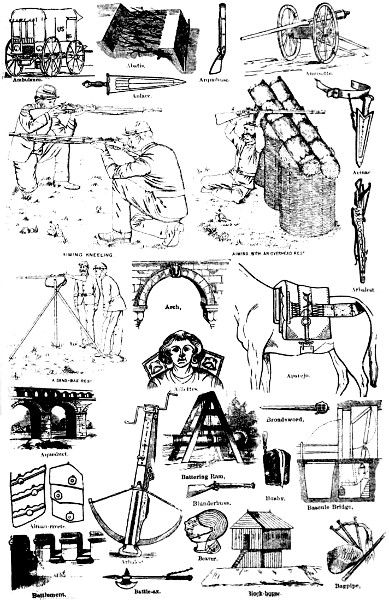
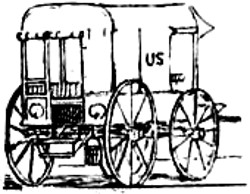
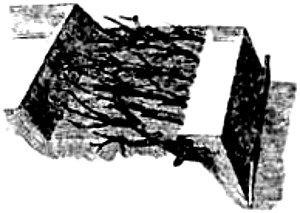
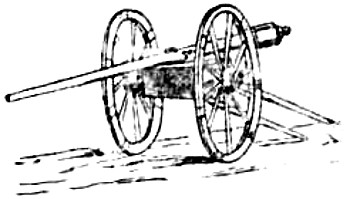
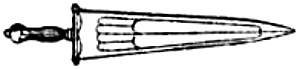
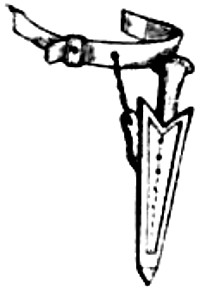
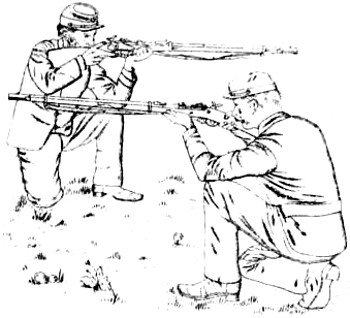
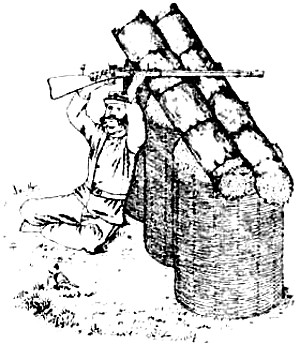
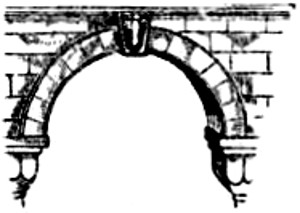
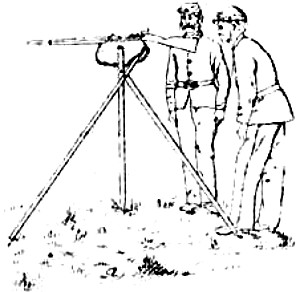
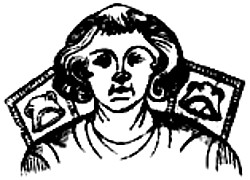
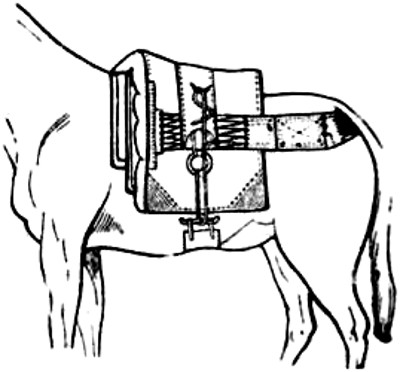
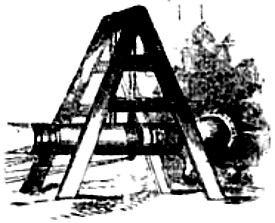
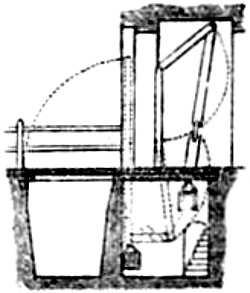
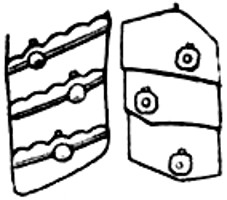
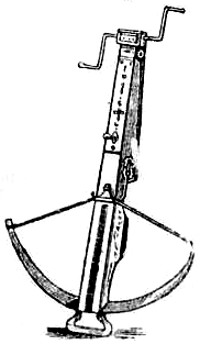


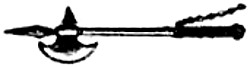
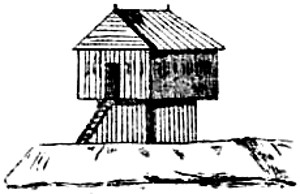
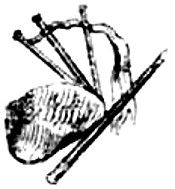
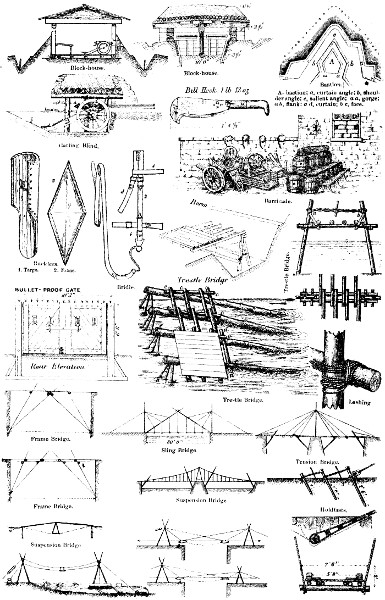
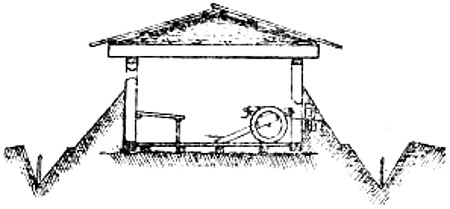
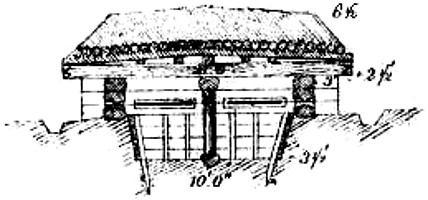
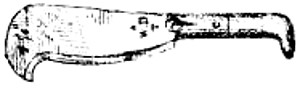
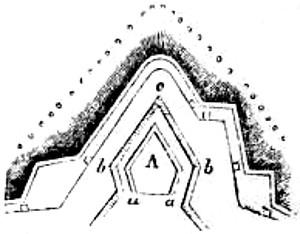
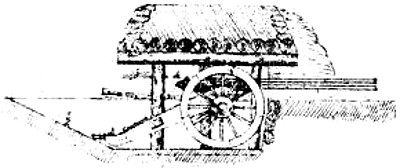
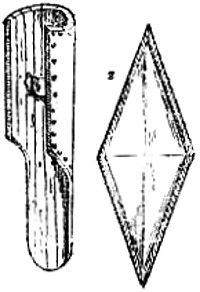
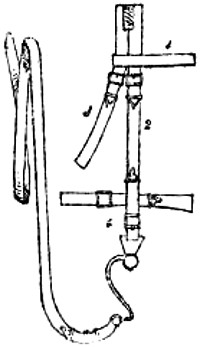
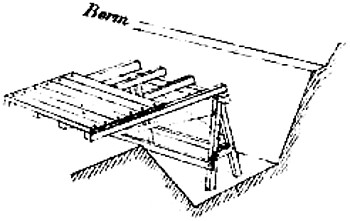
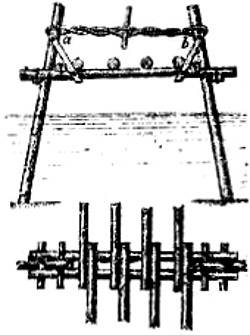

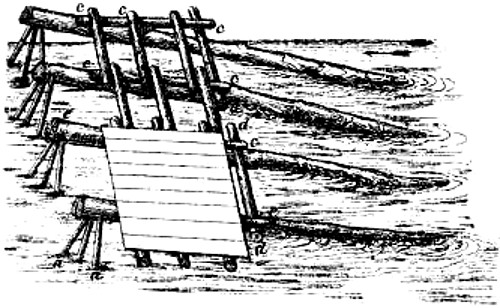
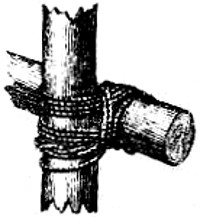
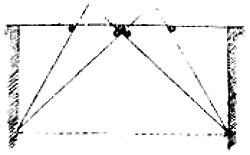
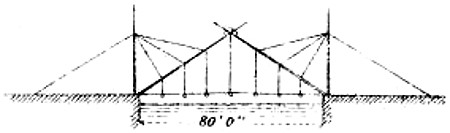
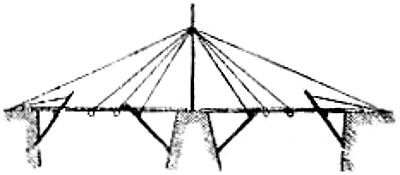
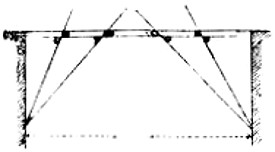
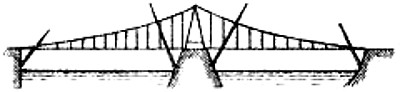
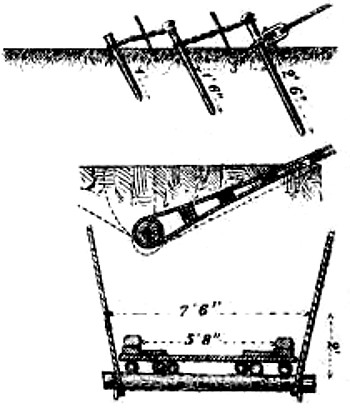
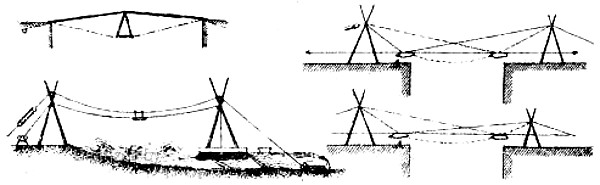
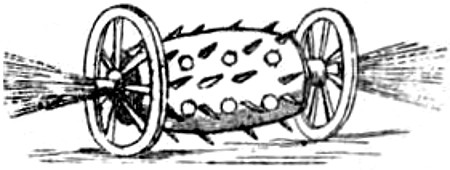
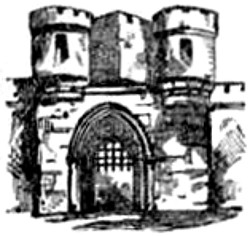
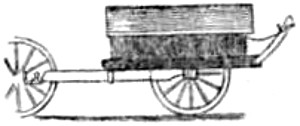
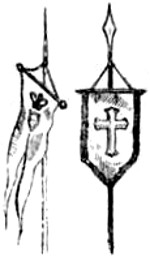
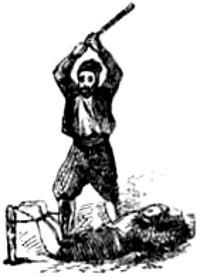
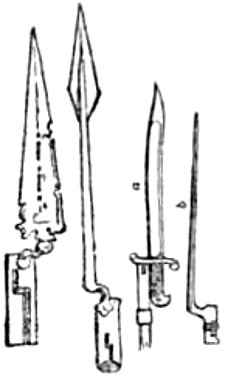
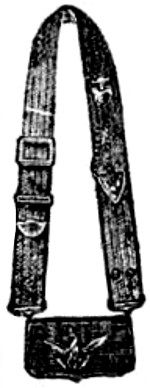
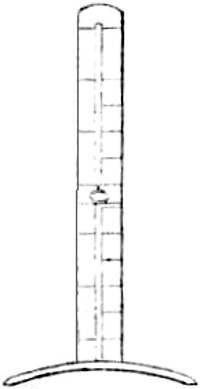
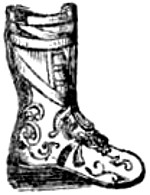
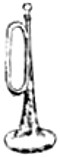
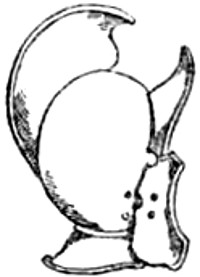
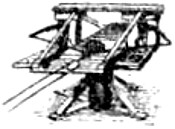
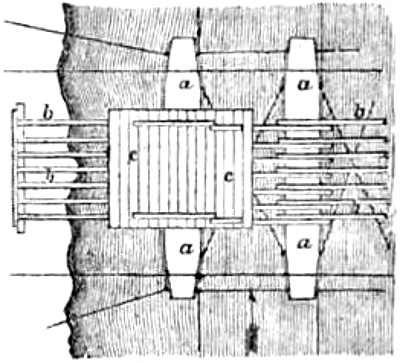
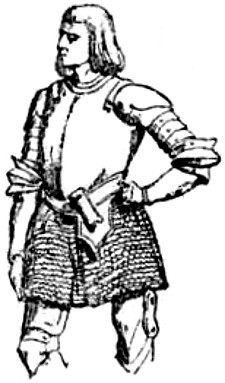
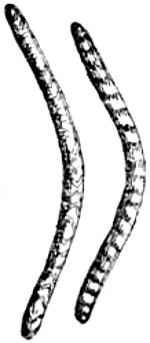
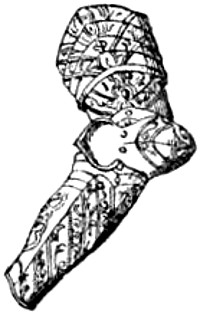
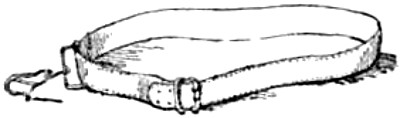
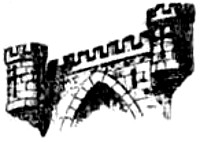
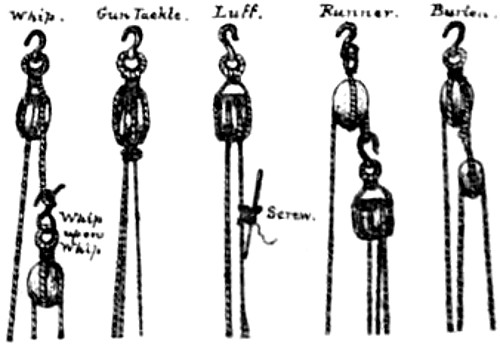
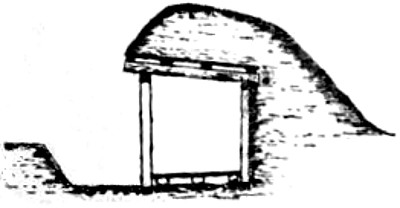
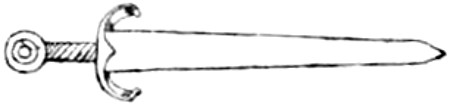
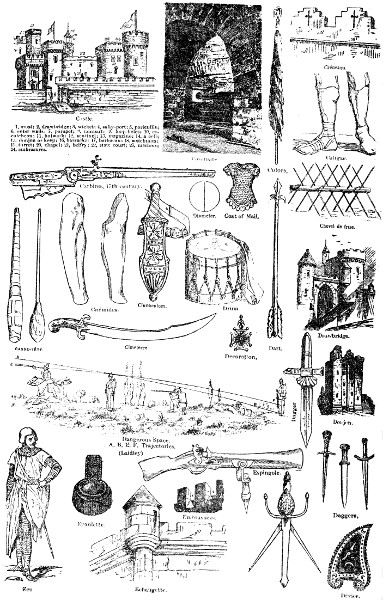
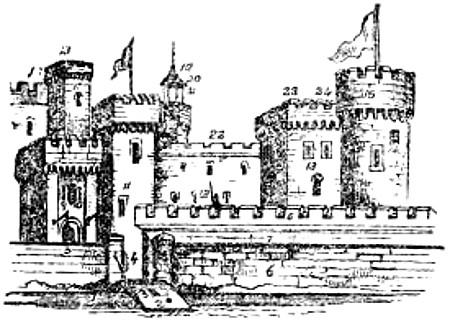
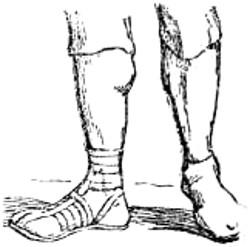

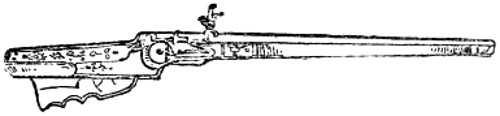
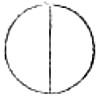
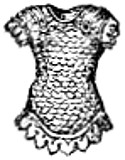
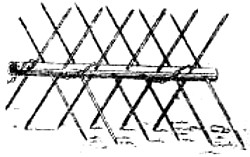
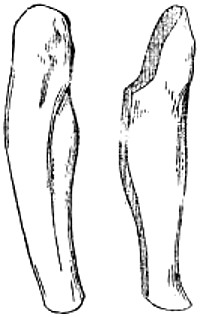
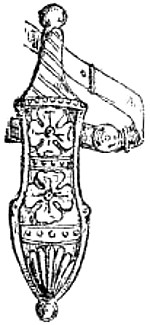
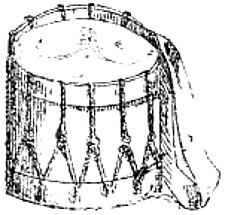
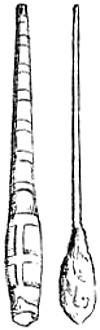

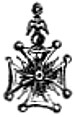

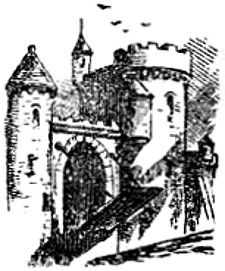
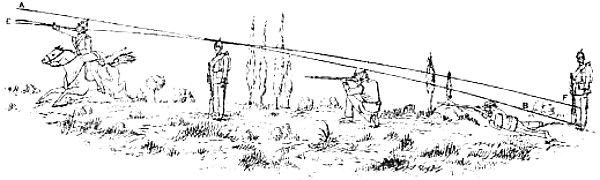
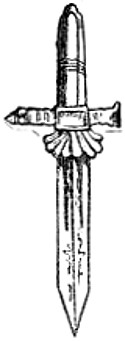
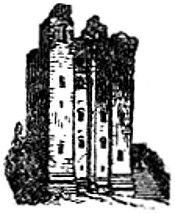
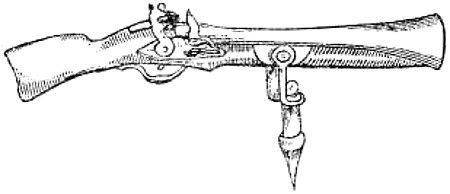
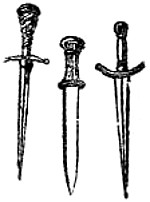
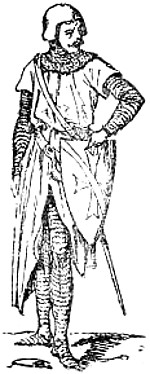
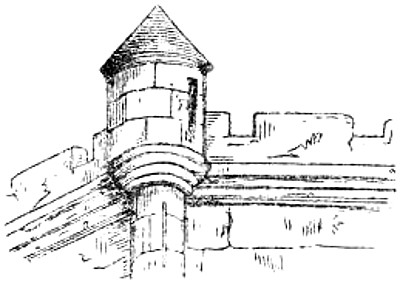
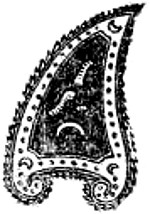
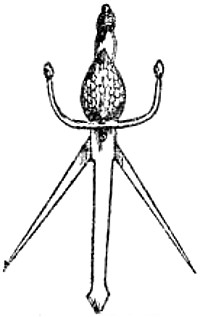
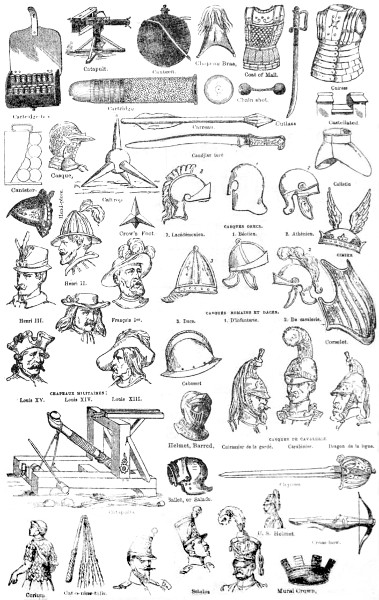
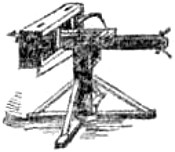
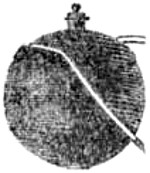
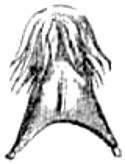
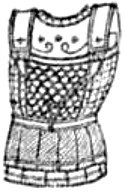
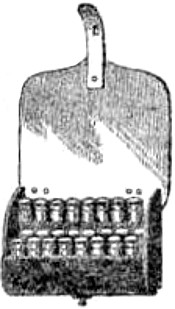

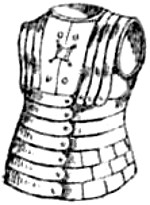

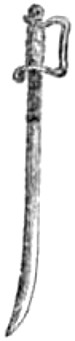
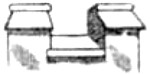

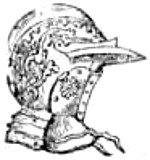
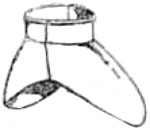
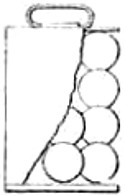
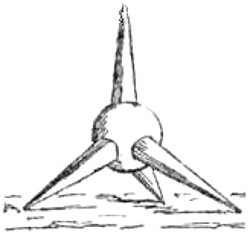
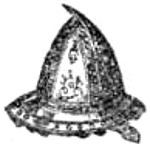
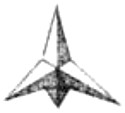
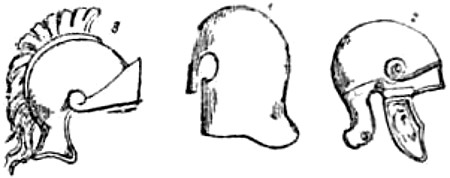
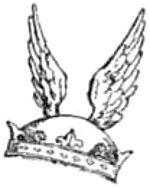
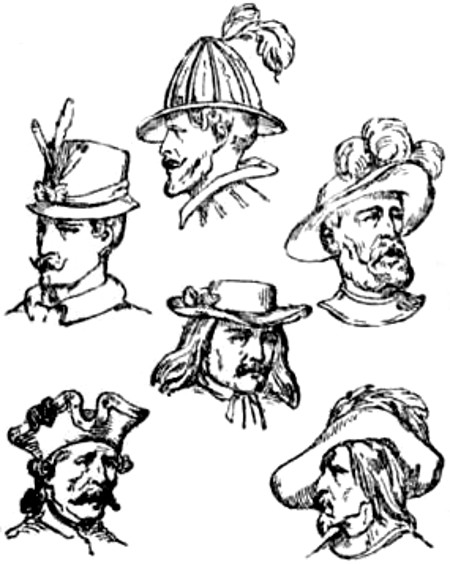
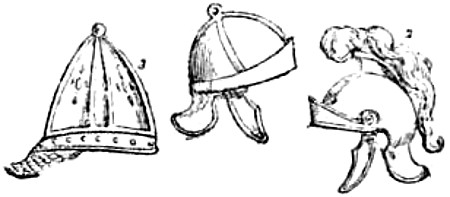
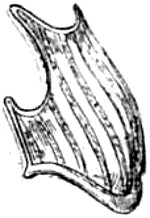
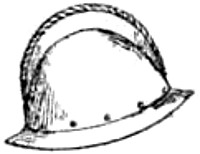
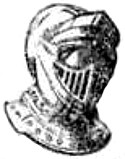
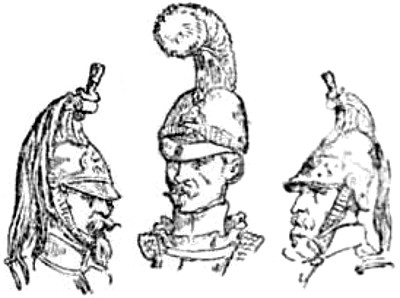
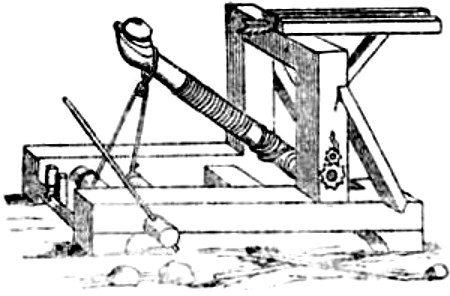
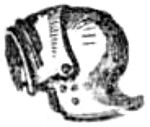
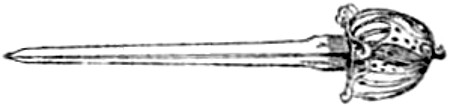

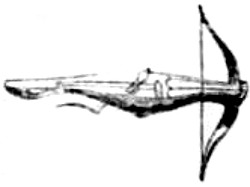
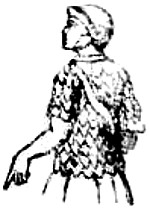
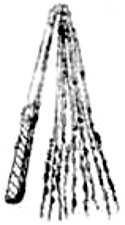
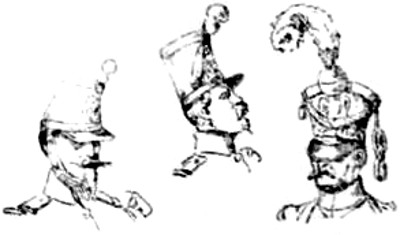
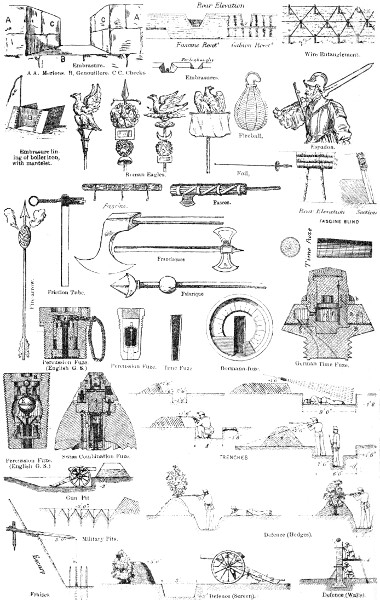
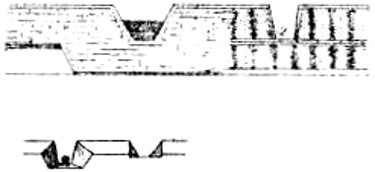
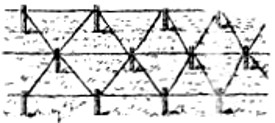
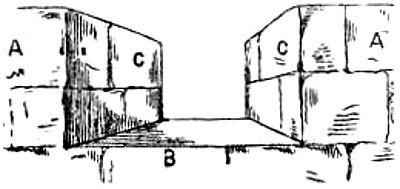
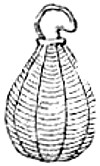
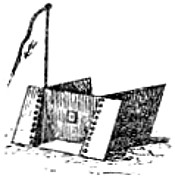
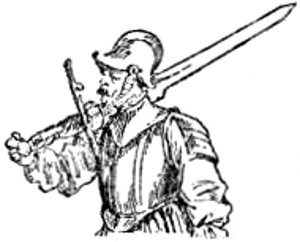
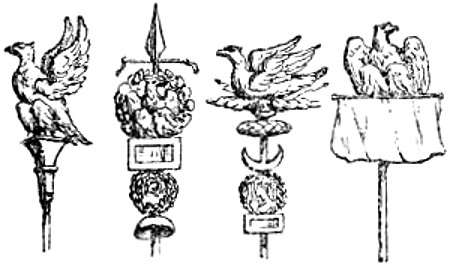

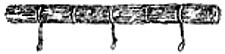
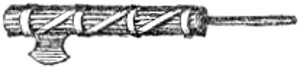
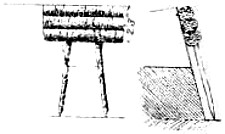
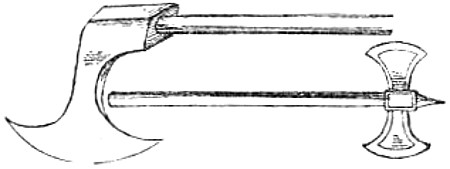
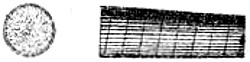
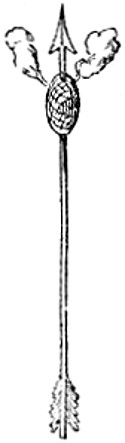
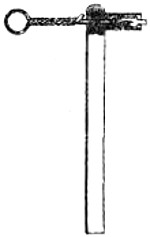

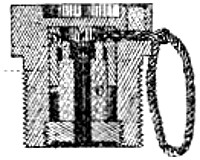
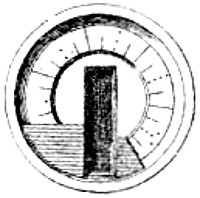
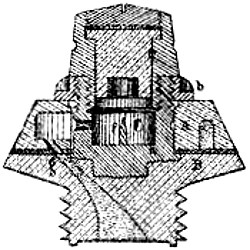
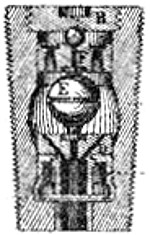
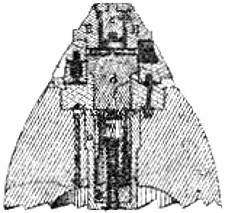
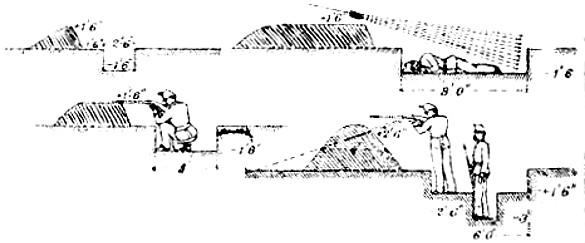
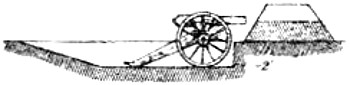
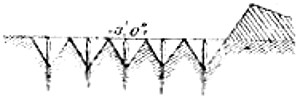
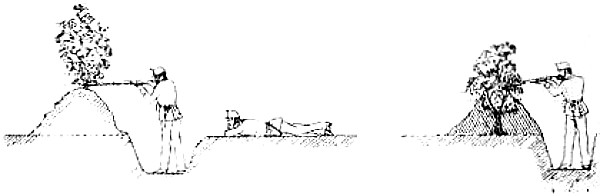
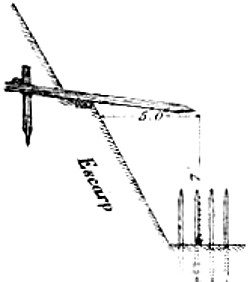
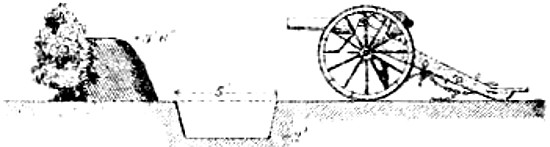
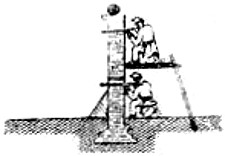
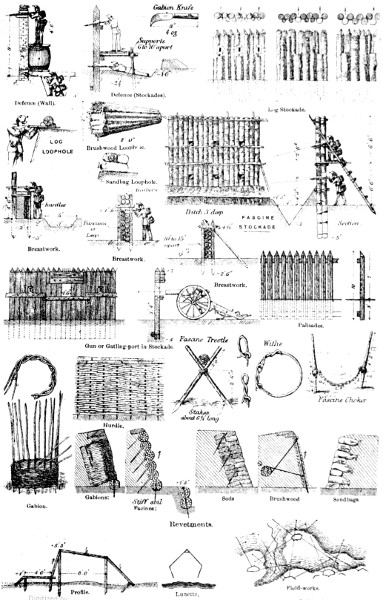
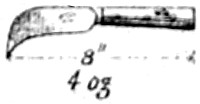
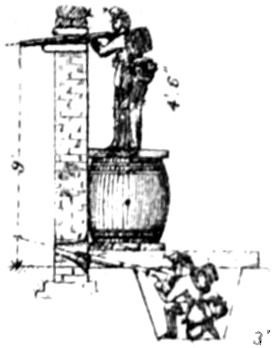
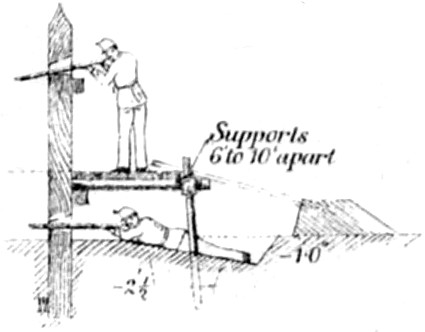

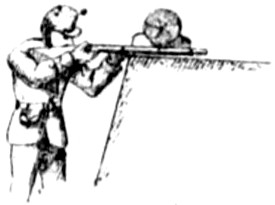
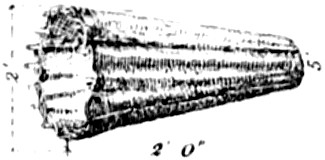
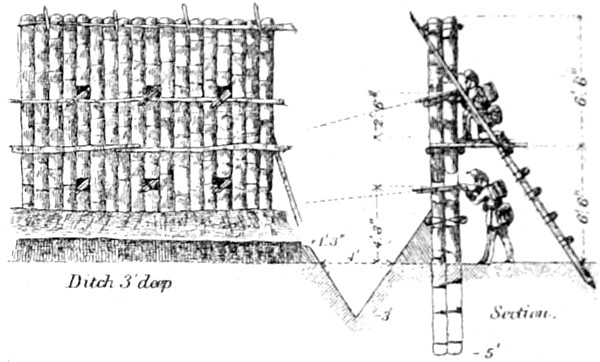
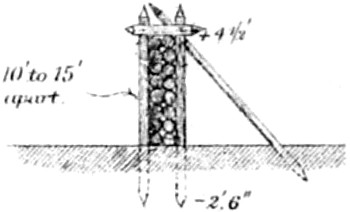
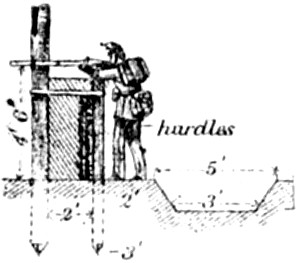
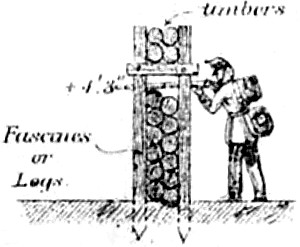
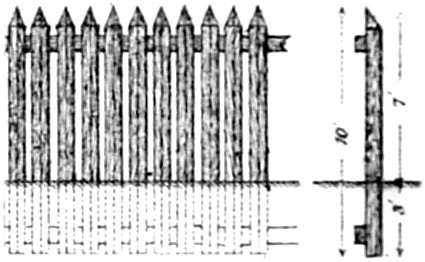
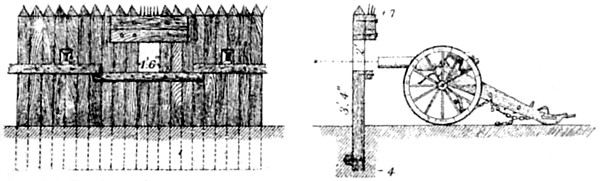
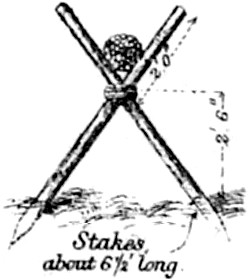
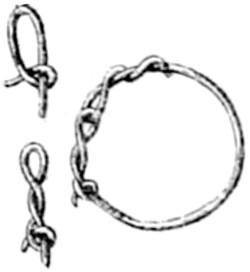
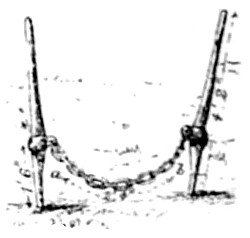
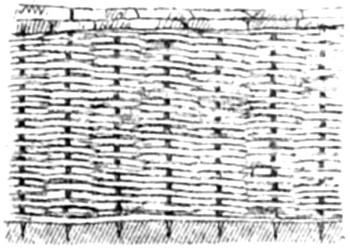
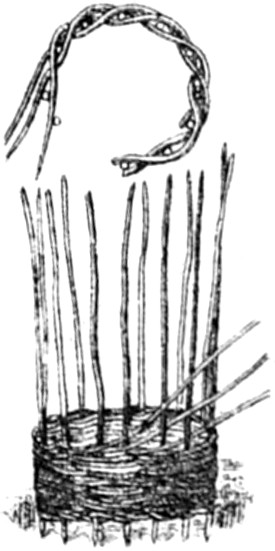
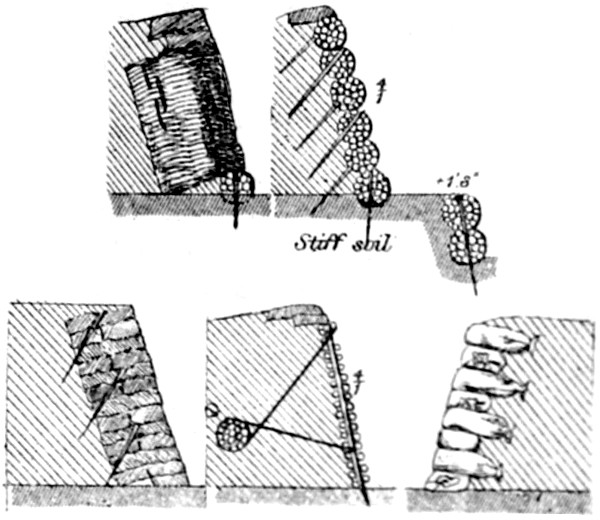
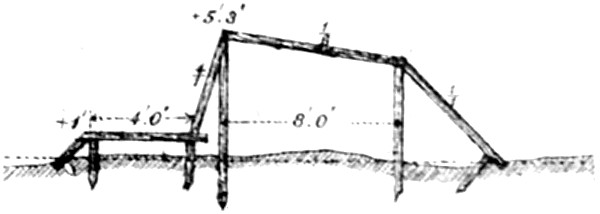
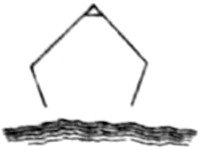
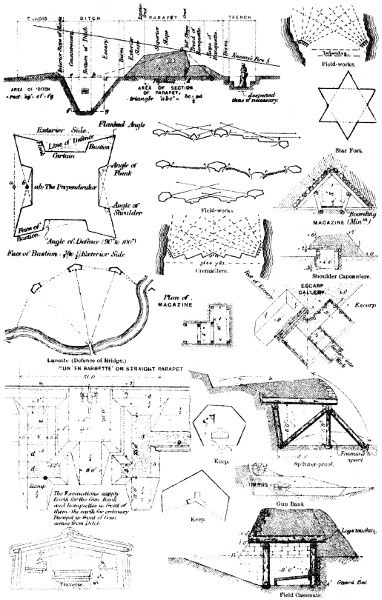
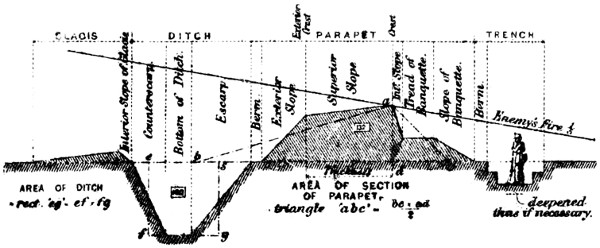

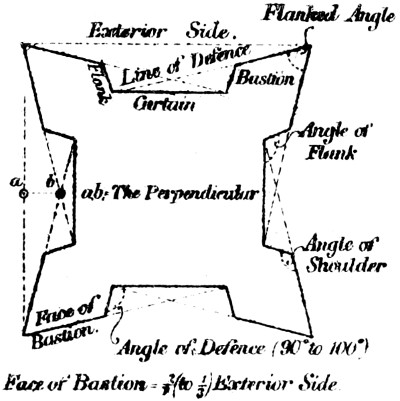
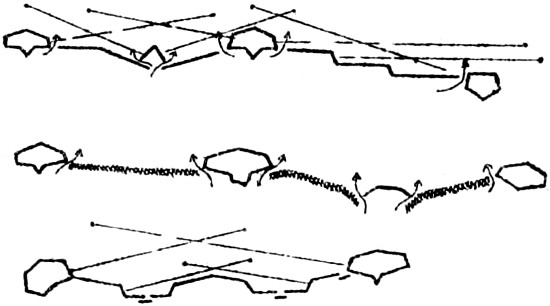
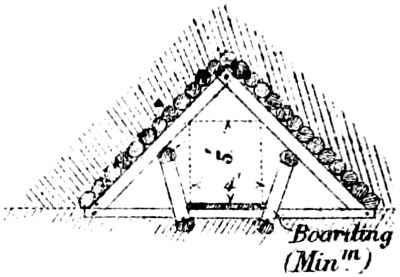
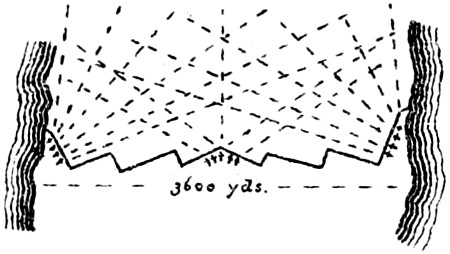
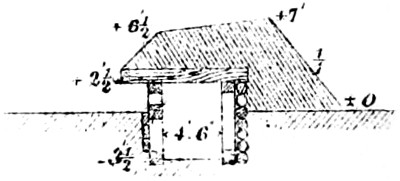
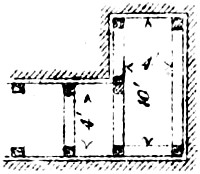
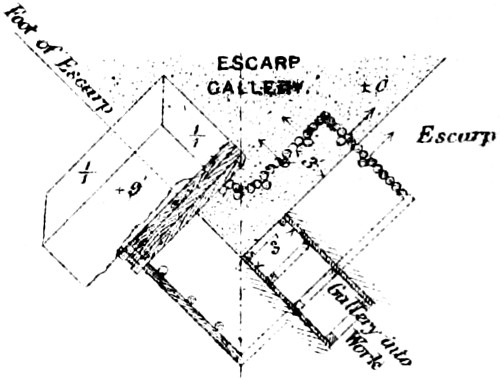
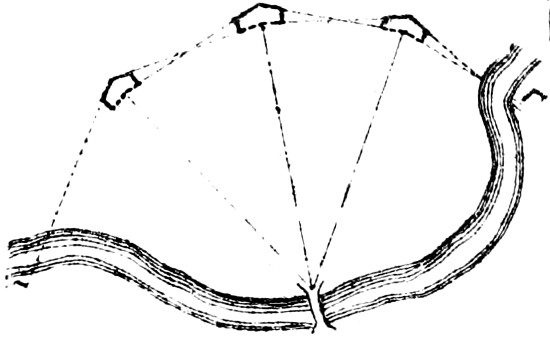
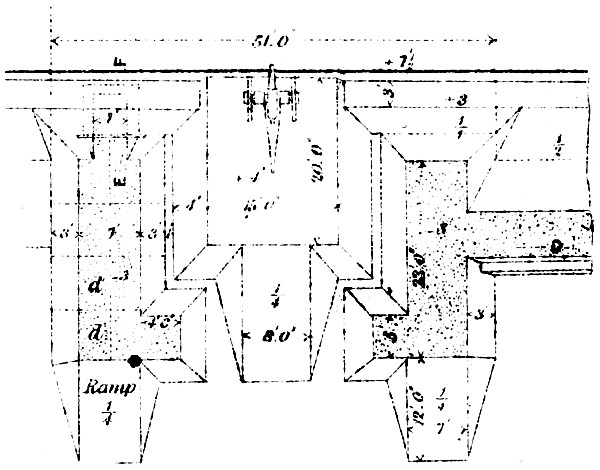
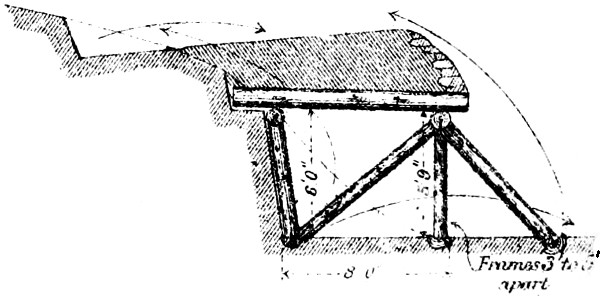
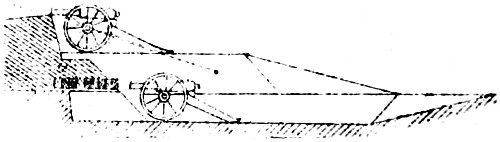
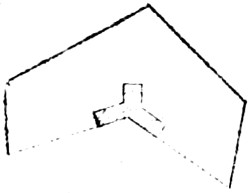
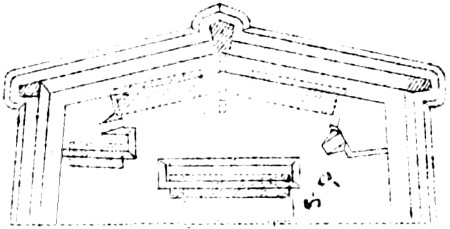
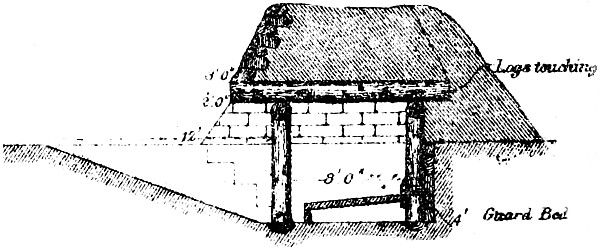
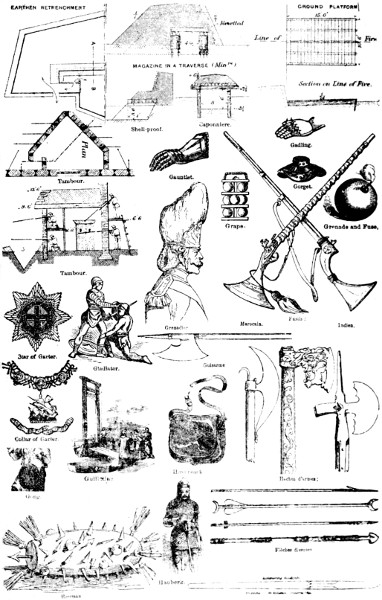
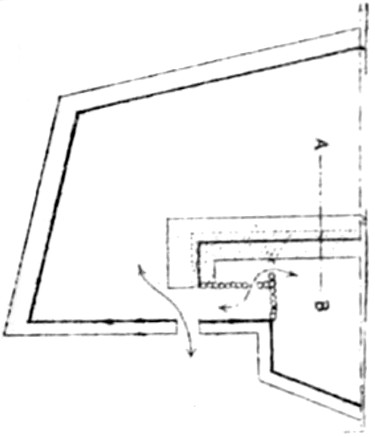
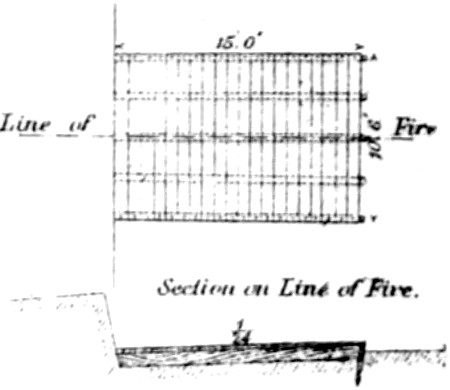
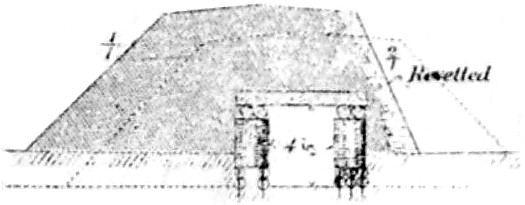
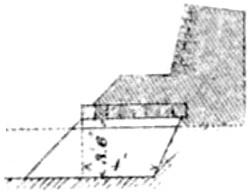
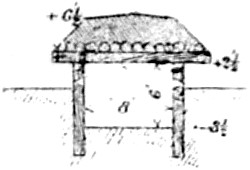
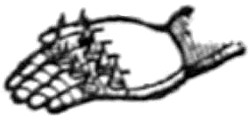
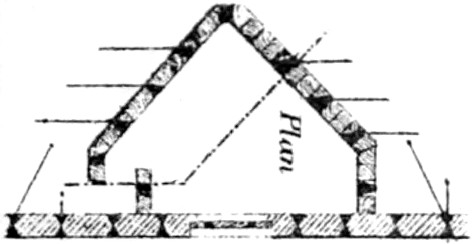
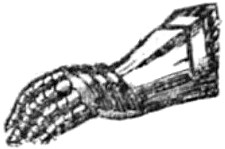
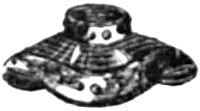
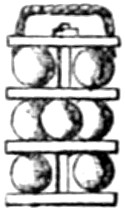
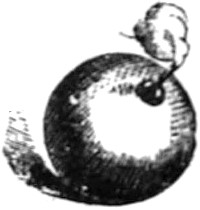
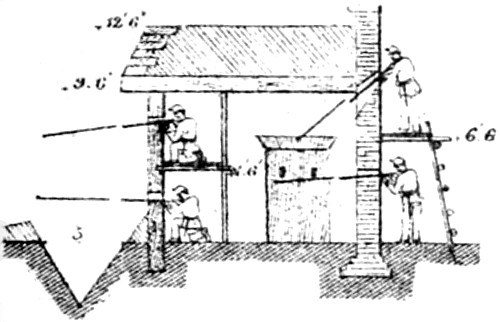
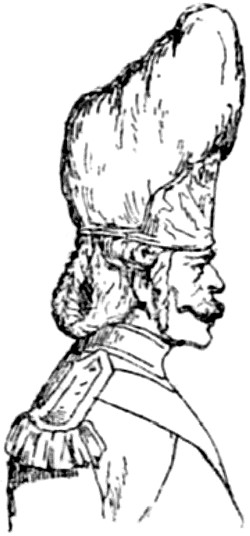
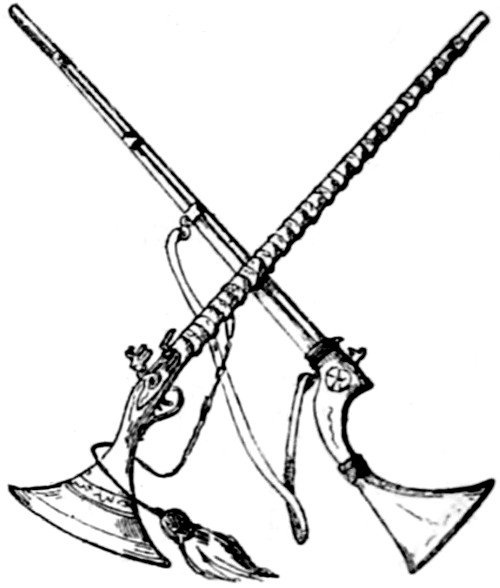
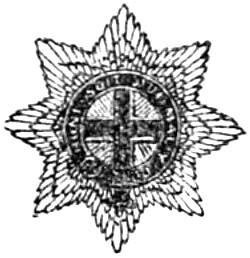
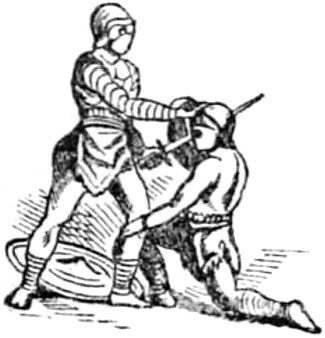

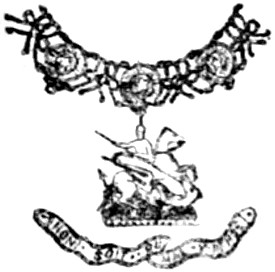
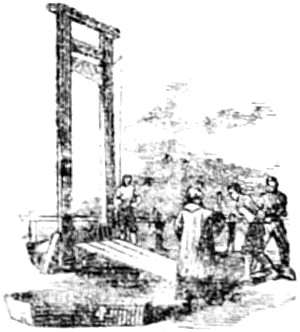
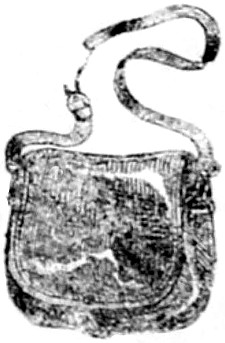
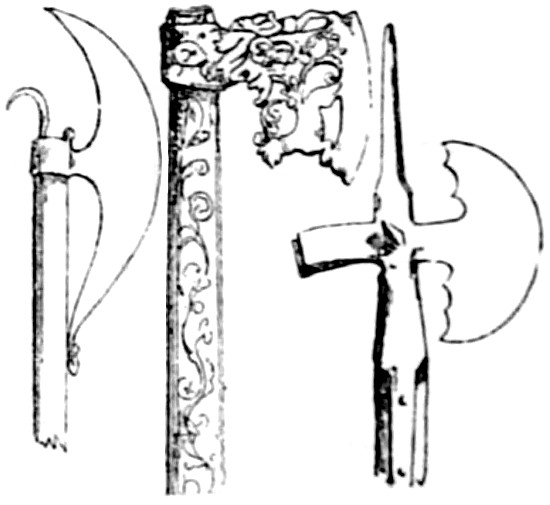
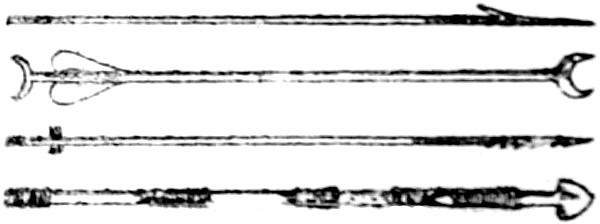
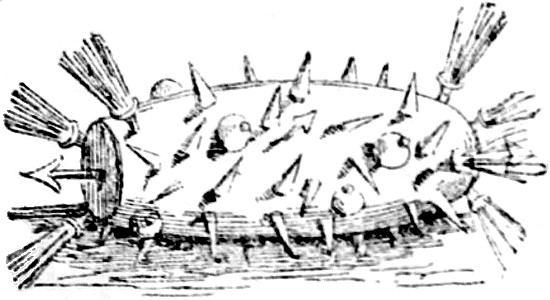
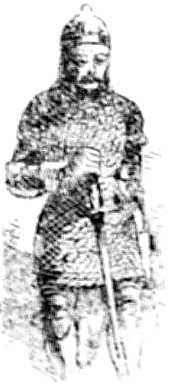

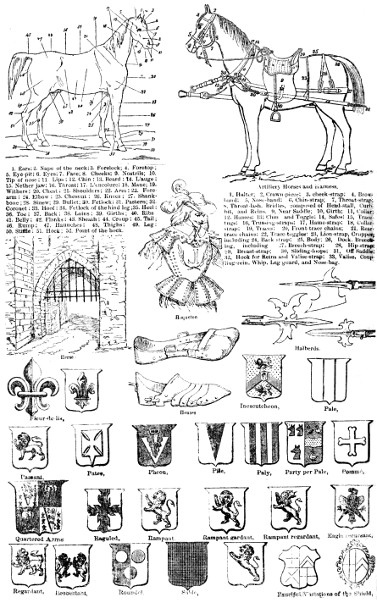
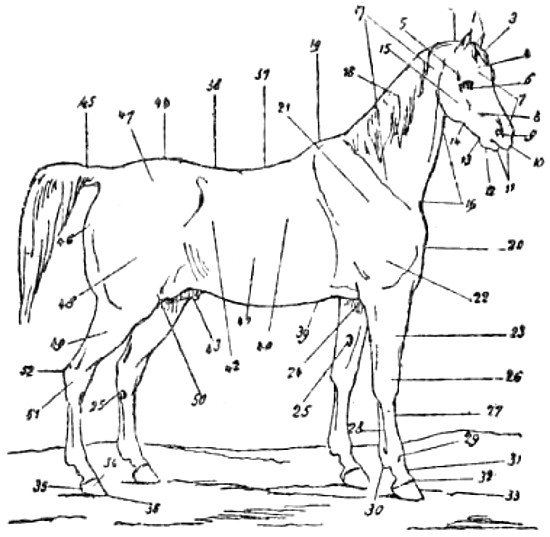
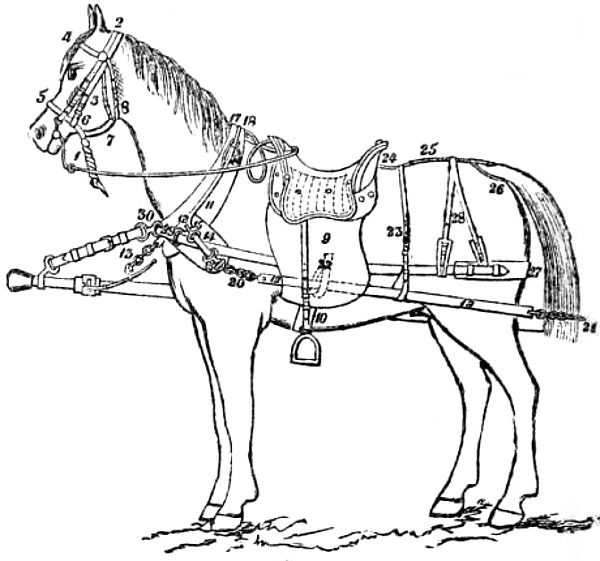
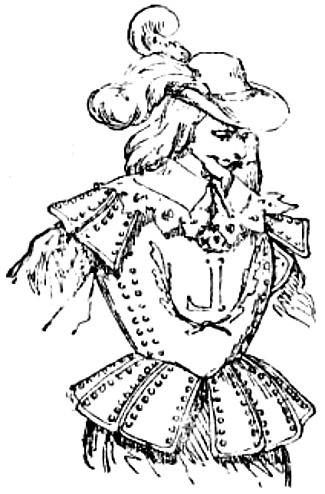
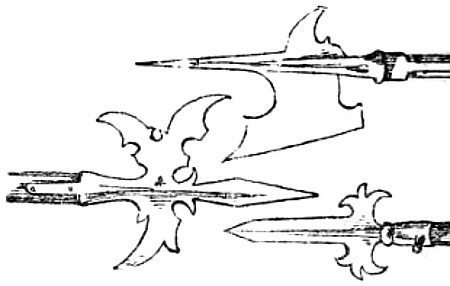
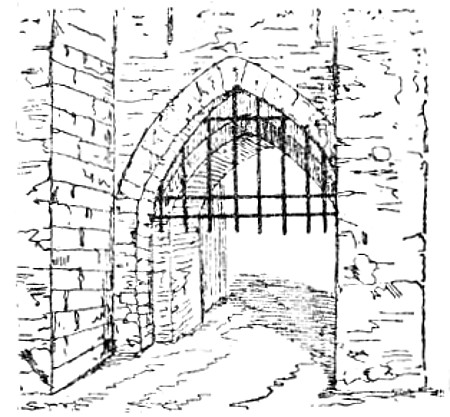
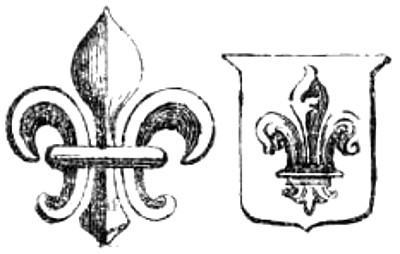
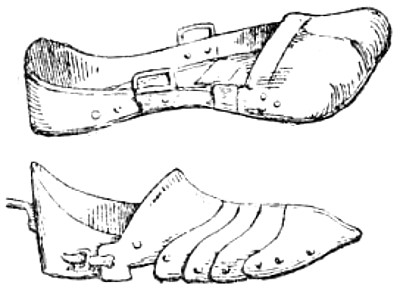
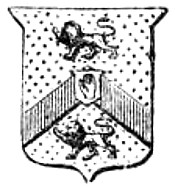
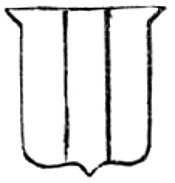
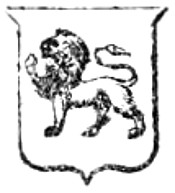

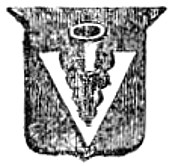
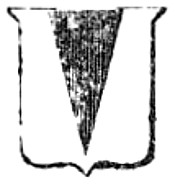
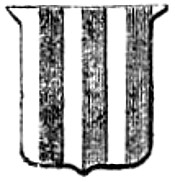


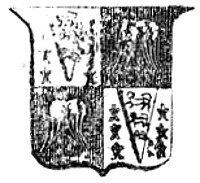
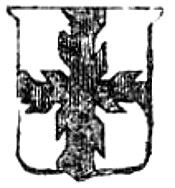

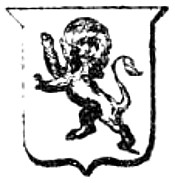
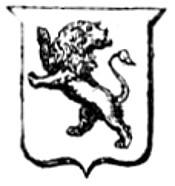
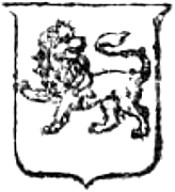
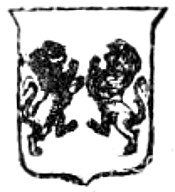
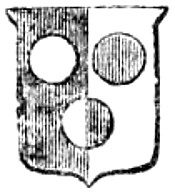
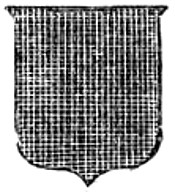
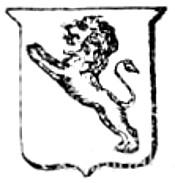
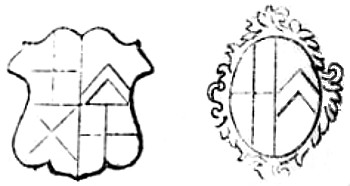
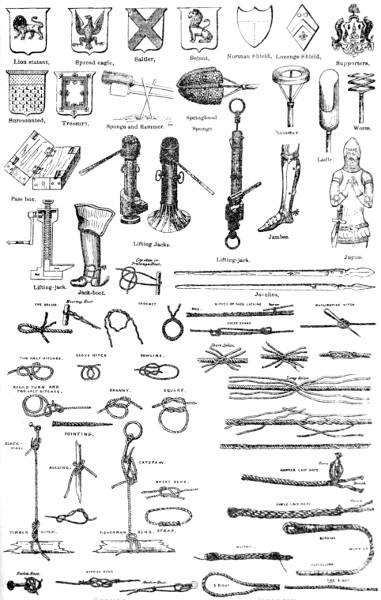

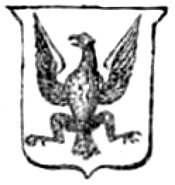
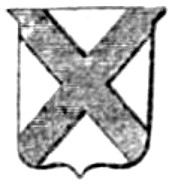
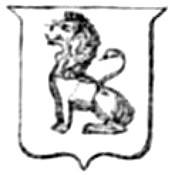
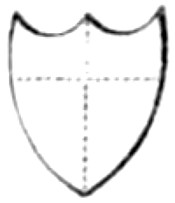
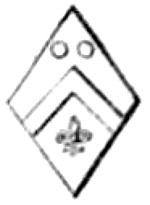
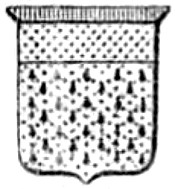
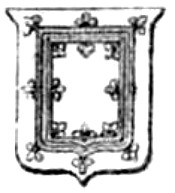
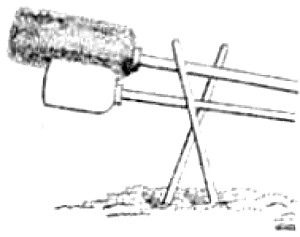
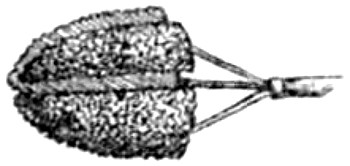
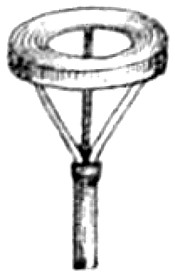
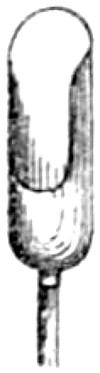
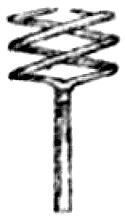
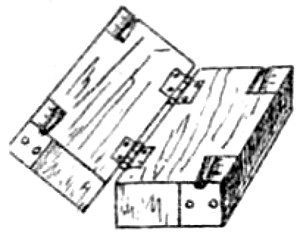
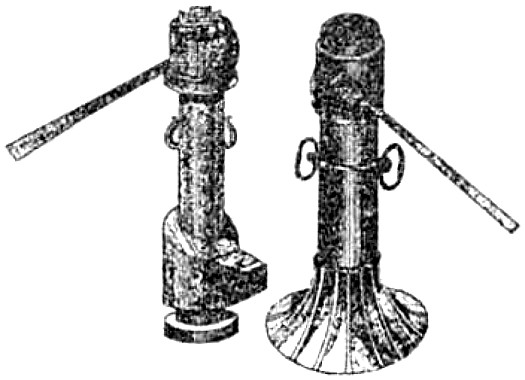

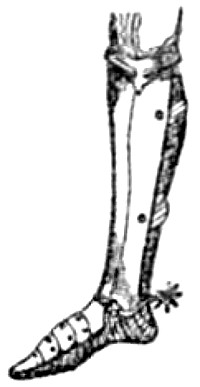
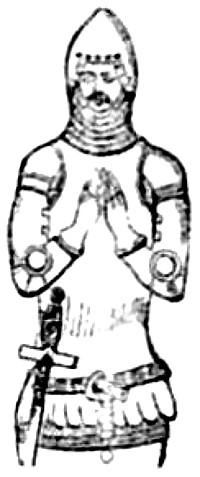
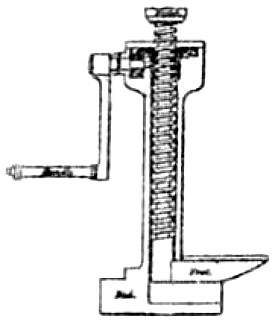
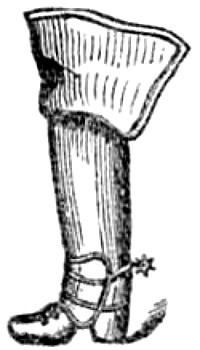
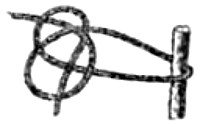

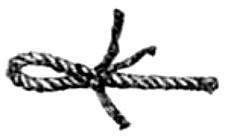
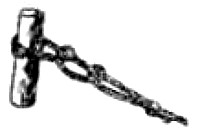
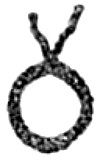

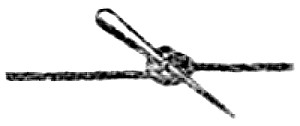

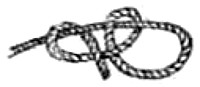
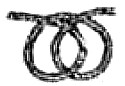
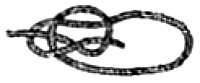

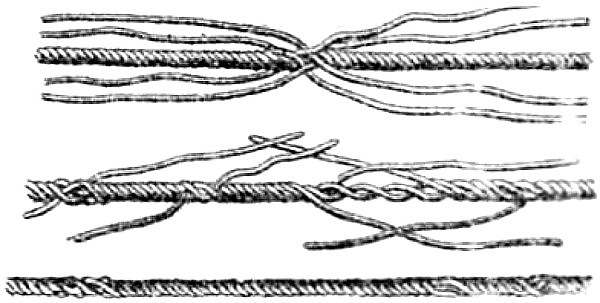
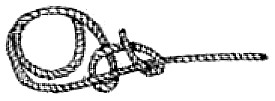
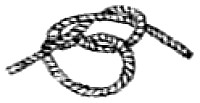

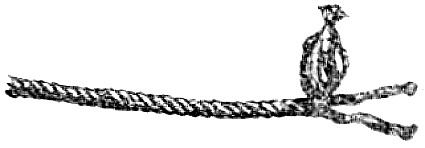
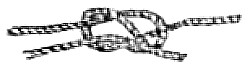

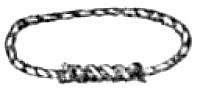
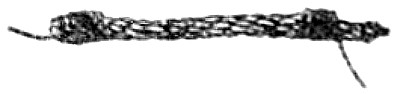
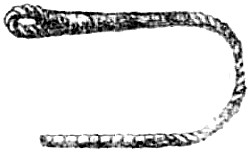

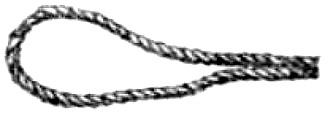

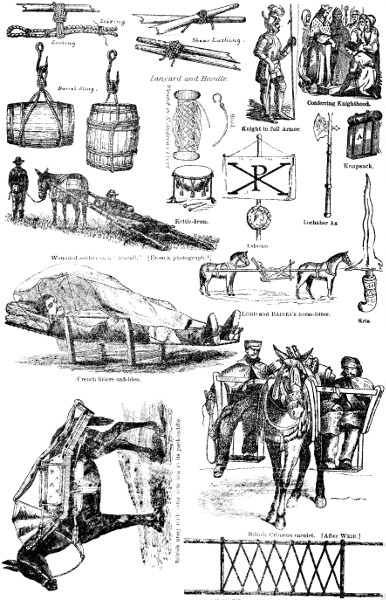
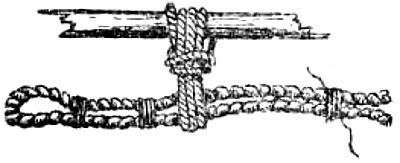
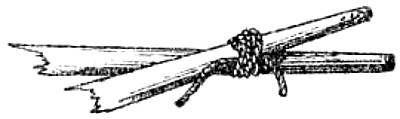
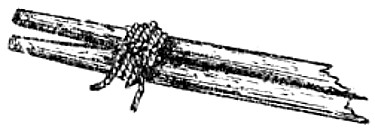
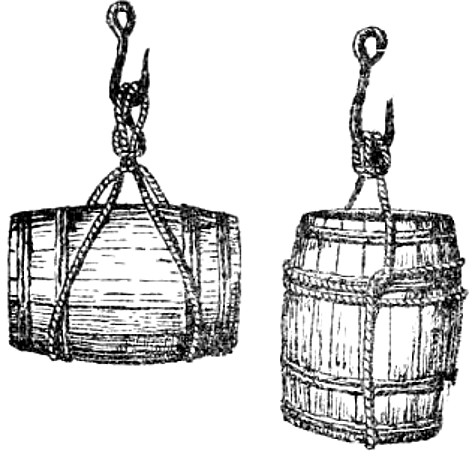
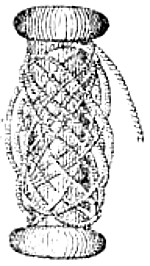
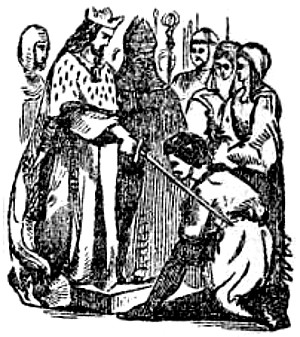
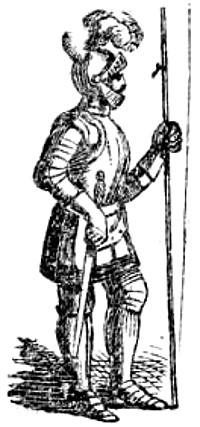
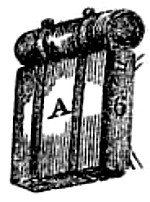
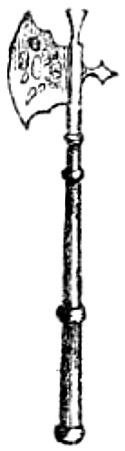
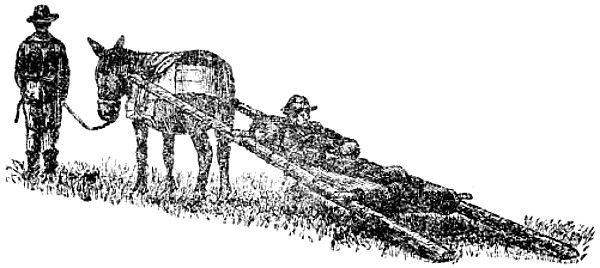
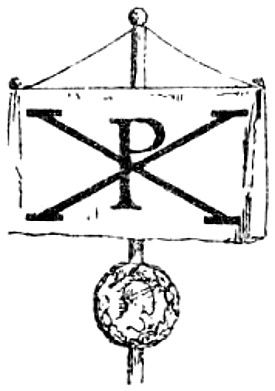
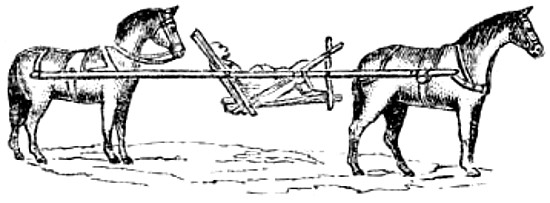
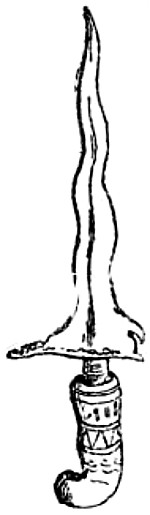
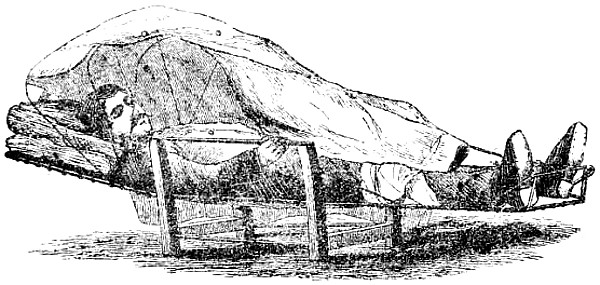
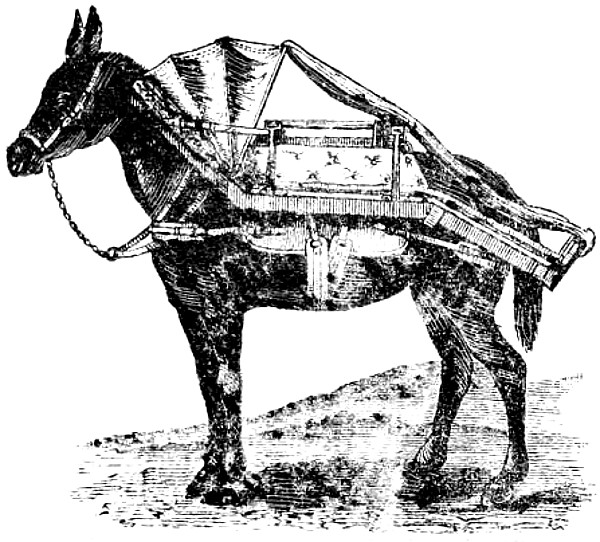
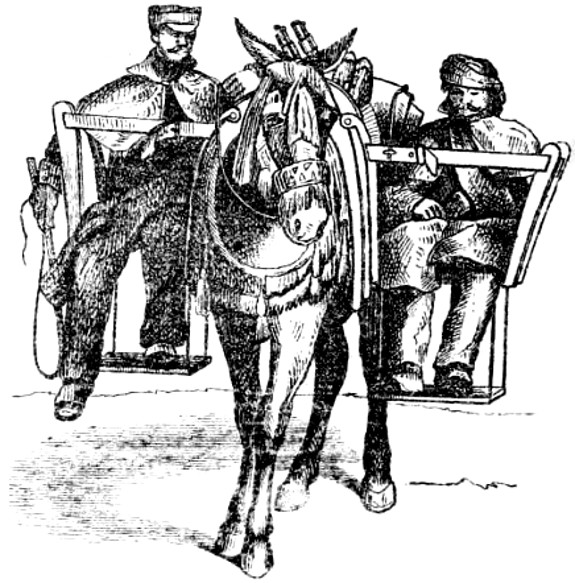
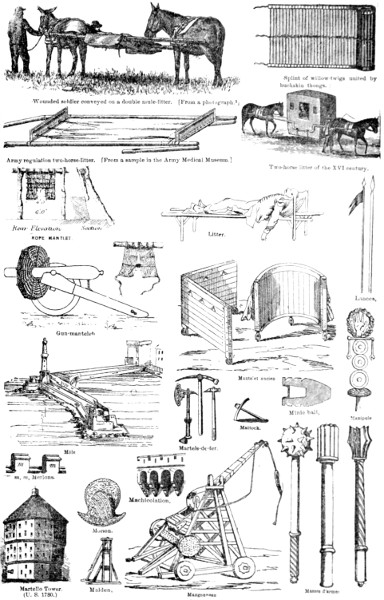
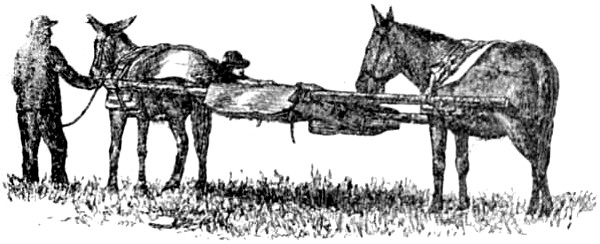
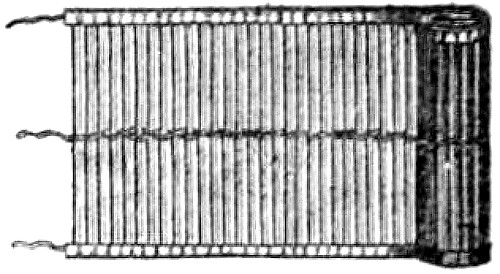
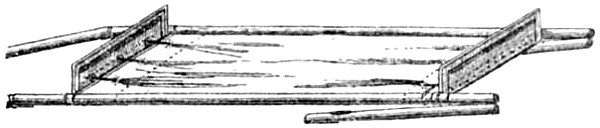
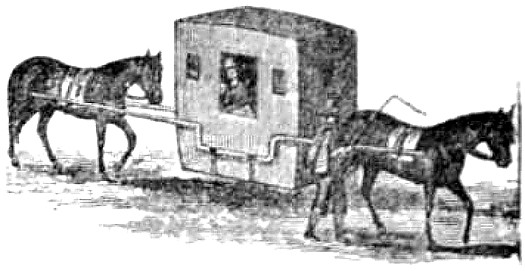
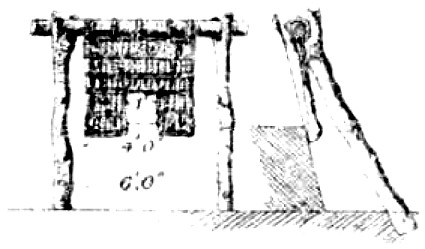
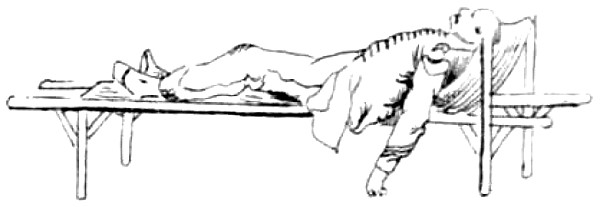
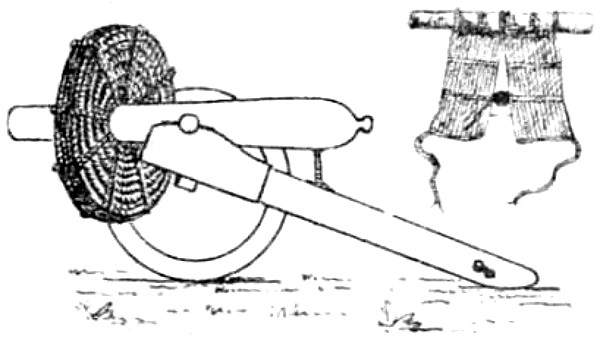
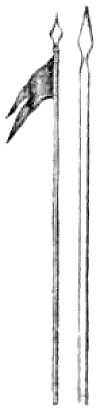
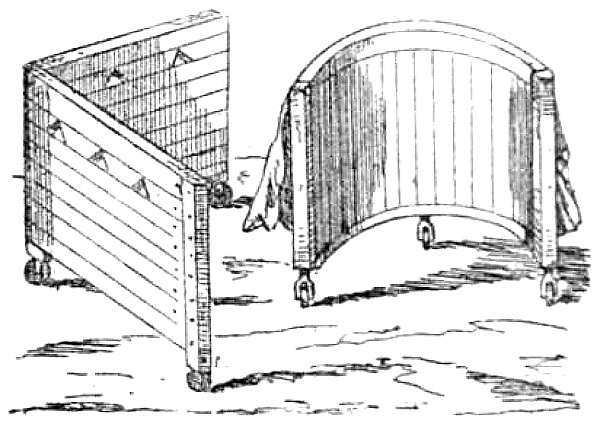
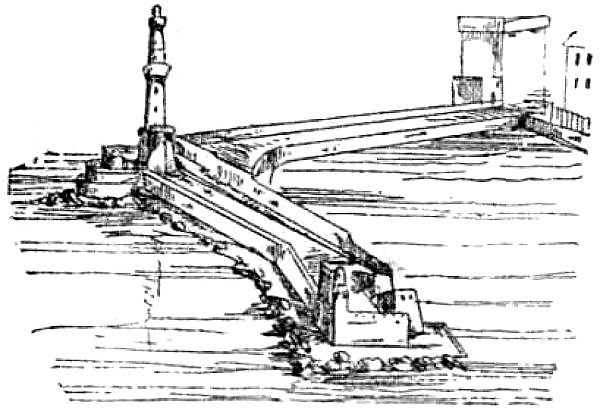
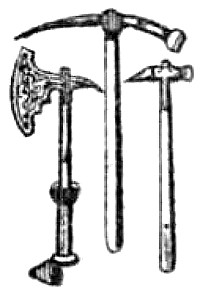
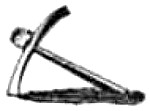
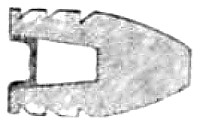
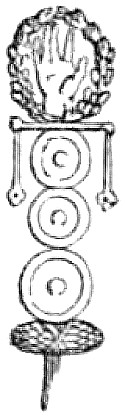
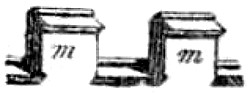

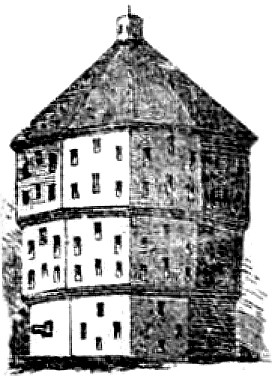
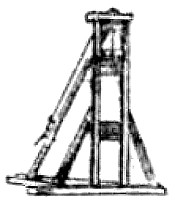
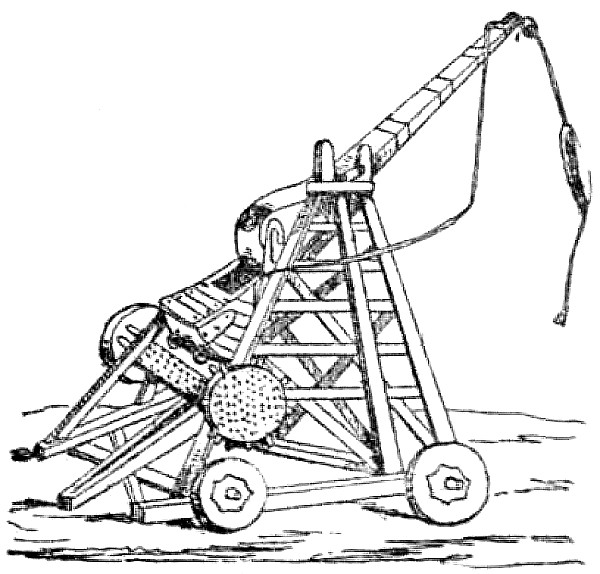
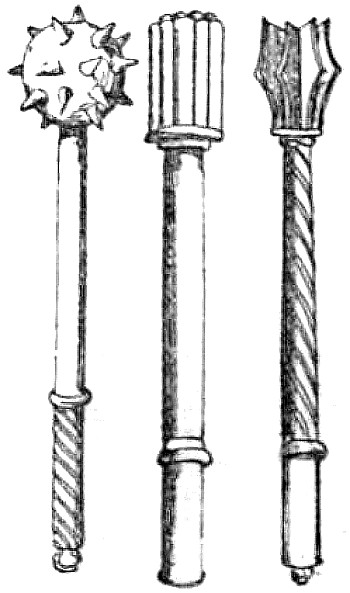
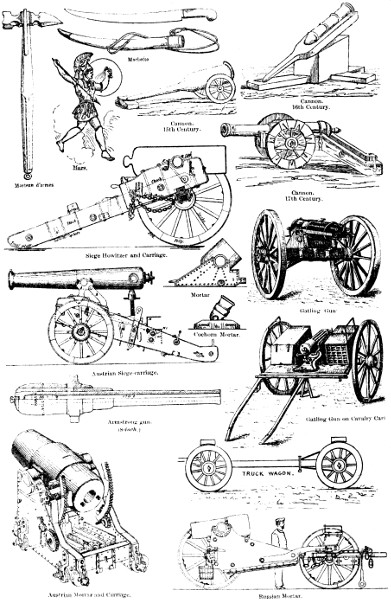
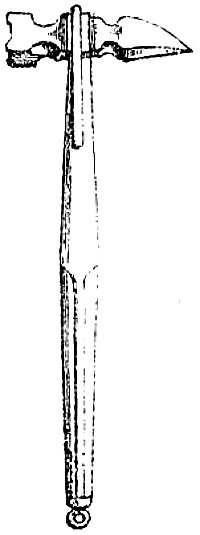
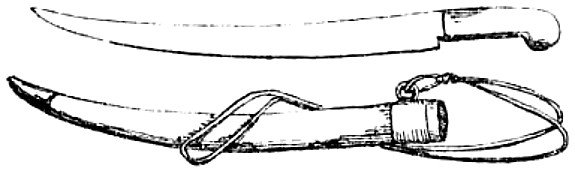
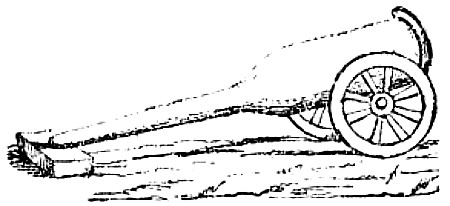
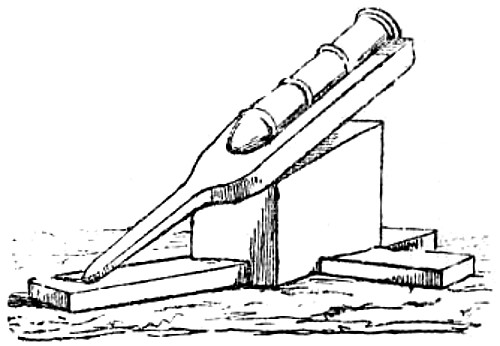
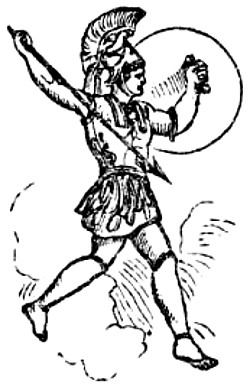
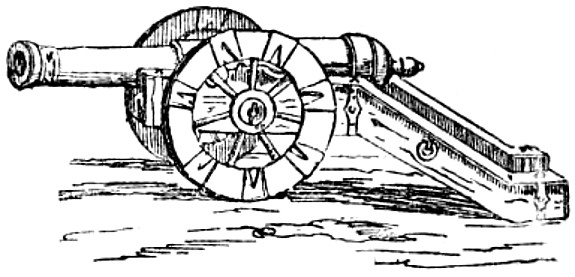
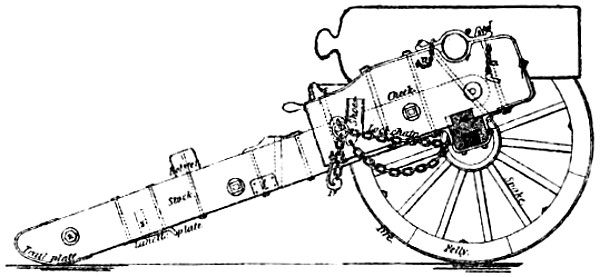
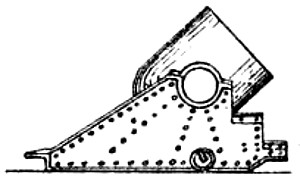
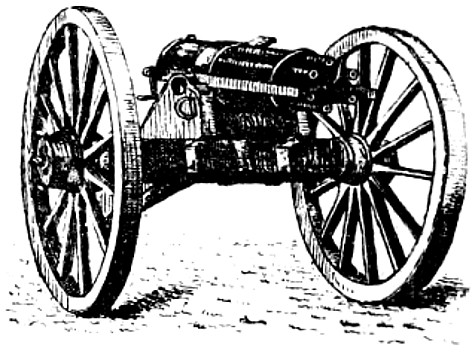
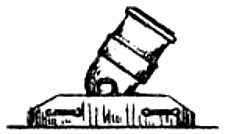
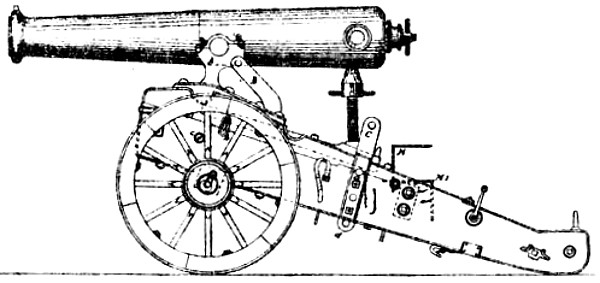
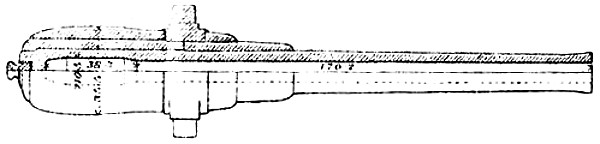
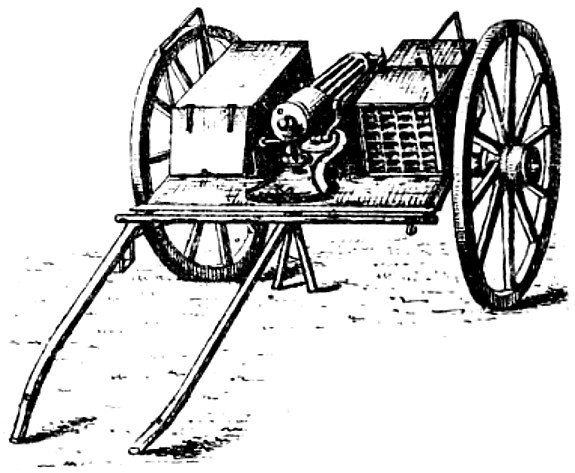
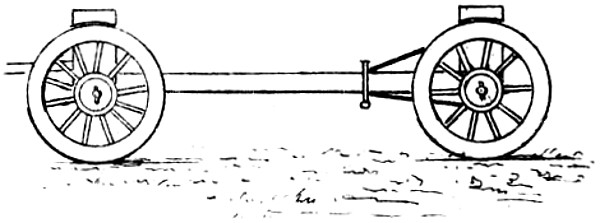
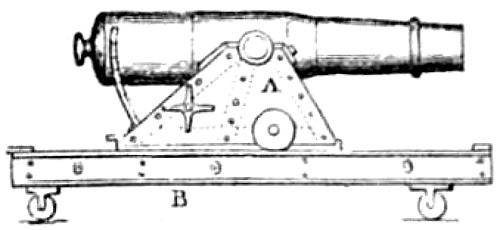
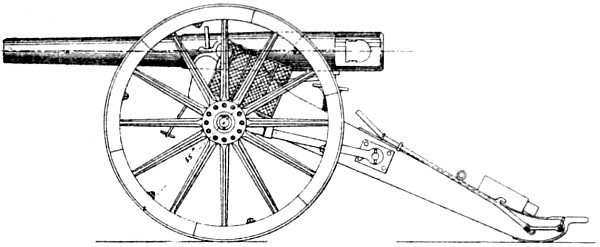
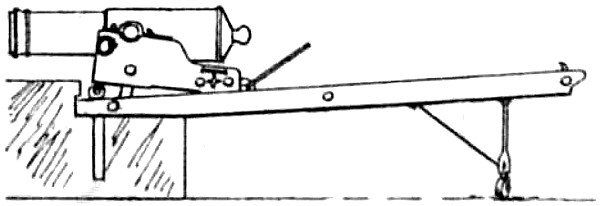
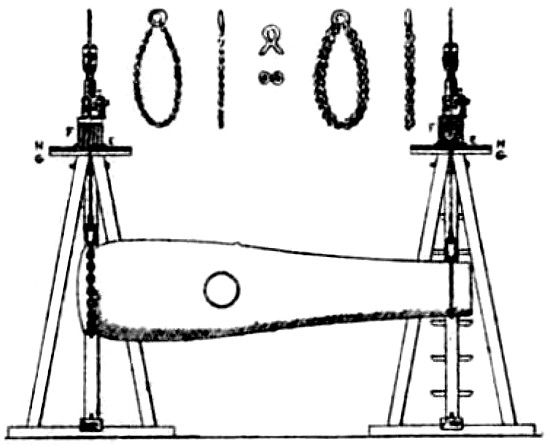
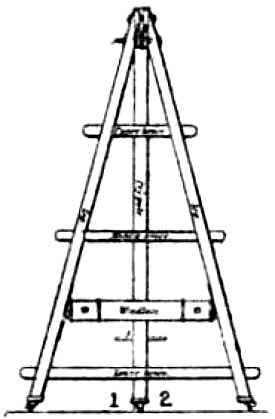
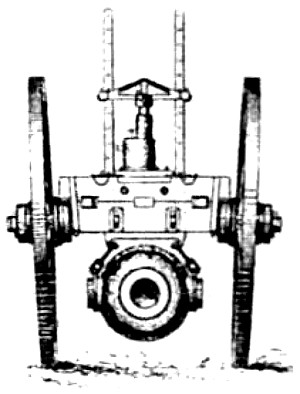
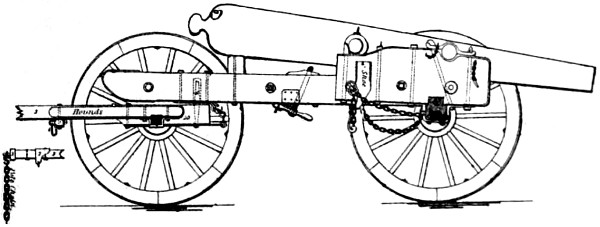
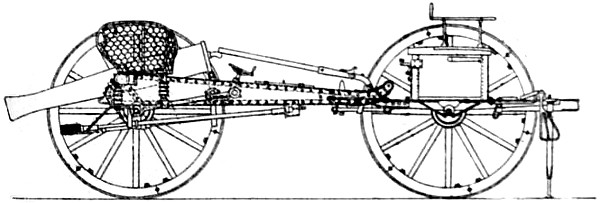
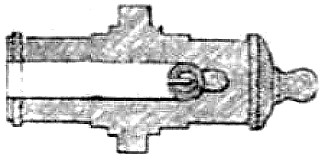
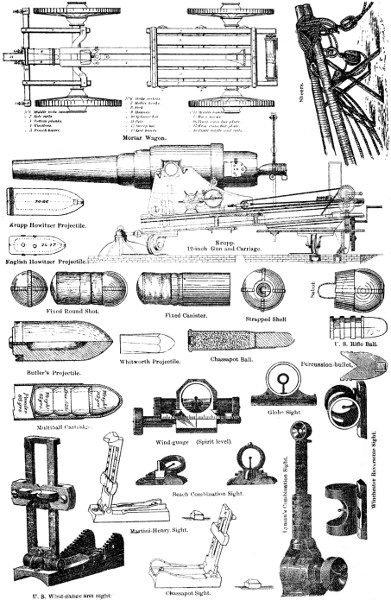
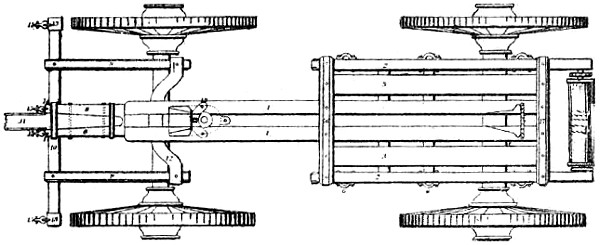
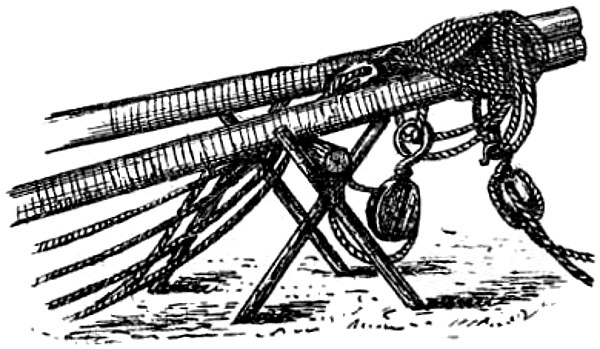
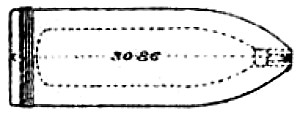
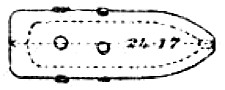
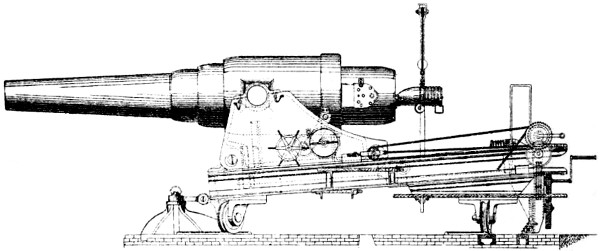
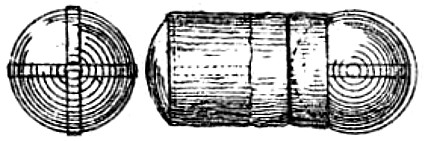

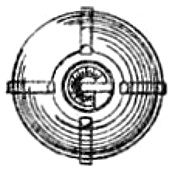
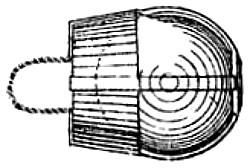
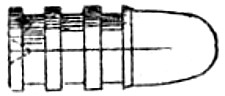
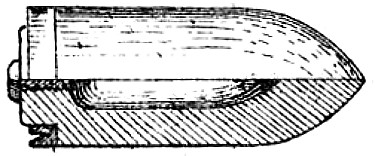
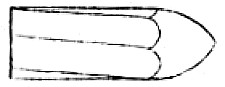
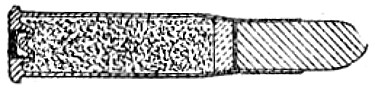
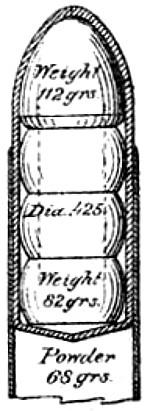
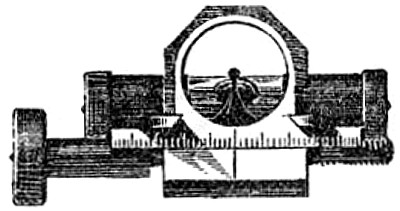
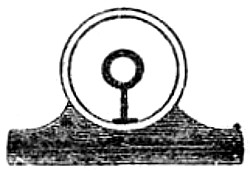
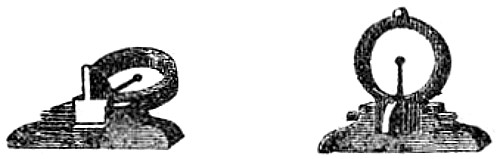
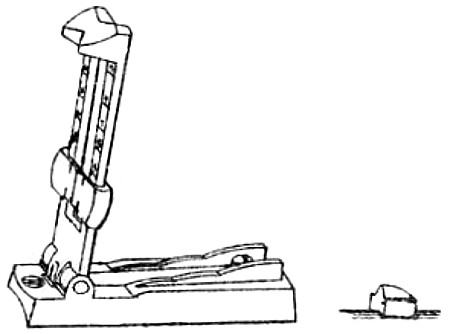
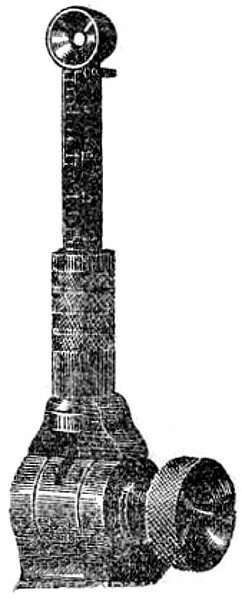
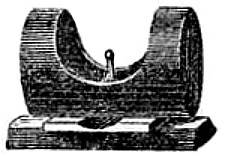
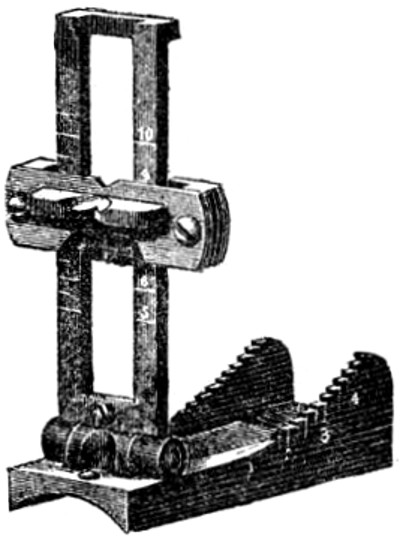
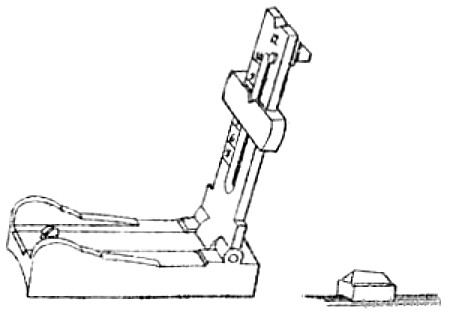
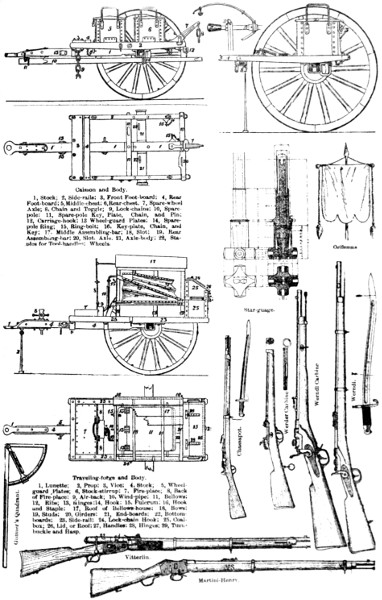
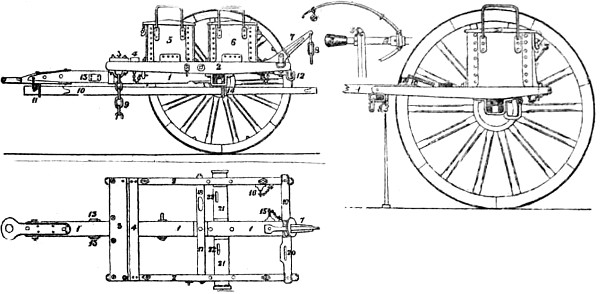
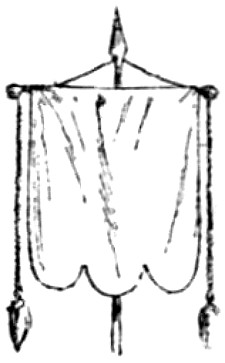
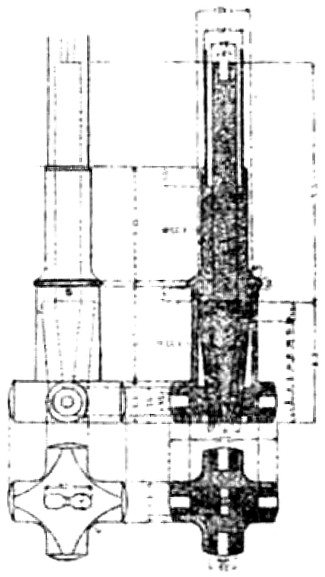

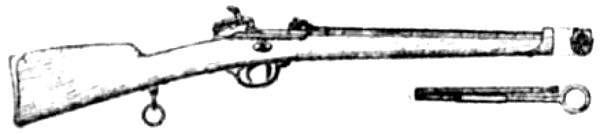
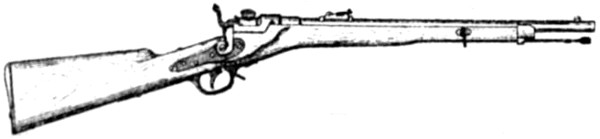

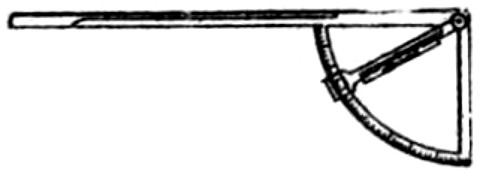
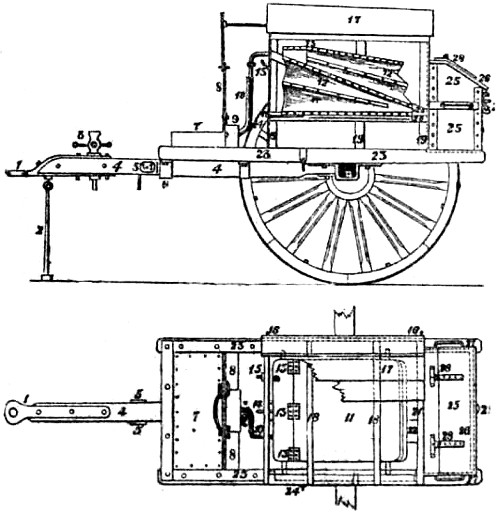


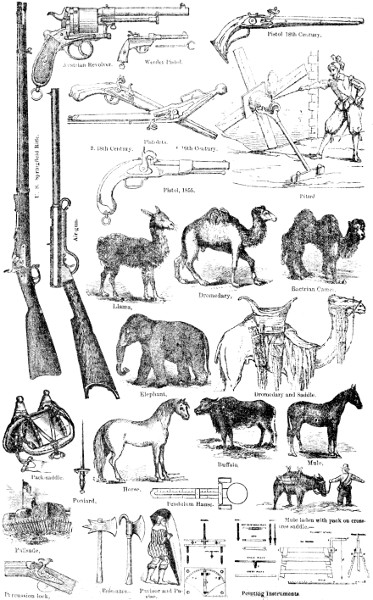

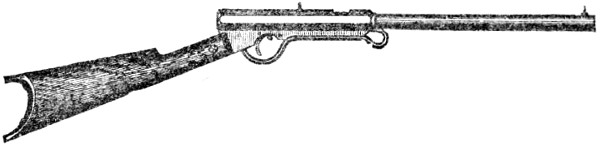
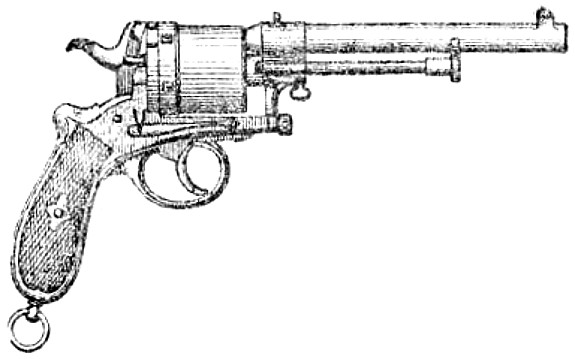
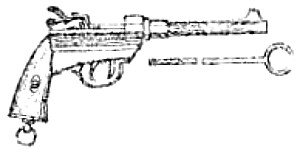
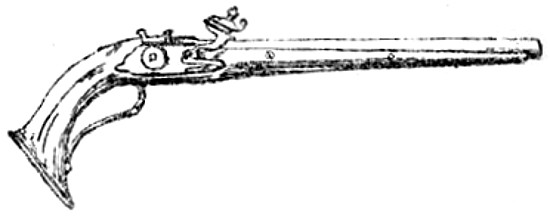
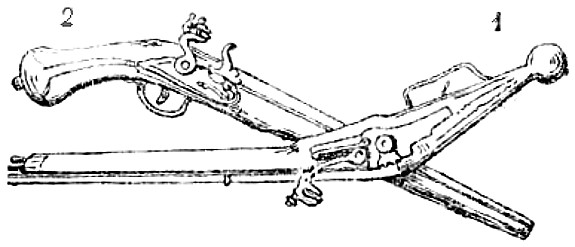
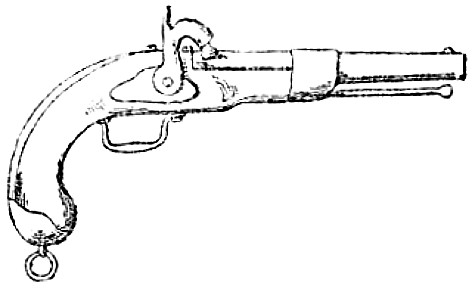
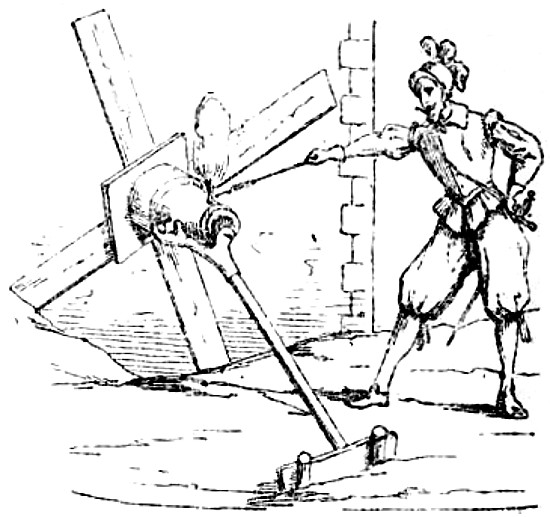
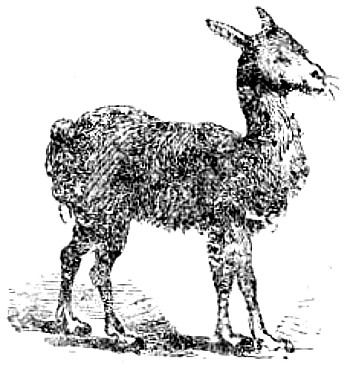
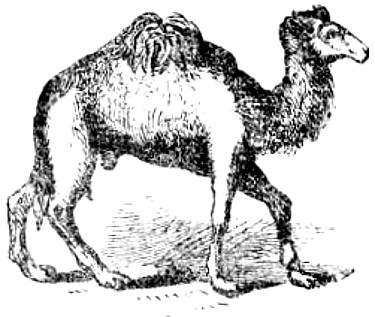
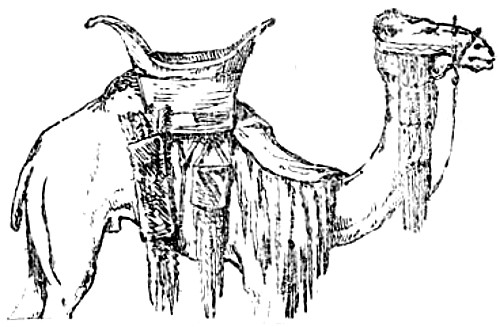
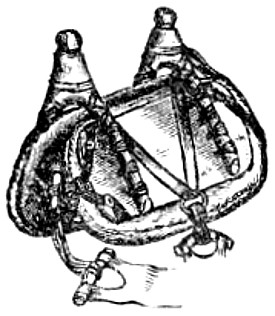
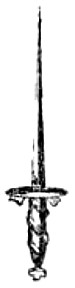
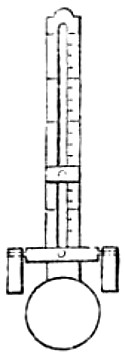
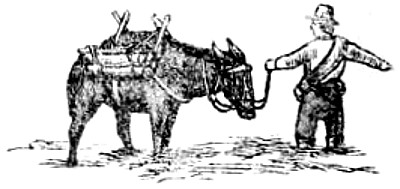
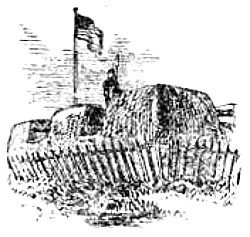
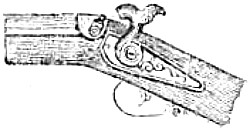
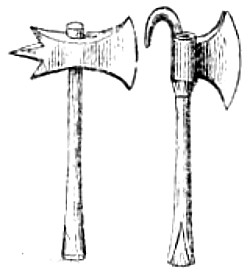
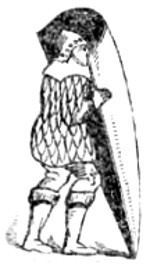
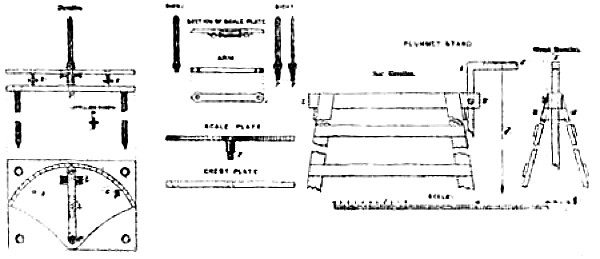
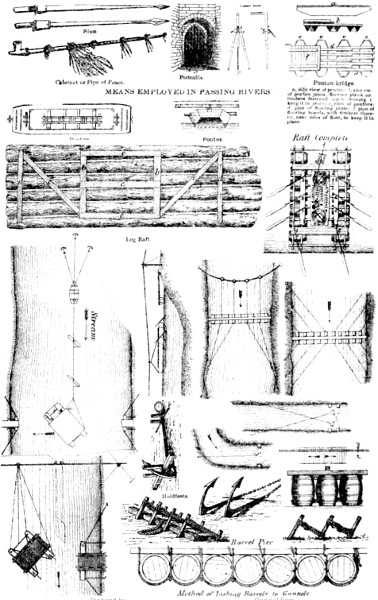

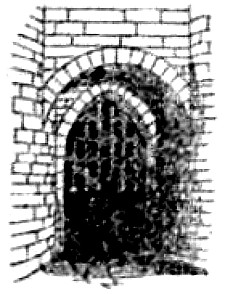
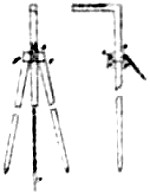
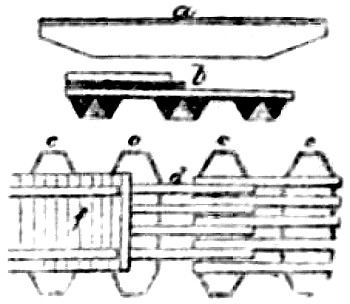
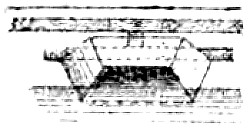
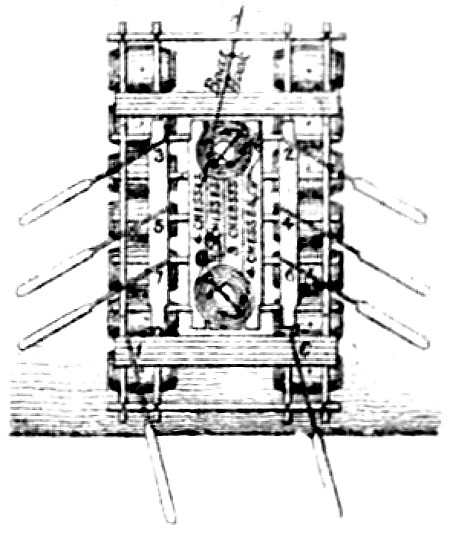
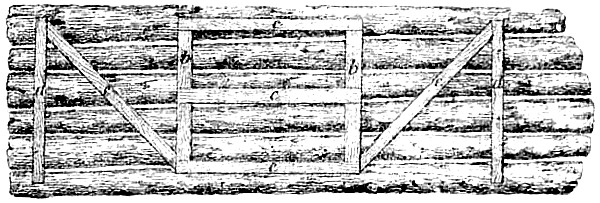
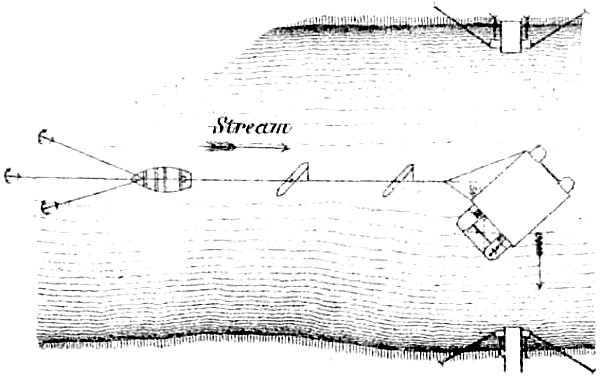
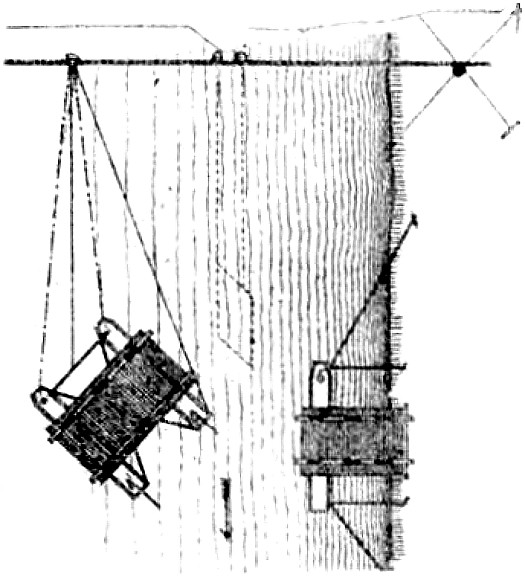
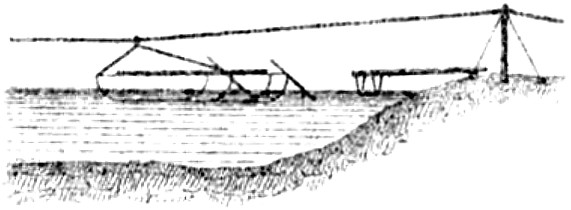
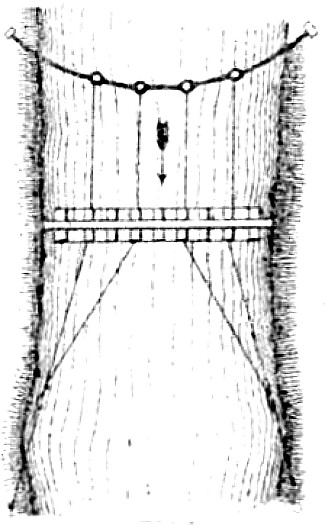
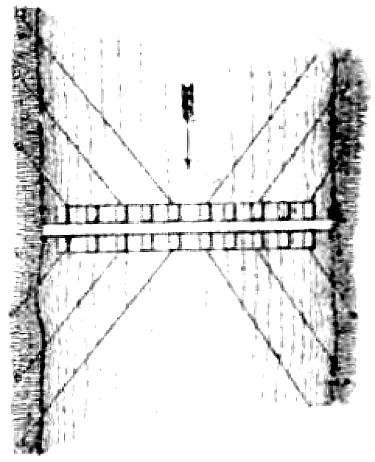

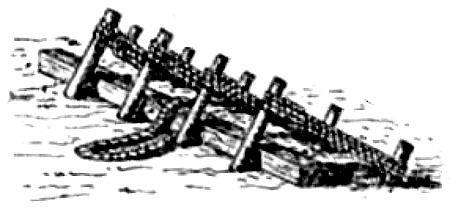
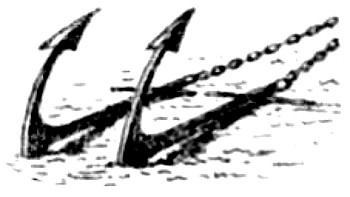
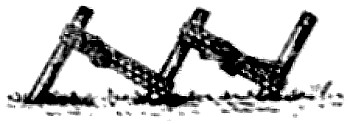

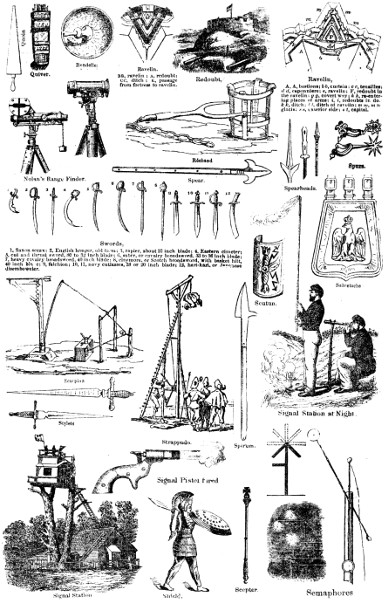
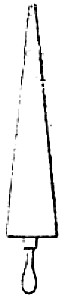
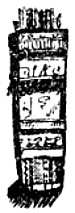

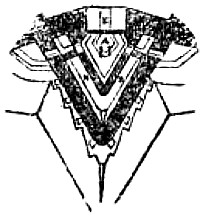
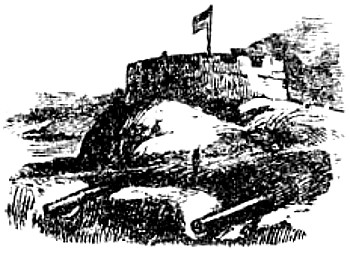
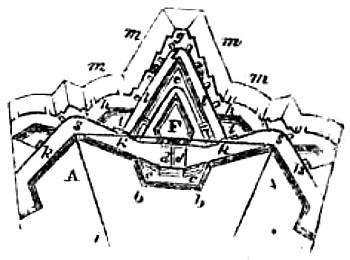
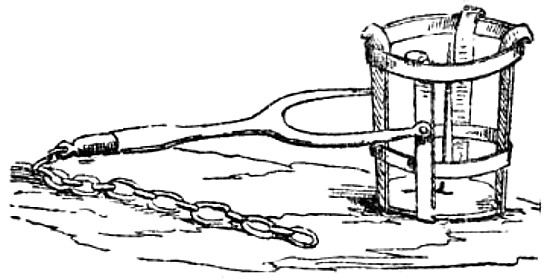
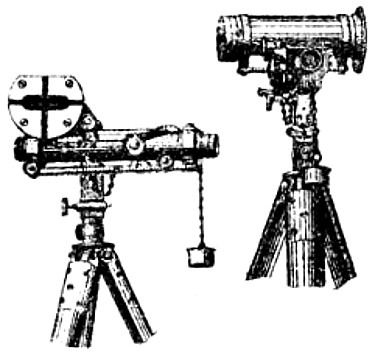

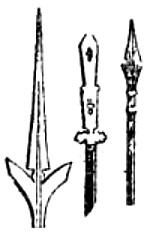
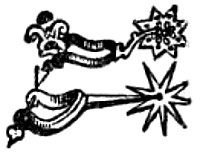
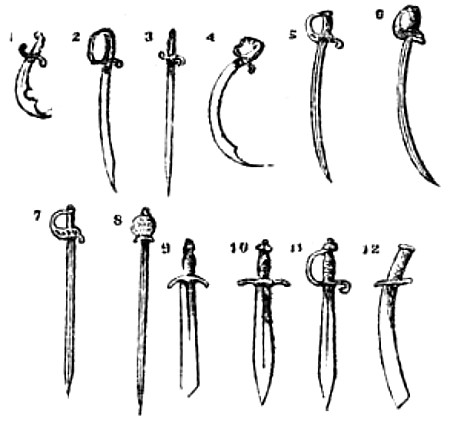
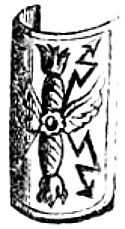
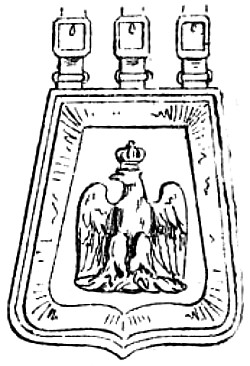
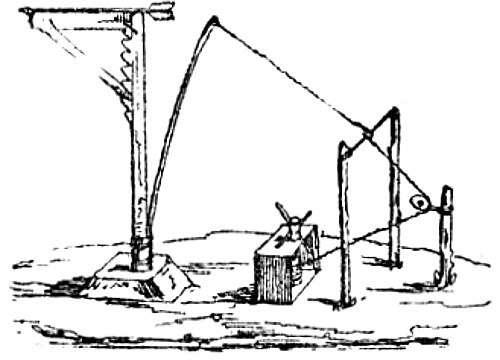
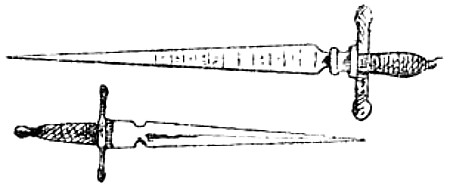
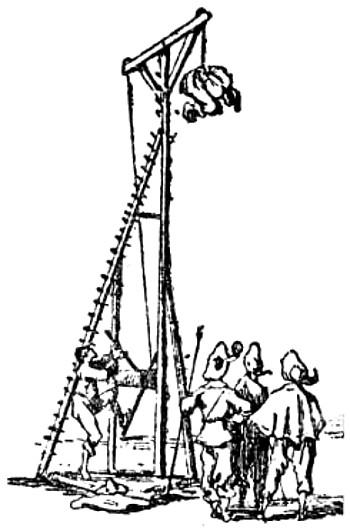

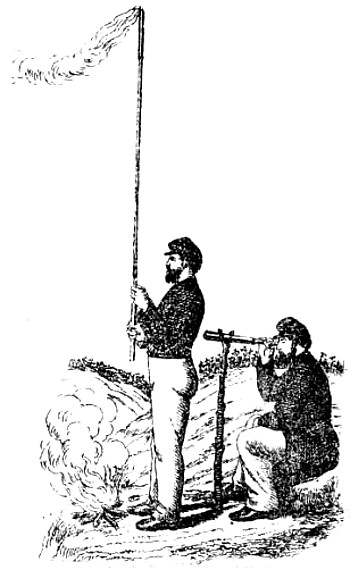
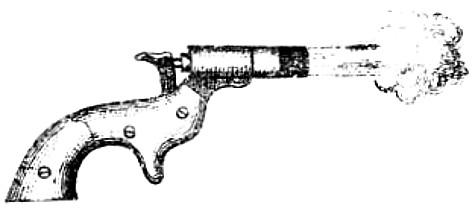
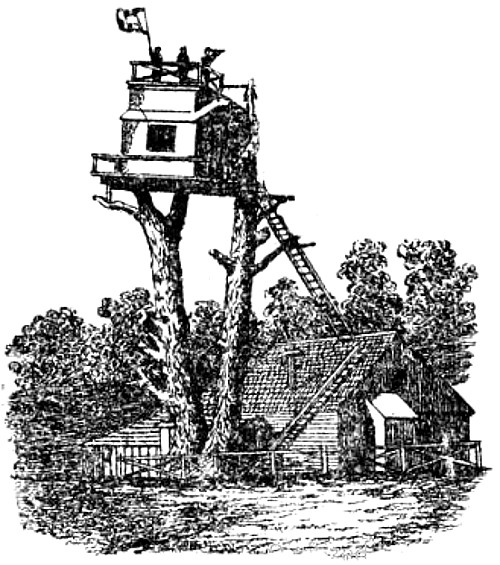
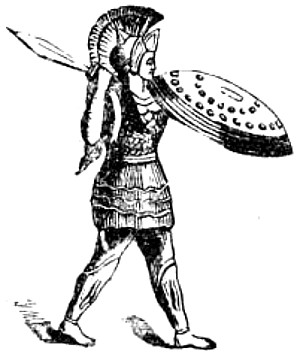

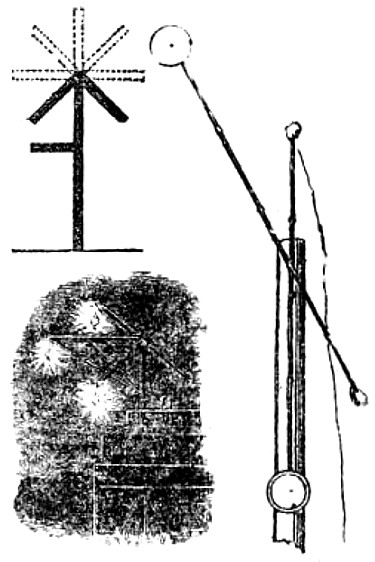
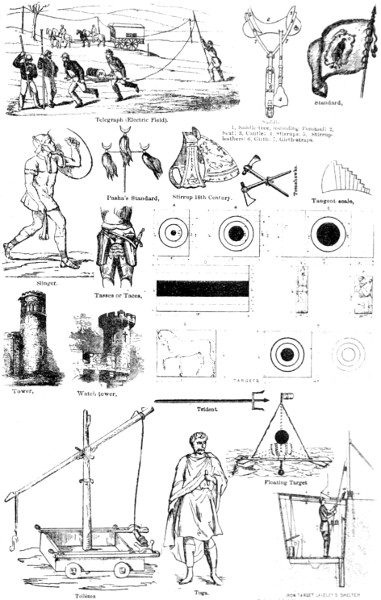
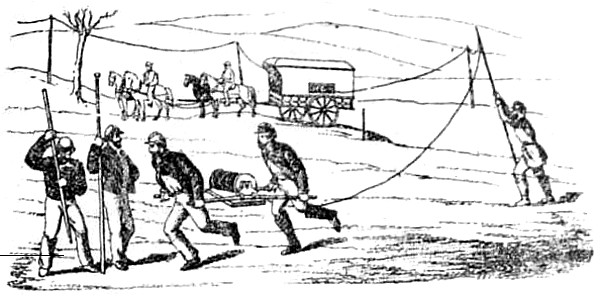
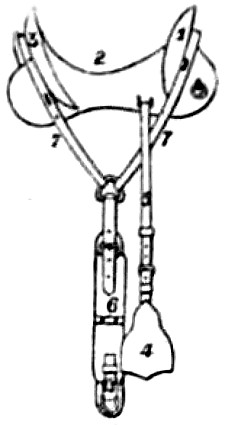
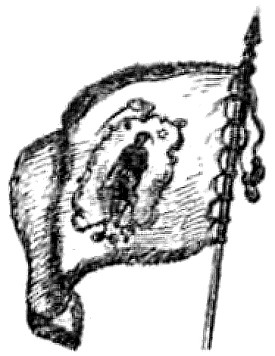
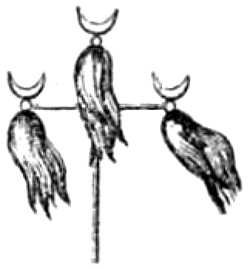
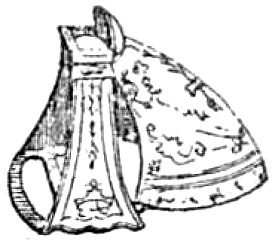
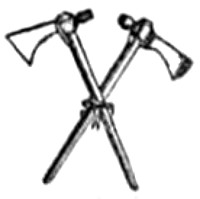
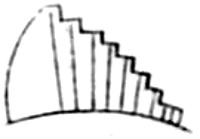
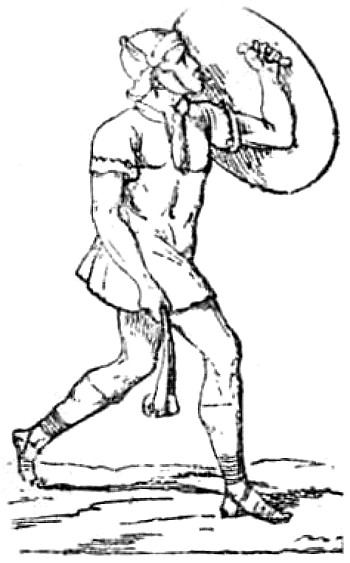
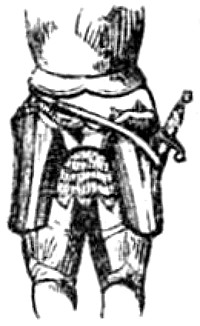
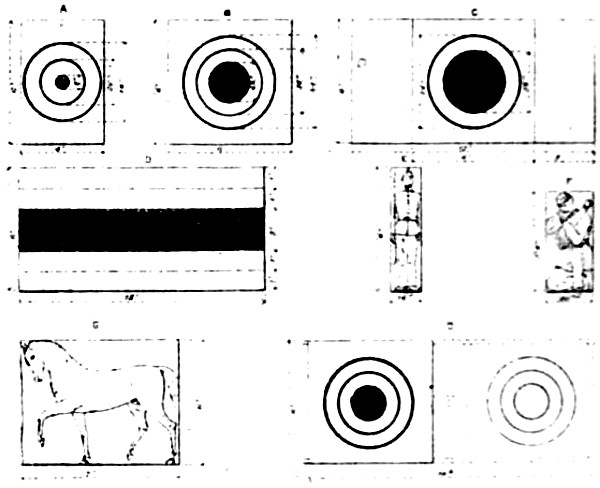
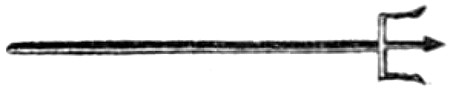
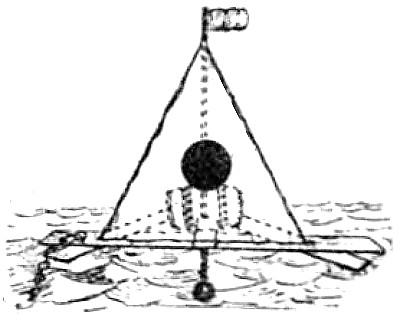
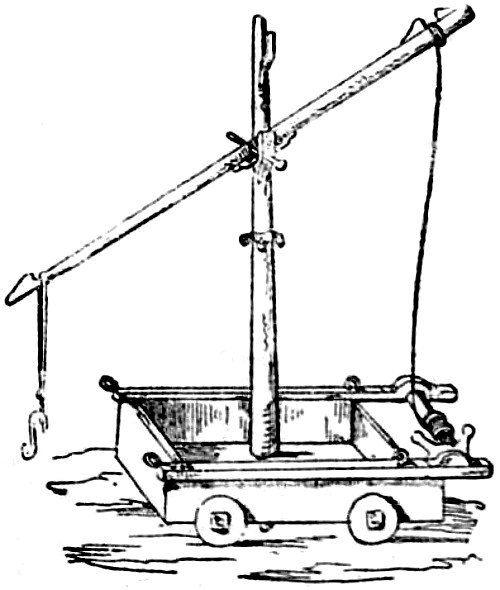
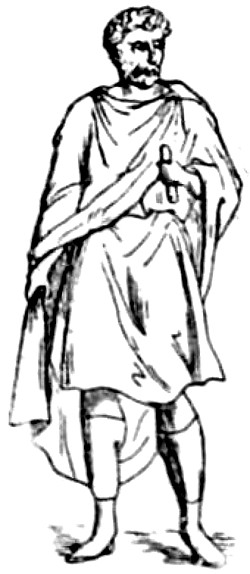
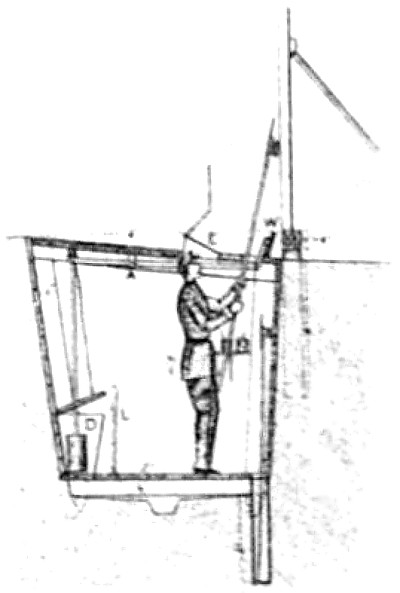
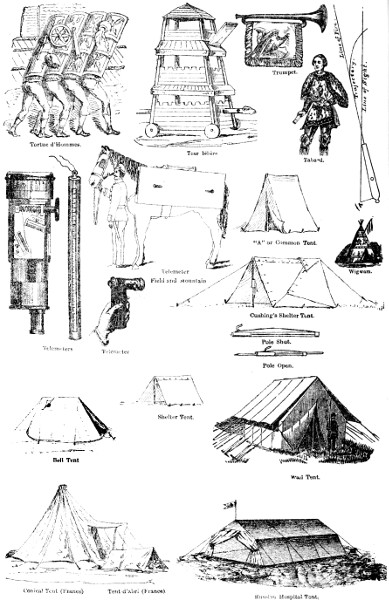
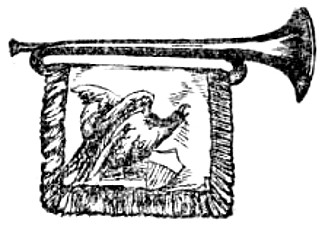
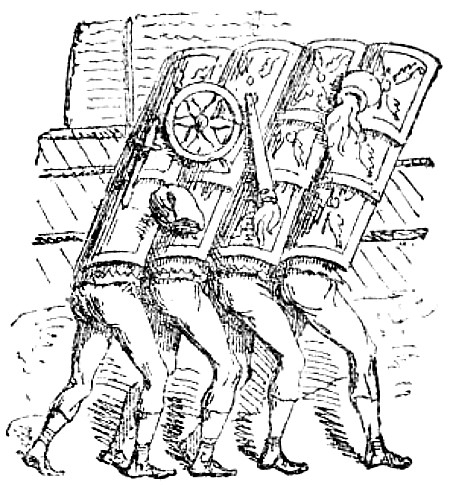
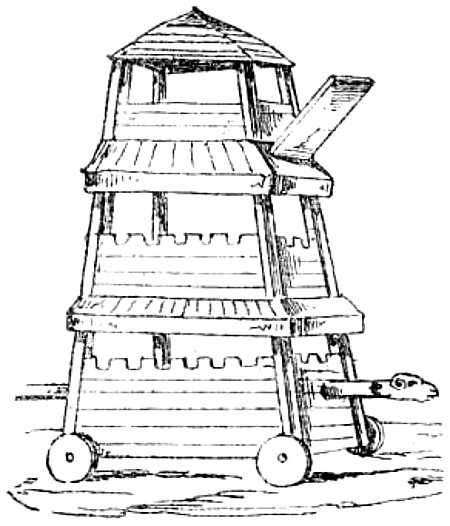
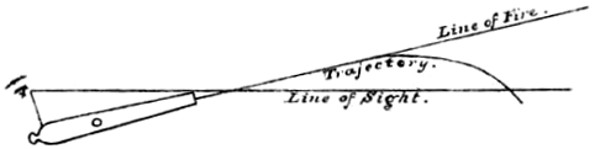
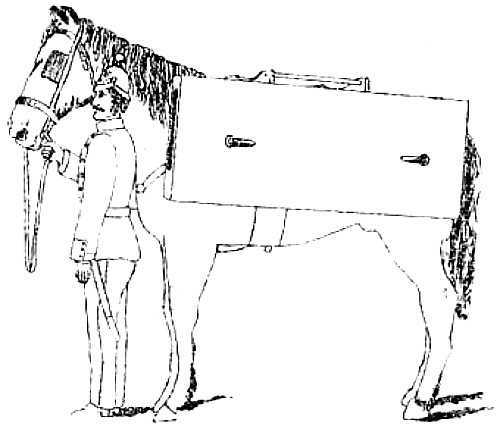

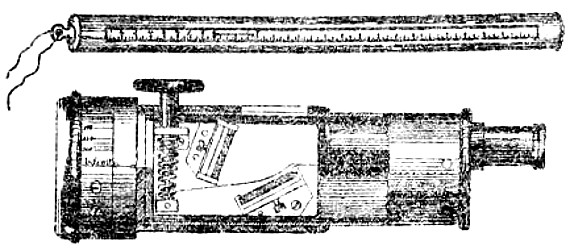
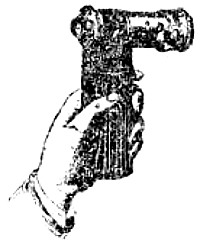


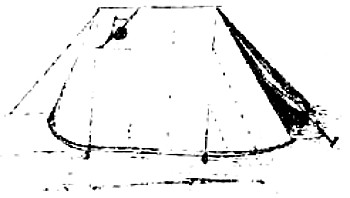
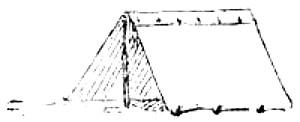
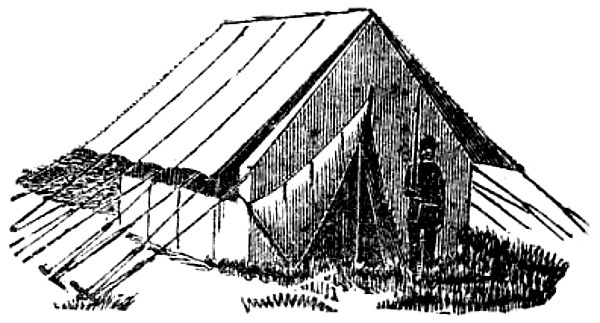
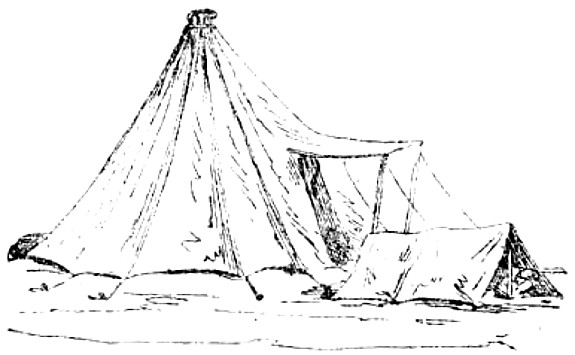
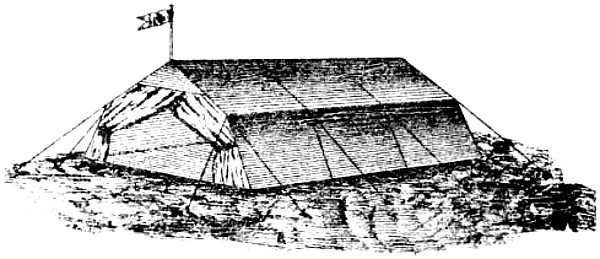
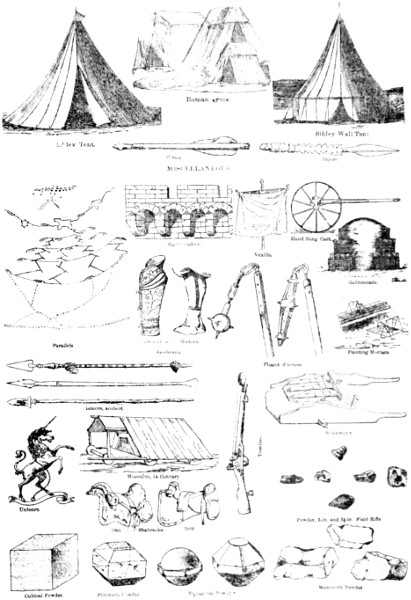
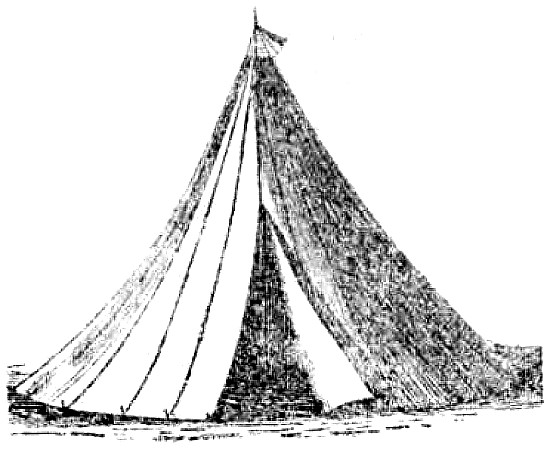


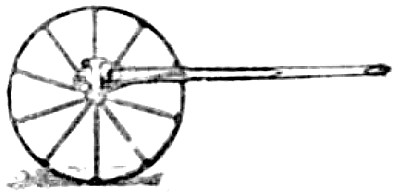

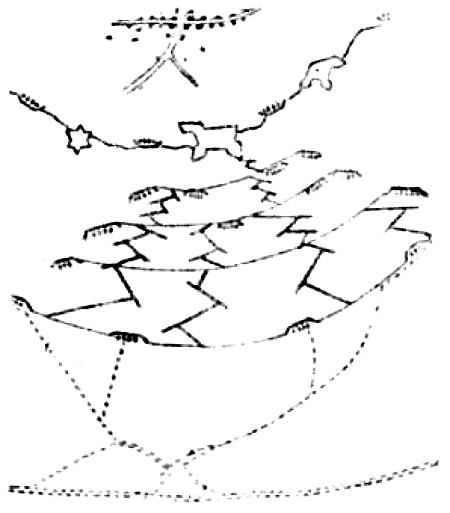
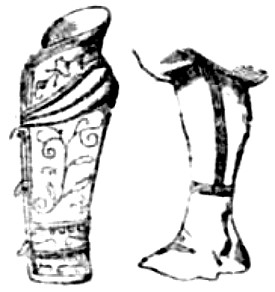
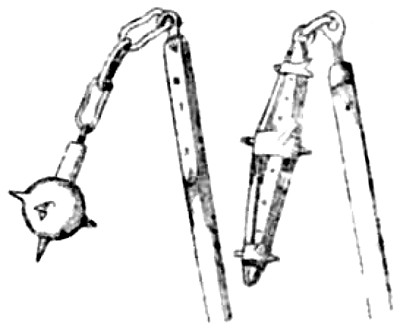
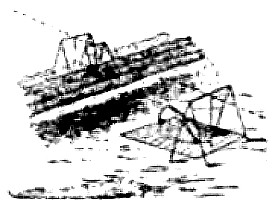
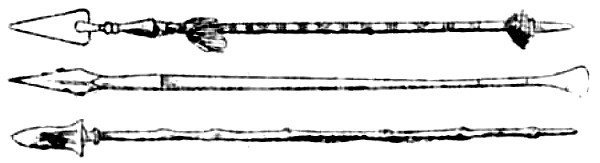
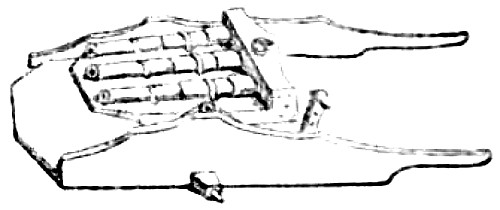
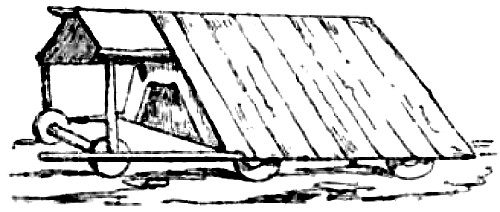
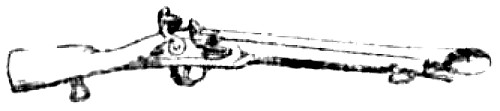
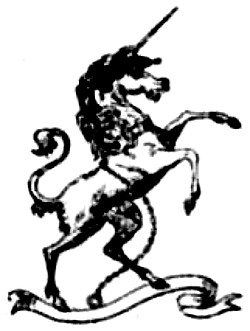
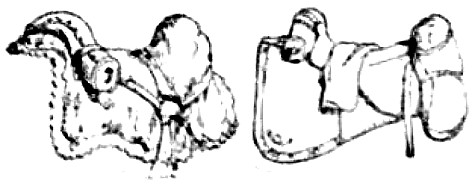
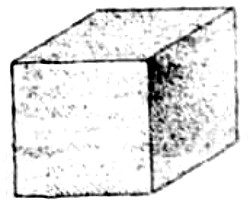
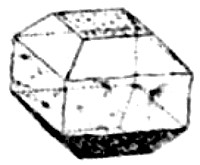
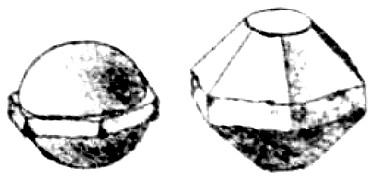
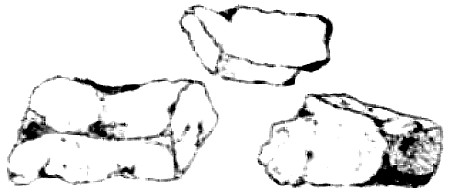
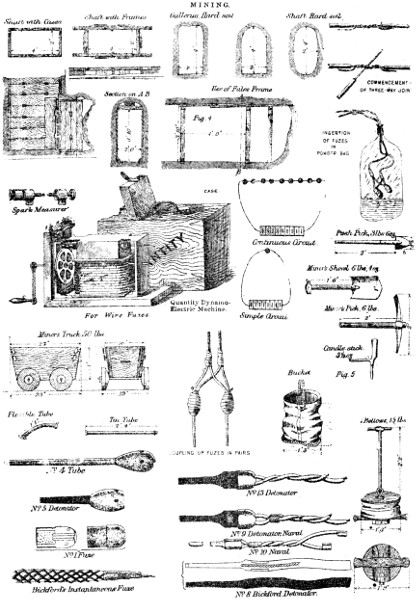
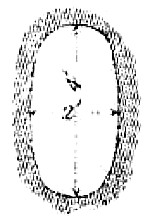
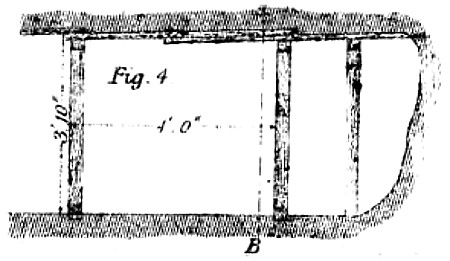
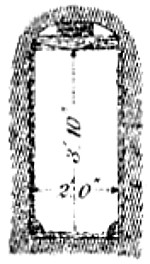
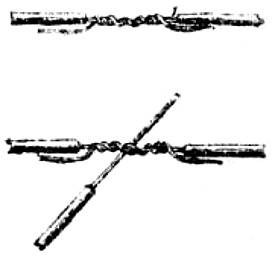
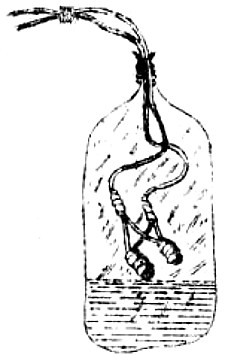
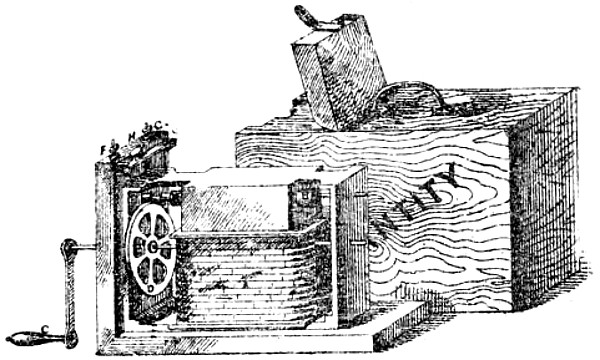
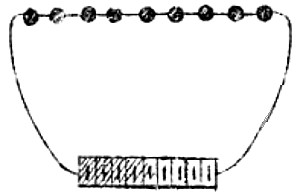
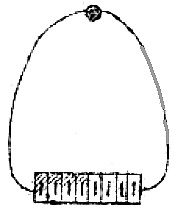
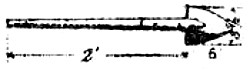
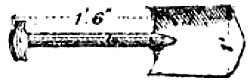
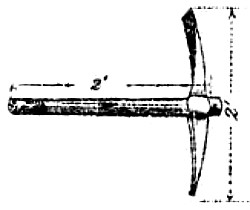
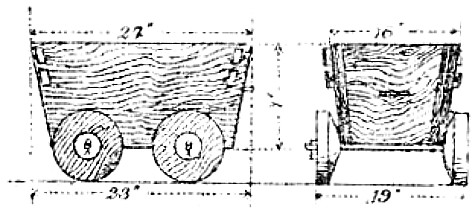
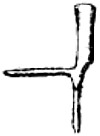
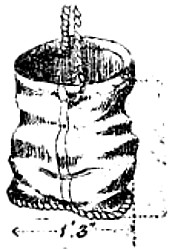
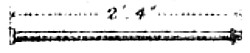
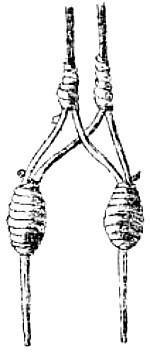
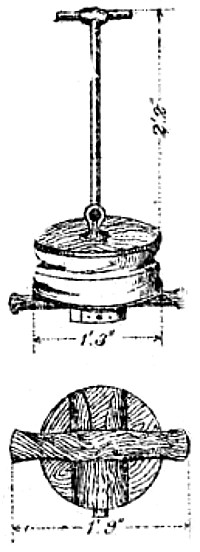




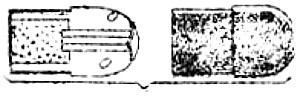


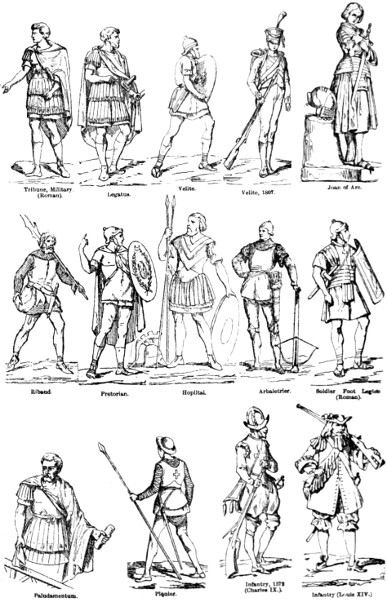
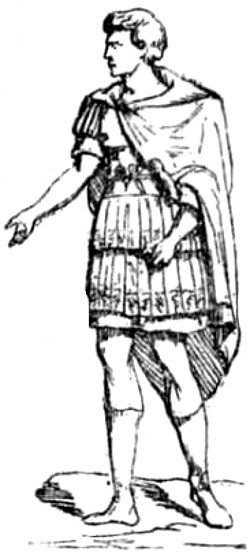
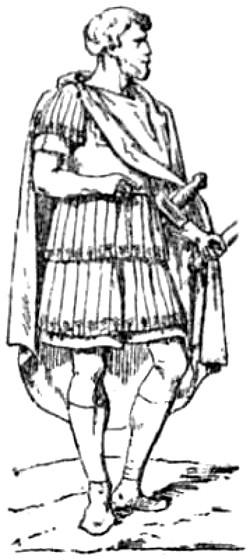
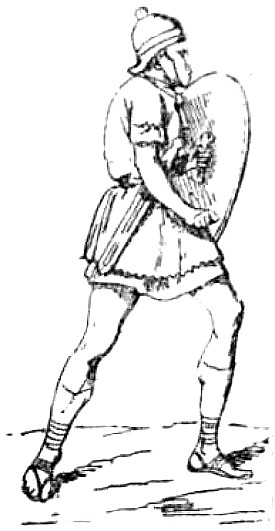
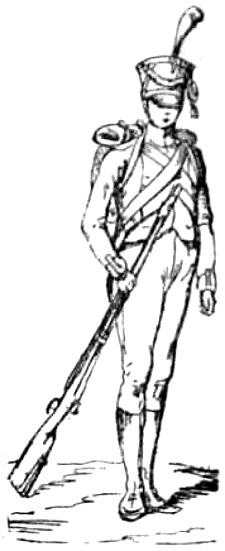
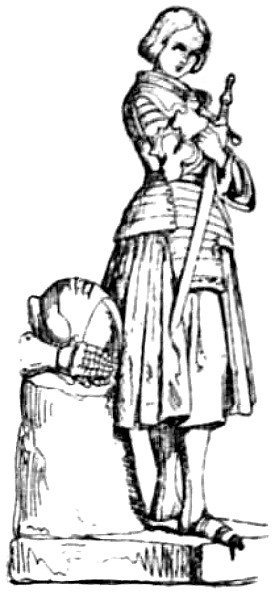
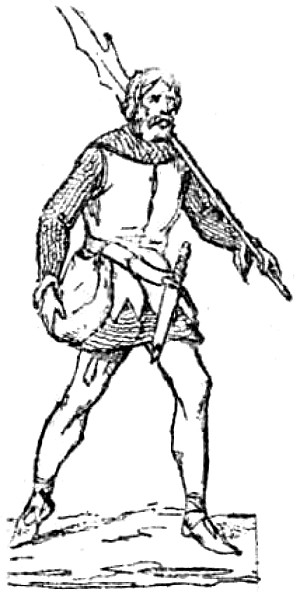
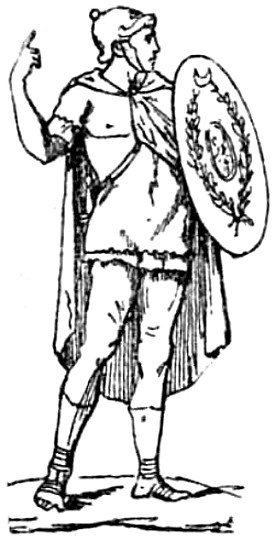
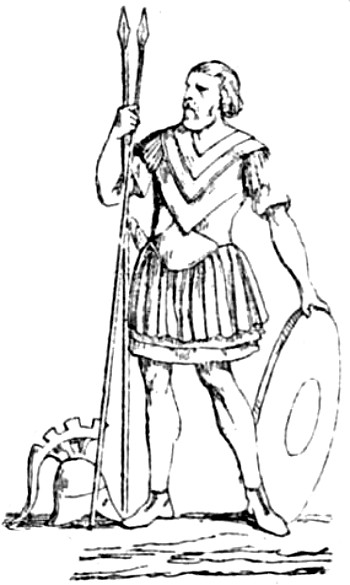
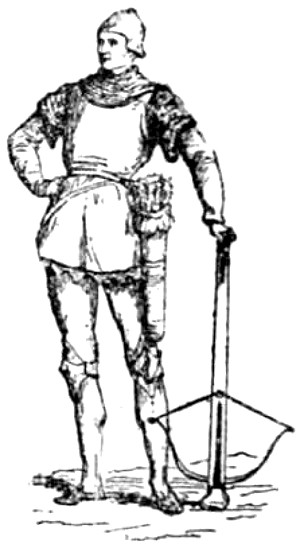
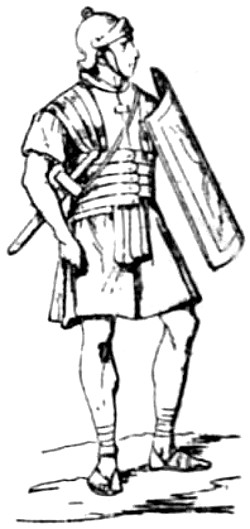
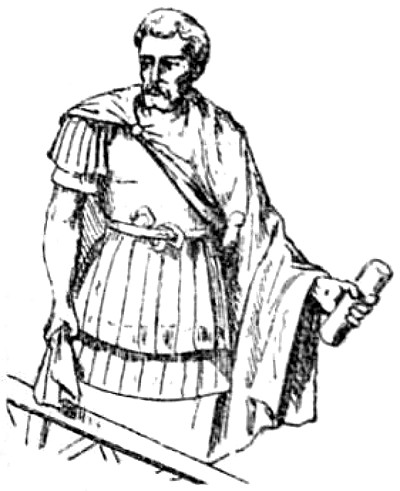
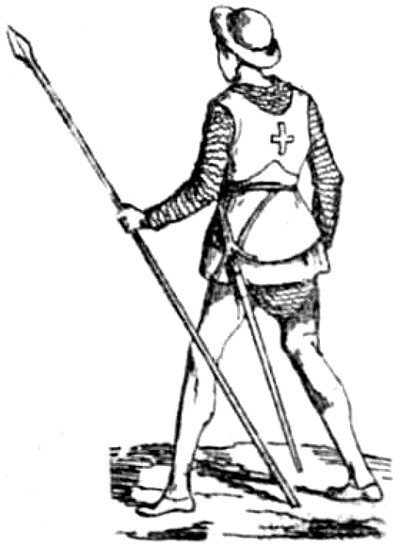
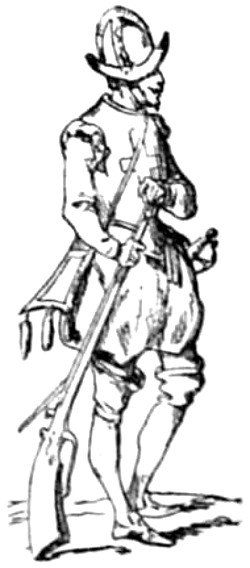
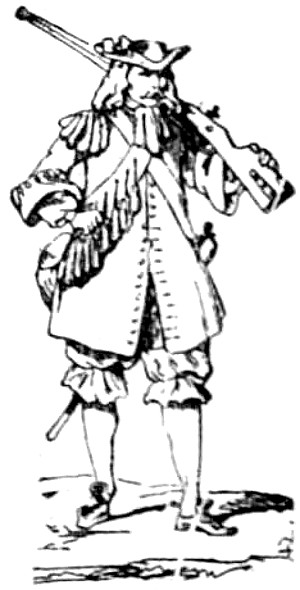
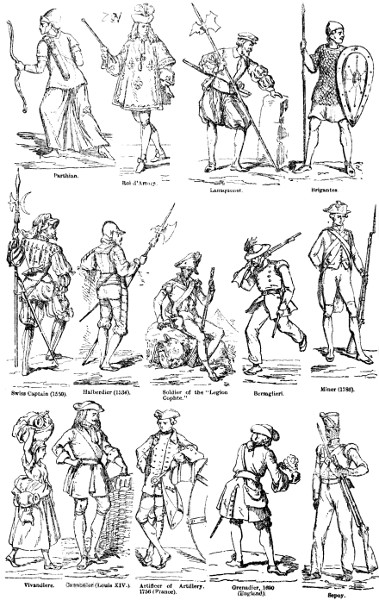
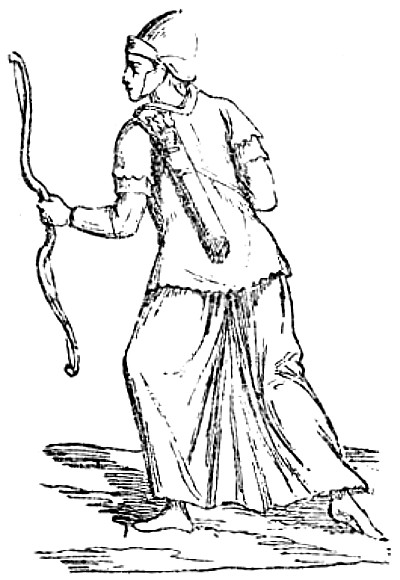
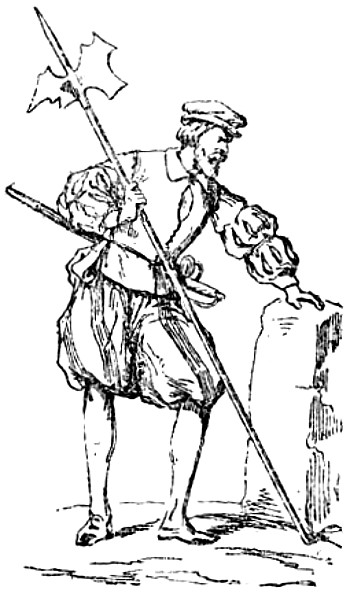
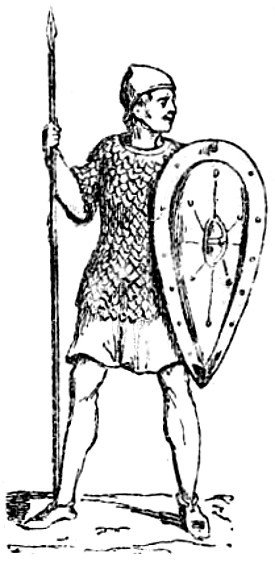
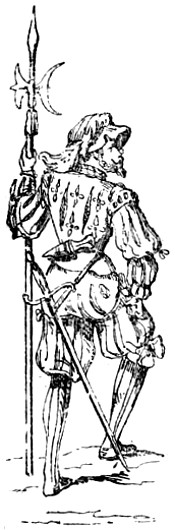
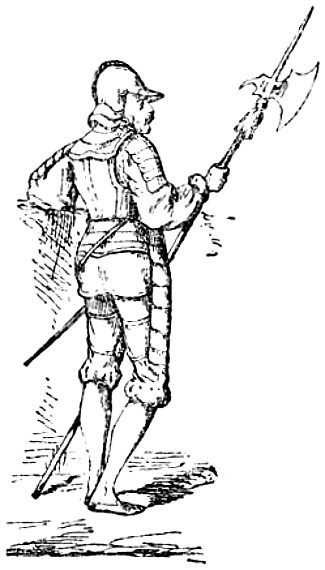
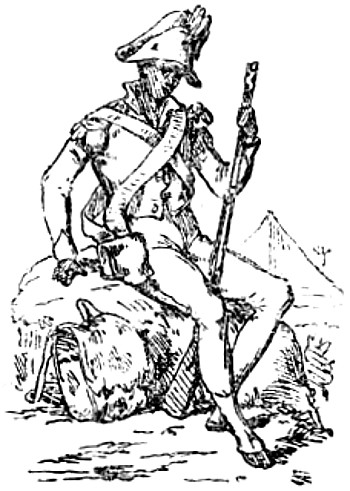
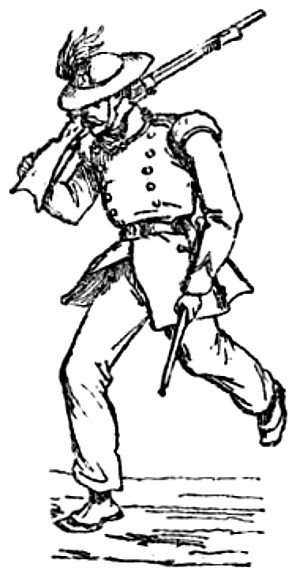
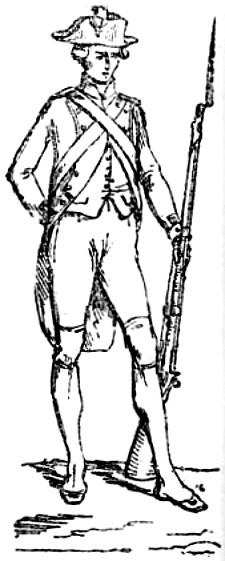
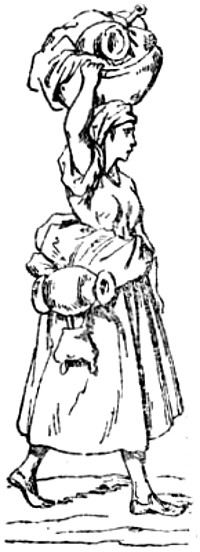
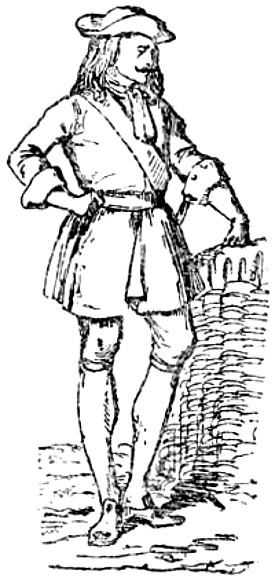
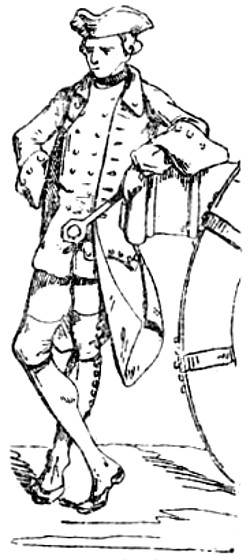
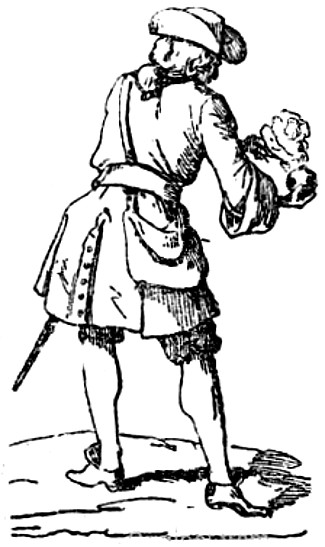
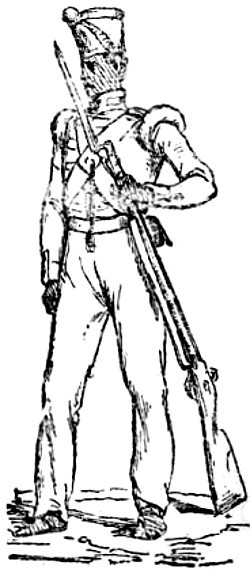
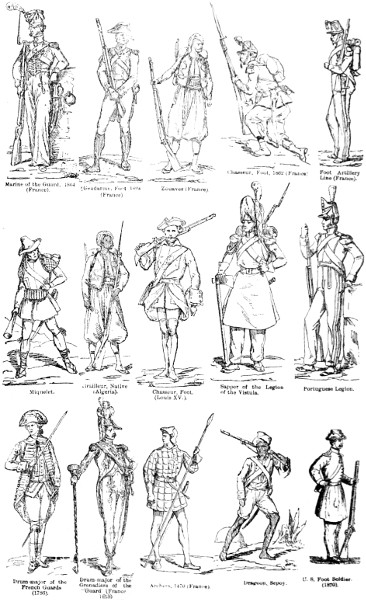
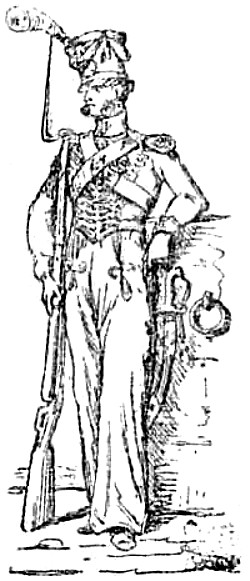
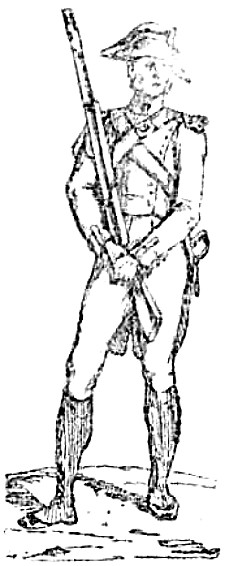
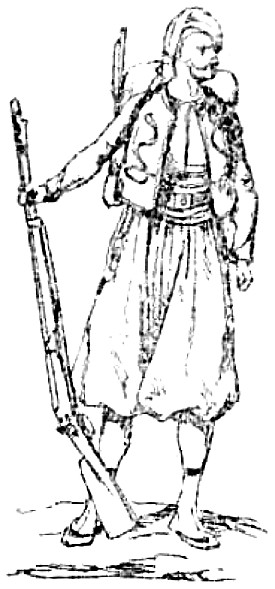
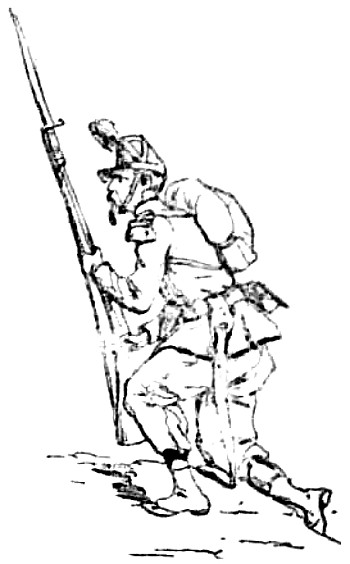
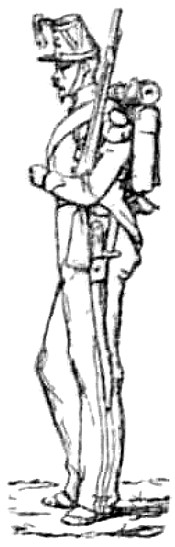
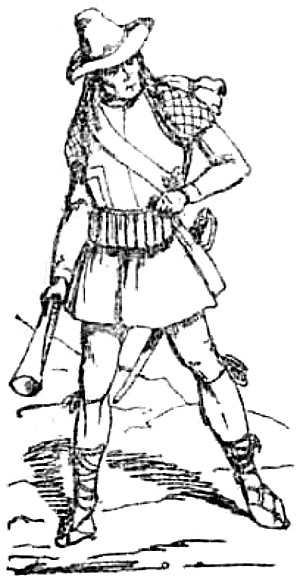
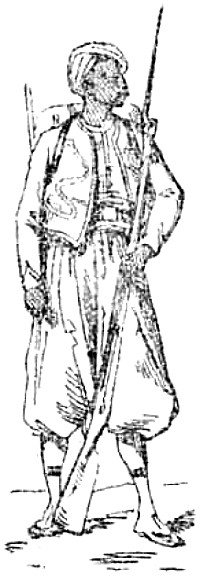
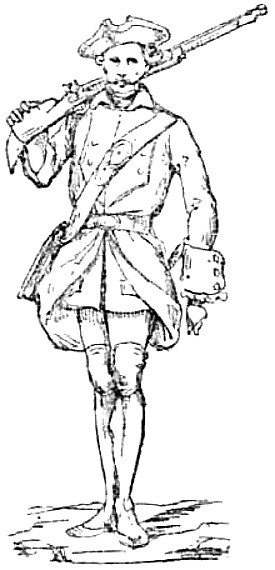
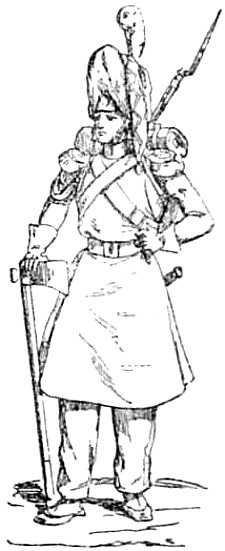
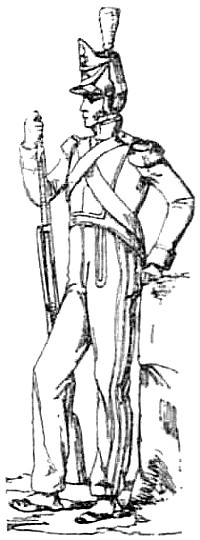
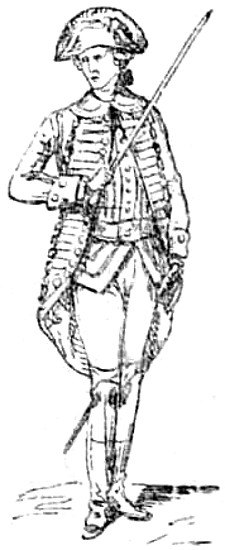
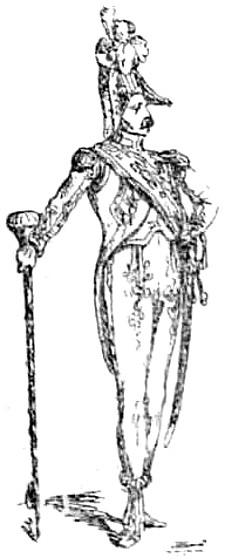
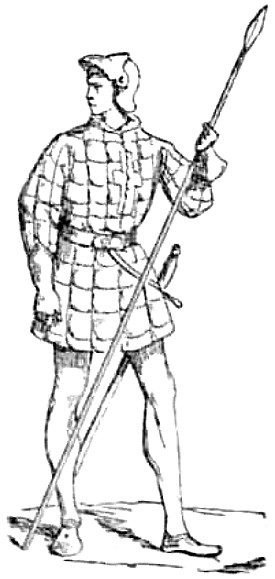
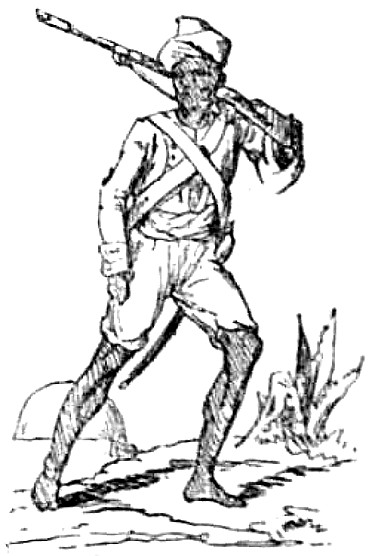
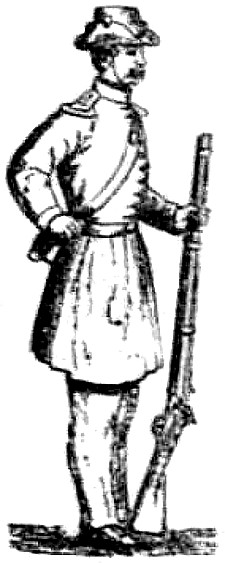
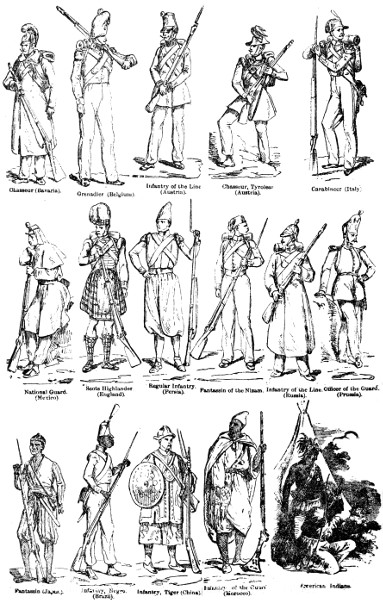
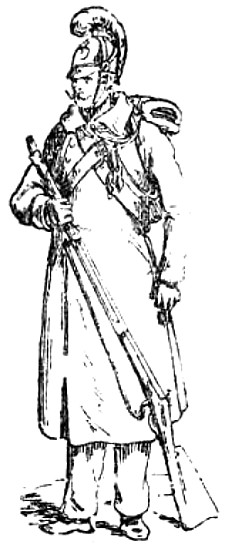
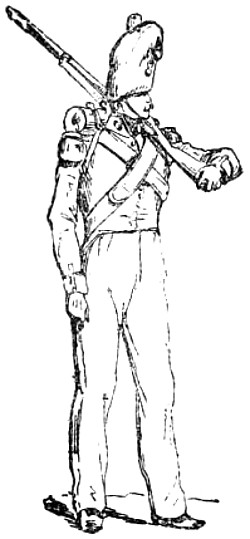
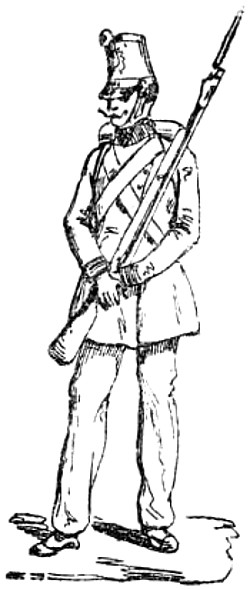
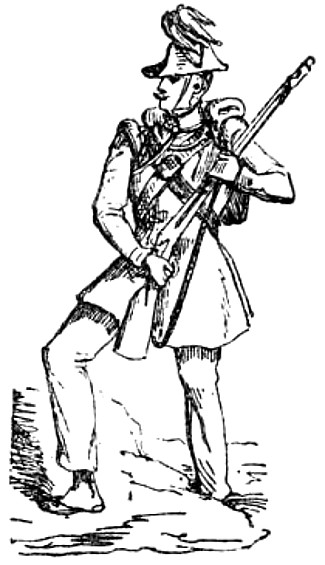
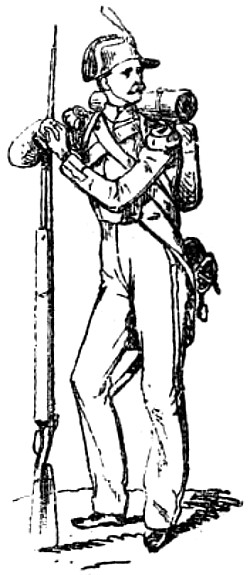
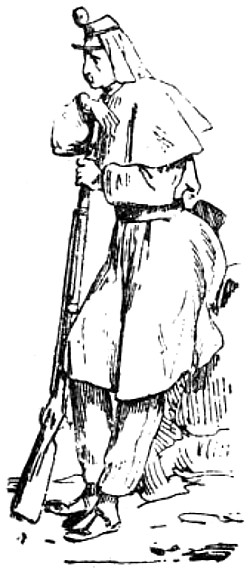
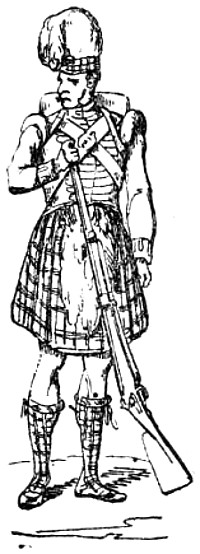
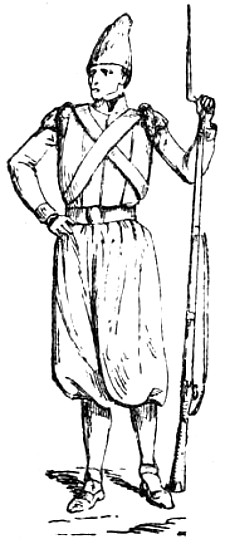
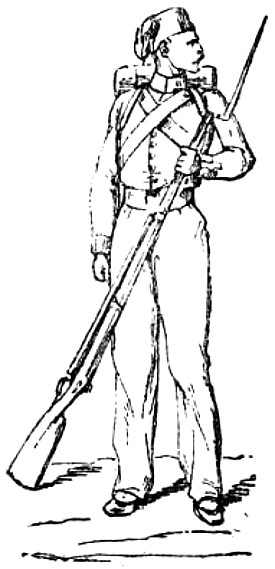
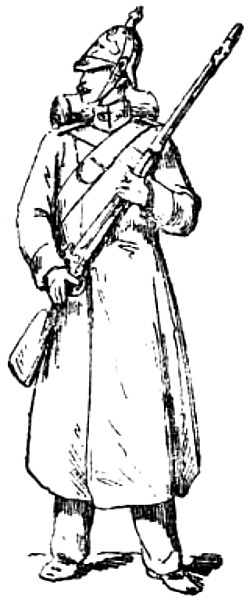
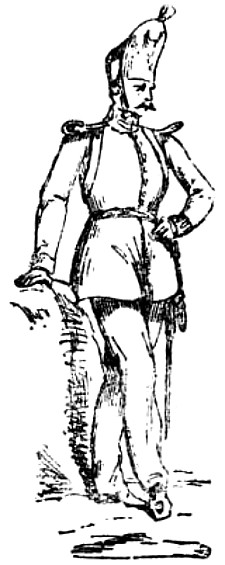
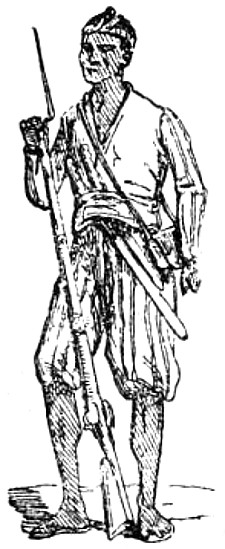
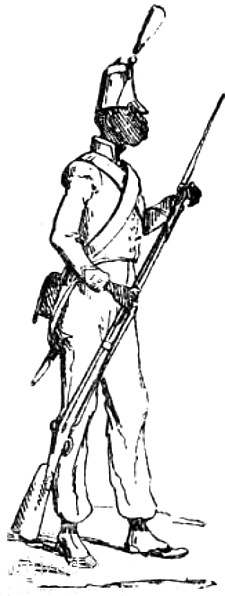
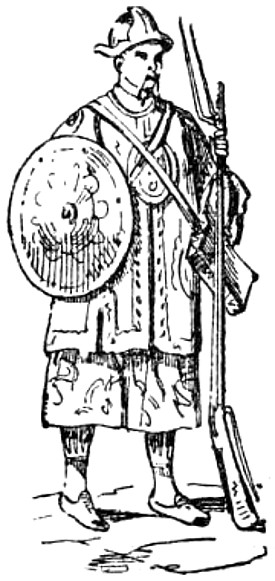
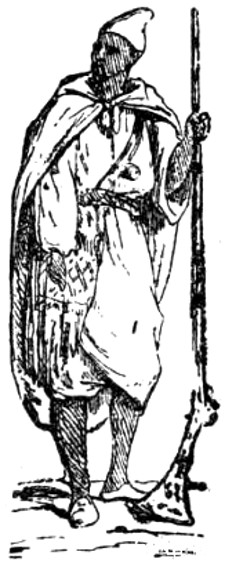
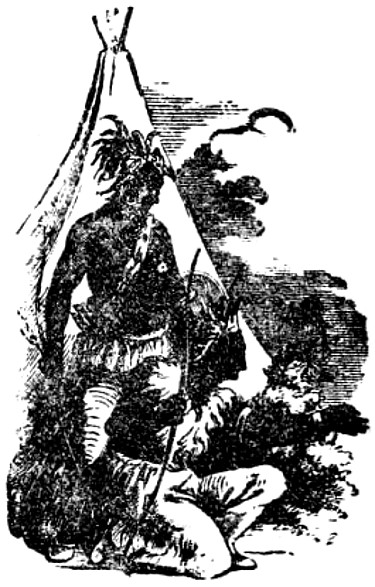
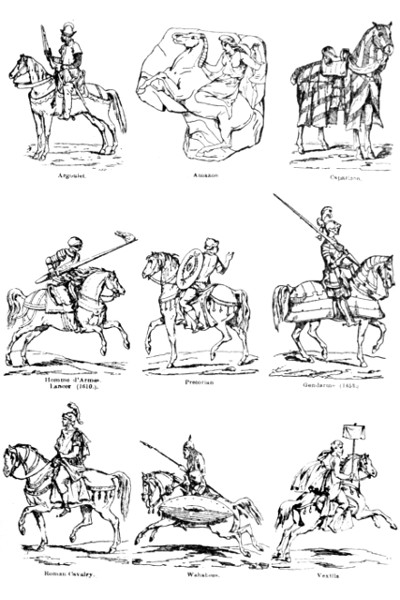
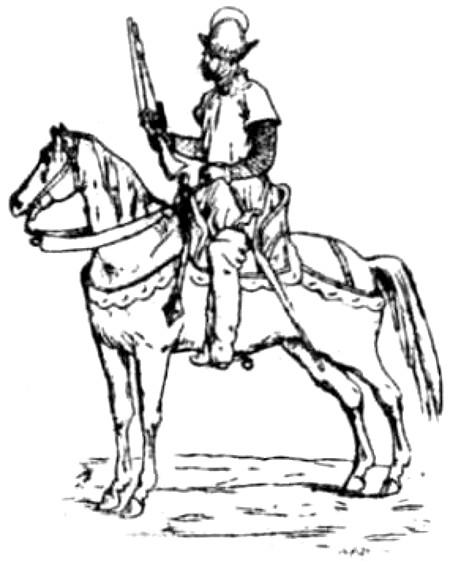
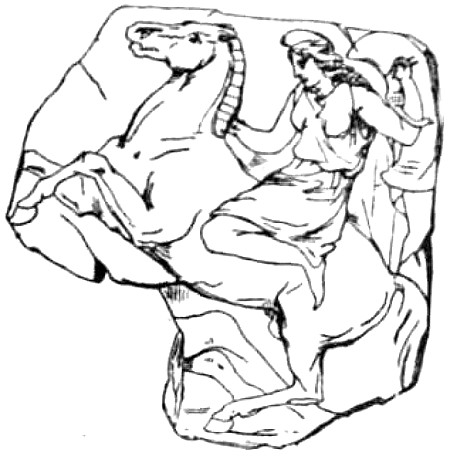
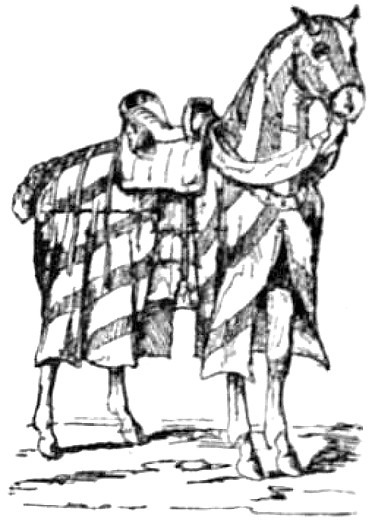
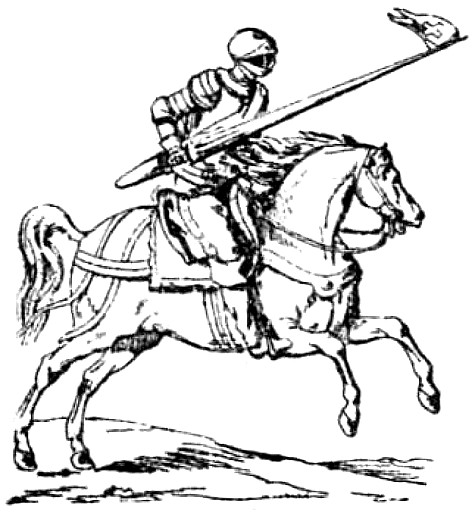
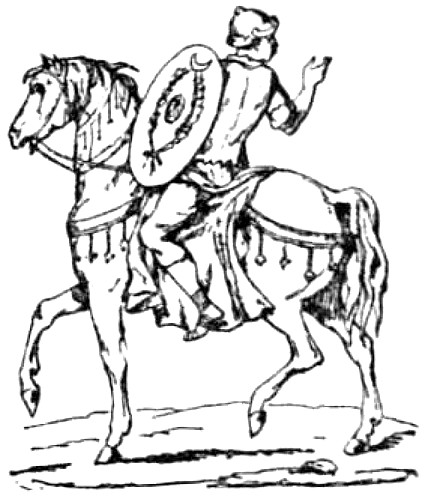
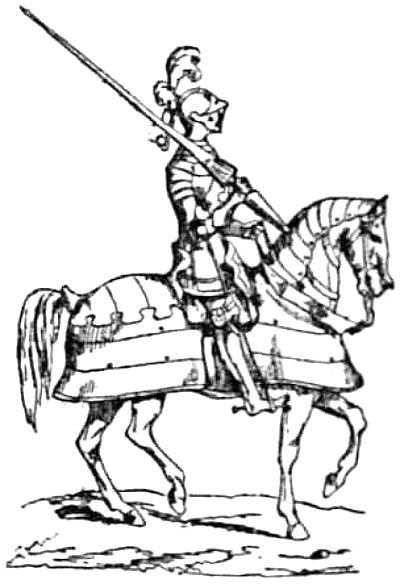
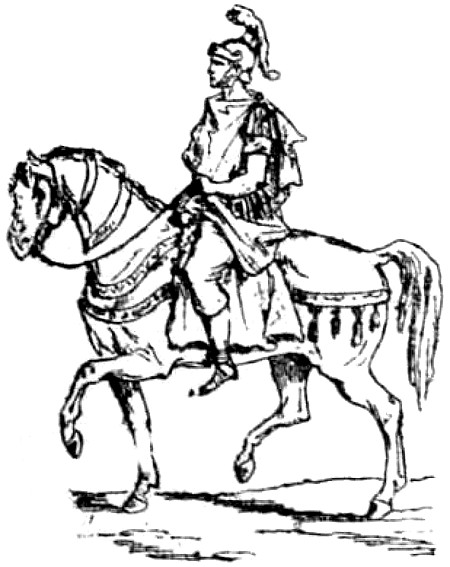
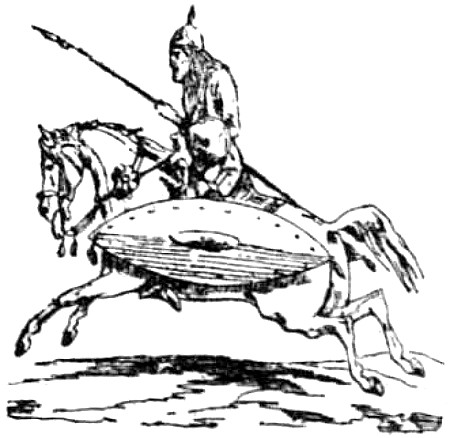
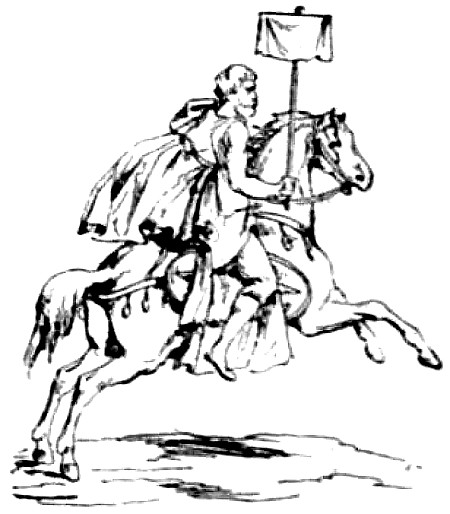
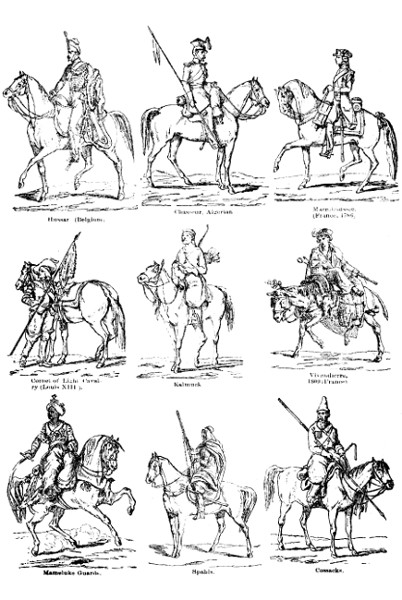
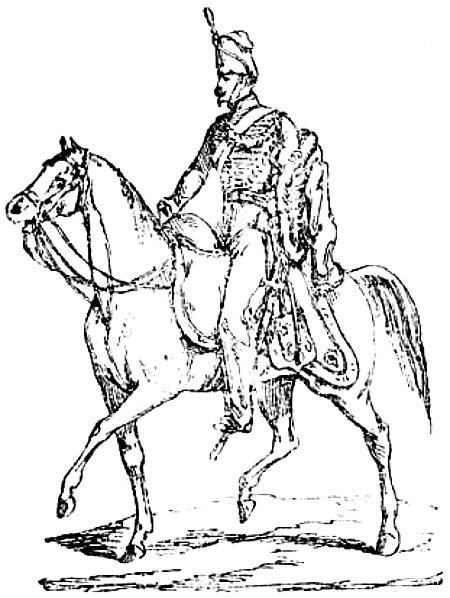
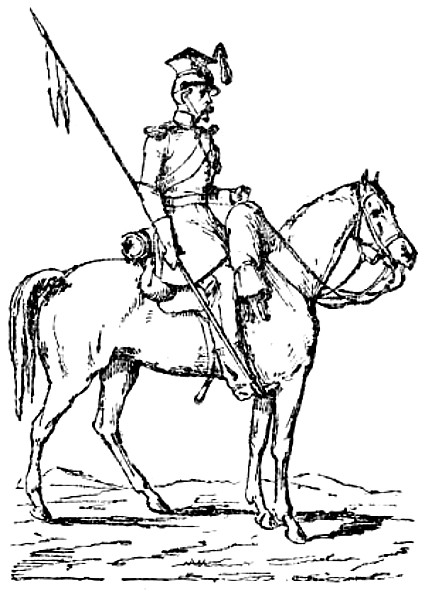
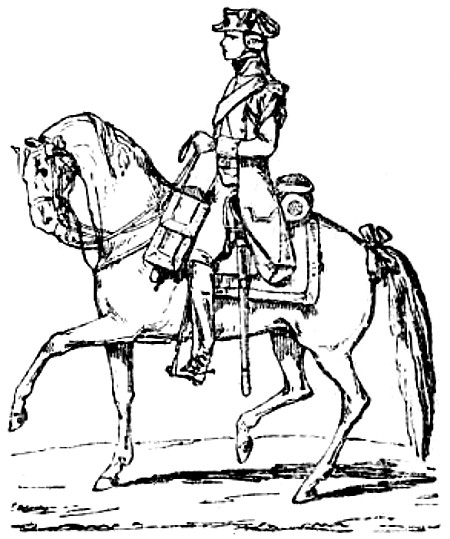
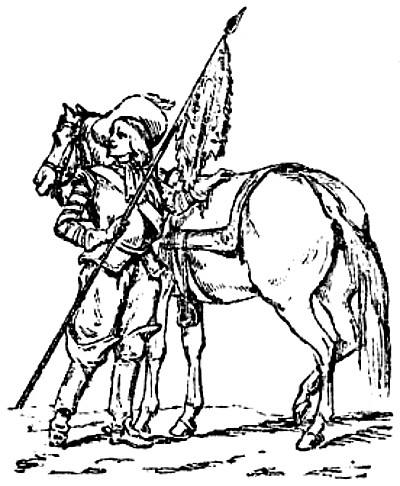
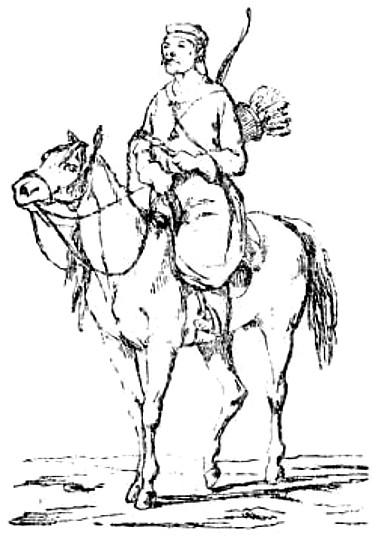
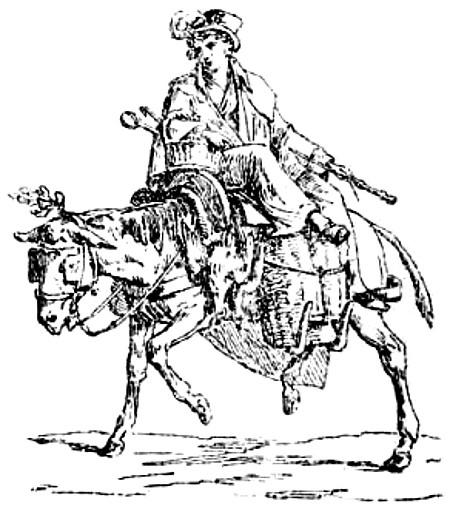
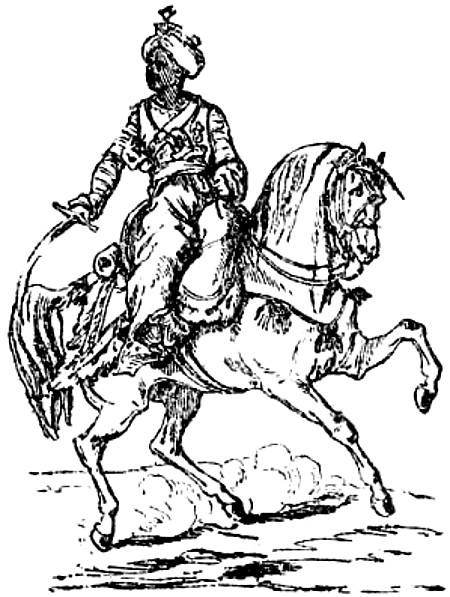
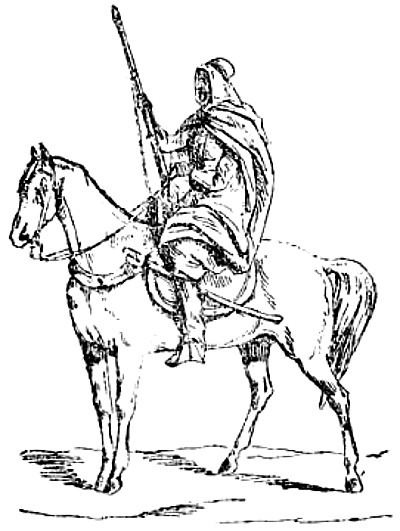
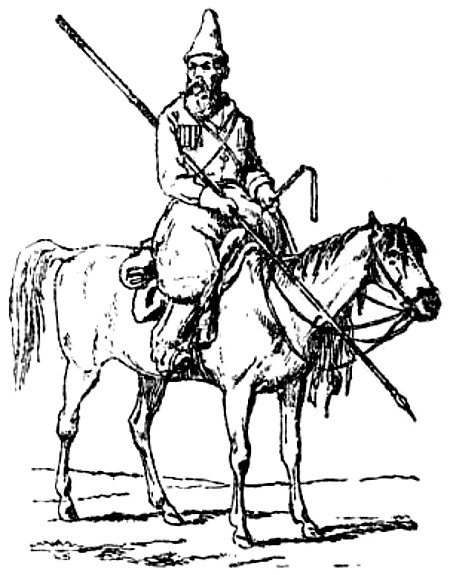
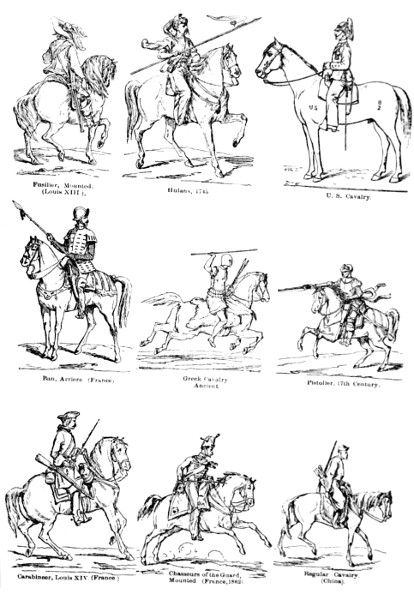
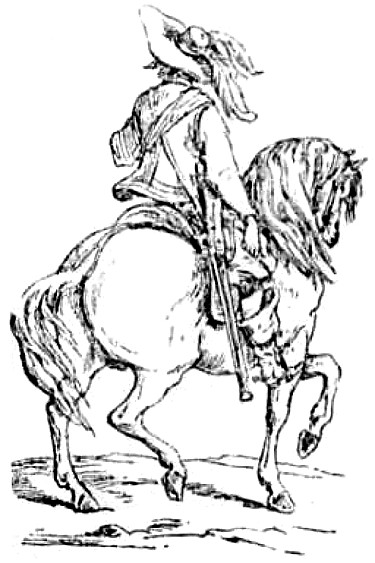
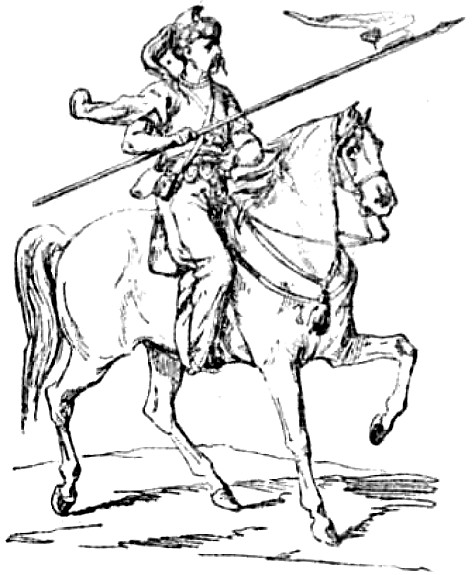
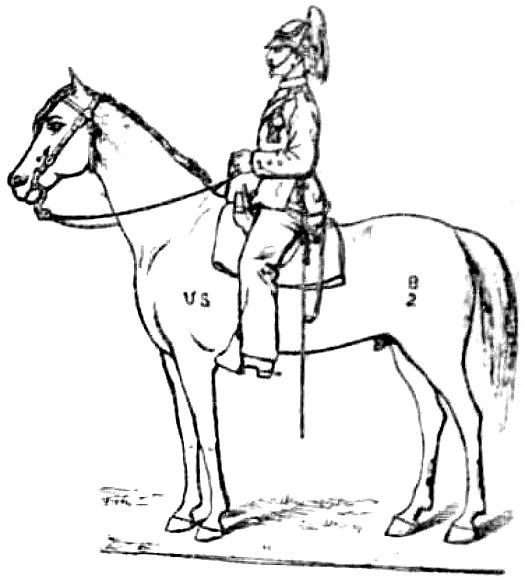
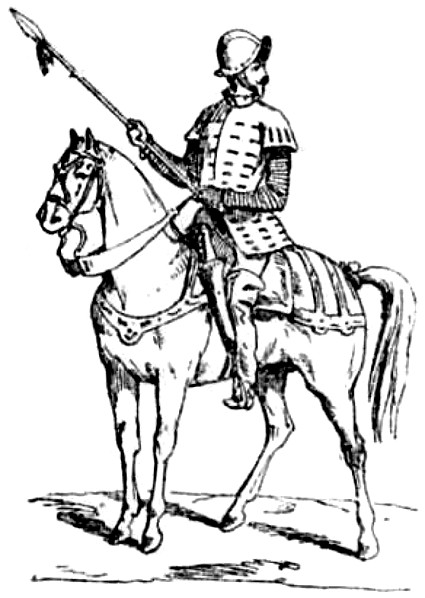
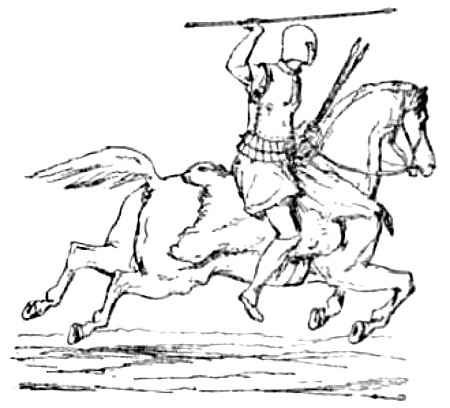
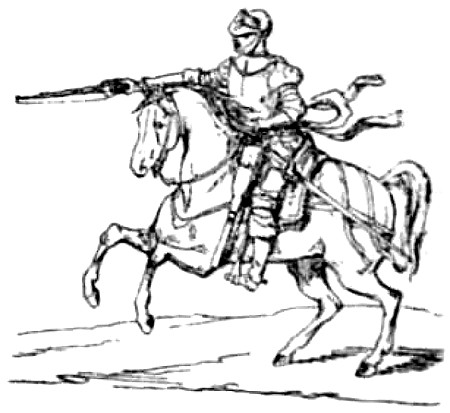
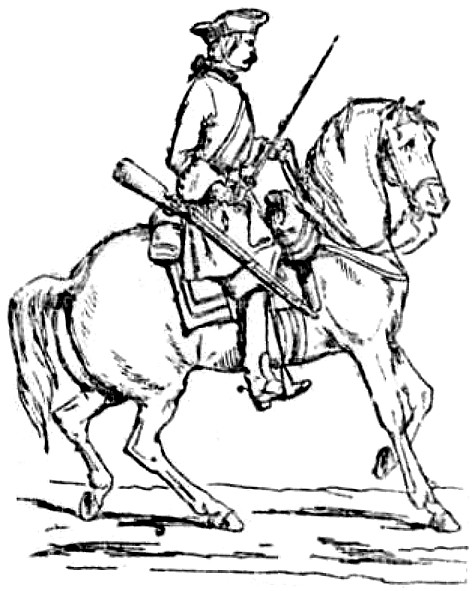
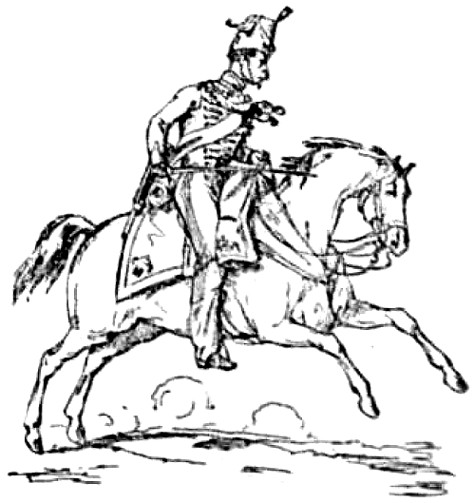
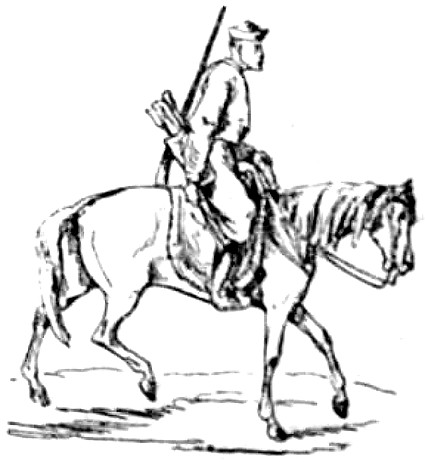
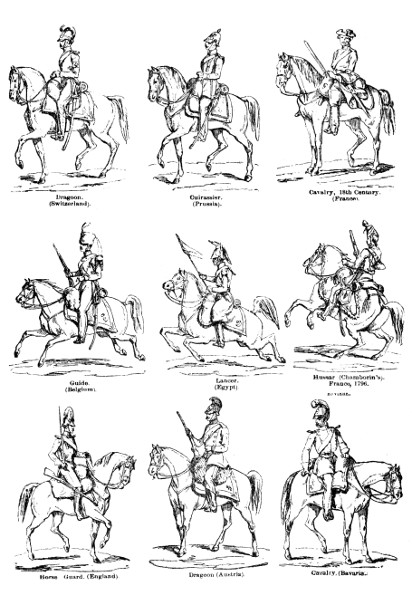
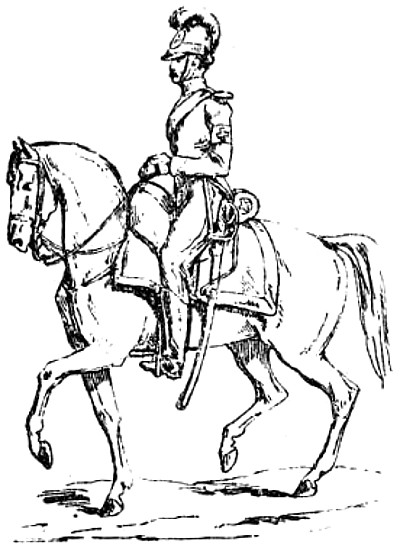
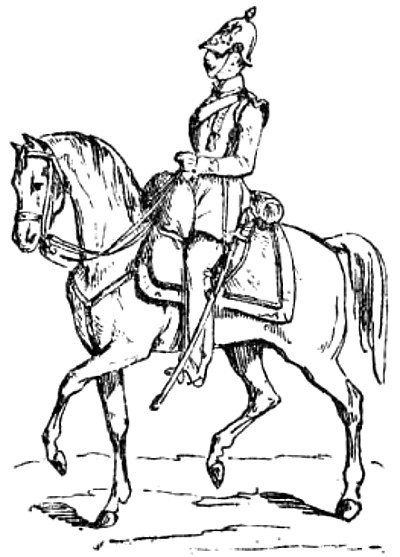
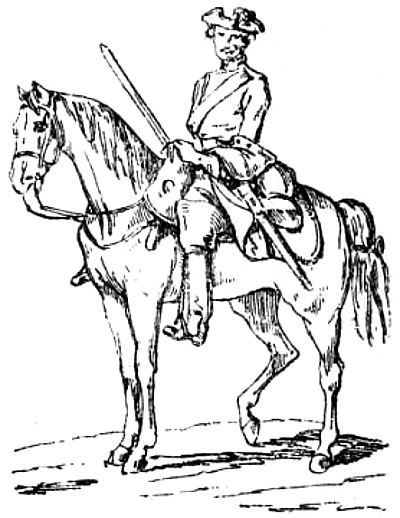
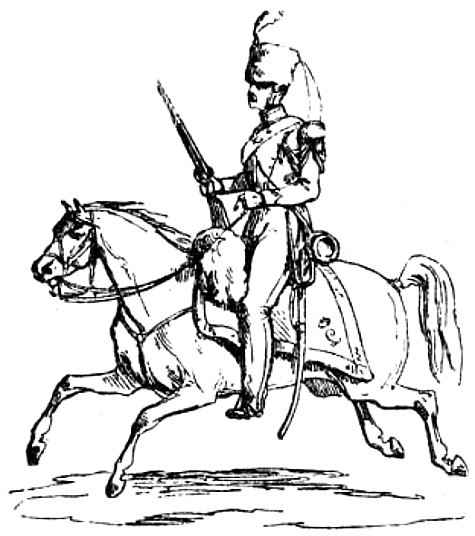
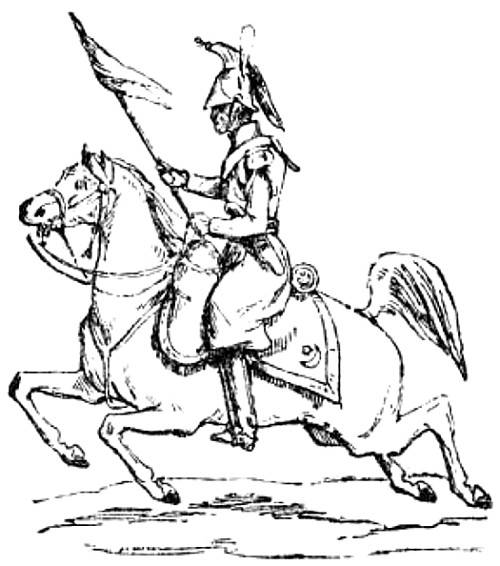
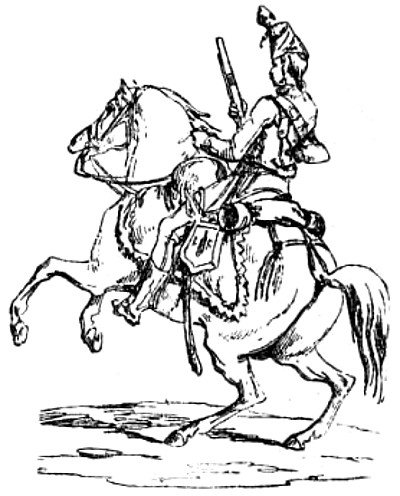
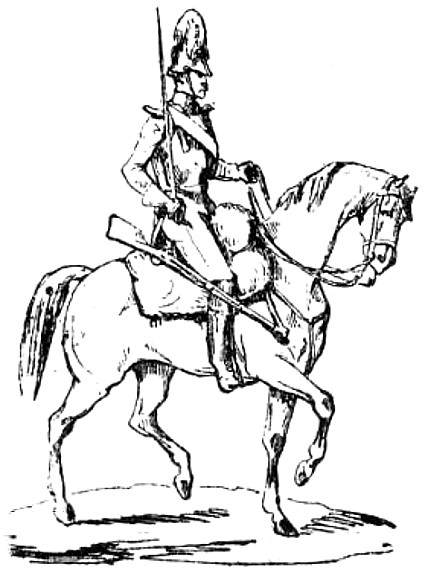
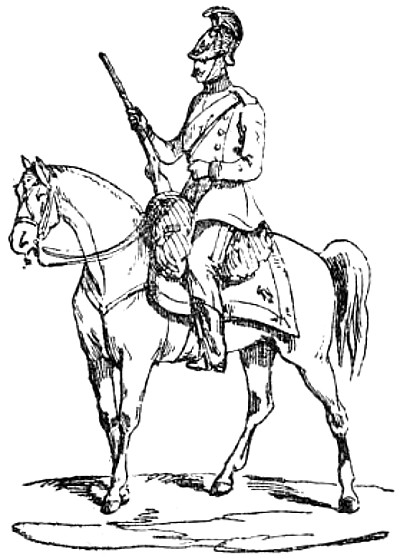
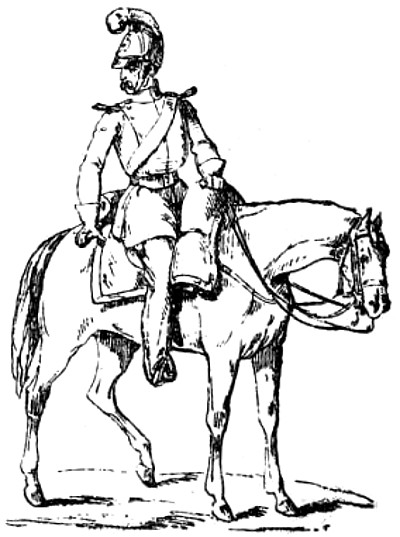

 NEW REGULATION