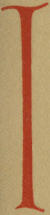
INTRODUCTION
The miracle play of Mary of Nimmegen is one of
the gems of Dutch mediaeval literature. Its heroine
is a reincarnation of Beatrice, the runaway nun from
a Brabant convent who, after wandering seven years
with her paramour, and living other seven as a public
woman, returned, a repentant sinner, to the convent
to find that she had never been missed. For all those
fourteen years the Mother of God had served, in her
person, as sacristan, because Beatrice had never let
a day go by without praying an Ave Maria.
The love idyll of this early legend has been turned
into a grotesque caricature by the author of our miracle
play. The handsome youth whose seductions
proved stronger than the nun’s monastic vows is
changed into “an ill-favored devil of a man”, as he
is described by one of the tipplers in the Antwerp
tavern. Leering Moonen’s one eye is a mirror that
distorts the smile of love into a grimace. His promise
to satisfy the girl’s craving for pleasure and finery is
the substitute magic whereby he works his charm
upon her, and even that would have failed of its effect
without the aid of Mary’s fit of despair. Despondency
is the devil’s abettor. To us moderns, accustomed
to the searching analysis of mental reactions,
the girl’s easy surrender to both the fit and the fiend
is not sufficiently accounted for. But the author of
“Mary of Nimmegen” did not attempt to unravel the
involutions of the mind. His aim was to glorify the
ways of God’s mother to man, and the actions of
man required no further exposition than sufficed to
exemplify her divine mercy in its fullness. For that
purpose the relation between cause and effect could
be expressed in the simplest of terms, such as give
force to the proverbial wisdom of those early days.
Wanhope is the devil’s snare. That homely truth, a
reflection of the mediaeval doctrine that wanhope
was one of the sins against the Holy Ghost, is illustrated
by Mary’s reckless invocation of “either
God or all the fiends of Hell”, and Moonen appears
on the scene at once in accordance with the Dutch
adage which says that when you speak of the devil
you tread on his tail. English sense of decorum,
which shuns the mention of the unspeakable one,
pretends to hear the flutter of wings when it speaks
of an angel of heaven. Dutch love of realism, in scorning
to barter the tangible tail under foot for the invisible
wings over head, is truer to the experience of life,
for weak humanity has always been more easily susceptible
to the suggestive power of evil than of good.
Mary of Nimmegen finds it so. Her “God or the
Devil, ’tis all one to me”, is a vain pretence at impartial
allegiance. Who stands at the parting of the ways
to Heaven and Hell, waiting for God to call or for the
Devil to snatch her, has already passed beyond the
point of retrievement. The response to the divine
summons will require a moral effort which the snatcher
will spare her. The way of least resistance is the
way to Hell.
Mary is never in doubt as to the real nature of her
one-eyed companion. “Ye be the devil out of hell!”,
is her reply to Moonen’s introduction of himself, and
in her first lament over the sinful life she is leading
she admits to her own soul that
“Though he saith little, I may not him mistake:
He is a fiend or but little more.”
The innocent maiden who lived a blameless life in
her uncle’s home has, by one night’s experience,
become a hardened sinner. It is difficult for a modern
reader to believe in Mary’s sudden wickedness. But
we must remember that the mediaeval playwright did
not mean to show his audience the consecutive stages
of her degradation. The action on the stage is an epitome
of that mental process, condensing temptation
and surrender into one simple scene, the intervening
phases of mental struggle and agony being left to the
imagination of the audience. The language, which is
more conservative than the stage, has retained that
simple allegory which modern drama has discarded:
we still speak of “a fallen girl”, although we demand
from the modern playwright that he show us how
she slid into sin.
While the inner life is thus translated into the
simplest of allegories, life’s visible pageant is mirrored
in all its variety. Its realistic portrayal is the
chief beauty of this drama. In the romantic playlets
of “Esmoreit” and of “Lanseloot” a faint reflection
is seen of courtly manners imported from France. In
“Mary of Nimmegen” the everyday life of Netherlands
burghers is astir on the stage. We get a glimpse
of the simple household of a village priest, who, not
unknown to his niece, dabbles in necromancy, we
are introduced into the low life of Antwerp and hear
the drawer’s call to the tapster repeating an order,
“A first, ho, a first! Draw of the best and fill to the
brim!”, we watch with the good people of Nimmegen
the performance of a mystery on a pageant-wain in
the market-place, and see women take a passionate
part in the political factions of the day.
This participation of women in politics was evidently
characteristic of the Netherlands. Their meddling
with affairs of state suggested to an English
dramatist of a later period a vivid scene between
an English gentlewoman and a group of Dutch
Pankhursts. They counsel her to follow their example:
“You are wellcom, Lady
And your comming over hether is most happy;
For here you may behold the generall freedom
We live and traffique in, the ioy of woemen.
No emperious Spanish eye governes our actions,
Nor Italian jealouzie locks up our meetings:
We are ourselves our owne disposers, masters;
And those that you call husbands are our Servants.
...
Do you think there’s any thing
Our husbands labour for, and not for our ends?
Are we shut out of Counsailes, privacies,
And onely lymitted our household business?
No, certaine, Lady, we pertake with all,
Or our good men pertake no rest.”
The Tragedy of Sir John van Olden Barnavelt (1619).
Women in the Netherlands were evidently emancipated
before their sisters elsewhere. The Italian
Quirini, Venetian envoy to the Court at Brussels,
in the early sixteenth century, was amazed at the
freedom the women of Antwerp enjoyed. “The
ladies”, he wrote in 1506, “wear bright costumes and
spend all their leisure, when the work is done, in
dancing, singing, and playing musical instruments,
giving themselves entirely over to pleasure. They
keep house, in addition, and manage all domestic
affairs, without their husbands’ control.” And when
Albrecht Dürer visited Antwerp, with his wife and
maid, in the autumn of 1520, he found it difficult to
bring his own ideas of decorum into line with the
equality which there prevailed between the sexes.
At the banquet given in his honor by the Guild of
St. Luke, the artists’ wives were all present, and
Dürer could not do otherwise than bring his women
companions to the feast. But at his inn in the Woolstreet
where he could live in German fashion, he let
his wife and maid have their meals in the kitchen,
and took his own in the parlor with mine host.
The Antwerp that Dürer knew can not have been
much different from that where Moonen and Mary
lived for seven years. For hardly more than a generation
had passed, in 1520, since the author conceived
his play. The wicked aunt’s fealty to Duke Adolf of
Guelders is a motif extraneous to the plot, as poetic
justice demands that her suicide be an atonement
for her cruelty to young Mary, but it reconciles the
historian to its preposterous intrusion by affording
him a clue to the date of composition of the drama.
The old Duke Aernout was imprisoned by his son
in the year 1465, and in 1471 occurred his release,
which stirred the virago’s wrath to such a pitch that
“she cut her throat out of pure spite”. At the time
of Mary and Moonen’s return to Nimmegen three
years had gone by since her death, and Mary, after
her pilgrimage to Rome, is said in the Epilogue to
have survived the miracle of the rings for “about
two years.” The play does not tell us how many
years her penance lasted, but supposing that it was
short and that the author wrote soon after Mary’s
death, the date of composition can hardly have been
much earlier than 1480. It matters little whether the
poet dramatized historical events or an invented story.
The records of the town of Nimmegen contain no
reference to a performance of the wain-pageant of
Maskeroon, nor has a trace been found of Mary’s
grave, with the three rings suspended over it, in the
convent for converted sinners at Maastricht. But
even if she were a fictitious character, the author,
while inserting these chronological data into the play,
imagined the incidents of his female rake’s progress
as actual occurrences in a recent past, which justifies
the historian’s use of these data in trying to fix the
date of composition.
If the poet were also the writer of the prose sections,
it would be wrong to ignore the statement that
Mary’s uncle, after their visit to the Pope, lived
yet, according to the earliest version, for twenty-four
years in his village near Nimmegen. The author recording
events of a quarter of a century ago would,
in that case, have written, at the earliest, in the year
1498. But there is good ground to believe that the
poet was not responsible for the interpolated prose,
which is not essential to the play on the stage. Some
Dutch critics hold the prose to be part of the drama
as originally written, and intended to be spoken by
a stage manager who supplied in his narrative the
missing links between the scenes. But the fact is that
only in a few instances does the prose serve that
purpose, and in those isolated cases the imagination
of the audience could be relied upon to help itself.
By far the greater part of the prose narrative either
repeats the drift of the preceding dialogue or anticipates
the incidents of later scenes. The first meeting
between Mary and her aunt is introduced by a short
account in prose from which we gather that the aunt
“held of the side of the young Duke, and after did
destroy herself whenas she learned that the old Duke
was made quit of prison”. If this was destined to be
addressed to the audience from the stage, not the
past, but the present, tense would have been in order.
But apart from this grammatical unfitness for a
speaker’s role, these words are dramatically unfit
as they forestall the surprise of the audience at the
aunt’s scornful reception of her niece. That the author
can not be guilty of thus crudely spoiling his own
creation is sufficiently evident from many instances
of his insight into the exigencies of dramatic technique.
By premonition and foreboding he will give
the audience an inkling of imminent calamity, but to
blurt out the full truth before the truth is seen in
action is not his manner. When Mary has departed
from her uncle, the good priest becomes aware of a
heaviness that he can not explain:
“Scarce had the maiden from me gone,
It came o’er my spirits, how I can not tell.
I fear with her or me ’twill not go well.”
The audience get an intimation that something awful
is impending, but they are kept in suspense as to
what it will be and who will be the victim, whether
Mary or her uncle. In that we observe the subtle
touch of the artist who wrote the dialogue. He can
not have been the same man who inserted the superfluous
and meddlesome prose.
How, then, must we account for its intrusion if
the prose did not originally form part of the play?
The manner in which the drama has been preserved
accounts for it. “Mary of Nimmegen” has not come
down to us in manuscript form. The earliest known
version is a printed chapbook from the press of
Willem Vorsterman of Antwerp, who was admitted
as a member of St. Luke’s Guild in 1512, and
remained at work in that city until 1543. The volume
is not dated but probably came from the press in
1518 or 1519. Printed plays were a novelty at that
early date. Vorsterman may have felt that to publish
a drama in book form needed some justification. The
word that was intended to be spoken could not be
made to serve the reader’s purpose without a compromise
between the dramatic and the epic. For the
book is the story-teller’s domain, and the dialogue
was not felt to be a story until the narrator’s “quoth
he” subordinated every speech to his control. That
seems to be the purpose of the inserted prose sections.
They were not written, in the first instance, to elucidate
situations left indistinct by the dramatist, but
to lend to the drama the semblance of a narrative
and thereby justify its appearance in print. Willem
Vorsterman was careful not to offer his book to the
public as a play: “A very marvelous story of Mary
of Nimmegen who for more than seven years lived
and had ado with the devil”, is his description of the
contents of the volume on its title-page. And the
three subsequent editions, that of 1608 by Herman
van Borculo, of Utrecht, that of 1615 by Pauwels
Stroobant, of Antwerp, and a reprint of the latter
probably published in Holland, though falsely bearing
the imprint of Stroobant on the title-page, all
persist in calling the book a “story”, be it a “very
marvelous” according to Vorsterman, or a “beautiful
and very marvelous and true” according to Van
Borculo and Stroobant. The printers knew too well
that the play’s dramatic qualities would not secure
its ready sale. The moral tale it embodied, not its literary
form, was its chief attraction, and as a “story”
it made its appeal to the reading public.
This popular estimate of the drama as literature
accounts for the manner in which an English translator
of “Mary of Nimmegen” felt free to handle
the original. “Here begynneth a lyttell story that
was of a trwethe done in the lande of Gelders of
a mayde that was named Mary of Nemmegen
that was the dyuels paramoure by the space of
vij yere longe”, runs the title of this rendering, and
its “Amen” is followed by the statement, “Thus
endeth this lyttell treatyse Imprynted at Anwarpe by
me John Duisbrowghe dwellynge besyde the camer
porte.” The story in dialogue as printed by Vorsterman
became a “treatyse” in the English version as
printed, in probably the same year, by his fellow
citizen Jan van Doesborch. Vorsterman left the dialogue
of the playwright intact from no scrupulous
respect for an author’s work of art. It suited his
convenience to print it as it was written, his own
prose, or that of the scribbler he employed, being
sufficient to justify his labeling the book a “story”.
But the translator, who had to re-word the entire
dialogue in any case, had no reasons of convenience
to make him spare the poet’s creation. He made a
fairly literal rendering of the interpolated prose
and turned the dramatic dialogue into a clumsily
phrased narrative, of which the following extract
may serve as a sample:
“When they were come to Nemmegyn it fortuned on
the same that it was the dilycacyon of a chyrche, and when
they were within the Towne than sayde Emmekyn to Satan
let us goo see howe my aunte dothe, than sayde Satan ye
nede nat go to hyr for she is dead more than a yere a goo,
than sayd Emmekyn is it trewth, than sayd Satan ye, than
sayd Emmekyn to the dyuell what do all yender folks that
be yender gathered than sayde the dyuell the play a play
that is wont every yere to be played, than sayde Emmekyn
good love let us goo here it for I have harde my vnckyll
say often tymes that a play were better than a sermant to
some folke.”
The Englishman who perpetrated this murder of
a good book was not more guilty in intention than
Willem Vorsterman, only the result of his labor, due
to the different task he undertook, makes him seem
the greater sinner of the two.
Although extraneous to the play as it was acted,
the prose is not altogether a negligible accretion.
For its writer evidently drew on his recollections of
the play as he had seen it staged for his description
of some of the incidents. The quarrel between the
aunt and her gossips, enacted by their shouting and
cursing and pulling of each other’s hair; the row
stirred up by Moonen among the crowd that listened
to Mary’s recital of a “goodly ballat”, one among
the folk being stabbed to death, whereupon “he who
did this had his head smote off”; the manslaughter
committed by one of Mary’s potmates at the Golden
Tree; the uncle locking the rings round Mary’s neck
and hands; these are apparently bits of pantomime
as essentially part of the play as is the written
context. And because of its value as the only testimony
we possess of an eye-witness of the drama’s
production on the mediaeval stage, the prose has been
retained by the present translator, his book being a
faithful reproduction in English of the earliest version
of the play as printed by Willem Vorsterman.
Of the author of our little drama nothing is known.
He was, doubtless, not a native of the good town of
Nimmegen. For it appears from verse 652 that he
imagined Mary’s uncle to live at Venlo, and a citizen
of Nimmegen would have known that the distance
between these two places was not a three hours’ walk
but four times as long. The poet was evidently more
familiar with the city of Antwerp, and his picture of
the drinking scene in the tavern of the Golden Tree
is vivid enough to be a first-hand impression. He
was a poet of no mean talent, and not unconscious,
it seems, of his own excellence in the noble art of
rhetoric. The pride of the poets of the Renaissance
is forestalled in his praise of poesy, of which he
made Mary his mouthpiece:
“Rhetoric is not to be learned by skill.
’Tis an art that cometh of itself solely.
The other arts, if a man giveth himself thereto wholly,
These be to be learned and eke taught.
But rhetoric is to be praised beyond aught.
’Tis a gift of the Holy Ghost’s bestowing.”
The goodly ballat lamenting in its refrain that
“through folly falls poesy to decay” seems itself to
bear the marks of folly’s blight. It was a concession
to the taste of the day, which held the accumulation
of rhymes, the use of grandiloquent gallicisms, and
the elaborate structure of stanzas—all skilfully
reproduced in Mr. Ayres’ rendering—to be the
elements of poetry. That was the kind of versification
admired and cultivated in the so-called Chambers of
Rhetoric, a kind of mediaeval theatre guilds where
the local poets and poetasters imbibed the love of
poetry with their beer. But our author, who believed in
“Poeta nascitur, non fit”, proved by his own achievement
that neither can the born poet be unmade by
the temporary vagaries of poetic fashion. Where he
wrote the language that his mother had taught him,
instead of the bombast admired among the brethren of
his craft, it yielded true poetry, vibrant with emotion
in the lyrical parts, and full of plastic force in its
realistic passages. Intricate rhyme schemes are employed
to emphasize the lyrical note, but the verse
runs on so smoothly through the reverberation of
sounds, and the language remains so simple and
direct, that the artificial effort does not obtrude itself
upon our notice. Sometimes the dialogue assumes
the form of a rondeau, and in the scene between
uncle and aunt this device is applied with consummate
skill, the uncle’s sad lament “Alas, my sister,
ye deceive me”, which is its “leitmotif”, becoming
intensified at its second and third repetition by its
contrast with the aunt’s replies, which proceed from
mockery at her clodpate brother John to heartless
slander of the lost girl. The poet’s device of varying
the rhyme scheme of the dialogue according to the
mood of the speakers has been carefully reproduced
by the translator, so that the reader can form his own
opinion of its effectiveness.
Apart from its poetical qualities the play of “Mary
of Nimmegen” deserves to be read—and enacted, to
be sure—because it is a fine specimen of mediaeval
drama. Recent productions in Holland have shown
that the play does not miss its effect upon a twentieth-century
audience. The author selected a plot which
yielded to modern literature two of its noblest dramatic
compositions. For the heroine of the Dutch
poet is a female prototype of Faust and of Tannhäuser.
To have been the first to discover its fitness for
the stage is a title of distinction for our playwright,
and we regret our ignorance that can not link his name,
as it deserves, with those greater names of Marlowe,
Goethe and Wagner. His drama also affords an
early instance of the effective introduction of the play
within the play. It served a double purpose in this
case. For not only did the show of “Maskeroon”
cause Mary to repent her sinful life, but it was, at the
same time, an “oratio pro domo” of the poet, as it
fitly impressed the audience with the ethical value of
his art. “Better than many a preaching,” was the
village priest’s verdict. And we, of the twentieth century,
can agree with him, though we do not share the
poet’s Mariolatry. For Heaven’s joy over a repentant
sinner must ever find its echo in the poetry of this
world which is a gift of Heaven to its chosen. And
of those chosen was our nameless author. The play
of “Maskeroon” has long ceased to impress repentant
Maries, but “Mary of Nimmegen” herself has attained
immortality, thanks to her maker’s gift, which
was of the Holy Ghost’s bestowing.