The little breeze had held all night,
and this morning the trees and shrubs
were quite dry again, but looking better
for their bath. It was Sunday,
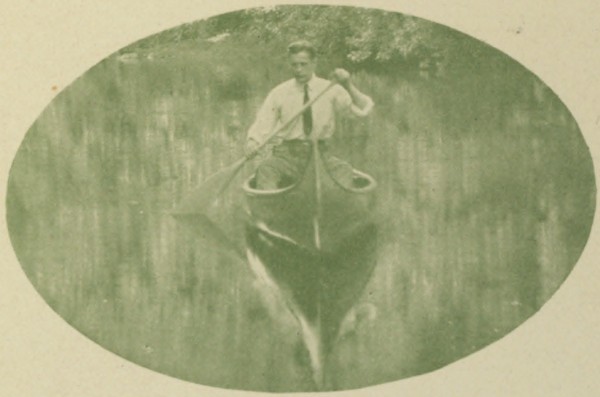
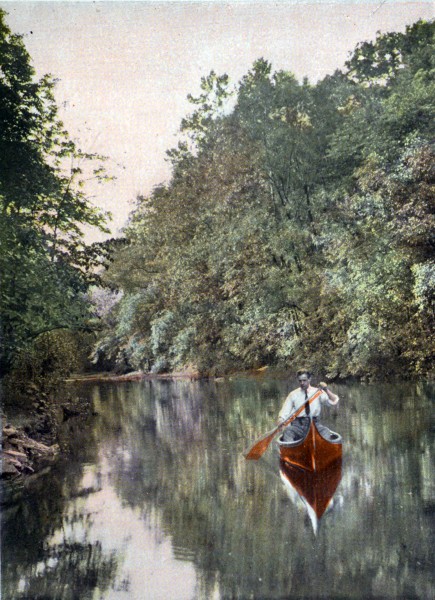
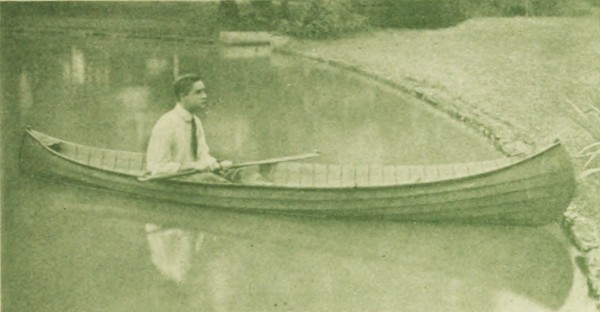
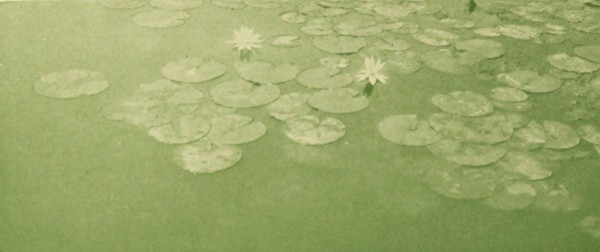
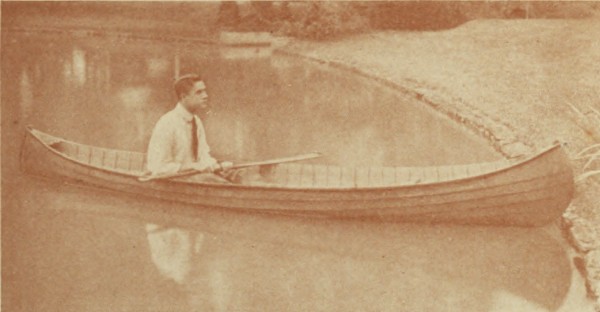
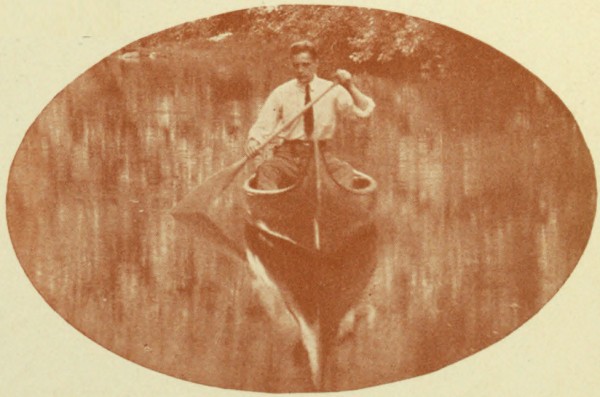
and as the canoe floated into the harbor
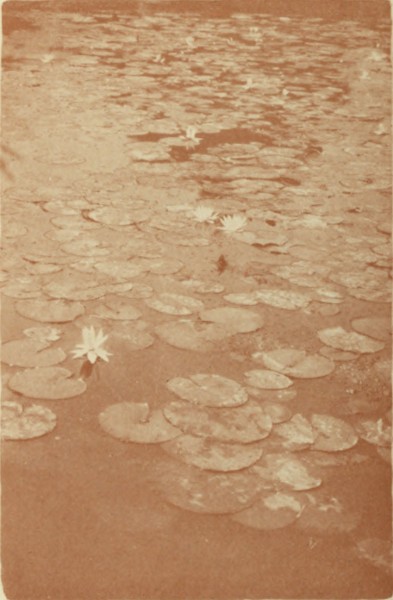
of the lotus pool a distant church
bell was ringing. Perhaps, he told
himself with a sudden sinking of the
heart, he was doomed to another
day without sight of Clytie; for
it might be that the family would
drive to church. But the first
fair look about him dispelled his forebodings.
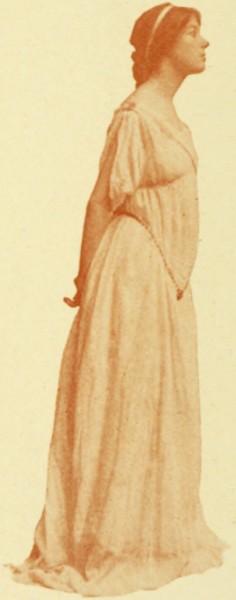
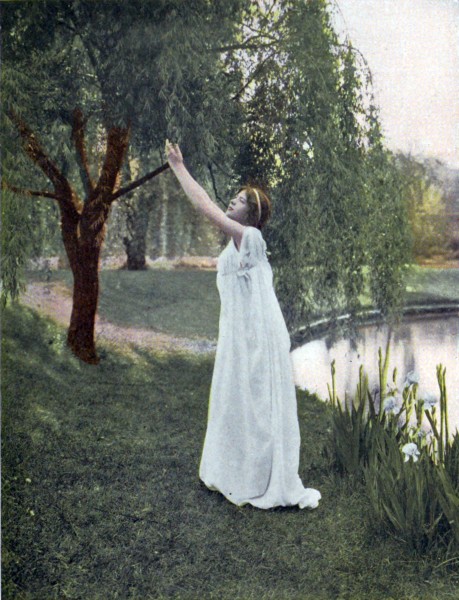
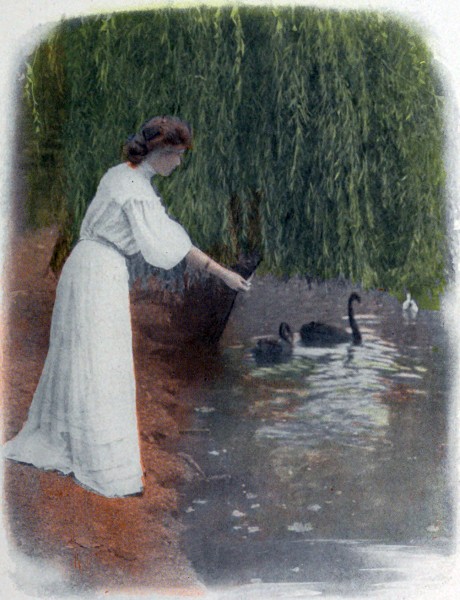
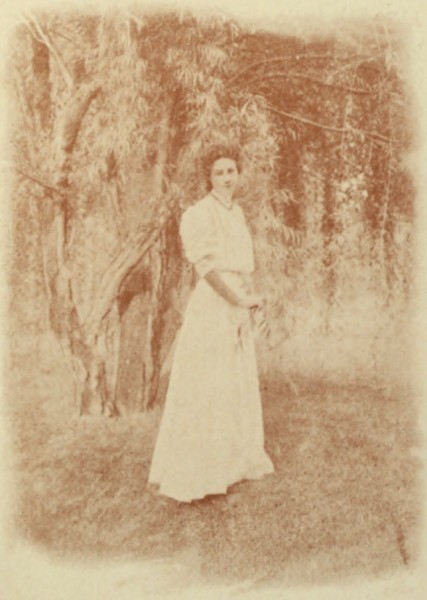
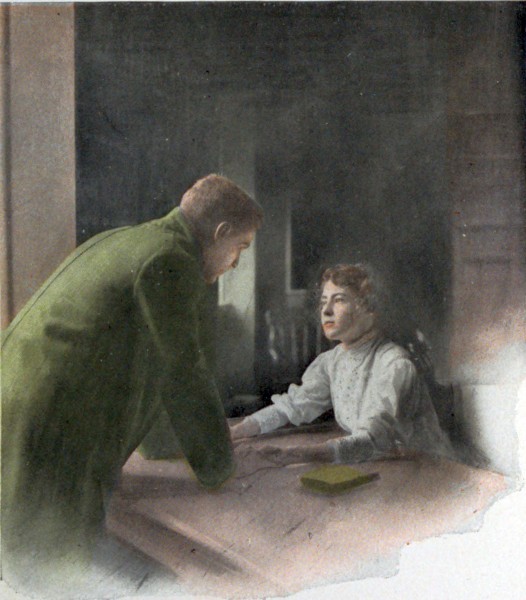
She was standing at the
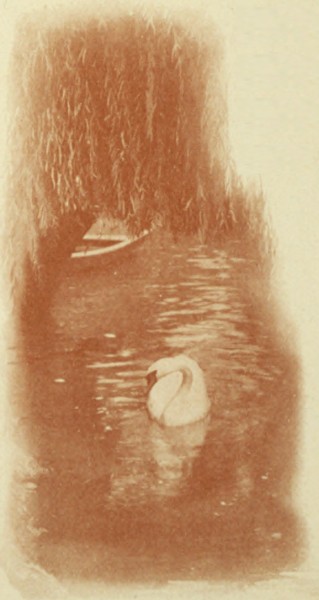
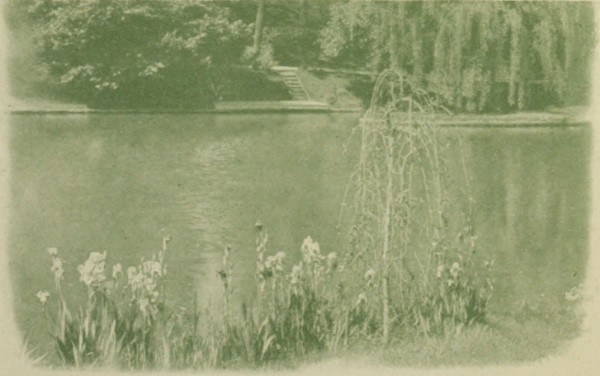
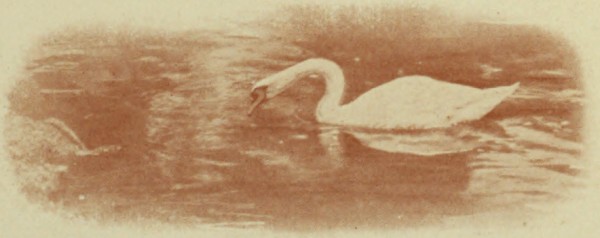
border of the pool throwing crumbs
of bread to the swans. She saw him
at almost the same moment and smiled.
“Don’t come any nearer, please,”
she said. “You’ll scare them.”
He dipped his paddle obediently and
sat silent in the rocking craft until
the last crumb had been distributed
and she had brushed the crumbs from
her outstretched hands. Stooping, she
picked a book from the grass and
faced him.
“May I come ashore?” he asked.
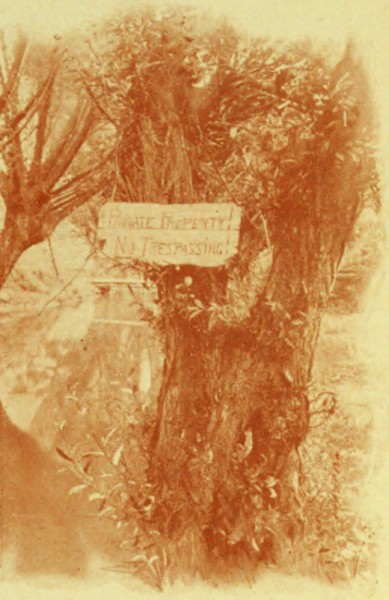
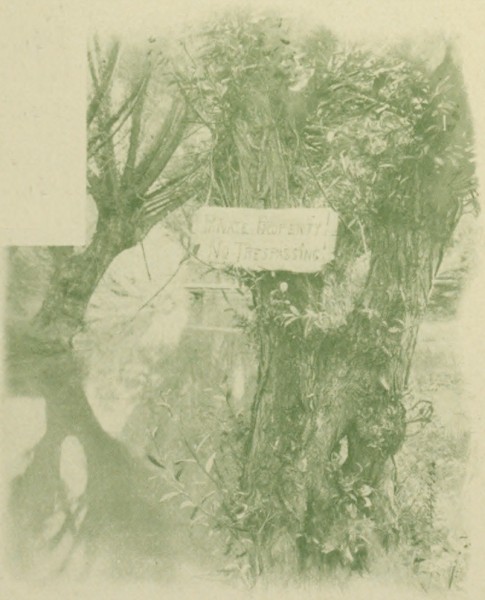
“You are already trespassing
dreadfully,” she objected.
“‘In for a penny, in for a
pound,’” he replied, sending the
canoe forward. “‘Might as well be
hanged for a sheep as a lamb.’ And
if I could think of any other proverbs
applicable to the matter I’d
quote them.” He jumped out and
pulled the bow of the canoe onto the
turf.
“You won’t mind, however, if I
decline to stay and be hung with
you?” she asked.
“On the contrary, I should mind
very much. In fact, I demand that
you remain and go bail for me in case
I’m apprehended.”
“I fear I couldn’t afford it,” she
answered.
“Doubtless your word would
serve,” he said. “Perhaps, if you
told them the excellent character I
bear, you might get me off scot-free.”
“But I don’t think I know enough
about your character.”
“There’s something in that,” he
allowed. “Perhaps you had better
observe me closely for the next hour
or two. One can learn a great deal
about another person’s character by
observation.”
“How can I do that if I go to
church?”
“You can’t. That’s one reason
why you’re not going to church.”
“Oh! And—are there other
reasons?”
“Yes.”
“Perhaps you had better give a
few of them. I don’t think the first
one is especially convincing.”
“Well, another one is that I
haven’t seen you for three days.”
She shook her head gravely.
“Go on, please.”
“Not good enough? Well, then,
another reason is that you haven’t
seen me for three days.”
She laughed amusedly.
“Worse and worse,” she said.
“I didn’t think you’d care much
for that argument,” he responded
cheerfully. “It was somewhat in the
nature of an experiment, you see. But
the real unanswerable reason is this:
I have missed seeing you very much,
I have been very dull, you are naturally
kind-hearted and would not unnecessarily
cause pain or disappointment,
and I beg of you to give me a
few moments of your cheerful society!
Is that—better?”
“I don’t particularly care for it.”
“Miss Devereux——”
“What have I told you?” she
warned.
“I beg pardon! But—now, really,
please let me call you by a Christian
name! I—I’d like to graduate from
mythology.”
“I don’t think it would be proper
for you to call me by my Christian
name,” she answered demurely.
“A Christian name, I said,” he
answered patiently. “Tell me why
you don’t want me to address you as
Miss Devereux, please.”
“Because——” She stopped and
dropped her gaze. “We’ve never
been properly introduced, have we?”
“True! Allow me, pray! Miss
Devereux, may I present Mr. Parmley?
Mr. Parmley, Miss Devereux!”
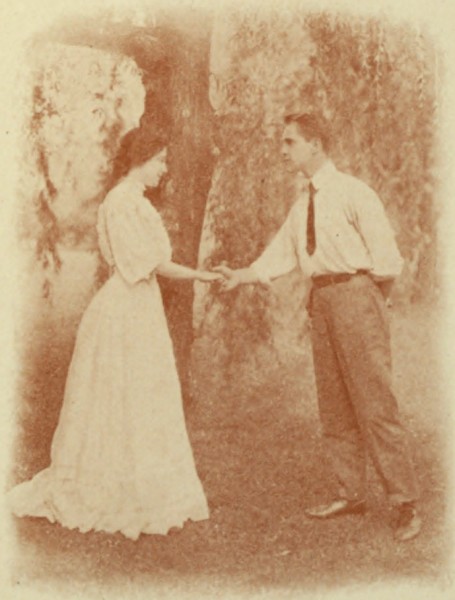
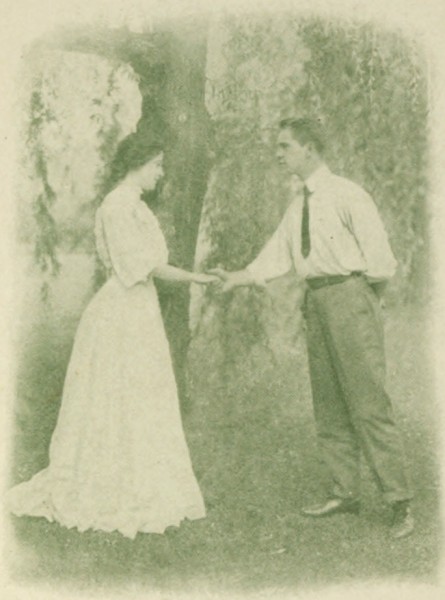
He stepped forward, smiling politely
and murmuring his pleasure, and ere
she knew what was happening he was
shaking hands with her. “Awfully
glad to meet you, Miss Devereux!”
he assured her cordially.
She backed away, striving to draw
her hand from his, and laughing merrily.
“Is that what you call a proper introduction?”
she asked.
“Well, it’s the best I could do under
the circumstances,” Ethan answered.
“Having no mutual acquaintances
handy, you see——”
“Don’t you think—you might let go
now?” she asked, her laughter dying
down to a nervous smile.
“Let go?” he echoed questioningly.
“Please! You have my hand!”
He looked down at it in mild surprise;
then into her face.
“Isn’t that the strangest thing? I
was never so surprised——!”
“But—Mr. Parmley, please let
go,” she begged.
“You don’t mean to say that I still
have it?” He tried to seem at ease
and to speak carelessly, but his heart
was pounding as though striving to do
the Anvil Chorus all by itself, and his
voice wasn’t quite steady.
“I do,” she answered coldly, biting
her lip a little. A disk of red burned
in each cheek. Her eyes were fixed
on his imprisoning hand. “Besides,
you are hurting me,” she added, falling
back upon the fib which is a woman’s
last resource in such a quandary.
But he shook his head soberly.
“Pardon me, but that’s impossible.
You will observe that my hand is quite
loose about yours. Accuse me of unlawful
detention, if you wish, but not
of cruelty.”
“But—but it is my hand,” she protested
faintly.
“Well, that is nothing to boast of,”
he replied smiling somewhat tremulously.
She had kept her eyes from
him all along and he was determined
to see them before he gave up. “Look
at mine; it’s twice as big!”
The brown lashes fluttered for an instant
and Ethan nerved himself for
the shock of looking into those violet
eyes. He didn’t know what was going
to happen, he assured himself in a
sudden delicious panic, and he didn’t
much care. Probably he would do
something awfully rude, something
that would frighten and anger her,
something for which she would never
forgive him! Perhaps the sudden
trembling of his hand about hers
warned her, for the lashes lay still
again. A moment of silence followed,
during which Ethan’s heart threatened
to choke him. Then all at once
the little warm hand ceased tugging
and lay limp and inert in his. She
turned her head and looked toward
the trees and the shade.
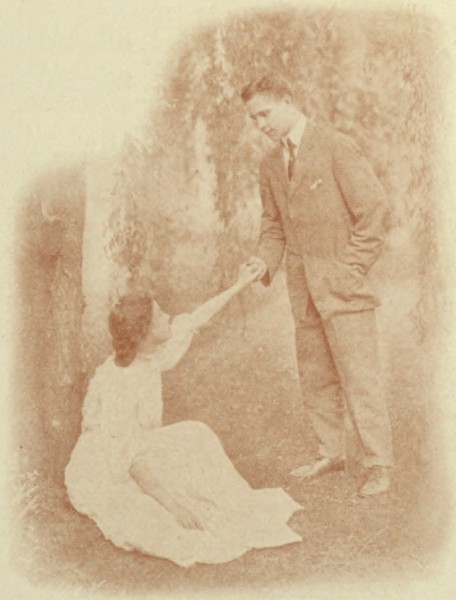
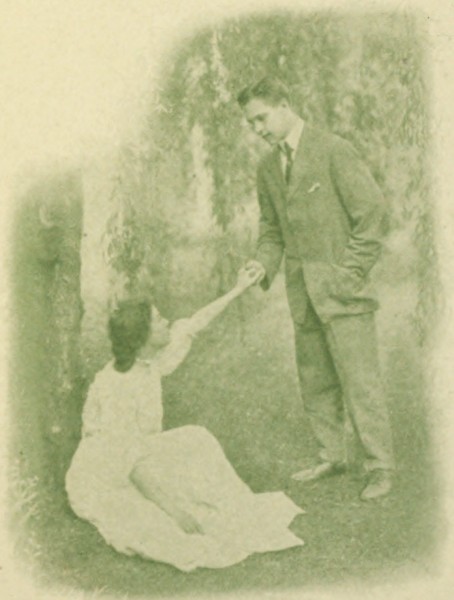
“If we are going to hold hands for
any length of time,” she remarked
coolly, “perhaps we had better sit
down and be comfortable.”
Ethan released her instantly, while
a wave of burning color swept across
his face. He felt terribly small and
ridiculous! He realized that he had
taken it for granted that she had been
experiencing emotions similar to his
own, and instead of that she had been
only bored and—and exasperated!
He followed her laggingly up the
slope, savagely calling himself names
and meditating a retirement in such
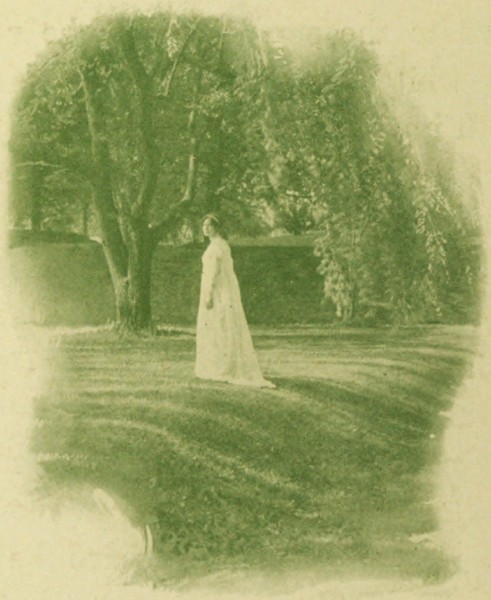
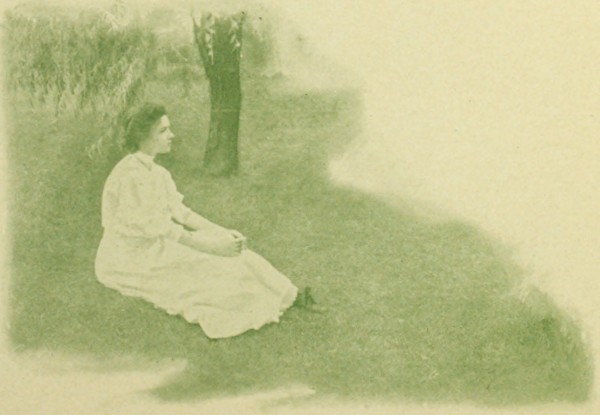
order as was still possible. She
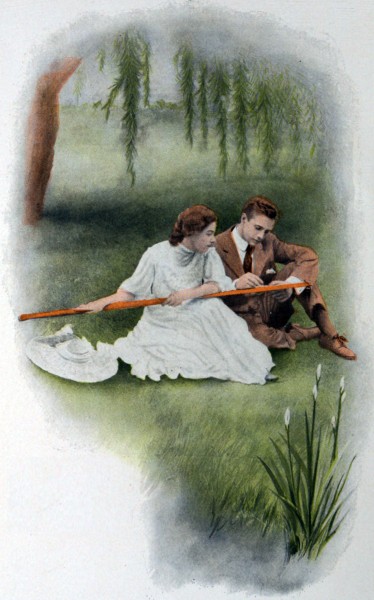
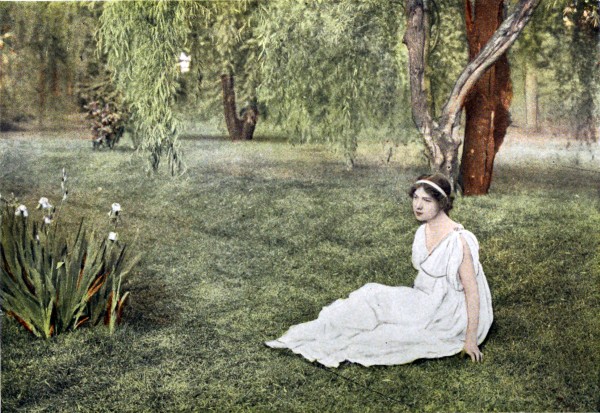
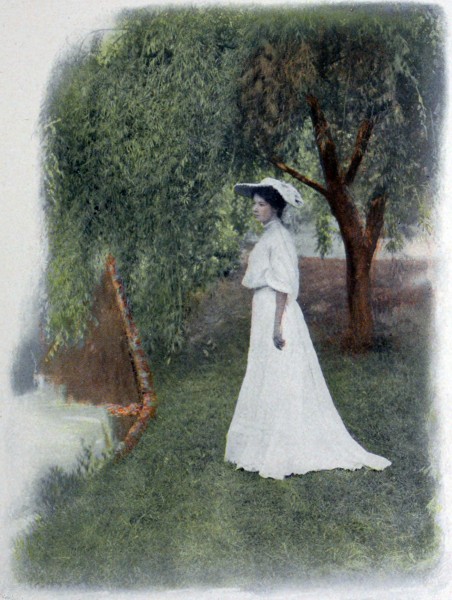
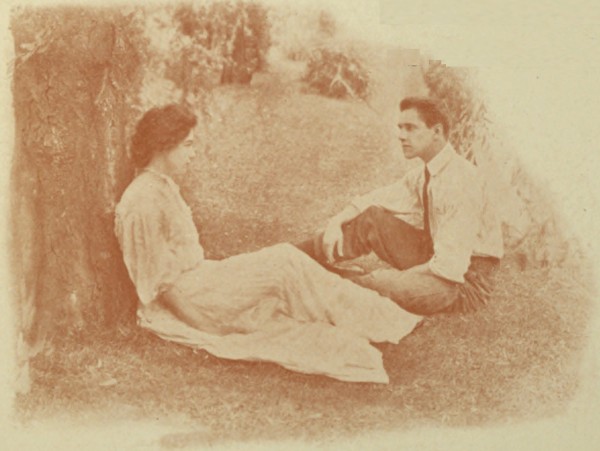
seated herself comfortably on the
grass with her back against the smooth
round trunk of a maple and patted
down her skirts. Then she glanced
up at him calmly.
“Do you realize,” she asked, “that
you have made me late for church?”
He was grateful for that ready
change of subject and piqued that she
should be so little disconcerted. His
own heart was still dancing.
“I am an humble instrument of
Providence,” he answered as lightly
as he could, dropping to the ground
at a respectful distance from the tips
of her small shoes.
“That sounds a little sacrilegious,”
she said. “Besides—humble?”
“Humble, yes,” he answered. “I
can’t think of a better word, unless it
is ‘abashed.’”
“But why do you call yourself an
instrument of Providence? Because
you live there?”
“‘That sounds a little sacrilegious,’”
he quoted. “I meant that if
you had gone to church you would
have made yourself very warm and possibly
returned with a headache. I
have saved you from that.”
“Thank you! But of course if it
hadn’t been for the introduction I
couldn’t have stayed!”
“That is understood,” he responded
with becoming gravity. She smiled
across as though amused by some
thought, and Ethan felt vaguely uncomfortable.
“It’s possible,” she said thoughtfully,
“that you might have found a
mutual acquaintance after all to perform
the ceremony for you.”
“Oh, I dare say; one usually can if
one hunts long enough. It’s a common
enough process, and not especially difficult.
For instance, I ask, ‘You are
acquainted in Boston, Miss Dev—Miss
Unknown!’ You reply ‘Slightly, Mr.
Parmley.’ ‘Perhaps you know the
Smiths?’ ‘Smith, Smith? N—no, I
don’t think so. Are they friends of
the Joneses?’ ‘I dare say; I’ve
never met the Joneses. Come to think
of it, though, there were some Joneses
visiting the Robinsons at Nahant last
summer; he is a banker, I think; there
were two daughters and a son just entering
college,’ ‘Oh, were you at Nahant?’
you inquire. ‘Then perhaps
you met the Browns there?’ ‘Yes.’
‘Really? Isn’t that jolly? Did you
know Gwendolin?’ ‘Well, rather!’
I reply in a tone insinuating that it
was rather desperate while it lasted.
‘Isn’t that odd?’ you exclaim. ‘Yes,
funny how small the world is, isn’t
it?’ I remark with startling originality.
Then we’re acquainted. Yes, it’s
simplicity itself.”
“It certainly sounds so!” she
laughed. “Let us try it!”
“Very well.”
She frowned intently for a moment,
then,
“Are you acquainted in Stillhaven,
Mr. Parmley?” she asked.
“Why, yes,” he answered, in surprise.
“Then perhaps you know the—the
Penniwells?”
“Sorry to say I don’t,” he replied,
laughing.
“No? They live in the next house
to the hotel.”
“Hotel? Ah, I think I’ve met the
Hotels! Was there a son about my
age, with——”
“Don’t be absurd!” she laughed.
“We’ll never get on if you don’t go
by the rules.”
“I thought I was,” he answered.
“Let me see! Oh, yes, the
Graveses, do you know them?”
“Why, yes; do you?” he answered
interestedly.
“I’ve met them.”
“Vincent is a great friend of
mine,” he said eagerly. “I was on
my way to visit them for a while when—when I
stopped here.”
“Really?” she cried. “How
small the world is, after all!”
They laughed together. Then,
“And you know Vin?” he asked.
“Yes, I—I’ve met him,” she replied.
Her tone hinted of embarrassment.
“Oh!” said Ethan thoughtfully.
Had he discovered the explanation of
Vincent’s puzzling warning? Was the
girl before him the “preserves” referred
to by his friend? Ethan’s
heart sank for a moment. Nonsense!
She had plainly implied that she knew
him only slightly, in which case she
didn’t belong any more to Vin than
to him. “You don’t know him
very well, then?” he questioned
anxiously.
“Aren’t you a—well, just a weeny
bit inquisitive?” she asked smilingly.
“It may sound so,” he acknowledged,
“but, you see, it means a good
deal to me; it’s rather important.”
“Important?” she repeated wonderingly.
“Yes, you see——” But of course
he couldn’t explain why it was important.
So he floundered helplessly a
moment. “Yes—that is—well, they
are very good friends of mine, Vin especially,
and—”
“Oh, you feared perhaps I wasn’t
a proper person for them to know?”
“Good heaven, no!”
“Then I don’t see——!”
“I don’t blame you,” he said discouragedly.
“Really, I was only talking
nonsense. I—I thought that if
you knew them well, and I knew them
well, then we—we might know each
other well!”
She gazed at him sorrowfully a moment.
Then she shook her head disappointedly.
“No,” she said, “no, that wasn’t
at all what you meant. I suppose even
studying for the law has its effect.”
He laughed embarrassedly.
“May I see what you are reading?”
he asked.
She lifted the volume from her lap,
gravely took a folded handkerchief
from between the leaves where it had
been doing duty as a mark, and handed
him the book.
“I’m sorry you can’t trust me,” he
laughed.
“So am I,” was the regretful response.
“It is terrible to have a
friend both a—a prevaricator and a—a—a——”
“Embezzler,” he suggested helpfully.
“Yes, it is bad. ‘Love Sonnets
from the Portuguese,’” he continued,
reading the title. “May I ask
if you were going to take this to
church with you?”
“I hadn’t thought of it. I suppose,
like most men, you consider them silly
and sentimental,” she challenged.
He shook his head.
“Sweet and sentimental, rather,”
he replied.
“You could hardly be expected to
care for them, I suppose,” she said.
“Your tastes, if I recollect aright,
run rather toward ‘The Ingoldsby
Legends’!”
“That is indeed unkind,” he murmured
sorrowfully. “No, I am very
fond of these, this one especially; if
it were not Sunday I would read it.”
“What has Sunday got to do with
it?” she asked.
“Perhaps nothing,” was the reply.
“I dare say it is only my Puritanism
cropping out. You know we New
Englanders find it very difficult to
reconcile pleasure with religion. I
can fancy the ghost of my great-great-great-grandfather,
in sugar-loaf hat
and with beruffed neck, standing over
there in the shadows, holding his
hands aloft in holy horror at the sight
of me sitting here on Sunday morning
with a volume of love-poems in my
hands.”
“What nonsense!” she cried indignantly.
“Isn’t love just as holy
as—as anything? Isn’t——” She
stopped abruptly and Ethan, lifting
his head, found her gazing toward him
with something almost like horror in
her wide eyes.
“What is it?” he cried anxiously.
She shook her head and dropped her
gaze to the hands folded on her knees.
“Nothing,” she said very quietly.
She laughed softly, uncertainly.
“Will you give me my book, please?”
she asked.
“Of course,” he answered, still
puzzled. Then, as he started to hand
it to her, it opened at the fly-leaf and
he drew it back. “Laura Frances
Devereux,” he read aloud. He smiled
quizzically as he returned the volume.
“That proves nothing,” she replied
defiantly. “I—I might have borrowed
it.”
“True, circumstantial evidence is
not absolutely conclusive, unless—unless
there is a good deal of it!”
“You may think what you choose,”
she answered lightly. She looked at
her watch and prepared to rise. This
time Ethan was ready. She gave him
her hand and he helped her to her feet.
The hand drew itself gently but determinedly
out of his and he let it go
without a struggle.
“Must you go?” he asked.
She nodded. Then she laughed.
“If you only knew what trouble
I have getting here you’d appreciate——”
She broke off, reddening a little.
“I do appreciate,” he said earnestly.
“And I thank you very much for
your kindness this morning to a very
undeserving chap. I—do you know,
Miss Devereux, I came within an ace
of calling at The Larches yesterday
afternoon?”
She looked up quickly.
“Yes, I went for a walk in the afternoon
and found myself at the gate
over there. I could see that you had
a fire in the library and——”
“But how did you know it was the
library?” she asked.
“Why—er—wasn’t it? I supposed
it was. Anyhow, it looked dreadfully
tempting. I pictured you sitting in
front of it, and I very nearly paid a
call.”
“I’m glad you didn’t,” she
breathed.
“Why?”
“Because—why, you don’t know
me!”
“I should have asked for your
father and introduced myself.”
“Well, you certainly don’t lack assurance!”
she gasped.
“It would have been all right,” he
assured her cheerfully.
“You wouldn’t have found him,
though,” she said dryly.
“Then I would have asked for Mrs.
Devereux, and, failing her, Miss Devereux.
You see, yesterday I was a bit
desperate,” he added smilingly.
“Desperate! I should say foolhardy!”
“Why? Because I wanted to see
you? Look here, please; why
shouldn’t I call on you at the house?
As I’ve told you, I’m fairly respectable.
And—and I want to see you—more
often! I suppose it sounds
dreadfully cheeky,” he went on softly,
“but I want you to like me, and it
doesn’t seem to me that I get a fair
show.”
The color came and went in her
cheeks and the violets were hidden
from him.
“It certainly does sound—cheeky,
as you call it,” she said after a moment,
rather unsteadily. “Considering
that you have seen me but four
times.”
“Five, if you please. Besides, I
don’t see that that matters. In fact,
I rather think the mischief was done
the first time!”
He captured her hand and for a moment
it only fluttered in his grasp.
Then it tried for liberty, but unsuccessfully.
A moment passed, and,
“Are you making love to me, Mr.
Parmley?” she asked, with a little
amused laugh. It was like a cold
douche, but he resisted his first impulse
to release her.
“Yes, I am,” he answered stoutly.
“That’s just what I’m doing! And
I’m going to keep on doing it until
I’m convinced that there’s no hope for
me. Please don’t struggle,” he continued,
capturing her other hand also.
“I’ll let you go in just a moment.
Maybe I’m behaving a good deal
like a bully, but I’m head-over-heels
in love with you, Laura, and——”
“No, no! Please!” she cried, with
a little catch in her voice.
“What—what have I done?” he
asked anxiously.
“I—You mustn’t call me that!”
“Very well, I won’t—yet. But I
think of you as Laura——”
“I don’t want you to!”
“Then I’ll try not to,” he answered
gently. “But—couldn’t you make
me very happy by telling me that I’ve
got a chance with you, dear? Just the
ghost of a chance?”
The bowed head shook negatively.
“You won’t? Or—you can’t?”
“I—I won’t,” she whispered.
He uttered a cry and strove to draw
her toward him, but she resisted with
all her strength.
“Please! Please!” she gasped.
“I’ll—try not to,” he said ruefully.
“But I may call at the house?
You’ll let me do that, won’t you?”
“I—suppose so,” she murmured
faintly.
“To-day?” he cried. “To-morrow?”
“No, no! Wait, please; let me
think.” She raised a pair of troubled
eyes to his for an instant. “I must
see you again first. I have something
to tell you; something which may
make a difference. Perhaps—perhaps
you won’t want to see me again—then!”
He laughed disdainfully.
“Try me! And when will you tell
me this—this wonderful news? To-morrow
morning? Here?”
She nodded and strove to release
her hands. After a moment of indecision
he let them go. She stood before
him motionless an instant. Then
she raised her head slowly and he saw
that her eyes were wet. With an inarticulate
cry of pain and longing he
started forward, but she held a hand
against him.
“Please!” she said again, imploringly.
His outstretched arms dropped
to his sides. “If I shouldn’t come—to-morrow——”
she began.
“But you’ve promised!”
“I know.” She nodded assent.
“But—but if I shouldn’t——”
“But you will!” he cried. “I
shall be here, dear! Don’t fail me!
If you don’t come I’ll go to the
house!”
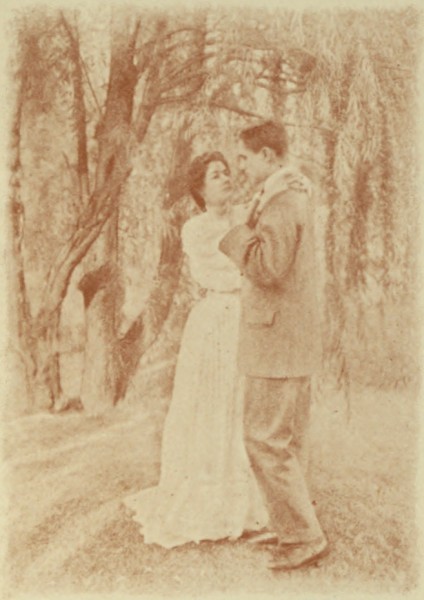
“Then I must,” she said with a little
smile. “And now——” She went
to him and placed her hands on his
shoulders and felt him tremble under
her touch. She raised her eyes, violets
darkened and dewy with unshed
tears, to his. “Will you do one thing
for me?”
His eyes answered.
“Then, please,—” she dropped her
head in sudden shame—“kiss me
once—and let me go.”
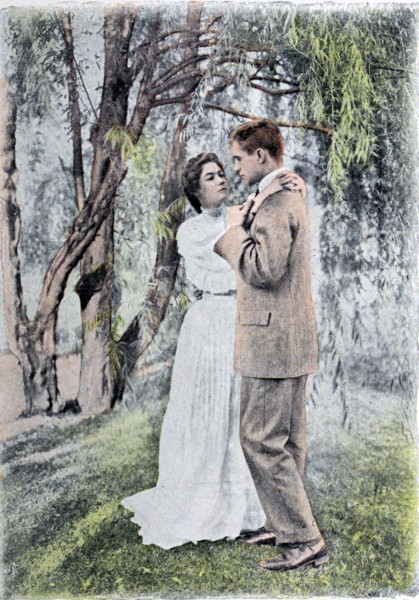
His arms closed about her hungrily,
but she held back.
“Promise!” she whispered
“Promise to let me go!”
“Yes,” he groaned, “I promise.”
For an instant he was looking far,
far down into dim, wonderful violet
depths....
Then he was alone. He turned unseeingly
toward the canoe and trod
upon the book which lay forgotten on
the grass. Stooping, he rescued it and
dropped it into his pocket.
“I’m getting to be an awful thief!”
he murmured tremulously.