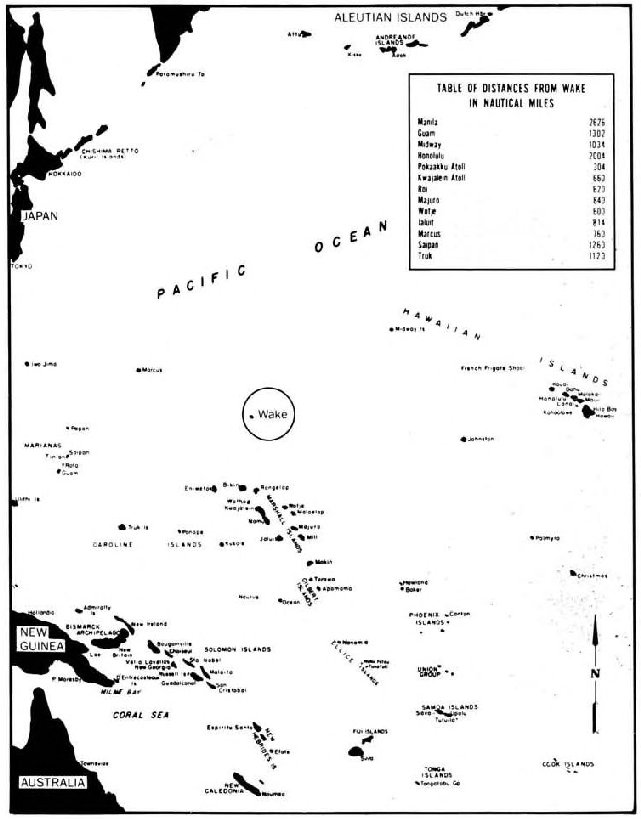
Shortly after midnight, First Lieutenant
Barninger noted flashing lights
“way off the windy side of the island.”
Alerted to the odd display on the
horizon in the darkness, Barninger
telephoned Major Devereux, who replied
that he also had seen it. Devereux
directed Barninger to keep a
watch out and cautioned the Peacock
Point strongpoint commander to be
mindful that the lee shore posed the
most possibilities for danger. Lookouts
continued to note irregular
flashes of light in the black, gusty,
rainy predawn of 23 December 1941.
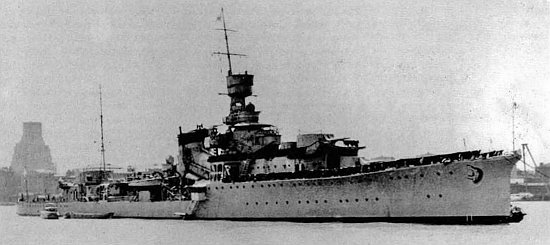
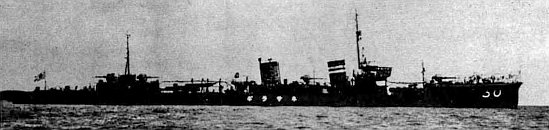
It may have been the Tenryu, the Tatsuta,
and the Yubari firing blindly at
what their spotters thought was
Wake Island but which was, instead,
only empty ocean.
At 0145, however, a report came
into the detachment commander’s
command post, telling of an enemy
landing in progress at Toki Point, at
the tip of Peale. Devereux alerted the
battalion. Kessler, in the meantime,
dispatched a patrol up the lagoon
beach toward the PanAm facility,
which met a patrol from Battery D.
Neither had anything to report. On
Wilkes, Captain Platt directed Battery
L to move the men of two 5-inch
gun sections (equivalent to two rifle
squads) to the shore of the lagoon,
west of the area of the new channel
being dredged across the island. The
rest of the men of the battery—fire
controlmen and headquarters men
under McAlister, who had established
his command post near the
searchlight section of the battery—moved
into positions they had
readied along the south shore of
Wilkes, between McKinstry’s Battery
F and the new channel.
Kessler, whom Devereux had requested
to confirm or deny the accuracy
of the information regarding
the landing, reported that there was
no landing in progress, but that he
had seen the lights offshore. Cunningham,
at 0145, radioed the Commandant,
14th Naval District, reporting
“gunfire between ships to northeast
of island.”
Wake thus alerted, Second Lieutenant
Arthur A. Poindexter, at
Camp 1 with the mobile reserve
(predominantly supply and administration
Marines and 15 sailors under
Boatswain’s Mate First Class James E.
Barnes), believed Peale to be threatened.
He exercised initiative and entrucked
eight Marines and with four
.30-caliber machine guns. Reporting
his intention to the detachment commander,
Poindexter and that portion
of his mobile reserve sped past the
airfield toward Peale. It was nearing
Devereux’s command post when he
ordered it intercepted. The major retained
Poindexter’s little force where
it was, pending clarification of the
situation.
The bad weather that prevented
the Marines from seeing their foes
likewise hindered the Japanese.
Shortly before 0200, Special Naval
Landing Force troops clambered
down into the medium landing craft
designated to land on Wilkes and
Wake. Four landing craft were
launched some 3,000 to 4,000 meters
offshore, but in the squalls and long
swells they experienced difficulty
keeping up with Patrol Boat No. 32
and Patrol Boat No. 33 as they
churned on a northeasterly course,
headed for the beach. The landing
craft designated to follow No. 32 lost
sight of her in the murky, gusty
darkness.
At about 0230, Marines on Peacock
Point detected the two patrol
boats, which appeared to them only
as dark shapes as they made for the
reef by the airstrip. Then, the two
ships ground gently ashore on the
coral. The Japanese naval infantrymen
slipped over the side into the
surf, struggled ashore, and sprinted
across the coral for cover.
On Wilkes, Gunner McKinstry
called to Captain Platt and informed
him that he thought he heard the
sound of engines over the boom of
the surf, and at 0235 one of his
.50-caliber guns (gun no. 10) opened
fire in the darkness. Ten minutes
later, McKinstry, having sought permission
to use illumination, caused
a searchlight to be turned on.
Although the light was shut off as
suddenly as it had been turned on,
its momentary beam revealed a landing
boat aground on Wilkes’ rocky
shore and, beyond that, two destroyers,
beached on Wake.
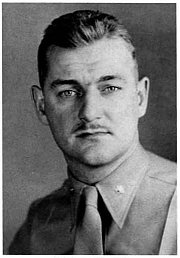
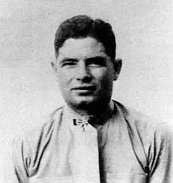
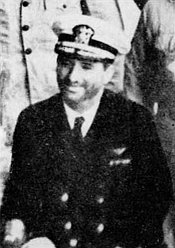
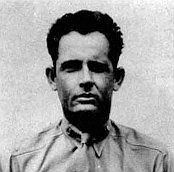
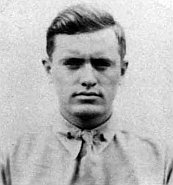
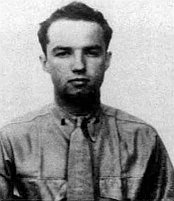
Poindexter File, Reference Section
1stLt Arthur A. Poindexter (seen here
in a post-war photograph), commander
of the mobile reserve on Wake, provided
such evidence of “exemplary conduct
and ability to lead troops ... with utter
disregard for his own safety” that he was
ultimately awarded the Bronze Star.
McAlister ordered Platoon Sergeant
Henry A. Bedell to detail two
men to hurl grenades into the enemy
craft. The veteran non-commissioned
officer, accompanied only by Private
First Class William F. Buehler, gamely
tackled the task, but Japanese gunfire
killed Bedell and wounded
Buehler before either had been able
to work their way close enough to
lob grenades into the boats.
McKinstry’s men, meanwhile,
manned the 3-inchers of Battery F,
but the guns could not be depressed
enough to fire onto the beach. The
Marines held their position until the
men from the Takano Unit of the
Special Naval Landing Force approached
closely enough to begin
lobbing grenades. Marines and
Japanese grappled in the darkness,
hand-to-hand, before McKinstry’s
men, after removing the firing locks
from the guns, pulled back to take up
infantry positions. Their concentrated
fires kept most of the Japanese at
bay near the 3-inch gun position.
Other Special Naval Landing Force
troops, however, probed westward,
toward the 5-inch guns that had so
humbled Kajioka’s force on the 11th.
They ran into heavy fire from gun
no. 9, a well-camouflaged .50-caliber
Browning, handled skillfully by
20-year old Private First Class Sanford
K. Ray and situated some 75
yards west of where the Takano Unit
had first swarmed ashore. Ray’s fire
prevented the enemy from advancing
closer than 40 or 50 yards from his
sand-bagged position, and his proximity
to the beach allowed him not
only to harass the enemy but also to
report enemy movements. Although
Japanese troops had severed most
wire communication lines, Platt remained
in touch with developments
at the shoreline by reports from Ray.
Reports from observers along the
beach soon began to deluge Devereux’s
command post, where he
and his executive officer, Major Potter,
attempted to keep abreast of
events. Gunner Hamas relayed the
information to Cunningham, at his
command post. On the basis of those
reports, the island commander, at
0250, radioed the Commandant of
the 14th Naval District: “Island under
gunfire. Enemy apparently landing.”
At that point, Devereux directed
Poindexter to move the mobile
reserve into the area between Camp
1 and the west end of the airfield.
Since the eight Marines had remained
in the truck with the four machine
guns, only 15 minutes elapsed before
they set up both gun sections in a position
commanding the road that ran
along the south shore and also covering
a critical section of beach. Within
moments, Poindexter’s Brownings
chattered and spat into the dim shape
of the grounded Patrol Boat No. 32,
most of the bullets striking the after
part of the ship. Special Naval Landing
Force troops who disclosed their
positions by igniting flares soon came
under fire. At Camp 1, just up the
coast, men from Battery I and the
sailors who had been serving as lookouts
manned the four .30-caliber
machine guns set up there. From
Poindexter’s vantage point, the enemy
troops appeared confused and
disoriented, shouting and discharging
a number of flares, perhaps for
“control and coordination.”
Having received a report of
Japanese destroyers standing toward
Wake’s south shore (and well inside
the range of the 5-inch batteries that
had so vexed the enemy on 11 December),
Second Lieutenant Robert
M. Hanna, who commanded the
machine guns emplaced at the airstrip,
clearly perceived the threat. Accompanied
by Corporal Ralph J.
Holewinski and three civilians, Paul
Gay, Eric Lehtola, and Bob Bryan,
Hanna set off at a dead run for the
3-inch gun that had been emplaced
on the landward side of the beach
road, on a slight rise between the
beach road and the oiled tie-down
area at the airstrip. Up to that point,
Major Putnam’s grounded airmen,
their ground support unit, and the
volunteer civilians, had been awaiting
further orders. As Hanna and his
scratch 3-inch crew sprinted to the
then-unmanned gun, Devereux ordered
Putnam to support the lieutenant.
Putnam assigned Second Lieutenant
Kliewer to a post on the west end
of the airfield, along with Staff Sergeant
John F. Blandy, Sergeant
Robert E. Bourquin, Jr., and Corporal
Carroll E. Trego. They were to
set off the mines on the field if the
enemy attempted to use it. Two .50-caliber
guns situated just north of the
airstrip covered Kliewer’s position. At
the eastern end of the strip lay the
guns manned by Corporal Winford J.
McAnally, along with six Marines
and three civilians and supported by
a small group of riflemen. The gunners
enjoyed a perfect, unobstructed
field of fire—the airstrip itself.
About 0300, just at a time when
events began to develop with
startling rapidity as the Japanese
pushed ashore on Wilkes and Wake,
Major Devereux lost touch with
Camp 1, Putnam’s platoon, Hanna’s
command post near the airstrip, and
Barninger’s Battery A. Advancing
Japanese troops probably had found
the communication lines—the exigencies
of war had prevented them
from being buried—and cut them.
Devereux’s last situation reports from
those units painted a bleak picture.
If Cunningham received less-than-encouraging
reports from the defense
battalion commander, he received
equally grim news from CinCPac
when, at 0319 Wake time, Pearl Harbor
radioed to Wake that the Triton
and Tambor were returning to
Hawaiian waters. “No friendly vessels
should be in your vicinity today,”
the message stated, “Keep me informed.”
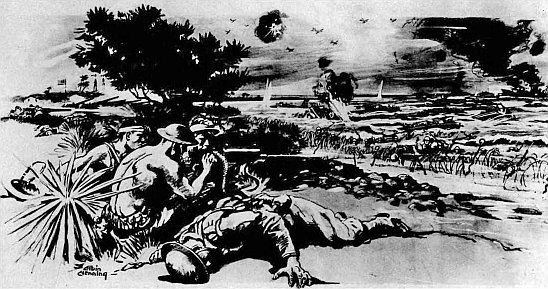
Painting by artist Albin Henning shows Marines firing
a .30-caliber Browning machine gun as Japanese landing
force sailors splash ashore. While inaccurate in details (barbed
wire, for example, is an artist’s invention because no such obstruction
existed at Wake Island, since the coral reef surrounding
the atoll was bare of any holding ground for the stakes
or anchors necessary to keep them in place), it does capture
the desperate nature of the Marines’ final day’s fighting.
Department of Defense Photo (USMC) 307142
Hanna and his men, meanwhile,
reached the 3-inch gun and set to
work. Anxious hands fumbled in the
darkness for ammunition while
Hanna—since the gun lacked
sights—peered down the bore to
draw a bead on the beached and stationary
Patrol Boat No. 33 that lay
less than 500 yards away. The first
round tore into the ship’s bridge, seriously
wounding both the captain and
navigator, killing two seamen, and
wounding five. Hanna’s gun hurled
14 more rounds on target. Some of
his projectiles evidently touched off
a magazine, and the beached warship
began to burn. The illumination
provided by the burning ship revealed
her sistership, which Hanna
and his hard-working gunners bombarded,
as well. A short time later
three Special Naval Landing Force
sailors attacked Hanna’s exposed position.
In the ensuing fight, Hanna
cooly shot and killed all three enemy
sailors with his pistol and resumed
the operation of his 3-incher.
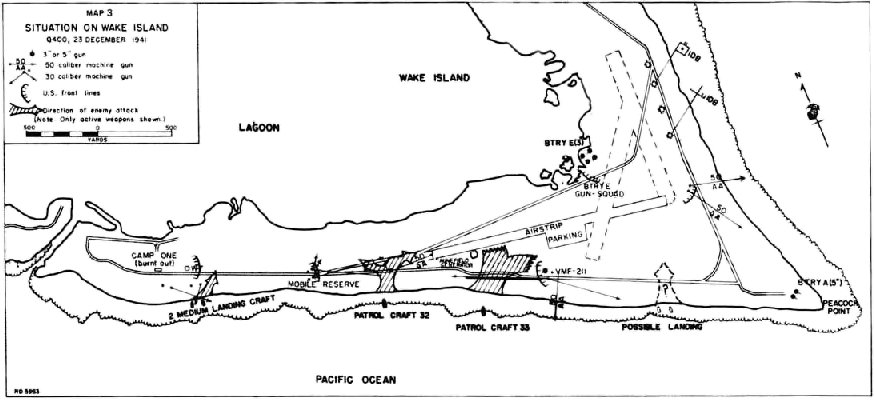
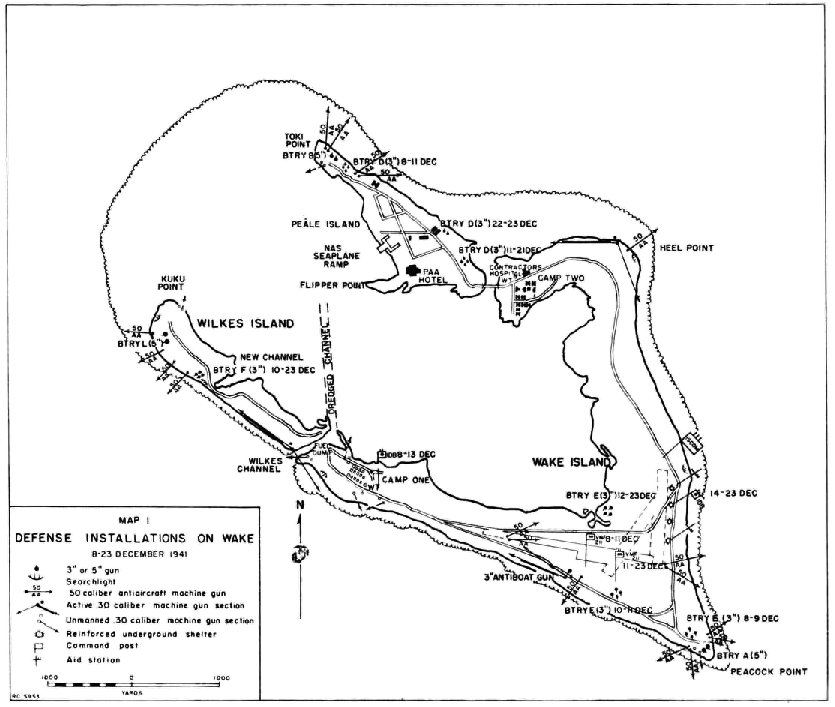
MAP 3
SITUATION ON WAKE ISLAND
0400, 23 DECEMBER 1941
Reinforcing Hanna’s cannoneers
became the next order of business.
Devereux felt compelled to keep
Peale’s Battery B intact to deal with
surface threats, and Battery E (which,
by that point, had a full complement
of guns and crews along with the
only heightfinder and director) to
deal with enemy planes. That left
Godbold’s Battery D, which by that
point possessed only two operational
guns and no fire-control gear. Devereux
directed Godbold to send one
section (nine men) to the battalion
command post to reinforce Hanna’s
crew. Under Corporal Leon A.
Graves, the squad clambered on
board a contractor’s truck and
reached the command post about
0315. They were to proceed along the
road that paralleled the shoreline to
a junction some 600 yards south of
the airfield, where they were to leave
the truck and proceed through the
brush to Hanna’s position. Quickly,
they set out into the night.
The flames from the wrecked
Patrol Boat No. 33 disclosed Japanese
troops advancing past the west end
of the airstrip into the thick undergrowth
in front of the mobile
reserve’s positions. Poindexter, after
ordering one machine gun section to
keep up a fire into the brush to interdict
that movement and protect his
own flank, heard machine gun fire
from Camp 1, behind him. Wanting
to see for himself if more Japanese
landing craft were coming ashore to
his rear, the lieutenant, accompanied
by his runner, left the front in charge
of Sergeant “QT” Wade, and hurried
back to the camp.
There, unable to see at what his
neophyte sailor-gunners were expending
their ammunition, Poindexter
asked each to point out his target.
Two could not—they’d opened fire
only because the other two had done
so—but a third pointed to the dim
outline of what appeared to be a
“large landing barge on the order of
a self-propelled artillery lighter.”
When another craft of the same type
seemed to materialize out of the
murk, Poindexter ordered firing resumed
at what proved to be two large
landing craft that were attempting to
ground themselves 1,200 yards east
of the entrance to Wilkes Channel.
The enemy coxswains, however,
appeared to be having difficulty
coaxing the unwieldy landing craft
onto the beach, backing off and trying
again and again to land the Special
Naval Landing Force men
crouched behind the gunwales,
which seemed to be deflecting the
.30-caliber bullets peppering them.
Seizing the moment, Poindexter
called for volunteers to pick their way
down the rocky beach to the water’s
edge, there to lob grenades into the
boats. Poindexter organized two
teams—Mess Sergeant Gerald Carr
and a civilian, Raymond R. “Cap”
Rutledge (who had served in the
Army in France in World War I), in
one, Poindexter and Boatswain’s
Mate First Class Barnes in the other.
The grenadiers dashed to the water’s
edge while the machine guns momentarily
held their fire. Barnes, taking
cover behind coral heads, remained
hidden until the barges
ground ashore again. Then, exposing
himself to enemy fire, he hurled
several grenades toward the Japanese
craft, and managed to land at least
one inside, killing or wounding many
of the troops on board.
The valiant efforts of Poindexter
and his men, however, stopped the
Japanese just momentarily, for soon
they began swarming ashore and
moving inland. Shortly before the
wire communications to Devereux’s
command post failed, Poindexter
reported the result of his foray.
Having seen flares streaking skyward
in the murk, Captain Godbold
on Peale, meanwhile, sent out two
patrols, one to move westward
toward the naval air base, and the
other to go eastward along the lagoon’s
shore. Neither patrol encountered
any enemy troops. A half-hour
later, Godbold established an outpost
at the bridge connecting Peale and
Wake.
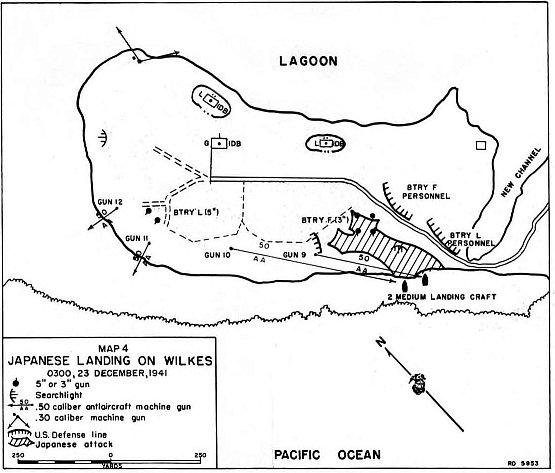
MAP 4
JAPANESE LANDING ON WILKES
0300, 23 DECEMBER, 1941
Meanwhile, after word of the enemy
landing reached Pearl Harbor,
Vice Admiral Pye convened a meeting
of his staff. By 0700 (22 December,
Hawaiian time), having received
further word of developments at
Wake, Pye estimated that a relief of
the island looked impossible, given
the prevailing situation, and directed
that the Tangier should be diverted
toward the east. With the relief mission
abandoned, should his forces attack
the enemy forces in the vicinity
of Wake? Or should American forces
be withdrawn to the east? He feared
that the timing of the Japanese carrier
strikes and the landing then in
progress indicated that the enemy
had “estimated closely the time at
which our relief expedition might arrive
and may, if the general location
of our carrier groups is estimated, be
waiting in force.” American forces
could inflict extensive damage upon
Japanese, Pye believed, if the enemy
did not know of the presence of the
U.S. carrier task forces. They had not
yet seen action, though, and no one
could overestimate the danger of having
ships damaged 2,000 miles from
the nearest repair facilities—“a
damaged ship is a lost ship,” Brown
had commented in Task Force 11’s
war diary. Damage to the carriers
could leave the Hawaiian Islands
open to a major enemy thrust. “We
cannot,” Pye declared, “afford such
losses at present.”
Two courses of action existed—to
direct Task Force 14 to attack
Japanese forces in the vicinity of
Wake, with Task Forces 8 and 11
covering Task Force 14’s retirement,
or to retire all forces without any attempt
to attack the enemy. These
choices weighed heavily on Pye’s
mind. If American forces hit the
Japanese ships at Wake and suffered
the loss of a carrier air group in the
process, Pye deemed the “offensive
spirit” shown by the Navy as perhaps
worth the sacrifice.
However, in the midst of his
deliberations, shortly after 0736, Pye
received a message from the CNO
which noted that recent developments
had emphasized that Wake
was a “liability” and authorized Pye
to “evacuate Wake with appropriate
demolition.” With Japanese forces on
the island, though, Pye felt that
capitulation was only a matter of
time. “The real question at issue,” Pye
thought, “is, shall we take the chance
of the loss of a carrier group to attempt
to attack the enemy forces in
the vicinity of Wake?” Radio intelligence
from the previous day linked
“CruDiv 8 ... CarDiv 2” and, erroneously,
“BatDiv 3” (consisting of
two battleships) with the forces off
of Wake. A pair of Kongo-class fast
battleships, supported by carriers and
heavy cruisers would easily have
overmatched Fletcher’s Task Force 14.
In the meantime, Japanese cruisers—probably
the Yubari, Tenryu, and
Tatsuta—had begun shelling Wake,
further discomfitting the defenders.
Despite Lewis’ Battery E firing “prearranged
3-inch air burst concentrations”
over the Japanese beachhead,
the enemy continued to press steadily
toward VMF-211’s position around
Hanna’s 3-inch gun. Major Putnam,
already wounded in the jaw, with
blood from his wound staining the
backs of the snapshots of his little
daughters, which he carried in his
pocket, formed his final line. “This,”
he said, “is as far as we go.”
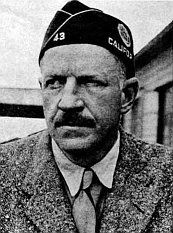
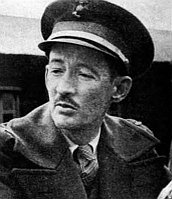
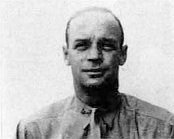
Marine Corps Historical Collection
Raymond R. “Cap” Rutledge, one of the
contractors on Wake, (seen here as a
POW at Shanghai in January 1942), had
served in the U.S. Army during World
War I and threw hand grenades into
Japanese landing barges off Wake in the
pre-dawn fighting of 23 December.
Putnam had placed Captain Elrod
in command of one flank of
VMF-211’s defensive line, which was
situated in dense undergrowth. In the
impenetrable darkness, the squadron
executive officer and his men—most
of whom were unarmed civilians
who acted as weapons and ammunition
carriers (until weapons became
available)—conducted a spirited
defense which repeated attacks by
Special Naval Landing Force troops
could not dislodge. Each time he
heard Japanese troops mounting a
probe of 211’s position, Elrod interposed
himself between the enemy
and his own men and provided
covering fire to enable his detachment
to keep supplied with guns and
ammunition. Shortly before dawn,
a Japanese sailor who had hidden
himself among the heaps of casualties
surrounding Hanna’s gun shot
and killed the gallant Captain Elrod.
Captain Tharin, in charge of a
group of Marines on the left flank of
VMF-211’s line, delivered covering
fire for the unarmed ammunition carriers
attached to his unit, which
repulsed several assaults on his position.
At one point, Japanese sailors
penetrated the defenses in Tharin’s
sector, but in the counterattack,
which drove the enemy from the position,
Tharin captured an enemy automatic
weapon and used it “successfully
and effectively against its former
owners.” The indomitable Aviation
Machinist’s Mate First Class Hesson
armed himself with a Thompson
sub-machine gun and some grenades
and although wounded by rifle fire
and grenade fragments, single-handedly
drove back two concerted
attacks—killing several Japanese and
preventing them from overrunning
211’s flank.
Despite the heroic efforts of Putnam’s
“platoon,” the Japanese
managed to move into the roughly
triangular area which was bounded
by Peacock Point, on one side, the
beach and the south side of the airstrip
on the others. Corporal Graves’
squad from Battery D, meanwhile,
detrucked somewhat north of their
intended destination (200 yards south
of the airstrip rather than 600), began
walking toward VMF-211’s position,
and quickly encountered a
Japanese patrol. In the ensuing fire-fight,
enemy machine gun and rifle
fire killed one Marine and pinned
down the remainder for a time, until
Graves and his men managed to
extricate themselves and retire northward
toward the battalion command
post. Graves’ encounter indicated that
the Japanese had penetrated the U.S.
defenses. Despite their extraordinary
efforts, neither Kliewer and the
.50-caliber guns at the airfield, nor
the Hanna-VMF-211 group at the
3-inch gun near the shore, had been
able to stop them.
At the same time, Batteries A and
E began to receive mortar, small
arms, and machine gun fire, prompting
Barninger to deploy his range section,
armed with two .30-caliber
Brownings, and deployed as infantrymen,
facing northwest “across the
high ground” to the rear of the
5-inchers at Peacock Point. Lewis,
whose 3-inch fire had silenced an automatic
weapons position in the
thick undergrowth southwest of Battery
E, dispatched a patrol to try to
relieve the pressure on his position.
That group, under Sergeant Raymond
Gragg, progressed only 50
yards beyond the perimeter before it
came under heavy fire. The Japanese,
however, moved no further because
of the resistance put up by Gragg’s
squad.
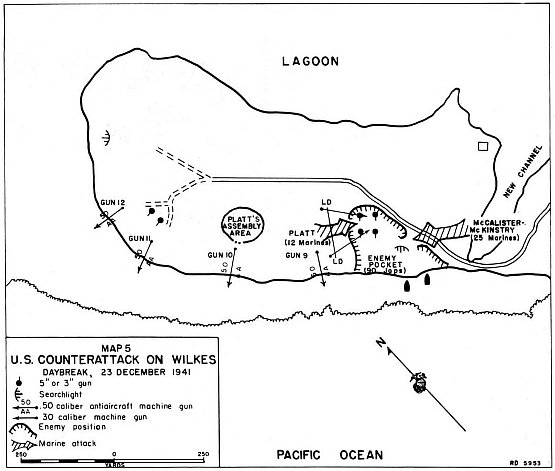
MAP 5
U. S. COUNTERATTACK ON WILKES
DAYBREAK, 23 DECEMBER 1941
Amidst the chaos, Devereux
groped for information about the
progress of the battle. At some point,
he received word from one of the few
positions which had retained wire
contact with his command post, Corporal
McAnally’s machine gun section,
which was located at the eastern
end of the airstrip. McAnally reported
that the Japanese were advancing
up the shore road, apparently intent
upon launching a thrust up the other
prong of Wake. With one unit besetting
Putnam’s at the airstrip, another
Japanese unit skirted Putnam and
Hanna and was headed into the triangular
end of Peacock Point.
McAnally, establishing contact
with the .50-caliber machine guns on
the east shore of Wake, some 400
yards south, carried on a “resolute,
well-coordinated defense” which
stymied the enemy in the area. Perhaps
more important, McAnally
served as Devereux’s eyes and ears on
that portion of the battlefield.
On Wilkes, Private First Class
Ray’s defense of his position equalled
that of McAnally’s. Captain Platt,
having lost communication with his
own posts and also with the defense
battalion command post, set out on
a personal reconnaissance mission at
about 0430. He crawled through the
thick underbrush and picked his way
across the rocky beach, until, at
about 0500, he came to a place east
of gun no. 10 where he could see Special
Naval Landing Force men massed
in and about Battery F’s guns. Soon
thereafter, while clambering back to
the gun, Platt met Sergeant Raymond
L. Coulson and ordered him
to gather two .30-caliber machine gun
crews and their guns at Kuku Point
(where they had been sent during the
false alarm earlier that morning),
along with the searchlight crew and
everyone else he could find, and to
return to gun no. 10.
Devereux, still isolated from his
units and literally in the dark about
the actions on Wilkes and those in
the vicinity of Camp 1, attempted as
best he could to keep the island commander
informed. Cunningham,
consequently, also had scant comprehension
of the way the fighting was
progressing in those areas. At 0500,
about the time Captain Platt was reconnoitering
the Japanese position on
Wilkes, Cunningham radioed Commandant
14th Naval District, “Enemy
on island. Issue in doubt.”
Poindexter, meanwhile, satisfied
that Camp 1 was being defended as
well as possible, proceeded to the
mobile reserve gun positions on the
west side of the airfield. Japanese
machine gun and mortar fire, accompanied
by “much shouting” and
“numerous pyrotechnic flares,” began
to fall around those positions, partially
disabling one U.S. gun section.
As the sky over Wake began to lighten
with the dawn, Poindexter became
concerned about the enemy fire that
had begun to land near his men, and
also that the enemy troops infiltrating
the woods might outflank the
mobile reserve. He ordered a retirement
toward Camp 1. The sections
alternated in covering each other
throughout the movement, maintaining
a steady volume of fire. Reaching
Camp 1 after daylight,
Poindexter established a north-south
line astride the shore road, east of a
prominent water tank.
While Poindexter deliberated the
situation facing his force, Japanese
movement along the east shore road
increasingly pressed Corporal
McAnally’s group. McAnally communicated
his difficult situation to
Devereux’s command post. Japanese
hand grenades and small arms fire
made life difficult for McAnally’s
band, which nevertheless held its
ground and broke up several assaults.
Around 0530, Devereux told
Major Potter to form a final defensive
line astride the north-south road,
which was being threatened from the
south by the advancing Japanese.
Calling Godbold’s Battery D into the
action soon thereafter, Devereux
committed his last reserve troops into
the action on the east side of Wake.
Aware of Corporal McAnally’s predicament,
Devereux ordered the corporal’s
combat group to withdraw
northward, toward the command
post, to join Major Potter’s
detachment.
On Wilkes at about that time, Sergeant
Coulson rejoined Captain Platt
with the two machine gun crews and
guns, and eight riflemen. The surf
that had masked the sound made by
the invaders now worked to the advantage
of the hard-pressed defenders.
Along with the sputter and
crackle of gunfire along the south
shore of Wake and on Wilkes, it prevented
the Japanese from discovering
Platt’s briefing of his Marines for the
assault on the abandoned Battery F
position. In the waning darkness,
Platt and his men crept toward the
enemy, reaching a point less than 50
yards away from the abandoned
3-inchers. On Platt’s signal, the two
machine guns chattered and spat
toward the enemy position. His skirmishers
charged forward and soon
began engaging the Japanese—who,
with no security on the west, were
taken completely by surprise, and
whose only light machine guns had
been emplaced facing eastward,
toward the old channel.
Almost simultaneously with Platt’s
assault, but not at all coordinated
with it, McAlister (who lost contact
with the Wilkes strongpoint commander
soon after the enemy landing)
and his men encountered and
engaged a small enemy patrol on the
beach ahead of them, killing one
man before the rest took cover behind
some coral boulders. While
flanking fire pinned down the enemy,
Gunner McKinstry started forward
to clean out that pocket of resistance.
McAlister stopped him, but as he was
telling the Gunner to detail one of the
men to do it instead, Corporal William
C. Halstead climbed atop the
rocks and slew the remainder of the
enemy.
Platt’s and McAlister’s assaults
cleaned out the Japanese in the 3-inch
gun position. Platt and McAlister reorganized
their units and searched
for any enemy troops who might
have escaped. They encountered no
further resistance and took two
prisoners, who had been wounded
and had feigned death. The Marines
counted at least 94 dead Japanese.
American losses included nine Marines
and two civilians killed; four
Marines and one civilian wounded.
Meanwhile (shortly before dawn)
on Wake, Japanese troops surrounded
Kliewer’s position. The four Marines,
however, armed with only two
Thompsons, three .45-caliber pistols,
and two boxes of hand grenades,
repelled multiple bayonet charges in
the darkness. Dawn revealed a full-scale
enemy attempt to carry the
post, but Kliewer and his three shipmates,
backed up by the two .50-caliber
machine guns 150 yards behind
them, killed many of the attacking
Japanese and continued to hold
their ground.
On Peale, with the departure of
Captain Godbold and the Marines of
Battery D for the island’s command
post on Wake, First Lieutenant Kessler
became strongpoint commander.
At dawn, he scanned the other islets.
On Wilkes, he discerned Japanese
flags whipping in the breeze—one
particularly large one flying where
Battery F had been (flags which
Platt’s men would remove shortly
thereafter). Kessler reported his observations
to Devereux, who had not
heard a word from Platt since around
0300. The report prompted Devereux
to fear that Wilkes had fallen.
As he scanned Wake at about
0600, however, Kessler observed the
masts of what proved to be Patrol
Boat No. 32, which was aground on
the south shore of Wake. Kessler requested
permission to fire at the ship.
His request was approved, but he
was admonished to avoid firing into
friendly troops. Kessler ordered his
5-inchers to open fire. The first salvo
clipped off the mainmast. Then Battery
B’s gunners lowered their sights
to hit the ship itself. They could see
only the funnel tops over the intervening
island. Twenty-five minutes
later, at 0625, the command post ordered
Battery B to cease fire, their
target having been “demolished.”
Twenty minutes later, Kessler observed
four “battleships, or super
heavy cruisers” (probably the heavy
cruisers Aoba, Kinugasa, Furutaka,
and Kako) off Heel Point, moving
westward but remaining well out of
range. Those ships lay 10 kilometers
offshore and shelled the atoll, but
achieved little success.
Additional Japanese forces were
headed for Wake. At 0612, off to the
northwest, Soryu turned into the
wind and launched 12 planes. The
day’s air operations had begun. In
less than an hour, the planes were
over the island.
Throughout the battle, Major Devereux
had, as well as he could, kept
the island commander informed of
the progress of the assault. While the
Marines, assisted by the sailors and
civilians, had been attempting to
stem the tide, most of the news which
trickled into Cunningham’s command
post boded ill. At 0652, he sent
out a message reflecting the situation
as he knew it: “Enemy on island.
Several ships plus transport moving
in. Two DD aground.” That was at
1032, 22 December 1941, on Pearl
Harbor. It was to be the last message
from the Wake Island defenders.
At Pearl Harbor, at about the time
that Cunningham was sending that
last message, Vice Admiral Pye had
reached making a decision. He concluded
that if Task Force 14 encountered
anything but a weaker Japanese
force, the battle would be fought on
Japanese terms while within range of
shore-based planes and with American
forces having only enough fuel
for two days of high speed steaming.
Like Brown, Pye believed that a
damaged ship was a lost ship, especially
2,000 miles from Pearl Harbor.
The risk, he believed, was too great.
He ordered the recall of Task Forces
14 and 11, and directed Task Force 8
to cover the retirement.
Frank Jack Fletcher’s Task Force 14,
meanwhile, was right on schedule,
and was in fact further west than Pye
knew. His ships fully fueled and
ready for battle, Fletcher planned to
detach the Tangier and two destroyers
for the final run-in to Wake, while
the pilots on board the Saratoga prepared
themselves for the fight ahead.
Fletcher, not one to shirk a fight,
received the news of the recall angrily.
He ripped his hat from his head
and disgustedly hurled it to the deck.
Rear Admiral Aubrey W. Fitch,
Fletcher’s air commander, similarly
felt the fist-tightening frustration of
the recall. He retired from the Saratoga’s
flag bridge as the talk there
reached “mutinous” proportions.
As word of the recall circulated
throughout Task Force 14, reactions
were pretty much the same. Pye’s
recall order left no latitude for discussion
or disobedience; those who
argued later that Fletcher should have
used the Nelsonian “blind eye” obviously
failed to recognize that, in the
sea off Copenhagen, the British admiral
could see his opponents. Fletcher
and Fitch, then 430 miles east of
Wake, could not see theirs. They had
no idea what enemy forces they
might encounter. The Japanese had
beaten them to Wake.
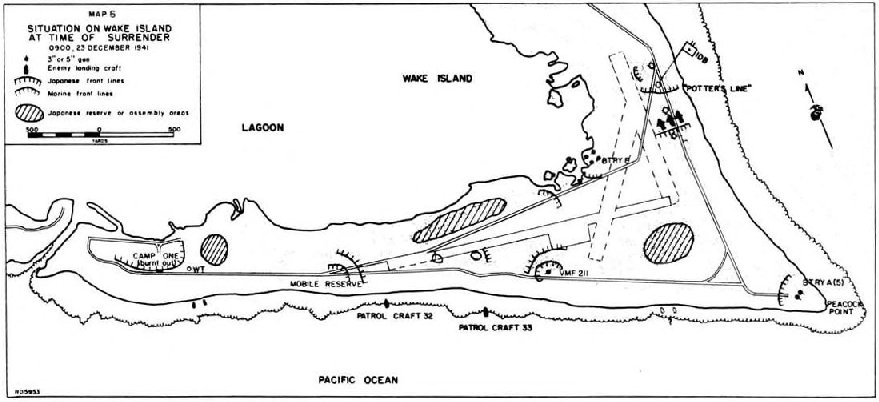
MAP 6
SITUATION ON WAKE ISLAND
AT TIME OF SURRENDER
0900, 23 DECEMBER 1941