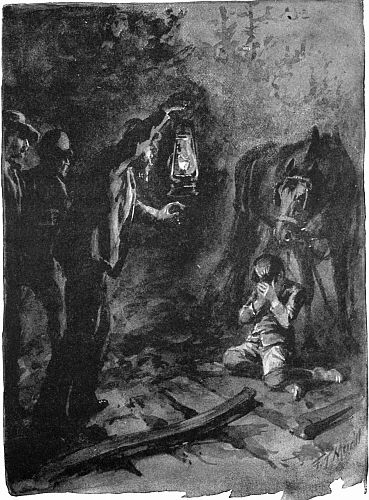
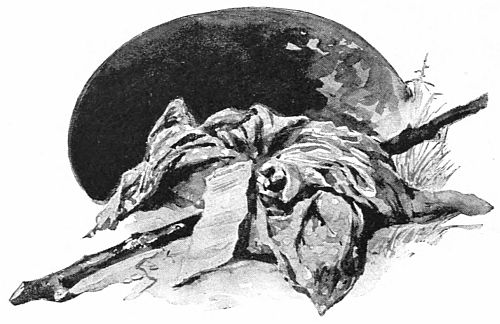
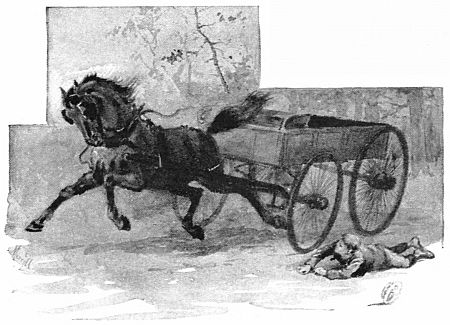
 "SNAPPED HIS HALTER AND BROKE AWAY."
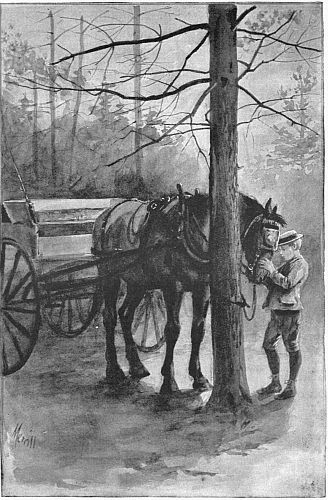
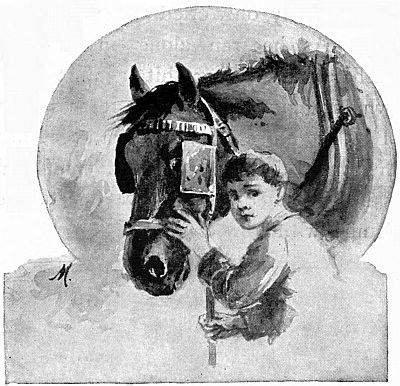
NOW, while Donny stood holding
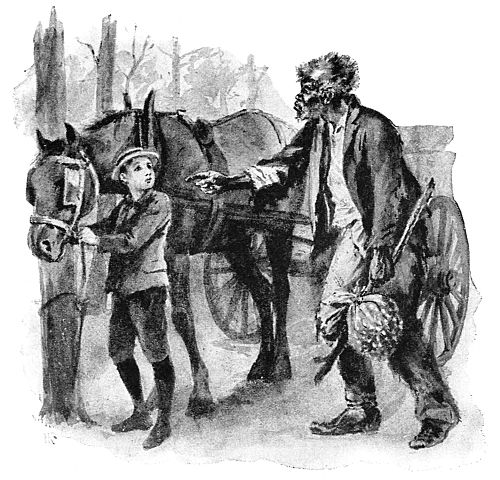
Ben Bow by the bridle, the old
horse reared, plunged violently, snapped
his halter, and
broke away.
The boy, at the same instant, was hurled
to the ground. The ringing of hoofs
and whir of wheels made strange sensations
in his ears. He thought what a
fool he was to be knocked down by old
Ben Bow.
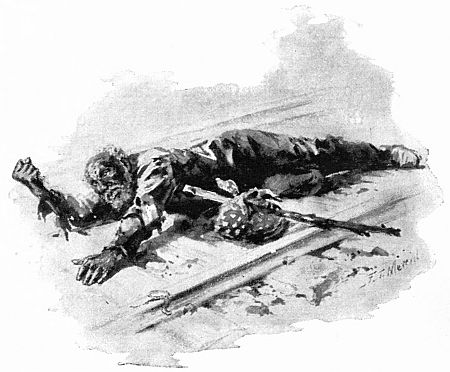
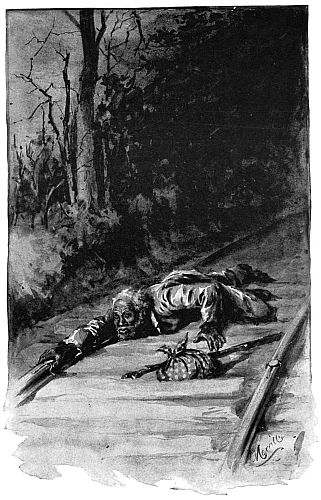
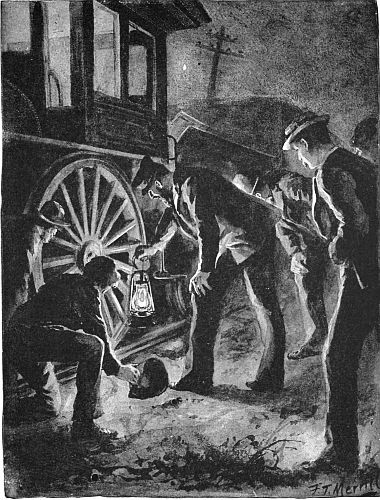
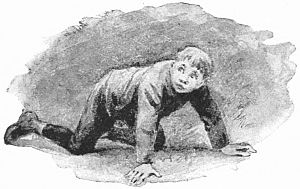 "HE GOT DOWN ON HIS HANDS AND KNEES AND CRAWLED."
Then he tottered to his feet. Complete
darkness had come. There was
an unearthly
silence. Then
a moan, then
a howl and a
shriek arose
which reached
from group to
group, from
house to house,
from square to forest. Human and
animal cries blended in one piteous
appeal for mercy.
Again the unknown power smote the
lad to the earth, which had become
a raging sea. It rocked—it rolled.
Terrified, the child no longer attempted
to stand. He got down on his hands
and knees and crawled.
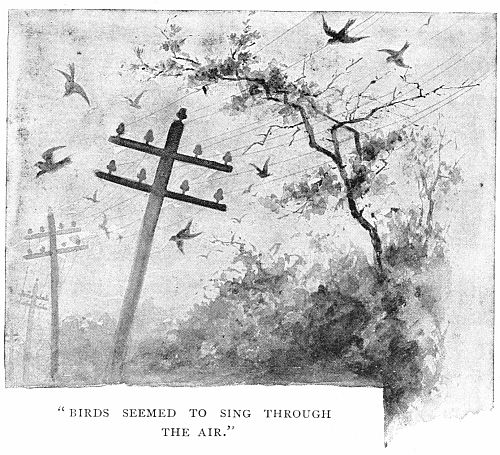
The trees whistled overhead. Flocks
of birds seemed to sing through the air,
striking against the telegraph wires.
The atmosphere, which but a few moments
ago reeked with heat, took on a
grave-like chill. Again the earth heaved
and swayed beneath the frightened
youngster, who fell upon his face, vainly
clawing the ground for the support
which it denied him.
The station was only twenty yards
away. There, all the people were in a
turmoil. While endeavoring to regain
their feet, some were violently thrown
upon the wooden platform. Others,
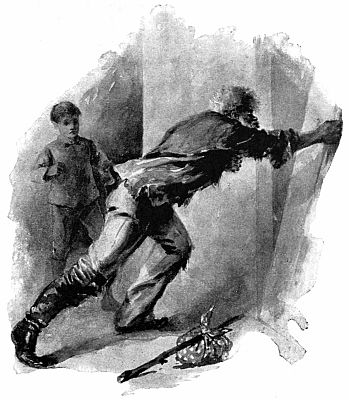
holding to the side of the building, felt
with stupefaction the boards totter beneath
their touch. Was judgment at
hand? Had the end of the world come?
The terror of a nameless danger unmanned
the stoutest heart. Women shrieked
and prayed. Men cursed and groaned.
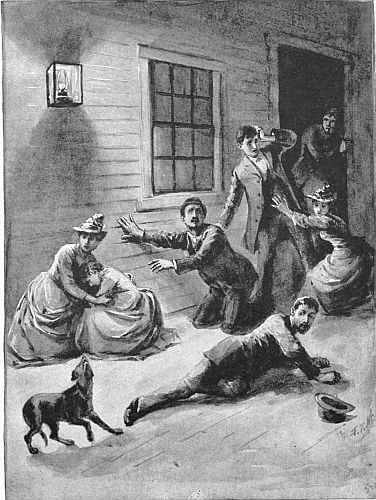 "HAD THE END OF THE WORLD COME?"
Donny had now joined the stricken
group. They huddled together until
another shock threw them one upon
another. Delicate women became nauseated
as if in mid-ocean. Sturdy men
who had faced bullets in the Civil War
without wincing, lost self-control. They
surged; they fought; they comforted
each other; they cried aloud.
At this moment a frightful tremor
shook the earth. The station building
gave sickening creaks; then it toppled
with a crash.
Yell now followed yell. The crowd,
that but now waited the joyous greetings
of friends, was battered by the
bruises of the earth and hurried by
fright into a contagious state of mania.
The bodies and faces of the people
changed almost beyond recognition.
Maddened with fear, stunned by the last
concussion, they stampeded.
| |
The cry rang from mouth to mouth:
"To the woods! To the hill! Home!
Home!! Home!!!" They swayed;
they rushed; they parted; they ran.
Struck as by an invisible enemy, they
fell prostrate in the powdery dust.
They picked themselves up again and
panted in their flight. A voice close to
Donny's side rang above the uproar:
"Good Lord! It is an earthquake!"
|
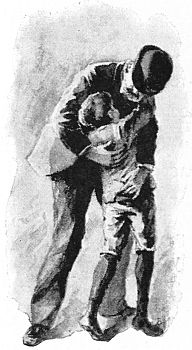
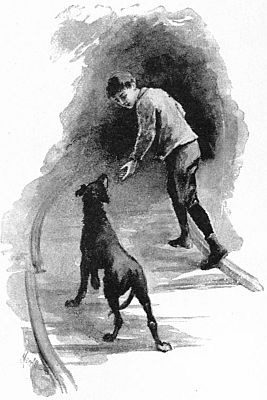 "THE PAUPER DOG."
Like birds before a tornado, the people
scattered to the right, to the left,—this
way, that, and were gone. Donny
found himself, dazed and alone, upon
the cross-ties, groping toward the oncoming
train. He thrust out his hands
and stood a moment piteously crying,
"Papä! Papä!" the most bewildered
little fellow in all that frightened
town.
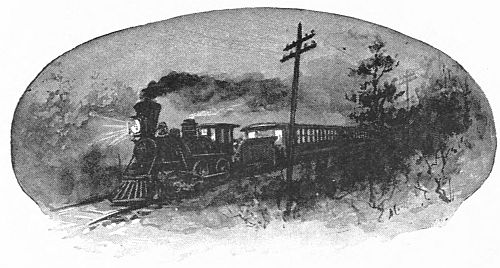
To crawl up the track, to meet the
train, to board her, to shriek at her,
to get to his
father, to cling
to the cow-catcher,
perhaps,
till the engineer
stopped for sheer
mercy,—this was the nearest approach
to a purpose that the child had, as he
beat along the track,
stumbling, falling,
up again, down
again, shaken by
the rolling earth,
and blinded by
darkness more awful
than he had ever
seen or thought of.
A strange, thin
dog, without a collar,
whined at his
feet as he pushed
on, and licked his
hand and followed
him like his own.
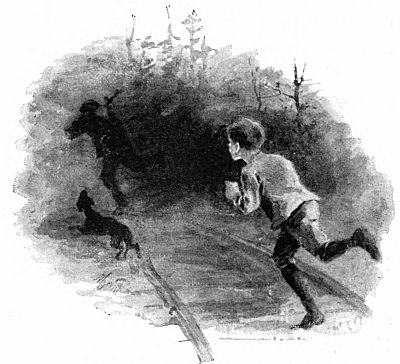
Huge, dim forms rushed alongside the
embankment, making unearthly sounds.
Dragons could not have seemed more
dreadful; but they were only cows.
Huge pine-trees bent to the earth with
rapid, vibratory motion as if a giant's
hand clutched and shook them by the
roots.
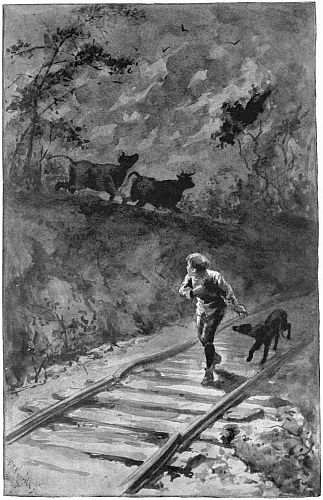 "THEY WERE ONLY COWS."
All the time the awful rumbling of
the earth went on; it sounded as if the
world were turning herself over, and
thrashing to and fro in a fit of anger;
before every convulsion she uttered a
roar which seemed as if it came from a
metal ball bowled along a giant alley
beneath. It reached its climax by trilling
the letter R-r-r-r-r! in a mighty
voice. Then came the shock.
Suddenly, as the child was making
his way through the horror and desolation
of this scene, he felt himself clasped
in the outstretched arms of a figure
hurrying from the opposite direction.
The two came together in the dark
with a jolt, and recoiled.
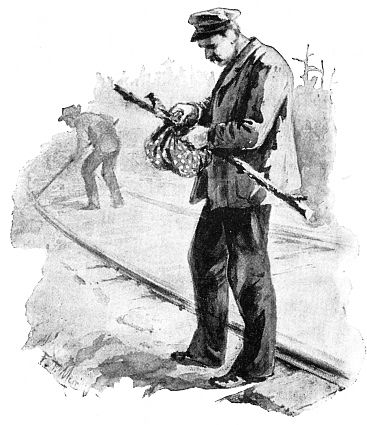
"Goramercy!" said a quavering voice.
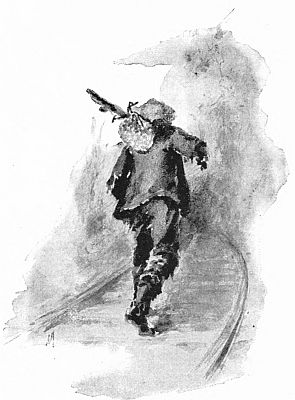
It was the speech of the old Negro track-walker,
taking two days to get to his
dying daughter because he could not
afford the railroad ticket that would
have brought him to her in two hours.
Donny recognized the high, cracked,
pathetic tones which had addressed him
at the station.
"De track's busted!" panted the
Negro. "De rails is done gone twist
wid de shakes. Dey lays like er heap
ob corn-shuck in de win' up yander.
Dat ar train don' know hit, an' she'll
go to Day ob Jedgment, an' ebery soul
aboard ob her! I'se run like de nation
fer to warn de town!"
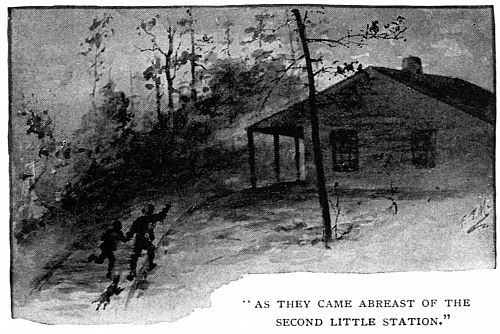
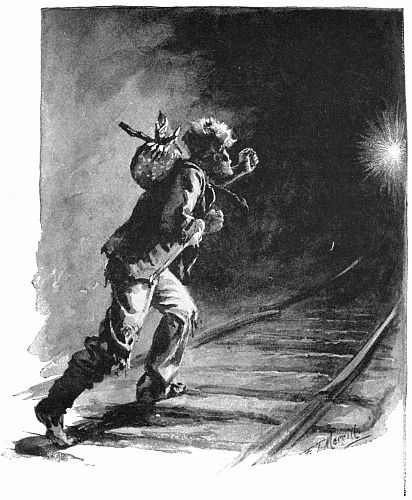
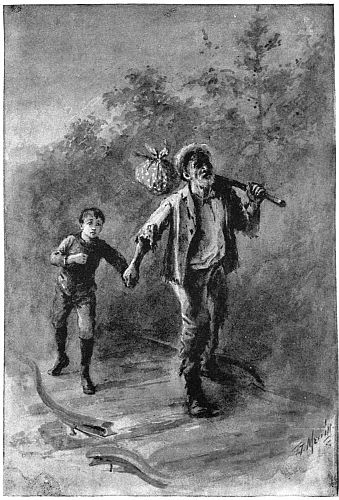 "RUN FOR 'T! RUN!"
"Oh, there isn't any town to warn!"
cried Donny. "It's all run off! There
isn't anything left but the earthquake
and me—and this pup—and nobody
to do anything—and my papä's aboard
that train! Oh, what shall we do?
What shall we do?"
"Run, honey, run!" said the old
man, more hopefully. "Mebbe we'll
head her off some ways or 'nuther.
Run for 't! Run!"
The dirty old black hand clasped the
tender little white one, which nestled
into it gratefully. What it meant at
that awful time not to be alone,—to
feel a human touch, to know that a
human heart beat beside you,—one
would have to be in the child's place
to understand.
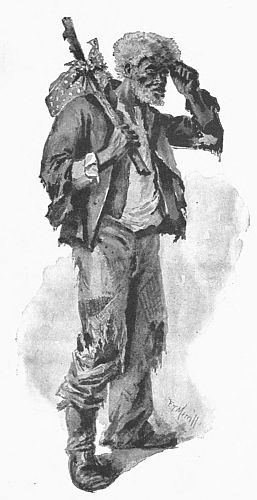 A LOST HERO.