“DEWEY DAY”
26
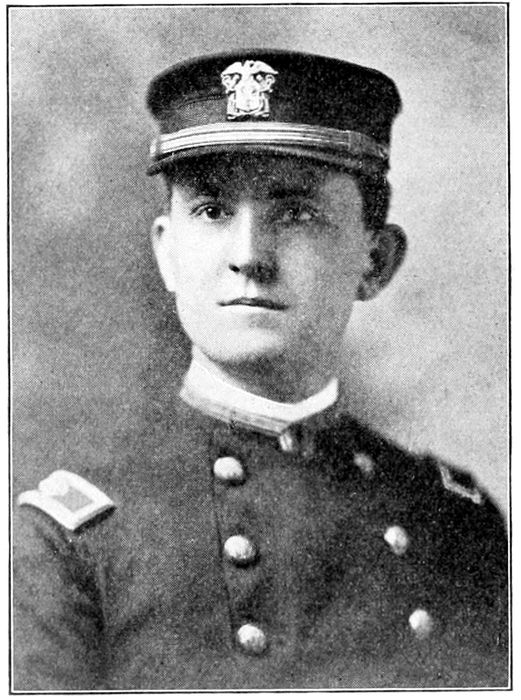
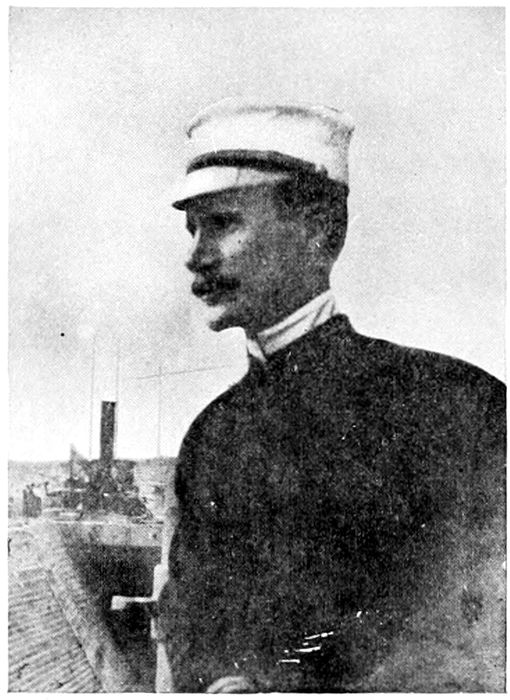
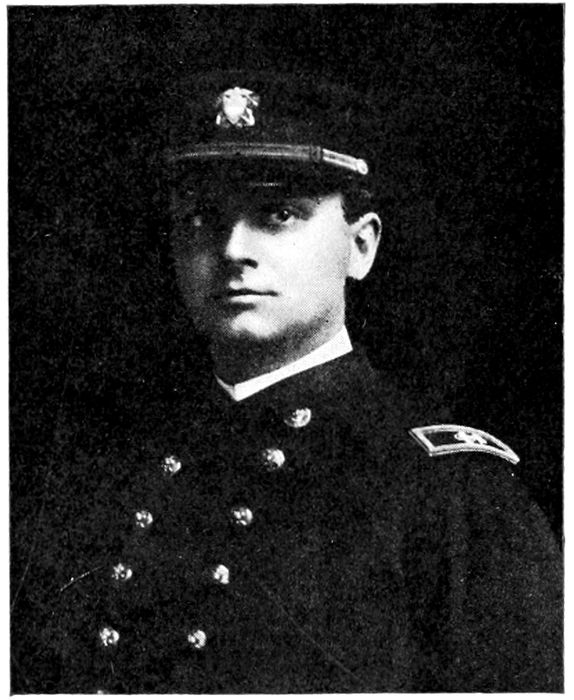
LIEUTENANT-COMMANDER LYMAN ROOT
Probably the most memorable occasion in the
history of the command was September 30, 1899,
“Dewey Day,” the day of the giant procession in
New York City in honor of the fine old hero of
Manila Bay. When the organizations to represent this
state were selected, it was the Naval Battalion which
headed the list of honor. The First Regiment was not
upon the list, but with honorable patriotism officers of
the regiment who had served in Camp Alger requested of
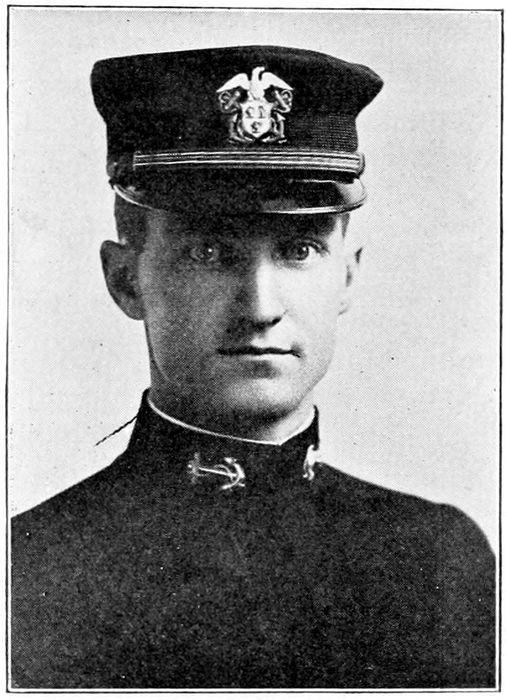
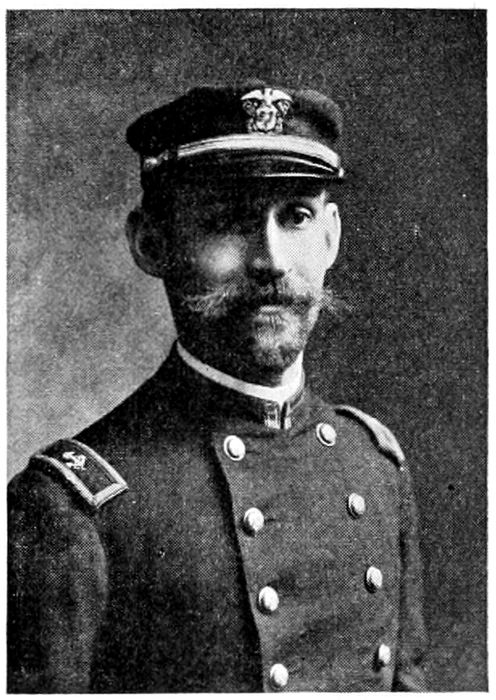
27Lieutenant Lyman Root, Lieutenant Parker’s successor,
permission to wear the sailor blue and carry Springfields
in the division ranks. Men who had served in distant
years in the wooden navy and men who had fought under
Dyer in Manila Bay and Wainwright in the combat with
the Furor and the Pluton and had returned to Hartford,
also asked and received the same permission.
With four officers and 112 men the division swung
out from the armory on the evening of the 29th and amid
red fire and with a band blaring at the front paraded to
the railroad station, envied by infantrymen who could not
obtain opportunity to march in the mammoth procession.
At 11 o’clock the company marched into the Second
Regiment Armory in New Haven, stacked arms and was
dismissed for a midnight lunch, at which the men stowed
away steaming coffee and ham sandwiches and received
strict orders not to leave the building. Then they made
living pillows of one another and slumbered innocently
on benches in the gallery till some wee, sma’ hour or
other in the morning, when the Second Regiment crashed
out with “Onward Christian Soldiers,” and summoned
them back to the world of consciousness and sin. At
3 o’clock they fell in and marched out into a hospitable
rain punctuated by milkmen and policemen. Three-quarters
of an hour later they boarded the side-wheeler
Shinnecock. At 4 o’clock the steamer got under way
and the men began to look forward to a night of rest.
One man slept on his arm under a table in the dining
saloon piled six feet high with camp chairs. Another
was lost to the world under the break of the pilot house.
Still another slept on unbaled hay for the field officers of
the Second Regiment. Some slumbered in gangways
and some on the paddle boxes. The mathematical boys
of the division demonstrated the problem that it was
possible to sleep anywhere in space.
Somewhere in the head of the Sound the Shinnecock
fell on an evil time. A bushing on a feathering paddle
28blade in the starboard wheel misbehaved and a bar
buckled and for three hours she drifted while engineers
made repairs. Finally an emergency landing was made
in a convenient coal yard in Port Morris and the battalion
trotted at double time for two miles over Harlem cobblestones,
arriving just in time to fall in ahead of General
Oliver O. Howard and the Grand Army Division.
During the march the men had a coveted opportunity
to view the one-armed corps commander at close range.
Much of the time the old hero was obliged to ride with
his bridle rein in his teeth and with his chapeau in his
hand in response to the frantic waves of applause which
greeted him. The occupants of the closely packed stands
along the line of march rose in wildly cheering masses
as they caught sight of the grizzled veteran and the men
of the Grand Army of the Republic.
Down Riverside Drive and for four miles in the heart
of the city the battalion marched with fixed bayonets.
It paraded between solid masses of cheering citizens and
almost solid walls of flags and decorations. At every halt
the men were refreshed with fruit, coffee or drinkables,
sandwiches and salads or cigars, and presented with
flowers and souvenirs. At one halt on aristocratic Fifth
Avenue a shower of silk college sofa cushions came down
from window seats and a Princeton cushion was impaled
on the historian’s bayonet.
At the conclusion of the parade many of the division
repaired to restaurants near Madison Square and Union
Square. Dozens of them found, when they stepped to the
cashiers’ coops to liquidate, that unknown civilians had
obtained their checks and paid the bills. A man in a
sailor uniform in New York City that September afternoon
found it no easy task to spend money. Nothing
was too good for the bluejackets.
It is to be recorded that Lieutenant Cuntz, Gunner’s
Mate Huntington, Coxswain Chapin and Seamen
Noble and Nutter preceded the battalion to New York.
29When the Shinnecock failed to appear, they annexed three
stray regulars from the U. S. S. Texas, and assumed an
advanced place in the column. In one of the spectators’
stands certain individuals conceived the notion that the
eight were Hobson and the Merrimac survivors. In a
few moments the word was passed over the stand and the
crowd was on its feet in a wild burst of applause.
While Dewey Day experiences were still being talked
over, arrangements were quietly made for a presentation
to the first commanding officer, Mr. Parker, who was
lured to Turnerbund Hall to receive from the command a
gold watch with chain and fob, the chain in the semblance
of a stud-link ship’s cable and the fob a division pin
mounted on a locket.
More of the tang of salt air and of the romance of
the ocean came one evening in the next drill season when
the division mustered in the parlor to listen to a talk by
Professor Henry Ferguson of Trinity College, an honorary
member, who told a thrilling tale of shipwreck in the
mid-Pacific. Professor Ferguson recited the story of the
Hornet, a clipper which sailed from New York in 1866
for San Francisco. When the ship was several hundred
miles off the Galapagos fire obliged the crew to take to
the three boats, which were provisioned for ten days.
It was decided to head for the north, to keep in the track
of San Francisco vessels. Merchantmen in those days
adhered to Maury’s sailing directions and it was reasoned
that chances would be better in the sea highway than in
attempting to reach land. By day the heat was nearly
intolerable. Nights were treacherous as they induced
squalls of the vindictively sudden nature peculiar to those
Equatorial waters. Day after day wore by with an unbroken
horizon. Finally the boats crawled up into the
trade winds. It was decided to separate the boats to
increase the chance of finding aid. For twenty-five days
the sailors had fought wind, sun, and water and now
30they were in danger of fighting starvation, the ten days’
provisions, which had been distributed into one-third
allowances, being nearly exhausted. The remaining
provisions were in turn re-divided, but were gone in a
fortnight. The men surviving sought nourishment in
the chewing of leather and moist clothing. On the point
of utter exhaustion they made a landfall, which proved to
be Hawaii, and were rescued by a crew from a coasting
station. They had spent forty-three days in an open boat
and had traveled nearly three thousand miles.
More of the romance of the sea came to the division
when the story of a “war member,” William Hurd, and
the schooner Intrepid was told. Less than a month after
Professor Ferguson’s lecture, Hurd cleared in New York
with his little auxiliary as a trader to carry trinkets, tin
jewelry, Yankee notions, canned soups, linens and whatnot
to Baranquila and to acquire cocoanuts and rubber
on the Mosquito Coast and islands nearby. His auxiliary
was sixty-one feet on the water line and eighteen feet
beam and thirty-five gross tonnage, or twenty-eight net.
She had a powerful gasoline motor. After she cleared,
Colombian insurrectionists captured Baranquila and
Hurd’s friends in the division began to wonder what
would happen to their former shipmate if an insurrecto
officer ranged alongside with more of an appetite for
grindstones, canned soups and tin jewelry than for international
law. But Hurd was able to take care of himself.
He prospered as a trader, made a bushel of money, spent
it and finally returned.
At the annual banquet of 1900, Admiral Bunce, U.S.N.,
retired, was a guest and in his speech pointed out
that foreign intelligence officers knew full well that seven-tenths
of the arms and ammunition made for the government
came from Connecticut. In response to a toast
another speaker, Francis B. Allen, said:
31
“It was one of your honorary members, our distinguished
Admiral Bunce, who, while in command of the
North Atlantic Squadron just prior to the Spanish War,
brought not only the fleet but each individual ship to such
a degree of excellence in squadron evolutions and gun
drills that he enabled his successors to acquit themselves
so creditably that Sunday morning outside Santiago
Bay when Cervera’s squadron tried to escape that the
result afforded us the greatest Fourth of July celebration
since Vicksburg surrendered.”
A month later Ensign Middlebrook launched the
Veteran Association down well-greased ways, and on
May 23 the battalion had its first field day, assembling at
Savin Rock. It was reserved for Gunner’s Mate Chapin
to make known to Hartford a new method of celebrating
the Fourth of July. He navigated a picked gun crew at
the close of the midwatch from the armory to the City
Hall and at sunrise pumped out a salute of twenty-one
shots from the lean throat of a Hotchkiss one-pounder.
Irate sleepers admitted that Chapin’s method was convincing.
They were justly incensed when he marched
the crew under the Asylum Street bridge and fired a like
salute, and still more so when he took it to the Park
Terrace and discharged a fourteen-shot salute. Chapin
proposed to fire a salute in Wethersfield, but ammunition
ran low.
COURSE FIVE THE PRAIRIE AGAIN
32
That summer’s cruise was on the Prairie and
led to Penobscot Bay. The division sent in a
whaleboat crew to race against one from the
First Division on that water, and its crew
defeated that from the Elm City by a quarter of a length,
one of the New Haven officers marveling at this result
and asserting that it was a mystery of the deep. It also
captured two other boat races.
Later in the summer camping parties spent week-ends
in Paradise, the narrow strip between Bodkin Rock and
the river a short distance below Middletown. The division’s
steamboat and the pulling boats which had come a
season or two before were in popular favor. They gave
silent lessons to the boys in boat engine work and in the
stowing of dunnage, thereby adding variety to the oarsmen’s
drill of the early spring.
December 22, Lieutenant Parker died at his home in
South Lancaster, Mass. mourned by all who knew him.
A patriotic officer, a loyal friend, he had won the affection
of the command.
One minute prior to midnight December 31, two gun
crews unlimbered in the rear of the City Hall and on the
dot of midnight, the opening of the new century, Gunner’s
Mate Chapin fired the first shot in a salute of twenty-one
guns, a welcome to the newborn heir of time.
Century No. Twenty’s first gift to the division was
an indoor baseball team. The sport was new to the
armory and it jumped (or slid) into instant favor. The
33first game was with a team from Company A and to the
astonishment of everybody and most of all themselves
the sailors won, by a score of 17 to 12. They contended
with a hurricane of batting in the second inning and
dragged anchor, but they weathered the storm and won
with an inning to spare. One of the division advocated
a diamond of this kind:
Home plate on the forecastle near the foremast, for
baseline the starboard foremast shrouds and for first base
the foretop; along main topmast stay to second base, the
main top-masthead; down main topmast rigging to third
base, the main top; then down the mainstay and on to the
point of beginning. None of the other teams would play
on that diamond.
In a sham battle held in the armory in Governor
McLean’s honor the division had a conspicuous part and
in the spring the battalion had its field day in the South
Meadow. Governor McLean had appointed Mr. Middlebrook
to be naval aide on his staff, with the rank of
captain, the highest rank which any member has obtained
in the Connecticut naval militia, later naval-aides having
the rank of lieutenant-commanders.
COURSE SIX TO CAMP NEWTON
34
The third anniversary of the mustering in of the
battalion at Niantic was observed by an outing
at Woodmont, followed by a week-end cruise
on the Elfrida, the converted yacht once owned
by W. Seward Webb and purchased by the government
at the breaking out of the war with Spain. At a banquet
in the Pembroke Hotel at Woodmont, General Edward E.
Bradley, adjutant-general when the First Division organized,
and Senator Joseph R. Hawley were speakers.
Master-at-Arms Murphy trained a volunteer racing
cutter crew at intervals in the course of the summer,
bitterly lamenting that he never had the same men two
evenings running. Still he had men who were fairly
proficient when the battalion had its annual tour of duty,
at Camp Newton on Fisher’s Island. Tent life was
varied by considerable work in pulling boats. It was
expected that a cutter race would be rowed between the
Hartford racing crew and a crew picked from the New
Haven and Bridgeport Division, but the latter did not
materialize. That spectators might not be disappointed,
two crews were selected from the Hartford oarsmen,
Lieutenant Lyman Root acting as coxswain for one and
Assistant Surgeon Carroll C. Beach for the other.
Mr. Root’s crew was inspired by the presence of Dick,
the division’s mascot, a corpulent bulldog with a blue
flat cap cocked rakishly over one ear. With one hand on
the tiller and the other on the dog’s collar, Mr. Root
incited his crew and won by a half-length in a course of
half a mile.
35For most of the six days rain came down in buckets.
The camp work was a practical lesson to the men of the
division. That they returned healthy, well disciplined,
and contented, as well as much more familiar with duty
either afloat or ashore, demonstrated the learning capacity
of the men and the value of the camp.
On the return the Elfrida cast off, outside Saybrook
Light, a tow consisting of the steam whaleboat and the
division’s cutter, its barge and its pulling whaleboat.
The “whaler” with the pulling boat in tow started up the
river, but a squall descended and gave work to all hands.
The crews landed in Essex in torrents, and after making
the boats snug for the night, turned in at a sail loft near
the landing.
In the autumn the division sustained another severe
affliction in the death of its first honorary member, a firm
friend in fair weather and foul, Admiral Francis M.
Bunce, an officer whom it had been a rare privilege to
honor. A veteran of the Civil War, a seasoned sailor,
a loyal Hartford man who took pride in his townspeople,
the Admiral had richly merited the division’s high esteem.
His strong, yet kindly face the men missed and mourned.
In the autumn an order came for a parade in New
Haven, and when the personal escort for President
Roosevelt was selected, it was found to be the Naval
Battalion; and when the parade started it was found that
the senior division, the Second, was next to the
President’s carriage.
Wall-scaling had a conspicuous part in the drill of the
winter, and in the spring small boat work and volunteer
work on the Elfrida, the battalion’s practice vessel, were
attractions for those most interested in the command.
The Elfrida played her part well in the duty of the
spring field day of 1902, when the battalion rendezvoused
in Bridgeport.
36
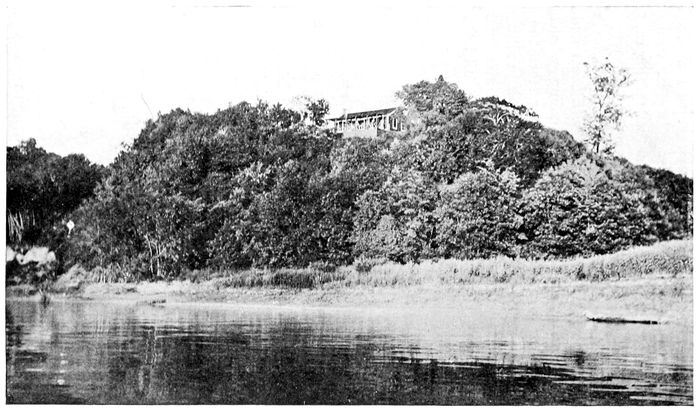
37In June of that year a proposition to establish a
summer camp took shape and at a meeting a subscription
paper was opened and $200 was pledged in about fifteen
minutes. A site was selected on the east bank of the
river in South Glastonbury and nearly opposite Two
Piers. Volunteers cleared the land of brush, assisted in
driving a well, hauled lumber and materials up the steep
ascent of 115 feet, aided the carpenters, and helped to
furnish and arrange camp. They sought and obtained
practical experience in cooking and camp life. It was
decided to name the camp after the first commander of
the division; and to this day the building is known as
Camp Parker. The spot was formally dedicated July 4th
with speeches and an open-air dinner, at which the building
committee in due and ancient form turned the institution
over to the division. The house was equipped with
hammocks and many a rooky has there learned how to
pass a sailor’s night. Many a pleasant Sunday afternoon
in midsummer has lured men of the division to the cool
piazza with its noble view for many miles in three directions,
south, west and north.
COURSE SEVEN THE PANTHER
38
In some respects the yearly cruise which started
several weeks later was among the most memorable
adventures of the division; and when some of the
old hands are spinning yarns about what they did
when they were young, they like to hark back to the
“sham war” and a certain hike across Montauk Point.
The most extensive land and sea maneuvers in many
years were arranged in Washington for a force of several
thousand of the army and for practically all of the fine
North Atlantic squadron of that year, of which Admiral
Higginson, the captain of the Massachusetts in the Spanish
war, was in command.
It was on the auxiliary cruiser Panther that the
battalion served. The division boarded the ship in New
London harbor. In the course of the service the Panther
steamed as far east as Menemsha Bight and as far west
as New London, the object of the maneuvers being to
test in a practical way the defenses of the eastern entrance
of Long Island Sound. At sundown of a Saturday the
most powerful fleet to that time assembled in those
waters was riding to anchor in the bight, awaiting the
passage of the hours before midnight ’ere beginning
maneuvers against the string of forts and signal stations
scattered all the way from Woods Hole around to Montauk.
As night shut down, the signal lamps began their
Ardois work. At midnight hoarse orders came from the
Panther’s bridge and the rattle of the steam winch and
the heavy clank of the cable in the hawse pipe announced
that the ship was getting under way.
39Sunday found the ship off Block Island and Monday
evening found her heading north. Just as the watch off
duty was beginning to snore peacefully, the bugle sounded
the call for general quarters. In a moment the gun deck
lights were switched on and ladders and hatches were
choked with men piling to their stations. Masters-at-arms
were unceremoniously rousting out rookies from their
hammocks. In barely more time that it has taken to
write this paragraph the guns were cast loose, ammunition
was provided and the big naval bulldog was in fighting
trim.
One afternoon the battalion had boat drill. Cutters were
lowered and with boat guns working and the landing party
armed with rifles there was a pretty bit of excitement.
A day later the heavy guns belched at a signal station
ashore, which crumbled to theoretic dust. Then the naval
militiamen were mustered at division quarters and a day’s
ration was issued to each man, a two-pound tin of canned
beef to each pair of men and five or ten hard tack (or
ship biscuit) to each man and a canteen full of water
or coffee, as the man elected. The call came for arm and
away boats. With a Colt automatic in the bow of each
cutter the party landed, going into extended order, while
a detail took possession of the telegraph and the telephone
station.
The long line of blue swarmed over a strip of sand
and a bit of swale to a knoll. Then began two hours’
hard work. Through wire grass and sand grass, through
bushes and brush, across swamp and swale, by farmhouses
and barns, alongside lily ponds, the bending blue
line advanced, officers pointing the way with swords and
squad leaders attempting to keep the files at eight pace
intervals.
Following an advance of four miles in such manner
the “enemy” was located behind the crest of a steep and
high hill. The order for a charge was given and with a
40yell the men sprinted forward under a heavy shower of
fireworks. Ensign Northam was the first up San Juan
Hill and it was reported that the historian was the last
to reach the summit.
At this juncture the heavens opened and rain came
down in buckets. After a quarter of an hour in the
downpour the battalion started on the return of four
miles. The hike was at route step. At the beach the
oarsmen had a stiff pull against wind and tide in boats
loaded to the gunwales. But the young salts were in
fine spirits and when the order came to “shift to anything
dry” it was received as a joke.
The chief boatswain’s mate of the Panther was C. K.
Claussen, the Claussen who accompanied Hobson on the
Merrimac and was confined in the Spanish prison near
Santiago.
At the end of the week, when the Panther left the
squadron, her course lay between the Olympia, Dewey’s
flagship in the Battle of Manila Bay, and the Brooklyn,
Schley’s in the capture of Cervera. To each was given a
salute with the bugle and the lining of the rail. The
Brooklyn’s band rendered a patriotic air.
In the following fall the division took up target
practice in real earnest and at a special shoot in the South
Meadow Chief Gunner’s Mate Herbert E. Wiley won
the first place. Barely was this function over when it
was decided to produce a comic opera and “The Mikado”
was selected. This was presented in Parsons’, so well
that critics agreed that the division could sing as correctly
as it could sail.
In the winter the division tried its fortune again at
indoor baseball, with varying results. On one occasion
it played an exciting game with Company A, won the
game, lost it and won it again, just clearing a lee shore
by a score of 19 to 18. On another it defeated the champions
of the armory in an eleven-inning contest.
41The second annual indoor meet demonstrated that the
series had arrived to stay, a fact which each February
proves again.
To extend its activities the division sent a picked gun
crew on an inland cruise to New Britain to give an exhibition
drill.
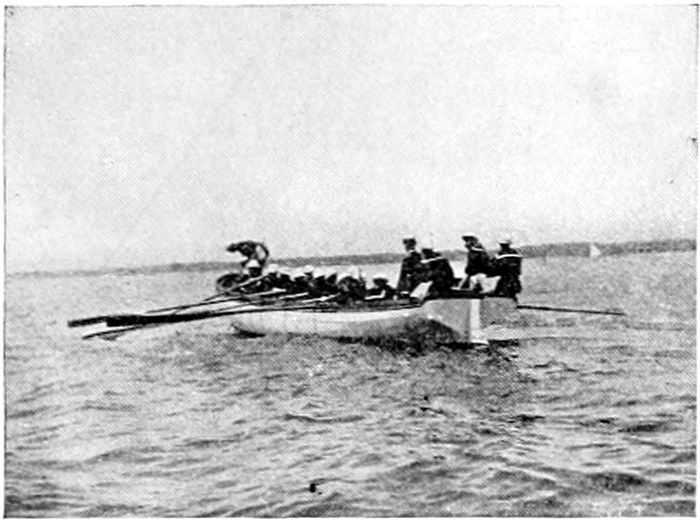
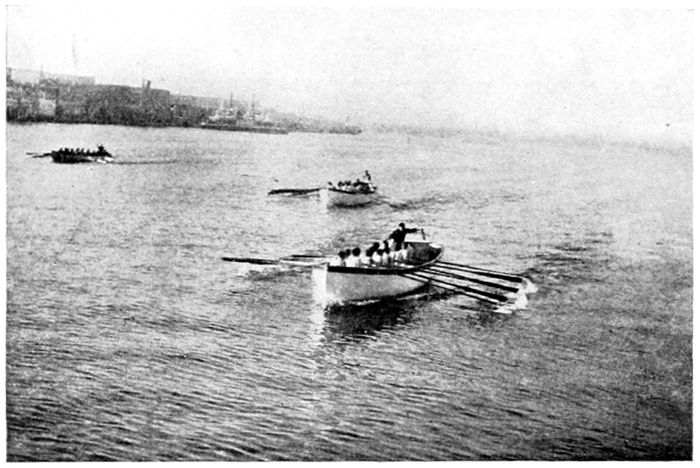
BOAT CREW AT CHARLES ISLAND
The field day was spent at Charles Island. To still
further extend its activities the division crossed afoot
from the island at low tide to the mainland.
COURSE EIGHT AT NIANTIC
42
Amphibious is the word to apply to the division’s
tour of duty that summer. The steam
whaleboat, by this time christened “Tillie
Hadley,” by her fireman, Gunner’s Mate Arnold,
started down the river August 21, 1903, with the three
pulling boats in tow, carrying nearly a quarter of the
division. The following day the remainder boarded the
Elfrida in New Haven harbor, and she with the First
Division’s small boats in tow steamed to Crescent Bay.
A detail from each division spent eight days afloat and
the rest divided their time between Camp Reynolds at
the state military rendezvous at Niantic and boat drills
in Crescent Bay. The boat work was popular, so much
so that in a few days most of the oarsmen were approaching
man-o’-war form.
At the end of the duty a storm came along which
gave work to militia, the seafaring population and landlubbers.
In the New York Herald of the next day it
was printed: “Old seafaring men down that way say
that they never saw the Sound rougher than it was that
night.” A sailboat was washed ashore at White Beach,
two small sailing vessels dragged anchor near Niantic,
a sloop was wrecked to the southwest of the Crescent
Beach landing and a large three-masted schooner dragged
anchor.
The Elfrida steamed out of the bay as the storm was
breaking, on her way to Sandy Hook and the yacht races
with Governor Chamberlain on board. The sou’wester
43rose into a gale. Seas broke high over the weather rail
to fly across the engine room skylight. The officers on
the bridge and the quartermaster on watch were soon
soaked to the skin in spite of oilskins and pea coats.
It was a fierce night and the brave little ship had a nervy
tussle with the gale. At 3 o’clock in the morning the
Elfrida put into Huntington Bay and dropped anchor,
finding that five large steamers were there riding out
the night, among them the Tremont of the Joy Line,
and the Shinnecock. Stormbound sailing craft were also
in the bay.
Soon after the hook went down it was found to be
dragging, then the ship was taken farther inshore and
both starboard and port anchors were let drop, with a
good length of cable.
Later a distress sign was sighted on a yacht out in
the open water. A volunteer boat crew pulled out and
found the vessel to be the schooner Rosina, from New
Haven, owned by an amateur who had a sailing master,
three women and a cook on board. The owner seasick,
the sailing master called the cook for a moment to the
wheel, while he stepped down into the cabin for a chart.
The cook lost his head and, while in the wind, the
schooner’s main-topmast snapped and her fore-topsail
carried away. The rescuing boat crew found the women
hysterical and with life preservers adjusted. The men
from the Elfrida cleared away the wreckage.
Early in the fall the division entertained members of
H Company, Naval Brigade, M. V. M., of Springfield, at
Camp Parker with an old-time shore clambake. The camp
had become increasingly popular and for a number of
years nearly every Saturday or Sunday afternoon in
midsummer attracted division men to the place, and in
“whites” the boys kept busy making things snug in the
galley or policing the grounds or taking a spin in a
pulling boat below.
44November 18 brought an extraordinary spectacle—a
book bee. At our bell in the first watch, Librarian Palmer
and Jack-o’-the-Shelf McDonald broke out their accessioning
system and the smoking lamp was lighted. The
books given made a startling list. Tolstoy’s “Resurrection”
was found sandwiched between “Alice in Wonderland”
and a volume of Lighthouse Reports. General
Miles, Kipling, Morgan Robertson and Roosevelt were
popular authors. This is history, not romance. An
entertainment followed the book bee. Clog dancing on
the foc’s’le head, nautical songs, selections on cordage
and dead eyes by a banjo quintet and a sword dance by
Coxswain Watson made up the backbone of the evening.
It was seven bells when the rejoicing ceased and the
merrymakers heaved out of the armory, all on soundings
and under easy canvas, except the supposed contributor
of “Resurrection,” who scudded away under a double-reefed
fore-topsail.
The indoor meet of the next February sustained the
division’s reputation. By this time the annual mid-winter
tourney had become known all over Connecticut. The
referees in the series have included such gentlemen as
President Luther of Trinity College and Former Lieutenant-Governor
Lake.
A month later the division was entertained by
H Company of Springfield in the Highland Hotel in that
city, where the company was observing its eleventh
anniversary.
In June (June 19, 1904) the Elfrida came over Saybrook
Bar with Lieutenant Lyman Root in command. She was
navigated up the river by members of the division and
came to anchor opposite the foot of Ferry Street. Three
days later, a brilliant reception was given on board her
to Governor Chamberlain. She was dressed fore and aft
and from water’s edge to water’s edge. In the illumination
248 Japanese lanterns were included. Many military
officers were present in full dress uniform.
45The following morning the division paraded to the
foot of Ferry Street, embarking and escorting the governor
and Former Governor Morgan G. Bulkeley, an
honorary member of the division, to East Haddam, there
to attend the dedication of a monument to Major-General
Joseph Spencer of Revolutionary War fame.
Three days later a hard-working and loyal graduate
of the division, Ensign William G. Hinckley, assistant
engineer, received his commission as lieutenant and chief
engineer. Efficient, loyal and popular, Mr. Hinckley
received numerous congratulations of his well-earned
promotion.
The range of the division’s energy is proved when it
is chronicled that July 27, the clubhouse committee
carried out a moonlight sail down the river. It was
considerately promulgated in the committee’s circular:
“State exact number of ladies you intend bringing.
Chaperons will be in attendance.”
COURSE NINE THE HARTFORD
46
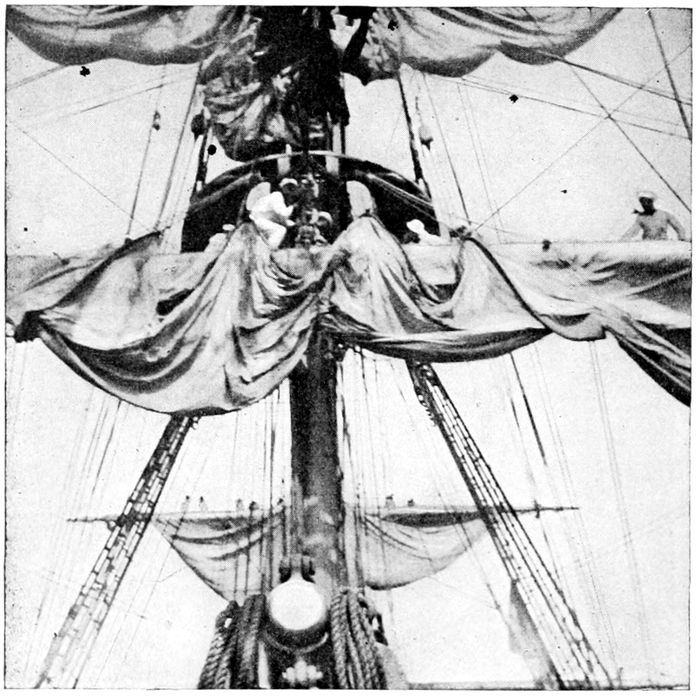
FURLING SAIL ON THE U. S. S. HARTFORD
The yearly cruise of 1904 was on Farragut langsyne
flagship, the Hartford, relic of the battle
of Mobile Bay. It was as interesting as any
which the division has ever taken, barring,
perhaps, that on the Panther. When station billets were
issued even the old hands volleyed questions at their
running mates of the regular crew. Here is the start of
a typical station billet:
| 47 |
| Form No. 10.—Bur. Navigation. |
| |
| Watch No. 126 |
U. S. S. Hartford. |
| Name, |
Rate, Cox. |
| Div. 2d. |
Gun, No. 8, 5–inch. |
| Armed boat, 3d cutter. Running boat, 3d cutter. Abandon ship, 3d cutter. |
| Fire quarters, close ports, No. 8 5–inch gun. |
That was easy enough, even for a rooky. But what
do you know about this?
Loosing sail.
Furling sail.
Up and down topgallant and royal yards.
Up and down topgallant masts.
Making sail and getting underway.
Tacking and wearing.
Reef topsails.
Shorten sail and come to anchor.
Loose topgallant sail.
Furl topgallant sail.
Topmast crosstrees to rig upper topgallant yardarm, etc.
Topmast crosstrees, reeve and unreeve mast rope, fid and unfid, etc.
Loose topgallant sail, then on deck to halliards.
Overhaul foresheet and shorten in, man maintop bowlines, main and fore tacks.
Man topsail bunt lines, then halliards.
Let go topgallant halliards, man topsail clew lines, veer and stopper cables.
It was a novelty to nearly all of the division, bringing
back the old days of heave and haul. The regulars were
husky men with legs like barrels and arms like blacksmiths’,
nearly every one raw material for a football player
or anchor of a tug-of-war team. Bosn’s mates were
weather-beaten salts with faces like teakwood, seamed
by the suns and snows of the seven seas, tanned tar-mequicks
48with chests like hair mattresses. One barnacle in
the port watch had a voice as rasping as a nutmeg grater.
You might have imagined that he was born in Lat. 2,
North, Long. 2, West, and that he learned to creep on
the lee side of the foc’s’le. When he shrilled out a pipe
with a chaser like the growl of distant thunder a nippous
rooky from the Tenth Ward asked in blank amazement:
“What in heaven did that fellow say?”
“One man from each part of the ship coal the first
steamer,” was the reply.
Some of the best boat work which the division has ever
done was performed on this cruise. This is true not only
in the line of oarsmanship, but also in the securing of
boats for sea and for port.
The duty took the division up Sound to Huntington
Bay, then east to Gardiner’s Bay, thence over to New
London and finally back to New Haven harbor. The men
had a welcome convenience in the line of large lockers.
They took much interest in the apprentices, frolicsome
little fellows then from the training station who had
school each morning at a mess table on the starboard side
of the gun deck near a frowning five-inch gun with its
glittering brass and its oiled steel.
The boys were poring over their books and papers
in very much the same way that lads in the seventh and
eighth grades in the Second North or the West Middle
schools are poring (perhaps more so), over arithmetic.
In the instruction of the class the chaplain was using some
of the books which citizens of Hartford gave to the
ship’s library in 1899 at the suggestion of Admiral Bunce.
Most important among the events of the early part
of the ensuing drill season was the election of Lieutenant
Lyman Root to be navigator of the battalion to succeed
Lieutenant Robert E. L. Hutchinson, promoted to
be lieutenant-commander and in turn succeeding
Lieutenant-Commander Frank S. Cornwell, promoted to
49be commander of the battalion, vice Commander Averill,
retired. In his capacity as chief of the division, Mr. Root
had shown exceptional versatility, having been successful
in the social and athletic lines, as well as in drill and discipline.
At the next drill evening he took formal farewell
of the division which he had so long and so ably
and so considerately commanded, giving generously of
his best energy and most faithful loyalty. He had taken
the helm when the command was little better than a
wreck, had nursed it back to health and prosperity and
made it the finest military company in all Hartford. In
fair weather and foul weather, in joy and sorrow, on
soundings and off soundings, his steadying hand had
been at the wheel and had time and again brought the
division safe into port. Strong and clear purpose, affection
for the command and for salt water,—these were our
chief’s dominant traits. The ability to read character
was another quality. But of these three characteristics
his affection for the division stood ever foremost.
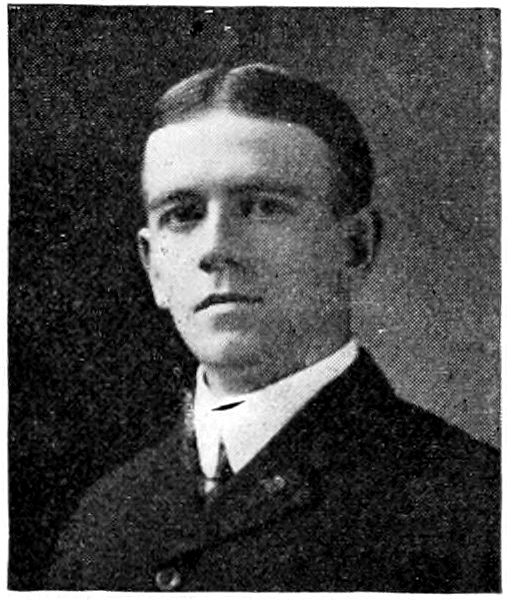
LIEUTENANT HOWARD J. BLOOMER
Captain Howard J. Bloomer came over from the
infantry to act as next lieutenant of the division, not the
least of the prerogatives being the privilege of presiding
50as toastmaster at the yearly banquet. On the menu card
was a huitrain re-rigged from Coxswain John Kendrick
Bangs so as to read:
Oh, Navy Plug, Ottoman, Alonzo,
Puritan Boy, Especial, H. Clay,
Invincible, Rosedale, Alphonso,
Soby’s Best, German Lovers, El Rey,
Elegantes, Re-ina, Selectos,
Oh, Two-For, Madura, Grandé,
Shoe Pegs, Oscuro, Perfectos—
You drive all my sorrows away.
A floral bell nearly as large as the foretop was lifted
and revealed an elegant silver loving cup presented to
Mr. Root as testimony to their high esteem. A little later
followed the elevation of Mr. Root to the rank of
lieutenant-commander of the battalion.
COURSE TEN THE COLUMBIA
51
Sail drill was the feature of the cruise on the Hartford
in 1904 and in the following year drill in
small boats was the feature. On the training ship
the boats usually hung outside the rail, but on the
cruiser the boats were frequently kept inside the rail.
With the ship’s four funnels and her multitudinous skylights
and deckhouses her superstructure was unsuitable
for “setting up.”
A series of tug-of-war pulls enlivened the trip. The
New Haven division won from Bridgeport and Hartford
from New Haven. Thus it was for the Hartford team to
pull the ship’s team. This contest came and to the
astonishment of all, the Hartford men won. And so it
was that when the division returned half of the lads were
hoarse.
Bugler L. Wayne Adams was in high feather during
the trip. He had memorized the calls and sounded them
accurately. By virtue of his high office he was excused
from previous service as messman; for much of the
cruise he was a man of elegant leisure. On his return to
Wethersfield, residents of Jordan Lane and the Nail Keg
Club at Hanmer’s grocery heard many a fine yarn, spun
in Wayne’s best style.
The old rifle range in the South Meadow was discontinued,
owing to the increased range and power of the
rifles just introduced into the Connecticut National
Guard. In consequence the division’s fall target practice
was conducted over the range in South Manchester. Acting
as a marker, Landsman Hill was hit by a deflected
bullet, which was found later in his shoe. Hill was taken
to the Hartford Hospital.
52Following the indoor meet, given successfully, of
course, the division began to prepare to celebrate its
tenth anniversary. The banquet was held in the Hartford
Club. In the blue uniform the men of the division
attending mustered for entry into the dining room, to
the strains of a march. A dismounted signal gun of old-time
size from the Dauntless rested at the center of the
head table, flanked by two silver cups, trophies won by
athletic teams from the division. Knife bayonets of the
new kind rested on the cups. Two stacks of rifles afforded
resting-place for the division’s colors.
The menu cards contained the following:
“Such a deal of skimble, skamble stuff
As puts me from my faith.”
“A page where men
May read strange matters.”
X Home Port Routine X
Call All Hands
Heave Anchor to Short Stay Serve Grog Stand by for a Blow
Up and Down
Port Marine Growth Bleached Starboard
Hot Suds Served Forward on Turtle Deck
Bony Walks the Plank to the Wake
Dutch Sea Apples Sliced Irish Torpedoes
Cascarets
“Damn the Torpedoes! Go Ahead”
Sea Cow off Madeira
Spud Chippies Burnside Bullets
Bumboat Along Side, Sir
Lyman Root Punch
Fruit Scouse
Vesuvius Ice “Up all——”
Pass to Leeward
Roquefort and Club
Black Jack
“Divine in hookas, glorious in pipe.
When tipped in amber, mellow, rich, and ripe
Like other charmers, wooing the caress
Most dazzlingly when daring In full dress,
Yet thy true lovers more admire by far
Thy naked beauties—Give me a cigar!”
Boatswain’s Mate Byron, “The Island,” II.
53Two hours were passed “Off Yarnland.” Governor
Roberts brought the division men to their feet when he
told them that he intended to order out the battalion
when the presentation took place of the silver service
voted by the General Assembly for the new battleship
Connecticut. Senator Bulkeley told the familiar and
always stirring story of Admiral Bunce’s splendid work
in taking a monitor around Cape Horn.
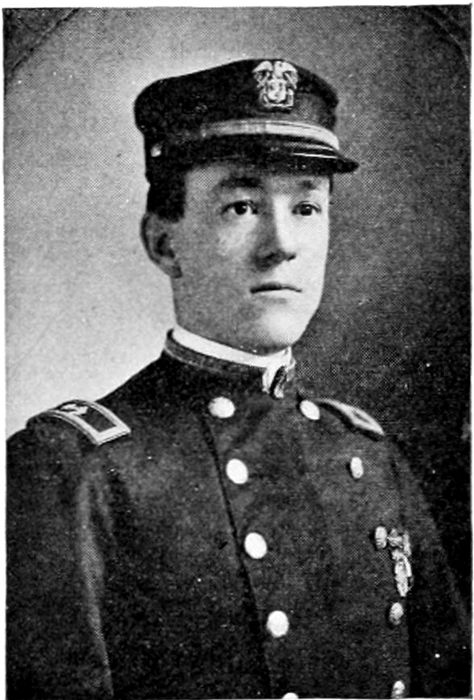
LIEUTENANT-COMMANDER ROBERT D. CHAPIN
In the early spring Lieutenant (Junior Grade) Robert
D. Chapin succeeded to the command of the division. In the
nine years he had been in the division he had ascended the
ladder, round by round, as seaman, coxswain, gunner’s
mate, second and first class, and boatswain’s mate, first
class. He had served on about every brand of standing
committee which the organization had utilized. Later he
was appointed naval aide with the rank of lieutenant-commander.
Again in the early summer a racing crew was essayed,
with Boatswain’s Mate Hogan in charge of the training,
54the course extending from an imaginary line off the old
pumping station below Riverside Park to a point off the
East Hartford bank about a quarter of a mile above the
railroad bridge. Training was punctuated by swims and
dives from a spring plank in the meadow bank a short distance
from the bridge.
COURSE ELEVEN THE MINNEAPOLIS
55
Mr. Chapin’s cruise was on the Minneapolis,
sister ship to the Columbia, and it started on
August 25, 1906, from New Haven harbor.
The ship steamed down the Sound and by Race
Rock Light and anchored off Block Island in the evening
with the port anchor, in seventeen fathoms, sixty fathoms
of chain out. A protected cruiser, the Minneapolis did
not rate a band, but she carried one till the Dolphin came
along and commandeered the musicians. The next day
the ship steamed out to sea for a hundred miles and then
after a diversity of courses came to anchor in Menemsha
Bight. Target practice, while the Minneapolis was steaming
at a rate of ten knots, made one afternoon’s work. In
it the division’s team struck hard times, but in the signal
contest later the division redeemed itself, Quartermaster
Palmer being an easy first among the signal force of the
battalion in the Ardois branch and Quartermaster Ferris
making an especially fine showing with the semaphore
work. The division has for several years been strong
in the signal branch.
When Governor Woodruff chose a naval aide it was
Mr. Chapin who was selected for that high honor, and
when the next commanding officer of the Second was
nominated, Dr. Beach moved up to a lieutenant’s stripes.
Beginning in the ranks Dr. Beach went upon the staff as
assistant surgeon and then back to the Second as ensign.
For a number of years the division had combined with
other commands in the Elm Street Armory to attend an
annual military service in a Hartford church, but in the
56following December it decided to attend a separate or
sailors’ service, and the church of the Rev. Dr. Main was
selected. It is a question why this was chosen, but a
legend has it that the choice was on account of the
nautical hint in the pastor’s name and that in the denomination,
the Baptist. In a sermon on intelligent patriotism
Dr. Main interspersed a number of sailorlike yarns to
illustrate several points. He told the story about Nelson’s
disregard of Parker’s signal at the battle of Copenhagen;
and that of John Paul Jones’s answer in the fight with the
Serapis.
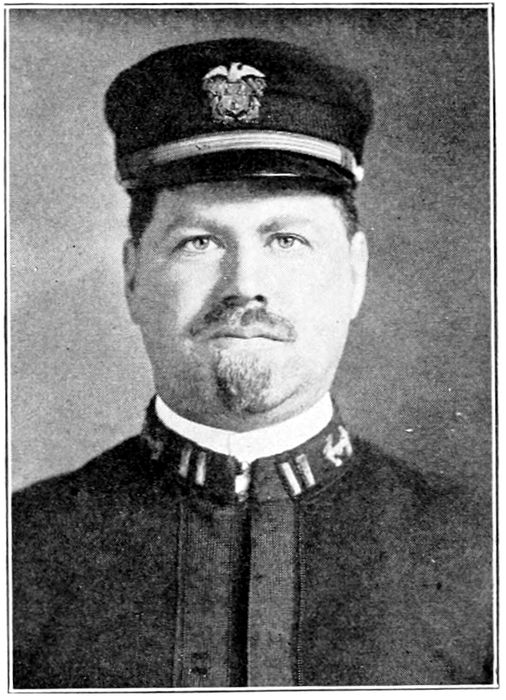
LIEUTENANT CARROLL C. BEACH
One of the most loyal and faithful members the
division ever included had enlisted a short time before in
the United States Navy, Seaman John J. A. Connor, and
57was now on the battleship Connecticut on the always
memorable trip around the world, bombarding friends
with welcome post cards.
The eleventh anniversary banquet was enjoyed in the
Hotel Garde in conjunction with Admiral Bunce Section,
Navy League of the United States. Admiral Caspar F.
Goodrich told about his personal interest in the Naval
Militia, an adjunct necessary to the Navy, as he declared,
and Corporation Counsel Arthur L. Shipman talked as an
attorney to the gathering, telling about the influence of
the navy in Guam and Samoa, where the Navy was still
administering the government.
COURSE TWELVE AGAIN THE PRAIRIE
58
Space has been economized for the chronicling of
the next cruise, a trip on our old friend the Prairie
to Hampton Roads. For several seasons the naval
militiamen had prospered with running mates
from the regulars, but for a reason to be made evident in
the next sentence the pair-off system was not pursued this
time. The Prairie had a skeleton crew of 145 and the
battalion numbered about fifty above those figures. The
start for the run down the coast was made by way of
Montauk Point, rounding which the Prairie put her helm
over for the first long leg on a course of S. 58 degrees W.
Early in the evening the wind began rising and old hands
watched the rookies for symptoms of internal disturbance.
The journey down was a welcome innovation and the
passing of Five-Fathom Bank Lightship and of Winter
Quarter Lightship were events. When the Cape Charles
Lightship came abeam the Prairie went on various courses
until she dropped anchor off the Chamberlin Hotel at Old
Point Comfort. During a part of the run soundings were
made by the Thompson sounding machine, a method that
had been studied in former cruises, but with less interest
than on this. The Jamestown ter-centenary was in
progress that summer and liberty to an unusual extent
was allowed to the battalion. One afternoon about fifty
members of the division visited the Connecticut building
at the exposition. Most of them signed their names in
the register, Boatswain’s Mate Perkins at first directing
the writing class and, when he tired, another petty officer
relieving him. It was with joy nearly equal to signing
59the pay roll that the sailors affixed their signatures.
Manager Curtis greeted the men with a graceful courtesy
rivalled only by Commissioner Barber’s graceful urbanity.
Maps of the exposition grounds were served out. By
using these and keeping the lead going and working their
jaw tackle, the men made shift to reach proper destinations.
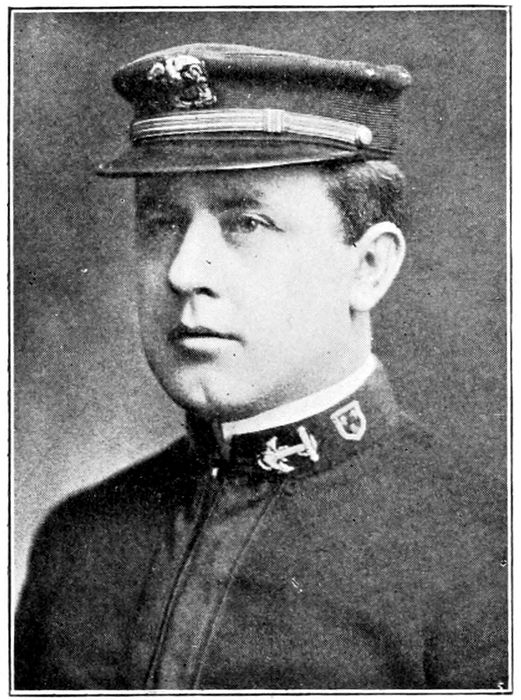
LIEUTENANT (JUNIOR GRADE) CHARLES L. HOGAN
The same afternoon the men gravitated to a military
carnival on the parade. An impression prevailed in the
division that the division’s tug-of-war team could have
outpulled the team which won in the carnival.
In years gone by cruise clubs had been launched, for
instance the Ham-Bone Club at Fort Wright and the
Fore-Top on the Hartford. In Jamestown the Kimona
Club was organized with Lieutenant Hinckley at its head.
60It consisted of a president, a vice-president, a secretary
and a chancellor of the exchequer, with an understudy for
each.
On another afternoon Commissioner Barber made his
return call. He witnessed hammock and dunnage bag
inspection, a “ceremony” which our men loved as
cordially as the devil loves holy water. He saw, also,
Underwood typewriters in the paymaster’s office and
rejoiced at the use of a Hartford product.
In the fall information came that the Elfrida was to
leave Connecticut waters and that the unarmored gunboat
Machias was to take her place as the battalion’s practice
ship. The new ship was built in Bath, Me., in 1892. She
is of steel, has two masts. Her length is 204 feet, her
beam 32 feet, her mean draft 12 feet, her displacement
1,777 tons, her net tonnage 398, her speed 15½ knots
and her horse power 1,484. She has accommodations for
nine officers and about 132 men, or about six times as
many men as the Elfrida could sleep.
A Christmas tree in the division parlor brought joy to
all hands and astonishment to not a few. It was accompanied
by an innocuous punch of pink tea caliber, followed
by Mother Carey sandwiches, saltpeter and frozen rating
badges (Neapolitan ice cream). Skylights were closed,
all glims were doused and current was turned on for
small electric lamps in a hemlock, which had been decorated
with marlinspikes, rope yarns, and cornucopias.
Lieutenant (Junior Grade) James A. Evans, rigged gaily
as Santa Claus, served out gifts from the break
of the quarter deck, assisted by Boatswain’s Mates
Perkins and Wyllie and Gunner’s Mate Dickerman. Mr.
Hinckley received a miniature Tillie Hadley. Mr. Hogan
was presented with a milk wagon. To Seaman Barnes
was given a rake. Gunner’s Mate Dickerman, who held
the championship of the fleet at the deck game of
bowling, was helped to a children’s set of tenpins. Quartermaster
Palmer, impressario of the Banzai orchestra, drew
61an accordion. A village character in the company received
an allowance of jaw tackle. A certain apprentice seaman
was the recipient of a “hammock ladder,” which dates
back to the berth deck of Father Noah’s Ark.
March 17, 1908, an order was issued from the
adjutant-general’s office marking the passing of the
“battalion.” The official title of the force was changed to
Naval Militia, Connecticut National Guard. Ratings
were officially prescribed, those of the first class in the
division being the following: Master-at-arms, boatswain’s
mate, gunner’s mate, machinist’s mate and water-tender.
May 21 the Tillie Hadley was taken to Saybrook and
exchanged for the First Division’s steam cutter. Later
the Tillie went to the New York Navy Yard. The
departure of the old steam whaleboat marked the passing
of one of the company’s time-honored institutions. The
boat’s successor is variously known as the Hallie Tidley
and the Merry Widow.
The observance of a division memorial day began this
year, actives and veterans assembling at noon, May 30th,
for a service, and parading in the afternoon as part of
the escort to the Grand Army of the Republic.
In midsummer a movement came to reorganize the
Veteran Association. A meeting was held July 24th
and the project advanced at a second meeting held a week
later, when the matter of participating in the approaching
dedication of Hartford Bridge was discussed. Former
Ensign Fred E. Bosworth was chief oiler of the
machinery.
COURSE THIRTEEN AND AGAIN THE PRAIRIE — ANOTHER CHRISTMAS TREE
62
Once more it was on the Prairie that the company
cruised. It was the fourth time, once to Bar
Harbor, once to Penobscot Bay, and once to
Hampton Roads. So often has the ship been
the company’s floating home, that long-service members
are more familiar with her than with any other ship in
the Navy, unless it be the Machias.
With the company were men from naval militia in
New York City and Brooklyn, congenial companions,
with more of naval wardrobe than the Second Division
showed. The cruise was mostly in the Sound. The
ship was engaged in squadron maneuvers.
A flotilla of six torpedo boats accompanied the squadron,
as did also four submarines. Boats of this kind were
in 1908 comparatively new to many in the company, and
when Ensign Hogan found an opportunity to make a
descent in a submarine he embraced it.
Back in Hartford the men grew busy in preparing for
the Bridge Dedication, the most important festivity
which the city has ever conducted, to which the command
voted to invite its old nautical guest, H Company of
Springfield, down.
The dedication opened October 6 with the firing of a
salute, by the division, of course. In the evening the
division paraded in a historical pageant, the men representing
men-o’-wars men of the conflict of 1812.
The battalion paraded in the giant military procession
of October 8 as a landing party, marching in white hats,
and being among the warmest favorites in the long
63column. In the afternoon it banqueted in the Y. M. C. A.
with H Company men, for whom the division’s poet
laureate had evolved a lyric, of which the following is a
specimen verse:
“When dinner’s o’er, we then will go, then will go, then will go,
When dinner’s o’er, we then will go, to East Hartford’s sandy shore.”
While the company was beating up Pearl Street, an
automobilist rammed the hospital apprentice, an incident
which developed an aftermath in the superior court
when with a former Philippine soldier, Sergeant Benedict
Holden, as attorney and counselor and proctor in
admiralty, McIntyre got a verdict. In his argument
Sergeant Holden commended the division as a patriotic
command in which the city might well take pride.
Jan’y 4, 1909—Fourth Day Out.
Lat. 41° 49′ N. Long. 71° 36′ W. Bar., rising; Wind,
E. S. E.; Atmos., Smoky. All hands happy. Thus ends
this Day.—[Extract from the Division’s Log.]
At eight bells in the second dog watch all hands were
piped to the fo’c’sle. On the forecastle-head two screen
cloths were rigged on a sliding gunther brace. Being
drawn, these disclosed Master-at-Arms Perkins in the
capacity of Neptune disguised as Santa Claus. By the
heel of the bowsprit were the crosstrees, which had been
sent down and rigged with rope yarns and stores from
the canteen. Around the tree and along both rails
packages were stowed facing inboard, made fast with
marlin and manila. Pipes, matches and tobacco were
served out and the smoking lamp was lighted. Then gifts
were passed out. Dr. Beach received a box of pills,
Coxswain Burns a masthead light, Master-at-Arms
Perkins twin dolls, one young Benedict a toy baby
64carriage, and Watertender Lewis a slice bar. Gifts wise
and otherwise were passed till the supply was exhausted.
Skylarking such as this varied the serious work of
the drill season. Although the membership of the
command from time to time changed to some extent, the
majority of the men had been in the division for years
and were fairly proficient in seamanship as well as in the
ordinary armory routine, and it must not be imagined
that their fun interfered with their nautical work.
The diversity of the fun is proved when allusion is
made to a game between the division’s new basketball
team and the Boston Bloomer Girls’. It was chronicled
that not a member of the girls’ team lost a backcomb or
displaced a “rat,” although their hair was coiled like the
flemished-down end of the Elfrida’s topping lift.
The indoor meet was the last held in the old armory.
It was as creditable as any in the long and popular series
and went as smoothly as desired.
June 13 was observed as Memorial Sunday, the first
which the division formally kept. The company reported
at the armory to act as escort to the veteran company in
a parade to Spring Grove Cemetery.