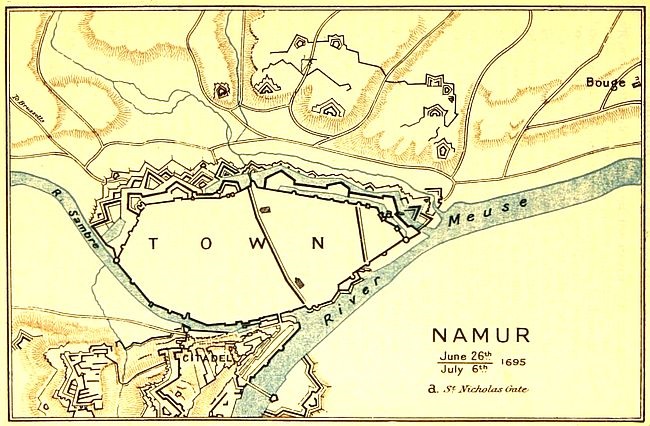
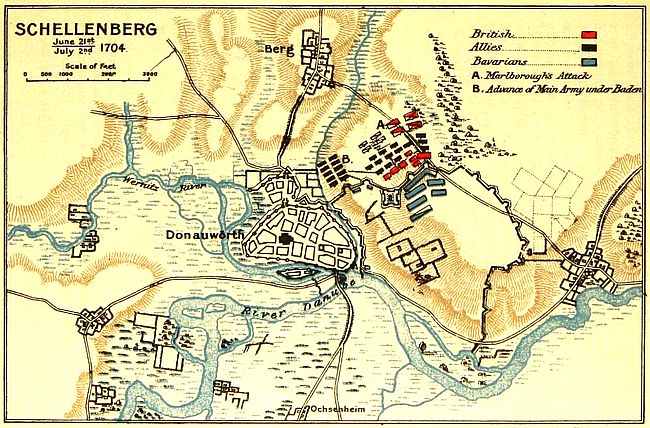
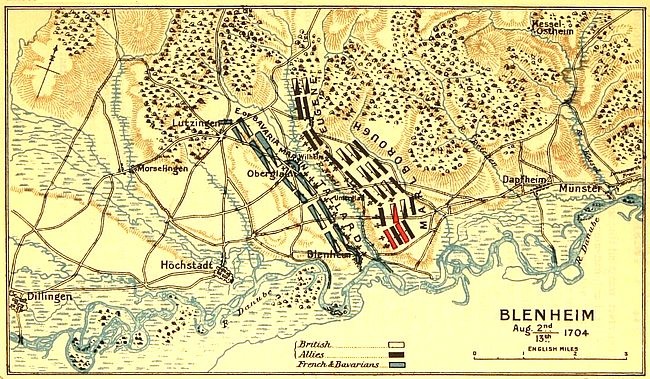
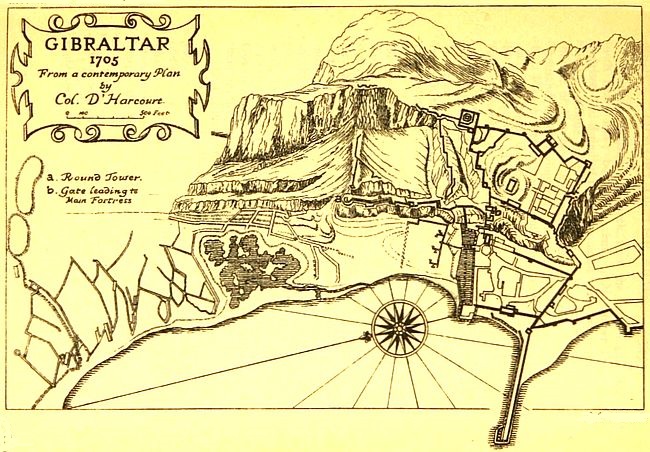
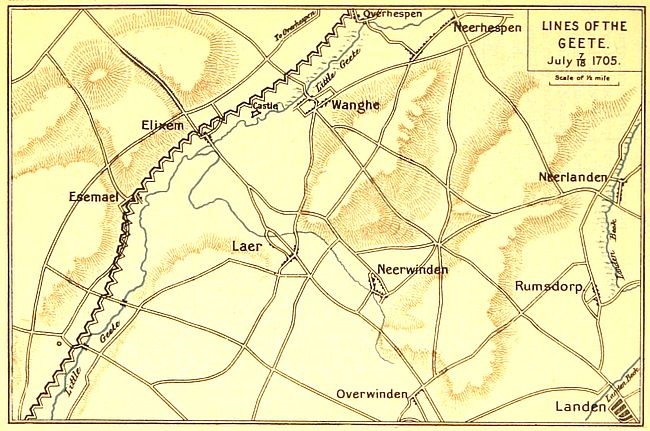
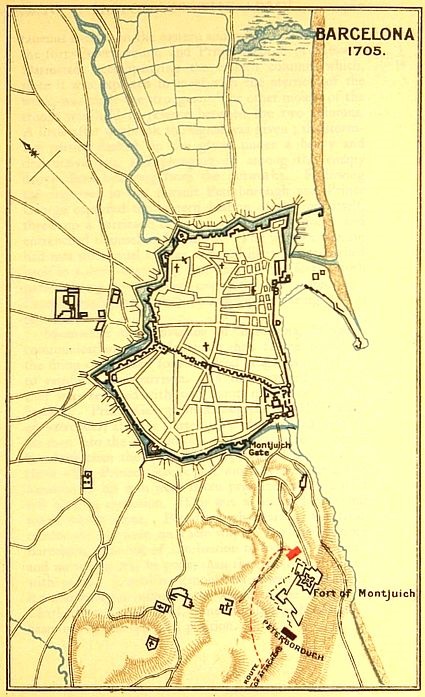
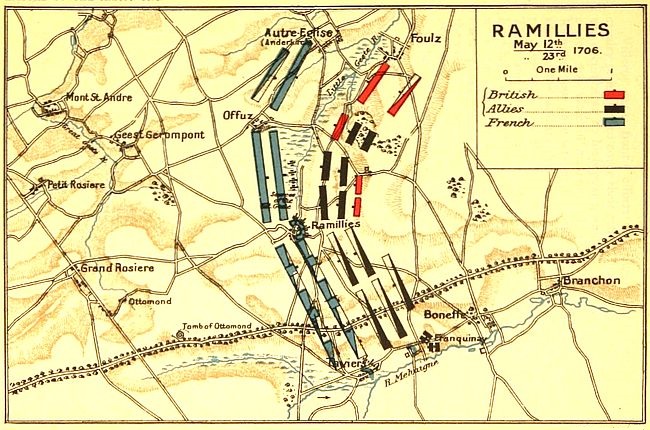
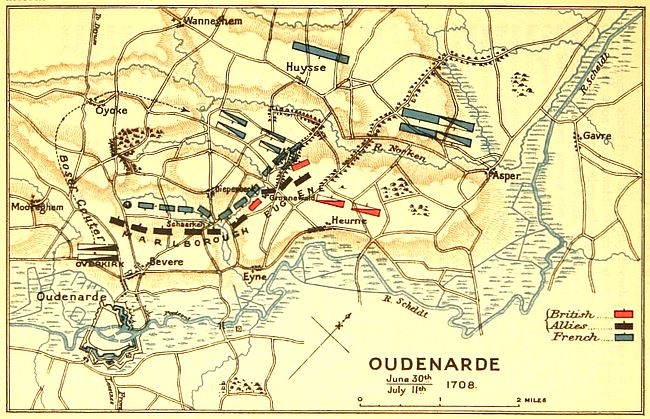
A HISTORY OF THE BRITISH ARMY — PREFACE — CONTENTS — BOOK I
TRANSCRIBER'S NOTE
Footnote anchors are denoted by [number], and the footnotes
themselves have been placed at the end of the book.
This volume covers the period up to 1713 when the Julian calendar
was still in use in England. The change to the Gregorian calendar
took place in Europe beginning in 1582, though much later in
Protestant regions, and not in Britain until 1752. This produced a
difference of eleven days in contemporary documents and books using
the Julian Old Style (OS) and those using the modern Gregorian New
Style (NS) dates.
The author follows the convention of using the dates as recorded
at the time of the event, so that events in England, Scotland and
Ireland are noted in the text and Sidenotes in Julian OS, and
events in (Catholic) Europe after 1582 are noted in NS. When a
specific day is noted for an event in Europe the corresponding
Sidenote will with few exceptions give both dates in the format
OS/NS.
London MACMILLAN AND CO., Limited NEW YORK: THE MACMILLAN COMPANY 1899
All rights reserved
The civilian who attempts to write a military history
is of necessity guilty of an act of presumption; and I
am not blind to my own temerity in venturing to
grapple with such a task as the History of the British
Army. But England has waited long for a soldier to
do the work; and so far no sign has been given of the
willingness of any officer to undertake it beyond the
publication, a few years since, of Colonel Walton's
History of the British Standing Army from 1660 to
1700. Nor is this altogether surprising, for the leisure
of officers is limited, the subject is a large one, and
the number of those who have already toiled in the
field and left the fruit of their labour to others is sadly
small. A civilian may therefore, I hope, be pardoned
for trying at any rate to make some beginning, however
conscious of his own shortcomings and of the inevitable
disadvantage from which he suffers through inexperience
of military life in peace and, still more fatally, in
war. His efforts may at least stimulate some one
better qualified than himself to treat the subject in a
manner better befitting its dignity and its worth.
My design is to write the history of the Army
down to the year 1870, the two present volumes carrying
the story down to the Peace of Paris in 1763, and
two future volumes bringing it forward to the great
reforms which virtually closed the life of our old Army
and opened that of a new. It would have been easy to
have filled a score of volumes with matters germane to
the subject and of genuine interest to at least some
groups of military students; nor would such treatment
have been foreign to the methods of one school of
British historians. There is indeed much to be said
for it from the writer's standpoint, for it simplifies
his task beyond belief. To me, however, rightly or
wrongly, it seemed better to gather the story if possible
into a smaller compass, even at the cost of omitting
many instructive statistics and picturesque details.
Accordingly I have compressed the six hundred years
of our military history from Hastings to Naseby into
one-third that number of pages, endeavouring only to
set down such points and incidents as were essential to
a coherent sketch of the growth of our military system.
Even after Naseby and up to the reign of Queen Anne
I have dealt with the history in a like arbitrary spirit,
thus passing over, not I confess without regret, the
Irish campaigns of Cromwell and King William,
though entering with some detail into that of Schomberg.
All could not be written down, as any one can
bear me witness who has attempted to go below the
surface of the Great Civil War alone. The reader
must decide whether I have judged well or ill in that
which I have left unwritten.
I must plead guilty also to deliberate omission of
sundry small details which are rather of antiquarian
than of true military interest, minute particulars of
dress, armament and equipment and the like, the real
place for which is rather in a military dictionary than in
a military history. These I have sacrificed, not because
I felt them to be trivial, but because I thought that the
space which they demanded would be more profitably
occupied by a sketch of the political relations between
the Army and the country. I cannot, however, claim
completeness for this sketch: and I am conscious that
many questions of great constitutional importance are
left unresolved, as I must frankly acknowledge, through
my inability to cope with them. I have sought our
acknowledged authorities on constitutional questions in
vain; not one is of help. I confess that I have been
amazed when reading our innumerable political histories
to see how unconcernedly Army, Navy, and the whole
question of National Defence are left out of account.
It is this, the political not less than the military
aspect of the Army's history that I have endeavoured,
however slightly and however unsuccessfully, to elucidate,
at the sacrifice sometimes of purely military matters;
and it is this which makes the subject so vast as to
be almost unmanageable. The difficulties of tracing
military operations are frequently trying enough, but
they are insignificant compared to those presented by
the civil administration of the Army, and by the intolerable
complication of the finance. Here again the
reader must judge whether or not I have chosen
aright; and I would ask him only not to attribute to
neglect omissions which have been made after mature
deliberation.
My authorities from the reign of Queen Anne
onward, and occasionally before, are quoted at the foot
of the page; but in the earlier portion of the first
volume I have been content to group them in a brief
note at the close of each chapter or section;[1] and I
have followed the same plan with some modification
throughout. I must, however, mention that these
notes rarely comprise the whole of the authorities that
I have consulted, much less all that lie open to consultation.
It would be a simple matter, for instance,
to cover a page with works consulted on the subject of
the Civil War alone; but while I have, as I trust,
taken pains to make my work thorough, I have
been content frequently to refer the reader to such
authorities as will guide him to further sources of
information, should he desire to pursue them. I
have spared no pains to glean all that may be gleaned
from the original papers preserved at the Record Office
in reference to the military administration and to the
various campaigns, and I have waded through many
thousands of old newspapers, with and without profit.
What unknown treasures I may have overlooked
among the archives preserved by individual regiments,
I know not, since with an army so widely dispersed
as our own it seemed to me hopeless to attempt to
search for them; but such regimental histories as
exist in print I have been careful to study, sometimes
with advantage but not always with profound respect
for their accuracy.
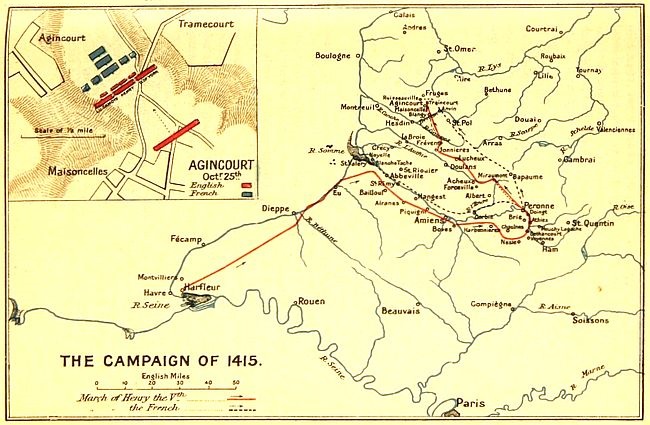
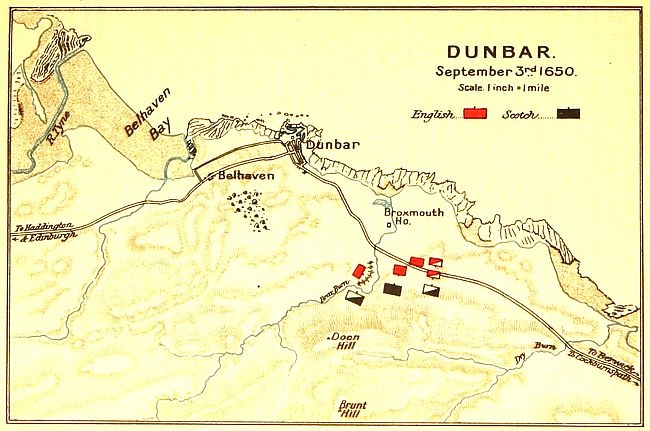
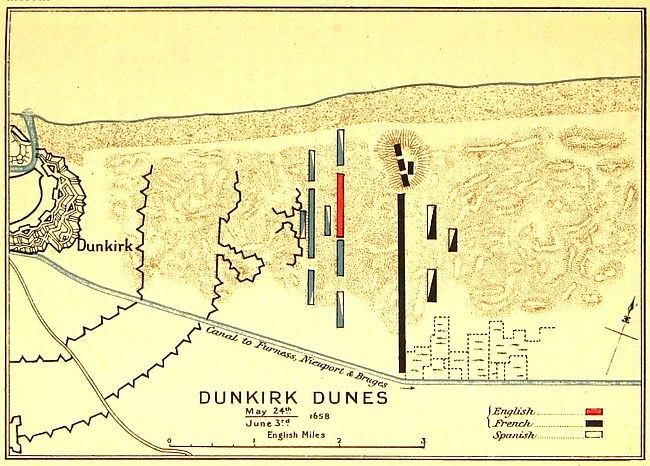
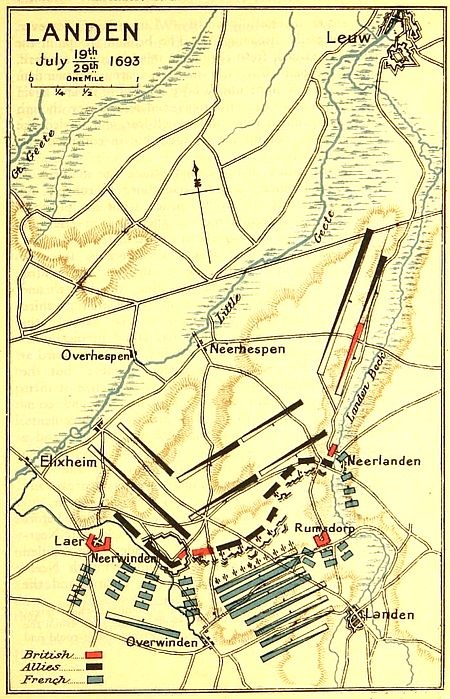
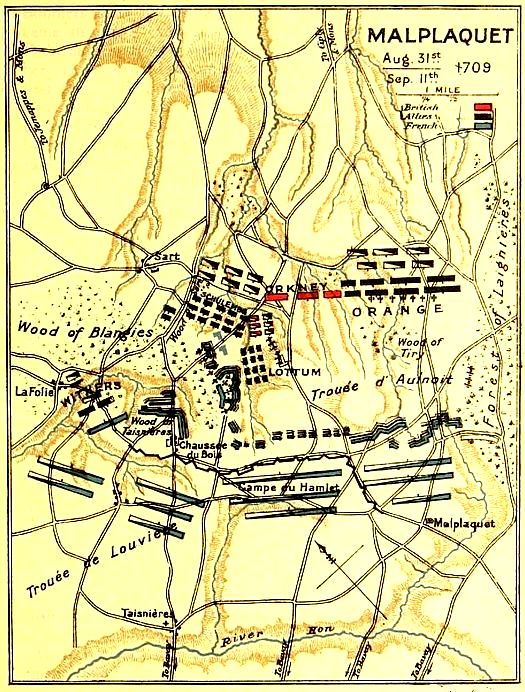
Maps and plans have been a matter of extreme
difficulty, owing to the inaccuracy of the old surveys
and the disappearance of such fugitive features as
marsh and forest. I have followed contemporary plans
wherever I could in fixing the dispositions of troops,
but in many cases I should have preferred to have
presented the reader with a map of the ground only,
and left him to fill in the troops for himself from the
description in the text. Blocks of red and blue are
pleasing indeed to the eye, but it is always a question
whether their facility for misleading does not exceed
their utility for guidance. Actual visits to many of
the battlefields of the Low Countries, with the maps
of so recent a writer as Coxe in my hand, did not
encourage me in my belief in the system, although, in
deference to the vast majority of my advisers I have
pursued it.
It remains to say a few words on some minor
matters, and first as to the question of choosing between
Old Style and New Style in the matter of dates.
Herein Lord Stanhope's rule seemed to be a good one,
namely to use the Old Style in recording events that
occurred in England, and the New for events abroad.
But I have supplemented it by giving both styles in
the margin against the dates of events abroad; lest the
reader, with some other account in his mind, should
(like the editor of Marlborough's Despatches) be
bewildered by the arrival in England of news of an
action some days before it appears to have been fought
in the Low Countries. One difficulty I have found
insuperable, which is to discover when the New Style
was accepted in India; but finding that the dates given
by French writers differ by eleven days from those of
Orme I have been driven to the conclusion that the
Old Style endured at any rate until 1753, and have
written down the dates accordingly.
Another difficulty, more formidable than might be
imagined, has been the choice of orthography for names
of places abroad. Before the war of 1870 the French
form might have been selected without hesitation; but
with the rise of the German Empire, the decay of
French influence in Europe and the ever increasing
importance of German writings in every branch of
literature, science and art, this rule no longer holds
good. Finding consistency absolutely impossible, I
have endeavoured to choose the form most familiar to
English readers, and least likely to call down upon me
the charge of pedantry. Even so, however, the choice
has not been easy. Take for instance the three ecclesiastical
electorates of the Empire. Shall they be Mainz,
Köln and Trier, or Mayence, Cologne and Trèves?
The form Cologne is decided for us by the influence
of Jean Maria Farina; Trèves is, I think, for the
present better known than Trier; but Mainz, a large
station familiar to thousands of British travellers,
seemed to me preferable to the French corruption
Mayence, as reminding the reader of its situation on
the Main. For German names of minor importance
I have taken the German form, since, their French
dress being equally unfamiliar to English readers,
there seemed to be no reason why they should not be
written down correctly; but the French form is adopted
so exclusively in contemporary histories that possibly
not a few instances of it may have escaped my vigilance.
In Flanders again it is frequently necessary to choose
between the French and the Flemish spelling of a name;
and, where it has been possible without pedantry, I
have preferred the Flemish as nearer akin to the
English. Thus I have always written Overkirk rather
than Auverquerque, Dunkirk rather than Dunquerque,
Steenkirk rather than Estinquerque (the form preferred
for some reason by Colonel Clifford Walton), since the
French forms are obviously only corruptions of honest
Flemish which is very nearly honest English. Actual
English corruptions I have employed without scruple,
though here again consistency is impossible. It is
justifiable to write Leghorn for Livorno; but The
Groyne, a familiar form at the beginning of this
century, is no longer legitimate for Corunna, any more
than The Buss for Bois-le-duc (Hertogenbosch) or
Hollock for Hohenlohe. Then there is the eternal
stumbling-block of spelling Indian names. Here I
have not hesitated to follow the old orthography which
is still preserved in the colours of our regiments. Ugly
and base though the corruptions may be they are at
any rate familiar, and that is sufficient; while they
probably convey at least as good an idea of the actual
pronunciation as the new forms introduced by Sir
William Hunter. Here once more it would be confusing
to write Ally for Ali or Caubool for Cabul,
though possibly less so than to confront the reader
with Machhlípatan or Machlípatan (two forms used
indifferently by Colonel Malleson) for Masulipatam,
and Maisur for Mysore. We are an arbitrary nation
in such matters and very far from consistent. Even
in such simple things as the names of West Indian
Islands we have dropped the old form Martinico in
favour of Martinique, though we still affect Dominica
in lieu of Dominique. All that a writer can do is to
study the prejudices of his readers without attempt
either to justify or to offend them.
Lastly, I must give the reader warning that I have
spoken of our regiments throughout by the old numbers
instead of by their territorial titles. As I do not
propose to carry the history beyond 1870 I may plead
so much technically in justification; but apart from
that I would advance with all humility that life is short,
and that it is too much to ask a man to set down such
a legend as "The First Battalion of the York and
Lancaster Regiment" (in itself probably only an
ephemeral title), when he can convey the same idea
at least as intelligibly by writing the words Sixty-fifth.
I have also called regiments by their modern appellations
(so far as the numbers may be reckoned modern)
throughout, ignoring the anachronism of denominating
what were really regiments of Horse by the term
Dragoon Guards, for the sake of brevity and convenience.
An Appendix gives the present designation
of each regiment against its old number, so that the
reader may find no difficulty in identifying it. I may
add that I have written the numbers of regiments at
full length in the text in all cases where such regiments
have survived up to the present day, so that the reader
need be in no doubt as to their identity; and I have
carefully avoided the designation of disbanded regiments
by the numbers which they once bore, in order to avoid
confusion.
In conclusion, I have to express my deepest thanks
to Mr. G. K. Fortescue at the British Museum and to
Mr. Hubert Hall at the Record Office for their unwearied
and inexhaustible courtesy in disinterring every
book or document which could be of service to me.
The history of the British Army is commonly supposed
to begin with the year 1661, and from the day, the 14th
of February, whereon King Charles the Second took over
Monk's Regiment of Foot from the Commonwealth's
service to his own, and named it the Coldstream Guards.
The assumption is unfortunately more convenient than
accurate. The British standing army dates not from
1661 but from 1645, not from Monk's regiment but
from the famous New Model, which was established by
Act of the Long Parliament and maintained, in
substance, until the Restoration. The continuity of
the Coldstream regiment's existence was practically
unbroken by the ceremony of Saint Valentine's day,
and this famous corps therefore forms the link that
binds the New Model to the Army of Queen Victoria.
But we are not therefore justified in opening the
history of the army with the birth of the New Model.
The very name indicates the existence of an earlier model,
and throws us back to the outbreak of the Civil War.
There then confronts us the difficulty of conceiving
how an organised body of trained fighting men could
have been formed without the superintendence of
experienced officers. We are forced to ask whence
came those officers, and where did they learn their
profession. The answer leads us to the Thirty Years'
War and the long struggle for Dutch Independence,
to the English and Scots, numbered by tens, nay,
hundreds of thousands, who fought under Gustavus
Adolphus and Maurice of Nassau. Two noble regiments
still abide with us as representatives of these two schools,
a standing record of our army's 'prentice years.
But though we go back two generations before the
Civil War to find the foundation of the New Model
Army, it is impossible to pause there. In the early
years of Queen Elizabeth's reign we are brought face
to face with an important period in our military history,
with a break in old traditions, an unwilling conformity
with foreign standards, in a word, with the renascence
in England of the art of war. For there were
memories to which the English clung with pathetic
tenacity, not in Elizabeth's day only but even to the
midst of the Civil War, the memories of King Harry
the Fifth, of the Black Prince, of Edward the Third,
and of the unconquerable infantry that had won the
day at Agincourt, Poitiers, and Creçy. The passion
of English sentiment over the change is mirrored to
us for all time in the pages of Shakespeare; for no
nation loves military reform so little as our own, and
we shrink from the thought that if military glory is
not to pass from a possession into a legend, it must
be eternally renewed with strange weapons and by
unfamiliar methods. This was the trouble which
afflicted England under the Tudors, and she comforted
herself with the immortal prejudice that is still her
mainstay in all times of doubt,
"I tell thee herald,
I thought upon one pair of English legs
Did march three Frenchmen."
The origin of the new departures in warfare must
therefore be briefly traced through the Spaniards, the
Landsknechts, and the Swiss, and the old English
practice must be followed to its source. Creçy gives
us no resting-place, for Edward the Third's also was
a time of military reform; the next steps are to the
Battle of Falkirk, the Statute of Winchester, and the
Assize of Arms; and still the English traditions recede
before us, till at last at the Conquest we can seize a
great English principle which forced itself upon the
conquering Normans, and ultimately upon all Europe.
This then is the task that is first attempted in this
book: to follow, however briefly and imperfectly, the
growth of the English as a military power to the
time of its first manifestation at Creçy, and onward to
the supreme day of Agincourt; then through the decay
under the blight of the Wars of the Roses to the
revival under the Tudors, and to the training in
foreign schools which prepared the way for the New
Model and the Standing Army. The period is long,
and the conditions of warfare vary constantly from
stage to stage, but we shall find the Englishman,
through all the changes of the art of war unchangeable,
a splendid fighting man.
The primitive national army of the English, as of
other Teutonic nations, consisted of the mass of free
landowners between the ages of sixteen and sixty; it
was called in the Karolingian legislation by the still
existing name of landwehr, and known in England as
the fyrd. Its term of service was fixed by custom at
two months in the year. The force was reorganised
by King Alfred or by his son through the division of
the country into military districts, every five hides of
land being required to provide an armed man at the
king's summons, and to provide him with victuals and
with pay. Further, all owners of five hides of land
and upwards were required to do thane's service, that
is to say, to appear in the field as heavily-armed
men at their own charge, and to serve for the entire
campaign. The organisation of the thanes was by
shires. With the conquest of England by Canute a
new military element was introduced by the establishment
of the royal body-guard, a picked force of from
three to six thousand Danish troops, which were retained
by him after the rest of the army had been sent back to
Denmark, and were known as the house-carles.
It was with an army framed on this model—the
raw levies of the fyrd and the better trained men of
the body-guard—that King Harold, flushed with the
victory of Stamford Bridge, marched down to meet the
invasion of William of Normandy. The heavily-armed
troops wore a shirt of ringed or chain-mail, and
a conical helmet with a bar protecting the nose; their
legs were swathed in bandages not wholly unlike the
"putties" of the present day, and their arms were left
free to swing the Danish axe. They carried also a
sword, five missile darts, and a shield, but the axe was
the weapon that they loved, for the Teutonic races,
unlike the Latin, have ever preferred to cut rather than
to thrust. The light-armed men, who could not afford
defensive armour, came into the field with spear and
shield only. Yet the force was homogeneous in virtue
of a single custom, wherein lies the secret of the rise of
England's prowess as a military nation. Though the
wealthy thanes might ride horses on the march, they
dismounted one and all for action, and fought, even to
the king himself, on their own feet.[2]
The force was divided into large bands or battalions,
of which the normal formation for battle was a wedge
broadening out from a front of two men to a base
of uncertain number; the officers and the better
armed men forming the point, backed by a dense
column of inferior troops. It was with a single
line of such wedges, apparently from five-and-twenty
to thirty of them, that Harold took up his
position to bar the advance of the Norman army.
Having no cavalry, he had resolved to stand on
the defensive, and had chosen his ground with no
little skill. His line occupied the crest of a hill, his
flanks were protected by ravines, and he had dug
across the plain on his front a trench which was
sufficient to check a rapid advance of cavalry. Moreover,
he had caused each battalion to ring itself about
with sharp stakes, planted into the ground at intervals
with the points slanting outwards, as a further protection
against the attack of horse.[3] The reader should take
note of these stakes, for he will find them constantly
reappearing up to the seventeenth century. There then
the English waited in close compact masses, a wall of
shields within a hedge of stakes, the men of nine-and-twenty
shires under a victorious leader. There is no
need to enter into details of the battle. The English,
as has been well said,[4] were subjected to the same trial
as the famous squares at Waterloo, alternate rain of
missiles and charges of cavalry, and as yet they were
unequal to it. Harold's orders had been that not a
man should move, but when the Normans, after many
fruitless attacks, at last under William's direction
simulated flight, the order was forgotten and one
wing broke its ranks in headlong pursuit of the
fugitives. Possibly, if Harold had been equal to the
occasion, a general advance might have saved the day,
but he made no such effort, and he was in the presence
of a man who overlooked no blunder. The pursuing
wing was enveloped by the Normans and annihilated; and
then William turned the whole of his force against
the fragment of the line that remained upon the hill.
The English stood rooted to the ground enduring
attack after attack, until at last, worn out with fatigue
and choked with dead and wounded, they were broken
and cut down, fighting desperately to the end. Indiscipline
had brought ruin to the nation; and England
now passed, to her great good fortune, under the
sway of a race that could teach her to obey.
But the English had still one more lesson to learn.
Many of the nobles, chafing against the rule of a
foreigner, forsook their country and, taking service with
the Byzantine emperors, joined the famous Varangian
Guard of the Emperor Alexius Comnenus. At Durazzo
they for the second time met the Normans, under the
command of Robert Guiscard. True to their custom,
they dismounted and fought on foot, a magnificent
corps, the choicest of the whole army. As at Hastings,
the Normans attacked and were repulsed, and as at
Hastings, the undisciplined English broke their ranks
in pursuit. Robert Guiscard saw his opportunity,
hurled his cavalry on to their flank, and then surrounding
them on all sides cut them down, in spite of a
furious resistance, to the very last man. So perished
these untameable, unteachable spirits, the last of the
unconquered English.
The Conquest was immediately followed by the
institution of knight-service. But this system, as
introduced into England, differed in many material
respects from that which reigned on the continent of
Europe. It was less distinctly military in character,
and far less perfect as an organisation for national
defence. The distribution of England into knight's
fees, however clearly it might be mapped out on paper,
was a work of time and not to be accomplished in a
day. Moreover, there was disloyalty to be reckoned
with; for the English were a stiff-necked people, and
were not readily reconciled to the yoke of their new
masters. We find, therefore, that in very early days
the practice of accepting money in lieu of personal
service crept in, and enabled the Norman kings to
fight their battles with hired mercenaries. For this
reason England has been called the cradle of the soldier;
the soldier being the man who fights for pay, solde,
solidus, or, as we may say by literal translation of the
Latin, the man who fights for a shilling.
The sole military interest therefore of the reigns of
the Norman kings is to follow the breakdown of the
feudal system for military purposes, and the rapid
reversion to the Saxon methods and organisation.
William Rufus was the first to appeal to the English to
arm in his cause, and he did so twice with success. But
in the seventh year of his reign he played them a trick
which lost him their confidence for ever. The fyrd had
furnished twenty thousand men for service against the
Norman rebels in France, and had provided every man,
at the cost of his shire, with ten shillings for the expenses
of his journey or, to use a later expression, for his
conduct-money. William met them at the rendezvous,
took their two hundred thousand shillings from them to
hire mercenaries withal, and dismissed them to their
homes. This Rufus has been selected by an historian
of repute as the earliest example of an officer and a
gentleman; he should also be remembered as the first
officer who set the fashion, soon to become sadly prevalent,
of misappropriating the pay of his men. The
reader should note in passing this early instance of
conduct-money, for we shall find in it the germ of the
Queen's shilling.
1106. 1116. 1125,
25th March.
The reign of Henry the First is interesting in that it
shows us English knights serving in the field against
Robert of Normandy under the walls of Tenchbrai.
We find that the old order of battle, the single line of
Hastings,[5] has disappeared and has given place to the
three lines of the Byzantine school, but that, strange to
say, the Saxons have forced their peculiar principle upon
the Normans. Henry caused his English and Norman
knights to dismount, formed them into a solid battalion
and placed himself at their head, keeping but one small
body still on their horses. The enemy's cavalry attacked
Henry's mounted men and dispersed them; but the
phalanx of the dismounted remained unbroken, pressed
on against the rabble of hostile infantry, broke it down
and almost annihilated it. The victory was hailed by
the English as atonement for the defeat at Hastings, so
bitter even then was the rivalry between ourselves and
our gallant neighbours across the channel. Ten years
later the English were again in France, fighting not only
against rebellious Norman barons but against their ally,
the French King Louis the Sixth. A long and desultory
war was closed by the action of Brenville. Again Henry
dismounted four hundred out of five hundred of his
knights and following the tactics of Tenchbrai won,
though not without hard fighting, a second victory. A
third engagement, known as the battle of Beaumont, saw
the old English practice repeated for the third time with
signal success; but here must be noticed the entry of a
new force, a company of archers, which contributed not
a little to the fortunate issue of the day. For as the
Norman cavalry came thundering down on the English
battalion, the archers moved off to their left flank and
poured in such a shower of arrows that the horsemen
were utterly overthrown. These archers must not be
confounded with the famous English bowmen of a later
time, for most probably they were merely copied, like
the order of battle, from the Byzantine model; but they
taught the English the second of two useful lessons.
Henry had already discovered that dismounted knights
could hold their own against the impetuous cavalry of
France; he now learned that the attack of horse could
be weakened almost to annihilation by the volley of
archers. This, at a time when cavalry held absolute
supremacy in war, was a secret of vital importance, a
secret indeed which laid the foundation of our military
power. Henry, evidently alive to it, encouraged the
practice of archery by ordaining that, if any man should
by accident slay another at the butts, the misadventure
should not be reckoned to him as a crime.
1141.
The miserable reign of Stephen, so unsatisfactory to
the general historian, possesses through the continued
development of English tactical methods a distinct
military interest. The year 1138 is memorable for the
Battle of the Standard, the first of many actions fought
against the Scots, and typical of many a victory to
come. The English knights as usual fought on foot,
and aided by archers made havoc of the enemy. Here
is already the germ of the later infantry; we shall find
lances and bows give way to pikes and muskets, but for
five whole centuries we shall see the foot compounded
of two elements, offensive and defensive, until the invention
of the bayonet slowly welds them into one. At
the battle of Lincoln, on the other hand, we find the
defensive element acting alone and suffering defeat,
though not disgrace; for the dismounted knights who
stood round Stephen fought with all the old obstinacy
and yielded only to overwhelming numbers. Thus,
though two generations had passed since the Conquest,
the English methods of fighting were still in full vigour,
and the future of English infantry bade fair to be
assured.
Nor was the cavalry neglected; for amid all the
earnest of this turbulent reign there was introduced the
mimic warfare known as the tournament. This was an
invention of the hot-blooded, combative French, and
had been originally so close an imitation of genuine
battle, that the Popes had intervened to prohibit the
employment therein of any but blunt weapons. The
tournament being not a duel of man against man, but
a contest of troop against troop, was a training not only
for individual gallantry, but for tactics, drill, discipline,
and leadership; victory turning mainly on skilful handling
and on the preservation of compact order. Thus
by the blending of English foot and Norman horse was
laid, earlier than in any other country of Europe, the
foundation of an army wherein both branches took an
equal share of work in the day of action.
1181.
The next in succession of our kings was a great
soldier and a great administrator, yet the work that he
did for the army was curiously mixed. Engaged as he
was incessantly in war, he felt more than others the
imperfection of the feudal as a military system. The
number of knights that could be summoned to his
standard was very small, and was diminished still further
by constant evasion of obligations. He therefore regulated
the commutation of personal military service for
payment in money, and formed it, under the old name
of scutage, into a permanent institution. Advantage was
generally taken of the system, and with the money thus
obtained he took Brabançon mercenaries, the prototypes
of the landsknechts of a later time, permanently into
his pay. When he needed the feudal force to supplement
these mercenaries, he fell back on the device of
ordering every three knights to furnish and equip one
of their number for service; and finally, driven to
extremity, he re-established the old English fyrd as a
National Militia by the Assize of Arms. This, the
earliest of enactments for the organisation of our
national forces, and the basis of all that followed down
to the reign of Philip and Mary, contained the following
provisions:—
Every holder of one knight's fee shall have a coat
of mail,[6] a helmet, a shield, and a lance; and every
knight as many coats of mail, helmets, shields, and lances
as there are fees in his domain.
Every free layman having in chattels or rent to the
value of sixteen marks shall keep the same equipment.
Every free layman having in chattels or rent ten
marks, shall keep an habergeon,[7] a chaplet[8] of iron, and
a lance.
All burgesses and the whole community of freemen
shall have a wambais,[9] a chaplet of iron, and a lance.
It is noteworthy that neither the bow nor the axe
appear in this list of the national weapons, an omission
for which it is difficult to account, since the bow was
evidently in full use at the time. Possibly the temptation
to employ it for purposes of poaching may have
been so strong as to make the authorities hesitate to
enjoin the keeping of a bow in every poor freeman's
house. The influence of the poacher will be found
equally potent when the time comes for the introduction
of firearms.
Richard the Lion-Heart, like his predecessors, preferred
to employ mercenaries for his wars, while even
the knights who accompanied him to the Crusade were
in receipt of pay. Were it not that his achievements
in the Holy Land had left little mark on English military
history they would be well worthy of a detailed
narrative, for Richard was beyond dispute a really great
soldier, a good engineer, and a remarkably able commander.
The story of his march from Joppa to
Jerusalem and of his victory at Arsouf is known to few,
but it remains to all time an example of consummate
military skill. A mixed force compounded of many
nations is never very easy to control, and it was doubly
difficult when the best of it was composed of knights
who hated the very name of subordination. Yet it was
with such material, joined to a huge body of half-disciplined
infantry, that Richard executed a flank march in
the presence of the most formidable of living generals,
and repulsed him brilliantly when he ventured, at an
extremely trying moment, to attack. The plan of the
campaign, the arrangements and orders for the march,
the drill and discipline imposed on the knights, and the
handling of the troops in the action are all alike admirable.
Yet, as has been already stated, the lessons of the
Crusades wrought little influence in England, mainly
because she had already learned from her own experience
the value of a heavily armed infantry, and of the tactical
combination of missile and striking weapons. In the
rest of Europe they were for a time remembered but
very soon forgotten;[10] and England was then once more
left alone with her secret.
Two small relics of the Crusades must however find
mention in this place. The first is the employment of
the cross as a mark for distinguishing the warriors of
different nations, which became in due time the recognised
substitute for uniform among European soldiers.
Each nation took a different colour for its cross, that of
the English being at first white, which, curiously enough,
is now the regular facing for English regiments of
infantry. The second relic is the military band which,
there seems to be little doubt, was copied from the
Saracens. In their armies trumpets and drums, the
latter decidedly an Oriental instrument, were used to
indicate a rallying-point; for though at ordinary times
the standards sufficed to show men the places of their
leaders, yet in the dust of battle these were often hidden
from sight; and it was therefore the rule to gather the
minstrels (such was the English term) around the
standards, and bid them blow and beat strenuously and
unceasingly during the action. The silence of the band
was taken as a proof that a battalion had been broken
and that the colours were in danger; and the fashion
lasted so long that even in the seventeenth century the
bandsmen in all pictures of battles are depicted, drawn
up at a safe distance and energetically playing.
1214.
The reign of King John accentuated still further
the weak points of the English feudal system as a
military organisation. The principle introduced by
the Conqueror had been to claim for the sovereign
direct feudal authority over every landholder in the
country, suffering no intermediate class of virtually
independent vassals, such as existed in France, to
intercept the service of those who owed duty to him.
Of the advantages of this innovation mention shall
presently be made elsewhere, but at this point it is
necessary to dwell only on its military defects. The
whole efficiency of the feudal system turned on the
creation of a caste of warriors; and such a caste can
obviously be built up only by the grant of certain
exclusive privileges. The English knights possessed
no such privileges. There were no special advantages
bound up with the tenure of a fief. Far from enjoying
immunity from taxation, as in France and Germany,
the knights were obliged to pay not only the imposts
required of all classes, but scutage into the bargain.
Again the winning of a knight's fee lay open to all
ranks of freemen, so that it could not be regarded as
the hereditary possession of a proud nobility. Yet
again, the grant of the honour of knighthood was the
exclusive right of the sovereign, who converted it
simply into an instrument of extortion. Briefly, there
was no inducement to English knights faithfully to
perform their service; the sovereign took everything
and gave nothing; and at last they would endure
such oppression no longer. When John required a
feudal force, in the year 1205, he was obliged to
arrange that every ten knights should equip one of
their number for service. Moreover, the knights who
did serve him showed no merit; the English contingent
at Bouvines having covered itself with anything but
glory. Finally, came mutiny and rebellion and the
Great Charter, wherein the express stipulation that
fiefs should be both alienable and divisible crushed all
hopes of an hereditary caste of warriors for ever.
1252.
After the Charter the national force was composed
nominally of three elements, the tenants in chief with
their armed vassals, the minor tenants in chief, and
the freemen subject to the Assize of Arms, the last
two being both under the orders of the sheriffs. It
made an imposing show on paper, but was difficult to
bring efficient into the field. No man was more
shameless than Henry the Third in forcing knighthood,
for the sake of the fees, upon all free landholders
whom he thought rich enough to support the dignity;
yet, when the question became one not of money but
of armed men, he was forced to fall back on the same
resource as his greater namesake. He simply issued
a writ for the enforcement of the Assize of Arms, and
ordered the sheriffs to furnish a fixed contingent of
men-at-arms, to be provided by the men of the county
who were subject thereto.
1282.
The defects of feudal influence in military matters
were now so manifest, that Edward the First tried
hard to do away with them altogether. Strictly
speaking the feudal force was summoned by a special
writ addressed to the barons, ordering them to appear
with their due proportion of men and horses, and by
similar directions to the sheriffs to warn the tenants
in chief within their bailiwicks. The system was
however, so cumbrous and ineffective that Edward
superseded it by issuing commissions to one or two
leading men of the county to muster and array the
military forces. These Commissions of Array, as they
were called, will come before us again so late as in
the reign of Charles the First.
1285.
But, like all his predecessors, Edward was careful
to cherish the national militia which had grown out
of the fyrd. The Statute of Winchester re-enacted
the Assize of Arms and redistributed the force into
new divisions armed with new weapons. The wealthiest
class of freemen was now required to keep a hauberk[11]
of iron, a sword and a knife, and a horse. The two
lower classes were now subdivided into four, whereof
the first was to keep the same arms as the wealthiest,
the horse excepted; the second a sword, bow and
arrows, and a knife; the third battle-axes, knives, and
"other less weapons," in which last are included bills;[12]
and the rest bows and arrows, or if they lived in the
forest, bows and bolts, the latter being probably less
deadly to the king's deer than arrows. Here then was
the axe of Harold's day revived, and the archers
established by statute. It is evident, from the fact
that they wore no defensive armour, that the archers
were designed to be light infantry, swift and mobile
in their limbs, skilful and deadly with their weapons.
The name of Edward the First must be ever memorable
in our history for the encouragement that he gave to
the long-bow; but we seek in vain for the man, if
such there was, who founded the tradition, still happily
strong among us, that the English whatever their
missile weapon shall always be good shots. Even at
the siege of Messina by Richard the First the archers
drove the Sicilians from the walls; "for no man could
look out of doors but he would have an arrow in
his eye before he could shut it."
1297. 1298.
The bowmen had not long been a statutory force
before they were called upon for active service. The
defeat of the English by William Wallace at Cambuskenneth
had summoned Edward from France to take
the field in person against the Scots; and he met them
on the field of Falkirk. The Scottish army consisted
for the most part of infantry armed with pikes, not
yet the long pikes of eighteen feet which they were to
wield so gallantly under Gustavus Adolphus, but still
a good and formidable weapon. Wallace drew them
up behind a marsh in four circular battalions ringed
in with stakes, posting his light troops, which were
armed principally with the short-bow, in the intervals
between them, and his one weak body of horse in
rear. The English knights were formed as usual in
column of three divisions, vanguard, battle and rearguard,
and with them was a strong force of archers.
Untrue to its old traditions, the English cavalry did
not dismount, but galloped straight to the attack.
The first division plunged headlong into the swamp
(for the mediæval knight, in spite of a hundred warnings,
rarely took the trouble to examine the ground before
him), did no execution, and suffered heavy loss. The
second division, under the Bishop of Durham, then
skirted the swamp and came in sight of the Scottish
horse. The Bishop hesitated and called a halt. "Back
to your mass, Bishop," answered one contemptuous
knight. His comrades charged, dispersed the Scottish
cavalry, and drove away the archers between the
pikemen; but the four battalions stood firm and
unbroken, and the knights surged round them in vain.
Then the king brought up the archers and the third
division of horse. Pushing the archers forward, he
held the cavalry back in support until an incessant
rain of arrows had riddled the Scottish battalions through
and through, and then hurling the knights forward
into the broken ranks, he fairly swept them from the
field. It was the old story, heavy fire of artillery
followed by charges of cavalry, the training of the
Scots as Hastings had been of the English, for the
trial of Waterloo.
1314.
It is interesting to note that Edward made an
effort even then for the constitutional union of the
two countries which had so honourably lost and won
the day at Falkirk, but he was four centuries before
his time. The war continued with varying fortune
during the ensuing years. The maker of the English
archers died, and under his feeble son the English
army learned at Bannockburn an ignominious lesson
in tactics. The Scotch army, forty thousand strong,
was composed principally of pikemen, who were drawn
up, as at Falkirk, in four battalions, with the burn
in their front and broken ground on either flank.
Their cavalry, numbering a thousand, a mere handful
compared to the host of the English men-at-arms,
was kept carefully in hand. Edward opened the action
by advancing his archers to play on the Scottish
infantry, but omitted to support them; and Bruce,
seeing his opportunity, let loose his thousand horse
on their flank and rolled them up in confusion. The
English cavalry then dashed in disorder against the
serried pikes, failed, partly from want of space and
partly from bad management, to make the slightest
impression on them, and were driven off in shameful
and humiliating defeat. So the English learned that
their famous archers could not hold their own against
cavalry without support,[13] and they took the lesson to
heart. The old system of dismounting the men-at-arms
had been for the moment abandoned with
disastrous results; the man who was to revive it had
been born at Windsor Castle just two years before
the fight.
1327. 1333.
Thirteen years later this boy ascended the throne
of England as King Edward the Third, and almost
immediately marched with a great host against the
Scots. The campaign came to an end without any
decisive engagement, but on the one occasion when
an action seemed imminent, the English men-at-arms
dismounted and put off their spurs after the old
English fashion. Peace was made, but only to be
broken by the Scots, and then Edward took his revenge
for Bannockburn at Halidon Hill. The English men-at-arms
alighted from their horses, and were formed
into four battalions, each of them flanked by wings of
archers, the identical formation adopted two centuries
later for the pikemen and musketeers. The Scots,
whose numbers were far superior, were also formed on
foot in four battalions, but without the strength of
archers. "And then," says the old historian,[14] "the
English minstrels blew aloud their trumpets and
sounded their pipes and other instruments of martial
music, and marched furiously to meet the Scots." The
archers shot so thick and fast that the enemy, unable
to endure it, broke their ranks, and then the English
men-at-arms leaped on to their horses for the pursuit.
The Scotch strove gallantly to rally in small bodies,
but they were borne down or swept away; they are
said to have lost ten thousand slain out of sixty thousand
that entered the battle.
The mounting of the men-at-arms for the pursuit
gave the finishing touch to the English tactical methods,
and the nation was now ready for war on a grander
scale. Moreover, there was playing round the knees
of good Queen Philippa a little boy of three years
old who was destined to be the victor of Poitiers. It
is therefore time, while the quarrel which led to the
Hundred Years' War is maturing, to observe the point
to which two centuries and a half of progress had
brought English military organisation.
Authorities.—By far the best, so far as I know the only, account
of the rise of English tactics and of English military power is to be
found in Die Entwickelung des Kriegswesens in der Ritterzeit, by Major-General
Köhler, vol. ii. pp. 356 sq., and vol. v. pp. 97 sq., a work
to which my obligations must be most gratefully acknowledged.
The authorities are faithfully and abundantly quoted. Freeman's
Norman Conquest, Mr. J. H. Round's Feudal England, Hewitt's
Ancient Armour, Oman's Art of War in the Middle Ages, Grose's
Military Antiquities, and Rymer's Fœdera are authorities which
will occur to every one, as also the Constitutional Histories of
Hallam, Stubbs, and Gneist.
CHAPTER II
Attention has already been called to the defects of the
feudal system for military purposes, and to the shifts
whereby successive sovereigns sought to make them
good. With Edward the Second resort was made to a
new device. Contracts, or as they were called indents,
were concluded by the King with men of position,
whereby the latter, as though they had been apprentices
to a trade, bound themselves to serve him with a force
of fixed strength during a fixed term at a fixed rate of
wages. In some respects this was simply a reversion to
the old practice of hiring mercenaries; but as Edward
the Third placed his contracts for the most part within
his kingdom, the force assumed a national character.
The current ideas of organisation were still so imperfect
that the contractors generally engaged themselves to
provide a mixed force of all arms; but as they naturally
raised men where they could most easily get hold of
them, that is to say in their own neighbourhoods, there
was almost certainly some local or personal feeling to
help to keep them together. For the rest the contractor
of course made his own arrangements for the interior
economy of his own particular troops, and enjoyed in
consequence considerable powers, which descended to the
colonels of a later day and have only been stripped from
them within the last two generations. It is not difficult
to imagine that men thus enlisted should presently,
when released from national employment, have sold
their services to the highest bidder and become, as they
presently did become, condottièri. It is characteristic
of the commercial genius of our race that England
should be the cradle not only of the soldier but of the
condottière;[15] in other words, that she should have set
the example in making warfare first a question of wages,
and next a question of profit. But her work did not
end here; for these reforms created the race of professional
soldiers and through them the renascence of the
Art of War. In short, with the opening of the
Hundred Years' War the British army quickens in the
womb of time, and the feudal force sinks into ever
swifter decay.
But there is another side to this picture of feudal
inefficiency. Moral not less than physical force is a
mighty factor in war; and it was precisely the military
defects of the English feudal system that first made her
a military power. Though the growth of a caste of
warriors was checked, it was to make room for that
which was worthy to overshadow it, a fighting nation.
For in England there was not, as in other countries,
any denial of civil rights to the commons of the realm.
Below the ranks of the peerage all freemen enjoyed
equality before the law; nay, the peerage itself conferred
no privilege except on those who actually possessed it,
the sons of peers being commoners, not as elsewhere
noble through the mere fact of their birth. In England
there were and are nobility and gentry: in other countries
nobility and gentry were merged in a single
haughty exclusive caste, and between them and other
freemen was fixed a great and impassable gulf. Thus
the highest and the lowest of the freemen were in touch
with each other in England as nowhere else in Europe.
More than two centuries later than Creçy, so great and
gallant a gentleman as Bayard could refuse with disdain
to fight by the side of infantry. In England, whatever
the pride of race, the son of the noblest peer in the
land stood shoulder to shoulder with his equal when the
archer fell in by his side, and where the son stood the
father could feel it no shame to stand. No other nation
as yet could imitate this; no other could recall a Hastings
where all classes had stood afoot in one battalion.
Other nations could indeed, when taught by experience,
dismount their knights and align cross-bowmen with
them, just as at this day they can erect an upper and
lower chamber and speak of a constitution on the
English model; but then as now it was the form only,
not the substance, that was English.
So far for the commercial and political influence that
helped to mould our military system; there remains
yet another great moral force to be reckoned with.
Chivalry, which had been growing slowly in England
since the Third Crusade, burst in the fourteenth century
into late but magnificent blossom. The nation woke
to the beauty of a service which gave dignity to man's
fighting instincts, which taught that it was not enough
for him to be without fear if he were not also without
reproach, and that though the government of the world
must always rest upon force, yet mercy and justice may
go hand in hand with it. The girding on of the sword
was no longer a social but a religious act; it marked
not merely the young man's entrance into public life,
but his ordination to a great and noble function. Concurrently
there had arisen a sense of the charm of glory
and adventure. Hitherto the English knights had gained
no repute in Europe. Hatred and jealousy had held
the Saxon aloof from his Norman master; now there
was no more Saxon and Norman, but the English,
united and strong, a fighting people that thirsted for
military fame.
Let us now briefly consider the composition and
organisation of the armies that were to work such havoc
in France. The cavalry was drawn for the most part
from the wealthier classes, though, as has been seen,
there was one division of the freemen under the statute
of Winchester which was called upon to do mounted
service. The more important branch, the men-at-arms,
was composed of two elements, knights and squires.
From the first institution of the feudal system, the
number of men required from the greater vassals had
forced them to equip their sons and serving-men, who
after many changes were finally in the thirteenth century
merged together under the generic name of servientes,
a term which was soon corrupted into its present form
of sergeants. In the year 1294 these servientes were
dignified by the higher title of servientes equites,
mounted sergeants, which was six years later abandoned
for the familiar name of squires. These squires must
not, however, be confounded with a different class of the
same appellation, namely, the apprentices who were the
personal attendants of the knights. The squire of which
I now speak was rather a knight of inferior order corresponding
to the bachelier (bas chevalier) of France.
The word knight itself gives us a hint of this inferiority,
being the same as the German knecht, whereas ritter is
the German term that expresses what is generally
understood as a knight in English. The inner history
of chivalry is the story of the struggle of the sergeants
to rise to an equality with the knights of the first order,
and in the fourteenth century they were not far from
their goal. Even now they were considered the backbone
of the English army, and were equipped in all
points like the class above them.
Men-at-arms, an expression derived from the French,
were so called because they were covered with defensive
armour from top to toe; but as the middle of the
fourteenth century is a period of transition in the
development of armour, it is difficult to describe their
equipment with any certainty. Their offensive arms
were the lance, sword, dagger, and shield. Trained from
very early youth in the handling of weapons they were
doubtless proficient enough with them; but they do
not seem to have been great horsemen, and indeed it is
recorded that they were sometimes tied to the saddle.
Monstrelet, writing in the year 1416, tells us of the
astonishment which certain Italians created among the
French because they could actually turn their horses at
the gallop. It is probable that the bits employed were
too weak, and that the cumbrousness of the saddle and
the weight carried by each man were sad obstacles to
good horsemanship; but it is worth remembering in
any case that, as this passage plainly shows, men-at-arms
in the saddle were reduced to one of two alternatives, to
move slowly and retain control of their horses, or to
gallop for an indefinite period wherever the animals
might choose to carry them.
The favourite horses, alike for speed, endurance, and
courage, were the Spanish, which, as they could only
reach England by the journey overland through France,
were not always very easily obtained. Philip the Bold
in 1282 refused to allow one batch of eighty such horses
to be transhipped to England; but from a contract still
extant, of the year 1333, it appears that Edward the
Third still counted on Spain to provide him with
remounts. These horses, however, were only bestridden
for action, being committed on the march to the care of
the shield-bearers or squires, who led them, as was
natural, on their right-hand side, and thus procured for
them the curious name of dextrarii.[16] The usual
allowance of horses for a knight was three, besides a
packhorse for his baggage, the smallest of which, named
the palfrey, was that which he rode on ordinary occasions;
in fact, to put the matter into modern language,
a knight started on a campaign with a first charger, a
second charger, and a pony. The first charger was
always a stallion; the rest might be geldings or mares.
From the year 1298 the practice of covering horses with
defensive armour was introduced into England, an equipment
which soon came to be regarded as so essential
that one branch of the cavalry, and that the most important,
was reckoned by the number of barded horses.
The personal retinue of the knights was made up of
apprentices or aspirants to the rank which they held.
The squire or shield-bearer took charge of the knight's
armour on the march, and was responsible for maintaining
it in proper order; and it is worth remarking that the
English squire took a pride in burnishing the metal to
the highest pitch of brilliancy, thus early establishing
those traditions of smartness which are still so strong in
our cavalry. It was also the squire's duty, among many
others, to help his master to don his harness when the
time for action came, beginning with his iron shoes or
sollerets, and working upwards till the fabric was crowned
by the iron headpiece, and the finishing touch added by
the assumption of the shield. The reader will readily
understand that a really efficient squire must have been
invaluable, for if an engagement came in any way as a
surprise there was an immediate rush for the baggage,
and a scene of confusion that must have beggared
description. Fortunately, the fact that both sides were
generally alike unready, and the punctiliousness of
chivalric courtesy, permitted as a rule ample time not
only for the equipment of all ranks, but for the marshalling
of the host.
In the matter of administrative organisation the men-at-arms
were distributed into constabularies, being commanded
by officers called constables. The strength of a
constabulary seems to have varied from five-and-twenty
to eighty; and this variety, together with the absence
of any tactical unit of fixed strength, makes it impossible
to state how many constabularies were included in
the next tactical division. This was called the banner,
and was commanded by a banneret, a rank originally
conferred only upon such as could bring a certain number
of followers into the field. Promotion to the degree of
banneret was marked by cutting off the forked tail of
the pennon which was carried by the ordinary knight,
and leaving the remnant square. So at the present day,
the pennons of lances are forked, the square being
reserved for the standards of squadrons and regiments.
The independent employment of small bodies in
action was almost unknown, the rule being to pack an
indefinite number of men-at-arms, hundreds or even
thousands, into a close and solid mass, its depth almost
if not quite as great as its frontage. The haye, or thin
line, is of much later date. Ordinarily some modification
of the wedge was the formation preferred; that is
to say, that the frontage of the front rank was somewhat
less than that of the rear; the mass of that particular
shape being judged to be less liable to disorder and
better adapted for breaking into a hostile phalanx. The
relative strength of the front and rear ranks depended
entirely on the numbers that were packed in between
them, and it may readily be supposed that the evolutions
which so unwieldly a body could execute were very few.
Probably, until the moment of action came, sufficient
space was maintained to permit every horse to turn on
his own ground, after the Roman fashion, to right, left,
or about; but for the attack ranks and files were closed
up as tightly as possible, and all other considerations
were sacrificed to the maintenance of a compact array. It
was said of the French knights who marched with
Richard the Lion-Heart that an apple thrown into the
midst of them would not have fallen to the ground.
We must therefore rid ourselves of the popular notion
of the knight as a headlong galloping cavalier. The
attack of men-at-arms could not be very rapid unless it
were made in disorder; and though it comes strictly
under the head of shock-action, the shock was rather
that of a ponderous column moving at a moderate pace
than of a light line charging at high speed. By bearing
these facts in mind it will be easier to understand the
failure of mounted men-at-arms to break a passive
square of infantry.
Next after the men-at-arms came a species of
cavalry called by the name of pauncenars,[17] which was
less fully equipped with defensive armour, but wore the
habergeon[18] and was armed with the lance.
Lastly came the light cavalry of the fyrd, originally
established to patrol the English coast. These were
called hobelars, from the hobbies or ponies which they
rode, and were equipped with an iron helmet, a heavily
padded doublet (aketon), iron gloves, and a sword.
Turning next to the infantry, there were Welsh
spearmen, carrying the weapon which gave them their
name, but without defensive armour. Indeed it should
seem that they were not overburdened with clothes of
any kind, for they were every one provided at the
King's expense with a tunic and a mantle, which were
by express direction made of the same material and
colour for all. These Welsh spearmen therefore were
the first troops in the English service who were dressed
in uniform, and they received it first in the year 1337.[19]
The colour of their clothing unfortunately remains
unknown to us.
Next we come to the peculiar strength of England,
the archers. Though a certain number of them seem
generally to have been mounted, yet, like the dragoons
of a later day, these rode for the sake of swifter mobility
only, and may rightly be reckoned as infantry. As
has been already stated, the archers wore no defensive
armour except an iron cap, relying on their bows alone.
These bows were six feet four inches long; the arrows,
of varying length but generally described as cloth-yard
shafts, were fitted with barb and point of iron and
fledged with the feathers of goose or peacock. But
the weapon itself would have gone for little without the
special training in its use wherein the English excelled.
"My father," says Bishop Latimer (and we may reasonably
assume that in such matters there had been little
change in a hundred and fifty years), "My father was
diligent in teaching me to shoot with the bow; he
taught me to draw, to lay my body to the bow, not to
draw with strength of arm as other nations do, but
with the strength of the body. I had my bows bought[20]
me according to my age and strength; as I increased
in these my bows were made bigger and bigger." The
principle was in fact analogous to that which is taught
to young oarsmen at the present day. The results of
this training were astonishing. The range of the long-bow
in the hands of the old archers is said to have been
fully two hundred and forty yards, and the force of the
arrow to have been such as to pierce at a fair distance
an inch of stout timber. Moreover, the shooting was
both rapid and accurate. Indeed the long-bow was in
the fourteenth century a more formidable weapon than
the cross-bow, which had been condemned by Pope
Innocent the Second as too deadly for Christian warfare
so far back as 1139. It was at no disadvantage in the
matter of range, while it could be discharged far more
quickly; and further, since it was held not horizontally
but perpendicularly to the ground, the archers could
stand closer together, and their volleys could be better
concentrated. Thus the long-bow, though the cross-bow
was not unknown to the English, was not only the
national but the better weapon. In action the archers
were ranked as deep as was consistent with the delivery
of effective volleys, the rear ranks being able to do
good execution by aiming over the heads of the men
before them. It may be imagined from the muscular
training undergone by the archers that they were
physically a magnificent body of men.
Strictly speaking the archers were the artillery of
the army, according to the terminology of the time,[21]
the word artillator being used in the time of Edward
the Second to signify the officer in charge of what we
now call the ordnance-stores. But to avoid confusion
we must use the word in its modern sense, the more so
since we find among the stores of the custodian[22] of the
King's artillery in 1344 the items of saltpetre and
sulphur for the manufacture of powder, and among his
men six "gonners." Gun, it should be added, was the
English, cannon the French name for these weapons
from the beginning. It will presently be necessary to
notice their first appearance in the field.
As to the general organisation of the army, the
whole was divided into thousands under an officer
called a millenar, subdivided into hundreds, each under
a centenar, and further subdivided into twenties, each
under a vintenar. The commander-in-chief was usually
the King in person, aided by two principal officers, the
High Constable and the Marshal, whose duties were,
roughly speaking, those of Adjutant and Quartermaster-General.
For tactical purposes the army was distributed
into three divisions, called the vanguard,
battle and rearguard, which kept those names whatever
their position in the field or on the march, whether the
host was drawn up, as most commonly, in three lines,
or in one. Trumpets were used for purposes of
signalling, though so far as can be gathered they
sounded no distinct calls, and were dependent for their
significance on orders previously issued. The failing in
this respect is the more remarkable, inasmuch as the
signals of the chase with the horn were already very
numerous and very clearly and accurately defined.
The pay of all ranks can fortunately be supplied
from the muster-roll of Calais in 1346, and although I
shall not again encumber these pages with a pay-list I
shall for once print it entire:
The Prince of Wales
20s.
a day.
The Bishop of Durham
6s.
8d.
" "
Earls
6s.
8d.
" "
Barons and Bannerets
4s.
" "
Knights
2s.
" "
Esquires, Constables, Captains, and Leaders
1s.
" "
Vintenars
6d.
" "
Mounted Archers
6d.
" "
Pauncenars
6d.
" "
Hobelars
6d.
" "
Foot-Archers
3d.
" "
Welsh Spearmen
2d.
" "
" Vintenars
4d.
" "
Masons, Carpenters, Smiths, Engineers, Miners, Gunners, 10d., 6d., and 3d.
It is melancholy to have to record that even so
early as in 1342 corruption and fraudulent dealing had
begun in the army. The marshals were ordered to
muster the men-at-arms once a month, and to refuse
pay for men who were absent or inadequately armed or
indifferently mounted. We shall see the practice of
drawing pay for imaginary men and the tricks played
on muster-masters increase and multiply, till they
demand a special vocabulary and a certain measure of
official recognition. A favourite abuse among men-at-arms
was the claim of extortionate compensation for
horses lost on active service, leading to an order in this
same year that all horses should be valued on admission
to the corps, and marked to prevent deception. Thus
early was the road opened that leads to the broad arrow.
The taint of corruption, indeed, clings strongly to
every army, with the possible exception of the Prussian,
in Europe. War is a time of urgency and stress, which
does not admit of strict audits or careful inspections,
and poor human nature is too weak not to turn such an
opportunity to its profit. It is an unpleasant thought
that dishonesty and peculation should be inseparably
associated with so much that is noble and heroic in
human history, but the fact is indisputable, and must not
be lightly passed over. Moreover the days when English
cavalry shall go to war on their own horses may not
yet be numbered; and it may be useful to remember
that the mediæval man-at-arms would mount himself on
his worst animal in order to break him down the
quicker, and claim for him the price of his best. It is
only by constant wariness against such evils that there
can be built up a sound system of military administration.
Authorities.—As for previous chapter.
CHAPTER III
1339. 1340,
June 24.
Having now sketched the composition of the English
forces, let us move forthwith to the scene of action.
We must omit the early incidents of the war, and the
assumption by Edward of the famous motto wherein he
consecrated his claim to the crown of France, Dieu et
mon droit. We must pass by the famous naval action
of Sluys, where the English commanders in their zeal to
follow the precepts of Vegetius, thought it more important
to have the sun in the enemy's eyes than the
wind in their own favour, and where the archers, acting
as marine sharp-shooters, were the true authors of the
English victory. We must overlook likewise the innumerable
sieges, even that of Quesnoy, where the
English first came under the fire of cannon, merely
remarking that owing to their ignorance of that
particular branch of warfare, the English were uniformly
unsuccessful; and we must come straight to the year
1345, when Henry of Lancaster, Earl of Derby, landed
at Bayonne with a force of three thousand men for a
campaign in Gascony and Guienne. The name of our
first artillery-officer has been given; attention must now
be called to our first engineer, this same Earl of Derby,
who had lately been recalled from service with the
Spaniards against the Moors at the siege of Algesiras,
and was the first man who taught the English how to
take a fortified town.
1346,
June.
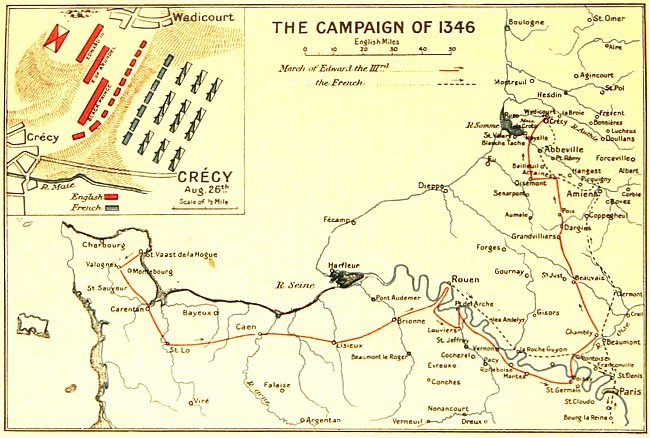
Derby then with his little army harried Gascony
and Guienne for a time, until the arrival of a superior
French force compelled him to retire and gave him
much ado to defend himself. Accordingly, in June
1346 Edward the Third impressed a fleet of innumerable
small vessels, none of them exceeding sixty tons
burden, embarked thereon four thousand men-at-arms,
ten thousand archers and five or six thousand Welsh
spearmen, and sailed for the coast of France. On the
12th of July he put into St. Vaast de la Hogue, a little
to the east of Cherbourg, dispersed a French force that
was stationed to oppose him, and successfully effected
his landing. Six days were allowed to recruit men and
horses after the voyage, and the army then moved eastward
to the Seine, leaving a broad line of ruin and
desolation in its wake, and advanced up the left bank
of the river. King Philip of France had meanwhile
collected an army at Rouen, whence he marched parallel
to the English along the right bank of the Seine, crossed
it at Paris, and stood ready to fall upon Edward if he
should strike southward to Guienne. But Edward's
plans were of the vaguest; his diversion had already
relieved Derby, and he now crossed the Seine at Poissy
and struck northward as if for Flanders. Philip no
sooner divined his purpose than he too hastened northward,
outmarched the English, crossed the Somme at
Amiens, gave orders for the occupation of every bridge
and ford by which the English could pass the river, and
then recrossing marched straight upon Edward's right
flank.
The position of the English was now most critical,
for they could not cross the Somme and were fairly
hemmed in between the river and the sea. At his wits'
end Edward examined his prisoners, and from them
learned of the ford of Blanche Tache in the tidal water
about eight miles below Abbeville. Thither accordingly
he marched, and after waiting part of a night for the
ebb-tide, forced the passage in the teeth of a French
detachment that had been stationed to guard it, and
sending six officers to select for him a suitable position
pursued his way northward through the forest of Creçy.
On the morning of the 26th of August he crossed the
river Maie, and there swinging his front round from
north to south-east he turned and stood at bay.
August 26.
The position was well chosen. The army occupied
a low line of heights lying between the villages of Creçy
and Wadicourt, the left flank resting on a forest, the
right on the river Maie. Edward ordered every man to
dismount, and parked the horses and baggage waggons
in an entrenched leaguer[23] in rear. The army was too
weak to cover the whole line of the position, so the
archers were pushed forward and extended in a multitude
of battalions along the front, and backed with Welsh
spearmen. Echeloned in rear of them stood the three
main divisions of the army; foremost and to the right
the vanguard of twelve hundred men-at-arms under the
Black Prince, next to it the battle of as many more
under the Earl of Arundel, and behind it, covering the
extreme left, the rearguard, consisting of fifteen hundred
men-at-arms and six thousand mixed archers and infantry
under the King. The country being rich in
provisions Edward ordered every man to eat a hearty
meal before falling into his place, for he knew that the
Englishman fights best when he is full. When the host
was arrayed in order he rode round the whole army to
cheer it; and then the men lay down, the archers with
their helmets and bows on the ground before them, and
waited till the French should come.
Philip meanwhile had crossed the Somme at Abbeville
on the morning of the 26th, and turned eastward
in the hope of cutting off the English. Finding that
he was too late, he countermarched and turned north,
at the same time sending forward officers to reconnoitre.
The afternoon was far advanced, and the French
were wearied with a long, disorderly march when these
officers returned with intelligence of the English. Philip
ordered a halt, but the indiscipline and confusion were
such that the order could not be obeyed. The noblest
blood in France was riding on in all its pride to make
an end of the despised English, and a mass of rude
infantry was waiting to share the slaughter and the spoil.
So they blundered on till they caught sight of the
English lying quietly down in order of battle; and
therewith all good resolutions vanished and Philip gave
the order to attack.
It was now nearly five o'clock, and the heaven was
black with clouds, which presently burst in a terrific
thunderstorm. The English archers slipped off their
bowstrings to keep them dry, and waited; while six
thousand Genoese cross-bowmen, jaded by the long
march, drenched and draggled with the rain that beat
into their faces, conscious that they were almost disarmed
by the wetness of their bowstrings, shuffled
wearily into their stations along the French front.
Their leaders complained that they were unfairly treated.
"Who cares for your rabble?" answered the Count of
Alençon. "They are nothing but useless mouths, more
trouble than help." So the cross-bowmen sulkily took
their position, and the rest of the French army, from
twelve to twenty thousand men-at-arms and some fifteen
thousand infantry, ranged themselves in three massive
lines behind them. A vast flight of ravens flew over
the opposing arrays, croaking loudly over the promised
feast of dead men.
Then the storm passed away inland into France, and
the sun low down in the west flashed out in all his glory
full in the faces of the French. The Genoese advanced
and raised a loud cry, thrice repeated, to strike terror
into the English: the archers over against them stood
massive and silent. The loud report of two or three
cannon, little more harmful than the shouts of the
Genoese, was the only answer; and then the archers
stepped forward and drew bow. In vain the Genoese
attempted to reply; they were overwhelmed by the
torrent of shafts; they shrank back, cut their bowstrings
and would have fled, but for a line of French mounted
men-at-arms which was drawn up in their rear to check
them. The proud chivalry of France was chafing impatiently
behind them, and Philip would wait no longer.
"Slay me these rascals," he said brutally; and the first
line of men-at-arms thundered forward, trod the hapless
Genoese under foot, and pressed on within range of
the arrows. And then ensued a terrible scene. The
great stallions, maddened by the pain of the keen barbed
shafts, broke from all control. They jibbed, they reared,
they swerved, they plunged, striking and lashing out
hideously, while the rear of the dense column, carried
forward by its own momentum, surged on to the top of
the foremost and wedged the whole into a helpless choking
mass. And still the shower of pitiless arrows fell
swift as snow upon the thickest of the press; and the
whole of the French fighting line became a confused
welter of struggling animals, maimed cross-bowmen, and
fallen cavaliers, crippled by the weight of their armour,
an easy prey to the long, keen knives of the Welsh.
To face page 36
THE CAMPAIGN OF 1346.
Nevertheless some few of the French men-at-arms
had managed to pierce through the archers. The blind
king of Bohemia had been guided by two faithful
knights through the centre, Alençon had skirted them
on one flank, the Count of Flanders on the other, and
all had fallen upon the Black Prince's battalion. The
danger was greatest on the left flank; but the Earl of
Arundel moved up the second line of the echelon to his
support, and the English held their own. Then the
second line of the French advanced, broke through the
archers, not without heavy loss, and fell likewise upon
the English men-at-arms. The Prince of Wales was
overthrown, and was only saved by the devotion of his
standard-bearer, but the battalion fought on. It was
probably at this time that Arundel sent a messenger to
the King for reinforcements. "Is my son dead or
hurt?" he asked. "No, sire, but he is hard beset."
"Then return to those who sent you and bid them send
me no more such messages while my son is alive; tell
them to let the boy win his spurs." The message was
carried back to the battalion, and the men-at-arms
fought on stoutly as ever. The archers seem also to
have rallied and closed on the flank and rear of the
attacking French. Alençon's banner could still be seen
swaying behind a hedge of archers, and Philip, anxious
to pour his third and last line into the fight, had actually
advanced within range of the arrows. But the power
of the bowmen was still unweakened, the ground was
choked with dead men and horses, and the light was
failing fast. He yielded to the entreaties of his followers
and rode from the field; and the first great battle of the
English was won.
When morning dawned the country was full of
straggling Frenchmen, who from the sudden change
in the direction of the advance had lost all knowledge
of their line of retreat; the few that retained some
semblance of organised bodies were attacked and broken
up. Never was victory more complete. The French
left eleven great lords, eighty-three bannerets, over
twelve hundred knights and some thousands of common
soldiers dead on the field. It was a fortunate issue to
a reckless and ill-planned campaign. It is customary
to give all credit for the victory to the archers, but
this is unjust. Superbly as they fought they would
have been broken without the men-at-arms, even as the
men-at-arms would have been overwhelmed without the
archers. Both did their duty without envy or jealousy,
and therein lay the secret of their success.
1355. 1356. July. August 28.
The siege and capture of Calais followed, and then
by the mediation of the Pope peace was made, and for
a time preserved. Petty hostilities however never
ceased in Brittany, and finally in 1355 the war broke
out anew. Three armies were fitted out,—one of a
thousand men-at-arms under the Black Prince for
operations in Guienne, a second under the Earl of
Derby for Brittany, and a third under the personal
command of the King. Little, however, was effected in
the campaign of 1355. The King was recalled to
England by an invasion of the Scots, and the operations
of 1356 in Brittany were checked by the appearance of
the French King in superior force. But at the close
of July the Black Prince suddenly started on a wild
raid from the Dordogne in the south to the Loire.
His object seems to have been to effect a junction with
Derby's forces at Orleans; but it is difficult to see how
he could have hoped for success. He had reached
Vierzon on the Cher when he heard that the King of
France was on his way to meet him in overwhelming
strength. Unable to retreat through the country which
he had laid waste on his advance, he turned sharp to
the west down the Cher and struck the Loire at Tours.
There for four days he halted, for what reason it
is difficult to explain, since the delay enabled the
French to cross the Loire and seriously to threaten his
retreat.
There was now nothing for the Prince but to retire
southward with all haste. The French were hard on
his track, and followed him so closely that he was
much straitened by want of supplies. On the 14th of
September the English were at Chatelheraut and the
French at La Haye, little more than ten miles apart,
and on the 15th the French made a forced march
which brought them fairly to southward of the Prince,
and between him and his base at Bordeaux. All contact
however had been lost; and the French King,
making sure that the Prince had designs on Poitiers,
swung round to the westward and moved straight upon
the town. On the 17th, while in full march, his rearguard
was suddenly surprised by the advanced parties
of the Prince. As in the movements after the Alma,
each army was executing a flank march, quite unconsciously,
in the presence of the other. The French
rearguard pursued the reconnoitring party to the main
body of the English, and after a sharp engagement was
repulsed with heavy loss. The French army had
actually marched across the line of the Black Prince's
retreat, and left it open to him once more.
Sept. 18.
Edward lost no time in looking for a suitable
position, and presently found it at Maupertuis some
fifteen miles south-west of Poitiers. There to the
north of the river Miosson is a plain seamed with deep
ravines running down to that stream; and behind one
of these he took his stand, facing north-east. The
sides of the ravine were planted with vineyards and
blocked by thick hedges, so that it was impossible for
cavalry to cross it except by a track which was broad
enough for but four horsemen abreast; and these
natural advantages the Prince improved by repairing
all weak places in the fences and by digging entrenchments.
One exposed spot on his left flank he
strengthened by a leaguer of waggons as well as with
the spade. He then told off his archers to line the
hedges which commanded the passage across the ravine,
and drew up his men-at-arms, all of them dismounted,
in three lines behind it. The first line he committed
to the Earls of Warwick and Suffolk, the rearmost to
the Earl of Salisbury, and the centre he reserved for
himself. His whole force, augmented as it was by a
contingent of Gascons, did not exceed six or seven
thousand men, half of whom were archers.
So passed the day of the 18th of September on the
English side. The French on their part, instead of
blocking up their retreat to the south and reducing
them by starvation, simply moved down from Poitiers
to within a league of the English position and halted
for the night. Their force amounted to sixty thousand
men, and they might well feel confident as to the issue
of an action. Indeed, when the Black Prince, fully
alive to the desperate peril of his situation, negotiated
for an evacuation of the country, they imposed such
terms that he could not in honour accept them. They
therefore reconnoitred the English position, and laid their
plans for the morrow. Three hundred chosen men-at-arms,
backed by a column of German, Italian, and
Spanish knights, were to charge down the ravine upon
the archers, disperse them, and attack the English men-at-arms
on the other side. Three lines, each of three
massive battalions containing from three to four
thousand men-at-arms, with lances shortened to a
length of five feet, were to follow them afoot, and the
English were to be crushed by their own tactics.
Sept. 19.
It is hardly surprising that in the night the Black
Prince's heart failed him. He resolved while he could
to place the Miosson between him and the French, and
at dawn began his retreat, leaving the rearguard, however,
still in the position at Maupertuis in case withdrawal
should be impossible.[24] He also sent two knights
to watch the French army, who however approached
too closely to it and were captured. His first line had
already crossed the Miosson when intelligence reached
him that the French had advanced, and that the rearguard
was engaged. He at once ordered the vanguard
to return, and himself hastening back with his own
division, despatched three hundred mounted men-at-arms
and as many mounted archers without delay to
strengthen his right wing. The French meanwhile had
moved forward, gaily singing the song of Roland, to
find the way blocked by the hedges and vineyards of
the ravine. Undismayed they plunged down into the
narrow track; and then the English archers behind the
hedges opened at close range a succession of frightfully
destructive volleys. The foremost of the horsemen
fell headlong down, the rear plunged confusedly on the
top of them, and the pass was blocked with a heaving,
helpless crowd, on which the arrows hissed down in an
eternal merciless shower. The supporting column of
foreign cavalry was unable to act in the confusion; it
was already under the fire of the archers, and before it
could move the English mounted men on the right
wing came down full upon its left flank, and killed or
captured every man.
To face page 40
THE CAMPAIGN OF 1356.
And now the wounded French horses, mad with
pain and terror, many of them riderless and all beyond
control, dashed back on to the first line of the dismounted
French men-at-arms. It was a charge of mad
animals, the most terrible of all charges, and the huge
battalion fell into confusion before it. Edward was
watching the battle keenly from his position; he had
already ordered his men-at-arms to mount, and now Sir
John Chandos, whose name must always be linked to
Edward's as that of Collingwood to Nelson, broke out
aloud with, "Forward, sire, forward, and the day is
yours!" "Aye, John," answered the Prince, with a
thought perhaps of the morning's retreat, "No going
backward to-day. Forward banner, in the name of
God and St. George!" The preliminary attack of the
mounted men on the right had already cleared the way
for them. The English cavalry scrambled in haste
down into the ravine on the right, and fell upon the
French men-at-arms. The front and centre divisions,
already much shaken, were easily broken and dispersed;
the third and strongest still remained, and against this,
which resisted desperately, the whole force of the
English was turned. The lesson of Falkirk was remembered.
The mounted archers made the gaps and
the men-at-arms rode into them. The division was
broken, the King was captured, and the mass of the
fugitives making for Poitiers found the gates closed
against them and were cut down by hundreds. The
action began at six in the morning, and lasted till late
into the afternoon. The French losses were enormous.
Over and above the King and many great lords two
thousand men-at-arms were captured, and two thousand
five hundred more were left dead on the field; the
number of the unhappy foot-men that were slain it is
impossible to state. The English loss is variously set
down, the reports ranging from half the force to sixty-four
men. The battle, from the disparity between the
strength of the two sides, must remain ever memorable
in the annals of war. To the English, who had but
lately risen above the horizon as a military power, it
gave a prestige that has never been lost.
1360. 1364,
May 16.
The peace of Brétigny closed the war, and the
English army was disbanded. But the soldiers, like
the ten thousand Greeks who returned from Cunaxa,
were too deeply bitten with their profession to abandon
it for the tedium of peace. They therefore formed
themselves into independent bodies, or Free Companies,
and for years were the scourge of France, their chamber
as they called it, which they plundered and ravaged at
their pleasure. The greatest of their leaders was
John Hawkwood, of whom something more must
presently be said, but these bands, in less or greater
numbers, were constantly to be found fighting for hire
against the French. Thus three hundred of them
fought for the King of Navarre against the King of
France at Cocherel. The numbers engaged were little
more than fifteen hundred on each side, but the action
is interesting as showing the efforts of the French to
meet the peculiar tactics of the English. In order to
have no more trouble with unruly horses the French
men-at-arms dismounted and fought on foot, and now
for the first time the archers found themselves outdone.
The armour of the French was so good that it turned
the cloth-yard shafts; and being slightly superior in
numbers the French men-at-arms forced their enemy
off the field. It was but a slight success, but a defeat
even of a small body of English was such a rarity in
those days that it gave the French great hopes for the
future, hopes which were soon to be dashed to the
ground.
1365. Sept. 29.
In the following year a quarrel as to the succession
to the Duchy of Brittany between Charles of Blois and
John of Montfort brought the English again into the
field. The French King Charles the Fifth sent assistance
to support the former, whereupon John of
Montfort at once appealed to the English. John
Chandos and several more of the garrison in France,
eager for fresh battle against their old enemies, asked
permission to join Montfort as volunteers. "You may
go full well," answered the Black Prince. "Since the
French are going for Charles of Blois, I give you good
leave." The English, both volunteers and mercenaries,
accordingly hurried to the scene of war; and at Auray
they fought the action which decided the campaign.
The numbers engaged did not exceed four thousand in
either army. Both sides dismounted, and the French
men-at-arms discarding the lance as unfit for fighting
afoot equipped themselves with battle-axes, so that
there promised to be a stubborn fight. The English
archers as usual opened the engagement, but as at
Cocherel their shafts could not penetrate the armour of
the French; whereupon with great deliberation they
threw down their bows, and boldly advancing to the
French men-at-arms plucked their axes from their
hands and plied the weapons against their astonished
owners with terrible effect. The whole proceeding
furnishes so good an example of the thoughtless, thick-headed
gallantry of the English soldier, that one can
only marvel that the battle of Auray should be practically
unknown to Englishmen. The intensely ludicrous
picture that can be conjured up of a series of detached
struggles between the brawny active Englishmen in
their doublets and hose, and the unhappy Frenchmen
cased stiffly in their mail, the panting, the staggering,
and the rattling, the agonised curses from behind the
vizor, and the great broad laugh on the honest English
face—this alone should have saved it from oblivion.
The English men-at-arms came quickly to the support
of the bowmen, and after a long and desperate engagement,
for the noble and gallant Bertrand du Guesclin
was in command of the French, the English drove their
enemy from the field and as usual finished the pursuit
on horseback. There was no question in the action of
superior archery or advantage of position, though
Chandos indeed handled his reserve in a masterly
fashion, but it was simply a matter of what the Duke of
Wellington called bludgeon-work; and at this too the
English proved themselves the better men.
1366.
By this time the oppression of the Free Companies
had become so insufferable that, in order to rid the
country of them, Charles the Fifth ordered Bertrand
du Guesclin to take a certain number of them into
service and march with them to fight for the bastard
Henry of Trastamare against Pedro the Cruel of
Castile. It would be a mistake, we must note in
passing, to look upon these companies as composed
simply of low ruffians; they seem on the contrary to
have been made up largely of the class of esquires,
while there were poor noblemen serving even among
the archers. On entering Spain they took to themselves
a white cross, the old English colour of the
Crusades, as their distinctive mark, and were apparently
the first English troops that introduced this substitute
for uniform. Further, they called themselves the White
Company, and were in this respect the forerunners of
the Buffs and Blues. They did little profitable work
under du Guesclin, and were presently dismissed, just
in time to be re-enlisted to the number of twelve
thousand by the Black Prince, who, dreading an alliance
of France with Spain, was preparing an expedition for
the rescue of Peter the Cruel. The vassals of
Aquitaine and Gascony were also summoned to the
Prince's standard, a reinforcement under the Duke of
Lancaster was sent from England to Brittany, whence
it marched overland to the south, and by December
1366 thirty thousand mounted troops were concentrated
on the frontier of Navarre. It was by general consent
admitted to be the finest army that had ever been seen
in Europe; so rapid had been the growth of military
efficiency in England under the two great Edwards.
It was organised in the usual three divisions, the vanguard
being under command of the Duke of Lancaster,
with Sir John Chandos at his side. The battle was
under the command of the Prince himself, and the rearguard
under a Gascon noble and famous soldier, the
Captal de Buch. Every man wore the red cross of St.
George on a white surcoat and on his shield, a badge
which henceforth became distinctive of the English
soldier for two centuries. The Spaniards, it is worth
noting, wore a scarf, a fashion which, already two
generations old, was destined to last through our great
Civil War, and to survive, in the form of a sash, to the
present day.
1367.
On Monday the 22nd of February 1367 the first
division crossed the Pyrenees by the Pass of Roncesvalles.
The next two followed it on the two succeeding
days, and the whole force was reunited at Pampeluna.
The Prince had now two lines of operations open to
him, both leading to his objective, Burgos; the one by
Vittoria and Miranda on the Ebro, the other by Puente la
Reyna and Logrono. He chose the former, the identical
line followed in the contrary direction by Wellington in
chase of the beaten French, and sent only a small
detachment of volunteers under Sir Thomas Felton
along the latter route. This party of Felton's deserves
mention as the first body of English irregular cavalry
under a reckless and daring officer. No exploit was too
hare-brained for them and they did excellent service, for
they were the first to find contact with the Spanish army,
at Navarete, and having obtained it they preserved it,
keeping the Prince admirably informed of the enemy's
movements. Henry of Trastamare, on learning the
advance of the English, crossed the Ebro and marched
on Vittoria, but finding that the Black Prince had been
beforehand with him fell back on Miranda. Felton's
volunteers stuck to him so persistently and impudently
during this retreat that the Spaniards at last lost patience
and attacked them in overwhelming force. The English,
a mere hundred men, were too proud to retire but stood
firm on the hill of Arinez, the very spot where Picton
broke the French centre in the battle of the 21st of
June 1813, and were killed to a man. Henry then
recrossed the Ebro to his first position at Navarete;
the Black Prince crossed the same river at Logrono,
and on the 3rd of April the two hosts stood face to
face on the plain between Navarete and Najera.
April 3.
It is not easy to ascertain the force engaged on each
side, but it is certain that the Black Prince, with about
ten thousand men-at-arms and as many archers, was
superior in numbers and very decidedly superior in the
quality of his troops. Nevertheless the force had
suffered much hardship, and the men were individually
enfeebled by want of food. The Spanish army was distributed
into four divisions. The first of these, consisting
of dismounted knights, was placed under the
command of Bertrand du Guesclin and formed the first
line. The remaining three formed the second line; the
largest of them, composed of mounted men-at-arms and
a rabble of rude infantry, being drawn up in rear of
the vanguard, while the other two, made up chiefly
of light cavalry copied from the Moorish model, were
drawn up on either flank slightly in advance of the
second and in rear of the first line. The arrangement
of the Black Prince's army was similar but more
massive; first came the vanguard under John Chandos,
then a second line with two flanking divisions pushed
slightly forward, as in the Spanish army, and lastly the
third line in reserve. Every man in the English host
was dismounted. The battlefield was a level plain; and
the sight of the two armies advancing against each
other, armour and pennons glancing under the morning
sun was, in Froissart's words, great beauty to behold.
To face page 46
THE CAMPAIGN OF 1367.
The English archers as usual opened the engagement,
and then the divisions of Chandos and du Guesclin,
the two most gallant and chivalrous soldiers of their day,
met in full shock. In spite of a furious resistance the
English, weakened by privation, were for a moment
borne back. Chandos was overthrown and went near
to lose his life. But meanwhile the English archers in
the flanking divisions had driven off the light horse that
stood before them, and now wheeling inward enveloped
du Guesclin's devoted band on both flanks. The bastard
Henry strove gallantly to save the day with the second
line, but the Black Prince brought up not only a second
line but a third, and the battle was soon over. Then
the English men-at-arms flew, as at Poitiers, to their
horses, and the defeat was turned into a rout. A rapid
torrent, spanned by but a single bridge, barred the
retreat of the fugitives; the narrow passage was choked
by the press of the flying, and thousands were taken or
slain.
This battle marks the zenith of early English military
power. But the campaign was after all a failure.
The ill faith of Pedro the Cruel forced the Black Prince
to tax Gascony heavily for the expenses of the war; the
province appealed to the King of France, and the Prince
was summoned to be judged before his peers at Paris as
a rebellious vassal. He shook his head ominously when
he received the message. "We will go," he said, "but
with helmet on head and sixty thousand men at our
back." The war with France broke out anew, and
petty operations were soon afoot all over the country;
but now noble after noble in Aquitaine and Gascony
forsook his allegiance and revolted to the French. Disaster
came thick upon disaster. The Earl of Pembroke,
a new commander, disdaining the help of the veteran
Chandos, was defeated, and Chandos himself, while
advancing to his relief, was slain in a skirmish, to the
grief alike of friend and of foe. The Prince, already
sickening of a mortal disease, turned in fury upon the
insurgent town of Limoges, besieged it, took it, and
ordered every soul in it to be put to the sword. Three
thousand men, women, and children were cut down,
crying "Mercy, mercy!" but the stern man, too ill
to ride, looked on unmoved from his litter, till at the
sight of three French knights fighting gallantly against
overwhelming odds his heart softened, and he gave the
word for the slaughter to cease.
A few weeks later his little son, but six years old,
the boy upon whom the great soldier had lavished all
that was tender in his nature, died suddenly at Bordeaux.
The blow aggravated the Prince's sickness, and the
physicians ordered him to England, in the faint hope
that he might get better at home. He returned, hid
himself in strict seclusion in his house at Berkhampstead,
and waited for the end. Meanwhile things in France
went from bad to worse. A great naval defeat before
Rochelle cost England the command of the sea, and
with the loss of the sea Guienne and Gascony were lost
likewise. An expedition under John of Gaunt landed
at Calais and marched indeed to Bordeaux, but lost four-fifths
of its numbers through sickness on the way.
By 1374 the English possessions in France were reduced
to Calais, Bordeaux, and Bayonne; so swiftly had victory
passed away with the withdrawal of the master's hand.
1376.
At length, in 1376, the Prince came up to Westminster
to attend, even in his sick-bed, the deliberations
of Parliament. This was his last effort. Two
months later, on the 8th of June, he summoned his
faithful comrades to his chamber to bid them farewell,
and as they filed past he thanked them for their good
service and asked their pardon for that he could not
reward them as he wished. Then he entreated them to
be faithful to his son as they had been to himself: and
they swore it, weeping like women, with all their hearts.
The end came with a flash of the imperious soldier's
spirit. Observing that a knight who had offended him
had come in with the rest, the Prince instantly bade him
begone and see his face no more; and then the noble
heart cracked, and with a last ejaculation that he forgave
all men as he hoped to be forgiven, the Black Prince,
the hope and pride and treasure of England, sank back
and died. Two months later he was buried with military
pomp in the cathedral at Canterbury; and over his
tomb were hung, and still hang, his helmet, his surcoat,
his gauntlets, his crest, his shield, and his sword,[25] the
veritable arms worn by the first great English soldier.[26]
For a great soldier he was and a great commander. He
could be stern and he could be merciless, but those were
stern and merciless times, and the man whose last
thoughts were for his comrades-in-arms was a chief who
could hold men to him and a leader whom they would
follow to the death. Men no longer pray for his soul
in the chapel which he founded in the crypt of the
cathedral; but morning and evening the voice of the
trumpet, calling English soldiers to their work and dismissing
them to their rest, peals forth from the barracks
without and pierces faintly into the silence of the
sanctuary, no unfitting requiem for the great warrior
who, waiting for the sound of a louder trumpet, sleeps
peacefully beneath the shadow of his shield.
Authorities.—The principal authority for the period is of course
Froissart, whose narrative has been elucidated, by the help of minor
authorities, by Köhler with his usual care and pains. See his vol ii.
pp. 385-523, and in particular the list of authorities on pp. 385 and
417.
CHAPTER IV
1382.
The works of the Black Prince lived after him. Not
that we must look for them immediately in England,
where we now enter on forty years of intestine division
and civil strife. We do indeed find that Richard the
Second, on his invasion of Scotland in 1385, adopted for
his army the organisation that had been taught by his
father at Navarete; but we discover no trace of military
progress. Far more instructive is it to look to the
continent of Europe and watch the spread of English
military ideas there. It has already been seen that the
French, not daring to meet the English archers on
horseback, adopted the English system of dismounting
for action; and it is interesting to note that the same
fashion spread to Germany and Italy, steadily tending
to overthrow the supremacy of cavalry wrought by the
feudal system, and to make a revolution in the art of
war. Not one of the nations, however, seems to have
grasped the pith of the English tactics, the combination
of the offensive and defensive elements in the infantry.
The French indeed, under King Charles the Sixth, strove
to raise up archers, and with all too good success, for
they became so efficient that they were esteemed a
menace to the nobility, and were soon effectively discouraged
out of existence. Perhaps the most striking
example of the misapplication of the English system is
the conduct of the Austrian commander at Sempach,
who by dismounting his knights deliberately gave away
every advantage to the Swiss, and thus helped forward
that nation on the way to make its infantry the model
of Europe; a very significant matter in the history of
the art of war.
But the truest disciples of the Black Prince were the
English Free Companies, from whom there descended to
England, and indeed to Europe, a legacy of a remarkable
kind. These companies were military societies
framed very much on the model of the ancient trade-guilds,
and had as good a right to the name as they.
A certain number of adventurers invested so much
money in the creation of a trained body of fighting
men, and took a higher or lower station of command
therein, together with a larger or smaller share of the
profits, according to the proportion of their venture.
If any man wished to realise his capital he could sell
out, provided that he could find a buyer; if any one
partner seemed to the rest to be undesirable they would
buy him out and take in another. Thus grew up what
was known as the purchase-system. The abuse of their
monopoly by these companies drove the sovereigns of
Europe after a time to issue commissions to their
subjects to raise companies for their own service only;
but even so the commercial basis of the company remained
unchanged, being only widened when the time
came for the amalgamation of companies into regiments.
These military adventurers taught the nations
the new art of war, and the nations could not but
follow their model.
1387. 1391.
The greatest leader of free companies was an
Englishman, a pupil of the Black Prince but greater
even than his master, John Hawkwood. It is true
that he did his work for foreign nations and in a
foreign land, but even so his name must not be omitted
from a history of the British Army. The company
which he commanded, English almost to a man, was
the terror of Italy, and not only the most formidable
in the field but the smartest to the eye, for its arms
were burnished till they shone like silver. Hawkwood,
though a mercenary, was celebrated as the only one who
never broke faith, and as a general his reputation was
European. The action which he fought at Castagnaro,
when, in spite of great inferiority in numbers, he
deliberately laid his plans for a sudden counterstroke,
after the manner of Poitiers, extorts the admiration
even of modern generals. Still more remarkable is his
once famous retreat in the face of an overwhelming
force from the Adda to the Adige, and perhaps greatest
of all was the closing scene of that retreat. For, as he
lay encamped in the plains by the Adige, the enemy
broke the dykes of the river and turned the whole
flood of its waters upon his army. It was night, and
the men were encamping, weary after a hard day's
march, when the deluge came upon them. Everything
conspired to create a panic, but Hawkwood's coolness
and confidence were equal to the danger. He bade
every horseman take up one of the foot-men behind
his saddle, and then placing himself at their head he
led them through ten miles of the trackless waste of
water, never less than girth-deep, and brought them
out by sheer sagacity, not indeed without loss but without
heavy loss, to the dry bed of the river. This was
in his last campaign, when he was past seventy years of
age; and Florence, the state which he had long faithfully
served, voted him a pension for life and a monument
even during his lifetime. He was making
arrangements to return to England when he died; and
King Richard the Second begged the city of Florence
that the bones of so famous a warrior might be returned
to his native land. The request was gracefully granted
by the citizens, but the last resting-place of Hawkwood
is now unknown. His monument in the Cathedral at
Florence records that he was the most skilful general
of his age, a height of military fame that has been
reached by one other Englishman only, John, Duke
of Marlborough.
1385,
August 14.
Yet another action must be briefly noticed to show
the value set on English military skill. During the
invasion of Portugal by the King of Castile, in 1385,
the Portuguese were joined by a party of about five
hundred English adventurers, whose leaders appear to
have directed most of the operations. It was under
their guidance that the decisive battle of Aljubarotta,
of which the Portuguese are still proud, was finally
fought; and it is worthy of remark that, finding no
advantageous position to hand, they deliberately constructed
by means of abattis an imitation of the position
of Poitiers, making it unassailable from the front except
through a narrow strait, which was purposely left open
and lined with archers. Marvellous to relate, the
Spaniards and the French, who were fighting with them,
rushed straight into the trap, and were of course utterly
overthrown; whereupon, in due accordance with precedent,
the Portuguese made their counter-attack and
won a complete victory.[27] All this was due, as Froissart
says, to the counsel of the English; and indeed, little
though we may be conscious of it, it is doubtful whether
even after Waterloo the prestige of English soldiers
was greater than at the end of the fourteenth century.
But while the English military doctrines were thus
spreading themselves over Europe, fresh innovations,
which were destined to render them obsolete, were
already making rapid progress. Artillery in the hands
of the Germans was tending more and more to lose its
cumbrous character and to take new form in mobile and
practicable weapons. The heavy bombards, which could
be neither elevated nor traversed, had before the close
of the fourteenth century given place to lighter guns
of smaller bore fixed on to the end of a shaft of wood
and supported on a fork or hook, whence they derived
their name of Hakenbüchse, a word soon corrupted by
the English into hackbut, hagbush, and finally harquebus.
A later improvement had fitted guns with a stock
like that of the cross-bow, which could be brought up to
the shoulder, thus more readily aligning the barrel to the
eye. The step from this to the hand-gun, which could
be served out as the individual weapon of a single man,
was but a short one and was soon to be taken. But as
the traditions of Wellington and the Peninsula were to
be tried once more at Alma and Inkerman before they
finally perished, so the system of the two great Edwards
was to be revived forty years after Navarrete at Agincourt.
1415.
It is unnecessary to dwell on the pretensions which
were put forward to excuse the wanton aggression of
Henry the Fifth against France. Ambitious, like
Frederick the Great, of military glory he made his will
the true ground for his action, counting on the spirit of
a people that was never strongly averse from a French
war. The military devices introduced by the Edwards,
the commissions of array,[28] and the system of indentures,
were still in good working order, while the
discipline of the Black Prince, like his order of battle,
was stereotyped in a written code of Ordinances of
War. All the old machinery was therefore to hand;
and perhaps the most noteworthy change that had come
over the English military world was the doubling of the
archers' wages from threepence to sixpence a day.
Parliament voted the King a large sum of money, which
however proved to be insufficient, for, significantly
enough, not a contractor would furnish his contingent
of men without security for the repayment of his
expenses. The crown jewels were pledged in all
directions, ships were hired in Holland and in England,
seamen were impressed, artisans of every trade, from the
miner to the farrier, were engaged, and on the 7th of
August 1415 the army embarked at Southampton and
the adjacent ports, and sailed for the Seine. The whole
fleet numbered some fourteen hundred vessels, and the
army is reckoned at thirty thousand men, men-at-arms
with their attendants, and archers both mounted and
afoot, all distinguished by the red cross of St. George.
Further, there was a great train of the newest and best
artillery, great guns called by pet names such as the
London and the King's Daughter, the whole under the
charge of four German gunmasters.
On the second day out the fleet anchored before
Harfleur. A day was taken up by the disembarkation,
which was unhindered by the French; and by the 19th
of August the town was fully invested. Then came a
month of siege, wherein the art that was dying blended
strangely with that which was just coming to birth;
wooden towers and quaint engines that might have
been employed by the Romans plying side by side with
sap and mine and countermine and the latest patterns of
German artillery. The French made a most gallant
defence, and dysentery breaking out in the English
camp swept off thousands of the besiegers; but at
length the heavy guns prevailed. The garrison begged
for terms, praying that the King would make his
gunners to cease, "for the fire was to them intolerable."
On the 22nd of September the capitulation was agreed
on, and Harfleur received an English garrison. It
was the first town that the English had reduced by the
fire of cannon.
But Henry was not yet satisfied. Two-thirds of
his force had melted away, dead or invalided, but he
had no intention of re-embarking at Harfleur. He
devoted a fortnight to the repair of the defences of the
captured town, and then collecting provisions for eight
days he marched northward for Calais with an army, or,
as we should now call it, a flying column, of nine
thousand men.
Meanwhile the French, disorganised though they
were by the insanity of their king, Charles the Sixth,
began to bestir themselves, and collecting an army of
sixty thousand men, fourteen thousand of them men-at-arms
and several thousand archers and cross-bowmen,
determined to hold the line of the Somme and bar
Henry's passage of the river. Henry's idea, dictated
like the whole of his campaign by the precedent of
Edward the Third, had been to cross the Somme by
the ford of Blanche Tache. He now learned that the
passage was defended by the French in force. He
wheeled at once to the right, and following the left bank
of the river upward, tried in vain to find a crossing-place.
Every bridge was broken down and every ford
beset. It was plain that he was more effectually entrapped
even than his predecessor Edward.
October.
The eight days' supply of provisions was now consumed,
and the position of the English became most
critical. Retreat Henry would not, force the passage
of the Somme he could not. He decided to follow the
river upward to its head-waters, and on reaching Nesle
learned from a countryman of a ford, the access to
which lay across a morass. Two causeways that provided
a footing over it had been broken down by the
French, but these were quickly repaired with wood and
faggots and straw till they were broad enough to admit
three horsemen abreast. Henry himself was indefatigable
in the work. He took personal charge of one
end of the passages, and appointed special officers to
attend to the other. The baggage was carried over
along one causeway, and the men by the second. Thus
the passage both of morass and river was accomplished
between eight in the morning and an hour before dusk
of an October day. The French, who were lying in
force at Peronne, now for some unexplained reason
retreated towards the north-west, but sent, according to
custom, a challenge to Henry to fix time and place for
battle. "I am marching straight to Calais through
open country," he replied. "You will have no
difficulty in finding me." And he continued his
advance.
At Peronne the English struck the line of the
French march and looked for an immediate engagement.
The force moved in order of battle, every man armed
and ready for action, while the archers by Henry's order
carried a stake, eleven feet long and pointed at both ends,
to make them defence against cavalry. To their surprise
no enemy appeared; and Henry was presently able to
disperse his force along a wider front, with the advantage
alike of obtaining easier supply of victuals and surer
information of the enemy. The English were much
distressed by want of bread: other provisions were
abundant, but grain was absolutely undiscoverable.
Nevertheless discipline was most strictly enforced, and
the order of the columns, as the speed of the march can
avouch, was quite admirable. Robbery of churches or
peasants, the slightest irregularity on the march or in
the camp, the presence of women in the camp, all
offences alike were visited with the severest punishment.
One man, whom Shakespeare has immortalised as
Bardolph, was detected in the theft of a pyx: he was
paraded through the army as a criminal and hanged.
Even French writers admit that the English dealt more
mercifully with them than their own countrymen. The
King himself avoided anything that might seem to indicate
the slightest discouragement. One night he
missed the camping-ground assigned to his division and
took up that of the vanguard. "God forbid that in
full armour I should turn back," he said; and pushing
the vanguard further forward, he halted for the night
where he stood.
On the 24th of October, Henry, who was lying at
Frevent on the river Canopes, was informed by his
scouts that the French were moving forward from St.
Pol and must inevitably get ahead of him. He pushed
on to Blangy, crossed the river Ternoise there, and
advancing to Maisoncelle drew up his army in battle
order before it. The whole French army was before
him at Ruisseauville, but as dusk fell without an attack
he withdrew for the night to Maisoncelle, and conscious
of his desperate situation opened negotiations with the
French, offering to restore Harfleur and make good
all injuries if he might be permitted to evacuate France
in peace. His overtures were rejected and he was
warned to fight on the morrow. On the same evening
the French moved down to a narrow plateau between
the villages of Tramecourt and Agincourt, and there,
cramped into a space far too narrow for sixty thousand
men, they halted till the morrow within less than a mile
of the English position.
The night was spent in very different fashion in the
two camps. The French, doubtless much inconvenienced
by the straitness of their quarters, were shouting everywhere
for comrades and servants as noisily as a mob of
sheep; while some, forgetting the lesson of Poitiers,
gambled for the ransom of the prisoners that they were
to take in the morrow's battle. Huge fires were kept
burning round their banners, for the rain was incessant,
and the English could see everything that passed among
them. They too began shouting like the French till
sternly checked by the King; and then the English
camp fell silent, and the men, forbidden to forget their
situation in the din of their own voices, sat down to face
it in all its stern reality. They could be excused if they
felt some misgiving. They had covered over three
hundred miles in a continuous march of seventeen days,
often in hourly expectation of a fight; for four days
they had not tasted bread; and now, after a few short
hours more of waiting in the ceaseless pattering rain,
they were to meet a host outnumbering them by five to
one. Arms and bowstrings were overhauled and repaired;
and the priests had little rest from the numbers
that came to them for shrift. But in the discipline of
that silence lay the promise of success.
October 25.
At dawn of the next morning Henry was astir, fully
armed but bare-headed, riding a gray pony. Presently
he led the army out of Maisoncelle to a newly-sown field,
which was the position of his choice, and drew it up for
battle. Every man was dismounted, and horses and
baggage were parked in the rear under the protection of
a small guard. But the numbers of his army were so
weak that the favourite formation of the Black Prince
could not be followed. The vanguard under the Duke
of York became the right, the battle under the King the
centre, and the rearguard under Lord Camoys the left
of a single line, which even then was ranked but four
men deep. It was a first example of English line
against French column. Henry made the men a short
speech, recalling to them the deeds of their fathers, and
then the whole host kneeled down, thrice kissed the
ground, and rose upright again into its ranks.
Meanwhile not a sign of attack came from the
French. Their order of battle had been determined
many days before, but it was ill adapted to so narrow a
position. It was evident that only the vanguard could
possibly come into action, and such was the indiscipline
that every man of rank wished to command it. Finally
the whole of the magnates were placed in the vanguard,
and its strength was made up to about seven thousand
men-at-arms, every one of them dismounted. On each
flank was a wing of twelve hundred more dismounted
men, and on their flanks again two small bodies of
cavalry, three hundred on the right, and eight hundred
on the left, which were designed to gallop down upon
the archers. This was the first French line. The
second was also made up of about eight thousand dismounted
men-at-arms; while the remainder, who were
ordered to dismount but would not, composed the third
line. The whole stood on ploughed ground, soaked by
the rain of the previous night and poached deep by the
trampling of innumerable feet.
The French took advantage of the delay to give
their men breakfast, an example which Henry immediately
followed. Then seeing that the enemy remained
motionless he prepared to attack. A gray old warrior,
Sir Walter Erpingham, galloped forward with two aides-de-camp
to make the necessary changes of formation.
The archers were deployed in front and flanks, and
when all was ready old Sir Walter tossed his baton into
the air and sang out "Now strike." Then galloping
back to the King's battalion he dismounted and took his
place in the ranks. The King, already dismounted, gave
the word "Forward banner," and the English answered
with a mighty cry, the forerunner of that "stern and
appalling shout" which four centuries later was to
strike hesitation into so fine a soldier even as Soult. Then
the whole line advanced in close array, with frequent
halts, for the ground was deep, and the archers in their
leathern jackets and hose, ragged, hatless, and shoeless
after two months of hard work, could easily wear down
the men-at-arms in their heavy mail. Artillery in such
a sea of mud could not be brought into position on
either side, and the German gunners took no part in the
fight. The French on their side stood firm and closed
up their ranks. They were so heavily weighted with
their armour, always heavier than that of the English,
that they could hardly move, and their front was so
much crowded that they could not use their archers; so
they broke off their lances as at Poitiers to the length
of five feet, and stood in dense array, thirty-one ranks
against the English four.
Arrived within range the archers struck their stakes
slantwise into the ground, and drew bow. The French
vanguard then shook itself up and advanced slowly,
while the cavalry on their flanks moved forward against
the archers. The division of three hundred lances on
the right made but a poor attack; little more than
half of them really came on, and even these their horses,
maddened as at Creçy by the pain of the arrows, soon
carried in headlong confusion to the rear. The stronger
division on the left charged home, and the leader and
one or two others actually reached the line of stakes;
but the stakes had no firm hold in the mud; the horses
tripped over them and fell, and not one rider ever rose
again. The remainder had as usual been carried back
by their wounded horses upon their comrades in rear,
and thence with them upon the wings of dismounted
men-at-arms in which they tore terrible gaps. The
centre of the French vanguard fared little better.
Dazzled by the eastern sun that shone full in their
eyes, and bending their heads before the sleet of arrows,
they lost all idea of their direction, and became so
clubbed together that they could not use their weapons.
By sheer weight they forced back the English men-at-arms
a lance's length, and for a time they fought hard.
King Henry was twice struck heavily on the helmet, one
blow lopping a branch from the crown that encircled it.
But meanwhile the archers had noted the gaps torn
by the horses in the wings of the French fighting line.
They dropped their bows, and with whatever weapon—axe,
hammer, or sword—that hung at their girdle,
they fell, light and active, upon the helpless, hampered
men-at-arms and made fearful havoc of them. The
French centre, exposed by the defeat of the wings to
attack on both flanks, gave way before the King's
battalion, and their first line was utterly defeated.
There was no question of flight among the French men-at-arms,
for the unhappy men could not move. The
English simply took off the helmets of their prisoners,
and, leaving them thus exposed, pressed on against the
second line. This, however, was already shaken by the
defeat of the vanguard; and though one leader who
had arrived late in the field, the Duke of Brabant, set a
gallant example, he was quickly cut down, and the
defeat of the second line followed quickly on his fall.
The third line still remained, but being mounted, contrary
to orders, had no mind to stay and fight, but
turned and fled, leaving some few of their leaders alone
to redeem French honour by a hopeless struggle and a
noble death.
This battle was hardly won when word was brought
to Henry that his baggage, with all his treasure as well
as all the horses, was in the hands of plunderers. The
guard in fact had been unable to resist the temptation to
join in the fight, and had left the baggage to take care
of itself. The momentary confusion hereby caused
gave some of the French time to rally, and Henry, not
knowing how great the danger might be, ordered every
man to kill his prisoners. The English hesitated, less
possibly from humanity than from reluctance to lose
good ransom, whereupon Henry told off two hundred
archers for the duty, which was promptly carried out.
He can hardly be blamed, for the fight had been won
less by the slaughter than by the capture of the men-at-arms;
and the risk of undertaking a new attack in
front with some thousands of unwounded prisoners in
rear, was serious. Be that as it may, the deed was
done. Henry then advanced against the rallied French
and quickly broke them up; and at four o'clock,
the victory being at last complete, he left the field.
The French loss in nobles alone numbered from five to
eight thousand men killed, exclusive of common men.
A thousand prisoners and a hundred and twenty
banners were taken. The losses of the English are uncertain,
but probably did not exceed a few hundreds,
the most distinguished of the fallen being the Duke of
York.
So ended the great fight which King Harry himself
decreed to be called by the name of Agincourt.[29] It
sums up in itself the leading features of Creçy, Poitiers,
and Cocherel, in a word of all the finest actions of the
Edwards. But it was, as fate ordained, but the afterglow
of the glory of the Plantagenets, not the light of
a sun new risen like a giant to run his course.
To face page 62
THE CAMPAIGN OF 1415.
1420.
To attempt to follow the later campaigns of Henry
the Fifth in France would be alike tedious and unprofitable.
To the last he stuck to the principles of the
Black Prince, but his military talents ripened year after
year, and while he lived France trembled under his
sword. Finally, torn to pieces by the strife of Burgundian
and Armagnac, France by the Treaty of Troyes
surrendered her kingship into his hand. The contempt
of the English for their enemy was such that the men
once assaulted and captured a town without orders.
But in the very next year came a reverse that boded
ominously for the future. The Duke of Clarence was
defeated at Beaugé, less by the French than by a body
of Scottish auxiliaries, who had been sent to their assistance
under the Earl of Buchan. Henry had hoped
that the Scots would not fight against him, and ordered
them henceforth to be treated as rebels, but it was to
no purpose. The reader should take note of this fateful
year 1421, for it marks the permanent entrance of the
Scots into the service of France, a fact full of import
for both countries. Moreover, he will in due time see
a regiment, still called the Royal Scots, withdrawn from
the French army to become the first of the English
Line.
1422.
The return of King Henry to France after Beaugé
soon re-established the ascendency of the English arms;
and then, while still in the prime of life, he sickened
even in the midst of his operations and died. He was
but thirty-four years of age, a great administrator, a
great captain, and above all a grand disciplinarian.
Yet he was no brutal martinet; nay, when once he had
cast his wild days behind him he never even swore.
"Impossible," or "It must be done," was the most that
he said. But "he was so feared by his princes and
captains that none dared to disobey his orders, however
nearly related to him, and the principal cause was that
if any one transgressed his orders he punished him at
once without favour or mercy."[30] He and the army
that fought with him at Agincourt are the true precursors
of Craufurd and the Light Division. His
body, borne with mournful pomp from the castle of
Vincennes, still rests among us in Westminster Abbey,
and above it still hang his saddle, his shield blazoned
with the lilies of France, and the helmet, deeply dinted
by two sword-cuts, which he wore at Agincourt. Not
for three centuries was another soldier to rise up in
England of equal fame with the Black Prince, John
Hawkwood, and King Harry the Fifth.
Authorities.—For the life of Hawkwood see Temple Leader's
Sir John Hawkwood. For the campaign of Agincourt, Gesta
Henrici Quinti and Monstrelet's Chronicles are the chief authorities,
while Sir Harris Nicholas's Agincourt furnishes a quantity of
supplementary information. Other authorities will be found
enumerated in Köhler, who is always the best guide in respect of
military operations.
CHAPTER V — BOOK II
It is now our sad duty to watch the military glory of
the Plantagenets wane fainter and fainter, until it disappears,
to be followed by a period of darkness until
the light is slowly rekindled at the flame of foreign
fires. The decline of our supremacy in arms was not
at first rapid. John, Duke of Bedford, possessed a combination
of military and administrative talent little less
remarkable than that of his brother the late King, and as
Regent of France he took up the reins of government and
command with no unskilful hand. Everything turned
upon the maintenance of existing factions in France.
England working with Burgundy, the red cross of St.
Andrew with the red cross of St. George, could preserve
the English dominion; otherwise that dominion must
inevitably fall. The French, after the lull created by
Henry's death, gathered an army together of which the
kernel was three thousand Scots, and marched into
Burgundy to besiege Crevant. A body of four
thousand picked English and Burgundians at once
hastened after them, and although outnumbered, and
compelled, by the advance of a second French army in
their rear, to fight their battle and win it at whatever
cost, they defeated the enemy completely and cut the
Scots to pieces almost to a man. All was still done as
King Harry had done it. English tactics were forced, on
pain of death, upon English and Burgundians[31] alike,
and discipline was most strictly preserved. It was not
a promising beginning for the French, but Scotland was
ready to furnish more men, and France not less ready
to receive them; and so the extraordinary struggle of
French against French, and English against Scots was
renewed once more.
1424.
Early in 1424 ten thousand Scottish men-at-arms,
under Archibald, Earl of Douglas, arrived at Rochelle,
and were welcomed with eagerness by the French.
Douglas was created Duke of Touraine, and all went
merrily until on the 17th of August French and English,
with their allies, met under the walls of Verneuil. The
French and Scots numbered close on twenty thousand
men, the English twelve thousand, of whom eight
thousand were archers. Contrary to the hitherto
accepted practice, the French formed their army into a
single huge central battalion of dismounted men, with
cavalry on each wing, the mounted men being designed
to fall upon the English flanks and rear. Bedford, who
commanded the English, imitated the enemy in forming
only a single battalion, but dismounted the whole of his
force, covering his front and flanks with archers, who
as at Agincourt carried stakes as a defence against the
attack of horse. His baggage he parked in rear, the
horses being tied collar to tail that they might be the
less easily driven off; and he appointed as baggage-guard
no fewer than ten thousand archers.
For the whole morning the two armies stood
opposite to each other in order of battle, each waiting
for the other to attack; but at last, at three in the afternoon,
the French advanced and were received by the
English with a mighty shout. The French cavalry on
the wings charged, broke through the archers, and
sweeping round the English rear fell upon the baggage.
They were greeted by the guard with a shower of
arrows, but contrived none the less to carry off some
quantity of spoil, with which they galloped away, feeling
sure that the day was won.[32] But meanwhile the
two battalions of dismounted men-at-arms, those on the
French side being exclusively Scots, had closed and were
fighting desperately. For a moment the English were
beaten back by superior numbers; but Salisbury, John
Talbot, and other tried leaders were with them, and
they soon recovered themselves. The archers on the
wings rallied to their aid, while those of the baggage-guard,
freed from all further alarm of cavalry, hurried
up with loud shouts in support. The Scots wavered,
and the English pressing forward with one supreme
effort broke through their ranks, split up the battalion,
and threw the whole into helpless confusion. And
then began a terrible carnage, for the Scots had told
Bedford that they would neither give nor receive
quarter, and they certainly received none. Five
thousand men, mostly Scots, were killed on the French
side, John Stewart, Earl of Buchan, the Earl of
Douglas and James his son being among the slain, and
two hundred more were taken prisoners. Of the
English some sixteen hundred only went down.
1428.
To France Verneuil was a disaster little less crushing
than Agincourt, and indeed it seemed as though she had
passed irrevocably under English dominion. All was
however spoiled by Bedford's brother Humphrey, Duke
of Gloucester, who, having made a match with a rich
heiress, Jacqueline of Holland, carried away English
troops to take possession of her dower-lands, and,
worst of all, gave the deepest offence to Burgundy.
At home Humphrey was equally troublesome, so much
so that in 1425 Bedford was compelled to return to
England to set matters right. It was not until three
years later that he took the field again, well reinforced
with men and with a powerful train of artillery. So far
we have rarely found artillery employed except for
sieges, but henceforth we see gunners regularly employed
at the high wage of a man-at-arms, one shilling a day,
and "hand-cannons" and "little cannons with stone
shot of two pounds weight," playing ever a more
prominent part in the field.
1429.
Against his better judgment Bedford now resolved
to carry the war across the Loire, and detached the
Earl of Salisbury with ten thousand men to the siege of
Orleans. The operations opened unfortunately with
the death of Salisbury, who was mortally wounded by a
cannon-shot while examining the enemy's works; but
the investment was carried on with spirit by the Earl of
Suffolk, and a little action at the opening of 1429
showed that the English superiority still held good.
This, the battle of Roveray, better known as the action
of the Herrings, has a peculiar interest, though the
occasion was simple enough. Lent was approaching;
and as, among the many complications of mediæval
warfare, the observance of the fast was by no means
forgiven to fighting men,[33] it was necessary to send provisions
of "Lenten stuff," principally herrings, to the
besieging force round Orleans. The convoy being
large was provided with an escort of sixteen hundred
men under command of Sir John Falstolfe. The
French and Scots decided to attack it on the march,
but unfortunately could not agree as to their plan; the
Scots insisting that it was best to dismount, the French
preferring to remain in the saddle. Meanwhile Falstolfe
with great dexterity drew his waggons into a leaguer,
leaving but two narrow entrances defended by archers.
It was the trap of Poitiers once more. The French
and Scots after long discussion agreed to differ, and
attacked each in their own fashion. The English
archers shot with admirable precision; the Scots lost
very heavily, the French after a short experience of the
arrows rode out of range, and Falstolfe led his herrings
triumphantly into Orleans, having killed close on six
hundred of the enemy with trifling loss to himself.
This was the last signal employment of the tactics of
Poitiers, the last brilliant success of the English in the
Hundred Years' War, the first glimpse of a lesson learnt
by England from the military genius of a foreign
power. For the tactics of the waggon were those of
John Zizka, the greatest soldier of Europe in the
fifteenth century.
From this point the story is one of almost unbroken
failure for the English in France. They were now
about to pass through the experience which later befell
the Spaniards in the Low Countries, and the French
themselves in the Peninsula. The turning-point is of
course the appearance in the field of Joan of Arc, a
phenomenon so extraordinary that it has become the
exclusive property of the votaries of poetry and sentiment,
and is, perhaps rightly, not to be rescued from
their hands. It is certain that her military talents were
of the slightest; but, on the other hand, she possessed
the magic of leadership and the amazing power of
restoring the moral strength of her countrymen, which
had been impaired as never before by an endless succession
of defeats. The English not unnaturally attributed
this power to witchcraft: for by what other agency
could a peasant girl have checked the ever-victorious
army? and the punishment of witchcraft being the
fire they burnt her to death. Any other nation would
have done the same in their place then, and there are
still a few folks both in France and the United Kingdom
who would do so now. But the fire in the market-place
of Rouen availed the English little. "The French," as
Monstrelet says, believed that "God was against the
English"; and the English began to believe it themselves.
1430.
For the woman's quick instinct and the pure insight
of a saintly soul had guided the maid aright. The
moral quality of the English force was corrupted, and
needed only to meet some loftier spirit to fall into
decay. The chivalrous character of the war was gone.
Hostile commanders no longer laid each other friendly
wagers on the success of their next operations. The
army too was ceasing to be national; the English
element was growing smaller and smaller in number,
and fast sinking to the level of the lawless adventurers
who furnished the majority in the ranks. Long contempt
of the enemy had bred insolence and carelessness,
and the old discipline was almost gone. The sight of a
deer or a hare sufficed to set a whole division hallooing,
sometimes, as at Patay, with disastrous results. On
that day the French scouts, who were feeling for the
enemy, roused a stag, which ran towards the English
array, and was greeted with such a storm of yells as told
the French all that they wanted to know. The English
force blundered on, without advanced parties of any
kind, till it suddenly found itself on the verge of an
engagement. Then the leaders wrangled as to the
question of fighting in enclosed or open country, and,
having finally in overweening confidence selected the
open, were surprised and routed before the archers
could plant their stakes in the ground. Worst of all, an
officer in high command, Sir John Falstolfe, seeing that
defeat was certain, disobeyed the order to dismount and
galloped away. He was disgraced by Bedford, but was
afterwards for some reason reinstated, though had Harry
been king he would assuredly have lost his head.[34]
Sandacourt,
1431.
Among the French the revival of the military spirit
soon showed itself in a remarkable development of new
ideas. They had long copied, though with a bad grace,
the English practice of dismounting men-at-arms and
furnishing archers with a palisade of stakes, but in 1434
at Gerberoy they used the three arms, cavalry, infantry,
and artillery, in combination, with signal success. Artillery
was still so far a novelty in the field that only three
years before a whole army collected by the Duke of Bar
had flung itself howling to the ground at the first discharge;
but the English archers, though they knew
better than to behave thus, were sadly dismayed when
the round stone shot came bounding within their trusted
palisade. It was just after this, too, that two fatal blows
were struck at the English by the shifting of Burgundy
to the French side, and by the death of their ablest
leader, John, Duke of Bedford.
Still the war, wantonly and foolishly continued by an
inefficient Government, dragged on and on, and, though
not unbroken by occasional brilliant exploits, turned
steadily against the English. The behaviour of the
soldiers was sullied more and more by shameful barbarity;
and gradually but surely their hold on Normandy
and Guienne slipped from them. Truce was made at
last in 1444, and Charles the Seventh seized the opportunity
to execute a series of long-meditated reforms in
the French army. He established a national militia of
fifteen companies of men-at-arms and archers, each six
hundred strong, organised garrisons of trained men for
the towns, took the greatest pains for the equipment,
discipline, and regular payment of the troops, and formed
the finest park of artillery thitherto seen. In a word,
he laid the foundation of the French standing army,
with the Scottish archers and Scottish men-at-arms at
its head, two famous corps that remained in their old
place on the army-list until the French Revolution.
Thus French military organisation, spurred by a century
of misfortune, made one gigantic bound ahead of English,
and may be said to have kept the lead ever since.
1440. 1449. 1450,
April 18.
In England there had been no such improvement.
A feeble effort had been made to check by statute fraudulent
enlistment and the still graver abuse of embezzlement
of the soldiers' pay by the captains, but this was
of little help when the enforcement of the Act[35] was
entrusted to so corrupt and avaricious a commander as
the Duke of Somerset. Throughout the truce the
soldiers on the English side behaved abominably; but,
since they were robbed of their wages by their officers,
it is hardly surprising that they should have repaid
themselves by the plunder of the country. When
finally the truce was broken, and the French invaded
Normandy, the English dominion fell before them like
a house of cards. Town after town, their garrisons
depleted to fill Somerset's pocket, surrendered to superior
force, and the English as they marched forth had the
mortification to see the Normans gleefully doff the red
cross of St. George for the white cross of France. An
attempt to save the province was foiled by the rout of
the English reinforcements at Fourmigny, and Normandy
was lost. Anjou and Maine had been already made
over to the father of Henry the Sixth's Queen, and
Guienne and Gascony, which had been English since the
reign of Henry the Second, alone remained. Next year
they too went the way of Normandy and were lost.
1453,
July 20.
Gascony, however, notwithstanding her hot southern
blood, was in no such anxiety as Normandy to be quit
of the English, and sent messages to England that, if an
army were sent to help her, she would revolt against
the French to rejoin her old mistress. England lent
a willing ear, and John Talbot, the veteran Earl of
Shrewsbury, was sent out to this, his last campaign.
The decisive battle was fought under the walls of
Chatillon. The French were strongly entrenched, with
three hundred pieces of artillery in position, a striking
testimony to their military progress. The English
fought with the weapon which for a century had won
them their victories, and for the last as for the first battle
of the Hundred Years' War, every man alighted from
his horse. John Talbot alone, in virtue of his fourscore
years, remained mounted on his hackney; and with the
indomitable old man at their head the English hurled
themselves upon the entrenchment. It was a mad,
desperate, hopeless venture, but they stormed forward
with such impetuosity that they went near to carry the
position. For a full hour they persisted, until at last,
riddled through and through by the fire of the artillery,
they fell back. Then the French sallied forth and
turned the defeat into a rout. Old John Talbot's pony
was shot under him, and being pinned to the ground
under the dead animal he was killed where he lay.
Young John Talbot, Lord Lisle, refused to leave his
father, and fell by his side. The army was dispersed
over Aquitaine, and the ancestral domains of seven
generations of English kings passed from them for ever.
By the irony of fate a Scottish soldier[36] was appointed to
hold for the crown of France the French provinces that
had clung with such attachment to England. Of all the
great possessions of the English in France Calais now
alone was left, to break in due time the heart of an
English Queen.
At home the discontent over the national disgrace
was profound. The people of course cast about to
find a scapegoat, and after one or two changes finally
fixed upon the blameless and unfortunate Henry the
Sixth. Want of a strong central government was undoubtedly
the disease from which England had suffered
ever since the death of King Henry the Fifth, but for
this the nation itself was principally responsible. It
had chosen for its rulers the House of Lancaster because
Henry of Bolingbroke had agreed to accept constitutional
checks on the royal power before the country
was ripe for self-government. It had thrown off the yoke
of discipline which alone could enable it to tug the heavy
load of English weal and English honour, and it paid the
inevitable penalty. Numbers of republics have made the
same mistake during the present century and have suffered
or are suffering the same punishment. There is no
surer sign of an undisciplined nation than civil war.
In the England of the fifteenth century the disease
had been deeply aggravated by the interminable
campaigns in France. All classes at home, from the
highest to the lowest, were equally selfish and apathetic
in respect of the national good: internal order was at
an end, and riots and outrages which amounted to
private war continued unceasingly and remained unrepressed.
The system of indentures between king and
subject for the supply of troops had been extended
from subject to retainer and, as has been well said, the
clause "for the King's service" could easily be dropped
out of the contract.[37] The red cross of St. George
never appears in the English battlefields; red rose and
white were indeed the emblems of contending factions,
but we hear far more of the badges of great families,
the ragged staff, the cresset and the like, and of the
liveries, which, though forbidden by statute to any
but the king, were conspicuous all through the Civil
War. The loss of France furnished but too much
material to the hands of violence and strife. England
was full of unemployed soldiers, who had been trained
in the undisciplined school of French faction to
treachery and plunder and all that is lowest and most
inhuman in war. Hundreds of men who had held
comfortable posts in French garrisons, and had turned
them to purposes of brigandage, were cast adrift upon
England, barbarised, brutalised, demoralised, to recoup
themselves in their own country. After the peace of
Brétigny the disbanded soldiery had made France their
chamber and swept down thence upon Italy; the like
men[38] were now to be let loose upon England, and
France was to be well avenged of her old enemy.
Worst of all, the leaders of factions, in the madness of
their animosity, were not ashamed to import foreign
troops and set them at each other's throats.
1460. 1461.
I shall not dwell upon this miserable and disastrous
period, marking as it does the wreck of our ancient
military greatness. Such few military points as present
themselves in the scanty chronicles of this time must be
noted, and no more. Of the principal figures one only
is to be remarked. Warwick the "King-maker" must
be passed over as rather a statesman than a soldier;
Margaret of Anjou—the pestilent, indomitable woman—must
be remembered only for her importation of
mercenaries; Edward the Fourth, full of the military
genius of the Plantagenets, alone is deserving of
lengthier mention. There was not an action at which
he was present wherein he did not make that presence
felt. It was he who at Northampton turned his
treacherous admission to the left of the Lancastrian
position to instant and decisive account. It was he
who in the following year, still only a boy of twenty,
crushed Owen Tudor at Mortimer's Cross; it was he
who held supreme command at that more terrible
Marston Moor of the fifteenth century, the battle of
Towton.
March 28.
This action has a peculiar interest as an example of
English tactics and tenacity turned upon themselves.
The Lancastrians, sixty thousand strong, were formed
up on a plateau eight miles to the north of Ferrybridge,
facing south-their right resting on a brook, called the
Cock, their left on the Great North Road. It was a
strong position, but too much cramped for their
numbers, having a front of less than a mile in extent.
They were probably drawn up according to the old
fashion in three lines of great depth. The Yorkists
numbered but five-and-thirty thousand, but they were
expecting an additional thirteen thousand under the
Duke of Norfolk, which, advancing from Ferrybridge,
would come up on their own right and against the left
flank of the enemy. Edward appears to have remedied
his numerical inferiority after the pattern of his great
ancestor at Creçy by forming his army in echelon of
three lines, refusing his right. The foremost or left
line of the echelon was commanded by Lord Falconbridge,
the second by Warwick, and the third by
Edward in person. The Yorkists advancing northward
to the attack had just caught sight of the enemy
on a height beyond a slight dip in the ground called
Towton Dale, when there came on a blinding snowstorm,
which so effectually veiled both armies that it
was only by their shouts that they could know each
other's position. Falconbridge with great readiness
seized the moment to push forward his archers to the
edge of the plateau, whence he bade them shoot flight-arrows,
specially adapted to fly over a long range,
into the Lancastrian columns. This done he quickly
withdrew his men. The Lancastrians thereupon poured
in a tremendous shower of fighting arrows, all of which
fell short of their supposed mark, and maintained it till
their sheaves were well-nigh exhausted. Then Falconbridge
again advanced and began to shoot in earnest;
his men had not only their own stock of shafts but also
those discharged by the enemy. The rain of missiles
was too much for the Lancastrians: they broke from
their position on the height and poured down across
the dip to drive the Yorkists from the slope above it.
Then the action became general and the whole line was
soon hotly engaged.
What followed for the next few hours in the driving
snow no one has told us, or, it is probable, could ever
have told us. All that is certain is that the Lancastrians,
though occasionally they could force the Yorkists back
for a space, could never gain any permanent advantage,
a fact that points to extremely judicious handling of the
refused division by Edward. From five in the morning
until noon the combat raged with unabated fury, and the
pile of the dead rose so high that the living could hardly
come to close quarters. At length at noon the Duke of
Norfolk's column, timely as Blücher's, appeared in the
Great North Road on the left flank of the Lancastrians,
and began to roll them back from their position and from
the line of their retreat. Slowly and sullenly the Lancastrians
gave way; there was probably little attempt to
alter their disposition to meet the attack in their flank;
but for three long hours more they fought, disputing
every inch of ground, till at last they were forced back
from it upon the swollen waters of the Cock. Then
the rout and the slaughter became general; thousands
were drowned in the brook; and the pursuit, wherein
we again see the hand of Edward, was carried to the very
gates of York. Thirty-five thousand Lancastrians and
eight thousand Yorkists perished in the fight, an appalling
slaughter for so miserable a cause. But this was
a contest not merely of faction against faction, but of
North against South; and the North never spoke disrespectfully
of the South again. This perhaps was the
principal result of what must be reckoned the most
terrible battle ever fought by the English.
1471,
April 14.
The decisive battle of Barnet furnishes a still more
brilliant instance of Edward's skill, and of his quickness
to seize the vital point in a campaign. All turned upon
his forcing his enemies to action before they could
gather their full strength about them. Edward marched
his men up to Warwick's position actually after dusk
had fallen, a rare accomplishment in those days, and
drew up his men as best he could in the dark. When
day broke with dense fog he discovered that his army far
out-flanked Warwick's left, and was as far out-flanked
by Warwick's on his own left. The result seems to have
been that the two armies edged continually round each
other until their respective positions were reversed,[39]
for some of Warwick's cavalry, coming back from the
pursuit of Edward's left, found itself on its return not,
as it supposed, in rear of Edward's army, but of its
own. The cry of treason, always common in the
Wars of the Roses, was quickly raised, and in the general
confusion the battle was lost to Warwick. None the
less the victory was due to Edward's promptness; and
indeed the rapidity alike of his decisions and of his
marches stamp him as a soldier of no ordinary talent, and
as in many respects far in advance of his time.
1487.
For the rest the Wars of the Roses show unmistakable
signs of the changes that were coming over the art
of war.[40] A most important point is the ever increasing
employment of artillery in the field and the greater
value attached to it. Richard, Duke of York, is said to
have had a great train of ordnance and so many as three
thousand gunners with him at Dartmouth in 1452.
Artillerymen were becoming far more common, and as a
natural consequence bade fair to command a smaller
price in the wage-market. From this time also it may
be said that the duel of artillery tends to become the
regular preliminary to a general action. Still more
significant is the augmented prominence of the common
foot-soldier, known from his peculiar weapon as the
bill-man, who now begins to supplant the dismounted
man-at-arms in the work of infantry, and as a natural
consequence restores the latter to his proper station
among the cavalry. New weapons again make their
appearance in the hands of the foot-soldier. Both
Edward and Warwick introduced hired bands of Burgundian
hand-gun men, whereby the English became
acquainted with the new arm that was to drive out the
famous bow. Again, on the field of Stoke there were
seen two thousand tall Germans armed with halberd and
pike, under the command of one Martin Schwartz, who
fought on the losing side, but stood in their ranks till
they were cut down to a man.[41] Lastly, the old order of
battle in three lines was becoming rapidly obsolete. At
Bosworth both armies were drawn up in a single line,
with the cavalry on the wings; and the cavalry itself
was beginning at the same time to forsake the formation
in column for that in line, or as it was called, en haye.
All these changes were symptoms of a great movement
that was passing over all Europe. The art of war, like
all the other arts, was undergoing a transformation so
fundamental that it has received the name of a renascence.
England, cut off by her expulsion out of France from
her former contact with continental nations, exhausted
by her civil wars, reduced to her true position as a naval
power, and above all wedded to the peculiar system
which had brought her such success, lagged behind other
nations in the path of military reform. The century of
the Tudors' reign is for the English army a century of
learning, and to understand it aright we must first look
abroad to the countries that were before her in the school,
and glance at the innovations that were introduced by
each of them in the course of the fifteenth and sixteenth
centuries. Not without such study can we trace to their
source innumerable points, great and small, that are
observable in our army of to-day, nor grasp to the full
the greatness of the English soldiers who, long before
the renascence of the art of war, had divined its leading
principles, had established for their country noble
military traditions, and above all had made it a national
principle that the English must always beat the French.
Authorities.—Monstrelet as before is the most important
authority for the wars in France. The Wars of the English in France
(Rolls Series) are valuable in elucidation. For the rise of the Scots
in France M. Francisque Michel's Les Ecossais en France, and
Forbes Leith's Scots Men-at-Arms in France. For the Wars of the
Roses the sources of information are proverbially meagre, but the
material has been worked up with admirable skill by Mr. Oman in
his Warwick, to which I am greatly indebted. For the reorganisation
of the French Army Daniel's Ancien milice Française may be
consulted.
CHAPTER I
1420.
Five years after the battle of Agincourt the religious
wars in Bohemia had given birth to one of the great
soldiers of the world's history, John Zizka, the blind
general of the Hussites. His military genius, quickened
by fanaticism and spurred by the stern necessity of encountering
an enemy always superior in numbers and
equipment, had led him to ideas which were far in
advance of his age. A master in organisation and
discipline, he had evolved literally out of nothing
the most famous army of its day in Europe, and by
inexhaustible activity and resource had rendered it
invincible. Beginning with such rude material of war as
waggons and flails, and with no more skilful men than
poor Bohemian peasants, he matured a system of tactics
which defeated not only the chivalry of Europe but
even the light irregular cavalry, soon to become famous
as hussars, of Hungary. As victory supplied him with
the means of procuring better arms, he rose rapidly to
the occasion. Throwing all military pedantry to the
winds he fought as his own genius dictated, and in the
rapidity of his movements and unrelenting swiftness
with which he followed up a victory he bears comparison
with Napoleon. He was the first man to make
artillery a manœuvrable arm, the first to execute complicated
evolutions in the face of an enemy, and the
first to handle cavalry, infantry, and artillery in efficient
tactical combination. The employment of waggons
for defence we have already seen copied by the English
at the battle of the Herrings, but Zizka's influence[42]
spread far wider than this by breaking down the
strength of European chivalry, and showing that drill,
discipline, and mobility could make the poorest peasant
more than a match for the armoured knight.
1382.
Zizka, however, had not been the first to deal a blow
at the supremacy of feudal cavalry. The English
archers and dismounted men-at-arms had been before
him, and another power, which was destined to abolish
that supremacy for ever, had been in some respects the
predecessor even of the English. Allusion has already
been made to the victory of the Swiss over the Austrian
chivalry at Sempach; from that day it may be said
that they began their advance to the highest military
reputation of Europe. Appointed from the ruggedness
of their country as well as by their own poverty to fight
rather on their own feet than on horseback, cut off in
great measure by the same causes from the feudalism
that had overrun the rest of Europe, they were by
nature destined to be infantry, and as infantry they
developed their fighting system. Beginning like all
primitive foot-men in all countries with the simple
weapons of shield, spear, and axe, they improved upon
them to meet their own peculiar wants. The problem
before them was, how to defeat mounted men mailed
from head to foot in the open field, how to keep the
horses at a distance and cut through the iron shells
that protected the men. The instinct of a Teutonic
nation led them to give first attention to the cutting
weapon. The English had turned their axes into
broad-bladed bills; the Flemings had gone further and
produced the godendag, a weapon good alike for cut
and thrust; the Swiss, improving upon the godendag,
invented the halberd, which combined a hook for
pulling men out of the saddle, a point to thrust between
the joints of their armour, and a broad heavy blade, the
whole being set on the head of an eight-foot shaft.
The weight of the halberd made it, as an old chronicler[43]
says, a terrific weapon, "cleaving men asunder like a
wedge and cutting them into small pieces." Altogether
it was calculated to surprise galloping gentlemen who
thought themselves invulnerable in their armour.
1422. 1444. 1476. 1477. 1515. 1522, 1525.
But the halberd did not solve the problem of keeping
horses at a distance. For this purpose the primitive
spear was lengthened more and more till it finally issued
in the long pike, the pike of the eighteen-foot shaft,
which for nearly two centuries ruled the battlefields of
Europe. The birthplace of the long pike is obscure,[44]
but it was undoubtedly first brought into prominence
by the Swiss, and that by a series of brilliant actions.
Arbedo attested the firmness of the new infantry in the
field; St. Jacob-en-Birs, where the Swiss detached
sixteen hundred men to fight against fifty thousand, its
boundless confidence; and finally the three crushing
defeats of Charles the Bold at Granson, Morat, and
Nancy, established its reputation as invincible. For
action the Swiss were generally formed in three bodies,
van, battle, and rear—the van and rear being each of
half the strength of the battle or main body. These
bodies were always of a very deep formation, and if not
actually square were very solidly oblong. Occasionally
the whole were massed into one gigantic battalion in
order that the proportion of pikes to halberds, which
was about one to three, might go further in securing
immunity from the attack of cavalry. The van, from
the desperate nature of its work, was called the Verlorener
Hauf, from which is derived our own term, not yet
wholly extinct, forlorn hope.[45] As regards discipline
the Swiss appear to have been orderly and sober men
until spoiled by the multitude of their successes, but at
the last they became intolerably insubordinate. The
cantons indeed were so deeply bitten with the military
mania, that all great occasions, feasts, fairs, and even
weddings, were made the occasion of some form of
military display, while the very children turned out with
drums, flags, and pikes, and marched with all the order
and regularity of full-grown soldiers. In fact fighting
became the regular trade of Switzerland, and as her
people enjoyed for a time a practical monopoly of that
trade they soon became grasping and avaricious, and
would dictate to generals under threat of mutiny when and
where they should fight, select their own position in the
order of battle, and open the action at such time as they
thought proper. Their officers lost control of them,
and would plaintively say that if they could but enforce
obedience in their men they would march through
France from end to end. This insubordination was
their ruin. The French, who were their chief employers,
at last lost all patience with them, and gave
them at Marignano a lesson which they did not speedily
forget. The suppression of this mutiny, which was in
fact a two days' battle of the most desperate description,
cost the Swiss twelve thousand men; and it speaks
volumes for the fine qualities that were in them that
the defeat attached them more closely than ever to the
cause of France. But the spell of their invincibility
was broken, and two more severe defeats at the hands
of a rival infantry at Bicocca and Pavia destroyed their
prestige for ever. Nevertheless they were superb
soldiers, and as their good fortune delivered them from
a meeting with the English archers, who would certainly
have riddled their huge bristling battalion through and
through, they became as they deserved the fathers of
modern infantry. Let it be noted that they marched
in step to the music of fife and drum, that they carried
a colour in each company, and that several of the
cantons carried a huge horn, whose sound was the
signal for all to rally around it.
It was not to be expected that the Swiss should
long enjoy their monopoly as the infantry of Europe
without exciting competition. In the last quarter of
the fifteenth century arose the rivals who were to wrest
their supremacy from them, namely, the landsknechts
of Swabia, or as the contemporary English called them,
the lance-knights of Almain, who were the direct
forerunners of the modern German infantry. The
records that survive of them are very full, and as it
was through them that the teaching of the Swiss
was carried into England, with results that are
visible to this day, a brief study of their history is
essential to the right understanding of the history of
our own army.
The Swabian infantry was called into existence by
the imperative necessity for preventing any potentate
who might be so fortunate as to enlist the Swiss, from
dictating his will to Europe. Swabia being the province
next adjoining Switzerland was not unnaturally the
first to learn the methods of her neighbour; and though
at first all fighting men who imitated the tactics and
equipment of the mountaineers were known by the
generic name of Swiss, yet the Swabians, as if from the
first to point the distinction between them and their
rivals, took the name of landsknechts, men of the plain,
as opposed to men of the mountains. Maximilian the
First, seeing how valuable such a force would be in
the eternal contest of the House of Hapsburg against
the House of Valois, more particularly since the Swiss
were the firm allies of the French, gave them all possible
countenance and encouragement; and very soon the
landsknechts grew into one of the weightiest factors
on the battlefields of Europe. Though mercenaries
like the Swiss and the still earlier bands of Brabançons,
and as such engaged on all sides and in all countries,
they yet cherished not a little national sentiment; and
the greatest of all their work was done in the service
of the Empire.
When therefore the emperor needed infantry he
issued a commission to some leader of repute to enlist
for him a corps of landsknechts. The colonel[46] thus
chosen thereupon selected a deputy or lieutenant-colonel
and captains[47] according to the number of men
required, and bade them help him to raise his regiment.
Then the fifes and drums were sent into the district,
with a copy of the Emperor's commission, to gather
recruits. The recruits came, gave in their names and
birthplaces to the muster-master, were informed of the
time and place of assembly, and received a piece of
money,[48] conduct-money as the English called it, to
pay the expense of his journey thither and to bind the
bargain. Here we draw a step closer to the Queen's
shilling. At the assembly the men were formed in
two ranks, facing inwards. An arch[49] was built by
planting two halberds into the ground and laying a
pike across them, and then every man passed singly
beneath it under the eye of the muster-master and of
his assistants, who watched every one sharply, rejecting
all who were physically deficient or imperfectly armed,
and above all taking care that no man should pass
through twice, nor the same arms be shown by two
different men. For captains were still unscrupulous,
and were ever striving to show more men on their
roll than they could produce in the flesh, and put the
pay that they drew for them into their own pockets.
So old was the trick and so deep-rooted the habit,
that even in Hawkwood's bands the legitimate method
of increasing a captain's pay was to allow him a certain
number of fictitious men, called mortes payes (dead
heads), and permit him to draw wages for them.
This practice in a legitimised form continued in our
own army within the memory of living men.
Four hundred men was the usual number assigned
to a company[50] of landsknechts, but there was as yet
no certainty either in the strength of companies themselves
or in the number of them that were comprised
within a regiment. The muster[51] over, the men formed
a ring round the colonel, who read aloud to them the
conditions of service and the rate of pay, including
under the former all the ordinary points of discipline.
The men thereupon raised their hands, and with three
fingers uplifted, swore by the Trinity that they would
obey. The colonel then called into the ring the officers
whom he had selected to be ensigns,[52] and delivered to
each the colour of his company, exhorting him to
defend it to the death. Nor must it be supposed that
the ensign was then the beardless boy with which our
own later experience has accustomed us to identify the
title. He was rather a hardened, grizzled old warrior,
who could be trusted at all critical times to rally the
men around him. Pursuant to Oriental tradition, the
fife and drum of each company were under the ensign's
immediate orders, so that the position of the colour
might always be known by sound if not by sight. The
flag itself, which gave the officer his title, bore some
colour or device chosen by the colonel, and among the
landsknechts was always very large and voluminous,
probably to contrast with the flags of the Swiss, which
were the smallest in Europe. The landsknechts prided
themselves on the grace and skill with which they
handled these huge banners, and indeed all the dandyism
(if the term may be allowed) observable in later years
in the manipulation of the colour may be traced to
them.
This ceremony over, the various companies separated
and formed each a distinct ring round its captain and
ensign. The captain then selected his lieutenant,[53] and
calling him under the colours bade the men obey him.
He then chose also his chaplain and quartermaster, and
having added to these a surgeon his patronage was
exhausted. The men were then handed over to the
senior non-commissioned officer,[54] a very important
person, who was responsible for all drill and for the
posting of all guards, and received his appointment
directly from the colonel. Under his guidance the
company elected a sergeant, who then in turn selected
himself an assistant;[55] the assistant then chose a reconnoitrer,[56]
and the reconnoitrer a quartermaster-sergeant.
Finally, the company was distributed into files[57] of ten
men apiece, which selected each of them a file-leader,[58]
who, though he received no extra pay, enjoyed certain
privileges within his file, such as the right to a bed
to himself in quarters and the like. With his election,
the file being the unit of the company, the hierarchy
was complete.
It is unnecessary to trouble the reader with a list
of the regimental staff, but a word must be said of the
provost. His principal function was the maintenance
of discipline, for which purpose he was provided with
a staff of gaolers and an executioner, and his title is
still attached to the same duties in the English army
of to-day. But apart from this, it was his office to fix
the tariff of prices of goods sold by the sutlers who
accompanied the regiment. It was a most difficult
and dangerous duty, for if he fixed the price too high
the men became discontented and mutinous, and if too
low the sutlers deserted the camp and left it to
provide for itself, which was an alternative little less
formidable than the other. In consideration of the
perils of his office the provost received certain perquisites
in addition to his salary, such as the tongue
of every beast slaughtered and an allowance for every
cask broached, and even so was none too well paid.[59]
It is hardly necessary to point out that in this
commercial side of the provost's duties there lies the
germ of our modern canteen, wherein the practice of
taking perquisites, though strictly forbidden, still
prevails among canteen-stewards.
The duties of another officer, whose name must be
written down in the original, the Hurenweibel, show the
early methods of coping with a difficulty which particularly
besets our Indian army. Every regiment of
landsknechts was accompanied by a number of followers
on the march; and although by strict rule no woman
was allowed to accompany a man except his lawful wife,
yet we hear without surprise that there were many
women following the colours whose status was not
recognised by the rule above referred to. The poor
creatures led a hard life. The washing, cooking, scavenging,
and all manner of unpleasant duties, as well as the
more congenial task of nursing the sick and wounded, was
entrusted to them, and in case of a siege they were
required to make the fascines and gabions. Their
masters treated them very brutally, and as every colonel
naturally wished to cut down their numbers as low as
possible, no pains were spared to make their lives a
burden to them. Over all this rabble the Hurenweibel
was king, the sceptre of his office being a thick stick
called a "straightener,"[60] which he used unmercifully.
Yet these followers loved the life and tramped after their
lords all over Europe, increasing their numbers as they
went; the boys as they grew up being employed to carry
the men's weapons or harness on the march. Such boys,
or rather fags, were called in French goujats, and are a
curious feature in the armies of the time. The greatest
of all goujats, if legend may be trusted, was Thomas
Cromwell, the Hammer of the Monks.
For the trial of military offences a board of justices
accompanied each distinct body, but there were some
corps of landsknechts that enjoyed the privilege of the
trial of the long pikes,[61] which gave the rank and file sole
jurisdiction in respect of crimes that brought disgrace
on the regiment. In such cases the provost laid his
complaint; and the ensigns, thrusting their flags point
downward into the ground, vowed that they would never
fly them again until the blot on the fair name of the
regiment was removed. The culprit was then tried
according to a certain fixed procedure by his comrades
alone, without the intervention of any officer. If he
were found guilty, the men drew themselves up in two
ranks, north and south, facing inwards; the ensigns, with
colours flying, posted themselves at the east end of the
lane thus formed, and the prisoner was brought to the
west. The ensigns then exhorted him to play the man
and make bravely for the colours, and the provost,
clapping him thrice on the shoulder in the name of the
Trinity, bade him run. Then the doomed man plunged
into the lane, and every comrade plied pike and halberd
and sword on him as he passed. The swifter he ran the
sooner came the end, and as he lay hewn, mangled, and
bleeding, gasping out his life, his comrades kneeled down
together and prayed God to rest his soul. Then all
rose and filed in silence three times round the corpse,
and at the last the musketeers fired over it three volleys
in the name of the Trinity.
The strength of a regiment of landsknechts varied
very greatly. There might be thirty companies or there
might be ten; the total force sometimes reached ten or
twelve thousand men, and in such a case was frequently
strengthened by a contingent of artillery. The weapons
were the pike, the halberd, and a proportion of firearms,
which last tended constantly to increase. Every man
found his own arms, and the dress of the landsknechts,
being that which it pleased each man best to wear, was
generally both fantastic and extravagant, for they had
all the soldier's ambition to let their light shine before
women. Maximilian's courtiers were so jealous of their
gorgeous apparel that they begged him to forbid it, but
the emperor was far too sensible to do anything so foolish.
"Bah!" he said, "this is the cheese with which we
bait our trap to catch such mice," a sentiment which
English officers will still endorse. Not all the prejudices
of dying feudalism could induce Maximilian to discourage
his new infantry; on the contrary, meeting a
regiment once on the march he dismounted, shouldered
a pike, and marched with them for the rest of the day.
It is worth noting that the drum-beat of the landsknechts,
whereof they were extremely proud, probably the selfsame
beat as that to which Maximilian strode along
that day, still preludes the marches of our own military
bands.[62]
The drill of the landsknechts was probably crude
enough. There was no exercise for pike or halberd,
and there is no sign of the complicated manœuvres that
were so common at the opening of the seventeenth century;
but as they always fought, like the Swiss, in huge
masses, there was probably little occasion for these.
The men fell in by files, probably at sufficient distance
and interval to allow every man to turn right or left
about on his own ground; but for action they were
closed up tight in vast battalions far too unwieldly for
any evolution. Moreover, few of the officers knew
anything of drill. They were selected for bravery and
experience, no doubt, in some cases, but not for military
knowledge; and it is the more probable that the
colonels, according to custom, sold the position of
officer to the highest bidder, since Maximilian could
rarely furnish them with money for their preliminary
expenses. The one duty expected without fail of
officers was that they should be foremost in the fight,
and as a rule they one and all took their place in the
front rank with the colonel for centre, and, armed like
their men, showed the way into the enemy's battalion.
Not one remained on a horse in action, though he
might ride regularly on the march; and indeed the
landsknechts disliked to see an officer mounted on anything
larger than a pony at any time, admitting no
reason for an infantry-man to ride a good horse except
that he might run away the faster. The duties of
officers being thus defined, it is easy to see why the
colonel reserved to himself the appointment of the
colour-sergeants, for they were practically the only men
who knew anything of drill or manœuvre. The colonel
might prescribe the formation of his battalion for action,
but only the colour-sergeants could execute it; and
hence arose the rule that sergeants should be armed
with no weapon but a halberd, since any heavier weapon
would impede them in the eternal running up and down
the ranks which was imposed on them by their peculiar
duty. The influence of these traditions was still visible
in our army until quite recently. But a few years have
passed since sergeants shouldered their rifles as though
they carried a different weapon from the men, and
officers have only lately ceased to depend on them
greatly in matters of drill.
Such was the new infantry of Europe at the close of
the fifteenth and the opening of the sixteenth centuries,
not yet perfected, but advancing rapidly to an efficiency
and importance such as had for many centuries been unknown
in Europe. And now the nations poured down
into the fair land of Italy to teach each other in that
second birthplace of all arts the new-born art of war.
France was the first that came; and few armies have
caused greater wonder in Europe than that which
marched with Charles the Eighth through Florence in
1496. The work begun for the expulsion of the
English from France had been steadily continued.
Louis the Eleventh had hired Swiss sergeants to drill his
infantry, and Picardie, the senior regiment of the old
French line, was already in potential existence. But it
was not these, but other men who set the Florentines at
gaze. For there were to be seen the Scottish archers,
the finest body-guard alike for valour and for stature in
the world, the Swiss, marching by with stately step and
incredible good order, the chivalrous gentlemen of
France, mailed from top to toe and gorgeous in silken
tabards, riding in all the pride of Agincourt avenged,
mounted archers less heavy but more workmanlike as
befitted light cavalry, and lastly a great train of brass
artillery, cannons and culverins, and falcons, the largest
weighing six thousand pounds and mounted on four
wheels, the smallest made for shot no bigger than a
doctor's pills and travelling on two wheels only. Already
the quick-witted French had thought out the
principle of the limber, and had made two wheels of
their heavy guns removable. Already too they had
trained the drivers of the lighter ordnance to move as
swiftly as light cavalry.[63]
We cannot follow this army through the triumphs
and the disasters of the next half century, but we must
needs glance briefly at the rapid progress of French
military organisation. Louis the Twelfth took the improvement
of his foot-soldiers seriously in hand and
increased the number of the companies, or bands as they
were called, that had been begun by the bands of Picardy.
The number of these bands, permanent and temporary,
demanded the appointment of an officer who should be
intermediary between the general and the captains of
independent companies. About the year 1524 such an
officer was established with the new title of colonel,[64] and
the companies placed under his command were said, in
French, to be under his regiment. The word soon
grew to be used in a collective sense, and such and such
companies under Colonel A.'s regiment became known
simply as Colonel A.'s regiment. The colonel had a
company of his own, but having no leisure to attend to
it made it over to a captain, who was called the colonel's
lieutenant or lieutenant-colonel. Another company was
commanded by the sergeant-major, the word sergeant,
which we met with first at the very beginning, having
come into use in France with a new meaning in the year
1485. As already mentioned in speaking of the landsknechts,
the name of sergeant became for some reason
bound up with the functions of drill, and the sergeant-major
was to the regiment what the sergeant was to the
company. He was therefore the only officer who remained
on his horse in action, his duties compelling him
continually to gallop from company to company for the
correction of bad formation, and for the ordering of
ranks and files. It will be seen that the sergeant-major,
or as we now call him major, originally did the work
which is now performed in England by the adjutant.
Captain was of course an old title, and had been
used for the chief of a band in France ever since 1355,
having been borrowed possibly from the free companies.
The captain's locum tenens or lieutenant had been instituted
by the reforms of Charles the Seventh in 1444,
and together with him his standard-bearer or ensign,[65]
but there were other junior officers who came later even
than the colonels to supplement the new military vocabulary.
In 1534 we encounter for the first time fouriers,
caps d'escouade, and lancepessades. The first of these,
which existed for a time in the corrupted form furrier,
has passed from the English language.[66] The second is
the French form of the Italian capo de squadra, head of
the square, a reminiscence of the days when men were
formed into square blocks, squads or squadrons, which
passed into caporal and so into our English corporal.
The third, again a French form of the Italian lanz
pesato, signified originally a man-at-arms whose horse
had been killed and who was therefore compelled to
march with the foot. Being a superior person, he was
not included among the common infantry-men but held
this distinctive and superior rank, whence in due time
was derived the prefix of lance to the titles of sergeant
and corporal. Finally, in the year 1550 foot-soldiers in
France began to be called by the collective name of
fanterie or infanterie. This word, too, was a corruption
from the Italian, for Italian commanders used to speak
of their troops as their boys, fanti, and collectively as
fanteria; and from them the term passed into all the
languages of Europe. Nothing could better commemorate
the situation of Italy in the sixteenth century
as at once the cockpit of the nations and the school of
the new art of war.
But before leaving France there is another aspect of
her military institutions to be touched on. After the
death of Francis the First, and particularly during the
period of the religious wars, the discipline and tone of
the French army underwent woeful deterioration.
Captains from the first had been proprietors of their
companies, which indeed were sometimes sold at
auction by the colonel to the highest bidder; and, as they
received a bounty in proportion to the numbers that
they could show on their rolls, the rascality and corruption
were appalling. The enforcement of strict discipline
was bound to cause desertion, and every deserter
meant a man the less on the captain's roll and a sum
the less in the captain's pocket. No effort therefore
was made to restrain the misbehaviour of soldiers when
off duty; they were allowed to rob and plunder at their
own sweet will, and they had the more excuse since they
were encouraged thus to indemnify themselves for the
pay stolen from them by their officers. This recognised
system of pillage was known as picorée,[67] a word which
has passed through the English language in the form of
pickeer. Yet another method there was among many
of falsifying the muster-rolls, namely on the day of inspection
to collect any yokels or men that could be
found, thrust a pike into their hands, and present them
as soldiers. They were duly passed by the muster-master,
and as soon as his back was turned were dismissed,
having served their purpose of securing their
pay for the illicit gain of the captain till next muster.
Such men were called passe-volans, a word which also
was received into the military terminology of Europe,
and like mortes-payes received at last official recognition.
It must not be thought that such abuses were confined
to France, but it is significant that she was the country
to find names for them.[68] Nor must the reader be unduly
impatient over the mention of these details in the
military history of foreign nations. The English soldier
for the next century and more is going to school, where
like all pupils he will learn both good and evil; and it
is impossible to follow his progress unless we know
something of his schoolfellows as well as of his tutors.
1495. Atella,
1496. 1503. 1512.
Last of the nations let us glance at Spain, at the
close of the fifteenth century just emerging triumphant
from eight centuries of warfare against the Moors and
girding herself for a great and magnificent career.
Her training in war had been against an Oriental foe,
swift, active, and cunning, and it is not surprising that
when first she entered the field of Italy and met the
massive columns of the Swiss at Seminara she should
have given way before them. But at the head of the
Spanish troops was a man of genius, Gonsalvo of
Cordova, who was quick to learn from his enemies.
Confining himself for a time to the guerilla warfare
which he understood the best, he mingled pikes among
the short swords and bucklers which were the distinctive
weapons of the Spanish infantry, and within a year had
gained his first victory over the Swiss. His next
campaign found him with a body of landsknechts in
his pay, when he quickly perceived the possibilities that
lay not only in the pikes but still more in the fire-arms
which they brought with them. Before the year was
past he had routed Swiss infantry and French cavalry in
two brilliant actions at Cerignola and on the Garigliano,
and fairly driven them out of Naples. He then set
himself to remodel the Spanish foot by the experience
which he had gathered in his later campaigns, and
this with full appreciation of the moral and physical
peculiarities of his countrymen. Thus though it was
in the Spanish tongue that the pike was first named the
queen of weapons, yet the value of the sword in the
hand of a supple active people was never overlooked,
and at Ravenna no less than Cerignola the rush of
nimble stabbing Spaniards under the hedge of pikes
had proved fatal to the lumbering unwieldy Teuton.
1522. 1525.
Still more remarkable was the rapid development
of the power of musketry in Spanish hands. At Bicocca
the Marquis Pescayra met the attack of a gigantic
Swiss battalion by drawing up a number of small
squares or squadrons of Spanish arquebusiers in front
of his own battalion of pikes. His instructions were
that not a shot should be fired without orders, a fact
that points to early excellence in what is now called
fire-discipline, but that each front rank should fire a
volley by word of command and having done so should
file away to the rear to reload, leaving the remaining
ranks to do the like in succession. The results of this
manœuvre were disastrous to the Swiss; and this
ingenious method of maintaining a continuous fire of
musketry was the law in Europe for the next century
and a half. In fact, if it were necessary to fix an
arbitrary date for the first really effective use of small
fire-arms in the battlefield the day of Bicocca might
well be selected. But we must not fail to note concurrently
the drill and discipline which made Pescayra's
evolution possible. Three years later, at the famous
battle of Pavia, this same skilful soldier attempted a
still bolder innovation with his arquebusiers, and with
astonishing success. Being threatened with a charge
of French heavy cavalry (men-at-arms) he deployed
fifteen hundred of his marksmen in skirmishing order
before his front, who, taking advantage of every shelter
and moving always with great nimbleness and activity,
maintained a galling fire as the cavalry advanced, and
finally, taking refuge under the pikes of the battalions
which were drawn up in their support, smashed the unfortunate
French as effectively as the English archers
at Creçy. In truth, the effect of this daring experiment
on military minds in Europe was hardly less than
that of Creçy itself. Henry, Duke of Guise,[69] an
excellent soldier, was so much struck by its success that
he showed how the principle might be indefinitely extended
and find ultimate shape, as many years later it
did, in the formation of distinct corps of light-infantry.
His own attempt to organise such a body in France
was however a failure, and the Spanish arquebusiers
long held their own as the first in Europe, a proud
position which they had most worthily gained.
The remarkable prowess of the Spanish infantry
soon made it popular with the nation. The cavalry,
in the palmy days of chivalry the most gorgeous in
Europe, lost its attraction for the young nobles, who
enrolled themselves as private soldiers in the ranks of
the foot, and carried pike and arquebus with the
meanest of the people. Charles the Fifth himself once
shouldered a piece, and marched, like Maximilian, in
the ranks, until ordered by the commander-in-chief[70] of
his own appointment not to expose himself to unnecessary
danger, when like a good soldier he at once
obeyed orders. And this leads us to another eminent
feature of the Spaniards, the excellence of their discipline.
English and French contemporary writers[71]
agreed that they owed their victories to nothing else
but obedience and good order, for that they were not in
themselves remarkable as a fighting people. "I am
persuaded," says Roger Williams, "that ten thousand
of our nation would beat thirty thousand of theirs out of
the field, excepting some three thousand [the choicest of
the army] that are in the Low Countries." Gonsalvo
was the man who had laid the foundation of this discipline,
and it was worthily maintained by his successors.
Charles the Fifth went so far in his respect for it as
always to salute the gallows whenever he happened to
pass them. And yet there are no signs of extraordinary
brutality in the Spanish army, but on the contrary most
remarkable tokens of good fellowship between officers
and men, and of healthy esprit de corps. There was a
system of comradeship which was the envy of all
Europe. The two officers of each company, the
captain and ensign,[72] would each take to themselves
and entertain from three to six comrades from the
young nobles who served in the ranks; sergeants would
also take one or two such comrades, and the privates
formed little messes among themselves in like manner,
with the result, unique in those days, that fighting and
brawling were unknown in a Spanish camp. Quite as
striking was the pride which the old soldiers took in
themselves and their profession. It is recorded that a
party of Spanish recruits, who had arrived at Naples,
ragged, slovenly, and unkempt, and were staring about
them in a clownish and unsoldierly fashion, were at
once taken in hand by the old soldiers, who lent them
good clothes, made them tidy, and taught them proper
manners.[73]
For the rest the Spaniards originated a system
which, though it now seems obvious enough, was in
those days a new thing. It consisted simply in the
maintenance of a nucleus, or as we should now call it a
depôt, of trained men sufficiently numerous to teach
recruits their duty. All recruits were trained in the
garrisons at home, and from thence passed into the ranks
of the regiment wherein they were needed; and every
draft so disposed of was immediately replaced by an
equal number of new recruits. When it is remembered
that, according to the ideas of the time, seven thousand
trained infantry and three thousand cavalry were judged
sufficient to leaven an army of fifty thousand men, the
strength which her system of recruiting gave to Spain
is not easily exaggerated. The trained regiments of
Spanish infantry were but four, and their united
strength did not exceed seven thousand men, but their
ranks were always full. The number of companies into
which they were distributed was uncertain, and the
strength of the companies themselves varied from one
hundred and fifty to three hundred men, a curious defect
in the most perfect organisation of the time. Lastly,
the Spanish regiments were known by the name of
tercios,[74] a term with which the reader must not quarrel,
as he will encounter it on the battlefield of Naseby.
1475. 1567.
Not less remarkable than their forwardness in organisation
and discipline was the ready quickness of the
Spaniard in the improvement of fire-arms. The primitive
hand-gun, as I have already said, differed little
except in size from the smaller cannon of the time. It
consisted simply of a barrel with a vent at the top, and
though indeed attached to a wooden stock had no lock
of any description. Hand-guns were often made so
short that they could be held even by a mounted man
with one hand and fired with the other. Match-cord or
tinder for purposes of firing the charge by the vent was
already in full use. The next step was to increase the
length of the barrel and support it on a forked rest, a
plan introduced by the Spaniards at Charles the Fifth's
invasion of the Milanese in 1521. Ten years later
a vast stride was made by the substitution of a pan at
the side of the barrel for a vent at the top, and by the
addition of a grip to the stock to hold the match-cord,
which was brought in contact with the pan by pressing
a trigger. In a word, the barrel was fitted with a lock.
An extremely ingenious Italian in the French service,
Filippo Strozzi, then took the improvement of fire-arms
in hand, copying however, as always, from the Spanish
model. The bore of the harquebus (for the primitive
German hakenbuchse had by this time found its permanent
corrupted form) was by him enlarged to bear a
heavier charge and carry a larger bullet; and so perfect
was the workmanship of the Milanese gunsmiths whom
he employed that he succeeded in killing a man at four
hundred and a horse at five hundred paces. The stock
being long and the recoil very severe, men suffered not
a little from bruises and contusions with this weapon;
but its efficiency was proved. Strozzi also introduced
another Spanish improvement, namely the practice of
making all his arquebuses of one bore, which, though it
now sounds obvious enough, waited for some years to
find general acceptance in Europe. Hence the weapons
were known as arquebuses of calibre, which phrase in
England was soon shortened simply to calivers. These
however were arms of small bore:[75] it was, as usual, the
Spaniards who were the first to arm their infantry with
muskets[76] of large calibre. Alva was the man who
introduced them, and the rebels of the Low Countries
the first who felt their power. It needed but the substitution
of a flint-lock for a match, and the abolition of
the rest, to turn this weapon into Brown Bess, never so
famous in English hands as in the battlefields of Alva's
home. Bandoliers and cartridges had long been known
to the Spaniards, and even to the French[77] before the
middle of the sixteenth century, so that the general
progress in arms and equipment was rapid.
But the weapons had hardly been improved for
infantry before cavalry also began to crave for them.
The simplest method of course was to place pike and
arquebus in the hands of mounted men and turn them
into mounted infantry, which was duly done in the
French army by Piero Strozzi in 1543, and has earned
him the title of the father of dragoons.[78] But still
earlier in the century there had grown up in Germany a
new kind of cavalry, called by the simple name of
Reiters, which had perfected the smaller fire-arms, the
petronel[79] and the pistol, and had finally adopted the
latter for its principal weapon. The result was an
important revolution in the whole tactics of cavalry.
1554.
Mention has already been made of the abandonment,
at the close of the fifteenth century, of the dense column
of mounted men-at-arms in favour of the less cumbrous
formation in line, or as it was called en haye. The
lance being still the principal arm of the cavalry, the
freedom of movement gained by the change brought the
attack of horse much nearer to the shock-action which is
the rule at the present day. The new formation had,
however, its disadvantages, for in the imperfect state of
military discipline there was no certainty that the whole
line would charge home. Retirement was so easy that
cowards would drop back, feigning to bleed at the nose,
to have lost a stirrup or cast a shoe,[80] while men of spirit,
and this was especially true of the impetuous French,
would race to be the first into the enemy's squadron,
and from premature increase of speed would arrive at
the shock in loose order, and with horses blown and exhausted.
So well was this defect realised that a shrewd
French officer, Gaspard de Tavannes, at the battle of
Renty deliberately reverted to the old dense column and
overthrew every line that he met.
Yet another cause was contributing to restore the
column as the favourite formation for the attack of
cavalry. With the steady improvement in fire-arms, the
bullet became more and more potent in velocity and
penetration, and increasingly difficult to fend off by
means of armour. It must never be forgotten that a
bullet-wound, for a century and more after the introduction
of fire-arms, generally meant death. The primitive
surgery of the time, misled by the livid appearance
of the edges of the wound, pronounced bullets to be in
their nature venomous, and treated the hurt somewhat
as a snake's bite, with such tortures of boiling oil and
other descriptions of cautery as are sickening even to
read of. Wise men took refuge in the virtues of cold
water, and kept the surgeons at a safe distance. "Trust
a doctor and he will kill you; mistrust him and he will
insult you," wrote a Frenchman[81] who had suffered
much from the profession. But above all, men relied on
prevention rather than cure; so to keep bullets out of
their bodies they made their armour heavier and heavier,
covering themselves with stithies, to use the words of
contemptuous critics,[82] till they could neither endure
swift movements themselves nor find horses that could
maintain any pace under the burden.[83] It was obvious
therefore that if cavalry was to act by shock, the shock
must be, as in former days, that of ponderous weight
rather than of high speed.
Moreover, quite apart from all questions of
formation there was much in the prevailing tactics of
infantry to encourage cavalry to change the lance for
the pistol. Huge square battalions, bristling with
eighteen-foot pikes and garnished with musketeers, were
not easily to be broken by a charge, but presented a
large mark at a fairly safe range to the mounted
pistolier. Thus all circumstances conspired to favour
a great and radical reform in the tactics of cavalry,
the change not only from line to column, but from
shock to missile action. When once the pistol was
recognised as the principal weapon of the horsemen,
it was obvious that all other tactical considerations
must give way to the maintenance of a continuous
fire. To this end there was but one system known,
namely the old method of Pescayra, that the front
rank should fire first and file away to the rear to
reload, leaving successive ranks to come up in its
place, and go through the same performance in turn.
Plainly, therefore, a reversion to the old dense column,
as great in depth as in breadth of front, was imperative.
It was accordingly re-introduced, and from its quadrate
outline was called by the name of a squadron, which
from this period tends to become a term applied
exclusively to cavalry. Massed together in such
squadrons men could move slowly and steadily, willingly
sacrificing speed that they might take the better
and surer aim.
1557.
Such was the new principle brought forward early
in the sixteenth century by the mounted mercenary
bands of Germany, and with ever-increasing success.
Very soon the reiters become recognised as a valuable
force, and received from Charles the Fifth something
of the encouragement that the landsknechts had gained
from Maximilian. The military aspirants of the
Empire, forsaking the ranks of the once honoured
infantry, hastened to enrol themselves among the new
horse, and the landsknechts decayed that the reiters
might flourish. That the new service was as honourable
as the old may be doubted, for the reiters were
proverbial for brutality, and their practice of blackening
their faces betokens something of a ruffianly
spirit; but, be that as it might, they forced their
system, in spite of bitter opposition, upon the cavalry
of Europe, and from the day of the battle of St.
Quentin may be said to have assured their evil
supremacy.
It is therefore necessary to glance briefly at their
organisation. The tactical unit was the squadron, which
was of uncertain strength, varying from one hundred
to three or even five hundred men. The officers were
a captain,[84] lieutenant, ensign,[85] and quartermaster,[86]
and the staff was completed by a chaplain, a sergeant[87]
and a trumpeter. As every man brought his own
equipment there was no precise uniformity, but it
may be assumed as certain that all wore complete
defensive armour to the waist, and some even to mid-thigh.
For offensive purposes a pistol, or rather a
brace of pistols, was indispensable. As in the case of
the landsknechts, all matters of drill were the business
of the sergeant, but it does not appear that the reiters
ever attained great proficiency in manœuvre. Thus
in action the successive ranks of the squadron seem
to have been unable to file to the rear except to their
left, so that it was impossible to post them on the right
wing without bringing them into collision with the
centre of their own line of battle. The trumpeters, it
is worth noting, were required to be masters of but six
calls,—Saddle, Mount, Mess, March, Alarm, Charge,—of
which the French employed the first two and last
two only. We shall presently make further acquaintance
with these six calls, but it is sufficient meanwhile
to call attention to their existence in the middle of
the sixteenth century. The reiters however, should
not be forgotten, for though not comparable to the
landsknechts for quality as troops, they furnished
the model for the first famous regiment of English
cavalry.[88]
Lastly, let me close this necessarily brief and
imperfect account of the renascence of the art of war
by a remark which should perhaps have come first
rather than last. Amid all the innovations which went
forward during the sixteenth century in the province
of armament, classical models reigned supreme in
organisation and manœuvre. The whole story of the
renascence resembles, if I may be allowed to use the
metaphor, a long musical passage in pedal point, on
the deep bass note of classical tradition. For this the
revival of classical learning was doubtless responsible.
When generals celebrated a triumph, as more than one
general did, in the Roman manner after a victory, the
pageant could hardly be complete without the presence
of legions; and when Machiavelli declared that the
Swiss tactics were those of the Macedonian phalanx,
military students could be in no doubt where to seek
out models for their own imitation. Francis the First
adopted in 1534 both the name and organisation of
the Roman legions for a time, while no military writer
omitted to recommend the Roman ideal to aspirants
of his profession. Every soldier steeped himself in
ancient military lore, and quoted the Hipparchicus of
Xenophon[89] and the Tactics of Ælian, the Commentaries
of Cæsar and the expeditions of Alexander,
Epaminondas' heavy infantry and Pompey's discipline.
A Frenchman could not even praise the merits of the
Englishman as a marine without calling him epibates.
In a word Europe for two centuries, went forth to war
with the newest pattern of musket in hand, and a brain
stocked with maxims from Frontinus and Vegetius and
Æneas Poliorceticus, and with examples from Plutarch
and Livy and Arrian. She might well have found
worse instructors; but their lessons were for the most
part imperfectly understood, and their broad principles
seldom correctly deduced or intelligently applied. An
opportunity was thus afforded for the demon of pedantry,
which was eagerly and joyfully seized. Nevertheless,
the present armies of Europe still double their ranks
and files, by whatever name they may designate the
evolution, after the manner prescribed by Ælian, and by
him borrowed, it is likely, from the stern martinets of
ancient Lacedæmon.
Authorities.—The chief authorities for Zizka's campaigns and
organisation are Æneas Sylvius, Balbinus, Miscellanea Rerum
Bohem. 1679; Dubravius, Hist. Bohem. 1602; Palacky, Gesch.
v. Böhmen. His articles of war will be found in Neuere Abhandlungen
der königl. Böhm. Gesellschaft der Wissenschaft, Band I. p. 375.
For the Swiss, Simler, de Repub. Helvet; John of Winterthur,
Pirckheimer, and the Chronicle of Berne. All the authorities
for the battle of Sempach have been collected in Liebenau's
memorial volume. A fantastic work, but not without useful information,
is Karl Bürkli's Der wahre Winkelried, 1886. Köhler has
handled both Bohemians and Swiss with his wonted thoroughness.
For the landsknechts there are Adam Reissner's Georg von Frundsberg
(1st ed. 1568, 3rd ed. 1620); Fronsperger's Kriegsbuch; Hortleder's
Der römischen Kaiser, etc.; Adelspiegel, von Cyriack Spangenberg,
1594; the whole of which are more or less summarised
in Barthold's Georg von Frundsberg, 1833, and in a still more
compact form by Dr. Friedrich Blau, Die deutschen Landsknechte,
1882. The Spanish military reforms are more difficult to ascertain.
I have relied principally on Roger Williams's brief account, sundry
notices in Brantôme's Vie des hommes illustres; Paul Jove's Vita
Gonsalvi Magni, and, perhaps most valuable of all, Reissner. For
the French there are Daniel's Ancien milice; Susanne's Hist. de
l'ancienne infanterie française; Paul Jove, and the Memoires of
Vieilleville, Du Bellay, Villars, de Mergey, de la Noue, Tavannes,
Onosandre, Brantôme, Monluc, and others. I have also consulted,
among Italian writers, Julius Ferrettus, De re militari, 1575;
Domenico Mora, Il soldato, 1570; Savorgnano's Arte militare; and
of course Machiavelli. Lastly, I have not failed to study the
classical authorities quoted in the text.
CHAPTER II
The accession of the Tudors to the throne of England
marks an important period in our military history.
The nation, after thirty years of furious internal war,
during which it had lost all sense of national honour,
began to settle down once more to a life of peace, and
awoke to the fact that England was now no more than
an insular power. France was lost to her except Calais,
but Calais was something more than a mere sentimental
possession. It was the bridge-head that secured to the
English their passage of the Channel; and while it remained
in the hands of an English garrison there was
always the temptation to engage in Continental wars
and to employ the army for purposes of aggression as
well as of defence. Still the prospects of regaining the
ancestral possessions of the Plantagenets in France
seemed so hopeless that the English sovereigns might
well doubt whether it were not now time to give the
Navy the first and the Army the second place; and
this question, already half decided by the keen good
sense of King Henry the Eighth, was finally determined
by the loss of Calais itself. There was, of course,
always a frontier to be guarded on the Tweed, but with
the cessation of expeditions to France, which had invariably
called the Scotch armies across the border,
there was no longer the same danger of Scottish invasion;
and moreover, England and Scotland were now beginning
to draw closer together. Thus it would seem that
after the death of Queen Mary there should have been
little reason for the existence of an English army, and
indeed it will be seen that the national force became in
many respects lamentably deficient. But meanwhile
the wars of Europe changed from a contest between
nation and nation to a death struggle between Catholic
and Protestant. It was religion that drew the Scotch
from their old alliance with the French to their former
enemies the English; and it was religion which led the
English to the battlefields of the Low Countries, where
they learned the new art of war. The reign of the
Tudor dynasty therefore falls for the purpose of this
history into three periods, which are conveniently separated
by the fall of Calais or the more familiar landmark
of the accession of Elizabeth, and by the first
departure of English volunteers to the Low Countries
in 1572.
It is extremely difficult to discover the exact condition
of England's military organisation when Henry
the Seventh was fairly seated on the throne. The old
feudal system, which had been turned by the nobles to
such disastrous account for their own ends in the Civil
War, seems to have been but half alive. Compositions,
indents, and commissions of array had already weakened
it in the past, and indents in themselves had been shown
to be unsafe. The difficulties wherein Henry found
himself are shown by two statutes imposing the obligation
of military service on two new classes, namely holders
of office, fees or annuities under the crown, or of
honours and lands under the King's letters patent. It
was stipulated that they should receive wages from the
day of leaving their homes until the day of their return
to them; but they were strictly forbidden to depart
without leave, and their service was declared to be due
both within the kingdom and without. But in fact the
sovereign seems to have been driven back on the force
which represented the old Saxon fyrd, and had its legal
existence under the Statute of Winchester. Noblemen
and gentlemen could of course still show a body of retainers,
but many, indeed most, of the ancient magnates
had perished, and recent experience had shown the danger
of permitting their retinue to become too powerful. A
curious complication, to which I shall presently return,
in the collapse of the old feudal service was the extreme
dearth of good horses. Altogether everything tended
to compel resort to the national militia as the principal
military force of England. Two allowances to the
levies of the shire seem to have been finally established
in this reign, namely coat-money and conduct-money.
The first, as its name denotes, helped the soldier
to provide himself with clothing and was a step further
towards uniform; and indeed it is possible that it was
deliberately designed to exclude the liveries of the
nobility, already condemned by statute, in favour of the
national white with the red cross of St. George. The
conduct-money was simply the old allowance which was
seen in the days of William Rufus, but which from
henceforth apparently was refunded to the shire from
the Exchequer. Both, however, though paid in advance
to the soldier, were ultimately deducted from his
pay, and are therefore of interest in the history of the
British soldier's stoppages. Finally, we find indications
of a stricter discipline in a statute that makes desertion
while on service outside the kingdom into felony, and
subjects captains who defraud men of their pay to forfeiture
of goods and to imprisonment.
1485.
A few points remain to be mentioned before we
pass to the reign of Henry the Eighth. The first was
the establishment of that royal body-guard, which with
its picturesque old dress and original title of Yeomen[90]
of the Guard still survives among us. Though doubtless
imitated from the Scottish Guard of the French
kings, it is of greater interest as being composed not of
aliens but of Englishmen, and as the first permanent
corps of trained English soldiers in our history. Another
smaller matter cannot be ignored without disrespect
to military sentiment. After the victory of Bosworth
Field Henry offered at the altar of St. Paul's Cathedral
a banner charged with "a red fiery dragon" upon a field
of white and green, the ensign of Cadwallader, the last
of the British kings, from whom he was fond of tracing
his descent. The scarlet of this red fiery dragon became
from this time the royal livery, and was for the
present reserved, together with purple, to the King's use
alone.[91] But the green and white was more liberally
distributed both to soldiers and mariners. A white
jacket with the red cross of St. George had long been
a common distinction of the English soldier, and the
white as a colour of the Tudors now became so general
that for a time "white coat" was used as a synonym
for soldier.
Lastly must be noticed the definite establishment of
the Office of Ordnance for the custody of military stores.
The early history of the office is exceedingly obscure,
and the existence of King Edward the Second's
artillator hardly warrants us in assuming the permanent
foundation of the department in the fourteenth
century. The record of a Clerk of the Ordnance in
1418 sets the office on surer ground, and in 1483 the
appointment of a Master-General advances it to a stage
at which it becomes recognisable by us even at the
present day; for the title of Master-General was held
by John, Duke of Marlborough, and by Arthur, Duke
of Wellington.
With Henry the Eighth we reach a new example in
our history of an English soldier-king. Young, able,
accomplished, and ambitious, he was strongly imbued
with the military spirit, and possessed many qualities
that must have made him a popular and might have
made him a distinguished commander. He excelled
in every exercise of arms; he was the finest archer in
his kingdom; he had studied the art of war in the best
authorities; he understood the conduct both of a siege
and of a campaign; and lastly, he was no mean artillerist.
This last attribute, however, he shared with several
sovereigns of his time. Artillery was a favourite hobby
with the crowned heads of Europe, possibly as a symbol
of their military strength, for being unable to give
themselves the pleasure of a great review owing to the
inevitable confusion and expense, they were fain to
console themselves with the several pieces, each one of
them called by its pet name, that composed their park
of ordnance. Altogether Henry was a prince who
bade fair to restore the military prestige of England.
1509. 1511.
His first step was to increase his standing force by
the creation of a second body-guard of men-at-arms,[92]
composed of young men of noble blood; the reason
given being that there were far too many such young
men in the kingdom who were untrained in arms. The
corps, as might have been expected with the best dressed
sovereign in Europe, was so gorgeously arrayed that
it perished after a few years under the weight of its
own cost. His next act was more practical, a writ to
the sheriffs for the better enforcement of the Statute of
Winchester, which is interesting for its attempt to
restore the command of the forces of the shore to their
original holders.[93] Concurrently, however, we encounter
a large number of the old-fashioned indents and commissions
of array, all issued in prospect of English
intervention in the eternal strife of the Hapsburgs and
the Valois.[94] In 1512 an expedition was sent to the
south of France, and there the defects of the army were
lamentably seen. Although the importation of hand-guns
and arquebuses shows that England was not
blind to the progress of fire-arms in Europe, this force
was armed principally if not exclusively with the old-fashioned
bows and bills, and worse than all, these bows,
which had been issued from the stores in the Tower,
were found nearly all of them to be useless. Moreover,
the victuals were "untruly served" to the men, their
pay was withheld from them, and, acutest of all
grievances, they could get no beer. The Council of
War, in which the command was vested, could never
agree as to a plan of operations, and though it kept
the men thus inactive made no attempt to drill or
exercise them. The natural result was a mutiny. One
large band struck work for eightpence a day in lieu of
the regular sixpence, several others swore that nothing
should keep them from going home, and the disturbance
was only quelled by the hanging of a ringleader.[95]
1513.
Henry seems to have had suspicions of the state of
affairs, for in the same year Acts were passed to renew
the existing statutes against desertion and fraud; though
from the incessant re-enactment of these particular provisions
it is clear that they were either easily evaded or
negligently enforced. In the following year, however,
Henry took the field in person in Normandy, where
his presence appears materially to have altered the complexion
of affairs. His force was designed to have
consisted of thirty thousand men, but was reduced by
impending trouble with Scotland to less than half that
number. The details of its organisation are still
extant, and it is curious to find that, after but two
generations of severance from France, the French terms
vanguard, battle, and rearguard have given place to
fore-ward, mid-ward, and rear-ward. Another novelty is
the addition of wings, which had formerly been attached
to the vanguard only, to the midward also; which was
clearly a new departure.[96] There is again a strong
tendency, which after a year becomes a rule, to make
the tactical units of uniform strength, one hundred
men being the common establishment for a company.
Every captain too has an officer under him called his
petty captain, a name which appears in the statutes of
the previous reign, and was not yet displaced by the
title, as yet reserved to the King's deputies only,[97] of
lieutenant. The ensign[98] does not yet make his appearance,
for the grouping of companies is strictly territorial,
and one standard apparently alone is allowed to each
shire. Every company, however, has the distinctive
badge of its captain, and the archers of the King's
Guard are dressed in uniform of white gaberdines.
Lastly, there are in the army fifteen hundred Almains,
the landsknechts of whom account was given in a
previous section, eight hundred of whom, "all in a
plump," marched immediately before the King.
Possibly this place of honour was granted to them to
kindle the emulation of the English, but more probably
because Henry, following the evil example of the
French, trusted more to trained mercenaries than to his
own subjects. We shall constantly meet with such
contingents of aliens among the English during the
next forty years, until at last England awakes, like every
other nation in Europe, to the truth that her own
children, as carefully trained, are worth just double of
the foreigners.
The most remarkable of the mounted men in this
army were the Northern Horsemen, who, called into
being at some uncertain period by the eternal forays on
the Scottish border, now appear regularly on the
strength of every expedition as perfectly indispensable.
They were light cavalry, the first deserving the name
ever seen in our army, and probably the very best in
Europe. They wore defensive armour of back and
breast and iron cap, carried lance and buckler or sometimes
a bow, and were mounted on "nags" which were
probably nearer thirteen than fourteen hands high.
For duties of reconnaissance they were perfect, and they
must be reckoned the first regular English horse that
were the eyes and ears of the army. We shall see
them at a later stage merged in a mounted body much
resembling them, namely the demi-lances, which were
destined, during the period of transition that is before
us, to fill the place already almost vacated by the men-at-arms.
There is no need to dwell on the incidents of a not
very eventful campaign. The panic flight of the French
at the Battle of the Spurs upheld the old belief that
they could not stand before the English; and the siege
and capture of Terouenne under the personal direction
of Henry helped to confirm it. A fruitless attack on
an English convoy, curiously resembling the Battle of
the Herrings in its main features, also helped to
maintain the ancient reputation of the English archers.
Lastly, the siege of Tournay gave Henry an opportunity
of showing off some of his new artillery. There were
twelve huge pieces, called the twelve apostles, of which
he was particularly proud; but as St. John stuck in the
mud and was unfortunately captured, it is well not to
say too much of them. But the French were by no
means impressed with the appearance of their old
enemies in the field. "The English," wrote Fleuranges
in a patronising way, "are good men and fight well
when parked in a strong position, but otherwise
I make no great account of them."
1513,
September. September 9.
But while Henry was plying his apostles against
Tournay, some still older enemies of the nation had
formed a very different opinion of the English. For
in September, Thomas, Earl of Surrey, met the Scots
at Flodden Field, and dealt them a blow from which
they never wholly recovered. The odds against the
English were heavy, for they could bring but twenty-six
thousand men against forty thousand or, as some
say, eighty thousand Scots, and the position taken up
by James the Fourth was so strong that Surrey could
not venture to attack it. With ready intelligence he
made a detour from south to north of the Scottish host,
and James, who had not attempted to molest him
during the movement, hurried down, fearful of being
cut off from his base, to meet him in the open field.
The sequel is an example of the helplessness of
pedantry, even of the newest pattern, in the face of
genuine military instinct. The Scotch had studied
the methods of the landsknechts; they were armed
principally with pikes; they were drawn up in five
huge battalions, after the Swiss model, and they
advanced to the attack in silence "after the Almain
manner." Lastly, they had with them some of the
finest artillery hitherto seen.[99] Yet all this availed
them nothing. The English too were formed, after
a method which had lately come into fashion, in two
divisions, fore-ward and rear-ward, each with two
wings; but Surrey boldly wheeled both into one grand
line,[100] holding but one small body of horse in reserve,
and appears to have overlapped the cumbrous masses
of the enemy. There is no need to give details of the
battle; it began between four and five in the evening
and was over in an hour. The English leaders seem
to have shown not only bravery but skill. The
English archers as usual wrought havoc against
unarmoured men; the English bills got the better of
the Scottish pikes, and the English light cavalry,
admirably handled, twice saved the infantry from
defeat. Ten thousand Scots were slain, and James
himself, with the head and heir of almost every noble
house in Scotland around him, lay covered with ghastly
wounds among the dead. He had, from some whimsical
return to an obsolete practice, dismounted his men-at-arms,
who, in obedience to the new fashion which counselled
protection against the new-fangled bullets, were
clad in the heaviest armour. Arrows fell harmlessly
from them, and even bills could not cut them down
with less than half a dozen strokes; but they could not
fly, and the bill-men did not weary of killing. And so
on Flodden Field was shown a forecast of what was to
be seen later in Italy, when infantry, finding men-at-arms
prostrate on the ground, hammered them to death
like lobsters within their shells before they could break
through their armour.
Still the lesson of Flodden to the English was
mainly that bows and bills were still irresistible; and
to a conservative people none could have been more
welcome. Henry, who was an enthusiastic archer, had
already renewed a statute of his father's prohibiting the
use of the cross-bow without a licence, and he now
withdrew all licences and extended the prohibition to
hand-guns.[101] The long-bow, on the other hand, received
all the encouragement that enactments and sentiment
could afford it. Henry dressed himself and his body-guard
in green, which was the archer's peculiar colour;
and the Venetian ambassador Giustiniani writing in
1519 described, with but slight exaggeration, the English
military forces as consisting of one hundred and
fifty thousand men, whose peculiar though not exclusive
weapon was the long-bow. Men-at-arms were extinct,
light cavalry insignificant in number. Giustiniani,
however, did not add that the archers were now more
efficiently equipped than at any previous period,
being provided with two stakes instead of one, and
further protected by a breastplate.[102] Nor did he notice
a new weapon, the Moorish or Morris pike, which
had lately come into use among the English, and had
brought them a little closer to the famous infantry of
the Continent.
1520.
It is, however, almost with a smile that we see
Henry with undiminished satisfaction flaunting his
archers in the face of Francis at the Field of Cloth of
Gold. Francis on his side produced his Swiss, and
gave the English an opportunity of studying the first
infantry in Europe. Fleuranges was at their head,
and as his eye wandered from the scarlet and gold of
the body-guard to the white and green of the other
English troops, he probably felt justified in his opinion
that they could not meet his own men in the open
field. Henry, however, was unchangeable,[103] and the
only sign of novelty that we see at this famous pageant
is a horn-shaped flag borne in the retinue of Cardinal
Wolsey, the cornette, which was in due time to give
its name to the standard-bearers of the English cavalry.[104]
1522. 1523. 1525.
Peace never endured long in those days, and in
1522 Henry was again at war with Francis, in alliance
with Charles the Fifth. Again the English deficiencies
became patent. In his expedition to France, which
led to little result, Henry was forced to rely principally
on Charles for cavalry;[105] and when it was evident that
France would require to be fought on the Scottish
border also, the Earl of Surrey, who held command in
the north, begged for a reinforcement of four thousand
landsknechts. The French, he said, would certainly
bring pikes with them, and the English were not
accustomed to pikes, though they would soon learn
from the Almains.[106] In plain words, the English
soldiers with their existing equipment were unfit to
meet the French in the field. Fortunately the Duke
of Albany, who was opposed to Surrey, was a coward,
and little came of the alarm in the north. But the
danger seems for the moment to have aroused Henry
to a sense of his backwardness, for we find in 1523
a scheme for the purchase of ten thousand eighteen-foot
pikes and corselets, five thousand halberds, and
ten thousand hand-culverins with matches,[107] bullet-moulds
and powder-flasks complete. This is the first
indication of a design to equip the army according
to the best rules of the age, and, if it had been
adopted, little change would have been needed for a
century and a half. It is difficult to say why it was
not, for at this time there are signs of an intention to
take the improvement of the army seriously in hand.[108]
But Henry changed his policy. Peace was made, and
was immediately followed by a proclamation to enforce
the statute for the encouragement of the long-bow and
the discountenance of cross-bows and hand-guns.[109] We
must come down to the prolonged rejection of breech-loading
artillery by the country in our own day before
we can find a parallel to such perversity.
1539.
Nevertheless, in spite of all Henry's efforts fire-arms
seem to have taken some hold on England, and
particularly on London. In the general alarm that
followed the insurrection known as the Pilgrimage of
Grace, the King relied principally on London; and in
1537 he granted a Charter of Incorporation to the
Artillery Company of the city, an association formed
for the improved training of the citizens in weapons of
volley, which term included hand-guns and cross-bows
as well as the long-bow. This association survives as the
Honourable Artillery Company. Again, at the great
review of the London trained-bands two years later
we find like symptoms of a change. The old account
of this pageant is of singular interest for the sight
which it gives us of the most efficient soldiers in
England. The force consisted of fifteen thousand picked
men, all able-bodied and properly equipped, and all,
except the officers, clothed in white even to their shoes.
White was at once the old colour of England, the
colour of the city, and the colour of the Tudors.
The men paraded at Mile End, the famous drill-ground
which was later to pass into a proverb, at six o'clock
in the morning, and at eight moved off on their
march to Westminster, in the three orthodox divisions
of fore-ward, mid-ward, and rear-ward. First came
the artillery, thirteen field-pieces, with their ammunition
and "gun-stones," for shot was not yet always
made of metal, in carts behind them. Then came
the banners of the city, and then the musketeers, five
in rank, with five feet of distance between ranks; after
them came the bowmen in open order, every man a
bow's length[110] from his neighbour; then followed the
pikemen with their morris-pikes, "after the Almain
manner," and lastly came the bills. Every one of the
five divisions in each ward had its own band, its own
colours, and its officers riding at its head; and it is
worthy of note that the hand-guns and pikes took
precedence of the bows and bills. So they marched
on in their spotless white to Westminster, where the
King awaited them on a platform. As the musketeers
passed him they fired volleys, for a volley was of old
the salute to the living as well as to the dead, the great
guns were manœuvred and "shot off very terribly,"
doubtless to an accompaniment of female screams, and
the force marched back through St. James' Park to
the city. The review was intended as a demonstration
against the menaces of foreign powers, and it had its
due effect.
1544.
The danger passed away; but within four years
Henry was again in the field fighting with Charles
the Fifth against the French. There is little that is
worth remarking in the campaigns that followed. The
English as usual took with them their bows and bills,
and the archers still came off with credit. A contingent
of landsknechts was with them, who behaved so ill
as to draw upon themselves more than ordinary dislike;
and indeed the palmy days of the landsknechts were
over. One portion of the English army alone provoked
the warm admiration of Charles, namely, the Northern
Horsemen. Wallop, the English commander, took
justifiable pride in them, and detached them to clear
the country before the Emperor on his departure.
Away started the sturdy border-men on their tough
little ponies, while Charles watched with all his eyes;
and when he saw them breast an ascent before them and
"hurl" up the hill, he cried out with honest delight.[111]
Nevertheless it must be confessed that Henry,
though the eight and thirty years of his reign were
perhaps the most eventful in the history of the modern
art of war, did singularly little for the army. The
passion for the bow, which evinced itself in repeated
enactments and proclamations to the very close of his
reign, and the false system of hiring mercenaries, led to
a neglect of the infantry which might easily have proved
disastrous. For the cavalry, though here again he was
inclined to use mercenaries, he showed more care. He
was much exercised by the decay of the English breed
of horses, and passed three several Acts for its remedy.
The wording of these throws a flood of light on our
ancient troop-horse. To improve the breed it was enacted
that every owner of a park should keep from two
to four brood-mares not less than thirteen hands high,
and that no stallions under fourteen hands should be
employed for breeding; the hand to be reckoned as four
inches and the measurement to be made to the withers.
From the operation of this Act the counties of
Northumberland, Cumberland, and Westmoreland, the
home of the Northern Horsemen, were excluded. By a
subsequent Act it was ordained that all chases, forests,
and commons should be driven once a year, the unlikely
mares and foals slaughtered, and no stallions
allowed to run free that were under fifteen hands in
height. What effect these measures may have wrought
I am unable to say; but the knowledge of the small
stature of brood-mares can help us to a better understanding
of the difficulties which beset the maintenance
of an efficient cavalry.[112]
1513.
But the arm wherein Henry worked most improvement
was undoubtedly the artillery. We find him at
first purchasing all his guns abroad, for the most part
in Flanders, and procuring his gunners also from
foreign parts; but it is clear, from the number of
Englishmen whose appointment to the post of gunner
remains on record, that the English were rapidly learning
their business from their instructors, while as early as
1514 we find Lord Darcy pleading for the employment
of native gunners.[113] There is evidence too that the
artilleryman's art was by no means so rare as it had
been, gunners receiving no more than the ordinary
soldier's pay of sixpence a day.[114] The casting of
ordnance in England was less common, though there
are scattered notices of English gun-founders from the
beginning of the reign. Finally, in the year 1535
John Owen began to make even the largest guns, and
obviated the necessity of depending on foreign makers
for artillery. In 1543, moreover, Henry induced two
foreigners to settle in England, Peter Bawd and Peter
van Collen, who among other improvements devised
mortar-pieces[115] of large calibre and shells to fire from
them. Shell, indeed, was frequently used in the
campaign of 1544, and Henry was early in appreciating
its advantages. There was, however, still the
difficulty of finding horses to draw the field-guns,
which he seems to have attempted to overcome as early
as in the third year of his reign by some kind of registration
of waggoners and teams. The drivers were to
wear the white coat and red cross, and to be mustered
and paid every month; and for their protection it was
ordered that their paymaster should take no bribes
from them beyond one penny a month from each man,
a curious commentary on the financial morality of the
army. Be that as it may, however, there exists no
doubt that Henry the Eighth created the British
gunner who, as his proud motto tells, has since worked
his guns all over the world.
1542. 1544.
His zeal as an artillerist led Henry also, perhaps
almost insensibly, towards the peculiar organisation for
defence which was copied at a later period by the
colonies, and for a short time was expanded even into
an imperial system. The mounting of valuable guns
entailed the necessity of maintaining a small body of
trained men to keep them in order; and thus grew up
the practice of stationing small independent garrisons
in all the principal fortresses, which garrisons were
immovably attached to their particular posts and constituted
what was really a permanent force. Thus
almost at a stroke the military resources of England
fell into three divisions—the standing garrisons just
mentioned, the militia which could be called out in
case of invasion, and the levies, nominally feudal but in
reality mercenary, which were brought together for
foreign service and disbanded as soon as the war was over.
The attention devoted by Henry to the defence of the
coast identifies his name peculiarly with certain modern
strongholds, which stand on the same site and bear the
same appellation as he gave them three centuries ago.
Nor must it be forgotten that, though he did comparatively
little for the army, Henry did very much for
the navy, and perceived that the true defence of England
was the maintenance of her power on the sea.
Two small points remain to be mentioned before
we dismiss the most popular of English kings. A dear
lover of music he took an interest in his military bands,
and we find him sending all the way to Vienna to procure
kettle-drums that could be played on horseback
"after the Hungarian (that is to say the Hussars')
manner," together with men that could make and play
them skilfully. Ten good drums and as many fifers
were ordered at the same time, with advantage, as may
be hoped, to the English minstrels. Lastly, Henry was
the first man of whom we may authentically say that he
brought the English red-coats into the field for active
service. Red garded with yellow was the uniform
worn by his body-guard at the siege of Boulogne; and
perhaps it was right that the scarlet should have made
its first appearance in the presence of such old and
gallant enemies as the French.
1547. 1549.
Under the rule of his boy successor we find little
change in the old order of things. There was the
usual fight with the Scotch on the border, and yet
another crushing defeat, at Pinkie, of the old inveterate
enemy. But hired Italian musketeers contributed not
a little to the victory; and the state of the forces of the
shires was most unsatisfactory. Fraudulent enlistment
and desertion, doubly expensive since the payment of
coat- and conduct-money had been instituted, were as
common as ever, and the dishonesty of officers was
never more flagrant. A stringent Act was passed to
check these irregularities, with apparently the usual
infinitesimal measure of success. Foreign troops were
never so much employed in England, though even
they complained of unjust dealing. The insurrection
in the west was suppressed principally by landsknechts
and Italian harquebusiers, not however before they had
suffered one repulse from the men of Devon, beyond
doubt to the secret joy of all true Englishmen.
Nevertheless the reign saw the rise of the Gentlemen
Pensioners and, more important still, the appointment
of a lord-lieutenant in every county, to be responsible
for the forces of the shire. The latter was no doubt
a stroke in the right direction, but it did not touch the
heart of the matter. The worn-out machinery which
had been patched and tinkered for five centuries was
not so easily to be repaired; and a new fly-wheel,
though it might turn magnificently on its own axis,
could not keep the other broken-down wheels in
motion.
1553.
The reign of Queen Mary brought the most
important change in the military system of the
country that had occurred for two centuries. The
Statute of Winchester was superseded and a new Act
enacted in its place. The reform, however, was in
reality quite inadequate to the occasion. It provided
for the supply of more modern weapons and for a new
distribution, according to a new assessment, of the
burdens entailed by the maintenance of a national force;
but in substance the new statute was drafted on the
lines of the old, and the variations were very superficial.
The extinction of men-at-arms hinted at by Guistiniani
is sufficiently proved by the mention of two different
kinds of cavalry, "demi-lances" or "medium" horse
and the light horse with which we are already
acquainted; and progress in the equipment of the
infantry is shown by the mention of long pikes and
corselets and of harquebuses. But alongside of these
improved weapons are the familiar bows and bills; and
a clause which, considering that Mary had married the
heir of Spain is truly marvellous, provides that a bow
shall in all cases be accepted as an efficient substitute for
an arquebus. These details, however, are comparatively
unimportant. The difficulty was one, not of arms, but
of men; and Mary knew it. She would have formed
a standing army if she had dared, but as she designed
it principally for the coercion of her own subjects she
ventured neither to ask for the money to establish it nor
to brave the indignation that would have followed on its
establishment.
1557. 1558.
Her unpopularity at the close of her reign, so
strikingly in contrast with the devoted loyalty which
she had enjoyed on first mounting the throne, told
heavily against the efficiency, always largely dependent
on sentiment, of the forces of the shire. Never children
crept more unwillingly to school than the English
contingent which joined the Spaniards after the battle
of St. Quentin. Never half-witted woman looked on
with more helpless, impotent distraction at the robbery
of her jewels than the once iron-willed Mary, when
Guise marched up to Calais. The English garrison
made all the resistance that could be expected of brave
men, but they were outnumbered, and the commanders
asked in vain for reinforcements. The Government
awoke to the danger too late; and, yet more sadly
significant, the forces of the shires came unwillingly to
the musters and came unarmed. Yet Mary's name is
bound up with two material benefits conferred on the
British soldier. The men who went to St. Quentin
received eightpence a day, the sum for which her
father's men had mutinied forty years before; and
from this time, for two full centuries, eightpence replaces
sixpence as the soldier's daily stipend. More thoughtful
too than any of the kings that came before her, she
left directions in her will for the provision of a house
in London, with a clear endowment of four hundred
marks a year, "for the relief and help of poor, impotent
and aged soldiers" who had suffered loss or wounds in the
service of their country. For all her man's voice and
masculine will, she had a woman's heart which warmed
to the deserving old soldier, and whatever her demerits
in the eyes of those who wear the gown, her memory
may at least be cherished by those who wear the
red coat.
CHAPTER III
1558.
We enter now on the fateful reign of Queen Elizabeth.
The condition of England at its opening after the previous
years of misgovernment was most unpromising.
Wrenched from its moorings by the Reformation,
the country had been tossed about by a hurricane
of religious fanaticism, which, working round through
all points of the compass, had left her helpless and
bewildered, uncertain by which course to steer or for
what port to make head. Elizabeth was by political
exigency rather than religious conviction a Protestant,
but her great object in life was to sail, if she could,
clear of the circular storm and lie outside it. The
design was an impossible one, and her obstinate persistence
therein went near to bring England to utter
ruin, but in the extremely difficult position wherein
she found herself on her accession to the throne she
had much excuse for a tortuous policy. The finance
was in hopeless disorder, and the realm through long
neglect virtually defenceless. There was no discipline
in such forces as the country could raise; and the
military stores, which her father had taken such pains
to collect, appear to have perished. The French were
in Scotland in considerable force, and, as the Council
pointed out, France was a state military, while England
was established for peace. There in reality lay the
kernel of the whole matter. England was behind all
Europe in military efficiency, and all Europe was keenly
alive to the fact.
The situation was so desperate that heroic measures,
however distasteful to the Queen from their expense,
were inevitable. Arms were purchased hastily in vast
quantities in Flanders, the forces of the shire were called
out, and Elizabeth exercised in St. James' Park with
fourteen hundred men of the trained-bands, who had
been equipped by the city with caliver, pike, and
halberd. But up in the north, the loyalty of the
troops was doubtful, and their discipline more doubtful
still. Fraud again was rife among the officers. The
landsknechts during their stay had set the fashion of
extravagance in clothing, and some captains, as it was
quaintly said, carried twenty to forty soldiers in their
hose. Thus, though the muster-rolls of the army in
Scotland showed eight thousand men for whom the
Queen paid wages, but five thousand were actually with
the colours, and the pay of the remaining three thousand
went of course into the captains' pockets. This state
of things was put down with a strong hand by special
Commissioners, and the little army round Leith became
orderly and efficient; but corruption had sunk so deep
that it had eaten its way even among the officials of
the ordnance at the Tower of London.
1560.
The French, however, were in due time compelled
to evacuate Scotland, and the danger in the north ceased
to be pressing. There was, however, constant trouble
in Ireland; and to provide the necessary troops to
keep it in order, resort was made to an instrument of
which we shall hear much in the years that follow,
namely, the press-gang. None the less the revelations
discovered by the war in Scotland prompted Cecil to
require a report from the magistrates all over England
as to the condition of the population and the working
of the statutes enacted for national defence. The
answer was by no means complimentary to the influence
of the Reformation, nor encouraging in respect of military
efficiency. The people, reported the magistrates,
were no longer trained to the use of arms, because the
gentlemen no longer set them the example. In plain
words the old system of the fyrd, a people in arms,
was obsolete. Not one but many causes had conspired
to make it so. The country was passing through a
social as well as a religious revolution; old landmarks
were vanishing, old customs dying out; and the loss
of the old faith had become to many an excuse for
disburdening themselves of every irksome duty. Again,
Calais was lost, and though there were still vague hopes
that it might yet be regained, England was now strictly
insular and France was closed as a field of national
adventure. The people had awaked to the fact that
their heritage was the sea; and the life of the corsair,
free, stirring, lucrative, and dangerous, appealed powerfully
to a race at once adventurous and grasping,
energetic and casual, bold and born gamblers.
Moreover, the national weapon, the long-bow, and
the tactics that went with it, were things of the past,
while the new arms were at once distasteful and costly,
and in the unsettled state of the country not to be
trusted in every man's hand. The whole business of
war, too, was becoming difficult and elaborate, and was
passing through transitions too rapid to permit it to
be learned once for all. Military training no longer
consisted in friendly matches at the archery butts, but
in precise movements of drill and manœuvre, unwelcome
alike because their advantages were unrecognised, and
because they could no longer be learned from the old
masters. The acknowledged leaders in hundred and
parish and shire gave place to experts trained in foreign
schools, men who swaggered about in plumed hats and
velvet doublets and extravagant hose, swearing strange
oaths of mingled blasphemy taught by Spanish Catholics
and Lutheran landsknechts, and prating of besonios
and alferez, of camp-masters and rote-masters, of
furriers and huren-weibels, of false brays, mines and
countermines, in one long insolent crow of military
superiority. Such instructors were not likely to soften
the painful lesson that war had become a profession,
and could no longer be tacked on as a mere appendage
to the everyday life of the citizen.
Now, therefore, if ever, was the time for the
establishment of a standing army in England. She
was menaced by foreign enemies on all sides, and in
perpetual peril of intestine insurrection. There was
unceasing trouble in Ireland, and eternal anxiety on
the Scottish border. The forces of the shires had
been proved to be worthless, and the service was
not only inefficient but unpopular; the people came
unwillingly to the muster, and would gladly have
paid to be relieved of the burden. Great results
would have followed from the institution of a standing
force; order would have been maintained at
home; interposition in foreign affairs would have had
redoubled weight; untold expense through unreadiness,
knavery, and inefficiency would have been spared;
and finally, the British Army would have grown up
to be honoured as a great national possession, called
into existence to stave off a great national peril,
instead of to be abused as an instrument of tyranny,
and to be condemned to a blighting heritage of jealousy
and suspicion.
But Elizabeth would have none of such things.
She refused, to her credit, to employ foreign mercenaries,
and by breaking off that evil tradition did lasting good.
But she was incapable of living except from hand to
mouth. She hated straight dealing for its simplicity;
she hated conviction for its certainty; above all she
hated war for its expense. She loved her money as
herself, and to these twain she would sacrifice alike the
most faithful servant and the most friendly State. She
was so mean and dishonest in defrauding even such
troops as she employed of their due, that no one seems
to have dared even to hint to her the expediency of
keeping a standing army. It may be urged that this
was well for the liberties of England, but, on the other
hand, it went near to destroy them altogether; and,
after all, a standing army did not save either James the
Second of England or Louis the Sixteenth of France.
The people of England, however, saw more clearly
than their tricky inconstant Queen, and made good her
delinquencies in their own way.
1562.
The French had not long evacuated Scotland when
the desperate condition of the Protestants in France
forced the Prince of Condé to offer Elizabeth Havre
and Dieppe as pledges for the restoration of the lost
Calais, if she would send him money and men.
Elizabeth consented; and seven or eight thousand
men were despatched to garrison these two ports. Five
hundred of them, English and Scots, at once volunteered
to cut their way into Rouen, which was closely besieged
by Guise, and fell at the capture of the town, fighting
desperately till they were cut down almost to a man.
These volunteers should be remembered, for they
cleared the ground for the foundation-stone of the
British Army, English and Scots fighting side by side for
the Protestant cause in a foreign land. The remaining
troops were, as was inevitable under the parsimonious
rule of Elizabeth, ill-equipped and ill-provided,
a miserable contrast to the armies of the Plantagenets,
and a shameful example which has been followed only
too faithfully since. War between France and England
at once broke out in earnest, and the garrison of
Havre required reinforcement. No troops of course
were ready, and it was necessary to raise recruits in a
hurry. The prison doors were opened; the gaols
were swept clean; robbers, highwaymen, and cut-purses,
the sweepings of the nation, were driven into
the ranks; and a second evil precedent, companion to
the press-gang, was set for the misleading of England
the Unready. None the less these poor men fought
gallantly enough against the besieging French, until the
plague suddenly broke out among them; and then
they went down like flies. Between the 7th and 30th
of June the effective strength of the garrison of Havre
sank from seven thousand to three thousand men.
More men were hurried across the channel to perish
with them, but the waste was greater than the repair,
and in another fortnight but fifteen hundred of the
whole force were left. Further requests for men and
arms were met by the despatch of raw boys and of all
the worn-out ordnance in the Tower—"The worst of
everything is thought good enough for this place,"
wrote the General, Lord Warwick, in the bitterness of
his soul—and finally after a grand defence Havre was
surrendered.
Nevertheless, little or nothing was done to make
good defects in the years that followed. The dishonesty
of the officers and the indiscipline of the men in Ireland
was past all belief; but it was only with extreme
difficulty that Elizabeth was induced to remedy the evil,
which brought untold misery and oppression upon the
forlorn Irish, by the simple process of paying her soldiers
their wages. It was not until 1567, when the movements
of Philip the Second gave the alarm of invasion,
that a corps of arquebusiers, four thousand strong, was
formed for the defence of the coast towns from Newcastle
to Plymouth, and prizes were given for the encouragement
of marksmanship with the new weapon.
Even so, practice with the bow was still enjoined upon
the villagers, as though no better arm could be discovered
for them.[116]
1569.
Then came the rebellion, which but narrowly
missed a most serious character, of the Catholic
nobility in the North. Disloyalty was widespread in
Yorkshire, and it was proverbial that the Yorkshire
levies would not move without pay; but Elizabeth
was too economical to send the train-bands from
London to nip the insurrection in the bud, and only
at the last moment consented to provide money for the
payment of the troops on the spot. The difficulties
of the commanders were frightful. The numbers that
came to muster were far short of the true complement;
horsemen were hardly to be obtained by any shift, and the
footmen that presented themselves came with bows and
bills only, there being but sixty firearms, and not a single
pike, among two thousand five hundred infantry. The
rebels, on the other hand, were very well equipped, and
had a force of cavalry armed after the newest pattern
of the Reiters. "If we had but a thousand horse
with pistols and lances, five hundred pikes and as
many arquebuses," wrote Elizabeth's commanders, "we
should soon despatch the matter"; but even so
trifling a contingent as this could not be produced
except after infinite difficulty and delay.[117]
For all this Elizabeth was responsible; but the
peril was so great that it stirred even her avaricious soul.
From this year bows and bills began slowly to make
way for pikes and firearms; and a manuscript treatise
in the State Papers shows that the reform was brought
under the immediate notice of the Royal Council.[118]
1570.
An alarm of invasion by the French in the following
year led also to a general stirring of the sluggish
forces of the shire. The French ambassador reported
that one hundred and twenty thousand men could take
the field in different parts of the country; and the
muster-rolls showed the incredible total of close on six
hundred thousand men. Yet when we look into these
muster-rolls we find simply a list of able-bodied men
and of serviceable arms in each shire without attempt
at organisation. In truth, throughout the long reign
of Elizabeth we feel that in military matters one
effort and one only is at work, namely, in Carlyle's
words, to stretch the old formula to cover the new
fact, to botch and patch and strain the antiquated
web woven by the Statute of Winchester and newly
dyed by the Statute of Philip and Mary to some
semblance of the pattern given by the armies of
France and Spain.
But when we turn from the Queen to the people
we perceive the energy of a very different force. The
English army indeed was not created by a sovereign
or a minister; it created itself in despite of them. The
superior equipment of the northern rebels over that of
the forces of the Queen was typical of the whole course
of English military progress in the sixteenth and
seventeenth centuries. The army was conceived in
rebellion, born in rebellion, nurtured in rebellion.
Protestantism all over Europe went hand in hand
with rebellion; and Elizabeth, always irresolute and
incapable of conviction, was distracted between a
political preference for Protestantism and a natural
abhorrence of disloyalty. For years she struggled by
the most contemptible trickery to be true to both these
opposing principles, and for a time, by the help of
extraordinary good fortune, she attained the success
which only a false woman could compass. But long
before she could make up her mind, the people had
taken matters into their own hands, and thereby begun
the creation of our present army. It was on May Day
1572, four years later than the first rising of the Low
Countries against Spain, that the army took its birth
from a review of Londoners before the Queen at
Greenwich. In the ranks that day were many captains
and soldiers who had served in Scotland, Ireland, and
France, and were now adrift without employment on
the world. Subscriptions were raised by sympathetic
Protestants in the city, and three hundred of them were
organised into a company and sent to fight for the
Dutch under Captain Thomas Morgan. From this
beginning we must presently trace the history of the
English regiments in the Low Countries to the eve of
the Civil War; and for the next seventy years therefore
our story must flow in two distinct streams—the slender
thread that runs through England itself, and the
broader flood which glides on with ever-increasing
volume in the Low Countries, on the Neckar, and even
in distant Pomerania. And since at every great national
crisis the two streams for a time unite, the lesser tributary
may be dismissed forthwith by a brief review of the
progress of the military art in England to the close of
the sixteenth century.
1573.
London as usual led the van of military improvement.
In the year following the departure of Morgan's
company, three thousand men of the train-bands were
formed into a special corps, which was mustered three
times a week for exercise, and having been armed with
weapons of the newest pattern was regularly drilled by
experienced officers on the once famous ground at Mile
End. William Shakespeare, it is evident, was one of the
spectators that went from time to time to see them, and
no doubt laughed his fill at the failings of the recruits.
These were sometimes not a little serious. Thus one
caliverman left his scouring-stick in the barrel, and
accidentally shot it into the side of a comrade, whereof
the comrade died; so that the whole body of calivermen
gained the enjoyment of a military funeral in St. Paul's
Churchyard, whither they followed the corpse with
trailing pikes and solemn countenances, and at the close
of the ceremony fired their pieces over the grave.[119]
1587.
Something therefore had at least been learned from
the landsknechts, and other changes were coming fast.
The old white coat and red cross seems to have disappeared
abruptly at the beginning of the reign, and
coats, or, as they were called, cassocks,[120] generally red or
blue, were provided by shires and boroughs in their stead.
Once, indeed, these bright hues are found condemned
as too conspicuous for active service in Ireland, and
some dark or sad colour, such as russet, is recommended
in its stead,—a curious anticipation of our modern khaki.[121]
Again, to turn to smaller changes, the word petty captain
had dropped out of use since 1563, to yield place to the
title of lieutenant, and the word ensign seems to have
been accepted generally at about the same time. Sergeant
had been the title of the expert at drill since 1528, but
in 1585 there is a distinct order that the men appointed
to instruct the bands of the shires shall be called corporals.[122]
Two years later we find officers of higher rank
asking for a new denomination, and proposing that they
may bear the title of colonel and the officers next below
them that of sergeant-major, or, as we now call it, major.
It was indeed time, for the word regiment came likewise
into use at the same period, and a regiment without a
colonel is naught. Before the end of the century the
term infantry had also passed into the language, while
the flags of the infantry, from their diversity of hues,
had gained the name of colours.[123]
But far more striking than these superficial changes
is the sudden deluge of military pamphlets which burst
over England from the year 1587 onwards. The earliest
military treatise, so far as I have been able to discover,
that was delivered to the English in the vulgar tongue
is The Ordering of Souldiours in battelray, by Peter
Whitehorn, which was published in 1560. This book
produced, no doubt, some effect in its time, but it is of
small import compared with those that follow. The
earliest written by an Englishman, though not published
until four years after his death, was the work of one
William Garrard, gentleman, who had served with the
King of Spain for fourteen years and died in 1587. It
is a remorseless criticism of the existing English military
system. The author sweeps away bows and bills in a
single contemptuous sentence, and lays it down for a
dogma that there are but two weapons, for the tall man
the pike and for the little nimble man the arquebus.
But in the matter of equipment, he notes that the
English are lamentably deficient. As good an arquebus
could be made in England as in any country, but the
armourers had already learned to make cheap and nasty
weapons for common sale to the poor men of the shire.
Again, other nations carried their powder in flasks or
metal cartridges, but the English actually carried theirs
loose in their pockets, ready to be kindled by the first
spark or spoiled by the first shower, and in any case
certain to suffer from waste. Such slovenliness, says
the indignant Garrard, is fit only "for wanton skirmish
before ladies"; it is impossible for such arquebusiers to
attain to the desirable consummation of "a violent,
speedy, and thundering discharge." The pikemen,
again, instead of a light poniard carried "monstrous
daggers like a cutler's shop," fitter for ornament than
use. Moreover, the dress of both was open to objection.
Colour was a matter of indifference, though some fine
hue such as scarlet was preferable for the honour of the
military profession, but all military garments should be
profitable and commodious, whereas nothing could
hamper the limbs more than the great bolstered and
bombasted hose that were then in fashion. I cannot
resist the temptation of transcribing Garrard's picture
of the march of the ideal soldier, and the delicate appeal
to the soldier's vanity.
"Let the pikeman march with a good grace, holding
up his head gallantly, his face full of gravity and state
and such as is fit for his person; and let his body be
straight and as much upright as possible; and that
which most important is that they have their eyes always
upon their companions which are in rank with them and
before them, going just one with another, and keeping
perfect distance without committing the least error in
pace or step. And every pace and motion with one
accord and consent they ought to make at one instant
of time. And in this sort all the ranks ought to go
sometimes softly, sometimes fast, according to the stroke
of the drum.... So shall they go just and even with
a gallant and sumptuous pace; for by doing so they
shall be esteemed, honoured and commended of the
lookers on, who shall take wonderful delight to behold
them."
Earlier in appearance though not earlier composed
than Garrard's was a shorter work by one Barnaby Rich,
which appeared in 1587, and wherein the writer had the
courage to condemn the practice of emptying the gaols
into the ranks; but the great military book of the year
was a translation from the French of La Noue, one of
the noblest and ablest of the Huguenot commanders.
Though written of course for Frenchmen, the soundness
of doctrine in respect of discipline and equipment and
the commendations of the Spanish system were of value
to all; while of still greater import to England was the
impassioned advocacy of the missile tactics of the Reiters
for cavalry. But perhaps most striking of all in the
light of later events is the deep note of Puritanism to
which every page of the treatise is attuned. In La
Noue's Huguenot regiments there were no cards, no
dice, no swearing, no women, no leaving the colours for
plunder or even for forage, but stern discipline at all
times and public prayers morning and evening. It is
difficult to suppress the conjecture that this book had
been read and digested by Oliver Cromwell.
The strong opinions expressed in these books of
course provoked controversy. Sir John Smyth, knight,
an officer of some repute, boldly took up the cudgels
on the other side, and undertook to prove even in 1591
that the archer was more formidable than the arquebusier
and the arrow than the bullet, which was an argument
only too welcome to old-fashioned insular Englishmen.
On the other hand, he enters minutely and intelligently
into points of drill and manœuvre, condemns the bombasted
hose as vehemently as Garrard himself, and prescribes
a more serviceable dress for the soldier. From
him we learn our first knowledge of the manual exercise
of the pike, how it should be advanced and how
shouldered with comely and soldierlike grace, and how
men should always step off with the right foot. From
him also we obtain sound instruction for the shock
attack of cavalry, and some mention of the Hungarian
light horsemen, called "ussarons"; and from him
finally we gather information of the extraordinary inefficiency
even at the close of the reign of the shire-levies
of England, of the neglect of the arms and the
corruption of the muster-masters.
Roger Williams, whom I have already quoted, also
entered the lists at this time with an account of the
Spanish organisation, and combated warmly for the
superiority of the lance over the pistol as the weapon of
cavalry; and a translation by Sir Edward Hoby from
the Spanish of Mendoza (1597) also upheld the cause
of shock-action. Hard upon these followed a version
of the striking work of Martin du Bellay, with its
complete scheme for what we now call the short-service
system; and in the same year (1598) appeared a
dialogue by one Barret, which sought to close the whole
controversy. A conservative gentleman who upholds
bows and bills is utterly demolished by a captain who
pleads for pike and musket, would abolish the shire-levies
bodily as useless, and would substitute a reorganised force
on the favourite model, already once adopted in France,
of the Roman legion. But Barret knew his countrymen
and expected little. "Such as have followed the wars,"
he says, "are despised of every man until a very pinch
of need doth come"; and military reform then as now
could not be pushed forward except under pressure of a
scare of war.
So matters drifted on to the close of the sixteenth
century and beyond it. The military spirit was abroad,
and the military pen busy beyond precedent. The
character of the old soldier became a favourite with
beggars and vagabonds, and was rewarded so freely at
the hands of the charitable that it was necessary to
suppress the imposture by special statute. Yet in spite
of all this simmering and seething nothing was done in
England for the English army. Soldiers who wished to
learn their profession sought service elsewhere than with
the Queen; even in Ireland the value of a company
sank to fifty pounds;[124] and the most conspicuous type
of warrior that was to be found at home was the worst.
Shakespeare, who saw everything and into the heart of
everything, marked these impostors and reproduced them
with such genial satire, such incomparable humour, that
in our delight in the dramatist we overlook the military
historian. Yet he is as truly the painter of the English
army in his own day as was Marryat of the navy in
later years. Falstaff the fraudulent captain, Pistol the
swaggering ensign, Bardolph the rascally corporal, Nym
the impostor who affects military brevity, Parolles, "the
damnable both sides rogue," nay, even Fluellen, a brave
and honest man but a pedant, soaked in classical affectations
and seeking his model for everything in Pompey's
camp—all these had their counterparts in every shire of
England and were probably to be seen daily on the drill
ground at the Mile End. Not in these poor pages but
in Shakespeare's must the military student read the
history of the Elizabethan soldier.
CHAPTER IV
The arrival of the first English volunteers, under
Thomas Morgan, in the Low Countries was, as fate
willed it, most happily timed to synchronise with the
movement that laid the foundation of Dutch Independence.
In April 1572 an audacious enterprise of the
fleet of Dutch privateers under the Count de la Marek
had led to the surprise and capture of the town of Brill,
a success which at once fired the train of revolt in the
seven provinces north of the Waal and shook the hand
of Spain from town after town first in Holland and
Zealand, and later in Friesland, Gelderland, Utrecht,
and Overyssel. The incident, which time was to prove
so far reaching in its results, was a curious commentary
on the latest phase of Elizabeth's policy. She had just
reconciled herself with Alva and forbidden De la Marck's
privateers to enter English ports: the sea-rover's reply
was to beard Alva in his own stronghold and deal
Elizabeth's friend a blow from which he never recovered.
The whole island of Walcheren, excepting Middelburg,
fell into the hands of the insurgents, and Alva, who was
a splendid soldier, whatever his other failings, lost no
time in attempting to recover the port of Flushing.
By the irony of fate Morgan's volunteers arrived in the
very nick of time to save it, and in the sally which
brought them first face to face with the dreaded troops
of Spain they made a brilliant beginning for the new
British Army. Of the three hundred, fifty were killed
outright in this action, the first of fifty thousand or
twice fifty thousand who were to lay their bones in
Holland during the next seventy years.
Morgan, having rescued Flushing, at once wrote
letters to England to point out the importance of the
town which he held and to beg for reinforcements. In
the autumn accordingly appeared Colonel Sir Humphrey
Gilbert, with a regiment, the first of many English
regiments that were to enter the Dutch service, of ten
companies and fourteen hundred men, raw troops under
a raw leader. Morgan would have been the better
commander, but he was a modest unambitious man;
Gilbert, on the other hand, suffered from fatal ignorance
of his own incapacity. Sir Humphrey at once launched
out boldly into complicated operations which he was
utterly incompetent to direct, was outwitted and outmanœuvred,
fell back on swearing when things went
wrong, and not only lost his own head but completely
broke the spirit of his men. The new regiment in fact
behaved very far from well. "I am to blame to judge
their minds," wrote Roger Williams, the ablest of
Morgan's officers, after Gilbert's first defeat, "but let
me speak truth. I believe they were afraid." He adds
elsewhere a gentle but telling criticism, that lays the
blame on the right shoulders. "A commander that
enters the enemy's countries ought to know the places
that he doth attempt: if not he ought to be furnished
with guides." So ignorant were even educated Englishmen
of the alphabet of war. Gilbert, however, did not
learn his lesson quickly. A slight success, wherein the
English displayed conspicuous gallantry, heated his
ambition once more to boiling-point; he essayed
another adventure in the grand manner, failed utterly,
and sailed home with the scanty remnant of his
regiment, a sadder and wiser man.
Morgan meanwhile had gone home and raised ten
more companies, with which however he could do very
little. The men were not paid on their disembarkation
in Holland, as William of Nassau had promised
them, and they became discontented and insubordinate.
Morgan naturally took their part, and the result was,
that after some few petty engagements against the
Spaniards, he took his departure in dudgeon and sailed
with the seven hundred men that were left to him to
England. He had done good work, and his name
deserves to be remembered; for he was the first man
who made perfect arquebusiers of the English, and the
first who taught them to love the musket. Fifty years
had flown since the Spaniards had shown the way, and
the English were only just beginning to follow. Roger
Williams on Morgan's retirement took service with the
Spaniards for a time, in order to learn his duty the
better, and presently returned, without reproach, to
wield the knowledge that he had gained against themselves.
To such shifts were British officers reduced
who wished to master their profession.
1578,
January 29. August.
To follow the actions of sundry other corps of
volunteers during the succeeding years would be tedious.
I pass at once to the landing in July 1577 of a company
of three hundred Englishmen under the command of
John Norris, one of the first and most eminent of the
new school of officers who were the fathers of our Army.
He had learned his work first in Ireland, and later in
France under a great disciplinarian, the Admiral
Coligny. He too arrived at a critical time. A few
months after his disembarkation, while he was still in
garrison at Antwerp, Don John of Austria surprised the
Army of the States at Gemblours, and not only defeated
it but shattered it to fragments. Six months later Don
John attempted to repeat the blow against a second
Army of the States, a heterogeneous force of English,
Scotch, and Flemings, under the command of the veteran
Huguenot, De la Noue. Having but fourteen
thousand men against thirty thousand of the finest
troops in Europe, De la Noue took up a strong
position at Rymenant, near Malines, and stood on the
defensive. After trying in vain to draw him from his
entrenchments Don John finally launched a desperate
attack on the quarter held by the English and Scotch
under Norris. Four companies of Scots bore the first
brunt of the assault, but were presently reinforced, just
in time, by Norris's eleven companies of English; and
then the struggle became as desperate as ever was fought
by British soldiers. The Spanish troops were the
flower of the army, the Old Regiment,[125] which had not
its peer in Europe; but with all their magnificent training
and discipline they could not carry the position.
Three times they forced the British back, and three
times when success seemed assured they were met by a
resistance that would not be broken, and were hurled
back in their turn. The day was intensely hot, and the
British, scorning all armour, fought in their shirt-sleeves,
but they fought hard, and not only hard but, thanks to
John Norris, in good order. Norris himself, always in
the thickest of the fight, had three horses killed under
him in succession, but never lost hold of his men; and
at last the famous infantry of Spain drew back, beaten,
and Don John abandoned the attack. It was a great
day for old "Bras de fer" De la Noue, but a still greater
for John Norris and his British. They had, by general
admission, not only saved the day, but they had repulsed
the most formidable troops in the world.
During the years that follow Norris and his companies
were incessantly engaged, generally victorious,
though once at least defeated with heavy loss; their
gallant leader, though frequently wounded, reappearing
always whenever work was to be done. Their highest
trial was when they encountered the greatest General of
the day, Alexander of Parma, and the whole Spanish
army with him, in a rearguard action, and beat them off
with such persistent bravery that the French volunteers
after the engagement crowded to their colours and
begged to be allowed to serve under them. Norris
indeed was the Moore of the sixteenth century, alike as
a teacher in the camp and as a General in the field.
1584,
July 10.
Nevertheless, brilliant as his service was, he could not
stay the victorious advance of the Spaniards. After ten
years of fighting the Dutch States had lost almost the
whole of Spanish Flanders except a few large towns and
the sea-coast from Dunkirk to Ostend, and still Elizabeth
would not move to help the Dutch insurgents in a task,
no less vital to England than to them, which lay beyond
their strength. At last the assassination of William the
Silent forced her to make up her uncertain mind to the
inevitable rupture with Spain. The United Provinces
were in the utmost need; the strong hand of Alexander
of Parma was at the throat of Antwerp, and unless its
grip could be relaxed the city must inevitably fall. The
States threw themselves upon the English Queen, entreating
her even to make them a part of her realm, and
at last, after much paltry haggling, Elizabeth consented
to send them four or five thousand men, taking over
the towns of Brill, Flushing, Rammekins, and Ostend as
security for their obligations towards her. Elizabeth
was always careful to look after the money.
1585.
This agreement being at last concluded the press-gang[126]
was at once set to work in England; four thousand
men were raised and dressed in red coats, and within
a fortnight after the signing of the Treaty they had
crossed the North Sea, only to find that Antwerp was
already in Parma's hands and that they had come too
late. Norris, however, at once took the force in hand,
and was carrying on active operations with brilliant
success when he was stopped by a peremptory rebuke
from the Queen; the troops had been transported for
the relief of Antwerp, and she would not have them
employed on any other service. The States, naturally
exasperated by this contemptible double-dealing, received
the troops reluctantly into the cautionary towns and left
them with no very good grace to take care of themselves.
Elizabeth, as her nature was, had refused to send a
penny of money or an ounce of supplies, and the soldiers,
ill-fed, ill-clothed, and ill-lodged, began to melt away by
hundreds through death and desertion.
1586.
In December, however, Robert, Earl of Leicester, was
sent out as Commander-in-Chief of the forces in the Low
Countries, and as he brought with him a reinforcement
of cavalry, and also money sufficient to pay the arrears
of the soldiers' wages, it was hoped that matters would
be placed on a better footing. But it was not to be.
Elizabeth was not yet in earnest in breaking with Spain,
and Leicester, gathering an inkling of her intentions
from her refusal to provide him with additional funds,
went very unwillingly to take up his command. On
arriving in Holland he found things even worse than he
had anticipated. The men were in a shocking state,
dying fast of cold and hunger; they had not a penny
wherewith to supply themselves; and their clothing was
so deficient that for very nakedness they were ashamed
to appear in public. Leicester with all his faults had
evidently a genuine tenderness for his unfortunate
soldiers; he wrote letter after letter pressing vehemently
for money, but Elizabeth would not give a farthing.
The natural consequences followed. By February half
the men were dead, and the half that remained alive
were in a state of suppressed mutiny. No good officer
would accept a command in the army on such terms,
and the companies fell into the hands of unscrupulous
swindlers who sent their men out to plunder and did
not omit to take their own share, rejoicing over every
soldier who died or deserted for the money that would
pass into their pockets when the long-deferred pay-day
should come. There have been many sovereigns and
many ministers in England who have neglected and
betrayed their soldiers, but none more wantonly, wilfully,
and scandalously than Elizabeth.
July.
Nevertheless, as the spring of 1586 approached, it
behoved Leicester to open a campaign of some kind.
Parma was advancing along the line of the Maas,
evidently bent on taking every fortified town on the
river, and it was necessary if possible to check him.
The Generals, however, were ill-matched; Parma easily
brushed aside Leicester's feeble opposition, and having
secured the line of the Maas turned next to that of the
Rhine. Meanwhile a large reinforcement of men, unarmed
and untrained, had been sent from England; and
Leicester concentrated his forces, summoning all the
garrisons of the cautionary towns to join him at Arnheim.
Philip Sidney came from his government at Flushing,
Lord Willoughby came from Bergen-op-Zoom, John
Norris and his brother Henry hurried up likewise, the
veteran Roger Williams joined them, and lastly, in the
retinue of Lord Willoughby, came a young man of
greater promise than any, named Francis Vere. The
plan of operations was soon determined; since Parma
could not be checked on the Rhine, he must be called
away from it by a diversion in the north on the Yssel,
where the Spaniards still held the towns of Doesburg
and Zutphen.
All turned out as had been expected. Doesburg
was easily captured, and Parma no sooner heard that
Leicester was before Zutphen than he abandoned his
operations on the Rhine and marched north to relieve it.
Halting on the evening of the 21st of September at some
distance from the town, he sent forward a convoy of
supplies towards it, protected by an escort of three
thousand men under the command of the Marquis of
Pescayra.[127] The convoy was to start at midnight, and
it was reckoned that it would be within a mile and a
half of Zutphen by daybreak. Pescayra was then to
halt at an appointed place, send a messenger into the
town and concert arrangements with the Governor for
a sortie to facilitate the entrance of the convoy.
Sept. 22 Oct. 2.
Intelligence of Parma's design was duly brought to
Leicester, who, calling John Norris, ordered him to take
two hundred horse and three hundred foot and lie with
them in ambuscade by the road by which the convoy
was expected to arrive. Norris readily picked out two
hundred horse, ordered Sir William Stanley to follow
them with three hundred pikemen, and before dawn
of the 22nd had successfully taken up the position
assigned to him. No force appears to have been detailed
by Leicester to support the ambushed party, and no
scouts to have been sent forward by Norris to give
warning of the enemy's approach. The morning broke
with dense impenetrable fog, amid which the English
could hear a distant sound of rumbling waggons and
tramping men. Presently Norris was joined by all the
adventurous gentlemen—Lord Essex, Lord Audley,
Lord North, and many others—who were to be found in
Leicester's camp: they had not been able to resist the
temptation of an action, and came galloping up with
their retinue at their heels to see the sport. The sounds
of the approaching convoy became more distinct, but
nothing could be seen till the fog suddenly rolled away
and revealed straight before them the three thousand
Spaniards, horse and foot, marching by their waggons
in beautiful order.
The English gentlemen threw all discipline to the
winds at the sight: they never dreamed of anything but
a direct attack, and one and all went at once, each in his
own way, to work. Young Lord Essex called on his
squadron of troopers to follow him, and couching his
lance flew straight upon the enemy's cavalry, overthrew
the foremost man and horse, flung away his broken
lance for his curtel-axe, and with his handful of men
hard after him burst into a heavy Spanish column and
shivered it to pieces. The routed Spaniards fled in
disorder to the shelter of their musketeers, with Essex
still spurring at their heels; and then Spanish discipline
told. The musketeers fired a volley which brought
down many of the English horses and compelled the
rest to wheel about. Then the action became simply a
series of furious personal combats. Sir Philip Sidney's
horse was killed under him at the first charge, but he
mounted another and plunged into the hottest of the
fight. Lord North, unable owing to a recent wound
to draw on more than one boot, dashed in half-booted
as he was and fought as busily as any. Sir William
Russell swung his curtel-axe so murderously that the
Spaniards vowed he was a devil and no man. Lord
Willoughby was so beset with enemies that only great
good fortune and immense personal strength served to
pluck him out. Sir William Stanley's horse was struck
by seven bullets but found strength to carry him safe
out of action. And meanwhile the drivers of the
waggons had fled, and English and Spanish soldiers
were tugging the heads of the teams this way and that
with oaths and yells and curses; but still Spanish
discipline told, and still the convoy moved slowly
forward. Again and again the Spanish horsemen shrank
before the English cavaliers, but the firm ranks of the
musketeers always gave them shelter, and, charge as the
English might, the waggons crept on and on till they
fairly entered the town. Nothing was gained by the
action. The attack, if supported, might have been fatal
to Pescayra, but no support could be looked for from
Leicester, and there was so little intelligence in the
onslaught that no one seems to have attempted even to
hamstring the waggon-horses. Zutphen therefore remains
no more than one of the maddest of the many
mad exploits performed by English officers of cavalry,
and is remembered chiefly through the death of one of
the noblest of them. Before the action, Philip Sidney
had given the thigh-pieces of his armour to the Lord
Marshal, Sir William Pelham; at its close he was seen
riding painfully back, with the unprotected thigh
shattered by a musket bullet. He lingered in agony
for some days and then died. His body was brought
back to England to be followed to St. Paul's Churchyard
by the London train-bands and laid to rest, as
befitted a good and gallant soldier, under the smoke of
their volleys.[128]
Yet another scene of desperate valour was witnessed
at Zutphen before the campaign came to an end.
One principal protection of the town was an external
sconce,[129] which on a former occasion had resisted the
troops of the States for a whole year, and was now
carried by the English by assault. The breach was
barely practicable, the footing on the treacherous sandy
soil being so uncertain that the storming party could
hardly mount it. Their leader, Edward Stanley, however,
was not to be turned back. Dashing alone into
the breach he caught the head of a Spanish soldier's
pike that was thrust out against him and tried to wrench
the weapon from his grasp. Both men struggled hard
for a time, while a dozen pikes were broken against
Stanley's cuirass and a score of bullets whistled about
his ears. At last Stanley, without quitting his hold,
allowed the Spaniard to raise the pike, used the purchase
so gained to help him up the wall, scrambled over the
parapet and leaped down alone into the press of the
enemy with his sword. His men, redoubling their
efforts, hoisted each other up the breach after him and
the sconce was won. Stanley, marvellous to say, escaped
unhurt, and received not only warm commendation in
Leicester's despatches, but a pension for life from
Leicester's own pocket, for the most daring act that is
recorded of the whole of that long war.
1587. 1588.
The plot of the Spanish Armada now began to
thicken, and the scene must be shifted for a moment
to England. In the Low Countries Parma was
looking about for a port of embarkation from which
to ship his men across the North Sea. He fixed upon
Sluys, and in spite of a desperate resistance from a
handful of gallant Englishmen, led by Roger Williams,
he succeeded in capturing it after a siege of three
months. At the end of 1587 Leicester resigned his
command and returned to England; and in the following
year all the best officers, and many of the English
companies, were gathered together in the camp at
Tilbury. Leicester was in chief command, with John
Norris for his second, and Roger Williams among
others for assistant, but these officers were not on
very friendly terms with each other; and, indeed, the
less said of Tilbury Camp as a whole the better. Contemporary
writers indeed aver that it was a pleasant
sight to see the soldiers march in from the various
shires, "with cheerful countenances, courageous words
and gestures, leaping and dancing";[130] but such a display
was a better indication of loyalty than of discipline,
and sadly different from the pace, full of gravity and
state, which had been enjoined by the best authorities.
There was, moreover, great disorder and deformity of
apparel; most of the men wore their armour very uncomely,
and the whole army refused point-blank to use
the headpieces issued from the Tower. Ammunition
again was short, provisions were scanty, organisation
was extremely defective, and the general confusion
incredible. Four thousand men who had marched,
pursuant to orders, twenty miles into Tilbury, found
that they must go that distance from the camp again
before they could find a loaf of bread or a barrel of
beer. A thousand Londoners who were likewise in
the march were ordered to halt unless they could
bring their own provisions with them. Leicester
might safely remark that "great dilatory wants are
found upon all sudden hurly-burlies,"[131] but there was
no excuse for such chaos after the incessant warnings
of the past thirty years. Elizabeth must bear the
chief share of the blame. The woman who in her
imbecile parsimony starved the fleet that went forth to
fight the Armada could not be expected to show better
feeling towards the army. It was no thanks to the
Queen that the Spanish invasion was repelled.
1589. 1590.
I shall not follow the veterans John Norris and
Lord Willoughby on their expeditions to Corunna
and Brittany in the following year. Far more important
to us is the rise of a great leader, and the
opening of a new era in the war of the Low Countries.
On Leicester's resignation of the chief command, there
was appointed to succeed him a man whose name must
ever be venerated in the British Army, Prince Maurice
of Nassau,[132] second son of William the Silent. Though
but twenty years of age when selected as Governor
and Commander-in-Chief of the United Provinces, he
had already made up his mind that if the War of
Independence were to end in victory it must be fought
not, as heretofore, with a mob of irregular levies,
but with a trained, disciplined, and organised army.
His own natural bent lay chiefly towards mathematics,
which he cultivated as a means to the mastery of
military engineering, and eventually reduced to practice
by so sedulous a use of the spade in all military
operations as to provoke many a sneer from soldiers
of a more primitive type. But Maurice knew his own
mind, and was not to be deterred by sneers. His
principal assistant was his cousin, Louis William,
Stadtholder of Friesland, an industrious student of
classical antiquity with the rare faculty of adapting
old systems to modern requirements. To his diligence
was due the instruction of the army in drill and
discipline, and to his influence must be ascribed
Maurice's admiration for the Tactics of Ælian.[133] His
new and elaborate manœuvres also elicited the scorn
of the old school of officers,[134] but he too was not
easily discouraged; and the two cousins worked hand-in-hand,
the one at the broader principles, the other at
the hardly less important details, of their profession,
until they raised up an army which supplanted the
Spanish as the model for Europe. Not the least
weighty of Maurice's reforms was the regular payment
of the men, and the stern repression of fraudulent
practices among the officers. In a word, he appreciated
the value of sound administration no less that of pure
military skill and training in the conduct of a war.
The tactical organisation of the new army was not
so perfect as, with the Spanish model before us, we
might with reason have expected. The tactical unit of
infantry was the company, and the regiment still
consisted of an uncertain number of companies temporarily
united under the command of a colonel. The
composition of the companies again was uncertain.
The normal strength was one hundred and thirteen
men, which was later reduced to eighty, but colonels
had double companies—some even double regiments—and
there appears to have been no very great exactitude,
probably because men could only be persuaded to serve
under the captain of their choice. The officers of a
company were of course captain, lieutenant, and
ensign; the non-commissioned officers included two
sergeants and three corporals, as well as a "gentleman
of the arms," who was responsible for the condition
of the weapons. Lastly, there were two drummers,
who, it should be noted, like the trumpeters in the
cavalry, were not the mere signal-makers that they
now are, but the men regularly employed in all
communications with the enemy, and as such expected
to possess not only discretion but some skill in
languages. They received far higher pay than the
common soldier, and if they did a tithe of that which
was expected of them they were worth every penny of it.
Every company was divided into three corporalships,
each of which was the peculiar care of one of the three
corporals and of one of the three officers. In equipment
there were at first three descriptions of arms—halberds,
pikes, and muskets—of which however the halberds soon
disappeared, leaving pikes and shot in equal numbers,
but with an ever-growing tendency towards preponderance
of shot. The normal formation of a company was
in ten ranks; and the men were never less than three
feet apart from each other, such open order being
essential to the execution of the prescribed evolutions.
To increase the front, the ranks were doubled by moving
the even ranks into the intervals of the odd; to
diminish the front, the files were doubled by the converse
process.[135] To take ground to flank or rear every man
turned to right or left or about on his own ground, and it is
worth remarking that the best men were always stationed
in the front rank and the next best in the tenth, and
that while the captain was posted in front of his company,
the lieutenant, except in a charge, remained always
in the rear.
The musketeers were usually drawn up in two divisions,
one on either flank of the pikes; and the problem
that eternally confronted the captain was how to handle
the two elements in effective combination and yet contrive
never to confuse them. In action the musketeers
generally moved in advance of the pikes, firing by ranks
in succession, according to Pescayra's method, and filing
to the rear to reload. Sometimes they were extended
across the front of the pikes, but more often they kept
their place on the flanks. Meanwhile the pikemen,
heavily weighted by helmet, corselet, and tassets (thigh-pieces),
moved stolidly on: as they drew nearer the
enemy the musketeers fell back until they were first
aligned with them, and then abreast of the fifth or sixth
rank. If neither side gave way, matters came to push
of pike and a general charge, wherein the musketeers
ceased firing and fell in with the butt, a method of
fighting which was peculiarly favoured by the English.
To resist cavalry the musketeers fled for shelter under
the pikes, generally in considerable disorder, and the
outer ranks of pikemen, lunging forward, stayed the
butts of their pikes against the hollow of the left
foot.
The cavalry was divided at first into lancers and carbineers,
the former being fully covered with armour to
the knee; but the lance, in deference to the fashion of
the Reiters, was soon[136] discarded for the pistol. The
carbineers carried a carbine[137] with a wheel-lock, and
were trained to shoot from the saddle, the ranks firing
in succession according to Pescayra's system. The
tactical unit was the troop or cornet, which, after many
changes, was finally fixed at a strength of one hundred
and twenty men, and divided, like the company, into
three corporalships. Captain, lieutenant and cornet,
three corporals, a trumpeter, a farrier, and a quartermaster
made up the higher ranks of the troop, no such
title as a sergeant appearing in the cavalry. Of artillery
I shall say nothing, since the Dutch organisation was
in this respect peculiar, and could not serve like
that of the infantry and cavalry as a model for the
English.
1589.
Concurrently with the rise of Maurice as Commander-in-Chief
must be noted that of a new English General,
whose name is bound up for ever with the actions of his
countrymen in the Low Countries. Francis Vere came
of the old fighting stock of the Earls of Oxford. The
seventh Earl had fought with the Black Prince at Creçy
and Poitiers, the twelfth with King Harry at Agincourt,
and succeeding holders of the title had distinguished
themselves on the Lancastrian side in the Wars of the
Roses. Francis, grandson of the fifteenth Earl, was born
about 1560, came to Holland with Leicester in 1585,
and after brilliant service at the defence of Sluys and
elsewhere rose to be sergeant-major of infantry, a sure
proof that he was not only a gallant man but an adept
in his profession. Finally, in August 1589 he was
appointed sergeant-major-general of the Queen's forces
in the Low Countries, where he was joined by two
gallant brothers, Horace and Robert, who worthily upheld
the honour of the name.
1591. 1595. 1596.
His task, as that of every officer who had to do with
such a woman as Elizabeth, was at first no easy one.
His force being very small required constant reinforcement,
and was accordingly strengthened by five hundred
of the "very scum of the world," such being the
description of recruit that Elizabeth preferred to supply.
He took care, however, to procure for himself better
material, and at the opening of 1591 had no fewer than
eight thousand men under his command. But as fast
as he trained them into soldiers Elizabeth required their
services for her own purposes, and frittered them away
in petty meaningless operations in France, filling their
place with some more of the very scum of the world,
which could be swept out of the gaols and taverns at a
moment's notice. The system was in fact that of
drafting, in its most vicious form. Vere for a time bore
it in silence, but at last he protested, and like all of
Elizabeth's best men was soundly abused for his pains.
Still the Queen knew his value well enough to withdraw
not only his troops but himself from the expedition
to Cadiz, and the disastrous island-voyage to the
Azores.
A far more serious difficulty was the corruption of
departments and contractors at home and the vicious
system of paying the men. The wages of a private
at eightpence a day were reckoned for the year at
£12 : 13 : 4, of which £4 : 2 : 6 was deducted for two
suits of summer and winter clothing,[138] £6 : 18 : 6 paid
in imprests at the rate of 2s. 8d. a week, and the
balance, £1 : 2 : 6, alone made over in money. Even in
theory the allowance does not sound liberal, but in
practice it was ruinous. The men drew their pay and
clothing from their captains, and the captains received
the money in uncertain instalments, the balance due to
them being made good at the close of every six months.
This in itself was wasteful, since it enabled the captain
to put in his own pocket the wages of soldiers who had
died or had been discharged in the interval. But apart
from this the captains frequently withheld the clothing
altogether, or served out material of uncertain quality,
charging the men treble the just price for the same; or
again they would make their own contract for victualling
the men, of course to their own profit, in lieu of paying
to them the weekly 2s. 8d. which was due to them for
subsistence. How widely the practice may have obtained
among officers it is difficult to say, but the system was
presently altered to the advantage alike of the State and
the soldier by the officials in London. The officers
also had their complaints, not a whit less sweeping,
against those officials, and they preferred them in uncompromising
terms. Such representations were not
likely to meet with encouragement. Elizabeth was not
friendly to soldiers, and hated to be troubled with
obligations towards men who had faithfully served her.
An Act had been passed in 1593 throwing the relief of
crippled or destitute soldiers on their parishes, and she
could not see what more they could want. Bloody
Mary had shown them compassion; not so would
Good Queen Bess; she would not be pestered with the
sight of the "miserable creatures." As to the complaints
of officers, she had heard enough of their ways,
and would take the word of the Treasurer of the Forces
against theirs. Still Vere and his captains persisted,
and at last the shameful truth was revealed that the
Treasurer himself was the culprit, and had for years
been cheating alike his Queen, her officers, and her
men.
It is easy therefore to understand the relief with
which the English commanders in the Low Countries
must have welcomed a new treaty made in 1598,
whereby Elizabeth was quitted of her engagement to
furnish the United Provinces with auxiliary troops, and
all English soldiers were ordered henceforth to take
their pay from the States and their orders from the
Dutch Generals. The troops in the Low Countries
were now comparatively freed from the caprices of the
Queen and could work in harmony with their masters.
From this point therefore the English fairly enter the
school of the new art of war.
CHAPTER V
1600.
So far I have abstained from any attempt to describe
the military operations of the States, or even the
brilliant little enterprises of Vere himself, since his
assumption of the command: but at this point, when
we enter upon the palmy days of the English in
Holland, it is worth while to be more precise. So far
Maurice had occupied himself principally with the task
of recovering the towns occupied by the Spaniards
within the seven provinces;[139] the States-General in the
year 1600 resolved upon the bold step of carrying the
war into the enemy's country. Ostend, which was held
by the Queen of England, was to be the base of operations,
and the design was to land a force on the Flemish
coast and besiege first Nieuport, to the west of Ostend,
and afterwards Dunkirk. Maurice and Vere both
thought the enterprise hazardous in the extreme, but
they were overruled by the civilians. A force of twelve
thousand infantry, sixteen hundred cavalry and ten guns
was assembled at Flushing, and a fleet was collected to
transport it to its destination. The army was organised
in the three familiar divisions, vanguard, battle, and
rearguard, of which the rearguard under Sir Francis
Vere consisted of sixteen hundred English veterans, two
thousand five hundred Frisians, two hundred and fifty
of Prince Maurice's body-guard, and ten cornets of
horse, making in all four thousand five hundred men.
With Vere were men whose names through themselves
or through their successors were to become famous—Sir
Edward Cecil, Sir Charles Fairfax, Captain Holles,
and others. In another division of the army was a
regiment of Scots under Sir William Edmunds, which
had recently been recruited to the high strength of one
hundred and fifty men to each company. English and
Scots already loved to fight side by side.
The force embarked on the 21st of June, but being
delayed by calms landed short of Nieuport, marched
overland, capturing the fort of Oudenburg on the way,
and on the 1st of July was before Nieuport. The Spanish
commander, the Archduke Albert, no sooner heard
what was going forward than he at once concentrated
his army at Ghent for an immediate advance; and
Maurice, who was busily preparing for the siege of
Nieuport, was surprised by the sudden intelligence that
his little garrison at Oudenburg had been overwhelmed,
and that the Spanish forces were in full march for his
camp. The situation in which he found himself was
now very critical. Expecting no such movement
Maurice had divided his forces round Nieuport into
two parts, which were cut off from each other by the
haven that runs through the town. Though dry at
low water this haven was unfordable at high tide, and
the bridge which was constructing across it was still unfinished.
Worst of all, it was the weakest division of
the force, three thousand five hundred men under
Ernest of Nassau, that stood on the side of the haven
nearest to the enemy; and a battle within twenty-four
hours was inevitable.
July 2.
The question therefore arose whether the action
should be fought in dispute of the enemy's passage over
a stream called the Yser leet which barred the line of
his advance, or on the sandy dunes by the sea-shore,
where the Spaniards would certainly seek it if the
passage were successfully accomplished. Vere was for
the former course, and Maurice, thinking the advice
good, ordered Count Ernest's division to march straight
for the bridge on the Yser leet, saying that he would
shortly follow with the rest of the army. Vere protested
in vain that this was a perversion of his counsel:
either the whole army must march with Count Ernest,
or no part of it must move at all; for to send forward
a weak division in the hope of delaying the Spanish
advance was simply to court defeat. Maurice, however,
stuck to his opinion, and at midnight Count Ernest
marched off with his division unsupported to the bridge.
He arrived too late, for the Spaniards had already
secured the passage, and he therefore took up the best
position that he could find, behind a dyke, to defend
himself as well as he could. The first shot had hardly
been fired when his men began to run. It was such a
panic as has rarely been matched in the annals of war.
Cavalry and infantry, Dutchmen and Scots, threw down
their arms, took to their heels and fled like swine
possessed of devils into the sea. The Scotch officers of
Sir William Edmunds' regiment strove to rally the
fugitives, but in vain: they were cut down one after
another, and the men that escaped death by lead or
steel were swallowed up literally in the waves. Two
thousand five hundred men, including a thousand
massacred at Oudenburg, were thus lost, and Maurice
had now to face his enemy with a weakened army and
with his retreat barred by the haven behind him. Defeat
would mean not only annihilation but the undoing of
all the work of the rebellion. With superb courage
he ordered his fleet of transports to sea, and staked all
on the hazard of the coming battle.
Meanwhile Vere, whose division had this day the
place of the vanguard, had moved at daybreak down to
the bank of the haven and was waiting for the ebb-tide
to cross it, when the news came that the Archduke's
army was in full march along the sea-shore. As soon
as the tide permitted he forded the haven with all haste,
not allowing the men to strip, for, as he said, by nightfall
they would have dry clothes or want none. Presently
he came in sight of the enemy, ten thousand foot,
sixteen hundred horse and six guns, moving along the
flat sands of the sea-shore. The space between the sea
and the enclosed country was broken up into three
descriptions of ground running parallel one to another;
next the sea was the narrow plain of the strand between
high- and low-water mark, next the strand were the
broken hillocks of the sand-dunes, and between the dunes
and the enclosed land ran a margin of unbroken green,
called by Vere the Greenway. Vere lost no time in
taking up a position at the narrowest point that he
could find, distributing his division skilfully among the
hillocks to repel an advance through the dunes, and
posting two guns, by Maurice's order, to command the
Greenway. To his right rear stood the battle or
second division, one thousand strong, and in rear of
the battle the third division of rather more than two
thousand men. The army was thus formed in echelon
of three lines with the right refused, its left resting in
the sea, its right on the enclosed land.
Weak in cavalry, the Spaniards halted till the rising
tide had covered all but thirty yards of the strand, and
then moved the whole of their horse to the Greenway
and of their infantry into the dunes. Maurice likewise
withdrew his cavalry from the shore and massed it in
columns on the Greenway, leaving but two troops, both
of them English, still standing on the beach. For two
whole hours of a beautiful summer's afternoon the two
armies waited each for the other to advance, and at last,
at half-past two, the Spaniards began to move. Vere,
taking every possible advantage of the sandhills to
protect and conceal his men, had thrust forward small
parties to contest every inch of ground; and it was
against the foremost of these, two and fifty English and
fifty Frisians, that the first attack of five hundred of the
flower of the Spanish infantry was directed. Meanwhile
the Spanish cavalry moved forward along the Greenway.
This cavalry, disordered by the fire of Vere's two guns
and galled in flank by a detachment of his musketeers,
soon gave way before the cavalry of the States; but the
struggle of the infantry in the van was very severe.
The first attack of the Spanish vanguard was repulsed,
but being quickly reinforced it moved forward again
and the fight then became desperate. For a time the
battle seems to have resolved itself into a furious
contest for the possession of a single sandhill, round
which, as round the two-gun-battery at Inkermann,
both sides fought madly hand to hand, each
alternately repelling and repelled, till at last this
"bloody morsel," as Vere called it, was finally carried
by the English.
The Archduke without delay brought up his centre
in line with his vanguard, and essayed to force his way
through Vere's right. The columns were met by a
murderous fire from a party of musketeers which had
been posted by Vere to check any such movement, and
were driven back; and then the whole strength of the
Spanish attack was concentrated once more upon Vere's
main position. Husbanding his strength to the utmost,
Vere gradually drew the whole of his English into
action and fought on. So far, owing to the skill of his
dispositions, little more than half of his force had been
engaged, but seeing that they were likely to be overwhelmed
by numbers, he sent messengers to summon
his reserve of two thousand Frisian infantry, and to beg
Maurice to help him with cavalry from his right.
Messenger after messenger was despatched without
result. Vere went down among his few remaining men,
and the little force, cheered by his presence, fought
gallantly on and still held the enemy at bay. He was
struck by a musket ball in the thigh and by a second
in the leg, but he concealed the wounds and held his
men together. Yet the expected reinforcements came
not, and the English were slowly forced back, still in
good order and still showing their teeth, from the
dunes on to the beach, the Spaniards following after
them, but afraid to press the pursuit. As the English
retired, Vere's horse was shot under him and fell,
pinning him helpless to the ground. Three of his
officers ran up and freed him; and mounted on the
crupper behind one of them, he continued calmly to
direct the retreat.
Arrived on the sands he found his reserve of Frisians
still halted in their original position, having never
received orders to move, and with them the two troops
of English horse. A charge of the cavalry, supported
by two hundred infantry under Horace Vere, soon swept
the Spaniards back into the dunes, and then at last Sir
Francis made himself over to the surgeon, while Maurice
came forward, cool and unmoved, to save the day.
The Spaniards now massed two thousand infantry together
for a further advance, while the English officers,
weary with fighting and parched with heat and sand,
exerted themselves to rally their men. The English
were quickly reformed, so quickly that the Spaniards,
who had sent forward a party to disperse them, promptly
withdrew it at the sight of Horace Vere returning with
his two hundred men from the beach. Maurice saw
the movement and exclaimed joyfully, "Voyez les
Anglais qui tournent à la charge." He at once ordered
up the cavalry from the right under Sir Edward Cecil;
and meanwhile Horace Vere and his brother officers
hastily decided that their only chance was at once to
charge the two thousand Spaniards with their handful of
men. They rushed desperately down upon them; the
Spaniards, worn out by a long march and hard fighting,
gave way, and Maurice catching the supreme moment
launched Cecil's troopers into the thick of them. A
second charge disposed of the Spanish horse; Maurice
ordered a general advance, and the battle was won.
Three thousand Spaniards were killed outright; six
hundred more with all their guns and one hundred and
twenty colours were captured. On the side of the
States the loss fell almost wholly on the English. Of
their captains eight were killed, and but two came out
of the field unhurt; of the sixteen hundred men eight
hundred were killed and wounded. They with the
Frisians had borne the brunt of the action, and
Maurice gave them credit for it. So ended the fight of
Nieuport,[140] the dying struggle of the once famous
Spanish soldier, and the first great day of the new
English infantry.
1601. July 9.
Next year the Archduke Albert sought revenge for
his defeat by the investment of the one stronghold of
the United Provinces in Flanders, the little fortified
fishing-town of Ostend. The garrison had made itself
so obnoxious to the surrounding country that the States
of Flanders petitioned the Archduke to stamp out the
pestilent little fortress once for all; and hence it was that
in the following years the principal operations grouped
themselves around the siege. The Archduke's army
consisted of twenty thousand men with fifty siege-guns;
the garrison of barely six thousand men, half English
and half Dutch, of which fifteen hundred English, all
dressed in red cassocks, were a reinforcement just imported
from across the sea. Francis Vere was in supreme
command, and his brother Horace commanded a regiment
under him.
I shall not weary the reader with details of Vere's
skill and resource in improving the defences of the town,
or of the incessant encounters that took place during
the first weeks of the siege. The Spanish fire was so
hot and the losses of the besieged so heavy that the
garrison was fairly worn out with the work. Vere was
dangerously wounded in the head within the first three
weeks and compelled to throw up the command until
restored to health, and at the close of the first month
hardly a red cassock of the fifteen hundred was to be
seen, every man being wounded or dead. Nevertheless,
the sea being always open to the besieged, fresh men
and supplies could always be poured into the town to
repair the waste. Two thousand English, for a wonder
well equipped and apparelled, were the first to arrive,
and were followed by a contingent, of French and Scots.
They too went down with terrible rapidity. The town
was but five hundred yards across, and the Spanish
batteries were built within musket-shot of the defences.
Hardly a house was left standing, and the garrison was
compelled to burrow underground as the only refuge
from the incessant rain of missiles. The winter set in
with exceptional rigour, the defenders dwindled to a
bare nine hundred effective men, and at Christmas Vere,
in the face of foul winds and failing supplies, was compelled
to resort to a feigned parley to gain time. By a
fortunate change of wind four hundred men were able
to enter the harbour and recruit the exhausted garrison.
1602.
So far the Spaniards had fired one hundred and
sixty-three thousand cannon-shot into the town, and
they now decided on a general assault. On the 7th of
January Vere received intelligence of the coming attack,
and, though his force was far too weak to defend the
full extent of his works, made every preparation to repel
it. Firkins of ashes, barrels bristling with tenterhooks,
stones, hoops, brickbats, clubs, what not, were stored
on the ramparts, and at high tide the water was dammed
up into the ditch. At nightfall the Spanish columns
fell on the devoted town at all points. They were met
by a shower of every description of missile; flaming
hoops were cast round their necks, ashes flung in their
eyes, brickbats hurled in their faces; and storm as they
might they could gain no footing. Thrice they returned
to the assault, and thrice they were beaten back, and at
last they retired, sullen and furious, for the tide was
rising, and on one side they could advance to the town
only by a passage which was not fordable at high water.
Vere opened the sluices of the ditch as they retreated,
and the rush of water swept scores if not hundreds of
them out to sea. The Spanish loss was two thousand
men; that of the garrison did not exceed one hundred
and thirty.
1603-1604.
I shall not further follow this memorable siege.
Vere and his brother Horace left the town worn almost
to death in March 1602, but still the defence was maintained.
Reinforcements from England came in by
hundreds and by thousands. Rogues, vagabonds, idle,
dissolute, and masterless persons were impressed impartially
together with men of honesty and reputation,
clapped into red or blue cassocks and shipped across to
Ostend. Volunteers of noble and of humble birth,
some in search of instruction, some with a thirst for
excitement, hurried likewise to the siege, and Ostend
became one of the sights of Europe. Governor after
governor, gallant Dutchmen all of them, came to take
command. Three of them were killed outright, but
still the defence continued, until at last on the 13th of
September 1604 the heap of ruins which marked the
site of Ostend was surrendered into the generous hands
of Spinola. The siege had lasted three years and ten
weeks, and had cost the lives of one hundred and twenty
thousand men.
Before the town fell the campaigns of Francis Vere
were ended. In 1602 he accompanied Maurice to the
siege of Grave, where he was once more dangerously
wounded, and in the summer of 1604 he retired from
the service of the States, from whom he deservedly
received a pension for his life. In the very same year
King James the First made a treaty with the Archdukes
of the Spanish Netherlands, which left the Dutch patriots
henceforth to fight their battles by themselves; but
nations like the English and Scotch are not bound by the
decisions of such a creature as James. The British
troops not only remained in the service of the State but
grew and multiplied exceedingly, and Francis Vere, who
had made their service honourable and given their efforts
distinction, could feel that his work was well done. A
few short years of rest closed a life that was shortened
by hardship and wounds; and on the 28th of August,
1609, within four months of the signing of the truce
which gave breathing time to the exhausted combatants
of the Dutch war, the old soldier died peacefully in his
house in London. His tomb in Westminster Abbey is
admired by thousands who know not one of his actions,
but surely it is no derogation to art to remember that the
recumbent marble effigy, and the four noble figures that
kneel around it are those not of conventional heroes, but of
honest English fighting men, typical of many thousands
who perished in the cause of Dutch freedom and lie buried
and forgotten in the blood-stained soil of the Netherlands.
1619.
The twelve years' truce gave the English regiments
a rest which, though not wholly unbroken, left some of
the more daring spirits free for other adventure. The
cause of the Elector Frederick, a prince less interesting
to the English as the Winter King than as the husband
of their favourite Princess Elizabeth, called Horace Vere
and many another gallant gentleman with four thousand
good soldiers into the Palatinate, where however their
bravery could not avail to save them from inevitable
failure. King James of course had no part in the venture;
so far from moving a finger in aid of the Protestant
cause in Germany, he even conspired secretly with
Spain for a partition of the Netherlands, which was to be
effected by the English troops in the Dutch service, the
very men who had made the cause of the United
Provinces their own and had carried it through the
perils of Nieuport and Ostend. It is hardly surprising
that such a man should, not indeed without searching of
heart but without stirring a hand, have suffered Germany
to drift into the Thirty Years War.
1621. 1624. 1625-1637.
The lapse of the twelve years' truce found a large
contingent of English under the command of Sir Edward
Cecil attached to the army of Prince Maurice; and
three years later the final breach of England with Spain
increased its number from six to twelve thousand, and
in 1625 even to seventeen thousand men. It would be
tedious to follow them through the operations of the
ensuing campaigns; it must suffice to call attention to
the rise of men who were to become famous in later
days and thus bridge over by a few stepping-stones the
connection of the British army with the old Dutch
schools of war. The first names are those of Philip
Skippon, whom we find wounded before Breda in 1625,
and of Captain John Cromwell, a kinsman of the great
Oliver, who was also wounded in the same action.
Coming next to the siege of Bois le Duc in 1629 we find
the list far longer—Lord Doncaster, Lord Fielding, who
trailed a pike in Cecil's regiment, Lord Craven, a
Luttrell, a Bridgeman, a Basset, a Throgmorton, a
Fleetwood, a Lambert, a second Cromwell, Thomas
Fairfax, Philip Skippon, Jacob Astley, Thomas Culpeper,
the veterans Balfour and Sandilands from north of the
Tweed, and many more. Lastly, at the siege of Breda
in 1637 we see Prince Rupert and Prince Maurice, sons
of the Winter King, as forward in the trenches as any
needy cadet could be, working side by side with Philip
Skippon, Lord Warwick, and George Goring. Of these
Skippon and Goring divided the honours of the siege.
Skippon at a post of extreme danger drove off two
hundred Spaniards at push of pike with thirty English;
he was struck by five bullets on helmet and corselet and
at last shot through the neck, but he merely sat down
for ten minutes and returned to his work until recalled
by the Prince of Orange. Goring in the extreme
advanced sap paid extra wages from his own pocket to
any who would work with him, and remained there while
two-and-twenty men were shot down round him, until
at last he was compelled to retire by a bullet in the
ankle. Meanwhile fresh volunteers kept pouring in—Herbert,
son of Lord Herbert of Cherbury, Sir Faithful
Fortescue of the King's cavalry in Ireland, Sir Charles
Slingsby, with many more, and lastly Captain George
Monk of Potheridge in Devon, one day to be the first
colonel of the Coldstream Guards, and even now distinguished
by peculiar bravery.
There they were, brave English gentlemen, all wearing
the scarf of orange and blue, fighting side by side
with the pupils of Francis Vere, learning their work
for the days when they should be divided into Cavaliers
and Roundheads and flying at each other's throats. It
was a merry life enough, though with plenty of grim
earnest. Before each relief marched off for the night
to the trenches it drew off in parado[141] to the quarters
of the colonel in command, heard prayers, sang a psalm
and so went to its work; but though there was a
preacher to every regiment and a sermon in the
colonel's tent, there was no compulsion to attend, and
there were few listeners except a handful of well-disposed
persons.[142] It was to be a very different matter
with some of them ten years later, but that they could
not foresee; and in truth we find among the gentlemen
volunteers some very familiar types. One of them
arrived with eighteen suits of clothes, got drunk immediately
on landing and remained drunk, hiccuping "thy
pot or mine," for the rest of his stay. It is not
difficult to understand why this gentleman was sent to the
wars. Another, Ensign Duncombe, came for a different
reason; he had fallen in love with a girl, who though
worthy of him was not approved of by his parents. So
he too was sent out to forget her, as such foolish boys
must be; and he became a great favourite and did well.
But unluckily he could not forget; so one day he sat
down and wrote two letters, one full of passion to his
beloved, and another full of duty to his father, and
having done so, addressed the passionate epistle, as is the
way of such poor blundering boys, to his father and the
dutiful one to the lady. And so it came about that
some weeks later the regiment was horrified to hear
that young Duncombe had shot himself; and there was
an ensign the less in the Low Countries and a broken
heart the more in England, sad silence at the officers'
table and much morbid discussion of the incident in
the ranks. It is such trifles as these that recall to us
that these soldiers of old times were really living creatures
of flesh and blood.
The men too were learning their business with all
the elaborate exercise of musket and of pike, and
familiarising themselves with the innumerable words of
command and with the refinements in the execution of the
same. The pikeman learned by interminable directions
to handle his weapon with the better grace, and listened
to such cautions as the following. "Now at the word
Order your pikes, you place the butt end of your pike
by the outside of your right foot, your right hand holding
it even with your eye and your thumb right up;
then your left arm being set akimbo by your side you
shall stand with a full body in a comely posture." The
musketeer too grasped that the minutest motion must
be executed by word of command. Stray grains of
powder spilled around the pan disappeared at the word
Blow off your loose corns, sometimes by a puff or two
sometimes by a "sudden strong blast," but always in
accordance with regulation. At the word Give fire again
he learned the supreme importance of "gently pressing
the trigger without starting or winking," and soon
revived the old English reputation, first won by the
archers, for fine marksmanship. An eye-witness records
with delight that after each shot they would lean on
their rests and look for the result as coolly as though
they had been so many fowlers watching for the fall of
their bird. Lastly, they learned a new feat, untaught in
any drill-book, with which this section may fitly be
closed. Pikemen and musketeers were drawn up in line,
every pike with a wisp of straw at its head, and every
musket loaded with powder only; and at the word
every wisp was kindled and every musket fired in rapid
succession. The volley met with a stop at first, to use
the words of our authority, as was perhaps natural at a
first attempt, but eventually it ran well; and thus was
fired before Bois le Duc in the year 1629 the first feu
de joie that is recorded of the British Army.[143]
Authorities.—The chief sources of information for the actions
of the British in the Low Countries are the histories of Meteren,
Grimeston and Commelyn; Roger Williams's Actions of the Low
Countries; Hexham; Vere's Commentaries; the Leicester Correspondence
(Camden Society); the Calendars of State Papers,
Domestic and Foreign Series; and the Holland Papers in the
Record Office. These last, consisting of several scores of portfolios
of manuscript documents, I cannot pretend to have studied exhaustively.
Sir Clements Markham's Fighting Veres and Mr. Dalton's
Life of Lord Wimbledon are the best modern books on the subject,
and I wish to acknowledge to the full my obligation to them.
Hexham's Principles of the Art Military is the best authority for
the Dutch system of drill. The Tactics of Ælian, translated with
commentary by Captain John Bingham, 1616, is also valuable.
Last, but not least, the reader will supply for himself the familiar
name of Motley.
CHAPTER VI
It is now needful to turn to the second and perhaps
more important school of the British Army. As in
the Low Countries we found English and Scots fighting
side by side, but gave to the English, as their numerical
preponderance demanded, the greater share of attention,
so now in the German battlefields of the Thirty Years'
War we shall see them again ranked together, but must
devote ourselves for the same reason to the actions of
the Scots.
The North Britons seem to have found their way
very quickly to the banners of Gustavus Adolphus, and
to have fought with him in his earlier campaigns long
before he had established himself as the champion of
Protestantism. To mention but two memorable names,
Sir John Hepburn and Sir Alexander Leslie had risen
to high rank in his service many years before he crossed
the Baltic for his marvellous campaigns in Germany.
But to trace the history of the famous Scottish regiments
aright, they must be briefly followed from their first
departure from Scotland to take service under King
Christian the Fourth of Denmark, who curiously enough
forms the link that connects the two schools of Maurice
of Nassau and Gustavus Adolphus.
1626,
August 17.
It was in reliance on promises of subsidy from the
English King Charles the First that Christian first levied
an army and took the field for the Protestant cause.
His plan was for a defensive campaign, but this was
impossible unless his soldiers were regularly paid, which
they would be, as he hoped, with English money.
Needless to say, Charles when the moment came was
unable to fulfil his promise; Christian was driven to
take the offensive and was completely defeated by Tilly
at Lutter. The unhappy king appealed indignantly to
Charles for help, but Charles could send nothing but
four English regiments which had been raised for
service in the Low Countries two years before, and
were now, through the prevailing maladministration in
every department of English affairs, weak, disorganised
and useless. Their numbers were however supplemented
by the press-gang, and a body of some five thousand
men, unpaid and ill-found, ripe for disease and disorder,
were shipped off to the Elbe.
A little earlier than the defeat at Lutter one of the
many gentlemen-adventurers in Scotland, Sir Donald
Mackay, had obtained leave from King Charles to raise
and transport five thousand men for King Christian's
ally, the famous free lance, Count Ernest Mansfeld. It
does not appear that he succeeded in recruiting even half
of that number, for heavy drafts had already been made
upon the centre and south of Scotland for levies. Still
some two thousand men were collected by fair means or
foul, and even if some of them were taken from the
Tolbooth at Edinburgh, it was fitting that in a corps so
famous there should be representatives from the Heart
of Midlothian. But it is certain that a goodly proportion
were taken from the northern counties and in
particular from the district of the Clan Mackay, and that
these took the field in their national costume and so were
the first organised body deserving the name of a kilted
regiment. The officers, from their names and still more
from their subsequent behaviour, seem to have been without
exception gentlemen of birth and standing, worthy
to represent their nation. Some of them probably had
already experience of war; one at least, Robert Munro,
the historian of the regiment, had served in the Scottish
body-guard of the King of France, and had learned from
sad experience the meaning of the word discipline.[144]
1627.
The regiment sailed in divisions from Cromarty and
Aberdeen and arrived at Glückstadt on the Elbe in
October 1626. The winter was spent in training the
men, but not without riot and brawling. The officers
were constantly quarrelling, and there was so little
discipline among the men that a sergeant actually fell
out of the ranks when at drill to cudgel a foreign
officer who had maltreated one of his comrades.
Meanwhile Count Mansfeld, who had originally hired
the regiment, was dead, and in March 1627 Sir Donald
Mackay offered its services to the King of Denmark.
Christian accordingly reviewed it, and having first
inspected the ranks on parade, "drums beating, colours
flying, horses neighing," saw it march past and paid it
a handsome compliment. The men were then drawn,
after the fashion of the landsknechts, into a ring, where
they took the oath and listened to a rehearsal of the
articles of war; and so their services began. Half
of them were despatched with the English regiments to
Bremen, and the remainder were stationed at Lauenburg
to guard the passage of the Elbe.
July.
After a vast deal of marching and counter-marching
four companies, under Major Dunbar, were left at
Boitzenburg, at the junction of the Boitze and the
Elbe, while Mackay with the remaining seven was
moved to Ruppin. Three days after Mackay's departure,
Tilly's army, ten thousand strong, marched up
to Boitzenburg and prepared to push forward into
Holstein. Dunbar knowing his own weakness had
strengthened his defences, but eight hundred men was
a small garrison against an army. On the very first
night he made a successful sortie; and on the next
day the Imperialist army assaulted his works at all
points. The first attack was repulsed with loss of over
five hundred men to the assailants. Reinforcements
were brought up; the attack was renewed and again
beaten off, and finally a third and furious onslaught
was made on the little band of Scots. In the midst
of the fighting the ammunition of the garrison failed
and its fire ceased. The Imperialists, guessing the
cause, made a general rush for the walls. The Scots
met them at first with showers of sand torn from
the ramparts, and presently falling in with pike and
butt of musket fought the Imperialists hand to hand, and
after a desperate struggle drove them out with the
loss of another five hundred men. Tilly then drew off
and crossed the Elbe higher up, and Dunbar by
Christian's order marched proudly out of Boitzenburg.
This was the first engagement of Mackay's regiment,
a fitting prelude to work that was to come.[145]
October.
The headquarters of the regiment was presently moved
from Ruppin to Oldenburg to hold the pass against
Tilly's advance, and here they too came into action.
They were ill supported by their foreign comrades, for
the Danes gave way, the Germans of Christian's army
took to their heels, and the brunt of the engagement
fell upon half the regiment of Scots. After two hours
of heavy fighting they were relieved by the other half,
and so the two divisions, taking turn and turn, maintained
the struggle against vastly superior numbers
from seven in the morning till four in the afternoon,
when the enemy at last drew off owing to the darkness.
The spirit shown by the Scots was superb. Ensign
David Ross received a bullet in the chest; he retired
for a few minutes to get the wound dressed, and
returned to the fight; nor did he afterwards miss an
hour's duty on the plea that he was wounded. Hector
Munro of Coull, being shot through the foot, refused
to retire till he had fired away all his ammunition, and
before he could do so was shot in the other foot
also. Yet another, Hugh Murray, being ordered to
bring away his brother's corpse under a heavy fire,
swore that he would first empty his brother's bandoliers
against the enemy, and was shot in the eye, though
not fatally, while fulfilling his oath. Yet these
were young soldiers, of so little experience that they left
their reserve of ammunition exposed, and suffered
heavily from the explosion of a barrel of powder.
They lost sixteen officers and four hundred men
that day.
That night the Danish army retreated to Heiligenhaven,
but some German Reiters that were attached
to it were so unsteady that they speedily turned the
retreat into a flight; and when the harbour was
reached the cavalry crowded on to the mole to seize
all the transport-vessels for themselves. Sir Donald
Mackay, who was himself wounded, was not the man
to suffer his regiment to be sacrificed; he calmly
ordered his pikemen to advance, swept the whole
of the Reiters into the sea, seized the nearest ship,
brought others out of the roadstead and proceeded to
the work of embarkation. The last boat's load shoved
off surrounded by the enemy's horse, and the last of
the Scots, a gallant boy named Murchison, though
wounded in the head and shot through the arm, swam
off to the boat under a heavy fire, only to die two
days later of his injuries. The rest of the Danish
army, thirty-five troops of horse and forty companies
of foot, surrendered without a blow. Hence it is hardly
surprising that, when next the Scots found themselves in
quarters alongside Danish horse, there was a furious
riot which cost the lives of seven or eight men before
it could be suppressed. But in truth Mackay's regiment
was so much weakened by its losses that both colonel
and lieutenant-colonel returned perforce to Scotland to
raise recruits.
1628.
I shall not follow the various small actions of the
earlier part of the campaign of 1628 in Holstein,
though many of them were brilliant enough. It must
suffice that Scotch and English fought constantly side
by side not only against the enemy, but once riotously
against the Danes themselves, whom they considered to
be unduly favoured in the matter of rations. In May
the Imperialists moved up in force to occupy Stralsund;
and the burghers having appealed to Christian for assistance
received from him the seven companies, now
reduced to eight hundred men, of Mackay's regiment.
June 26.
On arrival their commanding officer at once selected
the most dangerous post in the defences, as in honour
bound, and for six weeks the regiment was harassed to
death by exhausting duty. The men took their very
meals at their posts, and Monro, who was now a major,
mentions that he never once took off his clothes. They
suffered heavily too from the enemy's fire, a single
cannon shot strewing the walls with the brains of no
fewer than fourteen men; but still they held out. At
last Wallenstein came up in person, impatient at the
delay, and vowed that he would take the town in three
nights though it hung by a chain between heaven and
earth. His first assault was hurled back by the Scots
with the loss of a thousand men. But the Highlanders
also had been severely punished; three officers and two
hundred men had been killed outright, and seven more
officers were wounded. On the following night the
attack was renewed and again repulsed, but the garrison
was now compelled to open a parley in order to gain
time; and the negotiations were prolonged until the
arrival of a second Scottish regiment under Lord Spynie
enabled the defenders to renew their defiance.
1630. February.
Shortly after the King of Sweden charged himself
with the defence of Stralsund. Alexander Leslie, whom
we shall meet again, was appointed to take the command,
and Mackay's and Spynie's regiments after a final sortie
were withdrawn to Copenhagen. Of Mackay's, five
hundred had been killed outright in the siege, and a
bare hundred only remained unwounded; in fact the
regiment required virtually to be reconstructed. The
work of recruiting and reorganisation occupied the
winter months, at the close of which the corps, now
raised to ten companies and fifteen hundred men, was
honourably discharged from the service of Denmark,
and free to join itself, as it presently did, to Gustavus
Adolphus.
Its first duty was to learn the new drill and discipline
introduced by the King of Sweden; and as his
system was destined to be accepted later by all the
armies of Europe, no better place can be found than
this, when it was just brought to perfection and first
taught to British soldiers, to give some brief account
of it.
The infantry of Gustavus Adolphus, as of all other
civilised armies at that period, was made up of pikemen
and musketeers, and beyond all doubt had originally
been trained and organised on the models of the Spanish
and the Dutch. Enough has already been said of these
to enable the reader to follow the reforms introduced
by the Swedish king. First as regards weapons: the
old long pike was cut down from a length of fifteen
or eighteen feet to the more modest dimension of eleven
feet, and the old clumsy musket with its heavy rest was
replaced by a lighter weapon which could be fired from
the shoulder without further support. The defensive
armour of the pikeman was also reduced to back, breast,
and tassets; and thus both divisions of the infantry,
carrying less weight than heretofore, were enabled to
move more rapidly and to accomplish longer marches
without fatigue. This was a first step towards the
mobility which the great soldier designed to oppose to
the old-fashioned forces of mass and weight.
Next as to the tactics of infantry: Gustavus's first
improvement was to reduce the old formation from ten
ranks to six; his second and more important was to
withdraw the musketeers from their old station in the
flanks of companies, and to mass pikes and shot into
separate bodies. It is abundantly evident that he looked
upon the development of the fire of musketry as of the
first importance in war, and to this end he sought to
render the musketeers independent of the protection of
the pikes. This idea led him to a curious revival of
old methods, nothing less than a modification of the
stakes which were seen in the hands of the English at
Hastings and Agincourt, and which now took the name
of hog's bristles or Swedish feathers. This, however,
was a small matter compared to his improvement in the
method of maintaining a continuous fire. Pescayra's
system was one which, on the face of it, was not suited
to young or unsteady troops. In theory it was a very
simple matter that the ranks should fire and file off to
the rear in succession, but in practice the temptation to
men to get the firing done as quickly as possible and
to seek shelter behind the ranks of their comrades was
a great deal too strong. The retirement was apt to be
executed with an unseemly haste which was demoralising
to the whole company, and there was no certainty that
the retiring ranks, instead of resuming their place in
rear, would not disappear from the field altogether.
Gustavus therefore made the ranks that had fired retire
through[146] instead of outside their companies, where,
through judicious posting of officers and non-commissioned
officers, any disposition to hurry could be
checked by the blow of a halberd across the shins or by
such other expedients as the reader's imagination may
suggest. In an advance, again, he made the rear ranks
move up successively through the front ranks, and in a
retreat caused the front ranks to retire through the rear.
This reform was as much moral as tactical; but the
next made a great stride towards modern practice.
Not content with reducing ten ranks to six Gustavus
on occasions would double those six into three, and by
making the front rank kneel enabled the fire of all
three to be delivered simultaneously. Here is seen the
advantage of abolishing the old musket-rest, with which
such a concentration of fire would have been impossible.
Still following out his leading principle, he encouraged
the use of cartridges to hasten the process of loading;
and finally to perfect his work he introduced a new
tactical unit, the peloton, called by Munro plotton and
later naturalised among us as the platoon of musketeers,
which consisted of forty-eight men, eight in rank
and six in file, all of course carefully trained to the
new tactics. Yet with all these changes the drill
was of the simplest; if men could turn right, left, and
about, and double their ranks and files, that was
sufficient.
In the matter of pure organisation Gustavus again
improved upon all existing systems. First he made the
companies of uniform strength, one hundred and twenty-six
men, distributed into twenty-one rots or files, and
six corporalships. A corporalship of pikes consisted of
three files, and of musketeers of four files;[147] and to
every file was appointed a rottmeister[148] or leader, who
stood in the front, and an unter-rottmeister or sub-leader,
who stood in the rear rank. Both of these
received higher pay than the private soldier. Two
sergeants, four under-sergeants and a quartermaster-sergeant
completed the strength of non-commissioned
officers, while three pipers and as many drums made
music for all. Moreover each company carried a kind
of reserve with it in the shape of eighteen supernumerary
men who bore the name of passe-volans, the old slang
term for fictitious soldiers since the days of Hawkwood,
and; were allowed to the captain as free men, unmustered.
The officers of course were as usual captain, lieutenant,
and ensign.
Eight such companies constituted a regiment, which
was thus one thousand and eight men strong, with a
colonel, lieutenant-colonel, and major over all. The
regimental staff included many officials borrowed from
the landsknechts' model for the trial and punishment
of offenders, and for a complete novelty, four surgeons.
The provision of medical aid had formerly been left to
the captains, and it is to Gustavus that we owe the first
example of a sounder medical organisation.
Four companies or half of such a regiment were
called either a squadron or by the Italian name battaglia,
to which must be traced our modern word battalion.
Two such regiments were called a brigade, which marks
the latest advance in organisation made by Gustavus.
Maurice of Nassau had been before him in the formation
of brigades but had not reduced them to uniform
strength. The Swedish brigades had a stereotyped
formation for battle, and were called after the colour of
their standards, the white, the blue, the yellow, and
finally the green, better known as the Scots Brigade,
which is that wherein we are chiefly interested.
Passing next to the cavalry, the marks of Gustavus's
reforming hand are not less evident. The force at
large was divided into cuirassiers and dragoons. Of
these the latter, who were armed with muskets and
were simply mounted infantry, may be dismissed without
further observation. The cuirassiers, except outwardly,
bore a strong resemblance to the Reiters, for,
though stripped of all defensive armour except cuirass
and helmet, they still carried two pistols as well as the
sword. Gustavus, however, here as with the infantry,
took a line of his own. He began by reducing the
depth of the ranks from the bottomless profundity of
the Reiters to three or at most four; and though he
still opened his attack with the pistol and so far
adhered to missile tactics he to a considerable extent
combined with them the action by shock. As in the
infantry, it was Pescayra's system that he wished to
supersede. The Reiters, as we know by the testimony
of many eye-witnesses, were often so anxious to go to the
rear and reload that they fired their pistols at absurd
ranges, sometimes indeed hardly waiting to fire before
they turned about. Unable to apply to cavalry the
system which he had adopted for the infantry, and failing
in common with all his contemporaries to grasp the
principle that, since a horse has four legs and a man two,
the evolutions of horse and foot must be fundamentally
different, Gustavus none the less determined that his
cuirassiers should at all events come to close quarters
with their enemy. He therefore trained them not to
fire till they could see the white of their opponents'
eyes, and having fired to strike in with the sword.
Hence he has the credit, which is not wholly undeserved,
of having restored shock-action, and is said to
have made his cavalry charge at the gallop; but the first
statement is misleading, and the second in the face of
contemporary accounts incredible. In the first place,
the sword is a singularly ineffective weapon against
mailed men, and a true restorer of shock-action would
almost certainly have reverted to the lance. In the
second place, mounted men who open their attack with
pistols will infallibly check their horses at the moment
of firing in order to ensure greater accuracy of aim.
Lastly, Gustavus's favourite plan for the attack of cavalry
was to intersperse his squadrons with platoons of
musketeers, which advanced with them within close
range[149] and fired a volley into the enemy's horse. This
preliminary over, the cuirassiers advanced, fired their
pistols, fell in with the sword, and retired; by which
time the musketeers had reloaded and were ready with
another volley. Close range of the musket of those
days would not have allowed space for a body of horse
to gather way for a shock-attack in the modern sense,
and it is therefore more than doubtful whether the
Swedish squadrons charged at higher speed than the trot.
Gustavus's system was in fact simply a revival of
Edward the First's at Falkirk, which had already been
developed with great success by Pescayra at Pavia.
Nevertheless, by reducing the depth of squadrons and
insisting that his men should come to close quarters,
Gustavus unquestionably did very much for the improvement
of cavalry.[150]
Most remarkable of all were his reforms in the
matter of artillery. Profoundly impressed by the power
of field-guns he spared no effort to make them lighter
and more mobile, so as to be at once easily manœuvred
and capable of transport in larger numbers. Here
again Maurice had been before him, not without success,
but Gustavus possessed in the person of a Scotch
gentleman, Sir Alexander Hamilton, an artillerist of
wider views than lay to the hand of the great Dutch
soldier. Hamilton's first experiment was to make
leathern guns,[151] strengthened by hoops of metal and with
apparently a core of tin, which could easily be carried
on a pony's back or stacked away by the dozen in a
waggon. Gustavus used them frequently in his earlier
campaigns but discarded them at latest after the battle
of Breitenfeld, finding that their life did not extend
beyond ten or a dozen rounds. He then fell back on
light two-pounders and four-pounders, which required
few horses for draught, and could be loaded and fired
by a skilful crew more rapidly even than a musket. A
few such guns were attached to each regiment and called
regimental pieces; and very effective they were presently
found to be.
Further, Gustavus was a consummate engineer, as
fond of the spade as Maurice himself, and a past master
of field-fortification. On stepping ashore in Germany
he first fell on his knees and prayed, and then picking
up a spade began to dig with his own hands. This, it
may here be mentioned once for all, was the one point
in his system which the Scots could not endure; they
always grumbled when called upon to use the spade,
and in spite of the King's occasional reproaches, always
made less progress with field-works in a given time than
any other corps in the army.
Lastly, to turn to broader principles, the great
innovation of Gustavus, visible in all his reforms, was to
match mobility against the old system of weight. He
never massed his troops in unwieldy bodies, but distributed
them in smaller and more flexible divisions,
allowing plenty of space for facility of manœuvre. His
order of battle was that which was customary in his
time, consisting of two lines with infantry in the centre
and cavalry on the flanks; but he always allowed three
hundred yards of distance between the first and second
line, and erected the practice of keeping a reserve, which
had been intermittently observed for centuries, into an
established principle. Again, he carefully studied the
effective combination of the three arms with a thoroughness
unknown since the days of Zizca, supplying artillery
to his infantry, and supporting impartially horse with
foot and foot with horse. Finally, as the backbone of
all, he enforced with a strictness that had never been
seen before him the observance of discipline.
1631.
Such was the Army and such the General to which
Mackay's regiment now joined itself. In June 1630 it
embarked for Germany as part of the thirteen thousand
men which formed the Swedish army, half of the companies
at Elfsknaben, the remainder under Munro at Pillau.
The latter detachment was wrecked off Rügenwalde,
which was held by the Imperialists, and lost everything;
but having made shift to obtain arms calmly attacked
the Imperial garrison and captured the town—as daring
a feat of arms as ever was done by Scotsmen. After
several small engagements Monro rejoined his headquarters
at Stettin, and in January 1631 Gustavus,
who boasted with justice that his army was as effective
for a winter's as for a summer's campaign, invaded
Brandenburg and marched for the Oder. The Scotch
were organised into the famous Scots Brigade, consisting
of four picked regiments—Hepburn's, Mackay's,
Stargate's, and Lumsden's, the whole under the command
of Sir John Hepburn.
May.
We must pass over the operations in Brandenburg,
where the Scots Brigade distinguished itself repeatedly,
and come forthwith to Saxony, whither Gustavus had
been called from the Oder by Tilly's advance upon
Magdeburg. Arriving too late to save the unhappy
city he entrenched himself at Werben, at the junction
of the Elbe and the Havel, and gave the world a first
notable example of his skill as an engineer. Tilly,
having lost six thousand men in the vain attempt to
storm the entrenchments, invaded Saxony, whither
Gustavus at once followed him and offered him battle
on the plain of Leipsic.
On the 7th of September Tilly took up his position
facing north, on a low line of heights running from the
village of Breitenfeld on the west to that of Seehausen
on the east. His army was drawn up in a single line.
On each wing as usual was posted the cavalry, seven
regiments under Pappenheim on the left, seven more
under Furstenburg on the right, all drawn up in the
dense columns beloved of Charles the Fifth. In the
centre was Tilly himself, with eighteen regiments of
infantry, his famous Walloons among them, massed together
in the old heavy Spanish formation. On the heights
above him were his guns. The whole force numbered
forty thousand men, and their General was a man who,
though seventy years of age, had never lost a battle.
Sept. 7.
On the other side the armies of Gustavus and of his
allies the Saxons were drawn up in two lines. On the
left were the Saxons, fourteen thousand strong, and on
the right, with which alone we need concern ourselves,
the Swedes. In touch with the Saxon right, the Swedish
left under Field-Marshal Horn was made up, both in
the first and second lines, of six regiments of horse, with
four platoons of musketeers between each regiment.
The right wing under Gustavus himself was similarly
composed. In the centre the first line was made up of
four half brigades of foot, supported by a regiment of
cavalry and eight platoons of Scots; and the second line
of three brigades, of which Hepburn's was one. In rear
of both lines was a reserve of cavalry, and in the extreme
rear a further reserve, the first ever seen, of artillery.
The battle opened as usual with a duel of artillery,
which was continued from noon till half-past two, the
Swedish guns, more numerous and better served than
Tilly's, firing three shots to the enemy's one. Then
Pappenheim, on Tilly's left, lost patience, and setting
his cavalry in motion without orders came down upon
the Swedish right. He was met by biting volleys from
the platoons of musketeers and charges from the cuirassiers
at their side; his men shrank from the fire, and
edging leftward across the front of Gustavus's wing swept
down towards its rear. General Bauer, in command of
the reserve cavalry of the first line, at once moved out
and broke into them; and the whole Swedish right
coming into action drove back Pappenheim's horse, after
a hard struggle, in disorder. Gustavus checked the
pursuit, for Tilly had pushed forward a regiment of
infantry in support of Pappenheim, and turning all his
force on this unhappy corps annihilated it.
On the Imperialists' left Furstenburg, following Pappenheim's
example, had also charged, and had driven the
entire Saxon army before him like chaff before the wind.[152]
He followed them in hot pursuit; and had Tilly at
once advanced with his centre against Field-Marshal
Horn, the situation of the Swedes would have been
critical, for their left was now completely uncovered.
But owing to the faulty disposition of his artillery Tilly
could not advance directly without putting his guns out
of action, and he therefore followed in the track of
Furstenburg to turn Horn's left flank. The delay gave
Horn time to make dispositions to meet the attack.
Hepburn's brigade came quickly up with another brigade
in support, and the Scots after one volley charged the
hostile infantry with the pike and routed it completely.
Gustavus meanwhile had again advanced with his cavalry
on the right, and sweeping down on the flank of Tilly's
battery captured all his guns and turned them against
himself. The battle was virtually over, but four
splendid old Walloon regiments stood firm to the last,
and though reduced to but six hundred men retreated at
nightfall in good order.
The victory was crushing; and yet of all the Swedish
infantry two brigades alone had been engaged, and of
these the Scots had done the greater share of the work.
The battle marks the death-day of the old dense formations
and the triumph of mobility over weight, and is
therefore of particular interest to a nation whose strength
is to fight in line.
1632.
From Leipsic Gustavus marched for the Main, where
the Scots were as usual put forward for every desperate
service, and held his winter court at Mainz. In the
spring of the following year he marched down to the
line of the Danube with forty thousand men, forced the
passage of the Lech in the teeth of Tilly's army, entered
Bavaria and by May was at Munich. Then hearing
that the towns on the Danube in his rear were threatened
he turned back to Donauwörth, whence he was called
away by the movements of Wallenstein in Saxony to
Nürnberg. Such marching had not been since the days
of Zizca. He now turned Nürnberg, as he had turned
Werben in the previous year, into a vast entrenched
camp; for he had now but eighteen thousand men against
Wallenstein's seventy thousand, and it behoved him to
make the most of his position. Wallenstein, however,
without risking an engagement, took the simpler course
of making also an entrenched camp, cutting off Gustavus's
supplies from the Rhine and Danube, and reducing him
by starvation. Reinforcements came to the Swedes,
which raised their army to five-and-thirty thousand men;
Wallenstein allowed them to pass in unmolested to consume
the provisions the quicker. The pinch of hunger
began to make itself felt in the Swedish camp, pestilence
raged among the unhappy troops, and at last Gustavus
in desperation launched his army in a vain assault upon
Wallenstein's entrenchments. For twelve hours his
men swarmed up the rugged and broken hill with
desperate courage, three times obtaining a momentary
footing and as often beaten back. The cannonade was
kept up all night, and it was not till ten o'clock on the
following morning that the Swedes retreated, leaving four
thousand dead behind them. The Scots Brigade suffered
terribly. Monro, out of a detachment of five hundred
men, lost two hundred killed alone, besides wounded
and missing. His lieutenant-colonel who relieved him
at night brought back but thirty men next morning.
Other corps had lost hardly less heavily, and Gustavus,
foiled for once, retreated to Neustadt, leaving one-third
of his force dead around Nürnberg.
1634,
August 26.
Sir John Hepburn, in consequence of a quarrel with
the Swedish king, now took leave of him and entered
the service of France; and the Scots Brigade, weakened
to a mere shadow, was left behind at Dunkerswald to
await reinforcements, while Gustavus marched away to
his last battlefield at Lützen. We need follow the
fortunes of the Brigade little further. The famous
regiments, together with the other Scots and English in
the Swedish service, now some thirteen thousand men,
did abundance of hard and gallant work before the close
of the war. The ranks of Mackay's regiment were again
swelled to twelve companies and fifteen hundred men,
but at Nördlingen it was almost annihilated, and emerged
with the strength of a single company only. Times had
changed, and discipline had decayed since the death of
Gustavus; and in 1635, on alliance of France with
Sweden, and the outbreak of war between France and
Spain, the fragments of all the Scotch regiments were
merged together, and passed into the service of France
under the command of the veteran Sir John Hepburn
as the Regiment d'Hebron.
1636.
There for a short period let us leave it, wrangling
with Regiment Picardie for precedence, claiming, on the
ground that some officers of the Scottish Guard had
joined it, to be the oldest regiment in the world,[153] and
earning the nickname of Pontius Pilate's guards.
Hepburn commanded it for but one year, for he fell at
its head at the siege of Saverne, but it fought through
many actions and many sieges, the battle of Rocroi not
the least of them, before it returned to the British Isles.
We shall meet with it again before that day under a
new name, and under yet a third name shall grow to
know it well.
Authorities.—Munro's Expedition is far the most valuable; it
has been abridged and supplemented by Mr. John Mackay in his
Old Scots Brigade. Harte's Life of Gustavus wrestles manfully
with the military details, which are very clearly summed up in Mr.
Fletcher's Gustavus in the Heroes of the Nations Series. Some few
details will be found also in Fieffé's Histoire des troupes Etrangères.
CHAPTER VII — BOOK III
Once more we return to England and take up the
thread of the army's history within the kingdom. Of
the reign of James the First there is little to be recorded
except that at its very outset the Statute of Philip and
Mary for the regulation of the Militia was repealed,
and the military organisation of the country based once
more on the Statute of Winchester. James was not
fond of soldiers, and military progress was not to be
expected of such a man. Enough has already been
seen of his methods through his dealings with the Low
Countries, and there is no occasion to dwell longer on
the first British king of the House of Stuart.
1625.
Charles the First was more ambitious, and sufficiently
proud of the English soldier to preserve the ancient
English drum-march.[154] Soon after the final breach with
Spain he imbibed from Buckingham the idea of a raid
on the Spanish coast after the Elizabethan model, which
eventually took shape in the expedition to Cadiz. Of
all the countless mismanaged enterprises in our history
this seems on the whole to have been the very worst.
There was abundance of trained soldiers in England
who had learned their duty in the Low Countries; and
Edward Cecil, he whom we saw some few years back in
command of the cavalry at Nieuport, begged that
liberal offers might be made to induce them to serve.
Officers again could be procured from the Low
Countries, and therefore there should have been no
difficulty in organising an excellent body of men. In
the matter of arms, however, though English cannon was
highly esteemed, Charles was forced to purchase what
he needed from Holland, which was a sad reflection on
our national enterprise. Accordingly over a hundred
officers were recalled from Holland; and two thousand
recruits were collected, to be sent in exchange for the
same number of veterans from the Dutch service.
Eight thousand men were then pressed for service in
various parts of England, and the whole of them poured,
without the least preparation to receive them, into
Plymouth, where they gained for themselves the name
of the plagues of England. Sir John Ogle, a veteran
who had served for years with Francis Vere, eyed these
recruits narrowly for a time, old, lame, sick and destitute
men for the most part, and reflected how without
stores, clothes, or money he could possibly convert
them into soldiers. Then taking his resolution he
threw up his command and took refuge in the Church.
Very soon another difficulty arose. The States-General
firmly refused to accept two thousand raw men in exchange
for veterans, and shipped the unhappy recruits
back to England. They too were turned into Plymouth
and made confusion worse confounded. Then the arms
arrived from Holland, and there was no money to pay
men to unload them. The port became a chaos.
Buckingham had already shuffled out of the chief command
and saddled it on Cecil, and the unfortunate man,
good soldier though he was, was driven to his wit's end
to cope with his task. His tried officers from Holland
were displaced to make room for Buckingham's
favourites, who were absolutely useless; and yet he was
expected to clothe, arm, train, discipline, and organise
ten thousand raw, naked men, work out every detail of
a difficult and complicated expedition, and make every
provision for it, all without help, without encouragement,
and without money. Cash indeed was so scarce
that the king could not afford to pay the expenses of
his own journey to Plymouth.
Under such conditions it is hardly surprising that
the enterprise was a disastrous failure. A few butts of
liquor left by the Spaniards outside Cadiz sufficed to
set the whole force fighting with its own officers, and
after weary weeks at sea, aggravated by heavy weather
and by pestilence, the result of bad stores, Cecil and the
remains of his ten regiments returned home in misery
and shame.[155]
1626.
A similar enterprise under Lord Willoughby in the
following year failed in the same way for precisely the
same reasons; but Buckingham, still unshaken in his
confidence, led a third and a fourth expedition to
Rochelle with equal disaster and equal disgrace. The
captains had no more control over their men than over
a herd of deer.[156] At last, at the outset of a fifth expedition,
which promised similar failure, the dagger of
Lieutenant Felton, a melancholy man embittered by
deprivation of his pay, put an end to Buckingham and
to all his follies. On the whole he had not treated the
soldiers worse than Elizabeth, but a man of Elizabeth's
stamp was more than could be borne with.
Nevertheless, amid all these failures there were still
plenty of men in England who had the welfare of the
military profession at heart. Foremost among them
was the veteran Edward Cecil, now Lord Wimbledon,
who strove hard to do something for the defence of the
principal ports, for the training of the nation at large,
and in particular for the encouragement of cavalry.
The mounted service had become strangely unpopular
with the English at this time, whether because the eternal
sieges of the Dutch war afforded it less opportunity of
distinction, or because missile tactics had lowered it from
its former proud station, it is difficult to say. Certain
it is that officers of infantry, and notably Monro, never
lost an opportunity of girding at horsemen as fitted only
to run away, and as preferring to be mounted only that
they might run away the faster. But Cecil, though in
this respect unique, was by no means the only man who
made his voice heard. Veteran after veteran took pen
in hand and wrote of the discipline of Maurice of
Nassau and, as time went on, of the system of Gustavus
Adolphus; while on the other hand one ingenious
gentleman, still jealous of the old national weapon,
invented what he called a "double-arm," which combined
the pike and the bow, the bow-staff being attached to
the shaft of the pike by a vice which could be traversed
on a hinge. Strange to say this belated weapon was not
ill-received in military circles and found commendation
even among Scotsmen.[157] On one important point, however,
there was a general consensus of opinion, namely
that the condition of the English militia was disgraceful,
its system hopelessly inefficient and the corruption of
its administration a scandal. The trained bands were
hardly called out once in five years for exercise; few
men knew how even to load their muskets, and the
majority were afraid to fire a shot except in salute of
the colours, not daring to fire a bullet from want of
practice.[158]. The Londoners, as usual, alone made a
favourable exception to the general rule.
1639.
The real root of the evil was presently to be laid
bare. The disputes between Charles the First and his
subjects were assuming daily an acuter form, until at
last they came to a head in the Scotch rebellion of 1639.
It was imperative to raise an English force forthwith
and move it up to the Border. Charles, as usual in the
last stage of impecuniosity, thought to save money by
an exercise of old feudal rights, and summoned every
peer with his retinue to attend him in person as his
principal force of cavalry. It was a piece of tactless
folly whereof none but a Stuart would have been guilty:
the peers came in some numbers as they were bid, but
they did not conceal their resentment against such proceedings.
The foot were levied as usual by writ to the
lord-lieutenant with the help of the press-gang, they
behaved abominably on their march to the rendezvous,
and on arrival were found to be utterly inefficient.
Their arms were of all sorts, sizes, and calibres, and the
men were so careless in the handling of them that hardly
a tent in the camp, not even the king's, escaped perforation
by stray bullets. In other respects the organisation
was equally deficient; no provision had been made for
the supply of victuals and forage; and altogether it was
fortunate that the force escaped, through the pacification
of Berwick, an engagement with the veterans from the
Swedish service under old Alexander Leslie that composed
a large portion of the Scottish army.
1640.
The following year saw the war renewed. This
time the farce of calling out a feudal body of horse was
not repeated, but unexpected difficulties were encountered
in raising the levies of foot. In 1639 the infantry had
been drawn chiefly from the northern counties, where
the tradition of eternal feuds with the Scots made men
not altogether averse to a march to the Border. But in
1640 the trained bands of the southern counties were
called upon, and they had no such feeling. It is possible
that unusual rigour was employed in the process of
impressment, for the authorities had been warned, after
experience of the previous year, to allow no captains to
play the Falstaff with their recruits. Be that as it may,
the recalcitrance of the new levies was startling. From
county after county came complaints of riot and disorder.
The Wiltshire men seized the opportunity to
live by robbery and plunder; the Dorsetshire men
murdered an officer who had corrected a drummer for
flagrant insubordination; in Suffolk the recruits threatened
to murder the deputy-lieutenant; in London, Kent,
Surrey, and half a dozen more counties the resistance to
service was equally determined; and when finally in
July four thousand men reached the rendezvous at Selby,
old Sir Jacob Astley could only designate them as the
arch-knaves of the country. Money being of course
very scarce, the men were ill-clothed and ill-found, and
their numbers were soon thinned by systematic desertion.
A new difficulty cropped up in the matter of discipline.
Lord Conway, who commanded the horse, had executed
a man for mutiny; he now found that his action was
illegal and that he required the royal pardon. If, he
wrote, the lawyers are right and martial law is impossible
in England, it would be best to break up the army forthwith:
to hand men over to the civil power is to deliver
them to the lawyers, and experience of the ship-money
has shown what support could be expected from them.
There, in fact, lay the kernel of the whole matter;
indiscipline was not only rife in the ranks but widespread
throughout the nation. From long carelessness
and neglect the organisation of the country for defence
by land and sea had become not only obsolete but impossible
and absurd. For centuries the old vessel had
been patched and tinkered and filed and riveted, occasionally
by statute, more often by royal authority only,
but chiefly by mere habit and custom. But now that
the reaction which had established the new monarchy
was over, and men, stirred by a counter-reaction, subjected
the military system to the fierce heat of constitutional
tests, the whole fabric fell asunder in an instant,
and brought the new monarchy down headlong in its
fall. The story is so instructive to a nation which has
not yet given its standing army a permanent statutory
existence, that it is worth while very briefly to trace the
progress of the catastrophe.
According to ancient practice, the various shires
were called upon to provide their levies for the Scotch
war with coat-money and with conduct-money to pay
their expenses till they had passed the borders of the
county, from which moment they passed into the king's
pay. The writs to the lord-lieutenants distinctly stated
that these charges would be refunded from the Royal
Exchequer, and though the chronic emptiness of the
Royal Exchequer might diminish the value of the pledge,
the form of the writ was distinctly consonant with
custom and precedent. Many of the county gentlemen,
however, refused to pay this coat- and conduct-money;
they had been encouraged by the attacks made on
military charges in the Short Parliament; and the
Crown, aware of the general opposition to all its doings,
did not venture to prosecute. Another incident raised
the general question of military obligations in an acuter
form. In August 1640, Charles, sadly hampered by
the general objections to military service on any terms,
fell back on the old system of issuing Commissions of
Array to the lord-lieutenants and sheriffs. In themselves
Commissions of Array, especially when addressed
to these particular officers, were nothing extraordinary;
they had been in use to the reign of Queen Mary, and
though more or less superseded by the appointment of
lord-lieutenants, were by implication sanctioned by a
statute of Henry the Fourth.
Now, however, these Commissions at once raised a
storm. The deputy-lieutenants of Devon promptly approached
the Council with an awkward dilemma. To
which service, they asked, were the gentry to attach
themselves, to the trained bands or to the feudal service
implied in the Commissions of Array; since both were
equally enjoined by proclamation? The Council
answered that the service in the trained bands must be
personal, and the feudal obligation satisfied by deputy
or by pecuniary composition; in other words, if the
gentry halted between two services, they could not go
wrong in performing both. A second question from
the deputy-lieutenants was still more searching: how
were the bands levied under the Commissions to be paid?
The reply of the Council pointed out that the laws and
customs of the realm required every man, in the event
of invasion, to serve for the common defence at his
own charge. Here Charles was strictly within his
rights; and the plea of invasion was sound, since the
Scots had actually passed the Tweed. Parliament,
however, seized hold of the Commissions of Array, and
after innumerable arguments as to their illegality, took
final refuge under the Petition of Right. Stripped of
all redundant phrases, the position of the two parties
was this: Charles asked how he could raise an army
for defence of the kingdom, if the powers enjoyed by
his predecessors were stripped from him; and Parliament
answered that it had no intention of allowing him
any power whatever to raise such an army.[159]
August 28. 1641,
May.
The campaign in the north was speedily ended by
the advance of the Scots and by the rout of the small
English detachment that guarded the fords of the Tyne
at Newburn. The Scots then occupied Newcastle, and
England to all intent lay at their mercy. Nothing
could have better suited the opponents of the king. A
treaty was patched up at Ripon which amounted virtually
to an agreement to subsidise the Scotch army in the
interest of the Parliament. The Scots consented to stay
where they were in consideration of eight hundred and
fifty pounds a day, failing the payment of which it was
open to them to continue their march southward and
impose their own terms. Charles could not possibly
raise such a sum without recourse to Parliament, and
the assembly with which he had now to do was that
which is known to history as the Long Parliament.
Within seven months it had passed an Act to prevent
its dissolution without its own consent, and having
thus secured itself, it allowed the English army to be
disbanded, while the Scots, having played their part,
retired once more across the Tweed.
1641-2. 1642.
It would be tedious to follow the widening of the
breach during the year 1641. Both parties saw that
war was inevitable, and both struggled hard to keep
the militia each in its own hands. The scramble was
supremely ridiculous, since it was all for a prize not
worth the snatching. Charles has been censured for
throwing the whole military organisation out of gear
because he wished to employ it for other objects than
the safety of the kingdom, but it would be difficult, I
think, for any one to explain what military organisation
existed. By the showing of the Parliamentary lawyers
themselves, there was no statute to regulate it except
the Statute of Winchester; in strictness there was no
legal requirement for men to equip themselves otherwise
than as in the year 1285. It was to the party that
first made an army, not to that which preferred the
sounder claim to regulate the militia, that victory was
to belong. Strafford had perceived this long before,
but three years were yet to pass before Parliament
should realise it. The few movements worth noting in
the scramble may be very briefly summarised. The
king reluctantly consented to transfer the power of impressment
to the justices of the peace with approval of
Parliament, and abandoned his right to compel men to
service outside their counties. But he refused to concede
to Parliament the nomination of lord-lieutenants
or the custody of strong places, and Parliament therefore
simply arrogated to itself these privileges without
further question. In July the Commons resolved to
levy an army of ten thousand men, in August the King
unfurled the Royal Standard at Nottingham; and so
the Civil War began.
The lists of the two opposing armies of 1642 are
still extant: the King's, of fourteen regiments of foot
and eighteen troops of horse, and the Parliament's, of
eighteen regiments of foot, seventy-five troops of horse,
and five troops of dragoons; but it would be unprofitable
to linger over them, for except on paper they were
not armies at all. Two names however must be noticed.
The first is that of the commander of the royal horse,
Prince Rupert, a son of the Winter-King. He had
now been domiciled in England for seven years, in the
course of which he had found time to serve the Dutch,
as we have seen, at the siege of Breda in 1639, and the
Swedes in the following year, commanding with the
latter a regiment of horse in more than one dashing
engagement. He was now three-and-twenty, not an
unripe age for a General in those days, as Condé was
presently to prove at Rocroi. The second name is that
of the Captain of the Sixty-Seventh troop of the
Parliamentary horse, Oliver Cromwell, a gentleman
of Huntingdon, not inconspicuous as a member of
Parliament but unknown to military fame. He was
already forty-three years of age, and so far was little
familiar with the profession of arms.[160]
On the 23rd of October these two men met at Edgehill,
the first important action of the war, on which I shall
not dwell further than to notice the part that they played
therein. Rupert, knowing the deficiency of fire-arms
in the royal cavalry, before the battle gave his horsemen
orders to keep their ranks and to attack sword in
hand, not attempting to use their pistols till they had
actually broken into the enemy's squadrons. Here
was an improvement on the Swedish system, a step
nearer to shock-action, which was crowned by complete
success. Oliver Cromwell having seen the havoc
wrought by the Royalist cavalry, sought and found
after the battle the cause of the inferiority of the
Parliament's. "Your troops," he said to John
Hampden, "are most of them old decayed serving-men
and tapsters: their troops are gentlemen's sons and
persons of quality. Do you think the spirits of such
base and mean fellows will ever be able to encounter
gentlemen who have courage, honour, and resolution
in them? You must get men of a spirit that is likely
to go as far as gentlemen will go, or you will be beaten
still." Hampden heard and shook his head; he was a
wise and worthy person, but he had probably an idea
that no men except such as those which had been swept
into the ranks by the King and the King's father could
possibly be induced to become soldiers. So he said
that it was a good notion but impracticable. Captain
Cromwell set to work to show that it was not impracticable,
and began to raise men who, in his own words,
made some conscience of what they did, and to teach
them discipline.
December.
Meanwhile the helplessness of the Parliament in the
early stages of the war was almost ludicrous; and
though indeed few things are more remarkable than the
rapid growth of administrative ability between the years
1642 and 1658, it must be admitted that at first the
civil leaders of the people were little better than
children. Nearly the whole nation, and with it the
majority of legislators, had made up their minds that
the first battle would decide the contest, and they were
woefully disappointed when it did not do so. Failing
at first to realise the elementary principle that money is
the sinew of war the Houses trusted at first to irregular
contributions for its support, nor was it until pressed to
extremity that they determined to employ general taxation.
Money was the first and eternal difficulty, which
however pressed even harder on the King than on the
Parliament. The next obstacle was the utter collapse
of the existing military organisation. The county
levies were ready enough to fight in defence of their own
homes, but they were unwilling to move far from them;
and when the enemy had left their own particular
quarter they thanked God that they were rid of him
and returned to their usual avocations. This again was
a difficulty that beset both sides and was never overcome
by the King. The Parliament tried to meet it by
the establishment of associations of counties, which
were virtually military districts, and did something,
though not much, to widen the narrow sympathies of
the militiamen. But these associations, though a step in
the right direction, depended too much on the individual
energy of the men at their head to attain uniform
success; and one only, the Eastern, wherein Cromwell
was the moving spirit, did for a time really efficient
work.
A third and most formidable danger was the
superiority of the Royalist cavalry. The long neglect
of the mounted service left the supremacy to the ablest
amateurs, and the majority of these, though there were
hundreds of gentlemen on the Parliamentary side, were
undoubtedly for the King. Nor was it only the courage,
honour, and resolution of which Cromwell had spoken
that favoured them; they had from the nature of the
case better horses, a higher standard of horsemanship
and equipment, a quicker natural intelligence and a
higher natural training. The thousand lessons which
the county gentlemen learned when riding with hawk
and hound were of infinite advantage in the casual and
irregular warfare of the first two or three years; and
whatever may be said of Rupert's ability on the battlefield,
there can be no question that the work of his
innumerable patrols was admirably done. The dashing
character of Rupert was also an advantage in a sense
to the King's cause, for it attracted to him a group of
fellow hot-heads similar to those that had followed
Thomas Felton under the Black Prince. One fatal
defect however marred what should have been a most
efficient cavalry, the blot that had been hit by Cromwell,
indiscipline.
1643.
The campaign of 1643 found Parliament little wiser
than before as to the true method of conducting a war.
Though it had named Lord Essex as General it gave
him no control over the operations of any army but his
own, and there was consequently no unity either of
design or of purpose. Charles, on the contrary, had a
definite plan, which had been mapped out for him by
some unknown hand and was within an ace of successful
execution. He himself with one army fixed his headquarters
at Oxford; a second army under Newcastle was to
advance from the north, a third under Prince Maurice
and Sir Ralph Hopton from the extreme west, both
converging on Charles as a centre; and the united
forces were then to advance on London. Hopton, an
experienced soldier and as noble a man as fought in the
war, executed his part brilliantly, advancing victoriously
into Somerset from Cornwall, and finally defeating the
force specially sent to meet him by the Parliament at
Roundway Down. This action is memorable for the
appearance, and it must be added the defeat, of what
was probably the last fully mailed troop of horse ever
seen in England, Sir Arthur Hazelrigg's "Lobsters,"
so called from the hardness of their shells. Hopton's
advance was only stayed by the unwillingness of his
Western levies to move any further from their homes.
In the north again the Parliament had suffered disaster;
the Fairfaxes, who were the mainstay of the cause, sustained
a crushing defeat, and but one man stood in the
way to bar Newcastle's march upon London.
That man however was Oliver Cromwell. Already
he had begun to put in practice the scheme which
Hampden had pronounced impracticable. He had
chosen his recruits from the Puritan yeomen and farmers
of the Eastern Counties, men who had thrown themselves
heart and soul into the religious struggles of the
time, who made some conscience of what they did,
"who knew what they were fighting for and loved what
they knew," and who thought it honourable to submit
to rigid discipline for so noble a cause. Cromwell was
now a colonel, and he had already shown the mettle of
his force, while it was still incomplete, by defeating a
body of twice its numbers in a skirmish at Grantham.
This too he had done not by any novelty in tactics, for
he admits that he attacked only at a pretty round trot,
but by superiority of handling and of discipline. With
the same troops strengthened and improved he now
advanced and met a strong force of Newcastle's advanced
horse at Gainsborough; and by skilful manœuvring
and full appreciation of the principle, as yet unwritten,
that in the combat of cavalry victory rests with him
that throws in the last reserves, he routed it completely.
Following up his success he came, unexpectedly as he
admits, upon the main body of Newcastle's army, both
horse and foot. Horses and men were weary after a
hard day's work and a long pursuit, but they showed a
bold front; and Cromwell, drawing them off by alternate
bodies, once again a movement which was not to be
found in the text-books,[161] safely effected his retreat. In
truth the man was a born soldier, and probably a great
deal fonder of the profession of arms, late though he
had entered upon it, than he would have cared to admit.
"I have a lovely company," he wrote shortly after this
action, with the genuine pride of a good regimental
officer; and in spite of the rigour of his discipline his
troops increased until they were sufficient to fill two
complete regiments.
The danger from the north was averted for the
moment, but the situation was so critical that the
Parliament authorised the impressment of men and
raised Essex's army to a respectable total. But meanwhile
negotiations had been opened with the Scots for
the advance of their army against the King's forces in
the north, and by September the conditions, military,
financial, and religious, were agreed upon. This treaty
brought home to the Parliament the necessity for immediately
opening up its communications with the
north and making a way whereby the Scots might
penetrate further southward. The difficult task was
achieved by the united efforts of two men who here
fought their first action together, Thomas Fairfax and
Oliver Cromwell. The day of Winceby must for this
reason remain memorable in the history of the Army,
not the less so because it brought Cromwell nearer to
his death than any action before or after it.
1644.
By the close of the year Parliament began to realise
that if the war were to be carried to a successful issue,
some more effective force than mere trained bands must
be called into existence. It accordingly voted that
Essex's army should be fixed at a permanent establishment
of ten thousand foot and four thousand horse
with a regular rate of monthly pay. This was progress
in the right direction, but in the disorder of the financial
administration it was extremely doubtful whether the
scheme would not be wrecked by its cost. Meanwhile
the Scots had crossed the Tweed and fairly entered as
partners with the Parliament in the rebellion. This
new factor led to the formation of a Committee of Both
Kingdoms for the subsequent conduct of the war, an
important step towards unity of design and administration
but clogged by one fatal defect, namely, that the
military members—Essex, Manchester, Waller, and
Cromwell—were all absent in the field, and that the
direction of operations therefore fell entirely into the
hands of civilians. A Committee was better than a
whole House, and that was all that could be said, for
the new directorate soon came into collision with its
officers in the field. On the invasion of the Scots,
Charles of necessity altered his plan of campaign and
detached Rupert to the north, who marked the line of
his advance in deeper than ordinary lines of desolation
and bloodshed. The Parliamentary generals in the
north, Fairfax and Manchester, were at the time engaged
upon the siege of York. The Committee, scared by
the terror of Rupert's march, ordered them to raise the
siege and move southward to meet him. They flatly
refused; and their persistence in their own design led
to the greatest military success hitherto achieved by the
Parliament, the victory of Marston Moor.
July 2.
Of no battle are contemporary accounts more difficult
of reconciliation than those of Marston Moor, but the
main features of the action are distinguishable and may
be briefly set down. Both armies consisted of about
twenty-three thousand men, and were drawn up in two
lines, the infantry in the centre and the cavalry in the
flanks. On the Royalist side Rupert, as was usual for
the Commander-in-Chief, led the right wing,[162] five
thousand horse in one hundred troops; his centre,
fourteen thousand foot, was under Eythin, a veteran
officer imported from Germany; his left, four thousand
cavalry, was led by Goring. On the Parliamentary
side Ferdinand, Lord Fairfax, commanded the right
wing of horse, the first line consisting of English, the
second of Scots; the centre was composed principally
of Scottish infantry under old Alexander Leslie, Earl of
Leven; the left wing of horse was commanded by
Cromwell, his first line being composed of English, and
the second of Scots under the leadership of David Leslie.
With extraordinary rashness and folly Rupert led
his army down close to the enemy and posted it within
striking distance, trusting that a ditch which covered
his front would suffice to protect him from attack. The
two forces having gazed at each other during the whole
afternoon without moving, he at last dismounted between
half-past six and seven and called for his supper, an
example which was followed by several of his officers.
The Parliamentary army seized the moment to advance
with its whole line to the attack. Cromwell on the
left led his cavalry across the ditch, and, though Rupert
was quickly in the saddle to meet him, routed the
leading squadrons of the Royalists. Rupert's supports
however were well in hand, and falling on Cromwell
threw his troops into disorder[163] till David Leslie, an
excellent officer, brought up the Parliamentary supports
in their turn and routed the Royalists. Then superior
discipline told; Cromwell's men quickly rallied and the
whole of Rupert's horse fled away in disorder. In the
centre the Parliamentary infantry was for a time equally
successful, but the horse on the right wing came to utter
disaster. The ground on the right was unfavourable
for cavalry, being broken up by patches of gorse; and
although Thomas Fairfax with a small body of four
hundred men, armed with lances, broke through the
enemy and rode in disorder right round the rear of the
Royalist army, the main body was hopelessly beaten.
Goring, after the Swedish fashion, had dotted bodies of
musketeers among his horse, who did their work
admirably. Part of Goring's troopers galloped off first
to pursue, and then to plunder the baggage, while the
remainder turned against the Scotch infantry and pressed
them so hard that, in spite of Leven's efforts, almost
every battalion was broken and dispersed. Three alone
behaved magnificently and stood firm, till in the nick
of time Cromwell returned from the left to rescue them.
His appearance turned the scale, and the victory of the
Parliament was made certain and complete.
Rupert after the action gave Cromwell the name of
Ironside; he had never encountered so tough an adversary
before. Marston Moor may indeed be termed the first
great day of the English cavalry. We find, curiously
enough, examples of three different schools in the field,
the old school of the lance under Thomas Fairfax, the
Swedish of mixed horse and musketeers under Goring,
and the new English of Rupert and Cromwell; but the
greatest of these is Cromwell's. He alone had his men
under perfect control, and had trained them not only to
charge, but what is far more difficult, to rally.
Little more than a week later came the first sign of
an entirely new departure in the Parliament's conduct of
the war. In spite of Marston Moor the general position
of its affairs was anything but favourable. The inefficiency
of local committees and the narrow self-seeking of
local forces, combined with the jealousy of rival commanders
and the absence of a commander-in-chief,
threatened to bring swift and sudden dissolution to the
cause. Time had aggravated rather than diminished the
evil, and unless it were remedied forthwith, it would be
useless to continue the war. Sir William Waller, an able
commander, who had frequently suffered defeat less from
his own incapacity than from the impossibility of keeping
a force together, gave the authorities plainly to understand
that unless they formed a distinct permanent army
of their own, properly organised, properly disciplined,
and regularly paid they could not hope for success.
Mutiny, desertion, and indiscipline had dogged every
step of the local levies, as the Parliament very well knew;
but experience still more bitter was needed before it
could be induced to take Waller's advice. For the
present it voted the formation of an army of ten thousand
foot and three thousand horse and ordered it to be
ready to march in eight days. Ignorance and infatuation
could hardly go further than this. Shortly after
came a great disaster in the west, nothing less than the
capitulation of Essex's whole army. Then came the
second battle of Newbury, which left the King in a
decidedly improved position. Finally at the close of the
campaign the Parliamentary forces sank into a condition
which was nothing short of deplorable, the dissensions
among the commanders rose to a dangerous height, and
as a crowning symptom of the general collapse the
Eastern Association, the strongest of all the local bodies,
declared that its burden was heavier than it could bear
and threw itself upon the Parliament. In the face of such
a crisis the Houses could hesitate no longer, and on the
23rd of November they made over the whole state of the
forces to the Committee of Both Kingdoms, with directions
to consider a frame or model of the whole militia.
Thus the work that should have been done years
before by Elizabeth was at length taken in hand; and
the broken-down machinery of the Plantagenets was at
last to be superseded. There was of course jealousy as
to the hands in which so powerful an engine should be
placed, and the difficulty was overcome only by the Self-denying
Ordinance, which debarred members of both
Houses of Parliament from command, and laid the ablest
soldier in England aside as impartially as inefficient peers
like Manchester and Essex. But such an evil as this
could be easily remedied, for something more than an
ordinance is required at such times to exclude the ablest
man from the highest post. To bring the New Model
into being was the first and greatest task; and this was
done by the Ordinance of the 15th of February 1645.
The time was come, and England had at last a regular,
and as was soon to be seen, a standing army.
CHAPTER I
1645.
Even before the Ordinance for the establishment of the
New Model Army had been passed, Parliament had
voted, on the motion of Oliver Cromwell, that the chief
command should be given to Sir Thomas Fairfax.
There is little difficulty in discovering the reason for this
choice. If by the Self-denying Ordinance all members
of both Houses were to be excluded from command in
order to rid the country of incompetent officers, there
could be no doubt that Fairfax was the man best fitted
to be captain-general. He had been the soul of the
Parliamentary cause in the north, and, though by no
means uniformly successful in the field, had shown vigour
in victory, constancy in defeat, and energy at all times.
Though not comparable to Cromwell in military ability,
and perhaps hardly equal either to Rupert on the one side
or to George Monk on the other, he was none the less a
good soldier and a gallant man, though if anything rather
too fond of fighting with his own hand when he should
have been directing the hands of others. He knew the
value of discipline and was strong enough to enforce it,
but he understood also the art of leading men as well as
driving them to obedience. Heir of a noble family and
born to high station, he could fill a great position with
naturalness and ease; being above all things a gentleman,
honourable, straightforward, disinterested, and
abounding in good sense, he could occupy it without
provoking envy or jealousy. No higher praise can be
given to Fairfax than that every one was not only contented
but pleased to serve under him.
Joined with him as sergeant-major-general, and therefore
not only as commander of the foot but as chief of
the staff, was the veteran Philip Skippon. His long experience
of war in the Low Countries, and the respect
which such experience commanded, doubtless prompted
his selection to be Fairfax's chief adviser. The post of
lieutenant-general, which carried with it the command
of the cavalry, was left unfilled. Every one knew who
was the right man for the place, and there could be little
doubt but that, notwithstanding all self-denying ordinances,
he must sooner or later be summoned to hold it.
For the present he was employed, pending the expiration
of the forty days of grace allowed him by the Ordinance,
in watching the movements of the Royalist forces in
the west. Though there had been trouble even with
his famous regiments in the general collapse at the close
of 1644, yet it was noticed that in January 1645 no
troops had appeared so full in numbers, so well armed,
and so civil in their carriage as Colonel Cromwell's horse.
"Call them Independents or what you will," said one
newspaper, "you will find that they will make Sir
Thomas Fairfax a regiment of a thousand as brave and
gallant horse as any in England."
This however was not to happen at once. Fairfax,
having obtained the Parliament's approval of his list of
officers, was busily engaged with Skippon in hewing
rougher material than Cromwell's troopers into shape.
Many of the disbanded regiments of Essex lay ready
to his hand, but they had lately shown a mutinous spirit
which it required all Skippon's tact and firmness to curb.
The old man, however, as he was affectionately called,
knew how to manage soldiers, and the promise of
regular pay, notwithstanding that one quarter of the same
was deferred as security against desertion, soon brought
them cheerfully into the service. Nevertheless there
were, even so, not voluntary recruits enough to supply
the twenty-two thousand men required by the Ordinance;
more than eight thousand were still wanting, and the
Committee of Both Kingdoms could think of no better
means for raising them than the press-gang. This was
the system which, when enforced by Charles the First,
had been denounced as an intolerable grievance, and it
was not less violently resisted when sanctioned by
Parliament. The Government, however, carried matters
with a strong hand, and a couple of executions soon
brought the recalcitrant recruits to submission.
The scene of the making of the New Army which
was destined to subdue the King was, by the irony of
fate, royal Windsor. It is on the broad expanse of
Windsor Park and on the green meadows by the
Thames, before the wondering eyes of the Eton boys,
that we must picture the daily parade of the new
regiments, the exercise of pike and musket and the
assiduous doubling of ranks and files, old Skippon,
gray and scarred with wounds, riding from company to
company and instituting mental comparisons between
them and the English soldiers of the Low Countries,
and the younger sprightlier Fairfax, still but three-and-thirty,
watching with all a Yorkshireman's love of
horseflesh the arrival of troopers and baggage-animals.
Every day the scene grew brighter as corps after corps
received its new clothing, for the whole army, for the
first time in English history, was clad in the familiar
scarlet. Facings of the colonel's colours distinguished
regiment from regiment; and the senior corps of
foot, being the General's own, wore his facings of
blue.[164] Thus the royal colours, as we now call them,
were first seen at the head of a rebel army.
The senior regiment of horse was also in due time
to be clothed in the same scarlet and blue. For
Cromwell's two regiments of horse had been selected,
as was their due, to be blent into one and to take
precedence, as Sir Thomas Fairfax's, of the whole of the
English cavalry. In this same month of April the
regiment was in the field, turning out quicker than any
other corps on the sounding of the alarm, while the
"lovely company" of which the colonel had boasted,
now called the General's troop, was distinguishing itself
above all others. Modern regiments of cavalry that
wear the royal colours need not be ashamed to remember
that they perpetuate the dress of Oliver Cromwell's
troopers. Excluded though Cromwell was from the
making of the New Model Army, he was none the less
its creator, for it was he who had shown the way to
discipline and regimental pride.
It is now necessary briefly to sketch the organisation
of the New Model. Beginning therefore with the
infantry, the foot consisted of twelve regiments, each
divided into ten companies of one hundred and twenty
men apiece. As all the field-officers, even if they held
the rank of general, had companies of their own, the
full number of officers to a regiment was thirty: colonel,
lieutenant-colonel, major, seven captains, ten lieutenants
and ten ensigns. Each company included moreover
two sergeants, three corporals, and one, if not two,
drums.[165] The privates were divided as usual into an
equal number of pikemen and musketeers: the weapons
of officers being, for a captain, a pike; for a lieutenant,
the partisan; and for an ensign, the sword. Since
Skippon, a veteran of the Dutch school, was at the
head of the infantry, it can hardly be doubted that the
Dutch system of drill was preferred to the Swedish.
Gustavus Adolphus, it must be remembered, was chiefly
concerned with the Scots; while the contemporary
drill books of the English prefer the teaching of Maurice
of Nassau. It is therefore reasonably safe to conclude
that the normal formation of the infantry of the New
Model was not less than eight ranks in depth.
The cavalry consisted of eleven regiments, each of
which contained six troops of one hundred men. Here
again every field-officer had a troop of his own, so that
the full complement of officers to a regiment numbered
eighteen, namely, colonel, major, four captains, six
lieutenants, and six cornets. Three corporals and a
trumpeter were included among the hundred men; and
the admirable system which sorted each troop into
three divisions, each under special charge of an officer
and a corporal, was in full working order. In the
matter of drill and tactics, the English cavalry was
before rather than behind the times. The modified
shock-action of Gustavus Adolphus had, under the
influence of Rupert and Cromwell, been virtually superseded.
The men indeed were still armed, according to
the old fashion, with iron helmet and cuirass, and still
carried each a brace of pistols as well as a sword; but
they were instructed to trust to their swords in the
charge, and to use their fire-arms only in the pursuit.
Gustavus had formed his horse as a rule in four ranks;
Rupert fixed the depth at three;[166] the Parliamentary
officers went so far as to reduce the ranks to two, sacrificing
depth to frontage, and trusting to speed, we cannot
doubt, to overcome weight. Last and most daring
innovation of all, they abolished the file as the tactical
unit of the troop and substituted the rank in its place.[167]
No better testimony to the improvement of English
discipline could be found than this reduction in the
depth of the ranks of cavalry. For once it may be said
that the English horse stood in advance of all Europe.
As regards the duties of reconnaissance, not a
treatise on cavalry omits to mention that it is the
function of the horse to scour the ways in advance of
an army; but there are no precise directions as to the
manner of fulfilling it. Cromwell's constant references
to a "forlorn" of horse show that he employed
advanced parties regularly, and attention has already
been called to the efficiency of Rupert's patrols. There
is no evidence, however, that the men received any
instruction in the matter of reconnaissance, and it is
only from the Royalist Vernon that we learn that
vedettes were posted then, as now, in pairs.
The dragoons of the New Model seem, in spite
of a resolution of the Commons that they should be
regimented, to have been organised in ten companies,
each one hundred strong. Their officers were a colonel,
a major, eight captains, ten lieutenants, and ten ensigns.
The dragoons were mounted infantry pure and simple,
riding for the sake of swifter mobility only, and
provided with inferior horses. They were armed with
the musket and drilled like their brethren of the foot;
their junior subalterns were called ensigns and not
cornets, and they obeyed not the trumpet but the drum.
Their normal formation was in ten ranks of ten men
abreast. For action, nine out of the ten dismounted,
and linking their horses by the simple method of
throwing the bridle of each over the head of his
neighbour in the ranks, left them in charge of the tenth
man.[168]
Next we must glance at the Artillery which, together
with the transport, was comprehended under the head
of the Train. The only organised force of which we
hear as attached to the train is two regiments of
infantry and two companies of firelocks, which were
used for purposes of escort only. The firelocks were
distinguished from the rest of the army by wearing
tawny instead of scarlet coats, and seem therefore to
have been a peculiar people, but the immediate connection
of flint-lock muskets with cannon is not apparent.
The truth seems to be that the English were behind the
times in respect of field artillery, and indeed we hear
little of guns, except siege-cannon, during the whole
period of the Civil War. English military writers of
the period rarely make much of artillery in a pitched
battle. They recommend indeed that the enemy's guns
should be captured by a rush as early as possible, and
they generally agree that cannon should be posted on an
eminence, since a ball travels with greater force downhill
than uphill. On the other hand, it was objected
even to this simple rule that if guns were pointed downhill
there was always the risk of the shot rolling out
of the muzzle, so that in truth the gunner seems to
have been sadly destitute of fixed principles for his
guidance in action.
The neglect of field artillery in England is the
more remarkable inasmuch as English gun-founders
enjoyed a high reputation in Europe. The cannon of
that day were necessarily heavy and cumbrous, since the
bad quality and slow combustion of the powder made
great length imperative; but there was no excuse for
not imitating the light field-pieces of Gustavus Adolphus.
The probable reason for the backwardness of the
English was the peculiar organisation of the Dutch
artillery, which gave no opening for the instruction of
English gunners in the school of the Low Countries.
Nevertheless there was a distinct drill for the working
of guns, with thirteen words of command for the
wielding of ladle and sponge and rammer. A gun's
crew consisted of three men—the gunner, his mate, often
called a matross, and an odd man who gave general
assistance; and the number of little refinements that
are enjoined upon them show that the artillerymen
took abundant pride in themselves. Thus the withdrawal
of the least quantity of powder with the ladle
after loading was esteemed a "foul fault for a gunner
to commit," while the spilling even of a few grains on
the ground was severely reprobated, "it being a thing
uncomely for a gunner to trample powder under his
feet." Lastly, every gunner was exhorted to "set forth
himself with as comely a posture and grace as he can
possibly; for the agility and comely carriage of a man
in handling his ladle and sponge is such an outward
action as doth give great content to the standers-by."
Nevertheless artillerymen seem nowhere, and least of
all in England, to have been very popular. They had
an evil reputation all over Europe for profane swearing,
a failing which is attributed by one writer to their
enforced commerce with infernal substances, but which
was more probably due to the fact that, being less
perfectly organised than other branches of the army,
they were less amenable to rigid discipline.
But if the gunners were but a casual and ill-administered
force, much more so were the drivers.
Over a thousand draught-horses were collected for the
general use of the New Model, but how many, if any,
of these were set apart for the artillery, it is impossible
to say. Ordinary waggoners with their teams were
impressed or hired to haul the guns, and it is recorded
that the hackney-coachmen of London performed the
duty more than once. The chief use of the escort of
infantry was therefore to prevent the drivers from
running away. It is doubtful whether the guns themselves
travelled on four wheels or on two, contemporary
drawings showing instances of both; but in either case
there was no approach to what is now called the limber,
the horses being harnessed simply to the trail.[169] The
ammunition again was transported in ordinary waggons,
the powder being indeed occasionally made up into
cartridges, but more often carried simply in barrels
which were unloaded behind the gun when it was posted
for action. It was the function of the odd man of the
gun's crew to cover up the powder-barrel between each
discharge of the gun, to avert the danger of a general
explosion. In fact, one principal link alone connects the
artillery of the New Model with the artillery of to-day,
the gun-carriages were painted of a fair lead-colour.
Lastly we come to the Engineers, a corps which is
more obscure to us even than the Artillery. Even in
the days of the Plantagenets the English kings had
taken Cornish miners with them for their sieges; and in
the war of Dutch Independence Yorkshire colliers were
specially employed for the digging of mines. But,
although by the middle of the sixteenth century the
Germans had already organised a corps of sappers,[170] no
such thing existed in England. In truth, the British
were not fond of the spade. The English indeed
handled it often enough under Vere and his successors,
while the Scots, though sorely against the grain, were
forced to do the like by Gustavus Adolphus. But
considering the schools wherein the British were trained,
nothing is more remarkable in the Civil War than the
neglect of field-fortification and the extreme inefficiency
with which at any rate the earlier sieges were conducted.
It is significant that the pioneers,[171] who are the only
men that we hear of in connection with the unorganised
corps of engineers, were the very scum of the army,
and that degradation to be "an abject pioneer" was a
regular punishment for hardened offenders. It is still
more significant that the principal engineers of the
New Model Army bear not English but foreign names.
So much for the various branches of the military
service: it remains to say a few words of the Army as
a whole. Of the organisation of what would now be
called the War Department, it is extremely difficult to
speak. There was a parliamentary Committee of the
Army, which seems to have enjoyed at first an intermittent
and later a continuous existence, and which was
entrusted with the general direction of its affairs and in
particular with the business of recruiting. There were also
Treasurers at War, who were charged with the financial
administration, and there was the already venerable Office
of Ordnance, which was responsible for arms and equipment.
Speaking generally, though the functions of the
Committee and of the treasurers seemed to have overlapped
each other at various points, the military administration
seems to have tended to the following allocation
of responsibility: that the Committee of the Army
took charge of the men, the Office of Ordnance of the
weapons and stores, and the Treasurers at War of the
finance, while the Commander-in-Chief was answerable
for the discipline of the Army.
Passing next to purely military organisation, which
of course fell within the province of the Lord-General,
it is to be remarked that the makers and commanders
of the New Model knew of no better distribution of
command than under the three heads of Infantry,
Cavalry, and Train. There was no such thing as a
division comprehending a proportion of all three arms
under the control of a divisional commander; and
though we do hear frequently of brigades, the word
signifies merely the temporary grouping of certain corps
under a single officer, rarely an essential part of the
general organisation. The subjoined list gives a
tolerable idea of the allotment of functions among the
members of the staff. It is only necessary to add that
all orders of the commander-in-chief were issued through
the sergeant-major-general, distributed by him to the
sergeant-majors or, as they are now called, majors of
the different regiments, and by the sergeant-majors in
their turn to the sergeants of every company and the
corporals of every troop.
Commander-in-Chief.
His Excellency Sir Thomas Fairfax, Knight, Captain-General.
Headquarter Staff.
(Chief of the Staff)—Major-General[172] Skippon. Commissary-General of the Musters.—Comm.-Gen. Stone (with
two deputies). Commissary-General of Victuals.—Comm.-Gen. Orpin. Commissary-General of Horse Provisions.—Comm.-Gen. Cooke.
(Transport) Waggon-Master-General.—Master Richardson.
(Intelligence) Scout-Master-General.—Major Watson.
(Military Chest) Eight Treasurers at War (civilians),
(with one deputy). Judge Advocate-General.—John Mills (civilian).
(Medical) Physicians to the Army.—Doctors Payne and Strawhill. "Apothecary to the Army.—Master Web. "Chaplain to the Army.—Master Boles.
(Military Secretary) Secretary to the Council of War.—Mr.
John Rushworth (civilian), with two clerks.
(Aides-de-Camp) Messengers to the Army.—Mr. Richard
Chadwell, Mr. Constantine Heath.
Ten regiments of foot; each regiment of ten companies;
each company of one hundred and twenty men, exclusive of
the officers.
Regiment.
Colonel.
Regiment.
Colonel.
1st.
{
Sir Thomas Fairfax.
5th.
Harley.
Lieut.-Colonel Jackson.
6th.
Montague.
2nd.
{
Major-General Skippon.
7th.
Lloyd.
Lieut.-Colonel Frances.
8th.
Pickering.
3rd.
Sir Hardress Waller.
9th.
Fortescue.
4th.
Hammond.
10th.
Farringdon.
Horse.
Lieutenant-General
Oliver Cromwell.
Commissary-General
Henry Ireton.
Quartermaster-General
Fincher.
Adjutants-General
Captains Fleming and Evelyn.
Marshal-General
Captain Laurence.
Mark-Master General
Mr. Francis Child.
Eleven regiments of horse; each of six troops; each troop
of one hundred men, besides officers.
Regiment.
Colonel.
Regiment.
Colonel.
1st.
{
Sir Thomas Fairfax.
6th.
Lieut.-General Cromwell.
Major Disbrowe.
7th.
Rich.
2nd.
Butler.
8th.
Sir Robert Pye.
3rd.
Sheffield.
9th.
Whalley.
4th.
Fleetwood.
10th.
Graves.
5th.
Rossiter.
11th.
Comm.-General Ireton.
The captain-general's bodyguard consisted of one troop,
taken from his regiment of horse, under Colonel Doyley.
Dragoons.
Colonel Okey.
Ten companies each of one hundred men, besides officers.
Train.
Lieut.-General of the Ordnance
Lieut.-General Hammond.
Controller of the Ordnance
Captain Deane.
Engineer General
Peter Manteau van Dalem.
Engineer Extraordinary
Captain Hooper.
Chief Engineer
Eval Tercene.
Engineers
Master Lyon, Master Tomlinson.
Master Gunner of the Field
Francis Furin.
Captain of Pioneers
Captain Cheese.
A Commissary of Ammunition
A Commissary of the Draught Horses
Two Regiments of Infantry
{ Colonel Rainborough's.
{ Colonel Weldon's.
Two companies of Firelocks.
April 30.
The regiments of the New Model were not yet
complete when Fairfax received orders from the
Committee of Both Kingdoms to march westward to
the relief of Taunton. It is extraordinary that this
presumptuous body of civilians, even after it had
provided the General with an efficient army, still took
upon itself to direct the plan of campaign. It is still
more extraordinary that Fairfax, who had disregarded
it before Marston Moor, should now have meekly
obeyed. Charles, whose chief hopes rested in a junction
with the gallant and victorious Montrose, was actually
moving northward to meet him while Fairfax was
tramping away to Taunton. Nay, even after Taunton
had been relieved, the sage Committee could think of
no better employment for the New Model than to set
it down to the siege of Oxford. Fatuity could hardly
go further than this. There were in the field on both
sides four armies in all, ranged alternately, so to speak,
in layers from north to south. Northernmost of all was
Montrose, below him in Yorkshire lay Leven with the
Scots, south of Leven was Charles, and south of Charles
the New Model. And yet the Committee proposed
to keep Fairfax inactive before Oxford while Charles
and Montrose crushed Leven between hammer and anvil.
May 9.
A brilliant victory of Montrose at Auldearn brought
matters to a crisis. Leven was compelled to retreat
into Westmoreland; and the Scots insisted that
Fairfax must break up from before Oxford and move
up towards the King. Charles, meanwhile, with his
usual indecision had suspended his march northward
for the sake of capturing Leicester, and was now lying
at Daventry, uncertain whither to go next. Fairfax
called a council of war, which decided to seek out the
enemy and fight him wherever he could be found, and,
more important still, requested the appointment of
Cromwell to the vacant post of lieutenant-general. The
Parliament meanwhile had come to its senses, and
resolved that the General should henceforth conduct
his own campaign without the advice of a committee of
civilians. Having done so, it could hardly refuse to
sanction the return of Cromwell. He was therefore
summoned to headquarters; and Fairfax began to work
in earnest. So energetic were his movements, when
once the paralysing hand of the Committee was withdrawn,
that the Royalists at once jumped to the conclusion
that "Ironside" had rejoined the army.
He had not yet rejoined it, and yet the Royalists
were right, for it was his spirit, the spirit of discipline,
that was abroad in the army. The New Model was by
no means perfect when it marched from Windsor at
the end of April 1645. The old failings of insubordination,
desertion, and plunder, natural enough among a
body of men largely recruited by impressment, showed
themselves abundantly at the outset of the march to
Oxford, but they were put down with a strong hand,
not by preaching, but by hanging. Nor was it by
severity only that Fairfax brought men to their duty.
According to custom, every regiment was told off in
succession to furnish the rearguard, but when the turn
of Fairfax's regiment came, the men claimed that, being
the General's own, they had a right to a permanent
place in the van. Fairfax said nothing, but simply
jumped off his horse and tramped along in the midst of
them in the rearguard; and after this there were no more
quarrels over precedence. After a month in the field
the newspapers could report that oaths, quarrelling and
drunkenness were unknown in the New Model. "Yea,
but let Cromwell be called back," they added; and
before long this too was done. At six o'clock on the
morning of the 13th of June, while Fairfax was sitting at
a council of war, Cromwell marched into the camp at
Kislingbury at the head of his regiment. It was but a
small reinforcement of six hundred troopers, but as they
rode in a cheer rose from the cavalry which was taken
up by the whole army, as the word ran round the camp
that Noll was come.
June 14.
Next day was fought the battle of Naseby. It was
not a well-managed fight. After considerable shifting
of position, so much prolonged that Rupert came to
the conclusion that Fairfax wished to decline an engagement,
the New Model Army was finally drawn up on
the plateau of a ridge about a mile to the north-east of
Naseby village. It lay behind the brow of a hill which
slopes down somewhat steeply to a valley below called
the Broadmoor, and was formed according to the usual
fashion of the time. Six regiments of three thousand
six hundred horse formed the right wing, seven
thousand infantry under Skippon made up the centre,
two thousand four hundred more horse under Ireton
made the left. Ireton's flank was covered by a hedge,
which by Cromwell's direction was lined with dismounted
dragoons.
The disposition of the Royalists was of the same
kind, though their force was of little more than half
the strength of the New Model. The right wing of
cavalry was under Rupert, the centre of infantry under
old Sir Jacob Astley, the left wing of cavalry under Sir
Marmaduke Langdale. Each army held two or three
regiments of infantry in reserve.
Rupert, conspicuous in a red cloak, opened the
action by a rapid advance with his horse against Fairfax's
left. Ireton thereupon drew over the brow of the hill
to meet him, and Rupert, evidently rather astonished
to find so large a force in front of him, incontinently
halted. Ireton then made the fatal mistake of halting
likewise. Whether he was hampered by the ground or
unequal to the task of handling so large a body of
horse, is uncertain; but, whatever the reason, his wing
was in disorder, and instead of continuing the advance
he began to correct his dispositions. Rupert at once
seized the moment to attack. A few divisions under
Ireton's immediate leadership charged gallantly enough
and held their own until driven back by Rupert's
supports, but the rest hung back, and Rupert pressing
on, as was his wont, scattered them in confusion. Ireton,
losing his head, instead of trying to rally them,
plunged down with his few squadrons on the Royalist
infantry, was beaten back, wounded and taken prisoner;
and in fact the left wing of the New Model was for
the time completely overthrown. Away went Rupert
in hot pursuit with his troopers at his heels for a mile
beyond the battlefield, and galloping up to the park
of Parliamentary baggage, summoned it to surrender.
He was answered by a volley of musketry, and then too
late he recollected himself and rode back to the true
scene of action.
In the centre also matters again had gone ill with
the Parliament. Skippon was wounded early in the
day, and though he refused to leave the field was unable
actively to direct the engagement. Either his dispositions
were incomplete, or his colonels were helpless
without him; but the left centre, its flank exposed by
Ireton's defeat, gave way and in spite of all the efforts
of the officers could not be rallied. Fortunately
Fairfax's regiment on the right centre stood firm;
and the steadiness of three regiments in the reserve
enabled the Parliamentary infantry to maintain the
struggle.
But it was on the right that the best soldier in the
field was stationed, and his presence counted for very
much. He too was hampered by bad ground, patches
of gorse and a rabbit-warren on his extreme right
preventing all possibility of a general advance of his
wing. But instead of halting like Ireton he took the
initiative in attack. The leftmost troops under Whalley,
having good ground before them, at once moved down,
fired their pistols at close range,[174] and fell in with the
sword. Langdale's horse met them gallantly enough,
but were beaten back and retired in rear of the King's
reserve, where they rallied. But Whalley's supports
came up quickly to second him, and meanwhile the
rest of Cromwell's wing came up as best it could over
the broken ground, and falling on the opposing bodies
of Royalist horse routed all in succession. The Royalists
retreated for a quarter of a mile and rallied; and
Cromwell, detaching part of his horse to watch them,
rode down with three regiments against the King's
reserve of horse. Charles, to do him justice, bore
himself gallantly enough, but some one gave the unlucky
word, "To the right turn—march!" whereupon the
whole of his men turned tail and sweeping the King
along with them joined their beaten comrades in rear.
Thither also presently came Rupert with such a following
of blown and beaten horses as he could collect.
Ireton's wing had rallied, and was pressing so close on
his rear that he dared not stop; and Rupert's foolish
and premature pursuit had squandered his squadrons as
effectually as a defeat.
The whole of Charles's army was now beaten or
dispersed except his centre, and against this the whole
force of the Parliamentary army was now directed.
Okey, who commanded the dragoons, finding the ground
clear before him, made his men mount and attacked it
in flank; Fairfax's regiment of foot engaged it in front,
and Ireton's rallied troopers in rear. All soon laid
down their arms excepting a single battalion,[175] which
stood alone with incredible courage and resolution till it
was fairly overwhelmed. Even so, however, Fairfax
dared not advance further till he had reformed his
whole line of battle. But the Royalists could not face
a second attack; they turned and fled; and the
Parliament's cavalry pursued the fugitives for fourteen
miles, capturing the whole of the King's artillery, his
baggage, and practically his entire army. It was a
decisive victory though not a very glorious one. But
for Cromwell, who alone after Skippon's fall seems to
have kept his wits about him and his men in hand,
Naseby would probably have added one more to the
indecisive battles of the Civil War.
1646. Sept. 13.
Nevertheless the New Model had won its first action,
and Fairfax now started on a campaign to the west,
which did not end until he had penetrated through
Somerset, Devon, and Cornwall, and crushed Royalism
under foot even to the Land's End. It was a long
march of incessant and at first of severe fighting, which
taxed the mettle even of his best soldiers, but the army
gathered strength, in spite of constant hardships, in
its swift progress from victory to victory, and by the
summer of 1646 it had finished the work begun at
Naseby and was virtually master of England. Meanwhile
the persistent folly of the King had raised it from
a partisan to a national army. Charles, who had no
spark of patriotic feeling in him, had from the first
striven not only to set nationality against nationality
within the British Isles, but had appealed to foreigners
from France, Lorraine, and Holland to uphold his rights.
All these transactions had been revealed by the capture
of his baggage at Naseby; and his defiance of all the
insular prejudice of the English damaged him unspeakably
even with those who were most sincerely attached
to his cause. Margaret of Anjou was not yet forgotten;
and if men coupled Charles's name with hers, it was no
more than he deserved. Now, however, he was beaten,
beaten on every side. In the first six months of 1645
Montrose, perhaps the most brilliant natural military
genius disclosed by the Civil War, had scored success
after success with a handful of Scots and Irish. A
woman in emotion and instability, a man in courage,
and a magician in leadership, he was an ideal leader
for such untameable, combative spirits, the stuff of
which Dundonalds are made. Yet Montrose's work
had been undone at Philiphaugh, and Charles's last hope
was gone. A few more ineffectual struggles to divide
England against herself, and he was to be purged away
as a public enemy by the ever victorious army.
CHAPTER II
1646.
On the subjugation of the west the English Parliament
thought for the present only of securing its position
within England itself. It has been seen how at the
first outbreak of the war the Parliamentary leaders had
taken the Scottish army into pay, and how even after
the formation of the New Model they had tried to
saddle it with the hardest of the work. In truth, the
behaviour of the Parliament towards the Scots had been
sufficiently shifty and ungracious; it had taken at any
rate some care to pay its own troops, but it persistently
neglected its allies, who had done excellent service in
the north. Indeed, had Leven yielded to the English
Parliament's wishes, had he not in fact been forced by
the victory at Auldearn to retreat, the Scots instead of
the English might have won the Naseby of the Civil
War, an event which would have led to untold complications.
Now however that the English army had done
the work for itself, all parties in England became
anxious to be rid of the Scots. Matters were somewhat
confused by the fact that in 1646 Charles threw himself
into the hands of Scotland; but by the close of the
year it was agreed that the Scottish army should be paid
off and withdrawn over the border, and that the King
should be surrendered to the English, who had conquered
him. The Parliament therefore gained its great object,
a free hand for the management of its own affairs. It
overlooked however in its calculations one important
factor, the Army.
1647.
At the opening of 1647 there was a general cry
throughout England for peace. The country was
exhausted; the finance of the Parliament was in
hopeless disorder; and the people groaned under the
enormous expense of the war. Obviously the most
natural item for retrenchment was the Army; its work
was done, and there was no further reason for its
existence; it should therefore be disbanded or at any
rate very greatly reduced. Moreover economy was not
the only motive that prompted such a policy. The
Parliament, united for the moment in the general desire
to get quit of the Scots, fell back, almost immediately
after this was accomplished, into faction. Presbyterians
and Independents were the original names of the two
rival parties, but for our purpose it is simpler to narrow
them forthwith to Parliament and Army; for among
many of the Presbyterian members who had held
commands in the first years of the war, there existed
a professional as well as a political and religious jealousy
of the successful officers who had supplanted them.
Parliament having created the Army by a vote thought
that it could extinguish it by the same simple process;
having used it as a ladder whereon to rise to undisputed
supremacy it now proposed to kick it down. But such
an Army was not disposed to make itself a plaything
of Parliament.
Petitions from various quarters for the disbandment
of the New Model turned the heads rather than
strengthened the hands of the two Houses. The only
safe and honest course, if the Army must be disbanded,
was to discharge the whole of the country's obligations
to it in full. Now the pay of the foot was eighteen
weeks and of the horse forty-two weeks in arrear, and
the total debt due to the forces amounted to three
hundred and thirty thousand pounds. The Parliament
was in straits for money and by no means inclined to
make the necessary effort to raise this sum. It proposed
as an alternative to turn twelve thousand of the soldiers
into a new army for the pacification of Ireland, and this
without a word as to the terms on which the men had
taken service, and without the least mention of a settlement
of arrears. Further, as if it were not enough to
irritate the men, the Parliament did its best to alienate
the officers. It passed resolutions insulting to the
army, insulting to Fairfax, insulting to Cromwell. So
deeply injured indeed was Oliver by this ungrateful
treatment, that he thought seriously of carrying his
sword and such troops as he could raise to the wars
in Germany. Such was the pitch of disgust to
which the Parliament had driven the ablest of its
servants.
The Army raised its first protest in the form of a
respectful petition from the men: the Parliament met
it with violent and ungracious censure. Certain officers
who had supported this petition then tendered a
vindication of their conduct: the Commons refused
even to read it. Finally, as if to aggravate the Army
to extremity, the Lords proposed to grant the troops
six weeks' pay in temporary satisfaction of arrears.
This was too much. Discontent grew apace in the
ranks, the men refused to have anything to do with
service in Ireland, and finally the Army, by the election
of two representatives for each regiment, organised itself
for the orderly maintenance of its just claims. These
representatives were called agitators, a name which in
those days signified simply agents. The degradation
of the term in our own time into a synonym for
political busy-bodies must not mislead us, nor blind us
to the dignified patience, under extreme provocation,
of this irresistible body of disciplined men.
May 25.
For the moment the Parliament was awed into
concessions and promises, but its leaders did not
lightly submit to humiliation, and rather than yield to
the Army looked about for a force to countervail it.
First they turned to the City of London, which was
strongly Presbyterian, and sought an armed force in
the City train-bands. Next they resorted to Scotland,
which was intensely jealous of the New Model, and
formed a coalition with it in favour of the King, thereby
sowing the seeds of a quarrel between North and South
Britain. Finally, after stultifying itself by a promise
of attention to the Army's complaints, it passed an
Ordinance for its disbandment without further ado.
This was past endurance. The soldiers broke into
open mutiny; and Fairfax and Cromwell, having striven
in vain to gain justice for their men, and at the same
time to keep them in subordination to the Parliament,
placed themselves at the head of a movement which
they could no longer repress. It was indeed high time,
for the Presbyterian leaders had already invited the
Prince of Wales to place himself at the head of the
Scots for an invasion of England.
August 6.
On the 4th of June the Army assembled about four
miles from Newmarket at Kentford Heath. There in
the course of the next few days it erected a general
council, composed of the general officers who had
taken the side of the men and of two officers and two
privates from each regiment, and made a written
declaration of its policy. Still the Parliament remained
obstinate, and now endeavoured to enlist the
discharged soldiers of the earlier armies in order to
meet force with force. The Army advanced to Triplow
Heath, whither Parliament sent a last message
to propose terms for an agreement. The overtures
were rejected, and the Army continued its advance.
In panic fear the Parliament now offered bribes to any
officers or men who would desert the Army. This
contemptible device was a total failure. It then tried
to raise troops, to reopen negotiations with the Army,
to call out the London trained bands, to forbid the
Army's further advance, to gain certain troops, which
were not of the New Model, from the north; all was
in vain. Irresistible as fate, the Army marched on.
At St. Albans it halted and issued a manifesto demanding
the expulsion of eleven of its enemies from the
Commons, and receiving no encouragement advanced
to Uxbridge. There again it halted and spent three
weeks in the hopeless effort to arrange a peaceful
settlement with the King; and finally it marched
straight into London and occupied the capital.
Still the Commons persevered in opposition to the
Army; and at last Cromwell, without the orders and
in spite of the unwillingness of Fairfax, gave the Presbyterian
majority a strong hint to convert itself into a
minority. His arguments consisted of one regiment of
horse, stationed in Hyde Park, and a small party of
foot at the door of the House; and they were sufficient
and conclusive. The House thus purged, Cromwell
turned to the task which was to occupy the remainder
of his life and drive him worn-out to his grave, a final
settlement of the original quarrel. Wisely enough he
thought that this could be effected only by agreement
with the King; and it was to negotiation with Charles
Stuart for this object that he now devoted the whole of
his energy. But negotiation with a man who was constitutionally
incapable of straightforward and honourable
dealing could have but one end. The lower ranks of
the Army, not more far-seeing but less sanguine than
their leader, again interposed. A section of extremists,
known at that time by the name of Levellers, began, as
is usual at such times, to raise its head, and condemning
all further traffic with the King boldly put forward a
revolutionary scheme of its own.
Herein, however, the Levellers mistook their man.
However Cromwell might be distracted by the difficult
questions of a settlement, he was perfectly clear on one
point, that the discipline of the Army must be maintained.
Symptoms all too significant appeared that that
discipline was impaired, and he lost no time in restoring
it. One regiment refusing to obey his orders, Cromwell
promptly drew his sword and rode single-handed straight
into the middle of the malcontents. His resolution
speedily convinced the men that he would not be trifled
with; the mutineers yielded, and a single execution
sufficed to re-establish order.
1648,
January.
Then as usual the portentous folly of the King
united all parties not only in the Army but in England
against himself. He might have made honourable terms
with Cromwell; he preferred to throw himself into the
arms of the Scots. Both Houses of Parliament thereupon
broke with their North British allies, and the
dispute assumed the new phase of a quarrel between
English and Scots. English refugees inflamed national
feeling at Edinburgh, and on the 11th of April the
Scottish Parliament pronounced the treaty between the
two nations to be broken. By the first week in May
the army which was to invade England began slowly
to assemble, and on the 8th of July it crossed the
border, ten thousand five hundred strong, and occupied
Carlisle.
July.
Meanwhile the energies of the English had been
distracted by Royalist risings in Kent and in Wales
which kept Fairfax and Cromwell both busily employed;
and it was not till the 11th of July that Cromwell was
able to leave Pembroke and march to the north. Even
then his force, after a trying campaign in very inclement
weather, was in no very good state. He was entirely
destitute of artillery, and his men were most of them
both shoeless and stockingless. In one principal respect,
however, the force was strong, for it was perfect in
spirit and in discipline. I shall not dwell on the details
of Cromwell's dash from Wales into Yorkshire. The
Scots, embarrassed by a multitude of commanders,
suffered him to attack their far more numerous army
in detail, when it was divided on opposite banks of the
Ribble; and after one sharp engagement at Preston the
campaign resolved itself into a mere pursuit of the
beaten Scots. How hotly Cromwell pressed the chase,
and with what hardships to his own little army, may be
read in his own despatches. Unfavourable weather,
torrents of rain, and the miserable state of the roads
brought men and horses to the last stage of exhaustion.
"The Scots," wrote Cromwell, "are so tired and in such
confusion that if my horse could but trot after them we
could take them all, but we are so weary we can scarce
be able to do more than walk after them ... my horse
are miserably beaten out, and we have ten thousand
prisoners." The memory of this swift raid into Yorkshire,
and of the unrelenting chase that followed it should
be treasured by the British cavalry that fought through
the Pindarri war and the Central Indian campaign of
1857-58.
With the close of the pursuit after Preston, the
second Civil War came to an end. The operations of
Fairfax in the south had shown him at his very best,
swift, active, and resolute, and had been brilliantly successful.
Those of Cromwell in the north, though they
were directed against Royalist Scotland only, not yet
the sterner Scotland of the Covenant, had been crushing.
England was now completely under the sway of the
Parliament; but it became a question whether Parliament
was its own master. A movement arose in the
Army for the punishment of the men who had brought
all this bloodshed upon the country, and in particular
of the chief delinquent, Charles Stuart, who was guiltiest
of all. By a final overture for a settlement the Army
gave the King a last chance, and on its failure appealed
to Parliament to bring him to justice.
1649.
Ireton seems to have been the moving spirit in the
actions that followed, though there can be no doubt that
Cromwell was in full sympathy with them. Oliver was
intensely English in spirit, and had been greatly exasperated
by the English Royalists who had called the
Scots over the border. He was vehement for justice
upon them, and upon the King as the chief of them.
Parliament, on the other hand, was engaged in nominal
negotiations with Charles; and it was therefore not to
be expected that it would comply with the Army's
request that he should be brought to trial. But the
Army was not to be stopped. The King's person was
seized; the Parliament was purged of recalcitrant
members; and from these actions to the High Court of
Justice the march was short. One leading soldier,
Fairfax, did indeed recoil from the final step, but the
majority of the officers pressed on; and on the 30th of
January 1649, the King was brought out into the ring
of red coats to meet his death. He had done his worst
against the British Isles. He had invited foreign armies
against England, and when he failed had roused Welsh,
Scots, and Irish to a hopeless effort to subdue her. But
he succeeded only in establishing her strength; and
the fall of his head was but the first instalment of the
great work done by Cromwell and the Army towards
the unity of the islands under the supremacy of
England.
We have a pleasant glimpse of Oliver in his lighter
moods before he next unsheathed his sword. On the
evening of the 23rd of February, as he and Ireton were
returning from dinner with Bulstrode Whitelocke, their
coach was stopped by the soldiers who were in charge of
the streets. They explained who they were, but the
captain of the guard would not believe them and
threatened to put them into the guard-room. Ireton
began to lose his temper, but Cromwell laughed, and
pulling out twenty shillings gave them to the men as a reward
for doing their duty. Less than three weeks later
he was summoned to take command of the army that
was collecting for the reconquest of Ireland; for that
unlucky island had been chosen by the Royalists as the
base of operations for the invasion of England. Rupert,
now turned admiral, had already sailed to Kinsale to
enlist Irish sailors, and the faithful Ormonde had invited
Charles the Second to place himself at the head of the
loyal party in Ireland. Cromwell was not unwilling to
undertake the duty. He had no idea of yielding
England either to Scots or Irish, least of all to the Irish,
whose land was regarded rather as a colony than as an
integral part of the realm, and was also a stronghold of
papistry. Still he declined to accept the command
until he had assured himself that all the wants of his
troops should be satisfied; he loved his men and would
not suffer them to be enticed by the magic of his name
to thankless or unprofitable service.
Four regiments of foot and one of horse were then
chosen by lot, and the men were informed that they
need not go to Ireland unless they wished, but that if
they refused they would be discharged from the Army.
Several hundred men thereupon at once threw down
their arms and were dismissed; but by some blunder,
which was none of Cromwell's, not a word was said
about the payment of the arrears that were due to them.
The idea spread through the ranks that they must either
go to Ireland or forfeit those arrears; discontent was
naturally aroused and presently burst out into formidable
mutiny. Fairfax and Cromwell, however, could
depend on their own regiments, and faced the danger
with extraordinary swiftness and energy. The mutineers
were suppressed with a strong hand. One ringleader
was executed in St. Paul's Churchyard, a cornet and a
corporal were shot before the eyes of their comrades
against the walls of Burford Church, and discipline was
again restored. Shortly after, Parliament passed an
Ordinance to relieve the financial difficulties of the
soldiers, and the preparations for the Irish campaign
were resumed. It is curious to note the extreme slowness
with which the civilians learned that soldiers were
after all men of flesh and blood, not puppets to be hugged
or broken according to the caprice of the hour.
The details of the preparations for the war in Ireland
may still be read in the State Papers of the time. There
are still to be seen the orders for fifteen thousand
cassocks, "Venice-red colour, shrunk in water," the like
number of pairs of breeches "of grey or other good
colour," ten thousand shirts, ten thousand hats and
bands,[176] one thousand iron griddles, fifteen hundred
kettles, giving a curious picture of the equipment of the
first English regular army for what was then esteemed
to be foreign service. But I shall not follow the red
coats through the terrible Irish campaign of 1649. It
was not, like the later war with the Scots, an honourable
contest for supremacy: it was rather the stern suppression
of a rebellion, wherein the spirit of the masters
was inflamed by the insolence of long superiority, by the
bitterness of religious hatred, and by the recollection of
past outrages which, even if truly reported, would have
kindled men to vengeance, and when exaggerated by
rage and fear fairly blinded them to mercy. If any
Englishman doubted whether the Irish could fight with
desperate gallantry he was undeceived at the storm of
Drogheda and at Clonmel: but they could not stand,
untrained and unorganised as they were, against the
veterans of the New Model. Much has been said about
Cromwell's cruelty, and that he was ruthlessly severe
there can be no question; but when we speak of cruelty
we should take at any rate some account of the standard
of humanity in the warfare of the seventeenth century.
The Irish War was a war of races, a war of creeds, and a
war of vengeance. That there should therefore have
been such slaughter as at Drogheda and at Wexford is
nothing surprising,[177] however deplorable. What is really
remarkable in such a war is that Cromwell, from the
moment of landing, should have paid his way, visited
plunder with the sharpest penalties, and upheld the
sternest and most inflexible discipline. Forty years later,
when the conquest of Ireland was undertaken by a
former marshal of France and a king long schooled in
war against the first generals of the time, they were
glad to search out Cromwell's plans for his Irish campaign
and follow them at such a distance as they might.
1650,
January 8. June 12. June 26.
Cromwell was still in full career of victory when
the alarming news of a treaty between Charles the
Second and the Scots moved the Parliament to recall
him to watch over its own safety. He arrived in
London on the 1st of June, and was joyfully welcomed
not only by Fairfax and the officers of the Army but
by all ranks and all classes. It was now almost certain
that the Scots would invade England in the King's
name, and no time was lost by the Council of State in
appointing Fairfax and Cromwell to command the
English army in the north. That they would work
loyally together in the field no one could doubt; but
when the Council consulted the two generals as to plan
of campaign, their opinions were found to be diametrically
opposed to each other. Cromwell was for taking
the bull by the horns and carrying the war into Scotland
before the Scots could cross the border; Fairfax, never
quite at his ease since the establishment of the Commonwealth,
thought such aggressive action unjustifiable. It
is impossible to believe that this was his true military
opinion, but not all the arguments of the Council nor
the pressing entreaty of Cromwell could prevail with
him to alter it. Despite all protests he resigned his
commission on the plea of physical infirmity, and from
this moment passes out of the history of the Army.
Never perhaps has that Army possessed a more popular
and deservedly popular commander-in-chief.
Only one man could be his successor. On the self-same
26th of June Cromwell received his commission
as captain-general and commander-in-chief; and two
days later he started on his journey to the north.
Charles Fleetwood was his lieutenant-general, John
Lambert, an excellent soldier, his major-general; and
joined to his staff was another officer whom we saw
fighting in the Low Countries many years ago, Colonel
George Monk. He had served in the Civil War first
with the Royalists, and had been taken prisoner by
Fairfax at Nantwich in January 1645; he had then
passed some time in confinement in the Tower, and
finally had taken service with the Parliament in Ireland,
where his merit had attracted the attention of Cromwell.
Oliver was now anxious to provide him with a regiment;
but the corps which he had designed for him was
unwilling to receive a Royalist for colonel. Five
companies were therefore taken from Sir Arthur
Hazelrigg's regiment at Newcastle and as many more
from Colonel Fenwick's at Berwick; and the ten companies
were united into Monk's regiment of foot.
Thus was formed the oldest of our existing national
regiments, the one complete relic of the famous New
Model,[178] the one surviving corps which fought under
Oliver Cromwell, itself more famous under its later
name of the Coldstream Guards.
On the 19th of July Cromwell halted near Berwick,
where he mustered sixteen thousand men, a third of
them cavalry; and on the 22nd he crossed the Tweed
and marched up the coast upon Edinburgh. A fleet
on the east coast provided him with supplies as he
advanced, which furnishes an interesting precedent for
the system that was to be seen later under Wellington
in the Peninsula. On the 28th of July he was at
Musselburgh, and on the following morning he came
in sight of the Scottish army, which was entrenched
along the line from Leith to the Canongate.
The Scottish force comprehended a nominal total of
twenty-six thousand men, of which eighteen thousand
were foot and eight thousand horse. It was under the
command, in deed if not in name, of David Leslie, the
same excellent officer who had routed the brilliant
Montrose at Philiphaugh and had handled his cavalry so
efficiently at Marston Moor. His troops however were
inferior in quality to the English. It is true that in
1647 the Scotch had followed the example of England
in remodelling their army, but the total strength of this
force was but five thousand foot and fifteen hundred
horse; and this, even supposing the whole of it to have
been efficient, was but a small leaven among twenty-six
thousand men. Leslie therefore stood carefully on the
defensive and resisted all Cromwell's temptations to a
pitched battle. After a couple of days Cromwell was
compelled to fall back to Musselburgh for supplies.
He then determined to march round Edinburgh and
push on to Queensferry, where he could regain touch
with his fleet on the northern side of the town. Political
reasons, however, induced him to linger in the execution
of this project; and the delay enabled Leslie to take up
a position which rendered it impossible. Unable to
force Leslie to an engagement, and not daring to attack
him with inferior numbers, Cromwell found himself
completely outmanœuvred. Dysentery broke out in the
English troops; supplies began to fail; and he was
compelled to fall back by Haddington and Musselburgh
to his ships at Dunbar. There he arrived on the 1st of
September with "a poor, shattered, hungry, discouraged
army." The Scots had pressed the pursuit very closely,
the rearguard had been constantly engaged, and, most
significant of all, the English discipline even under
Oliver himself had begun to fail.[179] Having driven his
enemy into the peninsula of Dunbar, Leslie sent forward
a force to bar a defile on the road to Berwick at
Cockburnspath, and cut off his retreat. The situation
of the English was desperate, and Cromwell was at his
wits' end. His army was reduced by sickness to eleven
thousand men, while the Scots still numbered twenty-three
thousand; he could expect no relief from Berwick;
and Leslie lay in a strong position, from which it was
hopeless to attempt to dislodge him, between him and
the Tweed.
Sept. 2.
Leslie on his side might well feel confident that he
held his enemy in the hollow of his hand. He had but
to remain on his hill-side and watch the English army
melt away, or wait for the most favourable moment to
attack it either in the effort to embark or while struggling
through the defile in retreat. He was, however,
not his own master, but was controlled by an Aulic
Council called the Committee of Estates, which urged
him to descend from his weather-beaten position on the
hill and move to the ground below, where he would
not only find greater convenience of supplies but stand
within closer striking distance of his enemy. Down
therefore he came, not altogether unwillingly, and took
up a new position on a triangle of ground enclosed
between the sea, the hill which he had just left, and a
small stream called the Broxburn. This stream, which
runs at the bottom of a course from forty to fifty feet
deep, covered the whole of his front. On his extreme
left it runs close under the steep declivity of the hill
and forms with it, so to speak, the apex of the triangle;
but further down it quits the slope and takes its own
course to the sea, leaving plenty of space between it and
the hill for a camping-ground. Half-way between the
open space and the sea, by the grounds of Broxmouth
House, the deep banks of the stream give place, as is
usual with such waters, to gentle inclines, not unfavourable
to the action of cavalry. This point by Broxmouth
House formed Leslie's extreme right. The whole
position, as he judged, was not ill suited to a force with
great superiority in cavalry. He could post his foot on
his centre and on his left behind the deep trench dug
by the Broxburn, and mass his horse on the right where
it could dash down the gradual incline and across the
shallow water without risk or difficulty. By four
o'clock in the afternoon of the 2nd of September his
new dispositions were complete.
Sept. 3.
Cromwell from the other side of the stream followed
every movement with intense attention. At last turning
to Lambert he said that he thought the enemy
gave him an opportunity. Lambert replied that the
very same idea had occurred to him. Monk, who had
probably received higher military training than any
officer in the army, was next appealed to, and cordially
agreed. If Leslie's right, at the base of the triangle,
could be turned, the whole of his force must be pent
up between the hills and the burn, his horse hurled on
to the backs of his foot, and the entire army forced up
to the gorge at the apex of the triangle in ever increasing
confusion, and, in a word, lost. The time of
attack was fixed for the morrow before dawn, and the
details of the English dispositions were entrusted to
Lambert.
Rain fell in torrents all through the night, and the
Scotch picquets laid themselves down to sleep with
what comfort they could among the corn-shocks. The
English, as ever even during the worst and most
disorderly of retreats, had recovered themselves at the
prospect of battle. At four the moon rose and found
Lambert already hard at work. The bulk of the force,
six out of eight regiments of horse and three and a
half regiments of foot, was moved down to the extreme
English left. Five regiments of horse under Lambert
were to cross the burn by Broxmouth House and
attack the Scottish cavalry in front; three regiments of
foot and one of horse, all picked corps, were to cross
the water farther down and sweep round upon its
right flank. Cromwell himself took command of this
turning movement, and the regiment of horse which
he took with him was that which he had made six years
before on the model of his own "lovely company." The
remainder of the force with the artillery was stationed
along the edge of the trench of the Broxburn to check
any movement of the enemy's centre and left.
The light was beginning to creep over the sea
before Lambert had posted the artillery to his liking.
There was some stir in the Scotch camp; a trumpet
sounded boute-selle; and Cromwell, fearful lest the
enemy should gain time to change position, grew
impatient for Lambert's coming. At last he came,
and both columns moved off. Lambert's regiments
of horse advanced to the burn; and then the trumpets
rang out, and the troopers dashed across the water
and poured up the opposite slope to the attack. The
Scots, though unprepared, met them gallantly enough.
Foreigners would have called them ill-equipped, for
they carried lances, an obsolete weapon, in their front
rank; but the lance was in place in the shock-combat
which Cromwell had taught to the English cavalry,
and the first onset of the English horse was borne back
across the burn. The supports came quickly up and
the fight was renewed, though against heavy odds, for
the Scots could bring infantry and guns to the aid of
their horse, which the English could not yet. But
while the combat of cavalry was still swaying to and
fro, the infantry of Cromwell's turning column came
up steady and inexorable upon the flank of the Scots.
Still Leslie's gallant men fought on for a short time
undismayed. They had been faultily disposed, as
Cromwell had noted, and could not easily change front,[180]
but they met the new attack as best they might and
even checked the leading regiment of English infantry.
But Cromwell's own regiment of foot came up in support,
strode grimly forward straight to push of pike, and
swept the stoutest corps of Scottish infantry into rout.
To face page 244
DUNBAR.
September 3rd 1650.
Then the Scots lost heart and wavered; the English,
horse and foot, gathered themselves up for a final
terrible charge; and the Scottish cavalry, reeling back
upon the foot, carried it away in choking disorder
towards the gorge. Meanwhile Cromwell was urging
his third regiment of foot to the left, always farther to
the left; and as, panting and breathless, they climbed the
lower slopes of the hill they saw the whole length of
the battle spread out before them and the Scotch all in
confusion. "They run, I profess, they run!" cried
Oliver as he looked down. And while he spoke the
sun leaped up over the sea, and flashed beneath the
canopy of smoke on darting pikes and flickering blades
and glancing casques and swaying cuirasses, as the red-coats
rolled the broken waves of the Scottish army
before them. "Now let God arise and let His enemies
be scattered," cried Cromwell in exultation, for the
victory was won. The Scots, wedged tighter and
tighter between hills and stream, were caught like rats
in a pit, and like rats they ran desperately and aimlessly
up the steep slope, only to be caught or turned back by
the English skirmishers above them. Their horse fled
as best they could with the English cavalry spurring
after them, till Cromwell ordered a rally. While the
broken ranks were reforming he sang the hundred and
seventeenth Psalm, the chorus swelling louder and
louder behind him as trooper after trooper fell into his
place. Then the psalm gave way to the sharp word of
command, and the horse trotted away once more to the
pursuit past Dunbar and Belhaven even to Haddington.
Three thousand of the Scots fell in the field; ten
thousand prisoners, with the whole of the artillery and
baggage and two hundred colours, were taken. It was
the greatest action fought by an English army since
Agincourt.
Cromwell lost no time in following up his success.
On the day after the battle he sent Lambert forward
with six regiments of horse to Edinburgh, and occupied
the port of Leith and the whole of the town, except the
Castle, without resistance. Leaving sufficient men to
blockade the Castle and hold the works at Leith he
pushed on against Leslie, who had entrenched himself
with five thousand men at Stirling; but finding his
position unassailable he returned to Edinburgh and busied
himself with the reduction of the Castle, while Lambert
completed the subjugation of the West. In the middle
of September the Castle surrendered, and therewith all
Scotland south of the Forth and Clyde was subject to
the English.
1651.
At Westminster the joy over the victory of Dunbar
was enthusiastic, and found vent in the grant of a medal[181]
and of a gratuity to every man who had fought in the
campaign. This, the first medal ever issued to an
English army, bore, in spite of his protests, the effigy
of Cromwell upon the obverse, no unfitting memorial
of the first founder of our Army of to-day. But the
struggle even now was not yet over. Royalist Scotland
had been beaten at Preston, the Scotland of the
Covenant at Dunbar; but Charles Stuart was able, by
unscrupulous lying and shameless hypocrisy, to unite
both for a last effort in his cause, and to gather a new
army around that of David Leslie at Stirling. Accordingly
on the 4th of February 1651 Cromwell left his
winter-quarters for Stirling, but was compelled by the
severity of the weather to retreat, with no further result
to himself than a dangerous attack of fever and ague,
which kept him on the sick-list until June.
On the 25th of June the English army was concentrated
on the Pentland Hills, and from thence marched
once more to Stirling. Leslie, true to the tactics which
had proved so successful in the previous year, had
occupied an impregnable position which no temptation
could induce him to quit. After a fortnight's
manœuvring, therefore, Cromwell decided, like Surrey
before Flodden, to move round Leslie's left flank and
to cut off his supplies from the north. It is plain, from
the fact that Monk had been engaged in operations for
the reduction of Inchgarvie and Burntisland on the
northern shore of the Firth of Forth, that Cromwell's
plans for this movement were fully matured.
July 19-20.
The first step was to send Lambert across the Firth
with four thousand men to entrench himself at Queensferry.
Leslie met this move by detaching a slightly
inferior force against Lambert, which was utterly and
disastrously routed, with a loss of five-sixths of its
numbers. Ten days later Inchgarvie and Burntisland
fell into Cromwell's hands, and, his new base being
thus secured, he advanced quickly into Fife. Meanwhile
he sent orders to General Harrison, whom he had
left at Edinburgh with a reserve of three thousand horse,
that he was to move at once to the English border in
the event of Leslie's marching southward. By the 2nd
of August he had received the surrender of Perth, but,
even before he could sign the capitulation, intelligence
reached him that the Scots had quitted Stirling two
days before and were pouring down to the border.
Leaving five or six thousand men with Monk to reduce
Stirling, he at once hurried off in pursuit.
August 4.
Two days sufficed to bring his army to Edinburgh,
where he halted for forty-eight hours. Harrison had
already marched for the Border, and with ready intelligence
had mounted some of his infantry to strengthen
his little force. Lambert was now despatched with
three thousand horse to hang upon the enemy's rear;
a letter was despatched to the Speaker exhorting the
Parliament to be of good heart; and on the 6th of
August Cromwell resumed his advance. Both armies,
English and Scots, were now fairly started on their
race to the south. Charles, in the hope of picking up
recruits, stuck to the western coast and the Welsh
border, moving by Carlisle, Lancaster, and the ill-omened
town of Preston. Cromwell's course lay farther east;
he passed by Newburn, a scene of English defeat, and
by the more famous field of Towton, where the south
had first taught a lesson of respect to the north. Lambert
and Harrison united, and on the 16th of August
obtained contact with the enemy at Warrington, but not
venturing to attack retired eastward to cover the London
road and to draw closer to the line of Cromwell's march.
Sept 3.
The Ribble and the Aire once passed, the two armies
began to converge. On the 22nd of August Charles
halted with the Scots at Worcester and proceeded to
fortify the town, and four days later Cromwell occupied
Evesham. Charles had but sixteen thousand men;
while Cromwell by a masterly concentration had collected
no fewer than twenty-eight thousand. The
militia, which had been reorganised by the Parliament
in the previous year, had been called out and had
answered admirably to the call. There could be little
doubt of the issue of an action where the advantages
both of numbers and of quality were all on one side,
and there is no need to dwell on the battle fought on
the anniversary of Dunbar at Worcester. It was a
victory in its way as complete as Sedan: hardly a man
of the Scottish army escaped. But it was also the
crown of the great work of the Army, the establishment
of England's supremacy in the British Isles.
CHAPTER III
The victory had not long been reported to Parliament
when the House began to consider the question of
reducing the forces. Silently and almost imperceptibly
the strength of the Standing Army had grown since
1645 until it now amounted to thirty regiments of foot,
eighteen of horse and one of dragoons, or close on fifty
thousand men. Besides these there were independent
companies in garrison to the number of seven thousand
more, and several more regiments which were borne
permanently on the Irish establishment. Five whole
regiments, thirty independent companies, and two independent
troops were ordered to be disbanded forthwith;
other regiments were reserved for service in Ireland or
to replace the disbanded companies in garrison; and the
establishment for England and Scotland was fixed at
eighteen regiments of foot and sixteen of horse. It
appears too that the actual strength of companies was
reduced from one hundred and twenty to eighty, and of
troops from one hundred to sixty, thus diminishing the
number of men while retaining the name of the corps
intact. The system is no novelty in these days, but
this is the first instance of its acceptance in the history of
the Army.
1652. 1652-53.
A revolutionary Government, however, does not
easily find peace. By June 1652 the recruiting officers
were abroad again, and regiments were increasing their
establishment owing to the outbreak of the Dutch War.
The quarrel with the United Provinces was curious,
inasmuch as the English commonwealth had expected
sympathy from the sister-republic which had been made
by English soldiers, and had even sought to unite the
two republics into one. But there is no such thing as
national gratitude; and the discourtesy of the Dutch
soon led the English to exchange friendly negotiations
first for the Act of Navigation and very shortly after for
war. The story of that war belongs to the naval history
of England, wherein it forms one of its most glorious
pages. Never perhaps has more desperate fighting been
seen than in the six furious engagements which brought
the Dutch to their knees. Yet in these too the red-coats
to the number of some two thousand[182] took part,
under the command of men who had made their mark
as military officers—Robert Blake, Richard Deane and,
not least, George Monk. The last named was so utterly
ignorant of all naval matters that he gave his orders in
military language—"Wheel to the right," "Charge"—but
he made up for all shortcomings by his coolness and
determination. When Deane, his better-skilled colleague,
was cut in two by a round shot at his side he simply
whipped his cloak over the mangled body and went on
fighting his ship as though nothing had happened. Finally,
in the last action of the war he boldly met the greatest
admiral of the day, and one of the finest sailors of all time,
with but ninety ships against one hundred and forty,
fought him not only with superb gallantry but with
skilful manœuvre, and wrenched from him the supremacy
of the sea.
1653,
April 20.
And meanwhile the Army ashore had done the deed
whereof the Nemesis has never ceased to pursue it. So
far, except for a few intervals too brief to be worth
noting, the Commonwealth had been occupied with the
business of war, and the principal function of the Parliament
had been to provide ways and means for the conduct
of war. Incapable of dissolution save by its own
act, the House of Commons had resolved just before the
execution of the King that it would put an end to itself
in three months; but this had been rendered impossible
by the Irish and Scotch campaigns. After the victory
of Worcester Cromwell as a private member again brought
forward the question of dissolution, but the Rump,
as the small remnant that remained after several purgings
was called, now showed no disposition to part with the
authority which it had so long enjoyed. Frequent conferences
were held between the officers of the Army and
the members of the House, with the only result that the
latter introduced a Bill which, while providing in some
fashion or another for the settlement of the nation,
reserved to themselves a perpetuity of power. The
Army did not conceal its objections to this Bill; and the
climax came when certain members tried to smuggle it
through the House before the officers could interfere.
Then Cromwell went down to Westminster, and with
twenty or thirty musketeers quickly settled the whole
matter.
It is difficult to see how things could have ended
otherwise. The House had been sufficiently warned at
the close of the first civil war that the Army would not
submit to do all the hard work in order that a handful
of civilians might reap the profits. The prestige of that
Parliament rested and still rests on the achievements of
its armed forces, and it depended for its life on the
exertions of men who had subjected themselves for its
sake to the restraint of military discipline and to the
hardships and dangers of war. The Parliament itself
had shown no such devotion and self-sacrifice. While
soldiers were in distress for want of the wages due to
them, corrupt members were making money; while
soldiers were flogged and horsed for drunkenness or
fornication, drunkards and lewd livers passed unpunished
in the House. Even in matters of administration, if we
judge by financial management, the Parliament had not
shown extraordinary capacity. Its difficulties were certainly
enormous, but not a few of them had been evaded
rather than honestly met. The Army, on the other
hand, for once contained more than its share of the
brains of the nation, and comprehended not less administrative
talent and far more patriotic feeling than was to
be found in the Parliament. It was therefore too much
to expect that it would resign all share in the settlement
of the nation to such a body as the Rump. If the
question of legality be raised, a House of Commons
indissoluble without its own consent, and working without
the checks of lords and sovereign, was as unknown
to the Constitution as a standing army, and at least as
dangerous a menace to liberty. If the Long Parliament
taught a salutary lesson to kings, the Army taught a
lesson no less salutary to parliaments. It would have
been better perhaps for the future of the British Army
had Cromwell suffered the Rump to remain in power
until it should be dissolved in anarchy and confusion,
instead of taking the initiative and keeping stern order
during the next five dangerous years. But it would
have been incomparably worse for England.
Dec. 16.
Nine months later, after the Little Parliament had
been summoned and had in despair resigned its powers,
the soldier who had ousted the Rump and taken over its
authority to himself was installed as Lord Protector of
the Commonwealth of England, Scotland, and Ireland.
Since 1652 he had been Commander-in-Chief, the first
in our history, of the forces in all three Islands; in
virtue of that command he now took over the general
government. As was to be expected, he chose his
deputies and chief advisers from the officers of the Army;
and if thereby he placed the realm under military rule
we must not allow ourselves to be scared by the phrase
from recognition of the worthiness of the administration.
There is nothing to make a soldier blush,
unless with pride, in the military government of the
Protectorate.
1654.
Let us begin first with Scotland, which at the close
of the Dutch War had been placed under the charge of
George Monk. The country was as yet by no means
quiet. Agents of Charles Stuart were busy making
mischief in the Highlands: and the English found
themselves confronted for the first time with the
difficulties of a mountain campaign. Monk's predecessor,
Robert Lilburn, had essayed the task with
but sorry results; Monk himself accomplished it with
a success that suffices of itself to stamp him as a great
soldier.
Without going into elaborate detail it is worth while
to notice his plan for reducing the Highlands. The
Royalist forces and their Highland allies were gathered
together principally in two districts, in Lochaber under
Glencairn, and in Sutherland under Middleton. Monk's
design was to cut the Highlands in twain along the line
of the present Caledonian Canal, that he might pen his
enemy at his will into either half of the country thus
divided, and deal with his forces in detail. North of
this line the country was sufficiently circumscribed by
nature; south of it he was compelled to fix his own
boundaries. The east and south was already guarded
by a strong chain of posts running from Inverness
through Stirling to Ayr, while one corner to the south-west
was secured by the neutrality of the Campbells,
which had been gained by diplomacy. Monk now
established three independent bases of operations, one
at Kilsyth to southward, two more at Perth and Inverness.
He then left one column at Dingwall, under
Colonel Thomas Morgan, an officer of whom we shall
hear more, to hinder the junction of Middleton and
Glencairn; and arranged that another column, under
Colonel Richard Brayne, of whom also we shall hear
more, should sail with all secrecy from Ireland and seize
Inverlochy, which was to be his fourth independent base
to westward. This done he advanced himself with a
third column into the hills from Kilsyth, attacked and
defeated Glencairn, and closed the one gap in the net
which he had drawn round the Highlands between Loch
Lomond and the Clyde.
Then hearing that Middleton had eluded Morgan
and passed into Lochaber, he suddenly shifted his base
to Perth and advanced into the heart of the mountains.
In two days he had established an advanced magazine
at Loch Tay, where the news reached him that the
Northern clans had been summoned to assemble at Loch
Ness. He at once gave orders that the enemy should
be allowed to pass to the southward, and concerted a
combined advance of himself, Brayne, and Morgan from
the south-west and east to crush him. Unfortunately
Morgan, in his eagerness to close in behind the Highlanders,
arrived before them and headed them back again
to northward. Monk, however, pursued them even
thither, hunting them for a week from glen to glen by
extraordinary marches, such as the Highlanders had not
looked for from mere Englishmen.
Retiring after this raid to Inverness Monk sent
Morgan away by sea to threaten the Royalist headquarters
at Caithness. The feint was successful.
Middleton, who was again in command in the north, at
once came down towards the south. His march was
seen and reported from the English station at Blair
Athol, and Monk was presently on his track over the
Grampians. The chase lay through the Drumouchter
Pass, Badenoch, Athol, and Breadalbane, thence westward
to the head of Loch Awe and back again into Perthshire
and over the mountains to Glen Rannoch; and there, as
Monk had arranged, Middleton ran straight into the
jaws of Morgan's column and was utterly routed. He
fled to Caithness with Morgan hard at his heels; while
Monk dispersed the few remaining forces of Glencairn
in the hills and destroyed every Highland fastness about
Loch Lomond. By August 1654 the work was done;
and the Highlands, if ever they may be said to have been
conquered, were conquered by George Monk. The
English who now wander in thousands over that rugged
and enchanting land should remember that the first of
their kind that were ever seen therein were Monk's
red-coats.[183]
Such very briefly was the first English mountain
campaign, admirably designed and admirably executed.
The difficulties of military operations in so wild and
mountainous a tract were extraordinarily great, and were
increased by constant rain and tempest; yet Monk's
movements were amazingly rapid. His column on one
occasion covered sixty miles in the twenty-four hours.
Still more remarkable is his recognition of the fact that
in such a campaign success depends mainly on the
efficiency of advanced parties and outposts. He never
moved without a cloud of scouts on front and flanks;
he made it a rule never to march after mid-day; and
when he halted he marked out the camp, and posted
every picquet and every sentry himself. He showed
himself to be the first English exponent of the principle
of savage warfare. He invaded the enemy's country,
carrying his supplies with him, and sat down. If he
was attacked he was ready in a strong position; if
not, he made good the step that he had taken, left
a magazine in a strong post behind him, and marched
on, systematically ravaging the country and destroying
the newly-sown crops. The enemy was obliged to
move or starve, and wherever they went he swiftly
followed. If they turned and fought, he asked for
nothing better than the chance of dispersing them at a
blow; if they dodged, he brought forward another
column from another base to cut them off, while he
destroyed the fastnesses which they had deserted.
Finally, when his work was done he settled down quietly
to govern the country in a conciliatory spirit. He was
able gradually to reduce his military establishment, and,
ruling at once with mildness, firmness, watchfulness, and
unflagging industry, showed himself to be not less able
as an administrator than as a general. Scotland has
known many worse rulers and few better than her first
English military governor.
1655. 1657. 1654-1658.
In Ireland, after Cromwell's departure, the reduction
of the country to order was carried on also by a number
of flying columns. Of their leaders but two of the
most successful need be named, namely Robert Venables
and John Reynolds, the latter Cromwell's kinsman by
marriage and sometime captain in his regiment of horse.
Ireton had been appointed Lord Deputy on Cromwell's
departure, but dying in November 1651 was succeeded
by another soldier, Charles Fleetwood. Though a
valuable man when under the command of a strong
officer Fleetwood was soon found to be useless when
invested with supreme control, and he was soon practically
superseded by Henry Cromwell, the Protector's
second surviving son. Henry had entered the army at
sixteen, had fought with his father in Ireland, and had
become a colonel at two-and-twenty. He was appointed
Lord Deputy of Ireland at the age of twenty-eight.
The country was quiet enough at his accession so far
as concerned open rebellion; the Tories had been
mercilessly hunted down from bog to bog, and the
Irish fighting men had been transported in thousands
by recruiting officers to the armies of Spain and of
France. What gallant service they did under Lewis
the Fourteenth, for they did not greatly love the
service of Spain, has been told with just pride by Irish
writers; and we too shall encounter some of their
regiments before long. Henry Cromwell's difficulties
lay not with the native Irish but with his own officers,
the veterans of the Civil War, who were alike jealous
of his appointment and insubordinately minded towards
the Protector. Immediately on Henry's arrival some
of these malcontents held a meeting, wherein they put it
to the question whether the present government were
or were not according to the Word of God, and carried
it in the negative. The very members of the Irish
Council, old field-officers who should have known
better, were disloyal to him, but being old comrades of
Oliver's could not be dismissed. Young as he was,
however, Henry gave them clearly to understand that
he intended to be master, and therewith proceeded to
the difficult, nay impossible, task of executing what is
known as the Cromwellian settlement of Ireland. He
showed conspicuous ability in extremely trying circumstances,
abundant firmness and foresight, and a tolerance
of spirit towards the men of other creeds, even
Catholics, which was as rare as it was politic. The
military governor of Ireland under the Commonwealth
was assuredly not a man of whom the British Army
need feel ashamed.[184]
Lastly we come to England, where Oliver Cromwell
himself sat at the head of the Provisional Government
which he was honestly and unceasingly striving to settle
on a permanent basis. He defined his own position
accurately enough: he was a good constable set to
preserve the peace of the parish. But that parish was
in a terribly disturbed condition. All that the most
visionary could have dreamed of in the subversion of
the old order had been accomplished, had even been
crowned by the execution of the King; yet still the
expected millenium was not yet come. All factions of
political and religious dissent, all descriptions of
dreamers, of fanatics, of quacks, and of self-seekers had
been welded together for the moment by the pressure
of the struggle against Royalism and against the rule of
alien races. That pressure removed, the whole mass
fell asunder into incoherent atoms of sedition and
discontent, for which Royalism, as the one element
which strove for definite and attainable ends, formed a
general rallying-point. Good and gallant soldiers who
had followed Cromwell on many a field—Harrison,
Okey, Overton—fell away into disloyalty. Sexby, who
had brought the news of Preston to Westminster,
became the most dangerous of conspirators. There is
nothing more pathetic in history than the desertions;
from Cromwell after the establishment of the Protectorate.
Nevertheless the misfortune was inevitable,
for an army which meddles with politics cannot hope to
escape the diseases of politics. Yet, through all this,
Cromwell on one point was resolute; he would not
allow successful rebellion to be followed by a riot in
anarchy. Come what might, he would not suffer
indiscipline.
To preserve the peace, however, in such a hot-bed
of plots and conspiracies was no easy matter; and before
he had been eighteen months Protector, Cromwell
brought military government closer home to the people
by parcelling England into at first ten and then twelve
military districts, each under the command of a major-general.
The force at the disposal of these officers for
the suppression of disorder varied in the different
districts from one hundred to fifteen hundred men,
and was composed almost exclusively of cavalry. It
amounted on the whole to some six thousand men, all
drawn from the militia, who received pay to the amount
of eighty thousand pounds annually. Strictly speaking,
therefore, it was rather a force of mounted constabulary
than of regular cavalry, and there can be no doubt that,
if order was to be preserved, such a body of police
was absolutely necessary. Yet it is probable that no
measure brought such hatred on the Army as this. The
magnates of the counties were of course furious at this
usurpation of their powers, and the poorer classes
resented the intrusion of a soldier and a stranger
between themselves and their old masters. After little
more than a year the major-generals were abolished, to
the general relief and satisfaction. Their brief reign
has been forgotten by the Army, which can hardly
believe that it once took complete charge of the three
kingdoms and administered the government on the
whole with remarkable efficiency. But the major-generals
have not been forgotten by the country. The
memory of their dictatorship burned itself deep into the
heart of the nation, and even now after two centuries
and a half the vengeance of the nation upon the soldier
remains insatiate and insatiable.
CHAPTER IV
It is now time to pass to the foreign wars of the
Protectorate; for though they be little remembered
they fairly launched the Army on its long career of
tropical conquest, and of victory on the continent of
Europe.
1654.
It is not easy to explain the motives that prompted
Cromwell to make an enemy of Spain. He was eagerly
courted by both French and Spaniards, and it was open
to him to choose whichever he pleased for his allies.
The probability is that he was still swayed by the old
religious hatred of the days of Elizabeth, and, like her,
looked to fill his empty treasury with the spoils of the
Indies. He did not perceive that the religious wars of
Europe were virtually ended, and that nations were
tending already to their old friendships and antagonisms
as they existed before the Reformation. Be that as it
may, he was hardly firm in the saddle as Protector
when he began to frame a great design against the
Spanish possessions in the New World. His chief
advisers were one Colonel Thomas Modyford of
Barbados, who had his own reasons for wishing to
ingratiate himself with the Protector, and Thomas Gage,
a renegade priest, who had lived long in the Antilles
and on the Spanish Main and had written a book on
the subject. The most fitting base of operations was
obviously Barbados, which, from its position to windward
of the whole Caribbean Archipelago, possessed a
strategic importance which it has only lost since the
introduction of steam-vessels. It lay ready to Cromwell's
hand, having been an English possession since
1628, and was, if Modyford were to be believed, ready
to give active assistance in the enterprise. There
remained the question whether the expedition should be
directed against an Island or against the Main. Gage
was for the latter course, and named the Orinoco as the
objective: Modyford recommended Cuba or Hispaniola,[185]
and Modyford's opinion prevailed.
Gradually the design matured itself, and presently
assumed gigantic proportions. A footing once established
on one of the Spanish Islands to leeward, there
was to be a general contest with the Spaniards for the
whole of the South Atlantic. Two fleets were to be
employed, one in seconding the army's operations on the
Islands and making raids upon the Main, the other in
cruising off the Spanish coast so as to interrupt both
plate-fleets from the west and reinforcements from
the east. Lastly, not England only, but New England
was to play a part in the great campaign. Supplies
would be one principal difficulty, but these could be
furnished from English America, and not only supplies
but settlers, who, trained to self-defence by Indian warfare,
should be capable of holding the territory wrested
from Spain. Thus the English from both sides of the
Atlantic were to close in upon the Spanish dominions
in the New World, and turn Nova Hispania into Nova
Britannia. There was no lack of breadth and boldness
in the design.
All through the latter half of 1654 mysterious preparations
went forward with great activity in the English
dockyards, and France, Spain, and Holland each trembled
lest they might be turned against herself. But the
existing organisation in England was unequal to the
effort. To equip two fleets of forty and of twenty-five
ships for a long and distant cruise was a heavy task in
itself; but to add to this the transport of six thousand
men over three thousand miles of ocean for an expedition
to the tropics was to tax the resources of the naval and
military departments to excess. The burden of the
duty fell upon John Desborough, major-general and
commissioner of the Admiralty, who was not equal to
thinking out the details of such an enterprise nor
disposed to give himself much trouble about them.
His difficulties were increased by the rascality of contractors,
and by the composition of the expeditionary
force. By a gigantic error, which has not yet been
unlearned, Cromwell, instead of sending complete
regiments under their own officers, made up new corps,
partly of drafts selected by various colonels and probably
containing the men of whom they were most anxious to
be rid, and partly of recruits drawn from the most restless
and worthless of the nation. He returned in fact
to the old system that had so often been found wanting
in the days of Elizabeth, of James, and of Charles.
The distribution of command was also faulty. The
military commander-in-chief was Robert Venables, who
had made a reputation as a hunter of Tories in Ireland;
the Admiral joined with him was William Penn, who is
unjustly remembered rather as the father of a not wholly
admirable Quaker than as one of the ablest and bravest
naval officers of his day. But as if two commanders
were not already sufficient, there were joined with them
three civil commissioners, one Gregory Butler, an officer
who had served in the Civil War, Edward Winslow, a
civilian and an official, and the Governor of Barbados,
Daniel Searle. There was of course nothing new in
the presence of civil commissioners on the staff, and a
general's instructions since the days of Henry the Eighth
had usually bound him to act by the advice of his
Council of War only; but it is abundantly evident that
Winslow was employed not only as a commissioner, but
as a spy on his colleagues, or on some one of them
whose loyalty was suspected. It is strange that so
sensible a man as Cromwell should have made such a
mistake as this. Monk was the man whom he had
wished to send, could he have spared him from Scotland;
but failing Monk, Penn and Venables were both of
them men who had shown ability in their previous
service.
With immense difficulty the expedition was got to
sea at the end of December 1654, just two months too
late. Even so it sailed without a portion of its stores,
which Desborough promised faithfully to send after it
without delay. The fleet reached Barbados after a good
passage on the 29th of January 1655; and then the
troubles began. From too blind faith in the promises
of Thomas Modyford, the Protector had trusted to
Barbados in great part to equip his army, and to help it
on its way. Barbados, from its Governor downwards,
refused to move a finger. It had no desire to denude
itself of arms or of men, and so far from assisting the
English threw every possible obstruction in their way.
The planter upon whom Venables had been instructed
chiefly to depend was found to be entirely under the
thumb of his wife. She was averse to the expedition;
and the commissioners, observing her, as they said, to
be very powerful and young, abandoned all hope of co-operation
from that quarter. Every day too brought
fresh evidence of the rotten composition of the force at
large, which was without order, without coherency, and
without discipline. Unfortunately Venables was not the
man to set such failings right. He showed indeed some
spasmodic energy, called the Barbadian planters a company
of geese, improvised rude pikes of branches of
the cabbage-palm, organised a regiment of negroes and
a naval brigade, and after several weeks' stay sailed at
last for St. Domingo. On the way he picked up a
regiment of colonial volunteers which had been collected
by Gregory Butler at St. Kitts, and on the 13th of April
the expedition was in sight of St. Domingo.
1655.
The naval officers were for running in at once and
taking the town by a sudden attack. Winslow, the
civilian, objected: the soldiers, he said, would plunder
the town, and he wanted all spoil for the English treasury.
This order against plunder raised something like a mutiny
among the troops; but eventually a new plan was chosen,
which was probably based on the precedent of Drake in
1586. Venables with three thousand five hundred men
sailed to a landing-place thirty miles west of the town,
and there disembarked; leaving fifteen hundred more
men under a Colonel Buller to land to the eastward of it
and march on it from that side. Buller, however, finding
it impracticable to obey his instructions, after two
days' delay also landed to the westward of the town,
though but ten miles from it, at a point called Drake's
landing. Elated by a trifling success against a handful
of Spaniards who had opposed his disembarkation, he
laid aside all thought of co-operation with Venables and
pushed on hastily into the jungle to take St. Domingo by
himself. No sooner was he gone, past call or view,
when up came Venables to the identical spot where
Buller had landed. He had for two days pursued a
terrible march of thirty miles through jungle-paths, in
the sultry steam of the tropical forest. The men's
water-bottles had been left behind in England, and they
were choked with thirst; they had torn the fruit from
the trees as they passed and had dropped down by
scores with dysentery. Hundreds had fallen out, sick
and dead, and the column was not only weakened but
demoralised.
Next day Venables effected a junction with Buller,
and the force, though heartless and spiritless, made shift
to creep up to a detached fort which covered the
approach to the town. On the way it fell into an
ambuscade, and though it beat off the enemy, it lost in
the action the only guide who knew where water was to
be found, and was compelled to retire ten miles to
Drake's landing. There it remained for a week, eating
bad food from some scoundrelly contractor's stores,
drinking water that was poisoned by a copper mine, and
soaked night after night by pouring tropical rain.
Dysentery raged with fearful violence, and Venables
himself did not escape the plague. Unfortunately, instead
of sharing the hardship with his men in camp, he
went on board ship to be nursed by Mrs. Venables, who
had accompanied him on the voyage. Thus arose open
murmurs and scandalous tales, which cost him the confidence
of the army.
Nevertheless after six days' rest he again advanced by
the same line to the fort from which he had been forced
to retreat. To prevent repetition of mishaps from
ambuscades he gave strict orders that the advanced guard
should throw out flanking parties on each side of the
jungle-path. The injunction was disobeyed. The
advanced guard walked straight into an ambuscade, two
officers fell dead, the third, Adjutant-General Jackson,
who was in command, turned and ran; the advanced
guard fled headlong back on to the support; the support
tumbled back on to the main body, and there, wedged
tight in the narrow pass, the English were mown down
like grass by the guns of the fort and the lances of the
Spanish cavalry. At last an old colonel contrived to
rally a few men in the rear, and advancing with them
through the jungle fell upon the flank of the Spaniards
and beat them back. He paid for his bravery with his
life, but he assured the retreat of the rest of the force,
which crept back beaten and crest-fallen to the ships,
leaving several colours and three hundred dead men
behind it.
Venables and his men were now thoroughly cowed
by failure and disease. Penn in vain offered to take the
town with his sailors, but Venables and Winslow would
not hear of it. All ranks in the fleet now abused the
army for rogues, and the worst feeling grew up between
the two services. Finally, on the 7th of May, the expedition
sailed away in shame to Jamaica. Arrived there,
Penn, openly saying that he would not trust the army,
led the way himself at the head of the boats of the fleet;
and after a trifling resistance the Island was surrendered
by capitulation. Then fleet and army began to fight in
earnest, officers as well as men; and at last, after the
commissioners in command had spent six weeks in incessant
quarrelling, Venables and Penn sailed home, leaving
the troops and a part of the squadron behind them.
1656.
Cromwell's disappointment and chagrin over the
failure of his great enterprise were extreme. Both the
returned commanders were forthwith sent to the Tower,
and though presently released, remained throughout the
whole of the Protectorate in disgrace. Still Jamaica had
been won and must be held. The command after
Venables' departure had devolved on Richard Fortescue,
a colonel of the New Model, who, without concealing
his infinite contempt for those who had gone home, set
himself cheerfully to turn the new possession to account.
To him Cromwell wrote letters of encouragement and
thanks, with promise of speedy reinforcement. But now
a new enemy appeared in Jamaica, one that has laid low
many tens of thousands of red-coats, the yellow fever.
In October 1655 the first reinforcements arrived, under
command of Major Sedgwicke. He had hardly set foot
on the island before Fortescue succumbed, and he could
only report that the army was sadly thinned and that
hardly a man of the survivors was fit for duty. Then
the recruits began to fall down fast, and in a few days
the men were dying at the rate of twenty a day. Sedgwicke
was completely unnerved; he gave himself up for
lost, and in nine months followed Fortescue to the grave.
Fresh reinforcements, including all the vagabondage of
Scotland, were hurried across the Atlantic to meet the
same fate. Colonel Brayne, who had served with Monk
in Scotland, arrived to succeed Sedgwicke in December
1656. He lasted ten months, surviving even so two
thirds of the men that he brought with him, and then
went the way of Sedgwicke and Fortescue. Finally a
Colonel D'Oyley, who had sailed with the original
expedition, took over the command, and being a healthy,
energetic man, soon reduced things to such order that
when in May 1658 the Spaniards attempted to recapture
the island, he met and repulsed them with brilliant
success. Thus at length was firmly established the
English possession of Jamaica.
So ended the first great military expedition of the
English to the tropics, the first of many attempts, nearly
all of them disastrous, to wrest from Spain her Empire
in the West. I have dwelt upon it at some length, for
it is the opening chapter of a long and melancholy story,
whereof one recitation will almost serve for the whole.
We have still to go with Wentworth to Carthagena and
with Albemarle to Havanna; we shall accompany Abercromby
and Moore to St. Vincent and St. Lucia, and
other less noted officers to Demarara and Surinam; we
shall even see Wellington himself drawing up a plan for
operations on the Orinoco: but in spite of a hundred
experiences and a thousand warnings we shall find the
mistakes of Oliver Cromwell eternally repeated, and
though we may never again have to tell so disgraceful
a story as that of the repulse from St. Domingo, yet we
shall seldom fail to encounter such mournful complaints
as were made by Fortescue, Sedgwicke, and Brayne, of
regiments decimated as soon as disembarked, and annihilated
before the firing of a shot. We have now well-nigh
learned how to conduct a tropical expedition, and
life in the tropics is a thing familiar to tens of thousands
of Englishmen; but it is worth while to give a thought
to these poor soldiers of the Commonwealth. They
were the first Englishmen who went to the tropics, not
like Drake's crews as fellow-adventurers, but simply
as hired fighting men. Yet the traditions of Drake's
golden voyages were strong upon them, and they landed,
big with expectations of endless gold told up in bags.[186]
We can picture their joy at coming ashore, bronzed
healthy Englishmen, and their open-mouthed wonder at
all that they saw; and then after a few hours the first
cases of sickness, the puzzled surgeons with busy lancets,
the first death and the first grave; the instant spread
of fever on the turning of the virgin soil, and then a
hideous iteration of ghastly symptoms, and, sundown after
sundown, the row of silent forms and shrouded faces.
Englishmen had faced such terrors in the flooded
leaguers of Flanders, but it was hard to find them in a
fruitful and pleasant land, where the sun shone brighter
and the forest grew greener than in England, the loved
England that lay so far away over the glorious mocking
blue of the tropic sea.[187]
1655,
Sept. 9.
1657,
March.
The aggressive attack on St. Domingo at once
decided the hostility of Spain towards the Commonwealth,
and drove her to take Cromwell's most formidable
enemy, Charles Stuart, to her heart. The Protector,
on his side, hastened to make treaty of peace and friendship
with France, which he presently expanded into an
offensive and defensive alliance. Mazarin, who had to
encounter not only Spain but Condé, was only too glad
to welcome the English to his side. By the terms of the
treaty it was agreed that the French should provide
twenty thousand men, and the English six thousand men,
as well as a fleet, for the coming campaign against the
Spaniards in Flanders. Of the English six thousand
half were to be paid by France, but the whole were to
be commanded by English officers, and reckoned to be
the Lord Protector's forces. The plan of campaign was
the reduction of the three coast-towns of Mardyck,
Dunkirk, and Gravelines, of which the two first were to be
made over to England and the third retained by France.
Cromwell's great object was to secure a naval station
from which he could check any attempted invasion of
England by Charles Stuart from Spanish Flanders, and
he was therefore urgent that Dunkirk should be first
attacked. Turenne disliked this design, and even
threatened to throw up his command if it should be insisted
on. To beleaguer Dunkirk without first securing
Nieuport, Furnes, and Bergues would, he said, be to be
besieged while conducting a siege. But Cromwell had
made up his mind that the thing should be done, and,
as shall soon be seen, it was done.
1657.
Throughout the spring of 1657 therefore preparations
for the expedition kept both military and naval
departments busily employed, for the fleet was not only
to supply the army but to second its operations. The
six thousand men, though for the most part old soldiers,
were made up of drafts and of new recruits, and were
distributed into six regiments. Turenne would gladly
have preferred complete corps from the standing Army,
but in the existing menace of invasion Cromwell was indisposed
to spare them. Nevertheless the new regiments
were in perfect order and discipline when they embarked
on the 1st of May from Dover for Boulogne. The
general in command was Sir John Reynolds, whom we
saw lately in Ireland; the major-general was Thomas
Morgan, Monk's right-hand man in the Highland war,
an impetuous little dragoon known by the name of the
"little colonel,"[188] and justly reputed to be one of the
best officers in the British Isles.
The arrival of the six thousand English foot, all
dressed in new red-coats, created a great sensation in
France. They were cried up for the best men that ever
were seen in the French service; they took precedence
of the whole French army, even of the famous Picardie,
excepting the Swiss and Scottish body-guards; and they
were welcomed by emissaries from the King and Mazarin
and inspected by the royal family. It is significant of
the difference between the French and English even in
their civil wars that the six thousand were amazed to
see all the villagers fly from their houses at their
approach. They were told that the French soldiery
were dreaded as much by their countrymen as by their
enemies; and yet Reynolds admitted that the discipline
of the French troops was good, for France. "But we,"
he added proudly, "can lie in a town four days without
a single complaint." One thing alone went amiss with
the English: they quarrelled with the French ammunition-bread,
and clamoured loudly for beef and beer.
By the ill-faith of Mazarin, Reynolds' force instead
of marching to Dunkirk was moved inland, and found
itself engaged at the siege of St. Venant. Here it gave
the Spaniards a taste of its quality. It seems that the
English, who were never very happy in handling the
spade, were working in some confusion at the advanced
trenches when Count Schomberg, a man whom readers
should bear in mind, and a few more foreign officers came
up and began to pass criticisms. Morgan, wincing under
their remarks, impatiently called for a party of fifty men
to come to him; whereupon every English soldier in the
trenches, incontinently jumped up and without further
ado assaulted the town, captured three redoubts, and
forced the Spaniards to capitulate. Such blundering
gallantry had distinguished the nation since Cocherel, and
was to be repeated on a grander scale at Minden. But
Cromwell was not the man to allow his regiments to be
wasted in such operations as these. Dismissing all of
Mazarin's excuses as "parcels of words for children," he
insisted that the true business of the campaign should be
taken in hand at once. In September, therefore, Turenne
moved slowly up to the coast; and Cromwell to give
him encouragement sent him a reinforcement of two
thousand men. Mardyck was easily taken on the 29th
of September; but there Turenne stopped. Lockhart,
the English ambassador, in vain offered him five of the
old regiments of the standing Army if he would proceed
at once to the siege of Dunkirk;[189] the great General
would not move; and with the capture of Mardyck the
campaign of 1657 came to an end.
1657-1658.
The English undertook to garrison Mardyck and
the town of Bourbourg close to it, and while engaged
in this duty incurred the strong censure of Turenne.
They kept, he complained, very bad guards, and seemed
unable to stand the work of watching; and the failing,
it seems, was no new one, for Monk expressed no
surprise at hearing of it. Nevertheless, when on one
night in October the Spaniards attempted to surprise
Mardyck with five thousand men, they found this
unwatchful garrison formidable enough and were repulsed
with heavy loss. The truth was that the condition of
things in the town was what would now be thought
appalling. The winter was unusually severe and the
troops very imperfectly protected against it. Pestilence
had broken out among them and men were dying
at the rate of ten or twelve a day: once indeed the
death-roll within twenty-four hours ran as high as fifty.
Reynolds protested in vain, and at last in December he
sailed for England to represent matters in person to the
Protector. He was cast away on the Goodwin Sands
and never seen again. By the time when the season
opened for active operations the English had lost since
their disembarkation their General and not far from five
thousand men.
1658.
Lockhart, who took over the command after
Reynolds' death, found the remnant of the army in a
very bad state. Discipline was decidedly lax; and the
French complained bitterly of the insolence of their
allies. This of course was no new thing. So far back
as 1603, in the wars of Dutch Independence, a dispute
about some firewood had set an English and a French
regiment fighting; and the quarrel had ended in the
flight of the French to their ships, leaving their Colonel
and sixteen of their comrades dead behind them.[190] The
English now, probably on some equally trivial occasion,
fell at variance with the French guards and killed several
of them; nor could all the frenzy of French indignation
avail to obtain the least redress. Lockhart attributed
this insubordinate spirit to the dearth of chaplains;
but the true explanation was that over eighty of the
officers, disliking the tedium of winter-quarters, had
absented themselves, as was customary, from their
regiments. When they returned, and four thousand
fresh troops with them, Morgan seems to have had
little difficulty in restoring discipline.
March.
May
1627.
May 23 June 2.
Morgan opened the campaign before the arrival of
Lockhart by the capture of two small redoubts that lay
on the road to Dunkirk; but it was not till the 4th of
May that Turenne broke up his quarters at Amiens,
and after a very difficult march to Dunkirk, on the 27th
invested the town. A brilliant repulse of a Spanish
sortie by the English put him in good humour with his
allies, and he was fain to confess that they had done
right well.[191] He was to appreciate them still higher
within a week; for on the 2nd of June the Spanish
army, fifteen thousand strong, under Don John of
Austria, Condé, the Marquis Caracena, and James, Duke
of York, drew down to within a mile of his headquarters,
with the evident design of forcing the besiegers'
lines.
We must pause for a moment over the composition
of the motley Spanish host, for there is a part of it
under James, Duke of York, with which we are nearly
concerned. Five regiments in all, amounting to some two
thousand men, were entrusted to the Duke's command.
Three of these, James's own, Lord Ormonde's, and Lord
Bristol's, were Irish, the relics of the loyal party that
had been scattered by Cromwell; one, Middleton's,
was Scotch, and represented fragments of the force that
had been broken up by Monk; and one, which readers
must not omit to mark, was English, made up of
refugees mostly of gentle birth. It comprehended the
last shreds of old English royalism, and was called the
King's Regiment of Guards.
Nor must we omit to throw a passing glance at the
army of Turenne. First and foremost there were the
six regiments sent out by Cromwell. Then there was
a regiment with which we parted last after the battle of
Verneuil, the Scottish body-guard of the kings of France.
Next, there was a regiment which we saw pass from
the Swedish to the French service in 1635, Regiment
Douglas, some time the Scots Brigade of King Gustavus
Adolphus. It had passed through many campaigns and
absorbed other corps of British within the past twenty
years, and could now add the names of Rocroi, Lens
and Fribourg to its records; but here it was, newly
recruited from Scotland by the Protector's permission,
marching side by side with the red-coats, though quite
unconscious how soon it was destined to take its place
among them, to fight the battle of Dunkirk Dunes.
Lastly, an Irish regiment, known by the name of Dillon,
and made up of men who had fled from the wrath of
Cromwell, completed the strange representation of the
united Commonwealth.[192]
It was evening of the 2nd of June before Turenne
could satisfy himself that the whole of the Spanish army
was present before him, but no sooner was he assured
of it than he resolved to fight on the morrow. The
English were still at Mardyck, and the orders reached
Lockhart so late and came as such a surprise that the
marshal politely intimated his wish to give reasons for
his determination. "I take the reasons for granted,"
answered Lockhart, "it will be time to hear them when
the battle is over." At ten o'clock the English marched
off, Lockhart, who was suffering agonies from stone,
driving in his carriage at their head, and at daybreak
reached Turenne's headquarters. The next three
hours were spent in drawing up the line of battle, which
was of the mathematical precise type that prevailed in
those days. In the first line there were thirteen troops
of cavalry on the right wing, as many on the left, and
eleven battalions of infantry in the centre; in the second
line there were ten troops on the right, nine on the left,
and seven battalions in the centre. Five troops of
horse were posted midway between the two lines of
infantry, and four more were held in reserve. The
whole force was reckoned at six thousand horse and
nine thousand foot, of which latter the English contingent
made more than half. The place assigned
to the red-coats was the left centre, which, if not the
post of honour, was assuredly the post of danger.
May 24
June 3.
Don John's line of battle was widely different. He
had taken up a strong position among the sand hills,
facing west, his right resting on the beach, his left on
the Bruges Canal; and the whole of his infantry was
drawn up in his first line. A sand hill higher than the
rest on his right was regarded as the key of the position,
and was strongly held, as the place of honour, by four
Spanish regiments. Next to them on their left stood
the five regiments under the Duke of York, with one
battalion in reserve, and the line was continued by
battalions of Germans and Walloons. The Spanish
horse was massed behind the foot in columns according
as the sand hills permitted; and the whole force
numbered between fourteen and fifteen thousand men.
To face page 272
DUNKIRK DUNES May 24thJune 3rd1658
Notwithstanding that they had marched all night,
and in spite of Turenne's orders that the line should
dress by the right, the English outstrode the French in
the advance and began the action alone. The position
occupied by the Spaniards in their front was so strong,
that Lockhart by his own confession despaired of
carrying it. Lieutenant-Colonel Fenwick however, who
commanded Lockhart's regiment, undertook the task
without the General's instructions. Covered by a cloud
of skirmishers he advanced steadily with his pikes to
the foot of the sand hill, and while the musketeers
wheeling right and left maintained a steady fire, he
calmly halted the pikes to let the men take breath.
Then with a joyful shout they swarmed up the
treacherous sand and went straight at the Spaniards.
Fenwick fell at once, mortally wounded by a musket
shot; his major, Hinton, took his place, and was also
shot down. Officer after officer fell, but the men were
not to be checked, and though the Spaniards, backed by
a company of the English guards, fought hard and well,
they were fairly swept off the sand hill, and retired in
confusion, leaving nine out of thirteen captains dead on
the ground. James, Duke of York, tried to save the
rout by charging Lockhart's victorious regiment with
his single troop of horse, but he was beaten back, and
though at a second attempt he succeeded in breaking
into its flank he met with so sturdy a resistance from
every isolated man as convinced him that his effort was
hopeless. Meanwhile the rest of the English regiments
advanced quickly in support; the French horse on the
left wing came up likewise, and the rout of the Spanish
right was complete.
With the uncovering of its right flank the whole
of Don John's line wavered, and few regiments, except
those under the immediate direction of Condé, far away
on the left, showed more than a feeble resistance to
the advancing French. Very soon the whole force—Spaniards,
Walloons and Germans, Scots and Irish—were
in full retreat, and a single small corps of perhaps three
hundred men stood isolated and alone in the position
among the sand hills. A French officer rode forward
and summoned the little party to surrender. "We
were posted here by the Duke of York," was the
answer, "and mean to hold our ground as long as we
can." The Frenchman explained that resistance was
hopeless. "We are not accustomed to believe our
enemies," was the reply. "Then look for yourself,"
rejoined the Frenchman; and leading the commander
to the top of a sand hill he showed him the retreating
army of Spain. Thereupon the solitary regiment laid
down its arms: it was the English King's Royal
Regiment of Guards.[193]
The losses of the victorious English were very
severe. In Lockhart's regiment but six out of the
whole number of officers and sergeants had escaped
unhurt; and the honours of the day were admitted by
all to lie with the red-coats. The action led to the
speedy fall of Dunkirk; and Lockhart, being reinforced
by two regiments from England, was able to detach
four to continue the campaign under the command of
Morgan. Bergues, Dixmuyde, and Oudenarde fell in
quick succession, and little opposition was encountered
until the siege of Ypres, where the English delivered
so daring and brilliant an assault that Turenne, overcome
with admiration, embraced their leader, Morgan,
and called him one of the bravest captains of the time.
The capture of Ypres was the last exploit of the six
thousand—the immortal six thousand, as they were styled
in the admiring pamphlets of the day. After an
advance almost to the walls of Brussels, the campaign
came to an end; Morgan returned to England to
receive knighthood, and the English retired to Dunkirk
to spend another winter in cold and misery and want,
and worst of all in deep uncertainty for the future.[194]
1659,
April 21.
For even while Morgan was watching the Spanish
garrison march out of Ypres, the soldier who had made
the English Army was lying speechless and unconscious
at St. James's, worn out with many campaigns and with
the work of keeping the peace in England. Before
tattoo sounded on the 3rd of September 1658, Oliver
Cromwell was dead, and no man could say who should
come after him. Richard Cromwell, his son, held two
trump-cards in his hand—Henry Cromwell and the
army in Ireland, George Monk and his army in Scotland.
He was afraid to play either, and yielded up his power
to a clique of his father's old officers—Fleetwood,
Desborough, and others—who brought back the Rump
of the Long Parliament to reign in his stead. Henry
Cromwell resigned his command, and the power of the
Cromwells was gone. The Rump now took over
Cromwell's body-guard for its own protection, and to
make the Army thoroughly subservient decided that all
officers should be approved by itself, and all commissions
signed by the Speaker. So large was the military
establishment that this work of revising the list of
officers was never completed. George Monk, however,
accepted the Speaker's commission without a word.
October 17.
It was not in the nature of things that the English
generals should long submit to the junto of politicians
which it had set over England. In a very short time
the leaders of the Army for the second time cleared
away the Rump, and took the supreme power into their
own hands; but herein they overlooked the existence
of the ablest soldier left in Great Britain. Monk was
ready enough to take his orders from Oliver Cromwell,
but not from such small men as Lambert and
Desborough. No sooner did the news of the new
departure reach him at Dalkeith than with amazing
rapidity he secured every garrison in Scotland, seized
the bridge over the Tweed at Berwick, purged his
troops of all officers disloyal to the Parliament, and gave
orders for his whole force to concentrate at Edinburgh.
Morgan, with the glories of Flanders still fresh on him,
presently came to help him in the reorganisation of
his army, and by the middle of November he began to
move slowly south. Negotiations with the English
leaders had been in progress ever since Monk first
took decided action, and, though fully aware that they
must come to nothing, he was not sorry to gain a little
time in order to establish discipline thoroughly in the
force under his command. By the end of November
he had fixed his headquarters at Berwick.
There, at one o'clock on the morning of the 7th of
December, he was surprised by the news that, in spite of
much peaceful profession, the English general Lambert
had besieged Chillingham Castle and had marched
within twenty miles of the Border. One hour sufficed
for Monk to write the necessary orders for the movement
of the troops, and at two o'clock he was in the
saddle and away to inspect the fords of the Tweed.
The night was stormy and pitch dark, and the roads
were sheets of ice, but on he galloped, despite the entreaties
of his staff, through wind and sleet, up hill and
down, at dangerous speed. "It was God's infinite
mercy that we had not our necks broke," wrote one
who was an unwilling partaker of that ride.[195] By eleven
o'clock the inspection was over and headquarters were
fixed at Coldstream. A regiment of foot had already
arrived there to guard the ford before the General came,
and had cleared away every scrap of provisions. His
staff-officers dispersed to find food where they could, but
George Monk put a quid of tobacco into his cheek and sat
down contented with a good morning's work. He had
occupied every pass from Berwick to Kelso, and had
so thought out every detail that he could concentrate
his whole force at any given point in four hours. The
bulk of his troops under Morgan were stationed on the
exposed flank at Kelso; he himself was in the centre
at Coldstream. Lambert might attack his front or
turn his flank if he dared.
1660.
For three weeks Monk's army lay in this position,
four regiments of horse and six of foot,[196] waiting for the
moment to advance. The cold was intense, and the
quarters in the little village of Coldstream were very
strait. The General occupied a hovel wherein he had
hardly space to turn round, and the men suffered
greatly from privation and hard weather, but Monk's
spirit kept them all in cheerfulness, and those who
had shared his hardships never ceased to boast themselves
to be Coldstreamers. At last, on the 31st of
December, came the news that the army which had
deposed the Rump was up in mutiny; and at daybreak
of the 1st of January 1660 Monk's army crossed the
Tweed in two brigades and began its memorable march
to the south. All day they tramped knee-deep through
the snow, full fifteen miles to Wooler, while the advanced-guard
of horse by a marvellous march actually
covered the fifty miles to Morpeth. At York they
were met by Fairfax, who had roused himself at such a
crisis for a last turn of military duty, and picking up
deserters on every side from Lambert's regiments they
increased their strength at every march. On the 31st of
January Monk received at St. Albans the Parliament's
confirmation of his commission as General, and three
days later he occupied London. His own regiment of
foot was quartered for the first time in and about St.
James's.
It is unnecessary to dwell on the intricate movements
in the political world during the three following months;
it must suffice to say that Monk was finally obliged
to coerce the Rump as all other soldiers had coerced it.
In spite of all engagements to dissolve itself without
delay, this pretentious little assembly still clung, notwithstanding
its unpopularity, to power; but a letter
from the General was sufficient to bring it to reason
without a file of musketeers. Such a letter arrived on the
6th of April; and though the House resolved not to
read it until it had gratified its vanity by a little further
debating, yet it decided after opening it to make the
question of dissolution its very next business. Before
evening it had ceased to exist. One last desperate
attempt of Desborough and Lambert to divide the
Army was suppressed with Monk's habitual promptitude,
and on the 1st of May the General, sitting as member
for his native county in a new House of Commons,
moved that the King should be invited to England.
Three weeks later Monk's life-guard and five regiments
of horse escorted the restored monarch into London;
and the work of the New Model Army was done.
CHAPTER V — BOOK IV
It is strange that our historians have for the most part
taken leave of the New Model without a tinge of
regret, without estimation of its merits or enumeration
of its services. Mountains of eulogy have been heaped
on the Long Parliament, but little has been spared for
this famous Army; nay, even military historians by
a strange perversity begin the history of the Army
not from its foundation but from its dissolution.
Much doubtless besides the creation of a standing
Army dates from the great rebellion, though few things
more important in our history, unless indeed it be the
cant that denies its importance. The bare thought of
militarism or the military spirit is supposed to be unendurable
to Englishmen. As if a nation had ever risen to
great empire that did not possess the military spirit, and
as if England herself had not won her vast dominions
by the sword. We are accustomed to speak of our rule
as an earnest for the eternal furtherance of civilisation;
but we try to conceal the fact that the first step to
empire is conquest. It is because we are a fighting
people that we have risen to greatness, and it is as a
fighting people that we stand or fall. Arms rule the
world; and war, the supreme test of moral and physical
greatness, remains eternally the touchstone of nations.
Surely therefore the revival of the military spirit, and
on the whole the grandest manifestation of the same in
English history, are not matters to be lightly overlooked.
The campaigns of the Plantagenets had shown how deep
was the instinct of pugnacity that underlay the stolid
English calm, but since the accession of the Tudors no
sovereign had given it an outlet ashore in any great
national enterprise. Elizabeth never truly threw in her
lot with the revolted Netherlands; James hated a soldier,
and shrank back in terror from the idea of throwing the
English sword into the scale of the Thirty Years' War;
Charles's miserable trifling with warfare contributed not
a little to the unpopularity which caused his downfall.
The English were compelled to sate their military
appetite in the service of foreign countries, and as
fractions of foreign armies.
Then at last the door of the rebellion was opened
and the nation crowded in. It is hardly too much to
say that for at any rate the four years from 1642 to
1646 the English went mad about military matters.
Military figures and metaphors abounded in the language
and literature of the day, and were used by none more
effectively than by John Milton.[197] Divines took words
of command and the phrases of the parade ground as
titles for their discourses, and were not ashamed to
publish sermons under such a head as "As you were."
If anything like a review or a sham fight were going
forward, the people thronged in crowds to witness it;
and one astute colonel took advantage of this feeling to
reconcile the people to the prohibition of the sports of
May-day. He drew out two regiments on Blackheath,
and held a sham fight of Cavaliers and Roundheads,
wherein both sides played their parts with great spirit
and the Cavaliers were duly defeated; and the spectacle,
we are assured, satisfied the people as well as if they had
gone maying any other way. It is true that the sentiment
did not endure, that the eulogy of the general and
his brave soldiers was turned in time to abuse of the
tyrant and his red-coats; but when a nation after beheading
a king, abolishing a House of Lords, and welcoming
freedom by the blessing of God restored, still finds that
the golden age is not yet returned, it must needs visit its
disappointment upon some one. The later unpopularity
of the strong military hand does not affect the undoubted
fact of a great preliminary outburst of military enthusiasm.
Nor indeed even at the end was there any feeling but of
pride in the prowess of Morgan's regiments in Flanders.
The rapid advance of military reform in its deepest
significance is not less remarkable. For two years it
may be said that opposing factions of the Civil War
fought at haphazard, after the obsolete fashion of the
days of the Tudors. The most brilliant soldier on
either side was a military adventurer of the type that
Shakespeare had depicted, a man who
dreams of cutting Spanish throats,
Of trenches, ambuscadoes, Spanish blades
And healths five fathoms deep.
Against the wild, impetuous Rupert the primitive
armies of the Parliament were powerless. From the
first engagement Cromwell perceived that such high-mettled
dare-devils could be beaten only by men who
took their profession seriously, who made some conscience
of what they did, who drew no distinction
between moral and military virtues, who believed that a
bad man could not be a good soldier, nor a bad soldier
a good man, who saw in cowardice a moral failing and in
vice a military crime. Cromwell's system is generally
summed up in the word fanaticism; but this is less than
half of the truth. The employment of the phrase,
moral force, in relation to the operations of war, is
familiar enough in our language; but the French term
morale is now pressed into the service to signify that
indefinable consciousness of superiority which is the chief
element of strength in an army. Such narrowing of
old broad terms is in a high degree misleading. It
should never be forgotten that military discipline rests
at bottom on the broadest and deepest of moral
foundations; its ideal is the organised abnegation of
self. Simple fanaticism is in its nature undisciplined;
it is strong because it assumes its superiority, it is weak
because it is content with the assumption; only when
bound under a yoke such as that of a Zizka or of a
Cromwell is it irresistible. Cromwell's great work was
the same as Zizka's, to subject the fanaticism that he saw
around him to discipline. He did not go out of his
way to find fanatics. "Sir," he once wrote, "the State in
choosing men for its service takes no notice of their
opinions; if they be willing faithfully to serve it, that
satisfies." In forming his original regiment of horse he
undoubtedly selected men of good character, just as any
colonel would endeavour to do to-day. But Fairfax's
was by no means an army of saints. One regiment
of the New Model mutinied when its colonel opened his
command with a sermon, and the Parliament with great
good sense prohibited by Ordinance the preaching of
laymen in the Army. It is time to have done with all
misconceptions as to the work that Cromwell did for
the military service of England, for it is summed up in
the one word discipline. It was the work not of a
preacher but of a soldier.
That the discipline was immensely strict and the
punishments correspondingly severe followed necessarily
from the nature of his system. The military code took
cognisance not only of purely military offences, but of
many moral delinquencies, even in time of peace, which
if now visited with the like severity would make the
list of defaulters as long as the muster-roll. Swearing
was checked principally by fine, drunkenness by the
wooden horse. This barbarous engine, imitated from
abroad, consisted simply of a triangular block of wood,
like a saddle-stand, raised on four legs and finished with
a rude representation of a horse's head. On this the
culprit was set astride for one hour a day for so many
days, with from one to six muskets tied to his heels;
and that degradation might be added to the penalty,
drunkards rode the horse in some public place, such as
Charing Cross, with cans about their necks. A soldier
who brought discredit on his cloth by public misconduct
paid the penalty with public disgrace. Fornication was
commonly punished with the lash, the culprit being
flogged so many times up and down the ranks of his
company or regiment according to the flagrancy of the
offence. It is small wonder that men forced by such
discipline to perpetual self-control should have scorned
civilians who allowed themselves greater latitude, and
despised a Parliament which, in spite of many purgings,
was never wholly purged of loose livers.
Towards the unfortunate Royalists the feelings of
the Parliamentary Army after 1645 were of unutterable
contempt. It was not only that it felt its moral
superiority over the unhappy cavaliers; it mingled with
this the keenest professional pride. No sergeant-major
of the smartest modern cavalry regiment could speak
with more withering disdain of the rudest troop of
rustic yeomanry than did the Parliamentary newspapers
of the prisoners captured at Bristol.[198] It is instructive,
too, to note the patronising tone adopted by Reynolds
towards the army of Turenne, his criticism of the
discipline that was "good, for France," and his observations
as to the proverbial inefficiency of a French
regiment at the end of a campaign. Beyond all doubt the
English standing Army from 1646 to 1658 was the finest
force in Europe. It is the more amazing that Cromwell
should have suffered its fair fame to be tarnished by the
rabble that he sent to the West Indies.
Such an army will never again be seen in England;
but though its peculiar distinctions are for ever lost,
the legacies bequeathed by it must not be overlooked.
Enough has been said of the institution of the new
discipline, and of the virtual extinction of the old stamp
of military adventurer; it remains now briefly to summarise
the minor changes wrought by the creation of a
standing Army. First comes the incipient organisation
of a War-Department as seen in the Committee of the
Army working with the Treasurers at War on one side
and the ancient Office of Ordnance on the other, and in
the appointment of a single commander-in-chief for all
the forces in England, Scotland, and Ireland. And
here it must be noted in passing that the division of the
Army into an English, Scotch, and Irish establishment,
which lasted until the three kingdoms were one by one
united, becomes fully defined in the years of the Protectorate.
Next must be mentioned the organisation of
regiments with frames of a fixed strength, regiments of
horse with six troops, and of foot and dragoons with
ten companies, and the maintenance of a fixed establishment
for services of artillery and transport.[199] Further,
to combine the unity of the Army with the distinction
of the various corps that composed it, there was the
adoption of the historic scarlet uniform differenced by
the facings of the several regiments.
Clothing however, leads us to the more complicated
question of the pay of the Army. The regular payment
of wages was, as has been seen, the first essential step
towards the establishment of a standing force; and with
it came concurrently the system of clothing, mounting
and equipping soldiers at the expense of the State. It
should seem, however, that the rules for regulating the
system were sufficiently elastic, for we find quite late in
the second Civil War that troopers generally still provided
their own horses, and received a higher rate of pay, and
that colonels were permitted to make independent contracts
for the clothing and equipment of their regiments.
The stoppages from the soldiers' pay at this period are
also instructive. The deduction of a fixed sum for
clothing dates, as has been already told, from the days
of Elizabeth if not from still earlier times. But to this
was now added the principle of withholding a proportion
of the wages, under the name of arrears, as security
against misconduct and desertion; while it was a recognised
rule that both men and officers should forfeit an
additional proportion so long as they lived at free
quarter. An allowance for billet-money, and a fixed
tariff of prices to be paid by soldiers while on the march
within the kingdom, contributed somewhat to lighten
the burden of all these stoppages, and made a precedent
for the Mutiny Act of a later day. It is worthy of remark
that the garrison of Dunkirk found in the town
special buildings, constructed by the Spaniards for their
troops and called barracks,[200] and that it was duly installed
therein in the autumn of 1659. The reader, if he have
patience to follow me further, will be able to note for
himself how long was the time before English soldiers
exchanged life in alehouses for the Spanish system of
life in barracks.
But there is another and more interesting aspect of
the question of pay, when we pass from that of the men
to that of the officers. The extinction of the old
military adventurer brought with it the total abolition,
for the time, of the system of purchase. In the
Royalist regiments that gathered around Charles Stuart
in Flanders, we find that companies and regiments still
changed hands for money, but in the English standing
Army the practice seems utterly to have disappeared.
Promotion was regulated not necessarily by seniority
but by the recommendation of superior officers, and, as
external evidence seems to indicate, ran not in individual
regiments but in the Army at large. The arrears of
officers, especially of those who possessed means of their
own, often remained, through their patriotic forbearance,
not only many months but many years overdue; and it
is interesting to mark that their inability to watch over
their own interests while they were engaged on active
service led to the appointment of regimental agents, who
drew their pay and transacted their financial business
with the country on their behalf. The Army Agent
may, therefore, justly boast himself to be a survival
of the Civil War.
Nor can I leave this subject without reference to
yet another remarkable feature in the New Model
Army, which unfortunately has not passed into a
tradition. I allude to the great and sudden check on
the ancient evil of military corruption. To say that
corruption came absolutely to an end would be an
excessive statement, for the minutes of courts-martial
on fraudulent auditors are still extant, but it is probable
that during the Civil War it was reduced to the lowest
level that it has touched in the whole of our Army's
history. The abolition of purchase and the higher
moral tone that pervaded the whole force doubtless
contributed greatly to so desirable an end. It is, however,
melancholy to record that the evil was evidently
but scotched, not killed. Before the Protector had
been dead a year, there was seen, at the withdrawal of
part of the garrison of Dunkirk, a deliberate and disgraceful
falsification of the muster-rolls, aggravated by
every circumstance that could encourage fraud and
injure good discipline. Contact with foreign troops
was probably the immediate cause of this lamentable
backsliding, but it furnishes a sad commentary on the
fickleness of Puritan morality.
Finally, let us close with the greatest and noblest
work of the New Model Army; the establishment of
England's supremacy in the British Isles as a first step
to their constitutional union. No achievement could
have stood in more direct antagonism to the policy of
Charles Stuart, who strove with might and main to set
nation against nation and kingdom against kingdom,
and paid for his folly with his life. It may be that the
greatness of this service will in these days be denied.
There were not wanting in the Long Parliament men
who intrigued with Scotland against England rather
than suffer power to slip from their hands, and it is not
perhaps strange that the type of such men should be
imperishable. Those, however, who call England the
predominant partner in the British Isles should not
forget who were the men that made her predominant.[201]
The Civil War was no mere rebellion against despotic
authority. It accomplished more than the destruction
of the old monarchy; it was the battle for the union of
the British Isles, and it was fought and won by the New
Model Army.
Authorities.—In so slight a sketch of the Civil War and the
Protectorate as is given in these pages any lengthy enumeration of
the authorities would be absurd. Readers will find them for themselves
in the exhaustive history of Mr. Gardiner, to whose labours,
as well as to those of Mr. C. H. Firth, I am very greatly indebted.
Such collections of documents as the Calendars of State Papers,
Rushworth, Thurloe, and Carlyle's Cromwell's Letters and Speeches
are almost too obvious to call for mention. The Clarke Papers are
of exceptional value for purposes of military history, and Sprigge's
Anglia Rediviva is of course an indispensable authority as to the
New Model. But even in such fields as the newspapers and the
King's Pamphlets Mr. Gardiner and Mr. Firth have left little
harvest ungleaned. Of the military writers of the time Barriffe is
the most instructive, particularly in respect of certain comments
added in the later editions. A French folio volume, Le Mareschal
le Bataille (1647), gives excellent plates of the drill of pikemen and
musketeers, and beautiful diagrams of the evolutions.
CHAPTER I
1660.
The restoration of the Stuarts had been to all outward
semblance effected, Charles had been escorted through
the streets of London by the horse of the New Model,
and yet the power which had practically ruled England
since 1647 was still unbroken. The problem which
the Long Parliament had treated with such disastrous
contempt in that year was still unsolved; and there
could be no assurance of stability for the monarchy
until the Army should be disbanded. As to the manner
in which this most difficult task must be accomplished the
events of 1647 had given sufficient warning, for an army of
sixty-five thousand men was even less to be trifled with
than the comparatively small force of the second year
of the New Model. Disbandment must not be hurried,
and all arrears of pay must be faithfully discharged.
Still the work could not but be both delicate and
dangerous, requiring good faith and a tact that could
only be found in a soldier who understood soldiers and
a man who understood men. Fortunately such a man
and such a soldier was to hand in the person of George
Monk.
1661.
His scheme was soon prepared and adopted by
Parliament. The regiments were to be broken up
gradually, the order of disbandment being determined
by lot, with the reservation that Monk's own regiments
of horse and foot, together with two others that had
been taken over by the Dukes of York and Gloucester,[202]
should be kept until the last. An Act copied from an
Ordinance of the Commonwealth was passed, to enable
discharged soldiers to engage in trades without preliminary
apprenticeship, and thus to facilitate their return to
civil life. By extraordinary exertions the needful money
was raised, and the work proceeded apace. It seemed
as if the close of the year 1660, according to the old
reckoning which began the new year on the 25th of
March, would have seen it completed, for by the first
week in January the hand of disbandment had reached
Monk's regiment of horse.
There however it was stayed. On the 6th of January
an insurrection of fifth-monarchy men, a fanatical sect
which had felt the might of Cromwell's repressing arm,
not only saved the last relic of the New Model, but laid
the foundation stone of a new Army. The rising was
not suppressed without difficulty, not indeed until the
veterans of Monk's regiment of foot, to whom such
work was child's play, came up and swept it contemptuously
away. The outbreak showed the need of keeping
a small permanent force for the security of the King's
person. The disbandment of this regiment and of the
troop of horse-guards which had been assigned to Monk
on his first arrival in London was thereupon countermanded,
and the King gave orders for the raising of a new
regiment of Guards in twelve companies, to be commanded
by Colonel John Russell; of a regiment of horse in eight
troops to be commanded by the Earl of Oxford; and
of a troop of horse-guards, to be commanded by Lord
Gerard. The Duke of York's troop of horse-guards, the
same which he had led to an unsuccessful charge at Dunkirk
Dunes, was also summoned home from Dunkirk.
The first stones of the new army being thus laid,
there remained nothing but formally to abolish, in accordance
with the letter of the Act of Parliament, the last
remnant of the New Model. On the 14th of February,
1661 Monk's regiment of foot was mustered on Tower
Hill, where it solemnly laid down its arms, and as
solemnly took them up again, with great rejoicing, as
the Lord General's regiment of Foot-Guards. But to
England at large this corps had but one name, that
which still survives in its present title of the Coldstream
Guards. Though ranking second on the list of our
infantry, this is the senior regiment of the British Army.
Other corps may boast of earlier traditions, but this is
the oldest national regiment and the sole survivor of the
famous New Model. Well may it claim, in its proud
Latin motto, that it is second to none.
Colonel Russell's regiment, being the King's own
regiment of Guards, and raised specially for the protection
of his person, obtained precedence not unnaturally
of its earlier rival, and presently, by absorbing the
handful of gallant men who had refused to surrender at
Dunkirk Dunes, established its claim to represent the
defeated cavaliers, as the Coldstream represent the
victorious Roundheads, in the long contest of the Civil
War. It is the regiment once called the First Guards,
and now the Grenadier Guards, and it has known little
of defeat since it ceased to fight against its countrymen.
1661-1662.
The two troops of Life-Guards—the first the King's,
commanded by Lord Gerard, the second the Duke of
York's own—took precedence in like manner of Monk's
Life-Guard; and after long existence as independent
troops, blossomed at last into the First and Second regiments
of Life-Guards that now stand at the head of our
Army list. They were composed of men of birth and
education, and for more than a century were rightly
called gentlemen of the Life-Guards. Cromwell too
had possessed such a guard, for he knew the value of
gentlemen who had courage, honour, and resolution in
them. Thus they stood apart from Lord Oxford's
regiment of horse, which is still known to us from the
colour of its uniform by its original name of the Blues.
This corps was almost certainly made up of disbanded
troopers of the New Model, of which there was no lack
at that time in England;[203] while its colonel brought to it
traditions of still earlier days in the honoured name of
Vere.
But there was yet another regiment to be gathered
in from the battlefield of Dunkirk Dunes, this time not
from the defeated but from the victorious army. In view
of the peril of the King from Vernier's insurrection, Lewis
the Fourteenth was requested to restore to him the regiment
of Douglas, the representative of the Scots Brigade of
Gustavus Adolphus; and this famous corps, having duly
arrived in the year 1662, became the Royal or Scots regiment,
and took the place which it still occupies at the head
of the infantry of the Line under the old title of the
Royal Scots. It returned to France in 1662 and did not
return permanently to the English service until 1670,
but it retained its precedence and it retains it still.
1661,
October.
So far for the King's provision for his own safety.
But it was also necessary for him to provide himself
with money, and this he did in the simplest fashion by
marrying an heiress, Catherine, Princess of Portugal,
who brought him half a million of money, Bombay and
Tangier, to say nothing of promises of pecuniary aid
from Lewis the Fourteenth, who encouraged the match
for his own ends. Tangier being in constant peril of
recapture by the Moors was a troublesome possession,
and required a garrison, for which duty a regiment of
foot and a strong troop of horse were raised by the Earl
of Peterborough, the recruits being furnished mainly by
the garrison of Dunkirk. These corps also survive
among us as the Second or Queen's regiment of Foot,
and the First or Royal Dragoons.
1661-1665.
Concurrently in this same year 1661 an Act was
passed for the re-organisation of the militia. The
obligations to provide horse-men and foot-men were
distributed, following the venerable precedent of the
statute of Winchester, according to a graduated scale of
property, and the complete control of each county's force
was committed to the lord-lieutenant. To him also
were entrusted powers to organise the force into
regiments and companies, to appoint officers, and to levy
rates for the supply of ammunition. Finally, the supreme
command of the militia, over which the Long Parliament
had fought so bitterly with Charles the First, was restored
to the King, together with that of all forces by
sea and land.
1665,
February.
So much was accomplished in the first two years of
Charles the Second. It sufficed for two years longer,
when English commercial enterprise involved the restored
monarchy in its first war. In truth it is hardly
recognised how powerfully the spirit of adventure and
colonisation had manifested itself under the Stuarts.
The Empire indeed was growing fast. In 1661 England
already possessed the New England States, Maryland
and Virginia, as well as, for the time, Acadia, Nova
Scotia, and Newfoundland. Off the American coast the
Bermudas were hers; in the Caribbean Archipelago
Barbados, Antigua, Montserrat, Nevis, St. Kitts, and
Jamaica were settled; while Dominica, St. Lucia, St.
Vincent, and Tobago, though not yet wrested from the
Caribs, were reckoned subject to the British Crown.
In 1663 one Company received a charter for the settlement
of Carolina, and another, the Royal African,
which enjoyed the monopoly of the trade in negro
slaves, had fixed its headquarters at Cape Coast Castle.
Nor must it be omitted that the East India Company,
originally incorporated in 1599, received in 1660 a
second charter conferring ampler powers, most notably
in respect of military matters.
England, however, had abundance of rivals in distant
adventure, whereof none was more jealous and more
powerful than the Dutch federation which her own
good arm had created. Cromwell had read the Dutch
a lesson in 1653, and had imposed upon them restrictions
which, if observed, would have checked their
encroachments on English trade; but the Dutch not
only evaded these obligations, but added to this delinquency
wanton aggression both on the Guinea Coast
and in the East Indies. The African Company at
once commenced reprisals on the Gold Coast, and an
expedition against the New Netherlands of America
captured New Amsterdam and gave it its now famous
name of New York. Meanwhile the complaints of
English merchants were willingly heard by both King
and Parliament. Charles had received no great kindness
in his exile from the oligarchical faction which
dominated the Dutch Republic; and now that the same
faction had stripped the House of Nassau of its high
dignities, to the prejudice of his nephew William, he
was not sorry for the opportunity of revenge. Parliament
voted liberal supplies for the war. A new regiment,
called the Admiral's regiment, was raised by the Duke
of York for service on board ship; large drafts were
taken from the two regiments of Guards for the same
purpose, and on the 3rd of June, James, Duke of York,
won with them a great naval action off Lowestoft.
But there were English soldiers outside England
who were troubled by this war. The descendants of
the volunteers, who had followed Morgan in 1572 and
had won an imperishable name under Francis Vere,
were still in the Dutch service and were now comprised
in seven regiments, three of them English and four
Scotch, numbering in all three-and-fifty companies. As
soon as war was declared the Pensionary De Witt forced
upon the United Provinces a resolution that the British
regiments must either take the oath of allegiance to the
States-General or be instantly cashiered. This was the
reward offered by the Dutch Republic to the brave
foreigners who, with their predecessors, had done her
better service than she could ever repay. Dismissal
from the service meant ruin to the unfortunate officers,
and want and misery to the men. Many Dutchmen
were ashamed of the resolution, but they passed it; and
it remained only to be seen whether British loyalty
would stand the test. The English officers hesitated
not a moment. They refused point blank to swear
fealty to Holland, and were ruthlessly turned adrift.
By the help of the English Ambassador, however, they
made their way to England and were presently formed
into the Holland regiment, which now ranks as the
Third of the Line and is known from the facings which
it has worn for more than two centuries, by the honoured
name of the Buffs.[204]
The Scottish regiments behaved very differently.
Though Charles was a Stuart and a Scot, only two
officers had the spirit to follow the English example.
The rest, who at first had made great protestation of
loyalty, remained with their Dutch masters and, like all
shamefaced converts, professed exaggerated love for the
Dutch service and extravagant willingness to invade
Great Britain if required. A century hence these
regiments will be seen begging in vain to be received
into the British service, and only accepted at last, after
enduring sad insult from the Dutch, in time to become
not the Fourth but the Ninety-Fourth of the Line. The
corps finally ceased to exist in 1815, while the Buffs are
with us to this day. It was a hard fate, but there is a
nemesis even for unfaithful regiments.
1666.
In the following year Lewis the Fourteenth, seeing
therein an opportunity for furthering his darling project
of extending his frontier to the Rhine, threw in his lot
with the Dutch and declared war against England.
The time is worthy of remark. For a century England
in common with all Europe had abandoned traditional
friendships and enmities, and sought out new allies by
the guidance of religious sentiment. All this was now
at an end, and the old jealousy of France was strong
throughout the nation. But though the people were in
earnest, the King was not; the policy of keeping France
in check was after two years abandoned, and Charles,
like a true Stuart, sold himself to Lewis the Fourteenth.
False, wrong-headed, and unpatriotic, the dynasty was
already preparing for itself a second downfall.
1672.
The next step was a declaration of war by France
and England against Holland. One hundred and fifty
thousand men, under the three great captains, Turenne,
Condé and Luxemburg, with Lewis in person at the
head of all, swept down upon the United Provinces,
mastered three of them almost without resistance, and
actually crossed the Rhine. Six thousand English,
grouped around a nucleus from the Guards, served with
them under the command of James, Duke of Monmouth,
and among the officers was a young captain named John
Churchill. He had been born in 1650, less than three
months before Dunbar, had been page to the Duke of
York, and had received through him an ensigncy in the
King's Guards. He had seen his first service, as became
an English officer, in savage warfare at Tangier; he
now enjoyed his first experience of a scientific campaign
under the first General of the day. Soon he became
known to Turenne himself not only as the handsomest
man in the camp, but as an officer of extraordinary
gallantry, coolness, and capacity. As Morgan had won
the great captain's eulogy at Ypres, so did young
Churchill at Maestricht; and it is worthy of note that
on both of the two occasions when an English contingent
served under Turenne the most brilliant little
action of the war was the work of the red-coats.
But on the Dutch side also there was a young man,
born in the same year as Churchill, who was to show
lesser qualities indeed as an officer, though, as his opportunity
permitted him, perhaps hardly inferior qualities
as a man. William of Orange, long excluded by the
jealousy of faction from the station and the duties of
his rank, with firm resolution and unshaken nerve
assumed the command of the United Provinces, and
began the great work of his life, the work which was to
be finally accomplished by the handsome English soldier
in the enemy's camp, of taming the insolence of the
French.
1674.
It is unnecessary to dwell further on the story of
this campaign. The courage of William sufficed to
tide Holland over the moment of supreme danger;
and, the crisis once passed, Austria and Spain, alarmed
at the designs of Lewis, hastened to her assistance.
Charles made peace with the Dutch in 1674, and, while
declining to withdraw the English troops in the French
service, promised to recruit them no further. Churchill
came home to be colonel of the Second Foot; and from
the troops disbanded at the close of the war, were
formed three English regiments for the service of the
Prince of Orange. Among their officers was James
Graham of Claverhouse. We shall meet with him
again, and we shall see two of the regiments also return
in due time, like their prototype, the Buffs, to take their
place in the English infantry of the Line.
1680. 1684.
With the treaty of 1674 the wars of Charles the
Second came to an end. It was not that the people of
England were unwilling to fight. They were heart and
soul against the French; and the Commons cheerfully
voted large sums for army and fleet while the war lasted,
asking only that the money might be expended on its
legitimate object. But the crookedness and untrustworthiness
of the King were fatal to all military enterprise,
and indeed to all honest administration. Though
the military force of England was far too small for the
safety of her possessions abroad, Parliament never ceased
to denounce the evils of standing armies, and to clamour
for the disbanding of all regiments. In the days of
Cromwell the burden of the red-coats had been grievous
to be borne, but Oliver had at all events made England
respected in Europe. Charles sought to impose a like
burden, but without sympathy for England's quarrels,
and without care for England's glory. He made shift,
nevertheless, to keep his existing regiments throughout
his reign, and in 1680 even to add another to them for
the service of Tangier. In 1684 that ill-fated possession,
having cost many thousands of lives and witnessed as
gallant feats of arms as ever were wrought by English
soldiers, was finally abandoned; though not before the
English had learned one secret of Oriental warfare.
In March 1663, after long endurance of incessant harassing
attacks from the Moors, the Governor, who had
hitherto stood on the defensive, took the initiative and
launched the Royal Dragoons straight at them. So
signal was the success of this first venture that it was
repeated a fortnight later by the same regiment, and
renewed on a grander scale after two months by a sally
of the whole garrison, which after desperate fighting
ended once more in victory. So much at least must be
recorded of this first long lost settlement in Africa.[205]
The new regiment, which had arrived too late for
fighting, came home to take rank as the Fourth of the
Line and to remain with us to this day.
In truth the little Army, which Parliament so
bitterly hated, was busy enough from the day of the
King's accession to the day of his death. In regiments
or detachments it fought in Tangier, in Flanders, and
in the West Indies; it did marines' duty in four great
naval actions, one of them the fiercest ever fought by
the English, and it suppressed an insurrection in Scotland
and a rebellion in Virginia. The reign gave it a foretaste
of the work that lay before it in the next two
centuries, and showed good promise for the manner in
which that work would be done.
1685.
Charles died on the 6th of February 1685. His
brother James, who succeeded him, was a man of
stronger military instincts than any English king since
Henry the Eighth. He had served through four
campaigns under Turenne and through two more with
the Spaniards, and his narrative of his wars shows that
he had studied the military profession with singular
industry and intelligence of observation. Nor was he
less interested in naval affairs. He had commanded an
English fleet in two great actions without discredit as
an Admiral, and with signal honour as a brave man.
Moreover, he felt genuine pride in the prowess alike of
the English sailor and the English soldier. Finally he
had shown uncommon ability and diligence as an administrator.
The Duke of Wellington a century and
a half later spoke with the highest admiration of the
system which James had established at the Office of
Ordnance, and actually restored it, as Marlborough had
restored it before him, when he himself became Master-General.
The Admiralty again acknowledges that
his hand is still felt for good in the direction of the
Navy. In fact, whatever his failings, James was an
able, painstaking, and conscientious public servant, and
as such has no little claim to the gratitude of the
nation.
So far then the succession of a diligent and competent
administrator to the shrewd but incorrigibly idle
Charles promised advantages that were obvious enough.
But there was another side to the question. Parliament
had requited James's services to the public by excluding
him as an avowed Catholic from all public employment,
whether civil or military; and James was a narrow-minded,
a vindictive, and, like all the Stuarts, essentially
a wrong-headed man. Though valuable as the head of
a department, he was totally unfit to administer a
kingdom; though not devoid of constancy and patience
in adversity, he was swift and unsatiable in revenge;
though ambitious of military fame, proud of English
valour, and not without jealousy for English honour,
he saw no way to the greatness which he coveted in
Europe except by the overthrow of English liberty.
He longed to interfere effectively abroad, but with
England crushed under his heel, not free and united at
his back.
So he too sold himself to France, hoping to consolidate
his power by her help and to turn it in due
time to her own hurt; and meanwhile he sought to
strengthen himself by the maintenance of a standing
Army. For this design Monmouth's insurrection of
1685 afforded sufficient excuse.[206] The opportune return
of the garrison of Tangier had already added two
regiments of Foot and one of Horse to the English
establishment; and James seized the occasion of the
outbreak to summon the six British regiments, three of
them Scottish and three English, from Holland. These,
though they presently returned to William's service,
secured for two of their number on the invasion of
England in 1688 the precedence of Fifth and Sixth of
the Line. Simultaneously twelve new regiments of infantry
and eight of cavalry were raised under the same
pretext. Of the foot the first was an Ordnance-regiment,
designed like the firelocks of the New Model to act as
escort to the artillery, and was called from its armament
the Regiment of Fusiliers. It is still with us as the
Seventh of the Line. The remainder of the foot, some of
them formed round the nucleus of independent garrison-companies,
also abide with us, numbered the Eighth to
the Fifteenth.[207] Of the cavalry six were regiments of
horse, and are now known as the First to the Sixth
Regiments of Dragoon Guards; the remaining two,
which are now numbered the Third and Fourth, after
having been successively dragoons and light dragoons,
have finally become the two senior regiments of hussars.
Add to these thirty independent companies of foot,
borne for duties in garrison, and it will be seen that
King James's army was increasing with formidable
speed.
The King himself found genuine delight, not in the
sinister spirit of an oppressor but in the laudable pride
of a soldier, in reviewing his troops. In August 1685
he inspected ten battalions and twenty squadrons which
were in camp at Hounslow, and wrote to his son-in-law,
William of Orange, with significant satisfaction of their
efficiency. In November he met Parliament, and required
of it the continuance of the standing Army in
lieu of the militia. The courtiers had received their
cue, and pointed to the flight of the western militia
before Monmouth's raw levies as proof sufficient of its
untrustworthiness. The fact indeed was self evident.
But Parliament was not disposed to welcome a royal
speech which submitted no further measures than the
maintenance of a standing army and the admission of
popish officers to command therein. The memories of
Oliver and of his major-generals was still vivid, and
the revocation of the edict of Nantes was but a month
old. Red-coats as saints had been bad; red-coats as
papists would doubtless be worse. Edward Seymour,
the head of that historic house, put the matter as
Englishmen love to put it. The militia, he confessed,
was in an unsatisfactory state, but it might be improved,
and with this and the navy the country would be
secure; but a standing army there must not be. Then
as now, it will be observed, the House of Commons
never stinted the navy, nor doubted its ability to repel
invasion; and then as now it refused to remember that
the British possessions are not bounded by the British
Isles, and that a successful war is something more than
a war of defence. But unfortunately it had but too
good ground for opposing the King in this case. The
debate lasted long. James had asked for £1,400,000
for the Army; the Chancellor of the Exchequer expressed
his willingness to accept £1,200,000; the
House voted £700,000, and even then declined to
appropriate the sum to any specific purpose.
December. 1686,
June. 1686-1688.
James was greatly annoyed. He answered the note
of the Commons with a reprimand, and prorogued
Parliament; nor did he summon it again during the
remainder of his reign. He then concentrated from
thirteen to sixteen thousand men at Hounslow Heath,
and kept them encamped there for three years in the
hope of overawing London. Never did man make a
more complete mistake. The Londoners, after their
first alarm had passed away, soon discovered that the
camp was a charming place of amusement. A new
generation had sprung up since a Parliamentary colonel
had held a sham fight to compensate the people for the
loss of the sports of May-day, and there was a certain
novelty in military display. Hounslow camp became
the fashion, and the lines were thronged with a motley
crowd of all classes of the people; for then as now the
women loved a red-coat, and where the women led the
men followed them. The troops were doubtless well
worth seeing, for James flattered himself that they were
the best paid, the best equipped, and the most sightly
in Europe.
Still, merry as the camp might be, there were not
wanting signs of a graver spirit beneath the new red-coats.
There were early rumours of quarrels between
protestant and catholic soldiers, ominous to the catholic
officers whom James had set in command against the
law. Agitators scattered tracts appealing to the Army
to stand up in defence of the liberties of England and
the protestant religion; and the Londoners perceived,
what James did not, that consciences cannot be bought
for eightpence a day, nor flesh and blood extinguished
by a red coat and facings. The Buffs had been the
earliest English volunteers in the cause of liberty and
protestantism; the Royal Scots had rolled back papistry
under the Lion of the North, and, as if one presbyterian
regiment were not sufficient, there was another, just
brought into England for the first time from Scotland,
and known by its present name of the Scotch or Scots
Guards. Again, monks in the habit of their Order
were among the visitors to the camp; and it was easy
to ask how long it was since such men had been seen in
England, and what was the cause of their disappearance.
Cromwell's soldiers had made short and cruel work of
monks in Ireland; yet soldiers, only one generation
younger, were to be called upon to fight against their
kith and kin for a king who openly favoured them, a
king, too, who in the face of all law openly thrust papists
into all places of authority.
1688,
June.
It was not long before the seed sown by the agitators
began to bear fruit. When the seven bishops who
had refused to read the declaration which suspended
the penal laws against catholics were committed to the
Tower, the guards drank their health; and when the
news of their acquittal reached Hounslow Heath, it was
received by the Army with boisterous delight. In alarm
James broke up the camp and scattered the regiments
broadcast over the country. Having thus isolated
them he attempted to work upon them separately, and
selected as the first subject for this experiment Lord
Lichfield's Regiment, known to us as the Twelfth
Foot. The men were drawn up on Blackheath in the
King's presence, and were informed that they must
either sign a pledge to carry out the royal policy of
indulgence towards catholics, or leave his service forthwith.
Whole ranks without hesitation took him at
his word, and grounded their arms, while two officers
and a few privates, all of them catholics, alone consented
to sign. James stood aghast with astonishment and
disgust. Dismissal meant something more than mere
exclusion from the Army; it carried with it the forfeiture
of all arrears of pay and of the price of the
officers' commissions, but neither men nor officers took
account of that. James eyed them in silence for a time,
and then bade them take up their arms. "Another
time," he said, "I shall not do you the honour to
consult you."
Foiled in England, James turned, as his father had
turned before him, to Ireland. The Irish speak of the
curse of Cromwell; they might more justly speak of
the curse of the Stuarts, for no two men have brought
on them such woe as Charles and James. Already, in
1686, the King had sent a degenerate Irishman, the Earl
of Tyrconnel, to ensure popish ascendency at any rate
in Ireland; and no better man could have been found
for such mischievous work than lying Dick Talbot.
The army in Ireland consisted at the time of his arrival
of about seven thousand men: within a few months
Tyrconnel, by wholesale dismissal of all protestants,
had turned it upside down. Five hundred men were
discharged from a single regiment on the ground that
they were of inferior stature, and their places shamelessly
filled by ragged, half-trained Irish, beneath them
both in size and quality. In all four thousand soldiers
were broken, stripped of the uniforms which they had
bought by the stoppage of their pay, and dismissed
half-naked to go whither they would. Three hundred
protestant officers shared a like fate in circumstances of
not less hardship. Many of them had fought bravely
for the Stuarts in past days, the majority had purchased
their commissions, yet all alike were turned adrift in
ruin and disgrace. The disbanded took refuge in
Holland, whence they presently returned under the
colours of William of Orange, with such feelings against
the Irish as may be guessed.
But James did not stop here. He now conceived
the notion of surrounding himself with Irish battalions,
and of moulding the English regiments to his will by
kneading into them a leaven of Irish recruits. When
we reflect that it was just such an importation of Irish
that had turned all England against his father, we can
only stand amazed at such folly. The English held the
Irish for aliens and enemies; they knew them as a
people who for centuries had risen in massacre and
rebellion whenever the English garrison had been
weakened, and that had sunk again into abject submission
as soon as England's hands were free to
suppress them. They did not know them, in spite of
their occasional gallant resistance to Cromwell, as a
great fighting race. They had not read, or, reading,
had not believed, the testimony of Robert Munro to
their merits as soldiers.[208] Lastly and chiefly the Irish
were catholics and the English protestants.
The resentment against the new policy soon made
itself manifest. The Duke of Berwick, the King's
natural son, who had been appointed colonel of the
Eighth Foot, gave orders that thirty Irish recruits
should be enlisted in the regiment. The men said
flatly that they would not serve with them, and the
lieutenant-colonel with five of his captains openly
remonstrated with the Duke against the insult. They
had raised the regiment, they said, at their own expense
for the King's service, and could procure as many
English recruits as they wanted; rather than endure
to have strangers forced upon them they would beg
leave to resign their commissions. James was furious.
He tried the six officers by a court-martial, which
sentenced them to be cashiered; but the culprits
none the less received the sympathy and applause of the
whole nation. The prevalent feeling against the Irish
found vent in a doggrel ballad, known, from the
gibberish of its burden, by the name of Lillibulero.
Partly from the nature of its contents, still more
probably from the rollicking gaiety of its tune,[209] it
became a great favourite with the Army, and if we
may judge from Captain Shandy's partiality for it, was
the most popular marching song of the red-coats in
Flanders.
But meanwhile William of Orange had received his
invitation to come with an armed force for the delivery
of England from the Stuarts, and for some months
had been making preparations for an invasion. It was
long before James awoke to his danger, but when at
last he perceived it he hastened to strengthen the Army.
Commissions were issued for the raising of new
regiments, of which two are still with us as the Sixteenth
and Seventeenth of the Line, and of new
companies for existing regiments. Four thousand
men in all were added to the English establishment;
three thousand were summoned from Ireland, and as
many more from Scotland; and James reckoned that
he could meet the invader with forty thousand men.
On the 2nd of November William, after one failure,
got his expedition safely to sea, and by a feint movement
induced James to send several regiments northward
to meet a disembarkation in Yorkshire. These
regiments were hastily recalled on the intelligence that
the armament had passed the Straits of Dover steering
westward, and fresh orders were given for concentration
at Salisbury.
In a short time twenty-four thousand men were
assembled at the new rendezvous, but before James
could join them, he received news that Lord Cornbury,
the heir of his kinsmen the Hydes, had deserted to
the enemy. Cornbury had attempted to take his own
regiment, the Royal Dragoons, and two regiments of
horse with him; but officers and men became suspicious,
and with the exception of a few who fell into the hands
of William's horse and took service in his army, all
returned to Salisbury. Before setting out for the camp
James summoned his principal officers to him—Churchill,
since 1683 Lord Churchill, and recently promoted
lieutenant-general; Henry, Duke of Grafton, colonel
of the First Guards; Kirke and Trelawny, colonels of
the Tangier Regiments. One and all swore to be
faithful to him; and the King left London for
Salisbury.
Arrived there, he learned from Lord Feversham,
his general-in-chief, that though the men were loyal
the officers were not to be trusted. It is said that
Feversham proposed to dismiss all that he suspected
and promote sergeants in their stead. His suspicions
proved to be just. Within a week Churchill, Grafton,
Kirke, and Trelawny had all deserted to the Prince of
Orange. Other officers were less open in their treachery;
and it is said that one battalion of the Foot Guards was
led into William's camp by its sergeants and corporals.
The desertion of his own children finally broke the
spirit of James. On the 11th of December he signed
an order for the disbandment of the Army, and took to
flight; and on the 16th he returned to London to find
on the following night that the battalions of the Prince
of Orange were marching down St. James's Park upon
Whitehall. The old colonel of the Coldstream Guards,
Lord Craven, though now in his eightieth year, was for
resistance, but James forbade him. The Coldstream
Guards filed off, and a Dutch regiment mounted guard
at Whitehall. Five days later James left England for
ever.
CHAPTER II — BOOK V
1660-1688.
Before entering on the reign of William we must
pause for a time to study the interior administration of
the Army. The reign of the two last Stuarts is
rightly considered as marking the end of a period of
English general history—the final fall of the old
monarchy first overthrown with King Charles the First.
But in regard to military history the case is different.
It is a critical time of uncertainty during which the
Army, a relic barely saved from the ruins of a military
government, struggled through twenty-eight years of
unconstitutional existence, hardly finding permission at
their close to stand on the foundation which Charles
and James, using materials left by Cromwell, had made
shift to establish for it. Precarious as that foundation
was, it received little support for nearly a century, and
little more even in the century that followed, thanks to
the blind jealousy of the House of Commons. It will
therefore be convenient at this point to examine it once
for all.
Beginning, therefore, at the top, it must be noted
that the first commander-in-chief under the restored
Monarchy was a subject, George Monk, Duke of
Albemarle. His appointment was inevitable, for he
had already held that command as the servant of the
Parliament over the undisbanded New Model, and he was
the only man who could control that Army. Charles,
in fact, lay at his mercy when he landed in 1660, and
could not do less than confirm him in his old office.
The powers entrusted to Monk by his commission were
very great. He had authority to raise forces, to fix
the establishment, to issue commissions to all officers
executive and administrative, and to frame Articles of
War for the preservation of discipline; he signed all
warrants for expenditure of money or stores, and, in a
word, he exerted the sovereign's powers as the sovereign's
deputy in charge of the Army. On his death in
January 1670, Charles, by the advice of his brother
James, did not immediately appoint his successor, and
though in 1674 he issued a circular to all officers of
horse and foot to obey the Duke of Monmouth, yet he
expressly reserved to himself many of the powers
formerly made over to Monk. Finally, when in 1678
he appointed Monmouth to be captain-general, he
withheld from him the title of commander-in-chief.
On Monmouth's disgrace in 1679 Charles appointed no
successor, but became his own commander-in-chief,
an example which was duly followed by James the
Second and William the Third. Thus the supreme
control of the Army, with powers far greater than have
been entrusted to any English commander-in-chief of
modern times, continued at first practically the same
as it had been made by Oliver Cromwell. It was
exclusively in military hands.
The special branch of military administration in the
hands of the commander-in-chief was that relating to
the men. The care of material of war was committed
to the ancient and efficient Office of Ordnance. At the
Restoration the old post of Master of the Ordnance was
revived with the title of master-general; and in 1683
the Department was admirably reorganised, as has been
seen, by the Duke of York. At the head stood, of
course, the master-general; next under him were two
officers of two distinct branches, the lieutenant-general
and the surveyor-general. The lieutenant-general was
charged with the duty of estimating the amount of
stores required for the Navy and the Army, and of
making contracts for the supply of the same; he was
also responsible for the maintenance of marching trains
for service in the field, and for the general efficiency of
the artillery both as regards guns and men. His first
assistant was named the master-gunner. The surveyor-general
was responsible for the custody and care of all
stores, and for all services relative to engineering; his
first assistant was called the principal engineer. Transport
of ordnance by land was the care of a waggon-master,
transport by water of a purveyor. The laboratory
was committed to a fire-master, whose duties
included the preparation of fireworks for festive occasions.
The only weak point of the office was the
exclusiveness of its jurisdiction over artillery and
engineers, which was carried to such a pitch that all
commissions in the two corps were signed by the master-general,
though that functionary and his staff received
their own commissions from the commander-in-chief.
I turn next to the department of finance. Here in
place of the old treasurers at war there was created a
new officer called the paymaster-general. Parliament, I
must remind the reader, never recognised the existence
of the Army under the Stuarts, nor voted a sixpence
expressly for its service. The force was paid out of
the King's privy purse, or, in the case of James, out of
sums intended for the payment of the militia. Thus
the House of Commons through sheer perversity lost
its hold upon the paymaster-general, and when it came
to examine his office a whole century later, found, as
shall be told in place, a system of corruption and waste
which is almost incredible. The first paymaster-general,
Sir Stephen Fox, received a salary of four hundred
pounds a year, but this he soon supplemented by
becoming practically a farmer of a part of the revenue.
Knowing that Charles was chronically deficient in cash,
he undertook to advance funds on his own private credit
for the weekly pay of the Army, in consideration of a
commission of one shilling in the pound. At the end
of every four months he applied to the Treasury for
reimbursement, and if his claims were not immediately
satisfied, he received eight per cent on the debt owing
to him, thus making a very handsome profit. This
system was discontinued in 1684, but the deduction, or
poundage as it was called, was still levied on the Army,
for no reason whatever, for a full century and a half.
For the care of all other military expenses there was
an office called by the old title of Treasurer of the
Armies.
So much for the broad divisions of the administration,
under the three heads of men, military stores, and
finance. It is now necessary to trace the rise of a new
department, which was destined to give to civilians the
excessive share that they still enjoy in the direction of
military affairs. While Charles the Second was yet an
exile in Flanders in 1657, he had appointed a civilian,
Sir Edward Nicholas, who had been Secretary of Council
to Charles the First, to be his Secretary at War. It
was not uncommon for such civilian secretaries[210] to be
attached to a general's staff, and we have already seen
John Rushworth taking the field with the New Model
as secretary to the Council of War. After the Restoration,
and within six months of the date of Monk's
commission, one Sir William Clarke was appointed to
be secretary to the forces. Though a civilian, he
received a commission couched in military terms, which
were preserved for fully a century unchanged, bidding
him obey such orders as he should from time to time
receive from the King, or the general of the forces for
the time being, according to the discipline of war. In
effect he was a civilian wholly subordinated to the
military authorities and subject to military discipline so
far as that discipline existed; little more, indeed, than a
secretary to the commander-in-chief. His services were
not estimated at a very high rate, for he received at first
but ten shillings, and after 1669 one pound a day, as
salary for himself and clerks. The appointment was of
so personal a nature that Clarke accompanied Monk to
sea in 1666, and was killed in the naval battle of the
1st of June, the first and last secretary at war who has
fallen in action.
Monk then applied for the services of one Matthew
Lock, whom he knew to be a good clerk, and Lock
was appointed to be Clarke's successor with the title of
sergeant or secretary at war. There is not a letter from
him to be found in the State Papers until after Monk's
death, which is sufficient proof that he was a person of
no great importance; but in 1676, when there was no
longer a single commander-in-chief, he was entrusted
with the removal of quarters, the relief of the established
corps, the despatch of convoys, and even with authority
to quarter troops in inns, all of which duties had been
previously fulfilled by military men. Thus early and
insidiously arose once more that civil interference with
military affairs which had with such difficulty been
thrown off at the establishment of the New Model.
The system was wholly unconnected with any question
of Parliamentary control, for Parliament would have
nothing to do with the standing Army. Most probably
it was due simply to the indolence of the King, who
would neither do the work of commander-in-chief
himself nor appoint any other man to do it for him.
Thus the Army was placed once and for all under the
heel of a civilian clerk.
The staff at headquarters was based on the model
of that which had prevailed under Cromwell, though of
course on a scale reduced to the minute proportions of the
Army. The duties must, at first, have been within the
scope of a very few officials, and it is probable that
Monk required little assistance. There was, however,
a commissary of the musters, to whom in 1664 a
scoutmaster-general, or head of the intelligence department,
was added. The business of foreign intelligence
in all its branches, diplomatic, naval, and military, had
been conducted with admirable efficiency during the
Protectorate by the Secretary of State, John Thurloe,
but Pepys remarked a sad falling away in this department
after the Restoration, due, as he admits, to the
scanty allowance of funds allotted to the service.
Charles was not the man to face the difficulties of
establishing a great administrative office on a sound
basis. James, on the other hand, began to grapple with
them very early after his accession. He strengthened
the staff by the addition of adjutants and quartermasters-general
of horse and foot, and strove hard to
improve the efficiency of the office; but his time was
too short and his distractions too manifold to permit
him to do the work thoroughly. Had he reigned for
ten years, his familiarity with the system of Louvois
and his own administrative ability might have reduced
our military system once for all to order. It is not too
much to say that his expulsion was in this respect the
greatest misfortune that ever befell the Army.
Even he, however, would have found it a hard task
to overcome the obstacles raised by Parliament, namely,
the difficulties of regular payment of wages and of
maintaining discipline. It was impossible to enforce
military law on the troops, since Parliament steadily
withheld its sanction to the same.[211] Nothing therefore
remained but the civil law. A soldier who struck his
superior officer or got drunk on guard could legally
only be haled before the civil magistrate for common
assault or for drunkenness, while if he slept on his post
or disobeyed orders or deserted he was subject to no
legal penalty whatever. Parliament never seems to
have been the least alive to the danger of such a state
of things, nor to have weighed it against its fixed
resolution not to recognise the standing Army. As a
matter of fact, however, military offences seem to have
been punished as such throughout the reign of Charles,
though without ostentation; and discipline appears to
have been maintained without serious difficulty. The
number of the troops was, after all, but small; many of
the men were already inured to obedience; the traditions
of Oliver and of George Monk were still alive; and the
men probably accepted service with a tacit understanding
that they were subject to different conditions from the
civilian. But when the three regiments returned from
foreign service and savage warfare at Tangier, and
Monmouth's rebellion had brought about a multiplication
of regiments, the situation was altogether changed.
James, who knew the value of discipline, determined to
arrogate the powers that Parliament denied to him, but,
like all weak men, endeavoured to effect his purpose by
half measures. To secure the punishment of certain
deserters he packed the Court of King's Bench with
unscrupulous men; and though the culprits were
hanged, discipline was only preserved at the cost of
the integrity of the courts of law, a proceeding which
damaged him greatly both in the Army and the country
at large. It will presently be seen how this question of
discipline was forced upon Parliament in a fashion that
allowed of no further trifling.
The subject of pay opens a melancholy chapter in
the history of English administration. It has already
been related that Charles the Second let out the payment
of the Army to a contractor for a commission of
a shilling in the pound. This commission of course
came out of the pockets of officers and men; they paid,
in fact, a tax of five per cent for the privilege of receiving
their wages, and this not to the State, to which the
officers still pay sometimes an equal amount under the
name of income-tax, but for the benefit of a private
individual. If the mulcting of the Army had ended
there, the evil would not have been so serious, but as a
matter of fact it was but one drop in a vast ocean of
corruption. I have already alluded to the immense
service wrought by the Puritans towards integrity of
administration, and towards raising the moral standard
of the military profession. The destruction of the old
traditions and the substitution of new principles was a
magnificent stroke, but it was unfortunately premature.
The new principles might indeed have endured had they
but been cherished and encouraged for another generation,
but unfortunately no man better fitted to starve
them could have been found than the merry monarch.
His difficulties were doubtless very great, but he
brought but one principle to meet them, that come
what might he must not be bored. His indolent
selfishness was masked by an exquisite charm of manner,
and being a kind-hearted man, he always heard complaints
with a sympathetic word; but to redress them
cost more trouble than he could afford. Any man who
would save him trouble was welcome; any shift that
would stave off an unpleasant duty was the right one.
There was abundance of deserving suitors to be provided
for, still greater abundance of importunate
favourites to be satisfied; administration was a bore
and money was sadly deficient. All difficulties could
be solved by the simple process of providing alike the
impecunious and the greedy with administrative offices,
or, in other words, with licences to plunder the public.
If they chose to purchase these offices for money, so
much the better for the royal purse. Thus the whole
fabric built up during the Commonwealth was shattered
almost at a blow.
The effect on the Army was immediate. A great
many of the returned exiles, including Charles and
James themselves, had served in the French army,
where the system of purchasing commissions had never
been abandoned, and where the abuses which had been
shaken off by the New Model were still in full vigour.
The old corrupt traditions had not been killed in
thirteen years, and, reviving under the general reaction
against Puritan restraint, they sprang quickly into new
life. The old military centralisation of Oliver, upheld
for a time by Monk, rapidly perished, and what might
have still been an army sank into a mere aggregate
of regiments, the property of individual colonels, and
of troops and companies, the property of individual
captains. Every civilian of the military departments
hastened to make money at the expense of the officers,
and every officer to enrich himself at the cost of the
men. The flood-gates so carefully closed by the
Puritans were opened, and the abuses of three centuries
streamed back into their old channel to flow therein
unchecked for two centuries more.
At its first renewal the system of purchase was
carried to such lengths that the very privates paid
premiums to the enlisting officers; but the practice was
speedily checked by Monk in 1663. In March 1684
the system received a kind of royal sanction through
the purchase by the King himself of a commission from
one officer for presentation to another. Then nine
months later Charles suddenly declared that he would
permit no further purchase and sale of military appointments.
Whether he would have abolished it if he had
lived may be doubted, but it is certain that the system
continued in full operation under James the Second,
gathering strength of course with each new year of
existence.
Let me now attempt briefly to sketch the organised
system of robbery that prevailed in the military service
under the two last of the Stuarts. The study may be
unpleasant, but it is less pathological than historic.
First, then, let us treat of the officer. On purchasing his
commission he paid forthwith one fee to the Secretary
at War, and a second, apparently, to one of the
Secretaries of State. After the institution of Chelsea
Hospital, as to which a word shall presently be said, he
paid further five per cent on his purchase money
towards its funds, the seller of the commission contributing
a like proportion from the same sum to the same
object. He then became entitled to the pay of his rank,
but this by no means implied that it was regularly paid
to him. In the first place, his pay was divided into two
parts, termed respectively his subsistence and his arrears,
or clearings. The former sum was a proportion of the
full pay, which varied according to the grade of the
officer, it being obvious that an ensign, for instance,
could not subsist if any large fraction was deducted
from his daily pittance, whereas a major could be more
heavily mulcted and yet not starve. This subsistence
was therefore paid, or supposed to be issued, in advance
from the pay-office and to be subject to no stoppage.
The balance of the full pay, or arrears, was paid yearly
after it became due, and after considerable deductions
had been made from it. First of these deductions came
the poundage, or payment of one shilling in the pound,
to the paymaster-general, and the discharge of one
day's full pay to Chelsea Hospital. These stoppages
were more or less legitimate. Then the commissary-general
of the musters stepped in to claim from the
officer, as from every one else in the Army, one day's
pay, a tax which caused much discontent, and was in
1680 reduced to one-third of a day's pay. Then came
a vast number of irregular exactions. Every commissary
of the musters claimed a fee, amounting sometimes
to as much as two guineas for every troop or
company passed at each muster, which, as musters were
taken six times a year, was sufficiently exorbitant.
Next the auditors demanded thirty shillings, or eight
times their legal fee, for each troop and company on
passing the accounts of the paymaster-general. Finally,
fees to the exchequer, fees to the treasury, fees for the
issue of pay-warrants, fees, in a word, to every greedy
clerk who could make himself disagreeable, brought the
tale of extortion to an end. Let the reader remember
that this system of subsistence and arrears, with the same
legitimate deductions and almost equal opportunities
for irregular pilfering, was still in force when we began
the war of the French Revolution, and let him not
wonder that officers of the Army will still cherish unfriendly
feelings towards the clerks at the War Office.[212]
Now comes the more distressing examinations of
the officers' methods of indemnifying themselves. For
this purpose let us study the pay of a private centinel,
as he was called, of the infantry of the Line. This consisted,
as it had been in Queen Mary's time, and was
still to be in King George the Third's, of eightpence a
day, or £12 : 13 : 4 a year. Of this, sixpence a day, or
£9 : 2 : 6 a year, was set apart for his subsistence, and
was nominally inviolable. The balance, £3 : 0 : 10 a
year, was called the "gross off-reckonings," which were
subject of course to a deduction of five per cent, or
12s. 2d., for the paymaster-general, and of one day's
pay to Chelsea Hospital, whereby the gross off-reckonings
were reduced to £2 : 8s. This last amount,
dignified by the title of "net off-reckonings," was made
over to the colonel for the clothing of the regiment,
an item which included not only the actual garments,
but also the sword and belt, and as time went on the
bayonet and cartridge box. The system, as will be
remembered, dated from the days of Queen Elizabeth,
when half a crown a week was allowed to the men for
subsistence and a total of £4 : 2 : 6 deducted for two
suits a year. It is sufficiently plain that the sum now
allowed for clothing was insufficient, and that a colonel
who did his duty by his men must inevitably be a loser.
Moreover, this was not his only expense. The clerical
work entailed by his duties demanded assistance, for
which he was indeed authorised to keep a clerk, but
supplied with no allowance wherewith to pay him.
This clerk presently became known as the colonel's
agent, and though a civilian and the colonel's private
servant, virtually performed the duties of a regimental
paymaster.
The results of such an arrangement may easily be
guessed. It was not in consonance with military
tradition, certainly not in accordance with human
nature, that colonels should lose money by their
commands, and it is only too certain that they did not.
The contractor was called in, and the door was opened
wide to robbery at the expense of the soldier. Colonels
took commissions or even open bribes from the contractors;
the agent took his fee likewise; and in at
least one recorded case a colonel actually accepted a
bribe from his own agent to give him the contract. It
may easily be imagined how the soldiers fared for
clothing. But the mischief did not end here. The
subsistence-money, though in theory subject to no
deduction, was practically at the mercy of the colonel
and his agent, who, under various pretexts, appropriated
a greater or smaller share of the poor soldier's sixpence.
As an additional source of profit, it was not uncommon
for colonels to abstain from reporting the vacancy
caused by an officer's death, to continue to draw the
dead man's pay and to put it into his own pocket.
Captains of companies, with such an example before
them, were not slow to imitate it; and from them too
the unfortunate soldiers suffered not a little. But their
easiest road to plunder was the old beaten track of false
musters, which was rendered all the easier by the
corruption of the commissaries. Any vacancy in the
ranks after one muster was left unfilled until the day
before the next muster, and the captain drew pay for
an imaginary man during the interval. Or again, the
passe-volant, old as the days of Hawkwood, made his
reappearance at musters and was passed, with or without
the collusion of the commissaries, as a genuine soldier.
Finally, Charles himself gave countenance after a manner
to this fraud by reviving the practice of allowing
officers so many imaginary men or permanent vacancies
in each troop or company in order to increase their
emoluments. And so the passe-volant became naturalised
first as a "faggot," and later as a "warrant man"
in the infantry and a "hautbois" in the cavalry, and
survived to a period well within the memory of living
men.[213] The remoter a regiment's quarters from
home the grosser were the abuses that prevailed in it,
and in Ireland they seem to have passed all bounds.
Captains calmly appropriated the entire pay of their
companies, and turned the men loose to live by the
plunder of the inhabitants. It was a reversion to
the evils rampant in Queen Elizabeth's army in the
Netherlands, and, in justice to the officers, it must be
added that those evils were brought about in both cases
by the same cause. Officers were simply forced into
dishonesty by the withholding of their own pay by
civilian officials in London.
It must not be thought that these scandals passed
unnoticed at headquarters. As early as 1663 orders
were issued to put a stop to fraudulent musters, and
two years later the salaries of the officers of the
Ordnance were increased almost threefold to check the
sale of places and to diminish the temptation to accept
bribes. Similar orders were respectively promulgated
from time to time, but with little or no effect; possibly
they were issued mainly as a matter of form, to stop
the mouth of criticism. The root of the evil is to be
traced to the civilian paymaster-general, who from the
peculiarity of his position was accountable to no one,
and enjoyed total irresponsibility for full forty years.
The King no doubt flattered himself that the men were
regularly paid; the abuses took some time to attain to
their height, and in the short reign of James the Second
it is probable that his attention to military business did
somewhat to improve matters. But while Charles was
on the throne the paymaster-general did as he pleased.
Though wages were nominally paid after each muster,
they were often withheld for months, and even for years.
Finally, when payment was at last made, it was discharged
not in cash but in tallies or debentures which could only
be sold at a discount; while the colonels' agents seized
the opportunity to deduct a percentage in consideration
of the trouble to which they had been subjected to
obtain any payment whatever.
So the old foundations of fraud were renovated,
and on them was built during the next century and a
half a gigantic superstructure of rascality and corruption
which is not yet wholly demolished. Let it not be
thought that in the seventeenth century such malpractices
were either new or confined to England.
They were, as I have often repeated, as old almost as
the art of war, and they were rampant all over Europe.
The excuse of English officers for their dishonesty was
always, "It is so in France," and in France, as the
history of the French Revolution shows, the old evils
endured and throve for another full century. But the
sin and shame of England is, that though she had once
put away the accursed thing from her, she returned to
it again as the sow to her wallowing in the mire. In
1659 English soldiers were proud of their name and
calling; in 1666 it had already become a scandal to be
a Life Guardsman.[214] Recruits had been found without
difficulty under the Commonwealth to make the
military profession, as was the rule in those days, the
business of their whole life; but after a very few years
of the Stuarts the King was compelled to resort to the
press-gang. The status of the soldier was lowered, and
has never recovered itself to this day.
I turn from this melancholy tale of retrogression to
contemplate the changes made in other departments of
the service. Herein it will be most convenient to begin
with the regimental organisation and equipment. First,
then, let us glance at the cavalry, which at the Restoration
appears definitely to have taken precedence as the
senior service. The reader will remember that in the
New Model the fixed strength of a regiment was six
troops of one hundred men, which was reduced in time
of peace to an establishment of sixty men. Setting
aside the Life Guards, which were independent troops of
two hundred gentlemen apiece, the regiment which first
occupies our attention is the Blues, which began life
with eight troops, each of sixty men. So far there was
practically no change, but in 1680 the strength of the
Blues was diminished to fifty men in a troop; and in
1687 the newly raised regiments were established at
an initial strength of six or seven troops of forty men
only. Finally, as shall presently be seen in the campaigns
that lie before us in Flanders, the establishment
of a troop for war sinks to fifty men, and the establishment
for peace to thirty-six. Here, therefore, is
Cromwell's excellent system overthrown. The troop
of cavalry is so far weakened as to be not worth assorting
into three divisions, one to each of the three
officers, and the seeds of enforced idleness are sown, to
bear fruit an hundredfold. Hardly less significant is
the appointment, in 1661, of regimental adjutants to
help the majors in the duties which they had hitherto
discharged without assistance.
The equipment of the Horse was likewise altered.
The trooper retained the iron head-piece[215] and cuirass,
the pistols and the sword of the New Model, but he
was now further supplied with a carbine, which was
slung at his back, and with a cartridge box for his
ammunition. The new equipment was served out to
the household troops in 1663, and to other regiments
of Horse in 1677. It marks a new birth of the futile
practice of firing from the saddle, which has wasted
untold ammunition with infinitesimal results. As
regards horses it was still the rule, which had been
little modified during the Civil War, that the trooper
should bring with him his own horse; if he had none
the King supplied him with one, at an average price,
and the money was stopped, if necessary, from the
trooper's pay.
The drill still bore marks of Cromwell's influence,
for the men were drawn up in three ranks only; and
though the attack was opened by the discharge of
carbines and pistols, yet it was distinctly laid down that
when the fire-arms were empty, there must be no
thought of reloading, but immediate resort to the sword.
Moreover, although the front was still increased or
diminished by the doubling of ranks or files, there
were already signs of the manœuvre by small divisions
that was to displace it.
Passing next to the dragoons, the reader will have
noticed that this arm was not represented in the original
Army formed by Charles the Second. Notwithstanding
the high reputation which dragoons had enjoyed during
the Civil War, it was not until 1672 that a regiment of
them was raised, and then only to be disbanded after a
brief existence of two years. The Tangier Horse, now
called the First Royal Dragoons, was converted into
a regiment of dragoons on its return from foreign
service in 1684; and four years later there was added
to the establishment a Scotch regiment which bears a
famous name. It was made up in 1681 of three independent
troops that had been raised three years before,
and was completed by three additional troops, under the
name of the Royal Regiment of Dragoons of Scotland.
It now ranks as the Second regiment of the Cavalry of the
Line, and is known to all the world as the Scots Greys.
Dragoons still preserved their original character of
mounted infantry. Twelve men of each troop besides
the non-commissioned officers were armed with the
halberd and a pair of pistols, while the remainder were
equipped with matchlock muskets, bandoliers, and, after
1672, with bayonets. In 1687 this equipment was
improved by the substitution of flintlocks for matchlocks,
of cartridge boxes for bandoliers, and of buckets,
in addition to the old slings, for the carriage of muskets.
The tactical unit of the dragoons was still called the
company, though at the close of the Civil War often
denominated the troop; but the tendency of dragoons
to assimilate themselves to horse is seen in the substitution
of cornet for ensign as the title of the junior
subaltern. This tendency was perhaps the stranger,
since the companies of dragoons, eighty men strong,
must have presented a favourable contrast to the weak
and attenuated troops of horse.
A new description of mounted soldier appeared
in 1683,[216] in the shape of the Horse-grenadier. I shall
have more to say presently of grenadiers, when treating
of the infantry, so it is sufficient to state here that
Horse-grenadiers were practically only mounted men of
that particular arm, who as a rule linked their horses
for action and fought on foot like the dragoons. There
were in all three troops of Horse-grenadiers, which were
attached to the three troops of Life Guards. Their
peculiarity was that the two junior officers of each
troop were both lieutenants, instead of lieutenant and
cornet.
The infantry, like the cavalry, suffered an alteration
in the regimental establishments after the Restoration.
The old strength of one hundred and twenty to a
company was reduced to one hundred, and in time of
peace sank to eighty, sixty, and even fifty men. The
number of companies to a battalion was also altered.
The First Guards began life with twelve companies;
and though for a time the Coldstreamers and newly
raised regiments retained the original number of ten,
yet twelve gradually became the usual, and after the
accession of James the Second, the accepted, strength
of a battalion. It must be noted that after 1672 a
battalion and a regiment of foot cease to be synonymous
terms, the First Guards being in that year increased to
twenty-four companies and two battalions, a precedent
which was soon extended to sundry other regiments.
On the accession of James there was added to the
twelve companies of every regiment an additional
company of grenadiers. These were established first
in 1678, and took their name from the grenade,[217] the
new weapon with which they were armed. The hand
grenade was simply a small shell of from one to two
inches in diameter, kindled by a fuse and thrown by
the hand. Hence it was entrusted to the tallest and
finest men in the regiment, who might reasonably be
expected to throw it farthest. The white plume,
supposed to be symbolic of the white smoke of the fuse,
was not apparently used at first as the distinctive mark
of grenadiers. They, and the fusiliers likewise, wore
caps instead of broad-brimmed hats, to enable them to
sling their firelocks over both shoulders with ease.
These caps, which were at first of fur, were soon made
of cloth, and assumed the shape of the mitre which
Hogarth has handed down to us. Another peculiarity
of grenadiers was that they were always armed with
firelocks and with hatchets,[218] and that both of their
subaltern officers were lieutenants.
Another new branch of the infantry was the regiment
of Fusiliers, so called from the fusil or flintlock, as
opposed to the matchlock, with which they were armed.
They were, in fact, simply an expansion of the companies
of firelocks which formed part of the New Model in
the department of the Train; they were borne for duty
with the artillery specially, and therefore included one
company of miners. Miner-companies were armed
with long carbines and hammer-hatchets peculiar to
themselves, and they had but one subaltern officer, a
lieutenant. Like the grenadiers, the fusiliers did not
recognise the rank of ensign, and their junior subalterns
were therefore called second lieutenants.[219]
It is somewhat remarkable that so much should
have been made of a weapon so familiar as the firelock.
Men who, like Gustavus Adolphus, saw that the whole
future of warfare turned on the fire of musketry,
had long accepted its superiority to the matchlock;
and George Monk, on marching into London in 1660,
had at once ordered the Coldstreamers to return their
matchlocks into store and to draw firelocks in their
stead. Nor was this preference confined solely to
military reformers, for we find the Assemblies of
Barbados and Jamaica, remote islands in which old
fashions might have been expected to die their hardest,
uncompromisingly rejecting the matchlocks prescribed
for them by the English Government and insisting on
arming themselves with "fusees."[220] At home, however,
jobbery and corruption were doubtless at work, for the
Coldstream Guards reverted to the matchlock in 1665.
Finally, after many compromises, the Guards were in
1683 armed exclusively with firelocks, while the other
regiments carried a fixed proportion, probably not less
than one-half, of the superior weapon among their
matchlocks.
Correspondingly we find throughout these reigns a
steady diminution in the use of the pike. In companies
of grenadiers and regiments of fusiliers they were utterly
abolished; in other corps the proportion, which had
once been one-half, had already sunk at the Restoration
to one-third, whence it speedily declined to one-fourth
and one-fifth.[221] We find them, however, still in use
during the wars of William the Third, and we shall
see that they did not want advocates even at the close
of the Seven Years' War, to say nothing of the part
that they played in the French Revolution.[222] As a
weapon for officers it survived for many generations
under the form of the half-pike or spontoon,[223] even as
the halberd prolonged its life as the peculiar weapon
of sergeants. To the officers also was assigned by a
singular coincidence the preservation of the memory of
the armour which had once been worn by all pikemen;
and the gorget survived as a badge of rank on their
breasts long after corslet and tassets had vanished from
the world.[224]
None the less the pike had received its death-blow
through the invention of the bayonet. This new and
revolutionary weapon had been invented in 1640, when
it consisted of a double-edged blade, like a pike-head,
mounted on two or three inches of wooden haft, which
could be thrust into the barrel of the musket. In this
form the bayonet was issued first to the Tangier
regiment[225] alone in 1663, and to all the infantry and
dragoons in 1673, but only to be withdrawn, until in
1686 it was finally reissued to the Foot Guards. It
was not until after the Revolution that bayonets were
served out to the whole of the infantry.
In the matter of drill there was little or no change.
The front was still increased or diminished by the
doubling of ranks and of files, and the file still consisted
of six men. The reduction of the numbers of pikemen,
however, greatly increased the homogeneity of the
infantry and contributed not a little to simplify its
movements. Moreover, although the file might consist
of six men, it is not likely, considering how far
the musket and bayonet had superseded the pike, that
the formation for action was greater than three ranks
in depth. The platoon is not mentioned in the drill
books, the probable reason being that it was not
favoured by the French School, in which Charles and
James had both of them received their training. But
for this, there is every reason to suppose that the army
encamped on Hounslow Heath would not have been
found behind the times in the matter of exercise and
equipment if it could have been transported without
change to the field of Blenheim.
Of the artillery there is still little to be said. Until
1682 gunners seem to have enjoyed their original
distribution into small, independent bodies, in charge
of the various scattered garrisons. Even such small
organisation as appeared in the New Model seems to
have been lost, and field-guns appear to have been told
off to battalions of infantry, or to have been worked by
such of the escort of fusiliers as had been trained by
the few expert gunners. The artilleryman had long
looked upon himself as a superior mortal,[226] but in 1682
he was brought under the Ordnance, subjected to
military discipline, and regularly exercised at his duty.
The time was not far distant when the organisation
of the gunners was to be improved. Of engineers I
can say no more than the few details already given
when describing the Ordnance Office and the fusiliers.
A word remains to be said of the foundation of
Chelsea Hospital. It has been told that Queen Mary
was the first of our sovereigns who showed any care
for old soldiers, and that Elizabeth was intolerably
impatient of such miserable creatures. Two generations,
however, had bred a softer heart in English sovereigns,
and when Charles the Second had been twenty years on
the throne, and England was again thronged with
maimed and infirm soldiers who had served their time
in Tangier, in the West Indies, or in the Low Countries,
it was felt to be a reproach that faithful fighting-men
should be left to starve or to beg their bread. Kilmainham
Hospital in Dublin was the first-fruit of this
sentiment, and was founded in 1680; Chelsea followed
it in the succeeding year. Sir Stephen Fox, the paymaster-general,
was the man who was foremost in
the work, and it is to his credit that, having made so
much money out of the private soldier, he should have
chosen this method of repaying him. The scheme of
the hospital was submitted to the King, who was asked
to grant a piece of land for a building. Charles, always
gracious, readily complied, and offered the site of St.
James's College, Chelsea. "But odso!" he added, "I
now recollect that I have already given that land to
Mistress Nell here." Whereupon, so runs the story,
whether true or untrue, Nell gracefully forewent her
grant for so good a purpose; and Chelsea Hospital is
the British soldier's to this day. It is painful to have
to add that the officials of the pay-office seem to have
begun at once to steal part of the money contributed
by the Army to its maintenance, though the fact will
astonish no reader who has followed me through this
chapter. But the friends of the Army have always been
few, and the best of them in former times, strange conjunction,
were a queen and a harlot. Had they endowed
a fund for supplying African negroes with Bibles, or
even with mass-books, much would be forgiven them
in England; but they thought more of saving old
soldiers from want, so Mary Tudor is still Bloody Mary,
and Eleanor Gwyn the unspeakable Nell.
Authorities.—The reader will find the fullest of references
for the details in this chapter in Clifford Walton's History of the
British Standing Army, with an index which will enable him to
trace them without difficulty. Having myself perused the War
Office books and papers in the Record Office, and the Calendars
of the Domestic and Treasury State Papers independently, I can
answer for the care and accuracy of the author in the preparation
of this vast store of information, and gladly acknowledge my debt
to it. The defect of the work is, of course, that it begins abruptly
at the year 1660. Mr. Dalton's Army Lists and Commission Registers
are also of great value, and claim the gratitude of all workers in the
field of English military history. Sir Sibbald Scott's British Army
is worth consulting occasionally for a few details, but is superseded
by Hewitt's Ancient Armour on one side, and by Colonel Clifford
Walton on the other. Mackinnon's Coldstream Guards contains a
very valuable appendix of ancient documents. Sir F. Hamilton's
History of the Grenadier Guards should be used only with extreme
caution. The drill and exercise of the period may be studied in
Venn's Military Observations, 1672.
CHAPTER I
Seldom has a man been confronted with such difficulties
as those that beset William of Orange when the Revolution
was fairly accomplished. So long as his success
was still uncertain he stood in his favourite position of
a military commander doing his worst against the power
of France, while to the English nation he was a
champion and a deliverer. Once seated on the throne
he found that he had to do with a disorganised administration
and a demoralised people. Forty years
of revolution, interrupted by twenty-five of corrupt
government, had done their work; and chaos reigned
alike in the minds of private men and in all departments
of the public service. Finally, as if this were not
sufficient, there was a war in Ireland, a war in Flanders,
and the practical certainty of an insurrection in Scotland.
His first trouble came quickly enough. Amid the
general rejoicing over the overthrow of King James the
English Army stood apart, surly and silent. The
regiments felt that they had been fooled. They had
been concentrated to resist foreign invasion, but had
been withdrawn without any attempt to strike a blow.
During his advance, and after his arrival in London,
William had detailed the British regiments in the Dutch
service for all duties which, if entrusted to foreigners,
might have offended national sentiment; but his
prudence could not reconcile the Army. The troops
felt their disgrace keenly, and the burden of their dishonour
was aggravated by the taunts of the foreigners.
Moreover, the discipline of the Dutch had been so
admirable that English folk had not failed to draw
invidious comparisons between the well-conducted
strangers and their own red-coats. Needless to say,
they never reflected that Parliament, by withholding
powers to enforce discipline, was chiefly responsible for
the delinquencies of the English soldier. Discontent
spread fast among the troops, and before the new king
had been proclaimed a month, found vent in open
mutiny.
1689.
On the news of William's expedition to England,
France had declared war against the States-General;
and England, pursuant to obligations of treaty, was
called upon to furnish her contingent of troops for their
defence. On the 8th of March accordingly Lieutenant-General
Lord Marlborough was ordered to ship four
battalions of Guards and six of the Line[227] for Holland.
Among these battalions was the Royal Scots, to which
regiment William, doubtless with the best intentions, had
lately appointed the Duke of Schomberg to be colonel.
Schomberg was by repute one of the first soldiers in
Europe. He had held a marshal's bâton in France and
had sacrificed it to the cause of the Protestant religion.
He had even fought by the side of the Royal Scots in
more than one great action. But he was not a Scotsman,
and the Scots had known no colonel yet but a
Mackay, a Hepburn, or a Douglas. Moreover, the
Parliament at Westminster, though not a Scottish
Assembly, had, without consulting the regiment, coolly
transferred its allegiance from James Stuart to William
of Nassau.
With much grumbling the Scots marched as far as
Ipswich on their way to their port of embarkation, and
then, at a signal from some Jacobite officers, they broke
into mutiny, seized four cannon, and, turning northward,
advanced by forced marches towards Scotland. The
alarm in London was great. "If you let this evil
spread," said Colonel Birch, an old officer of Cromwell's
day, "you will have an army upon you in a few days."
William at once detached Ginkell, one of his best
officers, with a large force in pursuit; the mutineers
were overtaken near Sleaford, and, finding resistance
hopeless, laid down their arms. William, selecting a
few of the ringleaders only for punishment, ordered the
rest of the regiment to return to its duty, and the
Royal Scots sailed quietly away to the Maas. There
the men deserted by scores, and even by hundreds,[228] but
recruits were found, as good as they, to uphold the
ancient reputation of the regiment.
Meanwhile good came out of evil, for the mutiny
frightened the House of Commons not only into paying
the expenses of William's expedition, but into passing
the first Mutiny Act. It is true that the Act was
passed for six months only, and that it provided for no
more than the punishment of mutiny and desertion;
but it recognised at least that military crime cannot be
adequately checked by civil law, and it gave the Army
more or less of a statutory right to exist. But readers
should be warned once for all against the common
fallacy that the existence of the Army ever depended
on the passing of the annual Mutiny Act. The statute
simply empowered the King to deal with certain
military crimes for which the civil law made no provision.
It made a great parade of the statement that
the raising or keeping of a standing army in time
of peace is against law, but the standing army was in
existence for nearly thirty years before the Mutiny Act
was passed, and continued to exist, as will be seen, for
two short but distinct periods between 1689 and 1701
without the help of any Mutiny Act whatever. If,
therefore, the keeping of a standing army in time of
peace be against the law, it can only be said that during
those periods Parliament deliberately voted money for
the violation of the law, as indeed it is always prepared
to do when convenient to itself. The Mutiny Act was
not a protection to liberty; Parliament for the present
reserved for itself no check on the military code that
might be framed by the King; and the Act was therefore
rather a powerful weapon placed in the hands of
the sovereign. Nevertheless, the passing of the Mutiny
Act remains always an incident of the first importance
in the history of the Army, and the story of its origin
is typical of the attitude of Parliament towards that
long-suffering body. Every concession, nay, every
commonest requirement, must be wrung from it by the
pressure of fear.
It might have been thought that the news which
came from Ireland a few days before the mutiny would
have stirred the House of Commons to take some such
measure in hand. Tyrconnel had already called the
Irish to arms for King James, and on the 14th of March
James himself, having obtained aid from the French
king, had landed at Cork with some hundreds of officers
to organise the Irish levies. The regular troops in the
Irish establishment, already manipulated by Tyrconnel
before the Revolution, were ready to join him. Some
regiments went over to him entire; others split themselves
up into Catholics and Protestants, and ranged
themselves on opposite sides. It was evident that no
less a task than the reconquest of Ireland lay before the
English Government; and considering that several
regiments had already been detached to Flanders, it
was equally evident that the Army must be increased.
Estimates were therefore prepared of the cost of six
regiments of horse, two of dragoons, and twenty-five of
foot, sixteen of which last were to be newly raised, for
the coming campaign.
Of the new regiments a few lay ready to William's
hand. The first was Lord Forbes's regiment, one of
the many Irish corps brought over to England by King
James in 1688, and the only one which, being made up
entirely of Protestants, was not disbanded by William
at his accession. It is still with us as the Eighteenth
Royal Irish. The next three were corps which had
been raised for the support of the Protestant cause at
the Revolution. The first of them was a regiment of
horse raised by the Earl of Devonshire among his
tenantry in Derbyshire, which, long known by the
name of the Black Horse, now bears the title of the
Seventh Dragoon Guards. The second was a regiment
of foot that had been formed at Exeter to join the
Prince of Orange on his march from Torbay, and is
still known as the Twentieth East Devon; and the
third also remains with us as the Nineteenth of the
Line. Three more regiments date their birth from
March 1689—one raised by the Duke of Norfolk, one
enlisted in the Welsh Marches, and a third which was
recruited in Ireland but almost immediately brought
over to England. These are now the Twenty-second,
Twenty-third, and Twenty-fourth of the Line. Six
more regiments of infantry which were raised in the
same year, but disbanded at the close of the war, were
Drogheda's, Lisburn's, Kingston's, Ingoldsby's, Roscommon's,
and Bolton's. Of these, curiously enough,
no fewer than three were dressed in blue instead of
scarlet coats, possibly in flattering imitation of King
William's famous Blue Guards. Thus, with ten
thousand men to be enlisted, drilled, trained, and
equipped, there was no lack of work for the recruiting
officer, or for the Office of Ordnance, in the spring of
May 10.
It was not long before William and Schomberg
made the discovery that the old regiments would require
as much watching as the new. There were significant
symptoms of rottenness in the whole military system;
and discontented spirits were already spreading false and
calumnious reports as to the treatment of the English
regiments in Flanders, with the evident design of
kindling a mutiny. Moreover, there were loud complaints
from citizens of oppression by the soldiery, from
soldiers of the fraudulent withholding of their pay, and
from every honest officer, not, alas! a very numerous
body, of false musters, embezzlement, fraud, and every
description of abuse. The King lost no time in appointing
nine commissioners, with Schomberg at their head, to
make the tour of the quarters in England, to inquire
into the true state of the case, and if possible to restore
order and discipline.[229]
August
1525.
Still more disquieting news came from the Prince of
Waldeck, who commanded the confederate army in
Flanders. The English regiments were far below the
strength assigned to them on paper, their officers were
ill-paid, and many of them, even the colonels, ill-conducted;
the men were sickly, listless,[230] undisciplined,
and disorderly; their shoes were bad, their clothing
miserable, their very arms defective. William, whose
eyes always rested by preference on the eastern side of
the German Ocean, lost no time in sending his best
officer to Flanders; but even the Earl of Marlborough
had much ado to reduce these unruly elements to order.
Nevertheless he persevered; and in the one serious
action wherein the British were engaged during the
campaign, that against Marshal d'Humières at Walcourt,
Marlborough opened the eyes of Waldeck to the
qualities of his men and to his own capacity. This was
Marlborough's first brush with a Marshal of France;
and it would seem that it was never forgotten by
William. With this we may dismiss the campaign in
Flanders for 1689.
Meanwhile another soldier of remarkable talent, and
an old comrade of William, had rushed into rebellion in
Scotland. The dragoons with which Dundee had harried
the Covenanters and earned the name of "Bloody
Claver'se" were still ready to his hand, and to these, by
fanning the undying flame of tribal feud, he presently
added an array of Highland clans. The flight of
Dundee from Edinburgh on his errand of insurrection
warned the city to take speedy measures for its defence.
Lord Leven caused the drums to beat, and within two
hours, it is said, had raised eight hundred men; but
the work of these two hours has lasted for two centuries,
for the regiment thus hastily enlisted is still alive as the
Twenty-fifth of the Line. Shortly after, William sent
up three Scotch regiments of the Dutch service under a
veteran officer, Mackay; and the Highland war began
in earnest. Skilful, however, as Mackay might be on
the familiar battle-grounds of Flanders, he was helpless
in the Highlands, where one week with George Monk
would have helped him more than all the campaigns of
Turenne. He crawled over the country conscientiously
enough in pursuit of an enemy that he could never
overtake, without further result than to exhaust the
strength of both horses and men. It was not until one
stage of a desultory campaign had been ended and a new
one begun, that he at last met his enemy at Killiecrankie.
July 27.
There is no need for me to repeat the story told
once for all by Lord Macaulay, of that romantic action;
but it is worth while to glance at some few of its
peculiarities. Mackay's force consisted of five battalions—the
three Scottish regiments already mentioned, Hastings',
now the Thirteenth Light Infantry, and the newly
raised Twenty-fifth, together with two troops of horse.
Of these the Scottish battalions, trained in the Dutch
School by competent officers, should unquestionably
have been the most efficient; yet all three of them
broke before the charge of the Highlanders, threw
down their arms, and would not be rallied. The two
troops of horse took to their heels and disappeared;
the Twenty-fifth broke like the other Scottish regiments,
as was pardonable in such young soldiers, though they
made some effort to rally. The only regiment that
stood firm was the Thirteenth, which kept up a
murderous fire to the end, and retired with perfect
coolness and good order. Yet this was their first
action, and Hastings, their colonel, was one of the most
unscrupulous scoundrels, even in those days of universal
robbery, that ever robbed a regiment.[231] Thus the troops
which should have done best did worst, and those that
might have been expected to do worst did best; and
the moral would seem to be that inexperienced troops are
sometimes safer than troops trained in civilised warfare
for the rough-and-ready fighting of a savage campaign.
A still more curious example of the same peculiarity
was seen before the close of the war. At the end of
the first stage of Mackay's campaign it was found
necessary to raise fresh troops; and it was hoped that
the Covenanters of Western Scotland, who of all men
had most reason to detest bloody Claverhouse, might be
willing to furnish recruits. But the Covenanters had
scruples about joining the army of King William,
wherein they might be set shoulder to shoulder with
the immoral and, even worse, with the unorthodox.
Even Mackay, a man of extreme piety,[232] was suspected
by them. They held a tumultuous meeting, wherein
the majority, little knowing probably how terribly true
their words then were of the British Army, declared that
military service was a sinful association. Nevertheless
there was still a minority from which the Earl of Angus
formed a body of infantry, twelve hundred strong,
which, though now numbered Twenty-sixth of the Line,
is still best known by its first name of the Cameronians.
Their ideas of military organisation were peculiar.
They desired that each company should furnish an
elder, who with the chaplain should constitute a court
for the suppression of immorality and heresy; and
though the elders were never appointed, and the officers
bore the usual titles of captain, lieutenant, and ensign,
yet the chaplain, a noted hill-preacher, supplied in his
own person fanaticism for all. So in spite of the
ravings of the majority a true Puritan regiment once
more donned the red coat, under the youngest colonel—for
Angus was no more than eighteen—that had led
such men since Henry Cromwell.
August 21.
Within four months they were engaged against four
times their number of Highlanders at Dunkeld. They
were still imperfectly disciplined, still somewhat of a
congregation that preferred elders to officers. They
would not be satisfied that their mounted officers would
not gallop away, until the lieutenant-colonel and major
offered to shoot their horses before their eyes. Then
they braced themselves, and fought such a fight as has
seldom fallen to the lot of a regiment of recruits. The
battle was fought amid the roar of a burning town.
Angus was not present—short though his time was to
be, it was not yet come—and his place was taken by
Lieutenant-Colonel Cleland. The action was hardly
opened before Cleland fell dead. The major stepped
forward to his place, and a minute after was pierced by
three mortal wounds. The men too fell fast; the
musketry crackled round them, and the flames roared
behind them; but still they fought on. Ammunition
failed them at last; everything conspired to make the
trial too hard for a young regiment to endure; but
nothing could break the spirit of these men. At last,
after four long hours, the Highlanders rolled back in
disorder. The Cameronians had won their first battle
and ended the Highland war.
But that war brought something more to the British
Army even than two famous Scottish regiments. For
Mackay had noticed that at Killiecrankie his Scotsmen
had not had time to fix the clumsy plug-bayonets into
the muzzles of their muskets, and had consequently
been unable to meet the Highland charge. He therefore
ordered bayonets to be made so that they could be
screwed on to the outside of the barrel, thus enabling the
men to fire with bayonets fixed. So finally was accomplished
the blending of pike and musket into a single
weapon, a great era in the history of the art of war.[233]
But while recruiting officers were beating their
drums through the market towns of England, and
Mackay was toiling in pursuit of the Highlanders,
Protestant Ireland was standing desperately at bay
against King James at Londonderry and Enniskillen.
There is no need for me to recall the triumph of the
unconquerable defenders of Derry; and it would be
pleasanter, were it possible, to pass over the somewhat
discreditable behaviour of the Army in relation to their
relief. Five days, indeed, before the city was invested
two English regiments, the Ninth and Seventeenth
Foot, had arrived in the bay, but had been persuaded
by the treacherous governor, Lundy, to return and to
leave Derry to its fate. Colonels Cunningham and
Richards, who commanded these corps, were both of
them superseded on their arrival in England; but no
further help came until on the 15th of June General
Kirke sailed into Lough Foyle with the Second, Ninth,
and Eleventh Foot. Even then he would not stir for
six whole weeks, when he received positive orders from
home to relieve the city.
July 31.
Meanwhile all operations of the Irish Protestants
that were not wholly defensive were directed from
Enniskillen, which was filled with refugees from
Munster and Connaught. With extraordinary energy
these Protestants organised a body of horse and another
of foot, with which they kept up an incessant harassing
warfare against the insurgent Irish. On Kirke's arrival
they applied to him for reinforcements. These he
refused to give; but he sent them arms and he sent
them officers, one of whom, Colonel Wolseley, equalled
at Newtown Butler Dundee's feat of Killiecrankie, of
beating trained soldiers with raw but enthusiastic levies.
After this action the force of the Enniskilleners was
reorganised into two regiments of dragoons and three
of foot, which are represented among us to this day by
the Fifth Royal Irish Dragoons, now Lancers, the Sixth
Enniskillen Dragoons, and the Twenty-seventh Enniskillen
regiment of the infantry of Line.
The time was now come when the great English
expedition for the reconquest of Ireland should set
sail. The untrained Irish Protestant had played his
part gallantly, and it was the turn of the English
soldier. For months great preparations had been going
forward; the new regiments had been raised; and on
paper at any rate there were not only horse, foot, and
dragoons, but a respectable train of artillery and of
transport. Moreover, the failure of Cunningham and
Richards had led Parliament to inquire into the conduct
of that expedition; and it had been discovered that the
supply of transport-ships had been so insufficient that
the men had not had space even to lie down, while
the biscuit provided for them had been mouldy and
uneatable, and the beer so foul and putrid that they
preferred to drink salt water. These shortcomings had
occurred in the dispatch of a couple of battalions only;
it remained to be seen how the military departments
could cope with the transport and maintenance of an
entire army. The total force to be employed in Ireland
was close on nineteen thousand men, of which about
one-fourth was already on the spot.
August 13.
William had chosen Marshal Schomberg to command
the expedition. Though past fourscore, the veteran
was still active and fit for duty; and in reputation
there was no better officer in Europe. On the 13th of
August he landed with his army at Bangor and detached
twelve regiments to besiege Carrickfergus. The
garrison held out for a week, and was then permitted
to capitulate and to march away to Newry. But that
week was sufficient to open Schomberg's eyes. The new
regiments proved to be mobs of undisciplined boys.
Their officers were ignorant, negligent, and useless.
The arms served out from the Tower were so ill-made,
and the men so careless in the handling of them, that
nearly every regiment required to be re-armed. The
officers of artillery were not only ignorant and lazy, but
even cowardly,[234] while their guns were so defective that
a week of easy work had sufficed to render most of
them unserviceable.[235] Senior officers were as deficient as
junior: there was not one qualified to command a
brigade; and the commissary, in spite of reports that
he had made all needful provision, had failed to supply
sufficient stores. Lastly, in spite of the warning given
by the experience of Cunningham and Richards, the
transport across St. George's Channel was so shamefully
conducted that one regiment of horse, that now known
as the Queen's Bays, lost every charger and troop-horse
in the passage.[236] The result was that all was
confusion, and that every detail in every department
required the personal supervision of the Commander-in-Chief.
Fortunately James's Irish were so far demoralised by
previous failures that his officer at Belfast thought it
prudent to evacuate that town. Schomberg therefore
threw a garrison into it, and marched with his whole
force upon Newry. The Duke of Berwick, who was
guarding the road, fell back on his approach to
Drogheda, where James had collected twenty thousand
men; and Schomberg, advancing through a wasted and
deserted country, halted, and entrenched himself at
Dundalk. James struggled forward to within a league
of him to try and tempt him to an action, but Schomberg
was not to be entrapped; and by the second week
in September the campaign was over.
The fact was that a month's service in the field had
completely broken the English Army down. By the
time when it reached Dundalk it was on the brink of
starvation. The Commissary-General, one Shales, was a
man of experience, for he had been purveyor to King
James's camp at Hounslow; and he had accumulated
stores—bad stores, it is true, but nevertheless stores—at
the base, Belfast. But he had made no provision for
carrying any part of them with the Army. He had
bought up large numbers of horses in Cheshire, but,
instead of transporting them to Ireland, had let them
out to the farmers of the district for the harvest, and
pocketed their hire.[237] Again, the artillery could not be
moved because the Ordnance Department looked to
Shales to provide horses, while Shales declared the
artillery to be no business of his. Moreover, had the
horses been on the spot, there was not a shoe ready for
their feet.[238] No measures had been taken, in spite of
Schomberg's representations, to victual the troops by
sea, though Cromwell had shown forty years before, in
Scotland, how readily the work could be done. But
indeed the expedition would have been better managed
than it was by following the guidance of so old a master
as King Edward the Third.[239] Never was there a more
signal example of English ignorance, neglect, and sloth
in respect of military administration.
By the 18th of September victuals at Dundalk were
at famine price, and the men began to perish by scores
and by hundreds. It was hardly surprising, for they
were not only unfed but unclothed; there was not so
much as a greatcoat in the whole of the English
infantry; the cavalry were without cloaks, boots, and
belts, and almost the entire force wanted shoes. Moreover,
the English were shiftless; when ordered to build
themselves huts they could not be at the pains to obey,
even with the example of their Dutch and Huguenot
comrades before them. Sickness spread rapidly among
them, and there was no hospital; and had there been a
hospital there were no medicines. Finally, the behaviour
of the officers was utterly shameful. "The lions in
Africa," wrote one who was on the spot, "are not more
barbarous than some of our officers are to the sick."[240]
"I never saw officers more wicked and more interested,"
wrote Schomberg almost on the same day.[241] The
Commander-in-Chief did his best to interpose on behalf
of the men, but his hands were already overfull. The
colonels were perhaps the worst of all the officers; they
understood pillage better than the payment of their
men, and filled their empty ranks with worthless Irish
recruits, simply because these were more easily cheated
than English.[242] It cost Schomberg a week's work to
ensure that the pay of the soldiers went into their own
and not into their captains' pockets.
Yet on the whole it was not the military officers
that were chiefly to blame. The constant complaint of
Schomberg was that he could get no money; and for
this the Treasurer of the Army was responsible. This
functionary, William Harbord, a civilian and a member
of the House of Commons, appears to have been on
the whole the most shameless of all the officials in
Ireland. By some jobbery he had contrived to obtain
an independent troop of cavalry, for which he drew pay
as though it were complete, though the troop in reality
consisted of himself, two clerks whom he put down as
officers, and a standard which he kept in his bedroom.[243]
This was the only corps which was regularly paid. The
other regiments he turned equally to his own advantage
by sending home false muster-rolls[244] in order to draw
the pay of the vacancies; but whenever the question of
payment of the men was raised, he evaded it and went
to England, pleading the necessity of attending to his
duties in the House of Commons. It was Harbord
again who was responsible for the failure of the hospital.
He admitted, indeed, that if he had known as much
about hospitals at the beginning as at the end of the
campaign, he might have saved two-thirds of the men;
but the truth was that he would never at any time
supply a penny for it.[245] By Christmas Schomberg began
to relent towards his officers, for he discovered that they
were penniless, not having received a farthing of pay
for four months.[246] Meanwhile civilians were growing
fat. Shales was buying salt at ninepence a pound and
selling it at four shillings;[247] and junior commissaries
were acting as regimental agents and advancing money
to the unhappy officers at exorbitant interest.[248]
Nov. 5.
In such a state of affairs Schomberg, rightly or
wrongly, considered himself powerless. William ordered
him from time to time to advance on Dublin; and
Harbord, with incredible impertinence, urged him to
march against the enemy.[249] Schomberg answered William
by a plain statement of his condition, and Harbord by
a surly and contemptuous growl. In truth his Dutch
and Huguenot regiments, which alone were well clad
and well looked after by their officers, were the only
troops on which he could rely. The English continued
to die like flies. Schomberg wisely endeavoured to
distract their thoughts from their own misery by keeping
them at drill. He found that not one in four had the
slightest idea how to load or fire his musket, while the
muskets themselves fell to pieces in the handling.
Pestilence increased, and with it callousness and insubordination.
The men used the corpses of their comrades
to stop the draughts under their tent-walls, and
robbed any man whose appearance promised hope of
gain. Nor was this indiscipline confined to Dundalk.
The Enniskilleners, who have generally been represented
as superior to the English, were quite as fond of plunder,
and robbed William Harbord himself, despite his protestations,
in broad daylight.[250] Happily for Schomberg,
James's forces were in as ill condition as his own, so
that he was able to retire into winter quarters from
Dundalk without molestation. Of fourteen thousand
men in the camp, upwards of six thousand had perished.[251]
Gradually and painfully the winter wore away, but
without abatement in the mortality of the troops.
Meanwhile the House of Commons, awaking to the
terrible state of things in Ireland, addressed the King
for the arrest of Shales. William replied that he had
already put him under arrest; and the name of Shales
was accordingly constantly before the House in the
course of the next few months, but without any result.
He seems to have escaped scot-free; and indeed there
was no lack of men as corrupt as he in the House of
Commons and in all places of trust. William then
took the extraordinary step of asking the House to
appoint seven members to superintend the preparations
for the next campaign; but this it very wisely declined
to do. It appointed a Committee, however, to examine
into the expenses of the war,[252] and finally passed a
Mutiny Act with new clauses against false musters and
other abuses—clauses which were as old as King Edward
the Sixth, and for all practical purposes as dead. It was
not legislation that was wanted, but enforcement of
existing laws. William, however, appears early to have
abandoned in despair the hope of finding an honest man
in England.
1690.
And now, with the experience of 1689 before them,
the King and Schomberg began to arrange their plans
for the campaign of 1690. In the matter of troops
Schomberg was vehement against further employment
of regiments of miserable English and Irish boys;[253] and
it was therefore decided to transport twenty-seven
thousand seasoned men, seventeen thousand of them
British and the remainder Dutch and Danish, from
England and Holland. Artillery and small arms were
imported from Holland, since the Office of Ordnance
had been found wanting; and as a daring experiment,
which proved to be a total failure, the King took the
clothing of several regiments out of their colonels' hands
into his own.[254] Finally care was taken for the proper
organisation of the transport-service. The plan of
campaign in its broad lines was mapped out by a civilian,
Sir Robert Southwell,[255] the secretary for Ireland. The
country, he said, must be attacked simultaneously from
north and south, for while the ports of Munster were
open France could always pour in reinforcements and
supplies. While, therefore, Schomberg advanced from
the north, a descent should be made on the south, and
Cork should be the objective. Finally, Southwell or
some other sensible man did what William should have
done the year before, and drew out a succinct account
of the principles followed in Ireland with such signal
success by that forgotten General, Oliver Cromwell.[256]
I shall not dwell further on the Irish campaigns of
1690 and 1691. There is little of importance to the
History of the Army to be found in them; and the
reader will more readily follow Lord Macaulay than
myself over this familiar ground. The battle of the
Boyne was won without great credit to William's skill,
and paid for rather dearly by the death of gallant old
Schomberg. The troops learned something of active
service, and something, though not nearly so much as
they should have learnt, of discipline. The lesson of
Cromwell was not taken to heart; and the Protestant
Irish were allowed to set an example of plunder which
was but too readily followed by the English. Ginkell's
final campaign of 1691 was more successful, more
brilliant, and more satisfactory in every respect, inasmuch
as the Irish fought with distinguished gallantry. For
the rest, the English showed at Aghrim and at Athlone
their usual desperate valour; succeeding, even when
experienced commanders, like St. Ruth, confessed with
admiration that they had thought their success impossible.
But in the matter of skill the quiet and unostentatious
captures of Cork and Kinsale in 1690 were far
the most brilliant achievements of the war; and these
were the work of John, Earl of Marlborough.[257]
CHAPTER II
1690,
October.
I pass now to Flanders, which is about to become for
the second time the training ground of the British Army.
The judicious help sent by Lewis the Fourteenth to
Ireland had practically diverted the entire strength of
William to that quarter for two whole campaigns; and
though, as has been seen, there were English in Flanders
in 1689 and 1690, the contingents which they furnished
were too small and the operations too trifling to warrant
description in detail. After the battle of the Boyne the
case was somewhat altered, for, though a large force was
still required in Ireland for Ginkell's final pacification of
1691, William was none the less at liberty to take the field
in Flanders in person. Moreover, Parliament with great
good-will had voted seventy thousand men for the ensuing
year, of which fully fifty thousand were British,[258] so that
England was about to put forth her strength in Europe
on a scale unknown since the loss of Calais.
But first a short space must be devoted to the
theatre of war, where England was to meet and break
down the overweening power of France. Few studies
are more difficult, even to the professed student, than
that of the old campaigns in Flanders, and still fewer
more hopeless of simplification to the ordinary reader.
Nevertheless, however desperate the task, an effort
must be made once for all to give a broad idea of the
scene of innumerable great actions.
Taking his stand on the northern frontier of France
and looking northward, the reader will note three great
rivers running through the country before him in,
roughly speaking, three parallel semicircles, from south-east
to north-west. These are, from east to west, the
Moselle, which is merged in the Rhine at Coblentz, the
Meuse, and the Scheldt, all three of which discharge
themselves into the great delta whereof the southern key
is Antwerp. But for the present let the reader narrow
the field from the Meuse in the east to the sea in the
west, and let him devote his attention first to the Meuse.
He will see that, a little to the north of the French
frontier, it picks up a large tributary from the south-west,
the Sambre, which runs past Maubeuge and
Charleroi and joins the Meuse at Namur. Thence the
united rivers flow on past the fortified towns of Huy,
Liège, and Maestricht to the sea. But let the reader's
northern boundary on the Meuse for the present be
Maestricht, and let him note another river which rises a
little to the west of Maestricht and runs almost due west
past Arschot and Mechlin to the sea at Antwerp. Let
this river, the Demer, be his northern, and the Meuse
from Maestricht to Namur his eastern, boundary.
Returning to the south, let him note a river rising immediately
to the west of Charleroi, the Haine, which
joins the Scheldt at Tournay, and let him draw a line
from Tournay westward through Lille and Ypres to the
sea at Dunkirk. Let this line from Dunkirk to Charleroi
be carried eastward to Namur; and there is his southern
boundary. His western boundary, is, of course, the sea.
Within this quadrilateral, Antwerp (or more strictly
speaking the mouth of the Scheldt), Dunkirk, Namur,
and Maestricht, lies the most famous fighting-ground
of Europe.
Glancing at it on the map, the reader will see that
this quadrilateral is cut by a number of rivers running
parallel to each other from south to north, and flowing
into the main streams of the Demer and the Scheldt.
The first of these, beginning from the east, are the
Great and Little Geete, which become one before they
join the main stream. It is worth while to pause for a
moment over this little slip of land between the Geete
and the Meuse. We shall see much of Namur, Huy,
Liège, and Maestricht, which command the navigation
of the greater river, but we shall see still more of the
Geete, and of two smaller streams, the Jaar and the
Mehaigne, which rise almost in the same table-land with
it. On the Lower Jaar, close to Maestricht, stands the
village of Lauffeld, which shall be better known to
us fifty years hence. On the Little Geete, just above
its junction with its greater namesake, are the villages of
Neerwinden and Landen. In the small space between
the heads of the Geete and the Mehaigne lies the village
of Ramillies. For this network of streams is the protection
against an enemy that would threaten the navigation
of the Meuse from the north and west, and the
barrier of Spanish Flanders against invasion from the
east; and the ground is rich with the corpses and fat
with the blood of men.
The next stream to westward is the Dyle, which
flows past Louvain to the Demer, and gives its name,
after the junction, to that river. The next in order is
the Senne, which flows past Park and Hal and Brussels to
the same main stream. At the head of the Senne stands
the village of Steenkirk; midway between the Dyle and
Senne are the forest of Soignies and the field of Waterloo.
Here the tributaries of the Demer come to an end,
but the row of parallel streams is continued by the
tributaries of another system, that of the Scheldt.
Easternmost of these, and next in order to the Senne, is
the Dender, which rises near Leuse and flows past Ath
and Alost to the Scheldt at Dendermond. Next comes
the Scheldt itself, with the Scarpe and the Haine, its
tributaries, which it carries past Tournay and Oudenarde
to Ghent, and to the sea at Antwerp. Westernmost
of all, the Lys runs past St. Venant, where in
Cromwell's time we saw Sir Thomas Morgan and his
immortal six thousand, past Menin and Courtrai, and is
merged in the Scheldt at Ghent.
The whole extent of the quadrilateral is about one
hundred miles long by fifty broad, with a great waterway
to the west, a second to the east, and a third, whereof
the key is Ghent, roughly speaking midway between
them. The earth, fruitful by nature and enriched by
art, bears food for man and beast, the waterways provide
transport for stores and ammunition. It was a country
where men could kill each other without being starved,
and hence for centuries the cockpit of Europe.
A glance at any old map of Flanders shows how
thickly studded was this country with walled towns of
less or greater strength, and explains why a war in
Flanders should generally have been a war of sieges.
Every one of these little towns, of course, had its garrison;
and the manœuvres of contending forces were governed
very greatly by the effort on one side to release these
garrisons for active service in the field, and on the
other to keep them confined within their walls for as
long as possible. Hence it is obvious that an invading
army necessarily enjoyed a great advantage, since it
menaced the fortresses of the enemy while its own were
unthreatened. Thus ten thousand men on the Upper
Lys could paralyse thrice their number in Ghent and
Bruges and the adjacent towns. On the other hand, if
an invading general contemplated the siege of an important
town, he manœuvred to entice the garrison into
the field before he laid siege in form. Still, once set
down to a great siege, an army was stationary, and the
bare fact was sufficient to liberate hostile garrisons all
over the country; and hence arose the necessity of a
second army to cover the besieging force. The skill
and subtlety manifested by great generals to compass
these different ends is unfortunately only to be apprehended
by closer study than can be expected of any but
the military student.
A second cause contributed not a little to increase
the taste for a war of sieges, namely the example of
France, then the first military nation in Europe.[259] The
Court of Versailles was particularly fond of a siege,
since it could attend the ceremony in state and take
nominal charge of the operations with much glory and
little discomfort or danger. The French passion for
rule and formula also found a happy outlet in the
conduct of a siege, for while there is no nation more
brilliant or more original, particularly in military affairs,
there is also none that is more conceited or pedantic.
The craving for sieges among the French was so great
that the King took pains, by the grant of extra pay
and rations, to render this species of warfare popular
with his soldiers.[260]
Again, it must be remembered that the object of a
campaign in those days was not necessarily to seek out
an enemy and beat him. There were two alternatives
prescribed by the best authorities, namely, to fight at
an advantage or to subsist comfortably.[261] Comfortable
subsistence meant at its best subsistence at an enemy's
expense. A campaign wherein an army lived on the
enemy's country and destroyed all that it could not
consume was eminently successful, even though not a
shot was fired. To force an enemy to consume his
own supplies was much, to compel him to supply his
opponent was more, to take up winter-quarters in his
territory was very much more. Thus to enter an
enemy's borders and keep him marching backwards and
forwards for weeks without giving him a chance of
striking a blow, was in itself no small success, and
success of a kind which galled inferior generals, such
as William of Orange, to desperation and so to disaster.
The tendency to these negative campaigns was heightened
once more by French example. The French ministry
of war interfered with its generals to an extent that was
always dangerous, and eventually proved calamitous.
Nominally the marshal commanding-in-chief in the
field was supreme; but the intendant or head of the
administrative service, though he received his orders
from the marshal, was instructed by the King to forward
those orders at once by special messenger to Louvois,
and not to execute them without the royal authority.
Great commanders such as Luxemburg had the strength
from time to time to kick themselves free from this
bondage, but the rest, embarrassed by the surveillance
of an inferior officer, preferred to live as long as
possible in an enemy's country without risking a general
action. It was left to Marlborough to advance triumphant
in one magnificent campaign from the Meuse to
the sea.
Next, a glance must be thrown at the contending
parties. The defenders of the Spanish Netherlands,
for they cannot be called the assailants of France, were
confederate allies from a number of independent states—England,
Holland, Spain, the Empire, sundry states of
Germany, and Denmark, all somewhat selfish, few very
efficient, and none, except the first, very punctual.
From such a heterogeneous collection swift, secret, and
united action was not to be expected. King William
held the command-in-chief, and, from his position as the
soul of the alliance, was undoubtedly the fittest for the
post. But though he had carefully studied the art of
war, and though his phlegmatic temperament found its
only genuine pleasure in the excitement of the battlefield,
he was not a great general. He could form good
plans, and up to a certain point could execute them, but
up to a certain point only. It would seem that his
physical weakness debarred him from steady and sustained
effort. He was strangely incapable of conducting a
campaign with equal ability throughout; he would
manœuvre admirably for weeks, and forfeit all the
advantage that he had gained by the carelessness of a
single day. In a general action, of which he was fonder
than most commanders of his day, he never shone except
in virtue of conspicuous personal bravery. He lacked
tactical instinct, and above all he lacked patience; in
a word, to use a modern phrase, he was a very clever
amateur.
France, on the other hand, possessed the finest
and strongest army in Europe,—well equipped, well
trained, well organised, and inured to work by countless
campaigns. She had a single man in supreme
control of affairs, King Lewis the Fourteenth; a great
war-minister, Louvois; one really great general, Luxemburg;
and one with flashes of genius, Boufflers. Moreover
she possessed a line of posts in Spanish Flanders
extending from Dunkirk to the Meuse. On the Lys
she had Aire and Menin; on the Scarpe, Douay; on
the Upper Scheldt, Cambray, Bouchain, Valenciennes,
and Condé; on the Sambre, Maubeuge; between
Sambre and Meuse, Philippeville and Marienburg; and
on the Meuse, Dinant. Further, in the one space where
the frontier was not covered by a friendly river, between
the sea and the Scheldt, the French had constructed
fortified lines from the sea to Menin and from thence
to the Scheldt at Espierre. Thus with their frontier
covered, with a place of arms on every river, with
secrecy and with unity of purpose, the French enjoyed
the approximate certainty of being able to take the field
in every campaign before the Allies could be collected
to oppose them.
1691.
The campaign of 1691 happily typifies the relative
positions of the combatants in almost every respect.
The French concentrated ten thousand men on the Lys.
This was sufficient to paralyse all the garrisons of the
Allies on and about the river. They posted another
corps on the Moselle, which threatened the territory of
Cleves. Now Cleves was the property of the Elector
of Brandenburg, and it was not to be expected that he
should allow his contingent of troops to join King
William at the general rendezvous at Brussels, and
suffer the French to play havoc among his possessions.
Thus the Prussian contingent likewise was paralysed.
So while William was still ordering his troops to concentrate
at Brussels, Boufflers, who had been making
preparations all the winter, suddenly marched up from
Maubeuge and, before William was aware that he was
in motion, had besieged Mons. The fortress presently
surrendered after a feeble resistance, and the line of the
Allies' frontier between the Scheldt and Sambre was
broken. William moved down from Brussels across
the Sambre in the hope of recovering the lost town, outmanœuvred
Luxemburg, who was opposed to him, and
for three days held the recapture of Mons in the hollow
of his hand. He wasted those three days in an aimless
halt; Luxemburg recovered himself by an extraordinary
march; and William, finding that there was no alternative
before him but to retire to Brussels and remain
inactive, handed over the command to an incompetent
officer and returned to England. Luxemburg then
closed the campaign by a brilliant action of cavalry,
which scattered the horse of the Allies to the four
winds. As no British troops except the Life Guards
were present, and as they at any rate did not disgrace
themselves, it is unnecessary to say more of the combat
of Leuse. It, had however, one remarkable effect: it
increased William's dread of the French cavalry, already
morbidly strong, to such a pitch as to lead him subsequently
to a disastrous military blunder.
The campaign of 1691 was therefore decidedly
unfavourable to the Allies, but there was ground for
hope that all might be set right in 1692. The Treasurer,
Godolphin, was nervously apprehensive that Parliament
might be unwilling to vote money for an English army
in Flanders; but the Commons cheerfully voted a total
of sixty-six thousand men, British and foreign; which,
after deduction of garrisons for the safety of the British
Isles, left forty thousand free to cross the German Ocean.
1692.
Of these, twenty-three thousand were British, the
most important force that England had sent to the
Continent since the days of King Henry the Eighth.
The organisation was remarkably like that of the New
Model. William was, of course, commander-in-chief,
and under him a general of horse and a general of foot,
with a due allowance of lieutenant-generals, major-generals,
and brigadiers. There is, however, no sign of
an officer in command of artillery or engineers, nor any
of a commissary in charge of the transport.[262] The one
strangely conspicuous functionary is the Secretary-at-War,
who in this and the following campaigns for the
last time accompanied the Commander-in-Chief on active
service. But the most significant feature in the list of
the staff is the omission of the name of Marlborough.
Originally included among the generals for Flanders, he
had been struck off the roll, and dismissed from all
public employment, in disgrace, before the opening of the
campaign. Though this dismissal did not want justification,
it was perhaps of all William's blunders the greatest.
May.
May
1020.
May
1323.
May
1626.
As usual, the French were beforehand with the
Allies in opening the campaign. They had already
broken the line of the defending fortresses by the capture
of Mons; they now designed to make the breach still
wider. All through the winter a vast siege-train was
collecting on the Scheldt and Meuse, with Vauban,
first of living engineers, in charge of it. In May all
was ready. Marshal Joyeuse, with one corps, was on
the Moselle, as in the previous year, to hold the
Brandenburgers in check. Boufflers, with eighteen
thousand men, lay on the right bank of the Meuse, near
Dinant; Luxemburg, with one hundred and fifteen
thousand more, stood in rear of the river Haine. On
the 20th of May, King Lewis in person reviewed the
grand army; on the 23rd it marched for Namur; and
on the 26th it had wound itself round two sides of the
town, while Boufflers, moving up from Dinant, completed
the circuit on the third side. Thus Namur was completely
invested; unless William could save it, the line
of the Sambre and one of the most important fortresses
on the Meuse were lost to the Allies.
May 26
June 5.
William, to do him justice, had strained every nerve
to spur his indolent allies to be first in the field. The
contingents, awaked by the sudden stroke at Namur,
came in fast to Brussels; but it was too late. The
French had destroyed all forage and supplies on the
direct route to Namur, and William's only way to the
city lay across the Mehaigne. Behind the Mehaigne
lay Luxemburg, the ablest of the French generals.
The best of luck was essential to William's success, and
instead of the best came the worst. Heavy rain
swelled the narrow stream into a broad flood, and the
building of bridges became impossible. There was
beautiful fencing, skilful feint, and more skilful parry,
between the two generals, but William could not get
under Luxemburg's guard. On the 5th of June, after
a discreditably short defence, Namur fell, almost before
William's eyes, into the hands of the French.
July 23
August 2.
Then Luxemburg thought it time to draw the
enemy away from the vicinity of the captured city; so
recrossing the Sambre, and keeping Boufflers always
between himself and that river, he marched for the
Senne as if to threaten Brussels. William followed, as
in duty bound; and French and Allies pursued a
parallel course to the Senne, William on the north and
Luxemburg on the south. The 2nd of August found
both armies across the Senne, William at Hal, facing
west with the river in his rear, and Luxemburg some
five miles south of him with his right at Steenkirk, and
his centre between Hoves and Enghien, while Boufflers
lay at Manny St. Jean, seven miles in his rear.
The terrible state of the roads owing to heavy rain
had induced Luxemburg to leave most of his artillery
at Mons, and as he had designed merely to tempt the
Allies away from Namur, the principal object left to him
was to take up a strong position wherein his worn and
harassed army could watch the enemy without fear of
attack. Such a position he thought that he had found
at Steenkirk.[263] The country at this point is more
broken and rugged than is usual in Belgium. The
camp lay on high ground, with its right resting on the
river Sennette and its right front covered by a ravine,
which gradually fades away northward into a high
plateau of about a mile in extent. Beyond the ravine
was a network of wooded defiles, through which
Luxemburg seems to have hoped that no enemy could
fall upon him in force unawares. It so happened, however,
that one of his most useful spies was detected, in
his true character, in William's camp at Hal; and this
was an opportunity not to be lost. A pistol was held
at the spy's head, and he was ordered to write a letter
to Luxemburg, announcing that large bodies of the
enemy would be in motion next morning, but that
nothing more serious was contemplated than a foraging
expedition. This done, William laid his plans to
surprise his enemy on the morrow.
July 23
August 3.
An hour before daybreak the advanced guard of
William's army fell silently into its ranks, together with
a strong force of pioneers to clear the way for a march
through the woods. This force consisted of the First
Guards, the Royal Scots, the Twenty-first, Fitzpatrick's
regiment of Fusiliers, and two Danish regiments of
great reputation, the whole under the command of
the Duke of Würtemberg. Presently they moved away,
and as the sun rose the whole army followed them in
two columns, without sound of drum or trumpet, towards
Steenkirk. French patrols scouring the country in the
direction of Tubise saw the two long lines of scarlet
and white and blue wind away into the woods, and
reported what they had seen at headquarters; but
Luxemburg, sickly of constitution, and, in spite of his
occasional energy, indolent of temperament, rejoiced to
think that, as his spy had told him, it was no more
than a foraging party. Another patrol presently sent
in another message that a large force of cavalry was
advancing towards the Sennette. Once more Luxemburg
lulled himself into security with the same comfort.
Meanwhile the allied army was trailing through
narrow defiles and cramped close ground, till at last it
emerged from the stifling woods into an open space.
Here it halted, as the straitness of the ground demanded,
in dense, heavy masses. But the advanced guard
moved on steadily till it reached the woods over against
Steenkirk, where Würtemberg disposed it for the
coming attack. On his left the Bois de Feuilly covered
a spur of the same plateau as that occupied by the
French right, and there he stationed the English
Guards and the two battalions of Danes. To the right
of these, but separated from them by a ravine, he placed
the three remaining British battalions in the Bois de
Zoulmont. His guns he posted, some between the two
woods, and the remainder on the right of his division.
These dispositions complete, the advanced party awaited
orders to open the attack.
It was now eleven o'clock. Luxemburg had left
his bed and had ridden out to a commanding height
on his extreme right, when a third message was brought
to him that the Allies were certainly advancing in force.
He read it, and looking to his front, saw the red coats
of the Guards moving through the wood before him,
while beyond them he caught a glimpse of the dense
masses of the main body. Instantly he saw the danger,
and divined that William's attack was designed against
his right. His own camp was formed, according to
rule, with the cavalry on the wings; and there was
nothing in position to check the Allies but a single
brigade of infantry, famous under the name of Bourbonnois,
which was quartered in advance of the cavalry's
camp on his extreme right. Moreover, nothing was
ready, not a horse was bridled, not a man standing to
his arms. He despatched a messenger to summon
Boufflers to his aid, and in a few minutes was flying
through the camp with his staff, energetic but perfectly
self-possessed, to set his force in order of battle. The
two battalions of Bourbonnois fell in hastily before their
camp, with a battery of six guns before them. The
dragoons of the right wing dismounted and hastened to
seal up the space between Bourbonnois and the Sennette.
The horse of the right was collected, and some of it
sent off in hot speed to the left to bring the infantry up
behind them on their horses' croups. All along the
line the alarm was given, drums were beating, men
snatching hastily at their arms and falling into their
ranks ready to file away to the right. Such was the
haste, that there was no time to think of regimental
precedence, a very serious matter in the French army,
and each successive brigade hurried into the place
where it was most needed as it happened to come up.
Meanwhile Würtemberg's batteries had opened fire,
and a cunning officer of the Royal Scots was laying
his guns with admirable precision. French batteries
hastened into position to reply to them with as deadly
an aim, and for an hour and a half the rival guns
thundered against each other unceasingly. All this
time the French battalions kept massing themselves
thicker and thicker on Luxemburg's right, and the
front line was working with desperate haste, felling
trees, making breastworks, and lining the hedges and
copses while yet they might. But still Würtemberg's
division remained unsupported, and the precious minutes
flew fast. William, or his staff for him, had made a
serious blunder. Intent though he was on fighting a
battle with his infantry only, he had put all the cavalry
of one wing of his army before them on the march,
so that there was no room for the infantry to pass.
Fortunately six battalions had been intermixed with
the squadrons of this wing, and these were now with
some difficulty disentangled and sent forward. Cutts's,
Mackay's, Lauder's, and the Twenty-sixth formed up
on Würtemberg's right, with the Sixth and Twenty-fifth
in support; and at last, at half-past twelve,
Würtemberg gave the order to attack.
His little force shook itself up and pressed forward
with eagerness. The Guards and Danes on the extreme
left, being on the same ridge with the enemy, were the
first that came into action. Pushing on under a terrible
fire at point-blank range from the French batteries, they
fell upon Bourbonnois and the dragoons, beat them
back, captured their guns, and turned them against
themselves. On their right the Royal Scots, Twenty-first,
and Fitzpatrick's plunged down into the ravine
into closer and more difficult ground, past copses and
hedges and thickets, until a single thick fence alone
divided them from the enemy. Through this they
fired at each other furiously for a time, till the Scots
burst through the fence with their Colonel at their head
and swept the French before them. Still further to the
right, the remaining regiments came also into action;
muzzle met muzzle among the branches, and the
slaughter was terrible. Young Angus, still not yet of
age, dropped dead at the head of the Cameronians, and
the veteran Mackay found the death which he had missed
at Killiecrankie. He had before the attack sent word
to General Count Solmes, that the contemplated assault
could lead only to waste of life, and had been answered
with the order to advance. "God's will be done,"
he said calmly, and he was among the first that fell.
Still the British, in spite of all losses, pressed
furiously on; and famous French regiments, spoiled
children of victory, wavered and gave way before them.
Bourbonnois, unable to face the Guards and Danes,
doubled its left battalion in rear of its right; Chartres,
which stood next to them, also gave way and doubled
itself in rear of its neighbour Orleans. A wide gap
was thus torn in the first French line, but not a
regiment of the second line would step into it. The
colonel of the brigade in rear of it ordered, entreated,
implored his men to come forward, but they would not
follow him into that terrible fire. Suddenly the wild
voice ceased, and the gesticulating figure fell in a heap
to the ground: the colonel had been shot dead, and the
gap was still unfilled.
The first French line was broken; the second and
third were dismayed and paralysed: a little more and
the British would carry the French camp. Luxemburg
perceived that this was a moment when only his best
troops could save him. In the fourth line stood the
flower of his infantry, the seven battalions of French
and Swiss Guards. These were now ordered forward
to the gap; the princes of the blood placed themselves
at their head, and without firing a shot they charged
down the slope upon the British and Danes. The
English Guards, thinned to half their numbers, faced
the huge columns of the Swiss and stood up to them
undaunted, till by sheer weight they were slowly rolled
back. On their right the Royal Scots also were forced
back, fighting desperately from hedge to hedge and
contesting every inch of ground. Once, the French
made a dash through a fence and carried off one of
their colours. The Colonel, Sir Robert Douglas,
instantly turned back alone through the fence, recaptured
the colour, and was returning with it when he
was struck by a bullet. He flung the flag over to his
men and fell to the ground dead.
Slowly the twelve battalions retired, still fighting
furiously at every step. So fierce had been their
onslaught that five lines of infantry backed by two
more of cavalry[264] had hardly sufficed to stop them, and
with but a little support they might have won the day.
But that support was not forthcoming. Message after
message had been sent to the Dutch general, Count
Solmes, for reinforcements, but there came not a man.
The main body, as has been told, was all clubbed
together a mile and a half from the scene of action,
with the infantry in the rear; and Solmes, with almost
criminal folly, instead of endeavouring to extricate the
foot, had ordered forward the horse. William rectified
the error as soon as he could, but the correction led
to further delay and to the increased confusion which
is the inevitable result of contradictory orders. The
English infantry in rear, mad with impatience to rescue
their comrades, ran forward in disorder, probably with
loud curses on the Dutchman who had kept them back
so long; and some time was lost before they could be
re-formed. Discipline was evidently a little at fault.
Solmes lost both his head and his temper. "Damn the
English," he growled; "if they are so fond of fighting,
let them have a bellyful"; and he sent forward not a
man. Fortunately junior officers took matters into
their own hands; and it was time, for Boufflers had
now arrived on the field to throw additional weight into
the French scale. The English Horse-grenadiers, the
Fourth Dragoons, and a regiment of Dutch dragoons
rode forward and, dismounting, covered the retreat of
the Guards and Danes by a brilliant counter-attack.
The Buffs and Tenth advanced farther to the right, and
holding their fire till within point-blank range, poured
in a volley which gave time for the rest of Würtemberg's
division to withdraw. A demonstration against the
French left made a further diversion, and the shattered
fragments of the attacking force, grimed with sweat and
smoke, fell back to the open ground in rear of the
woods, repulsed but unbeaten, and furious with rage.
William, it is said, could not repress a cry of anguish
when he saw them; but there was no time for emotion.
Some Dutch and Danish infantry was sent forward to
check further advance of the enemy, and preparations
were made for immediate retreat. Once again the
hardest of the work was entrusted to the British; and
when the columns were formed, the grenadiers of the
British regiments brought up the rear, halting and
turning about continually, until failing light put an end
to what was at worst but a half-hearted pursuit. The
retreat was conducted with admirable order; but it was
not until the chill, dead hour that precedes the dawn
that the Allies regained their camp, worn out with the
fatigue of four-and-twenty hours.
To face page 366
STEENKIRK July 23rdAug. 3rd1692
The action was set down at the time as the severest
ever fought by infantry, and the losses on both sides
were very heavy. The Allies lost about three thousand
killed and the same number wounded, besides thirteen
hundred prisoners, nearly all of whom were wounded.
Ten guns were abandoned, the horses being too weary
to draw them; the English battalions lost two colours,
and the foreign three or four more. The British,
having borne the brunt of the action, suffered most
heavily of all, the Guards, Cutts's, and the Sixth being
terribly punished. The total French loss was about
equal to that of the Allies, but the list of the officers
that fell tells a more significant tale. On the side of
the Allies four hundred and fifty officers were killed
and wounded, no fewer than seventy lieutenants in the
ten battalions of Churchill's British brigade being killed
outright. The French on their side lost no less than
six hundred and twenty officers killed and wounded, a
noble testimony to their self-sacrifice, but sad evidence
of their difficulty in making their men stand. In truth,
with proper management William must have won a
brilliant victory; but he was a general by book and not
by instinct. Würtemberg's advanced guard could
almost have done the work by itself but for the mistake
of a long preliminary cannonade; his attack could
have been supported earlier but for the pedantry that
gave the horse precedence of the foot in the march to
the field; the foot could have pierced the French
position in a dozen different columns but for the
pedantry which caused it to be first deployed. Finally,
William's knowledge of the ground was imperfect, and
Solmes, his general of foot, was incompetent. The plan
was admirably designed and abominably executed.
Nevertheless, British troops have never fought a finer
action than Steenkirk. Luxemburg thought himself
lucky to have escaped destruction; his troops were
much shaken; and he crossed the Scheldt and marched
away to his winter-quarters as quietly as possible. So
ended the campaign of 1692.
CHAPTER III
1692,
November.
In November the English Parliament met, heartened
indeed by the naval victory of La Hogue, but not a
little grieved over the failure of Steenkirk. Again, the
financial aspect was extremely discouraging; and Sir
Stephen Fox announced that there was not another
day's subsistence for the Army in the treasury. The
prevailing discontent found vent in furious denunciations
of Count Solmes, and a cry that English soldiers ought
to be commanded by English officers. The debate rose
high. The hardest of hard words were used about the
Dutch generals, and a vast deal of nonsense was talked
about military matters. There were, however, a great
number of officers in the House of Commons, many of
whom had been present at the action. With great
modesty and good sense they refused to join in the outcry
against the Dutch, and contrived so to compose matters
that the House committed itself to no very foolish
resolution. The votes for the Army were passed; and
no difficulty was made over the preparations for the
next campaign. Finally, two new regiments of cavalry
were raised—Lord Macclesfield's Horse, which was
disbanded twenty years later; and Conyngham's Irish
Dragoons, which still abides with us as the Eighth
(King's Royal Irish) Hussars.
1693.
Meanwhile the French military system had suffered
an irreparable loss in the death of Louvois, the source
of woes unnumbered to France in the years that were
soon to come. Nevertheless, the traditions of his rule
were strong, and the French once more were first in
the field, with, as usual, a vast siege-train massed on
the Meuse and on the Scheldt. But a late spring and
incessant rain delayed the beginning of operations till
the beginning of May, when Luxemburg assembled
seventy thousand men in rear of the Haine by Mons,
and Boufflers forty-eight thousand more on the Scheldt
at Tournay. The French king was with the troops in
person; and the original design was, as usual, to carry
on a war of sieges on the Meuse, Boufflers reducing
the fortresses while Luxemburg shielded him with a
covering army. Lewis, however, finding that the towns
which he had intended to invest were likely to make an
inconveniently stubborn defence, presently returned
home, and after detaching thirty thousand men to the
war in Germany, left Luxemburg to do as he would.
It had been better for William if the Grand Monarch
had remained in Flanders.
The English king, on his side, assembled sixty
thousand men at Brussels as soon as the French began
to move, and led them with desperate haste to the
Senne, where he took up an impregnable position at
Park. Luxemburg marched up to a position over
against him, and then came one of those deadlocks
which were so common in those old campaigns. The
two armies stood looking at each other for a whole
month, neither venturing to move, neither daring to
attack, both ill-supplied, both discontented, and as a
natural consequence both losing scores, hundreds, and
even thousands of men through desertion.
June 26
July 6.
July.
At last the position became insupportable, and on
the 6th of July Luxemburg moved eastward as if to
resume the original plan of operations on the Meuse.
William thereupon resolved to create a diversion by
detaching a force to attack the French lines of the
Scheldt and Lys, a project which was brilliantly executed
by Würtemberg, thanks not a little to three British
regiments, the Tenth, Argyll's, and Castleton's, which
formed part of his division. But meanwhile Luxemburg,
quite ignorant of the diversion, advanced to the
Meuse and laid siege to Huy, in the hope of forcing
William to come to its relief. He judged rightly.
William left his impregnable camp at Park and hurried
to the rescue. But he came too late, and Huy fell after
a trifling resistance. Luxemburg then made great
seeming preparations for the siege of Liège, and William,
trembling for the safety of that city and of Maestricht,
detached eight thousand men to reinforce those
garrisons, and then withdrew to the line of the Geete.
Luxemburg watched the whole proceeding with grim
delight. Würtemberg's success was no doubt annoying,
but William had weakened his army by detaching this
force to the Lys, and had been beguiled into weakening
it still further by reinforcing the garrisons on the
Meuse, which was exactly what he wanted. If he
could bring the Allies to action forthwith he could
reasonably hope for success.
The ground occupied by William was a triangular
space enclosed between the Little Geete and a stream
called the Landen Beck, which joins it at Leuw. The
position was not without features of strength. The
camp, which faced almost due south, was pitched on a
gentle ridge rising out of a vast plain.[265] This ridge
runs parallel to the Little Geete and has that river in
its rear. The left flank was protected by marshy
ground and by the Landen Beck itself, while the
villages of Neerlanden and Rumsdorp, one on either
side of the beck and the latter well forward on the plain,
offered the further security of advanced posts. The
right rested on a little stream which runs at right angles
to the Geete and joins it at Elixheim, and on the
villages of Laer and Neerwinden, which stand on its
banks. From Neerlanden on the left to Neerwinden
on the right the position measured close on four miles;
and to guard this front, to say nothing of strong
garrisons for the villages, William had little more than
fifty thousand men. Here then was one signal defect:
the front was too long to permit troops to be readily
moved from flank to flank, or to be withdrawn, without
serious risk, from the centre. But this was not all.
The depth of the position was less than half of its
frontage, and thus allowed no space for the action of
cavalry. This William ignored: he was afraid of the
French horse, and was anxious that the action should
be fought by infantry only. Finally, retreat was barred
by the Geete, which was unfordable and insufficiently
bridged, and therefore the forcing of the allied right
must inevitably drive the whole army into a pinfold, as
Leslie's had been driven at the battle of Dunbar.
July
1828.
Luxemburg, who knew every inch of the ground,
was now anxious only lest William should retire before
he could catch him. On the 28th of July, by a great
effort and a magnificent march, he brought the whole of
his army, eighty thousand strong, before William's
position. He was now sure of his game, but he need
not have been anxious, for William, charmed with the
notion of excluding the French cavalry from all share
in the action, was resolved to stand his ground. Many
officers urged him to cross the Geete while yet he might,
but he would not listen. Fifteen hundred men were
told off to entrench the open ground between Neerwinden
and Neerlanden. The hedges, mud-walls, and
natural defences of Neerwinden and Laer were improved
to the uttermost, and the ditches surrounding them were
enlarged. Till late into the night the King rode backward
and forward, ordering matters under his own eyes,
and after a few hours' rest began very early in the
morning to make his dispositions.
The key of the position was the village of Neerwinden
with the adjoining hamlet of Laer, and here
accordingly he stationed the best of his troops. The
defence of Laer was entrusted to Brigadier Ramsey
with the Scots Brigade, namely, the Twenty-first,
Twenty-fifth, Twenty-sixth, Mackay's and Lauder's
regiments, reinforced by the Buffs and the Fourth Foot.
Between Laer and Neerwinden stood six battalions of
Brandenburgers, troops already of great and deserved
reputation, of whom we shall see more in the years
before us. Neerwinden itself was committed to the
Hanoverians, the Dutch Guards, a battalion of the First
and a battalion of the Scots Guards. Immediately
to the north or left of the village the entrenchment was
lined by the two remaining battalions of the First and
Scots Guards, the Coldstream Guards, a battalion of the
Royal Scots, and the Seventh Fusiliers. On the extreme
left of the position Neerlanden was held by the
other battalion of the Royal Scots, the Second Queen's,
and two Danish regiments, while Rumsdorp was
occupied by the Fourteenth, Sixteenth, Nineteenth, and
Collingwood's regiments. In a word, every important
post was committed to the British. The remainder of
the infantry, with one hundred guns, was ranged along
the entrenchment, and in rear of them stood the cavalry,
powerless to act outside the trench, and too much
cramped for space to manœuvre within it.
Luxemburg also was early astir, and was amazed to
find how far the front of the position had been
strengthened during the night. His centre he formed
in eight lines over against the Allies' entrenchments
between Oberwinden and Landen, every line except
the second and fourth being composed of cavalry. For
the attack on Neerlanden and Rumsdorp he detailed
fifteen thousand foot and two thousand five hundred
dismounted dragoons. For the principal assault on
Neerwinden he told off eighteen thousand foot supported
by a reserve of two thousand more and by eight
thousand cavalry; while seventy guns were brought
into position to answer the artillery of the Allies.
July
1929.
Shortly after sunrise William's cannon opened fire
against the heavy masses of the French centre; and at
eight o'clock Luxemburg moved the whole of his left
to the attack of Neerwinden. Six battalions, backed by
dragoons and cavalry, were directed against Laer, and
three columns, counting in all seven brigades, were
launched against Neerwinden. The centre column,
under the Duke of Berwick, was the first to come into
action. Withholding their fire till they reached the
village, the French carried the outer defences with a
rush, and then meeting the Hanoverians and the First
Guards, they began the fight in earnest. It was hedge-fighting,
as at Steenkirk, muzzle to muzzle and hand to
hand. Every step was contested; the combat swayed
backwards and forwards within the village; and the
carnage was frightful. The remaining French columns
came up, met with the like resistance, and made little
way. Fresh regiments were poured by the French into
the fight, and at last the First Guards, completely broken
by its losses, gave way. But it was only for a moment.
They rallied on the Scots Guards; the Dutch and
Hanoverians rallied behind them, and though the
French had been again reinforced, they resumed the
unequal fight, nine battalions against twenty-six, with
unshaken tenacity. At Laer, on the extreme right, the
fight was equally sharp. Ramsey for a time was driven
out of the village, and the French cavalry actually
forced its way into the Allies' position. There, however,
it was charged in flank by the Elector of Bavaria,
and driven out with great slaughter. Ramsey seized
the moment to rally his brigade. The French columns,
despite their success, still remained isolated and detached,
and presented no united front. The King placed himself
at the head of the Guards and Hanoverians, and
with one charge British, Dutch, and Germans fell upon
the Frenchmen and swept them out of both villages.
The first attack on Neerwinden had failed, and a
similar attack on the allied left had been little more
successful. At Neerlanden the First and Second Foot
had successfully held their own against four French
battalions until reinforcements enabled them to drive
them back. At Rumsdorp the British, being but three
thousand against thirteen thousand, were pushed out of
the village, but being reinforced, recovered a part of it
and stood successfully at bay. Luxemburg, however,
was not easily discouraged. The broken troops in the
left were rallied, fresh regiments were brought forward,
and a second effort was made to carry Neerwinden.
Again French impetuosity bore all before it, and again
the British and Germans, weakened and weary though
they were, rallied when all seemed lost, and hurled the
enemy back not merely repulsed but in confused and
disorderly retreat.
On the failure of the second attack the majority of
the French officers urged Luxemburg to retire; but
the marshal was not to be turned from his purpose.
The fourteen thousand men of the Allies in Laer and
Neerwinden had lost more than a third of their numbers,
while he himself had still a considerable force of
infantry interlined with the cavalry in the centre.
Twelve thousand of them, including the French and
Swiss Guards, were now drawn off to the left for a third
attack. When they were clear of the cavalry, the
whole six lines of horse, which had stood heroically for
hours motionless under a heavy fire, moved forward at
a trot to the edge of the entrenchments;[266] but the
demonstration, for such it seems to have been, cost them
dear, for they were very roughly handled and compelled
to retire. But now the French reinforcements
supported by the defeated battalions drew near, and a
third attack was delivered on Neerwinden. British
and Dutch still made a gallant fight, but the odds
against their weakened battalions were too great, and
ammunition began to fail. They fought on indomitably
till the last cartridge was expended before
they gave way, but they were forced back, and Neerwinden
was lost. Five French brigades then assailed
the central entrenchment at its junction with Neerwinden,
where stood the Coldstream Guards and the
Seventh Fusiliers. Wholly unmoved by the overwhelming
numbers in their front and the fire from
Neerwinden on their flank, the two regiments stood
firm and drove their assailants back over the breastwork.
Even when the French Household Cavalry came spurring
through Neerwinden and fell upon their flank they
fought on undismayed, and the Coldstreamers not only
repelled the charge but captured a colour.
Such fighting, however, could not continue for long.
William, on observing Luxemburg's preparations for
the final assault, had ordered nine battalions from his
left to reinforce his right. These never reached their
destination. The Marquis of Feuquières, an officer
even more celebrated for his acuteness as a military
critic than for skill in the field, watched them as they
moved and suddenly led his cavalry forward to the
weakest point of the entrenchment. The battalions
hesitated, halted, and then turned about to meet this
new danger, but too late to save the forcing of the
entrenchment. The battle was now virtually over.
Neerwinden was carried, Ramsey after a superb defence
had been driven out of Laer, the Brandenburgers had
perforce retreated with him, the infantry that lined
the centre of the entrenchment had forsaken it, and the
French cavalry was pouring in and cutting down the
fugitives by scores. William, who had galloped away
in desperation to the left, now returned at headlong
speed with six regiments of English cavalry,[267] which
delivered charge after charge with splendid gallantry,
to cover the retreat of the foot. On the left Tolmach
and Bellasys by great exertion brought off their infantry
in good order, but on the right the confusion was
terrible. The rout was complete, the few bridges were
choked by a heaving mass of guns, waggons, pack-animals,
and men, and thousands of fugitives were cut
down, drowned, or trampled to death. William did all
that a gallant man could do to save the day, but in
vain. His troops had done heroic things to redeem his
bad generalship; and against any living man but Marlborough
or Luxemburg they would probably have held
their own. It was the general not the soldiers that failed.
The losses on both sides were very severe. That
of the French was about eight thousand men; that
of the Allies about twelve thousand, killed, wounded,
and prisoners, and among the dead was Count Solmes,
the hated Solmes of Steenkirk. The nineteen British
battalions present lost one hundred and thirty-five
officers killed, wounded, and taken. The French
captured eighty guns and a vast quantity of colours,
but the Allies, although beaten, could also show fifty-six
French flags. And, indeed, though Luxemburg won,
and deserved to win, a great victory, yet the action was
not such as to make the allied troops afraid to meet
the French. They had stood up, fifty thousand against
eighty thousand, and if they were beaten they had at
any rate dismayed every Frenchman on the field but
Luxemburg. In another ten years their turn was to
come, and they were to take a part of their revenge
on the very ground over which many of them had fled.
The campaign closed with the surrender of Charleroi,
and the gain by the French of the whole line of the
Sambre. William came home to meet the House of
Commons and recommend an augmentation of the Army
by eight regiments of horse, four of dragoons, and
twenty-five of foot. The House reduced this list by the
whole of the regiments of horse, and fifteen of foot, but
even so it brought the total establishment up to eighty-three
thousand men. There is, however, but one new
regiment of which note need be taken in the campaign of
1694, namely the Seventh Dragoons, now known as the
Seventh Hussars, which, raised in 1689-90 in Scotland,
now for the first time took its place on the English establishment
and its turn of service in the war of Flanders.
To face page 376
LANDEN
July
19th29th 1693
1694.
I shall not dwell on the campaign of 1694, which is
memorable only for a marvellous march by which
Luxemburg upset William's entire plan of campaign.
Nor shall I speak at length of the abortive descent on
Brest, which is remembered mainly for the indelible
stain which it has left on the memory of Marlborough.
It is only necessary to say that the French, by Marlborough's
information, though not on Marlborough's
information only, had full warning of an expedition
which had been planned as a surprise, and that Tolmach,[268]
who was in command, unfortunately though most
pardonably lacked the moral courage to abandon an
attack which, unless executed as a surprise, was hopeless
of success. He was repulsed with heavy loss, and died
of wounds received in the action, a hard fate for a good
soldier and a gallant man. But it is unjust to lay his
death at Marlborough's door. For the failure of the
expedition Marlborough was undoubtedly responsible,
and that is quite bad enough; but Tolmach alone was
to blame for attempting an enterprise which he knew
to be hopeless. Marlborough cannot have calculated
that he would deliberately essay to do impossibilities
and perish in the effort, so cannot be held guilty of
poor Tolmach's blunders.
1695. January.
Before the new campaign could be opened there had
come changes of vital importance to France. The vast
expense of the war had told heavily on the country, and
the King's ministers were at their wit's end to raise
money. Moreover, the War Department had deteriorated
rapidly since the death of Louvois; and to this
misfortune was now added the death of Luxemburg,
a loss which was absolutely irreparable. Lastly, with
the object of maintaining the position which they had
won on the Sambre, the French had extended their
system of fortified lines from Namur to the sea. Works
so important could not be left unguarded, so that a
considerable force was locked up behind these entrenchments,
and was for all offensive purposes useless. We
shall see before long how a really great commander
could laugh at these lines, and how in consequence it
became an open question whether they were not rather
an encumbrance than an advantage. The subject is
one which is still of interest; and it is remarkable that
the French still seem to cling to their old principles
in the works which they have constructed for defence
against a German invasion.
His enemy being practically restricted to the
defensive, William did not neglect the opportunity of
initiating aggressive operations. Masking his design
by a series of feints, he marched swiftly to the Meuse
and invested Namur. This fortress, more famous
through its connection with the immortal Uncle Toby
even than as the masterpiece of Cohorn carried to yet
higher perfection by Vauban, stands at the junction of
the Sambre and the Meuse, the citadel lying in the
angle between the two rivers, and the town with its
defences on the left bank of the Meuse. To the
northward of the town outworks had been thrown up
on the heights of Bouge by both of these famous
engineers; and it was against these outworks that
William directed his first attack.
To face page 378
NAMUR June 26thJuly 6th1695
June 23
July 3.
June 26
July 6.
Ground was broken on the 3rd of July, and three
days later an assault was delivered on the lines of Bouge.
As usual, the hardest of the work was given to the
British, and the post of greatest danger was made over,
as their high reputation demanded, to the Brigade of
Guards. On this occasion the Guards surpassed themselves
alike by the coolness of their valour and by the
fire of their attack. They marched under a heavy fire
up to the French palisades, thrust their muskets between
them, poured in one terrible volley, the first shot that
they had yet fired, and charged forthwith. In spite of
a stout resistance, they swept the French out of the
first work, pursued them to the second, swept them out
of that, and gathering impetus with success, drove them
from stronghold to stronghold, far beyond the original
design of the engineers, and actually to the gates of the
town. In another quarter the Royal Scots and the
Seventh Fusiliers gained not less brilliant success; and
in fact it was the most creditable action that William
had fought during the whole war. It cost the Allies
two thousand men killed and wounded, the three
battalions of Guards alone losing thirty-two officers.
The British were to fight many such bloody combats
during the next twenty years—combats forgotten since
they were merely incidents in the history of a siege, and
so frequent that they were hardly chronicled and are not
to be restored to memory now. I mention this, the first
of such actions, only as a type of many more to come.
The outworks captured, the trenches were opened
against the town itself, and the next assault was directed
against the counterguard of St. Nicholas gate. This
again was carried by the British, with a loss of eight
hundred men. Then came the famous attack on the
counterscarp before the gate itself, where Captain
Shandy received his memorable wound. This gave
William the possession of the town. Then came
the siege of the citadel, wherein the British had
the honour of marching to the assault over half a mile
of open ground, a trial which proved too much even
for them. Nevertheless, it was they who eventually
stormed a breach from which another of the assaulting
columns had been repulsed, and ensured the surrender of
the citadel a few days later. For their service on this
occasion the Eighteenth Foot were made the Royal Irish;
and a Latin inscription on their colours still records
that this was the reward of their valour at Namur.
1697.
Thus William on his return to England could for
the first time show his Parliament a solid success due
to the British red-coats; and the House of Commons
gladly voted once more a total force of eighty-seven
thousand men. But the war need be followed no further.
The campaign of 1696 was interrupted by a futile
attempt of the French to invade England, and in 1697
France, reduced to utter exhaustion, gladly concluded
the Peace of Ryswick. So ended, not without honour,
the first stage of the great conflict with King Lewis the
Fourteenth. The position of the two protagonists,
England and France, was not wholly unlike that which
they occupied a century later at the Peace of Amiens.
The British, though they had not reaped great victories,
had made their presence felt, and terribly felt, on the
battlefield; and as the French in the Peninsula remembered
that the British had fought them with a
tenacity which they had not found in other nations, not
only in Egypt but even earlier at Tournay and Lincelles,
so, too, after Blenheim and Ramillies they looked back
to the furious attack at Steenkirk and the indomitable
defence of Neerwinden. "Without the concurrence of
the valour and power of England," said William to the
Parliament at the close of 1695, "it were impossible to
put a stop to the ambition and greatness of France."
So it was then, so it was a century later, and so it will
be again, for though none know better the superlative
qualities of the French as a fighting people, yet the
English are the one nation that has never been afraid to
meet them. With the Peace of Ryswick the 'prentice
years of the standing Army are ended, and within five
years the old spirit, which has carried it through
the bitter schooling under King William, will break
forth with overwhelming power under the guiding
genius of Marlborough.
Authorities.—The leading authority for William's campaigns on
the English side is D'Auvergne, and on the French side the compilation,
with its superb series of maps, by Beaurain. Supplementary
on one side are Tindal's History, Carleton's Memoirs, and Sterne's
Tristram Shandy; and on the other the Mémoires of Berwick and St.
Simon, Quincy's Histoire Militaire de Louis XIV., and in particular
the Mémoires of Feuquières. Many details as to Steenkirk, in
particular as to the casualties, are drawn from Present State of
Europe, or Monthly Mercury, August 1692; and as to Landen from
the official relation of the battle, published by authority, 1693.
Beautiful plans of both actions are in Beaurain, rougher plans in
Quincy and Feuquières. All details as to the establishment voted
are from the Journals of the House of Commons. Very elaborate
details of the operations are given in Colonel Clifford Walton's
History of the British Standing Army.
CHAPTER IV — BOOK VI
1697.
Peace having been signed, there arose the momentous
question, what should be done with the Army. To
understand aright the attitude of Parliament towards it,
a brief sketch must be given of its relations therewith
apart from the mere question of voting supplies. It
has been seen that the scandals of Schomberg's first
campaign had opened the eyes of Parliament to the
iniquities that were then going forward; but, though a
scape-goat had been made of the Commissary-General,
the matter had not been sifted to the bottom.
The primary and principal difficulty was, of course,
lack of money. In the case of the Irish war this had
been overcome by grants of the Irish estates which had
been forfeited after the conquest, the mere expectation
and hope of which had sufficed to set the minds of
many creditors at rest. For the war in Flanders, however,
there was no such resource. The treasury was
empty, and the funds voted by Parliament were so
remote that they could only be assigned to creditors in
security for payment at some future time. Many of
these creditors, however, were tradesmen who could not
afford to wait until tallies should be issued in course of
payment, and were therefore compelled to dispose of
these securities at a ruinous discount. The mischief
naturally did not end there. Capitalists soon discovered
that to buy tallies at huge discount was a much more
profitable business than to lend money direct to the
State at the rate of seven per cent, and accordingly
devoted all their money to it. Thus the "tally-traffic,"
as it was called, grew so formidable that the Lord
Treasurer, Godolphin, was obliged secretly to offer
larger interest for loans than was authorised by
Parliament.[269]
The result of this financial confusion was that the
close of every campaign found the Army in Flanders in
a miserable state, owing to the exhaustion of its money
and its credit. When it is remembered that a large
proportion of the pay of officers and men was kept on
principle one year in arrear, that they had to pay discount
for anticipation of its payment at the best of
times, and that to this charge was now added the further
discount on the tallies of the State, it will be seen that
their loss became very serious. The incessant difficulties
of all ranks from want of their pay and arrears
gave rise to much discontent and frequently hampered
active operations. Officers were obliged to sell the
horses, which they had bought for purposes of transport,
before the campaign opened, and were very often driven
to supply not only themselves but their men out of their
own pockets.
Of all this it is probable that the House of Commons
knew little, and as in 1691 it had appointed Commissioners
to inquire into the public accounts, it
doubtless awaited their report before taking any active
step. In 1694, however, the House was rudely
surprised by certain revelations respecting a notorious
crimp of London, named Tooley, who went so far in
his zeal to procure recruits that he not only forced the
King's shilling on them when they were drunk—a practice
which was common in France and has not long been
extinct in England—but resorted to kidnapping pure
and simple.[270] Here was one gross infringement of the
liberty of the subject; and this scandal was quickly
followed by another. At the end of 1694 there came a
petition from the inhabitants of Royston, complaining
that the troops quartered there were exacting subsistence
from the townsfolk on a fixed scale. Inquiry proved
the truth of the allegation: the troops were unpaid,
and had taken their own measures to save themselves
from starvation. Almost simultaneously the Commissioners
of Public Accounts reported that their
inquiries had been baffled by the refusal of several
regimental agents to show their books; and they gave
at the same time an unvarnished relation of the shameful
extortion practised by agents towards officers and men,
and of one case of glaring misconduct on the part of a
colonel. The House brought the recalcitrant agents
to their senses by committing them to custody, and
addressed the King with an earnest prayer that he
would put a stop to these iniquities.[271] The King
accordingly cashiered the colonel[272] and promised
amendment, which promise was discharged so far as
orders could fulfil it. But the case demanded not new
orders but execution of existing regulations.
There, however, the matter rested for the time, the
Commons being occupied with the task of purging
corruption from their own body, which was very
inadequately performed by the expulsion of the Speaker.
Nevertheless, to the end of the war fresh petitions
continued to come in from towns, from widows of
officers, and from private soldiers, all complaining of the
dishonesty of officers and of agents; and the House
thus established itself as in some sort a mediator between
officers and men. Such a mediator, it must be confessed,
was but too sadly needed, but in the interests of
discipline it was a misfortune that the House should
ever have accepted the position. The immediate result
was to overwhelm the Commons with a vast amount of
business which they were incompetent to transact, and
to suggest an easy remedy for soldiers' grievances in
the abolition of all soldiers.
Dec. 11.
William was not unaware of the danger, and had
taken measures to meet it. Before meeting Parliament
in December 1697, he had already disbanded ten regiments,
and having thrown this sop to English prejudice,
he delivered it as his opinion in his speech from the
throne that England could not be safe without a land-force.
But agitators and pamphleteers had been before
him. The old howl of "No Standing Army" had
been raised, and reams of puerile and pedantic nonsense
had been written to prove that the militia was amply
sufficient for England's needs. The arguments on the
other side were stated with consummate ability by Lord
Somers; but the old cry was far too pleasant in the
ears of the House to be easily silenced. Another reason
which may well have swayed the House was that,
though his English soldiers had fought for William as
no other troops in the world, he had never succeeded
in winning a victory. Be that as it may, within eight
days the House, on the motion of Robert Harley,
resolved that all forces raised since September 1680
should be disbanded.
Dec. 13. 1698.
The resolution, in the existing condition of
European affairs, was a piece of malignant folly; but
the accounts submitted two days later by the Paymaster-General
probably did much to confirm it. The arrears
of pay due to the Army since April 1692 amounted to
twelve hundred thousand pounds, and the arrears of
subsistence to a million more, while yet another hundred
thousand was due to regiments on their transfer from
the Irish to the English establishment.[273] To meet this
debt there was eighty thousand pounds in tallies which
no one would discount at any price, while to make
matters worse, taxation voted by the House to produce
three millions and a half had brought no more than
two millions into the treasury. Attempts were made
in January 1698 to rescind the resolution, but in vain.
The Government yielded, and after struggling hard to
obtain four hundred thousand pounds, was fain to
accept fifty thousand pounds less than that sum for the
service of the Army in the ensuing year.
May 28.
The effect of the vote was immediate. The enemies
of the Army were exultant, and heaped abuse and insult
on the soldiers who for five years had spent their blood
and their strength for a people that had not paid them
so much as their just wages. All William's firmness
was needed to restrain the exasperated officers from
wreaking summary vengeance on the most malignant of
these slanderers. It was the old story. Men who had
grown fat on the "tally-traffic" could find nothing
better than bad words for the poor broken lieutenant
who borrowed eighteenpence from a comrade to buy a
new scabbard for his sword, being ashamed to own that
he wanted a dinner.[274] The distress in the Army soon
became acute. Petitions poured in from the disbanded
men for arrears, arrears, arrears. Bad soldiers tried to
wreak a grudge against good officers, good soldiers to
obtain justice from bad officers; all military men of
whatever rank complained loudly of the agents.[275] Then
came unpleasant reminders that the expenses of the
Irish war were not yet paid. Colonel Mitchelburne,
the heroic defender of Londonderry, claimed,
and justly claimed, fifteen hundred pounds which had
been owing to him since 1690.[276] The House strove
vainly to stem the torrent by voting a gratuity of a
fortnight's subsistence to every man, and half-pay as a
retaining fee to every officer, until he should be paid in
full. The claims of men and officers continued to flow
in, and at last the Commons addressed the King to
appoint persons unconnected with the Army to examine
and redress just grievances, and to punish men who
complained without cause.
On the 7th of July the House was delivered from
further importunities by a dissolution; and William
returned to his native Holland. Before his departure
he left certain instructions with his ministers concerning
the Army. The actual number of soldiers to be
maintained was not mentioned in the Act of Parliament,
but was assumed, from the proportion of money granted,
to be ten thousand men. William's orders were to
keep sixteen thousand men, for he still had hopes that
Parliament might reconsider the hasty votes of the
previous session.[277] These expectations were not realised.
The clamour against the Army had been strengthened
by a revival of the old outcry against the Dutch, and
against the grant of crown-lands in general, and to
Dutchmen in particular. Moreover, the House had no
longer the pressure of the war to unite it in useful and
patriotic work. The inevitable reaction of peace after
long hostilities was in full vigour. All the selfishness,
the prejudice, and the conceit that had been restrained in
the face of great national peril was now let loose; and
the House, with a vague idea that there were many things
to be done, but with no clear perception what these things
might be, was ripe for any description of mischief.
Dec. 12. Dec. 17.
William's speech was tactful enough. Expressing
it as his opinion that, if England was to hold her place
in Europe, she must be secure from attack, he left the
House to decide what land-force should be maintained,
and only begged that, for its own honour, it would
provide for payment of the debts incurred during the
war. The speech was not ill-received; and William,
despite the warnings of his ministers, was sanguine that
all was well. Five days later a return of the troops
was presented to the House, showing thirty thousand
men divided equally between the English and Irish
establishments. Then Harley, the mover of the foolish
resolution of the previous year, proposed that the
English establishment should be fixed at seven thousand
men, all of them to be British subjects. This was confirmed
by the House on the following day, together
with an Irish establishment of twelve thousand men to
be maintained at the expense of the sister island. The
words of the Act that embodied this decision were
peremptory; it declared that on the 26th March 1699
all regiments, saving certain to be excepted by proclamation,
were actually disbanded. Finally, the Mutiny
Act, which had expired in April 1698, was not renewed
by the House, so that even in this pittance of an Army
the officers had no powers of enforcing discipline.
There is no need to dilate further on this resolution,
which for three years placed England practically at the
mercy of France. It was an act of criminal imbecility,
the most mischievous work of the most mischievous
Parliament that has ever sat at Westminster. William
was so deeply chagrined that he was only with difficulty
dissuaded from abdication of the throne. Apart from
the madness of such wholesale reduction of the Army,
the clause restricting the nationality of the seven
thousand was directly aimed at the King's favourite
regiment, the Dutch Blue Guards. He submitted,
however, with dignity enough, merely warning the
House that he disclaimed all responsibility for any
disaster that might follow. Just at that moment came
a rare opportunity for undoing in part the evil work of
the Commons. The death of the Electoral Prince of
Bavaria brought the question of the succession to the
Spanish throne to an acute stage; and the occasion was
utilised to ask Parliament for the grant of a larger
force. William, however, with an unwisdom which
even his loyalty to his faithful troops cannot excuse,
pleaded as a personal favour for the retention of his
Dutch Guards. The request preferred on such grounds
was refused, and a great opportunity was lost.
Nothing, therefore, remained but to make the most of
the slender force that was authorised by the Act of
Disbandment. The ministers with great adroitness
contrived to extort from the Commons an additional
three thousand men under the name of marines, for the
collective wisdom of the nation will often give under
one name what it refuses under another; but as regards
the Army proper, the only expedient was to preserve
the skeleton of a larger force. Thus finally was
established the wasteful and extravagant system which
has been followed even to the present day. The seven
thousand troops for England were distributed into
nineteen, and the twelve thousand for Ireland into
twenty-six, distinct corps, with an average proportion
of one officer to ten men.[278] In addition to these, three
corps of cavalry and seven of infantry were maintained
in Scotland, while the Seventh Fusiliers were retained
apparently in the Dutch service, or at any rate in
Holland. The Artillery was specially reserved on a
new footing by the name of the regimental train,
first germ of the Royal Regiment that was to come,
and contained four companies, each of thirty men, with
the usual proportion of an officer to every ten men.
To these were added ten officers of engineers.[279] Within
the next two years the principle of a skeleton army was
pushed still further, and in each of the regiments of
dragoons thirty-three officers and thirty sergeants and
corporals looked minutely to the training of two hundred
and sixteen men. Large numbers of officers, who were
retained for emergencies by the allowance of half-pay,
also drew heavily on the niggardly funds granted by
the Commons; and it was a current jest of the time
that the English Army was an army of officers.[280]
1699. November.
The sins of Parliament soon found it out. Before
it had sat a month petitions from officers and men
began to pour in, as during the previous sessions, with
claims for arrears and with complaints of all kinds. As
the Commons were the fountain of pay, it was natural
and right that the clamour for wages should be directed
at them; but the fashion had been set for soldiers to
resort to them for redress of all grievances, and it
would seem that men used the petition to Parliament
as a means of openly threatening their officers.[281] Moreover,
by some extraordinary blunder the grant of half-pay
had been limited to such officers only as at the
time of disbandment were serving in English regiments.
This regulation naturally caused loud outcry from
officers who, after long service in English regiments,
had been transferred to Scottish corps on promotion.
A prorogation at the end of April brought relief to the
Commons for a time; but no sooner was it reassembled
than the petitions streamed in with redoubled volume.
The House thus found itself converted almost into a
military tribunal. Appeal was made to it on sundry
points that were purely of military discipline, and
private soldiers sought to further their complaints by
alleging that their officers had spoken disrespectfully
and disdainfully of the House itself.[282]
1700.
To do them justice, the Commons were woefully
embarrassed by these multitudinous petitions. Once
they interfered actively by taking up the cause of an
officer, whom they knew, or should have known, to be
a bad character,[283] and threatened his colonel with their
vengeance unless the wrongs of the supposed sufferer
were redressed. The reply of the colonel was so disconcerting
as effectually to discourage further meddling
of this kind. Nevertheless the grievances urged by the
men must many of them have been just, while some of
the allegations brought forward were most scandalous.
In one of the disbanded regiments, Colonel Leigh's, it
was roundly asserted that the officers had made all the
men drunk, and then caused them to sign receipts in
full for pay which had not been delivered to them.[284]
Finally, in despair, a bill was introduced to erect a Court
of Judicature to decide between officers and men. This
measure, however, was speedily dropped, and the more
prudent course was adopted of appointing Commissioners
to inquire into the debt due to the Army.
April 11.
But meanwhile another question had been raised,
which brought matters into still greater confusion. A
parliamentary inquiry as to the disposition of the Irish
forfeited estates had revealed the fact that William had
granted large shares of the same, not only in reward and
compensation to deserving officers, which was just and
right, but also to his discarded mistress, Elizabeth
Villiers, and to his Dutch favourites, Portland and
Albemarle. The King's conduct herein was the less
defensible, inasmuch as the Irish government had
counted upon these estates to defray the expenses, still
unpaid, of the Irish war, and had thrown up its hands
in despair when it found that this resource was to be
withheld.[285] The House of Commons took up the
question viciously, passed a sweeping and shameful bill
resuming all property that had belonged to the Crown
at the accession of James the Second, tacked it to a
money-bill, and sent it up to the Lords. The Upper
House, to save a revolution, yielded, after much protest,
and passed the bill; and then none too soon William
sent this most mischievous House of Commons about
its business.
1701,
February 14.
It was not until early in the following year that the
King met the Parliament, more distinctly even than the
last a Tory Parliament, which had been elected in the
autumn. Once more he was obliged to remind it that,
amid the all-important questions of the English succession
and the Spanish succession, provision should be
made for paying the debts incurred through the war.
There could be no doubt about these debts, for the
petitions which had formerly dropped in by scores, now,
in consequence of the interference with the Irish grants,
flowed in by hundreds. The Commons had flattered
themselves that they had disposed of this disagreeable
business by their appointment of commissioners, but
they found that, owing to their own faulty instructions,
the commissioners were powerless to deal with many
of the cases presented to them. The complaints of
officers against the Government became almost as
numerous as those of men against officers, and every
day came fresh evidence of confusion of military
business worse confounded by the imbecility and
mismanagement of the House.[286]
Where the matter would have ended, and whether it
might not have led ultimately to a dangerous military
riot, it is difficult to say. All, however, was cut short by
the despatch of English troops to the Low Countries,
and the evident approach of war; for the prospect of
employment for every disbanded soldier and reduced
officer sufficed in itself to quiet a movement which
might easily have become formidable. Two more
sessions such as those of 1698 and 1699 might have
brought about a repetition of Cromwell's famous scene
with the Long Parliament.
It is, however, impossible to leave these few stormy
years of peace without taking notice of the apparent
helplessness of the military administration. The War
Office was in truth in a state of transition. The
Secretary-at-War was still so exclusively the secretary
to the Commander-in-Chief that he accompanied him
on his campaigns; and it is difficult to say with whom,
except with the Commander-in-Chief, rested the responsibility
for the government of the Army. No ordinary
standard should be used in judging of a man who was
confronted with so many difficulties as King William
the Third. His weak frame, the vast burden of his
work in the department of foreign affairs, his failure
to understand and his inability to sympathise with
the English character, all these causes conspired to
make the task of governing England and of commanding
her Army too heavy for him. Still, making all
possible allowance, and accepting as true Sterne's pictures
of his popularity among the soldiers, it is difficult
wholly to acquit him of blame for the misconduct of
the military administration. His mind in truth was
hardly well-suited for administrative detail. He could
handle a great diplomatic combination with consummate
skill and address, even as he could sketch the broad
features of a movement or of a campaign; but he was
a statesman rather than an administrator, a strategist
rather than a general. In war his impatience guided
him to a succession of crushing defeats, in peace his
contempt for detail made his period of the command-in-chief
one of the worst in our history. That, amid
the corruption which he found in England, he should
have despaired of finding an honest man is pardonable
enough, but he took no pains to cure that corruption,
preferring rather to conduct his business through his
Dutch favourites than through the English official
channels. Finally, his behaviour in the matter of the
Irish forfeitures suggests that he was not averse to
jobbery himself, nor over-severe towards the same
weakness in others; and in truth the Dutch have no
good reputation in the matter of corruption. Stern,
hard, and cold, he had little feeling for England and
Englishmen except as ministers to that hostility for
France which was his ruling passion. Probably he felt
more kindly towards the English soldier than towards
any other Englishman; the iron nature melted at the
sight of the shattered battalions at Steenkirk, and, if we
are to believe Burnet, the cold heart warmed sufficiently
towards the red-coat to prompt him to relieve the
starving men, so shamefully neglected by Parliament,
out of his own pocket. On the whole, it may be said
that no commander was ever so well served by British
troops, nor requited that service, whatever his good
intent, so unworthily and so ill.
CHAPTER I
A European quarrel over the succession to the
Spanish throne,[287] on the death of the imbecile King
Charles the Second, had long been foreseen by William,
and had been provided against, as he hoped, by a
Partition Treaty in the year 1698. The arrangement
then made had been upset by the death of the
Electoral Prince of Bavaria, and had been superseded
by a second Partition Treaty in March 1700. In
November of the same year King Charles the Second
died, leaving a will wherein Philip, Duke of Anjou, and
second son of the Dauphin, was named heir to the whole
Empire of Spain. At this the second Partition Treaty
went for naught. Lewis the Fourteenth, after a
becoming interval of hesitation, accepted the Spanish
crown for the Duke of Anjou under the title of King
Philip the Fifth.
1701.
The Emperor at once entered a protest against the
will, and Lewis prepared without delay for a campaign
in Italy. William, however, for the present merely
postponed his recognition of Philip the Fifth; and his
example was followed by the United Provinces. Lewis,
ever ready and prompt, at once took measures to
quicken the States to a decision. Several towns[288] in
Spanish Flanders were garrisoned, under previous
treaties, by Dutch troops. Lewis by a swift movement
surrounded the whole of them, and having thus secured
fifteen thousand of the best men in the Dutch army,
could dictate what terms he pleased. William expected
that the House of Commons would be roused to
indignation by this aggressive step, but the House was
far too busy with its own factious quarrels. When,
however, the States appealed to England for the ten
thousand men, which under the treaty of 1677 she was
bound to furnish, both Houses prepared faithfully to
fulfil the obligation.
Then, as invariably happens in England, the work
which Parliament had undone required to be done
again. Twelve battalions were ordered to the Low
Countries from Ireland, and directions were issued for
the levying of ten thousand recruits in England to take
their place. But, immediately after, came bad news
from the West Indies, and it was thought necessary to
despatch thither four more battalions from Ireland.
Three regiments[289] were hastily brought up to a joint
strength of two thousand men, and shipped off. Thus,
within fifteen months of the disbandment of 1699,
the garrison of Ireland had been depleted by fifteen
battalions out of twenty-one; and four new battalions
required to be raised immediately. Of these, two,
namely Brudenell's and Mountjoy's, were afterwards
disbanded, but two more, Lord Charlemont's and Lord
Donegal's, are still with us as the Thirty-fifth and
Thirty-sixth of the Line.
In June the twelve battalions[290] were shipped off to
Holland, under the command of John, Earl of Marlborough,
who since 1698 had been restored to the
King's favour, and was to fill his place as head of the
European coalition and General of the confederate
armies in a fashion that no man had yet dreamed of.
He was now fifty years of age; so long had the ablest
man in Europe waited for work that was worthy of
his powers; and now his time was come at last. His
first duties, however, were diplomatic; and during the
summer and autumn of 1701 he was engaged in
negotiations with Sweden, Prussia, and the Empire for
the formation of a Grand Alliance against France and
Spain. Needless to say he brought all to a successful
issue by his inexhaustible charm, patience, and tact.
September.
Still the attitude of the English people towards the
contest remained doubtful, until, on the death of King
James the Second, Lewis made the fatal mistake of
recognising and proclaiming his son as King of England.
Then the smouldering animosity against France leaped
instantly into flame. William seized the opportunity
to dissolve Parliament, and was rewarded by the election
of a House of Commons more nearly resembling that
which had carried him through the first war to the
Peace of Ryswick. He did not fail to rouse its
patriotism and self-respect by a stirring speech from
the throne, and obtained the ratification of his agreement
with the Allies that England should furnish a
contingent of forty thousand men, eighteen thousand
of them to be British and the remainder foreigners.
So the country was committed to the War of the
Spanish Succession.
It was soon decided that all regiments in pay must
be increased at once to war-strength, and that six more
battalions, together with five regiments of horse and
three of dragoons, should be sent to join the troops
already in Holland. Then, as usual, there was a rush to
do in a hurry what should have been done at leisure;
and it is significant of the results of the late ill-treatment
of the Army that, though the country was full of
unemployed soldiers, it was necessary to offer three
pounds, or thrice the usual amount of levy-money, to
obtain recruits. The next step was to raise fifteen new
regiments—Meredith's, Cootes', Huntingdon's, Farrington's,
Gibson's, Lucas's, Mohun's, Temple's, and
Stringer's of foot; Fox's, Saunderson's, Villiers', Shannon's,
Mordaunt's and Holt's of marines. Of the foot
Gibson's and Farrington's had been raised in 1694, but
the officers of Farrington's, if not of both regiments,
had been retained on half-pay, and, returning in a body,
continued the life of the regiment without interruption.
Both are still with us as the Twenty-eighth and Twenty-ninth
of the Line. Huntingdon's and Lucas's also
survive as the Thirty-third and Thirty-fourth, and
Meredith's and Cootes', which were raised in Ireland,
as the Thirty-seventh and Thirty-ninth, while the
remainder were disbanded at the close of the war. Of
the marines, Saunderson's had originally been raised in
1694, and eventually passed into the Line as the
Thirtieth Foot, followed by Fox's and Villiers' as the
Thirty-first and Thirty-second. Nothing now remained
but to pass the Mutiny Act, which was speedily done;
and on the 5th of May, just two months after the death
of King William, the great work of his life was continued
by a formal declaration of war.
The field of operations which will chiefly concern us
is mainly the same as that wherein we followed the
campaigns of King William. The eastern boundary of
the cock-pit must for a time be extended from the
Meuse to the Rhine, the northern from the Demer to
the Waal, and the southern limit must be carried from
Dunkirk beyond Namur to Bonn. But the reader
should bear in mind that, in consequence of the Spanish
alliance, Spanish Flanders was no longer hostile, but
friendly, to France, so that the French frontier, for all
practical purposes, extended to the boundary of Dutch
Brabant. Moreover, the French, besides the seizure,
already related, of the barrier-towns, had contrived
to occupy every stronghold on the Meuse except
Maestricht, from Namur to Venloo, so that practically
they were masters so far of the whole line of the river.
A few leagues below Venloo stands the fortified
town of Grave, and beyond Grave, on the parallel
branch of the Rhine, stands the fortified city of
Nimeguen. A little to the east of Nimeguen, at a
point where the Rhine formerly forked into two streams,
stood Fort Schenk, a stronghold famous in the wars of
Morgan and of Vere. These three fortresses were the
three eastern gates of the Dutch Netherlands, commanding
the two great waterways, doubly important
in those days of bad roads, which lead into the heart
of the United Provinces.
1702.
May 30
June 10.
It is here that we must watch the opening of the
campaign of 1702. There were detachments of the
French and of the Allies opposed to each other on the
Upper Rhine, on the Lower Rhine, and on the Lower
Scheldt; but the French grand army of sixty thousand
men was designed to operate on the Meuse, and the
presence of a Prince of the blood, the Duke of Burgundy,
with old Marshal Boufflers to instruct him, sufficiently
showed that this was the quarter in which France
designed to strike her grand blow. Marlborough being
still kept from the field by other business, the command
of the Allied army on the Meuse was entrusted to
Lord Athlone, better known as that Ginkell who had
completed the pacification of Ireland in 1691. His
force consisted of twenty-five thousand men, with
which he lay near Cleve, in the centre of the crescent
formed by Grave, Nimeguen, and Fort Schenk, watching
under shelter of these three fortresses the army of
Boufflers, which was encamped some twenty miles to
south-east of him at Uden and Xanten. On the 10th
of June Boufflers made a sudden dash to cut off Athlone
from Nimeguen and Grave, a catastrophe which Athlone
barely averted by an almost discreditably precipitate
retreat. Having reached Nimeguen Athlone withdrew
to the north of the Waal, while all Holland trembled
over the danger which had thus been so narrowly
escaped.
June 21
July 2.
July
1526.
Such was the position when Marlborough at last
took the field, after long grappling at the Hague with
the difficulties which were fated to dog him throughout
the war. In England his position was comparatively
easy, for though Prince George of Denmark, the consort
of Queen Anne, was nominally generalissimo of all forces
by sea and land, yet Marlborough was Captain-General
of all the English forces at home and in Holland,
and in addition Master-General of the Ordnance. But
it was only after considerable dispute that he was
appointed Commander-in-Chief of the allied forces, and
then not without provoking much dissatisfaction among
the Dutch generals, and much jealousy in the Prince
of Nassau-Saarbrück and in Athlone, both of whom
aspired to the office. These obstacles overcome, there
came the question of the plan of campaign. Here
again endless obstruction was raised. The Dutch, after
their recent fright, were nervously apprehensive for the
safety of Nimeguen, the King of Prussia was much
disturbed over his territory of Cleve, and all parties
who had not interests of their own to put forward
made it their business to thwart the Commander-in-Chief.
With infinite patience Marlborough soothed
them, and at last, on the 2nd of July, he left the Hague
for Nimeguen, accompanied by two Dutch deputies,
civilians, whose duty it was to see that he did nothing
imprudent. Arrived there he concentrated sixty
thousand men, of which twelve thousand were British,[291]
recrossed the Waal and encamped at Ober-Hasselt over
against Grave, within two leagues of the French. Then
once more the obstruction of his colleagues caused
delay, and it was not until the 26th of July that he
could cross to the left bank of the Meuse. "Now,"
he said to the Dutch deputies, as he pointed to the
French camp, "I shall soon rid you of these troublesome
neighbours."
July 22
August 2.
Five swift marches due south brought his army over
the Spanish frontier by Hamont. Boufflers thereupon
in alarm broke up his camp, summoned Marshal Tallard
from the Rhine to his assistance, crossed the Meuse
with all haste at Venloo, and pushed on at nervous
speed for the Demer. On the 2nd of August he lay
between Peer and Bray, his camping-ground ill-chosen,
and his army worn out by a week of desperate marching.
Within easy striking distance, a mile or two to the
northward, lay Marlborough, his army fresh, ready, and
confident. He held the game in his hand; for an
immediate attack would have dealt the French as rude
a buffet as they were to receive later at Ramillies. But
the Dutch deputies interposed; these Dogberries were
content to thank God that they were rid of a rogue.
So Boufflers was allowed to cross the Demer safely at
Diest, and a first great opportunity was lost.
August
1122.
Marlborough, having drawn the French away from
the Meuse, was now at liberty to add the garrison of
Maestricht to his field-force, and to besiege the fortresses
on the river. Boufflers, however, emboldened by his
escape, again advanced north in the hope of cutting off
a convoy of stores that was on its way to join the
Allies. Marlborough therefore perforce moved back
to Hamont and picked up his convoy; then, before
Boufflers could divine his purpose he had moved swiftly
south, and thrown himself across the line of the French
retreat to the Demer. The French marshal hurried
southward with all possible haste, and came blundering
through the defiles before Hochtel on the road to
Hasselt, only to find Marlborough waiting ready for
him at Helchteren. Once again the game was in the
Englishman's hand. The French were in great disorder,
their left in particular being hopelessly entangled
in marshy and difficult ground. Marlborough instantly
gave the order to advance, and by three o'clock the
artillery of the two armies was exchanging fire. At
five Marlborough directed the whole of his right to fall
on the French left; but to his surprise and dismay, the
right did not move. A surly Dutchman, General
Opdam, was in command of the troops in question and,
for no greater object than to annoy the Commander-in-Chief,
refused to execute his orders. So a second great
opportunity was lost.
August
1223.
Still much might yet be won by a general attack on
the next day; and for this accordingly Marlborough at
once made his preparations. But when the time came
the Dutch deputies interposed, entreating him to defer
the attack till the morrow morning. "By to-morrow
morning they will be gone," answered Marlborough;
but all remonstrance was unavailing. The attack was
perforce deferred, the French slipped away in the night,
and though it was still possible to cut up their rearguard
with cavalry, a third great opportunity was lost.
August
1829.
Marlborough was deeply chagrined; but although
with unconquerable patience and tact he excused
Opdam's conduct in his public despatches, he could not
deceive the troops, who were loud in their indignation
against both deputies and generals. There was now
nothing left but to reduce the fortresses on the Meuse,
a part of the army being detached for the siege while
the remainder covered the operations under the command
of Marlborough. Even over their favourite
pastime of a siege, however, the Dutch were dilatory
beyond measure. "England is famous for negligence,"
wrote Marlborough, "but if Englishmen were half as
negligent as the people here, they would be torn to
pieces by Parliament."[292] Venloo was at length invested
on the 29th of August,[293] and after a siege of eighteen
days compelled to capitulate. The English distinguished
themselves after their own peculiar fashion.
In the assault on the principal defence General Cutts,
who from his love of a hot fire was known as the
Salamander, gave orders that the attacking force, if it
carried the covered way, should not stop there but rush
forward and carry as much more as it could. It was a
mad design, criminally so in the opinion of officers
who took part in it,[294] but it was madly executed, with
the result that the whole fort was captured out of hand.
Sept. 26
October 7.
Oct.
112.
The reduction of Stevenswaert, Maseyk, and Ruremond
quickly followed; and the French now became
alarmed lest Marlborough should transfer operations to
the Rhine. Tallard was therefore sent back with a
large force to Cologne and Bonn, while Boufflers, much
weakened by this and by other detachments, lay helpless
at Tongres. But the season was now far advanced, and
Marlborough had no intention of leaving Boufflers for
the winter in a position from which he might at any
moment move out and bombard Maestricht. So no
sooner were his troops released by the capture of
Ruremond than he prepared to oust him. The French,
according to their usual practice, had barred the eastern
entrance to Brabant by fortified lines, which followed
the line of the Geete to its head-waters, and were thence
carried across to that of the Mehaigne. In his position
at Tongres Boufflers lay midway between these lines and
Liège, in the hope of covering both; but after the fall
of so many fortresses on the Meuse he became specially
anxious for Liège, and resolved to post himself under
its walls. He accordingly examined the defences,
selected his camping-ground, and on the 12th of
October marched up with his army to occupy it. Quite
unconscious of any danger he arrived within cannon-shot
of his chosen position, and there stood Marlborough,
calmly awaiting him with a superior force.
For the fourth time Marlborough held his enemy
within his grasp, but the Dutch deputies, as usual,
interposed to forbid an attack; and Boufflers, a fourth
time delivered, hurried away in the night to his lines at
Landen. Had he thrown himself into Liège Marlborough
would have made him equally uncomfortable
by marching on the lines; as things were the French
marshal perforce left the city to its fate.
Oct.
1223.
The town of Liège, which was unfortified, at once
opened its gates to the Allies; and within a week
Marlborough's batteries were playing on the citadel.
On the 23rd of October the citadel was stormed, the
English being first in the breach, and a few days later
Liège, with the whole line of the Meuse, had passed
into the hands of the Allies. Thus brilliantly, in
spite of four great opportunities marred by the Dutch,
ended Marlborough's first campaign. Athlone, like
an honest man, confessed that as second in command
he had opposed every one of Marlborough's projects,
and that the success was due entirely to his incomparable
chief. He at any rate had an inkling that in
Turenne's handsome Englishman there had arisen one
of the great captains of all time.
Nevertheless the French had not been without their
consolations in other quarters. Towards the end of
the campaign the Elector of Bavaria had declared himself
for France against the Empire, and, surprising the all-important
position of Ulm on the Danube, had opened
communication with the French force on the Upper
Rhine. Villars, who commanded in that quarter, had
seconded him by defeating his opponent, Prince Lewis
of Baden, at Friedlingen, and had cleared the passages
of the Black Forest; while Tallard had, almost without
an effort, possessed himself of Treves and Trarbach on
the Moselle. The rival competitors for the crown of
Spain were France and the Empire, and the centre of
the struggle, as no one saw more clearly than Marlborough,
was for the present moving steadily towards
the territory of the Empire.
While Marlborough was engaged in his operations
on the Meuse, ten thousand English and Dutch, under
the Duke of Ormonde and Admiral Sir George Rooke,
had been despatched to make a descent upon Cadiz.
The expedition was so complete a failure that there is
no object in dwelling on it. Rooke would not support
Ormonde, and Ormonde was not strong enough to
master Rooke; landsmen quarrelled with seamen, and
English with Dutch. No discipline was maintained,
and after some weeks of feeble operations and shameful
scenes of indiscipline and pillage, the commanders found
that they could do no more than return to England.
They were fortunate enough, however, on their way, to
fall in with the plate-fleet at Vigo, of which they
captured twenty-five galleons containing treasure worth
a million sterling. Comforted by this good fortune
Rooke and Ormonde sailed homeward, and dropped
anchor safely in Portsmouth harbour.
Meanwhile a mishap, which Marlborough called an
accident, had gone near to neutralise all the success
of the past campaign. At the close of operations the
Earl, together with the Dutch deputies, had taken ship
down the Meuse, with a guard of twenty-five men on
board and an escort of fifty horse on the bank. In
the night the horse lost their way, and the boat was
surprised and overpowered by a French partisan with a
following of marauders. The Dutch deputies produced
French passes, but Marlborough had none and was
therefore a prisoner. Fortunately his servant slipped
into his hand an old pass that had been made out for
his brother Charles Churchill. With perfect serenity
Marlborough presented it as genuine, and was allowed
to go on his way, the French contenting themselves
with the capture of the guard and the plunder of the
vessel, and never dreaming of the prize that they had
let slip. The news of his escape reached the Hague,
where on his arrival rich and poor came out to welcome
him, men and women weeping for joy over his safety.
So deep was the fascination exerted on all of his kind
by this extraordinary man.
A few days later he returned to England, where a
new Parliament had already congratulated Queen Anne
on the retrieving of England's honour by the success
of his arms. The word retrieving was warmly resented,
but though doubtless suggested by unworthy and factious
animosity against the memory of William, it was
strictly true. The nation felt that it was not in the
fitness of things that Englishmen should be beaten by
Frenchmen, and they rejoiced to see the wrong set
right. Nevertheless party spirit found a still meaner
level when Parliament extended to Rooke and Ormonde
the same vote of thanks that they tendered to Marlborough.
This precious pair owed even this honour
to the wisdom and good sense of their far greater
comrade, for they would have carried their quarrel
over the expedition within the walls of Parliament,
had not Marlborough told them gently that the whole
of their operations were indefensible and that the
less they called attention to themselves the better.
The Queen, with more discernment, created Marlborough
a Duke and settled on him a pension of
£5000 a year. With the exaggerated bounty of a
woman she wished Parliament to attach that sum
forthwith permanently to the title, but this the
Commons most properly refused to do. Moreover, the
House was engaged just then on a work of greater
utility to the Army than the granting of pensions even
to such a man as Marlborough.
Nov 11.
On the 11th of November, the day before the
public thanksgiving for the first campaign, the Committee
of Public Accounts presented its report on the books
of Lord Ranelagh, the paymaster-general. Ranelagh,
according to their statement, had evinced great unwillingness
to produce his accounts, and had met their
inquiries with endless shuffling and evasion. In his
office, too, an unusual epidemic of sudden illness, and an
unprecedented multitude of pressing engagements, had
rendered his clerks strangely inaccessible to examination.
The commissioners, however, had persisted, and were
now able to tell a long story of irregular book-keeping,
false accounts, forged vouchers, and the clumsiest
and most transparent methods of embezzlement and
fraud.
Ranelagh defended himself against their charges
not without spirit and efficiency, but the commissioners
declined to discuss the matter with him. The Commons
spent two days in examination of proofs, and then
without hesitation voted that the Paymaster-General had
been guilty of misappropriation of public money. It
was thought by many at the time that Ranelagh was
very hardly used; and it is certain that factious desire
to discredit the late Government played a larger part
than common honesty in this sudden zeal against
corruption. Whig writers[295] assert without hesitation
that there was no foundation whatever for the charges;
and it is indubitable that many of the conclusions of
the commissioners were strained and exaggerated. It
is beyond question too that much of the financial
confusion was due to the House of Commons, which
had voted large sums without naming the sources from
whence they should be raised, and where it had named
the source had absurdly over-estimated the receipts.
But it is none the less certain that Ranelagh's accounts
were in disorder, and that, though his patrimony was
small, he was reputed to have spent more money on
buildings, gardens, and furniture than any man in
England. Without attempting to calculate the measure
of his guilt, it cannot be denied that his dismissal was
for the good of the Army.
Had the House of Commons followed up this
preliminary inquiry by further investigation much good
might have been done, but its motives not being pure
its actions could not be consistent. Ranelagh, for
instance, had made one statement in self-defence which
gravely inculpated the Secretary-at-War; but the House
showed no alacrity to turn against that functionary.
Very soon the question of the accounts degenerated
into a wrangle with the House of Lords; and in March
1704 the Commons were still debating what should be
done with Ranelagh, while poor Mitchelburne of
Londonderry, a prisoner in the Fleet for debt, was
petitioning piteously for the arrears due to him since
1689.
1705,
May 10.
Commission
dated April
20, 1704.
It will, however, be convenient to anticipate matters
a little, and to speak at once of the reforms that were
brought about by this scandal in the paymaster's office.
First, on the expulsion of Ranelagh the office was
divided and two paymasters-general were appointed,
one for the troops abroad, the other for those at home.
Secondly, two new officers were established, with salaries
of £1500 a year and the title of Controllers of
the Accounts of the Army, Sir Joseph Tredenham and
William Duncombe being the first holders of the office.
Lastly, the Secretary-at-War definitely ceased to be
mere secretary to the Commander-in-Chief, and became
the civil head of the War Department. In William's
time he had taken the field with the King, but from
henceforth he stayed at home; while a secretary to the
Commander-in-Chief, not yet a military secretary,
accompanied the general on active service on a stipend
of ten shillings a day. William Blathwayt, who had
been Secretary-at-War since the days of Charles the
Second, was got rid of, with no disadvantage to the
service, and his place was taken by the brilliant but
unprofitable Henry St. John.
CHAPTER II
1703.
The force voted by Parliament for the campaign of
1703 consisted, as in the previous year, of eighteen
thousand British and twenty-two thousand Germans.
There had been much talk of an increase of the Army,
and indeed Parliament had agreed to make an augmentation
subject to certain conditions to be yielded by the
Dutch; but when the session closed no provision had
been made for it, and the details required to be settled,
as indeed such details generally were, by Marlborough
himself. Four new British regiments formed part of
the augmentation, and accordingly five new battalions
were raised, which, as they were all disbanded subsequently,
remain known to us only by the names of
their colonels, Gorges, Pearce, Evans, Elliott, and
Macartney. Finally, small contingents from a host of
petty German states brought the total of mercenaries to
twenty-eight thousand, which, added to twenty thousand
British, made up a nominal total of fifty thousand men
in the pay of England. But none of these additional
troops could take the field until late in the campaign.
Such efforts were not confined to the side of the
Allies. The French successes to the eastward of the
Rhine had encouraged them to projects for a grand
campaign, so their army too was increased, and every
nerve was strained to make the preparations as complete
as possible. The grand army under Villeroy and
Boufflers, numbering fifty-four battalions and one
hundred and three squadrons, was designed to recapture
the strong places on the Meuse and to threaten the
Dutch frontier. The frontiers towards Ostend and
Antwerp were guarded by flying columns under the
Marquis of Bedmar, Count de la Mothe, and the
Spanish Count Tserclaes de Tilly. The entire force of
the Bourbons in the Low Countries, including garrisons
and field-army, included ninety thousand men in
infantry alone.[296] With such a force to occupy the
Allies in Flanders and with Marshal Tallard to hold
Prince Lewis of Baden in check at Stollhofen on the
Upper Rhine, Marshal Villars was to push through the
Black Forest and join hands with the Elector of Bavaria.
Finally, the joint forces of France and Savoy were to advance
through the Tyrol to the valley of the Inn and combine
with Villars and the Elector for a march on Vienna.
March
617.
May
718.
The design was grand enough in conception; but
Marlborough too had formed plans for striking at the
enemy in a vital part. A campaign of sieges was not
to his mind, for he conceived that to bring his enemy
to action and beat him was worth the capture of twenty
petty fortresses; and accordingly on his arrival at the
Hague he advocated immediate invasion of French
Flanders and Brabant. But the project was too bold
for the Dutch, whose commanders had changed and
changed for the worse. Old Athlone was dead, and in
his stead had risen up three new generals—Overkirk,
who had few faults except mediocrity and age; Slangenberg,
who combined ability with a villainous temper;
and Opdam, who was alike cantankerous and incapable.
Very reluctantly Marlborough was compelled to undertake
the siege of Bonn, he himself commanding the
besiegers, while Overkirk handled the covering army.
Notwithstanding Dutch procrastination, Marlborough's
energy had succeeded in bringing the Allies first into
the field; and before Villeroy could strike a blow to
hinder it, Bonn had capitulated, and Marlborough had
rejoined Overkirk and was ready for active operations
in the field.
The Duke now reverted to his original scheme of
carrying the war into the heart of Brabant and West
Flanders, and with this view ordered every preparation
to be made for an attack on Antwerp. Cohorn, the
famous engineer, was to distract the French by the
capture of Ostend on the west side, a second force was
to be concentrated under Opdam at Bergen-op-Zoom
to the north, while Marlborough was to hold Villeroy
in check in the east until all was ready.
The Duke's own share of the operations was conducted
with his usual skill. Pressing back Villeroy
into the space between the heads of the Jaar and the
Mehaigne he kept him in continual suspense as to
whether his design lay eastward or westward, against
Huy or against Antwerp. Unfortunately, in an evil
hour he imparted to Cohorn that he thought he might
manage both.[297] The covetous old engineer had laid his
own plans for filling his pockets; and no sooner did he
hear of Marlborough's idea of attacking Huy than,
fearful lest Villeroy should interrupt his private schemes
for making money, he threw the capture of Ostend to
the winds, and marched into West Flanders to levy
contributions before it should be too late.
June
1526.
Still Marlborough was patient. He had hoped for
Ostend first and Antwerp afterwards, but a reversal of
the arrangement would serve. Cohorn having filled
his pockets returned to the east of the Scheldt at
Stabrock; Spaar, another Dutch general, took up his
position at Hulst; Opdam remained at Bergen-op-Zoom;
and thus the three armies lay in wait round the north
and west of Antwerp, ready to move forward as soon as
Marlborough should come up on the south-east. The
Duke did not keep them long waiting. On the night
of the 26th of June he suddenly broke up his camp,
crossed the Jaar, and made for the bridge over the
Demer at Hasselt. Villeroy, his eyes now thoroughly
opened, hastened with all speed for Diest in order to be
before him; and the two armies raced for Antwerp.
The Duke had hastened his army forward on its way by
great exertions for six days, when the news reached him
that Cohorn, unable to resist the temptation of making
a little more money, had made a second raid into West
Flanders, leaving Opdam in the air on the other side of
the Scheldt. The Dutch were jubilant over Cohorn's
supposed success, but Marlborough took a very
different view. "If Opdam be not on his guard," he
said, "he will be beaten before we can reach him";
and he despatched messengers instantly to give Opdam
warning. As usual he was perfectly right. Villeroy
hit the blot at once, and detached a force under
Boufflers to take advantage of it. Opdam, in spite of
Marlborough's warning, took no precautions, and finding
himself surprised took to his heels, leaving Slangenberg
to save his army. Thus the whole of Marlborough's
combinations were broken up.[298]
The quarrels of the Dutch generals among themselves
left no hope of success in further operations.
Failing to persuade the Dutch to undertake anything
but petty sieges he returned to the Meuse, and after the
capture of Huy and Limburg closed the campaign.
Thus a second year was wasted through the perversity
of the Dutch.
Sept.
920.
Meanwhile things had gone ill with the Grand
Alliance in other quarters. The King of Portugal had
indeed been gained for the Austrian side and had
offered troops for active operations in Spain, an event
which will presently lead us to the Peninsula. The
Duke of Savoy again had been detached from the
French party, and the intended march over the Tyrol
had been defeated by the valour of the Tyrolese; but
elsewhere the French arms had been triumphant.
Early in March Villars had seized the fort and bridge
of Kehl on the Rhine, had traversed the Black Forest,
joined hands with the Elector of Bavaria, and in spite
of bitter quarrels with him had won in his company the
victory of Hochstädt. Tallard too, though he took
the field but late, had captured Old Brisach on the
Upper Rhine, defeated the Prince of Hessen-Cassel at
Spires, and recaptured Landau. The communications
between the Rhine and the Danube were thus secured,
and the march upon Vienna could be counted on for
the next year. With her armies defeated in her front,
and the Hungarian revolt eating at her vitals from
within, the situation of the Empire was well-nigh
desperate.
[1697.]
Marlborough, for his part, had made up his mind to
resign the command, for he saw no prospect of success
while his subordinates systematically disobeyed his
orders. "Our want of success," he wrote, "is due to
the want of discipline in the army, and until this is
remedied I see no prospect of improvement."[299] Nevertheless
a short stay in England seems to have restored
him to a more contented frame of mind, while even
before the close of the campaign he had begun to plan
a great stroke for the ensuing year, and to discuss it
with the one able general in the Imperial service, Prince
Eugene of Savoy. Frail and delicate in constitution,
Eugene had originally been destined for the Church,
and for a short time had been known as the Abbé
of Savoy, but he had early shown a preference for
the military profession and had offered his sword
first to Lewis the Fourteenth. It was refused. Then
Eugene turned to the Imperial Court, and after ten
years of active service against Hungarians, Turks, and
French, found himself at the age of thirty a field-marshal.
At thirty-four he had won the great victory
of Zenta against the Turks, and in the War of the
Succession had made himself dreaded in Italy by the
best of the French marshals. He was now forty years
of age, having spent fully half of his life in war, and
fully a quarter of it in high command. Marlborough
was fifty-three, and until two years before had never
commanded an army in chief.
Marlborough's design was nothing less than to
commit the Low Countries to the protection of the
Dutch, and, leaving the old seat of war with all its
armies and fortresses in rear, to carry the campaign into
the heart of Germany. The two great captains decided
that it could and must be done; but it would be no
easy task to persuade the timid States-General and a
factious House of Commons to a plan which was bold
almost to rashness.
Marlborough began his share of the work in England
forthwith. Without dropping a hint of his great
scheme he contrived to put some heart into the English
ministers, and so into their supporters in Parliament.
The Houses met on the 9th of November, and the
Commons, after just criticism of the want of concert
shown by the Allies, cheerfully voted money and men
for the augmented force that had been proposed in the
previous session. Then came a new difficulty which
had been added to Marlborough's many troubles in the
autumn. The treaty lately concluded with Portugal
required the despatch of seven thousand troops to the
Peninsula; and these it was decided to draw from the
best British regiments in the Low Countries.[300] It was
therefore necessary to raise one new regiment of
dragoons and seven new battalions of foot,[301] a task
which was no light one from the increasing difficulty of
obtaining recruits.
1704. January 15.
But while the recruiting officers were busily beating
their drums, and convicted felons were awaiting the
decision which should send them either in a cart to
Tyburn or in a transport to the Low Countries, the
indefatigable Marlborough crossed the North Sea in
the bitterest weather to see how the Dutch preparations
were going forward. He found them in a state which
caused him sad misgivings for the coming campaign,
but he managed to stir up the authorities to increase
supplies of men and money, and suggested operations
on the Moselle for the next campaign. The same
phrase, operations on the Moselle, was passed on to the
King of Prussia and to other allies, and was repeated to
the Queen and ministers on his return to England.
Finally, early in April the Duke embarked for the Low
Countries once more in company with his brother
Charles, with general instructions in his pocket to
concert measures with Holland for the relief of the
Emperor.
April 24
May 5.
May
718.
Three weeks were then spent in gaining the consent
of the States-General to operations on the Moselle, a
consent which the Duke only extorted by threatening
to march thither with the British troops alone, and in
consultation with the solid but slow commander of the
Imperial forces, Prince Lewis of Baden. To be quit of
Dutch obstruction Marlborough asked only for the
auxiliary troops in the pay of the Dutch, and obtained
for his brother Charles the rank of General with the
command of the British infantry. In the last week of
April the British regiments began to stream out of their
winter quarters to a bridge that had been thrown over
the Meuse at Ruremonde, and a fortnight later sixteen
thousand of them made rendezvous at Bedbourgh.
Not a man of them knew whither he was bound, for it
was only within the last fortnight that the Duke had so
much as hinted his destination even to the Emperor or
to Prince Lewis of Baden.
It is now time to glance at the enemy, who had
entered on the campaign with the highest hopes of
success. The dispositions of the French were little
altered from those of the previous year. Villeroy with
one army lay within the lines of the Mehaigne; Tallard
with another army was in the vicinity of Strasburg, his
passage of the Rhine secured by the possession of
Landau and Old Brisach; and the Count of Coignies
was stationed with ten thousand men on the Moselle,
ready to act in Flanders or in Germany as occasion
might demand. At Ulm lay the Elector of Bavaria
and his French allies under Marsin, who had replaced
Villars during the winter. The whole of this last force,
forty-five thousand men in all, stood ready to march to
the head-waters of the Danube, and there unite with the
French that should be pushed through the Black Forest
to meet it. The Elector, by the operations of the past
campaign, had mastered the line of the Danube from its
source to Linz within the Austrian frontier; he held also
the keys of the country between the Iller and the Inn;
and he asked only for a French reinforcement to enable
him to march straight on Vienna.
To the passage of this reinforcement there was no
obstacle but a weak Imperial force under Prince Lewis
of Baden, which made shift to guard the country from
Philipsburg southward to Lake Constance. The
principal obstruction was certain fortified lines, of
which the reader should take note, on the right bank
of the Rhine, which ran from Stollhofen south-eastward
to Bühl, and, since they covered the entrance into
Baden from the north-west, were naturally most
jealously guarded by Prince Lewis. From that point
southward the most important points were held by
weak detachments of regular troops, but a vast extent
of the most difficult country was entrusted to raw
militia and peasantry. To escort a reinforcement
successfully through the defiles from Fribourg to
Donaueschingen and to return with the escort in safety
was no easy task, but it was adroitly accomplished by
Tallard within the space of twelve days. The feat was
lauded at the time with ridiculous extravagance, for,
apart from the fact that Prince Lewis of Baden was
remarkable neither for swiftness nor for vigilance,
Tallard had hustled his unhappy recruits forward so
unmercifully, along bad roads and in bad weather, that
the greater part of them perished by the way.[302] Nevertheless
the French had scored the first point of the
game and were proportionately elated, while poor
Tallard's head was, to his great misfortune, completely
turned.
May
819.
Marlborough meanwhile had begun his famous
march, the direction lying up the Rhine towards Bonn.
On the very day after he started he received urgent
messages from Overkirk that Villeroy had crossed the
Meuse and was menacing Huy, and from Prince Lewis
that Tallard was threatening the lines of Stollhofen,
both commanders of course entreating him to return to
their assistance. Halting for one day to reassure them,
the Duke told Overkirk that Villeroy had no designs
against any but himself, and that the sooner reinforcements
were sent to join the British the better. Prince
Lewis he answered by giving him a rendezvous where
his Hessians and Danes might also unite with his own
army. This done he continued his march.
May
1223.
May
1829.
May 21
June 1.
May
2031.
May 23
June 3.
Marlborough's information was good. Villeroy had
received strict orders to follow him to the Moselle, the
French Court being convinced that he meditated operations
in that quarter. The Duke stepped out of his
way to inspect Bonn in order to encourage this belief,
and then pushed on in all haste to Coblentz with his
cavalry only, leaving his brother to follow him with the
infantry, while the artillery and baggage was carried up
the Rhine to Mainz. Once again all his movements
seemed to point to operations on the Moselle, unless
indeed (for the French never knew what such a man
might do next) he designed to double back down the
river for operations near the sea. But wherever he
might be going he did not linger, but crossing the Rhine
and Moselle pushed constantly forward with his cavalry.
Starting always before dawn and bringing his men into
camp by noon he granted them no halt until he reached
the suburbs of Mainz at Cassel. Here he improved
his time by requesting the Landgrave of Hesse to send
the artillery, which he had prepared for a campaign on
the Moselle, to Mannheim. Again the French were
puzzled. Was Alsace, and not the Moselle, to be the
scene of the next campaign; and if not, why was the
English general bridging the Rhine at Philipsburg, and
why was his artillery moving up the river? Tallard
moved up to Kehl, crossed to the left bank of the
Rhine and took up a position on the Lauter, and
Villeroy sent to Flanders for reinforcements; but meanwhile
Marlborough had crossed the Main, and still,
struggling on by rapid and distressing marches over
execrable roads, was within three more days across the
Neckar at Ladenburg and out of their reach.
May 26
June 6.
May 30
June 10.
June
213.
His plans were now manifest enough, but it was too
late to catch him. He therefore halted two days by
Ladenburg to give orders for the concentration of the
troops that were on march to join him from the Rhine,
and then striking south-eastward across the great bend
of the Neckar, traversed the river for the second time
at Lauffen, and by the 10th of June was at Mondelheim.
Halting here for three days to allow his infantry to
come nearer to him, he was joined by Prince Eugene
whom he now met for the first time in the flesh. The
Prince inspected the English horse and was astonished
at the condition of the troops after their long and
trying march. "I have heard much," he said, "of the
English cavalry, and find it to be the best appointed and
finest that I have ever seen. The spirit which I see in
the looks of your men is an earnest of victory." Hither
three days later came also a less welcome guest, Prince
Lewis of Baden; and the three commanders discussed
their plans for the future. Marlborough in vain tried
to keep Eugene for his colleague, but it was ultimately
decided that Eugene should take command in the lines
of Stollhofen, to prevent the French if possible from
crossing the Rhine, and to follow them at all hazards if
they should succeed in crossing, while Baden should
remain on the Danube and share the command of the
allied army by alternate days with Marlborough.
June
314.
June
920.
June
1122.
Then the march was resumed south-eastward upon
Ulm; and after one day's halt to perfect the arrangements
for the junction with Prince Louis, the army
reached the mountain-chain that bounded the valley of
the Danube. The Pass of Geislingen, through which
its road lay, could not in the most favourable circumstances
be passed by any considerable number of troops
in less than a day, and was now rendered almost
impracticable by incessant heavy rain. To add to
Marlborough's troubles the States-General, learning
that Villeroy was astir, became frightened for their own
safety and entreated for the return of their auxiliary
troops. The Duke, to calm them, ordered boats to be
ready to convey forces down the Rhine, and went
quietly on with his own preparations, establishing
magazines to the north of the Danube, and not forgetting
to send a reinforcement of foreign troops to
Eugene. At last the news came that Baden's army
was come within reach; the British cavalry plunged
into the defile, and two days later the junction of the
two forces was effected at Ursprung.
June
1425.
The joint armies presently advanced to within eight
miles of Ulm, whereupon the Elector of Bavaria withdrew
to an entrenched camp further down the Danube
between Lavingen and Dillingen. The Allies therefore
turned northward to await the arrival of the British
infantry at Gingen; for Charles Churchill, with the
foot and the artillery, had found it difficult to march at
great speed in the perpetual pouring rain. His troubles
had begun from the moment when Marlborough had
gone ahead with the cavalry from Coblentz. The
ascent of a single hill in that mountainous country often
cost the artillery[303] a whole day's work, and would have
cost more but for the indefatigable exertions of the
officers.[304] Marlborough's care for the comfort and
discipline of these troops was incessant. A large supply
of shoes, for instance, was ready at Heidelberg to make
good defects, while constant injunctions in his letters to
his brother testify to his anxiety that nothing should
be omitted to lighten the burden of the march. Finally,
anticipating Wellington in the Peninsula, he insisted
that the men should pay honestly for everything that
they took, and took care to provide money to enable
them to do so. Such a thing had never been known in
all the innumerable campaigns of Germany.
June
1829.
June 20
July 1.
The joint armies after the arrival of Churchill
amounted to ninety-six battalions, two hundred and
two squadrons, and forty-eight guns; but a large contingent
of Danish cavalry was still wanting, and not all
Marlborough's entreaties could prevail with its commander,
the Duke of Würtemberg, to hasten his march.
Nevertheless it was necessary to move at once. Marlborough's
objective had from the first been Donauwörth,
which would give him at once a bridge over the
Danube and a place of arms for the invasion of
Bavaria. His move northward had revealed his intentions;
and the Elector of Bavaria had detached Count
d'Arco with ten thousand foot and twenty-five hundred
horse to occupy the Schellenberg, a commanding height
which covers Donauwörth on the north bank of the
Danube. Marlborough pressed Baden hard to attack
this detachment before it could be reinforced; and
accordingly the army broke up from Gingen, and
advancing parallel to the Danube encamped on the 1st
of July at Amerdingen.
June 21
July 2.
The next day was Marlborough's turn for command.
It had not yet dawned when Quartermaster-General
Cadogan was up and away with a party of cavalry,
pioneers, and pontoons. At three o'clock marched six
thousand men from the forty-five battalions of the left
wing,[305] three regiments of Imperial Grenadiers, and
thirty-five squadrons of horse. At five o'clock the
rest of the army, excepting the artillery, followed in
two columns along the main road towards a height
that overhangs the river Wörnitz between Obermorgen
and Wörnitzstein. By eight o'clock Cadogan was at
Obermorgen, had driven back the enemy's picquets,
and was engaged in marking out a camp; and at nine
appeared the Duke himself, who, taking Cadogan's
escort, went forward to reconnoitre the position.
The Schellenberg, as its name implies, is a bell-shaped
hill, some two miles in circumference at the
base and with a flat top about half a mile wide, whereon
was pitched the enemy's camp. On the south side,
where the hill falls down to the Danube, the ascent is
steeper than elsewhere; on the north-west the slope is
gradual and about five hundred yards in length. To
the south-west the hill joins the town of Donauwörth,
from the outworks of which an entrenchment had been
carried for nearly two miles round the summit to the
river. This defence was strongest and most complete
to the north-east, where a wood gave shelter for the
formation of an attacking force; and at this point was
stationed a battery of cannon. To the north-west the
works though incomplete were well advanced, and were
strengthened by an old fort wherein the enemy had
mounted guns. Marlborough, as he conned the position,
could see that the enemy before him was so disposed as
if expecting an attack on the northern and western
sides. But looking to his right beyond Donauwörth,
and across the Danube, he could see preparations of a
more ominous kind, a camp with tents pitched on both
wings and a blank space in the centre, sure sign that
cavalry was already present and that infantry was
expected. Closer and closer he drew to the hill,
Prince Lewis and others presently joining him; and
then puffs of white smoke began to shoot out from
various points in the enemy's works as his batteries
opened fire.
Finishing his survey undisturbed, Marlborough
turned back to meet the advanced detachment of the
army; for it was plain to him that the Schellenberg
must be carried at once before more of the enemy's
troops could reach it. So bad, however, was the state
of the roads, that though the distance was but twelve
miles, the detachment did not reach the Wörnitz until
noon. It was then halted to give the men rest, for
there were still three miles of bad road before them,
and to allow the main body to come up. The cavalry
was sent forward to cut fascines in the wood, pontoon
bridges were thrown across the Wörnitz, and at three
o'clock the advanced detachment passed the river.
While this was going forward a letter arrived from
Eugene that Villeroy and Tallard were preparing to
send strong reinforcements to the Elector; and this
intelligence decided Marlborough to take the work in
hand forthwith. Without waiting for the rear of the
main body to arrive he drew out sixteen battalions only,
five of them British,[306] and led them and the advanced
detachment straight on to the attack. The infantry
of the detachment was formed in four lines, the English[307]
being on the extreme left by the edge of the wood, and
the cavalry was drawn up in two lines behind them.
Eight battalions more were detailed to support the
detachment or to deploy to its right if need should
be, and yet eight more were held in reserve.
It was six o'clock in the evening before Marlborough
gave the order to attack. Every foot-soldier
took a fascine from the cavalry, and the columns,
headed by two parties of grenadiers from the First
Guards under Lord Mordaunt and Colonel Munden,
marched steadily up the hill. The hostile batteries at
once opened a cross-fire of round shot from the
intrenchment and from the walls of Donauwörth, but
the columns pressed on unheeding to within eighty
yards of the intrenchment before they fired a shot.
Then the enemy continued the fire with musketry and
grape, and the slaughter became frightful. The
grenadiers of the Guards fell down right and left, and
very soon few of them were left. Still Mordaunt and
Munden, the one with his skirts torn to shreds and
the other with his hat riddled by bullets, stood up
unhurt and kept cheering them on. General Goor, a
gallant foreigner who commanded the attack, was shot
dead, and many other officers fell with him under that
terrible fire. The columns staggered, wavered, recovered,
and went on. But now came an unlucky
accident. In front of the intrenchment ran a hollow
way worn in the hill by rain, into which the foremost
men, mistaking it for the intrenchment, threw down
their fascines, so that on reaching the actual lines they
found themselves unable to cross them. Thus checked
they suffered so heavily that they began to give way;
and the enemy rushed out rejoicing to finish the defeat
with the bayonet. But the English Guards, though
they had suffered terribly, stood immovable as rocks,
the Royal Scots and the Welshmen of the Twenty-third
stood by them, and the counter-attack after
desperate fighting was beaten back.
Meanwhile the enemy, finding the western face of
the hill unthreatened, withdrew the whole of their force
from thence to the point of assault. Their fire increased;
the attacking columns wavered once more, and General
Lumley was obliged to move up the entire first line
of cavalry into the thick of the fire to support them.
So the fight swayed for another half-hour, when the
remainder of the Imperial army at last appeared on
Marlborough's right, and finding the intrenchments
deserted passed over them at once with trifling loss.
Repulsing a charge of cavalry which was launched
against them, they hurried on and came full on the
flank of the French and Bavarians; yet even so this
gallant enemy would not give way, and the allied infantry
still failed to carry the intrenchment. Lumley now
ordered the Scots Greys to dismount and attack on
foot; but before they could advance the infantry by a
final effort at last forced their way in. Then the Greys
remounted with all haste and galloped forward to the
pursuit, while Marlborough, halting the exhausted foot,
sent the rest of the cavalry to join the Greys. The
rout was now complete. Hundreds of men were cut
off before they could reach Donauwörth, many were
driven into the Danube, many more, flying to a
temporary bridge to cross the river, broke it down
by their weight and miserably perished. Of twelve
thousand men not more than one-fourth rejoined the
Elector's army.
To face page 426
SCHELLENBERG June 21stJuly 2nd 1704
The whole affair had lasted little more than an hour
and a half, but the loss of the Allies in overcoming so
gallant a defence cost them no fewer than fourteen
hundred killed and three thousand eight hundred
wounded. The losses of the British[308] were very heavy,
amounting to fifteen hundred of all ranks, or probably
more than a third of the numbers engaged. The
First Guards, Royal Scots, and the Twenty-third suffered
most severely, every battalion of them having lost
two hundred men or more, while the Guards at the
close of the day could count but five officers unhurt out
of seventeen. Of these five, wonderful to say, were
Mordaunt and Munden, the one with three bullets
through his clothes, the other with five through his
hat, but neither of them scratched; but of eighty-two
men whom they led to the assault only twenty-one
returned. When it is remembered that the main body
had been on foot fourteen hours, and the advanced
detachment for sixteen hours, the exhaustion of the
troops at the end of the day may be imagined. Nevertheless
Donauwörth was taken and the enemy was not
only beaten but demoralised.
July
1122.
The Elector of Bavaria on hearing the news broke
down the bridge over the Lech, and entrenched himself
at Augsburg. Marlborough on his part crossed
the Danube, and set himself to cut off the Elector's
supplies. The passage of the Danube he severed at
Donauwörth, the road to the north by the capture of
Rain, and that to the north-east by an advance south-eastward
to Aichach, from which he presently moved on
to Friedberg, hemming his enemy tightly into his
entrenched camp. The Elector was at first inclined
to come to terms, but hearing that the French were
about to reinforce him he thought himself bound in
honour to hold out. Marlborough was therefore
compelled to put pressure on him by ravaging the
country, a work which his letters show that he detested
but felt obliged in duty to perform. The destruction
was carried to the very walls of Munich; indeed,
nothing but want of artillery, for which Prince Lewis
of Baden was responsible, prevented an attack upon
the city itself.[309] The prospect of the arrival of a French
army gave the Duke little disquiet: if Bavaria were to
become the seat of war, so much the worse for Bavaria
and for the cause of the Bourbons. So after sending
thirty squadrons to reinforce Eugene, he prepared in
the interim for the siege of Ingolstadt, which would
give him command of the Danube from Ulm to Passau,
and free access at all times into Bavaria. The Elector's
country should feel the stress of war at any rate, and
if fortune were propitious the French might feel it also.
It is now time to return to the movements of those
French.
CHAPTER III
1704.
May 29
June 9.
June 21
July 2.
July
5-1016-21.
July 23
August 3.
We left Villeroy with his army in the Low Countries
endeavouring not very successfully to obey the orders
which he had received, to watch Marlborough. On
the 29th of May, when the Duke had already crossed
the Neckar and fixed his quarters at Mondelheim,
Villeroy was still at Landau waiting for him to repass
the Rhine. On the following day, however, he took
counsel with Tallard, with the result that, while Marlborough
was marching to the attack of the Schellenberg
the French armies were streaming across the Rhine at
Kehl. Tallard then moved south towards Fribourg,
close to which he received intelligence of the Elector's
defeat. Thereupon both he and Villeroy entered the
defiles of the Black Forest, uniting at Horneberg, from
which point Tallard pushed on eastward alone. Advancing
to Villingen he wasted five precious days in an
unsuccessful effort to take that town, a mistake which
was not lost on Marlborough and Eugene. Called to
his senses by an urgent message from the Elector,
Tallard at last marched on by the south bank of the
Danube, encamped before Augsburg on the 23rd of
July, and three days later effected his junction with the
Elector and Marsin a few miles to the north of the city.
July 26
August 6.
Tallard was no sooner fairly on his way than Eugene,
leaving a small garrison to hold the lines of Stollhofen,
hurried on parallel with him along the north bank of
the Danube, reaching Hochstädt on the day of the
enemy's junction at Augsburg. Marlborough meanwhile,
at the news of Tallard's arrival, had fallen back
northward in the direction of Neuburg on the Danube,
and was lying at Schobenhausen some twelve miles to
the south of the river. Hither came Eugene from
Hochstädt to concert operations. The French and
Bavarians were united to the south of the Danube; the
Allies were divided on both sides of the river. If Marlborough
fell back to Neuburg to join Eugene, the
enemy could pass the Lech and enter Bavaria; if
Eugene crossed the river to join Marlborough the
enemy could pass to the north of the river and cut
them off from Franconia, their only possible source of
supplies. It was agreed that Prince Lewis of Baden
should be detached with fifteen thousand men for the
siege of Ingolstadt; and, as it was reported that the
French were moving towards the Danube, Marlborough
advanced closer to the river, so as to be able to cross it
either at Neuburg or by the bridges which he had
thrown over it by the mouth of the Lech at Merxheim.
July 29
August 9.
July 30
August 10.
July 31
August 11.
On the 9th of August Prince Lewis marched off to
Ingolstadt, to the unspeakable relief of his colleagues,
and Eugene took his leave. Two hours later, however,
Eugene hurried back to report that the French were in
full march to the bridge of Dillingen, evidently intending
to cross the river and overwhelm his army. The
Prince hastened back and withdrew his army eastward
from Hochstädt to the Kessel. Marlborough, on his
side, at midnight sent three thousand cavalry over the
Danube to reinforce him, while twenty battalions under
Churchill followed them as far as the bridge of
Merxheim, with orders to halt on the south bank of the
river. Next morning the Duke brought the whole of
the army up to Rain, within a league of the Danube,
where he received fresh messages from Eugene urging
him to hasten to his assistance. At midnight Churchill
received his orders to pass the river and march for
the Kessel, and two hours later the whole army moved
off in two columns, one to cross the Danube at
Merxheim, the other to traverse the Lech at Rain and
the Danube at Donauwörth. At five on the same afternoon
the whole of them were filing across the Wörnitz;
by ten that night the junction was complete, and the
united armies encamped on the Kessel, their right
resting on Kessel-Ostheim, their left on the village of
Munster and the Danube. Row's brigade of British
was pushed forward to occupy Munster; and then the
wearied troops lay down to rest. The main body had
been on foot for twenty hours, though it had covered
no more than twenty-four miles. Both columns had
passed the Danube and the Wörnitz, and the left
column the Ach and the Lech in addition. It is easy
to imagine how long and how trying such a march
must have been; it is less easy to appreciate the foresight
and arrangement which enabled it to be performed
at all.
August
112.
The artillery, which had perforce been left to come
up in the rear of the army, was by great exertions
brought up at dawn on the following morning. A
little later the Duke and Eugene rode forward with a
strong escort to reconnoitre the ground before them,
but perceiving the enemy's cavalry at a distance,
ascended the church-tower of Tapfheim, from whence
they descried the French quartermasters marking out a
camp between Blenheim and Lutzingen, some three or
four miles away. This was the very ground that they
had designed to take up themselves, and it was with no
small satisfaction that they perceived it to be occupied
by the enemy. The French and Bavarian commanders
had decided, after their junction on the Lech, that their
best policy would be to cross the Danube, take up a
strong position, and wait until want of supplies, by
which Marlborough had already been greatly embarrassed,
should compel the Allies to withdraw from
the country. Tallard had no idea of offering battle;
Marlborough indeed did not expect it of him, and had
not dared to hope that the marshal would allow an
action to be forced on him. But now that he had the
chance, the Duke resolved not to let it slip. Men were
not wanting to urge upon him the dangers of an attack
on a superior force. "I know the difficulties," he
answered, "but a battle is absolutely necessary, and I
rely on the discipline of my troops."
The two camps lay some five miles apart, the ground
between them consisting of a plain of varying breadth
confined between a chain of woods and the Danube.
This plain is cut by a succession of streams running
down at right angles to the Danube, no fewer than
three crossing the line of the march between the Kessel
and the French position. The first of these, the
Reichen, cuts a ravine through which the road passed
close to the village of Dapfheim; and Marlborough,
seeing that at this point the enemy could greatly
embarrass his advance, sent forward pioneers to level
the ravine, and occupied the village with two brigades
of British and Hessian infantry.
Meanwhile the enemy entered their camp, Tallard
taking up his quarters on the right, Marsin in the centre,
and the Elector of Bavaria on the left. Tallard's
force consisted of thirty-six battalions and forty-four
squadrons of the best troops of France, his colleague's
of forty-six battalions and one hundred and eight
squadrons; yet notwithstanding this unequal distribution
of the cavalry, the force was encamped not as
one army but as two. The rule that infantry should
be massed in the centre and the cavalry divided on each
wing was followed, not for the entire host, but for each
army independently. Thus the centre was made up
of the cavalry of both armies without unity of command;
the infantry was distributed on each flank of it; and on
each flank of the infantry was yet another body of
cavalry. Yet it was an axiom in those days that an
army which ran the least risk of an engagement should
be encamped as nearly as possible according to the
probable disposition for action. This violation of rules
was not unperceived by Marlborough.
The camp itself was situated at the top of an almost
imperceptible slope, which descends for a mile, without
affording the slightest cover, to a brook called the
Nebel. Its right rested on the village of Blenheim,
little more than a furlong from the Danube; and here
were Tallard's headquarters. The village having an
extended front, and being covered by hedges and
palisades, could easily be converted into a strong
position. Half a mile above it a little boggy rivulet,
called the Maulweyer, which was destined to play an
important part in the next day's work, rises and flows
down through the village to the Danube. About two
miles up the Nebel from Blenheim, but on the opposite
or left bank of the stream, stands the village of Unterglau;
and a mile above this, on the same side of the
stream as Blenheim, and about a hundred yards from
the water, is another village called Oberglau. This
Oberglau was the centre of the position, and Marsin's
headquarters. A mile upward from Oberglau is another
village, Lutzingen, resting on wooded country much
broken by ravines. Here were the Elector's headquarters
and the extreme left of the enemy's position.
The Nebel, though no more than four yards broad at
its mouth, was a troublesome obstacle, its borders being
marshy, especially between Oberglau and Blenheim, and
in many places impassable. Below Unterglau this
swampy margin extended for a considerable breadth,
while opposite Blenheim the stream parted in twain and
flowed on each side of a small boggy islet. At the
head of this islet was a stone bridge, over which ran
the great road from Donauwörth to Dillingen. This
had been broken down, or at least damaged, by Tallard;
but herewith had ended his measures for obstructing
the passage of the Nebel.
August
213.
At two o'clock on the morrow morning, amid dense
white mist, the army of the Allies broke up its camp,
and passed the Kessel in eight columns, the two outermost
on each flank consisting of cavalry, the four
innermost of infantry. For this day the stereotyped
formation was to be reversed; the cavalry was to form
the centre and the infantry the wings. On reaching
Tapfheim the army halted, and the two outlying
brigades, reinforced by eleven more battalions as well as
by cavalry, formed a ninth column on the extreme left,
to cover the march of the artillery along the great road
and in due time to attack Blenheim. The new column
was conspicuous from the red-coats of fourteen British
battalions, with Cutts the Salamander at its head.
Then Marlborough, who commanded on the left,
directed his generals to occupy the ground from the
Danube to Oberglau, while Eugene's should prolong the
line from Oberglau upwards to Lutzingen. The columns
resumed the advance, spreading out like the sticks of a
fan, wider and wider, as the Imperial troops streamed
away to their appointed positions on the right. Fifty-two
thousand men in all were tramping forward, and
fifty-two guns groaning and creaking after them. Far
in advance of all Marlborough and Eugene pushed on
with a strong escort. At six o'clock they met and
drove back the French advanced posts, and at seven
they were on high ground within a mile of the Nebel
and in full view of the enemy's camp.
Meanwhile Marshal Tallard was taking things at
his ease, and had dispersed his cavalry to gather forage.
Even while his vedettes were falling back before Marlborough's
escort, he was calmly writing that the enemy
had turned out early and was almost certainly on the
march for Nördlingen. The morning was foggy, no
uncommon thing on the banks of great and marshy
rivers, and a dangerous enemy was within striking
distance; yet no precautions had been taken against
surprise. Then at seven o'clock the fog rolled away,
and there, in great streaks of blue and white and scarlet,
were the allied columns in full view, preparing to
deploy on the other side of the Nebel. Presently the
village of Unterglau and two mills farther down the
stream burst into smoke and flame, and the outlying
posts of the French came hurrying back across the
stream. Then all was hurry and confusion in the
French camp. Staff-officers flew off in all directions
with orders, signal-guns brought the foragers galloping
back, drums beat the assembly from end to end of the
line, and the troops fell in hastily before their tents.
Tallard's eyesight was very defective, but he had
no difficulty in making out the red coats of Cutts's
column, and he knew by this time that where the
British were, there the heaviest fighting was to be
expected. He therefore lost no time in occupying
Blenheim. Four regiments of French dragoons trotted
down to seal up the space between the village and the
Danube, and presently almost the entire mass of the
infantry faced to the right, and the white coats began
striding away towards Blenheim itself. Eight squadrons
of horse in scarlet, easily recognisable by Marlborough
as the Gendarmerie, began Tallard's first line leftward
from the village, and other squadrons presently
prolonged it to Marsin's right wing. More cavalry
supported these in a second line, together with nine
battalions, which, being raw regiments, were not trusted
to stand in the first line. Then the artillery came
forward into position, ninety pieces in all, French and
Bavarian. Four twenty-four pounders were posted
before Blenheim, while a chain of batteries covered the
line from end to end.
These dispositions completed, Tallard galloped off
to the left, for Marsin had never yet commanded more
than five hundred men in the field. Marsin's cavalry
was already drawn up in two lines; his infantry and
the Elector's was in rear of Oberglau and to the left of
it, and the village itself was strongly occupied. Beyond
this the left wing of cavalry stood in front of Lutzingen,
and beyond them again a few battalions doubled back
en potence protected the Elector's extreme left flank.
Marlborough on his side was equally busy. Blenheim
and Oberglau were, as he saw, too far apart to cover
the whole of the intervening ground with a cross-fire,
and the French cavalry on the slope above were too
remote to bar the passage of the Nebel. Officers
were sent down to sound the stream, the stone bridge
was repaired, and five pontoon bridges were laid, one
above Unterglau, the rest below it. Cutts formed his
column into six lines, the first of Row's British brigade,
the second of Hessians, the third of Ferguson's British
brigade, and the fourth of Hanoverians, with two more
lines in reserve. The four remaining columns of Marlborough's
army were deployed between Wilheim and
Oberglau in four lines, the first and fourth of infantry,
with two lines of cavalry between them. The French
esteemed this a "bizarre"[310] formation, but they understood
its purport before the day was over.
At eight o'clock Tallard's batteries opened fire,
though with little effect. Eugene thereupon took
leave of Marlborough and hurried away to the right,
while the Duke occupied himself with the posting of
his artillery, every gun of which was stationed under
his own eye. The chaplains came forward to the heads
of the regiments and read prayers; and then the Duke
mounted and rode down the whole length of his line.
As he passed a round shot struck the ground under his
horse and covered him with dust. For a moment
every man held his breath, but in a few seconds the
calm figure with the red coat and the broad blue ribbon
reappeared, the horse moving slowly and quietly as
before, and the handsome face unchangeably serene.
The inspection over, the Duke dismounted and
waited till Eugene should be ready. The delay was
long, and messenger after messenger was despatched to
ask the cause. The answer came that the ground on
the right was so much broken by wood and ravine that
the columns had been compelled to make a long detour,
and that formation had been hampered by the fire of
the enemy's artillery as well as by the necessity for
altering preconcerted dispositions. Marlborough waited
with impatience, for, whether he hoped to carry Blenheim
or not, every hour served to place it in a better state
of defence. The French dragoons by the river had
entrenched themselves behind a leaguer of waggons,
and the infantry in the village had turned every wall
and hedge and house to good account. Moreover Marlborough
had seen how strong the garrison of Blenheim
was, having probably counted every one of the twenty-seven
battalions into it, and identified them by their
colours as the finest in the French army.
At last, at half-past twelve, an aide-de-camp galloped
up from Eugene to say that all was ready. Cutts was
instantly ordered to attack Blenheim, while the Duke
moved down towards the bridges over the Nebel. By
one o'clock Cutts's two leading lines were crossing the
stream by the ruins of the burnt mills under a heavy
fire of grape. On reaching the other side they halted
to reform under shelter of a slip of rising ground.
There the Hessians remained in reserve; and the
First Guards, Tenth, Twenty-first, Twenty-third, and
Twenty-fourth, with Brigadier Row on foot at their
head, advanced deliberately against Blenheim. They
were received at thirty paces distance by a deadly fire
from the French, but Row's orders were, that until he
struck the palisades not a shot must be fired, and that the
village must be carried with the steel. The British
pressed resolutely on, Row struck his sword into the
palisades, and the men pouring in their volley rushed
forward, striving to drag down the pales by main
strength in the vain endeavour to force an entrance.
In a few minutes a third of the brigade had fallen, Row
was mortally wounded, his lieutenant-colonel and major
were killed in the attempt to bring him off, and the
first line, shattered to pieces against a superior force in
a very strong position, fell back in disorder. As they
retired, three squadrons of the Gendarmerie swept down
upon their flank and seized the colours of the Twenty-first,
but pursuing their advantage too far were brought
up by the Hessians, who repulsed them with great
gallantry and recaptured the colours.
Cutts observing more of the Gendarmerie preparing
to renew the attack asked for a reinforcement of cavalry
to protect his flank, whereupon five English squadrons
were ordered by General Lumley to cross the Nebel.
Floundering with the greatest difficulty through the
swamp, these were immediately confronted by the
Gendarmerie, who, however, with astonishing feebleness
opened a fire of musketoons from the saddle. The
English promptly charged them sword in hand and put
them to flight, but pursuing as usual too far were
galled by the flank fire from Blenheim and compelled
to retire.
Cutts's two remaining lines now crossed the Nebel
for a fresh attack on Blenheim. The enemy had by
this time brought forward more artillery to sweep the
fords with grape-shot, but the British made good their
footing on the opposite bank and compelled the guns
to retire. Then Ferguson's brigade advanced together
with Row's against the village once more, carried the
outskirts, but could penetrate no further in spite of
several desperate attacks, and were finally obliged to
fall back with very heavy loss. The subordinate
generals would have thrown away more lives[311] had not
Marlborough given orders that the regiments should
take up a sheltered position and keep up a feigned
attack by constant fire of platoons. Then, withdrawing
the Hanoverian brigade to the infantry of the centre, the
Duke turned the whole of his attention to that quarter.
During these futile attacks on Blenheim, the four
lines of Marlborough's main army were struggling with
much difficulty across the Nebel. The first line of
infantry passed first, and drew up at intervals to cover
the passage of the cavalry; while eleven battalions,
under the Prince of Holstein-Beck, were detached to
carry the village of Oberglau. Then the cavalry filed
down to the stream, using fascines and every other
means that they could devise to help them through the
treacherous miry ground. The British cavalry had the
hardest of the work, being on the extreme left, and
therefore not only confronted with the worst of the
ground, but exposed to the fire of the artillery at
Blenheim. With immense difficulty the squadrons
extricated themselves and, with horses blown and heated,
was forming up in front of the infantry, when the
squadrons of the French right, fresh and favoured by
the ground, came down full upon them. The first line
of the British was borne back to the very edge of the
stream, but the pursuit was checked by the fire of the
infantry. Then the Prussian General Bothmar fell
upon the disordered French with the second line of
cavalry, and drove them in confusion behind the
Maulweyer. Reinforced by additional squadrons he
held the line of the rivulet and kept them penned in
behind it, for the French could not cross it, and dared
not pass round the head of it for fear of being charged
in flank. It was not until two battalions had been
sent from Blenheim to ply the allied squadrons with
musketry that Bothmar retired, and some, but not all,
of the French cavalry on this side was released.
Meanwhile General Lumley had rallied his broken
troops, and the squadrons further to the right had
successfully crossed the Nebel. Still further up the
water the Danish and Hanoverian cavalry had been put
to the same trial as the British, being exposed to the
fire from Oberglau and to the charges of Marsin's
horse. While the combat was still swaying at this
point the Prince of Holstein-Beck delivered his attack
on Oberglau. He was instantly met by a fierce counterattack
from the Irish Brigade, which was stationed in
the village. His two foremost battalions were cut to
pieces, he himself was mortally wounded, and affairs
would have gone ill had not Marlborough hastened up
with fresh infantry and artillery, and forced the enemy
back into Oberglau. Thus the passage for the central
line of the allied cavalry was secured.
It was now three o'clock; and Marlborough sent an
aide-de-camp to Eugene to ask how things fared with
him. The Prince was holding his own and no more.
His infantry had behaved admirably, but his horse had
supported them but ill; and three consecutive attacks
though brilliantly begun had ended in failure. The
fact was that the Elector, with better judgment than
Tallard, had moved his troops down towards the water,
and was straining every nerve to prevent his enemy
from crossing. Meanwhile Marlborough, having at last
brought the whole of his force across the Nebel, formed
the cavalry in two grand lines for the final attack, the
infantry being ranged at intervals to the left rear as
rallying-points for any broken squadron. Tallard, on
his side, brought forward the nine battalions of his
centre from the second line to the first, a disposition
which was met by Marlborough by the advance of
three Hanoverian battalions and a battery of artillery.
For a time these young French infantry stood firm
against the rain of great and small shot, closing up
their ranks as fast as they were broken; but the trial
was too severe for them. Tallard strove hard to relieve
them by a charge of the squadrons on their left, but his
cavalry would not move; and Marlborough's horse
crashed into the hapless battalions, cut them down by
whole ranks, and swept them out of existence.
Then Tallard's sins found him out. The cavalry
of Marsin's right, seeing their flank exposed, swerved
back upon Marsin's centre; a wide gap was cut in the
French line; and Tallard's army was left isolated and
alone. The marshal sent urgent messages to Marsin
for reinforcements, and to Blenheim for the withdrawal
of the infantry; but Marsin could not spare a man,
and the order reached Blenheim too late. Marlborough
was riding along the ranks of his cavalry from right to
left, and presently the trumpets sounded the charge,
and the two long lines swept sword in hand up the
slope. The French stood firm for a brief space, and
then, after a feeble volley from the saddle, they broke,
wheeled round upon their supports, and carried all away
with them in confusion. Thirty squadrons fled wildly
in rear of Blenheim towards the river. General
Hompesch's division of horse by the Duke's order
brought up their right shoulders and galloped after
them; and the fugitives in panic madness plunged
down the slope towards the Danube. The great river
was before them, another stream and a swamp to their
right; and there was no escape. Some dashed into the
water and tried to swim away, others crept along the
bank and over the morass towards Hochstädt, others
again broke back over the slope towards Morselingen;
but the relentless Hompesch left them no rest. Those
that reached Hochstädt found themselves cut off,
for another division of fugitives had fled thither
straight from the field with Marlborough himself hard
at their heels. Hundreds were drowned, hundreds were
cut down, and a vast number taken prisoners. A few
only preserving some semblance of order made good
their retreat.
Meanwhile Marsin and the Elector, seeing the
collapse of Tallard's army, set fire to Oberglau and
Lutzingen, and began their retreat, with Eugene in full
march after them. Marlborough thereupon recalled
Hompesch and prepared to break up this army also
by a flank attack; but in the dusk Eugene's troops
were mistaken for the enemy, so Marsin was permitted
to escape, though with an army much shaken and
demoralised. But there were still the French battalions
in Blenheim, which Churchill, after the defeat of
Tallard's cavalry, had made haste to envelope with his
infantry and dragoons. Tallard had been captured
while on his way to them, and the finest troops of France
were locked up in the village without orders of any
kind, helpless and inactive, and too much crowded
together for effective action. At last they tried to
break out to the rear of the village, but were headed
back by the Scots Greys; they made another attempt
on the other side, and were checked by the Irish
Dragoons. Churchill was just about to attack them
with infantry and artillery in overwhelming force, when
the French proposed a parley. Churchill would hear
of nothing but unconditional surrender. Regiment
Navarre in shame and indignation burnt its colours
rather than yield them, but there was no help for it;
and twenty-four battalions of infantry together with
four regiments of dragoons laid down their arms, many
of them not having fired a shot. The officers were
stupefied by their misfortune, and could only ejaculate
"Oh, que dira le Roi, que dira le Roi!" Seldom has
harder fate overtaken brave men.
The day was closing when Marlborough borrowed
a leaf from a commissary's pocket-book and wrote a
note in pencil to his wife, the message and the handwriting
both those of a man who is quite tired out.
"13th August 1704.
"I have not time to say more, but to beg you will
give my duty to the queen, and let her know her army
has had a glorious victory, Monsr. Tallard and two
other generals are in my coach and I am following the
rest. The bearer, my aide-de-camp, Colonel Parke,
will give her an account of what has pass'd. I shall doe
it in a day or two by another more at large.
"Marlborough."
So Colonel Parke galloped away with the news to
England, and the broad Danube bore the same tale to
the east as it rolled the white-coated corpses in silence
towards the sea.
To face page 442
BLENHEIM
Aug.
2nd13th 1704
The total loss of the Allies amounted to four
thousand five hundred killed and seven thousand five
hundred wounded, of which the British numbered six
hundred and seventy killed and over fifteen hundred
wounded. No regimental list of the casualties seems to
exist, but judging from their loss in officers the Tenth,
Fifteenth, Sixteenth, Twenty-first, and Twenty-sixth
regiments of Foot, and the Third, Sixth, and Seventh
Dragoon Guards were the corps that suffered most
severely—the Twenty-sixth in particular losing twenty
officers, the Carabiniers ten officers and seventy-four
horses, and the Seventh Dragoon Guards six officers and
seventy-five horses. But most remarkable, and perhaps
most splendid of all, is the record of the regiments
which had been so terribly shattered at the Schellenberg.
The Guards lost their colonel and seven other officers;
the two battalions of the Royal Scots lost twelve, and
the Twenty-third nine officers, notwithstanding that the
former had already lost thirty and the latter sixteen
little more than a month before. Troops that will
stand such punishment as this twice within a few weeks
are not to be found in every army.
The losses of the French and their allies in killed,
wounded, and prisoners, on the day of the battle and
during the subsequent pursuit, fell little short of forty
thousand men. Marlborough and Eugene divided
eleven thousand prisoners, while the trophies included
one hundred guns of various calibres, twenty-four
mortars, one hundred and twenty-nine colours, one
hundred and seventy-one standards and other less
important items, together, of course, with the whole of
the French camp.
August
314.
The Allies lay on their arms on the field during the
night after the battle, moved on for a short march on
the morrow, and then halted for four days. The
troops were very greatly fatigued, and Marlborough
was much embarrassed by the multitude of his prisoners,
so the pursuit, if pursuit it can be called, was left to the
hussars of the Imperial Army. The Elector, however,
needed no spur. On the night of the battle he crossed
the Danube at Lavingen, and destroying the bridge
behind him hurried back toward Ulm. Then, without
pausing for a moment or attempting to obtain aid from
Villeroy, he hastened on by forced marches, rather in
flight than retreat, through the Black Forest to the
Rhine. The sufferings of his troops were terrible.
He had carried with him a thousand wounded officers
and six thousand wounded men; and there was not a
village on the line of march that had not its churchyard
choked with the graves of those that had succumbed.
The Imperial hussars too hung restlessly round his
skirts, cutting off every straggler and bringing back
multitudes of prisoners and deserters. Altogether it
was a disastrous retreat.
August
819.
August 28
Sept. 8.
On the 19th of August Marlborough resumed his
march up the Danube, having first recalled Prince
Lewis of Baden from Ingolstadt, and occupied Augsburg.
On arrival at Ulm a force was detached to besiege the
town, while the main army marched back in three
columns by the line of its original advance. By the
8th of September the whole force, strengthened by a
reinforcement from Stollhofen, had crossed the Rhine
and was concentrated at Philipsburg.
Sept.
516.
Nov.
1223.
Villeroy, who with his own army and the remains of
the Elector's had taken post in the Queich to cover
Landau, now fell back without pausing to the Lauter,
very much to the relief of Marlborough, who found it
difficult to understand such feebleness even after such a
defeat as that of Blenheim. Landau was accordingly
invested by Prince Lewis of Baden, while Marlborough
and Eugene covered the operations. The siege lasted
long, and in October Marlborough, weary of such slow
work, made a sudden spring upon Treves, gave orders
for the siege of Trarbach, and so secured his winter
quarters on the Moselle. The fall of Trarbach and the
capture of Landau closed the campaign; and the occupation
of Consaarbrück at the confluence of the Moselle
and Saar showed what was to be the starting-point for
the next year. A full week before the fall of Landau
the English troops, so much weakened that their fourteen
battalions had been temporarily reorganised into
seven, were sent into winter quarters for the rest that
they had earned so well.
Thus ended the famous campaign of Blenheim, a
name which is rightly grouped with Creçy, Poitiers,
Agincourt, and Waterloo. For well-nigh forty years
the French arms had triumphed in every quarter of
Europe, checked indeed by an occasional reverse, such
as that of Namur, but by no failure that could be
counted against the long succession of victories. But
now an English general had rudely broken the chain of
successes by a crushing defeat, with every circumstance
of humiliation. First, the French marshals had been
wholly outwitted by Marlborough's march to the
Danube. Next, when they approached him it was without
an idea of offering battle, but in full confidence
that their manœuvres, added to their superior numbers,
would compel him to withdraw. Yet to their astonishment
the despised enemy had attacked them without
hesitation, utterly destroyed one complete army and
driven the relics of another in headlong flight to the
Rhine. The dismay in Paris was profound; but
mighty was the exultation in England, for the nation
felt that the old traditions were right after all, and that
the English were still better men than the French.[312]
"Welcome to England, Sir," said an English butcher
to Tallard, as the captured marshal was escorted with
every mark of respect into Nottingham. "Welcome
to England. I hope to see your master here next year."
It was the revival of this feeling in all its old intensity,
after a pause of nearly three centuries, that was to win
for England her empire in East and West.
Yet amid all the noise of triumph and jubilation
there were two men who preserved their modesty and
tranquillity unmoved; and these were Marlborough and
Eugene. Each quietly disclaimed credit for himself,
each eagerly welcomed praise for the other. The
French prisoners were comforted by Eugene's testimony
to their gallant resistance to his own army, while even
the unfortunate officers who had been swept into the
net in the village of Blenheim found consolation in the
thoughtful and generous courtesy of the great Duke.
CHAPTER IV
1704.
Our attention is now claimed for a time by the Peninsula,
where the War of the Spanish Succession was to be
carried forward on Spanish soil. In January 1704 the
Imperial claimant to the throne, the Archduke Charles
of Austria, otherwise King Charles the Third of Spain,
arrived in England, and was sent away with an English
fleet and an English army to possess himself of his
kingdom. Portugal had offered to help him with
twenty-eight thousand men, to which the Dutch had
added two thousand under General Fagel, and the
British six thousand five hundred men,[313] under Mainhard,
Duke of Schomberg, a son of the old marshal.
The campaign of 1704 need not detain us. It was
speedily found that the Portuguese army was ill-equipped
and inefficient, the magazines empty, the
fortresses in ruins, the transport not in existence. To
add to these shortcomings, Schomberg and Fagel
quarrelled so bitterly that they went off, each with his
own troops, in two different directions.
The result might have been foreseen. King Philip,
sometime Duke of Anjou, and the Duke of Berwick
with twelve thousand French, marched down to the
fortresses on the Portuguese frontier, and took them
one after another without difficulty. So ready and
eager were the Portuguese to surrender these strongholds
that they made over not only themselves as
prisoners of war, but also to their extreme indignation
two British regiments, the Ninth and Eleventh Foot,
which had the misfortune to be in garrison with them.
Marlborough, in all the press of his work on the
Danube, was called upon to nominate a successor to the
incompetent Schomberg and selected the Huguenot
Ruvigny, Earl of Galway, for the post. With this
appointment we may for the present take leave of the
Peninsula.
July 26
August 6.
Meanwhile, however, the fleet under Sir George
Rooke, and a handful of marines under Prince George
of Hesse-Darmstadt, brought a new and unexpected
possession to England by the surprise of Gibraltar,
which, though captured for King Charles the Third, was
kept for Queen Anne. The intrinsic value of the Rock
in those days was small, and its value as a military
position was little understood in England; but it was
at any rate a capture and very soon it became a centre
of sentiment.
Sept. 23
October 4.
After the surrender of Gibraltar the fleet sailed away,
leaving Prince George with a good store of provisions
and about two thousand men to hold it. These troops,
though now numbered the Fourth, Thirty-first, and
Thirty-second of the Line, were at that time Marines, a
corps which, despite brilliant and incessant service by sea
and land in all parts of the world, still contents itself
with the outward record of a single name, Gibraltar.
Prince George lost no time in repairing the fortifications,
and with good reason, for at the end of August a
Spanish force of eight thousand men marched down to
the isthmus, while a month later four thousand Frenchmen
were disembarked at the head of the bay. These
joint forces then began the siege of Gibraltar.
December.
The operations were pushed forward with great
vigour, and the besieged were soon hard beset. At the
end of October Admiral Leake contrived to throw
stores and a couple of hundred men on to the Rock,
together with an officer of engineers, one Captain
Joseph Bennett, whose energy and ability were of priceless
value. The siege dragged on for another month,
the British repulsing an attack from the eastern side
with heavy loss; but by the end of November the
garrison had dwindled to one thousand men, exhausted
by the fatigue of incessant duty. At last, in the
middle of December a stronger reinforcement of two
thousand men,[314] having first narrowly escaped capture
by a French fleet, was successfully landed on the Rock;
and then Prince George turned upon the besiegers, and
by a succession of brilliant sorties almost paralysed
further progress on their side.
1705.
Jan. 27
Feb. 7.
In the middle of January, however, a reinforcement
of four thousand men reached the enemy's camp; their
batteries renewed their fire, and a great breach was
made in the Round Tower, which formed one of the
principal defences on the western side. On the morning
of the 27th an assault was delivered, and thirteen
hundred men swarmed up to the attack of the Round
Tower. They were met by a brave resistance by one-fifth
of their number of British, but after a severe
struggle they overpowered them, drove them out, and
pressed on to gain possession of a gate leading into the
main fortress. There, however, they were checked by
a handful of Seymour's Marines,[315] just seventeen men,
under Captain Fisher. Few though they were, this
gallant little band held its own, until the arrival of
some of the Thirteenth and of the Coldstream Guards
enabled them to force the enemy back and drive them
headlong out of the Round Tower.
March
1021.
This brilliant little affair marked practically the close
of the siege. Further reinforcements arrived for the
garrison, and Marshal Tessé, who had taken command
of the siege, fell back on the bombardment of the town,
which was speedily laid in ruins. The advent of a
French squadron seemed likely at one moment to
hearten the besiegers to renewed efforts, but Bennett,
who ever since his arrival had been the soul of the
defence, had by that time constructed fresh batteries
and was fully prepared. Finally, in March Admiral
Leake's fleet appeared on the scene, destroyed a third
of the French squadron, and definitely relieved the
fortress. By the middle of April the last of the
Frenchmen had disappeared and Gibraltar was safe.
Though the scale of the operations may seem small the
siege had cost the enemy no fewer than twelve thousand
men.
1704. 1705.
Meanwhile Parliament had met on the 29th of the
previous October, full of congratulations to the Queen
on the triumphs of the past campaign. There were
not wanting, of course, men who, in the madness of
faction, doubted whether Blenheim were really a victory,
for the very remarkable reason that Marlborough had
won it, but they were soon silenced by the retort that
the King of France at any rate had no doubts on the
point.[316] The plans for the next campaign were designed
on a large scale, and were likely to strain the resources
of the Army to the uttermost. The West Indies
demanded six battalions and Gibraltar three battalions
for garrison; Portugal claimed ten thousand men,
Flanders from twenty to twenty-five thousand; while
besides this a design was on foot, as shall presently be
seen, for the further relief of Portugal by a diversion
in Catalonia. Five millions were cheerfully voted for
the support of the war, and six new battalions were
raised, namely, Wynne's, Bretton's, Lepell's, Soames's,
Sir Charles Hotham's, and Lillingston's, the last of
which alone has survived to our day with the rank of
the Thirty-eighth of the Line.[317]
To face page 450
GIBRALTAR
1705 From a contemporary Plan
by
Col. D'Harcourt
May
1526.
June
617.
Marlborough's plan of campaign had been sufficiently
foreshadowed at the close of the previous year, namely,
to advance on the line of the Moselle and carry the
war into Lorraine. The Emperor and all the German
Princes promised to be in the field early, the Dutch
were with infinite difficulty persuaded to give their
consent, and after much vexatious delay Marlborough
joined his army at Treves on the 26th of May. Here
he waited until the 17th of June for the arrival of the
German and Imperial troops. Not a man nor a horse
appeared. In deep chagrin he broke up his camp and
returned to the Meuse, having lost, as he said, one
of the fairest opportunities in the world through the
faithlessness of his allies.[318]
May 21.
June
1425.
June 21
July 2.
His presence was sorely needed on the Meuse.
Villeroy, who commanded the French in Flanders,
finding no occasion for his presence on the Moselle,
had moved out of his lines, captured Huy, and then
marching on to Liège had invested the citadel. The
States-General in a panic of fright urged Marlborough
to return without delay, and Overkirk, who commanded
the Dutch on the Meuse, added his entreaties to theirs.
Marlborough, when once he had made up his mind to
move, never moved slowly, and by the 25th of June he
was at Düren, to the eastward of Aix-la-Chapelle.
Here he was still the best part of forty miles from the
Meuse, but that was too near for Villeroy, who at once
abandoned Liège and fell back on Tongres. Marlborough,
continuing his advance, crossed the Meuse at
Visé on the 2nd of July, and on the same day united
his army with Overkirk's at Haneff on the Upper
Jaar. Villeroy thereupon retired ignominiously within
his fortified lines.
These lines, which had been making during the past
three years, were now complete. They started from
the Meuse a little to the east of Namur, passed from
thence to the Mehaigne and the Little Geete, followed
the Little Geete along its left bank to Leuw and thence
along the Great Geete to the Demer; from thence they
ran up the Demer as far as Arschot, from which point
a new line of entrenchments carried the barrier through
Lierre to Antwerp. Near Antwerp Marlborough had
already had to do with these lines in 1703, but hitherto
he had made no attempt to force them. Villeroy and
the Elector of Bavaria now lay before him with seventy
thousand men, a force superior to his own, but
necessarily spread over a wide front for the protection
of the entrenchments. The marshal's headquarters
were at Meerdorp, in the space between the Geete and
the Mehaigne, which he probably regarded as a weak
point. Marlborough posted himself over against him
at Lens-les-Beguines, detaching a small force to re-capture
Huy while Overkirk with the Dutch army
covered the siege from Vignamont. Thus, as if daring
the French to take advantage of the dispersion of his
army, he quietly laid his plans for forcing the lines.
The point that he selected was on the Little Geete
between Elixheim and Neerhespen, exactly in rear of
the battlefield of Landen. The abrupt and slippery
banks of the river, which the English knew but too
well, together with the entrenchments beyond it, presented
extraordinary difficulties, but the lines were on
that account the less likely to be well guarded at that
particular point. Marlborough had already obtained
the leave of the States-General for the project, but he
had now the far more difficult task of gaining the
consent of the Dutch generals at a Council of War.
Slangenberg and others opposed the scheme vehemently,
but were overruled; and the Duke was at length at
liberty to fall to work.
June 30
July 11.
July.
Huy fell on the 11th of July, but to the general
surprise the besieging force was not recalled. Six days
later Overkirk and the covering army crossed the
Mehaigne from Vignamont and pushed forward detachments
to the very edge of the lines between Meffle
and Namur. Villeroy fell into the trap, withdrew
troops from all parts of the lines and concentrated
forty thousand men at Meerdorp. Marlborough then
recalled the troops from Huy, and made them up to a
total of about eight thousand men, both cavalry and
infantry,[319] the whole being under the command of the
Count of Noyelles. The utmost secrecy was observed
in every particular. The corps composing the detachment
knew nothing of each other, and nothing of the
work before them; and, lest the sight of fascines should
suggest an attack on entrenchments, these were dispensed
with, the troopers only at the last moment receiving
orders to carry each a truss of forage on the saddle
before them.
July
617.
July
6-717-18.
At tattoo the detachment fell in silently before the
camp of the right wing, and at nine o'clock moved off
without a sound in two columns, the one upon Neerhespen,
the other upon the Castle of Wange before
Elixheim. An hour later the rest of the army followed,
while at the same time Overkirk, under cover of the
darkness, crossed the Mehaigne at Tourines and joined
his van to the rear of Marlborough's army. The
distance to be traversed was from ten to fifteen miles;
the night though dry was dark; and the guides,
frequently at fault, were fain to direct themselves by
the trusses dropped on the way by the advanced
detachment. Twelve years before to the very day a
French army had toiled along the same route, wearied
out and stifled by the sun, and only kept to its task by
an ugly little hunch-backed man whom it had reverenced
as Marshal Luxemburg. Now English and
Dutch were blundering on to take revenge for Luxemburg's
victory at the close of that march. The hours
fled on, the light began to break, and the army found
itself on the field of Landen, William's entrenchment
grass-grown before it, Neerwinden and Laer lying
silent to the left, and before the villages the mound
that hid the corpses of the dead. Then some at least
of the soldiers knew the work that lay before them.
July
718.
At four o'clock the heads of the columns halted
within a mile of the Geete, wrapped in a thick mist and
hidden from the eye of the enemy. The advanced
detachment quickly cleared the villages by the river,
seized the bridge before the Castle of Wanghe, which
had not been broken down, and drove out the garrison
of the Castle itself. Then the pontoniers came forward
to lay their bridges; but the infantry would not wait
for them. They scrambled impatiently through hedges
and over bogs, down one steep bank of the river and
up the other, into the ditch beyond, and finally, breathless
and dripping, over the rampart into the lines. So
numerous were the hot-heads who thus broke in that
they forced three regiments of French dragoons to
retire before them without attempting resistance.
Then the cavalry of the detachment began to file
rapidly over the pontoon-bridges; but meanwhile the
alarm had been given, and before the main army could
cross, the French came down in force from the north,
some twenty battalions and forty squadrons, in all close
on fifteen thousand men, with a battery of eight guns.
To face page 454
LINES OF THE GEETE.
July
718 1705.
The enemy advanced rapidly, their cavalry leading,
until checked by a hollow way which lay between them
and the Allies, where they halted to deploy. Marlborough
took in the whole situation at a glance.
Forming his thirty-eight squadrons into two lines, with
the first line composed entirely of British, he led them
across the hollow way and charged the French sword
in hand. They answered by a feeble fire from the
saddle and broke in confusion, but presently rallying
fell in counter-attack upon the British and broke them
in their turn. Marlborough, who was riding on the
flank, was cut off and left isolated with his trumpeter
and groom. A Frenchman galloped up and aimed at
him so furious a blow that, failing to strike him, he
fell from his horse and was captured by the trumpeter.
Then the allied squadrons rallied, and charging the
French once more broke them past all reforming and
captured the guns. The French infantry now retired
very steadily in square, and the Duke sent urgent
messages for his own foot. But by some mistake the
battalions had been halted after crossing the Geete, so
that the French were able to make good their retreat.
By this time Villeroy, who had spent the night in
anxious expectation of an attack at Meerdorp, had
hurried up with his cavalry, only to find that the Duke
was master of the lines. Hastily giving orders for his
scattered troops to pass the Geete at Judoigne he began
his retreat upon Louvain. Presently up came Marlborough's
infantry at an extraordinary pace, the men
as fresh and lively after fifteen hours of fatigue as if
they had just left camp. The Duke was anxious to
follow up his success forthwith, a movement which
the French had good reason to dread, but the Dutch
generals opposed him, and Marlborough was reluctantly
constrained to yield. The loss of the French seems to
have been about two thousand men, most of them
prisoners, a score of standards and colours, of which
the Fifth Dragoon Guards claimed four as their own,
and eighteen guns, eight of which were triple-barrelled
and were sent across the Channel to be copied in
England.[320]
July
819.
The Allies halted for the night at Tirlemont, and
advancing next day upon Louvain struck against the
rear of the French columns and captured fifteen hundred
prisoners. That night they encamped within a mile to
the east of Louvain, while the French, once again
distributing their force along a wider front, lined the
left bank of the Dyle from the Demer to the Yssche,
with their centre at Louvain. Marlborough had hoped
to push in at once, but he was stopped by heavy rains
that rendered the Dyle impassable; and it was not
until ten days later that, after infinite trouble with the
Dutch, he was able to pursue his design.
July
1829.
The operations for the passage of the Dyle were
conducted in much the same way as in the forcing of
the lines. An advanced detachment was pushed forward
from each wing of the army, that from the right or
English[321] flank being appointed to cross the river under
the Duke of Würtemberg at Corbeek Dyle, that
from the left under General Heukelom to pass it at
Neeryssche. The detachments fell in at five in the
evening, reached their appointed destination at ten, and
effected their passage with perfect success. The main
bodies started at midnight, and went somewhat astray
in the darkness, though by three o'clock the Dutch
army was within supporting distance of its detachment
and the British rapidly approaching it. The river had
been in fact forced, when suddenly the Dutch generals
halted their main body. Marlborough rode up to
inquire the cause, and was at once taken aside by
Slangenberg. "For God's sake, my Lord—" began
the Dutchman vehemently, and continued to protest
with violent gesticulations. No sooner was Marlborough's
back turned than the Dutch generals, like
a parcel of naughty schoolboys, recalled Heukelom's
detachment. Thus the passage won with so much
skill was for no cause whatever abandoned, without loss
indeed, but also not without mischievous encouragement
to the French, who boasted loudly that they had
repulsed their redoubtable adversary.
August
516.
August
617.
August
718.
Deeply hurt and annoyed though he was, the Duke,
with miraculous patience, excused in his public
despatches the treachery and imbecility which had
thwarted him, and prepared to effect his purpose in
another way. His movements were hastened by news
that French reinforcements, set free by the culpable
inaction of Prince Lewis of Baden, were on their way
from Alsace. Unable to pass the Dyle he turned its
head-waters at Genappe, and wheeling north towards
the forest of Soignies encamped between La Hulpe and
Braine l'Alleud.[322] The French at once took the alarm
and posted themselves behind the river Yssche, with
their left at Neeryssche, and their right at Overyssche
resting on the forest of Soignies. Marlborough at
once resolved to force the passage of the river.
On the evening of the 17th of August he detached
his brother Churchill with ten thousand foot and two
thousand horse to advance through the forest and turn
the French right; while he himself marched away at
daybreak with the rest of the army and emerged into
the plain between the Yssche and the Lasne. The
Duke quickly found two assailable points, and choosing
that of Overyssche, halted the army pending the arrival
of the artillery. The guns were long in arriving,
Slangenberg having insisted, despite the Duke's express
instructions, on forcing his own baggage into the column
for the express purpose of causing delay. At last about
noon the artillery appeared, and Marlborough asked
formal permission of the Dutch deputies to attack. To
his surprise, although Overkirk had already consented,
they claimed to consult their generals. Slangenberg
with every mark of insolence condemned the project
as murder and massacre, the rest solemnly debated the
matter for another two hours, the auspicious moment
passed away exactly as they intended, and another great
opportunity was lost. The French reinforcements
arrived, and having been the weaker became the
stronger force. Nothing more could be done for the
rest of the campaign, but to level the French lines from
the Demer to the Mehaigne.
Thus for the third time a brilliant campaign was
spoilt by the Dutch generals and deputies. Fortunately
the public indignation both in England and in Holland
was too strong for them, and Slangenberg, though
not indeed hanged as he deserved, was deprived of
all further command. Jealousy, timidity, ignorance,
treachery, and flat imbecility seem to have been the
motives that inspired these men, whose conduct has
never been reprobated according to its demerit. It was
they who were responsible for the prolongation of the
war, for the burden that it laid on England, and for the
untold misery that it wrought in France. Left to
himself Marlborough would have forced the French to
peace in three campaigns, and the war would not have
been ended in shame and disgrace by the Treaty of
Utrecht.[323]
Consolation for the disappointment in Flanders came
from an unexpected quarter. In Portugal, indeed,
comparatively little was done. An army was made up
of about three thousand British[324] under Lord Galway,
two thousand Dutch under General Fagel, and twelve
thousand Portuguese under the Spanish General de
Corsana; and to avoid friction it was arranged that these
three generals should hold command alternately for a
week at a time. In such circumstances it was surprising
that they should even have accomplished the siege and
capture of three weak fortresses, Valenza, Albuquerque,
and Badajoz, with which achievements the campaign
came to an end.[325]
June
920.
August
1223.
But in Catalonia the operations were of a more
brilliant kind. The Catalans were known to favour
the Austrian side; and it was accordingly resolved in
this year to send a fleet and an army to back them
under Admiral Leake and Lord Peterborough, the
latter to be joint admiral at sea as well as commander-in-chief
ashore. The character of Peterborough is one
of the riddles of history. He was now forty years of
age, and had so far distinguished himself chiefly by
general eccentricity, not always of a harmless kind, and,
in common with most prominent men of his age, by
remarkable pliancy of principle. His experience of
active service was slight and had been gained afloat
rather than ashore, and though he had long held the
colonelcy of a regiment, he had never commanded in
war nor in peace. His force consisted of six British[326]
and four Dutch battalions, or about six thousand five
hundred men in all. The expedition arrived at Lisbon
early in June, when after some delay it was decided that
the fleet should proceed to Barcelona. Galway lent his
two regiments of dragoons, the Royals and the Eighth;
and with them Peterborough sailed to Gibraltar, where
he picked up the eight battalions[327] of the garrison,
leaving two of his own in their place, and proceeded to
his destination. On the way up the Spanish coast a
detachment was landed to capture Denia, and on the
23rd of August the main force was disembarked before
Barcelona and took up a position to the north-east of
the town with its left flank resting on the sea.
Sept.
213.
The reports sent to England had represented
Barcelona as ill-fortified and ill-garrisoned. Ill-fortified
it may have been if compared with a creation of
Vauban or Cohorn, but it was none the less a formidable
fortress, well stocked with supplies and garrisoned
by seven thousand troops under an energetic governor,
by name Velasco. Peterborough, who grasped the
situation, wished to abandon the project of a regular
siege for operations of a livelier kind, but was prevailed
upon to give it a trial for eighteen days, at the close of
which he ordered the re-embarkation of the army.
He was, however, again induced to change his mind,
and then suddenly, on the evening of the 13th of
September, he produced an original scheme of his own.
About three-quarters of a mile to south-west of
Barcelona stood the small fort of Montjuich, crowning
a hill seven hundred feet above the fortress, strong by
nature and strengthened still further by outworks, which
though incomplete were none the less formidable. This
Peterborough resolved to capture by escalade. Not a
word was said to the men of the work before them.
No further orders were issued than that twelve hundred
English and two hundred Dutch should be ready in the
afternoon to march towards Tarragona, while thirteen
hundred men under Brigadier Stanhope were secretly
detailed to cover the rear of the assaulting columns
from any attack from Barcelona. At six o'clock the
attacking force moved off under Lord Charlemont
towards the north-west, continuing the march in this
false direction for four hours, till Peterborough at last
gave the order to turn about to southward. The night
was dark, and much of the ground so rocky as to show
no track, so that when the columns at length came up
before Montjuich one complete body of two hundred
was found to be missing, having evidently strayed away
from the path of the remainder.
Sept.
314.
Half the force however was told off for simultaneous
assault on the eastern and western extremities of the
fort, Peterborough and Prince George of Hessen-Darmstadt
accompanying the eastern column, which,
since it was expected to meet with the sternest of the
work, was made the stronger. The other moiety of the
troops was held in reserve between the two columns.
A little after daybreak the signal was given; the storming
parties dashed up the glacis under a heavy and
destructive fire, and plunging in among the enemy
drove them headlong from the outworks. Following
the fugitives in hot pursuit Peterborough and Prince
George captured the eastern bastion of the fort itself,
threw up a barricade of loose stones in the gorge and
entrenched themselves behind it. The western attack
had met with equal success, and had likewise entrenched
itself in a demi-bastion in that flank of the fort. Both
parties being thus under cover the fire ceased, and
Peterborough sent orders to Stanhope to bring up his
reserve.
Meanwhile the Governor of Barcelona, being in
communication with Montjuich, had at the sound of
the firing despatched four hundred dragoons in all haste
to reinforce the garrison. As they entered the fort
they were received with loud shouts of welcome by the
Spanish. Prince George, mistaking the sound for a cry
of surrender, at once started up and advanced with all
his men into the inner works. They were no sooner in
the ditch than the Spaniards swept round them to cut
them off. Two hundred were taken prisoners, Prince
George fell mortally wounded, and the rest fell back in
confusion. This was a severe blow; but worse was to
come. Peterborough hearing that fresh reinforcements
were on their way to the enemy from Barcelona, rode
out of the bastion to look for himself, and no sooner
was he gone than the troops were seized with panic.
Lord Charlemont was powerless to check it; and in a
few minutes the whole of the men, with Charlemont at
their head, came running with unseemly haste out of
the captured position.
They had not run far when up galloped Peterborough
in a frenzy of rage. What he said no writer has dared
to set down; but he snatched Charlemont's half-pike
from his hand and waved the men back to the fort with
a torrent of rebuke. Rallying instantly they regained
their post without the loss of a man before the enemy
had discovered their retreat; and the appearance of
Stanhope with the reserve presently banished all further
idea of panic. Meanwhile the Spanish reinforcements
from Barcelona had met the English prisoners, and
learning from them that Peterborough and Prince
George were present in person before Montjuich,
assumed that the British were attacking in overwhelming
force. They therefore returned to Barcelona,
leaving the fort to its fate. Three days of bombardment
sufficed to overcome the resistance of the weakened
garrison; and thus by a singular chapter of accidents
Peterborough's design proved to be a success, and
Montjuich was taken.
Sept. 28
October 9.
The siege of Barcelona was then pushed forward in
form, aided by the guns of the fleet; and on the 9th of
October the garrison capitulated with the honours of
war. A fortnight later King Charles the Third made
his public entry into the city; Peterborough scattered
dollars with a liberal hand, and all was merriment and
rejoicing. The picture would not be complete without
the figure of a drunken English grenadier, whose
vagaries afforded inexhaustible amusement to the
populace;[328] but Peterborough was a disciplinarian, and
the troops as a whole behaved remarkably well. Stanhope
was at once sent home with the good news,
and England awoke to the fact that she possessed
a second officer who, though not to be named in the
same breath with Marlborough, possessed a natural, if
eccentric, genius for war.
To face page 462
BARCELONA
1705.
The capture of Barcelona, and the subsequent reduction
of Tarragona by the fleet, brought practically
the whole of Catalonia to the side of King Charles.
But now further operations were checked by lack of
money and supplies. Peterborough, who saw the difficulty
of supporting a large force in the field, was for
dividing his little army into flying columns, and making
good the deficiency of numbers by extreme mobility;
but he could not gain acceptance for his views. He
wrote piteous letters of his state of destitution, reviling,
as his custom was, all his colleagues and subordinates
with astonishing freedom. Very soon the troops in
Barcelona became so sickly that he was compelled to
distribute them in the fortresses of Catalonia, leaving
further operations to the Catalan guerillas. By the
exertions of these last the close of the year saw not
only Catalonia but Valencia gained over, though on no
very certain footing, to the side of King Charles. So
ended the first serious campaign of the first Peninsular
war.
CHAPTER V
1706.
It is now time to revert to England and to the
preparations for the campaign of 1706. Marlborough,
as usual, directly that the military operations were concluded,
had been deputed to visit the courts of Vienna
and of sundry German states in order to keep the
Allies up to the necessary pitch of unity and energy.
These duties detained him in Germany and at the
Hague until January 1706, when he was at last able
to return to England. There he met with far less
obstruction than in former years, but none the less with
an increasing burden of work. The vast extension of
operations in the Peninsula, and the general sickliness
of the troops in that quarter, demanded the enlistment
of an usually large number of recruits. One new
regiment of dragoons and eleven new battalions of foot
were formed in the course of the spring, to which it
was necessary to add yet another battalion before the
close of the year.[329] Again the epidemic sickness among
the horses in Flanders had caused an extraordinary
demand for horses. The Dutch, after their wonted
manner, had actually taken pains to prevent the supply
of horses to the British,[330] though, even if they had not,
the Duke had a prejudice in favour of English horses,
as of English men, as superior to any other. Finally,
the stores of the Ordnance were unequal to the constant
drain of small arms, and it was necessary to make good
the deficiency by purchases from abroad. All these
difficulties and a thousand more were of course referred
for solution to Marlborough.
April
1425.
When in April he crossed once more to the Hague
he found a most discouraging state of affairs. The
Dutch were backward in their preparations; Prussia
and Hanover were recalcitrant over the furnishing of
their contingents; Prince Lewis of Baden was sulking
within his lines, refusing to communicate a word of his
intentions to any one; and everybody was ready with
a separate plan of campaign. The Emperor of course
desired further operations in the Moselle for his own
relief; but after the experience of the last campaign
the Duke had wisely resolved never again to move
eastward to co-operate with the forces of the Empire.
The Dutch for their part wished to keep Marlborough
in Flanders, where he should be under the control of
their deputies; but the imbecile caprice of these
worthies was little more to his taste than the sullen
jealousy of Baden. Marlborough himself was anxious
to lead a force to the help of Eugene in Italy, a scheme
which, if executed, would have carried the British to a
great fighting ground with which they are unfamiliar,
the plains of Lombardy. He had almost persuaded
the States-General to approve of this plan, when all was
changed by Marshal Villars, who surprised Prince Lewis
of Baden in his lines on the Motter, and captured two
important magazines. The Dutch at once took fright
and, in their anxiety to keep Marlborough for their own
defence, agreed to appoint deputies who should receive
rather than issue orders. So to the Duke's great disappointment
it was settled that the main theatre of
war should once again be Flanders.
May
819.
May
920.
May
1122.
Villeroy meanwhile lay safely entrenched in his
position of the preceding year behind the Dyle, from
which Marlborough saw little hope of enticing him.
It is said that an agent was employed to rouse Villeroy
by telling him that the Duke, knowing that the French
were afraid to leave their entrenchments, would take
advantage of their inaction to capture Namur.[331] Be
that as it may, Villeroy resolved to quit the Dyle. He
knew that the Prussian and Hanoverian contingents
had not yet joined Marlborough, and that the Danish
cavalry had refused to march to him until their wages
were paid; so that interest as well as injured pride
prompted the hazard of a general action. On the 19th
of May, therefore, he left his lines for Tirlemont on the
Great Geete. Marlborough, who was at Maestricht,
saw with delight that the end, for which he had not
dared to hope, was accomplished. Hastily making
arrangements for the payment of the Danish troops, he
concentrated the Dutch and British at Bilsen on the
Upper Demer, and moved southward to Borchloen.
Here the arrival of the Danes raised his total force to
sixty thousand men, a number but little inferior to that
of the enemy. On the very same day came the intelligence
that Villeroy had crossed the Great Geete and
was moving on Judoigne. The Duke resolved to
advance forthwith and attack him there.
May
1223.
At one o'clock in the morning, of Whitsunday the
23rd of May, Quartermaster-General Cadogan rode
forward from the headquarters at Corswarem with six
hundred horse and the camp-colours towards the head
of the Great Geete, to mark out a camp by the village
of Ramillies. The morning was wet and foggy, and it
was not until eight o'clock that, on ascending the
heights of Merdorp, they dimly descried troops in
motion on the rolling ground before them. The allied
army had not marched until two hours later than
Cadogan, but Marlborough, who had ridden on in
advance of it, presently came up and pushed the cavalry
forward through the mist. Then at ten o'clock the
clouds rolled away, revealing the whole of the French
army in full march towards them.
Villeroy's eyes were rudely opened, for he had not
expected Marlborough before the following day; but
he knew the ground well, for he had been over it before
with Luxemburg, and he proceeded to take up a position
which he had seen Luxemburg deliberately reject. The
table-land whereon he stood is the highest point in the
plains of Brabant. To his right flowed the Mehaigne;
in his rear ran the Great Geete; across his centre and
left the Little Geete rose and crept away sluggishly in
marsh and swamp.[332] In his front lay four villages:
Taviers on the Mehaigne to his right, Ramillies, less
advanced than Taviers, on the source of the Little
Geete to his right centre, Offus parallel to Ramillies
but lower down the stream to his left centre, Autréglise or
Anderkirch between two branches of the Little Geete
and parallel to Taviers to his left. Along the concave
line formed by these villages Villeroy drew up his army
in two lines facing due east.
The Mehaigne, on which his right rested, is at
ordinary times a rapid stream little more than twelve
feet wide, with a muddy bottom, but is bordered by
swampy meadows on both sides, which are flooded after
heavy rain. From this stream the ground rises northward
in a steady wave for about half a mile, sinks
gradually and rises into a higher wave at Ramillies,
sinks once more to northward of that village and rolls
downward in a gentler undulation to Autréglise.
Between the Mehaigne and Ramillies, a distance of
about a mile and a half, the ground east and west is
broken by sundry hollows of sufficient inclination to
offer decided advantage or disadvantage in a combat
of cavalry. A single high knoll rises in the midst of
these hollows, offering a place of vantage from which
Marlborough must almost certainly have reconnoitred the
disposition of the French right. The access to Ramillies
itself is steep and broken both to north and south, but
on the eastern front the ground rises to it for half a
mile in a gentle, unbroken slope, which modern rifles
would make impassable by the bravest troops. In rear,
or to westward of the French position, the table-land is
clear and unbroken, and to the right rear or south-west
stands a mound or barrow called the tomb of Ottomond,
still conspicuous and still valuable as a key to the actions
of the day.[333] The full extent of the French front
from Taviers to Autréglise covered something over
four miles.
Having chosen his position, Villeroy lost no time in
setting his troops in order. His left, consisting of
infantry backed by cavalry,[334] extended from Autréglise
to Offus, both of which villages were strongly occupied.
His centre from Offus to Ramillies was likewise composed
of infantry. On his right, in the expanse of
sound ground which stretches for a mile and a half
from the marshes of the Geete at Ramillies to those
of the Mehaigne, were massed more than one hundred
and twenty squadrons of cavalry with some battalions of
infantry interlined with them, the famous French Household
Cavalry (Maison du Roi), being in the first line.
The left flank of this expanse was covered by the village
of Ramillies, which was surrounded by a ditch and
defended by twenty battalions and twenty-four guns.
On the right flank not only Taviers but Franquinay, a
village still further in advance, were occupied by
detachments of infantry, while Taviers was further
defended by cannon.
Marlborough quickly perceived the defects of
Villeroy's dispositions, which were not unlike those of
Tallard at Blenheim. Taviers was too remote from
Ramillies for the maintenance of a cross-fire of artillery.
Again, the cavalry of the French left was doubtless
secure against attack behind the marshes of the Geete,
but for this very reason it was incapable of aggressive
action. The French right could therefore be turned,
provided that it were not further reinforced; and
accordingly the Duke opened his manœuvres by a
demonstration against the French left.
Presently the infantry of the allied right moved
forward in two lines towards Offus and Autréglise,
marching in all the pomp and circumstance of war,
Dutch, Germans, and British, with the red coats conspicuous
on the extreme right flank. Striding forward
to the river they halted and seemed to be very busy in
laying their pontoons. Villeroy marked the mass of
scarlet, and remembering its usual place in the battlefield,
instantly began to withdraw several battalions
from his right and centre to his left. Marlborough
watched the white coats streaming away to their new
positions, and after a time ordered the infantry of his
right to fall back to some heights in their rear. The
two lines faced about and retired accordingly over the
height until the first line was out of sight. Then the
second line halted and faced about once more, crowning
the ascent with the well-known scarlet, while the first
marched away with all speed, under cover of the hill
and unseen by the French, to the opposite flank.
Many British battalions[335] stood on that height all day
without moving a step or firing a shot, but none the
less paralysing the French left wing.
About half-past one the guns of both armies opened
fire, and shortly afterwards four Dutch battalions were
ordered forward to carry Franquinay and Taviers, and
twelve more to attack Ramillies, while Overkirk advanced
slowly on the left with the cavalry. Franquinay
was soon cleared; Taviers resisted stoutly for a time
but was carried, and a strong reinforcement on its way
to the village was intercepted and cut to pieces. Then
Overkirk, his left flank being now cleared, pushed
forward his horse and charged. The Dutch routed the
first French line, but were driven back in confusion by
the second; and the victorious French were only
checked by the advance of fresh squadrons under
Marlborough himself. Even so the Allies were at
a decided disadvantage; and Marlborough, after
despatching messengers to bring up every squadron,
except the British, to the left, plunged into the thick of
the melée to rally the broken horse. He was recognised
by some French dragoons, who left their ranks to
surround him, and in the general confusion he was
borne to the ground and in imminent danger of capture.
His aide-de-camp, Captain Molesworth, dismounted at
once, and giving him his own horse enabled him to
escape. The cavalry, however, encouraged by the Duke's
example, recovered themselves, and Marlborough took
the opportunity to shift from Molesworth's horse to his
own. Colonel Bringfield, his equerry, held the stirrup
while he mounted, but Marlborough was hardly in the
saddle before the hand that held the stirrup relaxed its
hold, and the equerry fell to the ground, his head
carried away by a round shot.[336]
Meanwhile the attack of the infantry on Ramillies
was fully developed, and relieved the horse from the
fire of the village. Twenty fresh squadrons came
galloping up at the top of their speed and ranged themselves
in rear of the reforming lines. But before they
could come into action the Duke of Würtemberg
pushed his Danish horse along the Mehaigne upon the
right flank of the French, and the Dutch guards
advancing still further fell upon their rear. These now
emerged upon the table-land by the tomb of Ottomond,
and the rest of the Allied horse dashed themselves once
against the French front. The famous Maison du Roi
after a hard fight was cut to pieces, and the whole of
the French horse, despite Villeroy's efforts to stay them,
were driven in headlong flight across the rear of their line
of battle, leaving the battalions of infantry helpless and
alone to be ridden over and trampled out of existence.
Villeroy made frantic efforts to bring forward the
cavalry of his left to cover their retreat, but the ground
was encumbered by his baggage, which he had carelessly
posted too close in his rear. The French troops in
Ramillies now gave way, and Marlborough ordered the
whole of the infantry that was massed before the village
to advance across the morass upon Offus, with the
Third and Sixth Dragoon Guards in support. The
French broke and fled at their approach; and meanwhile
the Buffs and Twenty-first, which had so far
remained inactive on the right, forced their way through
the swamps before them, and taking Autréglise in rear
swept away the last vestige of the French line on the left.
Five British squadrons followed them up and captured
the entire King's Regiment (Regiment du Roi). The
Third and Sixth Dragoon Guards also pressed on, and
coming upon the Spanish and Bavarian horse-guards,
who were striving to cover the retreat of the French
artillery, charged them and swept them away, only
narrowly missing the capture of the Elector himself,
who was at their head.[337] On this the whole French
army, which so far had struggled to effect an orderly
retreat, broke up in panic and fled in all directions.
The mass of the fugitives made for Judoigne, but
the ways were blocked by broken-down baggage-waggons
and abandoned guns, and the crush and
confusion was appalling. The British cavalry, being
quite fresh, quickly took up the pursuit over the table-land.
The guns and baggage fell an easy prey, but
these were left to others, while the red-coated troopers,
not without memories of Landen, pressed on, like hounds
running for blood, after the beaten enemy. The chase
lay northwards to Judoigne and beyond it towards the
refuge of Louvain. Not until two o'clock in the
morning did the cavalry pause, having by that time
reached Meldert, fifteen miles from the battlefield;
nay, even then Lord Orkney with some few squadrons
spurred on to Louvain itself, rekindled the panic and
set the unhappy French once more in flight across the
Dyle.
May
1324.
May
1425.
May
1526.
May
1627.
Nor was the main army far behind the horse.
Marching far into the night, the men slept under arms
for two or three hours, started again at three o'clock,
and before the next noon had also reached Meldert and
were preparing to force the passage of the Dyle. Marlborough,
who had been in the saddle with little intermission
for nearly twenty-eight hours, here wrote to
the Queen that he intended to march again that same
night, but, through the desertion of the lines of the
Dyle by the French, the army gained some respite.
The next day he crossed the Dyle at Louvain and
encamped at Betlehem, the next he advanced to
Dieghem, a few miles north of Brussels, the next he
passed the Senne at Vilvorde and encamped at Grimberghen,
and here at last, after six days of incessant
marching, the Duke granted his weary troops a halt,
while the French, hopelessly beaten and demoralised,
retired with all haste to Ghent.
To face page 472
RAMILLIES May 12th " 23rd 1706.
So ended the fight and pursuit of Ramillies, which
effectually disposed of the taunt levelled at Marlborough
after Blenheim, that he did not know how to improve a
victory. The loss of the French in killed, wounded,
and prisoners was thirteen thousand men, swelled by
desertion during the pursuit to full two thousand more.
The trophies of the victors were eighty standards and
colours, fifty guns, and a vast quantity of baggage. The
loss of the Allies was from four to five thousand killed
and wounded, which fell almost entirely on the Dutch
and Danes, the British, owing to their position on the
extreme right, being but little engaged until the close
of the day. The chief service of the British, therefore,
was rendered in the pursuit, which they carried forward
with relentless thoroughness and vigour. The Dutch
were delighted that their troops should have done the
heaviest of the work in such an action, and the British
could console themselves with the performance of their
cavalry, and above all, with the reflection that the whole
of the success was due to their incomparable chief.
May-June.
The effect of the victory and of the rapid advance
that followed it was instantaneous. Louvain and the
whole line of Dyle fell into Marlborough's hands on
the day after the battle; Brussels, Malines, and Lierre
surrendered before the first halt, and gave him the line
of the Senne and the key of the French entrenchments
about Antwerp; and one day later, the surrender of
Alost delivered to him one of the strongholds on the
Dender. Never pausing for a moment, he sent forward a
party to lay bridges on the Scheldt below Oudenarde in
order to cut off the French retreat into France, a movement
which obliged Villeroy forthwith to abandon the
lines about Ghent and to retire up the Lys to Courtrai.
Ghent, Bruges, and Damme thereupon surrendered on
the spot; Oudenarde followed them, and after a few
days Antwerp itself. Thus within a fortnight after the
victory the whole of Flanders and Brabant, with the
exception of Dendermond and one or two places of
minor importance, had succumbed to the Allies, and
the French had fallen back to their own frontier.
June.
Nor was even this all. A contribution of two
million livres levied in French Flanders brought home
to the Grand Monarch that the war was now knocking
at his own gates. Villars, with the greater part of his
army, was recalled from the Rhine to the Lys, and a
number of French troops were withdrawn to the same
quarter from Italy. Baden had thus the game in his
own hand on the Rhine, and though he was too sulky
and incapable to turn the advantage to account, yet
his inaction was no fault of Marlborough's. We are
hardly surprised to find that in the middle of this
fortnight the Duke made urgent request for fresh stores
of champagne; he may well have needed the stimulant
amid such pressure of work and fatigue.[338]
June
617.
He now detached Overkirk to besiege Ostend and
another party to blockade Dendermond, at the same
time sending off five British battalions, which we shall
presently meet again, for a descent on the Charente
which was then contemplated in England. This done
he took post with the rest of the Army at Rouslers, to
westward of the Lys, whence he could at once cover
the siege of Ostend and menace Menin and Ypres.
The operations at Ostend were delayed for some time
through want of artillery and the necessity of waiting
for the co-operation of the Fleet; but the trenches
were finally opened on the 17th of June, and a few
weeks later the town surrendered.
June 27
July 8.
Aug.
1122.
Three days after this the army was reassembled for
the siege of Menin. This fortress was of peculiar
strength, being esteemed one of Vauban's masterpieces,
and was garrisoned by five thousand men. Moreover,
the French, being in command of the upper sluices of
the Lys, were able greatly to impede the operations by
cutting off the water from the lower stream, and thus
rendering it less useful for purposes of transport. But
all this availed it little; for three weeks after the
opening of the trenches Menin surrendered. The
British battalions[339] which had been kept inactive at
Ramillies took a leading share in the work, and some
of them suffered very heavily, but had the satisfaction
of recapturing four of the British guns that had been
taken at Landen.
Aug. 25
Sept. 5.
Sept.
1223.
Sept. 21
Oct. 2.
A few days later Dendermond was attacked in
earnest and was likewise taken, after which Marlborough
fell back across the Scheldt to secure the whole
line of the Dender by the capture of Ath. Ten days
sufficed for the work, after which Ath also fell into the
hands of the Allies. The apathy of the French
throughout these operations sufficiently show their
discouragement. Owing to the supineness of Prince
Lewis of Baden Villars had been able to bring up
thirty-five thousand men to the assistance of Marshal
Vendôme, who had now superseded Villeroy, but even
with this reinforcement the two commanders only
looked on helplessly while Marlborough reduced
fortress after fortress before their eyes. They were,
indeed, more anxious to strengthen the defences of
Mons and Charleroi, lest the Duke should break into
France by that line, than to approach him in the field.
Nor were they not wholly unreasonable in their anxiety,
for Marlborough's next move was upon the Sambre;
but incessant rain and tempestuous weather forbade any
further operations, so that Ath proved to be the last
conquest of the year. Thus ended the campaign of
Ramillies, one of the most brilliant in the annals of war,
wherein Marlborough in a single month carried his
arms triumphant from the Meuse to the sea.
CHAPTER VI
1706.
From Flanders it is necessary to return to the
Peninsula, where we left Peterborough bewailing his
enforced inaction. Nothing is more remarkable in the
story of these Peninsular campaigns than the utter want
of unity in design between the forces of the Allies in
Catalonia and in Portugal. Even in England the
British troops in these two quarters were treated, for
purposes of administration, as two distinct establishments,
which might have been divided by the whole
breadth of the Atlantic instead of by twice the breadth
of England. Yet the fault could hardly be attributed to
any English functionary, civil or military. Galway was
as anxious as Peterborough to advance to Madrid; but
the Portuguese were terrified at the prospect of moving
far from their frontier, while the eyes of King Charles
ever rested anxiously on the passes by which French
reinforcements might advance into Catalonia. In such
circumstances it was not easy to accomplish an effective
campaign.
Dec. 26, 1705.
Jan. 6, 1706.
The Spaniards of the Austrian party, as has been
told, had by the winter of 1705 gained a precarious
hold on the whole province of Valencia. Just before
the close of the year came intelligence that the Spanish
General de las Torres had crossed the northern frontier
from Arragon into Valencia and had laid siege to San
Mateo. The town was important, inasmuch as it commanded
the communications between Catalonia and
Valencia, but it was held by no stronger garrison than
thirty of the Royal Dragoons and a thousand Spanish
irregular infantry under Colonel Jones. This officer
defended himself as well as he could, but at once begged
urgently for reinforcements. King Charles thereupon
appealed for help to Peterborough, who forthwith
ordered General Killigrew to march with his garrison
from Tortosa and cross the Ebro, while he himself, riding
night and day from Barcelona, caught up the column at
the close of the first day's march. King Charles had
represented the force of Las Torres as but two thousand
strong, and had added that thousands of peasants
were up in arms against it. Peterborough now discovered
that the Spaniards numbered four thousand
foot and three thousand horse, while the thousands
of armed peasantry were wholly imaginary. His own
force consisted of three weak British battalions, the
Thirteenth, Thirty-fifth, and Mountjoy's Foot, together
with one hundred and seventy of the Royal
Dragoons, in all thirteen hundred men. With such a
handful his only hope of success must lie in stratagem.
Dec. 28, 1705.
Jan. 8, 1706.
Advancing southward with all speed he split up his
minute army into a number of small detachments, and
pushing them forward by different routes arrived early
in the morning, unseen and unsuspected, at Traguera,
within six miles of the enemy's camp. That same day
a spy was captured by the enemy and brought before
Las Torres. On him was found a letter from Peterborough
to Colonel Jones, written in the frankest and
easiest style. "I am at Traguera," so it ran in effect,
"with six thousand men and artillery. You may
wonder how I collected them; but for transport and
secrecy nothing equals the sea. Now, be ready to
pursue Las Torres over the plain. It is his only line
of retreat, for I have occupied all the passes over the
hills. You will see us on the hill-tops between nine
and ten. Prove yourself a true dragoon, and have
your miquelets (irregulars) ready for their favourite
plunder and chase." The spy, being threatened with
death, offered to betray another messenger of Peterborough's
who was lying concealed in the hills. This
second spy was captured, and a duplicate of the same
letter was found on him. The pair of them were
questioned, when the first protested that he knew
nothing of the strength of Peterborough's force, while
the other declared that the despatch spoke truth.
Suddenly came intelligence from the Spanish outposts
that the enemy was advancing in force in several
columns, and presently the red-coats appeared at
different points on the hill-tops, making a brave show
against the sky. Las Torres became uneasy. His
depression was increased by the accidental explosion of
one of his own mines before San Mateo; and he hastily
ordered an immediate retreat. Whereupon out came
Jones with his garrison, and turned the retreat into
something greatly resembling a flight; while Peterborough
with his thirteen hundred men walked quietly
into San Mateo and took possession of the whole of the
enemy's camp and material of war. The trick, for the
whole incident of the captured spies had been carefully
preconcerted, had proved a brilliant success.
Las Torres, though disagreeably shaken, was recovering
his equanimity when, on the second day of the
retreat, a friendly spy came to warn him that an English
force was marching parallel to his left flank, was already
in advance of him, and was likely to cut off his retreat
by seizing the passes into the plain of Valencia. The
warning was scouted as ridiculous, but the spy offered,
if two or three officers would accompany him, to prove
that he was right. Two officers, disguised as peasants,
were accordingly guided to a point already indicated by
the spy, where they were promptly captured by a
picquet of ten of the Royal Dragoons. The spy, however,
undertook to produce liquor, the dragoons
succumbed or seemed to succumb to their national
failing, and the three captives slipped out, took three of
the dragoons' horses and galloped back with all speed
to Las Torres to confirm the spy's story. Their escape
did not prompt them to make the least of their adventure;
the housings of the horses testified incontestably
to the actual presence of English dragoons; and
Las Torres broke up his camp on the spot and hurried
away once more. Once again the tricks of the eccentric
Englishman had been successful; for the friendly spy
was in reality a Spanish officer in his own army; and
though there were undoubtedly ten English dragoons,
who had been specially sent for the purpose, in advance
of Las Torres at that particular moment, yet there were
no more English within twenty miles of them.
Jan.
112.
Las Torres was still retreating southward by the
coast-road, and Peterborough was making a show of
pursuit by marching wide on his right flank, when
a pressing message reached him from King Charles. A
French force of eight thousand men was advancing into
Catalonia from Roussillon; a second force of four or
five thousand men under Count Tserclaes de Tilly was
threatening Lerida, and a third under Marshal Tessé
was marching through Arragon upon Tortosa. Seeing
that the King was urgent for help in Catalonia, but
intent on pursuing his own design in Valencia, Peterborough
resolved to send his infantry to the coast at
Vinaroz, to be transported if necessary by sea. The
men, though ragged, shoeless, and much distressed by
long marches through the wintry days, left him very
unwillingly. Then summoning the garrison of Lerida[340]
and a reinforcement of Spaniards to follow him to
Valencia, Peterborough resumed the pursuit of Las
Torres with one hundred and fifty dragoons.
January.
He was too late to save Villa Real, which Las Torres
took by treachery, and having taken massacred the
entire male population; but while always concealing his
own weakness he contrived by incessant harassing of
the enemy's rear to inflict considerable loss and annoyance.
Thus in due time he reached Nules, three days'
march from the city of Valencia, a town of considerable
strength, where Las Torres had left arms sufficient to
equip a thousand of the townsmen. Peterborough
marched straight up to the gate with his handful of
dragoons. The townspeople manned the walls and
opened fire, but were speedily checked by a message
from Peterborough, bidding them send out a priest or
a magistrate instantly on pain of having their walls
battered down and every soul put to the sword, in
revenge for Villa Real. Some priests who knew him
at once came out to him. "I give you six minutes,"
said Peterborough to the trembling cassocks. "Open
your gates or I spare not a soul of you." The gates
were quickly opened, and the General, riding in at the
head of his tattered dragoons, demanded immediate
provision of rations and forage for several thousand men.
The news soon reached Las Torres, who was little
more than an hour ahead, and for the third time his
unfortunate army was hurried out of camp and condemned
to a weary retreat from an imaginary enemy.
Peterborough, however, after taking two hundred
horses from Nules, left the town to ponder over its
fright and retired to Castallon de la Plana. Having
there raised yet another hundred horses he ordered the
Thirteenth Foot to march from Vinaroz to Oropesa
and went thither himself to inspect them. The men
marched in but four hundred strong, with red coats
ragged and rusty, yellow facings in tatters, yellow
breeches faded and torn, shoes and stockings in holes
or more often altogether wanting. "I wish," said
Peterborough when the inspection was over, "that I
had horses and accoutrements for you, to try if you
would keep up your good reputation as dragoons."
The men doubtless glanced at their sore and unshod feet,
and silently agreed. Presently they were marched up to
the brow of a neighbouring hill, where to their amazement
they found four hundred horses awaiting them,
all fully equipped. The officers received commissions
according to their rank in the mounted service, two or
three only being detached to raise a new battalion in
England; and thus within an hour Barrymore's Foot
became Pearce's Dragoons.
January.
January 24
February 4.
Peterborough now called in such additional weak
battalions of British as he could, and having collected a
total force of three thousand men, one-third of it
mounted, prepared to outwit a new general, the Duke
of Los Arcos, who had superseded Las Torres. The
relief of Valencia was Peterborough's first object, but to
effect this he had first to gain possession of Murviedro,
which lay on his road and was occupied by the enemy,
and that, too, in such a way that Los Arcos should not
move out against him in the open plain and crush him
by superior numbers. It was a difficult problem, and
it was only solved by a trick too elaborate and lengthy
to be detailed here. The plan was very clever, so
clever as almost to transcend the bounds of what is fair
in war, but it was completely successful; and on the
4th of February Peterborough marched into Valencia
without firing a shot.
March 23
April 3.
April.
April 30
May 11.
He now cultivated the friendship of the priests and
something more than the friendship of the ladies of
Valencia, thereby combining pleasure with business and
obtaining the best of information. Las Torres, who
had once more superseded Los Arcos, presently appeared
on the scene again, bringing four thousand men by
land and a powerful siege-train by sea for the reduction
of the city. Peterborough pounced upon the train
directly after it had been landed and captured the whole
of it; then sending twelve hundred men against the
four thousand he surprised them, routed them, and
took six hundred prisoners. But the pleasant and
exciting life at Valencia was interrupted by an urgent
summons to assist in the defence of Barcelona. King
Lewis, at the entreaty of his grandson Philip, had
resolved to make a great effort to recover it; and thus
it was that at the beginning of April Marshal Tessé
appeared before the city with twenty-five thousand men,
and three days later began the siege in form. The
garrison consisted of less than four thousand regular
troops, the backbone of which were eleven hundred
British of the Guards and the Thirty-fourth Foot.
Weak as it was this little force made a gallant resistance,
but the odds were too great against it, and but
for the arrival of Peterborough it could not have held
out for more than a fortnight. Even after his coming
it was well-nigh overpowered; for of the three thousand
troops that he brought with him the most part were
employed chiefly in harassing Tessé's communications
from the rear. The siege was finally raised on the
advent of a relieving squadron under Admiral Leake,
which so much discouraged Tessé that he abandoned
the whole of his siege-train and retired once more over
the French frontier.
Nothing now remained but to take advantage of
this piece of good fortune. Peterborough had always
favoured a dash on Madrid, and had twice urged this
course upon King Charles in vain. He now pressed it
for a third time with success, and presently sailed for
Valencia with eleven thousand men. With immense
trouble he procured horses and accoutrements to convert
some of his infantry into dragoons, and then pushing
forward a detached force of English he succeeded by
the beginning of July in capturing Requena and Cuença
and opening the road for King Charles to Madrid.
March
2031.
May 27
June 7.
June
1627.
Meanwhile, after enormous delay, the English and
Portuguese had actually begun operations from the side
of Portugal against Marshal Berwick. On the 31st of
March Lord Galway and General das Minas left Elvas
with nineteen thousand men[341] and advanced slowly
northward, forcing back Berwick, whose army was
much inferior in number, continually before them.
Alcantara, Plasencia, and Ciudad Rodrigo yielded to
them after slight resistance; and by the 7th of June
the Allied army had reached Salamanca, a country
which two regiments, the Second and the Ninth, were
to know better a century later. Then turning east it
marched straight upon Madrid and entered the city on
the 27th of June. So far all was well. The advance
from Portugal had been singularly slow, but the capital
had been reached. King Philip had retired to Burgos,
and King Charles had been proclaimed in Madrid.
The object of the War of the Succession seemed to have
been fulfilled in Spain.
July
415.
July
718.
July 26
August 6.
At this juncture, however, the operations for no
particular reason came to an end. Galway, without a
thought apparently of following up Berwick, halted
for a fortnight in Madrid, where the Portuguese troops
behaved disgracefully, and then moving a short distance
north-eastward took up a strong position at Guadalaxara.
King Charles after immense delay suddenly altered the
route which Peterborough had marked out for him and
insisted on marching to Madrid through Arragon, even
so not reaching Saragossa till the 18th of July. Meanwhile
the whole of the country through which Galway
had marched rose in revolt against the House of
Austria. Berwick, reinforced from France to twice
the strength of Galway, cut him off from Madrid, and
reproclaimed King Philip; and when Charles and
Peterborough with three thousand men at last joined
Galway on the 6th of August, the Archduke found that
he must prepare not for triumphant entry into Madrid,
but for what promised to be a difficult and perilous retreat.
Sept.
1728.
Peterborough was for a sudden spring at Alcala and
so on Madrid, but being over-ruled retired to Italy to
raise a loan for the army. Galway, whose army had
been so much reduced by sickness as to number, with
Peterborough's reinforcement, but fourteen thousand
men, still lingered close to Madrid for nearly a month
in the vain hope of seeing the tide turn in his favour.
Finally, being cut off from his base in Portugal, he
marched for Valencia and the British fleet, Berwick
troubling him no further than by occasional harassing
of his rearguard. On crossing the Valencian frontier
he distributed his force into winter quarters; an example
which, after the reduction of Carthagena and of sundry
small strongholds, was imitated by Berwick at the end
of November.
So closed the year 1706, memorable for two of the
most brilliant, even if in some respects disappointing,
campaigns ever fought simultaneously by two British
generals.
1707.
Unexpected reinforcements from Britain came
opportunely to revive the hopes of the Archduke
Charles at the opening of the new year. It will be remembered
that in the summer of 1706 a project for a
descent on the Charente had been matured in England,
for which Marlborough had detached certain of his
battalions after Ramillies. The plan being considered
doubtful of success, the destination of the expedition
was altered to Cadiz. A storm in the Bay of Biscay,
however, dispersed the fleet, which was only reassembled
at Lisbon after very great delay, and after waiting in
that port for two months was directed to place its force
at the disposal of Galway.[342] In December 1706 Peterborough
returned from Italy to Valencia to attend the
councils of war respecting the next campaign. The
general outlook in the Peninsula was not promising.
Marlborough indeed opined that nothing could save
Spain but an offensive movement against France from
the side of Italy, and Peterborough, adopting the same
view, strongly advocated a defensive campaign. He
was overruled, and since his endless squabbles with his
colleagues and his military conduct in general had been
called in question in England, he was shortly after relieved
of his command and returned to England.
March.
March 30
April 10.
April.
After his departure the Archduke Charles and the
English commanders fell at variance over their alternative
plans, with the result that Charles withdrew with
the whole of the Spanish troops to Catalonia. Galway
and Das Minas then decided first to destroy Berwick's
magazines in Murcia, and this done to march up the
Guadalaviar, turn the head-waters of the Tagus, and so
move on to Madrid. Though the reinforcements had
reached the Valencian coast in January it was not until
the 10th of April that Galway crossed the Murcian
frontier and after destroying one or two magazines
laid siege to Villena. While thus engaged he heard
that Berwick having collected his army was advancing
towards Almanza, some five and twenty miles to the
north-east, and that the Duke of Orleans was on his
way to join him with reinforcements. Thereupon
Galway and Das Minas resolved to advance and fight
him at once, apparently without taking pains to
ascertain what the numbers of his army might actually
be. Berwick had with him twenty-five thousand men,
half French, half Spanish, besides a good train of
artillery. Galway, owing to the frightful mortality on
board the newly-arrived transports, had but fifteen
thousand, of which a bare third were British, half were
Portuguese, and the remainder Dutch, German, and
Huguenot. Considering how poorly the Portuguese
had behaved on every occasion so far, the result of an
open attack against such odds could hardly be doubtful.
April
1425.
Berwick on his side drew up his army in the usual
two lines on a plain to the south of Almanza, his
right resting on rising ground towards Montalegre, his
left on a height overlooking the road to Valencia,
while his right centre was covered by a ravine which
gradually lost itself on level ground towards his extreme
right flank. The force was formed according to
rule with infantry in the centre and cavalry on each
flank, the Spaniards taking the right and the French
the left. At midday, after a march of eight miles,
Galway approached to within a mile of the position, and
formed his line of battle according to the prescribed
methods. The Portuguese, with poor justice, claimed
the post of honour on the right wing, so that the
British and Dutch took the left, though with several
Portuguese squadrons among them in the second line.
But finding himself weak in cavalry Galway made good
the deficiency, after the manner of Gustavus Adolphus,
by interpolating battalions of foot among his horse.[343]
At three o'clock in the afternoon Galway opened
the attack without preliminary fire of artillery by leading
an advance of the horse on his left wing. He was
driven back at first by sheer weight of numbers; but
the Sixth and Thirty-third Foot, which were among the
interpolated battalions, came up, and by opening fire on
the left flank of the Spanish horse gave the English
squadrons time to rally and by an effective charge to
drive the Spaniards back in confusion. Meanwhile, the
rest of the English foot on the left centre fell, heedless
of numbers, straight upon the hostile infantry and
drove them back in confusion upon their second line.
The Guards and the Second Foot following up their
success broke through the second line also and pursued the
scattered fugitives to the very walls of Almanza. So far
as the Allied left was concerned the battle was going well.
But meanwhile the Portuguese on the right remained
motionless; and Berwick lost no time in launching
his left wing of horse upon them. Then the first
line of Portuguese horse turned and ran, the second
line also turned and ran, and the first line of infantry
was left to bear the brunt alone. For a time the
battalions stood up gallantly enough, but the odds were
too great, and they were presently overwhelmed and
utterly dispersed. Then Berwick brought up his
French, both horse and foot, against the victorious
British on his right. The British cavalry had suffered
heavily in the first attack, all four regiments having
lost their commanding officers, and in spite of all their
efforts they were borne back and swept away by the
numbers of the French squadrons. The infantry, surrounded
on all sides, fought desperately and repeatedly
repulsed the enemy's onset, but being overpowered by
numbers, were nearly all of them, English, Dutch, and
Germans, cut down or captured. By great exertions
Galway, who was himself wounded, brought off some
remnant of them in good order and retreated unpursued
to Ontiniente, some twenty miles distant. The guns
also were saved; but a party of two thousand infantry
which had been brought off the field by General
Shrimpton was surrounded on the following day and
compelled to lay down its arms.
In this action, which lasted about two hours, Galway
lost about four thousand killed and wounded and
three thousand prisoners. The British alone lost
eighty-eight officers killed, and two hundred and
eighty-six captured, of whom ninety-two were
wounded. The Sixth regiment had but two officers
unhurt out of twenty-three, the Ninth but one out
of twenty-six, and other regiments[344] suffered hardly
less severely. The simple fact was that, as the bulk
of the Portuguese would not fight, the action resolved
itself into an attack of eight thousand British, Dutch,
and Germans upon thrice their number of French and
Spaniards, in an open plain; and the defeat, though
decisive, was in no sense disgraceful except to the
Portuguese. The most singular circumstance in this
fatal day was that the French were commanded by
an Englishman, Berwick, and the English by a Frenchman,
the gallant but luckless Ruvigny. The battle
of course put an end to further operations on the
side of the Allies. Galway, with such troops as he
could collect, retired to the Catalonian frontier, and
set himself to reorganise a force to defend the lines
of the Segre and Ebro, while Berwick methodically
pursued the reduction of Valencia and in December
retired, according to rule, into winter quarters. So
swiftly did disaster follow on the first brilliant successes
in the Peninsula.
Since we shall not again see Peterborough in the
field this chapter should not be closed without a
few sentences as to his peculiar methods. These
were outwardly simple enough. Good information
to discover his enemy's weak points, deception to
put him off his guard, the deepest secrecy lest that
enemy should grow suspicious, most careful thinking
out of details so that every unit of an insignificant
force should know its duty precisely and do it, exact
divination of the probable results of each successive
step, and extreme suddenness and rapidity in execution;
such were, so far as they can be set down, the secrets of
his success. In a word, his was the principle of
making war by moral rather than by physical force,
by scaring men into the delusion that they were
beaten rather than by actually beating them. It is
a difficult art, of which the highest exponent was
produced by the Navy a century later in the person
of Lord Dundonald; and it is curious to note that
both men were troubled by exactly the same defects.
Peterborough was difficult, cantankerous, quarrelsome
and eaten up by exaggerated appreciation of
self. His letters were so interminably long and
tedious, containing indeed little besides abuse of his
colleagues, that they exhausted the patience even of
Marlborough. In fact, it seems to be impossible for
this type of man to work harmoniously with his
equals, however he may be adored by his subordinates.
The Duke of Wellington summed up Peterborough
as a brilliant partisan, but his contemporaries thought
more highly of him. Eugene declared that he thought
like a general, and Marlborough himself acknowledged
that he had predicted the ill consequences of the
operations which, contrary to his advice, were undertaken
in Spain. But whatever his merit as a general
and a leader, he, like all of his kind, is a man of
whom we take leave without regret, turning gladly
from the fitful, if dazzling flashes of his eccentric
genius, to the steady glowing light which illuminates
every action of the great Duke of Marlborough.
Authorities.—It is well known that the exploits of Peterborough
rest principally on Carleton's Memoirs, and that the
authority of these Memoirs is disputed. Colonel Frank Russell
in his Life of Peterborough of course makes him a hero, Colonel
Arthur Parnell in his War of the Succession in Spain refuses to allow
him any merit. Mr. Stebbing in his Peterborough (Men of Action
Series) treats the controversy with strong good sense, and I have
not hesitated to follow his view. I must none the less acknowledge
my obligations to all three of these writers, and particularly to
Colonel Parnell, who has gone deeply into the history of the war,
taken immense pains to ascertain which British regiments were
engaged at every action, and has furnished a most copious list of
authorities. The Mémoires de Berwick are most trustworthy on the
French side, and the Richards Papers (Stowe Coll. B.M.), as Colonel
Parnell says, most important.
CHAPTER VII
1707.
Almanza was a bad opening for the new year, but
worse was to follow. Throughout the winter
Marlborough had, as usual, been employed in diplomatic
negotiations, which nothing but his skill and
fascination could have carried to a successful issue.
But on one most important point the Duke was
foiled by the treachery of the Emperor, who, to
further his own selfish designs on Naples, secretly
concluded a treaty with France for the neutrality
of Italy, and thus enabled the whole of the French
garrisons in Italy to be withdrawn unmolested. The
forces thus liberated were at once brought up to
the scene of action on the Rhine and in Flanders,
and the French were enabled to bring a superior
force in the field against Marlborough. Again the
Duke had hoped to save Spain by an invasion of
France from the side of Savoy, but this project again
had been deferred until too late, owing to the
Emperor's cupidity for the possession of Naples.
Finally, though Prince Lewis of Baden had died
during the winter, he had been replaced on the Rhine
by a still more incompetent prince, the Margrave of
Bayreuth, who, far from making any diversion in the
Duke's favour, never ceased pestering him to come
to his assistance. So flagrant was this deplorable
person's incapacity that he too was superseded before
the close of the campaign, though too late for any
effective purpose. His successor, however, deserves
particular notice, being none other than the Elector
of Hanover, afterwards our own King George the
First, no genius in the field, but, as shall be seen in due
time, an extremely sensible and clear-headed soldier.
The result of these complications was that Marlborough
spent the greater part of the summer
encamped, in the face of a superior French force,
at Meldert, on a branch of the Great Geete, to cover
his conquests in Flanders and Brabant. At last the
Emperor, having accomplished his desires in Naples,
made a diversion towards Provence which drew away
a part of the French force to that quarter and enabled
the Duke to move. But then bad weather intervened
to prevent any successful operations. Twice Marlborough
was within an ace of surprising Vendôme,
who had superseded Villeroy in Flanders, and twice
the marshal decamped in haste and confusion only
just in time to save his army. Even so the Duke
would have struck one heavy blow but for the
intervention of the Dutch deputies. But fortune
favoured the French; the rain came down in torrents,
and the country was poached into such a quagmire by the
cavalry that many of the infantry were fairly swallowed
up and lost.[345] Thus tamely ended the campaign
which should have continued the work of Ramillies.[346]
Returning home in November Marlborough found
difficulties almost as great as he had left behind him
in Flanders. There were quarrels in the Cabinet,
already foreboding the time when the Queen and the
people should turn against him. The Court of
France was reverting to its old methods and endeavouring
to divide England by providing the Pretender
with a force for invasion. Again the hardships of
the campaign in Flanders and the defeat of Almanza
had not only created discontent, but had enormously
increased the demand for recruits. The evil work
of the Dutch deputies and the incorrigible selfishness
and jealousy of the Empire had already prolonged the
war beyond the limit assigned by the short patience of
the English people.
Happily Parliament was for the present still loyal
to the war, and voted not only the usual supplies but
money for an additional ten thousand men. Five
new battalions[347] were raised, and three more of the
old establishment were detailed for service in Flanders.[348]
But far more satisfactory was the fact that in 1708
all regiments took the field with new colours, bearing
the cross of St. Andrew blended with that of St.
George, pursuant to the first article of the Treaty of
Union, passed in the previous year between England
and Scotland.
1708.
March 29
April 9.
The early spring of 1708 was wasted by the French
in a futile endeavour to set the Pretender afoot in
Scotland with a French force at his back; nor was
it until the 9th of April that Marlborough sailed
for the Hague, where Eugene was already awaiting
him. There the two agreed that the Duke should as
usual command in Flanders, while Eugene should
take charge of an army on the Moselle, nominally for
operations on that river, but in reality to unite with
Marlborough by a rapid march and give battle to the
French before they could call in their remoter detachments.
There was a considerable difficulty with the
Elector of Hanover, who was to command on the
Rhine, owing to his jealousy of Eugene, but this
trouble was satisfactorily settled, as were all troubles
of the time, by the intervention of Marlborough.
Thereupon the Electoral Prince, true to the quarrelsome
traditions of his family, at once insisted on
taking service with Eugene, simply for the sake of
annoying his father; thus adding one more to the
many causes of friction which, but for Marlborough,
would soon have brought the Grand Alliance to a
standstill. This Electoral Prince will become better
known to us as King George the Second.
The French on their part had made extraordinary
exertions in the hope of a successful campaign. Since
Ramillies they had drawn troops from all quarters to
Flanders; and from thenceforth the tendency in every
succeeding year grew stronger for all operations to
centre in that familiar battle-ground. On the Rhine
the Elector of Bavaria held command, with Berwick,
much exalted since Almanza, to help him. The French
main army in Flanders numbered little less than a
hundred thousand men, and was under the orders of
Vendôme, with the Duke of Burgundy in supreme
command. The presence of the heir to the throne, of
his brother the Duke of Berry, and of the Chevalier de
St. George, as the Pretender called himself, all portended
an unusual effort.
May.
May 24
June 4
to
June 24
July 5.
June 23
July 4.
Marching up at the end of May from their rendezvous
on the south of the Haine, the French army
moved north to the forest of Soignies. Marlborough
thereupon at once concentrated at Hal and summoned
Eugene to him with all haste. His own army numbered
but eighty thousand men, and though as usual he
showed a bold front he knew that such disparity of
numbers was serious. The French then manœuvred
towards Waterloo as if to threaten Louvain, a movement
which the Duke met by a forced march to Park
on the Dyle. Here he remained perforce inactive for a
whole month, waiting for Eugene, who was delayed by
some petty formalities which were judged by the
Imperial Court to be far more important than military
operations. Suddenly, on the night of the 4th of July,
the French broke up their camp, marched westward to
cross the Senne at Hal and detached small corps against
Bruges and Ghent. Unable to meet the Allies with the
sword, the French had substituted gold for steel and
had for some time been tampering with the new
authorities in these towns. The gold had done its
work. Within twenty-four hours Ghent and Bruges
had opened their gates, and the keys to the navigation
of the Scheldt and Lys were lost.
June 24
July 5.
June 25
July 6.
Marlborough, who was quite ready for a march, was
up and after the French army immediately. At two
o'clock in the morning his army was in motion, streaming
off to pass the Senne at Anderlecht. The march
was long and severe, the roads being in so bad a state
that the right wing did not reach its halting-ground
until six o'clock in the evening, nor the left wing till
two o'clock on the following morning; but this great
effort brought the Allies almost within reach of the
French army. In the night intelligence was brought to
Marlborough that the enemy was turning back to fight
him. He was in the saddle at once, to form his line of
battle; but the news was false. The French in reality
were making off as fast as they could; and before the
truth could reach Marlborough they were across the
Dender. Marlborough's cavalry was instantly on their
track, but could do no more than capture a few hundred
prisoners together with most of the French baggage.
That same day came definite information of the loss of
Ghent and Bruges, and of the investment of the citadel
of Ghent. Brussels took the alarm at once. The
French, as they feared, had for once got the better of
the Duke. The French army was encamped at Alost,
where, like a king between two pieces at draughts, it
threatened both the citadel of Ghent and Brussels; and
all was panic in the capital. The Duke was fain to
move on to Assche, midway between Alost and Brussels,
to restore the confidence of the fearful city.
June 28
July 9.
Here Eugene joined him. Finding it hopeless to
arrive in time with his army, he had pushed on alone;
nor could he have arrived more opportunely, for the
Duke was so much weakened by an attack of fever that
he was hardly fit for duty. It was indeed a trying
moment. The next design of the French was evidently
aimed at Oudenarde for the recovery of the line of the
Scheldt. They were already across the Dender and
ahead of Marlborough on the road to it, and moreover
had broken down the bridges behind them; yet Marlborough
dared not move lest he should expose Brussels.
He sent orders to the Governor of Ath to collect as
many troops as he could and throw himself into Oudenarde,
which that officer punctually did; and then there
was nothing to be done but to wait. Two days sufficed
to place the citadel of Ghent in the hands of the French,
and to set their army free for further operations. Accordingly
on the 9th of July Vendôme sent forward
detachments to invest Oudenarde, and moved with the
main army up the Dender to Lessines, from which
point he intended to cover the siege. Great was his
astonishment on approaching the town on the following
day to find that Marlborough had arrived there before
him, and was not only within reach of Oudenarde but
interposed between him and his own frontier.
June 29
July 10.
For at two o'clock on the morning of the 9th of
July the Allied army had marched off in beautiful order
in five columns, and by noon had covered fifteen miles
to Herfelingen on the road to the Dender. Four
hours later Cadogan was sent forward with eight
battalions and as many squadrons to occupy Lessines
and throw bridges over the Dender; and when tattoo
beat that night the army silently entered on a march of
thirteen further miles to the same point. Before dawn
came the welcome intelligence that Cadogan had reached
his destination at midnight, laid his bridges, and made
his disposition to cover the passage of the troops. The
army tramped on, always in perfect order, crossed the
river and was taking up its camping-ground, when the
heads of the enemy's columns appeared on the distant
heights and were seen first to halt and then to retire.
Marlborough on the curve of the arc had outmarched
Vendôme on the chord.
June 30
July 11.
The French, finding the whole of their plans disconcerted,
now wheeled about north-westward towards
Gavre on the Scheldt, to shelter themselves behind the
river and bar the advance of the allies on Bruges. But
the Duke had no intention to let them off so easily.
Burgundy and Vendôme were not on good terms;
their differences had already caused considerable confusion
in the army; and Marlborough was fully aware
of the fact. At dawn on the morning of the 11th the
unwearied Cadogan started off with some eleven thousand
men[349] and twenty-four guns to prepare the roads,
construct bridges, and make dispositions to cover
the passage of the Scheldt below Oudenarde. By
half-past ten he had reached the river, just above the
village of Eyne, and on ascending the low heights above
the stream and looking westward he saw before him a
kind of shallow basin or amphitheatre, seamed by little
ditches and rivulets, and broken by hedges and enclosures.
To the south the rising ground on which he stood
swept round almost to the glacis of Oudenarde, thence
curved westward from the village of Bevere into
another broad hill called the Boser Couter to the village
of Oycke and beyond, thence round northward across
the valley of the river Norken to Huysse, whence
trending still to northward it died away in the marshes
of the Scheldt. Near Oycke two small streams rise
which, after pursuing for some way a parallel course,
unite to run down into the Scheldt at Eyne; beyond
them the Norken runs beneath the heights of Huysse
in a line parallel to the Scheldt.
Presently parties of French horse appeared on the
ground to the north. Vendôme's advanced-guard,
under the Marquis of Biron, had crossed the Scheldt
leisurely at Gavre, six miles farther down the river, and
was now moving across his front with foragers out, in
happy unconsciousness of the presence of an enemy.
A dash of Cadogan's squadrons upon the foragers
quickly brought Biron to Eyne and beyond it, where
he caught sight of Cadogan's detachment of scarlet and
blue battalions guarding the bridge, and presently of a
body of cavalry in the act of crossing; for Marlborough,
uneasy while his advanced-guard was still in the air,
had caught up a column of Prussian horse and galloped
forward with it in all haste. Biron at once reported
what he had seen to Vendôme, who, perceiving that the
mass of the Allied army was still on the wrong side of
the Scheldt, gave orders to take up a position parallel to
the river; the line to rest its left on the village of
Heurne and extend by Eyne and Beveren to Mooregem
on the right. In pursuance of his design he directed
seven battalions to occupy Heurne forthwith; but at
this point the Duke of Burgundy interposed. The
heights of Huysse in rear of the Norken from Asper
to Wannegem formed in his judgment a preferable
position; and there, two miles from the Scheldt, he
should form his line of battle, facing south-east. So
the army was guided to the left bank of the Norken,
while the seven battalions, obeying what they conceived
to be their orders, marched down to the village not of
Heurne but of Eyne, and backed by a few squadrons,
took up the position assigned to them by Vendôme.
Meanwhile, responding to urgent messages from
Marlborough, the main body of the Allies was hurrying
forward, and by two o'clock the head of the infantry
had reached the Scheldt. Part of the cavalry passed
through Oudenarde to take advantage of the town
bridge; the foot began to cross by the pontoons, and
Cadogan, whose eye had marked the march of the
French into Eyne, at once summoned the whole of his
advanced-guard across to the left bank. Sabine's
brigade supported by the other two crossed the rivulet
against Eyne, while the Hanoverian cavalry moved up
to the rear of the village and cut off all hope of retreat.
Presently Sabine's British were hotly engaged; but the
French made but a poor resistance. It is the weakness
of the French soldier that he apprehends too quickly
when his officers have not given him a fair chance.
Three battalions out of the seven were captured entire,
the remaining four were killed or taken piecemeal in
their flight. The cavalry, flushed by their success,
then advanced under Prince George against the few
French squadrons in rear of the village, charged them,
routed them, and drove them across the Norken. The
Prince had his horse shot under him in this encounter,
for his family has never wanted for courage, and he
remembered the day of Oudenarde to the end of his life.
The Duke of Burgundy now made up his mind to a
general action, and made every preparation for defence of
the position behind the Norken. But when four o'clock
came and the Allied army was not yet in order of battle,
he changed his plan, pushed a body of cavalry from his
right across the stream, and set the whole of his centre
and right in motion to advance likewise. Marlborough,
perceiving the movement, judged that the attack would
be directed against his left, in the hope that Cadogan's
battalions about Eyne would be left isolated and open
to be crushed by an advance of the French left. Two
of Cadogan's regiments, Prussians, which had been
pushed forward half a mile beyond Eyne to Groenewald
were at once reinforced by twelve more of the advanced
guard; the British cavalry was formed up on the
heights at Bevere, and the Prussian horse further to the
Allied right near Heurne. No more could be done
until the rest of the army should gradually cross the
river which divided it from the battlefield.
At length about five o'clock thirty French battalions
debouched upon Groenewald, which was as yet held
only by Cadogan's two advanced regiments, and began
the attack. The Prussians stuck to their post gallantly
and held their own among the hedges, until presently
Cadogan's reinforcement, and later on twenty more
battalions under the Duke of Argyll,[350] came up to their
assistance. Forming in succession on the left of the
Prussians as they reached the fighting line, these regiments
extended the field of action as far south as
Schaerken; and the combat was carried on with great
spirit. The ground was so strongly enclosed that the
fight resolved itself into duels of battalions, the cream
of the infantry on both sides being engaged. At one
moment the French outflanked the left of the Allies
and drove them back, but fresh battalions of Marlborough's
army kept constantly streaming into action,
which recovered the lost ground and prolonged the line
of fire always further to the south.
Marlborough and Eugene, who had hitherto remained
together, now parted, and the Duke handing over
eighteen battalions to the Prince entrusted him with the
command of the right. This accession of strength
enabled Eugene to relieve Cadogan's corps, which had
been forced to give way before Groenewald, and even to
pierce through the first line of the enemy's infantry.
General Natzmar thereupon seized the moment to throw
the Prussian cavalry against the second line. His
squadrons were received with a biting fire from the
hedges as they advanced; and the French Household
Cavalry watching the favourable moment for a charge
drove back the Prussians with very heavy loss.
Meanwhile Marlborough with the Hanoverian and
Dutch infantry was pressing forward slowly on his left,
the French fighting with great stubbornness and gallantry,
and contesting every inch of ground from hedge to
hedge. At last the enemy being forced back to Diepenbeck,
a few hundred yards in rear of Schaerken, stood
fast, and refused despite all the Duke's efforts to give
way for another foot. But Marlborough had still twenty
battalions of Dutch and Danes with almost the entire
cavalry of the left at his disposal, and he had noticed
that the French right flank rested on the air. He now
directed Marshal Overkirk to lead these troops under
cover of the Boser Couter round the French right and
to fall with them upon their rear. The gallant old
Dutchman, though infirm and sick unto death, joyfully
obeyed. Two brigades were thrown at once on the
flank of the troops that were so stoutly opposing
Marlborough; while the cavalry advanced quickly on
the reverse slope of the Boser Couter,[351] and then wheeling
to the right fell on the rear of the unsuspecting French.
A part of the Household Cavalry and some squadrons of
dragoons tried bravely to stand their ground, but they
were borne back and swept away. Overkirk's troops
pressed rapidly on; and the French right was fairly
surrounded on all sides.
To face page 500
OUDENARDE June 30thJuly 11th 1708.
Now at last an effort was made to bring forward the
French left, which through Burgundy's perversity or
for some inscrutable reason, had been left motionless on
the other side of the Norken; but it was too late. The
infantry, though led by Vendôme himself, failed to
make the slightest impression, and the cavalry dared not
advance. The ground before them was intricate and
swampy, and the whole of the British cavalry, withdrawn
from their first position by Eugene, stood waiting to
plunge down upon them directly they should move. The
daylight faded and the night came on, but the musketry
flashed out incessantly in an ever narrowing girdle of
fire, as the Allies wound themselves closer and closer
round the enveloped French right. At length at nine
o'clock Marlborough and Eugene, fearful lest their
own troops should engage each other in the darkness,
with some difficulty enforced the order to halt and
cease firing. Vast numbers of the French seized the
moment to escape, but presently all the drums of the
Allies began with one accord to beat the French retreat,
while the Huguenot officers shouted "A moi, Picardie!
A moi, Roussillon!" to gather the relics of the scattered
regiments of the enemy around them. In this way
some thousands of prisoners were gleaned, but the
harvest which would have been reaped in another hour
of daylight was lost. In the French army all was
confusion. Vendôme tried in vain to keep the troops
together till the morning, but Burgundy gave the word
for retreat; and the whole ran off in disorder towards
Ghent.
July
112.
July
2-313-14.
So ended the battle of Oudenarde, presenting on
one side a feature rare in these days, namely, a general
engagement without an order of battle.[352] It was undoubtedly
the most hazardous action that Marlborough
ever fought. His troops were much harassed by forced
marches. They had started at two o'clock on Monday
morning and had covered fifty miles, including the
passage of two rivers, when they came into action at
two o'clock on Wednesday afternoon. It would be
reckoned no small feat in these days to move eighty
thousand men over fifty miles in sixty hours, but in
those days of bad roads and heavy packs the effort
must have been enormous. Finally, the army had to
pass the Scheldt in the face of the enemy, and ran no
small risk of being destroyed in detail. Yet the hazard
was probably less than it now seems to us, and generals
in our own day have not hesitated to risk similar peril
with success. The French commanders were at variance;
the less competent of them, being heir-apparent,
was likely to be toadied by officers and supported by
them against their better judgment; and finally the
whole French army was very much afraid of Marlborough.
Notwithstanding their slight success in
Ghent and Bruges, their elation had evaporated speedily
when they found Marlborough before them at Lessines.
All this Marlborough knew well, and knew also that if
an impromptu action, if one may use the term, must be
fought, there was not a man on the other side who had
an eye for a battlefield comparable to Eugene's and his
own. The event justified his calculations; for the
victory was one of men who knew their own minds over
men who did not. Another hour of daylight, so
Marlborough declared, would have enabled him to
finish the war. The total loss of the Allies in the
battle was about three thousand killed and wounded,
the British infantry though early engaged suffering but
little, while the cavalry, being employed to watch the
inactive French left, hardly suffered at all.[353] The French
lost six thousand killed and wounded and nine thousand
prisoners only, but they were thoroughly shaken and
demoralised for the remainder of the campaign. The
wearied army of the Allies lay on its arms in the battlefield,
while Marlborough and Eugene waited impatiently
for the dawn. As soon as it was light forty squadrons,
for the most part British, were sent forward in pursuit,
while Eugene returned to his own army to hasten its
march and to collect material for a siege. The main
army halted to rest for two days where it lay, during
which time the intelligence came that Berwick had been
summoned with his army from the Moselle, and was
marching with all haste to occupy certain lines constructed
by the French to cover their frontier from
Ypres to the Lys. At midnight fifty squadrons and
thirty battalions under Count Lottum, a distinguished
Prussian officer, started for these lines; the whole army
followed at daybreak, and while on the march the
Duke received the satisfactory news that Lottum had
captured the lines without difficulty. Next day the
whole of Marlborough's army was encamped along the
Lys between Menin and Commines, within the actual
territory of France.
July.
Detached columns were at once sent out to forage
and levy contributions. The suburbs of Arras were
burnt, and no effort was spared to bring home to the
French that war was hammering at their own gates.
But the Allies were still doubtful as to the operations
that they should next undertake. So long as the
French held Bruges and Ghent they held also the
navigation of the Scheldt and Lys, so that it was of
vital importance to tempt Vendôme, if possible, to
evacuate them. The British Government was preparing
a force[354] under General Erie for a descent upon
Normandy by sea, and Marlborough was for co-operating
with this expedition, masking the fortress of Lille,
and penetrating straight into France—a plan which
the reader should, if possible, bear in mind. But the
proposal was too adventurous to meet with the approval
of the Dutch, and was judged impracticable even by
Eugene unless Lille were first captured as a place of
arms. Ultimately it was decided, notwithstanding the
closing of the Scheldt and Lys, to undertake the siege
of Lille; and all the energies of the Allies were turned
to the collection of sixteen thousand horses to haul the
siege-train overland from Brussels.
During the enforced inaction of the army for the
next few weeks, the monotony was broken only by the
arrival of a distinguished visitor, Augustus the Strong,
Elector of Saxony and King of Poland, together with
one of his three hundred and sixty-four bastards, a
little boy of twelve named Maurice, who had run away
from school to join the army. We shall meet with
this boy again as a man of fifty, under the name of
Marshal Saxe, at a village some twenty miles distant
called Fontenoy.
Aug.
112.
At length the preparations for the siege were complete,
and the huge convoy set out from Brussels for
its long march. Now, if ever, was the time for the
French to strike a blow. Vendôme in the north at
Ghent and Berwick in the south at Douay had, between
them, one hundred and ten thousand men: the distance
to be traversed by the convoy was seventy-five miles,
and the way was barred by the Dender and the Scheldt.
Such, however, was the skill with which the march was
conducted that the French never succeeded even in
threatening the vast, unwieldy columns, which duly
reached their destination without the loss even of a single
waggon. Of all the achievements of Marlborough
and Eugene, this seems to have been judged by contemporary
military men to be the greatest.[355]
Lille, the capital of French Flanders, was one of the
early conquests of Lewis the Fourteenth, and, if the
expression may be allowed, the darling town of the
Court of Versailles. Situated in a swampy plain and
watered by two rivers, the Deule and Marque, its
natural position presented difficulties of no ordinary
kind to a besieging force, and, in addition, it had been
fortified by Vauban with his utmost skill. The
garrison, which had been strengthened by Berwick,
amounted to fifteen thousand men, under the command
of brave old Marshal Boufflers, who had solicited the
honour of defending the fortress. To the north, as
we have seen, lay Vendôme, and to the south Berwick,
with a joint force now amounting to about ninety-four
thousand men.[356] It was for Marlborough and Eugene
with an inferior strength of eighty-four thousand men[357]
to hold them at bay and to take one of the strongest
fortresses in the world before their eyes.
Aug.
213.
A detailed account even of so famous a siege would
be wearisome, the more so since the proportion of
British troops detailed for regular work in the trenches
was but five battalions,[358] but there are a few salient
features which cannot be omitted. The point selected
for attack was the north side, the first advance to
which was opened by a single English soldier, Sergeant
Littler of the First Guards,[359] who swam across the
Marquette to a French post which commanded the
passage of the stream and let down the drawbridge.
Two days later the town was fully invested, and Marlborough
took post with the covering army at Helchin
on the Scheldt.
The investment had not been accomplished for
more than a fortnight when the Duke was informed
that Berwick and Vendôme were advancing towards
the Dender to unite their forces at Lessines. After
manœuvring at first to hinder the junction Marlborough
finally decided to let it come to pass, being
satisfied that, if the French designed to relieve Lille,
they could not break through in the face of his army
on the east side, but must go round and approach
it from the south. In this case, as both armies would
move in concentric circles around Lille as a centre,
Marlborough being nearer to that centre could be certain
of reaching any given point on the way to it before the
French. Moreover, the removal of the enemy from the
east to the south would free the convoys from Brussels
from all annoyance on their march to the siege.
Aug. 22
Sept. 2.
As he had expected, the French moved south to
Tournay, and then wheeling northward entered the
plain of Lille, where they found Marlborough and
Eugene drawn up ready to receive them.[360] Vendôme
and Berwick had positive orders to risk a battle; and
there had been much big talk of annihilating the
Allies. Yet face to face with their redoubtable enemies
they hesitated. Finally, after a week's delay, which
enabled Marlborough greatly to strengthen his position
by entrenchment, they advanced as if to attack in
earnest, but withdrew ignominiously after a useless
cannonade without accepting battle. Had not Marlborough
and Eugene been restrained by the Dutch
deputies, the marshals would have had a battle forced
on them whether they liked it or not, but, as things
were, they were permitted to retire. To such depth
of humiliation had Marlborough reduced the proud
and gallant French army.
Aug. 27-28
Sept. 7-8.
Sept.
9-1020-21.
The retreat left Eugene free to press the siege
with vigour; but a great assault, which cost him
three thousand men,[361] failed to give him the advantage
for which he had hoped, and a week later Marlborough
was called in from the covering army to give assistance.
For the next assault, on the counterscarp,
the Duke lent the Prince five thousand English,
and it is said that English and French never fought
more worthily of their reputation than on that day;
but the assault was thrice repelled, and it was only
through the exertions of Eugene himself that a portion
of the works was at last captured after a desperate
effort and at frightful cost of life. Altogether the
siege was not going well. The engineers had made
blunders; a vast number of men had been thrown
away to no purpose; and ammunition and stores
were beginning to run short. Lastly, Boufflers maintained
always a very grand and extremely able defence.
Sept.
1627.
Vendôme and Berwick could now think of no
better expedient than to throw themselves into strong
positions along the Scarpe and Scheldt, from Douay
to Ghent, in order to cut off all convoys from Brussels.
But Marlborough was prepared for this, and had not
captured Ostend after Ramillies for nothing. England
held command of the sea; and Erle's expedition,
which had effected little or nothing on the coast of
Normandy, was at hand to help in the transport of
supplies from the new base. Erle, who had considerable
talent for organisation, soon set Ostend in order,
seized two passages over the Newport Canal at
Leffinghe and Oudenburg and prepared to send off
his first convoy. As its arrival was of vital importance
to the maintenance of the siege, the French were
as anxious to intercept as the English to forward it.
Vendôme accordingly sent off Count de la Mothe
with twenty-two thousand men to attack it on its
way, while Marlborough despatched twelve battalions
and fifteen hundred horse to Ostend itself, twelve
battalions more under General Webb to Thourout, and
eighteen squadrons under Cadogan to Roulers, at two
different points on the road, to help it to its destination.
Sept.
1728.
The convoy started at night, and in the morning
Cadogan sent forward Count Lottum with a hundred
and fifty horse to meet it. At noon Lottum returned
to Thourout with the intelligence that he had struck
against the advanced-guard of a French force at
Ichtegem, two miles beyond Wynendale and some four
miles from Thourout on the road to Ostend. Webb
at once collected every battalion within his reach,
twenty-two in all, and marched with all speed for
Ichtegem, with Lottum's squadron in advance. The
horse, however, on emerging from the defile of
Wynendale, found the enemy advancing towards them
into the plains that lay beyond it. Lottum retired
slowly, skirmishing, while Webb pushed on and posted
his men in two lines at the entrance to the defile. The
strait was bounded on either hand by a wood, and in each
of these woods Webb stationed a battalion of Germans
to take the French in flank. The dispositions were
hardly complete when the enemy came up and opened
fire from nineteen pieces of artillery. Lottum and his
handful of horse then retired, while just in the nick of
time three more battalions reach Webb from the rear
and formed his third line.
The French cannonade was prolonged for nearly
two hours, but with little effect, for Webb had ordered
his men to lie down. At length at five o'clock the
French advanced in four lines of infantry backed by as
many of horse and dragoons. They came on with
great steadiness and entered the space between the two
woods, their flank almost brushing the covert as they
passed, serenely unconscious of the peril that awaited
them. Then from right and left a staggering volley
crashed into them from the battalions concealed in the
woods. Both flanks shrank back from the fire, and
huddled themselves in confusion upon their centre. De
la Mothe sent forward some dragoons in support; and
the foot, recovering themselves, pressed on against the
lines before them. So vigorous was their attack that
they broke through two battalions of the first line, but
the gap being instantly filled from the second, they
were forced back. Again they struggled forward,
trusting by the sheer weight of eight lines against two
to sweep their enemy away. But the eternal fire on
front and flank became unendurable, and notwithstanding
the blows and entreaties of their officers the whole
eight lines broke up in confusion, while Webb's battalions,
coolly advancing by platoons "as if they were at
exercise," poured volley after volley into them as they
retired. Cadogan, who had hastened up with a few
squadrons to the sound of the firing, was anxious to
charge the broken troops, but his force was considered
too weak; and thus after two hours of hot conflict
ended the combat of Wynendale. The French engaged
therein numbered almost double of the Allies, and lost
close on three thousand men, while the Allies lost rather
less than a thousand of all ranks. The signal incapacity
displayed by the French commander did not lessen the
credit of Webb, and Wynendale was reckoned one of
the most brilliant little affairs of the whole war.[362]
Oct.
1122.
The safe arrival of the convoy before Lille raised
the hopes of the besiegers; and Vendôme, now fully
alive to the importance of cutting off communication
with Ostend, marched towards that side with a considerable
force, and opening the dykes laid the whole
country under water. Marlborough went quickly after
him, but the marshal would not await his coming; and
the Duke by means of high-wheeled vehicles and punts
contrived to overcome the difficulties caused by the
inundation. At last, after a siege of sixty days the
town capitulated; and the garrison retired into the
citadel, where Eugene proceeded to beleaguer it anew.
Nov.
1324.
Nov.
1526.
Nov.
1728.
While the new siege was going forward the Elector
of Bavaria arrived on the scene from the Rhine, from
whence the apathy of the Elector of Hanover had most
unpardonably allowed him to withdraw, and laid siege
to Brussels with fifteen thousand men. This was an
entirely new complication; and since the French held
the line of the Scheldt in force, it was difficult to see
how Marlborough could parry the blow. Fortunately
the garrison defended itself with great spirit, the English
regiments[363] setting a fine example, and the Duke, in no
wise dismayed, laid his plans with his usual secrecy and
decision. Spreading reports, which he strengthened by
feint movements, that he was about to place his troops
in cantonments, he marched suddenly and silently eastward
on the night of the 26th of November, crossed
the Scheldt at two different points before the enemy
knew that he was near them, took a thousand prisoners,
and then remitting the bulk of his force to the siege of
Lille, pushed on with a detachment of cavalry and two
battalions of English Guards to Alost. On his arrival
he learned that the Elector had raised the siege of
Brussels and marched off with precipitation. The bare
name of Marlborough had been sufficient to scare him
away.
Nov. 28
Dec. 9.
Meanwhile Eugene's preparations before the citadel
of Lille were in rapid progress, and Marlborough was
already maturing plans for a further design before the
close of the campaign. It had been the earnest desire
of both commanders to reduce Boufflers to unconditional
surrender; but time was an object, so on the 9th of
December the gallant old marshal and his heroic
garrison marched out with the honours of war. So
ended the memorable siege of Lille. It had cost the
garrison eight thousand men, or more than half of its
numbers, and the Allies no fewer than fourteen thousand
men. The honours of the siege rested decidedly with
Boufflers, and were paid to him by none more ungrudgingly
than Marlborough and Eugene. Yet as an
operation of war, conducted under extraordinary difficulties
in respect of transport, under the eyes of a
superior force and subject to diversions, such as that of
the Elector of Bavaria, it remains one of the highest
examples of consummate military skill.
The fall of Lille was a heavy blow for France, but it
was not the last of the campaign. Within eight days
Marlborough and Eugene had invested Ghent, which
after a brief resistance surrendered with the honours of
war. The capitulation of Bruges quickly followed, and
the navigation of the Scheldt and Lys having been
regained, the two commanders at last sent their troops
into winter quarters.
Sept.
1324.
But even this did not close the sum of English
successes for 1708, for from the Mediterranean had
come news of another conquest, due to the far-seeing
eye and far-reaching hand of Marlborough. Early in
the year Galway had withdrawn from Catalonia to
Lisbon, and the command in Catalonia had been given
at Marlborough's instance to Field-Marshal von
Staremberg, an Imperial officer of much experience
and deservedly high reputation. Staremberg, however,
could do little with but ten thousand men against the
Bourbon's army of twice his strength, so by Marlborough's
advice the troops were used to second the operations of
the Mediterranean squadron. Sardinia, the first point
aimed at, was captured almost without resistance, and
the fleet then sailed for Minorca. Here somewhat
more opposition was encountered; but after less than a
fortnight's work, creditably managed by Major-General
Stanhope, the Island was taken at a trifling cost of
life.[364] Thus the English gained their first port in the
Mediterranean; and the news of the capture of Minorca
reached London on the same day as that of the fall
of Lille.
Note.—I have been unable to discover any Order of Battle for
the campaign of 1708. The regiments that bear the name of
Oudenarde on their appointments are the 1st, 3rd, 5th, 6th, and 7th
Dragoon Guards, the 2nd Dragoons, 5th Lancers, Grenadier Guards,
Coldstream Guards, 1st, 3rd, 8th, 10th, 15th, 16th, 18th, 21st, 23rd,
24th, 26th, 37th Foot.
CHAPTER VIII
1708.
The successes of the past campaign were sufficient to
set the British Parliament in good humour, and to prompt
it to vote a further increase of ten thousand German
mercenaries for the following year. Nevertheless political
troubles were increasing, and there were already
signs that the rule of Godolphin and Marlborough was
in danger. The death of the Prince Consort had been
a heavy blow to the Duke. Prince George may have
deserved Lord Macaulay's character for impenetrable
stupidity, but there can be little doubt that his heavy
phlegmatic character was of infinite service to steady the
weak and unstable Queen Anne.
1709.
In the spring of 1709, however, it seemed reasonable
to hope that peace, which would have set all matters
right, was well-nigh assured. France, already at the
last gasp through the exhaustion caused by the war, was
weakened still further by a severe winter which had
added famine to all her other troubles; and Lewis
sought anxiously, even at the price of humiliation, for
peace. He approached Marlborough, reputed the most
avaricious and corruptible of men, with a gigantic bribe
to obtain good terms, but was unhesitatingly rebuffed.
The Duke stated the conditions which might be acceptable
to England; and had the negotiations been trusted
to him, there can be little doubt but that he would have
obtained the honourable peace which he above all men
most earnestly desired. He was, however, overruled by
instructions from home imposing terms which Lewis
could not be expected to grant; the war was continued;
and Marlborough, who had striven his hardest to bring
it to an end, was of course accused of prolonging it
deliberately for his own selfish ends.
June.
June
1526.
The French, now menaced with an invasion and a
march of the Allies to Paris, had strengthened their
army enormously by withdrawing troops from all
quarters to Flanders, and had set in command their only
fortunate general, that very able soldier and incomparable
liar, Marshal Villars. To cover Arras, the northwestern
gate of France, Villars had thrown up a strong
line of entrenchments from the Scarpe at Douay to the
Lys, which were generally known, after the name of his
headquarters, as the lines of La Bassée. There he lay,
entrenched to the teeth, while Marlborough and Eugene,
after long delay owing to the lateness of the spring,
encamped with one hundred and ten thousand men to
the south of Lille, between two villages, with which the
reader will in due time make closer acquaintance, called
Lincelles and Fontenoy. Thence they moved south
straight upon Villars' lines with every apparent preparation
for a direct attack upon them and for forcing their
way into France at that point. The heavy artillery was
sent to Menin on the Lys; report was everywhere rife
of the coming assault, and Villars lost no time in
summoning the garrison of Tournay to his assistance.
On the 26th of June, at seven in the evening, Marlborough
issued his orders to strike tents and march;
and the whole army made up its mind for a bloody
action before the lines at dawn. To the general surprise,
after advancing some time in the direction of
the French, the columns received orders to change
direction to the left. After some hours' march eastward
they crossed a river, but the men did not know
that the bridge lay over the Marque and that it led
them over the battlefield of Bouvines; nor was it until
dawn that they saw the gray walls and the four spires
of Tournay before them and discovered that they had
invested the city.
June 26
July 7.
July
1930.
Aug. 23
Sept. 3.
Tournay had been fortified by Vauban and was one
of the strongest fortresses in France,[365] but its garrison
had been weakened by the unsuspecting Villars, and
there was little hope for it. The heavy artillery of the
Allies, which had been sent to Menin, went down the
Lys to Ghent and up the Scheldt to the besieged city,
the trenches were opened on the 7th of July, and after
three weeks, despite the demonstrations of Villars and
of incessant heavy rain, Tournay was reduced to surrender.[366]
Then followed the siege of the citadel, the
most desperate enterprise yet undertaken by the Allied
troops, inasmuch as the subterraneous works were more
numerous and formidable than those above ground.
The operations were, therefore, conducted by mine and
countermine, with destructive explosions and confused
combats in the darkness, which tried the nerves of the
soldiers almost beyond endurance. The men did not
object to be shot, but they dreaded to be buried alive
by the hundred together through the springing of a
single mine.[367] Four English regiments[368] bore their share
in this work and suffered heavily in the course of it,
until on the 3rd of September the citadel capitulated.
Aug.
2031.
Aug. 23
Sept. 3.
Before the close of the siege Marlborough and
Eugene, leaving a sufficient force before Tournay, had
moved back with the main army before the lines at
Douay. They had long decided that the lines were far
too formidable to be forced, but they saw no reason for
communicating this opinion to Villars. On the 31st of
August Lord Orkney, with twenty squadrons and the
whole of the grenadiers of the army, marched away
silently and swiftly eastward towards St. Ghislain on the
Haine. Three days later, immediately after the capitulation
of the citadel of Tournay, the Prince of Hessen-Cassel
started at four o'clock in the afternoon in the
same direction; at nine o'clock Cadogan followed him
with forty squadrons more, and at midnight the whole
army broke up its camp and marched after them.
Twenty-six battalions alone were left before Tournay
to superintend the evacuation and to level the siege
works, with orders to watch Villars carefully and not to
move until he did.
Aug. 26
Sept. 6.
The Prince of Hessen-Cassel soon overtook Orkney,
from whom he learned that St. Ghislain was too strongly
held to be carried by his small force. The Prince therefore
at once pushed on. Rain was falling in torrents,
and the roads were like rivers, but he continued his
advance eastward behind the woods that line the Haine
almost without a halt, till at length at two o'clock on
the morning of the 6th of September he wheeled to the
right and crossed the river at Obourg three miles to the
north-east of Mons. Before him lay the river Trouille
running down from the south through Mons, and in rear
of it a line of entrenchments, thrown up from Mons to
the Sambre during the last war to cover the province of
Hainault. A short survey showed him that the lines
were weakly guarded; and before noon he had passed
them without opposition. His force, despite the weather
and the state of the roads, had covered the fifty miles to
Obourg in fifty-six hours.
Aug. 27
Sept. 7.
Too late Villars discovered that for the second time
he had been duped, and that Marlborough had no
intention of forcing his way into France through the
lines of La Bassée and the wet swampy country beyond
them, when he could pass the lines of the Trouille
without loss of a man. He was in a difficult position,
for Mons was but slenderly garrisoned and difficult of
access, while, if captured, it would be a valuable acquisition
to the Allies. The approach to it from the
westward was practically shut off by a kind of natural
barrier of forest, running, roughly speaking, from St.
Ghislain on the Haine on the north to Maubeuge on
the Sambre to the south. In this barrier there were
but two openings, the Trouée de Boussut between the
village of that name and the Haine, and the Trouées
d'Aulnois and de Louvière, which are practically the
same, some miles further to the south. These will be
more readily remembered, the northern entrance by the
name of Jemappes, the southern by the name of Malplaquet.
Villars no sooner knew what was going
forward than he pushed forward a detachment with all
speed upon the northern entrance, which was the nearer
to him. The detachment came too late. The Prince
of Hessen-Cassel was already astride of it, his right at
Jemappes, his left at Ciply. The French thereupon fell
back to await the approach of the main army of the Allies.
Aug. 26
Sept. 6.
Aug. 27
Sept. 7.
Meanwhile that army had toiled through the sea of
mud on the northern bank of the Haine, and crossing the
river had by evening invested Mons on the eastern side.
On the following day Villars and his whole army also
arrived on the scene and encamped a couple of miles
to westward of the forest-barrier from Montreuil to
Athis. Here he was joined by old Marshal Boufflers,
who had volunteered his services at a time of such peril
to France. The arrival of the gallant veteran caused
such a tumult of rejoicing in the French camp that
Marlborough and Eugene, not knowing what the
clamour might portend, withdrew all but a fraction of
the investing force from the town, and advancing westward
into the plain of Mons caused the army to bivouac
between Ciply and Quévy in order of battle.
Aug. 28
Sept. 8.
Aug. 29
Sept. 9.
Villars meanwhile had not moved, being adroit
enough to threaten both passages and keep the Allies
in doubt as to which he should select. While therefore
the mass of the Allied army was moved towards the
Trouée d'Aulnois, a strong detachment was sent up to
watch the Trouée de Boussut. That night Villars sent
detachments forward to occupy the southern passage,
and by midday of the morrow his whole army was
taking up its position across the opening. Marlborough
at once moved his army forward, approaching so close
that his left wing exchanged cannon shot with Villars's
right. Everything pointed to an immediate attack on
the French before they should have time to entrench
themselves. Whether the Dutch deputies intervened
to stay further movements is uncertain. All that is
known is that a council of war was held, wherein, after
much debate, it was resolved to await the arrival of the
detachment from the Trouée de Boussut and of the
troops that had been left behind at Tournay, and that
in the meanwhile eighteen battalions should be sent
north to the capture of St. Ghislain and the investment
of Mons turned into a blockade. Evidently in some
quarter there was reluctance to hazard a general action.
Aug. 30
Sept. 10.
Villars now set himself with immense energy to
strengthen his position; and, when Marlborough and
Eugene surveyed the defences at daybreak of the
following morning, they were astonished at the formidable
appearance of the entrenchments. Marlborough
was once more for attacking without further delay, but
he was opposed by the Dutch deputies and even by
Eugene. The attack was therefore fixed for the
morrow; and another day was lost which Villars did
not fail to turn to excellent account.
The entrance from the westward to the Trouée
d'Aulnois or southern entrance to the plain of Mons
is marked by the two villages of Campe du Hamlet on
the north and Malplaquet on the south. About a mile
in advance of these villages the ground rises to its
highest elevation, the opening being about three thousand
paces wide, and the ground broken and hollowed to
right and left by small rivulets. This was the point
selected by Villars for his position. It was bounded
on his right by the forest of Laignières, the greatest
length of which ran parallel to the Trouée, and on the
left by a forest, known at different points by the names
of Taisnières, Sart and Blaugies, the greatest length of
which ran at right angles to the Trouée. Villars occupied
the forest of Laignières with his extreme right, his
battalions strengthening the natural obstacles of a thick
and tangled covert by means of abattis. From the
edge of the wood he constructed a triple line of
entrenchments, which ran across the opening for full
a third of its width, when they gave way to a line of
nine redans. These redans in turn yielded place to a
swamp backed by more entrenchments, which carried
the defences across to the wood of Taisnières. Several
cannon were mounted on the entrenchments and a
battery of twenty guns before the redans. On Villars's
left the forests of Taisnières and Sart projected before
the general front, forming a salient and re-entering
angle. Entrenchments and abattis were constructed
in accordance with this configuration, and two more
batteries were erected on this side, in addition to
several guns at various points along the line, to enfilade
an advancing enemy. Feeling even thus insecure
Villars threw up more entrenchments at the villages of
Malplaquet and Chaussée du Bois in rear of the wood
of Sart, and was still hard at work on them to the last
possible moment before the action. Finally in rear of
all stood his cavalry, drawn up in several lines. The
whole of his force amounted to ninety-five thousand men.
The position was most formidable, but it had its
defects. In the first place the open space before the
entrenchments was broken at about half a mile's distance
by a small coppice, called the wood of Tiry, which
could serve to mask the movements of the Allied centre.
In the second place the forest of Sart ran out beyond
the fortified angle in a long tongue, which would
effectually conceal any troops that might be directed
against the extreme left flank. Finally the French
cavalry, being massed in rear of the entrenchments,
could take no part in the action until the defences were
forced, and was therefore incapable of delivering any
counterstroke. Marlborough and Eugene accordingly
decided to make a feint attack on the French right and
a true attack on their left front and flank. Villars
would then be obliged to reinforce his left from his
centre, which would enable the defences across the open
to be carried, and the whole of the allied cavalry to
charge forward and cut the French line in twain.
Aug. 31
Sept. 11.
The dawn of the 11th of September broke in dense
heavy mist which completely veiled the combatants
from each other. At three o'clock prayers were said
in the Allied camp, and then the artillery was moved in
position. Forty pieces were massed in a single battery
in the open ground against the French left, and were
covered with an epaulment for defence against enfilading
fire; twenty-eight more were stationed against the
French right, and the lighter pieces were distributed,
as usual, among the different brigades. Then the
columns of attack were formed. Twenty-eight battalions
under Count Lottum were directed against the eastern
face of the salient angle of the forest of Taisnières,
and forty battalions of Eugene's army under General
Schulemberg against the northern face, while a little to
the right of Schulemberg two thousand men under
General Gauvain were to press on the French left flank
in rear of their entrenchments. In rear of Schulemberg
fifteen British battalions under Lord Orkney were
drawn up in a single line on the open ground, ready to
advance against the centre as soon as Schulemberg and
Lottum should have done their work. Far away
beyond Gauvain to the French left General Withers
with five British and fourteen foreign battalions and six
squadrons was to turn the extreme French left at the
village of La Folie.
For the feint against the French right thirty-one
battalions, chiefly Dutch, were massed together under
the Prince of Orange. The cavalry was detailed in
different divisions to support the infantry. The Prince
of Orange was backed by twenty-one Dutch squadrons
under the Prince of Hesse, Orkney by thirty more
under Auvergne, Lottum by the British and Hanoverian
cavalry, and Schulemberg by Eugene's horse. The
orders given to the cavalry were to sustain the foot as
closely as possible without advancing into range of
grape-shot, and as soon as the central entrenchments
were forced to press forward, form before the entrenchments
and drive the French army from the field. The
whole force of the Allies was as near as may be equal
to that of the French.
At half-past seven the fog lifted and the guns of
both armies opened fire. Eugene and Marlborough
thereupon parted, the former taking charge of the right,
the latter of the left of the army. Then the divisions
of Orange and of Lottum advanced in two dense
columns up the glade. Presently the Dutch halted,
just beyond range of grape-shot, while Lottum's column
pushed on under a terrific fire to the rear of the forty-gun
battery and deployed to the right in three lines.
Then the fire of the cannon slackened for a time, till
about nine o'clock a salvo of the forty guns gave the
signal for attack. Lottum's and Schulemberg's divisions
thereupon advanced perpendicularly to each other, each
in three lines, Gauvain's men crept into the wood
unperceived, and Orkney extended his scarlet battalions
across the glade.
Entering the wood Schulemberg's Austrians made the
best of their way through marshes and streams and
fallen trees, nearer and nearer to the French entrenchments.
The enemy suffered them to approach within
pistol-shot and delivered a volley which sent them
staggering back; and though the Austrians extended
their line till it joined Gauvain's detachment, yet they
could make little way against the French fire. Lottum's
attack was little more successful. Heedless of the
tempest of shot in their front and flank the Germans
pressed steadily on, passed a swamp and a stream under
a galling fire, and fell fiercely upon the breastwork
beyond; but being disordered by the ground and
thinned by heavy losses they were forced to fall back.
Schulemberg then resumed the attack with his second
line, but with all his exertions could not carry the face
of the angle opposed to him. Picardie, the senior
regiment of the French Line, held this post and would
not yield it to the fiercest assault. The utmost that
Schulemberg could accomplish was to sweep away the
regiments in the wood, and so uncover its flank.
Lottum, too, extended his front and attacked once
more, Orkney detaching three British battalions, the
Buffs, Sixteenth, and Temple's, to his assistance, while
Marlborough took personal command of Auvergne's
cavalry in support. The Buffs on Lottum's extreme left
found a swamp between them and the entrenchments,
so deep as to be almost impassable. In they plunged,
notwithstanding, and were struggling through it when a
French officer drew out twelve battalions and moved
them down straight upon their left flank. The British
brigade would have been in a sorry plight had not
Villars caught sight of Marlborough at the head of
Auvergne's horse and instantly recalled his troops. So
the red-coats scrambled on, and turning the flank of
the entrenchment while Lottum's men attacked the
front, at length with desperate fighting and heavy loss
forced the French back into the wood. Thus exposed
to the double attack of Lottum and Schulemberg
Picardie at last fell back, but joined itself to Champagne,
the next regiment in seniority; and the two gallant
corps finding a rallying-point behind an abattis turned
and stood once more. Their comrades gave way in
disorder, but the wood was so dense that the troops on
both sides became disjointed, and the opposing lines
broke up into a succession of small parties fighting
desperately from tree to tree with no further guidance
than their own fury.
The entrenchments on the French left had been
forced; and Villars sent urgent messages to his right
for reinforcements. But Boufflers could spare him
none. After Schulemberg and Lottum had been
engaged for half an hour, the Prince of Orange lost
patience and, without waiting for orders, opened not a
false but a real attack against the French right. On
the extreme left of Orange's division were two Highland
regiments of the Dutch service, Tullibardine's and
Hepburn's, and next to them King William's favourite
Blue Guards. These were to attack the defences in the
forest of Laignières, while the rest fell upon the entrenchments
in the open; and it was at the head of the
Highlanders and of the Blue Guards that Orange took
his place. A tremendous fire of grape and musketry
saluted them as they advanced, and within the first few
yards most of the Prince's staff were struck dead by his
side. His own horse fell dead beneath him, but he
disentangled himself and continued to lead the advance
on foot. A few minutes more brought his battalions
under the fire of a French battery on their left flank.
Whole ranks were swept away, but still the Prince was
to be seen waving his hat in front of his troops; and
Highlanders and Dutchmen pressing steadily on carried
the first entrenchment with a rush. They then halted
to deploy, but before they could advance further
Boufflers had rallied his men, and charging down upon
his assailants drove them back headlong. On Orange's
right, success as short-lived was bought at as dear a
price. The Prince still exerted himself with the utmost
gallantry, but his attack was beaten back at all points.
The loss of the Dutch amounted to six thousand killed
and wounded; the Blue Guards had been annihilated,
and the Hanoverian battalions, which had supported
them, had suffered little less severely. In fact, the
Prince's precipitation had brought about little less than
a disaster.
The confusion in this part of the field called both
Marlborough and Eugene to the Allied left to restore
order. Further useless sacrifice of life was checked, for
enough and more than enough had been done to prevent
Boufflers from detaching troops to Villars. But soon
came an urgent message requiring their presence once
more on the right. Schulemberg and Lottum had
continued to push their attack as best they could; and
red-coated English, blue-coated Prussians, and white-coated
Austrians were struggling forward from tree to
tree, tripping over felled trunks, bursting through
tangled foliage, panting through quagmires, loading
and firing and cursing, guided only by the flashes
before them in the cloud of foul blinding smoke. But
now on the extreme right Withers was steadily advancing;
and his turning movement, though the Duke
and Eugene knew it not, was gradually forcing the
French out of the wood. Villars seeing the danger
called the Irish Brigade and other regiments from the
centre, and launched them full upon the British and
Prussians. Such was the impetuosity of the Irish that
they forced them back some way, until their own
formation was broken by the density of the forest.
Eugene hastened to the spot to rally the retreating
battalions and though struck by a musket ball in the
head refused to leave the field. Then up came Withers,
just when he was wanted. The Eighteenth Royal Irish
met the French Royal Regiment of Ireland, crushed it
with two volleys by sheer superiority of fire, drove it
back in disorder, and pressed on.[369] Eugene also advanced
and was met by Villars, who at this critical
moment was bringing forward his reinforcements in
person. A musket shot struck the Marshal above the
knee. Totally unmoved the gallant man called for a
chair from which to continue to direct his troops, but
presently fainting from pain was carried insensible from
the field. The French, notwithstanding his fall, still
barred the advance of the Allies, but they had been
driven from their entrenchments and from the wood on
the left, and only held their own by the help of the troops
that had been withdrawn from the centre. The moment
for which Marlborough had waited was now come.
The forty-gun battery was moved forward, and
Orkney leading his British battalions against the redans
captured them, though not without considerable loss, at
the first rush. Two Hanoverian battalions on their
left turned the flank of the adjoining entrenchments,
and Orange renewing his attack cleared the whole of
the defences in the glade. The Allied cavalry followed
close at their heels. Auvergne's Dutch were the first
to pass the entrenchments, and though charged by the
French while in the act of deploying succeeded in repelling
the first attack. But now Boufflers came up at
the head of the French Gendarmerie, and drove them
back irresistibly to the edge of the entrenchments.
Here, however, the French were checked, for Orkney
had lined the parapet with his British, and though the
Gendarmerie thrice strove gallantly to make an end of
the Dutch, they were every time driven back by the
fire of the infantry. Meanwhile the central battery,
which had been parted right and left into two divisions,
advanced and supported the infantry by a cross-fire,
and Marlborough coming up with the British and
Prussian horse fell upon the Gendarmerie in their turn.
Boufflers, however, was again ready with fresh troops,
and coming down upon Marlborough with the French
Household Cavalry crashed through his two leading lines
and threw even the third into disorder. Then Eugene
coming up with the Imperial horse threw the last
reserves into the melée and drove the French back.
Simultaneously the Prince of Hesse hurled his squadrons
against the infantry of the French right, and with the
help of the Dutch foot isolated it still further from the
centre. Then Boufflers saw that the day was lost and
ordered a general retreat to Bavay, while he could yet
keep his troops together. The movement was conducted
in admirable order, for the French though
beaten were not routed, while the Allies were too much
exhausted to pursue. So Boufflers retired unmolested,
though it was not yet three o'clock, honoured alike by
friend and foe for his bravery and his skill.
To face page 524
MALPLAQUET Aug. 31stSep. 11th 1709.
Thus ended the battle of Malplaquet, one of the
bloodiest ever fought by mortal men. Little is known
of the details of the fighting, these being swallowed up
in the shade of the forest of Taisnières, where no man
could see what was going forward. All that is certain
is that neither side gave quarter, and that the combat
was not only fierce but savage. The loss of the French
was about twelve thousand men, and the trophies taken
from them, against which they could show trophies of
their own, were five hundred prisoners, fifty standards
and colours and sixteen guns. The loss of the Allies
was not less than twenty thousand men killed and
wounded, due chiefly to the mad onset of the Prince of
Orange. The Dutch infantry out of thirty battalions
lost eight thousand men, or more than half of their
number; the British out of twenty battalions lost
nineteen hundred men,[370] the heaviest sufferers being the
Coldstream Guards, Buffs, Orrery's and Temple's.[371]
The more closely the battle is studied the more the
conviction grows that no action of Marlborough's was
fought less in accordance with his own plans. We
have seen that he would have preferred to fight it on
either of the two preceding days, and that he deferred
to Eugene against his own judgment in suffering it to
be postponed. Then again there was the almost
criminal folly of the Prince of Orange, which upset all
preconcerted arrangements, threw away thousands of
lives to no purpose, and not only permitted the French
to retreat unharmed at the close of the day but seriously
imperilled the success of the action at its beginning.
Nevertheless there are still not wanting men to believe
the slanders of the contemptible faction then rising to
power in England, that Marlborough fought the battle
from pure lust of slaughter.
Still, in spite of all blunders, which were none of
Marlborough's, Malplaquet was a very grand action.
The French were equal in number to the Allies and
occupied a position which was described at the time as
a fortified citadel. They were commanded by an able
general, whom they liked and trusted, they were in
good heart, and they looked forward confidently to
victory. Yet they were driven back and obliged to
leave Mons to its fate; and though Villars with his
usual bluster described the victory as more disastrous
than defeat, yet French officers could not help
asking themselves whether resistance to Marlborough
and Eugene were not hopeless. Luxemburg with
seventy-five thousand men against fifty thousand had
only with difficulty succeeded in forcing the faulty
position of Landen; yet the French had failed to hold
the far more formidable lines of Malplaquet against an
army no stronger than their own. Say Villars what he
might, and beyond all doubt he fought a fine fight, the
inference could not be encouraging to France.
Sept. 28
Oct. 9.
It was not until the third day after the fight that the
Allies returned to the investment of Mons. Eugene
was wounded, and Marlborough not only worn out by
fatigue but deeply distressed over the enormous sacrifice
of life. The siege was retarded by the marshy nature
of the ground and by heavy rain; but on the 9th of
October the garrison capitulated, and therewith the
campaign came to an end. Tournay had given the
Allies firm foothold on the Upper Scheldt, and Mons
was of great value as covering the captured towns in
Flanders and Brabant. The season's operations had not
been without good fruit, despite the heavy losses at
Malplaquet.
CHAPTER IX
1708.
Once more I return to Spain, where the armies of the
Bourbons had recommenced operations in the winter
of 1708. At the end of October General d'Asfeld
having first captured Denia after a short siege had
advanced against Alicante, which was garrisoned by
eight hundred British[372] and Huguenots, under Major-General
John Richards. The siege of Alicante is
memorable chiefly for the manner of Richards's death.
The castle was built on the solid rock, and the only
possible method of destroying its defences was by
means of mining. After three months of incessant
work d'Asfeld hewed a gallery through the rock
beneath the castle, charged it with seventy-five tons
of powder, and then summoned Richards to surrender,
inviting him at the same time to send two officers to
inspect the mine. Two officers accordingly were sent,
who returned with the report that the explosion of
the mine would doubtless be destructive, but not, in
their judgment, fatal to further defence. Richards
therefore rejected the summons, nor, though d'Asfeld
thrice repeated it, would he return any other answer.
1709.
Feb. 20
March 3.
Immediately over the gallery were two guards, each
of thirty men, which could not be withdrawn without
peril to the safety of the castle. Early in the morning
fixed for the springing of the mine, the sentries were
posted as usual, pacing up and down in the keen
morning air, when General Richards and all the
senior officers of the garrison who were off duty came
and joined them. They were come to stand by their
men in the hour of trial. A little before six a thin
column of blue smoke came curling up the rock, and
a corporal of the guard reported that the match had
been fired. Richards and his officers remained immovable,
the guard stood under arms, and the sentries
stuck to their posts. Presently the whole rock
trembled again; the ground beneath their feet was
rent into vast clefts which yawned for a moment with
a hideous hollow roar and instantly closed. When the
rumbling had ceased there were still eighteen men left
on the rock, but Richards with eleven other officers and
forty-two of their comrades had been swallowed up
like the company of Korah. Yet Richards was right,
for when Admiral Byng and General Stanhope arrived
six weeks later the garrison still remained unconquered
in the castle. But it was thought best to evacuate it,
so the little force was carried away to Mahon, leaving
Richards and his brave companions asleep in the womb
of the rock. Among the forgotten graves of British
soldiers that are sown so thickly over the world, one
at least is safe from the ravages of time, the living
tomb over which John Richards and his comrades
stood, waiting undismayed till it should open to engulf
them at Alicante.
April 26
May 7.
Shortly after the removal of the garrison from the
castle Lord Galway and the Portuguese opened the
campaign on the side of Portugal near Campo Mayor.
Their total force consisted of about fifteen thousand
men, including barely three thousand British infantry[373]
and artillery; but its weakest point was that it was
commanded by a Portuguese officer, the Marquis de
Fronteria. Opposed to it were five thousand Spanish
horse and ten thousand Spanish foot under the Marquis
de Bay, who advanced with his cavalry only to the
plain of Gudina on the left bank of the Caya, in order
to entice Fronteria across the river. Galway entreated
Fronteria not to think of attacking Bay, but the
Portuguese commander, disregarding his advice, sent the
whole of his horse together with the Fifth, Twentieth,
Thirty-ninth and Paston's regiments of British Foot
across the Caya, and drew them up, rather less than
five thousand men in all, on the plain beyond.
Bay at once sent for his infantry, but without
waiting for them boldly attacked the Portuguese horse
on Fronteria's right wing. Before the Spanish cavalry
could reach them the Portuguese turned and fled,
leaving the flank of the British infantry uncovered. The
four regiments, however, stood firm, and having repulsed
three charges formed a hollow square and made
a steady and orderly retreat. Meanwhile Galway had
sent forward Brigadier Sankey with the Thirteenth,
Stanwix's and a Catalan regiment in support, but
before they could reach their comrades Bay charged
the other wing of Portuguese horse, which fled as
precipitately as the former, and turning the whole of his
force against Sankey's brigade isolated it completely
and compelled it to surrender. The whole of the loss,
as usual, fell on the British; and Galway, none too
soon, vowed that they would never fight in company
with the Portuguese again.
1710.
The action on the Caya practically ended the
campaign in Portugal for 1709. The operations in
Catalonia during the same year call for little notice;
nor was it until July of the following year that Staremberg,
reinforced by British[374] and Germans to a strength
of twenty thousand foot and five thousand horse,
was able to take the field with activity. He lay at the
time at Agramont on the Segre, the Spanish army
under Villadarias, the unsuccessful besieger of Gibraltar,
being a couple of marches to south of him at Lerida.
Staremberg resolved to take the offensive forthwith and
to carry the war into Aragon.
July
1627.
Crossing the Segre he sent forward General Stanhope
with a small force of dragoons and grenadiers to
seize the pass of Alfaraz, before the Spaniards could
reach it. Stanhope executed his task with his usual
diligence; and the arrival of the Spanish army a few
hours after him led to a brilliant little combat of
cavalry at Almenara. The odds against the Allies
were heavy, for they had but twenty-six squadrons
against forty-two of the enemy. Both sides, each
drawn up in two lines, observed each other inactive for
some time, Staremberg hesitating to permit Stanhope to
charge. At length, however, he let him go. The first
line, wherein all the British were posted, sprang forward
with Generals Stanhope and Carpenter at their head
against the Spanish horse, and after a sharp engagement
drove them back. The second line followed and
forced them back still further upon their infantry.
Panic set in among the Spaniards, and presently the
whole of the Spanish army was in full retreat to
Lerida. The loss of the enemy was thirteen hundred
killed and wounded; that of the Allies did not exceed
four hundred, half of whom were British.[375]
Aug.
718.
Sept.
1728.
After more than a fortnight's stay at Lerida King
Philip summoned Bay to supersede Villadarias, but
finding it impossible to advance in face of Staremberg
retreated in the direction of Saragossa. Staremberg at
once started in pursuit, overtook Bay under the walls
of Saragossa and totally defeated him.[376] Contrary to
his own better judgment he then marched for Madrid,
and led the Archduke Charles for the second time into
his capital. The bulk of the army was quartered in
the suburbs, but a strong detachment was sent away
under Stanhope to occupy Toledo, and, this done, to
follow the Tagus to the bridge of Almaraz, where it
should join hands with a force that was to advance
from Portugal.
Sept.
The plan was hardly formed before it was broken to
pieces. On receiving the news of the defeat at Saragossa
Lewis the Fourteenth at once formed an army of
his garrisons on the frontier and sent it southward
under the command of Vendôme. By the end of
September he had united his force with Bay's at Aranda
on the Douro and was drawing in fresh troops from all
sides. The whole population being in his favour kept him
well supplied with intelligence. Before either Stanhope
or the Portuguese could reach Almaraz, Vendôme had
pounced upon it and destroyed the bridge. Stanhope
perforce retired to Toledo, and Vendôme, having by
this time collected a force superior to that of the Allies,
moved up the Tagus and encamped on the historic field
of Talavera.
Nov. 22
Dec. 3.
Nov. 25
Dec. 6.
Nov. 27
Dec. 8.
Staremberg now found it necessary to evacuate
Madrid. The Archduke Charles had been coldly
received, supplies were failing, and the army was much
weakened by sickness. Recalling Stanhope, therefore,
from Toledo, he retired up the left bank of the Tajuña;
the army, for convenience of forage and supplies, marching
in five columns of different nations—Germans, Dutch,
Spanish, Portuguese, and British. The third day's
march brought the first four columns to Cifuentes, the
British who formed the rearguard diverging across the
river to Brihuega some fourteen miles from the rest.
Stanhope had observed a large body of horse following
close at his heels during the march, and had reported
the fact to Staremberg, but none the less received
orders to halt for another day and to collect provisions.
Next morning the enemy's horse appeared on the
hill in force, and was joined after a few hours, to the
great astonishment of Stanhope, by its infantry. His
efforts to obtain intelligence had been foiled by the
hostility of the peasants, and neither he nor Staremberg
had the faintest idea that there was any infantry within
fifty miles of them. In truth this body of foot had,
under Vendôme's direction, covered one hundred and
seventy miles in seven days, a march of incredible speed,
which, in Stanhope's own words, was his undoing. By
five o'clock in the evening Brihuega was fully invested
by nine thousand men, and the escape of the British
was impossible.
Stanhope's position was desperate. He had but
eight battalions and eight squadrons, all so much weakened
as to number together but two thousand five
hundred men. The town, which was of considerable
extent, had no defences but an old Moorish wall, too
narrow in most places to afford a banquette for musketeers.
Further, the streets were narrow and commanded
on all sides by hills within range of artillery and even of
musketry. Nevertheless he might hold out till Staremberg
came to his relief; so rejecting the summons to
surrender, he barricaded the gates, threw up entrenchments
as well as he could, and at nightfall sent away his
aide-de-camp, who at great risk passed through the
enemy's lines, to Staremberg's camp.
Nov. 28
Dec. 9.
At midnight King Philip and Vendôme arrived with
the rest of the army, horse, foot, and artillery, increasing
the investing force to over twenty thousand men.
Before morning two batteries had already been erected,
which opened fire at nine o'clock. Two breaches were
speedily made in the wall, which the British could not
repair except under fire, and a mine was dug to make a
third. At three o'clock in the afternoon an assault was
delivered at both breaches, and was met by a vigorous
resistance. While the combat was raging around them,
the mine was fired and a third breach was formed,
through which large bodies of the enemy effected an
entrance before they were perceived. The British however
turned upon them and beat them out again.
Finally, the first attack was totally repulsed; and the
French entrenched themselves in the breaches to await
reinforcements. Again the assault was renewed and
again it was driven back with heavy loss by the deadly
English fire. Ammunition now began to fail, but
the little garrison held its own with the bayonet, contesting
every inch of ground, horse and dragoons
fighting dismounted by the side of the foot, and every
man doing his utmost. Forced back at length from
their entrenchments the British set fire to the houses
which had been gained by the enemy, and after four
hours of hard fighting still held the best part of the
town. But their ammunition by this time was almost
exhausted, and there was no sign of Staremberg's
appearance; so at seven o'clock Stanhope, unwilling uselessly
to sacrifice the lives of his men, capitulated, and
he and his gallant little force became prisoners of war.
Never did British troops fight better than at Brihuega;
but even where all were so much distinguished
Stanhope could not refrain from giving special praise to
the Scots Guards. The total loss of the British was six
hundred killed and wounded. That of the enemy was
nearly three times as great.
Nov. 29
Dec. 10.
Nov. 30
Dec. 9.
It was not until the morning of the next day that
Staremberg approached Brihuega, and meeting the
advanced squadrons of Vendôme's, drew up his army
for battle in the plains of Villa Viciosa. He had but
thirteen thousand men against twenty thousand, but he
made skilful dispositions, posting his left behind a deep
ravine and strengthening his right, which lay on the
open plain, by interlacing the battalions with his few
feeble squadrons of horse. The British troops present,
Lepell's dragoons, Dubourgay's and Richard's foot,
were stationed on the left. The action opened with a
long cannonade, after which Vendôme's horse of the
right crossed the ravine, and coming down with great
spirit and in overwhelming numbers on Staremberg's
left swept it after a short resistance completely away.
The English dragoons were very heavily punished and
the two battalions were cut to pieces. The centre also
was broken; and the victorious Spaniards at once fell on
the baggage beyond it and began to plunder. But the
right of the Allies had held its own, and Staremberg,
taking advantage of the disorder among the Spaniards,
contrived with great coolness and skill to convert the
action into a drawn battle. The whole engagement,
indeed, reproduces curiously the features of the early
battles of our own Civil War. On the next day,
however, Staremberg was compelled to retreat, leaving
his artillery to the enemy; and though Barcelona,
Tarragona, and Balaguer were still kept for the Austrian
side, the campaign closed with the loss to the Allies
of the whole of Spain.
I shall not trouble the reader with the petty operations
of the following year, for the war in the Peninsula
was practically closed by the battles of Brihuega and
Villa Viciosa. The spasmodic nature of the operations
has made them difficult and, I fear, wearisome to the
reader to follow, quite apart from the dissatisfaction that
necessarily attends a long tale of failure. Disunion of
purpose and the extreme inefficiency of the Portuguese
were the principal infirmities of the Allies throughout
the war; the long distance from their true bases at Portsmouth
and at Brill their principal disadvantage. Again
and again the French were able to retrieve a defeat by
sending their garrisons from the frontier-towns across
the Pyrenees. Too late, on the appointment of Staremberg,
the Allies decided that it would be better to fight
the war in the Peninsula with Germans, who could march
over Italy and cross the Mediterranean to Catalonia, instead
of with English and Dutch, who must make the
long and dangerous passage across the Bay of Biscay and
through the Straits. But the true secret of the success
of the Bourbons, as Lord Macaulay long ago pointed
out, lay in the fact that the general sentiment of Spain
was on their side, a force which, after another century,
shall be seen working to make the fame of a great
English commander in another and greater Peninsular
war.
Unfortunately the disasters of the year 1710 were
not confined to Spain. Up to the autumn of 1709 it
seemed that England was still bent on prosecuting the
war till the ends of the Grand Alliance should have been
attained. Seven new regiments[377] at any rate had been
formed during the year, which might be taken as an
earnest of serious intentions. But ever since 1707
Robert Harley, who will be remembered as the proposer
of the imbecile motion for disbandment which nearly
drove King William from England, had been working
with all the resources of a weak, crafty, and dishonest
nature to undermine the Government that had so far
carried the country triumphantly through the struggle.
It was the misfortune of Great Britain at this time to lie
at the mercy principally of three women, Queen Anne,
the Duchess of Marlborough, and Mrs. Masham. Of these
the Duchess alone had any ability, which ability, however,
was greatly discounted by her meddlesome and imperious
disposition. So long as she retained her ascendency
over Anne, things went unpleasantly for the Queen but
on the whole well for the country; when her ungovernable
temper drove Anne into the arms of Mrs. Masham,
the Queen led a quieter life, but the country suffered.
Marlborough, who was aware of his wife's waning influence
and foresaw the consequences, tried hard on his
return from the campaign of 1709 to assure himself a
permanent station of power by asking to be made commander-in-chief
for life. The request was tactless as
well as unprecedented. Anne, greatly offended, replied
by a positive refusal, which Marlborough, for once
forgetting his usual serenity, received with culpably
ill grace.
So far the Queen was undoubtedly right and Marlborough
undoubtedly wrong; but at the beginning of
the new year the situation was reversed. The colonelcy
of a regiment fell vacant and was filled up by the Queen
on the nomination not of the commander-in-chief but
of Mrs. Masham by the appointment of her brother,
Colonel Hill. Marlborough naturally resolved to
resign at once, while the wise and sagacious Somers
remonstrated most strongly with the Queen against this
foolish step, as subversive of all discipline and injurious
to the army. Unfortunately the Duke, instead of
insisting that either he or Mrs. Masham must go, was
persuaded to consent to a compromise, which the Queen
regarded as a victory for herself and rejoiced over with
all the fervour of a weak nature. In the intense
personal bitterness of the struggle no one but Somers,
outside the military profession, paused for a moment to
reflect on its consequences to the Army.
April
1122.
June
1526.
Aug.
1728.
The next object of the opposing faction was to get
Marlborough out of England to the Low Countries as
soon as possible, which was duly effected, at Harley's
instance, by ordering him to take a part in the negotiations
for a peace. These negotiations coming to naught,
he opened the campaign in April by a rapid movement,
which brought him safely over the lines of La Bassée,
and laid siege to Douay. The town made a firm defence
for two months, but fell on the 26th of June; and
Marlborough now proposed to himself either to invest
Arras or to advance further into France and cross the
Somme. Villars, however, though he had failed to
relieve Douay, had made excellent dispositions for the
defence of the frontier, and was lying unassailable
behind a new series of lines, which he had drawn, as he
said later, to be the ne plus ultra of Marlborough. The
Duke therefore turned to the siege of Bethune, which
surrendered on the 28th of August, and thereafter to
the sieges of Aire and St. Venant on the Upper Lys,
which closed the campaign. Each one of these fortresses
was strong and made a spirited resistance, costing the
Allies altogether some fifteen thousand men killed and
wounded. The operations, though less brilliant than
those of other campaigns, completed the communication
with Lille, opened the whole line of the Lys, and
increased the facilities for joint action with an expedition
by sea, landing at Calais or Abbeville. Another such
blow as Ramillies would have gone near to bring the
Allies before the walls of Paris. Throughout the
campaign, however, Marlborough acted always with
extreme caution, abandoning the plans which he had
once favoured for concerted operations with the fleet.
He knew that the slightest failure would lay him open
to overwhelming attack from his enemies at home,
whose triumph would mean not only his own fall but,
what he dreaded much more, the ascendency of unscrupulous
politicians who would sacrifice the whole
fruits of the war to factious ends, and bring disgrace,
perhaps ruin, upon England.
Meanwhile the Queen, with all the pettiness of a weak
nature, kept parading her power by foolish interference
with matters which she did not understand. Marlborough
had submitted a list of colonels for promotion to general's
rank, but as the name of Colonel Hill was not among
them she insisted on promoting every colonel of this year,
regardless of expense, propriety, justice, or discipline,
merely for the sake of including him. In August came
a heavier blow in the dismissal of Godolphin and the
appointment of Harley as Lord Keeper in his place,
which accomplished the long-threatened downfall of the
Government. By a refinement of insult the Duke's
Secretary-at-War, Adam Cardonnel, was also removed
and replaced, without the slightest reference to Marlborough,
by Mr. Granville. Finally, shortly after his
return from the campaign the Queen, despite his
entreaties, definitely dismissed the Duchess from all her
posts, and even went the length of ordering the Duke
to forbid the moving of any vote of thanks for his
services by Parliament.
The example thus set in high places was quickly
followed. A few even of the Duke's own officers, such
as the Duke of Argyll, to the huge disgust and contempt
of the Army, turned against him. The mouth of every
libeller and slanderer was opened. Swift and St. John,
the only two Englishmen whose intellect entitled them
to be named in the same breath with Marlborough, vied
with each other in blackening his character. Nothing
was too vile nor too extravagant to be insinuated against
the greatest soldier, statesman, and diplomatist in
Europe. He was prolonging the war for his own ends;
he could make peace if he would, but he would not;
he delighted in the wanton sacrifice of life; finally, he
had neither personal courage nor military talent. "I
suppose," wrote Marlborough bitterly, "that I must
every summer venture my life in battle, and be found
fault with in the winter for not bringing home peace,
though I wish for it with all my heart and soul."
He would fain have resigned but for the remonstrances
of Godolphin and Eugene, who entreated him
to hold the Grand Alliance together for yet a little
while, and gain for Europe a permanent peace. They
might have spared their prayers had they known the
secrets of the Cabinet, for Harley and his gang were
already opening the secret negotiations with Lewis
which were to dissolve the Alliance and grant to France
all that Europe had fought for ten years to withhold
from her. For these men, who accused Marlborough of
wilful squandering of life, thought nothing of sending
brave soldiers forth to lose their lives for a cause which
they had made up their minds to betray. But it is idle
to waste comment on such creatures, long dead albeit
unhanged; though the fact must not be forgotten in
the history of the relations of the House of Commons
towards the Army. It will be more profitable to
accompany the great Duke to his last campaign.
CHAPTER X
1711.
The French, fully aware of the political changes in
England, had during the winter made extraordinary
exertions to prolong the war for yet one more campaign,
and to that end had covered the northern frontier with
a fortified barrier on a gigantic scale. Starting from
the coast of Picardy the lines followed the course of the
river Canche almost to its source. From thence across
to the Gy or southern fork of the Upper Scarpe ran a
line of earthworks, extending from Oppy to Montenancourt.
From the latter point the Gy and the Scarpe
were dammed so as to form inundations as far as Biache,
at which place a canal led the line of defence from the
Scarpe to the Sensée. Here more inundations between
the two rivers carried the barrier to Bouchain, whence
it followed the Scheldt to Valenciennes. From thence
more earthworks prolonged the lines to the Sambre,
which carried them at last to their end at Namur.
This was a formidable obstacle to the advance of the
Allies, but no lines had sufficed to stop Marlborough
yet, and with Eugene by his side the Duke did not
despair. Before he could start for the campaign,
however, the news came that the Emperor Joseph was
dead of smallpox, an event which signified the almost
certain accession of the Archduke Charles to the Imperial
crown and the consequent withdrawal of his candidature
for the throne of Spain. Eugene was consequently
detained at home; and worse than this, a fine opportunity
was afforded for making a breach in the Grand
Alliance. To render the Duke's difficulties still greater,
though his force was already weakened by the necessity
of finding garrisons for the towns captured in the
previous year, the English Government had withdrawn
from him five battalions[378] for an useless expedition to
Newfoundland under the command of Mrs. Masham's
brother, General Hill; an expedition which may be
dismissed for the present without further mention than
that it was dogged by misfortune from first to last,
suffered heavy loss through shipwreck, and accomplished
literally nothing.
April 20
May 1.
June
314.
Nevertheless the Imperial army was present, though
without Eugene. The whole of the forces were
assembled a little to the south of Lille at Orchies, and
on the 1st of May Marlborough moved forward to a
position parallel to that of Villars, who lay in rear of
the river Sensée with his left at Oisy and his right at
Bouchain. There both armies remained stationary and
inactive for six weeks. Eugene came, but presently
received orders to return and to bring his army with
him. On the 14th of June Marlborough moved away
one march westward to the plain of Lens in order to
conceal this enforced diminution of his army. The
position invited a battle, but Villars only moved down
within his lines parallel to the Duke; and once more
both armies remained inactive for five weeks. After
the departure of Eugene the French commander
detached a portion of his force to the Rhine, but
even so he had one hundred and thirty-one battalions
against ninety-four, and one hundred and eighty-seven
squadrons against one hundred and forty-five of the
Allies.
June 25
July 6.
We now approach what is perhaps the most remarkable
and certainly the most entertaining feat of the
Duke during the whole war. Villars, bound by his
instructions, would not come out and fight; his lines
could not be forced by an army of inferior strength,
and they could therefore be passed only by stratagem.
The inundation on the Sensée between Arras and
Bouchain could be traversed only by two causeways,
the larger of which was defended by a strong fort at
Arleux, the other being covered by a redoubt at
Aubigny half a mile below it. Marlborough knew that
he could take the fort at Arleux at any time and
demolish it, but he knew also that Villars would
certainly retake it and rebuild as soon as his back was
turned. He therefore set himself to induce Villars to
demolish it himself. With this view he detached a
strong force under General Rantzau to capture the fort,
which was done without difficulty. The Duke then
gave orders that the captured works should be greatly
strengthened, and for their further protection posted a
large force under the Prussian General Hompesch on
the glacis of Douay, some three miles distant from the
fort.
June 28
July 9.
July
1021.
As fate ordained it Hompesch, thinking himself
secure under the guns of Douay, neglected his outposts
and even his sentries, and was surprised two days later
by a sudden attack from Villars, which was only repulsed
with considerable difficulty and not a little
shame. Villars was in ecstasies over his success, and
Marlborough displayed considerable annoyance. However,
the Duke reinforced Hompesch, as if to show the
value which he attached to Arleux, and pushed forward
the new works with the greatest vigour. Finally, when
all was completed, he threw a weak garrison into the
fort and led the rest of the army away two marches
westward, encamping opposite the lines between the
Canche and the Scarpe. Villars likewise moved westward
parallel to him; but before he started he detached
a force to attack Arleux. The commander of the fort
sent a message to Marlborough that he could not
possibly hold it, and the Duke at once despatched
Cadogan with a strong force to relieve it. It was noticed,
however, that Cadogan made no such haste as the
urgency of the occasion would have seemed to require;
and indeed before he had gone half way he returned
with the intelligence that Arleux had surrendered.
July
1526.
July
1728.
Villars was elated beyond measure; and Marlborough
for the first time in his life seemed to be
greatly distressed and cast down. Throwing off his
usual serenity he declared in public with much passion
that he would be even with Villars yet, and would
attack him, come what might of it, where he lay.
Then came the news that Villars had razed the whole
works of Arleux, over which he had spent such pains,
entirely to the ground. This increased the Duke's ill-temper.
He vowed that he would avenge this insult
to his army, and renewed his menace of a direct attack
on the entrenchments. Villars now detached a force to
make a diversion in Brabant; and this step seemed to
drive Marlborough distracted. Vowing that he would
check its march he sent off ten thousand men under
Lord Albemarle to Bethune, and the whole of his
baggage and heavy artillery to Douay. Having thus
weakened an army already inferior to that of the
French, he repaired the roads that led towards the
enemy's entrenchments, and with much display of
vindictiveness, sulkiness, and general vexation advanced
one march nearer to the lines. His army watched his
proceedings with amazement, for it had never expected
such proceedings from Corporal John.
July 22
August 2.
July 23
August 3.
July 24
August 4.
Villars meanwhile was in a transport of delight.
He drew every man not only from all parts of the lines
but also from the neighbouring garrisons towards the
threatened point, and asked nothing better than that
Marlborough should attack. In the height of exultation
he actually wrote to Versailles that he had brought
the Duke to his ne plus ultra. Marlborough's strange
manner still remained the same. On the 2nd of
August he advanced to within a league of the lines, and
during that day and the next set the whole of his
cavalry to work to collect fascines. At nightfall of the
3rd he sent away all his light artillery, together with
every wheeled vehicle, under escort of a strong detachment,
and next morning rode forward with most of his
generals to reconnoitre the lines. Captain Parker of
the Eighteenth Royal Irish, who had obtained permission
to ride with the Staff, was amazed at the Duke's
behaviour. He had now thrown off all his ill-temper
and was calm and cool as usual, indicating this point
and that to his officers. "Your brigade, General, will
attack here, such and such brigades will be on your
right and left, such another in support, and you will
be careful of this, that, and other." The generals
listened and stared; they understood the instructions
clearly enough, but they could not help regarding them
as madness. So the reconnaissance proceeded, drearily
enough, and was just concluding when General Cadogan
turned his horse, unnoticed, out of the crowd, struck in
his spurs and galloped back to camp at the top of his
speed. Presently the Duke also turned, and riding
back very slowly issued orders to prepare for a general
attack on the morrow.
At this all ranks of the army, from the general to
the drummer, fell into the deepest depression. Not a
man could fail to see that direct attack on the lines was
a hopeless enterprise at the best of times, and doubly
hopeless now that half of the army and the whole of the
artillery had been detached for other service. Again
the violent and unprecedented outburst of surliness and
ill-temper was difficult to explain; and the only possible
explanation was that the Duke, rendered desperate by
failure and misfortunes, had thrown prudence to the
winds and did not care what he did. A few only clung
faintly to the hope that the chief who had led them so
often to victory might still have some surprise in store
for them; but the most part gave themselves up for
lost, and lamented loudly that they should ever have
lived to see such a change come over the Old Corporal.
So passed the afternoon among the tents of the
Allies; but meanwhile Cadogan with forty hussars at
his heels had long started from the camp and was
galloping hard across the plain of Lens to Douay, five
leagues away. There he found Hompesch ready with
his garrison, now strengthened by detachments from
Bethune and elsewhere to twelve thousand foot and two
thousand horse, and told him that the time was come.
Hompesch thereupon issued his orders for the troops
to be ready to march that night. Still the main army
under Marlborough knew nothing of this, and passed
the day in dismal apprehension till the sun went down,
and the drummers came forward to beat tattoo. Then
a column of cavalry trotted out towards the Allied right,
attracting every French eye and stirring every French
brain with curiosity as to the purport of the movement.
Then the drums began to roll; and the order
ran quietly down the line to strike tents and make
ready to march immediately.
Never was command more welcome. Within an
hour all was ready and the army was formed into four
columns. The cavalry having done their work of
distracting French vigilance to the wrong quarter
returned unseen by the enemy; and at nine o'clock
the whole army faced to its left and marched off eastward
in utter silence, with Marlborough himself at the
head of the vanguard.
July 24-25
August 4-5.
July 25
August 5.
The night was fine, and under the radiant moonlight
the men swung forward bravely hour after hour
over the plain of Lens. The moon paled; the dawn
crept up into the east throwing its ghastly light on
the host of weary, sleepless faces; and presently the
columns reached the Scarpe. So far the march had
lasted eight hours, and fifteen miles had been passed.
Pontoon-bridges were already laid across the river,
and on the further bank, punctual to appointment,
stood Brigadier Sutton with the field-artillery. The
river was passed, and presently a messenger came
spurring from the east with a despatch for the Duke
of Marlborough. He read it; and words were passed
down the columns of march which filled them with
new life. "Generals Cadogan and Hompesch" (such
was their purport) "crossed the causeway at Arleux
unopposed at three o'clock this morning, and are in
possession of the enemy's lines. The Duke desires that
the infantry will step out." The right wing of horse
halted to form the rearguard and bring up stragglers,
while a cloud of dust in the van told that the Duke
and fifty squadrons with him were pushing forward at
the trot. Then the infantry shook themselves up and
stepped out with a will.
Villars had received intelligence of Marlborough's
march only two hours after he had started, but he was
so thoroughly bewildered by the Duke's intricate
manœuvres that he did not awake to the true position
until three hours later. Then, quite distracted, he
put himself at the head of the Household Cavalry and
galloped off at full speed. So furiously rode he that
he wore down all but a hundred of his troopers and
pushed on with these alone. But even so Marlborough
was before him. At eight o'clock he crossed the lower
causeway at Aubanchoeuil-au-bac and passing his
cavalry over the Scarpe barred the road from the west
by the village of Oisy. Presently Villars, advancing
reckless of all precautions, blundered into the middle
of the outposts. Before he could retire his whole
escort was captured, and he himself only by miracle
escaped the same fate.
The Marshal now looked anxiously for the arrival
of his main body of horse; but the Allied infantry had
caught sight of them on the other side of the Sensée,
and weary though they were had braced themselves
to race them for the goal. But now the severity of
the march and the burden of their packs began to tell
heavily on the foot. Hundreds dropped down unconscious
and many died there and then, but they
were left where they lay to await the arrival of the
rearguard; for no halt was called, and each regiment
pushed on as cheerfully as possible with such men as
still survived. Thus they were still ahead of the
French when they turned off to the causeway at Arleux,
and, Marlborough having thrown additional bridges
over the Scarpe, they came quickly into their positions.
The right wing of infantry crossed the river about four
o'clock in the afternoon, having covered close on forty
miles in eighteen hours; and by five o'clock the whole
force was drawn up between Oisy and the Scheldt
within striking distance of Arras, Cambrai, and Bouchain.
So vanished the ne plus ultra of Villars, a warning to
all generals who put their sole trust in fortified lines.
July 27
August 7.
Marlborough halted for the next day to give his
troops rest and to allow the stragglers to come in.
Fully half the men of the infantry had fallen out, and
there were many who did not rejoin the army until the
third day. Villars on his side moved forward and
offered Marlborough battle under the walls of Cambrai;
but the Duke would not accept it, though the Dutch
deputies, perverse and treacherous to the last, tried
hard to persuade him. Had the deputies marched in
the ranks of the infantry with muskets on their shoulders
and a kit of fifty pounds' weight on their backs, they
would have been less eager for the fray. Marlborough's
own design, long matured in his own mind, was the
capture of Bouchain, and his only fear was lest Villars
should cross the Scheldt before him and prevent it.
Then the deputies, who had been so anxious to hurry
the army into an engagement under every possible
disadvantage, shrank from the peril of a siege carried
on by an inferior under the eyes of a superior force.
But Marlborough, even if he had not been able to
adduce Lille as a precedent, was determined to have
his own way, and carried his point. At noon on the
7th of August he marched down almost within cannon-shot
of Cambrai, ready to fall on Villars should he
attempt to cross the Scheldt, halted until his pontoon-bridges
had been laid a few miles further down the
stream, and then gradually withdrawing his troops
passed the whole of them across the river unmolested.
It is hardly credible that a vast number of foolish
civilians, Dutch, Austrian, and even English, blamed
Marlborough for declining battle before Cambrai, and
that he was actually obliged to explain why he refused
to sacrifice the fruit of his manœuvres by attacking a
superior force in a strong position with an army not
only smaller in numbers at its best, but much thinned
by a forced march and exhausted by fatigue. "I
despair of being ever able to please all men," he wrote.
"Those who are capable of judging will be satisfied
with my endeavours: others I leave to their own
reflections, and go on with the discharge of my duty."
Sept.
213.
It is possible that Villars only refrained from
hindering Marlborough's passage of the Scheldt in
deference to orders from Versailles, of which the Duke
was as well aware as himself; but it is more than
doubtful whether he ever intended him to capture
Bouchain. Though inferior in numbers, however,
Marlborough covered himself so skilfully with entrenchments
that Villars could not hinder him, and met all
attempts at diversion so readily that not one of them
succeeded. Finally, the garrison surrendered as prisoners
of war under the very eyes of Villars. The Duke
would have followed up his success by the siege of
Quesnoi, the town before which English troops first
came under the fire of cannon in the year of Creçy; but
by this time Lewis, with the help of the contemptible
Harley, had succeeded in detaching England from
the Grand Alliance. Though, therefore, the English
ministers continued to encourage Marlborough in his
operations in order to conceal their own infamous
conduct from the Allies, yet they took good care that
those operations should proceed no further. So with
the capture of Bouchain the last and not the least
remarkable of Marlborough's campaigns came, always
victoriously, to an end.
To face page 548
THE CAMPAIGN OF 1711.
The most brilliant manifestation of military skill
was, however, powerless to help him against the
virulence of faction in England. The passage of the
lines was described as the crossing of the kennel, and
the siege of Bouchain as a waste of lives. In May the
House of Commons had addressed the Queen for
inquiry into abuses in the public expenditure, and
when the Duke arrived at the Hague in November he
found himself charged with fraud, extortion, and
embezzlement. The ground of the accusation was
that he had received in regular payment from the
bread-contractors during his command sums amounting
to £63,000. Marlborough proved conclusively that
this was a perquisite regularly allowed to the commander-in-chief
in Flanders as a fund for secret service,
and he added of his own accord that he had also
received a deduction of two and a half per cent from
the pay of the foreign troops, which had been applied
to the same object. But this defence, though absolutely
valid and sound, could avail him little. His reasons
were disregarded, and on the 31st of December he
was dismissed from all public employment.
1712.
Three weeks later the House of Commons voted that
his acceptance of these two perquisites was unwarrantable
and illegal, and directed that he should be prosecuted
by the Attorney-General. This done, the Ministry
appointed the Duke of Ormonde to be commander-in-chief
in Marlborough's place, and confirmed to him
the very perquisites which the House had just declared
to be unwarrantable and illegal. Effrontery and
folly such as this are nothing new in representative
assemblies, but it is significant of the general attitude
of English civilians towards English soldiers, that not
one of Harley's gang seems to have realised that this
vindictive persecution of Marlborough was an insult
to a brave army as well as a shameful injustice to a
great man, nor to have foreseen that the insult might
be resented by the means that always lie ready to
the hand of armed and disciplined men.
It is not necessary to dwell on the operations, if
such they may be called, of the Duke of Ormonde.
He did indeed take the field with Eugene, but under
instructions to engage neither in a battle nor a siege,
but virtually to open communications with Villars.
By July the subservience of the British Ministry to
Lewis the Fourteenth had been so far matured that
Ormonde was directed to suspend hostilities for two
months, and to withdraw his forces from Eugene.
Then the troubles began. The auxiliary troops
in the pay of England flatly refused to obey the
order to leave Eugene, and Ormonde was compelled to
march away with the British troops only. Even so
the feelings of anger ran so high that a dangerous
riot was only with difficulty averted. The British and
the auxiliaries were not permitted to speak to each
other, lest recrimination should lead either to a refusal
of the British to leave their old comrades or to a free
fight on both sides. The parting was one of the most
remarkable scenes ever witnessed. The British fell
in, silent, shamefaced, and miserable; the auxiliaries
gathered in knots opposite to them, and both parties
gazed at each other mournfully without saying a
word. Then the drums beat the march and regiment
after regiment tramped away with full hearts and
downcast eyes, till at length the whole column was
under way, and the mass of scarlet grew slowly less and
less till it vanished out of sight.
At the end of the first day's march Ormonde
announced the suspension of hostilities with France at
the head of each regiment. He had expected the news
to be received with cheers: to his infinite disgust
it was greeted with one continuous storm of hisses
and groans. Finally, when the men were dismissed
they lost all self-control. They tore their hair and
rent their clothes with impotent rage, cursing Ormonde
with an energy only possible in an army that had
learned to swear in the heat of fifty actions. The officers
retired to their tents, ashamed to show themselves to
their men. Many transferred themselves to foreign
regiments, many more resigned their commissions;
and it is said, doubtless with truth, that they fairly
cried when they thought of Corporal John.
More serious consequences followed. The march
was troublesome, for the Dutch would not permit
the retiring British to pass through their towns, and
the troops were consequently obliged to cross every
river that barred their way on their own pontoons.
Again, all the old contracts for bread had been upset
by Harley and his followers through their prosecution
of Marlborough: it was nothing to them that an
army should be ill-fed, so long as they gained power
and place. St. John, it must be noted, was a principal
accomplice in this rascality—St. John, who alone of
living Englishmen had intellect sufficient to measure
the gigantic genius of Marlborough; who, moreover,
as Secretary-at-War during the greatest of the Duke's
campaigns, had gained some insight into those prosaic
details of supplies and transport which are all in all
to the organisation of victory. Ormonde, a thoroughly
mediocre officer, was not a man to grapple with such
difficulties. Bad bread heightened the ill-feeling of
the soldiers towards him. Agitators insinuated to
the worst characters in the army that they would lose
all the arrears of pay that were due to them; and the
story found ready and reasonable credence from
recollection of the scandals that had followed the
Peace of Ryswick. The good soldiers, then as always
a great majority, refused to have anything to do with
a movement so discreditable, and reported what was
going forward to their officers; but either their tale
was disbelieved or, as is more likely, apathy and general
disorganisation prevented the nipping of the evil in
the bud. Finally, three thousand malcontents slipped
away from the camp, barricaded themselves in a
defensive position, and sent a threatening message
to the commander-in-chief demanding good bread
and payment of arrears. Then discipline speedily
reasserted itself. The mutineers were surrounded
and compelled to surrender. A court-martial was
held; ten of the ringleaders were executed on the
spot and the mutiny was quelled once for all. Fortunate
it was that the outbreak took place while the troops
were still abroad, or the House of Commons might
have learned by a second bitter experience that the
patience of the British soldier, though very great, is
not inexhaustible.[379]
1713.
March 31
April 11.
The negotiations so infamously begun with King
Lewis shortly after found as infamous an end in the
Peace of Utrecht, which not only sacrificed every
object for which the war had been fought, but branded
England with indelible disgrace. Five months earlier
Marlborough had left England, to all intent a banished
man. Before his departure he had endured incredible
insults in the House of Lords, the worst and falsest
of them from one of his own officers, the Duke of
Argyll. The defection and ingratitude of Argyll, however,
only brought out the more strongly the general
loyalty of the Army towards its great chief. Marlborough's
most prominent officers were of course
subjected to the same degradation as himself. Cadogan,
for instance, was removed from the Lieutenancy of
the Tower to make room for Brigadier Hill; and
even the Duke's humble secretary, Adam Cardonnel,
was not too small an object for the malignant spite
of the House of Commons. But honourable men,
such as Lord Stair, the colonel of the Scots Greys,
threw up their commissions in disgust; and plain,
honest officers, such as Kane and Parker, have left
on record the immense contempt wherein Argyll, brave
soldier though he was, was held in the Army. The
Dutch also rose, though too late, to the occasion.
When Marlborough sailed into Ostend at the end
of November, 1712, the whole garrison was under
arms to receive him, and when he left it, it was under
a salute of artillery. At Antwerp, in spite of his
protests, his reception was the same; the cannon
thundered in his honour, and all ranks of the people
turned out to meet him with joyful acclamations. He
took the most secluded road to Maestricht, but go
whither he would, fresh parties of horse always appeared
to escort him. Above all, he was comforted by the
unchanging confidence and sympathy of Eugene.
There for the present we must leave him till the
time, not far distant, shall come to tell of his restoration.
That the welcome given to him by the Dutch may have
been a consolation to him we can hardly doubt, and yet
he cannot but have felt that these same Dutch had
been his undoing. For, despite the shameful perfidy of
the English politicians who drove Marlborough from
England and concluded the Treaty of Utrecht, the
main responsibility for the catastrophe rests not with
them but with those unspeakable Dutch deputies who,
by wrecking the Duke's earlier campaigns, prolonged
beyond the limits of the patience of the House of
Commons the War of the Spanish Succession.
Authorities.—The literature of the War of the Spanish Succession
is, as may be guessed, not slender. On the English side there
are the lives of Marlborough by Lediard and Coxe, as well as the
French life, in three volumes, which was written by Napoleon's
order. There are also the journals of Archdeacon Hare for the campaign
of Blenheim, and a valuable letter from him respecting Oudenarde;
the narratives of General Stearne, of Kane, Parker, and Sergeant
Millner, all unfortunately of one regiment, the 18th Royal Irish;
and, for the campaign of 1708 only, the journal of Private John
Deane of the 1st Guards (privately printed 1846). Dumont's
Histoire Militaire gives admirable maps and plans. Many curious
items are also to be found in Lamberti. I have not failed to study
the archives of the War Office preserved at the Record Office,
with results that will be seen in the next chapter, and I have been
carefully through the contemporary newspapers. Minor authorities,
such as Tindal's History and the like, are hardly worth mention.
Marlborough's Despatches, though decried by Lord Mahon (Preface
to History of England), I have found most valuable. On the
French side Quincy remains the chief authority, together with the
Archives Militaires in the printed collection. The Mémoires of St.
Simon, Villars, Millot, and others have also been consulted, and good
and pertinent comment is always to be found in Feuquières.
Although the narrative of the War of the Spanish
Succession has not infrequently been interrupted in order
to give the reader an occasional glimpse of the progress
and difficulties of the military administration at home,
yet much has been of necessity omitted, lest the strand,
enwoven of too many and too distinct threads, should
snap with the burden of its own weight and unravel
itself into an inextricable tangle. I propose therefore at
this point to summarise the orders, regulations, and
enactments of the War Office and of the House of
Commons during the reign of Queen Anne to the
Peace of Utrecht, so as, if possible, to convey some
notion of the legacies, other than those of glory and
prestige, that were bequeathed to the Army by this long
and exhausting war.
The reader will, I think, have gathered at least that
the extension of operations and the consequent increase
of the British forces during the war was almost portentously
rapid. A few figures will make this more
apparent. In 1702 and 1703 Flanders was practically the
only scene of active operations, the raid on Cadiz being
of too short duration and too little account to be worthy
of serious mention. In both of these years the British
troops with Marlborough were set down at eighteen
thousand men. In 1704 to 1706 they rose to twenty-two
thousand, and in 1708 to 1709 to twenty-five
thousand men, reverting once again to twenty-two
thousand from 1711 to 1712. Concurrently with the
first increase of 1704 came the first despatch of eight
thousand troops to the Peninsula, rising to nine thousand
in 1705, ten thousand in 1706, and twenty-six thousand[380]
from 1707 to 1709, relapsing between 1710 and 1712
to rather over twenty thousand. The total number
of forces borne on the list of the British Army at its
greatest was six troops of Household Cavalry, eleven
regiments of horse, sixteen of dragoons, and seventy-five
of foot, comprehending in all seventy-nine battalions.[381]
The nominal war strength of a battalion in Flanders
was, as a rule, in round numbers nine hundred and forty
of all ranks, in the Peninsula from seven hundred and
fifty to eight hundred and eighty, a diversity of
establishments which gave rise to much trouble and
confusion. It would not be safe to reckon the British
infantry at any period during the war as exceeding fifty
thousand men. The regiments of dragoons again varied
from a normal strength of four hundred to four hundred
and fifty, rising in occasional instances to six hundred;
but they cannot reasonably be calculated at a higher
figure than six thousand men. The regiments of horse
were subject to similar variations, but their total strength,
even including the six strong troops of Household
Cavalry, cannot be counted as more than seven thousand
men. There then remains the artillery, of which, from
want of data as well as from vagueness of organisation,
it is impossible to make any accurate calculation. Speaking
generally, the highest strength actually attained by
British troops at home and abroad during the war may
be set down at seventy thousand men.[382]
The defect that will seem most flagrant, according to
modern ideas, in the scheme above sketched is the
multiplicity of distinct units that go to make up so small
a force. The French had long abandoned the system
of single battalions, and indeed given to their regiments
the name of brigades. In the British Army the Guards
and the Royal Scots alone had two battalions; and
though we know by actual information that, in the case
of the former, the battalions at home were used to feed
those abroad, yet it is indubitable that both battalions
of the Royal Scots took the field and kept it from
beginning to end of the war. For this, however,
the principles that then governed the conduct of
a war and the maintenance of an army sufficiently
account. The year was divided for military purposes
into two parts—the campaigning season, which
lasted roughly from the 1st of April to the 1st of
October, and the recruiting season, which covered the
months that remained over. Directly the campaign was
ended and the troops distributed into winter quarters, a
sufficient number of officers returned home to raise for
each regiment the recruits that were needed. In strictness
no officer enlisted a man except for his own corps;
and it was only occasionally that a regiment, having
enlisted more recruits than were required for its own
wants, transferred its superabundance to another.
But apart from this, we find throughout the reign of
Queen Anne a resolute and healthy opposition to the
principle of completing one regiment by drafts from
another. At the beginning of the war the ranks of the
Army were, thanks to the wanton imbecility of the
House of Commons, so empty that it was impossible
to send any appreciable number of regiments abroad
without depletion of those that were left at home. As
an exceptional favour therefore the first troops sent to
Spain and to the West Indies were completed by drafts;
but at that point the practice was checked.[383] Marlborough
had early set his face against so vicious a
system, and although once, under pressure of orders
from the Queen herself, he directed it to be enforced,
yet it is sufficiently clear from his language and from his
ready deference to the protest of the officer concerned,
that he fully recognised the magnitude of its evil.[384]
After the disaster of Almanza the War Office appears
to have been urged in many quarters to resort to
drafting, but St. John told the House of Commons
outright that the practice had been found ruinous to
the service, prejudicial alike to the corps that furnished
and that received the draft. As Marlborough's influence
declined, the mischievous system seems to have
been revived, and although in more than one case
colonels flatly declined to part with their men,[385] yet at
the close of the war we find garrisons denuded by
drafts to an extent that was positively dangerous.[386] The
same objectionable practice, as is well known, is still
rampant among us; would that the authority of Marlborough
could help to break it down.
There remains the question why, instead of raising
new regiments, the authorities did not raise additional
battalions to existing regiments? The reply is that
they doubtless knew their own business, and adopted
the best plan that lay open to them. Englishmen have
a passion for independent command. To this day, as
the history of the volunteers shows, there are many
men who, though unwilling to serve in any existing
corps, would cheerfully expend ten times the care,
trouble, and expense on a regiment, or even on a troop
or company, of their own. It must be remembered,
too, that a regiment in those days was not only a
command but a property, that it afforded to officers
opportunities for good and for evil such as are now
undreamed of, that, lastly, it was in the vast majority
of cases called by its colonel's name.
Let us now, before examining the measures taken
for the supply of recruits, glance briefly at the principal
centres and causes of consumption and of demand.
The inquiry must not be considered superfluous, for
the primary force in the maintenance of a voluntary
army is attraction, and it is only after full knowledge
of the elements of repulsion which work counter to it
that the failure of the attractive force, and the necessity
for substituting coercion in its place, can be rightly
understood. The theatres of war claim first attention,
and of these Flanders claims the precedence. It is well
known that sickness or fatigue are more destructive in
war than bullet and sword, and Marlborough's campaigns
can have been no exception to the rule. Yet it is
remarkable that the British were never so much thinned
as after the campaign of Blenheim, wherein they bore
the brunt of two severe actions. The march to the
Danube was of course severe, but the men stood it well;
nor do we hear of extraordinary sickness on the return
march. All that we know is that when the British
regiments reached the Rhine they were too weak to be
fit for further work. We never hear the like in subsequent
campaigns, in spite of severe marching and sieges.
Yet the capture of one of Vauban's fortresses was always
a long and murderous piece of work, while, if the
trenches were flooded by heavy rain or the natural
oozing of marshy ground, an epidemic of dysentery
was sure to follow. We have no returns of the losses
from sickness in Flanders, but it is certain that the
operations in that field were by no means the most
deadly to the troops, nor the most exhausting to
England. This must be ascribed almost entirely to the
care and forethought of the great Duke. Marlborough
knew the peculiar weaknesses as well as the peculiar
value of his own countrymen, and was careful to keep
them always well fed. In the second place, and this was
most important, the theatre of war was but a few hours
distant from England, so that a force once fairly set on
foot could be maintained with comparative ease. Recruits,
too, did not feel that they were going to another
part of the world, and would never return home.
Moreover, a bounty had been granted for Blenheim,
there was some prospect of plunder,[387] and there was the
glory of marching to certain victory with Corporal John.
It was far otherwise in the Peninsula. There a
campaign was broken not only by winter-quarters, but
also by summer-quarters in the hot months of July and
August. Again, the voyage to Lisbon, and still more
to Catalonia, to say nothing of the risk of storm and
shipwreck, occupied days and weeks, whereas the passage
to Flanders was reckoned by hours. The transport-service,
too, had a bad name. Although after 1702 the
official complaints of bad and insufficient food ceased,
yet the mortality on board the troop-ships sent to the
Peninsula shows that the sickness and misery must
have been appalling. The reinforcements despatched
to Lisbon in the summer of 1706 with a total strength
of eight thousand men were reduced to little more than
half of their numbers when they landed in Valencia in
February 1707. They had suffered from bad weather
and long confinement, it is true, but theirs was no
exceptional case.[388] In 1710, of a detachment of three
hundred men that were landed, only a hundred ever
reached their regiments.[389] In 1711 five weak regiments
lost sixty men dead, and two hundred disabled from
sickness in a voyage of ten days.[390] A private of the
First Guards summed up his experience of a month in
a transport as "continual destruction in the foretop,
the pox above board, the plague between decks, hell in
the forecastle, and the devil at the helm."[391]
This was one great discouragement to recruits; and
others became quickly known to them. The Peninsula
was ill-supplied, transport was difficult, the quarters of
the troops were very unhealthy, and the Portuguese unfriendly
even to brutality.[392] Altogether, though steel and
lead played their part in the destruction of the British in
the Peninsula, the havoc that they wrought was trifling
compared with that of privation and disease. Prisoners
of course were never lost for long, as Marlborough had
always abundance of French to give in exchange for
them; but in spite of this, the waste in Portugal and
Spain was terrible, and the service proportionately
unpopular.
So much for the two theatres of war; but the sphere
of foreign service was not bounded by these. New
York, Bermuda, and Newfoundland each possessed a
small garrison; and the West Indies, as we have seen,
claimed from four to six battalions. This colonial
service was undoubtedly the most unpopular of all.
When the single company that defended Newfoundland
left England in 1701, their destination was carefully
concealed from the men lest they should desert. The
most hardened criminal could hope for pardon if he
enlisted for Jamaica. Once shipped off to the West
Indies, the men seem to have been totally forgotten.
No proper provision was made for paying them;
colonels who cared for their men were compelled to
borrow money to save them from starvation; colonels
who did not, came home, together with many of their
officers, and left the men to shift for themselves.[393]
Clothing, again, was entirely overlooked. The troops
in Jamaica were reduced almost to nakedness; and
when finally their clothing, already two years overdue,
was ready for them, it was delayed by a piece of
bungling such as could only have been perpetrated by
the War Office.[394] Another great difficulty was that,
there being no regular system of reliefs, colonels never
knew whether to clothe their men for a hot or a
temperate climate. Recruits were consequently most
difficult to obtain, although owing to the unhealthiness
of the climate they were in great request. The
result was that old men and boys were sent across
the Atlantic only to be at once discharged, at great
pecuniary loss, by the officers, who were ashamed
to admit creatures of such miserable appearance into
their companies.[395]
Again, during the course of the war, two new acquisitions
demanded garrisons of three or four battalions
apiece. Minorca appears to have given no very serious
trouble; but Gibraltar having been reduced virtually to
ruins by the siege was, owing to the lack of proper
habitations, a hot-bed of sickness. The authorities
seem in particular to have neglected the garrison of
Gibraltar, though they took considerable pains for the
fortification of the Rock. In 1706 more than half of
the garrison was disabled through disease brought on
by exposure,[396] yet it was not until four years later that
orders were given for the construction of barracks,[397]
while even in 1711 the men were obliged to burn their
own miserable quarters from want of fuel.[398]
These lapses in countries beyond sea might possibly
find some excuse in the plea of inexperience, though
this should not be admitted in a country which for
nearly four centuries had continually sent expeditions
across the Channel, and for more than two centuries
across the Atlantic also. Yet there were similar faults
at home which show almost incredible thoughtlessness
and neglect. Thus in 1709 many soldiers at Portsmouth
perished from want of fire and candle,[399] while
the garrison of Upnor Castle was required to supply a
detachment of guards in the marshes three miles from
any house or shelter, where the men on duty stood up
to their knees in water.[400] No one had thought that
they might want a guard-room or at least tents. Again,
it was not until a ship's load of men invalided from
Portugal had been turned adrift in the streets of
Penrhyn, penniless and reduced to beg for charity, that
any provision was made for the sick and wounded.
Then at last, in the fourth campaign of the war, commissioners
were appointed to make them their special
care. So far no one had been responsible for them, the
duty having been thrust provisionally upon the commissioners
of transport.[401] In a word, no forethought nor
care was to be found beyond the reach of Marlborough's
own hand; all administration on the side of the War
Office, even under the secretaryship of so able a man as
Henry St. John, was marked by blindness and incompetence.
The ground being now cleared, and the principal
obstacles in the way of recruiting being indicated, it is
time to examine the means employed by Parliament to
overcome them. We may properly confine ourselves
to England, since she with her population of five and a
quarter millions was necessarily the main source for the
supply of men. Ireland was not yet the recruiting-ground
that she became at a later day, for the simple
reason that none but Protestants could be enlisted. She
had, however, her five distinctly national regiments,[402] a
small proportion which enabled her to provide a dozen or
fifteen more in the course of the war. Protestant Ireland,
in fact, still under the spell of William of Orange,
played her part very fully and generously during these
years. Scotland, as became a country of great military
traditions, maintained a larger number of national regiments
than her sister,[403] but being thinly populated, inaccessible
in many districts and already engaged to furnish
troops to the Dutch service, was unable to provide more
than three additional battalions. The greatest stress
therefore fell, and fell rightly, upon England.
Transporting ourselves therefore for a moment to
the opening of the war, when the Army was still
smarting under its shameful treatment by Parliament
after the Peace of Ryswick, we find without surprise
that the strain of providing recruits made itself felt very
early. The Mutiny Act of 1703 shows this by a
clause empowering the Queen to order the delivery
from gaol of capital offenders who had been pardoned
on condition of enlistment. This enactment was of
course something like a reversion to the methods of
Elizabeth; but although this class of recruit does not
sound desirable, yet the competition for it was so keen
that a regular roster was kept to ensure that every
regiment should profit by the windfall in its turn.[404]
It must be remembered that many a man was then condemned
to death who would now be released under the
First Offenders' Act; but apart from this, criminals
were welcome to the recruiting officer, first, because
they cost nothing, and secondly, because they were often
men of fine physique.[405] In the later years of the war
the sweepings of the gaols were in particular request,
and the multiplication of petitions from the condemned
shows that the fact was appreciated within the walls of
Newgate.
In the session of 1703-4 an Act, for which there
was a precedent in the days of King William, was
passed to provide for the discharge of all insolvent
debtors from prison, who should serve or procure
another to serve in the fleet or Army. This probably
brought some useful young recruits who enlisted to
procure the release of their fathers; and there is
evidence that the bankrupt was as much sought after by
recruiting officers as the sheep-stealer. Another most
important Act of the same session was the first of a
long series of annual Recruiting Acts. Under this, a
bounty of one pound[406] was offered for volunteers; and
justices of the peace were empowered to levy as recruits
all able-bodied men who had no visible employment or
means of subsistence, and to employ the officers of
borough and parish for the purpose. For each such
recruit a bounty of ten shillings[407] was allowed for himself
as well as a fee of ten shillings to the parish officer.
To remove any temptation to malpractice, no officer of
the regular Army was permitted to sit as a justice under
the Act; and all voters were specially exempted from
its operation, the possession of the franchise being apparently
considered, as it probably was, a sufficiently
visible means of subsistence.
This latter measure brought with it a considerable
crop of abuses. In the very next session it was found
necessary to give special protection to harvest-labourers,
many having been already impressed, while
many more had hidden themselves from fear of impressment.
But this was by no means all. Voters
occasionally shared the fate of their unenfranchised
brethren, and required hasty deliverance with many
apologies to the member for their borough.[408] The
high bounty again gave a stimulus to wrongful impressment,
fraudulent enlistment, and desertion. It
was found necessary after a few months to restrain
the zeal of parish officers, who enlisted men that
were already soldiers. Again, there were recruiting-officers
who would discharge the recruits brought to
them for a pecuniary consideration, an occurrence
which though not common was not unknown. Finally,
recruits would occasionally try to break away in a
body, which led to desperate fighting and to awkward
complications. In one instance a large number of
recruits made so determined an attempt to overpower
the guard and escape that they were not quelled until
two of them had been actually slain. The guard,
who thought with justice that they had done no
more than their duty, then found themselves threatened
with an indictment for murder; and the War Office
was obliged to call in the Attorney-General to advise
how they should be protected.[409] Turbulent scenes
with the rural population over the arrest of deserters
and the impressment of idle fellows were by no means
infrequent. We have, for instance, accounts of the
whole town of Exminster turning out with flails and
pitchforks against an officer who claimed a deserter,
and of the mob of Abergavenny, mad for the rescue
of an impressed recruit, driving the officers from house
to house, and compelling them to fire in self-defence.[410]
After the campaign of Blenheim, the heavy losses
in the field, and the resolution to send a large force
to the Peninsula drove the military authorities to
desperate straits. Suggestions of course came in
from various quarters; among them a proposal from
a gentleman of Amsterdam that every one who had
two or more lacqueys should send one into the Army,
the writer having observed that members of Parliament
"abounded in that sort of person."[411] But the
stress of the situation is shown by the fact that a Bill
was actually introduced to compel every parish and
corporation to furnish a certain number of recruits,
though it was presently dropped as being an imitation
from the French and unfit for a free country.[412] The
authorities therefore contented themselves by ordering
stricter enforcement of the Recruiting Act, and
apparently with success.[413] During the next two years
there was no change in the Act, excepting the addition,
in 1706, of a penalty of five pounds against parochial
officers who should neglect to execute it. But in 1707
the measure showed signs of failing, and was hastily
patched up by increasing the bounty to two pounds[414]
for volunteers enlisting during the recruiting season,
and to one pound for such as enlisted after the
campaign had been opened. Some effort was also
made to systematize the power granted by the Act
by convening regular meetings of justices at stated
times and places.
The close of the year, however, found the
Commons face to face with the disaster of Almanza,
and with urgent need for close upon twenty thousand
recruits. The Recruiting Act now assumed a new
and drastic form. The authority to impress men of
no employment was transferred from the justices to
the commissioners of the land-tax, with full powers
to employ the parochial officers. The penalty on
these officers for neglect of duty was increased to ten
pounds, while for diligent execution of the same a
reward of one pound was promised them for every
recruit, as well as sixpence a day for the expense of
keeping him until he should be made over to his
regiment. The parish likewise received three pounds
for every man thus recruited, in order to quicken
its zeal against the idle. Finally, as an entire novelty,
borrowed be it noted from the French,[415] volunteers
were enlisted at the same high rate of bounty for a
term of three years, at the close of which they were
entitled to claim their discharge. Great results were
evidently expected from these provisions, for the
standard of height for recruits was still maintained at five
feet five inches,[416] men below that stature being accepted
only for marines. So from this year until the close
of the war it is possible to study the first trial of
short service in England.
Unfortunately abuses seemed only to multiply
under the new Act. The campaign of Oudenarde,
prolonged as it was into December, drained Marlborough's
army heavily, and the spring of 1709
found the forces in want of yet another fifteen
thousand recruits. Moreover, from the moment
when Marlborough's power began to decline the
tone of the Army at home began to sink. The
justices again were jealous of the commissioners of
land-tax, and in some instances openly abused and
reproached them.[417] In at least one case they were
found conniving with officers to accept money for
the discharge of impressed men.[418] Officers on their
side also began to misbehave, withholding the bounty
from recruits and subjecting them to the gantlope
if they complained, and in some instances not only
withholding the bounty but demanding large bribes
for their discharge.[419] As the war continued, matters
grew worse and worse. Sham press-gangs established
themselves with the object of levying blackmail;[420] and
as a climax Army and Navy began to fight for the
possession of impressed men.
At the opening of 1711 the first batch of men
enlisted for three years completed their term, but
found to their surprise that their discharge did not
come to them automatically, as they had expected.
The officers had no instructions. They were unwilling
too to part with the sixty best soldiers in each regiment,
for such these men of short service had proved
to be, and could only promise to let them go as
soon as orders should arrive from home. Harley's
Secretary-at-War, with the characteristic ill faith of
the politician towards the soldier, boldly proposed to
pass an Act compelling them to serve for two years
longer; but the Attorney-General, to whom the
matter was referred, decided that the men were
beyond all question entitled to their discharge.[421]
Thereupon, rather late in the day, the Secretary-at-War
hurriedly ordered the instant discharge of a
man whose term had expired, in order to encourage
others to enlist.[422] Finally, in 1711 abuses increased so
rapidly under the new administration that the whole
system of recruiting broke down.[423] The evils of
Harley's short tenure of office were by no means
bounded by the Peace of Utrecht.
There remains a further question still to be dealt
with, that namely of desertion, which directly and
indirectly sapped the strength of the Army as much as
any campaign. Let it not be thought that this evil was
confined to England, for it was rampant in every army
in Europe, and nowhere a greater scourge than in
France. Nor let the deserter from the army in the
field be too severely judged, for his anxiety was not to
serve against his own countrymen but simply to get
back to his own home. Some of the English deserters
in Flanders were even cunning enough to pass homeward
as exchanged prisoners belonging to the fleet.[424]
But it was before starting for the seat of war that
deserters gave most trouble, particularly if, as was often
unavoidably the case, the regiments were kept waiting
long for their transports.[425] No punishment seemed to
deter others from abetting them.[426] If we may judge by
the records of the next reign a thousand to fifteen
hundred lashes was no uncommon sentence on a deserter,
while not a few were actually shot in Hyde Park.[427]
The only resource, therefore, was to check the evil as
far as possible by prevention. Thus we constantly find
large bodies of troops under orders for foreign service
quartered in the Isle of Wight, from which they could
not easily escape. This remedy was at least in one case
found worse than the disease, for the numbers of the
men being too great to be accommodated in the public
houses, very many of them perished from exposure to
the weather. Thereupon the Secretary-at-War made
inquiry as to barns and empty houses for them, according
to the traditions of his office, fatally too late.[428]
Another practice, which from ignorance of its origin
has been blindly followed till within the last few years,
also took its rise from the prevalence of desertion at
this period, namely that of shifting troops from quarter
to quarter of England by sea. On the same principle
men were frequently cooped up in the transport-vessels
for weeks and even months before they sailed on foreign
service, occasionally with frightful consequences. Thus
in 1705 certain troops bound for Jamaica were embarked
on transports on the 18th of May. They remained
there for two months with fever and small-pox on board,
until at last, the medical supplies being exhausted, the
case was represented to the Secretary-at-War. The
reply was that they were to receive such relief as was
possible; but they remained in the same transports until
October, when at last they were drafted off in parties of
sixty on the West Indian packets to their destination.
Forty-eight of them were lost through a storm in port
long before October, but the number that perished
from sickness is unknown, and was probably most
sedulously concealed.[429]
Let us now turn to the pleasanter theme of the
changes that were wrought for the benefit of the soldier.
The first of these appears in the Mutiny Act of 1703,
and was doubtless due in part to the scandals revealed
in the office of the Paymaster-General. The rates of
pay to all ranks below the status of commissioned
officers are actually given in the Act, with express
directions, under sufficient penalties, that the subsistence
money shall be paid regularly every week, and the
balance over and above it every two months. Further,
all stoppages by the Paymaster-General, Secretary-at-War,
commissaries, and muster-masters are definitely
forbidden, and the legitimate deductions strictly limited
to the clothing-money, one day's pay to Chelsea Hospital,
and one shilling in the pound to the Queen. The
continuance of this last tax was of course a crying
injustice, but the abolition of the other irregular claims
was distinctly a gain to the British soldier, due, as it is
satisfactory to know, to the newly appointed Controllers
of Accounts. Altogether the condition of the soldier
as regards his pay seems decidedly to have improved,
Marlborough's attention to this most important matter
having evidently borne good fruit. It is true that in
Spain and the colonies, to which he had not leisure nor
opportunity to give personal attention, the neglect of
the Secretary-at-War caused great grievances and much
suffering; it is true also that even in England, when
his influence was gone, there was a recurrence of the
old scandals under the miserable administration of
Harley;[430] yet on the whole the improvements in this
province were at once distinct and permanent.
Another valuable reform in respect of clothing was
due to the direct interposition of Marlborough himself.
In 1706 the abuses in this department were, at his
instance, made the subject of inquiry by Secretary St.
John and General Charles Churchill, with the ultimate
result that the pattern and allowance of clothing and
the deduction of off-reckonings were laid down by
strict rule, while the whole business of clothing, though
still left to the colonels, was subjected to the control of a
board of six General officers, whose sanction was essential
to the validity of all contracts and to the acceptance of
all garments. Thus was established the Board of
General Officers,[431] whose minutes are still the great
authority for the uniforms of the eighteenth century.
Unfortunately these benefits could weigh but little
against the disadvantages already described. It is
certain that despite the standard laid down by Act of
Parliament, vast numbers of boys were enlisted as well
as men of fifty and sixty years of age, who no sooner
entered the field than they were sent back into hospital.
Good regiments, however, then as now obtained good
recruits, sometimes through the offer of extra bounty
from the officers,[432] more often through the character
of the officers themselves. The presence of thieves,
pirates, and other criminals in the ranks must necessarily
have introduced a certain leaven of ruffianism, yet
neither in Flanders nor in the Peninsula do we find
anything approaching to the outrageous bursts of indiscipline
which were witnessed a century later at Ciudad
Rodrigo and Badajoz. There was, it is true, the mutiny
under the Duke of Ormonde, but it was of short duration
and easily suppressed; and altogether, for reasons that
shall presently be given, Marlborough's army seems to
have been better conducted than Wellington's. Unfortunately,
although two men who served in the ranks
left us journals of a whole or part of the war, we
remain still without a picture of the typical soldier of
Marlborough. The one figure that emerges with any
distinctness from the ranks is that of Christian Ross,
a woman who served as a dragoon in several actions,
was twice wounded before her sex was discovered, and
ended her career as virago, sutleress, and out-pensioner
of Chelsea Hospital.[433] The rest, with the exception of
Sergeant Littler, Sergeant John Hall,[434] and Private Deane
remain buried in dark oblivion, leaving a lamentable
gap that can never be filled in our military history.
From the men I pass to the officers. Our information
in regard to them is curiously mixed. Certain of
the abuses that dishonoured them have already been
revealed, nor can these be said to exhaust the list. There
were grave scandals in the Guards, which had the
misfortune to possess one colonel, of a distinguished
Scottish family, who revived the worst traditions of
Elizabeth and Charles the Second. Not only did he
systematically enlist thieves and other bad characters as
"faggots,"[435] but he did not scruple to accept recruits
who offered themselves for the sake of defrauding their
creditors, to receive money from them for doing so, and
to extort more money by threatening to withhold his
protection or to ship them off to fight in Spain. These
men did no duty,[436] wore no uniform and drew no pay,
to the great profit of the colonel and the great disgrace
of the regiment; and the evil grew to such a height
that when the House of Commons finally took the
matter in hand, the "faggots" were found to number
one-fourth of the nominal strength of the regiment.[437]
Such cases, however, as this of the infamous Colonel
Chartres were rare; and the decrease of this particular
vice of officers in Queen Anne's time presents a
pleasing contrast to its prevalence in the time of King
William.
Another habit, which sounds particularly objectionable
in modern ears, was the occasional unwillingness of
officers to accompany their regiments, and their readiness
to leave them, when employed on distasteful service.
This was especially true of regiments on colonial stations,
particularly in the West Indies,[438] and was by no means
unknown of those actually on active service in Flanders
and the Peninsula. Sometimes the offenders had
received leave of absence, which the Secretary-at-War
would willingly grant as a matter of jobbery in the case
of a friend,[439] but more often they took leave without
asking for it, occasionally for as much as five years
together,[440] without objection from the colonel or rebuke
from the War Office. One colonel took it as a great
grievance when Marlborough insisted that he should
sell his commission since he was unwilling to do duty;[441]
and altogether the general connivance at shirking of
this kind rendered the offence so little discreditable that
it must not be judged by the standard of to-day.
Speaking generally, however, the officers had far more
grievances that command our pity than faults which
provoke our indignation.
One hardship that bore on officers with peculiar
severity was the expense of obtaining recruits. They
received, of course, levy-money for the purpose, but
this was frequently insufficient, while no allowance was
made for recruits lost through desertion, sickness, or
other misfortunes over which they had no control.
Marlborough was most strict in discouraging, except in
extreme cases, any attempts of officers to transfer their
burdens from themselves to the State, though he freely
admitted, not without compassion, that officers had
been ruined by sheer bad luck with their recruits. We
find bitter complaints from officers in the Peninsula
that owing to the heavy mortality in the transports,
their recruits, by the time that they reached them, cost
them eight or nine pounds a head.[442] Indeed, if one
may judge from contemporary newspapers, which are
quite borne out by scattered evidence, the sufferings
of officers on account of recruiting were almost unendurable.[443]
Remounts again were a heavy tax upon the officer.
An allowance of levy-money at the rate of twelve
pounds a horse[444] was granted to officers for the purpose,
but was complained of as quite inadequate to the charge,[445]
in consequence of heavy losses through the epidemic of
horse-sickness in Flanders. Carelessness in the hiring
and fitting of transports also caused much waste of life
among the horses,[446] until Marlborough, as his letters
repeatedly show, took the matter into his own hands.
It is interesting to learn that Irish horses, being obtainable
for five pounds apiece,[447] were much used in Spain,
though less in Flanders, Marlborough having a prejudice
in favour of English horses as of English men, as superior
to all others. This cheapness, however, was of little
service to the officers. They were expected to pay for
the transport of their horses at a fixed rate, and though
at length in reply to their complaints free transport was
granted for twenty-six horses to a battalion, yet this privilege
was again withdrawn as soon as it was discovered
that Irish animals were to be purchased at a low price.[448]
Again, the officers were always subject to extortion
from civilians. Parish constables, to whom the law
allowed sixpence a day for the subsistence of recruits,
declined to deliver them unless they were paid eightpence
a day.[449] But as usual the chief delinquents were the
regimental agents. The Controllers of Accounts early
made an attack on these gentry, but with little success,
the fellows pleading that they were not public officials
but private servants of the colonel, and therefore not
bound to produce their accounts. The complaints of
the officers against them were endless, and with good
reason. Perhaps the most heartless instance of an
agent's rascality was that of one who stole the small
allowance made by a lieutenant on active service to his
wife, and refused to pay it until ordered by the Queen.[450]
Officers clamoured that the agents should be tried by
court-martial, but this was not permitted, and perhaps
wisely, for a court-martial would probably have sentenced
a scoundrel to the gantlope, in which case the men
would not have let him escape alive.
Yet another tax fell upon officers in the shape of
contribution to pensions and regimental debts. In
every regiment except those serving in Flanders a
fictitious man was allowed in the roll of each troop or
company, whose pay was taken to form a fund for the
support of officers' widows;[451] but in Marlborough's army
these widows were supported by a voluntary subscription
from the officers, without expense to the State. By
some contrivance, which seems utterly outrageous and
was presumably the work of the War Office or of the
Treasury, this voluntary fund was saddled with the
maintenance of widows who had lost their husbands in
the previous war, so that in 1709 Marlborough was
obliged to protest and to ask for the extension of
"widows' men" to some at least of his own troops.[452]
Again, some regiments appear to have been charged with
pensions to particular individuals, though by what right
or for what service it is impossible to say.[453] Yet again,
by misfortune, carelessness, or roguery of a colonel, or
more commonly of an agent, regiments found themselves
burdened with debts amounting to several thousand
pounds, as, for instance, through the loss of regimental
funds by shipwreck or through mismanagement of the
clothing. In such cases the only possible relief was the
sale, by royal permission, of the next company or
ensigncy for the liquidation of the debt.[454]
Another form of pension which, though sometimes
used for worthy objects, was at least as often perverted
to purposes of jobbery, was the appointment of infant
officers. In many instances children received commissions
in a regiment wherein their fathers had commanded
and done good service, either for the relief of
the widows, if those fathers had fallen in action, or for
a reward if they were still living. Sometimes these
children actually took the field, for there is record of
one who went to active service in Flanders at the age
of twelve, "behaving with more courage and conduct
than could have been expected from one of his years,"
and ruined his career at sixteen by killing his man in a
duel.[455] But beyond all doubt in many instances the
favour was granted without sufficient cause, while even
at its best it was an abuse of public money and a wrong
done to the regiment. This abuse was of course no
new thing, and did not amount to an actual grievance;
but it had fostered a feeling, that was already too
strong, of the privileges conferred on colonels by their
proprietary rights in their regiments.
The grant of commissions to children was forbidden
by the Royal Regulations of 1st May 1711, a collection
of orders which had at any rate for their ostensible
object a considerable measure of reform, and therefore
demands some notice here. Hereby the grant of brevets,
which had given considerable trouble to Marlborough,
and had already been forbidden in 1708, was again
prohibited; and finally an attempt was made to limit
the sale and purchase of commissions. To this end no
sale of commissions whatever was permitted except by
royal approbation under the sign manual, and then only
to officers who had served for twenty years or had been
disabled by active service. The announcement appears
to have been treated as a joke;[456] and within six months
the rule, in consequence of representations from Marlborough,
was considerably modified.[457] If (so the Duke
pointed out) subalterns who have been unlucky with
their recruits may not sell their commissions, the debt
will fall on the regiment: if, again, the successors to
officers who die on service do not contribute something
towards the dead man's wife and family, many widows
and children must starve; lastly, colonels often wish to
promote officers from other regiments to their own
when they have no officer of their own fit for advancement,
which is for the good of the service but must
become impracticable unless the superseded officer
receive something in compensation.[458] His arguments
were seen to be irresistible unless the State were prepared
to incur large additional military expenditure,
and the rules were shortly afterwards amended in the
spirit of his recommendations and for the reasons that
he had adduced.[459]
Thus almost the final administrative act of Marlborough
as Captain-General was to uphold the system
of purchase then existing against the hasty reforms of
civilian counsellors. Enough has been said to show
that contemporary military policy in England, with
which he was chiefly identified, tended always to make
the regiment more and more self-contained and less
dependent on the support of the State: it will be seen
before long how regiments met the charge imposed on
them by the institution of regimental funds in the
nature of insurance. The drawback of such a system
is obvious. Excess of independence in the members
can hardly but entail weakening of central control,
with incoherence and consequent waste of energy in
the action of the entire body. Regimental traditions,
regimental pride, are priceless possessions well worthy
the sacrifice of ideal unity of design and perfect assimilation
to a single pattern. But regimental isolation,
fostered and encouraged on principle to the utmost,
must inevitably bring with it a certain division of command,
a want of subordination to the supreme authority,
in a word that measure of indiscipline in high places
which distinguishes an aggregation of regiments from
an army.
Yet who can doubt but that Marlborough acted
with his usual strong good sense as a soldier and his
usual sagacity as a statesman? He had risked his
popularity in the Army by his avowed severity towards
officers in the matter of recruits,[460] because he knew that
the slightest attempt to shift this burden upon the State
would mean the refusal of Parliament to carry on the
war, and a wholesale disbandment of the Army. He
favoured the sale of commissions on precisely the same
principle; for, as his letter clearly shows, he foresaw the
growth of what is now called a non-effective vote, and
doubted the willingness of Parliament to endure it.
That which he dreaded has now come to pass, for
better or worse; the country is saddled with a vast
load of pensions, and the Commons grow annually
more impatient over increase of military expenditure
without corresponding increase of efficiency. Marlborough's
choice lay between an aggregation of regiments
and no army, and of two evils he chose the less.
It still remains to be proved that he was wrong.
From the regimental I pass to the general administration.
Herein the first noticeable feature is the
amalgamation by the Act of Union of the English
and Scotch establishments into a single establishment
for Great Britain. Ireland of course still remained
with a separate establishment of her own, and all the
paraphernalia of Commander-in-Chief, Secretary-at-War,
and Master-General of Ordnance. There continued
always in Ireland as heretofore a different rate of pay
for all ranks, which, owing to constant transfer of
regiments from Ireland to England or abroad gave rise
to great confusion in the accounts. The chief matter
of interest in Ireland is the very reasonable jealousy of
the Irish Commons for the retention within the kingdom
of all regiments on the Irish establishment, or at least for
the substitution of other regiments in their place if they
should be withdrawn. Their intention was that Irish
revenue should be spent in Ireland, and it is satisfactory
to note that it was rigidly and conscientiously respected
by the authorities in England.[461]
Another important matter was a first attempt to
settle the position of the marines, who up to the middle
of the reign were subject to a curious and embarrassing
division of control. St. John early disclaimed all
authority over them,[462] but they were evidently subject
to the regulations of the army and suffered not a little
in consequence. The rigid rule that regiments must be
mustered before they were paid inflicted great hardship
on marines, for it could not be carried out when a
regiment was split up on half a dozen different ships,
and the result was that the men were not paid at all.
Even when ashore they were exposed to the same inconvenience
owing to the inefficiency of the commissaries,[463]
so that some regiments actually received no
wages for eight years.[464] The inevitable consequence
was hatred of the service and mutiny, which at one
moment threatened to be serious.[465] Finally, on the 17th
of December 1708, the marines were definitely placed
under the jurisdiction of the Lord High Admiral.[466]
I come now to the most fateful of all changes in
the administration, namely the rise to supreme importance
of the Secretary-at-War. Attention has
already been drawn to the duties and powers which
silently accumulated in the hands of this civilian official
after the death of Monk, owing to the lack of
efficient control by the Sovereign. The reigns of
King William and Queen Anne, in consequence of the
constant absence of the Captain-General on active
service, did nothing to restore this lost control, and
the almost unperceived change which released the
Secretary-at-War from personal attendance on the
Commander-in-Chief in the field virtually abolished
it altogether. The terms of the Secretary-at-War's
commission remained the same, "to obey such orders
as he should from time to time receive from the
Sovereign or from the General of the forces for the
time being, according to the discipline of war;"[467] but
the situation was in reality reversed. Even in King
William's time the Secretary-at-War had countersigned
the military estimates submitted to Parliament;
from the advent of St. John he assumes charge of all
military matters in the Commons, often taking the
chair of the committee while they are under discussion.
Thus he becomes the mouthpiece of the military
administration in the House, and, since the Commander-in-Chief
is generally absent on service he ceases
to take his orders from him, but becomes, except
in the vital matter of responsibility, a Secretary-of-State,
writing in the name of the Queen or of her
consort, or finally in his own name and by his own
authority without reference to a higher power.
Lastly, his office, thus exalted to importance, becomes
the spoil of political party; Secretaries-at-War follow
each other in rapid succession,—St. John, Walpole,
Granville, Lord Lansdowne, Windham, Gwynne; and
the Army is definitely stamped as a counter in the
eternal game of faction.
The power of the Secretary-at-War in Queen
Anne's time is sufficiently shown by his letter-books.
In the Queen's name he gives orders for recruiting, for
drafting, for armament, for musters, for change of
quarters, relief of garrisons, hire of transports, embarkation
of troops, patrolling of the coast, escort of
treasure, and in a word for all matters of routine. In
the Duke of Marlborough's name also he directs men
to be embarked, money to be advanced, and recruits
to be furnished, and even criticises the execution of
the orders issued by him on behalf of the Queen.[468]
On his own authority he bids colonels to send him
muster-rolls and lists of recruiting staff and to provide
their regiments with quarters, regrets that he cannot
strengthen weak garrisons, and lays down the route
for all marches within the kingdom.[469] He corresponds
direct with every rank of officer without the slightest
regard for discipline or dignity. We find Walpole
threatening a lieutenant with forfeiture of his commission
for absence without leave, bidding a captain
be thankful that owing to his own clemency he is
not cashiered for fraud,[470] regretting that he cannot in
conscience excuse one subaltern from attending his
regiment on foreign service,[471] ordering another to
pay for his quarters immediately,[472] summoning a third
person to the War Office to account to him for
wrongful detention of a recruit. Granville promises
an officer leave of absence from foreign service, but
must first, in common decency, apply to the General
in command.[473] Lord Lansdowne begs the Governor of
Portsmouth not to be too hard on a young regiment
in the matter of guard-duties, orders the discharge of
a soldier when three years of his service have expired,
and writes to the Irish Secretary-at-War for leave of
absence for a friend.[474] Finally, all ask favours of
colonels on behalf of officers and men. One thing
only they left for a time untouched, namely the
sentences of court-martial, which St. John expressly
abjured in favour of the Judge Advocate-General; but
for the rest they issued orders, approbations, and reprimands
with all the freedom of a Commander-in-Chief.
The Office of Ordnance remained as before independent
of the War Office, though of course liable to
fulfil its requisitions for arms and stores. It is remarkable
that Marlborough, like Wellington a century later,
no sooner became Master-General[475] than he restored the
organisation of King James the Second. But the strain
imposed upon the Department by the multitude of forces
in the field was too severe for it. Two months before
Blenheim was fought the supply of firelocks and socket-bayonets
was exhausted; and in succeeding years, as
disasters grew and multiplied in Spain, the Office was
obliged frequently, and to the great indignation of
English manufacturers, to purchase arms abroad.[476]
The subject of weapons leads us directly to the
progress of the Army in the matter of armament,
equipment, and training. The first point worthy of
notice is the disappearance of the time-honoured pike.
Pikes were issued to a battalion in the proportion of
one to every five muskets as late as 1703, but were
delivered back into store in the following year;[477] and in
1706 a letter from St. John announces that pikes are
considered useless and that musket and bayonet must
be furnished to every man.[478] The bayonet was, of
course, the socket-bayonet; and the musket, being of
a new and improved model, was a weapon much
superior to that issued in the days of King William.[479]
Partly, no doubt, owing to the efficiency of this
musket, which carried bullets of sixteen to the pound,
as against the French weapon, which was designed for
bullets of twenty-four to the pound, and still more
owing to superiority of discipline and tactics, the
fire of the British was incomparably more deadly than
that of the French.[480] The secret, so far as concerned
tactics, lay in the fact that the British fired by platoons
according to the system of Gustavus Adolphus, whereas
the French fired by ranks; and the perfection of drill
and discipline was superbly manifested at Wynendale.
For this, as well as for the better weapon, the Army had
their great chief to thank, for the Duke knew better
than any the value of fire-discipline, as it is called, and
would put the whole army through its platoon-exercise
by signal of flag and drum before his own eye.[481]
Nevertheless, the cool head and accurate aim for which
the British have always been famous played their part,
and a leading part, in the victories of Marlborough.
Of the drill proper there is little to be said, though
some few changes are significant of coming reforms.
The number of ranks was left unfixed, being increased
or reduced according to the frontage required, but
probably seldom exceeded three and was occasionally
reduced to two. The old method of doubling ranks
was still preserved; but the men no longer fell in by
files, and the file may be said definitely to have lost its
old position as a tactical unit. A company now fell in
in single rank, was sorted off into three or more
divisions and formed into ranks, by the wheel of the
divisions from line into column, which was a complete
novelty. The manual and firing exercise remained as
minute and elaborate as ever; and a single word of
command shows that the old exercise of the pike was
soon to be adopted for the bayonet.[482] With these
exceptions there was little deviation from the old drill
of Gustavus Adolphus; but the real improvement,
which made that drill doubly efficient, was in the
matter of discipline. That the lash and the gantlope
were unsparingly used in Marlborough's army there
can be no doubt, and that they were employed even
more savagely at home can be shown by direct
evidence;[483] but the Duke, as shall presently be shown,
understood how to make the best of his countrymen by
other means besides cutting their backs to pieces.
For the cavalry, of which he was evidently very
fond, Marlborough did very signal service by committing
it definitely to action by shock. Again and
again in the course of the war the French squadrons are
found firing from the saddle with little or no effect, and
the British crashing boldly into them and sweeping
them away. There are few actions, too, in which the
Duke himself is not found in personal command of the
horse at one period or another of the battle—at Blenheim
in the great charge which won the day, at Ramillies at
the most critical moment, at Malplaquet in support of
the British infantry, and most brilliantly of all at the
passage of the lines at Landen. Yet he was too sensible
not to imitate an enemy where he could do so with
advantage. The French gendarmerie had received
pistol-proof armour in 1703;[484] the British horse in
Flanders, at Marlborough's suggestion, received a cuirass
in 1707, a reform which was copied by the Dutch and
urged upon all the rest of the Allies.[485] It is characteristic
of the Duke's never-failing good sense that the
cuirasses consisted of breast-pieces only, so that men
should find no protection unless their faces were turned
towards the enemy.
As to the artillery there is little to be said except
that the organisation by companies appears to have been
thoroughly accepted, and the efficiency of the arm
thereby greatly increased. The Duke was never greater
than as an artillerist. Every gun at Blenheim was laid
under his own eye; and the concentration of the great
central battery at Malplaquet and its subsequent advance
shows his mastership in the handling of cannon. For
the rest, the artillery came out of the war with not less,
perhaps with even more, brilliancy than the other corps
of the army; and, though no mention is made of the
fact by the historian of the regiment, it is likely that no
artillery officers ever worked more strenuously and
skilfully in the face of enormous difficulties than the
devoted men who brought their guns first down to the
south side of the Danube and then back across the river
to the battlefield of Blenheim.[486]
It is impossible to quit this subject without a few
words on the great man who revived for England the
ancient glory of Creçy, Poictiers, and Agincourt, the
greatest, in the Duke of Wellington's words, who ever
appeared at the head of a British Army. There are
certain passages in his life which make it difficult sometimes
to withhold from him hard names; but allowance
should be made for one who was born in revolution,
nurtured in a court of corruption, and matured in fresh
revolution. Wellington himself admitted that he never
understood the characters of that period, nor exercised
due charity towards them, till he had observed the effects
of the French Revolution on the minds and consciences
of French statesmen and marshals. Marlborough's fall
was brought about by a faction, and his fame has
remained ever since a prey to the tender mercies of a
faction. But the prejudices of a partisan are but a
sorry standard for the measure of one whose transcendent
ability as a general, a statesman, a diplomatist,
and an administrator, guided not only England but
Europe through the War of the Spanish Succession, and
delivered them safe for a whole generation from the
craft and the ambition of France.
Regarding him as a general, his fame is assured as
one of the great captains of all time; and it would not
become a civilian to add a word to the eulogy of great
soldiers who alone can comprehend the full measure of
his greatness. Yet one or two small points are worthy
of attention over and above the reforms, already
enumerated, which were introduced by him in all three
arms of the service. First, and perhaps most important,
is the blow struck by Marlborough against the whole
system, so much favoured by the French, of passive
campaigns. It was not, thanks to Dutch deputies and
German princelets, as effective as it should have been,
but it still marked a step forward in the art of war. It
must never be forgotten that we possess only the wreck
of many of Marlborough's finest combinations, shattered,
just as they were entering port, against the rocks of
Dutch stupidity and German conceit. Next, there is a
great deal said and written in these days about night
marches and the future that lies before them. It will be
well to glance also at the past that they have behind
them, and to mark with what frequency, with what
consummate skill, and what unvarying success they
were employed under far greater than modern difficulties
by Marlborough.
Next let it be observed how thoroughly he understood
the British soldier. He took care to feed him
well, to pay him regularly, to give him plenty of work,
and to keep him under the strictest discipline; and
with all this he cherished a genial feeling for the men,
which showed itself not only in strict injunctions to
watch over their comfort but in acts of personal kindness
kindly bestowed. The magic of his personality
made itself felt among his men far beyond the scope of
mere military duty. His soldiers, as the Recruiting
Acts can testify, were for the most part the scum of the
nation. Yet they not only marched and fought with a
steadiness beyond all praise, but actually became reformed
characters and left the army sober, self-respecting
men.[487] Marlborough, despite his lapses into treachery
as a politician, was a man of peculiar sensitiveness and
delicacy. He had a profound distaste for licentiousness
either in language or in action, and he contrived to
instil a like distaste into his army. His force did not
swear terribly in Flanders, as King William's had before
it, and although the annual supply of recruits brought
with it necessarily an annual infusion of crime, yet the
moral tone of the army was singularly high. Marlborough's
nature was not of the hard, unbending
temper of Wellington's. The Iron Duke had a heart
so steeled by strong sense, duty, and discipline that it
but rarely sought relief in a burst of passionate emotion.
Marlborough was cast in a very different mould. He
too, like Wellington, was endowed with a strong
common sense that in itself amounted to genius, and
possessed in the most trying moments a serenity and
calm that was almost miraculous. But there was no
coldness in his serenity, nothing impassive in his calm.
He was sensitive to a fault; and though his temper
might remain unchangeably sweet and his speech unalterably
placid and courteous, his face would betray
the anxiety and worry which his tongue had power to
conceal.[488] With such a temperament there was a bond of
humanity between him and his men that was lacking in
Wellington. Great as Wellington was, the Iron Duke's
army could never have nicknamed him the Old Corporal.
The epithet Corporal suggests comparison with the
Little Corporal, who performed such marvels with the
French Army. Undoubtedly the name was in both cases
a mark of the boundless confidence and devotion which
the two men could evoke from their troops, and which
they could turn to such splendid account in their operations.
Marlborough could make believe that he was
meant to throw away his entire army and yet be sure
of its loyalty; Napoleon could throw away whole hosts,
desert them, and command the unaltered trust of a new
army. In both the personal fascination was an extraordinary
power; but here the resemblance ends.
Napoleon, for all his theatrical tricks, had no heart nor
tenderness in him, and could not bear the intoxication
of success. Marlborough never suffered triumph to
turn his head, to diminish his generosity towards
enemies, to tempt him from the path of sound
military practice, or to obscure his unerring insight
into the heart of things. Twice his plans were
opposed as too adventurous by Eugene, first when
he wished to hasten the battle of Malplaquet, and
secondly when he would have masked Lille and
advanced straight into France; but even assuming, as
is by no means certain, that in both instances Eugene
was right, there is no parallel here to the gambling
spirit which pervaded the latter enterprises of Napoleon.
"Marlborough," said Wellington, "was remarkable for
his clear, cool, steady understanding," and this quality
was one which never deserted him. Nevertheless, if
there be one attribute which should be chosen as
supremely characteristic of the man, it is that which
William Pitt selected as the first requisite of a statesman—patience;
"patience," as the Duke himself once wrote to
Godolphin, "which can overcome all things";[489] patience
which, as may be seen in a hundred passages during the
war, was possessed by him in such measure that it
appears almost godlike. These are the qualities which
mark the sanity of perfect genius, that distinguish a
Milton from a Shelley, a Nelson from a Dundonald,
and a Marlborough from a Peterborough; and it is in
virtue of these, indicating as they do the perfect balance
of transcendent ability, that Marlborough takes rank
with the mightiest of England's sons, with Shakespeare,
with Bacon, and with Newton, as "the greatest statesman
and the greatest general that this country or any
other country has produced."[490]
END OF VOL. I
Printed byR. & R. Clark, Limited, Edinburgh.
MAP I.End of Vol. I.
THE BRITISH ISLES
AND
NORTHERN FRANCE.
MAP II.End of Vol. I.
THE NETHERLANDS
In the 18th Century
MAP III.End of Vol. I.
SPAIN AND PORTUGAL
MAP IV.End of Vol. I.
GERMANY
1600-1765
FOOTNOTES:
[1] I must mention here that where reference is made to Mr.
Oman's Art of War, the volume alluded to is the short essay,
published in 1885, not the larger and far more important work of
the same author, which, to my great misfortune, appeared too late
for me to avail myself of it.
[2] An alien captain of the garrison of Hereford tried in 1055 to
break through this custom. "Anglos contra morem in equis pugnare
jussit" (see Hewitt, vol. i. p. 17).
[3] This seems to be the simplest and likeliest solution of the
problem of the palisade, which has provoked such acrimonious
controversy (see Köhler, vol. i. p. 8).
[5] A single line of course must not be understood as a single
rank. It was a line of wedges or, as we should now say, a line of
columns.
[6] The coat of mail was made of rings or scales of iron sewn on
to leather.
[7] The habergeon was a similar but smaller coat without sleeves.
[8] The chaplet was an iron scull-cap without vizor.
[9] The wambais was a doublet padded with cotton, wool or hair,
and generally covered with leather.
[10] The mortality among horses and the difficulty of obtaining
remounts frequently forced the crusading knights to fight afoot.
[11] The hauberk was a complete suit of mail, a hood joined to
a jacket with sleeves, breeches, stockings, shoes and gauntlets of
double chain-mail.
[12] A bill was a broad curved blade mounted at the end of a
seven-foot shaft, sometimes with a point and a hook added.
[13] Mr. Oman (Art of War in the Middle Ages, p. 104) holds
the opinion that to force a line of long-bowmen by a mere front
attack was a task almost as hopeless for cavalry as the breaking of
a modern square, and would have it that archers needed support
on their flanks only. With all respect I must reject this view, as
opposed alike to history and common sense.
[22] As the historian of the Royal Artillery has ignored this
gentleman we may give his name, Thomas de Roldeston (see Hewitt,
vol. ii. p. 289).
[23] What since the Zulu war we have called a laager, forgetting
the English word that lay ready to our hand.
[24] The only authority for this is the rhymed chronicle of the
Chandos herald, but, as Köhler observes, the proceeding was so
natural, and, I may add, the invention of such a story so improbable,
that it is difficult not to accept it.
[31] See Philippe de Commines, bk. i. chap. iii. "[At the battle of
Montlhéry, 1464] the most honourable persons fought on foot
among the archers ... which order they learned of the English,
who are the best shot in the world."
[32] The reader will observe how early cavalry fell into the fault
which caused the loss of Naseby.
[33] "The same difficulty of a Lenten campaign cropped up at the
siege of Orleans a century later. It was surmounted by the
general's insisting that the papal legate, who was in the camp,
should grant a dispensation, which he very unwillingly did; whereupon
every man in the army 'pria Dieu fort pour M. le legat'"
(Brantôme, ed. Elzev. vol. i. p. 225).
[34] He remains gibbeted, however, in the pages of Shakespeare,
which is perhaps the worst fate that could have befallen him.
[38] Yet they were not all ruffians. In the Paston Letters some
professional soldiers hired for private defence are described as
gentlemanly comfortable fellows, and their employer is warned
that they must not be put to sleep more than two in a bed (vol. ii.
p. 327).
[39] The same thing has been seen at our autumn manœuvres.
[40] Allusion has already been made to the supplanting of the
sheriff's authority by the barons in raising troops, and the consequent
fashion of issuing liveries to the corps so formed. It is perhaps
worth while to note and dismiss the minute point that the garrison
of Calais, the only truly national force belonging at that moment
to England, was clothed in scarlet jackets, and were the first English
soldiers thus distinguished.
[41] Readers of Kenilworth will remember the ballad quoted by
Giles Gosling—
"He was the flower of Stoke's red field
Where Martin Swart on ground lay slain."
[42] He has left us two words, howitzer and pistol, both of which
are derived from the Czech.
[43] John of Winterthur. If the reader has ever plied a long bill-hook
to cut down overhanging branches he will appreciate the
power of the halberd.
[44] "The earliest mention of the long pike occurs in an order
addressed to the burghers of Turin by Count Philip of Savoy in
1327; but whether Swiss borrowed it from Savoyards or Savoyards
from Swiss is uncertain" (Köhler).
[45] Compare the French equivalent, enfans perdus. Hauf was the
regular German word for any mass of soldiers, from a company to a
battalion. The English word hope therefore is a corruption, hauf
having more to do with heap than hope.
[58]Rottmeister. Sir Walter Scott in the Legend of Montrose has
inexplicably confounded the word with Rittmeister, which is a very
different thing; a rare mistake with him.
[59] It is a curious sign of the combination of his functions, that
in every standing camp the Provost erected a gallows, which served
to mark both the extent of his authority and the site of the market-place,
or as we should call it, canteen.
[64] We need not enter into the controversy whether the word
was derived from columna or corona or from neither. For a century
or more it was written indifferently colonel or coronel, to which
last the modern English pronunciation is doubtless to be traced.
Brantôme writes always couronnel; Milton in his famous sonnet gives
the word the dignity of the three syllables. Some say that it was
borrowed from the landsknechts, but this is a palpable error. (See
a paper by Mr. Julian Corbett, American Hist. Review, Oct.
1896, "The Colonel and his Command").
[66] But not until after the Seven Years' War, when Lord George
Sackville applied for a "furrier."
[67] We even find the word incarnated by French writers as the
strumpet Madame Picorée.
[68] As a matter of fact these abuses do seem to have been more
flagrant in France than elsewhere, owing no doubt to the demoralisation
caused by the religious wars. See for instance Brantôme,
and the Memoirs of Sully.
[69] See the remarkable conversation in Brantôme, ed. Elzev.
vol. i. pp. 376-382.
[70] The Marquis del Vasto, of the same family as Pescayra.
[74] Tercio, like colonel, is a riddle which defies solution. It
means a third, but a third of what is unknown (see Mr. Julian
Corbett's paper, quoted above, p. 94).
[75] In a MS. treatise in the Record Office, of date 1570, the bore
recommended is 28 ballets to the pound. This remained the
standard bore in the French army all through the wars of Louis XIV.
[76] Musket is simply the word mosquito. Larger weapons were
called drakes, falcons, and the like, and the smaller therefore after
the lesser flying creatures.
[88] The particulars of the reiters' organisation are taken from
the Kriegsbuch of Leonard Fronsberger, 1566.
[89] It is just possible that Xenophon's example may have
favoured the abandonment of shock for missile tactics in cavalry.
[90] There were two kinds of soldiers, the gentleman soldier and
the yeoman soldier. Hence the name points to the enlistment of
men below the status of gentleman. The Navy still has "Yeomen
of the Signals."
[91] I must confess that this should be put forward rather as a conjecture
than an assertion; but it is remarkable that Henry VIII.
should have permitted the use of any colours to the Artillery
Company except purple and scarlet. Green and white were the
favourite Tudor colours, being used even in ribbons for the attachment
of the Great Seal.
[97] Such at least is my impression. The commander-in-chief of
a force not commanded by the King in person is styled the
lieutenant or King's lieutenant. So also the commander of the
body-guard is styled lieutenant, the King himself being captain.
Compare the title, which we shall presently see introduced, of
lord-lieutenant. But we meet also with the phrase lieutenant
(i.e. commanding officer) of the rearguard or other of the three
divisions in the army. The word is always used of a high office.
[98] In 1542, however, Wallop constantly speaks of ensigns (see
State Papers, Henry VIII. (ed. 1830, 1849), vol. ix. anno 1542).
[110] Six feet. A horse's length was reckoned at the same figure
a hundred years later.
[111] State Papers (ed. 1830-1849), vol. ix. pp. 523, 524.
[112] Henry in 1519 tried to procure horses from Italy, but was
informed by Alfonso of Ferrara that there, too, the breed was
decayed (Cal. S. P. vol. iii. part i. 171). Henry gave as much as
£35, a great sum, for his own horses.
[115]Stow. Mortar is the German meerthier, sea-beast. So other
pieces were called after reptiles and monsters and birds,—serpentines,
dragons, basilisks, falcons, culverins (couleuvrines), etc.
[116] See Cal. S. P., Dom., Addenda (1561-1579), pp. 78-84.
[117] Cal. S. P., Dom., Addenda (1566-1579), pp. 111-113, 115-116,
121-123, 126-127, 129.
[118] One sentence gives a clue to Henry VIII.'s long discouragement
of firearms. "Is not the safety of the country worth more
than the saving of a few wild-fowl?"
[123] One bitter critic avers that the expression was due to the
number of low-born captains, who, having no arms to bear on their
ensigns, were obliged to trust to distinctions of colour only.
[126] The press-gangs were not very scrupulous. On one occasion
they took advantage of Easter Sunday to close all the church doors
in London and take a thousand men from the various congregations.—Stow.
[128] Stow says that they fired two volleys only, which I hope is
incorrect. The passage, however, shows that the reason for the
three volleys was already unknown to many.
[129] That is to say a fort or intrenchment. German schanze. It
seems a pity that we should have allowed so useful a term to
become obsolete.
[133] See the English translation of the Tactics, by Captain John
Bingham, 1619.
[134] Hear, for instance, Tavannes, whom his writings prove to have
been in many respects an excellent soldier: "Cette grande
invention d'exercice pratiquée en Flandre avec leurs demi-tours à
gauche et à droit—les anciens qui n'en usaient pas (!) ne laissaient
de combattre aussi bien ou mieux que maintenant" (Mémoires).
Tavannes began to write in 1599-1600, and died in 1629.
[135] Perhaps the following explanation will make this clearer:—Where
an English officer would now give the word "Form fours"
(to convert two ranks into four), the Dutch officer would have given,
"To the right hand double your files." Where the Englishman
would give the word "Front" (to reconvert four ranks into two),
the Dutchman would have said, "To the left hand double your
ranks."
[140] I have followed the narrative of Sir Clements Markham (The
Fighting Veres) in preference to that of Motley in the description
of the battle, being satisfied after careful consultation of the
authorities that his account is the more accurate.
[141] Hexham. This is the first instance that I have encountered
of the word parade, which is evidently of Spanish origin.
[143] The capture of Wesel was the occasion of rejoicing; and
the details of the description leads me to infer that the feu de joie
was a novelty.
[144] "I was once made to stand at the Louvre Gate in Paris, being
then in the King's regiment of guards passing my prenticeship, for
sleeping in the morning when I ought to have been at my exercise.
For punishment I was made to stand from eleven before noon to
eight o'clock of the night sentry, with corselet, headpiece, braselets,
being iron to the teeth, in a hot summer's day, till I was weary of
my life."—Munro's Expedition, p. 45.
[145] But poor Dunbar and his four companies were to have little
part in it. Shortly after he again defied the whole of Tilly's army,
and after a desperate resistance the eight hundred men were
annihilated, seven or eight alone escaping to tell the tale.
[146] There were only two "orders" in the Swedish army: Open
order for parade, which meant six feet from man to man, outstretched
hand to outstretched hand; and Battle order, three feet
from man to man, elbow to elbow.
[147] A file in those days consisted, of course, of six men, not as now
of two. So a corporalship of pikes would be eighteen, and of
musketeers twenty-four men.
[148] The rottmeisters were fifteen in number, the six corporals
bringing up the total to the necessary twenty-one.
[150] Stress has been laid upon the fact that Gustavus always led the
cavalry in person. Doubtless he was fond of his Horse, but since at
that period cavalry was always stationed in the wings, and the right
wing was the post of honour, this does not count for very much.
[151] They were called after their inventor by the name of "Sandy's
stoups," and were used by the Scots at the battle of Newburn in
1640.
[152] Tallard fatally repeated this independent formation of two
armies at Blenheim.
[153] As I believe that this pretension is still advanced by patriotic
North Britons, it is as well to say that it is preposterous. The
true Scottish Guard enjoyed an independent existence till the
Revolution, and to claim its privileges for Hepburn's regiment is
as absurd as though a corps raised to-morrow, and officered by half
a dozen gentlemen of the Grenadier Guards, should claim precedence
of all British infantry.
[157] See Pallas Armata, by Sir T. Kellie, 1627. This writer
deserves mention as the first who introduced the system of drilling
by numbers. He talks as glibly of odd and even numbers as a
modern drill sergeant.
[159] The whole of the controversy may be read at large in Rushworth.
[160] His name indeed appears as an ensign in the list of a company
of foot raised for service in Ireland (printed in June 1642), but
this does not count for much.
[161] I have however found an early instance of it in the French
religious wars, but have unfortunately mislaid the reference.
[162] He is said to have posted himself opposite Cromwell, but he
only took his usual place at the right of the line; he occupied the
same position at Naseby and took no pains to meet Cromwell there.
[163] All kinds of reasons have been advanced to account for the
(supposed) extraordinary fact that Cromwell's troopers at one moment
were at a disadvantage. The explanation is quite simple, being no
more than the usual swing of the pendulum in a combat of cavalry.
[165] The drum-calls were six in all: 1, Call; 2, March; 3,
Troop; 4, Preparative; 5, Battle; 6, Retreat. The trumpet-calls
were also six: 1, Butte sella, corrupted since into "Boot and
Saddle"; 2, Monte cavallo (mount); 3, Tucket (warning for
march); 4, Carga (charge); 5, Alla Standarda (to the Standard);
6, Auquet (watch-setting).—Ward, Animadversions of Warre.
[166] The Young Horseman and Honest Plain-dealing Cavalier,
by John Vernon, 1644. A short drill-book in pamphlet form,
prepared by a cavalier-officer in small compass for officers "to weare
in their pocket." This is the first soldier's pocket-book for field
service in our language. It is among the King's Pamphlets in the
British Museum.
[168] Sometimes however the dragoons seem to have taken with
them ten extra men per company simply to hold the horses.
There are fugitive references to light dragoons even at this early
period, but no clear account of them. After a few years it was as
usual to speak of troops as of companies of dragoons.
[171] They stood on much the same level in France.
[172] So in Sprigge, more properly Sergeant-Major-General.
[173] In Sprigge's list the foot take precedence of the horse; and
this was the rule in the English, though not in the French, army.
[174] This incident shows that shock-action was not yet wholly
the rule.
[175] Called by the name of a tercio in the contemporary plans, being
formed probably in the old Spanish formation which Tilly had used
at Leipsic.
[176] This item furnishes indirect evidence that either few pikemen
were employed, or that if employed they were stripped of defensive
armour. The pike was already falling obsolete.
[177] See the very pertinent extract from Wellington's despatches,
quoted by Mr. Gardiner—Commonwealth, vol. 1, pp. 132, 147.
[178] The pedigree of Monk's regiment is as follows: Weldon's
Regiment of the New Model became first Robert Lilburn's, and
in 1649-50 Sir A. Hazelrigg's. Lloyd's of the New Model passed
in succession to Herbert, Overton, and in 1649 to Fenwick. I am
indebted for this information to the kindness of Mr. C. H. Firth.
[181] This again seems to be borrowed from the French. Vieilleville
issued medals bearing the King's effigy to his troops in 1558, with a
ribbon of his own colours (see Memoires de Vieilleville).
[182] The men were drawn from three Dunbar regiments: Cromwell's
own, Goff's and Ingoldsby's, not, alas! from Monk's.
[183] I am indebted for the elucidation of this campaign to Mr.
Julian Corbett's Monk (Men of Action Series), an admirable sketch
of a remarkable man. Monk's letters may be read in Thurloe.
[184] The best contemporary account of Henry Cromwell's
administration will be found in his own letters in Thurloe's State
Papers.
[186] Fortescue's own expression. See his letters in Thurloe.
[187] The story of the West Indian expedition is very fully told in
Thurloe's State Papers. There are a few supplementary papers in
Cal. S. P., Col., and two accounts in Ogilvy's History of America
and in the Harleian Miscellany.
[188] See the pamphlet, The Bloudie Field, in King's Pamphlets,
British Museum.
[191] "Les Anglais y firent fort bien." See his letter in Thurloe.
[192] It must be remembered that this was no figure of speech.
Cromwell was the first who gathered in representatives of Scotland
and Ireland to Westminster.
[194] The best English source for the account of the campaign in
Flanders is Thurloe's State Papers; there are also some curious
details in a tract in the Harleian Miscellany, which, however, I have
accepted only when confirmed by newspapers. Bussy Rabutin's
Memoires, and Clarke's James II. are among other authorities.
[195] Gumble, the chaplain, from whose Life of Monk this account is taken.
[196] According to the usual establishment, 9600 men besides
officers.
[197] It is not I think irrelevant in this connection to remind the
reader of the military manœuvres of the rebel angels in Paradise
Lost.
[198] "First came half-a-dozen of carbines in their leathern coats and
starved weather-beaten jades, just like so many brewers in their
jerkins made of old boots, riding to fetch in old casks; and after
them as many light horsemen with great saddles and old broken
pistols, and scarce a sword among them, just like so many fiddlers
with their fiddles in cases by their horses' sides.... In the works
at Bristol was a company of footmen with knapsacks and half pikes,
like so many tinkers with budgets at their backs, and some
musketeers with bandoliers about their necks like a company of
sow-gelders."—Newspaper. (Reference unfortunately lost.)
[199] This is evident from the mention of the "train" in the list in
the Commons Journals, September 1651. The field-train was then
transferred to Scotland bodily, where we find it still in December
1652 and again in 1659 (April). See Commons Journals.
[200] Thurloe, vol. vii. p. 714. This is the first passage in which I have
encountered the word thus spelt: "certain buildings ... called the
barracks or Spanish quarters." But there is mention of a baraque
in the besiegers' lines before Ostend in 1604. Grimeston.
[201] It is curious to note that a vote for a statue of Oliver
Cromwell was in 1895 moved by the party that proposes to undo
his work, and was defeated by the party that wishes to continue it.
The supporters of the Union deliberately refused this tardy honour
to the man who did more than any other to accomplish the Union,
and who actually was the first to summon representatives from
Scotland and Ireland to Westminster. Whether either party was
sincere may well be considered doubtful.
[202] The Duke of Gloucester died in the same year.
[203] I find no sufficient ground for assuming that the regiment was
Unton Crook's of the New Model, which had been disbanded two
months before.
[204] For the return of the Buffs to England see the Holland Papers
(Record Office), Bundles 233-235.
[205] The historian of the Second regiment of Foot has printed a
great deal of matter respecting Tangier. Details will also be found
in Clifford Walton's History of the British Standing Army, p. 22.
[206] No reader, I am confident, will blame me for leaving him
alone with his Macaulay for the account of this insurrection.
[207] It is worthy of note that but two of these regiments were
raised in the districts indicated by their present titles, viz., the 11th
(North Devon) and 12th (East Suffolk).
[209]
The tune, which is in the key of G major and in
64
time, may
be found in modern editions of Tristram Shandy, at the end of
chap. iii. of the second book. It is admirably suited for fifes
and drums.
[210] It is possible that there was difficulty in finding ready writers
among the military, and still more difficulty in persuading them to
unite sword and pen.
[211] But indeed I have failed to discover by what legal authority
martial law was enforced on the Parliamentary troops in the Civil
War. There seems to have been no effort to give so much as a
semblance of legality to the power of the generals.
[212] It should not be forgotten meanwhile, in justice to the clerks,
that their salaries were very irregularly paid and that they depended
chiefly on their perquisites. We do not realise, in fact, how recently
salaries have supplanted fees in the payment of officials.
[213] The warrant men and hautbois can generally be found in old
muster-rolls under the names of John Doe, Richard Roe, and
Peter Squib.
[215] Which, however, was soon discarded for the hat, with or
without an iron skull-piece beneath it.
[216] Some say in 1678, but no sign of them appears in the Army
Lists or Commission Registers till 1683.
[217] Spanish granada, a pomegranate. Grenadiers were established
in France in 1667.
[218] The hatchet was issued for the hewing down of the palisades
at the attack of a fortified place. This is one reason why the
grenadiers were nearly always told off for the assault of a fortress.
[219] But this rank was not confined to them. The Royal Scots
at this period possessed second lieutenants in addition to ensigns.
[220] Cal. S. P., Col. (1677-1680), Nos. 397, 1141.
[221] The allowance in 1692 is fourteen per company.
[222] For the reluctance of the French to part with pikes see
Belhomme, L'Armée Française en 1690, pp. 24, 25. The word
piquet descends from the time when the pikemen were but a small
body in the centre of the battalion, ibid., p. 42.
[223] Thus General Cadogan, when virtually commander-in-chief,
carried a half-pike at a review of the Guards in June 1722. Flying
Post, 14th June 1722 (Marlborough died 16th June 1722).
[224]
The pikemen of the Gardes Suisses in France, however,
clung to the defensive armour for years after it had been discarded
by others, a curious survival of the old glory of the Swiss.
[226] No better instance of this can be found than in Georg von
Frundsberg, the famous landsknecht-leader, who once, being in
supreme command of an army, took the linstock from a gunner
and aimed and fired a gun himself. The "officer commanding
artillery" at once came up, cashiered the gunner, and bade Georg
look after his men and not meddle with other people's guns.
[227] 1st Battalion Royal Scots, Buffs, 7th, 21st, Collier's, Fitzpatrick's.
[233] The French had introduced this improvement some time
before.
[234] Cal S. P., Dom., Schomberg to the King, 27th August 1689.
[235] But this was nothing uncommon in all the armies of Europe.
French ordnance would break down in the same way, and many
of the guns at Carrickfergus were Dutch. See Belhomme, L'Armée
Française en 1690, p. 131; and Commons Journals, 19th March
1706-7.
[251] Further details as to this Irish campaign will be found, with
all authorities, in Clifford Walton's History of the Standing Army,
pp. 70 sqq. Some details are also in Macaulay. Several of Schomberg's
letters are printed complete in Dalrymple's Memoirs.
[256] See the very remarkable memorandum in Cal. S. P., Dom.
(1691), pp. 398-400.
[257] The Irish campaigns are treated with great fulness by Colonel
Clifford Walton, and Marlborough's part in them in particular in
Lord Wolseley's Life of Marlborough.
[258] Four troops of life guards, ten regiments of horse, five of
dragoons, forty-seven battalions of foot.
[259] I had almost written that France was then, as always, the first
military nation; and though Prussia wrested the position from her
under Frederick the Great and again in 1870, the lesson of history
seems to teach that she is as truly the first military, as England is
the first naval, nation.
[262] That is to say, of land-transport. After the sad experience
of the Irish war the marine transport was entrusted to an officer
specially established for the purpose.—Commons Journals.
[263] I spell the village according to the popular fashion in England,
and according to the Flemish pronunciation. So many names in
Flanders seem to halt between the Flemish and the French that it
is difficult to know how to set them down.
[264] Fifty-three battalions of infantry and seven regiments of
dragoons.—Beaurain.
[265] No battlefield can be taken in more readily at a glance than
that of Landen. On the path alongside the railway from Landen
Station is a mound formed of earth thrown out of a cutting, from
the top of which the whole position can be seen.
[266] St. Simon. With the exception of one hollow, which might
hold three or four squadrons in double rank in line, there is not the
slightest shelter in the plain wherein the French horse could find
protection.
[268] This is, of course, the Talmash of Tristram Shandy and of
Macaulay's History. He signed his name, however, as I spell it
here, and I use his own spelling the more readily since it is more
easily identified with the Tollemache of to-day.
[269] Godolphin to the King, 2nd February 1691, S. P., Dom.
[270] Commons Journals, 24th February, 5th March, 1693-1694. A
full account will be found in Colonel Clifford Walton, p. 483.
[273] That is to say, to meet the difference between English and
Irish pay, the rate being lower in Ireland than in England owing to
the greater cheapness of provisions.
[278] The following was the strength and distribution of the corps:—
England.—Three troops of Life Guards, and one of Horse-Grenadier
Guards, each 180 of all ranks. Two regiments of Horse
(Blues, 1st D.G.), each of nine troops, 37 officers, 353 non-commissioned
officers and men. Five regiments of Horse (3rd, 5th,
6th, 7th D.G., Macclesfield's), each of six troops, 24 officers, 244
non-commissioned officers and men. Three regiments of Dragoons
(Royals, 3rd and 4th Hussars), each of six troops, 24 officers, 259
non-commissioned officers and men. First Guards and Coldstream
Guards, each of fourteen companies, 139 officers, 1826 non-commissioned
officers and men. 2nd, 3rd, and 4th Foot, each of ten
companies, 34 officers, 411 men.
Ireland.—Two regiments of Horse (2nd D.G. and 4th D.G.).
Three regiments of Dragoons (5th and 6th D., 8th H.). Twenty-one
battalions of Foot, 1st Royals (2 battalions), 5th, 6th, 8th, 9th,
10th, 11th, 12th, 13th, 14th, 15th, 16th, 17th, 18th, 19th, 20th,
22nd, 23rd, 24th, 27th. The establishments were on much the
same scale as in England.
Scotland.—One troop of Horse Guards. Two regiments of
Dragoons (Greys and 7th H.). Scots Guards, Collier's, 21st,
25th, 26th, George Hamilton's, Strathnaver's.
I may add that I have found the greatest difficulty in the compilation
of this note. The proclamation regarding England is to be
found in the British Museum; that for Ireland is neither in the
Museum nor the Record Office, but the list was after much searching
disinterred from an Entry Book (H. O. Mil. Entry Book, vol. iii.
pp. 374-386). The Scotch establishment I have made up as best
I could from various sources, but I cannot vouch for its accuracy.
[279] H.O. Mil. Entry Book, vol. iii. p. 327, May 1698.
[280] Burnet. Even prior to the disbandment one Irish regiment
of horse numbered 103 commissioned officers in a total of 490 of
all ranks.
[281] See the petition of men disbanded from Macclesfield's Horse.
Commons Journals, 18th April, 3rd May 1699.
[282] Petition of Richard Nichols and others of the First Guards.
Commons Journals, 6th December 1699.
[283] Petition of John Dorrell, ibid. 9th December 1699. The case
had been investigated and dismissed in the previous Parliament.
[286] Here is one instance. It was the rule that clothing should be
provided for a regiment according to its establishment on paper,
whether the muster-rolls were full or not; the allowance in payment
for the same (which was deducted from the pay of the men)
being granted to the colonels on the same basis at the close of the
financial year. The colonels provided the clothing accordingly
early in 1697. In December many regiments were disbanded, and
all were much reduced by the Act of Disbandment, when, by the
King's just order, all disbanded men were allowed to take away
their clothing with them. In April 1698 the colonels applied for
the allowance, but were told that the rule had been altered, and
that no money would be issued to them except for men actually on
the rolls at the time of reduction or disbandment. The colonels,
thus defrauded of a large portion of their allowance, were unable to
pay for the clothing, and were, of course, sued by the clothiers. It is
added that the clothiers would accept in ready-money just half the
price which they demanded in treasury-tallies. See the petition of
the colonels to the House of Commons in Journals, 28th May and
4th June 1701.
[290] 1st batt. First Guards, 1st Royals (2 batts.), 8th, 9th, 10th,
13th, 15th, 16th, 17th, 18th, 23rd, 24th. The Guards had been
substituted (after careful explanation to Parliament) by William's
own direction in lieu of the 9th Foot.
[291] Seven regiments of horse and dragoons, fourteen battalions of
foot, fifty-six guns.
[300] Royal Dragoons; 2nd, 9th, 11th, 13th, 17th, 33rd Foot.
[301] Erle's Dragoons. Rooke's, Paston's, Deloraine's, Inchiquin's,
Ikerryn's, Dungannon's, and Orrery's Foot. All the foot, except
the two first, were raised in Ireland.
[302] Quincy, vol. iv. p. 245. It is said that of seventeen battalions
only 1500 men reached the Elector of Bavaria at Donaueschingen.
[303] Thirty-four English field-pieces and four howitzers took part
in the famous march to the Danube. There were 2500 horses in
all in the train.—Postman, 18th May.
[305] The British cavalry (seven regiments) formed the extreme left
of the left wing in the line of battle, with ten British battalions
immediately to their right. Four more British battalions formed
the extreme left of the infantry of the second line. See p. 445.
[306] These would appear to have been the 1st Guards, 1st Royals
(2 batts.), 23rd, and perhaps the 37th.
[307] Their strength would be 1820 men; 130 men from each of
fourteen battalions.
[308] 29 officers, 407 men killed; 86 officers, 1031 men wounded.
Several details, with a full list of the casualties, will be found in
the Postman of July 13, 1704. It is from this source that I draw
the account of Mordaunt and Munden.
[314] Detachments of the 1st and Coldstream Guards, 13th and
35th of the Line.
[315] The 4th Foot. It had taken its marineship in exchange from
another corps.
[316] St. Simon gives a curious account of Lewis's difficulty in
arriving at the truth, owing to the general unwillingness to tell him
bad news.
[317] It is stated in Records and Badges of the Army that Lillingston's
was formed in 1702. But Narcissus Luttrell, Millar, and the
Military Entry Books all give the date as 25th March (New Year's
Day) 1705.
[318] Quincy's account of this portion of the campaign is, so far as
concerns Marlborough, full of falsehoods.
[319] Four British regiments were of this detachment. Two
battalions of the 1st Royals, the 3rd Buffs, and the 10th Foot.
[321] It is worth noting that this was the first campaign in which
Marlborough and the British took the post of honour at the extreme
right of the Allied order of battle.
[322] His camp thus lay across the whole of Wellington's position
at Waterloo, from east to west and considerably beyond it to westward,
but fronted in the reverse direction.
[324] 2nd Dragoon Guards, 2nd, 9th (exchanged against the
prisoners of Blenheim), 17th, 33rd, and Brudenell's Foot.
[325] It is somewhat singular that the first regiment which signally
distinguished itself in this first Peninsular War was the 33rd (Duke
of Wellington's), which covered itself with honour at the storm of
Valenza.
[326] 6th, 34th, 36th, Elliott's, J. Caulfield's (late Pearce's), Gorges's.
[327] Guards (mixed battalion of the 1st and Coldstream), 13th,
35th, Mountjoy's, and four of Marines.
[329] Peterborough's Dragoons; Mark Kerr's, Stanwix's, Lovelace's,
Townsend's, Tunbridge's, Bradshaw's, Sybourg's, Price's Foot.
Sybourg's was made up of Huguenots.
[332] The ground, though now drained, is still very wet.
[333] I have described the field at some length, since the map given
by Coxe is most misleading.
[334] Coxe, by a singular error, makes the left consist exclusively of
infantry, in face of Quincy, Feuquières, the London Gazette and
other authorities, thereby missing almost unaccountably an important
feature in the action.
[335] Apparently the whole of Meredith's brigade, viz.: 1st, 18th,
29th, 37th, 24th, and 10th regiments. The place is still easily
identifiable.
[336] Molesworth escaped and was rewarded four years later, at the
age of twenty-two, with a regiment of foot.
[339] The British regiments regularly employed in the besieging
army were the 8th, 10th, and 18th, and Evans's Foot; the Scots
Greys, 3rd and 6th Dragoon Guards. The total loss of the Allies
was 32 officers and 551 men killed, 83 officers and 1941 men
wounded. The 18th Royal Irish lost 15 officers alone, and in one
attack over 100 men in half an hour.
[340] 8th Dragoons (now Hussars), 30th and 34th Foot; two Dutch
and two Neapolitan battalions.
[341] 2200 of them British, 2nd Dragoon Guards, 2nd, 9th, 17th,
33rd, and Brudenell's Foot.
[342] The total force comprehended 6900 men. Two squadrons
each of the 3rd and 4th Dragoons (now Hussars) and seven
squadrons of foreigners; the 28th, 29th, Hill's, Watkins's, Mark
Kerr's, Macartney's Foot, two battalions of Marines, one of Germans
and six of Huguenots.
[343] Colonel Parnell calls this a novelty and approves it; Colonel
Frank Russell condemns it. The practice was not proscribed, but
it was recognised as extremely hazardous (see Kane's Campaigns, ed.
1757, pp. 69-70), and received its final condemnation at the hands
of Napoleon. Campagnes de Turenne.
[344] The British regiments present were the Queen's Bays, 3rd,
4th, and 8th Dragoons (now Hussars), Peterborough's and Pearce's
Dragoons, Guards (mixed battalion); 2nd, 6th, 9th, 11th, 17th,
28th, 33rd, 35th, 36th, Mountjoy's, Macartney's, Breton's, Bowles's,
Mark Kerr's Foot. List of casualties of officers will be found in
the Postboy, 26th June 1707. See order of battle on next page.
[347] Slane's, Brazier's, Delaune's, Jones's, Carles's, all raised in
September.
[348] Mixed battalion of Guards, 19th Foot, Prendergast's (late
Orrery's).
[349] 16 battalions and 30 squadrons. In these were included the
brigades of Sabine, viz., 8th, 18th, 23rd, 37th; of Evans, viz.,
Orrery's, Evans's and two foreign battalions; and of Plattenberg,
which included the Scotch regiments of the Dutch service.
[351] That is to say, on the western side of the road from Oudenarde
to Deynze.
[352] The ground, though drained and built over about Bevere, seems
to have lost little of its original character, and is worth a visit.
[353] British losses: 4 officers and 49 men killed, 17 officers and
160 men wounded.
[354] The force consisted of detachments of the 3rd and 4th
Dragoons (now Hussars), 12th, 29th, Hamilton's, Dormer's,
Johnson's, Moore's, Caulfield's, Townsend's, Wynne's Foot.
[355] See, for instance, the commendations of Feuquières.
[358] These were, according to a contemporary plan (Fricx), the
16th, 18th, 21st, 23rd, 24th Foot.
[359] He is claimed as a Guardsman by General Hamilton (Hist.
Grenadier Guards), though Millner assigns him to the 16th Foot.
This is the only name of a man below the rank of a commissioned
officer that I have encountered in any of the books on the wars of
Marlborough, not excluding the works of Sergeants Deane and
Millner. Littler was deservedly rewarded with a commission.
[360] The Allied order of battle was peculiar. The artillery was
all drawn up in front, in rear of it came a first line of 100 squadrons,
then a second line of 80 squadrons, then a third line of 104
battalions, with wings of 14 squadrons more thrown out to the
right and left rear. Daily Courant, 6th September 1708.
[361] The five English regiments lost about 350 killed and wounded
in this assault. This would mean probably from a fifth to a sixth
of their numbers. Daily Courant, 6th September 1708.
[362] I have failed, in spite of much search, to identify the British
regiments present, excepting one battalion of the 1st Royals.
Marlborough, as Thackeray has reminded us by a famous scene in
Esmond, attributed the credit of the action in his first despatch to
Cadogan. Another letter, however, which appeared in the Gazette
three days later (23rd September), does full justice to Webb, as does
also a letter from the Duke to Lord Sunderland of 18th-29th
September (Despatches, vol. iv. p. 243). Webb's own version of the
affair appeared in the Gazette of 9th October, but does not mention
the regiments engaged. Webb became a celebrated bore with his
stories of Wynendale, but the story of his grievance against Marlborough
would have been forgotten but for Thackeray, who either
ignored or was unaware of the second despatch.
[364] The British troops employed were the 6th Foot, 600 marines,
and a battalion of seamen.
[365] There are still some remains of the old walls of Tournay
on the south side of the town, and the ruins of Vauban's citadel close
by, from which the extent of the works may be judged.
[366] The British regiments employed in the siege were the 1st
Royals (2 battalions), 3rd Buffs, 37th, Temple's, Evans's and
Prendergast's Foot.
[367] The following description written from the trenches gives some
idea of the work: "Now as to our fighting underground, blowing
up like kites in the air, not being sure of a foot of ground we stand
on while in the trenches. Our miners and the enemy very often
meet each other, when they have sharp combats till one side gives way.
We have got into three or four of the enemy's great galleries,
which are thirty or forty feet underground and lead to several of
their chambers; and in these we fight in armour by lanthorn and
candle, they disputing every inch of the gallery with us to hinder
our finding out their great mines. Yesternight we found one which
was placed just under our bomb batteries, in which were eighteen
hundredweight of powder besides many bombs: and if we had not
been so lucky as to find it, in a very few hours our batteries and
some hundreds of men had taken a flight into the air." Daily
Courant, 20th August.
[370] A nominal list in the Postboy of 1st October gives 36
officers killed and 46 wounded. An earlier list of 17th September
gives 40 officers and 511 men killed, 66 officers and 1020 men
wounded; but this is admittedly imperfect.
[374] 2nd Dragoon Guards, Royal Dragoons, 8th Hussars, Nassau's
and Rochford's Dragoons. Scots Guards, 6th, 33rd, Bowles's,
Dormer's, Munden's, Dalzell's, Gore's. Together 4200 men,
under General Stanhope.
[375] 2 brigadiers, 5 other officers and 73 men killed. 2 lieutenant-generals,
12 other officers and 113 men wounded.
[376] Having failed to ascertain the share of the British in this
action, I omit it altogether. All that is sure is that they did their
duty and that the cavalry suffered severely.
[377] Desbordes's, Gually's, Sarlandes's, Magny's, Assa's dragoons, all
composed of Huguenots but borne on the English establishment;
Dalzell's and Wittewrong's foot.
[378] 11th, 37th, Kane's, Clayton's, and one foreign battalion of
foot. The losses of the expedition were 29 officers and 676 men
drowned.
[379] Strangely enough it was in these very weeks (13th July) that
Richard Cromwell, the ex-protector, died, at the age of eighty-seven;
one of the very few men who had seen the rise of the New
Model, the culmination of Oliver Cromwell's military work in the
hands of Marlborough, and the fall of Marlborough himself.
[380] Nominally 30,000, but 4000 are deducted for Huguenot
regiments.
[381] Including Huguenot regiments the numbers would be 22
regiments of dragoons and 81 of foot. The three regiments of
Guards, though varying greatly in strength, may be reckoned
practically at two battalions apiece; the Royal Scots had also two
battalions, both on active service.
[382] These figures are based principally on the estimates submitted
to the House of Commons, which are printed in the journals, but
can only be approximately accurate. The confusion in the statement
is worthy of the War Office. First, there is the establishment
for England (after 1707 for Great Britain), including colonial
garrisons. Next, establishment for Flanders and augmentation for
Flanders; establishment for Portugal and augmentation for Portugal;
establishment for Catalonia and augmentation for Catalonia, making,
with Ireland, eight different establishments, involving transfers and
changes and explanations without end. The House of Commons
(see Journals, January 1708) was puzzled and dissatisfied, but obtained
small satisfaction. Probably the Treasury was partly to blame as
well as the War Office.
The estimates for 1709 provide for 69,000 men, exclusive of
the Irish establishment and of Artillery. Commons Journals.
[383] Commons Journals, 3rd and 18th February 1708.
[385] Secretary's Common Letter Book, 26th May 1709. S. P., Dom.,
vol. xvii. p. 85.
[386] Thus in August 1710 the garrison of Portsmouth was reduced
by drafts to 360 men. S. P., Dom., vol. xvii. p. 19.
[387] The men, as is plain from the pages of Parker, Kane, and
Millner, looked forward to a wealth of spoil as soon as they should
penetrate into the heart of France.
[392] There is nothing more remarkable than the mortality among
the British troops, in what town soever quartered, in the Peninsula.
The complaints against the Portuguese will be found very bitter in
the letters of Colonel Albert Borgard of the Artillery. S. P. Spain.
[393] Cal. Treas. Papers, 18th June and 18th November 1706.
[394] The regiment being in the Irish establishment the clothing
was ordered in Ireland. When, after long delay, the clothing
arrived at Bristol, it was discovered that, being of Irish manufacture,
it could not be discharged without the Treasurer's warrant; which,
of course, entailed the delay, appreciable enough in those days, of a
journey to London and back.
[413] A curious and, I imagine, illegal stretch of the Royal prerogative
appears in the shape of a Royal warrant for the impressment
of fifes, drums, and hautbois. H. O. M. E. B., 1st Jan. 1705.
[414] The levy-money was £4 per man, of which it seems that
half was bounty, and half for expenses of the recruiting officer.
[415] The system was introduced by Lewis XIV. in the autumn
of 1703. The still earlier suggestion of a short-service system in
the sixteenth century has already been related.
[416] The number of volunteers enlisted in March 1708 for the
regiments in the Peninsula was something over 800, of which
London and Middlesex supplied just twenty-three.
[424] Secretary's Common Letter Book, 6th July 1707.
[425] Four regiments destined for the Peninsula in 1711 were kept
waiting three months for their ships at Cork. In that time they
lost 500 men by desertion, probably not much less than a fourth of
their numbers.
[426] A clause against concealment of deserters was inserted in the
Mutiny Act of 1708-9.
[427] Abundant instances in Secretary's Common Letter Book.
[429] Secretary's Common Letter Book, 25th, 27th July; 17th
August; October 1705.
[430] See, for instance, the complaint of a regiment which had been
paid in unsaleable tallies. Several officers had been arrested for
debts contracted by their men for want of their pay. Secretary's
Common Letter Book, 18th April 1711.
[431] Such a Board, or rather intermittent meeting of Generals, had
been established in January 1706. For the report of St. John and
Churchill and the new regulations, see Miscellaneous Orders, 4th
February 1706; 14th January 1708.
[432] I can adduce only one instance in proof, that of the Duke
of Schomberg, who offered £2 a man to old soldiers to join his
regiment of dragoons (Newspaper Advertisement, 27th July
1705), but the fact is indubitable.
[433] There are two or three memoirs of her, attributed to Defoe
and others.
[434] See Steele's Tatler (No. 87), 29th Oct. 1709.
[438] See the case of Lillingston's regiment in Antigua, Cal. Treas.
Papers, 18th November 1707: for the Mediterranean garrisons and
Peninsula, S. P., Dom. (December 1705), vol. vii.; (19th June
1709), vol. xiv.
[439] E.g. Secretary's Common Letter Book, 22nd December 1710.
[441] Despatches, vol. v. pp. 21, 241. This colonel, Bennett by
name, was an admirable officer at his work, and had done excellent
service at Gibraltar.
[442] Cal. Treas. Papers, 18th November 1710, 6th January 1711.
Recruits were practically bought and sold at from £2 to £3 a
head at ordinary times, colonels receiving so much a man when
they furnished drafts. In strictness one officer took a recruit from
another, and paid to him the expenses of raising a substitute. See
Commons Journals, 8th May 1711.
[443] See Humours of a Coffee House (a dialogue), 26th December
1707. Guzzle.—How go on your recruits this winter? Levy (an
officer).—Very poorly. I am almost broke; they cost us so much
to raise them, and run away so fast afterwards that, without the
Government will consider us, we shall be undone, and the service
will suffer into the bargain.... Some of us were forced to live on
five shillings weekly; the rest was stopped by the Colonel for the
charge we had been at in raising recruits; and after all they
deserted from us and the service wanted what the nation paid
for.... What recruits stayed with us, we were no better, for being
most of them boys, they fell sick as soon as we got into the field....
If our regiments were only complete as they ought to be,
you would hear something to surprise you in a campaign.
See also Secretary's Common Letter Book, 23rd April 1711,
wherein the Generals report that under the present system of
mustering, recruiting is impossible, and recommend that if any men
die, desert, or are discharged, their names may be kept on the rolls
for the next two musters; and see Coxe's Marlborough, vol. vi.
pp. 232, 233.
[444] Miscellaneous Orders (Guards and Garrisons), 17th May 1707.
[446] Conyngham's regiment (8th Hussars) lost on passage to
Portugal 27 chargers out of 70, and 141 troop horses out of 216,
owing to the use of two such transports. The animals were beaten
to pieces and stifled for want of room.
[447] "Good squat dragoon horses," S. P., Dom., 27th February,
10th August 1705.
[448] Secretary's Common Letter Book, 27th February, 10th August
1705.
[451] Hence the expression, once very common, of a widow's man.
Readers of Marrayat will remember that when Peter Simple was
searching the ship for Cheeks the marine, he was informed that
Cheeks was a widow's man.
[452] Despatches, vol. v. pp. 356, 412. A scale of widows' pensions
from £50 a year for a colonel's to £16 for a cornet's or ensign's
was fixed by regulation, 23rd August 1708. Miscellaneous Orders
(Guards and Garrisons), under date.
[453] E.g., Cadogan's regiment (5th Dragoon Guards). Marlborough
tried to obtain relief for it. Secretary's Common Letter Book, 5th
April 1705.
[454] W. O. Miscellaneous Orders. 17th April 1712.
[455] See account of Captain Richard Hill. S. P., Dom., Anne,
vol. x. (undated).
[456] Miscellaneous Orders (Guards and Garrisons), 19th October
1711.
[458] Despatches, vol. v. p. 412. Amended regulations, Miscellaneous
Orders (Forces Abroad), 7th September 1712. In the
same letter Marlborough pleaded for the abolition of the 5 per
cent purchase money paid to Chelsea Hospital, which was done by
Order of 1st April 1712. H. O. M. E. B., under date.
[459] Even as things were, officers were occasionally obliged to
accept a Chelsea pension; a captain of horse being admitted on
the footing of a corporal of horse. Secretary's Common Letter
Book, 10th January 1712.
[461] Journals of Irish House of Commons. Speeches from the
throne, 1703, 1707, 1710, 1713.
[462] Secretary's Common Letter Book, 21st August 1704. "The
marines are entirely under the Prince's (George of Denmark's)
direction. You must apply to his secretary."
[463] The Commissary of the Musters at Portsmouth was "a
superannuated old man who was rolled about in a wheel-barrow."
Cal. Treas. Papers, 15th November 1703.
[464]E.g., Caermarthen's and Shovell's, ibid., 7th November 1706.
[465] S. P., Dom. (29th March 1709), vol. xiv. Thirty-eight
mutineers marched on London from Portsmouth in order to lay
down their arms publicly at Whitehall. They were stopped at
Putney. See also Cal. Treas. Papers of same date.
[467] H. O. M. E. B., St. John's Commission, 20th April 1704,
8th June 1707; Walpole's, 23rd February 1708; Granville's,
17th October 1710; Windham's, 28th June 1712; Francis
Gwynne's, 31st August 1713.
[468] Compare the Duke of Wellington's evidence in 1837: "The
Commander-in-Chief cannot at this moment move a corporal's
guard (four men) from hence to Windsor without going to a civil
department for authority."
[469] Secretary's Common Letter Book, 22nd December 1708.
[474] Secretary's Common Letter Book, 1st and 3rd March, 24th
May 1712.
[475] H. O. M. E. B., 30th June 1702. Marlborough was
appointed Master-General on 26th March.
[476] Commons Journals, 29th March 1707. The cost of Dutch
muskets was £8000, and of English £11,000 per 10,000; but
great superiority was claimed for the English.
[477] H. O. M. E. B., 16th April 1703. April 1704 (arms of
Evans's regiment).
[478] Secretary's Common Letter Book, 12th June 1706.
[479] H. O. M. E. B., 14th October 1704. Commons Journals,
19th March 1707.
[480] Parker. See the account of the meeting between the Royal
Irish of England and of France at Malplaquet.
[482] The Duke of Marlborough's new exercise of firelocks and
bayonets, by an officer in the Foot Guards. London, N.D.
[483] The most appalling sentence was that given to a guardsman at
home who had slaughtered his colonel's horse for lucre of the hide—seven
distinct floggings of eighteen hundred lashes apiece, or twelve
thousand six hundred lashes in all. His life was despaired of after
the first flogging, and the Queen remitted the remaining six.
Secretary's Common Letter Book, 12th Jan. 1712.
Seven Footnotes (298, 312, 323,
337, 344,
346, 371) with Tables
describing the 'Order of Battle' had many elements printed sideways
in the original text. These have been made horizontal in the etext,
with the regiments listed in each column deployed from right to left.
The original text had two dots under the date superscripts 'th',
'st', 'nd' and 'rd'; these dots have been removed in the etext.
A frequent abbreviation in the Footnotes is 'Cal. S. P. Dom.'; this
stands for 'Calendar of State Papers, Domestic'. Also 'H. O. M. E. B.'
stands for 'Home Office Military Entry Book'.
Obvious typographical errors and punctuation errors have been
corrected after careful comparison with other occurrences within
the text and consultation of external sources.
Except for those changes noted below, all misspellings in the text,
and inconsistent or archaic usage, have been retained. For example,
firearms, fire-arms; bodyguard, body-guard; footmen, foot-men;
renascence; intestine; blent; mulcted; jobbery; doggrel.
Pg xxi, 'Action at Edghill' replaced by 'Action at Edgehill'. Pg xxvi, page number '251' replaced by '351'. Pg 107, 'Lickenau's memorial' replaced by 'Liebenau's memorial'. Pg 125, 'for an arequebus' replaced by 'for an arquebus'. Pg 248, 'sixteeen of horse' replaced by 'sixteen of horse'. Pg 263, 'Neverthless after six' replaced by 'Nevertheless after six'. Pg 306, 'Churchhill, Grafton' replaced by 'Churchill, Grafton'. Pg 347, 'Of fourteeen' replaced by 'Of fourteen'. Pg 445, 'wholly ontwitted' replaced by 'wholly outwitted'. Pg 506, sidenote date range '19-20' replaced by '9-10'. Pg 513, sidenote date range '19/23' replaced by '19/30'. Pg 518, 'Sart and Blangies' replaced by 'Sart and Blaugies'. Pg 536, 'made commanner-in-chief' replaced by 'made commander-in-chief'. Pg 538, 'did not undestand' replaced by 'did not understand'. Pg 574, 'was unwiliing to' replaced by 'was unwilling to'. Pg 577, 'through mismangement' replaced by 'through mismanagement'. Footnote [224], 'Guardes Suisses' replaced by 'Gardes Suisses'.