A History of Land Mammals in the Western Hemisphere
Whole book · 27 sections
A HISTORY OF LAND MAMMALS IN THE WESTERN HEMISPHERE
THE MACMILLAN COMPANY NEW YORK · BOSTON · CHICAGO · DALLAS
ATLANTA · SAN FRANCISCO
MACMILLAN & CO., Limited LONDON · BOMBAY · CALCUTTA
MELBOURNE
THE MACMILLAN CO. OF CANADA, Ltd. TORONTO
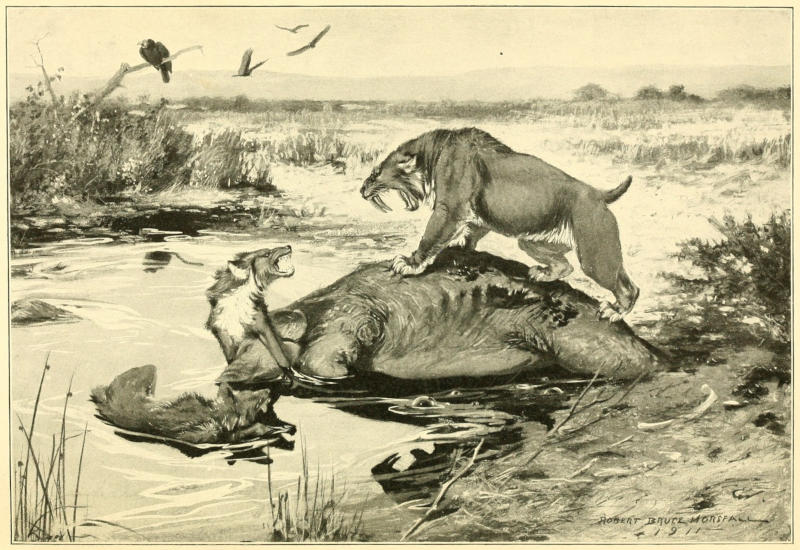
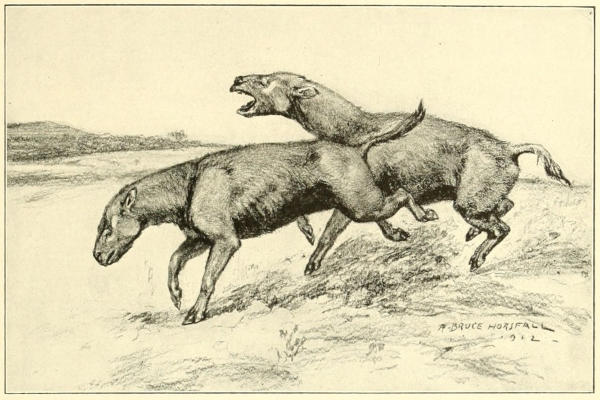
Frontispiece.—A Pleistocene tar-pool in southern
California: †Giant Wolves (Canis †dirus) and †Sabre-tooth Tiger
(†Smilodon californicus) on the carcass of an elephant (Elephas
†columbi). The elephant is hairless, as may have been true of the
southern race.
A
HISTORY OF LAND MAMMALS IN THE
WESTERN HEMISPHERE
BY
WILLIAM B. SCOTT Ph.D. (Heidelberg), Hon.D.Sc. (Harvard & Oxford), LL.D. (Univ. of Pennsylvania) BLAIR PROFESSOR OF GEOLOGY AND PALÆONTOLOGY
IN PRINCETON UNIVERSITY
ILLUSTRATED WITH 32 PLATES AND MORE THAN 100 DRAWINGS
BY BRUCE HORSFALL
New York
THE MACMILLAN COMPANY
1913
All rights reserved
Copyright, 1913,
By THE MACMILLAN COMPANY.
Set up and electrotyped. Published November, 1913.
Norwood Press
J. S. Cushing Co.—Berwick & Smith Co.
Norwood, Mass., U.S.A.
Dedicated TO
MY CLASSMATES
HENRY FAIRFIELD OSBORN and FRANCIS SPEIR IN MEMORY OF A NOTABLE SUMMER AFTERNOON
IN 1876 AND IN TOKEN OF FORTY
YEARS’ UNCLOUDED FRIENDSHIP
Speak to the earth and it shall teach thee.
—Job, xii, 8.
Can these bones live?
—Ezekiel, xxxvii, 3.
PREFACE
One afternoon in June, 1876, three Princeton undergraduates
were lying under the trees on the canal bank, making a languid
pretence of preparing for an examination. Suddenly, one of the
trio remarked: “I have been reading an old magazine article
which describes a fossil-collecting expedition in the West; why
can’t we get up something of the kind?” The others replied, as
with one voice, “We can; let’s do it.” This seemingly idle talk
was, for Osborn and myself, a momentous one, for it completely
changed the careers which, as we then believed, had been mapped
out for us. The random suggestion led directly to the first of the
Princeton palæontological expeditions, that of 1877, which took
us to the “Bad Lands” of the Bridger region in southwestern
Wyoming. The fascination of discovering and exhuming with
our own hands the remains of the curious creatures which once
inhabited North America, but became extinct ages ago, has proved
an enduring delight. It was the wish to extend something of
this fascinating interest to a wider circle, that occasioned the
preparation of this book.
The western portion of North America has preserved a marvellous
series of records of the successive assemblages of animals
which once dwelt in this continent, and in southernmost South
America an almost equally complete record was made of the
strange animals of that region. For the last half-century, or
more, many workers have coöperated to bring this long-vanished
world to light and to decipher and interpret the wonderful story
of mammalian development in the western hemisphere. The task
of making this history intelligible, not to say interesting, to the
layman, has been one of formidable difficulty, for it is recorded
in the successive modifications of the bones and teeth, and without
some knowledge of osteology, these records are in an unknown
tongue. To meet this need, Chapter III gives a sketch of the
mammalian skeleton and dentition, which the reader may use as
the schoolboy uses a vocabulary to translate his Latin exercise,
referring to it from time to time, as may be necessary to make
clear the descriptions of the various mammalian groups. Technical
terms have been avoided as far as possible, but, unfortunately,
it is not practicable to dispense with them altogether. The
appended glossary will, it is hoped, minimize the inconvenience.
No one who has not examined it, can form any conception of
the enormous mass and variety of material, illustrating the history
of American mammals, which has already been gathered into the
various museums. A full account of this material would require
many volumes, and one of the chief problems in the preparation
of this book has been that of making a proper selection of the
most instructive and illuminating portions of the long and complicated
story. Indeed, so rapid is the uninterrupted course of
discovery, that parts of the text became antiquated while in the
press and had to be rewritten. As first prepared, the work
proved to be far too long and it was necessary to excise several
chapters, for it seemed better to cover less ground than to make
the entire history hurried and superficial. The plan of treatment
adopted involves a considerable amount of repetition, but this is
perhaps not a disadvantage, since the same facts are considered
from different points of view.
The facts which are here brought together have been ascertained
by many workers, and I have borrowed with the greatest
freedom from my fellow labourers in the field of palæontology.
As every compiler of a manual finds, it is not feasible to attribute
the proper credit to each discoverer. Huxley has so well explained
the situation in the preface to his “Anatomy of Vertebrated Animals,”
that I may be permitted to borrow his words: “I have
intentionally refrained from burdening the text with references;
and, therefore, the reader, while he is justly entitled to hold me
responsible for any errors he may detect, will do well to give me
no credit for what may seem original, unless his knowledge is
sufficient to render him a competent judge on that head.”
A book of this character is obviously not the proper place for
polemical discussions of disputed questions. Whenever, therefore,
the views expressed differ widely from those maintained by
other palæontologists, I have attempted no more than to state, as
fairly as I could, the alternative interpretations and my own
choice between them. Any other course was forbidden by the
limitations of space.
It is a pleasure to give expression to my sincere sense of gratitude
to the many friends who have helped me in an unusually
laborious undertaking. Professor Osborn and Dr. Matthew have
placed at my disposal the wonderful treasures of the American
Museum of Natural History in New York and in the most liberal
manner have supplied me with photographs and specimens for
drawings, as well as with information regarding important discoveries
which have not yet been published. Dr. W. J. Holland,
Director of the Carnegie Museum in Pittsburgh, has likewise generously
provided many photographs from the noble collection under
his charge, kindly permitting the use of material still undescribed.
To Professor Charles Schuchert, of Yale University, I am also
indebted for several photographs.
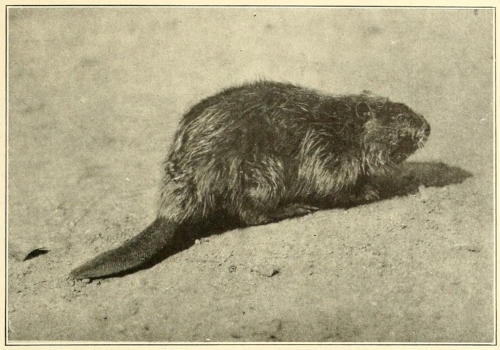
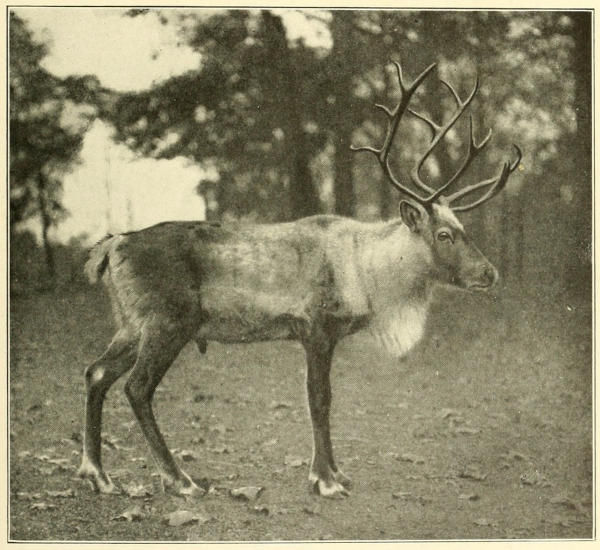
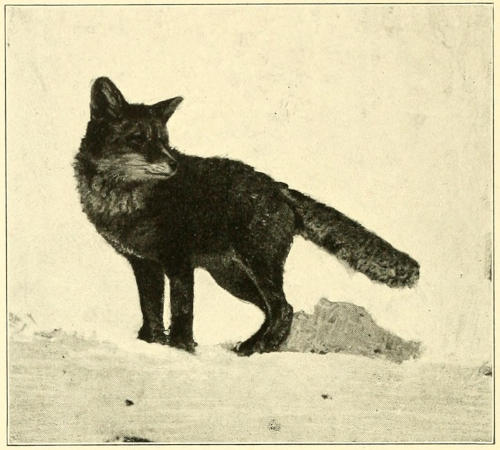
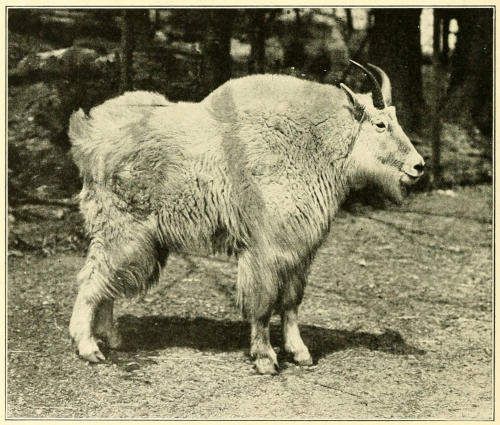
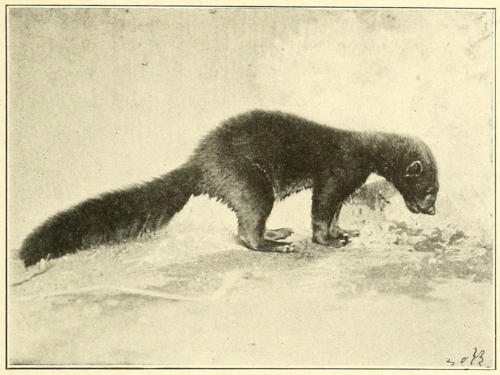
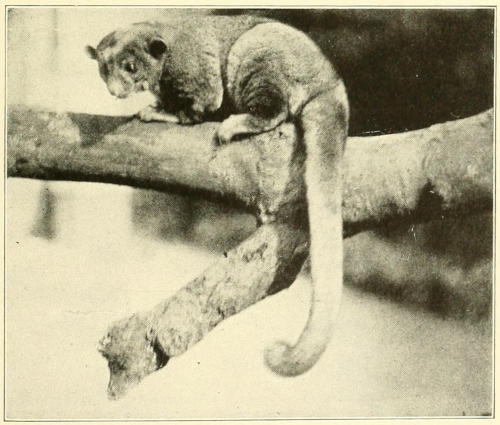
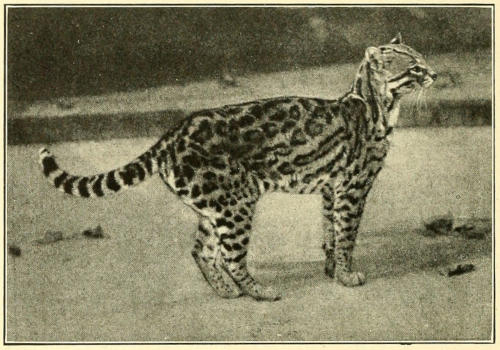
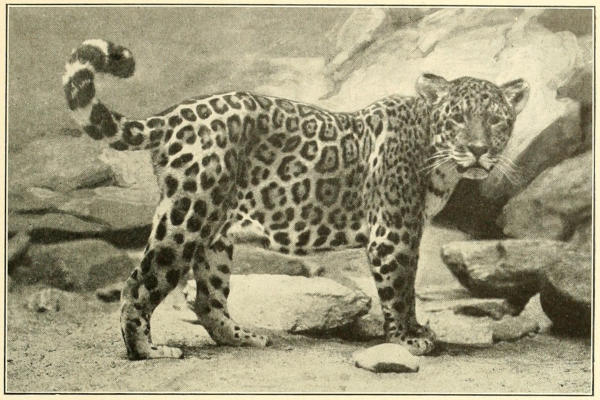
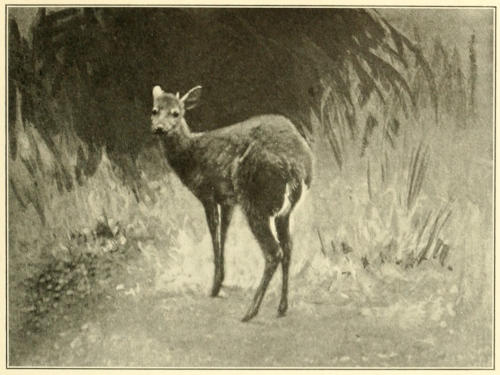
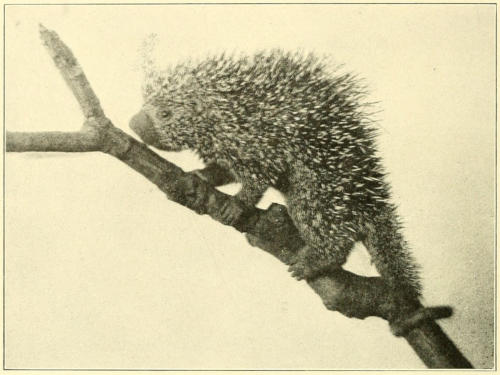
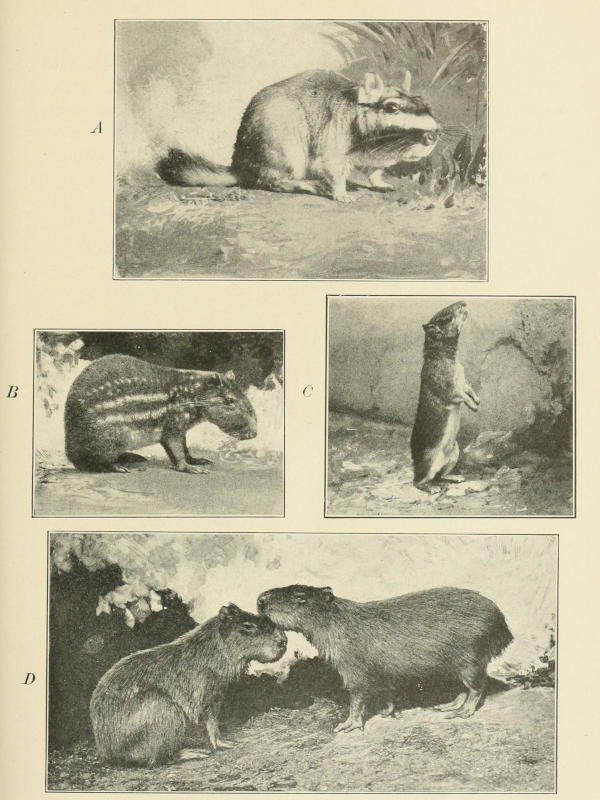
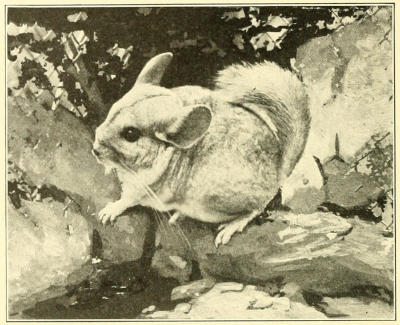
The figures of existing animals are almost all from photographs
taken in the New York and London zoölogical gardens, and I
desire to thank Director Hornaday, of the Bronx Park, and Mr.
Peacock, of the London garden, for the very kind manner in
which they have procured these illustrations for my use. The
photographs have been modified by painting out the backgrounds
of cages, houses, and the like, so as to give a less artificial appearance
to the surroundings.
To my colleagues at Princeton I am under great obligations
for much valuable counsel and assistance. Professor Gilbert van
Ingen has prepared the maps and diagrams and Dr. W. J. Sinclair
has devoted much labour and care to the illustrations and has also
read the proofs. Both of these friends, as also Professors C. H.
Smyth and E. G. Conklin and Drs. Farr and McComas, have read
various parts of the manuscript and made many helpful suggestions
in dealing with the problems of treatment and presentation.
For thirteen years past I have been engaged in the study of
the great collections of fossil mammals, gathered in Patagonia by
the lamented Mr. Hatcher and his colleague, Mr. Peterson, now
of the Carnegie Museum. This work made it necessary for me
to visit the museums of the Argentine Republic, which I did in
1901, and was there received with the greatest courtesy and kindness
by Dr. F. Moreno, Director, and Dr. Santiago Roth, of the
La Plata Museum, and Dr. F. Ameghino, subsequently Director
of the National Museum at Buenos Aires. To all of these gentlemen
the chapters on the ancient life of South America are much
indebted, especially to Dr. Ameghino, whose untimely death was
a great loss to science. It is earnestly to be hoped that the heroic
story of his scientific career may soon be given to the world.
Finally, I desire to thank Mr. Horsfall for the infinite pains
and care which he has expended upon the illustrations for the
work, to which so very large a part of its value is due.
While the book is primarily intended for the lay reader, I cannot
but hope that it may also be of service to many zoölogists,
who have been unable to keep abreast of the flood of palæontological
discovery and yet wish to learn something of its more
significant results. How far I have succeeded in a most difficult
task must be left to the judgment of such readers.
A HISTORY OF LAND MAMMALS IN THE WESTERN HEMISPHERE — CHAPTER I METHODS OF INVESTIGATION—GEOLOGICAL
The term Mammal has no exact equivalent in the true
vernacular of any modern language, the word itself, like its
equivalents, the French Mammifère and the German Säugethier,
being entirely artificial. As a name for the class Linnæus
adopted the term Mammalia, which he formed from the Latin
mamma (i.e. teat) to designate those animals which suckle
their young; hence the abbreviated form Mammal, which has
been naturalized as an English word. “Beast,” as employed
in the Bible, and “Quadruped” are not quite the same as
mammal, for they do not include the marine forms, such as
whales, dolphins, seals, walruses, or the flying bats, and they
are habitually used in contradistinction to Man, though Man
and all the forms mentioned are unquestionably mammals.
In attempting to frame a definition of the term Mammal,
it is impossible to avoid technicalities altogether, for it is the
complete unity of plan and structure which justifies the inclusion
of all the many forms that differ so widely in habits
and appearance. Mammals are air-breathing vertebrates, which
are warm-blooded and have a 4-chambered heart; the body cavity
is divided into pleural and abdominal chambers by a diaphragm;
except in the lowest division of the class, the young are brought
forth alive and are always suckled, the milk glands being universal
throughout the class. In the great majority of mammals the body
is clothed with hair; a character found in no other animals.
In a few mammals the skin is naked, and in still fewer there
is a partial covering of scales. The list of characters common
to all mammals, which distinguish them from other animals,
might be indefinitely extended, for it includes all the organs
and tissues of the body, the skeletal, muscular, digestive, nervous,
circulatory, and reproductive systems, but the two or
three more obvious or significant features above selected will
suffice for the purposes of definition.
While the structural plan is the same throughout the entire
class, there is among mammals a wonderful variety of form,
size, appearance, and adaptation to special habits. It is as
though a musician had taken a single theme and developed it
into endless variations, preserving an unmistakable unity
through all the changes. Most mammals are terrestrial, living,
that is to say, not only on the land, but on the ground, and
are herbivorous in habit, subsisting chiefly or exclusively upon
vegetable substances, but there are many departures from this
mode of life. It should be explained, however, that the term
terrestrial is frequently used in a more comprehensive sense for
all land mammals, as distinguished from those that are aquatic
or marine. Monkeys, Squirrels, Sloths and Opossums are
examples of the numerous arboreal mammals, whose structure
is modified to fit them for living and sleeping in the trees,
and in some, such as the Sloths, the modification is carried so
far that the creature is almost helpless on the ground. Another
mode of existence is the burrowing or fossorial, the animal
living partly or mostly, or even entirely underground, a typical
instance of which is the Mole. The Beaver, Muskrat and Otter,
to mention only a few forms, are aquatic and spend most of
their life in fresh waters, though perfectly able to move about
on the land. Marine mammals, such as the Seals and Whales,
have a greatly modified structure which adapts them to life in
the sea.
Within the limits of each of these categories we may note
that there are many degrees of specialization or adaptation to
particular modes of life. Thus, for example, among the marine
mammals, the Whales and their allies, Porpoises, etc., are so
completely adapted to a life in the seas that they cannot come
upon the land, and even stranding is fatal to them, while the
Seals frequently land and move about upon the shore. It
should further be observed that mammals of the most diverse
groups are adapted to similar modes of existence. Thus in one
natural group or order of related forms, occur terrestrial, burrowing,
arboreal and aquatic members, and the converse statement
is of course equally true, that animals of similar life-habits
are not necessarily related to one another, and very
frequently, in fact, are not so related. Among the typically
marine mammals, for example, there are at least three and
probably four distinct series, which have independently become
adapted to life in the sea.
Before attempting to set forth an outline of what has
been learned regarding the history of mammalian life in the
western hemisphere, it is essential to give the reader some conception
of the manner in which that knowledge has been obtained.
Without such an understanding of the methods employed
in the investigation the reader can only blindly accept
or as blindly reject what purports to be the logical inference
from well-established evidence. How is that evidence to be
discovered? and how may trustworthy conclusions be derived
from it?
The first and most obvious step is to gather all possible information
concerning the mammals of the present day, their
structure (comparative anatomy), functions (physiology), and
their geographical arrangement. This latter domain, of the
geographical distribution of mammals, is one of peculiar significance.
Not only do the animals of North America differ radically
from those of Central and South America, but within the
limits of each continent are more or less well-defined areas,
the animals of which differ in a subordinate degree from those
of other areas. The study of the modern world, however,
would not of itself carry us very far toward the goal of our
inquiries, which is an explanation, not merely a statement, of
the facts. The present order of things is the outcome of an
illimitably long sequence of events and can be understood only
in proportion to our knowledge of the past. In other words, it
is necessary to treat the problems involved in our inquiry
historically; to trace the evolution of the different mammalian
groups from their simpler beginnings to the more complex and
highly specialized modern forms; to determine, so far as that
may be done, the place of origin of each group and to follow
out their migrations from continent to continent.
While we shall deal chiefly, almost exclusively, with the
mammals of the New World, something must be said regarding
those of other continents, for, as will be shown in the sequel,
both North and South America have, at one time or another,
been connected with various land-masses of the eastern hemisphere.
By means of those land-connections, there has been
an interchange of mammals between the different continents,
and each great land-area of the recent world contains a more or
less heterogeneous assemblage of forms of very diverse places
of origin. Indeed, migration from one region to another has
played a most important part in bringing about the present
distribution of living things. From what has already been
learned as to the past life of the various continents and their
shifting connections with one another, it is now feasible to
analyze the mammalian faunas of most of them and to separate
the indigenous from the immigrant elements. Among the
latter may be distinguished those forms which are the much
modified descendants of ancient migrants from those which
arrived at a much later date and have undergone but little
change. To take a few examples from North America, it may
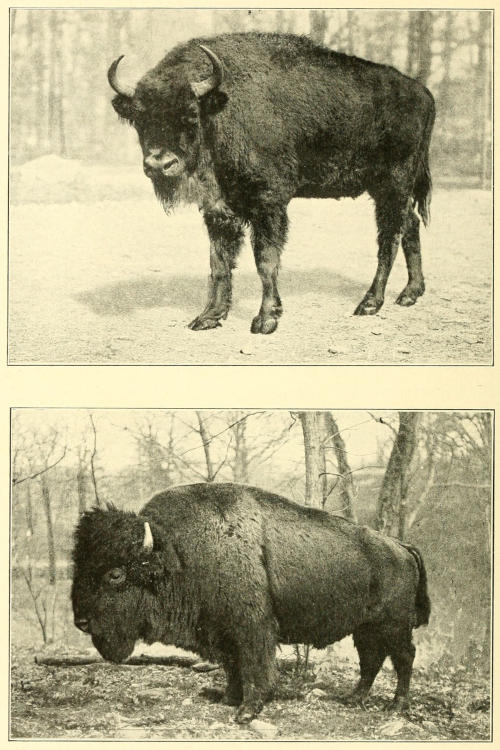
be said that the Bears, Moose, Caribou and Bison are late
migrants from the Old World; that the Virginia and Black-tailed
Deer and the Prong-horned Antelope are of Old World
origin, but their ancestors came in at a far earlier period and
the modern species are greatly changed from the ancestral
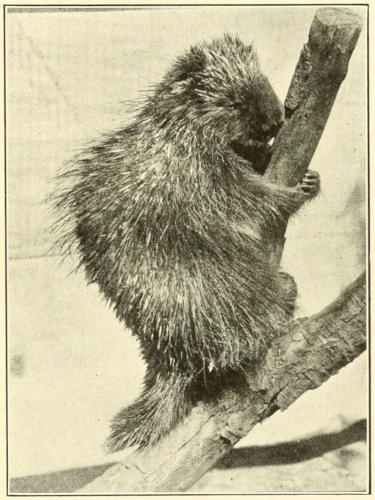
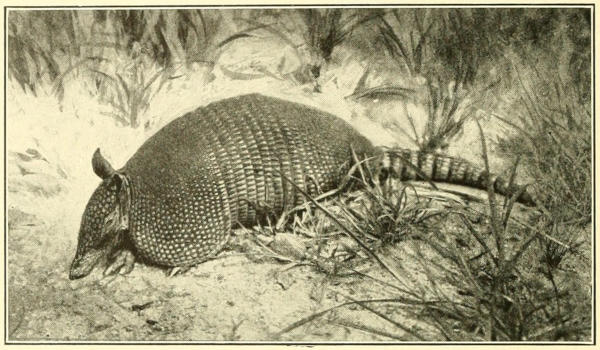
migrants. The Armadillo of Texas and the Canada Porcupine
are almost the only survivors, north of Mexico, of the great
migration of South American mammals which once invaded
the northern continent. On the other hand, the raccoons
and several families of rodents are instances of indigenous types
which may be traced through a long American ancestry.
Fully to comprehend the march of mammalian development,
it thus becomes necessary to reconstruct, at least in outline,
the geography of the successive epochs through which the
developmental changes have taken place, the connections and
separations of land-masses, the rise of mountain ranges, river
and lake systems and the like. Equally significant factors in
the problem are climatic changes, which have had a profound
and far-reaching effect upon the evolution and geographical
spread of animals and plants, and the changes in the vegetable
world must not be ignored, for, directly or indirectly, animals
are dependent upon plants. To one who has paid no attention
to questions of this kind, it might well seem an utterly hopeless
task to reconstruct the long vanished past, and he would
naturally conclude that, at best, only fanciful speculations,
with no foundation of real knowledge, could be within our
reach. Happily, such is by no means the case. Geology offers
the means of a successful attack upon these problems and,
although very much remains to be done, much has already
been accomplished in elucidating the history, especially in its
later periods, with which the story of the mammals is more
particularly concerned.
It is manifestly impossible to present here a treatise upon the
science of Geology, even in outline sketch. Considerations of
space are sufficient to forbid any such attempt. Certain things
must be taken for granted, the evidence for which may be
found in any modern text-book of Geology. For example,
it is entirely feasible to establish the mode of formation of
almost any rock (aside from certain problematical rocks, which
do not enter into our discussion) and to determine whether it
was laid down in the sea, or on the land, or in some body of
water not directly connected with the sea, such as a lake or
river. With the aid of the microscope, it is easy to discriminate
volcanic material from the ordinary water-borne and wind-borne
sediments and, in the case of the rocks which have
solidified from the molten state, to distinguish those masses
which have cooled upon the surface from those which have
solidified deep within the earth.
While the nature and mode of formation of the rocks may
thus be postulated, it will be needful to explain at some length
the character of the evidence from which the history of the
earth may be deciphered. First of all, must be made clear the
method by which the events of the earth’s history may be
arranged in chronological order, for a history without chronology
is unintelligible. The events which are most significant for
our purpose are recorded in the rocks which are called stratified,
bedded or sedimentary, synonymous terms. Such rocks were
made mostly from the débris of older rocks, in the form of
gravel, sand or mud, and were laid down under water, or, less
extensively, spread by the action of the wind upon a land-surface.
Important members of this group of rocks are those
formed, more or less completely, from the finer fragments
given out in volcanic eruptions, carried and sorted by the wind
and finally deposited, it may be at great distances from their
point of origin, upon a land-surface, or on the bottom of
some body of water. Stratified or bedded rocks, as their
name implies, are divided into more or less parallel layers or
beds, which may be many feet or only a minute fraction of an
inch in thickness. Such a division means a pause in the process
of deposition or a change in the character of the material
deposited over a given area. Owing to the operation of
gravity, the layers of sediment are spread out in a horizontal
attitude, which disregard the minor irregularities of the bottom,
just as a deep snow buries the objects which lie upon the surface.
A moment’s consideration will show that, in any series of
stratified rocks which have not been greatly disturbed from
their original horizontal position, the order of succession or
superposition of the beds must necessarily be the chronological
order of their formation. (Fig. 1.) Obviously, the lowest beds
must have been deposited first and therefore are the oldest of
the series, while those at the top must be the newest or
youngest and the beds intermediate in position are intermediate
in age. This inference depends upon the simple principle
that each bed must have been laid down before the next
succeeding one can have been deposited upon it. While this
is so clear as to be almost self-evident, it is plain that such a
mode of determining the chronological order of the rocks of the
earth’s crust can be of only local applicability and so far as
the beds may be traced in unbroken continuity. It is of no
direct assistance in correlating the events in the history of
one continent with those of another and it fails even in comparing
the distinctly separated parts of the same continent.
Some method of universal applicability must be devised before
the histories of scattered regions can be combined to form a
history of the earth. Such a universal method is to be found
in the succession of the forms of life, so far as that is recorded in
the shape of fossils, or the recognizable remains of animal and
vegetable organisms preserved in the rocks.
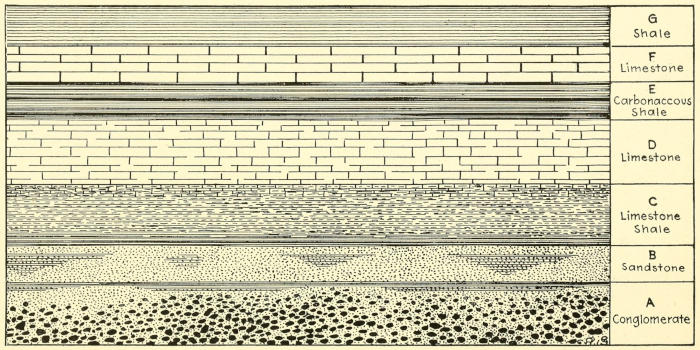
Fig. 1.—Diagram section of a series of beds,
illustrating superposition. A is the oldest, B, C, D, etc., succeeding in
ascending order.
This principle was first enunciated by William Smith, an
English engineer, near the close of the eighteenth century,
who thus laid the foundations of Historical Geology. In the
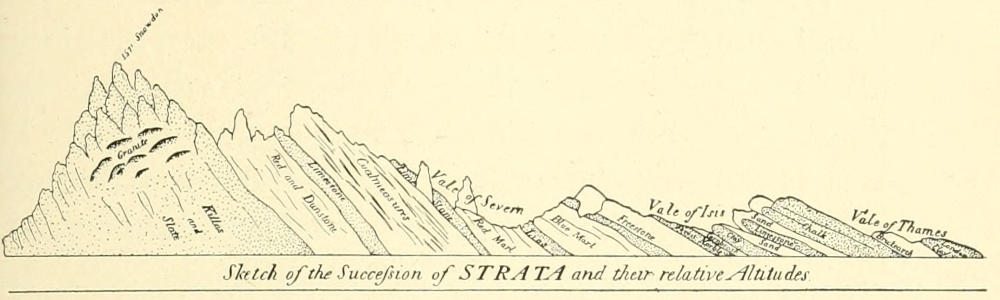
diagram, Fig. 2, is reproduced Smith’s section across England
from Wales to near London, which shows the successive
strata or beds, very much tilted from their original horizontal
position by the upheaval of the sea-bed upon which they were
laid down. The section pictures the side of an imaginary
gigantic trench cut across the island and was constructed by a
simple geometrical method from the surface exposures of the
beds, such as mining engineers continually employ to map the
underground extension of economically important rocks, and
shows how an enormous thickness of strata may be studied
from the surface. The older beds are exposed at the western
end of the section in Wales and, passing eastward, successively
later and later beds are encountered, the newest appearing at
the eastern end. Very many of the strata are richly fossiliferous,
and thus a long succession of fossils was obtained in the order
of their appearance, and this order has been found to hold good,
not only in England, but throughout the world. The order
of succession of the fossils was thus in the first instance actually
ascertained from the succession of the strata in which they are
found and has been verified in innumerable sections in many
lands and is thus a matter of observed and verifiable fact, not
merely a postulate or working hypothesis. Once ascertained,
however, the order of succession of living things upon the earth
may be then employed as an independent and indispensable
means of geologically dating the rocks in which they occur.
Fig. 2.—William Smith’s section across the
south of England. The vertical scale is exaggerated, which makes the
inclination of the beds appear too steep.
N. B. The original drawing is in colors, which are not indicated by the
dotted strata.
This is the palæontological method, which finds analogies in
many other branches of learned inquiry. The student of
manuscripts discovers that there is a development, or regular
series of successive changes, in handwriting, and from the handwriting
alone can make a very close approximation to the date
of a manuscript. The order in which those changes came about
was ascertained from the comparative study of manuscripts,
the date of which could be ascertained from other evidence,
but, when once established, the changes in handwriting are
used to fix the period of undated manuscripts. Just so, the
succession of fossils, when learned from a series of superposed
beds, may then be employed to fix the geological date of
strata in another region. Similarly, the archæologist has
observed that there is an evolution or development in every
sort of the work of men’s hands and therefore makes use of
coins, inscriptions, objects of art, building materials and methods,
etc., to date ancient structures. In the German town of Trier
(or Trèves) on the Moselle, the cathedral has as a nucleus a
Roman structure, the date and purpose of which had long been
matters of dispute, though the general belief was that the
building had been erected under Constantine the Great. In
the course of some repairs made not very long ago, it became
necessary to cut deep into the Roman brickwork, and there,
embedded in the undisturbed mortar, was a coin of the emperor
Valentinian II, evidently dropped from the pocket of some
Roman bricklayer. That coin fixed a date older than which the
building cannot be, though it may be slightly later, and it well
illustrates the service rendered by fossils in determining geological
chronology.
Other methods of making out the chronology of the earth’s
history have been proposed from time to time and all of them
have their value, though none of them renders us independent
of the use of fossils, which have the pre-eminent advantage of
not recurring or repeating themselves at widely separated intervals
of time, as all physical processes and changes do. An
organism, animal or plant, that has become extinct never
returns and is not reproduced in the evolutionary process.
Great and well founded as is our confidence in fossils as
fixing the geological date of the rocks in which they occur, it
must not be forgotten that the succession of the different kinds
of fossils in time was first determined from the superposition of
the containing strata. Hence, it is always a welcome confirmation
of the chronological inferences drawn from the study
of fossils, when those inferences can be unequivocally established
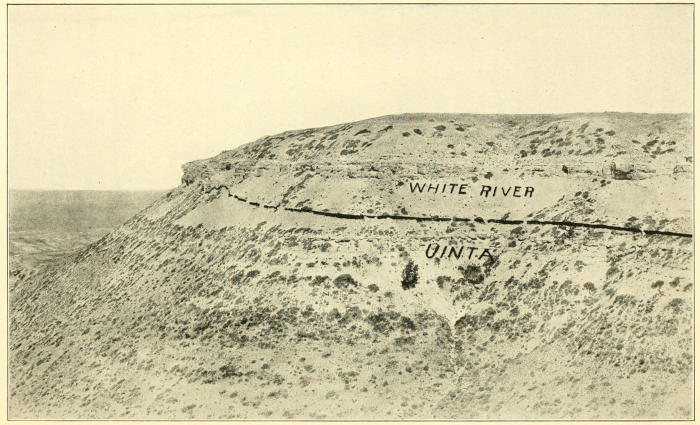
by the succession of the beds themselves. For example,
in the Tertiary deposits of the West are two formations or
groups of strata, called respectively the Uinta and the White
River, which had never been known to occur in the same region
and whose relative age therefore could not be determined by
the method of superposition. Each of the formations, however,
has yielded a large number of well-preserved fossil mammals,
and the comparative study of these mammals made it clear
that the Uinta must be older than the White River and that
no very great lapse of time, geologically speaking, occurred
between the end of the former and the beginning of the latter.
Only two or three years ago an expedition from the American
Museum of Natural History discovered a place in Wyoming
where the White River beds lie directly upon those of the
Uinta, thus fully confirming the inference as to the relative
age of these two formations which had long ago been drawn
from the comparative study of their fossil mammals.
The palæontological method of determining the geological
date of the stratified rocks is thus an indispensable means of
correlating the scattered exposures of the strata in widely
separated regions and in different continents, it may be with
thousands of miles of intervening ocean. The general principle
employed is that close similarity of fossils in the rocks of the
regions compared points to an approximately contemporaneous
date of formation of those rocks. This principle must not,
however, be applied in an off-hand or uncritical manner, or it
will lead to serious error. In the first place, the evolutionary
process is a very slow one and geological time is inconceivably
long, so that deposits which differ by some thousands of years
may yet have the same or nearly the same fossils. The method
is not one of sufficient refinement to detect such relatively
small differences. To recur to the illustration of the development
in handwriting, the palæographer can hardly do more
than determine the decade in which a manuscript was written;
no one would expect him to fix upon the exact year, still less the
month, from the study of handwriting alone. As is the month
in recorded human history, so is the millennium in the long
course of the earth’s development.
Fig. 3.—Bluff on Beaver Creek, Fremont Co.,
Wyoming. The White River beds were deposited on the worn and weathered
surface of the Uinta, the heavy, broken line marking the separation
between them. The valley was carved out long after the deposition of the
White River strata.
In the second place, there are great differences in the contemporary
life of separate regions and such geographical differences
there have always been, so far as we can trace back the
history of animals and plants. A new organism does not
originate simultaneously all over the world but, normally
at least, in a single area and spreads from that centre until it
encounters insuperable obstacles. Such spreading is a slow
process and hence it is that new forms often appear in one region
much earlier than in others and in the very process of extending
their range, the advancing species may themselves
be considerably modified and reach their new and distant homes
as different species from those which originated the movement.
Extinction, likewise, seldom occurs simultaneously over the
range of a group, but now here and now there in a way that
to our ignorance appears to be arbitrary and capricious. The
process may go on until extinction is total, or may merely
result in a great restriction of the range of a given group, or
may break up that range into two or more distinct areas.
Of such incomplete extinctions many instances might be
given, but one must suffice. The camel-tribe, strange as it
may appear, originated in North America and was long confined
to that continent, while at the present day it is represented
only by the llamas of South America and the true
camels of Asia, having completely vanished from its early
home. These facts and a host of similar ones make plain how
necessary it is to take geographical considerations into
account in all problems that deal with the synchronizing of the
rocks of separate areas and continents.
Properly to estimate the significance of a difference in the
fossils of two regions and to determine how far it is geographical,
due to a separation in space, or geological and caused by separation
in time, is often a very difficult matter and requires a vast
amount of minute and detailed study. Once more, the principle
involved is illustrated by the study of manuscripts. Down
to the time when the printing press superseded the copyist,
each of the nations of Europe had its own traditions and its
more or less independent course of handwriting development.
A great monastery, in which the work of copying manuscripts
went on century after century, became an independent geographical
centre with its particular styles. Thus the palæographer,
like the geologist, is confronted by geographical problems
as well as by those of change and development in general.
In addition to the method of geologically dating the rocks
by means of the fossils which they contain, there are other ways
which may give a greater precision to the result. Climatic
changes, when demonstrable, are of this character, for they may
speedily and simultaneously affect vast areas of the earth’s
surface or even the entire world. From time to time in the
past, glacial conditions have prevailed over immense regions,
several continents at once, it may be, as in one instance in
which India, South Africa, Australia, South America were
involved. The characteristic accumulations made by the
glaciers in these widely separated regions must be contemporaneous
in a sense that can rarely be predicated of the ordinary
stratified rocks. Such climatic changes as the formation and
disappearance of the ice-fields give a sharper and more definite
standard of time comparisons than do the fossils alone, and
yet the fossils are in turn needed to show which of several
possible glacial periods are actually being compared.
Again, great movements of the earth’s crust, which involve
vast and widely separated regions and bring the sea in over
great areas of land, or raise great areas into land, which had
been submerged, may also yield more precise time-measurements,
because occurring within shorter periods than do
notable changes in the system of living things. Such changes
in animals and plants may be compared to the almost imperceptible
movement of the hour-hand of a clock, while the recorded
climatic revolutions and crustal movements often supply
the place of the minute-hand. It is obvious, however, that
if the hour-hand be wanting, the minute-hand alone can be of
very limited use. There have been a great many vast submergences
and emergences of land in the history of the earth, and
only the fossils can give us the assurance that we are comparing
the same movement in distant continents, and not two similar
movements separated by an enormous interval of time.
It may thus fairly be admitted that it is possible to arrange
the rocks which compose the accessible parts of the earth’s
crust in chronological order and to correlate in one system the
rocks of the various continents. The terms used for the more
important divisions of geological time are, in descending order
of magnitude, era, period, epoch, age or stage, and the general
scheme of the eras and periods, which is in almost uniform use
throughout the world, is given in the table, which is arranged
so as to give the succession graphically, with the most ancient
rocks at the bottom and the latest at the top.
Cenozoic era
{
Quaternary period
{
Tertiary period
Mesozoic era
{
Cretaceous period
{
Jurassic period
{
Triassic period
Palæozoic era
{
Permian period
{
Carboniferous period
{
Devonian period
{
Silurian period
{
Ordovician period
{
Cambrian period
Pre-Cambrian eras
{
Algonkian period
{
Archæan period
It must not be supposed that all the divisions of similar
rank, such as the eras, for example, were of equal length, as
measured by the thickness of the rocks assigned to those divisions.
On the contrary, they must have been of very unequal
length and are of very different divisibility. The Pre-Cambrian
eras, with only two periods, were probably far longer than
all subsequent time, and all that the major divisions imply
is that they represent changes in the system of life of
approximately equivalent importance. It is impossible to
give any trustworthy estimate of the actual lengths of
these divisions in years, though many attempts to do so
have been made. All that can be confidently affirmed is
that geological time, like astronomical distances, is of inconceivable
vastness and its years can be counted only in
hundreds of millions.
To discuss in any intelligible manner the history of mammals,
it will be necessary to go much farther than the above table
in the subdivision of that part of geological time in which
mammalian evolution ran its course. As mammals represent
the highest stage of development yet attained in the
animal world, it is only the latter part of the earth’s history
which is concerned with them; the earlier and incomparably
longer portion of that history may be passed over. Mammals
are first recorded in the later Triassic, the first of the three
periods which make up the Mesozoic era. They have also
been found, though very scantily, in the other Mesozoic periods,
the Jurassic and Cretaceous, but it was the Cenozoic era that
witnessed most of the amazing course of mammalian development
and diversification, and hence the relatively minute subdivisions
necessary for the understanding of this history deal
only with the Cenozoic, the latest of the great eras.
In the subjoined table the periods and epochs are those
which are in general use throughout the world, the ages and
stages are those which apply to the western interior of North
America, each region, even of the same continent, requiring a
different classification. The South American formations are
given in a separate table, as it is desirable to avoid the appearance
of an exactitude in correlation which cannot yet be attained.
CENOZOIC ERA
Quaternary period
{
Recent epoch
{
Pleistocene epoch = Glacial and Interglacial stages.
Tertiary period
{
Pliocene epoch
{
Miocene epoch
{
Oligocene epoch
{
Eocene epoch
{
Paleocene epoch
Continuing the subdivision of the Tertiary period still
farther, we have the following arrangement:
TERTIARY PERIOD (North America)
Pliocene
{
Upper
Wanting
{
Middle
Blanco age
{
Lower
{
Thousand Creek age
{
Snake Creek age
{
Republican River age
Miocene
{
Upper
Loup Fork age
{
Middle
Deep River age
{
Lower
Arikaree age
Oligocene
{
Upper
John Day age
{
Lower
White River age
Eocene
{
Upper
Uinta age
{
Middle
Bridger age
{
Lower
{
Wind River age
{
Wasatch age
Paleocene
{
Upper
Torrejon age
}
Fort Union
{
Lower
Puerco age
}
This is a representative series of the widespread and manifold
non-marine Tertiary deposits of the Great Plains, but a much
more extensive and subdivided scheme would be needed to
show with any degree of fullness the wonderfully complete
record of that portion of the continent during the Tertiary
period. A much more elaborate table will be found in Professor
Osborn’s “Age of Mammals,” p. 41. There are
some differences of practice among geologists as to this
scheme of classification, though the differences are not
those of principle. No question arises concerning the reality
of the divisions, or their order of succession in time,
but merely as to the rank or relative importance which
should be attributed to some of them, and that is a very
minor consideration.
Much greater difficulty and, consequently, much more radical
differences of interpretation arise when the attempt is made to
correlate or synchronize the smaller subdivisions, as found in
the various continents, with one another, because of the
geographical differences in contemporary life. Between Europe
and North America there has always been a certain proportion
of mammalian forms in common, a proportion that
was at one time greater, at another less, and this community
renders the correlation of the larger divisions of the Tertiary
in the two continents comparatively easy, and even in the minor
subdivisions very satisfactory progress has been made, so
that it is possible to trace in some detail the migrations of
mammals from the eastern to the western hemisphere and
vice versa. Such intermigrations were made possible by the
land-bridges connecting America with Europe across the
Atlantic, perhaps on the line of Greenland and Iceland, and
with Asia where now is Bering Strait. These connections were
repeatedly made and repeatedly broken during the Mesozoic
and Cenozoic eras down to the latest epoch, the Pleistocene.
By comparing the fossil mammals of Europe with those of
North America for any particular division of geological time,
it is practicable to determine whether the way of intermigration
was open or closed, because separation always led to greater
differences between the faunas of the two continents through
divergent evolution.
Correlation with South America is exceedingly difficult and
it is in dealing with this problem that the widest differences of
opinion have arisen among geologists. Through nearly all
the earlier half of the Tertiary period the two Americas were
separated and, because of this separation, their land mammals
were utterly different. Hence, the lack of elements common
to both continents puts great obstacles in the way of establishing
definite time-relations between their geological divisions.
Only the marine mammals, whales and dolphins, were so far
alike as to offer some satisfactory basis of comparison. When,
in the later Tertiary, a land-connection was established between
the two continents, migrations of mammals from each to the
other began, and thenceforward there were always certain
elements common to both, as there are to-day. In spite of the
continuous land between them, the present faunas of North and
South America are very strikingly different, South America
being, with the exception of Australia, zoölogically the most
peculiar region of the earth.
In the following table of the South American Cenozoic, the
assignment of the ages to their epochs is largely tentative,
especially as regards the more ancient divisions, and represents
the views generally held by the geologists of Europe and
the United States; those of South America, on the contrary,
give an earlier date to the ages and stages and refer the older
ones to the Cretaceous instead of the Tertiary.
CENOZOIC ERA (South America)
Quaternary period
{
Recent epoch
{
Pleistocene epoch—Pampean Beds, Brazilian caverns
Tertiary period
{
Pliocene epoch
{
Monte Hermoso age
{
Catamarca age
{
Paraná age
{
Miocene epoch
{
Santa Cruz age
{
Patagonian age
{
Oligocene epoch
{
Deseado age (Pyrotherium Beds)
{
Astraponotus Beds
{
Eocene epoch
{
Casa Mayor age (Notostylops Beds)
The Pleistocene and Pliocene deposits are most widely distributed
over the Pampas of Argentina, but the former occur
also in Ecuador, Brazil, Chili, and Bolivia. The other formations
cover extensive areas in Patagonia, and some extend into
Tierra del Fuego.
We have next to consider the methods by which past geographical
conditions may be ascertained, a task which, though
beset with difficulties, is very far from being a hopeless undertaking.
As has already been pointed out, it is perfectly
possible for the geologist to determine the circumstances of
formation of the various kinds of rocks, to distinguish terrestrial
from aquatic accumulations and, among the latter, to identify
those which were laid down in the sea and those which were
formed in some other body of water. By platting on a map
all the marine rocks of a given geological date, an approximate
estimate may be formed as to the extension of the sea over the
present land for that particular epoch. It is obvious, however,
that for those areas which then were land and now are covered
by the sea, no such direct evidence can be obtained, and only
indirect means of ascertaining the former land-connections
can be employed. It is in the treatment of this indirect evidence
that the greatest differences of opinion arise and, if two
maps of the same continent for the same epoch, by separate
authors, be compared, it will be seen that the greatest discrepancies
between them are concerning former land-connections
and extensions.
The only kind of indirect evidence bearing upon ancient
land-connections, now broken by the sea, that need be considered
here is that derived from the study of animals and plants,
both recent and fossil. All-important in this connection is
the principle that the same or closely similar species do not
arise independently in areas between which there is no connection.
It is not impossible that such an independent origin
of organisms which the naturalist would class as belonging to
the same species may have occasionally taken place, but, if so,
it must be the rare exception to the normal process. This
principle leads necessarily to the conclusion that the more
recently and broadly two land-areas, now separated by the
sea, have been connected, the more nearly alike will be their
animals and plants. Such islands as Great Britain, Sumatra
and Java must have been connected with the adjacent mainland
within a geologically recent period, while the extreme zoölogical
peculiarity of Australia can be explained only on the assumption
that its present isolation is of very long standing. The principle
applies to the case of fossils as well as to that of modern
animals, and has already been made use of, in a preceding
section, in dealing with the ancient land-connections of North
America. It was there shown that the connection of this
continent with the Old World and the interruptions of that
connection are reflected and recorded in the greater or less
degree of likeness in the fossil mammals at any particular epoch.
Conversely, the very radical differences between the fossil
mammals of the two Americas imply a long-continued separation
of those two continents, and their junction in the latter
half of the Tertiary period is proved by the appearance of
southern groups of mammals in the northern continent, and of
northern groups in South America.
Inasmuch as the connection between North and South
America still persists, the geology of the Isthmus of Panama
should afford testimony in confirmation of the inferences
drawn from a study of the mammals. Of course, the separating
sea did not necessarily cross the site of the present isthmus;
it might have cut through some part of Central America, but
a glance at the map immediately suggests the isthmus as the
place of separation and subsequent connection. As a matter of
fact, isthmian geology is in complete accord with the evidence
derived from the mammals. Even near the summit of the hills
which form the watershed between the Atlantic and the Pacific
and through which the great Culebra Cut passes, are beds of
marine Tertiary shells, showing that at that time the land was
completely submerged. This does not at all preclude the
possibility of other transverse seas at the same period; indeed,
much of Central America was probably under the sea also, but
the geology of that region is still too imperfectly known to
permit positive statements.
When several different kinds of testimony, each independent
of the other, can be secured and all are found
to be in harmony, the strength of the conclusion is thereby
greatly increased. Many distinct lines of evidence support
the inference that North and South America were completely
severed for a great part of the Tertiary period.
This is indicated in the clearest manner, not only by the
geological structure of the Isthmus and by the mammals,
living and extinct, as already described, but also by the fresh-water
fishes, the land-shells, the reptiles and many other
groups of animals and plants.
The distribution of marine fossils may render the same sort
of service in elucidating the history of the sea as land-mammals
do for the continents, demonstrating the opening and closing
of connections between land-areas and between oceans. The
sea, it is true, is one and undivided, the continental masses
being great islands in it, but, nevertheless, the sea is divisible
into zoölogical provinces, just as is the land. Temperature,
depth of water, character of the bottom, etc., are factors that
limit the range of marine organisms, as climate and physical
barriers circumscribe the spread of terrestrial animals. Professor
Perrin Smith has shown that in the Mesozoic era Bering
Strait was repeatedly opened and closed, and that each opening
and closing was indicated by the geographical relationships of
the successive assemblages of marine animals that are found
in the Mesozoic rocks of California and Nevada. When
the Strait was open, the coast-line between North America
and Asia was interrupted and the North Pacific was cooled by
the influx of water from the Arctic Sea. At such times,
sea-animals from the Russian and Siberian coasts extended their
range along the American side as far south as Mexico, and no
forms from the eastern and southern shores of Asia accompanied
them. On the other hand, when the Strait was closed, the
Arctic forms were shut out and the continuous coast-line and
warmer water enabled the Japanese, Indian, and even Mediterranean
animals to extend their range to the Pacific coast of
North America. A comparison of the marine fishes of the
two sides of the Isthmus of Panama shows an amount and
degree of difference between the two series as might be expected
from the length of time that they have been separated by the
upheaval of the land.
In working out the geographical conditions for any particular
epoch of the earth’s history, it is possible to go much farther
than merely gaining an approximate estimate of the distribution
of land and sea; many other important facts may be
gathered from a minute examination of the rocks in combination
with a genetic study of topographical forms. By this
physiographical method, as it is called, the history of several
of the great mountain-ranges has been elaborated in great detail.
It is quite practicable to give a geological date for the initial
upheaval and to determine whether one or many such series
of movements have been involved in bringing about the present
state of things. Similarly, the history of plains and plateaus,
hills and valleys, lake and river systems, may be ascertained,
and for the earth’s later ages, at least, a great deal may be
learned regarding the successive forms of the land-surfaces
in the various continents. It would be very desirable to explain
the methods by which these results are reached, but this
could hardly be done without writing a treatise on physiography,
for which there is no room in this chapter. We must
be permitted to make use of the results of that science without
being called upon to prove their accuracy.
No factor has a more profound effect in determining the
character and distribution of living things than climate, of
which the most important elements, for our purpose, are
temperature and moisture. One of the most surprising results
of geological study is the clear proof that almost all parts of
the earth have been subjected to great vicissitudes of climate,
and a brief account of the evidence which has led to this unlooked
for result will not be out of place here.
The evidence of climatic changes is of two principal kinds,
(1) that derived from a study of the rocks themselves, and (2)
that given by the fossils of the various epochs. So far as the
rocks laid down in the sea are concerned, little has yet been
ascertained regarding the climatic conditions of their formation,
but the strata which were deposited on the land, or in some
body of water other than the sea, often give the most positive
and significant information concerning the circumstances of
climate which prevailed at the time of their formation. Certain
deposits, such as gypsum and rock-salt, are accumulated
only in salt lakes, which, in turn, are demonstrative proof of
an arid climate. A salt lake could not exist in a region of
normal rainfall and, from the geographical distribution of such
salt-lake deposits, it may be shown that arid conditions have
prevailed in each of the continents and, not only once, but many
times. As a rule, such aridity of climate was relatively local
in extent, but sometimes it covered vast areas. For example,
in the Permian, the last of the Palæozoic, and the Triassic, the
first of the Mesozoic periods (see Table, p. 15) nearly all the
land-areas of the northern hemisphere were affected, either
simultaneously or in rapid succession.
Until a comparatively short time ago, it was very generally
believed that the Glacial or Pleistocene epoch, which was so
remarkable and conspicuous a feature of the Quaternary period,
was an isolated phenomenon, unique in the entire history of
the earth. Now, however, it has been conclusively shown
that such epochs of cold have been recurrent and that no less
than five of these have left unmistakable records in as many
widely separated periods of time.
When the hypothesis of a great “Ice Age” in the Pleistocene
was first propounded by the elder Agassiz, it was naturally
received with general incredulity, but the gradual accumulation
of proofs has resulted in such an overwhelming weight
of testimony, that the glacial hypothesis is now accepted as one
of the commonplaces of Geology. The proofs consist chiefly
in the characteristic glacial accumulations, moraines and drift-sheets,
which cover such enormous areas in Europe and North
America and, on a much smaller scale, in Patagonia, and in the
equally characteristic marks of glacial wear left upon the
rocks over which the ice-sheets moved. Many years later
it was proved that the Permian period had been a time of
gigantic glaciation, chiefly in the southern hemisphere, when
vast ice-caps moved slowly over parts of South America,
South Africa, Australia and even of India. The evidence is
of precisely the same nature as in the case of the Pleistocene
glaciation. In not less than three more ancient periods,
the Devonian, Cambrian, and Algonkian, proofs of glacial
action have been obtained.
While the rocks themselves thus afford valuable testimony
as to the climatic conditions which prevailed at the time and
place of their formation, this testimony is fragmentary, missing
for very long periods, and must be supplemented from the
information presented by the fossils. As in all matters where
fossils are involved, the evidence must be cautiously used, for
hasty inferences have often led to contradictory and absurd
conclusions. When properly employed, the fossils give a more
continuous and complete history of climatic changes than can,
in the present state of knowledge, be drawn from a study
of the rocks alone. For this purpose plants are particularly
useful, because the great groups of the vegetable kingdom are
more definitely restricted in their range by the conditions of
temperature and moisture than are most of the correspondingly
large groups of animals. Not that fossil animals are of no
service in this connection; quite the contrary is true, but the
evidence from them must be treated more carefully and critically.
To illustrate the use of fossils as recording climatic
changes in the past, one or two examples may be given.
In the Cretaceous period a mild and genial climate prevailed
over all that portion of the earth whose history we know, and
was, no doubt, equally the case in the areas whose geology
remains to be determined. The same conditions extended
far into the Arctic regions, and abundant remains of a
warm-temperate vegetation have been found in Greenland,
Alaska and other Arctic lands. Where now only scanty and
minute dwarf willows and birches can exist, was then a luxuriant
forest growth comprising almost all of the familiar trees of
our own latitudes, a most decisive proof that in the Cretaceous
the climate of the Arctic regions must have been much warmer
than at present and that there can have been no great accumulation
of ice in the Polar seas. Conditions of similar mildness
obtained through the earlier part of the Tertiary. In the
Eocene epoch large palm-trees were growing in Wyoming and
Idaho, while great crocodiles and other warm-country reptiles
abounded in the waters of the same region.
It is of particular interest to inquire how far the fossils of
Glacial times confirm the inferences as to a great climatic
change which are derived from a study of the rocks, for this
may be taken as a test-case. Any marked discrepancy between
the two would necessarily cast grave doubt upon the
value of the testimony of fossils as to climatic conditions. The
problem is one of great complexity, for the Pleistocene was not
one long epoch of unbroken cold, but was made up of
Glacial and Interglacial ages, alternations of colder and milder
conditions, and some, at least, of the Interglacial ages had a
climate warmer than that of modern times. Such great
changes of temperature led to repeated migrations of the
mammals, which were driven southward before the advancing
ice-sheets and returned again when the glaciers withdrew
under the influence of ameliorating climates. Any adequate
discussion of these complex conditions is quite out of the
question in this place and the facts must be stated in simplified
form, as dealing only with the times of lowered temperature
and encroaching glaciers.
The plants largely fail us here, for little is known of Glacial
vegetation, but, on the other hand, a great abundance of the
fossil remains of animal life of that date has been collected, and
its testimony is quite in harmony with that afforded by the
ice-markings and the ice-made deposits. Arctic shells in the
marine deposits of England, the valley of the Ottawa River
and of Lake Champlain, Walruses on the coast of New Jersey,
Reindeer in the south of France, and Caribou in southern New
England, Musk-oxen in Kentucky and Arkansas, are only a
few examples of the copious evidence that the climate of the
regions named in Glacial times was far colder than it is to-day.
I have thus endeavored to sketch, necessarily in very
meagre outlines, the nature of the methods employed to reconstruct
the past history of the various continents and the
character of the evidence upon which we must depend. Should
the reader be unconvinced and remain sceptical as to the possibility
of any such reconstruction, he must be referred to the
numerous manuals of Geology, in which these methods are
set forth with a fulness which cannot be imitated within the
limits of a single chapter. The methods are sound, consisting
as they do merely in the application of “systematized common
sense” (in Huxley’s phrase) to observed facts, but by no means
all applications of them are to be trusted. Not to mention
ill-considered and uncritical work, or inverted pyramids of
hypothesis balanced upon a tiny point of fact, it should be
borne in mind that such a complicated and difficult problem
as the reconstruction of past conditions can be solved only by
successive approximations to the truth, each one partial and
incomplete, but less so than the one which preceded it.
CHAPTER II METHODS OF INVESTIGATION—PALÆONTOLOGICAL
Palæontology is the science of ancient life, animal and
vegetable, the Zoölogy and Botany of the past, and deals with
fossils. Fossils are the recognizable remains or traces of animals
or plants, which were buried in the rocks at the time of the
formation of those rocks. In a geological sense, the term rock
includes loose and uncompacted materials, such as sand and
gravel, as well as solid stone. Granting the possibility of so
determining the relative dates of formation of the rocks, that
the order of succession of the fossils in time may be ascertained
in general terms, the question remains: What use, other than
geological, can be made of the fossils? In dealing with this
question, attention will be directed almost exclusively to the
mammals, the group with which this book is concerned.
As a preliminary to the discussion, something should be
said of the ways in which mammals became entombed in the
rocks in which we find them. In this connection it should be
remembered that, however firm and solid those rocks may be
now, they were originally layers of loose and uncompacted
material, deposited by wind or water, and that each layer
formed in its turn the surface of the earth, until buried by fresh
accumulations upon it, it may be to enormous depths.
One method of the entombing of land-mammals, which has
frequently been of great importance, is burial in volcanic dust
and so-called ash, which has been compacted into firm rock.
During a great volcanic eruption enormous quantities of such
finely divided material are ejected from the crater and are
spread out over the surrounding country, it may be for distances
of hundreds of miles. Thus will be buried the scattered
bones, skeletons, carcasses, that happen to be lying on the surface;
and if the fine fragments are falling rapidly, many animals
will be buried alive and their skeletons preserved intact. A
modern instance of this is given by the numerous skeletons of
men and domestic animals buried in the volcanic ash which
overwhelmed Pompeii in 79 A.D. Pliny the Younger, who
witnessed that first recorded eruption of Vesuvius, tells us in
a letter written to Tacitus, that far away at Misenum, west of
Naples, it was often necessary to rise and shake off the falling
ashes, for fear of being buried in them. In the Santa Cruz
formation of Patagonia (see p. 124), which has yielded such a
wonderful number and variety of well-preserved fossils, the
bones are all found in volcanic dust and ash compacted into
a rock, which is usually quite soft, but may become locally
very hard. The Bridger formation of Wyoming (p. 110) and
the John Day of eastern Oregon (p. 116) are principally made
up of volcanic deposits; and no doubt there are several others
among the Tertiary stages which were formed in the same
way, but have not yet received the microscopic study necessary
to determine this.
Much information concerning the mammalian life of the
Pleistocene, more especially in Europe and in Brazil (p. 211),
has been derived from the exploration of caverns. Some of
these caves were the dens of carnivorous beasts and contain
multitudes of the bones of their victims, as well as those of
the destroyers themselves. Others, such as the Port Kennedy
Cave, on the Schuylkill River above Philadelphia, the
Frankstown Cave in central Pennsylvania, the Conard Fissure
in Arkansas, are hardly caverns in the ordinary sense of the
word, but rather narrow fissures, into which bones and carcasses
were washed by floods, or living animals fell from above
and died without being able to escape. The bones are mostly
buried in the earth which partially or completely fills many
caverns and may be covered by a layer of stalagmite, derived
from the solution and re-deposition of the limestone of the
cavern-walls, by the agency of percolating waters.
A mode of preservation which is unfortunately rare is exemplified
by the asphaltic deposits near Los Angeles, at Rancho
La Brea, which have been very fully described by Professor
J. C. Merriam of the University of California. The asphalt
has been formed by the oxidation and solidification of petroleum,
which has risen up through the Pleistocene rocks
from the oil-bearing shales below. At one stage in the conversion
of petroleum into asphalt, tar-pools of extremely viscid
and adhesive character were, and still are, formed on the surface
of the ground; and these pools were veritable traps for mammals
and birds and for the beasts and birds of prey which came
to devour the struggling victims.
“The manner in which tar or asphalt pools may catch unsuspecting
animals of all kinds is abundantly illustrated at
the present time in many places in California, but nowhere
more strikingly than at Rancho La Brea itself, where animals
of many kinds have frequently been so firmly entrapped that
they died before being discovered, or if found alive were extricated
only with the greatest difficulty. As seen at this locality,
the tar issuing from springs or seepages is an exceedingly
sticky, tenacious substance which is removed only with the
greatest difficulty from the body of any animal with which it
may come in contact. Small mammals, birds, or insects
running into the soft tar are very quickly rendered helpless by
the gummy mass, which binds their feet, and in their struggles
soon reaches every part of the body. Around the borders of
the pools the tar slowly hardens by the evaporation of the
lighter constituents until it becomes as solid as an asphalt pavement.
Between the hard and soft portions of the mass there
is a very indefinite boundary, the location of which can often
be determined only by experiment, and large mammals in many
cases run into very tenacious material in this intermediate
zone, from which they are unable to extricate themselves.”
The foregoing account refers to what may actually be
observed at the present time; in regard to the Pleistocene,
Professor Merriam says: “In the natural accumulation of
remains at the tar pools through accidental entangling of animals
of all kinds, it is to be presumed that a relatively large
percentage of the individuals entombed would consist of young
animals with insufficient experience to keep them away from
the most dangerous places, or with insufficient strength to
extricate themselves. There would also be a relatively large
percentage of old, diseased, or maimed individuals that lacked
strength to escape when once entangled. In the census of
remains that have been obtained up to the present time the
percentages of quite young, diseased, maimed, and very old
individuals are certainly exceptionally large.... In addition
to the natural accumulation of animal remains through
the entangling of creatures of all kinds by accidental encountering
of the tar, it is apparent from a study of the collections
obtained that some extraordinary influence must have brought
carnivorous animals of all kinds into contact with the asphalt
with relatively greater frequency than other kinds of animals.
In all the collections that have been examined the number
of carnivorous mammals and birds represented is much greater
than that of the other groups.... Whenever an animal of
any kind is caught in the tar, its struggles and cries naturally
attract the attention of carnivorous mammals and birds in
the immediate vicinity, and the trapped creature acts as a
most efficient lure to bring these predaceous animals into the
soft tar with it. It is not improbable that a single small bird
or mammal struggling in the tar might be the means of entrapping
several carnivores, which in turn would naturally
serve to attract still others.... In the first excavations
carried on by the University of California a bed of bones was
encountered in which the number of saber-tooth and wolf
skulls together averaged twenty per cubic yard.”[1]
As the animals were thus entombed alive, it would be expected
that a large number of complete skeletons would be
preserved, but this is not the case: “connected skeletons are
not common.” This scattering and mingling of the bones
were due partly to the trampling of the heavier animals in
their struggles to escape, but, in more important degree, to
the movements within the tar and asphalt.
In arid and semi-arid regions great quantities of sand and
dust are transported by the wind and deposited where the
winds fail, or where vegetation entangles and holds the dust.
Any bones, skeletons or carcasses which are lying on the
surface will thus be buried, and even living animals may be
suffocated and buried by the clouds of dust. An example of
such wind-made accumulations is the Sheridan formation
(Equus Beds, see p. 131), which covers vast areas of the Great
Plains from Nebraska to Mexico and contains innumerable
bones, especially of horses. In this formation in northwestern
Kansas, Professor Williston found nine skeletons of the large
peccary (†Platygonus leptorhinus), lying huddled together, with
their heads all pointing in the same direction, and in the upper
Miocene (p. 121) of South Dakota Mr. Gidley discovered six
skeletons of three-toed horses (†Neohipparion whitneyi) crowded
together, killed and buried probably by a sandstorm. Similar
illustrations might be gathered from many other parts of the
world.
Swamps and bogs may, especially under certain conditions,
become the burial places of great numbers of animals, which
venture into them, become buried and are unable to extricate
themselves. Especially is this true in times of great drought,
when animals are not only crazed with thirst, but very much
weakened as well, and so unable to climb out of the clinging
mud. In an oft-quoted passage, Darwin gives a vivid
description of the effects of a long drought in Argentina between
the years 1827 and 1830. “During this time so little
rain fell, that the vegetation, even to the thistles, failed;
the brooks were dried up, and the whole country assumed the
appearance of a dusty high road.” “I was informed by an
eyewitness that the cattle in herds of thousands rushed into
the Paraná, and being exhausted by hunger they were unable
to crawl up the muddy banks, and thus were drowned. The
arm of the river which runs by San Pedro was so full of putrid
carcasses, that the master of a vessel told me that the smell
rendered it quite impassable. Without doubt several hundred
thousand animals thus perished in the river; their bodies
when putrid were seen floating down the stream; and many in
all probability were deposited in the estuary of the Plata. All
the small rivers became highly saline, and this caused the death
of vast numbers in particular spots; for when an animal
drinks of such water it does not recover. Azara describes the
fury of the wild horses on a similar occasion, rushing into the
marshes, those which arrived first being overwhelmed and
crushed by those which followed. He adds that more than
once he has seen the carcasses of upwards of a thousand wild
horses thus destroyed.... Subsequently to the drought of
1827 to 1832, a very rainy season followed, which caused great
floods. Hence it is almost certain that some thousands of
the skeletons were buried by the deposits of the very next
year.”[2]
In the arid and desolate regions of the interior of South
Australia is a series of immense dry lakes, which only occasionally
contain water and ordinarily “are shallow, mud-bottomed or
salt-encrusted claypans only.” One of these, Lake Callabonna,
is of great interest as having preserved in its soft mud
many remains of ancient life, of creatures which were mired
in the clay and destroyed, as has been described by Dr. E. C.
Stirling. “There is, however, compensation for the unpromising
physical features of Lake Callabonna in the fact that its
bed proves to be a veritable necropolis of gigantic extinct
marsupials and birds which have apparently died where they
lie, literally, in hundreds. The facts that the bones of individuals
are often unbroken, close together, and, frequently,
in their proper relative positions, the attitude of many of
the bodies and the character of the matrix in which they are
embedded, negative any theory that they have been carried
thither by floods. The probability is, rather, that they met
their deaths by being entombed in the effort to reach food or
water, just as even now happens in dry seasons, to hundreds
of cattle which, exhausted by thirst and starvation, are unable
to extricate themselves from the boggy places that they have
entered in pursuit either of water or of the little green herbage
due to its presence. The accumulation of so many bodies
in one locality points to the fact of their assemblage around
one of the last remaining oases in the region of desiccation
which succeeded an antecedent condition of plenteous rains
and abundant waters.”
It is a very general experience in collecting fossil mammals
to find that they are not evenly or uniformly distributed
through the beds, but rather occur in “pockets,” where great
numbers of individuals are crowded together, while between
the “pockets” are long stretches of barren ground. It is
equally common to find the bones thickly distributed in certain
layers, or beds, and the layers above and below entirely
wanting in fossils. The reasons for this mode of occurrence
have been partially explained in the foregoing paragraphs,
but the reason differs for each particular mode of entombment.
The important part played by drought in causing such accumulation
of closely crowded bodies in swamps and mud-holes
is indicated in the quotations from Darwin and Stirling;
but similar accumulations may take place on hard ground,
as was observed in central Africa by Gregory. “Here and
there around a water hole we found acres of ground white
with the bones of rhinoceroses and zebra, gazelle and antelope,
jackal and hyena.... These animals had crowded
around the dwindling pools and fought for the last drops of
water.”[3] Even in normal seasons springs and water holes
and the drinking places in streams are the lurking places
of beasts of prey and crocodiles, so that great accumulations
of bones are made around these spots. A succession
of unusually severe winters frequently leads to great
mortality among mammals, as happened in Patagonia in
the winter of 1899, when enormous numbers of Guanaco
perished of starvation on the shore of Lake Argentine,
where they came to drink.
Bones which are exposed on the surface of the ground
decay and crumble to pieces in the course of a very few years;
and if they are to be preserved as fossils, it is necessary that
they should be buried under sedimentary or volcanic deposits.
Several such modes of burial have been described in the foregoing
paragraphs, but there are other and equally important
methods, which remain to be considered.
The deposits made by rivers are often extremely rich in
fossils, and most of the Tertiary formations of the Great Plains
are now ascribed to the agency of rivers. The flood-plain of
a stream, or that part of its basin which is periodically overflowed,
is gradually built up by the layers of clay and silt
thrown down by the relatively still waters of the flooded
area, and scattered bones, skeletons or carcasses that may have
been lying on the ground before the freshet are buried in the
deposits. Bones covered up in this manner frequently show
the marks of teeth of rodents or carnivores which have gnawed
them when lying exposed. Deposits made in the stream-channels,
where the current was swiftest, are of coarser materials
such as gravel and sand, and these often contain the skeletons
of animals which were drowned and swept downward by the
flooded stream. When the Bison (the mistakenly so-called
Buffalo) still roamed in countless herds over the western plains,
immense numbers of them were drowned in the upper Missouri
River by breaking through the ice, when they attempted to
cross at times when the ice had not attained its winter thickness,
or was weakened by melting in the spring. No doubt, the bed
of that river contains innumerable bones of the Bison. Frequently,
too, animals are caught in quicksands and, unable
to escape, are buried in the soft mass; fossil skeletons which
are preserved in sandstones in an erect or standing position
are usually to be interpreted in this manner.
The sedimentary accumulations formed in lakes and ponds
sometimes yield fossil bones or skeletons in considerable
numbers, which have, for the most part, been derived from the
carcasses of animals carried into the lake by streams. A newly
drowned mammal sinks to the bottom and, if sufficient sediment
be quickly deposited upon it, it may be anchored there and
fossilized as a complete skeleton. Otherwise, when distended by
the gases of putrefaction, the body will rise and float on the
surface, where it will be attacked and pulled about by crocodiles,
fishes and other predaceous creatures. As the bones
are loosened in the course of decomposition, they will drop
to the bottom and be scattered, now here, now there, over a wide
area.
Land mammals are rarely found in marine rocks, or such
deposits as were made on the sea-bottom; but the remains
of marine mammals, whales, porpoises, dolphins, seals, etc.
are often found in large numbers. In principle, the method
of entombment is the same as in the case of lakes, but currents
may drift to some bay or cove multitudes of carcasses of these
marine mammals. At Antwerp, in Belgium, incredible quantities
of such remains have been exposed in excavations and in
all probability were drifted by currents into a quiet and shallow
bay, which was subsequently converted into land.
While the foregoing account by no means exhausts the
various methods of accumulation and burial of the skeletons
and scattered bones of mammals, it covers the more important
of these methods sufficiently for a general understanding of
the different processes. In whatever manner the preservation
may have been effected, there is great difference in the relative
abundance and completeness among the fossils of the
various kinds of mammals which were living at the same time
and in the same area. It need hardly be said, that the more
abundant any species was, the better was the chance of its
being represented among the fossils; hence, gregarious species,
living in large herds, were more likely to be preserved than
those which led a solitary existence, or were individually rare.
Most of the hoofed mammals are and apparently always have
been gregarious, and are therefore much better represented
among the fossils, and are, in consequence, better known than
the beasts of prey, which, of necessity, were individually less
numerous and generally solitary in habits. Not only this,
but large and medium-sized mammals, with strong and heavy
bones, were better fitted to withstand the accidents of entombment
and subsequent preservation than small creatures with
delicate and fragile skeletons. The mere dead weight of over-lying
sediments often crushes and distorts the bones, and the
movements of uplift, compression, folding and fracture, to which
so many strata have been subjected, did still further damage
to the fossils. The percolating waters, which for ages have
traversed the porous rocks, often attack and dissolve the bones,
completely destroying the minute ones and greatly injuring
those which are massive and strong. In consequence of all
those accidents it frequently happens that only the teeth,
the hardest and most resistant of animal structures, and it
may be the dense and solid jaw-bones, are all that remain
to testify of the former existence of some creature that long
ago vanished from the earth. Very many fossil mammals are
known exclusively from the teeth, and it is this fact which makes
the exact study of teeth so peculiarly important to the palæontologist.
In view of all these facts, it is not surprising that concerning
the history of many mammalian groups we have but
scanty information, or none at all, while in the case of others
the story is wonderfully full and detailed. The latter are,
very generally, the groups which were not only numerically
abundant at all stages of their history, but also had skeletons
that were strong enough to resist destruction; while the
groups as to which there is little or no information are chiefly
of small and fragile animals, or such as were always rare.
For example, a great deal has been learned regarding the development
of horses and rhinoceroses in North America, but
the history of the tapirs is very unsatisfactorily known, because,
while horses and rhinoceroses were common, tapirs
were solitary and rare. In Europe bats have been found in
the Eocene, Oligocene and Miocene, and there is no reason
to suppose that they were not equally ancient and equally
abundant in America; but none have been found in the western
hemisphere in any formation older than the Pleistocene. All
things considered, the extraordinary fact is, not that so many
forms have irretrievably perished, but that so much has been
preserved, escaping all the chances of destruction.
As to the degree of preservation in fossil mammals, we have
to do almost entirely with bones and teeth. With very rare
exceptions, and those all of late geological date, the viscera,
muscles, skin, hair, horns, hoofs and claws have been completely
destroyed and have vanished without leaving a trace.
In northern Siberia the gravel soil is permanently frozen to
a depth of several hundred feet and contains the intact carcasses
of elephants and rhinoceroses of Pleistocene date and notably
different from any species of these animals now in existence.
Sometimes such a carcass is disinterred from a bluff by the
cutting action of a stream and is in a state of nearly complete
preservation, with hide, hair and flesh almost as in an animal
freshly killed. From these remains it has been learned that
the †Mammoth was an elephant densely covered with hair and
wool, just as he was depicted in the carvings and cave-paintings
of Pleistocene Man in Europe, where †Mammoth bones have
been abundantly found, and also that there were Siberian
rhinoceroses similarly protected against the cold. †Mammoth
remains with hide and flesh, but much less complete, have likewise
been found in Alaska.
In a cavern in southern Patagonia an expedition from the
La Plata Museum discovered, with the remains of a gigantic,
extinct †ground-sloth, large pieces of the skin still covered
with hair and affording most welcome information as to the
colouration of these most curious animals. The skin had been
preserved from decay by deep burial in dry dust. Mummies
of Pleistocene rodents have been found in the dry caves of
Portugal, whereas in the ordinary caves which are damp or
wet, only bones are preserved. Unfortunately, as has been
said, such instances of complete preservation are very rare, and
none are known of mammals more ancient than those of the
Pleistocene epoch.
In general, it may be said that the higher the geological
antiquity of a skeleton is, the greater is the chemical alteration
which it has undergone. Bones of Pleistocene or later date
have, as a rule, suffered little change beyond the loss of more
or less of their animal matter, the amount of such loss depending
chiefly upon exposure to the air. Bones which, for thousands
or tens of thousands of years, have been buried in dense cave-earth,
in an antiseptic peat-bog, or in asphalt, are often perfectly
sound and fresh when taken up. Skeletons of the antecedent
(Tertiary) period are, on the other hand, very frequently
petrified; that is to say, the original substance of the bones
has been completely removed and replaced by some stony
material, most commonly lime or flint. This substitution took
place very gradually, molecule by molecule, so that not only
is the form of the bone or tooth most accurately reproduced,
but the internal, microscopic structure is perfectly retained
and may be studied to as great advantage as in the case of
modern animals.
While, save in the rarest instances, only the hard parts of
fossil mammals remain to testify of their structure, very important
information as to the size, form and external character
of the brain may be secured from “brain-casts,” which may
be natural or artificial. The pressure of the mud, sand or
other material, in which the fossil was embedded, filled up all
openings in the skeleton and, as the brain decayed and disappeared,
its place was taken by this material, which subsequently
hardened and solidified and quite accurately reproduces
the external form and character of the brain. When a fossil
skull is exposed and shattered by weathering, the natural
brain-cast often remains intact, and a great many such specimens
are in the collections. An artificial cast is made by sawing
open the cranial cavity, cleaning out the stony matrix
which fills it and then pouring liquid gelatine or plaster of
Paris into the cavity. These artificial casts are often quite
as satisfactory as the natural ones.
As has been shown above, the history of the mammals is
recorded, save in a very few instances, in terms of bones and
teeth and, to the uninitiated, it might well seem that little
could be accomplished with such materials. However, it is
the task, and the perfectly feasible task, of palæontology to
make these dry bones live. It is a current and exceedingly
mischievous notion that the palæontologist can reconstruct
a vanished animal from a single bone or tooth and, in spite of
repeated slayings, this delusion still flourishes and meets one
in modern literature at every turn. No doubt, much of the
scepticism with which attempts to restore extinct animals
are met by many intelligent people is traceable to the widespread
belief that such off-hand and easy-going methods
are used in the work. So far from being able to make a trustworthy
reconstruction from a few scattered bones, competent
palæontologists have been sometimes led completely astray
in associating the separated parts of the same skeleton. More
than once it has happened that the dissociated skull and feet
of one and the same animal have been assigned to entirely
different groups, just because no one could have ventured, in
advance of experience, to suppose that such a skull and teeth
could belong to a creature with such feet. In all these cases
(and they are few) the error has been finally corrected by
the discovery of the skeleton with all its essential parts in
their natural connection.
While the number of complete skeletons of Tertiary mammals
as yet collected is comparatively small, it is often possible
to construct a nearly complete specimen from several imperfect
ones, all of which can be positively shown to belong to the same
species. Such composite skeletons are almost as useful as
those in which all the parts pertain to a single individual,
though in making the drawings it is not easy to avoid slight
errors of proportion. It must not be supposed that no successful
restoration of missing bones is practicable; on the contrary,
this can often be done very easily, but only when all the essential
parts of the skeleton are known.
Even if an unlimited number of perfect skeletons were
available, of what use would they be? A skeleton is a very
different looking object from a living animal, and how is it
possible to infer the latter from the former? Do the many
restorations of extinct mammals which this book owes to the
skill of Mr. Horsfall and Mr. Knight deserve any other consideration
than that due to pleasing, graceful or grotesque
fancies, with no foundation of solid fact? To answer these
questions, it is necessary first to consider the relations of the
bony structure to the entire organism and then to discuss the
principles in accordance with which the restorations have been
made.
The skeleton is far from being merely the mechanical frame-work
of the animal. Such a frame-work it is, of course, but
it is much more than that; it is the living and growing expression
of the entire organism and is modified, not only by age,
but by the conditions of the environment and accidental circumstances
as well. The bones of the same individual differ
very materially in early youth, maturity and old age; so long
as the animal lives, its bones are perpetually changing, slowly
it is true, but with ready response to needs. Not only that,
but dislocated bones may and frequently do develop entirely
new joints, and their internal structure is remodelled to meet
the requirements of stresses differing in character or direction
from those of normal, uninjured bones. The general form
and proportions of any mammal are determined chiefly by
its muscular system and this may be directly and confidently
inferred from its skeleton, for the muscles which are of importance
in this connection are attached to the bones and leave
their indelible and unmistakable mark upon them. In any
good text-book of anatomy this extremely intimate relation
of bone and muscle is made clear; and it is shown how each
attachment of muscle, tendon and ligament is plainly indicated
by rough lines, ridges, projections or depressions, which speak
a language intelligible enough to those who have learned to
interpret it. Given the skeleton, it is no very difficult
task to reconstruct the muscular system in sufficient detail.
Further, the teeth afford valuable information as to the food,
habits and appearance of the animal, for the bulk of the viscera,
a significant element in the general form, is principally conditioned
by the character of the diet.
Beasts of prey, which live by catching and devouring other
animals, have a certain likeness to one another, even though
they are in no wise related, except as all mammals are. The
Thylacine, or so-called “Tasmanian Wolf” (Thylacynus
cynocephalus), a marsupial and related to the opossums, is
deceptively like the true wolves in appearance, although belonging
to an order (Marsupialia) almost as widely separated
from that to which the wolves belong (Carnivora) as two
mammalian groups well can be. This resemblance is as clearly
indicated by the skeletons as by the living animals themselves,
though the fundamental differences of structure which distinguish
the marsupial from the carnivore are no less clearly
displayed. Large herbivorous mammals too, though referable to
very different orders, bear a strong resemblance to one another,
the characteristic differences, so far as the living animal is
concerned, appearing chiefly in the head. It was this general
likeness that induced Cuvier to form his order, “Pachydermata,”
which comprised elephants, rhinoceroses, hippopotamuses,
tapirs, etc., animals that are now distributed into no
less than three separate orders; aside from the head, all of
these forms are quite distinctly similar in appearance.
Of course, the external features, such as ears, tail, skin and
hair, are most important factors in the general make-up of
any mammal; and, as to these matters, the fossils leave us
largely in the lurch, save in the all too rare cases, like the Siberian
†Mammoth, in which these external features are actually
preserved. Two artists may so restore the same animal as
to result in two very different pictures, and no one can positively
decide between them; just as two modern mammals,
which are closely related and have very similar skeletons, may
yet differ markedly in outward appearance, because of the
different character of the skin, as do, for example, the Bornean
and Indian rhinoceroses. Yet even in dealing with purely
external features, we are not left altogether to conjecture.
Ears of unusual size or form frequently leave some indication
of this on the skull, and the presence or absence of a proboscis
can nearly always be inferred with confidence from the character
of the bones of the nose and muzzle. The length and
thickness of the tail may be generally directly deduced from
the caudal vertebræ, but whether it was close-haired and
cylindrical, or bushy, or tufted at the end, or flat and trowel-shaped,
as in the Beaver, is not determinable from the bones
alone.
Fig. 4.—Wild sow and pigs, showing the uniform
colour of the adult and stripes of the young.
Most uncertain of all the characters which determine
outward appearance are the hair and the pattern of colouration;
the Horse and Zebra differ much more decidedly in the living
form than their skeletons would lead one to expect, as do also
the Lion, the Tiger and the Leopard. The curious and exceptional
colour-pattern of the Okapi, that remarkable giraffe-like
animal but lately discovered in the equatorial forests of
western Africa, could never have been inferred from a study
of the skeleton alone. However, even in the problem of colour-patterns
there is more to go upon than sheer guess-work, for
certain definite principles of animal colouration have been
ascertained; the great difficulty lies in the application of these
principles to a particular case. It is quite certain that the
naked, hairless skin is never primitive, but always a comparatively
late acquisition and, in many mammalian orders, is
not found at all. Aside from a few domesticated animals,
this type of skin occurs only in very large herbivorous mammals
living in warm climates, such as elephants, rhinoceroses and
hippopotamuses, in a few burrowers, and in marine mammals,
like the walruses, whales, porpoises, etc. Useful hints as to the
colouring of ancient and extinct forms may be gathered from
a study of series of living animals, such as lizards and butterflies,
in which the development of a definite scheme of colouration
may be followed step by step. Young animals very frequently
retain more or less distinct traces of the ancestral
colouration, which disappear in the adult, for the development
of the individual is, in some respects at least, an abbreviated
and condensed recapitulation of the history of the species.
In many mammals which, in the adult condition, have a solid
body-colour, the young are striped or spotted, a strong indication
that these mammals were derived from striped or spotted
ancestors. Thus, the Wild Boar has a uniform body-colour
in the full-grown stage, but the pigs are longitudinally striped;
many deer are spotted throughout life, as in the Fallow Deer,
the Axis Deer of India and others, but the great majority of
the species, including all the American forms, have uniform
colouration, while the fawns are always spotted. Lion cubs
are also spotted and the adults have a uniform tawny colour,
and many such examples might be given.
Fig. 5.—Fawns of the Mule Deer (Odocoileus
hemionus). Compare with Fig. 83, p. 167. (By permission of the N. Y.
Zoölog. Society.)
The study of colouration among existing animals has led
to the conclusion that in mammals the primitive colour-pattern
was that of stripes, either longitudinal or transverse
and more probably the former. In the second stage these
bands break up into spots, which still show the longitudinal
arrangement and may be either light on a dark ground, or
dark on a light ground. In a third stage the spots may again
coalesce into stripes, the course of which is at right angles to
that of the original stripes, or the spots may disappear, leaving
a uniform body-colour, lighter or white on the belly. These
changes of colour-pattern have not proceeded at a uniform
rate in the various mammalian groups, or even within the same
group, for an all-important factor is the mode of life of the
particular animal. In general, it may be said that the scheme
of colour is such as to render
its possessor inconspicuous, or
even invisible, and many a
creature that seems to be very
conspicuous and striking in a
museum case can hardly be
seen at all when in its natural
surroundings. Thus, Arctic
mammals and birds, in their
winter dress, are white; desert
animals are tawny or sandy-brown;
forest animals are frequently striped or spotted; while
those that live on open plains are more commonly of uniform
colouration. There are exceptions to these rules, but they
hold good for the most part. From careful comparative study
of the teeth and skeletons a clew may be gained as to the
habits of animals and from the habits something may be
inferred as to the colouration.
Fig. 6.—Tapirus terrestris, 3 days old.
Compare with Fig. 137, p. 320. (By permission of W. S. Berridge, London.)
It would, however, be misleading to claim a greater authority
for these attempts at restoring a long-vanished life
than can fairly be ascribed to them. The general form and
proportions of the head, neck, body, tail, limbs and feet may be
deduced with a high degree of accuracy from the skeleton,
while the external characters of skin, hair and colouration are
largely conjectural, but not altogether imaginary. It cannot
be doubted that among the extinct mammals were many which,
owing to some uncommon growth of subcutaneous fat, or some
unusual local development of hair, were much more curious and
bizarre in appearance than we can venture to represent them.
If, for example, the Camel, the Horse, the Lion and the Right
Whale were extinct and known only from their skeletons,
such restorations as we could make of them would assuredly
go astray in some particulars. The Camel would be pictured
without his hump, for there is nothing in the skeleton to suggest
it; the forelock, mane and characteristic tail of the Horse and
the Lion’s mane would certainly not be recognized; while the
immense development of blubber in the head of the Whale
gives to it a very different appearance from that which the
skull would seem to indicate. Such cases are, however, exceptional
and restorations made by competent hands from
complete skeletons probably give a fair notion of the appearance
of those animals when alive.
It will thus be sufficiently plain that the work of restoration
is beset with difficulties, but that there is no good ground
for the uncritical scepticism which summarily rejects the results
as being purely fanciful, or for the equally uncritical
credulity which unhesitatingly accepts them as fully and incontestably
accurate. It is altogether likely that one of the
main sources of error consists in making the extinct animal
too closely resemble some existing species which is selected as
a model.
Too much space has perhaps been devoted to the problem
of restoring the external form of these extinct mammals,
a problem which, after all, is of distinctly subordinate importance.
The most valuable results which may be gained
from a study of these fossil mammals are the answers which
they afford to the great questions of relationship, classification
and genetic descent, and the light which they throw upon the
processes of evolution and the course of geographical arrangement.
The bones and teeth afford admirable means of tracing
the gradual steps of modification by which the modern
mammals have arisen from very different ancestors and of
following their wanderings from region to region and continent
to continent. It is to these questions that most of the subsequent
chapters are devoted.
CHAPTER III THE CLASSIFICATION OF THE MAMMALIA
The terminology and nomenclature of science form a great
barrier, which only too often shuts out the educated layman
from following the course of investigation and keeping abreast
of the discoveries in which he may be particularly interested.
No more frequent and heartfelt complaint is uttered than that
which decries the “scientific jargon,” and one might be tempted
to think that this jargon was a superfluous nuisance, deliberately
adopted to exclude the uninitiated and guard the
secrets of the temple from the curious intruder. As a matter
of fact, however, this terminology, though an unquestionable
evil from one point of view, is an indispensable implement of
investigation and description. Ordinary language has far
too few words for the purpose and most of the words that
might be used lack the all-important quality of precision.
The vernacular names of animals and plants are notoriously
inexact and, even when not inaccurately employed, are not
sufficiently refined and distinctive for scientific use. This
is pre-eminently true of the New World, where the European
settlers gave the names of the creatures with which they had
been familiar at home to the new animals which they found in
the western hemisphere. Some of these names, such as deer,
wolf, fox, bear, are accurate enough for ordinary purposes,
while others are ludicrously wrong. The bird that we call the
Robin is altogether different from his European namesake, and
the great stag, or Wapiti, is commonly called “Elk,” a name
which properly belongs to the Moose. In short, it is impossible
to gain the necessary accuracy and abundance of vocabulary
without devising an artificial terminology, drawn chiefly from
Greek and Latin.
In dealing with fossils, the difficulty of nomenclature becomes
formidable indeed. The larger and more conspicuous
mammals of the modern world are more or less familiar to all
educated people, and such names as rhinoceros, hippopotamus,
elephant, kangaroo, will call up a definite and fairly accurate
image of the animal in question. For the strange creatures
that vanished from the earth ages before the appearance of
Man there are no vernacular names and it serves no good purpose
to coin such terms. To the layman names like Uintatherium
or Smilodon convey no idea whatever, and all that can
be done is to attempt to give them a meaning by illustration
and description, using the name merely as a peg upon which
to hang the description.
The system of zoölogical classification which is still in use
was largely the invention of the Swedish naturalist Linnæus,
who published it shortly after the middle of the eighteenth
century. As devised by Linnæus, the scheme was intended
to express ideal relationships, whereas now it is employed to
express real genetic affinities, so far as these can be ascertained.
The Linnæan system is an organized hierarchy of groups,
arranged in ascending order of comprehensiveness. In this
scheme, what may be regarded as the unit is the species, a
concept around which many battles have been waged and
concerning which there is still much difference of opinion and
usage. Originally a term in logic, it first received a definite
meaning in Zoölogy and Botany from John Ray (1628-1705)
who applied it to indicate a group of animals, or plants, with
marked common characters and freely interbreeding. Linnæus,
though not always consistent in his expressions on the subject,
regarded species as objective realities, concrete and actual
things, which it was the naturalist’s business to discover and
name, and held that they were fixed entities which had been
separately created. This belief in the fixity and objective
reality of species was almost universally held, until the publication
of Darwin’s “Origin of Species” (1859) converted the
biological world to the evolutionary faith, which declares that
the only objective reality among living things is the individual
animal or plant.
According to this modern conception, a species may be
defined as signifying a “grade or rank assigned by systematists
to an assemblage of organic forms which they judge to be more
closely interrelated by common descent than they are related to
forms judged to be outside the species” (P. Chalmers Mitchell).
The technical name of a species, which is either in Latin, or in
latinized form, is in two words, one of which designates the
genus (see below) and the other the particular species of that
genus, as, for example, Equus caballus, the species Horse, E.
przewalskii, the Asiatic Wild Horse, E. asinus, the species
Ass, etc. In order to identify a species, the genus to which
it belongs must be stated, hence the term, binomial system
of nomenclature, which Linnæus introduced, becoming trinomial
when the name of a subspecies is added, a modern refinement
on the older method. A very large species (i.e.
one which is represented by great numbers of individuals),
extending over a very large area, is often divisible into groups
of minor rank, as varieties, geographical races or subspecies.
Taking the species as the unit in the scheme of classification,
the varieties and subspecies may be considered as fractions.
There is great difference of usage among writers on systematic
zoölogy in the manner of applying the generally accepted
concept of species, some making their groups very much
more comprehensive than others, according as they are
“lumpers” or “splitters,” to employ the slang phrase. The
difficulty lies in the fact that there are no fixed and definite
criteria, by which a given series of individuals can be surely
distinguished as a variety, a species or a genus; it is a matter
for the judgment and experience of the systematist himself.
The individuals of a species may differ quite widely among
themselves, provided that they are all connected by intergradations,
and the more or less constant varieties or subspecies
are to be distinguished from the individual variants,
which are inconstant and fluctuating. No two specimens
agree exactly in every particular, but if a very large suite of
them be compared, it will be found that the great majority
depart but little from the average or norm of the species, and
the wider the departure from the norm, the fewer the individuals
which are so aberrant. Taking so easily measured a
character as size, for example, and measuring several hundred
or a thousand representatives of some species, we see that a
large majority are of average size, a little more or a little less,
while very large or very small individuals are rare in proportion
to the amount by which they exceed or fall short of the
norm. Subspecies or varieties are marked by differences
which are relatively constant, but not of sufficient importance
to entitle them to rank as species.
A group of the second rank is called a genus, which may
contain few or many species, or only a single one. In the latter
case the species is so isolated in character that it cannot properly
be included in the same genus with any other species.
A large genus, one containing numerous species, is frequently
divisible into several subgenera, each comprising a group of
species which are more similar to one another than they are
to the other species of the genus.
The third of the main groups in ascending order is the
family, which ordinarily consists of a number of genera united
by the possession of certain common characters, which, at
the same time, distinguish them from other genera, though
a single isolated genus may require a separate family for its
reception. Just as it is often convenient to divide a genus
into subgenera, so families containing many genera are usually
divisible into subfamilies, as indicative of closer relationships
within the family. The name of the family is formed from
that of the genus first described or best known, with the
termination -idæ, while that for the subfamily is -inæ. To
take an example, all the genera of cats, living and extinct, are
assembled in the family Felidæ (from the genus Felis) which
falls naturally into two subfamilies. One of these, the Felinæ,
includes the true cats, a very homogeneous group, both the
existing and the extinct genera; the other subfamily, that of
the highly interesting series of the “Sabre-tooth Tigers,”
called the †Machairodontinæ, comprises only extinct forms.
The fourth principal rank or grade is the order, distinguished
by some fundamental peculiarity of structure and
usually including a large number of families. Some of the
orders, however, contain but a single family, a single genus,
or even, it may be, a single species, because that species is in
important structural characters so unlike any other that it
cannot properly be put into the same order with anything else.
Such isolation invariably implies that the species or genus in
question is the sole survivor of what was once an extensive
series. As in the case of the family and the genus, it is often
necessary to recognize the degrees of closer and more remote
affinity by the use of suborders. Existing Artiodactyla, or
even-toed hoofed animals, an enormous assemblage, may conveniently
be divided into four suborders: (1) Suina, swine and
the Hippopotamus; (2) Tylopoda, the Camel and Llama;
(3) Tragulina, “mouse-deer,” or chevrotains; (4) Pecora, or
true ruminants, deer, giraffes, antelopes, sheep, goats, oxen,
etc. In nearly all of the orders such subordinal divisions are
desirable and it is frequently useful to employ still further
subdivisions, like superfamilies, which are groups of allied
families within the suborder, sections and the like.
In the Linnæan scheme, the next group in ascending rank
is the class, which includes all mammals whatsoever, but the
advance of knowledge has made it necessary to interpolate
several intermediate grades between the class and the order,
which, in the descending scale, are subclass, infraclass, cohort, superorder
and others, while above the class comes the subkingdom
of Vertebrata, or animals with internal skeletons,
which includes mammals, birds, reptiles, amphibians and
fishes.
A word should be said as to the conventions of printing
technical names. The names of all species are, in American
practice, printed in small letters, but many Europeans write
specific terms which are proper nouns or adjectives with a
capital. Generic, family and all groups of higher rank are
always written with a capital, unless used in vernacular form,
e.g. Artiodactyla and artiodactyls. It is also a very general
custom to give capitals to vernacular names of species, as the
Mammoth, the Coyote, the Black Bear. Genus and species
are almost invariably in italics, groups of higher rank in roman.
Such a scheme of classification as is outlined above has a
decidedly artificial air about it and yet it serves a highly useful
purpose in enabling us to express in brief and condensed
form what is known or surmised as to the mutual relationships
of the great and diversified assemblage of mammals. The
scheme has been compared to the organization of an army into
company, battalion, regiment, brigade, division, army corps,
etc., and there is a certain obvious likeness; but the differences
go deeper, for an army is an assemblage of similar units,
mechanically grouped into bodies of equal size. A much closer
analogy is the genealogical or family tree, which graphically
expresses the relationships and ramifications of an ancient and
widespread family, though even this analogy may easily be
pushed too far. Blood-relationship is, in short, the underlying
principle of all schemes of classification which postulate
the theory of evolution.
The system of Linnæus, as expanded and improved by
modern zoölogists, has proved itself to be admirably adapted
to the study of the living world; but it is much more difficult
to apply it to the fossils, for they introduce a third dimension,
so to speak, for which the system was not designed. This
third dimension is the successive modification in time of a
genetically connected series. The cumulative effect of such
modifications is so great that only very elastic definitions
will include the earlier and later members of an unbroken series.
In attempting to apply the Linnæan system to the successive
faunas (i.e. assemblages of animals) which have inhabited the
earth, palæontologists have employed various devices. One
such method is to classify each fauna without reference to
those which precede and follow it, but this has the great drawback
of obscuring and ignoring the relationships, to express
which is the very object of classification. Another and more
logical method is to treat species and genera as though they
belonged to the present order of things, for these groups,
particularly species, were relatively short-lived, when regarded
from the standpoint of geological time, and either became so
modified as to require recognition as new species and genera, or
died out without leaving descendants. Groups of higher rank,
families, orders, etc., are treated as genetic series and include
the principal line or stock and such side-branches as did not
ramify too widely or depart too far from the main stem. Under
the first arrangement, the horses, a long history of which has
been deciphered, would be divided into several families; under
the second, they are all included in a single family.
One of the most interesting results of palæontological
study is the discovery that in many families, such as the horses,
rhinoceroses and camels, there are distinct series which independently
passed through parallel courses of development,
the series of each family keeping a remarkably even pace in
the degree of progressive modification. Such a minor genetic
series within a family is called a phylum, not a very happy
selection, for the same term had been previously employed
in a much wider sense, as equivalent to the subkingdom. In
both uses of the term the underlying principle, that of genetic
series, is the same; the difference is in the comprehensiveness
of meaning.
It must be admitted that no method, yet devised, of applying
the Linnæan scheme to the fossils is altogether satisfactory,
and indeed it is only the breaks and gaps in the palæontological
record which makes possible any use of the scheme. Could
we obtain approximately complete series of all the animals
that have ever lived upon the earth, it would be necessary to
invent some entirely new scheme of classification in order to
express their mutual relationships.
In the present state of knowledge, classification can be made
only in a preliminary and tentative sort of way and no doubt
differs widely from that which will eventually be reached.
So far as the mammals are concerned, part of the problem would
seem to be quite easy and part altogether uncertain. Some
mammalian groups appear to be well defined and entirely
natural assemblages of related forms, while others are plainly
heterogeneous and artificial, yet there is no better way of
dealing with them until their history has been ascertained.
The mutual relations of the grand groups, or orders, are still
very largely obscure.
The class Mammalia is first of all divided into two subclasses
of very unequal size. Of these, the first, PROTOTHERIA,
is represented in the modern world by few forms,
the so-called Duck-billed Mole (Ornithorhynchus paradoxus)
and Spiny Anteaters (Echidna) of Australia. They are
the lowest and most primitive of the mammals and retain
several structural characters of the lower vertebrates. Their
most striking characteristic is that the young are not brought
forth alive, but are hatched from eggs, as in the reptiles, birds
and lower vertebrates generally.
The second subclass, EUTHERIA, which includes all
other mammals, is again divided into two very unequal groups
or infraclasses. One of these, Didelphia, contains but a single
order, the Marsupialia, or pouched mammals, now in existence,
and is also very primitive in many respects, though far more
advanced than the Prototheria. The young, though born alive,
are brought forth in a very immature state and, with the exception
of one genus (Perameles) the fœtus is not attached by
a special structure, the placenta, to the womb of the mother.
Like the Prototheria, the Marsupials, which were once spread
all over the world, are at present almost entirely confined to
Australia and the adjoining islands, the Opossums of North
and South America, and one small genus (Cænolestes) in the
latter continent being the exceptions to this rule of distribution.
The second and vastly larger infraclass, the Monodelphia,
is characterized by the placenta, a special growth, partly
of fœtal and partly of maternal origin, by means of which the
unborn young are attached to the mother and nourished during
the fœtal period; they are born in a relatively mature state
and are generally able to walk immediately after birth and
resemble their parents in nearly all respects.
The vast assemblage of placental mammals, which range
over all the continents, are divided into numerous orders, most
of which appear to be natural groups of truly related forms,
while some are but doubtfully so and others again are clearly
unnatural and arbitrary. As has already been pointed out,
the mutual relationships of these orders, as expressed in
groups of higher than ordinal rank, offer a much more difficult
problem, chiefly because our knowledge of the history of mammals
is most deficient just where that history is most important
and significant, namely, in its earlier portion. In many instances,
the evolution of genera and families may be followed
out within the limits of the order in a very convincing way,
but very rarely can the origin of an order be demonstrated.
When the history began to be full and detailed, the orders had
nearly all been established, and, until the steps of their divergence
and differentiation can be followed out, their mutual
relationships can be discussed only from the standpoint of
their likenesses and differences. In the valuation of these, there
is much room for difference of opinion, and such difference
is not lacking. On the other hand, concerning the number
and limits of the orders themselves there is very general
agreement.
In the following table only the major groups are included
and those which are extinct are marked with a dagger (†).
The scheme is almost identical with that given in Professor
Osborn’s “Age of Mammals,” the few points in which I should
prefer a somewhat different arrangement being waived in the
interests of uniformity and avoidance of confusion. A few
changes are, however, made in matters which I regard as too
important to ignore.
I. Subclass PROTOTHERIA. Egg-laying Mammals.
1. Order†PROTODONTA.
2. OrderMONOTREMATA, e.g. the Duck-billed Mole and Spiny Anteaters.
II. Subclass EUTHERIA. Viviparous Mammals.
A.Infraclass DIDELPHIA. Pouched Mammals.
1. Order†TRICONODONTA.
2. OrderMARSUPIALIA.
a.SuborderPolyprotodonta. Opossums, carnivorous and insectivorous Marsupials.
b.SuborderDiprotodonta. Herbivorous Marsupials; Kangaroos, etc.
c.Suborder†Allotheria.
B.Infraclass MONODELPHIA. Placental Mammals.
AA.Cohort UNGUICULATA. Clawed Mammals.
1. Order†TRITUBERCULATA.
2. OrderINSECTIVORA. Insect-eating Mammals.
a.SuborderLipotyphla, e.g. Moles, Hedgehogs, Shrews, etc.
b.Suborder†Hyopsodonta.
c.Suborder†Proglires.
d.SuborderMenotyphla, e.g. Tree and Jumping Shrews.
3. Order†TILLODONTIA.
4. OrderDERMOPTERA. The Flying Lemur.
5. OrderCHIROPTERA. Bats.
6. OrderCARNIVORA. Beasts of Prey.
a.Suborder†Creodonta. Primitive Flesh-eaters.
b.SuborderFissipedia. Wolves, Bears, Weasels, Cats, etc.
c.SuborderPinnipedia. Marine Carnivores—Seals and Walruses.
7. OrderRODENTIA. Gnawing Mammals.
a.SuborderDuplicidentata, e.g. Hares, Rabbits, Pikas.
b.SuborderSimplicidentata, e.g. Squirrels, Marmots, Beavers, Rats, Mice, Porcupines, etc.
8. Order†TÆNIODONTIA.
9. OrderEDENTATA.
a.SuborderPilosa. Hairy Edentates, e.g. Sloths, Anteaters, etc.
b.SuborderLoricata. Armoured Edentates, e.g. Armadillos, †Glyptodonts.
10. OrderPHOLIDOTA. Scaly Anteaters or Pangolins.
11. OrderTUBULIDENTATA. The Aard Vark.
BB.Cohort PRIMATES. Mammals with nails.
12. OrderPRIMATES.
a.SuborderLemuroidea. Lemurs.
b.SuborderAnthropoidea. Monkeys, Apes, Man.
CC.Cohort UNGULATA. Hoofed Mammals.
13. Order†CONDYLARTHRA.
14. Order†AMBLYPODA.
15. OrderARTIODACTYLA. Even-toed Hoofed Mammals.
a.Suborder†Artiodactyla Primitiva.
b.SuborderSuina. Swine, Peccary, Hippopotamus.
c.SuborderTylopoda. Camels, Llama, Guanaco.
d.SuborderTragulina. Mouse-deer or Chevrotains.
e.SuborderPecora, e.g. Deer, Antelopes, Sheep, Oxen, etc.
16. OrderPERISSODACTYLA. Odd-toed Hoofed Mammals.
a.SuborderChelodactyla, e.g. Horses, Tapirs, Rhinoceroses, etc.
CHAPTER IV THE SKELETON AND TEETH OF MAMMALS — I. The Skeleton — II. The Teeth
With very rare exceptions, and those only of the latest
geological period (Quaternary), the fossil remains of mammals
consist only of bones and teeth. The evolutionary changes,
so far as these are preserved, are recorded therefore in terms of
dental and skeletal modifications. To render these changes
intelligible, it is necessary to give some account of the mammalian
skeleton and teeth, with no more use of technical
language than is unavoidable; ordinary speech does not
furnish a sufficient number of terms, nor are most of these
sufficiently precise. With the aid of the figures, the reader
may easily gain a knowledge of the skeleton which is quite
adequate for the discussion of fossil series, which will follow
in the subsequent chapters.
I. The most obvious distinction of the skeletal parts is
into axial and appendicular portions, the former comprising
the skull, backbone or vertebral column, ribs and breast-bone
or sternum, and the latter including the limb-girdles, limbs
and feet. In the axial skeleton only the ribs and certain bones
of the skull are paired, but in the appendicular all the bones
are in pairs, for the right and left sides respectively.
Fig. 7.—Skull of Wolf (Canis
occidentalis). P.Mx., premaxillary. Mx., maxillary.
Na., nasal. L., lachrymal. Ma., malar or jugal.
Fr., frontal. Pa., parietal. Sq., squamosal.
Zyg., zygomatic process of squamosal. O.S., orbitosphenoid.
Pl., palatine. M., mandible. cor., coronoid
process of mandible. m.c., condyle of mandible. ang.,
angular process of mandible. p.g., postglenoid process of
squamosal. Ty., tympanic (auditory bulla). mas., mastoid.
p.oc., paroccipital process. con., occipital condyle.
Ex.O., exoccipital. S.O., supraoccipital.
The skull is a highly complex structure, made up of many
parts, most of which are immovably fixed together, and performing
many functions of supreme importance. In the first
place, it affords secure lodgement and protection for the brain
and higher organs of sense, those of smell, sight and hearing,
and second, it carries the teeth and, by its movable jaws,
enables these to bite, to take in and masticate food. The
portion of the skull which carries the brain, eyes and ears, is
called the cranium, and the portion in front of this is the face,
the boundary between the two being an oblique line drawn
immediately in front of the eye-socket (Fig. 7). A great
deal of the endless variety in the form of the skull of different
mammals depends upon the differing proportions of cranium
and face. In the human skull, for example, the cranium is
enormously developed and forms a great dome, while the face
is shortened almost to the limit of possibility; the skull of the
Horse, on the other hand, goes to nearly the opposite extreme
of elongation of the facial and shortening of the cranial region.
The posterior surface of the skull, or occiput, is made up of
four bones, which in most adult mammals are fused into a
single occipital bone. At the base of the occiput is a large
opening, the foramen magnum, through which the spinal cord
passes to its junction with the brain; and on each side of the
opening is a large, smooth, oval prominence, the occipital
condyles, by means of which the skull is articulated with the
neck. The paroccipital processes are bony styles of varying
length, which are given off, one on each side external to the
condyles. The boundary of the occiput is marked by a ridge,
the occipital crest, which varies greatly in prominence, but is
very well marked in the more primitive forms and tends to
disappear in the more highly specialized ones. The roof
and much of the sides of the cranium are formed by two pairs
of large bones, the parietals behind and the frontals in advance;
along the median line of the cranial roof, where the two parietals
meet, is usually another ridge, the sagittal crest, which joins
the occipital crest behind. The sagittal crest also varies
greatly in prominence, being in some mammals very high and
in others entirely absent, and, like the occipital crest, is a primitive
character; as a rule, it is longest and highest in those
mammals which have the smallest brain-capacity. As pointed
out by Professor Leche, the development of the sagittal crest
is conditioned by the relative proportions of the brain-case and
the jaws. Powerful jaws and a small brain-case necessitate
the presence of the crest, in order to provide sufficient surface
of attachment for the temporal muscles, which are important
in mastication, while with large brain-case and weak jaws the
crest is superfluous. Though the brain-case proper may be
quite small, yet it may have its surface enormously increased
by great thickening of the cranial bones, as is true of elephants
and rhinoceroses, and in them sufficient surface for attachment
is afforded to the muscles without the development of a crest.
Fig. 8.—Skull of Wolf, top view. P.Mx.,
premaxillary. Na., nasal. Ma., malar or jugal. L.,
lachrymal. Fr., frontal. Sq., squamosal. Pa.,
parietal. S.O., supraoccipital.
Fig. 9.—Skull of Wolf, view of base.
P.Mx., premaxillary. Mx., palatine process of maxillary.
Pl., palatine. Fr., frontal. Pt., parietal.
Ma., malar or jugal. Sq., glenoid cavity of squamosal.
B.S., basisphenoid. B.O., basioccipital. Ty.,
tympanic (auditory bulla). p.oc., paroccipital process.
con., occipital condyle. S.O., supraoccipital.
The structure of these cranial bones, more particularly of
the parietals, is subject to important changes; in most mammals
they are of moderate thickness and have dense layers,
or “tables,” forming the outer and inner surfaces and, between
these, a layer of spongy bone. In many large mammals,
however, especially those which have heavy horns or tusks, the
cranial bones become enormously thick and the spongy layer
is converted into a series of communicating chambers, or
sinuses, the partitions between which serve as braces, thus
making the bone very strong in proportion to its weight.
Sinuses are very generally present in the frontals and communicate
by small openings with the nasal passage, even in genera
of moderate size and without
horns or tusks. The
frontals form the roof of
the eye-sockets, or orbits, and usually there is a projection
from each frontal, which marks the hinder border of the
orbit and is therefore called the postorbital process. The roof
of the facial region is made by the nasals, which are commonly
long and narrow bones, but vary greatly in form and
proportions in different mammals; in those which have a
proboscis, like tapirs and elephants, or a much inflated snout,
such as the Moose (Alce) or the Saiga Antelope (Saiga tatarica)
the nasals are always very much shortened and otherwise
modified in form.
The anterior end of the skull is formed by a pair of rather
small bones, the premaxillaries, which carry the incisor teeth;
they bound the sides of the nasal opening, or anterior nares,
reaching to the nasals, when the latter are of ordinary length;
they also form the front end of the hard or bony palate, which
divides the nasal passage from the mouth. The maxillaries,
or upper jaw-bones, make up nearly all of the facial region on
each side and send inward to the median line from each side
a bony plate which together constitute the greater part of the
hard palate; the remainder of the upper teeth are implanted
in the maxillaries. A varying proportion of the hinder part
of the hard palate is formed by the palatines, which also enclose
the posterior nares, the opening by which the nasal passage
enters the back part of the mouth. The maxillary of each
side extends back to the orbit, which it bounds anteriorly and
in the antero-superior border of which is the usually small
lachrymal. The inferior, and more or less of the anterior,
border of the orbit is made by the cheek-bone (malar or jugal)
which may or may not have a postorbital process extending
up toward that of the frontal; when the two processes meet,
the orbit is completely encircled by bone, but only in monkeys,
apes and Man is there a bony plate given off from the inner
side of the postorbital processes, which extends to the cranial
wall and converts the orbit into a funnel-shaped cavity. For
most of its length, the jugal projects freely outward from the
side of the skull and extends posteriorly beneath a similar bar
of bone, the zygomatic process of the squamosal. This process
and the jugal together constitute the zygomatic arch, which on
each side of the skull stands out more or less boldly, and the
size and thickness of which are subject to great variation in
different mammals, the massiveness of the arch being proportional
to the power of the jaws. One of the principal
muscles of mastication (the masseter) is attached to the zygomatic
arch.
The squamosal itself is a large plate, which makes up a great
part of the side-wall of the cranium and articulates above with
the frontal and parietal; it also supports the lower jaw, the
articular surface for which is called the glenoid cavity. The
lower jaw is held in place by the postglenoid process, which is
a projection, usually a transverse ridge, behind the cavity.
Back of the postglenoid process is the entrance to the middle
ear, the auditory meatus, which may be merely an irregular hole,
or a more or less elongated tube. The meatus is an opening
into the tympanic, a bone which at birth is a mere ring and in
some mammals remains permanently in that condition, but
as a rule develops into a swollen, olive-shaped auditory bulla,
which sometimes reaches enormous proportions, especially
in nocturnal mammals. The labyrinth of the internal ear is
contained in the periotic, a very dense bone which is concealed
in the interior of the cranium, but in many mammals
a portion of it, the mastoid, is exposed on the surface between
the squamosal and occipital.
The lower jaw-bone (inferior maxillary, or mandible) is the
only freely movable element of the skull; it consists of two
halves which meet anteriorly at the chin in a contact of greater
or less length, called the symphysis. In nearly all young
mammals and in many adult forms the two halves of the lower
jaw are separate and are held together at the symphysis only
by ligaments, while in others, as in Man, they are indistinguishably
fused to form a single bone. Each half consists of two
portions, a horizontal part or ramus and an ascending ramus
or vertical part; the former supports all of the lower teeth, and
its length, depth and thickness are very largely conditioned by
the number and size of those teeth. The ascending ramus is
a broad, rather thin plate, divided at the upper end into two
portions, the hinder one of which terminates in the condyle,
a rounded, usually semicylindrical projection, which fits into
the glenoid cavity of the squamosal. The anterior portion
of the ascending ramus ends above in the coronoid process, which
serves for the insertion of the temporal muscle, the upper
portion of which is attached to the walls of the cranium and
thus, when the muscle is contracted, the jaws are firmly closed;
the coronoid process passes inside of the zygomatic arch. The
lower jaw is therefore a lever of the third order, in which the
power is applied between the weight (i.e. the food, the resistance
of which is to be overcome) and the fulcrum, which is the
condyle. At the postero-inferior end of the ascending ramus
is the angle, the form of which is characteristically modified
in the various mammalian orders and is thus employed for
purposes of classification.
The hyoid arch is a U-shaped series of small and slender
bones, with an unpaired element closing the arch below;
each vertical arm of the U is attached to the tympanic of its
own side and the whole forms a flexible support for the tongue,
but with no freely movable joint like that between the lower
jaw and the squamosal.
The mammalian skull in its primitive form may be thought
of as a tube divided into two parts, of which the hinder one is
the brain-chamber, or cranial cavity, and the forward one the
nasal chamber or passage. With the growth of the brain and
consequent enlargement of the cranium, this tubular character
is lost; and various modifications of the teeth, jaws and facial
region, the development of horns and tusks, bring about the
many changes which the skull has undergone.
This brief sketch of the skull-structure is very incomplete,
several of its elements having been altogether omitted and only
those parts described which are needful in working out the
history and descent of the various mammalian groups.
The second portion of the axial skeleton is the backbone,
or vertebral column, which is made up of a number of separate
bones called vertebræ. These are so articulated together as to
permit the necessary amount of flexibility and yet retain the
indispensable degree of strength. The function of the backbone
is a twofold one: (1) to afford a firm support to the body
and give points of attachment to the limbs, and (2) to carry the
spinal cord, or great central axis of the nervous system, in such
a manner that it shall be protected against injury, a matter of
absolutely vital necessity.
While the vertebræ differ greatly in form and appearance in
the various regions of the neck, body and tail, in adaptation
to the various degrees of mobility and strength which are
required of them, yet they are all constituted upon the same
easily recognizable plan. The principal mass of bone in each
vertebra is the body, or centrum, which is typically a cylinder,
or modification of that form, and the two ends of the cylinder
are the faces, by which the successive vertebræ are in contact
with one another. In the living animal, however, the successive
centra are not in actual contact, but are separated by disks of
cartilage (gristle) which greatly add to the elasticity of the
column. From the upper surface of the centrum arises an
arch of bone, the neural arch, enclosing with the centrum the
neural canal, through which runs the spinal cord. As already
mentioned, the protection of the spinal cord is essential to the
life of the animal, yet this protection must be combined with
a certain flexibility, both lateral and vertical. Mere contact
of the centra, even though these be held in place by ligaments,
would not give the column strength to endure, without dislocation,
the great muscular stresses which are put upon it.
Additional means of articulation between the successive
vertebræ are therefore provided, and these vary in size, form
and position in different regions of the backbone, in nice adjustment
to the amount of motion and degree of strength needed
at any particular part of the column. Of these additional
means of articulation, which are called the zygapophyses, each
vertebra has two pairs, an anterior and a posterior pair, placed
upon the neural arch. From the summit of the arch arises
the neural spine, a more or less nearly straight rod or plate of
bone, which may be enormously long or extremely short,
massive or slender, in accordance with the muscular attachments
which must be provided for. Finally, should be mentioned
the transverse processes, rod-like or
plate-like projections of bone, which arise,
one on each side of the vertebra, usually
from the centrum, less commonly from the
neural arch; these also differ greatly in form
and size in the various regions of the column.
Anatomists distinguish several other processes
of the vertebra, but for our purpose
it is not necessary to take these into consideration.
Fig. 10.—First dorsal vertebra of Wolf from the
front. cn., centrum. r., facet for the head of the rib.
r′., facet for the tubercle of the rib. tr., transverse
process. pr.z., anterior zygapophyses. n.sp., neural spine.
Five different regions of the backbone
may be distinguished, in each of which the
vertebræ are modified in a characteristic
way. There is (1) the cervical region, or
neck, the vertebræ of which, among mammals (with only one
or two exceptions) are always seven in number, however long
or short the neck may be; the immoderately long neck of
the Giraffe has no more and the almost invisible neck of
the Whale has no less, and thus the elongation of the neck
is accomplished by lengthening the individual vertebræ and
not by increasing their number. (2) Those vertebræ to
which ribs are attached are named dorsal or thoracic and
can always be recognized by the pits or articular facets
which receive the heads of the ribs. (3) Behind the dorsal
is the lumbar region, or that of the loins, made up of a number
of vertebræ which carry no ribs. The dorso-lumbars are
known collectively as the trunk-vertebræ and are generally
quite constant in number for a given group of mammals, though
often differently divided between the two regions in different
members of the same group. In the Artiodactyla, for example,
there are very constantly 19 trunk-vertebræ, but the Hippopotamus
has 15 dorsals and 4 lumbars, the Reindeer (Rangifer)
14 D., 5 L., the Ox (Bos taurus) 13 D., 6 L., the Camel (Camelus
dromedarius) 12 D. and 7 L. (4) Next follows the sacrum,
which consists of a varying number of coalesced vertebræ.
The number of sacral vertebræ varies from 2 to 13, but is
usually from 3 to 5. (5) Finally, there are the caudal vertebræ,
or those of the tail, which are extremely variable in number
and size, depending upon the length and thickness of the tail.
We must next consider briefly some of the structural features
which characterize the vertebræ of the different regions.
(1) The length of the neck varies greatly in different mammals
and, up to a certain point, flexibility increases with length, but,
as the number of 7 cervicals is almost universally constant
among mammals and the lengthening of the neck is accomplished
by an elongation of the individual vertebræ, a point
is eventually reached, where greater length is accompanied
by a diminution of mobility. For instance, in the Giraffe
the movements of the neck are rather stiff and awkward, in
striking contrast to the graceful flexibility of the Swan’s neck,
which has 23 vertebræ, more than three times as many.
Fig. 11.—Atlas of Wolf, anterior end and
left side. cot., anterior cotyles. n.c., neural canal.
n.a., neural arch. tr., transverse process. v.a.,
posterior opening of the canal for the vertebral artery.
The first two cervical vertebræ
are especially and peculiarly
modified, in order to
support the skull and give to
it the necessary degree of mobility
upon the neck. The first
vertebra, or atlas, is hardly
more than a ring of bone with
a pair of oval, cuplike depressions
(anterior cotyles) upon the anterior face (superior in
Man) into which are fitted the occipital condyles of the skull.
By the rolling of the condyles upon the atlas is effected
the nodding movement of the head, upward and downward,
but not from side to side; this latter movement is
accomplished by the partial rotation of skull and atlas together
upon the second vertebra in a manner presently to be
explained. On the hinder aspect are two articular surfaces
(posterior cotyles) in shape like the anterior pair, but very much
less concave, which are in contact with corresponding surfaces
on the second vertebra. The neural arch of the atlas is broad
and low and the neural canal is apparently much too large
for the spinal cord, but, in fact, only a part of the circular
opening belongs to the neural canal. In life, the opening is
divided by a transverse ligament into an upper portion, the
true neural canal, and a lower portion, which lodges a projection
from the second vertebra. The atlas usually has no
neural spine and never a prominent one; the transverse
processes are broad, wing-like plates and each is perforated by
a small canal, which transmits the vertebral artery.
Fig. 12.—Axis of Wolf, left side. od.p.
odontoid process. cot., anterior cotyles. n.a., neural
arch. n.sp., neural spine. pt.z., posterior zygapophyses.
tr., transverse process. v.a′., anterior opening of canal
for the vertebral artery. v.a″., posterior opening of the same.
The second vertebra, or axis, is a little more like the ordinary
vertebra, having a definite and usually elongate centrum,
on the anterior end of which are the two articular
surfaces for the atlas. Between these
is a prominent projection, the odontoid process,
which fits into the ring of the atlas and
has a special articulation with the lower bar
of that ring. In most mammals the odontoid
process is a bluntly conical peg, varying
merely in length and thickness, but in many
long-necked forms the peg is converted into a
semicylindrical spout, convex on the lower
side and concave above. The neural spine of
the axis is almost always a relatively large,
hatchet-shaped plate, which is most developed
in the carnivorous forms, and the transverse processes are commonly
slender rods.
The five succeeding cervical vertebræ are much alike, though
each one has a certain individuality, by which its place in the
series may readily be determined. The centrum has a convex
anterior and concave posterior face, which in long-necked animals
form regular “ball and socket” joints; neural spines are
frequently wanting and, when present, are almost
always short and slender; the zygapophyses are
very prominent and are carried on projections
which extend before and behind the neural arch;
the transverse processes are long, thin plates and,
except in the seventh cervical, are usually pierced
by the canal for the vertebral artery, but in a
few forms (e.g. the camels) this canal pierces the
neural arch.
(2) The dorsal or thoracic vertebræ have more
or less cylindrical centra, with nearly flat faces,
and on the centra, for the most part at their ends,
are the concave facets for the rib-heads. The
transverse processes are short and rod-like and
most of them articulate with the tubercles of the
ribs. The zygapophyses are smaller than in the cervical region,
less prominent and less oblique; the anterior pair, on the front
of the neural arch, face upward and the posterior pair downward.
The neural spines are very much longer
than those of the neck and those of the anterior
dorsals are often of relatively enormous length,
diminishing toward the hinder part of the region.
Fig. 13.—Fifth cervical vertebra of Wolf, left
side. tr., transverse process. v.a″., posterior opening of
canal for the vertebral artery. pr.z. and pt.z., anterior
and posterior zygapophyses. n.sp., neural spine.
Fig. 14.—First dorsal vertebra of Wolf, left
side. c., centrum. r., anterior rib-facet. r″.,
posterior rib-facet. tr., transverse process. pr.z.
pt.z., anterior and posterior zygapophyses. n.sp., neural
spine.
(3) The lumbar vertebræ are almost always
heavier and larger than those of the dorsal region;
they carry no ribs and their neural spines and
transverse processes are broad and plate-like and
the latter are far larger and more prominent than
those of the dorsals. As an especial degree of
strength is frequently called for in the loins, together
with a greater flexibility than is needed
in the dorsal region, the modes of articulation
between the successive vertebræ are more complex,
sometimes, as in the Edentata, most elaborately
so. Taking the dorso-lumbars,
or trunk-vertebræ, as a
single series, we may note that
in a few mammals (e.g. the elephants)
all the neural spines
have a backward slope, but in
the great majority of forms
this backward inclination ceases
near the hinder end of the dorsal
region, where there is one vertebra with erect spine, while
behind this point the spines slope forward.
Fig. 15.—Third lumbar vertebra of Wolf, front
end and left side. tr., transverse process. cn., centrum.
pr.z. and pt.z., anterior and posterior zygapophyses.
n.sp., neural spine.
(4) The sacral vertebræ, varying from 2 to 13 in number,
are fused together solidly into one piece, the combined centra
forming a heavy mass and the neural canals a
continuous tube, while the neural spines are
united into a ridge. As a rule, only the first
two vertebræ of the sacrum are in contact with
the hip-bones, to support which they have developed
special processes, the remainder of the
mass projecting freely backward.
Fig. 16.—Sacrum of Wolf, upper side. I,
II, III, first, second and third sacral vertebræ.
pl., surface for attachment to hip-bone.
Fig. 17.—Caudal vertebræ of Wolf, from anterior
and middle parts of the tail. Letters as in Fig. 15.
(5) The caudal vertebræ vary greatly, in
accordance with the length and thickness of the
tail. In an animal with well-developed tail
several of the anterior caudals have the parts
and processes of a typical vertebra, centrum,
neural arch and spine, zygapophyses and transverse processes.
Posteriorly, these gradually diminish, until only the centrum
is left, with low knobs or ridges, which are
the remnants of the various processes. A
varying number of long, cylindrical centra,
diminishing backward in length and diameter,
complete the caudal region and the vertebral
column. In some mammals, chevron
bones are attached to the under side of the
anterior and middle caudals; these are forked, Y-shaped bones,
which form a canal for the transmission of the great blood-vessels
of the tail.
Fig. 18.—Ribs of Wolf from anterior and middle
parts of the thorax. cp., head, t., tubercle.
The ribs, which are movably attached to the backbone,
together with the dorsal vertebræ and breast-bone, compose
the thorax, or chest. The articulation with the vertebræ is
by means of a rounded head; in most cases the head has two
distinct facets, the pit being formed half on
the hinder border of one dorsal vertebra and
half on the front border of the next succeeding
one, but posteriorly the pit is often
shifted, so as to be on a single vertebra. A
second articulation is by means of the tubercle,
a smooth projecting facet on the convexity
of the rib’s curvature and near the
head; the tubercle articulates with the
transverse process of its vertebra. The ribs,
in general, are curved bars of bone, which
in small mammals generally and in the
clawed orders are slender and rod-like, while
in the hoofed mammals they are broader,
thinner and more plate-like, especially the
anterior ones. The number of pairs of ribs
is most commonly 13, but ranges among
existing mammals from 9 in certain whales to 24 in the Two-toed
Sloth (Cholœpus didactylus). The complex curvature of the
ribs, outward and backward, is such that, when they are drawn
forward (in Man upward) by muscular action, the cavity of
the thorax is enlarged and air is drawn into the lungs, and
when they are allowed to fall back, the cavity is diminished
and the air expelled.
Below, a varying number of the ribs are connected by the
cartilages in which they terminate with the breast-bone
(sternum); sometimes these cartilages are ossified and then
form the sternal ribs, but there is always a flexible joint between
the latter and the true ribs. In certain edentates, notably
the anteaters and the extinct †ground-sloths, these sternal ribs,
at their lower ends, are provided with head and tubercle, for
articulation with the sternum.
The sternum, or breast-bone, is made up of a number of
distinct segments, usually broad and flat, but often cylindrical,
which may unite, but far more commonly remain separate
throughout life. The number, size and form of these segments
often give useful characters in
classification. The first segment,
or manubrium, has quite
a different shape from the succeeding
ones and is considerably
longer.
Fig. 19.—Sternum and rib-cartilages of Wolf,
lower side. P.S., manubrium. X.S., xiphisternum.
II. The appendicular
skeleton consists of the limb-girdles
and the bones of the
limbs and feet. The limb-girdles
are the means of attaching
the movable limbs to
the body, so as to combine
the necessary mobility with
strength. The anterior, or
shoulder-girdle, has no direct
articulation with the vertebral
column, but is held in place by
muscles; it is made up of
the shoulder-blade and collar-bone,
though very many mammals
have lost the latter.
Fig. 21.—Left scapula of Horse. This figure is
much more reduced than Fig. 20.
Fig. 22.—Left scapula of Man in position of
walking on all fours. Letters as in Fig. 20.
The shoulder-blade, or
scapula, is a broad, thin, plate-like
bone, which contracts below
to a much narrower neck, ending in a concave articular
surface, the glenoid cavity, for the head of the upper arm-bone,
the two together making the shoulder-joint. On the outer side
the blade is divided into two parts by a prominent ridge,
the spine, which typically ends below in a more or less conspicuous
projection, the acromion, which may, however, be
absent, its prominence being, generally speaking, correlated
with the presence of the
collar bone. A hook-like
process, the coracoid, rises
from the antero-internal
side of the glenoid cavity
and varies greatly in size
in the different groups of
mammals; though it usually
appears to be merely a
process of the scapula, with
which it is indistinguishably
fused, yet its development shows it to be a separate element
and in the lowest mammals (Prototheria), as in the reptiles
and lower vertebrates generally, it is a large and important
part of the shoulder-girdle and articulates with the
sternum.
The collar-bone, or clavicle, is a complexly curved bar,
which, when present and fully developed, extends from the
forward end of the sternum to the acromion, the projecting
lower end of the scapular spine, supporting and strengthening
the shoulder-joint. In many
mammalian orders, notably all
existing hoofed animals, the
clavicle has become superfluous
and is lost more or less completely;
it may be said, in general, that the clavicle is developed
in proportion to the freedom of motion of the shoulder-joint
and to the power of rotation of the hand upon the arm.
In arboreal animals, such as monkeys, in which the hand
rotates freely and the arm moves in any direction on the
shoulder, the clavicle is large and fully developed, as it also is
in Man. Many burrowing mammals (e.g. the moles) have
very stout clavicles.
The posterior, or pelvic, girdle is composed on each side of
a very large, irregularly shaped bone, which is firmly attached
to one or more of the coalesced vertebræ which form the sacrum
and thus affords a solid support to the hind leg. Each half
of the pelvis, or hip-bone,
is made up of
three elements, called
respectively the ilium,
ischium and pubis,
which are separate in
the very young animal,
indistinguishably fused
in the adult. The three
elements unite in a deep, hemispherical pit, the acetabulum,
which receives the head of the thigh-bone, a perfect example
of the “ball and socket joint.” In the inferior median
line the two pubes meet and may become coalesced, in a symphysis,
the length of which differs in various mammals. The
pelvis and sacrum together form a short, wide tube, the diameter
of which is normally greater in the female skeleton than in
the male.
The limbs are each divided into three segments, which
in the anterior extremity are the arm, fore-arm and hand
(or fore foot) and in the posterior extremity are the thigh, leg
and foot (or hind foot), and there is a general correspondence
between the structure of these segments in the fore and hind
legs, however great the superficial difference. The bones of
the limbs, as distinguished from
those of the feet, are the long bones
and, except in a few very large and
heavy mammals, are essentially
hollow cylinders, thus affording
the maximum strength for a given
weight of bone; the cavity of a
long bone contains the marrow
and hence is called the medullary
cavity. In the young mammal
each of the long bones consists of
three parts, the shaft, which makes
up much the greater part of the
length, and at each end a bony
cap, the epiphysis. Growth takes
place by the intercalation of new
material between the shaft and the
epiphyses; when the three parts
unite, growth ceases and the animal
is adult.
Fig. 25.—Left humerus of Wolf, from the
front and outer sides, the latter somewhat oblique. h., head.
int.t., internal tuberosity. ext.t., external tuberosity.
bc., bicipital groove. dt., deltoid ridge. sh.,
shaft. s., supinator ridge. int. epi., internal epicondyle.
s.f., anconeal foramen. tr., trochlea. tr′.,
trochlea, posterior side. ext. epi., external epicondyle.
a.f., anconeal fossa.
Fig. 26.—Left humerus of Horse, front side.
i.t., internal tuberosity. ex.t., external tuberosity.
bc., outer part of bicipital groove. dt., deltoid ridge.
s., supinator ridge. tr., trochlea.
Fig. 27.—Left humerus of Man, front side. Letters
as in Fig. 25.
The superior segment of the
fore limb has a single bone, the
humerus, the upper end of which
is the rounded, convex head, which fits into
the glenoid cavity of the shoulder-blade, forming
the joint of the shoulder; in front of
the head are two prominent and sometimes
very large projections for muscular attachment,
the external and internal tuberosities, separated
by a groove, in which play the two tendons
of the biceps muscle and is therefore called
the bicipital groove. In a few mammals, such as
the Horse, Camel and Giraffe,
the groove is divided into two
by a median tubercle or ridge.
From the external tuberosity
there generally passes down
the front face of the shaft a
rough and sometimes very
prominent ridge, the deltoid
crest, to which is attached the
powerful deltoid muscle. At
the lower end of the humerus is the trochlea,
an irregular half-cylinder, for articulation with
the two bones of the fore-arm and varying
in form according to the relative sizes
of those bones. On each side of the trochlea
is frequently a rough prominence, the epicondyle,
and above the inner one is, in many
mammals, a perforation, the epicondylar foramen,
for the passage of a nerve. Extending
up the shaft from the outer epicondyle is a
rough crest, the supinator ridge, to which is
attached one of the muscles that rotate the
hand and is conspicuously developed in those
mammals which have the power of more or
less free rotation and especially in burrowers.
On the posterior face of the humerus,
just above the trochlea, is a large, deep pit, the anconeal
fossa.
Fig. 28.—Left fore-arm bones of Wolf, front side.
R., radius. U., ulna. ol., olecranon. h.,
head of radius.
Fig. 29.—Left fore-arm bones of Man, front side.
Letters as in Fig. 28. The small object at the right of each figure is
the head of the radius, seen from above.
The two bones of the fore-arm, the radius and ulna, are,
in most mammals, entirely separate from each other, but in
certain of the more highly specialized hoofed animals are
immovably coössified. Primitively, the two bones were of
nearly equal size, but in most of the mammalian orders there
is a more or less well-defined tendency for the radius to enlarge
at the expense of the ulna. These bones are normally crossed,
the radius being external at the upper end and passing in front
of the ulna to the inner side of the arm. The radius varies
considerably in form in accordance with the uses to which the
hand is put; if the capacity of rotation is retained,
the upper end, or head, of the radius is
small, circular or disk-like, covering little of the
humeral trochlea, but when the head of the radius
is broadened to cover the whole width of the
humerus, then all power of rotation
is lost. (Cf. Figs. 28 and 29.)
As a rule, the radius broadens
downward and covers two-thirds
or more of the breadth of the
wrist-bones.
Fig. 30.—Coössified bones of left fore-arm of
Horse, front side. For most of its length, the ulna is concealed by the
radius.
Fig. 31.—Left fore-arm bones of the Tapir
(Tapirus terrestris). R., radius. U., ulna.
h., head of radius. h′., sigmoid notch of ulna. ol.,
olecranon. N.B. This figure is on a much larger scale than Fig. 30.
The ulna is longer than the
radius, its upper end being extended
into a heavy process, the
olecranon, or anconeal process,
into which is inserted the tendon
of the great triceps muscle, the
contraction of which straightens
the arm; this process is the bony
projection at the back of the elbow-joint.
Below the olecranon
is a semicircular articular concavity,
which embraces the humeral
trochlea and its upper angle fits into the
anconeal fossa of the humerus. The ulna contracts
and grows more slender downwards and
its lower end covers but one of the wrist-bones.
While in the more primitive mammals, and in
those which retain the power of rotating the
hand, the ulna has nearly or quite the same
thickness as the radius, it is often much more
slender and in the more highly specialized of
the hoofed animals, such as the horses, camels
and true ruminants, the radius carries the entire
weight and the ulna has become very slender,
more or less of its middle portion is lost and the two ends
are coössified with the radius, so that the fore-arm appears to
have but a single bone. The reverse process of enlarging the
ulna and reducing the radius is very rare and practically confined
to the elephant tribe.
Fig. 32.—Left manus of Wolf, front side.
SL., scapho-lunar. Py., pyramidal. Pis., pisiform.
Tm., trapezium. Td., trapezoid. M., magnum.
U., unciform. Mc. I-V, first to fifth metacarpals. Ph.
1, first phalanx. Ph. 2, second phalanx. Ung., ungual
phalanx. I, first digit, or pollex. II-V, second to fifth
digits.
Fig. 33.—Left manus of Man. S., scaphoid.
L., lunar. Py., pyramidal (pisiform not shown). Tm.,
trapezium. Td., trapezoid. M., magnum. Un.,
unciform.
The fore foot, or hand, for which the term manus may be
conveniently employed, is divisible into three parts, corresponding
in ourselves to the wrist, back and palm of the hand, and
the fingers. The bones of the wrist constitute the carpus,
those of the back and palm the metacarpus, and those of the
fingers the phalanges.
The carpus consists primitively of nine distinct bones,
though one of these, as will be shown later, is not a true carpal.
These bones are of a rounded, subangular shape, closely appressed
together, with very little movement between them, and
are arranged in two transverse rows. The upper row contains
four bones, which enumerating from the inner side are
the scaphoid, lunar, pyramidal (or cuneiform) and pisiform.
The scaphoid and lunar support the radius, while the ulna
rests upon the pyramidal. The pisiform, though very constantly
present, is not a true carpal, but an ossification in
the tendon of one of the flexor muscles, which close the fingers;
it projects more or less prominently backward and articulates
with the ulna and pyramidal. The second row is also made
up of four bones, which, from within outward, are the trapezium,
trapezoid, magnum and unciform. The relations of the
two rows vary much in different mammals and the arrangement
may be serial or alternating; thus, the scaphoid rests
upon the trapezium and trapezoid and usually covers part of
the magnum; the lunar may rest upon the magnum only,
but very much more frequently is equally supported by the
magnum and unciform and the pyramidal by the latter only.
The ninth carpal is the central, which, when present and distinct,
is a small bone, wedged in between the two rows. Few
existing mammals have a separate central, which, though
present in the embryo, has coalesced with the scaphoid in the
great majority of forms. In the more advanced and differentiated
mammals the number of carpals may be considerably
reduced by the coössification of certain elements or
the complete suppression and loss of others. In all existing
Carnivora and a few other mammals the scaphoid and lunar
are united in a compound element, the scapho-lunar (or, more
accurately, the scapho-lunar-central); hoofed animals with
a diminished number of toes generally lose the trapezium,
and other combinations occur. The second row of carpals
carries the metacarpals, and primitively the trapezium, trapezoid
and magnum are attached each to one metacarpal and
the unciform has two.
The metacarpus consists typically of five members, a number
which is never exceeded in any normal terrestrial mammal;
the members are numbered from the inner side, beginning with
the thumb or pollex, from I to V. Many mammals have
fewer than five metacarpals, which may number four, three,
two or only one; the third is never lost, but any or all of the
others may be suppressed, and functionless rudiments of them
may long persist as splints or nodules. The metacarpals are
elongate, relatively slender and of more or less cylindrical
shape; but the form varies considerably in different groups,
according to the way in which the hand is used. When employed
for grasping, as in many arboreal animals and pre-eminently
in Man, the pollex is frequently opposable to the
other fingers and enjoys much freedom of motion. In the
camels and true ruminants the third and fourth metacarpals
are coössified to form a cannon-bone (seeFig. 43, p. 91), but the
marrow cavities and the joints for the phalanges remain
separate.
The phalanges in land mammals never exceed three in each
digit, except the pollex, which, when present and fully developed,
has but two. The phalanges are usually slender in proportion
to their length, but in very heavy hoofed animals they are short
and massive. The terminal joint is the ungual phalanx, which
carries the nail, claw, or hoof, its shape varying accordingly.
Fig. 34.—Left femur of Wolf, front side.
h., head. gt.tr., great trochanter. tr. 2, second
trochanter. int. con., internal condyle. r.g., rotular
groove, ext. con., external condyle.
Fig. 35.—Left femur of Horse. tr. 3, third
trochanter. Other letters as in Fig. 34, than which this drawing is very
much more reduced.
The hind leg is constituted in very much the same manner
as the fore, but with certain well-marked and constant differences.
The thigh-bone, or femur, is usually the longest and
stoutest of the limb-bones and in very large animals may be
extremely massive. At the upper end is the hemispherical
head, which is set upon a distinct neck and projects inward and
upward, fitting into the acetabulum of the hip-bone. Nearly
all land mammals have a small pit on the head of the femur,
in which is inserted one end of the round ligament, while the
other end is attached in a corresponding depression in the
floor of the acetabulum. This ligament helps to hold the thigh-bone
firmly in place and yet allows the necessary freedom of
movement. On the outer side of the upper end of the femur
is a large, roughened protuberance, which often rises higher
than the head and is called the great trochanter; another, the
second or lesser trochanter, is a small, more or less conical prominence
on the inner side of the shaft, below the head. These
two processes are well-nigh universal among land mammals;
and in a few of the orders occurs the third trochanter, which
arises from the outer side of the shaft, usually at or above the
middle of its length. Though comparatively rare in the
modern world, the third trochanter is an important feature,
and the early members of most, if not all, of the mammalian
orders possessed it. The shaft of the femur is elongate and,
except in certain very bulky mammals, of nearly cylindrical
shape. The lower end of the bone is thick and heavy and bears
on the posterior side two large, rounded prominences, the
condyles, which articulate with the shin-bone to form the
knee-joint. On the anterior side is a broad, shallow
groove, the rotular groove, in which glides
the patella, or knee-cap. The patella is a large
ossification, of varying shape, in the tendon common
to the four great extensor muscles of the
thigh, the action of which is to straighten the leg.
Fig. 36.—Left femur of Wolf, inside of lower end.
ext. con., external condyle. int. con., internal condyle.
r.g., rotular groove. Above, are two views of the left patella,
anterior and internal sides.
The lower leg, like the fore-arm, has two
bones, which, however, are always parallel, never
crossed, and have no power of rotation. Of
these, the inner one is the shin-bone, or tibia,
which is always the larger and alone enters into
the knee-joint. The external bone is the fibula,
which is almost entirely suppressed in certain
highly specialized forms, such as the horses and
ruminants, the tibia carrying the whole weight.
The upper end of the tibia is enlarged and extends
over that of the fibula; it has two slightly
concave surfaces for articulation with the condyles
of the femur, the approximate edges of which are raised into
a bifid spine. The upper part of the shaft is triangular, with one
edge directed forward, and the superior end of this edge is roughened
and thickened to form the cnemial crest, to which is attached
the patellar ligament. The middle portion of the shaft is
rounded and the lower end broad and usually divided by a ridge
into two grooves or concavities for the ankle-bone; from the inner
side of this end projects downward a tongue-like process, the
internal malleolus, which prevents inward dislocation of the ankle.
The fibula is relatively stoutest in the less advanced mammals
and is usually straight and slender, with enlarged ends,
the lower one forming the external malleolus, which serves to
prevent outward dislocation of the ankle. In many forms
the fibula is coössified with the tibia at both ends, and in the
most highly specialized hoofed animals, such as the horses,
camels and true ruminants, the bone has apparently disappeared.
The young animal, however, shows that the ends
of the fibula have been retained and the shaft completely lost;
the upper end is in the adult firmly fused with the tibia and,
in the horses, the lower end is also, but this remains separate
in the ruminants and camels, forming the malleolar bone,
which is wedged in between the tibia and the heel-bone.
Because of its importance in holding the ankle-bone in place,
this lower end of the fibula is never lost in any land mammal.
Fig. 37.—Bones of left lower leg of Wolf, front
side. T., tibia. F., fibula. sp. spine of tibia.
cn. cnemial crest. i.m., internal malleolus. e.m.,
external malleolus.
Fig. 38.—Bones of left lower leg of Horse (much
more reduced). cn. cnemial crest. F., lower end of fibula,
coössified with tibia. Other letters as in Fig. 37.
Fig. 39.—Bones of lower leg, left side, of
Tapir. T., tibia. F., fibula. sp., spine of tibia.
cn., cnemial crest. i.m., internal malleolus. e.m.,
external malleolus. N.B. This figure is on a much larger scale than Fig.
38.
Fig. 40.—Left pes of Wolf, front side.
Cal., calcaneum. As., astragalus. N., navicular.
Ch., cuboid. Cn. 1, Cn. 2, Cn. 3, internal,
middle and external cuneiforms. Mt. I, rudimentary first
metatarsal. Mt. II-V, second to fifth metatarsals. Ph. 1,
first phalanx. Ph. 2, second phalanx. Ung., ungual phalanx.
I, rudimentary hallux. II-V, second to fifth digits.
Fig. 41.—Left pes of Man. Note the large size of
Mt. I, the metatarsal of the first digit, or hallux. Letters as in
Fig. 40, except Cb., cuboid.
The hind foot, or pes, like the manus, is clearly divisible
into three parts, the bones of which are
called respectively the tarsus, metatarsus
and phalanges, and the correspondence in
structure between manus and pes is close
and obvious. The tarsus consists typically
of seven bones, which are tightly
packed and rarely permit any movement
between them. The upper row of the tarsus
consists of two bones, which are peculiarly
modified to form the ankle-joint
and heel; on the inner side is the ankle-bone,
or astragalus, the shape of which is
highly characteristic of the various mammalian
orders. The upper or posterior
portion of the astragalus,
according to the position
of the foot, is a pulley
which glides upon the
lower end of the tibia
and is held firmly in
place by the internal and
the external malleolus.
Below the pulley-like
surface the astragalus
usually contracts to a
narrow neck, which ends
in a flat or convex head.
The astragalus is supported
behind (or beneath)
by the heel-bone, or calcaneum, which
is elongate and extends well above (or behind)
the remainder of the tarsus; it frequently has
a distinct articulation with the fibula, but more
commonly is not in contact with that bone.
The astragalus rests upon the navicular, which
is moulded to fit its head and corresponds in position to the central
of the carpus, but, unlike that carpal, it is a very important
element and is never suppressed or lost in any land mammal.
The navicular, in turn, rests upon three bones of the second row,
which are called respectively the internal, middle and external cuneiform,
which correspond to the trapezium, trapezoid and magnum
of the carpus and to which are attached the three inner metatarsals,
one to each. Finally, the cuboid, the external element
of the second row, is a large bone, which supports the calcaneum
and often part of the astragalus and to which the fourth and
fifth metatarsals are attached; it is the equivalent of the unciform
in the manus. The number of tarsals is more constant
than that of the carpals, but some suppressions and coössifications
do occur.
The long bones of the pes constitute the metatarsus, which
is the counterpart of the metacarpus. There are never more
than five metatarsals in any normal mammal, but there may be
any number less than five, down to a single one. In form and
size the metatarsals of any given mammal are usually so like
the metacarpals, that it requires some experience to distinguish
them, but when either manus or pes is especially adapted
to some particular kind of work, there may be very decided
differences between metatarsals and metacarpals. For example,
the burrowing forefoot of the moles is very different from the
hind foot, which has undergone but little modification, and
even more striking is the difference between the wing of a bat
and its foot. Many other instances of a less extreme divergence
might be enumerated, but when manus and pes are used
only for locomotion, as in nearly all hoofed animals and many
other mammals, the metacarpals and metatarsals are very
similar. When there is a difference in number, it is the general
rule that there are fewer metatarsals; an instance of this is
found in the tapirs, which have four toes in the front foot and
three in the hind. Forms which have a cannon-bone in the
manus have it also in the pes, and some, like the peccaries and
the jumping rodents called jerboas, have it only in the pes.
The first (or inner) metatarsal, that of the great toe, or hallux,
is sometimes opposable to the others, as in the monkeys, apes
and lemurs.
The word metapodial is a useful general term which includes
both metacarpals and metatarsals. A metapodial
with its phalanges is a digit, a term often employed because
of the ambiguity which arises in the use of the words “fingers”
and “toes,” and is applicable to both fore and hind feet.
Normally, the phalanges of the pes are so like those of the
manus as to require no particular description; and only when
the two pairs of extremities are specialized for entirely different
functions, is there any notable divergence between the phalanges
of manus and pes.
Fig. 42.—Left pes of Black Bear (Ursus
americanus), showing the plantigrade gait. T., tibia.
F., fibula. Cal., calcaneum. As., astragalus.
N., navicular. Cn. 3, external cuneiform. Cb.,
cuboid. Mt. V., fifth metatarsal.
Fig. 43.—Left pes of Patagonian Deer
(Hippocamelus bisulcus), showing the unguligrade gait. T.,
tibia. F., lower end of fibula (malleolar bone). Cal.,
calcaneum. As., astragalus. N.Cb., coössified cuboid
and navicular. Mt. III, Mt. IV, cannon-bone, formed by
the coössification of the third and fourth metatarsals. V.,
Rudimentary fifth digit.
Before leaving the subject of the skeleton, it will be well
to explain the terms used in describing the gait and manner of
using the feet. When the entire sole of the foot is in contact
with the ground and weight is thrown upon the heel-bone, or
calcaneum, the gait is said to
be plantigrade and is exemplified
in Man, bears, raccoons
and many other mammals.
The Dog is digitigrade, that is
to say, the feet in the standing
position are nearly erect
and the wrist and heel are
raised high above the ground;
the weight is borne upon ball-like
pads, one under the phalanges
of each functional digit and one under the metapodials.
The digitigrade gait is found not only in all the dogs
and cats, but in many other Carnivora and in the camels and
llamas, as well. Transitions between the plantigrade and
digitigrade gait are so numerous and gradual, that such terms as
semi-plantigrade and semi-digitigrade are sometimes necessary.
An animal is said to be unguligrade
when the weight is carried
entirely upon the hoofs and is
used only of hoofed animals; examples
are the horses, pigs, deer,
antelopes, oxen, etc. The so-called
“knee” of a horse is really
his wrist and the “hock” is the
heel, so that the feet make nearly
half the apparent length of the
legs. Certain very large and
massive animals, such as the rhinoceroses
and elephants, are unguligrade
in a modified sense;
the foot is a heavy column, seemingly
a part of the leg, and the
weight is borne upon a great pad
of elastic tissue, with the hoofs
disposed around its periphery. A
very peculiar mode of locomotion
is exemplified by certain of the
Edentata, in the forefoot of the
existing Ant Bear (Myrmecophaga
jubata) and in both extremities
of some of the later
representatives of the extinct
†ground-sloths, or †Gravigrada.
Here the weight is carried upon
the outer edge of the foot, the
palm and sole being turned inward.
No term has been suggested
for this very exceptional
gait, which is a modified form of plantigradism.
It was pointed out in Chapter II (p. 38) that very often
the teeth are all that remains to us of extinct genera and species
of mammals, and it may be further noted that the teeth are
very characteristic and often suffice to fix the systematic position
of a genus. Since, therefore, the teeth play such an uncommonly
important part as fossils and are so pre-eminently useful
to the palæontologist, it is necessary to give some general
account of them.
Among the mammals the teeth display a very great variety
of size and form in accordance with the manner in which they
are used. Primarily, the function of the teeth is to seize and
masticate food, and the kind of food habitually eaten by any
animal is well indicated by the form of its teeth. The beasts
of prey have teeth adapted for shearing flesh and crushing
bones; plant-feeders have teeth fitted for cropping plants and
triturating vegetable tissues; insect-eaters have teeth with
numerous sharp-pointed cusps, or it may be, no teeth at all,
swallowing without mastication the insects which they capture,
etc. Among animals that have similar diet there is very
great difference in the form and elaborateness of the grinding
apparatus and it is often possible to follow out the steps of
evolutionary change, by which, from simple beginnings, a high
degree of complexity has been attained. In addition to the
uses of the teeth as organs of mastication, they frequently
serve as weapons of offence or defence. In the flesh-eaters
which capture living prey they are formidable offensive
weapons, and the fangs of the Lion or the Wolf are instances
familiar to every one; but the tusks of the elephants or the
hippopotamuses have nothing to do with the taking of prey.
Several Old World deer, which have no antlers or very small
ones, possess scimitar-like upper tusks, with which they are
able to defend themselves very effectually.
In the lower vertebrates, such as reptiles and fishes, the
number of teeth is usually indefinite and they continue to
be shed and replaced, as needed, throughout life; but in each
species of mammal, aside from abnormalities, the number is
fixed and constant. Mammalian teeth are very generally
divisible into four categories: (1)
the incisors, or front teeth, which
in the upper jaw are inserted in
the premaxillary bones, (2) the
canines, or eye-teeth, which are
never more than one on each side
of each jaw, or four in all, (3) the
premolars, called in Man the bicuspids,
the anterior grinding
teeth which have predecessors in the milk-series and (4) the
molars, the posterior grinding teeth which have no such predecessors.
Fig. 44.—Dentition of Wolf, left side. i.
3, third incisor. C., canine. p. 1, first premolar.
p. 4, fourth premolar. m. 1, first molar.
It is customary and convenient to express the numbers and
kinds of teeth of a given mammalian species by means of a
“dental formula”; for example, in Man the formula is:
i 2/2, c 1/1, p 2/2, m 3/3, × 2 = 32; the reason for the multiplication by
two is that the figures deal only with one side of the mouth
and must be doubled to give the sum total. Just because,
however, the two sides are alike, it is usual to take the doubling
for granted. Written out in full, the formula means that Man
has two incisors, one canine, two premolars and three molars
on each side of each jaw, the horizontal line indicating the
division between upper and lower teeth. The number of teeth
is frequently not the same in the upper and lower jaws; for
instance, the formula for the Sheep is: i 0/3, c 0/1, p 3/3, m 3/3, × 2 = 32;
the total is the same as in Man, but the arrangement is entirely
different. The meaning is that in the Sheep there are no upper
incisors or canines, but three incisors and a canine are present
in each half of the lower jaw, with three premolars and three
molars on each side above and below. The Dog gives still
another formula: i 3/3, c 1/1, p 4/4, m 2/3, × 2 = 42. What is called the
typical formula for the higher terrestrial mammals above the
grade of the marsupials and which is but rarely exceeded, is
i 3/3, c 1/1, p 4/4, m 3/3, × 2 = 44, though most existing mammals have
fewer teeth than this. Compared with the typical formula, the
Dog has lost but two teeth, the third upper molar on each
side, while Man and the Sheep have each lost twelve.
As every one knows from his own experience, mammals
normally have two sets of teeth, the first, temporary, or milk-dentition,
in the young animal, and the second, or permanent
dentition, in the adult. The milk-dentition, when fully
developed, consists of incisors, canines and premolars, which
usually agree in number, though often not in form, with the
permanent teeth which replace them in the adult. The milk-teeth
are frequently more conservative than the permanent
ones and retain ancestral characters which have disappeared
in the adult series, thus affording welcome information as to
lines of descent and steps of evolutionary change. While
there can be little doubt that the development of more than
one dentition, or set of teeth, is the primitive condition among
mammals and was derived by inheritance from their lower
vertebrate ancestors, in which there was an indefinite succession
of teeth; yet there are many mammals in which the milk-dentition
is greatly reduced or altogether lost. In some, the
milk-teeth are shed and replaced before birth, in others only
the germs of the milk-teeth are formed and never cut the gum,
while in others again all traces of the temporary series have
vanished. This complete loss of the milk-teeth, like the presence
of a great number of simple and similar teeth in the
dolphins and porpoises, or the total absence of teeth, as in the
anteaters and whalebone whales, is a secondary and derivative
condition, never a primitive one.
Fig. 44a.—First upper molar, right side
of Deer (Odocoileus). On the left, the masticating surface; heavy
black line, enamel. On the right, external side, showing crown and roots.
Brachyodont.
Fig. 45.—First upper molar, left side, of a
fossil horse (Equus sp.). On the right, external side. On the
left, the grinding surface, showing two stages of wear. Heavy black line,
enamel; white, dentine; shaded, cement. Hypsodont, roots not yet
formed.
The structure of mammalian teeth varies greatly, from the
simplest slender cones to enormous and highly complicated
apparatus, and, in order to comprehend the significance of
these differences, we must look a little more closely into the
materials of which the teeth are constructed and the manner
in which those materials are combined. In all primitive
mammals and in many of the higher and
more advanced ones (including Man) a tooth
is composed of the crown, or portion which
is exposed above the gum, and the roots, one
or more in number, by means of which the
tooth is firmly inserted in the jaw-bone; the
roots are at least partly formed before the
tooth comes into use. Such a tooth is said
to be short or low-crowned, or brachyodont.
In many plant-feeders, such as horses,
cattle, elephants, beavers, etc., the teeth
continue to grow in height for a long time
and do not form roots until late in life, or perhaps not at all.
Such teeth are said to be long- or high-crowned, or hypsodont, and
in very many instances the development of brachyodont into
hypsodont teeth may be followed
through every step of
the change. The advantage
of the change is obvious
in lengthening the
animal’s life, especially in
those which feed upon abrasive
substances, like grass,
for the growth of the teeth
long continues to make up
for the loss through wear.
Serious trouble has often
been caused for captive elephants
by giving them too
soft food, so that the growth
of the teeth is not properly
balanced by abrasion. Still
another category of teeth is
the rootless, which are of simple form, like those of an armadillo,
and grow throughout life, never forming roots. The chisel-like,
or scalpriform incisors of the rodents
do not cease to grow while
the animal lives; they are kept
of constant length by continual
use, and the arrangement of
harder and softer tissue is such
that the sharp edge is maintained;
through accident or
malformation it sometimes happens
that the upper and lower
teeth fail to meet, then the continued
growth causes them to form curved hoops in the mouth,
locking the jaws and bringing death by starvation to the unfortunate
animal.
Fig. 46.—Dentition of Beaver (Castor
canadensis). m. 3, last molar. p. 4, last premolar.
i., scalpriform incisors; enamel face black, dentine in vertical
lines.
The typical mammalian tooth is composed of three kinds
of tissue, all differing in structure and hardness and called
respectively (1) dentine, (2) enamel, (3) cement. (1) The
dentine, or ivory, is the indispensable tissue of the tooth; the
other kinds may be absent, but never the dentine. Chemically,
it is like bone, but the microscope shows that its structure is
quite different from that of true bone, being composed of an
immense number of fine tubules, which radiate from the
“pulp-cavity,” or chamber which contains the blood-vessels
and nerves, these entering the tooth through the canals of the
roots. The tubules of the dentine lodge excessively fine
fibrillæ of the nerve and that is why the cutting into a live
tooth is so painful an operation. (2) The enamel, which is
the hardest of all animal tissues, has a polished and shining
appearance and is arranged in a mosaic of microscopic prisms,
closely packed together, which in most mammals are solid,
but in the marsupials, with some exceptions, are tubular.
The enamel normally covers the entire crown of the tooth,
but does not extend upon the roots, where its superior hardness
would be of no advantage. In several instances, always as
a secondary specialization, the enamel does not cover the whole
crown, but is arranged in vertical bands, it may be on one
side only, or at intervals around the tooth. The scalpriform
incisors of the rodents, already alluded to, have the enamel
band on the front face of the tooth; the softer dentine behind
wears away more rapidly, keeping
the cutting surface bevelled,
like the edge of a chisel, while
the hard enamel forms the sharp
edge. In some instances the enamel
is absent altogether and the
teeth are composed entirely of
dentine, as in the elephant tusk.
In all the Edentata, such as
sloths and armadillos, both living
and extinct, that have any
teeth at all, the teeth have no enamel, but in some of the
fossil forms the place of the missing enamel is taken by a
harder dentine and thus the effect of differential hardness
is secured.
Fig. 47.—Section through a lower molar of the
Indian Elephant (Elephas maximus). Enamel, heavy black; dentine,
white; cement, horizontal lines.
(3) The cement is simply bone, both chemically and in
microscopic structure; it is not quite so hard as dentine, but
it is less affected by the fluids of the mouth and the juices of
the food. In the brachyodont or low-crowned tooth, such as
a human molar, the cement merely forms a sheath over the
roots and does not appear upon the crown, but in many
hypsodont teeth, those of horses and elephants, for example,
the cement completely encases the entire tooth in a thick layer,
filling up all the depressions and irregularities of the enamel
surface and making a freshly erupted and unworn tooth look
like a shapeless lump. When the cement and the enamel
covering are partially worn through, the masticating surface
is made up of three distinct substances, each having a different
degree of hardness and thus, through unequal wear,
the grinding surface is always kept rough and therefore efficient.
Not all hypsodont teeth have the cement covering, but in
such teeth the differing degrees of hardness of enamel and
dentine suffice to keep a rough surface, though not so
effectively.
CHAPTER V THE GEOGRAPHICAL DEVELOPMENT OF THE AMERICAS IN CENOZOIC TIMES — I. Tertiary Period — 1. Paleocene Epoch — 2. Eocene Epoch — 3. Oligocene Epoch — 4. Miocene Epoch — 5. Pliocene Epoch — II. Quaternary Period — 1. Pleistocene Epoch
In the interior regions of western North America the transition
from the Mesozoic to the Cenozoic was so gradual that
there is great difficulty in drawing the line between them and
therefore, as might be expected, there is much difference of
opinion as to just where that line should be drawn. From
one point of view, the matter is of no great consequence; but
from another, it is of the utmost importance, for, unless the
events in different continents can be approximately synchronized,
it will often prove a hopeless undertaking to trace
the course of migration of the various mammalian groups and
determine their place of origin and primary home. Until
a definitive answer can be given to the question as to when
the Cenozoic era began, many significant points must be left
in doubt, and much remains to be done in the geology of the
Far West before that definitive solution can be reached.
So far as North America is concerned, the best available
evidence points to the conclusion that we should regard the
Fort Union, Puerco and Torrejon as the most ancient of the
Cenozoic formations (see Table, p. 17), though retaining so
many features of Mesozoic life that a separate division of the
Tertiary, the Paleocene epoch, is made for them. Such a separation
is not the common practice in this country, where it is
more usual to employ the terms “Lowest” or “Basal” Eocene.
In my judgment, however, the balance of advantage is in favour
of giving to this so-called Basal Eocene a rank equivalent to
that of the four other universally recognized and admitted
epochs of the Tertiary period. No marine rocks of Paleocene
date have yet been found in North America, which indicates
that the continent was at least as extensive as it is now. The
very scanty development of deposits representing this epoch
in Europe renders the comparison with the fossils of the Old
World unsatisfactory and hence leads to uncertainty, when it
is attempted to determine the land-connections of the time.
During the Mesozoic era the shallow Bering Sea had repeatedly
been elevated into a land joining North America with Asia
and had as often been depressed, so as to separate the continents
and allow the waters of the Arctic Ocean to mingle with
those of the Pacific. A like alternation of junction and separation
went on during the Tertiary and Quaternary periods and,
by a comparison of the fossil mammals of Europe and America
for any particular division of geological time, it is almost
always feasible to say whether the two continents were connected,
or altogether separated. This statement does not
imply that the proportion of common elements in the two
faunas during epochs of continental connection was a constant
one at all times, for that was by no means true. Mere
land-connections or separations are not the only factors which
limit the spread of terrestrial animals; if they were, the community
of forms between North and South America would
be much greater than it actually is. Climatic barriers are of
almost equal importance in determining animal distribution,
and changes of climate may greatly alter the conditions of
migration between connected continents. As the connections
between North America and the Old World were probably in
high latitudes, where the seas are narrow, changes of climate
produced a greater effect upon migration than they could have
done had the land-bridges been in the tropical or warm temperate
zones. That these vicissitudes of climate really did
occur and are not mere guesses to bolster up a tottering hypothesis,
there is abundant evidence to prove.
In the Paleocene, or most ancient epoch of the Tertiary
period, the geographical condition of North America was approximately
as follows: The continent had attained nearly
its modern outlines and on the Atlantic and Pacific coasts
probably extended farther seaward than it does to-day. Florida,
however, and perhaps a narrow strip of the northern Gulf
coast were still submerged, the Gulf of Mexico opening broadly
into the Atlantic. It is very probable that the continent was
connected with the Old World by a land occupying the site
of Bering Sea and perhaps also by way of Greenland and the
North Atlantic; and there is some evidence, though not altogether
convincing, that it was also joined to South America.
The great mountain ranges were largely what they now are,
though subsequent upheavals greatly modified the Rocky
Mountains, Sierra Nevada and the ranges of the Pacific coast,
while the lofty St. Elias Alps of Alaska were not in existence.
The region of high plateaus, between the Rockies and the
Sierras, was much less elevated than it is now. The Appalachians,
which were of far more ancient date than the western
ranges, had been worn down by ages of weathering and stream-erosion
into a low-lying, almost featureless plain, with some
scattered peaks rising from it here and there, of which the mountains
of western North Carolina were the highest. In general,
it may be said that while the average height of the continent
above the sea-level may have been as great or greater than at
present, yet the inequalities of surface appear to have been
less marked, and both along the Atlantic coast and in the interior
were vast stretches of plains.
The Paleocene formations of the western interior are of
non-marine or continental origin. In northwestern New
Mexico is the typical area of the Puerco and Torrejon, a series of
beds 800 to 1000 feet in thickness and for the most part quite
barren of fossils, but there are two horizons, one near the top
and the other near the bottom of the series, which have yielded
a very considerable number of fossil mammals, and of these
the lower is the Puerco, the upper the Torrejon. The Fort
Union is quite different in character and is composed of great
areas of sandstone and clay rocks, with a maximum thickness
of 2000 feet, in eastern Wyoming, South Dakota, Montana
and the adjoining parts of Canada. The modes of formation
of these beds have not yet been fully determined; that they
may have been partly laid down in shallow lakes is indicated
by the masses of fresh-water shells in certain localities. In
others are preserved multitudes of leaves, which have given a
very full conception of the plants of the time, and great swamps
and bogs have left the traces of their presence in beds of lignite,
or imperfectly formed coal. Deposits made on the flood-plains
of rivers and wind accumulations are probably also
represented. “Vast stretches of subtropical and more hardy
trees were interspersed with swamps where the vegetation was
rank and accumulated rapidly enough to form great beds of
lignite. Here were bogs in which bog iron was formed. Amid
the glades of these forests there wandered swamp turtles, alligators,
and large lizards of the characteristic genus Champsosaurus”
(Osborn, p. 100).
Fort Union mammals are relatively rare and most of those
that have been found are very fragmentary; they are amply
sufficient, however, to demonstrate the Paleocene date of the
beds and to make it probable that they include both the Puerco
and the Torrejon faunas.
The climate, as shown by the plants, was much milder and
more uniform than that of the Recent epoch, though some indication
of climatic zones may already be noted. The vegetation
was essentially modern in character; nearly all our modern
types of forest-trees, such as willows, poplars, sycamores, oaks,
elms, maples, walnuts and many others, were abundantly
represented in the vast forests which would seem to have covered
nearly the entire continent from ocean to ocean and extended
north into Alaska and Greenland, where no such vegetation
is possible under present conditions. Numerous conifers were
mingled with the deciduous trees, but we do not find exclusively
coniferous forests. Palms, though not extending
into Greenland, flourished magnificently far to the north of
their present range. On the other hand, the Paleocene flora
of England points to a merely temperate climate, while that
of the succeeding Eocene was subtropical.
South America.—Nothing is definitely known concerning
the condition of Central America and the West Indies and very
little as to South America. As no marine rocks of Paleocene
date have been found in any of these regions, it may be inferred
that all the existing land areas were then above the sea, and there
is some evidence that South America was much more extended
in certain directions than now. From the character and distribution
of modern plants, fresh-water fishes, land and fresh-water
shells, there is strong reason to believe that in late
Mesozoic times a land-bridge connected Brazil with equatorial
Africa and this connection may have continued into the Paleocene,
though it is only fair to observe that some highly competent
authorities deny the reality of this bridge. There is
also evidence, though incomplete, of a connection between
South America and Australia by way of the Antarctic continent,
and it is clear that that polar region could not have had the
rigorous climate of the present time. In the upper part of
the Cretaceous, the last of the Mesozoic periods, there was
a possibility of migration, however indirect, between every
continent and every other, for the huge land reptiles called
Dinosaurs have been found in the non-marine Cretaceous
rocks of every continent, which could not have been the case,
had any of the great land areas been isolated. There is no
known reason to assume that the land-bridges were essentially
different in the Paleocene.
North America.—The Eocene witnessed quite extensive
geographical changes, though but little is known of it in Central
or South America, or the West Indies. Along the Atlantic
and Gulf coasts of the United States there was an extensive
submergence of the coastal plain, the sea covering the southern
half of New Jersey and extending thence to the southwestward
in an ever broadening band, through the South Atlantic and
Gulf states. Northern Florida was under water and the Gulf
extended as a narrow sound, known as the “Mississippi Embayment,”
up the valley of that river to southern Illinois and
westward into Texas. The Embayment was present in the
Cretaceous and again in the Eocene, but it is not known
whether it persisted through the Paleocene; probably it did
not, as the whole Atlantic coast region appears to have stood
at a higher level then than now. While the condition of
Mexico and Central America during the Eocene is not known
in any save the vaguest manner, it is evident that there was
then a broad communication between the Atlantic and the
Pacific, completely severing North and South America, though
the place of this transverse sea has not been fixed. On the
Pacific side, a long, narrow arm of the sea occupied what is now
the great valley of California, extending north into Oregon and
Washington. It will be noted that in North America the
Eocene sea was almost confined to the neighbourhood of the
present coast-lines, nowhere penetrating very far inland, except
in the Mississippi Embayment, and thus differing widely from
the condition of Europe at that epoch, where much of what is
now land was submerged. The greatly expanded Mediterranean
covered most of southern Europe, where the great
mountain ranges, the Pyrenees, Alps, etc., had not yet been
formed. Very important, from the point of view of American
geography, is the fact that Europe was completely separated
from Asia by a narrow strait or sea, which ran down the eastern
side of the Ural Mountains from the Arctic Ocean and joined
the enlarged Mediterranean. During the existence of this
Ural Sea any land connection of North America with Europe
must necessarily have been by means of a North Atlantic
bridge, or by one across the Arctic Sea, since communication
with Asia by way of Alaska would not have reached eastern
Europe.
Fig. 48.—Map of North America during the Eocene
epoch. The present limits of the continent are shown in outline; white
areas = land; horizontal lines = sea; dotted areas = non-marine deposits;
black circles with white dots = active volcanoes. (After Schuchert.)
Any such general statement of geographical conditions
during the Eocene as the foregoing sketch, cannot but be to
some extent misleading, because it brings together, as contemporary,
arrangements which were, in some cases at least,
separated by considerable intervals of time and which were
subject to continual change. Along nearly all coasts the position
of the sea was quite different in the latter part of the epoch
from what it had been in the earlier portion. On the north
side of the Gulf of Mexico, for example, the sea retreated from
time to time, and the successive divisions of the Eocene rocks
are so arranged that the later ones are farther to the south.
Limitations of space, however, forbid the attempt to follow
out these minor changes.
Fig. 49.—Bad Lands of the lower Eocene. Wasatch
stage. Big Horn Basin, Wyo. (Photograph by Sinclair.)
In the western interior are found extensive non-marine
or continental deposits of Eocene date, which must be considered
more in detail, because of the highly important bearing
which they have upon mammalian history. With the exception
of a few small areas in Colorado, these deposits are all
situated in the plateau region west of the Rocky Mountains,
and were made of the débris of older rocks washed down by
rain and rivers and deposited in broad basins. Some of them
are the sediments of shallow or temporary lakes, and one series,
at least, is made up of volcanic ash and dust showered upon
the land, or into water of no great depth. The oldest of these
Eocene stages, known as the Wasatch (see Table, p. 17) covers
a very large region, though in a discontinuous manner; the
principal area begins in New Mexico, where it lies over the
Torrejon, of the Paleocene, and extends far to the north through
western Colorado and eastern Utah to the Uinta Mountains,
around the eastern end of which it passes in a narrow band and
then expands again over southwestern Wyoming. A second
area is in the Big Horn Basin of northwestern Wyoming and
southern Montana, and probably two small areas in southern
Colorado are of the same date. The Wasatch beds are richly
fossiliferous and have yielded a most interesting and important
series of mammals, which were far more advanced than those
of the Paleocene; and, at first sight, the student is tempted
to believe that they must be of very much later date. A more
critical examination shows that this appearance of a great
lapse of time between the Paleocene and the Wasatch is deceptive;
the more advanced and characteristic of the Wasatch
mammals were obviously not the descendants of ancestors
in the North American Paleocene, but were altogether newcomers
to this continent, immigrants from some region which
cannot yet be identified. On the other hand, a considerable
number of the old, indigenous types still persisted, and these,
when compared with their Paleocene ancestors, are found not
to have changed so much as to require a very great length of
time, geologically speaking, for the degree of development
involved. This is the earliest recorded one of the great waves
of mammalian migration which invaded North America
down almost to our own time.
The same wave of migration extended to Europe, and that
there was a broad and easy way of communication between
that continent and North America is plain, for the similarity
between the Wasatch mammals and those of the corresponding
formation in France, the Sparnacian, is remarkably close.
At no subsequent time were the mammalian faunas of North
America and Europe so nearly identical as during the Wasatch-Sparnacian
age, which is especially remarkable when the discrepancy
is noted between the vast stretches of the Wasatch
(150,000 square miles) and the very limited areas in France.
If, as is probable, the Ural Sea was in existence at that time,
the land-connection with Europe must have been across
the North Atlantic, most likely from Greenland eastward. At
the present time a land-bridge in such high latitudes would be
of little service in bringing about a similarity of mammals in the
two continents, for the severity of the Arctic climate would be
as effective a barrier against the intermigration of all save the
Arctic mammals as the ocean itself; but in the mild and genial
Eocene climate the latitude of the bridge was of small consequence.
The second of the Eocene stages, the Wind River—Green
River, is found in two very different phases. The Wind River
phase occupies the basin of that stream, north of the Wind
River Mountains in central Wyoming, and in the Big Horn
Basin of the same state it very extensively overlies the Wasatch,
and in this phase the sediments are very like those of the latter,
flood-plain and wind accumulations. A widely distant area
of this stage occurs in the Huerfano Cañon in Colorado. The
Wind River beds contain numerous mammals which were
clearly sequential to those of the Wasatch, of which they were
the more or less modified descendants. With two possible
exceptions, there were no new immigrants and the connection
with the Old World may have been already severed, as it assuredly
was in the succeeding age, the Bridger, though divergent
development had not yet had time to produce the very
striking differences in the mammals of North America from
those of Europe, which characterized the Bridger.
The Green River phase is a thick body of finely laminated
“paper shales,” which seem to have been deposited in a very
shallow lake and occupy some 5000 square miles of the Green
River valley in southern Wyoming and northern Utah, where
they overlie the Wasatch, just as do the Wind River beds in
the Big Horn Basin. These fine-grained and thinly laminated
shales have preserved, often in beautiful perfection, countless
remains of plants, insects and fishes, but no traces of mammals,
other than footprints, have been found.
The third of the Eocene stages of the interior is the Bridger
of southern Wyoming and northeastern Utah, where it lies
upon the Green River shales, but overlaps these shales both
eastward and westward, extending out upon the Wasatch.
The Bridger beds are largely made up of volcanic ash and dust
deposited partly upon the land and partly in shallow or temporary
lakes. The frequency with which the remains of fishes,
crocodiles and fresh-water shells are found indicates deposition
in water, and the large crystals of gypsum which are abundant
in certain localities show that the water became salt, at least
occasionally. From the immense mass of volcanic débris, it
is evident that volcanic activity broke out at this time on a
much greater scale than had been known in that region since
the Cretaceous period. Two different horizons, or substages,
are distinguishable in the Bridger, lower and upper, each of
which has its distinct mammalian fauna, though the two are
very closely allied. Their difference from the contemporary
mammals of Europe is very great, hardly any genera being
common to the two continents. So striking a difference indubitably
points to a severance of the land-connection, a severance
which, as was shown above, probably took place during
the Wind River stage, for its effects would not be immediately
apparent; time would be required for the operation of divergent
evolution, the fauna of each continent developing along
its own lines, to make itself so strongly felt. Had the connection
never been renewed, North America, on the one hand, and
Eurasia on the other, would to-day be utterly different from the
zoölogical point of view, instead of containing, as they do,
a great many identical or closely similar animals of all classes,
a likeness due to subsequent migrations.
The fourth and last of the stages referred to the Eocene
is the Uinta, the geological position of which is the subject
of much debate; almost as good reasons can be brought
forward for placing it in the Oligocene as in the Eocene, so
nearly is it on the boundary line between those two epochs.
The Uinta is found in the Green River valley of northeastern
Utah and northwestern Colorado, where it lies upon the upper
Bridger and is the latest of the important Tertiary formations
to be found in the plateau region west of the Rocky Mountains.
It is probable that the separation of North America from the
Old World still continued, for, as a whole, the Uinta fauna
is totally different from that of the upper Eocene of Europe.
There were, however, a few doubtful forms, which may prove
to be the outposts of a renewed invasion.
The Eocene climate was decidedly warmer than the present
one, and subtropical conditions extended over the whole United
States and perhaps far into Canada. On the other hand,
signs of increasing aridity in the western part of the continent
are not wanting, and that must have resulted in a great shrinkage
of the forests and increase of the open plains. The vegetation
was essentially the same as in the Paleocene, when it had
already attained a modern character, the differences from the
present being chiefly in regard to geographical distribution.
Large palms were then flourishing in Wyoming and Idaho,
and another indication of a warm climate is furnished by the
large crocodiles which abounded in all of the Eocene stages.
So far as North America was concerned, the Eocene epoch
was brought to a close by extensive movements of the earth’s
crust, which more or less affected the entire continent and were
registered both on the sea-coasts and in the mountain ranges
of the interior. Upheaval added a narrow belt of land along
the Atlantic and Gulf coasts and the Mississippi Embayment
was nearly closed. On the Pacific side the sea withdrew from
the great valley of California and Oregon, and in the interior
the plateau region was elevated by a great disturbance, which
also increased the height of the western mountains.
Our knowledge of Eocene land-mammals in North America
is almost wholly derived from the formations of the western
United States, but it may be inferred from the uniform climatic
conditions that there were no very great geographical differences
among the animals. This inference is confirmed by
the discovery of a Bridger genus, very fragmentary but identifiable,
in the marine Eocene of New Jersey.
South America.—No Eocene rocks, marine or continental,
are known in the West Indies or Central America, but the latter
region has been so imperfectly explored that no great importance
can be attached to this fact. North and South America
were separated completely, as is proved by the entire dissimilarity
of their mammalian faunas, but the position of the
transverse sea or strait cannot be determined. There is much
reason to believe that the Greater Antilles were connected
into a single large land, which has been called “Antillia”
and may have been joined to the mainland of Central America.
Certain marine rocks in Patagonia and Chili have been referred
to the Eocene by South American geologists, but the
reference is almost certainly erroneous, the rocks in question
being much more probably Miocene. The Andes, probably
throughout their length and certainly in their southern half,
stood at a much lower level than they do now, and, no doubt,
were rising, either slowly and steadily, or periodically and more
rapidly, throughout the whole Tertiary period. At all events,
their present height in the south is due to movements in the
Pliocene or later. Continental deposits of Eocene date have
been discovered only in northern Patagonia (Casa Mayor)
where they occupy depressions in the worn and eroded surfaces
of the Cretaceous rocks; the mode of their formation
has not been carefully studied.
There is great uncertainty as to the status of the land-bridge
which, it is believed, in the Cretaceous period connected
South America with Africa. Some of the evidence goes to
show that the connection persisted throughout the Eocene
epoch, but the testimony is that of fragmentary and therefore
imperfectly understood fossils and is far from being unequivocal.
The connection with Antarctica probably continued.
North America.—The Oligocene, or third of the Tertiary
epochs, was a time of great significance in the history of the
American mammals and of great geographical changes in the
West Indian and Central American regions, but in North
America proper the changes were not so widespread. On the
Atlantic coast the marine Oligocene is but scantily displayed
except in the Florida peninsula, where it is found in a thickness
of some 2000 feet, but it is well developed along the north
shore of the Gulf of Mexico, where the coast-line followed
that of the Eocene, only a little farther to the south, marking
the retreat of the sea at the end of the Eocene. The Gulf
Stream entered the Atlantic over the site of northern Florida
and flowed northward nearer the coast than it does to-day,
in consequence of which warm-water conditions extended far
to the north and West Indian shells flourished on the New
Jersey coast. In the middle Oligocene part of northern Florida
was elevated into an island and the water over much of the
remainder of the peninsula became shallower, but this did
not greatly alter the course of the Gulf Stream. The Pacific
encroached upon the western shore of Oregon and British
Columbia and very extensively upon that of Alaska, where
strata no less than 10,000 feet thick are assigned to this
epoch.
In the western interior Oligocene formations are among
the most important and widely spread of the continental
Tertiaries and are divisible into two principal stages and each
of these again into three substages. Of these, the older or
White River stage covers a vast region in northeastern Colorado,
western Nebraska, eastern Wyoming and southern
South Dakota, with separate areas in the Black Hills, North
Dakota and the Northwest Territory of Canada. The deposits
are believed to be chiefly of fluviatile origin, and many
of the ancient stream-channels, some of great size, may still
be traced, filled with the consolidated sands and gravels of
the old rivers. The country was very flat and the divides
between the streams very low, so that in seasons of flood
great regions were converted into shallow, temporary lakes,
in which were deposited the finer silt and mud, but were dry
for most of the year. The volcanic activity which had gone
on so impressively in the Bridger Eocene was renewed in
White River times, as is proved by thick beds of pure volcanic
ash, which must have been carried long distances by the wind,
for they occur far from any volcanic vent.
Fig. 50.—Map of North America in the upper
Oligocene. Explanation as in Fig. 48. (After Schuchert.)
The White River fauna is more completely known than
that of any other Tertiary formation of this continent. The
first discovery of these fossils was made more than 70 years
ago and since then oft-repeated expeditions have brought to
light an astonishing number and variety of mammals. Not
only are these beds remarkable for the immense quantity of
material which they have yielded, but also for its completeness
and beauty of preservation, a most unusual number of
skeletons having been obtained. The mammals demonstrate
that the land-connection with the Old World had been re-established,
for many European genera, which could not have
been derived from an American ancestry, are found in the
White River beds. At the same time, there was no such
proportion of forms common to both continents as there had
been in the Wasatch-Sparnacian stage of the lower Eocene,
each having many genera and even families which did not
extend their range into the other. The reason for this remarkable
and, at first sight, inexplicable difference between the
lower Eocene and the lower Oligocene is probably to be found
in climatic changes, in consequence of which relatively fewer
genera were able to take advantage of the reopened connection,
which lay far to the north. The White River mammals, like
those of the Recent epoch, are thus divisible into two groups
or elements, one set indigenous and descended from ancestors
which are found in the American Eocene, and the other composed
of late immigrants from the Old World. Migrants
from North America likewise made their way to Europe.
The upper continental Oligocene of the interior has received
the peculiar appellation of the John Day, from the river
of that name in eastern Oregon, a large part of which was
buried to a depth of 3000 or 4000 feet in stratified volcanic
ash and tuff. This great mass of finely divided volcanic
material was derived from the craters of the Cascade Mountains
to the westward; a long-continued series of eruptions
would be needed to form such thick accumulations at such
a distance from the sources of supply. The John Day evidently
succeeded the White River very closely in time, but
is marked by the disappearance of almost all the European
migrants. This fact, together with the absence of any new
immigrant genera, is evidence that the connection had again
been broken and it was not renewed until after a considerable
lapse of time.
There are many reasons for believing that the Oligocene
climate marked the beginning of the very long and gradual
process of refrigeration which culminated in the glacial conditions
of the Pleistocene epoch, but the change was slight
and probably chiefly affected the far north. The climate,
however, remained notably warmer than the present one of
the same extra-tropical latitudes, as is abundantly proved by
the fossils. The Atlantic coast, as noted above, was bathed
in warm waters, the plants of the Alaskan Oligocene point
to temperate conditions and the vegetation of Europe was
subtropical, palms growing in the north of Germany. The
change which was distinctly to be noted in the Great Plains
region of North America was probably due rather to the elevation
and increased altitude of the western interior than to
general climatic alteration. Crocodiles are very rare indeed
in the White River beds and those that have been found all
belong to dwarf species, while none are known from the John
Day. Unfortunately, hardly anything has been ascertained
concerning the Oligocene vegetation of the region, but the
reptiles indicate diminished warmth.
South America.—Marine Oligocene strata have great
extent around the Gulf of Mexico and the Caribbean Sea, and
the distribution of these shows that Antillia was broken up
by great submergences, the islands of the Greater Antilles
being much smaller than they are to-day. The greater part
of Central America and the Isthmus were under water, a
broad sea, broken only by scattered islands, separating North
and South America. Very little is known of the Oligocene in
the latter continent save a non-marine formation in northern
Patagonia, the Deseado stage (or Pyrotherium Beds), which,
like the Eocene of the same region, occupies depressions in
the worn and irregular surface of the Cretaceous rocks. The
attribution of the Deseado to the Oligocene is open to some
doubt, because of the entire absence in its mammalian fauna
of any elements which are also found in the northern hemisphere.
Hence, there are no means of direct comparison.
North America.—The Atlantic and Gulf coasts, which
had been raised in the Oligocene, were again depressed, almost
restoring the Eocene coast-line, the chief differences being
the presence of the Florida islands and the nearly complete
closing of the Mississippi Embayment. There was a remarkable
change in the marine fauna from that of Oligocene times;
a cool current flowed southward along the coast and entered
the Gulf of Mexico through the strait between the Florida
island and the mainland, bringing the northern animals with
it and driving out the tropical forms. This complete faunal
change, which might fairly be called a revolution, was the most
sudden and striking in the Tertiary history of the continent.
On the Pacific coast also there was a depression, which
caused a renewed transgression of the sea. The Coast Range
formed a chain of reefs and islands in the Miocene sea, which
again filled the great valley of California, except in the northern
part of what is now the Sacramento Valley, where there was
an accumulation of continental deposits. The immense thickness
(5000 to 7000 feet) of the California Miocene is largely
made up of volcanic material, which testifies to the great
activity of the vents. In the Sierras, the height of which was
increased in the upper Miocene, there was also a great display
of vulcanism, recorded in the lava-flows and tuffs of the time.
In the region of Lower California and northwestern Mexico
considerable changes of the coast-line took place during the
Miocene; in the earlier half of the epoch the Gulf of California
was much shorter and narrower than it is to-day and
the peninsula was broadly united with the mainland to the
east as well as to the north. A wide submergence marked
the upper Miocene, reducing the peninsula to a long, narrow
island and enlarging the gulf considerably beyond its present
limits, flooding an extensive area in northwestern Mexico and
sending a small bay into southeastern California. There were
great disturbances in the course of the epoch, for in the Santa
Cruz Mountains near San Francisco the lower Miocene strata
were crumpled into folds, before those of the upper Miocene
were deposited upon them. British Columbia, Washington
and Oregon were invaded by the sea, which extended up the
valley of the Columbia River and its southern tributary, the
Willamette, though here the beds are far thinner than those
of California. Much of Alaska, both on the north and west
coasts and in the valley of the Yukon, was submerged, and the
land-connection with Asia appears to have been broken. This
is made probable not only by the submergence of the Alaskan
coast, but also by the fact that the marine animals of the California
coasts and shoal waters, which could not migrate across
the ocean, were quite unlike the contemporary forms of the
eastern Asiatic shore, which would hardly have been the case,
had a continuous coast-line united the two continents. On the
other hand, there was a renewed connection with Europe, as
is shown by the appearance of Old World land-mammals,
beginning scantily in the lower and becoming numerous in
the middle Miocene. This connection, it will be remembered,
had been interrupted during the upper Oligocene. Many
students of the problem have maintained that the land-bridge
was by way of the West Indies and the Mediterranean lands,
but such a bridge would not account for the facts of mammalian
distribution, which would seem to require its location in the
far north.
Fig. 51.—Map of North America in the upper
Miocene. Explanation as in Fig. 48. (Modified from Schuchert.)
Several distinct lines of evidence go to prove that the
junction of the Americas dates from the Miocene, possibly
from the beginning of it. The absence of Atlantic species
from the Pacific Miocene is an indication that the passage
from ocean to ocean had been closed, and this is confirmed by
the geology of the Central American and Isthmian region.
In the middle Miocene of Oregon and Nebraska have been
found remains, which are unfortunately too incomplete for
altogether convincing identification, but which can be interpreted
only as belonging to the extinct and most characteristically
South American group of edentates, the †ground-sloths or
†Gravigrada; if this reference is correct, the fact of the junction
cannot be questioned.
Continental deposits of Miocene date, chiefly accumulations
made by rivers and the wind, cover vast areas of the western
interior, though but rarely to any considerable depth.
These have been divided into several stages and have received
various names; the lower Miocene, known as the Arikaree,
Harrison or Rosebud, overlies the White River in South Dakota,
western Nebraska and eastern Wyoming, with smaller areas in
Montana and Colorado. In the deposits of this stage there
are no mammals of indisputably Old World type, though a few
which I consider to be such are a probable indication of renewed
connection with Europe. The middle Miocene is
found typically in central Montana, where it is called the
Deep River (or Smith River) stage, but occurs also in numerous
small, scattered and widely separated areas in Oregon,
Wyoming, Colorado and Texas, with local names in these
different states. It is most likely that these middle Miocene
formations are not strictly contemporaneous in the geological
sense, but rather form a closely connected and successive series.
The mammals of the Deep River stage leave no doubt that the
way of migration from the Old World was again open.
The Loup Fork, or upper Miocene, itself susceptible of
further subdivision, is by far the most extensive of the Miocene
formations and covers much of the Great Plains region, in
separate areas, from South Dakota far into Mexico. Perhaps
also referable to the upper Miocene is a small, but very interesting
formation, the Florissant, which is in the South Park
of Colorado; it was made by very fine volcanic material
showered into a small and shallow lake. The finely laminated
papery shales of the Florissant have preserved countless
plants and insects and many fishes, and these throw very
welcome light upon the vegetation and climatic conditions
of the epoch and afford an interesting contrast to the fauna
and flora of the Green River shales of the lower or middle
Eocene. That the Florissant shales are Miocene, no one
questions, but their isolated position and the fact that they
have yielded no mammals make it somewhat doubtful whether
they belong in the middle or later part of the epoch.
In the western portion of the continent vulcanism was displayed
on a grand scale during the Miocene. Mention has
already been made of the quantity of volcanic material in the
marine Miocene of California and also in the lavas and tuffs
of the Sierras. The magnificent cones, such as Mts. Hood
and Tacoma, which are the glory of the Cascades, are believed
to date from this time. In Idaho and eastern Oregon and
Washington are the immense lava-fields of the Columbia
River, which are, partly at least, of Miocene date and were
chiefly extruded through great fissures, the lava flooding the
valleys and plains in a fiery sea of molten rock. In Oregon
these lavas rest upon the upper Oligocene (John Day stage)
and middle Miocene beds are deposited upon them, which
fixes their date sufficiently. In the Yellowstone Park was
piled up a huge mass of volcanic products, lava-flows and beds
of ash and tuff, to a thickness of several thousand feet. The
ash-beds have preserved the petrified forests, with their tree-trunks
still standing one above another; one locality in the
Park shows seven such forests, each one killed and buried
by a great discharge of ash and then a new forest established
and growing upon the surface of the accumulation. In the
tuffs are leaf-impressions which permit identification of the
plants.
In the latter part of the Miocene and at its close there were
important crustal movements, which affected all the Pacific
coast mountain ranges, though this epoch was no such time of
mountain making in America as it was in the Old World.
The principal elevation of the Coast Range in California and
Oregon was due to these movements, and the Sierras and the
plateaus of Utah and Arizona were increased in height. On
the Atlantic side the Florida island was joined to the mainland
and thus the present shape of the continent was almost exactly
gained.
The Miocene climate of North America, as indicated by
the plants of Florissant, the Yellowstone Park and Oregon, was
distinctly milder than at present, a southern vegetation of
warm-temperate character extending to Montana and perhaps
much farther north, but it was not so warm as it had been
in the Eocene, and palms are not found in any of the localities
mentioned, nor do crocodiles occur in any of the northern
Miocene formations. In Europe the climate of the early
Miocene was considerably warmer than in North America,
the vegetation of central and western Europe being very much
like that of modern India. This difference between the two
sides of the Atlantic was probably due, in large part, to the
manner in which Europe was broken and intersected by arms
and gulfs of the warm southern sea. In the latter half of the
epoch, however, the climate became colder, the subtropical
flora giving way to a distinctly temperate one.
South America.—In Central America, where marine Oligocene
beds are of great extent, no Miocene is known, and on
the Isthmus Oligocene is the latest marine formation, except
a narrow fringe of Pleistocene on the Caribbean coast. These
facts and others already cited lead to the conclusion that in
the Miocene the connection of the Americas was complete and
that the Isthmus was considerably broader than at present,
extending nearly to Jamaica. The condition of the Greater
Antilles is but vaguely understood, but they were involved in
the general elevation of the Caribbean region and were at
least as large as they are now and may have been considerably
larger, and Cuba was perhaps joined to Central America, as
Hayti probably was.
In South America proper nearly the whole of Patagonia
was submerged by the transgression of a shallow, epicontinental
sea, in which were accumulated the beds of the Patagonian
stage, containing an exceedingly rich and varied assemblage
of marine fossils, an assemblage which has very little
in common with the contemporary formations of the northern
hemisphere. It is this lack of elements common to the northern
faunas which has led to the long debate concerning the geological
date of the Patagonian formation, the South American
geologists very generally referring it to the Eocene. However,
the occurrence of genera of Cetaceans (whales and dolphins),
which are also found in the Miocene of Maryland and
Virginia, is very strong evidence that the proper date of the
Patagonian is Miocene. A continuous coast-line, or at least
an unbroken continuity of shoal-water conditions, seems necessary
to account for the similarity of the Patagonian fossils
with those of New Zealand and Australia, and that this connection
was by way of the Antarctic continent is indicated by
the occurrence of similar fossils in the South Shetland Islands,
an Antarctic group. On the Chilian coast the Navidad formation,
which is believed to be approximately contemporaneous
with the Patagonian, has so different a fauna as to point to
some kind of a barrier between the Atlantic and the Pacific,
and this barrier, Dr. von Ihering holds, was the land-extension
from South America to Antarctica.
After some oscillations of retreat and advance, the sea withdrew
from Patagonia and the terrestrial accumulations of the
Santa Cruz stage were formed. These beds are partly composed
of river-deposits, but chiefly of more or less consolidated
volcanic ash or tuff, and have yielded a surprising number of
beautifully preserved mammals. No other assemblage of
South American Tertiary Mammalia is so well known and
understood as the Santa Cruz fauna, and the very large number
of all but complete skeletons which have been found strongly
suggests that many of the animals were buried alive in the
showers of volcanic ash. The Santa Cruz fauna is completely
and radically different from any of the North American assemblages,
and at that time no immigrant from the north had
penetrated so far as Patagonia.
In the upper Miocene the Andes stood at a much lower
level than they do now; fossil plants, some of them collected
at a great height in the mountains, are the remains of a luxuriant
and purely tropical flora nearly identical with the vegetation
of the modern forests of Bolivia and Brazil. Such a
vegetation could not exist at the altitudes where the fossils
occur and these demonstrate a great elevation of the mountains
since those leaves were embedded. The same mild climatic
conditions which prevailed in the northern hemisphere during
the Miocene must also have characterized Patagonia, subtropical
shells extending far to the south of their present
range.
Whatever may have been true of the land-bridge connecting
South America with Africa during the early Tertiary epochs,
it must have been submerged in the Miocene, otherwise there
would not have been the open pathway for the Cetacea of
Patagonia to reach the Atlantic coast of North America and
vice versa.
North America.—The Pliocene of North America is not
nearly so well displayed or so satisfactorily known as the preceding
Tertiary epochs, and only of comparatively late years
has it been recognized at all upon the Atlantic coast. The
Atlantic and Gulf shores had very nearly their present outlines,
but with some notable differences. It would seem that the
northeastern portion of the continent stood at a higher level
than it does now, north Greenland being joined with the islands
of the Arctic archipelago and Newfoundland with Labrador,
the Gulf of St. Lawrence then being land. From Nova Scotia
to southern New Jersey the coast-line was many miles to the
east and south of its present position, but the sea encroached
here and there upon the shores of Virginia, the Carolinas and
Georgia, and southern Florida was mostly under water, as was
also a narrow strip of the Gulf coast from Florida to Texas
and along the east of Mexico. On the Pacific side of the continent
the marine Pliocene is far thicker and more important
than on the east coast and in California is largely made up of
volcanic materials. Quite extensive disturbances in this
region had marked the close of the Miocene, the strata of which
in the Coast Range had been violently compressed and folded.
An elevation of the land had caused the sea to withdraw from
the central valley of California and had restored Lower California
to its peninsular conditions, reducing the gulf to the
narrow limits which it had had in the lower Miocene and extending
southern Mexico to the west and south. British
Columbia and southeastern Alaska stood at higher than their
present levels and the countless islands of that region were
part of the mainland. Bering Strait was closed, for at least
a great part of the epoch, and, as a continuous shore-line was
thus formed and a way of migration opened, the marine fauna
of California and Japan became closely similar.
Fig. 52.—Map of North America during the Pliocene
epoch, Bering Strait open. Explanation as in Fig. 48. (Modified from
Schuchert.)
In the interior, the Pliocene continental formations and
faunas followed so gradually upon those of the Miocene, that
there is great doubt as to where the line between them should
be drawn. These interior formations are mostly of small
extent and are very widely scattered, and much remains to
be learned regarding the mammals of the epoch. In northern
Kansas are the Republican River beds, which are so doubtfully
Pliocene, that they may almost equally well be called uppermost
Miocene. Other lower Pliocene stages, representing
various divisions of time, are the Alachua of northern Florida,
the Snake Creek of western Nebraska, the Thousand Creek and
Virgin Valley of northwestern Nevada and the Rattlesnake
of Oregon. Probably middle Pliocene is the Blanco of northwestern
Texas, a valley cut in the middle and lower Miocene
rocks and filled in with Pliocene deposits. Possibly upper
Pliocene, or, it may be, lowest Pleistocene, are the Peace
Creek of southwestern Florida and the so-called “Loup River”
(not Loup Fork) of western Nebraska.
The volcanic activity of the Rocky Mountain and Pacific
coast regions, which was so remarkable in the Miocene, continued
into and perhaps through the Pliocene. The great
outflow of light-coloured lava which built up the central
plateau of the Yellowstone Park is referred to the Pliocene,
and some of the enormous fissure-eruptions which formed the
vast Columbia River fields of black basaltic lava were probably
Pliocene, as some were demonstrably Miocene. Both of these
epochs were remarkable for volcanic activity in the western
part of the continent.
The Pliocene climate, as may be inferred from the plants
and marine shells, was colder than that of the Miocene, and
refrigeration was progressive, as is shown by the proportion of
Arctic shells in the Pliocene beds of the east coast of England,
rising from 5 per cent in the oldest to more than 60 per cent
in the latest beds. In the Arctic regions the cold must have
been severe, at least during the latter half of the epoch, for
in the succeeding Pleistocene we find an Arctic fauna already
fully adapted to the extreme severity of present day polar
conditions and time was necessary for such an adaptation.
In the western interior the climate was not only colder, but
also drier than it had been in the Miocene, the desiccation
which had begun in the latter epoch becoming progressively
more and more marked.
South America.—The Greater Antilles were larger than
at present and Cuba was much extended, especially to the
southeastward, and was probably connected with the mainland,
not as one would naturally expect, with Yucatan, but
with Central America; this island, it is most likely, was cut
off from Hayti. The Isthmian region was considerably broader
than it is now and afforded a more convenient highway of
intermigration. Costa Rica was invaded by a Pliocene
gulf, but it is not yet clear whether this persisted for the whole
or only a part of the epoch. In the Argentine province of
Entrerios is a formation, the Paraná, which is most probably
Pliocene, though it may be upper Miocene. This formation
is largely marine and shows that the present Rio de la Plata
was then a gulf from the Atlantic. A few northern hemisphere
mammals in the Paraná beds show that the migration had
advanced far into South America. A large part of Patagonia
was again submerged beneath the sea, which extended to the
Andes in places, but just how general the submergence was,
it is impossible to say, for the Cape Fairweather formation has
been largely carried away by erosion and only fragments of
it remain. Along the foothills of the Andes these beds are
upturned and raised several thousand feet above the sea-level,
a proof that the final upheaval of the southern mountains took
place at some time later than the early Pliocene. Continental
formations of Pliocene date are largely developed in Argentina;
the Araucanian stage is in two substages, one in the province
of Catamarca, where the beds are much indurated and were
involved in the Andean uplift, the other, of unconsolidated
materials, is at Monte Hermoso near Bahia Blanca on the
Atlantic coast. The very small proportion of northern animals
in the Araucanian beds is surprising, but not more so than
the almost complete absence of South American types in the
upper Miocene and lower Pliocene of the United States. Intermigration
between the two Americas would seem to have been
a much slower and more difficult process than between North
America and the Old World, and the reason for the difference
is probably the greater climatic barriers involved in a migration
along the lines of longitude. Upper Pliocene is found in the
Tarija Valley of Bolivia and probably also in Ecuador, in both
of which areas the proportion of northern animals was very
greatly increased.
The Quaternary period was a time of remarkable geographical
and climatic changes, which had the profoundest
and most far-reaching effects, partly by migration and partly
by extinction, upon the distribution of animals and plants,
effects which are naturally more obvious than those of earlier
geological events, just because they were the latest. It is customary
to divide the period into two epochs, (1) the Pleistocene
or Glacial, and (2) the Recent, which continues to the
present day.
When Louis Agassiz first suggested (1840) the idea of a time,
comparatively recent in the geological sense, when northern
and central Europe was buried under immense sheets of
slowly moving ice, like the “ice-cap” of modern Greenland,
the conception was received with incredulity. Nearly thirty
years passed before this startling theory gained the general
acceptance of geologists, but now it is one of the commonplaces
of the science, for no other hypothesis so well explains
the complicated phenomena of Pleistocene geology. One great
obstacle to the acceptance of the glacial theory was the supposed
fact that the Pleistocene glaciation was something quite
unique in the history of the earth, a violent aberration in
the development of climates. Now, however, we have every
reason to believe that at least three other and very ancient
periods had witnessed similar climatic changes and that “ice-ages”
were recurrent phenomena. This is not the place to
discuss or even to summarize the evidence which has convinced
nearly all geologists of the reality of Pleistocene glacial conditions
on a vast scale in Asia, Europe and, above all, in North
America. The reader who may wish to examine this evidence
will find an admirable presentation of it in Vol. III of the
“Geology” of Professors Chamberlin and Salisbury.
North America.—There has long been a difference of
opinion among students of the Pleistocene as to whether the
glaciation was single, or several times renewed. That there
were many advances and retreats of the ice, is not denied;
the question is, whether there were truly interglacial stages,
when the ice altogether disappeared from the continent and
the climate was greatly ameliorated. The present tendency
among American and European geologists is decidedly in
favour of accepting several distinct glacial stages (Chamberlin
and Salisbury admit six of these) separated by interglacial
stages, and for this there are very strong reasons. While it
is out of the question to present the evidence for this conclusion
here, one or two significant facts may be noted. On the north
shore of Lake Ontario, near Toronto, are certain water-made
deposits, which rest upon one sheet of glacial drift and are
overlaid by another. The fossils of the aqueous sediments
are in two series, upper and lower, of which the older and
lower contains plants and insects indicative of a climate considerably
warmer than that of the same region to-day and
corresponding to the temperature of modern Virginia. In
the upper and newer beds the fossils show the return of cold
conditions, much like those of southern Labrador, and this
was followed by the reëstablishment of the ice, as recorded
in the upper sheet of drift. Even far to the north, on the
Hudson’s Bay slope, an interglacial forest is embedded between
two glacial drift-sheets. In Iowa and South Dakota numerous
mammals of temperate character occur in interglacial beds.
At the time of their greatest extension, the glaciers covered
North America down to latitude 40° N., though the great
terminal moraine, which marks the ice-front and has been
traced across the continent from Nantucket to British
Columbia, describes a very sinuous line. The ice was not a
homogeneous sheet, moving southward as a whole, but flowed
in all directions away from several, probably four, centres
of accumulation and dispersal. At the same time, the western
mountain ranges had a far greater snow-supply than at present,
and great glaciers flowed down all the valleys of the Rocky
Mountains as far south as New Mexico and in the Sierras to
southern California, while the Wasatch, Uinta and Cascade
ranges and those of British Columbia and Alaska were heavily
glaciated, but, strange to say, the lowlands of Alaska were
free from ice. During the periods of greatest cold the rain-belt
was displaced far to the south of its normal position,
bringing a heavy precipitation to regions which are now extremely
arid. In the Great Basin were formed two very large
lakes; on the east side, rising high upon the flanks of the
Wasatch Mountains, was Lake Bonneville, the shrunken and
pygmy remnant of which is the Salt Lake of Utah, and on the
west side, in Nevada, was Lake Lahontan. Lake Bonneville,
which was nearly two-thirds the size of Lake Superior, discharged
northward into the Snake River, a tributary of the
Columbia, but Lahontan had no outlet. Each of these lakes had
two periods of expansion, with a time of complete desiccation
between them.
Over the Great Plains the principal Pleistocene formation
is that known as the Sheridan, or, from the abundance of
horse-remains which are entombed in it, the Equus Beds.
These beds extend as a mantle of wind-drifted and compacted
dust from South Dakota to Texas and in places contain multitudes
of fossil bones; they correspond to one of the early
interglacial stages and in South Dakota pass underneath a
glacial moraine.
The upheaval which came at or near the end of the Pliocene
had raised the continent, or at least its northeastern portion,
to a height considerably greater than it has at present, and this
must have facilitated the gathering of great masses of snow;
but before the end of the Pleistocene a subsidence of the same
region brought about important geographical changes. The
depression, which lowered the coast at the mouth of the Hudson
about 70 feet below its present level, increased northward to
600 feet or more in the St. Lawrence Valley and allowed the
sea to invade that valley and enter Lake Ontario. From this
gulf ran two long, narrow bays, one far up the valley of the
Ottawa and the other into the basin of Lake Champlain. The
raised beaches, containing marine shells and the bones of whales,
seals and walruses, give eloquent testimony of those vanished
seas. The recovery from this depression and the rise of the
continent to its present level inaugurated the Recent epoch.
When the ice had finally disappeared, it left behind it
great sheets of drift, which completely changed the surface
of the country and revolutionized the systems of drainage by
filling up the old valleys, only the largest streams being able
to regain their former courses. Hundreds of buried valleys
have been disclosed by the borings for oil and gas in the Middle
West, and these, when mapped, show a system of drainage
very different from that of modern times. Innumerable
lakes, large and small, were formed in depressions and rock-basins
and behind morainic dams, the contrast between the
glaciated and non-glaciated regions in regard to the number
of lakes in each being very striking.
On the west coast events were quite different; marine
Pleistocene beds in two stages are found in southern California.
The upheavals late in the Pleistocene, or at its close,
were far greater than on the Atlantic side, 4000 feet in southeastern
Alaska, 200 feet on the coast of Oregon and rising again
to 3000 feet in southern California; all the western mountain
ranges and plateaus were increased in height by these movements.
The volcanoes continued to be very active, as may be
seen from the lava-sheets and streams in Alaska, all the Pacific
states, Arizona and New Mexico.
South America.—No such vast ice-sheets were formed in
the southern hemisphere as in the northern. Patagonia was
the only part of South America to be extensively covered with
ice and there traces of three glaciations have been observed,
of which the first was the greatest and reached to the Atlantic
coast, and there were great ice-masses on the coast of southern
Chili. Mountain glaciers existed throughout the length of the
Andes across the Equator to 11° N. lat., the elevation increasing
northward to the tropics. The surface of the great Argentine
plain of the Pampas between 30° and 40° S. lat. is covered
with a vast mantle, largely of wind-accumulated dust, the Pampean,
which is the sepulchre of an astonishing number of great
and strange beasts. The Pampean formation corresponds
in a general way to the Sheridan or Equus Beds of North
America, but involves a much greater lapse of time, beginning
earlier, possibly in the late Pliocene, and apparently lasting
through the entire Pleistocene. While largely of æolian origin,
the Pampean seems to be in part made of delta deposits
laid down by rivers. One striking difference between the
Pampean, on the one hand, and the Sheridan and the loess of
the Mississippi Valley and of Europe, on the other, is that the
former is in many places much more consolidated and stony,
which gives it a false appearance of antiquity. Another and
very rich source of Pleistocene mammals is found in the limestone
caves of eastern Brazil, which have yielded an incredible
quantity of such material, but not in such a remarkably perfect
state of preservation as the skeletons of the Pampean.
Very little is known of the Pleistocene in the West Indies,
though probably to this date should be assigned the notable
oscillations of level which are recorded in the raised sea-terraces
of Cuba and other islands. The Windward groups
were joined, at least in part, to the continent and large extinct
rodents reached Antigua, which would not be possible under
present conditions. The Isthmus of Panama was 200 feet
or more higher than it is now and correspondingly wider, but
was depressed to a lower than the present level, and finally
raised to the height it now has. Marine beds, of presumably
Pleistocene date and certainly not older, extend from the
Caribbean shore to Gatun, some seven miles, and are nowhere
more than a few feet above sea-level.
The question of Pleistocene climates is a very vexed one
and is far from having received a definitive answer. Limitations
of space forbid a discussion of the problem here and I
shall therefore merely state the conclusions which seem best
supported by the evidence so far available. Such immense
accumulations of ice might be due either to greatly increased
snow-fall, or to a general lowering of the temperature. The
balance of testimony is in favour of the latter factor and no
great refrigeration is required. Professor Penck has calculated
that a reduction of 6° or 7° in the average yearly temperature
would restore glacial conditions in Europe. Even
the tropics were affected by the change, as is shown not only
by the glaciation of the Andes, but also by Mt. Kenya, which
is almost on the Equator in eastern Africa and still has glaciers.
The presumably Pleistocene ice covered the whole mountain
like a cap, descending 5400 feet below the present glacier
limit. It was pointed out above that the interglacial stages
had greatly ameliorated climatic conditions and that, in some
of them at least, the climate was warmer than it is to-day in
the same localities. The cause of these astonishing fluctuations
and of the climatic changes in general, to which Geology
bears witness, still remains an altogether insoluble mystery.
CHAPTER VI THE GEOGRAPHICAL DISTRIBUTION OF MAMMALS
To every one who has paid the slightest attention to the
subject, it is a familiar fact that different parts of the earth
have different animals; school-children learn from their
geographies that kangaroos are found in Australia, the Hippopotamus
in Africa, the Tiger in southern Asia, armadillos and
llamas in South America. These examples are all taken
from distant lands, yet the zoölogical difference between two
given land-areas is by no means proportional to the distance
between them. An Englishman landing in Japan finds himself
surrounded by animals and plants very like and often identical
with those which he left at home, while the narrow Strait
of Lombok, east of Java, separates two profoundly different
regions. In crossing Mexico from east to west, the traveller
meets very different animals in closely adjacent areas; and,
at first sight, the arrangement of animals appears to be so
capricious as to admit of no formulation in general laws.
In pre-Darwinian times, when it was the almost universal
belief that each species had been separately created and was
exactly fitted to the region which it inhabits, no explanation
of the geographical arrangement of animals was possible, but
the acceptance of the theory of evolution demanded that such
an explanation should be found. A failure to devise any rational
and satisfactory account of the geography of animal
life would be a fatal weakness in the evolutionary theory, hence
the facts of distribution were subjected to a renewed and searching
analysis as one of the best means of critically testing the
new doctrine. Not that the subject had received no attention
before the publication of Darwin’s book; on the contrary, it
had attracted much interest as a study of facts, and this study
was one of the principal avenues by which Darwin approached
his great generalization. In his autobiographical fragment
he tells us: “I had been deeply impressed by discovering in
the Pampean formation great fossil animals covered with
armour like that on the existing armadillos; secondly, by the
manner in which closely allied animals replace one another in
proceeding southward over the Continent; and third, by the
South American character of most of the productions of the
Galapagos archipelago and more especially by the manner in
which they differ slightly in each island of the group.”
Obviously, before attempting to explain the facts of the
geographical distribution of mammals, we must first ascertain
what those facts are. The following brief sketch of the terms
used in describing geographical arrangement is summarized
from Mr. Wallace’s “Island Life.”
Though with fluctuating boundaries and subject to slow
secular changes, a mammalian species is limited to a fairly
definite area, which may be of immense or very restricted
extent, and throughout which it may be found in greater or
less abundance. Many species, however, are not distributed
continuously over the areas which they inhabit, but occur only
in suitable stations adapted to their habits and mode of life.
Thus, some will be found only where there are trees, others in
the neighbourhood of water, others only on open plains, etc.
A specific area is then the whole extent of country within which
the species may be found, while the stations are the limited
districts contained in the area which are exactly suited to the
habits of the species in question; these stations may be hundreds
of miles apart, as in the case of mountain-tops, or they
may be close together. A marsh-living species, for example,
will occur in all the marshes throughout its area, whether these
be many or few, near together or widely scattered; for such
a species marshes are its stations.
Generic areas differ in character according as the genus
is large, that is, comprising many species, or small and having
but few species, or, it may be, a single one. The species, as
a rule, occupy each its own area, and the areas may be entirely
distinct, or they may be contiguous and more or less extensively
overlapping, though it seldom happens that two or more
species of the same genus inhabit exactly the same area. Often
some physical feature, such as a range of high mountains, a
great river, the edge of a forest, plain or desert, exactly defines
the limits of species of the same genus. The Amazon, for
example, acts as such a boundary to many species. It was
to this change of related species from one area to another that
Darwin referred in the passage quoted above, saying that he
had been deeply impressed “by the manner in which closely
allied animals replace one another in proceeding southward
over the Continent [i.e. South America].” On the other hand,
the overlapping of areas may be very extensive, and one species
of great range may cover the whole area of another and much
more besides.
A remarkable example of the widely separated areas of
species belonging to the same genus is that of the tapirs. Of
this genus there are two or three species in Central and South
America and one inhabiting the Malay Peninsula and Borneo,
almost as wide a separation as the size of the earth permits.
Discontinuous distribution of this character can be explained
in terms of the evolutionary theory only in one of two ways.
Either (1) the American and Asiatic species developed independently
of one another from different ancestors, or (2) the
regions intervening between these widely separated areas once
formed a continuous land, occupied by species of the genus
which have become extinct. From all that we know concerning
the operation of the evolutionary process, the first alternative
may be set aside as altogether improbable, and, even had
we no information concerning the history of the tapirs and
their former distribution, the second explanation would be
chosen as incomparably the more likely. As a matter of
fact, we have definite knowledge that tapirs once ranged all
over Europe and North America and doubtless over northern
Asia, as well, and, further, that North America was joined to
Asia by a land occupying the place of the shallow Bering Sea,
at a time when the tapirs were able to take advantage of this
means of passing from one continent to the other. Such
appears to be the invariable explanation of discontinuous distribution,
though we may not always be able to give so clear
a proof of it.
The genera of a family are distributed in much the same
fashion as the species of a genus, but, as a rule, much more
widely. While no genus of terrestrial mammals is cosmopolitan
(i.e. universally distributed), at least as genera are defined
and limited by most modern systematists, certain families
are represented in every continent. If the extremely peculiar
and isolated Australian continent be excepted, the number
of such cosmopolitan families is considerable and wide separation
between the genera is frequent. Of the camel family,
for instance, one genus, that of the true Camel (Camelus),
is confined to the northern hemisphere and the Old World,
the other (Lama), comprising the Llama, Guanaco, etc., is
found only in the southern hemisphere and the New World.
Less extreme instances of the discontinuous distribution of
a family are common enough.
The principles of distribution are the same when applied
to families and orders. Most of the mammalian orders are
very widely distributed and many are cosmopolitan, except
for Australia, though some are confined to one or two continents.
The monotremes are limited to Australia and Tasmania,
the marsupials to Australia and the Americas, the
edentates to the latter, the elephants and hyracoids to Africa
and Asia. Carnivores and rodents, on the contrary, are found
in every continent, even Australia.
We have next to inquire what is the nature of the obstacles
or barriers that prevent the indefinite spread of terrestrial
mammals, so that the mammalian fauna of the whole earth,
and even of a single continent, is not uniform, but highly
variegated. The rate of multiplication of animals is so rapid
that, under normal conditions, the animal population is always
pressing hard upon the means of subsistence and every species
that is increasing in numbers must constantly extend its range
in search of food. Every species would increase indefinitely,
if there were no countervailing checks. Were all the young
to survive and breed in their turn, “even large and slow-breeding
mammals, which only have one at a birth, but continue
to breed from eight to ten successive years, may increase
from a single pair to 10,000,000 in forty years” (Wallace).
Evidently, a species must spread from its place of origin until
stopped by insuperable obstacles, the most obvious of which
are wide seas. A few land mammals are not only excellent
swimmers, but will cross straits without hesitation, as the
Guanaco has been seen to swim the Straits of Magellan; for
the great majority, however, a very few miles of sea form an
impassable barrier. As was shown above, a broad or deep river
is sufficient to limit many species, as the Santa Cruz River
in Patagonia marks the southern boundary of the armadillos.
Important geographical changes, such as the joining of
lands that before were separate, or the dividing of continuous
lands by transgressions and incursions of the sea, must necessarily
have a profound effect upon the distribution of land
mammals. Separated land-areas, however similar may have
been their faunas at the time of separation, will, through the
operation of the divergent evolutionary process, grow more
unlike in proportion to the length of time that the separation
continues. Regions which have been severed within a short
time (in the geological sense of a short time) are zoölogically
very similar or even identical, while those that have long been
isolated are correspondingly peculiar. Attention has already
been called, in another connection, to the contrasted cases
of such great continental islands as Great Britain, Java,
Sumatra, etc., on the one hand, and Australia, on the other.
The continental islands, which have but lately been detached
from the neighbouring main lands, are hardly more peculiar
zoölogically than equal areas of the adjoining continents,
while the long-continued isolation of Australia has made it
the most peculiar region of the earth. Climatic changes, which,
as we saw in Chapter I, have indubitably taken place many
times, have also had a great effect in shifting the distribution
of mammals, which in its present form is the outcome of a
very long series of geographical and climatic changes, on the
one hand, and of adaptive changes in the animals themselves,
on the other.
Of almost equal importance as a barrier is climate and
especially temperature. Not that similar climates can produce
similar forms in separate areas. Regions of almost
exactly similar climate in Australia, Africa and South America
have totally different faunas, but, within continuous land-areas,
the most effective of barriers is temperature. This acts differently
in the case of limiting the northward spread of southern
forms and the southward spread of northern species. Dr.
Merriam’s long study of this problem has led him to the conclusion
that southern species are bounded on the north by the
temperature of the breeding season, in which the total quantity
of heat must reach a certain minimum, while “animals and
plants are restricted in southward distribution by the mean temperature
of a brief period covering the hottest part of the year.”
On the Pacific coast there is a remarkable mingling in the same
areas of species which, east of the high mountains, are distributed
in sharply separated zones. This is explained by the
mild and equable climate of the coastal belt, where the hottest
season of the year does not reach the limiting maximum for
the northern species, while the total quantity of heat in the
breeding season is sufficient to enable southern species to
thrive and maintain themselves.
Dr. Merriam thus sums up the effects of climatic factors
upon distribution: “Humidity and other secondary causes
determine the presence or absence of particular species in
particular localities within their appropriate zones, but temperature
pre-determines the possibilities of distribution; it
fixes the limits beyond which species cannot pass.” “Concurrently
with these changes in vegetation from the south
northward occur equally marked differences in the mammals,
birds, reptiles, and insects. Among mammals the tapirs,
monkeys, armadillos, nasuas, peccaries, and opossums of
Central America and Mexico are replaced to the northward
by wood-rats, marmots, chipmunks, foxes, rabbits, short-tailed
field-mice of several genera, shrews, wild-cats, lynxes,
short-tailed porcupines, elk, moose, reindeer, sables, fishers,
wolverines, lemmings, musk-oxen, and polar bears.”
Dr. J. A. Allen has reached closely similar conclusions.
“Of strictly climatic influences, temperature is by far the most
important, although moisture plays an influential part. Where
a low temperature prevails life, both animal and vegetable, is
represented by comparatively few forms; under a high temperature
it is characterized by great diversity and luxuriance.
Within the Arctic Circle the species of both animals and plants
are not only few, but they are widely distributed, being for
the most part everywhere the same. Under the tropics they
are a hundred fold more numerous and of comparatively restricted
distribution.” “The influence of temperature is
perhaps most strikingly displayed in the distribution of life
upon the slopes of a high mountain, especially if situated near
the tropics. While its base may be clothed with palms and
luxuriant tropical vegetation, its summit may be snow-capped
and barren.... The animal life becomes likewise correspondingly
changed, tropical forms of mammals, birds, and
insects of the lower slopes gradually giving place to such as
are characteristic of arctic latitudes.” “The effect of humidity
upon plant life is thus obvious, but it is equally potent, though
less evident, upon animal life. Many animals ... are so
fitted for a forest life, as regards both food and shelter, that
their very existence depends upon such surroundings....
Thus moisture alone may determine the character of life over
extensive regions.”
While climate is thus the most important of the barriers
which determine distribution in continuous land-areas, the
absence of any particular species from a given region is no
proof that the climate is unsuitable to that species. This is
sufficiently shown by the manner in which animals introduced
into a new country often run wild and multiply to an incredible
extent, as the rabbits have done in Australia, the Mongoose
in Jamaica, horses on our western plains, horses and cattle
on the Pampas of Argentina, etc.
Topographical features, such as great mountain-ranges and
plateaus, also limit many species, not only by the difficulty of
crossing them, but also by the effect which they have upon
temperature and moisture. For this reason long ranges of
mountains and table-lands may carry a northern fauna very
far to the south of its ordinary range, as do the mountain-systems
of North America in a very conspicuous manner.
The great Mexican plateau is zoölogically a part of North
America, while the low coastal lands as far as southeastern
Texas have Central American affinities.
A different kind of obstacle to the spread of a species into
a new area may be the pre-occupation of that area by another
species. The pre-occupier may be one that plays so similar
a part in the economy of nature as to leave no opportunity
for the newcomer to establish itself. On the other hand,
the obstructing form may be an active enemy and of a totally
different character from the intruder, as in the case of the
Tse-tse Fly in parts of Africa. The bite of the fly is fatal to
horses and oxen, so that these mammals are unable to enter
the fly-infested regions. Many times in the course of the
Tertiary period various mammals reached North America
from the south or from the Old World, which were unable to
gain a permanent foothold and speedily died out. At this
distance of time it is seldom, if ever, possible to explain why
a species which succeeded in reaching this continent could
not maintain itself, though the most probable assumption is
that the forms already in possession of the land were an insuperable
obstacle to the intruders.
The rate of dispersal of a species into new areas may be
fast or slow, according as the conditions are more or less favourable.
Newly introduced insect-pests, like the Gypsy and the
Brown-tailed Moths in New England, often spread with portentous
rapidity; and introduced mammals have frequently
taken possession of vast areas in a surprisingly short time.
One of the most remarkable of these cases is cited by Darwin.
“In the time of Sarmiento (1580) these Indians had bows and
arrows, now long since disused; they then also possessed some
horses. This is a very curious fact, showing the extraordinarily
rapid multiplication of horses in South America.
The horse was first landed at Buenos Ayres in 1537 and the
colony being then for a time deserted, the horse ran wild; in
1580, only forty-three years afterwards, we hear of them at
the Strait of Magellan!” (“Voyage of a Naturalist,” pp. 232-233.)
In this example, something must be allowed for human
agency, but even so, it is very surprising.
In the case of lands newly raised above the sea and connecting
formerly separated areas, it is necessary that they should
first be taken possession of by vegetation, before they can
become passable by animals, for the migration of mammals
from continent to continent is an entirely distinct phenomenon
from the annual migration of birds. The latter, though a fact
familiar to every one, is an unexplained mystery, and it is somewhat
unfortunate that the same term should be used for the
completely different process of the spread of mammals into
newly opened land. This spread is purely unconscious and is
due to the pressure of increasing numbers upon the means of
subsistence, each new generation ranging farther and farther
from the original home of the species and continuing so to
extend until some insuperable obstacle is encountered. When
a sea-barrier is removed by upheaval and the newly formed
land rendered habitable for mammals through the invasion
of plants, the interrupted process is resumed and an interchange
of species between the areas thus connected is brought
about. The interchange is, however, always an incomplete
one, certain forms not being able so to extend their range,
because of climatic differences, pre-occupation or some such
barrier.
It is customary to give a graphic expression to the facts
of animal distribution by dividing the land surface of the earth
into districts which are characterized by their faunas. It is
not possible to construct a geographical scheme which will
be equally satisfactory for all classes of animals, because the
geological date of most rapid development and diffusion was
so different in the various classes. The geographical and
climatic conditions which favoured a particular geographical
arrangement of one class had been so completely altered that
the class coming in later could not attain a similar distribution.
For this reason, land mammals are chosen as affording the best
criteria; their adaptability is such that they are found all
over the earth, their dispersal is primarily dependent upon the
arrangement and connections of the continental land-masses,
modified by the topographical and climatic conditions, and
they, with the birds, are the latest of the vertebrate classes to
assume a dominating importance. Their history is the most
fully known and falls within the best understood portion of the
earth’s history, making it possible to follow their migrations
with a precision which is seldom feasible for the other classes
of animals, and thus to correlate the successive physical and
organic changes. A particularly great advantage which mammals
possess for this purpose is that the mutual relationships
of the various kinds are better understood than in the case of
most other groups of animals. It is true that we shall find a
great many unsolved problems, upon which the most divergent
opinions are held, but the main outlines of the scheme are quite
generally agreed upon.
Many plans for the zoölogical division of the continental
areas have been proposed by various writers on the subject,
some differing very radically from others. It would be useless
and tedious to review even the more important of the many
proposals and suggestions which have been made in the last
half-century; and we may, with advantage, adopt an eclectic
scheme which has been slowly reached by successive approximations
to a satisfactory arrangement.
Just as in political geography it is found necessary to recognize
divisions of different rank and scope, like nation, state,
county, township, the facts of zoölogical geography require
divisions of different orders of importance. Thus, in descending
order, the terms realm, region, subregion, province, etc.
are commonly employed, but unfortunately they are often
used loosely and even interchangeably; yet it is desirable to
attach a more or less precise significance to each and more
terms are needed for an accurate expression of the many
complex facts.
The extreme zoölogical peculiarity of Australia is recognized
by making that continent and its adjoining islands one of the
great primary divisions, of which the other includes all the
rest of the world; the former is characterized by its almost
exclusively marsupial fauna, while the other continents are
inhabited by the Monodelphia or placental mammals. Aside
from Australia, by far the most isolated and peculiar region
of the earth is South America, and this fact is expressed by
constituting it into a realm, or division of the second order, and
to this realm is given the name Neogæa. The remaining continents,
North America, Europe, Asia and Africa, make up
the other realm, Arctogæa, in which there is an unmistakable
general likeness among the mammals. The three continents
of the Old World form a vast, connected land-mass, and the
final separation of North America from this great complex
is an event of geologically recent date. For reasons that will
be made clear in the course of the history, the junction of the
two Americas has had comparatively little effect upon the
zoölogy of the northern continent, except in its tropical portion.
It is obvious from a glance at the map, that the great zoölogical
divisions are of very unequal size, but the arrangement is made
on the basis of degrees of difference in the mammalian faunas.
These degrees of difference are, in turn, an expression of length
of separation or of the difficulty of communication between
connected lands.
The following table gives the major divisions of the earth
apart from Australia:
I. Neogæic Realm.Neotropical
Region.—South and Central America, lowlands of Mexico, the West Indies.
II. Arctogæic Realm.
{
1. Malagasy Region.—Madagascar.
{
2. Ethiopian Region.—Africa south of the Sahara Desert.
{
3. Oriental Region.—Southern peninsulas of Asia, Malay Archipelago.
5. Sonoran Region.—Remainder of N. America (except lowlands of Mexico).
North America, as is expressed by this scheme, is zoölogically
composite; the northern half, including nearly all of
Canada, belongs to the vast Holarctic Region, which also
comprises Europe, Africa north of the Sahara and Asia north
of the Himalaya Mountains. The remainder of the continent,
exclusive of the Mexican coastal lowlands, is set off as the
Sonoran Region. Inasmuch as we have here to do with
broadly continuous land-areas, not demarcated by great physical
features, and as the genera and species of mammals differ
greatly in regard to their ability to withstand a wide range
of climatic variations, it is not to be expected that the boundaries
between the regions which make up North America
should be very sharply drawn. It is not surprising, therefore,
to find a transition zone, extending all across the continent,
in which the Holarctic and Sonoran faunas mingle, or that
Central America should, in considerable measure, be transitional
to South America, though zoölogically a part of the latter.
Fig. 53.—Zoölogical Divisions of North America.
(After Merriam.)
Dr. Merriam’s arrangement, which deals only with North
America without reference to the Old World, divides the land
into a series of transcontinental zones, which he calls the
Arctic, Boreal, Upper and Lower Sonoran and Tropical.
These zones have very irregular and sinuous boundaries, which
follow lines of equal temperature (isothermal lines) during the
breeding season, May, June and July, the tortuous boundaries
being conditioned by topographical features, which deflect
the isothermal lines.
Fig. 54.—Polar Bear (Thalarctus
maritimus).—By permission of the N.Y. Zoölog. Soc.
The Arctic zone is part of a circumpolar area, which is very
much the same in North America, Asia and Europe; and in any
of these continents the fauna differs much more from that of
the contiguous zone to the south than from the Arctic fauna
of another continent. There are some local differences, but
the characteristic mammals of this Arctic zone are the Polar
Bear, Arctic Fox, Musk Ox, Barren-ground Caribou, Lemming,
Arctic Hare, and a marmot. Most, if not all, of these forms are
of Old World origin.
Fig. 55.—Musk Ox (Ovibos wardi) female;
the males have much larger horns.—By permission of the N.Y. Zoölog. Soc.
Fig. 56.—Arctic Fox (Vulpes lagopus) in
winter dress.—By permission of the N.Y. Zoölog. Soc.
Fig. 57.—Arctic Fox in summer dress.—By
permission of the N.Y. Zoölog. Soc.
The American portion of the great Holarctic region is
called by Mr. Lydekker, who uses Wallace’s term, the “Canadian
subregion,” and by Dr. Merriam the “Boreal region.” Not
that there is any difference of principle involved in this varying
nomenclature, for Dr. Merriam says: “It so happens that the
Boreal element in America resembles that of Eurasia so closely
that in the judgment of many eminent authorities the two
constitute a single primary region—a view in which I heartily
concur.” The Canadian or Boreal subregion of the Holarctic
is the great belt of coniferous forest, which extends obliquely
across North America from Alaska to New England; its
frontier with the Arctic zone is the northern limit of trees and
it is divided from the Transition zone approximately by the
line of latitude 45° N., though with a sinuous course, and it
is carried far to the south by the wooded heights of the Appalachian,
Rocky and Sierra Nevada Mountains, and along the
Pacific coast, the mixed character of which has already been
explained; it extends almost to San Francisco. The subregion
is further divisible into northern and southern belts,
called the Hudsonian and Canadian faunas, the limit between
them approximately following the isothermal line of 57° F.
The mammals of this subregion are largely of Old World
origin, many of them coming in with the great immigrations
of the Pliocene and Pleistocene epochs; but there are also
native American elements and even one genus of South American
origin, the Short-tailed or Canada Porcupine (Erethizon).
Fig. 58.—Canada Porcupine (Erethizon
dorsatus).—By permission of the N.Y. Zoölog. Soc.
Fig. 59.—Woodchuck or Marmot (Marmota
monax).—By permission of the N.Y. Zoölog. Soc.
Fig. 60.—Mink (Lutreola vison).—By
permission of the N.Y. Zoölog. Soc.
In considering the mammals of this subregion, it should be
remembered that they are not uniformly distributed throughout
even one subdivision, but in a scattering way and in accordance
with their habits and stations, and also in accordance
with a gradual change to
the south, following the
changing temperature. The
Muskrat will not be found
far from water or the Porcupine
from woods. Especially
characteristic of the
Canadian subregion are the
Old World types of deer,
none of which range farther
south than the Transition
zone. The Wapiti, erroneously
called the Elk (Cervus
canadensis), is very closely
allied to the European Stag
(C. elaphus) and still more
closely to the Stag of the
Thian Shan in Central Asia
(C. eustephanus). So great
is the resemblance, that some naturalists would refer all three
forms to a single species. The Moose (Alce americanus), which
should be called the Elk, is so near to the Scandinavian Elk
(A. machlis) that it is hardly distinguishable as a separate
species, and the Woodland Caribou (Rangifer caribou) is the
American representative of the Lapland Reindeer (R. tarandus).
The so-called Rocky Mountain Goat (Oreamnos montanus), a
peculiar and aberrant
form of the Chamois
subfamily of the Antelopes,
is confined to the
subregion. The Mountain
Sheep (Ovis montana,
O. dalli) are represented
by three or
four species, one of
which extends into the
Sonoran region, as does
also the Bison, wrongly called Buffalo (Bison bison), which is
nearly allied to the European B. bonasus. In Cæsar’s time
the European Bison (German, Wisent) ranged through Germany
and is described in his account of the Hercynian Forest;
but the advance of civilization has almost exterminated it,
only a few small herds being maintained by the most rigid
protection in Russia
and in the Carpathian
Mountains. Of the Carnivora,
the weasels, martens,
Fisher, Mink and
Ermine are Boreal, as
are the Wolverene (Gulo)
and the Grey Wolf (Canis),
the three last-named
extending also
into the Arctic zone. Essentially
Boreal, though
reaching and entering the Sonoran, are the bears (Ursus),
the red foxes (Vulpes), the otters (Lutra) and the Old World
shrews (Sorex), while the Star-nose Mole (Condylura) and
the mole-shrews (Urotrichus) do not extend south of the
Transition zone. Probable intruders from the south into
the Boreal subregion are the pumas, or “mountain lions,”
which just enter the subregion, the Canada Lynx (Lynx
rufus) and one species of skunks (Mephitis), the Raccoon
(Procyon lotor), Badger (Taxidea americana) and the American
deer (Odocoileus). A large number of rodents are characteristically
Boreal: marmots, or woodchucks (Marmota), the
Sewellel (Aplodontia rufa), lemmings (Myodes), Jumping Mouse
(Zapus), the Canada Porcupine (Erethizon dorsatus) and the
pikas, “tailless or whistling hares” (Ochotona). Boreal rodents
that enter the Sonoran are the chipmunks (Tamias),
beavers (Castor), meadow-mice (Microtus), the Muskrat (Fiber
zibethicus). The white-footed mice (Sitomys) and the wood-rats
(Neotoma) are southern rodents that reach or enter the
Boreal.
Between the Boreal subregion and the Sonoran region is
the Transition zone, which follows all the complex windings of
the boundary lines. It covers most of New England, New
York, Pennsylvania and southern Ontario; passing through
southern Michigan and Wisconsin, it bends northward over
Minnesota and covers most of North Dakota, Manitoba and
the plains of the Saskatchewan, then turns abruptly southward
and includes eastern Montana and parts of South Dakota
and Nebraska. Crossing Wyoming, it follows around the
northern edge of the Great Basin to the plains of the Columbia.
The three great mountain-systems carry the zone far to the
south and arms of it extend along the Appalachians to northern
Georgia, along the Rockies to New Mexico, and it follows the
Sierras to southern California. “The Transition zone, as
its name indicates, is a zone of overlapping Boreal and Sonoran
types. Many Boreal genera and species here reach the
extreme southern limits of their distribution and many Sonoran
genera and species their northern limits. But a single mammalian
genus (Synaptomys) [one of the field mice] is restricted
to the Transition zone.... A number of species, however,
seem to be nearly or quite confined to this zone” (Merriam).
Fig. 61.—Upper figure, European Bison (Bison
bonasus). Lower figure, American Bison (B. bison).—By
permission of the N.Y. Zoölog. Soc.
Fig. 62.—Wolverene (Gulo luscus).—By
permission of the N.Y. Zoölog. Soc.
Fig. 63.—Wapiti or “Elk” (Cervus
canadensis).—By permission of the N.Y. Zoölog. Soc.
Fig. 64.—Alaska Brown Bear (Ursus
middendorfi).—By permission of the N.Y. Zoölog. Soc.
Fig. 65.—Moose (Alce americanus). Young
male with undeveloped antlers.—By permission of the N.Y. Zoölog. Soc.
Fig. 66.—Beaver (Castor canadensis).—By
permission of the N.Y. Zoölog. Soc.
Fig. 67.—Woodland Caribou (Rangifer
caribou).—By permission of the N.Y. Zoölog. Soc.
Fig. 68.—Red Fox (Vulpus fulvus).—By
permission of the N.Y. Zoölog. Soc.
Fig. 69.—Rocky Mountain “Goat” (Oreamnos
montanus).—By permission of the N.Y. Zoölog. Soc.
Fig. 70.—Ermine (Mustela erminea).—By
permission of the N.Y. Zoölog. Soc.
Fig. 71.—Timber or Grey Wolf (Canis
nubilis).—By permission of the N.Y. Zoölog. Soc.
Fig. 72.—Boreal Mammals. A.
Black-footed Ferret (Mustela nigripes). B. Otter
(Lutra canadensis). C. Jumping Mouse (Zapus
hudsonius).—A and B by permission of the N.Y. Zoölog.
Soc. C, by permission of W. S. Berridge, London.
Fig. 73.—Opossum (Didelphis
marsupialis).—By permission of the N.Y. Zoölog. Soc.
The most characteristic portion of North America, zoölogically
speaking, is the Sonoran region of Dr. Merriam, the
Warm Temperate of Dr. Allen. It crosses the continent
from ocean to ocean, its northern boundary following for most
of the way the 43d parallel of latitude, but over the Great
Plains and Great Basin, on each side of the Rocky Mountains
and the high plateaus, it extends to lat. 48°. On the south,
it takes in the greater part of Mexico, covering all of the table-land
of that country, the lowlands of which belong to the South
American or Neotropical region. The Sonoran is invaded from
the north by the long branches from the Boreal and Transition
zones, which follow the three great mountain-systems in the
manner already explained, and the Mexican plateau permits
the similar invasion of Neotropical territory by the Sonoran
fauna. Characteristic Sonoran genera, none of which extend
into the Boreal, are the opossums (Didelphis), in the southern
part a peccary (Tagassu) or “Wild Texas Pig,” representative
of a family of swine quite different from the true pigs of the Old
World, and an armadillo (Tatu). A very isolated form is
the Prong-horned Antelope (Antilocapra americana); there
are several species of the typically American deer (Odocoileus)
which differ in important respects from those of the eastern
hemisphere, and the Bison was very abundant until exterminated
by Man. Bison, antelope and deer also reach or extend into
the Boreal zone, but the former, or Wood Bison, is probably
a different species from the plains animal.
Fig. 74.—Prong-horned Antelope (Antilocapra
americana).—By permission of the N.Y. Zoölog. Soc.
Fig. 75.—Kangaroo-Rat (Dipodomys
philippii).—By permission of the N.Y. Zoölog. Soc.
Fig. 76.—Thirteen-lined Spermophile
(Spermophilus tredecimlineatus).—By permission of the N.Y. Zoölog.
Soc.
The grey foxes (Urocyon), Coyote (Canis latrans), large
Timber Wolf (Canis occidentalis), the Caxomistle (Bassariscus),
the Coati (Nasua), Raccoon (Procyon), Badger (Taxidea),
three genera of skunks, pumas, several species of lynx
and some bears (Ursus) represent the Carnivora, though one
species each of raccoon, skunk, badger, puma and lynx range
into the Boreal. The American types of shrews (Blarina)
and moles (Scalops and Scapanus) are characteristic of the
Sonoran, though partially shared with the Boreal. A great
many peculiar rodents inhabit the Sonoran; cotton-rats (Sigmodon),
pocket-gophers (Geomys, etc.), several genera of the
beautiful little kangaroo-rats (Dipodomys, etc.); while the
prairie-dogs (Cynomys), the white-footed mice (Sitomys),
wood-rats (Neotoma) and one genus of pocket-gophers (Thomomys)
are chiefly Sonoran, but have Boreal representatives.
The flying squirrels
(Sciuropterus), true
squirrels (Sciurus),
ground-squirrels (Spermophilus),
rabbits (Lepus),
wolves (Canis)
and otters (Lutra) have
a very wide range
through both the Boreal
and Sonoran, but
have many more species
in the latter region.
Fig. 77.—Grey Squirrel (Sciurus
carolinensis).—By permission of the N.Y. Zoölog. Soc.
The Sonoran region
may be divided into
the upper and lower Sonoran zones, which are demarcated
by temperature and are of transcontinental extent. Each of
these zones may, in turn, be subdivided into arid and humid
provinces, but our purpose does not necessitate entering into
such refinements.
Fig. 78.—Grey Fox (Urocyon
virginianus).—By permission of the N.Y. Zoölog. Soc.
Fig. 79.—Prairie Wolf or Coyote (Canis
latrans).—By permission of the N.Y. Zoölog. Soc.
Fig. 80.—Raccoon (Procyon lotor).—By
permission of the N.Y. Zoölog. Soc.
Fig. 81.—Virginia Deer (Odocoileus
virginianus).—By permission of the N.Y. Zoölog. Soc.
Fig. 82.—Skunk (Mephitis mephitis).—By
permission of the N.Y. Zoölog. Soc.
Fig. 83.—Mule Deer (Odocoileus
hemionus).—By permission of the N.Y. Zoölog. Soc.
Fig. 84.—Badger (Taxidea americana).—By
permission of the N.Y. Zoölog. Soc.
Fig. 85.—Puma or Mountain Lion (Felis
concolor).—By permission of the N.Y. Zoölog. Soc.
Fig. 86.—Lynx (Lynx rufus).—By permission
of the N.Y. Zoölog. Soc.
Fig. 87.—Prairie-Dog (Cynomys
ludovicianus).—By permission of the N.Y. Zoölog. Soc.
The Neotropical, which is the only region of the Neogæic
realm, comprises the West Indian islands, all of Central
and South America and the lowlands of Mexico, extending
a short distance into southeastern Texas. Of its four subregions,
the most typical is (1) the Brazilian, which includes
not only Brazil, but all of South America east of the Andes and
as far south as Paraguay, and is a vast area of tropical forests.
(2) The Chilian subregion takes in the west coast, the high
Andes and the southern end of the continent, south of the
Brazilian subregion; it is a country chiefly of open plains and
high mountains, and a few deserts, of which South America
has less than any other continent, except Europe, which has
none. (3) The Central American subregion reaches from the
Isthmus of Panama to Mexico, the lowlands of which are included
and even a small portion of southeastern Texas. (4)
The West Indian subregion includes all the islands of that
archipelago, except Trinidad, which is a fragment of the continent,
detached at a comparatively recent date; the southern
extremity of Florida also belongs to this subregion.
The two subregions into which continental South America
is divided are not altogether satisfactory and will doubtless
require change when the distribution of South American
mammals has been more accurately determined.
Fig. 88.—Map of the Neotropical region. (After
Wallace.) Mexico inaccurate; cf. Fig. 53, p. 147.
Fig. 89.—Fox-like Wolf (Cerdocyon
gracilis).—By permission of W. S. Berridge, London.
“Richness combined with isolation is the predominant
feature of Neotropical Zoölogy, and no other region can
approach it in the number of its peculiar family and generic
types” (Wallace). Just as North America has received many
immigrants from the Old World, so it has sent many migrants
into South America, materially changing the character
of the Neotropical mammalian fauna, but these intruders may
be readily identified and almost seem to be out of place in their
new surroundings. Not all of these northern migrants were
able to maintain their footing in the southern continent and
several became extinct during and at the close of the Pleistocene
epoch, as was even more markedly the case with the southern
forms which invaded the northern continent.
Fig. 90.—Spectacled Bear (Tremarctos
ornatus).—By permission of the N.Y. Zoölog. Soc.
There are two families of monkeys in the forested areas
of South America, both very different from those of the Old
World. One of these families, the marmosets (Hapalidæ), differs
from all other monkeys in several particulars, most obvious
of which are the long claws on the feet and the non-opposable
thumb. The second family (Cebidæ) comprises forms which
are superficially much more like those of the eastern hemisphere,
but many of them have prehensile tails, which are used
as efficient grasping organs.
Insectivora are entirely absent from the South American
continent, but some shrews (Blarina) have entered Central
America from the north and a very curious genus is represented
by one species in Cuba (Solenodon cubanus) and another in
Hayti (S. paradoxus). These remarkable animals are, strange
to relate, most nearly allied to the tenrecs (Centetes) of Madagascar
and by some authorities are placed in the same family.
Fig. 91.—Solenodon cubanus.—By permission
of the N.Y. Zoölog. Soc.
Fig. 92.—Argentine Skunk (Conepatus
gibsoni).—By permission of W. S. Berridge, London.
Fig. 93.—Little Skunk (Spilogale
putorius).—By permission of W. S. Berridge, London.
The Carnivora are quite numerous and varied and rather
peculiar, but they all belong to northern families and are the
more or less modified descendants of northern immigrants.
The dogs (Canidæ) belong to genera not represented elsewhere
and form a considerable assemblage of interesting types.
There are no true wolves or foxes, but several species of fox-like
wolves (Cerdocyon), with bushy tails, are common, especially in
the plains regions. The Bush-Dog (Icticyon venaticus), a small,
short-legged animal, is very peculiar. The musteline or weasel
family (Mustelidæ) is rather scantily represented. There are
no badgers and but few skunks (Spilogale and Conepatus);
weasels are absent, but their place is taken by the Grison
(Galera vittata) and Tayra (Tayra tayra) and in the far south
Lyncodon patagonicus. These animals are peculiar in having
a lighter colouration on the back than on the belly. There
are two or three species of otter (Lutra). The raccoons
(Procyon) have a very wide range in South America, as in the
northern continent, and the curious, long-snouted coatis
(Nasua), which just enter the Sonoran region, are typically
Neotropical. The Spectacled Bear (Tremarctos ornatus) is the
only member of the family that occurs in South America and
is confined to the highlands of Peru and Chili. The cat family
is quite numerously represented; the Jaguar (Felis onca), which
ranges from Texas to Patagonia, is a large spotted cat, rivalling
the Leopard in size and ferocity; the Ocelot (F. pardalis,
Arkansas to Paraguay) is smaller and streaked and blotched
rather than spotted. The pumas differ little from those
of North America, and there are many small cats, spotted,
clouded and of solid colour, but no lynxes, which are essentially
northern types.
Fig. 94.—Tayra (Tayra tayra).—By
permission of W. S. Berridge, London.
Fig. 95.—Kinkajou (Potos caudivolvulus),
Central America.—By permission of W. S. Berridge, London.
Fig. 96.—Ocelot (Felis pardalis).—By
permission of the N.Y. Zoölog. Soc.
Fig. 97.—Jaguar (Felis onca).—By
permission of the N.Y. Zoölog. Soc.
Fig. 98.—Collared Peccary (Tagassu
tajacu).—By permission of the N.Y. Zoölog. Soc.
Hoofed animals are not numerously represented in South
America. The only existing Perissodactyla of the western
hemisphere are the tapirs (Tapirus) of Central and tropical
South America, a very remarkable contrast to the ancient
faunas, especially of the northern continent, as will be shown
in the sequel. The Artiodactyla are more varied, though very
scanty in comparison with those of the Old World; even North
America, which has but a poor representation of these animals,
is much richer than the southern continent, where, indeed,
all the hoofed animals are the descendants of comparatively
recent immigrants from the north and none are truly autochthonous.
Members of three different artiodactyl suborders
occur in the Neotropical region; the peccaries (Tagassu)
extend through Central and South America to Paraguay,
though also entering the Sonoran region in Texas. Most
interesting are the members of the camel family, which are
very distinct from the true Camel of Asia. Tierra del Fuego
and the Patagonian plains support great herds of the Guanaco
(Lama huanacus), which extends along the Andes to Ecuador
and Peru, where it is associated with the Vicuña (L. vicunia),
a smaller and more slenderly built species. The Vicuña does
not range south of Bolivia. Just as the mountain systems of
North America carry the Boreal and Transition faunas through
nearly the whole breadth of the Sonoran region, so the high
Andes afford a pathway by which the mammals of the south
temperate zone extend their range to the equator.
Fig. 99.—Vicuña (Lama vicunia).—By
permission of the N.Y. Zoölog. Soc.
Fig. 100.—Florida Deer (Odocoileus virginianus
osceola).—By permission of the N.Y. Zoölog. Soc.
Fig. 101.—Marsh Deer (Blastoceros
paludosus), female.—By permission of the N.Y. Zoölog. Soc.
The suborder Pecora of the Artiodactyla is represented in
the Neotropical region only by the deer family (Cervidæ), of
which there are several genera (or subgenera), all of them
North American as distinguished from the Old World type,
but some are so peculiar that they must have had a relatively
long South American ancestry. The Virginia Deer (Odocoileus
virginianus) of the northern United States is a comparatively
large animal, becoming much smaller in Florida
and the Southwest. The type extends through Mexico and
Central America to Guiana and Peru, the Neotropical forms
being so small and having such weak antlers that they are
referred to separate species. Another type is the Marsh Deer
(Blastoceros paludosus) of eastern South America, which has
short, stout antlers, each beam with two double bifurcations;
there are other species of the same genus, such as the Pampas
Deer of Argentina (B. bezoarticus). In the Andes of Peru and
Chili and the forests of western Patagonia are two species
of a genus which bears the preposterous name of Hippocamelus
and in which the antlers are simply forked. The vernacular
name of these animals is “Huemul.” Peculiarly Neotropical
are the little brockets, which hardly exceed a height of two
feet at the shoulder, with simple spike-like antlers not more
than three inches long; the genus, Mazama, has several species,
one of which occurs as far north as the state of Puebla in Mexico.
“The smallest of all deer is the Chilian pudu (Pudua pudu),
a creature not much larger than a hare, with almost rudimentary
antlers” (Lydekker). Old World types of deer, such
as the Wapiti, Moose and Caribou, of the Boreal and Transition
zones of North America, are entirely absent from the
Neotropical region.
Fig. 102.—Wood Brocket (Mazama
nemorivagus).—By permission of W. S. Berridge, London.
Fig. 103.—Brazilian Tree Porcupine (Coendou
prehensilis).—By permission of the N.Y. Zoölog. Soc.
South America has an astonishingly rich and varied assemblage
of rodents, both indigenous and immigrant, but the
former are much the more important, varied and abundant.
Of the four divisions of the order, all of which are represented,
three are immigrants from the north and the fourth is autochthonous,
but this far outnumbers the other three combined.
The hares and rabbits have but very few species, one of which
occurs in Brazil and is separated by a very wide interval from
the one in Costa Rica, while the pikas are absent. Of the squirrel
division, only the true squirrels are found, and of these there
are many species, the ground-squirrels, marmots, prairie-dogs
and beavers all being lacking. In the same way the rat and
mouse division is represented by a single family. The vesper
or white-footed mice (Sitomys) have invaded the southern
continent and a number of peculiar genera have arisen there, but
all of northern ancestry, such as the groove-toothed mice
(Rheithrodon) and the fish-eating rats (Ichthyomys). The
voles, or meadow-mice, the muskrats, jumping mice, kangaroo-rats
and pocket-gophers of the northern continent are
all absent. While the immigrant suborders have thus but
one family each in South America, the case is very different
with the fourth or porcupine group, of which that continent
is to-day, as it has been for ages past, the headquarters. No
less than six families and twenty-nine genera are known, all
of the genera and four of the families being restricted to the
Neotropical region. Contrast this assemblage with the extreme
scantiness of this group in North America, where but
a single genus, the Short-tailed or Canada Porcupine (Erethizon)
represents it, and that is a late immigrant from the
south.
Fig. 104.—Neotropical rodents. A. Vizcacha
(Viscaccia). B. Paca (Agouti paca). C.
Rock Cavy (Cavia rupestris). D. Water-Hog, or Carpincho
(Hydrochærus). D, by permission of the N.Y. Zoölog. Soc.
A, B, C, by permission of W. S. Berridge, London.
Fig. 105.—Chinchilla (Chinchilla
laniger).—By permission of W. S. Berridge, London.
It would lead us too far to attempt a description of this
horde of curious and interesting rodents, so only a few of the
more striking and characteristic forms can be mentioned.
There are two genera of porcupines (Coendou and Chætomys),
both arboreal, which belong in the same family as the North
American Erethizon, but are distinguished by their long,
prehensile tails, which they use, as monkeys and opossums
do, for grasping and climbing. The very large family of the
Octodontidæ has 17 Neotropical genera and four others are
found in Africa. The Degu (Octodon) of Chili, Bolivia and
Peru has the appearance of a large rat with tufted tail; the
tuco-tucos (Ctenomys) are extremely abundant burrowers in
Patagonia, where they honeycomb the ground over wide areas.
The spiny rats (Echimys and Loncheres) are so called from their
appearance, not because they are related to the true rats;
they have numerous horny spikes through the fur of the back.
The Coypu (Myocastor) is a large, aquatic animal, remotely
like the northern Muskrat, and the Hutias (Capromys and
Plagiodontia) are arboreal and found only in Cuba, Hayti and
Jamaica. The chinchillas (Chinchilla and Lagidium) of the
Andes and the Vizcacha (Viscaccia) of the Argentine plains
have somewhat the appearance of hares, but with long and
bushy tails. The cavies, to which the familiar, misnamed
Guinea-Pig (Cavia porcellus) belongs, are a very characteristic
family; besides the true cavies, it includes the Patagonian
Mara (Dolichotis), a large, long-legged, long-eared, short-tailed
creature, and the Water-Hog, or Carpincho (Hydrochærus),
an aquatic animal, as its name implies, and much the
largest of existing rodents; it occurs in the warmer regions,
south to Argentina. The heavy Paca (Agouti) and the
slender-limbed Agouti (Dasyprocta) make up another family.
Altogether, this assemblage of the porcupine-like suborder
of rodents is a very remarkable one and in no other region
of the earth is anything like it to be found.
Fig. 106.—Hairy-rumped Agouti (Dasyprocta
prymnolopha).—By permission of W. S. Berridge, London.
Fig. 107.—Three-toed Sloth (Bradypus
tridactylus).—By permission of the N.Y. Zoölog. Soc.
With the exception of one genus of armadillos, which has
invaded Texas, the entire order of the Edentata is at present
confined to the Neotropical region, the so-called edentates
of the Old World now being removed to other orders. The
Edentata, which were once far more varied and abundant than
they now are, comprise three groups of animals so bizarre and
strange that they seem more like fabulous creatures than
actual, living mammals. One group, or suborder, is that of
the sloths (Tardigrada), arboreal, shaggy animals, with short,
almost monkey-like head and no tail; their very long legs
and hook-like feet make them nearly helpless on the ground,
but are very useful for hanging from the branches of the trees,
in which the creatures live. Indeed, the sloths are the only
mammals which habitually hang in a suspended position.
Two genera of sloths inhabit the tropical forests, between which
the most obvious difference is that in one (Bradypus) the forefoot
has three toes, and in the other (Cholœpus) two.
Fig. 108.—Two-toed Sloth (Cholœpus
didactylus).—By permission of W. S. Berridge, London.
The suborder of the anteaters (Vermilingua) is more varied,
and is the only one of the order to which the term “edentate”
applies strictly, for they alone in the order are altogether
toothless. The great Ant-Bear (Myrmecophaga jubata), which
may reach a total length of seven feet, has an extravagantly
long, slender and nearly cylindrical head, long, shaggy, black
and white hair and an immense, bushy tail; the forefeet are
armed with huge, sharp-pointed claws, which are used for
tearing open ant-hills, and when occasion arises, as formidable
weapons of defence, for the Ant-Bear can successfully repulse
even the Jaguar. In walking, the claws are curved inward
and the preposterous beast rests his weight upon the outside
edges of the forefeet, while the hind feet apply the sole to the
ground, as does a bear or raccoon. The Collared Anteater
(Tamandua) is much smaller and mainly arboreal in habits.
It has a short-haired, black body, with a white stripe down the
back, white neck and limbs, a colour-pattern which gives to
the animal the appearance of wearing a close-fitting black
jacket; the long tail, which has some cross bars, is short-haired,
very different from the extremely bushy tail of the Ant-Bear.
The little Two-toed Anteater (Cyclopes didactylus),
hardly larger than a rat, is exclusively arboreal and has a prehensile
tail, like so many other South American mammals.
Sloths and anteaters are forest animals and are not found west
of the Andes or south of Paraguay.
Fig. 109.—Ant-Bear (Myrmecophaga
jubata).—By permission of the N.Y. Zoölog. Soc.
Fig. 110.—Collared Anteater (Tamandua
tetradactyla).—By permission of the N.Y. Zoölog. Soc.
Fig. 111.—Six-banded Armadillo (Dasypus
sexcinctus).—By permission of the N.Y. Zoölog. Soc.
The third existing suborder of edentates is that of the armadillos
(Dasypoda), which have a very complete armour of bony
scutes, ossifications in the skin, covered with scales of horn.
They are all more or less burrowers in habit and omnivorous
in diet, eating roots, insects, worms, etc.; the extraordinary
rapidity with which they burrow into the ground is almost
their only way of escape from pursuit, but in one genus, Tolypeutes,
the animal can roll itself into a ball, completely protected
by mail all around. The armadillos are much more
varied than the anteaters or sloths and have a wider geographical
range, extending from Texas to Patagonia. The
head, which is long-snouted, is protected by a shield made up
of numerous horn-covered plates of bone, and the tail is encased
in a tubular sheath of more or less regular rings, each ring
of bony plates and horny scales. The body-shield, or carapace,
which covers the back and sides, consists of an anterior
and posterior buckler, in which the plates are immovably
attached to one another by their edges, and between the two
is a series of movable, overlapping bands, the number of which
varies in the different genera. In the little Pichiciago (Chlamydophorus
truncatus) the head and back are covered with four-sided
plates of horn, the bony scutes being small and thin and
much reduced. The carapace has no bucklers, but about 20
transverse rows of plates, and is attached along only the middle
line of the back and beneath it the body is covered with silky,
white fur; the rump is covered with a solid shield of bone,
placed nearly vertically and covered with thin scales, and is
notched below for the tail, altogether a most exceptional
arrangement. Seven or more distinct genera of armadillos
are found in the Neotropical region and they display a great
range in size; the Giant Armadillo of Brazil (Priodontes) is
a yard or more in length, while the little Zaëdyus of Patagonia
is smaller than a rabbit and, least of all, the Pichiciago is but
five inches long.
Fig. 112.—Nine-banded Armadillo (Tatu
novemcinctus).—By permission of the N.Y. Zoölog. Soc.
Two families of marsupials occur in South America. The
opossums are much more numerous and varied than in North
America; three genera and a large number of species, some
not larger than mice, range through the forested parts of the
continent. Of particular interest is the little Cænolestes,
which has two species, with two enlarged lower front teeth,
the sole survivors of a group which is abundantly represented
in the Tertiary deposits of Patagonia.
The fauna of the Central American subregion is less rich
and characteristic than that of the Brazilian and is, to a certain
extent, transitional to that of the Sonoran region of North
America, several genera proper to the latter region extending
into it, which are not known to pass the Isthmus of Panama,
such as shrews, a fox and one of the pocket-mice. The West
Indian islands are exceedingly poor in mammals, a great contrast
to the East Indian, or Malay, Archipelago; only a few
rodents, insectivores and bats occur in them.
CHAPTER VII THE SUCCESSIVE MAMMALIAN FAUNAS OF NORTH AND SOUTH AMERICA — I. Quaternary Faunas — II. Tertiary Faunas — 1. Pliocene — 2. Miocene — 3. Oligocene — 4. Eocene — 5. Paleocene
The natural method of telling a story is to begin at the
beginning and go on to the end, but to deal in that manner with
the many different assemblages of mammals which have in
turn inhabited the western hemisphere has the great drawback
of beginning with a time when everything was utterly
strange to the modern eye. Could the reader be carried back
to the far distant days of the Paleocene epoch, he would find
himself in a completely unfamiliar world; and there is therefore
a real practical advantage in reversing the story and starting
with the end and thus proceeding gradually from the more
to the less familiar. The foregoing chapter gave a sketch
of the more striking and characteristic mammals which inhabit
the Americas to-day, and we may now take a step backward
to the epoch immediately preceding our own, the Pleistocene.
As was shown in Chapter V, the Pleistocene was a time of
many and great climatic vicissitudes, periods of cold, when the
northern part of the continent was buried under great ice-sheets,
alternating with far milder periods, when the climate
was much as at present, or even warmer. These climatic
changes necessitated many changes in the distribution of animals
and plants, increasing cold driving them southward, while
the return of more genial conditions permitted the northward
migration of southern forms. The effects of these changes of
climate are still plainly visible in the geographical arrangement
of living beings in the northern continents and many anomalies
of distribution, otherwise inexplicable, are thus made clear.
Attention was long ago directed to the fact that the tops of
high mountains support a flora and fauna which, on the lowlands,
will be found only hundreds, or even thousands, of miles
to the northward. The plants which grow on the summits
of the White Mountains of New Hampshire recur in Labrador,
but not in the intervening area; the vegetation and animals
of the high Alps are those of the Arctic regions, and many
similar instances might be cited. Hooker and Darwin were
the first to find a highly probable explanation of this curious
phenomenon by referring it to the climatic changes of the Pleistocene
epoch. During the last period of cold and glaciation,
the northern plants and animals were driven far to the south
and occupied the lowlands along the ice-front and well beyond
it; when milder conditions gradually returned, the northern
forms not only retreated northward, but also ascended the
mountains, as the latter were freed from ice, and thus became
cut off as isolated colonies. The general explanation of “discontinuous
distribution” (see p. 138) is thus always the same,
viz., that the intervening regions were once occupied by the
forms now so widely separated, which, for one reason or another,
have vanished from the connecting areas.
North America.—The Quaternary faunas of North America
are extremely difficult to correlate and place in chronological
order, because, for the most part, they are found in locally
restricted areas, such as tar-pools, bogs, caverns and similar
places. Professor Osborn has, however, succeeded in making
an admirable arrangement, which, though it will doubtless
be corrected and expanded by future research, represents
a most important advance. Of the general problem he says:
“The study of the mammals of the Quaternary has by no means
progressed so far in America as in Europe; it will be many
years before the faunistic succession can be worked out with
such chronologic accuracy and precision as has at last been
attained by European geologists and palæontologists.” According
to Osborn’s arrangement, there are three principal
successive Pleistocene faunas, two of which appear to have
coincided with interglacial stages, and the third with the last
reëstablishment of glacial conditions on a grand scale. Regarding
the details of these faunas, there still remains much
uncertainty, and consequently there will be no attempt made
here to do more than discriminate between the general Pleistocene
assemblage, on the one hand, and that of the last cold
period, on the other. It must be emphasized that we are as
yet unable to assert that all of the animals listed together were
actually living at the same time.
It is probable that the Pleistocene fossils already obtained
give us a fairly adequate conception of the larger and more
conspicuous mammals of the time, but no doubt represent
very incompletely the small and fragile forms. With all its
gaps, however, the record is very impressive; “the early and
mid-Pleistocene life of North America is the grandest and
most varied assemblage of the entire Cenozoic Period [i.e.
era] of our continent” (Osborn). There is the further advantage
that the fossils have been gathered over a very great
area, extending from ocean to ocean and from Alaska to Central
America. Thus, their wide geographical range represents
nearly all parts of the continent and gives us information concerning
the mammals of the great forests, as well as of the great
plains.
Those divisions of the early and middle Pleistocene which
enjoyed milder climatic conditions had an assemblage of mammals
which, from one point of view, seems very modern, for
most of the genera, and even many of the species, which now
inhabit North America, date back to that time. From the
geographical standpoint, however, this is a very strange fauna,
for it contains so many animals now utterly foreign to North
America, to find near relatives of which we should have to go
to Asia or South America. Some of these animals which
now seem so exotic, such as the llamas, camels and horses, were
yet truly indigenous and were derived from a long line of
ancestors which dwelt in this continent, but are now scattered
abroad and extinct in their original home, while others were
migrants that for some unknown reason failed to maintain
themselves. Others again are everywhere extinct.
Fig. 113.—Some of the more characteristic
Pleistocene mammals, reduced to a uniform scale, with a pointer dog (in
the frame) to show relative sizes.—1. †Columbian Elephant (Elephas
†columbi). 2. Giant †Ground-Sloth (†Megalonyx jeffersoni).
3. †Stag-Moose (†Cervalces scotti). 4. †American Mastodon
(†Mastodon americanus). 5. †Giant Beaver (†Castoroides
ohioensis). 6. †Texas Horse (Equus †scotti). 7. †Sabre-tooth
Tiger (†Smilodon californicus).
Most surprising, perhaps, in a North American landscape,
is the presence of the Proboscidea, of which two very distinct
kinds, the †mastodons and the true elephants, are found together.
Over nearly the whole of the United States and southern
Canada, and even with sporadic occurrence in Alaska, ranged
the †American Mastodon (†Mastodon americanus) which was
rare in the plains, but very abundant in the forested regions,
where it persisted till a very late period and was probably
known to the early Indians. This animal, while nearly related
to the true elephants, was yet quite different from them in
appearance, as will be immediately seen on comparing 1 and 4,
Fig. 113, p. 195. The most obvious external difference was the
comparative shortness of the legs in the †Mastodon, which
did not exceed and seldom attained a height of 9 ft. 6 in.
at the shoulder; the head also was lower and more flattened.
The teeth were very different from those of the elephants;
the grinding teeth were much smaller and simpler, being low-crowned
and rooted and having three or four high, transverse,
enamel-covered crests, without cement. The tusks were
elephant-like except that in the male there was a single small
tusk in the lower jaw, which cannot have been visible externally;
this is a remnant of an earlier stage of development,
when there were two large tusks in the lower as well as the
upper jaw. The creature was covered with long, coarse,
dun-coloured hair; such hair has been found with some of
the skeletons.
Of true elephants, the North American Pleistocene had three
species. Most interesting of these is the northern or Siberian
†Mammoth (Elephas †primigenius), a late immigrant from
northern Asia, which came in by way of Alaska, where Bering
Land (as we may call the raised bed of Bering Sea) connected
it with Asia. The †Mammoth was abundant in Alaska,
British Columbia and all across the northern United States
to the Atlantic coast. Hardly any fossil mammal is so well
known as this, for the carcasses entombed in the frozen gravels
of northern Siberia have preserved every detail of structure. It
is thus definitely known that the †Mammoth was well adapted
to a cold climate and was covered with a dense coat of wool
beneath an outer coating of long, coarse hair, while the contents
of the stomach and the partially masticated food found
in the mouth show that the animal fed upon the same vegetation
as grows in northern Siberia to-day. The grinding teeth
were very high, cement-covered, and composed of many thin
plates of enamel, dentine and cement, and were closely similar
to those of the existing Indian Elephant (E. maximus). In size
this is the smallest of the three Pleistocene species, 9 feet at
the shoulder. The †Mammoth was not peculiar to Siberia
and North America, but extended also into Europe, where it
was familiar to Palæolithic Man, as is attested by the spirited
and lifelike carvings and cave-paintings of that date. Thus,
during some part of the Pleistocene, this species ranged around
the entire northern hemisphere.
Closely related to the †Mammoth and in some cases hardly
distinguishable from it, is the †Columbian Elephant (E.
†columbi) which, however, attained a considerably larger size,
as much as 11 feet, rivalling the largest African elephants of
the present time. The head was very high and had a curiously
peaked appearance, and the tusks in old males curved inward,
overlapping at the tips. From the likeness in teeth and
skeleton to the †Mammoth, it may be inferred, though somewhat
doubtfully, that the †Columbian Elephant was clothed
with hair, but not so heavily as the †Mammoth, which was
a northern species, the Columbian form replacing it southward,
and ranging over the whole United States, including Florida
and even throughout the table-land of Mexico. The areas
of the two species overlapped along the northernmost United
States, but are elsewhere distinct.
Fig. 114.—Restoration of the †Columbian Elephant
(Elephas †columbi) from a skeleton in the American Museum of
Natural History.
A third species was the huge †Imperial Elephant (E. †imperator),
the largest of American forms, to which Osborn’s calculations
give the almost incredible height of 13 ft. 6 in. This
great creature was characterized not only by its enormous
stature, but also by the proportionately very large size of its
grinding teeth, and was a survivor from the preceding Pliocene
epoch; it is not known to have passed beyond the middle Pleistocene
and was thus the first of the species to become extinct.
In geographical range, the †Imperial Elephant was a western
form, extending from the Pacific coast almost to the Mississippi
River, east of which it has never been found, and from Nebraska
southward to the City of Mexico. The meaning of this
distribution is probably that this elephant shunned the forests
and was especially adapted to a life on the open plains. Over
most of its area the winters were severe, and this fact makes
it likely that the animal was clothed with hair, but nothing is
definitely known on this point.
Fig. 115.—A Horse (Equus †scotti) from
the older Pleistocene of Texas. Restored from a skeleton in the American
Museum of Natural History.
Many other hoofed animals, far more than now inhabit
North America, are found in this Pleistocene fauna. The
Perissodactyla were represented by horses and tapirs, but not
by rhinoceroses; it might seem superfluous to say that there
were no rhinoceroses, but, as a matter of fact, that family had
a long and varied American history and became extinct only
during or at the end of the Pliocene epoch. The horses were
extremely numerous, both individually and specifically, and
ranged, apparently in great herds, all over Mexico and the
United States and even into Alaska. All the known species
(at least ten in number) belong to the genus Equus, but the
True Horse (E. caballus), to which all the domestic breeds are
referred, is not represented. The smallest known member of the
genus is the pygmy E. †tau of Mexico. E. †fraternus, likewise
a very small species, is found especially in the southeast, but
extended as far north as Pennsylvania and west to Nebraska.
On the other hand, E. †giganteus of Texas exceeded the
heaviest modern draught-horses in size and was the largest of
the American species; of other Texan forms, one (E. †scotti)
resembled Burchell’s Zebra (E. burchelli) in the proportions
of head and neck, body and limbs, while another (E. †semiplicatus)
was more ass-like. The forest horse of the eastern
states has been named E. †pectinatus, an animal of moderate
size. The Great Plains must have been fairly covered with
enormous herds of horses, the countless bones and teeth of
which, entombed in the Sheridan formation, have given to it
the name of “Equus beds.” The most abundant of the plains
species is E. †complicatus, a horse of about 14½ hands in height
(i.e. 4 feet 10 inches at the shoulder) which also ranged down
the Mississippi Valley nearly or quite to the Gulf of Mexico.
In California was E. †occidentalis, equalling E. †complicatus in
size, but with much more simple teeth, and associated with
it the much larger E. †pacificus, which was inferior only to
E. †giganteus and therefore the second largest of the American
Pleistocene horses.
To one who knows nothing of the geological history of
North America it would be natural to suppose that the Pleistocene
horses must have been immigrants from the Old World,
which failed to establish themselves permanently here, since
they completely disappeared before the discovery of the continent
by Europeans. This would, however, be a mistaken
inference, for North America was for long ages the chief area
of development of the equine family, which may here be
traced in almost unbroken continuity from the lower Eocene
to the Pliocene. On the other hand, it is quite possible that
some of the species were immigrants.
Tapirs, which are now confined to southern Asia, Central
and South America, were not uncommon in the forested parts
of eastern North America as far north as Pennsylvania, but
they have not been found west of the Mississippi in the plains
region. Two species are known, a larger and heavier one,
Tapirus †haysii, and a smaller one which seems to be identical
with the living T. terrestris of Central and South America.
Like the horses, the tapirs had a long history of development
in North America and may well have originated here, but
they withdrew from the continent in the Pleistocene, probably
yielding to the last of the glacial advances.
There was likewise a much greater variety of Artiodactyla
than North America can boast at the present day; some were
autochthonous, but, for the most part, they were migrants
from the eastern hemisphere, where the great group of the true
ruminants (Pecora) passed through the greater part of its
development and where its headquarters still are. Indigenous
were the peccaries, or American swine, which still occur from
Texas south to Brazil. In Pleistocene time they ranged over
nearly all of the United States, as far northward as Pennsylvania,
and across the plains to the Pacific coast; they were represented
by two genera, now extinct, one of which (†Platygonus) had
crested grinding teeth and much longer legs than the modern
peccaries. Another indigenous group, strange as that may seem,
is the suborder (Tylopoda) of the camels and llamas, both of
which are represented in the North American Pleistocene, the
descendants of a very long American ancestry. Some of
these tylopodans were far larger than existing forms, and at
least one species extended its range to Alaska.
Of ultimately Old World origin, but through a considerable
line of descent in America, were the typically American deer
(Odocoileus) of which the Virginian and Black-tailed species
are familiar modern instances. Whether or not the Old
World types, the Caribou (Rangifer) and Wapiti (Cervus
canadensis) had reached the western hemisphere, is a matter
of some doubt; if present at all, they must have been comparatively
rare. The Moose (Alce americanus), on the other
hand, had already appeared, but seems to have been confined
to the western half of the continent, its presence in the east
being questionable. The mistakenly named “Rocky Mountain
Goat” (Oreamnos montanus), which is an antelope of the
chamois group, was an apparently late arrival in the Pleistocene,
while the peculiar Prong-Buck (Antilocapra americana), which
is very different from any of the Old World antelopes, was
present in the early part of the epoch. The descent of this
remarkable animal is still a problem, but not improbably it
was derived from the “deer-antelopes” of the Miocene and
Pliocene, the last of which occurred in the early Pleistocene.
Mr. Gidley has announced the surprising discovery in Maryland
of a large antelope hardly distinguishable from the
African Eland (Taurotragus). Other late arrivals from the
Old World were several forms allied to the existing Musk Ox
(Ovibos), at least two genera of which (†Preptoceras and †Euceratherium)
have been found in California. A surprising number
of species of Bison occurred in the Pleistocene, no less than
seven of which are recognized as distinct, ranging from Florida
to Alaska. It is not likely that all these species coexisted at
the same time, but we cannot yet determine their order of
succession, though the modern species, B. bison, was probably
the latest to arise. Most of these species were much larger
than B. bison, and some were gigantic, such as B. †latifrons,
which had a spread of horns of 6 feet and is found through the
Mississippi Valley, and B. †crassicornis of Alaska.
Fig. 116.—Restoration of †Preptoceras, a
musk-ox like animal from the Californian Pleistocene. (From a skeleton in
the museum of the University of California.)
Preying upon this great assemblage of hoofed animals was
a corresponding array of Carnivora, most of which were indigenous
and derived from American stocks, but there was a
considerable migrant element also, such as the bears and
badgers. Nearly all the modern kinds of flesh-eaters found
in the North America of to-day were already here in the
Pleistocene, minks, weasels, martens, skunks, otters, badgers,
wolverenes, raccoons, foxes, wolves, coyotes, pumas, etc., etc.,
but there were several others which are either now extinct or no
longer to be found in this continent. Of the extinct types much
the most striking were the several species of †sabre-tooth tigers
(†Smilodon, see Frontispiece) which have been found in the
greater part of the United States and no doubt ranged over the
whole. These were massive, short-tailed and rather short-legged,
but very muscular and powerful, cat-like animals, in
which the upper canine teeth were converted into great,
recurved, scimitar-like tusks. These large beasts of prey,
which about equalled the Leopard in height, but were far
heavier, belonged to a group which, at one time or another,
spread over nearly the whole world and persisted much later
and attained a larger size and higher development in the
western hemisphere than in the eastern. They had a very
long American ancestry, from the lower Oligocene to the end
of the Pleistocene, but the place of their origin is still unknown.
In addition to the pumas and lynxes, there were
some very large true felines (Felis †atrox and F. †imperialis),
which closely resembled the Lion (F. leo) in size, appearance
and structure, and have been found in California and the
Mississippi Valley; probably these great cats were immigrants,
but they may represent a native development of Miocene and
Pliocene stock; the history of the family is too imperfect for a
decision of this question.
Besides coyotes and wolves which are indistinguishable
from existing species, there were some very large wolves, now
extinct, of which the commonest and most widely distributed
was Canis †dirus (also called C. †indianensis) so abundant in
the asphalts of southern California. Bears were not so common
in the middle Pleistocene and have not been found in the
older part of that epoch, though they probably had already
reached North America from the Old World, where they originated.
Their absence from the older Pleistocene (Equus
Beds) may be accounted for by the fact that those beds contain
a fauna of the open plains, while bears are chiefly forest-living
animals. An extinct type of the family is the group
of species which constitute the †short-faced bears (†Arctotherium),
very large and powerful creatures, with remarkably shortened
jaws, which have been found from ocean to ocean. The smaller
beasts of prey, badgers, weasels, etc., were, as intimated above,
substantially the same as now.
The rodents of the Pleistocene were very nearly in their
modern stage of development, most of the genera and many
of the species surviving to present times. Just what members
of the order were introduced from the Old World, the imperfect
and fragmentary history will not permit us to say, but some
interesting South American immigrants should be noted. One
of these, the Capybara or so-called Water-Hog (Hydrochærus
capybara), the largest of existing rodents, failed to gain a permanent
foothold, but another South American form, the Short-tailed
or Canada Porcupine (Erethizon dorsatus), common
all over the United States in the Pleistocene, has maintained
itself to the present day. One especially peculiar form, not
derived from South America or the Old World, is the †Giant
Beaver (†Castoroides), one species of which, †C. ohioensis, was
as large as a Black Bear and occurred in the later Pleistocene,
while a smaller species (†C. species indet.) is found in the more
ancient deposits of the epoch. In almost all respects †Castoroides
was simply a gigantic beaver, but the grinding teeth
were remarkably like those of the South American Capybara
(Hydrochærus), so much so that it has been mistakenly referred
to the same family by some authorities.
By far the strangest elements of the Pleistocene faunas
were the two suborders of gigantic edentates, the †Gravigrada,
or †ground-sloths, and the †Glyptodontia, which might well be
called giant armadillos, if that name were not already in use
for a living Brazilian animal. Both suborders are completely
extinct, but they long played a very conspicuous rôle in South
America, where they originated and whence the North American
representatives migrated. The †ground-sloths were great,
unwieldy, herbivorous animals covered with long hair, and
in one family (†Mylodontidæ) there was a close-set armour
of pebble-like ossicles in the skin, not visible externally; they
walked upon the outer edges of the feet, somewhat as the Ant-Bear
(Myrmecophaga) uses his fore paws, and must have been
very slow-moving creatures. Their enormous claws may have
served partly as weapons of defence and were doubtless
used also to drag down branches of trees and to dig roots and
tubers. Apparently, the latest of these curious animals to
survive was the very large †Megalonyx, which, it is interesting
to note, was first discovered and named by Thomas Jefferson.
The animals of this genus were very abundant in the forests
east of the Mississippi River and on the Pacific coast, much
less common in the plains region, where they would seem to
have been confined to the wooded river valleys. The still
more gigantic †Megatherium, which had a body as large as that
of an elephant and much shorter, though more massive legs,
was a southern animal and has not been found above South
Carolina. †Mylodon, smaller and lighter than the preceding
genera, would seem to have entered the continent earlier and to
have become extinct sooner; it ranged across the continent,
but was much commoner in the plains region and less so in the
forested areas than †Megalonyx, being no doubt better adapted
to subsisting upon the vegetation of the plains and less dependent
upon trees for food.
The †Glyptodonts were undoubtedly present in the North
American Pleistocene, but the remains which have been collected
so far are very fragmentary and quite insufficient to
give us a definite conception of the number and variety of them.
It will be better therefore to defer the description of these
most curious creatures until the South American Pleistocene
is dealt with, as they were incomparably more varied and
characteristic in that continent. In North America they have
been found only in Mexico and the southern United States.
The many and great climatic changes which took place in
the Pleistocene led to very extensive migrations of mammals
from one part of the continent to another, as the conditions of
temperature and moisture changed. In Interglacial stages,
when the climate was much ameliorated, southern species
spread far to the north, as when the †Mastodon ranged into
Alaska, and the Manatee, or Sea-Cow, of Florida waters, came
up the coast to New Jersey, while the increasing cold of oncoming
glaciation caused a reverse movement and drove
northern and even Arctic forms far to the south. Thus, the
Musk-Ox, the Caribou and the northern †Mammoth came
south beyond the Ohio and the Potomac, and the Walrus was
found on the South Atlantic coast. It is these migrations which
give such a mixed character to the Pleistocene faunas from the
climatic point of view, as it is often very difficult to correlate
or synchronize the fossiliferous deposits with the Glacial and
Interglacial stages, though this has been definitely accomplished
in several very important instances.
The latest of the Pleistocene faunas is less completely
known than those of the earlier and middle portions of the
epoch, for but few localities have yet been discovered with
any extensive series of fossils. As worked out by Osborn,
this fauna coincided with the last Glacial stage and was a greatly
reduced and impoverished assemblage as compared with those
of the middle and lower Pleistocene, though it is not safe to
argue that all the animals not found in this fauna were already
extinct, for the known list is still far too short to be entirely
representative. The American †Mastodon (†Mastodon americanus,
see p. 196) was still abundant in the forested regions and
was apparently able to withstand severe winter temperatures,
as certainly was the †Mammoth (Elephas †primigenius, see
p. 196), which was so abundant in the coldest part of Siberia
and which extended south to the Potomac, presumably at this
time. Horses were still present in North America, though
apparently in greatly diminished numbers and variety. Tapirs
have not been found, though they may have lingered on in the
southern regions. The typically North American genus of deer
(Odocoileus) was, of course, well represented, and Old World
types had a much more southerly distribution than at present.
The Caribou (Rangifer caribou) came down into Pennsylvania
and Ohio, the Moose (Alce americanus) into Kentucky and
Kansas, and the Wapiti (Cervus canadensis) is reported as far
south as Florida. A very remarkable animal is the Stag-Moose
(†Cervalces scotti), the best preserved skeleton of which
is that in the museum of Princeton University. This was
found in a shell-marl beneath a peat-bog at Mt. Hermon,
N. J., north of the great terminal moraine, and therefore most
probably this particular individual dates from a time not
earlier than the beginning of the final retreat of the ice.
†Cervalces, as its name implies, was in some respects intermediate
between the Stag (Cervus) and the Moose (Alce);
in general proportions it most nearly resembled the latter,
having a short neck, long body and very long legs; but the skull
differed in many respects from that of the Moose, especially in
parts which show that the great, inflated snout and prehensile
upper lip had no such development in the extinct as in
the living form. The antlers were unique among the known
members of the deer family, resembling those of the Moose,
though much less palmated and with the addition of great
trumpet-shaped plates. The feet were large, almost as large
as in the Caribou, and the whole structure indicates an animal
well fitted to travel through deep snows and flourish in severe
winters.
Fig. 117.—†Cervalces scotti: restored from
a skeleton in the museum of Princeton University.
Even more typically northern than the Caribou were the
Musk-Oxen, of which two genera occurred in the late Pleistocene.
One of these, †Symbos, is extinct and was characterized by its
short horns; the other, Ovibos, is the genus to which the existing
species, O. moschatus and O. wardi, belong and is now confined
to the extreme north of the continent, the Arctic islands
and Greenland. The remains of Musk-Oxen have been found
mostly along the great terminal moraine which marks the
front of the last ice-invasion, but they occurred also as far
south as Oklahoma, and in Utah they ranged far to the south
of the ice-front. Nothing could be more conclusive evidence
of a climate much colder than the modern one than the presence
of Caribou and Musk-Oxen in the United States and of the
Walrus on the coast of Georgia.
The smaller animals were much as they are now, differing
only in range. The †sabre-tooth tigers, the last of a most
interesting line, persisted in the south, and an extinct genus of
skunks has been discovered in Arkansas, but otherwise the
Carnivora were entirely modern in character. Unfortunately,
these smaller animals are very incompletely known, much
the richest aggregation which has yet been found being
that collected by Mr. Brown in the Conard Fissure, Arkansas.
From this collection Mr. Brown has described thirty-seven
genera and fifty-one species of mammals, of which four genera
and twenty-four species are extinct. That is to say, less than
one-ninth of the genera and one-half of the species represent
extinct forms. Contrast this with the middle Pleistocene
assemblage found in the Port Kennedy cavern in eastern Pennsylvania,
of sixty-four species with at least forty extinct ones.
The foregoing sketch, brief and imperfect as it necessarily
is, makes it sufficiently plain that North America during the
Pleistocene was far richer in mammalian life than it was when
the continent was first settled by Europeans. When we make
the proper allowance for the many forms which undoubtedly
remain to be discovered and for those which may have vanished
without leaving a trace behind them, the contrast becomes
all the more striking. Not only did Pleistocene North America
have substantially all the mammals that it now possesses, but
it had many more. The lions and †sabre-tooth tigers, the
gigantic †short-faced bears, the tapirs and many varieties of
horses, large and small, the camels and llamas, many species
of bisons, some of enormous proportions, several forms allied
to the Musk-Ox, the elephants and †mastodons, the †giant
beavers and South American water-hogs, the huge †ground-sloths
and †glyptodonts, have all disappeared, leaving a continent,
that, by contrast, is “zoölogically impoverished.”
The Pleistocene fauna was strangely mixed in character, the
free roads of migration bringing together Old World and South
American types, and mingling them with indigenous forms
in a cosmopolitan assemblage.
Turning to South America, we find in the pampas of Argentina
a wonderful museum of Pleistocene mammals, such as
occurs nowhere else in the known world, and this is supplemented
by the very rich collections gathered from the caverns
of Brazil and from deposits of Ecuador and Bolivia, and thus
all the important regions of the continent, save the far south,
are well represented. These faunas are far stranger than the
corresponding ones of North America and differ more radically
from those of modern times, since they include a much larger
proportion of extinct types, and the extinctions have swept
away not only species and genera, but families and orders as
well.
The South American Pleistocene assemblage of mammals
is very clearly divisible into two elements: (1) the immigrants
from the north, which reached the southern continent in successive
waves of migration, that have left records of themselves
as early as the older Pliocene, perhaps even the upper Miocene,
and (2) the indigenous element, which had a very long history
of development in South America. To the immigrant class belonged
all of the Carnivora, which therefore resembled their
North American relatives, but were less varied in character. Of
the bears, only the huge, †short-faced kind (†Arctotherium, Fig.
275, p. 549) are known, and it is not likely that true bears existed
except in the Andes, as is also the case to-day. Of the cat
family, the †sabre-tooth tigers (†Smilodon) were as common in
South America as in North, and, while there were no lions,
there were large cats nearly allied to the Jaguar and Puma, and
smaller ones, like the Ocelot. The dogs were quite numerously
represented by species resembling closely the existing South
American fox-like wolves and the Bush-Dog (Icticyon) and,
strange to say, by one which seems referable to the same
genus (Cyon) as the Dhole of India. The weasel family
(Mustelidæ) were less numerous and varied than in the northern
continent, as they still are; coatis (Nasua) and raccoons
(Procyon) were abundant and one species of the latter was much
larger than any existing one; extinct species of skunk (Conepatus),
tayra (Tayra) and otter (Lutra) were also present,
but the badgers, minks, martens and wolverenes were not.
Fig. 118.—Some of the commoner Pampean mammals,
reduced to a uniform scale, with a pointer dog (in the frame) to show
the relative sizes. 1. †Dœdicurus clavicaudatus. 2. †Glyptodon
clavipes, †glyptodonts. 3. †Macrauchenia patachonica, one
of the †Litopterna. 4. †Pampas Horse (†Hippidion neogæum).
5. †Toxodon burmeisteri, a †toxodont. 6. †Megatherium
americanum. 7. †Mylodon robustus, †ground-sloths.
The hoofed animals were represented by a great variety
of forms, both immigrant and indigenous, of which the latter
belonged to orders now entirely extinct. Horses were common
in all parts of the continent, where fossils of this epoch
have been obtained, and are referable to two very distinct
groups: (1) to the typical genus Equus, of which three species
have been described, all somewhat more primitive than the
True Horse (E. caballus) and, like most of the Pleistocene
species of North America, with a certain resemblance to the
zebras and asses; (2) to an extinct group of four genera, the
best known of which is †Hippidion. The species of this genus
(which has also been reported from North America, though
upon hardly sufficient evidence) had most exceptional characters
in the skull, and the head was relatively large and clumsy, with
narrow and very high facial region. The neck was comparatively
short, the limbs heavy and the feet short. These
animals can hardly have been very swift runners. A very
interesting member of this group is †Hyperhippidium, a small
horse found in the Andes, with remarkably short feet, well
adapted for a mountain life. The only other perissodactyls
were tapirs, which ranged down to the Argentine pampas,
much farther south than now.
Fig. 119.—A Pampas Horse (†Hippidion
neogæum). Restored from a skeleton in the National Museum, Buenos
Aires.
The Artiodactyla were much more varied; there were
peccaries, many species of llamas, which then extended into
Brazil, and were not confined, as at present, to the colder
portions of the continent. There were also numerous deer,
all of the South American type, and two different antelopes
have been reported, though that family has no representatives
in the southern continent now. Several species of †mastodons
have been found in Brazil, Argentina, Bolivia and elsewhere,
but none of the true elephants. Why the †mastodons were
able to make their way into South America, while the elephants
were not, is one of the puzzling questions of mammalian distribution
to which no answer can be given.
All the preceding types of hoofed animals, the horses,
tapirs, peccaries, llamas, deer, antelopes and †mastodons were
migrants from the north, and four of these, tapirs, peccaries,
llamas and deer, were able to gain a permanent footing in
South America and are more or less abundant there to-day,
while the horses, antelopes and †mastodons failed to do so
and died out. In addition to these, there were the indigenous
types, which are now extinct and have never been found outside
of the Neotropical region. An extremely peculiar creature,
†Macrauchenia, was the last surviving member of an order, the
†Litopterna, which for ages played a very important rôle in
South America. †Macrauchenia was a large animal, somewhat
larger and of much heavier build than a camel, to which it
had a considerable, though entirely superficial, resemblance.
The head was relatively small and must have had quite a long
proboscis; the neck was very long, suggesting that the animal
browsed upon trees, which is also indicated by the character
of the teeth; the legs were long and stout, the feet short and
each provided with three toes. Another curious creature was
†Typotherium, from which is named the group of the †Typotheria,
which some authorities regard as a suborder, while
others assign to it a full ordinal rank.
Fig. 120.—A Pampean †Litoptern (†Macrauchenia
patachonica). Restored from a skeleton in the Museum of La Plata.
The †Typotheres throughout the Tertiary period were
among the most abundant and characteristic of the South
American hoofed animals, and the genus †Typotherium was the
last of a very long series and was an animal of moderate size,
with chisel-shaped incisor teeth so like those of the rodents
that the genus was long referred to that order. Finally, we
have †Toxodon, type of the order †Toxodontia, a ponderous
beast, as large as a rhinoceros, which, there is some reason to
think, was largely aquatic in its habits. The first species of
this extraordinary creature was found by Charles Darwin,
who says of it: “Perhaps one of the strangest animals ever
discovered; in size it equalled an elephant or megatherium,
but the structure of its teeth, as Mr. Owen states, proves
indisputably that it was intimately related to the Gnawers
[i.e. Rodentia] ... in many details it is allied to the Pachydermata:
judging from the position of its eyes, ears, and
nostrils, it was probably aquatic, like the Dugong and Manatee,
to which it is also allied.”[4] Modern views concerning the
relationships of †Toxodon are very different from those advanced
by Darwin, but he gives a vivid picture of its diverse likenesses.
Neither †Macrauchenia, †Typotherium nor †Toxodon has been
found in the Brazilian caverns, but this is no doubt due to the
accidents of preservation, for the latter animal ranged north
to Nicaragua.
Fig. 121.—A Pampean †Toxodont (†Toxodon
burmeisteri). Restored from a skeleton in the La Plata Museum.
The rodents likewise were partially of immigrant and partially
of native stock. To the former belonged the few mice
and rats and a meadow-mouse (Microtus), a group not represented
in present-day South America, and a rabbit. Very
much more abundant and varied were the indigenous forms, all
of which belonged to existing families and most of them to existing
genera; the tree-porcupines, cavies, agoutis, spiny-rats, vizcachas,
capybaras, coypus, etc., were abundantly represented,
for the most part by extinct species.
The monkeys were of purely Neotropical type and several
modern genera, such as Cebus and Callithrix, and one very
large extinct genus, †Protopithecus, of the same family, have
been found in the caverns of Brazil, but not in the pampas of
Argentina, which would seem to have been a country of open
plains.
In the South America of to-day one of the most striking
and peculiar elements of the fauna is that formed by the Edentata,
the sloths, anteaters and armadillos, and this was even
more true of the same region in Pleistocene times. Anteaters
and sloths are very scantily represented, but this is merely
an accident of preservation; armadillos, on the other hand,
were very numerous both in Brazil and in Argentina, and, in
addition to many modern genera, there were several which
are no longer in existence, such as †Chlamydotherium, which
was a huge creature almost as large as a rhinoceros. Then
there were the two extinct suborders of the †glyptodonts
(†Glyptodontia) and the †ground-sloths (†Gravigrada) which
were astonishingly abundant in Argentina and which, as was
shown in a previous page (p. 205), were also well represented in
North America.
Few more fantastic-looking mammals than the †glyptodonts
have ever been found; the short, deep head, with its shield
of thick, bony plates, the huge carapace made up of innumerable
plates of bone firmly united at their edges and without the
movable bands of the armadillo carapace, the enormous tail-sheath,
the short legs and massive feet with broad hoofs,
must have given these animals rather the appearance of gigantic
tortoises than of mammals. The †glyptodonts were especially
numerous and varied in the Argentine pampas, and a stately
array of them is mounted in the museums of La Plata and
Buenos Aires; in length, they ranged from six to twelve feet,
including the tail. The skeleton and carapace did not differ
very greatly in appearance among the various genera, but there
were great differences in the form and size of the bony sheath
enclosing the tail. In the genus †Glyptodon the sheath was
composed throughout of movable overlapping rings, with
prominent spines on them; in †Sclerocalyptus the hinder half
of the sheath coalesced into a single piece, marked only by
the elaborate ornamentation of the horny scales, while in
†Dœdicurus the end had a tremendous, club-like expansion,
which must have been set with great horn-like spines. The
†glyptodonts were ponderous, slow-moving and inoffensive
plant-feeders, almost invulnerable to attack, and probably
used their massive tails, which could be freely swung from side
to side, as redoubtable weapons of defence, much as the alligator
uses his tail. In comparison with the bewildering variety
in South America, the few that made their way into North
America were quite insignificant.
Much the same statement applies to the †ground-sloths,
and though these ranged far more widely through the northern
continent than did the †glyptodonts, they were but few in
comparison with the multitude which inhabited alike the
forests of Brazil and the plains of the south. Two of the three
genera of †ground-sloths which occur in the North American
Pleistocene, †Megatherium and †Mylodon, are also found in
South America; and though †Megalonyx has not yet been obtained
there, the family of which it is a member was represented.
In size, these creatures varied from a tapir to an elephant,
though all were much shorter-legged than any elephant; the
extremely massive tail, which the larger forms had, served to
support the huge body, when erected to tear down the branches
and leaves upon which these strange creatures fed.
Fig. 122.—A gigantic Pampean †Ground-Sloth
(†Megatherium americanum). Restored from a skeleton in the Museum
of La Plata.
Opossums were extremely numerous, especially in the
Brazilian caves, where in half a cubic foot of earth 400 jaws
were collected.
The Pleistocene mammalian fauna of South America was
a mixture of modern forms with ancient, vanished types similar
to that which we found in North America. The †ground-sloths
and †glyptodonts, the †litopterns, †toxodonts and
†typotheres, the antelopes, horses and †mastodons have all
disappeared from the continent, or vanished altogether from
the face of the earth.
North America.—No part of the Cenozoic history of North
America is so imperfectly recorded and so unsatisfactorily
known as that of the Pliocene, and the later portion of that
epoch is especially obscure. If the Peace Creek formation
of Florida is properly referred to the upper Pliocene, it would
show that the mammals of that time were substantially the
same as those of the early Pleistocene.
The only fauna, as yet discovered, which can be referred
to the middle Pliocene, is that of the Blanco beds of northwestern
Texas, which have yielded but a scanty list of mostly
ill-preserved fossils. Obviously, these give us a very incomplete
picture of the life of that time. The great †ground-sloths
had already reached North America, and the genus
†Megalonyx, so common in the forested areas of Pleistocene
North America, was perhaps already in existence. The
†glyptodonts were likewise represented by one genus (†Glyptotherium)
which was distinguished by the simple rings of
the tail-sheath. No rodents have yet been found and only
a few of the Carnivora, though a large cat, a musteline and
a large “†bear-dog” are known. There were no true elephants,
but several species of †mastodons, all of which were different
from those of the Pleistocene; and in some, grinding teeth,
though still low-crowned, had become much larger and more
complex, marking a stage of advance toward the elephantine
dentition. Horses of primitive type, the feet having
three functional toes instead of one, were relatively abundant.
Very large llama-like animals were present, but nothing has
been ascertained with regard to the deer and antelopes of the
time, and the only other representative of the Artiodactyla
yet recovered is a peccary, interesting as being a species of the
genus (†Platygonus) which became so abundant and widespread
in the Pleistocene. Scanty and incomplete as this
fauna is, it suffices to show that the middle Pliocene mammals
were much more primitive than those of the Pleistocene.
Fig. 123.—†Horned Gopher (†Epigaulus
hatcheri), lower Pliocene, Nebraska. Restored from a skeleton in the
U.S. National Museum.
The fauna of the Snake Creek formation in western
Nebraska and that of the presumably somewhat later beds
of northwestern Nevada, which are referable to the lower
Pliocene, may be considered together. The rodents, which
are not very fully represented, were quite modern in character
and belonged mostly to extinct species of modern genera,
such as hares, pocket-gophers, beavers, forerunners of the
†Giant Beaver, marmots, sewellels, etc. A remnant of a more
ancient world, especially characteristic of the Miocene, is
found in the remarkable burrowers, the horned †mylagaulids
which have been extinct since the lower Pliocene. Carnivora
were abundant, and members of all the families which inhabit
North America to-day have been obtained; wolves, “†bear-dogs,”
“†hyena-dogs” and forms like the Dhole of India were
common. The terms “†bear-dogs” and “†hyena-dogs” are
not to be understood as implying any relationships of these
animals to bears or hyenas, but merely a certain superficial
resemblance; these were very large members of the dog family
(Canidæ), now extinct. Mustelines, large and small, are
found, and possibly some bears had already made their way
from the Old World, but this is still uncertain. †Sabre-tooth
tigers and true cats, some as large as lions and one species
fairly gigantic, were likewise characteristic of the time. There
was a great wealth of horses, though the modern genus Equus
was not among them; all the genera are now extinct and all
were three-toed. Several distinct phyla were represented,
some progressive and advancing toward the modern forms,
others conservative and stationary. Browsing horses with
low-crowned teeth, grazing horses with prismatic, cement-covered
teeth, heavier and lighter, larger and smaller, must
have covered the plains and thronged the woods. Ancestral
tapirs were present, though far less common. A family which
seems to be utterly exotic to North America, that of the rhinoceroses,
was present, and of these there were three or four series,
mostly without horns, or with a very small horn on the tip
of the snout. The extremely aberrant perissodactyls (†Ancylopoda),
in which the hoofs were converted into great claws,
perhaps persisted, but the evidence is not conclusive.
The Artiodactyla were, for the most part, totally different
from those of modern times, though several forms were ancestral
to some now living. Peccaries more primitive than
the living genus were the only representatives of the swine-like
suborder; ancestral camels and llamas were among the
commonest of the hoofed animals and an extinct phylum, that
of the “†giraffe-camels” (†Alticamelus) continued over from
the Miocene. The giraffe-camels are so called, not because
of any actual relationships with the giraffes, but on account of
certain likenesses in the proportions of the animals compared.
†Alticamelus was a very large, camel-like creature, with remarkably
elongate neck and limbs and comparatively small head,
which no doubt resembled the giraffes in browsing upon trees
which were above the reach of the ordinary camels and llamas
of the time. It was the terminal member of a series, or phylum,
which branched off from the main stock in Oligocene times and
pursued a course of development which was independent of
the principal series, but curiously parallel with it.
The deer of the lower Pliocene were little, graceful creatures
(†Blastomeryx) which had no antlers, but the males were armed
with sabre-like upper canine tusks, so that they must have
resembled the Musk-Deer of Tibet, but were smaller and more
slender. The remarkable group of “†deer-antelopes,” now
extinct, was represented by †Merycodus, a dainty little creature,
less than two feet high at the shoulder, which had the antlers
and general appearance of a small deer, but the high-crowned
grinding teeth which most antelopes have. True antelopes
of two different lines were also present, though they are as yet
known from little more than the bony horn-cores; of these,
one is the flat-horned and the other the twisted-horned or
strepsicerine type, such as is illustrated by the Eland and Kudu
of modern Africa. The latter may, however, be related to
the peculiarly North American Prong-Buck (Antilocapra)
and not to the strepsicerine antelopes of the Old World. The
last survivors of an exclusively North American family, the
†oreodonts, which were wonderfully numerous and varied
from the upper Eocene onward, are found here.
The †mastodons (†Gomphotherium) of this formation had
well-developed tusks in the lower as well as in the upper jaw,
and in one species the chin-region or symphysis of the lower
jaw was greatly prolonged, an ancient feature.
That the South American edentates had already reached
the northern continent is sufficiently proved by remains of
†ground-sloths, which are, however, too incomplete to permit
identification of the genus. †Glyptodonts have not yet been
found, but this fact does not demonstrate that they had not
accompanied the †ground-sloths in their migration, for at no
time did they range so far north as Nebraska or northwestern
Nevada, and the only mammal-bearing formation of lower
Pliocene date known in the south, the Alachua Clay of Florida,
has yielded too scanty a list of fossils to make its negative
evidence at all conclusive on this point.
The mammals of the middle and especially of the lower
Pliocene were much stranger and more primitive than might
be inferred from the foregoing brief account. Except several
of the Rodentia and perhaps one or two of the Carnivora, the
genera are all extinct and such familiar terms as horses, rhinoceroses,
camels, etc., can be employed only in a very comprehensive
sense, as equivalent to families.
The Pliocene of South America is involved in some obscurity;
not that there is any question as to the formations, or their
order of succession, but there is much doubt as to the limits
of the epoch both above and below. The latest Pliocene
fauna, that of the Tarija Valley in Bolivia, was essentially the
same as that of the Pleistocene and contained a similarly large
proportion of migrant elements from the north, but it was evidently
older and many of the species were different. The two
divisions of the Araucanian fauna, contained in the beds of
Catamarca and Monte Hermoso respectively, are very much
alike and need not be given separate consideration. In one
respect these presumably upper Pliocene faunas formed a very
strong contrast to the mammalian assemblage of the Pleistocene,
and that is in the quite insignificant part taken by the migrants
from North America. Of the Carnivora there were but two
representatives, one referable to the raccoon family and one
to the dogs, while a hare and a small member of the Artiodactyla,
of indeterminate family, complete the list of northern
forms, though this list will doubtless be extended by future
discovery. The peccaries, deer, antelopes, tapirs, horses,
†mastodons, cats, weasels, otters, squirrels, mice, etc. had not
reached the southern continent, or were still so rare that
remains of them have not been found. This rarity and relative
insignificance of the northern forms gave a very different aspect
to the fauna.
On the other hand, the indigenous South American groups
were very fully represented. Many kinds of opossums and
a few large carnivorous types, much like the so-called Tasmanian
Wolf (Thylacynus), were the remnants of a much
larger assemblage of marsupials which inhabited South
America in the Miocene. Of the Edentata, there were great
abundance and variety, many large †glyptodonts and some
gigantic armadillos, as well as numerous examples of normal
size; the †ground-sloths, though somewhat smaller than those
of the Pleistocene, were mostly of gigantic size, and true or
arboreal sloths (Tardigrada) have been reported. The very
numerous rodents, with the exception of the intrusive hare,
all belonged to typically South American families. Some of
the rodents were gigantic and one (†Megamys), a member of
the Chinchilla family, was equal to a rhinoceros in size and
the largest known representative of the order. Especially
characteristic was the abundance of the cavy family (Caviidæ).
The hoofed animals, with the single known exception of
the immigrant artiodactyl, all belonged to the autochthonous
orders, all of which are extinct at the present time. Forerunners
of the extraordinary genus †Macrauchenia, which was
one of the most conspicuous elements of Pleistocene life, were
quite common in the Pliocene and differed from the Pampean
genus chiefly in their smaller size and less advanced specialization.
We find here also the last survivors of another family of
the †Litopterna, the †proterotheres (†Proterotheriidæ), which
imitated the horses in such a surprising manner that some
authorities believe them to have been actually related to those
perissodactyls. The Monte Hermoso genus (†Epitherium) had
feet which were wonderfully, though but superficially, like those
of the three-toed horses. The †Toxodonta were numerous and
most of them were large, ponderous animals; one genus (†Trigodon)
had the interesting peculiarity of a single median horn
on the forehead, much like that of a rhinoceros. Horned species
were always rare among the indigenous groups of South
American ungulates, and all that have been discovered so far
belonged to the †toxodonts. The remaining group, that of the
†Typotheria, was also well represented, both by larger and by
very small forms, some no larger than a rabbit (†Pachyrukhos).
The presumably lower Pliocene (perhaps upper Miocene)
fauna of the Paraná formation is as yet known only from very
fragmentary material. Representatives of the dogs, raccoons
and bears have been reported, but the identifications are doubtful;
at all events, these would seem to have been the most
ancient of the northern immigrants. A considerable number
of marsupials, both opossums and large predaceous types,
have been found. The rodents were very numerous, all
belonging to South American families and some of them very
large. The edentates were gigantic †ground-sloths and †glyptodonts,
with numerous armadillos of ordinary size. The
hoofed animals all belonged to the indigenous South American
orders, the predominant place being taken by the †toxodonts,
some of which were large. There were many †typotheres,
both of the larger and smaller kinds. The †Litopterna were
represented both by the horse-like †proterotheres and the long-necked
†macrauchenids, the latter smaller and less specialized
than those of the Pampean.
Fig. 124.—Head of Horned †Toxodont (†Trigodon
gaudryi). Pliocene of Monte Hermoso. Restored from a skull in the
Ameghino collection.
North America.—Upper Miocene beds cover extensive
areas of the Great Plains region and are scattered from Montana
far into Mexico. The rich fauna is an outgrowth and
development of that of the middle Miocene, with but few immigrant
additions and, on the other hand, passes so gradually
into that of the lower Pliocene, that any line of separation
between them is very difficult to draw. The rodents, numerous
as they are among the fossils, are almost certainly very incompletely
represented in the collections; the families are almost
all still in existence, but nearly every genus is extinct, and thus
the vernacular names used to designate them must be understood
in a broad sense. Hares, mice, pocket-gophers, squirrels,
marmots, beavers and the extraordinary †mylagaulids were
all abundant.
In even more strongly marked sense must the broad meaning
for the vernacular names of the other mammals be emphasized,
for we have to deal almost exclusively with extinct
genera, which differed much from their modern descendants.
Many of the Carnivora have been obtained; there were
numerous dogs, some rivalling the largest of existing bears in
size, true felines and †sabre-tooth tigers, which were smaller
and lighter animals than the great beasts of the Pleistocene;
weasels, martens, otters and raccoons, but no bears. The bears,
a family of Old World origin, are not certainly known in America
before the Pleistocene, but had probably reached this continent
in the Pliocene.
As is so very generally true, the commonest and best-preserved
of the fossils are those of the hoofed animals. The
†mastodons were of the four-tusked kind (†Gomphotherium or
†Trilophodon), the skull and teeth of which differed so markedly
from those of the true elephants. The relatively small, low-crowned
and simple grinding teeth were common to all the
†mastodons, but the tusks were different from those of the
larger members of the group. The upper tusks were comparatively
short and nearly straight and retained a band of enamel,
while the lower tusks were still shorter, chisel-shaped and so
worn as to prove that they were regularly used, no doubt in
cropping leaves; the shortness of these lower tusks was compensated
for by the great elongation of the lower jaw. The
head was proportionately broad and low and, for Proboscidea,
these were small animals, not more than five or six feet high
at the shoulder. The body, limbs and feet had already attained
substantially their modern grade of structure, advance
among the Proboscidea being chiefly restricted to the teeth
and skull.
Fig. 125.—†Teleoceras fossiger, a
short-legged rhinoceros, with small nasal horn; lower Pliocene and upper
Miocene of Nebraska. Restored from a skeleton in the American Museum of
Natural History.
Four families of Perissodactyla were represented in the
upper Miocene. The rhinoceroses, which were very abundant,
were present in considerable variety; some were hornless,
others had a single small horn on the end of the nose. Among
these rhinoceroses there was much difference in bodily proportions,
some being extremely heavy, with very short legs
and feet, and these were the commonest, while others had
longer legs and less massive bodies. Tapirs, on the contrary,
would seem to have been scantily represented; at least, they
are rare among the fossils. The extraordinary, aberrant
†chalicotheres, perissodactyls with claws instead of hoofs,
still persisted, but are far better known from the lower Miocene,
in connection with which they will be described. The dominant
perissodactyl family was that of the horses, of which
no less than five genera are already known. There were
some with very low-crowned teeth, which must have fed
principally by browsing upon leaves and such soft diet; but
the grazing kinds, which had high-crowned, cement-covered
and very complex grinding teeth, had come to the fore. Still
retaining three toes in each foot, with the middle toe so enlarged
as to bear nearly the entire weight, save in snow or
soft ground, these eminently cursorial animals, which had
the slender limbs of a deer, must have roamed the plains in
great herds.
Still commoner were the Artiodactyla. Many species
of grazing camels, which were the predominant artiodactyl
family in North America during upper Miocene times, were
the ancestors both of the true camels of the Old World and the
South American llamas. †Giraffe-camels have not yet been found
and no doubt they were much less abundant than in the middle
Miocene, but that they had not completely disappeared is
shown by their recurrence in the Pliocene. As compared with
earlier ages, the †oreodonts had begun a rapid decline and had
lost notably both in numbers and variety, but one most curious
beast (†Pronomotherium, Fig. 197, p. 375) marked the final step
in the development of the short-faced, proboscis-bearing series,
which may be traced back to its beginnings in the Oligocene.
In this wonderful creature the skull was so short and deep as
to suggest that of a gorilla or some other great ape. No other
artiodactyls even approximate these later proboscis-bearing
†oreodonts in the altogether exceptional form of the skull. Grazing
†oreodonts (†Merychyus), of moderate and small size with
high-crowned teeth, were evidently quite common on the upper
Miocene plains. The †hornless deer and “†deer-antelopes”
differed but little from those of the lower Pliocene. Peccaries
were fairly abundant.
Fig. 126.—†Procamelus elrodi, a large
camel from the upper Miocene. Restored from specimens in the Carnegie
Museum.
The upper Miocene fauna was especially characterized by
the large number of mammals, belonging to several different
orders, which had acquired the high-crowned, persistently
growing pattern of grinding teeth. Many of the horses,
camels, ruminants and rodents displayed this structure, and,
as was first pointed out by Kowalevsky, the explanation is
probably to be found in the spread of grassy plains at the expense
of the forests. On account of the silica which they
contain, the grasses are very abrasive and rapidly wear the
teeth down. In adaptation to this new source of abundant
and nutritious food, many kinds of mammals developed a form
of tooth which was fitted to compensate by growth for the
loss through abrasion.
The middle Miocene, small areas of which occur in Montana,
eastern Oregon and northeastern Colorado, has received various
local names, the typical one being the Deep River of Montana.
Very probably, these scattered areas are not strictly contemporaneous,
but form a closely connected series. That a land-connection
with the eastern hemisphere existed, is made clear
by the appearance of several unmistakably Old World types
of animals and the beginnings of migration from South America
are perhaps also to be noted, though this cannot be positively
stated. The evidence for the South American connection
is the finding in the middle Miocene of Oregon of what are
believed to be the earliest remains of †ground-sloths yet discovered
in North America, but the material is too scanty for
altogether certain determination.
The smaller animals are not very well represented in the
middle Miocene faunas, as conditions appear to have been
unfavourable to their preservation; something is known of
them, nevertheless. The very curious extinct family of rodents
known as the †Mylagaulidæ, the presence of which was noted
in the upper Miocene and lower Pliocene, first appeared here.
These †mylagaulids, which were distantly related to the modern
Sewellel (Aplodontia rufa), were characterized by the great
enlargement and complication of one of the grinding teeth
in each jaw and the consequent reduction of the others. One
genus of this family, as in the Pliocene, had the peculiarity,
unique among rodents, of developing a large horn upon the nose,
like a miniature rhinoceros. Among the Carnivora, we find a
great variety of dogs, large and small, all belonging to extinct
genera, as indeed is true of the other carnivores also. True
felines have been found, but as yet, none of the †sabre-tooth
series; the abundance of the latter, however, in both preceding
and succeeding formations, is sufficient proof that the discovery
of them in the middle Miocene is merely a question of time.
Mustelines were present, and especially noteworthy is the
appearance of the first American otters, immigrants from the
Old World.
Of the hoofed animals, the most interesting are the Proboscidea,
the most ancient of which that are definitely determinable
in America occur in this horizon. The place of origin
and ancestry of these animals were long exasperating puzzles.
Appearing suddenly in the Miocene of Europe and North
America, in which regions nothing was known that could,
with any plausibility, be regarded as ancestral to them, they
might as well have dropped from the moon, for all that could
be told concerning their history. The exploration of the
Eocene and Oligocene beds of Egypt has dispelled the mystery
and shown that Africa was the original home of the group,
whence they gradually spread to every continent except
Australia. Little is known of these earliest American proboscideans,
but they were doubtless small †mastodons of the
four-tusked type.
Among the Perissodactyla, the rhinoceroses were perhaps the
most conspicuous; the native American stocks of this family
appear to have mostly died out and to have been replaced by
two or more phyla of immigrants from the Old World, some
of which were hornless, others had a small horn on the tip of
the nose and others again had a second and smaller horn on the
forehead. Tapirs, though unquestionably present, are rare as
fossils and not well known. Several distinct phyla of horses
may be distinguished, which were like small ponies in size,
but of more slender form; they were all three-toed, but there
were marked differences among them with regard to the degree
to which the middle toe (the third of the original five) had been
enlarged to carry the whole weight and the lateral toes (second
and fourth) reduced to mere “dew-claws.” While browsing
horses, with low-crowned teeth, still persisted in large numbers,
we find also the extremely interesting beginnings of the highly
complex, cement-covered and high-crowned teeth of the grazing
kinds. The clawed †chalicotheres were present, though
very little is known about them because of the fragmentary
character of the remains.
The Artiodactyla were much more varied and abundant,
though they did not rival the great assemblage of these animals
found in the European Miocene. Of the peccaries little
more can be said than that they were present in these faunas.
The †oreodonts were very numerous, both individually and
generically; two stages of the proboscis-bearing kind are found
here together, the older, long-faced genus (†Promerycochœrus)
surviving from the Oligocene, while the newer Miocene type was
short-faced and had a moderate proboscis (see Fig. 196, p. 373).
Others had more the proportions of peccaries and still others
were very small and presumably aquatic in habits. Camels
abounded, both the grazing kinds which were ancestral to
the modern forms of South America and Asia, and the great,
browsing †giraffe-camels. The †hornless deer and the antlered
†deer-antelopes were much like those of the Upper Miocene,
slender and graceful little creatures, and there were also considerably
larger ruminants (†Dromomeryx) with straight, simple
and non-deciduous horns, which may be called antelopes.
Fig. 127.—Gigantic †giraffe-camel
(†Alticamelus altus) from the middle Miocene of Colorado. Restored
from specimens in the American Museum of Natural History.
The line of division between the lower Miocene and the
uppermost Oligocene is a very obscure and difficult one to
draw. Personally, I prefer to begin the Miocene with the
widespread formation of the Great Plains, which has been
variously named Arikaree, Harrison, Rosebud, etc., but this
is a moot point. Concerning the lower part of these beds
Osborn says: “They may be either: (1) Upper Oligocene or
(2) transitional from Oligocene to Miocene, or (3) of pure
Lower Miocene age.” The upper division is referred to the
Miocene without question by any one, but for the purposes of
this rapid sketch it will be best to treat the two faunas together.
This many-named formation, for which the term
Arikaree is here employed, as having priority, is found over
extensive areas of South Dakota, northern Nebraska and
central Wyoming. The fauna was almost entirely a development
from that of the North American Oligocene, with very
little admixture of foreign elements, so that the land communication
with the eastern hemisphere must have been
difficult. In this, as in most of the Miocene formations, the
smaller mammals are not fairly represented, and it is evident
that much remains to be learned with regard to them; this is
especially true of the upper division of this stage.
Fig. 128.—Most ancient American Antelope
(†Dromomeryx antilopina), middle Miocene. Restored from specimens
in the Carnegie Museum and Princeton University.
The rodents, which were fairly numerous, were directly
continuous with those of the upper Oligocene and included
forms which were more or less distantly connected with the
modern hares, squirrels, beavers, sewellels, pocket-gophers and
kangaroo-rats. A few Insectivora of doubtful reference have
been found. Among the Carnivora there was also considerable
variety: dogs, large and small, were abundant, but all
of them were decidedly primitive from the modern standpoint;
the cats were represented both by the true felines, which
were probably immigrants, and by the †sabre-tooth series.
There were several large and powerful mustelines, or members
of the weasel family, which were likewise immigrants, one
of which resembles in many ways the modern Wolverene
(Gulo). Very interesting is the beginning of the raccoon
family (Procyonidæ) or, at least, what is believed to be such,
which arose from a branch of the dogs; this most ancient of
the raccoons was †Phlaocyon, a small and slender animal.
The earliest traces of the Proboscidea in America have
been reported from this formation, but the fragmentary specimens
are inconclusive. The Perissodactyla are among the
commonest fossils. The rhinoceroses belonged to native stocks,
including both the horned and hornless forms. The horned
genus (†Diceratherium) differed from all other rhinoceroses
in having a transverse pair of horns on the nose, and the species
of the lower Miocene were quite small and light; the hornless
genus (†Cænopus) was a larger and heavier animal. Tapirs
are rare as fossils and consequently not well known. While
there were several kinds of horses, they all agreed in having
short-crowned and relatively simple grinding teeth and three-toed
feet; they were smaller and of lighter, more slender build
than those of the middle Miocene. The wonderful aberrant
perissodactyls with clawed feet, the †chalicotheres (suborder
†Ancylopoda), appear to have been more abundant in the
Arikaree than at any other time in North America, though
their history in this continent extends from the middle Eocene
to the lower Pliocene. †Moropus, the lower Miocene genus,
was as grotesque a creature as could well be imagined and, in
advance of experience, no one ever did imagine such a beast.
With rather small and somewhat horse-like head, long neck,
long fore limbs and shorter hind limbs, these extraordinary
animals united short, three-toed feet, which were armed with
enormous claws. The long persistence (to the Pleistocene of
Asia) and wide geographical range of the †chalicotheres are
sufficient evidence that their very unusual structure must
have been advantageous to them, but the problem of their
habits and mode of life is still unsolved. From the character
of the teeth, the long neck and fore limbs, it may, however,
be inferred that they fed chiefly upon the leaves of trees.
Fig. 129.—The small, †paired-horned rhinoceros
(†Diceratherium cooki) of the lower Miocene. Restored from a
skeleton in the Carnegie Museum, Pittsburgh.
Fig. 130.—A †chalicothere (†Moropus
elatus) of the lower Miocene. Restored from a skeleton in the
Carnegie Museum, Pittsburgh.
Even more numerous and varied were the Artiodactyla.
Peccaries of a primitive sort were common, and we find the
last of the series of “†giant pigs,” which had been a very conspicuous
group throughout the Oligocene. The lower Miocene
genus, †Dinohyus, was a monstrous beast, six feet or more in
height, with formidable canine tusks and a very long head
made grotesque by bony excrescences upon the skull and jaws.
For a pig, the legs were very long and the feet slender, having
but two toes. The †oreodonts were present in great numbers,
both small and large forms; except for bodily stature
and modifications of the head, they all looked very much alike;
†Merycochœrus, with its incipient proboscis, here made its
first appearance. The last representatives of a family (†Hypertragulidæ)
of small and graceful artiodactyls are found in this
formation. One of these (†Syndyoceras, seeFig. 215, p. 403),
an animal considerably larger than the existing Musk-Deer, was
in its way even more bizarre-looking than the †chalicotheres;
with an antelope-like head, it had four horns, one pair over
the eyes, curving inward, and a shorter pair, with outward
curvature, on the muzzle. Another genus (†Hypertragulus)
was very much smaller and very slender.
The camels were beginning to diversify and give rise to
several phyla. One of the genera (†Protomeryx), which did
not much exceed a sheep in size, probably represented the main
stock, which led to the camels and llamas of to-day. A second
(†Stenomylus) was a still smaller animal, with remarkably long
and slender legs, and might be called a “gazelle-camel,”
while a third (†Oxydactylus, seeFig. 209, p. 392), which was larger
and apparently the beginning of the †giraffe-camels, was noteworthy
for its long neck. All of these lower Miocene camels
had deer-like hoofs, the characteristic pad or cushion which gives
such an exceptional appearance to the feet of modern llamas
and camels not being fully developed till a later period. A very
important new element in the North American fauna was the
appearance of the first deer (†Blastomeryx), which came in the
latter part of the Arikaree stage and were the forerunners of
a renewed immigration from the Old World, which had been
broken off during the upper Oligocene. This, however, is a
disputed point; Professor Osborn and Dr. Matthew believe
that these animals were truly indigenous and derived from a
long line of American ancestry. The same genus continued
through the middle Miocene, as we have already seen, and
therefore no further description of it is called for.
The limits of the South American Miocene are very doubtful.
The Paraná formation, here regarded as lower Pliocene, may
prove to be more properly referable to the upper Miocene.
No other upper Miocene is known.
Fig. 131.—The †gazelle-camel (†Stenomylus
hitchcocki) of the lower Miocene. Restored from skeletons in the
Carnegie Museum, Pittsburgh.
To the earlier, probably middle, Miocene may be referred
the wonderful Santa Cruz fauna of Patagonia. It is extremely
difficult to convey to the reader any adequate conception of
this great assemblage of mammals, because most of them
belonged to orders which have altogether vanished from the
earth and are only remotely like the forms with which we are
familiar in the northern hemisphere. To one who knows only
these northern animals, it seems like entering another world
when he begins the study of the Santa Cruz fossils. If any
North American mammals had then entered South America,
which is not probable, they had not extended their range as
far as Patagonia. Marvellously rich and varied as the Santa
Cruz fauna was, it did not contain everything that we should
expect to find in it; several recent families of undoubtedly
indigenous South American origin have left no ancestors in
the early Miocene formations. For this, there are several
obvious reasons. In part, these gaps in the history are merely
due to the accidents of collecting and some of them will almost
certainly be filled by future exploration. Other absentees will
probably never be found, because the Santa Cruz beds are
known only in the very far south, and the Miocene climate of
the region, though much milder and more genial than the
present one, must have been unsuitable for many tropical
animals. Again, the Patagonia of that time appears to have
been a country of open plains, with few trees, and hence arboreal
forms were rare.
Fig. 132.—Diagram to illustrate the comparative
sizes of the Santa Cruz mammals, a modern pointer dog, within the
rectangle, to give the scale. 1. †Cladosictis lustratus,
predaceous marsupial. 2. †Protypotherium australe, †typothere. 3.
†Eocardia excavata, rodent. 4. †Stegotherium tesselatum,
armadillo. 5. †Propalæohoplophorus australis, †glyptodont.
6. †Hapalops longiceps, †ground-sloth. 7. †Thoatherium
minusculum, †litoptern. 8. †Astrapotherium magnum,
†astrapothere. 9. †Prothylacynus patagonicus, predaceous
marsupial. 10. †Theosodon garrettorum, †litoptern. 11. †Nesodon
imbricatus, †toxodont.
While great numbers of large, flightless birds, some of them
of enormous size, were entombed in the volcanic ash and
dust which were spread over such wide areas and to such
great depths, the extreme scarcity of reptiles is surprising; a
few remains of lizards have been found, but no snakes, crocodiles,
or tortoises, and we have no information as to the
plant-life of the region at that time. The mammals were almost
all of small or moderate size; only one or two species were
really large.
One very striking and characteristic feature of the Santa
Cruz fauna is the great abundance of marsupials which it
contained and which resembled more or less those of modern
Australia. There were no true Carnivora and their places
were taken by a variety of carnivorous marsupials, some of
which (e.g.†Prothylacynus) were as large as wolves and were
closely similar to the so-called Tasmanian Wolf (Thylacynus).
Another genus (†Borhyæna) had a short, bullet head, not unlike
a small Puma in appearance and, besides, there were many
smaller beasts of prey, in size like badgers and minks. Opossums
were common and there were many very small herbivorous
marsupials, which resembled, though perhaps but superficially,
the Australian phalangers. At the present day South America
contains no Insectivora, but in the Santa Cruz there was one
family (†Necrolestidæ) of this order which bore considerable
resemblance to the “golden moles” of South Africa. An
extraordinary variety of rodents inhabited Patagonia in Santa
Cruz times, all of them belonging to the Hystricomorpha, or
porcupine suborder, and all referable to existing South American
families. There were none of the northern forms of rodents,
neither rats, mice, squirrels, marmots, hares, nor
rabbits, but a very numerous assembly of tree-porcupines,
cavies, chinchillas, coypus and the like. The genera, though
closely allied to existing ones, are all extinct, and the animals
were very generally smaller than their modern descendants.
A few small monkeys of unmistakably Neotropical type have
been found, but like other arboreal and forest-living animals,
they are very rare among the fossils.
The Edentata were more abundant and diversified than at
any other time in South American history of which the record
is preserved. Two of the modern subdivisions of this order
have not been certainly identified in the Santa Cruz collections,
the arboreal sloths and the anteaters, and though they may be
found there at any time, it will only be as stragglers from the
warmer forested regions to the north, where these forms had
doubtless long been present. Unfortunately, however, nothing
is directly known concerning the life of those regions in Miocene
times. On the other hand, three groups of edentates, two of
them now extinct, were very copiously represented in the Santa
Cruz formation, the armadillos, †glyptodonts and †ground-sloths.
Of the many armadillos, some quite large, others
very small, only a few can be regarded as directly ancestral
to those now in existence; the truly ancestral forms were
probably then living in the forests of Brazil and northern
Argentina, in the same areas as the ancestral tree-sloths and
anteaters. In comparison with the giants of the Pliocene
and Pleistocene, the Santa Cruz †glyptodonts were all small,
the carapace rarely exceeding two feet in length, and, what
it is particularly interesting to note, they departed much less
widely from the armadillo type than did their gigantic successors.
The †ground-sloths were present in actually bewildering
variety and they also were very small as compared with
the huge animals of the Pleistocene, none of them exceeding
the Black Bear in height or length, though proportionally
much more massive, and many were no bigger than foxes.
They had small heads, long bodies, heavy tails and short,
thick legs; their teeth show that they were plant-feeders, but
their feet were armed with long, sharp and formidable claws.
Among this great host of Santa Cruz †ground-sloths may
readily be noted the probable ancestors of the gigantic creatures
which were such characteristic elements of the Pliocene and
Pleistocene faunas.
There was an extraordinarily rich and varied assemblage of
hoofed animals, all utterly different from those of the northern
hemisphere and belonging to groups which have never been
found outside of South and Central America. Of these groups
there were five, which by different writers are variously regarded
as orders or suborders, a matter of very secondary importance.
Individually, the commonest of the hoofed mammals
were the †Toxodonta, which ranged in size from a sheep
to a tapir, heavily built and clumsy creatures, with absurdly
small, three-toed feet; in some of the species there was a small
median horn on the forehead. As with the †glyptodonts and
†ground-sloths, the contrast in size between the Santa Cruz
ancestors and the Pleistocene descendants was very striking.
A very numerous and varied group was that of the †Typotheria,
all small animals, some no larger than rabbits, others the size
of small foxes. It requires a decided effort to think of these
†typotheres as being really hoofed animals at all, as their
whole appearance must have been much more like that of
rodents, yet their structure clearly demonstrates their near
relationship to the †toxodonts. Still a third group of the same
series, the †Entelonychia, is of great interest, for, as in the
†chalicotheres of the northern hemisphere, the hoofs had been
transformed into claws and their five-toed feet had a truly
grotesque appearance, not diminished by the long and powerful
limbs and relatively small head.
This is the third example of that paradoxical creature, a
“hoofed animal” with claws instead of hoofs, and in each of
the three instances, there is every reason to believe, the transformation
proceeded independently. Among the perissodactyls
the †chalicotheres (p. 238) underwent this change;
in North America the †Agriochœridæ, a family of artiodactyls,
had a very similar history, while in South America the †Entelonychia
arose from the same stock as the †toxodonts, with
which they were nearly allied. They were among the largest
animals of Santa Cruz times and ranged in size from an ox
to a rhinoceros.
There was a fourth group, the †Astrapotheria, concerning
which our knowledge is tantalizingly incomplete, some species
of which were the largest of known Santa Cruz mammals,
while others were much smaller. They had short, domed heads,
with a considerable proboscis, and were armed with formidable
tusks, which were the enlarged canine teeth, the only known
instance of large canine tusks among the indigenous South
American hoofed animals. The limbs were long and not very
massive, the feet short, five-toed and somewhat elephantine
in appearance. These bizarre animals would seem to have
held a rather isolated position among the South American
ungulates, and though they may be traced back to the most
ancient mammal-bearing beds of that continent, their relationships
are still obscure; much more complete material must be
obtained before this problem can be definitely solved. Both
the †Astrapotheria and the †Entelonychia died out shortly
after the end of the Santa Cruz.
From many points of view the most interesting members of
the Santa Cruz fauna were the †Litopterna, an order which also
went back to the earliest South American Tertiary. In the
Miocene and Pliocene the order was represented by two very
distinct families, the †Macrauchenidæ and †Proterotheriidæ,
which were superficially very unlike. In the Santa Cruz beds
is found a genus (†Theosodon) which was apparently the direct
ancestor of the Pampean †Macrauchenia. The Miocene
genus was a much smaller animal and had hardly more than
an incipient proboscis, but otherwise was very like its Pampean
successor; it was somewhat larger and heavier than a
Llama and probably bore some resemblance to that animal in
appearance. The long, narrow head, with its prehensile
upper lip, must have had an almost reptilian likeness from the
numerous uniform and sharp-pointed teeth with which the
front of the jaws was supplied; the neck was elongate, the body
short and rather slender and the legs long, ending in three
nearly equal toes.
The †proterotheres, on the other hand, were almost the
only Santa Cruz ungulates which had nothing outré or grotesque
about them to the eye of one habituated to the faunas of the
northern hemisphere. They were small, graceful animals,
very like the Miocene horses of the north in their proportions,
though having much shorter necks and shorter, heavier heads.
In some genera of this family (e.g.†Diadiaphorus, †Proterotherium)
the feet were three-toed and most surprisingly horse-like
in shape, but one genus (†Thoatherium) was absolutely
single-toed, more completely monodactyl than any horse.
The horse-likenesses ran all through the skeleton and are so
numerous and so striking that several writers have not hesitated
to incorporate the †Litopterna with the Perissodactyla, but
this I believe to be an error. If the †proterotheres were not
perissodactyls, as I am convinced they were not, they afford
one of the most remarkable examples of convergent evolution
among mammals yet made known.
North America.—The John Day formation of eastern Oregon
represents the upper Oligocene and has yielded a very extensive
series of mammals, though with some obvious gaps that remain
to be filled by future work. The land-connection with the
Old World which had existed in the lower Oligocene and was
restored in the lower, or at latest in the middle, Miocene, was
interrupted in John Day times, and so the mammals assumed
a purely indigenous character.
No opossums or other marsupials have been found, and
nothing is known of the Insectivora. Of the Carnivora, there
were but three families, and one of these, the mustelines, was
represented but scantily by a few small species. Cats of the
†sabre-tooth subfamily were common and one species was
quite large, almost equalling the Jaguar in length; but most of
the species were small, much smaller than the Pleistocene
members of the group. True cats are not definitely known
to have been present, but there were two genera (†Nimravus
and †Archælurus) which have been called the “false †sabre-tooths,”
which may prove to be referable to that series. The
dogs, on the other hand, were remarkably numerous and
diversified, more so than ever before or since; none of them
was very large, the largest but little exceeding the Timber
Wolf in size, and some were extremely small; but the number
of distinct genera and species and the differences among them
are quite remarkable. Both long and short-faced forms
and early stages of the “†bear-dogs,” and “†hyena-dogs,”
and ancestral forms of the wolves and dholes may be distinguished,
a truly wonderful assemblage. The rodents also
were numerous and varied, including ancient and extinct
genera of the beavers, squirrels, mice, pocket-gophers and
hares and the earliest distinguishable ancestors of the sewellels
(Aplodontiidæ).
The remainder of the known John Day fauna was composed
of artiodactyls and perissodactyls. The latter had suffered
serious losses as compared with the preceding or White River
stage. Up to and through White River times the perissodactyls
had held their own in actual diversity, though the
rise of the artiodactyls had put an end to the dominant position
which they had maintained in the Eocene. With the John
Day the actual decline may be said to have begun. The
rhinoceroses were represented chiefly by the †diceratheres,
with a transverse pair of horns, some species of which were much
larger than those of the lower Miocene. Hornless rhinoceroses
have not yet been certainly found, though there is every reason
to believe that they then existed, as they unquestionably
did both before and after. Tapirs occurred but rarely and
the horses were individually abundant, though in no great
diversity; they were smaller and lighter than the horses of
the lower Miocene. Enough has been found to demonstrate
the presence of the clawed †chalicotheres, but not to show how
they differed from their immediate successors.
In the number of individuals, species, genera and families,
the artiodactyls of the John Day much exceeded the perissodactyls.
The peccaries were numerous, but smaller and more
primitive than those of the succeeding age, as were also the
†giant pigs, or †entelodonts, but the latter were very large.
The peculiarly North American family of the †oreodonts was
very numerously represented, and one genus (†Promerycochœrus),
comprising animals not unlike the Wild Boar in size
and shape, was the probable beginning of the series of proboscis-bearing
†oreodonts, which led to such grotesque forms in the
middle and upper Miocene. A family closely allied to the
†oreodonts, and by many writers included in the latter, is the
very remarkable group of the †Agriochœridæ, which was distinguished
by the long, stout and cat-like tail and by the
possession of claws instead of hoofs. The family is not known
to have existed later than the John Day and no trace of it
has been found in the succeeding formations. The camels
seem to be all comprised in a single genus (†Protomeryx) which
was the same as that found in the lower Miocene. A very
small and dainty little creature (†Hypertragulus) belonged to
another family, the relationships of which are not clear.
To the middle and lower Oligocene is referred the great
White River formation of South Dakota, Nebraska, Wyoming,
etc., which is divisible into three clearly marked substages.
The White River contains the best-known fauna of all of the
North American Tertiaries, for collecting in these beds has
been carried on for more than sixty years, and a greater number
of complete and nearly complete skeletons has been secured
than from any of the other formations. It is plainly evident
that a land-connection existed with the Old World, which was
interrupted in the John Day, as is shown by the intermigration
of characteristic forms; but some barrier, presumably climatic,
prevented any complete interchange of mammals, and very
many genera and even families remained confined to one continent
or the other.
The aspect of the White River fauna changes in accordance
with the direction from which it is approached. If one comes
to the study of it from the Eocene, it displays a very modern
aspect, given by the almost complete disappearance of the
archaic groups of mammals and by the great multiplication
of genera and species belonging to the progressive orders.
These genera, it is true, are all extinct, but many of them stood
in an ancestral relationship to modern forms. On the other
hand, if approached from the Miocene side, the White River
mammals seem to be very ancient and primitive and very
different from anything that now lives. We speak of horses
and rhinoceroses, dogs and cats, in this fauna, but those terms
can be employed only in a very wide and elastic sense to designate
animals more or less distantly allied to those of the present
day.
Several species of opossums, some of them very small, were
the only marsupials in North America then, as they are now.
There was quite a variety of Insectivora; some were survivals
of a family that was abundant in the Eocene, others, like the
hedgehogs, moles and shrews, were probably immigrants.
Here we find the last of a group (order or suborder) of ancient
and primitive flesh-eaters, the †Creodonta, that had played a
great rôle in the Eocene and Paleocene of North America and
Europe. In White River times but a single family (†Hyænodontidæ),
with two genera, remained of the Eocene host. One
of these genera (†Hemipsalodon), a very large beast of prey,
which was almost identical with the Old World genus †Pterodon,
was confined to the lower substage of the White River beds in
the Northwest Territory of Canada; the other, †Hyænodon,
which was also an Old World form, was represented abundantly
in the United States by many species. In size, these species
ranged from a small fox to a large wolf, but they all had disproportionately
large heads, and small, weak feet, with blunt
claws, so that they must have been very curious-looking
creatures and were probably carrion-feeders rather than active
catchers of prey. The White River members of the family
were migrants from the eastern hemisphere, for, though small
and primitive representatives of it occurred in the North
American Eocene, as well as in the corresponding formations
of Europe, the family appears to have died out in America
and to have been renewed by the Oligocene migration.
Fig. 134.—White River †titanothere
(†Titanotherium robustum) reduced to the same scale as Fig. 133.
Coincident with this decline of the †creodonts and, no doubt,
causally connected with it, was the rise of the true Carnivora,
which for the first time were numerous and were divisible into
three distinct families. Small and primitive representatives
of the wolves (†Daphœnus) and possibly also of the foxes
(†Cynodictis) were quite common, and there were a few species
of the musteline family, evidently immigrants and the most
ancient yet found in America. There were several species of
the †sabre-tooth cats (†Dinictis and †Hoplophoneus) all of
which, except in the uppermost substage, were quite small,
few of them exceeding the Canada Lynx in size. A much
larger animal (†Eusmilus, also European) appeared in the
latter part of the stage. None of the true cats, or feline subfamily,
has been obtained. Nothing is yet known of the time
and place of origin of the †sabre-tooth series, for they appeared
at approximately the same date in Europe and America,
and in neither continent have any possible ancestors been found
in preceding formations. The problem is like that of the
Proboscidea (seep. 234), but Egypt has given no help in the
case of the †sabre-tooths, and, by a process of elimination,
we reach the conclusion that these strange creatures probably
arose somewhere in Asia and sent out migrants eastward and
westward.
The Rodentia were fairly abundant and present a strange
mixture of ancient and comparatively modern types. One
very common genus (†Ischyromys), which was the last remnant
of a family almost limited to the North American
Eocene, was associated with the earliest American mice,
arboreal and ground squirrels, beavers and rabbits; some, if
not all, of these were immigrants.
The hoofed mammals were present in fairly bewildering
variety, but were restricted to the two orders of the Perissodactyla
and Artiodactyla. The Perissodactyla, while they
no longer had the relatively dominant position which they
held in the middle Eocene (seep. 270), had suffered no actual
loss; and no less than seven families of them, or six by another
scheme of classification, had members in the North America
of White River times, a very notable difference from the
present order of things, when there are but three families in
the entire world, none of which enters North America. The
Eocene family of the †titanotheres became extinct at the end
of the lower substage of the White River, but in that substage
there was a marvellous abundance of these huge beasts, some
of which were of almost elephantine stature and bulk. The
pair of great bony, horn-like protuberances on the nose varied
much in size and form in the different species, short to very
long, triangular, cylindrical, flattened and shovel-shaped,
and gave these ungainly creatures somewhat the appearance
of strange and very large rhinoceroses. The †titanotheres
were a typically North American family, but sent migrants
to the Old World, at least two species reaching southeastern
Europe. Rhinoceroses too were extremely numerous and
diversified throughout the stage and are very plainly divisible
into three strongly contrasted series, which are sometimes
regarded as three subdivisions of the same family and sometimes
put into two separate families. One of these series, the
†hyracodonts (†Hyracodon), was composed of small, long-necked
and long-legged, slender and lightly built, cursorial
animals, but with short, heavy heads, which gave them a
somewhat clumsy look; having neither horns nor tusks, they
were entirely defenceless and depended for their safety upon
speed alone. The second series, or †amynodonts (†Metamynodon),
formed the very antithesis of the first,—large,
heavy, short-necked, and short-legged and probably amphibious
in manner of life, they were armed with formidable
tusks; and their skulls were so curiously modified as to bear a
distinct resemblance to the skull of a huge carnivore. The
†amynodonts migrated to the Old World and occur in the
Oligocene of France, but the †hyracodonts would seem never
to have left North America. The third series, that of the true
rhinoceroses, comprised several genera at different levels in
the White River beds (†Trigonias, †Cænopus, etc.); they were
of uncertain origin and it has not yet been determined whether
they were immigrants or of native stock. Many species have
been found, varying much in size, up to that of a modern tapir,
and not unlike one in proportions, for they were of lighter build
and had relatively longer legs than any existing rhinoceros.
The species of the lower and middle substages were all hornless,
but in the uppermost substage we find skulls with a pair of
nasal horns in an incipient stage of development. This was the
beginning of the †paired-horned rhinoceroses (†Diceratherium)
which so flourished in the John Day and the lower Miocene.
Fig. 135.—†Hornless rhinoceros (†Cænopus
tridactylus) of the White River stage. Restored from a skeleton in
the American Museum.
Of the horses there was no great variety and all the species
so far discovered are included in a single genus (†Mesohippus),
though there was a decided increment in the size of the successive
species from the earlier to the later portion of the stage.
Looked at superficially, it seems absurd to call these little
creatures “horses” at all and the term can be justified only as
implying that they were ancestral members of the family.
The largest of the White River species hardly exceeded a sheep
in size and all of them had comparatively short necks, long
and slender legs and three-toed feet. The low-crowned grinding
teeth show that they were browsers, not grazers. The
abundant Eocene family of the †Lophiodontidæ made its last
appearance in the White River, where it was scantily represented
by slender, long-legged animals (†Colodon), with feet
singularly like those of the contemporary horses, except that
there were four toes in the front foot. Tapirs (†Protapirus)
were very much less common than rhinoceroses or horses and
were hardly half as large as the existing species of the family
and of relatively far more slender form; the development
of the proboscis had already begun. Lastly, the presence of
the clawed †chalicotheres has been reported from the lower
Oligocene of Canada, but the material is too fragmentary for
generic reference.
Though the number of artiodactyl families yet identified
among the White River fossils is no larger than that of the
perissodactyl families, the artiodactyls greatly preponderated
in individual abundance. The peccaries, which were fairly
common, resembled those of the John Day, but were considerably
smaller. Of the camels, there were two series, one of
which (†Eotylopus), lately described by Dr. Matthew, is of yet
unknown significance, while the other (†Poëbrotherium) was
apparently the ancestor common to all the subsequent phyla
of camels and llamas. This extremely interesting genus had
species which ranged in size from a gazelle to a sheep, had two
toes in each foot, a moderately elongate neck and teeth which
were beginning to assume the high-crowned character. From
this it may be inferred that those animals were, partly at least,
of grazing habit, which was rare among White River ungulates,
most of which fed upon leaves and soft and succulent plants.
An extinct family, the †Hypertragulidæ, were a greatly diversified
group of dainty little creatures, one of which (†Hypisodus)
was no larger than a rabbit and had high-crowned teeth.
The other genera (†Leptomeryx, †Hypertragulus) must have
resembled in form and proportions the tiny little chevrotains
or “mouse-deer” of the East Indian islands. Late in the
age arose a larger form of this family, nearly equalling the
Musk-Deer in size, the extraordinary genus †Protoceras, which
was, especially the males, a grotesque object. The males had
a pair of upper canine tusks and two pairs of prominent long
protuberances on the skull. This, or some similar form, must
have been the ancestor of the still more bizarre †Syndyoceras
of the lower Miocene.
The †oreodonts were by far the commonest of White
River mammals, and evidently they roamed the woods and
plains in great herds. There were several species, larger and
smaller, of the abundant genus (†Merycoidodon) but the largest
did not surpass a modern peccary in size and was somewhat
like that animal in appearance, but had a shorter head and
much longer tail. In the upper substage appeared a very
peculiar genus of this family (†Leptauchenia), animals with
short, deep, almost monkey-like heads, and presumably
aquatic in habits. The †agriochœrids were very much less
common; they may be described roughly as †oreodonts with
very long, cat-like tails and clawed feet.
Fig. 136.—†Merycoidodon culbertsoni, the
most abundant of White River †oreodonts. Restored from a skeleton in the
American Museum of Natural History.
All of the foregoing artiodactyl families were exclusively
North American in Oligocene distribution; even the camels
did not reach Asia till the Pliocene, and the other families
never invaded the Old World at all. There were, however,
two additional families, which also occurred in the eastern
hemisphere, whence one of them, and possibly the other, was
derived. The unquestionably Old World family, that of the
†anthracotheres, was represented in the White River by two
genera (†Bothriodon and †Anthracotherium), which were short-legged,
long-snouted, swine-like animals, which have no near
relations in the modern world. The other family, the †giant
pigs, which we have already met with in the lower Miocene
and upper Oligocene, is of doubtful origin, and nothing has yet
been found in the preceding formations of either North America
or Europe which can be regarded as ancestral to them. The
White River genus (†Archæotherium) was very like the John
Day and Arikaree genera, but most of the species were much
smaller and some were not so large as a domestic pig. In the
uppermost beds, however, are found huge species, which
rivalled those of the subsequent formations. That these
strange animals were rooters and diggers and therefore pig-like
in habits is indicated by the manner in which the teeth are worn.
Fig. 137.—†Giant pig (†Archæotherium
ingens) from the lower White River stage. Restored from a skeleton in
the museum of Princeton University.
South America.—The older continental Tertiary formations
of South America cannot be correlated with those of North
America or Europe, because they have nothing in common.
Difficult as it is to give a correct and adequate conception of
the Tertiary mammalian life of the northern hemisphere to
one who has not made a study of it, it is far more difficult in
the case of South America. The stock of adjectives, such as
“peculiar,” “bizarre,” “grotesque” and the like, already
overworked in dealing with northern forms, is quite hopelessly
inadequate where everything is strange. In addition to this,
we are seriously handicapped in treating of the Oligocene and
Eocene of South America by very incomplete knowledge.
Many fossils have been collected and named, but the great
majority of these are known only from teeth; a few skulls
and limb-bones have been described, but no skeletons, and
therefore much is very uncertain regarding these faunas.
The Deseado formation (Pyrotherium Beds) has been
variously referred by different writers from the upper Cretaceous
to the lower Miocene, but its most probable correlation
is with the Oligocene. Though most of the mammalian groups
are the same as those of the Santa Cruz, the proportions of the
various orders in the two faunas are very different, but, to
some extent, the difference is probably illusory and due to the
conditions of fossilization, for, as a rule, the small mammals
are much less frequent and well preserved in the older beds.
As in the Santa Cruz, the marsupials were the only predaceous
mammals, and some of them attained gigantic size; but no
such variety of these beasts of prey has been found in these
beds as occurred in the middle Miocene. In addition, there
were numerous small herbivorous marsupials. One of the
most striking differences from the Santa Cruz fauna was in
the very much smaller number of Edentata, which, instead of
being extremely common, are quite rare among the fossils.
No doubt there was a real and substantial difference in this
respect, but it was probably not so great as it seems, and the
same three suborders are found in both formations. One of
the few †ground-sloths that have been obtained was very
large (†Octodontherium crassidens), a much larger animal than
any species of the suborder that is known from the Santa Cruz.
The †glyptodonts were also rare, and only two genera and
species have been described from very scanty remains. Armadillos,
on the other hand, were much more common, and no less
than eleven genera have been named, three of which occurred
also in the Santa Cruz. Among these was the remarkable
genus †Peltephilus, in which the anterior two pairs of plates of
the head shield were modified into horn-like spines.
Equally striking was the remarkable diminution of the
Rodentia, as compared with those of the Santa Cruz, though,
of course, this is an inaccurate mode of stating the truth,
occasioned by the fact that we are following the history in
reverse order. It would be preferable to say that the rodents
underwent a remarkable expansion in the Santa Cruz. These
rodents of the Deseado stage are the most ancient yet discovered
in South America and represent only two families,
both belonging to the Hystricomorpha, or porcupine group.
If, as Dr. Schlosser and other European palæontologists maintain,
the Hystricomorpha were all derived from a family of
the European Eocene, this would necessitate a land-connection
between South America and the Old World independent of
North America, for the latter continent had no hystricomorph
rodents until the connection between the two Americas was
established.
The great bulk of the Deseado fauna is made up, so far as
individual abundance is concerned, of hoofed animals belonging
to the typically South American groups. The †Toxodonta
were represented partly by genera which were the direct
ancestors of the common Santa Cruz genera (†Pronesodon,
†Proadinotherium), and, more numerously, by a very peculiar
family, the †Notohippidæ, which had highly complex, cement-covered
grinding teeth. Still a third family of this suborder,
the †Leontiniidæ, was highly characteristic of the Deseado
fauna and is not known from the Santa Cruz. These were
large animals, with a small horn on the tip of the nose and low-crowned,
comparatively simple grinding teeth. Even more
abundant were the †Typotheria, small forms which were
ancestral to the Santa Cruz genera, larger ones which died
out without leaving successors and one quite large animal (†Eutrachytherus)
which seems to have been the ancestor of the
Pliocene and Pleistocene †Typotherium. This series is not
known to have been represented in the Santa Cruz and may
have withdrawn from Patagonia at the end of the Deseado stage.
Fig. 138.—Horned †toxodont (†Leontinia
gaudryi), Deseado stage. Restored from a skull in the Ameghino
collection.
The †Entelonychia, those strange toxodont-like animals
with claws instead of hoofs, were much more numerous and
varied than they were afterward in the Santa Cruz, when they
were on the verge of extinction, and included both very small
and very large species. The †Pyrotheria, a suborder which
is not met with in the Santa Cruz or later formations, likewise
included some very large forms. The typical genus, †Pyrotherium,
included large, relatively short-legged and very massive
animals; the upper incisors formed two pairs of short,
downwardly directed tusks, and in the lower jaw was a single
pair of horizontally directed tusks; the grinding teeth were
low-crowned and had each two simple, transverse crests.
These grinding teeth and the lower tusks so resemble those of
the ancestral Proboscidea in the Oligocene of Egypt, that
the †pyrotheres have actually been regarded as the beginnings
of the †mastodons and elephants, but this is undoubtedly an
error. The †Astrapotheria, another group which became extinct
at or soon after the end of the Santa Cruz, were relatively
abundant in the Deseado and counted some very large
species. Finally, the †Litopterna were represented by the
same two families as continued through the Pliocene and one of
them far into the Pleistocene. The horse-like †proterotheres
were present, but not enough of them has been obtained to
show whether or not they were in a notably less advanced
stage of development than those of the Santa Cruz. The
†macrauchenids were quite similar to those of the latter formation,
though considerably smaller. In addition, there
were a few genera, survivals from earlier times, which were not
referable to either of these families.
The large number of genera, especially among the †toxodonts
and †typotheres, which had high-crowned, cement-covered
teeth, may be taken as an indication that grazing
habits had already begun to be prevalent.
Of this wonderful assemblage of hoofed animals, divisible
into six separate groups, whether of ordinal or subordinal
rank, not a trace remains to-day. Not only are all the species,
genera and families extinct, but the suborders and orders also.
Further, this was a very strictly autochthonous fauna, so far
as the hoofed animals were concerned, and no member of any
of the six groups has ever been found outside of the Neotropical
region.
North America.—In the western interior of North America
the Oligocene followed so gradually upon the Eocene, that there
is great difficulty in demarcating them and much difference
of opinion and practice obtains as to where the boundary line
should be drawn. Not to depart too widely from the scheme
used by Professor Osborn, the Uinta stage is here treated as
uppermost Eocene, though this is a debatable procedure.
For several reasons, the extraordinarily interesting and significant
Uinta fauna is far less completely known than that of
the preceding Bridger and succeeding White River stages. For
one thing, it has been much less thoroughly explored, and it
may be confidently expected that future exploration will
greatly enlarge our knowledge.
The smaller mammals of the Uinta are particularly ill-known.
No Insectivora have yet been found, though this
gap will assuredly be filled; rodents are scanty in the collections
and include only two families, one the †ischyromyids,
which were still common in the White River, the other of
doubtful position, but not improbably to be considered as the
beginning of the pocket-gophers (Geomyidæ). The archaic
flesh-eaters, or †Creodonta, were represented by two families,
one comprising smaller animals with somewhat cat-like,
shearing teeth (†Oxyænidæ), the other, very large beasts
with crushing teeth (†Mesonychidæ), neither of which continued
into the White River. As compared with the middle
and lower Eocene, the †creodonts had greatly diminished and,
to replace them, the true Carnivora were beginning to come
in. As yet, however, only small and very primitive dog-like
forms are known and no trace of †sabre-tooths or mustelines
has been found. Indeed, it is very doubtful whether members
of these families ever will be found in the Uinta, for their
presence in the succeeding White River was probably due to
immigration.
The Perissodactyla were the preponderant type of hoofed
animals, and ancestral forms of most of the White River genera
have already been identified. The †titanotheres (†Diplacodon,
†Protitanotherium) were much smaller and lighter than those
of the lower White River and had much shorter horns. The
†hyracodonts, the lightly built, cursorial rhinoceroses, were
represented by a genus (†Triplopus) which was smaller and
more slender than the White River form (†Hyracodon) and
its teeth were of distinctly more primitive character. The
heavy, massive and presumably aquatic †amynodonts (†Amynodon)
were likewise smaller and less specialized than their
descendants of the Oligocene. No member of the true rhinoceros
series has yet been identified in the Uinta, but there is
some reason to think that they were nevertheless present.
Tapirs are distinctly indicated by certain fossils, but they are
still too incompletely known to make possible any statement
as to their degree of development. The horses (†Epihippus),
like the other families mentioned, were much smaller and distinctly
more primitive than their successors in the Oligocene.
The Artiodactyla were, for the first time in the history of
North America, as numerous and as varied as the perissodactyls
and, with the exception of the peccaries and †anthracotheres,
representatives of all the White River families are
known. The finding of the peccaries is merely a question of
further exploration, but the †anthracotheres were migrants
from the Old World, and there is no likelihood that they will
be discovered in the Uinta at any future time. Fairly large,
pig-like animals, probably referable to the †giant-pigs or †entelodonts,
occurred, but nothing has yet been found which can
be considered as the direct ancestor of the White River genus.
As was true of the perissodactyls, the Uinta artiodactyls were
nearly all much smaller and more primitive than their Oligocene
descendants and the differences are most interesting from the
evolutionary point of view. The ancestral camel (†Protylopus)
was a little creature no bigger than a fox-terrier, though the
†hypertragulids (†Leptotragulus) were as large as †Leptomeryx
and †Hypertragulus of the White River. The most ancient
known members of the †oreodonts (†Protoreodon) and the
†agriochœrids (†Protagriochœrus) are found in the Uinta.
The middle Eocene fauna, Bridger stage, though it passed
upward very gradually into that of the Uinta, was yet, on the
whole, very different from the latter. It was exclusively indigenous
and so radically distinct from the mammals of corresponding
date in Europe as to preclude the possibility of a land-bridge
with that continent. In the lower Eocene, as will be
shown in a subsequent page, the communication between the
two continents was broadly open and the faunas of the two
continents were much more closely similar than they have
ever been since. It is really remarkable to see with what comparative
rapidity the two regions, when severed, developed
different mammals under the operation of divergent evolution.
Had the separation continued throughout the Tertiary and
Quaternary periods, North America would now have been as
peculiar zoölogically as South America is, a result which has
been prevented by the repeated renewal of the connection.
The characteristic features of the Bridger mammalian fauna
were chiefly due to the great expansion and diversification of
certain families, which began their career at an earlier stage,
and to the disappearance of many archaic groups which had
marked the more ancient faunas. Other archaic groups,
however, survived and even flourished in the Bridger, and of
these it is particularly difficult to convey a correct notion to
the reader, because they were so utterly unlike anything that
now lives. One of these orders, the †Tæniodontia, which had
so many points of resemblance to the †ground-sloths that
several writers have not hesitated to include them in the
Edentata, survived only into the older Bridger, but the equally
problematical †Tillodontia then reached their culmination,
though they were not very numerous. Though not at all
related to that group, the †tillodonts looked like huge rodents,
with their chisel-like incisor teeth. There was a remarkable
assemblage of Insectivora, more numerous and varied than in
any subsequent formation, no less than six families being known.
One of these somewhat doubtfully represented the moles and
two others modern Asiatic groups. The very unexpected
discovery of an armadillo in the Bridger has been reported,
but the propriety of referring this animal to the armadillos,
or even to the edentates, has not yet been proved, and it would
therefore be premature to discuss its significance. The only
marsupials were opossums.
So far as our information extends, there were no true Carnivora
in the Bridger, all the beasts of prey of the time belonging
to the archaic †Creodonta, which then reached their maximum
development in numbers and diversity. One family (†Oxyænidæ)
included large and powerful flesh-eaters, with cat-like
dentition and short, rounded, lion-like heads, long bodies and
tails and short, heavy limbs, giving them the proportions
of otters. Another (the †Hyænodontidæ) comprised small,
long-headed, fox-like and weasel-like animals, which doubtless
preyed upon small mammals and birds. A third family
(†Mesonychidæ) was made up of moderate-sized, long-jawed
creatures, which must have resembled, rather remotely, short-legged
and long-tailed wolves and hyenas. Their habits and
mode of life are somewhat problematical, for their grinding
teeth were blunt, not adapted to the shearing of flesh, and their
claws were broad, almost hoof-like. Such creatures could
hardly have subsisted by the pursuit of living prey and were
probably carrion-feeders and more or less omnivorous. The
†Miacidæ, a family which connected the †creodonts and true
carnivores and might almost equally well be placed in either
group, were externally much like the small †hyænodonts, but
were more efficiently equipped for the capture and devouring
of prey.
Fig. 139.—A mesonychid †creodont (†Dromocyon
velox) of the Bridger stage. Restored from a skeleton in the Museum
of Yale University.
Of the archaic and extinct orders of hoofed animals, the
only one which persisted from earlier times into the Bridger
and greatly flourished there was the †Amblypoda, one family
of which (†Uintatheriidæ) was preëminently characteristic
of middle Eocene life, becoming very rare and then dying out
in the upper Eocene. The †uintatheres of the Bridger underwent
considerable modification in size and appearance within
the limits of the stage, the larger and stranger species appearing
toward the end of the time. Most of these great creatures
may fairly be called gigantic, for they equalled the largest
modern rhinoceroses and smaller elephants in size. The body,
limbs and feet were so elephantine in character that they
were once believed to be ancestral Proboscidea, but the teeth
and the fantastic skull were so radically different that this
belief was long ago abandoned. The upper canine teeth were
converted, in the males, into formidable spear-like or scimitar-like
tusks, protected by great flange-shaped expansions of the
lower jaw; bony knobs on the end of the nose probably supported
a pair of dermal horns like those of a rhinoceros and,
in addition, a pair of high, cylindrical, horn-like, bony protuberances
arose above the eyes and another, more massive
pair, near the back of the head. It would be difficult to imagine
more extraordinary creatures than the †uintatheres, which
were the largest land-mammals of their time. The family
was entirely confined to North America, no trace of them having
been found in any other continent.
While the backward and archaic orders, most of which have
left no descendants in the modern world, had thus a stately
representation in Bridger times, they were outnumbered in
genera, species and individuals by the progressive orders,
which are still in more or less flourishing existence. The
Primates, whether lemurs or monkeys, were numerous, and
this, so far as is definitely known, was their last appearance
in extra-tropical North America. They may at any time be
found in the Uinta, but there is small probability that they
will ever turn up in the White River or later formations.
The many rodents all belonged to the †ischyromyids, an extinct
family which, there is much reason to believe, was ancestral
to many families of the squirrel-like suborder of Sciuromorpha.
Most of them were species of a single genus (†Paramys) and
varied in size from a mouse to a beaver, or even larger.
The Perissodactyla may be said, in one sense, to have
reached their culmination in the Bridger; not that many of
them, such as the horses and rhinoceroses, did not advance
far beyond their state of development in the Eocene, but at no
subsequent time did the order as a whole possess such dominating
importance. There were five or six families of perissodactyls
in the Bridger, and their remains are much the most
abundant fossils found there. Individually, the commonest
perissodactyls of the time were the †titanotheres, of which
there were several genera and many species, differing chiefly
in size and proportions, though the largest hardly exceeded
a modern tapir in stature and was not dissimilar in appearance.
These Bridger †titanotheres were considerably smaller than
those of the Uinta and therefore very much more so than the
White River forms; it was not till the latter stage that the
family lived up to its name of “titanic beasts.” By far the
commonest of the genera in the middle and lower Bridger was
†Palæosyops, which was hornless, while in the upper part of
the beds are found genera (e.g.†Manteoceras and †Dolichorhinus)
in which the horns were just beginning to appear.
Another extinct family, the †Lophiodontidæ, which was very
abundant in the European Eocene, formed a very subordinate
element in this fauna and included a number of small tapiroid
genera (e.g.†Helaletes).
Fig. 140.—Some characteristic mammals of the
Bridger Eocene reduced to a uniform scale, with a pointer dog, in frame,
for comparison. 1. Primitive rhinoceros (†Hyrachyus eximius). 2.
†Tritemnodon agilis. 3. †Patriofelis ferox, and 4, †Dromocyon
velox, †creodonts. 5. Primitive rodent (†Paramys delicatior).
6. †Uintatherium alticeps. 7. †Titanothere (†Mesatirhinus
superior).
The horses (†Orohippus) were very small and primitive
creatures, no bigger than a fox, with four toes in the front foot
and three in the hind. So completely different in appearance
and proportions were these little animals from any of the
modern horses, that it requires an effort of the imagination
to think of them as belonging to the same family, and it is only
by employing the family to designate a genetic series that such
a classification can be justified. The †hyracodonts, or cursorial
rhinoceroses, were very abundantly represented by a number
of small and medium-sized animals (†Hyrachyus) which had
less specialized teeth, shorter neck and limbs than their upper
Eocene and Oligocene successors, and four toes in the front
foot; one genus (†Colonoceras) had a pair of nasal horns,
but would seem to have died out without leaving descendants.
In the upper part of the beds is found the Uinta genus †Triplopus,
with three-toed fore foot; and in the same division occurs
another Uinta genus, †Amynodon, the most ancient known
species of the supposedly aquatic rhinoceroses. True rhinoceroses,
that is animals which were directly ancestral to the
modern members of the family, have not been identified and
may not have been present in North America; that is still
an open question. Tapirs, all of them quite small, were relatively
common, but are still very incompletely known. The
earliest known members of the clawed †chalicotheres were of
Bridger date.
It is worth remarking that, except a single genus in the
upper and later portion of the stage (†Triplopus), all of the
Bridger perissodactyls had four toes in the front foot and three
in the hind, while in the White River beds above the lowest
substage the number three in both fore and hind feet was
almost equally universal.
One of the most radical and striking differences between
the Uinta and Bridger faunas was the rarity of Artiodactyla
in the latter, which is in almost equally strong contrast with
their abundance in the middle Eocene of Europe. Most
significant of these rare Bridger artiodactyls were the little
creatures (†Homacodon), hardly so large as a domestic cat,
which may fairly be regarded as a very early stage, if not the
actual beginning, of the great camel family, which was destined
to play so conspicuous a part in the life of America, North
and South. Small pig-like animals (†Helohyus) which were
no doubt ancestral to the peccaries, were fairly common and
there were, in addition, relatively large animals (†Achænodon)
allied, but not ancestral, to the †giant-pigs of the Oligocene;
some of these were considerably larger than a full-grown Wild
Boar (Sus scrofa).
Among all the many hoofed mammals of the Uinta and
Bridger there was not a single one that had the high-crowned,
persistently growing teeth of the grazers; all of them must have
had browsing habits and have fed upon such soft vegetable
tissue as did not rapidly abrade the teeth. The same statement
applies, à fortiori, to the stages antecedent to the Bridger
and therefore to the entire Eocene and Paleocene. From these
facts it may be inferred that the grasses had not yet taken
possession of wide areas. Concerning the Bridger fauna,
Professor Osborn, who has done so much to elucidate it, says:
“On the whole, it is a very imposing, diversified and well-balanced
fauna, with an equal distribution of arboreal, cursorial,
aquatic, fossorial, carnivorous and herbivorous types.”
The lower Eocene is divisible into two stages, in descending
order, the Wind River and Wasatch, both extensively exposed
in central Wyoming. As would be expected from its stratigraphical
position, the Wind River fauna was largely transitional
between that of the Bridger above and that of the
Wasatch below. Unfortunately, the fossils are far less numerous
than those of the Bridger and not so well preserved, and
therefore give us a less adequate conception of the life of that
time. The archaic, non-progressive orders were strongly
represented, but already the progressive groups were in a numerical
majority of species; most of these archaic orders may be
most advantageously described in connection with the Wasatch.
Opossums were almost certainly present, though the available
specimens are too fragmentary for assured determination.
The †tillodonts, †tæniodonts and insectivores differed little
from the Wasatch representatives of these orders, except that
the Bridger †tæniodont, †Stylinodon, which had rootless,
persistently growing teeth, was associated with the Wasatch
genus †Calamodon. On the other hand, the primitive flesh-eaters,
or †creodonts, which were referable to Wasatch families,
were less numerous and varied and formed a mixture of Bridger
and Wasatch genera. The †Oxyænidæ, the family with cat-like
teeth and head, had both the smaller Wasatch genus
†Oxyæna and the very large Bridge †Patriofelis. Of the
blunt-toothed †Mesonychidæ, one very large animal (†Pachyæna)
survived from the Wasatch. The small forms of the
family †Hyænodontidæ were common, and there were numerous
species of the progressive family †Miacidæ.
Among the hoofed animals there were two of the antique
orders which became extinct before the end of the Eocene,
indeed, one of these groups, the †Condylarthra, made its
last appearance in the Wind River. This extremely primitive
group, which, in a sense, connected the hoofed with the clawed
mammals, will be described under the more ancient faunas.
The other order, the †Amblypoda, was represented by two
very different families, one of which, the †uintatheres, was
so flourishing in the Bridger, where it formed the most characteristic
and by far the most striking element of the fauna.
The Wind River genus (†Bathyopsis) was a very much smaller
animal than any of the Bridger forms and its horn-like protuberances
were in an incipient state, while in various other
respects it was decidedly more primitive than its successors.
The second family was represented by the genus †Coryphodon,
which did not survive into the Bridger, but was especially
characteristic of the Wasatch fauna, with which it will be
described.
Turning now to the progressive orders, we note that the
rodents, lemurs and monkeys were very similar to those of
the Bridger and belonged to the same families, but were
decidedly less numerous. This difference, however, may be
rather apparent than real and due to the much more favourable
conditions for the preservation of small mammals in the middle
Eocene. Among the Perissodactyla, the horses were intermediate
in size and structure between those of the Bridger
and those of the Wasatch, but were decidedly nearer to the latter.
The †lophiodonts, so far as known, were represented by a single
genus (†Heptodon) which also occurred in the Wasatch. The
modest beginnings of the †titanotheres, the family which became
so very conspicuous in the middle and upper Eocene
and lowest Oligocene, may be noted in the Wind River fauna,
in which there were two genera. One of these (†Eotitanops),
the very probable ancestor of all the subsequent genera, was
quite small, about two-thirds the size of a modern tapir, while
the other (†Lambdotherium) was a much smaller, lighter and
more slender animal and apparently belonged to an abortive,
short-lived phylum. Then, too, the first of the †hyracodonts,
or cursorial rhinoceroses, made their appearance here in the
genus †Hyrachyus, which was afterward so common in the
Bridger.
No Artiodactyla have yet been found in the Wind River,
though there can be little doubt that they then inhabited North
America, as they did both before and afterward.
The Wind River fauna was of so much less peculiar and
isolated character than that of the Bridger as to suggest
a connection with the eastern hemisphere, a suggestion which
is strengthened by the unheralded appearance of the †titanotheres
and †hyracodonts, of which no forerunners have been
found in the Wasatch.
The lowest and most ancient of the Eocene faunas is that
of the Wasatch formation, which is extensively developed
in central and southern Wyoming, Utah and New Mexico.
The fauna of this stage is plainly divisible into two groups:
(1) those types which were the descendants of American
Paleocene mammals and were therefore indigenous, and
(2) the immigrants from other continents. The indigenous
mammals, which almost all belonged to orders now extinct,
few of which survived later than the Eocene, must have given
a very bizarre appearance to the assemblage, especially as
they were more numerous, varied and, for the most part,
larger and more conspicuous than the newcomers. Marsupials
have not yet been found, but the occurrence of opossums in the
Bridger and probably in the Wind River gives some reason to
believe that they were in North America during Wasatch
times also. The †Tæniodontia, which bore a certain resemblance
to South American edentates, had one pair of incisor
teeth above and below enlarged and chisel-shaped, somewhat
like those of rodents. The †Tillodontia were much smaller than
those of the Bridger, and their incisors were only beginning to
take on the chisel-like form. Insectivora were quite abundant,
and three, or perhaps four, families were represented in the
Wasatch; some of these resembled the modern aquatic insectivores
of the west African rivers and others were more
like European hedgehogs.
The flesh-eaters all belonged to the †Creodonta, and,
though rather less diversified than those of the Bridger, were
yet relatively abundant. In size, they ranged from little
creatures not larger than a weasel up to truly enormous beasts,
and differed, no doubt, largely in habits and manner of life.
For the most part, the families were the same as those of the
Bridger †creodonts, but the genera all were different. The
†oxyænids (†Oxyæna) were much smaller and lighter than the
large and massive representatives found in the middle Eocene,
and their teeth were not so cat-like. Another group of predaceous
animals (†Palæonictis) which also inhabited Europe,
but did not survive the lower Eocene in either continent,
had short, broad and very cat-like heads. The †mesonychids
were far larger than those of the Bridger, a departure from the
ordinary rule, and the several species of the common Wasatch
genus (†Pachyæna) had grotesquely large heads. A family
(†Arctocyonidæ), of very extensive geographical range and
great antiquity, had its last representatives here in a very
curious animal (†Anacodon) which had the flat-crowned,
tuberculated grinding teeth of the bears and the enlarged,
scimitar-like upper canines of the †sabre-tooth cats. Such a
combination seems utterly incongruous and no one would
have ventured to predict it. The progressive family of †creodonts
(†Miacidæ) was already quite numerously represented,
but only by small forms, which must have preyed
upon small mammals, birds and lizards.
Two archaic orders of hoofed mammals were fairly numerous.
One, the †Condylarthra, comprised quite small, five-toed
animals, with long tails and short feet and extremely
primitive in structure. A genus (†Phenacodus) of this order
was long regarded as being ancestral to most of the higher
orders of ungulates, but this belief has proved to be untenable.
More numerous were the †Amblypoda, one genus of which
(†Coryphodon), though persisting into the Wind River, was
especially characteristic of the Wasatch. The †coryphodonts
were the largest of lower Eocene mammals, and some of the
species equalled a tapir or small rhinoceros in length and height,
but had heavier limbs; as the skeleton conclusively shows,
these must have been heavy, clumsy and exceptionally ugly
brutes, with formidable tusks, large head, but relatively more
slender body, short and massive limbs and elephantine feet.
In appearance, these strange beasts were not altogether unlike
the Hippopotamus and were perhaps more or less amphibious
in habits. The other family of †Amblypoda, the †uintatheres,
have not yet been registered from the Wasatch, but they will
undoubtedly be found there, as they were unquestionably
present at that time.
Fig. 141.—†Phenacodus primævus, the best
known Wasatch representative of the †Condylarthra. Restored from a
skeleton in the American Museum of Natural History.
Fig. 142.—The commonest of Wasatch ungulates, the
†amblypod, †Coryphodon testis. Restored from a skeleton in the
American Museum of Natural History.
All of the preceding groups were of the archaic, non-progressive
type and have long been extinct. With the sole
exception of one †creodont family (†Miacidæ) and perhaps
some of the insectivores, they have no descendants or representatives
in the modern world. All of them appear to have
been indigenous and derived from North American ancestors,
though it is possible that a few were immigrants. We now
turn to the orders which were more significant of the future,
because they had within them the potency of a far higher
development. These progressive groups were all immigrants,
coming to North America from some region which cannot yet
be positively identified, but most probably was Asia. From
the same region and at a corresponding period of time Europe
received many of the same forms, and so many genera were at
that time common to the latter continent and North America that
a broad and easy way of intermigration must have been open.
One of these immigrant orders, the Rodentia, the most
ancient known members of which were these species from the
North American Wasatch, was represented by the same family
(†Ischyromyidæ) and some of the same genera (†Paramys,
†Sciuravus) as throve also in the Bridger stage.
There were two orders of hoofed mammals, which were
newcomers to the western world, Perissodactyla and Artiodactyla.
Of the former was a genus (†Eohippus) of the most
ancient American horses. These most interesting little animals,
no larger than small foxes and domestic cats, would
hardly be called horses, were it not for the long series of gradual
and successive modifications which led from †Eohippus up
to the modern horses. The graceful little creatures had a short
neck, curved back, and relatively short, slender limbs, with
four functional toes in the front foot and three in the hind; and,
though they differed from existing horses in almost every detail
of teeth and skeleton, there was something unmistakably equine
about them. From the abundance of their remains it may be
inferred that herds of them swarmed in the forests and glades
of Wasatch times. The second perissodactyl family, the
†Lophiodontidæ, which comprised considerably larger animals,
never attained to importance in America, but flourished and
became greatly diversified in Europe. What are believed to
be the most ancient tapirs yet discovered (†Systemodon) were
individually very common in the Wasatch. This tapir was no
larger than a Coyote, had no proboscis and was so little like
a tapir in outward appearance that an observer might well
be pardoned for overlooking the relationship; even the skeleton
is of so indifferent a character that the reference of this
genus to the tapirs cannot be positively made.
Of equal significance for the future was the arrival of the
Artiodactyla, of which there were members of three families
in the Wasatch, though individually they were much less
common than the horses. These were geologically the oldest
known artiodactyls, Europe having yielded none of this date,
and are still too imperfectly known to justify any very positive
statements about them. One genus, however (†Trigonolestes),
tiny little creatures, like rabbits in size, would seem to
represent the beginnings of the great ruminant tribe, now so
very important a factor in the life of the world. A second
genus (†Eohyus), considerably larger, is very doubtfully referable
to the pigs; while a third (†Parahyus), still larger, was
the first in the short-faced series of the †entelodonts, which
persisted in ever increasing size through the whole Eocene,
but could hardly have been ancestral to the true †entelodonts,
or †giant-pigs, of the Oligocene, the place and time of whose
origin are unknown.
Another immigrant order of great interest, since we ourselves
belong to it, the Primates, made its first appearance in
North America in the Wasatch, but was not destined to long
life or great importance in this continent, where it did not
survive the Eocene. Several different kinds of small, lemur-like
and monkey-like creatures dwelt in the tree-tops of the
Wasatch forests. One genus (†Anaptomorphus) had a remarkable
likeness to the modern Tarsier (Tarsius spectrum) of the
Malay peninsula and islands.
South America.—The Eocene of South America, referred
by some writers to the upper Cretaceous, is very incompletely
and unsatisfactorily known. The Casa Mayor formation
(or Notostylops Beds), which has yielded a great variety of
mammals, for the most part very fragmentary, probably
contains not one but several successive faunas which have
not yet been fully discriminated, and that of the next succeeding
Astraponotus Beds is still but a scanty list. This list,
however, includes the most ancient †glyptodonts yet discovered
and the most ancient †astrapotheres in the narrow sense of the
term. The Astraponotus Beds may be either Eocene or
Oligocene in date.
Taking the Casa Mayor faunas as a whole, they were a very
numerous and diversified assemblage of small mammals,
without a single large one among them. There were no
monkeys or rodents; otherwise, the orders were in almost
all cases the same as those which made up the Santa Cruz
fauna. The marsupials were represented by the opossums
and by several of the carnivorous kinds, the only beasts of
prey that South America had until the migrations from the
north brought in the true Carnivora, late in the Miocene or
very early in the Pliocene. There were also numerous small
marsupials of peculiar type, of which the last living survivor
is Cænolestes, of Ecuador. Throughout the stage, armadillos
were present in considerable variety, but are known only
from the bony plates of the carapace, and therefore little can
be determined as to their relationships to the modern families.
Only a single and very problematical genus of the †ground-sloths,
which afterwards throve so mightily in the Miocene
and Pliocene, has been obtained and that in the later portion
of the stage.
The orders of hoofed mammals were represented by many
small animals, most of which are known only from the teeth,
which show these Casa Mayor genera to have been far more
primitive and less specialized than their descendants in the
Deseado and Santa Cruz stages. All of them had the low-crowned
grinding teeth of the browsers, and no grazers were
then in existence, so far as is known. No †toxodonts, in the
more restricted sense of that term, have been found, but the
two allied suborders of the †Typotheria and †Entelonychia
were numerously represented. Of the former there were two
families and of the latter three, which is more than in the
Deseado or Santa Cruz formations. One of the families of
the †Entelonychia (†Notostylopidæ) consisted of very small,
rodent-like animals, with a pair of chisel-shaped incisors in
upper and lower jaw, and a second family (†Homalodontotheriidæ)
contained genera which would seem to have been
directly ancestral to those of the Santa Cruz, but were very
much smaller than their successors. The very large and
massive †Pyrotheria of the Deseado stage were represented
by small animals, in which the grinding teeth had two pairs
of conical tubercles, not yet united into transverse crests. Two
families of the †astrapotheres, in the broad sense, were far
smaller than their Oligocene and Miocene descendants. To
the †Litopterna are referred a number of genera, in which the
grinding teeth were tuberculated and had very imperfectly
developed crests, so as strongly to suggest the teeth of the
†Condylarthra. However, until something is ascertained regarding
the skeleton, especially the feet, of these animals, their
relationships will remain more or less doubtful.
It will be observed that these Casa Mayor faunas not only
were made up exclusively of small animals, but also that
they already were typically and characteristically South
American and bore the stamp which remained essentially
the same until the successive waves of migration from the
north so greatly modified the composition of the Neotropical
fauna. The absence of rodents and monkeys and the comparative
unimportance of the Edentata gave a somewhat
different character to these ancient faunas from those of the
Santa Cruz and later formations.
North America.—A very important discovery is one lately
made by American Museum parties of a formation intermediate
between the Wasatch and Torrejon. The interesting fauna
of these beds has not yet been described, but it may be remarked
that it contained none of the immigrant orders.
The vegetation of the Paleocene was already very modern
in character, and nearly all of the common forest-trees
were represented by species which differed but slightly from
those of the present. The grasses were already in existence,
but, there is good reason to believe, they had not attained
to much importance and did not cover the plains and open
spaces as they did in the Miocene and still continue to do.
As the grasses afford the principal food-supply of so many
grazing animals, the matter of their abundance and extension
is a very significant one in the history of mammalian development,
and, as we have already learned, eventually led to widespread
and profound modifications of structure, especially of
the teeth. While there is thus nothing very strange about
the plant-world of Paleocene times, the higher animal life was
almost totally different from that of modern times and made
up a most curious and bizarre assemblage, from which nearly
all the familiar Recent types were absent. The reptiles had
been greatly impoverished by the world-wide and, as yet, unexplained
destruction which overtook them at the end of the
Mesozoic era, but it is possible that in both North and South
America a few of the huge Dinosaurs survived the decimation
of the class. Very characteristic of the Paleocene in North
America and Europe were large, lizard-like reptiles, allied to
the New Zealand Tuatara, while crocodiles and tortoises
abounded; snakes were present, but do not appear to have
been very common.
It is the mammals which were the strangest element of
Paleocene life, and our imaginary observer would find no
creature that he had ever seen before. The difference from
modern mammalian life was not merely one of species, genera
or even families, but of orders, for only one, or at most two,
of the orders now living were then to be found in North America,
and both of these (marsupials and insectivores) were primitive
and archaic groups, which seem like belated survivals in the
modern world. There were no rodents, or true carnivores, no
lemurs, monkeys, artiodactyls, perissodactyls or proboscideans.
In the Torrejon, or upper Paleocene, there were many
herbivorous marsupials, with very complex grinding teeth and
chisel-like incisors, but no carnivorous or insectivorous members
of the order have been found. Insectivora were present.
Of the †creodonts, or primitive flesh-eaters, there were no
less than five families; the bear-like †Arctocyonidæ, which
died out in the Wasatch, were quite numerous, and the
problematical †Mesonychidæ were much smaller and more
primitive mammals than those of the Eocene. Passing over
two families which did not survive the Torrejon, we may note
the first of the †Miacidæ, the progressive family which led
eventually to the true Carnivora. The hoofed animals all
belonged to the archaic †Condylarthra and †Amblypoda;
of the former there were many genera and species referable
to three families, one of which contained the forerunners of
the Wasatch †Phenacodus. The genus †Pantolambda of the
Amblypoda may well have been ancestral to both the †coryphodonts
and the †uintatheres of the Eocene.
Fig. 143.—The Torrejon forerunner
(†Pantolambda bathmodon) of †Coryphodon. Restored from a
skeleton in the American Museum of Natural History.
The Puerco fauna was much like that of the Torrejon, but
even less advanced and diversified. The herbivorous marsupials
were more abundant, and some of them (†Polymastodon)
larger than those of the Torrejon; Insectivora may have
been present, but this is doubtful. The †creodonts, so far
as they have been discovered, were less numerous, varied and
specialized than those of the Torrejon and included but one
of the families which passed over into the Eocene. The
†Condylarthra were much less common and the †Amblypoda
but doubtfully represented, but the edentate-like †Tæniodontia
were conspicuous.
Fig. 144.—Head of an †allotherian marsupial
(†Polymastodon taöensis) from the Puerco stage. Restored from a
skull in the American Museum of Natural History.
Not only were the Paleocene faunas radically different
from the mammals of our time, but they could not have been
ancestral to the latter, being hardly more than an advanced
and diversified Mesozoic assemblage. It is true that some
of its elements, such as the †Condylarthra, †Amblypoda and
†Creodonta, developed greatly and played an important part
in the life of the Eocene, but of these only a few †creodonts
continued into the Oligocene and all became extinct without
leaving any descendants behind them. Another curious fact
concerning the Paleocene mammalian faunas is that they were
made up entirely of small and very small animals; not a single
mammal as large as a sheep has yet been found in these beds,
and the same is true of Europe.
That a land-connection with the Old World existed during
the Paleocene epoch, is indicated by the similarity of the faunas
of North America and Europe.
CHAPTER VIII HISTORY OF THE PERISSODACTYLA — I. Suborder Chelodactyla. Normal Perissodactyla. — 1. Equidæ. Horses — 2. † Titanotheriidæ. † Titanotheres — 3, 4. Tapiridæ and † Lophiodontidæ. Tapirs and † Lophiodonts — 5. Rhinocerotidæ. True Rhinoceroses — 6. † Hyracodontidæ. † Cursorial and † Aquatic Rhinoceroses — II. † Ancylopoda. † Clawed Perissodactyls — 7. † Chalicotheriidæ. † Chalicotheres
In attempting to trace the evolutionary history of the various
mammalian groups, it is necessary to bear in mind the inevitable
limitations of work of this kind. Speaking of plants, Dr.
D. H. Scott says: “Our ideas of the course of descent must of
necessity be diagrammatic; the process, as it actually went
on, during ages of inconceivable duration, was doubtless infinitely
too complex for the mind to grasp, even were the whole
evidence lying open before us. We see an illustration, on a small
scale, of the complexity of the problem, in the case of domesticated
forms, evolved under the influence of man. Though
we know that our cultivated plants, for instance, have been
developed from wild species within the human period, and
often within quite recent years, yet nothing is more difficult
than to trace, in any given instance, the true history of a field-crop
or garden plant, or even, in many cases, to fix its origin
with certainty.”[5] With some mammalian groups the task,
though difficult enough, is not so hopeless, because of more
complete records, yet in dealing with mammals a very troublesome
complication is introduced by the existence within the
families, and even within the genera, of two or more parallel
phyla, or genetic series. Without complete and perfect material
it is impossible to make sure that we are not confusing
the different phyla with one another and placing in one series
species and genera that properly belong in a different one.
Thus, Osborn distinguishes no less than seven such phyla
among the true rhinoceroses of the Old and New Worlds,
which long followed parallel, but quite independent, courses
of development, and five phyla
among the American horses. While
these phyla add so much to the difficulty
of working out the genealogical
series, it is possible to simplify
the problem and treat it in a broad
and comprehensive manner that
will sufficiently establish the essential
steps of change.
Fig. 145.—Left manus of Tapir (Tapirus
terrestris). S., scaphoid. L., lunar. Py.,
pyramidal. Pis., pisiform. Td., trapezoid. M.,
magnum. Un., unciform. The metacarpals are erroneously numbered.
Mc. I., second metacarpal. Mc. II., third do. Mc.
III., fourth do. Mc. IV., fifth do. Ph. 1, first
phalanx. Ph. 2, second do. Ung., ungual phalanx.
In external appearance and general
proportions the different families
of existing perissodactyls have
very little in common; that tapirs
and rhinoceroses should be related
is not surprising, but the horses
would seem to be as far removed
from both of the former as possible.
Why, then, should they be included
in the same order? A study of the
skeleton, however, reveals the community
of structure which obtains
between the three families, a community
which removes them widely
from all other hoofed mammals. In
all existing perissodactyls, though
not in most of the Eocene genera, all
the premolars, except the first, have
the size and pattern of the molars.
The foramina of the skull, or perforations
by which blood-vessels and nerves enter and leave the
cranium, are arranged in a way characteristic of the order and
different from that seen in other hoofed mammals. The femur
always has the third trochanter. The number of digits in each
foot is usually odd, 1, 3 or 5, but four-toed
forms occur, as the tapirs, which
have four toes in the front foot, three
in the hind; the important character
is that the median plane of the foot
bisects the third digit, which is symmetrical.
The third and fourth, each
asymmetrical, together form a symmetrical
pair. Especially characteristic
is the form of the astragalus and
calcaneum (ankle and heel bones); the
astragalus has but a single, deeply
grooved and pulley-like surface, that
for the tibia, the lower end is nearly
flat and rests almost entirely upon the
navicular, covering but little of the cuboid
(see Figs. 146, 148). The calcaneum
does not articulate with the
fibula and its lower end is broad and
covers most of the cuboid.
While the foregoing list includes
the most important of the structural
features which are common to all
perissodactyls and differentiate them
from other hoofed animals, there are
many others which it is needless to
enumerate.
Fig. 146.—Left pes of Tapir. Cal.,
calcaneum. As., astragalus. N., navicular. Cn. 1,
Cn. 2, Cn. 3, first, second and third cuneiforms. Mr.
II, III, IV, second, third and fourth metatarsals.
The subjoined table gives the
families and principal genera of the
American Perissodactyla; extinct groups are marked †.
Suborder CHELODACTYLA. Normal Perissodactyls
I. Equidæ. Horses.
†Eohippus, low. Eoc. †Orohippus, mid. Eoc. †Epihippus, up. Eoc.
†Mesohippus, low. Oligo. †Miohippus, up. Oligo. †Anchitherium,
up. Oligo. †Parahippus, low. Mioc. to low. Plioc. †Desmatippus,
mid. Mioc. †Hypohippus, mid. Mioc. to low. Plioc.
†Merychippus, mid. Mioc. to low. Plioc. †Protohippus, up. Mioc.
†Pliohippus, up. Mioc. and low. Plioc. †Neohipparion, up. Mioc.
and low. Plioc. †Hipparion, Plioc. †Hippidion, Pleist., S. Amer.
†Hyperhippidium, Pleist., S. Am. Equus, Pleist., N. and S. Amer.
The earliest perissodactyls of which we have any knowledge
are found in the older part of the lower Eocene (Wasatch
stage) of Europe and North America, into which they
must have migrated from some other region yet unknown,
for no probable ancestors of the group are found in the Paleocene
of either continent.
In order to make intelligible the evolutionary changes which
have led up to the modern horses, it will be necessary to say
something concerning the dental and skeletal features which
characterize these animals. Using the term horses in a
broad sense to include all the existing members of the family
Equidæ, true horses, asses, zebras and quaggas, we find a greater
uniformity in the skeleton and teeth than would be expected
from the external appearance. The differences in appearance
are, however, largely due to colouring, growth of mane and
tail and the size of the ears, which leave no record in the skeleton.
Fig. 147.—Asiatic Wild Horse (Equus
przewalskii).—By permission of the N.Y. Zoölog. Soc.
The teeth (Figs. 45, p. 95; 154, p. 306) are extremely high-crowned,
or hypsodont, and do not form roots till an advanced
age; the incisors have a deep, enamel-lined pit, the “mark” in
the centre of the grinding surface; the first premolar in each
jaw is very small and of no functional importance; the other
premolars have the same pattern as the molars, which is
excessively complex in the arrangement of the enamel ridges
and the areas of dentine and cement.
The skull (Fig. 154, p. 306) is long, especially the facial portion,
the eye-socket (orbit) being shifted behind the teeth, which
otherwise, on account of their great height, would press upon
the eye itself; the orbit is completely encircled in bone. The
lower jaw is deep vertically and the ascending ramus (see p. 66)
very high, on account of the hypsodont character of the teeth,
which thus necessitates a remodelling of the skull in several
respects. The neck is long, each of its seven vertebræ being
elongate; except in the atlas and axis, the anterior face of
each centrum is strongly convex and the posterior of all except
the atlas is deeply concave; the odontoid process of the axis
(see p. 71) is spout-shaped, concave on the upper and convex
on the lower side, lodging and protecting the spinal cord. The
spines of the anterior dorsal vertebræ are very high, making
a low hump at the withers between the shoulder-blades; the
trunk-vertebræ are so arranged as to make the back almost
straight and horizontal. The limbs and especially the feet
are very long. The two bones of the fore-arm, the ulna and
radius, are coössified into a single piece (Fig. 30, p. 81), but
the limits of each are still plainly to be seen, especially in a
young animal; and it is evident that the ulna is greatly reduced
in size and has lost its middle portion, while all the
weight is borne by the radius. Similarly, in the hind leg the
enlarged tibia, or shin-bone, alone supports the weight; and
only the two ends of the fibula are preserved (Fig. 38, p. 87),
and these are indistinguishably fused with the tibia in the
adult animal, but may be made out in the colt. The thigh-bone
has a very characteristic shape, which is difficult to describe
without an undue use of technical terms, but the unusual
prominence of the great trochanter (Fig. 35, p. 85) and of the
rotular groove is an important factor in producing this appearance.
Fig. 148.—Left pes of Horse. Cal.,
calcaneum. As., astragalus. N., navicular. Cn. 3,
third cuneiform. Mt. III, functional (third) metatarsal. Mt.
II and Mt. IV, splints.
Fig. 149.—Left manus of Horse, front side; to
the right, rear view of the metacarpus. S., scaphoid. L.,
lunar. Py., pyramidal. Pis., pisiform. Td.,
trapezoid. M., magnum. U., unciform. Mc. II, Mc.
IV, rudimentary second and fourth metacarpals, or splints.
The very long and slender feet are so raised from the ground
that the animal walks upon the very tips of the toes, the
wrist being what horsemen call the “knee” and the heel is the
“hock,” and the gait is thoroughly unguligrade. Each foot
has but a single functional toe, the third or middle one of the
primitive five-toed foot; and, as this toe has
to carry the whole weight supported by its
leg, it is necessarily much larger than in animals
which distribute the weight among several
digits. The horses are therefore said to
be monodactyl, or single-toed, but the term
is not strictly accurate, for on each side of
the functional digit is a rudimentary or vestigial
one, the 2d and 4th of the original five.
These rudimentary digits, which are not visible
externally, have no phalanges and are
merely “splint-bones,” metapodials (see p.
90) which have very slender shafts and end
below in blunt
points. The single
functional
metapodial has
encircling its
lower articular
end a prominent
ridge or keel,
which fits into
a corresponding
groove on the upper
end of the
first phalanx and
serves to prevent
lateral dislocation. In most mammals
this keel is merely a projection
from the lower articular surface
and is confined to the posterior
side, so as not to be visible
from the front. The terminal or ungual
phalanx is much enlarged to
carry the great weight which it supports
and is enclosed in the characteristic hoof, unlike that of
any other mammal.
In brief, the whole structure of the horses is pre-eminently
adapted to swift running; they are admirable “cursorial
machines,” as they have been called, and every part of the
skeleton has been modified and specialized to that end; the
narrow, rigid hoofs fit them for walking on firm ground and
they speedily are made helpless in quicksand or bog. Did we
know nothing of their mode of life, we might confidently infer
from their teeth that the horses were grazers, feeding principally
upon grass. A long-legged, grazing animal must needs
have a neck of sufficient length to enable the mouth to reach
the ground easily, unless a long proboscis is developed; and so
we shall find in the history of the horses that the elongation
of the head and neck kept pace with the lengthening of the
legs and feet.
Though it can hardly be doubted that the horses passed
through most of their development in North America, yet the
immediate ancestry of all the existing species must be sought
in the Old World, none of the many Pleistocene species of the
western hemisphere having left any descendants. In North
America all of the known Pleistocene forms belonged to the
genus Equus, but the True Horse, E. caballus, was not among
them. The more abundant and important of these species
have been sufficiently described in Chapter VII (p. 199); it
need only be recalled that there were ten or more distinct
forms, ranging in size from the great E. †giganteus of Texas
to the minute E. †tau of Mexico, while the plains and forests
were the feeding grounds of moderate-sized species, about
14 hands high.
In the latest Pliocene, and no doubt earlier, species of the
modern genus Equus had already come into existence; and in
association with these, at least in Florida, were the last survivors
of the three-toed horses which were so characteristic of
the early Pliocene and the Miocene. However, little is known
about those earliest recorded American species of Equus, for
the material so far obtained is very fragmentary. In the absence
of any richly fossiliferous beds of the upper Pliocene
generally, there is a painfully felt hiatus in the genealogy of
the horses; and it is impossible to say, from present knowledge,
whether all of the many species of horses which inhabited
North America in the Pleistocene were autochthonous, derived
from a purely American ancestry, or how large a proportion of
them were migrants from the Old World, coming in when so
many of the Pleistocene immigrants of other groups arrived.
It is even possible, though not in the least likely, that all of the
native American stocks became extinct in the upper Pliocene
and that the Pleistocene species were all immigrants from the
eastern hemisphere, or the slightly modified descendants of
such immigrants; but, on the other hand, it is altogether probable
that some of these numerous species were intruders. Unfortunately
we are in no position yet to distinguish the native
from the foreign stocks.
In the middle Pliocene, which also has preserved but a meagre
and scanty record of its mammalian life, we again meet with
horses in relative abundance, but of a far more primitive type.
They are still incompletely known, but it is clear that they
belonged to three parallel series, or phyla, of three-toed grazing
horses, with teeth which, though high-crowned, had not attained
to the extreme degree of hypsodontism seen in the
species of Equus and had a somewhat less complex pattern
of the grinding surface, though distinctly foreshadowing the
modern degree of complication. One of the genera (†Pliohippus)
was not improbably the ancestor of a very peculiar
horse (†Hippidion) of the South American Pleistocene. These
middle Pliocene genera were much smaller animals than the
Pleistocene horses, aside from the pygmy species of the latter,
of light and more deer-like proportions, and with three functional
toes or digits. The median digit (3d of the original
five) was much the largest and carried most of the weight, on
hard ground practically all of it; the lateral digits (2d and
4th) which in existing horses are represented by the rudimentary
metapodials, or “splints,” though much more slender
than the median digit, yet had the complete number of parts
and each carried a small hoof. Mere “dew-claws” as these
lateral toes were, they may have been of service in helping to
support the weight in mud or snow. In all parts of the skeleton
there are little details which show that these species of the
middle Pliocene were not so advanced and differentiated as are
their modern successors, but it would be unprofitable to enumerate
these details, which are of interest only to the anatomist.
In the lower Pliocene the horses were very much more
numerous and varied than in the middle portion of the epoch.
The same three genera of grazing animals, represented by less
advanced and modernized species, are found; and, in addition,
there was an interesting survival (†Merychippus) from the
middle Miocene of an intermediate type, together with several
species of browsing horses (†Parahippus and †Hypohippus).
In these browsing forms the teeth were all low-crowned and
early formed their roots, and the crowns were either without
cement or with merely a thin film of it in the depressions of the
grinding surface. The pattern of the grinding surface is so
very much simpler than in the high-crowned, prismatic teeth
of the grazers that it requires close analysis to detect the
fundamental identity of plan. Such teeth imply that their
possessors must have fed habitually upon a softer and less
abrasive diet than grass, probably the leaves and soft shoots
of trees and bushes and other succulent vegetable substances,
very much in the fashion of existing deer, and must therefore
have been chiefly inhabitants of the woods and groves and
thickets along streams, as the grazing species were of the
plains and open spaces. “This assemblage of the progressive
and conservative types of horses was certainly one of the most
distinctive features of Lower Pliocene time in North America”
(Osborn).
Fig. 150.—Three-toed, grazing horse
(†Neohipparion whitneyi) of the upper Miocene. Restored from
skeletons in the American Museum of Natural History.
In the upper Miocene very much the same conditions prevailed
and, for the most part, the same genera of horses, with
different and somewhat less advanced species, were found as
in the lower Pliocene, so that no particular account of them is
needed. In the middle Miocene, however, there was a change,
the typically grazing horses being very rare or absent and those
with intermediate forms of teeth taking their place. Evidently,
it was about this time that the horses with more plastic
organization and capable of readjustment to radically different
conditions began to take to the grazing habit, while other
phyla, less capable of advance, retained the ancient, low-crowned
type of grinding teeth and, after persisting, as we have
seen, into the lower Pliocene, became extinct before the middle
of that epoch. It is of great interest to observe that in the
genus (†Merychippus) intermediate between the browsing and
grazing types, the milk-teeth retained the older and more primitive
character of low crowns without covering of cement,
while the permanent grinders had much higher, cement-covered
and complex crowns. In the lower Miocene, the variety of
horses was much diminished and all had the low-crowned,
cement-free, browsing type of teeth. Reversing the statement,
we see that in the middle and still more in the upper Miocene
the primitive and more or less distinctly homogeneous phylum
branched out into several series, like a tree, some of the branches
continuing and further subdividing through the Pliocene and
Pleistocene, while others, less progressive and less adaptable,
underwent but little change and had died out before the middle
Pliocene.
Fig. 151.—Skeleton of †Neohipparion
whitneyi, American Museum.
The Oligocene horses deserve more particular attention,
for they were almost the half-way stage of development in the
long backward ascent to the earliest known members of the
family in the lower Eocene. We may pass over the John Day
horses (†Miohippus), which were somewhat larger than those
of the White River, but otherwise very like them, merely noting
the presence of a slightly different genus (†Anchitherium)
which was the probable ancestor of †Hypohippus and the other
non-progressive types of the Miocene and Pliocene. The genus
(†Mesohippus) which characterizes the White River, or lower
Oligocene, was a group of species of different sizes, becoming
smaller as we go back in time, the commonest one being considerably
smaller than a sheep and differing more or less in all
its parts from the horses of the upper Miocene and all subsequent
formations. The teeth were very low-crowned and
fitted only for the mastication of soft vegetable tissue; but it is
of particular interest to observe the beginnings of the “mark”
in the upper incisors in the form of a low enamel-ridge arising
behind the cutting edge of the tooth; the lower incisors still had
the simple chisel-like crowns of the more ancient genera; all
the premolars, except the first, had already acquired the
molar-pattern.
Fig. 152.—The small, browsing, three-toed,
short-necked horse (†Mesohippus bairdi) of the middle White River.
Restored from a skeleton in the American Museum.
The skull resembled that of a very small modern horse,
but with many differences of detail, the most obvious of which
is the shallowness of the jaws, for depth was not needed to
carry the very low-crowned teeth, and, for the same reason, the
ascending ramus of the lower jaw was short. The face was
relatively short and the eye-socket, which was incompletely
surrounded by bone, was directly above the hindmost teeth;
the cranium was proportionately large and capacious and the
brain, as is shown by the cast, was richly convoluted. The
neck was relatively far shorter than in the Miocene genera,
the ball-and-socket joints between its successive vertebræ
were less elaborated and the odontoid process of the axis was
in the first stage of assuming the spout-like form, being semicylindrical,
with convex lower and flat upper surface. The
trunk was proportionately long and the back sloped forward,
owing to the greater length of the hind legs. The limbs and
feet were elongate and very slender, but the fore-arm bones
are only partially coössified, and the ulna, though greatly
attenuated, was still complete. The same is true of the bones
of the lower leg; the shaft of the fibula was hardly more than
a thread of bone, but its full length was preserved. In the
fore foot there were three functional digits, the median one
enlarged and supporting most of the weight, but its hoof was
much thinner and flatter than in the corresponding digit in the
Miocene and subsequent genera; the lateral digits touched the
ground and were not entirely functionless and, in addition,
there was a small splint, the rudiment of the fifth digit. The
hind foot was three-toed, without splint.
The little Uinta horse (†Epihippus) is still very incompletely
known, but gives us one point at least of greater primitiveness
than the White River genus in that only the last two premolars
had taken on the molar-pattern, the forward two being smaller
and simpler. The known species of the Uinta genus was very
much smaller than any of the White River forms and even
smaller than some of those of the preceding Bridger formation;
but it should be remembered that the Uinta has been but partially
explored and much remains to be learned regarding its
fauna.
The Bridger horses are fortunately much better known.
There are several species of the genus †Orohippus, which form
a connected and progressive series; and, though much smaller
than the smallest and oldest of the White River forms, they were
somewhat larger than the known representative of the Uinta,
†Epihippus, but distinctly more primitive in all other respects.
The incisors were simple cutting teeth, with no trace of even
an incipient “mark,” and only one premolar in each jaw, the
hindmost one, had taken on the molar-pattern. The orbit
was farther forward in the skull and less enclosed behind than
in †Mesohippus, the cranium narrower and less capacious;
the neck was even shorter and the odontoid process of the
axis still retained the primitive peg-like form. The limbs and
feet were conspicuously shorter in proportion than those of
the White River genus; the ulna and fibula were stouter and
less reduced and entirely separate from the radius and tibia
respectively. The front foot had four functional toes; the
fifth digit, which in †Mesohippus had been reduced to a splint,
was completely developed in the Bridger horses, but the hind
foot was three-toed.
Fig. 153.—The “Dawn Horse” (†Eohippus) of
the lower Eocene. Restored from a skeleton in the American Museum.
Passing over, for lack of space, the transitional forms of
the Wind River, we come finally to the most ancient known
horses, the Wasatch species comprised in the genus †Eohippus,
the “Dawn Horse,” as its name signifies; these were little
creatures ranging in size from a cat to a small fox. Despite
an unmistakably equine look in the skeletons of these diminutive
animals, it is only the long intermediate series of
species and genera, together forming a closely linked chain,
which we have traced back from the Pleistocene to the lower
Eocene, that leads us to regard †Eohippus as the ancestral
type of the horses. Were only the two ends of the chain
known, he would be a daring speculator who should venture
to connect them. In these little Wasatch horses we have
the evidence of a still more ancient form with five fully
developed toes in each foot, since the front foot had four
functional digits and indication of a splint, and splints,
as the whole history of the long series teaches, always are
found to be functional digits in the ancestor; the hind foot had
three toes and perhaps two splints. This preceding form
is hardly to be looked for in America or Europe; it will be
found, if ever, in the region whence the great migration came.
In all other respects, as well, †Eohippus was what we should
expect the forerunner of the Wind River and Bridger horses to
be. The premolars were all smaller and simpler than the
molars and the latter in the upper jaw are particularly interesting,
for they had no crests and ridges of enamel, but four principal
conical cusps, arranged in two transverse pairs, and between
the cusps of each pair was a tiny cuspule no bigger than
the head of a pin. These cuspules were the first step in the formation
of the transverse crests, which were destined to assume
such importance in the subsequent members of the series. The
neck was very short, the body long, with curved or arched back,
the limbs and feet short, and the hind limb much longer than
the fore, making the relative proportions of the various parts of
the skeleton very different from what they afterwards became.
Reviewing this marvellous history of steady and long-continued
change, beginning with the most ancient genus, †Eohippus,
the following modifications may be noted:
(1) There was a nearly constant, if somewhat fluctuating,
increase in size, leading by slow gradations from the diminutive
horses of the lower Eocene to the great animals of the Pleistocene.
(2) The molar teeth, originally made up of conical cusps,
changed to a highly complex pattern of crests and ridges, and
the premolars, one by one, assumed the size and pattern of the
molars; the low-crowned, rooted and cement-free teeth, fitted
only for browsing, became very high-crowned, prismatic and
cement-covered, admirably adapted to grazing. Beginning
in the upper incisors of the White River †Mesohippus, the
“mark” became established as an enamel-lined pit, growing in
depth as the teeth increased their length.
(3) The face grew relatively longer, the eye-socket being
shifted behind the teeth and becoming completely encircled
in bone, and the jaws were greatly increased in depth to accommodate
the very long teeth.
(4) The short neck was greatly elongated and the individual
vertebræ modified so as to give flexibility with no loss of
strength. The primitive peg-like odontoid process of the
axis became first semicylindrical and then spout-shaped.
(5) The arched back was straightened and the neural spines,
especially of the anterior dorsals, elongated.
(6) The limbs grew relatively much longer; the bones of the
fore-arm and lower leg were fused together, the one on the inner
side (radius and tibia) enlarging to carry the entire weight
and the external one (ulna and fibula) becoming more or less
atrophied.
Fig. 154.—Series of horse skulls in ascending
geological order. A., †Eohippus, lower Eocene (after
Cope). B., †Mesohippus, lower and middle Oligocene.
C., †Protohippus, upper Miocene (after Cope). D.,
Equus.
Fig. 155.—Right manus and left pes of
Equus.
Fig. 156.—Right manus and left pes of
†Protohippus.
(7) The feet were much elongated and the median (3d)
digit of each gradually enlarged until it carried the whole
weight, at the same time modifying the shape of the hoof so as
to fit it to be the sole support of the body. The other toes
gradually dwindled and became functionless, though often
retained as splints. The first digit (pollex and hallux) was first
lost, then the fifth, then the second and fourth were reduced
to dew-claws and finally to splints. Thus the pentadactyl
horses of the lower Eocene
were transformed into the
monodactyl species of the
Pliocene and Pleistocene.
In South America the
story of the horses was a brief
one, for they were among the
immigrants from the north
and did not reach the southern
continent till the Pliocene,
probably late in that
epoch, for none of the three-toed
genera have been found
in South America. So far
as known, these southern
equines were small and medium
sized animals, with large heads, relatively short feet
and somewhat ass-like proportions. There were two well-defined
groups of these animals: (1) species of the genus
Equus, which thus, at one time or another, inhabited every
one of the continents, Australia excepted; (2) three genera
peculiar to South America and developed there from
northern ancestors, probably †Pliohippus. Two of these
genera (†Hippidion and †Onohippidium) displayed curious
modifications of the nasal bones, which were extremely slender
and attached to the skull only at their hinder ends, instead
of being, as is normally the case, supported for nearly their
whole length by lateral articulation with other bones. What
can have been the significance and function of these excessively
slender, splint-like nasals, it is difficult to conjecture. The
third genus (†Hyperhippidium) was a small mountain-horse,
with extremely short feet, which were well adapted to climbing.
Fig. 157.—Right manus and left pes of
†Mesohippus.
Fig. 158.—Right manus and pes of
†Eohippus.
This is the merest outline sketch of a most wonderful series
of gradual and progressive modifications, a sketch that might
readily be expanded into a volume, were all the details filled
in. While each set of organs, teeth, skull, neck, body, limbs
and feet, might appear to advance independently of the others,
in reality there was no such independence, for at every stage of
the progression all the parts must have been so coördinated
into a harmonious whole, that the animal could thrive and
hold its own in the stress of competition. Could we but discover
all the facts of environment, on the one hand, and organization,
on the other, we should doubtless learn that the
little †Eohippus was as exquisitely fitted to its place in the
Wasatch world, as are the horses, asses and zebras of the
present day to theirs. It was the response to changing needs,
whether of food, climate, disease or competition, that was
the main factor of development.
Fig. 159.—Skeleton of a Pampean horse
(†Hippidion neogæum). National Museum, Buenos Aires. For
restoration, see Fig. 119, p. 214. Note the splint-like nasal bones
attached only at the hinder end.
This family, all of whose members vanished from the earth
ages ago, was a comparatively short-lived group and nearly
the whole of its recorded history was enacted in North America;
only a few belated stragglers reached the eastern hemisphere,
though the family may, nevertheless, have originated there.
Fig. 160.—White River †titanothere
(†Titanotherium robustum) males fighting. Restored from a skeleton
in the American Museum of Natural History.
In the lowest of the three substages of the White River
Oligocene the most conspicuous and abundant fossils are
the †titanotheres, the latest members of which were huge
animals of almost elephantine proportions. They belonged to
four parallel, or rather slightly divergent, phyla, differing in
the development of the horns, in the shape of the head and in
the relative length and massiveness of the limbs. The teeth
were all low-crowned, or brachyodont, the canines much too
small to have been of any service as weapons and the incisors
had curious little, button-shaped crowns, which can have had
little or no functional importance, since they show hardly
any wear, even in old animals. With such front teeth, a
prehensile lip and long tongue would seem to have been necessary
for gathering and taking in food.
Fig. 161.—Second upper molar, left side, of
†Titanotherium. A., masticating surface; B., outer
side of crown.
The †titanotheres were one of two perissodactyl families in
which the premolars never became so large and complex as
the molars. The upper molars had a longitudinal outer wall,
composed of two deeply concave cusps, and two internal
conical cusps, but no transverse ridges; the lower molars
were composed of two crescents, one behind the other, a
pattern which was very widely distributed among the early
and primitive artiodactyls and perissodactyls.
The so-called “horns” were not strictly such, but a pair
of bony protuberances from the front of the skull and, from
their shape, could hardly have been sheathed in horn. The
long, immensely broad and massive head resembled that of
some fantastic rhinoceros, as did also the body and limbs.
The brain was quite absurdly small, the cavity for it, lost in
the huge skull, would hardly contain the fist of an ordinary
man; these great beasts must have been incredibly dull and
stupid, surpassing even the modern rhinoceroses in this respect.
As is generally true in mammals which have horns, antlers,
or similar weapons borne upon the skull, or very large tusks,
the bones of the brain-case were made enormously thick and
yet lightened by an intricate system of communicating cavities
or “sinuses,” separated by many bony braces and supports
connecting the inner and outer denser layers, which form the
surfaces of the bones. In this way the skull is made strong
enough without any proportionate increase of weight to endure
the severe shock of impact, when the horns or tusks are made
use of. The principle is the same as the engineer employs
in designing a steel truss-bridge. The upper profile of the head
was deeply concave, just as it is in those rhinoceroses which
are armed with nasal horns.
Fig. 162.—Skull of †Titanotherium elatum.
American Museum.
The neck was of moderate length and the body, as indicated
by the long, arched ribs and the greatly expanded hip-bones,
was extremely bulky and massive. The spines of the anterior
dorsal vertebræ were excessively long, forming a great hump
at the withers. The limbs and feet were columnar, like those
of an elephant; the feet were supported on a great pad,
while the hoofs were mere excrescences on the periphery of the
foot. The bones of the fore-arm were entirely separate and
the ulna was very stout; in the lower leg also the bones were
not coössified, but the fibula was but moderately heavy.
This is a sharp contrast to the arrangement found in the horses
and in those hoofed animals generally which are swift runners
and have slender, elongate limbs and feet, such as deer, antelopes,
camels, etc. Heavy, slow-moving animals, like elephants,
tapirs, rhinoceroses, etc., almost always have separate fore-arm
and leg-bones and generally a heavy ulna. The number of
digits was four in the front foot and three in the hind. The
genera differed in the proportions of limbs and feet, one
having them longer and less ponderous than another, and,
no doubt, the former was of swifter gait.
At a certain level in the White River beds the †titanotheres
abruptly cease, disappearing with what seems like startling
suddenness. In all probability, however, the extinction was
more gradual and its apparent abruptness was due, partly at
least, to the break in the deposition of the beds, which is very
obvious. Such a break, or “unconformity,” as geologists
call it, almost always implies an unrecorded lapse of time, which
may have been very long. However it came about, gradually
or suddenly, the extinction of these great animals is difficult
to explain; no Carnivora of the time could have been formidable
enemies and they had no rivals in their own walk of life.
Their stupidity may have been a factor, but it seems more
likely that the onset of some new infectious disease, perhaps
imported by incoming migrants from the eastern hemisphere,
gave the coup de grace. In the lower substage, beneath the
unconformity, where the remains of †titanotheres are so abundant,
successive changes may be observed. The species with
great “horns,” rounded, flattened or triangular, are confined
to the upper levels; in the middle section other species, somewhat
smaller and with shorter “horns,” are found, while in
the bottom levels the animals are much smaller and have still
smaller “horns.”
The Uinta †titanotheres were much more numerous and
varied than those of the White River; in the upper part of
these beds are found two genera (†Diplacodon and †Protitanotherium)
which already had quite prominent bony protuberances
on the nose; their canines were large enough to be of
value as weapons and the incisors were well developed and
functional. Evidently, there was a change here in the manner
of feeding, the front teeth were used for cropping and browsing,
a function which in the White River members of the family
must have been largely taken over by the lips and tongue, while
the growth of the horn-like protuberances on the skull rendered
the canines superfluous as weapons. This latter change is one
which recurs frequently in different phyla of the hoofed animals,
in which the earlier and more primitive members had canine
tusks, and the later, more advanced representatives developed
horns, the tusks diminishing as the horns increased. While this
rule is a general one, it is not entirely without exceptions.
In the lower Uinta and in the Bridger the †titanotheres
were extremely abundant and numerically they are the commonest
of all fossils in those beds; no less than five series or
phyla may be distinguished, three of them being added in the
upper Bridger. The differences between the phyla, however,
principally concern the forms of the teeth and the shape of
the skull; in some the head was short and broad, in others
long and narrow, and in others again of medium proportions;
some had broad and extremely low-crowned grinding teeth,
which in others were higher and more erect. But these are
matters of minor detail, useful as they are in pointing the way
to a proper arrangement of the various species; in essentials,
the forms all agreed and constituted several series of closely
allied genera. Comparing these Bridger animals with the
great †titanotheres of the lower White River, the first and
most obvious difference that strikes the observer is the very
much smaller size of the more ancient types.
With some variation in this respect, hardly
any of the Bridger species exceeded a modern
tapir in stature and very much resembled one
in proportions. The canine teeth were tusks
as large as those of a bear and must have been
very effective weapons; the molar-pattern was
identical with that found in the great Oligocene
beasts, but the premolars were simpler and
relatively smaller.
Fig. 163.—†Titanothere (†Mesatirhinus
superior) with long, narrow head; Bridger stage. Restored from a
skeleton in the American Museum.
Fig. 164.—Second upper molar, right side of a
Bridger †titanothere (†Palæosyops).
The skull had a straight upper profile, though in several
of the phyla small bony protuberances were developed over
the eyes, and must clearly be regarded as incipient stages of
the “horns” which were subsequently to become so long and
prominent. Instead of being broad on top as it was in the
White River genera, the cranium carried a high ridge of bone,
the sagittal crest, which served for the attachment on each
side of the great temporal muscle, one of the most important
of the muscles of mastication. The trunk was less massive
and the limbs were lighter than in the Oligocene genera, but
the number of digits was the same, four in the front foot and
three in the hind, and the hoofs were much better developed,
serving actually to carry the weight and not being mere excrescences
upon the periphery of a pad. Aside from the proboscis,
which lends such a characteristic appearance to the
existing tapirs, the †titanotheres of the Bridger must have
looked much like tapirs, and in early days, when the mutual
relationships had not been satisfactorily determined, they were
frequently described as “tapiroid.” The term is unobjectionable
in so far as it is understood that a merely superficial likeness
is implied, not any real relationship other than that which
unites all the perissodactyl families.
As noted above, the phyla of the †titanotheres were much
more numerous in the later than in the earlier part of the
Bridger stage, when they were reduced to two. In the still
older Wind River stage these two united into one. The Wind
River animals (†Eotitanops) were similar, but much smaller,
and occurred in incomparably less variety and abundance.
Indeed, one of the most striking differences between the Wind
River and the Bridger faunas consists in the great increase and
diversification of the †titanotheres in the latter. There was,
it is true, a second phylum of the family in the Wind River,
represented by the genus †Lambdotherium, but this was a short-lived
series, which left no descendants in the Bridger or subsequent
formations. These were the smallest known members
of the family and were light, slender-limbed animals, a very
notable difference from the others.
With the Wind River the history of the †titanotheres breaks
off short, and from present information, can be carried no
farther back. Possibly, there was a Wasatch ancestor, which
only awaits discovery, but it seems more likely that these
earliest known genera were belated immigrants from the same
as yet unknown region, whence came the modernized and progressive
elements of the Wasatch fauna. Except for its obscure
beginning, the family was pre-eminently characteristic
of North America, and only two representatives of it have been
found outside of that continent, one in Hungary and one in
Bulgaria. No doubt others will yet be found in Asia.
Both in its resemblances and its differences, as compared
with the far longer and more complex story of the horses, the
history of the †titanotheres has instructive bearings upon
evolutionary theory.
(1) Starting with two phyla, one of which speedily died
out, the other ramified into four or five, which continued until
the disastrous end, pursuing a nearly parallel course of development.
(2) There was a great increase in size and especially in bulk
and massiveness from species no bigger than a sheep in the
Wind River stage to those which rivalled small elephants in
the lower White River.
(3) The teeth underwent comparatively little change; the
incisors dwindled and lost functional importance and the canines
were reduced, horn-like growths taking their place as
weapons; the premolars grew larger and more complicated,
but never attained the full size and complexity of the molars,
as they did in other perissodactyl families.
(4) Horn-like, bony protuberances appeared first as small
humps and knobs over the eyes and steadily enlarged, at the
same time shifting their position forward, until they finally
attained great size and were on the nose.
(5) The skull was modified so as to support these weapons
and endure the shock of impact when they were put to use,
(a) by making the upper profile strongly concave from before
backward; (b) by greatly widening the top of the cranium,
where in the older and more primitive genera the high and
thin sagittal crest was placed; (c) by immensely increasing
the thickness of the cranial bones and at the same time
hollowing them by means
of an intricate system of
cavities; in this way sufficient strength was secured without undue
increase in weight.
Fig. 165.—Series of heads of †titanotheres
in ascending geological order. A., †Palæosyops, lower
Bridger. B., †Manteoceras, upper Bridger. C.,
†Diplacodon, Uinta. D., †Titanotherium, extreme
development of horns, White River. From models in the American Museum and
Princeton University.
(6) The growth of the brain did not keep pace with the
increase in the size and weight of the body and head, and this
deficiency may have been a factor in determining the early
extinction of the family.
(7) To support the huge head, stout ligaments and powerful
muscles were needed in the neck and trunk and these in
turn required large bony, surfaces for their attachment. To
meet this need, the spines of the anterior trunk-vertebræ were
very much lengthened, so as to form a hump at the shoulders,
and this elongation of the spines went on in proportion to the
growing weight of the head.
(8) The limb-bones increased in thickness until they became
extremely massive, to carry the immense weight of the
body, and they eventually lost the marrow-cavities, which were
filled up with spongy bone, a great gain in strength. As is
generally, though not universally, true of the large and heavy
mammals, there was no coössification between the limb-bones
and no great increase in their proportionate length. The
thigh-bone, or femur, lost the cylindrical shape of the shaft,
becoming flattened and very broad, and acquiring something
of the appearance of the same bone in the elephants.
Fig. 166.—Right manus of †titanotheres.
A., †Titanotherium, White River (after Marsh). B.,
†Palæosyops, Bridger, Princeton University Museum.
(9) There was no loss or coössification of elements in
wrist (carpus) or ankle (tarsus) and no reduction of digits within
the limits of the family. In the latest, largest and most specialized
genera, as well as in the earliest, smallest and most primitive,
there were four toes in the front foot and three in the
hind. We have the most cogent reasons for assuming that all
mammals were derived from ancestors which had five toes in
each foot, neither more nor less. If this be true, then the most
ancient known †titanotheres, which were small and light, had
already suffered the loss of the first digit in the fore foot and of
the first and fifth digits in the hind foot, but there reduction
ceased. With the growing body-weight, long, narrow and slender
feet would have been a detriment, whereas in swift-running
animals, like horses and deer, long and very slender feet are a
great advantage. The contrast is both striking and instructive,
showing the importance of a short, broad, polydactyl and pillar-like
foot to very large and heavy mammals, all of which have
feet of this character.
(10) The hoofs, as shown by the terminal bones (ungual
phalanges) which formed their bony cores, were reduced in
size until they became mere nail-like excrescences around the
border of the massive foot.
The history of the tapir family is not at all satisfactorily
known, partly because tapirs are comparatively rare as fossils
in all of the Tertiary formations, and still more for the reason
that the specimens so far collected are so fragmentary, not a
single half-complete skeleton among them. Had these animals
actually been as rare in North America as the fossils would seem
to indicate, they could not possibly have maintained themselves
for so long a time, throughout nearly the whole of the
Tertiary and Quaternary periods. For some reason, probably
because they have always been forest-haunting animals, their
habits must have kept them in places remote from the areas
where the accumulation of sediments was in progress, and thus
only occasional stragglers were buried and preserved.
The rarity and incompleteness of the material render it
impossible to give any such full account of the tapirs as is
practicable for the horses and †titanotheres, but the circumstance
is less unfortunate in the case of the tapirs than in
that of many other families. This is because these creatures
have been so conservative and unprogressive, that they have
undergone comparatively little change since their earliest recorded
appearance. They have been aptly termed “living
fossils” and seem like belated survivors from some older world,
out of place in the modern order of things. Attention has
already been directed (p. 137) to the remarkable geographical
distribution of the tapirs at the present time; Central and
South America, southeastern Asia and the adjoining islands.
Fig. 167.—American Tapir (Tapirus
terrestris). By permission of W. S. Berridge, London.
The tapirs are all of moderate size, going back to very small
forms at the beginning of their history and never at any period
developing into large animals. The only striking and unusual
feature about any of the existing members of the family
is the long proboscis, a flexible, dependent snout, and, were
they all extinct and nothing known of them but the skull,
this proboscis could have been confidently predicated of them
from the great shortening of the nasal bones. Small tusks,
not showing when the mouth is closed, are formed in an exceptional
way by the enlarged external upper incisor and the
lower canine, the upper canine being much reduced and without
function. The grinding teeth have very low crowns, premolars
(except the first) and molars are all alike and of a very
simple pattern, which has been independently repeated in
several different orders of herbivorous mammals; in both
upper and lower teeth, there are two elevated, straight, transverse
crests.
Fig. 168.—Skull of American Tapir, right side.
Except for the modification of the skull which is conditioned
by the development of the proboscis, the skeleton might belong
to any one of several
Eocene or Oligocene families,
and it is this generalized,
indifferent character
which has led to the dubbing
of many early perissodactyls
as “tapiroids.”
The limbs are short and
moderately heavy, the
bones of the fore-arm and
lower leg all separate and
the number of toes is four
in the front foot and three in the hind. The toes end in well-formed
separate hoofs, but behind them is a pad, which carries
most of the weight. The body is covered with smooth, short
hair, which in the American species is of a uniform dark brown,
but in the Asiatic species the head, neck and limbs are black and
the body is white. In both, however, the young have longitudinal,
light-coloured stripes and spots on a dark ground (seeFig. 6,
p. 47) indicating what the colour-pattern of the ancestral
forms must have been. As might be inferred with certainty
from the low-crowned teeth, the tapirs are browsing, not grazing,
animals, feeding upon leaves and shoots and other soft
vegetable tissues. They are shy and solitary in habit and live
usually in thick forests and near water, which they frequently
enter, both for bathing and as a place of refuge when pursued.
Under modern conditions, the only perissodactyls of
the western hemisphere are the tapirs of the Neotropical region,
North America proper, which for ages was the principal
home of the order, not having a single representative now.
In the Pleistocene, tapirs were apparently more abundant
than in any of the Tertiary epochs, but this was probably due
to the fact that the Pleistocene of the forested regions is far more
fully recorded than is any Tertiary stage. One species, which
was hardly distinguishable from the Recent Central American
form, was common in the forested region east of the Mississippi
and in California, and a second species (Tapirus †haysii) was
larger and heavier than the other. Except in Texas, none have
been found in the Great Plains area, nor are they likely to be,
for that region, then as now, appears to have been devoid of
forests. No doubt, these Pleistocene species had substantially
the same habits as the existing ones, but they were adapted to
a colder climate and a different vegetation, for, except the
Pinchaque Tapir (T. roulini) of the high Andes, all the modern
species are tropical in distribution.
Concerning the Pliocene and Miocene tapirs, but meagre
information has been obtained. Enough material has been
gathered by the collectors to demonstrate the continuous presence
of the family in North America throughout those epochs,
but the broken and fragmentary specimens are insufficient to
show what the structural changes were. It should be remembered,
however, that it is only in the region of the Great Plains
and the Great Basin of Nevada that any considerable quantity
of Miocene and Pliocene mammals have been found, and in those
regions tapirs probably never were common. If the Peace Creek
formation of Florida is properly classified as latest Pliocene,
then at that time the American tapirs were essentially what
they are to-day, for the Florida species is hardly separable from
the modern T. terrestris.
Not till we reach the lower Oligocene, or White River beds,
do we get material which permits the making of definite statements
regarding the course of developmental changes. The
White River genus, †Protapirus, which is also found in the
middle Oligocene of Europe, was a much smaller animal than
any of the known Pleistocene or Recent species, barely more
than half the size, in fact. The teeth show that the small
tusks were canines, both above and below, and that the curious
substitution of the external upper incisor for the canine had not
yet taken place. The grinding teeth were identical in pattern
with those of the existing genus, but not all the premolars had
yet acquired the form and size of the molars. In the skull
the nasal bones had begun to shorten, but the change had not
yet made much progress, and the proboscis must have been in
merely an incipient stage of development. What little is
known of the skeleton other than the skull was like that of the
modern genus, but the bones were much smaller and proportionately
lighter.
Fig. 169.—Skull of White River tapir
(†Protapirus validus), left side. Princeton University Museum.
N.B. This figure is much less reduced than Fig. 168.
The Eocene tapirs are still very imperfectly known; all
that can be said of them is that they become successively
smaller as they are traced backward in time, and that in them
the premolar teeth were all smaller and simpler than the
molars. The Wasatch genus (†Systemodon) is the most ancient
member of the series yet discovered. Dating from the Eocene
immigration, the tapirs are to be regarded as a North American
family, for there is here a complete continuity from the lower
Eocene to the Pleistocene, while in Europe they first appeared,
probably by migration from North America, in the middle
Oligocene.
Fig. 170.—Head of the White River tapir
(†Protapirus validus). Restored from a skull in the museum of
Princeton University.
In South America the history of the tapirs is even shorter
and less eventful than that of the horses; the latter, as we
have seen, reached the southern continent in the Pliocene
and there gave rise to a number of peculiar and characteristic
genera, but the tapirs have been found only in the Pleistocene
of Argentina and Brazil and only the modern genus is represented.
Wofully broken and incomplete as the developmental history
of the tapirs still is, the fragments are nevertheless sufficient
to show a mode of evolution differing in certain important
respects from that followed by the horses or †titanotheres.
Certain features are common to all three groups, such as the increase
in size and in proportionate stoutness from stage to stage
and the gradual enlargement and complication of the premolar
teeth. On the other hand, the tapirs have been very
conservative, and they underwent far less radical changes
than did either of the other families. Aside from the proboscis
and the modifications of the skull which the development
of that organ necessitated, these animals remain to-day
very nearly what they were in Oligocene times. This, then,
is an example of development practically restricted to a few
organs, while all the other parts of the structure changed but
little.
Fig. 171.—Upper teeth, left side, of tapirs,
showing comparative sizes. A, †Protapirus validus, White
River Oligocene. B, Tapirus terrestris, modern. i3,
external incisor. c, canine. m1, first molar.
The extinct †lophiodonts, like the tapirs, of which they would
seem to have been near relatives, are known only from incomplete
material, and comparatively little has been learned regarding
their history. While they were abundant and varied in
Europe, during the Eocene epoch, they never were a striking
or prominent element among the mammals of North America,
where they persisted one stage later, and they did not reach
South America. In North America they are found from the
Wasatch to the White River.
The White River genus (†Colodon), which is fairly well
known, might almost be described as combining the characters
of horses and tapirs; but such an expression is not to be interpreted
as meaning that this genus is in any sense a connecting
link or transition between the two families, but merely that
in certain important respects its course of development ran
parallel with that followed by the horses. The teeth were
very tapir-like, especially those of the lower jaw, which,
indeed, are hardly distinguishable from those of a tapir, and
the premolars had the molar-pattern. The limbs were very
light and slender and the feet long and narrow; the fore foot
retained a small fifth digit; the feet, especially the hinder one,
had a resemblance to those of the contemporary horses (†Mesohippus),
though the median digit was not so much enlarged,
nor the lateral ones so far reduced. It is highly probable that,
had this family persisted till the Pleistocene, instead of dying
out in the lower Oligocene, it would have eventually terminated
in monodactyl forms.
The †lophiodonts of the Eocene are represented by very
fragmentary material; so far as that material goes, it does
not show much change from the White River genus, except
that the premolar teeth were smaller and simpler, the limbs and
feet retaining the same characteristics of length and slenderness.
The Wasatch genus (†Heptodon) had a similar lightness
of limb and narrowness of feet, these characters thus appearing
at the very beginning of the family history, so far
as their North American career is concerned.
The history of the great group of rhinoceroses and rhinoceros-like
animals is a very long and complicated one, inferior
in its completeness only to that of the horses. The complexity
of the story arises from the large number of phyla
into which the families are divisible, and, despite the great
wealth of material and the admirable preservation of much
of it, it is extremely difficult to find a clew through the mazes
of this labyrinthine genealogy. From the standpoint of the
existing geographical distribution of animals, few mammals
could seem more foreign and exotic to North American life
than do the rhinoceroses, and yet for a very long time that
continent was one of the chief areas of their development,
so far, at least, as that development can be followed. It is
even probable, though not clearly demonstrable, that the
family originated here and subsequently spread to the Old
World, but not to South America, where no member of it
has ever been found. The later history of the rhinoceroses ran
its course in the Old World entirely, and the highest specializations
within the family are to be found there; in North
America these animals are not known to have persisted beyond
the lower Pliocene, and if they did survive, it was only as a few
stragglers in out of the way places.
The modern rhinoceroses are restricted to Africa, southern
Asia and some of the larger Malay islands, Borneo, Sumatra
and Java, and within these wide geographical limits are to be
found the terminal representatives of at least three separate
and quite distinct phyla, the African, Indian and Sumatran
genera respectively (Opsiceros, Rhinoceros, Dicerorhinus). It
will be advisable to begin the study of this peculiarly interesting
family with a brief examination of its modern members, even
though none of these are found in the western hemisphere.
Fig. 172.—Skull of the Javan Rhinoceros (R.
sondaicus). Note the single upper incisor, and the rough surface on
the nasal bones for the attachment of the single horn.
All the existing rhinoceroses are large and massive animals,
ranging from four feet to six feet six inches in height at the
shoulder, and all have solid dermal horns, except in most
females of the Javan species[6] (R. sondaicus). The Indian
and Javan species have a single horn on the nose, while those
of Africa and Sumatra have, in addition to the nasal horn, a
second one on the forehead. The horns, thus, do not form a
transverse pair, but are placed in the median line of the head,
one behind the other; it should also be noted that these horns
are solid, dermal structures, made up of agglutinated fibres
or hairs and not having a bony core formed by outgrowths of
the skull, as do the horns of most ruminants, such as oxen,
sheep and antelopes, which are therefore called “hollow-horned”
(Cavicornia). The skull, however, betrays the presence
of horns by the extremely rough areas which serve for
their attachment and thus the presence or absence of these
weapons may be readily determined in the case of an extinct
species of which only the skeleton remains. The skin is very
thick and coarse, typically “pachydermatous,” and is quite
naked in most of the species; but in the Sumatran form there
is a sparse coat of hair, which is quite thick in the young
animal. In the Indian Rhinoceros unicornis the enormously
thick skin has conspicuous and regularly arranged folds, which
make the creature look as though encased in armour; the ears
and tail are tufted with hair. In the African and Sumatran
genera the folds are obscurely marked and not definitely
arranged, giving the body a smoother appearance. All the
existing species, except one, are browsers and feed upon leaves
and twigs, and they frequent forests and marshes where their
food is abundant. Not that these and other browsing animals
do not occasionally eat grass, but it is not their principal diet.
The exception noted is the largest of all the living species, the
Broad-Lipped Rhinoceros (erroneously called “White”) of
Africa, Opsiceros simus, which is strictly a grazing animal and
therefore frequents more open country than the other African
species, O. bicornis.
There are considerable differences in proportions and
general appearance among the various species, but they all
have short necks, very long and massive bodies, short and heavy
limbs and short, columnar feet, which look much like those
of elephants, but have only three toes each. In all but two
of the living species the upper lip is prehensile and characteristically
pointed and can be used to pick up very small objects,
like the “finger” on an elephant’s trunk; in the Sumatran
species (Dicerorhinus sumatrensis) the lip, though pointed, is
horny and inflexible, while in the African O. simus it is broad
and straight-edged.
The teeth of the modern rhinoceroses are extremely characteristic
and may always be recognized at a glance. In the
African genus (Opsiceros) there are no front teeth, all the incisors
and canines being lost; the other genera have on each side
a single large and trenchant upper incisor, in shape like a broad,
obliquely edged chisel, which shears against a still larger
elongate and tusk-like lower incisor, that is procumbent and
points directly forward. The Indian Rhinoceros (R. unicornis)
is said to use its tusks as weapons in very much the same fashion
as the Wild Boar. Between the large lower tusks there is a
pair of very small incisors, which can have little or no functional
value; the third lower incisor has been suppressed, as have also
the canines of both jaws. The dental formula then is: i 1/2 or 0/0,
c 0/0, p 4/4, m 3/3, × 2 = 28 or 34 (see p. 93). The premolars,
except the first, though somewhat smaller than the molars,
have essentially the same pattern. The upper molars have
moderately high crowns, yet they are purely brachyodont,
except in the grazing, broad-lipped African species (O. simus),
in which they may fairly be called hypsodont. The external
wall of the tooth is broad and nearly smooth, not divided into
cusps, as it is in the horses and tapirs, and the two transverse
crests, which in the tapirs are directly transverse, are very
oblique. In all the existing species additional complications
are given by the short spurs, which project inward from the
outer wall or from the transverse crests. The lower molars
are formed each of two crescents, one behind the other, but
their arms or horns are angulate, not curved as they are in
other perissodactyls which have crescentic lower teeth.
The upper surface of the skull is very concave in the antero-posterior
direction and very broad over the cranium, where
there is no sagittal crest. The nasal bones are immensely
thick and strongly arched, with the convexity upward; both
this arching of the nasals and the fore-and-aft concavity of the
skull are devices for giving a strong and solid attachment to
the great nasal horn, for the attachment of which these bones
have an extremely rough surface, and in the two-horned species,
a second roughened area on the forehead marks the place
of attachment of the frontal horn. The bones of the cranium
are very thick, but lightened by the many chambers which
traverse them. The articulation of the lower jaw with the
skull is in some respects unique among mammals; the postglenoid
process is a long spike, which fits inside of a bony
lump (the postcotyloid process) behind the condyle of the lower
jaw, and the posterior margin of the latter is greatly thickened.
The neck is short and stout, the trunk very long, broad and
deep, the long and strongly arched ribs and the widely expanded
hip-bones providing space for the great mass of viscera.
The bones of the limbs are short and very massive; the humerus
has a very prominent deltoid ridge and the femur an unusually
large third trochanter; the bones of the fore-arm and lower
leg are separate, as in the massive ungulates generally. The
foot-bones are likewise extremely short and heavy, and the
number of digits is three in each foot. Each of the five or
more existing species has its skeletal peculiarities,
every portion of the bony structure
showing characteristic features; but these
are only minor modifications of the general
plan and may be neglected in any comprehensive
account of the living representatives
of the family.
Fig. 173.—Left manus of Indian Rhinoceros (R.
unicornis).
In order to find any American members
of this family, it is necessary to go back
to the lower Pliocene, where a great abundance
of them is encountered, representing,
according to Osborn’s view, four or five
phyla; and just as in the case of the
horses of the same formation, they were
an assemblage curiously made up of progressive
and old-fashioned, conservative
genera,—some were persistent native stocks, others the descendants
of immigrants from the Old World, which reached
America in the middle Miocene. There was great variety of
form, size and proportions among these animals, North America
at that time having a larger number of genera and species than
Africa and Asia combined have now. Some were quite small,
some large, though none equalled the larger modern species.
Some of the genera had relatively long legs, but in one genus,
†Teleoceras (Fig. 125, p. 230), an Old World type, they were most
grotesquely short, the belly almost touching the ground, as in
a hippopotamus. Most of these rhinoceroses were hornless,
but †Teleoceras had a small horn on the very tip of the nose.
In consequence of the lack of horns, the nasal bones were thin
and weak, in marked contrast to the massive, convex nasals
of the modern species, and, for the same reason, the upper
profile of the skull was nearly straight. Except for minor
details, the dentition was in very nearly the modern stage
of development; there was a single trenchant upper incisor
on each side, a procumbent lower tusk and between the tusks
a pair of small incisors; the other incisors and the canines
were already lost. One genus (†Peraceras) had lost all the
upper front teeth. The grinding teeth had the same character
as in the existing species, but were somewhat simpler, owing
to less development of the accessory spurs. In the more progressive
types the teeth were rather high-crowned, though in
none were they actually hypsodont; while the persistent
ancient genera had teeth with much lower crowns.
Aside from the differences in the skull, which are obviously
to be correlated with the absence or very small size of the
horn, the skeleton in these Pliocene genera differed but little
from the type common to the existing rhinoceroses, and in
all the species the feet were three-toed. In short, the dentition
and skeleton, except the skull, had already attained to
substantially the modern conditions. While the Old World at
that time had both horned and hornless rhinoceroses in abundance,
none of the genera with large and fully developed horns
ever migrated to the western hemisphere. This is the more
remarkable in that the great †Woolly Rhinoceros (Opsiceros
†antiquitatis) of the Pleistocene, which had two very large
horns, inhabited Siberia with the †Mammoth (Elephas †primigenius).
The latter extended its range through Alaska and
the northern United States, but the rhinoceros, for some
unknown reason, did not accompany it in its eastward
wanderings.
The rhinoceroses of the upper Miocene did not differ sufficiently
from those of the lower Pliocene to call for particular
attention. Needless to say, there were differences between
the species of the two epochs, but in such a sketch as this only
the broader and more obvious changes can be taken into account.
Even in the middle Miocene the only feature which calls for
notice was the first appearance in North America of the Old
World genus †Teleoceras, which became so abundant in the
upper Miocene and lower Pliocene. The middle Miocene
species (†T. medicornutus) would seem to have been descended
from †T. aurelianensis of the lower Miocene of France; the
two species agreed not only in having a small horn on the tip
of the nose, but also in the presence of a still smaller one on
the forehead.
In the lower Miocene but two phyla of rhinoceroses have
been found, both of which were the comparatively little changed
descendants of Oligocene ancestors; and there was thus a notable
difference from the rhinoceroses of the middle Miocene and subsequent
stages, which were decidedly more modern in character.
One of these phyla was constituted by those rhinoceroses
(†Diceratherium, Fig. 129, p. 239) which had a transversely placed
pair of horns on the nose, not one behind the other, as in all
of the subsequent two-horned species, of which North America
had but the one middle Miocene form (†T. medicornutus)
mentioned above. The lower Miocene species of †Diceratherium
was a very small animal, and smaller than any member
of the family from later formations. The †diceratheres
originated in North America, and the stages of their development
may be clearly made out; they also migrated to the eastern
hemisphere and have been found in France, though it is
possible that the genus was not truly monophyletic and arose
independently in both hemispheres.
The second phylum is that of the hornless forms (†Cænopus)
which were so abundantly represented in the Oligocene and
persisted with little change into the Pliocene.
In the upper Oligocene, or John Day, the †diceratheres
are the only rhinoceroses certainly yet obtained, and of these
there were several species, large and small. The hornless
forms may have been present in Oregon, but this has not been
clearly demonstrated. That they continued to exist somewhere
during that stage is hardly open to question, for they
reappeared in the lower Miocene.
From the White River, or lower Oligocene, many well-preserved
rhinoceroses, including complete skeletons, have been
gathered in the various collections and display very interesting
differences in the three substages of the White River beds.
In the uppermost substage is found the apparent beginning
of the †dicerathere phylum, though it may be traced back
to the middle substage; the nasal bones had become much
thickened so as to serve as a support for the horns, and these
are indicated by a small, but very rough, area on the outer
side of each nasal. Comparing this White River species with
those of the upper Oligocene and lower Miocene, two differences
may be observed: in the later species the horn-supports
were well defined bony knobs or prominences, and
these knobs were close to the anterior ends of the nasals; while
in the White River animal the places for the attachment of
the horns were mere roughened areas, and these were well
behind the tips of the nasals. This is not an infrequent sort
of change, that horns should shift their position forward
or that the portion of the nasals in front of the horns should
be shortened. Parallel changes occurred among the †titanotheres.
In the middle White River all the rhinoceroses were hornless,
but the same two phyla may be distinguished; the actual
starting point of the †diceratheres had no indication of the nasal
horns, but may be identified as such by their close resemblance
in other respects to the species of the upper substage in which
the incipient horns appeared. Much commoner were the members
of the typical hornless line (see Fig. 135, p. 256), which,
though true and unmistakable rhinoceroses, were yet far removed
in many details of structure from the progressive genera
of the middle and upper Miocene. There are several species in
this phylum, which constitute a series of diminishing size almost
in proportion to their increasing antiquity. The dentition
was already thoroughly and characteristically rhinoceros-like,
but a more primitive feature was the presence of a second
upper incisor, a small tooth placed behind the trenchant one,
making the incisor formula 2/2; the third incisor and the canines
of both jaws were already lost. The assumption of the molar-pattern
by the premolars varied much in degree of completeness
in the different species; the upper molars, while having all
the essentials of the rhinocerotic plan of structure,
had a much less complex appearance
than in the Recent genera, because of the absence
of the accessory spurs; and all the
grinding teeth were very low-crowned, in
strong contrast to the high-crowned (yet not
properly hypsodont) teeth of the middle Miocene
and subsequent genera.
Fig. 174.—Skull of †hornless rhinoceros
(†Cænopus tridactylus); middle White River stage. (After Osborn.)
Fig. 175.—Second upper molar, left side, of
†Cænopus, showing the masticating surface.
As already mentioned, there was much
variation in size among the species, but
none was as large as those of the Miocene and Pliocene
genera, not to mention the enormous animals of the Pleistocene
and Recent epochs in the Old World. The commoner
species of the middle White River substage (†Cænopus
occidentalis) was an animal nearly equalling in size the
American Tapir (T. terrestris) and quite like that species in
its proportions, the limbs being relatively longer and less heavy
and the feet narrower than in the rhinoceroses of the subsequent
geological epochs. The skull, being hornless, had thin,
pointed and nearly flat nasal bones, an almost straight and
horizontal upper profile, and a short and low, but distinct,
sagittal crest; the cranial bones were quite thin, there being
no extensive development of sinuses within them. The articulation
of the lower jaw with the skull was only beginning to
take on the characteristic peculiarities seen in the later genera,
and the hinder margin of the lower jaw was not much thickened.
Thus, many of the features which distinguish the skull in all
Recent and Pleistocene and most Pliocene, and upper and middle
Miocene rhinoceroses were entirely lacking in †Cænopus,
yet no anatomist could doubt that the White River animal
was a genuine rhinoceros.
The neck was short, but not very heavy, the trunk elongate,
but not massive, the ribs not being inordinately long nor
strongly arched, and the hip-bones so little expanded that
they were tapiroid rather than rhinocerotic in appearance.
The limb-bones were relatively much more slender than in any
existing species, and, although every one of them was characteristically
that of a rhinoceros, yet the comparative lightness
of body and slenderness of limb gave to these bones a certain
resemblance to those of tapirs. The feet, which were
moderately elongate and rather narrow, were three-toed, as in
all subsequent North American species and in all existing
members of the family.
The most ancient and primitive representative of the true
rhinoceroses so far discovered occurs in the lowest division of
the White River beds and is of particular interest as throwing
light upon the origin of the family. The genus (†Trigonias)
differed from that (†Cænopus) which was so abundant in the
middle White River substage in several highly significant
particulars, though on a merely casual inspection one might
easily be misled into thinking that the two animals were nearly
identical, for †Trigonias was an undoubted rhinoceros. Such
an identification, however, would be a great mistake, for the
differences, though not striking, are very important. In the
upper jaw the first or anterior incisor had already assumed the
characteristic trenchant, chisel-like shape, but two other
incisors were present also, thus bringing the number up to
the original three, common to all early perissodactyls; even
more interesting is the presence of a small upper canine. The
lower jaw likewise had
three incisors on each
side, the first and third
small, the second enlarged
and tusk-like, but
the canine had already
been suppressed, and
thus the dental formula
was: i 3/3, c 1/0, p 4/4, m 3/3, × 2 =
42, or 14 more than the
formula of the existing
African species. The premolars were smaller and less complex
than the molars.
Fig. 176.—Skull of †Trigonias osborni,
lower White River. (After Hatcher.)
Fig. 177.—Anterior end of right upper jaw of
†Trigonias osborni (after Lucas). c., canine. i 3,
external incisor. i 2, middle incisor. i 1, first incisor.
From this ancient genus may readily be inferred the steps
by which the peculiar characters of the anterior teeth in the
true rhinoceroses were attained. The first stage was undoubtedly
an animal in
which, as in all
other Eocene perissodactyls,
there
were three well-developed
incisors on
each side of both
jaws, 12 in all, and
moderately prominent
canine tusks;
all these teeth were
erect. The second
stage was the enlargement
of the
first upper and second
lower incisors,
the latter becoming
less erect and beginning
to assume the recumbent position; at the same time the
other incisors and the canines were reduced in size and were so
little used that they lost their functional importance. The
third stage, in which the first and second lower incisors were
horizontal and pointed directly forward, and the first upper and
second lower teeth were still further enlarged, the non-functional
teeth reduced in size and the lower canine suppressed,
was realized in the genus †Trigonias. There were thus but
two hypothetical stages between this lower White Region genus
and the tapir-like forms of the middle Eocene, so far, at least,
as the anterior teeth are concerned.
Fig. 178.—Anterior end of left upper jaw of
†Cænopus, A, adult; B, immature animal (after
Osborn). I 1, first incisor; I 2, second incisor; C,
canine.
The skeleton of †Trigonias was, on the whole, very much
like that of the succeeding genus, †Cænopus, of the middle
substage of the White River, but with the important exception
that the front foot had four digits instead of three. The
pollex, or first of the original five, almost always the first to
disappear, had been suppressed, the third or median digit was
already the largest of the series, both in length and breadth;
the second and fourth, somewhat
shorter together made a
symmetrical pair, while the
fifth, though much the most
slender of all, was still functional
and had retained all of
its parts. In the hind foot
the digits had been reduced
to three. This arrangement,
four toes in the manus and
three in the pes, is the same as
is found in the existing tapirs
and in the Eocene perissodactyls
generally, with only two or
three known exceptions. In
the Oligocene, on the other
hand, all the genera except the
†titanotheres, tapirs, †lophiodonts and †amynodonts were tridactyl
both before and behind.
Fig. 179.—Left manus of †Trigonias
osborni. (After Hatcher.)
With †Trigonias the definitely known history of the true
rhinoceroses breaks off abruptly, and it is possible that that
genus was an immigrant, though it is perhaps more likely that
its ancestors existed in the upper and middle Eocene (Uinta
and Bridger stages) of North America. Some fragmentary
specimens from the Uinta beds, too imperfect for any definitive
identification, are an encouragement to hope that the forerunner
and direct ancestor of †Trigonias may yet be discovered
in that formation. It is also quite possible that one of
the larger species of the genus †Hyrachyus, so abundant in the
Bridger and going back to the Wind River, may take its
place in the same series.
The luxuriant diversification of the rhinoceros-stem was
not exhausted by the many phyla of what we have called the
true rhinoceroses. Two other series, very distinctly marked
and rather distantly connected with the first, are yet to be
considered. These two series, the †hyracodonts (in the narrow
sense) and the †amynodonts, ran courses which, in certain
respects, were singularly alike; both were of North American
origin and one, the †hyracodonts, was entirely confined to
that continent, while the other sent out late migrants, which
entered Europe, no doubt through Asia, and both ended their
careers before the close of the White River time. Their history
was thus a brief one when compared with that of the true
rhinoceroses, three phyla of which persist to the present day,
though their geographical range is greatly restricted in comparison
with what it was in the Miocene and Pliocene, when
they ranged over every continent except Australia and South
America.
Just how to classify these three series of rhinoceroses and
rhinoceros-like animals, so as most accurately to express their
mutual relationships, is a question that has received several
answers. One method suggested is to include them all in a
single family and to make a subfamily for each of the three
well-distinguished series; this is the arrangement which
personally I should prefer. A second plan is to accord family
rank to each of the three groups; while the most elaborate
scheme, that of Professor Osborn, is as follows: for the rhinoceroses,
in the broader sense, he makes two families, the
Rhinocerotidæ and the †Hyracodontidæ, and divides the former
into four subfamilies, which include all of the true rhinoceroses,
living and extinct, of the Old and New Worlds, and the latter
into two subfamilies, the †Hyracodontinæ and †Amynodontinæ.
It is not a matter of very great moment as to which of these
three schemes is followed, and I shall therefore adopt the one
proposed by Professor Osborn, in order to avoid, so far as
possible, the confusing effect of different methods of classification.
Fig. 180.—†Cursorial rhinoceros (†Hyracodon
nebrascensis), White River stage. Restored from a skeleton in the
Museum of Princeton University.
As before mentioned, the subfamily of the †hyracodonts
(†Hyracodontinæ) became extinct in White River times, during
most of which it was represented by the single genus †Hyracodon,
whence are derived the names for the family and subfamily.
The series was purely North American, and no member
of it has ever been found in any other continent. The
species of †Hyracodon were altogether different in appearance
and proportions from the true rhinoceroses, being lightly
built, slender, cursorial creatures, suggestive rather of horses
than of rhinoceroses, to which they bore much the same relation
as the slender-limbed, narrow-footed †lophiodonts did to
the tapirs (seep. 326); in size, they were somewhat taller and
considerably heavier than a sheep.
The low-crowned grinding teeth had the unmistakable
rhinoceros-pattern, and between them and the teeth of the
contemporary †Cænopus the difference was merely one of
size, except for one small, but not insignificant feature. The
last upper molar had not perfectly acquired the triangular
form characteristic of all the true rhinoceroses, caused by the
complete fusion of the outer wall with the posterior crest, but
the wall projected a little behind the crest, as in perissodactyls
generally. Premolars (except the first) and molars were alike
in structure and of nearly the same size. While the grinding
teeth were thus hardly to be distinguished from those of the
true rhinoceroses, the anterior teeth, incisors and canines,
were totally different; they were very small and had simple,
pointed and slightly recurved crowns, and were all very much
alike in size and form. Thus, there were in the front of the
mouth eight small, hook-like teeth, above and below, which
were obviously quite useless as weapons; and as the skull
had no horn, the animal was defenceless, and must have depended
entirely upon speed for its safety from the attacks of
the larger and more powerful beasts of prey.
The skull was short, deep and thick, and the head must
have been heavy and clumsy, quite out of keeping with the
body and limbs. The neck was surprisingly long, longer indeed
proportionately than in the contemporary genus of horses
(†Mesohippus), but the neck-vertebræ were relatively stout
and strong, as was required for the muscles to move and control
the heavy head. The body was rather elongate, but not deep
or massive, and the limbs were proportionately much longer
than in any of the known rhinoceroses. The limb-bones, one
and all, despite their length and slenderness, bore an unquestionable
likeness to those of the true rhinoceroses. In this
elongation of the limbs the fore-arm and thigh were the parts
most affected, and the slenderness, though in notable contrast
to the proportions both of the true rhinoceroses and the †amynodonts,
was yet much less marked than in the middle Eocene
representatives of the †hyracodonts themselves. The feet
were long and narrow, approximating, though not actually
attaining the proportions of the feet in the White River horses
(†Mesohippus). There were three digits in each foot, and the
median toe (third of the original five) was so much enlarged
and the lateral toes (second and fourth) so reduced, though
still functional, as strongly to suggest a monodactyl foot as the
outcome of this course of development, had not the early
extinction of the subfamily put an end to it. It is interesting
to reflect that, had the †lophiodonts and †hyracodonts continued
their existence to the present time and had persisted in
advancing along their particular lines of specialization, we
should, in all probability, have had monodactyl tapirs and
rhinoceroses, as well as horses.
Fig. 181.—Left manus of †cursorial rhinoceroses.
A, †Triplopus cubitalis (after Cope), upper Bridger.
B, †Hyracodon nebrascensis, White River.
As in the case of so many other mammalian series, the
†hyracodonts of the but partially explored Uinta formation
are still very imperfectly
known. Almost
all that can be
positively stated
about them is that
they were smaller
than their White
River successors and
that the assumption
of the molar-pattern
by the premolars was
incomplete. In the
upper Bridger beds
also not very much
is known regarding
the then representatives
of the series,
(†Triplopus). So
much is clear, however,
that they were still smaller and lighter animals, that
the limbs were very light, and that the number of digits in
the fore foot had already been reduced to three, the only known
Bridger perissodactyl of which this is true, all the others having
four digits in the manus and three in the pes.
Fig. 182.—Primitive †cursorial rhinoceros
(†Hyrachyus eximius), lower Bridger. Restored from a skeleton in
the American Museum of Natural History.
In the middle and lower Bridger, and even in the Wind River,
occurs a genus (†Hyrachyus) which contained a large number
of species, ranging in size from a full-grown modern tapir to
creatures no larger than foxes. It is among these smaller
species that the most ancient member of the †hyracodont
line is to be sought, though it is not yet practicable to select
any particular one. †Hyrachyus, indeed, may very possibly
have contained among its many species the ancestors of all
three lines of the rhinoceroses and rhinoceros-like animals,
and thus formed the starting point from which they developed
in diverging series. It is always a very significant fact when
two or more groups approach one another the more closely,
the farther back in time they are traced, because that can only
be interpreted to mean that ultimately they converged into
a common term, even though that common ancestor should
elude discovery.
†Hyrachyus may be described as a generalized, relatively
undifferentiated perissodactyl, from which almost any other
family of the order, except the horses and the †titanotheres,
might have been derived. The incisors, present in undiminished
number, were well developed and functional, but not
large, and the canines were moderately enlarged, forming
small tusks. The premolars were all smaller and less complex
than the molars, which had a strong resemblance to those
of the tapirs; in the lower jaw they were identical with the
latter, but in the upper jaw there was more than a suggestion
of likeness to the rhinoceroses. The skull was long, narrow
and low, hornless, and with thin, slender nasals and straight,
horizontal upper contour. The neck was short, the body
very long and the limbs of medium length and weight; though
relatively stouter than in †Triplopus of the upper Bridger and
Uinta beds, they cannot be called heavy. The feet were not
especially elongate and rather slender; the manus had four
toes and the pes three.
Fig. 183.—Skull of †Hyrachyus. (After
Osborn.)
A brief and short-lived branch of this stock existed in the
Bridger stage, but was not, so far as is known, represented
in any of the subsequent stages, and was made up of a single
genus (†Colonoceras) which had a small pair of dermal horns
upon the nasal bones. In other respects, it was like †Hyrachyus.
It is surprising to find that the horned series should
have so speedily died out, while the defenceless forms not only
persisted, but actually became more defenceless through the
reduction of the canine tusks. À priori, one would have expected
the opposite result, but the key to the enigma is
probably to be found in the more perfect adaptation of the
surviving kinds to swift running.
The second subdivision (†Amynodontinæ) of this family
contains a series of animals which developed in a very divergent
fashion and went to quite the opposite extreme from the
cursorial †hyracodonts, resembling the latter (aside from the
fundamental characteristics common to all rhinoceroses, in
the broadest sense of that term) only in the pattern of the molar
teeth and in the absence of horns. The terminal member of
the †amynodont series was a White River genus (†Metamynodon)
of which the remains have been found almost exclusively
in the consolidated and cemented sands filling the old river-channels
of the middle substage of the White River beds.
This fact, together with certain structural features of the skull
and skeleton, leads at once to the suggestion that these animals
were chiefly aquatic in their habits and somewhat like
hippopotamuses in mode of life. †Metamynodon was quite
a large animal, the heaviest and most massive creature of its
time, after the disappearance of the giant †titanotheres, but
was low and short-legged.
The true rhinoceroses, save those which, like the existing
African species, have lost all the front teeth, all agree in the
peculiar differentiation of the incisors, which was fully described
in the preceding section of this chapter. The †hyracodonts
had a second scheme, the incisors and canines being
all similar in shape, small, pointed and recurved, while still
a third mode of development was exemplified by the †amynodonts,
in which the canines became large and formidable tusks,
a very notable difference from all other rhinoceroses whatever.
Fig. 184.—Supposedly †aquatic rhinoceros
(†Metamynodon planifrons) of the White River. Restored from a
skeleton in the American Museum.
In †Metamynodon the incisors were not enlarged, but were
unreduced and functional; the upper canine was a short,
heavy tusk, obliquely truncated by the abrasion of the lower
tusk, which was very large. Another striking difference from
all the other groups of rhinoceroses was the reduction of the
premolar teeth, which, instead of equalling the molars in size,
were much smaller and were diminished to three in the upper,
two in the lower jaw. The molars were of the characteristic
rhinoceros-pattern, but were very narrow, especially the inferior
ones, in which the enamel did not surround the whole crown, as
it normally does, but was lacking along vertical bands, where
the dentine formed the surface. The skull was extremely peculiar
and, with its very long and high sagittal crest and immensely
expanded and heavy zygomatic arches, had a surprising likeness
to the skull of some great beast of prey. The face was
very much shortened and the skull depressed, so that the
head was remarkably low, broad and flat, proportions which
did not recur in any other group of rhinoceroses. The neck
was short, the body very long and very massive, as is shown
by the long and strongly arched ribs. The limbs were short
and stout and the feet quite primitive in character, the front
foot retaining four fully developed and functional digits.
No other perissodactyls of the middle White River beds,
except the †lophiodonts and tapirs, had more than three digits
in the manus, and thus †Metamyodon was a belated exception
to the general rule.
The Uinta member of this series was †Amynodon, a similar
but smaller and lighter animal. The canine tusks were of
more moderate size and none of the premolars had been lost,
but were considerably smaller than the molars, and the last
two had assumed the molar-pattern. The face was not conspicuously
shortened and the zygomatic arches of the skull were
not so heavy or so widely expanded as in the White River
genus, and the skeleton was less massive.
The genus †Amynodon is also represented in the upper
Bridger beds, but by a species different from that of the Uinta
stage. This more ancient species was a smaller animal than
its upper Eocene successor and had less enlarged canine tusks,
but it already possessed the typical rhinoceros molar teeth, the
only Bridger mammal of which this is true. Beyond this
species the line, as at present understood, cannot be traced,
though probably some species of †Hyrachyus, or an allied
genus, will prove to be the ancestor sought; but the connecting
link has not yet been brought to light.
The history of the rhinoceroses and rhinoceros-like animals,
of which a very much simplified sketch has just been given,
is a highly complex one, much more so than that of the horses,
†titanotheres, or tapirs, and is less fully recorded, the earlier
chapters of the story being still missing. However, in the
progress of discovery these chapters will almost certainly
be recovered, and it is already possible to draw close inferences
as to what they will reveal. The complexity of the history
is chiefly due to the fact that, as compared with the other
perissodactyl groups, the rhinoceros stem ramified more widely
and gave rise to more divergent and diversified forms. At one
extreme, we find huge, massive, slow-moving types; and, at
the other, light, slender, cursorial creatures, almost horse-like
in appearance, with intermediate forms of moderate size.
Some were long and others short legged, mostly adapted to
terrestrial life, but some with aquatic habits. The three very
different sorts of modification which the anterior teeth (incisors
and canines) underwent in the three principal series may be
taken as an illustration of this divergent development, and
to these may be added a fourth, the complete suppression of
all the incisors and canines above and below, as is exemplified
by the modern African species.
Of the three rhinoceros groups, whatever rank be assigned
them, family or subfamily, much the most prolific in divergent
forms was that of the true rhinoceroses (Rhinocerotidæ)
of which seven or more phyla have been distinguished, three
of them surviving to the present time. Only in this series
were horns frequently present, the brief experiment, as it
might be called, of the Bridger genus †Colonoceras, being the
only known instances of horns among the †hyracodonts, and
the †amynodonts were all hornless. In making the comparison
as to degree of ramification among the three series, it should
be borne in mind that the true rhinoceroses were the only
long-lived group, the other two dying out before or at the end
of the White River stage. Within the series or family of the
true rhinoceroses, there was no great divergence of type, and
all the members were much alike, heavy and slow animals,
but with very great variety in the details of structure. Take,
for instance, the matter of horns; we find both hornless and
horned genera, the former preceding the latter in time, but,
so far as North America is concerned, continuing in association
with them till the end. Among the horned genera, the
horn may be single, double in a transverse pair (†Diceratherium)
or arranged one behind the other in the median line
of the head (Dicerorhinus, Opsiceros, etc.). The single horn
may be on the nose or the forehead; if on the nose, it may be
on the upper side of the nasal bones (Rhinoceros) or on
the extreme tip and pointing obliquely forward (†Teleoceras).
The single frontal horn was much less common, but in the extraordinary
†Elasmotherium, of the European and Siberian
Pleistocene, the horn was of gigantic size and the surface for
its attachment an enormous, dome-like boss on the forehead.
All three of the series had their most ancient known representatives
in North America, and it seems probable, though
by no means certain, that they all originated here by divergence
from a common stock, which was represented more or
less closely by the genus †Hyrachyus of the Bridger and Wind
River stages of the Eocene. However that may be, true rhinoceroses
flourished exceedingly in the Old World from the
upper Oligocene to the Pleistocene, the events of the latter
epoch restricting them to their present range. The significance
of the American genera for the ancestry of the modern
types can be found only in the most ancient forms, †Trigonias
and †Cænopus; the subsequent development which led
up to the existing species of Asia and Africa went on entirely
in the eastern hemisphere. The †hyracodont subfamily
had no known representatives outside of North America,
but the †amynodonts sent out emigrants, which appeared
for a brief time in the Oligocene of Europe.
In the varied history of the rhinoceroses, the principles
of evolutionary change which may be deduced from the recorded
development of the horses, tapirs and †titanotheres are found
to be applicable.
(1) There was the same gradual increase in size from the
earlier to the later geological stages. Not that all the phyla
kept equal pace in this respect, and even within the same
phylum it was the rule rather than the exception to find
larger and smaller contemporary species.
(2) In all of the early forms, up to the middle Miocene,
the teeth were low-crowned; after that time there was a
decided increase in the height of the teeth, though only in
†Elasmotherium was the fully hypsodont, cement-covered
crown attained. In the existing African Broad-Lipped Rhinoceros
(Opsiceros simus), which is a grazing animal, the high,
cement-covered teeth may also fairly be called hypsodont.
(3) In all of the lines, as in the other perissodactyl families,
the premolars gradually took on the pattern of the molars;
only in the †amynodonts were the premolars notably reduced
in number and size.
(4) The three different modes of development of the anterior
teeth, exemplified by the true rhinoceroses, the †hyracodonts
and †amynodonts respectively, need not be recapitulated
here. It is sufficient to call attention to the fact that the three
kinds of modification diverged from a common starting-point
such as may be seen in the middle Eocene perissodactyls
generally, and that in each series the transformation was
gradual.
(5) The modification of the skull followed several different
courses, as designated by the major and minor subdivisions
of families, subfamilies and phyla. The development of horns,
whether single or double, in transverse or longitudinal pairs,
was the most important single influence in transforming the
skull, as determined by the mechanical adjustment necessary
to make these weapons effective, but even in the hornless
forms changes went on, and in all the phyla the skull departed
more and more widely from the primitive Eocene type in
each succeeding geological stage. The most aberrant form
of skull was that of the hornless and presumably aquatic
†Metamynodon, in which the greatly shortened face, high
sagittal crest and extremely wide zygomatic arches were altogether
exceptional.
(6) When the history of any horned phylum is at all complete,
the development of the horns may be followed step by
step from the marks which they left upon the skull. As a rule,
the story was one of gradual enlargement, but, in one case at
least, an incipient horn apparently failed to enlarge and was
eventually lost.
(7) In the light, slender and cursorial †hyracodonts the
mode of development resembled that of the horses, as appears
in the elongation of the neck, limbs and feet, in the enlargement
of the median toe and concomitant reduction of the
lateral digits. Also, as in the horses, the elongation of the
limbs began to be noteworthy while the body-weight was small
and was consequently accompanied by great slenderness; as
the body-weight increased, the limbs became stouter, to yield
the necessary support.
(8) In the phyla composed of massive animals the principle
of change agreed with that exemplified by the †titanotheres,
increasing body-weight being the determining factor in both
cases. When this increase began to be decided, the reduction
of digits ceased at the point which had already been reached
in any particular series, three in both manus and pes in the
true rhinoceroses, four in the manus and three in the pes
in the †amynodonts. Very heavy animals require broad,
columnar feet to support them, and hence the similarity of
appearance in such widely separated groups as elephants,
rhinoceroses and hippopotamuses, not to mention several
extinct orders and families. Among the larger and heavier
rhinoceroses, as in those of the present time, there was great
variety in the proportionate lengths of the limbs, body and
feet.
In brief, the great complexity of the history of the rhinoceroses
is due to the many divergent and parallel phyla into
which these animals may be grouped. Broadly speaking,
they may be subdivided into the slender, cursorial types and
the heavy, slow-moving types, the former developing in a manner
similar to that shown by the horses, while the latter were
modified after the fashion of the †titanotheres. Obviously
the load to be supported by the legs and feet was a very important
factor in determining the character of evolutionary
change.
The very extraordinary and aberrant animals which are
referable to this suborder have been understood only since
the year 1888, for, as was shown in an earlier chapter (p. 41)
their scattered parts had been assigned to two different mammalian
orders, the skull to the perissodactyls and the feet to
the pangolins, or scaly anteaters (Pholidota) of the Old World,
since it occurred to no one that the same animal could have
such a skull and teeth in combination with such feet.
The history of the Ancylopoda is still very incomplete,
only four genera, of the lower Pliocene, middle and lower
Miocene, and the middle Eocene respectively, being at all
adequately known, but even in this imperfect form the story
is worth telling. The suborder was probably of American
origin and its most ancient known member existed in the middle
Eocene. Both in Europe and North America the group persisted
into the lower Pliocene and it is believed, though not
clearly demonstrated, that in eastern Asia it continued even
into the Pleistocene. All the genera of the suborder may be
included in a single family.
The specimens which so far have been found in the American
middle and upper Miocene and lower Pliocene are very
fragmentary, consisting of little more than teeth, and give
no information other than to demonstrate the presence of the
family in North America during that period of time. On the
other hand, the European genera of the middle Miocene and
lower Pliocene are well known and may or may not have
been closely similar to their American contemporaries, though
they were undoubtedly larger. In these most peculiar and grotesque
animals (†Macrotherium and †Chalicotherium) the head
was relatively small, the teeth were very low-crowned and
adapted only to a diet of soft vegetable substances and the
mode of feeding must have been that of browsing upon leaves
and shoots of trees and bushes; the premolars had not acquired
the molar-pattern, which was very exceptional for perissodactyls
of so late a time, such a difference between the two
classes of teeth being characteristic of the Eocene members
of the order; the incisors and canines were reduced, but the
formula is not definitely known.
The neck was of moderate length, the body very long, and
the limbs were also elongate, especially the anterior pair, in
consequence of which the back sloped downward from the
shoulders to the rump; the two fore-arm bones were fused
together, and these, with the thigh-bones, were the longest
segments of the limbs. The special peculiarity of these animals
was in the character of the feet, which had three toes,
each armed with a huge claw, instead of terminating in a hoof,
as it does in all normal perissodactyls. The external digit,
which, in the absence of the fifth, was the fourth, was the largest
of the series and apparently bore the most of the weight, a
notable departure from the normal perissodactyl symmetry,
in which the third or median toe is the largest. The hind
feet were considerably smaller than the fore, but had similar
claws.
Many suggestions have been offered as to the manner in
which these great claws were employed. The teeth demonstrate
that these animals could not have had predaceous habits,
but must have been inoffensive plant-feeders. As no such
herbivorous creatures are living now, it is impossible to reach
a definitive solution of the problem, which is further complicated
by the fact that in two other orders of hoofed mammals,
Artiodactyla and †Toxodontia, a more or less similar transformation
of hoofs into claws took place, and among the edentates
the large, herbivorous †ground-sloths (†Gravigrada) had
enormous claws. It is inadmissible to suppose that these
great †chalicotheres could have been burrowers, or tree-climbers,
or that they pursued and slaughtered prey of any
kind, for, aside from the character of the teeth, such heavy and
slow-moving beasts would have been utterly inefficient at
work of that sort. No doubt, the claws were used, to some
extent, as weapons of defence, as the existing South American
Ant-Bear (Myrmecophaga jubata) uses his formidable claws;
probably also some, if not all, of these clawed ungulates would
employ the fore feet in digging for roots and tubers, as is done
by the bears generally. Many years ago, the late Sir Richard
Owen suggested with reference to the †ground-sloths that the
principal use of the fore feet, other than that of locomotion,
was to draw down within reach of the long tongue and prehensile
upper lip the branches upon which they browsed.
This explanation may perhaps be applicable to all of these
aberrant and exceptional groups of hoofed animals.
Fig. 185.—Left manus of lower Miocene
†chalicothere (†Moropus). (After Peterson.)
In the lower Miocene (Arikaree stage) of North America
well-nigh complete skeletons of a large †chalicothere (†Moropus,
Fig. 130, p. 240) have been obtained, an animal which
considerably exceeded a large horse in bulk and stature. In
structure this genus had departed less widely from the normal
perissodactyl type than the genera of the European Miocene
and Pliocene above described and was in many respects more
primitive. It could not, however, have been directly ancestral
to the European forms, though indicating in a general sort of
way what the ancestral
type must have been.
†Moropus had a relatively
small, slender and pointed
head, a long neck, much
longer than in the European
genera, and long fore
legs; the shorter hind legs
gave the back a steep inclination
from the shoulders
to the rump. The proportions
of the head, neck
and limbs suggest those of
a giraffe, in less exaggerated
form, but the likeness is
more marked in the skeleton
than in the restoration
and is at best a distant one.
The feet were armed with
the great claws characteristic of the suborder, but the fore foot,
in addition to the three functional toes, had a long splint,
representing the rudimentary fifth digit; of the first, or pollex,
no trace remained. The perissodactyl plan of symmetry had
not yet been lost, the third or median digit being the longest
of the series. In the hind foot, which had only three toes, the
departure from the perissodactyl arrangement had already
begun, and the third and fourth digits (i.e. of the original five)
were of nearly equal size, both in length and thickness, while
the second was smaller.
The family is represented in the John Day, or upper Oligocene,
by specimens which are sufficiently characteristic to
prove that they are properly referable to this group. They
have been assigned to the same genus as that of the lower
Miocene, but whether the identification is justified remains
to be determined.
In the lower White River beds of Canada is found a much
smaller animal of this family, but the material is too fragmentary
for generic identification. Something more is known of
a genus (†Schizotherium) from the European Oligocene, likewise
much smaller than the Miocene and Pliocene forms,
which had four, or possibly even five, functional digits, in the
manus, but it has not been ascertained whether the transformation
of hoofs into claws had already taken place.
It is not yet practicable to determine the relationships of
the European and American †chalicotheres to one another,
because of the imperfect nature of most of the material.
The molar teeth of the †chalicotheres were suggestively
like those of the †titanotheres, and, were the teeth alone to be
taken into account, no one could hesitate to regard the two
families as closely related.
The most ancient known member of the family is the genus
†Eomoropus, from the Bridger Eocene, which will be described
by Professor Osborn in a paper soon to appear. †Eomoropus
was much nearer to the normal perissodactyls than were the
genera from the Oligocene and Miocene above described.
The artiodactyls are and for a very long time have been
a very much larger and more variegated group than the perissodactyls,
and the Old World has been and still is their headquarters
and area of special development, where they are
represented in far greater number and variety than in the
New; the perissodactyls, on the other hand, flourished especially
in North America, as was shown in the preceding chapter.
At the present time the artiodactyls are the dominant ungulate
order, far outnumbering all the others combined, and include
an assemblage of varied types, which, when superficially
examined, appear to be an arbitrary and unnatural group.
What could seem more unlike than a dainty little mouse-deer,
no larger than a hare, a stag, a camel, a giraffe, a bison and
a hippopotamus? Yet, in spite of this wonderful diversity
of size, proportions, appearance and habits, there is a genuine
unity of structure throughout the order, which makes their
association in a single group altogether natural and proper,
especially as these structural characters are not found united
in any other group.
It would be superfluous to enumerate all of the diagnostic
characters which, on the one hand, unite all the living and
extinct artiodactyls and, on the other, distinguish them from
all other hoofed animals, and it will suffice to mention a few
of the more significant of these features.
As the name implies, the artiodactyls typically have an
even number of toes in each foot, four or two; though this
rule may be departed from and we find members of the order
with five digits or three, just as the tapirs
and nearly all the Eocene genera of perissodactyls
had four toes in the manus. Much
more important is the fact that the plane of
symmetry, which in the perissodactyls bisects
the third digit and is therefore said to be
mesaxonic, passes between the third and
fourth digit and is paraxonic. The third
and fourth digits always form an equal and
symmetrical pair and are the “irreducible
minimum,” beyond which the number of toes
cannot be diminished. A single-toed artiodactyl
would seem to be an anatomical impossibility;
at all events, such a monstrosity
was never known. Hence the term “cloven”
or “divided” hoof, which seems to take the
solid hoof of the horse
as the norm; but “cloven
or divided,” while expressing
the appearance
of the foot with sufficient accuracy, is
erroneous, if taken to mean the splitting
of what was once continuous.
Fig. 186.—Left fore-arm bones of the Domestic
Pig (Sus scrofa). R., radius. U., ulna. ol.,
olecranon.
Fig. 187.—Left manus of Pig. S., scaphoid.
L., lunar. Py., pyramidal. Pis., pisiform.
Td., trapezoid. M., magnum. U., unciform. Mc.
I, second, Mc. II, third, Mc. III, fourth, Mc.
IV, fifth, metacarpals.
Fig. 188.—Left pes of Pig. Cal.,
calcaneum. As., astragalus. N., navicular. Cb.,
cuboid. Cn. 2, Cn. 3, second and third cuneiforms. Mt.
II-V, second to fifth metatarsals.
Fig. 189.—Bunodont upper molar of peccary
(Tagassu).
Fig. 190.—Selenodont upper molar of deer
(Odocoileus).
Especially characteristic of the order
is the structure of the ankle, or “hock-joint”
of the hind limb. The ankle-bone,
or astragalus, has a double pulley, the
upper and lower ends being of quite similar
shape; its lower end is almost equally
divided between the cuboid and navicular,
which are made concave to receive
it. This type of astragalus is altogether
peculiar to the artiodactyls, all of which
possess it; it is unlike that of any other
mammal whatever and may be recognized
at a glance. The calcaneum, or heel-bone, has a large convex
facet, by means of which it articulates with the fibula, or external
leg-bone; there is no such articulation
in the perissodactyls. The lower
end of the calcaneum is narrow and fits
into a step cut in the cuboid, which
is thus every whit as peculiar and characteristic
as the calcaneum and astragalus.
The femur never has the third
trochanter, which is always present in
the perissodactyls. Another respect in
which the artiodactyls differ from all
perissodactyls except the horses is in
the much more complex mode of articulation
between the vertebræ of the lumbar
and posterior dorsal regions, which
the former display, and even the horses
have no such elaborate arrangement.
Finally, another very marked difference
from the perissodactyls is in the teeth, for the premolars and
molars are never alike, and only in very rare instances does
the last premolar assume the molar-pattern. Of this pattern,
there are two principal kinds, one exemplified by the peccaries,
in which the crown supports a series, fundamentally
two pairs, of conical cusps, and called bunodont, and the
other, to be seen in all the ruminating animals, in which the
crown is composed of two pairs of crescents and is therefore
said to be selenodont. The bunodont was the primitive type,
whence the other was derived, and many transitional forms
are known.
The classification of the immense horde of living and extinct
genera and species which are referable to the artiodactyls
is an extremely difficult problem, which has found no thoroughly
satisfactory solution and will not until much more is learned
concerning the history of the order and conflicting opinions
can be reconciled. The most important American families
and genera are given below, though the arrangement is but
tentative.
Suborder A. ARTIODACTYLA †PRIMITIVA. (Extinct genera of
doubtful affinities)
I. †Trigonolestidæ.
†Trigonolestes, low. Eoc.
II. †Leptochœridæ.
†Leptochœrus, low. Oligo. †Stibarus, low. Oligo.
III. †Dichobunidæ.†Homacodon, mid. Eoc. †Bunomeryx, up. Eoc.
†Blastomeryx, low. Mioc. to low. Plioc. Cervus, Pleist. and Rec.
Rangifer, Pleist. and Rec. Alce, Pleist. and Rec. †Cervalces,
Pleist. Odocoileus, Pleist. and Rec., N. and S. A. Mazama,
Pleist. to Rec., S. A.
XII. †Merycodontidæ.†Deer-Antelopes.
†Merycodus, mid. Mioc. to low. Plioc. †Capromeryx, Pleist.
XIII. Antilocapridæ. Prong-Bucks.
Antilocapra, Pleist. and Rec. ?†Dromomeryx, mid. and up. Mioc.
XIV. Bovidæ. Antelopes, Sheep, Goats, Oxen, etc.
†Neotragocerus, †Ilingoceros, †Sphenophalus, low. Plioc. †Preptoceras,
†Euceratherium, †Symbos, Pleist. Ovibos, Pleist. and Rec. Bison,
Pleist. and Rec.
This list of families and genera, portentous as it is, would
be greatly increased by the addition of the Old World forms,
which outnumber those of the western hemisphere.
The history of the American types of pig-like forms is,
in one sense, very full and complete in that the successive
genera may be traced back to the Eocene, but, in another
sense, the story is exasperatingly imperfect, because so much of
the material is fragmentary. Of most of the genera, nothing
is known but teeth and jaws, and these, though sufficient for
identification, tell but little of the structural changes which it
is desirable to know. It is merely a question of time, when
more adequate material will be obtained.
The peccaries, or American swine, are now chiefly of Neotropical
distribution, extending into the Sonoran region only
as far as Arkansas; but this has been true only since the Pleistocene,
for nearly the entire history of the family has been
enacted in North America. In many points of structure the
peccaries of the present day are more advanced and specialized
than the far more varied and diversified true swine of the Old
World, for it is a singular fact that such a long-lived and persistent
stock as the peccaries should have given rise to so few
variants and side-branches. Existing peccaries all belong to a
single genus (Tagassu) and are relatively small animals, of
unmistakably pig-like character and appearance, but far
smaller than the Wild Boar (Sus scrofa) of Europe, or the Wart
Hog (Phacochœrus æthiopicus) of Africa, to mention only two
of the Old World swine.
Fig. 191.—Dentition of the Collared Peccary
(Tagassu tajacu) left side. i 3, external incisor.
C, canine, p 2, second premolar (the first is lost), m
1, first molar.
One characteristic and thoroughgoing difference between
the peccaries and the swine is the shape of the canine tusks.
In the former, the tusks, though
very effective weapons, are not
very large and are straight and
have a vertical direction, while in
all the true swine the upper tusk is
curved upward and outward, projecting
strongly from the side of
the jaw, and the great, curved
lower tusk wears against its anterior
side. The peccaries further have smaller and simpler
molars, each with four principal, conical cusps (quadrituberculate
pattern) arranged in two transverse pairs, with
numerous very small cuspules around and between them,
obscuring the plan. In the true swine the teeth are much
larger and covered with innumerable wart-like cusps, large
and small, seldom arranged according to any definite
plan.
In the following particulars the modern peccaries show
advance over the Old World swine: (1) the last lower premolar
has taken on the molar-pattern, a very exceptional feature
among the artiodactyls; (2) the ulna and radius are coössified;
(3) there are but two functional digits in each foot; the fore
foot has, in addition, two complete, but very reduced and slender,
lateral digits and the hind foot only one, whereas in all the pigs
of the eastern hemisphere there are four functional toes in each
foot; (4) in the hind foot the two functional metatarsals, the
third and fourth, have coalesced to form a “cannon-bone,”
a structure which is not found in any other family of the suborder;
(5) the stomach is complex, approximating that of
a ruminant.
In the North American Pleistocene the predominating kind
of peccary was a genus (†Platygonus) which was more advanced
than the existing form (Tagassu), and, to all seeming,
better fitted to survive, though for some inexplicable reason it
failed to do so. It was a considerably larger animal, with
proportionately longer and heavier legs. Its molar teeth are
of special interest because they reproduced a type which has
been so often repeated and independently acquired in so many
different groups of mammals. In this molar the two conical
cusps of each pair were fused into a high, transverse ridge or
crest. Precisely the same modification took place among the
true swine in the genus †Listriodon of the French middle
Miocene. †Platygonus first appeared in the middle Pliocene,
and its predecessor in the lower Pliocene and upper Miocene
showed the crests of the molars in process of formation. In the
latter stage it was accompanied by a true peccary with tuberculated
teeth, which differed from the modern species in the
simplicity of the hindmost premolar, which had not taken on
the molar-pattern. If the feet and limbs of this upper Miocene
peccary were known, they would doubtless prove to be much
more primitive than those of Tagassu, but they still await discovery.
Little can be said of the peccaries of the middle and lower
Miocene other than to record the fact of their presence in those
formations, but those of the upper Oligocene (John Day) are,
however, represented by well-preserved skulls, which show that
more than one phylum of the family had arisen, though there
was no great difference between them; they were considerably
smaller animals than those of the Pliocene and Pleistocene.
Still smaller was the White River genus (†Perchœrus) of which
some fragmentary skeletons have been obtained. Although
an undoubted peccary, this animal was not far from what the
common progenitor of the peccaries and the true swine might
be expected to resemble. The molars were quadrituberculate
without the numerous accessory cuspules of the modern genus;
the bones of the fore-arm were separate and the feet had four
functional digits each, while there was no cannon-bone in the
pes, the metatarsals remaining free.
No peccaries have yet been found in the Uinta, but probably
this is a mere accident of collecting. It is, however,
possible that the White River genus was not of American derivation,
but an immigrant from the Old World. In the middle
Eocene, or Bridger stage, this series is known only from teeth
and jaws and a very few scattered foot-bones, and these,
though probably referable to the family, cannot be definitively
assigned to it without more complete material. Several species,
larger and smaller, of the genus †Helohyus occurred in the Bridger,
where they were not uncommon, considering the general rarity
of artiodactyls in that stage. Thus, the peccaries, though
none of them were large, followed the usual law of mammalian
development, and, beginning with very small forms, increased
in size with each succeeding geological stage down to the
Pleistocene.
The †giant pigs, a most remarkable group of swine-like
forms and of as yet unknown origin, appeared for the last time
in North America in the lower Miocene, where the genus of that
date (†Dinohyus) was the largest of known suilline animals,
the hippopotamuses excepted. In nearly every part of the
skeleton these great beasts displayed an unusual and aberrant
kind of development. The incisors were long and pointed, and
the canines formed stout and heavy, though not very long,
tusks, which in shape were more like those of a bear than those
of either peccaries or swine. The premolars were very simple,
of compressed conical and trenchant shape, and occupied a
very long space in the jaws, while the molars were relatively
small and quadrituberculate, the crowns covered with very
thick, coarsely wrinkled enamel. The skull was immensely
elongate, especially the facial region in front of the eyes, while
the brain-case was so absurdly small as to give the skull a
reptilian aspect, when viewed from above. Evidently, these
great pigs were profoundly stupid, in this respect rivalling
the †titanotheres of the White River (p. 311). Beneath
each eye-socket was a long, descending, bony flap, or process,
and on the under side of the lower jaw were two pairs of prominent
knobs, the function of which, as of the flaps beneath the
eyes, is quite problematical. The eye-sockets themselves were
completely encircled in bone, a rare character in the suborder.
The neck was short, as in the pigs generally, the body not
very elongate and the tail of moderate length; at the shoulders,
the spines of the dorsal vertebræ were very long, making a
decided hump, and in the lumbar and posterior dorsal region the
processes for articulation between the vertebræ were extremely
elaborate. For one of the pigs, the limbs were very long and
gave quite a stilted look to the animal. As in the modern peccaries,
the fore-arm bones were indistinguishably fused together
and the feet had only two toes each, the only members of the
suborder in which digital reduction had proceeded
so far, though the existing peccaries
approximate this condition. There were,
however, nodular vestiges of two other digits,
which prove the derivation of this form from
at least a four-toed type; no cannon-bone
was formed. In view of the size of the
animal, the hoofs were surprisingly small,
which suggests that the weight was chiefly
borne upon a pad. †Dinohyus was a very
large animal, six feet or more in height at the
shoulder.
Fig. 192.—Right manus of †entelodont
(†Archæotherium ingens) from lower White River beds. Princeton
University Museum.
Fig. 193.—Skull of White River †entelodont
(†Archæotherium mortoni). Princeton University Museum. For
restoration, see Fig. 137, p. 260.
In the upper Oligocene were very large
species of another, but closely similar, genus
(†Boöchœrus) though somewhat smaller than
those of †Dinohyus, and the species of the
upper White River beds (†Archæotherium)
were little, if at all, smaller than those of the
John Day. A number of specimens in the
museum of Princeton University throw a welcome
light upon the habits of these strange
creatures. In one, the external, or third,
upper incisor tooth has a deep, triangular notch worn in its
postero-external face, and the lower canine has a well-defined
groove worn on the posterior side at the base of the crown;
other individuals show less distinct marks of similar kind.
(See Fig. 194.) It is out of the question to suppose that
these grooves and notches could have been produced by
abrasion with other teeth, for no other teeth could reach
the worn areas, and it is altogether probable that they were
made in digging up roots. The root, held firmly in the ground
at both ends and looped over the teeth which pulled until it
broke, and being covered with
abrasive grit, would wear just
such marks as the teeth actually
display.[7] While the †entelodonts
were thus rooters, they
were doubtless omnivorous, like
other pigs, and did not disdain
a meal of carrion when they
could get it. It is likely that
the heavy canine tusks were
also used as weapons, both in
defence against the attacks of
carnivores and in fighting between
the males of the same species. It must have been in
some such encounter that the animal represented by a complete
skeleton in the Princeton Museum received its broken
rib; that the fracture was made during life is demonstrated
by the large callus growths on the broken ends, but the pieces
did not knit.
Fig. 194.—Specimen showing characteristic grooves
of wear in the anterior teeth of †entelodont (†Archæotherium) from
upper White River beds. Princeton University Museum.
In the middle and lower substages of the White River the
genus (†Archæotherium) was the same as in the upper substage
of these beds, but the species were all smaller and some of them
very much so, not exceeding an ordinary pig in size. Throughout
the series, as we now have it, from the lower Oligocene into
the lower Miocene, there is very little change except in size,
all the essential features of structure remaining the same;
the genera are therefore distinguished by modifications of very
secondary importance, and it is a question whether all the
species should not be included in a single genus. The European
genus †Entelodon, which gives its name to the family, is so like
the American forms that by most writers the White River
species are referred to it. It is of interest to note that the
†giant pigs have also been found in the marine Miocene of
New Jersey, one of the few records of the Tertiary land mammals
of the Atlantic seaboard.
At present, the †entelodonts proper cannot be traced back
of the lower White River beds, nor are they found in any more
ancient formations in Europe. It is, therefore, probable that
they were immigrants in both of these continents, presumably
from Asia.
Fig. 195.—Skull of †short-faced pig
(†Achænodon robustus) from the Bridger Eocene. Princeton
University Museum.
The whole Eocene of North America had a series of pig-like
animals, called the †achænodonts or †short-faced pigs, which
seem to have
been related to
the †entelodonts.
They
ended their
career in the
Uinta just before
the appearance
of the †entelodonts,
and
it would be natural
to suppose
that the latter
were descended
from them. If, however, the principle that an organ or
structure once lost can never be regained, is valid, then there
can be no relation of ancestor and descendant between the
two groups, for of the †achænodonts, even their most ancient
representatives had lost the first premolar, giving the formula
p 3/3, while in the †entelodonts it is constantly p 4/4. The †achænodonts,
which are much less fully known than the †entelodonts,
had teeth very similar in form to those of the latter;
and their most conspicuous feature was the shortness of the
face and jaws, as contrasted with the extreme elongation of
these parts in the †entelodonts, nor did they have the bony
flaps under the eyes or the knobs on the lower jaw which gave
such a fantastic appearance to the †entelodont skull. Little
is known of the skeleton except that there were four functional
digits in the manus. The Uinta and Bridger genus (†Achænodon)
was larger than the Wasatch form (†Parahyus), which
was an immigrant, probably from the same region as afterwards
sent out the †entelodonts to America and Europe; this
would account for the similarity and probable relationship of
the two subfamilies.
No doubt, this suborder is an artificial assemblage of unrelated
families, a sort of waste-basket, into which are thrown
the groups of which no other disposition can be made in the
present state of knowledge. As information becomes more
complete, the various families will be redistributed among
the groups with which they had a genuine relationship.
This family was abundantly represented in Europe from
the middle Eocene through the Oligocene, in Asia persisting
even into the Pliocene, and were abundant in the Oligocene of
Egypt. Migrants from the Old World reached America in
White River times, but speedily died out, as they did not survive
into the upper Oligocene. The most fully known of these
animals is an American species of a European genus †Bothriodon.
Almost complete skeletons of this genus have been
obtained in the channel sandstones of the upper White River
substage. In size and proportions, †Bothriodon was not
unlike a domestic pig, but had a very long head with slender,
pointed snout; it had also a short neck, long body, short
limbs and feet. The primitive character of this genus is made
clear by many features of its structure; the molar teeth were
extremely low-crowned and their cusps were so imperfectly
crescentic in form as to be called buno-selenodont, as indicating
their transitional nature, and the upper molars had five cusps
instead of four, a very primitive feature. Another very significant
character was the five-toed manus; the first digit,
or pollex, was much smaller than the others.
Fig. 196.—†Bothriodon brachyrhynchus,
upper White River stage. Restored from a skeleton in the museum of
Princeton University.
The second genus of the family which had American representatives
was †Anthracotherium, which was much like
†Bothriodon, but even more archaic in character; the molars
could hardly be called selenodont at all.
This was one of the most characteristic of North American
artiodactyl families, and its members were exceedingly abundant
throughout the upper Eocene, the whole Oligocene and
Miocene, ending their long career in the lower Pliocene. In
distribution the family was exclusively North American, and
no trace of it has been found in any other continent. In the
course of their long history the †oreodonts underwent many
transformations and branched out into several distinct phyla,
yet through all these changes they remained singularly conservative,
for the transformations, some of them sufficiently
bizarre, affected chiefly the teeth and skull, the remainder of
the skeleton changing but little. The †oreodonts were all
small or of moderate size, none of them surpassing the Wild
Boar in stature, nor was there any decided increase in size
from stage to stage. One and all, they were strange beasts.
Dr. Leidy, who first described and named most of the genera,
spoke of them as combining the characters of camel, deer and
pig, and called them “ruminating hogs,” a conception expressed
in the names which he gave to some of them, such as †Merychyus
and †Merycochœrus, both of which mean ruminant swine.
The general proportions of most of the species were quite
as in the peccaries, though, for the most part, with much longer
tails; they had a short neck, elongate body, short limbs and
feet. In one genus (†Mesoreodon) of the lower Miocene a
rudimentary collar-bone has been found, and probably all of
the more ancient genera possessed it, but only by an unusually
lucky chance would so small and loosely attached a bone be
preserved in place. As the collar-bone is superfluous in hoofed
animals, in which the limbs are used only for locomotion and
move in planes parallel with that of the backbone, it is almost
universally absent in them, and in only one other group of
ungulates, the extinct †Typotheria of South America, has its
presence been demonstrated. In all of the †oreodonts the
bones of the fore-arm and lower leg remained separate. The
teeth were in continuous series, and there was a peculiar feature
in the dentition common to nearly every one of the genera.
On casual examination, one would say that the animals had
four lower incisors on each side and that the lower canine closed
behind the upper one, a most exceptional arrangement. More
careful study shows that the apparent fourth incisor was the
canine, a transformation which has also taken place in all of the
ruminants except the camels, and the tooth which had assumed
the form and function of the lower canine was really
the first lower premolar; this latter change is not found among
the ruminants, but was repeated in a few other extinct families.
Fig. 197.—Head of †Merycochœrus proprius,
lower Miocene to lower Pliocene. Restored from a skull in the American
Museum of Natural History.
Only two genera of †oreodonts (†Merychyus and †Merycochœrus)
survived into the lower Pliocene. Both had the
proportions common throughout the family, but †Merychyus
was much more slender and lightly built, its lateral digits were
reduced in size and very thin and it had hypsodont grinding
teeth; while †Merycochœrus was of larger size (about that of a
large domestic pig) and stouter build and had low-crowned
teeth; its head, however, had a very different appearance,
given by the possession of a short proboscis, the presence of
which is indicated by the greatly reduced nasal bones; the
jaws and face were also much shortened. The eye-sockets
presented obliquely forward and upward, instead of laterally,
as is usual among mammals, and were placed high in the head.
This position of the eyes and of the entrance to the ear renders
it probable that †Merycochœrus was largely aquatic in its habits.
Both genera had short, four-toed feet, as was general throughout
the family and in no genus did the reduction of digits proceed
beyond the loss of the first of the original five, the pollex and
hallux.
The two genera above described, representatives of two
distinct phyla within the family, held over, as it were, from the
upper Miocene without essential change. The phylum of the
hypsodont and slender †Merychyus went back, with only minor
modifications, into the upper substage of the lower Miocene,
but cannot as yet be traced to an Oligocene ancestry; it is
therefore still impossible to say just where and when it branched
off from the main stem of the family. Future discoveries in
the Oligocene will no doubt clear up this problem. The real
terminal and most highly specialized member of the †Merycochœrus
phylum and the most extraordinary member of the
entire family was confined to the upper Miocene. The extreme
peculiarity of this genus (†Pronomotherium) was displayed only
in the head, which was an exaggeration of the †Merycochœrus
type, the face being excessively shortened and the nasals
so reduced as to show that the proboscis was much better
developed than in the parent genus. The shortening of the face
and the great vertical height of the skull and lower jaw gave
a decided likeness to the skull of a great ape, though the proboscis
would mask any such resemblance in the living head.
†Merycochœrus itself went back to the upper division of the
lower Miocene, but in the lower division it was replaced by an
ancestral genus, †Promerycochœrus, which had an elongate
face and jaws and no proboscis; but in other characteristic
features, such as the extreme thickness and roughness of the
zygomatic arches, it was like its descendant. †Promerycochœrus
contained the largest known species of †oreodonts,
some of them equalling a Wild Boar in stature, and its remains
are found so abundantly in the middle and lower Miocene and
upper Oligocene, that there must have been great herds of these
animals over the plains. Probably it was itself derived from
some of the larger species of †Eporeodon of the upper White
River beds, but there is a gap in the history, due to the fact
that the lower part of the John Day is almost barren of fossils
and the connecting link has not been recovered.
Fig. 198.—Head of †Pronomotherium
laticeps, upper Miocene. Restored from a skull in the Carnegie
Museum, Pittsburgh.
It is an interesting and significant fact that ancestral and
derivative genera may continue to live side by side in the same
region. †Promerycochœrus, it is believed, gave rise to †Merycochœrus,
but survived with it into the middle Miocene.
†Merycochœrus, in its turn, produced †Pronomotherium, and,
so far from being replaced by the latter, actually outlived it and
persisted into the lower Pliocene.
Fig. 199.—†Promerycochœrus carrikeri,
lower Miocene. Restored from a skeleton in the Carnegie Museum,
Pittsburgh.
A third phylum of the †oreodonts, which appeared for the
last time in the middle Miocene (genus †Cyclopidius), was a
series of small and very small species, of which the skull was
almost as peculiar as that of †Pronomotherium, but in a different
fashion. The face was very much shortened and on
each side a great vacuity reduced the nasal bones to mere
splints; the elevated position of the eye-sockets, which projected
above the forehead, and of the tubular entrance to the
ear is an evidence of an aquatic or amphibious mode of life,
such as is illustrated by the hippopotamuses, which can float
almost completely submerged, with only the ears, eyes and
nostrils above the surface of the water. The tympanic bullæ
(see p. 66) or bony chambers into which the ear-tubes opened,
were of relatively enormous size and added much to the unusual
appearance of the skull. The incisors were very small and the
grinding teeth narrow and completely hypsodont, this and
the †Merychyus series being the only two phyla of the family
in which the hypsodont molar was fully acquired. The remainder
of the
skeleton differed
but little from
the type common
to the whole
family, except
for a somewhat
shorter tail.
Fig. 200.—Skull of †Leptauchenia nitida,
upper White River.
The animals
of this series were
common in the
middle and lower
Miocene and in
the upper substage
of the
White River, but have not been found in the intermediate
John Day. This may have been a matter of geographical distribution,
these creatures not extending west of the main
ranges of the Rocky Mountains. In the upper White River
the genus †Leptauchenia is extremely common, but below that
level they suddenly and completely vanish and, as in the case
of the †Merychyus phylum, it is not yet practicable to determine
the point in time or space of their branching off from the
main stem of the family. Were the †oreodonts not entirely
confined to North America, we should, as a matter of course,
explain the seemingly sudden appearance of †Leptauchenia as
due to immigration, and it is entirely possible that the series
did actually originate in some part of North America which
has left no record of its Eocene or Oligocene terrestrial life.
On the other hand, no one can imagine that everything that
can be known of the mammals of the middle and lower White
River has already been learned, and at any time the sought-for
ancestor of †Leptauchenia may be found in those beds.
Fig. 201.—Leptauchenia nitida, upper White
River. Restored from a skeleton in the Museum of Princeton University.
The fourth phylum may be regarded as the main or central
stem of the family and was the one which underwent the least
change, though it probably gave rise to all the other phyla,
which branched off from it at various stages in its history.
This series terminated in the middle Miocene and comprised
several genera, all very much alike, in the lower stages of that
epoch. One of these genera (†Mesoreodon) displayed a very
remarkable peculiarity of structure in the ossification of the
great cartilage of the larynx, which seems to point to the possession
of uncommon vocal powers. It is impossible to say
whether this feature was confined to the single genus, or was
general in the family, for only in rare instances would so extremely
delicate a structure be preserved. In the John Day
the genus †Eporeodon, which was very abundant, was the representative
of this phylum, and the same, or a closely similar,
genus lived in the latter part of the White River stage.
In the middle and lower White River substages †oreodonts
are the commonest of fossils, so that the collector soon wearies
of them (see Fig. 136, p. 259); they must have lived in great
herds in the forests and along the streams. There were several
species, varying principally in size, the largest about as long
as a wolf, but with shorter legs, and the smallest not so much
as half of that size.
All belonged to a single
genus, for which the
rigid law of priority
compels us to use a
most cumbrous name
(†Merycoidodon), the
widely used term
†Oreodon being a synonym.
This genus was
the central stock of the
family, from which
most, if not all, the others were directly or indirectly derived,
though, as previously pointed out, we cannot in all cases trace
the connection. In these White River animals the grinding
teeth were very low-crowned and had considerable resemblance
to those of a deer; the molars were typically selenodont and
made up of two pairs of crescentic cusps. The skull differed
little from that of the succeeding genera of this phylum; the
neck was short, body and tail long. An especially interesting
fact is that the fore foot had five digits, the first, or pollex,
very small and of no functional value, but complete in all its
parts; the hind foot was four-toed. In all of the subsequent
genera of the family the number of digits was uniformly four
in both manus and pes.
Fig. 202.—Skull of †Merycoidodon
culbertsoni, middle White River. (After Leidy.)
In the Uinta stage of the upper Eocene lived the most
ancient and primitive member of the family yet discovered,
the genus †Protoreodon, which is in every respect what the
ancestor of the White River genus should be. The functional
transformation of the lower canine into a fourth incisor and
the replacement of the canine by the first lower premolar had
already taken place, but the molars were much more primitive
than those of the White River and succeeding genera; the
crescents were thicker and less complete, plainly indicating
their derivation from conical cusps, and a small fifth cusp was
present between the anterior pair of the upper molars, as in
the †anthracotheres
and other European
families of the Artiodactyla
†Primitiva.
Before the discovery
of †Protoreodon, the
character of its
molars was predicted
by Dr. Schlosser, of
Munich. The skull
resembled that of the
White River genera, except that the eye-socket was open
behind, and there was no glandular pit in front of the eye. The
skeleton is but partially known, but it has been ascertained that
there were five toes in the manus and probably also in the pes.
Fig. 203.—Skull of †Protoreodon parvus,
Uinta Eocene. Princeton University Museum. N.B. This skull is actually
much smaller than that shown in Fig. 202.
Nothing has yet been discovered in formations older than
the upper Eocene which can be regarded as ancestral to the
†oreodonts, and this is not surprising in view of the extremely
meagre and unsatisfactory nature of our information regarding
the artiodactyls of the Bridger. On the whole, however, it
seems rather more probable that the Uinta genus was an immigrant
(whence, we cannot say) than that the Bridger will ever
yield the desired ancestral forms. So long as the early Tertiary
mammals of northern and central Asia remain unknown, this
and many similar problems can find no definitive solution.
The question of relationship with other families is bound up
with that of the origin of the †oreodonts; many characters
point to a connection with the †anthracotheres and, from
the standpoint of present knowledge, that appears to be the
most probable affinity; but, on the other hand, there are
structural features which suggest relationship with the primitive
camels. Between these and other alternatives, only the
recovery of the middle and lower Eocene forms can finally
decide.
Reviewing the long history of the oreodont family from the
evolutionary point of view, we find a course of development
which differs in several respects from that exemplified by most
of the families previously considered:
(1) There was a general increase in size, though it was far
from steady, and almost every genus had larger and smaller
species, and in some of the phyla the species were far larger than
in others. The members of the †Leptauchenia phylum were
very small and no member of the family ever attained to more
than moderate size.
(2) The upper molars early lost the fifth cusp, and after
that there was little change in the dentition, except that in
the †Merychyus and †Leptauchenia phyla the grinding teeth
became hypsodont.
(3) There was great variety in the modifications of the
skull, each phylum having its own peculiarities. The orbit,
which was open behind in the Uinta †Protoreodon, was closed
in the White River and all succeeding genera. In the †Merycochœrus
series, the skull first enlarged, with little change in
proportions, then elongated the facial region, then shortened
the face and so reduced the nasals as to indicate the presence of
a proboscis, culminating in the grotesque, ape-like skull of
†Pronomotherium. In the †Leptauchenia phylum the skull
became depressed and flattened and the face was invaded by
great openings, or vacuities; the tympanic bullæ were enormously
inflated and the orbits and ear-openings raised, presumably
in adaptation to an amphibious mode of life. These
were the extremes of change within the family; the other phyla
need not be considered.
(4) At an early stage the digits were reduced from five to
four, first in the pes and then in the manus, and there reduction
ceased; though in †Merychyus, especially in the upper Miocene
species, the lateral
digits were very
slender and, had
this series survived,
it would probably
have led to didactyl
forms.
Fig. 204.—Left manus of †oreodonts. A,
†Merycoidodon culbertsoni, White River. B, †Merycochœrus
proprius, upper Miocene.
In other respects
there was very little
difference in the
skeletons of the various
phyla and herein
lies the peculiarity
in the history of the
family, great variety
in the form of the
skull, and, relatively speaking, hardly any change in the body,
limbs or feet. In the horses, rhinoceroses and †titanotheres
the modifications of the successive genera affected all parts of
the structure, but in the †oreodonts, except for the loss of one
digit in manus and pes and variations in the length of the tail,
the skeletons of the latest genera did not differ in any important
respect from those of the earliest. Such a combination
of mutability and plasticity in the skull with extreme conservatism
in the remainder of the bony structure is an exception to
the usual mode of development, though something of the same
sort has already been pointed out in the case of the tapirs
(p. 325) and will recur in that of the elephants (Chap. X).
This family, one of the strangest and most aberrant of
ungulate groups, was very closely allied to the †oreodonts and
by many authorities is included in the same family. The history
of the successive steps of discovery, by which the structure
of these extraordinary animals was gradually made plain,
is much the same as in the case of the even more peculiar
perissodactyl family of the †chalicotheres (p. 356). The
various parts, found scattered and at long intervals of time,
had been referred to no less than three different mammalian
orders! for, until the discovery of †chalicothere skeletons gave
the clue, no one imagined that such discordant parts could
belong to the same animal.
Fig. 205.—Skull of †Agriochœrus latifrons,
White River. (After Wortman.)
Fig. 206.—†Agriochœrus antiquus, White
River. Restored from a skeleton in the American Museum of Natural
History.
The †agriochœrids had a very much shorter career than the
allied family of the †oreodonts, extending only through the
upper Eocene and the Oligocene (Uinta to John Day, inclusive);
and only two genera of the family are yet known, †Agriochœrus
of the John Day and White River, and †Protagriochœrus of the
Uinta. In the former the teeth were not in a continuous,
closely crowded series, but there were open spaces behind the
upper canine and first lower premolar; the same exceptional
character of the lower teeth which was found in the †oreodonts
was repeated in the present family, the canine assuming the
form and functions of an incisor and the first premolar those
of the canine; the upper incisors were extremely small and were
shed in the adult, just as in the true ruminants. The molars
had the selenodont pattern, but the upper molars were
very different in shape from those of the †oreodonts, resembling
rather those of the †anthracothere †Bothriodon (see p. 370).
Another difference from the †oreodont dentition was that the
last lower premolar had acquired the molar form and the last
upper one nearly so, a very unusual feature among the artiodactyls.
The skull was almost exactly like that of the White
River †oreodonts, save in a few details; the face was somewhat
longer, the orbit was open behind and there was no glandular
pit on the face in front of the eye. The neck was short and the
body long, and the backbone in the region of the loins very
stout, the vertebræ of this region having much resemblance to
those of the great cats, as though †Agriochœrus were an agile
and powerful leaper. Another likeness to the cats was in the
very long and heavy tail, which was much longer than in the
†oreodonts, and its vertebræ were hardly distinguishable from
those of a Leopard. The limbs were relatively longer than
those of the †oreodonts and the separate bones had a suggestive
likeness to those of carnivores, and, more specifically, of cats.
The feet, save in one particular, were not only artiodactyl,
but also characteristically †oreodont in structure and, as in
the earlier members of that family, there were five toes in the
manus and four in the pes. The exception
was that, instead of narrow and
slender hoofs, the feet were armed with
sharp, though not very large claws, which
were not comparable in relative size to
the great claws of the †chalicotheres.
Altogether, a strange jumble of incongruous
characters was united in this
skeleton. Were only the skeleton known
without the skull, one would be tempted
to call it that of a carnivorous artiodactyl,
but the teeth make such a suggestion
absurd, since they could have been
used only for masticating a diet of soft
vegetable substances. No flesh-eater
has, or ever had, teeth in the remotest degree like these, which
were of characteristically herbivorous type. How such a
creature lived and what were its habits, are questions to
which no satisfactory answer has been found.
Fig. 207.—Right manus of †Agriochœrus
latifrons, White River. (After Wortman.)
†Protagriochœrus of the upper Eocene is, unfortunately,
known only from very imperfect and fragmentary specimens,
which, however, are sufficient to determine some significant
points. These remains show that, while the two families of
the †agriochœrids and the †oreodonts were already distinct in
the Uinta, they were decidedly nearer together than they
became in the Oligocene. In other words, it is clear that the
two groups were converging back to a common ancestry. This
may be discovered in the Bridger, but it seems more probable
that these forms were immigrants. Another fact concerning
the Uinta genus, which is important, is that the upper molars
possessed the fifth or unpaired cusp which also occurred in the
contemporary †oreodonts, as well as in the †anthracotheres
and other Old World families.
Existing Tylopoda are all included in a single family, the
Camelidæ, and by several authorities no other family, even of
extinct forms, is admitted to the suborder. My own preference,
however, is to refer the problematical little †hypertragulids
to this group, as will be shown subsequently.
Under modern conditions, no mammals could seem more
completely foreign to North America than those of the camel
family, which, now restricted to two well-defined genera, inhabit
central Asia and the colder parts of South America.
Yet, as a matter of fact, this family passed through nearly
the whole of its development in North America and did not
emigrate to the other continents before the late Miocene or
early Pliocene, and it is this North American origin of the
family which explains its otherwise inexplicable distribution
at the present time. To all appearances, the whole family
had completely disappeared from this continent in the later
Pleistocene, but in the middle and earlier portions of that
epoch both true camels and large llama-like animals were very
abundant on the Great Plains and in California, while they
seem to have avoided the forested regions.
In order to appreciate the changes through which the
camels and llamas have passed, it will be necessary to consider
briefly the skeletal and dental structure which characterizes
the modern genera. In the true camels (Camelus) the first
and second upper incisors have been lost, but the third remains
as a large, sharp-pointed tooth, as are also the upper
canine and first premolar; thus there are three pointed, spike-like
teeth in a row, with spaces between them, constituting
with the lower canine a very effective lacerating apparatus.
Behind the first premolar is a long gap, the second being suppressed;
the third and fourth are grinding teeth, but unusually
small. The molars are selenodont and high-crowned, though
not extremely hypsodont. The lower incisors are large and
shovel-shaped, the canine large and erect and there are but two
lower premolars. The dental formula thus is: i 1/3, c 1/1, p 3/2, m 3/3.
The skull is long, with the facial region much and abruptly
narrowed, which gives a triangular appearance to the head when
seen from above; the orbit is completely encircled with bone
and the sagittal and occipital crests are very prominent. The
tympanic bullæ are large and filled with spongy bone. The
condyle of the lower jaw is hemispherical and not, as it is in
most ungulates, semicylindrical, and a curious, hook-like
angulation is on the posterior border of the bone. The neck
is very long, and the vertebræ have the exceptional peculiarity
that the canal for the vertebral artery runs through the side of
the neural arch, instead of perforating the transverse process,
and thus is invisible externally; the odontoid process of the
axis is spout-like. The legs and feet are very long; the
humerus has a double bicipital groove and the fore-arm bones
are coössified, and the ulna is so reduced that the radius carries
the whole weight; in the lower hind leg the tibia supports the
weight, and of the fibula only the lower end remains as the
malleolar bone. There are but two digits in each foot, the
third and fourth, the metapodials of which have coalesced
to form a cannon-bone, which differs from that of the true
ruminants, or Pecora, in the curious way in which the lower
ends, separated by a Λ-shaped notch, diverge from each other,
and by the fact that the keels of the lower articular surfaces
are confined to the posterior side, not visible from the front.
The ungual phalanges are small and nodular, and the hoofs,
which carry no part of the weight, are hardly more than nails.
Under the other phalanges is a broad pad of elastic tissue, upon
which the weight rests, and the separation of the toes is very
partial. The peculiar external appearance of the camels is
largely due to structures which leave no trace in the skeleton,
and especially to the great humps, one or two according to the
species, which are accumulations of fat; the ears are short
and rounded and the hair is not woolly, but almost straight.
The teeth and skeleton of the llamas (Lama) are closely
similar to those of the camels, but the absence of humps, the
long, pointed ears, the woolly hair and the much smaller size
and lighter build give to the living animals a more marked
difference of appearance from the camels than one would expect
from a comparison of the skeletons alone. The dental formula
is: i 1/3, c 1/1, p 2/2, m 3/3. The remaining upper incisor, the third, is
recurved, as is also the canine, but the spike-shaped first premolar
of the camels is absent and the other premolars are
much smaller than in the latter. In the skull the brain-case
is larger, and the sagittal and occipital crests are much less prominent.
The skeleton differs hardly at all from that of the
camels, except for its smaller size and more slender proportions.
The toes are more distinctly separated, each having its own
pad. Thus, among the existing representatives of the family
are two very well-defined phyla, each characteristic of a different
continent.
Fig. 208.—Guanaco (Lama huanacus).—By
permission of the New York Zoölogical Society.
The Blanco stage of the middle Pliocene, which has preserved
but a meagre representation of the life of its time, has
yielded a number of very large, llama-like species, not, however,
ancestral to the modern species, for they had but one premolar
in each jaw. From the lower Pliocene we have fuller information.
In the Snake Creek stage the separation of the two
modern phyla was complete, and there was a third one, now extinct,
that of the browsing or “†giraffe-camels” (†Alticamelus)
(see Fig. 127, p. 236), a term which must not be taken as implying
any relationship with the giraffes, but merely a resemblance to
them in proportions. These browsing camels were very large
animals, but with relatively small heads and low-crowned teeth
not suited for grazing; the neck was extremely long, made so by
the great elongation of five of the vertebræ (second to sixth,
inclusive), and the legs were also very long, fitting their possessors
to browse upon trees. Much of the description of the
appearance and habits of the Giraffe given by Flower and
Lydekker would no doubt be applicable to these extinct camels.
“To produce the extremely elongated neck the seven cervical
vertebræ are proportionately long, which gives a somewhat
stiff and awkward motion to the neck.... The Giraffe
feeds almost exclusively on the foliage of trees ... for browsing
on which its prehensile tongue and large free lips are specially
adapted.”[8]
In teeth and skeleton the phyla of the true camels and of
the llamas in the lower Pliocene did not differ very strongly
from the living forms; the upper incisors were already reduced
to one, but the premolars were not so small; the ulna and
radius had coalesced and of the fibula only the lower end remained;
the cannon-bones were completely formed, and that
the pads of the feet had already been developed is shown by
the phalanges, especially the irregular, nodular unguals.
The most ancient known camels of the Old World are found
in the Pliocene of India, and the first llamas recorded in South
America are also Pliocene. Since both camels and llamas
existed together in North America, it may reasonably be asked
why only one phylum migrated to Asia and only the other to
South America. Why did not each continent receive migrants
of both kinds? Without knowing more than we are ever
likely to learn about the details of these migrations, it will not
be possible to answer these questions, though plausible solutions
of the problem suggest themselves. It is to be noted, in
the first place, that a migration from the central portion of
North America to Asia was by way of the far north and thus
involved very different climatic conditions from those which
must have been encountered in passing through the tropics to
South America. It is perfectly possible that animals which
lived together in temperate North America should have had
very different powers of adaptation to heat and cold respectively,
and the northern route may have been impassable to
one and the southern route to the other. To this it might
perhaps be objected that the llamas are cold-country animals,
but this is true only of the existing species, for fossil forms are
found abundantly in the Pleistocene of Ecuador, Brazil and
Argentina. Another possibility is that both phyla did actually
migrate to both continents and that only the camels succeeded
in permanently establishing themselves in Asia and only the
llamas in South America, though for this solution the fossils
afford no evidence.
The camels of the upper Miocene did not differ sufficiently
from those of the lower Pliocene to call for special notice other
than to remark that the two phyla of the true camels and the
llamas were hardly distinguishable and one genus (†Procamelus)
may have been ancestral to both. In the middle
Miocene the browsing camels (†Alticamelus) reached the
acme of their importance and made no great progress subsequently.
The generalized stock, from which the upper Miocene
and lower Pliocene †Procamelus descended, was represented
by †Protolabis and †Miolabis, smaller animals, which
had a full set of upper incisors and premolars and the grinding
teeth were not so high-crowned. In most of the species the
metapodials had not fused to form cannon-bones and probably
there were no pads on the feet, though †Alticamelus, the
†Giraffe-Camel, had already developed both cannon-bones
and pads.
Fig. 209.—Lower Miocene †giraffe-camel
(†Oxydactylus longipes). Restored from a skeleton in the Carnegie
Museum, Pittsburgh.
In the lower Miocene the †giraffe-camels were represented
by the genus †Oxydactylus, which was a considerably smaller
animal than its successor †Alticamelus, of the middle Miocene
and later formations, and had shorter neck and legs. The
teeth, though brachyodont, were not very low-crowned. There
was no cannon-bone, the two metapodials of each foot remaining
separate. An especially noteworthy feature in this genus
is to be observed in the character of the hoofs, which, as the
ungual phalanges demonstrate, were narrow and pointed,
like those of antelope and deer, and carried most of the weight.
The member of the grazing series (†Protomeryx) was smaller
in every way than its contemporary (†Oxydactylus) of the
browsing line and had shorter neck and legs, though these were
already long. The teeth were present in undiminished number,
and the grinders, while not properly to be called hypsodont,
showed a decided tendency to assume that character. The
feet were in the same stage of development as in †Oxydactylus,
that is to say, with two free digits and pointed, deer-like hoofs.
We have thus the remarkable and most significant fact that,
while the grazing and browsing camels of the lower Miocene
were already distinctly separated, neither had yet attained to
the type of foot-structure which both of them afterwards independently
acquired. This is a very instructive example of
parallel evolution in closely related series.
Fig. 210.—Skeleton of †Oxydactylus
longipes. Lower Miocene. (After Peterson.) For restoration, see Fig.
209.
Of still another phylum of the camel family, the lower Miocene
contains the only representatives yet discovered, the little
“†gazelle-camels,” as they may be called. The single known
genus (†Stenomylus, Fig. 131, p. 242) of this series was quite a
small animal, much smaller than its contemporaries of the grazing
or browsing series. †Stenomylus was an extremely slender,
cursorial creature and had a very exceptional feature in its
dentition in the apparent presence of ten lower incisors, five on
each side, the canine and first premolar having assumed the form
and functions of the incisors; the molars were low-crowned.
The head was rather small and rounded, the neck long and light,
the limbs and feet elongate and excessively slender. The feet
had two digits each, which were separate, not forming a cannon-bone,
and the hoofs were narrow, pointed and deer-like. These
delicate and graceful little animals had but a brief career, which
seems to have reached its close in the lower Miocene. Perhaps
their complete defencelessness made it impossible for them to
maintain themselves against their enemies, despite their evident
capacity for swift running.
The camels of the upper Oligocene (John Day) are still
incompletely known, but appear all to have belonged to the
series of grazers which led up to the modern genera. Future
discovery may bring to light in the John Day earlier members
of the †giraffe-camel series, of which a possible member is
found in the uppermost substage of the White River, or perhaps
both phyla united in the upper Oligocene, a question which
remains to be determined. At all events, in the middle substage
of the White River, or lower Oligocene, there is no evidence
of more than a single phylum, from which the others
were almost certainly derived, branching off from the main
stem at different levels. First was given off the branch of the
†giraffe-camels, then (or perhaps even earlier) that of the
little †gazelle-camels, and, finally, the main stem bifurcated
into the two phyla of the llamas and the true camels. The
point of origin of the †gazelle-camels is still uncertain.
Fig. 211.—The White River camel
(†Poëbrotherium labiatum). Restored from a skeleton in the museum
of Princeton University.
The typical White River genus (†Poëbrotherium) included
a series of species which increased in size from the earlier to the
later portions of the stage, but showed no such structural changes
as to call for special notice. The larger of these species was
somewhat taller than a sheep, but of much lighter proportions,
with small, pointed head, long neck and body and long, very
slender limbs and feet. The teeth were present in undiminished
number, 44 in all; the lower incisors were small, simple, nearly
erect and chisel-shaped, very different from the large, procumbent
and shovel-like teeth of the modern genera, and the
trenchant canines were much smaller than in the latter. The
first premolar had an isolated position, the second and third
were trenchant and much extended antero-posteriorly, quite
as in many other groups of primitive artiodactyls. The
molars, which were typically selenodont, were low-crowned in
the upper jaw, but in the lower showed an incipient tendency
to hypsodontism. The skull, by its shape and the characteristic
narrowing of the face, immediately suggests the modern
type, but differed in many details of structure, the most obvious
of which were the incompletely closed orbits, the shallow
and slender jaws, and the very large, hook-like process from the
angle of the lower jaw, which, in greatly reduced form, is present
in both of the Recent genera. The neck was relatively
long, though by no means so long proportionately as it subsequently
became, and the vertebræ had already acquired the
peculiarity found in all the succeeding camels, of the exceptional
position of the canal for the vertebral artery, save in the sixth
vertebra, where it pierced the transverse process, as in mammals
generally; the odontoid process of the axis was neither
spout-like nor peg-like, but of intermediate form, convex
below and flat above. The body was long and light, and the
ribs were much more slender than in the Recent genera. The
fore and hind limbs, which were of nearly equal length, were
very slender; the humerus had a single bicipital groove; the
fore-arm bones were fully coössified and in the lower leg only
the two ends of the fibula remained. The feet were already in
the stage of development which persisted through the lower
Miocene in all of the phyla, with two separate digits and nodular
remnants of two others, and deer-like hoofs.
It would be of interest to compare this little White River
camel with its contemporary genus of horses, †Mesohippus,
and to observe in how many respects they have followed a
parallel course, and how nearly †Poëbrotherium occupied the
same position with reference to the modern camels and llamas
as †Mesohippus did to the Recent horses; but such a comparison
would involve too many technicalities to be profitably
undertaken here. Suffice it to say that in many details there
was a genuine parallelism in the progress of these two widely
separated families from a polydactyl ancestry towards an extreme
of digital reduction, ending in the horses in the single-toed
and in the camels in the two-toed foot. The members of
the two series kept nearly equal pace in their slow progress,
with the camels a little in advance, since they were the first
to attain the modern state of development in the height of the
teeth and the structure of the feet, though eventually the horses
surpassed them in both respects.
In the upper Eocene (Uinta stage) there were at least two
kinds of camels, the time-relations of which to each other are
not known, that is, whether they were contemporary or successive.
The best-known genus, †Protylopus, may perhaps
not be in the direct line of camel descent, but it so nearly
represents the proper ancestral stage that, for all practical
purposes, it will serve nearly as well. It was a much smaller
animal than the smallest of the White River species, and was
hardly larger than a “jack-rabbit.” The teeth of each jaw
were in continuous series and the canines were but slightly
longer than the incisors; the premolars had less antero-posterior
extension than in †Poëbrotherium, and all the molars
above and below were very low-crowned. The skull was
almost a miniature copy of that of †Poëbrotherium, but more
primitive in a number of details, the most important of which
was that the tympanic bullæ were much smaller and hollow,
not filled with spongy bone. The neck, concerning which it
would be very desirable to have information, is almost the
only part of the skeleton that is not known. The fore limb
was considerably shorter than the hind, making the back slope
downward from the rump to the shoulders; in the fore-arm
the two bones were entirely separate and in the lower leg the
fibula, though very slender, was still complete. In the manus
there were four functional digits, the laterals not very much
smaller than the median pair; but in the pes the lateral
metatarsals were reduced to mere bony threads, to which small
phalanges, in full complement, were attached, making tiny
dew-claws.
With †Protylopus ends the genealogy of the camels so far
as it can be definitively traced, but in the middle of the Bridger
stage is found a genus, †Homacodon (family †Dichobunidæ),
which is a probable member of the series. However, until
the connecting link can be found in the upper Bridger, this
conclusion cannot be demonstrated and †Homacodon itself is
incompletely known. It was a very small animal, even less
in size than †Protylopus, and had not yet acquired the selenodont
molars. These teeth were quadritubercular, i.e. with
four principal cusps arranged, in the upper molars, in a square,
and with a minute cuspule between each transverse pair, while
the lower molars were narrower and had only the four principal
cusps. The cusps were not conical, as they are in the
pigs, but angular and pyramidal, the first step toward the
assumption of the selenodont form. The skull was not
specifically cameline in appearance, but rather indifferent,
as though almost any kind of an artiodactyl might have been
derived from it. The feet were decidedly more primitive than
those of the Uinta genus, having four functional digits each,
perhaps five in the manus. While it cannot be positively
stated that †Homacodon was the actual ancestor of †Protylopus,
it nearly represents what we should expect that ancestor
to be.
Fig. 212.—Diagram to illustrate the development
of the skull and molar teeth in the camel tribe, in ascending geological
order. A, †Protylopus petersoni, Uinta Eocene. B,
†Poëbrotherium wilsoni, White River. (After Wortman.) C,
†Procamelus gracilis, upper Miocene. (After Cope.) D,
Lama huanacus, the modern Guanaco.
In the lower Eocene (Wasatch stage) lived a tiny creature,
†Trigonolestes (family †Trigonolestidæ), smaller even than †Homacodon
of the Bridger, and one of the most ancient and primitive
of known artiodactyls, but, unfortunately, still represented only
by very imperfect specimens, so that much which it would
be highly desirable to learn must await the finding of better
material. The upper molars were triangular and tritubercular,
i.e. with three principal cusps arranged in a triangle, and are
hardly to be distinguished from those of other early mammalian
orders. From the teeth alone the artiodactyl nature
of the animal would not have been
suspected, and, in fact, they were,
when first discovered, referred to primitive
monkeys. The feet probably had
five toes each, but this is not certain,
and the femur had the third trochanter,
the only known artiodactyl
of which this is true. As this little
Wasatch genus is so imperfectly known,
it would be premature to claim it as
the starting point of the
camel family, and yet it
may very well have been
so. Better material of
this genus and
the links of the
chain which belong
in the upper
Bridger and the
Wind River respectively
must
be recovered before
this earliest
portion of the family history can be written in more than
tentative fashion.
Fig. 213.—Right manus of camels. A,
†Protylopus, Uinta. B, †Poëbrotherium, White River.
C, †Procamelus, upper Miocene. (After Cope.) D,
Recent Guanaco.
Fig. 214.—Right pes of camels. A,
†Protylopus. B, †Poëbrotherium. C,
†Procamelus. (After Cope.) D, Guanaco.
The mode of evolution displayed by the camels does not
differ in any significant respect from that seen in the horses.
There was the same increase in bodily stature and in the relative
lengths of the limbs and feet, the same kind of diminution
in the number of digits from the original five, the same
reduction of the ulna and its coalescence with the radius and
the loss of the fibula save for its two ends. There was also a
similar development of the high-crowned, or hypsodont, grinding
teeth, from the low-crowned, or brachyodont, type. In
still another respect there was a similarity in the mode of development
of the two families, namely, in the way in which
the several phyla of each originated. For the earlier portion
of their history there was in each but a single distinguishable
series, though it is very possible that fuller knowledge and
more complete material would enable us to distinguish more
than one. This monophyletic condition continued through
the Eocene and most of the Oligocene, but in the upper portion
of the latter and, more markedly in the lower Miocene,
the two families branched out, each in its own fashion.
Of course, there were differences in the development of
the camels and horses, some conditioned by the fundamental
distinction between artiodactyl and perissodactyl, such as the
didactyl foot as the possible minimum and the formation of
cannon-bones in the camels. Other differences are characteristic
of the latter family, such as the great elongation of the
neck and the peculiar structure of its vertebræ, the formation
of pads on the feet and concomitant reduction of the hoofs.
In a general way, the two families kept quite an even pace in
their advance from the more primitive to the more specialized
condition and, though the camels were the first to acquire
certain modifications, the horses ultimately surpassed them.
Even more close was the parallelism in evolution between
the camels and the true ruminants (suborder Pecora), and this
case is of particular importance as clearly demonstrating the
development, in two independent but related lines, of similar
structures not derived from a common ancestry. This comparison
must naturally await the description of the Pecora.
This was a very peculiar family, of exclusively North
American distribution and of doubtful systematic position, the
known history of which extended from the upper Eocene into
the lowest Miocene and then abruptly terminated. None of
its members attained to considerable size, the largest hardly
surpassing a sheep, and some were extremely small. In view
of its comparatively brief career, this family was surprisingly
ramified, and no less than four phyla may be distinguished
within its limits.
Fig. 215.—†Syndyoceras cooki, lower
Miocene. Restored from a skeleton in the museum of the University of
Nebraska.
One of the phyla which persisted into the lower Miocene was
there represented by a most fantastic creature (†Syndyoceras)
with four horn-like outgrowths from the skull, one pair arising
from the anterior part of the face and curving outward away
from each other, and the hinder pair, which were placed over
the eyes, curved toward each other at the tips and were shaped
much like a cow’s horns in miniature. The shape of these
bony protuberances makes it unlikely that they were sheathed
in horn and probably they were merely covered with skin like
the horns of the giraffes. This description applies only to the
skull of the male; that of the female is not yet known, but there
is good reason to believe that in that sex the horns were much
smaller or wanting, as in nearly all existing deer. The skull was
long, narrow and low; the orbits were small, completely enclosed
in bone and unusually prominent; the nasal bones were
exceedingly short, as though indicating the existence of a
proboscis, but this can hardly have been the case, for the nasal
opening was divided into anterior and posterior portions by
the bony bridge which united the bases of the forward pair of
horns. In no other known mammal does such a division of the
nasal opening occur. The upper incisors had all disappeared,
but there was a small upper canine tusk and another formed by
the first lower premolar, while the real lower canine had gone
over to the incisor series. This exceptional arrangement is a
point of resemblance to the †oreodonts (see p. 372). The
grinding teeth were brachyodont. The fore limb is not known,
but the hind limb has been completely recovered; it was stout
and not very long in proportion to the length of the head.
The fibula was completely reduced, only the ends remaining,
and the pes was didactyl, the two metatarsals uniting
in a cannon-bone; the hoofs were like those of deer and
antelopes.
Fig. 216.—†Protoceras celer, upper White
River; males on the right and left, female in the middle. Restored from
skeletons in the American Museum and Princeton University.
No representative of this series has yet been found in the
upper Oligocene; and it is not yet possible to say whether their
absence from the John Day beds, as in several other cases
already referred to, was due to an actual geographical difference
in contemporary faunas, or whether it is merely one of the
accidents of preservation and collecting. In the upper White
River, however, was another most curious animal (†Protoceras),
a forerunner, if not a direct ancestor, of †Syndyoceras. The
exact relationship between the two forms can hardly be determined,
until the genera, one or more, which once connected
them shall have been recovered, though it is obvious that they
belonged to the same series. †Protoceras was a smaller animal
and, if anything, an even more bizarre-looking object, for
the anterior protuberances were broad, prominent and everted
plates of bone, not even suggesting horns in their form, and
the posterior pair were short and club-shaped; in the female
neither pair was more than indicated. The dentition was very
similar to that of †Syndyoceras, except that the upper tusk
was considerably larger and scimitar-shaped; the female had
no tusks. In the fore-arm the two bones were just beginning
to coalesce, but in the lower leg the fibula was completely
reduced. The manus had four complete and functional digits,
the laterals not very much shorter and thinner than the median
pair; but the pes was already didactyl, though the metatarsals
were separate, not fused into a cannon-bone; two long and
pointed splints were the vestigial remnants of the second and
fifth digits.
Fig. 217.—†Protoceras celer, skull of
male. (After Osborn and Wortman.)
It is not yet possible to trace this phylum below the level
of the uppermost White River beds, yet that will very probably
be accomplished by future exploration.
The second phylum of the family was represented in the
lowest Miocene by †Hypertragulus, a genus of much smaller
animals than those of the preceding series, which went back
to White River times without essential change, and was abundant
in the John Day stage. Despite this fact, the structure
of the genus is still incompletely known and much remains
to be learned, but enough has already been ascertained to
justify the association of this phylum with the †Protoceras-†Syndyoceras
series in one family as reasonable. The number
of upper incisors in †Hypertragulus has not been ascertained,
but the canines were enlarged and tusk-like, the lower
one not having gone over to the incisors, as it had in the preceding
group. The skull had much resemblance to that of
the contemporary camels, the sudden narrowing of the facial
region giving it a very llama-like appearance; the orbit was
open and on the face in front of it was a conspicuous vacuity.
The ulna and radius were coössified and there were four digits
in the manus, two in the
pes, but no cannon-bone
was formed.
Fig. 218.—Skull of †Leptomeryx evansi,
White River. (After Matthew.)
The third phylum, that
of †Leptomeryx, had about
the same range in time as
the preceding one, though
it has not yet been found
in the John Day, and the
genus is assuredly known only from the White River beds,
in which it is not uncommon. †Leptomeryx comprised a
number of species, all very small animals, and none larger
than a jack-rabbit. (See Fig. 277, p. 563.) In size, proportions
and appearance, these dainty little creatures must have
been very like the existing chevrotains or “mouse-deer” of
Asia and the Malay islands, and by many writers they have
been classed in the same suborder, the Tragulina. The upper
incisors had been suppressed and the upper canine reduced to
very small size, while the lower canine had become functionally
one of the incisors. The skull had a very long and slender facial
region, but had a less llama-like appearance than in †Hypertragulus.
The neck was short and the fore limbs much shorter than
the hind, so that the back sloped downward from the rump to
the shoulders, as in the chevrotains. There was a remarkable,
indeed quite unparalleled, difference between the fore and hind
limbs and feet, the hinder extremity being not only much longer,
but also much more specialized, while the anterior one retained
in very large degree its primitive characteristics. Thus, in the
fore-arm the ulna was complete and separate from the radius,
but in the lower leg the fibula was reduced to its minimum. In
the manus there were four entire and functional digits, in the
pes only two, which were joined in a cannon-bone.
Finally, there was a fourth phylum, that of †Hypisodus, which
was confined to the White River stage and is still incompletely
known. This was a tiny creature, much smaller than any of
the preceding ones, and is the only known White River ungulate
with fully hypsodont grinding teeth. Another very exceptional
peculiarity of its dentition was that in the lower jaw
it had ten incisor-like teeth; not only the canine, but the first
premolar as well, had assumed the character of the incisors.
This same peculiarity is found in the lower Miocene †gazelle-camel,
†Stenomylus (see p. 394), but in no other mammal.
A considerable assemblage of genera belonging to this family
occurs in the upper Eocene, but the material yet obtained is too
fragmentary to permit the assignment of these forms to the
different phyla, though it is very probable that among them are
to be found ancestors of all the White River and subsequent
genera.
While there is little difference of opinion as to the propriety
of including in the family †Hypertragulidæ the four phyla described
in the foregoing pages, the systematic position and the
relationships of that family as a whole are matters of debate
and likely long to remain so. Dr. Matthew refers the entire
group to the suborder Tragulina and regards †Leptomeryx as
being closely related to the direct ancestry of the American deer,
a view which is accepted by Professor Osborn, but in which I
am unable to concur. My own belief is that the family was an
early offshoot from the cameline stock and therefore referable
to the Tylopoda, in which suborder they are here included. It
would be out of place to enter upon a discussion of this perplexing
problem, which can hardly receive a definitive solution
until the artiodactyls of the Uinta stage are thoroughly understood.
As in so many other series, the key of the mystery lies
hidden in the Uinta fauna, which is still so inadequately known.
This is the most advanced, specialized and diversified group
of the artiodactyls, though the ruminating habit is shared by
both Tylopoda and Tragulina. In this multitude of forms,
giraffes, deer, antelopes, sheep, goats, oxen, buffaloes, bisons,
etc., it is difficult to find a clue to a natural arrangement or
classification. As a whole, the suborder is a well-defined group,
and many structural characters, not all of which is it needful
to enumerate here, are common to all of its members. The
upper incisors are invariably absent, and, save in a few of the
deer, the upper canine also, while the lower canine has become
incisiform; the premolars are always three in number in each
jaw and the molar-pattern is selenodont throughout. The
odontoid process of the axis is spout-shaped. Except in a few
deer, the Pecora all have bony outgrowths of the skull in the
form of antlers or horns, at least in the males, many females
being hornless. The ulna is coössified with the radius and the
fibula is lost, except the lower end, which is a
separate malleolar bone. There is always, in
both fore and hind feet, a cannon-bone, the
lower ends of which are
parallel, not divergent, as
they are in the Tylopoda,
and each articular surface
is encircled all around by a
prominent median keel, as
in the horses, which in the
other suborders, as in mammals
generally, is confined
to the posterior side and
not visible from the front.
(Cf. Figs. 220 and 214, p.
401.) In no existing member
of the Pecora are there
complete lateral digits, and
in several modern genera
they have been completely
suppressed; but in most
there is, behind the functional
pair of digits, a pair
of “dew-claws,” the bones
of which are more or less
completely reduced, often
to mere nodules. The
stomach, which in the Tylopoda
and Tragulina is three-chambered,
is in the Pecora
divided into four distinct
parts.
Fig. 219.—Left manus of Patagonian Deer
(Hippocamelus bisulcus). S., scaphoid. L., lunar.
Py., pyramidal. Td., M., coössified trapezoid and
magnum. Un., unciform. Mc. II and V, rudimentary
second and fifth metacarpals. Mc. III and IV, cannon-bone.
Ph. 1, 2, first and second phalanges. Ung., ungual
phalanx.
Fig. 220.—Left pes of Patagonian Deer.
Cal., calcaneum. As., astragalus. N., Cb.,
coössified navicular and cuboid. Mt. III, IV, cannon-bone.
Other letters as in Fig. 219.
As already intimated, the
subdivision of the Pecora
into smaller groups is far
from easy. “The great difficulty which all zoölogists have
felt in subdividing them into natural minor groups arises
from the fact that the changes in different organs (feet, skull,
frontal appendages, teeth, cutaneous glands, etc.) have proceeded
with such apparent irregularity and absence of correlation
that the different modifications of these parts are most
variously combined in different members of the group.”[9]
Two main sections of the suborder are, however, sufficiently
well defined, (1) the Cervicornia and (2) the Cavicornia.
This section includes two families, the giraffes and the deer.
Inasmuch as the former have not now and never did have any
representatives in the western hemisphere, for the purposes of
this book the section becomes identical with the deer family.
8. Cervidæ. Deer
In most of the deer now existing the male has antlers. The
antler is a bony outgrowth from the frontal bone of the skull
and is annually shed and replaced, increasing, as a rule, in
size and in the number of branches with each renewal. During
the period of growth the antler is richly supplied with blood-vessels
and covered with skin and is then said to be “in the
velvet,” which dries and peels off when growth is complete;
after the rutting season a layer of bone at the base of the antler
is resorbed, loosening the antler, which is then shed. There
is, however, a permanent, cylindrical process, of greater or
less length, from each frontal, the “pedicle,” from which the
antler is annually reproduced, and around the base of the antler
and shed with it is a roughened ring, the “burr.” Among
the different genera of deer there is great variety in the form
and size of the antler, from a single spike to the immense and
complicated appendages of the Wapiti (Cervus canadensis).
As a rule, the “beam” or main stem of the antler and its
branches or “tines” are cylindrical and tapering; but in some
cases, as in the Moose (Alce) and the Fallow Deer (Dama), the
antler is very broad and flat and is then said to be “palmated.”
Except in the Reindeer and Caribou (Rangifer) the female is
without antlers.
In the skeleton there is little difference between the deer
and the Cavicornia, but there are some differences in the teeth.
In the males of those deer which have no antlers, such as the
Musk-Deer (Moschus moschiferus) and the Chinese Water-Deer
(Hydropotes inermis), as well as in certain forms with very
small antlers, like the muntjacs of Asia (Cervulus and Elaphodus),
the upper canine is a long, thin, recurved and sabre-like
tusk, a very effective weapon. Speaking of the Indian Muntjac
or “Barking Deer” (Cervulus muntjac), Flower and Lydekker
say, “When attacked by dogs the males use their sharp
canine teeth with great vigour, inflicting upon their opponents
deep and even dangerous wounds.” In other forms of deer
the upper canines are small or absent. The grinding teeth are
brachyodont, but in the existing genera they have higher
crowns than in the Tertiary progenitors of the family, and in
the Axis and Hog Deer of India (Axis axis and A. porcinus)
the molars are quite hypsodont.
As was shown in Chapter V, the existing deer of North
America are of two kinds: (1) the northern, which are plainly
of Old World origin and so closely similar to Old World species
that many naturalists deny the necessity of making distinct
species for the American forms. The best known of these
are the Wapiti (Cervus canadensis), the Caribou (Rangifer
caribou) and the Moose (Alce americanus). (2) The southern
deer, of which the common Virginia Deer (Odocoileus virginianus)
is a familiar example, though overlapping in their
range that of the northern genera, are peculiar to the Americas,
and, though not exactly autochthonous, they must have had
a long American ancestry. In the Pleistocene we find the
same genera and mostly the same species, their distribution
over the continent shifting in accordance with the many climatic
changes of that epoch. There was, however, at least one
Pleistocene genus (†Cervalces) different from any now living
and different from any known in the eastern hemisphere. The
most complete specimen of this animal is a skeleton in the
museum of Princeton University, found beneath a bog in
northern New Jersey, though other bones, collected in Kentucky
and elsewhere, are very probably referable to it. †Cervalces
was very nearly related to the Moose, the neck, body,
limbs and feet being almost identical in the two genera, but
the skull and antlers were notably different; the nasal bones
were not nearly so much shortened as in the Moose, indicating
that the proboscis-like snout was not so large or inflated as in
the latter. The antlers were quite unique; though in general
like those of the Moose, they were much less palmated and they
had, in addition, a great trumpet-like plate of bone on the lower
side of each antler (see Fig. 117, p. 209), such as occurs in no
other known member of the family. Although †Cervalces has
not been found in the Old World, it was almost certainly an
immigrant from eastern Asia.
The Moose, Caribou and Wapiti were unquestionably immigrants
and came in not earlier than the Pleistocene. Nothing
is known in the Pliocene or more ancient Tertiary epochs
of North America which could be twisted into forms ancestral
to these typically Old World genera. With the southern deer
(Odocoileus, etc.) the matter stands differently, for these have a
probable American ancestry extending back to the lower
Miocene and possibly much farther. On the other hand, it is
not altogether certain that these may not have been Pliocene
immigrants, for their genealogy is still in an extremely fragmentary
and unsatisfactory condition. The North American
genus, Odocoileus, extended back to the Pliocene with very
little change. The annoying, unrecorded gap of the upper
Pliocene and the meagre representation of the middle Pliocene
mammals given by the Blanco leave us without information
regarding the deer of that time. In the lower Pliocene and
through the whole Miocene we meet with frequent remains of
a genus (†Blastomeryx) which was quite probably the ancestor
of the American types of deer. It was considerably smaller
than any of the existing North American species and had no
antlers, but possessed the sabre-like, upper canine tusks, which
characterize the muntjacs and hornless deer of Asia. The
limb-bones had already attained nearly their present state of
development, as regards the reduction of ulna and radius, formation
of cannon-bones, etc. †Blastomeryx probably entered
North America in the lower Miocene, but, as was mentioned
previously (p. 409), Dr. Matthew and Professor Osborn
regard the genus as autochthonous and descended from the
†Hypertragulidæ.
Fig. 221.—Lower Miocene †hornless deer
(†Blastomeryx advena). Restored from a skeleton in the American
Museum of Natural History.
In the middle Miocene †Blastomeryx gave rise to an aberrant
genus (†Merycodus) which has been made the type of a
distinct family (†Merycodontidæ, see table, p. 362), but this
is perhaps unnecessary. †Merycodus had deer-like antlers,
but completely hypsodont teeth such as no known member
of the Cervidæ possesses. The middle Miocene species (†M.
osborni) was a little creature, not more than eighteen or twenty
inches high at the shoulder, and had a branched antler of three
tines, which was considerably longer than the skull, while in
the species of the upper Miocene (†M. furcatus) the antler
was shorter and simply forked. From the number of specimens
of these animals found in which the burr is incomplete
or absent, it may be inferred that the antler was not always
deciduous. The legs were long and very slender, and apparently
there was no trace of the lateral digits, even in the fore
foot. These peculiar hypsodont deer persisted even in the
older Pleistocene.
Fig. 222.—Miocene †deer-antelopes (†Merycodus
osborni, middle Miocene, and †M. furcatus, upper Miocene).
Restored from specimens in the American Museum.
Deer are the only members of the Pecora which inhabit
South America, where there are several genera of them, all
much more nearly allied to North American than to Old World
forms. No record of the presence of the family in the southern
continent has been found in beds older than the Pleistocene,
but in view of the degree of specialization which they have
there undergone, it is probable that the immigration took place
in the Pliocene.
In the animals of this second and far larger section of the
Pecora there are bony outgrowths of the skull, from the frontal
bones, outgrowths which are permanent and non-deciduous;
these are the horn-cores, which are tapering and unbranched.
The horn-core is, in turn, covered with a sheath of horn, likewise
unbranched and permanent, but growing from year to
year until the maximum size is attained, a process which is
familiarly illustrated in the growth of a calf. Among Recent
Cavicornia there is but one exception to the rule that the
horny sheath is non-deciduous and unbranched and that one is
the Prong Buck (Antilocapra americana). In the Cavicornia it
is the very general rule that both sexes are horned, though the
females commonly have smaller horns and in several genera
of antelopes the does are hornless. There is almost as great
variety in the shape and size of the horn as of the antler; we
find small, medium-sized and enormously large horns, which
may be straight, simply curved, complexly curved, spiral,
lyrate or twisted. The antelopes have many types of horns,
as have the sheep and goats, the oxen, buffaloes and bisons;
but only a few of them are exemplified in the western hemisphere,
which now, as in the preceding geological periods, is
singularly poor in representatives of the Pecora.
9, 10. Antilopidæ and Antilocapridæ. Antelopes
Two very different kinds of antelopes are found in North
America at the present time; one of them, the erroneously
named Rocky Mountain Goat (Oreamnos montanus), is evidently
a late immigrant from the Old World, and fossil remains
of it have been found in the Pleistocene cave-deposits of California.
This animal is a member of the true antelope family
(Antilopidæ) and belongs to the chamois group of mountain-antelopes;
it has no near relatives among other American
mammals, living or extinct.
The Prong Buck, or Prong-horned Antelope (Antilocapra
americana), occupies a very isolated position, so much so that a
distinct family, the Antilocapridæ, has been created for its
reception. It differs from all other Cavicornia in having a
branched horn, though the bony core is simple, and in annually
shedding and renewing the horny sheath; the horn is
directly over the eye; there are no dew-claws and all traces of
the bones of the lateral digits have completely disappeared.
The grinding teeth are thoroughly hypsodont. The genus
occurred in the older Pleistocene, where it was associated with
the last of the †deer-antelope, or †Merycodus series (†Capromeryx),
and which, so far as it is known, would seem to connect
the two families, though this is doubtful. A middle
Miocene genus (†DromomeryxFig. 128, p. 237) would be a more
probable ancestor of the Prong Buck, if it were not for the long,
unfilled gap of the upper Miocene and the whole Pliocene.
†Dromomeryx had erect horn-cores placed directly above the
eyes as in the modern genus, but low-crowned grinding teeth;
it was the most ancient American cavicorn yet known. It
remains to be determined by future exploration, whether this
middle Miocene genus was actually the ancestor of Antilocapra,
or merely an anticipation of it.
In the lower Pliocene have been found the remains, very
incomplete, of several antelopes, which appear to have been
immigrants from the Old World, but are too imperfectly known
for any definitive reference. One resembles the flat-horned, or
goat-horned, antelopes of the European Miocene and Pliocene.
Others had spirally twisted horns like those of the Recent
strepsicerine, or twisted-horn antelopes of Africa and Asia, but
may, nevertheless, be referable to the Antilocapridæ.
Antelopes even penetrated to South America, and three
genera of them have been reported from the Pleistocene of the
Brazilian caverns and the Argentine pampas, but they were less
successful in establishing a foothold than were the deer, and form
no part of the modern Neotropical fauna.
11. Bovidæ. Sheep, Bisons, Oxen, etc.
A series of genera, of disputed systematic position, is represented
to-day by the so-called Musk-Ox (Ovibos moschatus),
which is now exclusively North American, but in the Pleistocene
ranged over northern Asia and Europe as far west as Great
Britain. The Musk-Ox, which is at present found only in the
extreme north, is a heavy, short-legged animal, three and a half
to four feet high, and six feet or more in length; the body is
covered with a dense coat of woolly hair overlaid by a thatch of
long, straight hair, which gives the animal a very shaggy appearance.
The horns are broad at the base, especially so in old
males, in which they meet in the middle line and cover much of
the head as with a horny casque; they curve downward and then
upward and forward, with the tips directed toward the front; in
the females and young males the horns are very much smaller.
This series cannot be traced back of the Pleistocene, in
which epoch it was not only far more widely distributed, but
also very much more diversified, no less than three extinct
genera, in addition to the existing one, having been found in
the North American Pleistocene. One of these (†Symbos), which
extended from Alaska to Arkansas, had horns which were
smaller and shorter than in the modern genus, and, even when
fully developed, did not meet in the middle line of the head.
The other two genera, from California (†Euceratherium and
†PreptocerasFig. 116, p. 203), are of great interest as showing
affinities to the Musk-Ox and also to sheep and to certain antelopes,
such as the Takin (Budorcas) of northern India and Tibet.
They serve to connect the musk-oxen with other Cavicornia,
but the origin of all these animals is to be sought in Asia.
In Recent North America there are four or five species of
sheep (Ovis) which are confined to the mountainous and broken
areas of the western part of the continent and extend from
Alaska to Mexico. The “Bighorn” or Rocky Mountain
Sheep (Ovis canadensis) is characterized by great, spirally coiled
horns in the rams, in the ewes the horns are very much smaller
and nearly straight; the other species differ but slightly from
this type. The species O. canadensis has been found in the
Pleistocene, but nothing further is known of its history.
Evidently, the sheep were late immigrants.
“The geographical distribution of wild sheep is interesting.
The immense mountain ranges of Central Asia, the Pamir and
Thian Shan of Turkestan, may be looked on as the centre of
their habitat.” “Sheep are essentially inhabitants of the
high mountainous parts of the world, for dwelling among
which their wonderful powers of climbing and leaping give
them special advantages. No species frequent by choice either
level deserts, open plains, dense forests or swamps. By far
the greater number of species are inhabitants of the continent
of Asia, one extending into North America [should read, four
or five] one into Southern Europe and one into North Africa....
No remains that can be with certainty referred to the
genus [Ovis] have been met with in the hitherto explored true
Tertiary beds, which have yielded such abundant modifications
of Antelopes and Deer.”[10]
The only other division of the family which is represented
in North America is that of the bisons, of which the fast vanishing
remnant of a single species[11] (Bison bison) is all that is left
of what was once an extensive and varied assemblage. The
bisons differ from the true oxen in the form and structure of
the skull, in the shoulder-hump, which is produced by the very
long spines of the dorsal vertebræ and in consequence of which
the back slopes downward from the shoulders to the croup.
They differ further in the character of the hair, which is short
and woolly on the body and hind quarters, very long and shaggy
on the head and neck. In the Pleistocene of North America
there were at least seven recognizable species of bisons, which
ranged over the continent from Alaska to Florida, though it
is not probable that they were all contemporary. One of the
earliest and by far the largest of these was the gigantic B.
†latifrons, a specimen of which in the American Museum of
Natural History measures six feet across the horns in a straight
line; this was a Mississippi Valley species and extended from
Ohio to the Gulf of Mexico and westward to Kansas and Texas.
Another gigantic species (B. †crassicornis) lived in Alaska in
association with a second and smaller species (B. †occidentalis)
which ranged as far south as Kansas. B. †occidentalis, though
smaller than the preceding species, was larger than the existing
one and was remarkable for the great size of the hump. The
bisons were migrants from the Old World and are the only
members of the great ox-tribe that ever reached America. At
present the Old World has but a single species of Bison (B.
bonasus), which has been saved from extermination only by the
most rigid protection.
Neither sheep nor bison extended their range to South
America; both are and have been essentially northern groups
and seem to have been unable to cross the tropics.
From the foregoing account, confused as it unavoidably is,
one thing at least stands out clearly, that North America
played a very insignificant rôle in the evolution of the Pecora,
and has only two peculiar groups, the Prong Buck and the
American types of deer, and of these, the probable American
ancestry does not extend back of the lower Miocene and perhaps
not so far. Even in the Old World the story, so far as it
has been deciphered, is by no means clear and consistent, which
is no doubt due to the fact that the regions from which Tertiary
mammals have been obtained are so small in comparison with
those that have yielded nothing. Certain broad outlines of the
history may, nevertheless, be discerned.
The suborder Pecora at an early date became divided into
the two great branches of the Cervicornia and Cavicornia,
the former giving off the giraffe series, which in the Miocene
and Pliocene ramified and extended through Asia and southern
Europe, though now confined to Africa. In the lower Miocene
of Europe the muntjac-like deer and the antelopes, the first
of the Cavicornia, were already well distinguished. From the
primitive antelopes arose not only the wonderful assemblage
of modern antelopes, but also the goats and sheep and the great
and varied ox-tribe. From the middle Oligocene forms it
may obviously be inferred that both Cervicornia and Cavicornia
united in a single trunk, or, traced in the other direction,
diverged from a common stock, to which also the suborder of
the Tragulina goes back.
On the other hand, it is equally obvious that the camels
and llamas have been separated from the Pecora at least since
the middle Eocene, and, consequently, the many points of
agreement between the two suborders, other than those shared
with all artiodactyls, are not due to inheritance from a common
ancestry, but have been independently acquired in the two
series. It will be instructive to note some of the more important
of these independent similarities: (1) the selenodont
and more or less hypsodont character of the grinding teeth;
(2) the spout-shaped odontoid process of the axis; (3) the
great reduction of the ulna and its coössification with the
radius; (4) the loss of the fibula, except for its lower end, which
persists as a separate malleolar bone; (5) the formation of
cannon-bones by the fusion of the third and fourth metapodials;
(6) the development of a complex, many-chambered stomach.
Other points of likeness might be cited, but those already given
will suffice to show how very important this parallel mode of
evolution often proves itself to be.
CHAPTER X HISTORY OF THE PROBOSCIDEA
Utterly foreign as the elephant-tribe appears to be to
present-day North America, it was a very conspicuous element
in the fauna of that continent from the middle Miocene to the
end of the Pleistocene, and in the latter epoch it spread over
South America also. Like so many others of the mammals
which have, from time to time, flourished in the Americas, the
elephants and their allies, the †mastodons, were immigrants
from the Old World, and, until comparatively lately, the region
of their origin was a complete mystery. They appeared suddenly
and unheralded and at approximately the same time in
Europe and North America and nothing is known from preceding
geological formations of either continent which could
with any plausibility be regarded as ancestral to them. The
mystery was dispelled by the discoveries of Dr. C. W. Andrews
in Egypt, which demonstrated that these strange and huge
beasts had originated in Africa and had migrated thence through
Asia to Europe, on the one side, and to North America on the
other.
The proboscideans occupy a very isolated position among the
hoofed mammals, and in structure they display a curious mingling
of high specialization with an extreme conservatism of
primitive characters, the specialization being exemplified in
the teeth and head and the conservatism in the body and limbs,
very much as in the †oreodont family of artiodactyls (p. 382).
The most conspicuous of the external features in the order is
the long trunk, or proboscis, which gives its name to the group,
and is a great prolongation of the nose, with the nostrils at the
end and a finger-like tip, which can be used to pick up minute
objects.
Fig. 223.—Molar of the African Elephant
(Loxodonta africanus) showing the oblique mode of wear. Heavy
black lines indicate enamel, enclosing areas of dentine, cement covering
the whole tooth.
In the true elephants the dental formula is: i 1/0, c 0/0, p 0/0, m 3/3,
× 2 = 14, though this formula is misleading, to the extent that
the milk premolars, three in number in each jaw, take the place
and perform the functions of the premolars, thus adding 12 to
the effective number of teeth. The single upper incisor on
each side grows into an immense tusk, which has enamel only
on the tip, where it is speedily worn away; the lower jaw is
without incisors and there
are no canines above or
below. The grinding teeth
are very large and have a
highly complex structure
and a most exceptional
method of eruption on
coming into use. They
are thoroughly hypsodont
and each is composed of a
large number of high, broad
and thin plates of dentine
covered with enamel and
the spaces between the
enamel ridges are filled
with cement (see Fig. 47,
p. 97); indeed, the whole tooth is so thickly covered with
cement that, when unworn, it looks like a mere lump, with
no ridges showing on the surface. The teeth increase in size
and in the number of component ridges from before backward,
and in the Indian species (Elephas maximus) the
number of ridges in the six grinding teeth, including the
milk premolars, is: 4, 8, 12, 12, 16, 24. In the African Elephant
(Loxodonta africanus) the teeth are not so high and
have fewer and thicker plates, the formula being: 3, 6, 7, 7,
8, 10. The teeth do not succeed one another vertically in the
normal mammalian fashion, but come in successively from
behind and the series moves forward, so that the foremost tooth
is pushed out, when it is so worn down as to be of no further
service. As these teeth are very large and the jaws are relatively
short, only one tooth on each side, above and below, is in
use at the same time, though part of a second may also be involved.
The movement of the successive teeth is not directly
forward, but oblique, an upper tooth coming forward and downward
and a lower tooth forward and upward. In consequence
of this arrangement the teeth are abraded obliquely, the anterior
part first coming into use, and, by the time a tooth is fully in
place, the front portion is worn down to less than half the
height of the hinder part. All of these peculiarities in the
dental system imply a very high degree of specialization and a
notable difference from other mammals.
The skull is equally specialized, as is indeed required by
the character of the teeth and the development of the long
and heavy proboscis. The premaxillæ are converted into
sheaths for the great tusks; the nasals are extremely abbreviated
and the anterior nasal opening is shifted to the top, directly
above the posterior opening, so that the nasal canal passes
vertically downward through the skull. All of the bones
forming the cranium are enormously thickened and at the same
time lightened by the formation of an extensive system of
communicating sinuses, and thus the brain-chamber is, as it
were, hidden away in the middle of the huge mass of the skull.
This explains the difficulty of killing an elephant by shooting
it in the head; the shot must be so directed as to reach the
brain, which requires knowledge and skill.
The neck is short, the body long and extremely massive,
the tail of moderate length. The shoulder-blade is very large
and has a prominent metacromion given off from the spine;
the hip-bones are immensely expanded in correlation with the
breadth of the thorax and abdomen. The limbs are long,
massive and columnar, their upper segments, especially the
thigh, are very long, so that the knee-joint is brought below
the body and free from it to the position of the hock-joint
in the Horse; hence, the hind leg appears to bend in the opposite
direction from the bend in the legs of ordinary quadrupeds,
in which the true knee-joint is concealed. The fore-arm
bones are separate and, for most of its length, the ulna
is far heavier than the radius, a wide departure from the proportions
usual in hoofed
animals. The femur
has no pit in its head
for the round ligament
and no third trochanter;
the shaft is broad and
much flattened, having
quite lost the normal
cylindrical shape. The
bones of the lower leg
are also separate, but
the fibula, though stout,
is very much more
slender than the ulna.
The long bones have
no marrow-cavities, but
are filled with spongy
bone. The feet are extremely
short and broad
and of columnar shape,
the weight resting upon a pad of elastic tissue and the small,
nail-like hoofs are mere excrescences upon the periphery.
There are five digits in manus and pes, but not all of them
have hoofs; in the Indian and West African species the
number of hoofs is five in the fore foot and four in the hind,
in the East African four and three respectively. In the adult
the skin is quite hairless, though the young calf has a considerable
quantity of hair.
Fig. 224.—Right manus of the Indian Elephant
(E. maximus).
At present, the Proboscidea are restricted to the warmer
parts of Asia and Africa, where five species, four of them
African, are recognized. This is a very great reduction in the
number of species and in the area inhabited during the Pleistocene
epoch, when they ranged through every continent,
except Australia, and were adapted to every climate from the
tropics to the shores of the Arctic Sea. Four distinct species
of proboscideans existed in Pleistocene North America, three
elephants and a †mastodon, though not all in
the same areas, nor probably all at the same
time, their ranges both in time and space
overlapping to a greater or less degree, but
not exactly coinciding in either respect.
Fig. 225.—Vertical section through the manus
of the Indian Elephant. U, lower end of ulna. L, lunar.
M, magnum. III, third metacarpal. 1, 2,
3, phalanges. E, pad of elastic tissue. (After M. Weber.)
The first species was an immigrant, the
northern †Mammoth (Elephas †primigenius),
which extended over the greater part of the
northern hemisphere, both in the Old World
and in the New. This is the species of which
complete carcasses with hide and hair have
been found in the frozen gravels of northern
Siberia, its structure and appearance being
thus almost as well known as those of any
modern elephant. That the †Mammoth was
perfectly adapted to life in a climate of severe
cold is shown not only by the contents of the
stomach, which are comminuted fragments of present-day
Siberian vegetation, but also by the dense coat of woolly hair,
covered by long, coarse outer hair, which afforded full protection
against the cold. The tusks, with considerable variation
of form, had a tendency to spiral curvature, curving first
downward and outward, then upward and inward; the grinding
teeth were characterized by their relative breadth and the
numerous thin enamel-ridges which traversed them. The
number of these ridges was very variable in different individuals,
but may be expressed for the six successive teeth as
follows: 3-4, 6-9, 9-12, 9-15, 14-16, 18-27. The skeleton
was more like that of the Indian Elephant than of the other
species, though with a number of small differences in the skull.
In size, the †Mammoth was comparatively small, standing
about nine feet six inches at the shoulders. In North America
its range was from Alaska southeastward across the continent
to New England.
The second species, the †Columbian Elephant (E. †columbiFig. 114, p. 198), was eighteen inches or more taller than the
†Mammoth and rivalled the largest existing elephants in
stature; its huge tusks curved first downward and then upward
and inward, their tips crossing when full-grown. The grinding
teeth had fewer and thicker enamel plates than those of the
†Mammoth. The range of the †Columbian Elephant overlapped
the southern border of that of the †Mammoth, but was,
on the whole, much more southern; it crossed the continent
from ocean to ocean and covered nearly the whole of the United
States, extending down to the southern end of the Mexican
plateau. The two species were very closely related and in some
cases are so intergraded that it is difficult to distinguish them;
the †Mammoth was an undoubted immigrant and the †Columbian
Elephant was probably a local North American variant of
it, adapted to a somewhat warmer climate. Nothing is known
of the skin or hair in the latter animal, but, from the fact that
it was not a tropical species and was exposed to very cold
winters, it may be inferred that it had a hairy covering of
some sort.
The third species of elephant (E. †imperator) was older
geologically than the others, as it was more characteristic of
the lower Pleistocene and uppermost Pliocene; its range
coincided with the western half of the region covered by E.
†columbi, extending far into Mexico, but not occurring east
of the Mississippi River. It was an enormous creature, the
largest of known elephants, with an estimated height of thirteen
and a half feet at the shoulder (Osborn). The grinding teeth
had thicker and more crumpled enamel plates than in either
of the other species.
Fig. 226.—The American †Mastodon (†Mastodon
americanus), Pleistocene. Restored from a skeleton in the museum of
Princeton University.
The fourth of the Pleistocene proboscideans of North
America was a member of a different and much more ancient
genus, †Mastodon, which in the Old World became extinct
before the end of the Pliocene. The American †Mastodon
(†M. americanus) was thus a belated survival of an ancient
type, seemingly out of place even in the strange Pleistocene
world, which had so many bizarre creatures. The distinguishing
characteristic of the genus was in the simple, low-crowned
and comparatively small grinding
teeth, which had three or four
prominent transverse ridges, covered
with heavy enamel, and,
usually, with no cement on the
crowns. As these teeth were so
much smaller than those of the
elephants, as many as three on
each side of each jaw might be
in simultaneous use. In this
species there was no vertical succession
of teeth, but in some of
the Tertiary †mastodons such
succession has been observed. The long tusks were directed
nearly straight forward and were almost parallel, with but
slight curvature, the convexity downward. In the males
there was a short single tusk or, less commonly, a pair of such
tusks, in the lower jaw, which were probably not visible externally;
these were the vanishing remnants of an earlier
stage of development, when the †mastodons had a fully
developed pair of lower tusks, nearly as large as the superior
pair.
Fig. 227.—Last lower molar of the American
†Mastodon.
The skull, while essentially proboscidean, was yet much
lower and flatter and less dome-like than in the elephants;
the thickening of the cranial bones was less extreme. The
remainder of the skeleton differed so little from that of the
elephants as to require no description. In size, this species
about equalled the †Mammoth, the larger individuals measuring
nine feet six inches at the shoulder. Remains have been
found which prove that the American †Mastodon had a covering
of long, coarse hair, and that it fed upon the leaves, shoots
and small branches of trees, especially of conifers. There is
much reason to believe that the species outlived the elephants
in this continent and persisted until after the establishment
here of the American Indian, and it may well have been human
agency which finally extinguished the dwindling race. The
range of the species nearly coincided with that of the †Columbian
Elephant, but did not extend so far into Mexico, and in
the central part of the continent reached much farther north,
even into Alaska.
In the Pliocene of Texas, Nebraska and Idaho lived the
American representatives of a genus (†Stegodon) which was a
connecting link between the elephants and the †mastodons, and
which was especially characteristic of the Pliocene of India.
The tusks, which were confined to the upper jaw, had lost
their enamel and the last molar, above and below, had five or
six enamel ridges, but the crowns, which in the Asiatic species
were buried in cement, had but a small amount of this
material. Several species of †Mastodon occur in the same beds,
but only isolated teeth have been found.
The †mastodons, in a broad sense of the term, have been
divided into several genera and subgenera in accordance with
different schemes; the simplest perhaps is to group into a
second genus those species which had fully developed lower
tusks. This four-tusked genus has received several names,
of which †Tetrabelodon is most commonly used in this country,
but the term †Gomphotherium is much older and, according
to the law of priority, must therefore be employed. The lower
Pliocene species of †Gomphotherium had a pair of large lower
tusks, of cylindrical shape, and both upper and lower tusks
had longitudinal bands of enamel, and in order to support the
weight of these great tusks the symphyseal, or chin, region of
the lower jaw was greatly elongated; the molars had four
cross-crests.
Fig. 228.—Head of upper Miocene †mastodon
(†Gomphotherium productum) showing the chisel-like lower tusks.
Restored from a skull in the American Museum of Natural History.
In the upper Miocene is found another and more primitive
stage of proboscidean development. In these species the grinding
teeth were three-ridged; the upper tusks were quite short
and curved downward, diverging somewhat from each other,
and they had enamel bands. The lower tusks were still
shorter and of depressed, flattened and somewhat chisel-like
form and so worn as to show that they were regularly employed
in cropping and browsing. The skull was low and broad and
the symphysis of the lower jaw was greatly prolonged to carry
the tusks.
A very important fact concerning these early †mastodons
is that they had the normal method of tooth-succession, permanent
premolars forming beneath (in the lower jaw, above
in the upper) the milk-teeth and pushing them out at maturity.
Of the middle Miocene proboscideans not much is known
beyond the mere fact of their presence in North America
at that time and indeed little of the skeleton, other than the
skull, has yet been found in the American Miocene; but well-nigh
complete skeletons have been obtained from the middle
Miocene of Europe, and these bring out the surprising fact that
the body and limbs of these species did not differ in any noteworthy
manner from those of the existing elephants; the
modern skeletal structure of these animals had been attained
at a time when the dentition and skull were still in a far less
advanced stage of development. In size, however, there was
a decided difference, the species of the American Miocene
rarely attaining a height of six feet.
Proboscidea have been reported from the lower Miocene
of the Great Plains, but the material is insufficient for a definitive
judgment. There is no doubt as to their presence in
Europe at that time, but in neither continent can the history
be traced any farther and we must turn to Africa for a backward
continuation of the story. In the lower Oligocene of
the Fayûm, southwest of Cairo in Egypt, occurs the highly
interesting genus †Palæomastodon, which was much more
primitive than any of the genera described above, though it
was an unmistakable member of the order and even of the
family Elephantidæ. The dentition was already much reduced,
giving the formula: i 1/1, c 0/0, p 3/2, m 3/3. The upper tusks
were short, compressed, directed downward, and slightly divergent,
and had a broad band of enamel on the outer side; the
lower tusks were still shorter and procumbent, pointing straight
forward, and were covered with enamel, which was very thick
on the lower side and thin or wanting on the upper. All of
the grinding teeth were in place and function at the same time,
which was not true of any of the genera previously considered,
and each of the premolars had its predecessor in the milk-series,
which it succeeded and displaced in the normal vertical manner.
The premolars were smaller and simpler than the molars,
which were made up of three pairs of conical tubercles arranged
to form a three-crested crown. The skull, as compared with
that of the elephants, was long and narrow, the premaxillaries
extending into a long snout; the nasals were shortened,
though not so much as in the succeeding genera, and there was
probably rather a long and flexible snout than a true proboscis.
The skull had a long and well-defined sagittal crest, which
none of the later genera had, and the development of sinuses
in the cranial bones, though considerable, was much less than
in the elephants. The occiput was relatively high and the
thickened parietals did not tower above it to any such degree
as they do in the elephants. The symphysis of the lower jaw
was greatly prolonged, extending out beyond the ends of the
upper tusks, and this implies that the lower lip had a corresponding
prolongation.
The skeleton is still incompletely known, though it may be
said that the neck was probably longer than in the subsequent
genera of the family. The limb-bones were already proboscidean
in character, differing only in details from those of the
more typical members of the order, but the animal was more
lightly built and had less massive limbs. The presence of the
third trochanter on the femur, which is lacking in all of the
succeeding forms, is an interesting approximation to other and
still more primitive groups of ungulates. The several species
of †Palæomastodon represent a considerable range in size,
from animals which were not much larger than a tapir to those
which equalled a half-grown Indian Elephant.
It is possible to take another and very long step back from
†Palæomastodon, so long, indeed, as to make it apparent that
one or more links in the chain are still missing. The genus
†Mœritherium is found together with †Palæomastodon in the
lower Oligocene, but also occurs separately in the upper Eocene.
It seems likely that it is a persistent middle Eocene type and
that the known species of it were somewhat aside from the
main line of descent, but that it very closely represents, nevertheless,
a very early stage in the elephant genealogy. These
known species were quite small animals, about the size of a
tapir, and therefore not much less than the smaller members of
†Palæomastodon. The dental formula of †Mœritherium was:
i 3/2, c 1/0, p 3/3, m 3/3, × 2 = 36. The first or median upper incisor
was a relatively small and simple tooth, but the second was
quite a large, downwardly directed tusk, which was much
smaller and less curved than in †Palæomastodon, and was not
capable of indefinite growth. The third incisor and the canine
were small, spike-like teeth of no functional importance, but
their presence is significant as approximating the primitive,
unreduced dentition of the ungulates. The lower incisors
were nearly procumbent, with a slight upward inclination;
the first one was long and the second a thick, enamel-covered
tusk, with a chisel-like edge, which was produced by wear.
The premolars were smaller and simpler than the molars, which
were quadritubercular, the four conical cusps arranged so as
to form two transverse crests, giving a pattern like that of the
early pigs and peccaries and of precisely the kind that might
have been predicted from the teeth of †Palæomastodon.
The skull had an utterly different appearance from that
of †Palæomastodon, the difference being much greater than
between the latter and the Miocene †Gomphotherium. It was
long and narrow, and, except for the very prominent zygomatic
arches, of nearly uniform, tubular shape, the brain-case being
of small capacity, though, as compared with other Eocene
mammals, the brain was proportionately large. “It is possible
that the early tendency toward a considerable cerebral development
shown in these primitive Proboscidea is one of the
causes why the group has survived and flourished through so
long a period” (Andrews). The cranium was very long and
the facial region extremely short, the premaxillaries not being
prolonged into a snout, as they were in †Palæomastodon; the
occipital bones formed nearly the entire posterior surface of
the cranium and even encroached slightly upon the roof. There
was a long, but not very prominent, sagittal crest, and some of
the cranial bones were much thickened; in one species the
hinder part of the cranial walls was distinctly inflated, a beginning
of the enormous thickening which has culminated in the
true elephants. The nasal bones were already much shortened,
though they were twice as long as those of †Palæomastodon,
and the animal would appear to have had an incipient
proboscis.
The neck was of moderate length and the body very long,
with at least twenty pairs of ribs, and there was probably
a long tail. The hip-bone differed remarkably in its extreme
narrowness from that of the later Proboscidea and the limb-bones
were much more slender, though not dissimilar in shape.
At a very early period the order became divided into two
main branches, one of which includes all the forms so far
considered, and the other the very strange †Dinotherium. The
†dinotheres entered Europe together with the †mastodons
in the lower Miocene and continued into the Pliocene without
much change and then died out, leaving no descendants.
They never invaded North America, probably because they
were of more or less aquatic habit, like the hippopotamuses,
and therefore less likely to find suitable conditions in the
narrow and unstable land-bridges which connected the Old
World with the New, than were animals of purely terrestrial
habitat. The †dinotheres were of huge size, equalling the
larger elephants in this respect and closely resembling them in
the skeleton of the body and limbs. As usual in this order,
the generic peculiarities were to be found in the teeth and skull.
There were no superior tusks, all the upper incisors and canines
being lost, but there was a pair of large lower tusks, which
were directed downward, with a strong backward curvature.
The dental formula then was: i 0/1, c 0/0, p 2/2, m 3/3, × 2 = 22. The
grinding teeth were relatively quite small and had, except the
first molar, two transverse crests, giving a pattern singularly
like that seen in the tapirs. The skull was remarkably long,
low and flat, and no doubt these animals had a proboscis of
some sort. That the †dinotheres were derived from the same
ancestral stock as the †mastodons and elephants is perfectly
obvious and is not questioned by any one, but it is not yet
possible to trace the connection.
The proboscideans were late immigrants into South
America, being known there only in the Pleistocene and late
Pliocene times, and only the †mastodons entered the southern
continent, where they gave rise to several peculiar local species
in Argentina, Bolivia, Chili and Brazil; one of these (†Mastodon
andium) had a deposit of cement on the crowns of the
grinding teeth. Why the elephants, which extended to the
northern border of the Neotropical region, should have failed
to reach South America and maintain themselves there, is but
one of many similar questions to which no assured answer can
be given.
The evolution of the Proboscidea was, in a certain sense,
very similar to that of the †oreodont family (p. 381) among the
Artiodactyla, in that the developmental changes affected
chiefly the dentition and the skull, the skeleton of the body
and limbs having very early acquired a character which was
afterward but little modified. Were the skull and teeth of the
lower Miocene †Gomphotherium not known, we should hardly
hesitate to refer the skeleton to the genus Elephas, and even
in the Oligocene †Palæomastodon all the bones of the skeleton,
other than the skull, were characteristically and unmistakably
proboscidean. On the other hand, the transformations of the
teeth and skull were very profound and far-reaching, very
much more so than those which took place in the †oreodonts.
Fig. 229.—Evolution of the Proboscidea: on
the right, a series of skulls; on the left, last lower molar. (After
Lull, modified by Sinclair.) N.B. †Tetrabelodon should read
†Gomphotherium.
In the dentition we may consider separately the development
of the tusks and of the grinding teeth. The first step
in the known series, as exemplified by †Mœritherium, was the
enlargement of the second incisor in each jaw to form a tusk
which, though actually quite long, was very small when judged
by the proboscidean standard. The upper tusk was directed
vertically downward and the lower one was procumbent, pointing
almost directly forward; the third incisor and the canine
were small and in the lower jaw already lost. In the next known
stage, †Palæomastodon, all of the anterior teeth, except the
tusks, had been suppressed; the upper tusks were longer
and more curved and of an oval cross-section; they extended
less directly downward and more forward, while the enamel
was restricted to the outer side of the tusk; the lower tusks
were more fully procumbent than in the preceding genus. The
third stage, that of the lower Miocene †Gomphotherium, showed
the upper tusks greatly elongated and directed more forward
than downward, while the lower tusks were but little larger
than before. From the middle Miocene two phyla may be
distinguished by the tusks alone; in one, which was not destined
to long life, the lower pair increased greatly both in length and
in diameter, while in the other series they rapidly diminished
and eventually disappeared. Even in the Pleistocene, however,
the American †Mastodon had remnants of these tusks
in the males. In the later †mastodons, the †stegodonts, and
true elephants, the upper tusks, which alone remained, lost
the enamel bands and attained enormous proportions, differing
in the various genera and species in the extent and direction
of curvature. An aberrant mode of tusk development was
to be seen in the †dinotheres, in which the upper pair was suppressed
and the lower pair enlarged and so curved that the
points were directed backward.
The grinding teeth underwent much more radical and
striking changes. At first (†Mœritherium) they were small,
very low-crowned and of simple pig-like or quadritubercular
pattern, making two interrupted cross-crests; all were in use
simultaneously and the succession of milk-teeth and premolars
was by vertical replacement, as in normal mammals generally.
In †Palæomastodon there were three pairs of tubercles on the
molars and in †Gomphotherium these coalesced into ridges, but
in all the †mastodons there was more or less distinctness of the
conical tubercles. In one or more phyla the three-ridged plan
persisted for a long time, one such phylum terminating in the
Pleistocene †Mastodon americanus. In the other series the
number of ridges increased, first to four, then to five, six and
more (†Stegodon); the crowns of the teeth became much
larger and higher, and the ridges, as their number increased,
became much thinner, and the valleys between them were filled
with cement, and finally, in the true elephants, with their
fully hypsodont, many-crested teeth, were thickly covered all
over with cement. The vertical succession of milk-teeth and
premolars was retained in †Gomphotherium, at least in some
species, but the large molars, which could not find room to be
exposed while the premolars were in place, came in successively
from behind. This horizontal mode of succession is the only
one to be seen in the true elephants, in which but one tooth,
or parts of two, on each side of each jaw are in simultaneous
use and the premolars have entirely disappeared, but the milk-teeth
are retained.
The changes in the skull, which amounted to a reconstruction,
were very largely conditioned by the great increase
in the length and consequent weight of the tusks, in the size
of the grinding teeth and the development of the proboscis. In
the earliest known type (†Mœritherium) the skull had little
about it that would, at first sight, suggest proboscidean affinities;
it was long and narrow, with sagittal crest and occiput
of normal type, very long cranial and very short facial region.
The nasal opening was directed forward and the nasal canal
was relatively long and horizontal in direction, but the nasal
bones were already much shortened, indicating that the proboscis
was probably in an incipient stage. The symphysis
of the lower jaw was procumbent and somewhat elongated, but
to only a comparatively slight degree.
While the skull of †Mœritherium was not obviously proboscidean,
that of its successor, †Palæomastodon, was unmistakably
so, yet retained several primitive features, which were
lost in all of the subsequent genera, such as the sagittal crest,
the relatively low cranium and moderate thickening of the
cranial bones, the forward direction of the nasal opening, etc.;
the symphysis of the lower jaw was very greatly prolonged.
As the tusks enlarged and the proboscis grew longer, the
weight of the head and its appendages necessitated a largely
increased area of attachment for the neck-muscles, and this
was attained by a very great thickening of the cranial roof,
the occiput not increasing proportionately; at the same time,
the thickened bones were honeycombed with sinuses, so as to
reduce their weight without sacrifice of strength. In those
species of the Miocene †Gomphotherium which had large and
heavy tusks, this thickening was not very much less than in
the true elephants. The enlargement of the tusks had other
consequences, as, for example, in lengthening and broadening
the premaxillaries and, in the elephants, in their downward
bending, so as to shorten still further the facial region of the
skull. With the development of the proboscis, the nasal
bones were reduced to a minimum and the anterior nasal
opening was no longer directed forward, but obliquely upward,
while the nasal passage lost its horizontal direction and became
almost vertical. The lower jaw continued to elongate the
symphysis, reaching a maximum in certain species of †Gomphotherium;
but the reverse process of shortening this anterior
region of the jaw began with the reduction of the lower tusks,
and, when these had disappeared, nothing remained of the
immensely elongated symphysis, except the short spout of the
elephant’s jaw. As the grinding teeth increased in height,
there was a concomitant increase in the vertical depth of the
jaws for their lodgment.
It was an obvious advantage in the mechanical problem
of supporting the enormous weight of head, tusks and trunk
to shorten the neck and thus bring the weight nearer to the
point of support at the withers, the lengthening proboscis
rendering it unnecessary for the mouth to reach the ground
in feeding or drinking. The other parts of the skeleton underwent
comparatively little change, the degree of modification
being greatest between †Mœritherium and †Palæomastodon.
Throughout the series the bones of the fore-arm and lower
leg remained separate, and the feet very short and five-toed.
In size also the great stature and massiveness were attained
early. After the great migration of the Proboscidea to the
northern continents, we find considerable differences of size
between the various phyla, though all were very large, and
even as early as the lower Miocene of France, there were
species which rivalled the modern elephants in bulk. It was
this rapid attainment of great size and weight which appears
to have been the determining factor in the conservatism of the
skeleton. After the skeleton had become fully adjusted to
the mechanical necessities imposed by immense weight, and
that adjustment, as we have seen, was effected at a comparatively
early period in the history of the order, then no
further modification of importance would seem to have been
called for. No doubt the habits and mode of life of these
massive, sedate and slow-moving animals underwent but little
change from the lower Oligocene onward. There is reason to
think that †Mœritherium was semi-aquatic and a haunter of
marshes and streams, but, if so, the change to a life on dry
ground was complete in the lower Oligocene, for the structure
of †Palæomastodon gives no reason for supposing that it was
anything but a dweller on solid land and a denizen of forests.
Although this book does not undertake to deal with the
obscure problems connected with the marine mammals, it may
be noted in passing that one of these problems has been brought
near to solution, if not actually solved, by the discoveries in
Egypt and that is the question concerning the origin of the
Sirenia. The order includes the existing Manatee or Sea-Cow
(Manatus) of the coast of Florida, northeastern South
America and western Africa, and the Dugong (Halicore) of the
Indian Ocean. These are mammals which are adapted to a
strictly marine habitat and are incapable of existence on land,
having lost the hind limbs and converted the fore limbs into
swimming paddles. Unlike the whales, porpoises and other
Cetacea, the Sirenia are herbivorous and feed upon seaweed
and eel-grass and the aquatic plants of large rivers. The
Egyptian discoveries tend very strongly to the conclusion that
the Sirenia and Proboscidea were both derived from a common
stock and that the genus †Mœritherium was not very far removed
from the probable ancestor from which both of the orders
descended.
CHAPTER XI HISTORY OF THE † AMBLYPODA AND † CONDYLARTHRA — SUBORDER † PANTODONTA — SUBORDER † TALIGRADA — Order † Condylarthra — 1. † Phenacodontidæ — 2. † Meniscotheriidæ
These are two orders of hoofed animals which long ago
vanished from the earth and no member of either is known to
have survived later than the Eocene epoch; both were of great
antiquity, dating back to the Paleocene, perhaps even to the
Cretaceous. The last of the †Amblypoda are found in the
lowest Uinta or highest Bridger, but they were relatively
abundant in all the more ancient beds. The following table
gives the more important American forms:
As is shown in the table, the suborder †Taligrada is entirely
Paleocene in distribution, the †Pantodonta are lower Eocene
and the †Dinocerata chiefly middle Eocene, though persisting
into the upper. The †Dinocerata were the most striking and
characteristic of Bridger mammals, and two or three phyla
of them may be distinguished, though for our purposes this
is hardly necessary, for these strange and bizarre creatures
were all very much alike. From the commonest and best-known
genus (†Uintatherium) they are called †uintatheres.
They were large and ponderous animals, the veritable giants
of their time, far exceeding any of their contemporaries. In
appearance they were among the most fantastic of the many
curious beasts which the fossils have revealed.
The skull carried three pairs of bony protuberances, or
horn-like outgrowths; one pair on the nasal bones suggest
by their shape and character that they formed the support of
dermal horns like those of the paired-horn rhinoceroses (†Diceratherium)
of the Oligocene and lower Miocene. (See p. 239.)
The second pair, which were moderately high and thick prominences,
almost cylindrical in shape and tapering but slightly
to their bluntly rounded ends, were chiefly outgrowths of the
maxillaries, or upper jaw-bones. From their shape, it is likely
that these were not sheathed in horn, but were merely covered
with skin, as were also the third pair, which arose from the
parietals. These were massive, club-shaped prominences,
eight or ten inches high and broadening to the free ends, a
shape which makes it impossible to suppose that these were
true horn-cores covered with horny sheaths. A high crest
of bone, representing the occipital crest, enclosed the top and
back of the cranium, connecting the posterior pair of “horns”
and dying away in front of them. The top of the cranium
had thus a deep, basin-like character, such as is to be found
in no mammal outside of this suborder and was one of the
most peculiar features of this extraordinary skull. The brain-cavity
was absurdly small, the growth of the brain not having
kept pace with that of the body; the cavity is hidden away in
the postero-inferior portion of the skull, the immense thickness
of the cranial walls being somewhat lightened by the formation
of sinuses, but these were much less extensive and pervasive
than in other very large, horned or tusk-bearing mammals,
such as elephants, rhinoceroses, etc. Probably, as in the case of
the †titanotheres and †entelodonts, this deficiency of brain-development
was at least one of the factors which led to the early
extinction of the group. The premaxillaries were slender and
rod-like bones, which did not meet in the middle line and carried
no teeth. The long and massive nasal bones and the position of
the nasal opening show that these animals cannot have had
a proboscis of any kind. The lower jaw was remarkable for
the great bony flange which, in the males, descended on each
side from the lower border, near the anterior end, and served
to protect the great canine tusks from fracture.
Fig. 230.—Skull of †uintathere (†Uintatherium
alticeps), lower jaw supplied from another species. Princeton
University Museum. For restoration, see Fig. 231, p. 447.
The female skull differed in two respects from that of the
male: (1) the horn-like protuberances were much more slender
and less prominent; (2) as the upper canine did not form
a tusk, the lower jaw had no flanges. The skull of the artiodactyl
†Protoceras (p. 406) was remarkably similar to that of
the †uintatheres.
The dental formula was: i 0/3, c 1/1, p 3/3, m 3/3, × 2 = 34. The
upper incisors were completely lost and the lower ones had the
very unusual peculiarity of being bilobate, or having the crown
separated into two well-defined cusps. The upper canines in the
males were very large, relatively thin, recurved and sabre-like
tusks, with acute points and sharp edges, which must have been
terrible weapons, though it is difficult to see how they were
used; probably the mouth was widely opened, so as to clear
the points of the tusks, and the animal then struck with them,
as a snake does with its fangs. The lower canine was very small
and was included in the incisor series, the shape and function
of which it had assumed. Thus, the †uintatheres, with their
toothless premaxillaries and, to all appearances, eight lower
incisors, formed a curious parallel to the true ruminants
(Pecora), and, as in the latter, they must have had a firm
elastic pad on the premaxillaries, against which the lower
incisors could effectively bite, when cropping the soft plants
which formed the diet of these great beasts. The grinding
teeth were low-crowned and surprisingly small in comparison
with the size of the skull. The premolars and
molars were nearly alike and had two or more transverse
crests.
Aside from the altogether exceptional character of the skull,
the skeleton was quite strikingly elephantine in appearance,
so much so, in fact, that these animals have repeatedly been
referred to the Proboscidea and some writers are still of the
opinion that the two orders were related. There is, however,
no sufficient ground for this view; the undeniable likenesses are
much more probably to be ascribed to the operation of convergent
development.
Fig. 231.—One of the elephantine †amblypods
(†Uintatherium alticeps) of the Bridger stage. Male in foreground,
female behind. Restored from specimens in the museums of Yale and
Princeton universities.
The neck was of moderate length, sufficiently long to enable
the animal to reach the ground with the lips, a necessity in the
absence of a proboscis. The body was very long and, as is
shown by the length and curvature of the ribs and the great
breadth of the hip-bones, extremely bulky. The limbs were
very massive, and the long bones had lost the marrow-cavities,
being filled with spongy bone, as in the elephants, †titanotheres
and most other very heavy mammals. The bones of the fore-arm
and lower leg were separate. The hip- and thigh-bones
and shin-bones were remarkably elephantine in character and,
if found isolated, might readily be referred to some unknown
proboscidean, but the bones of the fore limb were quite different
from those of the elephants. The feet likewise had a very
proboscidean appearance, notwithstanding important and
significant deviations in structure; they had the same shortness
and massiveness and a similar reduction in the size of
the hoofs, and the presence of all five digits added to the resemblance.
Undoubtedly, the feet had the same columnar shape
and arrangement of elastic pads. The living animal must
have had an appearance quite similar to that of a rather small
elephant, not exceeding six or seven feet in height at the
shoulders and therefore not surpassing the largest modern
rhinoceroses, the broad-lipped species of Africa (Opsiceros
simus). Of course, the head must be excepted from the comparison,
as that was totally unlike the head of any existing
creature; with its long and narrow shape, its fantastic protuberances
and its lack of a proboscis, it had no suggestion of
likeness to any proboscidean. Whether the great body was
naked, or clothed with hair, it is of course impossible to determine
with confidence, but, all things considered, it seems unlikely
that the hair should have been completely lost in any
terrestrial mammal at so early a period. As we have seen in
the preceding chapters, hairy elephants and rhinoceroses continued
into and through the Pleistocene, not only in the cold
regions of the north, as is shown by the hair of the American
†Mastodon. In the tropics conditions were different, and in
that uniformly warm climate the loss of hair by the very large
mammals probably took place long before the Pleistocene.
At all events, it is a significant fact that no hairless land
mammals are now known in any region which has severe
winters. It is true that the middle Eocene climate over most
of North America was warm-temperate or subtropical, and
the †uintatheres may, in consequence, have been hairless,
but there is no evidence of this.
Fig. 232.—Skull of †Elachoceras parvum
(lower jaw restored). Princeton University Museum.
Within the limits of the †uintathere family, considerable
modification and change may be traced, which, as in the case
of the Proboscidea, principally affected the skull and the general
stature. It is hardly worth while to deal separately with
the two or more phyla which may be distinguished, for the
differences between them are relatively unimportant. In the
uppermost part of the Bridger stage almost the latest representatives
of the family are found and the genus (†Eobasileus)
was of the largest size. These animals had remarkably long
and narrow heads and very large, shovel-shaped nasal protuberances;
in the males the upper canine tusks were very long
and curved back nearly in a semicircle. In the middle portion
of the stage the species of †Uintatherium were somewhat
smaller and had shorter, wider and higher heads, the tusks,
though well developed, were not quite so long, nor so strongly
recurved; in some species they were nearly straight, with
“hastate” or spear-head point. In the same horizon is found
a third genus (†Elachoceras) which was probably a survival
persisting from the lower Bridger, in which none of these animals
and little of anything else has yet been found. †Elachoceras
was hardly half as large as the common species of †Uintatherium
and its skull might be described as a preliminary sketch
for that of the latter; the nasal horns were extremely small, or,
more probably, entirely absent; the median pair were mere
low knobs, hardly an inch in height, and the posterior pair
were simply thickenings of the crest which enclosed the top of
the cranium on three sides, scarcely rising above it. This
crest itself was much less prominent than in †Uintatherium
and the basin-like top of the skull, in consequence, very much
shallower. The upper incisors and the first premolar had
already been lost and the upper canine enlarged into a sabre-like
tusk, which, however, was relatively smaller than in the
succeeding genera. The grinding teeth were quite the same
as in the latter. Unfortunately, the skull of †Elachoceras
is the only part of the animal which is known, but, so far as
that is concerned, it is precisely what we should expect the
forerunner of †Uintatherium to be; an ancestor made to order
could hardly be more diagrammatic. It might, of course, be
objected that no such relation as that of ancestor and descendant
could obtain between these two genera, because they
were contemporaries, but the case is like that of the ancestral
elephants described in the preceding chapter. †Mœritherium
and †Palæomastodon are found together in the Egyptian
Oligocene, the former surviving for a considerable time after
it had given rise to the latter, and in the upper Eocene only
†Mœritherium occurs. Many similar instances might be
given, just as grandfathers often live long with their grandchildren.
In the Wind River stage, or upper division of the lower
Eocene, lived the still incompletely known †Bathyopsis, of
which, however, sufficient material has been obtained to show
that it was much less specialized than any of the Bridger genera.
This genus comprised animals much smaller than its successor,
†Elachoceras of the middle Eocene, being smaller than a tapir;
it stood in much the same relation to †Elachoceras as the latter
did to †Uintatherium. In the American Museum of Natural
History is a highly interesting skull of †Bathyopsis, which will
shortly be described by Professor Osborn. The premaxillaries
have not been preserved, and it is therefore impossible to say
whether the upper incisors had already been suppressed or not,
and though the upper canine has not been found, there can be
no reasonable doubt that it was a tusk. The lower canine had
not yet gone over to the incisor series, but was a thin though large
tusk. There was one more lower premolar, four in all, than
†Uintatherium possessed, and all the premolars were somewhat
smaller and simpler than the molars. The small skull
had a broad and somewhat concave cranial roof, with slightly
raised enclosing crest, and the horn-like protuberances of the
posterior and median pairs were present in an incipient stage.
Whether those of the nasal pair were also indicated is not
known, but probably they were not. The lower jaw was of
very peculiar shape; the flange of the inferior border was not
so well defined as in †Uintatherium, but had no hinder margin
and rose very gradually backward.
The series of genera in descending order, †Eobasileus,
†Uintatherium, †Elachoceras and †Bathyopsis, immediately
impresses the observer as being a natural phylogenetic series
of successive ancestors and descendants. Unfortunately,
only the skull is known in the two last named, but there is no
ground for supposing that the discovery of the skeletons would
require any alteration in the series as we now have it. No
member of this series has yet been found in the Wasatch, but
there can be no doubt that it was represented in that stage, for
a recent expedition from the American Museum has collected
teeth of a †Bathyopsis-like form in still older beds.
During the older part of the lower Eocene the †uintatheres
must have been a rare and unimportant element of the fauna,
at least in those parts of the continent whose history we know.
Their place was taken by another suborder, the †Pantodonta,
which was not ancestral to them, but collaterally related and
descended from a common ancestry. The largest and most
dominating of Wasatch mammals was the genus †Coryphodon,
which also occurred in the lower Eocene of Europe, and the
species of which ranged in stature from a tapir to an ox, though
of much heavier form than the latter. The latest surviving
species lived in the Wind River stage as a contemporary
of †Bathyopsis, but then the suborder gave way to the
†uintatheres.
In †Coryphodon (see Fig. 142, p. 279) the number of teeth was
unreduced, a fact which is recorded in the name of the suborder,
the dental formula typical of all the primitive ungulates being
applicable to the genus. This formula was: i 3/3, c 1/1, p 4/4, m 3/3,
× 2 = 44. The upper incisors were rather small, but functional,
and the canines of both jaws were formidable tusks, though not
rivalling in size the great sabres of the †uintatheres; the premolars
had a simpler structure than the molars, which resembled
those of the †uintatheres in a general way, but not closely. The
skull differed greatly from that of the †uintatheres in having
no horn-like protuberances, and was relatively large and heavy,
the cranium having a broad, flat roof and no sagittal crest, and
the lower jaw had no descending flange from the inferior border;
in every way this skull was more normal and less bizarre-looking.
The neck was proportionately longer than in the
†uintatheres, the body long and the tail of medium length;
the trunk-vertebræ had surprisingly small and weak spines,
perhaps an indication of aquatic habits. The limbs were
quite short and very heavy, and the bones, in comparison with
those of the †uintatheres, were less proboscidean and more
perissodactyl in character. For example, the femur retained
the third trochanter and the long bones had marrow-cavities.
The feet, on the contrary, were very like those of the †uintatheres,
being extremely short and five-toed and with reduced,
nodular hoof-bones; even in the details of the wrist and ankle
joints there was no important difference between the two groups.
None of the ungulate series considered in the foregoing
chapters can be traced back to a time earlier than the Wasatch,
and many of them not so far, but in the case of the †Amblypoda
the line may be carried down through the Paleocene. In the
upper stage of that epoch (Torrejon) the order was represented by
†Pantolambda (Fig. 143, p. 285), a member of the third suborder,
†Taligrada. The best-known species of the genus was an animal
with head and body somewhat smaller than those of a sheep
and much shorter legs. The teeth were present in unreduced
number, 44 in all; the canines were tusk-like, but very much
smaller proportionately than those of †Coryphodon; the
premolars were smaller and simpler than the molars, which
closely represent the common starting point, whence the curious
tooth-patterns found in the subsequent genera of the various
families were derived. The skull was long and narrow and had
a prominent sagittal crest; the neck was of ordinary length,
about equal to that of the head; the body was long and the
tail very long, much as in the great cats. The hip-bones were
narrow and slender and not bent outward, having no such
breadth as in †Coryphodon. The limbs were short and relatively
heavy, and the various bones were of such primitive character
that, if found isolated and not in association with teeth or
foot-bones, one would hardly venture to consider them as belonging
to any hoofed animal; the humerus had a very prominent
deltoid crest and an epicondylar foramen, and the femur
had the third trochanter. The five-toed feet were very short,
and the digits were arranged in a spreading manner and were
relatively much more slender than in †Coryphodon. Each
digit terminated in a flat, pointed, well-developed hoof; evidently
there was no elastic pad to bear the weight, such as
recurs in nearly all very heavy ungulates. The gait of the
animal was probably semi-plantigrade, the hoofs being the
principal points of support.
While †Pantolambda was an undoubted ungulate and a
member of the †Amblypoda, there were many structural
features in its skeleton which point to a relationship with the
primitive flesh-eaters. In the lower stage of the Paleocene,
the Puerco, the genus †Periptychus would seem to be the most
ancient known member of the order, but it is still very imperfectly
understood.
In the mode of evolution of the †Amblypoda, so far as that
is recorded by the fossils, there is much to recall the development
of the Proboscidea, though the story began and ended
at far earlier dates and may be traced back to a much more
primitive stage.
(1) There was a rapid increase of stature, especially of
bulk, in the †coryphodonts, but decidedly more gradual
in the †uintatheres, which eventually attained a far larger
size.
(2) The upper incisors were suppressed and the canines
grew into formidable tusks, at first straight, then the superior
one, enlarging still farther, acquired a curved, scimitar-like
shape, while the inferior one dwindled and became functionally
one of the incisors.
(3) The grinding teeth remained low-crowned throughout,
but acquired a more complex pattern, and the premolars became
almost like the molars.
(4) The skull underwent a most remarkable transformation.
Beginning with a form that might have belonged to almost
any of the ancient mammals, hoofed or clawed, having very
prominent sagittal and occipital crests, long cranium and
short face, it became in †Coryphodon flat-roofed, with moderately
elongated face, while in the †uintatheres the top of the
cranium gradually took on a deeply concave basin-shape and,
with equal gradualness, three pairs of horn-like protuberances;
the lower jaw developed a great bony flange for the protection
of the upper tusks. These peculiarities grew more and more
exaggerated and were most striking in the terminal genus of
the series, †Eobasileus.
(4) Unfortunately, nothing is yet known of the skeleton
of †Bathyopsis and †Elachoceras, so that it is not practicable
to follow out all the stages of skeletal modification, though the
general course of development is sufficiently plain. The neck
did not change greatly, except to become very strong and heavy
and to grow shorter proportionately as the skull was lengthened.
The body remained long throughout the series, but gained
greatly in bulk, as the stature of the animal increased.
(5) The limb-bones lost their primitive character, such as
the epicondylar foramen of the humerus and the third trochanter
of the femur, and then, with the great increase of the
weight to be supported, the marrow-cavities were filled with
spongy bone and the hip-bones increased enormously in width;
the femur lost its cylindrical shape and was flattened antero-posteriorly,
which gave it a very elephantine appearance.
None of the limb-bones was suppressed or greatly reduced in
size, nor was there any coössification between them.
(6) The feet early gained their definitive character; at
no time was there any loss of digits, but the originally divided
toes were, in the genera of the Wasatch and subsequent stages,
united into the columnar foot, and the hoofs were reduced from
their primitively pointed shape to nodular form.
As in the Proboscidea, therefore, there was comparatively
little change in the skeleton after the massive and bulky proportions
had been acquired, but great and continual modification
of the skull. At the time when the †Amblypoda finally
disappeared, no ungulate had acquired the hypsodont dentition.
Had the group survived till the middle Miocene, a time when
the spread of grassy plains so profoundly affected the feeding
habits of many herbivorous mammals, the high-crowned teeth
might have been developed in them also, and this, in turn,
would have produced other changes in the skull, making closer
the parallel with the Proboscidea.
In conclusion, a few words may be said concerning the geographical
distribution of the †Amblypoda. In the Paleocene
the only known representatives of the order were those of
North America, but the †coryphodonts of the lower Eocene
migrated to the Old World; indeed, the genus †Coryphodon
was first described and named from English specimens, but
there were no such abundance and variety of these animals
in Europe as there were in the western United States. The
†uintatheres were strictly North American in distribution and
no member of the suborder has ever been found outside of this
continent. Animals referred to the †Amblypoda by some
authorities have been obtained in the Oligocene and Miocene
of South America, but the assignment has been made upon
insufficient evidence. (See p. 508.)
The †Condylarthra were a group of exceedingly primitive
ungulates, which served to connect the hoofed and clawed
mammals in quite an intimate manner. So few indeed were
the distinctively ungulate characters which they had acquired,
that it is still premature to make any positive statements regarding
their geographical distribution, because unusually
well-preserved specimens are required to make sure of their
presence in any particular region. Concerning North America
there is no room for question, and there is hardly any doubt
that they existed in the Paleocene of Europe. The South
American remains which have been referred to this order may
very well prove eventually to belong to it properly, but until
both feet and skulls have been obtained in unequivocal association,
the reference can be only tentative. In North America
they ranged through the Paleocene and lower Eocene, but are
not known from any subsequent formation, and even in the
Wind River only a few stragglers survived.
The principal American families and genera are as follows:
I. †Meniscotheriidæ.
†Meniscotherium, Wasatch and Wind River.
II. †Phenacodontidæ.
†Protogonodon, Puerco. †Euprotogonia, Torrejon. †Phenacodus,
Wasatch and Wind River.
The typical Wasatch genus †Phenacodus, which is very fully
known from nearly complete skeletons, included species which
varied in size from a fox to a small sheep; the same genus
occurred in the Wind River, but not later. †Phenacodus
had the unreduced dental formula: i 3/3, c 1/1, p 4/4, m 3/3, × 2 = 44.
Fig. 233.—Skeleton of the Wasatch †condylarth,
†Phenacodus primævus. American Museum. For restoration, see Fig.
141, p. 278.
The incisors were small and simple, the canines tusk-like,
but of no very great size, the premolars smaller and simpler than
the molars. The latter were of the quadrituberculate pattern,
of four simple, conical cusps arranged in two pairs, a pattern
which is common to the earlier and less specialized members of
many ungulate groups. The skull was long, narrow and low,
with long and well-defined sagittal crest. As in primitive
skulls generally, the cranial region was long and the face short,
the eyes being very far forward; this does not imply large
brain-capacity, indeed, the brain was very small, but merely
that the portion of the skull behind the eyes was relatively
long. The jaws were short and shallow, in accordance with the
small and low-crowned teeth which they carried. The neck was
of medium length, but the body was elongate and the tail was
very long and stout. The hip-bones were narrow and slender,
as in primitive ungulates generally. The limbs were short
and stout and retained many very primitive characteristics.
The humerus had a prominent deltoid crest and an epicondylar
foramen; the fore-arm bones were separate and the ulna quite
unreduced, being almost as stout as the radius. The femur
had the third trochanter and the leg-bones were distinct,
though the fibula was slender. The feet, which were short, had
five digits each, but the third toe was enlarged, while the first
and fifth were shortened, as though preparing to disappear
and thus give rise to a three-toed perissodactyl foot. The
ankle-bone (astragalus) had a rounded, convex lower end,
fitting into the navicular, so that it might readily be taken for
that of a clawed mammal.
A second family of Condylarthra was represented in the
lower Eocene by the genus †Meniscotherium and was in some
respects considerably more advanced than the †phenacodonts.
These were small animals, in which the molars had acquired
a crescentic pattern, recalling that seen in the early horses and
in the †titanotheres and †chalicotheres, and other perissodactyl
families. In the upper molars the two external cusps
had been so extended as to form a continuous outer wall, each
of the cusps having a concave external face and the two uniting
in a prominent median ridge. The lower molars had two
crescents, one behind the other, as in several families of both
perissodactyls and artiodactyls. The body and tail were long,
the limbs relatively longer and lighter than those of †Phenacodus
and the five-toed feet were so like those of the modern
conies, or klipdasses, of Africa and Asia Minor, that by some
investigators the family has been referred to the same order, the
Hyracoidea, but the suggestion is not a probable one. It is
much more likely that these problematical little †meniscotheres
were merely a short-lived branch of the †Condylarthra.
Fig. 234.—Lower Eocene †condylarth,
†Meniscotherium terræ-rubræ. Restored from a skeleton in the
American Museum.
The †condylarths were quite abundantly represented in
the Paleocene, where the genus †Euprotogonia was the forerunner
of the Wasatch †Phenacodus, but had an even more
primitive type of dentition. The upper molars were not
quadritubercular, but tritubercular, the three cusps arranged
in a triangle, the two outer ones forming the base and the single
inner one the apex. This type of upper molar was, or is still,
common to the primitive and unspecialized members of a great
many mammalian orders, marsupials, insectivores, rodents,
carnivores, lemurs, artiodactyls, etc., and there is strong reason
to believe that the tritubercular molar was the common starting
point for almost all types of mammalian dentition. However
that may be, †Euprotogonia is of great interest as materially
helping to close the gap between the clawed and the
hoofed mammals, belonging, as it did, to the latter and yet
retaining in dentition, limbs and feet so many characteristics
of the former.
†Condylarthra were probably present in the lowest
Paleocene (Puerco stage), but the material so far obtained is
so fragmentary that there can be no certainty on this point.
It is not at all probable that any of the North American
†Condylarthra should be regarded as ancestral to any of the
more advanced ungulate groups; on the contrary, they would
appear to have come to an end in the Wind River, leaving no
descendants behind them. It is further true, as was mentioned
above, that the presence of †Condylarthra in other
continents, while very probable, cannot be positively asserted,
because the evidence is incomplete. Yet it would be a great
mistake to assume, for this reason, that these most primitive
of ungulates were devoid of evolutionary importance and
interest. As is so often the case, where, in the absence of the
direct ancestry, the collateral relations afford very valuable
information as to the course of descent and modification, the
†Condylarthra throw useful light upon the origin of the
ungulate groups. It is extremely probable that the †condylarths,
or some very similar series of primitive hoofed mammals,
had a very wide and perhaps cosmopolitan range at the
end of the Cretaceous and beginning of the Tertiary period, and
that, in the still unidentified region, where the artiodactyls and
perissodactyls arose, it was from a condylarthrous ancestry.
Possibly, all the other ungulate orders may yet be traced back
to the same stock, but it is rather more likely that the ungulates
include several series of quite independent origin. At all
events, it is quite certain that the clawed mammals long antedated
the hoofed types and that the latter arose, either once or
at several separate times, from the former. The †Condylarthra
show how one, at least, of these transitions was effected,
and thus, in principle, how all were accomplished.
CHAPTER XII HISTORY OF THE † TOXODONTIA (OR † NOTOUNGULATA) — Suborder † Toxodonta. † Toxodonts Proper — Suborder † Typotheria. † Typotheres — Suborder † Entelonychia. † Homalodotheres — Suborder † Pyrotheria. † Pyrotheres
It is a regrettable circumstance that, while the successive
Tertiary faunas are very fully represented in South America,
approximately complete skeletons have, as yet, been obtained
from only a few of the various stages; from the others the
known material is very fragmentary and largely made up of
teeth and jaws. No doubt, the history of fossil-collecting in
North America will, in due course of time, be repeated in the
southern continent and more and more complete and satisfactory
specimens be obtained. At present, however, it is not
possible to trace the modifications of structure in any given
series with such detail as in those which were developed within
the limits of Arctogæa. No such story as that of the horses,
the rhinoceroses or the camels, can yet be told of the South
American groups, whatever future exploration may teach us.
Nevertheless, much has already been learned concerning the
strange creatures that once inhabited the Neotropical region
and long ago vanished completely, leaving no trace in the
modern world.
As was mentioned in Chapter VI, on the present geographical
distribution of mammals, South America is to-day the
richest and, after Australia, the most peculiar zoölogically of
all the regions. All of the modern hoofed animals found in
that continent at present, the tapirs, peccaries, llamas and
deer, are immigrants derived at a comparatively late date
from the north, but throughout the Tertiary and the Pleistocene
there were several indigenous types of ungulates, and of
these the largest and most varied assemblage was that included
in the order †Toxodontia. The most important and best
known of the families and genera are listed in the table:
Suborder †TOXODONTA. †Toxodonts Proper
I. †Toxodontidæ.
†Toxodon, up. Plio. and Pamp. †Xotodon, do. †Trigodon, Monte
Hermoso. †Nesodon, Santa Cruz. †Adinotherium, do. †Pronesodon,
Deseado. †Proadinotherium, do.
†Typotherium, Plioc. and Pleist. †Eutrachytherus, Deseado.
II. †Interatheriidæ.
†Interatherium, Santa Cruz. †Protypotherium, do.
III. †Hegetotheriidæ.
†Hegetotherium, Santa Cruz. †Pachyrukhos, Santa Cruz to Pampean.
IV. †Notopithecidæ.
†Notopithecus, Casa Mayor. †Adpithecus, do.
V. †Archæopithecidæ.
†Henricosbornia, Casa Mayor.
VI. †Archæohyracidæ.
†Archæohyrax, Deseado.
Suborder †ENTELONYCHIA. †Homalodotheres
I. †Notostylopidæ.
†Notostylops, Casa Mayor.
II. †Isotemnidæ.
†Isotemnus, Casa Mayor. †Pleurocœlodon, Deseado.
III. †Homalodontotheriidæ.
†Homalodontotherium, Santa Cruz. †Asmodeus, Deseado. †Proasmodeus,
Astraponotus Beds. †Thomashuxleya, Casa Mayor.
Suborder †PYROTHERIA. †Pyrotheres
†Pyrotheriidæ.
†Pyrotherium, Deseado. †Propyrotherium, Astraponotus Beds.
†Carolozittellia, Casa Mayor. †Paulogervaisia, do.
Among the remarkable animals which Charles Darwin
found in the Pampean deposits of Argentina and took with him
to England, was a skull of one which Sir Richard Owen named
†Toxodon, or “Bow-Tooth,” from the strongly curved grinding
teeth, those of the opposite sides almost meeting in the
median line above the hard palate. For many years †Toxodon,
of which hardly anything was known, save the skull and teeth,
was a zoölogical puzzle and no one was able to reach any satisfactory
conclusion as to its systematic position and relationships,
as all the attempts made to force it into one of the known
ungulate groups were obvious failures. The discovery of
complete skeletons, two of which are mounted in the La Plata
Museum, showed the necessity of making a new group for its
reception, as Owen had originally proposed. Through the
exploration of Argentina and its Patagonian provinces, the
history of the suborder was followed far back into the Tertiary
period and its indigenous character demonstrated. This and
all the other subdivisions of the †Toxodontia were exclusively
Neotropical in distribution, and none have been found farther
north than Nicaragua and there only in the Pleistocene.
The suborder was represented in the Pampean beds by
several genera, which differed in size and in the complexity of
the grinding teeth, but only of †Toxodon is the skeleton at
all fully known. The Pampean species of this genus were
massive, elephantine creatures, rivalling the largest rhinoceroses
in bulk, but not equalling them in height. The teeth were all
thoroughly hypsodont and apparently continued to grow
throughout life without forming roots; the dental formula
was: i 2/3, c 0/0, p 3/3, m 3/3, × 2 = 34. The first upper incisor was
broad and chisel-shaped, the second more tusk-like, but in some
species these proportions were reversed; the lower incisors
were procumbent, pointing straight forward, and of these the
third was the largest. The canines were lost and there was a
long, toothless gap behind the incisors. The premolars were
smaller and simpler than the molars, and the anterior ones were
very small and were frequently shed at an early stage, making
the number of these teeth variable in different specimens. The
upper molars also were of quite simple pattern; the broad and
smooth external wall showed no distinct signs of a division
into cusps, and from it arose two oblique transverse ridges; the
deep cleft or valley which separated these ridges was divided
and made Y-shaped on the grinding surface by a prominent
spur from the outer wall between the two principal crests.
The lower molars were composed of two crescents, one behind
the other, of which the posterior one was very much longer,
and both were very narrow transversely.
The skull had shortened nasal bones, an indication that
some sort of a proboscis or prehensile upper lip was present.
There was no trace of a horn, and the general aspect of the
skull was not unlike that of one of the hornless rhinoceroses,
except for its great vertical depth; the sagittal crest was very
short and had almost disappeared. The auditory apparatus
was very extraordinary, though it can hardly be described
without an undue employment of anatomical terms; suffice it
to say that in addition to the usual outer ear-chamber, formed
by the inflated tympanic bone, there was a second chamber in
the rear wall of the skull, communicating with the first by a
canal. This arrangement would seem to imply an unusual
keenness in the sense of hearing. The external entrance to the
ear was placed very high up on the side of the head, as in the
pigs and in many aquatic mammals, suggesting that †Toxodon
was more or less amphibious. The anterior, or symphyseal,
region of the lower jaw was very broad, flattened and shovel-like,
hardly projecting at all below the plane of the lower incisors.
The neck was short and stout, the body long and extremely
bulky, having an immense, almost hippopotamus-like girth;
the spines of the anterior dorsal vertebræ were very long, making
a high hump at the shoulders. The limbs were short and
very heavy, the bones very massive and with large projections
for muscular attachments. The fore leg was much shorter
than the hind, depressing the neck and head in very curious
fashion. The shoulder-blade was rather narrow, the spine
without acromion or distinct metacromion; the hip-bones
were greatly expanded and turned outward, quite in elephant-like
fashion, a character which almost invariably accompanies
great increase in bodily mass. The thigh-bone was also very
elephantine in appearance, a likeness due to its shape and proportions,
to the loss of the third trochanter and the flattening
of the shaft, so that the width much exceeded the antero-posterior
thickness. All of these characters are, as a rule, associated
with greatly augmented weight and have been independently
acquired in several series of large and massive animals,
elephants, †uintatheres, †titanotheres, and to this list should be
added the †toxodonts. In the fore-arm the bones were separate
and the ulna was quite unreduced and very stout, but in
the lower leg, which was very short in comparison with the
thigh, the tibia and fibula were coössified at the upper end,
but not at the lower, a most exceptional arrangement. The
feet were surprisingly small and had but three digits, the reduction
from the original five having proceeded to that extent
before the process was arrested by augmenting weight. The
heel-bone (calcaneum) was so articulated with the other bones
of the tarsus as to project almost straight backward, nearly
at a right angle to the position normal in a digitigrade foot,
a feature which is not known to occur in any other mammal.
The hoof-bones were so small and nodular that the foot must
have been of the columnar type, the weight resting upon the
usual elastic pad.
The restoration (Fig. 121, p. 217) shows †Toxodon as a very
heavy, slow-moving, water-loving animal; the aquatic habits
are, of course, conjectural, but the general proportions are
accurately given by the skeleton.
From the Pleistocene, †Toxodon may be followed back
without notable change to the Pliocene, but there it was in
association with the last of a curious phylum, the genus
†Trigodon (Fig. 138, p. 263), as yet known only from the skull.
In these animals a very prominent bony knob or boss on the
forehead clearly demonstrates the former presence of a large,
rhinoceros-like, frontal horn. But very few of the indigenous
South American ungulates possessed horns, or horn-like protuberances
of the skull, and all of these so far discovered
belonged to the suborder †Toxodonta. †Trigodon was, from
present knowledge, the only horned creature of its time and
region, for the deer and antelopes which had probably arrived
in South America had not advanced so far south as Argentina.
Another very peculiar feature of this genus was that the lower
incisors were present in uneven number, two on each side
and one in the middle. Nothing has been found of the
skeleton, but it was doubtless that of a smaller and somewhat
lighter †Toxodon.
Fig. 235.—Skull of †Toxodon, Pampean
formation, the upper molars much broken. La Plata Museum.
The material from the lower Pliocene adds nothing to our
knowledge of this suborder, but in the Santa Cruz time of
Patagonia, which was Miocene, it was very abundantly represented
and preponderatingly by the genus †Nesodon, which
was the first discovered member of the marvellous Santa Cruz
fauna, named nearly 70 years ago by Sir Richard Owen.
It also chanced that Owen’s specimen was the imperfect lower
jaw of a young animal with the milk-teeth, which were mistaken
for the permanent dentition, and when the latter was
found long afterwards, it was naturally supposed to belong to
a different animal and received a different generic name. Nor
was this all; the changes which took place in the appearance
and relative size of the permanent
teeth within the life-time of the individual
were so remarkable, that
the successive stages of development
were by several investigators supposed
to be distinct genera and
species and named accordingly. In
this way nearly 30 different names
have, at one time or another, been
assigned to the common species,
†N. imbricatus; and it was not until the late Dr. Ameghino
had brought together a complete series of skulls and jaws
illustrating these changes, and showing the gradual transition
from one to the other, that the confusion could be cleared up.
Fig. 236.—Skull of Santa Cruz †toxodont,
†Nesodon; same scale of reduction as Fig. 235.
There was a long hiatus in time between †Toxodon and
†Nesodon and so great was the structural difference between
them, that there is much doubt whether the latter was directly
ancestral to the former; in any event, †Nesodon so nearly
represents what the desired ancestor must have been, as to
serve for all practical purposes of the study.
All the species of this Santa Cruz genus were much smaller
animals than the species of †Toxodon, †N. imbricatus being
no longer than a tapir, with considerably shorter legs, and of
much slighter and more slender build than †Toxodon, though
every tooth and every bone proclaims its relationship to the
latter.
In †Nesodon the dental formula was unreduced; i 3/3, c 1/1,
p 4/4, m 3/3, × 2 = 44, though several of the teeth were much
reduced in size, so as to have lost their functional importance,
and frequently individuals are found in which one or more
of these insignificant teeth are lacking. The first upper incisor
was a broad, chisel-shaped tooth, which continued to grow for
a period, then formed its root, and growth ceased; the second
incisor was a pointed, triangular tusk, which grew throughout
life, becoming longer with advancing age; while the third, which
was lost in †Toxodon, was small and unimportant. In the
lower jaw the first and second incisors were chisel-like and had
a limited growth; being rather narrow, they both bit against
the broad first upper incisor; the third incisor was a persistently
growing tusk, not so large as the upper one, against the
posterior face of which it impinged and was obliquely truncated
by wear, so that its length was limited, while the upper
tusk continued to elongate and was made narrower and sharper
by wear. All the lower incisors were far less procumbent than
in †Toxodon, and were directed obliquely upward and forward.
The remarkable changes of appearance which, as mentioned
above, took place within the life-time of the individual, were
largely due to the differential growth of the incisors. The
milk-incisors were all nearly alike and formed no tusks; when
the permanent incisors were first protruded, the first upper
and the first and second lower were large and the tusks were
not visible, and, when the latter did appear, they were for some
time smaller than the other incisors. These, however, formed
roots and ceased to grow, actually becoming smaller with
advancing age, for the crowns narrowed to the roots and, the
more they were worn down, the smaller they became. The
tusks, on the other hand, grew throughout life and became
larger as the other incisors were reduced by wear, and thus the
whole appearance of the anterior part of the jaw was totally
changed.
This mode of forming the tusks by the enlargement of the
second upper and third lower incisor is an unusual one, though
it was repeated in another South American ungulate order, the
†Litopterna, and nearly so in the Proboscidea, in which both
upper and lower tusks were the second of the three original
incisors.
In both jaws, the canines of †Nesodon were insignificant and
sometimes absent. The premolars, which were smaller and
simpler than the molars, had quite high crowns, but early
ceased to grow and formed long roots. The molars were truly
hypsodont and formed no roots till late in life; they were constructed
on the same plan as those of †Toxodon, but were decidedly
more complex, the upper ones having several spurs
and crests given off inward from the external wall, in addition
to the two principal transverse crests, and they had a certain
superficial likeness to the teeth of a rhinoceros. As in †Toxodon,
these upper molars were curved inward, so as almost to
meet those of the opposite side above the palate. The lower
molars had the same bicrescentic plan as in †Toxodon, but
were more complicated, and in the concavity of the hinder
crescent was a vertical pillar, which was well-nigh universal
among the indigenous South American ungulates.
If †Nesodon was really the ancestor of †Toxodon, then the
development of the grinding teeth must have been a process
of completing the hypsodontism, until the teeth grew persistently,
never forming roots, and, at the same time, of simplifying
the pattern. This is contrary to the usual course of
evolution, in which the pattern grew more complex in the successive
stages; but such steadily increasing complexity was not
invariable, and several instances of undoubted simplification
are known among mammals, though not yet in other ungulates.
Only the recovery of the intermediate genera will enable us to
determine whether †Nesodon was the actual ancestor of
†Toxodon, or whether it was merely one of a short-lived branch
from the main stem, in which the teeth had acquired an unusual
degree of complexity.
Fig. 237.—†Nesodon imbricatus, Santa Cruz
stage. Restored by C. Knight from a skeleton in the museum of Princeton
University.
A few years ago Dr. Ameghino announced the very surprising
discovery that, instead of having merely the normal
arrangement of two dentitions, the milk and the permanent,
†Nesodon developed three successive dentitions, one preceding
the milk-series, and therefore called pre-lacteal. In certain
other mammals traces of a pre-lacteal series had already been
found, in the shape of tooth-germs, which never attain full
development or even cut the gum; and quite recently Dr.
Ameghino has shown that in the tapir at least one functional
pre-lacteal premolar is formed. The significance of this fully
developed pre-lacteal dentition in †Nesodon is not yet clear,
though it seems reasonable to suppose that it was the almost
uniquely late retention of a primitive character.
The skull was closely similar to that of †Toxodon, on a
smaller scale, but there were several minor differences, which
were, in part, conditioned by the larger and much more completely
hypsodont teeth of the Pampean genus, as well as by its
generally increased size and bulk. In †Nesodon the sagittal
and occipital crests were much more prominent and the former
was much longer, while the thickening of the cranial bones
was in only an incipient stage. The nasal bones were considerably
longer. The jaws were lower and shallower, in correlation
with the less perfectly hypsodont teeth, and in the lower
jaw the chin was much more erect and rounded. The entire
head of this curious Santa Cruz animal had something
remarkably rodent-like in its appearance, though it is
quite inadmissible to suppose that the likeness was due to
relationship.
The skeleton was far smaller and lighter and otherwise
differently proportioned from that of †Toxodon, but there was,
nevertheless, a close agreement between the two genera. The
neck was of moderate length and thickness, the body long and
heavy, but with no such relative bulk as in the Pampean genus.
The hump at the shoulders, as indicated by the spines of the
anterior dorsal vertebræ, though already well defined, was less
prominent. The shoulder-blade (scapula) was relatively
broader than in †Toxodon, its spine had a distinct acromion
and two very long and conspicuous processes given off backward
from the spine, only one of which, and that a mere vestige,
is indicated in †Toxodon. The
hip-bones were almost parallel
with the backbone and were
not nearly so broad or so
everted as in the latter, a difference
which is amply accounted
for by the great discrepancy in
girth.
Fig. 238.—Left pes of †Toxodon. La Plata
Museum. Cal., calcaneum. As., astragalus. N.,
navicular. Cn. 1 and 2, coössified internal and middle
cuneiforms. Cn. 3, external cuneiform. Cb., cuboid.
The limbs were of nearly
equal length and there was no
such shortening of the fore-arm
or elongation of the thigh as in
†Toxodon, and so the descent
of the backbone forward, which
gave such grotesqueness to the
skeleton of the latter, was far
less pronounced. The limb-bones
were rather slender, in
size and proportions not unlike
those of a tapir, but in structure
very like the very much
larger and more massive ones of †Toxodon. The bones of the
fore-arm were separate, but those of the lower leg were coössified
in the same exceptional manner as in the Pampean genus,
that is, the upper ends, but not the lower, were fused together.
The thigh-bone was not flattened, but had the normal cylindrical
shaft and a conspicuous third trochanter. The feet,
in which the digits were already reduced to three, were extremely
small in comparison with the size of the animal; in
structure, they were almost identical with those of †Toxodon,
but were far narrower and more slender. The heel-bone (calcaneum)
articulated with the other bones of the tarsus in a
normal manner. The digits were well separated and the hoof-bones
quite strongly developed, indicating that the hoofs were
functional, supporting most of the weight. In short, the
difference in the external appearance of the feet between
the two genera was much the same as between
the tapirs and rhinoceroses.
The species of †Nesodon, of which many
have been named on very questionable grounds,
differed but little in size and were of such variable
and fluctuating character that a proper
discrimination of them is exceedingly difficult.
One of these species (†N. cornutus) gives indications
of having possessed a small dermal
horn on the forehead and was thus a possible
ancestor of †Trigodon.
Fig. 239.—Left pes of †Nesodon, Princeton
University Museum. Letters as in Fig. 238 and scale of reduction the
same.
A second phylum of the suborder was
represented in the Santa Cruz stage by the
genus †Adinotherium, the species of which,
not equalling a sheep in size, were very much
smaller animals than those of †Nesodon, but
closely like them in other respects. The dentition,
including the pre-lacteal series, and the
skull were almost identical in the two genera,
with the exception that a large proportion of the individuals
of †Adinotherium had the small frontal horn, while others had
no trace of it. While it is quite possible that the presence or
absence of the horn, which was always inconspicuous, may
have been a matter of specific distinction, a more probable
explanation is that it was a sexual character, the males horned
and the females hornless. Much the same thing is to be
observed in the modern Javan Rhinoceros (R. sondaicus) in
which the females have a very small horn, or none at all, and
the males a large one.
In the skeleton also there were few differences, other than
those of size, between †Adinotherium and †Nesodon; the former
was not only smaller, but also lighter and more slender
proportionately, and there was no hump at the shoulders,
the spines of the dorsal and lumbar vertebræ all reaching the
same level, so that the back must have been nearly straight in
the living animal. From the more general and constant presence
of the frontal horn, †Adinotherium was more probably
the ancestor of the horned †Trigodon than was †Nesodon, but
until the intermediate forms shall have been recovered, no
definite decision can be made.
Fig. 240.—†Adinotherium ovinum, small,
horned †toxodont of the Santa Cruz. Restored from a skeleton in the
museum of Princeton University.—Note the minute horn on the forehead.
The same or very nearly the same genera of the family
†Toxodontidæ lived in the Patagonian and Deseado stages,
but there the record breaks off and can, for the present at least,
be followed no farther. It remains to be determined whether
the series originated in regions farther to the north, or whether
the ancestral types will be found in Patagonia.
The other two families are still very incompletely known,
but sufficiently to justify their inclusion in the present suborder.
In the †Leontiniidæ, which are known only from the Deseado
stage (†Leontinia), we have a curious variant of the †toxodont
type. The tusks were decidedly smaller than in the Santa
Cruz members of the preceding family, the grinding teeth with
lower crowns and simpler structure. The skull was much like
that of †Nesodon, but the anterior nasal opening was of quite
a different shape, being carried much farther back on the sides,
so that the nasal bones had a far longer portion which was
freely projecting and unsupported; these bones were shorter
and much thicker than in the Santa Cruz genera and, to all
appearances, supported a small, median horn on their anterior
ends. The feet, so far as they have been recovered, did not
differ in any significant manner from those of the preceding
family.
Fig. 241.—Skull of Adinotherium,
top-view, showing the rugosity on the forehead for the small frontal
horn.—Princeton University Museum.
Another imperfectly known family, that of the †Notohippidæ,
occurred in the Patagonian stage, but was most abundant
in the Deseado, where several genera of it have been found.
These animals had mostly hypsodont teeth, forming roots in
old age, and the teeth were in closed series, but there was no
tusk-like enlargement of the incisors. In the later genera,
those of the Patagonian stage (†Notohippus, †Argyrohippus),
the crowns of the grinding teeth had a thick covering of cement,
and those of the lower jaw had some resemblance, though not
at all a close one, to the teeth of horses. The skull also had a
certain suggestion of likeness to the horses and Dr. Ameghino
was persuaded that these animals were ancestors of the horses.
The family went back to the Astraponotus stage, but can be
traced no farther.
This suborder was composed of much smaller animals than
the †Toxodonta and contained no large forms; some, indeed,
were exceedingly small, no larger than rabbits. It was much
the most diversified of the suborders, as is made evident by the
table of families and genera. Two of these families, the
†Typotheriidæ and the †Hegetotheriidæ, continued into the
older Pleistocene. Of the former there was the genus first
named and described, †Typotherium, which has given its name
to the family and suborder, and the species of which were much
the largest of the entire group, almost equalling a large pig in
size. At the first glance this genus might easily be mistaken
for a large rodent, and indeed it has actually been referred to
that order, but the resemblance was a purely superficial one
and involved no relationship.
In †Typotherium the teeth were considerably reduced in
number, the formula being: i 1/2, c 0/0, p 2/1, m 3/3, × 2 = 24. The
first incisor in each jaw was a broad, scalpriform, persistently
growing tooth, which much resembled the corresponding
tooth in the rodents, but was not, as it is in the latter, worn to
a sharp chisel-edge by attrition, but was abruptly truncated.
There was a second similar, but much smaller, tooth in the lower
jaw; the other incisors and all the canines had been lost and
the premolars reduced to two in the upper and one in the lower
jaw. The molars were large, persistently growing and thoroughly
hypsodont; in pattern they were very similar to those of
†Toxodon. The skull without the lower jaw was low and the
cranial portion broad and flattened, but retaining a long sagittal
crest. The eye-sockets were nearly, but not quite, closed
behind by the very long and slender postorbital processes of
the frontal bones. In front of the eyes the face was suddenly
constricted into a long, narrow rostrum, and it is this shape of
the skull which, together with the persistently growing, scalpriform
incisors, gave such a rodent-like appearance to the
head. The auditory region had the same remarkable structure
as in the †Toxodonta. The lower jaw had a short horizontal
portion and very high vertical portion, which gave the
head great vertical depth.
The skeleton, so far as it is known, was decidedly more primitive
than that of the contemporary †Toxodon, as is shown by the
presence of collar-bones (clavicles) and by the larger number
of digits, five in the front foot and four in the hind. The hoof-bones,
or ungual phalanges, were narrow, pointed and nail-like,
though in the hind foot they were broader and more hoof-like.
Little can be done as yet in tracing back the history of this
family, the Santa Cruz beds having yielded no member of it.
In the Deseado stage, the genus †Eutrachytherus differed
surprisingly little from †Typotherium, in view of the long hiatus
in time between them. The Deseado genus already had
thoroughly hypsodont and rootless teeth, and the molar pattern
was quite the same as in †Typotherium, but the teeth were much
more numerous, the formula being: i 3/2, c 1/1, p 4/4, m 3/3, × 2 = 42.
Nothing is known of the skeleton. The family arose probably
from one of the Eocene families (†Archæopithecidæ or †Acœlodidæ)
with low-crowned teeth, but the connection cannot be
made out. Presumably, the development of this family ran
its chief course in some part of South America far to the north
of the fossil-beds of Patagonia.
The second family which was represented in Pampean times
was that of the †Hegetotheriidæ, and the sole genus of it which
survived so late was †Pachyrukhos, a little creature no larger
than a rabbit. The genus went back without any noteworthy
change to the Santa Cruz stage of the Miocene, from which
complete skeletons have been obtained. The dental formula
was nearly as in †Typotherium: i 1/2, c 0/0, p 3/3, m 3/3, × 2 = 30, and
the enlarged, rootless and scalpriform incisors were similar.
The grinding teeth were thoroughly hypsodont and had a thin
coating of cement; the molar-pattern was fundamentally
like that of †Nesodon, in simpler form, but can be seen only in
freshly erupted and unworn teeth.
The skull was very rodent-like in appearance, its flat top
and narrow, tapering facial region, and the gnawing incisors
adding much to the resemblance. The very large eye-sockets
and the enormously developed auditory region suggest nocturnal
habits, and, no doubt, the timid, defenceless little creatures
hid themselves by day, perhaps in burrows. The enlargement
of the accessory auditory chambers, which all of
the †Toxodontia possessed, reached its maximum in †Pachyrukhos,
and the chambers formed great, inflated protuberances
at the postero-external angles of the skull. The neck was
short, the body long and the tail very short, much like that of a
rabbit. Collar-bones were present, as they probably were in
all of the other members of the suborder †Typotheria, though
this has not been definitely ascertained in all cases. The limbs
were relatively long, especially the hind legs, and very slender;
the bones of the fore-arm were separate, but those of the lower
leg were coössified at both ends. The feet, which had four
digits each, were of unequal size, the posterior pair being much
longer than the anterior, and the hoofs were long, slender and
pointed, almost claw-like. The entire skeleton suggests a
leaping gait and its proportions and general appearance were
remarkably like those of a rabbit-skeleton. In the restoration
(Fig. 300, p. 639) Mr. Knight has followed these indications
and drawn an animal which might readily be mistaken for
a curious, short-eared rabbit; and there is every justification
for doing this, though the character of the fur and the form
of the ears are, of course, merely conjectural. Perhaps the
ears are too small.
Associated with †Pachyrukhos in the Santa Cruz stage was
another genus of the family, †Hegetotherium, which, though it
cannot possibly have been ancestral to the former, yet serves
to indicate, in general terms, what the ancestor must have been.
This is another example of the long-continued survival of the
more primitive together with the more advanced and specialized
form. †Hegetotherium persisted into the Pliocene, but
is not known from the Pleistocene. In this genus one upper
and two lower incisors were already enlarged, rootless and
scalpriform, but none of the teeth had been lost; it is interesting
to note, however, that the teeth which were lacking in †Pachyrukhos
were all very small and ready to disappear. The Santa
Cruz species of †Hegetotherium were considerably larger and
more robust animals than those of †Pachyrukhos.
Both of these genera were preceded by very similar, almost
identical forms in the Patagonian, Deseado and Astraponotus
stages, but the family cannot be definitely traced farther back
than the lower Oligocene, but it very probably arose from some
one of the groups, with low-crowned teeth, of the Casa Mayor
stage.
Fig. 242.—Santa Cruz †typothere
(†Protypotherium australe) and armadillo (†Stegotherium
tesselatum). Restored by C. Knight from skeletons in the museum of
Princeton University.
The family †Interatheriidæ was, in most respects, more
conservative and underwent less change than either of the preceding
groups. A persistently primitive type was the genus
†Protypotherium, which appeared for the last time in the Pliocene
of Monte Hermoso, but was much more abundant and
better preserved in the Santa Cruz. The animal was small
and had the full complement of teeth, which were arranged
in each jaw in a continuous series, and were fully hypsodont and
rootless, except incisors and canine, which were rooted. None
of the incisors was specially enlarged, but there was a gradual
transition of increasing size and complexity from the incisors
to the molars. A remarkable feature of this genus was the
deeply cleft form of the lower incisors, giving them a fork-like
shape, somewhat as in the modern Hyracoidea. The
ulna and radius in the fore-arm and the tibia and fibula in the
lower leg were separate, but the digits were already reduced to
four in each foot. This was one of the few Santa Cruz ungulates
which possessed a long and heavy tail. The limbs
were relatively long and the feet were armed with such slender
hoofs that they looked almost like claws. The restoration
shows the animal to have had, like nearly all of the †Typotheria,
a very rodent-like appearance, a likeness which may,
perhaps, be unduly increased by the form given to the ears.
In the allied genus, †Interatherium, from which the family
is named, the head was short, broad and deep, almost bullet-like;
the first incisor was enlarged and chisel-shaped, and the
other incisors and the canines were much reduced in size. It
is an interesting fact, observed as yet only in this genus, but
probably true also of all the smaller members of the suborder
which had hypsodont teeth, that the milk-premolars were
rooted and comparatively low-crowned, while their permanent
successors were completely hypsodont and rootless. The
limbs were considerably shorter than those of †Protypotherium
and the tail long and thick, except for which, the general
appearance of the skeleton suggests that of the modern “conies”
or “klipdases” (Hyracoidea) of Africa and Syria, a suggestion
which Mr. Knight has followed in the drawing (Fig.
297, p. 636).
This family was represented in the Deseado stage by a
genus (†Plagiarthrus) in which the teeth developed roots in
old age, but is not known from more ancient formations.
Their probable ancestors of the Eocene were very small animals,
with brachyodont teeth, the premolars smaller and of
simpler pattern than the molars. The upper molars had a
continuous external wall, with indication of separate cusps,
and two transverse crests, as in the †Toxodonta, and the lower
molars were composed of two incomplete crescents. The
teeth were present in undiminished number and the anterior
incisors were but little enlarged. Nothing is known of the
skeleton.
This third suborder of the †Toxodontia was in some respects
the most peculiar of all; no representatives of it have been
found in formations later than the Santa Cruz, and the group
attained its culmination in the still older Deseado stage, in
which there were very large members of it. These most extraordinary
beasts are still incompletely known, and little can be
done as yet in the way of following out the steps of change
which led up to their exceptional characters, though the suborder
itself may be traced back to the Eocene by means of
jaws and teeth alone.
The Santa Cruz genus labours under the portentous name of
†Homalodontotherium, which may be shortened to the vernacular
form of †homalodothere. In this genus the dentition
was unreduced in number, and the teeth, though having rather
high crowns, were all rooted and placed in continuous series,
with a gradual transition in shape from the incisors to the
molars. The canines were tusks of very moderate size, which
projected but little above and below the plane of the other
teeth; the premolars, except the last, which was nearly molariform,
were smaller and simpler than the molars, which had
a pattern fundamentally the same as in the †Toxodonta.
Those of the upper jaw were, however, less complicated by
spurs and accessory crests, and they had a somewhat stronger
resemblance to the rhinoceros pattern, though the resemblance
is demonstrably superficial and not indicative of relationship.
The skull was very like that of the Santa Cruz †toxodonts,
†Nesodon, etc., and had the same unusual structure of the auditory
region as was found throughout the order, but differed in
many details, which it is not worth while to enumerate, though
it may be said that the nasal bones were so much shortened
that some kind of a proboscis or prehensile upper lip was probably
present. The head was quite small in proportion to the
size of the animal as a whole. Such of the vertebræ as are
known were quite similar to those of †Nesodon, but the limbs
were far longer and quite stout, though not massive. The
humerus was remarkable for the great development of the
ridges for the attachment of the deltoid and supinator muscles
and for the prominence of the epicondyles, all of which gave
to the bone the appearance of the humerus of a huge burrower,
yet it is impossible to believe that so large an animal could have
had burrowing habits. The fore-arm bones were separate
and very long, the ulna almost as heavy as the radius; the
latter is not known from a complete specimen, but there would
appear to have been some power of rotation, a power which is
conditioned by the shape of the upper end of the radius, and
its mode of articulation with the humerus in the elbow-joint.
The thigh-bone was long and heavy and its shaft was much
flattened, having lost the normal cylindrical shape, but retained
a small third trochanter. The bones of the lower leg
were separate and relatively short, and the fibula was uncommonly
heavy.
So far, there was nothing very unusual, save in the shape of
the humerus, about the skeletal structure of the †Entelonychia,
the remarkable characters having been confined to the feet.
Were it not for these, the group might be included in the suborder
†Toxodonta without difficulty. The feet, which were
five-toed, differed notably in size, the manus being more than
twice as long as the pes. In the former the metacarpals
were very long and, though actually stout, were slender in
proportion to their length; there was also a very unusual
feature in an ungulate foot, that the heaviest of the digits was
the fifth, or external one. The mode of articulation of the
metacarpals with the first row of phalanges was very exceptional,
indicating an extraordinary mobility of the toes, and the
hoofs had been transformed into large, bluntly pointed claws,
somewhat like those of the †chalicotheres, those aberrant
perissodactyls (see p. 354), but not so large or so sharp. In
the pes, the ankle-bone had hardly any groove for the tibia,
and its lower end was hemispherical, as in the †Condylarthra
and the clawed mammals generally. The toes were quite
grotesquely short in comparison with those of the fore foot,
and, as in the latter, the fifth was the heaviest of the series.
The hind foot was apparently plantigrade, the heel-bone and
the entire sole being applied to the ground in walking, while
the fore foot was probably digitigrade, the wrist being raised
and the metacarpals vertical. The weight was carried upon
the metacarpals and one or more pads under the phalanges,
as in the digitigrade carnivores, such as dogs and cats. In
describing the †chalicotheres, it was pointed out that it was
uncertain whether each foot had a single large pad, or whether
there was a separate one under the phalanges of each digit,
and a larger one, the “ball of the foot,” under the metacarpals
collectively. The same doubt applies to the manus of the
†homalodotheres.
This is the third instance to be cited of the acquisition of
claws by a hoofed mammal and, as in the other two cases, the
†chalicotheres and †agriochœrids (p. 383), we are confronted
by the seemingly incompatible association of teeth
which could have masticated only soft vegetable tissues with
feet like those of a beast of prey. As in the other two groups,
the problem as to the habits and mode of life of the †homalodotheres
is an unsolved one, chiefly because no mammal now
living is at all like these extraordinary creatures and one can
therefore form but vague conjectures as to the use of such feet
to herbivorous animals. Possibly they subsisted largely
upon roots and tubers and used the great claws for digging up
food, the principal employment that bears now make of their
claws. This remarkable transformation of hoofs into claws
took place in three unrelated groups of hoofed animals and
must have occurred independently among the Artiodactyla,
the Perissodactyla and the †Toxodontia. By no possibility,
so far as we are able to comprehend the course of evolutionary
change, could this common characteristic have been due to
inheritance from a common ancestry.
The †homalodotheres were among the largest of Santa Cruz
mammals, but they were then already approaching extinction,
while in the Deseado stage they were more numerous and varied
and some of them very much larger. This is an exception
to the more common rule, according to which the successive
members of a phylum increased in stature until the maximum
was reached and this, in many cases, was followed by extinction.
The rule is, however, by no means without exceptions and
several have already been referred to. The largest of American
proboscideans was the †Imperial Elephant (Elephas †imperator)
of the upper Pliocene and Pleistocene and in many
other phyla the Pleistocene species were much larger than
the Recent. So with the †homalodotheres; they reached
their culmination in size and importance in the Deseado stage,
fewer and smaller forms surviving into the Santa Cruz, after
which the entire suborder vanished. The family may be traced
back to the Eocene, where it is represented chiefly by a genus
(†Thomashuxleya) which had larger canine tusks and much
more brachyodont teeth, but there is no way of determining
when the transformation of the hoofs took place. The other
two families (†Notostylopidæ, †Isotemnidæ) flourished chiefly
or exclusively in the Eocene and were small animals still very
imperfectly understood.
This suborder was a remarkable group, still incompletely
known, of elephant-like animals, which reached their culmination
and died out in the Oligocene, their last appearance being
in the Deseado stage. The genus †Pyrotherium from the
Deseado (also called the Pyrotherium Beds) was the latest,
largest and best known of the suborder. The dentition was
much reduced as is shown by the formula: i 2/1, c 0/0, p 3/2, m 3/3, × 2
= 28. The upper incisors were two downwardly directed
tusks, the first quite small, the second considerably larger;
the single lower incisor of each side was a stout, but not very
long, horizontally directed tusk, with the enamel confined to a
longitudinal band; the other incisors and the canines had disappeared.
The premolars, except the foremost one, had the
molar-pattern, which very rarely occurred among the indigenous
South American ungulates. The grinding teeth were
similar above and below and each had two elevated, transverse
crests, which, when quite unworn, carried a row of bead-like
tubercles. These teeth are decidedly reminiscent of the dentition
of the aberrant proboscidean †Dinotherium, from the
Miocene and Pliocene of Europe (p. 435), and this resemblance,
together with the form of the tusks, has led to the reference of
this group to the Proboscidea, but the assignment is undoubtedly
erroneous, as is shown by the character of the skull
and skeleton.
Fig. 243.—Head of †Pyrotherium, showing
the two pairs of upper tusks. Restored from a skull in the museum of
Amherst College.
The skull, hitherto unknown, was obtained by the Amherst
College Expedition to Patagonia and its description by Professor
F. B. Loomis is anxiously awaited. In advance of that,
he has published a brief account, with a figure. This skull
was long and narrow, with very short facial region and nasal
bones so shortened that the nasal canal passed almost vertically
down through the head, as in the elephants, and there must
have been a considerable proboscis. Despite this great modification,
the skull was plainly of the †toxodont and not of the
proboscidean type. The legs were extremely massive and
the fore legs were considerably shorter than the hind, with
such a difference in length that the head must have been carried
low, as in the Pampean †Toxodon. The upper arm and thigh
were much longer than the fore-arm and lower leg respectively.
The humerus was immensely broadened, especially the lower
end, and the processes for muscular attachment were extremely
prominent. The femur was long, with broad and flattened
shaft, and had no trace of the third trochanter, quite strongly
resembling the thigh-bone of an elephant, which, as we have
repeatedly seen, is the type more or less closely approximated
by all of the very heavy ungulates. In the standing position,
the femur was in nearly the same vertical line as the tibia
and the whole leg must have been almost perfectly straight,
with the knee-joint free from the body. The short and massive
fore-arm bones were coössified, at least in some individuals,
as were the equally heavy bones of the lower leg, the fibula
being exceptionally stout. Little is known of the feet, but that
little renders probable the inference that they were short,
columnar and five-toed.
The Eocene representatives of the Pyrotheria are known
only from very fragmentary material. †Propyrotherium, of
the Astraponotus Beds, was smaller than the Deseado genus
and still smaller was †Carolozittellia of the Casa Mayor, which
was not so large as a tapir. In the latter the molars were of the
same type as in the succeeding forms and small tusks had already
begun to develop. The older Eocene genus †Paulogervaisia
was probably a member of this suborder; if so, it
shows that the molars with transverse crests were derived from
quadritubercular teeth, just as happened in the Proboscidea
and several other ungulate groups.
CHAPTER XIII HISTORY OF THE † LITOPTERNA AND † ASTRAPOTHERIA — Order † Astrapotheria. † Astrapotheres
Besides the four well-defined groups which make up the
†Toxodontia (or †Notoungulata) there are two other extinct
orders of indigenous South American ungulates, which remain
to be considered. These did not have the exceptional development
of the auditory region of the skull which characterized
the †Toxodontia. The best known and most important genera
of the †Litopterna are listed in the following table:
†LITOPTERNA. †Litopterns
I. †Macrauchenidæ.
†Macrauchenia, Plioc. and Pleist. †Scalibrinitherium, Paraná.
†Theosodon, Santa Cruz. †Cramauchenia, Patagonian. †Protheosodon,
Deseado.
II. Proterotheriidæ.
†Epitherium, Monte Hermoso. †Diadiaphorus, Santa Cruz and
Paraná. †Proterotherium, do. †Thoatherium, Santa Cruz.
†Deuterotherium, Deseado. †Prothoatherium, do.
III. Didolodidæ.
†Didolodus, Casa Mayor. †Lambdaconus, do. †Notoprogonia, do.
†Proectocion, do., etc., etc.
Only one of the families of this suborder survived into the
Pampean stage, where it was represented by a single genus,
†Macrauchenia. Like all the other large Pampean mammals
of distinctly South American type, this was a grotesque creature,
from the modern point of view. The genus was first discovered
by Darwin, who says of it: “At Port St. Julian, in
some red mud capping the gravel on the 90-foot plain, I found
half the skeleton of the Macrauchenia Patachonica, a remarkable
quadruped, full as large as a camel. It belongs to the
same division of the Pachydermata with the rhinoceros, tapir,
and palæotherium; but in the structure of the bones of its
long neck it shows a clear relation to the camel, or rather to
the guanaco and llama.”[12] The views upon classification and
relationship here expressed have been superseded, but the
passage is an important one in the history of scientific opinion.
†Macrauchenia (Fig. 120, p. 216), as Darwin says, was as
large as a camel; it had an unreduced dentition of 44 teeth and
in each jaw the teeth were arranged in continuous series and
were quite decidedly hypsodont. Both in the upper and the
lower jaws the incisors formed a nearly straight transverse
row and have a “mark,” or enamel pit, like that seen in the
horses; the canines were but little larger than the incisors and
did not form tusks. The premolars were smaller and simpler
than the molars. The upper molars had two concave and
crescentic external cusps, connected by a median ridge, as in
several families of perissodactyls; two transverse crests and
several accessory spurs and enamel-pockets gave to the grinding
surface, when somewhat worn, the appearance of considerable
complexity. The lower molars had the two crescents, one
behind the other, which recurred in almost all the South American
types of ungulates; the vertical pillar which so generally
in these types arose in the inner concavity of the posterior
crescent was wanting in the permanent teeth of †Macrauchenia,
but present in the milk-premolars.
No part of this remarkable animal was more curious than
the skull, which was quite small in proportion to the rest of the
skeleton. It was long, narrow and low, sloping and tapering
forward to a blunt point at the end of the muzzle, though there
was a slight broadening here to accommodate the transverse
row of incisors. The sagittal crest was replaced by a short,
narrow and flat area; the cranium was shortened and the face
elongated, the orbits, which were completely encircled in bone,
having been shifted behind the line of the teeth, as in the
modern horses. The nasal bones were reduced to a minimum,
a mere vestige of their original length, the anterior nasal
opening being directly over the posterior, making the nasal
passage vertical. Such an arrangement is an almost positive
proof that in life the animal had a flexible proboscis, a conclusion
which is confirmed by the presence, on the top of the
head and behind the nasal opening, of deep pits for the attachment
of the proboscis-muscles. A very curious feature of this
skull was that the bones of the upper jaw, the maxillaries and
premaxillaries of the opposite sides, united in the median line,
making a long, solid, bony rostrum in front of the nasal opening,
a character not found in other land mammals.
The neck was almost as long as in a camel and its vertebræ
agreed with those of the latter in the very exceptional character
of having the canal for the vertebral artery passing longitudinally
through the neural arch, instead of perforating the
transverse process. As Darwin says in the passage quoted
above, “it shows a clear relation to the ... guanaco and
llama,” but this is founded on the postulate that such a likeness
must, of necessity, imply relationship. As was shown in
the chapters on the Artiodactyla and Perissodactyla, it is the
general rule among long-necked ungulates that the odontoid
process of the axis assumes a spout-like shape, but †Macrauchenia
was an exception and had an odontoid which retained
its primitive and peg-like shape; it was, however, relatively
very short and in cross-section was no longer circular, but
oval. This may be regarded as a step toward the assumption
of the spout-like form, but the extinction of the family put an
end to further changes in that direction.
The body was rather short and the limbs very long, giving
the animal a stilted appearance, while the feet were relatively
short. The proportionate lengths of the different limb-segments
was unusual; the upper arm was short, the fore-arm
very long, the thigh long and the lower leg quite short. The
humerus was very heavy; the ulna and radius, which were
firmly coössified, formed a very long compound bone, which
was broad transversely and thin antero-posteriorly. The long
femur had only a small and inconspicuous third trochanter
and the shaft was broad and thin, being flattened, or “compressed”
antero-posteriorly. The tibia and fibula were united
at both ends; the former was very heavy at the upper end, but
diminished downward in width and thickness, and the fibula
articulated with the calcaneum, as in the artiodactyls. The
feet were tridactyl and had mesaxonic symmetry; that is to
say, the median digit, or third of the original five, was symmetrical
in itself and was bisected by the middle line of the foot,
while the lateral toes (second and fourth), each of which was
asymmetrical, formed a symmetrical pair. It is this perissodactyl
character of the foot to which Darwin refers when he
says that †Macrauchenia “belongs to the same division of
the Pachydermata with the rhinoceros, tapir and palæotherium.”
On the other hand, the very significant structure of the
ankle-joint was radically different from that of the Perissodactyla;
not only did the calcaneum have a special facet for
articulation with the fibula, but the lower end of the astragalus
was a convex “head,” resting only on the navicular, as in the
†Toxodontia, †Condylarthra, Hyracoidea and other very
primitive groups of hoofed animals and in clawed mammals
generally. Such a combination of characters is not known in
any of the perissodactyls and precludes the reference of the
†Litopterna to that order, though such a reference is strongly
maintained by several authorities. The ungual phalanges
were small and appear to suggest the presence of pads on the
feet.
The appearance of †Macrauchenia in life must have been
sufficiently strange. The small head with its proboscis and the
long neck and legs should probably be regarded as indicative
of browsing habits, though the hypsodont teeth show that
grazing was at least an occasional mode of feeding. The long
limbs and short feet gave to the extremities an appearance unlike
that of any existing hoofed animal. The form and size
of the ears and the character of the hairy coat are, of course,
conjectural.
In the later Pliocene the family was represented by forms
which differed so little from the Pampean †Macrauchenia as
to call for no particular notice, but in the presumably lower
Pliocene of the Paraná stage, occurred several genera, all unfortunately
but imperfectly known, which are of interest as
being less specialized than †Macrauchenia and as showing
the way in which some of the peculiarities of the latter were
acquired. In †Scalibrinitherium, which may be taken as an
example of these genera, the teeth were brachyodont; the
upper molars were rather less complex than those of †Macrauchenia,
while the lower molars had the pillar in the concavity
of the posterior crescent, which the Pampean genus
retained only in the milk-teeth. As we have repeatedly
found, the milk-dentition is often conservative and retains
primitive or archaic features which have been lost in the permanent
teeth, and †Macrauchenia is another illustration of the
same principle. In the skull of †Scalibrinitherium the nasal
bones, though very short, had not suffered such extreme abbreviation
as in the succeeding genus, the nasal opening was
farther forward and the maxillaries united in the superior
median line for only a short distance, while the premaxillaries
were fused together for their whole length. The orbit had not
been shifted entirely behind the teeth, but was above the third
upper molar.
Fig. 244.—Santa Cruz †macrauchenid
(†Theosodon garrettorum) and predaceous marsupial (†Borhyæna
tuberata). Restored by C. Knight from skeletons in the museum of
Princeton University.
Next in the ascending series, to use the genealogist’s term,
came the genus †Theosodon of the Santa Cruz, of which almost
all the skeletal parts are known and thus make possible
a full comparison with †Macrauchenia, which assuredly was
its direct descendant. In view of the great lapse of time involved,
the differences between the two genera were less than
might have been expected, though the more ancient animal
was in all respects the more primitive. †Theosodon was, in
the first place, considerably smaller, not much exceeding a
llama in size; the teeth had lower crowns than even those of
†Scalibrinitherium and the incisors were arranged in line with
the grinding teeth, not in a transverse row, but curving inward
slightly, so that those of the opposite sides nearly met in
front. The incisors, canine and first premolar were simple,
sharply pointed, conical teeth, which gave an almost reptilian
expression to the anterior part of the skull. The upper molars
were on the same fundamental plan as those of †Macrauchenia,
but in a less advanced stage of development, the transverse crests
being incomplete and the internal cusps had a certain degree
of separateness from the crests and from each other. It is evident
that the upper molars were derived from the quadritubercular
type. The lower molars had the vertical pillar in the
concavity of the posterior crescent very prominently developed.
The resemblance of the skull to that of †Macrauchenia is
obvious at the first glance, but it was less specialized and departed
less from the ordinary ungulate type. The cranium
was longer and the face shorter, the orbit, which was incompletely
closed behind, extending over the second molar. There
was a sagittal crest, the length of which differed much in the
various species; the nasal bones were already very short,
though decidedly longer than in the subsequent genus †Scalibrinitherium,
and the anterior nasal opening was extended
forward as a long, narrow slit, because the maxillaries did not
come into contact with each other in the superior median line,
and the premaxillaries touched each other, but were not coössified.
The nasal canal, though very short, was horizontal,
not vertical. The skulls of the three genera thus displayed
three successive stages in the backward shifting of the orbit
and of the anterior nasal opening, in the shortening of the
nasal bones and in the formation of a solid rostrum by the
fusion of the upper jaw-bones. No doubt also the living animals
exhibited a corresponding gradation in the development of
the proboscis.
Fig. 245.—Development of the skull in the
†Macrauchenidæ, side views. A, †Theosodon, Santa Cruz.
B, †Scalibrinitherium, Paraná. (After Ameghino.) C,
†Macrauchenia, Pampean. (After Burmeister.) n., nasal
bones.
Fig. 246.—Development of the skull in
the †Macrauchenidæ. A, †Theosodon. B,
†Scalibrinitherium. (After Ameghino.) C,
†Macrauchenia. (After Burmeister.)
The neck of †Theosodon was even longer proportionately
than in †Macrauchenia and the transference of the canal for
the vertebral artery from the transverse processes to the neural
arch had already taken place, except in the first, sixth and
seventh vertebræ, and was thus less complete than in the
Pampean genus, in which all the vertebræ of the neck, save the
seventh, had the canal in its exceptional position. The odontoid
process of the axis was less modified than in the latter,
being relatively longer and more conical. The body was
rather short, and the spines of the trunk-vertebræ were proportionally
higher and more prominent. No caudal vertebræ
have been found, but, from the shape of the sacrum, it is evident
that the tail was short.
The limbs were long, but more slender and less elongate
than in †Macrauchenia, in which the growth of the neck did
not keep pace with that of the limbs, the
lengthening of the proboscis probably
compensating for this. The shoulder-blade
had two conspicuous metacromia,
very much as in the contemporary †toxodont,
†Nesodon, but shorter and more
widely separated. The humerus was
short and quite slender and the fore-arm
bones, which were much longer, did not
coössify. The femur had a more slender
and rounded shaft than in †Macrauchenia
and a much larger third trochanter; the
leg-bones were also separate from each
other. The tridactyl feet were so like
those of the Pampean genus, that no
particular account of them is necessary,
and the proportions of the limb segments
were similar in both genera, short upper
arm and lower leg, very long fore-arm
and thigh, and short feet.
Fig. 247. Left manus of †Theosodon.
S., scaphoid. L., lunar. Py., pyramidal. Tm.,
trapezium. Td., trapezoid. M., magnum. U., unciform.
V., rudimentary fifth metacarpal.
The appearance of the living animal,
as shown in the restoration, was no doubt
somewhat like that of †Macrauchenia,
but less bizarre. That there must have
been some sort of a proboscis or prehensile
upper lip, is indicated by the
greatly shortened nasal bones, but this may not have been
longer than in the existing Moose or Saiga Antelope. The
long neck, short body and tail and long limbs suggest an
animal not unlike a Guanaco, but larger and heavier. The
hair may or may not have had the woolly character given
to it in the drawing; upon such a point there can be no
certainty.
In the older formations preceding the Santa Cruz, the
†macrauchenids are known only from fragmentary material,
though something of their history may be made out even from
these fragments. †Protheosodon, of the Deseado stage, was
considerably smaller than the Santa Cruz genus and had more
primitive upper molars, in that the internal cusps and intermediate
cuspules were isolated and conical, not forming transverse
crests. Still smaller were the several genera (†Lambdaconus,
etc.) related to the †macrauchenids found in the Casa
Mayor Eocene, which have been referred, perhaps correctly,
to the †Condylarthra. In these the formation of the external
wall of the almost bunodont upper molars was in progress, by
the fore-and-aft extension and transverse thinning of the external
cusps; the internal pair of cusps and the cuspules were
separate and conical. With much confidence, it may be inferred
that in these little animals the skull was normal, the
nasal bones were long and that the feet were five-toed, but
demonstration is lacking.
The second family of the †Litopterna, the †Proterotheriidæ,
were remarkable for their many deceptive resemblances to the
horses. Even though those who contend that the †Litopterna
should be included in the Perissodactyla should prove to be
in the right, there can be no doubt that the †proterotheres
were not closely related to the horses, but formed a most striking
illustration of the independent acquisition of similar characters
through parallel or convergent development. The
family was not represented in the Pleistocene, having died out
before that epoch, and the latest known members of it lived
in the upper Pliocene of Monte Hermoso. In the still older
Paraná formation more numerous and varied forms occurred,
but only from the Santa Cruz have materials been obtained of
sufficient completeness to furnish a full account of the structure
of these extraordinary animals. Not that this remarkable
character was due to grotesque proportions; on the contrary,
they looked far more like the ordinary ungulates of the northern
hemisphere than did any of their South American contemporaries;
it is precisely this resemblance that is so notable.
In Santa Cruz times the family was represented by a large
number of species, which have been grouped in four or five genera,
which differed sufficiently to require generic separation, yet
were closely similar. In all of them the dental formula was:
i 1/2, c 0/1, p 4/4, m 3/3, × 2 = 36. Except in one genus (†Thoatherium)
a pair of small tusks was formed by the enlargement of
the second upper and third lower incisors, as in the †toxodonts,
but the first upper and lower and the third upper incisors, which
were retained in the †toxodonts, were lost in this family, as
was also the upper canine, and the lower canine was very small,
of no functional use. The teeth were brachyodont and, except
the small tusks, displayed no tendency at any time toward the
acquisition of high crowns. The premolars were less complex
than the molars, though the last one approximated the molar-pattern.
The upper molars had two crescentic outer cusps,
meeting in a vertical ridge and together forming the outer wall;
the transverse crests were imperfect, especially the hinder one
which was often merely the intermediate cuspule, and did not
fuse with the external wall. The lower molars had the two
crescents, one behind the other, which recur in the †macrauchenids,
all the suborders of the †Toxodontia, except the
†Pyrotheria, and other South American ungulates, but the
pillar in the posterior crescent, which was so characteristic of
the groups named, was reduced to very small proportions and
sometimes suppressed altogether. It should be noted, however,
that this was the loss of an element which was formerly
present.
The skull had a long cranium and rather short face, with
long, high sagittal crest. The neck was short, the odontoid
process of the axis peg-shaped, and the canal for the vertebral
artery was in its normal position. The body was rather short,
like that of a deer or antelope; the number of trunk-vertebræ
is not definitely known in any of the genera, but was very probably
19 or 20, and the tail must have been short.
Fig. 248.—Skull of †Diadiaphorus, Santa
Cruz. American Museum.
The limbs were slender and of moderate length; there was
no coössification between the bones of the fore-arm or the lower
leg. The feet were three-toed, except in one genus (†Thoatherium)
in which they were single-toed, and nearly or quite
the whole weight was carried upon the median digit, the laterals
being mere dew-claws. The shape of the hoofs and the whole
appearance of the foot were surprisingly like those of the three-toed
horses, but there were certain structural differences of
such great importance as, in my judgment, to forbid the reference
of these animals, not merely to the horses, but even to
the perissodactyls. In studying the †Litopterna, one is continually
surprised to note the persistence of archaic and
primitive characters in association with a high degree of
specialization.
Fig. 249.—Three-toed †proterothere
(†Diadiaphorus majusculus), Santa Cruz. Restored by C. Knight,
from skeletons in the American Museum and Princeton University.
The largest Santa Cruz representatives of the family were
the species of †Diadiaphorus, animals
considerably taller than a sheep and of
heavier build. Their appearance was
not unlike that of a short-necked, hornless
antelope, but with the feet of the
three-toed horses! These feet were,
however, merely superficially like those
of the horses, differing in points of fundamental
significance. In the horses,
the reduction of the digits was accompanied
by a readjustment of the carpal
and tarsal articulations, so that, in
proportion as the median toe was enlarged
and the laterals reduced, the
weight was shifted more entirely upon
the former. This is the method of
digital reduction which Kowalevsky
called “adaptive” and is exemplified
in all existing artiodactyls and perissodactyls
and by none more perfectly
than by the monodactyl horses. In
“inadaptive reduction,” the method
followed by †Diadiaphorus and the
other genera of this family, there was
no readjustment, or a very imperfect
one, of the articulations, the lateral
digits, however small and rudimentary,
retaining the connections which they
had when they were of full size and
function. This distinction may seem
to be unimportant, but its significance
is shown by the fact that not
a single ungulate with inadaptively
reduced feet has survived to the present
time.
Fig. 250.—Left pes of †Diadiaphorus, from
specimens in Princeton University and the American Museum. Cal.,
calcaneum. As., astragalus. N., navicular. Cn. 3,
external cuneiform. Cb., cuboid.
In still another respect the feet of †Diadiaphorus deviated
markedly from those of the horses, viz. in the great proportionate
length of the phalanges, especially of the first one, and the
shortness of the metapodials, the three phalanges of the
median digit together exceeding in length the metacarpal or
metatarsal, while in the horses this proportion is reversed. The
skull of this genus was short, deep and with an anterior taper;
it had a long sagittal crest, but a brain-chamber of good capacity,
considering its geological date. The nasals were quite
short, though the degree of shortening was not such as to suggest
the existence of a proboscis. In general appearance the
skull recalls that of one of the larger †oreodonts (p. 372) of
the North American Oligocene.
To the genus †Proterotherium, the type of the family, belonged
a great number of Santa Cruz species, for at that time
the genus was in a state of most vigorous development and the
species were so variable that satisfactory discrimination of
them is exceedingly difficult. They were all much smaller and
slighter animals than the species of †Diadiaphorus, but did not
differ from them in any important structural character. The
skull in this genus closely resembled that of the one last named,
save for its smaller size and lighter and more slender proportions;
the nasal bones were considerably longer and the occiput
was somewhat wider.
Fig. 251.—Skull of †Thoatherium, Santa
Cruz. Princeton University Museum.
A more isolated position was held by the genus †Thoatherium,
which was very clearly demarcated from all of the
other genera of the family. Its species were the smallest of the
commoner Santa Cruz members of the order and were of very
light and graceful form. The dental formula was the same as
in the other genera, but there were no tusks; the single upper
and two lower incisors were of nearly the same size and simple,
chisel-like form. The upper molars had the same elements
as in the preceding genera, but somewhat differently connected,
the two internal cusps and the anterior intermediate
cuspule being united into a nearly longitudinal ridge. The
skull was light, slender and pointed; the nasals were shortened,
though less than in †Diadiaphorus; the sagittal crest was
shorter than in the latter and the occiput was far narrower.
The neck was short, the body of moderate length and the tail
short. The limbs and especially the feet were proportionately
more elongate and slender than in any other known genus of
the family, giving quite a stilted appearance to the skeleton.
The fore-arm bones were not coössified, but the ulna was much
more reduced than in any of the other genera of the family,
and the same is true of the fibula, which, though very slender,
showed no tendency to unite with the tibia. The limb-bones,
especially the femur, had a decided resemblance to those of
†Mesohippus, the lower Oligocene tridactyl horse of North
America, with the smaller species of which, †M. bairdi, †Thoatherium
agreed well in size. Most remarkable of all were the
feet, which were more strictly monodactyl than those of any other
known mammal. The single functional digit, the third, had
on each side of its upper end a very small, scale-like nodule of
bone, the last vestiges of the lateral digits, corresponding to
the immensely larger splints of the horse. Despite the unrivalled
completeness of digital reduction which †Thoatherium
displayed, the mode of reduction was inadaptive and the
rudimentary metapodials retained the same carpal and tarsal
connections that they originally had in the
pentadactyl manus, a very great difference
from the horses. The ankle-joint also was of
the same primitive character as in the other
†Litopterna. The feet were relatively longer
and more slender than in the other †proterotheres
and the metapodial of the single
functional digit longer in proportion to the
phalanges.
Fig. 252.—Single-toed †proterothere
(†Thoatherium minusculum), Santa Cruz. Restored by C. Knight from
a skeleton in the museum of Princeton University.
The appearance of the living animal, aside
from the character of the hair, colour-pattern,
etc., may be closely inferred from the skeleton.
It was a much smaller and more graceful animal
than its contemporary and relative †Diadiaphorus,
as light and agile as a gazelle. The
head had some resemblance to that of a small
horse, but the neck was much shorter than in
the horses; the body also was shorter than in
the latter, and the proportions of the trunk
and limbs were quite as in the smaller antelopes.
But these likenesses to horses and antelopes
were, it must again be emphasized,
superficial; the fundamental characteristics
of structure were more primitive than in the
most ancient known artiodactyls and perissodactyls.
Fig. 253.—Left pes of †Thoatherium.
Princeton University Museum. Letters as in Fig. 250.
With the aid of the fragmentary material
which alone represents the †proterotheres in
the formations preceding and following the
Santa Cruz in time, it is not practicable to
trace the development of the various phyla in
a satisfactory manner. Two of the Santa Cruz
genera, †Diadiaphorus and †Proterotherium,
continued into the lower Pliocene (Paraná),
and two additional ones have been named,
but little is known about them. The latest known member of
the family so far discovered is a genus (†Epitherium) from the
upper Pliocene of Monte Hermoso, a tridactyl form like †Diadiaphorus.
It is a noteworthy fact that the most advanced
and specialized genus of the entire family ended with the
Santa Cruz, while the less differentiated types survived till a
considerably later period. Possibly, it was the incoming of
the highly efficient Carnivora from North America that led
to the extermination of the last †proterotheres.
Turning backward from the Santa Cruz, the family may be
traced without any question to the Deseado stage of the Oligocene,
though nothing but teeth has yet been obtained, while
in the Eocene it would appear to have become merged in the
same group of small, †Condylarthra-like animals with quadritubercular
molars, as those which are regarded as the probable
ancestors of the †macrauchenids. However likely this conclusion
may seem to be, its confirmation must await the discovery
of much more complete specimens than are now available.
In the Santa Cruz another group of peculiar South American
ungulates, the †Astrapotheria, made its last recorded appearance.
Though not at all uncommon in that formation, no
complete or even partial skeleton has yet been found, but
merely the skull and a few bones of the limbs and feet. For
this reason there is much doubt as to the systematic position
and relationships of these animals, which were among the most
curious of the many strange mammals which made up the
Santa Cruz fauna. They were mentioned in connection with
the †Amblypoda (p. 456) as possible representatives of that
order in South America, but, as will be seen later, this is an
improbable conclusion, and the group appears to have been
indigenous in the southern continent, in which, at all events,
it had a very long history. It has not been found in any formation
later than the Santa Cruz, unless the Friasian fauna,
which contains it, should be removed from that stage, of which
it apparently forms the latest division.
I. †Astrapotheriidæ.
†Astrapotherium, Santa Cruz and Patagonian. †Astrapothericulus,
Patagonian. †Parastrapotherium, Deseado. †Astraponotus, Astraponotus
Beds. †Albertogaudrya, Casa Mayor.
II. †Trigonostylopidæ.
†Trigonostylops, Casa Mayor. †Edvardocopeia, Astraponotus Beds.
The genus †Astrapotherium, which was the only well-defined
representative of its family and order in the Santa Cruz
stage, contained several species, some of them the largest
animals of their time, as well as the most grotesque in appearance.
The dentition differed in some important respects from
that of all the other South American ungulates, the formula
being: i 0/3, c 1/1, p 2/1, m 3/3, × 2 = 28. The upper incisors had completely
disappeared, but the lower ones were large and, what
was an exceptional character, they were partially divided into
two lobes, somewhat as in the Eocene †uintatheres of North
America (p. 446). The canines were very large and formidable
tusks, which grew throughout life and apparently formed
no root; the upper tusk was nearly straight and was obliquely
truncated by the strongly curved and sharp-pointed lower
tusk. This arrangement was very unusual among South
American hoofed mammals, many of which had no tusks at all;
and in those which possessed them, such as the †toxodonts
(p. 468), they were mostly incisors. Only in the †astrapotheres
and †homalodotheres were there canine tusks, and in the latter
group they were small and of limited growth. All the teeth,
except the canines, were brachyodont and, though rather high-crowned,
formed roots before coming into use. The premolars
were small and greatly reduced in number (2/1), and in
pattern were simpler than the molars. The upper molars were
constructed on essentially the same plan as in the †Toxodonta;
indeed, the first specimen of this genus collected was referred
to a large species of †Nesodon by Owen. On the other hand,
the resemblance to the rhinoceros teeth is very decided, and
has led several writers to postulate a relationship between the
†astrapotheres and the rhinoceroses. The lower molars were
of the bicrescentic pattern so frequently met with already;
these teeth were very narrow in proportion to their length
and strongly suggest those of †Metamynodon, the supposedly
aquatic rhinoceros of the North American Oligocene (p.
346). It may be confidently inferred that so small a number
of premolars was due to reduction from a full series, and this is
confirmed by the milk-dentition, in which the premolars were 4/3.
Fig. 254.—Head of †Astrapotherium magnum.
Santa Cruz. Restored from a skull in the museum of Princeton University.
The skull was extremely peculiar, more so than in any other
of the contemporary genera of hoofed animals. The toothless
premaxillaries were quite small, but thick, and must have supported
an elastic pad, against which the lower incisors could
effectively bite in cropping herbage. The nasal bones were
extremely short and there must have been a proboscis or greatly
inflated snout, probably the former; the immense development
of sinuses in the frontal bones elevated the whole forehead
into a great, dome-like convexity, a feature which is not
equalled in any other known mammal. The orbits were open
behind and the brain chamber was small, so that the sagittal
and occipital crests were very high and strong, to afford sufficient
surface for the attachment of the great temporal muscles.
The horizontal portion of the lower jaw was shallow vertically,
but very thick and massive, and the symphyseal region was
broad and depressed.
Unfortunately, the skeleton is still very incompletely
known. Of the vertebræ, only the atlas and axis have been
recovered, and these resembled those of the Santa Cruz †toxodont
†Nesodon, on a larger scale. The scapula had a very
thick spine, without the projections which were found in most
of the Santa Cruz ungulates. The limb-bones were long and
comparatively slender, and the processes for muscular attachment
were singularly small and weak; the bones of the fore-arm
and lower leg did not coössify and were proportionately
elongate, the tibia being but little shorter than the femur.
The latter had the flattened shaft which recurs in nearly all of
the very heavy ungulates, but retained a remnant of the third
trochanter. If the feet found isolated in the Santa Cruz and
Deseado stages have been correctly referred to this order, then
the genus was five-toed and the feet were broad, short and
heavy, quite elephantine in appearance, especially the fore
foot. The ankle-joint was very peculiar and the calcaneum had
no articulation with the fibula, which it had in all the other
indigenous South American ungulates.
Incomplete as the material is, it is yet possible to form
some general conception of this extraordinary animal when in
life. The head was short, broad and deep, rounded and very
probably furnished with a proboscis; the neck was of moderate
length, so that the mouth could not reach the ground
without a straddling of the fore legs. The body was no doubt
long, the limbs long and rather slender, giving the animal a
stilted appearance, the feet very short, broad and columnar.
Several species of the genus are known, which differed much in
size, the largest (†A. giganteum) probably exceeding any modern
rhinoceros in height and length, and the smallest (†A. nanum)
not much larger than a Wild Boar.
†Astrapothericulus, of the Patagonian stage, was smaller
than the average species of the Santa Cruz genus, and had
teeth of the same number, but the canines were not capable
of indefinite growth, and the lower molars had the pillar in the
posterior crescent so characteristic of the South American
hoofed animals. In the Deseado stage, on the contrary, the
†astrapotheres were of larger size, and in the commonest genus,
†Parastrapotherium, the grinding teeth had lower crowns and
the premolars were more numerous, at least 3/2. In the still
more ancient †Astraponotus, which gives its name to the upper
Eocene (or lower Oligocene) of Patagonia, the premolars were
present in full series. In the Casa Mayor the order was abundantly
represented by still more primitive genera, which assuredly
had an undiminished number of teeth, though this
has not been proved. One of these genera, †Albertogaudrya,
was the largest animal of its time and the highly probable
ancestor of the series leading to the Santa Cruz †Astrapotherium.
The second family of the order, the †Trigonostylopidæ,
did not survive beyond the Eocene and is so imperfectly known
that any account of it would be to small profit.
As stated above, the †Astrapotheria were an isolated group
and their relationships are problematical and are likely to remain
so pending the discovery of much more complete specimens
of the various genera which made up the series. I am
inclined to the opinion, however, that all of the indigenous
groups of South American ungulates, which inhabited that
continent before the great immigration from the north, were
derivatives of the same stock and more nearly related to one
another than to any of the orders which lived in other regions.
In looking over the labyrinth of ungulate history, as recorded
by the fossils, certain facts stand out clearly, while
others are still very obscure. It is like trying to trace the
plan of vast and complicated ruins, which here are deeply
buried in their own débris, there are fully exposed and in
another place are swept away so completely that hardly a
trace remains. But the problem is far more complex than any
which can be presented by buildings, for the factor of repeated
migrations from continent to continent comes in to obscure
the evidence. Had each of the great land areas received its
original stock of early mammals and then been shut off from
communication with any other, many of the difficulties would
be removed, but the story would lose half its interest.
Within the limits of the family, giving to that group the
broad and elastic definition which has hitherto been employed,
we have repeatedly found it feasible to construct a phylogenetic
series which very nearly represents the steps of structural
modification as they occurred in time. Much less frequently
is it possible to trace allied families to their common starting
point, and, so far as the hoofed animals are concerned, in no
case have we yet succeeded in doing this for the separate orders.
The obstacle lies in the fact that the ordinal groups were already
distinct, when they made their first appearance in the
known and accessible records, and the hypothetical ancestors
common to them all, or to any two of them, are to be sought
in regions of which we know little or nothing. Nevertheless,
certain legitimate inferences may be drawn from the available
evidence. It remains to be proved whether the assemblage
of hoofed mammals, as a whole, was of single or multiple origin.
Have all ungulates been derived from a common stock, or did
they arise independently from several groups of clawed mammals?
While the records cannot be followed back to the point,
or points, of origin of the various orders, yet it is a noteworthy
fact that, between several of them, the differences grow less
marked as the more ancient members are reached, as though
they were converging to a common term; others again show
little such approximation, and the most probable conclusion
from the evidence now at hand is that the ungulate assemblage
is composed of several independent series.
One such series is that of the Hyracoidea and Proboscidea,
to which Dr. Schlosser has given the name “Subungulata,”
and has pointed out its relationship to the †Condylarthra,
which, however, is not a close one and may be illusory.
Another apparently natural group is that of the peculiarly
South American forms, the †Toxodontia, with its four suborders,
the †Litopterna and the †Astrapotheria, which all
appear to be traceable to closely allied families in the Eocene,
whose teeth strongly suggest derivation from the †Condylarthra;
but the material does not permit any positive statements.
The Artiodactyla and Perissodactyla have so many
similarities that they have always been regarded as closely
related groups, but the distinction between them was almost as
sharply drawn in their most ancient known members as it is
to-day, and there was no distinct tendency to converge back
into a common stem. Their mutual relationships are thus obscure,
but the Perissodactyla, at least, seem to be derivable from
a †condylarthrous ancestry.
The †Condylarthra, as a whole, were by far the most
primitive of the ungulates, which they connected with the
clawed mammals. None of the genera yet discovered can be
regarded as ancestral to any of the higher orders, but it is entirely
possible that in the upper Cretaceous period the †Condylarthra
were spread over all the continents, except Australia,
and that from them the other ungulate orders arose in different
regions. At all events, the †Condylarthra show how
the transition from clawed to hoofed types may have occurred
and perhaps actually did so, but it would be premature to
affirm this.
CHAPTER XIV HISTORY OF THE CARNIVORA — 1. Canidæ. Dogs, Wolves, Foxes, etc. — 2. Felidæ. Cats — 3. Procyonidæ. Raccoons, etc. — 4. Ursidæ. Bears — 5. Mustelidæ. Mustelines — SOUTH AMERICAN FISSIPEDIA — Suborder † Creodonta. † Primitive Flesh-eaters — 1. † Miacidæ. Fissipede-like † Creodonts — 2. † Mesonychidæ — 3, 4. † Arctocyonidæ and † Oxyclænidæ — 5. † Hyænodontidæ — 6. † Oxyænidæ
The story of the hoofed mammals, as sketched in brief
outline in the preceding chapters (VIII-XIII), is a curious
mixture of relatively full and satisfactory paragraphs, with
scanty, broken and unintelligible ones, not to mention those
which have not yet been brought to light at all. With all its
gaps and defects, which inhere in the nature of things, the
history of the various ungulate series is the best that the
palæontology of mammals has to offer and constitutes a very
strong and solid argument for the theory of evolution. For
the Carnivora the story is less complete and for obvious reasons.
Individual abundance was a very large factor in determining
the chances of preservation in the fossil state for any given
species, and, as a rule, whole skeletons are found only when the
species was fossilized in large numbers. In any region the
Carnivora are less numerous than the herbivora upon which
they prey, and while most ungulates live in larger or smaller
herds, the carnivores are mostly solitary.
The Carnivora are divisible into three well-marked suborders,
called respectively the Pinnipedia, Fissipedia and
†Creodonta. The Pinnipedia, seals, walruses, etc., which
are almost purely marine in habitat, are not dealt with in
this book, since so little can be learned of them from the
fossils, and the †Creodonta, an extremely ancient and primitive
group, will be treated separately. The Fissipedia are
chiefly terrestrial, though they include the otters, and their
subdivisions, so far as the American forms are concerned, are
shown in the following table, which, it should be observed,
omits several genera. Unless otherwise noted, the genera are
North American.
Suborder FISSIPEDIA. Land Carnivora
I. Canidæ, Dogs, Wolves, Foxes, etc.
Canis, Wolves, Pleist. and Rec. Vulpes, Red Fox, do. Urocyon,
Grey Fox, do. Cerdocyon, fox-like wolves, S. A., do. Icticyon,
Bush-Dog, S. A., do. ?Cyon, Dhole, mid. and up. Mioc. †Dinocynops,
S. A., Pleist. †Ælurodon, up. Mioc. and low. Plioc.
†Tephrocyon, mid. Mioc. to low. Plioc. †Borophagus, up.
Mioc. to mid. Plioc. †Ischyrocyon, up. Mioc. †Amphicyon,
mid. Mioc. to low. Plioc. †Daphœnodon, low. Mioc. †Enhydrocyon,
up. Oligo. †Temnocyon, up. Oligo. †Mesocyon, up.
Oligo. †Cynodesmus, low. Mioc. †Daphœnus, Oligo. †Cynodictis,
Oligo. †Procynodictis, up. Eoc.
II. Procyonidæ, Raccoons, etc.
Procyon, Raccoons, N. and S. A., Pleist. and Rec. Nasua, Coatis,
S. A., Pleist. and Rec., now extending to Calif. †Cyonasua,
S. A., up. Plioc. Bassariscus, Cacomistle, low. Plioc. to Rec.
†Phlaocyon, low. Mioc. †Leptarctus, up. Mioc. Potos, Kinkajou,
Neotropical, Recent.
III. Ursidæ, Bears.
Ursus, true Bears, Pleist. and Rec. Tremarctos, Spectacled Bear,
S. A. †Arctotherium, †Short-faced Bears, N. and S. A., Pleist.
IV. Mustelidæ, Martens, Weasels, etc.
Mustela, Weasels, mid. Mioc. to Rec. Grison, Grisón, S. A., Pleist.
to Rec. Tayra, Tayra, do. Martes, Martens, up. Mioc. to
Rec. Gulo, Wolverene, Pleist. and Rec. †Canimartes, mid.
Plioc. †Brachypsalis, up. Mioc. †Megalictis, low. Mioc.
†Ælurocyon, do. †Oligobunis, up. Oligo. and low. Mioc.
†Bunælurus, low. Oligo. Mephitis, Skunk, Pleist. and Rec.
Spilogale, Spotted Skunk, do. Conepatus, S. A. Skunk, Pleist.
and Rec., N. A., Rec. Taxidea, Badger, Pleist. and Rec.
Lutra, Otters, up. Mioc. to Rec., S. A., Pleist. and Rec. Latax,
Sea-Otter.
V. Felidæ. Cats.
Felis, true Cats, N. A., low. Plioc. to Rec., S. A., Pleist. and Rec.
Lynx, Lynx, Pleist. and Rec. †Pseudælurus, mid. and up. Mioc.
†Smilodon, Sabre-tooth Tiger, N. and S. A., Pleist. ?†Machairodus,
mid. Mioc. to Plioc. †Nimravus, up. Oligo. †Archælurus,
do. †Hoplophoneus, Oligo. †Dinictis, do. †Eusmilus,
low. Oligo.
Two families, the hyenas (Hyænidæ) and civet-cats (Viverridæ),
are omitted from the table because they apparently
never reached the western hemisphere. The bears, of Old
World origin, invaded America at a very late period and are
not certainly known here before the Pleistocene. The other
four families were well represented in North American history,
though the great weasel tribe (Mustelidæ) went through the
greater part of its history in the Old World. None of the
families is indigenous in South America, and all of the five
families which it now shares with North America came in in
the series of immigrations, of which the first recorded effects
are found in the Pliocene and continued into the Pleistocene.
The Fissipedia are adapted to a great variety of habits and
modes of life and consequently there is considerable diversity
of structure among them, though they all form a homogeneous,
natural group. The dogs (Canidæ) are terrestrial, neither
swimmers nor climbers; some, like the foxes, are solitary,
others, like the wolves, hunt in packs and nearly all are strong,
swift runners. The cats (Felidæ) which have a remarkable
range of size, are terrestrial or arboreal; they take their prey
by stalking and leaping upon it, not by running it down. The
bears (Ursidæ) are mostly omnivorous, not very often killing
prey, and largely vegetarian in diet. The raccoons (Procyonidæ)
are chiefly arboreal and omnivorous. The very
large and varied weasel family (Mustelidæ) have different
habits, though nearly all are fierce and bloodthirsty.
Otters and sea-otters are aquatic and prey chiefly on fish;
minks and fishers are semi-aquatic; martens are arboreal,
skunks terrestrial and badgers fossorial.
While there is thus much diversity of habit with corresponding
differences of structure among the Fissipedia, there is
a certain unity of plan recognizable among them all. With
but few exceptions, the incisors are present in full number and
the canines are formidable lacerating weapons. Especially
characteristic of the dentition are the “sectorial” or “carnassial”
teeth, always the fourth upper premolar and first
lower molar, which form a pair of shearing blades, the premolar
biting outside. In the bears and most of the raccoons
the teeth are tuberculated, in adaptation to the omnivorous
habit, and the carnassials have lost the shearing form, though
clearly derived from that type. The skull has powerful jaws,
and the crests and ridges for the attachment of the jaw muscles
are prominent except in very small animals, and the stout,
boldly outcurving zygomatic arches are very characteristic.
The face may be elongate, as in the dogs, or extremely short,
as in the cats, or of intermediate length; the brain-case is
relatively capacious, and the orbits, except in the cats, are
widely open behind. The neck is never very long, but the
body often is, and the tail varies greatly in length, as do also
the limbs. There is great difference, too, between the various
families in the prominence of the processes on the limb-bones
for the attachment of muscles, as expressive of the muscular
development of the limbs, and also in the extent to which
the fore foot can be rotated and used for grasping. In all existing
Fissipedia the femur has no third trochanter, but many
extinct genera possessed it. The bones of the fore-arm and
lower leg are always separate and uninterrupted.
In the wrist (carpus) there is always a large bone, the scapho-lunar,
which is made up by the coalescence of three elements,
the scaphoid, lunar and central, a feature which, though recurring
in a few other mammals, is essentially characteristic of
the modern Carnivora. The feet are armed with claws more
or less sharp, which in some families, notably the cats, are
retractile and may be folded back into the foot. The gait
may be plantigrade, as in the raccoons and bears, or digitigrade,
as in the dogs and cats, or intermediate in character.
Throughout the Paleocene and most of the Eocene, there
were no Fissipedia, the flesh-eaters all belonging to the extinct
†Creodonta, and the first clearly recognizable fissipedes occurred
in the upper Eocene or Uinta.
This family, which may with convenience be called simply
dogs, is at present the most widely distributed of the families of
Fissipedia, occurring in every continent, even Australia,
and ranging through all climates almost from pole to pole.
They are a singularly homogeneous family and show few
differences of structure; such differences as there are affect
chiefly the number and size of the teeth and external characters,
such as the size of the ears, length and colouring of the
hair, etc. The many domestic breeds are not here considered.
Almost alone among the Fissipedia the dogs capture their
prey by running it down, and they are endowed with remarkable
speed and endurance. The entire organism, especially
the limbs and feet, are adapted to cursorial habits.
For the purpose of comparison with the extinct genera of
the family, some account of a wolf will suffice. The wolves,
like most other members of the family, have a larger number
of teeth than is usual in the suborder, as appears from the
formula: i 3/3, c 1/1, p 4/4, m 3/3, × 2 = 42, that is to say, only the third
upper molar has been lost from the typical number, though the
third lower is very small and seemingly on the point of disappearance
(Fig. 44, p. 93). The upper sectorial tooth,
the fourth premolar, has its shearing blade made up of two
sharp-edged cusps, one behind the other, and there is a small
internal cusp carried on a separate root; the upper molars
are triangular and tritubercular and are used for crushing.
The lower sectorial, the first molar, has an anterior blade of
two shearing cusps, with the remnant of a third, and a low,
basin-like posterior “heel.”
The skull is characterized by the long face and jaws and
by the structure of the auditory region; the tympanic bones
are inflated into large oval bullæ, which are hollow and undivided,
and the external opening of each is an irregular hole,
without tubular prolongation. There is an alisphenoid canal
for the passage of the internal carotid artery. The neck, body
and tail are of moderate length and the vertebræ of the loins
are not conspicuously large and heavy. There is no collar-bone.
The limb-bones have a distinct, though superficial,
resemblance to those of hoofed animals; the humerus has no
very prominent ridges for the attachment of muscles and no
epicondylar foramen, and the femur no third trochanter. The
fore-arm bones are separate, but are so articulated together
and with the humerus as to give the fore foot no power of
rotation. The manus in all existing wild species has five digits,
though the pollex or first digit is very small, a mere dew-claw;
the four functional digits are arranged in two symmetrical
pairs, very much as in the artiodactyls, a longer median pair,
of which the metacarpals have a nearly square cross-section,
and a shorter lateral pair (2d and 5th) of more trihedral
form. All the metacarpals are closely appressed and almost
parallel. The pes has four digits arranged in similar fashion.
The claws are blunt and non-retractile, and are of little use in
seizing or lacerating prey, but are useful in digging. The
ungual phalanges have no bony hoods reflected over the base
of the claw. All modern forms are digitigrade.
Materials are lacking for the construction of any such
detailed phylogeny of the dogs as has been accomplished for
many ungulates. Many of the extinct genera are known
only from skulls, or even jaws, and the well-preserved skulls
are too few to form distinctly defined and continuous series.
On the other hand, there is every reason to believe that the
canine genera of the successive geological stages did approximately
represent the successive steps of development within
the family, though it is difficult to distinguish between the
phyla.
The Pleistocene dogs, for the most part, differed little from
the Recent ones; there were some very large species like the
Canis †dirus (Frontispiece) of the Mississippi Valley and the
Pacific Coast. Two very peculiar genera have been reported.
One (†Pachycyon), from a cave in Virginia, had remarkably
short, stout and strongly curved limb-bones, which suggest otter-like
habits; the other (†Hyænognathus), from California, had
a very short face and extremely massive lower jaw and very
heavy teeth; it was probably like a hyena in appearance.
Fig. 255.—Skull of †Cynodesmus thoöides, a
lower Miocene wolf. Princeton University Museum. Compare with Fig. 7, p.
62.
As far back as the Blanco stage of the middle Pliocene,
remains occur which are assigned to the modern genus Canis,
though better preserved specimens would probably require their
removal from that genus. In the lower Pliocene the phylum
of the true wolves was represented by †Tephrocyon, which, so
far as it is known, differed only in minor details from Canis,
and †Tephrocyon went back to the middle Miocene. What
would appear to be its direct ancestor is †Cynodesmus, of the
lower Miocene, which, in view of the long lapse of time involved,
differed less from the modern wolves than one would have
supposed, but the differences are significant, as pointing back
to a far more primitive type of structure. †Cynodesmus was
a small animal, intermediate in size between a Red Fox and
a Coyote. The dental formula was the same as in Canis,
but the teeth were relatively smaller and more closely crowded,
as the face and jaws were shorter and the cranium, though
longer, had a less capacious brain-chamber. The cast of
this chamber, which very perfectly reproduces the form of
the brain, shows that the latter was not only smaller but less
convoluted than in the modern animals, and this, in turn,
denotes a lower grade of intelligence. The limb-bones were
like those of wolves, but the feet were quite different. In the
manus the first digit, or pollex, was much less reduced, though
considerably shorter than the other digits, which were not
in two symmetrical pairs, but were all of different lengths,
not closely appressed, but arranged in radiating fashion; the
metacarpals had not yet acquired the quadrate or trihedral
form, but were more oval in cross-section. The pes was more
modernized, but had five digits, which is not true of any existing
member of the family. The claws were thin and sharp
and were slightly retractile, a power which has been completely
lost in all the modern canids. Such an animal could hardly
have been preëminently cursorial.
Fig. 256.—Skull of primitive “bear-dog”
(†Daphœnus felinus). White River stage. (After Hatcher.)
Out of the crowd of dog-like creatures in the John Day
Oligocene, it is not yet practicable to select one which is to
be taken as the ancestor of the Recent wolves through
†Cynodesmus, nor can this be done with better assurance of
success in the White River, though the beginning (†Daphœnus)
of the †bear-dogs in that formation probably closely represents
the ancestral stage sought for. It is likely that several of
the phyla into which the family was divided became blended
in a common stock at that stage.
Fig. 257.—Upper teeth of †Daphœnus
felinus. p. 4 = fourth premolar. (After Hatcher.)
Fig. 258.—Right manus of †Daphœnus
felinus. Sl., scapho-lunar. Py., pyramidal. Ps.,
pisiform. U., unciform. (After Hatcher.) Compare with Fig. 32, p.
82.
A second phylum, now entirely extinct, is that of the †bear-dogs,
which is not certainly recorded later than the middle
Pliocene, though
some have been
doubtfully reported
from the older Pleistocene
of the Great
Plains and the remarkable
Californian genus, †Hyænognathus, may have been
an offshoot of the same stock. The phylum was characterized
by the unusually large size of the molars and by certain other
features, which, however, are not
known to have persisted through
the entire series from first to last.
In the middle Pliocene lived some
very large bear-dogs, of the genus
†Borophagus, the teeth of which had
a strong likeness to those of the
hyenas and probably the animals
had hyena-like habits, feeding largely
upon carrion and crushing the stoutest
bones with their massive teeth.
The same, or a very similar, genus
lived in the lower Pliocene, but none
of the species of that date is at all
well known. In the upper Miocene
occurred several species which have
been referred to the European
genera, †Amphicyon and †Dinocyon.
The latter was an enormous canid, equalling in size the largest
of living bears, the great Kadiak Bear of Alaska, and, though
probably having a long and heavy tail, was much like a bear
in appearance. The teeth indicate a more exclusively carnivorous
habit than that of the bears and these may well
have been savage and terrible beasts of prey.
Fig. 259.—Lower Miocene “†bear-dog”
(Daphœnodon superbus). Restored from a skeleton in the Carnegie
Museum, Pittsburgh.
†Amphicyon, which had three upper molars, continued
down through the middle Miocene, but was replaced in the
lower by †Daphœnodon, which may or may not have been its
direct ancestor. The uncertainty as to the exact relationship
between the two genera will remain until more complete
material shall have been obtained from the middle Miocene.
†Daphœnodon was the largest dog of its time, the contemporary
wolves (†Cynodesmus) having been hardly half so large, but
was much inferior in size to the huge †bear-dogs of the middle
and upper Miocene. The skull resembled that of a large
wolf, but the tympanic bullæ were smaller and more loosely
attached and the molar teeth were relatively much larger,
a persistent characteristic of this phylum. The very long and
heavy tail was a cat-like feature. The limbs were comparatively
short and stout; the humerus had the epicondylar
foramen and the femur retained a trace of the third trochanter,
both of which are lost in the modern members of the family.
The feet were not at all canine in type, but rather resembled
those of the ancient and unspecialized flesh-eaters. There
were five digits in manus and pes and were not arranged in
parallel pairs, but diverging; the metapodials were of oval
cross-section, not squared, and their lower ends, which articulated
with the first row of phalanges, had hemispherical surfaces,
not semicylindrical. The claws were sharp and a remnant
of former retractility was to be observed. Such an animal
could hardly have been a strong and enduring runner and its
structure suggests that it captured its prey by stalking and
leaping upon it. The wolf-like head, with cat-like body, tail
and limbs, made a strange combination, not closely paralleled
by any existing carnivore.
Through the Oligocene the phylum was carried back by
the several species of †Daphœnus, assuredly the ancestor of
†Daphœnodon and decidedly more primitive in many respects.
The Oligocene genus was a much smaller animal than its lower
Miocene successor, the larger species hardly equalling a Coyote;
the teeth were smaller and more closely set, but the molars
were proportionately large, while the carnassials were less
finished and effective shearing blades. The skull was less
distinctively dog-like and had a smaller brain-case, with very
prominent sagittal and occipital crests, a longer cranium and
shorter face; the tympanic bones were very small and so
loosely attached to the skull that they are rarely found, a very
striking difference from all existing dogs. The backbone was
remarkable for the unusually large size of the lumbar vertebræ,
a point of resemblance to the cats and suggesting that †Daphœnus
had great powers of leaping; there was a long, heavy,
leopard-like tail, and the caudal vertebræ were very like those
of the long-tailed cats. The limbs and feet were similar in
character and proportions to those of †Daphœnodon, but the
astragalus was less grooved for the tibia, the claws were rather
more retractile and the gait was probably more plantigrade.
There were so many cat-like features in the skeleton of †Daphœnus,
that the observer cannot but suspect that these resemblances
indicate a community of origin, but, until the Eocene
ancestors of the cats are found, the question of relationship
must remain an open one.
The most ancient member of the bear-dog phylum yet
discovered appears to be one of the †creodont family of the
†Miacidæ, found in the Uinta Eocene.
A short-lived branch of the canine stock was that of the
so-called “†hyena-dogs,” a peculiar American type, which
abounded in the upper Miocene and lower Pliocene and then
became extinct. Traced backward, this brief series of species
would appear to have sprung from the true wolves (†Tephrocyon)
of the middle Miocene. The upper Miocene and lower
Pliocene genus †Ælurodon had several species, which differed
considerably in size; the commoner of these were large wolves
with very modern type of body, tail, limbs and feet, but having
short and massive heads. The premolars were extremely
thick and heavy, with such a resemblance to those of the hyenas,
that these animals have sometimes been mistakenly regarded
as ancestral to that family. The especial characteristic, however,
of the series was in the form of the upper sectorial tooth,
which was much more feline than canine in construction and has
given occasion for the generic name which means “cat-tooth.”
A fourth phylum of the Canidæ, which would seem to be
represented in the modern world by the Indian Dhole, or Wild
Dog (Cyon), and perhaps by the Brazilian Bush-Dog (Icticyon),
was characterized by the lower sectorial molar, the heel of which
was not basin-like, as in the typical dogs, but trenchant and
consisted of a single sharp-edged cusp, the external one of the
primitive basin. Although there is no inherent improbability
in the view that the Dhole and the Bush-Dog are derivatives
of this phylum, no positive statement can yet be made, for
the gap in the history is too great to be bridged with any assurance.
The fossil members of the series did not come down
later than the middle or upper Miocene and it is quite possible
that the trenchant heel of the carnassial was developed more
than once. The middle and lower Miocene members of the
series are still very imperfectly known and it is only from the
upper Oligocene (John Day) that well-preserved skeletons
have been obtained. These pertain to an aberrant member
of the phylum, the genus †Temnocyon, in which not only does
the sectorial have a trenchant heel, but the second lower
molar also was trenchant, having lost the two inner cusps,
while the upper molars were as large as in the †bear-dogs.
†Temnocyon was a comparatively large animal and its
skeleton had a mixture of primitive and advanced characters,
the latter predominating, so that this genus was not only
the largest but also the most specialized canid of its time.
There was the long, heavy tail, which all of the known Oligocene
carnivores possessed, but the limbs were long and the gait
was, it would seem, thoroughly digitigrade. While the epicondylar
foramen was retained by the humerus and the third
trochanter by the femur, those bones were otherwise very
modern in form. The feet were five-toed, but the functional
metapodials were parallel, appressed and with something
of the quadrate shape. In very notable degree, therefore, the
feet of †Temnocyon anticipated the characters which the true
wolves acquired considerably later. The less specialized
†Mesocyon, which was smaller, was the ancestor of the Miocene
forms and was, in turn, very probably derived from the White
River †Daphœnus.
Still a fifth phylum, that of the †short-faced dogs (†Enhydrocyon),
is very imperfectly known and has, so far, been found
only in the lower Miocene and upper Oligocene. These also
may have been descended from †Daphœnus, but the connection
is not clear, nor has the relationship of the American genus
to the extremely †short-faced dogs of the European Pliocene
been determined.
Fig. 260.—Small, fox-like dog (†Cynodictis
gregarius) of the White River. Restored from a skeleton in the
American Museum of Natural History.
Finally, so far as North America is concerned, there was
a phylum of very small fox-like canids, which ranged from the
lower Miocene to the upper Eocene and were very abundant,
relatively speaking, in the White River and John Day. The
dental formula was the same as in Canis and the skull was
narrow and slender, though the brain-chamber was proportionately
capacious, and the face was quite short. The tympanic
bullæ were large and inflated. The body and tail were
long and the limbs quite short and weak. The humerus had
no epicondylar foramen and the femur no third trochanter.
The five-toed feet had the spreading arrangement of the metapodials
seen in the more primitive fissipedes generally and the
claws were sharp. In proportions and appearance these
animals must have been more like civets or weasels than like
dogs and it is evident that they were not swift runners. The
series had its earliest representatives (†Procynodictis) in the
Uinta and was doubtless derived from the †creodont family
†Miacidæ. The White River species are referred to the European
genus †Cynodictis, those of the John Day and lower
Miocene to †Nothocyon, and it has been suggested that this
series gave rise to the foxes, a suggestion which may prove to be
true, but the very long gap in time between these animals and
the most ancient known foxes prevents any conclusion.
To determine the mutual relationships of the six phyla of
Canidæ which, from the Eocene onward, inhabited North
America in such numbers, is a task of great difficulty and only
a tentative solution of the problem can be offered. The central
stock would seem to be nearly represented by the White
River †Daphœnus, leading through †Cynodesmus and †Tephrocyon,
of the Miocene, to the wolves. A short-lived series,
apparently given off from †Tephrocyon, was that of the †hyena-dogs,
which flourished greatly in the upper Miocene and lower
Pliocene and then became extinct. Another branch, that of
the †bear-dogs, was derived from †Daphœnus, through †Daphœnodon
to †Amphicyon, †Dinocyon and †Borophagus, the
gigantic Miocene and Pliocene forms, ending perhaps in †Hyœnognathus
of the California Pleistocene. A third branch,
represented by †Mesocyon and †Temnocyon, is believed to be
continued to-day by the Asiatic Dhole and the Brazilian Bush-Dog.
The †short-faced dogs (†Enhydrocyon) are still very
obscure. The last phylum, that of †Nothocyon, †Cynodictis,
†Procynodictis, had become distinct in the upper Eocene and
possibly gave rise to the foxes, but this is highly conjectural.
The only other fissipede group whose development in North
America may be followed for a long period is that of the
†Sabre-Tooth Tigers, the subfamily †Machairodontinæ, which
have been extinct since the Pleistocene; the history of the True
Cats (Felinæ) is much more obscure. In most respects the
two subfamilies agreed closely and, as they became separate
at least in the early Oligocene, they furnish instructive parallel
series. The †sabre-tooth cats were terrible beasts of prey, which
in most of the Tertiary period ranged over the whole northern
hemisphere and in the Pleistocene or late Pliocene extended
throughout South America.
Fig. 261.—Skull of the Pleistocene †sabre-tooth
tiger (†Smilodon californicus, after Matthew). P. 4, fourth
upper premolar, sectorial.
The Pleistocene genus †Smilodon (Frontispiece) belonged
to nearly the whole western hemisphere and its various species
were distributed from California and Pennsylvania on the
north, to the Argentine Pampas on the south. The most
obvious and striking peculiarities of †Smilodon were in the
teeth, which were much reduced in number, the formula being:
i 3/3-2, c 1/1, p 2/2-1, m 1/1. The upper canine was a great, curved,
scimitar-like blade, eight inches or more in length, with broad
inner and outer faces, but quite thin transversely, and with
finely serrate posterior edge. It is difficult to understand
how these great tusks, which would seem to have blocked
the entrance to the mouth, could have been effectively used,
unless the creature could open its mouth much more
widely than any existing mammal, so as to clear the points of
the tusks, and would then strike with them as a snake does
with its fangs. There are great anatomical difficulties in
the way of accepting this explanation and the problem,
which is the same as that presented by the †uintatheres
(p. 446), is still unsolved. It is, however, quite certain that
no arrangement which was disadvantageous, or even inefficient,
could have
persisted for such vast
periods of time. The
lower canine was
much diminished and
hardly larger than an
incisor. The two
upper premolars were
the third and fourth of the original series; the third was small,
but the fourth, the sectorial, was a very large and efficient
shearing blade. In addition to the two external trenchant
cusps of the blade, which are present in the Carnivora generally,
the cats have a third small, anterior cusp which in †Smilodon
was large; the internal cusp had almost disappeared. The
single upper molar was very small and so overlapped by the
great carnassial as to be invisible from the side. The third
lower premolar was small and unimportant and most specimens
had lost it, leaving only the fourth, which was larger
and evidently of functional value. The single molar was the
sectorial, a large, thin, flattened blade, consisting of only two
cusps, one behind the other, the trenchant edges of which met
at nearly a right angle, and there was no trace of a heel.
Fig. 262.—Upper teeth of †Smilodon, left
side. P. 4, fourth premolar. m. 1, first molar. (After
Matthew.)
The skull was in appearance closely similar to that of
one of the great modern cats, such as the Lion or Tiger;
with extremely shortened face, heavy and widely expanded
zygomatic arches and very prominent sagittal crest. The
tympanic bullæ were large and inflated, each divided by a
septum into two chambers, but were not visible from the side,
being covered externally by very large processes, which served
for the attachment of some of the great muscles of the neck.
The short, rounded, bullet-head of the true cats was thus
repeated, but there were in the skull several interesting differences
of detail, which it is not worth while to enumerate
here. Suffice it to say, that some of these differences were due
to the retention of primitive characters in the skull of †Smilodon,
which have been lost in the modern felines, and others to
special developments, in which the true cats did not share.
The lower jaw had on each side a small, descending flange for
the protection of the tusks, which, however, projected well
below these flanges when the jaws were shut. The neck
was heavy and the structure of its vertebræ was such as to
suggest the presence of unusually powerful muscles; the back
and loins were also uncommonly stout, in the larger species
heavier than in the Lion or Tiger, but, in marked distinction
from those modern forms, the tail was short. The limbs were
shorter and much heavier in relation to the size of the body
than in the great existing cats and must have been extremely
powerful. The humerus usually had no epicondylar foramen,
which all the true felines possess, though it was sometimes present.
The feet also were very stout and armed with large retractile
claws; the base of each claw was covered by a thin bony
hood, an outgrowth of the ungual phalanx, which is very characteristic
of the entire family. The hind foot had five digits,
whereas no existing cat has more or less than four. The appearance
of these animals must have been very much like that
of the Lion or Tiger, aside from the unknown factors of mane
and colour-markings, but differed in the great tusks, the short
tail and the shorter and more massive legs and feet.
Fig. 263.—Skull of a †sabre-tooth tiger
(†Machairodus palmidens) from the Miocene of France. (After
Filhol.) P. 4, fourth upper premolar, sectorial tooth.
On account of the very incomplete preservation of the
material so far collected, little is known of the †sabre-tooth
series in North America during the Pliocene and Miocene
epochs. Remains of very large cats have been found in the
lower Pliocene and upper Miocene, but it is uncertain whether
they belong to the feline or the †machairodont subfamily. Some
of the species have been referred to the genus †Machairodus,
which ranged from the lower Pleistocene to the middle Miocene
of Europe, and the reference may be correct, but is uncertain.
However, the European representatives of that genus, which
are much better known, will serve to show the developmental
stage from which †Smilodon was undoubtedly derived. The
dental formula was the same as in the American genus, though
there were generally two premolars in the lower jaw and in †Smilodon
generally but one; the individual teeth were formed on
the same plan as in the latter, but were relatively smaller, and
the very small, rudimentary upper molar was visible externally
and was not overlapped and concealed by the great carnassial;
the sabre-like tusk had not attained such great proportions.
The skull of †Machairodus, the only part of the skeleton which
is definitely known, was like that of †Smilodon on a much
smaller scale, but more primitive in several respects. It was
longer and had a less capacious brain-case and less prominent
sagittal and occipital crests. The large tympanic bullæ were
conspicuous in the side-view of the skull, as the processes for
the attachment of the neck-muscles had no such development
as in †Smilodon. The descending flanges of the lower jaw
were larger than in the latter.
The upper Oligocene (John Day) contained a large variety
of cat-like forms, of which no less than five genera have been
described; one of them (†Pogonodon), nearly as large as a Lion,
would seem to have died out here without descendants, and
two others, to which we shall return later, so combined the
characters of true felines and †machairodonts as to be of uncertain
reference. Two other genera, which are much commoner
and better known, from the White River, will be described
from specimens of that stage.
The White River, or lower Oligocene, had three highly
interesting genera of †machairodonts, two of them known from
nearly or quite complete skeletons. One of these (†Hoplophoneus),
which was, it can hardly be doubted, the direct ancestor
of the later typical †machairodonts, had several species,
which are found in the various levels of the White River beds.
The largest of these species was considerably smaller than
†Machairodus, and the smallest and most ancient was inferior
to the modern Wild Cat. The number of teeth was variable,
but normally greater than in the genera above described, being
i 3/3, c 1/1, p 3-2/3-2, m 1/1, × 2 = 28-32. The foremost premolar in each
jaw was very small and often absent. The upper canine was
a long and curved, but very thin, scimitar, finely serrate on
both edges, while the lower canine was but little larger than
the incisors. The carnassial teeth had a significant likeness
to those of other fissipede families; the upper one, the fourth
premolar, was relatively smaller than in †Machairodus and
its blade less effectively trenchant; the accessory antero-external
cusp was present, though extremely small, and the
internal cusp, which in †Smilodon had almost disappeared, was
quite large. The lower sectorial, the first molar, though already
cat-like and consisting of two thin, broad and trenchant
cusps in line, yet had vestiges of the heel and sometimes of the
inner cusp. These vestiges were a connecting link between
the highly specialized sectorial of the cats and the type usual
among the Fissipedia, which is exemplified by the dogs. The
small upper molar was less reduced than in the Miocene and
Pliocene genera and plainly consisted of a larger external and
smaller internal cusp.
Fig. 264.—White River †sabre-tooth tiger
(†Hoplophoneus primævus). Restored from a skeleton in the American
Museum. †Oreodonts (†Merycoidodon) in the background.
Compared with that of other Fissipedia, the skull was short
and broad, but in comparison with that of the modern cats
and of †Smilodon, it was decidedly longer and narrower and
the face was less abbreviated; the resemblance to †Smilodon
was very marked in the form of the cranium, but, of course,
the skull of †Hoplophoneus was distinctly more primitive in
many respects. Thus, the orbit was much more widely open
behind, the tympanic bullæ were but imperfectly ossified, and
the perforations, or foramina, in the base of the skull, by
which the nerves and blood-vessels communicated with the
brain-chamber, were quite different and had more resemblance
to those of the ancient dogs (e.g.†Daphœnus). In the classification
of the Fissipedia much stress is laid upon the number
and arrangement of these cranial foramina, and it is very
significant to find the primitive dogs and cats agreeing so
much more closely than do the modern members of these
families. The lower jaw was relatively much stouter than in
†Smilodon and the anterior flanges much more prominent,
projecting downward so far that, when the jaws were closed,
the points of the tusks did not extend below the flanges.
The animal could have made no use at all of the sabre-tusks
unless the mouth could have been opened so widely as to clear
their points.
With close general resemblance, allowing for the very inferior
size, the skeleton of †Hoplophoneus had many significant differences
from that of †Smilodon. The neck was shorter and the
body, especially the loins, longer, lighter and more slender and the
tail very much longer, equalling that of the Leopard in relative
length and surpassing it in thickness. The limbs were much
less massive and somewhat differently proportioned, the upper
arm being shorter and the fore-arm longer. The humerus,
though far more slender than that of †Smilodon, was remarkable
for the great development of the deltoid and supinator ridges,
the latter, together with the shape of the radius, indicating
very free rotation of the fore paw. The very prominent internal
epicondyle was pierced by a foramen, and the femur had
a distinct remnant of the third trochanter. The five-toed
feet were comparatively small, but the claws were as completely
retractile and as fully hooded as in any of the subsequent
genera.
That †Hoplophoneus was a fierce destroyer, is made evident
by every part of its skeleton, and, like other cats, it no doubt
subsisted upon warm-blooded animals, which it killed for itself,
the size of the prey being determined by the size and power of
the particular species of the †sabre-toothed genus. In view of
the probable extent of the Oligocene forests, the restoration
(Fig. 264) gives the animal a spotted coat and the general
aspect is that of one of the modern spotted cats, but the protruding
ends of the tusks and the relatively long head distinguish
it from any existing cat. “The presence of long,
knife-like canines is correlated with powerful grasping feet
possessing highly developed retractile claws. With its powerful
feet the animal clung to its prey, while it struck repeatedly
with its thin, sharp sabres” (J. C. Merriam).
In the latter part of the White River stage lived one of the
most highly specialized of the †machairodonts, so far, at least,
as the dentition is concerned, for only the skull is known.
This genus, †Eusmilus, which also occurred in the Oligocene
of Europe, was apparently an example of premature specialization
which led to nothing, for none of the subsequent genera
could have been derived from it. The teeth were reduced to
a minimum in number: i 3/2, c 1/1, p 2/1, m 1/1, × 2 = 24, one lower
incisor and at least one premolar less in each jaw than had
†Hoplophoneus. The canine tusk was very large and the
flange of the lower jaw for its protection correspondingly
elongated, being more prominent than in any other †machairodont.
The American species, †E. dakotensis, was the largest
carnivore of its time and not greatly inferior in size to the Lion.
Still another White River †machairodont, †Dinictis,
differed in many interesting ways from its contemporary
†Hoplophoneus, being more primitive and departing less from
the ordinary fissipede type of structure. This is shown by
the greater number of teeth, which was normally, i 3/3, c 1/1, p 3/3,
m 1/2, × 2 = 34. The upper carnassial had a considerably larger
internal cusp and the trenchant blade did not have the accessory
anterior cusp, which is present in almost all other cats and was
thus more dog-like than cat-like. The lower carnassial was more
feline, but retained a remnant of the heel and of the inner cusp,
but the latter was variable, being sometimes present in one
side of the jaw and not in the other, a sign that it was on the
point of disappearance. The upper molar was plainly a reduced
form of the tritubercular tooth, in plan like that of the
dogs, while the second lower molar was a very small, single-rooted
tooth. No other American cat has such a primitive
dentition as this, and, aside from the sabre-tusk, which was not
nearly so long as in †Hoplophoneus, and the lower carnassial,
it might almost as well have belonged to a dog or musteline.
Fig. 265.—Primitive †sabre-tooth (†Dinictis
felina) from the White River. Restored from specimens in the American
Museum and Princeton University.
The skull was very like that of †Hoplophoneus, but was still
longer and somewhat different in shape, owing to the higher
forehead and lower occiput. The primitive features of the
cranial base, such as the foramina, the imperfectly ossified
tympanic bullæ, etc., were repeated in †Dinictis, but the lower
jaw had much less prominent flanges for the protection of the
tusks. The limbs differed considerably from those of †Hoplophoneus
in being relatively longer and more slender and
retaining more primitive features, such as the larger third
trochanter of the femur. The five-toed feet were decidedly
small and weak, and the claws, though retractile, were less
so than in the other genus and were not hooded. The gait
was probably plantigrade or semi-plantigrade.
Fig. 266.—Skull of †Dinictis squalidens,
White River. (After Matthew.) p. 4 = fourth upper premolar,
sectorial.
The relationships of †Dinictis and †Hoplophoneus are
rather puzzling; none of the known species of the former could
have been ancestral to the latter, for the two genera were
contemporaneous. †Dinictis was apparently the somewhat
modified survivor of the ancestral stage and represented very
nearly the common starting point of both the feline and †machairodont
subfamilies. Dr. Matthew has propounded the bold
theory that this genus was the actual ancestor of the felines,
continuing the series through †Archælurus and †Nimravus
of the John Day to the unmistakable felines of the middle
Miocene. This view runs contrary to the supposed “law of
the irreversibility of evolution,” a rule which many authorities
look upon as well established. The
theory postulates a different mode
of development from anything that
we have so far encountered in the
series previously described and supposes
that the upper canine first lost
its original form, becoming a thin,
elongate and scimitar-like tusk, while
the lower canine was reduced almost
to the proportions of an incisor and
the lower jaw acquired a straight,
flat chin and inferior flanges for the
protection of the tusks. Then, after
specialization had advanced so far,
it was reversed and the original condition
regained. This interesting
hypothesis may possibly turn out
to be true, though personally I cannot
accept it, and, should it do so,
it would necessitate a thoroughgoing
revision of current opinions as to
the processes of mammalian development.
Fig. 267.—Left pes of †Dinictis felina.
Cal., calcaneum. As., astragalus. Cb., cuboid.
Princeton University Museum.
The only John Day cat which
was assuredly derived from †Dinictis was the large †Pogonodon,
previously mentioned.
Fig. 268.—Skull of false †sabre-tooth
(†Nimravus gomphodus) from the John Day. (After Matthew.) p.
4 = fourth upper premolar, sectorial.
Also in the John Day stage lived †Archælurus and †Nimravus,
which, as was noted above (p. 249), have been called the
“false sabre-tooths,” for in them the upper canine was not
much larger than the lower and the latter, though smaller
than in the felines, was yet very much less reduced than in
the true †machairodonts. The skull closely resembled that
of †Dinictis, but the lower jaw was without flanges. The
limbs were long and slender and the feet long and digitigrade.
The pes had only four digits, of which the median pair was
elongated and the lateral pair shortened, so as to produce
considerable resemblance to the pes of the dogs, and the claws
were partially retractile. The proportions of the body, limbs
and feet were suggestively like those of the Cheeta, or Hunting
Leopard (Cynælurus jubatus) of India, the generic name of
which means “dog-cat,” and it is quite possible that the
Cheeta may have been derived from some member of this
“false †sabre-tooth” series, though the connecting links are
unknown. These cursorial cats quite displaced the leaping
†machairodonts of the †Hoplophoneus type, at least in the
Oregon region at a time when, it will be remembered, that
region had a remarkable variety of dogs. In other parts of
the continent, of which we have no record, the true †machairodonts
must have been thriving, as may be inferred from their
comparative abundance in the later formations.
Concerning the habits of these cursorial cats, Professor
Merriam says: “When the canines are not developed to the
dagger-like form for stabbing, the premolar teeth serve a more
definite purpose in the destruction of prey and would be less
subject to reduction. The view suggested above finds support
in that such evidence as we have indicates that during the
deposition of the Middle John Day beds this region was in the
main a country of open plains, offering advantages to running
types of carnivores, and that during this epoch the Archælurus-Nimravus
type of feline was by far the most common form
[i.e. of cats].” The derivation of these cats is still obscure,
but their likeness to certain forms of the European Oligocene
suggests that they were immigrants.
The true cats of the subfamily Felinæ include the great
variety of living forms, large and small, from the Lion and Tiger
at one extreme to the Domestic Cat at the other. There is
great difference among naturalists with regard to the nomenclature
of the Recent cats; some make a considerable number
of separate genera, while others include all the species, except
the lynxes and the Cheeta, in the genus Felis. For the purposes
of this book the latter practice is the more convenient
and will be followed. In Felis the dental formula is: i 3/3, c 1/1,
p 2-3/2, m 1/1, × 2 = 28-30; the canines are large and strong, of
oval section, and the upper one is but little larger than the
lower; there are two large and functional premolars in each
jaw, and an additional very small one may or may not be present
in the upper jaw. The upper sectorial has a large shearing
blade, with well-developed anterior accessory cusp, and the
inner cusp, which in †Smilodon had almost disappeared, is
quite large and carried on a separate root. The lower sectorial
is composed of two cusps only, all traces
of the heel and of the inner cusp having
disappeared. The single upper molar
is very small and usually concealed
by the sectorial. The skull is very
short and broad, and the shortening of
the jaws gives great power to the biting
muscles, because of the more favourable
leverage. The zygomatic arches are
very stout and curve out boldly, contributing
much to the rounded shape
of the head; the orbits are almost encircled in bone. The
large tympanic bullæ are two-chambered and there is no alisphenoid
canal, but in several other respects the base of the
cranium differs markedly from that of †Smilodon. The lower
jaw is without flanges and there is no angle between front
and sides.
Fig. 269.—Dentition of Lynx (L. rufus),
left side. i. 3, external upper incisor. i. 1, first lower
incisor. c. = canine. p. 3, p. 4, third and fourth
premolars. m. 1, first molar.
Fig. 270.—Upper teeth of Puma (Felis
concolor), left side. p. 4, fourth premolar. m. 1,
first molar.
The neck is short, the body long and the tail is long in most
of the species, but short in the lynxes. The limbs are relatively
longer and less massive than in †Smilodon, and there are five
toes in the manus, four in the pes; the claws are hooded and
retractile.
The western hemisphere at the present day contains none
of the very large species, the Puma and Jaguar being the largest;
but this was not true of the Pleistocene, where a huge cat
(Felis †atrox), surpassing the Lion in size, ranged over the
southern half of North America. Enormous cats also lived
in the lower Pliocene and upper Miocene of the Great Plains
region, but are not sufficiently well known for reference to
either subfamily.
Fig. 271.—Skull of Puma (Felis concolor).
p. 4, upper carnassial. The upper molar is concealed.
The history of the true felines has been but partially
deciphered, and can, as yet, be traced back only to the middle
Miocene, the genus †Pseudælurus representing the series both
in Europe and North America. In this genus the dental
formula was nearly the same as in Felis, but there was frequently
an additional small premolar in the lower jaw and the
sectorials were more primitive, the upper one having the accessory
anterior cusp in a merely incipient stage and in the lower
one there was a vestige of the heel. The upper canine was
considerably longer than the lower, thinner and more blade-like
than in Felis, which, so far as it goes, is in favour of Dr.
Matthew’s theory (p. 541). What little
is known of the skull and skeleton of
†Pseudælurus agrees with the modern cats.
Fig. 272.—Left manus of Domestic Cat (Felis
domestica, after Jayne). The horny claws are left in place, covering
the ungual phalanges.
While it is not feasible to trace the
series of true felines to an earlier stage
than the middle Miocene, there can be no
doubt that the subfamily was derived
from the same stock as the †machairodonts
and it is probable that the White
River †Dinictis nearly represents the common
starting point for both series; the
resemblances between †Dinictis and such
primitive dogs as †Daphœnus are suggestive
of a common origin.
An almost exclusively American family
of Fissipedia is that of the raccoons, which
includes not only the latter (Procyon), but
also the coatis (Nasua), curious animals,
with long, flexible, pig-like snouts, the
cacomistles (Bassariscus) and kinkajous
(Potos). In addition to these American forms, there is an outlying
Asiatic genus, the Panda (Ælurus) of the southeastern
Himalayas, the last of a series which goes back to the European
Pliocene.
The Procyonidæ are animals of small and moderate size,
largely arboreal in habits and subsisting upon a mixed diet
of fruit, eggs, insects and the like; the teeth are adapted to
this diet and the sectorials have mostly lost their shearing
form and the molars are tuberculated for crushing and grinding.
The species generally have long tails, except in the raccoons
proper, in which the tail is of medium length, and five-toed,
plantigrade feet, with naked soles. Fossil members of
this family are very rare in Tertiary formations and its history
is therefore but scantily known; in the lower Pliocene have
been found fragmentary remains with less
specialized teeth, which appear to belong
to the direct ancestor of Bassariscus. The
upper Miocene genus †Leptarctus was an
undoubted member of the family, and,
while it would seem not to have been in
the direct line of any of the modern forms,
it was near to the common ancestry of the
American genera, so far as the imperfect
specimens enable us to judge.
Fig. 273.—Dentition of Raccoon (Procyon
lotor), left side. i. 3, external incisor. c., canine.
p. 4, fourth premolar. m. 1, first molar.
By far the most primitive representative of the family
yet discovered is the lower Miocene genus †Phlaocyon, which
connected the Procyonidæ with the Oligocene genus of dogs,
†Cynodictis (p. 529). The dentition resembled that of the
latter, with several differences, which were all changes toward
the Procyonidæ. All the cusps were lower and blunter than
in †Cynodictis; the premolars were small, thick and closely
crowded together and the upper sectorial, while still trenchant,
had a postero-internal cusp, which is found in none of the
Canidæ and was a first step toward the tuberculated pattern
of the raccoons, and the lower sectorial had a very low cutting
blade and large heel; the other molars of both jaws were low,
wide and of subquadrate shape. The skull was short and broad,
with the face as much shortened and the orbits as far forward
as in Procyon, but the brain-case was narrower, less capacious,
and the lower jaw had the curved form and much the same
character as in the modern genus. The limbs were relatively
more slender than in the latter and the five-toed feet were
more canine than procyonine in the proportions of the
digits.
The discovery of †Phlaocyon by Dr. Matthew was an
event of capital importance, as showing the highly probable
derivation of the raccoons from †Cynodictis and thus bringing
another fissipede family into relationship with the dogs.
The present distribution of the bear family is all but exclusively
northern, as there is but one African species, confined
to the northwestern corner of that continent, and one in the
Andes of Peru and Ecuador, all the others belonging to Eurasia
and North America.
Fig. 274.—Dentition of Black Bear (Ursus
americanus). i. 3, external incisor. c., canine. p.
1, first premolar. p. 4, fourth premolar. m. 1, first
molar.—Below is a view, on a larger scale, of the grinding surface of the
fourth premolar and first molar, upper jaw.
Structurally, the family is very distinct and the dentition
is quite peculiar. The incisors and canines resemble those of
other Fissipedia; the three anterior
premolars are very small, single-rooted
and often shed early; the
carnassials have lost their trenchant
character; and the molars, which are
usually longer than wide, are tuberculated,
somewhat resembling those of
pigs. Almost all the bears live principally
upon vegetable food, and even
the Polar Bear, which feeds upon fish
and seals, will eat grass and berries in
the brief Arctic summer; thus, the
shearing teeth of the strictly carnivorous
types are unnecessary to these
animals. The skull is not unlike that
of the dogs in shape, but the tympanic bullæ are much flattened
and the entrances to them are long, bony tubes, while the cranial
foramina are nearly as in the dogs. The body is very heavy
and the tail always short. The limbs are short and thick;
the humerus has lost the epicondylar foramen in all existing
species except the South American Spectacled Bear (Tremarctos
ornatus). The plantigrade feet have naked soles
(except in the Polar Bear) and each foot has five well-developed
and functional digits, armed with very long, sharp and non-retractile
claws.
Fig. 275.—Restored head of the †Short-faced Bear
(†Arctotherium bonæerense). From a skull in the National Museum,
Buenos Aires.
The Pleistocene representatives of the family in America
included species of the true bears (Ursus) and of the very large
†short-faced bears (†Arctotherium) which ranged over both
North and South America. In †Arctotherium the dentition
was less modified; the larger premolars were very closely
crowded together and the molars were nearly square; the lower
jaw was almost as much curved as in the raccoons. The
humerus retained the epicondylar foramen. The family,
which was of Old World origin, may have reached America
in the lower Pliocene, but was rare until the late Pleistocene.
†Arctotherium has not been found in the eastern hemisphere,
but that, of course, is no proof that the genus was not an immigrant
from Asia. On the other hand, it may have been
a peculiar American development from Pliocene immigrants.
In the Old World, bears were first distinguishable in the upper
Miocene, and may be there traced back to forms which were
unmistakably derivatives of the early dogs.
The last fissipede family, which has, or has had, representatives
in the western hemisphere is that which includes a great
variety of small carnivores, such as minks, martens, skunks,
badgers, otters, etc., and was likewise of Old World origin,
though now of universal distribution, except in Australia and
Madagascar. These are fierce and bloodthirsty beasts of
prey, most of them strictly carnivorous and often killing in
mere wantonness more than they can devour. Though now
quite numerous and varied in North and South America, they
are decidedly less so than in the eastern hemisphere and comparatively
few peculiar types have originated here. Owing
to the small size and fragility of the skeletons, they have not
been well preserved as fossils, and little can be done as yet in
tracing out the genealogy of the various phyla.
The mustelines have shortened jaws and a reduced number
of teeth, the molars being 1/2 or even 1/1 and the premolars varying
from four to two, though three in each jaw is the usual
number. The cranium is generally very long and the facial
part of the skull short, but the soft snout may add considerably
to the length of the face. The tympanic bullæ are single-chambered
and little inflated, and the lower lip of the entrance
is extended; the hard palate is usually continued well back
of the teeth. The body is very long and the tail variable and,
in most of the genera, is short rather than long. The limbs are
short, the feet, except in one genus, five-toed and plantigrade or
semi-plantigrade, and the claws are non-retractile. Terrestrial,
arboreal, burrowing, aquatic and marine forms are all represented
in the family.
So far as North America is concerned, it is scarcely practicable
to do more than catalogue the genera of the successive
geological epochs. Pleistocene mustelines were very modern
in character, differing little from those now inhabiting the continent,
though in some cases with different ranges, according
to climatic fluctuations. Badgers, martens, skunks and others
occurred then very much as they do now and the Boreal Wolverene
extended down to Pennsylvania. Little is known of
Pliocene mustelines, the Blanco having yielded fragments
of only one genus of uncertain affinities and though several
genera occurred in the lower Pliocene, but one, a marten
(Martes), can be identified. Unquestionably, North America
had many more Pliocene members of the family, but the conditions
of preservation were unfavourable.
Much the same is true of the Miocene stages. In the upper
Miocene there were a marten (Martes), a weasel (Mustela)
and two otters (†Potamotherium and the modern Lutra), of
which the marten and the more primitive otter went back to
the middle Miocene. In the lower Miocene were several
mustelines quite different from any now existing. One of
those, †Megalictis, was truly gigantic, with a skull nearly as
large as that of a Black Bear and having heavy, pointed claws.
This and a similar genus, †Ælurocyon, were related to the Ratel
(Mellivora) of India and Africa and, more closely, to the
Wolverene. †Oligobunis, a much smaller animal, was apparently
of the same group. This genus was also in the upper
Oligocene, but there represented by a larger species, which
was as large as a badger.
The White River beds have yielded but a single genus,
†Bunælurus, which was the most primitive of American
mustelines and had four premolars and two molars in each
jaw, though the second upper molar was extremely small.
The face was much less shortened than in the modern weasels
and the tympanic bullæ were short and strongly inflated and
had no tubular entrance, and were thus canine rather than
musteline in form. The bony palate was not extended back
of the teeth as it is in the modern genera. The same primitive
group was much more abundant in the European Oligocene,
migrating probably from Asia into Europe as well as into
North America.
The history of the South American carnivores is a comparatively
brief one; the southern continent has representatives
of the same five families as the northern, but most of the genera
are different, the time since the great southward migration
having been sufficient for the development of peculiar forms
in the new environment. Among the dogs, there are to be
noted the curious, close-haired, long-bodied and short-legged
Bush-Dog (Icticyon) and the fox-like wolves (Cerdocyon), but
there are no true foxes. Of the cats, the Puma differs little
from that of North America, and the Jaguar (Felis onca) and
Ocelot (F. pardalis) also range into the northern continent,
but several small cats are confined to South America, which
has no lynxes. There is but one bear (Tremarctos ornatus) of
Andean range. Of the Procyonidæ, the northern Procyon
lotor is replaced by the Crab-eating Raccoon, P. cancrivorus,
while the coatis (Nasua) and kinkajou (Potos) are chiefly
Neotropical. Except for the otters, the genera of Mustelidæ
are nearly all different; there are no badgers and a different
genus of skunks (Conepatus) replaces the northern Mephitis;
the Grison (Grison), Tayra (Tayra) and the Patagonian Lyncodon
are peculiar.
Even less can be done to trace the evolution of the South
American genera than for the forms of the northern continent,
whence migrated the more or less different ancestors of the
former. The Pleistocene has yielded most of the modern
genera, both existing and extinct species. An example of
the latter was Procyon †ursinus from the Brazilian caverns,
a truly gigantic Raccoon, as large as a bear. The †sabre-tooth
tigers (†Smilodon) and short-faced bears (†Arctotherium) were
shared with North America. In the Pliocene a bear, a raccoon
and a dog were the only known fissipedes, and in the
Miocene none have been found, their place being taken by
flesh-eating marsupials.
While the history of the Fissipedia, as outlined in the preceding
pages, is sadly incomplete as compared with that of
many ungulates, it is nevertheless highly suggestive. In each
family the advance of specialization and adaptation to a
narrow range of habits may be followed; generally speaking,
the teeth were diminished in number and increased in size and
were either simplified by the loss of parts, as in the cats, or
complicated by the addition of new elements, as in the bears
and raccoons. The brain grew larger and more convoluted
and the cranium more capacious; in most of the families,
the face was shortened, notably in the cats and mustelines,
while in others, especially the dogs, it was elongated. In all
of the early types there was a long and heavy tail, but in most
series it underwent more or less reduction. There was little
reduction of digits, and no fissipede has less than four. In
modern dogs and cats there are five digits in the manus and
four in the pes and the hyenas have four in each, as has one
genus of mustelines; other modern genera throughout the suborder
are pentadactyl.
It is significant that the more ancient members of the various
families differed less than do the modern ones; the various
groups, as they are traced back in time, would seem to be
converging to a common ancestry, of which the lower Oligocene
dogs were the least changed representatives, and it is probable
that all the families of the Fissipedia were derived, directly
or indirectly, from a single Eocene group of primitive flesh-eaters.
The families, none of which is extinct, are not all of
equal antiquity. So far as now appears, the dogs and viverrines
are the most ancient, having become distinct in the upper
Eocene; in the Oligocene were added the mustelines and cats;
the raccoons branched off from the dogs in the lower Miocene,
as did the bears in the upper Miocene. Finally, the hyenas
appeared in the lower Pliocene, seemingly derived from the
viverrines. The dogs passed through the greater part of
their development in North America, where, during the Oligocene
and Miocene, they were very abundant and varied,
while at the same time they were comparatively rare in Europe
and belonged chiefly to the phylum of the †bear-dogs. On the
other hand, the remaining four families are of Old World
origin, the bears and mustelines migrating to America, while
the viverrines and hyenas did not.
This group long preceded the Fissipedia in time, for they
began their recorded history in the Paleocene and became
extinct in the Oligocene. Through one family, the †Miacidæ,
the †creodonts were broadly connected with the fissipedes,
and it seems probable that that family was the ancestral
stock from which all the fissipede families were derived. The
other †creodont families died out without leaving descendants.
There is some difference of practice as to the number of
families to be admitted; the table contains those listed in
Professor Osborn’s book and also adopted by Dr. Schlosser.
I should prefer a somewhat larger number of family groups,
but the matter is one of secondary importance. Many genera
are omitted.
The †Creodonta were an extremely varied assemblage, of
carnivorous, omnivorous and presumably insectivorous habits,
so that few statements, not subject to exceptions, can be made
of them all. Only seven genera are known from skeletons, and
several more from skulls, but most are represented only by jaws
and teeth; limb- and foot-bones, however, give us a conception
of the general structure of a considerable number. As a
rule, the dentition was complete, according to the formula,
i 3/3, c 1/1, p 4/4, m 3/3, × 2 = 44, but the first premolar or the last
molar may be lost. The canines were always large, as was befitting
for beasts of prey. In only one family, the Miacidæ,
were the carnassial teeth confined to a single pair and those
the same as in the Fissipedia, the fourth upper premolar and first
lower molar; in all the other families there were either no
sectorial teeth, or else there was more than one pair. In the
Fissipedia the first is the largest of the lower molars, while in the
†Creodonta (except the †Miacidæ) it was usually the smallest.
The premolars were generally simple, compressed-conical teeth
and the molars, with all their great variety, may be reduced to
a common plan; those of the upper jaw were primitively tritubercular,
with a triangle of two external and one internal
cusps, and those of the lower jaw were in two distinct parts,
an anterior, elevated triangle of three cusps and a low heel
of two.
The skull was almost always very large in proportion to the
size of the animal; the cranium, though long, was of small
capacity and the face varied much in length in the different
families. Primitively, the face and jaws were short in correlation
with the small size of the teeth, and this primitive condition
was modified in two opposite directions; in one the
face and jaws were elongated, as the teeth enlarged, and in the
other they were shortened still further. The zygomatic arches
were stout and curved out strongly from the sides of the skull,
making very wide openings, and, in almost all cases, the sagittal
and occipital crests were very high, as would be necessary from
the combination of powerful jaws and small brain-case (see
p. 63). The tympanic bullæ were not ossified. The brain
was extremely small, especially in the more ancient genera, and
the convolutions were almost always few and simple, which indicates
a low grade of intelligence and very marked inferiority
to the Fissipedia.
In all the genera of which sufficient material has been obtained
the body was long and had 19 or 20 trunk-vertebræ:
in the lumbar and posterior part of the dorsal regions the processes
by which the successive vertebræ were articulated together
(zygapophyses) were cylindrical and interlocking, as
in the artiodactyl ungulates (p. 360). To this general statement,
the †Miacidæ formed a partial exception. The tail
was very long and heavy in all the forms of which the caudal
vertebræ are known, and this was probably true of all. The
limbs were short and generally heavy; the femur had the
third trochanter and the humerus, save in a few of the later
genera, the epicondylar foramen, and the manus could, in
nearly all, be freely rotated. Except in the most advanced
forms of one family, the †Mesonychidæ, the feet were five-toed
and plantigrade, or semi-plantigrade, and of decidedly
primitive structure. The scapho-lunar bone of the Fissipedia
(see p. 519) was not formed, its three elements, with very few
exceptions, remaining separate. The astragalus nearly always
had a shallow groove, or none at all. The claws were thick and
blunt and the ungual phalanges cleft at the end, except in the
†Arctocyonidæ and †Miacidæ, which had sharp claws and
uncleft phalanges.
From this brief description, it is obvious that the †Miacidæ
occupied a very isolated position among the †creodonts and, in
my judgment, it would be better to transfer that family to the
Fissipedia and include the others in a separate order.
Throughout the Paleocene and Eocene epochs the †Creodonta
were numerous and varied, the first of the Fissipedia
appearing in the upper Eocene. Till then the †creodonts
were the only predaceous mammals in North America and
Europe, and they were especially abundant in the former.
Most members of the suborder and all the Paleocene forms were
of small or moderate size, but some of the Eocene species were
very large. In the Uinta the †creodonts were greatly decreased
in numbers and in the White River there were only
two genera of one family, the †Hyænodontidæ, and since the
Oligocene the suborder has been extinct.
It is unfortunate that no member of this family is known
from a complete skeleton, but the material collected is sufficient
to give a fairly adequate conception of these most interesting
animals. These were the only †creodonts with a
single pair of carnassials, the fourth upper premolar and first
lower molar, but in some of the genera the carnassials did not
differ greatly from the other teeth. In the various genera the
skull differed considerably in length and in the proportions of
cranium and face; the brain-case was larger than in most
other †creodonts and the brain more advanced, though smaller
than in the fissipedes, and the sagittal and occipital crests were
very prominent; the tympanic bullæ were not ossified. The
humerus had the epicondylar foramen and the femur the third
trochanter; in the wrist the scaphoid, lunar and central were
separate, almost the only important difference from the Fissipedia
and merely the primitive stage of the latter. The feet
were pentadactyl and the digits were arranged in spreading
fashion; the claws were small, sharp and partially retractile
and the ungual phalanges not cleft at the tip.
Within the family several different phyla may be distinguished,
one of which (†Miacis—†Uintacyon) led to the dogs,
another to the †bear-dogs, or †amphicyons. A third phylum
(†Didymictis—†Viverravus) is by several authorities regarded
as ancestral to the civet family, or viverrines, of the Old World,
and a fourth (†Oödectes, †Vulpavus) as the forerunner of the
kinkajous (Potos). Except for the connection with the dogs,
the hiatus in time between the supposed ancestors and descendants
is too great to permit any confident statements. It
seems very probable, however, that the †Miacidæ represented
the common stock, from which the fissipede families were all
derived, directly or indirectly, though for most of them the
details of the connection remain to be learned.
We find thus a group separating itself from the other †creodonts
in the older Paleocene and gradually assuming fissipede
characteristics, at the same time dividing into several phyla.
In the upper Eocene this group passed almost imperceptibly
into the Fissipedia, more obviously into the dog family, which,
as we have seen, represents the central line of fissipede development.
This family displayed, in certain respects, the highest
degree of specialization attained by any †creodonts, for they
were the only ones which acquired cursorial limbs and feet.
The †mesonychids were prevailingly, but not exclusively, a
North American family and their range in time was through
the Paleocene and Eocene.
The teeth, in the more advanced genera, had a curious
mingling of primitive and specialized characters and none were
sectorial in the proper sense of the word. The incisors were
small, the canines large and bear-like and the premolars simple.
The upper molars were very primitive, retaining the original
tritubercular pattern, except that the two outer cusps were
joined together, but the lower molars had lost all the internal
cusps, which gave them a carnassial appearance; they were
not sectorial, however, for their cusps wore directly against the
upper teeth, not shearing past them, and were greatly blunted
and worn down by use.
The last of the family was †Harpagolestes, of the Uinta
and Bridger, one of the largest of the †creodonts. The skull,
which was of disproportionate size, exceeded that of the Grizzly
Bear; the upper profile of the skull had considerable resemblance
to that of a bear in the steep forward descent at the fore
head. The teeth were more reduced than in the other members
of the family through the loss of the second premolar and
third molar of the upper jaw. The skeleton is little known, but
the humerus had a long and prominent deltoid crest and an
epicondylar foramen.
Fig. 276.—Upper teeth, right side, of †Mesonyx
obtusidens, showing the grinding surface.
In the middle Bridger stage were closely allied and very similar
genera, †Mesonyx and †Dromocyon (Fig. 139, p. 269), which
were like small, big-headed wolves, for the skull was as long as
that of a Black Bear. Though the cranium was very long, the
brain-chamber was very small and the sagittal crest enormously
high, to afford surface for the attachment of the powerful jaw-muscles.
The tympanic bullæ were ossified and had quite
long, tubular entrances, a feature which has been found in no
other †creodont skull. The face and jaws were also elongate,
giving the head quite a wolf-like appearance. The neck and
body were of moderate length, but the tail was extremely
long, slender and whip-like.
The limbs and feet were more specialized than in any other
†creodont and the changes were all in the direction of adaptation
to swift running. The humerus was very smooth, with
low ridges, and, alone among †creodonts, had in these genera
no epicondylar foramen, though the femur retained the third
trochanter. The radius was broad and so interlocked with the
humerus as to prevent any rotation of the manus. The feet
were four-toed and much resembled those of the modern dogs
and hyenas. In each foot the metapodials were closely appressed
and parallel, not spreading, but arranged in two symmetrical
pairs, a longer median and shorter lateral pair, much
on the artiodactyl plan; the ankle-bone (astragalus) also had
an artiodactyl look, with its deeply grooved surface for the tibia
and pulley-like lower end. The ungual phalanges were so short
and broad as almost to suggest hoofs rather than claws. It is
clear that the gait was as fully digitigrade as in a modern wolf
and these were the only †creodonts of which this is known to be
true. These were somewhat puzzling animals; the whole
structure of the limbs and feet was that of cursorial types, but
the broad, blunt claws do not suggest the running down and
capture of prey, nor were the teeth those of savage killers.
The speed may have been defensive, to escape from enemies, and
the food may have been largely vegetable.
Ancestors of these Bridger genera have not been found yet
in the Wasatch, a time when the family was represented by
†Pachyæna, some of the species of which were very large, rivalling
†Harpagolestes, which was descended from one or more of
them. †Pachyæna had extremely massive teeth and was not
improbably a carrion-feeder of hyena-like habits, and it retained
the epicondylar foramen of the humerus and pentadactyl
feet.
Much more primitive was †Dissacus, of the upper Paleocene,
which was very probably the direct ancestor of both the
Wasatch and the Bridger genera. The upper molars were
substantially as in the latter, but the lower molars had the internal
cusp of the primitive triangle, though the heel was trenchant,
and had lost its inner cusps. The feet had five well-developed
digits, which were arranged in spreading fashion,
and the gait was plantigrade. The claws were longer, more
pointed and much less hoof-like than in the Bridger genera.
The Puerco genus †Triisodon may or may not have been directly
ancestral to †Dissacus; at all events, it was very nearly what
the desired ancestor must have been. The teeth were much
less specialized than in †Dissacus; the tritubercular upper
molars were broader and their external cusps were more separated,
while in the lower molars the anterior triangle was made
up of three nearly equal cusps and the heel was low and basin-shaped.
The skull had an extremely narrow brain-case and a
long, heavy sagittal crest.
The most interesting feature in the history of the †Mesonychidæ
is the demonstrable derivation of the cursorial, digitigrade,
four-toed and almost hoofed Bridger genera from the
plantigrade, five-toed Torrejon genus, which had sharp claws.
To all appearances, this family was the †creodont analogue
of the hyenas.
This second †creodont family which had no carnassial teeth
has received the not very happily chosen name of †Arctocyonidæ,
or “bear-dogs,” though they were not related to either
bears or dogs. The family was a very ancient one and has
been found only in the Paleocene and lower Eocene (Torrejon
and Wasatch) of North America and Europe. The molar
teeth were very low-crowned and quadritubercular, with
numerous small tubercles in addition to the four principal
cusps, a pattern which was rather pig-like than bear-like. The
Wasatch genus †Anacodon, known only from jaws and teeth, had
reduced premolars, both in size and number, while in the Torrejon
genus, †Clænodon, the premolars, though small, were present
in full number. The skull was like that of †Mesonyx in the
relative lengths of cranium and face, the very small size of the
brain-case and the great prominence of the occipital and sagittal
crests. The feet were pentadactyl and plantigrade and the
claws were long, thin and pointed, and the ungual phalanges
were not cleft at the tip, the only †creodont family, except the
†Miacidæ, of which this was true.
Of the †Oxyclænidæ, very little is known and they may not
have been †creodonts at all. They were quite small animals,
with sharp-cusped tritubercular upper molars and lower molars
with high anterior triangle and low heel. This is the type of
dentition from which all the divergent †creodont types were
doubtless derived. The family was Paleocene.
This was the last of the †creodont families to survive, being
quite common in the lower Oligocene of North America and
Europe and in the upper Eocene of the latter also. The family
became extinct in the upper Eocene of North America and the
White River genera were not of native origin, but migrants
from the Old World. One of the more abundant predaceous
genera of White River times was the European †Hyænodon;
it was represented by several species which ranged in size from
a fox to a Black Bear. In this genus the dentition was somewhat
reduced, the incisors often numbering 2/2 and the molars
constantly 2/3; there were three pairs of carnassial teeth on
each side, of which the pair formed by the second upper and
third lower molar was the largest and most efficient, the other
pairs being the first upper and second lower molar, the fourth
upper premolar and first lower molar, the latter the smallest
of the three. The upper molars had lost the internal cusp and
the remaining, external portion consisted of a flattened-conical
anterior cusp and a posterior trenchant ridge; the milk-teeth
of †Hyænodon, as well as the permanent dentition of the ancestral
genera, show that the anterior cusp was composed of
the two external cusps of the primitive tritubercular tooth fused
into one and that the trenchant ridge was a superadded element.
The fourth upper premolar was a sectorial like that of
the Fissipedia, but of an unfinished, ineffective sort. The third
lower molar was very similar in shape to the carnassial of the
cats and was composed of only two large, thin and trenchant
cusps, which made a shearing blade, having lost the inner cusp
of the primitive triangle and the heel. The first and second
molars were like the third except in size and in retaining a
vestige of the heel. The premolars were large and massive,
almost hyena-like, which suggested the generic name. The
canines were prominent and strong.
Fig. 277.—†Hyænodon horridus, a White
River †creodont: in the background, †Leptomeryx evansi. Restored
from skeletons in the American Museum of Natural History.
The skull, as in almost all †creodonts, was relatively very
large, but in the various species there was considerable difference
of shape; more commonly it was long and narrow, with
elongate jaws, and was quite wolf-like in appearance, but in
some of the species it was shorter and wider. The brain-case
was more capacious and the brain more richly convoluted
than in any other known †creodont, but the sagittal and occipital
crests were very prominent. The neck was rather short,
not equalling the head in length, the body elongate and the
loins very muscular; the tail was fairly long and thick, but
much less so than in most †creodonts. The limbs were short
and, in most of the species, quite slender, though in some they
were much stouter; the primitive features, such as the third
trochanter of the femur, the epicondylar foramen of the humerus,
the separate scaphoid, lunar and central in the carpus,
were retained. The feet had five digits arranged in spreading
fashion and were probably semi-digitigrade; the claws were so
thick and blunt that they could hardly have served in seizing
prey.
Fig. 278.—Skeleton of †Hyænodon. American
Museum.
The restoration gives the animal quite a near resemblance
to the modern hyenas and perhaps errs in making the likeness
so close. From the whole structure of the skeleton and the
form of the claws, it may be inferred that †Hyænodon was not
a swift runner or very efficient in the capture of prey. While
probably savage fighters, they doubtless subsisted chiefly as
carrion-feeders and scavengers.
Fig. 279.—Lower teeth, right side, of
†hyænodontids. A, †Sinopa. B, †Tritemnodon.
C, †Pterodon. D, †Hyænodon. X,
Oxyæna. The dotted line connects the first molar of each, lost in
†Pterodon. See explanation of Fig. 280. (After Matthew.)
Another doubtfully distinct genus, †Hemipsalodon, was
so closely like,
if not identical
with, the much
better known
European †Pterodon,
that the
latter may be
taken in place
of it. †Pterodon
was similar in
most respects to
†Hyænodon, but
distinctly less
advanced, and
though not the
ancestor of the
latter, serves to
connect it with
the older members
of the
series. †Pterodon
did not, so
far as we know,
penetrate North
America south
of the Canadian
border, occurring
in the lower
White River of
Alberta. In
this genus the
upper molars retained
a large
internal cusp,
and the third
molar, though
small and not sectorial,
had not
been lost; the
two external cusps
were connate, but
not completely
fused together and
the posterior ridge
was not so well
developed as in
†Hyænodon, nor
was the fourth
upper premolar so
nearly a carnassial.
The lower
molars were shearing
blades, but
distinct vestiges
of the heel remained.
So far
as they are known,
the skull and
skeleton resembled
those of
†Hyænodon.
Fig. 280.—Upper teeth of †hyænodontids,
right side, showing the grinding surface. A, †Sinopa,
Wasatch and Bridger. B, †Tritemnodon, Bridger. C,
†Pterodon, upper Eocene and lower Oligocene of Europe. D,
†Hyænodon, White River. The dotted line connects the first molar
of each. For comparison is added X, †Oxyæna, one of the
†Oxyænidæ. C and D are much larger than the others, but
all, except X, are reduced to the same length. (After Matthew.)
†Hyænodon and
†Pterodon were
evidently derived
from a group of
small †creodonts
which, in the lower
and middle Eocene,
were spread
all over the northern hemisphere, but it is not yet possible
to select from the crowd of allied genera those which formed
the actual steps of descent. These small animals were numerous
and varied and are far better known in North America
than in Europe and it is not at all improbable that some of
the lower Eocene genera migrated to the Old World and
there gave rise, among other forms, to †Hyænodon and
†Pterodon, which eventually returned to the land of their
earlier ancestry. If confirmed, this will be an exceptionally
interesting case of back and forth migration. However that
may be, the American Eocene genera, †Sinopa and †Tritemnodon,
illustrate very well the ancestry of the Oligocene genera,
as they must have been similar to the actual progenitors.
Fig. 281.—†Tritemnodon agilis, a primitive
†hyænodont, Bridger stage. Restored from a skeleton in the American
Museum.
The first and most obvious difference from the Oligocene
genera was the very much smaller size of the animals, few of
the Eocene forms equalling a fox in height. The teeth were
unreduced in number, and there were three pairs of carnassials.
The first and second upper molars were not far removed from
the primitive tritubercular form, but the two external cusps
were close together and a small posterior cutting ridge was
present; the third molar was progressively reduced in size.
The three lower molars were carnassials of a rather imperfect
kind and the first was the smallest of the series; the two outer
cusps of the anterior primitive triangle formed the shearing
blade and there was a basin-shaped heel. The skull was long,
narrow and low and the cranial portion, despite the very small
brain-case, was especially elongate, though face and jaws were
also long; the sagittal crest was very prominent. The neck
was of moderate length, the body long and slender and the
tail extremely long. The short and delicate limbs were of
very primitive character, but the radius had already lost the
power of rotation; the feet had five spreading digits, armed
with sharp claws. The †hyænodont relationships of these
small animals are obvious in every part of their structure and
yet, as would be expected, they were far less specialized.
Probably, too, they were more active and successful hunters
of prey, the smaller mammals and birds, less given to carrion-feeding.
The line probably originated in the †Oxyclænidæ of
the Paleocene.
The genera of this family had such feline characters that
more than one writer has been misled into the belief that they
were the ancestors of the cats. In this family there were two
pairs of sectorial teeth, of which the larger pair was composed
of the first upper and second lower molar, the smaller pair of
the fourth upper premolar and first lower molar, as in the fissipedes.
Of the three phyla within the family, the most specialized
one ran a brief career, through the Wasatch, Wind River
and Bridger, and then died out. The terminal member of
this series, the Bridger genus †Patriofelis, had a skull as large
as that of a lion, but the rest of the skeleton was not so large
in proportion. The teeth were considerably reduced in number,
the formula being: i ?/2, c 1/1, p 3/3, m 1/2, a loss of at least twelve
from the primitive total of 44. The single upper molar was a
large sectorial, which was formed much as in the †hyænodonts,
the two external cusps connate, but not indistinguishably
fused together, and a long, trenchant ridge behind, while the
inner cusp had almost vanished. The second lower molar
was very cat-like; its cutting blade was formed of two shearing
cusps; of the inner cusp no trace was left, and of the heel merely
a vestige. The first lower molar was smaller and less specialized,
since it retained a small internal cusp and quite a large heel.
Fig. 282.—†Patriofelis ferox, Bridger
stage. Restored from a skeleton in the American Museum.
The skull was very large and massive, with elongate cranium
and shortened face, the muzzle broad and abruptly truncate,
not tapering; the brain-case was exceedingly small,
with very long and prominent sagittal crest; the zygomatic
arches were extremely heavy and curved outward boldly, so
that the head was very wide, notwithstanding the absurdly
small brain-case. The lower jaw was very deep and heavy and
the chin abruptly rounded, with almost vertical front. The
very unusual massiveness of the zygomatic arches and the great
development of the crests and ridges for the attachment of the
jaw-muscles, and the short,
heavy lower jaw, all indicate a
degree of power in the biting
and shearing apparatus such as
occurred in no other known
†creodont.
The neck was of medium
length, while the body, though
actually elongate, was rather
short as compared with most
other †creodonts; the loins
were very heavy and must have
been extremely powerful in the
living animal; in this region
the articulations between the
successive vertebræ were more
complex than in any other
member of the suborder; resembling
the structure found in
certain artiodactyls. The ribs
were long and thick, the chest
deep and capacious. Even for a †creodont, the tail was long
and uncommonly thick.
Fig. 283.—Right pes of †Patriofelis ferox.
Cal., calcaneum. As., astragalus. Cb., cuboid.
N., navicular. Cn. 1, 2, 3, internal, middle and external
cuneiforms. (After Wortman.)
The limbs, especially the anterior pair, were short and very
stout; the humerus had an immensely developed deltoid ridge,
which extended down for two-thirds the length of the shaft, and a
very prominent supinator ridge; the fore-arm bones, particularly
the ulna, were heavy and the radius had but a limited power of
rotation. The feet were short and broad, with five complete,
spreading toes, ending in thick and blunt-pointed claws.
†Patriofelis was by far the most formidable of the Bridger
Carnivora and, with the exception of †Harpagolestes, the largest.
Its appearance must have been very curious, judged from
the modern standpoint, with its disproportionately large,
broad and rounded, leonine head, thick body and long, extremely
heavy tail. The short, powerful limbs and broad feet
must have given it something of the appearance of an otter.
As in the case of so many other †creodonts, the combination
of characters in the skeleton makes the question of habits a
very puzzling one. The teeth had a form suited only to
seizing and devouring prey, but the short legs and feet were not
at all adapted to the swift movements, whether by long-continued
running, or by stealthy approach and sudden leap,
which are required in capturing agile prey, while the blunt
claws could have rendered no service in holding a struggling
creature. The form of the humerus and fore foot suggests
burrowing habits, but it seems most unlikely that so large an
animal could have lived in any such fashion. Terrestrial, arboreal
and aquatic modes of life have all been suggested, and, all
things considered, perhaps the least improbable conclusion is
that †Patriofelis was more or less aquatic and preyed chiefly
upon the fishes and turtles with which the Bridger waters
abounded. This hypothesis of Dr. Wortman’s is supported
by the otter-like form of the animal. Whatever the principal
kind of food was, it must have been something that greatly
abraded the teeth, which in old animals were mere stumps.
Fig. 284.—†Oxyæna lupina, Wasatch stage.
Restored from a skeleton in the American Museum.
The Wind River representatives of the series are known
only from fragments, which, so far as they go, are not separable
from †Patriofelis. On the other hand, the Wasatch genus,
†Oxyæna, is fairly well understood. This genus was very like
its Bridger successor, but differed from it in just such ways as
would be expected in an immediately ancestral form, that is to
say, in smaller size and less advanced specialization. The
number of teeth was not so far diminished: i 3/3, c 1/1, p 4/4, m 2/2, × 2
= 40; the carnassial teeth were the same, but they were less
effective; the fourth upper premolar and first upper molar
had large inner cusps, and in the latter the postero-external
trenchant ridge was shorter. The second upper molar, lacking
in †Patriofelis, was a transversely placed ridge, which engaged
the heel of the second lower molar. The latter tooth, though
larger than the first molar, was much less completely trenchant
than in †Patriofelis and retained a small internal cusp and quite
large heel. The skull resembled that of the Bridger genus,
but the face was not so much shortened, the zygomatic arches
were not so widely expanded or so massive, the lower jaw was
not so heavy, nor the chin so steep. The body was relatively
longer and more slender, the ribs being thinner and the chest
shallower; the tail was even longer, but not nearly so thick.
The articulations of the lumbar vertebræ were less complex.
Except for their greater length and slenderness the limbs and
feet were nearly identical with those of †Patriofelis.
In appearance, †Oxyæna must have been merely a smaller,
lighter and less powerful variant of the Bridger genus, and, no
doubt, its habits of life were substantially the same; but in the
details of structure were many minor differences, all of them in
the direction of greater primitiveness in the more ancient
animal.
The second phylum of the family was represented in the
Uinta and Bridger stages by a group of small species, which
were survivors of still more ancient and primitive progenitors
of the family. In the typical genus, †Limnocyon, the dental
formula was the same as in †Oxyæna: i 3/3, c 1/1, p 4/4, m 2/2, but the
first upper molar had its two external cusps well separated and
a much lower posterior cutting ridge, while the inner cusp was
much larger. The second upper molar, though transversely
placed, had all the elements of the primitive tritubercular tooth,
the pattern from which all the varied types of †creodont upper
molars were derived by the addition or suppression of parts.
The two lower molars were very primitive, having a high anterior
triangle of three cusps, forming an imperfect shearing
blade, and a low heel. This dentition was on nearly the same
plan as that of the small, contemporary †hyænodonts, but the
emphasis of development, so to speak, was differently placed.
In the †hyænodonts there were three pairs of sectorials and the
best-developed pair was made up of the second upper and third
lower molar; while in †Limnocyon the third molar was lost, and
there were but two pairs of sectorials, of which the largest pair
was the first upper and second lower molar, as was also true of
†Oxyæna and †Patriofelis.
The skull of †Limnocyon had a much longer facial region, and
more elongate and slender jaws than in the last-named genera,
and the feet must have been quite different, with less spreading
digits. †Limnocyon thus tends to indicate a common origin
for the †oxyænids and †hyænodonts, though these common
ancestors are still unknown.
A very interesting genus of this series, †Machairoides, of
the Bridger, shows another imitation of the cats, the flanges of
the lower jaw indicating sabre-like upper canines.
Another genus, †Palæonictis, of the Wasatch, found also
in France, is sometimes referred to the †Oxyænidæ and sometimes
made the type of a distinct family, but is too incompletely
known for final reference. It had the same number of
teeth as †Oxyæna, but the principal pair of carnassials was the
fourth upper premolar and first lower molar, as in the Fissipedia,
the first upper and second lower molar forming the subsidiary
pair. The first upper molar was hardly sectorial at
all; its two outer cusps were long, sharp-pointed cones, and the
posterior cutting ridge was a mere tubercle. The skull had a
short, cat-like face. The genus left no successors.
This concludes the long story of the Carnivora, so far as it
has been recovered from the rocks. Incomplete as it is, and
full of unsolved problems, it yet enables us to follow, somewhat
vaguely, but with a general kind of accuracy, the development
of the various modifications which characterized the
different families and genera of the group.
The more ancient and primitive suborder, the †Creodonta,
made its first recorded appearance in the lower Paleocene and
was, no doubt, derived from Mesozoic ancestors, which cannot
yet be distinguished among the very imperfectly understood
mammals of that era. In the upper Paleocene, if not before,
the †creodonts had spread over the northern hemisphere and
had begun to diverge into a number of families, which continued
to diverge more and more widely throughout the Eocene
epoch, as they became more specialized and adapted to different
habits of life. From the most primitive group, represented
more or less accurately by the †Oxyclænidæ, may be traced
the several lines of diverging adaptations incorporated in the
various families, some of which had become distinctly recognizable
in the lower Paleocene, others in the upper, while all were
in existence in the lower Eocene. In one series, the †Mesonychidæ,
the upper teeth underwent comparatively little change,
while the lower ones lost the inner cusps, but no carnassials
were formed. The face and jaws were elongated and the limbs
and feet became adapted to cursorial habits, and the more advanced
genera had four-toed, completely digitigrade feet, with
blunt, almost hoof-like claws. A second series, the †Arctocyonidæ,
likewise failed to develop sectorial teeth, the molars
becoming quadritubercular, with many accessory tubercles,
and assuming a bear-like or pig-like pattern, while the premolars
were reduced in size. The pentadactyl feet had sharp claws.
In the †Oxyænidæ two pairs of carnassial teeth were
formed, of which the larger and more effective pair were the
first upper and second lower molar, the smaller pair the fourth
upper premolar and first lower molar. The teeth were diminished
in number, first by the loss of the last molar, then the
suppression of the first premolar and finally by that of the third
incisor and second upper molar; the remaining teeth were enlarged.
The upper carnassial molar (the first) was formed by
the approximation and partial fusion of the two external cusps
and the addition of a trenchant ridge behind these, and by the
reduction and eventual loss of the internal cusp, thus becoming
more exclusively shearing in function. The second lower
molar also lost the inner cusp and the heel, becoming remarkably
cat-like in form; the first was similar, but less simplified.
The face and jaws were greatly shortened, which, with the
widely expanded zygomatic arches, gave the head a very cat-like
appearance. The body and tail were long, the limbs short
and thick, and the feet had spreading toes and blunt claws.
Save for a notable increase in size and muscular power, the
†oxyænids showed but little change within the family.
The †Hyænodontidæ differed from the †oxyænids in the
retention of all or nearly all the teeth and in having three pairs
of sectorials, of which the largest pair was the second upper and
third lower molar, but resembled them in the mode of forming
these sectorials and in the cat-like form of the inferior ones.
Although the actual line of descent was not through these
genera, the series, †Sinopa—†Tritemnodon—†Pterodon—†Hyænodon,
extending from the lower Eocene into the Oligocene,
displays perfectly the successive steps in the transformation
of the teeth. The skull underwent a corresponding series
of changes, ending in long-faced, long-jawed, wolf-like forms,
with larger brain-case than in any other †creodonts. The
elongated form of body was retained, but the tail was reduced
to moderate proportions. The limbs and feet did not change
greatly, except in size and in the greater bluntness of the claws.
The †Miacidæ, if not actually referable to the Fissipedia,
at least anticipated them in the mode of carnassial development.
The upper molars changed very little from the primitive
tritubercular plan, but the fourth upper premolar was enlarged
and acquired a trenchant ridge behind the original single
outer cusp. The lower molars were at first all alike, except in
size, the first being the largest; they had the primitive pattern
common to the earlier members of nearly all the †creodont
families, of an elevated anterior triangle of three subequal
cusps and low, basin-like heel. The first molar grew larger
in the successive genera and, by the enlargement of the two
external cusps of the primitive triangle and reduction of the
inner one, gradually became an efficient sectorial, the fourth
upper premolar keeping pace with it. In proportion as the
first lower molar was elaborated, the second and third were
reduced in size and the anterior triangle was lowered to the
level of the heel, these teeth thus becoming tubercular. All
the †Miacidæ were small animals, none attaining the stature
of a fox, though some had heads as large. From this family,
as was pointed out above, probably arose all of the Fissipedia,
the history of which it is needless to repeat.
CHAPTER XV HISTORY OF THE PRIMATES — Suborder Lemuroidea. Lemurs — Suborder Anthropoidea. Monkeys, Apes, Man — Section Platyrrhina. South American Monkeys — MAN IN THE WESTERN HEMISPHERE
This order embraces the lemurs, monkeys, man-like apes
and Man, though in the general account Man will be omitted
from consideration. The Primates are clothed in dense fur
or shaggy hair. The teeth are always low-crowned and rooted
and reduced in number, the incisors generally to 2/2 and the
premolars to 3/3-2/2; the molars are trituberculate or quadrituberculate.
The cranium is unusually capacious and the
orbit is entirely encircled in bone. The tail varies much in
length and may be entirely wanting. The bones of the fore-arm
and lower leg are separate and the radius has much freedom
of rotation, in correspondence with the grasping power of
the hand. The pes is also a grasping organ and, with few
exceptions, the thumb and great toe are opposable to the other
digits; the bones of the wrist do not coössify and frequently
the central is present. The feet are plantigrade and almost
always pentadactyl and, with a few exceptions, have neither
claws nor hoofs, but flat nails; the ungual phalanges are
correspondingly modified and do not taper toward the free
end, but expand at the tip. The Primates are characteristically
arboreal in habit, but a few, such as the baboons, have become
secondarily adapted to a terrestrial mode of life. They inhabit
at present all the tropical regions of both hemispheres, Australia
excepted. Extra-tropical North America has no existing
member of the order and, so far as we know, has had none since
the Eocene epoch. The most important of the genera of the
western hemisphere are listed below.
Suborder LEMUROIDEA. Lemurs
I. †Notharctidæ.
†Pelycodus, low. and mid. Eoc. †Notharctus, Eoc.
II. †Anaptomorphidæ.
†Anaptomorphus, low. and mid. Eoc. †Omomys, mid. Eoc.
†Hemiacodon, do.
Suborder ANTHROPOIDEA. Monkeys, Apes, Man
Section Platyrrhina
III. Hapalidæ. Marmosets.
Hapale. Pleist. and Rec. Midas, Rec.
IV. Cebidæ. South American Monkeys.
Cebus, Pleist. and Rec. Alouatta, Howling Monkeys, Pleist.
and Rec. Ateles, Spider Monkeys. Pithecia, Sakis. Cacajao,
Uakaris. Nyctipithecus, Douroucoulis. †Eriodes, Pleist. †Homunculus,
Santa Cruz. †Pitheculus, do.
The existing Primates are divided into two suborders,
Lemuroidea and Anthropoidea, which are quite clearly distinguished
from each other, but the fossil forms largely efface the
distinction.
The name Lemur, which Linnæus gave to a genus of this
suborder, signifies in Latin a spectre or ghost and was probably
suggested by the very strange appearance and nocturnal
habits of these curious creatures. The term has been adopted
as the English name for the group, as there was no vernacular
word for it. The lemurs are very obviously the more primitive
division of the Primates. Omitting for the present the extinct
forms, the dental formula is usually: i 2/2, c 1/1, p 3/3, m 3/3, × 2 = 36;
the upper canine is a long, sharp, dagger-like tooth, but the lower
one, in nearly all of the genera, is like an incisor and its place is
taken by the anterior premolar; the premolars are simple,
compressed and trenchant and the upper molars tritubercular.
The skull usually has a long and tapering facial portion, so
that the living head has some resemblance to that of a raccoon.
The orbits almost always have a more or less lateral presentation,
instead of being directed forward, as they are in the Anthropoidea;
they are encircled in bone, but are not walled in
by a bony funnel; the lachrymal bone is extended on the face
and the foramen is outside of the orbit. The hind legs are
longer than the fore; the humerus retains the epicondylar
foramen and the femur has a third trochanter; the feet are
plantigrade, almost always five-toed, with opposable thumb
and great toe, and having a varying proportion of flat nails
and sharp claws. The brain is of a primitive type and not
much convoluted.
All the existing and most of the fossil lemurs are small
animals, some quite minute, and only in the Pleistocene of
Madagascar have large ones been found. They are chiefly
nocturnal and arboreal in habits, and feed upon fruit and leaves,
but vary their diet with insects, small reptiles, birds and eggs.
Their present geographical distribution is very remarkable;
more than two-thirds of the existing species are confined to
Madagascar; the others are in tropical Africa, southern Asia
and the Asiatic islands, as far east as Celebes and the Philippines.
In the Eocene epoch they extended all over the northern hemisphere,
but have not been found in any subsequent formation
outside of their present range.
Lemurs occurred in the Uinta stage, but were much more
abundant in the Bridger, of which the best-known genus is
†Notharctus. These Eocene forms did not have the aberrant
peculiarities of the modern lemurs, but departed less from the
primitive stock common to both of the suborders. In †Notharctus
the dental formula was: i 2/2, c 1/1, p 4/4, m 3/3, × 2 = 40, the dentition
being reduced only to the extent of losing one incisor on
each side above and below; the lower canine was not incisiform
nor had the anterior premolar taken its place; the upper molars
were quadritubercular, and in the lower ones the anterior
triangle was hardly higher than the heel. The two halves of
the lower jaw were coössified at the symphysis, and the femur
had lost the third trochanter. It is not likely that †Notharctus
was ancestral to any of the existing lemurs, but may have
been to the numerous forms of the European upper Eocene.
The Wasatch genera are known from very fragmentary
material, but it suffices to show that some of the genera,
at least (e.g.†Pelycodus), were decidedly more primitive than
those of the Bridger. The incisors had already been reduced
to 2/2, the well-nigh universal formula among the Primates;
the upper molars were tritubercular, but with a minute fourth
cusp beginning to appear, and in the lower molars the anterior
triangle was elevated above the heel. The two halves of the
lower jaw were separate.
The Paleocene has yielded nothing that can be positively
referred to the Primates, but there was a group of genera (e.g.†Indrodon), known only from jaws and teeth, which have been
variously assigned to the lemurs and the Insectivora and may
have belonged to either order, or have represented the transition
between them. This very uncertainty is in itself a significant
fact, for it is another of the many examples of the way
in which, at that early period, the mammalian orders were so
approximated that it is often very difficult to distinguish
them.
It was stated above that the distinction between existing
lemurs and anthropoids was a very clear one, but to this
statement there is one partial exception. The curious little
Tarsier (Tarsius spectrum), an animal about the size of the
Grey Squirrel, an inhabitant of the Malay Archipelago, is
thus described by Mr. Beddard: “The ears are large and the
eyes are extraordinarily developed. The fingers and toes
terminate in large, expanded disks and are furnished with
flattened nails, except on the second and third toes, which
have claws. The tail is longer than the body and tufted at
the end.... The Tarsiers are nocturnal and particularly
arboreal; they live in pairs, in holes in tree stems and are
mainly insectivorous in their food.... Like so many
Lemurs, this animal is held in superstitious dread, which is
the result of its most weird appearance.”[13] The skull is
more anthropoid in character than is that of any other
lemur, the face being greatly shortened, the cranium enlarged
and the orbit not merely encircled in a bony rim,
but with a thin posterior wall of bone. There are also structural
features in the soft parts, which are more anthropoid
than lemuroid.
Fig. 285.—Head of monkey-like lemur
(†Anaptomorphus homunculus) from the Wasatch. Restored from a
skull in the American Museum.
The particular interest which Tarsius possesses for the student
of American mammals is its resemblance to the Wasatch
genus †Anaptomorphus, the type of a family which was abundant
and varied in the lower
and middle Eocene. This
genus was remarkably advanced
in view of its great
antiquity. The dental formula
was: i 2/2, c 1/1, p 3/3-2,
m 3/3, × 2 = 34-36; in the
upper jaw the premolars
were bicuspid and the
molars tritubercular, while
the lower premolars were
simple. The face was very
much shortened; the orbits
were very large and encircled in bone, but without the posterior
wall. This produces a decided likeness to the Tarsier
and is no doubt indicative of nocturnal habits. The cranium
was remarkably large, and no other Wasatch animal had a
brain-case so capacious in proportion to its size. A lemurine
character was the position of the lachrymal foramen outside
of the orbit. The two halves of the lower jaw were separate.
It is hardly likely that these American lemurs were the actual
ancestors of the anthropoids, but they closely represent what
those ancestors must have been.
The specifically human characters will be omitted in defining
the suborder. The Anthropoidea are plantigrade, usually
arboreal and pentadactyl, with opposable thumb and great toe
and thus the pes is like a hand, hence the term “Quadrumana”
formerly given to the apes and monkeys. Except in the South
American marmosets (Hapalidæ) all of the digits have nails.
The canines are generally more or less tusk-like, projecting
above (or below) the level of the other teeth; the premolars
mostly have two tubercles, like the human bicuspids, the upper
molars have three, or more commonly four, cusps and the lower,
four or five. Save in the baboons, the skull has a very short
muzzle and a very large cranium, the capacity of which is
relatively greatest in the large apes; the brain is large and complexly
convoluted. The orbits present directly forward and
are deep, funnel-shaped cavities for the lodgment of the eyeballs,
a thin bony wall completely enclosing them externally
and posteriorly. The lachrymal bone and its foramen are
within the edge of the orbit; the nasal bones are short and
have a nearly vertical position. The two frontal bones are
early fused into one and usually there is no sagittal crest;
the two halves of the lower jaw are coössified at the symphysis.
The tail is extremely variable in length and may be three
times as long as the body, or entirely absent. The fore and
hind legs are sometimes of nearly equal length, but far more
frequently the anterior pair are much the longer. The length
of the legs in proportion to that of the body is very different
in the different families. The humerus is much like that of
Man and has no epicondylar foramen; the radius has a very
complete movement of rotation; the femur never has the third
trochanter and the lower leg bones are always separate. The
thumb is more or less opposable to the other digits, except in
the marmosets, but never so perfectly as in Man; the great
toe is also opposable, but shorter than the other digits.
The Anthropoidea are divisible into two sections, the
Catarrhina, characteristic of the Old World, and the Platyrrhina,
confined to the New. In the Catarrhina, or Old World
apes and monkeys, the dental formula is the same as in Man:
i 2/2, c 1/1, p 2/2, m 3/3, × 2 = 32; the nostrils are close together and the
tympanic bullæ have tubular entrances. Many, but not all,
have cheek-pouches opening into the mouth. The tail is never
prehensile and, except in most of the large, man-like apes
(Simiidæ), there are naked callosities on the buttocks. With
these Old World forms we have no further concern, though
it may be noted in passing that Dr. Schlosser has discovered
in the Oligocene of Egypt certain monkeys (†Parapithecus)
which he thus describes: “The number and structure of the
teeth, character of the jaws and bodily size make complete
the transition from the Anaptomorphids and Tarsiids to the
Simiids.”
In these animals the nostrils are separated by a broad
septum, and there are always three premolars above and below
(p 3/3). The tail is frequently prehensile and serves as a fifth
limb, being capable of supporting the whole weight of the body.
There are no cheek-pouches and no callosities, and the tympanic
bullæ have no bony tubes leading into them. The thumb is
but partially, or not at all, opposable and in some genera is absent.
The New World monkeys are, in general, smaller and lighter
than those of the eastern hemisphere; there are no very large
ones and they are all arboreal and are confined to the forested
parts of the Neotropical region, except the West Indies,
which have none. The marmosets (Hapalidæ), the first of the
two families into which the Platyrrhina are divided, are little
creatures, no longer than squirrels, with long, non-prehensile
tails. They are characterized by the dental formula: i 2/2, c 1/1,
p 3/3, m 2/2, × 2 = 32, and are the only Primates which have no third
molar above or below. The thumb is not opposable, though
quite long, and the hallux, or
great toe, is very small; they
are thus deficient in grasping
power. Instead of the flat
nails common to all the other
Anthropoidea, they have long,
sharp claws. All other South
American monkeys are included
in the family Cebidæ
which, in turn, is divided into
four subfamilies. It is not
necessary to consider these
or do more than cite a few
illustrative examples.
Fig. 286.—Common Marmoset (Hapale).—By
permission of W. L. Berridge, London.
Fig. 287.—Sapajou (Cebus).—By permission
of the New York Zoölogical Society.
Some twenty species of
the genus Cebus are distributed
from Central America
to Paraguay; they have long, prehensile tails completely
covered with
hair, and well-developed
thumbs. The
monkeys of this
genus are familiar
to every
one, as they are
largely used by
organ-grinders.
The spider-monkeys
(Ateles)
are so
called because
of the great
length and
slenderness of
their limbs; the tail is very long and perfectly prehensile,
naked on the lower side near the end, which improves its grasping
power. The hand has lost the thumb, but is used very
effectively as a hook. The species, ten or more in number, have
a wider range than those of Cebus and extend from Uruguay
to Mexico.
The howling monkeys (Alouatta, more commonly, but improperly,
called Mycetes) are gifted with most unusual vocal
powers. Mr. Bates says of them: “Morning and evening the
howling monkeys make a most fearful and harrowing roar.”
“The brief evening chorus of animals then began, the chief
performers being the howling monkeys, whose frightful unearthly
roar deepened the feeling of solitude which crept on
as darkness closed around us.”[14] The tremendous volume of
sound which these small creatures are able to produce is due
to a resonating apparatus, formed by the great inflation of one
of the hyoid bones (see p. 67), normally the bony support of the
tongue. The tail is long and prehensile, with the end naked
beneath; the thumb is well developed.
The sakis (Pithecia) have long and non-prehensile tail
and complete thumb. The species of this genus have a remarkable
kind of distribution, which is rare among mammals,
though not infrequent for insects and birds. Each species
is limited to a definite area of forest along the Amazon and
its tributaries, which it occupies to the exclusion of the others.
The uakaris (Cacajao) are distinguished by the tail, which is
much shorter than in any other of the Cebidæ.
Finally, may be mentioned the nocturnal douroucoulis
(Nyctipithecus), which have long, non-prehensile tail and well-developed
thumb. Mr. Bates describes them thus: “A third
interesting genus of monkeys, found near Ega, are the Nyctipitheci,
or night apes, called Ei-á by the Indians.... They
sleep all day long in hollow trees and come forth to prey on
insects and eat fruits only at night. They are of small size,
the body being about a foot long and the tail fourteen inches,
and are thickly clothed with soft gray and brown fur, ... and
the eyes are large and yellowish in colour, imparting the staring
expression of nocturnal animals of prey.”[15]
The Brazilian caverns have preserved the remains of many
Pleistocene monkeys belonging to existing South American
genera, and even several modern species are represented, while
others are extinct. There is also one extinct genus (†Eriodes),
a larger animal than any of the existing Neotropical monkeys.
The Pampean deposits of Argentina, on the other hand, have
yielded no remains of Primates, nor is this surprising, for the
Pampas would seem to have been open plains in the Pleistocene,
as they are to-day. Between the Pleistocene and the Santa
Cruz Miocene there is a long gap in the history. It is true
that some bones have been found in the Pliocene of Monte
Hermoso which have been referred to the Primates, but they
are too few and imperfect to be of any real assistance in the
inquiry.
In the Santa Cruz beds fossil monkeys are very rare, but
that they were present in Patagonia at all, is strong evidence
that the climate was then far milder than it is at present.
These were essentially members of the modern family Cebidæ.
The best-known genus, †Homunculus, retained a few primitive
characters, which the existing genera have lost. For example,
the premolars were relatively smaller and of simpler form and
the humerus had the epicondylar foramen, though the femur
no longer had the third trochanter. The radius was very
modern in form and evidently could rotate freely upon the
humerus.
No monkeys have been found in the Deseado formation,
though too much stress should not be laid upon this fact,
because of the general scarcity of small animals in those beds.
But the same is true of the still more ancient stages; despite an
abundant and varied fauna of small mammals, they have
yielded no Primates, nor anything which could be seriously
regarded as ancestral to them. The facts are essentially the
same as we have found them to be with reference to the South
American rodents and insectivores. All three of these orders
appeared suddenly and unheralded in the Deseado (Rodentia)
or Santa Cruz (Insectivora, Primates), and all of them were
allied to African or European rather than to North American
types. If we may assume the existence of a land-connection
with Africa to account for the remarkable distribution of the
hystricomorph rodents, the same connection will equally well
explain the introduction of the Primates into South America.
Concerning the relations of the Old and New World monkeys,
Mr. Beddard remarks: “Not only are these two groups
of the Primates absolutely distinct at the present day, but they
have been, so far as we know, for a very long time, since no
fossil remains of Monkeys at all intermediate have been so
far discovered. This has led to the suggestion that the Monkeys
are what is termed diphyletic, i.e., that they have originated
from two different stocks of ancestors. It is hard,
however, to understand on this view the very great similarities
which underlie the divergences that have just been mentioned.
But, on the other hand, it is equally hard to understand how it is
that, having been separated from each other for so long a period,
they have not diverged further in structure than they have.”[16]
The fossil monkeys of the Santa Cruz beds show that, as
a matter of fact, the South American Primates have undergone
little change in the essentials of structure since that remote
period, and thus is removed this objection to the conclusion
that the Platyrrhina and Catarrhina were derived from a
common ancestry. In a certain sense also, the discovery of
†Parapithecus in Egypt has diminished the gap between these
two sections of the Anthropoidea. The evidence, though by
no means conclusive, is distinctly in favour of the derivation
of the South American monkeys from Old World ancestors.
The Catarrhina have developed and advanced from the point
of divergence far more than have the South American forms,
which have changed relatively little since their invasion of the
Neotropical region. So far as has been ascertained, South
America never had any of the lemurs.
Though to most people this is undoubtedly the most interesting
chapter of all the mammalian history, little space can
be given to it here, for the reason that the subject belongs rather
in the domain of Anthropology and Ethnology than in that of
Palæontology. There can be no question that Man originated
in the eastern hemisphere and at a very remote period;
abundant remains of his handiwork and of himself have been
found in Europe as far back as the early Pleistocene, and recent
discoveries in England have increased the already known
length of the human habitation of Europe. So primitive and
ape-like were some of these ancient men that they have been
named as species (Homo †neanderthalensis and H. †heidelbergensis)
distinct from the existing H. sapiens. Recently
discovered and very ancient remains in England have even
been referred to a separate genus, †Eoanthropus.
As has been repeatedly pointed out in the preceding
chapters, America received numerous successive waves of mammalian
immigrants during the Pleistocene epoch, at a time
when there was a broad land-connection between North
America and Asia, where now is Bering Strait; and to this late
connection is due the fact that the Boreal zone of North
America (see p. 150) is zoölogically a part of the Old World and
forms a division of the Holarctic region. Now, there is no
known reason why Man, whose powers of dispersal are so
superior to those of any other mammal, should not have
accompanied these migrations, and it is entirely possible that
he actually did so, but the fact has not been demonstrated.
It is true that discoveries of Pleistocene Man have been frequently
reported from both North and South America, but
these have not stood the test of critical examination, though
such examination has by no means disproved the presence of
Pleistocene Man in America.
Dr. A. Hrdlička has recently concluded a series of exhaustive
studies of the bones of early Man in both North and
South America and of the localities where these bones were
found. For both continents he has reached a negative result.
As to North America he says: “Thus far on this continent no
human bones of undisputed geologic antiquity are known.”[17]
For South America the result is the same. “A conscientious,
unbiased study of all the available facts has shown that the
whole structure erected in support of the theory of geologically
ancient man on that continent rests on very imperfect and incorrectly
interpreted data and in many instances on false
premises, and as a consequence of these weaknesses must completely
collapse when subjected to searching criticism.” “The
conclusions of the writers with regard to the evidence thus far
furnished are that it fails to establish the claim that in South
America there have been brought forth thus far tangible traces
of either geologically ancient man himself or any precursor
of the human race.
“This should not be taken as a categorical denial of the
existence of early man in South America, however improbable
such a presence may now appear.”[18]
On the other hand, the coexistence in North America of
Man with several extinct species of mammals has been made
extremely probable, if not certain. One of the most striking
and best authenticated cases of this was the discovery by
Professor Williston in western Kansas of a flint arrowhead beneath
and in contact with the skeleton of the extinct Bison
†occidentalis. Professor Russell found in lake deposits of
Nevada an obsidian spear-head in association with the bones
of an elephant or †mastodon, and other such instances have
been reported. In these cases the doubt is as to the geological
antiquity of the “finds,” for the implements are of the type
made by the pre-Columbian Indians.
In brief, there is no convincing evidence that either North
or South America was ever inhabited in prehistoric times by
races of men different from those first encountered by the
European discoverers.
CHAPTER XVI HISTORY OF THE EDENTATA — Suborder † Gravigrada. † Ground-sloths — Section Loricata. Armoured Edentates — Suborder Dasypoda. Armadillos — Suborder † Glyptodontia. † Glyptodonts
As here employed, excluding the so-called edentates of the
Old World, the Edentata form a highly variegated, but natural,
assemblage of related forms. The order is at present exclusively
American and almost confined to the Neotropical region,
an armadillo which extends into Texas being the sole exception.
These animals are so peculiar and so isolated from other mammals,
that it has been proposed to treat them as a separate
subclass; and there is much to be said in favour of this procedure,
though it would perhaps be premature, until more is
learned concerning these most curious and exceptional animals.
In the subjoined table only the more important and
better known genera are included.
†Megatherium, Plio. and Pleist., S. A.; Pleist., N. A. ?†Prepotherium,
Santa Cruz. ?†Planops, do.
IV. †Mylodontidæ.
†Mylodon, Plio. and Pleist., S. A.; Pleist., N. A. †Paramylodon,
Pleist., N. A. †Grypotherium, Pleist., S. A. †Pseudolestodon,
Plio. and Pleist., S. A. †Scelidotherium, do. †Nematherium,
Santa Cruz. †Analcitherium, do.
V. †Megalonychidæ.
†Megalonyx, Pleist., N.A. †Nothrotherium, Pleist., S. A. †Megalocnus,
Pleist., Cuba. †Hapalops, Santa Cruz. †Schismotherium, do.
†Pelecyodon, do. †Megalonychotherium, do. †Protobradys,
Casa Mayor.
Series LORICATA. Armoured Edentates
Suborder DASYPODA. Armadillos
VI. Dasypodidæ.
Dasypus, 6-, 7- and 8-Banded Armadillos, Pleist. and Rec., S. A.
Cabassous, 11-Banded Armadillo, do. Priodontes, Giant Armadillo,
do. Tolypeutes, Apar, Rec., S. A. Zaëdyus, Pygmy
Armadillo, do. Scleropleura, do. Chlamydophorus, Pichiciago,
do. Tatu, 9-Banded Armadillo, Pleist. and Rec., S. A.; Rec.,
Texas. †Eutatus, Plio. and Pleist., S. A. †Chlamydotherium,
do. †Proeutatus, Santa Cruz. †Prozaëdius, Deseado and Santa
Cruz, †Prodasypus, do. †Stegotherium, Santa Cruz. †Meteutatus,
Deseado. †Sadypus, do. †Amblytatus, do. †Prœuphractus,
do.
VII. Peltephilidæ.
†Peltephilus, Deseado and Santa Cruz.
VIII. Incertæ Sedis.
†Metacheiromys, mid. Eoc., N. A.
Suborder †GLYPTODONTIA. †Glyptodonts
IX. †Glyptodontidæ.
†Glyptodon, Plio. and Pleist., N. and S. A. †Dœdicurus, Pleist.,
S. A. †Panochthus, do. †Sclerocalyptus, Plio. and Pleist.,
S. A. †Glyptotherium, mid. Plio., N. A. †Propalæohoplophorus,
Deseado and Santa Cruz. †Cochlops, Santa Cruz.
†Eucinepeltus, do. †Asterostemma, do.
In the section Pilosa, which includes the sloths (Tardigrada),
anteaters (Vermilingua) and the extinct †ground-sloths (†Gravigrada),
the skin is thickly clothed with long hair, and in the
Loricata, armadillos and †glyptodonts, the head, body, tail and
legs are more or less completely encased in an armour of bony
scutes covered with plates of horn, but with some hairs also.
The name Edentata (toothless) is not very happily chosen,
for only the anteaters are quite toothless. Almost all the
genera have no teeth in the front of the mouth and the teeth are
nearly always alike, so that the distinction of regions among
them is entirely a matter of position in the jaws. In the tree-sloths
and many †ground-sloths the foremost tooth in each
jaw is a more or less enlarged, canine-like tusk. The teeth are
always rootless, growing from permanent pulps, and are without
enamel, made up of dentine, which is sometimes homogeneous
and sometimes in layers of different hardness, and with
a covering of cement, usually thin and film-like. The number
of teeth varies from 4/4 to 10/10 or more, and their form usually
approximates a simple cylinder, worn off flat at the end,
though the ends may be bevelled or grooved, differences which
are in no way due to pattern but simply to the mode of wear.
In the †glyptodonts the teeth were divided by deep vertical
grooves into two or three pillars, connected by narrow necks.
In most of the edentates there is no change of teeth, the
milk-dentition having been completely suppressed, but in the
9-Banded Armadillo (Tatu) each of the permanent teeth is preceded
by a two-rooted milk-tooth, and some other armadillos
have milk-teeth.
The skull varies much in form and proportions, according
to the character of the food and method of feeding. The tree-sloths
and †ground-sloths have short, rounded heads; in the
†glyptodonts, the skull was short and remarkably deep vertically;
while the armadillos have long, shallow heads, with
tapering muzzle, the length and slenderness of which differ in
the various genera. In the anteaters the skull is extraordinarily
elongate and slender. The sagittal crest is seldom present at
all and never prominent. The zygomatic arch may be complete
or interrupted; in the tree-sloths, †ground-sloths, †glyptodonts
and some extinct armadillos, there is a descending, plate-like
process given off beneath the eye.
The backbone displays some of the most remarkable
peculiarities of the order. The neck in the tree-sloths has
eight or nine vertebræ, the only instances known among mammals
in which the normal number of seven is departed from.
In the armadillos and †glyptodonts several of the neck-vertebræ
are coössified into a single piece, but the atlas is always free,
so as to permit the movements of the head. In the posterior
part of the dorsal and in the lumbar region the articulations
between the successive vertebræ are by far the most complex
and intricate known among mammals; in the tree-sloths
these have degenerated, though still plainly indicated. In the
†glyptodonts, which were covered with a huge, tortoise-like
carapace, mobility of the backbone was needless, and so all of
the dorsal vertebræ were united into one long piece and the
lumbars were coössified with one another and with the sacrum.
The sacrum consists, throughout the order, of a very large
number of vertebræ and is attached to the hip-bones at two
different points, instead of only one, as in other mammals.
The tail varies much in length and thickness; in the tree-sloths
it is extremely short and in the anteaters very long and
bushy, prehensile in the arboreal members of the group; in
the †ground-sloths, especially the gigantic forms, it was of
immense thickness; while in most of the †glyptodonts a varying
number of the terminal vertebræ were fused together. The
sternal ribs are better developed than in any other mammals,
and in the anteaters and †ground-sloths they articulate with
the breast-bone by regular synovial joints, and each rib has
head and tubercle like a vertebral rib.
In the limbs and feet there is great variety, according to the
manner of their employment. The shoulder-blade has a very
long acromion and very large coracoid, which long remains
separate from the scapula; collar-bones are very generally
present, though often in much reduced condition. The hip-bones
have in the tree-sloths, †ground-sloths and †glyptodonts
a much expanded anterior element, which in the other
groups is narrow. The humerus usually has very prominent
deltoid and supinator ridges and epicondylar foramen; the
fore-arm bones are always separate, and there is generally much
freedom of rotation of the manus. In the wrist there is no
distinct central and usually there are the ordinary eight separate
bones. The tibia and fibula are frequently coössified.
The tree-sloths, which lead most strictly arboreal lives and are
almost helpless on the ground, are unique among mammals in
that the body is habitually suspended from the limbs, not carried
upon them; the feet are curved hooks, which fit over the tree-branches
and support the weight without muscular exertion.
The limb-bones are very long and slender, the claws long,
curved and sharp, and the metapodials of each foot, two or three
in number, are fused into a single mass. In the †ground-sloths
there was much change in foot-structure during the course of
their recorded development; they were usually five-toed and
the feet were armed with one or more great claws; the later
and larger representatives of the suborder walked upon the
outer edge of the feet.
The armadillos, which are largely burrowers, have five-toed
feet and long, heavy, pointed claws, but in some of them
the pes has a varying number of flat, hoof-like nails. The
immense †glyptodonts had very short, broad feet, shod with
hoofs, which, in some of the genera, were longer and more
claw-like in the manus.
The recorded history of the edentates was developed almost
entirely in South America. In the Casa Mayor formation there
were numerous armadillos, but as only scutes of the carapace
have been found, little is known of them. The †ground-sloths
(†Protobradys) have been reported, but from such imperfect
material that the reference is uncertain. The first assuredly
determinable members of this suborder were in the Astraponotus
beds and, associated with them, the most ancient
known †glyptodonts. In the Deseado stage were many
armadillos, some of them extremely peculiar, several †glyptodonts
and †ground-sloths, some species of the latter very
large. Edentates were far more numerous and varied in the
Santa Cruz than in any of the preceding stages. Tree-sloths
and anteaters have both been reported, but the evidence is
insufficient, though there can be little doubt that these suborders
had begun their separate existence in some part of
South America other than Patagonia. The three families of
†ground-sloths were already distinguishable, though much less
clearly separated than they afterwards became; none of them
were large animals, smaller even than some of the Deseado
species and veritable pygmies in comparison with the giants
of the Pliocene and Pleistocene. The †glyptodonts were
likewise far smaller than their Pliocene and Pleistocene successors
and in several respects more primitive, approximating
the armadillos more closely; nor was there any such variety
of forms as in the later stages. The armadillos were extremely
numerous and varied; they all belonged to extinct genera
and most of them apparently have no descendants at the
present day. The tropical forests of Brazil and the Guianas
must then, as now, have swarmed with mammals which did
not extend their range to Patagonia and of which we consequently
have no record. No doubt, it was in these forests
that the ancestors of most modern armadillos, as well as of the
tree-sloths and anteaters, lived in Miocene times.
Pliocene edentates were of the same suborders as those of
the Santa Cruz, but far larger in size. Most of them are known
only from very incomplete specimens, but the Pleistocene has
yielded an enormous mass of beautifully preserved material.
Of the tree-sloths and anteaters, only questionable remains
have been found. That these tropical and forest-loving animals
should not have occurred in the open Pampas of Argentina
is not surprising, but it is difficult to account for their
absence from the extremely rich cave-faunas of Brazil. Nearly
all the existing genera of armadillos have been obtained, and
with these were associated several extinct genera, some of
them (†Chlamydotherium, †Eutatus) relatively huge, as large
as tapirs. There was a wonderful variety of †glyptodonts,
most of them enormous creatures, of which no less than five
genera have been collected in Argentina and Brazil, and the
†ground-sloths were even more numerous and varied. Nine
genera, with many species, of these great beasts, which ranged
in size from an elephant to a tapir, are already known and no
doubt the list is still incomplete. These †glyptodonts and
†ground-sloths must have been among the most conspicuous
elements of the Pleistocene fauna.
Aside from certain problematical Eocene forms, the first
North American edentates, which were immigrants from the
southern continent, appeared probably in the middle Miocene
of Oregon in the form of †ground-sloths, but the specimen,
as well as a similar one from the lower Pliocene of Nebraska,
is not sufficiently complete for positive reference. In the
middle Pliocene the †ground-sloths and †glyptodonts were
unquestionably present, and in the Pleistocene these two suborders
were numerously and conspicuously represented. Three
or four genera of the huge, elephantine †ground-sloths coexisted
in Pleistocene North America. †Megalonyx was
abundant in the forested regions east of the Mississippi, from
Pennsylvania southward, and on the Pacific coast; †Mylodon
was transcontinental in distribution; while †Megatherium was
apparently confined to the southern states. While all three
genera undoubtedly originated in South America, †Megalonyx
has not yet been found in that continent.
This genus was originally named by President Jefferson in
1805 from an ungual phalanx found in a cave in Virginia, and he
imagined that it belonged to a colossal lion which must still
be living in the mountains of western Virginia. This was
deduced from the assumption that no species could become
extinct, and the passage is of interest as showing the prevalent
belief of the time, although Cuvier had already demonstrated
that many species had actually been extinguished. The passage
is as follows: “The movements of nature are in a never
ending circle. The animal species which has once been put
into a train of motion is still probably moving in that train.
For, if one link in nature’s chain might be lost, another and
another might be lost, till this whole system of things should
evanish by piecemeal.”
The †glyptodonts were also southern in distribution, and only
very imperfect remains of them have yet been recovered from
the North American Pleistocene, quite sufficient, however, to
make the identification certain.
There were several genera of rather small †ground-sloths in
the Pleistocene of Cuba. The best known of these, †Megalocnus,
had several peculiarities of structure, but was plainly a member
of the †Megalonychidæ. The ancestors of this genus probably
invaded Cuba in the Pliocene, when the island was joined to
Central America.
As the †ground-sloths would appear to have had a more
central position within the order than any of the other groups,
our study of development may well begin with them. In the
Pleistocene there were three families of these gigantic brutes,
which ranged through the western hemisphere from Pennsylvania
and California to Patagonia. Unfortunately our knowledge
of the developmental stages within the different families
is very unequal, and it is therefore impracticable to do more
than sketch the changes of the suborder as a whole and in a
general way. In the successive geological stages the proportionate
representation of the different phyla varied greatly;
in the South American Pliocene and Pleistocene the †Mylodontidæ
and †Megatheriidæ were the abundant forms, while
the †Megalonychidæ were but scantily represented. In the
Santa Cruz Miocene, on the other hand, the overwhelming
preponderance was with the †Megalonychidæ, the other two
families being comparatively rare and incompletely known.
From the still more ancient formations, the material so far
collected is so fragmentary that family distinctions have little
meaning. After all, there was no very wide range of variation
among the contemporary members of the three families, and
the differences were principally in size, in the form and number
of the teeth, the shape of the skull and the number of digits;
in essentials they were all much alike.
The genus †Megatherium (Fig. 122, p. 220) included the
largest and most massive members of the suborder, †M. americanum
being as large as an elephant, but very differently proportioned,
as it was much longer and lower in stature, owing to the
shortness of the extraordinarily heavy limbs; some of the
skeletons measure 20 feet or more in length. The teeth, which
were 5/4 in number, formed an uninterrupted series on each side;
all had the same quadrate form and by abrasion were worn
into two transverse ridges, formed by the meeting of the harder
dentine with the thick coating of cement. The result was a
form of tooth which much resembled the lower molars of a
tapir, but it was not a tooth-pattern in any proper sense of
the word, being due entirely to the mode of wear.
The skull was very small in proportion to the huge body
and was low and narrow in shape; the cranium had a broad,
flat roof, without sagittal crest; the orbit was completely
encircled in bone, and the descending process of the zygomatic
arch beneath the eye was very long and conspicuous. The
nasals were short, and the slender, toothless premaxillaries
projected far in front of them, which makes the presence of
some sort of a proboscis likely. The lower jaw had a long, narrow,
spout-like symphysis, which was abruptly rounded at the
free end, not pointed; below the teeth, the lower margin of
the jaw was very strongly convex, descending in a great flange.
The neck was short, the body very long and enormously heavy,
as was also the tail. The immense shoulder-blade had a very
long acromion, which curved forward and inward, fusing with
the coracoid and forming a bony loop or bridge. The hip-bones
had the anterior element (ilium) enormously expanded
transversely, so as to support the huge mass of viscera in the
semi-erect position which the animal, it is believed, frequently
assumed in feeding. Collar-bones were present.
The fore limb was very much more slender than the hind,
but of nearly the same length. The humerus had a comparatively
slender upper portion and extremely broad lower
end, due to the great development of the internal epicondyle
and supinator ridge; there was no epicondylar foramen. The
radius evidently had the power of very free rotation upon the
humerus. The femur was short, flattened antero-posteriorly,
but excessively broad and heavy, and had no third trochanter.
The tibia and fibula were likewise short and very massive and
were extensively coössified at each end, leaving but a short
interspace open between the bones. The very peculiar feet
were so connected with the limb-bones, that the animal must
have walked upon the outer edge of the foot, somewhat as the
existing Ant-Bear (Myrmecophaga jubata) uses the fore foot.
The manus had four functional digits, the first being a mere
vestige; the fifth, upon which the weight rested in walking,
had two very small phalanges and no claw, while the second,
third and fourth had long, sharp claws. The pes had but
three functional digits, for the first and second were reduced
to rudiments; digit III had an enormous claw and of this digit
the metatarsal was short and very heavy and the first two
phalanges were fused together; the two external digits, Nos.
IV and V, had no claws. The astragalus had a very peculiar
shape, made necessary by the application of the external border
of the foot to the ground and thus in both fore and hind feet
the great claws were turned inward and, in the case of the pes,
it must have been impossible to rest the sole upon the ground.
The heel-bone was enormous and club-shaped and formed the
hinder portion of the weight-carrying outer edge of the foot.
Almost all who have studied the structure of this extraordinary
beast are agreed as to its habits. That it fed principally,
if not exclusively, upon leaves, is indicated by the
teeth. The general opinion as to its manner of life is well
summed up by von Zittel: “The hip-bones, hind legs and tail
are characterized by enormous strength. The entire structure
of the extremities proves that the gigantic sloth could move
over the ground but slowly and clumsily; on the other hand,
the fore limbs served as grasping organs and were presumably
employed to bend down and break off twigs and branches and
even to uproot whole trees, while the weight of the body was
supported upon the hind legs and tail.”[19] It would be quite
absurd to suppose that such ponderous animals could have
been climbers or burrowers, hence the function of the enormous
claws, especially the single one of the pes, is not obvious, though
they may have been merely the weapons of the otherwise
defenceless monsters. The great claw in the fore foot of the
Ant-Bear is a terrible weapon, with which the creature vigorously
and successfully defends itself against dogs, and it may
even be dangerous to men, if incautiously molested.
†Megatherium had no bony scutes, or other ossifications in
the skin, so far as is known, and was probably covered with
long and coarse hair, as is known to have been the case in
another †ground-sloth.
Less specialized in many respects than the †megatheres
was †Mylodon, type of a family which was numerously and
variously represented in the Pleistocene of South America,
much less so in that of North America. †Mylodon was smaller
and lighter, being from ⅓ to ¼ smaller in linear dimensions
than †Megatherium, and the contemporary †Scelidotherium
was no bigger than a tapir. The teeth numbered 5/4 and the
anterior one above and below had a somewhat tusk-like form;
the others were worn off evenly, with nearly horizontal grinding
surface, but a vertical groove on the inner side gave them
a subtriangular, lobate form. The skull was short and broad,
with flat top, and orbit only partially enclosed behind; the
premaxillaries were very short and the muzzle very broad and
abruptly truncated, the nasal opening very large. The lower
jaw had a straight inferior border, a short, very wide and shovel-shaped
symphysis and square chin. Nothing indicates a proboscis,
and the head must have been very different from that
of †Megatherium.
Within the family of the †mylodonts there was some variety
in the dentition and more in the shape of the skull. In †Lestodon,
for example, the first tooth in each jaw was a large,
sharp-pointed tusk, the muzzle was greatly broadened, and the
whole animal was larger. †Scelidotherium, the smallest
Pleistocene member of the family, had a much narrower and
more elongate skull than the others. In †Glossotherium,
which also had an elongate skull, there was an arched bony
bridge connecting the anterior end of the nasal bones with the
premaxillaries and dividing the nasal opening into two parts.
The neck, body and tail of †Mylodon did not differ materially
from those of †Megatherium, except in being smaller and
less massive. The fore limb was relatively somewhat shorter
and much stouter, but otherwise similar; the humerus had no
epicondylar foramen and the femur no third trochanter; the
tibia and fibula were separate. The manus had five digits,
Nos. I, II and III carrying claws, that of III being especially
large; IV and V had no claws and the outer edge of the manus
rested on the ground in walking, the sole turned inward. The
pes had lost the first digit, the second and third had claws, but
not the fourth and fifth; the weight rested on the outer edge.
The skin is definitely known from large pieces belonging
to the allied genus †Grypotherium, found in a cavern near
Last Hope Inlet, Patagonia, where it had been preserved by
burial in dry dust. Externally, the skin was thickly covered
with coarse hair and in the deeper layers was a continuous
armour of small ossicles, which were close set and in the Last
Hope specimens show like a cobble-stone pavement on the
inner side of the skin, the innermost layers of which have been
destroyed; in life, these small bones were not visible. Similar
ossicles have been found in association with several skeletons
of †Mylodon. The habits, diet and mode of feeding of
the latter were no doubt essentially similar to those of †Megatherium,
but †Scelidotherium, which had a much shorter and
lighter tail, was probably more quadrupedal and browsed
upon low shrubbery.
Fig. 288.—Gigantic †ground-sloth (†Mylodon
robustus), Pampean. Restored from Owen’s figure of the skeleton.
The third family, the †Megalonychidæ, was scantily
represented in the Pleistocene of South America, but relatively
common in North America. †Megalonyx was, on the whole,
less specialized than †Mylodon or †Megatherium, but had a
strong resemblance to both of them. The teeth, 5/4 in number,
had the foremost one in each jaw separated by a considerable
space from the others and more or less tusk-like in form;
the grinding teeth were worn smooth, without ridges, and of
somewhat trihedral shape. The skull was short, broad and
deep, resembling in shape that of the tree-sloths; there was a
long, but feebly developed sagittal crest, and the orbits were
widely open behind, with hardly a trace of any posterior boundary.
The muzzle was very short and broad and abruptly
truncated and the premaxillary bones were extremely small.
The lower jaw was short, thick and massive, with very broad
symphysis and almost vertical chin. Neck, body, tail, shoulder
and hip-bones did not differ sufficiently from those of †Megatherium
to require particular notice.
The fore limb was shorter and more slender than the hind;
the humerus had the epicondylar foramen and the very massive
femur retained the third trochanter; the tibia and fibula
were separate. The feet had five digits, three of which carried
claws; the calcaneum was very peculiar, not at all like the
massive, club-shaped bone of †Megatherium and †Mylodon, but
long, comparatively thin and sickle-shaped. Nothing in the
skeleton suggests that the creature’s habits differed in any important
way from those of the genera last named.
†Megalocnus, of the Cuban Pleistocene, a member of this
family, was apparently peculiar to the island and was probably
derived from ancestors which in the Pliocene migrated
from Central America. Aside from certain remarkable peculiarities
of the teeth, this animal was more primitive, as well as
smaller, than any other of the Pleistocene genera.
Although remains of †Gravigrada are comparatively common
in all of the fossiliferous formations between the Pampean
and the Santa Cruz, the material is too imperfect to throw
any useful light upon the development of the various families.
From the Santa Cruz beds, on the other hand, a great wealth of
specimens has been obtained, and it is possible to give some
fairly adequate account of the †ground-sloths of that time.
These animals were then extremely abundant individually and
of extraordinary variety; evidently, they were in a state of
rapid expansion and divergent evolution along many lines, for
hardly any two specimens are alike and therefore the satisfactory
discrimination of species is well-nigh impossible. Yet,
with all this remarkable variability, the range of structural
differences was not great; the group was a very homogeneous
and natural one, and separation into families was not obvious.
Two of the three families were, however, unequivocally present
in this fauna and the third somewhat doubtfully so. The
†Megalonychidæ, which in the South American Pleistocene
had dwindled to such insignificant proportions, formed the
overwhelming majority of the Santa Cruz †Gravigrada; the
†Mylodontidæ were quite rare in comparison and are still
very incompletely known; while the †Megatheriidæ, though
probably present, have not been identified beyond all doubt.
All of the Santa Cruz †ground-sloths were small animals,
the largest not approximating the smallest Pleistocene species,
those of Cuba excepted, and many of them were no larger than
the modern tree-sloths. This was a wonderful difference between
the Santa Cruz and the Pampean, but a difference which
involved nearly all other groups of mammals. So far as the
skeleton is concerned, this is known with completeness only
for the †Megalonychidæ, especially the genus †Hapalops; but
enough has been learned of the others to show that there was
far less difference between the families than had arisen in the
later epochs. This backward convergence of the three groups
towards a common term plainly indicates their common origin,
being exactly what might have been predicted in advance of
experience.
Fig. 289.—Santa Cruz †ground-sloth (†Hapalops
longiceps) and †glyptodont (†Propalæohoplophorus australis).
Restored by Knight from skeletons in Princeton University and the museum
of La Plata.
In all the genera the teeth number 5/4; the teeth on each side
were sometimes in continuous series, sometimes the first one
was isolated and almost always more or less tusk-like, most so
in †Eucholœops. The other teeth were usually of transversely
elliptical shape and worn into two ridges, with a hollow between;
the †mylodonts (†Nematherium, etc.) already had the
triangular, or lozenge-shaped, lobate form of teeth, characteristic
of the family.
The skull varied considerably in its proportions; generally,
it was long and narrow, with shortened face and elongate cranium;
the sagittal crest was seldom present, never prominent,
and the orbit was always widely open behind, without postorbital
processes. The premaxillaries were always short and
toothless and in most of the genera they were slender rods, in
others (e.g.†Hyperleptus) broad and plate-like. The lower
jaw had an elongate spout-like symphysis, in which the two
halves were coössified, tapering forward to a blunt point and,
though the length of this spout differed greatly in the various
genera, in none was there a broad, abrupt chin such as †Mylodon
and †Megalonyx had. In †Prepotherium, which is believed
to be referable to the †Megatheriidæ, the lower jaw had
the extremely convex inferior border, in less exaggerated degree,
of its huge Pampean successor; it would be premature to say
descendant.
While the long, slender skull was the prevailing type among
the Santa Cruz †Gravigrada, there was a group of small animals
in which the skull was shorter and more rounded and had
a very suggestive likeness to that of the modern tree-sloths,
as was likewise true of the teeth.
Despite innumerable variations of detail, the skeleton of the
Santa Cruz †ground-sloths may be described without distinction
of genera, though it should be added that the skeleton is
but partially known in many of the genera, and fuller knowledge
might require modification of some of the statements. The
neck was of moderate length, the body long, the tail long and
heavy and, in some instances, very massive.
The sternal ribs were completely
ossified and already had the same elaborate
mode of articulation with the breast-bone
as in the great Pampean forms,
and the vertebræ the same intricate connections.
The shoulder-blade also had
the same characteristics as in the latter,
but the hip-bones had but a moderate
transverse expansion, having no huge
mass of viscera to support.
The limbs were stout and short, fore
and hind legs of nearly equal length; the
humerus had the epicondylar foramen
and the broad, flattened femur retained
the third trochanter. The radius had a
discoidal upper end, which rotated freely
upon the humerus; the tibia and fibula
were always separate. The feet were
five-toed, all the digits complete and
functional and all provided with claws;
there was no coössification between the
phalanges. The astragalus was little different from the
normal form, but in some genera (e.g.†Prepotherium) the
highly peculiar form of this bone characteristic of †Mylodon
and †Megatherium was distantly foreshadowed. The gait
must have been simply plantigrade, though some of the forms
had probably begun to throw the weight upon the outer edge of
the foot.
Fig. 290.—Left pes of †Mylodon, Pampean
(after Owen). Cal., calcaneum. As., astragalus. N.,
navicular. Cn. 2, Cn. 3, middle and external cuneiforms.
Cb., cuboid.
No dermal armour has yet been found in association with
any of the genera, and, so far as the predominant †Megalonychidæ
are concerned, of which so many skeletons have been
collected, this negative evidence must be allowed great weight.
But the material of the other two families is so rare and incomplete,
that the failure to find dermal ossicles is of no value
in determining the question; probably, the †mylodonts possessed
them.
These small Santa Cruz †ground-sloths were not so clumsy
and slow-moving as their gigantic successors of the Pampean,
and must have been inoffensive plant-eaters,
some of them perhaps more or less arboreal
in habits, but they could defend themselves
with their long, sharp claws.
Fig. 291.—Left pes of †Hapalops, Santa
Cruz. Princeton University Museum. Letters as in Fig. 290 and scale of
reduction the same.
It would require far too much space and
lead us into a labyrinth of anatomical technicalities
to point out all the many resemblances
to other edentate suborders which
are to be noted in the skeleton of the Santa
Cruz †Gravigrada, which thus justified their
position as the most nearly central group of
the entire order. Not only was the skeleton
of these Miocene †ground-sloths very much
less specialized than in their Pleistocene successors,
but they were much closer to the anteaters than
were the latter. Aside from the skull, all parts of the
skeleton displayed this resemblance in so marked a manner
that the common derivation of the two suborders seems hardly
open to question. Different as was the skull in the two groups,
the differences were not such as to preclude the origin of both
from the same type. Even more closely connected were the
†ground-sloths and the tree-sloths; the resemblance was
most clear in the teeth and skull, but there were also many
points of likeness throughout the skeleton. In the tree-sloths
the entire bony structure has been profoundly modified in
adaptation to their altogether exceptional mode of life, in
hanging suspended from the branches of trees; but, despite this
modification, there are so many notable resemblances between
the Santa Cruz †Gravigrada and the existing Tardigrada as
irresistibly to suggest their community of origin, and thus the
former served to connect the anteaters, on the one hand, with
the tree-sloths, on the other. This must not be construed as
meaning that the Miocene †ground-sloths were the ancestors
of the other suborders, which were probably already in existence
as distinct groups, but merely that all three suborders
had a common origin, from which the Santa Cruz †Gravigrada
had departed less than have the sloths and anteaters.
There is evidence that at least two of the †ground-sloth
families, the †Megalonychidæ and the †Mylodontidæ, were
distinguishable in the Deseado stage, but materials are still
lacking to give us any real knowledge of the suborder in that or
the more ancient stages.
Armadillos are still an important and characteristic element
of the Neotropical fauna, ranging from Texas to Patagonia
and showing a considerable variety of structure and appearance.
Existing species are all of small or moderate size, and the one
which is by far the largest (Priodontes gigas) may somewhat
exceed three feet in length, exclusive of the tail, and the smallest
(Chlamydophorus truncatus) is hardly more than five inches long.
In most armadillos the hair is greatly diminished in quantity
and the animal is sheathed in a conspicuous armour of bony
scutes, covered with horny plates. There is a head-shield
which covers the top of the skull, and the tail is enclosed in a
sheath; the back and sides are protected by the great carapace
and the limbs by irregular scutes and scales, leaving only the
under side of the body and the inside of the legs uncovered.
In most existing genera, the carapace is in three parts, an anterior
and posterior buckler, in which the plates are immovably
fixed together by their edges, and between a varying number of
transverse, overlapping bands, from 3 to 13, which permit
sufficient flexibility of the body. The tail-sheath is made up
of a series of rings. One genus (Tolypeutes) has the power of
rolling itself into a ball, the head-shield exactly closing the
anterior notch of the carapace and the tail-sheath filling the
posterior notch. The animal is thus perfectly protected against
attack and does not seek refuge by digging, as other armadillos
do and with astonishing rapidity. In the little Pichiciago
(Chlamydophorus) the dermal ossifications are very thin and
the carapace is composed of twenty transverse bands of horny
plates, without bucklers; the rump is covered with a broad
and heavy shield of bone, overlaid with thin plates of horn,
which is attached to the hip-bones and notched below for the
short tail. In certain rare and little known genera there is a
greater development of hair; in one (Praopus) the whole
carapace is covered with a dense coat of hair, and in another
(Scleropleura) the middle of the back has only a hairy skin and
the carapace is restricted to the sides.
The teeth vary in number and size in the different genera;
in some (e.g. Dasypus) there is one upper incisor on each side;
the teeth are all simple and of nearly cylindrical form. The
skull is low and flattened, with long tapering snout and orbits
widely open behind; the zygomatic arches are uninterrupted.
Most of the vertebræ of the neck are fused into a single piece;
in the lumbar and posterior dorsal regions there are not only the
usual highly intricate articulations between the vertebræ, but
also high processes on each side for the support of the carapace.
The fully ossified sternal ribs have movable joints with the
breast-bone, but not the double articulations found in the anteaters
and †ground-sloths. The shoulder-blade has a very
long acromion, which does not form a bony loop with the coracoid,
and the clavicles are complete. The anterior element
(ilium) of the hip-bone is narrow, very different from the
broad plate of the †Gravigrada. The humerus has prominent
deltoid and supinator ridges and an epicondylar foramen, and
the femur has the third trochanter. Though the fore-arm
bones are separate, the radius has no freedom of rotation; tibia
and fibula are coössified at both ends.
In the hind foot there is no great variety of character; it
is five-toed and usually has claws, but may have broad, flat
nails (e.g. Priodontes), but the manus, which is a burrowing
organ, displays different degrees of specialization, which is
carried farthest in the Giant Armadillo (Priodontes). Tatu has
the fore foot of quite different type. The armadillos feed
chiefly upon insects and worms, but they are omnivorous and
eat roots and carrion and sometimes even capture and devour
small rodents and lizards.
As in the case of the †ground-sloths, the fossil armadillos
so far available are insufficient for tracing the history of the
various phyla, or for doing more than making a very brief
sketch of the development of the suborder as a whole. Nearly
all of the modern genera have been found in the Pleistocene together
with several that are extinct, some of the latter of very
large size. One of these, †Eutatus, had a carapace without
bucklers and made up of 33 movable, transverse bands.
Another, †Chlamydotherium, as large as a rhinoceros and the
largest known armadillo, had anterior and posterior bucklers,
with several movable bands between; it was especially characterized
by the teeth, which were divided by a vertical groove
into pillars or lobes, thus approximating the teeth of the †glyptodonts.
The genus went far back into the Pliocene, and the
more ancient species were successively smaller.
Though remains of armadillos abound in the formations
between the Pampean and the Santa Cruz, they are for the
most part so fragmentary as to be of no service in deciphering
the history of the group. In the Santa Cruz beds also they
are very abundant and varied, and several of the genera are
very completely known. As a whole, this assemblage of armadillos
was very different from that of the Pleistocene, and only
a few direct ancestors of the latter have been found in the
Miocene of Patagonia; no doubt, like the ancestral tree-sloths
and anteaters, they were then living in the warmer regions of
the north. Most of the Santa Cruz armadillos belonged to
aberrant types, of which no descendants have survived; but,
nevertheless, they throw welcome light upon the developmental
stages of the suborder.
Fig. 292.—Skull of †Peltephilus, Santa
Cruz. Ameghino collection.
These armadillos had the complete armour of head-shield,
carapace and tail-sheath, but the carapace had no anterior
buckler in any of the Santa Cruz genera, and in some there was
no posterior buckler, the carapace consisting entirely of transverse,
movable bands, as in the Pleistocene †Eutatus. In one
especially peculiar genus, †Peltephilus, the head-shield was
remarkable; it was made up of large, polygonal plates, the
two anterior pairs of which were elevated into high, sharp
points, which must have supported horns, that were quite
large in proportion to the size of the animal. A 4-horned
armadillo, like a tiny rhinoceros in armour, must have been a
sufficiently bizarre object.
As a rule, the teeth of the Santa Cruz armadillos were of
the same simple, cylindrical form as in the modern genera and
arranged in the same way, but there were some exceptions.
In the horned †Peltephilus, the teeth of each jaw were so inserted
as to form a continuous series around the sides and front
of the mouth; and, at first sight, it would seem that this genus
differed from all other known edentates in having a full set of
incisors, but actually it had but one on each side above and
below, as has the modern Dasypus, with the difference that, in
the latter, the incisors of the opposite sides are widely separated
and in †Peltephilus were brought close together. The
anterior upper teeth were long and sharp and passed outside
of the lower ones, when the jaws were closed, and all the teeth
had an external layer of hard and shining dentine, which had
almost the appearance of enamel. Another variant in dentition
was †Proeutatus, which was the largest of Santa Cruz
armadillos and larger than any existing forms except Priodontes
and Cabassous. It had teeth like those of the huge Pliocene
and Pleistocene †Chlamydotherium, of which it was a probable
ancestor; the five posterior ones in each jaw were of trihedral
shape, and the two kinds of dentine, of which they were composed,
were so arranged as to form a rough grinding surface.
Probably this animal subsisted largely upon vegetable food;
at all events, the food was of such a nature as to keep the teeth
worn down more than in any of the associated genera. A
fourth type of dentition was displayed by †Stegotherium (Fig.
243, p. 480); the teeth were so few and small that they can have
had no functional value and were merely minute points almost
level with the gums. In all probability, †Stegotherium was
more exclusively insectivorous than the other genera.
Among the Santa Cruz armadillos may be distinguished
four well-marked types of skull. (1) That which agrees closely
with the modern form, especially as exemplified by the genus
Dasypus. (2) †Proeutatus had a higher and less flattened
cranium and a very long, cylindrical muzzle. (3) In the horned
†Peltephilus the face was very short and broad, and the lower
jaw was horseshoe-shaped, the two halves coössified at the
symphysis, which is not true of any other armadillo. (4)
Quite the opposite extreme was displayed by †Stegotherium,
in which the face was drawn out into a very long, slender and
tapering muzzle; the lower jaw was extremely weak and thin,
the posterior, ascending portion low and ill-defined, the condyle
and coronoid process much reduced. No other known armadillo
has such fragile jaws, and there was a distinct likeness in
the skull to that of the Ant-Bear.
Fig. 293.—Skull of †Proeutatus, Santa
Cruz. Princeton University Museum.
Fig. 294.—Skull of †Stegotherium, Santa
Cruz. Princeton University Museum.
Aside from carapace and skull, the skeleton of the Santa
Cruz armadillos was surprisingly modern. The vertebræ of
the neck were coössified, those of the lumbar and posterior
dorsal regions had the extremely complex articulations and the
high processes for the support of the carapace, just as in the
Recent genera. The limb-bones did not differ in any significant
way from those of the latter, and the feet closely resembled
those of the modern Dasypus; none of the genera displayed the
specialization of the manus seen in Cabassous, Priodontes or
Tolypeutes. Whether these specializations have all been
acquired since Santa Cruz times, or whether they had already
appeared in some other region of the continent, is a question
that remains to be determined.
Little can yet be done in the way of tracing the history of
the armadillos through the stages preceding the Santa Cruz
times, because of the fragmentary character of the material.
The suborder was abundantly represented in the Deseado
stage, in which some of the Santa Cruz genera existed. Even
in the most ancient of the Patagonian Tertiary formations are
found scutes of the carapace essentially like those of the modern
armadillos. The group is thus of very high antiquity, older
than any other of the suborders is known to be.
In addition to the typical armadillos of South America,
there were, in other continents, certain more or less doubtful
forms, concerning which a word should be said. In the Bridger
Eocene of North America was a genus (†Metacheiromys) of
armadillo-like animals, the true relationships of which are far
from clear. The teeth were mostly lost, leaving but one on
each side of each jaw, and this was covered with enamel, which
is not true of any unquestioned edentate. However, this is
not an insuperable objection to the inclusion of these animals
in the edentates, for there can be no doubt that these were
derived from ancestors with enamel-covered teeth. Even in
modern armadillos the enamel-organ is formed in the embryo,
though it does not perform its functions. The skull of †Metacheiromys
had something of the armadillo-shape, but was not
especially characteristic. The vertebræ of the neck were all
separate, and those of the dorsal and lumbar regions did not
have the complex articulations common to all known edentates,
fossil and Recent; the sacrum had on each side but one point of
contact with the hip-bones, and the sternal ribs were not ossified.
The shoulder-blade, hip-bones and humerus were all armadillo-like.
The plantigrade feet were five-toed and the metapodials
were very edentate in form. No indication of bony armour has
been found. While these curious animals may very possibly
have been referable to the Edentata and, at all events, had
several features suggestive of relationship to that order, it can
hardly be maintained that they were unequivocal members of it.
In the Oligocene of France have been obtained some very
fragmentary fossils which were classified and described as
armadillos, but their character is quite problematical. It is
thus possible, though far from certain, that in the early Tertiary,
armadillo-like edentates were spread all over the northern
hemisphere.
In the Pliocene and Pleistocene these huge armoured creatures
ranged from the southern United States to Patagonia.
That they were nearly related to the armadillos is clear, but
they were so greatly modified and specialized as to demand
recognition as a distinct suborder.
Aside from their enormous size, the most striking feature
of the †Glyptodontia is the extraordinary development of
their defensive armour, which was far more complete and massive
than in the armadillos. The top of the head was protected
by a thick head-shield, or casque, composed of several
coössified plates; the body and much of the limbs were enclosed
in the immense carapace of elongate-oval, domed shape,
which covered the neck and trunk and on the sides almost
reached to the ground. This tortoise-like carapace was composed
of very thick, polygonal plates of bone (no doubt
covered externally with horny plates) immovably fixed together
by their rough edges, and ornamented with an elaborate
pattern of sculpture, which varied according to the genus.
With one or two exceptions, the plates of the carapace were not
arranged in transverse rows, but formed a mosaic without discernible
banding. In the exceptions noted, the sides of the
carapace were made up of bands, and near the margins were
two or three overlapping transverse bands which permitted a
minimal degree of flexibility. The tail-sheath was remarkable
and differed much in appearance and make-up in the various
genera. In †Glyptodon the tail was comparatively short and
the tail-sheath was made up of a series of overlapping rings,
each ring consisting of two rows of plates; those of the second
row were ornamented, on the top and sides of the tail, with
very prominent, conical projections, capped, in the living animal,
with still longer and sharper spines of horn, so that the tail
must have bristled with spikes. A more usual type of tail-sheath
was exemplified by †Sclerocalyptus, in which there were
several overlapping rings at the root of the tail, but for much
the greater part of its length the plates of the sheath were
fused together into a long, transversely oval tube, tapering
very gently to the free end, where it was bluntly rounded. A
modification of this type was the very long tail-sheath of
†Panochthus, in which there were seven overlapping rings at
the root, followed by a long, massive tube, the sides of which
were set with three or more large and heavy, horn-like spines.
In †Dœdicurus was reached the maximum specialization of
this type; the very long tube had its free end greatly expanded
and thickened into a huge, club-shaped mass, on the top and
sides of which were fixed long and sharp horns.
The teeth, which in all the known genera numbered 8/8, were
all very much alike; each was divided by two broad and deep
vertical grooves on each side into three pillars, connected by
narrow necks. Harder dentine in the centre and on the periphery
of the tooth, with a softer intermediate layer, kept the
grinding surface rough through differential wear. Teeth of this
character are indicative of a vegetable diet and these great creatures
were, no doubt, as harmless and inoffensive as possible.
Fig. 295.—Pampean †glyptodonts, †Dœdicurus
clavicaudatus and †Glyptodon clavipes. Restored from skeletons
in the museums of La Plata and Buenos Aires.
The skull was remarkably short, broad and high, the facial
region being especially abbreviated; the cranium, though
forming the greater part of the skull, was yet small in comparison
with the size of the animal; it had a distinct, though not
prominent, sagittal crest. The occipital surface was inclined
forward and had a very elevated position, the condyles being
near the top of the head and raised very far above the level of
the teeth. The orbits were relatively small, more or less completely
encircled with bone and as near to the top of the head as
they could be brought; this was to make room for the extremely
high teeth, which required a great depth of jaw; the elevation
of the whole cranium left unlimited space for the jaws beneath
it. The zygomatic arches were strong and curved out widely
from the sides of the skull; beneath each eye was given off a
very long descending process which projected downward, outside
of the lower jaw. In most of the species the upper profile
of the skull was nearly straight, but in †Panochthus it
descended very steeply from the forehead to the nose. The
forehead was dome-like and the nasals extremely short. Sinuses
were extensively developed, especially in the frontals, and
in †Sclerocalyptus the bones around the nostrils were grotesquely
inflated. The two halves of the lower jaw were fused together,
and the symphysis was prolonged into a short, wide spout,
which projected considerably in advance of the upper jaw,
showing that the soft parts of the muzzle must have had a
corresponding extension. The horizontal portion of the lower
jaw, carrying the teeth, was short and very deep; the posterior,
ascending portion had a forward inclination and was very high.
The skeleton of the Pleistocene †glyptodonts was unique
among mammals, though evidently a modification of the armadillo
type. The extreme modification was conditioned by
the enormous weight of the carapace, which the skeleton had to
support. The neck was very short, made up of short vertebræ,
which were extensively coössified; the atlas was always free,
but the axis was fused with a varying number of the succeeding
vertebræ; usually, the axis and the third to the sixth
formed one mass, while the seventh was fused with the dorsals.
The joint between the sixth and seventh vertebræ was such as
to permit at least a partial downward bending of the head beneath
the carapace, closing its anterior opening with the head-shield.
The seventh neck vertebra and all the dorsals, except
the last one, were coössified into a heavy curved rod, the “dorsal
tube”; the conjoined neural arches formed a tunnel for the spinal
cord and the spines made a continuous ridge. As the hind legs
were very much longer than the fore, the back was strongly
arched upward from the neck to the hips. The last dorsal, the
lumbars and the sacrum were all fused together to form the
“lumbo-sacral tube,” of which the coössified neural spines made
a very prominent ridge, the principal support of the carapace in
the median line; the anterior half of the trunk skeleton, comprising
the short, deep thorax, was free from the carapace,
which in that region must have rested upon the muscles of the
back and shoulders. The number of neck and trunk vertebræ
combined varied in the different genera from 26 to 28, but
fusion had reduced the number of separate parts to 4, or at
most 5. Such greatly diminished flexibility of the back was
rather an advantage. The tail differed much in length in the
various genera, but was always massive; the anterior vertebræ,
usually 7 in number, were free, the others were fused into a
heavy, tapering rod; but for nearly its whole length the processes
of the vertebræ were very prominent, each vertebra touching
the tail-sheath at five points and thus giving it very effective
support. In †Glyptodon the tail-vertebræ were all free.
In most of the genera the scapula was very broad and had
the very long acromion common to all the edentates; there
were no clavicles. The hip-bones were very peculiar; the
anterior element (ilium) stood almost vertically, at right angles
to the backbone, and formed a broad plate, facing forward, the
top of which was roughened and thickened to support the carapace.
The posterior element (ischium) was also much expanded,
but faced outward, and its hinder end, curved upward
and thickened, was another point of strong support for the
carapace. The two elements together formed an inverted
arch, the crown of which rested on the head of the femur.
Though less massive than those of the hind leg, the bones of
the fore limb were yet very heavy. The humerus was short
and had reduced deltoid and supinator ridges and no epicondylar
foramen; the short fore-arm bones were separate and heavy,
the ulna especially so. The femur was much the longest of the
limb-bones and was extremely strong, especially in its great
breadth, the antero-posterior flattening, common to nearly all
very heavy mammals, being well marked. A very unusual
feature was the position of the third trochanter near the lower
end of the shaft. The tibia and fibula were much shorter than
the femur, extremely heavy and coössified at both ends. The
very short and broad feet retained five digits; in the manus
the claws were sometimes comparatively long and sharp, sometimes
blunt and hoof-like; those of the hind foot were always
broad hoofs.
Among all the many strange and grotesque mammals
which the study of fossils has brought to light, none can have
been more remarkable than the Pleistocene †glyptodonts;
slow-moving hillocks they must have seemed, the larger species
12 to 14 feet long and 5 feet or more in height. Those that had
claws on the fore feet probably used them to dig for roots and
tubers, but all were plant-feeders. When attacked by the
†sabre-tooth tigers (†Smilodon) or the great bears (†Arctotherium)
they needed only to squat down, bringing the edges
of the carapace to the ground, and draw in the head, to be
perfectly protected, while a sweep of the spiny or club-like
and horned tail would have been fatal to anything in its path.
As in the case of so many other groups, little has yet been
learned regarding the history of the †glyptodonts during
the interval between the later Pliocene and the Santa Cruz;
the intermediate formations have yielded many †glyptodonts,
but not in such preservation as to be of any service in this connection.
We find, as might be expected, many and very great
differences between the Pampean and the Santa Cruz representatives
of the suborder, the latter being in all respects less
modified and less widely removed from the armadillos.
(1) The most obvious and striking distinction was in size, the
Santa Cruz forms being all small and some of them very small.
(2) In all cases the carapace was made up of transverse
bands, which permitted a slight degree of flexibility, and near the
anterior end, at the margins of the shell, were two or three
overlapping bands. The plates were thin and were but rarely
coössified; the ornamentation was made by shallow grooves.
(3) The tail-sheath, which was of very uniform character,
consisted of two quite distinct portions; the anterior region
consisted of 5 or more freely movable, overlapping rings, each
of two rows of plates, and in the posterior region the rings were
closely fitted together, less distinctly marked and not movable.
This posterior portion was sometimes thick and ended abruptly,
sometimes slender and tapering and in one genus (†Asterostemma)
it was very armadillo-like. In none of the genera were
there any spines or horns, nor were the separate plates ever fused
together to form a tube.
(4) There was considerable variety in the head-shield, which
was usually made up of many separate plates, but in one genus
(†Eucinepeltus) they were coössified into a single heavy
casque.
(5) The teeth had a less extreme height and the four anterior
ones of each jaw were much simpler than in the Pampean
forms. An interesting survival was the retention of two minute
incisors in each premaxillary bone, in one genus (†Propalæohoplophorus),
but these were of no functional value and
were early lost.
(6) The skull was much longer, narrower and lower and had
a relatively longer facial portion; the occiput was higher and
more erect, and the condyles had no such elevation above the
level of the teeth; the orbit was widely open behind and the
descending process given off from the zygomatic arch beneath
the eye had no such exaggerated length; the bones were not
conspicuously inflated by sinuses. The lower jaw was shallower,
the symphysis and anterior spout shorter and the ascending
portion far lower.
(7) The backbone had a greater number of separate parts;
the atlas, as always, was free, the axis was fused with two or
three of the following vertebræ; the sixth was free and the
seventh fused with the first and second dorsals to form one
piece, which was succeeded by two or three separate vertebræ:
the other dorsals, except the last one, were united in the dorsal
tube, and the lumbo-sacral tube was already complete. Thus,
instead of four or five, there were eight or nine distinct parts.
None of the tail-vertebræ were fused together.
(8) There was the same disparity in the length of the fore
and hind limbs, but the bones were far more slender and armadillo-like;
this was especially true of the radius and humerus,
the latter having well-developed deltoid and supinator
ridges and epicondylar foramen; the ulna was more massive
and glyptodont-like. The femur was very much more slender
and rounded and the third trochanter was placed higher up
the shaft; tibia and fibula were coössified at both ends and
resembled those of the Pampean genera, except for their much
greater slenderness.
(9) The feet were much as in the latter, but relatively narrower,
and the manus had longer claws.
In short, the Santa Cruz †glyptodonts departed much less
widely from the armadillos than did the Pliocene and Pleistocene
genera, and, to a certain extent, bridged over the gap
between the two suborders. Such backward convergence in
time is very strong evidence for the community of origin of
the two groups.
The †glyptodonts of the more ancient formations, so far
as they are known, teach us little concerning the stages of
modification in these extraordinary animals, because of their
fragmentary condition. The oldest stage in which representatives
of the suborder have been detected is the Astraponotus
beds, which may be Oligocene or upper Eocene. On
the face of the records, therefore, the †glyptodonts had no
such antiquity as the armadillos.
It has long been recognized that the Edentata occupy a very
isolated position among the placental mammals; their relationships
to other orders and their point of departure from the
main stem are unsolved problems. The South American
fossils have so far thrown little light into these dark places,
but they bear very cogent witness to the unity of origin of the
five suborders, which were most probably all derived from a
single early Eocene or Paleocene group.
In the Paleocene and through most of the Eocene of North
America there lived an order of mammals called the †Tæniodontia
(or †Ganodonta) which many of the foremost palæontologists
regard as an ancestral type of the Edentata, and Dr.
Schlosser actually includes them in that order. That the
†tæniodonts had certain striking resemblances to the edentates,
especially to the †ground-sloths, is not to be denied, but the
interpretation of these resemblances is a very complex and
difficult question. Unfortunately, no member of the order
is known from an even approximately complete skeleton, and
therefore a discussion of the matter here would be unprofitable.
My own conclusion, however, may be stated, to the effect that
the supposed relationship of the †tæniodonts to the edentates
is illusory and not real. Definite decision must await the finding
of more complete material both of the †tæniodonts and the
most ancient South American edentates.
CHAPTER XVII HISTORY OF THE MARSUPIALIA — Suborder Polyprotodonta — 1. Didelphiidæ. Opossums — 2. Thylacynidæ. Predaceous Marsupials — Suborder Diprotodonta — Suborder † Allotheria
The marsupials are a group of more primitive structure
and greater antiquity than any which we have yet considered,
so primitive, indeed, that they are referred to a separate
infraclass, the Didelphia or Metatheria. The order is one of
very great variety in size, form, appearance, diet and habits,
and mimics several of the higher orders in quite remarkable
fashion. Herbivorous, insectivorous and carnivorous forms
are all numerous, as well as arboreal, terrestrial, cursorial,
leaping and burrowing genera. Some are like hoofed mammals
in appearance and the Rodentia, Carnivora and Insectivora
are also closely imitated in externals. With all this diversity,
most unusual within the limits of a single order, there is such
a unity of structure, that a division of the group into two or
more orders is impracticable.
At the present time, marsupials are very largely confined
to Australia and adjoining islands, where they constitute nearly
the whole mammalian fauna, and it is in the Australian region
that the remarkable diversity already mentioned is to be observed.
There are found the phalangers, kangaroos, bandicoots,
Tasmanian “devil” and “wolf,” and banded anteaters,
not to mention many other curious creatures. In the western
hemisphere only the opossums (Didelphis, Chironectes) and
one very interesting relic of a long vanished assemblage,
Cænolestes of Ecuador and Colombia, are in existence to-day.
The opossums, of which some twenty-three species are recognized,
have their headquarters in South America, to which
nearly all of the species are confined, North America having
but two or three.
The more important American marsupials are given in the
table below:
Suborder POLYPROTODONTA
I. Didelphiidæ. Opossums.
Didelphis, Opossum, Pleist. and Rec., N. and S. A. Chironectes,
Water Opossum, Rec., S. A. †Peratherium, low. Eoc. to low.
Oligo., N. A. †Microbiotherium, Santa Cruz. †Eodidelphys, do.
†Ideodidelphys, Casa Mayor. †Proteodidelphys, †Cretaceous, S. A.
II. Thylacynidæ. Predaceous Marsupials.
†Cladosictis, Santa Cruz. †Amphiproviverra, do. †Prothylacynus,
do. †Borhyæna, do. †Proborhyæna, Deseado. †Pharsophorus,
do. †Procladosictis, Casa Mayor. †Pseudocladosictis, do.
Suborder DIPROTODONTA
III. Cænolestidæ.
Cænolestes, Rec., S. A. †Zygolestes, Paraná. †Palæothentes, Santa
Cruz. †Abderites, do. †Palæpanorthus, Deseado.
IV. †Garzoniidæ.
†Garzonia, Santa Cruz. †Halmarhiphus, do. †Cladoclinus, do.
Suborder †ALLOTHERIA
V. †Plagiaulacidæ.
†Polymastodon, up. Cretac. and Paleoc., N. A. †Ptilodus, do. †Neoplagiaulax,
Paleoc., N. A.
VI. †Polydolopidæ.
†Propolymastodon, Casa Mayor. †Polydolops, do. †Amphidolops,
do.
Despite all their diversity of appearance and habits, the
unity of structure among the marsupials is such that the formation
of groups of higher than family rank is very difficult, and
it is by no means certain that the suborders currently accepted
correspond to the facts of actual relationship.
Except in certain extinct South American genera, there is
very little change of teeth, only the last premolar in each jaw
being replaced. Sometimes the temporary tooth is long
retained in function and, more rarely, it is shed very early;
while in several genera no replacement of teeth has been observed.
There is a difference of opinion among naturalists
as to the proper interpretation of the marsupial dentition.
According to one view, all except the replaced premolar belong
to the milk-series and the permanent series has been lost;
the alternative and more probable belief is that the milk-dentition
has been almost or completely suppressed. Whichever
one of these interpretations be the right one, there is
strong reason to maintain that the very limited amount of
change is not a primitive condition, but a secondary one, for a
series of rudimentary teeth is formed before those which are
to become functional. The only reasonable explanation of
such a condition is that it has been derived from one in which
the normal succession and replacement of the teeth took place.
Something of the same sort has been observed in the simplicidentate
rodents. The marsupial dentition differs from
the placental one in the usual number of four molars, instead
of three, and frequently also in exceeding the normal
total number of 44. The incisors are almost always of a
different number in the upper and the lower jaw and are frequently
more numerous than in the placentals.
The skeleton has several diagnostic characters, which are
present throughout the order, though one or other of these
features may be absent in particular instances. The skull has a
very small brain-capacity and elongate face and jaws. In the
placental mammals, the sutures between adjoining bones of the
skull tend to close by coössification, and the separate bones
are clearly distinguishable only in young animals; but in the
marsupials the sutures remain open for a much longer period.
The lachrymal is expanded on the face and the foramen is
outside of the orbit. The tympanic is a mere ring and permanently
separate from the other bones of the cranium, while
a false bulla is formed by the inflation of part of the alisphenoid.
In almost all marsupials there are large openings or vacuities
in the bony palate. One of the most characteristic and constant
features of the marsupial skull is in the conformation of
the angle of the lower jaw, which is turned inward, or inflected,
at nearly a right angle with the body of the jaw. It is true
that one existing Australian genus has lost this character;
and in some of the placental orders, especially the Rodentia,
a somewhat similar structure may occasionally be found,
but it is never quite the same as in the marsupials, in which
it goes back to a remote antiquity.
There are very constantly 19 trunk-vertebræ, of which
usually 13 are dorsals. The tail differs greatly in length in
the various genera, but most of them have well-developed tails.
An additional pair of elements, besides the three which are
found in the placentals, enter into the composition of the hip-bones;
these are the marsupial bones, slender, flattened rods,
directed forward in the abdominal wall and diverging in
V-shape. Save in a few genera, clavicles are present and of
full size. The humerus may or may not have the epicondylar
foramen, but the femur never has the third trochanter. The
feet vary greatly in form and structure, in accordance with
the habits, but there is a very widespread adaptation to an
arboreal life, and even in terrestrial and burrowing forms more
or less distinct traces of this arboreal adaptation may be noted.
This fact has led to a generally accepted inference that all
existing marsupials had an arboreal ancestry.
The soft parts and more especially the organs of reproduction
are likewise very characteristic, and one or two of these
peculiarities may be mentioned. (1) In the female, the vagina
is double and on the abdomen is the pouch, or marsupium
(which gives its name to the order), a hair-lined bag, opening
either forward or backward, which serves to carry the young
and into which the teats open. A considerable number of
species have lost the marsupium, while other species of the same
genera retain it, and there can be little question that its absence
is a secondary condition. (2) Except in one modern Australian
genus, the marsupials have no true placenta, and the young
are born in a very immature state, incapable of even swallowing.
The new-born young are transferred to the nipples of the mother
and are attached to these and fed by the pumping of milk into
their mouths by muscular action of the mother. A special,
though temporary, arrangement of the gullet and windpipe
is provided, so that the helpless young animal shall not be
suffocated by the entrance of milk into the lungs.
This suborder, as is indicated by its name, is characterized
by its numerous incisors, which are 5/4, or 4/3, and none of them
is especially enlarged; by the large canines in both jaws, simple
premolars and tritubercular upper molars. The members of this
group are carnivorous or insectivorous in habit, and all the
existing ones are of small or moderate size, though some very
large extinct forms are known. Except in one Australian
family, the feet are not “syndactyl,” a term which means the
enclosure of two or more digits in one fold of skin. The only
existing American representatives of the suborder are the
opossums, the great majority of which are Neotropical in distribution.
In this family the dental formula is: i 5/4, c 1/1, p 3/3, m 4/4, × 2 = 50.
The incisors are small and closely crowded together, the canines
large and tusk-like, the premolars simple and of compressed-conical
form; in existing species, the upper molars are triangular,
each of the three main cusps is V-shaped and there are additional
minute cusps along the outer border; the lower molars
have a high anterior triangle of three pointed cusps and a low
heel with several distinct cusps. The humerus has an epicondylar
foramen and the feet are five-toed; in the manus all the
digits are armed with claws and the thumb is but partially
opposable, while in the pes the hallux is without a claw and
completely opposable, making the foot much like that of a
monkey.
The division of the existing opossums into genera has
caused much difference of opinion and practice among naturalists;
there are five groups, which by some are regarded as
genera, and by others as subgenera, all modern members of the
family being very much alike. The species Didelphis marsupialis,
which is common in the eastern United States and extends
through temperate North America, Central America and
tropical South America, has a complete pouch and is chiefly
arboreal and insectivorous in habit. In the woolly opossums
(Caluromys) there is no pouch, and the young, when sufficiently
advanced, are carried on the mother’s back, winding their
tails around hers. In both of these genera the tail is long,
naked and prehensile, but in the tiny species of Peramys the
tail is short and hairy. Another Neotropical genus, Chironectes,
the Yapock or Water Opossum, is the only existing instance of
an aquatic marsupial. It has light grey fur, striped with brown,
and webbed hind feet; living chiefly in the water, it feeds upon
crayfish, water-insects and small fish.
The derivation of the modern North American opossums
is a matter of great uncertainty. The present distribution
of the family, with by far the greater number of its species
confined to the Neotropical region, is certainly suggestive of
a South American origin, but such considerations are very
untrustworthy guides in tracing the history of animal groups.
No opossum has been found in any North American formation
between the Pleistocene and the lower Oligocene, though in
the case of such small animals, negative evidence must be
accepted with caution. In the White River Oligocene many
minute opossums have been found and referred to the European
genus †Peratherium, though it so closely resembles the modern
Didelphis that many systematists do not make the distinction.
In the Eocene, Paleocene and upper Cretaceous, opossums
were represented doubtfully; the material is too incomplete
for assured determination; in Europe they existed in the Oligocene
and upper Eocene. In South America the family
went back uninterruptedly to the oldest mammal-bearing
beds of Patagonia, which may be upper Cretaceous. The
opossums are thus the remnants of an exceedingly ancient
group, whose beginnings are to be sought in the Mesozoic
era and which was probably spread over all the continents.
To all appearances, the whole group vanished completely from
the northern hemisphere, but reëntered North America from
the south at some time during the Pliocene or early Pleistocene
and permanently established itself here.
The opossums are the most primitive of existing marsupials,
especially the little South American genus, Marmosa, and are
regarded, by some of the most competent students of the order,
as closely representing the ancestral type of all the Recent
families and genera, both of the Polyprotodonta and Diprotodonta.
By many naturalists this group of flesh-eating forms is
included in the Dasyuridæ. The family never entered North
America, but played a very important part in the Tertiary
of South America. Three existing genera of the Australian
region throw considerable light upon the South American
types, and therefore some account of them will not be out of
place here.
The largest of modern predaceous marsupials is the animal
(Thylacynus cynocephalus) erroneously, but very naturally,
called the “Tasmanian Wolf,” now confined to Tasmania, but
occurring also in the Pleistocene of Australia. As “wolf”
applied to a marsupial is misleading, it will be less confusing
to employ the anglicized form of the generic name “Thylacine.”
This animal is of the size of the small Prairie Wolf or Coyote
(Canis latrans) and has very wolf-like appearance and habits.
The muzzle is long and pointed, the ears erect and rather
small, the tail long, very thick at the base and tapering to the
end, not bushy, but covered with short, close-set hairs; the
colour is greyish brown, with dark, transverse stripes on the
posterior half of the back and base of the tail. Apparently the
creature is in process of losing its stripes and acquiring the solid
body-colour. The dental formula is: i 4/3, c 1/1, p 2/2, m 4/4, × 2 = 46;
the incisors are small, the canines large fangs, and the premolars
simple; the upper molars are tritubercular, with large inner
cusp and postero-external cutting ridge, and the lower molars
are trenchant, with low heel. The whole dentition is remarkably
like that of many Eocene †creodonts, such as †Sinopa and
†Tritemnodon (see p. 566). The milk-premolar is small and
functionless and is shed very early. The skull is very wolf-like
in appearance, but thoroughly marsupial in structure,
and has the large palatal vacuities common in the order. The
marsupial bones do not ossify and are evidently on the point
of disappearance. There are five digits in the manus, four in
the pes, the hallux being completely suppressed. In habits,
the Thylacine is carnivorous and so destructive to sheep that
the farmers have nearly exterminated it.
Fig. 296.—Thylacine, or “Tasmanian Wolf”
(Thylacynus cynocephalus).—By permission of W. S. Berridge,
London.
The other forms to be mentioned belong to the closely
allied family of the Dasyuridæ. The “Tasmanian Devil”
(Sarcophilus ursinus) is now, like the Thylacine, confined to
Tasmania, but remains of it have been found in the Australian
Pleistocene; it has one less premolar in each jaw, giving the
formula: i 4/3, c 1/1, p 2/2, m 4/4, × 2 = 42; there is no milk-tooth.
The premolars are closely crowded and the molars resemble
those of the Thylacine in construction, but are broader and
heavier. The skull is disproportionately large, with shorter
and wider muzzle and jaws than in the Thylacine; the tail
is of only moderate length and somewhat shaggy; the hallux
is wanting. In size and build, the Tasmanian Devil resembles
a badger and has long and heavy fossorial claws on the fore
feet; the hair is rough and shaggy, black in colour with white
patches. The animal has received its name from its fierce and
savage disposition and is almost as destructive to sheep as
the Thylacine.
The five species of Dasyurus are distributed through Tasmania,
Australia and New Guinea and are called “Native Cats”;
they are much smaller animals than the two preceding genera,
not exceeding a domestic cat in size. As the Thylacine imitates
a wolf and the Tasmanian Devil a badger, the dasyures resemble
the civets. In them the dental formula is the same as in
Sarcophilus, but the teeth have higher and sharper cusps. The
head has a narrow, tapering muzzle and narrow ears; the body
is long and the tail of moderate length. The limbs are short
and slender and a small hallux is present in some of the species.
The fur is grey or brown, with numerous white spots, and the
tail is covered with long hair, but not bushy. The dasyures
are largely arboreal and prey upon small mammals, birds
and eggs.
Until the arrival of the true Carnivora from the north,
their rôle was taken in South America by predaceous marsupials,
which persisted as late as the presumably Pliocene beds of
Monte Hermoso. Little is known of them in that stage,
however, or in the older Paraná, but abundant material
representing those of the Santa Cruz has been collected.
Among these there was a considerable range of size and some
variety of structure, and they all differed in certain respects
from the modern Australian genera, differences which have led
some authorities to deny the marsupial character of all these
South American forms. The differences are of three kinds:
(1) there are no vacuities in the bony palate; (2) the milk-dentition
is less reduced, the canines and one or two premolars
being changed; (3) the enamel of the teeth, in the only genus
(†Borhyæna) which has been examined microscopically, resembles
in its minute features that of the placentals and lacks the
marsupial characters. Though by no means unimportant,
these differences are altogether outweighed by the thoroughly
marsupial nature of all other parts of the skeleton, and I cannot
but agree with Dr. Sinclair[20] in including them in the same
family with the Tasmanian Thylacine.
The genus †Prothylacynus was especially like the latter
and must have had a very similar appearance, though in the
restoration (Fig. 297) the colour-pattern is changed to one of
longitudinal stripes, as more probably pertaining to so ancient
and primitive a form. The humerus had the epicondylar
foramen, and a large vestige of the hallux was retained, though
it could not have been visible in the living animal.
A more specialized Santa Cruz genus was †Borhyæna
(Fig. 244, p. 494), an animal of about the same length and height
as †Prothylacynus and the Thylacine, but much more massive
and powerful. The skull was remarkable for the small size
of the brain-case and the great spread of the zygomatic arches,
which gave a rounded and almost cat-like appearance to the
head, as is shown in the restoration (Fig. 244). In this genus
the upper incisors were reduced to three, a very unusual thing
among the Polyprotodonta, and the humerus had lost the
epicondylar foramen. †Prothylacynus and †Borhyæna were the
largest of the Santa Cruz flesh-eaters and no doubt pursued the
smaller and more defenceless ungulates, but were hardly
sufficiently powerful to attack successfully the larger hoofed
animals, which were probably well able to defend themselves.
Fig. 297.—Santa Cruz predaceous marsupial
(†Prothylacynus patagonicus) and †typothere (†Interatherium
robustum). Restored by C. Knight from skeletons in the museum of
Princeton University.
Fig. 298.—Skull of †Borhyæna, Santa Cruz.
(After Sinclair, Reports Princeton University Expeditions to Patagonia,
Vol. IV.)
Fig. 299.—Skull of small predaceous marsupial
(†Amphiproviverra manzaniana), showing the punctured wound from a
bite. Princeton University Museum.
Associated with these larger predaceous marsupials were
several much smaller kinds, ranging in size from a fox to a
weasel, which must have preyed upon the abundant rodents
and other small
mammals and birds.
One of these (†Amphiproviverra)
had
an opposable hallux,
somewhat as in the
opossums, and was
therefore probably
arboreal. An interesting specimen in the museum of Princeton
University illustrates the pugnacity of these small creatures;
it is a skull in which the left upper canine was completely
torn out, the circular puncture of the enemy’s bite being unmistakable
and the healed edges of the wound proving that
the loss of the tooth was suffered during life. In structure,
these smaller animals differed so little from the larger ones,
that no particular description of them is needed. In the
restoration of †Cladosictis (Fig. 300) the spotted pattern of
the Australian dasyures, or native cats, has been taken as a
model.
In the Deseado formation the predaceous marsupials have
been less abundantly found than in the Santa Cruz and there
can be little doubt that the group is very inadequately represented
by the material so far collected. Only two genera,
known from lower jaws, have been described, but one of these
(†Proborhyæna) is of interest because of its enormous size,
far surpassing any of the Santa Cruz forms and equalling the
largest modern bears. This is another illustration of the unusual
relationship between the Deseado and Santa Cruz
faunas, the older stage so frequently having the larger
animals.
Predaceous marsupials of small size may be traced back to
the Casa Mayor formation, but very little is yet known of
them. There is no obvious difficulty in the way of their
derivation from opossum-like forms, such as are found in the
Cretaceous of North America and probably of South America
also.
The relation of the South American to the Australian
marsupials offers problems of unusual interest, a discussion
of which would be impracticable here. Several alternative
solutions of the problem have been offered and great differences
of opinion exist with regard to it. To my mind the most
probable suggestion is that a land-connection, by way of the
Antarctic continent, existed in early Tertiary times, by means
of which the ancestors of the Australian marsupials migrated,
from South America, though this explanation is rejected by
several eminent authorities.
Fig. 300.—Small predaceous marsupial
(†Cladosictis lustratus) and rabbit-like †typothere
(†Pachyrukhos moyani), Santa Cruz stage. Restored by C. Knight
from skeletons in Princeton University and the American Museum of Natural
History.
North America never had any representatives of this
suborder, but South America possessed many of them in the
Santa Cruz Miocene and one genus (Cænolestes) has survived
to the present time. Australia, on the other hand, has three
well-defined families of the suborder, the kangaroos, phalangers
and wombats, but no member of any of these has ever been
found outside of the Australian region. So far as we know,
therefore, the suborder is and always has been confined to
the southern hemisphere.
Fig. 301.—Skull of Cænolestes obscurus,
enlarged. (After Sinclair.)
The modern South American genus Cænolestes is a small,
rat-like animal and very rare; it has been found only in Ecuador
and Colombia. Its dentition
is not at all typically
diprotodont, but rather
intermediate in character
between the latter and the
Polyprotodonta. The
dental formula is: i 4/3, c 1/1,
p 3/3, m 4/4, × 2 = 46. The
upper incisors are small and of subequal size, though the
second is somewhat the largest of the series, and the canine
is considerably larger and more prominent than any of them.
The foremost lower incisor is long and pointed and directed
almost straight forward; the other lower incisors and the
canine are minute and can have little or no functional
value. The premolars are small and simple and the upper
molars quadritubercular, the third one triangular, and the
fourth very small and apparently about to disappear. Such
teeth would seem to indicate a vegetable diet, but it is reported
that the animal subsists chiefly upon small birds and their
eggs. The skull, which is typically marsupial in all its characters,
is most like that of the smaller Australian native cats
(Dasyuridæ) and the feet show no signs of the syndactyly
which all the other diprotodonts display so clearly. Dr.
Gregory is “inclined to regard Cænolestes and its allies as an
independent suborder, an offshoot of primitive Polyprotodonts
which has paralleled the Diprotodonts in certain characters
of the dentition.”[21]
Fig. 302.—Lower jaws of Santa Cruz cænolestids,
enlarged. A, †Garzonia patagonica. B, †Abderites
crassignathus. C, †Callomenus ligatus. (After Sinclair,
in Reports Princeton University Expeditions to Patagonia, Vol. IV.)
Evidently, the animals of this series were extremely rare
or absent in the areas where the known South American deposits
of the Pleistocene and
Pliocene were laid down, for
there is a very long hiatus
in their history from the
Recent to the Santa Cruz,
during which none has yet
been found, except one genus
(†Zygolestes) in the Paraná.
In the Santa Cruz, however,
there was a great abundance
of these little marsupials, to
which various generic names
have been given and which
displayed considerable variety
in the forms of the teeth.
Some (e.g. †Garzonia) agreed
with Cænolestes in having no
trenchant shearing teeth;
behind the large, procumbent lower incisor, followed four or
five very minute teeth, which must have been nearly or quite
functionless, succeeded by the well-developed molars. Other
genera (e.g.†Abderites) had a similar dentition, with the important
exception that the last upper premolar and first
lower molar were enlarged and trenchant, together forming
a shearing pair; these teeth were vertically fluted or ribbed
in very characteristic fashion. The Australian phalangers
have very similar trenchant and fluted teeth, but in that
family the lower one of the pair is the last premolar, not the
first molar. Marsupials of this type have not been found in
formations older than the Deseado.
The relationship of these South American genera to the
Australian phalangers is a very interesting question from the
standpoint of mammalian distribution, but is not likely to
receive a positive answer until something is learned regarding
the history of the Australian family.
Fig. 303.—Skull of Paleocene †allothere
(†Ptilodus gracilis), enlarged, Fort Union stage. (After Gidley.)
This extinct suborder is still very imperfectly understood,
for it is known almost exclusively from jaws and teeth; so far,
the skull of one genus and
most of that of another have
been obtained, but hardly anything
of the skeleton. The
†Allotheria were small or minute
marsupials, herbivorous
or omnivorous, which had lost
all trace of the canines and
had one pair of incisors above
and below, which grew from persistent pulps and had a scalpriform,
rodent-like character. The molars were composed
of numerous tubercles (whence the name “†Multituberculata,”
often applied to the group) arranged in two or three
longitudinal rows, and the premolars were either like the
molars, but of simpler pattern, or compressed, sharp-edged and
trenchant. The †Allotheria were among the most ancient
of mammals and have been found in the Triassic of Europe, the
Jurassic of Europe and South Africa, the Jurassic and Cretaceous
of North America and the Paleocene of both northern
continents, while the South American Eocene (Casa Mayor)
had certain problematical genera (†Polydolopidæ), which may
be referable to the †Allotheria or to the Cænolestes series.
The suborder was thus preëminently a Mesozoic one and,
with the doubtful exception of South America, it is not known
to have passed beyond the limits of the Paleocene. There
is not the least likelihood
that any existing mammals
were derived from the †Allotheria.
Fig. 304.—Head of †Ptilodus gracilis,
about natural size. Restored from a skull in the United States National
Museum.
While the †Allotheria
have an antiquity at least
equal to that of any other
mammals known, there were
other groups in the Jurassic
and Cretaceous, which, so
far as may be judged from
teeth alone, would seem to
have been ancestral to the
other marsupials and to the placentals. It would serve no
useful purpose to describe these minute creatures, which are
so very incompletely known, though to the specialist they are
of the highest interest. The genera found in the Triassic
of North Carolina may or may not represent the primitive
mammalian stock.
The question of the origin of the Mammalia is still involved
in great obscurity, and the most divergent opinions are held
concerning it. It remains an unsolved problem whether the
mammals were all descended from a common stock, or have
been derived from two independent lines of ancestry, or, in
technical phrase, whether the class is monophyletic or diphyletic.
Assuming, as seems most probable from present knowledge,
that the mammals are monophyletic, the question next
arises: From what lower vertebrates are they descended?
A great controversial literature has grown up around this
problem, one party regarding the Amphibia and the other the
Reptilia as the parent group. The palæontological evidence,
while not conclusive, is decidedly in favour of the latter view.
In the Triassic of South Africa is found a group of reptiles
which approximated the mammals very much more closely
than do any other known representatives of the lower vertebrates.
While it is not believed that any of these Triassic
reptiles were directly ancestral to the mammals, they did,
to a very great extent, bridge the gap between the two classes
and show us what the reptilian ancestors of the mammals were
probably like.
With perhaps the exception of certain Insectivora, the Paleocene
faunas contained few, if any, ancestors of modern mammals.
These originated in some region which has not been
identified, but may be plausibly conjectured to be central
Asia, whence they migrated westward to Europe and eastward
to North America, reaching both of those continents in the
lower Eocene. From that time onward they increased and
multiplied, becoming more and more differentiated through
divergent evolution, until the existing state of things was attained.
From the lower Eocene we are on firm ground, and,
though very much remains to be learned, much has already
been accomplished in the way of tracing the history and development
of many mammalian orders. It has been my endeavour
in the body of this book to sketch the better established and
more significant parts of this marvellous story.
CHAPTER XVIII MODES OF MAMMALIAN EVOLUTION
Throughout this book the theory of evolution has been
taken for granted, as it seemed superfluous to present an outline
of the evidence upon which that theory rests. “Descent
with modification” is now accepted among naturalists with
almost complete unanimity, but, unfortunately or otherwise,
this general agreement does not extend beyond the point of
believing that the present organic world has arisen by descent
from simpler and simpler forms. The application of the theory
to concrete cases is beset with grave difficulties and gives rise
to the most divergent views. The uninitiated reader who
takes up a treatise upon some animal group may well be surprised
to see the apparently minute accuracy with which the
genealogy of the series is set forth and the complex relationships
of its members marshalled in orderly array. Another
treatise on the same subject, however, while agreeing perfectly
with the first as to the facts, will contradict its conclusions
in almost every particular. Indeed, so notorious did this
become, that “phylogenetic trees” were rather a laughing-stock,
and most naturalists lost interest in the problems of
phylogeny and turned to fields that seemed more promising.
To some extent, this almost hopeless divergence is inherent
in the very nature of the problem, which deals with the value
of evidence and the balancing of probabilities, as to which men
must be expected to differ; but there is another and more potent
cause of the discrepancy. When the contradictory schemes are
analyzed, it is seen that each is founded upon certain assumptions
regarding the evolutionary process, assumptions which
are generally implicit and often apparently unconscious.
In the present state of knowledge, these postulates are, for
the most part, matters of judgment, incapable of definite
proof, and they appeal with very different force to different
minds; what to one seems almost self-evident, another regards
as all but impossible. It will, however, be of service to examine
such of these postulates as are involved in mammalian history.
It is quite impracticable to construct a genetic series without
making certain assumptions as to the manner in which the
developmental process operated and the kinds of modification
that actually did occur. In the preceding chapters, which
deal with the evolutionary history of various mammalian
groups, it was repeatedly stated that, of two contemporary
genera, one was to be taken as the ancestor of some later form
and the other regarded as a collateral branch, but it was also
pointed out that in certain cases, palæontologists differed more
or less decidedly as to the proper interpretation of the facts;
it is just this lack of agreement as to the modes and processes
of change that forms the root of the difficulty.
There are instructive analogies between the history, aims
and methods of comparative philology, on the one hand, and
zoölogy, on the other. In both sciences the attempt is made to
trace the development of the modern from the ancient, to
demonstrate the common origin of things which are now widely
separated and differ in all obvious characteristics, and to determine
the manner in which these cumulative modifications
have been effected. At the present time zoölogy is still far
behind the science of language with regard to the solution of
many of these kindred problems and has hardly advanced
beyond the stage which called forth Voltaire’s famous sneer:
“L’étymologie est une science ou les voyelles ne font rien et
les consonnes fort peu de chose.” Many of the animal genealogies
which have been proposed have no better foundation
than the “guessing etymologies” of the eighteenth century,
and for exactly the same reason. Just as the old etymologists
made their derivations upon the basis of a likeness of sound and
meaning in the words compared, so the modern zoölogist,
in attempting to trace the relationships of animals, must proceed
by balancing their similarities and differences of structure.
The etymologist had no sure test for distinguishing a true
derivation from a plausible but false one, and the zoölogist
finds himself in the same predicament. How much weight
should be allowed to a given likeness and how far it is offset
by an accompanying difference, there are no certain means
of determining, and we are still in search of those laws of organic
change which shall render such service to zoölogy as Grimm’s
law did to the study of the Indo-European languages. Doubtless,
the analogy may be pushed still farther, and it may be
confidently assumed that, just as sound principles of etymology
were established by tracing the changes of words step by step
from their modern forms to their ancient origins, so the existing
animal forms must be traced back through the intermediate
gradations to their distant ancestors, before the modes
of organic development can be deduced from well-ascertained
facts.
The evolutionary problem has been attacked by the aid
of several distinct methods, each of which has its particular
advantages and its peculiar limitations and drawbacks. Most
of the methods suffer from the fact that they deal only with
the present order of things, and thus resemble the attempt to
work out the derivations of languages that have no literature
to register their changes.
(1) Of necessity, the oldest of these methods is Comparative
Anatomy, which had made great advances in pre-Darwinian
days. It is the indispensable foundation of the whole inquiry,
for an accurate knowledge of Comparative Anatomy is
absolutely necessary to the use of the other methods; in the
hands of the great masters it has registered many notable
triumphs in determining the mutual relationships of animal
groups; but finality cannot be reached by this method, because
it deals only with existing forms and possesses no sure criterion
for determining the value of similarities. It is thus
unable to distinguish with certainty between those resemblances
which are due to inheritance from a common ancestry and those
which have been independently acquired. It is a very frequent
fallacy to assume that, because two allied groups,
B and C, possess a certain structure, their common ancestor,
A, must also have possessed it. This may or may not have
been the case, and Comparative Anatomy offers no assured
means of deciding between those alternatives or of confidently
distinguishing primitive characters from degenerative or retrograde
changes.
(2) Embryology, which is the study of the development of
the individual animal from the unfertilized egg to the adult
condition, was long regarded as the infallible test of theoretical
views in zoölogy. This was on the assumption that individual
development (ontogeny) is a recapitulation in abbreviated form
of the ancestral history (phylogeny) of the species, and was called
by Haeckel “the fundamental biogenetic law.” It was soon
learned, however, that the “recapitulation theory” was not
to be implicitly trusted, for structural features which could
not possibly be a part of ancestral history were imposed upon
or substituted for those due to phylogenetic inheritance. Now
the whole theory is strongly questioned, and the absence of any
universally accepted rules of interpretation, by which the contradictory
embryological data may be harmonized into a consistent
whole, has deprived the method of that authoritative
character once so generally ascribed to it. It is like dealing
with a literature which has been vitiated with many forgeries,
only the grossest of which can be readily detected. Embryology
has rendered many great services in the solution of
zoölogical problems and will no doubt render many more,
but it cannot, of itself, reach final conclusions.
(3) Experimental Zoölogy, especially that part known as
“Genetics,” one of the newest and most promising provinces
of the science, has already taught us much concerning the laws
of inheritance and the manner in which new characters arise,
and no one can venture to fix the limits of its possible results.
On the other hand, it does not seem likely that the larger
problems of relationship and classification can be solved by
this method, because of the brief time which the shortness of
human life allows for the experiments.
(4) Palæontology suffers from the drawback that much of
the past history of life is irretrievably lost, and even when the
record is remarkably complete, as it is for certain chapters
of the history, the material is but partially preserved. With
such rare exceptions as are of little practical importance, only
the hard parts, bones, teeth, etc., are retained and the soft
parts completely destroyed. Nevertheless, Palæontology has
the preëminent advantage of offering to the student the actual
stages of development, and thus, to recur to the simile of language,
has preserved original documents and in the true order
of succession. It is true that it is well-nigh impossible to reconstruct
a phylogenetic series of ancestor and descendant,
unaffected by theoretical preconceptions, and the differences
which arise in the interpretation of undisputed facts are caused
by divergent beliefs concerning the actual course of the evolutionary
process. If final and definitive results are ever to
be reached, it must be through the coöperation of all the methods
of research, and such results must be able to stand the tests
applied by every sound method. On the other hand, the study
of those phylogenetic series which are generally accepted as
well established, should furnish us with some fairly definite
information as to the modes in which development has operated
in the past, since the order of succession in time fixes a limit
to the rearrangement of related series. Some of the conclusions
thus suggested may be stated here.
I. One of the most fundamental problems concerning the
course of development is that which deals with parallel and
convergent evolution. The term parallelism implies that forms
having a common origin may independently run through a
similar course of development and arrive at similar results.
Illustrations of this principle are given by the many phyla
of horses, rhinoceroses and camels, which persisted side by side
through several geological stages, following independent, but
parallel, courses of change. An even more striking case is
that of the two subfamilies of the cats, the true felines and the
†sabre-tooths. Whatever view may be taken of the relationships
of these two groups, it is clear that, at least from the
upper Oligocene to the Pleistocene, they were separate, but
kept remarkably even pace with each other in their advance
and specialization.
By convergence is meant a similar result which is reached
by two or more independent lines having different starting
points, so that the descendants are more alike than were the
ancestors, and is thus the opposite of divergence, the result
of which is to make the descendants of common ancestors
less and less alike with each succeeding stage. Either parallelism
or convergence may be involved in the independent
acquisition of similar characters, of which these are so many
examples. It is obvious that this problem is fundamental and
that little real progress is possible until a solution is reached.
As to the correct solution, there is much difference of opinion
among naturalists. Some deny altogether the reality and importance
of these modes of development, but such are almost
exclusively concerned with the modern world; others go to the
opposite extreme, and looking upon every large group as polyphyletic,
consider parallel and convergent development to be
the rule of evolution. Few palæontologists are disposed to
doubt that these modes of evolution are very frequent; their
difficulty is to determine what limits can be drawn, and this
difficulty can be removed only by much wider and more exact
knowledge than we now possess.
So far as single structures are concerned, the fossils demonstrate
unequivocally that they have been independently acquired
in a great many cases. The resultant similarity may
be attained through the loss, the acquisition or the modification
of parts. The reduction of toes from the primitive number
of five to four, three, two, or even one, has happened over and
over again in the most diverse groups. There is good reason
to believe that all the early and primitive placental mammals
had the third trochanter on the femur and the epicondylar
foramen on the humerus, but in most of the modern groups
these structures are lost; and the list of such similar reductions
of parts might be almost indefinitely extended.
Of much greater significance is the independent similar
modification of parts and acquisition of new structures. Innumerable
examples of this kind of parallel and convergent
development might be given, but a few will be sufficient to
illustrate the principle. (1) The odontoid process of the axis
(second vertebra of the neck) was primitively a bluntly conical
peg, a form which is still retained in the great majority of
mammals, but in the true ruminants, the camels, the horses
and the tapirs, the process is spout-shaped, concave on the
upper side, convex on the lower. By tracing the development
of those groups, it has been conclusively demonstrated that
the change of form took place independently in each of the
four. (2) The ruminants have molar teeth composed of four
crescentic cusps arranged in two transverse pairs, the pattern
called selenodont. The evidence is very strong that this highly
characteristic molar pattern has been several times independently
repeated, as in the true ruminants, the camels, the
†oreodonts and probably other groups also. (3) The family
†Macrauchenidæ of the extinct †Litopterna shares with the
camel tribe the remarkable peculiarity of having the canal for
the vertebral artery running through the neural arches of the
neck-vertebræ. (4) A very striking instance is afforded by
the three widely separated groups of hoofed animals, members
of which had their hoofs transformed into claws; the †chalicotheres
arose from the normal perissodactyls (p. 356), the
†agriochœrids from the †oreodonts and the †Entelonychia
from the †toxodonts. From time to time attempts have been
made to unite two or more of these groups, but in each case
better material and fuller knowledge have demonstrated the
unnatural character of such association and the separate
origin of the peculiar structure.
Admitting the reality and frequency of these modes of development,
a far more difficult problem is to determine the extent
to which such independent acquisition of similar structures
has actually been carried, and it is at this point that the widest
divergences of opinion are to be found. As yet, our knowledge
is far too imperfect to permit the making of positive statements,
but there is no evidence which would justify the conclusion
that the same genus, family or order of mammals ever arose
independently from radically different ancestors. We have
no reason to believe that identical groups of mammals were
ever separately developed in land areas which through long
periods of time had no means of intercommunication. If such
a thing ever happened, it must have been the rarest of exceptions.
On the other hand, parallelism, by which related forms
pass through similar stages of development, would seem to
have been so exceedingly common, as fairly to deserve being
called a normal method of evolution. As more and better
material has been gathered, it has grown increasingly clear
that almost every large group of generic, family or higher
rank, whose history is known in any adequate measure, consists
of several distinct, though related phyla, which pursued
more or less closely parallel courses of modification, though
diverging from one another sufficiently to make the distinction
of them comparatively easy. The parallelism was thus not
exact, however perfect it may have been in particular structures,
and the longer the phyla persisted, the more distinctly did
they diverge.
A typical problem, which involves these principles, is
afforded by the very curious and interesting group of South
American hoofed animals known as the †Litopterna (Chap.
XIII). The many remarkable resemblances between these
ungulates and the perissodactyls and, more specifically, between
the family †Proterotheriidæ and the horses, have been
very differently interpreted by palæontologists. Some have
insisted that the †Litopterna should be merged in the Perissodactyla,
on the ground that such a degree of likeness could
not have been independently acquired. Others hold that this
is a remarkable case of parallelism or convergence, and the
latter is, in my opinion, much the more probable view. Until
the ancestry of both groups, Perissodactyla and †Litopterna,
shall have been definitely ascertained, it will not be practicable
to make a final decision between these alternatives, nor, if
the similarities were really independently acquired, to determine
whether parallel or convergent evolution is involved.
It is quite possible that both groups were rooted in the common
ground of the †Condylarthra, and, if so, their relation is one
of parallelism; but no such common ancestry has been proved,
and it is equally possible that their ancestry was totally distinct.
In the latter case the resemblances were due to convergence.
Assuming that the remarkable resemblances between the
†Proterotheriidæ and the horses were separately acquired,
it should be emphasized that these similarities nowhere amount
to identity. The likenesses are not confined to a few structures,
but are general throughout the skeleton and may be noted in
the teeth, skull, trunk, limbs and feet, but in every single one
of these parts the similarities are offset by differences of great
significance. No competent anatomist would mistake any of
the bones of the †proterotheres for the corresponding parts
of the horses, whatever view he might hold as to the relationship
between the two groups. The case is thus one of a very
instructive kind, as tending to show that identity of structure
in so highly complex creatures as mammals is not independently
attained by widely separated or entirely unrelated forms.
Probable as this conclusion is made by all the available evidence,
it cannot be regarded as demonstrated; it is proverbially
impossible to prove a negative.
On the other hand, it is equally probable that nearly related
forms do very frequently, perhaps normally, pass through
separate, but closely similar, courses of development. It is
likely that a new species is usually formed through similar
and simultaneous modification of many individuals, rather
than from a single individual or pair. It may be the general
rule, as almost certainly has often happened, that a new genus
arises by the separate assumption of the new character by several
species of the ancestral genus, rather than through the rapid
diversification of a single species, though, no doubt, parallel
and divergent modification are both very frequent and important
processes. Dr. Eigenmann concludes from his study
of South American fresh-water fishes that a certain new genus
is even now in process of origin through the transformation of
several species of an older genus, which in different parts of
the continent are simultaneously, but independently, taking
on the new character.
Sometimes it is possible to assign a definite reason for the
independent origin of similar structures in different groups of
mammals. Except for the head, there is much similarity
of appearance among the very massive hoofed animals, such
as the elephants, rhinoceroses, tapirs and hippopotamuses
of the present time, a fact which induced Cuvier to unite them
in one order, the “Pachydermata,” a term which has passed
into vernacular, if metaphorical, usage. No doubt also,
several extinct groups, such as the †Amblypoda and the
perissodactyl family of the †Titanotheriidæ, would have been
included, had they been known in Cuvier’s day. In the largest
and heaviest of these animals, the elephants, †amblypods and
†titanotheres, there are many close correspondences in all
parts of the skeleton, which are clearly due to the mechanical
necessities imposed by the support of immense weight, and
the developmental history of each group shows that the smaller
and lighter ancestors were less similar than the larger and more
massive descendants. Such subsequently acquired likenesses
are thus obvious examples of convergence and were caused
by adaptation to similar needs.
Fürbringer has shown that among birds size and weight
of body determine many resemblances between unrelated
families, the largest forms displaying a more advanced grade
of specialization.
It is thus extremely probable that evolution is a highly
complex process, in which divergent, parallel and convergent
modes of development are normally concerned. This complexity
greatly increases the difficulty of determining phylogenies,
which would be very much easier could every notable
resemblance be at once accepted as proof of relationship.
It often renders impossible the classification of some isolated
group, which seems to have several incompatible affinities.
It emphasizes the necessity of founding schemes of classification
upon the totality of structure and the importance of determining
the value of characters, whether they are primitive or
advanced, divergent, parallel or convergent, before attempting
to use them in classification.
In looking over the field of mammalian evolution, so far
as that is recorded by the fossils, the general impression received
is that the most important process is divergent development,
one line branching out into several. This process became
especially vigorous and rapid at times of important change in
the character of the environment, what Osborn has called
“adaptive radiation.” As we have repeatedly observed in the
history of particular groups, e.g. the rhinoceroses, horses and
camels, numerous parallel phyla of the same family existed
together in certain geological stages, but as these phyla were
traced back in time, they were found to draw together and display
themselves as branches of a single stem. This favours the
inference that the mammalian orders, so far as they are truly
natural groups and not arbitrary assemblages, are each of
single, or monophyletic, origin, and that the parallel and convergent
modes of development, while very frequent and important,
are subordinate to divergence.
II. A second problem is whether development among
mammals is always by means of reduction in the number of
parts, or whether that number may not be increased. With
this is involved the so-called law of the “irreversibility of
evolution,” according to which organs once lost, or reduced to
a vestigial condition, are never regained, or reëstablished in
function. There can be no question that the usual mode of
mammalian development is by reduction in the number of
parts and the enlargement and elaboration of those which are
retained, as, for example, in the reduction of five toes to one
in the series of the horses; but there are cases which require
a different explanation. The very numerous teeth of the
porpoises and dolphins and of the Giant Armadillo are not
a primitive feature, but must have arisen by a process of multiplication.
In the very curious Large-eared Wolf (Otocyon)
of South Africa the number of molar teeth 3/4 exceeds that
found in any other placental mammal. This feature has been
interpreted as a proof of marsupial relationship, but, as the
creature is a typical dog in all other respects, such a relationship
would involve a degree of convergence in development
that is quite inadmissible without the most cogent evidence.
Until something is learned regarding the descent of Otocyon,
no positive statement can be made as to the significance of its
exceptional dentition, but much the most likely supposition is
that additional teeth have been developed in an otherwise
normal canid. However that may be, the testimony of the
fossils is unequivocally to the effect that the usual mode of
development among mammals is by a reduction in the number
of parts, accompanied by enlargement and specialization in
those which are retained.
It is equally clear that the “law of irreversibility” holds good
in a very large number of cases, but whether it is always valid
is very doubtful. In the Guinea Pig, as in all its family
(Caviidæ), there are four toes in the front foot, three in the hind;
but Professor Castle has lately succeeded in producing a race
with four toes in the hind foot. To call this a “monstrosity”
or “abnormality” explains nothing; the fact remains that the
four-toed race has been established and no reason can be
assigned why the same thing might not happen in nature. If
Dr. Matthew’s view concerning the origin of the American
deer from †Leptomeryx (p. 409), should prove to be well founded,
another example of the same kind would be furnished. In
†Leptomeryx of the Oligocene the upper canine was reduced
to minute, almost vestigial proportions, while in the ancestral
deer, †Blastomeryx of the lower Miocene, it was a large, scimitar-like
tusk. While I am unable to accept this derivation of
the deer, it may be true nevertheless and, if so, will be a most
interesting example of the rehabilitation of a vestigial organ.
Decision must await the discovery of the intermediate forms.
Many such cases and instances of the addition of parts may be
so far undetected, but the phylogenetic series, as we have them
before us, point decidedly to the conclusion that such rehabilitation
or new addition is exceptional.
III. So far as we are able to follow it by the aid of the fossils,
development among the mammals would appear to be a remarkably
direct and unswerving process. When any long-lived
phylum, made up of numerous well-preserved members,
is studied, the observer cannot fail to be impressed by the
straightforward course of the evolutionary process, as though
the animals were consciously making for a predetermined goal,
which, needless to say, they were not. A minute cusp makes its
appearance on a tooth, enlarges steadily in each succeeding
genus, and ultimately becomes a very important element in
the pattern; and in this series of changes there is no oscillation
backward and forward. In the perissodactyls and a few other
groups, the premolars in each family gradually and steadily
assumed the size and complexity of molars; beginning at the
hinder end of the series, these teeth one by one become molariform,
not in irregular and haphazard fashion, but by perfectly
graded stages. The same gradual and direct process was maintained
in the oft-recurring reduction of digits among the hoofed
animals, differing for each group according to the symmetry
of the foot. In the horses, for example, the first digit became
vestigial and disappeared, and then the fifth followed, leaving a
three-toed foot, in which the median digit was notably the
largest and bore most of the weight. Throughout the Oligocene
and Miocene epochs the horses were all tridactyl, but
there was a gradual enlargement of the median digit and dwindling
of the laterals, until these became mere dew-claws, not
touching the ground, and the weight was carried entirely upon
the median one. Finally, the laterals lost their phalanges and
were farther reduced to splints, which is the modern condition.
In the same gradual and unswerving manner the higher artiodactyls
went through a process of digital reduction from five to
two, and numberless other instances of similar sort might be
adduced.
On the other hand, the direction of change long followed
may be departed from, the deviation being due to the introduction
of a new factor. In the earliest deer the males were hornless,
but they developed effective weapons of defence by the
enlargement of the upper canine teeth into long and sharp,
sabre-like tusks. When antlers appeared, the work of defence
was transferred to them, and the tusks began to dwindle, being
eventually suppressed in those deer which had large and
complex antlers, though persisting to the present time in the
hornless Musk Deer and in the small-antlered Muntjaks,
which can defend themselves with their sharp tusks.
It would be inaccurate to say that fluctuations in the size
and effectiveness of parts never occurred; on the contrary,
there is evidence that such fluctuations in details were not infrequent,
and may have been even more common than we suppose.
To give one instance, the very early camels of the upper
Eocene and lower Oligocene had small canines, which though
not at all functionless or vestigial, were yet little larger than
incisors. Though the ancestral camels of the middle and lower
Eocene are not yet definitely known, there is strong reason to
believe that in them, as in all of their contemporaries among the
ungulates, the canines were enlarged and fang-like. If so, the
canine teeth in the camels underwent decided fluctuations in
size, being first larger, then smaller and again enlarging. If
Dr. Matthew’s interesting theory as to the origin of the true
felines from primitive †sabre-tooth cats (see p. 540) should be
confirmed, it would furnish a very striking example of fluctuating
development. The acceptance of the theory involves the
admission of the following changes: (1) The upper canine was
enlarged and changed into a thin, recurved, scimitar-like tusk;
(2) the lower canine was much reduced, becoming little larger
than the incisors; (3) the lower jaw developed a flange on
each side from its inferior border, against which the inner side
of the upper canine rested, when the mouth was closed, and the
chin was nearly flat, meeting the outer surface of the jaw at a
right angle. After these peculiarities had been fully established,
the stock divided into two series; in one, the †machairodonts,
the specialization continued along the same lines, assuming
more and more exaggerated forms, while in the true cats it
was reversed. The upper canine grew shorter and thicker,
the lower canine was very greatly enlarged, the lower jaw lost
its flange, and its external and anterior surfaces no longer met at
a right angle, but curved gradually into each other. As previously
stated, such a reversal strikes me as improbable and
not to be accepted without very much more complete evidence
than we now have, but it is perfectly possible that such evidence
may be forthcoming.
Making the fullest allowance for all such cases of fluctuation,
it remains true that in the great majority of the phyla
whose history may be followed in some detail, development
has been remarkably direct and unswerving. Plasticity of
organization and capacity for differentiation of structure in
widely different directions would seem to be limited in the
mammals, especially among the more advanced groups.
IV. A question that has been much debated and is still a
centre of controversy deals with continuity and discontinuity
in development. In other words, does evolution proceed by
the cumulative effects of minutely graded modifications, or
is it a succession of leaps and sudden changes? The difference
is illustrated by many breeds and races of animals and
plants under domestication, the history of which is known.
Some have arisen from “sports,” sudden and marked deviations
from the parent stock, which “breed true” from the
beginning. Of this character was the Ancon breed of sheep,
which was derived from a single short-legged ram that was
born of normal parents in 1791 and transmitted his peculiarities
to his offspring. Professor Castle’s race of four-toed Guinea
Pig originated from one four-toed individual, which suddenly
appeared in a litter of normal ones. Other breeds have been
formed by the careful and long-continued selection of minute
individual variations. Which of these methods is the one that
has been followed under natural conditions? or has now one
method been used and now another, according to circumstances?
The problem is one that has a profound and far-reaching importance
for the whole of evolutionary philosophy, which
largely hinges upon it.
Unfortunately, palæontology is not well fitted to give a
decisive answer to these questions, for, however complete the
record of any given series may be, we never can be sure that it
actually is so, and interruptions in the continuity of development
might be due either to progress by abrupt changes, or
to a failure to preserve all the gradations. For that reason
different observers have put divergent interpretations upon
the facts as we have them. The general impression that is
made by the study of a well-preserved mammalian phylum
is that of continuity, but a closer analysis reveals numerous
small breaks, and suggests, so far as the record may be trusted,
that the advance was made by separate steps, though very
short ones. Indeed, it has been objected that so completely
recorded a phylum as that of the horses must be illusory, because
there is not perfect continuity between the successive
genera, it being taken for granted that such continuity is the
normal mode of development.
Dr. Schlosser, on the other hand, is a disbeliever in perfect
continuity. “I am of the opinion that we must reckon with
development per saltum more frequently than is usually done.
We have been decidedly spoiled by the phylogenetic series of
quiet successive development, such as we meet with in the
Oligocene and Miocene of North America in the titanotheres,
oreodonts, camels, etc., and in the upper Eocene of Europe in
Palæotherium, Paloplotherium, etc., as well as from the Oligocene
into the Pleistocene, e.g., in the rhinoceroses, cervids, suillines,
amphicyonids. Even here we often make for ourselves artificial
difficulties by balancing, with an exaggerated scrupulousness,
the individual forms one against another, to see
whether they really are exactly fitted to fill up any gaps. It is
not the lack of suitable intermediate forms which so often
renders difficult the establishment of genetic series, but, quite
on the contrary, the abundance of the forms at our disposal,
among which we must make a choice. If, however, the development
of phyla did not take place in the same region and under
constant climatic and topographical conditions, we must
necessarily find apparent gaps, for adaptation to a new environment
occasions rapid changes of organization, so that the
immediate descendant will often deviate considerably from its
ancestor. But that must not mislead us into denying the
connection between such forms.”[22]
Better adapted to a solution of this problem than mammals
are the fossil shells of Mollusca, the development of which
may often be traced through a thick series of strata, each step
of modification being represented by innumerable individuals.
In very many instances it appears that each species in a series of
successive modifications had many contemporary fluctuating
variations, but the change from one species to the next succeeding
one was by a small though abrupt mutation. The difference
between two successive species may be no greater than
that between two contemporary variants of the same species,
but it was a constant and not a fluctuating difference. There is
much reason to believe that such is at least a frequent mode of
development, namely, that from species to species and genus
to genus the transition has been by slight and sudden changes.
The possibility that such abrupt changes, however slight, are
illusory and due to small gaps in the record, must be admitted,
and though this does not seem to be a very likely explanation,
it is given plausibility by the almost perfect continuity between
successive species which may sometimes be observed.
The extremely important and significant distinction between
contemporary, fluctuating variations and successive,
constant mutations was first drawn by Waagen, who says of
them: “One must therefore distinguish strictly between
varieties in space and those in time. To describe the former,
the long-used name ‘variety’ will suffice, for the latter, on the
other hand, I would propose, for the sake of brevity, a new
term, ‘mutation.’ A species as such, with reference to its connection
with earlier or later forms, may be conceived and regarded
as a mutation. But also in regard to the value of these
two concepts, just established (variety and mutation), an entirely
different value is displayed on closer consideration. While
the former appears extremely vacillating, of small systematic
value, the latter, even though in minute characteristics, is extremely
constant and always to be recognized with certainty.”[23]
The same conception was adopted and elaborated by Neumayr:
“Still other characteristics appear, which mark mutations
as something different from varieties, especially that, as
a rule, there is a definite direction of mutation in each series,
the same characters changing in the same sense through a considerable
succession of strata.”[24]
Whether development was continuous or discontinuous,
there is no reason to suppose that the amount and rate of modification
were always constant. On the contrary, there is
strong evidence that at times of great climatic or geographical
changes, or when a region was invaded by a horde of immigrants,
widespread readjustments were accomplished with
comparative rapidity. Indeed, such periods of relatively quick
changes have long seemed to be implied by the facts of the
palæontological records.
It is only too clear that the principles as to the modes of
mammalian development which can be deduced from the history
of the various groups must, for the most part, be stated
in a cautious and tentative manner, so as not to give an undue
appearance of certainty to preliminary conclusions, which
should be held as subject to revision with the advance of knowledge.
Much has, however, been already learned, and there is
every reason to hope that Experimental Zoölogy and Palæontology,
by combining their resources, will eventually shed full
light upon a subject of such exceptional difficulty.
FOOTNOTES
[1] Memoirs of the University of California, Vol. I, pp. 209-211.
[2] Voyage of a Naturalist, Amer. ed., pp. 133-134.
Rotular groove, a broad, shallow groove on the anterior face of the femur, near the lower end, in which the knee-cap glides.
Round ligament, the ligament between the head of the femur and a pit in the acetabulum of the hip-bone.
Sacral vertebræ, those of the sacrum.
Sacrum, a bony mass of fused vertebræ, for the support of the hip-bones.
Sagittal crest, a ridge of bone in the median line of the cranial roof, running forward from the occipital crest.
Scaphoid, the inner bone in the upper row of the carpus.
Scapho-lunar, a compound bone made up of the coalesced scaphoid, lunar and central.
Scapula, the shoulder-blade.
Section, primary division of a suborder.
Sectorial, a carnassial or shearing tooth of a flesh-eater.
Selenodont, teeth composed of crescent-shaped cusps.
Shaft, the body of a long bone, comprising most of its length.
Sheridan stage, older Pleistocene of the Great Plains.
Shoulder-girdle, the bones to which the fore limb is attached.
Simplicidentata, Squirrels, Rats, Porcupines, etc., etc.; suborder of Rodentia.
Sinus, an air-cavity in one of the skull-bones.
Sirenia, Sea Cows and Dugong; order of marine mammals.
Species, the unit group in classification, made up of individuals which are most closely similar.
Spine,
(of the scapula) a bony ridge on the outside of the shoulder-blade; (of the tibia) a single or double prominence from the upper end of the shin-bone; (of a vertebra) the neural spine.
Squamosal, a bone forming the posterior side-wall of the cranium.
Sternal ribs, the inferior segments of the ribs, which articulate with the breast-bone.
Sternum, the breast-bone.
Stratum, a layer of bedded rock.
Subclass, primary division of class.
Subfamily, a group of related genera within the family.
Subgenus, a group of related species within the genus.
Suborder, primary division of order.
Subspecies, a definite subdivision of a species.
Suina, swine-like animals; suborder of Artiodactyla.
Superfamily, a group of related families.
Superorder, a group of related orders.
Supinator ridge, a crest on the outer side, near the lower end of the humerus, for attachment of the supinator muscle.
Symphysis, the line of junction of the two halves of the lower jaw.
Synonym, a name improperly given to a genus or species already named.
†Tæniodontia, an extinct order of clawed mammals.
Tarsal, an element of the tarsus.
Tarsus, the bones of the ankle-joint.
Temporal muscle, a muscle of mastication attached to the side of the cranium and the coronoid process of the lower jaw.
Tertiary, the more ancient of the two Cenozoic periods.
Variety, a more or less constant group within a species.
Vertebra, a joint of the backbone.
Vertebral column, the backbone.
Viviparous, producing living young.
†Zeuglodontia, an extinct order of Cetacea.
Zygapophyses, the projecting processes, by means of which successive vertebræ are articulated together.
Zygomatic arch, a bony bridge from the eye-socket to the hinder part of the cranium.
INDEX
N. B.—The most important references are in heavy-faced type; technical names
of genera and species are italicized, though most of the specific names are omitted as
unnecessary. Extinct groups are indicated by a dagger (†).
The following pages contain advertisements of
books by the same author or on kindred subjects.
THE MACMILLAN COMPANY
Publishers 64-66 Fifth Avenue New York
BY THE SAME AUTHOR
An Introduction to Geology
By WILLIAM B. SCOTT, Ph.D., LL.D. Blair Professor of Geology and Palæontology in Princeton University
New York, 1907New Edition, completely revised, 1907Latest Reprint, 1909
Illustrated12mo$2.60
Intended to serve as an introduction to the science of Geology,
both for students who desire to pursue the subject exhaustively
and also for those who wish merely to obtain an outline of the
methods and principal results of the science. To the future
specialist such a preliminary survey of the whole field will afford
the necessary orientation. To the non-specialist the graphic
presentation of the outlines of the subject cannot fail to prove
both interesting and informing. The book aims to cultivate a
proper scientific attitude by training the student to carefully distinguish
between fact and inference and between observation and
hypothesis. He is taught to weigh his evidences carefully, and
while balancing probabilities suspend judgment where the data for
decision are insufficient.
The new edition incorporates the results of all the important advances
made in geological knowledge in recent years. The number
of illustrations has been greatly increased, thus adding to the
admirable clearness of the text.
Guide to the Study of Animal Ecology
By CHARLES C. ADAMS Associate in Animal Ecology in the University of Illinois
Cloth, 12mo183 pp.$1.25 net
This work is the outgrowth of the author’s efforts during the last
ten years to find some consistent and satisfactory working plan for
handling the almost bewildering number of facts of ecological significance
which have been accumulating in the literature of zoölogy,
biology, and the allied sciences. An ecological point of view is described
more fully than other subjects, so that the student may see
the need of familiarity with those tests or criteria by means of
which he may be able to determine for himself ecological relations
and the validity of ecological studies. The other phases are treated
less fully in the discussions and with more detail bibliographically,
so that this may be a useful source-book. In fact, the very extensive
and up-to-date bibliography is one of the important features of
the entire book.
The Age of Mammals in
Europe, Asia, and North America
By HENRY FAIRFIELD OSBORN A.B., SC.D. PRINCETON, HON. LL.D. TRINITY, PRINCETON, COLUMBIA, HON. D.SC.
CAMBRIDGE UNIVERSITY, HON. PH.D. UNIVERSITY OF CHRISTIANIA,
PRESIDENT AMERICAN MUSEUM OF NATURAL HISTORY,
PRESIDENT NEW YORK ZOÖLOGICAL SOCIETY
ILLUSTRATED BY 232 HALF-TONE AND OTHER FIGURES,
INCLUDING NUMEROUS MAPS, GEOLOGICAL SECTIONS,
FIELD VIEWS, AND REPRODUCTIONS FROM PHOTOGRAPHS
OF MOUNTED FOSSIL SKELETONS AND OF THE
FAMOUS RESTORATIONS BY CHARLES R. KNIGHT.
Royal 8vo$4.50 netCarriage extra
“The Age of Mammals” is not written for the palæontologist only. No
zoölogist interested in mammals, birds, fishes, or reptiles can fail to
find it of value. The geologist finds here the clearest exposition that
has been given of the succession of geological events in the mammal-bearing
continental formations of the Tertiary and Quaternary of the
Western States. The anthropologist finds in the closing chapter on the
Pleistocene a key to most of the problems which confront him as to
the time of man’s first appearance. The botanist may refer to it for
the succession and evolution of flora.
To the general reader it offers the first connected account of the history
of life on the earth during the later geological epochs, a record embodying
the very latest results of the active research going on in this
direction at the present time. In so far as science has succeeded in
piecing together the fragmentary evidence of the rocks, this volume contains
glimpses into the remote past of the continental outlines, the climate,
vegetation, and animal life of the epochs preceding the “Age of Man.”
The text is supplemented by a very original and suggestive series of illustrations,
notable among which are numerous half-tone reproductions from
the famous restorations of extinct mammals by Charles R. Knight, many
of which are published here for the first time. Moreover, there is appended
to the volume an invaluable Classification of the Mammalia, which gives
not only the systematic position but also the geologic and geographic distribution
and the popular names of all the important genera of mammals,
both living and fossil.
Comments on The Age of Mammals
“Students of palæontology have awaited impatiently the past few years a
promised work on extinct mammals by Professor Osborn. In his ‘Age of Mammals,’
expectations have been more than realized.”—S. W. Williston, in
Science, Feb. 17, 1911.
“Dr. H. F. Osborn is a great palæontologist; in this book he has gathered
together the work of a life-time, and that work, besides being original and constructive,
is also critical and selective. The result is a great book.” “While it
is an incomparable text-book, a work of reference to the student, and, no doubt a
fruitful field for the controversialist of the future, it is a work which can be read
with interest and satisfaction by the ‘genial omnivore,’ as Huxley called him, the
general reader.”—The Field, Jan. 7, 1911.
“It is in the best sense a source book, for it gives at first hand, from the
original material, the ideas of an acknowledged master in mammalian palæontology.”
“It has the clarity and directness of style so welcome, and rare, in such
a book.”—E. C. Case, in Bulletin American Geographical Society, July, 1911.
“A book of the utmost value to the student and teacher of mammalian life and
likewise to the serious reader.”—American Journal of Science, Feb., 1911.
“M. Osborn ... devait s’attacher a nous présenter le tableau aussi complet
et aussi fidèle que possible des faunes de Mammifères fossiles qui se sont succédé
dans l’hémisphère Nord pendant l’ère tertiaire. Et j’ai plaisir à dire tout de
suite qu’il y a parfaitement réussi.”—M. Boule, in Mouvement Scientifique,
1911, p. 569.
“Professor Osborn has produced a book which will appeal to the learned specialist
and to the thoughtful general reader as well.” “The work is well
adapted to school and college use, and is abundantly illustrated.”—Education,
Boston, Jan., 1911.
“One of the most notable books on evolution since the appearance of Darwin’s
‘Origin of Species.’”—Forest and Stream, Dec. 10, 1910.
“Nejlepší současný palæontolog americký, Henry Fairfield Osborn, vydal
nedàvno s titulem tuto citovaným znamenitě psanou a pěkně vypravenou knihu o
‘věku ssavců.’”—F. Bayer in Věstníku Ceské Akademie císaře Františka Josefa
pro vědy, slovenost a umení.—Ročník XX, 1911.
“Written with clearness and vivacity, most admirably illustrated, especially by
the ‘restorations’ of Mr. Knight, and illuminated by maps, Professor Osborn
builds, page after page, his story-mosaic.... The reader will soon discover
that he is a brilliant generalizer, possessed of material gathered from all around the
globe, fructifying his knowledge by the exercise of a constructive imagination,
and expressing his facts and ideas in a literary style, clear, vigorous, and entertaining.”—The
Literary Digest, Feb. 4, 1911.
The Cambridge Natural History
EDITED BY
S. F. HARMER, Sc.D., F.R.S. Fellow of King’s College, Cambridge; formerly Superintendent of the University
Museum of Zoölogy; Keeper of the Department of Zoölogy
in the British Museum (Natural History)
AND
A. E. SHIPLEY, M.A., Hon. Sc.D., Princeton, F.R.S. Master and Fellow of Christ’s College, Cambridge; formerly Reader in Zoölogy
in the University; Chairman of Council of Marine Biological Association
In Ten VolumesFully IllustratedMedium 8voGilt TopsEach Volume, $4.75 net
CONTENTS
Vol.
I.
Protozoa, by M. Hartog; Porifera, by Igerna Sollas; Coelenterata and
Ctenophora, by S. J. Hickson; Echinodermata, by E. W. MacBride.
Vol.
II.
Flatworms and Mesozoa, by F. W. Gamble; Nemertines, by L. Sheldon;
Threadworms and Sagitta, by A. E. Shipley; Rotifers, by M. Hartog;
Polychaet Worms, by W. B. Benham; Earthworms and Leeches, by F. E.
Beddard; Gephyrea, etc., by A. E. Shipley; Polyzoa, by S. F. Harmer.
Vol.
III.
Molluscs, by H. A. Cooke; Recent Brachiopods, by A. E. Shipley;
Fossil Brachiopods, by F. R. C. Reed.
Vol.
IV.
Spiders, Mites, Scorpions, etc., by C. Warburton; Trilobites, etc.,
by M. Laurie; Pycnogonids, by D’Arcy W. Thompson; Lingulatulidæ and
Tardigrada, by A. E. Shipley; Crustacea, by Geoffrey Smith.
Vol.
V.
Peripatus, by A. Sedgwick; Myriopods, by F. G. Sinclair; Insects,
Part I, by D. Sharp.
Vol.
VI.
Insects, Part II, by D. Sharp.
Vol.
VII.
Hemichordata, by S. F. Harmer; Ascidians and Amphioxus, by W. A.
Herdman; Fishes (exclusive of systematic account of Teleostei), by
T. W. Bridge; Fishes (systematic account of Peleostei), by G. A.
Boulanger.
Vol.
VIII.
Amphibia and Reptiles, by Hans Gadow.
Vol.
IX.
Birds, by A. H. Evans.
Vol.
X.
Mammalia, by F. E. Beddard.
WHAT THE CRITICS SAY OF THE
CAMBRIDGE NATURAL HISTORY
New York Evening Post.
Its editors may well be congratulated upon the completion of such an undertaking,
whose vastness and difficulty can be adequately appreciated only by the
skilled zoölogist. The student of biology who turns to this volume (Vol. iv) will
not be disappointed in its value as a serviceable handbook. It is pleasant to observe
how numerous, clear, and satisfactory are the drawings that illustrate the text.
American Journal of Science.
The most convenient and generally useful work of reference on the subject that has
appeared in the English language in recent years.
Book Review Digest.
The zealous student, anxious to bring his knowledge up to date, will find here a compendium
on which he can rely.
Field.
The Cambridge Natural History series of volumes is one of very great value to all
students of biological science.
Times.
There are very many, not only among educated people who take an interest in science,
but even among specialists, who will welcome a work of reasonable compass and handy
form containing a trustworthy treatment of the various departments of Natural History
by men who are familiar with, and competent to deal with, the latest results of scientific
research. Altogether, to judge from this first volume, the Cambridge Natural History
promises to fulfil all the expectations that its prospectus holds out.
Academy.
The editors have aimed very high, and they have succeeded.... Well conceived,
carefully coördinated, and executed with the greatest detail and completeness, the
Cambridge Natural History is certain to rank high amongst those gigantic scientific
works to which, within the last half-century or so, the labours of so many experts, each
without hope of more glory than falls to a mere assistant, have contributed.
Athenæum.
The series certainly ought not to be restricted in its circulation to lecturers and
students only; and, if the forthcoming volumes reach the standard of the one here
under notice, the success of the enterprise should be assured.
Science Gossip.
Every library, school, and college in the country should possess this work, which is of
the highest educational value.
Daily News in a Review of Vol. X.
A volume which, for the interest of its contents and for its style and method of treatment,
is not only worthy of its predecessors, but may be regarded as one of the most
successful of a brilliant series.
A GREAT EXPLORER’S STORY
My Life With the Eskimo
By VILHJÁLMUR STEFÁNSSON
ILLUSTRATED WITH HALF-TONE REPRODUCTIONS OF
PHOTOGRAPHS TAKEN BY THE AUTHOR AND OTHERS
Decorated cloth, 8vo
A fascinating book of description and adventure
has been written by the famous traveler and explorer,
who has passed years of his life within the
Arctic Circle. Mr. Stefánsson has had a vast amount
of material from which to draw and he has made
his selection wisely. He has lived with the Eskimo
for long periods; he knows their language; he has
subsisted on their food; he has heard their legends;
he has seen them in their daily lives as have few
explorers. Consequently his remarks about this primitive
and matter-of-fact people are shrewd, true, and
frequently amusing. The experiences and tales which
he recounts, mirroring the hardships and the inspirations
of life in a fearful but wonderful country,
compose a work quite the most absorbing on it that
has ever been published.