KNOX PROFESSOR OF POLITICAL ECONOMY
IN YALE UNIVERSITY
REVISED AND ENLARGED
LONGMANS, GREEN, AND CO. 55 FIFTH AVENUE, NEW YORK
39 PATERNOSTER ROW, LONDON TORONTO, BOMBAY, CALCUTTA AND MADRAS
1925
Copyright, 1907, by Longmans, Green, and Co. Copyright, 1914, by Longmans, Green, and Co. Copyright, 1922, by Longmans, Green, and Co.
First Edition, May, 1907
Reprinted, April, 1908; June, 1909; August, 1910
August, 1912
New Edition, June, 1914
Reprinted, February, 1916; April, 1917
August, 1919
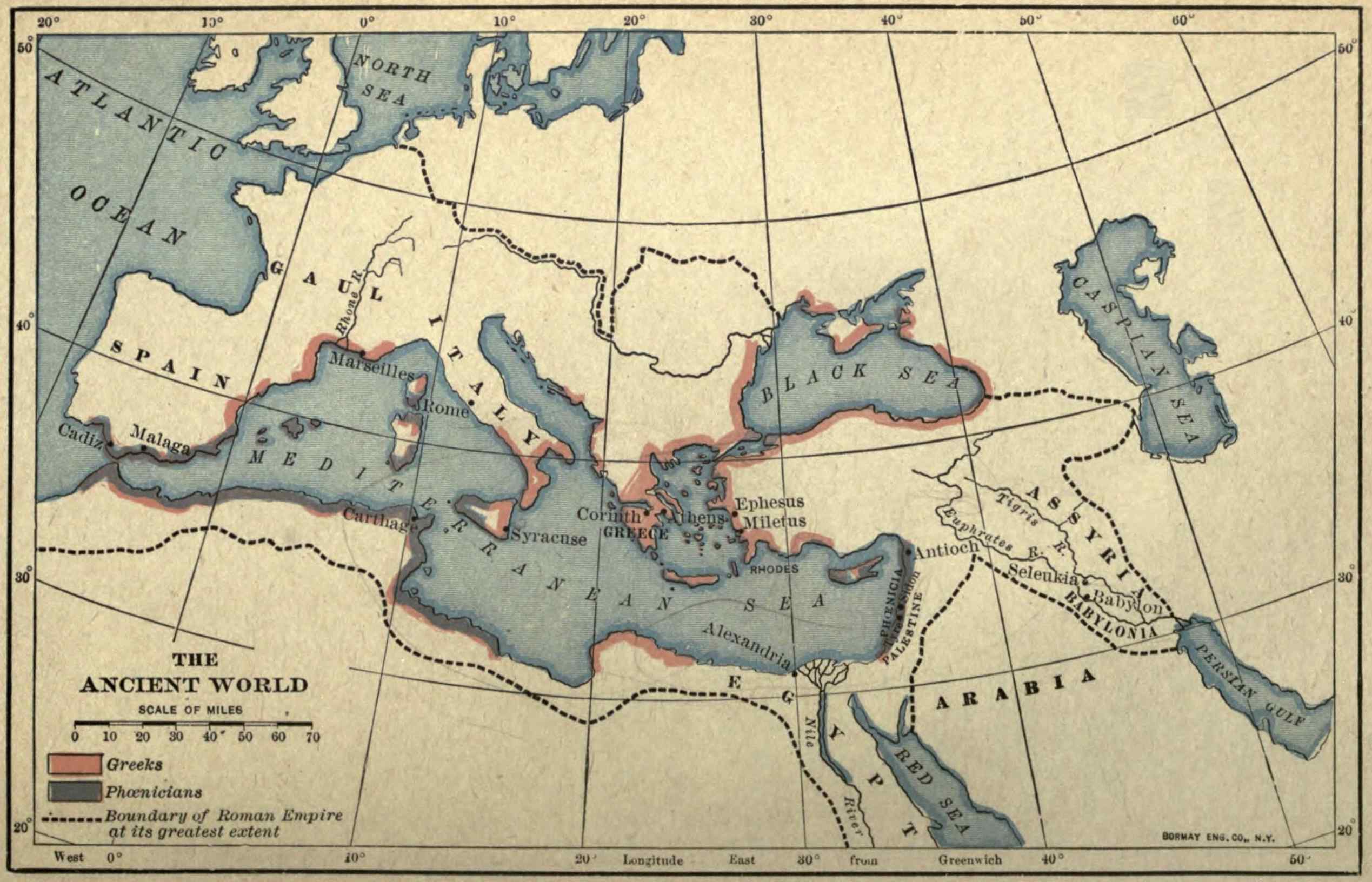
September, 1920
August, 1921
New Edition thoroughly revised, September, 1922
Reprinted, February, 1923; January, 1924,
May, 1925
MADE IN THE UNITED STATES
To
E. L. D.
PREFACE
The year 1914 marks one of the great turning points in
history. I have accordingly revised the part of this book
covering the recent period to close the narrative at that date,
and have added another part, covering the history of commerce
in the war and in the two or three years of peace immediately
following. The commerce of the great nations of the world
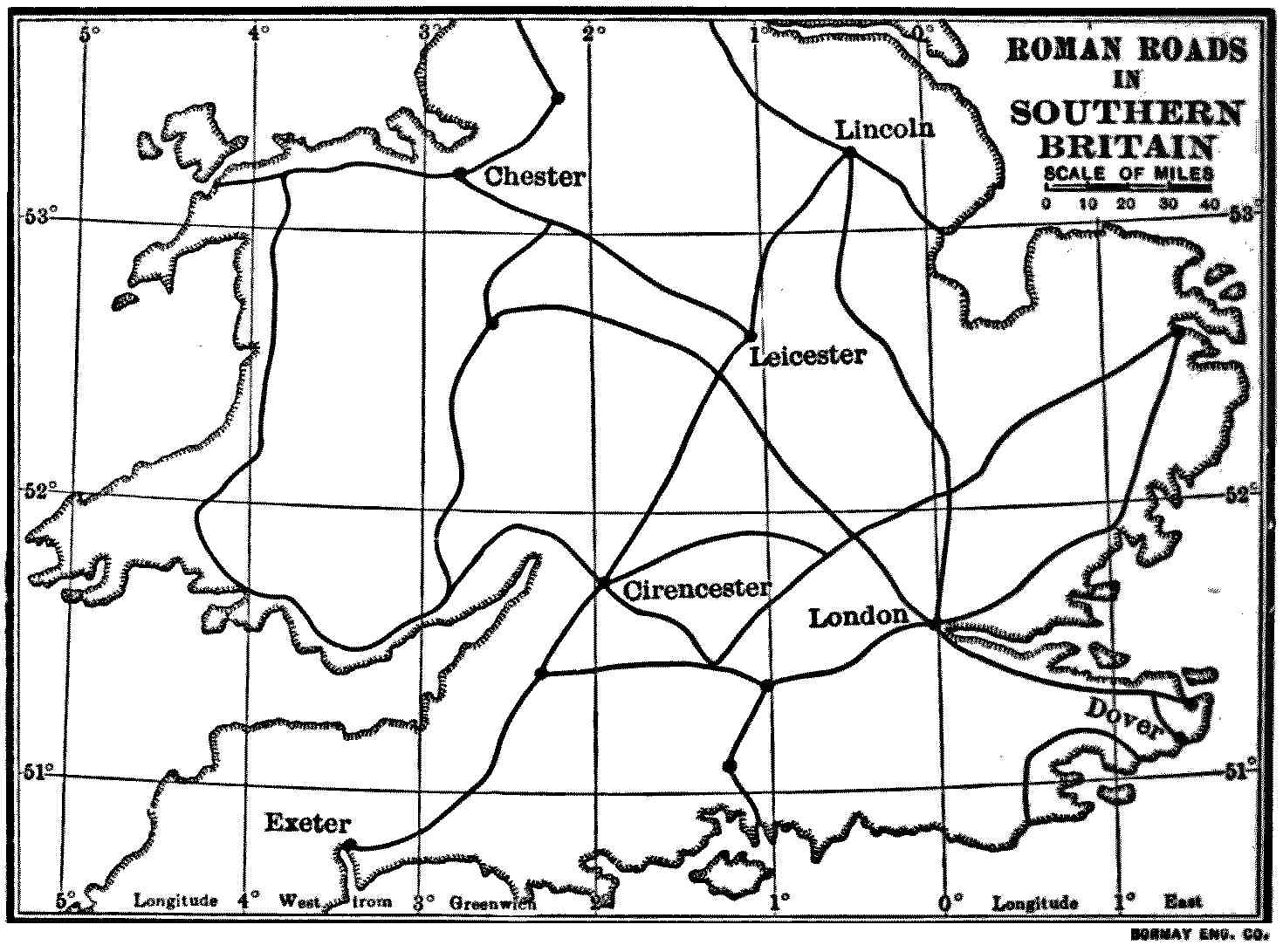
has departed since 1914 far from its accustomed paths and
forms. In my attempt to make intelligible the commercial
changes of the time I have had to take account of matters
in public finance, currency and foreign exchange which are
usually treated apart from the history of international trade.
I have thought it better, by touching on these outside subjects,
to show the reasons for the course which commerce has followed,
rather than to omit the reasons because they are hard for the
student of the history of commerce to understand.
PART I.—ANCIENT COMMERCE — CHAPTER I GENERAL CONDITIONS — CHAPTER II ORIENTAL PERIOD — CHAPTER III GREEK PERIOD — CHAPTER IV ROMAN PERIOD
1. The purposes of commerce.—The reader will follow
more intelligently the history of commerce if he will stop a
moment at the start to consider the purposes of commerce
and the difficulties which must be overcome if it is to be
successfully carried on.
As to the purposes we may be brief. The largest part of
the time and energy of the ordinary man is consumed in
getting the material things which furnish him with the means
of subsistence and of culture. We are accustomed to think of
the farmer and the manufacturer as charged especially with
supplying our material wants, but a little reflection will show
that the work of these classes, without the aid of another
class, would be of little use to us. The food and clothing and
tools and other desirable articles which they produce are
valuable only when they are put into the hands of a man
who wants them and can use them. Articles which we all
should pronounce desirable, the ripe fruit of the farmer and
the finished product of the manufacturer, have still only the
possibility of good in them; and this possibility is realized
only when they are put in the place where they are wanted
at the time when they are wanted. It is the business of the
merchant to attend to the proper distribution of wares, in
place and time. He does not change the form of things, like
the farmer or the manufacturer, but he is as truly a producer
as they are.
Ice may be manufactured in summer by the ammonia
process, or it may be saved from the preceding winter, or it
may be brought in summer from Greenland. To the consumer
it makes no difference which one of these methods is
employed; he wants his ice in summer, and the trader who
satisfies his wants by saving or transporting the ice is as useful
a member of society as the manufacturer who makes the ice.
2. Obstacles to the development of commerce. (1) Personal.—Great
as are the advantages of commerce, ages of
progress were required to give it the position which it holds
in the modern world. It has had to make its way against
innumerable obstacles; and to some of these obstacles the
reader is asked now to give his attention.
There is, first of all, the difficulty which we may term
personal. A man now accepts trade as a matter of course.
He devotes himself to some special line of production, the
growing of wheat or the making of shoes, feeling sure that he
can exchange his surplus for whatever else he wants, and
making his exchanges without hesitation. An uncivilized man,
however, is accustomed to satisfy his wants in only two ways,
by his own labor in production or by robbing another man.
He is suspicious of any offer to exchange wares, and is unwilling
to apply himself to any special line of production that
would make him dependent on trade. The ignorance and
suspicions of men were in early times the greatest hindrances
to the rise of commerce, as they are still in backward portions
of the world; it has required generations of experience to
teach men wants for things which they did not themselves
produce, and to teach them to satisfy these wants by exchange.
Commerce took on definite proportions and became of considerable
importance only when a special class of traders and
merchants arose, who made it their business to study wants,
to inspire new ones, and to provide the means of satisfying
them.
3. (2) Physical obstacles.—Another difficulty in the pursuit
of commerce, which we may term physical, appears in
the exchange of articles which are produced at some distance
from each other, so that they need to be transported by land
or sea. A farmer who sets out for the city with a load of
grain will have to count carefully the cost of getting it to
market. Assume that he feeds himself and his horses from
his wagon-load; evidently, if the road is long, or so bad that
progress is slow and many horses are necessary, he may find
all the wheat consumed on the journey before he has secured
a purchaser. In this aspect the facilities for transportation,
whether by land or water, by pack-animal, cart, canal boat or
steamer, are of great importance. It has been estimated that
a human burden bearer would require more than a day and a
half to move a ton of goods a mile; a strong pack-horse can
carry three hundredweight a considerable number of miles in
a day; while on first-rate level roads a horse can drag a ton
even further. Another factor in this question is the character
of the ware. A farmer who could not afford to bring wheat
to market might still find it profitable to bring butter, which
has much greater value in the same bulk, so that the profits
on a wagon-load might pay the expenses of the journey. Gold
can be exported from the interior of Alaska under difficulties
which would make the transportation of any other product
impossible.
4. (3) Risk of loss at the hand of public enemies or robbers.—The
carrier of merchandise has to face not only physical
difficulties, but also dangers from another source. From time
to time we read in the modern newspaper of high rates charged
for war insurance, when ship or cargo may be captured and
confiscated by an enemy on the sea. The merchant must
count his insurance charges before he can figure out his profits.
This illustration will make clear the character of one of the
obstacles to commerce, which we may term military, by some
stretching of the current meaning of the word. It gives,
however, no idea of the extent of this danger in earlier times,
when not only were wars far more common, but when even in
times of peace the state was so weak that the merchant, in
every mile of his progress, was exposed to attack by highwaymen
on land and by pirates at sea. Either the merchant
must bear his own risks, or pay somebody to protect him
against them. In either case the result would be the same,
the necessity of charging higher prices for the wares, and so
making sales less attractive and less common.
5. (4) Political restrictions.—Still another element can
be distinguished in history, which seems often to be an obstacle
to the development of commerce. This element may be termed
the political. A man is not only a producer and consumer;
he is also, whether he is conscious of it or not, a member of
the state, and subject to some kind of political organization
which restrains and directs him in his economic life. His
efforts to further his own interests are restricted by laws
meant to protect the interests of the people as a whole against
the selfishness of individuals. A merchant in the United
States who proposes to import some ware from another country
will find that he must pay not only the natural transportation
and insurance charges, but possibly also a customs duty in
addition, that would make the exchange unprofitable. If he
proposed to import a foreign ship for use in the American
coasting trade he would find that he is absolutely prohibited
from doing this, no matter how much he might be willing to
pay as duty.
These restraints are imposed nowadays, not because the
government assumes that individuals cannot take care of
themselves and is afraid that they may lose money by making
purchases abroad, but because it thinks that they may hurt
the interests of producers in the home market, whom it proposes
to protect. We shall find that governments in earlier
times restrained the flow of commerce to protect not only
producers but also consumers and even the merchants themselves;
and that regulations were imposed, of such variety and
such strictness, that they made a very important element in
the commercial life of peoples. The church as well as the state
interfered with the course of exchange in the Middle Ages, and
thought it necessary to safeguard public morals by many
restrictions which have since disappeared.
QUESTIONS AND TOPICS
1. Consider some articles of your clothing; try to ascertain from
what different sources the materials were gathered by the merchant for
the manufacturer, and how the finished product reached you. Do the
like for a common implement, a lead-pencil or pocket knife, or an article
of furniture. What countries were drawn upon to supply the food and
setting of your breakfast table? [Compare The cost of a dinner, Outlook,
March 13, 1897, quoted in Clow’s Introduction to the Study of
Commerce, Silver, Burdett & Co., 193-194.]
2. What articles would you have to do without if your supply were
limited to the things produced within a radius of 10 miles of your home?
Within a radius of 100? Within a radius of 1,000?
3. Ice was given as an example of a ware which varies greatly at
different times. Are all wares subject to such variation? [If you find
what seems to be an exception, verify it by the wholesale prices quoted
in newspapers.]
4. What is the use of grain elevators and wheat speculators?
5. Can you detect any difference between city people and country
people in making a bargain?
6. What has been the attitude of the North American Indians to
trade? With what wares have traders had to tempt them?
7. Arrange the following articles in the degree of their transportability,
i.e., according to the distance which they may be carried with
profit: raw cotton, coal, potatoes, silver, building stone, gold, wheat,
cotton cloth, diamonds, hay, coffee, salt, silk ribbons, copper. [The
price per pound of many of these wares is given in the newspaper.]
8. Give an instance of articles wasting, unused for lack of good
wagon-roads; for lack of railroads.
9. In what regions has piracy persisted to recent times? [Read
some description of Borneo or of the Philippine Islands, or a description
of Chinese junk trading and Chinese river life.]
10. What effect did the Civil War have on American commerce?
[See reference in chap. 51.]
11. In what regions of the world is land trade still unsafe?
12. To what restrictions, if any, does an American merchant have
to submit who desires to trade in one of the following wares: cigars, gunpowder,
whisky, lottery tickets, imported iron, cigarettes, improper
literature?
13. Government restrictions now are due usually to one of three
objects: (1) collection of revenue, (2) protection of other producers, (3)
protection of the consumer and the public. Classify the wares above
according to the object of the legislation.
14. Read Bourne, Romance of trade, 96-137, on the close relations
of politics and commerce.
BIBLIOGRAPHY
The reader will find at the end of most of the following chapters
titles of books suggested for further reading and study; titles of books
that are warmly recommended are marked by an asterisk, titles that are
particularly noteworthy are marked by two asterisks. In all cases the
references are restricted to books available in English. The prices given
are in most cases those at which the book was sold before the war, and are
retained as giving some indication of the relative expense involved in
the purchase of the books; prices have changed so much during and
after the war that an attempt to list current prices appears impracticable.
Bibliography.—The best available bibliography of English books
on the history of commerce is Sonnenschein’s Bibliography of social and
political economy, London, 1897, reprinted from The Best Books and The
Reader’s Guide. Useful bibliographical information will be found also
in Palgrave’s Dictionary, and in the Subject Index of the British Museum
Library, which has been published at brief intervals since 1902, and which
lists all the new books added to the Library. The American Economic
Review, established in 1911, is a quarterly publication which has devoted
particular attention to the bibliography of economic subjects, and which
should be consulted for the announcement of new books, the summary
of articles in periodicals, and the appreciation of important works in
book reviews. The American Library Association Catalogue, which has
appeared in various editions, gives full bibliographical information about
popular books which are on sale in the American market.
In default of a general bibliography the student must refer to books
describing conditions in England. The most complete and scholarly bibliography
is that given by Cunningham, in appendixes to his Growth, etc.
References which to most students will be more useful are given in Traill’s
Social England. Both these sources cover the whole period, into the nineteenth
century. For the medieval period the general student has a bibliography
approaching near to perfection by Charles Gross, Sources and
literature of English history, London and N. Y., 1900, and the student
of the history of commerce will find many references in the Select bibliography
of English mediaeval economic history, edited by Hubert Hall,
London, 1914. A revision of C. K. Adams, Manual of historical literature,
which has been undertaken by the American Historical Association will
be of great value when completed.
Manuals.—Cheesman A. Herrick, **History of Commerce and
industry, N. Y., 1917, resembles in plan the present book. Bibliographies
are appended to the different chapters. Two English manuals on the
history of commerce, H. de B. Gibbins, *History of commerce in Europe,
London, Macmillan, 1891, and J. R. V. Marchant, Commercial history,
London, Pitman [about 1901], suffer from the attempt to compress an
immense number of facts into a small compass. William C. Webster,
*General history of commerce, Boston, Ginn, 1903, $1.40, marks a decided
advance in the selection and presentation of material, but is lacking
in scholarship; the present writer discusses this book in detail in Yale
Review, Feb., 1904, vol. 12, p. 436 ff. It has scattered bibliographies,
unclassified. George W. Sanford, *Outlines of the history of commerce,
Chicago, Powers & Lyons, 1902, occupies a place by itself, and should be
of decided value in supplementing any manual. It gives topical outlines
of the different chapters in the history of commerce, suggestions and
references for reading, and skeleton maps for the student to fill in. It
seeks to give no information directly.
General Works.—Of the general works on the history of commerce
most are old and out of print. Of these only one need be noted here,
Lindsay’s *History, of which the first volume covers ancient and medieval
times. This will be of value to any school library, if it can be procured.
John Yeats, Growth and vicissitudes of commerce, Boston, Boyle, covers
the whole subject, from ancient to recent times, in a volume of about
400 pages; it was compiled about 1870, from other compilations, and
is not to be trusted entirely, but is about the only book of its kind now in
the market. Bourne’s *Romance of trade and Oxley’s *Romance of
commerce answer well to the description Bourne gives of his book, “an
interesting gossip-book about commerce”; both books contain readable
discussions of various topics in the history of commerce, and references
will be given to them hereafter. Morris, History of colonization, 2 vols.,
N. Y. Macmillan, 1900, would be a valuable book to the teacher if it were
well done, as it covers the history of colonization and commerce from
earliest times to the present. It is, however, so badly constructed and
so unreliable that it cannot be recommended. See the reviews in The
Nation, Yale Review, American Historical Review. A far better book
on the subject is A. G. Keller, **Colonization, N. Y. 1908.
The book which I recommend most strongly to teachers who are restricted
in their choice is Cunningham’s **Growth; it will enable the
teacher to dispense with many other books, and no other book could be
substituted for it. Ashley’s *Economic history, always desirable, is less
necessary for the purposes in view here. Ashley’s **Economic Organization
of England, London, 1914, is an admirable survey of English economic
history and is well suited to serve as collateral reading, but has little on
the history of commerce proper. If Cunningham’s large work is provided,
the teacher and student can afford to neglect the smaller manuals on
English economic history by Cunningham and MacArthur, Warner,
Price, Cheyney (revised edition, 1920), Usher, and others. Frederic A. Ogg
*Economic development of modern Europe, N. Y., 1917, deserves separate
mention since it embraces not only England, but also the more important
countries on the Continent; it covers the earlier periods briefly,
but treats the nineteenth century fully, and has extensive bibliographies.
Many of the general histories of Europe and England can be used to
advantage by the teacher or student of the history of commerce. The
only work, however, which can receive special mention here is Traill’s
*Social England; chapters contributed by various writers cover the history
of commerce from earliest times to 1885.
Maps.—The student must look to the general historical atlas for
help in studying the history of commerce. He will find that the more
elaborate atlases are hardly worth the extra expense for his purposes.
William R. Shepherd, **Historical Atlas, N. Y., Holt, revised ed.
1921, includes considerable economic material, is provided with a full
index of places, and will serve all ordinary needs.
The outline maps of the McKinley Publishing Company (Philadelphia),
and the Rand McNally Co., will be found valuable for the use both of
teacher and class.
In many cases a modern atlas is more desirable than a historical
atlas. Longmans’ **School atlas, N. Y., 1901, is an admirable work,
which should be in the hands of every student, and the Century **Atlas
is indispensable for reference purposes.
THE
ANCIENT WORLD
6. Prehistoric commerce. Ancient Egypt.—The origins of
commerce are lost in obscurity. Before people are sufficiently
civilized to leave written records of their doings they engage
in trade; we can observe this among savage tribes at the
present day, and we know that it held true of the past, from
finding among the traces of primitive man ornaments and
weapons far from the places where they were made. Such
evidences, interesting as they are, belong to the prehistoric
period, and this sketch of early commerce must begin with the
peoples who had acquired the art of writing and have left us
records from which we can gain some idea of their history.
First among these peoples, in point of time, were the
Egyptians. Three thousand years before Christ, at the time
when the great pyramids were built, this people had already
attained a developed civilization, which, in the opinion of
modern scholars, can be traced back even thousands of years
more. The Egyptians, however, were not a commercial people.
Their main resource was agriculture, and though they developed
some of the industrial arts to great efficiency they used
the products for direct consumption rather than for trade.
Their country, a strip of the Nile valley over five hundred
miles long, and but a few miles wide, was so much alike in its
different parts that it offered little inducement to internal
exchange over great distances; while its isolation by deserts
was a bar to the growth of foreign commerce. The sea, in
this early period, was a hindrance, rather than a help, to
communication.
7. Rise of Egyptian commerce; characteristic wares.—Egypt
never became a commercial country so long as it remained
under its native rulers. With the period known as
the New Empire, however, beginning about 1600 B.C., commerce
at least became more important than it had been before.
Regular communication was established with Asia, and caravans
brought to the country the products of Phœnicia, Syria,
and the Red Sea district. Before the eyes of Joseph and his
brethren “behold, a company of Ishmaelites came from Gilead
with their camels bearing spicery and balm and myrrh, going
to carry it down to Egypt”; to this caravan Joseph was sold
as a slave. The wares named here were characteristic imports
of Egypt; among others were precious woods, ivory, gold,
wine, and oil. Among the exports of the country were grain,
linen, and manufactured wares like weapons, rings, and chains.
Even to a late period trade was carried on by barter, the use
of coins being rare, and many of the imports came as tribute,
for which the Egyptians needed to make no return.
8. Development of Egyptian commerce in a later period.—Only
in the last period of Egyptian independence, a few centuries
before the country was conquered by Alexander, did
commerce bind it closely to other portions of the ancient
world. The government, which formerly had discouraged
trade, now permitted and encouraged it; Greek merchants
came in considerable numbers to Egypt; and an active commerce
sprang up. It is said that Necho, the king who ruled
about 600 B.C., sent out Phœnician sailors to attempt the
circumnavigation of Africa; and the same king took up the
work of cutting a canal across the isthmus of Suez which was
completed shortly afterward. The canal was allowed to fill
up with sand, but was reopened later, and its course may be
distinctly traced, it is said, along the route of the modern
canal.
9. Rise of commerce in the Mesopotamian Valley.—The
district northwest of the Persian Gulf, centering in the river
valleys of the Tigris and Euphrates, offered opportunities for
the rise of civilization which led to the establishment of settled
governments while Egypt was still living secluded from the
rest of the world. This district was rich in agricultural products,
but lacked the metals, some of the building materials,
and other of the raw materials of industry. Though it was
bordered in part by deserts, communication with other districts
was far easier than in the case of Egypt; and commerce with
other countries early acquired an importance here which
Egyptian commerce attained only in the last period of the
country’s history. Ancient Babylon, which rose to importance
some time after 3000 B.C., under a Semitic people (with a
language akin to that of the Jews), was a market-place for
wares brought not only from the South (Arabia) and West
(Syria), but also from the East (Iran, the later Persia). Clay
tablets, used like modern paper for the preservation of records,
have been discovered and deciphered in modern times, and
show an active trade in the precious metals, grain, wool,
building materials, etc.
10. Development of commerce under the Assyrian and
Persian empires.—Military expeditions extended the commercial
relations of the people of this district; and the conquests
of an Assyrian, who founded a great empire about
745 B.C., were guided in part by commercial considerations.
Babylon, Armenia, Syria, and parts of Iran and Palestine,
were brought under one rule; peoples on the frontiers were
held in check, and order was fairly well maintained within;
so that merchants could traverse the different parts of the
empire, and meet at its capital, Nineveh, to exchange their
wares. The Assyrian empire was made by the sword, and it
fell by the sword after a brief duration; but its place was
taken by succeeding states, and commerce continued to grow.
The Persian empire, which enjoyed its full power for about
two hundred years, until its destruction by Alexander in
330 B.C., included an area more than half that of modern
Europe; it stretched from the Mediterranean on the West to
the Indus on the East, from the Indian Ocean and the Persian
Gulf to the Black and Caspian seas. Within these boundaries
lay some of the richest regions of the ancient world, the products
of which could now be exchanged without passing from
under the protection of the Great King.
11. Relative insignificance of the commerce of the ancient
empires. The Jews. The Phœnicians.—In the Oriental
states which we have hitherto considered, commerce never
grew to a position of decisive importance in the national life,
however great it may seem when we compare it with its meager
beginnings. It served mainly the needs of luxury, and left
untouched the economic position of the mass of the people.
If we seek in the ancient Orient a people whose very existence
depended on trade we must look further. We do not find the
Jews to have been such a people, though we are accustomed
nowadays to think of them as devoted largely to the pursuit
of trade. The descriptions of the Bible show that they lived
mainly a pastoral and agricultural life; and down to the time
of the Roman Empire they counted for little in the world of
commerce. A truly commercial people we do find, however,
in near neighbors of the Jews, the Phœnicians, who inhabited
a strip of land on the coast of Syria and Palestine, scarcely
ten miles wide in most places and little over a hundred miles
long. They could gain a scanty food supply from the level
ground, and had timber in abundance on the mountains that
separated them from the interior, but had to look to trade
with other peoples for the means of growth which their home
denied them.
12. Commerce of the Phœnicians. Beginnings of sea-trade.—From
raw materials which were in many cases procured
from other countries they manufactured products which
found a market throughout the ancient world. Their cloths
and glass were celebrated; they exported large amounts of
metal ware; and they had a monopoly of the purple dye extracted
from a species of shell-fish, which was highly prized
throughout this period. These wares were but a few of those
in which they regularly traded; the reader who would have a
more detailed account of the wares of Phœnician commerce,
especially the imports, is advised to study the description in
the Bible. They maintained an active exchange with peoples
to the South, East, and North of them by caravan routes,
while they were the first people of antiquity to secure such
mastery over the sea that it could be made the medium of
regular and extensive transportation. The beginning of these
sea voyages is lost in the obscurity of the past. We know
that they were highly developed by 1500 B.C., when Sidon
was the leading Phœnician city, and that they did not cease
to extend when the primacy of the Phœnician cities passed to
Tyre. The Phœnicians taught the art of navigation to the
ancient world. Their ships were long the accepted models of
construction, and the Greeks learned from them to direct their
course at night by the North, or, as the Greeks called it, the
Phœnician star.
13. Development of sea-trade; wares of Phœnician commerce.—Beginning,
presumably, with fishing and short coasting
trips, and reluctant always to venture out in the stormy
season, they had reached the islands of Cyprus and Rhodes,
and had established regular commerce with Greece in the
heroic age of Greek history, say before 1000 B.C. From this
point their progress was rapid, and soon they had traversed
the whole Mediterranean, and passed outside it into the
Atlantic. The means of cheap transportation which they controlled
gave them an immense economic advantage. We may
accept as a product of the imagination the story that on their
arrival in Spain they found silver so plentiful that they not
only filled their ships but made their utensils, even their
anchors, from it; still the story shadows forth a truth. They
found wares in some districts cheap and begging a market
because of their abundance, which were rare and highly prized
elsewhere; and they could make great profits by exchanging
wares so as to put each where it was most wanted. From the
island which we now call England they procured tin, which
is a very rare metal in Europe, and which was especially
desired as a component of the important alloy bronze. They
got copper in Cyprus and Spain, also silver and iron in Spain,
and gold and ivory in Africa. They carried westward the
wares of the Orient (cf. our words cinnamon, cassia, hyssop,
cumin, manna, all from Hebrew forms), and manufactures,
which not only gratified the momentary needs of Europeans
but served also as models for imitation.
14. Establishment of colonies by the Phœnicians. Carthage.—The
Phœnicians are noteworthy not only as the
greatest merchants and the first navigators of the ancient
world; they were the leaders also in the founding of colonies.
At points important for commercial or naval reasons they
established stations which enabled them to trade in security
with the natives and to control the sea. Gades, for instance
(the modern Cadiz), near the straits of Gibraltar, was a rallying-point
from which the Carthaginians extended their voyages to
the tin islands in the North, and far down the Atlantic coast
of Africa on the South. Similar stations were established on
many of the Mediterranean islands (Malta, Sicily, Sardinia,
Balearics); and one founded on the north coast of Africa,
Carthage (near the site of modern Tunis), grew to especial
importance. The power of the Phœnicians declined, a few
centuries after 1000 B.C., partly by reason of internal dissensions
and the attacks of land-powers like Assyria, partly by
reason of the commercial rivalry of the Greeks, who had risen
to an independent position and cut the lines of communication
between East and West. In this period Carthage fell heir to
the Phœnician establishments in the western Mediterranean,
and maintained its power and policy on substantially similar
lines until it received its great defeats at the hands of Rome.
QUESTIONS AND TOPICS
1. What evidences of prehistoric commerce are given by Indian
arrow-heads, wampum, Indian ornaments, or the relics of the mound-builders?
2. What modern countries have the strip-form of Egypt? [See a
map of South America.]
3. Are there any modern countries like Egypt in the uniformity of
their conditions and products, diminishing the stimulus to internal trade?
[Study, for example, conditions in Alaska, Nevada, or Australia.]
4. Are any of the exports of ancient Egypt still characteristic wares
of the country? [See the Statesman’s Year-Book, index under words
Egypt, commerce.]
5. What can you infer as to the security of trade from the fact that
it was carried on by caravans, bands of merchants?
6. What physical barriers obstructed Egyptian commerce? [See
map 33 of Longmans’ School atlas, noting the deserts and the cataracts
of the Nile.]
7. Write an essay on the economic conditions of Egypt, from references
to that country in the Bible.
8. What countries of the modern world fill the space occupied by the
ancient empires of the East? What commerce do they carry on? [See
Statesman’s Year-Book.]
9. Can you suggest any reasons why the commerce of these regions
seems now much less important than in ancient times?
10. Write an essay on the economic conditions of later Babylon,
from descriptions in the Bible. [See Babylon, in the subject-index of
the Oxford Bible.]
11. Write an essay on the economic life of the Jews from the descriptions
of the Bible.
12. Write a similar essay on the Phœnicians. [See Sidon and Tyre
in the subject-index.]
13. Show the similarity of conditions in Phœnicia and in Norway,
forcing the inhabitants of both countries to the sea. [Study the physical
characteristics of Norway in a geography, and note the history of the
Vikings, and the importance of commerce and navigation in modern
Norway.]
14. Write a report, from information to be got from the Encyclopædia
Britannica, on one of the following subjects:—
(a) The commerce and manufactures of the Phœnicians. [See the
index in the last volume of the ninth edition, under Phœnicians.]
(b) The manufacture and trade in glass in the ancient world. [See
vol. 10, p. 647.]
(c) The Phœnician purple. [See the references under the word
Purple, vol. 20, p. 116, and the index.]
(d) Early navigation. [See the index.]
15. Wares of Phœnician commerce. [Bible, Ezekiel, chap. 27.]
BIBLIOGRAPHY
Ancient Commerce.—The best available survey of the economic
development of the ancient world is Cunningham’s **Western civilization
in its economic aspects, vol. 1, Ancient times, Cambridge (N. Y.)
Macmillan, 1898; this may be used for parallel reading throughout.
On Egypt, Adolf Erman, Life in ancient Egypt, London, 1894, is interesting
and reliable. Readers of English are fortunate also in having a translation
of Holm’s *History of Greece, N. Y., Macmillan, 1894, 4 vols.; it
may be made to serve as a history of commerce in the Mediterranean down
to the second century. The popular books on Alexander’s conquests
and their results, by Wheeler and Mahaffy, give, unfortunately, little
attention to economic affairs. P. V. N. Myers, *History of Greece,
Boston, Ginn, 1895, is a convenient manual for general reading. Alfred
E. Zimmern, **The Greek Commonwealth, revised ed., Oxford, 1915, is
an interesting account of the economic and political factors in Athens
of the fifth century.
On economic development in the Roman world the student has now
available a good manual by Tenney Frank, **An economic history of
Rome, Baltimore, 1920. A detailed account of conditions in the provinces
is provided by Mommsen’s *Provinces of the Roman Empire, N. Y.,
Scribner, 1887, 2 vols., $6. The current Roman histories give a distorted
idea of Roman commerce by viewing it from the capital.
Maps.—In default of an atlas of the history of commerce students
must seek the maps scattered through special works, or rely upon an
ordinary historical atlas. Justus Perthes’ *Atlas antiquus (about $.75)
can be recommended for use in ancient history; it is admirably executed,
and is provided with an index.
15. Greece, physical character and products.—The mention
of the Greeks at the close of the last chapter introduces
us to a people who were, for a time, the leading merchants of
the Mediterranean. The peninsular part of Greece has an
area less than that of the State of Maine, little more than half
that of the State of New York. It is, however, most richly
diversified geographically, and no country in the world of an
equal area, it is said, presents so many islands, bays, peninsulas,
and harbors. The coast line of this little country is longer
than that of Spain. No point is more than a few miles from
the coast, and there are few points on the coast from which
an observer does not see an island. In the Greek sea, moreover,
every island is in plain sight either of the mainland or of
another island, and in the good season the winds are very
regular. Favoring conditions such as these are of vast importance
in the early days of navigation, when sailors faced real
perils due to their inexperience, and perils of the imagination
which were even greater. At home the Greeks inhabited a
country which was not rich enough to support them without
exertion, but was, on the other hand, not so poor as to force
them to use all their ingenuity in finding the means of subsistence.
They could easily produce a surplus of oil and wine,
but found a deficiency of other products, especially grain and,
in the early period, manufactured wares.
16. Rise of Greek commerce. Colonies.—Though it would
be hard to conceive a better nursery for the growth of commerce
than existed under the conditions here described, the
Greeks, when we first get knowledge of them, about 1000 B.C.,
were not yet ready to take advantage of their opportunities.
There was some commerce, it is true, but it lay entirely in the
hands of the Phœnicians, who brought utensils and cloth and
took away timber and metals. Little by little the Greeks rose
to commercial prominence, and gained the place formerly
held by the Phœnicians. A striking feature of this revolution
was the Greek colonial movement, which covered some five
hundred years, and ended about 600 B.C. Greek emigrants
settled throughout the Ægean Sea and established themselves
as a fringe on the coast of Asia Minor and about the Black Sea;
in the West they chose by preference the shores of southern
Italy and Sicily, but founded colonies as far as Malaga in
modern Spain, and created a great commercial center on the
site of modern Marseilles. The colonies kept up an active
intercourse with the mother country, and Greek sailors and
merchants ousted the Phœnicians from their commanding
position. The Greeks at home began to produce wares for
export, seeking customers not only among the colonists but
in other markets also; they emancipated themselves from their
former dependence on Oriental manufactures, and developed
the clay, bronze, and woolen industries to a point not dreamed
of before.
17. Rapid development in the fifth century, B.C.—In this,
which may be termed the preparatory period of Greek commerce,
the leadership rested with the Greek colonies in Asia;
Miletos was the first of the Greek cities in commercial importance.
The advance of the Persian kings about 500 broke
the power of the Greek colonies in the East; at the same time
the western colonies, especially Syracuse, grew rapidly in importance,
and forced Carthage to recognize their supremacy
in the northern Mediterranean. The mother country itself
was, however, that part of the Greek world which showed the
most striking gains. The successful resistance to the Persians
was followed by a remarkable development not only in politics
but in industry and commerce as well, and Greece now took
for two centuries the position which England occupies in the
modern world. The little island of Ægina (near Athens),
rocky and sterile, supporting to-day but 6,000 inhabitants,
became for a time the most important market of the Greek
world; it amassed fabulous riches by a commerce penetrating
all seas, aided by an artificial harbor and a strong war navy.
Another great commercial city, destined to a longer career,
was Corinth; this city was the natural medium of trade with
the western colonies, not only because it offered an opportunity
to reach them without rounding the dreaded promontory of
the southern tip of Greece, but also because some of the leading
colonies of the West were Corinthian or closely allied to the
Corinthians.
18. Rise of Athens to leadership. Exports.—The city of
Athens, which had developed rapidly in the century preceding
the Persian wars, rose to the first place among the Greek
cities in the century in which they occurred (500-400 B.C.).
The Athenians broke the power of Ægina in armed conflict,
and appropriated its commerce; the Athenian sea-port, the
Piræus, became the leading commercial port of the Greek
world, and remained so until the Macedonian period (about
300). Readers must be referred to one of the narrative histories
of Greece for an account of the way in which Athens
built up its empire in the Ægean Sea, and for the story of the
varied fortunes of its political power. Even in times of defeat,
when its war-navy was scattered and its leagues and alliances
broken up, it was still able to control a large part of the trade
of the Ægean and Black seas, and maintained an important
commerce with the South and West. The favorable situation
of the city, and the ability and energy of its navigators and
business men, enabled it to conduct a large carrying trade for
other peoples, and many of the exports were foreign wares
which were merely transshipped in the Piræus. Of native
wares it exported silver and coin, from the mines near the city,
some natural products (oil, figs, honey, wool, marble) of
comparatively slight importance, and especially manufactured
wares, of which pottery was the chief.
19. Athenian imports and policy.—The chief import was
wheat, on which Athens was then as dependent as England is
now; the city had grown so great by trade that the surrounding
country was unable to support it. The great granary of
Athens was the level country north of the Black Sea, and
the Athenians made extraordinary efforts to control the narrow
entrance to the Black Sea, that they might assure their food
supply. They were not entirely dependent on this source,
however, and imported wheat also from Sicily, Egypt, Syria,
and the mainland to the North. Among the other imports
were ship-building materials, salt fish, slaves, raw materials
for the Athenian manufacturers, and articles of luxury. The
breadth of the Athenian trade is pictured in the statement of
a contemporary: “What delicacies there are in Sicily, or Lower
Italy, or Cyprus, or Egypt, or Lydia, or on the Pontus, or in
Peloponnesus, or anywhere else, they all are brought to Athens
by her control of the sea.”
The commercial policy of the Athenians was framed with
an eye especially to the interests of the consumer. What
duties were levied were low, and had no leaning to “protection”
in the modern sense. The export of articles especially desired
(wheat, ship-building materials) was restricted in the hope of
keeping up the home supply, and commercial advantages were
granted or withheld with the idea of exercising political pressure
on other states; but nothing like modern protectionism can be
found in the commercial policy of this period.
20. Contrast of the ancient and modern world; effect of
Macedonian and Roman conquests.—In the course of our
narrative we are now approaching a point when a great change
came over the ancient world. The isolation of the earlier
states of antiquity is their most striking feature. Each one
lives only unto itself. It rises in civilization and then declines,
without sharing its gains and losses with other states.
It may conquer and hold them for a time, it is true, but it
rules them as foreign territory, with alien interests; and the
great empires crumble as readily as they are made. This
characteristic of ancient history is one of its main difficulties
to the student, for it deprives him of any bond of connection
between the peoples, and forces him to pass from one to another
of them, until he feels lost in the complexity of the narrative.
The modern world, with its common fund of culture and
its community of interests uniting different peoples, could
arise from these conditions only after long centuries of struggle.
The unity of the Christian faith was needed to confirm the
union of peoples in a common civilization. The process of
union begins, however, at the point which we have reached;
the great conquests of Alexander of Macedon, and those of
Rome, did much to break down the barriers between peoples,
and to prepare them for the acceptance of a common civilization
and a common religion. It is to be hoped that the student
knows already something of the narrative of those conquests.
We shall have to confine ourselves to the results as they appear
in the history of commerce. Here the reader can merely be
reminded that Alexander united the eastern world into an
empire extending from Greece to India, a little before 300 B.C.,
and that the Romans began about 200 B.C. to extend their
authority outside the Italian peninsula, and before the birth
of Christ had subjected to it practically all the peoples whose
history we have been studying.
21. Effect of Alexander’s conquests on commerce; decline
of Greece.—In appearance the empire of Alexander outlived
its founder but a few years, and then dissolved. Alexander,
however, was a civilizer as well as a conqueror; he endowed
the East with a common fund of Greek culture; and however
distinct or hostile the states might seem thereafter the peoples
were united as they had never been before. Commerce took
on a new aspect. Greece, which before had been at the center
of the great commercial movements, was now left on the
western edge. Greek merchants could for a time use their
former commanding position to share in the great commercial
development, but in the long run their struggle was hopeless.
The most energetic Greeks left their home to settle in eastern
countries which were richer, more populous, and closer to the
great currents of trade. Corinth was the only city which
managed to maintain and extend its trade. Athens declined
rapidly in commercial importance; and grass grew and cows
were pastured in the streets of other towns which had once
been important markets.
22. Rise of great cities.—Some indication of the development
of commerce, and of the rearrangement of its important
centers, can be got from a study of the great cities of the ancient
world. Before the time of Alexander there were only three
cities of the Mediterranean with a population of over 100,000,
Syracuse, Athens, Carthage; none of these had a population
far above that figure. About 200 B.C., scarcely more than a
century afterward, there were four cities with a population over
200,000, Alexandria, Seleukia, Antioch, Carthage; one city with
a population far above 100,000, Syracuse; and of cities with a
population about 100,000 there were Corinth, Rome, Rhodes,
Ephesos, and possibly others. The names of some of these
cities are already familiar to us. Carthage was enjoying its
last century of commercial greatness, before Rome robbed it
of its influence in the northern Mediterranean. Syracuse was
the chief Greek colony of the West, destined also to fall under
the Roman power just before 200. Other names, however,
are entirely new to history, or first became of great importance
at this time, and the best idea of the commerce of the period
can be got by considering the reasons for their greatness.
23. Alexandria, Seleukia, Antioch.—Alexandria, as its
name suggests, was founded by the Macedonian conqueror.
It was situated on a tongue of land between a lagoon and the
sea, near the most western of the mouths of the Nile. It had
a double harbor, formed by the island Pharos, which has given
the name for lighthouse in some of the modern languages
(French, phare, Italian, fáro), as the most celebrated lighthouse
of antiquity was erected there. Alexandria furnished
the only good harbor for large vessels on the coast of Egypt;
it had access to the Nile, tapping one of the great granaries of
antiquity, and connected with the Red Sea through the canal
that ran from the Nile to the Bitter Lakes. It was at the
point where the sea-route from the far East reached the Mediterranean,
and it became by right the greatest market and the
largest city that the world had known.
Next to it in size and importance came two other cities,
Seleukia and Antioch, which were founded even later than
Alexandria. Seleukia, on the Tigris, took the place of the
earlier Babylon and the later Bagdad; it was situated in a
rich plain at the points where the routes from the Persian
Gulf and the Persian highlands met on their way westward.
Antioch was at the focus of the routes by which the trade with
inner Asia was carried on. Situated at a point where the
Euphrates approaches to within a few days’ march of the coast,
and where the valley of the Orontes offers the best means of
reaching the sea from the interior, it had the full benefit of
the revival of eastern commerce which followed the conquests
of Alexander and the enlightened rule of his successors.
24. Rhodes.—Only one other city, Rhodes, deserves especial
attention, and this not because of its size alone but
also because it was so specifically a commercial city. The
little island could offer but scanty products to commerce, but
it enjoyed an exceptionally favorable position, where navigators
from Egypt and Syria, avoiding the dangers of the
open sea, would put in for shelter and to trade. Rhodes
followed a far-sighted foreign policy, guided by the idea of
securing the greatest freedom of trade; it policed the seas and
repressed piracy with vigor; and established a code of mercantile
law which was celebrated as a model and which invited
dealings in its market. The Rhodians were skilful navigators,
and developed the principles of commercial association to a
point of high efficiency. It is little cause for wonder, therefore,
that commerce flowed hither from all parts of the eastern
Mediterranean and even from the Black Sea; that foreign
merchants sent their sons there to learn the conduct of commerce;
and that great riches were accumulated, of which one
evidence was furnished by the many colossi, gigantic statues,
about the city.
QUESTIONS AND TOPICS
1. Prove the statement in the text, regarding the Greek islands.
Take a good map, measure off on the scale 25 miles, the distance at which
hills of about 125 feet are visible (the Greek islands are mountainous and
the air very clear), and show by what stepping-stones timid sailors could
advance.
2. Study in detail the influence of the physical characteristics of
Greece on the people and their history. [See Myers, chap. 1; Holm, vol.
1, chap. 2.]
3. Write a report on the evidences of early civilization and trade.
[Holm, vol. 1, chap. 8.]
4. Write a report on the early commerce carried on by Phœnicians.
[Holm, vol. 1, chap. 9.]
5. Make a careful study of the Greek colonial movement, noting, (a)
the motives to colonization, (b) the extent of Greek colonies, (c) the relations
with the mother-country, (d) the mode of life in the colonies, (e) the
influence on the commercial development of the different parts of Greece.
[Myers, chap. 5; Holm, vol. 1, chaps. 12, 13, 14, 21, 25.]
6. Write a report on the history of the Greek colonies of the West,
especially Syracuse and its contest with Carthage. [Holm, vol. 1, chap.
25; vol. 2, chap. 6, 29; Freeman, Story of Sicily, N. Y., Putnam, 1892,
$1.50.] ·
7. Study the growth of the sea-power and empire of Athens, indicating
on a map the allied or subject cities. [Myers, chaps. 15, 16; Holm,
vol. 2, esp. chap. 17.]
8. Contrast Athenian exports of this period with the exports of
modern Greece. [Statesman’s Year-Book.]
9. What is the leading port of modern Greece? [Same.]
10. Write an essay comparing the Athenian and the British empires,
noting, (a) advantages of geographical position, (b) products of the home
country, exports and imports, (c) naval power and naval stations, (d)
policy to members of the empire, (e) commercial policy of the home country.
[See Myers or Holm, and the chapters in this book on England; compare
E. A. Freeman, Greater Greece and Greater Britain, London, 1886.]
11. Compare the imports of ancient and of modern Greece. [Statesman’s
Year-Book.]
12. Make a chart, naming on a horizontal line the leading states of
antiquity, from Egypt to Rome, placing dates (3000, 1500, 1000, etc.) in a
column at the left, and indicating changes in the history of each state in
the appropriate place in its column.
13. Draw a map showing the extent of Alexander’s conquests, and
comparing the empire with earlier Oriental empires. [See the maps in
Myers, and if no good historical atlas is available consult the maps in the
Oxford Bible, teacher’s edition.]
14. Study the influence of the Macedonian conquests on civilization
and commerce. [Myers, chaps. 25, 26, 27; Holm, vol. 3, esp. chap. 27.]
15. Write a report on the economic decline of Greece after the Macedonian
conquest. [Holm, vol. 4.]
16. Is England exposed to such a change in the currents of trade as
furthered the decline of Greece?
17. Why do great cities rarely grow up without the aid of commerce?
[The answer to this question is suggested in a later chapter, but the student
should be able to work it out himself.]
18. Are there any exceptions? What is the commerce of Washington,
D. C.? Is there any one of the cities named in this section which
may have owed its size to something beside commerce?
19. Has there been any later period in which great cities have risen
suddenly, as in this period after Alexander?
20. Write a commercial history of Carthage from the information
to be got in a Roman history, or in the Encyclopædia Britannica. Write
a commercial history of Syracuse in the Roman period, from the same
sources.
21. Write a report on the commerce and civilization of one of the
cities, using Holm, vol. 4, and the encyclopedia.
22. Endeavor to trace the later history of one of these cities, and to
discover its population now, using the encyclopedia and a geographical
gazetteer.
BIBLIOGRAPHY
See chapter ii.
25. The Roman state; Rome not a commercial city.—In
entering on the period of Roman domination we need spend
no time over the earlier history of the city which came to rule
the world. The Romans were not a commercial people. Even
in the last two centuries B.C., when Rome extended her sway
over the eastern countries which have already been noticed,
and subjected a large part of the West as well, Rome did not
become a commercial center. The city grew to unparalleled
size, it is true, and required immense imports of food to support
the population. These imports came, however, as taxes and
tribute to the conquerors. Rome supplied no exports of considerable
amount, and built up no great carrying and forwarding
trade such as would have made the city the center
for the exchanges of other people. The service which the
Romans gave to the world of their time, and for which they
received such rich reward, was not economic but political in
character; they were the greatest organizers and administrators
of antiquity, and by their skill in the arts of war and government
succeeded in living on the labor of subject peoples.
They were not mere parasites. They earned all that they
received by one great contribution, “pax Romana,” Roman
peace, which continued almost unbroken for centuries, and
which furnished an opportunity for commercial development
before unknown.
26. Development of commerce in the Roman East.—The
study of commerce in the Roman period resolves itself, as
suggested above, into a study of commerce in the different
regions of which the great Roman state was composed. In
the East commerce developed on the lines which have already
been described; Alexandria and Antioch continued to be great
markets for Oriental wares, coming now even from India and
China; and Carthage remained an important outlet for the
African trade. Asia Minor, northern Africa, and southeastern
Europe reached the very pinnacle of their historical development
in the Roman period; these countries have never since
attained to anything like the prosperity they then enjoyed.
We shall not have the time hereafter to notice the commerce
of these regions in detail; the reader may take it for granted
that merchants struggled strenuously to keep the place they
had reached, and that decline came slowly, when it did come
later.
Our attention must be directed hereafter mainly to the
West. It was there that the most important states of modern
Europe arose, and there that commerce grew up in its modern
form. Our chief interest must be to know what progress the
peoples of the West made under Roman rule, and how far
commerce had developed among them.
27. Backward condition of the people of the West.—The
peoples of the West were far behind those of the East in civilization.
They have sometimes been compared to the American
Indians, and though the comparison is inexact in detail
and may easily mislead, it gives still a rough indication of their
backwardness. They lived more from the products of their
flocks and herds than from agriculture, when the Romans came
in contact with them; they had practically no towns, and no
considerable trade.
The five hundred years (roughly) of Roman rule made
some striking changes in the Roman provinces of the West
(modern Spain, France, England; not Germany or countries
farther east). It kept the people in order, and gave them an
opportunity to acquire the elements of a higher civilization.
The fact that modern Spanish and French are based on Latin
remains always a striking testimony to the Roman influence
on the provincials.
28. Limited influence of Rome on the commercial development
of the West.—It is easy, however, to overestimate the
results of this influence, especially so far as regards economic
progress. Rome gave her subject peoples of the West a chance
at commercial development, but none had sought it and few
were ready to profit by it. The Roman government constructed
a system of military roads, models of their kind,
which enabled troops and messengers to reach speedily the
different provinces. Romans settled in the provinces as officials
or private gentlemen, and Roman culture was acquired by the
wealthy provincials; cities and large landed estates formed
centers of industry and exchanged manufactured products for
the raw materials of the surrounding districts.
ROMAN ROADS
IN
SOUTHERN
BRITAIN
The course of some of the roads is uncertain, and the number would be increased
or diminished according to the authority followed. The map gives, however,
a fair picture of the Roman road system; it was, evidently, not so extensive
as our modern railroad system.
The roads, however, seem to have served mainly Roman
purposes, and the cities and culture depended mainly on
Roman influence for their support. The mass of the people
remained passive, and advanced slowly. Most of them lived
by agriculture in the country districts, producing the things
necessary for their own subsistence and a small surplus for the
Roman tax-gatherer; they received for their surplus no wares
which would have formed the basis of commerce. However
much Rome did to efface the differences of race, language, and
national tradition, such differences remained to hinder commerce;
and peoples were still separated by great distances and
by serious physical barriers. The commercial development of
the West, though it may seem great in comparison with conditions
in the following period of disorder, was very limited
even at the height of Roman power.
29. Decline of Roman power and of commerce in the
West.—The time came soon when the provincials could no
longer look to Rome for protection and stimulus. In the
third century, A.D., the Roman government began to go to
pieces. It lacked the force to repress internal revolts in the
provinces, and to repel the inroads of barbarians on the frontiers.
The process of decline had already proceeded far before
the “Fall of Rome” (476), when even the shadow of authority
passed from the Roman Emperor of the West. The remnants
of Roman rule centered henceforth about the eastern capital,
Constantinople. In the West barbarian chieftains established
government of a kind on the fragments of the Roman state,
but endeavored in vain to follow the models which the Romans
had set them. The motives to commerce grew weaker as
Roman culture disappeared, and the obstacles to commerce
increased rapidly with the decline in public order. Brigandage
and piracy became more profitable than honest industry; roads
and bridges deteriorated; the course of rivers was obstructed.
Even a great ruler like Charlemagne, who had himself crowned
Emperor in 800, could do little to stay the process of decline,
and weaker successors could do still less. The last remnants
of the Roman organization seemed to have passed away, and
the European world passed into the “Dark Ages.”
QUESTIONS AND TOPICS
1. Endeavor to verify the statements in the text by studying the
descriptions of Roman commerce in the current Roman histories. Ask
the following questions of them. What wares, beside manuscript books
and a few other items of no great importance, did the people of Rome
produce for export? What wares beside food for the people and luxuries
for the rich did they import?
2. Show how the taxes and tribute from conquered provinces can be
regarded as war-insurance.
3. Write a report on the civilization and commerce of one of the
provinces of the Roman Empire. [See Mommsen, Provinces, esp. vol. 1,
chap. 7, Greek Europe; chap. 8, Asia Minor; vol. 2, chap. 12, Egypt; chap.
13, the African Provinces.]
4. Write a similar report on one of the provinces of the West. [Vol.
1, chap. 2, Spain; chap. 3, Gaul; chap. 4, Germany; chap. 5, Britain.]
5. Study the civilization of Roman Britain, distinguishing carefully
the life of the upper (Roman) classes, and the life of the common people.
What effect would this contrast of classes have on the extent and character
of commerce in the Roman period? [Consult manuals of English
history.]
6. Study the economic and political factors in the fall of Rome.
[Cunningham, West. civ., vol. 1, p. 170 ff.; Adams, Civ., chap. 4.]
7. Compare the fall of Rome with the growth of political corruption
in some modern cities, as affecting the prosperity of commerce.
BIBLIOGRAPHY
See chapter ii.
PART II.—MEDIEVAL COMMERCE — CHAPTER V CONDITIONS ABOUT THE YEAR 1000 — CHAPTER VI TOWN TRADE — CHAPTER VII LAND TRADE — CHAPTER VIII FAIRS — CHAPTER IX SEA TRADE — CHAPTER X THE LEVANT TRADE — CHAPTER XI COMMERCE OF SOUTHERN EUROPE — CHAPTER XII COMMERCE OF NORTHERN EUROPE — CHAPTER XIII DEVELOPMENT OF THE MEDIEVAL ORGANIZATION OF COMMERCE — CHAPTER XIV COMMERCE AND POLITICS IN THE LATER MIDDLE AGES
30. Political conditions affecting commerce; the modern
system of government.—The reader who studies the history
of commerce in the medieval period faces a system of government
entirely different from that of modern times, which he
must understand before he can appreciate the peculiar conditions
of commerce then. We can illustrate the modern
method of government by taking a country, say France, for
an example. We wish to understand the relations of the
capital, Paris, to other parts of the country, say the district
around Bordeaux, in the southwest corner. An observer of
this country will find that Paris and Bordeaux are united by
different means of communication and transportation, telegraphs
and posts, railroads, highways and canals, which are
constantly employed in the service of government. On the
path from the province to the capital go the reports of the
officials who are in charge of the government of Bordeaux;
and, if they fail in their duties, petitions and complaints from
private citizens, asking relief, will take the same path. By
this path, also, the taxes collected at Bordeaux will stream to
the treasury at Paris, to be employed in maintaining the
government. Part of these taxes will be expended at Paris,
to support the officials who live in the capital, the central
army, etc. Part, however, must be used to fulfil the local
needs of Bordeaux; and on the road from the capital to the
province we shall find money and wares, going as salaries to
officials, appropriations for public works and the like. On
this road, furthermore, we shall find a stream of messages,
sent by the central government to its local subordinates,
directing them in their work; these messages will answer the
reports of officials and the petitions and complaints of subjects.
31. Impossibility of applying modern methods of government
in the period after the fall of Rome.—The system of
government, thus roughly outlined, was the system used in
the period when Rome was still strong. But when the power
of Rome declined it became constantly more difficult to maintain
a system of the kind; every obstacle to the free passage
of men and wares weakened the hold of the government on its
provinces. The roads grew worse, and while they were still
passable the danger of traversing them increased, so that the
expense of maintaining this government became prohibitive.
The reports from officials and the petitions from subjects were
delayed or lost; only a small part of the local taxes reached
the treasury at the center. The central government, on its
side, found that it had no longer the means to pay the bills
for salaries and public works in the provinces, and found that
its commands were not received there, or were not obeyed,
because the government could no longer send officials and
troops to force obedience.
32. The feudal system; rise and character.—The time came,
finally, when the government had to recognize publicly the
change in conditions, and to adopt a system of quite a different
kind, known as the feudal system. In substance it told
the man who before had been a salaried official that it could
no longer pay salaries, and that he must support himself
henceforth from the revenues of land which would formerly
have gone to it as taxes. It maintained still a nominal superiority,
and exacted from the feudal lords who now assumed
the responsibility of government certain payments for general
public service, occasionally a sum of money and more frequently
personal service of a military or judicial kind. Practically,
however, the state had split into little pieces; the
central government had lost the right even to nominate the
successor of an official, and each was succeeded in the duties
and profits of government by his son, as though he had been
a petty king. It is impossible to state accurately the number
of little governments of this kind that existed in the different
countries of Europe; in France, in the tenth century, it is
supposed to have exceeded 10,000. The character of government
varied greatly, of course, according to local conditions,
not only in different countries but in different parts of the
same country, but it was everywhere extremely low when
measured by modern standards. This will be apparent as we
survey the conditions under which commerce was carried on
in the period known as the Dark Ages.
33. Difficulties and dangers of transportation.—Attempt
was made to maintain the roads, which of course are essential
to trade by sea as well as by land, by making the proprietors
through whose land they ran responsible for their repair.
Many of the proprietors managed to escape contribution, and
what work was done was largely wasted, through ignorance
and lack of proper superintendence. We shall see that even
in later periods the roads were bad; in this early time they
were so bad that they seem to have been mere tracks, of
service to passengers on foot or on horseback, but of little use
for wagon traffic.
The merchant suffered even more, however, from bad men
than from bad roads. Government was so weak that robbery
was common; people were so ignorant of everything outside
the narrow sphere of local interests that they suspected every
stranger, and too often with reason. There is a whole series
of English laws, beginning about 700 and continuing for
centuries, of which this is an early example; “If a man come
from afar, or a stranger, go out of the highway, and he then
neither shout nor blow a horn; he is to be accounted a thief,
either to be slain or to be redeemed.”
34. Restrictions imposed to insure security. The market.—The
dangers of travel required a merchant to go in company
with others, and the danger that a merchant would himself
turn robber made it necessary for him to subject himself
constantly to public supervision, and to get residents who
would act as sureties for his good behavior. In England, even
in the eleventh century, the central government thought it
necessary to pass a law “that every man above twelve years
of age make oath that he will neither be a thief nor cognizant
of theft.” Such a general statute would surely be of little
use.
Many other statutes of a more specific nature were passed,
which may have helped to repress robbery, but which must
have hampered trade at the same time. The idea in general
was to force a man to make his purchases in public, so that
if he appeared at home with new wares he could get witnesses
to prove that he came honestly by them. Cattle formed a
large part of the personal property in early times, and as these
could readily be stolen, many laws were passed restricting the
trade in cattle. Other things were included in the restriction,
however, as the need of protecting commerce became more
apparent. In England, in the tenth century, a man was not
allowed to buy or sell any goods above the value of twenty
pence, unless he did it within a town where a public official
and witnesses could legitimate the bargain. In this practice
is found the origin of the market, a medieval institution of
which more will be said later. A market was a place appointed
by the government, where bargains could properly be made;
and only small exchanges of household produce could be made
outside it, in the open country. Beginning in the need that
was felt to prevent thieving it developed as a public institution,
which the people found it profitable to extend as a means of
collecting tolls and of regulating internal trade.
35. Society organized to exist with the minimum of commerce;
the medieval village.—The striking and important
feature in the life of European peoples at this period was not
the large amount of commerce carried on, but the small amount.
The people were organized on a system which enabled them
to support life with the least commerce possible. Instead of
being concentrated in towns, they were isolated in little groups,
often called manors, one of which would be composed often
of less than 100 people, who got their living from the square
mile or so of land surrounding them. It is not necessary here
to discuss the social and political life of these little groups,
though it is proper to remark that often some of the inhabitants
were slaves, and many more were only half-free, like the
Russian serfs of the nineteenth century.
36. Self-sufficiency of the villages; low stage of the arts of
production.—The economic life of these village groups is the
side in which we are interested, and the chief point in that
was the self-sufficiency of each group. A village tried to produce
everything that it wanted, to be free from the uncertainty
and expense of trade. We find, then, that almost all
the people in a village were agriculturists, and these raised
the necessary food supply by methods which were always
crude, and were often very cumbersome and wasteful. The
stock was of such a poor breed that a grown ox seems to have
been little larger than a calf of the present day, and the fleece
of a sheep weighed often less than two ounces. Many of the
stock had to be killed before winter, as there was no proper
fodder to keep them, and those that survived were often so
weak in the spring that they had to be dragged to pasture on
a sledge. Insufficient stock meant insufficient manure, and
though the fields were allowed to lie fallow every third year
they were exhausted by constant crops of cereals, and gave a
yield of only about six bushels of wheat an acre, of which two
had to be retained for seed.
Not only the food but nearly everything else had to be
raised where it was to be consumed. Houses were constructed
of materials from the forest, clothes were made out of flax
and wool from the village fields, furniture and implements
were made at home. Nearly every village had a mill, usually
run by water, to grind its meal or flour; some villages had a
smith or carpenter; few special artisans beside those suggested
were to be found in the ordinary manor.
37. Evils resulting from the lack of commerce.—Before we
proceed to describe the growth of European commerce from
such origins it will be well to stop and consider the results of
a system which was based on the lack of commerce. With
regard to the main product, food staples, the result was an
alternation of waste and want. A good year brought a surplus
for which there was no market outside the village, and which
could not be worked up inside for lack of manufacturing skill
and implements. A bad harvest, on the other hand, meant
serious suffering, because there was no opportunity to buy
food supplies outside the manor and bring them to it. Nearly
every year was marked by a famine in one part or another of
a country, and famine was often followed by pestilence. Diseases
now almost unknown in the civilized world, like leprosy
and ergotism or St. Anthony’s fire, were not infrequent. The
food at best was coarse and monotonous; the houses were
mere hovels of boughs and mud; the clothes were a few garments
of rude stuff. Nothing better could be procured so long
as everything had to be produced on the spot and made ready
for use by the people themselves. Finally, these people were
coarse and ignorant, with little regard for personal cleanliness
or for moral laws, and with practically no interests outside the
narrow bounds of the little village in which they lived.
38. Exceptional instances of higher organization of industry.—These
conditions existed all over western Europe, and
may be taken as typical of the period about the year 1000.
Though they determined the commerce, or better the lack of
commerce, at this time, they were not absolutely universal.
Great feudal princes and great monasteries owned each a
considerable number of villages or manors, and tried to introduce
a more advanced economic system among them. A
great lord would have his shoemaker and tailor, his saddler,
swordsmith, etc.; and would have a considerable number of
women gathered in a sort of factory making clothes. It is
noteworthy, however, that the difficulties of transportation
were so great that for a long time to come it was not practicable
to concentrate the food supplies of a large group of
manors in one place, and the owner would have to go to the
food instead of having it brought to him. So we read of the
kings and princes being always on the road, traveling with
court and retinue from one manor to another, eating up the
surplus that had accumulated and then moving on.
39. Common wares of commerce in the period of the manor.—Absolute
self-sufficiency was impossible; it was the ideal at
which the managers of the manor aimed, but there were few
manors which could supply all the necessaries of life. The
list, however, of articles which had to be procured by commerce
with the outside world was small. Salt was one item,
of special importance as it was so difficult to keep live stock
through the winter, and the animals had to be killed and
salted down. Iron was necessary for various implements,
though it was so expensive that it was spared in every possible
way. Other articles had to be bought as occasion arose,
stones for the mill or tar to keep the murrain from sheep.
These wares were essential to existence; by channels so obscure
that they cannot now be traced they reached the places where
they were wanted, and were purchased with part of the manor’s
scanty surplus. Cattle and horses formed also, as is natural,
common objects of exchange.
40. The slave trade in Europe.—One ware which had long
been an object of commerce was of especial importance in the
period just after the fall of Rome, and, indeed, for some time
later; this was slaves. The slave trade extended over all
Europe, and had great markets on the Mediterranean, the
North, and the Baltic seas. Merchants drove troops of slaves
in chains from one country to another, or exported them in
lots of 100 or more. In the slave markets of the Baltic as
many as 700 are said to have been put up for sale at once.
A number of English laws regulated the slave trade of the
time. It seems to have been largely confined to convicts, but
a law of Alfred provided that a father should not sell his
daughter to servitude among strange people. Later the English
laws forbade the trade entirely, but we read of Bristol
merchants in the eleventh century who not only bought slaves
all over England for export to Ireland, but bred them as well;
and the trade persisted in various sections even later.
41. Distant commerce confined to rare luxuries.—Under
conditions such as these the term “foreign commerce” in its
modern sense is meaningless. The areas which now form the
countries of Europe did not specialize in the production of
different wares, so that we can trace a regular exchange of
products between them. Most of the common wares of commerce
circulated inside a restricted area. Only the rich could
afford to pay for the transportation of wares over any distance,
and they would spend their money only for valuable
luxuries. The dignitaries of the church, by reason of their
higher culture and connection with a universal organization,
created a demand for a few foreign wares, and the governing
classes wanted some things which could not be produced at
home. Wines and spices were brought up from southern
Europe, along the river routes and over the passes of the Alps,
and furs were brought down from the North.
Distant sea voyages were still uncommon. An English
law of about 900 provided that “if a merchant thrived so that
he fared thrice over the wide sea by his own vessel” he might
be promoted to a higher social class; and later laws refer to
merchant ships again. The Scandinavians have left records
of adventurous voyages to the North and West, and a vast
number of silver coins found in Russia and the Baltic countries
shows that a land trade with southwestern Asia persisted in
the period of which we treat. It is only toward the close of
this period, however, that we begin to get details about distant
commerce, and can see that it is firmly established. The
Institutes of London, issued in the eleventh century, and
regulating the commerce of the town, mention ships coming
from Flanders, from Rouen and other places in France, and
from Germany. Foreign merchants bought wool and pigs,
and sold wine, furs, spices, gloves, and fish.
42. Character of the merchant in the early Middle Ages.—We
know even less of the person of the merchant, in this
period (about 1000 A.D.), than of the wares that he carried.
It is certain, at any rate, that the merchant was not the specialist
that he afterwards became, but was a jack-of-all-trades.
He might be wholesaler and retailer, transporter and pedler,
and often an artisan too. Nothing like the country store of
the present day existed, and trade outside the few centers
where markets had been established was carried on by pedlers,
who carried their wares on the back or on a pack animal.
Every merchant was sure to be something of a soldier, as he
was thrown largely on his own resources for self-defence; and
he often assumed the garb of a missionary or pilgrim to get
the help of the church in carrying on his trade. The pilgrim
was exempt from many burdens laid on the ordinary traveler
or merchant, and though this exemption had later to be
abolished, because it was so frequently abused, it seems to
have been of great use in helping commerce through its early
stages.
QUESTIONS AND TOPICS
1. Modern France has, approximately, an area of 200,000 square
miles. Calculate the average size of the feudal state about the year
1000, and compare it with the county in which you live.
2. Can you suggest anything in cow-boy life on the plains of the
West reminding you of feudal conditions, when the State was weak?
3. What district, known to you, has the least commerce with the
outside world?
4. How does the yield of wheat, as given in the text, compare with
the yield in different parts of the U. S.? [See Abstract of the United
States Census.]
5. Show why the lack of commerce requires small groups of people
to produce everything for themselves, and why this self-sufficiency involves
a low standard of living.
6. How does commerce remedy the waste and want which are characteristic
of self-sufficiency? Why cannot people plan to produce just
enough food?
7. Report on the wares and workmen collected on the estates of a
great king. [Falkner, Statistical documents of the Middle Ages, Philadelphia,
1896, 10 cents, pp. 2-5.]
8. Name some wares, important in the stock of even the smallest
country store, which did not appear in commerce in the period of the
manor. Show the necessity of each one of the wares mentioned in the
text.
9. Why could a profitable commerce in slaves be carried on when
other wares did not pay the merchant?
10. What are the luxuries which a trader now can afford to pack into
the uncivilized districts of Africa and America?
BIBLIOGRAPHY
References on the rise and character of feudalism may be found in
many manuals of European history; among others Emerton, Introduction,
236; Mediæval Europe, 477; Robinson, Middle Ages, 119. Brief accounts,
mainly for the student of political history, may be found in the above,
in Adams, European Hist., 185-191; and in the same author’s *Civilization,
chap. 9. The best account of the feudal system in English is Seignobos,
**Feudal regime, N. Y., Holt, 1903.
Most of the books describing conditions in this period treat them
either from the political or the agrarian standpoint; the writer knows
nothing, suitable for student’s reading, discussing the origins of commerce
at this time. See, therefore, Cunningham, Growth, vol. 1, book 1, or the
smaller manuals on English economic history.
43. Significance of towns in the economic organization;
decline of the Roman towns.—In the latter part of the Middle
Ages, beginning after the year 1000, a striking change took
place in the life of Europe; the people advanced so rapidly
in their economic and political organization that we can make
this a new era in their history. It will be necessary to notice
the important changes in detail, but we can summarize them
now, from the economic standpoint, by saying that people
advanced from the stage of the village or manor to that of
the town. A town, as the word will be used here, means a
group of at least several hundred, perhaps several thousand
people, settled closely together, and maintaining themselves
in large part by manufactures and trade. Such towns had
existed, as noted above, in the Roman Empire of the West.
In Roman Gaul (modern France) there were over one hundred
of them. They depended for their existence, however, on the
stimulus of Roman culture, and on the security which good
government could afford to their trade. A manufacturing
class evidently could not eat the wares it made, and needed the
chance to exchange them for food products from the country
districts if it was to maintain itself. In the period before,
during, and after the German invasions the chance for exchange
grew steadily less, as we have seen. Some of the towns were
entirely destroyed in the period of disorder which followed the
fall of the Roman government. London, for instance, which
had been a flourishing town under Roman rule, must have
become a mere heap of rubbish, for when it was rebuilt in
later times no attempt was made to follow the lines of the old
streets, and new streets were laid out over the ruins of former
houses. When a town was not actually destroyed it ceased
to live; the inhabitants had to take to agriculture to support
themselves, and the town shrank to a mere village, which
could not be distinguished from the manors about it. Of
more than 500 modern French cities scarcely 80 can be traced
back to the Roman period, and all of these lost their identity
as towns and became simple villages in the intervening time.
44. Rise of towns after 1000; conditions determining their
location.—We read of towns in Europe before the year 1000
but they scarcely deserve the name; they were rather the
germs from which towns were later to spring. Considerable
numbers of people would collect in the place where some
great feudal lord spent most of his time, or where a monastery
had been founded; garrisons would be established at places
suitable for military operations. We must regard such groups,
however, as supported by taxation rather than by the trade
of individuals, from which most urban groups arise. Trade
of this kind became, however, so considerable after the year
1000 that real towns grew up in constantly increasing numbers.
Their position was determined by two important conditions of
existence, political protection and the chance for profitable
trade. People found the former by nestling under the walls
of some castle or monastery; the many French towns which
bear the name of some saint show how much the protection
of the church was prized. The latter object was generally
attained by founding the town at some break in a line of
transportation, where goods had to be transshipped and where
merchants would naturally congregate to rest and exchange
their wares (cf. Ox-ford, Cam-bridge, etc.). We find the most
considerable towns, therefore, along the seacoast and rivers,
and at breaks or intersections of the land routes.
45. Development of manufacturing in the towns.—The
rise of the towns brought with it, as has been suggested, a
new era in manufactures. In the ordinary village it did not
pay men to specialize in the production of wares, as the market
was so small. A shoemaker, for instance, could not make a
living by selling 50 or 100 pairs of shoes a year. If we think,
however, of a village growing into a town surrounded by a
considerable country population, we see that the market has
widened into an area of size sufficient to support a number of
specialists. Manufacturing became a profession to which men
devoted most of their time. A man could learn his trade
much more thoroughly, and could afford to make the tools
which would enable him to exercise it most efficiently. The
result was an increase in production which enabled the people
on a given area to live far more comfortably than they had
done before.
46. Effect of the towns in improving the conditions in the
country.—This movement was bound to change the conditions
of life in the country districts. The people there were
freed from the necessity of devoting part of their time to
work which they never did well; they could apply most of
their energy to agriculture, and could use the surplus crop
which they thus obtained, for a profitable exchange with the
artisans of the town. The growth of towns affected them in
another way. In the purely manorial period a serf could not
better his condition by running away; he had nowhere to go
except to other manors like the one he had left, where his
condition might actually be worse than before. In the towns,
however, practically all the population were free; the artisans
were numerous and intelligent enough to provide for their
own protection, and did not need to subject themselves to a
lord. The towns were islands of freedom in a sea of serfdom
or of half-freedom. The custom established itself that a serf
who could escape from his lord, and who lived a year and a
day within the walls of a town, became a free man, and could
not be reduced to his former position. Landlords found that
they must bid against the attractions of the town if they
were to keep the laborers in the country, and agreed to lighten
their burdens if they would stay. Many influences worked
together, and the results were modified by many factors,
especially of a political kind, in various countries, but the
upward movement of the country population was general
throughout western Europe. Free men produced more than
serfs, and this was another influence increasing the surplus of
the country districts, and furthering trade thereby.
47. The “foreign” trade of this period was that between
towns, even in the same country.—The student who has
begun the history of commerce with the notion, as common as
it is erroneous, that the foreign trade of a country is more
important than its internal trade, and who is impatient to
arrive at the description of this foreign trade, will be disappointed
to learn that even in the latter part of the Middle
Ages it scarcely existed in the modern sense. We mean now
by foreign trade that between states—between the United
States and Germany, for example. In the manorial period,
as has been suggested, foreign trade was rather that which
existed between manors. In the period under discussion it
was that which existed between towns. The towns existing
inside the boundaries of a modern European country did not,
it is true, differ as much among themselves, in their products,
as they differed, taking them altogether, from the towns of
another country. But the expense of transportation restricted
most trade still to a comparatively small radius, and the town,
rather than the country, was the natural trading unit. The
radius of profitable trade, for most articles, was so small that an
English town would have its most important commercial relations
with the other English towns rather than with the towns
of foreign countries. The town, moreover, was the unit for
regulating trade. Each town would have its own customs
tariff, and to a merchant of London it made little difference
whether he traded with Southampton or with Paris; national
regulation was less important than municipal. Climatic and
historical influences, it is true, made a clearly marked distinction
between the great sections of Europe, the North and the
South, the East and the West, and we shall have to take up
some of these sections in detail; but we shall use our time
most effectively by spending it not on the features of trade
in the different modern countries considered separately, but
on the characteristics of trade common to all the advanced
countries.
48. Small size of the medieval towns.—A point deserving
special emphasis in the description of the medieval town is
this, that though the town comprised practically all the mercantile
and manufacturing population of a country, and though
it marked a tremendous advance over the village, yet the
town was a very small affair when measured by modern standards.
In England in the thirteenth and fourteenth centuries
the average size of the first class of towns was probably below
5,000 inhabitants; few had more than 10,000 and many had
less than 1,000. On the Continent, in the last centuries of
the Middle Ages, even celebrated cities like Nuremberg and
Strassburg had not over 20,000 inhabitants. Frankfort on
the Main had scarcely 10,000, and other cities which played a
great part in economic and political history had even less.
49. Rural characteristics of the towns.—Another misconception
must be guarded against. Though the town was a
distinctly industrial group in comparison with the village,
yet each town had grown from a village, and retained many
features of its agricultural infancy even to a late period. Most
of the townspeople owned some land which they used for
garden plots, and every town had considerable amounts of
arable and pasture land outside the walls which was used for
the benefit of the townspeople if not actually worked by them.
In Coblentz, in the thirteenth century, work on the city walls
was stopped during harvest by lack of labor, and in London
at the same period people were allowed to keep pigs “within
their houses,” and the attempt to keep vagrant swine off the
streets was a distinct failure.
50. General description of a town.—There were generally
a few streets that were broad and straight, as they were the
old highways on which the town had grown up. The attempt
was made to keep these clear of encroaching houses and shops
by sending a horseman through them once a year with a
spear held horizontally, and by forcing the removal of obstructions.
Most of the streets, however, had grown up from
village by-paths and were narrow and crooked. They were
rarely paved, and as they served as the repository for all
kinds of offal and garbage we can understand why the townspeople
wore wooden overshoes when they went out, and even
the saints in the pictures were painted with them on. The
houses were of wood in the early period, and there were no
chimneys, so that fires were frequent and disastrous until they
forced people to a better mode of building. Travelers in
Europe now remark upon the picturesque beauty of the old
houses, and upon the merits of their construction, but it
should be noted that most of these relics date from the very
end of the Middle Ages and that they were the select few of
their time, and give no indication of the character of the
average house. Most of the people lived in narrow quarters,
dark and drafty, unsuited for good work places and unwholesome
as habitations. Wares were exposed for sale either in
the open market-places which are so common in European
towns, or in little shops like pedlers’ booths at the front of
the house. The municipal government spent little or nothing
for public works or police protection; it tried to make the
inhabitants share in performing all absolutely necessary duties,
but succeeded so ill that all the towns were sinks of disease,
and breach of the peace was a constant occurrence.
51. Improvement in conditions in the later Middle Ages.—In
the early period of the towns, say before 1300, conditions
were distinctly worse than they were in the last two centuries
of the Middle Ages, when commerce had attained such development
that it brought great wealth to some and comparative
comfort to many among the city people. The town of Colchester,
in England, ranked as one of importance in 1295, but
a tax roll of that date shows a striking poverty in the stock
in trade assessed for taxation, in the small value of household
furniture, in the insignificant amount of most of the assessments,
and in the preponderance of rural wealth like live-stock and
agricultural produce over other kinds of personal
property. In the fourteenth century, however, the population
of the town doubled, and in the fourteenth and fifteenth centuries
the towns of England in general freed themselves from
the worst features of medieval squalor, accumulated wealth, and
expended large sums in building and improvements.
52. Town organization. The merchant gilds.—Much more
might be said about the general characteristics of the medieval
town, but the student of the history of commerce must devote
most of his time to its economic life. He must prepare himself
to accept and understand conditions quite different from those
of modern times, and must try to realize how much the world
has gained by the advance of the commercial organization
from these early stages. In every town the merchants and
manufacturers were organized in gilds and subject to strict
regulation. The Anglo-Saxon word gild means “a contribution
to a common fund,” and came to be applied to the society
itself. Societies had existed in the first part of the Middle
Ages with social and religious objects, and about the eleventh
century, with the springing up of trade, commercial gilds
became more and more common. It is supposed that the
dangers and difficulties of trade were then so great that merchants
united in bands for a journey, as caravans are now
formed in the unsettled countries of the East. A collection
of early gild rules shows that the members were subject to
regulations like the following: Every one was obliged to carry
armor, a bow and twelve arrows on penalty of a fine; they
must stand by and help each other when they set out for a
journey; in case one member had not sold his wares the others
must wait one day for him; if one was imprisoned or lost his
wares on the road the others must ransom him. The organization
was probably temporary at first, and the company of
merchants dissolved at the end of the trip; but as such caravans
became more regular at any place there grew the tendency to
permanence of organization. These merchant gilds were at
first also private associations, formed voluntarily by the merchants
to protect themselves; but they received public recognition
and became a part of the town government as the
town saw the advantage it could get from them in pushing its
trade and protecting it against the efforts of rivals. They
included not only professional merchants, but all who bought
and sold, including many artisans. Of the nine members who
belonged to the Shrewsbury merchant gild in its earliest period
two were fishermen and one was a butcher.
53. Position of the merchant gilds; their privilege of monopoly.—These
merchant gilds did not exist in all parts of Europe,
and differed much from each other in the various regions
where they did exist. In England, which we shall choose to
illustrate their operation, they became regular parts of the
town government. They were granted one most important
privilege, the exclusive right of trading within the town.
“Foreigners,” which meant at this period the people from any
other town, whether English or not, were allowed to bring their
wares to the town and to sell them wholesale, but they were
forbidden to purchase wares which the townspeople wanted
for themselves, and they were not allowed to keep shops and
to sell retail. The gilds were not like modern “trusts,” for,
in the first place, their membership was very broad, and, in
the second, they were associations of men, not of capital, and
there was no division of profits among the members. There
was a strong feeling of solidarity among the members, however,
and competition between them was discouraged. In
some places there was a law that if a gildsman made a bargain
for any ware another gildsman had the right to share in it if
he gave security that he could pay for the portion he desired.
54. Development of manufactures in the towns; the common
handicrafts.—The growth of towns led, as has been said, to a
specialization in manufactures which was impossible before.
All the industries that had been carried on in villages were
continued in towns by professional craftsmen, and new ones
were added as the demand for them grew. There were from
a dozen to a score of handicrafts which supported for centuries
the staple manufacturing groups of the towns: butchers, bakers,
brewers, blacksmiths, goldsmiths, coppersmiths, masons, carpenters,
cabinet-makers, wheelwrights, skinners or furriers,
tanners, shoemakers, saddlers and harness-makers, weavers,
dyers, fullers, and tailors. Most of these terms will be familiar
to the reader. Coppersmiths took the place of the modern
tinsmiths before the introduction of tinned iron. Fullers
improved the texture of cloth after it had been woven, by
beating and washing it with fuller’s earth, a clay which absorbs
the grease from the wool; the cloth loses in length and breadth
but gains in body and thickness.
55. The craft gilds.—The craftsmen, like the traders, were
organized in gilds, which followed shortly after the rise of
merchant gilds. The general reason for their existence was
the desire on the part of members of a particular craft to be
free to regulate their professional affairs as they pleased, and
the willingness on the part of the public authorities to grant
them this privilege when it seemed to promise better work
and better products for the consumer. To insure efficient
regulation the grant of monopoly was necessary, and accordingly
no one was allowed to practise a craft who did not belong
to the appropriate gild. We shall see that the monopoly was
greatly abused in later times and was a serious hindrance to
the development of manufacturing. At the start, however,
the craft gilds were liberal; they desired a large number of
members to increase their political importance, and admitted
them freely; inside the gild the class distinctions were at first
unimportant. “The regulations drawn up by the crafts aimed
at the prevention of fraud, and the observance of certain
standards of size and quality in the wares produced. Articles
made in violation of these rules were called ‘false,’ just as
clipped or counterfeit coin was ‘false money.’ For such
‘false work’ the makers were punished by fines (one half
going to the craft, the other half to the town funds), and, upon
the third or fourth offence, by expulsion from the trade.
Penalties were provided, as far as possible, for every sort of
deceitful device; such as putting better wares at the top of a
bale than below, moistening groceries so as to make them
heavier, selling second-hand furs for new, soldering together
broken swords, selling sheep leather for doe leather, and many
other like tricks.”
56. Town policy; imports, exports, protection.—Every
town felt a community of interests among its inhabitants and
a competition with the inhabitants of other towns, which
expressed themselves in a town policy very like the national
commercial policy of the modern state. We can consider this
municipal policy under several different heads.
(1) Every town had what may be called a “revenue tariff,”
consisting of duties levied on articles brought within the walls,
with additional dues for the use of the market. As an example
we can cite a brief extract from one of the London tariffs,
giving the customs on victuals. “Every load of poultry that
comes upon horse, shall pay three farthings, the franchise
excepted.... If a man or woman brings any manner of
poultry upon horse, and lets it touch the ground, such person
shall pay for stallage three farthings. And if a man carries
it upon his back and places it upon the ground, he shall pay
one half-penny, of whatever franchise he may be.” It is
interesting to note that this custom still survives in some
European cities (octroi).
(2) Prohibitions to export goods, now rare in national
policy (though suggested recently to keep English coal at
home), were common in the town policy, when the supply of
necessaries was small. “No butcher, or wife of a butcher,
shall sell tallow or lard to a strange person for carrying to the
parts beyond sea; by reason of the great dearness and scarcity
that has been thereof in the City of late.” “No person shall
carry corn or malt out of the City, under penalty of forfeiture.”
(3) The modern idea of protection was applied by the
towns in a number of different ways. Bread from one part of
London could not be sold in another part, which formed a
separate jurisdiction. The protection at this period was attained
more commonly, however, by aiming it against persons
rather than wares; the merchant always accompanied his
wares at this period, so it was easy to discriminate against
“foreigners,” by making them pay special dues from which
members “of the franchise,” i.e., townspeople, were excepted,
and by restricting their chances for profit. Reference has
been made above to the monopoly of retail trade reserved to
townspeople and designed to protect the “home market.”
57. The market and its regulations.—(4) The market was
an institution used in this period to regulate trade for the
benefit of the townspeople; the name is applied now especially
to meat shops simply because regulations were imposed on
butchers after other dealers were freed from them. The
townspeople were afraid that traders bringing provisions for
sale could impose on their needs and force higher prices by
making separate individual bargains. Therefore they required
the country people to bring their provisions to a certain place
(market-place) at a certain time, that they might have the
benefit of competition among sellers; and tried to force the
traders to sell out their stock before the close of the market.
That all the townspeople might have an equal chance they
were forbidden to buy goods on their way to market (“forestalling”);
to buy larger amounts than they needed (“engrossing”);
and to buy goods for retailing before the ordinary
consumers had supplied their needs (“regrating”). After the
close of the market the town shop-keepers looked after the
needs of retail trade.
Ignorance and distrust were still so powerful in the town
period that merchants were subject to constant supervision;
they had to employ officials to weigh and measure for them,
and could not employ brokers to hunt up customers unless the
agents were also officials acting under oath.
58. Attempts to regulate prices. The assize of bread.—The
town government went even so far as to set the prices at which
wares must be sold. We are familiar, nowadays, with instances
of the regulation of prices by public authority, as in
the case of hack fares. Such instances, however, are now
exceptional, while in the Middle Ages innumerable attempts
at public regulation, covering practically all wares, were made
at different times and places. Most of them were soon given
up, because they defeated their own object; when the price
was set too low the ware was no longer offered, and people
suffered more by going without than by paying the higher
price. Thus it was found unwise to set a price for a necessary
like wheat; and high wheat prices were allowed to work their
own cure by the inducement they offered to an increase in
supply. It was as hopeless to set a fixed price for bread, but
the government determined that at least the baker should
not make improper profits from the necessities of his customers.
It established, therefore, the “assize of bread,” a sliding-scale
which fixed the weight or the price of a loaf according to the
market price of wheat, and so restricted the power of the
baker to raise his charges unduly. The same system was
applied to ale, and assizes of this kind have lasted down to the
nineteenth century in some countries.
QUESTIONS AND TOPICS
1. Show what would happen to our modern cities if there were an
interruption of commerce, either physical (perhaps the giving out of
coal) or political (wars, strikes attended with violence, etc.).
2. Study the effect on a modern city of such a brief interruption as a
great blizzard.
3. Find the reasons for the rise and growth of the following: London,
York, Paris, St. Omer, Lille, St. Denis, Lyons, Bruges, St. Cloud. [Use
a geography and the encyclopedia.]
4. Starting from the statements in the text, that in a manor of 100
inhabitants the only specialists were perhaps miller and smith, try to
think of specialists who would appear as the group grew in size to 1,000;
to 10,000; to 100,000; to 1,000,000. For example, when would the following
appear: watch-maker, artificial limb-maker, shoe-maker, saddler?
[The business directory of a city may supply helpful suggestions.]
5. How has the growth of cities in the U. S. affected the agriculture
of the surrounding districts and the welfare of the farmers?
6. Compare the size of medieval towns with that of towns and villages
familiar to you, and try to realize the conditions if all the larger
cities were swept off the map. [See Abstract of the Census of U. S.
giving the population of all places having 2,500 or more inhabitants,
arranged by States.]
7. (a) Make a list of the ten or fifteen largest towns in modern England.
[Statesman’s Year-Book, index, England, cities and towns.] (b)
Compare this with a list of towns in early times and discover what large
towns are of recent origin. [Cheyney, English towns, pp. 35-39. Beware
of the large figures of population, p. 38; they are misleading.]
8. Write a report on the economic and social life of a medieval
town. [See M. D. Harris, Life, or the original local customs in Cheyney,
English towns, pp. 2-6.]
9. Write a similar report on the merchant gilds. [Harris, Life,
chap. 7; Cheyney, English towns, pp. 12-20.]
10. Reviewing the list of trades in the text, try to realize how the
people managed in the manorial period, when professional specialists in
these trades were lacking.
11. Study the list of craft gilds in York, 1415; find from dictionary
and encyclopædia the meaning of each trade mentioned; arrange them
in classes, as for example: food, clothing, building utensils, personal
service, etc. [Cheyney, English towns, pp. 29-32.]
12. Write a report on the town artisans and the craft gilds. [Harris,
Life, chap. 13; Cheyney, English towns, pp. 21-29.]
13. Compare medieval and modern ideas on the regulation of trade.
[Farrer, The State in its relation to trade, N. Y., Macmillan, 1902, $1.]
BIBLIOGRAPHY
Gross, Sources, §§ 24a, 72.
General.—For the significance of towns in the development of the
industrial organization the student may be referred to two important
books, differing in details: Schmoller, Merc. system; Bücher, Indust.
evolution. Chapters on the rise of towns and town life will be found in
Adams, *Civ.; Emerton, Med. Eur.; Robinson, Middle Ages; Munro,
Hist.; etc. Greater emphasis is, of course, laid on the economic (including
commercial) aspects of town life in **Ashley and *Cunningham.
Jessopp, *Coming, gives a vivid picture of urban and rural life of the
period. Mary D. Harris, **Life in an old English town (Coventry),
London, 1898 (N. Y., Macmillan, $1.75), should be very useful to student
and teacher. Green, **English Towns, is valuable and interesting for
the English towns of the fifteenth century.
Sources.—Cheyney, **English towns and gilds, Penn. Translations,
Phila., 1895, $.20, gives an excellent selection, which can be used
to advantage with advanced students.
59. Roads neglected, or left to benevolent associations.—The
maintenance of the roads was still left to local authorities.
We find in the court records of manors that the people reported
stretches of road which were in bad condition, and ordered
that they should be repaired under penalty of fine; but a
road had to be very bad before it attracted attention, and
received little care at best. The clergy were the leaders in
maintaining the roads, for their estates were scattered and
they felt the need of transportation as none other but merchants
did. Pious persons also devoted themselves to this
object, as a meritorious work like visiting the sick or caring
for the poor; they formed associations to keep roads in repair,
and left bequests to allow the work to be carried on after their
death. The Alpine hospices, which are so familiar to visitors
in Switzerland now, were established by religious orders to
help travelers and merchants on their way.
60. Difficulties of transportation by road.—A feudal lawyer
distinguished in theory five kinds of roads: the path, the
wagon road of eight feet, the road of sixteen feet, the highway
of thirty-two feet, and the Roman roads of sixty-four feet.
There was nothing in reality to correspond to this distinction.
The Roman roads were still in use, but they were too much
worn and too few in number to raise the general level of transportation.
When an English king wanted to transport provisions
to Scotland about 1300, he required four horses, or, in
the northern counties, eight oxen to a wagon. Transportation
by wagon was so difficult that pack animals were still in
general use and travelers nearly always went on horseback,
both men and women riding astride, and twenty miles being
considered a fair day’s journey. The town of Bristol was
granted a county court in 1373 to save the townspeople the
journey to Gloucester, “distant thirty miles of road, deep,
especially in winter time, and dangerous to passengers.” At
the very end of this period (1499) a glover traveling to market
at Aylesbury was drowned with his horse in a pit which a
miller had dug to get clay from the road. A court acquitted
the miller on the ground that he had no malicious intent, and
really did not know of any other place where he could get
the kind of clay he wanted.
61. Lack of bridges.—Bridges were still rare. Those
which the Romans had built fell into ruins; they were rebuilt
in wood, or replaced by bridges of boats, by simple ferries, or
by mere fords. Complaint was made to the English Parliament
in 1376 that nobody was bound to maintain the bridge over
the Trent near Nottingham; the bridge was “ruinous,” and
“oftentimes have several persons been drowned, as well horsemen,
as carts, man and harness”: Parliament refused authority
to keep the bridge in repair. A large number of towns had
grown up on rivers, as is shown, for instance, by the number
of English town names ending in -ford, -bridge, -ferry; and
the difficulty and danger of crossing the streams were serious
obstacles to trade. Pious and public-spirited people took up
the work which the government was still unable to undertake,
and devoted their time and money to the construction and
repair of bridges; the church assisted by the grant of indulgences
(remitting church punishments for sins) to those who
contributed. Even now the religious character of some of the
European bridges is attested by the chapels built on or near
them.
62. Advantages of river transportation.—The difficulties
of land transport led to the use of river navigation wherever it
was practicable. It is said that the flow of many European
rivers was more full in the Middle Ages than it is now, and
though the course was apt to be obstructed by mill dams and
fish-weirs, and little was done to preserve the channel, merchants
could transport by rivers bulky articles which would
not have paid for their carriage on land. A single boat, it is
estimated, carried as much as 500 pack animals would take,
and it often paid to go far out of the shortest way to a market
to follow navigable water. It was cheaper, for instance, to
bring salt from Lüneburg to Brandenburg by way of Lübeck
and Stettin, though the direct land route was of course far
shorter.
63. Danger of violence on the road.—The physical difficulties
of travel were accompanied by danger of violence of
which people nowadays have little conception. The church
attempted to secure the safety of merchants, and cooperated
with the political authorities in maintaining the “Peace of
God,” and in repressing disorder. The feudal system had
developed into a more efficient system of government in its
later period, and something like the modern state rose from
it before the close of the Middle Ages. But in spite of all
efforts highway robbery and violence were regular and normal
occurrences, even in the more advanced countries. In many
parts of Europe merchants still traveled in temporary bands
or “caravans,” for better protection, and students going to
college in England were encouraged to carry arms on the
journey.
64. Complicity of feudal lords in robbery.—The King of
France tried in vain, in the thirteenth century, to make feudal
lords responsible for crimes committed in their territories.
The lords were often accomplices in the crimes; the King himself
was not always above suspicion; and even dignitaries of
the church or heroes of the crusades turned highway robbers
on occasion. An indication of the conditions is given by a
complaint of the English House of Commons in 1348. “Whereas
it is notoriously known throughout all the shires of England
that robbers, thieves, and other malefactors on foot and on
horseback, go and ride on the highway through all the land in
divers places, committing larcenies and robberies; may it
please our lord the king to charge the nobility of the land that
none such be maintained by them, privately nor openly; but
that they help to arrest and take such bad fellows.” A century
before, two merchants from the continent had been
robbed in Hampshire; the culprits were arrested, but could
not be convicted for a long time; finally more than sixty
persons were executed for complicity in this and similar crimes,
the number including many men of position, numerous royal
officials and some even of the king’s household. Shakespeare’s
story of Prince Hal’s exploits on the road may not be true,
but it is not at all improbable.
65. Tolls imposed by feudal authorities.—It would be a
great mistake to suppose that the merchant’s expense comprised
only the sums necessary to transport his goods over
bad roads and to protect himself against robbers. In addition
every merchant had to pay the feudal tolls: tolls for the repair
of a road which was not kept up, and tolls for protection which
he had to furnish himself. Feudal lords were everywhere, and
every feudal lord tried to make money out of the movement
of men and goods. As early as the time of Charlemagne (809)
we find the central government attempting to keep the ways
of commerce open. Charlemagne forbade the compelling of
travelers to use bridges when there were short-cuts, or the
building of bridges in dry places to extort passage money
from travelers, or the stretching of ropes across streams to
force ships to pay for the right of passage with money or wares.
The attempt was vain. The power of the central government
fell into the hands of local lords, and was exercised by them
without regard to any but selfish and local interests.
66. Variety and number of tolls.—The variety of feudal
tolls is almost inconceivable. Attempts by scholars to classify
them as we should modern fees and taxes are useless, because
no principle underlay the system. A French scholar has made
a list of seventeen different kinds of tolls, but this is rough
and incomplete. We can say in general that tolls were levied
everywhere and on everything. Even a jongleur, the equivalent
to the modern organ-grinder, could not pass the gates of
Paris without making his monkey show off to pay his own
way. A man had to pay toll not only when he went over a
bridge; he had to pay a toll when he went under it, and could
not escape the toll by going around it.
Places at which tolls were levied are marked by a line across the river, or, when
many were levied at one place, by lines drawn near the river. The tolls as shown
were established at different times down to the seventeenth century, and affected
different wares; so that a merchant did not have to pay all of them at
any time. The map of the Hudson is inserted as a help in estimating distances.
In the thirteenth century there were on one side of the
Rhone four toll-stations on a stretch of little over thirty miles.
In the fourteenth century there were 74 tolls on the Loire,
from Roanne to Nantes; 12 on the Allier; 10 on the Sarth;
60 on the Rhone and Saone; 70 on the Garonne or on the
land-routes between la Reole and Narbonne; 9 on the Seine
between the Grand Pont of Paris and the Roche-Guyon.
There were 13 toll-stations on the Rhine between Mainz and
Cologne. In a few hours’ walk around Nuremberg one passed
10 stations.
The traveler abroad, whose route follows the line of medieval
trade, is struck with the number of feudal castles which he
passes. He admires the picturesque ruins, perhaps, without
realizing that each castle was once a toll station and without
reflecting that the Hudson shows a higher stage of civilization
than the Rhine.
67. Abuses of the tolls.—The burden of the tolls was
aggravated by the fact, already suggested, that the merchant
got nothing in return except the right to look out for himself.
The merchants were forced to associate to do what the river
lords neglected: keep up the tow-paths, drag the river-bed,
build warehouses and wharves. The merchant might pay a lord
for a safe-conduct which was supposed to assure him protection
in a certain territory, and then be robbed by the lord himself.
According to the feudal theory exemption from tolls must
be granted in certain cases. Supplies for the army and navy,
for the king and higher officials, for churches, hospitals, and
monasteries, should pay no toll. Scholars at the universities
enjoyed in theory an immunity which they could not secure in
fact. The merchant, however, was always regarded as fair
prey, and wares of commerce which were supposed to be
exempt, as in France, for instance, wares on their way to
Lyons fair, enjoyed only partial immunity. A sixteenth-century
French writer instances as an example of the oppression
of tolls the case of a merchant who shipped to the East some
cloth that was wet on the voyage and had to be sent back to
Paris to be redyed; all along the road in France the tolls had
to be paid over again. The collectors levied toll even on grain
that was being taken to mill, on cattle that were to be used
as plow animals, on agricultural implements and manure.
68. Development of the toll system.—With the growth of
commerce the toll-stations of course increased in value; and
the practice grew up of leasing them to contractors, who paid
a high sum for the privilege and had to devise, an old author
tells us, “ten thousand new and unusual tyrannies, frauds and
exactions” to make any profit for themselves. Many kept
taverns, and managed to detain the merchant for days on
various pretexts, such as absence of the proper official. Some
made the merchant pay to be relieved of the necessity of
having his wares unpacked and weighed and measured in
detail. Many kept the tariff secret, and extorted what they
could on every occasion. Some lived far from the highway,
and some put their offices by design on impracticable roads,
and fined the merchants heavily who went by another route.
On some routes, as along the middle Rhine, Bingen to
Coblenz, it was almost impossible for commerce to be carried
on except along the river, and very heavy tolls could be levied
here without danger of the merchants escaping; but under
other conditions the collectors established wings, as they were
called, secondary offices on the side-roads to prevent evasion
of the toll. Some collectors established regular pools, to use
the modern term applied to railroad combination; twenty-five
or thirty of them, representing perhaps five or six separate
toll-areas, associated and agreed upon their rates; then they
pooled and divided their profits.
69. Constraint of trade by tolls.—The establishment of
toll-stations put an artificial constraint on trade, which kept it
in the paths most convenient for the collectors, not most
suitable to the merchants. Lords would not allow new and
better roads to be built, for fear that profits on the old roads
would be impaired. The compulsion to follow certain routes
(German Strassenzwang) became a serious evil as commerce
developed and sought new openings; and the loss to the public
was far greater than any gain by the toll receiver.
Peculiarly noxious customs clustered around the rights
which feudal lords claimed for themselves in the period when
the central government was powerless. The right to a wrecked
ship, which had once been the prerogative of the king, could be
distorted so that the whole cargo of a Regensburg ship was
confiscated in 1396 because a single little cask had fallen off
into the Danube. It was an accepted rule in Germany that if
a wagon broke down so that the axle touched the ground it
became a part of the land and belonged to the lord of the
territory; break-downs must have been frequent, in view of the
wretched condition of the roads, and it has been suggested that
lords sought to cause them by traps and pitfalls.
70. Burden of the tolls on trade.—The most evident effect
of the tolls was the additional cost of transportation which
must be paid, of course, by the consumer. The price of a
ware might rise, within a comparatively short distance, so
much that it could not be sold at all. It has been estimated
that in the fourteenth century the Rhine tolls merely on the
stretch between Bingen and Coblenz amounted to two thirds of
the value of the wares. Even in the fifteenth century, and
after some reform had been effected in the French tolls, the
price of goods was doubled by carriage from Nantes to Orleans
on the Loire or from Honfleur to Paris on the Seine.
Besides the loss of money there was the loss of time; a
merchant might arrive at his destination too late to find a
market for his wares, or might find that they had deteriorated
on the road. The monks of Beauvais took three pennyworths
from each horse load that passed by, and on fast days they
spent so much time in selecting their fish that the rest of the
load spoiled before it reached Paris.
QUESTIONS AND TOPICS
1. Make a study of the roads in your own State, noting (a) the extent
of good and of bad roads, (b) the effect on transportation, (c) the system
under which the roads are maintained, (d) organized attempts at improvement.
Study the system of New Jersey and its effects. [Documents
aiding in this study may be obtained from the Department of Agriculture,
Washington, and probably from the government of your own State—apply
to State Librarian for information.]
2. To what extent is river navigation practised in your State? Was
it not more important before the introduction of railways?
3. Estimate the distance between the points named in the text,
sect. 62, by land and by water.
4. Have we had in the U. S. in recent times any similar dangers of
violence in transportation? [Read the history of gold-mining in California,
in H. H. Bancroft or other available books.]
5. Robber knights in medieval Germany. [Baring-Gould, Story,
chap. 22.]
6. Read the first part of Shakespeare, Henry IV, about the exploits
of Prince Hal and Falstaff on the highway.
7. What would be the effect on trade in your State if tolls were
levied on the border of every county, or even inside the counties?
8. Using a good map find from the scale of miles the length of one of
the stretches mentioned in sect. 66 (for example, Mainz to Cologne),
and insert the toll stations; then transfer this, changing the scale if necessary,
to some road or railroad entering the place where you live.
9. Modern railroad officials are sometimes called “robber barons.”
Assuming the truth of charges made against them, discuss the appropriateness
of the term, indicating points of likeness and of difference with respect
to medieval nobles.
10. Compare medieval and modern compulsion in the choice of routes.
What is alleged to be the attitude of transcontinental railroads to the
construction of the Panama Canal?
11. Using the method suggested in sect. 66 apply the statements
in sect. 70 to conditions at home, and show how much medieval tolls
would add to the present low charges of transportation.
BIBLIOGRAPHY
By far the best reference that can be given is Jusserand, **English
wayfaring life. If a library containing older books is available much of
interest will be found in Smiles, *Lives of the engineers, London, 1862,
vol. 1. A good study will be found also in the Economic Review, vol. 7,
July, 1897: Alice Law, English towns and roads in the thirteenth century.
71. Fairs; the reason for their existence.—The foregoing
description of medieval commerce will have shown that trade
was far less extensive than it is now, and will suggest the
reason for one of the characteristic trading institutions of the
time—the fairs.
Every person with wares to sell seeks a purchaser who
desires those particular wares and who will give him in exchange
something that he himself desires. Nowadays, for
instance, a farmer brings his country products to the city,
seeks out a produce merchant who will give him money for it,
makes his purchases at the dry goods store with the money,
and returns contented; he has exchanged his surplus for what
he lacks. If there is no special store where he can sell his
produce he must seek out buyers by going around to the
separate houses, and if there is no general store where he can
make his purchases he must again hunt up the individuals
who make or sell what he desires. Where exchange is still
relatively rare it may be a very troublesome process to find
the buyers and sellers of particular wares, and the following
device has almost always been adopted to meet the difficulty;
people who desire to trade agree to meet at a certain time and
place, so that there will be every chance that buyer and seller
will find each other and secure that coincidence of supply and
demand which exchange implies. The current of trade is
dammed for a time as it were; then allowed to flow in much
greater volume for a little while, then dammed again.
72. Comparison of fairs with markets and modern exchanges.—Even
now the old custom of “market days”
persists in some places, and once it was universal; townspeople
and country people agreed on a certain day, and met in the
market-place then to exchange their wares. A fair is the
same kind of institution as a market, and grew up for similar
reasons, but it represented a further step of development, for
it attracted buyers and sellers from a far greater area, and
served the needs of wholesale as well as retail trade. The
fair is, of course, much less advanced than the modern exchanges
(stock and produce), from the fact that it was intermittent
instead of being continuous, as well as for other reasons;
but in the Middle Ages it was the means by which commerce
grew strong, and the prosperity of commerce could be measured
by the prosperity of fairs.
The fairs always attracted people for social as well as
business purposes; life in the Middle Ages would be regarded
as insufferably dull at the present time, and both townspeople
and country people enjoyed the excitement which the fair
brought with it. There were “side-shows” in plenty, then;
wild animals, trained dogs, and monstrosities, poets and musicians,
actors and clowns, dancing and gambling halls; and
there was a good opportunity to turn a penny dishonestly as
well as honestly. The court roll of the English fairs of St. Ives
tells us of a defendant who was caught selling a ring of brass
for 51⁄2d., saying “that the ring was of the purest gold, and
that he and a one-eyed man found it on the last Sunday in
the Church of St. Ives, near the Cross.”
73. Privileges of merchants trading at a fair.—The fair
ordinarily grew up under the protection of some feudal lord,
secular or ecclesiastical, who endeavored in every way to
further its growth that he might increase his revenue from
the taxes he imposed on it. The lord of a fair endeavored to
attract merchants by guaranteeing them protection on their
way, and there were many cases in which the lord took up the
cause of merchants of his fair who had been robbed or maltreated
by others, and forced restitution. Furthermore, he
endeavored to secure exemption from tolls for wares on the
way to his fair, and sometimes merchants on their way to a
fair were freed from the attachment of the person for debt.
Inside the fair a freedom of trade was allowed which was
unusual at the time, and various special privileges were granted
the merchants. The most important of these was a special
court in which cases of breach of contract and the like could
be tried. It was called the Court of Pie Powder (Pie, French
pied, foot; curia pedis pulverizati, court of dusty foot) from
the dusty feet of the merchants, or, as some said, because
justice was done as speedily as dust would fall from the foot.
At any rate this court did give a rough and ready means of
settling commercial disputes by referring them to a committee
of traders, which was highly prized because commercial law
was still in its infancy, and no justice could be looked for in a
manorial or a feudal court.
74. Great fairs in Europe. The fairs of Champagne.—It
would be possible to give a long list of fairs, for every country
of Europe had them in varying number at different times.
The oldest was probably that of St. Denis at Paris, which
may have been founded (as its patrons alleged) in the seventh
century, and which was certainly in active operation long
before the time of Charlemagne. In a later period another
Paris fair, that of St. Germain, became more important, and
later still the fairs in the French province of Champagne
became the most flourishing in Europe. The prosperity of
these fairs was due in part to their geographical position,
which made them a natural trade center and distributing
point when commerce on land was more important than that
on sea, but still more, apparently, to the good government
and wise policy of the Counts of Champagne. The Counts
gave sufficient protection both at home and abroad, maintained
regular and reasonable dues, and did everything to
stimulate the confidence of the merchant class. They got an
enviable reputation by their strictness in forcing the proper
execution of contracts made at the fairs, and took such precautions
to assure the payment of debts contracted there that
some merchants (or bankers) went to the fairs simply to loan
money.
Most of the traffic of the Champagne fairs went North and South, by way of Flanders
and of Italy. Merchants from Normandy ascended the river Oise to its junction
with the land route. The route of German merchants is unknown, but most of them
probably went by way of Bruges.
75. Trade at the Champagne fairs; other continental fairs.—In
the thirteenth century, the period of their greatest prosperity,
six fairs were held at different places in Champagne,
of which Troyes and Provins, southeast of Paris, were the
most important. Each lasted over six weeks, and, following
in rotation, they supplied an almost continuous market. Here
one might find all the wares which formed the objects of commerce
in Europe; textiles of silk, wool, and linen; minor manufactures
and jewelry; drugs and spices; raw materials like salt
and metals; leather, skins, and furs; foods and drinks, live
stock and slaves. The bulk of the trading was done by merchants
from various parts of France and Flanders (modern
Belgium) and by Italians who came up over the Alpine
passes; there were also Germans and Spanish, and, in less
number, English, Dutch, and Swiss. Wares came from more
distant countries, Scandinavia and the eastern Mediterranean,
but changed hands on the way.
The fairs declined as heavier dues were imposed, and
especially when Champagne was brought directly under the
French king, about 1300; wars diverted the merchants from
Champagne to Flanders, and the growth of sea-trade favored
this same movement. The Champagne fairs dwindled to insignificance,
and their place was taken by the fairs of Bruges and
Cologne, of Frankfurt on the Main, Geneva, and Lyons.
76. English fairs.—England was near the circumference
of trade in this period, instead of being at the center as it now
is, and its commerce was not so highly developed as that of
some of the Continental countries. The English fairs, therefore,
were of less importance, and in most cases did not attract
merchants from distant countries. The largest English fair
was Stourbridge Fair held about a mile from Cambridge, in
an excellent position for trade with the low countries across
the Channel, and for the distribution of goods through the
thickly populated districts of England. Another great English
fair was that of Winchester, held each year for sixteen days,
beginning on August 31st. “The hill-top was quickly covered
with streets of wooden shops; in one the merchants from
Flanders, in another those of Caen or some other Norman
town, in another the merchants from Bristol. Here were
placed the goldsmiths in a row, and there the drapers; while
around the whole was a wooden palisade with guarded entrance,—precautions
which did not always prevent enterprising
adventurers from escaping payment of toll by digging a way
in for themselves under the wall.... All trade was compulsorily
suspended at Winchester, and within a ‘seven-league
circuit,’ guards being stationed at outlying posts, on bridges
and other places of passage, to see that the monopoly was
not infringed. At Southhampton, outside the circuit, nothing
was to be sold during the fair-time but victuals, and even the
very craftsmen of Winchester were bound to transfer themselves
to the hill and there carry on their occupation during
the fair. There was a graduated scale of tolls and duties; all
merchants of London, Winchester, or Wallingford who entered
during the first week were free from entrance tolls; after that
date newcomers paid tolls, except the members of the merchant
gild of Winchester.”
QUESTIONS AND TOPICS
1. Following the reasons given in sect. 71 to explain the rise of fairs,
show why they have declined in recent times. What effect will the extension
of railroads and the development of trade between Asia and Europe
have upon the fairs of Nijni Novgorod?
2. Set down all the points of likeness and of difference, so far as they
occur to you, of: market, fair, produce or stock exchange.
3. Study the history of fairs in your own State. Did the “county
fair” once have more economic importance than it has now?
4. Does a modern stock-exchange seek to attract customers by
offering guarantees of special security, as in the case of fairs? [Study
the rules of the exchange, and the pains taken to secure honesty and
solvency of members.]
5. Study, on a good map, the advantages of location (transportation
by land and water, nearness to advanced commercial people) of the Champagne
towns; of their successors in commercial importance.
6. Indicate on a sketch map of England the position of medieval
fairs. [See the index of Cunningham or Ashley]
7. Write a report on English fairs in the Middle Ages [same reference.]
8. Write a report on one of the following topics:
(a) The great fairs of Europe. [Horne, Harper’s Magazine, vol. 46,
p. 376.]
(b) The fair of Nijni Novgorod. [T. Child, Harper’s Magazine, vol. 79,
p. 670.]
(c) Kentucky fairs. [James Lane Allen, Harper’s Magazine, vol. 79,
p. 553.]
BIBLIOGRAPHY
Gross, Sources, has no separate section on fairs, but includes a number
of books on them, to be found by consulting the index. A bibliography
will be found also in the article **Fairs, by John Macdonald, in
the Encyc. Brit.; this article can be heartily recommended to teacher and
student. For modern fairs see Poole’ s Index of Periodical Lit. Bourne,
Romance of trade, devotes chap. 3 to fairs.
77. Rise of sea commerce. The Scandinavians.—We
might suppose, in view of the difficulties and dangers of travel
on land, that the trade of Europe would have been forced to
the sea during the feudal period. In the last two centuries of
the Middle Ages there was, in fact, a growth of maritime
commerce which prepared the way for the great discoveries
and the oceanic period of modern commerce. Before this
period, however, the means of navigation were still so slight
that regular and extended commerce on the sea was the exception
rather than the rule.
In Northern Europe the Scandinavians were the leaders in
the development of navigation. We get an idea of the ships
that they used from one which was discovered a few years
ago in a burial mound in southern Norway, where it had been
preserved since the ninth century, it is supposed. It is an
open boat, clinker built, and fashioned to go in either direction;
it is about 75 feet long, and has places for 15 oars on
each side, but no arrangement for a sail. Similar boats, with
the addition of a rudder and hutch at each end, are still used
in the Lofoten Islands. They are well suited to carry passengers
along the coast, but have small cargo capacity, and, of
course, are unfit for long sea voyages. The Scandinavian
Vikings, indeed, used them mainly for raiding and piracy, and
in them harried for centuries the coasts of western Europe,
with a recklessness which accorded with their warlike character.
A chronicle speaks of Danes who were tossed about
for nearly a month before they made their landing in England.
Along with these war vessels the Scandinavians must have had
some cargo-ships, the details of which are unknown to us; a
modern writer conceives them to have been clumsy and slow,
“tub-shaped, round-bowed, and flat-bottomed.” Sailing ships
were certainly used from a very early period.
78. Development of shipping in Northern Europe.—The
Bayeux tapestry, which pictures the events of the conquest
of England by the Normans in 1066, shows what was substantially
the Viking type of vessel to have been used in that
expedition; the boats were undecked, and several foundered at
anchor before starting. A modern writer thinks that few
were over 30 tons in size, and that none carried over 40 or 50
men. About two centuries later the seals of Sandwich and
Dover show a ship still undecked, but provided with a rudder
working over the side, fighting platforms at bow and stern,
and a mast with a crow’s-nest at the top. It is doubtful how
far we can trust representations such as these on the tapestry
and seal, which were often executed by persons unfamiliar
with the object and were sure to be conventional. We can,
if we choose, follow the statements in the chronicles, which
would make the ships much larger, holding a hundred men or
even several hundred; the chronicles are notorious, however,
for the constant exaggeration in matters of statistics, and the
truth lies probably somewhere in between our two sources of
information. Down to the fifteenth century the single mast
with the square sail was the usual rig. Some vessels, however,
carried two masts, one near the center and one toward the
bow, and could spread six sails. For shorter trips and for the
coasting trade smaller boats were used, sometimes propelled
only by oars.
79. Development of shipping in the Mediterranean.—Navigation
developed more rapidly in the Mediterranean, especially
after the beginning of the Crusades, than in northern Europe.
It is hard to believe the statements according to which the
Mediterranean ships carried 1,000 or even 1,500 pilgrims, after
all allowance is made for the crowding which would be permitted
at this time, but the Mediterranean ships undoubtedly
surpassed others in size and equipment. Venice presented to
France in 1268 some ships which measured 110 by 40 feet,
which were 111⁄2 feet deep in the hold and had a height between
decks of 61⁄2 feet. These ships carried a complement of over
100 men, and must have measured 400 or 500 tons, while
English ships of the period rarely exceeded 50 or 100. Mediterranean
shipping regulations of about this date show advanced
ideas concerning the construction, the equipment, and
the loading of ships; all ships were inspected and none could
sail which did not comply with the regulations.
The ship-builders of the Mediterranean ports retained the
type of the classical galley, depending mainly upon oars for
its propulsion. The hull was much longer than in the northern
type of sailing ships and did not rise far above the water;
both characteristics depended on the need of placing the
oarsmen where they could work to advantage. The three
square sails were a comparatively late improvement on the
earlier rig, which consisted ordinarily of one sail; a fair wind
was utilized for helping the boat on its course, but the chief
reliance was placed on the oars.
80. Backwardness of the art of navigation.—The control
of a ship is as important as its construction, if it is to serve
commerce, and the growth of maritime commerce in the last
centuries of the Middle Ages was due as much to improvements
in the art of navigation as to superior ship building. During
the early Middle Ages, as in ancient times, ship captains took
their lives in their hands when they ventured out of sight of a
familiar coast. The only means they had for determining their
position at sea was “dead-reckoning,” i.e., estimating the
distance that they had traveled from a known point, and the
course that they had steered; and to know their course they
had to rely upon the stars, which of course were obscured in
stormy weather, when their help was most wanted. It was
customary, on voyages in the open sea, to sail due north or
south to the parallel of the destination, then to turn at right
angles and sail due east or west; errors in the course of 8 or
even 10 degrees were not uncommon. The means of fixing
the course in any weather, the mariner’s compass, which was
discovered by the Chinese, and is supposed to have been
known to the Arabs at this time, was still unknown in Europe.
81. Introduction of the compass, and of navigators’ directories.—The
first documentary evidence of acquaintance with
the compass in the West dates from a little before 1200; and
within fifty years we find it mentioned in nearly a dozen
different places, both in the North and South of Europe. It
has been suggested that Mediterranean sailors may have been
the first to learn of the compass, from the Arabs, but that they
could not use it in its early form of a magnetized needle floated
on water by a rush or cork, because of the choppy seas; later
the needle was balanced, as at present, on a point. In 1300
the compass was in general use. It is possible to exaggerate
its importance as a cause of the great maritime explorations;
for without it the Northmen had made their distant expeditions
to the North and West, and with it the Portuguese crept along
the west coast of Africa only slowly and timidly for a considerable
period. As a means to regular navigation, however,
it was indispensable; and the great extension of commercial
voyages in the last two centuries of the Middle Ages is inconceivable
without it. Medieval types of “sailing directions”
now came into use; these were manuals telling the sailor about
the coast, the tides, the bottom, and other features of the
route he was to traverse. One of them, written probably
before 1400, covered the whole West of Europe from Spain to
the mouth of the Finnish gulf, enabling the mariner who was
provided with a compass (used for determining the time of
tides) to navigate the coast with a fair degree of safety.
82. Limits of early trading voyages.—Maritime voyages
were made to suit the conditions of the time. In the first
part of the period under discussion (say before 1300), they
were attempted only for short distances and in the part of the
year when severe storms were rare. “To sail after Martinmas
(November 11) is to tempt God,” writes an old chronicler;
and in the early days of the Hanseatic League there was a
regulation by which ships were not to sail after November 11,
and were to be in port if possible before that time. Some
time afterwards an amendment was adopted which allowed
ships laden with beer, herrings, or dried cod to sail as late
as December 6, because the cargo was perishable or was needed
for the Lenten market. The extent of the voyage was at first
short. The sailors of Bordeaux would go as far as the coast
of Brittany and Normandy; the Normans would go as far as
England and Flanders; and so the chain of voyages was kept up.
83. Medieval seaports; contrast with modern.—Vessels
were so small that they needed no great depth of water in their
harbors, and could ascend rivers for a considerable distance.
So the English town of Bawtry, lying on the little river Idle,
which flows into the Trent, which flows into the Humber,
which flows into the North Sea, was called in an official document
“the port of Bawtry”; and the town of York, situated
on the river Ouse, another branch of the Humber, claimed
the right to share in wrecks at sea, as though it were on the
seaboard. Ports of this kind were actually preferred to those
on the coast which form the great harbors of modern times,
for they gave access to the interior markets without the expense
of land transportation, and they offered better security not
only against tempests but also against pirates. Towns like
Rouen on the Seine, Nantes on the Loire, Bordeaux on the
Garonne, Narbonne and Aigues Mortes (“Dead waters”), on
lagoons of the Mediterranean coast, were the great French
ports of the early period.
84. Decline of medieval seaports in later times.—Occasionally
a medieval port would keep its importance later;
from the list above we can select Bordeaux, and there are a
number of other examples in Europe—London, Antwerp, and
Hamburg, for instance. Often, however, the port was superseded
by another on the same river but nearer the sea; the
trade of Rouen went to Havre; the trade of the Humber river
system has gone to Hull; the commerce of Bremen has gone
to Bremerhafen. The town of Bruges, in Flanders (modern
Belgium), once the most important port in Europe, is situated
at a distance of seven miles from the sea, and this might be
seven hundred as far as its present oceanic commerce is concerned.
Its trade has been taken by seaports giving easy
access to large vessels; in the same way the trade of Narbonne
and Aigues Mortes has passed to Marseilles.
85. Development of maritime commerce; persistence of
medieval ideas.—After about 1300 the distances covered by
sea voyages grew much greater. Galleys were sailed and
rowed from Venice all the way to Bruges, and met there
vessels from the far North and East of Europe; English sailors
traded regularly with southern France, Spain, and the Scandinavian
countries. The expense of transportation by sea,
however, was still great. The price of spices was in Bruges
two or three fold what it was in Venice; and English wool
transported to Florence sold there for two to twelve times as
much as it brought at home. It is hard for us, in modern
times, to realize such facts, but the student should note them
carefully, for they go far toward explaining the slight development
of commerce even in the latter part of the Middle Ages.
The high cost of transportation is itself a fact demanding
explanation. Inefficient ship-building and navigation would
account for it in large part, but other factors are still to be
considered. These distant voyages were carried on in the
face not only of real dangers serious enough, but also of far
greater dangers imagined by ignorant and credulous men.
An English chronicler says that in 1406, when English ships
were going to Bordeaux, they entered an unfrequented sea,
and four vessels from Lynn were engulfed in a whirlpool
which swallowed up the flood and vomited it forth again
three times a day. The Arabian Nights have been called
sober and realistic in comparison with the ideas held by the
medieval mariner of the wonders and dangers of the unknown
parts of the world.
86. Piracy.—At sea, as on land, the merchant faced
dangers of violence which were probably as serious an obstacle
to the growth of commerce as the physical difficulties of navigation.
Ships went always armed, and sailed when possible
in fleets for better protection. Sometimes one that had ventured
out alone could beat off its enemies, as in the case of a
trading ship from Stralsund which was attacked in 1391 but
won a complete victory, and brought back (it is said) 100
pirates, packed in casks with only the heads sticking out, for
a bloody punishment. Pirates came from every source. An
ordinary merchantman would turn pirate if it met a weaker
vessel from some town which was so far distant or so weak
that reprisals need not be feared. A mariner of Winchelsea in
England, who had seized and plundered a vessel owned by
Dorsetshire merchants, became mayor of Winchelsea a few
years later, and in the fifteenth century a Canterbury abbot
was convicted of plundering a wine ship and was forced to
make restitution. Even ships sent out by the public authorities
for protection against pirates attacked and plundered
ships not only of other nationalities but of their own too. Six
ships which had been organized in 1316 to protect Berwick
from freebooters harried the English coast to the south, and
the fleet of the Cinque Ports (five towns on the English Channel),
used its spare time in preying on English commerce and attacking
English towns.
87. Organized piracy; privateering.—Piracy became a
regular profession, in which partners organized for greater
efficiency. The “Victual Brothers” formed an organization,
modeled after that of the Knights Templars, for carrying on
piracy; their motto was “God’s friend and all the world’s
enemy.” They had a stronghold at Gotland, in the Baltic
Sea, and were long a terror to traders and fishermen; their
power was broken in 1394 only by a fleet of thirty-five ships
sent against them. A fleet of Venetian galleys on their way
north were attacked off Lisbon in 1485 by a piratical expedition
of six ships, which killed and wounded over four hundred
men and took enormous booty; it is said that the discoverer
Christopher Columbus was one of the corsairs. War at sea
was carried on even more barbarously than war on land.
Crews and passengers of captured merchant vessels, whether
taken after resistance or not, were frequently tossed overboard,
sometimes with their hands tied behind their backs,
or were hung to the yards, or murdered on the deck in cold
blood.
An appearance of legitimacy was given to the attack on
merchant vessels in time of war; “letters of marque” were not
considered necessary to justify attacks by private vessels
against merchant vessels of the enemy, and as war was the
rule rather than the exception in Europe privateering was
nearly constant. During the Hundred Years’ War between
England and France, in spite of booms and chains, watches and
beacons, almost every town on the south coast of England
was sacked and burnt by French privateers. Even at London
the streets which opened on the river were defended by chains,
to hinder a landing within the city, and the people thought of
building high stone towers on both sides of the river, with a
chain stretched between them, to defend the shipping from
night attacks.
QUESTIONS AND TOPICS
1. Ships and exploits of the Vikings. [Beazley, Prince Henry, chap.
2; C. F. Keary, The Vikings in western Christendom, N. Y., 1891, chaps.
5, 6, 9.]
2. In connection with the small vessels of the early Middle Ages the
reader is reminded of the exploits of various “captains” of the present
day who cross the ocean alone, and he might profitably hunt up a description
of one of the boats employed and compare it with the description in
the text. A ton is 100 cubic feet of internal volume.
3. If the reader lives at a trading port he should ascertain the tonnage
and rig of the vessels ordinarily employed, and thus prepare himself to
understand the conditions of medieval navigation.
4. Compare the medieval galley with the ancient galley described in
classical histories. [Beware of pictures given in the text-books; many are
pure products of the imagination.]
5. Write a report on the history of the compass. [Encyclopædia
Britannica; consult Poole’s Index for articles in recent periodicals.]
6. Measure distances in sect. 82, and apply them to the sea- or lake-coast
of the U. S.
7. Indicate on an outline map of Europe the position of the ports
named, in sect. 82, using the conventional signs of death (†) and birth (*)
to show those that declined and those that gained in importance.
8. Write a report on the credulity of early sailors. [Voyages of Sinbad
the Sailor in the Arabian Nights, a popular romance of the Indian
trade in the ninth century; Voyages of Sir John de Mandeville, N. Y.,
Macmillan, 1900, $1.50; Selections in Cassell’s Library, paper, $.10.]
9. What is the difference between a government war-vessel, a privateer,
and a pirate? [Dictionary and encyclopedia, or some manual of
international law.]
BIBLIOGRAPHY
Articles and bibliographies by *Clowes in Traill’s Social England;
John Fiske, *Discovery of America; Alice Law, Notes on English medieval
shipping, in the Economic Review, 1898, vol. 8; Cornewall-Jones, The
British merchant service; Lindsay, History, vol. 2.
88. Wares of the Levant trade. Slaves.—The “colonial
products” of the modern world (tea, coffee, spices, etc.) have
familiarized us with a class of wares which cannot be produced
at home and are imported from distant countries. In the
commerce of medieval Europe there were wares like these
which could not be produced near the place where they were
to be consumed, because of the severe climate, or the lack of
technical skill, and yet which were eagerly desired by the
upper classes. These wares were obtained from Asia, and
formed the basis for an Oriental trade which was one of the
most important branches of medieval commerce. There was
one ware of Oriental trade in which there was a reciprocal
exchange; this was slaves. Slaves were exported from Europe
to the great market at Cairo in Egypt, and were imported
from western Asia and Africa. At the very end of the fifteenth
century there were said to be 3,000 slaves in the single city of
Venice. Most of the wares, however, flowed in only one
direction; and to give an idea of the character and importance
of the trade we shall preface our narrative of its development
by a description of the chief products imported into Europe.
89. Spices.—Among the raw materials a very important
place was taken by spices, the product of tropical plants and
trees which thrive only in a few parts of the world even now.
The food of the common people in the Middle Ages would seem
intolerably coarse and monotonous to a modern laborer, on
whose table appear regularly products from all parts of the
world; and even the diet of the rich needed a great deal of
condiment if it was to be palatable. A staple import, then,
was pepper, the berry of a vine growing in India and in the
islands of Asia, which was used in Europe by all who could
afford the luxury of a seasoning. For common use the price
was prohibitive. Cloves, from the Molucca Islands, were even
more expensive, costing two and three times as much as pepper;
they were used for seasoning food and drink, and also as
medicine. Cinnamon, nutmegs, and mace served similar purpose,
and ginger took a place among medieval luxuries of this
kind second only to pepper.
90. Drugs; perfumes; sugar.—Beside the spices which
were employed in medicine by medieval apothecaries many
wares were imported which served solely or mainly for drugs.
Among them were rhubarb, aloes, balsam, borax, gum tragacanth,
gum benzoin, cubebs, cardamoms, camphor, etc.
Sugar belongs in this list of wares, on the border-line
between medicines and table delicacies. It was far too costly
to be an article of common consumption, and the gift of a
small piece of loaf sugar implied far more devotion than would
be evidenced now by a present of the finest confectionery.
It found its main employment in medicine, therefore, and
though it was used in increasing quantities for sweetening food
and drink and for preserving, native honey was the medium
commonly used.
91. Precious stones; preponderance in general of luxuries
over articles of general utility.—Another category of wares,
which found a ready market among the upper classes of medieval
Europe was precious stones. The part of Europe which
now produces a considerable quantity of these, the region of
the Ural Mountains, was still unexplored; the source of supply
in the New World was of course unknown; and Europe looked
entirely to Asia and Egypt for its supply. Diamonds, emeralds,
rubies, sapphires, lapis lazuli, etc., were collected in various
parts of the East, passed through innumerable hands, and
finally found a resting-place among the jewels of some great
lord or lady of the West. Pearls came from the Indian Ocean,
and ivory from Africa, through the hands of Asiatic traders.
Europe was able to make a return in kind from the Mediterranean
coral fisheries; the greater part of European coral was
exported to meet the demand in the East, being carried to
Egypt by Spanish or Italian ships, and distributed from there
to India and China.
The reader who has followed thus far this category of
eastern products must be struck by the preponderance in it
of costly luxuries over articles of general consumption. The
expenses of transportation over great distances and through
dangerous districts were, in fact, so great that most of the
Eastern wares had necessarily to comprise great value in a
small bulk, and sought their market only among the upper
classes of Europe, who could afford to pay well to gratify their
desires.
92. Dyestuffs; alum.—Among the raw material brought
from the East there was only one important class of wares
which served manufacturing industries, the dyestuffs. Indigo
(Greek, Indikon, Indian) came from the East as its name
implies, the chief staple for it being Bagdad. It gives a fast
and deep blue and had been imported in Europe even in
ancient times; with the revival of commerce after the Crusades
it became again an article of commerce, and was used constantly
thereafter as a dyestuff, in spite of the attempt to
substitute for it the native woad, an herb of the mustard
family. Some of the red dyes were produced in Europe,
notably madder, mentioned in one of Charlemagne’s laws, and
the scarlet or carmine obtained from the kermes insect in
Southern France and Spain. Both of these dyes were imported
to some extent, however, and another red dye which was an
important import was Brazil-wood. The name suggests an
American origin, but was given it in fact because its redness
made it seem like glowing coals (cf. English brazier), and the
South American country received its name later from the tree
found growing in it. Brazil-wood was brought to Europe in
blocks and was then ground up for use in dyeing and painting.
A common yellow dye of the Middle Ages, saffron, was also
imported when the best quality was desired, and yellow arsenic
(orpiment) was used as a pigment. Lac (shellac) was used for
a dye as well as for varnish. More important than any of the
separate dyes was alum, which came to be regarded as indispensable
for fixing the color when wool or silk had been dyed
in the piece. This was procured mainly in Asia Minor, and was
one of the most highly prized products of the eastern trade.
93. Other raw materials of industry.—In comparison with
the dyes most other raw materials of industry were unimportant
as objects of trade. Cotton (Arabic kotn) was imported
both in its finished form and as a raw material. The cotton
manufacture in Europe had, of course, nothing like its present
importance, but it was already well established in Germany,
where a staple cloth was made out of a mixture of cotton and
flax, and it required more of the raw cotton than the plantations
of southern Europe could supply. Small amounts of
flax were imported from Egypt, because of the superior quality
of the product.
Silk was, however, the only textile material which was a
very important ware in its raw form. The culture of the
silkworm, which had been carried on for centuries in China,
but so far as possible had been kept a secret from other peoples,
spread gradually to the West and was introduced into Europe
by the Emperor Justinian in the sixth century. The Arabians
introduced mulberry plantations and the raising of silkworms
into Sicily and Spain, and the culture thrived so far as to
leave a surplus for export after supplying the home manufactures.
Christian peoples, however, did not succeed so well
in the culture; France could as yet furnish no appreciable
quantity of raw silk, and the output in Italy was unsatisfactory
both in respect to quality and quantity. The growing silk
manufacture in Europe had therefore to meet its deficiency by
trade with the East, getting part of its supply of raw material
from China and Persia, but the bulk from the countries about
the Caspian Sea.
94. Textile imports; exports from Europe.—Among manufactures
imported from the East textiles held the most important
place. Europe was strong enough in the manufacture of
linen and woolen goods to export them in considerable quantities
to Asia, but it lacked in the manufacture of cotton and
silk not only raw material but the technical skill to compete
with the artisans of the East; and imported large quantities
of finished cloth. Dignitaries of the church and the merchant
princes of the late Middle Ages demanded for clothing and for
furniture fabrics of finer quality and of greater quantity than
the looms established by the Mohammedans in Spain and
Sicily could supply, and sought them chiefly in the countries
bordering the eastern end of the Mediterranean. From this
district came a great variety of silks, woven often as brocades
with gold or silver threads, and the early types of velvet and
satin. Silk goods formed the chief but not the sole constituent
of the textile imports; with them came fine cottons
from India, cloth made from the hair of camels and other
animals, and linen from Egypt and Syria, which surpassed all
of western make. Europe depended also on the East for fine
china and glass.
Before the end of the Middle Ages the Italian silk manufacture
had grown strong enough to turn the tide, and to export
to the East. Through the greater part of this period, however,
the only European textiles exported to Asia were the woolens
and common linens which were produced in England, Flanders,
and other of the more advanced countries. Besides these
manufactures the main exports consisted of raw materials:
wool, hides, metals (gold, silver, and tin), and food stuffs.
95. Revival of Oriental trade about 1000, under the leadership
of Italians.—As commerce with the East had lasted
throughout the period of Roman rule, and had cultivated
tastes among rich Romans and provincials which could only
be satisfied by its continuance, we find evidence even in the
Dark Ages that it was still carried on. A document dated 716
shows that the rich monastery of Corby in northern France
received pepper, cloves, and other spices from southern France;
and Marseilles maintained its commercial relations with the
East. The trade in this period, however, was carried on
almost entirely by Syrians and Jews; the peoples of western
Europe had not yet learned to profit by active participation
in it, and it had sunk to comparative insignificance. The
revival came about the year 1000 with the general awakening
of economic life in Europe which had for its most striking
feature the growth of towns. As the possibilities for trade
became greater, and the demand for luxuries kept pace with
them, the eastern trade felt a powerful stimulus, and grew
rapidly in importance. It was now carried on mainly by the
people who were destined to control it until the great discoveries
left them outside the path of progress,—the Italians.
A group of towns in the far south of the Italian peninsula, Bari,
Trani, Brindisi, and Taranto, took advantage of their nearness
to the Levant (the eastern end of the Mediterranean) to establish
commercial relations which returned large profits and
developed into a considerable trade. Another group of towns
near the Bay of Naples, of which Amalfi was the chief, shared
in the profits of this trade, and still another town, standing
alone near the head of the Adriatic Sea, Venice, began already
to assume the commanding position in the Oriental trade which
she was destined to make good against all rivals.
96. Routes between Asia and Europe.—The main routes
serving as the paths of trade between Asia and Europe during
the Middle Ages were three in number. The central route,
the oldest and for much of this period the most important,
began at the head of the Persian Gulf; after the foundation of
Bagdad near the site of ancient Babylon (about 750 A.D.) it
found there its first important stopping-place. Thence a caravan
route led around and through the desert to Damascus,
where it branched off to the coast of ancient Phœnicia in one
direction, to Egypt in the other. Aside from partial interruptions
this route was used steadily until near the close of
the Middle Ages, when it was partially blocked and commerce
was forced to the south.
TRADE ROUTES BETWEEN ASIA AND EUROPE
The map shows only the chief lines of trade, omitting side routes for the sake of
clearness. See the text, sect. 96, for description of the uses to which the routes
were put.
The southern route, reaching Europe through Egypt, was
mainly maritime. It had to contend with two great difficulties:
the great stretch of open water presented by the Indian
Ocean, and the difficulty of navigation in the Red Sea, on the
west coast of which strong north winds blow through much of
the year. The first of these difficulties became less serious in
the Christian era, as navigators learned to time their voyages
to suit the monsoons, the winds blowing at regular seasons in
the Indian Ocean. Vessels could leave an Egyptian port in
July and reach India by the southwest monsoon in little over
two months. The second difficulty was obviated by starting
for the East not from the Gulf of Suez but from a point part
way down the coast (Berenice), reached by a trip on the Nile
and by caravan. This route became of greatest importance
at the close of the Middle Ages.
The third route, entirely overland, led from India across
the mountains to the River Oxus, where it was joined by a
caravan route from China. Branching near Bokhara, one part
led to the Caspian Sea and up the Volga, another left the
Caspian to the north and reached Europe at the Black Sea
(Trebizond, Constantinople). This route traversed high mountain
passes and long desert stretches, and was suitable only for
the carriage of valuable articles of small bulk. For about two
centuries after 1250 it was kept open by the Mongols or Tartars,
who lived on good terms with the Christians; then it was
blocked by the Turks.
97. Character of the crusades; number of crusaders.—To
assign to economic motives the chief part in the crusades
would be a distortion of the great movement which marked
the life of Europe in the two centuries following 1100. Not
hope of gain but vague ideals of this life and the life to come
drove hundreds of thousands of men to the perilous journey
to the Holy Land from which so few returned. Indirectly
commerce had its share in this movement; it had drawn the
peoples closer together, stimulated curiosity and broadened
interests. Men sought an outlet for their surplus energy, and
a relief from the monotony of medieval life; ascetic ideals
imposed upon them holy tasks which they could fulfil to the
benefit of their souls. The effect can be traced in an increase
in the pilgrimages of individuals to holy places. The people of
Europe needed only organization and a leader to unite their
scattered forces; they found their organization in the church,
their leader in the Pope and his delegates, their goal in the
delivery of the Holy Sepulcher from the hands of the infidels
who were abusing Christian pilgrims.
Any estimate of the numbers who engaged in the crusades
must be pure guesswork. The statistics of medieval chronicles,
always notoriously inaccurate, seem to reach the acme
of unreliability in the figures of the crusaders engaged in the
different expeditions. The main body of the first crusade,
which started in 1095, was compared in number with the
sands of the seashore or the stars in heaven; even moderate
contemporaries made it 600,000 or at least 300,000 strong;
perhaps it was really 100,000. There were six or eight separate
expeditions lasting down to 1270, and we may say that a
million men, roughly speaking, and probably many less rather
than more, took part.
98. Commercial aspect of the crusades.—Even the transportation
of this number of men, with their baggage and
equipment, must have been a great stimulus to the growth of
Mediterranean shipping. The first crusade went almost entirely
by land, but the sufferings and losses were so great that
crusaders were driven to the sea route, and this became gradually
the regular way of reaching the Holy Land. Italian
merchants accompanied the expedition from the beginning,
not as real crusaders but as contractors for transportation and
supplies, turning both the needs and the successes of the
crusaders to their commercial profit. A fleet from Genoa and
Pisa accompanied the first crusade along the coast of Syria,
selling provisions. The Venetians waited until Jerusalem had
been taken; then fitted out a fleet which fought the Pisans,
quarreled with the Greeks, and in return for very slight services
rendered to the crusaders demanded that in every city
captured they should have a market, church, and freedom
from taxes. “Whilst the warriors of Christendom were fighting
for glory, for kingdoms, or for the tomb of Christ, the merchants
of Venice fought for counting-houses, stores, or commercial
privileges.” “The other crusaders obeyed the new impulse,
the Venetians utilized it.”
The fourth crusade, starting soon after 1200, was fairly
captured by the Venetians and turned into a commercial
expedition for their profit. When the time for starting came,
the feudal knights, improvident as ever, could not pay the
sum agreed on for their transportation, and Venice used her
power over them as debtors to force them to aid her, first to
capture Zara on the Adriatic, a Christian city but a commercial
rival, then to take Constantinople itself, the key to the trade
of the Black Sea. The crusade accomplished nothing against
the infidels; it was merely a means by which Venice built up
her commercial and colonial empire at the expense of other
Christians.
99. Effect of the crusades on knowledge of the East and of
eastern wares.—Aside from the help which the crusades gave
the Italians in building up their fleets and in establishing
trading posts or colonies in the East, they were of no less
importance in extending the market for eastern wares in
Europe. The crusaders lost their provincialism, and acquired
new fashions (shaving the beard and bathing); they became
acquainted with fine stuffs and dyes and were no longer satisfied
with the coarse products of home. The European vocabulary
was not large enough to give names to the new acquisitions,
and we can trace back to this period many words which
were borrowed from Arabic, the common language of the
Mohammedans: alcove, sofa, mattress, talisman, elixir; many
of commercial significance, bazar, tariff, corvette, barracks.
Not only the words but the things themselves became native
in many cases; the crusades spread in Europe the cultivation
of the lemon, apricot, watermelon, rice, and sugar cane. European
literature described the marvels of the Orient, the silks of
Syria, the tapestries of Persia, the precious stones and perfumes
of Arabia; the names of eastern countries became familiar
and knowledge of geography widened rapidly.
QUESTIONS AND TOPICS
1. Selecting any one among the more important wares, sects. 88-94,
write a report on its production, uses, value, and history as an article of
commerce. [Encyclopedia; commercial geographies; encyclopedias of
commerce and of manufactures, as those by McCulloch, Waterston,
Homans, Ure.]
2. Taking British India as a characteristic source for the Eastern
wares, contrast the exports then and now. [Statesman’s Year-Book,
index, India, exports.]
3. What seaports of those named in sect. 95 are still of importance?
[Statesman’s Year-Book, index, Italy, shipping.]
4. What evidences have the other ports left of their former greatness?
[Encyc.; *Baedeker’s guide-books.]
5. Which one of the three routes, sect. 96, is now the most important?
6. What railways have been constructed or proposed along the line
of ancient routes? [See a good atlas, and note the proposed railway from
Asia Minor through the Mesopotamian valley to the Persian gulf. What
effect may this railway have on the importance of Constantinople?]
7. Read a description of one of the ancient centers of trade in modern
times. [Consult books by modern travelers in south-western Asia.]
8. Where now can be found pilgrimages like those of the Christians
to Jerusalem? What is their commercial influence? [See Mecca in the
encyclopedia; and in Poole’s Index.]
9. How does the average number of crusaders going per year to
Palestine compare with the number of Americans going abroad?
10. Prepare, from descriptions in the current history manuals or
from a historical atlas (Droysen’s, for example), a map showing the route
of each crusade; number each route that the development of the sea-route
may be more apparent.
11. Show the development of Venice in the period of the crusades,
by comparing her commerce and power at the two dates limiting the
period. [References in next chapter.]
BIBLIOGRAPHY
Aside from the current manuals of the history of commerce very little
has appeared in English on the routes and wares of the Levant trade.
Lincoln Hutchinson, *Oriental trade and the rise of the Lombard Communes,
Quarterly Journal of Economics, 1901-2, 16: 413-432 (esp. 415-421),
can be recommended; and Cheyney, **Eur. background, has two
excellent chapters on the subject (Levant wares in chap. 1; routes in
chap. 2).
The reader will have to rely largely on accounts of the crusades, in
which there are incidental references to commerce: Adams, *Civ.; Robinson
(* bibliography); Emerton, Med. Eur. (bibliog.); etc.
100. Position of Venice; early history.—The course of the
eastern trade can best be followed in connection with the
fortunes of the city of Venice which still shows, in the splendid
palaces lining its canals, the evidence of its former greatness.
The beginnings of the city are traced back to the period of
barbarian invasions when fugitives from the mainland sought
shelter on the islands a short distance from shore. The inhabitants,
thus protected from the unending wars of the feudal
period, were at the same time forced to seek their living on
the sea, first as fishermen but more and more as merchants.
The Italian conquests of the Emperor Justinian (about 500 A.D.),
brought them into relations with Constantinople which were
maintained by trade and frequent embassies. Even before
the year 1000 the Venetians had won a secure position in
Constantinople by an imperial charter which granted them,
among other privileges, freedom from the vexatious tolls and
delays imposed by subordinate customs officers. Still more
important was a charter of 1082, which granted lands and
buildings in Constantinople for a special Venetian quarter,
which freed the Venetians from all taxes and at the same time
required their trade rivals, the Amalfitani, to pay taxes to
them for the right to trade.
101. Expansion of Venetian empire during the crusades.—Before
the crusades, therefore, Venice had a commanding
position in the eastern trade. It confirmed this position by
a series of bitter struggles with its rivals, especially the cities
of Genoa and Pisa which were rising to great prominence.
These cities imperiled for a time Venetian control of the Black
Sea trade at Constantinople; but the outcome of the fourth
crusade (1204), was a victory for Venice which left her supremacy
for the time unquestioned.
THE
VENETIAN EMPIRE
In the share taken by them in the partition of the Eastern
Empire the Venetians showed that common sense which is
always found at the bottom of all their actions. They left to
the crusaders the inland provinces and took for themselves
the coast-towns and islands which promised the best commercial
returns and were easiest to defend. In Constantinople
itself they took a large part of the city, in which their
podestat ruled almost as an independent sovereign. At places
commanding the all-important sea route to the East, in the
Peloponnesus or Morea, in Crete and in Eubœa, naval stations
were established under the control of officers sent out by the
home government. The strict rules by which these officers
were governed gives an insight into the discipline which existed
in the Venetian foreign service. In every place in which the
Venetians founded a principality their capital was surrounded
by Italian colonies; there where one found formerly only nests
of pirates, the terror of Venetian commerce, one found now
friendly ports, refuges fortified and secure, where Venetian
captains and merchants, certain of a good reception, could ask
asylum and protection.
102. Extent of Venetian commerce.—Thanks to the colonial
empire which they established the Venetians controlled
the trade of the eastern Mediterranean more efficiently than
Great Britain has controlled the world commerce of the nineteenth
century; the field of operations was narrower, and
“trade followed the flag” in those early times as it has never
done since. Foreigners might trade if they would pay sufficiently
for the privilege; without this recognition of their
inferiority they were public enemies to be given short shrift.
Venice established her colonies or trading factories not only
along the shore of the eastern Mediterranean and the Black
Sea; Venetian merchants penetrated deep into Russia, and
into Central Asia through the Crimea. So bold were their
enterprises that the home government, fearful for its interests,
passed a law to limit their extent. “Dalmatia, Albania,
Romania, Greece, Trebizond, Syria, Armenia, Egypt, Cyprus,
Candia, Apulia, Sicily and other countries, kingdoms and
islands were the fruitful gardens, the proud castles of our
people, where they found again profit, pleasure, security.”
The old chronicler names but one side of the equation of
trade; the products from all these countries and from the far
East behind them were brought to Venice to be exchanged for
the products of the West. Martino da Canale says of an earlier
period what must at any rate have been true of his own (thirteenth
century): “The Venetians went about the sea here and
there, and across the sea and in all places, and bought merchandise
and brought it to Venice from every side. Then
there came to Venice Germans and Bavarians, French and
Lombards, Tuscans and Hungarians, and every people that
lives by merchandise, and they took it to their countries.”
103. Development of the institutions of commerce in Venice.—Reference
has been made in an earlier chapter to the Venetian
regulations on the building, rigging, and manning of ships,
which anticipated by many centuries similar legislation in the
countries of northern Europe. The extent of her commercial
relations led Venice to a development of book-keeping and
banking which made her in these important branches the
instructor of Europe, to whom the sons of wealthy merchants
in other countries were sent to school. The reader will appreciate
how great is the debt of other countries to Italy when
he reflects on the number of Italian words having to do with
commerce and banking which have become current in general
commercial use; among them are conto, conto corrente, porto,
risico, disconto, brutto, netto, deposito, folio, bilanza, etc.
104. Venetian commercial policy.—The Venetian commercial
policy may be described briefly as the maintenance of as
strict a monopoly as possible in the trade east of Italy, and
the regulation of trade between Venice and the North or West
which would give the Venetians the greatest advantage when
they sold their Oriental wares to other Europeans. This policy,
as well as the material character of the commerce, can be
studied in connection with the two great branches of Venetian
trade in Europe, the overland commerce with Germany, and
the sea commerce with northwestern Europe.
TRADE ROUTES
BETWEEN
GERMANY AND ITALY
The different routes varied in importance at different periods, and some routes were
used besides those indicated on the map. The Brenner Pass was always of great
importance to Venetian trade; the St. Gothard Pass was not opened until the
thirteenth century.
105. Overland trade with Germany.—As the Venetians
were essentially a sea-faring people, and as it was easier to
reach the large cities of central and southern Germany by
land than by sea, they took the passive part in their German
trade, staying at home and allowing the Germans to come to
them for wares. The trip overland from central Germany
took roughly two weeks or a little less; trade letters of the
fifteenth century were a month or more on the way between
Venice and Bruges. Different routes were chosen according
to the starting-point of the journey. The chief route was that
leading over the Brenner, one of the lowest of the great Alpine
passes, lying between Augsburg in Germany and Verona in
Italy; but very often the merchant struck off to the East
before reaching Verona into the valley of the Drave or the
Brenta. Coming from the East, from Vienna, for instance, the
Semmering pass was commonly chosen.
106. Strict control over German merchants in Venice.—On
reaching Venice the merchant was put at once under strict
supervision. He could not choose his own lodgings, but must
stay at the “Fondaco dei Tedeschi” (German factory, using
that word in its earlier sense of a trading post). This was a
building (in its later form a handsome palace now used as a
government office) which belonged to the city, and which
served at once as a hotel, a warehouse, and an office for controlling
the trade. When a merchant arrived he was disarmed
and given a room; a careful list was made of all his wares,
which served as a basis for the government dues; and an
inspector was assigned to him. This inspector acted as an
interpreter and as a broker, helping the merchant make his
bargains, but it would be a great mistake to suppose that he
was appointed mainly to serve the merchant’s convenience;
his main business was to “shadow” the merchant constantly,
to see that he broke none of the numerous regulations designed
to assure to the government its dues and to the Venetian
people their profits. Germans could bring to Venice only the
wares of their own country and of northeastern Europe, because
the Venetians wanted to carry on themselves the trade
with Flanders; Germans could trade with no other foreigners
in Venice, and could not trade even among themselves, in
order that the Venetians might have the sole market; they
must sell out their whole stock in Venice, without the option
of withdrawing part of it and carrying it further. One is
tempted to ask why the Germans came to Venice at all, to
submit to such severe restrictions. The answer is easy; they
had no other place to go to, for the wares they wanted. Thanks
to her position and to her skill in trade and war Venice had a
monopoly of Oriental wares which enabled her for some time
to make what regulations she pleased without fear of losing
her customers.
107. Importance of the trade between Venice and Germany.—The
German trade in Venice amounted, according to an
estimate of the fifteenth century, to a million ducats a year,
and the ducat of this period was worth considerably more
than the modern dollar. It supplied Germany with the
coveted eastern wares which we have already enumerated, and,
moreover, with some of the products of Venetian manufactures,
which were then highly developed and which were stimulated
by protective tariffs. These manufactures included glass,
which is even now a specialty of the city, fine textiles, weapons,
paper, etc. The Venetian trade, on the other hand, furnished
to Germany a market for her metals (gold, silver, iron, copper,
lead, tin), furs, twine, rosaries, and manufactures of leather
and horn, and the coarser textiles.
108. Commerce by sea with northwestern Europe.—With
the countries west of Germany Venice carried on an “active”
commerce; that is, instead of waiting for foreigners to come
to her she brought the wares to them, as she could well do by
the sea route. The crusade of 1204, to which we have already
referred as a turning-point in Venetian development, was
composed in large part of knights from northwestern Europe,
and the relations established then with Flanders, Champagne,
and neighboring districts, were continued by trade. The first
reference to Venice discovered in English documents is dated
1201, but before the close of the thirteenth century a brisk
commerce with England had grown up; at one time in the
reign of Edward I over 2,000 sacks of wool were found in the
possession of Italian trading companies. The trade followed
at first the land route across France, but soon took to the sea,
and though the land traffic was never wholly abandoned it
became less important and was discouraged by special dues.
109. Regulation of this commerce; the Flanders galleys.—Soon
after 1300 the government took charge of this trade and
regulated it on principles which were followed for the two
hundred years during which it remained important. Separate
voyages were, as a rule, prevented, and Venetian merchants
who wished to participate in the trade must join in the fleet
of “Flanders galleys” which sailed at intervals (usually once
a year), as the opportunity for trade seemed favorable. On
these occasions the Venetian senate voted a certain number
of galleys for the voyage, and auctioned off the right to freight
them. Each galley was propelled by 180 oarsmen, and carried
for its protection a force of archers commanded by four young
patricians who were sent out that in this way they might see
the world and learn to serve their native city. The cargo was
carried on the account of private merchants, but the supreme
control of the fleet was vested in a captain appointed by the
Venetian government, and bound to follow its instructions.
The voyage to Flanders and back occupied the greater part of
a year, as the galleys touched and traded at many ports along
the way. The route generally taken included the following
stopping-places: Capo d’Istria (Pola), Corfu, Otranto, Syracuse,
Messina, Naples, Majorca, the principal ports of Spain and
Morocco, and Lisbon. In the English Channel the fleet divided,
some galleys going to Southampton or London, others to
Sluys (the port of Bruges, connected with it by a short canal),
Middelburg, and Antwerp. The chief objective was the city
of Bruges, the great market where the trade of northern Europe,
in the hands of the Hanseatic merchants, and the trade of
southern Europe in the hands of the Venetians, came together.
110. Development of other cities in Italy; freedom and
vigor of their policy.—Space forbids the consideration in
detail of the history and policy of other Italian cities, of which
some rose to the first rank in commerce, though none attained
to the greatness of Venice. The lack of a central government
in the peninsula enabled each city to frame its policy solely
with an eye to its own interests. The Italian cities were able to
free themselves from the laws and customs that had been necessary
in an earlier time, but which lay like fetters on developing
trade and industry. The city of Florence, for instance, showed
a liberality in its policy regarding land tenure, industry, domestic
and foreign commerce, which was strikingly modern. The
result was an extraordinarily rapid development in commerce,
manufacture and finance, but also, unfortunately, a jealous
rivalry between the cities, which expressed itself not only in
commercial competition but also in destructive wars.
111. Genoa.—Genoa, situated in a position corresponding
to that of Venice on the other side of the Italian peninsula,
grew great like her in the course of the crusades. In conflict
with Pisa, which had become a threatening commercial rival,
Genoa was a complete victor by the naval victory of Maloria
in 1284. Against Venice the city was not so fortunate. Genoa
recovered in part from the blow dealt her by Venice in the
fourth crusade, when the Greek empire was re-established at
Constantinople (1261), and won some important naval victories
in the constant succession of wars culminating in the battle
of Chioggia in 1380. The Genoese managed always to secure
a share of the Oriental trade; they helped to establish the
system of joint stock companies; and contributed to the
development of banking and public finance. They lacked,
however, the advantages of the Venetian situation, both as
regarded their opportunity for trade and their capacity for
defence. They were drawn into the net of continental politics,
and as at home they had never shown the ability of the Venetians
to pacify or to crush rival factions, their force was wasted
in useless political conflicts.
112. Inland cities; Florence.—Besides the two great seaports
of Venice and Genoa other cities of northern Italy grew
rich by industry and commerce at this period, notably Milan.
The chief commercial city in the interior, however, was Florence
in central Italy. Though Florence had no seaport of its own
until after 1400, when it overpowered Pisa and Leghorn, it
carried on an extensive commerce in its chief product, wool
and silk textiles. Great trading houses bought up the raw
material through agents settled in markets like Bruges, or
traveling for years at a time, and sold the finished product
through a similar network of agencies. The amount of manufacturing
and commerce in the city stimulated the development
of banking institutions, and Florentine bankers gained not only
a regal position at home, but also a commanding voice in
international politics.
113. Other Mediterranean cities; Marseilles, Barcelona.—On
the Mediterranean coast of France the only great port at
this period was Marseilles, which had developed rapidly in the
course of the crusades. It exported to Italy and the East
French textiles (woolen and linen), wood, metals, wine, oil,
soap, etc.
In Spain the Arabs had developed the arts of civilization to
a point which was far above that of the contemporary Christian
states. Toward the close of the Middle Ages, however, the
contest between them and the Christian kings for the supremacy
of the peninsula absorbed the best energies of both
parties, and caused an actual decline in material civilization.
One city, however, Barcelona, carried on a very extensive
commerce, and was one of the most important ports of the
Mediterranean. Its inhabitants enjoyed unusual freedom
under the kings of Aragon and were reputed to be among the
best sailors of their time; they had trading stations along the
coast of the Mediterranean as far as Egypt and Syria, and as
merchants or pirates frequented the Grecian archipelago.
QUESTIONS AND TOPICS
1. Study: (a) the position of Venice in the Mediterranean; (b) the
peculiarities of the site of the city; and write a report on the influence
of these factors on the history of Venice in its different periods. [Encyclopedia.]
2. Compare the policy pursued by Venice toward Amalfi in Constantinople
to the early policy of the Standard Oil Company. [See the
account of railroad rebates in accounts of the Standard Oil Company by
Lloyd or Tarbell.]
3. Compare the Venetian and the Athenian sea-empires in respect to
(a) extent, (b) duration, (c) policy. [See chapter 2, and for further information
on Venetian history see Brown.]
4. Make a map showing Venetian trade relations in the fifteenth
century. [Falkner, Statistical Documents, V.]
5. Summarize the account of commercial transactions at that period.
[Same.]
6. Write a report on the contributions of the Italians to book-keeping.
[Cf. Beckmann, Hist. of inventions, Bohn’s Library, vol. 1, pp. 1-5.]
7. Write a similar report on their contributions to banking. [Encyc.,
Palgrave’s Dict., or some history of banking.]
8. Write out the English equivalents of the Italian words in sect. 103.
9. What resemblance can you find between Venetian policy toward
Germans, and Boer policy toward English in the South African Republic?
[See one of the many accounts of conditions preceding the war in South
Africa.]
10. From the description in sect. 109 draw on an outline map the
route of the Flanders galleys.
11. Write a report on the political conditions in Italy in the last
centuries of the Middle Ages. [Current manuals of European history;
Burckhardt, Civilisation of the Renaissance, London, 1878.]
12. Write a report on the rivalry of Venice and Genoa. [Brown,
Venice.]
13. Write a report on the chief periods in the history of Genoa.
[Encyclopedia.]
14. Study the history of the Medici family as showing the character
of commercial and political life in Florence. [Encyclopedia; various
biographies.]
15. Write a brief report on the commercial history of Marseilles or of
Barcelona. [Encyclopedia.]
BIBLIOGRAPHY
A bibliography of the history of Venice is given by Brown, pp. xix-xxiii.
A good brief survey of Venetian history, with a description of the
modern city and a map, will be found in the Encyc. Brit. The history
in the Story of the Nations series cannot be recommended. The best
book for our purposes is Horatio F. Brown, *Venice, N. Y., Putnam,
1893. The history of other Italian cities is treated, with some attention
to commerce, in Bella Duffy, The Tuscan republics with Genoa, N. Y.,
Putnam, 1893.
114. Development of commerce in South and North.—Medieval
commerce reached its highest development on opposite
sides of the continent of Europe, in the Levant trade of
the South and in the trade carried on by the Hanseatic cities
of the North. Commerce was, of course, not confined to
these localities. We have seen already how German merchants
and the Flanders galleys united the North and South of Europe;
and every one of the present European countries took a greater
or less share in the exchange of wares. We have already described,
however, the general character of commerce in the
medieval period, and must refer the reader to that description
for some idea of the commerce of countries which are not
treated in detail in this sketch.
115. Conditions and wares of the Baltic trade.—The wares
of the northern trade present a contrast to those which furnished
the material of eastern commerce. In the first place
the countries of central Europe found in Scandinavia and the
Northeast, which formed the trading ground, peoples who were
their industrial inferiors; these peoples were glad to receive
manufactures instead of supplying them. Secondly, the cost
of carriage was much less in the North than in the South, not
only because transportation was almost entirely by sea and
over a shorter route, but also because the tolls on trade were
much less than in the Asiatic countries. It was possible,
therefore, to trade in bulky articles of comparatively small
value.
The luxuries which formed so large a part of the eastern
exports were scarcely represented in the northern trade.
Amber can be put in this class, though the trade in it was of
no great importance; this was a fossilized resin which was
found on the coast of the Baltic, and which was used for ornaments.
Wax was a far more considerable item of export,
which may, perhaps, be regarded as a luxury, since it found
its chief employment in the form of candles used in church
services.
116. Exports from the Baltic, mainly raw materials.—Most
of the exports from northeastern Europe were raw materials
serving the simpler needs of man. Among the foodstuffs
fish took the first place. Until the fifteenth century
the herring, which does not now range outside the waters of
the North Sea and the open ocean, came each year in late
summer to the Swedish and German coasts of the Baltic; and
the trade in dried and salted fish, especially herring, was one
of the chief branches of northern commerce. The whole population
of western Europe was at this time Roman Catholic,
and the consumption of fish was of course stimulated by the
rules of the church. Other foodstuffs exported were honey,
butter, and salt meat.
The Northeast had no textiles to offer to the rest of Europe,
but in its furs it had a substitute for them which was most
highly prized. The furs included not only the finer varieties,
the use of which was restricted to the upper classes, but also
common grades that were desired as much for their warmth
as for their appearance. Houses were so poorly heated that
comfort was impossible without thick clothing. We can understand,
therefore, the complaint of a German bishop who said
that “we strive as hard to come into the possession of a marten
skin as if it were everlasting salvation.”
Other raw materials exported were skins and tallow from
animal industry, and forestry products which were destined to
be the mainstay of the Baltic trade in later times, various forms
of timber and the group of products known later as “naval
stores,” including pitch, tar, and turpentine.
117. Exports from the West to the Baltic countries.—In
return for its imports western Europe sent to Russia and
Scandinavia its manufactures and the raw products which
could not be obtained in the Northeast. The list includes
wheat, wine, salt, and metals, and, among the manufactures,
especially cloth and beer. The merchants of the West conducted
the trade not only between their home districts and
the less developed countries, but also between these countries;
they carried herrings, for instance, from Scandinavia to Russia.
118. Contrast of the history of the commercial cities in
Italy and in Germany.—The cities of Germany, which took
advantage of the opportunities for trade in the North, were
like those of Italy in their freedom from royal authority.
There seems, therefore, a chance that they might fight among
themselves for the trade, and that one of them might get a
commanding position as did Venice in the South. No one of
them, however, had the peculiar advantages of the geographical
position and the freedom from attacks by land which Venice
enjoyed. They were too evenly matched to settle quickly the
question of supremacy, and they ran such dangers from the
attacks of feudal lords that they could not afford to quarrel
among themselves. Instead of competing they united, in the
Hansa or Hanseatic League, which was the most remarkable
commercial association of the medieval period.
119. Rise of the Hanseatic League.—The word “hanse”
meant in early German a society, a band of men, and was
applied to a number of commercial associations besides the
particular league to which we apply it here. This league grew
up gradually in the thirteenth and fourteenth centuries. The
merchants of various German cities found it necessary to unite
for the protection of their interests abroad, and the beginnings
of the association are found in the island of Gotland, in the
Baltic and in the city of London, where Germans carried on a
considerable trade. After a while the cities at home took up
the association which their merchants had started in foreign
countries, and in the fourteenth century a great league grew
up, centering in the cities at the southwestern corner of the
Baltic, of which Lübeck was the chief. Sailors were still
afraid to navigate the waters around Denmark, because of the
dangerous currents and shoals, so Baltic wares were carried
across the isthmus, and cities like Lübeck grew great on
this trade and on that which came down the Elbe valley.
120. Extent and organization of the League.—“When the
ambassadors of the Hanseatic League in England in 1376
were asked for a list of the members who made up their vast
association, they answered scornfully that surely even they
themselves could not be supposed to remember the countless
names of towns, big and little in all kingdoms, in whose name
they spoke.” The league was in fact very extensive, for it
included not only the chief German seaports, but also towns in
the interior and some towns outside of Germany altogether.
The number varied from time to time; in the period of greatest
power it was nearly 100, stretching from Dinant in modern
Belgium to Krakau and Reval in the East, and including
towns as far inland as Göttingen in Germany. The towns
never formed a very close union, but sent their representatives
every year or so to a meeting-place where they could discuss
matters of common interest, decide upon the policy to be
followed, and raise what resources they could for carrying the
policy through.
121. Control of the commerce of northern Europe by the
League.—The aim in general was the protection of commerce
from the attacks of pirates and feudal lords and the negotiation
of commercial treaties which would extend the privileges of
members and preserve their monopoly of trade. The League
was so successful that it obtained in the closing centuries of
the Middle Ages a predominance in the commerce of northern
Europe comparable to that of the Dutch and of the English
in later times. In the West it had to share its trade with
other peoples. In this direction Bruges was the terminus of
many of the voyages; at that port the Hanseatics met the
Venetians, coming in the Flanders galleys, and secured also
many wares from western Europe. This was by no means,
however, the limit of their western voyages. They had an
important trading station in England, with a great group of
buildings, the “Steelyard” near London bridge, and invested
their capital in English tin mines; one of their favorite voyages
was to Bourgneuf, south of the Loire, on the western coast of
France; and they sent their ships in some periods as far as
Spain and Portugal.
THE
HANSEATIC COMMERCIAL
EMPIRE
ABOUT 1400
The North and East of Europe were, however, the field of
their greatest success. In Scandinavia (including Iceland) and
Russia, they gained a complete monopoly of commerce; the
peoples of those countries were so backward that they permitted
the Germans to do the most important part of their
trading for them, and the governments were weak and were
easily forced to grant the privileges desired.
122. Methods of trading; factories.—The methods which
the Hanseatics employed in their trade are worthy of special
attention, because they were characteristic of the time, being
very similar to those of the Venetians in the East, and because
they have been employed under similar conditions in later
periods. They established “factories” in the sense of trading
posts (not manufactories), where most of the trade was carried
on. A factory was, in the first place, a fortress where the
merchants could be safe from attacks by the natives; at
Novgorod, for instance, the group of buildings was enclosed
and was carefully guarded by men and by great watch-dogs
both day and night. The factory was, moreover, a place
where the trade could be regulated, and where the merchants
could be kept under supervision. To let a man trade as he
pleased would have subjected not only himself but all his
compatriots to danger, for the natives made little distinction
between foreigners and would readily have punished one merchant
for the fault of another. The factories were centers of
social life, with their rough initiations and their games, and
they were useful in training young men in commerce; but they
were kept under such strict discipline and minute regulation
that they seem like garrisons in the enemy’s country.
The map follows a contemporary description
of the wares which were brought for sale to Bruges and Flanders,
omitting some of the less important and those difficult to identify.
Of the countries left blank on the map, Italy excelled in manufactures
(textiles and glass), and France had a notable export trade in wine.
123. Flanders and Bruges.—Between the regions under
the commercial control of the Hanseatics on one side and the
Venetians on the other lay a sort of neutral zone where both
parties met, centering in the region about modern Belgium.
This district was favored not only by the junction in it of the
northern and southern trade; it had other advantages of position
in that it lay near the mouths of great rivers, the Scheldt,
Meuse, and Rhine, and was also at the crossing of important
land routes. It had enjoyed an early development of industry
in its towns, and had been liberally treated by its feudal rulers.
At different periods the great commerce which flowed to
and through this district chose different points for its concentration.
In the fourteenth century the favored spot was
Bruges (the Flemish word meaning bridges), the greatest
market in northern Europe, vying even with Venice. Here
could be found Scandinavians, Germans, English, French,
Portuguese, Spaniards, and Italians, exchanging the wares
from different sources; a contemporary writer names 30 different
countries, both Christian and Mohammedan, which fed
the market of Bruges with their commodities. The natives
were content to let foreigners carry on the business of transportation;
they stayed at home and grew rich from the wares,
money and credit instruments which commerce brought to
their doors.
124. Decline of Bruges in the fifteenth century; rise of
Antwerp.—Partly because of this passive part which they
assumed, partly because of the practice of medieval countries
in diverting their trade from one place to another, the people
of Bruges had but a precarious hold on their commerce, and
lost it in the fifteenth century. The silting up of its harbors,
making these unfit to hold the larger ships now coming into
use, explains in part the decline of Bruges, but political forces
were at work also to divert commerce to another center. In
the fifteenth century the place of Bruges as the great market
of northern Europe was taken by Antwerp, which had fought
its way up against all rivals, and which held the leadership
now for one hundred years.
125. Conditions of commerce in England.—England lay
on the outside of the great currents of medieval commerce.
It had an advantage which it had enjoyed since pre-Roman
times, the practical monopoly of tin production in Europe;
and added to this in the latter part of the Middle Ages a still
more important monopoly, that of wool production. Sheep
were raised, of course, in other parts of Europe, and the merinos
of Spain yielded a finer grade of wool than could be produced
in England. For some reason, however, the sheep industry
did not prosper elsewhere as it did in England. Possibly the
constant wars and raids which disturbed the feudal states of
the continent may have prevented the production of a commodity
which could be so easily destroyed or carried off as
booty. At any rate, the more settled political conditions in
England, where internal war became soon a rare exception,
favored the development of all the national resources. Aided
by the prevalence of peace at home, and by the disappearance
of feudal tolls on trade, the English advanced rapidly in the
fourteenth and fifteenth centuries and instead of exporting
the raw wool began to make it into cloth and to export the
finished product. Trade was furthered also by the continental
conquests of English kings, which brought England and the
South of France into close relationship, and built up a large
import trade in French wines.
126. English trade passive until the close of the Middle
Ages.—Most of the trade in English wares, however, was in
the hands of foreigners until the very close of the Middle
Ages. The English kings showed more interest in the development
of their resources by the encouragement of alien merchants
than they showed in the extension of commerce carried
on by natives. Hanseatics and Venetians fetched and carried
the wares of distant countries for the English; and the “Merchants
of the Staple,” a society composed largely of aliens,
enjoyed a legal monopoly of the export of the most important
raw materials which England supplied to European commerce—wool
and sheepskins, leather, tin, and lead.
English merchants became restive in the inferior position
assigned to them both at home and abroad, and before the
end of the Middle Ages began to fight for equal rights or for
privileges, but they did not secure final and complete victory
until the beginning of the modern period, in the sixteenth
century.
QUESTIONS AND TOPICS
1. Pursue on sects. 114-117 studies similar to those suggested above
(sects. 88-94) for the Levant wares. For the character of the Baltic trade
at present consult the Statesman’s Year-Book, index, Norway or Sweden.
The history of the trade in amber may be made an interesting study, as
the article has been an object of commerce since prehistoric times.
2. Origin of the Hanseatic League. [Zimmern, pp. 11-29.]
3. What place does Lübeck hold in the commerce of modern Germany?
[Statesman’s Year-Book, Germany, last table in section on commerce.]
4. What effect may the Elbe-Trave Canal, opened June 16, 1900,
have upon the future of the city? [See U. S. Consular reports and newspapers
about that date.]
5. Contrast the organization of the Hanseatic League and of the
Venetian empire.
6. Report in detail on the organization of the League, and its weaknesses.
[Zimmern, 202-220.]
7. Write an essay on the life in a Hanseatic factory. [Zimmern,
137-147, Bergen; 179-201, London.]
8. Compare the Hanseatic factory with an Indian trading post.
[Descriptions of such posts can be found in histories of the Hudson’s Bay
Company.]
9. Write a report on the rise and fall of Bruges or of Antwerp as a
commercial center. [Encyclopedia.]
10. Write a report on one of the following topics in English medieval
commerce:
(a) Exports.
(b) Imports.
(c) Shipping.
(d) Attitude of the king.
(e) Institution of the Staple.
[Sufficient material on all these points may be found in Cunningham,
Growth, and if the student is able to use a book like that he will get far
more benefit than in abstracting the summaries (often inaccurate or misleading)
in the smaller manuals.]
BIBLIOGRAPHY
For general bibliography consult Gross, Sources, and Palgrave’s
Dictionary.
General accounts will be found in Encyc. Brit., article Hanseatic
League, and in Zimmern, **Hansa Towns, a book which can be strongly
recommended. It includes a map and illustrations, but has no bibliography.
For descriptions of English commerce in this period see Cunningham,
** Growth, or the articles in Traill’s Social England. Briefer accounts
are, of course, to be sought in manuals already mentioned.
127. Types of medieval traders; pedler, shopkeeper.—Enough
has already been said to guard the reader against the
idea that great wholesale merchants of the modern type were
common in the Middle Ages. The regular type of trader was
the artisan who manufactured the goods he sold, or the pedler
who collected a stock of goods in a town and carried them
about in a pack for sale. The pedler’s stock was not unlike
that which he would carry around the country nowadays,—sewing
materials, toilet articles, etc. An illumination in a
manuscript of the fourteenth century, representing monkeys
opening a pedler’s box, shows vests, caps, gloves, musical
instruments, purses, girdles, hats, cutlasses, pewter pots, and
other articles. An English statute of the fourteenth century,
describing a similar stock in trade, mentions rabbit skins as
one of the articles which the pedlers took in exchange for
their wares, and an English author of the period accuses them
of catching cats for their skins. The petty shopkeeper stood
a step above the pedler. He had a regular shop in a town,
where he displayed his wares, and often went on trips to the
markets of other towns, where he set up a booth and carried
on such trade as the town regulations allowed.
128. Merchants.—Still another step above the shopkeeper
was the real merchant, who had his warehouse, from
which he supplied the retail traders, and who bought up
considerable quantities of goods at the great fairs at home
and abroad. It is doubtful whether we can find in this class
in northern Europe any men who devoted themselves entirely
to wholesale trade; and merchants had not yet specialized so
that each would devote himself exclusively to the trade in a
particular ware. We can illustrate the point by a German
merchant, whose account books have been preserved so that
it is possible to follow his business operations exactly. Vicko
von Geldersen was a draper of Hamburg, where he rose
to wealth and a high position. He imported cloth wholesale,
and sold it both wholesale and retail. But he made use
of his connection with Bruges, which was the great cloth
market, to send there for sale iron, honey, meat, butter, etc.,
and to import such wares as oil, spices, figs, and almonds,
which he sold to smaller dealers in many cities of Germany.
See section 128 for a description of the trade of this merchant. The map shows only
his German business, and indicates roughly, by the size of the circle, the importance
of each town in his commercial dealings. Note how trade tended to the water routes.
Members of the class to which Vicko belonged were the
leaders of commerce in the North of Europe during the Middle
Ages; they accumulated wealth which seemed great at the
time, and formed an aristocratic class in social and political
life. Their sons were brought up to follow the family business,
and often trained to it by extensive study and residence in
foreign countries.
129. Development of commercial association in the Middle
Ages.—In the Middle Ages we find the beginnings of that
process of association which can be traced step by step to
the formation of the great “trusts” of the present day, and
which forms one of the most important features in the development
of commerce. To point out the various advantages
which arise from the association of laborers and of capitalists
would lead us into political economy; and to describe in detail
the development of the various forms of association would
require an excursion into legal history equally out of place.
We must content ourselves with indicating some of the main
features which are easily intelligible.
The need of association was felt especially in the Middle
Ages because it was necessary that a merchant or his representative
should accompany his wares on the road. It was
often difficult for a merchant to look after a commercial venture
in person; he could not trust it to a hireling; and the slight
development of the carrying and commission profession made
it impossible for him to leave it to a class of persons who
nowadays make it their business to attend to such matters.
The merchant, therefore, would associate with him some one
who could represent his interests; and a modern author asserts
that in comparison with the amount of business many more
commercial companies were formed then than at present. The
merchant would choose by preference a member of his family,
and family partnerships were the prevailing form of association
at first. With the growth of commerce, however, greater
freedom of association was demanded, and the group ceased
to be limited by considerations of relationship.
130. Advantages of association.—By joining together, two
or more men could follow different lines; one would stay at
home while another could accompany the wares, and perhaps
still another could attend to sales in a distant city. The
advantages of this are apparent, and of not less importance
are the benefits arising from the better utilization of capital.
A person who had accumulated wealth, but who on account
of advanced age, physical disability, or other circumstance
could not himself employ it in commerce, would join with him
a man who contributed to the enterprise the necessary business
activity.
Capitalists gained also in another way, for they were enabled
by association to share the risks of an enterprise. A man who
put all his money into one ship or cargo ran the risk of being
ruined; and foregoing paragraphs have shown that the dangers
in the path of commerce were by no means slight. By distributing
his capital in a number of enterprises, however, as
could easily be done if he entered into association with others,
he could hope to make up for any probable loss by the profits
of his successful ventures, and can be regarded as insuring
himself. We find, in fact, that the shipping business was for
the most part carried on in this way.
131. Forms of association; partnership.—Commercial association
took ordinarily the form of a “commenda” (Latin
commendare, entrust). The “commendator” contributed capital
in the form of money, wares or a ship, while the other
party, called the “tractator” contributed only his personal
services to the enterprise; of the profits one fourth went to
the tractator and the remainder to the commendator. The
tractator who saved his earnings could in time also contribute
capital, and was given a greater share of the profits and more
freedom in conducting the business.
The commenda, corresponding to a “silent partnership,”
was older and of more importance in commercial undertakings
than the ordinary partnership of the present day; but the
latter form of association grew up also at this time, and was
used in commerce as well as in industry. The joint-stock
corporation belongs in its important applications to a later
period.
132. Spread of the practice of association from Italy.—The
different forms of partnership developed especially in
Italy in the last few centuries of the Middle Ages, when the
growth of commerce was most rapid, and they became extraordinarily
extensive and important. They secured the union
of capital and executive ability which enabled far greater enterprises
to be carried on than would have been possible without
them. The Italian commercial house of the Peruzzi, for
instance, had fourteen branches and one hundred and fifty
factors or agents. Even the assistants in the business, who
did not themselves contribute capital to it, were interested in
its success by a system of profit sharing. From Italy the
practice of association spread to the North of Europe, and it
became practically universal in commercial undertakings.
Each of the larger firms had its characteristic trade-mark,
distinguishing its bales of goods.
133. Position of the Jews in medieval commerce.—The
Jews held a peculiar position in medieval Europe. They were
distrusted and disliked by the Christians, because of their
difference in religion, and because of their business ability,
which made competition with them a difficult matter. Though
they were scattered throughout Europe they kept touch with
each other, and so enjoyed exceptional advantages in the
pursuit of commerce and the extension of business relations.
In the early part of the Middle Ages they were indispensable;
Christians were not educated up to their level in business, and
had to leave to them the major part of the slight commerce of
the times. As Christian peoples developed, however, they
demanded for themselves the place which the Jews had won;
and by a long series of restrictions and persecutions they
forced the Jews into some particular branches of business
where the Christians could not follow them. The church
taught for a time that it was wrong to lend money at interest,
and discouraged Christians from seeking gain by this means.
The Jews, therefore, seized the opportunity which was denied
to Christians, and became money-lenders. Their position was
always precarious, for the law gave them no protection, and
they were subject constantly to robbery by feudal princes
and by the people, who believed everything evil of them.
From England they were banished altogether, for several centuries.
They showed astonishing skill and fortitude, but in
the last centuries of the Middle Ages they lost their position
even as leaders in credit operations. The church then permitted
money-lending if the terms were not extortionate; and
Christians from southern Europe, “Caursines” (named from
Cahors, in the south of France) and “Lombards,” succeeded
the Jews as the money-lenders of Europe.
134. Character of currency in the Middle Ages.—One of
the serious obstacles to the development of commerce was the
character of the currency in the various countries of Europe.
Assuming that the reader appreciates the importance of money
as facilitating the operations of exchange, and knows the
qualities of good money, we may confine ourselves to pointing
out some of the characteristic faults of medieval currency.
(1) Merchants could not rely upon the government to
maintain the standard of value. In many countries the kings
debased the coinage again and again, to secure the means of
carrying on war or paying public expenses of other kinds.
Every debasement, as it left the coins with less pure metal,
lowered their purchasing power and raised prices; many innocent
people suffered and everybody grew reluctant to make
bargains and contracts.
(2) In many countries, especially those on the Continent,
the privileges of the great feudal lords included the right to
keep a mint and to issue coins. The central government
restricted this right, as it grew stronger, but in general the
currency of medieval Europe was made up of a vast variety
of coins of standards even less reliable than that of the king’s
coinage. There was danger that a coin, even if it was of good
weight, could not be passed at its full value outside the locality
where it was minted.
(3) Even in countries like England, where feudal coinage
was put down and where debasement by the government was
exceptional, counterfeits were not rare, and the clipping of
coin was very common.
These characteristics of medieval currency made the money-changer
a necessary figure in the commercial world; he was to
be found everywhere, even in the small towns, buying and
selling the various coins in circulation.
135. Difficulty in making payments in distant places.—While
the money-changer facilitated payments in any given
place, he was not of much assistance to a merchant desirous
of making a payment in a distant town or country. The
merchant, it is true, could buy from him foreign money with
which to make the payment; but the transportation of the
actual coin was not only dangerous and expensive, but also
subject to legal restriction, and was to be avoided if possible.
The merchant would probably prefer to send instead of money
some ware, which he could sell to advantage at the destination,
and then with the proceeds make his payment. For example,
when Michael Behaim of the Nuremberg Company wanted to
send 1,000 gulden from Breslau to Nuremberg, he found it
expedient to buy an amount of wax which he could sell in
Nuremberg for the required sum, and he shipped that instead
of money.
136. Introduction of the bill of exchange.—It might not,
however, always be convenient for a man to meet his obligations
in this way; he might not have the commercial knowledge,
or perhaps he might have no good opportunity to ship a ware.
Behaim, in the case cited, had in fact resorted to the wax
shipment only from necessity, after he found it impossible to
make his payment by the means of remittance now become
general, the bill of exchange.
Suppose that B. in Breslau owed the 1,000 gulden, to
A. in Nuremberg, for spice; and suppose that D. in Breslau
was the creditor of another Nuremberg merchant C, to the
extent of 1,000 gulden, perhaps for furs. It would be absurd
for B to ship the money or to go out of his way to ship wax
to A, and for C to ship the same value to D, when the payments
could be made to cancel each other. Why should not
B pay to D in Breslau the 1,000 guldens due him, and tell
C to pay the same amount to A in Nuremberg? This could
be accomplished by means of bills of exchange; D could write
out an order to C directing him to pay the money, and sell it
to B, who would thus have the means of paying his debt in
Nuremberg to A.
Such an operation implies, however, not only regular commerce
of considerable volume but also mutual confidence
among the participants. How could B know whether D
actually had a correspondent in a distant place who would
meet his obligations promptly? It was not, in fact, until the
thirteenth century that bills of exchange were used to any
considerable extent; then they were developed in Italy, and
spread from there.
137. Development of banking in Italy.—In Italy, also,
the money-changers developed other forms of banking. As
they were dealers in money, business men in want of capital
for their operations naturally sought it of them. The money-changers
might lend it from their own stock or act as brokers
and secure the money from some man who had a surplus.
The short step from this to the common form of modern
banking was made when merchants deposited their surplus
cash with the money-changer, and he had thus a considerable
stock, which he could lend so long as he kept sufficient reserve
to meet the demands of depositors. It soon became unnecessary
for money to pass at all in large transactions; a man
could get a loan from a bank simply by having a deposit
ascribed to him on the books, and could assign this loan to
others as he chose to pay it out. The characteristic danger
of banking, the attempt to make a great deal of credit out of
a little capital, appears early in Italy, with its results of failures
and crises. The advantages of the banking system, however,
the economizing of time and money and the facilitating of
business operations, were so clear that banking kept its place,
and spread toward the close of the Middle Ages from Italy to
other countries.
QUESTIONS AND TOPICS
There is, in the history of commerce, no topic more difficult and none
more important than the development of the organization. The student
who has learned the facts has made only a beginning; he must grasp the
significance of the facts if he is to gain anything from his study. The
teacher is advised, therefore, to enlarge on the advantages of association
and cooperation, as they are treated, from one point of view, in Adam
Smith’s celebrated discussion of the division of labor, and in many manuals
of economics.
So much depends on the degree of advancement of the pupil, and on
his particular environment in country, town or city, that it is difficult to
suggest specific questions or topics. In general, the teacher should suggest
the meaning of earlier development by constant reference to the
present organization. Why have pedlers disappeared in so many districts,
where do they still remain, and why? What is the proportion of
retail and wholesale merchants in your city; how far has the specialization
of wholesale trade progressed? Answers may perhaps be found in a
business directory. The student who is competent to work out the history
of business organization in his own town will not fail to get new
light on the history of earlier development; and a report on the history
of some particular branch of trade at home should be an excellent exercise
to be worked out. Another exercise would be the history of the
different forms of association (partnerships, joint-stock companies), and
a study of the reasons lying behind the rise and fall of a particular form.
The choice of questions and topics here must be left to the ingenuity and
discretion of the teacher.
The history of the currency in England [see Cunningham] is an easier
topic.
On the rise of credit instruments (bills of exchange, banking), the
student will probably be best prepared if he is given reading, either in
review or in anticipation, in some general manual which will enable him
to appreciate the importance of credit institutions now, and will hence
interest him in their origin. [Cf. Usher, The origin of the bill of exchange,
Journal of Pol. Econ., Chicago, June, 1914, 22: 566-576.]
An exercise which should be profitable and rather easy is a report by
the student on the life of some English merchant. [See Fox Bourne, or
consult the Dictionary of National Biography on names like Richard
Whittington, William Canynges, William de la Pole, etc. Further biographical
material is provided by Alice Law, Some notable “King’s
Merchants,” Economic Review, 1902, 12: 309 ff.; 1903, 13: 411 ff.]
If Bourne’s Romance of trade is available the student may prepare
an abstract of chap. 1 (the Jews) or chap. 4 (money and credit).
BIBLIOGRAPHY
The student will find bibliographies of some of the topics treated in
this chapter by consulting the appropriate articles in Palgrave’s Dictionary.
Most of the best literature is foreign. The best references in English
are to **Ashley and *Cunningham.
The important and difficult subject of the development of capitalistic
organization is treated by John A. Hobson, *Evolution of modern capitalism,
new ed., 1916, chap. 1, W. Sombart, **The quintessence of capitalism:
a study of the history and psychology of the modern business
man, London, 1915, and by Pirenne, *The stages in the social history of
capitalism, American Hist. Rev., Apr. 1914, 19: 494-515. One aspect
of the subject is covered by Arthur H. Woolf, Short history of accountants
and accountancy, London, 1912.
138. Development of the modern political system in the
later Middle Ages.—Toward the close of the Middle Ages the
feudal system of government gave place gradually to a system
more like that which the Romans had established and with
which we are familiar now. As trade and intercommunication
increased, and towns grew up holding a population of considerable
wealth, the kings found it possible to make into a
reality the position of nominal headship which tradition and
the church conferred upon them. They found in the mercantile
and manufacturing classes people who could afford to
pay taxes, and who were willing to pay large sums to be
relieved from the oppressions of the feudal lords. It became
possible once more to transport supplies and to send troops
to distant localities, and the kings devised means by which
they could keep in touch with their officials, and hold them
to loyal service. The result was a great increase in the power
of the central government, at the expense of the feudal lords.
139. Variety of development in different countries.—The
development, as sketched above, was very different in the
different countries. It came early in England, and local lords
lost practically all of their independence. In France it was a
very gradual process, extending over the last four centuries
of the Middle Ages. Even in the sixteenth century and later,
the kings, though they seemed to enjoy great power, did not
abolish all the remnants of feudalism, which continued down
to the French Revolution in 1789, to the great harm of industrial
development. In Spain the union of the crowns of
Castile and Aragon just before 1500 completed the process,
by establishing nearly absolute royal authority over the greater
part of the peninsula. In Germany and Italy the result was
different. The same man, who called himself the Emperor of
the Romans, claimed the royal power in both countries, but
in attempting too much he lost everything. He wasted the
royal resources in vain attempt to establish his authority, and
became a mere figure-head. The control of government passed
in those countries to local authorities; but it is important to
note that these included not only feudal lords, but also cities
which had become strong enough to throw off feudal authority
and to establish for themselves almost complete independence.
140. Effect on commerce of a strong and of a weak central
government.—In a country in which the cities established
complete independence they seemed for a time to have gained
by throwing off the royal power. Each city could control its
affairs and shape its policy to suit local interests; and the
great cities of Italy and Germany before the close of the Middle
Ages were the most advanced and prosperous parts of Europe.
Though they controlled only small areas of land they had
great resources from their commerce, and even in war could
hold their own with the feudal lords fighting in the old-fashioned
way.
They were strong enough to fight a feudal lord; they were
not, however, strong enough to fight a modern king. While
they were building up their power at the expense of rival
cities and at the expense of the country districts, the kings of
lands to the west of them were quietly engaged in uniting all
the cities and the country districts, too, under one rule. The
cities in France and England seemed for a time to lose, because
they were forced by the kings to make concessions to each
other and to the country districts. When, however, they had
become used to consider themselves as only parts of a bigger
whole, the nation, they found that their sovereign was far
better fitted to represent their interests and further their
progress than any one of them was individually. The struggle
of the independent cities of Italy and Germany against the
national states of England, Spain, and France was not decided
until after the discovery of America and the sea-route to Asia,
when the national organization proved decisively its superiority
to the municipal.
141. Rise of a national commercial policy.—The rise in
power of the central government in countries like England
and France is proved by the appearance, toward the close of
the Middle Ages, of a national commercial policy. The reader
will remember that even in these countries the towns were at
first so independent that each adopted a commercial policy of
its own; as though, nowadays, for instance, Boston and New
York and Philadelphia should each have its own independent
tariff and set of commercial regulations. A merchant of Dover
was a foreigner in Southampton, and if he wanted to collect
a debt due him from a Southampton merchant he would
appeal, not to the central government and the law of the land,
but to the Dover government; and the Dover government
would put pressure on the Southampton government, perhaps
by arresting any merchant from Southampton and holding
his goods, until the debt was paid. About 1300 the English
king was at last strong enough to make general regulations in
matters like this of the collection of debts, and about the same
time he established a national tariff at the ports, as a regular
system, and forced the various towns to give up the right to
levy what dues they pleased. A similar change took place in
France at nearly the same time; the idea grew strong that the
general interest of all Frenchmen was superior to the particular
interests of any town or individual, and the people of France
began to look to the king instead of to the local authorities
for protection and control.
142. Medieval ideas on commerce.—When commerce was
undeveloped and only an incidental feature in the economic
life of peoples, those high in authority in church and state
held ideas of it which have faded away as commerce has
proved its power and shown its benefits. Many kinds of
commerce, including some forms of money-lending now considered
legitimate, were prohibited because they seemed to
give a man something for nothing. In ordinary trade one
man was thought to make his profit at the expense of another,
and government was always vigilant to protect the weaker
party. A government, moreover, looked on foreign commerce
rather as a privilege of its citizens than as their right, and
used it freely as a political weapon instead of considering it
an economic necessity. The ports of the kingdom were the
“king’s gates,” which he could open or close at his pleasure,
to further his royal policy.
143. Characteristic features of commercial policy.—Among
the characteristic features of national economic policy in the
later centuries of the Middle Ages we find the following:
(1) Export and import could be carried on only by favor
of royal license, which was granted to and withdrawn from
groups of natives and foreigners as suited the king’s ideas.
(2) The export of necessaries was frequently prohibited
(as had previously been the custom with the towns), to increase
the supplies of the kingdom and keep an enemy from getting
the good of them.
(3) The export of money, as a specially valuable asset of
the kingdom, was prohibited and its importation was favored.
(4) The growth of native industries was stimulated by a
variety of regulations. The English cloth manufacture was
protected, for instance, in the following ways: the export of
raw material (wool, teasles, etc.) was forbidden from time to
time, that the home manufacturer might supply himself more
cheaply; the import of foreign cloth was restricted; and the
wearing of fur was limited to certain classes, that the home
market for woolen manufacture might be larger. Among the
protected industries was shipping. “Navigation acts,” requiring
the use of native ships, were common, though they ordinarily
remained in force but a short time and had not yet
hardened into a system.
(5) The foreign trade of a country was not only restricted,
as at present, to certain points on the frontier where duties
could be collected, but was often concentrated in one or more
special places, the “staples.” The government could then
oversee the trade more easily, could collect its dues, insure
good quality, and protect merchants more readily, and it
could also make better use of trade as a weapon of policy,
directing the stream of goods where it pleased, and so rewarding
or punishing other states.
QUESTIONS AND TOPICS
1. Review the sections on feudalism, and see how the modern system
of government grew up from feudalism as the forces which had created
feudalism were reversed. [Cf. Seebohm, Prot. Rev., pp. 15-21.]
2. Write a report on the rise or decline in power of the central government
in one of the following countries, in the period 1100-1500: France,
England, Germany, Italy, Spain. [Consult the current history manuals,
or the encyclopedia.]
3. In connection with sect. 140 read the sections in a later part of
the book, describing the advantages which have come to Germany and
Italy in recent times by their union under strong central governments.
4. Write a report on medieval doctrines on one of the following
subjects:
5. Write a report on “protection” in the medieval state. [See
Cunningham or Ashley on commercial policy, or read J. S. Nicholson,
The English corn laws.]
6. What has been the history of the meaning of the word staple?
[Dictionaries, especially Murray’s New English Dict.; Cunningham.]
BIBLIOGRAPHY
The subject of this short chapter takes the reader within the bounds
of political history, and he is referred to the many history manuals for
further reading and references. The growth of the French monarchy
has been well treated by Adams, Civilization, chap. xiii, or Growth of the
French nation.
PART III.—MODERN COMMERCE — CHAPTER XV EXPLORATION AND DISCOVERY — CHAPTER XVI DEVELOPMENT OF THE ECONOMIC ORGANIZATION — CHAPTER XVII CREDIT AND CRISES — CHAPTER XVIII THE MODERN STATE AND THE MERCANTILE SYSTEM — CHAPTER XIX SPAIN AND PORTUGAL — CHAPTER XX THE NETHERLANDS — CHAPTER XXI ENGLAND: SURVEY OF COMMERCIAL DEVELOPMENT — CHAPTER XXII ENGLAND: EXPORTS — CHAPTER XXIII ENGLAND: IMPORTS; SHIPPING; POLICY — CHAPTER XXIV FRANCE: SURVEY OF COMMERCIAL DEVELOPMENT — CHAPTER XXV FRANCE: POLICY — CHAPTER XXVI THE GERMAN STATES — CHAPTER XXVII ITALY AND MINOR STATES
144. The revolution about 1500; topics to be considered.—The
period centering about the year 1500 was marked by
changes so rapid and so extensive that they deserve the name
of revolution. The changes affected not only the intellectual
life of Europe (the Renaissance) and its religious life (the
Protestant Revolt or Reformation); they caused a revolution
also in the world of politics and in the world of industry and
commerce. It will be necessary to survey some of these
changes before we return to the narrative of the history of
commerce. Three main topics will occupy the attention: first,
the extension of the commercial area by exploration and
discovery; second, the development of the commercial organization
by new forms of cooperation; third, the rise of modern
states in Europe, and their influence on the growth of commerce.
145. Growth of geographical knowledge. Asia.—About
the year 1000, to most people in Europe “the world” meant
scarcely more than the village in which they lived, so limited
were their interests and their knowledge. Pilgrims to the
holy places in Palestine brought back with them knowledge
of this edge of Asia, but what the Greeks and Romans knew
of that continent and of Africa had been forgotten, and even
the better educated people thought of the outer parts of the
world as mysterious regions, wrapped in darkness or peopled
with prodigies, when they thought of them at all. The growth
of the Levant trade and the crusades caused an increase in
interest and in information. After the year 1200, when a
great Mongol or Tartar Empire was established in inner Asia
by Genghis Khan, Europeans began to penetrate Asia seeking
aid from the Mongols against their enemies the Turks. Ambassadors,
missionaries, merchants, and explorers made the
journey so frequently that a regular guide-book was written
by an Italian soon after 1300; and about the same time the
Venetian Marco Polo returned from a long stay in China and
described his travels. He had gone by land, through Persia,
Turkestan, and Mongolia, and, returning by sea, he could tell
also about Japan, the great Malay islands, Burmah, India, etc.
Before the invention of printing knowledge spread slowly, but
the maps of the fifteenth and sixteenth centuries show that
the results of these explorations were not lost, and Europe
had become conscious that Asia was bounded by a sea on the
east.
A MEDIEVAL MAP OF THE WORLD
(The Laurentian Portolano. 1351)
146. Need of a sea route to Asia; means of navigation.—The
explorations by land in Asia were of great importance in
spreading knowledge of the countries from which the wares
of the Levant trade came, but they were of little assistance to
traders who sought to develop commerce on the old routes.
With the decline of the Mongol power and the spread of the
Turks, passage across Asia became constantly more difficult.
The available routes finally narrowed to one, that through
Egypt, and trade on this route was burdened with very heavy
tolls. The European people were urged by powerful economic
motives to seek out the sea route to India which was now
believed to exist.
The means of navigation were still those of the later Middle
Ages. The ships in which some of the most adventurous
voyages were taken were of fifty tons or even less. The rig
had been improved slightly, so that the ships could be handled
more readily than when they bore the old square sails; and
instruments for ascertaining the position at sea were also
improved. Still, when we add to the actual peril of distant
voyages the imagined dangers which the minds of men ascribed
to unknown seas, we must admit that the early explorers met
a test of courage to which men nowadays are rarely put.
147. The lead in maritime exploration taken by Prince
Henry of Portugal.—Italians were, in general, the guides who
led Europeans through the seas of darkness to the East. Conditions
at home, however, forced them to seek service abroad
in realizing their plans, and Portugal was the first of the
European countries to effect great oceanic discoveries. The
country was small and undeveloped, but it enjoyed in the
fifteenth century the guidance of a singularly able line of
kings. It had in the person of Prince Henry, “the Navigator,”
an enthusiast who devoted practically his whole life and fortune
to the cause of discovery. When but twenty-four years old
he retired from the world to a promontory at the southern
extremity of the country, and there he worked for over forty
years, until his death in 1460. Prince Henry combined the
commercial motive with missionary zeal and a medieval hostility
to the Mohammedans, but the character of his work
was entirely modern and business-like. He gave what was
most needed for success, organization; he attracted sailors and
pilots from all Europe; stimulated development in the science
and art of navigation; equipped and inspired expeditions.
148. Exploration of the West Coast of Africa; difficulties,
real and imagined.—The great achievement of Portuguese
navigation was the discovery of the sea route to India around
Africa. The coast of the northwest corner of Africa was
well known to sailors of several European countries, and the
belief was current in many minds that circumnavigation was
possible. Some Genoese sailors had actually attempted to
reach India in this way in the thirteenth century, but they
had disappeared without leaving a trace. There was all the
difference in the world between the theory and the practice of
European navigators; the limit of their voyages had practically
always been Cape Bojador, far north on the west coast. A
strong inshore current and short but furious storms made
coasting dangerous. The coast of dreary sand dunes afforded
no good anchorage; mist or dust dimmed the air and frightened
sailors with the thought that they were actually entering the
sea of darkness; Cape Bojador was a forbidding obstacle in
that it projected far out beyond the coast line, and was supposed
to be extended by perilous reefs. Furthermore, most
people submitted to the opinion of ancient philosophers, that
the tropics were uninhabitable by reason of the intense heat
of a blazing sun, which approached nearer the earth in those
regions.
See Sections 148-149.
149. Discovery of the Cape of Good Hope (1487) and of
the sea route to India (1498).—Under the stimulus of Prince
Henry the Portuguese passed Cape Bojador in 1434, and were
rewarded on a more extended voyage about ten years afterward
by the discovery of Cape Verde. The name, “Green
Cape,” is significant; the explorers had passed the southern
edge of the desert and found a watered country with waving
palms. In this enterprise, as in most others, the first steps
proved to be the hardest. Though progress was steady it was
slow, and at the death of Prince Henry in 1460 the Portuguese
had not passed beyond Sierra Leone. They had, however,
accumulated valuable experience and gained confidence; the
long period of preparation fitted them to advance more rapidly
as time went on. In 1471 they passed the equator, without
the scorching that some had feared; and in 1487, under Diaz,
they turned the southern extremity of the Continent, named
by the sailor the Cape of Storms, but renamed Cape of Good
Hope by the King, as an augury for the future. The illness
and death of the King prevented the Portuguese from utilizing
their discovery immediately; but in July, 1497, Vasco da Gama
was despatched with a fleet bound for India, which anchored
at Calicut (southwest coast; not Calcutta), in May, 1498.
Oceanic commerce with India had begun, and the tolls and
charges which had hampered trade by the land routes were
things of the past.
Map of the known world in the time of Columbus.
150. Belief that Asia could be reached by sailing westward.—While
the Portuguese were pushing on down the west coast
of Africa in their search for a route to India, the minds of some
men were occupied with the thought that the same object could
be attained more easily by sailing directly west from Europe.
The earth was known to be round and was thought to be
smaller than it actually is. Asia was known to be bounded
by a sea on the East. Why not reach India by sailing around
the globe? Perhaps, they thought, the east coast of Asia was
but a little way from the west coast of Europe or Africa.
Skippers who ventured to the Azores, the Canaries, and other
islands not far from Europe, brought back stories of foreign
objects washed up on the beaches, or of land dimly descried
on their voyages.
The belief that land existed beyond the horizon was commonly
held, and Columbus does not deserve the credit of
originating the idea. Nor can his discovery of the New World
in 1492 be regarded as one of those acts without which the
history of the world would be very different. The Portuguese
were certain to touch America sooner or later in circumnavigating
Africa, for they planned to steer due south from Guinea
to the latitude of the Cape, to avoid the calms and currents
of the coast, and an equatorial current carried their ships
westward. Under these conditions the Portuguese Cabral, on
his way to India around the Cape, actually did land on the
coast of what is now Brazil, in 1500.
151. Discovery of America (1492); partition of the world
outside Europe between Spain and Portugal.—Columbus, however,
certainly deserves the fame which has been given him,
for the courage he showed in turning theory into action; and
the consequences of the discovery, however we apportion the
credit for it, make it one of the turning-points in the world’s
history. Europe was disappointed, it is true, in the hope that
a shorter route to India had been found. Balboa proved by
the discovery of the “South Sea,” or Pacific Ocean (1513),
that the new land was a continent by itself, and the great
distance between America and Asia became known by the
voyage of Magellan around the earth (1519-1522), “doubtless
the greatest feat of navigation that has ever been performed.”
Time was needed to prove that America offered more than
Asia to build up European commerce, and the full measure of
its possibilities was not realized until the nineteenth century.
At the time Portugal seemed to have gained more than Spain.
The non-Christian world was divided between these two powers,
by a papal decree, which gave to Portugal Africa and Asia
(except the Philippines) and to Spain the Americas (except
Brazil). So long as other European states obeyed papal
authority and feared the might of Spain and Portugal, they
were bound to respect this division; and the first period of
discoveries was followed by a series of voyages, carried on
especially by English and Dutch, seeking a passage northeast
or northwest through Arctic seas, that would enable them to
evade the monopoly granted by the Pope.
152. Effect of the discoveries on the field of commerce;
growth of a world commerce.—Contrasting medieval and
modern commerce we find that the discoveries produced great
changes both in the area and in the articles of trade. Maritime
commerce in the Middle Ages was restricted in general to the
seas of Europe (Baltic, North, Mediterranean, Black) and to
the edge of the Atlantic; exchange was hindered not only by
physical obstacles but also by the claims of various states to
the exclusive control of inland waters (Hansa in the Baltic,
Venice in the Adriatic). When once sailors had learned to
leave the coast and steer boldly into the open ocean, secure
in the consciousness that they were approaching not a “sea
of darkness” but a land much like that which they had left
behind them, the ocean became a means of uniting continents
rather than of separating them. The principle that the sea
is free to all was not accepted, it is true, for some time; states
tried to extend to the open sea the same narrow principle of
exclusion that had been practised with respect to interior
waters. These claims led to bitter national conflicts in the
sixteenth and seventeenth centuries, but they fell gradually
into oblivion as the hopelessness of making them effective
became apparent; and the European commerce of a former
period expanded into a world commerce.
153. Effect of the discoveries on the wares of commerce.—Europe
had become acquainted with Asiatic wares in the
course of the Levant trade, so that the market for them was
well established when the first Portuguese ships returned from
India. Transportation by the sea route, however, with its
diminished costs and with the greatly increased cargoes,
caused such a decline in the price of eastern goods that the
market for them expanded immensely. What had before been
costly luxuries for the rich became now a part of their regular
necessaries, and became for other classes luxuries or comforts
which they could afford to purchase. It is in this period that
tea, coffee, and sugar became common articles of consumption
in some of the European countries. The part played by those
three articles in the commerce of an advanced country can be
seen from the fact that before the end of the eighteenth century
they formed over one fourth of the total imports of England.
Other wares, such as Indian textiles, which had been known
to Europe before, but which were too bulky to pay for the import
of cheaper grades, could now be placed on the market in
large quantities, when protective duties did not exclude them.
154. Importance of the precious metals in the American
trade; effect on prices in Europe.—The American continent
offered at first only one class of wares of prime importance,
namely, the precious metals. The Spanish secured great quantities
of gold in the early years of their conquests, but about
1550 the output of gold was exceeded by that of silver, which
reached enormous proportions, as a result of the discovery of
new mines in Mexico and Peru, and by the use of the amalgamation
process. Before 1550 the production of the precious
metals in Europe and Africa exceeded the supply from the
New World, but then the balance changed; and during the
seventeenth century the American supply was more than five-fold
that gained in the Old World. The result was an increase
in the stock of money in Europe so great that a revolution in
prices ensued; silver became so plentiful that a given weight
of it would purchase only one half or one third, sometimes
even one fourth or one fifth, of what it would have bought
before the discovery of the American mines. The serious
results of this price revolution on different classes in Europe
must be left to the imagination of the reader, as they lie outside
the scope of this manual. No other American product competed
in importance with silver, in the early period, but as the
North American continent and the West Indies were settled
with whites and negroes some important staples were brought
from those parts to Europe. The islands proved to be especially
well suited to the production of sugar, while the mainland
contributed in tobacco, a ware before unknown in Europe,
but one which could soon rely on a large and increasing demand.
Food staples like maize and potatoes continued unimportant,
not only as wares of commerce but also as articles of European
production, until comparatively recent times.
155. Improvement in the means and methods of navigation.—With
the extension of navigation new qualities were needed
in ships; speed to cover the great distances, carrying capacity
for the storage of bulky cargoes, and stability sufficient to
ensure safety in tropical hurricanes or eastern typhoons. The
medieval galley, rowed with oars, was, of course, unsuited to
long voyages, and sails came into universal use. The favorite
types of vessel all showed, however, the influence of medieval
models. The caravel, of small tonnage and easily managed,
was simply a galley fitted with masts and sails. The galleon
was larger, having two or three decks; in it the attempt was
made to unite the lines and speed of a galley with the stability
and dimensions of a cargo carrier. Finally, the carrack, with
four or five decks, combined great carrying capacity with the
defensive strength of a floating fortress. Piracy continued to
be a plague, especially in the Mediterranean and in waters
outside Europe, and the large merchantman with a considerable
number of guns enjoyed a great advantage over
smaller vessels. We read of ships of a thousand tons and
over. The size of the Hanseatic ships trading to London
increased so much in the sixteenth century that they could
no longer pass London Bridge, or lie at the wharf of the Steelyard;
and the increase in the size of ships caused changes in
the importance of ports, by which Seville gave place to Cadiz,
Rouen to Havre, Dordrecht to Rotterdam.
Improvements were effected also in the art of navigation,
especially in the means of determining the position east and
west. The simple means of the later Middle Ages could give
some idea of a vessel’s latitude, but very little of its longitude.
The introduction of the log in the seventeenth century enabled
a sailor to measure distance traversed more accurately, and
the invention of the chronometer in the eighteenth century
gave at last a reliable and practical means of determining
longitude at sea. Progress in scientific astronomy was made
of service to sailors by tables which were the forerunners of
the modern “nautical almanac”; and charts and sailing directions
became, as the result of generations of experience, more
trustworthy and more useful.
QUESTIONS AND TOPICS
1. Character and life of Prince Henry of Portugal. [E. G. Bourne,
Prince Henry the Navigator, Yale Review, Aug., 1894, 3: 187-202, reprinted
in Essays in historical criticism, N. Y., 1901; or one of the readings
in the bibliography.]
2. Measure on the map the distances traversed in the voyages in
search of the sea-route to India; indicate these distances on a straight
line, with the dates, that the rapid increase in the extent of the voyages
may be apparent.
3. Early life and first voyage of Columbus. [Bourne, Spain, chaps.
1 to 3.]
4. Early Christian pilgrimages to the East. [Beazley, chap. 1.]
5. European explorers in Asia. [Cheyney, chap. 3; Verne, vol. 1,
part 1; Beazley, chap. 3.]
6. Write a report on one of the countries of the East visited by Marco
Polo. [See the translation of his travels.]
7. Development of geographical science before 1500. [Beazley, Introduction,
chap. 5.]
8. Make tracings of typical maps, of antiquity, of the Middle Ages,
and of the period of the great discoveries; and compare them with a
modern map of the world. [See maps in Beazley and Cheyney.]
9. Maritime exploration before the fifteenth century. [Beazley,
chap. 4.]
10. What were the means and methods of navigation in the fifteenth
century? [See Cheyney, p. 53 ff., and Fiske, Discovery.]
11. Voyages in search of a passage to India through the Arctic Ocean.
[Oxley, Romance, chap. 6; Verne, vol. 1, part 2, chap. 3; or Payne.]
12. Write a report on the history of tea, coffee, or sugar as a ware of
commerce. [Use the references suggested for wares of the Levant or
Baltic trade.]
13. Write a similar report on gold, silver, or tobacco.
14. Effect of the fall in value of silver in England. [Cunningham,
Growth, vol. 2, sect. 182.]
15. Development of the art of navigation in modern times. [Encyc.
Brit., Navigation.]
BIBLIOGRAPHY
Classified bibliographies of the period of the discoveries will be found
in Cheyney, and in Cambridge modern hist., vol. 1.
General accounts will be found also in those two sources. Cheyney’s
** European Background includes some half dozen chapters on important
topics in the history of commerce; these chapters offer, in some cases, the
only available reading in English, and the book can be warmly recommended.
Another book, which is inexpensive, readable, and very valuable,
is Beazley’s **Prince Henry; this is full on the beginnings of exploration,
and has an especially good collection of early maps. The first part of
Fiske’s **Discovery of America presents an admirably written survey
of conditions leading to the explorations. The first volume of the Exploration
of the World by Jules Verne, N. Y., Scribner, 1879, 3 vols., covers
the medieval period as well as that of the great discoveries; it has the
merits and failings which the author’s name suggests.
For Prince Henry and the Portuguese discoveries see **Beazley,
Stephens, Portugal, chap. 7, Cheyney, chap. 4, or, for a brief and readable
account, Oxley, Romance, chap. 7.
For the period following the discoveries, E. J. Payne, Voyages of the
Elizabethan seamen, London, 1880, can be recommended; it contains
original accounts of the exploits of the great English seamen of the time
of Elizabeth (Hawkins, Frobisher, Drake, etc.). Howard Pyle, *The Buccaneers,
N. Y., Macmillan, and David Hannay, The sea trader, London,
1912, continue the narrative to a later period.
156. Agriculture.—The next important subject to be discussed
in considering the great changes in commerce in the
modern period is the development of the economic organization.
The influence of the discovery of new lands, new routes, and
new wares is so obvious that the discoveries are often represented
as the chief cause of the growth of commerce in the
modern period. They were unquestionably very important
factors in this growth, but European commerce was developing
without them, and would have felt their influence much less
if it had not been changing in its internal structure. Men
were applying new methods of cooperation, which enabled
them to make more of their resources at home and to utilize
with greatest effect the opportunities for gain abroad. Even
at the end of the period the commerce of England with Europe
was larger than with all the other continents together.
We shall review briefly in the following sections the main
changes in the different branches of production. The topic of
agriculture must be dismissed with but a few words. There
was a general movement toward freedom of the agricultural
classes of western Europe at the beginning of the period. Wars
and other political interruptions checked the movement in
France, and brought about an actual decline of the cultivators
in Germany; England was the only important country in
which the country classes became perfectly free. In Europe
as a whole, however, the conditions of production in agriculture
were decidedly better than they had been in the Middle Ages,
and the increased product supported a larger population and
furnished a basis for a more extended trade.
157. Development of manufacturing organization in England;
persistence of gild restrictions elsewhere.—In manufactures,
also, there was a movement toward freedom in the
more favored countries. We shall see, in the history of England,
how greatly English manufactures, and the commerce
depending on them, advanced under the leadership of merchants
and capitalists who broke through the old gild restrictions.
The striking feature, however, in the manufactures
of most countries of this period is the maintenance of the
gild system, which became a most serious check on industrial
advance. It will be remembered that the gilds grew originally
out of the union of artisans in any trade, who banded together
to protect their interests, and who were granted certain privileges,
especially that of monopoly, that they might regulate
the trade more efficiently and so protect the interests of consumers
also. At the present time the interests of consumers
are sufficiently protected by the competition of producers, who
do not need government regulations to tell them that they
must sell good wares at low prices if they desire to succeed;
and just as soon as exchange becomes sufficiently active to
stimulate competition the public gains by having restrictions
abolished. In most of the European countries, however, the
gild privileges and restrictions were retained until the nineteenth
century, with results set forth in the following paragraph.
158. Evils of the gilds.—(1) The privilege of monopoly
was abused by limiting entrance to the gild in various ways,
so that production was restricted and prices were raised to
the detriment of merchant and consumer. Laborers suffered,
also, by the lessened demand for their services. (2) Gilds
came into frequent conflict over the question as to which had
the right to exercise a particular branch of trade or manufacture;
these quarrels were similar to those arising between
trade unions at the present time. Manufacturers suffered
from the separation of allied trades; and time and money,
which ought to have gone into the business, were wasted in
long lawsuits. (3) The full members of the gilds, the masters,
tried to keep the laborers (apprentices and journeymen) in an
inferior position, and granted promotion by favor rather than
by merit; laborers lost the incentive to good work and were
tempted to idleness and disorder. (4) The masters tried to
preserve equality among themselves. Any master who was
sufficiently enterprising to attempt to extend his business by
introducing improvements or by employing more men was
pulled back to the general level. (5) Technical improvements
were prevented also by the regulations which were adopted
originally to secure good quality of the product, but which
hardened into a routine prescribing the details of every process
of manufacture. (6) After all the restrictions, consumers did
not get good quality even when they paid high prices. They
could not punish the producers of poor goods by withdrawing
their custom; and scamped work, adulteration, and fraud were
common.
159. Development of the commercial organization. Rise
of wholesalers.—Reviewing the substance of the last few
paragraphs we find that the advance in agriculture was local
and incomplete, while in manufactures it failed, in great
measure, to displace a wornout system inherited from a
preceding period. Only in commerce itself were the changes
rapid and general in western Europe. Methods of business
which before had been practised in only a few Italian cities,
were now adopted in the country north of the Alps, and developed
rapidly in the leading commercial districts.
A class of professional wholesale merchants now sprang up.
Before this time, of course, merchants had on occasion dealt
in considerable quantities of wares, but even the leading
medieval merchants seem to have been glad to keep up their
business by selling in small quantities to consumers. Only in
the last century of the Middle Ages do we find in Germany
merchants who confined themselves entirely to wholesale trade.
As yet they had not become specialists in any one particular
ware. An idea both of the variety and of the extent of their
transactions can be gained from the business of John von
Bodeck, who was a merchant in Frankfort about 1600. He
bought silk and drugs in Venice, spices in Amsterdam, and
sent them for sale to Hamburg; he bought iron and wax in
Hamburg and sent them to Spain; he bought indigo and wool
in Spain and sent them to Amsterdam and Antwerp; he bought
rye in Amsterdam and sent it to Genoa.
160. Development of the commission trade; services of
factors.—Bodeck must have traded in these wares often
without knowing much about them himself, and generally
without seeing them. Such a business would have been impossible
in the Middle Ages when a merchant accompanied his
wares or shared his responsibilities with a few associates. It
was made possible now by the development of the commission
trade. Commission merchants, or factors, made it their profession
“to buy and sell for other business men for a certain
profit which is given them for their trouble by the principals.”
Sometimes they were in business on their own account also;
sometimes they were specialists in various lines. A writer of
the seventeenth century distinguished five classes: those who
lived in a manufacturing or commercial center and bought
goods for others; those who sold goods for others; the correspondents
of business men and bankers who made collections
and remittances of money for them; forwarders, who received
and forwarded goods at places of transshipment; and, finally,
the agents for carriers, who distributed and collected the load
of a freight wagon in a city. The duties of a mercantile factor,
in general, were to advise his principal frequently concerning
the market for wares, the course of exchange, etc., to acknowledge
letters punctually, and to follow orders exactly. The
commission varied from 5 per cent of the value of the goods in
the West Indies to 2 per cent or even less in some of the
European countries.
161. Improvement in means of communication; posts.—Commission
business of the kind described in the preceding
paragraphs implied much greater frequency of communication
among merchants, and it is noteworthy that the system of
public posts was founded in Europe about the beginning of
this period, and developed rapidly during it. Relays of horses
with postilions and with the necessary officials were established
by the governments of various countries, to insure regular
communication; the system was meant at first only for official
business, but was soon extended to serve the needs of private
individuals. Some idea of the advance can be got from a
statement made at the opening of the railroad from Strassburg
to Basel, giving the time required to go from the one to the
other of these places in earlier times. The distance, about
seventy-five miles, or less than the distance between New York
and Philadelphia, was covered in the sixteenth century by a
coach in eight days, in 1600 by a diligence in six days, in 1700
by the same vehicle in four days, and in 1800 by “express”
(Eilwagen) in two days and a half. In the eighteenth century
a man in England could send a letter fifteen miles for a penny,
thirty miles for twopence, and so on up, the sum increasing
with the distance; postage from London to France was tenpence,
to New York a shilling.
Merchants needed no longer to rely upon the friendly
offices of the traveler who happened to be going in the desired
direction, and were free from the expense of special couriers.
Knowledge of market conditions in distant places spread more
broadly and more rapidly than it had ever done before. Shrewd
speculators could still sometimes make great profits by getting
possession early of some special bit of news, but the essentials
of commercial information were available for all. The modern
newspaper grew up, by several stages, from written reports
that were passed around as circulars in this period, telling of
the state of the market, prices, conditions of transportation, etc.
162. Need of closer association among merchants; risks of
commerce.—The most striking change in the organization of
commerce, regarding especially that with distant countries
and other continents, was the growth of association among
merchants. We have noted the development in the Middle
Ages of the partnership and other forms of association; we
have now to study the rise of great companies which form a
connecting link with the corporations and trusts of the present
day.
Among the reasons for the rise of great commercial companies
the following are to be noted. (1) Distant commerce
was exposed constantly to armed attack. The protection of
a country’s navy extended but a small distance from home.
Ships in European waters were threatened by pirates in times
of peace, by privateers in times in war; in waters outside
Europe they faced trade rivals from other European countries,
and hostile natives who were not bound by the civilized rules
of peace and war. Distant commerce was essentially military
in character, and required for successful prosecution greater
military force than a small group of men could afford. (2)
Partly because of dangers suggested above, partly because of
the natural perils of the sea under the conditions of navigation
at the time, partly because of the very novelty of the trade,
distant commerce was very hazardous. If five men sent out
a ship they might make a great fortune, but they might lose
everything. If they associated themselves with ninety-five
others and together sent out twenty ships they were pretty
sure to lose some of these, but they were pretty sure to make
from the other ships enough to return large profits.
163. Association required by government; reasons.—It was
natural, under the circumstances, that associations of men
should spring up for carrying on commerce in distant parts.
We must note further, however, that these associations were
required by European governments, that a certain field was
assigned to each company in which it was given a monopoly,
and that in this field trade by individuals and by other associations
was prohibited. The reasons for this course were, in
brief, as follows:
(1) The peoples of distant countries did not distinguish
between individual merchants. As all Chinamen look alike
to us, so all Englishmen or even all Europeans were alike to
them. An unscrupulous trader, who cheated, robbed, or
killed a native, escaped the consequences of his crime and left
them to be borne by his countrymen who sought later to carry
on the trade. The home government could not punish such
offences, and it could not afford to let them continue. It
required, therefore, that a man proposing to trade to a distant
country should have an interest in the permanent welfare of
the trade, by making him contribute money to the association,
and subscribe to its rules.
(2) The government could diminish the risks of distant
commerce by assuring merchants who spent money in building
up a trade that they should not be deprived of the fruits of
their labors by newcomers who had made no sacrifices. It
seemed as proper to encourage in this way the investment of
capital in commerce as to encourage investment in manufactures
by granting patents.
(3) Finally, governments were led naturally to apply the
prevalent ideas of guild regulation to distant commerce, and
found some practical advantages in doing this; it was easier
to tax and to regulate an association of men than a number of
individuals.
164. Association in the form of the regulated company.—Many
of the objects enumerated above could be obtained by
union in what was called a “regulated company.” The regulated
company had a monopoly of a certain field of trade, and
established regulations which were binding on the members
trading in that field. Every one, however, who secured admission
by paying the entrance fee and promising obedience
to the rules, traded thenceforth with his own capital, and
kept his profits for himself; there was no pooling of capital or
profits. The character of such a company may be suggested
to readers by the organization of the modern stock exchange.
No one who is not a member can trade on the exchange, and
every member is bound to follow certain rules in his dealings,
but every member keeps his capital and profits distinct from
those of the others.
The larger part of the early English commercial companies
were regulated companies of this kind. To a certain extent
they attained the objects of association which have been
enumerated above; some of the worst evils of individual trade
were impossible so long as the company adopted wise regulations
and could force members to live up to them.
165. Objections to the form of the regulated company.—Still,
the regulated company was at best a loose association.
Individual traders had no greater interest in it than the amount
of their entrance fees, and regarded their momentary individual
interests as more important than the permanent interests of
the group. This weakened the control of the company over
the associates, and rendered difficult the prevention of abuses.
A strong and active policy was hardly possible, moreover,
when associates kept the bulk of their capital in their own
hands, and could withdraw in periods of adversity, so that
the resources available to push the interests of the association
diminished when most needed.
The problem set before Europe in this condition of affairs
was as important as it was difficult. The future of European
commerce, even of European civilization, depended on some
solution which would make from the individual impulse to
gain, the instinctive selfishness of every man, a collective force
which would enable a number of men to work for gain together.
The partnership had united the interests of a very few men,
simplifying the problem by starting with members of the
same family, who were naturally bound together. The relation
of merchant and factor was another move in the right direction,
as it united in loyal support of each other two men separated
by considerable distance, and with no other common interest
than that of their business. The principle of association
must, however, be extended far beyond the bounds of factorship,
or partnership, or of the regulated company, if Europe
was to rise to the opportunity presented by trade with distant
countries.
166. The joint stock company, and its advantages.—The
problem, reviewed briefly, was to get: (a) a permanent stock
of capital, (b) so large that it must be contributed by a very
considerable number of people, (c) under the management of
a few people who would employ it efficiently, and for the
advantage of all the contributors. The solution was the joint
stock company. Early examples of this form of association
are to be found in Italy, but it developed north of the Alps
only after the founding of the Dutch and English East India
Companies about 1600.
Let us see how the stock company meets the demands for
an improved form of association which were imperative at
this time. (1) It insures permanence of operation. Individual
stockholders or managers may die, but the company does not
die with them; their places are filled, and the company continues
with its original capital. (2) The contributor does not,
like a partner, need to be a business man; does not, like a silent
partner, need to have especial trust in the person of the managers.
The contributor may be a foreigner, a child, or a woman,
and the sources from which capital may be drawn are thus
immensely extended. (3) Capitalists of every class are willing
to contribute to the undertaking because of the peculiar safeguards
which this form of association offers to them. In the
first place, though the investment is permanent, from the
standpoint of the company, and so enables the management
to carry out far-sighted plans, yet it endures, from the standpoint
of the individual subscriber, only so long as he pleases.
The system of transferable shares enables a stockholder to sell
out his interest at any time, and so change his investment.
In the second place, the stockholders have a voice in the
management of the company proportionate to their interest
in it. They choose the persons to whom they will entrust
the active direction of affairs, require periodical reports on the
course of business from the managing directors, and have the
power to change the directors if the conduct of affairs is not
satisfactory.
167. Good and bad sides of joint stock companies.—The
reader would err if he assumed that all the advantages suggested
above were secured immediately on the founding of the
first stock companies. Experiments of various kinds were
tried at the start, and only gradually did the companies take
the form which they have assumed in modern law. The
English East India Company, for instance, which was founded
in 1600 as a regulated company, was made over into a joint
stock company by degrees, and could not be regarded as
permanently established on this basis for over fifty years.
Generations of bitter experience were required to teach people
the possible dangers as well as the possible benefits of this
form of association.
Incompetence and corruption were prevalent in the management
of affairs. The worst abuses of our modern corporations
give one but a faint idea of the enormities that were
perpetrated in the early period of joint stock history. In spite
of all, the joint stock companies accomplished the purpose for
which they were created; they attracted capital at home,
stimulated the prosecution of a definite policy abroad, and
extended commercial interests as individuals or other forms
of association would have been unable to do. The American
reader may remember that Virginia was founded and Massachusetts
was developed by joint stock companies. Other
forms of association, especially partnership, were more suitable
for many purposes, and increased constantly in number; but
alongside them several hundred stock companies grew up in
Europe of which perhaps a hundred were founded to develop
great commercial and colonial undertakings.
QUESTIONS AND TOPICS
1. Write a report on the break-up of the manor and the rise of modern
farming in England. [Cheyney, Indust. hist., chap. 5, or one of the other
manuals of English economic history.]
2. Write an essay comparing the restrictions of the guilds with those
of modern trade-unions.
3. What are the functions of wholesale merchants and hence what
was the importance of their rise at this time?
4. Who were some of the notable merchants of the period? [Bourne,
Romance, chap. 12, or English merchants.]
5. What examples can you find nowadays of the different classes of
commission merchants mentioned in the text? What commission do they
charge?
6. Write a report on the rise of the modern postal system. [See
Encyc. Brit., articles Post-office, Postage stamps.]
7. Write a similar report on the history of the newspaper. [Encyc.
or Bucher, **Indust. Ev., chap. 6.]
8. Endeavor to understand the reasons for mercantile association,
and for the requirement of this association by the government, by reviewing
the changes in conditions since this period, and seeing why
association is not necessary or compulsory now.
9. Study Cunningham, Growth, vol. 2, sect. 188, on regulated and
joint-stock companies, and pick out examples of each type in the following
sections.
10. Write a report on the various forms which the (English) East
India Company assumed during the first century of its existence, and
the reasons for the changes. [Cunningham, or Hunter, **Hist. of British
India.]
11. Write a report on abuses and corruption in this company.
[Hunter.]
BIBLIOGRAPHY
A bibliography accompanies the chapter by Cunningham on **Economic
change, Cambridge mod. hist., vol. 1, which furnishes the best
brief account in English of topics considered in this chapter.
Histories of various countries at the period of the Reformation present
descriptions of their agricultural, industrial, and commercial organization;
but I know of no general and comprehensive treatment in English of
topics treated here.
The only topic on which there is abundant material available is that
of commercial organization. See Cheyney, **Eur. background, chap. 7
(chartered commercial companies), chap. 8 (typical American colonizing
companies); Hewins, **English trade, chap. 3 (trading companies);
Hunter, Hist. Brit. India (East India Co.). R. B. Westerfield, *Middlemen
in English business, Trans. Conn. Acad., May, 1915, 19; 111-445,
is a scholarly study of the development of the organization of marketing,
and W. R. Scott, *The constitution and finance of joint-stock companies,
Cambridge Univ. Press, 3 vol., 1910-1912, is an authoritative work on
the history of that subject.
168. Growth of credit business and of banking.—The rise
of the joint stock companies was a great step in the development
of the power of capital and of credit. Individual savings,
which before might have been hoarded and made useless to
society, were drawn from their hiding-places to form the capital
and loans by which the great companies extended the scope of
commerce in this period. Another step in advance, which
deserves notice here, was the extension of banking north of
the Alps. The medieval doctrine that it was wrong to take
interest on loans lost its force when it appeared that loans
were wanted by merchants who would put them to a good
use; and society concluded that it was wise to encourage the
lending of money by permitting the lender to take interest for
it. There is a great difference, however, between the lending
by an ordinary individual, who has more than he knows what
to do with, and the business of lending as practised by a
banker. The difference is this, that an ordinary individual
lends his own money, while a banker lends that of somebody
else. When credit operations have become sufficiently extensive
the banker appears as a man who makes dealing in credit
his profession. He steps in between the people who have
capital but lack the ability or inclination to employ it profitably,
and the people who have the ability and inclination to
conduct business enterprises but lack the desirable amount of
capital. The banker is a specialist in this profession, and by
his special knowledge can do more than any one else could to
collect the surplus capital and place it where it can be used
to the best advantage.
169. Description of the rise of discount and deposit banking
in England.—The history of banking is too large a topic to
be considered here in detail. The early banks were marked
by a number of individual peculiarities, and occupied often a
public position as agents of the government; these points need
not detain us. The development of ordinary commercial
banking can be illustrated by the business of the London goldsmiths
in the seventeenth century. The goldsmiths were required
by the character of their stock to keep strong-boxes
(“safes”), which served the purpose of a modern safe-deposit
vault; and they united dealings in gold and silver coin with
their original business. They were naturally the persons to
whom a man would apply who wanted the means of keeping
cash and other valuables more securely than was possible on
his person or at his office or home; and thus they received in
time considerable deposits from merchants and others. Probably
they made some charge at first for the accommodation,
but soon they were encouraging deposits by paying some
interest, and by undertaking to perform services such as collection
and remittance for their customers. They could afford
to do this by reason of the fact that they did not let the cash
lie idle in their vaults, but lent it to the government and to
business men; they had become banks of discount and deposit.
A tract published in 1676, entitled “The Mystery of the New
fashioned Goldsmiths or Bankers,” gives this account of their
operations. “Having thus got Money into their hands, they
presumed upon some to come as fast as others was paid away,
and upon that confidence of a running Cash (as they call it)
they begun to accommodate men with moneys for Weeks and
Moneths, upon extraordinary gratuities, and supply all necessitous
Merchants that overtraded their Stock, with present
Money for their Bills of Exchange, discounting sometimes
double, perhaps treble interest for the time, as they found the
Merchant more or less pinched.”
170. Rise of “money-power” as shown in the history of
the Fugger family.—The reader will perhaps comprehend
more clearly the great development of business in the modern
period if we follow here the history of one of the families of
South Germany which rose to the first rank among the money
powers. The Fugger family was descended from a simple
country weaver, who settled in Augsburg and died there in
1409. His sons rose to high place in the crafts of weavers
and merchants, and accumulated wealth, like many others,
by trade in spices, silks, and woolen cloth. Under a grandson,
Jacob (1459-1526), who had been trained in Venice, the family
business underwent a striking change. We should call Jacob
a financier rather than a merchant. He and his brothers
continued, it is true, to deal in merchandise, but they made
their great profits by dealing in money and capital. If a prince
or king wanted a loan they made it to him, charging a good
round sum in commission and interest, gaining often a security
for their advance, such as a mine or the right to collect some
taxes, from which they could make good profit. If a king like
Charles V, whose dominions were widely scattered, wanted to
disburse some of his revenues in a distant province, they
undertook to sell him the necessary exchange and avoided
the transportation of the coin itself. Their business extended
from Hungary and Poland in the East to Spain in the West,
from Antwerp in the North to Naples in the South.
171. Description of the Fugger business.—The records of
the Fugger firm have been preserved, and we can learn the
extent and character of its business by the statement of its
resources as they appeared in 1527. The figures are in florins,
of which each had a purchasing power equal roughly to eight
dollars to-day.
Mines (Tyrol, Hungary)
270,000
Other real estate (city and country)
150,000
Merchandise (copper, silver, brass, textiles)
380,000
Cash (in home office and 14 factories)
50,000
Loans
1,650,000
Private accounts of associates
430,000
Various current affairs
70,000
3,000,000
The reader will note the large sums appearing under mines
and merchandise, showing that the Fuggers still maintained
their dealings in wares, after they made finance their special
business. The chief item, however, is that of loans, which
included sums borrowed by the Pope, the Emperor, and kings
of Europe. The Fuggers and other great financiers had immense
influence on the politics of their time, for they could command
money and credit while sovereigns were still trying in vain to
build up an adequate revenue system. They made fabulous
profits, over 50 per cent a year, in prosperous periods, and the
Fuggers managed to make an average profit of over 30 per cent
a year for over thirty years. In the case of most firms, however,
there were lean years as well as fat ones, and the general
average would be very much less. More striking than the
rate of profit is the increase in the size of the capital. Taking
two Italian banking firms, the Peruzzi about 1300, and the
Medici about 1440, and comparing them with the Fuggers in
1546, we find that the capital was about as follows, expressed
in modern purchasing power: Peruzzi, $800,000, Medici $7,500,000,
Fuggers $40,000,000.
172. Weakness of the Fugger and other banking firms.—The
great financial firms of the sixteenth century seem to
have been premature. They lacked the permanence of the
later joint stock companies, for they still retained the medieval
form of a company based chiefly on family relationship, and
required constant reorganization. Their success in the hazardous
operations of the time depended entirely on the sagacity
of the heads of the family, and as genius cannot be transmitted
indefinitely they went to pieces ordinarily in the third generation
from their establishment. The head of the Fugger firm
about 1550 tried to wind up the business and withdraw the
capital, but found it impossible to do this, and became involved
in more and more enterprises. The balance of the firm in
1563 showed decided weakness; members of the family began
to quarrel among themselves; and the firm finally lost in unfortunate
loans practically all its accumulations. The bankruptcy
of one of these firms involved wide-spread disaster, for
as time went on they carried on their business less and less on
the money contributed by members, and more and more on
their credit. All classes in the community—nobles, burghers,
peasants whose savings did not exceed ten florins, even servants—deposited
their money at interest with the financiers, and
were involved in their fall.
173. Description of business in Antwerp in the sixteenth
century.—After considering the new forms of business from
the standpoint of individual firms it will be profitable to study
them in the city that was the business center of the time,
where all the great firms were represented by agents. This
city, in the first part of the sixteenth century, was Antwerp,
which rose as the medieval port of Bruges declined. There
have been, of course, greater cities and greater markets since
that time, but never before or since, it is said, has the world
seen such concentration of the trade of different peoples in a
single place. The town owed its development almost entirely
to the foreigners who flocked there to trade, and though it saw
less of Italians and Hanseatics than Bruges had done, it was
the one great gathering place for the Portuguese, Spanish,
English, and German merchants who were now the leaders.
It is said that over five hundred vessels sailed in or out of
the port in one day, and that the English merchants alone
employed over 20,000 persons in the city. The poet Daniel
Rogiers said of the Antwerp exchange, “One heard there a
confused murmur of all languages, one saw there a motley
mixture of all possible costumes; in short the Antwerp bourse
seemed to be a little world in which all parts of the great were
united.” In contrast with Bruges, trade in Antwerp was almost
entirely unrestricted, and this was perhaps the chief reason
why the merchants of the time selected it as the place in which
to develop the new forms of business.
174. Rise of the Antwerp exchange; its significance.—Antwerp
presented in the sixteenth century the first case of
a great bourse or exchange, that is, a place in which men
meet daily and effect their exchanges without displaying and
transferring the wares themselves, by the use of paper securities
representing the wares. Such an institution cannot exist until
the volume of trade is large enough to cause a steady and
continuous flow of wares, in contrast to the spurts that marked
the period of the fairs. It requires, moreover, that the objects
dealt in be of such a kind that they can be represented at
the exchange by some document or sample, so that the buyer
can learn the quality of the ware without actually inspecting
it. This is possible when a ware can be graded, put into a
certain class the characteristics of which are so closely defined
and so well known that the buyer needs only to decide whether
he cares to take a certain quantity at a certain price.
175. Development of business on the exchanges; produce
and money.—The use of the word “ware” in the foregoing
description may suggest the produce exchange as the earliest
and most important form of the exchange. Produce of various
kinds, especially pepper, did form an object of exchange trade
in Antwerp; and there was a considerable development of the
produce exchange later in Amsterdam. At the “candle-auctions”
on the Royal Exchange of London in the seventeenth
century, goods were offered with an inch of lighted candle on
the desk, and were knocked down before the candle went out;
a single parcel of silk, indigo, or spice sold in this way was
sometimes worth half a million dollars. The produce exchange,
however, did not reach its full development until the nineteenth
century, and we shall leave its significance in the commercial
organization for later consideration.
The “ware” which formed the main object of trade on the
Antwerp exchange was loanable capital, represented by various
paper instruments. Princes who desired to borrow money,
and who formerly would have applied to individual financiers
like the Fuggers, turned to the exchange of Antwerp or of
Lyons, where loanable capital from all over Europe was collected.
Through the medium of the exchange a French king
could and did borrow money of a Turkish pasha; and it was
said that payments amounting to a million crowns were made
in a single morning without the use of a penny of cash.
176. Advantages offered to industry and commerce by the
exchanges.—Antwerp and Lyons had served especially political
needs in their loans; they were embarrassed by the insolvency
of royal debtors, and soon declined. Their place was
taken by Amsterdam, London, Hamburg, Frankfort, and other
cities, and with the rise of these new money centers a change
of importance is to be noted. The new exchanges attracted
capital for investment in private or semi-private economic
undertakings, serving the needs of the new companies which
were being established. Ordinary people with comparatively
small savings would not have known (as they would not know
now) where to invest their money if they had not had the stock
exchange to turn to for an indication of enterprises seeking
capital, and of the current price of the stock. The stock
exchange was the natural and necessary accompaniment of
the stock company.
Shares of trading and industrial companies and of public
debts became the objects of a regular commerce, which was not
confined by national boundaries, but which drew capital from
all sources. When shares of the Dutch East India Company
were put on the market in 1602 they were taken up to a considerable
extent by capitalists of Antwerp who no longer had
use for their money at home; much of the money needed to
rebuild London after the fire of 1666, and a large part of the
capital of the Bank of England, came from the Dutch; shares
of the English companies trading with Asia and Africa circulated
freely on the Amsterdam exchange; a loan to the German
Emperor was floated in London.
177. Growth of speculation; early abuses.—Modern forms
of speculative business grew up with the exchanges. A pamphlet
published as early as 1542 described the “monstrous
thing” that Antwerp merchants had devised; they bet with
each other on the course of foreign exchange, one saying it
would be 2 per cent, one 3 per cent, etc., and afterwards they
settled by paying the differences. This is substantially the
same operation as that which is carried on regularly to-day.
When the trade in shares of stock was established traders
would speculate on a rise or a fall, or a combination of both.
Shrewd speculators organized a system of news gathering and
forwarding which gave them the first knowledge of important
events affecting the price of securities, and enabled them to
anticipate the turn of the market. London speculators got
word through a private channel of the signing of the treaty of
Rijswijk in 1697, a day before the English ambassador arrived
with the official announcement; their eagerness to buy bank
stock aroused suspicion, and the reason for their purchase
appeared when the news was published and the price of the
stock rose from 84 to 97.
Underhanded methods of trade were common. Speculators
would set afloat rumors to depress the price of securities, and
then buy in. One day during the reign of Anne in England a
well-dressed man rode furiously through the street proclaiming
the death of the Queen. The news spread and the funds fell;
the Jew interest on the exchange bought eagerly, and were
suspected later of being responsible for the hoax, though it was
not proved against them. The Englishman, Child, who made
a fortune in speculation, and who was called in a pamphlet of
1719 “the original of stock-jobbing,” would have one set of
brokers spread rumors of disaster, and sell a little of his stock
publicly, while another set bought for him “with privacy and
caution”; in a few weeks he would reverse the process and come
out ten or twenty per cent ahead.
178. Dangers of the new system of business; promotion of
unprofitable enterprises.—The appeal of joint stock companies
to the public through the medium of the stock exchange
proved to be so effective in gathering capital that a great
many worthless undertakings were floated. When times were
good, that is, when enterprises had proved successful, when
people had saved money for investment and looked with
confidence to the future, almost anything in the shape of a
company could get subscribers to its stock. The reader should
note that there were two sides, one good and one bad, to the
new methods by which commerce was being developed. The
facility of getting capital from a great number of subscribers
made possible more and larger undertakings than had been
known before, and was an unmixed benefit when the new
undertakings were devised to fill a real need of society. There
was, however, a separation before unknown between the subscriber
and the undertaking; the contributor of capital might
be entirely ignorant of the economic basis of the enterprise,
and might sink his money for a return which came late or not
at all. There was thus a chance for the diversion of the capital
of society to worthless purposes; the business organization had
become more powerful, but at the same time more delicate
and subject to derangement. We find in this period the
beginning of commercial crises marked by the misdirection of
invested capital, disappointment of investors, and distrust and
lethargy, until spirits rose with the recovery of lost ground,
and good times began again.
179. Description of the “Bubble Period” in England.—Commercial
crises occurred in all of the advanced countries
during this period. We shall not, however, attempt an enumeration
of them here, but shall use the available space for a
description of the most important crisis, that which affected
both England and France about 1720.
The crisis in England was closely connected with the course
of the South Sea Company, which had been established in
1711 as a trading corporation. The company had secured the
right to export slaves to the Spanish colonies, had developed
a promising whale-fishery, and was thought to be a large and
flourishing concern. It was then transformed into a financial
company, with the bold plan of assuming the whole national
debt, for which it made extravagant offers. “The large sum
offered by the company, which made success impossible, stimulated
the imaginations of the people, who fancied that a privilege
so dearly purchased must be of inestimable value, and the
complication of credulity and dishonesty, of ignorance and
avarice, threw England into what it is scarcely an exaggeration
to term a positive frenzy.”
All classes rushed to buy the stock, which at one time was
quoted at 1,000. Then the weakness of the scheme became
apparent; the stock fell as rapidly as it had risen, and investors
or speculators were ruined in large numbers. This was only
one of the bubbles which were inflated and which burst about
this time. Other companies were promoted for making salt
water fresh, for extracting silver from lead, for trading in
human hair, and for a wheel of perpetual motion. Insurance
was now coming into prominence, and this offered a favorite
field for promoters. Subscriptions were received for companies
that proposed to insure against losses of servants, against
burglars and against highwaymen; one scheme was “Plummer
and Petty’s Insurance from Death by drinking Geneva” (gin).
We get a vivid idea of the spirit of the period from the fact that
one promoter, who announced a company “for an undertaking
which shall in due time be revealed,” secured 2,000 guineas in
a single morning, with which he immediately made off.
180. The crisis of the Company of the Indies in France.—Just
before the time of the English crisis one curiously similar
in character occurred in France. A Scotchman, John Law,
who was an able banker and financier, promoted a Company of
the West, expanded later into the Company of the Indies,
which united with its commercial projects an attempt to
finance the government. Extravagant ideas were formed of
the possibilities of Law’s “system,” and the roads to Paris
were blocked by people hurrying there to speculate in shares.
Two of the ablest scholars in France deplored the madness at
one interview, and at the next found themselves bidding
against each other. Coachmen, cooks, and waiters became
millionaires by lucky speculation; tradespeople in the street
where the exchange was established made fortunes by letting
out their stalls and chairs. The price of stock rose until it
frightened even the promoter of the system, who interfered in
the hope of checking speculation, but who found soon that he
was unable to check either the rise or the fall of the stock.
The crash which quickly followed was especially serious, as the
whole currency consisted now of discredited notes issued by
the company. Ruin was widespread, and credit received a
blow which made the promotion of legitimate enterprises
difficult for a long time thereafter.
QUESTIONS AND TOPICS
1. Prepare yourself to see the significance of the facts of this chapter
by reviewing the functions and benefits of credit institutions like banks.
[See Bullock, Introd., chap. 9, or other current manuals of economics.]
2. Write a report on the way in which churchmen and scholars came
to justify the taking of interest on loans. [Cunningham, Growth, or
Ashley, **Ec. hist., vol. 2, sect. 65 and others following, esp. 72.]
3. Fill in the outline of the text, sect. 169, by details to be found in
Cunningham, Growth, vol. 2, sect. 180.
4. Write a report on the business career of Sir Thomas Gresham,
one of the great English financiers of the sixteenth century. [Encyc.,
Dict. of nat. biography, and references in those sources.]
5. Write a report on Antwerp in the sixteenth century. [See Motley,
Rise of Dutch Republic, N. Y., 1858, vol. 1, 81 ff., chap. 13.]
6. Benefits and dangers of speculation. [Hadley, Economics, chap. 4.]
7. Manias and panics, modern and recent. [Bourne, Romance,
chap. 11.]
8. Write a report on one of the following topics:
(a) The tulip mania. [Oxley, Romance of commerce, chap. 3.]
(b) The “Bubble” period in England, [Cunningham, Growth, vol.
2, sect. 218; Oxley, chap. 2; cf. Lecky, Hist. of England, and cf. Macaulay’s
history of bubbles about the time of the founding of the Bank of England.]
(c) John Law and the Mississippi Bubble. [Oxley, chap. 1.]
(d) The Fugger family. [Paul Van Dyke, A captain of industry of
the sixteenth century, Harper’s Magazine, June, 1910, 120: 276-284.]
BIBLIOGRAPHY
As the subjects of this chapter have been treated generally by specialists,
and considered in their relation to modern economics rather than
earlier history, the reading is scattered, and, for our purposes, unsatisfactory.
The chapter by Cunningham in the first volume of the Cambridge
modern history covers in part the ground of this chapter. The important
commercial crises are described in the histories of England, France, etc.
181. Growth of modern states under the influence of commerce.—If
the modern reader is impressed, in studying the
history of Europe before 1500, with the influence on commerce
of the lack of strong government, he will be equally impressed,
in the period from 1500 to 1800, with the strength of government
and with the important part it played in commercial
development. We have here to sketch in brief the changes in
political conditions, leaving to later chapters a consideration
of the details as they appear in the history of different countries.
Commerce itself was the great force that broke the power of
feudalism. Commerce crept through the barriers that kept
localities apart; it established a circulation of wares through a
large area of country; and it concentrated wealth in the cities
which it built up. These were the very changes needed to
allow the world to escape from feudal anarchy, and to construct
a system of government similar to that which the Romans had
employed. Kings had now subjects able and willing to pay
taxes, and, by means of commerce, they could transport their
taxes, turn the proceeds into any shape they chose, and apply
them wherever it was necessary.
182. Decline of feudal power with the rise of mercenary
armies.—A large part of the new revenues was spent by
governments in strengthening their military position. Feudal
lords were good fighters in the old-fashioned way, and would
not give up their local power without a struggle. They had
to yield finally, however, before the standing armies which
kings called into existence towards the close of the Middle
Ages. Feudal lords loved to fight, but they were only amateurs,
after all, and did not make fighting a business. The mercenaries,
on the other hand, whom kings collected as soon as they
could afford the expense, were professionals, who submitted
to a certain amount of discipline because they could make a
living by doing so. Enterprising men collected a number of
recruits, taught them to use their arms, and drilled them until
they counted for far more than an equal number of untrained
men; the leaders studied tactics and strategy, and knew how
to make the most of their superiority. The leaders were
perfectly willing to let their troops to any one who could pay
the price, but as feudal lords were always in want of ready
money the advantages of the new armies went almost entirely
to the kings. The introduction of gunpowder in warfare
increased the superiority of the mercenary armies, by adding
to the value of training, and here again the kings, with ready
money to invest in the latest improvements, had an advantage.
183. Growth in power of the central government as shown
in the development of taxation.—By the year 1500 the process
had gone so far that many of the states of Europe had assumed
a shape substantially like that which they have to-day; and
feudalism as a great political force was dead. Government
could now proceed to develop on the basis of an extended
territory. Some measure of the gain of the central government
in power can be had by noting the increase of its resources
from taxation. English taxes yielded about half a million
pounds in the sixteenth century, seven and a half million in
the next century, and about forty million towards 1800. In
little over a hundred years the yield of taxes in Prussia increased
twenty-eight fold. The revenue system was still crude
and wasteful. Every European state followed at one time or
another the practice of raising money by selling the right to
hold an office. Every European state lost money, not only by
the inefficiency of the revenue system, but also by corruption
of officials; often half or more of money that the people paid
in taxes never reached the treasury. In spite, however, of
these inevitable faults, national resources were concentrated
as they had never been before, and the central government
gained a power before unknown.
184. Persistence of medieval conditions in the modern
period.—From the modern standpoint no better field could be
found for the use of this power than in the reform of internal
conditions. Centuries after feudalism had lost its controlling
position the local differences and the spirit of separatism which
marked the feudal period remained to plague the merchant
and the statesman. Commerce was hindered by local variations
in laws and in weights and measures; by the persistence
of barriers to the development of trade and manufacture which
had grown up in the medieval system of tolls and gilds; by the
maintenance of the class distinctions marking feudal society,
and putting on a different basis the merchant, the agriculturist,
and the noble. A country like England, which early threw off
the most oppressive of its medieval institutions, gained a
great start over countries where they were allowed to continue.
Statesmen in these other countries recognized the need of reform,
and made attempts to realize it from time to time; they
made slow progress, not only because the task of reforming
old customs was at best tedious and expensive, but also because
their attention was distracted from the task for much of the
time by the pressure of foreign affairs.
185. Attempts at reform, leading in many cases to over-regulation.—All
the European governments in this period did
pay attention to the development of internal resources. One
of the chief features of the mercantilist theory, that animated
government policy during the seventeenth and eighteenth centuries,
was the emphasis laid on the circulation of money and
wares inside the country. The new national governments
helped to further internal commerce by repressing disorder,
and by reforming, to some extent at least, the system of laws
and courts to which business men could appeal for the settlement
of disputes. Most of the governments paid considerable
attention also to the development of the postal system.
Governments could serve their people well in ways like
these, but unfortunately they expended their energy on other
objects that were useless or harmful. “The state moulds men
into whatever shape it pleases,” was an idea of the time,
which led to an enormous amount of government regulation.
In few states of the Continent was a man free to seek his profit
where he would; he was entangled in a network of government
regulations that fixed the rules of his trade, the prices of his
wares, even the articles which he might or might not consume.
An excellent example is furnished by the grain trade, which
governments regulated so strictly that in many cases laws
caused the very famines which they were designed to prevent.
186. Attention distracted from internal reforms by foreign
interests.—A consciousness that government regulation had
gone too far for the interests of commerce grew strong before
the end of the eighteenth century, when a school of thinkers,
the physiocrats, protested earnestly against it. Their formulas,
“don’t govern too much,” “let things alone” (laisser
faire), were to be realized in the nineteenth century. At the
time, however, they had little effect; the faith in the power of
government was still strong in the minds of rulers, and their
attention was distracted by other interests. When rulers had
crushed the resistance of their subjects, and established their
absolute authority, they had a surplus of power which they
were inclined to apply abroad. The period from the sixteenth
to the eighteenth centuries is filled with strife between the
European states, each attempting to get possession of some of
the territory and power of a rival. The states of Europe were
still young, with all the vigor and all the inexperience of youth,
and not until they had tried conclusions with each other were
they willing to settle down as they have done in the nineteenth
century. It was said above that internal reform was the best
object of government expenditure “from the modern standpoint.”
Kings and peoples were not modern, and to a king of
the time one of the best objects appeared to be a war with
another king by which he might get more people under his
power.
187. Wars occasioned by religious and dynastic interests.—In
tracing later the commercial histories of the different countries
it will be necessary to refer occasionally to these wars,
but it will conduce to clearness if we stop a moment here to
examine their causes and character. Some of the wars were
religious, growing out of the Protestant revolution. The states
of the South remained Catholic, and those of the North became
Protestant with comparatively little opposition, but in the
center, in France and Germany especially, where neither side
had at first a clear supremacy, the Protestant movement led
to disastrous civil wars.
Another series of wars may be called dynastic, as they
grew out of the ambitions of rulers to extend their power in
Europe at the expense of other ruling families. In the sixteenth
century the chief contestants were Spain and France. Spain
dropped from the first rank, and France and Austria continued
the struggle for supremacy through the seventeenth and eighteenth
centuries. The dynastic wars seem to the student of
the history of commerce as unfortunate as those that came
from religious differences. They diverted men and resources
from production to destruction; they checked at the same time
commercial development and the reform of government.
188. Wars occasioned by commercial interests; military
aspect of commerce in this period.—Still another class of
wars can be distinguished in which the religious or dynastic
motive might enter to some extent, but in which the commercial
motive was predominant. The reader should be
cautioned against an extravagant idea of the power of government
to extend commerce. At the present time this power
seems very slight indeed. It was, however, far greater in the
period under consideration. References in preceding sections
to the prevalence of piracy and to the warlike attitude of
merchants of different nations toward each other have suggested
the military character of commerce, inviting the armed protection
of the state. “One fact stands out clearly,” says a recent
authority on the history of India, “No European nation has
won the supremacy of the East which did not make it a national
concern.” The prize in distant commerce went not to the best
producers and merchants, but to the group of the best fighters;
not size and resources, but ability to organize and willingness
to risk resources in conflict, determined the question of success.
The little state of Holland made her fortune by an eighty years’
war, in which she broke the power of the Portuguese and
Spanish in the East. The English were still unready to embark
their national resources in distant ventures, but they
won their position in continental India in the eighteenth century
by military support which the French kings refused their
subjects.
189. Wars arising from the conflict of colonial interests in
the New World.—Between 1600 and 1815 was a constant
succession of wars, arising from the fact that five European
powers had colonies in the New World which they were seeking
to maintain or to extend. Holland and Portugal lacked the
territorial basis to maintain their struggle when larger states
armed for the conflict; France and Spain found their best
energies absorbed by dynastic interests in Europe which tied
their hands abroad; England emerged victorious from the
conflict and found herself repaid, by a position of commercial
supremacy, for the expense to which she had been put. Out
of the one hundred and twenty-six years between 1688 and
1815 she had spent more than half, sixty-four, in wars ranging
from seven to twelve years in length.
190. Political importance of commerce in this period, connected
with the desire of governments for ready money.—Commercial
expansion in this period depended, as said above,
on the political power of the home country. Did not, on the
other hand, the political power of the state depend on commerce?
A statesman of the time would have answered this
question in the affirmative, and with an emphasis which would
seem strange now. We think nowadays that the resources
of a state depend upon the prosperity of the people, no matter
whether this prosperity comes from agriculture or from manufactures,
from internal trade or from foreign trade. Statesmen,
however, of the period under discussion, set a peculiarly high
value on foreign commerce, and regarded it as a more important
branch of industry than any other.
The chief reason for this view lay in the fact that most of
the European states produced little or none of the precious
metals, and could get them only by trade with a neighbor or
with a distant country. Now money is “the sinews of war,”
and when states were constantly at war with each other, a
good supply of money seemed to the statesman a matter of
the first necessity. We regard money nowadays only as a
means of procuring other forms of capital by exchange, and
do not worry about the money supply so long as capital in
other forms is abundant. It may have been the fact, however,
that in the early period of the modern state the fiscal and
military systems operated more smoothly when the stock of
money in the country was abundant.
191. The mercantile system, aiming to increase the stock
of ready money in the country.—Whether rulers were justified
or not in the anxiety that they showed about the money
supply, they made it a cardinal point in their policy to regulate
commerce so as to increase, if possible, the stock of the
precious metals in the country. They argued that the country
would make money if it sold more merchandise to foreigners
than it bought of them, for then the foreigners would have to
make up the balance in coin or bullion. This was called “a
favorable balance of trade,” as tending to bring money into
the country. On the other hand, if the country became indebted
for foreign merchandise to an amount greater than
could be offset by the exports, the country would owe a cash
balance abroad, and this was an “unfavorable” balance of
trade. At the beginning of the period the government tried
to effect its object simply by prohibiting the export of bullion
(gold and silver); this was the “bullionist” policy.
Prohibitions were found to be ineffective, however, and
were a serious hindrance to some branches of commerce, that
with the East especially, in which the foreigners demanded
considerable supplies of the precious metals. The export of
bullion, therefore, was generally permitted, and the government
contented itself with a regulation of the commerce in
merchandise which, it hoped, would bring more bullion into
the country than was carried out.
192. Features of the mercantile system; restriction of imports.—If
the student will remember that the main object
of the mercantile system, as it was expressed in the commercial
policy of the seventeenth and eighteenth centuries,
was to increase the credits in a country’s foreign trade, and
diminish the debits, so as to get a balance in cash, the main
features of the policy will be easily intelligible.
In the first place, imports were discouraged. A Spanish
mercantilist thought that his country suffered “an infinite
wrong” from the importation of fish from abroad, which, by
his reckoning, cost the country three million piasters a year;
he suggested either that home fisheries should be built up so
that the money need not leave the country, or that permission
be obtained from the Pope to eat meat on Saturdays, which
would diminish the necessity for importation. A typical
example of the ideas underlying the policy is furnished by an
appeal of the English salt-makers in the seventeenth century,
urging that the use of foreign salt in the curing of fish be
prohibited on the ground that it was the “wisdom of a kingdom
or nation to prevent the importation of any manufacture from
abroad which might be a detriment to their own at home, for
if the coin of the nation be carried out to pay for foreign manufactures
and our own people left unemployed, then in case a
war happen with our potent neighbours, the people are incapacitated
to pay taxes for the support of the same.”
Mercantilism and modern protectionism easily ran together,
as is apparent in the quotation, but the spirit animating
restrictions was in this period mainly mercantilist, based, that
is, on consideration of the flow of precious metals. The
methods of tariff regulation, moreover, differed from those of
modern protectionism; statesmen did not, in most cases,
attempt to scale the duties so as just to balance the advantages
of the foreign producer, but resorted to downright prohibition
of the wares which they desired to exclude from the home
market.
193. Encouragement of exports, manufactures, and shipping.—In
the second place, exports were encouraged, for they
represented the credit items in a country’s trade, and might
bring home a balance in cash. Even imports could be tolerated
if they led to a more than corresponding increase in exports.
The trade with East India was looked on with suspicion for
some time because, as said above, it required the export of
considerable bullion; but finally it established itself in public
esteem, on the ground that a large part of the eastern wares
was transshipped in England and exported to other European
countries, so that the bullion was recovered from them. Altogether
the best kind of imports, however, was held to be the
raw materials of manufacture; if these could be worked up in
England and exported, the country cleared not only the sum
originally due for the imported material, but also the extra
charge for the manufacture. Home industries were given
various privileges by the government, because they either
spared the importation or increased the exportation of the
wares which they produced.
Shipping and the fisheries were regarded with special favor,
not only because they helped to produce a favorable balance
of trade, but also because they were feeders for the national
navy, and thus augmented the strength of the country in war.
194. Failure of the mercantile system to affect the distribution
of the precious metals.—Such were, in brief, the characteristics
of commercial policy in the time of the mercantile
system. The word “system” may give a false impression,
for though the main ideas of mercantilism were generally
accepted during the seventeenth and eighteenth centuries, they
were greatly modified in their practical application, and were
seldom carried to their logical conclusions. For example,
though statesmen professed a desire to stimulate exports, yet
export duties were generally retained in this period for the
revenue that they returned, and they hurt in some cases,
without question, the sale of wares abroad.
After this review of the characteristics of commercial policy
the reader will naturally inquire what were its effects. On
one point an answer can be given with considerable assurance;
the policy had no important effect on the distribution of the
precious metals. Gold and silver were brought from America,
the chief source of supply, to Spain, and flowed from Spain to
the countries where they were needed in business; it seemed as
though all the people of the world were in an unconscious
conspiracy to defeat the plans of statesmen for checking or
directing the flow. It is noteworthy that Spain, the country
which had the best chance apparently to accumulate treasure
and which pursued a policy of exaggerated mercantilism, was
always complaining of the dearth of gold and silver, while
Oriental states, which had never heard of mercantilism, accumulated
large stores of bullion. The attempts of European
countries to rob other countries of their treasure by legislation
present, from one point of view, an absurd spectacle, for they
were all applying the same principles in much the same way,
action and reaction were equal, and no amount of political
straining affected the distribution due to economic demand.
195. Important effects of the mercantile system in other
ways.—The commercial policy of the mercantilist period had
effects in other directions, if it did miss the mark at which it
aimed. It was important, considered merely as a policy of
restriction, in checking the exchange of commodities between
states. Just as manors and the districts centering around a
city had aimed at self-sufficiency in an earlier period, so the
states of this period were led by their dislike of imports to
attempt the production of everything possible within their
borders; and an international organization, in which each state
would specialize in the products for which it was best fitted,
and would depend on commerce with others for supplying
deficiencies, was hindered from developing. The mercantile
system furnished a natural basis for the system of national
protection, which grew up from it, and which has not entirely
outgrown even yet its mercantilist origins. One of the most
obvious effects of mercantilist commercial policy can be traced
in its influence on the foreign relations of states. It was not,
as is often said, the chief cause of the many wars which vexed
Europe at this period; their cause lay deeper than any theory
of favorable or unfavorable balances of trade. The balance of
trade theory did, however, affect the political grouping of
countries to a considerable extent, and inclined statesmen to
look for friends or foes in the countries with which the balance
was favorable or unfavorable. England, for example, made
herself the ally of Portugal through a large part of the modern
period, because Portugal bought her manufactures, and sold
in return wines and other commodities which could not be
produced at home; and England kept alive the traditional
hostility toward France because the trade with that country
showed regularly an unfavorable balance.
196. Colonial policy.—Based on considerations like the
preceding, the colonial policy of this period was marked by
restrictions entirely opposed to modern ideas of commercial
freedom. A government which permitted or encouraged the
establishment of colonies in distant lands, considered it a duty
to itself to see that other governments or the colonists themselves
did not rob it of the rewards of success. The colonial
policy of the period has sometimes been pictured as purely
one-sided, selfishly sacrificing the colonists to the interests of
the people at home. This view leaves out of account not only
the generous help given by European governments to their
dependencies, but also a great mass of legislation aiming to
benefit the colonists by assuring them a market in the home
country, and imposing sometimes serious restrictions on the
inhabitants there. A government did no more than hold resolutely
to the idea that emigrants, wherever they might be,
were still citizens of their native state and bound to help
maintain its power. The government tried ordinarily to frame
its regulations so that mother country and dependency would
devote themselves to different lines of production, and so
supplement rather than compete with each other. It considered
it only natural and proper that the colony should trade
mainly or entirely with the mother country. As said above,
this was a period of bitter conflict among the European states,
and a country’s commerce was thought to be one of the mainstays
of its military and naval power; it seemed, therefore, to
be the plain duty of colonists to contribute by their commerce
to the resources on which the independent existence of the
whole nation was thought to depend.
QUESTIONS AND TOPICS
The student will do best, probably, to study carefully one of the
references to manuals in the bibliography as a means to an understanding
of the topics of this chapter.
1. An exercise requiring considerable time, and supposing some
acquaintance with narrative history, but promising valuable results, is
the following. Select one of the European states: England, France,
Spain, the Netherlands. Make a chronological summary of its wars
during the period 1500-1789, classifying the wars under one of the heads
suggested, and aiming to get the total years spent in each kind of war and
at peace. Estimate the gains and losses by war, and so reach a position
to judge of the merits of the policy pursued.
2. Sections 181-2 cover, to some extent, the ground of chap. 15.
Review that chapter, and, if possible, review the history of some state like
France, to appreciate the significance of the political development. [Adams,
French nation.]
3. Make a written summary of the hindrances to commerce in France
at the end of this period. [Taine, The ancient regime, N. Y., Holt, 1876,
$2.50; Edward J. Lowell, The eve of the French Revolution, Boston,
Houghton, 1900, $2.]
4. Thomas Mun, an Englishman who lived in the seventeenth century,
wrote that the regular means “to encrease our wealth and treasure
is by Forraign Trade, wherein wee must ever observe this rule; to sell more
to strangers yearly than wee consume of theirs in value.” State the arguments
by which Mun would support this proposition, and determine your
own opinion on the question.
5. Make a brief written statement of the difference between mercantilism
and protectionism.
6. Define the attitude which the mercantilist would assume toward
each of the following trade phenomena: import of raw silk, export of silver
plate, export of silk goods, import of knives, import of gold bullion, import
of salt fish.
7. Study, in a book on economics, the influences determining the distribution
of the precious metals, and show how mercantilism was bound
to fail in its object of increasing the money in circulation in a given country.
[For a brief and clear discussion see F. A. Walker, Pol. econ., advanced,
N. Y., Holt, sects. 176-178.]
8. Discover, in the writings and speeches of American protectionists,
evidence of mercantilist views. [See, for example, Roberts, Government
revenue, Boston, 1884, or R. W. Thompson, History of protective tariff
laws, Chicago, 1888.]
9. Criticism of the old colonial policy. [Adam Smith, Wealth of
nations, Book 4, chap. 7, part 2, reprinted in Rand, Ec. hist., chap. 1.]
BIBLIOGRAPHY
A bibliography, unfortunately ill suited to the purposes of untrained
students, is appended to chap. 22 of Cambridge mod. hist., vol. 3. See
also the histories of economics by Cossa and Ingram, under mercantilism.
Of general discussions the student must choose between the chapter
noted above, J. N. Figgis, Political thought in the sixteenth century,
which is abstruse and theoretical, or Cheyney, Eur. background, chap. 6,
Political institutions of Central Europe, 1400-1650, which is concrete and
descriptive; neither is satisfactory for our purposes. Probably the most
intelligible discussion will be found to be Seeley’s **Expansion of England,
especially lecture 4, the old colonial system; and lecture 6, commerce
and war. Schmoller, **The mercantile system, deserves its place as an
economic classic, but will be found difficult by beginners. A brief account
of mercantilism, by Ingram, will be found in the Encyc. Brit., 9th ed.,
19: 354-358.
Among the smaller manuals can be recommended: Cunningham and
McArthur, chap. 4; Warner, chap. 9. Thomas Mun, England’s treasure
by forraign trade, N. Y., Macmillan, 1895, $.75, presents mercantilist
views in their typical form, and is an excellent source for somewhat advanced
students; chapters may be assigned for discussion and criticism.
197. Extent and power of the Spanish monarchy.—Pursuing
now the history of modern commerce by studying its
development in different countries, we turn first to the states
of the Iberian peninsula, whose great possessions outside of
Europe seemed to assure their commercial supremacy.
Shortly before the close of the last century of the Middle
Ages three events of great significance occurred in Spanish
history. One was the union of the crowns of Castile and
Aragon, which brought the greater part of the Iberian peninsula
under one ruler. The second was the completion of the
centuries old war against the Moors, by the conquest of their
last stronghold in Granada. The third was the discovery of
America by Columbus. The great Spanish king of the sixteenth
century, Charles V, was the most powerful sovereign in
the world. He governed at home with undisputed absolutism;
he was ruler by one title or another of some of the richest
European countries outside of Spain (especially the Netherlands);
and he enjoyed in his own right the sovereignty not
only over the greater part of America, but over Asiatic and
African possessions as well.
198. Rapid development of Spanish industry and commerce.—The
rise to greatness of the Spanish kings was paralleled by
the development of the Spanish industrial organization. Spain
had throughout the Middle Ages been rich only in her raw
materials; she had exported wool, iron, and wine, and had
imported all her manufactures, largely in foreign ships. The
long wars against the Moors had turned people from the industrial
arts, so that manufactures were primitive except in a
few cities like Barcelona. The most advanced classes in manufactures
and trade were not the native Christians but Moors
or Jews. A decided advance can be noted under Ferdinand
and Isabella, but the movement did not gain full headway
till the sixteenth century. Then, it is said, the laborers employed
in the textile industries of Toledo rose from 10,000 to
50,000 in about twenty-five years, and still merchants could
not supply the demand and had orders for five or even ten
years ahead. The industries based on wool, it is said, grew
till they supported nearly a third of the population; Spain
began to import raw silk and export the finished product, a
reversal of previous conditions; great factories were established
to make soap and other wares; and the amount of business
transacted in Spain made the fairs of Medina del Campo one
of the important clearing houses of Europe. Over 100 ships
measuring from 300 to 500 tons left Spain yearly for the colonies,
and at least as many cleared for European ports; 50 ships
or more, it is said, often left the harbor of Santa Maria together,
carrying away the salt that was manufactured there.
The map shows approximately the extent of the Spanish possessions under Philip II,
(1556-1598).
199. Economic decline in the following period.—Astonishing
as is this rapid economic development, it is less striking
than the economic decline that followed. Lack of space forbids
the discussion in detail of the complex causes which brought
about, first, an actual decline of productive power, and then
a condition so nearly stationary that Spain was passed by
nearly all the other states of western Europe. One important
factor, the colonial system of the Spanish kings, will be reserved
for discussion later as a separate topic. In this place we shall
take up some of the significant facts showing the decline, and
suggest some influences that make it intelligible.
The most serious symptom of decadence was an actual
decrease of population. In 1723 the total population of Spain
was under six million, three million less than the figures
show for 1594, when the decline had probably already begun.
This decrease is the more significant in that it affected largely
the urban groups whose numbers reflect the prosperity or
reverses of industry and trade; large cities lost half or even
three quarters of their population in half a century. Before
the middle of the seventeenth century the wool manufacture
consisted only of a few unimportant factories of coarse materials;
the silk tax of Granada brought in less than a quarter
of what it had yielded under Charles V; and Spain had to
rely on other countries to furnish the manufactured wares for
export to her colonies. The decline affected not only the
quantity of the population, but, to all appearances, its quality
as well; beggary and vagrancy became a national curse.
200. Causes of decline; faulty political organization.—The
decline in population cannot be explained by emigrations to
America, for the drain from that source was small, as will be
shown later. Executions by the Inquisition, numerous as they
were, could not alone have checked the population. More
serious was the expulsion, under ecclesiastical influences, of
the Moriscoes of the South, numbering perhaps a million.
These people of Moorish blood, the leaders in the agriculture
and industry of Spain, in 1609 followed into exile the Jews who
had been the leaders in trade; the native Spanish were unfit
to fill the gaps thus made in the industrial ranks.
Deeper-lying causes were at work, however. The damage
from any single event could have been repaired if there had
been wholesome vigor in the Spanish political organization, as
there was and as there is still among the Spaniards as a people.
It was the fortune of Spain, at this critical period of her history,
to have the control of affairs vested in the hands of rulers
who were negligent of her condition, by the distraction of
their interests or by natural incompetence, and who wasted
her resources. The framework of government offered no chance
for good councils to reach the monarch’s ears. Men of business
sense were excluded from office even in the towns, so far as
possible, and were a rarity in the national parliament; power
lay in the hands of lay and ecclesiastical lords who had inherited
feudal ideas, the reverse of business-like, from the
earlier period of the crusade against the Moors, and who had
no understanding of the measures needed for industrial development.
There can be little doubt that the prime evil from
which Spain suffered was (as it still is) bad government.
201. The burden of taxes.—The chief political abuse appeared
in the form of taxes so burdensome in their amount
and in the method of collection that industry was stifled.
Taxes increased so rapidly in the sixteenth century that in
1594 it was asserted that they amounted to 30 per cent on a
man’s property, and that farmers could not exist no matter
how small a rent they paid; they left Spain or went to prison.
The “alcabala,” a tax supposed to be 10 per cent on a ware
every time it was bought and sold, was raised until it absorbed
most of the profits of trade and was a leading factor in the
decline of industry. A Spanish author of the eighteenth century
(Ulloa) shows that a man engaged in the manufacture
of a certain stuff would have had to pay in taxes actually more
than he earned; “hence it follows that he would have gained
more by making nothing, and in Spain it is profitable not to
work.” Some industries, more fortunate, paid 60 per cent or
40 per cent of the value of the goods as a tax to the government.
202. Customs duties, on the frontier and inside the country.—The
same ruinous excesses marked the policy in customs
duties. The government established rates which were for the
time enormously high, or absolute prohibitions with the death
penalty for infraction. Commerce would have ceased almost
altogether if it had not been for the absolute need of foreign
wares in Spain after the destruction of home manufactures.
The wares were procured partly by smugglers through the
corruption of the customs guards, partly by the connivance of
the government, which allowed foreigners such favors in measurement
and valuation that often not over a quarter of the
nominal duty was paid. This allowed wares to enter, but it
killed the remnants of active Spanish commerce with Europe,
for the favors granted to foreigners were refused to natives.
Other measures almost as monstrous were attempted, and
failed only because the government lacked power to enforce
them. Spanish shipping declined until it practically ceased
to exist outside the protected colonial traffic.
Finally, to complete this picture of the difficulties under
which commerce labored in Spain, duties existed not only on
the frontiers but in the interior of the country, hindering the
free passage of goods and the development of resources.
Spanish kings made attempts to abolish the internal customs
frontiers, which failed through the opposition of interested
persons and the royal need for money. It was not until 1717
that the internal duties were done away with, and even then
the remedy was insufficient, and Andalusia kept its internal
tariff barriers.
203. Examples of bad policy; the Mesta.—An excellent
example of the evils of the government’s economic policy is
furnished by the history of the Mesta, an association of stock
raisers largely devoted to the production of merino wool. The
flocks grazed in summer on the highlands of Leon, and descended
in winter to Estremadura. The Mesta got such
privileges that it killed the agriculture within its reach. Where
the sheep had once fed the land could never be alienated for
another purpose; no one could bid against the Mesta for the
lease of pastures; proprietors along the route of the sheep
must sit passive and see the crops destroyed by them. Estremadura,
once one of the richest provinces of Spain, became
one of the poorest, and parts of it now are nearly desert. The
policy of favoring one interest, by sacrificing to it other
interests more important, was characteristic of the diseased
political condition of Spain; and the wasting of national resources
shown in the case of the Mesta was but one of many
examples of neglect. The canals and aqueducts of the irrigation
system, on which the Moors had lavished their care, were
allowed to deteriorate and go out of use; and the forests were cut
down to the permanent detriment of the soil and water supply.
204. Failure to develop colonial trade.—In the foregoing
sketch we find sufficient explanation of the decline of the
domestic industry and commerce of Spain; we have still left
to consider the question why the evils of the home system
were not repaired by the chances for commercial development
which the discovery of America and of the sea route to eastern
possessions opened. Before the attention of Spanish rulers
was absorbed by the attempt to suppress the Protestant movement
in Europe and to subject the Netherlands, the crown
had won an immense area outside of Europe; even to-day the
extent of the Spanish possessions at this period is attested by
the hold which the Spanish language still has on the world.
Of all the European countries Spain was the one which appeared
in the sixteenth century to have the best chance to
build up a great commercial empire based on world-wide possessions.
Why was not this chance accepted?
205. Spanish colonial policy. Taxes.—It was a misfortune
for the Spaniards that they quickly discovered precious metals
in America, and in seeking to increase their supply were diverted
from a more substantial basis of prosperity. But the final
blame for failure lies again not with the people nor with the
nature of the colonies, but with the government. The explanation
is to be sought in the colonial policy of the Spanish
kings. At first the trade to America was comparatively unrestricted.
Before, however, merchants could establish the trade
relations which would have enabled them to develop the
resources both of Spain and the transmarine possessions, the
government laid its heavy hand on the trade and held it down
so tightly that it never acquired vigor. Heavy taxes were
levied on trade, and, as in the case of taxes at home, these
often were framed in such a short-sighted way that they
brought far more loss to commerce than gain to the treasury.
The “palmeo,” for instance, was an export duty levied in the
eighteenth century on wares merely according to their bulk,
without regard to their value; its effect was to encourage the
export of foreign manufactures, which had great value in a
small bulk so that they could afford to pay the duty, while
the coarser Spanish exports were taxed out of existence.
206. Restriction of trade to appointed fleets.—Ships could
not sail to America as might suit the convenience of merchants,
but had to sail from a given port (Seville or Cadiz),
at a given time, to a given port in America (Porto Bello near
the modern Colon, or Vera Cruz). The government by this
restriction made it easier to protect the ships at sea, and to
collect taxes from their cargoes, but it bound the arms of
merchants so fast with its official red tape that they were
weak and helpless. In theory two fleets left Spain each year,
one for Central America and one for South America; in fact
there were years together, especially in the eighteenth century,
when fleets did not sail, and when the colonial possessions
might have been entirely non-existent so far as regarded
benefit to the mother-country.
207. Restriction of the market by the discouragement of
emigration.—On arrival in America a cargo was sold sometimes
for a tremendous advance over cost. Sometimes, however,
and more and more frequently as time went on, a fleet
would find on arrival that there was no market for its goods,
and they would be sacrificed or brought back to Spain unsold.
A special reason for this will appear later, when we refer to
the growth of smuggling. One general cause, however, for
the weakness of Spanish colonial commerce must be noticed
in this place. In contrast to the English, who stimulated
emigration and so built up a market for their wares in the
colonies, the Spanish kings kept emigration under a system of
regulation which was almost inconceivably strict. Colonists
were discouraged from settling in the New World not only by
the difficulty of getting permission to go out, but also by the
poor chances for making a living when they arrived. They
were strictly forbidden to engage in any industry which could
threaten to compete with a Spanish industry; they were tied
down to residence in some particular province; and they were
prevented from developing the resources about them by
restrictions which applied not only to trade with the mother-country
but also to intercolonial trade. Trade with the
Philippines, for instance, was closely restricted or even prohibited.
Districts in the southern part of South America were
subject to similar burdensome restrictions. A settler on the
La Plata might have to get his European wares by a trip across
the Continent to Lima, then up the west coast, and across the
isthmus to Porto Bello. When the privilege of receiving two
ships a year was granted to Buenos Ayres a customs frontier
was established in the interior to prevent goods from reaching
Peru by this route.
208. Supply of the market by smugglers.—Spanish colonists
increased but slowly, therefore, in numbers and riches,
and furnished a poor market for Spanish exports. The Indians
were even worse customers. Natives who went barefoot and
had no beards were forced, it is said, to buy razors and silk
stockings at exorbitant prices, but of course they had no
natural desire for those or other European wares, and took
only an inconsiderable amount. As the home manufactures
declined in vigor, exports to the colonies came to consist
almost entirely of the wares from other European countries,
and even these were obtained mainly through smugglers. The
government could maintain its regulations against Spaniards,
but not against foreigners, who absorbed the most profitable
parts of the trade, and spoiled the market for merchants who
obeyed the restrictions. The English and Dutch islands became
the stations for an illicit trade which flourished as the regular
trade declined. After 1713 England had the right, by treaty,
to the monopoly of the African slave trade with the Spanish
possessions, and was privileged to send out nearly five thousand
negroes a year. The English had moreover the right to send
out one trading ship of 500 tons; they secretly enlarged the
capacity of the ship and used accompanying transports to carry
still more cargo.
209. Wares of the colonial trade.—Of the products which
Spanish America furnished to commerce silver continued the
most important during the colonial period; the list of a ship’s
cargo begins always with an enumeration of the “plate,” in
bullion and coin, of which but a small part was gold. A fleet
which left America in 1582 comprised 37 ships, “and in every
one of them there was as good as thirty pipes of silver one
with another, besides great store of gold, cochinilla, sugars,
hides, and Cana Fistula (arrow-root?) with other apothecary
drugs.” Descriptions of cargoes in the eighteenth century are
substantially similar; among additional wares enumerated we
find indigo, cocoa, vanilla, sarsaparilla, “Jesuit’s bark,” (quinine)
“Paraguay tea” (maté), etc. The chief export from the La
Plata region was hides, of which two ships brought nearly
40,000 in 1723. Most agricultural products were too bulky to
pay for transportation.
The Spanish exported to the colonies assorted cargoes; one
of 1625 included “Wines, Figs, Raisins, Olives, Oyle, Cloth,
Cursies (kerseys, light woolens named from an English town),
Linnen, Iron and Quicksilver for the mines.”
210. Reform of the colonial system about 1750.—In the
eighteenth century the old Spanish colonial system went to
pieces. The government recognized at last that it could not
execute the laws which it had made, and that the system
which was meant to form the basis of a great empire resulted
only in stifling Spanish commerce and in encouraging foreigners
to great illegal gains. Foreigners were still excluded in theory;
the importance of the change lay in the opening of the trade
to the Spanish who had before been excluded by restrictions
and taxes. Spanish merchants were allowed first to send out
ships independent of the fleets, and then in 1748 the fleets
were given up altogether. The prohibition on commerce
between the colonies was removed, and many new ports in
America were opened to the European trade. An indication
of the results that might follow such a change in policy had
been furnished by the experience of Havana. When this city
was captured by the English in 1762 and thrown open to
English trade, 727 merchant vessels entered the harbor in less
than a year. Even though the prohibition of trade with
foreigners was still retained, the effect of the reform in policy
was nothing less than magical. In ten years the trade and
the customs duties increased about eightfold.
The reform came too late to benefit the Spanish industrial
system. The colonies were destined to exercise their new
strength in breaking their old bonds; while the home industries
had decayed so far that a revival was impossible in competition
with industries of more progressive nations. We leave Spain
in the eighteenth century as we found her in the fifteenth
century, serving the other countries of Europe by the production
of raw materials, and dependent on them for her manufactured
goods. Running through the list of the principal
Spanish exports in the eighteenth century we find among
them some that had undergone the first stage of manufacture,
like wine, oil, soap, soda, and iron; but most were simple raw
materials such as wool, salt, fruits, and nuts.
211. Portugal; promise of commercial greatness in the
sixteenth century.—The little country of Portugal, numbering
perhaps a million inhabitants, built up in the sixteenth century
a commercial empire worthy to rank with that of Spain, and
exceeding in importance that which any of the more northern
states in Europe had yet established. I have already recounted
the achievements of the Portuguese in maritime explorations.
The part which they played in these expeditions prepared them
for the oceanic commerce which developed after the discovery
of America and of the sea route to India. While other nations
stronger than Portugal in resources and industrial development
were still unready to put forth their strength in distant commerce,
Portugal shared with Spain the extra-European world,
and gained for herself the richest part, the East. Da Gama
returned to Lisbon in 1499 with a cargo which repaid sixty
times the cost of the expedition. This was the beginning of a
series of voyages devoted especially to the importation of pepper
and other spices, which could be bought so cheaply in the
East that they returned immense profits in Europe. Even
the gold and diamonds which came later from Brazil were
less valuable to Portugal than the monopoly she now possessed
in the spices, drugs, dyes, and manufactures, which formerly
had been obtained only by the expensive land route.
212. Failure of Portugal to maintain her position.—Portugal
was favored not only by conditions in Europe, which
gave her the start on other states, but also by conditions in
Asia which enabled her able agents to build up, through naval
power, a commercial overlordship which brooked no competitors,
either Asiatic or European.
Portugal was, however, destined to play a great part in
European commerce for only one century. We cannot, as in
the case of Spain, say that a mistaken policy was the cause of
her decline, for although the Portuguese commercial policy
was very similar to the Spanish and would have shown the
same weaknesses if it had been allowed to develop, more
important forces were at work to drive Portugal from the rank
which fortune had conferred upon her.
213. Weakness in resources; bad effects of Spanish rule,
1580-1640.—Portugal was not only small but industrially
undeveloped, and from the very first depended on other countries
for the wares which she exported to the East. Her explorations
and her distant commerce were due to the energy
of the dynasty rather than that of the people, and it was the
misfortune of the country, in the critical period 1580 to 1640,
to fall under the rule of Spanish kings whose influence on her
commercial interests was entirely for the bad. Of the 806
vessels which Portugal sent to India, 1497-1612, only 186
sailed after 1580, and not only the number but the quality
declined in a period which should have been marked by growth.
Countries like England and Holland, which were far stronger
economically than Portugal, refused longer to allow her the
profits of trade while they did the work of production, and
the English broke the power of the Portuguese in India, while
the Dutch drove them from the eastern islands.
214. Failure of Portugal to recover her position by commerce
with Brazil.—After the recovery of her independence
in 1640, Portugal could look only to her American possession,
Brazil, for the means of developing her commerce. The Dutch
were expelled from that possession, and the discovery of gold
there stimulated the growth of trade. Comparing the latter
part of the eighteenth century with the earlier part of the
seventeenth, the commerce between Portugal and Brazil is
said to have increased twenty-fold. In place of a dozen ships
a hundred sailed every year for America, returning with sugar,
tobacco, hides, brazil-wood, gold, and diamonds.
The profits of this commerce, however, went for the most
part to foreigners. Conditions at home had gone from bad to
worse. The slight advance which the country had achieved
in agriculture and manufactures before the discoveries had
been lost by the attraction of all energetic spirits into commerce
and navigation. African slaves took the place of free
men in the fields. Portugal staked everything in the sixteenth
century on the chance of commercial greatness, and when she
lost, lost all.
215. Dependence of Portugal on England.—“In 1754 Portugal
scarcely produced anything towards her own support.
Two thirds of her physical necessities were supplied by England.
England had become mistress of the entire commerce of Portugal,
and all the trade of the country was carried on by her
agents. The English came to Lisbon to monopolize even the
commerce of Brazil. The entire cargo of the vessels that were
sent thither, and consequently the riches that were returned
in exchange, belonged to them. Nothing was Portuguese but
the name.” Reviewing the list of exports to Brazil we find,
in fact, that they were wares which Portugal was herself unable
to produce, and which were supplied by England: woolens,
hats, stockings, gloves, metals, linens, etc. England had taken
advantage of her economic and political weakness to make a
mere dependency of her, imposing treaty obligations which
gave the English producers every advantage in her markets,
and which reduced her to a state of pitiable subjection.
The great Portuguese statesman, Pombal, who made the
statements quoted at the beginning of this section, attempted
to reanimate industry, and succeeded to a slight extent in
throwing off the English supremacy. At the close of the
eighteenth century, however, Portugal had still only one strong
national industry, the production of wine (port, so called from
its place of shipment, Oporto) for the dinner tables of the
English upper classes; and in spite of the efforts of Portuguese
statesmen even the wine trade was controlled by English
merchants.
QUESTIONS AND TOPICS
1. What are the chief exports of Spain at present? [Commercial
geography or Statesman’s Year-Book.]
2. Write a report on beggary and vagrancy in Spain after 1500.
[Moses, in Journal Pol. Econ.; Prescott or Motley.]
3. Write a report on the results (especially the economic results) of
one of the following:
(a) The Inquisition.
(b) Expulsion of the Jews.
(c) Expulsion of the Moriscoes.
[See the various books by H. C. Lea.]
4. Verify the statements concerning the character of Spanish government
in sect. 200. [Prescott or Motley.]
5. With reference to sect. 201, what is regarded as a reasonable rate
of taxation in the U. S. now? [See a manual of Civics, that by John
Fiske, for instance.]
6. Write a report on the decline of Spain in productive power as the
result of bad government. [Moses in Jour. Pol. Econ., Jones in No.
Amer. Review.]
7. In what parts of the world is Spanish still the common language?
8. Write a report on the beginnings of Spanish colonial policy.
[Bourne, chap. 14.]
9. Write a report on the Spanish system of fleets. [Bourne, chap. 19;
Roscher.]
10. Was there any good reason for the sailing of ships in fleets?
[See in Oxley the chapter describing the exploits of Drake and other
freebooters.]
11. Write a report on the great Spanish fairs in America. [Bourne,
pp 291-293; Roscher.]
13. Restrictions on intercolonial trade. [Bourne, p. 289 ff.; Moses;
Roscher.]
14. History of smuggling in the Spanish colonies. [Bourne, chap. 19;
Roscher; manuals of English history in connection with the treaty of
1713 and the “War of Jenkins’ Ear,” 1739.]
15. Write a brief report on the characteristics and history as a ware
of commerce of one of the following: cochineal, cocoa, vanilla, cinchona,
or quinine. [Encyc.; Willis, Practical flora; manuals and encyclopedias
of commerce.]
16. Assuming that most of the manufactures in the list of exports
from Spain were furnished by other countries, what do you infer as to
the economic hold of Spain on her colonies—was trade with the mother-country
a necessity to the dependencies?
17. Write a report on the reform of the colonial system and the light
that the results throw on early policy. [Bourne, p. 295 ff.; Roscher.]
18. History of the Portuguese in the East in the sixteenth century.
[Stephens, chap. 9; W. W. Hunter, History of British India, vol. 1.]
19. Effects of the sixty years of Spanish rule. [Stephens, chap. 13.]
20. History of the Portuguese in Brazil. [Stephens, chap. 10; Keller
in Yale Review, Feb., 1906.]
BIBLIOGRAPHY
Reference may be made at this point to C. K. Adams, Manual of historical
literature, third ed., N. Y., Harper 1888, as a bibliographical aid
which is far from answering modern requirements, but which may still be
of use to a teacher in handling such collections of books as may be found
in a city library. A bibliography of Spanish history in the sixteenth
century is appended to Cambridge Mod. Hist., vol. 1, chap. 11, and is
continued in later volumes. A bibliography is given also in Martin A. S.
Hume, The Spanish people, N. Y., 1901, a book which covers Spanish
history from the earliest to present times, and which pays some attention
to social history.
Of general books on Spanish history, Prescott, Motley, etc., may still
be put to good use. Attention should, however, be especially directed
to the writings of *H. C. Lea, which contain valuable social and economic,
material. A useful paper by Bernard Moses, **The economic condition
of Spain in the sixteenth century, has been published both in the Journal
of Polit. Econ., Chicago, 1892-3, vol. 1, pp. 513-534, and in Report of
Amer. Hist. Assoc., 1893, Washington, 1894, pp. 123-133. The Story of
Spain in the Story of the Nations series is of no value for our purposes.
On the colonial history and policy of Spain the student has several
excellent books: E. G. Bourne, **Spain in America (with bibliography);
Häbler, **The colonial kingdom of Spain, in H. Helmolt, Hist. of the
World, vol. 1, pp. 386-422, N. Y., Dodd, Mead & Co., 1902; Roscher,
** The Spanish colonial system, N. Y., Holt, 1904, Moses, *The establishment
of Spanish rule in America, N. Y., Putnam, 1898.
Two scholarly works in the series of Harvard Economic Studies deserve
the attention of the serious student: Clarence H. Haring, Trade and
navigation between Spain and the Indies in the time of the Hapsburgs,
vol. 19, 1918, and Julius Klein, The Mesta, a study in Spanish economic
history, 1273-1836, vol. 21, 1920.
The best single reference on Portugal is H. Morse Stephens, *Portugal.
For the Portuguese colonial ventures see Keller, **Colonization,
chap. 3, The Portuguese in the East, chap. 4, The Portuguese in Brazil.
216. Establishment of the United Netherlands.—With the
decline of Spain and Portugal the supremacy in European
commerce passed definitely to the countries of the North.
The country which first took the lead, and which we shall
consider next, was the Netherlands, or as it is often called from
its main province, Holland. The Netherlands, which has now
an area but one fourth of that of New York State, was a part
of the possessions which by marriage and politics had come
under the rule of the Spanish crown. Its natural resources
are slight, and in the early part of the sixteenth century it
was far behind the adjoining Spanish territory now known as
Belgium, which contained the developed manufactures of
Flanders and the great port of Antwerp. The Dutch were
strong, however, in the individual capacities of the people,
and in spite of the disparity of the contest were able to win
their independence from Spain in the Revolution which came
in the last part of the sixteenth century.
A variety of causes combined to urge the Dutch to revolt.
They suffered under Spanish rulers political oppression, and
religious persecution designed to crush the Protestant movement
which they had embraced. They suffered also, however,
under the commercial restrictions of Spanish policy. These
they could bear so long as they found an outlet for their growing
commerce by trade with the East through Portugal, but the
union of the crowns of Spain and Portugal in 1580 closed even
this outlet, and forced them to fight for the means of existence
and of growth.
217. Rise of Dutch commerce.—The Dutch were forced
to the sea by the difficulties of life at home, and had made
good progress in commerce with their European neighbors
before their revolt. They had become used, also, to distant
voyages by explorations designed to open up new routes for
trade. In the vain attempt to establish a northeast route to
India by the Arctic ocean they showed especial energy; and
the names Tasmania, Van Diemen’s Land, New Zealand, attest
their boldness later in exploring the southern hemisphere.
When, therefore, they had achieved their independence and
needed no longer to fear the threats of Spanish and Portuguese
rulers, they made rapid strides in oceanic commerce. Before
1602 sixty-five ships had made the return voyage to India,
and throughout the seventeenth century an active commerce
was maintained with both Asia and America.
218. Dutch commercial policy.—We are tempted, by the
position that the Netherlands took against Spanish oppression,
to ascribe to the Dutch a greater love of liberty than they
actually had. The government which they established for
themselves was marked by serious faults of oppression and
corruption, and their commercial policy was nearly as narrow
as that of Spain. The exclusion of foreigners from trade with
their distant dependencies was only natural in this period of
commerce; even the Dutch, however, were not free to trade
as they pleased. The colonial commerce was absorbed by
great companies, which were granted a monopoly of trade in
certain areas, and which regulated this trade with extreme
minuteness. The companies had a complicated organization
which prevented efficiency and encouraged the improper use
of personal and political influence.
219. The Dutch West India Company.—The Dutch West
India Company, founded in 1621, controlled the trade west of
the Cape of Good Hope, comprising commerce with the west
coast of Africa, and the east coast of the Americas. This
company was an extraordinary specimen of its kind. It paid
high dividends for a time, but its earnings were necessarily
precarious for it made them not from the ordinary operations
of commerce and colonization, but from armed attacks on the
Spanish silver fleets. It was really a corporation of privateers.
The character of the company can be estimated from the
fact that it actually opposed peace between the Netherlands
and Spain; in its remonstrance of 1633 it said that the services
desired of it “for the welfare of our Fatherland and the destruction
of our hereditary enemy could not be accomplished by
the trifling trade with the Indians, or the tardy cultivation of
uninhabited regions, but in reality, by acts of hostility against
the ships and property of the King of Spain and his subjects.”
The Dutch soon lost their possessions in Brazil and New
Netherland (New York), and the original company was dissolved;
the possessions which the Dutch retained on the coast
of Guinea and in South America were unimportant. Small
islands in the Gulf of Mexico, which in themselves produced
little of value, served as stations for the Dutch carrying trade,
which continued to be considerable.
220. The East India Company.—The East India Company,
founded in 1602, which secured from the Dutch government
the monopoly of trade and rule from the Cape of Good Hope
to the Straits of Magellan, enjoyed a longer existence. It
established trading stations on various points of the Asiatic
coast and in South Africa, but found the mainstay of its power
in the rich islands of the Malay archipelago, especially in the
small group of spice islands and in Java. Here it broke the
power of the Portuguese, and gained for itself a partial or total
monopoly of some of the products, which were among the most
highly prized luxuries of Europe.
In 1677 a fleet consisting of one small vessel and six large
ships, of which each carried a crew of about 100 sailors and
25 marines, brought a cargo booked at nearly two million
gulden (or several million dollars). The cargo included immense
quantities of pepper, nutmegs, mace, and cinnamon;
raw silk, and silk and cotton textiles from Persia and India;
indigo, borax, saltpeter, shellac, fine woods, etc. Neither tea
nor coffee appears in this list, but in the next century, when
the Dutch had developed their commerce with eastern Asia
and had stimulated the cultivation of new products in Java,
these and other wares became of the first importance. The
cargo of a fleet of 1739 included the following wares, in the
order of their value; tea, coffee, pepper, sugar, mace, nutmeg,
camphor, indigo, cloves, etc.
Note that several powers had established themselves on the coast of India; the
British did not win the position of unquestioned superiority until toward 1800.
221. Leading position of the Dutch in European commerce.—Historians
often speak of this distant commerce of the
Dutch as forming the basis for their great prosperity in the
seventeenth century. Figures are lacking which would enable
us to determine the exact proportion of this distant trade to
the total, but the importance of this new branch of commerce
was probably exaggerated by reason of the strong appeal it
made to the imagination of men of the time. Certainly the
Dutch were not dependent on the Indian trade for the position
they took among commercial nations then. In the seventeenth
century more than half of the Dutch ships sailed for some
port on the North or Baltic seas. In 1640, 1,600 ships out of
a total of 3,450 passing through the Sound to the Baltic were
Dutch; and at this time a Dutch official declared that grass
would grow in the Amsterdam exchange and ships would be
sold for firewood if the Baltic trade were not kept free.
Thirty to forty Dutch ships went every year to Archangel,
then the chief port of Russia, and carried the products in
which the Hansa had formerly dealt to the Netherlands and
to the west coasts of France and Spain; Dutch ships almost
monopolized the trade between Spain and the northern countries
after 1648, exporting 15,000 to 16,000 bales of wool a
year from that country while French and English together
exported but 3,000. Dutch exports reached a figure in the
seventeenth century which was not attained by the English
until 1740. Even the Dutch fisheries, which employed over
2,000 boats, were said to be more valuable than the manufactures
of France and England combined. A Dutch contemporary asserts,
indeed, that as many persons were occupied in
the fisheries as in commerce.
222. Growth of business activity.—The prosperity of
Dutch foreign commerce was reflected in business activity at
home. The Netherlands rapidly outstripped the southern low
countries (now Belgium), which suffered cruel repression under
Spanish rule; and the great commerce of Antwerp passed to
Amsterdam. Speculation and banking developed in their
various forms and the Netherlands became the money center
of Europe. Scholars find in the Dutch business life of this
period many features which are strikingly modern; speculation
in stocks, commercial crises, pools, and “trusts.” Manufactures
felt the impulse of progress, and broke the bonds of the
old gild system for more modern forms of enterprise. Large
establishments grew up; new industries were introduced (hats,
silk, tanning, etc.); the Huguenot refugees expelled from France
were granted a welcome for which they gave a rich return.
223. Commercial decline of the Netherlands.—When and
why did the Netherlands lose the commanding position in
European commerce? What country took the lead away from
it? Those are questions which the student of the history of
commerce must face, and in the following paragraphs the
answers will be given.
There is no doubt about the last point; Netherland lost
the leadership to England. The time when this change occurred
can be stated with almost equal brevity; it was during
the one hundred years between 1650, roughly the date when
Cromwell gathered up the scattered forces of England to use
them for her commercial advancement, and 1750, when the
commercial supremacy of England could no longer be questioned.
The reasons for the change are as usual the hardest as
they are certainly the most valuable topics to be studied.
One reason can be stated here as a fact, to be proved afterwards
in detail, that England was growing stronger. On the
Dutch side, was the Netherlands growing weaker, or did it
simply fail to keep pace with the English advance?
224. Reasons for decline.—So far as the facts are known
Dutch commerce increased in amount till about 1730 and
maintained about the same figures afterwards; but world
commerce was growing so rapidly that relatively the Netherlands
fell behind. The very size of the Netherlands told against
the country in a political contest with other powers. It implied,
too, a lack of native resources to support commerce when
the hold of the Dutch on foreign trade was weakening. Furthermore,
the Netherlands was like the Hanseatic League in
that it lacked a strong central power and policy, and gave
great independence to the separate units of which it was
composed. The important units, in the economic aspect, were
cities, which were able to carry on a small-scale commerce
very successfully, but which could not unite to bring their
best people to the front in a big-scale organization which could
compete with that of other countries. The Dutch did not pull
together to make the most of what they had, and the inefficiency
and corruption which had always characterized the
local governments grew worse with time. Rule by family
rings brought with it favoritism and inordinately high taxes,
under which industries labored and dwindled. Manufactures
which had formerly flourished now declined. Weak at home,
and, in comparison with other European states of the eighteenth
century, weak abroad, the Netherlands fell from the first rank
of commercial states, retaining in its colonies and in its developed
banking system only reminders of its former greatness.
225. Character of the Dutch East India Company.—In the
eighteenth century, when the Netherlands was struggling to
maintain its commercial position, it was hindered rather than
helped by the East India Company. The company seemed
to have the chance to make stupendous profits, for it sold its
wares for very high prices in Europe, and it paid for them in
Asia very little or even nothing. It used its power to force
the natives to supply it with some of these wares at nominal
prices or absolutely gratis. The very fact, however, that the
company could get its wares in this way, as a state would get
them by taxation, suggests that the company had expenses
like those of a state and unlike those of an ordinary commercial
corporation. This was the fact; the company had to support
the civil and military establishment of a regular government.
This government shared, to the full, the political evils of the
time; both at home and in the East it was corrupt and inefficient.
It was strong enough to hold its own against the
Portuguese, or against the English when they began their
expansion in the East; but it was no match for the English
when their strength developed in the eighteenth century.
226. Decline of the Company after 1700.—After 1700 the
Dutch East India Company fell behind rapidly. It enjoyed
such a high reputation, and kept its condition secret so successfully,
that its credit was unimpaired, and it continued to
pay dividends by borrowing money. For nearly two hundred
years it declared dividends at rates ranging from 121⁄2 per cent
to 20, 40, or even 50 per cent; the average dividend from
1602 to 1796 was over 18 per cent. The crash was bound to
come finally; the company paid its last dividend in 1782, and
was dissolved in 1798, leaving debts of over fifty million dollars,
which were assumed by the Dutch government.
QUESTIONS AND TOPICS
1. Commerce and industry of the Netherlands in the fifteenth century.
[Blok, vol. 2, chap. 12.]
2. Commercial considerations involved in the revolt of the Netherlands.
[Rogers, Holland, Cambridge Mod. Hist., or one of the older
books like Motley.]
3. Beginnings of Dutch commerce with the Indies. [Blok, vol. 3,
chap. 9.]
4. From what Dutch source were the names Tasmania, Van Diemens
Land, New Zealand, derived; when and how were they attached to countries
later bearing them? [Encyclopedia.]
5. The Dutch in North America; was their commerce with New
Netherlands important, and did the loss of their possession affect seriously
their carrying trade? [See manuals of U. S. history and the references
given in them; note the effect of the English Navigation Acts.]
6. The Dutch in South America. [See Edmundson, Dutch trade on
the Amazon, English Historical Review, 1903, 18: 642-663, and later.]
7. The policy of the East India Company: trade and territorial expansion,
monopoly, regulation of production. [Day, Dutch in Java,
chap. 2.]
8. The Dutch in the East Indies. [Rogers, Holland, chaps. 20, 22.]
9. Write a report on Dutch commerce at the height of its prosperity:
countries traded with, wares, shipping, fisheries. [Blok, History, vol. 4,
book 6, part 3, chap. 1, part 4, chap. 4; vol. 5, book 7, chap. 4.]
10. The Bank of Amsterdam; its peculiarities and historical importance.
[Rogers, Holland, chap. 24; Adam Smith, Wealth of nations,
Book 4, chap. 3; C. F. Dunbar, Theory and history of banking, N. Y., 2d.
ed., 1903, chap. 8.]
11. Forerunners of modern trusts in the Netherlands. [A. Sayous,
Early trusts in Holland, Political Science Quarterly, N. Y., 1902, 17:
369-380.]
12. The naval war of the English and Dutch in the time of Cromwell
and Charles II. [Manuals of English history.]
13. Dutch commerce in the period of its decline. [Blok, History,
vol. 5, book 8, chap. 5; vol. 6, book 9, chap. 3, book 10, chap. 4.]
14. Internal troubles of the Dutch. [Rogers, Holland, chap. 34.]
15. The “contingent system” of the Dutch East India Company.
[Day, Dutch in Java, p. 61 ff.]
16. Organization of the Dutch East India Company, and its faults
[Dutch in Java, chap. 3.]
BIBLIOGRAPHY
The English economist, James E. Thorold Rogers, has included in
his *Story of Holland, N. Y., Putnam, 1889, several chapters on topics
of economic importance. A better, though larger and more expensive
work, is Blok’s **History of the people of the Netherlands. N. Y., Putnam,
5 vol., 1898-1912.
I have attempted to cover the colonial and commercial history of the
Dutch in their most important dependency in The Dutch in Java, N. Y.,
Macmillan, 1904.
227. Survey of England’s position and resources about 1500.—The
importance which English commerce assumed in this
period and has since maintained, justifies us in pausing at the
start to consider the conditions prevailing at the beginning
of the period, about 1500.
England and Wales together had an area much smaller
than that of most of the important continental states, about
equal to the area of Illinois, and less than that of New England.
Ireland was a sort of colonial possession, counting for little;
Scotland remained till about 1700 an independent kingdom,
and continued to be relatively unimportant after the union.
England (a term which will be used roughly for other parts
of the United Kingdom as they were included) had from
nature one endowment of supreme advantage, separation by
the Channel from the Continent, which made unnecessary for
defense the government of a military absolutism, and allowed
an early development of popular freedom.
From the economic standpoint, however, the climate favored
grazing rather than tillage, and the mineral resources,
aside from tin, were still of comparatively little use. England
was a poor as well as a small country in 1500, needing to rely
upon the energy of the people and upon their cooperation
among themselves and with the government to win a place
among the leading countries.
228. England’s chief advantage; her advanced organization.—Progress
had been made, however, in various lines of which
the importance was to appear as time went on. Serfdom had
disappeared from the country districts, and production was
stimulated by a fair reward for work well done. On the basis
of their flourishing sheep industry the English had built up a
cloth manufacture which had outgrown the narrow restrictions
of the old gild system, and won the inestimable advantage of
an organization like that of modern times; the industry was
not so much ruled by antiquated custom or by the laws of
politicians, as guided by specialists who had invested their
capital in manufacture or trade, and who linked their fortunes
with progress and extension.
229. Benefits of the English political constitution.—Finally,
in summing up the advantages which the English of this period
enjoyed, we must put as perhaps the chief and certainly a
very important one, their political development. They were
not only spared from the necessity of using their resources to
repel a foreign invasion, they had attained to national unity
among themselves; and they had a government which, however
crude it may seem now, was much more closely in touch with
the people than that of most states, and which proved capable
of further development at comparatively slight expense, measured
in men and money. The student who, in estimating the
commercial assets of England during this period, left out of
account the English constitution would go wide of the mark.
Spanish inquisition and expulsions, Dutch corruption, French
oppression and revolution, German or Italian disunion—to
be free from these was worth great wealth.
230. Development of the English into an active commercial
people about the fifteenth century.—The English historian,
Seeley, combats the idea that it is “in the blood” of Englishmen,
that it is “the genius of the race” to be a maritime and
colonizing people. During the Middle Ages, in fact, the English
were not great navigators, in spite of the facilities offered by
the excellent harbors and the rivers penetrating far inland;
English commerce was carried on largely by foreigners, as has
been said in a previous section. The advance of the English
from passive to active commerce came at the close of the
Middle Ages, in the fifteenth and sixteenth centuries. In 1400
English merchandise was mostly borne in foreign ships; in
1500, it is said, English vessels carried more than half of all
the cloth exported, and about three fourths of all the other
wares.
231. Agencies helping to extend English commerce.—Among
the influences aiding the development of English
commerce in this period we must put the skilful diplomacy
of the sovereigns of the Tudor line, which secured important
privileges for English merchants in other countries, and the
energy of the fellowship of Merchants Adventurers, which
made the most of these privileges. The Merchants Adventurers
differed from the Merchants Staplers (see section 126), in three
important points, each of which marks an advance: they were
all native Englishmen instead of foreigners; they exported
manufactured goods, chiefly cloth, instead of raw materials;
they were not bound to a fixed staple but “adventured” to
different places. Though the association was not nearly so
close as that of later stock companies, it was strong enough to
protect the interests of English commerce against abuses by
individual merchants and attacks by foreigners; and was especially
helpful in pushing English trade along the coast of
the North Sea (Flanders, Netherlands, Germany).
232. Enlargement of the commercial area.—Beyond these
nearby districts English merchants were building up an important
trade with Spain and Portugal in the South, and with
the Scandinavian countries in the North, where the Hanseatic
League was now unable to hold its own. English ships were
voyaging further still. Bristol merchants like Sturmys and
Canning built up merchant fleets of considerable size, and sent
them as far as the eastern shore of the Mediterranean and the
coasts of Iceland and Finland. A London grocer recorded in
his diary about 1550 the voyage of an English vessel to “Russier”
laden with “English bookes of the Scriptures” and with
other wares which probably sold to better advantage.
Nor have we yet reached the limit of English voyages.
American readers are familiar with the exploits of the Cabots,
which began a series of frequent voyages to America, and
which were followed by daring expeditions to the far North
in search of a passage to India, either east or west. These
distant voyages were too venturesome as yet to be the means
of regular commerce; they sought rather discoveries or plunder.
The English merchant who went outside the narrow circle of
civilized Europe turned his hand chiefly to smuggling, kidnapping,
robbery, and murder. John Hawkins shared with
Queen Elizabeth the profits of the African slave trade, and was
proud to add to his coat of arms a demi-Moor proper, bound
with a cord, to record his achievements.
233. Relative standing of the English ports.—An idea of
the relative rank in foreign commerce of the English ports can
be gained from the proportions which they contributed to the
customs revenue. The most striking fact is the immense lead
of London over other ports, like that of New York in the United
States now; it contributed half of the total in the time of
Henry VII (say 1500). The second port, Southampton, fell
in this period from 18 per cent to 9 per cent; the Flanders
galleys had ceased coming, and the Guinea trade, by which it
revived later, had not yet begun. Newcastle upon Tyne paid
5 per cent of the total, while the port of Bristol, destined to
be later the great haven for the American trade, paid only
3 per cent and was exceeded by Boston. No other port than
those named contributed as much as 3 per cent of the total
customs revenue. The list of minor ports comprises some
which had been great in the Middle Ages but which were now
rapidly declining in relative importance (Ipswich, Sandwich,
etc.), some, like Hull, which were destined to grow in importance,
while great modern ports like Liverpool and Cardiff are
not yet heard of at all.
234. Partition of the field of commerce among companies.—The
reader will remember the discussion in a previous section
of the difficulties experienced in this period when commerce
was left to individuals, and the reasons for the association of
the merchants who traded to any country. With that discussion
in mind the organization of English commerce in the
period of the later sixteenth century and following years will
not seem so strange as it may appear to be at first. An ordinary
Englishman could trade about 1600 with only three
countries: France, Spain, and Portugal. Commerce with the
rest of the world could be carried on only by members of
specific companies, who had mapped out and occupied the
routes of trade much as modern railroads divide the territory
inside a country. Beginning in the North and going around
the compass the companies were as follows: the Eastland
Company, trading to Scandinavia and the Baltic; the Russia
Company; the Merchant Adventurers, controlling trade from
Denmark to France, where the free-trade gap appears; the
Levant Company, trading in the Mediterranean; the Guinea or
Africa Company; the East India Company, with its immense
Asiatic field; and then the various companies familiar to students
of American History, the Virginia Company, the Plymouth
Company, later the Hudson’s Bay Company, etc. By
means of the trade of these companies England marketed her
surplus wares, especially her woolen fabrics, and imported the
goods of which she stood in need—naval stores from the
Baltic, manufactures and wine from the Continent, gold from
Africa (cf. the English “guinea” of twenty-one shillings),
Oriental products, and furs and fish from America. The
colonies which had been founded in the New World were still
too young to affect greatly the sum total of English trade in
the early seventeenth century, but increased rapidly in commercial
importance.
235. Characteristics of the companies.—In their organization
and development these companies show such variety
that it is impossible here to do more than indicate some common
features of their history. They tended to one of the two
types (joint-stock or regulated) which have been described,
and sometimes wavered between the two. The monopoly
which they enjoyed made them unpopular with the public,
who thought that it was used to secure unduly high profits,
and still more unpopular with private merchants who were
prevented from sharing in the trade. These merchants who
could not gain admission to the companies, because of lack of
capital, or distance from London, formed a class of “interlopers”
or smugglers trading inside the companies’ preserves.
Toward the close of the seventeenth century the feeling against
the companies grew so strong that reform was forced upon
them; entrance fees were lowered or exclusive privileges were
taken away and the trade was thrown open. Some of the
companies continued to exist, however; the greatest of them
all, the East India Company, kept its hold on the trade with
Asia, and other companies continued as semi-public or private
corporations after their chief privileges had been annulled.
The Levant Company was not dissolved till 1825, and the
Hudson’s Bay Company is still in existence, as an ordinary
trading corporation.
236. Rapid growth of commerce in the eighteenth century.—The
period in which the companies were most active, roughly
the seventeenth century, was preparatory to the period of
individual enterprise which in the eighteenth century brought
England to the leading position among the commercial states.
The advance is shown by the following table, giving in millions
of pounds sterling (and a rough equivalent in dollars) the
annual average of trade in the different periods:
Average of
Imports
Exports
1698-1701
£ 5.5
$ 27
£ 6.4
$ 32
1749-1755
8.2
41
12.2
61
1784-1792
17.7
88
18.5
92
1802
31.4
157
41.4
207
The figures show that the foreign trade of England grew
between five and six fold in the course of the century; that it
advanced considerably in the first half, but moved with the
speed of a revolution in the second.
237. Relative share of different continents in English commerce.—An
indication of the direction of the trade, and of
the relative importance of different elements in it, is given in
the following tables, the figures again being simplified to round
millions. The commerce of England was distributed as follows:
Europe
America
Asia
Africa
Total
1698-1701
£ 9.2
$ 46
£ 1.7
$ 8
£ 0.8
$ 4
£ 0.1
$ .5
£ 12.0
$ 60
1749-1755
13.8
69
4.5
12
1.8
9
0.2
1
20.4
102
1784-1792
19.6
98
10.8
54
4.9
24
0.9
4
36.2
181
1802
39.4
197
23.3
116
8.7
43
1.3
6
72.8
364
The student may perhaps need the caution that he should
not attempt to learn outright such statistics as are given here;
the attempt would be a waste of energy. The figures give
more concisely than any other method of description the
measurement of a country’s commerce, and are valuable for
reference. They must, however, be translated into a more
simple expression of facts before an ordinary student can
grasp their significance and hold it permanently in mind. In
the few lines of text following the first table the author has
suggested the most obvious conclusions to be drawn from it,
and will point out others applicable here.
The trade with Europe was still by far the most important
part of English commerce, being equal to more than all
the rest of the trade together. It grew steadily throughout
the eighteenth century, as the figures show, but still it was a
less important part of the whole in 1800 than it had been in
1700. At the earlier date other continents furnished but one
fourth of the total; in 1800 they furnished nearly one half.
The two most important, America and Asia, were coming up
with nearly equal speed, their commerce increasing roughly
fivefold in the course of the century. America had a clear
lead over its older rival, while Africa counted for very little
in the total.
QUESTIONS AND TOPICS
1. Town life and trade about 1500. [Soc. Eng., 3: 131-145.]
2. Economic and social conditions in England in the sixteenth century.
[Harrison’s Description, ed. by L. Withington, London, 1902,
readable but too diffuse for a student who has not learned to select what
he needs from a book.]
3. Significance of the “enclosures” in English agriculture. [Soc.
Eng., 3: 544-550; 4: 114-118, 239-241.]
4. Development of the manufacturing system, as seen in the cloth
trade. [Ashley, Eng. econ. hist., vol. 2, chap. 3.]
5. Political conditions about 1500. [Seebohm, Prot. rev., 46-55.]
6. The Merchants Adventurers: who were they, in what did they
trade and with what countries, principles of organization, services to
English commerce? [Lingelbach, Merchants Adventurers, Univ. of Pa.
Pub., 2 series, vol. 2, N. Y., 1902, or Cunningham, Growth; brief account
in Cheyney, Eur. background.]
7. English discovery and exploration in the sixteenth century.
[Soc. Eng., 3: 209-228; 477-508.]
8. Write an account of the career of Hawkins. [Payne, Voyages;
J. A. Froude, English seamen, N. Y., Scribner, 1895.]
9. Write a similar report on Drake. [Same references, or Oxley,
chap. 5.]
10. Indicate on a sketch map the position of ports named in sect.
233, drawing a line by each port with a length proportional to the importance
of the port. What are the chief ports now? [See a later section
of this book and its note; Statesman’s Year-Book.]
11. Select one of the companies named in sect. 234 and report in
detail on its commerce and career. [Hewins, Eng. trade; Cunningham,
Growth, with references. Brief narratives of the East India Company
and of the Hudson’s Bay Company will be found in Oxley, chaps. 8. 9.]
12. Struggle between the East India Company and the interlopers.
[Cunningham; Hunter, Hist. of British India.]
13. Prepare a graphic chart of the figures in sect. 236 in the following
manner. Draw a perpendicular line at the left-hand edge of a sheet
of paper, mark off two equal spaces, and place the dates, one at the top,
one in the middle, and the last two on either side of the end of the line.
Lines are then to be drawn, horizontally, proportional to the figures of
trade at each date. This can readily be done with the aid of a foot rule,
divided into fractions of an inch. Choose first the largest figures of the
table, in this instance those for 1802, to be sure of having room enough
on the paper for all the lines. Let one of the small divisions of the rule
represent a sum of a million pounds or ten million dollars. If, for instance,
1⁄16 is taken to represent a million pounds, the line for the imports
of 1802 will be a little short of two inches (31⁄16). Let this line then be continued
by a dotted or wavy line to represent exports; the continuation
in this case would be a little over 21⁄2 inches, and the whole line would be
a little over 41⁄2 inches (72⁄16). Pursue the same method with the other
figures, and the result will be a graphic representation of the course of
trade during the period.
The scale may be varied to suit convenience, but of course figures
cannot be directly compared with each other unless they are plotted to
the same scale.
14. Prepare a chart by similar methods, but using different colors
or characteristic lines to indicate trade with different regions.
15. Reduce the figures of trade with different continents to percentages
of the total, at different periods.
Make up your mind as to the number of conclusions to be drawn from
the tables which you are capable of remembering—whether one, two,
or more; resolve to remember those and to refer back to the tables for the
others.
BIBLIOGRAPHY
As Gross, Sources, does not cover the modern period, the student in
search of more extended bibliographical information than that given here
must rely on less satisfactory guides. Cunningham, **Growth, will be
the best for an advanced student; see the foot-notes and the bibliographical
index. Traill’s **Social England contains less scholarly but perhaps
more useful bibliographies on commerce and kindred topics. Some
of the school manuals give classified references; Andrews’ *History can
be especially recommended.
Of the general works on English history in the period under consideration
the following pay some consideration to commercial development,
and those which are starred present information that is valuable and easily
available: *Busch, Froude, Gardiner, Macaulay, Stanhope, *Lecky. If
a single work is desired for collateral reading the best is Traill’s **Social
England, to which I have in large part confined my references for topical
reading.
Cunningham, **Growth, is indispensable for this period; I assume
that this book is in the hands of the teacher and that he will avail himself
of the abundant material it offers for reading and written reports. Besides
smaller books on English economic history, already mentioned,
the following can be made useful: Hewins, **English trade; Seeley, *Expansion;
Toynbee, Industrial revolution. Bourne, *English merchants,
is useful; his English Seamen is unfortunately out of print. There is a
considerable literature, however, on the war and merchant navy, especially
in the sixteenth century (see references in Social England); and
Lindsay and Cornewall-Jones cover the entire period.
238. Survey of topics to be considered in studying the
development of English commerce.—Such is the bare outline
of the development of English commerce in the period preceding
1800. Two chapters will now be devoted to the discussion
of facts which will fill in the outline and will explain
the development. That the reader may follow more intelligently
a survey will be given in this place of the topics to be
considered, and their bearing on the general question.
We must know (1) the character of English exports. The
exports of a country show in what lines it is strong enough to
compete with foreign producers, and are the means by which
it buys commodities produced abroad. We shall then consider
(2) the advantages which enabled England to produce
these wares so efficiently that other countries were glad to
buy of her, and (3) the countries in which these wares found a
market. On the other side we want to know (4) the imports,
the wares which England wanted but could not herself produce
to advantage, and (5) the countries from which the imports
came. Another factor of importance will be (6) the development
of English shipping. Finally we have to consider (7)
the government policy by which statesmen sought to further
and regulate the development, as manifested in foreign policy
and wars, in the customs tariff, and in the colonial system.
239. (1) Analysis of exports.—The total export to foreign
countries of merchandise of English origin (i.e., not including
goods from other countries transshipped in England) amounted
about 1800 to a little over £29,000,000. The most important
items were as follows, in millions of pounds: manufactures of
wool, 7.7, or over one fourth of the whole; manufactures of
cotton, 4.1; manufactures of iron and steel, 2.0; haberdashery,
1.5; linens, 1. These five items include over one half of the
total, and no other item amounted to as much as one million.
It is noteworthy that all the raw materials together scarcely
exceeded one million. When we come to study the internal
development of England we must look, evidently, for a great
expansion in certain manufacturing industries to explain the
position which their products now took in trade.
240. (2) Development of production, explaining the growth
of the export trade. Agriculture.—Turning our attention now,
not to the foreign commerce of England but to the conditions
at home which made this commerce possible, we find that during
the two centuries following 1600 there was a steady development
of internal resources. The growth of population stimulated
improvement in agriculture; and cultivators managed,
by new crops and methods, to increase largely the output in
spite of the disadvantages of soil and climate. Root crops
(turnips and carrots) and clover were grown on fields which
before had been allowed to lie fallow, and the produce, converted
into meat and manure, was almost pure gain. By
better feeding and breeding the weight of a head of stock was
increased twofold or even more. Potatoes and other vegetables
were introduced from America and the Continent.
Capitalist farmers effected such a revolution in the methods
of agriculture, that pasture farming became relatively much
less important, and the production of cereals increased so that
there was a food supply to maintain a manufacturing population,
and sometimes a surplus for export.
241. Internal commerce and means of transportation.—The
conditions of internal commerce, measured by the difficulties
and dangers of road transportation, were still bad at
the beginning of this period, but improved rapidly in the eighteenth
century. A writer said in 1767: “There never was a
more astonishing Revolution accomplished in the internal
system of any country than has been within the compass of
a few years in that of England. The Carriage of Grain, Coals,
Merchandize, etc., is in general conducted with little more
than half the Number of Horses with which it formerly was.
Journies of Business are performed with more than double
Expedition. Improvements in Agriculture keep pace with
those of Trade.” The canals, which were extended rapidly
after the success of the Bridgewater Canal, constructed in
1758 to connect Manchester with coal mines seven miles
distant, lowered the cost of transportation to one quarter or
less, in the districts which they served. As a result manufacturers
could rely on a steady supply of raw material for their
works, and of food for their employees, and had also a chance
to put their finished goods on the market. The eighteenth
century, moreover, was a period of great development in
English banking, and the extension of credit operations was
at the same time an effect and a cause of the growth of trade.
242. Manufactures; advance from the gild to the domestic
system and its significance.—We turn now to the history of
English manufactures, a topic which is not only, as we have
intimated, of great importance for the growth of English
commerce, but which is of general interest as showing the
stages of development through which other countries passed
later.
Gilds still persisted in England, but they had lost the power
of control which they had formerly had and which they still
maintained on the Continent. The more important industries
had passed into the stage known as the “domestic system.”
The change, at first view, is not striking, for the manufacturing
was still done by petty artisans working at home with their
own tools. The ownership of the raw material, however, had
passed from the artisans to an employer, who took the risk
of the manufacture and reaped profits corresponding to his
success in conducting it.
Brain power now took a place in manufactures above hand
power. The new class of employers were men who could
devote their energy entirely to studying the larger questions
of production. They had the chance to look away from the
petty details of work, which had for centuries absorbed men’s
attention, and to become both broad-sighted and far-sighted.
They studied the needs of the market, at home and abroad;
they bought the raw material wherever it could be had best
and cheapest; and then marketed the product, wherever it
would bring them the best returns.
243. The new employers aided by the immigration of
foreign laborers.—Success in manufacture still depended
largely on the quality of labor, and one great advantage which
England owed to her political and religious freedom was the
immigration of skilled laborers seeking refuge from the persecutions
of the Continent. Refugees, of whom the Huguenots
from France were the most important, brought with them
improvements in the woolen manufacture and stimulated the
development of other industries: silk, linen, cotton, calico,
paper, etc. It is, however, hard to see how the labor of these
people could have had a great effect in extending foreign trade
if they had not been guided by their employers, who were men
of considerable capital, with broad views and wide acquaintance,
willing to take large contracts and eager to extend the
market for their goods. An English pamphlet of the period
says that the towns in which the silk and cotton manufactures
developed owed their industries “to the public spirit of two or
three men in each.” The development of this process, by
which artisans lost their former independence and came to
work for an employer, can be seen from a statement of the
economist Adam Smith, who wrote in 1776. “In every part
of Europe,” he said, “twenty workmen serve under a master
for one that is independent.” This was not yet true of “every
part” of Europe, and even in the western states of the Continent
the process had not advanced so far as in England, where the
author had made most of his observations.
244. Dependence of technical progress on the new class of
employers.—It is noteworthy that the great inventions to
which the modern development of manufactures has often
been ascribed could not have been made of practical importance
unless this system of organization had developed previously.
The gilds were bitterly opposed to any changes in
their system of routine, and independent artisans would not
find it worth their while to introduce costly improvements.
Many inventions had been made before the eighteenth century
which would have been of the greatest importance in manufacture
if there had been any one to take them up and put
them through; they fell dead, however, on the world of their
time, or were killed by the opposition of petty producers. An
illustration of the way in which premature inventions disappeared
can be given from the experience of a man who, to all
appearances, had devised a repeating firearm before the end
of the sixteenth century. A German recommended to an
English statesman “one of his countrymen, who had invented
a harquebuse, that shall containe ten balls or pelletes of lead,
all the which shall goe off, one after another, having once
given fire, so that with one harquebuse one may kill ten theeves
or other enemies without recharging.” The importance of
such an invention needs only to be suggested, but, so far as
the writer knows, nothing further was heard of it.
245. The domestic system preparatory to the great revolution
in manufactures in the eighteenth century.—Not until the
latter part of the eighteenth century were the times ripe for
the great technical changes in manufacture, which the introduction
of machinery implied. Then the advance came with
the speed of revolution. In the lifetime of an ordinary man
(1770-1840) the whole face of England changed; the great
textile towns and the “black country” of the coal and iron
industry grew up; canals and railroads cut through the agricultural
districts to connect the industries with each other
and with the outside world; a social and political revolution
accompanied the economic. No attempt can here be made
to describe the changes in detail, and the discussion of the
factory system and other features of the present organization
to which they gave rise can better be postponed. The following
paragraphs will suggest the development in some of
England’s chief export industries.
246. Progress of the cotton manufacture.—The cotton
manufacture was the first to show the possibilities of the
application of machinery. Two main processes are to be
distinguished in the manufacture of cotton, as in that of
other textiles; first, the spinning of the yarn from the fiber,
and second, the weaving of the yarn into cloth. The first
great improvement was the invention by Kay in 1738 of the
fly-shuttle, which saved the time and energy of the weaver
and enabled him to double his output of cloth. Still, the
industry was small and grew slowly. The amount of raw
cotton imported from Turkey and the West Indies would seem
now perfectly insignificant, and was exceeded by the amount
of linen yarn imported from Ireland alone. The cotton manufacture
was hampered especially by the slowness of cotton
spinning (six spinners working with the old-fashioned wheel
were needed to supply yarn to one weaver); and by the weakness
of the yarn, which required linen to be used for the warp
of cloth. Inventions which met these difficulties were the
spinning-jenny of Hargreaves, patented 1770, which enabled
a spinner to make eight threads at once instead of one (later,
twenty, thirty, even one hundred and twenty); and Arkwright’s
roller spinning frame, patented 1769, which made
cotton yarn strong enough for warp, by stretching the strand
before it was twisted. Improvements followed in other processes
(carding, printing, etc.); water-power was used more
generally, and a mere beginning made with the application of
steam. A Kentish clergyman, Cartwright, invented a power
loom which greatly increased the possibilities of weaving but
which did not become a practical success until the nineteenth
century; long after 1800 the hand-loom weavers kept up a
hopeless struggle in competition with it.
The full effect of all these changes was not felt until the
nineteenth century, but their importance in this period can be
measured by the imports of raw cotton. In the forty-three
years, 1741-1784, the annual imports rose from 4,000 to 28,000
bales, while in the sixteen years following they increased
to 150,000 bales (1800).
247. Slower development of the woolen manufacture.—No
such rapidity of development as this can be traced in the
woolen manufacture, for it had long been England’s mainstay,
and changed more slowly partly because it was so firmly
established. Little by little, however, the spinning-wheel was
displaced by the jenny, and other sources of power than the
human body were utilized. As in the case of cotton, power
weaving was not important until after 1800; but the manufacture
of worsteds (in which the fibers are longer than in
woolens, and are kept parallel) was greatly helped by a second
invention of Cartwright, for wool-combing by machinery.
248. Development of the iron industry with the use of
pit-coal.—The only other industry of this period which our
space allows us to treat is that of iron. Until the eighteenth
century iron was made almost entirely by smelting with charcoal,
the primitive process which can be traced back to prehistoric
times. A ton of iron required two loads of charcoal,
and a load of charcoal two loads of wood, so that the industry
depended largely on the wood supply, and was carried on at
petty forges scattered through England, but established mainly
in the South. A large proportion of the English iron supply
was imported from Sweden. Coal, as we use the word, called
then pit-coal or sea-coal, had for centuries been mined for
domestic use, but had no importance in manufacture. Various
men tried to smelt iron by coal or coke, but their experiments
had no practical result till about 1760, when blast furnaces
using coal were successfully established, and the industry began
a period of rapid development, furthered about 1790 by the
application of steam-power to the blast. Henry Cort invented
in this period the processes by which pig was changed to
malleable iron in a coal-puddling furnace, and the malleable
iron was worked into bars by rollers instead of by the slow
action of forge hammers. The production of iron had increased
fourfold (17,000 to 68,000 tons) in the period 1740-1788, and
in the period of eight years following nearly as much again
was produced (125,000 tons in 1796). The industries depending
on iron passed into a new stage, and the large export of
iron and steel in 1800 is explained.
249. (3) The chief markets for England’s exports.—The
market for English wares varied, of course, according to the
country to which they were sent. The most favorable market
for manufactures was afforded by the colonies in America,
until the outbreak of the war of independence. The colonists
were a high grade of customers; they had cultivated tastes
and were willing to work hard to gratify them. By reason of
natural conditions even more than by legislation they found it
difficult to establish manufactures, and bought manufactured
wares of England with the raw products which their environment
afforded in abundance. A book published just before
the revolution says that the “colonies are furnished from
England with materials for wearing apparel, household furniture,
silk, woolen, and linen manufactures, iron, cordage, and sails,
great guns, small arms, ammunition, lead, brass, iron, and steel,
whether wrought or unwrought; in a word England furnishes
them with almost everything needful for the luxuries, as well
as conveniences of life, except provisions.”
In European countries English manufactures did not find
such a clear field. There were some branches (silk, linen, lace,
paper, tin-plate, etc.) in which other countries were distinctly
superior, and no European country depended on England as
did the colonies. English woolens, however, went practically
everywhere, and other products of the textile and metal
industries were sure of a ready market in most countries.
For exports to other continents the English had to choose
articles which would stimulate less civilized people to production
and exchange. Very considerable sums in gold and silver
were sent to Asia, and the half-savage Africans were tempted
with gunpowder, iron, rum, spirits, beads, etc.
QUESTIONS AND TOPICS
1. Endeavor to get a clear understanding of the meaning of each of
the topics, and of their bearing on each other, by thinking of the present-day
commerce of the U. S. and asking yourself: what are the main facts
about (1) our exports, (2) our natural advantages, etc. Then ask yourself
how knowledge of any one of these topics will be of use to you in
understanding the others, and so understanding commerce in general.
For instance, what bearing has our tariff policy on our imports and exports,
respectively? What are the weaker points in our system of production
as shown by imports; what countries are strong in those points?
The student is most earnestly advised to learn the contents of this manual
by understanding and not by memorizing. He should always be asking
himself: what use is this fact to me?
2. Transform the figures, sect. 239, into a graphic chart, and compare
the results with exports at the present day. [See Statesman’s Year-Book
for recent figures.]
3. Development of English agriculture in the seventeenth century.
[Soc. Eng., 4: 115-122, 439-445; Prothero, *Pioneers and progress of
English farming, London, 1888.]
4. Development of agriculture in the eighteenth century. [Soc.
Eng., 5: 99-110, 301-305, 452-459; Prothero.]
5. Condition of English roads and of carriage by land. [Cunningham,
Growth, vol. 2, sect. 232, and references there; Smiles, Lives of the
engineers, vol. 1.]
6. Canals, and their benefits. [Soc. Eng., vol. 5, pp. 322-326; Cunningham
and references.]
7. Write an essay on the “domestic” system of manufactures, and
the contrast it presents with earlier and later systems. [Hobson, Capitalism,
chap. 2, sect. 11; Cunningham, Growth, vol. 2, sect. 227 and
following.]
8. The influence on English industrial development of immigration
from the Continent. [Cunningham, Growth, vol. 2, sects. 172, 199, 229,
etc.]
9. Compare with sect. 244 sects. 283 ff., in the chapter on France,
to realize the advantages of the English at this period.
10. Write a report on English manufactures in one of the following
periods, from the descriptions in Social England.
(a) Seventeenth century [vol. 4, 122-130, 445-454, 581-588.]
(b) Eighteenth century, before the great inventions [vol. 5, 110-117,
305-322.]
11. Write a report on the history of one of the great industries (cotton,
woolen, iron), choosing one of the following aspects of it: methods of manufacture,
introduction of machinery, change in organization (domestic and
factory system, etc.), importance in commerce. [Besides references like
Cunningham and Social England the student will find the encyclopedia
and Ure’s Dictionary of manufactures helpful, and probably easier to
use.]
12. The great inventions. [Social England, 5: 459-474, 591-604.]
13. Write a biographical sketch of one of the following men: Richard
Arkwright, Edmund Cartwright, Samuel Crompton, James Watt. [Encyclopedia;
Dictionary of national biography; or one of the popular
books on the history of invention.]
BIBLIOGRAPHY
On the industrial revolution see, besides Toynbee, Charles Beard,
*The industrial revolution, London, 1901, with bibliography of larger
works; Usher, *Indust. hist. of Eng., chap. 12-14, treats the technical
changes in considerable detail, and gives further references with brief
descriptive notes.
The best study of the earlier system of manufacture is George Unwin,
Industrial organization in the sixteenth and seventeenth centuries, Oxford,
1904; but Hobson’s *Evolution of modern capitalism, new edition,
1916, is better suited to the needs of the elementary student.
On transportation there are good brief and general surveys by Edwin
A. Pratt, *History of inland transport and communication, London, 1912,
and by Adam W. Kirkaldy and A. D. Evans, History and economics
of transport, London, 2d ed., 1920. The most complete account is provided
by W. T. Jackman, *Development of transportation in modern
England, 2 vol., continuous paging, Cambridge Univ. Press, 1916.
250. (4) Analysis of English imports in the modern period.—After
this survey of one side of English trade we have to
consider the other, the imports which England purchased with
her surplus wares. In round millions of pounds the imports
at the end of the eighteenth century were as follows, in the
order of their values: sugar 7.1, tea 3.1, grain 2.7, Irish linen
2.6, cotton 2.3, coffee 2.2, wood 1.5, butter 1.0, tobacco 1.0,
hemp 1.0. These wares amounted to more than half of a
total import of 42.6. If the list were extended to less important
wares a number of manufactured goods would be found
on it, but these evidently could in general be produced to
better advantage in England than anywhere else. England
had already made herself the “workshop of the world,” and
drew from other countries mainly raw materials and foods
which could not be produced at home. Some of the colonial
imports were shipped again, as will be shown later, but a
large proportion of them was consumed at home by a population
which was not only growing in size, but was enabled by
means of commerce to gratify its taste for products comparatively
new (sugar, tea, coffee, tobacco).
251. (5) Sources of the imports.—At the period when
these figures were compiled war had interrupted the trade of
England with France and the Netherlands, but an active
commerce still continued with other parts of the Continent.
The imports from European countries were largely minor
manufactures, which do not appear in the list above, but raw
materials also were furnished by the less advanced European
states. Wool came from Spain; hemp, flax, and tallow from
Russia; wood, iron, and copper from Scandinavia.
For some of the most important imports we must look to
countries outside of Europe. The trade with Asia supplied
all of the tea, and part at least of the other commodities (coffee,
cotton, sugar) which we now associate with America, as well
as a considerable amount of Indian manufactures, especially
textiles. This trade still rested in the control of the East India
Company, which had grown to be a great political power in
Asia, with a government and army of its own. At home it
had had a checkered career. As the result of bitter attacks
in the seventeenth century it widened its membership, but it
still maintained the monopoly of trade with Asia till 1793,
when it conceded to private merchants a certain share in the
trade with India.
252. Peculiar character of the English colonies.—It is to
the continent of America that we must turn for the field outside
of Europe that in its performances and in its promises offered
most to English commerce. After the early period of exploration,
treasure-hunting, and piracy, English colonization in
America developed in a form entirely its own. Emigrants
went out, not to seek gold mines or to establish trading stations,
but to found homes. Emigration was not so much a government
policy as a popular movement, that attracted some of
the best stock of English blood. There were great differences
between the people of the different colonies on the Atlantic
coast, as every student of American history knows, and there
was again a difference between the colonies in the South and
those on the islands. But in general it may be said that no
European country could vie with England in the commercial
quality of its colonial population. Certainly none could rival
England in the quantity of colonists of European stock. The
first census of the United States in 1790 showed a population
(nearly four million), merely in this group of former English
colonies, amounting to nearly half that in England and Wales.
253. Resources and industries of the colonies in America.—Though
the personal qualities of the English were duplicated
on the other side of the Atlantic, the physical environment
was absolutely different. Products of the field, the forest, and
the sea, which were eagerly desired and hard to get in England,
were to be had in abundance in the New World. The conditions
for manufacture, on the other hand, were unfavorable;
capital and labor found such an attractive field in the extractive
industries (the production of raw material), that there was
little temptation for the colonies to engage in the finishing of
goods. In the plantation colonies of the South and the islands
almost nothing was manufactured. Even in the center and
North, where the difficulties of life and the talents of the
people made manufacture more practicable, most industries
were of a household character, rough clothing and implements
being made in the spare hours at home; or were ordinary
village trades,—milling, tanning, etc. All the fine manufactures
were bought from England with raw or semi-raw
products.
254. Specialties of different colonies.—The island colonies
(Jamaica, Barbadoes, etc.) sent plantation products. The
sugar-cane supplied sugar and molasses and, by a simple
process of manufacture, rum. American cotton until Whitney’s
invention of the cotton-gin in 1793 came almost entirely from
the islands, and indigo and various drugs were secured from
the same source. The colonies on the mainland supplied a
greater variety of products, by reason of their climatic differences.
Nearly all of them contributed to the supply of skins
and furs; and lumber and naval stores (pitch, tar, turpentine)
were secured from the forests all the way from New England
to Georgia. Different sections, however, had their specialties;
the Carolinas sent rice, Virginia tobacco, New England codfish
and whale-oil.
255. Commerce with Africa.—There was a marked peculiarity
in the commerce with Africa. The exports to this
country always exceeded the direct imports by a considerable
sum. An English writer of the eighteenth century tells about
the manufactures which were sent out, and continues: “we
have, in return, gold, teeth (i.e., ivory), wax, and negroes;
the last whereof is a very beneficial traffic to the kingdom, as
it occasionally gives so prodigious an employment to our people
both by sea and land.” His meaning is this: the slave trade
was so “beneficial” because the slaves which were purchased
with beads and rum were not brought to England but shipped
to the American colonies where they were put to work. The
English figured, therefore, that they got not only the price of
the slaves in American products, but also had the business of
carrying them to America, and could hope for a future return
from their labor in the field. It is estimated that 20,000 slaves
a year were sent out during the eighteenth century, and the
chief port of the trade, Liverpool, employed 190 ships as
slavers in 1771.
256. (6) Shipping and the carrying trade.—At the beginning
of the period which we are studying (1500-1600) the
English, as we have seen, where emancipating themselves from
their former dependence on foreign ships. In the course of
the period they learned to carry not only their own goods but
those of other nations as well, and took from the Dutch the
leadership in the carrying trade of the world. The reader will
note, if he refers to the figures showing the trade of England
about 1800, that the imports amounted to about 42 million
pounds, while the exports of British merchandise were but
29 millions. England would seem to have been gaining a
great amount of goods for nothing, or to have been going in
debt for them. The difference is to be explained in part by
the earnings of English freight, which other countries paid in
wares, but in the larger part by the export of goods which
were brought to England from other countries merely to be
transshipped and exported again. At the close of the century
foreign merchandise to the value of over 11 millions was
exported, the wares being mainly those of colonial origin
(coffee, sugar, Indian textiles, tobacco, tea, indigo, etc.).
257. Struggle of English seamen and government with the
Dutch.—Two separate sets of forces were at work to raise the
English merchant marine, those of individuals and those of
the government. The English in the seventeenth century
could not navigate as cheaply as the Dutch, since they required
larger crews for the same work, but they seem in the
eighteenth century to have been abreast or ahead of the general
development of navigation; and unusual facilities for
ship-building were offered to them in their American colonies.
The government, on the other hand, was eager to foster every
effort to extend English shipping, not only because of its
economic advantage, but because of the addition to the naval
resources of the kingdom in war with other powers. Until
after 1650 the English merchant marine, in spite of individuals
and government, was greatly inferior to the Dutch. Statements
which are doubtless exaggerated give us still some
measure of the difference; the Dutch were said to own four
fifths of all the ships engaged in oceanic commerce, or as many
as eleven kingdoms of Christendom; ten Dutch ships traded
to Barbadoes for one English. The latter half of the seventeenth
century is filled with a bitter struggle for supremacy
between the English and the Dutch, waged with all the weapons
both of peace and war.
258. The Navigation Acts; victory of English over Dutch
shipping.—“The first nail in the coffin of Dutch greatness,”
says an English historian, was the Navigation Act passed
under Cromwell in 1651. This was but one of a series of
measures extending before and afterward, designed to further
the English carrying trade at the expense of rivals. Briefly,
goods from a European country could be brought to England
only in English ships or in ships of the country, so that, for
instance, the Dutch could not carry Baltic wares to England;
while the products of other continents could be imported or
exported only in English ships; and some wares that were
enumerated (sugar, tobacco, etc.) must be brought to England
before they could be exported to any other European country.
To maintain this policy the English engaged in a long contest
with smugglers in America, and fought several great naval
wars with the Dutch. The result was, as we have seen, a
victory for English commerce over the Dutch, though it is
hard to say how much credit should be given the government
policy, and how much was due to the energy of the individuals
who were building up English business at this period.
The effect of the new oceanic trade was to build up the ports
in the West; Liverpool came into prominence in the eighteenth
century, and Bristol also grew. The distribution of trade
among the ports did not, however, change greatly. An estimate
of the eighteenth century gave to London still two thirds
of the total, while the remaining third was divided in equal
parts among the ports of the east, the south, and the west
coasts.
259. (7) Government policy. Commerce and war.—Just
as in shipping, so in other commercial interests, the efforts of
individuals to make money for themselves were restrained or
furthered by government regulations aiming to advance the
English people as a whole. Every matter of commerce was
at the same time a matter of politics. Mention was made in
an introductory chapter of the part played by England in the
great wars of the period. It will be remembered that English
policy in general was characterized by a shrewd recognition of
the commercial advantages to be gained in war, either by
territorial acquisitions or by trading privileges, and every war in
which England engaged ended, as a rule, with a treaty that
gave her some new colonial market or some advantages in
trade with a European country. England fought France consistently,
not because of old traditions of enmity, but because
France was a commercial rival, refusing English manufactures
and attempting to market her own in England, and because
France had possessions in America and India that England
desired. England allied herself with Portugal, on the other
hand, because the trade of the two countries was complementary
rather than competitive.
260. Customs policy.—The customs policy of the period
was governed by mercantilist ideas, described in an earlier
chapter. The government drew a considerable portion of its
revenue from the customs duties, but nevertheless subordinated
the collection of revenue to other considerations in framing
the tariff, and regarded it chiefly as a means of building up
national power in contest with other states. To further this
end the importation of manufactured wares was in many cases
taxed or prohibited, that foreigners might not draw money
for work which Englishmen were thought competent to do.
Raw materials, like wool, which could be used as the basis of
English industries, were kept in the country by duties or
prohibitions on export; while the export of other wares, which
put foreigners in debt to England, was encouraged. Other
measures, now inconceivable, were designed to stimulate certain
industries; an Englishman could be buried only in a woolen
shroud; a Scotchman only in Scotch linen; buttons and button-holes
were regulated by legislation; English ships must carry
English sails.
261. Burden of the tariff.—In a sense it is wrong to speak
of any “system” of customs policy at this time, for the tariff,
by constant changes, had become extraordinarily confused,
and included many inconsistencies. “The collection and administration
of such a complicated system was most wasteful;
while the taxes, when taken together, were so high as to interfere
seriously with the consumption of the article and to offer
a great temptation to the smuggler.” The most rigorous
measures failed to stop the smuggling which brought into
England a large proportion of the goods on which duties or
prohibitions were imposed. Reforms attempted by different
statesmen alleviated to some extent the burden of the tariff
on merchants, but left it still so heavy and cumbrous that
with the advances of the nineteenth century it was felt to be
intolerable. In this period almost no one thought of free
trade. The tariff undoubtedly stimulated the growth of certain
industries (silk, for example), but it is noteworthy that the
cotton industry, which was destined to become the most important
of any in England, grew up not only without any
favor but under actual discouragements.
262. Colonial policy.—An English historian who has been
quoted several times before said that England “conquered and
peopled half the world in a fit of absence of mind,” implying
that the movement was one of natural expansion rather than
of conscious policy. This seems true when we contrast English
colonization with that of other powers. Still, the government
held from the first the idea that the colonies were a part of the
home country, and should contribute in special ways to its
advancement, and these ideas grew stronger and took more
definite form as the colonies grew in size. The government
permitted the movement of men and capital to America under
the condition that the resources of the colonies should be made
to supplement, not compete with, the resources of the mother
country. We have to note here the regulations in which the
government ideas were embodied.
263. Restrictions on colonial enterprise, regarded as justifiable
at the time.—By the application of the Navigation
Acts the colonists were required to employ English ships for
their commerce, and to send certain enumerated wares of their
production to England before they could be disposed of to
another country; and by other acts they were restricted in
the manufacture or exchange of certain articles (woolens, hats,
bar-iron, and steel) for which English manufacturers desired
to reserve the market. Aside from these restrictions the
colonists were left free to produce and to trade as they pleased.
They paid the usual duties, as a rule, on wares entering the
English ports, but were allowed a drawback when the wares
were exported again.
Comparing these restrictions with, for instance, those of
Spain, we are struck with their liberality; still more so when
it is added that the government gave some special favors to
the colonists in the form of bounties, and colonial ships were
put on an equal footing with those built at home, so that New
England was a great gainer by the stimulus to ship-building
and sailing. England was the natural market for most of the
colonial wares, and the colonists, as we have seen, had few
temptations to go into manufacturing. None of these restrictions,
therefore, bore with great weight on the colonists, and
an attempt to interfere in their trade with the French West
Indies (by the Molasses Act of 1733) was evaded. The English
colonial system was accepted as natural and reasonable by the
colonists in general until shortly before the Revolution.
QUESTIONS AND TOPICS
1. Make a graphic chart of imports and compare with present conditions,
as suggested above under exports.
2. Insert the wares named in 251 and the following sections in the
chart of imports according to continents, sect. 237.
3. History of the East India Company in the eighteenth century.
[Cunningham, Growth; B. Willson, Ledger and sword, London, 1903,
vol. 2.]
4. Compare the colonial market of England with that of Spain (see
chap. 20) and that of France (see chap. 25).
5. Write a report on the economic and commercial characteristics
of one of the thirteen colonies, in the period preceding the Revolution.
[See the chapters describing the condition of the separate colonies in 1765,
in Lodge, English colonies, N. Y., Harper, 1881, $3.]
6. English imports of naval stores, and schemes to stimulate exports
from America. [Lord, Industrial exper., part 2.]
7. Write a report on the commercial history of one of the island
colonies, (a) Jamaica, or (b) Barbadoes. [See encyclopedia, and references
there; R. Montgomery Martin, History of the British colonies,
London, 1834, vol. 2, chap. 2, Jamaica; chap. 7, Barbadoes, chap. 16,
West Indian commerce; Amos K. Fiske, West Indies, N. Y., Putnam,
1899, $1.50, chaps. 18-19, Jamaica; chap. 37, Barbadoes.]
8. History of the African trading companies. [Cunningham, Growth,
vol. 2, sect. 194.]
9. History of the slave trade. [Cunningham, index, and references
in his notes; Weeden, index; Encyc. Brit.]
10. The plantations, the Royal African Company and the slave trade,
1672-1680. [E. D. Collins, in Rep. of Amer. Hist. Assoc., 1900, Washington,
1901, vol. 1, pp. 139-192.]
11. History of the merchant navy; development of ship-building and
navigation. [See the articles on the Navy, by W. Laird Clowes, Soc.
Eng., vols. 3, 4, 5. The student should endeavor to extract from these
articles, which are rather fragmentary, only those facts which bear on the
merchant marine, and should guard against confusing this with the war
navy.]
12. Write an essay on the colonial and commercial aspects of Cromwell’s
foreign policy. [Reference may be made to the following, among
the biographies of Cromwell: F. Harrison, Lond. 1888, chap. 13: Firth,
N. Y. 1900, chap. 19; John Morley, N. Y. 1900, book 5, chap. 8; Roosevelt,
N. Y. 1900, p. 225 ff. See also Frank Strong, The causes of Cromwell’s
West Indian expedition, Amer. Hist. Review, Jan., 1899, 4: 228-245;
George L. Beer, Cromwell’s economic policy, Polit. Sci. Quarterly, 1901,
16: 582-611; 1902, 17: 46-70.]
13. Of what country would ships have to be, according to the Navigation
Acts, to carry: wool from Spain; gold from Africa; spices from India;
furs from America?
14. The policy of the Navigation Acts and their effects. [Cunningham,
Growth, vol. 2, sects. 204, 222.]
15. Rise of the port of Liverpool. [Encyc., and references there.]
16. Report on one of the three commercial treaties, of 1703, of 1713,
and of 1786, as illustrating the policy of the period. [Hewins, English
trade, chap. 5.]
17. Abuses of the customs duties, and the reform by the younger Pitt.
[Lecky, Hist., chap. 16, Cabinet ed., 5: 295 ff.]
18. The commercial legislation of England and the American colonies,
1660-1760. [See the article with that title by W. J. Ashley, Quarterly
Journal of Economics, 1899-1900, 14: 1-29; republished in his Surveys,
London., 1900.]
19. American smuggling, 1660-1760: to what extent was it practised;
does it prove the English policy to have been oppressive? [Ashley, Surveys,
336-360.]
BIBLIOGRAPHY
See chapter xxi.
264. Natural advantages of France in the modern period.—In
preceding sections we have considered countries which for
a time took the leading place in commerce among the states
of Europe. We have now to study the development of the
other states, to understand the share they took in commerce,
and to note so far as possible the causes which kept them
below the leaders.
Taking first France, we find a country which throughout
the period enjoyed the reputation of being the richest state
of Europe. Not only in area and population did it greatly
exceed its traditional rival, England; it had also advantages
of soil and climate which caused it to be regarded as favored
beyond all others. Fronting both the Mediterranean and
Atlantic, with easy access to the North Sea and Baltic, it had
a better position for the sea commerce of the period than any
other country, while internal transportation was facilitated
by a remarkable system of navigable rivers, that brought the
interior of the country into easy communication with the
coast. Nor can we say that the French people of this period
were inferior to those of other countries in their economic
capacity. Before the beginning of the period and at intervals
during its course they give evidence of productive ability
which would have led to very different results under conditions
such as more favored people, like the English, enjoyed. This
holds true even of manufacturing, a branch of production in
which the French have commonly been considered inferior by
natural bent to the English.
265. The chief reason why France did not rise to leadership.—In
spite of size, resources, and population, France did not
rise above the second place mainly through the fault of the
French organization, the arrangements that the French nation
had for working together. We may compare the French state
to a modern industrial corporation, which has a large capital
invested in a valuable plant, and has good business openings;
but in which the business is wrecked by quarrels among the
stockholders, and by such a poor organization that president
and directors can disregard the interests of the stockholders,
can conduct affairs for their selfish profit, and can waste the
company’s resources in enterprises that do not pay. The
point will be made more clear if, as an introduction to the
history of commerce in France, we sketch the general history
of the country from the later Middle Ages to the French
Revolution of 1789.
266. Progress checked by the Hundred Years’ War with
England, and by religious conflicts.—In the fourteenth century
it seemed as though France were going to lead Europe in the
development of a new period. Agriculture and manufactures
were flourishing; internal trade was active; and French ship-owners,
growing accustomed to longer voyages, ventured far
down the west coast of Africa and established trading stations
even on the coast of Guinea. The country was plunged again
into a condition of medieval chaos by the Hundred Years’ War
(1336-1453), a war that hurt France vastly more than England
because it was fought entirely on French soil. French and
English armies, and “free companies” of organized bandits
ravaged the country; the weight of taxes grew; trade dwindled,
cities declined, and artisans emigrated.
The country had hardly recovered from this war (which
ended in 1453), when it was again disturbed, this time by a
series of civil wars between Protestants and Catholics, attended
by the same unfortunate economic effects. The religious conflict
was finally closed by a settlement which was even more
disastrous; the French Protestants, to the number of nearly
half a million and making up the most valuable industrial
element in the population, were expelled from France as the
Jews and Moriscoes had been expelled from Spain. The loss
to France can be measured by the gain of other countries; the
establishment and development of important manufactures can
be traced in each of three countries, England, Prussia, and the
Netherlands, to the influx of the Huguenot refugees.
267. Effect of the absolute monarchy on French development.—France
secured finally freedom from foreign invasion
and from internal dissension, but at a terrible cost. The
whole power of the state was vested in the hands of the king.
The stockholders lost all power to direct the concerns of the
company. Rarely this power was exercised by a king both
wise and strong, like Henry IV. During the long reign of
Louis XIV it was wielded by a king who was strong but who
was not wise; who wasted the rich resources of his country in
fruitless wars, while he neglected the opportunities for reforms
at home and for commercial expansion abroad. Too often
the rule was held only in name by the king, but in fact by the
royal favorites, worthless adventurers who by pleasing the taste
of the sovereign gained the power to direct as they chose the
policy of this great country. This evil is especially marked
in the eighteenth century, when England was prepared to take
advantage of every mistake of France, in building up her
world power.
268. Failure to reform conditions inherited from the feudal
period.—The absolute monarchy played a vital part in the
history of French commerce, not only by its disregard of commercial
interests abroad, but by its lack of business sense in
home affairs. As the details will appear in the following pages
it is necessary here to call attention only to some general
points. The kings did not complete the unification of the
country by breaking down the feudal toll barriers, of which
some remained until the Revolution. They encouraged the
separation of classes, just as they allowed the separation of
sections; the French were split into groups, mutually jealous
and hostile, which lacked the feeling of common interest, and
were unable to cooperate. The most serious distinction between
classes was in regard to taxation. Nobles and clergy
were granted privileges, often of a kind that hindered production,
while they paid very little to the public treasury. The
productive classes, on the other hand, the business men and
laborers, bore nearly the whole burden. The weight of this
burden was tremendous, for the machinery of government had
become more and more complicated and more and more inefficient
with the passage of time, so that the government had
to demand a great deal from the taxpayers to accomplish very
little in the public service. An idea of the condition in the
eighteenth century can be gathered from the fact that the
peasant is estimated to have paid from one half to four fifths
of his gross income to a government which gave him almost
nothing in return.
269. Bloom of French commerce in the fifteenth century as
shown in the business of Jacques Cœur.—Returning now from
this political survey to the history of commerce proper, we
find before the year 1500 one name standing out prominently
in the history of French commerce, that of Jacques Cœur, a
merchant of Bourges. A contemporary says of him: “His
ships carried to the East the cloths and merchandise of the
kingdom. On their return they carried back from Egypt and
the Levant different silk stuffs, and all kinds of spices. On
their arrival in France some of these ships ascended the Rhone,
while others went to supply Catalonia and the neighboring
provinces, competing in this way with the Genoese and the
Catalonians in a branch of trade that up to that time they
alone had exploited.” At the height of his fortunes, about
1450, he had a silk factory in Florence, did business with
England and thought of establishing an office in Flanders also.
The work of Cœur survived him, and French commerce developed
rapidly in the intervals of peace following. Great interest
was felt in France in the explorations of the sixteenth century,
and though the French were behind the Spanish and Portuguese
in the work, they led the English and Dutch, and the
names of Verrazano (an Italian in the French service) and
Cartier testify to their energy.
270. The bulk of French commerce still with nearby countries.—France
was still unprepared, however, to engage extensively
in oceanic commerce. The chief part of its trade
in the sixteenth century was with its immediate neighbors;
it found the best market for its exports in Spain, and it sought
a large part of its imports in Italy. French military expeditions
to Italy about 1500 had far more effect at the time than
the discovery of the New World or of the sea route to India;
the Italians stimulated and gratified new tastes and introduced
new methods in business. The best days of the Levant trade
had passed away, but the number of French ships engaged in
it increased rapidly, until the outbreak of the religious wars
at home. France shared with Venice the profits of its trade,
and was the first of the European states to secure from the
Sultan at Constantinople a “capitulation” in the modern form,
defining the condition on which foreigners could trade.
271. Decline during the period of the religious wars.—The
promising development was checked by the religious wars of
the later sixteenth century; France must endure a period of
anarchy at home and powerlessness abroad. French commerce
declined at its source, as production languished; and was
attacked abroad by competitors and by the pirates who infested
the coasts. About 1600 the French merchant marine
had almost disappeared from the Atlantic; voyages to foreign
lands had ceased, and even the coasting trade had passed into
the hands of the English, Flemish, and Dutch. Marseilles
still maintained relations with the Levant, but the French
merchants there were being mercilessly bled by Turkish governors,
and were being rapidly driven out of the market by
the English and Dutch. France seemed actually saved from
ruin by the few years of peace and good government given by
Henry IV and his minister Sully.
272. Recovery after 1600.—The first three quarters of the
seventeenth century, until the disastrous foreign wars of
Louis XIV, were on the whole a period of peace and progress.
Under Henry IV taxes were low, the means of internal communication
by land and water were restored and improved,
and new industries were introduced. The revival of trade
was shown in the prosperity of fairs. The great foreign minister,
Richelieu, was interested mainly in questions of politics,
and hampered the development of French resources by heavy
taxes, but in some ways he continued the work of Henry IV.
The English of this period called themselves “Kings of the
Sea” and termed Richelieu a “fresh-water admiral”; French
ships, afraid to refuse the English a salute and unwilling to
accord it, sailed under the Dutch flag. Richelieu said, in the
government newspaper, “France, bounded by two seas, can
maintain herself only by sea power,” and began the construction
of a navy which would give confidence to the merchant
marine.
273. Founding of commercial companies, and colonial expansion.—The
revival of French commerce was evidenced
by the incorporation of companies designed to trade with
distant parts of the world, and by the encouragement and
growth of colonization. The list of commercial companies
founded, 1599-1642, including reorganizations, amounted to
twenty-two, including in its scope Canada, the West Indies,
Guinea, the west coast of Africa, Madagascar, East India,
and the Malay Archipelago (Java, etc.). The government
accorded great privileges to the companies, and the royal
influence was exerted in every way to help them; men were
forced even by intimidation to invest in them, and nobles
were allowed to participate without lowering the dignity of
their order. The colonies were likewise pushed by the force
of the government; emigration was encouraged and discharged
soldiers and poor girls were sent out by the government to
further the growth of population. The number of Europeans
in Canada was perhaps 2,500 in 1660, and increased to 10,000
in the next twenty years; a considerable number of French
settled also in various islands of the West Indies. France
stood next to Spain as a colonial power, measuring merely by
the area to which she could lay claim.
274. Reasons for the failure of these enterprises.—Most
of these commercial and colonial enterprises were failures.
They showed the characteristic faults of the time: inefficiency
of organization, a failure to appreciate the difficulties of their
task, and impatience in their attempts to solve the problems.
They had special elements of weakness, moreover, in their
rather artificial character, and in the fact that they carried
with them abroad the class distinctions and prejudices of the
home country. Still, the seventeenth century was for all
nations a time of experiment in distant commerce and colonization;
a large proportion of failures was natural, and the
French had attained a sufficient measure of success before
1700 to have enabled them to enter the international competition
of the eighteenth century with good prospects. Their
prospects were blighted, and France lost its opportunity to
become a “world-power” by the fault of the French political
constitution, which put the interests of the people at the
mercy of one man, the king.
275. Mistaken policy of Louis XIV.—The “Great Monarch,”
Louis XIV, did not lack good advisers. The philosopher
Leibnitz proposed, at this critical period in French history
when the country could choose to be either a land or a sea
power, that it should select the latter alternative, and base its
greatness on control of the sea and of commerce. He said
that France needed peace at home to permit an expansion of
its power abroad, where the richest prizes of power were to be
had; and he urged the occupation of Egypt, to give France
the control of trade to the Levant and the far East. But
Louis thought that the French frontier was too near to Paris
and saw tempting morsels of territory on the other side of it;
he found the arrogance of the Dutch galling to his pride; he
wanted to raze the Pyrenees by putting a French prince on
the Spanish throne. He engaged, therefore, in a series of
continental wars continuing nearly fifty years, which returned
little or no gain in Europe, and destroyed the power of France
in the other continents. Louis’ policy prompted his biographer
to a comment of sad significance, “The inhabitants of the
several nations of Europe have scarce ever any interest in the
wars of their sovereigns.”
This sovereign found France vigorous and offering brilliant
promises of development; he left her weighted with taxes and
debt. A distinguished Frenchman said toward the close of
this reign that a tenth of the people were reduced to beggary,
and of the remainder over one half were in no condition to give
alms, they were so near to beggary themselves.
276. Decline of the French colonial empire in the eighteenth
century.—The colonial possessions which France surrendered
to England at the close of the wars (the Hudson’s Bay Territory,
Nova Scotia, and Newfoundland) seem comparatively
unimportant, but their loss was significant. The two countries
had chosen different paths. England continued to build up
a colonial empire; France continued to spend her resources in
continental wars, at the cost of her commerce and her colonies.
The Seven Years’ War, ending in 1763, marks practically the
end of the conflict. France surrendered all her possessions on
the North American continent, and some of those in the West
Indies and Africa; and abandoned forever the hope, at one
time most promising, of building up an empire in India. So
little were the colonies appreciated in France that some good
Frenchmen rejoiced at their loss, and only wished that more
of “those wretched possessions” might have been transferred,
to ruin the enemy!
277. Growth, notwithstanding, in the commerce of France.—The
reader must not infer from preceding paragraphs that
French commerce was stationary or declining in the eighteenth
century. Colonial expansion was often a long-time investment,
from which a country could hope to recover the full
return only after the lapse of generations, sometimes after the
colony had established its freedom. The full effect of the
French policy is apparent only in the nineteenth century, and
elements which we have not yet considered must be taken
into account to explain why France has been passed by other
countries in the race for industrial supremacy. In the eighteenth
century, in spite of a misguided foreign policy, in spite
of burdensome taxes, and in spite of a vicious organization of
internal trade and manufactures which will be described later,
France profited by her size and resources to build up a great
foreign trade. Some features of this trade will be apparent
from the following table, to which the same remarks apply
that have already been made on the subject of statistics.
The figures show in millions of livres (and a rough equivalent)
the trade of France with the various continents in 1716, when
the country was just recovering from war and commerce was
unduly depressed, and 1787, when a short period of unusually
active trade preceded the French Revolution.
Commerce of France by Continents
1716
1787
Europe
liv. 176.6
$ 35.
liv. 804.3
$ 161
America
25.8
5.
269.9
54
Asia
9.2
2.
52.1
10
Africa
1.1
0.2
6.5
1
Total
214.9
43.
1153.5
230
278. Analysis of French commerce in the eighteenth century.—Without
attempting to draw too much from figures
which are known to be inaccurate, we can base on this table
some few important conclusions. The commerce of France
grew at a rate not far from that of England’s in the eighteenth
century. The commerce of France, however, continued in
much greater degree to be European; the chief trade of the
country was with its neighbors, Italy and Germany, and,
after them, with England and the Baltic. To these countries
France sent manufactures amounting to less than one third
of the total exports (122 million), the remainder being made
up of articles of food and drink and various other raw materials.
The failure of France to manufacture goods which would hold
their own in the world market must be regarded as her vital
weakness. We see it especially well illustrated in the trade
with the United States. During the later years of the Revolution
(1781-1783) France sent to the United States exports
amounting to over eleven million livres a year. A few years
afterward (1787-1789), when the restoration of peace should
have stimulated the trade, it had dropped to less than two
millions. The French had sent poor wares, and could not
hold the trade when the English were free to compete again.
279. Value of the French sugar colonies.—It was the
fortune of the French to keep of their colonies in America
just those which were capable of the most rapid economic
development. They were West India islands in which sugar
was produced by slave labor. Comparatively few Frenchmen
had settled in the islands, and in the long run they were to
prove of little advantage to the home country, but in the
eighteenth century they were veritable gold mines. The leading
position in sugar production, which had first been taken
by the Portuguese in Brazil, passed early from them to the
English, and was taken before 1750 by the French, who soon
controlled the European market. A part, also, of the imports
from Africa comprised sugar from islands in the Indian ocean,
while the African slave trade was exploited for the benefit of
American planters.
QUESTIONS AND TOPICS
1. Striking characteristics and chief weaknesses of the political
system of France. [Seebohm, Prot. rev., 40-46, 210-212; Cheyney,
Eur. background, 115-121; Taine, Ancient régime.]
2. Effect of the Hundred Years’ War (a) on the people, (b) on the
power of the king. [Adams, Growth, chap. 9.]
3. Effect upon France of the religious wars, and the emigration of
the Huguenots. [Adams, 180 ff., 227 ff.]
4. Write a report on the career of Jacques Cœur. [Encyc. Brit.]
5. Write a report on one of the French explorers. [Manuals of U. S.
history and references; Thwaites, France in Amer., chap. 1: Parkman,
Pioneers of France.]
6. Write a brief report on the history of the commerce of Marseilles.
[Encyc.]
7. Reforms under Henry of Navarre. [Adams, Growth, p. 183 ff.;
P. F. Willert, Henry of Navarre, N. Y., Putnam, 1893, $1.50, chap. 8.]
8. Reforms by Richelieu, 1624-1642. [J. B. Perkins, Richelieu,
N. Y., Putnam, 1900, $1.50, chaps. 6, 9.]
9. Economic organization and commerce of the French in America.
[Bateson in Camb. mod. hist., vol. 7, chap. 3; Thwaites, France, chap. 8;
Parkman, Old régime, part 2.]
10. Make a written summary of the wars of Louis XIV, showing
gains and losses of territory, in Europe and in the rest of the world.
[Adam Growth, p. 216 ff.]
11. Opportunity lost by Louis XIV to build up an empire by sea
power. [Mahan, Sea power, chap. 2, and pp. 141 ff., 198 ff., 219 ff.]
12. Prepare a written summary of the results of the French wars of
the eighteenth century. [Adams, Growth, chap. 14.]
13. Prepare a graphic chart from the table of figures, sect. 277, as
suggested above in the case of England, and study the conclusions to be
drawn from figures and chart.
14. Combine the charts for England and for France, and draw conclusions
from the comparison. Endeavor, if possible, by extending your
reading, to settle the questions which this comparison will suggest. Note,
however, that the figures refer to different dates, that they are a far less
accurate index of the facts than you would suppose, and, finally, that the
reduction to modern currency is very rough.
15. Write a report on the history and commerce of one of the following
West India islands under French rule: (a) San Domingo, (b) Guadeloupe,
(c) Martinique. [Encyclopedia; Homans’ Cyc. of commerce;
C. B. Norman, Colonial France, or Bryan Edwards’ History, if that book
is available.]
BIBLIOGRAPHY
Of the general works on French history, Adams, **Growth of the
French nation, is excellent.
Of the works on particular periods all the books of James Breck Perkins
can be highly recommended for the attention paid to economic conditions;
I refer above only to the small book on Richelieu. See the A. L. A.
Catalogue for titles of others. Paul Lacroix, The XVIIIth century, London,
no date, is a popular illustrated work, with a chapter on commerce,
of no great importance. Books discussing the conditions leading to the
French Revolution are valuable for the light they throw on the organization
of France in the period of modern history. Books by Taine, E. J.
Lowell, and R. H. Dabney will be useful in this connection; and vol. 4,
no. 5, of the Univ. of Penn. Translations (Typical Cahiers of 1789) is a
convenient selection from sources.
A bibliography of French colonial history in America will be found in
the Guide of Channing and Hart, in the Cambridge mod. hist., vol. 7, pp.
766-771, or in R. G. Thwaites, France in America, N. Y. Harper, 1905.
The last named book is not so serviceable for purposes in view here as
others in the same series; and the student will turn by preference to Cambridge
mod. hist., vol. 7, chap. 3, where the subject of the French in
America (1608-1744) is treated by Miss Mary Bateson, with due regard
to economic interests. Of Parkman’s works see especially The old régime,
Boston, Little, 1902, $2. Norman, Colonial France, London, 1886, covers
briefly the history of all the French colonies; the French West Indies are
included in A. K. Fiske. S. L. Mims, Colbert’s West India policy, New
Haven, 1912, is a scholarly study of a particular topic.
280. History of the French customs tariff.—After this
survey of the development of French commerce we can gain
an appreciation of the opportunities for still greater growth
that were lost, by considering the obstacles with which the
merchant had to contend.
First of all, as a matter of course, there was the customs
tariff on the frontier. This went through the normal course
of development in the period under consideration. The government
attempted to reduce to some sort of system the
scattered duties of the earlier period; and under the influence
of mercantilist doctrines it ceased to use the duties chiefly for
raising revenue. The idea of using the tariff to protect home
industries, which was at first held vaguely and applied only
occasionally, gained strength with time and was made by
Colbert, a minister of Louis XIV, the chief point in the tariff
system. In 1664, and again three years later, the duties were
raised to protect home manufactures; duties were raised twofold
and more, and when wares were found still entering the
kingdom they were in some cases absolutely prohibited. The
high tariff led to reprisals on the part of other countries, and
strained political relations with them; it was one of the causes
of open war with the Dutch. It remained throughout the
period a serious obstacle to commerce with advanced industrial
countries like England and Netherland; the breaches made in
it by commercial treaties were comparatively unimportant;
and smuggling formed in France as in England the real safety-valve
of the commercial system.
281. Persistence of customs frontiers inside France.—Far
more serious than the frontier tariff were the customs duties
inside of France. The French kings had made their country
by the political union of feudal fragments, and had never
used their great power to abolish the evidences of former
separation and to unify their territory for the purposes of
commerce. We must distinguish three different sections of
the country. The North, roughly speaking, was an area in
which internal trade was free, i.e., in which the provinces were
not separated by customs barriers. The South, on the other
hand, was composed of provinces “reputed foreign” which
had kept their tariffs, so that trade here was not free, and
wares passing between this and other parts of France had to
pay duty. Still a third section was the East, “provinces
foreign in fact”; these provinces did not form part of France
at all, commercially speaking, for they were outside the national
customs frontier, enjoying free trade with other countries and
paying duties when they sent wares to other parts of France.
If the reader will recall the economic evils that resulted in the
Middle Ages from the separation of districts he will readily
appreciate how much France lost by carrying over a medieval
system to modern times. It was impossible for a district to
make the most of its resources by specializing in production.
A producer did not have France for a market; a consumer did
not have France for his source of supply; each was bound by
provincial restrictions.
282. Persistence of local toll barriers.—Still the picture
is not complete. There were not only provincial tariffs inside
of France but also local customs inside the provinces. Let us
consider the case of a merchant of Paris who desired to export
a package of cloth to England in the sixteenth century. He
had to pay not only the national export duty, but also at
fifteen places on the way down the Seine he had to pay local
customs; at Rouen he must pay provincial customs; and we
must add to his list of expenses freight, pilotage, etc. Wine
carried from Bercy (near the Swiss frontier) to Paris, in the
next century, had to pay sixteen different dues on the way to
market. In the sixteenth century there were over a hundred
tolls or customs on the Loire; in the next century there were
still twenty-eight on the stretch from Orleans to Nantes; and
some persisted till the French Revolution. Conditions improved
in the course of time, as the above figures suggest,
but improvement was obstructed by the opposition of local
interests and retarded by the delay of the law; and the Revolution
was needed to wipe away these remnants of the Middle
Ages with many others.
283. Manufactures; the gild system maintained in spite of
its bad effects.—Before we leave the commercial history of
France in this period we must consider still another subject,
the organization of manufacturing, to understand why the
country did not make better use of its resources, and why it
entered the nineteenth century handicapped in competition
with a country like England. Three general topics will be
considered: (1) the gild system; (2) the national regulation of
manufactures; (3) the royal or privileged manufactures.
(1) The gilds which in England during this period gave
place to a more modern and more efficient system persisted
in France and even extended their influence. When the
government was in want of money it found the gilds more
convenient subjects of taxation than scattered artisans; for
fiscal reasons, therefore, and not for any economic advantages,
it encouraged and even compelled artisans to unite in gilds
on the old model. The result was a rigid separation of allied
trades and a complication of processes which would seem
incredibly stupid to a modern merchant or to the head of a
modern factory.
284. Separation of trades.—At Amiens there were nine
distinct corporations, each with its specific regulations, engaged
in the manufacture of woolens alone. Every gild watched
jealously to see that another gild did not infringe on its petty
field, and there was an interminable bickering among them
over the question of monopoly. The quarrel of the goose-roasters
and the poulterers lasted half a century, and went
against the poulterers, who were restricted to the sale of
uncooked game; but the roasters emerged from the conflict
only to meet another foe, the cooks, who were flushed with a
recent triumph over the gild of “vinegarers-mustarders” (who
made sauces); and after another half-century the cooks succeeded
in limiting the right of the roasters to sell cooked meat.
This is an example of the conflicts which all the time absorbed
the energy and the resources of people who were engaged in
kindred lines of retail trade and manufactures; cobblers and
shoemakers; old-clothes men and tailors; watchmakers and
clock-makers; bakers and restaurant-keepers; and so on through
a list that seems interminable. Some tradesmen had a specially
long list of enemies. The mercers, for instance, who dealt in
certain lines of dry-goods, in the course of a century had
sixteen decisions of the supreme court (Parlement) in their
conflict with the glovers; and fought also the “bonneters-cappers,”
and nearly all the other tradesmen whose wares they
sold. The question, who had the right to make and sell buttons,
rose nearly to the dignity of a question of state; search was
made in private houses for illegal buttons, and private individuals
were arrested in the street for wearing them.
285. Influence of the gilds in preventing technical progress.—Space
is lacking for a description of all the evils that the
gild system entailed on French industry in this period, and
the reader is referred to the general discussion of the gilds in
a previous chapter, with the assurance that all the evils there
enumerated were well represented in France. We cannot leave
the topic, however, without notice of the obstacles which the
gilds put in the way of inventions and technical improvements.
A coppersmith who devised a new helmet was set upon by
the armorers; a hatter, who improved his wares by mixing
silk with the wool, was attacked by all the other hatters; the
inventor of sheet lead was opposed by the plumbers; a man
who had made a success in print-cloths was forced to return
to antiquated methods by the dyers. The gildsmen opposed
not only new wares and methods, but also the use of machinery
and production on a large scale. A Lyons silk-weaver could
keep only four looms; a Lille serge-maker secured the right to
have twenty looms, that he might carry on experiments looking
to improvement of the manufacture, only by special privilege
and against the vigorous protest of the city government. In
spite of all opposition there was improvement, but the difficulties
were so great that nine reformers must have failed
where one succeeded. The history of the French gilds of this
period is a history of wasted opportunities.
286. Narrow restrictions imposed on manufactures by the
government.—(2) Industries were tied down not only by the
narrow regulations of the gilds but also by laws of the central
government. Every government believed in this period that
it was unwise to let manufacturers follow their own ideas in
all respects, to stand or fall according to their success in pleasing
the public. Even England had an extensive system, prescribing
the standards for the products of certain manufactures.
The English system, however, did comparatively little harm,
if it accomplished little good, while there can be no question
that a similar system in France was carried so far that it was
a serious check to industrial development. This excessive
growth of government regulation was most marked under
Colbert, the minister of Louis XIV, to whom reference has
already been made as a leader in the extension of the protective
tariffs; and the system continued throughout the period.
Taking the cloth manufacture for an illustration, Colbert fixed
by law, for each kind of cloth, the length and breadth, the
dimensions of the selvage, the number of threads in the warp,
the quality of the raw materials, and the method of manufacture.
His instructions for dyeing contained 317 articles, to
which dyers must conform. To fix responsibility and force
compliance all cloth had to bear the special marks of the
weaver, dyer, and finisher, the seal of the gild, and sometimes
another mark. These regulations grew constantly more complicated;
an official said in 1787 that the regulations on manufactures
filled eight volumes in quarto.
287. Burden of these restrictions on manufactures.—There
can be no question, either of the honesty of Colbert’s intentions
or of the energy he showed in carrying them out. He sent out
agents everywhere to study industries and to talk with the
manufacturers, that he might legislate to the best advantage.
One man, however, cannot know a hundred businesses better
than the men who are carrying them on. Colbert and his
successors were ignorant of many points, were deceived in
many others. The result was a mass of regulations of which
many were utterly bad, injuring both producer and consumer.
The regulation prescribing a minimum breadth for cloth would
have killed an industry in one part of France that wove strips
for flags, an industry in another part that could sell cloth
cheaper by weaving so narrow a breadth that one man could
tend the loom. These industries, after a tedious and expensive
delay, secured exemption from the law; others, less fortunate,
were destroyed. A manufacturer ran always the risk of having
his wares confiscated, not because they were bad and people
did not want them, but because they failed to conform in some
point to hide-bound regulations. An official inspector, shortly
before the French Revolution, said that in every week of years
past he had seen 80 or 100 pieces of cloth, good except from
the government standpoint, cut in pieces or burned because
they were irregular. Even the French revolted at some of the
regulations, and half of the laws were evaded with the connivance
of officials.
288. Special privileges granted to certain manufactures;
resulting abuses.—(3) While the government restricted in
this fashion the natural development of manufactures, it
granted not only exemption from its own rules but liberal
grants of money taken from taxpayers to stimulate favored
industries. This practice, begun in the sixteenth century,
grew under and after Colbert. It enabled certain industries
to expand as they would otherwise have been unable to do,
and to reach the higher grade of organization which was
coming as a natural growth in England. Unfortunately, however,
the privileges went not to the most deserving but to the
loudest and most adroit claimants. To gain the privileges,
which included everything from exemption from taxes and
handsome subsidies down to titles of nobility, the manufacturer
did not need to show that he had some technical improvement
to introduce; it was sufficient if he promised to bring in
a foreign industry or even to extend one already in existence
at home. The royal factories abused their power to raise
prices to the consumers and to lower the wages of the laborer.
Some of them came to be regarded as public calamities. They
showed in general the characteristics of the hothouse plant,
which cannot thrive unaided, and most of them failed after a
longer or shorter career. We can say of them as of many other
manifestations of the French policy of the period; some good
may have resulted in ways unknown to us, but the evils are
apparent, and justify us in calling the policy bad.
QUESTIONS AND TOPICS
1. The protective policy, as applied by Colbert. [Palgrave’s Dict.;
A. J. Sargent, Economic policy of Colbert, N. Y., 1899, chap. 4.]
2. Measure on a map the length of one or more of the stretches on
which tolls were levied, sect. 282; estimate the average distance separating
toll barriers; apply to a map of your own vicinity.
3. If you are familiar with the organization of some modern manufacture
write an essay showing how efficiency would be impaired by
insisting on the separation of allied trades. [The advanced student will
find helpful and suggestive on this and similar topics, Bücher, Indust. ev.,
chaps. 6, 7, 8.]
4. Write a report on any instances known to you of bad results following
the strict division of occupations among trade unions.
5. Write a report on any instances known to you of opposition to
technical improvements, the introduction of machinery, etc., by modern
trade unions.
6. Attempt of Colbert to establish regulations for manufacturers:
object, methods, variety of regulations, results. [Sargent, Colbert,
chap. 3.]
7. With what object and to what extent do governments now seek
to regulate manufactures? [Farrer, State in relation to trade, London
& N. Y., Macmillan, $1.]
8. Compare with the French the English experience with privileged
manufactures. [Hewins, Eng. trade, chap. 1; Encyc. Brit., article Monopoly.]
9. Origin and early history of the modern system of patents for inventions.
[Same references; Encyc., article Patents.]
BIBLIOGRAPHY
See preceding chapter.
289. Political survey of Germany about 1500.—After considering
a country in which the central government was, so
to speak, too strong for the interests of commercial development,
it will be instructive to take up countries in which it
was certainly too weak, Germany and Italy.
Germany presented a striking contrast in its political and
in its economic development at the beginning of the period,
about 1500. In political organization, the central government
had almost no power; it was the mere shadow of a reality.
The real power rested in hundreds of petty states, of which
some were but a few square miles in extent. There was no
authority which could keep in order these little states and the
different classes of people which composed them. The history
of Germany in this period is a sad story of conflicts between
classes,—peasants, burghers, knights, and princes; conflicts
between Catholics and Protestants; conflicts between the states
themselves. In these struggles the best energies of the Germans
were absorbed; they were marking time or even going
backward while the more fortunate peoples of Europe were
advancing. The Germans learned at last to despair of realizing
their dream of a national government. Not all parts of the
country, however, were equally unfortunate; some came under
the rule of princes who managed to build up a strong power at
home and abroad. Two of these local states are of especial
importance, for between them they have divided the fragments
of the old Germany, and made great states in modern Europe.
One of them, Prussia, is the nucleus of what we now call
Germany. The other, Austria, which included the Germans
of the South, added to them fragments of territory peopled
by other races, and made the state of Austria-Hungary.
The objects of the map are: (1) to show the possessions of the Hohenzollerns (Prussian)
and Hapsburgs (Austrian); (2) to show the small fragments of which remaining Germany
was composed. To preserve clearness, many of the smaller fragments are not
indicated. Note that the Empire included some states not German (Flanders), and
did not include all German states (East Prussia, Silesia).
290. Development of the economic organization.—There
was a contrast, it was said, between the political and the economic
development. The very lack of a central power had
enabled some of the sections and classes to advance rapidly
by freeing them from control. In the fifteenth century the
agricultural classes, who had been serfs in the Middle Ages and
who were to be reduced again to serfdom later by the political
oppression to which constant wars gave rise, were free and
prosperous. The cities were more rich and populous than
those of any other country north of Italy. Not only had
manufacturing and mining made rapid progress, but banking
and commerce too. The Fuggers and the Welsers of southern
Germany were great promoters and financiers, with interests
extending over all Europe, from which they drew enormous
wealth. German merchants showed the most enterprise and
energy of any north of the Alps; they distributed among other
countries of the Continent the Levant wares which they secured
from Venice, and they controlled the commerce of the West of
Europe with the North and East. We shall begin our sketch
of the decline of German commerce by returning now to the
history of the Hanseatic League, which we left in full control
of this last branch of trade.
291. Condition of the Baltic trade.—The Baltic trade
suffered in the period about 1500 from influences over which
merchants had no control. The Protestant Reformation
caused a decline in the demand for some of its staple wares:
wax, which had been largely used for candles in church services,
and fish, of which the consumption had been greatly
furthered by the Catholic periods of fasting. The most valuable
fish, moreover, the herring, ceased to enter the Baltic Sea, and
by limiting their feeding ground to the North Sea enabled the
Dutch to become leaders in the fishing industry. Imitation
of Italian fashions in dress, with which the French became
acquainted about 1500, caused less demand for furs. All these
changes hurt the Baltic trade, but they were far from destroying
it. This trade grew, in fact, throughout the period; it could
afford to dispense with the luxuries of commerce for it controlled
the necessaries, grain and meat, lumber and naval
stores. The reasons for the decline of the Hanseatic League
are to be sought not in the character of the trade but in the
character of the League itself.
292. Decline of the Hanseatic League.—The League lacked
organization. The many towns of which it was composed
were so separated by physical distance and by divergence of
interests that they could not cooperate efficiently. They were
strong enough to crush other towns which sought to enter
their field, but they were unequal to the contest with national
states; and the political consolidation of the countries of
northern and western Europe raised up enemies with whom
they could not compete. In nearly twenty years (1476-1494)
only one common meeting of delegates was held. Dissensions
broke out inside the towns, and they began to quarrel among
themselves. Lübeck, in the center, put forth claims opposed
to the interests of towns on the edge of the League, on the
lower Rhine and in Prussia. Rising commercial towns in the
western part of the Netherlands, like Rotterdam and Amsterdam,
grew up outside the League and in opposition to it.
The turning-point in the decline may be put at 1535, when
Denmark and Sweden were strong enough to break the Hansa’s
monopoly by opening the passage into the Baltic to the ships
of all peoples. Soon other states were carrying the war into
the enemy’s country. Sweden threw the larger part of the
Russian trade to the Dutch. The English built up a prosperous
trade in the Baltic Sea and on the Arctic Ocean at Archangel.
They flooded the German market with English cloths, and
when the Hansa resisted, Elizabeth expelled the members of
the League from England. In 1601 an Englishman could say
of the Hansa towns: “Most of their teeth have fallen out, the
rest sit but loosely in their head.” Of the great League soon
only three towns remained as Hanseatic members, Lübeck,
Bremen, and Hamburg.
293. Decline of the commerce of south Germany.—While
the cities of north Germany were losing their hold on a growing
commerce, the cities of the South found a large share of their
trade taken from them by the discovery of the ocean route to
India. The German cities (Nuremberg, Augsburg, Ulm, etc.)
fought with desperation to maintain their commerce, and
proof exists that they carried on an active commerce with
Italy after they ceased to obtain there the Oriental wares, and
had to content themselves with Italian products. Even this
trade, however, fell to a large extent into the hands of the
Italians, who flooded southern Germany and drove native
Germans out of business.
The Germans were not entirely unprepared for the changes
following the discoveries, for they had long gone in considerable
numbers to the Spanish peninsula, by land through southern
France or from a French or Italian harbor to Barcelona.
Many Germans had settled in Portugal, and for a time the
great merchants of south Germany shared in the Indian trade
at its source, in Lisbon. The great German financiers shared
also for a brief period in the commerce of the New World.
The Ellingers and Welsers leased the copper mines of San Domingo;
the Crombergers had silver mines at Sultepeque; the
Tetzels exploited the copper mines of Cuba. The Welsers
founded Venezuela by a military expedition which they financed,
and held the country for a few years.
294. The chief cause of decline of German commerce in
this period was political.—The most obvious explanation of
the failure of Germany to take a place with the other states in
the commercial expansion following the discoveries is the
disadvantage of her position. It has been said that the diversion
of commerce to the oceanic routes exposed the countries
of central Europe (Italy, Germany, etc.) to a condition of
commercial glaciation, such as Norway would experience
physically if it lost the warm current of the Gulf Stream. The
difference in distance of a few hundred miles in voyages of
thousands does not explain the matter. No physical differences
suffice to explain why Amsterdam rose and why Hamburg
fell so rapidly. The weakness of Germany was not physical.
Nor was it economic; German merchants of this period had
more free capital, more business ability and greater energy
than the merchants of any other country. Germany’s weakness
was political. The payments which merchants and other
Germans made in the form of taxes and loans to political
authority did not form a single fund which could be used for
furthering German interests at home and abroad. The money
went to a great number of rival governments, and was consumed
in their particular quarrels, not helping but actually
hurting German business interests.
295. The natural outlets of commerce stopped by hostile
states.—The political weakness of Germany enabled other
states, now rising to power, to crumble off fragments of the
country, in which they established a commercial policy hostile
to German interests. Before long the mouth of every one of
the large rivers which were the natural commercial outlets of
the country had passed under foreign control. The Rhine was
Dutch; the Weser Swedish; the Elbe Danish; the Oder Swedish;
the Vistula Polish. Tolls hampered the passage of wares as
effectually as though Germany were surrounded by a physical
barrier on the sea side; and German ships almost disappeared
from the ocean.
German commerce suffered especially by the rise of the
Dutch to an independent position. So long as Antwerp was
the great market of the Continent Germans traded freely with
it, and through it to Lisbon. The substitution of Amsterdam
for Antwerp was a most serious blow to German interests.
The Dutch had very different ideas from those of the Flemish;
they wanted to do all the trade themselves and to force other
people to a position of commercial dependence on them. They
made the lower Rhine practically useless for their rivals,
raising the tolls sixfold and more, and thereby coming into a
control of the trade as far as Frankfort on the Main.
296. The damage done by internal dissensions and by the
Thirty Years’ War.—Germany was not only cut off from the
outside world by tariff barriers, but cut up inside by the tolls
of cities and territories. Every city on a trade route wanted
to make itself a “staple,” i.e., have all goods passing the
vicinity brought there for taxation and for sale. Frankfort
on the Oder, for instance, demanded that all boats passing
down the river Warthe should come up to Frankfort before
they could continue their journey down the Oder to Stettin.
The cities of Stettin, Frankfort, and Breslau, all situated on
the Oder, instead of using that river for peaceable exchange,
made bitter commercial war on each other with tolls and
prohibitions. Conditions grew still worse after the Thirty
Years’ War (1618-1648), a terrible conflict which, without
exaggeration, cost Germany one hundred, perhaps two hundred,
years of development. The physical means of transportation
declined. On the Elbe, for instance, the dikes ceased to be
repaired, the tow-path disappeared, the banks crumbled; and
sand bars and snags became so common that navigation was
difficult and costly. Tolls not merely doubled; they increased
fivefold and more. Space is lacking for a description of all
the evils; they were practically a reproduction of the conditions
which happier states had left behind them five hundred years
before.
297. Restriction of manufactures by the gilds.—German
manufactures followed about the same course as that of the
French which we have traced above. The gilds merited the
term given them by an economist of the seventeenth century
who said they were the “curse of Germany”; they seem to
have been in some respects even more narrow than the French
gilds. The same old evils reappear, but the reader must be
asked to take these for granted and to direct his attention to
some new aspects of the gild organization. Specially noteworthy
are the obstacles put in the way of any man who
desired to become a full member of a gild. Many gilds succeeded
in making the exercise of the trade a family monopoly
by the regulation that no man could become a master who
did not marry the daughter or the widow of a master. One
gild expelled a man because he had married a wife whose
grandmother was alleged to have come from a shepherd’s
family; other gilds expelled members because they had ridden
an executioner’s horse or drunk with an executioner. A man
had at best to pay very high fees to become a master, and
this artificial restriction on the number of full members not
only kept the ordinary workmen in a wretched position, but
also raised the price of goods to the consumer.
The monopoly of the gilds became more oppressive all the
time. Most of their money, except the considerable part they
spent in carousing, they used in lawsuits and in quarrels with
rivals. For miles around a German town the gilds permitted
no competitors, and they made it a regular part of their business
to hunt down and exterminate independent producers.
298. The eighteenth century marked by general depression,
with some signs of improvement.—In Germany, in general,
there was little improvement in conditions in the eighteenth
century. The country was still intersected with tariff barriers.
The Rhine was cut into four sharply defined parts, and the
Elbe, by reason of tolls, had lost its trade in some wares of the
first importance: steel, iron, copper, olive oil, wine, fish, etc.
To the conflicts between cities there was still no end. The
cities of southern Germany, weighted with taxes and surrounded
by closed markets, declined still more in commercial
importance. There were, however, some hopeful signs of
progress. Two cities of the interior, Frankfort on the Main
and Leipzig, were building up a business which rested not only
on trade in wares but on dealings in bills of exchange, currency,
commercial loans, etc. Beside the rise of these banking centers
special importance attaches to the revival of commerce on
the coast of the North Sea. Hamburg and Bremen seized the
opportunity offered by the American Revolution and the
European wars to which it gave rise to extend their trade as
neutral carriers, and had soon passed their old rivals, the
Dutch.
299. The rise of Prussia important mainly from the political
standpoint.—Taking German commerce as a whole, we leave
it in 1800 still depressed and sluggish. The picture would be
incomplete, however, if nothing more were said. In one part
of Germany there had been great activity for centuries; in
the North and East, namely, where the ancestors of the present
Emperor William II were building up the state of Prussia.
This activity, however, was mainly political, and the history
of it does not belong here; we can refer to it only as a most
remarkable example of state-making, in which commercial and
industrial interests were made subordinate to the establishment
of a strong government over a united people. The Hohenzollern
rulers did not succeed in making a rich state out of a
group of scattered territories of which some were, in natural
resources, among the poorest in Germany. They did make a
strong state, which won for itself a place among the great
powers, and later took the lead in unifying Germany.
There was a moment in the history of the Hohenzollerns
when it seemed possible that they might anticipate the idea of
William II: “Our future lies upon the water.” If the Great
Elector (1640-1688) had secured the Pomeranian coast of the
Baltic or kept even Stettin, he might have realized the plans
he held to turn Prussia into a sea power, with fleet, colonies,
and transmarine commerce. Fortune fixed the interests of
the state on land, however, and when a good Baltic harbor
was secured later it was too late to change. Frederick the
Great was urged, a century afterward, to direct his policy to
the sea, and actually founded some companies for trade with
the East, but the time had passed, or had not yet come, for
the success of Prussia in oceanic trade.
300. Reforms in Prussia favoring economic development.—In
regard to their internal conditions, however, the territories
of the Prussian state enjoyed a great advantage over others
in Germany. The obstacles to trade in the form of tolls and
staples were removed when political interests did not require
their maintenance. The tariff systems, enormously complicated
and cumbrous, were revised. The growth of manufactures
was furthered by attracting skilled artisans from other
countries; and the city of Berlin received a great stimulus
from the Huguenots who found a refuge there. Some of the
worst abuses of the gilds were reformed, and manufactures
were protected, as in France, by customs duties and by royal
privileges. New methods were applied in agriculture, and
new land was opened to settlement and cultivation; a large
number of the laborers, however, still remained unfree. It
would be easy to add many details, but in closing this section
on Germany the reader is again advised that the important
side of Prussian history in this period was political, not economic.
Prussia was preparing herself for the work of unifying
Germany, and to accomplish that work a strong government
was needed rather than a rich people. The riches have come
to Germany in our own time.
301. Contrast of Prussia and Austria.—Prussia was a
state which started in the heart of Germany (near Berlin),
and remained almost entirely German as it spread. Austria,
on the other hand, was originally a territory on the southern
border of the German people, the rulers of which managed by
skill and luck to extend their power over fragments of adjoining
peoples of a different stock, over Bohemians and other Slavs
(relatives of the Russians), and over the Magyars or Hungarians
(relatives of the Turks). These other peoples were
behind the Germans in their industrial development; they had
come into Europe later, had been less subject to civilizing
influences and more exposed to internal quarrels and wars.
Furthermore, the Austrian Germans were behind the other
Germans, on whom they were industrially dependent in the
sixteenth century. Germans from the North took their manufactures
into Austria for sale, carried on the trade of Austria
and controlled the mines of Austria.
302. Political factors hindering development of the lands
subject to Austria.—The territories subject to the ruling
family of Austria, the Hapsburgs, began the period, therefore,
in a backward condition, and they had no opportunity throughout
the period to catch up. Internal trade was hindered not
only by the national diversity of German, Slav, and Magyar,
but also by the persistence of provincial tariffs, which underwent
no important reform until nearly 1800, and which were
not abolished even then. Austria did not suffer so much as
Germany from civil war, but like Germany went through the
crisis of the religious wars, which nearly ruined Bohemia; and
had a plague of its own in resisting the advance of the Turks
from the Balkan Peninsula. Austria suffered like France,
moreover, from an absolute government which too often used
the national resources in the interests of the royal family and
not in the interests of the people as a whole.
303. Slow progress of industry and commerce.—It is,
therefore, not surprising that in 1700 Austria stood commercially
in about the same position it had occupied two centuries
before. The country exported the raw products of industry,
wool, flax, linen, hides, copper, etc., and received them again
after they had been manufactured by other peoples. An
economist of the time said that the total manufactures of
Austria were not equal to those of a single Dutch city like
Leyden. Even this small amount of manufacture was controlled
by gilds, and suffered from the characteristic faults of
the gild system.
In the eighteenth century, however, the government began
to appreciate the importance of national commercial development.
It fought the claims to monopoly put forward by the
gilds, and encouraged manufacturers to extend their business,
by premiums and privileges, as in France and Prussia. Austrian
iron and steel wares made a place for themselves in
commerce; the cloth industry of Bohemia, once ruined by war,
revived again under the factory system; stockings, glass,
porcelain, etc., were produced in increasing quantities.
304. Attempts of the government to stimulate development.—The
government stimulated the development of manufacture
by its customs tariffs as well as by its internal policy.
The duties on articles which the government thought could be
made at home were raised rapidly, especially after 1700, and
became in many cases prohibitory. Undoubtedly the growth
of manufactures was furthered by this policy, though many
industries betrayed the weakness of their origin by failing
after a short period of apparent prosperity. The tariff gave
rise, however, to much smuggling and corruption, and injured
greatly some parts of the country: the Tyrol, which lies between
Italy and Germany and had prospered on the transit trade;
and sections like Hungary which produced only raw materials.
To atone in some measure for these necessary results of a
protective system, the government attempted also to extend
aid to foreign commerce. Triest and Fiume were made free-ports,
i.e., they were put on the outside of the tariff frontier
to attract trade. Venice was forced to renounce her claim to
the exclusive right to navigate the Adriatic, and commercial
treaties were made with Turkey, Russia, and states in northern
Africa. Consuls were sent out to represent Austrian interests
in foreign countries, and attempts were made to secure a share
even in the trade with India.
305. Austrian commerce still backward in 1800.—Still
Austrian trade attained no great development. The government
which gave with one hand took with the other. Special
privileges did not make up for the general weakness of the
productive organization. Rulers complained that in spite of
all their efforts commerce languished. Most of the foreign
trade was absorbed by five companies, which divided the field.
Two of them were limited locally, trading with Turkey and
with Asia Minor respectively; while the other three traded in
special wares with various countries. One imported colonial
wares like sugar; another exported linens; while the third
exported various raw materials to Italy, France, and Spain.
During the wars beginning in 1776 Austrian merchants
attempted to build up a trade with North America, and an
agent of the government was installed at Philadelphia in 1783,
but during the following years of peace Austria had no chance
of success in competition with trade rivals.
QUESTIONS AND TOPICS
1. Write a report on the political constitution of Germany at the end
of the Middle Ages, and the resulting conditions. [Baring-Gould, Story
of Germany, chaps. 46, 52; Seebohm, Prot. rev., 26-33; Janssen, Hist.,
vol. 2, book 4, chap. 1; Freytag, Pictures, XVIIIth cent., vol. 1, chap. 4.]
2. Development of business and business methods at the beginning
of the period. [See above, chap. 18; Cunningham’s chapter on Economic
change in Cambridge mod. hist., vol. 1; Janssen, Hist., vol. 2, book 3,
chap. 3; Freytag, Pictures, XVth cent., vol. 1, chap. 10.]
3. Condition of manufacturing. [Janssen, Hist., vol. 2, book 3,
chap. 2.]
4. Condition of agriculture. [Janssen, Hist., vol. 1, book 3, chap. 1.]
5. Decline of the Baltic trade. [Zimmern, Hansa towns, period 3.]
6. Decline of the Hansa in England. [Zimmern, 324-353]
7. Write a brief report on the commercial history of (a) Nuremberg,
(b) Augsburg. [Encyc.; Guide books of south Germany.]
8. Class conflicts, political and economic troubles about 1500. [Seebohm,
** Prot. rev., 136-140; Janssen, Hist., vol. 4, book 7; Frank
Goodrich, *A social reformer of the fifteenth century, Yale Review,
Aug., 1896, 5: 168-181.]
9. Do the Germans control the mouths of all the rivers mentioned
in sect. 295 at the present time?
10. Write a report on the effects of the Thirty Years’ War, from the
economic and commercial standpoint. [S. R. Gardiner; Thirty Years’
War (Epoch Ser.), N. Y., 1874, 217-221; Anton Gindely, Hist. of the
Thirty Years’ War, N. Y., 1884, vol. 2, chap. 11; Freytag, Pictures, XVth
cent., vol. 2, chaps. 3, 5, 6.]
11. Write a brief report on the commercial history of one of the
following towns: Frankfort on the Main, Leipzig (or Leipsic), Hamburg,
Bremen. [Encyc.; Homans, Cyc. of commerce, for the early nineteenth
century.]
12. Effect of the protective tariff in building up the Prussian silk
industry. [Schmoller, Merc. syst., pp. 81-91.]
13. Indicate on a sketch map of Austria-Hungary the spaces occupied
by the following peoples: Germans, Bohemians, Ruthenians, Hungarians,
Southern Slavs. [Atlas, Encyc.]
14. The wars with the Turks: how long did they last; how far did the
Turks penetrate Europe; what was the effect on industry? [S. Whitman,
Austria, N. Y., Putnam, 1899, $1.50, chap. 16; E. A. Freeman, Ottoman
power in Europe, London, 1877, chaps. 4, 5.]
15. Reforms in Austria in the eighteenth century, and their effect.
[L. Leger, Hist. of Austro-Hungary, N. Y., Putnam, 1889, 379 ff., 388 ff.].
16. Write a brief report on the commercial history of Vienna. [Encyc.]
BIBLIOGRAPHY
Writings in German are voluminous; English books on the history of
the period are concerned almost entirely with political affairs. The
translation of Janssen’s *History, St. Louis, Herder, 1897 ff., can be
recommended for the beginning of the period, and Freytag’s *Pictures of
German life, London, 1862, contains some readable and useful descriptions.
306. Political condition of Italy in the modern
period.—In the history of Germany we have seen the fate of a
country that entered the modern period lacking a political organization
that would enable it to hold its own in competition with rivals. The
history of Italy in this period presents the same conditions and the
same results. At the end of the Middle Ages there were five important
states in the peninsula: Milan, Venice, Florence, Rome, and Naples.
None was strong enough to unite the country; each was strong enough to
prevent another from reaching that end. The border territory of Savoy,
whose rulers have united the peninsula in recent times, resolving,
in the words of one, to “treat Italy as an artichoke, to be eaten
leaf by leaf,” counted as yet for little. The quarrels of the Italian
states invited interference by stronger neighbors, Spanish, French,
and Austrian; and Italy became the prey of adventurers and tyrants who
lived as parasites on the resources that should have nourished industry
and commerce.
307. Position of Venice at the beginning of the period.—Venice,
which had enjoyed the commercial primacy among the
Italian states, saw in the Portuguese discoveries a threat to
her prosperity which only the strongest measures could avert.
There was no physical reason why Venice should not adopt
the sea route to India, and, if necessary, fight with the Portuguese
for the Indian trade at its source. All her traditions,
however, pointed the other way; all her investments were
tied up in the route through Egypt; and, most important, all
her resources were required in the Mediterranean. The island
city had been drawn into an expansion on the mainland which
involved her in continental intrigues and sapped her strength
at sea, at the very time when her sea power was of the greatest
importance; the navy of the Ottoman Turks was rapidly developing
and the scourge of the Barbary pirates (from the
Mediterranean coast of Africa) had begun.
308. Blows at Venetian trade both by sea and land routes
to India.—For a moment Venice halted undecided between
the two routes. Venetian ambassadors were especially instructed
to procure maps, letters from voyagers, and all other
information that would help the home government determine
its policy with respect to the recent developments. Venice
made repeated attempts to buy from Portugal the right to
dispose of all the spices brought to Lisbon, a proposition that
naturally was declined. Venice had to buy in small lots, on
what terms the Portuguese chose to set; more and more silver
flowed from Italy to Lisbon, and it became increasingly difficult
to get spices in Venice. Meanwhile the government was
sending explorers eastward, in the hope of opening one of the
old routes to trade, and seriously considered for a time the
piercing of the Suez isthmus with a canal. Venice found the
Ottoman Turks favorable to trade through their dominions, but
had not the strength to maintain her old commercial connections
when Cairo was finally captured by the Turks in 1517.
309. Relative decline of Venetian commerce.—From this
time the energies of Venice were absorbed in an unequal
conflict with the Turks in the eastern Mediterranean. Venice
had prepared herself in a measure for the Turkish advance, by
removing her chief staple from Alexandria to the island of
Cyprus, but this too was lost in 1571 after a heroic defense.
The battle of Lepanto and others following it were empty
victories; on the east coast of the Mediterranean Venice had
to surrender, and consent to trade on the terms which the
Turks imposed. Trade was still maintained. Aleppo became
in the later period a market in which the Venetians had great
establishments, drawing thence the wares that came by caravan
from Bagdad, Persia, and India. Venice herself became constantly
more beautiful, and was in the seventeenth century,
as now, one of the show-places of Europe, where foreign visitors
flocked by thousands. Her manufactures of glass and silk
and many artistic luxuries remained unexcelled. It is, however,
by quantity and not quality that we measure the greatness
of a state’s commerce; Venetian trade scarcely entitled the city
to a place even in the second rank of commercial states, when
it finally lost its independence in 1797.
310. Decline of commerce and industry in Tuscany.—The
history of decline in other parts of Italy must be dismissed
more briefly. Florence, which at the beginning of this period
ranked next to Venice in manufactures, trade, and banking,
found the markets of northern Europe closed by the Dutch
revolution, by the religious wars and by the tariff barriers
of the protective policy. Bankruptcy became frequent in the
latter part of the sixteenth century. The woolen manufactures
of Florence, which, it is said, employed 30,000 men in
1338, employed 971 in 1767. Hampered not only by weakness
abroad but also by restrictive legislation at home, the Tuscan
people declined to poverty and indolence. Prosperity was to
be found in only one spot, the city of Leghorn, which had
been made a free port; but this city prospered just because it
had been placed on the outside of Tuscany, and the riches
amassed there went largely into the hands of foreign residents.
311. Decline in other parts of Italy.—South of Tuscany
conditions grew still worse. The Roman territory had never
been of commercial importance, and the Neapolitan territory
lost in this period what prosperity it had once had. Under a
Spanish government, which was almost incredibly bad, the
national resources were wasted abroad while Turks ravaged
the coast, kidnapping slaves, at home; and the producing
classes were crushed by heavy and unfair taxes.
North of Tuscany conditions were little better. The report
of a commercial agent who was sent by the Austrian state to
investigate upper Italy in 1754 shows commercial weakness
everywhere. The country was divided by tariff barriers into
a great number of distinct territories, of which scarcely any
were large enough to give play for the development of industries
which they were endeavoring to protect. The forces of
industry and commerce were scattered and lost among a great
number of small towns, and trade was largely controlled by
foreigners, both Jewish and Christian.
312. Conditions in the Scandinavian countries.—It would
be unprofitable to attempt here to trace the course of commerce
in all the other states of Europe during this period, and
this part of the book will close with a brief description of
commercial conditions in the North and East. The districts
included in Scandinavia are already familiar to the reader as
forming an important field for the Hanseatic trade in the
Middle Ages. The population was sparse, industry was undeveloped,
towns were few and small; the knowledge and capital
necessary for an active independent trade were lacking, and
people were content to stay at home and let foreign merchants
come to them with manufactures and take away their surplus
products. The iron industry of Sweden, favored by rich ores,
extensive forests for fuel and abundant water power, attained
considerable importance; but the exports continued in general
to be raw materials, especially those used in food and for ship
building. Governments attempted to hurry the development
of their peoples by protective duties and by the founding of
commercial companies, with slight success. Gustavus Adolphus,
a king of Sweden in the seventeenth century, formed the
bold project of making the Baltic “a Swedish lake,” by control
of the entrance and the coasts, but his successors proved unable
to maintain the position which he won. The keys of the Baltic
fell into the hands of Denmark, and that country made a good
profit by collecting tolls on the flow of a trade to which it
contributed little itself.
313. Rise of Russia to a position among the European
states about 1700.—Russia was even more backward than
the Scandinavian states. Like them it had been dependent
on the Hanseatic merchants for its commerce with western
Europe, and remained passive after their fall, accepting what
wares reached it overland or through the port of Archangel on
the Arctic coast, whither English and Dutch shippers ventured.
Until Peter the Great opened his “window on the West,” by
the founding of St. Petersburg on the Baltic about 1700, Russia
was hardly a European state. Peter attempted, with remarkable
energy, to bring Russia to the European standard in
commerce and industry as well as in politics. He reformed,
though he did not abolish, the system which gave the Czar a
monopoly of trade in the most important wares; he revised
the tolls on trade; he sent young men abroad to study commerce,
and tried in other ways to elevate the merchant class.
Peter did not succeed in his attempt to free Russian commerce
from its dependence on western merchants, and his attempt
to build up a merchant marine was a failure. In the East,
Russian commerce fared better. Occasional caravans had
gone before this from Siberia to China. The Czar now sent
on his own account caravans which consumed three years on
the long trip from Peking to Moscow; and individuals developed
the trade which the crown had stimulated.
314. Character of Russian commerce in the eighteenth
century.—Russia could be regarded in the eighteenth century
as a European state. It belonged, however, to the Europe of
the Middle Ages rather than of the modern period. Most of
the population, including even the few who were occupied
with manufacturing, were serfs. The people as a whole were
on a low standard of living, and were densely ignorant. Commercial
law was undeveloped, and trading practices were those
of a half civilized community. The government interfered
with exchange by arbitrary and vexatious restrictions. The
country could export, with rare exceptions, only raw products.
From China it imported tea, silk, gold, jewels, etc., of which
only a part was kept at home; while it was dependent on
western Europe for most of its colonial wares (sugar, coffee,
spices, and drugs), and for all the finer manufactures (textile,
metal, pottery, paper, etc.).
QUESTIONS AND TOPICS
1. Condition of Italy about 1500. [Seebohm, Prot. rev., 21-26,
with sketch-map.]
2. Venice about 1500: commerce, government, policy on sea and
land. [Horatio F. Brown, Venice, chaps. 16, 17; or Cambridge mod. hist.,
vol. 1, chap. 8, by the same author.]
3. Contest of Venice with the Turks. [Brown, Venice, chap. 19.]
4. Decline of Venetian commerce. [A. H. Lybyer, The Ottoman Turks
and the routes of Oriental trade, English Hist. Rev., Oct., 1915, 30:
577-588.]
5. Attempt of Gustavus Adolphus to make of Sweden a great power.
[Encyc. Brit., Gustavus II.]
6. Social and economic conditions in Russia about 1700. [W. R.
Morfill, Story of Russia, N. Y., Putnam, 1900, $1.50, chap. 13; H. M.
Thompson, Russian politics, N. Y., 1896, chap. 2.]
7. History of Russia in the eighteenth century. [Manuals of European
history; Thompson, chap. 3.]
BIBLIOGRAPHY
Aside from fragmentary sections in the current manuals the reader
of English will find little literature available on the history of commerce
in the minor states. Such suggestions for collateral reading as are given
above will probably satisfy the needs of students who are not sufficiently
advanced to use foreign languages.
TOPICS FOR REVIEW
After covering the history of commerce in different countries the
student will find it profitable to review certain general topics, piecing
together what he has learned of their local history and endeavoring to get
a clear conception of the general development. The following are suggested
for study in the modern period (1500-1800): (a) shipping; (b) transportation
on roads and rivers; (c) production and exchange of foodstuffs;
(d) production and exchange of textile materials (flax, wool, cotton,
silk); (e) production and exchange of finished textiles (linen, woolen,
cotton, silk); (f) production and exchange of iron; (g) development of the
system of manufactures (gild, domestic and factory systems); (h) development
of banking; (i) effect of wars on the commerce of different countries;
(j) European colonial systems; (k) commercial policy; (l) trade of Europe
with Asia; (m) trade of Europe with North and South America.
PART IV.—RECENT COMMERCE — CHAPTER XXVIII COMMERCE AND COAL — CHAPTER XXIX MACHINERY AND MANUFACTURES — CHAPTER XXX ROADS AND RAILROADS — CHAPTER XXXI MEANS OF NAVIGATION AND COMMUNICATION — CHAPTER XXXII THE WARES OF COMMERCE — CHAPTER XXXIII THE MODERN ORGANIZATION — CHAPTER XXXIV COMMERCIAL POLICY — CHAPTER XXXV ENGLAND: COMMERCIAL DEVELOPMENT, 1800-1850 — CHAPTER XXXVI ENGLAND: REFORM OF COMMERCIAL POLICY — CHAPTER XXXVII ENGLAND: COMMERCIAL DEVELOPMENT, 1850-1914 — CHAPTER XXXVIII ENGLAND: PRE-WAR PROBLEMS — CHAPTER XXXIX THE GERMAN STATES — CHAPTER XL GERMANY UNDER THE EMPIRE — CHAPTER XLI FRANCE — CHAPTER XLII MINOR STATES OF CENTRAL AND NORTHERN EUROPE — CHAPTER XLIII STATES OF SOUTHERN EUROPE — CHAPTER XLIV EASTERN EUROPE
315. Statistical survey of development since 1800.—In
entering the nineteenth century the student approaches the
period in which commerce has achieved the most notable
progress. Great as former advances may have seemed to the
people in whose time they occurred, these sink almost to
insignificance when compared with the growth of commerce
since 1800. A recent estimate by a German author pictures
the progress of the export and import trade of the commercial
countries of the world as follows, in milliards of marks (roughly,
units of 250 million dollars): 1700, 0.5; 1750, 1.0; 1800, 6;
1850, 17; 1899, 76. Some of the striking features of recent
growth are shown in the following table. It is necessary,
however, to warn the student that these figures, especially
those for the earlier part of the century, can be regarded only
as approximations to the truth. It may not be out of place,
further, to advise the student to turn to the end of the chapter
for suggestions as to the best way of studying the figures.
316. Great growth of foreign commerce.—Assuming, for
purposes of discussion, a fair degree of accuracy in the figures,
some conclusions from them may be pointed out. The commerce
of the world increased in this century at the astonishing
rate of 1,359 per cent. We have before encountered instances
of remarkable commercial expansion, in particular countries,
but we must bear in mind that the figures here are supposed
to include the whole world, the backward as well as the progressive
countries, the many millions in the interior of great
continents who scarcely trade at all, and the Chinese, perhaps
in themselves a quarter of the world’s population, who trade
still to but a slight extent. Clearly the growth of commerce
in some countries must have been enormous to raise the total
figures to the point at which we find them.
Foreign Commerce and Production of the Countries of the World
Year
Aggregate Commerce Thousand Million Dollars
Per Capita Commerce Dollars
Coal Production Million Tons
Pig Iron Production Million Tons
1800
1.4
2.31
11.6
0.8
1820
1.6
2.13
17.2
1.0
1830
1.9
2.34
25.1
1.8
1840
2.7
2.93
44.8
2.7
1850
4.0
3.76
81.4
4.7
1860
7.2
6.01
142.3
7.2
1870
10.6
8.14
213.4
11.9
1880
14.7
10.26
340
18.0
1890
17.5
11.80
466
27.2
1900
20.1
13.02
800
40.4
1910
33.6
20.81
1,141
65.8
1913
40.4
24.47
1,443
77.4
317. Increase in the relative importance of commerce.—Not
less striking than this growth in absolute quantity, as
measured in current values, is the growth compared with the
estimated increase of the world’s population. The value per
capita (“by head”) of a country’s commerce is secured by
dividing the total amount of trade by the number of inhabitants;
it shows the average share of each person in commerce,
and furnishes, therefore, some index of the relative importance
of commerce in different times and places. Now, even if this
value per capita had remained the same we should regard the
absolute increase in commerce as a very important fact. Commerce,
however, has actually increased much faster than population;
the share of the average human being in the world’s
trade has grown over tenfold. Let the student reflect on
the difference it would make to him whether he had $2 or $20
for spending money in a given time, and consider the extra
articles he could buy with the larger sum; he will then be better
able to appreciate the broadening and deepening of the commercial
current in recent times.
318. The world now passing through a commercial revolution.—The
student is now in a position to understand the
significance of the statement of an English writer, that “the
commerce of the world may almost be said to be the creation
of the past seventy-five years.” We are living in the midst
of a vast, though silent, revolution. Reference to the figures
will show that the process of change quickened strikingly in
the latter half of the century, and at its close we still do not
dare to say when the movement will slacken. The change
which we find so marked in commerce affects equally other
sides of human life. An American author, Adams, writing in
1871, could say with truth that “the discoveries of Guttenberg
and Columbus have produced more startling and more clearly
defined results upon the destinies of the human race within
the last twenty-five years than in any other equal period of
time during the four previous centuries.” Have the results
been less startling in the quarter-century that followed? Another
American economist, Wells, said about 1890, “When the
historian of the future writes the history of the nineteenth
century he will doubtless assign to the period embraced by
the life of the generation terminating in 1885 a place of importance,
considered in its relations to the interests of humanity,
second to but very few, and perhaps to none, of the many
similar epochs in time in any of the centuries that have preceded
it.” Is the generation terminated in 1915 willing to admit
that it takes a less important place in history than its predecessor?
319. Share of modern countries in the commerce of the
world.—It is unnecessary, I hope, to say more to impress
upon the student the fact that a period of great change in
the world’s history, which began half a century ago, still continues;
and that the coming generation will be called upon to
carry on this change, and guide it for the welfare of humanity
in the future. Leaving, therefore, general discussion and speculation,
and returning to the concrete and well-defined facts
that form the subject of our study, I insert in this place, as
likely to be of use for reference later and of interest now (though
not deserving painstaking study as yet), a table showing the
share of different countries in commerce about 1900.
Recent Trade of Leading Commercial Countries
(Approximate annual averages in millions of dollars, special trade)
A similar statement, showing the relative rank about 1850,
would present only one very striking change; France held at
that time the place second to that of the British Empire, and
Germany came after the United States.
320. Possible explanations of recent commercial development.—One
topic of prime importance demands our attention
as we enter on the study in detail of the commerce whose
growth has been sketched above. What were the causes of
this great commercial development? When we know them
we shall truly understand the commercial history of the past
century, and shall be prepared to face the problems of the
present and the future.
The topic will be discussed under the heads which have
been employed previously in similar discussions. The advances
have been achieved either by a gain in the power of man to
control nature and natural forces (technical progress); or by
the more efficient cooperation of men in business (industrial
and commercial organization), or in politics (political organization,
domestic and foreign policy).
321. Prime importance of technical factors, especially the
use of coal.—Hard as it is to disentangle these different
factors, all of which have contributed much to the recent
progress of the world, there need still be no question which
has been of the leading importance during the nineteenth
century. This century has been the great era of material
invention, of scientific discovery, and of the increase in power
of man over nature. Technical progress, therefore, is the
first subject to be studied.
Again, there need be no question as to which feature of
technical progress holds first place. Electrical appliances?
Machinery? The steam-engine? Applied chemistry? All
those things, with the vast benefits which they confer on
humanity, rest now on practically one basis: coal. Vegetable
matter of past geological ages, that has become fossilized, has
undergone mysterious chemical changes and has shrunk to
one tenth of its former bulk, furnishes now, after hundreds or
thousands of centuries, the means by which we maintain and
develop our material civilization and our great commerce.
322. Power in coal.—Coal offers men what all men seek,
power. There is “spring” enough in it, when properly applied,
to raise a million times its own weight a foot high. A man
who sends a horse and cart to fetch a ton of coal, occupying
four hours on the way, secures a power in the coal theoretically
2,800 times that expended in bringing it; and can probably
get from it an amount of useful force exceeding by 100 times
or more that of the horse employed in carting. A few decades
ago (1865), when the output of coal was far less than it is now,
an English economist calculated that forests of an area two
and a half times as large as that of the United Kingdom would
be required to furnish even a theoretical equivalent of the
annual coal produce; practically, of course, the use of wood
for an equivalent is out of the question. It was estimated,
somewhat later (before 1880), that if the whole area of England
were good land, devoted solely to raising forage, it would not
support a horse-power equal to that obtained from the English
coal mines; and that an area perhaps ten times as large would
be required for the mere food supply of human beings of
equivalent force.
323. Dependence of modern industry on coal.—It would
be a great mistake to consider coal necessary now only in its
most common application, that of generating steam for engines.
The chemical industry depends largely, though not entirely,
on the heat obtained from coal, to break down its raw materials
and build up its finished products. Metallurgical industries
would shrink almost to infinitesimal proportions if they
were denied the use of coal. It has been estimated that the
manufacture of a ton of pig iron requires the use of two tons
of coal or more; while an equal quantity of steel requires six
to eight tons. Still, the use of coal for the steam-engine is
undoubtedly its most important application; and we can gain
some conception of the place that coal has taken in the world’s
economy by considering the growth of steam power.
324. Importance of coal, estimated in steam horse-power.—A
horse-power, the technical unit adopted for measuring the
working capacity of an engine, is for practical purposes equal
to the force that can be got from several (perhaps three) horses,
or from a number of men variously estimated at ten to twenty-four.
Now in round numbers the steam horse-power of the
world was a million and a half in 1840, and had increased, at
the end of the century, to fifty times that amount. A simple
operation in arithmetic will show the amount of work, in
human equivalent, now done by steam. Taking, for example,
a modern country, Germany, we find engaged in industry and
transportation slightly over ten million people, while we find
engaged beside them another population of mechanical iron
slaves (steam-engines), variously estimated as equivalent to
one hundred to two hundred and fifty million people. These
slaves cost for food (coal), attendance, doctor’s bills (repairs),
and burial expenses (including the cost of replacing them
once in twenty-five years), only about $2.50 a year apiece.
Admit some exaggeration in the figures, and still the contrast
with the cost of human labor is most striking.
325. Technical history of the steam-engine.—The steam-engine
has been in practical use in Europe since about 1700.
The earliest engines, however, seem ludicrously crude now,
and could be used only for pumping water. Progress was
slow until the last part of the eighteenth century, when James
Watt introduced improvements (separate condenser, double-acting
piston, use of cut-off, etc.), which greatly increased the
efficiency of the engine, and caused a gradual extension of its
use from mining to manufactures. The introduction of the non-condensing,
high-pressure engine about 1800 prepared the way
for the use of steam on railroads. The compound engine, in
which the steam passes through two or more cylinders before
it is allowed to escape, was invented about the same time,
though it was not brought into general use until about 1850.
Since then improvements in details of the engine and in the
form of boilers have enhanced still further the efficiency of steam
power, until it now produces about two thirds of the work
possible under ideal conditions. Practical engineers expect
now no rapid progress or startling changes. Some measure of
the progress achieved is furnished by the fact that Watt’s
engines required ten pounds of coal an hour for each horse-power,
the engines of the next generation required five, while
the best modern engines require but one and a half, or, in
rare cases, one.
The previous paragraph referred to the reciprocating engine
in which the piston moves constantly forward and back.
Since rotary motion is the form in which the power is commonly
transmitted and applied, it would be desirable to get the
motion in this form originally, and many attempts have been
made to make rotary engines. Success has been attained in
the case of the steam turbine, in which jets of steam strike
against the blades of a turbine wheel, and cause it to revolve.
Originally applied by Dr. De Laval of Sweden to operate the
centrifugal cream separator which he had devised, it has come
into common use for the generation of electricity and for the
propulsion of ships. While the steam turbine has proved its
efficiency for special purposes it is less adaptable than the
old form of reciprocating engine, and still leaves to that the
larger part of the field.
326. The internal combustion engine.—In the ordinary
power plant there are two units, the boiler in which steam
is generated, and the engine in which the steam is put to work.
An internal combustion engine is designed to burn the fuel in
the engine itself. This is practicable when the fuel is a gas or
a liquid whose vapor will unite with the oxygen of the air to
form an explosive mixture. The internal combustion engine
offers several advantages over the steam power plant: it uses
more effectively the heat that is generated, it is less bulky,
it is more easily tended. In spite of characteristic disadvantages,
particularly the need of an auxiliary starter, and restricted
flexibility as regards speed and power, the internal combustion
engine has proved indispensable. In large units it serves the
steel mills, which put the waste gases from their blast furnaces
to work, and in its application to the automobile it has effected
a revolution in transportation and travel. Although in the
manufactures of the United States in 1914 the internal combustion
engine still accounted for less than 5% of the total
horsepower, the aggregate horsepower of the gasoline engines
of automobiles has since that time considerably exceeded the
total horsepower from all sources employed in manufacturing
industry.
QUESTIONS AND TOPICS
1. Do not attempt to remember any of the figures in sect. 316, unless
possibly the first two of the last line.
Prepare a graphic chart in the following way. Lay off the time periods
on the horizontal line at the bottom of your paper, and on the perpendicular,
near the right-hand margin, lay off the figures of the last line of
the table. This will insure space in the chart for all the lines. Divide
the perpendicular into, say, forty units. Each unit may then be made
to represent: 1,000 million dollars of value; $1 per capita; 40 million tons
of coal; 2 million tons of iron. Indicate the figures for 1913 on the perpendicular
(commerce 40, per capita commerce 24, coal 36, iron 39);
and perform the same operation for the figures on perpendiculars above
each of the other dates. Use for each item a characteristic mark, (cross,
circle, triangle, square), which will enable you to distinguish it from the
others. Then unite the marks of each kind by a curved or crooked line.
Choose a characteristic form of line (dotted, wavy, or colored) for each
item. If the chart be made on a large scale and with sufficient neatness,
later tables of statistics (development of railroads, trade of particular
countries, etc.), can be entered upon it.
With regard to each one of the items: when was the increase (measured
by the slope of the line) greatest? When least? What relation is apparent
in the increase of different items? Many of the questions suggested by a
study of the figures will be treated in later sections.
2. Prepare a small chart of the figures, giving the estimated value
of commerce 1700-1899; note the enormous gains made in the nineteenth
century.
3. Development of printing, especially of periodical publications, in
recent years. [Encyc., preferably the new International or Supplement
to the Britannica, under Printing, Newspaper, etc. Cf. Scribner’s Magazine,
1897, vol. 22, p. 447 ff., on the modern newspaper business; Taylor
in Depew, One hundred years, chap. 25, Williams in same, chap. 26.]
4. Divide the perpendicular on the right-hand side of your chart into
spaces, indicating the shares of the chief countries in commerce.
5. Make out a list of three changes coming under each one of the three
heads discussed. Example: technical progress, wireless telegraphy;
business organization, trusts; political, international arbitration, reciprocity.
6. Early history of the coal trade. [R. L. Galloway, The rise of the
coal trade, Contemporary Review, 1892, 62: 569-578.]
7. Industrial and commercial importance of coal. [Edward Atkinson,
Coal is king, Century Magazine, 1897-98, 55: 828-830.]
8. Effect of a stoppage of the coal supply. [Stephen Jeans, The coal
crisis and the paralysis of British industry, Nineteenth Century, 1893, 34:
791-801.]
9. How does the increase in steam horse-power compare with the increase
in the output of coal? With the growth of commerce?
10. Earliest history of the steam-engine (to about 1700). [Thurston,
chap. 1, sect. 1.]
11. Earliest applications of the steam-engine. [Thurston, chap. 1,
sect. 2.]
12. Development of the engine before Watt. [Thurston, chap. 2.]
13. Development by Watt and his contemporaries. [Thurston,
chap. 3.]
Bibliographical aids become broader in the recent period. The
great literature scattered through periodicals, in which articles of lasting
value are often to be found, is made accessible by Poole’s Index and its
continuations; books in print, if not too technical for the general public,
will be found in the A. L. A. (American Library Association) Catalogue,
which supplies full titles and prices.
Various cyclopedias and dictionaries of commerce have been published
in the nineteenth century; they are useful repositories of information,
especially of statistics. Among them the following, in English, may
be mentioned: McCulloch, **Dictionary, various editions; Waterston,
Cyclopædia, 1847; Macgregor, *Commercial statistics, 1850; Homans,
Cyclopædia, 1858. Statistics are brought up to date in various year-books
and periodicals; the **Statesman’s Year-Book is an indispensable
annual, and will meet all ordinary demands of teacher and class.
The student of the history of commerce is often forced to turn to
narrative political histories for information. Among the general histories
of Europe in the nineteenth century may be mentioned Charles
D. Hazen, *Modern Europe, N. Y., Holt, 1920; C. M. Andrews, *Modern
Europe; N. Y., Putnam, 1899; Seignobos, **Pol. hist.
Much has been written, of course, on the progress of the century in
various technical lines. Ure’s Dictionary, various editions, describes the
advances of the first part of the century; and the student will probably
find one of the modern encyclopedias (Britannica, with Supplement; International)
the most satisfactory source of information on recent progress.
No attempt can be made in this or the following chapters to cover the
great field of technical literature. Jevons’ **Coal question should,
however, be mentioned as still of great interest and value. Nicolls,
* Story; Edward A. Martin, *Story of a piece of coal, N. Y., Appleton
1896; or R. Meldola, *Coal and what we get from it, N. Y., Young,
1897 can be assigned for reading by the class. Edwin C. Eckel, Coal,
iron and war, N. Y., Holt, 1920, is an interesting and suggestive study
in the physical bases of national industry. On the steam-engine, Robert
H. Thurston’s History, N. Y., Appleton, 1902 will probably be found
most useful. The biographies by Samuel Smiles are a valuable history of
technical progress, interesting and trustworthy. Of more recent books,
designed for popular reading, George Iles, Flame, electricity and the
camera, N. Y., Doubleday, 1900 contains attractive accounts of many
features of technical progress.
327. Development of agriculture.—Pursuing now our survey
of the technical advances of the century, we must notice
first the oldest and perhaps the most important branch of
production, agriculture. An American reader does not need
to be told that farm work has been greatly changed by the
introduction of improved tools and machinery. Even an implement
so old and apparently so simple as the plow will do
now better work with half the force formerly required. Cultivating
and harvesting machines of various kinds spare land
and labor. The introduction of artificial fertilizers has given
new freedom and efficiency to the agriculturist.
328. Progress less in agriculture than in other branches of
production.—Still, when all is said, agriculture is the branch
of production which has been affected least by the changes of
the century. The farmer is still bound to the soil and subject
to the weather. Steam power has not made for itself the
place which sanguine men once thought it would win. In
Europe reforms have been effected in sweeping away antiquated
institutions affecting the personal liberty and property
rights of cultivators, who now, in free association, can work
far more efficiently than before. In other continents the
extension of the modern transportation system has effected a
revolution in the choice of crops and the means of marketing
them. Neither transportation, steam power, nor machinery,
however, has vitally affected the methods by which crops are
grown; and when the first fertility of new land has been exhausted
and a growing population clamors for a cheap food
supply, the world will find that one of its great problems is
still unsolved.
329. Function of machinery.—For the great changes
effected by the use of steam we look, of course, not to agriculture
but to manufactures and transportation. These changes
have been wrought through the medium of machinery, and
the reader is asked to give particular attention now to the
part which machinery plays in modern life. I spoke above of
coal as offering power to men. How can you apply this power
to a useful purpose? First, you must burn the coal under a
boiler to produce steam; second, you must translate the expansive
power of steam into regular forceful motion in an
engine; finally, you must apply the force and the motion in
just the way that is wanted by means of a machine. Evidently
machinery does not depend altogether upon steam. Rude
machines, mills for grinding grain, for example, were run by
wind or water power long before the steam-engine was invented;
water power is being transmitted by electricity in increasing
quantities at present; and men hope that we shall be able to
use the heat of the sun or the force of the tides to run machinery
in the future.
330. Advantages of machines.—Practically, however, the
great extension in the use of machinery has depended on the
power obtained from coal through steam. Only in the period
since the adoption of improved forms of steam-engine have
we realized the possibilities of machines. They can be applied
only to certain classes of work, especially that involving the
constant repetition of an operation which can be easily regulated
either by the machine itself or by a laborer supervising it.
We can use machines, for instance, to make cloth and even
to make clothes, but we do not use them in the operations of
dressing and undressing. In their proper field, however, they
are indispensable. They will accomplish tasks which are too
great or too small for human hands. They repeat a process
or copy a model with absolute fidelity. They never grow
tired and they have no human failings; they often economize
time and materials. Finally, and this is the point of decisive
importance, in many lines of work they, furnish the product at
a cost far below that of hand labor.
331. Revolution in old industries effected by machinery.—To
describe the manifold applications of machinery in the
nineteenth century, within the limits of this manual, is impossible.
Let the reader glance from the book to the objects
surrounding him, and make a list of the ten objects which
first attract his attention. If he will trace their history he
will find, in all probability, that they are all the products of
complicated machinery, which has been developed from the
simplest beginnings in the course of the century. He will
probably experience difficulty in finding a familiar object
which has not been subjected to machine processes unknown in
1800. Machinery has heightened human productivity in certain
lines a hundred or even a thousand fold. At the Atlanta
Cotton Exposition of 1881, two carders, two spinners, and one
weaver, from the mountain region of Georgia, could produce
eight yards of coarse cotton cloth in a day of ten hours. The
same number of persons in a modern cotton factory could
produce 800 yards by machinery. The cotton goods produced
for home consumption in the United States by 160,000
laborers at that time, would have required the services of
16,000,000 laborers without machinery. Again, a skilful
woman can knit 80 stitches a minute by hand; a machine
enables her to make 480,000.
332. Introduction of new industries.—Machinery has not
only revolutionized old industries; it has created many new
ones. A distinguished American economist expressed the
opinion, about 1890, that half of all those who were then
earning their living by industrial pursuits did so in occupations
that not only had no existence, but which had not even
been conceived of, a hundred years before. I may write with
a steel pen, with a fountain pen, or with a typewriter; whichever
choice I make I am giving employment to a group of
mechanical laborers who did not exist in 1800. Taking a
particular city as an example, the industrial specialities of
Leipzig are said to have increased from 118 in 1751 to 557 in
1890, a growth of 372 per cent. Nor must we limit our view
of the effects of machinery to the mechanical pursuits which
are carried on about us. Increased efficiency due to the use
of machinery has set men free from other pursuits to engage
in commerce, education, domestic service, etc.
333. Importance of iron in the age of machinery.—One
particular industry deserves special consideration here, by
reason of the quality of its product rather than of the quantity
of laborers employed or the mere exchange value of the output.
Without iron the modern age of machinery would be, at best,
of stunted growth. Jevons characterized admirably the modern
industrial system when he said that steam is its motive
power and iron is the fulcrum and the lever. It is safe, I
think, to challenge the ordinary reader of the present day to
name a machine which is not composed largely or almost
wholly of iron. The whole structure of our modern industry
depends on the means of getting cheap iron. “Without it
the engine, the spinning-jenny, the power-loom, the gas- and
water-pipe, the iron vessel, the bridge, the railway—in fact,
each one of our most important works—would be impracticable
from the want and cost of material.”
334. Scarcity of iron before the nineteenth century.—Returning
to the period about 1800 we find ourselves in a different
world. I have described in a previous chapter the improvements
effected in the manufacture of iron in the eighteenth
century. Great as was the promise of these improvements, it
waited long for full realization; well into the nineteenth century
iron remained relatively scarce and dear and was spared
in every possible way. A youth destined to play a leading
part in the iron age (Joseph Nasmyth) visited the Carron
Iron Works in 1823, and here is the description which he gives
of a celebrated foundry and machine shop, associated with the
construction of the first working steam-engine by Watt.
“Much of the machinery continued to be of wood. Although
effective in a general way it was monstrously cumbrous. It
gave the idea of vast power and capability of resistance, while
it was far from being so in reality.” If this was the condition
at the Carron Iron Works, what must it have been in ordinary
factories?
335. Development of machine tools for working iron.—Iron
was little used, partly because it was hard to get and
partly because it was hard to work. There were in England
about 1800 only three good machine shops, where small steam-engines
were built. The equipment of even the best machine
shop would seem now wretchedly inadequate, and Stephenson
was greatly hampered, in building his first locomotive, by the
lack of good machine tools, for working metals. William
Fairbairn said in his presidential address before the British
Association at Manchester, “When I first entered this city
[about 1813] the whole of the machinery was executed by
hand. There were neither planing, slotting, nor shaping
machines; and, with the exception of very imperfect lathes,
and a few drills, the preparatory operations of construction
were effected entirely by the hands of the workmen.” About
1825 to 1830, however, with the growth in demand for iron-working
apparatus, there began a rapid development of this
branch of manufacture, one step in advance leading rapidly to
another. We may trace the process in the description that
Nasmyth gives us of his first machine shop, a shed measuring
24 by 16 feet. “I removed thither my father’s foot-lathe, to
which I had previously added an excellent slide-rest of my
own making. I also added a ‘slow motion,’ which enabled
me to turn cast-iron and cast-steel portions of my great
Mandsley lathe. I soon had the latter complete and in action.
Its first child was a planing machine capable of executing
surfaces in the most perfect style; it was 3 feet long by 1 foot
8 inches wide. Armed with these two most important and
generally useful tools, and by some special additions, such as
boring machines and drilling machines, I soon had a progeny
of legitimate descendants crowded about my little workshop,
so that I often did not know which way to turn.” Nasmyth
himself made one specially important contribution to iron-working
machinery, by the invention of the steam hammer in
1839; the old “bit by bit” system of welding became henceforth
unnecessary.
336. Steel, character and utility.—While the limits of our
space will not permit us to trace further the development of
machine tools, which have been made marvelously efficient in
recent years, and while we must also forego a study of the
details of iron production, the topic of steel manufacture
certainly deserves some consideration. Ordinary cast iron,
while strong and hard enough for many purposes, still is brittle
by reason of the large proportion of carbon and other impurities
which it contains. These impurities may be burned out in
the puddling process, and the nearly pure iron thus obtained,
called malleable or wrought iron, has a toughness enabling it
to resist far greater strains than cast iron can stand. Intermediate
between the two irons, and containing one per cent of
carbon, more or less, is still another product, steel, which may
be made even more tenacious than wrought iron, or even
harder than cast iron. Its peculiar property of “taking a
temper” is probably known to most readers. The valuable
properties of steel have been known and prized for ages, but
till well into the nineteenth century it could be used only
sparingly; it was commonly manufactured by first making
wrought iron, by the tedious process of puddling, and then
heating the iron bars in contact with charcoal until they had
absorbed the proper amount of carbon. The expense of this
process prohibited the use of steel for most purposes; the
wrought iron cost $75 a ton and the finished steel $250 or
more; and the output would seem to-day inconsiderable.
337. Recent improvements in the manufacture of steel;
the Bessemer process.—Many men have contributed to bring
the manufacture of steel to its present efficiency, and we may
notice only the names associated with the greatest improvements.
An Englishman, Bessemer, patented in 1855 the idea,
as simple as it is ingenious, of turning cast iron directly into
steel by blowing air through it when melted, and so consuming
the excess of carbon. It has not proved possible to make good
steel according to Bessemer’s original idea, but with a slight
modification his process has been wonderfully successful; in
present practice all the carbon is burned out by the air current,
and then the requisite amount is added before the metal is
poured out. Ore containing a large amount of phosphorus is
treated by melting it in a converter lined with lime, which
removes this dangerous impurity (“basic process”).
338. The open-hearth (Siemens-Martin) process.—Still
another contribution to modern methods of steel manufacture,
known as the “open-hearth,” or, from the names of its introducers,
the Siemens-Martin process, has been of great importance
since about 1870. The steel is made from ore or from
a combination of different kinds of iron, and, by peculiar
devices for economizing the heat of the furnace, the process
may be continued so long and regulated so carefully that a
product of high quality may be turned out at a moderate cost.
The result of all these processes has been to change steel from
a luxury to a necessity of modern life. Modern mild steel is
40 per cent stronger than iron, and is tough enough to be
tied in a knot or punched in the shape of a bowl when cold.
The increase in efficiency due to its substitution for iron in
machinery, railroads, ships, and structural work is simply
incalculable.
339. Development of the modern chemical industry.—In
detailing at such length as I have done the exploits of machinists
in the past century, I may tempt the reader to undervalue the
contributions of scientists. To guard against that error let
us consider briefly the development of the chemical industry,
which, like the iron industry, renders a service to modern
civilization beyond any measure of dollars and cents. The
Frenchman, Lavoisier, had established chemistry on a scientific
basis before 1800, but industrial chemistry used still the primitive
methods which had been employed for ages. Let us
take, for instance, the single substance, carbonate of soda, of
prime importance in industrial chemistry, for on it depend
the various industries of glass, pottery, soap, photography,
paper, etc. This substance was still obtained in the eighteenth
century, by burning seaweed and seashore plants and
treating their ashes; Spain had a considerable export of barilla,
and owed to this product whatever success she attained in the
soap manufacture. Leblanc emancipated the soda industry
from kelp and barilla, by introducing the process based on
sulphuric acid and salt; step by step improvements have been
made since then. Sulphuric acid, discarded in the soda industry,
has grown in importance notwithstanding; it is the
controlling element in the manufacture of other acids, commercial
fertilizers, alum, ether, glucose, etc., and in oil refining;
and it is produced at a price and of a quality formerly unknown.
The discovery of the anilin colors, in 1859, has revolutionized
the art of dyeing. The chemist will make you, from coal tar,
almost any color or shade desired. He will make you perfumes
or flavors; and, if he has failed to construct quinine artificially,
he has at least learned, in his attempts, to make substances
such as antipyrin and phenacetin, of equal value for other
purposes.
340. Influences determining the local distribution of manufactures.—A
review of the contents of this chapter, with its
discussion of the factors which have built up modern industry,
should suggest to the reader the countries which have enjoyed
exceptional advantages in the modern manufacturing period.
Resources of coal and iron, clearly, are of great importance.
That they are not decisive, however, is proved by the absence
of modern manufactures in China, where there are abundant
supplies of coal and iron, and their presence in districts like
the North of Ireland, where, for instance, a great ship-building
industry is fed with imported iron and coal. Factories can
exist at a considerable distance from their source of supply if
they are served by a transportation system which will fetch
raw materials and carry finished products cheaply; efficient
transportation is essential. Many other elements might be
suggested as going to form the basis of national success in
manufactures, but of them all I desire here to emphasize only
two: good government and intelligent men. Manufactures
cannot thrive in a country where unwise or corrupt methods
of taxation rob the investor of his gains. Nor can they prosper,
whatever other advantages a country may have, if it lacks
intelligent and steady laborers, or clear-sighted and energetic
leaders. The reader will have an opportunity, in later chapters,
to test the truth of these statements; meanwhile, in anticipation,
attention may be directed to the United States, England,
and Germany, as those countries which have most signally
proved their fitness for manufacturing.
QUESTIONS AND TOPICS
1. Development of the science and art of agriculture in the nineteenth
century. [Encyclopedia.]
2. Artificial fertilizers. [Peacock, in Cosmopolitan Magazine, Nov.,
1895.]
3. A modern wheat farm. [Scribner’s Magazine, 1897, vol. 22, p.
531 ff.; Edgar, Story of a grain of wheat. Note that “bonanza” farms
are not typical of modern agriculture in general.]
4. What use is coal without a steam-engine? What use is machinery
without a steam-engine? What use is a steam-engine without coal or
machinery? Which would the world give up most readily, coal, steam-engine,
or machinery?
5. Character and advantages of machinery. [Hobson, Mod. cap.,
chap. 3, sects. 1-3.]
6. How much have women gained by being relieved of the necessity
of making cloth for family use? [Read description of the labor of spinning,
weaving, etc., in colonial times; see Alice M. Earle, Colonial dames
and goodwives, Boston, 1895, or Syndey G. Fisher, Men, women and
manners in colonial times. Philadelphia, 1898.]
7. Effect of the introduction of machinery on the demand for labor
in different occupations. [Hobson, Mod. cap., chap. 8.]
8. The growth of factories. [Bourne, Romance, chap. 9.]
9. Organization of a modern factory. [P. G. Hubert, The business of
a factory, Scribner’s Magazine, 1897, vol. 21, p. 306 ff.; Fred J. Miller,
The machinist, same, 1893, vol. 14, p. 314 ff.]
10. Progress in the iron manufacture. [Iles, chap. 4; R. R. Bowker,
A bar of iron, Harper’s Magazine, 1893-4, 88: 408-424, F. W. Taussig,
The iron industry in the U. S., Quarterly Journal of Economics. Feb., 1900,
reprinted in Bullock’s Selected Readings in Economics.]
11. Development of machine tools for iron working. [Sellers, in
Depew, One hund. years, chap. 49.]
12. Progress in the steel manufacture. [R. R. Bowker, A steel tool,
Harper’s Magazine, 1893-4, 88: 587-602; Waldon Fawcett, The center
of the world of steel, Century Magazine, 1901, 62: 189-203.]
13. Write a biographical sketch of one of the following: Bessemer,
Siemens, Whitworth, Brown, Thomas, Snelus. [W. T. Jeans, The creators
of the age of steel, N. Y., 1884.]
14. Write a report on advances in the manufacture of one of the
articles named. [Encyclopedias; on coal tar products see Meldola.]
15. What conditions have led to the rise of the characteristic manufactures
of your own vicinity? In what regions are their chief competitors?
What are the relative advantages of different places with respect to some
particular manufacture?
BIBLIOGRAPHY
See the previous chapter for books of general reference. The modern
manufacturing organization and the influence of machinery have been
treated, from the economic standpoint, by Hobson, Modern capitalism,
and Schulze-Gaevernitz, The cotton trade, Manchester, 1895. A history
and analysis of the factory system by C. D. Wright was published in the
Tenth U. S. Census, 1880, vol. 2; further references to U. S. public documents
will be given below, in the chapters on the United States. The
English parliamentary papers and accounts contain an immense amount
of material on this subject; the last volume of Cunningham, Growth, has
useful references to them. The technical history of manufacturers defies
compression. Much interesting material may be found in the reports
of the U. S. Commissioners to various world expositions.
A good account of the history of machine making is provided by
Joseph W. Roe, **English and American tool builders, New Haven.
Yale Univer. Press, 1916.
341. Commercial importance of the subjects of the chapter.—“Of
all inventions, the alphabet and the printing-press
alone excepted, those inventions which abridge distance have
done most for the civilization of our species.” Macaulay’s
celebrated sentence applies to civilization in general. With
regard to the material civilization depending upon commerce,
certainly no factor has been of greater importance than improvement
in the means of transportation and communication.
An improvement in these means has been effected during the
past century, without a parallel in the world’s history; and a description
of the changes deserves the most careful attention of
the student in the short space which can be allowed the subject.
342. Statistical survey of development.—For a convenient
means of reference I introduce, in this place, a statistical table
(on opposite page) showing the development of the most important
modern instruments of transportation and communication.
343. Improvement in the condition of roads.—Aside from
the stretches of canal which had been brought into operation, the
universal means of inland transportation about 1800 was
the road. Some reference has been made in an earlier chapter
to the condition of English highways in the eighteenth century,
and to the improvements which marked that period. Conditions
on the Continent were worse than those in England.
French roads were mere tracks in the first part of the eighteenth
century, and for the most part were still hopelessly bad at its
close, when the system of maintaining the roads by forced
labor was abolished.
From near the close of the eighteenth century, however,
we may date the beginning of a period of rapid improvement
in the roads of western Europe. The turnpike system, which
allowed tolls to be charged for the use of improved highways,
encouraged the investment of capital in these undertakings.
The teachings of Telford and Macadam, two great road-engineers
who emphasized the necessity of using good materials
and securing proper drainage, were generally applied. In the
period from 1800 to 1850 the roads of Europe were reformed
to meet the demands which commerce made upon them, before
the introduction of the railroad, and were put in the excellent
condition which attracts the attention of American travelers
to-day. The cost of freight transportation was reduced to
half or less of what it had been, and the speed of passenger
service increased correspondingly. An Englishman, Porter,
notes that in 1798 he occupied nineteen hours in traveling
eighty miles by what was considered a “fast coach”; when
he wrote, in 1838, the trip was made in eight hours.
Shipping Million Tons
Railways Telegraphs Cables
Sail
Steam
Carrying Power
Thousand Miles
1800
4.0
4.0
1820
5.8
.02
5.8
1830
7.1
.1
7.5
.2
1840
9.0
.3
10.4
5.4
1850
11.4
.8
14.9
23.9
5.
.02
1860
14.8
1.7
21.7
67.3
100.
1.5
1870
12.9
3.0
25.1
139.8
281.
15.
1880
14.4
5.8
37.9
224.9
440.
49.
1890
9.1
8.2
42.3
390.0
768.
132.
1900
6.6
13.8
62.1
500.0
1,180
200.
1910
4.6
22.0
92.8
637.0
1,307
291.
1913
3.8
26.5
109.9
690.0
1,462
330.
344. Importance of roads in the present transportation
system.—A word of warning may be advisable before we
leave this subject to study more recent means of transportation.
Not many years ago a French economist estimated that
not one twentieth of the settlements of the inhabited world
were within less than a day’s distance from a railroad. Even
in the most advanced countries the extent of roads far exceeds
that of railroads, and only in the rarest cases do products
reach the consumer without having traversed a stretch of common
road. The road, therefore, takes a place in our modern
economy more important than, in our carelessness, we generally
admit.
The unit for measuring the expense of transportation is the
cost of moving a ton one mile; on a modern American railroad
the average cost of a ton-mile is less than one cent. Even on
the excellent roads of Europe the cost is ten cents or more;
while it has been estimated that the average cost of moving
farm produce to market over the common roads of the United
States is twenty-five cents per ton-mile. Assuming that the
average haul is twelve miles, and that three hundred million
tons are carried in a year, the expense reaches the total of
nine hundred million dollars, a sum greater than the operating
expenses of all the railroads of the United States before 1900.
It has been proved by actual test that the same force which
draws one ton on a muddy earth road will draw four tons on
a hard macadam road. One of the greatest improvements in
transportation is still, in large part, neglected by the American
people; and intelligent energy will find in no field richer results
than in the reform of our common roads. Such a reform
would economize time and force, would reduce wear and tear,
and would greatly better the business position of the farmer
by enabling him to choose his own time for marketing his goods
and making his purchases.
345. Advantage of transportation by water; canals.—The
student may, perhaps, remember that in the Middle Ages the
expense of transportation by road led people to choose rivers
for conveying their goods, whenever this was practicable. It
has been estimated that a horse which could carry on its back
two or three centner (a centner is about 110 lbs.) could with
equal exertion drag twenty centner on a highway, or 1,200
through dead-water. This enormous gain in efficiency, resulting
from the avoidance of the slightest difference in level and
from the reduction of force wasted in friction, suggested to
people in early times the idea of establishing channels for
water where none had previously existed, that is, of building
canals. Locks, for controlling the flow and level of the water,
were invented toward the end of the Middle Ages, and a considerable
extent of canals had been constructed on the Continent
before the Bridgewater canal, described above, was opened in
England. The real era of the canal, however, was in the
period which may be limited roughly by the dates 1750 and
1850.
346. Development of canals, 1750-1850.—Immense
amounts of capital were invested in canals in this period of
their great importance; and the European and American
systems of barge canals were constructed substantially on the
lines which they have since retained. A traveler could then,
as now, voyage through most parts of central and eastern
Europe without leaving a canal-boat. Of a country like
England, endowed by nature with advantages for water communication,
it could be said in 1838 that no spot south of the
county of Durham was more than fifteen miles from the means
of water conveyance. Factories were established along the
canals, as now along the railroads. Canals relieved the highways
of a large part of the growing traffic, carried many raw
materials which could not have borne the expense of transportation
by road, and enjoyed even a considerable share of
passenger traffic.
347. Relative decline in importance of canals.—Of canals
as of roads it may be said that their days of usefulness are far
from past. One class, indeed, that of the great ship canals,
has grown rapidly in importance in recent years. Many
economists believe that even the barge canals should be maintained
and improved. There is still an active canal traffic in
Europe, especially in Germany, and in the last-named country
a notable project for extending the canal system is under
consideration. The future of canals seems to depend largely
on the introduction of improved forms of motor (electricity,
gasoline).
Bormay Eng. Co., N. Y.
The canal has certainly yielded the place of first importance
in internal transportation to the railroad. Its great merit,
cheapness, has declined in importance with the reduction of
railroad rates, while its drawbacks are felt more and more
under the conditions of modern business. The canal is not
only much slower and more uncertain than the railroad; its
vital weakness is the fact that in temperate climates its usefulness
is destroyed during at least a part of the winter. Since
1850 canal systems have grown slowly, if at all, and in some
countries they have declined greatly. Nearly half of the
English canals are now controlled by the railroads; some are
closed and out of repair, and traffic is diverted from others by
heavy tolls.
348. Origin of the steam railroad.—Soon after 1800 the
American inventor, Evans, asserted more than once that he
could manage to drive wagons on railways by steam. He
expressed an idea that was by no means new, and that was
then floating in the minds of many men. He said truly, however,
that one step in a generation is enough, and that the
monstrous leap from bad roads to steam railways could not
be taken at once. Roads were improved, canals were extended,
and still there was a demand for better means of transportation.
Rails, first of wood and then of iron, had long been laid to
enable horses to draw heavier loads at mines and quarries.
George Stephenson, among others, conceived the idea of applying
steam as the motive power on these railways, and distinguished
himself above all predecessors by constructing, in 1814,
a locomotive, Puffing Billy, which proved capable of hauling
coal over a stretch of nine miles, from the mine to
tide-water. Stephenson improved his original model, especially
by the introduction of the steam blast to help the
draft and so increase the power of the boiler; and in 1825
secured the adoption of the locomotive on the Stockton and
Darlington Railway in Yorkshire. The call for this improvement
had now become pressing. The port of Liverpool and
the important manufacturing center, Manchester, distant only
about thirty miles, were now connected by three canals, yet
these were so crowded with traffic that it took sometimes a
month for cotton to reach the factories from the sea. The
opening of the Liverpool and Manchester Railway in 1830,
with a locomotive, the Rocket, which made twenty-nine miles
an hour, may be taken as the completion of the period of
experiment, and the beginning of the railroad era.
349. Early period of the railroad.—Though steam locomotion
after 1830 was a proved success, and though railroads
were rapidly extended, and 1,600 miles had been brought into
operation in 1835, the men of the time had still much to learn
concerning their new instrument of transportation. Some men
expected from it a speed of 75 or 100 miles an hour, while the
State Engineer of Virginia took it as an admitted fact “that a
rate of speed of more than six miles an hour would exceed the
bounds set by prudence, though some of the sanguine advocates
of railways extend this limit to nine miles an hour.” In
certain localities the steam railroad, from the start, performed
great service in freight carriage. At the Pennsylvania coal
mines, for instance, it reduced the cost of hauling a ton nine
miles to the river from $4.00 to $.25. Still the cost in general
was high; a charge of ten cents per ton-mile was authorized in
some early charters; and few people believed that the railroad
could compete successfully with the canal in the transportation
of ordinary freight.
350. Improvements in locomotives.—The technical improvements
which have extended the usefulness of the railroad
far beyond the dreams of its earlier promoters have been comparatively
simple. Mere increase in size of locomotives and
cars has been the greatest factor in increased efficiency. The
engine which Peter Cooper constructed for experiment on the
Baltimore and Ohio, about 1830, had a boiler the size of a
flour barrel, weighed less than a ton, and was about the size
of a modern hand-car. It was of little practical use. The
development from early engines of the class of the Rocket, to
those of modern American practice, is shown in the following
figures:
Weight
Hauling Power on Level
Early
5 to 6 tons
40
tons
Improved
25
1,200
Modern
50
2,400
In 1914 the average weight of the simple locomotive in
the United States was 82 tons. Not only does a large locomotive
put to more economical use the heat applied; the large train,
also, costs far less in proportion for the services of men employed
in running it.
351. Importance of steel in railroad construction.—To
many readers practical devices like the air-brake, further
reducing the cost and increasing the efficiency of operation,
will be familiar. One factor in improvement, however, is not
so apparent, and deserves special attention by reason of its
commanding importance. The railroad in its modern form
would be impossible if Bessemer and others had not taught
the world to make steel cheaply. Iron rails, even under comparatively
light loads, wore out and had to be replaced constantly.
Steel rails, introduced gradually after 1860, could
bear double the load on each wheel, and still outlive many
iron rails. The modern rail, simple as it appears, is both in
material and in proportions a great feat of engineering, “a
beam whose every dimension and curve and angle are exactly
suited to the tremendous work it has to do.” Steel rails and
steel bridges have made possible the economy of the colossal
locomotives of modern times. Steel has enabled men, instead
of building 10-ton cars to carry 10 tons of cargo, to build
12-ton cars to carry 20, or 14-ton to carry 30; each improvement
of this kind represents a saving in the dead weight of
the train, and a consequent reduction in cost. Steel has
furnished a material for the bridges over which the cars are
carried, enabling a span of 500 feet to be constructed as readily
as a span of 250 feet, with the iron formerly employed.
The size of the small circles indicates the railroad mileage of each country at ten
year intervals. To facilitate comparison, the circles for 1850 are printed black,
and those for 1890 are shaded. Note the disproportion of mileage and area.
352. Development of the railroad system after 1850.—Improvements
in the construction, the equipment, and the
operation of railroads, for the mere suggestion of which there
is scarcely space here, explain the rapid growth of the railroad
system shown in the figures at the opening of the chapter.
It will be noted that over 99 per cent of mileage has been
constructed since 1840, and that even in 1850 the world had
made but a mere beginning in railroad construction. About
the middle of the century began a movement toward the
consolidation of existing lines, which had formerly been operated
in short stretches by independent companies. The student
should note that this consolidation proceeded largely along
the length of railroads, not in the modern fashion by the union
of parallel and competing lines; and it is almost impossible to
exaggerate the benefits that resulted, in increased efficiency of
management, improved service, and lower rates. About this
time (1854) the first railroad was built across the Alps; the
Union and Central Pacific route was opened in 1869, beginning
the era of the transcontinental roads; and investors and engineers,
who found the older and more advanced sections adequately
supplied with railroads, began now to build lines far
out into new territory, to open up fresh land and develop new
trade.
353. Importance of railroads at present.—Some attention
will be paid hereafter to the decisive influence which the
railroad has exercised on recent commercial development; and
in the history of commerce in particular countries the thoughtful
student will not fail to recognize this influence even when
it is not specifically pointed out. In leaving the subject at
this point, however, the student may be grateful for a summary
estimate of the relative importance of railroads and
other instruments of production in our modern life. A good
authority has estimated that one quarter or even one third of
the total invested capital of civilized nations has taken the
form of railroads. It is doubtful whether the manufacturing
establishments of the world are equal in value to its railroads;
while the world’s whole stock of money would buy but a
fraction of them. The railroads of the United States carried in
1900 a thousand million tons of freight at a cost of a thousand
million dollars, and at the rate of less than three quarters of
a cent per ton-mile. The student may, from these figures,
estimate the service of railroads to the average individual in
the country, and may rest assured that the work they do
could not be accomplished by the means in use a century ago,
even if the whole annual product of the country were squandered
in the attempt to carry it on.
QUESTIONS AND TOPICS
1. See the suggestion on the treatment of the statistics in sect. 315.
Combine the statistics of the sections 315 and 342 in one chart, if practicable.
See below, sect. 354, for the explanation of carrying power; a
steamer is estimated to have four times the efficiency of a sailing vessel,
in this table.
2. What is the cost of transportation over roads in your vicinity?
What system of construction and maintenance is pursued?
3. Write an essay on one of the following topics, from the circulars of
the Office of Road Inquiry, U. S. Department of Agriculture. (Copies
may probably be secured gratis on application.)
(a) The proper method of constructing and repairing earth roads.
[Circular no. 8.]
(b) Methods of constructing macadamized roads. [No. 21.]
(c) Repair of macadamized roads. [No. 30.]
(d) The best system of maintaining roads. [No. 24.]
(e) Systems of State aid. [No. 32, Minn.; No. 35, N. Y.]
4. Effect on the agriculture of the U. S. of the present roads. [Report
of the U. S. Industrial Commission, 1900, vol. 10, pp. ccix-ccxvi.]
5. The place of canals in the transportation system of a modern
European state. [O. Eltzbacher, The lesson of the German waterways,
Contemporary Review, Dec., 1904, 86: 778-797.]
6. Early history of the railroad. [See a biography of Stephenson,
by Smiles, or in one of the encyclopedias or biographical dictionaries.]
7. Early locomotives. [Thurston, Hist., chap. 4.]
8. American improvements in locomotives and cars. [Amer. Railway,
p. 100 ff.]
9. Improvements in railroad construction. [Same, p. 1 ff.]
10. Feats of railroad construction. [Same, p. 47 ff.; Vernon-Harcourt,
chap. 2.]
11. Modern bridges. [Vernon-Harcourt, chaps. 6, 7.]
12. Modern railroad management in the United States. [Amer.
Railway, 149 ff.]
13. Development of railroad organization and its effects. [Same,
pp. 344-359.]
BIBLIOGRAPHY
A good article on the history of highways will be found in the Edinburgh
Review, 1864, vol. 119, p. 340 ff. See also Smiles’ Lives of the
engineers, and, for conditions in England before the railroad, Stanley
Harris, Old coaching days, London, 1882, or W. O. Tristram’s book on
the same subject, London, 1893.
For the bibliography of canals and railroads see Bowker and Iles,
and Palgrave’s Dictionary. Among the many books the following will
probably be most serviceable: E. J. James, Canal and railway; J. S.
Jeans, Water-ways; E. R. Johnson, *Railways; A. T. Hadley, *Railroad
transportation. All of these include historical and descriptive matter,
along with economic criticism. **The American Railway, made up of
articles contributed by various authors to Scribner’s Magazine, has much
matter of value and interest to the student of the history of commerce.
354. Transportation by sailing vessels and steamers.—Steam
has won for itself, in the course of the century, the
commanding place in sea transportation as well as in land
transportation. The struggle with competitors has lasted
longer and the victory has been less complete. Steam navigation,
however, offers such advantages in sureness, safety,
speed, and cost, that sailing vessels have been forced out of
some of the most important branches of commerce, and must
content themselves with what the steamers leave them. Reference
to the table at the opening of the preceding chapter
will enable the student to follow the development of the means
of transportation by sea in the course of the century, and to
observe the growth in importance of the steamer. In explanation
of the figures of carrying-power it should be said that
a steamer is regarded as having three or four times the efficiency
of a sailing vessel of equal tonnage; such an estimate is, of
course, a mere approximation, and, indeed, the figures of
tonnage, especially in the earlier part of the century, are
themselves very uncertain.
355. Development of sailing vessels.—European sailing
vessels at the opening of the century followed substantially
the clumsy lines of the old East Indiamen. The chief credit
for the improvement of wooden vessels is due to the Americans,
whose clipper ships, marvels of grace and speed, were without
rivals in their day. The clipper Dreadnought made the
passage from New York to Queenstown in less than ten days,
and in 1846 the American Tornado, starting from England
with an early steamer of the Cunard line, reached America
before her. The Great Republic, an American four-masted
clipper, was of 3,400 tons and was the largest sailing vessel in
the world; British ships of this period rarely exceeded a thousand
tons in register.
The suggestion of iron for building ships was met at first
with ridicule; some people, of course, thought that an iron
ship would surely sink, and more serious objections were found
in the cost, the derangement of the compass, and the fouling
of the ship’s bottom. Iron, however, came gradually into use
for steamers, and, after 1850, was applied more and more
generally to the constructions of sailing vessels. Iron vessels
were actually superior in buoyancy to wooden, drawing less
water and carrying more cargo with a given tonnage; they
were cheaper in the long run, because they are stronger, more
durable, and less exposed to destruction by fire. Furthermore,
iron was absolutely essential if the size of ships was to be
increased. Builders of wooden ships were limited by the
average height of trees, and, in spite of all devices, could not
construct a frame sufficiently strong for a vessel exceeding
about 300 feet in length. The size of an iron or steel ship is
practically unlimited. The cost of ships constructed of metal
has decreased with advances in the manufacture of iron and
steel; remedies, fairly satisfactory, have been found for the
derangement of the compass; and though it has been found
impracticable to apply copper sheathing to steel ships, the fouling
of the bottom is an evil of minor importance.
356. Relative decline of sailing vessels, notwithstanding
improvements.—During the second half of the nineteenth
century the wooden ship gradually disappeared from the seas,
giving place to vessels constructed first of iron and then of
steel. The country which suffered most from the change, as
will appear later, was the United States; the country best
prepared to profit by it was England. The English now
rapidly enlarged the dimensions of their ships, and improved
their rig and model. Some of the modern steel ships carry
5,000 tons of cargo, or even more. A study of winds prevailing
on the ocean, to which an American officer, Maury, made
important contributions, enabled sailing vessels to choose a
course which, on many routes, shortened the duration of the
voyage a third or more. Steam has been applied for handling
the cargo, and for managing the rudder and sails.
In spite of all improvements the sailing vessel has not been
able to keep its share of sea-borne commerce. So much depends
on certainty in modern business that the merchant will
gladly pay a higher freight rate to be relieved of the element of
uncertainty which is bound to attend navigation by sails.
Steamers now exceed the sailing vessels of the world not only
in tonnage, and still more in effective carrying capacity, but
even in number also, if only vessels of 100 tons and above are
counted.
357. Steamers used at first chiefly for internal navigation.—American
inventors made a practical success of steam navigation
soon after 1800; a brief notice of their work will be given
later. The steamer was used at first, however, chiefly for
internal navigation and for short coasting voyages. It was of
immense importance in furthering the development of the
Mississippi Valley in America; and it soon made a place for
itself on the European rivers. About 1840 there was a rapid
development of steam transportation on the German rivers,
and this has not ceased to grow in volume and efficiency.
Chains have been laid along some of the river beds; on the Elbe,
for instance, a chain extends all the way across Germany and
even into Bohemia; and by this means steamboats are enabled
to haul their barges up-stream against a strong current. The
application of steam to ocean navigation did not become of
great importance until about the middle of the century. At
that time only one fifth of the steam tonnage entering British
ports came from foreign ports; the rest was employed still in
the coasting trade.
358. Beginnings of steam navigation of the Atlantic.—The
credit for the first passage across the Atlantic by steam has
often been ascribed to the American ship Savannah, which
arrived at Liverpool in 1819 after a voyage of twenty-nine days.
This boat, however, should be classed as a sailing ship with
auxiliary engine, rather than as a steamer; the paddle-wheels
were arranged to be removed and hoisted on deck when the
wind was fair. It made most of the distance by sailing, and
the scanty supply of coal gave out before it reached its port,
so that, as the log reads, there was “no cole to git up steam.”
A Canadian boat, the Royal William, actually did make the
whole passage under steam in 1833, but stopped at Pictou for
coal on the way; while the first regular steamship to cross
without recoaling was the Great Western in 1838. The considerable
intervals between these trips show that navigation
of the ocean by steam was still in its experimental stage.
Indeed, in the very year 1838, in which the Great Western
and the Sirius began the period of practical application, a
leading English scientist set out to prove by arguments and
statistics that the project of connecting Liverpool and New
York by direct steamer trips was “perfectly chimerical.” The
Cunard Company was founded the next year; and some measure
of the appreciation of the American people is given by the
fact that when Mr. Cunard arrived at Boston in 1840, on the
first trip of the new line, he received (it is said) no less than
1,873 invitations to dinner within twenty-four hours!
359. Improvement of the means of steam navigation.—The
early steamers were moved by paddle-wheels, which offer
special advantages for use in shallow water, but which are not
so efficient as the screw propeller in the open sea. They require
heavier and bulkier engines which must be placed in
the best part of the ship, they waste power, and they show the
effects of wear and tear more quickly. The Great Britain,
which made its first voyage in 1845, was noteworthy on two
accounts: it was the first large steamer (over 3,000 tons) to be
built of iron, and it was the first to introduce the screw in ocean
navigation. These two improvements were adopted by the
Inman line (1850) and were gradually accepted by other
builders.
In the second half of the century various improvements
have added still more to the efficiency of the ocean steamer.
Early steamers ran under such a low steam pressure that we
find recorded in the log-book of one, “Broke the larboard
steam-pipe, lapped it with canvas and rope-yarn and proceeded”!
Higher pressures were introduced, and after about
1870 the steam was more fully utilized by compound engines,
of which some have three or even four sets of cylinders. The
introduction of twin screws, first applied to the City of New
York (1889), has added rather to the safety than the speed of
a passage, by permitting further development of the system
of water-tight compartments.
360. Gains resulting from increase in size.—Another most
important factor in the development of efficient steamers has
been mere growth in size. A ship’s carrying power varies as
the cube of her dimensions, while the resistance offered by the
water increases only a little faster than the square of her
dimensions. Large ships, therefore, consume less coal per ton
of cargo, and as large boilers and engines consume coal more
efficiently than small ones, there is a double gain. Here again,
as in the case of railroads, the introduction of cheap steel has
been of immense importance, and may fairly be said to have
revolutionized the art of ship-building since 1875. While in
1880 nine tenths of British steamers were still constructed of
iron, the proportion had sunk in 1890 to less than one twentieth,
and the employment of steel is now almost universal. From
steel are constructed the great cargo-carriers and the fast
express steamers of the modern oceanic service. Some conception
of the progress that has been made can be got by a comparison
with earlier conditions. In 1841 the total steam tonnage
of the British Empire was 188,000; nowadays a single
steamer (Leviathan, Majestic) has a tonnage in excess of
50,000. The horse-power of British steamers in 1841 was estimated
at 75,000; nowadays a single steamer, has an indicated
horse-power almost equal to that total. The boilers of a modern
express steamer (Teutonic) were required to evaporate 120 tons
of water every hour, yet so thoroughly is the heat utilized that
it was said of a steamer some years ago that the burning of a
sheet of paper would move a ton a mile.
361. Resulting decline in freight rates.—Even in 1884 a
competent writer could make this interesting statement:
twenty years before, a steamer of 3,000 tons had to allow for
coal and machinery on a given voyage 2,200 tons, and must
confine the cargo to the remaining space; at the date when
he wrote the great improvements had reversed the proportions,
so that only 800 tons were needed for motive power and 2,200
were devoted to cargo. Manifestly steamship owners would
be enabled by a change of this character to lower greatly the
charges for transportation, and freight rates have, in fact,
declined steadily in the course of the century. Lancashire
spinners could transport their raw cotton from the source of
supply in America at one sixteenth the cost which they had
to bear sixty years before. Even in the last quarter of the
century ocean freight rates dropped to one half, one third,
or even one fourth, of the figures prevailing in 1874.
Conditions such as have been thus briefly suggested explain
the immense increase in sea-borne traffic during the century.
For the carriage of that traffic the merchant has now at his
disposal not only the sailing ship and the “tramp,” the general-utility
steamer, but also a multitude of special boats for special
services: the tank-steamer for transporting liquids cheaply,
the cattle steamer for live stock, and the steamer with refrigerators
for dead meat, the fruit steamer, etc. The use of oil
as fuel and the introduction of explosion motors of the Diesel
type promise to raise still higher the efficiency of transportation.
362. Modern ship canals.—This survey of the development
of the means of navigation may fitly be closed by a
brief consideration of the modern ship canals and their contribution
to the growth of trade. There were, in 1900, a round
dozen of these canals, capable of receiving sea-going ships.
Some, serving special ports (Amsterdam, Manchester, etc.)
were of purely local importance. Others have disappointed
the expectations of their promoters. The canal across the
isthmus of Corinth has been a distinct failure, and the Kaiser
Wilhelm Canal, between the North and Baltic seas, has not
yet acquired the share of commerce which its projectors promised
for it. Leaving aside the St. Mary’s canal in America
there was up to 1914 but one ship canal which had proved its
commanding importance, namely the Suez Canal.
A map of the world shows two narrow strips of land left
by nature almost as though with the design of stimulating
men to pierce them, the isthmus of Suez and the isthmus of
Panama. A canal at either point unites not countries or small
seas, but continents and great oceans, and saves thousands of
miles in the routes of trade. The American isthmus presents
great difficulties to the construction of a canal, but the Suez
route runs through a district composed almost entirely of
sand, with no elevation above 50 or 60 feet and with considerable
parts actually below the level of the sea.
363. The Suez Canal, and its services to commerce.—The
scheme of reopening the route across the isthmus of Suez,
which, as said in the first chapter, had been made practicable
for small vessels before the time of Christ, and had been rendered
useless in the Middle Ages, was certain to rise as commerce
between Europe and the East increased in volume. It
is said to have been entertained by Napoleon I among others,
but the credit for its accomplishment belongs to a French
engineer and promoter, Ferdinand Lesseps. After more than
ten years spent in preparation, work was finally begun in 1860,
and the canal was ready for use in 1869.
The success of the Suez Canal may be gaged, from the
investor’s standpoint, by the fact that dividends have risen to
20 per cent, from the public standpoint by the fact that the
tonnage accommodated by the canal in 1891 exceeded ten million,
in 1907 exceeded twenty million, and in general has been roughly
equal to the tonnage entering and leaving any one of the great
seaports of the world. The duration of the voyage to India
has been shortened by a third, and more than half of
the voyages to the East are now made through the canal
rather than around the Cape of Good Hope. The canal has
been an important influence in furthering the growth of the
world’s steam tonnage, for it is practically barred to sailing
vessels by the difficulties of navigation in the Red Sea; no
sea-going sailing vessel has passed through it for years. It
has made possible the movement of bulky wares formerly
excluded from the trade with the East by the expense of transportation:
rice, wheat, petroleum, and coal. It has not, however,
produced one result which was expected, the diversion
of trade to the countries of southern Europe, as in the time
before the passage around the Cape had been discovered.
Three quarters, in tonnage, of the ships using the canal have
been British, and ships from the countries of northern Europe
make up most of the remainder.
364. The Panama Canal.—Lesseps could not match in
America the success which he had attained at Suez. A French
company promoted by him started work at Panama in 1881,
but became bankrupt before it had made much progress.
Mismanagement at home, disease on the isthmus, above all
the tremendous difficulties which nature has placed in the way
of a canal at sea level, contributed to this result. The United
States took up as a national enterprise a work which now
offered but little attraction to private capital, bought out the
French company, and in 1904 made arrangements to begin
operations. Taught by the experience of the past the government
decided on a canal with locks, reaching an altitude of
85 feet above sea level, and took the precautions suggested by
sanitary science to protect the laborers against the menaces
of plague, yellow fever and malaria. Under army engineers
the work was carried on to a successful conclusion, and the
canal was opened to traffic in August, 1914. The cost of construction
was about $350,000,000.
In the first year of its operation the Panama Canal accommodated
about five million tons of shipping; in the year ending in
1920 the figure had risen to about ten. The dislocation of
traffic caused by the European War, and interruptions occasioned
by earthslides in the Gaillard cut, made the growth of
traffic slow and somewhat irregular. Figures for the traffic
of the Suez Canal given in the preceding section show that the
canal across the American isthmus could not rival in its early
years the position of its older competitor for the world’s trade.
Even more impressive is a comparison with the figures of
traffic through the Sault Ste. Marie canals, on the northern
border of the United States. The cargo tonnage by the lake
route in 1920 was over eight-fold that carried through the
isthmus. The Panama Canal, to 1920, had just about paid
the expense of operation and maintenance. There seems no
question, however, that apart from important military considerations,
the construction of the canal will be justified by
the contribution that it will make to the commercial development
of the Pacific.
365. The postal service about 1800.—Increased facility in
sending communications to a distance has attended the improvement
of the means of transportation by land and sea.
During the early part of the century the postal service was
still cramped by old methods and high charges. In England,
for instance, in the period after 1827 and before the reform,
postage of fourpence (eight cents) was charged for the carriage
of a letter any distance not exceeding 15 miles, and the
postage increased with the distance: 8 pence for 80 miles,
12 pence for 300, 15 pence for 600, etc. The government
charged, in some cases, nearly five hundred times the actual
cost. Under these conditions little use, naturally, was made
of the post, and it carried, on an annual average, only three
letters for each member of the population. Many letters were
sent illicitly by private means of conveyance, and the postal
revenue remained nearly stationary for many years before
1839, in spite of the growth of the country in population and
business activity. Conditions were better in some states of
the Continent, notably Germany, but would still be regarded
everywhere as backward.
366. Postal reforms and their results.—A new era in the
English postal system dates from the introduction by Rowland
Hill of the penny post; after 1840 a letter weighing not over
half an ounce could be sent to any place in the United Kingdom
if prepaid by a stamp costing one penny. Similar reductions
were adopted in other countries; and new facilities were extended
for the mailing of cards, printed matter, and periodicals,
samples of merchandise, etc. An international Postal Union
was established in 1874 among the chief countries of the world,
which agreed on common rates of foreign postage, and arranged
to cooperate in carrying on the postal service. This Union
has improved greatly the means of distant postal communication,
and has grown to include practically the whole civilized
world, with the exception of China.
It is easy to follow the effects of the various reforms and
improvements in the increased use of the mails. In the United
Kingdom, for instance, the number of letters sent per head of
the population has increased as follows: 1839, 3; 1840, 7;
1872, 28; 1882, 35. The post has developed from a luxury
into a social and industrial necessity, and the extent to which
it is used in any country furnishes a fair index by which to
judge of the country’s advancement. The following countries
may be taken as examples, the figures showing the number
of pieces of mail sent annually about 1900, per head of the
population: United States, 100; United Kingdom, 85; Germany,
81; France, 55; Italy, 17; Japan, 13; Spain, 12; Russian
Empire, 5.
367. The telegraph before the application of electricity.—In
passing to another subject, electricity, we may still consider
ourselves as continuing the discussion of the applications of
steam, so dependent are we still on coal and steam for the
means of producing and using this new force. Among the
manifold applications of electricity in modern life we must
here confine ourselves to its use as a means of communication.
The telegraph, a word meaning “far-writing,” existed long
before men thought of applying electricity to its operation.
The need of sending messages quickly to distant places had
led in many countries, before 1800, to a system of signaling
by means of instruments much like the semaphores of the
modern railroad. The crudeness of such a system is apparent.
Communication depended entirely on clear weather and careful
observers. Under favorable conditions the speed of signaling
was really surprising; a despatch could be sent, for instance,
from Paris to Strassburg, by 45 stations, in 61⁄2 minutes. It
was estimated, however, that of the messages received only a
quarter reached their destination promptly, another quarter
were from six to twenty-four hours late, while half had to be
forwarded by the ordinary post. Aerial telegraphy, therefore,
never attained to great importance, and was restricted largely
to government business.
368. The electric telegraph.—Practical telegraphy dates
from about 1840, when the inventions of the American Morse,
and the Englishman Wheatstone, made the use of electricity
possible wherever an insulated conductor could be laid. Imperfect
as were the early instruments they accomplished their
purpose with remarkable success. The telegraph, indeed, has
probably undergone less change in the course of its extension
and practical development than any other invention of equal
importance. We must look, therefore, to explain the great
extension of its use, as shown in the statistics at the opening
of the chapter, not so much for technical improvements as
for a recognition of the value of the telegraph on the part of
the public. It found an immediate application on the railroads,
and provided them with a means of intelligence and
control almost as important as is the nervous system to a
human being. It was used at once, moreover, by governments.
Little by little it made its way into business life, where it has
found its chief field of usefulness, and where it has effected
some most important changes, to be noted later.
Since about 1880 the telephone has made a place for itself
beside the telegraph, serving the convenience of individual
consumers as the telegraph serves the needs of the great
captains of industry and commerce, and constantly strengthening
its position also as an instrument for the transaction of
business.
369. Submarine telegraph lines.—The telegraph, which
soon became of national and international importance, was
still of restricted influence so long as it was confined to the
land lines. Experiments on a modest scale, about the middle
of the century, had shown the possibility of conducting the
electric current through an insulated cable under water, and
the world waited only for men of faith and energy to connect
continents by submarine lines. A group of prominent Americans,
of whom Cyrus W. Field was the leader, took up the
project of an Atlantic cable, failed twice in their attempts to
lay it, and succeeded in 1858 only to find, after a few days of
successful operation, that the cable had ceased to work. The
project rested during the Civil War, but in 1866 was finally
accomplished. The extension of submarine cables since that
time may be followed in the statistics of the preceding chapter.
Cables now unite the peoples of all civilized nations, and form
an indispensable part of the modern world of thought, politics,
and commerce.
370. Wireless telegraphy.—To the men who were struggling
to unite continents by electrical conductors the idea that
connection for the purposes of communication could be established
without any conductors whatever would have seemed an
idle dream. Yet this result has been attained by wireless
telegraphy. Electrical waves sent broadcast from a transmitting
station affect delicate instruments “tuned” to receive
them at a distance of thousands of miles, and enable messages
to be sent across unsounded seas or untraversed deserts with
equal facility. Wireless telegraphy has not displaced the older
form, which still is and probably always will be more reliable
in operation. For many purposes, however, it is a useful
supplement, and for one important use it is an indispensable
substitute. Wireless instruments can be established as readily
on board ship as on land, and so permit ships to communicate
with each other and with the shore. Ships can summon aid in
time of emergency, and can regularly keep in touch with their
agents so that their movements can be directed to suit the need
of markets. In 1914 over 500 wireless stations had been established
on land, and nearly ten-fold that number on board
ship.
QUESTIONS AND TOPICS
1. American clippers. [Marvin, Amer. merchant marine, chap. 12;
Clark, in Harper’s Magazine, 1908, vol. 117, p. 92 ff.]
2. Is it probable that steamers will drive sailing vessels entirely
from the seas? People once thought that railroads would cause a decline
in the demand for draft-horses; has that been the case?
3. The life of the merchant sailor. [W. Clark Russell, Scribner’s
Magazine, July, 1893, 14: 3-19.]
4. Early voyages by steam across the Atlantic. [Fry, 33-42.]
5. Improvement of marine engines. [Thurston, chap. 5: Maginnis,
chap. 11 (technical, good plates and pictures); Chadwick in Ocean steamships,
pp. 1-56.]
6. The building of an ocean steamer. [Rideing, in Ocean steamships,
pp. 91-111.]
7. Freight traffic by ocean steamers. [Gould, Scribner’s Magazine,
Nov., 1891, or in Ocean steamships, p. 217 ff.]
8. Passenger travel. [Same, Magazine, April, 1891, Steamships,
p. 112 ff.]
9. Steamship lines of the world. [Hunt, Scribner’s Magazine, Sept.,
1891, Ocean steamships, p. 253 ff.; Encyc. Brit.]
10. Write the history of one of the great steamship companies:
Cunard, Inman, White Star, North German Lloyd, Hamburg American,
etc. [Fry, Maginnis.]
11. Engineering achievements in modern ports. [Vernon-Harcourt,
chaps. 9, 10.]
12. The Manchester ship canal. [Vernon-Harcourt, chap. 13; Porritt
in Yale Review, vol. 3, 295-310.]
13. The Corinth Canal. [Vernon-Harcourt, chap. 14; U. S. Monthly
Summary, Dec., 1901.]
14. Construction of the Suez Canal. [Vernon-Harcourt, chap. 14;
Encyc.]
15. Effects of the Suez Canal. [Fairlie; U. S. Monthly Summary,
Dec., 1901.]
16. Effect of the Panama Canal on routes and traffic. [Hutchinson
gives a study of results as anticipated; see U. S. Statistical Abstract and
periodical literature for actual results.]
17. Development of the English postal system in the nineteenth
century. [Social England, 6: 237-246; Ward, Reign of Queen Victoria,
2: 118 ff.]
18. The railroad mail service. [Amer. railway, p. 312 ff.]
19. From the figures of trade given in sect. 319 and from the figures
of population in the Statesman’s Year-Book a table can be constructed
giving the commerce per head of the people of different states, for comparison
with the postal statistics in the text. Note, however, that these
statistics include domestic mail, while figures of internal commerce are
lacking. The U. S., for instance, would seem to have but slight commerce
per capita, in spite of the active use of the mails, because the bulk of our
trade is internal and does not appear in statistics.
20. Development of the telegraph. [Iles, chap. 13.]
21. Extension of the telegraph system in the United States. [Eckert
in Depew, One hund. years, chap. 19.]
22. History of the submarine telegraph. [Iles, chap. 14; Charles
Bright, The story of the Atlantic cable, N. Y., Appleton, 1903, $1; U. S.
Monthly Summary, Commerce and Finance, Jan., 1899, pp. 1653-1675.]
23. Development of the telephone. [Hudson in Depew, One hundred
years, chap. 20.]
24. Distribution of wireless stations. [Map in Statesman’s Year
Book, 1914, plate 4.]
BIBLIOGRAPHY
For carefully studied accounts of ocean transportation in its different
aspects see Joseph R. Smith, *Organization of ocean commerce, Boston,
1905, The ocean carrier, by the same author, N. Y., 1908, and Emory R.
Johnson and G. G. Huebner, *Principles of ocean transportation, N. Y.,
1919. These books offer bibliographies which may be used to supplement
references here given. On the development of sailing ships, beside the
older books by Lindsay and Cornewall-Jones, see Adam W. Kirkaldy,
British shipping, London, 1914, A. H. Clark, The clipper ship era, 1911,
books by Basil Lubbock on ships of the clipper period, and references given
later for American shipping; on steamships there are satisfactory accounts
in Fry and Maginnis and in the collection entitled Ocean steamships.
Excellent chapters on the different ship canals, with further references,
are given in Johnson and Huebner. See also Lincoln Hutchinson, The
Panama Canal, N. Y., 1915.
Summary accounts of the development of the postal service, satisfactory
for the purposes of most readers of this book, will be found in the
encyclopedias. A scholarly study of the development, particularly in the
first half of the nineteenth century, is provided by J. C. Hemmeon, History
of the British post office, Cambridge, Harvard University, 1912. The
various applications of electricity are fully treated by Iles. Other books
aiming to describe electrical applications for the general public are by
Tunzelmann in the Contemporary Science Series, Park Benjamin, and
Philip Atkinson. Consult the A. L. A. Catalogue for further references.
371. Effect on commerce of technical progress.—It is now
time to discuss the effects on commerce of the technical changes
which have been described in preceding chapters. Following
back the substance of those chapters, the effects may be briefly
summarized as follows. First, an improvement in the means
of communication and transportation which has brought men
and goods of different regions vastly nearer to each other than
they have ever been before in the world’s history. Second, a
control over the forces and materials of nature which has
enabled men to manufacture old wares more cheaply and new
wares which were before unknown. Third, as a result of the
development of the transportation system, the settlement of
new countries with virgin soil and rich mineral resources, and
the connection of these countries with each other and with
the countries of the Old World.
Of these three factors any one alone would be a powerful
stimulus to trade; the three working together account for the
astounding growth of commerce during the nineteenth century.
Comparing the present and earlier periods we may characterize
the advance by saying that in the Middle Ages commerce
concerned itself almost entirely with the luxuries of life; that
in the modern period (1500-1800) it served mainly men’s
comfort; while in the recent period, since 1800, it has become
necessary to the very existence of a considerable part of mankind.
372. Growth of the sphere of commerce and resulting
specialization of production.—The world has gone far toward
realizing the ideal of the early free trader, that wherever a man
might be, he should share in the productive advantages of all
other men, wherever they might be. Customs tariffs have
been able to check the movement of commerce; they have
been powerless to stop it. The sphere of ordinary trade,
which was once the manor, a mere hamlet or village; which
grew in time to be the town with its surrounding country;
then included the whole nation; and became in the modern
period international,—this sphere of regular and ordinary
trade is now the world. Whole countries now specialize in
the production of different articles, as individuals or small
districts once did.
Northwestern Europe has become a great factory, drawing
its food supplies and raw materials from distant parts of the
world, and exporting manufactured products in exchange.
Beside Europe stands the continent of North America, supplying
in large part the needs of its own people for manufactures,
and producing a surplus for export. North America, indeed,
stands in one aspect above Europe, for it has unexhausted
stores of natural resources which it lavishes on other parts of
the world less richly endowed. The other continents take
subordinate positions. They are enabled by commerce to
procure from Europe and North America the manufactured
goods which they require, and specialize in the production of
various food supplies and raw materials for the means of
purchasing these goods.
373. Abolition of the slave trade.—The description of the
present world-organization of production, and of the exchange
of wares to which it gives rise, belongs to the department of
commercial geography. It is proper here, however, to call
attention to some of the marked changes in the wares of trade
which have taken place since 1800.
One ware which was, before 1800, of great commercial
importance, and which yielded immense profits to those who
dealt in it, has disappeared with the abolition of the slave
trade by all civilized nations. Long before the abolition of
slavery itself, humanity revolted against the horrors of the
“middle passage,” and the protests took effective form about
1800; the states of Europe and America agreed, one after
another, that the slave-trade under their flags, and for the
supply of their territories, should cease.
374. The great wares of commerce. Coal.—For the purpose
of a summary survey the most important wares of commerce
before 1800 can be designated as belonging to the two
classes, colonial products and textiles. We shall have to note,
in ensuing sections, striking changes affecting both of these
classes, and the addition to the important wares of commerce
of two new classes, mineral products and foodstuffs.
Taking first the mineral products, and including coal with
them, as common usage justifies us in doing, we find, at first
sight, that this article takes a far lower rank among the modern
wares than we should expect from its commanding importance
in industrial life. There has been, it is true, a great growth in
the coal trade, and considerable quantities are exported from
England, Belgium, Germany, on occasion the United States,
etc., for use in countries lacking coal mines, or at sea. There
is an immense internal commerce in coal. In 1900 more than
half of the tonnage carried on the railroads of the United
States consisted of mining products; and of these coal certainly
formed a very considerable, perhaps the major, part. Still
coal does not rank among the chief wares of foreign trade.
375. Metals and Manufactures.—An explanation of the
comparative insignificance of coal in foreign trade is found in
its bulk. An active industrial people can compress the value
of coal, as it were, by using it near the mines for the production
and transformation of other materials. Coal is transmuted into
iron and manufactures, and so loses its identity, though it
remains still the real power behind the exports of that character.
Commerce in iron and steel, and the manufactures depending
on them, has increased enormously in the course of the century,
as the reader may readily suppose. Supplies of iron and
machinery flow from the centers of production to the less
advanced countries, and the simpler tools penetrate every
nook and corner of the earth. Copper has grown greatly in
importance, as its use for electrical appliances has extended,
and now forms a considerable item in exchanges of countries
like the United States and Germany.
376. Petroleum.—Nor is the new commercial significance
of mineral products confined to the metals. In the last half
century the trade in mineral oil (petroleum, “kerosene”) has
become a necessary part of the world’s economy. One result
of the great improvements in manufactures and transportation
was a demand, from all sides, for more light. Artificial illumination
was needed for the full utilization of machinery and
means of transportation; and to provide light for the newspaper
reading, study, and recreation to which people gave themselves
in increasing numbers. The first half of the century witnessed
many improvements: the invention of matches, the introduction
of glass lamp-chimneys, the spread of gas lighting, and
the use of new oils for illumination. No previous advance,
however, compares in importance with the discovery that
crude petroleum could be made the source of a cheap and
efficient means of illumination. The development of the
petroleum trade in the space of little more than a generation
is a matter of common knowledge, and is readily explained by
the importance of the service which it performs.
377. The grain trade; slight development before 1800.—Important
and characteristic as the trade in mineral products
has grown to be in the nineteenth century, it is still far from
first place among the branches of the world’s commerce. The
primacy belongs, without question, to the trade in foodstuffs,
especially grain.
Before the development of the modern system of transportation
commerce in foodstuffs concerned itself largely with
the condiments rather than the aliments, with spices and
seasoning rather than the substantial food staples. Even at
a freight rate of 15 cents per ton-mile (and the expense of
transportation on European roads before 1800 was certainly
far above that), wheat at $1.50 a bushel would be limited to
a trade-radius of 330 miles; the whole value of the wheat would
be consumed in transporting it that distance. Transportation
by sea was, of course, much less costly, and enabled limited
amounts of food to be imported under favorable conditions.
Still, food has to be grown on land, and often on land distant
from any means of water carriage; and the countries of Europe
were forced in general to a policy of self-sufficiency, raising the
requisite supplies of food at home under conditions however
unfavorable. We may appreciate the short space of time
separating us from this state of affairs by noting that in France,
even in 1817, people were dying of famine in Lorraine, while
wheat was abundant in Brittany; the carriage of provisions
from one province to the other quadrupled prices. In Russia,
even later (Pskov, 1845), the same conditions prevailed.
378. Extent and importance of the grain trade at present.—Grain
formed, therefore, one of the least considerable of the
wares of foreign commerce before 1800. A French economist
estimated the international trade in grain at 30 million bushels
at most. From that figure, comparatively insignificant, the
grain trade of the world had risen, even in 1887, to over 1,500
million bushels; grain formed then, in value, almost one tenth
of the total of the wares of trade, and in importance far exceeded
any other ware. The expense of transportation had
undergone such a vast diminution that one day’s wages of a
common laborer would pay for the carriage over a thousand
miles of all the grain and meat which he needed for a year’s
subsistence.
It would be interesting, if time permitted, to note the
far-reaching social and political effects of this revolution. We
must, however, confine ourselves to its economic aspect. The
English people, to take the most striking example, depend for
more than half of their food supply, perhaps two thirds of
their wheat supply, on imports from abroad. It is said that
in every month in the year wheat is harvested in some country,
of the northern or of the southern hemisphere, for the English
market; a Floating Cargoes List reported 163 vessels bound
for England with cereals, at sea at one time. As formerly the
citizens of London depended on the farmer of a nearby county
for the supply of his daily bread, so now the inhabitants of
England in general depend upon people in the Dakotas, in
California, in the Argentine Republic, in Egypt, in India, or
in Australia. The Englishman is enabled, by commerce, to
share in the agricultural advantages of any and all those
countries; he applies himself to his specialty and exchanges
the product for his food.
379. Commerce in other foodstuffs.—In some respects
even more striking, though on the whole of far less importance,
has been the growth of foreign commerce in stock and meat.
About 1800 the common way of marketing meat was to drive
it to market on the hoof; the trip might consume a number of
days, and the animal would arrive in poor condition and with
weight diminished. For transportation to distant countries
meat had to be preserved by pickling in brine. Fresh meat
of good quality was a luxury, and the average consumption of
meat was small. Modern progress has solved the problem of
using the great grazing spaces of North and South America
and Australia for the supply of distant peoples, in two ways.
Improvements in transportation by land and sea have allowed
the carriage of live-stock for thousands of miles, in good condition.
The use of refrigerating appliances, especially artificial
refrigeration by means of steam power, has permitted the
carriage of dead meat the same distance without deterioration.
Furthermore, the application of scientific principles to the
preservation of meat has enabled supplies of that article to
be utilized which would otherwise be wasted, and has contributed
a new form of ware to modern trade. Other foodstuffs
(fruit and fresh vegetables) have profited by similar advances
in the means of transportation and preservation.
380. The textiles; changes in relative importance.—In this
brief survey only two more classes of wares may be noted, the
textiles, and colonial products. Trade in wares of both these
classes has undergone a great development and important
transformation in the course of the century, though it presents
no such revolutionary changes as in the case of wares described
above.
The textiles have continued to be among the most important
wares of commerce. A population, advancing rapidly not only
in numbers but in average purchasing power, has demanded
constantly increasing supplies of clothing material. There has
been, however, a noteworthy change in the kind of fabric
demanded. Measuring by the weight of the raw material
consumed, the English textiles about 1800 were composed as
follows: over two fifths woolen, over two fifths linen, considerably
less than one fifth cotton. Note now the change as
shown by conditions about 1880: wool made up one fifth of
the total, linen little more than one tenth, while cotton had
risen to two thirds. For some purposes cotton fabrics are
better than those of any other material, for other purposes
they present a cheap and satisfactory substitute; and consequently
they have been able to displace other textiles to a
large extent.
381. Commerce in raw materials for the textile manufacture.—The
rise in importance of cotton is partly, not entirely,
responsible for a great change in the character of the textile
trade. With the exception of silk, which has always, because
of its high price, been of restricted use, the raw materials for
the textiles had formerly been produced in the country of
manufacture. England and the Netherlands, it is true, had
begun before 1800 to import wool from Spain, but wool was
then an object of internal rather than foreign trade, in general,
and flax was raised for home consumption in practically all
the European countries. The introduction of the cotton manufacture
in Europe introduced a change, for in the case of this
textile the raw material as well as the finished product was
necessarily a ware of foreign trade. The past century has
witnessed a vast increase in the commerce in raw cotton, and,
moreover, the establishment of an important trade in raw
wool. In 1850 Europe still supplied four fifths of the wool
consumed, and has continued since that date to produce about
the same quantity as then. The proportion which it contributes
to the total supply has, however, declined to less than one
third. There has been an immense increase in the production
of wool in South America and Australia, and a less notable
advance in the amounts furnished by Africa and Asia. At the
present time, therefore, raw wool flows to Europe from all the
other continents, and returns to them in the form of finished
goods.
382. Colonial products.—The last class of wares to engage
our attention will be that of the so-called colonial products,
of which tea, coffee, and sugar are familiar examples. The
wares received their name because, before 1800, Europe depended
entirely on distant parts of the world for their supply.
The reader will remember what an important part they played
in the commerce of countries like England and France, in the
modern period.
At least one ware of considerable commercial importance
has been added to the list of colonial products in the course
of the century. Rubber (using that word to cover also gutta-percha,
an article with somewhat different qualities), counted
for little in commerce before 1830. Soon after that time,
however, it was regarded as “promising,” and the discovery
of the vulcanizing process by Goodyear enabled manufacturers
to gain the full benefit of its valuable qualities, elasticity,
impermeability, etc. It is now an indispensable article in
many applications, and though the production has risen to a
hundred million pounds a year the demand for it has increased
still more rapidly, and the price has risen.
The old wares have not only retained but also increased
their importance as elements in human consumption. The
people of Germany consumed, on an individual average, about
2 pounds of coffee in 1840, 6 pounds in 1900; 4 pounds of
sugar in 1840, 30 pounds in 1900. Figures from other countries
present, with some variations, the same growth in demand.
The people of the United States now demand over
10 pounds of coffee per capita, and over 70 pounds of
sugar.
383. Rise of beet sugar, and effect on commerce.—One of
the colonial wares, sugar, demands special attention. The
methods of production have undergone a complete change in
the course of the century, and the former currents of trade in
sugar have, in some cases, actually been reversed. Before
1800 people relied entirely for their sugar supply on the cane
plantations of the colonies. It was known already, however,
that beets contained a large percentage of sugar, and during
the Napoleonic wars, when the Continent was closed in large
part to colonial imports, an attempt was made to secure sugar
from this native source of supply. The attempt was sufficiently
successful to stimulate further efforts. With the aid of liberal
protection from the governments a beet sugar industry was
established on the Continent in the first half of the century.
That industry supplied in 1860 one quarter of the total amount
of the sugar of the world, in 1882 one half, in 1900 nearly two
thirds.
The change in the method of manufacturing sugar has had
far-reaching effects on commerce. Countries with cane plantations
have seen the price of sugar fall under the increased
output of European factories, equipped and operated with
scientific accuracy; they have lost a large part of their former
market; some of them have been almost ruined. England,
which once made great profit by importing cane sugar and
distributing it among the other European countries, now, on
the contrary, goes to the Continent for the larger part of its
sugar supply; and continental states like Germany and France
export sugar instead of importing it.
384. The European sugar bounty system.—The reader
should, however, note carefully that these changes were due
in large part to a system of protection which had grown to formidable
proportions. European governments have found in
sugar a convenient object of taxation, but have desired at the
same time to further the growth of the home sugar industry,
and to secure for it a market in foreign countries. They have
sought to combine the two objects by taxing the home consumer,
and by remitting the tax and giving special premiums
to the exporter. A pound of sugar cost far more in a country
of Europe where it was manufactured, than in the country to
which it was exported; every pound sold at home had to bear a
tax, and every pound sent abroad received a premium which
enabled it to be sold more cheaply. The orange marmalade
industry, for which the town of Dundee is famous, could flourish
in spite of the expense of transporting the fruit from Spain to
Scotland, because sugar was artificially cheap in the English
market. Such a condition of affairs was admitted to be unwholesome;
in some aspects it became absurd. The burden of
the bounty system became intolerable and the governments of
the Continent agreed upon measures of reform, which went into
effect in 1903.
QUESTIONS AND TOPICS
1. Make a brief written summary of the contents of preceding chapters
under the heads of section 371.
2. On an outline map of Europe indicate areas corresponding to the
sphere of commerce in different periods, with approximate dates.
3. Suppression of the slave trade. [Schuyler, Amer. diplomacy,
N.Y., 1886, chap. 5.]
4. Recent slave trade in Africa. [Biography of a modern missionary
or explorer.]
5. The coal trade at the close of the century. [Special Consular
Report, No. 21, 1900, part 1, Foreign markets for American coal; U. S.
Monthly Summary of Commerce and Finance, April, 1900, vol. 7, no. 10,
pp. 2815-2927, or Sept., 1902, vol. 10, no. 3, pp. 663-757.]
6. On the wares of 375 and the following sections prepare reports,
indicating, where it is possible, the following points: total amount of the
world’s product; the leading countries (perhaps six), the share of each,
and their relative advantages; the chief importing countries; peculiar
characteristics of the trade. [Commercial geographies, encyclopedias.]
7. Report on one of the following topics:
(a) Development of the uses of petroleum.
(b) History of the production and transportation of petroleum.
(c) The Standard Oil Company.
[Martin, Coal; encyclopedias; Gilbert H. Montague, The rise and
progress of the Standard Oil Company, N. Y., Harper, 1903, $1; Ida M.
Tarbell, The History of the Standard Oil Company, N. Y., 1904.]
8. Indicate on an outline map the distance from your home to which
wheat could profitably be carried by different means of transportation.
[See below, sect. 387, for convenient statistics.]
9. Character and value of wheat. [Edgar, Story, chaps. 1, 2.]
10. Explain the great fluctuations in the export of wheat from the
U. S. in the nineteenth century. [See statistics in U. S. Statistical Abstract.]
11. Wheat in modern commerce. [Edgar, Story, chap. 4.]
12. Provision trade of the world. [U. S. Monthly Summary, Feb.,
1900, vol. 7, no. 8, pp. 2297-2347.]
13. American canning interests. [Judge in Depew, One hundred
years, chap. 57.]
14. What amount does an American household, your own for instance,
spend in a year for each of the chief textiles: cotton, wool, linen, silk?
15. The cotton trade of the United States and of the world. [See
above, sect. 378, for suggestion of a simple mode of treating a large subject;
the topic may be amplified as time permits. F. Wilkinson, Story of
cotton, N. Y., Appleton, $1; S. J. Chapman, The cotton industry, London,
1905; George Bigwood, Cotton, London, 1918; statistics in U. S.
Monthly Summary, vol. 7, no. 9, pp. 2543-2635.]
16. The wool trade. [John H. Clapham, The woolen industries, London,
1907; Frank Ormerod, Wool, London, 1918.]
17. Write a history of one of the following, as a ware of commerce in
the nineteenth century: rubber, tea, coffee.
18. History of sugar as a commodity. [See the doctor’s dissertation
by Ellen D. Ellis, Philadelphia, 1905.]
19. What amount of tea, coffee, and sugar does your household consume
in a year? (Note that sugar is frequently purchased in preserves,
cake, etc.)
20. History of beet sugar. [Encyclopedias; index to periodical literature;
U. S. Monthly Summary, Jan., 1902, vol. 9, no. 7, pp. 2585-2763.]
21. Some effects of the system of sugar bounties. [Charles S. Parker,
Free trade and cheap sugar, Fortnightly Review, 1898, 70: 44-53.]
As this chapter touches the field of commercial geography I refer,
for bibliography and general reading, to the current manuals on that
subject: C. C. Adams, Text-book, N. Y., Appleton; G. S. Chisholm,
Handbook, N. Y., Longmans; Joseph Russell Smith, Industrial and
commercial geography, N. Y., Holt.
References in quantity sufficient for ordinary students are given in
the Questions and Topics above; further references will be given when
the history of the commerce of specific countries is considered.
385. Qualities of modern commerce. Certainty.—The
changes in the instruments and objects of commerce, described
in preceding chapters, have had far-reaching effects on commercial
methods and organization, to which the reader is now
asked to give his attention. As a partial summary of what
has gone before, and a preparation for what is to follow, modern
commerce may be said to have made great gains in four important
qualities: certainty, regularity, economy, sensitiveness.
In former times a merchant who gave an order involving
the transportation of goods over considerable distances took
a leap in the dark. He was fortunate if he could estimate
with some accuracy the expense of transportation; he was
almost helpless in estimating the time that would be consumed.
So dependent were men on wind and weather, heat
and cold, war and peace, and all the manifold conditions of
nature and man, that loss was frequent and delay was constant.
The element of chance, great by nature, was heightened
by man; carriers were emboldened to make the most of their
opportunities and to extort from the merchant all that the
difficulties of his position might force him to pay.
Contrast these conditions, as they existed in the period
before 1800, with conditions at the present time. The modern
system of transportation has been likened to clockwork. The
modern merchant feels aggrieved if a telegram is delayed a
few minutes, a train a few hours, a steamer a few days. His
expectations, indeed, are seldom disappointed, and even then
he is often informed of the probable duration of the delay,
and is enabled to prepare for it. The rates of transportation
now are relatively stable, and, for the most part, are a matter
of public knowledge. We have not yet reached perfection in
this respect, as is shown by the wide-spread complaints against
American railroad managers, but we have approached nearer
to it than would have been imagined possible a century ago.
386. Regularity.—Certainty brings with it regularity.
Steamers which are sure to arrive within a certain period can
be advertised to leave on certain days. Merchants and producers
are encouraged to make their preparations, and the
whole body of people is stimulated to new activity and efficiency.
Consider the following example, which, however
trivial in itself, is typical of the course of development in the
nineteenth century. “Before the establishment of steam-vessels,
the market at Cork was most irregularly supplied with
eggs from the surrounding district; at certain seasons they
were exceedingly abundant and cheap, but these seasons were
sure to be followed by periods of scarcity and high prices, and
at times it is said to have been difficult to purchase eggs at
any price in the market. At the first opening of the improved
channel of conveyance to England (the steamer), the residents
of Cork had to complain of the constant high price of this and
other articles of farm produce; but as a more extensive market
was now permanently open to them, the farmers gave their
attention to the rearing and keeping of poultry, and, at the
present time (1838), eggs are procurable at all seasons in the
market at Cork, not, it is true, at the extremely low rate at
which they could formerly be sometimes bought, but still at
much less than the average price of the year. A like result has
followed the introduction of this great improvement in regard
to the supply and cost of various other articles of produce.”
387. Economy.—As to the economy in the carriage of
wares resulting from recent improvements much has already
been said in other chapters, but the student may find in the
following estimate, by a German author, a helpful summary.
For $3 a hundred kilograms of wheat (220 pounds, a little
less than 4 bushels) could be carried the following distances
in kilometers (about five eights of a mile): on a common road
100, on a good road 400, on an early railroad 1,500, on a modern
railroad 4,500, on an ocean steamer 25,000. There is little
danger that the student will underestimate the advantage to
commerce of this reduction in the cost of carriage, but he should
note also the economy resulting from the speed and certainty
of modern instruments of transportation. A considerable part
of the world’s capital, a century ago, was locked up in goods
in transit or in warehouse. These goods were of no use to
anybody. Nowadays not only are goods put where they are
wanted, they are put there with such speed and certainty that
merchants do not need to keep a large stock on hand, and the
stock in transit is relatively small. In the India trade, for
instance, when a voyage around the Cape of Good Hope took
a good part of a year, and the time of arrival could not be
calculated within a month or two, India merchants had to
keep great stocks to meet the varying demand. Now that
steamers make the trip by the Suez Canal in a month, and
the time of their arrival is exact to a day, dealers order goods
as they are needed, and the great India warehouses have been
rendered in large part useless for their original purpose.
388. Sensitiveness.—The modern commercial organization
has been likened to clock work, because of its regularity.
Carrying further this comparison, it may be said that it is
like a delicate chronometer, in which every movement is
attended with the minimum of friction. The power of modern
commerce appears in the vast quantities of wares which are
exchanged through its agency; its sensitiveness is shown by
the readiness with which the currents of trade are turned or
even reversed to suit the occasion. It has been said that
commerce turns from one side of the globe to the other on a
difference of a cent on a bushel of grain, a dollar on a ton of
metal, a quarter of a cent a yard on a textile fabric, or a sixteenth
of a cent on a pound of sugar. So sensitive has the
commercial world become to every stimulus that it feels also
every shock. When the McKinley tariff bill was passed in
the United States, it is said that the next day several thousand
workmen, employed in the manufacture of pearl buttons in a
city of far-off Austria, were thrown out of work. Brief interruptions
of commerce, by the outbreak of epidemic diseases,
by storms or other natural phenomena, or by strikes of workers
engaged in transportation, rouse serious anxiety. The sensitiveness
of modern commerce may be shown, further, by the
refinements to which the principle of the division of labor has
been carried. It is said that in the leather manufacture skins
are sometimes sent across the ocean four times, to effect
economies in subordinate treatments.
389. Importance of the telegraph, illustrated by conditions
preceding its introduction.—While the various changes in
commerce indicated above can be ascribed largely to the use
of steam in transportation, they would be inconceivable, in
their present form, if the electric telegraph had not been
extended over all lands and under all seas.
The importance of the telegraph in commerce can be illustrated
by conditions in Shanghai about 1870, before the cable
reached that port. The rate of foreign exchange, a decisive
factor in all commercial calculations, was at that time determined
by European advices brought by post steamers. The
news brought by one steamer would make the Chinese tael
equivalent to 7.25 francs; on the arrival of another steamer
the rate would rise to 8.10. As merchants bought in taels
and sold in francs or other European currency, their profits
and losses were largely dependent on variations in the rate.
Two mercantile houses of Shanghai had found it worth their
while to invest a large sum in the construction of special
vessels, which could be made like modern torpedo boats,
practically all machinery and hence very fast, as the only
cargo they had to carry was a single letter, bringing from
Singapore or Hong-Kong the European news affecting the
rate of exchange, many hours in advance of the regular steamer.
The few merchants who enjoyed the benefit of this news
service had, of course, a great advantage over their competitors,
buying and selling with full knowledge of what the rate would
be. With the introduction of the cable, however, all merchants
shared alike in such information, and, furthermore, by
the continuous communication thus established, the former
violent fluctations in rates became a thing of the past.
390. Services of the telegraph to the modern organization.—Newspapers
spread broadcast the market quotations which are
carried by the telegraph to all parts of the world, and the
farmer in the American West, the cotton grower in the South,
or the sheep raiser in Australia, can learn with ease what
prices his staple brings in the great markets and what price
he can ask for it. At the centers of business the great merchants,
in touch, by the post and telegraph, with both consumers
and producers, study to apportion the supply so that
it will reach those who stand most in need of it, and seek to
regulate future production so that there may be neither waste
nor want when the product is brought to market. The remarkable
progress of Brazil in coffee production has been
explained by a student of the subject as due in large part to
the spread of the telegraph in South America and the laying of
a cable to Pernambuco in 1874, bringing the country into
communication with the world’s coffee markets.
The telegraph has, moreover, enabled commerce to dispense
with a whole army of middlemen, commission merchants, and
brokers, who were necessary under the old system, but who
have now been released to find more useful employments.
Merchants in the wool trade, for example, send their buyers
to the countries of production on fast steamers, transmit their
instructions by telegraph, and bring the wool directly to the
country of consumption, cutting out entirely the middlemen
of London, Antwerp, and Havre, who once controlled the trade.
Before the first Atlantic cable was laid it cost about 3 per cent
to get cotton through the hands of the commission merchant
and broker; the cable did away with the old consignment
system, and in a dozen years the charge was reduced to about
1 per cent.
391. Functions of the merchant.—I spoke above of the
elimination of unnecessary middlemen. To many people all
middlemen seem unnecessary, and fit only for elimination.
These people regard as worthless drones all who are not engaged
in the work of raising raw materials, of manufactures,
or of transportation; they see no reason why a man who merely
sits in an office, receives reports and writes letters, who perhaps
rarely sees the wares he “handles,” should grow rich off society.
The defence of the middleman may be given in the words
of an English writer, describing the important part which
merchants play in marketing the great output of the British
iron industry. “The merchant usually has a better knowledge
of the conditions affecting different markets than the producer.
He comes more directly in contact with the buyer; he knows
better to whom credit can safely be given, and is prepared to
risk credits that the manufacturer would often refuse; he is
well posted in railway and shipping rates and conditions,
understands the peculiarities, practices, and requirements of
particular markets, and has all other necessary commercial
information, including freights and tariff duties, at his fingers’
ends.” Surely the functions thus suggested are sufficiently
important to keep specialists employed, with profit to society
as well as to the individuals engaged.
392. Growth in number and variety of the mercantile class.—In
fact, the class of middlemen, those who are occupied
merely in the exchange of wares, has increased greatly in the
course of the century. The great commercial machine runs
now with such power and smoothness, only by the help of
myriads of men who get their livelihood by tending it. In
Prussia, for example, the number of wholesale merchants or
firms increased twenty-fold in sixty years.
The change would lack a large part of its present significance
if it affected only the number of middlemen. It has
been a change in quality as well as quantity. The increase in
business has furnished the opportunity for a redistribution of
tasks, and has led to a specialization which was before impracticable.
To be a jack of all trades nowadays one must be a
man of supreme genius; to be master of one branch of trade
is sufficient for the energy and the ambitions of the ordinary
man. It pays a few men to take the position of Charles Broadway
Rouse, to offer to buy anything and to sell everything.
Most wholesale merchants are content to confine themselves
to one branch of trade: lumber, iron, wool, leather, grain, etc.
Most of these merchants, moreover, rely further on specialists
to help them with certain parts of their business. They depend
constantly on the banker, the speculator, the broker, the forwarder,
the warehouseman, the commission merchant, and
agents of many different kinds. It is impossible, in this book,
to do more than suggest the complex commercial organization
which has grown up in the course of the century. Only a few
of the most prominent features can be treated in the following
sections.
393. Insurance and speculation.—The practice of insurance
has made us familiar with the means by which producers
secure themselves against some of the risks of their business.
A farmer can insure his growing crop against hail, a merchant
can insure his stock against loss by fire, a shipowner can insure
his vessel against loss at sea. For a small annual payment,
which the producer can well spare, he secures himself against
a loss which might prove ruinous, if it chanced to come to
him. He gains relief from anxiety, strengthens his credit (he
could not borrow on the security of uninsured goods), and
secures that regularity of operation which is essential to the
greatest efficiency.
So obvious are the advantages of insurance that every one
accepts it as a benefit. We have now to see how the same
service which is performed for the producer by the insurance
company is performed for the merchant by the speculator.
Among the greatest risks in commerce is that of price changes
due to great events (wet seasons or dry seasons, war or peace,
etc.) which the merchant can neither control nor foresee. A
grain merchant, for instance, who has bought some excellent
wheat in Dakota, has made advantageous arrangements for
its transportation, and is confident of finding a ready sale to
an English miller, may find the whole transaction results not
in profit but in loss, if the level of wheat prices falls before
his sale is accomplished, by reason, perhaps, of the unexpected
yield of wheat in a distant country, or by the conclusion of a
great war. Why does he not sell the wheat in advance to the
miller, and so protect himself from this danger? He would
simply be shifting the burden to shoulders still less able to
bear it. The miller is a manufacturer, who needs to give all
his thought to the technical details of his business, and who
can ill afford to buy wheat when it is high, only to find when
he comes to market the flour that it has dropped in price, in
sympathy with a decline in wheat.
394. Services of the speculator to commerce.—The class
of speculators has grown up in the course of the century, to
assume such risks. It can do great harm to business by creating
risks where none naturally existed, producing artificial
scarcity by “corners,” etc.; this danger should not blind us
to the benefits it confers when it confines itself to its legitimate
business. Let us see how, in practice, this business of speculation
serves commerce.
A merchant who has bought wheat or cotton in America,
for sale in the Liverpool market, sells immediately an equal
quantity for future delivery, at a time when he expects to
have his ware ready for sale in England. It makes no difference
to him then whether the general price of his ware goes
up or down. If prices go up he will have to pay more to
“cover” his sale of futures, but he will also get more for his
real ware. If prices go down he may not be able to get as much
for his real wheat or cotton as he expected, possibly not as
much as he paid for it; but he will make up just the difference,
by the low price at which he can cover. He renounces all
chance at great gains, but also secures himself against great
loss, and is glad to pay the speculator’s commission to attain
this result. He makes his profit by the differences in the price
of wheat or cotton not at different times, but in different
places; reference to the section above, in which the description
of the modern merchant was quoted, will suggest how he earns
his living. In a manner similar to this many manufacturers
(millers or cotton manufacturers) protect themselves against
variations in the price of their raw material.
395. Decline of the market and fair, and rise of the produce
exchange.—I spoke above of the regularity of modern commerce
as one of its distinctive features. The gain in regularity
shows itself notably in institutions like the market, the fair,
and the exchange. The old system of market-days, under
which country people came to town on stated days to display
their wares and enable housewives to lay in a supply of provisions,
has given place to a steady flow of products through
city shops and market halls to the consumers. Fairs have
lost their significance in modern countries, because the volume
of trade is now so great, and the instruments of trade are so
highly developed, that commerce has developed into one permanent
fair. The great expositions, which began toward the
close of the eighteenth century, but of which the London
Exposition of 1851 (Crystal Palace) was the first of world-wide
significance, seem to have continued to the present time the
principle of periodical recurrence, but a tendency to permanence
is to be noted even with respect to them. Many of
these expositions have led to the establishment of museums of
industry, art, and commerce, and the use of permanent expositions
of models and samples has come to be a recognized
means of furthering industry and commerce. Finally, the
nineteenth century has witnessed the foundation of most of
the modern produce exchanges, which have proved indispensable
to the rapid development of commerce in the great
staples. The experience of Hamburg is significant in this
respect. The coffee trade of that port declined after 1882,
when Havre adopted the system of dealings in futures, and
did not recover until 1887, when Hamburg adopted the system
also, and then enjoyed a rapid growth of the trade. These
produce exchanges are to be found, with variations in the
wares handled and in the system pursued, in all advanced
countries. Germany, for instance, offers facilities for the
characteristic trade of a produce exchange (including dealings
in futures), in the following articles: wheat, rye, maize, oats,
rye flour, crude alcohol, rape-seed oil, kerosene, cotton, coffee,
raw sugar, granulated sugar, and carded wool.
396. Contrast of the character of association in commerce
and in manufactures or transportation.—A previous section,
describing the specialization of merchants in the nineteenth
century, suggests the gain which commerce has made in the
way of cooperation. The tendency, however, has been to
split tasks up into small pieces, and to distribute these among
individuals or small groups, rather than to associate great
numbers of men under one management. We do not find in
strictly commercial undertakings the tremendous aggregations
of men and capital which have become characteristic of modern
transportation and manufactures. Modern trusts, it is true,
have invaded the field of commerce to a certain extent, and
have effected some of their chief economies in improved methods
of marketing their products. What the development may be
along the line thus indicated is an interesting subject for
speculation, but a subject which cannot be allowed to detain
us here. Mercantile enterprises are still, for the most part,
carried on by individuals, by partnerships, or by corporations
in which the personal and local element is predominant.
397. More efficient utilization of capital in modern trade.—The
middleman, therefore, cannot as a rule secure the capital
which he needs for carrying on his business by offering securities
for public subscription through the stock exchange. He seems,
in this respect, at a disadvantage in comparison with the
manufacturer, the railroad, or the steamship operator. He is,
however, better off in at least two respects than his predecessors
of an earlier time. First, he can do much more business
with the same amount of capital than was possible under the
old conditions. The great technical improvements have resulted
in a much more rapid “turn-over” of capital, and a
merchant now sells out and replenishes his stock far more
rapidly than he could formerly do. The instance of the India
trade, given in a section above, illustrates this fact. The
“merchant princes” who once ruled this trade by their great
capital have given place to many smaller merchants, who can
make less capital suffice by its rapid turn-over.
398. Benefit of banks to trade.—Second, the deserving
merchant can manage with a smaller capital than formerly,
because he can borrow more easily and to much better advantage.
The reader must be content with a summary of the
results of the development of banking in the course of the
century, for there is no space in which to treat the details of its
history. Banks have followed business throughout the world.
They have attracted the unused capital of the community
until they control now a fund of enormous dimensions, available
for mercantile loans. On the security of business paper
(bills of exchange, bills of lading, drafts, notes, etc.), merchants
secure the use of this capital, and find their means limited
now only by the extent of their business. It is the function
of the banker to judge of the soundness of this business, and
to accord or withhold the use of the bank’s money according
to the promise of the enterprise. Mistakes are made, of
course, but they are comparatively rare because a mistake in
either direction compromises the bank’s success. Special institutions,
the commercial and credit agencies, have grown up
since 1841, to aid bankers and merchants in this delicate task
of judging the credit of individuals.
399. Criticism of the present organization; crises.—Of the
general power and efficiency of the present organization there
can be no question. It meets the supreme test of maintaining
a population greater than in any previous period of the world’s
history, on a scale of comfort formerly unknown. That it is
perfect, however, no sensible man believes. We cannot discuss
the many criticisms directed against it from various points of
view, but must not omit the consideration of one confessed
weakness. The organization is wonderfully efficient in normal
times, but it is unsteady. It passes, at intervals, through
periods of feverish activity, culminating in a crisis and followed
by dull stagnation. A curve showing the course of the world’s
trade during the century would not present a steady rise, but
a series of waves, with distinctly marked crest and trough.
There is a waste of labor and capital in all periods of a crisis.
In the good times men strain themselves to build railroads
where they are not needed, or to make machines for which
there is no profitable use. Sooner or later they come to their
senses with a shock, and realize that they have been wasting
their time; then they are as depressed as they formerly were
sanguine, and are too timid for a time to make good use of
the capital which the crisis has left on their hands.
400. Crises before 1850.—The tendency of the commercial
organization to these interruptions in its regularity of operation,
which was apparent in advanced countries before 1800,
has grown more marked in the nineteenth century; and, with
the spread of the modern organization, crises now affect the
whole world. Crises have occurred at intervals of about eleven
years since 1800. A crisis marked the end of the Napoleonic
wars in 1815. Another followed in 1825, occasioned, in England,
by speculation in banks, turnpikes, and canals, and by
unwise investments in South America. Commerce recovered
from its depression only to decline again after the crisis of
1836-39, which was felt with particular severity in the United
States in 1837. The last of the crises in the first half of the
century, and the first crisis for which railroad speculation can
be held largely responsible, followed in 1847, and was the
more severe on the Continent because it coincided with a period
of political revolution.
401. Crises since 1850.—Toward the middle of the century
the new instruments of steam transportation began to work
their great changes. At just this time, moreover, the discovery
of gold in California (1848) and in Australia (1851) led
to an immense increase in the world’s stock of gold, which is
said to have doubled in little more than ten years. The
results, inflation and speculation, were as marked as though
the new money had been of paper, and a period of over-trading
ceased only with the outbreak of the crisis of 1857, which
spread quickly from the United States to England and thence
to the Continent.
A longer period than usual intervened, broken only by
local disturbances (failure of a great English banking firm in
1866, “Black Friday” in the United States, 1869). The crisis
of 1873 was, perhaps, on this account, more serious; it led to
a depression of many years, affecting all branches of trade,
and even distant countries like Australia and South America.
Beginning, this time, on the Continent, where the outcome of
the Franco-Prussian war and the payment of the great war
indemnity had led to unprecedented speculation, it found a
ready field in the United States, where there had been an
active speculation in land and stocks, and proved to be the
greatest international crisis which the world has known. As
though the air had been cleared by this great storm, succeeding
disturbances have been far more restricted in their action.
A banking crisis in France in 1882 and a railroad crisis in the
United States in 1884 were the chief events of the next period
of danger; and in more recent times have followed the American
currency crisis of 1893, and the German industrial crisis of 1901.
402. Rise in the price level since 1896.—Toward the close
of the nineteenth century a change became apparent in the
very basis of business, namely in the world’s money in which
prices are expressed. The prices of different commodities
never rise or fall exactly in unison, but it is possible by statistics
to show the change in the average of prices or the price
level, as it is called; and a study of recent statistics shows a
rise in prices so extensive and so rapid as to make it clearly
a topic deserving serious attention from the student of commercial
development.
Taking for the basis of comparison the average of prices in
the decade 1890-1899, the price of staple raw commodities in
the United States had risen in 1910 by almost 40%; or, comparing
1910 with 1896, when prices were lowest, by 66.3%,
almost two-thirds. The change has been less marked in manufactured
wares, for it has been offset to a certain extent by improvements
in methods of production, but still it is very great:
nearly 30% compared with the decade before 1900, and over
40% compared with 1896.
403. Effects of increase in the world’s gold production.—Countless
factors have contributed to this result, in one way or
another, but economists are generally agreed that the one cause
overshadowing all others is the increase in the world’s output of
gold. The metal which is the basis of the world’s currency
system has become so plentiful that it has cheapened; and the
purchaser of wares has now to give more gold for them, that is,
prices have risen.
From the time of the Californian and the Australian gold discoveries,
for almost half a century, the world’s annual gold output
was curiously constant, at a figure somewhat over one
hundred million dollars. The discovery of new gold fields and
the perfection of new processes effected a revolution. The
output of 1896 first exceeded the figure of two hundred million,
in 1899 it passed the mark of three hundred, in 1906 and in
succeeding years past 1910 it never fell below four hundred
million.
While some classes in the community lose in a period of rising
prices, particularly wage-earners and bond-holders whose income
rises slowly in comparison with the increase in the cost
of living, the speculators, merchants and manufacturers find
in such a period a great opportunity to make money and business
rapidly expands. The following pages will describe a
noteworthy development of industry and trade in the period
immediately preceding the World War; and the reader will
realize, even when no reference is made to it, that the change
in the price level has been an important factor in the development.
One caution, however, seems at this point particularly
advisable. Many of the statistics following, in which the
development is pictured, are given in terms of money values.
These figures grow with the rise in prices, even when there is
no change in the physical amount of business transacted,
and are an accurate index of the volume of trade only when they
are reduced to an extent corresponding with the rise of prices.
QUESTIONS AND TOPICS
1. In the example given, sect. 386, distinguish the producer, the
transporter, and the consumer. Show how each one of these gained by
the advance in organization. Did any one lose by it?
2. Of what wares are large amounts still kept in storehouses, and
why? [Cf. U. S. Monthly Summary, Oct., 1903, vol. 11. no. 4, pp. 1033-1095,
Warehousing industry in U. S.]
3. Study, from newspaper accounts, the effect of an interruption of
commerce by one of the causes suggested in the text.
4. Distinguishing producer, middleman, and consumer, show what
has been the effect on each of the introduction of the telegraph.
5. Service of the postal system to commerce. [James in Depew, One
hund. years, chap. 5.]
6. Development of the modern system of advertising. [Ayer in
Depew, One hund. years, chap. 13.]
7. Nobody complains because the farmer who grows wheat or wool
does not also make flour or cloth. Is there any good reason why the man
who makes the flour or cloth should also market it?
8. Study the biography of some great merchant, and find out whether
he made money out of people, or made money for people and kept only
a share for himself. [James Burnley, Millionaires and kings of enterprise,
Lond. and Phila., 1901; Fortunes made in business, London, 1884, 2 vols.]
9. Make a genealogical chart, showing how, from a single ancestor
(the medieval artisan) the many specialists in modern manufactures and
trade have proceeded. [Small and Vincent, Introduction to Study of
society, contains a chart of this character, which may be used for
guidance. See the U. S. Census or a business directory for suggestions
of the present organization.]
10. If you have personal knowledge of some trade or manufacture,
write a report on the development of its organization and the resulting
specialization.
11. Write a report on the advantages to society of (a) fire insurance,
or (b) speculation. [Hadley, Economics, chap. 4, or other manual of
economics; H. C. Emery, Speculation on the stock and produce exchanges
of the United States, N. Y., 1896, Columbia Studies, 7: 283-512.]
12. Write the history of any institution for periodical trade, like a
market or fair, which has ever existed in your neighborhood. Has it any
commercial importance at present? [Residents of the original thirteen
colonies and of the older States will find in local histories and early legislation
much information on this subject.]
13. The London exposition of 1851. [McCarthy, Hist., vol. 1, chap.
21.]
14. Write the history of some produce exchange. [Emery, Speculation;
local history and biography, reports of the exchange.]
15. Note, in connection with sect. 394, that the industrial organization
has become so complex in recent times that this book cannot follow
out topics which were treated in earlier periods. For the importance of
capital and of large scale enterprise at present see the books on economics,
on railroads, trusts, etc.
16. Advantages of the modern department store. [Scribner’s Magazine,
1897, vol. 21, p. 4 ff.; restrictions of space forbid the treatment of
the organization of retail trade in the text, but many interesting and
fruitful topics may be found in studying it.]
17. The business of a modern bank. [Scribner’s Magazine, 1897, vol.
21, p. 575 ff.; manuals on economics and banking.]
18. The benefits of commercial and credit agencies. [Question
bankers and business men; I find no historical treatment of the topic
available in English.]
19. Character and course of a commercial crisis. [Manuals of economics.]
20. Write the history of some particular crisis. [Bibliography in
Jones, Bowker and Iles, and Palgrave; consult narrative histories of the
period, and periodical articles.]
21. Effect of the gold discoveries about 1850. [Rand, Ec. hist.,
chap. 10, from Cairnes.]
BIBLIOGRAPHY
This chapter touches so closely the field of economics that it seems unnecessary
to duplicate the references which are supplied in abundance
by the manuals on that subject. See for bibliography Bowker and Iles,
and Bullock’s Introduction to the Study of Economics, N. Y., 1897. A
full classified bibliography of commercial crises will be found in Edward D.
Jones, Economic crises, N. Y., Macmillan, 1900, pp. 225-245. The
book which covers most fully the topics treated here is Wells, **Recent
econ. changes. References on special topics are given above.
404. War and peace in the nineteenth century.—Although,
for the convenience of a round number, the date 1800 has been
chosen in this book to fix the beginning of the recent period,
the great changes which marked the passing of previous conditions
began with the French Revolution of 1789. The effects
of the revolution were soon felt outside the country in which
it started. In a few years the powers of Europe were engaged
in a war which, with slight intermission, endured for almost
the period of a generation, and ceased finally only with the
defeat of Napoleon at Waterloo. Since 1815 commerce has
enjoyed singular freedom from the vexation of war, and our
attention will be occupied in this chapter mainly with the
commercial policy of states at peace. The convulsive struggle,
however, in which the century began, has such importance,
commercial as well as political, that it demands more than
passing comment.
405. French privateers and English commerce.—The commercial
interest of the revolutionary and Napoleonic wars
centers in the contest between France and England. These
two powers were the greatest commercial states of Europe,
and France still retained important colonial possessions.
England, however, had specialized in the development of
sea power, while France now followed the course to which
she had long been tending and sought to win the victory by
the development of her power on land. After 1795 France
abandoned the policy of maintaining great fleets to oppose
the British, sacrificed the merchant vessels flying the French
flag, and sought to destroy the commerce on which the life
of England depended by sending out innumerable privateers to
prey upon it. France enjoyed, apparently, an extraordinarily
favorable position for making this policy effective. The port
of London carried on more than half of British foreign trade; of
the ships which contributed to its annual record of thirteen
or fourteen thousand entries and departures, two thirds had
to pass through the English Channel; and French privateers,
sailing at sundown from a home port, could reach their cruising
ground before it was light again. Some of the French privateers
inflicted very serious loss on the British. A large one,
captured in 1799, is said to have taken 160 prizes in four years,
and to have cleared for her owners in Bordeaux five million
dollars. English ships were forced to gather in convoys, sailing
under the protection of ships of war. Fleets of 200 or 300
vessels were not unusual, and sometimes 500 or 1,000 were
seen together, in dangerous places like the Chops of the Channel
or the entrance to the Baltic. This system consumed the time
and money of English merchants, and did not entirely prevent
losses, which amounted perhaps to 2 per cent or more of the
total volume of British trade. Still, the effort of France to
crush her enemy by this means was clearly futile. France, on
the other hand, saw her commerce decline until, as a literal
fact, not a single merchant vessel flying the French flag was on
the seas. In 1800 France received directly from Asia, Africa,
and America less than $300,000 worth of goods altogether,
and exported to those continents only $56,000.
406. Napoleon and the Continental System.—A new period
in the war against commerce can be dated from the reopening
of hostilities, after a brief interval of peace, in 1803. Napoleon,
now the ruling spirit in France, found that a direct contest
with the English on their own element, the sea, was hopeless.
His schemes for the conquest of his great enemies may be
summarized as follows: first, direct invasion, from which he
was always deterred by the English sea power; second, a blow
at England through her eastern empire, to which the Egyptian
expedition was preparatory; and finally, the “commercial
strangulation” of England by the exclusion of her goods from
Europe. This last scheme, to which his efforts finally narrowed
themselves, simply continued a policy which had already
been applied in France, of excluding the wares and ships of
British commerce. Napoleon was able, however, by his extraordinary
successes on land, to extend the system of prohibition
far beyond the bounds of France, and make it truly deserving
of its name of Continental System. By 1809 he had closed to
English trade all Europe except Turkey, Sicily, and Portugal.
Decrees named from the place at which they were issued
(Berlin, Milan), sought with savage thoroughness to stop all
openings through which the English might carry on their
trade and recruit their resources for the war against him.
Commerce with Europe, according to Napoleon’s plan, was to
be carried on exclusively by his allies or by neutrals like the
Americans; and the English, by being totally excluded, were
to be starved into submission.
407. English reprisals; the position of neutrals.—To these
measures England replied with various Orders in Council which
matched in spirit Napoleon’s decrees. As Napoleon sought to
exclude England from European commerce, so England sought
to drive the commerce of Napoleon’s allies from the sea, and,
furthermore, to make neutral commerce aid her in her measures
against him. An order of 1807 required any neutral trading
with the Continent to stop at a British station both going and
coming, to land and reship the cargo, and to pay certain duties.
Its purpose was to make England the center and warehouse of
the world’s commerce. Neutrals were placed between the upper
and the nether millstone. In obeying the orders of either
belligerent they exposed themselves to the punishment of the
other. The merchants of the United States, who had profited
by the early stages of the war to extend their commerce greatly,
were forced into the seclusion of the embargo (to be described
later), and were led in 1812 to the declaration of open war
with England.
408. Failure of the Continental System.—England scarcely
needed political allies in a contest in which the material interests
of most of the people of Europe were allied with her
own. The obstacles to commerce with the Continent caused
the prices of articles like the colonial wares to rise to double,
triple, even tenfold, what they were in England. The reader
will remember that the practical beginnings of beet sugar
manufacture can be dated from this period of dearth. Commercial
forces were too strong for any political restrictions,
and smugglers brought goods to the people who wanted and
would pay for them, despite all penalties. At a time (1809-10)
when all the great ports from Riga to Triest were closed, goods
reached the interior still, through the Greek islands, Malta,
parts of Spain, the Channel Islands, and Heligoland. Napoleon
himself had to recognize the impossibility of making the
Continental System effective. He clad his own armies in
English cloth, sold constantly licenses to evade his own decrees,
and sought to win the profits away from smugglers by allowing
the introduction of colonial products on payment of duties
equivalent to the smugglers’ gain. Certain branches of production
and manufacture were furthered on the Continent by
the restrictions on trade, but the Continental System, on the
whole, resulted only in loss to the people and in the defeat of
Napoleon’s own plans. It furnishes a signal example of the
futility of attempting to crush a sea power like England,
without meeting it on its own element.
409. Effect of the war on England and France.—The effect
of the war and the prohibitive system was necessarily injurious
to British commerce, and showed itself in a decline of British
exports. The injury, however, far from being mortal, was
extremely slight. Smuggling was incessant, and if one opening
to British trade was closed another was quickly found. When
Holland became allied to France and hence closed to England,
British exports to Germany increased rapidly; the German
people were not consuming more British goods, but acted
merely as distributing agents, through whom the goods reached
their old markets. Napoleon could not forever coerce a whole
continent, and his blockade was generally evaded in northern
Europe, with the connivance of the governments, before 1810.
On the last day of that year the Czar of Russia bade open
defiance to the Continental System; and it crumbled beyond
hope of repair after the failure of the Moscow campaign. Even
the losses which England suffered were made up, in considerable
part, by the profits which she secured from the expansion of
neutral trade. England gained valuable additions to her
maritime empire (Malta, Heligoland, Cape Colony, Ceylon,
etc.), and entered the nineteenth century with her commercial
primacy established beyond dispute. France, on the other
hand, emerged from the struggle weakened at home and shorn
still further of possessions abroad. Hayti (or San Domingo)
had been lost by a native revolt; the Louisiana territory had
been ceded to the United States; and some of her small islands
had passed into the hands of England.
410. Other wars of the nineteenth century.—After the
conclusion of this great war the world enjoyed a long interval
of peace. The nineteenth century has been marked by internal
political development, rather than by international
strife. The growth of the spirit of nationality, the idea that
people conscious of likeness in language, religion, etc., should
be grouped under the same government, has led to several
sharp struggles between states; but these have, in general,
been short and of no great commercial significance. More
important, from the commercial standpoint, has been the revolution
in South America, which has enabled the people, formerly
bound by the restrictions of the colonial system, to
establish independent trade relations. Commerce was seriously
affected, moreover, by the Civil War in the United States,
which closed to the world for a few years its great source of
supply of cotton. Other countries proved incapable of supplying
the lack; a considerable portion of the English people
(one fifth, it was said then), supported by the cotton manufacture,
suffered from the stoppage of work; and consumers
were forced to adopt other clothing materials, and did not,
for many years, use cotton as freely as before. Of the other
wars preceding 1914 the only one that had great economic
significance was the war between Japan and Russia in 1905,
which brought into the rank of the great powers an Asiatic
country with far-reaching commercial ambitions.
411. Removal of old obstacles to commerce.—The greatest
benefit which Europe enjoyed from the French Revolution and
the ensuing wars was the removal of many remnants of feudal
institutions which had persisted, petrified as it were, to this
late period of history. Of these remnants none was more
harmful to commerce than the feudal institution of the staple.
This flourished especially in the German states, and resulted
in depriving of a large part of their commercial value the
German rivers, which were by nature the cheapest and best
means of transportation. It was impossible to travel far on
any German river without reaching a staple, where the boatman
was subject to delay, inconvenience, and considerable
expense. On the Rhine, for instance, there were thirty-two
stations of this character where dues were still levied in 1800.
As far as regarded the effect on commerce the flow of the rivers
might as well have been interrupted by cataracts. It was a
great step in progress, therefore, when these interruptions
were removed, as little by little they were in the first half of
the nineteenth century. The principle of free navigation was
extended gradually to include important international rivers
like the Scheldt and the Danube. The reader will remember
that in the Middle Ages various countries tried to monopolize
parts of the sea itself. Denmark had kept its hold on the
straits leading into the Baltic Sea, and required ships to stop
at Elsinore and pay toll, until 1857, when it sold out its right
to levy toll on the payment of a lump sum by the countries
interested in free navigation.
412. Customs tariffs; the prohibitive system.—The most
important topic which remains to be considered in this chapter
is that of commercial policy as shown in the customs tariffs.
The details of tariff policy must be left to later chapters, in
which the different states will be considered separately; place
can be found here only for a brief review of the general course
of development, and for a consideration of some of the factors
which explain the great changes.
Only a few years before the outbreak of the French Revolution
France and England had agreed to a commercial treaty,
which marked a great departure from the restrictive principles
of the old mercantilist policy, and seemed to promise a new
era of freedom in trade. The outbreak of war destroyed the
new system almost as soon as it had been carried into effect,
and changed the relations between the two states into that
attitude of fierce antagonism which has been described above.
The return of peace found the tariff systems of both France
and England set in the old lines. The tariffs included a vast
number of duties, both on imports and on exports; the rates
were high and often prohibitive; the protection of national
shipping by navigation acts was maintained. Similar characteristics
marked the tariffs of other European states, and
this period may fitly be termed the era of prohibition in recent
commercial policy.
413. The period of free trade, 1860-1880.—The prohibitive
system held its ground, however, only by force of custom and
by the active support of small groups whom it favored. The
writings of French and English economists, of whom Adam
Smith was the great representative, had convinced thinking
men that the people and countries of Europe would benefit by
greater freedom of trade, and governments waited only for
favorable conditions, political and economic, to lower their
customs duties. The movement toward reform was at first
local, finding place especially in England and Germany. Soon
after the middle of the century, however, it became general in
Europe, and led to such sweeping changes that the period
extending, roughly, from 1860 to 1880 has often been called
the free-trade period in commercial history. This was the
time when the technical inventions, especially the application
of steam on a large scale to manufactures and transportation,
were first showing their full power in increasing productiveness.
At this time a state which secluded itself commercially seemed
to be renouncing the chance to share in the great movement
of progress. Industrial states sought markets for their manufactures
and sources of supply for their food and raw materials.
Agricultural states found the offers for their surplus products
too tempting to be refused. So many profitable openings
appeared everywhere that there was little dread of competition
and little call for protection.
414. Reduction of customs duties.—In this period, therefore,
there was a general overhauling of the old tariffs. Export
duties disappeared. Prohibitions were dropped, and import
duties were reduced. Narrow restrictions, designed to favor
merchant shipping, were reformed. Liberal commercial treaties
became the fashion, and Europe was soon covered with a
network of them after England and France had set the example
in 1860. These treaties became of especial importance
because they now included generally the clause of “the most
favored nation,” by which a participant in the treaty was
assured that it should share, without delay and without need
of recompense, in any favors that might be granted to other
states. The slightest concession, therefore, effected a general
reduction of duties in Europe. An English author, writing in
1882, found that in the period from 1860 to 1880 tariffs had
been raised in only two of the sixteen European states. Apart
from these two exceptions, which were not important, tariffs
had undergone substantial reductions; of 2,140 items existing
in 1860 only 136 had been raised, while 900 had remained the
same and no less than 1,104 had either been lowered or removed
altogether from the list. These reforms were undoubtedly
responsible in part for the remarkable growth of the
world’s commerce in the period which they covered.
415. The return to protection.—The free-trade movement
has been followed, in the last quarter of the century, by a
decided reaction to protection. Since about 1880 increase in
the customs duties has been the rule in Europe, and reductions
have been exceptional. No single cause can be held responsible
for this change. The growth of national feeling and of
international tension in Europe since 1870 has undoubtedly
disposed governments to listen more readily to the complaints
of citizens who suffer from competition, and ask for protection
against foreigners. Competition, moreover, has widened its
range of action and become more keen. The countries which
gained new markets for their agricultural products, and flourished
during the period of development of steam transportation
in Europe, have lost their foreign markets and find their home
markets menaced, as the transportation system has grown to
embrace other continents and now brings cheap products from
across the seas to the door of the European consumer. Countries
which willingly accepted the manufactures of advanced
industrial states when their own industries were in a primitive
stage of development have since aspired to establish modern
factories of their own at home.
In spite of the return to higher duties the present protectionist
policy has retained many of the changes of the period
of free trade. The statesmen who guide the commercial policy
of European countries have discarded prohibitions, and use
duties discriminating against particular countries only exceptionally.
Down to the close of the century they have continued
to grant to nations in general the treatment accorded
to the most favored nation, and in some ways have extended
the scope of this practice. The general level of duties, moreover,
though it may seem high in comparison even with the
general average of the period of prohibitions, offers a much
less effective bar to trade, because of the reduction of the
expense of transportation. It is impossible to state accurately
the relative height of various tariffs. The following table
gives an estimate of the tariffs on some important manufactures
towards the close of the century: Russia 130 per cent,
United States 72 per cent, France 30 per cent, Germany 25 per
cent, Belgium 13 per cent, New Zealand 9 per cent, etc.
416. Colonial policy.—Colonial policy, a topic which has
had for some years a leading place in public discussion, can
receive only brief consideration in this history. The colonial
ventures of the recent period may in time bring forth the
commercial results which their projectors promise; up to the
present the results have been small. Until far into the century
European governments showed little interest in the expansion
of their people or the extension of their power in distant parts
of the world. Their attention was absorbed by the problems of
domestic and foreign policy in Europe. The colonial question,
however, like every other political and economic question,
assumed a new aspect under the changes wrought by steam
and the telegraph. Distant continents were, by those changes,
brought nearer to European capitals than parts of the home
territory had been before. The immense increase of transmarine
commerce which marked the latter part of the century
was carried on largely by English-speaking people, and seemed
to promise to states of the Continent similar results if they
could spread broadcast their people and power as England
had done. The best parts of the world had already been occupied,
it is true, but great stretches of territory were still free
from claimants of European descent. France began to raise
her flag over new territory in Africa, Asia, and Oceanica; the
Belgian king established his authority in the region of the
Congo; the movement quickened to a scramble in the ‘80’s;
and soon all parts of the habitable world except certain countries
in Asia and Africa had been brought under the sovereignty
of European powers. The colonial question—what to do
with these possessions now that they have been secured, how
to govern them—has not yet become a part of history; it is
still a question of the day.
QUESTIONS AND TOPICS
1. Prepare a chronological table of the wars of the nineteenth century,
from a manual of recent history.
2. The English navy during the Napoleonic wars. [Social England,
vol. 5, pp. 391-401, 541-544; the sea stories of Captain Marryat.]
3. The Continental System and its effects. [Levi, Hist. Brit. commerce,
part 2, chap. 4, reprinted in Rand, Ec. hist., chap. 5; Rose in
Kirkpatrick, Lectures on hist. of nineteenth century, Cambridge, 1902,
59-78.]
4. Effect of Napoleon’s commercial measures on British finances.
[Audrey Cunningham, British credit in the last Napoleonic war, Cambridge,
1910.]
5. The question of neutral rights. [Schuyler, Amer. diplomacy,
chap. 7; Reeves, Two conceptions of the freedom of the seas, in Amer.
Hist. Rev., April, 1917, 22: 535-543.]
6. The movement for independence in South America, and its commercial
results. [Helmolt, Hist. of the world, vol. 1; History of South
America, transl. by Adnah D. Jones, London (N. Y., Macmillan), 1899.]
7. Free navigation of European rivers. [Schuyler, Amer. diplomacy,
chap. 6, p. 345 ff.]
8. The Sound Dues. [Same, p. 306 ff.].
9. Divide your graphic chart of commercial statistics into blocks,
to correspond with periods of commercial policy; dates may be chosen as
follows, 1800, 1860, 1880, 1900. Be cautious, however, about any conclusions
that may suggest themselves.
10. Relative share of different factors in recent commercial progress.
[Cf. W. E. Gladstone, Free trade, railways, and the growth of commerce,
Nineteenth Century (Magazine), Feb., 1880, 7: 367-378; but do not regard
this article as settling a problem still unsolved.]
11. Significance of the “most favored nation” clause in tariff history.
[Reciprocity and commercial treaties, 389-416.]
12. Various systems of tariff policy. [Reciprocity and commercial
treaties, 461-467.]
BIBLIOGRAPHY
The best single reference on the commercial conditions and policy
of the Napoleonic period is Lingelbach, *Historical investigation and
the commercial history of the Napoleonic era, in Amer. Hist. Rev., Jan.,
1914, 19: 257-281; this provides a scholarly survey of the whole literature
of the subject and can be used as a guide to further study. Of later works
should be noted Frank E. Melvin, Napoleon’s navigation system, Univ.
of Penn. thesis, 1919, N. Y., Appleton.
On commercial policy in general the best reference is Bastable’s
** Commerce of nations, which treats international trade, the theory
and the history of commercial policy briefly but with admirable clearness.
The history of the commercial policy of particular countries will be covered
in following chapters. A survey of modern tariff systems is provided in
* Reciprocity and commercial treaties, published by the U. S. Tariff
Commission, Washington, 1919; J. W. Root, Tariff and trade, Liverpool,
1898, combines a general discussion of the tariff question with a review
of the tariff policy of important commercial countries.
Colonial policy can receive but scant treatment in this book. The
student is referred to the bibliography by A. P. C. Griffin, List of books
relating to colonization, Washington, second ed., 1900, and to the references
there given.
417. Importance of the commerce of England.—In returning
to the study of the development of commerce in different
countries we shall take up first the country which at the beginning
of the nineteenth century, and at its end as well, held
the leading position, England. An English author has made
the statement that “in the eighteenth century foreign trade
was of so little importance to the majority of the inhabitants
of England, that with one important exception (wheat) the
whole of it might have been destroyed without making any
appreciable change in the habits or wealth of the people.”
This statement is an exaggeration which can hardly be supported,
but yet it suggests a truth of great importance; English
commerce in 1800 was merely an aid to the development and
welfare of the country, while it had become in 1900 absolutely
necessary to the mere existence of the people.
418. Statistics of the growth of commerce, 1800-1850.—The
period of most rapid growth was the second half of the
nineteenth century, and this period will be reserved for special
consideration a little later. The development in the first half
of the century is set forth in the accompanying table, which
gives the figures for imports retained in the country, and for
the exports of home produce, according to the system of
valuation in use in this period, with the sum of these items.
As the population doubled in this period it is apparent that
foreign commerce, which more than doubled in value, was
taking a more important place in the national economy than
before. In the first quarter of the century, when England
was passing through the struggle of the Napoleonic wars and
was recovering from their effects, trade was nearly stagnant,
but it made up in the twenty-five years that followed for the
time that had been lost before. If we measure commerce not
by the value of the wares, but by their physical quantity, the
increase was far more striking; prices of many articles, especially
of the manufactures exported, fell during this period,
and consequently the same bulk of trade would be represented
by much smaller figures in pounds sterling. If we returned to
the old method of measuring trade, which retained “official”
values that did not change with the movement of market
prices, and which therefore affords a means of measuring an
increase in the bulk of trade, we should find, comparing the
two years, 1800 and 1849, that exports grew from 24 million
to 190 million pounds sterling, giving the enormous increase
of 682 per cent.
Annual Average Trade of the United Kingdom.
(Millions of Pounds and Dollars)
Imports
Exports
Total
1801-05
£28
$140
£33
$165
£61
$305
1806-10
30
150
37
185
67
335
1811-15
29
145
45
225
74
370
1816-20
20
100
40
200
60
300
1821-25
26
130
37
185
63
315
1826-30
33
165
35
175
69
345
1831-35
36
180
40
200
76
380
1836-40
47
235
50
250
97
485
1841-45
57
285
54
270
111
555
1846-50
72
360
60
300
133
665
419. Change in the relative importance of different exports.—We
can expect, by studying the details of exports in this
period, to find the branches of production in which the English
were strong enough to enable them to supply other people
and to extend their commerce. Taking the figures for 1850,
we find the evidence of some important changes. The old
staple of the English export trade, woolen manufactures and
yarn, had increased since 1800 in value, and still more in quantity.
It had ceased, however, to be the standby of the English
exporter; this item formed now less than one seventh of the
exports instead of over one fourth. It had been thrust into
the second place by the rival textile cotton, which had become,
as it was destined to remain throughout the century, the
leading item among English exports. Cotton yarn and manufactures
made up 28 out of a total of 71 million pounds sterling.
Among other changes in the list we note the growth of the
iron and steel, the hardware and the coal exports. Some
items are interesting because they are still so small; among
those which remained below the million-pound mark were
steam-engines and machinery, pottery, and tin plate.
420. Development of English manufactures.—It is apparent
that this period was marked by a rapid development
of English manufactures. Taking two manufactures, typical
of an advanced industrial state, iron and cotton, we find that
the increase in production is estimated at over tenfold or
more than 1000 per cent; as the quantity of population had
merely doubled it is apparent that its quality, or the character
of its occupations, underwent a revolutionary change. It is,
in fact, in this first half of the nineteenth century that the
enormous possibilities latent in the inventions of the eighteenth
century became apparent and were realized. The great inventions
were not enough, in themselves, to transform industry.
They needed to be developed by practical business men, who
could secure the necessary capital to utilize them to the best
advantage, who had the talent for organization enabling them
to build up an efficient force of laborers, who could stimulate
further technical improvements necessary to supplement the
great inventions, and who could develop a mercantile system
enabling them to buy and sell large quantities to good advantage.
Some English manufactures remained “domestic” industries
carried on in the home of the workman, but the most
important advanced to the factory system, and were thus
enabled to get the full advantage from technical improvements.
421. Introduction of machinery.—It is in this period that
the knowledge and experience necessary to the proper handling
of machinery spread from narrow circles to broad groups of
men. The market for machinery was thus established, and
the manufacture of tools and machines underwent a corresponding
development; in 1836 it was “difficult to point out any
leading mechanical process, the details of which have not been,
by this means, simplified, and the article produced brought
nearer to perfection.” Inventors from other countries sought
British shops to perfect their devices, and British factories in
which to introduce them. Some of the best textile machinery
of this period was invented in the United States and other
countries, but was first put to practical use in England.
422. Steam power and railroad transportation.—It is in
this period, also, that the steam-engine became a practical
force in English manufactures. The steam-engine had been
introduced in Birmingham in 1780, but the number of engines
in that rising center of manufactures was in 1815 only 42 and
in 1830 still only 120, while in the nine years following the
number rose to 240, or doubled. In 1835 the textile factories
of England employed only a little over 50,000 mechanical
horse-power, and of this total nearly a quarter was still obtained
from water-wheels. The beginnings of transportation by steam
railroads can be dated, as said before, from about 1830.
423. Gradual development of the cotton manufacture.—The
statement in a previous paragraph, that time was needed
to develop the inventions before they could be made to serve
the interests of manufacturers and merchants, is borne out
by the history of the most important manufacture, that of
cotton. Most of the basic inventions in cotton machinery
were made in the last quarter of the eighteenth century. As
early as 1812 a man, using the improved appliances, could
produce 200 times as much as could be got from the old
spinning-wheel. Yet it was not until 1820 or 1830 that
cotton-spinning machinery had been practically developed and
introduced on such a scale that the yarn exports began to show
the full strength of this new force; while power weaving came
even later, and the exports of cloth increased most rapidly in
the second quarter of the century. Other processes connected
with the textile manufacture present the same history. Cotton
printing, for instance, had been practised in the eighteenth
century, but in 1800 only 32 million yards a year were printed,
while in 1830 the figure had risen to 347. The growth of the
cotton manufacture was reflected in the development of towns
like Manchester, Bolton, and Liverpool, which increased
immensely in population.
424. Character of the import trade.—It will be instructive
to glance now at the other side of England’s commercial
balance sheet, and observe the wares imported about the
middle of the century. In 1854 the values were as follows,
in round millions of pounds sterling: total 152.3, of which the
chief items were grain 21.7, raw cotton 20.1, timber 10, sugar
9.6, raw wool 6.4, tea 5.5, raw silk 5.3. While it is not safe
to make a direct comparison between these values and those
given previously to show conditions about 1800, a striking
change is apparent in the relative rank of the items. A great
growth in the importance of the imports of breadstuffs is
noticeable. We shall see a little later that the English in
this period gave up the attempt to produce their food at home,
and resigned themselves to depending on foreign countries for
supplies which they could purchase with their manufactures.
Wares like sugar, tea, coffee, and tobacco had declined in
relative importance. The actual amount of these commodities
imported for consumption at home had increased much more
than would appear from a comparison of the figures, and their
use was constantly extending among the common people; but
they were now overshadowed in trade by other items. The
chief group of imports was formed of raw materials for the
English textile manufacture. The cotton imports, had, of
course, grown immensely; the home supply of wool, which had
been almost sufficient for manufactures in 1800, needed now
to be supplemented by large imports from abroad; silk had
taken the third place on the list of textiles away from flax
and hemp.
425. Increase in importance of trade with distant continents.—If
we attempt to trace the changes in the direction of English
trade in the first half of the nineteenth century, we find, in
the maze of figures presented for study, some facts standing
out as evident and important. The trade with other countries
in Europe grew steadily, but grew slowly as a rule, and did not
keep pace with the progress which English trade was making
in other parts of the world. Most of the continental states
looked with jealousy on England’s industrial development,
and checked the free exchange of commodities by severe
restrictions. We must look outside of Europe for the field of
expansion of English trade. Africa still remained unimportant
from the commercial standpoint, but America, Asia, and
Australia dealt in increasing measure with the British merchant.
426. Great importance of the trade with the United States.—The
United States was, far and away, England’s best customer,
taking, near the beginning of the century, when the
ports of the continent were closed by Napoleon, as much as
one third of the total English exports, and at the middle
(1849) nearly one fifth. “It affords strong evidence of the
unsatisfactory footing upon which our trading relations with
Europe are established,” wrote an English author in 1838,
“that our exports to the United States of America, which
with their population of only twelve millions are removed to
a distance from us of 3,000 miles across the Atlantic, have
amounted to more than one half of the value of our shipments
to the whole of Europe, with a population fifteen times as
great as that of the United States of America, and with an
abundance of productions suited to our wants, which they
are naturally desirous of exchanging for the products of our
mines and looms.” The United States paid for the wares by
an export mainly of raw materials, and especially of cotton.
Longmans, Green & Co., New York
During most of this period England drew three fourths of her
supply of raw cotton from the southern States.
427. Trade with other distant countries.—Other American
countries were good customers of the British manufacturer;
Brazil, for instance, bought more from England in 1849 than
did England’s nearest neighbor, France. Among other independent
states China deserves mention. Trade with that
country had been included in the monopoly of the East India
Company until 1834, when it was thrown open to British
merchants in general; the trade grew rapidly thereafter, but
suffered from the restrictions imposed by the Chinese until,
as a result of the so-called Opium War of 1842, the English
secured the cession of Hong-Kong and the opening of a number
of ports.
428. Trade with British dependencies: India.—In 1850
between one fourth and one third of the exports of the mother
country were sent to British dependencies. Among these
British India, almost a continent itself if we consider its area,
its population almost equal to that of Europe, and the complexity
of its peoples, took the leading place. British India
alone took about one tenth of the English exports. So long
as the trade with this country was controlled by the East
India Company it remained small; and the company declared
that because of the backwardness and peculiar customs of the
natives it could not be increased. The privilege of trading
with India was granted to individual merchants in 1793, but
under such burdensome restrictions that it led to slight results;
and the nineteenth century opened with the Indian trade still
but a small item in England’s total. In 1813, however, the
trade was at last thrown open, and the effect was immediately
manifest; in the first year of the new policy private merchants
exported more than did the company, and soon they had
developed the trade to an extent undreamed of by the monopolists.
India proved to be just the country which English
merchants were seeking as a market for the expanding cotton
manufacture. In the eighteenth century protection was demanded
in England against the competition of Indian textiles,
but soon the tables were turned, and manufacturers in India
complained that they were being ruined by the importation
of English cotton goods; about 1850 British India took more
cotton manufactures than any other country, and nearly one
sixth of the total exports of this most important commodity
of England.
429. Colonies in North America and Australasia.—Next in
importance to British India came the two groups of the North
American and the Australian colonies. The colonies on the
continent of North America were, in spite of their political
allegiance, a far less important market than the republic on
their southern border which had declared its independence in
1776. They supplied, however, a fairly steady and a growing
demand for English products which put them in sharp contrast
with the West Indian colonies. These island colonies had
been, in the early part of the century, the field of rich returns
in trade, but their productiveness depended on a system of
slave plantations, and when slavery was abolished in them in
1833 their commerce declined rapidly.
Thanks to the wide extent of her colonial dominions,
England could hope to gain in one part of the world if she
lost in another, and the development of the Australian colonies
in this period promised to atone for any decline in the West.
The British flag was first raised in Australia in 1788. The
young colonies were out of the track of the trade of the time,
and seemed of such small importance that one was made a
penal settlement, but the natural resources, especially the
fitness for sheep-raising, induced a steady growth of population,
and a considerable trade, even before the gold discoveries
in the middle of the century.
QUESTIONS AND TOPICS
1. What do we mean when we speak of the “importance” of a country’s
commerce? The reader who reflects upon this question will find
that at least three different standards are taken to measure importance.
(1) Mere bulk or value. The commerce of the British Empire would be
called the most important in the world, because it is larger than that of
any other state. (2) The needs of the people of the country. A considerable
number of Englishmen would starve without commerce. In this
sense commerce is even more important to the miners of Alaska, for
they would practically all starve without it. (3) The needs of other
countries for the exports of a given country. In this sense the United
States has perhaps the most important commerce in the world, because
it supplies so much of the world’s need for cotton, copper, foodstuffs, etc.
Endeavor to find examples, in this book or in others, of the different
uses of the word; apply it in different uses to different countries.
2. Treat the statistics in sect. 418 as suggested previously, by graphic
representation. How did British commerce compare in growth with world
commerce? Did England keep her share in the world’s trade? Try to
find in English history reasons for the ups and downs of trade, and for its
gains and losses in comparison with the world’s trade. Beware, however,
of hasty conclusions; many pitfalls are concealed in commercial statistics.
In the table in the text, for example, the early figures are those of total
exports and imports of merchandise, including wares simply passing
through English hands to foreign customers; the figures for 1816 and
the following years show only exports of British produce and manufacture,
and imports retained in the country. This change in the method of
measurement, rather than the crisis following the Napoleonic wars, explains
the drop in the figures. This last method of measurement will be
followed in later tables.
3. The following list gives the value, in millions of pounds, of all
items over 1.0, in total exports of 71.3. Coal, etc., 1.2, cotton yarn, 6.3,
cotton manufactures 21.8, haberdashery and millinery 1.4, hardware and
cutlery 2.6, linen manufactures 3.9, iron and steel 5.3, woolen yarn 1.4,
woolen manufactures 8.5. (If various other items were grouped we
could add: copper about 2., silk about 1.)
Arrange these items and represent them by spaces on a line, for help
in realizing their relative importance, and for comparison with earlier
and later conditions. [See Statesman’s Year-Book for present trade.
Note that these items include only home produce and manufactures, so
foreign produce, such as colonial wares, should be excluded in making
the comparison with another period. Statistics of this period give only
quantities, not values, of foreign and colonial merchandise exported.
Values of foreign and colonial merchandise exported are available for
1854 and the following years. In 1854 the items over one million pounds
were: cotton 2.3, indigo 1.2, wool 1.4. Among the items under one
million were: coffee .7, wine .7, raw silk .7, tea .5, rice .5, guano .5, raw
sugar .3, unstemmed tobacco .3. What changes are suggested by these
figures, in comparison with those of about 1800?]
4. Review the substance of sections 245 ff., or read the account of
the great inventions and their effects in Rand, Ec. hist., chap. 2.
5. Mining and metal production up to 1846. [Traill, Soc. England,
6: 194-199.]
6. Coal mining. [Same, 6: 367-379.]
7. Development of the English transportation system. [Same, 6:
199-211; McCarthy, Hist. vol. 1, chap. 4; Ward, Reign, 2: 83-111.]
8. Development of the textile manufactures. [Soc. England, 6: 69-75.]
9. Study the items in sect. 424 in the way suggested for sect. 419.
10. Review sect. 412, on the tariff policy of the period in Europe;
note that the United States had a low tariff, and that trade in the other
continents was practically free.
11. The Opium War. [McCarthy, Hist., vol. 1 chap. 8; Robert K.
Douglas, China, N. Y., Putnam, $1.50, 1899, chap. 8.]
12. East India Company in the nineteenth century. [Willson,
Ledger and Sword, vol. 2, chaps. 12, 13.]
13. Commerce of British India. [William W. Hunter, The Indian
Empire, third ed., London, 1893, chap. 19; same author, The Marquess
of Dalhousie, Oxford, 1890, chap. 10.]
14. The Hudson’s Bay Company in the nineteenth century. [George
Bryce, Remarkable history of the Hudson’s Bay Company, N. Y., Scribner’s,
1900; Willson, The great company, London (N. Y., Dodd), 1900,
vol. 2, chap. 36; G. R. Parkin, The great Dominion, London, Macmillan,
1895, chap. 8.]
15. Slave plantations in the British West Indies. [A. K. Fiske,
The West Indies, N. Y., 1899, chap. 10; James Rodway, The West Indies,
London (N. Y., Putnam), chaps. 7, 10; F. W. Pitman, Development of
the British West Indies, New Haven, 1917, chap. 1.]
16. Emancipation of the slaves and its results. [Rodway, chaps. 14,
15.]
17. Development of Australia. [Encyclopedia; Helmolt, Hist. of
World, vol. 2, p. 252 ff.]
BIBLIOGRAPHY
Useful references can be obtained on England, as on other countries
to be considered later, by consulting the Subject Index of the British
Museum Library for books published since 1881, and the A. L. A. Catalogue
for books in print, of a popular character.
Of the general histories of England in the nineteenth century, that by
*Spencer Walpole, 5 vols., London, Longmans, 1878-86, devotes considerable
attention to economic developments, and is worth the teacher’s
attention. Justin McCarthy, *History of our own times, is better suited
to attract the student; it is divided into short topical chapters, and written
in an interesting style. A shorter history has been published by McCarthy
in the Story of the Nations Series, 2 vols., N. Y., 1899. The last volume
of Traill’s Social England pays but scant attention to commerce.
Of smaller books that which deserves most cordial commendation to
students who desire a description of economic progress in its relation to
political changes is Gilbert Slater, **Making of modern England, London,
1913, revised edition Houghton, Mifflin Co., undated.
The best history of English commerce is that of **Leone Levi, extending
from 1763 to 1878; it is unfortunately, out of print. Cunningham
notices some of the important commercial changes in the first half of the
century, but devotes most of his last volume to other topics; and the
smaller manuals of English economic history pay comparatively little
attention to commercial development. *Bowley’s small volume is a
useful contribution, noteworthy for a number of graphic charts; it is,
however, too statistical in treatment to serve the needs of the ordinary
reader. Chapman’s book, like Bowley’s an outgrowth of a successful
essay written for a Cobden prize, is confined to a special aspect of the
trade with a particular country.
William Smart, *Economic annals of the nineteenth century, London,
1910-17, covering the years 1801-1830, treats commercial policy at length
and the history of commerce proper briefly. The same tendency marks
Commerce and industry, A historical review, 1815-1914, ed., W. Page,
London, 1919, 2 volumes, of which the second, **Tables of statistics,
is a very useful compilation. Other statistical sources, of importance to
a student making a careful study of the subject, are Porter, **Progress
of the nation and M’Culloch, **Commercial dictionary, of which various
editions have been published. A revision of Porter by F. W. Hirst, London,
1912, aims to bring his statistics down to date.
430. Burden of tariff on trade and manufactures.—After
this survey of the development of English trade in the first
half of the century we must attend to a most important change
in English commercial policy, which lies mainly in this period.
We shall consider three groups of topics: the reform of the
general tariff; the repeal of the corn laws, protecting agricultural
products, especially wheat; and the repeal of the navigation
laws, protecting shipping.
England entered the nineteenth century with a cumbrous
mass of tariff regulations inherited from the past, from which
only the worst excesses had been pruned by statesmen like
Walpole and Pitt. Customs laws had accumulated for 500
years to the amount of 1,500 statutes, “often confused, often
contradictory, sometimes unintelligible.” Hardly any ware
which was obtainable abroad, whether it was a raw material or
a manufactured product, escaped the duties levied under one
or another of these laws. The duties were heavy and were
enforced with unreasoning severity; a man who imported a
mummy from Egypt was told that it was a non-enumerated
manufacture, dutiable at nearly $1,000. Internal taxes reached
articles which escaped the customs tariff. The taxes on the
publication of books were so heavy that they amounted on an
ordinary edition to one seventh of the whole cost, and exceeded
the remuneration of the author. The cotton manufacturer
had to pay not only an import duty on his raw cotton (higher
when it was brought in a foreign ship); he had to pay an
excise or internal tax on calico which he printed; and he had
to pay taxes, in one form or another, on all the important
materials he used in manufacture,—flour, starch, leather,
soap, dyestuffs, paper, timber, brick, tiles. A man could not
build a factory, or run it, or feed and clothe his workmen,
without paying taxes at every step.
431. Prevalence of smuggling.—A partial relief from the
burden of the customs was obtained by smuggling. Tariffs
could hinder but could not absolutely stop the natural movement
of commodities. Smuggling was a regular profession,
with a tariff modeled on the regular tariff, but enough lower
to invite business; the smuggler’s charge varied ordinarily
from 15 to 40 per cent ad valorem. Large numbers of the
common people were leagued with the smugglers to defy the
law, and the upper classes, even the legislators themselves,
accepted smuggling as a matter of course. A member of the
House of Commons once flourished his silk bandanna handkerchief
before the House, saying: “Here is a foreign ware that
is totally prohibited. Nearly every one of you has a similar
illicit article in his pocket. So much for your prohibition.”
The government framed its duties with an eye to the ease of
evading them; it laid a higher duty on fancy silks than on
plain, because the smugglers were at a disadvantage in handling
the former, which had to be brought in at once, before the
fashions changed, while plain goods could wait the smuggler’s
convenience.
432. Beginning of the reform movement, 1820.—More and
more as time went on, and England’s commercial capacity
increased, were the evils and abuses of the system appreciated.
By 1820 the times were ripe for a change, and the movement
to reform was initiated in that year by a petition from a group
of London merchants. The petition urged the principle of
free trade which the economist Adam Smith had supported in
his “Wealth of Nations” (published in 1776), and prayed that
all restrictive regulations, not imposed on account of the
revenue, including all duties of a protective character, might
be repealed at once.
433. Reform of the tariff under Huskisson.—The early
stages of tariff reform, effected under the leadership of Huskisson
about 1825, included the following: (1) The simplification
and condensation into manageable form of the customs
laws. (2) Reduction or removal of the duties on raw materials.
(3) Reduction of the duties on manufactures, generally to 30
per cent or less, on the principle that such a duty was ample
for protection, if a ware could be made at home to advantage.
(4) The removal of most of the restrictions on export. These
restrictions had affected raw materials, partly manufactured
goods, and even artisans themselves. The government had
tried to keep skilled workmen at home, but found that it
merely made them discontented, forced them to evasions, and
kept them from coming back when they had once left the
country: it left them henceforth free to emigrate. It was still
unwilling to allow machinery to be exported freely, for fear
that other countries would build up a competition in manufactures,
but it recognized the difficulty of making its restrictions
effective, and relaxed them greatly.
434. Results and later completion of the reform.—The
results of the reform exceeded anticipations. Not only did
those industries benefit which (like cotton, for instance) had
previously been taxed for the support of others, but the protected
industries themselves gained by the revision of the
laws. The export of woolen stuffs increased rapidly after the
removal of the prohibition on the export of raw wool. The
silk manufacture, which had made slow progress and secured
only a small market under the system of high duties and
prohibitions, advanced more rapidly now in a decade than it
had done before in a century.
The work of reform was, however, still far from complete;
the tariff retained many incongruities and was felt still to be
oppressive by the business interests of the country. The
second stage in the advance to free trade was effected under
Sir Robert Peel, who in 1842 secured the reduction of duties
on 750 articles, and in 1845 abolished 430 out of a total of
813 import duties. Peel’s reforms left still a considerable
element of protection in the tariff, and the final acceptance of
free trade waited till Gladstone’s laws of 1853 and 1860, which
lowered and then swept away import duties by the hundred,
and left the English tariff substantially in its present shape.
The system of “free trade” which England has since maintained
does not imply a complete lack of import duties; more than
one fifth of the total revenue from taxes is now yielded by
the customs. Import duties, however, have been restricted
to a very few commodities, and are “revenue,” not “protective”
duties, in the sense that they do not encourage the
production in England of anything which can be produced
more cheaply abroad.
435. The corn laws and their effects.—Previous to the
great changes which turned England into a manufacturing
country, the agricultural interests which controlled Parliament
had assured themselves a good measure of protection in framing
the tariff laws. The importation of grain was prevented by
high duties; and the export was favored by bounties when the
supply was relatively plentiful and the price fell below about
$1.50 a bushel. Export became more and more rare as the
home demand for foodstuffs grew with the increase in the
industrial population; and toward the close of the eighteenth
century it became ever a more serious question whether England
could produce at home sufficient food for her growing
people. An attempt was made to arrange the laws so as to
keep the price of wheat steady at about 48s. a quarter ($1.50
a bushel), but the laws did not succeed in preventing violent
fluctuations in the price. At the close of the great wars, in
1815, English agriculturists demanded a continuance of the
protection which the stoppage of commerce had afforded them
and the import of foreign wheat was prohibited so long as the
price at home did not rise above 80s. (about $2.50 a bushel,
or about $.30 for the quartern loaf of bread). Landlords got
high rents as a result, but farmers who leased their land suffered
when prices fell to a reasonable level, and consumers were
forced to pay extortionate prices for a prime necessity. Hundreds
of thousands of the working classes were brought to the
verge of starvation in 1817 by the price of wheat rising to
112s. (about $3.50 a bushel).
436. Movement of English manufacturers for a repeal of
the corn laws.—The House of Commons, even after the electoral
reform of 1832, afforded but little representation to the
manufacturing and mercantile classes; four fifths of its members
belonged to the landed interests, and though they made some
slight concessions they refused to grant adequate relief. It
was necessary for the opposition, which organized under the
name of the Anti-Corn-Law League, to carry on its campaign
outside of Parliament; it could report, at the annual meeting
of 1843, that nine million tracts had been distributed, and
meetings had been held in 140 towns. Inside of Parliament
the movement engaged the energies of orators like Cobden
and Bright, who saw in it a question of life and death for
English manufactures. How was the manufacturer to pay
the wages which such a costly food supply required? To
whom was he to sell his goods when so large a proportion of
English incomes had to be expended for bare necessaries, and
when England refused to take from foreign countries the
commodities which they offered in exchange? Even among
the agricultural classes the landlords were the sole gainers.
The agricultural laborers were wretchedly poor; Cobden asserted
that none of them spent more than about $7.50 a year
in manufactured articles, if shoes were excepted, and that
they bought a smaller amount of English manufactures than
the people of Brazil.
437. Repeal of the corn laws and its significance.—With
the passage of time and with the growth of the industrial
population conditions changed from bad to worse. The combination
of a bad harvest and bad times in business in 1841
forced thousands of the manufacturing population to seek
poor relief, while other thousands were estimated to be earning
on the average less than a shilling a week. It needed only a
shock like that given by the crop failure in the first year of
the Irish famine, 1845, to force the change which had come
gradually to be recognized as inevitable. Peel’s act of 1846
left a slight protection for a few years; but after 1849 only a
nominal duty was to remain, and even this was abolished later.
The repeal of the corn laws was a momentous act in English
history. It marks the formal and final recognition that England
had grown from an agricultural to an industrial and
commercial state. It threw England, as an English economist
said, from corn to coal as the staple product of the country.
Manufactures and trade thenceforth developed freely. Even
the agricultural interest gained in ways which it had not
foreseen: the consuming population increased rapidly both in
numbers and in purchasing power, and demanded increasing
quantities of meat, dairy produce, vegetables, and fruit. The
full effect of the change on commerce will be apparent when
we review the history of the last half of the century.
438. Reform of the navigation acts.—This survey of the
course of English policy in the first half of the nineteenth
century will be closed by the consideration of a third topic,
the laws protecting shipping. Reference to a previous chapter
will show how severe were the restrictions meant to prevent
the competition of foreign shipping, in the seventeenth and
eighteenth centuries. The period now under consideration was
marked by the removal of all these restrictions, and by a great
growth, notwithstanding, in the English merchant marine.
The establishment of the independence of the United States,
and later of the Spanish American republics, overthrew the
colonial theory on which many of the navigation acts were
based, and forced numerous revisions. The long wars of the
Napoleonic period, also, led England to grant privileges to
neutral powers in the carrying trade. Important breaches,
therefore, had been made in the old system before the century
was far advanced, and it was in no condition to withstand the
assaults directed against it by people both abroad and at
home whose interests it injured. The United States adopted
a policy of reprisal which forced England to admit American
ships freely to English ports, and threats of similar action by
European countries led in 1824 and the years immediately
following to a series of treaties putting foreign ships on an
equality with English.
439. Final repeal of the navigation acts.—The navigation
acts had grown into a most complicated system, and it is
impossible to describe in detail their gradual relaxation. By
1830 English ships had lost all their privileges except in the
coasting trade, and in the trade with and between the colonies.
Even this amount of protection came to be regarded as a burden
not only on commerce but on shipping itself, and was abolished
in 1849 and 1854. Every step in the reform of the navigation
acts was bitterly fought by adherents of the old system, who
prophesied ruin to English shipping if it were denied protection
and left to make its own way. How groundless were the
fears of those who opposed reform can be seen in the following
table, giving in millions the tonnage of English ships in the
period 1800-1850: 1800, 1.6; 1810, 2.2; 1820, 2.4; 1830, 2.2;
1840, 2.5; 1850, 3.5.
QUESTIONS AND TOPICS
1. Are all taxes of equal amount equally burdensome? Would a
country fare as well if it raised its revenue by taxing saws and chisels
instead of cigarettes and playing cards?
2. What are the effects of smuggling on (a) the public revenue, (b)
honest merchants, (c) consumers?
3. How do the rates of the English tariff, as established at this time,
compare with the rates of the present tariff of the United States?
4. On what articles are import duties still levied in Great Britain?
[See Statesman’s Year-Book, index, Great Britain, customs.]
5. The corn laws and their effects. [Morley, Cobden, chap. 7; Rand.
Ec. hist., chap. 9.]
6. English agriculture under the corn laws. [Traill, Soc. England,
6: 75-84, 211-217.]
7. The agitation for repeal of the corn laws. [McCarthy, vol. 1,
chap. 14; Morley, Cobden, chap. 6.]
8. The repeal of the corn laws. [McCarthy, vol. 1, chap. 15.]
9. English agriculture after the repeal. [Traill, Soc. England, 6:
404-421, 599-607.]
10. What were the main features of the navigation acts? [See
above, sect. 358, or study the main provisions in Rand, Ec. hist., appendix
1.]
11. Conditions at the time when the Acts were repealed. [Lindsay,
vol. 3, chap. 6.]
12. Development of the merchant marine. [Traill, Soc. England,
6: 392-404; Ward, Reign, 2: 111-118.]
BIBLIOGRAPHY
The best single source on the topics of this chapter is Bernard Holland,
**The fall of protection, 1840-1850, London, 1913. Of more comprehensive
and more elementary books may be mentioned Mongredien,
*History of the free-trade movement, and Armitage-Smith, **Free-trade
movement, which is well suited to topical assignment. Similar in scope
is W. Cunningham, **Free-trade movement, with concluding chapters
on recently projected changes.
The best account of the corn laws is to be found in Morley’s **Life
of Cobden, and George Macaulay Trevelyan’s **Life of John Bright,
London, 1913. Graphic pictures of conditions of life under the corn laws
are provided by The hungry forties: life under the bread tax, London,
1904; and J. K. Snowden’s Corn law memories, in Contemp. Review,
1905, 88: 64-71. J. S. Nicholson, *History of the English corn laws,
London, 1904, is a thoughtful study in brief compass, but is not suited
to topical reading.
The navigation acts are treated by Holland, and at considerable length
in the third volume of Lindsay. The best recent contributions on the
subject are in periodical literature: John Rae, **English shipping under
protection, in Contemporary Review, 1905, 87: 666-675; J. H. Clapham,
** The last years of the navigation acts, English Hist. Rev., 1910, 25:
480-501, 687-707.
440. Development of English commerce since 1850.—An
accompanying table sets forth the course of English trade
down to the outbreak of the World War. The figures refer, as
in the previous table, to imports for consumption in the country,
and to exports of British and Irish produce. To indicate,
however, the share of commerce which the English enjoyed
merely as middlemen I add a column of re-exports, foreign
and colonial wares imported but shipped away again. If the
amount of these wares be doubled (since they figure both as
imports and exports), and added to the other items, the sum
gives the gross foreign trade (excluding that in precious metals).
The system of valuation of imports changed in 1854; under
the old system of “official” values the imports of that year
would have been entered at twenty-eight million pounds less
than under the new system of giving the “real” values. This
table, therefore, is not directly comparable with the table of
the preceding chapter; and to remind the student of this I
have left a few years vacant, making a gap between the two
tables.
441. Importance of England and of British Empire in
trade of the world.—A mere glance at this table will be
sufficient to show the progress that has been made since 1850.
Some idea of the importance of this trade, not only to England
but to the world at large, can be gathered from the fact that it
amounted, about the middle of the period, to nearly one-fourth
(23 per cent) of the estimated total foreign trade of the world,
and at the close of the period, (1912), in spite of the commercial
progress of other countries, it was still one-sixth. If we extend
our view to embrace not only the little islands in the
North Sea, but all the countries depending on them and forming
the British Empire, we find the trade of this group over
one-fourth of the trade of the world.
Annual Average Trade of the United Kingdom, in Millions, Sterling,
with Rough Equivalents in Millions of Dollars
Imports
Exports
Re-exports
1855-59
£146
$730
£116
$580
£23
1860-64
193
965
138
690
42
1865-69
237
1185
181
905
49
1870-74
291
1455
235
1175
55
1875-79
320
1600
202
1010
55
1880-84
344
1720
234
1170
64
1885-89
318
1590
226
1130
61
1890-94
357
1785
234
1170
62
1895-99
393
1965
238
1190
60
1900-04
466
2330
289
1445
67
1905-09
522
2610
377
1885
85
1910-13
611
3055
474
2370
107
A survey which omits from consideration trade across land-frontiers,
and considers only sea-borne trade, is even more
impressive. Of the total sea-borne trade of the world in 1912
it is estimated that 15% (in value) was between countries
within the British Empire, and 39% was between the Empire
and foreign countries. Thus the trade of which one or both
terminals lay within the Empire was over half of the maritime
trade of the world. The trade of which one terminal was in
the United Kingdom amounted by itself to about 40% of the
world’s total sea-borne trade.
442. Chief causes of the rapid development of English
commerce.—The causes of this development may be summarized
briefly as follows: (1) The English people were the
most advanced, in industrial and mercantile ability, of any
people in the world. They had the start on others in manufactures
and trade, and reaped the benefits of their early
training in this period. (2) The geographical situation of
England, and the physical resources of the country, especially
its coal, made the English superior to most peoples and equal
to any, in this age of transportation and manufacture by
steam. (3) The commercial policy of the government allowed
the people to make the most of their advantages. Toward
the close of the eighteenth century an English statesman had
told Benjamin Franklin of his idea “to make England a free
port, for which he said the English were especially fitted by
nature, capital, love of enterprise, maritime connections, and
position between the old and new world, and the north and
south of Europe, and that those who were best circumstanced
for trade could not but be gainers by having trade open.”
This idea waited long for its realization, but on that account
led to the more rapid progress when it was carried into effect.
Within five years of the repeal of the corn laws exports rose
fifty to one hundred million pounds sterling per annum; manufactures
and trade developed by leaps and bounds. Free trade
alone cannot be credited with all the progress that England made
in this period. It was, perhaps, the least of the three factors
enumerated, but still it was of such importance that the other
two factors would have been of much less effect without it.
443. Character of English exports.—This trade had now in
a more pronounced form, the characteristics which it had been
gradually assuming and which make it one of the most remarkable
examples of advanced commerce in the world. Considering
first the exports, we find that over three-fourths of them
(in value) have consisted of wares wholly or mainly manufactured.
Only one raw material has gone out in great quantity;
this is coal, which has contributed about one-tenth of the total
value of exports. Aside from coal few wares, and those of
relatively slight importance, have left the islands in their
crude form.
444. Leading items among the exports.—Cotton manufactures
kept their place at the head of the list of exports,
comprising about one quarter of the total. England in 1913
exported the enormous sum of over seven thousand million
yards of cotton cloth a year. The exports of iron and steel
and their products rose in this period to the second place;
England was now purveying to other nations the means of
raising the structure on which modern manufactures and
transportation are based. The growth in the exports of machinery
is especially striking; this item increased over fivefold
within the fifty years to 1900, and doubled again in the short
period before the outbreak of the war. Below these leading
items come others with which we are already familiar (woolen
and linen manufactures) and some which had gained promotion
on the list of exports; leather goods, chemicals, jute
manufactures, pottery, etc.
445. Imports; prominence of foodstuffs.—The fact suggested
by the list of exports, that England has specialized more
and more in manufactures, is borne out by the list of imports
during the past half century. Since the adoption of the free-trade
policy the English people has been freed from dependence
on the home supply of food and has supplied its necessities
by purchases abroad. Among the imports, therefore,
we find that the largest item is that of foodstuffs, which has
grown rapidly both in its absolute value and in its proportion
of the total imports. In contrast with the medieval period,
when only luxuries like wines and spices could pay for their
transportation, we find now the great food staples flowing
to England from countries thousands of miles distant. Improvements
in transportation, due especially to the use of
steam, have enabled bulky cargoes to pay for their passage,
and the weight of the imports in tons has increased much
more rapidly than their value. Improved means of transportation
and preservation have moreover enabled the English
to import perishable articles like meat, fruits, and vegetables,
and dairy products; and the imports of these wares have
increased from ten to twentyfold in weight.
446. Imports of raw materials and manufactures.—The
same conditions have affected the imports of raw materials.
A century ago the manufacture of iron from imported ore
would have been thought an absurdity, but it has become a
regular practice now that freights are so low; and the import
of minerals is a respectable item in a list in which the raw
materials for the textile industry are still, of course, most
important. Free trade encouraged also a great increase in the
imports of manufactures, which grew nearly tenfold in the fifty
years to 1900, though they still were less important than foodstuffs
and raw materials. The largest item among them after
the crude metals, was silk, for the manufacture of which other
nations have always shown more aptitude; but the list included
woolens, hardware, leather (boots and shoes), paper, and many
other items.
447. Explanation of the excess of imports over exports.—A
feature of England’s foreign trade deserving comment and
explanation is the great excess of imports over exports. It is
natural to expect that these two items, which seem to represent
the two sides of a balance sheet, should be nearly equal to
each other; but in fact the value of exports has for many years
been far below that of imports, and the difference in the years
toward 1900 amounted to the enormous total of $700,000,000
to $900,000,000 a year.
England did not receive this surplus of goods as a gift,
but earned it by services in the past and in the present which
put other countries under obligations to her. The English
had invested enormous sums abroad, and had the right therefore
to interest and dividends; their merchant marine did a
large part of the carrying trade of the world, and naturally
had a large bill for freight to render to other people; London
was the financial center of the world, and made the foreigner
pay tribute for the services and commissions executed for him.
There were some items on the other side of the account, but
on the whole England had the right every year to take from
other countries in the form of goods vastly more than she
exported to them.
448. Detailed items in England’s international balance.—The
items which go to make up the credits and debits of England
in relation to other countries may be set forth in the form
of a balance sheet, as in the table below, which gives the estimate
of these items for the year 1910. Figures are given in
round millions of pounds sterling.
Credits
Debits
Exports of merchandise
430
Imports of merchandise
678
Re-exports (foreign mdse.)
103
Imports of bullion
71
Exports of bullion
64
Income from investments
178
Capital invested abroad
170
Earnings of shipping
100
Banking and business earnings
55
Earnings due foreigners
15
931
934
The students should note several characteristic features
of this balance sheet. (1) Only the items at the head of the
columns are measured accurately: the others are “invisible”
items, represented only by pieces of paper passing through
the mail, but these are, pound for pound, of equal importance.
(2) The inflow and outflow of bullion are large items, but nearly
balance; England has acted as a clearing house for the payments
of the world’s debts, and the distribution of the world’s
gold. (3) In this period England re-invested in other countries
most of the great sum due in interest and dividends. The
English investor may be pictured as receiving a dividend
check from the United States or South America, and as mailing
it back instead of cashing it, asking that it be added to the
capital sum of his investment.
449. Growth of the merchant marine.—England was the
leader among nations in the carrying trade in 1850, and retained
her position still unchallenged at the close of the century.
At the outbreak of the war in 1914 nearly half of the
world’s steam tonnage was under the British flag; the tonnage
of Germany, which came second on the list of countries, was
not one-fourth of the British. The number of ships in the
English merchant marine has actually decreased in this period
of progress, but the carrying capacity has grown immensely
by the increase in size of the ships and by the substitution of
steam for sailing vessels. It will be remembered that the
protection afforded by the navigation acts was removed before
the beginning of this period. The government has made
generous payments for the carriage of mails, but still has refused
to pay regular subsidies or bounties for the encouragement
of shipping. English shipping, nevertheless, has held its
own. Of the steam shipping built in the twenty years preceding
the war, two-thirds were built in the United Kingdom,
and over one-half was built to sail under the British flag.
While soon after 1850 the English merchant marine carried not
much more than half of the foreign commerce of the country,
the proportion grew in later years to two-thirds and nearly
three-quarters. This proportion declined somewhat in more
recent years, under the competition of Continental steamers,
but it is estimated that in 1913 British shipping carried over
one-half of the total sea-borne trade of the world, including
nine-tenths of the trade inside the Empire, nearly two-thirds
of the trade between the Empire and foreign countries, and
nearly one-third (30%) of the trade between foreign countries.
450. Relative rank of English ports.—The great commerce
of the United Kingdom was very unequally distributed among
its parts, nine-tenths of it going to England and Wales and
most of the remainder to the lowlands of Scotland. London
still kept its place as the chief port not only in the United
Kingdom but in the world, mainly by reason of its import
trade; it was exceeded in the amount of exports by the second
port, Liverpool, which distanced all rivals in the important
trade with the United States. An immense gap separated
these two leading ports from the others, Hull, Manchester,
Glasgow, Southampton, etc. Ports whose names were famous
in the Middle Ages and even in later times have dropped into
obscurity, with fortunate exceptions like Harwich and Grimsby,
which have recovered their positions in recent times. Their
places were taken by ports from which cotton and coal products
are shipped: Manchester, once an inland village but now united
with the sea by a ship canal and standing (1913) fourth on the
list, the Tyne ports, Cardiff, etc.
The importance of ports was measured in the preceding
paragraph by the value of the cargoes imported and exported
through them. While this appears to be the best standard
by which to determine commercial ranking it is proper also to
consider not the value of cargoes, but the volume of shipping
entering and clearing from a given port. Measured by the
tonnage of vessels London was but little superior to Liverpool
before the World War, was inferior to New York and to Hamburg,
and about even with Rotterdam and Antwerp.
451. Relative share of different countries in England’s
commerce.—Taking up now the direction of England’s trade
abroad and the changes in its course during the last half of
the century, we find ourselves approaching questions which
have roused acute political controversy. Reserving for future
consideration changes which have shown themselves in the
most recent period we may note conditions as they were about
1900. England still found the trade with her European neighbors
the most important part of her commerce, making up
about two-fifths of the whole; this trade had increased by over
one-half during the last forty years of the century. Next in
importance to it was the trade with the British dependencies,
a little less than one-quarter of the whole, which had increased
somewhat more slowly. In the third place we may put, not
a continent or group of countries, but one country, the United
States, between which and England the trade was greater than
between any other two countries on earth. England bought
from the United States in 1901 more than twice as much as
she bought from the next largest seller (France); and she sold
the United States in that year more than she sold to all the
countries embraced in her great Empire. This part of English
trade, moreover, had grown more rapidly than any other,
increasing by once and a half in the period. Grouping together
all countries beside those enumerated, we find that the trade
with them had remained nearly stationary, and amounted
only to about one-eighth of the total.
QUESTIONS AND TOPICS
1. Treat the statistics, sect. 440, by graphic representation, in the
manner that has already been suggested.
2. Compare the reasons given for the increase of British commerce
with reasons that may suggest themselves to you for the growth of the
commerce of the United States. [See sect. 320 for a reference to Gladstone’s
views.]
3. The following list gives, in million pounds, the value of the chief
exports of home produce in 1900: cotton manufactures 62.0, do. yarn 7.7,
woolen manufactures 15.6, do. yarn 6.1, linens and yarn 7.1, jute and yarn
2.4, apparel and haberdashery 6.8, ships 8.6, iron and steel 32.0, hardware
and cutlery 2.1, copper 2.9, machinery 19.6, coal, etc., 38.6, chemicals 9.2.
Total exports of home produce 291.4, exports of foreign and colonial
produce 63.0, grand total 354.5. Treat the figures as suggested under
sect. 419. [The figures are from the preliminary report for 1900, Statesman’s
Year-Book, 1901, pp. 85, 87; details of iron and steel exports will be
found p. 88.]
4. Development of the iron industry. [Jeans, The iron trade of Great
Britain, London, 1906, or in Ashley, Brit. Industries, 2-37; Bell in Ward
Reign, 2: 196-237; Lady Bell, At the works, London, 1907.]
5. Development of the textile industry. [Soc. England, 6: 589-599.]
6. The cotton industry. [Slagg in Ward, Reign, 2: 153-195; Helm in
Ashley, 68-92; S. J. Chapman, The cotton industry and trade, London,
1905.]
7. The woolen and worsted industries. [Hooper in Ashley, 93-119;
Graham in Lectures, chap, 10; J. H. Clapham, The woollen and worsted
industries, London, 1907.]
8. Linen and flax. [Patterson in Ashley, 120-150.]
9. Pottery. [Soc. England, 6: 379-392.]
10. England as a wheat market. [Edgar, Story, chap. 5.]
11. The food supply of London. [Quarterly Review, Oct., 1899,
190: 467-486; Jan., 1900, 191: 117-137.]
12. England’s food supply in time of war; need of the navy. [H.
Seton-Karr in North Amer. Rev., 1897, 164: 651-663; W. E. Bear in
National Rev., 1896, 27: 133-144; Quarterly Review, 1905, 203-572-598.]
13. Project of national granaries for storing a supply of food. [R. B.
Marston in Nineteenth Century, 1898, 43: 879-889; Yerburgh in Nat.
Rev., 1896; 27: 197-207.]
14. British capital abroad and the balance of trade. [Mulhall in
No. Amer. Rev., 1899, 168: 499-505; Crammond in Quarterly Rev.,
1911; 215: 43-67; C. K. Hobson, The export of capital, London, 1914.]
15. Development of the merchant marine. [Ginsburg in Ashley,
173-195; Taylor in Forum, 1900-01, 30: 463-477.]
16. British shipping subsidies. [Root in Atlantic, 1900, 85: 387-394.]
17. Growth of British ports. [Ackland in Nineteenth Century,
1897, 42: 411 ff.; Browne in Contemp. Rev., Feb. 1918, 113: 190-199.]
18. The port of London and improvements. [Owen in Lectures,
chap. 4; Quarterly Rev., 1903, 197: 252-269; Marchant in National Rev.,
1902-3, 40: 715-737, with map; Miller in Fortnightly Rev., 1902, 78:
796-805.]
19. The supply of British seamen. [Cowie in Contemp. Rev., 1898,
73: 855-865; Tomlinson in English Rev., 1911, 9: 114-121; Longford in
Nineteenth Cent., 1912, 72: 1114-1130.]
BIBLIOGRAPHY
The course of English commerce has attracted interest in increasing
measure, and publications upon it multiply, as we approach the end of the
century. Only a few books can be noticed here; the reader is referred to
the topics for references to other books and periodical articles.
Ward, *Reign of Queen Victoria, contains good chapters on the industrial
development of the reign. Stephen Bourne, *Trade, population,
and food, London, 1880, is a careful analysis of the decade 1870-80,
and furnishes a good starting-point from which to survey the course of
recent trade. J. W. Root, Trade relations of the British Empire, Liverpool,
1903, provides a survey of English commerce at the close of the
period, with special reference to the pending question of tariff changes.
Similar books have been written by Edward Pulsford and L. G. Chiozza
Money. A useful statistical survey is provided by John H. Schooling,
*The British trade book, fourth issue, London, 1911. Lectures on
British commerce, with preface by W. P. Reeves, is mainly a description
of the present organization. A. J. Sargent, *Seaways of the Empire,
London, 1918, is a good survey of the geography of British trade; and
Adam W. Kirkaldy, **British shipping, London, 1914, includes both
history and recent organization. **British industries, edited by W. J.
Ashley, is, however, the book deserving of the warmest recommendation;
nowhere else will the reader find such good descriptions of the leading
industries of Great Britain. Each industry is described by a specialist
of recognized authority, and though the book does not go far into history
it gives indispensable information on the recent results of historical
development. More popular and less valuable is Great industries of Great
Britain, London, Cassell, no date (about 1880?), 3 vols.
452. Relative decline in value and quality of English exports.—The
questions agitating the minds of English business men
and statesmen at the opening of the twentieth century rose
from a consideration of the immediate past and of the future
of English commerce. While the country had enjoyed a full
measure of prosperity in recent years, and had witnessed a
considerable increase in the quantity of its foreign trade, the
quality of this trade awakened forebodings. The increase had
been almost entirely confined to imports. Since 1872 the exports,
though they had increased in bulk, had remained almost
stationary in value; they had kept pace neither with the growth
of population in England, nor with the growth in value of the
exports of other countries. In the twenty years, 1881-1900,
foreign countries enlarged their purchases (imports) by 11 per
cent, while England augmented her sales to them (exports) by
only 4 per cent; the British possessions enlarged their purchases
by 17 per cent, while English sales to these dependencies showed
an actual decrease of 1 per cent. The exports of which England
has been most proud, as indicating her superior industrial
strength—the textiles, and iron and steel—had either increased
slowly or shown an actual decline. On the other hand,
the exports which had increased in value were of a kind which
the English viewed with disfavor. Many of them (apparel
and slops, preserves, soap, furniture, etc.) were the product
of cheap and unskilled workers and seemed to show a degradation
of English labor. Others of them, potter’s clay and
especially coal, were raw materials which the English would
have preferred to use in their own industry at home.
453. Growth in exports but decline in relative share of trade.—The
table of trade of the United Kingdom in the preceding
chapter shows that the period of stagnation in the English
export trade ended about 1900, and that there was a marked
recovery between that date and 1914, even after allowance
is made, as it should be, for the rise in the general level of prices,
which magnifies the actual growth. Studying the course of
trade during the generation comprised between the dates
1880-1909, the United Kingdom maintained or increased the
value of its sales in all but two of the more important markets
of the world; and the two countries to which British exports
have declined, Russia and Roumania, would not by themselves
form very serious exceptions. If, however, we select for study
not the bare figures of export values, but the figures showing
the percentage which British sales to any country form of
that country’s total imports, the result is very different; for we
are then measuring British progress not by the home standard
but by the standard set by commercial competitors.
454. Illustration by the recent commerce of Japan.—The
distinction is so important that it deserves illustration by
a particular example, and we may choose for the purpose a country
which during the recent period has furnished a rapidly growing
market to the merchants of the world, namely, Japan.
Annual Average Imports of Japan in Recent Decades
(Values in millions of yen)
From United Kingdom
From Germany
From U.S.
From other countries
From all countries
1881-1890
19.6
3.4
4.2
19.3
46.5
1891-1900
46.6
14.8
22.8
87.0
171.2
1900-1909
84.3
36.1
65.8
199.8
386.0
The Japanese monetary unit, the yen, has declined considerably
in value in the course of the period, and therefore no
exact equivalent for it can be given; but even allowing for this
decline the growth of British export trade to Japan appears
satisfactory if the student regards merely the figures in the
first column. If we apply, however, the comparative standard,
and measure the British exports to Japan alongside those from
other countries, the result is not the same.
Percentage of Japan’s Imports from Each Country
From United Kingdom
From Germany
From U.S.
From other countries
From all countries
1881-1890
42.2
7.2
8.9
41.7
100
1891-1900
27.3
8.6
13.3
50.8
100
1900-1909
21.80
9.3
17.0
51.9
100
455. Relative decline of the United Kingdom in the world’s
markets.—Pursuing the comparative method, illustrated by
the last preceding table, we find that the United Kingdom
during the generation 1880-1909 showed an increased share of
sales in only three of the minor markets of the world: Spain,
Argentine Republic, Sweden. It almost held its own in France,
Switzerland and Norway; but in most of the important markets
of the world it lost ground seriously.
Even in its trade with the British dependencies the United
Kingdom did not hold its own. Comparing the percentage of
British exports to a dependency with its total imports, we find
that the United Kingdom kept its place in only one of its colonial
markets, Mauritius, a purchaser of relative insignificance, while
foreign countries gained ground from it in British India, Australia,
Canada and all the other important colonial markets.
456. Significance of the decline, and three possible explanations
of it.—The relative decline in English exports did
not imply that the country was approaching industrial bankruptcy,
but it did mean, if long continued, the loss of industrial
leadership; and the causes of this decline and remedies proposed
to meet it are worthy of careful attention. The decline
in exports may be attributed to one of three factors: (1) weakness
in manufacturing the wares which form the staple of the
export trade; (2) weakness in marketing these wares, when
they have been made; (3) the adverse influence of protective
tariffs in other countries.
457. (1) Competition in manufactures by low-grade labor.—Considering
the first of these factors, we find English manufactures
menaced by competition from two different directions:
from the East (countries like India and Japan), and from the
West (countries like Germany and the United States). Eastern
competition threatened especially England’s staple manufacture,
cotton. The English laborer was superior in every point to his
Asiatic competitor, but not enough better to earn his higher
wages when employed in the manufacture of coarse goods.
England had built up a serious and growing competition by
exporting machinery and sending out skilled managers and
foremen to superintend it. During the past generation there
had been an immense development in the textile manufactures
of India and Japan, and these countries were able now not
only to supply a large proportion of their own demand, but
also to reach out into neutral markets like China.
458. Competition in manufactures of high-grade labor.—More
serious, because capable of far greater extension, was the
competition which the Englishman had begun to experience
from advanced western peoples. This confined itself to no one
branch of production, but spread over the whole broad field
of manufactures. Americans and Germans had begun to
supply not only the British dependencies but England herself
with manufactured wares, in increasing measure. Some of
the reasons suggested to explain their superiority were as follows:
(1) Elementary education had been developed only recently in
England, and had been hampered by sectarian questions; the
average laborer in Germany and the United States was better
equipped for modern methods of manufacture than was the
Englishman. (2) It was asserted that trade unions had seriously
detracted from the productiveness of English manufactures,
by preventing the introduction of improved machinery
and by limiting output. (3) Technical education was even more
backward than general education; improved processes were
introduced earlier and developed further in other countries,
for lack of a class of trained manufacturers in England. (4)
Finally, and probably the most important point of all, English
manufactures appeared to suffer from the very fact that they
had been long established. An industry was divided among
many independent firms, each clinging resolutely to the plant,
the processes and the methods which had won for it success
in the past. Foreign countries learned all that the English had
to teach, and applied the lessons in a new field in which they
could build up great manufacturing units, with fresh machinery
adapted to production on a large scale, and with a more flexible
and more efficient organization. It was charged that the directing
class in England had lost its original energy, and did not
realize its serious responsibilities. An English expert who investigated
the American cotton industry reported that there was
a great difference in the energy, intelligence, and adventurousness
of the managing class in the two countries, all to the advantage
of the United States.
459. (2) Alleged weakness of the English mercantile organization.—In
the preceding paragraph we have suggested
various elements of weakness in English manufactures, which
in greater or less degree were bound to affect the power lying
behind the English export trade. We have now to consider
another set of conditions, which are easily confused with the
foregoing, but which are better kept separate. English manufacturers
might be strong, and still they would have but a
small export trade if they were not informed as to the wants
of their customers, and did not study their customers’ tastes
in supplying goods. This set of conditions, which may be
termed mercantile, the business of the merchant rather than
of the manufacturer, we may study under two heads: (a)
finding out what is wanted; (b) selling a suitable ware when
it has been made.
460. Insufficient knowledge of the needs of foreigners.—(a)
The complaint was general that the scouts of British commerce,
the commercial travelers, were too few in number and
that they were ill prepared, especially in their knowledge of
foreign languages. The English exporter shipped goods which
he thought were suitable, without knowledge or regard of the
desires of his customers. A business man who had had seven
years’ experience with trade in the Empire said, “There is a
universal complaint: ‘You English will not make your goods to
suit our markets. You send your samples and tell us to take
them or leave them—you don’t care which. If we ask you
to alter things you either refuse to do it or else you demand
prohibitive prices.’” In countries where English is not spoken
(Persia, Sumatra, South America, etc.) the conditions were still
worse. The Merchandise Marks Act, the origin of the familiar
“Made in Germany,” was designed to protect the British
colonist from having foreign-made goods palmed off on him as
English, and thus help the English manufacturer; but it
served only to advertise foreign manufactures, and led the
colonists to import goods directly from foreign countries,
instead of taking them through English hands.
461. Unwillingness to adopt foreign trade customs.—(b)
Finally, when wares suited to sale in any market have been
manufactured, they need to be sold, to maintain trade. English
exporters were criticised for allowing their wares to be
driven out of foreign markets by other wares, no better in themselves
but for some reason more attractive to the customer.
Here again the commercial traveler was at fault, but part of
the blame lay on the exporter. Sales must be made in small
lots and on long credit in some countries, if they are to be made
at all; and the English had shown a disinclination to adapt
themselves to such conditions which had enabled others (especially
Germans) to take trade from them. When other things
are nearly equal slight differences in packing and shipping may
turn the scale. The English lost trade in Australia because
they sent tacks in paper packages instead of in cardboard
boxes, because they sent cartridges in lots of one hundred
instead of lots of twenty-five. An interesting example of an
opportunity well met occurs in the career of an Englishman
who left the field of manufacture to become a leading statesman—Joseph
Chamberlain. He found that the trade with
France in his product, wood-screws, was small; he introduced
the metric system of measurement, put up the screws in
packages of the size usual in France and wrapped in blue paper
familiar to the French customer, and developed a large export
trade. If there had been more men like Chamberlain in
manufactures in England there would have been less need of
the protective policy which he advocated as a remedy for the
troubles of English business.
462. Tendency to remedy these faults.—There is no doubt
that there was a good basis for these charges against the
British manufacturer and merchant, though some of them
doubtless were exaggerated, and it is impossible to apportion
exactly the weight that should be allowed to any one of them.
The crisis of the World War was needed to sweep away the
customs and traditions of a long past. The stimulus of a
struggle for national existence, with the insistent demand for
the highest attainable efficiency, effected reforms reaching
deeper and further than those of a whole previous generation.
Even before 1914, however, many men in responsible positions
in English politics and business recognized the need of mending
the pace if England was to keep abreast of competitors in industry
and commerce. Interest in elementary and technical
education quickened; inquiry was directed to the means by
which foreign rivals were getting ahead; the government,
associations and individuals worked together or independently
to further efficiency.
A parliamentary committee which in the course of the World
War made a careful study of the prospects of British industry and
trade reached the following conclusions as regards conditions in
the previous decade. England had taken but a small part in the
development of some modern industries, particularly the chemical
and electrical; the country had made comparatively little
progress in the iron and steel industry, in which it was entirely
overshadowed by Germany and the United States; but it had
shown wholesome vigor and capacity for growth in some great
manufactures, such as the textiles, ship-building and some
branches of machine-making. British trade abroad was found
to suffer from the competition of foreigners who were found,
in some cases at least, to be following methods of organization
and marketing that were distinctly more efficient than those
which the British pursued.
463. (3) Adverse influence of foreign tariffs; proposals to
revise the English policy of free trade.—Under conditions of
adversity there is always an inclination to lay the blame, rightly
or wrongly, on others. A considerable party in England asserted
that the reasons for the recent decline were political
rather than economic, resulting from the protective tariffs of
other states; and this party asserted that a change in the tariff
policy of England and of the colonies was needed to rescue
British commerce.
There can be no question of the main fact, that protective
tariffs had increased considerably during the last quarter of the
century. It is estimated that the principal English exports
were burdened with duties equivalent to 10 to 30 per cent ad
valorem in most states, but amounting to far more than that
in some cases (72 per cent in United States, 130 per cent in
Russia). There can be no question that England suffered from
these restrictions; every commercial state suffers from them.
It is, however, open to grave doubt whether England could
help herself by a change in policy; and the question of what
change, if any, ought to be made, remained unsettled.
464. Demand for customs duties as a means of defense
and retaliation.—One group of “tariff reformers” clung to
the ideal of free trade, and favored its maintenance as the policy
of the country in general. It would, however, permit deviations
from it in particular cases. The adherents of this view
asserted that England stripped herself of the armor and the
weapons of commercial war when she adopted complete free
trade. She could make no effective protest when other nations
raised tariffs against her, marked perhaps by offensive discriminations;
she must suffer everything because she was forbidden
to retaliate. The adherents of this view laid particular stress
on the practice of “dumping,” as it is called. The manufacturers
of protected nations, themselves, secure from England’s
competition, market their surplus output in England at prices
which may not cover the costs, much less the profits, of production.
It is cheaper to do this than to break prices in the protected
market at home; it kills the English industries and
enables foreign manufacturers in the long run to raise prices
to a profitable level in the English market. For retaliation
against protective countries, and for defense against “dumping,”
this school demanded that the English government be
armed with the power to impose heavy duties, to be temporary
in character and to be removed as soon as their immediate
object has been accomplished. Such a policy has been adopted
in Canada.
465. Proposal of an imperial customs union.—Another
school of tariff reformers, led by Joseph Chamberlain, accepted
in general the views just indicated, but laid particular stress
on another possibility in shaping English commercial policy.
It would make the whole great group of English dependencies
not only a political unit but a commercial unit as well, bound
together in an imperial customs union (Zollverein), so that
trade would flow from place to place within the Empire instead
of crossing its frontier. It is not possible here to discuss the
various aspects of this proposal, of which some of the most
important are political rather than commercial in character.
The attractiveness of the plan is at once apparent; it promises
to assure to England a market for her manufactures in the
colonies, and to the colonies a protected market for their raw
materials in England. The practical weakness of the plan is,
however, equally apparent; no law would be necessary to secure
this result if the various parts of the Empire found it advantageous
to trade with each other, and the mere suggestion that
a law is necessary shows that trade would be cramped and the
interests of individuals hurt by such an arrangement.
466. Obstacles to a customs union.—The course of trade
has, in fact, taken lines more and more opposed to the scheme
of a customs union. During the first part of the century,
when England was still protectionist, and when the mother
country made the laws for its dependencies, the plan could be
carried out with comparatively little friction; the colonies were
engaged chiefly in the production of raw materials, and were
glad to exchange these for English manufactures. Since about
1850, however, both the political and the economic organization
of the Empire have changed. The self-governing colonies have
received the right to make their own laws, and have used it
to raise protective tariffs, against England as well as against
other countries. Behind the barriers of the tariff they have
developed a considerable manufacturing industry. They were
now unwilling, therefore, to open wide their markets to English
manufacturers; and showed an increasing tendency to buy what
manufactures they did import from other countries than England.
They were unable, on the other hand, to supply in full
the English demand for raw materials; and any measure
designed to restrict supplies of raw materials to some source
inside the British Empire threatened injury to producer and
consumer at home. The self-governing colonies gave evidence
of the strength of their political affection by enacting differential
tariffs favoring the British producer. Canada began the
practice in 1894, and later enlarged the concession until it
amounted to a remission of one-third of the regular customs
duty. New Zealand, South Africa and Australia adopted after
1900 the same principle, making their concessions less extensive.
The differential advantage thus offered the English exporter
must evidently have had an effect on the course of trade. The
new policy was keenly resented in Germany, where it was
pictured as an abuse by England of her political ascendancy to
deprive other countries of the benefit that should go to superior
economic efficiency. On the other hand the policy seems to have
been less important than ordinary economic factors in determining
the flow of goods, and certainly had no decisive influence
in changing the customary channels of trade.
467. Relative progress of England and other countries just
before the World War.—Just before the outbreak of the World
War England appeared to have made a new start in the efforts
to keep her place among commercial countries. It is interesting
to compare the advance that she had made with the
progress of Germany and of the United States.
Absolute Increase in Trade of the Annual Average 1910-13
Over Average 1895-99.
(Figures in millions of £ sterling, with rough equivalent in $)
United Kingdom
Germany
United States
Net imports for consumption.
£218
$1090
£260
$1300
£188
$940
Imports of manufactures.
72
360
48
240
81
405
Exports of domestic products.
230
1150
244
1220
221
1105
Exports of manufactures.
177
885
170
850
140
700
The figures, it should be noted, give not the total commerce
of any country, but the gain which each country had made in
the period in question. The figures do not take account of the
difference in population in the three countries; they treat the
three different countries as units. The reader in studying them
cannot fail to be impressed by the closeness in the struggle
for commercial leadership, and will be better prepared to understand
how precarious was the situation if in one of the countries
the view was dominant that commercial interests were group
interests, to be furthered by any assistance which the state
could render, if necessary by the sword.
QUESTIONS AND TOPICS
1. Note the different senses in which the commerce of a country
may be described as “declining.” (1) Other things remaining the same,
there may be an absolute decrease in the quantity and value of both
exports and imports. (2) The decrease may affect only one side of the
balance, while the total figures may remain the same. Why is the decrease
viewed with especial apprehension if it affects exports? (3) Other
things remaining the same, including the quantity of wares, there may be
a decrease in the value of a country’s commerce, due to a change in the
level of prices. (4) The quantity and value of a country’s commerce
may remain the same, and yet be regarded as “declining” if the population
of the country increases; the share of each person in commerce would
be diminishing. (5) Similarly, a country’s commerce may keep pace
with its population, and yet be termed “declining” if the commerce of
other countries increased more rapidly, so that the given country conducted
a diminishing share of the world’s trade. (6) Previous standards of
“decline” have been based on quantity, measured either in bulk or value,
but there may also be a decline in quality. A scientist might gain more
income if he adopted the trade of an artisan, but he would be thought,
nevertheless, to lose in rank. Endeavor to make clear to yourself the
significance of each one of these various changes, and be prepared to distinguish
them as you study the commercial tendency of different countries.
Find examples of as many of them as you can.
2. Pick from following sections a concrete example to illustrate each
of the three heads suggested in sect. 452.
3. English industry and Eastern competition. [R. S. Gundry, in
Fortnightly Review, 1895, 64: 609-620.]
4. Recent history of elementary education. [Mathew Arnold in
Ward, Reign, 2: 238 ff.; F. E. Smith in Fortnightly Rev., 1912, vol. 97,
p. 400 ff.]
5. How trade unionism affects British industries. [E. A. Pratt,
Trade unionism; B. Taylor in North Amer. Review, 1901, 173: 190-207;
in defense of trade unions cf. Edwards in Contemporary Review, 1902,
81: 113-128, and writings of Sidney and Beatrice Webb.]
6. Technical education in England. [Rawson in Contemp. Rev.,
1901, 80: 584-598.]
7. Reasons for decline of the English silk trade. [Parker in National
Review, 1895, 26: 212-225.]
8. Relative strength of modern countries in manufactures. [Schoenhof
in Forum, 1901, 31: 89-104 (statistical); Browne in National Review,
1899, 33: 568-580 (espec. U. S.).]
9. Faults of English mercantile organization. [Lambert in Nineteenth
Century, 1898, 44: 940-956; Greenwood in same, 1899, 45: 538-547.]
10. Meaning of “dumping”; effects; means of prevention. [Ashley,
Tariff problem; Marshall, Industry and Trade.]
11. Balfour’s view of the commercial situation. [A. J. Balfour,
Economic notes on insular free trade, N. Y., Longmans, 1903, $.30;
Tariff reform, $.10.]
12. Criticism of Balfour’s proposals. [Quarterly Review, 1903, 198:
613-648.]
13. Chamberlain’s view of the commercial situation. [Chamberlain,
The policy of imperial preference, National Review, 1903-4, 42: 351-370.]
14. Discussion of Chamberlain’s proposals. [Nelson in North Amer.
Review, 1903, 177: 183-191; Goschen in Monthly Review, 1903, 12:
July, 38 ff.; Quarterly Review, 1903, 198: 246-278; Edinburgh Review,
1904, 200: 449-476.]
15. The project of an imperial customs union. [Mahan in National
Review, 1902, 39: 390-408; Colquhoun in North Amer. Review, 1903,
177: 172-182; Giffen, in Nineteenth Century, 1902, 51: 693-705; Bastable
in Econ. Journal, 1902, 12: 507-513.]
BIBLIOGRAPHY
I cannot attempt a survey of the vast literature which has sprung in
recent years from the discussion of the proposal to change the commercial
policy of England.
A bibliography of 38 pages compiled under the supervision of A. P. C.
Griffin, Select list of references on the British tariff movement (Chamberlain’s
plan), was published at Washington, 1904. For a defense of the
protective policy the reader may see Ashley, Tariff problem; for representative
statements of the free trade views see William Smart, The
return to protection, London, Macmillan, 1904; and L. G. C. Money,
Elements of the fiscal problem, London, King, 1903. Considerable historical
importance attaches to the books by Gastrell and Williams, which
did much to arouse interest in the great commercial question of the day.
Useful surveys are provided in translations of two foreign works, Carl J.
Fuchs, The trade policy of Great Britain, London, 1905, and Victor Berard,
British imperialism and commercial supremacy, London, 1906.
Reading of a more substantial character is offered in books which
analyze the organization of industry and discuss the merits and defects
of the English. For a survey from the standpoint of theory see Alfred
Marshall, Industry and Trade, London, 1919, which is adapted only to
advanced students, and for more concrete discussions, suited to topical
reading, Arthur Shadwell, **Industrial efficiency, London, 1906, two
volumes, reprinted later in one; Sydney J. Chapman, **Work and wages,
3 vol., 1904-14. Interesting comparisons of methods and results in England
and in the U. S. will be found in Report of the Moseley Industrial
Commission, London, 1903, American engineering competition, N. Y.,
1901, and Causes of decay of a British industry, (gun-making), by “Artifex”
and “Opifex,” London, 1907.
The analysis of commercial statistics in Schooling and Fuchs is supplemented
by later studies to be found in the Journal of the Royal Statistical
Society.
468. Connection of the commercial and the political development
of Germany.—Standing next to England in the extent
of its commerce about 1900 is a country which at the beginning
of the century, if not among the last, was certainly far below
the leaders. This country is Germany. We shall have to note,
in this sketch of commercial development in the nineteenth
century, two remarkable examples of commercial expansion.
One of them, furnished by the United States, was due to the
spread of a people, originally small, over a great area rich in
resources. The other, furnished by Germany, was due to
different causes. The Germans of 1800 occupied a territory
not greatly different from that which composed the Germany
of 1900, and to which nature has given but a moderate endowment
of resources. There was no Germany at the earlier date,
however; the people were divided up among a great number
of petty states, and their economic forces were cramped thereby
so as to hinder their development. The commercial progress
of the century has depended largely on the reform of these
political conditions.
469. Summary of the political development.—It will be
necessary, therefore, in the following pages, to refer frequently
to the events of political history, and for the convenience of
the reader a brief summary is here given of the course of that
history. The Napoleonic wars wiped out the smallest and
most backward of the German states, reducing the number
from over three hundred to about forty. Then, until near the
middle of the century, progress depended on negotiations
between these states by which the worst effects of their separation
were removed. In 1848 a liberal movement reformed the
government of some of the important states on modern lines,
and strengthened the demand for a unified Germany, leaving
still undecided, however, the question whether Prussia or
Austria was to be the leading state. The war of 1866 between
the two states gave the leadership to Prussia; and the war of
1870 with France led finally to the foundation of the modern
German Empire, under which at last the people found room
for commercial expansion and advanced with astonishing
rapidity.
470. Conditions of Germany about 1815.—In spite of the
service which Napoleon did Germany by abolishing the smallest
states, the country was still splintered into pieces in 1815.
A network of tariff frontiers covered the land, cutting the
great rivers and the natural high-roads of commerce, and
preventing the movement of wares. Not only did each state
have its own tariff; some had internal tariffs in addition. The
single state of Prussia had altogether some sixty tariffs. Some
of the states were made of scattered pieces, interspersed among
the territories of their neighbors; even a small state might
consist of eight or ten fragments. A merchant, to reach the
center of the country from the national frontier, crossed about
sixteen tariff boundaries.
Not only the customs tariffs consumed time and money.
The separatism which they represented spread into all parts of
the organization; there were seventeen different postal systems
in the country; nearly threescore different laws on bills of
exchange; hundreds of different coins.
471. Backwardness of commerce and manufactures.—The
difficulties of internal commerce were so great that the life
of the people was arranged in large part to enable them to
exist without trade. Most of the people were engaged in
agriculture and supplied themselves with nearly all the necessaries
of life. Manufactures were still carried on almost
exclusively by scattered artisans. The German governments
still clung to the old ideas of the gild system and public regulation.
Little by little these ideas fell into the background in
the first half of the nineteenth century, but it is important
to note that they were still a living force in Germany when
England had discarded them and was in the full rush of the
developing factory system.
472. Factories dependent on antiquated sources of power.—Hindered
in development by the persistence of old institutions,
and by the lack of any considerable market for the product,
German manufactures remained on the same stage on which
they had been for centuries previously. Even the textile and
mining industries were conducted according to the time-honored
methods of the past; little progress had been made in the
application of machinery, and the steam-engine was practically
unknown. In Electoral Saxony, the seat now of a great cotton
and woolen manufacture, all spinning was done by hand up
to 1786, and in 1812 the small factories were still dependent
on this source of power. The factories of medium size got
their power from oxen and horses; only the large factories
were run by water; and no spinning was as yet done entirely
by steam.
473. Commerce small, and marked by the export of raw
materials.—No statistics exist which would give an accurate
picture of the development of German commerce in the early
part of the nineteenth century, but we can gain some idea
of its backwardness from an estimate made for so late a date
as 1842. At this time German foreign trade was little over
one-tenth of what it was in 1900, and it must have been considerably
less in earlier years, before the reforms which will be
described immediately. The fact that the country was predominantly
agricultural is shown in the fact that the most
important items in export were raw materials and foodstuffs,
especially grain. The industrial population had not advanced
far enough to work up even the raw wool produced in the
country, of which considerable quantities were exported to
England. Germany did export, it is true, a number of manufactured
wares, but they were in general those which could be
made from raw materials produced at home, and in the manufacture
of which cheap hand labor was still the important
factor. In the products, however, affected by the improvements
which had been introduced in English factories, Germany
confessed her weakness, and purchased large quantities of
yarn and iron of English manufacturers for use inside the
country.
474. Formation of the Zollverein (customs union).—Such
conditions called forth, naturally, remonstrances from the
mercantile classes. Business men and manufacturers in all
parts of Germany began soon after 1815 to agitate for a reform.
We must content ourselves with noting only the main steps.
Tariffs inside the separate states were reformed, and the navigation
of the great rivers was made easier. Finally, and most
important, the separate states began to draw together in
groups, forming a customs-union (Zollverein), with a common
tariff on the frontier and with free trade inside. The movement,
slow at first, culminated rapidly in 1828, when three
such groups were formed, one in the North (Prussia and others),
one in the South (Bavaria and Würtemberg), and a third
including states from central Germany to the coast. No state
liked to remain isolated when consolidation had once begun.
Out of this transition stage there had developed by 1834 one
great union, embracing about two-thirds of the area and
population out of which the German Empire was later to be
formed. From this time the union grew more slowly, but the
people within it could now afford to wait, utilizing its new
commercial opportunities, and confident that the other Germans
could not long resist its attractions.
475. Development following the formation of the Zollverein.—The
introduction of free trade inside of Germany was
opposed then, as the establishment of free trade in the world
at large would be now, by producers who feared the competition
of others in the same line of business. Some producers
lost by the change, and were compelled to seek other lines of
work. Many manufacturers, however, who opposed the change
because they feared it would hurt them, found that it led
actually to a great increase in prosperity; it extended their
market and gave a rich reward to those who best served their
customers. German manufactures developed and began to
supply a demand which before had been met by purchases
abroad. The importation of foreign manufactures was checked,
while there was an increase in the imports of raw and half
manufactured materials (dyes, coal, iron) and of colonial
products (sugar, coffee), indicating a growth in industrial
power and in welfare. The non-industrial population gained
both as consumers, by the better supply of manufactured
wares, and as producers, selling products to the developing
industrial class.
476. Protection and the free-trade movement.—The tariff
of the Zollverein of 1834, based on the liberal Prussian tariff
of 1818, was less restrictive and less complicated than that of
most of the European states of the time. Duties which had
been moderate, however, at the time when they were framed,
became protective or prohibitory as prices fell; and some
changes toward protection were made consciously to stimulate
manufactures or to retaliate against other countries. About
the middle of the century the current set in the other direction.
Germany was still an agricultural country, exporting
grain, and the agricultural classes secured the aid of merchants
and of political liberals in a contest for lower duties.
477. Political factors in the tariff question.—The free-trade
movement was curiously intermixed with matters of national
politics, especially the question which was acute from 1848
to 1866, whether Prussia or Austria was to lead in the unification
of Germany. Austria had not entered the Zollverein,
partly because the Austrian government had retained the protective
or prohibitive duties of the previous century, and was
unwilling to reduce them by entering the German customs
union. It was the policy of Prussia, therefore, to keep the
duties low and to make them even lower, that Austria might
be excluded from influence on the other German states. Neglecting
the details, which are extremely complicated, we may
note only the result, which was a victory for Prussian statesmanship
and for the free-trade party. Treaties with France
and with many other states reduced the duties far in the
direction of free trade.
478. Reaction in customs policy after the founding of the
German Empire.—At the time of the foundation of the
German Empire, therefore, the tariff was low and the free trade
movement was in the ascendant. The free traders gained one
more victory, in 1873, by securing the abolition of the duties
on iron; and in 1877 about 95 per cent of all imports entered
duty free. This victory of the free traders was their last.
The founding of the empire stimulated the growth of national
feeling, and “Germany for the Germans” was a rallying cry of
which the protectionist made good use. A great commercial
crisis, following the war and the expenditure of the huge
indemnity received from France, caused urgent demands for
relief from the manufacturers who had greatly extended their
works and found now that they could not market the product
at profitable prices. Of the iron producers it was said that
one-third could continue under the existing tariff, that one-third
could continue only with the aid of protection, and that
one-third were bound to be ruined whether they received protection
or not.
479. Return to protection in 1879.—Even the agricultural
classes now joined the protectionists; they found their foreign
market appropriated and their home market threatened by
grain imports from Russia, America, and India; they were
largely in debt and were paying the heavier taxes of the empire.
Finally, political factors united with the economic to induce a
change. Bismarck found it politic to reverse his position and
to advocate protection instead of low duties or free trade;
with remarkable adroitness he engineered the change which
was realized in the tariff of 1879. The existing duties on
manufactures were raised; old duties which had been abolished
were restored; and duties protecting agricultural products were
introduced. This tariff, with changes which we shall notice
later, has formed the basis of the existing tariff.
QUESTIONS AND TOPICS
1. Review in one of the smaller manuals of European history the
course of political development in Germany during the century.
2. Political condition of the German states at the beginning of the
century. [Seignobos, first parts of chaps. 12, 14; Henderson, vol. 2,
chaps. 6, 7; Bigelow, vol. 3, chap. 1.]
3. The Zollverein. [Rand, Ec. hist., chap. 8; Bigelow, vol. 3, chap.
4; Seignobos, end of chap. 14.]
4. The Prussian tariff of 1818. [Bigelow, vol. 3, chap. 17.]
5. The conflict between Prussia and Austria. [Henderson, vol. 2,
chap. 9; Seignobos, chap. 15.]
6. The return to protection. [“Veritas,” chap. 5.]
BIBLIOGRAPHY
The best single reference is J. H. Clapham, **The economic development
of France and Germany, 1815-1914, Cambridge, 1921. Ogg,
** Econ. development, chap. 10, industry, and chap. 14, commerce, is
brief on the earlier part of the century but gives notably full bibliographies.
A bibliography of Germany, including references to a number of articles
in English will be found in Homans, Cyclopedia of commerce, N. Y.,
1858, p. 814. The student who is confined to reading in English must
seek in Homans, M’Culloch and similar books, or in the general encyclopedias
published before 1870, the descriptions there given of German
commerce in the earlier parts of the century. Most of the English reading
which is readily available takes up economic development only in
connection with political history. Topical references have been given
above to the general narrative histories: **Seignobos; Ernest F. Henderson,
A short history of Germany, 2 vols., N. Y., Macmillan, 1902;
Poultney Bigelow, History of the German struggle for liberty, 3 vols.,
N. Y., Harper, 1896-1903. An anonymous book, by “Veritas”, The
German Empire of to-day, London, Longmans, 1902, includes chapters
on the history of German commercial policy which make it a convenient
source of information to readers of English. The best book in English,
however, on German commercial policy is W. H. Dawson, **Protection
in Germany, London, King, 1904, which covers the whole century; it
is a book to be studied, not merely read. A valuable summary of the
history of German American commercial relations throughout the nineteenth
century is given by G. M. Fiske in Review of Reviews, N. Y.,
March, 1902, 25: 323-328.
480. Effect on economic development of the establishment
of the Empire.—Leaving now the topic of commercial policy
until we return to it in a concluding paragraph, we must
attend to the material development of Germany. Down to
the foundation of the Empire in 1871, progress, if steady, still
was slow. The best energies of the people were absorbed in
the great political conflicts out of which united Germany was
to emerge; delicate questions of the relations between the
German states had to be settled, and much needed still to be
accomplished in the reform of industrial legislation inside the
states. As late as 1862 it was estimated that five-eights of
the people were still engaged in agriculture or in other extractive
industries. In comparison with this period of preparation
the progress which Germany has made since 1871 is startling.
The direct gains which Germany made in the war with France,
the acquisition of the rich provinces of Alsace and Lorraine,
and the receipt of about $1,000,000,000, as a war indemnity,
were large, but still they were less than the indirect results:
the establishment of national unity on a lasting basis, freeing
the people from political anxieties, and encouraging them to
face their economic problems with a new energy and pride in
their strength, and with a new hope in the future. This
political factor, vague and intangible as it may be, is still most
important; without it the recent economic development of
Germany could be regarded only as a miracle.
481. Development of commerce, 1870-1913.—In the period
between the founding of the Empire and the outbreak of the
World War the population of Germany increased from 41 to 67
million, about 63%, while the foreign trade increased almost
exactly 250%, four-fold as fast. Comparing the figures in the
accompanying table with those given for the United Kingdom
in a preceding chapter we see that in 1872 the Germans were
much behind the English, separated roughly by an interval of
ten years of development, but that they were closing the gap
as time passed, and at the end of the period had passed the
English in the value of their export trade.
Special Commerce of Germany, Selected Years in Milliards
of Marks and of Dollars.
Imports
Exports
Marks
Dollars
Marks
Dollars
1872
3.5
.9
2.5
.6
1875
3.6
.9
2.6
.6
1880
2.8
.7
3.0
.7
1885
3.0
.7
2.9
.7
1890
4.3
1.1
3.4
.8
1895
4.2
1.1
3.4
.9
1900
6.0
1.5
4.8
1.2
1905
7.4
1.9
5.8
1.5
1910
8.9
2.2
7.5
1.9
1913
10.8
2.7
10.1
2.5
While in 1871 60 men out of 100 were engaged in agriculture,
the proportion had fallen in 1907 to 27. The change was
brought about not by an absolute decline of the number in
agriculture, though sometimes that was observable, but by
the young men leaving the country for the mines, factories,
and commercial centers. Germany had in 1840 only 12 cities
of over 100,000 inhabitants, while at the end of the century it
had 28, of which the chief, Berlin, was growing more rapidly
than Chicago; and in 1910 it had 48. The industrial development
during the generation ending in 1900 may be inferred from
the following: coal production increased over 250 per cent,
pig iron production nearly 400 per cent, and shipping 500
per cent.
482. Character of recent German commerce.—England was
characterized in a preceding paragraph as “offering one of the
most remarkable examples of advanced commerce in the world.”
In an earlier period England stood alone; it offered the most
remarkable example. In 1913 Germany stood alongside England,
not merely as regards the quantity but also as regards
the quality of her trade. In Germany as in England manufactures
formed the major part of the exports; their proportion
of the total value approached if it did not reach the English.
Exports of raw materials and crude food stuffs had declined
to less than one-quarter of the total, and among exports of
this character coal, as in England, took the dominant place.
On the other hand the imports of raw material and food stuffs
had grown until they amounted to about three-quarters of the
total imports. Of the total value of imports finished manufactures
formed only 13 per cent, a proportion actually less than
that of the English, whose policy of free trade permitted wares
to be brought in which were excluded from Germany by the
customs tariff. If we arrange the wares imported in 1913 in
the order of their value we do not find a single finished manufacture
among the first 26 items, which include all those exceeding
100 million marks in value; crude copper was fifth on
the list, but we find no product of factory industry until we reach
the twenty-second item, woolen yarn, which itself was destined
to feed the German factories and in large part to be exported
in a finished form. To understand recent German commerce
we need first of all, evidently, to study the development of
Germany’s manufactures.
483. Rapid development of factory industry.—Before the
founding of the Empire most of the people engaged in manufactures
in Germany still worked at home, with simple machinery
and no steam power. In Saxony, for instance, now
one of the industrial centers of the country, the manufactures
of cloth, stockings, lace, etc., were still carried on outside of
factories in 1868. The proportion of people working in this
simple way is still large in Germany, but the number has
declined in many lines of work (weaving, milling, shoemaking,
etc.), and the great growth of the recent period has been in
the modern factory industry. Since 1882 the rate of growth
of the factory population has been about fourfold that of the
general population. The results of this development have
been indicated in the previous paragraph, and they furnish a
striking contrast to conditions as they were at the time of the
Centennial Exposition of 1876, when the German representative
reported that in the industrial field Germany had received a
defeat equal to two Sedans, that German industry produced
only articles of poor quality and of slight value (“schlecht und
billig”), and that Krupp guns were the only product of which
the Germans could be proud.
484. Resources of coal and iron.—Germany was favored
by some important physical resources in building up its modern
industry. The country had a rich supply of coal, the great
source of modern power, and took in Europe a place barely
second to England in coal production, far ahead of any other
country. Germany was well supplied also with the raw
materials for the staple products, iron and steel. The ore
supplies in the province of Lorraine, taken from France in
1871, are the most extensive in Europe. At the time when they
were acquired they were thought to be of poor quality, because
of the phosphorus contained in them, but under the basic
process they were made to yield metal of excellent grade, and
in addition a valuable fertilizer, obtained from the phosphate
slag. Germany has developed its iron resources with a rapidity
exceeded only in the United States. It contributed only one-twenty-seventh
of the world’s iron supply in 1866, but had
raised its share to one-sixth at the end of the century, and to
about one-fourth before 1914. It passed England in steel
production shortly after 1890, and in iron production about
ten years later; it raised constantly the figure of its output
while that of England remained relatively stationary, and in
the decade before the war it was advancing at a rate seven-fold
that of England.
485. Quality of the people.—The richest resource of Germany,
however, was its people. The past poverty of the country
and the trials through which it had gone nurtured a steadiness
and thriftiness among the working classes which made
them admirable members of the modern productive organization.
An effective system of elementary education was
established in parts of Germany long before a similar step
had been taken in most other countries; and practically all
the people had not only the rudiments of education, but also,
what is perhaps more important, a respect for knowledge,
a desire to learn and to make the best use of their learning,
which were in striking contrast with the careless spirit of other
peoples. It has been said that it was the primary school-teacher
who won for the Germans the victories of 1866 and
1870; and the Germans could hope now to beat their industrial
rivals as they beat their military opponents, by method and
steady application rather than by brilliancy and dash.
486. Superiority in technical training.—The effects of
careful training were as evident in the class of the responsible
managers of Germany’s industries as in the laboring class.
Nowhere in Europe had technical education reached so high a
development. Not only were the appliances, methods, and
system of organization superior to those of other states; the
technical schools reached a larger part of the population, training
them not only in the fundamental subjects of science, but
also in the special branches of production (mining, weaving,
dyeing, etc.).
The results were everywhere apparent in German industry;
to instance chemicals, sugar, glass, and electrical appliances is
to pick only a few examples from a list which could be greatly
extended. Especially noteworthy was the readiness of the
Germans to adopt a new process or machine which was first
brought out in some other country. Englishmen invented
processes to make a fast black aniline dye, to manufacture
potassium cyanide for the reduction of gold, to make steel by
the basic process; all these inventions were developed first
into commercial successes in Germany. The Germans imported,
if necessary, foreign machinery and foreign foremen to superintend
its action, until they had mastered the principles of
operation and had firmly established the industry in its new
home.
487. Efficiency of the mercantile organization.—Similar
considerations account for the success of the Germans in
commerce, and explain the rapid development of their export
trade. They took pains to find out what wares their customers
wanted, and to sell them when they had been made. The
report of a consul of the United States in Chile suggests the
methods which led to their success. “Thirty years ago,”
he wrote in 1902, “the trade coming to the Pacific ports was
monopolized by the British and a few American houses. The
Germans were represented only by jobbers and shopkeepers in
the coast towns. The Germans, appreciating the importance
of this trade, made well-conceived plans to gain it. They
carefully trained a number of able young men. When these were
versed in commercial affairs and in the language of the people
among whom they were to live, considerable shipments of goods
were made to the British and American houses, and the young
men found places as clerks and were given special charge of
these consignments. They remained there till they acquired a
complete knowledge of the coast trade; then they were provided
with ample funds and stocks and opened German houses, with
brilliant success. In many branches they now have a monopoly,
and the British and American houses no longer attempt
competition.”
488. Commercial travelers and trade papers.—No country
in the world had commercial travelers so well trained, especially
in the command of languages, as Germany. The Germans were
said to be the only foreign people who had a thorough knowledge
of Russia in a business way; they were able to meet the
demand for long credits in that and other eastern countries,
and so build up their trade and still avoid serious losses. The
exporters were not content with sending abroad their ordinary
trade catalogues, as were the English, Americans, and others;
they sent personal representatives speaking the language of
the country, or at least reached a prospective customer by some
communication in his own language. Trade papers for foreign
circulation were printed in Germany in the following languages:
English, French, Russian, Spanish, Portuguese, Turkish,
Japanese, and Chinese.
489. Other factors in commercial development.—The
rapidity of their industrial and commercial development forced
a departure from the methods of the past, and stimulated new
forms of co-operation in business. The same period which
was marked in the United States by the rise of the great
aggregations of capital known generally as “trusts” produced
in Germany the “cartel” of a somewhat similar nature, which
had its shady sides but which made some very important contributions
to efficiency in the making and marketing of goods.
German banks followed a course which in contrast to the conservative
methods of the old established banks of England and
the United States appeared speculative, but which in this
period when so many conditions were favorable proved immensely
profitable and effective. The great German banks
promoted and financed to a successful conclusion many new
enterprises in industry and trade. The government played an
active part, not merely by such services as were expected of
the State in other countries, but also by more positive contributions.
Its control of internal transportation, by the system
of state-owned railways and canals, gave it great power in
directing and assisting economic development; and it supported
most generously the development of shipbuilding, and
the extension of German lines of shipping, for the benefit of
the exporter.
490. Deductions to be made in estimating German progress.—We
must note some factors which help to account for the
great development of German commerce, but which should be
offset by other considerations, and which therefore do not
represent net contributions to the world’s welfare. The Germans
themselves were being taxed for the particular benefit of
the export trade. The government so far as possible freed the
export industries from the burden of the tariff, which weighed
heavily on some classes in the country, and beyond that, gave
actual bounties to stimulate exports. These were commonly
concealed, for instance in the form of special rates in transportation,
but had nevertheless to be paid out of the pockets
of the German taxpayer and business man. Furthermore,
private organizations followed substantially the same practice.
The great “cartels,” kept prices high at home to gain resources
with which they might finance their fight against competitors
in foreign markets. They won much trade, but they won it
at costs, borne sometimes by Germans and sometimes by outsiders,
which need to be taken into account if a fair balance is
to be struck. Finally, there must be put on the debit side of the
account some gains which the Germans made in commerce, not
by greater efficiency but by less honesty: by the imitation of
trade marks, by the bribery of agents, etc. In this regard they
were not the only offenders. They did not win the bulk of
their trade in this way. Their departures from accepted
standards of commercial morality were, at least, sufficient
to establish for German trade methods an unenviable reputation.
491. Examples of German success in trade.—If we add all
these influences helping Germans to market their goods, to
those which enable them to manufacture to advantage, we can
understand the development of the German export trade, and
can see why German wares, even when they were no better than
the wares of other countries, won foreign markets. A French
brewery got the first prize at Baden Baden, but German beer
was sold all along the Parisian boulevards. German brewers
sent an increasing amount of their beer to the British colonies
and India, because they had learned not only all that English
brewers can teach them, but they had learned, too, the tastes
of their customers in distant countries, and had adapted their
product to suit these tastes, while English brewers clung fast
to the old methods. They had greatly extended their trade
in textiles, carpets, etc., “not so much because they are cheaper,
as because they are quicker and more dexterous in fitting
their supply to the changing demands of the market.” They
had taken away a large part of the French export trade in
dolls, by taking pains to fit the doll for the country to which
it is going, getting English cloths in which to dress a doll for
England, reproducing exactly national types of furniture, etc.
German wares, wrote the British consul at Paramaribo, displaced
Sheffield wares in his district, not because they were
more serviceable, but because they were cheaper, were polished
and painted, and arranged for display in shop windows, while
the English wares were laid away in brown paper on a shelf.
Measuring German commerce as we have measured that of
England, by noting the percentage which German sales to any
country formed of the country’s total imports, we find that in
the period from 1881 to 1909 Germany’s share of sales fell
off in only one foreign market of importance, the Netherlands,
and, on the other hand, its share grew, and in some cases grew
greatly, in nine of the ten great markets of the world.
492. The German tariff and the agrarian party.—It is
impossible to say just how far the progress of Germany in
this period was furthered by the government’s commercial
policy, for, as will appear, this policy retarded development in
some lines to favor it in others. This, at least, may be said
with assurance, that the policy was strikingly characteristic
of the attitude of the German state, and throws much light
on the conditions preceding the outbreak of the World War.
The recent history of commercial policy in Germany may be
discussed under two aspects: its relation to domestic politics
and its relation to foreign politics.
The protective tariff of 1879 was designed particularly to
favor the growing manufactures of the country. Agriculture
had been in the past an export industry, and the agrarian representatives
had favored free trade. Already, however, there
were signs of that far-reaching change by which cheap food
stuffs from distant parts of the world were enabled to under-sell
the domestic product; and a moderate protective duty on
the cereals was granted in the tariff of 1879. The German
producers of bread stuffs and meat found, however, that they
had underestimated the danger to which they were exposed,
and that they could keep their home market only by sacrifices
which appeared to them desperate. They obtained additions
to the duties; they managed, under the guise of sanitary
precautions, to subject the importation of certain foods to
expense and delay, even when it was not altogether prohibited;
and in the general revision of the tariff, in 1902, they obtained
not only a general increase in the agrarian duties but also a
specific provision which prevented the government from reducing
these duties below a certain point, in treaties which it
might make with other powers. These favors to the agrarian
interest were accompanied by the revision of rates in the
interest of manufacturers, but the government was evidently
taking with one hand from the producer what it appeared to
offer him with the other hand. There is unmistakable evidence
that the higher duties on food stuffs restricted consumption
and checked the rise in the standard of living. The policy
threatened to impair the ability of the industrial and mercantile
classes to compete with foreign rivals who were not thus
burdened in getting the necessaries of life. On the other hand,
it offered but slight advantage to the major part of the German
agriculturists, who carried on mixed farming on a small scale;
its benefits were mostly restricted to the owners of large
estates, east of the Elbe river, who specialized in the production
of grain and meat with hired labor. What, then, is the
explanation of the policy? It was, to use the German phrase,
a Machtfrage, a question of power. The characteristic agrarian
was a Junker, a Prussian squire, devoted to the military ambitions
of the Hohenzollerns, endowed by custom and indeed
by law with superior political influence. In spite of its industrial
development, and in spite of some democratic features
of its constitution, Germany was still at heart a military monarchy.
The course of policy was determined by reference not
to the general economic welfare, but to the interests of those
special groups which shared the political and military traditions
of the Prussian monarchy.
493. International aspects of German tariff policy.—Likewise
in foreign relations German tariff policy was colored by
the traditional Prussian view that commercial competition
was not merely the struggle of individual producers and merchants,
but was a group conflict, in which the state should
take an active part, making the most of the particular weaknesses
of states opposed to it. In 1871 Germany had forced
France to subscribe to the principle that each country would
grant the other all commercial favors accorded another power.
Being a part of the treaty of peace this provision was interminable;
it could be amended only by formal treaty. Germany
at the time appeared to get more than she gave. As she realized
her industrial and commercial strength, however, she
became dissatisfied with a position of mere equality. About
1890, under Chancellor von Caprivi, Germany began the policy
of making special bargains with individual states by treaties
fixing the tariff rates. In the negotiations with Russia each
party stood out obstinately for certain favors, and since
agreement appeared impossible each party sought to punish
the other by imposing punitive rates, amounting to prohibitions.
This war of tariffs lasted less than a year, for it affected
so disastrously the commerce between the two countries, that
each was glad to reach an agreement by mutual concession.
The same spirit, however, which marked this contest, appeared
in the commercial relations of Germany with other states;
she conducted similar tariff wars against Spain and against
Canada, and seems to have meditated like action against the
United States but prudently refrained from a breach with
a country which was approaching industrial independence
and which was the source of indispensable raw materials.
494. The tariff of 1902; Central Europe.—Before the
treaties framed under Count Caprivi were due to expire Germany
prepared for another commercial campaign. A new
tariff was passed in 1902, but was held in suspense until treaties
could be negotiated under it, and was not put into effect until
1906. The new tariff was ingeniously devised to enable Germany
to offer special favors to individual countries, in spite
of nominal adherence to the principle of granting to every
country with which a treaty was made the concessions granted
to the most favored nation; and gave to the government, on
the other hand, if occasion demanded, the power to wage commercial
war by the imposition of triple duties. Germany
is commonly supposed to have driven some hard bargains in
the treaties that were framed under this act, but did not have
recourse, as in the preceding period, to tariff wars as a means
of opening foreign markets. Still, the practice of bargaining
for commercial advantage by treaty, which Germany had so
vigorously developed, introduced a tension in international
economic relations that caused the states of Europe to look
forward with apprehension to the years 1917-1918 when the
important German treaties expired. The project of a customs
union of Central Europe, which had long been discussed in
an academic way, and which appeared to many Germans in
the early years of the World War as a practicable plan, shortly
to be realized, did not propose to introduce free trade immediately
among its member states, but it did promise to assure
Germany such dominance over the others that she could use
not only their economic but their military resources as well,
to further her plans for commercial expansion. The plan was
characteristic of German ambitions, a summary of the tendencies
that had long been manifesting themselves in German
policy, and a significant index of results that would have
followed if Germany had won the war.
QUESTIONS AND TOPICS
1. What other examples can you find of countries apparently invigorated
by a war for independence or national unity?
2. Recent political development of Germany. [Seignobos, chap. 16;
Dawson, chap. 11; Schierbrand, chap. 6.]
3. Development of commerce under the Empire. [Whitman, chap.
12; Dawson, Evolution, chap. 4.]
4. Prepare, in the manner suggested in the chapter on England,
graphic representations of the chief imports and exports. [Statistics in
Statesman’s Year-Book.]
5. Recent commerce of Germany. [Schierbrand, chap. 13; Arndt,
Germany in international commerce, International Monthly, 1902, 5:
526-546; Bernstein, Growth of German exports, Contemporary Review,
1903, 84: 775-787; Williams, Made in Germany—five years after,
National Review, 1901-2, 38: 130-144; Gastrell, chap. 8 (statistical).]
6. Development of factory industry and condition of factory labor.
[Dawson, chap. 3.]
7. The Krupp iron works. [Schierbrand, chap. 14.]
8. Methods and results of education. [Dawson, chap. 6; Schierbrand,
chap. 18.]
9. Various reasons alleged to explain German superiority in manufactures
and commerce. [Williams, Made in Germany, chap. 7.]
10. The German chemical industry, [O. Eltzbacher, in Contemporary
Review, 1904, 85: 627-639; or Barker, Mod. Germany, chap. 25.]
11. Effect of education on the mercantile organization. [Findlay,
Genesis of the German clerk, Fortnightly Review, 1899, 72: 533-536;
Bashford in Fortnightly Rev., 1905, 84: 692-707.]
12. The German colonial movement. [“Veritas,” chap. 7; Schierbrand,
chap. 20; Birchenough in Nineteenth Century, 1898, 43: 182-191;
Keller, Colonization, chap. 14; Dawson, Evolution, ch. 18, 19.]
13. Development of German shipping. [Bashford in Fortnightly
Review, 1903, 79: 287-302; Schierbrand, chap. 15; Barker, chap. 24.]
14. German transportation system and policy. [“Veritas,” chap.
6; Dawson, Evolution chap. 11; Barker, chap. 22, 23.]
15. German tariff policy to about 1890. [Villard in Yale Review,
1892-3, 1: 10-20.]
16. Commercial treaties about 1890. [Farnam in same, 1: 20-34.]
17. The agrarian movement. [Schierbrand, chap. 9.]
18. Tariff policy about 1900. [Schierbrand, chap. 12; Schoenhof
in Forum, 1901-2, 32: 105-115; Eltzbacher in Nineteenth Century,
1903, 54: 181-196; H. Dietzel in Quarterly Jour. of Econ., 1902-3, 17:
365-416; W. H. Dawson in Econ. Jour., 1902, 12: 15-23.]
19. Effects of German tariff policy. [Lotz in Econ. Journal, 1904,
14: 515-526; Mann in Contemp. Rev., 1905, 87: 347-358.]
20. German methods in the commercial penetration of a particular
country. [See articles in the Quarterly Rev., as follows: U. S., July,
1919, 232: 16-37; France, 1916, 225: 383-399; Italy, 1915, 224: 136-149;
Turkey, Oct. 1917, 228: 296-314.]
21. German banks and “peaceful penetration.” [McLaren in Quart.
Rev., Jan. 1919, 231: 76-96.]
BIBLIOGRAPHY
Readers of English will find the recent commercial history of Germany
treated more fully than that of any other country of the Continent. Besides
the books by Clapham and “Veritas” named in the preceding chapter,
may be mentioned: S. Whitman, Imperial Germany, 1901; W. H.
Dawson, German life, N. Y., 1901, and **Evolution of modern Germany,
revised edition, 1918; W. von Schierbrand, *Germany, N. Y., 1902
(better than the later editions); J. Ellis Barker, Modern Germany, various
editions of which the fourth, N. Y., 1912, is to be preferred. Dawson,
Protection, and Ogg will continue to be of service in this period; and reference
may also be made to report of the U. S. Tariff Commission, 1919,
on Reciprocity and Commercial Treaties, 467-487.
G. A. Pogson, Germany and its trade, London, 1903, is a compilation
of statistics for the period preceding 1900, and a convenient statistical
survey for the period since that date is given by Helfferich, Germany’s
economic progress, Berlin, 1913.
Arraignments of German business methods will be found in A. D. McLaren,
Peaceful penetration, London, 1916; H. Hauser, Germany’s commercial
grip on the world, London, 1917; Millioud, The ruling caste and
frenzied trade in Germany, London, 1916; Claes, The German mole,
London, 1915, (for Belgium).
495. Condition of France before the Revolution.—France
was considered, as the reader will recall, the richest and most
powerful state of Europe till near the end of the eighteenth
century. The population of the country was more than double
that of Great Britain, the resources were envied by all other
nations, the commerce was exceeded only by English commerce
and surpassed that in some respects. The French sugar colonies
were considered the most valuable colonial possession in
the world, and France surpassed England in trade with her
direct neighbors (some of the German states, Italy, Spain).
Under the political and economic system, however, which had
fastened itself on the country in the course of time, growth
was hampered; and opposition rose until it burst out finally
in the Revolution of 1789. Then followed a period of twenty-five
years of rapid political change and of bitter war, ending
finally with the defeat of Napoleon in 1815.
496. Effect of the Revolution.—The losses of France
during this period in men, money, and colonial territory need
only to be suggested; the effect of the wars on French commerce
has already been described. It is proper here to emphasize
the good of the Revolution. In appearance, at least, it swept
away all the old institutions, and liberated the people from
burdens which they had been bearing for centuries. It abolished
the former class divisions and inequalities in taxation;
it freed the agricultural classes, and extended the ownership
of land; it amended the former restrictions on the pursuit
of manufactures and handicrafts; and it established perfect
freedom of trade inside the country.
497. Backward features of industry and commerce.—No
country can make an entire breach with its past, and France
after 1815 was more like France before 1789 than the reader
may suppose. The people had not acquired the skill and
boldness in industry and commerce which the English had
won by generations of experience. The government after 1815
was still highly centralized, with strong absolutist tendencies,
and moved more by personal influences than by far-sighted
views of the welfare of the whole people. These facts appear
in the course of commercial policy followed after the Restoration.
France had made only the barest beginnings in the
modern industries depending on coal and iron, and on the
application of machinery, at the time of the Revolution, and
though industries developed when commerce was interrupted
by war, they were weak in organization and technique, and
loudly demanded protection when peace returned, and opportunities
for commerce developed.
498. The French tariff in the first part of the century.—The
result was a tariff system which goes far to explain the
sluggish development of French commerce in the first part of
the nineteenth century. It gave protection to shipping, to
agricultural products, from wheat to sumac and garden roses,
to the raw materials as well as the finished products of industry.
Colbert’ s tariff of 1664 and 1667 has often been cited as an
example of high protection, but the French tariffs of the
period before 1850 imposed still higher duties on some of the
most important raw materials of industry (wool, cotton, flax,
pig and bar iron, steel, alum); many duties had risen to a prohibitive
height, and there were many actual prohibitions.
499. Sluggishness of industrial development.—At the
time when England was building up her system of manufactures,
when every decade was marked by some important step
in industrial progress, France resolutely excluded herself from
the influences which would have stimulated progress at home.
While England was endeavoring to keep her improved machinery
in the country, by forbidding export, France aided her
by imposing on machinery duties running up to 100 per cent.
Means to spin linen by machinery were invented by a Frenchman,
Girard, in 1810, but were first utilized in England; and
England could show nearly a million and a half spindles in
1849, against a quarter of a million in France. A Frenchman
estimated in 1827 that the steam-engines in Great Britain
amounted to a force of 6,400,000 laborers, while they amounted
in France to but 480,000. About 1840 there were still less
than 2,000 steam-engines in France. The French iron industry
was far behind the English in efficiency and in output, but
was secured the home market by protective duties, and built
up large fortunes for the iron producers at a direct loss to the
country estimated to be $10,000,000 a year, and an indirect
loss far larger.
500. Effect of the tariff on commerce.—The effect of the
tariff in checking commerce between the two great states in
this period can be seen in the fact that in 1829 less than one
seventieth of British exports were declared for France; England
found better customers in Spain, in Turkey, or in Chile. The
amount of trade was in fact somewhat larger, for smugglers
evaded the restrictions of the tariff, and by a number of ingenious
devices (including the use of trained dogs), succeeded
in bringing wares to the people who wanted them.
This one example indicates how the French were losing the
opportunities for commercial expansion which this period offered
to them as to other peoples. No more striking commentary
on the history of the commerce of France at this time can be
furnished than the following fact: nearly sixty years after the
French Revolution the special commerce of the country was
only just beginning to exceed the figures which it had attained
at the earlier date.
501. Reform of the tariff by Napoleon III.—The astonishing
increase of French commerce in the decade 1850-1860 (from
less than two to over five milliards of francs) was due chiefly
to the reform of the tariff by Napoleon III. Attempts before
this time to lower duties had failed because of the determined
resistance and the strong political organization of the protectionists,
but the new Emperor enjoyed a position of exceptional
strength, and was not fettered by the dependence on
the manufacturing class which had stopped action by the
previous government. By his mere decrees he lowered or
suspended duties on agricultural products and on important
raw material (coal, iron, steel, wool, etc.).
502. Effect of the reform on commerce.—French industry
and commerce, checked so long in their development, responded
with surprising quickness. In a period of little over ten years
(1847-1859) the steam power of France increased over threefold.
The commerce with England, which in the previous
period of twenty years had merely doubled, now quintupled
in ten years. With Portugal and Greece commerce quadrupled;
with Germany, Switzerland, Brazil, etc., it tripled;
with Belgium, the Netherlands, Spain, Italy, the United States,
etc., it doubled. French commerce recovered its lost ground
so quickly that, according to a French estimate, it amounted
to more than three-fifths of English commerce about 1860,
and the country took easily second place among the trading
countries of Europe.
503. The free-trade treaty of 1860.—At the end of the
decade which we have been studying, in 1860, the movement
toward greater freedom of trade progressed still another stage
by the ratification of a treaty of commerce between France and
England. Free traders, of whom Richard Cobden was the
chief, convinced the Emperor that France would benefit by a
further reduction of duties. Cobden asserted that French
operatives worked 20 per cent more time for 20 per cent less
wages, and paid upwards of 10 per cent more for their clothing
than the same class in England; and promised the Emperor
that the French would share in the advantages of the English
if they would only adopt a similar commercial policy. The
Emperor, moreover, was desirous of winning the good-will and
support of the English to strengthen his international position;
and agreed to the proposals partly on this account. England
abolished the duties on a number of articles of French origin,
and reduced the duties on wine and spirits; while France
removed all prohibitions on trade, and scaled duties down to
about half their former amount in commerce between the two
countries. This treaty, which was to last ten years from its
ratification in 1860, is one of the turning-points in European
commercial policy; it marked the extension of the free-trade
movement from England to the other states of Europe; and it
inaugurated a succession of similar treaties on the part of
France and other states on the Continent.
504. Results of the treaty of 1860.—There had, of course,
been opposition in France to the further reduction of duties;
and many people prophesied that the movement to free trade
would entail the industrial ruin of the country. The results
did not justify these predictions. Commerce expanded greatly,
as was to be expected; it grew in the period 1859-1869 from
5.4 to 8 or from 3.9 to 6 milliards of francs, according as the
general or special trade of the country is taken as the standard
of measurement. This commerce, however, was serving French
industry and agriculture, and not destroying them. There
was a marked increase in the importation of the raw materials
of industry; the amount of wool and silk brought into the
country for manufacture more than doubled in ten years, and
in spite of the disastrous effects of the American Civil War
there was a considerable increase in the importation of cotton.
The use of coal and iron, both important indexes of industrial
development, extended largely; and the population engaged in
industry and commerce grew by nearly a million workers in
the period 1861-1866. The increase in the products of French
industry found a market both abroad and at home. The
exports of manufactures increased, it is true, but slowly except
in the case of special products; but the consumption of manufactures
within the country extended greatly, as new purchasers
appeared for wares which formerly had been beyond their means.
505. Return to protection after the war with Germany.—It
has long been the misfortune of France to have her commercial
and industrial interests at the mercy of politics; and
at this point in her growth her progress was stayed by the
outbreak of the great war with Germany. From the direct
losses of the war the country recovered with a quickness
surprising to those who did not realize the thrift and saving
power of the French people. The war led, however, to the
overthrow of the government of Napoleon III, and in time to
the overthrow also of the liberal commercial system which he
had established. Though the commercial treaties were allowed
to continue for a few years, the tendency was strongly toward
protection. It was a period of bad times in business, and
French agriculture was beginning to feel the competition of
countries outside of Europe; the new French republic, with all
its merits, lent itself too easily to the representation of class
and sectional interests.
506. Growth of protective duties.—In 1881, therefore, a
new tariff was established, which raised many duties about
one quarter, though it allowed many of the higher rates to be
abated by treaties with other states. Proposals to increase
duties now multiplied. Not only manufacturing industry but
also agriculture became clamorous for protection. The duty
on a quintal (about 220 pounds) of wheat, which had been 60
centimes since 1861, was raised to 3 francs in 1884, to 5 in 1887,
to 7 in 1894. While in the past the agriculturists had been
free traders they had become by 1890 almost a unit for protection,
whether they raised wheat or cattle, grapes or sugar-beets,
hemp or flax. In 1892 an entirely new tariff was adopted,
considerably higher than that of 1881, affecting some important
raw materials, and not affording the same freedom in the
negotiation of commercial treaties.
507. Attitude of the French toward commerce.—A writer
who published a study of the French tariff system in 1892
thought that public opinion would force a revision of the
recent tariff if it checked the country’s commerce. Such was
actually its result. Exports and imports did not reach again the
figures of 1892 for five and six years respectively. Nevertheless
the protective duties were raised again in 1910 to a level
far above that which prevailed in the neighboring states of
northwestern Europe. The French had to choose between a
career in commerce and the maintenance of the traditional
organization. They could not extend their trade without
lowering the barriers of their tariff. This step they were unwilling
to take, apparently because it would have entailed
efforts and sacrifices in the readjustment of their industries.
The caution and disinclination to change, which mark the great
peasant population of the country, appear to have determined
the course of commercial policy, and to have decided the French
to hold fast to what they had, rather than to take the chances
involved in a struggle for a higher place in the open market
of the world. In such a struggle they were at a disadvantage,
because of the scarcity of their mineral resources and still
more because of the many backward features in their industrial
organization. On the other hand they could comfort themselves
with the reflection that few if any of the neighboring states
were qualified as were they to renounce the possible benefits
of trade. The great agricultural resources of the country make
possible an approach to self-sufficiency which elsewhere could
not be considered.
508. Statistics of French commerce in the recent period.—The
table on page 429, presenting the course of French commerce
in the period immediately preceding the outbreak of the World
War, illustrates what has been said regarding the checks imposed
on commercial expansion; and provides the means of
comparison with the commercial development of other countries.
509. Position of France in recent commerce.—In matters
of taste and of artistic finish, in which personal aptitude and
training are the important factors, the French remained unrivaled;
in production on a large scale, in which elaborate
organization and the extensive use of machinery determine
success, the French did not compare with English, Germans, or
Americans. Thus the French, though always assured a respectable
position in the commerce of the world, could not
hope to share the progress which other nations attained by
the export of cheap manufactures in great quantities. An
Englishman said of the trade between his country and France
in 1878, “Broadly it may be said France supplies us with our
luxuries, and we minister to the necessities”; even at the close
of the century this held true, in general, of the relations between
France and the other great countries. France supplied
objects of art, luxury, and fashion, delicacies and wines, and
took from others in exchange the articles of solid utility, the
product of mines and of power machinery.
Special Commerce of France, Selected Years in Milliards
of Francs and of Dollars.
Imports
Exports
Francs
Dollars
Francs
Dollars
1870
2.9
.6
2.8
.5
1880
5.0
1.0
3.5
.7
1890
4.4
.9
3.8
.7
1900
4.7
.9
4.1
.8
1910
7.2
1.4
6.3
1.2
1913
8.4
1.6
6.9
1.3
510. Failure of the government in its attempts to stimulate
commerce.—Attempts of the French government to stimulate
commercial expansion have not met the expectations of their
promoters. The government has built up a colonial empire
about sixteen times as large as France, but most of the dependencies
are in a backward condition, and their total commerce
(including that of Algiers) was before 1914 only about one-quarter
of that of France. So far France has lost money on
her colonial enterprises, and there seems no likelihood, in
view of the extremely small emigration from the home country,
that she will recover it. Nor can the results of attempts to
build up the merchant marine be regarded as satisfactory.
Measures to protect French shipping, which disappeared to
a large extent during the period of the movement to free trade,
have been resorted to again since 1880, and have led to the
payment of two to four million dollars a year to aid the building
and renewing of French ships. They have done no more
than keep the French fleet stationary while other merchant
marines were rapidly advancing, and seem to have hurt rather
than helped the interests of French commerce. It is noteworthy
that of the total output of merchant ships in France
in 1901, 70 per cent of the tonnage was in the form of sailing
vessels, a means of transportation now out of date for most
purposes of foreign commerce; and that two-fifths of the total
tonnage under the French flag in 1912 were in the form of
sailing ships.
QUESTIONS AND TOPICS
1. Burdens from which French commerce and industry were freed
by the Revolution. [Review chap. 25, above; Rand, Ec. hist., chap. 3;
Adams, Growth, chap. 15.]
2. Hayti as a French colony and as an independent state. [A. K. Fiske
chap. 20 ff.; Spenser St. John, Hayti, Lond., 1884, chaps. 2, 3, 10.]
3. Backward political condition of France after 1815. [Adams,
Growth, chap. 18; Seignobos, chap. 5.]
4. Write a report on one of the following topics in French commerce,
about 1850: import and export trade, manufactures, customs tariff,
colonial system. [Homans, Cyclopedia, p. 710 ff.].
5. France under Napoleon III. [Seignobos, chap. 6.]
6. The commercial treaty of 1860. [McCarthy, Hist., vol. 2, chap.
41; Morley, Cobden, chap. 32.]
7. What is the difference between “general” and “special” commerce?
[Statesman’s Year-Book, France, Commerce.]
8. France under the third republic. [Seignobos, chap. 7.]
9. The protectionist reaction. [Herbert A. L. Fisher, in Econ.
Journal, 1896, 6: 341-355.]
10. The situation of France in international commerce. [Lebon, in
International Monthly, 1901, 3: 252-273.]
511. States of minor commercial importance.—In the
year 1912 four great states carried on nearly one-half of the
foreign commerce of the world, considerably more than one-half
if their dependencies be counted with them. Three of
these, England (including the British Empire), Germany, and
France, have already formed the subject of study, and the
fourth, the United States, will be considered at length in a
later section. We must now attend to the commercial development
in other countries, reviewing their history more briefly
as accords with their minor importance. We shall take up
first two countries, the Netherlands and Belgium, which stand
not far below the leaders, and which would even rank high
among them but for their small size. It may not be unnecessary
to remind the reader that Belgium is a creation of the
nineteenth century; the country had formed a province subject
to Spain or Austria until the period of the French Revolution
when it was for a time incorporated in France, then (1815)
joined to the Netherlands in a single kingdom, and finally, in
1830, established as an independent state.
512. Commerce of the Netherlands to 1830.—Dutch commerce
had long passed its best days when, toward the close of
the eighteenth century, it received what seemed to be its
death blow in the war with England, growing out of the American
war of independence. Before the Netherlands had begun
to recover from its reverses it was engulfed in the movements
of the French Revolution; was conquered and heavily taxed
by the French; suffered under the ban of Napoleon’s continental
system; and lost for a time its most valuable colonial
possessions. At the close of the wars, in 1815, it recovered its
colonies, except Ceylon, the Cape of Good Hope, and parts of
Guiana, which remained in the possession of the English, but
it could not recover its former commercial position. Other
peoples had learned to do for themselves what the Netherlands
had once done for them as a merchant and carrier; and Amsterdam
and Rotterdam saw their commerce pass to London,
Hamburg, and other ports. In striking contrast with the earlier
period the Netherlands had in 1824-5 only 7 large ships under
construction while England had about 800. The union with
the Belgian provinces, lasting from 1815 to 1830, increased
the area and the internal trade of the country, but was a
hindrance rather than a help to the development of foreign
commerce. The Belgian industries required protection, and
the tariff, framed to meet both their demands and a protectionist
sentiment in the Netherlands which had grown up in the
period of decline, hampered free commercial relations with
other states.
513. Dutch commerce since 1830.—The Netherlands, even
after the separation of Belgium in 1830, clung to the protective
tariff, and remained outside the great current of commerce.
A colonial policy known as the culture-system, adopted in
their East Indian possessions, especially Java, returned a large
revenue to the government, but prevented commercial development
there, while the West Indian possessions suffered severely
from the lack of labor following the abolition of slavery.
Meanwhile, however, a movement for free trade had grown
up which resulted, after 1850, in a lowering of tariff rates until
they were little more than nominal in amount. The growth
of the European railway system gave to the Netherlands
a new importance as a place of import for wares destined for
central Europe; and the country profited largely by the growth,
on either side, of the two great industrial powers, England and
Germany. In the last half of the century the growth of the
Dutch commerce has been rapid and nearly constant. The
annual value of the total special trade (exports plus imports,
in this case including the precious metals) was as follows at
ten-year intervals from 1850 to 1910, in milliards of dollars:
.1, .2, .2, .6, 1.0, 1.5, 2.4. Figures for the general trade of the
country, including goods imported and then re-exported, would
be considerably larger.
514. Position of the Dutch in recent commerce.—The
Netherlands suffers from a lack of mineral resources, as the
country is largely “made” land, composed of sand and silt
which the great rivers have deposited at their entrance to the
sea. The Dutch, therefore, have been handicapped in their
attempts to share in the development of modern industry,
and find in agriculture rather than in manufacturing their
chief occupation. They have succeeded in certain special
manufactures (diamond-cutting, chocolate, oleomargarine), in
gaining a leading place, but cannot compete with other nations
in the staple machine industries. They produce a surplus of
dairy products for export, and import raw materials and
manufactures which cannot be produced in sufficient quantity
at home; but the striking feature of their trade is the fact
that in general the same products appear among both the
imports and the exports. The Dutch, favored by their national
training and geographical position, and diverted from other
means of livelihood by lack of resources, are the middlemen
of Europe, arranging exchanges between other countries.
515. Belgium: early industrial development.—Belgium is
far more richly endowed with mineral resources; in spite of its
small area it produced in 1912 more than half as much coal as
France, and has also rich supplies of ore of iron, and other metals.
Even before the full value of these resources was realized
Belgium was a distinctly industrial state, and for many centuries
Flanders and other districts have been noted for their manufactures.
Belgium did not suffer, therefore, as did the Netherlands,
from the period of French occupation; it was freed by
the French from many trammels on industry dating from the
gild period, and it found in France a market for its manufactures
which enabled it to endure the restrictions of the
Continental System. During the period of union with the
Netherlands (1815-1830) Belgian industries continued to
develop, with the aid of Dutch capital, commerce, and colonies;
the districts represented by Ghent, Brussels, Charleroy, and
Liege became widely known for the manufacture of textiles,
iron wares, etc. Progress was checked for a time by the
breach with the Netherlands (1830), but this was just the
period when steam began to be applied to manufactures and
to railroads, and with the aid of this new force Belgium quickly
recovered her former position. The prosperity of Antwerp,
the one important port of modern Belgium, was seriously
threatened by the act of the Dutch in closing the Scheldt to
navigation; but the Belgians were willing to pay for this means
of access to the sea, and finally bought outright the privilege
of using it.
516. Belgian commercial policy.—During the first decades
of Belgian independence the tariff which had been inherited
from the period of Dutch rule was made more strict, and
before the middle of the century it had been changed so as to
grant considerable protection to agriculture, industry, and the
carrying trade. Belgium, however, like the Netherlands, is
too small a country to be able to afford high protection. After
1850 a free-trade movement led to lower duties and to liberal
commercial treaties, the policy which has since been followed
in the main. Many influences were at work in this period to
further commerce, chief among them the technical improvements
in manufactures and transportation; so it is dangerous
to argue that the prosperity of Belgium in the following period
was due to the policy of greater freedom of trade. It is certain,
however, that Belgian commerce could not have attained the
development it did without this policy.
517. Survey of the recent development of Belgian commerce.—Giving
figures roughly in millions of dollars, the
total commerce rose in the protectionist period, 1840 to 1850,
from 70 to 80. In the following ten years of transition it rose to
190; in 1880, after twenty years of nearly free trade, it had
risen to 560, and in the decades since then the figures have been
600, 856 and 1480. To this commercial expansion the port of
Antwerp owed its position as second only to Hamburg among
the ports of the Continent. An analysis of the different items
of which the recent trade of the Belgians was composed shows
that their strong exporting industries were manufactures (yarns
and textiles, iron, glass, etc.), while they were obliged to import
a large part of their food supply, and of the raw materials
for their industries.
518. Switzerland: obstacles to industrial development.—Another
country, small in area but with a commerce exceeding
that of many greater states, is Switzerland. With its agricultural
capabilities restricted by the area covered by mountains,
and with no important mineral resources, Switzerland has to
depend upon the character of its people as its chief industrial
asset. In the early part of the nineteenth century it suffered
not only from the restrictive tariffs of the states surrounding
it, but also from the fact that it had itself not become a political
unit, and was cut into small pieces by dues and tolls on trade.
The hindrances to internal trade were finally swept away in
1848, when Switzerland became a federal republic; and the
people made use of their greater freedom at home and of the
lowering of tariff rates abroad to extend their commerce rapidly.
519. Position of the Swiss in recent commerce.—Switzerland
has developed almost entirely along the line of manufactures.
The agricultural population has actually decreased
since 1870, as it has become easier to purchase food products
from abroad by the export of manufactured products: silk and
cotton textiles, clocks and watches, etc. Swiss industries have
not reached the development of those in more advanced
countries, and much of the work is still done outside of factories,
and with simple home machinery. These conditions imply
hard work and low returns, but the Swiss must choose between
securing in this way some share in the world’s commerce, or
starving in the vain attempt to support themselves by the
scanty resources of their own country.
520. Austria-Hungary: survey of commercial development.—The
state of Austria-Hungary, though it was in size
the third in Europe, ranked only seventh in commerce in 1912,
taking place after the Netherlands, Belgium, and Russia.
Reference to an earlier chapter, describing conditions before
1800, will suggest that Austria-Hungary entered the nineteenth
century handicapped by its economic and political conditions.
It required roughly a full half of the century to remove the
more serious obstacles to progress, and the latter half of the
century has not given time enough to enable the people to
win a place with their more advanced neighbors of the West
of Europe.
521. Obstacles to the growth of commerce and industry.—Of
the difficulties under which commerce labored the following
are among the most important: (a) the character of the government,
which was a personal absolutism like that in France
before the French Revolution, absorbed by the family interests
of the ruling house and by questions of foreign policy, and
attending but slightly to the interests of the people as a whole;
(b) the system of prohibitive tariffs, which was maintained
more strictly than in any other state of central Europe; (c) the
separation of different parts of Austria-Hungary by tolls and
tariffs; (d) the slight development of manufacturing industry,
due not to the lack of natural resources but to the backwardness
of the people and to the persistence of restrictions dating
from the period of the gilds.
522. Gradual removal of these obstacles.—(a) The revolution
of 1848 began a movement for constitutional government,
which led in time to the fall of absolutism and the introduction
of modern representative assemblies. At the same time, however
the spirit of nationalism was awakened among the various
peoples, and their conflicting claims (especially in Hungary
and in Bohemia) have seriously affected the working of the
parliamentary system. (b) The prohibitive system, which had
absolutely excluded the most important manufactures or had
allowed them to be imported only as a special favor and by
payment of high duties, was abandoned after 1848 for a more
moderate system of protection, and commercial treaties with
various states were made to facilitate the movement of wares.
(c) The freedom of internal trade was secured for the Austrian
half of the monarchy in 1826, and for the whole state (with
slight exceptions) in 1851. (d) The restrictions on industry
continued even after 1850. A man could not exercise any
trade requiring the use of a machine, or any but the simplest
household employments, without securing a public license; a
man might exercise only one trade, and a cabinet-maker might
not upholster the furniture he made, nor might a baker make
confectionery. Most of these restrictions were abolished in
1860.
523. Growth of commerce since 1850.—Commerce and
industry, which had developed with exceeding slowness before
1850, were quick to respond to the change in conditions, aided
by the extension of the railroad system which marked this
period. In spite of heavy taxes and a depreciated paper
currency there was an extraordinary increase of energy and
growth of business. Foreign trade more than doubled in
twenty years, and each part of the monarchy developed along
the line of its strongest resources; the Austrian lands, especially
Bohemia, extended their mines and built up their backward
manufactures, while the Hungarian lands exported increasing
quantities of agricultural products (wheat, flour, stock, etc.).
A reaction toward protection, felt since the ‘70’s, did not
check the growth of commerce; a more serious danger appeared
to be the possibility that a tariff barrier would again
be established between the two parts of the monarchy as the
result of the national aspirations of the Hungarians.
524. Position of Austria-Hungary in recent commerce.—Austria-Hungary
carried on by far the largest part of its commerce
with its neighbor, Germany, and found the greatest
hope of the future in building up the trade with the Balkan
states, and along the route to Salonika and Constantinople.
Hampered by its position, it has not succeeded, in spite of
generous bounties, in developing its shipping trade to important
proportions. The first ships to pass through the Suez canal in
1869 were three steamers of the Austrian Lloyd, but in 1913
less than one twentieth of the tonnage using the canal was
Austrian. The two ports that served the monarchy, Trieste
for the Austrian part and Fiume for the Hungarian, were favored
by every sort of assistance that the government could
render, but remained still ports of the second class, surpassed
in importance by a score of other ports in Europe.
525. The Scandinavian states; their position in recent
commerce.—The Scandinavian states (Sweden, Norway, Denmark)
held a lower rank among commercial countries than
others which will be mentioned later, but in a geographical
grouping they may be properly considered here; and their
commerce was important, at least, in proportion to the irrelatively
small population. These states were characterized, in
general, by a lack of coal and by the slight development of
manufactures; and by a soil and climate which are disadvantageous
to the ordinary operations of agriculture. The difficulties
of life have forced many inhabitants to emigrate, and
forced those who stayed at home to make the most of their
extractive industries (forestry, mining, dairying), the products
of which they could exchange for the wares of more favored
nations. The time when the Baltic trade was one of the
great branches of world commerce was long past. The rest
of Europe would have been but slightly affected if it had
been separated from the Scandinavian countries, while such a
separation would have entailed ruin on them.
526. Denmark.—The little state of Denmark, with a population
of but slightly over two million, had taken advantage
of modern commercial facilities to specialize in the dairy industry,
in which it has been a leader and teacher of Europe.
When we add to butter the pork products raised in connection
with the dairies, and the eggs from Danish poultry yards, we
have the articles which made up more than two thirds of the
total value of the country’s exports.
527. Norway; Norwegian shipping.—In Norway, also, a
country so barren that far less than 1 per cent of its area is
suited to cultivation by the plough, dairying has been an important
industry; and the dairy and forest industries supplied
most of the exports. The difficulties of life on land were so
great that the people were forced to take to the sea; they
gained one tenth of the national income from the fisheries,
and had, in proportion to their numbers, more merchant
shipping than any other people. In 1913 Norway ranked
second in tonnage of sailing ships (after the United States),
fourth in total tonnage (after Germany), and fourth in tonnage
of steamers. The position of Norwegian shipping was even
higher before the use of iron ships had become general, and when
Norway could utilize its forest products in shipbuilding. Norway
enjoyed the most brilliant period of its shipping in the
generation following 1850, when it took the place of the United
States as one of the great carrying nations of the world.
528. Sweden.—Sweden was somewhat more fortunate
than the other Scandinavian countries in its agricultural resources,
and during part of the century has been able to export
a surplus of grain. It has been recently, like the others, reduced
to importing the cereals, and found its chief strength
in products of the forest, the pasture and the mine. From its
rich iron deposits it contributed raw materials for maintaining
the iron industry in other countries, especially England.
QUESTIONS AND TOPICS
A profitable exercise on each of the minor countries treated in this
and in the following chapters is a study of the statistics of present-day
commerce, and a reduction of these statistics to the form of a graphic
chart. [Statesman’s Year-Book.]
1. Experience of the chief Dutch colony during the Napoleonic wars.
[Day, Dutch in Java, chap. 5.]
2. The culture system. [Same, chaps. 7, 8.]
3. Political and social conditions in the Netherlands. [Hough,
Dutch life, N. Y., 1901; Campen in Westminster Review, 1890, 134:
479-492; National Review, 1890, 15: 748-763.]
4. Recent political history of Belgium. [Seignobos, chap. 8.]
5. Recent history of the Swiss. [Seignobos, chap. 9.]
6. Labor conditions in Switzerland. [Scaife in Forum, 1901, 31:
30-46.]
7. Conditions in Austria-Hungary in the period of the absolute
monarchy. [Seignobos, chap. 13.]
8. Political development of Austria-Hungary in the last half of the
century. [Same, chap. 17.]
11. The conflict of nationalities. [Edinburgh Review, 1898, 188;
1-36; Quarterly Review, 1901, 194: 372-395, with map; Coubertin in
Fortnightly Review, 1901, 76: 605-614.]
12. Recent history of the Scandinavian states. [Seignobos, chap.
18.]
13. Danish agriculture. [Westenholz in Monthly Review, 1904,
14: Feb., 69-77; Givskor in Economic Rev., 1902, 12: 410-419.]
14. Modern Iceland. [Quarterly Review, 1894, 179: 58-82; Statesman’s
Year Book.]
15. The Danish West Indies. [Waldemar Westergaard, The Danish
West Indies, N. Y., 1917.]
BIBLIOGRAPHY
The narrative history of the minor states is well treated in Seignobos;
present conditions are described in volumes of the series Our European
Neighbors, N. Y., Putnam.
On Belgium, see Belgium, its institutions, industries, and commerce,
Brussels, 1904, a handbook published by the government for the Louisiana
Purchase Exposition. Similar handbooks have been published for the
Scandinavian peninsula; they include much historical material and are
valuable sources for our purposes. See Norway, edited by Sten Konow
and Karl Fischer, Kristiania, 1900; Sweden, its people and its industry,
edited by Gustav Sundbärg, Stockholm, 1904. Drachmann, Industrial
development and commercial policies of the three Scandinavian countries,
published for the Carnegie Peace Endowment in 1915, is the best survey
of commercial development, but is not an easy book for the elementary
student to use. Kiaer has published a valuable historical sketch of
the development of Scandinavian shipping in Journal of Polit. Econ.,
1891-2, 1: 329-364.
On Switzerland see The Swiss Confederation, by Francis O. Adams
and C. D. Cunningham, London, 1889, and W. H. Dawson, Social Switzerland,
London, 1897. On Austria-Hungary see S. Whitman, The realm
of the Habsburgs, N. Y., Lovell 1893, and the volume by F. H. E. Palmer
in the series of Our European Neighbors, N. Y., Putnam.
529. Condition of Italy in the first half of the century.—Of
the countries of southern Europe none has gained so rapidly
as Italy in the latter part of the nineteenth century. The
explanation, however, must be sought largely in the fact that
none was sunk so low as Italy in the first part of the century.
Conditions of an earlier period, described in the previous
chapter on Italy, lasted far into recent times. Here is the
description given by an English author, writing in 1878:
“Before 1848, Italy, all except Piedmont, seemed hopelessly
crushed. Austria, the Pope, and the Bourbons held her in
their grasp. Even the comparatively native sovereigns of
Tuscany had turned oppressor, and all Italy groaned like a
man in the grasp of the torturer. Commerce languished,
divergent fiscal laws and arbitrary raids on private wealth
choked up the channels of intercourse between one part of the
kingdom and another; without shipping, without manufactures
or foreign trade of a solid kind, possessed of no political
security, Italy was, thirty years ago, more insignificant in
the eyes of neighboring nations than Greece or Spain is now.”
In southern Italy the government was incompetent to perform
the first of its public duties, the protection of its citizens. It
could not withstand even the half-civilized corsairs of Tripoli,
who pillaged the Neapolitan ships, and finally, long after the
United States had shown the proper way to deal with such
pirates, bought from them a disgraceful peace.
530. Lack of political and commercial union.—The peninsula
was divided among seven independent states, so stratified
as to cut the natural lines of trade, and to prevent effectually
the development of any national commercial life. Of these
states six had the protective tariffs characteristic of the prohibitive
period, and toll stations existed even inside the frontiers.
A Milan manufacturer, shipping silks to Florence (about
1840), had to pass eight customs stations in 150 miles; a merchant
on his way from Bologna to Lucca was stopped at seven
stations in the stretch of about 125 miles. Commerce would
have been in desperate straits except that all but two of the
states touched the sea, and hence could find some opening for
trade. It is noteworthy, however, that the leading commercial
city of Italy in this period was one which many people now
would be puzzled to place on the map, Leghorn. It owed its
commercial importance, not to the advantages of situation or
to the productive resources of surrounding territory; it stood,
about 1900, sixth in the list of Italian ports, and had but a
fraction of the trade going to Naples or Genoa. It gained its
prosperity at this time simply by “the comparative security
and freedom” which foreigners found there, and which they
were denied in other parts of Italy.
531. Establishment of Italian unity.—The example of
Germany, in extricating herself from a somewhat similar situation
by the formation of customs unions, made, naturally, an
impression in Italy, and led in 1847 to an attempt there to
form a similar union. The attempt was paralyzed by the
opposition of Austria, who saw in it a blow aimed at her political
influence in the peninsula. The Italian states, unlike the
German, could secure commercial union only as a result of
national unity, not as a means of preparation for it. National
unity was in preparation, nevertheless, in the brain of a great
statesman, Cavour, and was obtained through his far-sighted
plans and the cooperation of the king whom he served, Victor
Emanuel, ruler of Piedmont. In the few years following 1859
a real kingdom of Italy was established, and the country,
which for nearly fifteen hundred years had formed the prey
of rival powers, became at last a power herself, worthy to rank
with the other great states of Europe. The old barriers to
internal trade disappeared, and the whole country accepted
the customs tariff of Piedmont, which was extremely liberal.
Rarely, if ever, in the history of commerce, have changes of
such sweeping importance taken place so quickly. The tariff
of the Kingdom of the Two Sicilies, to choose an extreme
example, which levied a duty of over $2,500 on a centner of
silk goods, gave place to a tariff of United Italy, in which the
corresponding duty reached a minimum of $10.
532. Survey of Italian commerce since 1860.—The effect
on commerce of this great political upheaval was instantaneous.
Contrasting the two years, 1859 and 1861, we find that in this
brief interval the value of imports into Italy more than doubled.
It will be convenient to insert here figures giving the total
value (exports plus imports) of the special trade of Italy, at
ten year intervals from 1860 to 1910. Reduced to dollars and
given in round figures of millions they are as follows: 130,
320, 440, 440, 590, 1,020. The reader will note that trade grew
at a rapid rate from 1860 to 1870, and more slowly to 1880.
Then came a stoppage; in some years there was an actual
decline, and the value of exports was considerably less at the
end of the decade than at its beginning. There was a recovery
in the ten years closing in 1900, and a rapid advance thereafter.
The figures show, however, that Italian commerce
advanced but slowly in the latter part of the century, and a
study of conditions at its close would show that Italy had a
commerce then far from commensurate with the country’s
large population. The average share of each Italian in the
annual movement of commerce was much less than that falling
to the inhabitants of most of the other states of Europe. Among
the great states only Spain and Russia ranked lower, in this
respect.
This survey suggests the topics which demand discussion
in the following sections. We must know the reasons for the
rapid development of Italian commerce till about 1880, and
for the check to progress after that date; we want an explanation
of the comparatively slight share which the average
Italian has had in the world’s commerce.
533. Development of agriculture and commerce after 1860.—When
Italy secured national unity, about 1860, the country
was almost purely agricultural. The ordinary trades, of
course, were exercised to satisfy local needs, and the silk manufacture
had not altogether perished, but, to use the phrase of
a modern writer, though there were industries in Italy there
was no Italian industry. Restrictive taxes and tariffs had
prevented the development of any considerable manufacture.
When, therefore, comparative freedom of trade was introduced,
the people made full use of the opportunity to purchase
the cheap wares of the factory industry of other countries;
they imported manufactures in increasing amount, and paid
for them by exporting their surplus agricultural products.
The railroad system, which grew from 800 to 5,000 miles in
the period 1860-1880, gave greatly improved facilities for the
marketing of wares, and affected distinctly the course of foreign
trade; the proportion of commerce carried on across the land
frontier rose in this period from a third to nearly a half of the
total.
534. Increase of customs duties; protection; tariff war.—The
Italians realized at once the benefits of the movement
which led to national unity, but ever since they have been
carrying its burdens. The expense of the national movement
was enormous, especially in view of the poverty of the country;
it weighted the government with debt, and required a constant
increase in taxes. The treasury, reaching out in every
direction for money, and forced to some fiscal devices which
seem now positively iniquitous, did not spare commerce. Duties
were raised from time to time, and a general revision of the
tariff in 1878, while it reformed some old abuses, tended still
to raise the general level of duties, and introduced a distinct
element of protection. The revised tariff, however, did not
go far enough to satisfy the demands either of the treasury or
of the protectionists, and was altered again in 1887. Commerce
labored henceforth under high revenue duties, under
increased duties designed to protect Italian manufactures, and,
furthermore, under new or increased duties on agricultural
products.
One disastrous result of the new tariff appeared quickly in
the outbreak of a tariff war between Italy and France. France
had been Italy’s best customer, taking at one time nearly
half of her total exports and furnishing about a quarter of her
imports. Trouble between the two countries had, however,
been brewing for years; they were following different lines in
foreign politics, and the protectionists on both sides of the
frontier viewed with jealousy a commerce which stimulated
the development of international rather than national industries.
The tariff of 1887 called forth a reply in kind from
France; this was met by a rejoinder from Italy; and so the
duties grew rapidly on either side, and had soon reduced the
commerce between the countries to a small part of its former
dimensions. The most important export industries of Italy
(wine, raw silk, fruits, live stock, eggs) suffered severely, and
many producers were absolutely ruined.
535. Italian agriculture; poverty of the people.—The
course of tariff policy explains, in large part, the check which
Italian commerce had experienced in the last decades of the
century. Reasons why this commerce was so small in proportion
to the population will appear as we review now some
features of the Italian productive organization.
Few of the large states of Europe showed so large a proportion
of the people engaged in agriculture, so small a proportion
in manufactures, as were found in modern Italy. Considerably
more than half the people lived directly from the land.
Not only did Italy show backwardness in this respect; the
character of Italian agriculture was itself backward. The land
was worked largely “on shares,” a system which does not encourage
improvement or stimulate efficiency. A government
commission reported in 1881 that production depended almost
entirely on mere labor, and that capital and intelligence contributed
only a minimum. Antiquated implements and wasteful
and careless methods of treating the crop, went far to nullify
the natural advantages of soil and climate. When we consider
that, of the small surplus which the agriculturist obtained,
the government demanded a good share for taxes, we can
understand why the mass of the people were wretchedly poor,
and must content themselves with a bare living. It is worth
noting that about 1900 the consumption of sugar in Italy
was only about six pounds per head, less, even, than in Turkey,
while in most European countries people consumed from 20
to 50 pounds or even more. Salt itself was a luxury, which
was heavily taxed. The protective tariff appeared to extend
favors to farmers as well as to manufacturers, but the people
who gained by it were chiefly the great landlords, while the
mass of the people simply paid more for bread because of it.
536. Manufactures.—As agriculture was the strongest
branch of production in Italy, it was bound to suffer more
than any other from the protective tariff. Italian agriculturists
did not need protection for most of their products,
and they did need the chance to market their products in free
exchange for industrial wares imported from abroad. We have
now to see what success the Italian tariff had in building up
the native industry on which the people were forced, in large
part, to rely.
Italian manufactures, in 1880, had scarcely advanced beyond
the meager beginnings which we found in 1860. Nearly
all conditions were adverse. Capital was scanty. Of important
raw materials the country lacked all but silk and hemp.
Coal, the mainstay of modern manufacturing, had to be imported
at an expense which nearly doubled its price. Most
serious, perhaps, of all difficulties was the lack of a class of
industrial leaders, men of technical knowledge and business
energy. We may take as typical the case of a macaroni manufacturer
in Naples, who declined some important foreign
orders, for no other reason than that he had, as it was, enough
business to make both ends meet, and saw no reason for adding
a new worry to life. The single important advantage which
Italian manufacturers enjoyed was that of cheap labor. The
government was lax in its factory legislation, and allowed
employers to secure their labor supply from women and children,
at an extremely low rate.
The great development, therefore, which Italian manufacturers
have shown in the last decades of the century has
been due not to any natural fitness of the country, but solely
to the tariff, which has raised prices paid by consumers enough
to counterbalance natural disadvantages, and to attract men
into manufacturing industry. The artificial character of Italian
manufactures is shown strikingly by the fact that at the very
close of the century not one of the protected manufactures
was strong enough to contribute in any considerable degree to
the exports of the country.
537. Shipping; colonies.—Some of the most unfortunate
features of Italian policy seem to have been the result of
national vanity, of the desire on the part of Italians, now that
they had made for themselves a great state, to make their
state resemble the other great powers in all respects. This
feeling was certainly responsible in part for their determination
to build up a system of national manufactures, regardless
of expense. It led them to profuse expenditures for the encouragement
of shipping, which resulted, indeed, in a growth
of the merchant marine, but created in it merely a costly
luxury. The Italian navigation companies charged high freight
rates, and included in their fleets many antiquated vessels.
The instinct of imitation, finally, led the Italians to follow
the lead of other powers in colonial expansion. They did not
escape the colonial fever prevalent in the eighties, and spent
money and lives lavishly, in the attempt to build up a dominion
on the African side of the Red Sea. Their attempt ended in
disastrous failure (Adowa, 1896), and popular opposition to
such enterprises grew so strong that the government did not
dare to carry out a later project for the establishment of an
Italian station on the coast of China (San Mun, 1899).
538. Recent progress of Italy.—The preceding sections
have been avowedly critical in tone, and are designed to make
clear the great gap which separates Italy from the leaders in
the world’s industry and commerce. It is important, however,
that the reader should distinguish Italy, on the other side, from
such backward countries as Spain and Portugal. Though Italy
was poor it was not so poor as they, and it offered vastly richer
promises for the future. In the closing years of the century
it showed marked advances in many lines. Italian agriculturists
awakened to the possibilities of their profession; they
showed an eagerness to improve their methods, and by various
forms of association and cooperation they scored great advances.
The exports of dairy and poultry products doubled in about
ten years, and became more important than the export of wine.
Italian manufacturers secured now from natives the technical
assistance for which they formerly depended entirely on foreigners.
They emancipated themselves, in part, from coal,
by their skilful management of water power, and have come
to enjoy a high reputation for electrical appliances for the transmission
of power and other purposes. The tariff has been made
more liberal by treaties with other states and by a reconciliation
with France; and commerce in the period before 1914
gave evidence of the capacity for healthy growth.
539. Spain.—Spain, with an area much larger than that
of Italy, and with a population more than half as large, had
in 1912 a commerce less than half that of the Italian. The fault
lay not with the country, which in mineral resources is perhaps
the richest in Europe, and which under the skilful agriculture
of the Moors was made to bloom like a garden, but with the
people who have neglected or misused their opportunities.
Spain furnishes a striking example of the evil that bad politics
can work in economic development. The personal absolutism
of the period before 1800 has been shaken off in the nineteenth
century, but experiments in constitutional government under
monarchs of various families and even under a republic, have
not succeeded in bettering conditions greatly. The mass of
the people remained ignorant, and most of their leaders were
inefficient and corrupt. There can be no wholesome economic
life under these conditions. Shrewd politicians used economic
enterprises merely as a means to draw money from the public
treasury or from the pockets of consumers, while the investor
or worker without political influence was deterred from enterprise
by the heavy taxes which were heaped upon him.
540. Spanish commerce in the first half of the century.—A
partial reform of the Spanish colonial system toward the
close of the eighteenth century led to a growth of trade with
the colonies, so that it formed, if the figures can be trusted,
a considerable part of the total Spanish commerce, which was
small at best. The promise of commercial development inside
the Spanish Empire was of short duration. While Spain was
still harassed by the Napoleonic wars, revolutions began among
the Spanish colonies on the American continent; and as soon
as they had achieved their independence they used it to trade
with states like England rather than with the country which
had asked so much of them and could offer them so little.
The commerce of Spain with other countries was hampered by
the Spanish commercial policy, which an Englishman of the
time called “one of the most pernicious and restrictive of all
the systems of trading exclusion.” Duties were levied both
on imports and on exports, and included not only rates of
50 to 100 per cent but also many absolute prohibitions. Spanish
commerce would have been starved out of existence if
the government which set these rules had not, by its inefficiency
and corruption, furnished the means of evading them.
A veritable army, including, it is said, 300,000 persons, of
whom one third were armed, found its chief occupation in
smuggling; Spanish manufacturers maintained factories only
to mask the sale of contraband goods, and even members of
the government engaged in the contraband trade.
541. Recent commerce of Spain.—The turning-point in
the recent history of Spanish commerce came about the middle
of the century, when the worst abuses of the old tariff were
shorn off. The reform was followed by a rapid increase in the
country’s trade, which grew to more than fourfold in the forty
years following. Especially noteworthy was the increase in this
period of the importation of the implements and raw materials
of industry (coal, machinery, textile fibers, etc.), showing that
Spain was at last beginning to seek a place for herself among
modern commercial nations. Such indications of progress
must not, however, blind our eyes to the fact that it was
attained by a colonial and commercial policy which retained
many of the old restrictive features. The loss of the remaining
important colonies to the United States in the war of 1898 was
a severe blow to Spanish industries, and they have been supported
since then by a protective tariff which bore heavily
on many producers as well as on all the consumers in Spain. The
considerable development in mining (iron, copper, quicksilver,
etc.) has been due to foreign energy and capital, and the native
Spaniards offered as exports to other countries little more than
dessert for their dinner tables: wine, fruit, nuts, and raisins.
It is noteworthy and significant that Spain suffered seriously
from the competition of California in the sale of fruit in Europe;
this most perishable of wares, in which a nearby country ought
to control the market without effort, was packed and transported
in such a slovenly fashion by the Spaniards that a
people 6,000 miles distant could excel them in the quality they
offered to the consumer in Paris or London. In the period
from 1890 to 1910 the figures showing the value of Spanish
commerce remained almost stationary.
542. Portugal.—In all the respects which concern a student
of recent commerce Portugal is but a miniature of Spain,
with the faults of Spain exaggerated rather than lessened by
the weakness and smaller size of the country. “It is scarcely
credible, but it is nevertheless a fact, that agriculture is nearly
in the same condition as it was some hundreds of years since”;
these words of an English author would apply now nearly as
well as when they were written in 1843. Few of the inhabitants
were engaged in occupations other than agriculture; rich
mines remained unworked, and manufacturing has remained
insignificant throughout the century. After 1850 it could still
be said of the Portuguese that “their entire faith is reposed in
protectionism, monopolies, restrictions, and high duties.”
Portuguese trade, nearly ruined already, received a further
blow by the separation of Brazil about 1820; and though considerable
colonial possessions in Africa and the East were
retained, the Portuguese have shown no capacity to base on
them commerce of any importance. By exports, of which
wine and cork were the most important, the Portuguese were
able to satisfy their most pressing necessities; but the backwardness
of commerce can be seen when it is realized that the
trade of this country, approximately equal in population to
the Netherlands, was in 1911 less than one twentieth of Dutch
trade.
QUESTIONS AND TOPICS
1. Social and economic conditions in Italy after 1800. [King, Hist.,
vol. 1, chaps. 3-5.]
2. Formation of United Italy. [Seignobos, chap. 11, middle part.]
3. Commerce of Italy about 1850. [Homans, Cyclopedia, p. 1114 ff.]
4. Burden of debt and taxes. [King and Okey, p. 270 ff., chap.
15; Villari, chap. 4; W. Calkins, Taxation and business in Italy, Forum,
1902, 33: 333-345.]
5. Italian agriculture. [King and Okey, chap. 8; Villari, chap. 11.]
6. Life of the agricultural classes. [Phillipps, Peasants of Romagna,
Fortnightly Review, 1897, 68: 407-417.]
7. Poverty of the people. [King and Okey, chap. 6; Villari, chap.
4; Strutt, Monthly Review, 1901, 4: August, 62 ff.]
8. Emigration. [King and Okey, chap. 17; Schuyler, Italian immigration
into the United States, Polit. Science Quarterly, 1889, 4: 480-495.]
9. Italian manufactures. [King and Okey, chap. 7: Villari, chap. 12.]
10. The Italian colonial venture. [Edwards in Westminster Review,
1897, 148: 477-489; Keller, 517-531.]
11. Recent commerce of Italy. [Statesman’s Year-Book; treat
exports, imports, countries traded with, etc., as has been already suggested.]
12. Commerce of Italy with the United States. [Luzzatti, in North
Amer. Review, 1903, 177: 247-259.]
13. Recent development of agriculture. [King and Okey, chap. 9.]
14. Political conditions in Spain. [Dillon in Contemporary Review,
1898, 73: 876-907, 74: 305-334; Foreman in National Review, 1897, 29:
721-734, 30: 547-560.]
15. Commerce of Spain about 1850. [Homans, Cyclopedia, p. 1739 ff.]
16. The recent commerce of Spain. [Statesman’s Year-Book.]
17. Resources and industries of Spain. [E. D. Jones in North Amer.
Review, 1898, 167: 39-47.]
18. Recent commerce of Portugal. [Statesman’s Year-Book; see
Homans, Cyclopedia, for conditions about 1850.]
BIBLIOGRAPHY
For the general history of Italy, see besides Seignobos, Bolton King,
History of Italian unity, N. Y., Scribner, 1899, 2 vols., with bibliography.
The book by the same author in collaboration with Thomas Okey, **Italy
to-day, London (N. Y., Scribner), 1901, is excellent for recent conditions,
and has a full classified bibliography. Villari, *Italian life, N. Y., Putnam,
1902, is more popular and depends in part on King and Okey, but still
is good. Orsi’s book in Story of the Nations Series is mainly political.
On Spain good reading in English is as scarce as on Italy it is plentiful.
Seignobos is dull, and Hume’s histories are almost entirely political.
There is, however, a good book in the series of British Colonies and Foreign
Countries, W. Webster, *Spain, London, 1882; and Higgin, Spanish life,
N. Y., Putnam, 1902, has some material of value. The U. S. Monthly
Summary, Commerce and Finance, published several reviews of Spanish
commerce at the time of the Spanish war (March, June, 1898, April, 1899),
and a considerable amount of material on various aspects of Spain appeared
about that time in the periodicals.
The close commercial relations between Portugal and England have
given rise to two excellent books on the condition of Portugal in the
nineteenth century, J. J. Forrester, *Portugal and its capabilities, third
ed., London, 1856; Oswald Crawfurd, *Portugal, old and new, London,
1880.
543. Great size and small commerce of the Russian Empire.—The
attention and imagination of men have long been
impressed by the size of the Russian empire, which included
an area greater than that presented by the moon at the full.
Combining the characteristics both of Europe and of Asia,
Russia was almost a world in herself, and, indeed, was called by
one of her rulers “a sixth part of the world,” worthy to rank
as a continent. Yet this great state took a place in modern
commerce below petty countries like the Netherlands and
Belgium. A country of such vast size might, of course, secure
by internal trade many of the advantages which smaller
countries must seek in international exchange. The United
States presents an example of a territory so large and so richly
endowed that it can afford, in considerable degree, to renounce
commerce with the rest of the world, and can still maintain
from its own resources a high industrial civilization. Russia
has not enjoyed a similar success. It had a comparatively
sluggish internal trade; and it lacked industrial civilization.
We must seek in the history of commerce an explanation of
these facts.
544. Historical reasons for backward development.—The
few paragraphs devoted to Russia in a previous chapter suggested
the main reason for the country’s backwardness. During
many centuries, while the peoples of the West were advancing
in civilization, the people of Russia were facing away from
Europe, occupied in defending themselves against Asiatic
princes. Russia shared in none of the great movements of
early European history: feudalism, chivalry, crusades, rise
of towns, Reformation, Renaissance. It was devoted entirely
to the struggle for self-preservation. When it became part of
the European world, therefore, about 1700, it brought with it
into modern times many characteristics of an unformed, half-developed
organization; and since that date it has been trying,
and it is now still trying, to catch up with the rest of Europe.
545. Russian commerce about 1800.—The movement
toward progress, initiated by Peter the Great about 1700,
continued, with various fluctuations, during the century. In
so far as it found expression in commerce we can regard the
last fifty years before 1800 as a time of rapid advance; commerce
grew to nine fold the volume which it showed in 1750.
So slight, however, had been the beginnings of Russian trade,
that it amounted in 1802 only to about fifty million dollars.
Russia was still practically in the position which it had
occupied in the time of the Hansa, dependent on the West
for all its finer manufactures, and supplying raw materials in
exchange. Hemp and flax, crops which rapidly exhaust the
soil, and for the cultivation of which the great tracts of fresh
land in Russia offered an advantage, were the chief exports.
Among others on the list were wood, grain, tallow, hides, furs,
feathers, etc. The Russian nobles exported a certain amount
of linen, which they forced their serfs to make for them that
they might have the means of purchasing foreign luxuries, and
manufactured also iron for sale abroad. The appearance among
the exports of this metal, which we are used to associate with
advanced industrial countries, is explained by the fact that
charcoal was still an important source of fuel for the iron
manufacture, and of this the boundless Russian forests offered
an abundant supply.
546. Means of transportation.—Almost nothing had been
done as yet to unite by means of transportation the vast
stretches of territory in Russia. Roads were practically non-existent,
and goods were transported by land only in winter,
when they could be sledged over the rough ground on the
snow. The waterways, with which the country is so abundantly
provided, had been connected by a few important canals,
and were the chief means of transportation. Goods were
brought to them on sledges in winter, to await the high water
of the spring freshets. They were laden on flat-boats, holding
sometimes several hundred tons, but built to draw only two or
three feet of water, and were floated down with the current
when the ice melted. The boats were rudely constructed, and
were broken up for timber or fire-wood at the end of the trip.
The inconvenience and uncertainty of such a system of transportation
are obvious, but it was, nevertheless, remarkably
cheap; rates on some water routes were only one or two cents
per ton-mile.
547. Chief ports.—The conditions of transportation confined
almost all the foreign trade of Russia to the sea, and
the commerce across the western frontier was insignificant.
Archangel, situated on the river Dwina, a few miles from the
coast of the White Sea, and the leading port of Russia before
the time of Peter the Great, still retained a respectable share
of commerce, and was visited every year by ships from England
and the Netherlands. In relative importance, however, it had
declined greatly after the foundation of St. Petersburg, which
soon became the most important outlet for the country’s
trade. A rival was at this time, however, growing up in the
South, where Russia had only recently secured the territory
on the shore of the Black Sea. Odessa, which was founded in
1793, rose rapidly in commercial importance, especially during
the Napoleonic wars, when the Baltic trade suffered a severe
check.
548. Development up to the Crimean War (1854-1856).—During
the first half of the nineteenth century Russian commerce
grew steadily but slowly; the rate of increase was much
behind that of the preceding fifty years. A partial explanation
of this check to progress can be found in the adoption, in 1822,
of a prohibitive tariff; the importation of many foreign manufactures
(clocks, textiles, porcelain, glassware, etc.), was absolutely
forbidden. Shortly after the middle of the century,
however, came a turning-point. The Crimean War, in which
England and other states were engaged with Russia, is generally
admitted to have yielded to neither of the chief combatants
advantages proportional to the costs which it involved.
It was in one way, however, of immense benefit to
Russia. It awakened the country to a realization of its backwardness.
It raised a demand for reform of antiquated conditions
in economic and political life, which the Czar himself
was the first to heed.
549. Reforms; growth of the railroad system.—The reform
movement bore fruit in many lines to which we can pay
but scant attention. It led to the emancipation of the serfs in
1861, by which a considerable part of the Russian people were
liberated from a condition resembling medieval bondage, and
became free land-holders. It secured at least a partial improvement
in the system of government. It was, finally, to
name the result of the greatest influence on commerce, the
occasion for the introduction of the modern railroad system in
Russia. The government had found itself so hampered in
carrying on the war by the lack of transportation facilities,
that it now bent every energy to remedying the defects. The
railroads of Russia measured at the outbreak of the war only
about 600 miles. In the ten years following the railroad
system grew to over 2,000 miles, and in the next decade to
about 10,000. Though the first lines were built mainly to
serve military purposes, those constructed later were designed
to develop the economic resources of the country; and it is
hard to overestimate the importance of this development of
the means of modern transportation, to a country which stood
in such sore need of it as Russia.
550. Development of commerce.—The results of the reforms
can be followed in the growth of Russian commerce
after the middle of the century. In the decade 1860-1870 the
foreign commerce of the country increased to more than double
what it had been, and was growing at this time faster than
the commerce of any other country in Europe, except that
of a neighboring state, Austria-Hungary. Some significant
changes, moreover, appeared in the direction and character
of Russian trade. The great gains of the period were made
by southern Russia, where the wheat fields of the rich “black-earth”
district were brought within reach of a market. It
was about this time that wheat won the first place among the
exports away from flax and its products. Commerce by way
of the Black Sea increased very rapidly, while the Baltic did
not keep its proportional share in the commerce of the country,
and the proportion of trade finding its outlet by the Arctic
Ocean had sunk to insignificance. Commerce with the west
of Europe across the land frontier, which formerly had been
restricted by the difficulty of transportation, grew even faster
than the Black Sea commerce, and gave an entirely new importance
to trade relations with neighboring states. England
had enjoyed the largest share of Russia’s commerce during
the first part of the century, but could not hold her own henceforth
in competition with Germany. This last-named country,
then in course of rapid industrial development, was enabled
by the railroads to win her way rapidly in Russian commerce,
and soon was the largest sharer in it.
551. Character of industries and commerce.—Russia, like
many other of the European states, enjoyed the greatest
freedom of trade in the period following closely after the
middle of the century. The customs duties levied in Russia
at this time would have been considered high in western
Europe, but they were much lower than the rates ruling in
the first half of the century, and much lower than the rates
in force at the century’s close.
Russia at this time was still almost exclusively agricultural.
The serfs had learned to supply their simple needs for clothing
and implements by domestic industries, but nothing like the
western factory organization, with its extensive use of power
machinery, had as yet appeared. Attempts to stimulate such
an organization, by privileges and protection, had resulted in
failure. The Russians are not a people with a gift for mechanism.
It has been said of them that their only invention is
the samovar, their apparatus for making tea. The world
exposition of 1867 displayed samples of Russian industry, but
most of these were the products of village craftsmen, and the
few samples of modern manufacture came from factories
owned for the most part by Germans. The exports of the
country were still almost entirely raw products, and the manufactured
wares which the country contributed to the commerce
of the world were of the most simple description: yarn of
flax and hemp, cordage, string, and sacking.
552. Recent history of the tariff.—In spite of these conditions
the government pursued since about 1870 a policy
of protection, which grew constantly more strict with the
passage of time, and which furnished at the end of the century
the most extreme example of protection to be found among
civilized states. Comparing the tariff of 1868, which was
comparatively liberal, with the tariff of 1891, we find that
duties on some important manufactures rose in the following
measure: on cotton goods and glassware, to double; on rails
and locomotives to quadruple or more. Even more striking
and more serious was the increase on partly manufactured
wares. Duties rose on leather and yarns to twofold or more;
on petroleum and wrought iron to threefold; on sulphuric acid
to four or seven fold; on cast iron to tenfold. This is the
period in which Germany was seeking commercial advantage
by bargaining in tariff rates with other countries, and in which
occurred the tariff war with Germany that has been noted
above. At this time and again later Germany was able to
bring her eastern neighbor to terms by financial pressure;
Russia was a great borrower and needed the support of the
Berlin money market. Russia raised still more, however, the
rates of the tariff in a revision in 1903, and even after these
had been reduced by treaty bargains they left the general
level higher than before.
553. Development and cost of manufactures.—The protectionist
policy in Russia gained its object, an increase in the
manufacturing industry of the country. The product of home
manufactures rose greatly in value, and the importation of
foreign manufactures declined in proportion. This object,
however, was attained at a great cost. Russia was even less
suited to the modern system of manufactures than Italy or
other states which we have considered. It lacked capital,
technical knowledge, leaders, laborers of steadiness and intelligence—practically
everything except raw materials, which
were present in abundance. Manufactures, therefore, were
conducted at an expense far above that common in other
countries, and could be maintained only by forcing the people
to pay far higher prices for their wares. A person could not
get so much as a sewing needle without contributing an extra
sum to the support of the home manufactures. The policy was
the more questionable, as the profits of these manufactures
went in large part to foreign stock holders, who utilized an
opportunity for which the native Russians were still unprepared.
Even from the political standpoint the policy of protection
in Russia was attended with danger; many events
indicated that the factory laborers would be the first to turn
against the autocracy which had brought them into being.
554. Effect of the tariff on agriculture.—The most serious
aspect, however, of the Russian tariff was its effect upon agriculture.
The great plains of the country were peculiarly
adapted to the use of modern cultivating and harvesting
machinery, such as contributed so much to the progress of
agriculture in America. The tariff made such machinery so
costly, whether it were imported or manufactured in Russia,
that it was introduced to only a slight extent. A Russian estimated
that the farmers of the United States found it profitable
to spend nearly twenty times as much for agricultural
implements and machinery as the Russians. The peasants
could not afford even plows, harrows, or scythes of a modern
type, and still used antiquated makeshifts. The mass of the
people, at best, were ignorant and bound by custom, showing
still the bad effects of the servile condition from which they
had so recently emerged; and needed every encouragement to
be induced to advance to better methods of cultivation. Even
artificial fertilizers, however (superphosphates, etc.), were burdened
with a duty, because there seemed a chance to manufacture
them in the country; the result, naturally, was an
increase in price, and a restriction in the use of this important
aid to production.
555. Effect on railroads.—We must note further the effect
of the tariff on the railroad system. Russia has never gone
through the period of transportation by highroads. It passed
from conditions described above as existing during the first
part of the century, to the use of the railroad, without the
transition such as was marked by the use of turnpikes in
England. Even in 1914 the highroads of the country were of
the crudest character, and internal trade depended mainly upon
the waterways and railroads, contributing nearly the same
tonnage to each. The railroads, therefore, had peculiarly
important functions to perform in Russia. They served agriculture,
moreover, to an unusual degree; the cereals supplied
in 1897 more tonnage than any other ware carried on Russian
railroads. Yet if we measure the development of railroads by
comparing their length with the area or population of the country,
we find that even at the close of the century the Russians
had made but a beginning, and took the lowest rank among
all important peoples. Taking merely Russia in Europe, and
contrasting it with the United States, a country which also
has a vast area and great vacant spaces, the Russian railway
system in 1913 had not reached one ninth the development of
the American in comparison with population, not one tenth
in comparison with area. An important reason for this backwardness
was the increased expense of the construction, equipment,
and operation of railroads due to the high tariff on
railroad supplies. Iron may be said, roughly, to cost double
or more of what it cost in other countries. The government
has not always been blind to these facts, and has made concessions
from time to time, but the general tendency of its
policy has been made only more glaring by these occasional
exceptions.
556. Commercial reasons for Russia’s eastern movement.—Preceding
sections have sketched some of the historical influences
which prevented Russia from taking a part in world commerce
commensurate with the space she covered on the
map. This great state, which in the sixties took only sixth
place in commerce among European countries, rose above
Belgium and the Netherlands in the early part of the seventies,
and secured fourth place, only to be passed again by these
little states and for a time even by Austria-Hungary. In 1912
Russia still ranked sixth among European countries, eighth
among all countries of the world, in the value of foreign trade.
This decline in commercial importance was due largely to
the conscious and voluntary action of the government, which
restricted commerce between its people and the people of
the West. No government, however, regards all commerce as
injurious, and the Russian government endeavored to atone
for losses in the West by expansion in the East. In that
direction Russia met people who were her industrial inferiors.
By trade with them she hoped to secure imports which would
not compete with her own products, and sought to win a market
for her newly founded factories. The manufactured products
which were too high in price to compete in European markets
could be sold in the East so long as the cheaper wares of western
Europe did not reach the field. As commerce extended, however,
in the last decades of the century, Russia saw that her
eastern markets were threatened unless she could apply to
them the same policy of protection which she had established
in the West; and the government was forced into the policy
of military and political expansion, designed to close the
doors of eastern markets to other powers, which received its
check in the the war with Japan.
557. Course of the Asiatic trade.—In no period of the
nineteenth century has Russian commerce across her Asiatic
frontier formed any important fraction of her total foreign
trade. At the beginning and end of the century it was about
one tenth of the total; in the intervening time it was rather
less. The difficulty of transportation over the great stretches
of almost trackless territory confined the trade with the Far
East to objects comprising great value in small bulk (tea,
cloth, etc.), and directed Russian commerce rather to the Asiatic
countries on her southeastern frontier (Persia, etc.). In the
second half of the century, for reasons noted above, the government
showed an increased interest in this branch of trade,
and lent liberal aid in furthering Russian interests in the East.
The most striking evidence of the determination of the Russian
government to extend its influence toward the Pacific Ocean
was the construction of the Siberian Railway (1891). This
was rather a political than an economic undertaking; it was
enormously expensive, and failed to develop sufficient traffic
to pay its way as a commercial enterprise. Its failure also
in the field of international politics was signalized by the victory
of Japan in the war with Russia in 1905, which checked
definitely Russia’s ambitions to play a dominant part in the
Far East and put in her place an Asiatic power.
558. States of the Balkan Peninsula.—If the reader will
examine a map of Europe about 1800 he will find that at that
date the state of Turkey occupied the whole of the Balkan
Peninsula, and included considerable territories even to the
north of the Danube. The nineteenth century has witnessed
the liberation of most of this land from Turkish rule; and
some half dozen independent states have emerged and taken
their place in the European system. These states, however,
have neither in their political nor in their economic organization
reached maturity. Like the Russians, the peoples of southeastern
Europe belonged for centuries to Asia rather than to
Europe, and the period of Turkish misrule, lasting down into
very recent times, has effectually checked their development.
Their states were still in the making, constantly disturbed by
racial, religious, and dynastic quarrels. Their economic organization
was still, in large part, medieval. Roads were scarce,
and good roads were almost unknown. The implements and
methods of agriculture were of the most primitive description.
Some cultivators still used for a plow a crooked piece of wood
with a single handle, and threshed their grain on the open
ground by driving horses over it. Manufactures were still
in the stage of the handicrafts, and were, in some cases, exercised
by gilds like those of the Middle Ages.
559. Commerce of the Balkan States.—Conditions have
been rapidly changing, as railroads and steamers have reached
the peoples of the Balkans, and have brought them in touch
with the advanced civilization of the West. The commerce
of the Balkans, however, has been as yet important rather by
its promise than by its performance. The total commerce between
the contiguous states Servia and Bulgaria amounted in
1882 to less than a million dollars. The aggregate commerce
of the four Balkan countries, Roumania, Bulgaria, Servia and
Greece, in 1910-11, amounted to considerably less than one
per cent of the total trade of the world, and was exceeded by
the commerce of Sweden or Spain or even of the little country
Denmark. The foreign commerce of the kingdom of Greece
depended almost entirely on one product, the so-called Zante
currant, a seedless raisin which got the name of currant from
Corinth, whence it was carried to the island of Zante. The
pig took in Servia a position almost equal in importance to
that of the currant in Greece; great herds of swine were kept
in the oak forests, and contributed largely to the chief export,
that of animal products. On the plains of Roumania wheat
was grown for export by a wretched population of tenants and
laborers, who were still serfs until 1864. The governments
of some of the states have endeavored by protective tariffs
and various privileges to stimulate the growth of a mining and
manufacturing industry; but the countries of the Balkan
Peninsula will find in agriculture their chief resource for a long
time to come, and will develop their commerce most rapidly
by exchanging their surplus of raw products for the manufactures
of central and western Europe.
QUESTIONS AND TOPICS
1. Character of internal trade in Russia. [Wallace, chap. 12; Palmer,
chaps. 10-12; Schierbrand, chap. 9.]
2. The period of Mongol rule and its effects. [Wallace, chap. 14;
Rambaud, History of Russia, N. Y., Burt, $2, vol. 1, chap. 10; Thompson,
chap. 2; Noble, chap. 3.]
3. Condition of people and production in the time of serfdom. [Wallace,
chap. 28; Palmer, chap. 5.]
4. Traveling by roads and rivers in modern Russia [Wallace, chap. 1.]
5. The Crimean War. [Seignobos, chap. 27, first part.]
6. The period of reforms. [Wallace, chap. 27.]
7. Faults of the Russian administration. [Wallace, chap. 24, Schierbrand,
chap. 11; Thompson.]
8. Emancipation of the serfs. [Wallace, chap. 29; Thompson, chap.
4; Noble, chap. 7.]
9. What were the chief exports and imports of Russia; with what
countries was the most important commerce of Russia conducted? [Statesman’s
Year-Book.]
10. Character and significance of the foreign trade of modern Russia.
[Hourwich in Journal of Polit. Econ., 1892-3, 2: 284-290.]
13. Manufactures in modern Russia. [Palmer, chap. 19; Schierbrand,
chap. 4; Oseroff, The industrial development of Russia, Forum,
1899, 27: 129-144.]
14. Condition of the agricultural population after emancipation.
[Wallace, chap. 31; Palmer, chap. 8; Schierbrand, chaps. 5, 6; Thompson,
chap. 4; Noble, chap. 7.]
15. Political, social, and economic life of the rural population.
[Palmer, chap. 4; Wallace, chaps. 6-9.]
16. Famines in modern Russia. [Articles by various authors in
Fortnightly Review, 1891, 56: 636-652; Forum, 1892, 13: 575-582:
Nineteenth Century, 1892, 31: 1-6; Century, 1893, 46: 560 ff., etc.]
17. Faults of the modern system of agriculture. [Hourwich in Yale
Review, 1892-3, 1: 411-433; in greater detail, in Columbia Studies, vol. 2,
N. Y., 1892.]
18. Russian trade in China. [Calderon in Contemporary Review,
1900, 78: 389-396.]
19. Russia’s hold on Persia. [Forum, 1900, 29: 147-153.]
20. Russian railway policy in Asia. [Long in Fortnightly Review,
1899, 72: 914-925, with map.]
21. Territorial expansion in the East. [Wallace, chap. 38; Noble,
chap. 10; Schierbrand, chap. 1.]
22. The Siberian railroad. [See A. L. A. Catalogue, or use one of
the following periodical articles: Norman in Scribner’s, 1900, 28: 515-541;
Davidson in Century, 1904, 67: 940 ff.; Kinloch in Monthly Review, 1901,
2: 60-71, with map, and with special reference to trade possibilities; Mikhailoff,
in North Amer. Rev., 1900, 170: 593-608; Colquhoun in Monthly
Review, 1900, 1: Nov., 40-55, with two maps.]
23. Choose one of the more important states (Turkey, Roumania,
Bulgaria, Servia, Greece) and
(a) Trace its political history during the century. [Seignobos, chaps.
20, 21.]
(b) Study its recent commerce. [Statesman’s Year-Book.]
BIBLIOGRAPHY
Though no history of Russian commerce has appeared in English,
there are many good books on the history and conditions of the Russian
Empire; and a considerable number have been published within a few
years. For bibliography see the A. L. A. Catalogue and recent issues of
the American Historical Review; a more complete bibliography, with
chronological classification, will be found in Skrine, pp. 347-358. Compare,
also, A. L. Morse, Reading list on Russia, Univ. of State of N. Y.,
State Library Bulletin, Jan., 1899, Bibliography, nos. 15-17. References
to articles on Russian commerce in the first half of the century, in English
and American periodicals, will be found in Homans, Cyclopedia, p. 1659.
Mavor, *Economic History of Russia, London, 1914, 2 vol., is a monumental
work, particularly valuable for its study of institutional development.
The history of Russia in the nineteenth century is treated by
Seignobos, adequately for most purposes; more fully by Skrine, Expansion
of Russia, London, 1900 (N. Y., Macmillan), in the Cambridge
Historical Series.
The most useful books for our purposes are the descriptive works,
most of which contain considerable historical material. First of these
should be mentioned D. M. Wallace, **Russia, N. Y., Holt, 1877, 1905;
references in the topics are to the revised edition, 1905. Anatole Leroy-Beaulieu,
** The empire of the tsars, N. Y., Putnam, 1893, has the rank
of a classic, but a large part of its three volumes treats topics removed
from our direct interest. Among the smaller books the most useful are
the following: Francis H. E. Palmer, *Russian life, N. Y., Putnam, 1901,
W. von Schierbrand, *Russia, N. Y., Putnam, 1904, Edmund Noble,
Russia, Boston, Houghton, 1900, H. M. Thompson, Russian politics,
N. Y., Holt, 1896.
A work deserving special mention is **Industries of Russia, published
for the World’s Columbian Exposition at Chicago, and edited in
the English translation by John M. Crawford, St. Petersburg, 1893, 5 vols.
with maps and charts. Volumes 1 and 2, paged continuously, cover Manufactures
(with historical surveys) and Trade (brief on foreign commerce);
volume 3 covers Agriculture and Forestry; 4, Mining; 5, Siberia and the
Trans-Siberian Railroad. I cannot cover here the mass of literature on
Russia’s eastern policy, and refer for that to the bibliographical aids
mentioned above. The U. S. Monthly Summary, Commerce and Finance,
April, 1899, contained a compilation of various material on the Russian
Empire and the Trans-Siberian railroad, with a map; another monograph,
on European Russia, appeared in this series in 1904.
On Finland, a distinct part of Russia for the treatment of which the
text offers no space, see N. C. Frederiksen, **Finland, London, 1902,
with bibliography; this is an excellent book, especially full on economic
matters.
The Balkan States have attracted more attention from writers than
accords with their recent commercial importance; for a general survey
see Laveleye, *The Balkan Peninsula, N. Y., Putnam, 1887. On the
conditions of commerce in the peninsula just before the World War see
Day, The pre-war commerce and the commercial approaches of the
Balkan Peninsula, Geographical Rev., N. Y., May, 1920, 9: 277-298.
TOPICS FOR REVIEW
Among topics suitable for general review of the recent period, (1800-1900),
the following may be suggested: (a) shipping; (b) transportation
by canals; (c) transportation by railroads; (d) production and exchange
of raw textiles; (e) finished textiles; (f) coal; (g) iron and steel; (h) introduction
of steam and power machinery in manufactures; (i) commercial
policy.
PART V.—THE UNITED STATES — CHAPTER XLV THE ORGANIZATION OF PRODUCTION, 1789 — CHAPTER XLVI INTERNAL TRADE AND FOREIGN COMMERCE, 1789 — CHAPTER XLVII COMMERCE AND POLICY, 1789-1815 — CHAPTER XLVIII NATIONAL EXPANSION, 1815-1860 — CHAPTER XLIX EXPORTS, 1815-1860 — CHAPTER L IMPORTS, POLICY, DIRECTION OF COMMERCE, 1815-1860 — CHAPTER LI NATIONAL DEVELOPMENT, 1860-1914 — CHAPTER LII EXPORTS, 1860-1914 — CHAPTER LIII IMPORTS, POLICY, DIRECTION OF COMMERCE, 1860-1914
560. Comparison of conditions in 1789 and in 1914.—The
United States was in 1914 recognized as one of the greatest
countries of the world in area, in population, in wealth, in
efficiency of the organization of production and business, and
in the volume of internal trade and foreign commerce. Little
more than a century before, when it began its career as an independent
state, it was an aspirant struggling merely for a respectable
position among the minor powers. Its population, which in
1914 was nearly one hundred million, was in 1790 less than four
million, placing it in this respect far below the great states of
Europe, and not far above such little states as the Netherlands,
Portugal, or Sweden. The whole settled area, comprising a
strip along the Atlantic coast, and the mere beginnings of
settlement beyond the Appalachian Mountains, was less than
the area of the present state of Texas. The people were
poor, and backward in industrial development. The amount
of internal trade was small, even in proportion to the scanty
population. The people were forced into foreign commerce
by the necessities of their condition. They were as yet unable
to supply the needs of civilization by wares of their own production.
They had as yet developed no resources which
assured their economic position in commerce with European
powers, and in their political and military position they were
so weak that they must beg as favors rather than demand as
rights the opening of markets which were essential to their
commercial growth.
The sharp contrast between 1789 and 1914 indicates clearly
the importance of the subject which will be treated in the
following chapters of the book, the history of the commerce of
the United States. The student is asked to give his attention
first to a detailed study of conditions existing about the year
1789. A survey of conditions at that date will furnish a summary
of the development of the colonial period, and a basis
for appreciating the national progress of more recent times.
561. Chief exports in 1790.—Following the plan pursued
in earlier chapters we shall attend first to the exports of the
country, composed of those wares which could be produced
to such advantage that the people could sell a surplus of
them abroad, and so secure the imports of which they stood
in need. The following table gives the chief items for the
first year of our national existence:
Exports, 1790, in Millions of Dollars
Northern products.—
Flour
4.5
Wheat
1.3
Lumber
1.2
Corn
1.0
Fish
.9
Potash
.8
Southern products.—
Tobacco
4.3
Rice
1.7
Indigo
.5
Total (including decimals omitted)
16.6
Total exports, including items omitted
20.2
One characteristic of this table is noteworthy because it
has marked the exports of the country from this early time to
the present. The exports of the United States have always
consisted not of a great many articles sold in small quantities,
but of a few great staples sold in large quantities. Nine items,
it will be observed, comprised over three fourths of the total
value, and the two items, breadstuffs and tobacco, made up
over half.
562. Predominance of agriculture; experiments with crops.—The
table shows clearly that the strength of the United
States at this time lay in what the economists call extractive
industries, devoted to the production of raw materials. Some
of the wares, it is true, had undergone the first stages of manufacture
(flour, lumber, potash, indigo), but their chief value
consisted still in the original material. In contrast with present
conditions it was estimated at this time that nine tenths of
the people were engaged in agricultural pursuits, and that
even in New England, where industrial pursuits were most
diversified, only one eighth were employed in manufactures,
trade, or other occupations besides agriculture. Of twenty-one
presidents of the United States (to 1880) fifteen were farmers
or the sons of farmers.
The agricultural products of the table above represent
the results of nearly two centuries of experiment in the search
for profitable crops. It is not easy to determine what cultures
will pay under the conditions of a new country. Early settlers
had extravagant hopes of supplying the European market with
silk, wine, olive oil, drugs, dyes, etc., and learned only by
bitter experience that the conditions of nature and man destined
America to a commercial career different from that of
southern Europe or Asia. Most of the important crops and
grasses were introduced to this country from other continents,
Indian corn being, of course, the notable exception; and so
thoroughly had the process of experiment been carried out
that in the hundred years following the Revolution only one
species of cultivated plant (sorghum) was introduced, of sufficient
importance to be enumerated in the census.
563. Breadstuffs.—The crop of greatest importance to the
people of the American colonies was, without question, maize
or Indian corn. This crop, of native origin, flourished in all
parts of the colonies, and yielded, under the conditions of a
primitive agriculture, far richer returns than could be secured
from any of the European grains. To the domestic food supply
it was indispensable. For export purposes, however, it was
less desirable, and though moderate quantities were shipped
abroad every year, the demand of foreign markets, as appears
in the table, was chiefly for wheat and wheat flour. Wheat
was at this time a costly luxury in New England, but it could
be grown to advantage in the middle colonies and in Virginia;
and in the particular period which we are studying it assumed
a leading position among the exports. European countries
had formerly been unwilling to receive a product which competed
with their own agriculture, but the failure of crops in
Europe, the outbreak of the French Revolution (1789), and
the long wars following, caused a great increase in the demand
for our food products, and gave rich returns to the wheat
farmers who had been suffering from the lack of a market.
564. Other products of northern agriculture.—Aside from
the cereals the agricultural exports of the middle and northern
colonies were unimportant. Many attempts had been made
to grow flax and hemp, to sell in competition with the produce
of Russia and other Baltic countries. The seed of the flax
was exported, but the preparation of the fiber was too troublesome
to pay the producer, and though coarse fabrics for home
wear were made of it and it was used for sewing shoes until
the invention of the wooden shoe peg, the export of flax and
hemp fiber remained insignificant.
The second place among exports of northern agriculture,
after breadstuffs, was taken by stock and meat products.
The abundance of pasture land encouraged farmers to raise a
surplus of live stock for sale, though as yet they paid but
little attention to breeding or to the proper care and fattening
of the animals. Horses were shipped to Canada and to the
West Indies, while salt beef and salt pork had a ready sale
for provisioning ships, and for export to the West Indies.
The export of live animals and provisions amounted, however,
to less than one million dollars.
565. Southern staples; tobacco.—Many of the export
products above mentioned could be raised in the southern
colonies, and all of them were, in fact, produced there to some
extent. The people of the South, however, were fortunate in
finding conditions suited to the production of some special
crops, which, unlike those of the North, could not be produced
to advantage in Europe, and which therefore were more readily
taken in trade. The Southerners followed their interests,
therefore, by raising of foodstuffs only what they absolutely
needed, and by applying themselves to their special staples.
Of these tobacco was by far the most important throughout
the colonial period. It was asserted at one time that a man
could provide grain for five men and clothes for two, by the
sale of the tobacco which he could grow unassisted. Until the
rise of the cotton culture tobacco was king among the southern
staples, and had no rival export at the North of equal importance;
through the eighteenth century it formed about half
of the total exports of the colonies to England, and only just
before the close of the century did it yield the leading place
to wheat. Disadvantages of a one-crop system, entailing sharp
fluctuations in price and periods of dearth, the rapid exhaustion
of the soil under tobacco, and the encouragement of negro
slavery,—all these evils could not turn the planters of Maryland
and Virginia from a crop which, on the whole, yielded
rich returns.
566. Rice and indigo.—In Carolina rice took the position
held by tobacco in other southern colonies. Its cultivation
became of practical importance only toward 1700, starting, it
is said, from the gift of a small parcel of rough rice by the
captain of a ship bound from Madagascar to Liverpool, who
was forced to put into Charleston for repairs. The grain found
a ready market in southern Europe and in the West Indies,
and became soon an important article of export, though the
modern method of water culture was not introduced until
nearly 1800.
The only other item of southern produce deserving special
mention in this place is indigo. This plant, the reader will
remember, was the source of a blue dye which at the time
was highly prized and which, indeed, has only recently been
displaced by anilin colors. Attempts had been made in the
early colonial period to raise indigo, but no success attended
them until about 1750. After that date the culture flourished
in South Carolina and Georgia; aided by a bounty from the
British government the planters exported large quantities and
secured handsome returns. The preparation of indigo was,
however, an unwholesome occupation, as the plant, after being
soaked in water, was left to rot, giving out an offensive odor
and drawing innumerable flies. It was an indication of progress,
therefore, that indigo culture declined rapidly after 1790;
planters gladly took up the cotton culture, and the United
States soon secured by importation from abroad the ware of
which it had formerly produced a surplus.
567. Methods of agriculture.—Though agriculture as a
source of wealth overshadowed all other industries in the
colonies, it was conducted with methods which we should now
consider extremely inefficient and wasteful. Washington wrote
to an agricultural specialist in England: “An English farmer
must have a very indifferent opinion of our American soil
when he hears that an acre of it produces no more than from
8 to 10 bushels of wheat; but he must not forget that in all
countries where land is cheap and labor is dear the people
prefer cultivating much to cultivating well.”
The plow, the most important implement of agriculture,
was still at the time of the Revolution substantially unchanged
from the models of ancient times. The mould-board, of wood
as the name implies, was sometimes plated with sheet iron or
with strips made out of old horseshoes. President Jefferson
improved the shape of the mould-board, and about the end of
the century the cast-iron plow began to come into common
use. The sickle gave place to the scythe and cradle, but
threshing was still done with a flail or by driving horses over
the grain. There was a marked increase in the interest in
agricultural science and methods about the time when the
national government began, agricultural societies were founded
in many states, and progress thenceforth was more rapid.
568. Forest products; potash.—If the reader, after this
review of the agricultural exports of the country at the beginning
of its national existence, will refer again to the table
above, he will find that export products of considerable importance
were derived also from the fisheries and the forests.
The eastern slope of the country was so heavily wooded
that trees were regarded rather as a hindrance than a help by
the colonists. It was good philosophy, however, to make the
best of them; and the British government, during the colonial
period, encouraged the export of forest products, to avoid
depending on the Baltic countries for the supply of wood and
naval stores. The most spectacular export of this description
was that of the great masts and spars, which formerly had
been reserved for the government by the mark of the broad
arrow, and which were hauled out of the woods in winter by
fifty yoke or more of oxen. Most of the wood, however, left
the country in smaller form: staves and heading, which were
sent to the West Indies and there set up into casks and hogsheads
for the carriage of sugar products; boards, shingles, etc.
When wood ashes are leached, and the water evaporated,
the product is potash; if this be refined by heating it is termed
pearlash. It is an impure carbonate of potassium, and at this
early stage of chemical industry it had an immense importance
in the arts, being used in bleaching, the manufacture of glass,
soap, etc. Besides enjoying a ready sale potash had another
peculiar advantage in this period; it was, besides the naval
stores (pitch, tar, turpentine, rosin), the only wood product
which could be readily transported on land. It was, therefore,
a great resource when land was cleared; and practically every
new settlement, in the northern colonies at least, had its potash
works, in which useless wood was converted into a valuable
export product.
569. Fisheries.—“The fisheries first and mainly placed
New England on its legs.” The people of the northern shore
were driven to the sea by the difficulties of life on land; and
used the proceeds of the fishing industry as the means of
purchasing their imports from abroad, and part even of their
food supply from other colonies. They had advantages over
European competitors in their nearness to the great fishing
grounds and in their skill in building and navigating boats;
and though the proportion of the total population engaged in
fisheries was never large (about one thousandth at this time),
the product was sufficiently important to take a respectable
rank among the exports of the country. Every year more than
five hundred boats left the towns of the Massachusetts coast,
especially Gloucester and Marblehead, for the banks of Newfoundland,
while Nantucket and New Bedford became the
source of whaling voyages that reached from the Arctic to the
Antarctic oceans.
In comparison with the fisheries the fur trade had become
of little importance; the European demand for furs was met at
this time by territory lying to the north of the limits of the
United States.
570. Chief imports, 1791.—The method, or rather the lack
of method, followed by the government in keeping its commercial
statistics in early days, renders it impossible, unfortunately,
to present here a table of imports in 1790 comparable in accuracy
and in detail to the table of exports given above. We
must content ourselves with the following estimates for the
year 1791.
Imports, 1791, in Millions of Dollars
Articles paying duties ad valorem
17.0
Wines, spirits, malt liquors
2.6
Colonial wares.—
Sugar
1.6
Molasses
1.4
Coffee
.5
Tea
.3
Total, Colonial, including minor
4.0
Total, including minor items omitted
25.0
571. Classes of wares imported; manufactures.—The table
shows, on its face, only one thing with clearness, that the
people used already a considerable part of their surplus to
purchase articles of food, of the nature rather of luxuries than
of necessaries, which could not be produced to advantage at
home. This feature has ever since characterized the import
trade of the country. In the recent commerce of the United
States we find, beside the class of colonial products, two other
classes comprising the bulk of the remaining imports, manufactures
and material for manufacturing. Were articles of
these two classes masked behind that large item of the table
which classifies the imports only with reference to tariff schedules?
The answer can be given, without hesitation, in the
affirmative. Raw materials for manufacturing were still, however,
comparatively unimportant; most of the imports to this
country, at the beginning of its national existence, were finished
manufactures. The statement made by a writer in 1818 held
true at this time: “Our imports consist chiefly of articles which
habit and fashion have made necessary for our consumption:
but a very small proportion of them is subservient to our
arts and manufactures.”
To describe the character of these imported manufactures
in detail would be an arduous task, for they included the
products of practically all the handicrafts and factories of
Europe. In contrast with the exports of the country, which
have been restricted always to a few great staples, the imports,
from earliest times to the present, have been extraordinarily
diversified. The imports included, besides the items specified
in the table above, a large part or the whole of the metals
used in the country (tin, copper, lead, pewter, brass, and
iron), and manufactures of metal. They comprised, further,
a great quantity of the various textiles, of woolen, cotton,
linen, and silk; and miscellaneous manufactures such as glass
and earthen ware, paper, leather wares, etc.
572. Significance of the import of manufactures.—Accepting
now as the most important characteristic of the imports
of this period the preponderance of manufactured articles, we
must seek to realize why this was so, and what it signified.
Anticipating the substance of following sections it may be said,
in summary, that the people of the United States supplied
their need for manufactured articles by their own handiwork,
so far as possible, but that they found it unprofitable to attempt
to make wares the manufacture of which required high technical
skill, the use of machinery, and an advanced organization
of business. They depended on Europe, therefore, for all the
finer manufactures. The total amount of manufactures imported
annually was not large in proportion to the population,
being less than $5 per head; yet this amount comprised most
of the comforts and luxuries as well as many of the necessaries,
which the people enjoyed. Even at the end of the colonial
period the average American led a life of struggling and privation,
and could think himself fortunate if he won by his toil
on land or at sea a surplus sufficient to provide him with a
few articles beyond the bounds of his absolute necessities.
573. Household self-sufficiency.—In contrast with the
modern scale of living the simplicity of the standard of life
at this period can scarcely be exaggerated. Most of the articles
consumed in a family were produced at home. The house
was begun with the help of neighbors, and was finished, perhaps
long afterwards, by the inmates themselves. Domestic utensils,
household furniture, and farm implements were still made,
to a large extent, on the farm where they were used. The
every-day clothing of the people, made from linen or wool or
from a combination of the two (“linsy-woolsey”), was spun
and woven, cut out and made into clothes, with comparatively
little professional help. Carpets were made from woolen yarn
spun in the family, sent away only to be dyed, and then woven
either at home or in the neighborhood. The self-sufficiency
of the family group was not so complete in 1800 as it had
been in 1700, but it continued still to be the dominant feature
in economic life, and in some districts lasted for decades to
come.
574. Town self-sufficiency.—Articles which were not made
in the household were, as a rule, made in the town, and did
not contribute to the volume of distant trade or of foreign
commerce. The important unit in the economic organization
of the United States at this period was the rural group of
perhaps a few hundred inhabitants. Most of the people were
farmers, as has been said above, and very few were entirely
independent of farming. Some, however, had the skill and
implements which enabled them to supply the needs which
could hardly be met by household production. Nearly every
village had a gristmill, and, if conditions favored, a sawmill.
The village blacksmith was to be found in almost every settlement,
and performed an astonishing variety of work for the
people. Toward 1800, moreover, a tannery had become a
common though not a universal feature of village life, and
most towns could now boast of a shoemaker. Some still
depended, however, on the itinerant cobbler, and few were
large enough at this time to furnish paying custom to special
artisans; and relied on traveling tinkers, glaziers, coopers,
curriers, etc., to perform the services proper to their trades.
575. Development of household manufactures.—Only in a
few lines of manufacture had the organization developed beyond
the simple lines sketched above. The making of cloth is an
operation requiring much time, considerable technical skill,
and, for some processes, machinery such as few households
would possess. By 1700 it had become customary to rely
upon professionals for fulling, the process which compacts the
fibers of the cloth, and fulling mills were widely distributed in
1800. Carding machines, for straightening the fibers of wool
before spinning, were to be found in many towns, and it was
more and more common, also, to have the weaving done out of
the house, though this process was ordinarily attended to in the
immediate neighborhood. With outside aid of this character
the people of some parts of the country were able to produce
cloth in excess of their needs, and could use the surplus in trade.
Nearly every town, moreover, in the northern and central
colonies, had some industry which utilized the spare time of
the inhabitants, and gave them the means of exchange with
people in the colonies or abroad. For a characteristic description
take the following of Raynham, Mass., 1793, when the
town had a population of about 1,000: “Besides the usual
business of husbandry, numbers are here employed in the
manufactories of bar iron, hollow ware, nails, irons for vessels,
iron shovels, potash, shingles, &c.”
576. Appreciation and criticism of American manufactures
at this time.—It would be tedious and unprofitable to study
in detail the petty manufactures which cropped up in the
various towns of this period. Let us accept as a summary
the following statement, applying to the decade ending in
1800: “The domestic manufactures best established are those
of leather, iron, flax, potters’ wares, including bricks, ardent
spirits, malt liquors, cider, paper of all kinds, hats, stuff and
silk shoes, refined sugars, spermaceti and tallow candles, copper,
brass and tin wares, carriages, cabinet wares, snuff, gunpowder
and salt.”
In studying this description the reader should bear certain
facts in mind. First, the list, however long it seems, is far
from including all the wares required for the satisfaction of
ordinary wants. Second, though these manufactures are stated
to be the ones best established, there was, among them all
only one sufficiently strong to produce a considerable surplus
for sale outside the country; this was the rum manufacture.
The people still relied largely on importations from foreign
countries for many of the wares enumerated. Third, many of
these manufactures (bricks, cider, snuff, and salt, for example;
flour and sawmill products might properly be included) were
of a very simple character, requiring no great technical skill or
elaborate machinery. Water power was used widely, but steam
power had not yet been applied, and improved machinery had
not yet been introduced from Europe. The factory system,
with its extensive use of machinery and its strict organization
of labor, was first permanently established in the United States
in 1790, at Pawtucket, R. I.; and the American factories did
not, for many years, reach the English standard of efficiency.
An English committee reported in 1791 that the American
cotton manufactures were of a coarse grade, of worse quality
and of higher price than those produced at Manchester.
QUESTIONS AND TOPICS
1. How do the population and settled area of the United States in
1790 compare with those of the State in which you live now?
2. Has any country ever enjoyed such growth as that of the United
States in the nineteenth century? What country or countries come near
us in rapidity of progress?
3. Prepare a chart, in the way previously suggested, and preserve
it for comparison with the exports in later periods.
4. What is the proportion of persons now occupied in agriculture in
your State? in the State where the proportion is highest? [Abstract of
Census.]
5. What are the comparative advantages and disadvantages of corn
and wheat as commercial crops? Which crop occupies the greater acreage
in your vicinity, and why?
6. Write a report on one of the following crops, its preparation, uses,
and history in the United States:
(a) Flax. [Encyclopedias; E. A. Whitman, Flax culture, Boston,
1888, Barker in Quarterly Jour. Econ., 1917, 31: 500-529.]
(b) Hemp. [Encyclopedias; C. R. Dodge, Report no. 8, U. S. office
of fiber investigations.]
7. Profits and losses in the colonial tobacco culture. [Bruce.]
8. Do you know of any region which suffers from the evils of the
single-crop system now?
9. Advantages and disadvantages of rice as a crop; where is it chiefly
grown now? [Encyc.; commercial geographies.]
10. Experience of a woman as an indigo planter. [Earle, Colonial
dames, Boston, Houghton, 1895, $1.50, pp. 76-83.]
11. What is the average crop of wheat per acre now, in the U. S.,
and in your vicinity? [Census.]
12. Details of colonial agriculture. [Coman, 47-62.]
13. The lumber industry in New England. [Lord, Indust. exper.,
part 3, chap. 1; Wright, 71-79.]
14. History of the American fisheries. [Coman, index; Van Metre
in Carnegie Hist., vol. 2, part 2.]
15. The whale fishery. [Weeden, chap. 11; McMaster, Hist., 1: 63,
with references.]
16. Manufactures imported by Virginia in the colonial period. [Bruce,
chaps. 15, 16.]
17. What parts of the United States are now in a position like that
of the colonies, devoting their labor to the production of raw materials
and importing manufactures from the regions of advanced industry?
What foreign countries are still in this position?
18. Write a report on the household industries of the colonial period.
[Books by Alice M. Earle.]
19. What household industries are declining now? [The preserving
of fruit may suggest other examples.]
20. A typical New England town. [See the description of Braintree,
Mass., in C. F. Adams, Three episodes, Boston, 1892.]
21. The textile industry in the colonial period. [Wright, Ind. ev.,
43-60.]
22. The rise of manufactures and the attitude of Great Britain.
[Lord, Indust. exper., part 3, chap. 2; Coman, 62-76.]
23. The iron industry. [Wright, Ind. ev., 80-103.]
BIBLIOGRAPHY
General Bibliography.—Channing, Hart and Turner, Guide, revised
ed., Boston, 1914, (general); Bogart, Lippincott, Emery in Cambridge Mod.
Hist., 7: 825-829, (classified); Coman, (alphabetical); E. R. Johnson,
(railways); Dewey, Financial History, N. Y., Longmans, (fiscal); A. L. A.
Catalogue, (popular books in print). The Literature of American History,
ed. J. N. Larned, Boston, 1902, has been continued (for most years,
to and including 1917), by annual lists, Writings on American history,
published since 1912 by the Yale University Press.
General.—The most important single works are the **Contributions
to American economic history from the Department of economics
and sociology of the Carnegie Institution of Washington: History of
domestic and foreign commerce of the U. S., by E. R. Johnson, T. W. Van
Metre, G. G. Huebner and D. S. Hanchett, 2 volumes (cited hereafter
as Carnegie History); History of transportation in the U. S., before 1860,
under direction of B. H. Meyer; History of Manufactures in the U. S.,
1607-1860, by Victor S. Clark. Foreign trade is treated in connection
with other topics in N. S. Shaler, ed., *The U. S., N. Y., Appleton, 1894;
C. M. Depew, ed., *Amer. commerce; T. D. Woolsey, ed., First century
of the Republic, N. Y., Harper, 1876; McMaster, *Hist. (general narrative);
Bogart, *Econ. hist., (manual); Lippincott, *Econ. development
(manual); Wright, Ind. ev. (manual); Coman, *Ind. hist. (manual).
On special branches of foreign trade see S. J. Chapman, History of trade
between United Kingdom and U. S., Lond. and N. Y., 1899; F. R. Rutter,
The South American trade of Baltimore, Baltimore, 1897; J. M. Callahan,
American relations in the Pacific, Baltimore, 1901.
Commercial Policy.—On tariff history **Taussig is by far the
best guide; of the many other books on the subject (see bibliographies
above) most are too prejudiced to be put in the hands of immature students.
On the merchant marine and shipping policy see **W. L. Marvin,
**J. R. Spears, and *W. J. Abbot. For defence of protection and subsidies,
W. W. Bates, American marine, Boston, 1893, American Navigation,
Boston, 1902; for criticism, D. A. Wells, Our merchant marine,
N. Y., 1890.
Special Topics.—Readers should consult the bibliographies listed
above for references on particular industries. The histories of Ringwalt,
Hammond, and Swank are likely to prove especially useful.
Sources.—The chief source is the annual report on commerce and
navigation, which is cited hereafter by abbreviation, Com. & Nav. Reports
for the years from 1789 to 1823 are in the collected set of American State
Papers; later reports must be sought in the set of Congressional documents.
The Check-list of Public Documents, Washington, 3d. ed., 1911,
is an indispensable aid in using government publications.
Early American Commerce
Colonial.—**Weeden, **Bruce, **Beer. More general in character
are the various writings (see A. L. A. Catalogue) of *John Fiske,
*C. M. Andrews, *Alice Morse Earle, *Sydney G. Fisher. On commercial
policy of the colonies see (besides Beer, and Hill cited below) A. A.
Giesecke, American commercial legislation before 1789, Univ. of Penn.,
N. Y., 1910. On manufactures see Rolla M. Tryon, *Household manufactures
in the U. S., 1640-1860, Univ. of Chicago Press; on shipping,
R. D. Paine, *Ships and Sailors of old Salem, N. Y., 1909, and R. E. Peabody,
*Merchant venturers of old Salem, Boston, 1912.
Early National Period.—Mahan, **War of 1812, vol. 1; Fiske,
**Critical period, Boston, Houghton, 1899, $2; McMaster, **History,
and **Chapter 9 of Cambridge Mod. Hist., vol. 7. On the development
of the commercial organization, S. E. Baldwin, American business corporations
before 1789, Amer. Hist. Review, April, 1903, 8: 449-465; G. S.
Callender, **Early transportation and banking enterprises, Quarterly
Jour. of Econ., Boston, Nov., 1902, 17: 111-162. On commercial policy,
William Hill, **First stages of tariff policy, Pub. Amer. Econ. Assoc.,
1893, 8: 452-614; T. W. Page; **Earlier commercial policy, Journal of
Pol. Econ., Chicago, 1901-2, 10: 161-192; Henry C. Adams, *Taxation
in U. S., Baltimore, 1884.
577. Development of internal trade 1789-1914.—It will be
impossible, in the later chapters of this book, to describe in
detail the development of the internal trade of the United
States. This trade has grown to such proportions that, at
the present day, it far outranks in volume and importance
the foreign commerce of the country. The reader may be
trusted to realize this fact, and to have some knowledge of
the character and organization of internal trade at the present
day. It is not probable, however, that he knows the humble
origins from which this trade has risen; and a description of
the conditions and character of internal trade about 1789 will
enable him to appreciate the progress of the past century,
even though the different steps in progress receive but scant
mention in the narrative.
578. Condition of the roads; effect on freight traffic.—The
roads, which furnished the only means of communication and
transportation by land, were still the earth roads of the colonial
period, thick with dust in summer, and absolute sloughs, with
mud a foot or more deep, during the thaws of winter and spring.
During the greater part of the colonial period wagons were a
rarity, because there was so little opportunity to use them.
Men used mere sledges on the farm, and traveled or carried
their produce from one farm to another on horseback. In the
northern States the facilities for land carriage were good in
only one season, winter, when the periods of sleighing enabled
the people to make the market trips and visits which were
impracticable at other times. Even near the large towns
laden carts had to be drawn by two to six oxen, when there
was no snow on the ground.
When there was no other means of transportation, as in
the case of the settlements west of the Alleghany Mountains,
wares were carried over the roads in wagons, sometimes for a
distance of hundreds of miles; but such instances of extensive
land transport were exceptional, and the freight charges were
so high that only articles of the first necessity, as salt and iron,
could pay for carriage.
579. Sparsity of passenger traffic.—Some men lived and
died in the town where they were born, without visiting another
town a dozen miles distant. There was so little intercourse
between the adjoining towns of Easthampton and Southampton,
on Long Island, that each town preserved individual peculiarities
of pronunciation down even to 1800. Throughout the
colonial period, and even in the days of the early Federal
government, it was very difficult to collect delegates at a
political gathering; and it was not uncommon for men to make
their wills before starting to a State convention in Pennsylvania.
Travel by stage-coach did not become of importance
until well into the nineteenth century. In 1783 two stage-coaches,
consuming a week or ten days on the trip, sufficed for
the travel between Boston and New York; though a few years
later (1794) twenty stages were employed. Postage rates for
a single letter ranged from 8 to 25 cents, according to the
distance, and mails were infrequent.
580. Relatively great importance of waterways.—Like the
people of the Middle Ages, the inhabitants of the United
States at this period were driven to the use of water transport
by the difficulty of transportation on land. Rivers which are
used now only by canoes and pleasure boats were then important
means of communication and transportation. The Connecticut
River has now a scant traffic as far as Hartford,
about forty miles from its mouth; in 1816 we read, “The Connecticut
River is navigable 200 miles above Hartford, for
Boats, of 15 tons, and 50 miles higher, for Floats and Pine
Timber”; large quantities of potash were carried down the
river even from the Canada line. The Hudson and other
rivers were the channels through which export products were
collected and brought to the sea, and the farmers of central
and western New York sent their wares to market by rafts
and “arks” on the Delaware and Susquehanna. Waterways
were of especial importance in the southern States, where the
means of land transportation were even less developed than
in the North; tobacco was brought to the wharves on inlets
and rivers by “rolling-roads,” rough tracks over which the
hogsheads were rolled with the assistance of a horse.
581. Importance of the country store.—The great institution
of trade at this period was the country store, which collected
the surplus products of the townspeople and gave them
in exchange the wares imported from abroad. Every town of
any size had one of these stores, and only the largest towns
had distinct shops for the sale of special articles. The stock
in trade of one of the typical country stores included all of the
articles which have been mentioned among the imports of
the country: sugar, molasses, tea, coffee, metals, and hardware,
cloth, thread, books, glass, earthenware, etc. The list on
the other side of the store-keeper’s books would be as long,
for it included all the export products of the country, and
some wares which were sent to market in the large towns or
in other States. The merchant must always be prepared to
receive in pay for his goods “Grain of all kinds, beef, pork,
poultry, cheese, butter, eggs, nuts, berries, hides, tallow,
candles, lard, domestic flannels, feathers, quills, braided straw
hats, potatoes, apples and other fruits, both green and dried,
home-made brooms, flax and flax seed, cider and domestic
wines, etc.” At the period which we are studying, well past
the close of the colonial period, barter was still the usual form
of exchange, and money rarely passed at the transactions in
the store or in the trade between the townspeople and the
village artisans.
582. Benefits and disadvantages of the country store.—The
country store was the focus of the village, not only in
economic but in political and social life as well. There was
no better training school in the world for the study of human
nature and the development of business sense. Practically all
of the business life of the times was concentrated in these
stores, and it is, therefore, not surprising, that few men rose
to eminence later in the mercantile world who had not passed
a period of apprenticeship in one of them. Charles Tiffany,
Levi P. Morton, E. D. Morgan, H. B. Claflin; of a later period
Marshall Field, Pullman, Pillsbury, Armour, J. D. Rockefeller,
J. J. Hill, and many others; all these rose from the position of
clerk in a general store to the place which they attained in later
life.
From the standpoint of the villagers, however, it was a
great disadvantage to have the market for their produce
restricted to the store in their immediate vicinity. The store-keeper
in the smaller towns had no competitors, and enjoyed
a practical monopoly of trade of which he took full advantage
in driving his bargains. In the northern colonies, where the
difficulties of transportation were leveled by the snows of winter,
the people could attain a certain measure of independence
of the country store by making market trips to one of the
larger towns. Neighbors would agree upon a date and set
off, sometimes in a troop of fifty or sixty. They loaded their
sleighs with a supply of food for the journey, and with the
produce of the farm and household, and sought out the
nearest large town, Portland, Newburyport, Boston, Providence,
Springfield, Hartford, etc. In one of these market
centers they could make much better bargains than at
home.
583. Relative smallness of interstate trade.—When the
products of the country had been collected at the large coast
towns by the farmers and store-keepers, they were, for the
most part, exported to foreign countries. Interstate commerce
was as yet comparatively small. There was, it is true, an active
coasting trade, but this was employed chiefly in the collection
and distribution of goods along short stretches of coast. Small
vessels plied frequently from the large ports like Boston, New
York, Philadelphia, and Charleston, to the country districts
on either side, but rarely made extensive trips, as from Boston
to Charleston, for instance.
Commerce between States as distant even as Massachusetts
and South Carolina existed and was by no means insignificant
in absolute amount. The northern colonies sent a part of
their surplus of rum, live stock, dairy products, and home-made
cloth to the South, and brought back tobacco or bills
on England which they could cash. Still, comparing this
trade with other elements of internal trade, with the foreign
commerce of the time, or with interstate commerce of later
times, the striking thing about it is not that it was so large,
but that it was so small.
584. Share of different States in foreign commerce.—The
relative contributions of different parts of the country to its
foreign commerce can be shown by the following summary,
giving the exports by localities in the year 1791. The chief
States ranked as follows, giving values in millions of dollars
and indicating the leading ports in parenthesis: Pennsylvania,
3.4 (Philadelphia); Virginia, 3.1 (Bermuda Hundred, Norfolk);
South Carolina, 2.6 (Charleston); Massachusetts, 2.5 (Boston);
New York, 2.5 (New York); Maryland, 2.2 (Baltimore). No
other State or port exported as much as one million; and
exports from all the other States together amounted to little
over one tenth of the total of nineteen millions.
The striking feature of the table is the relative importance
of the southern States in foreign commerce, an importance
which they were destined to hold for a long time to come, as
the cotton industry was developed. It must be remembered,
however, that the figures refer only to the export trade, and
that there would be considerable changes in rank if we could
include the import trade. Taking as a rough means of measuring
imports the amount of duties collected, we find, for example,
in the first year of the national government, that though
Pennsylvania again headed the list, the second and third in
rank were New York and Massachusetts respectively, while
the southern States ranked lower by very considerable amounts.
This period which we are studying was, moreover, one of
rapid change, marked especially by the development of the
central and northern colonies. Taking the year 1795, when
these colonies were profiting by a great increase in their food
exports, and when the cotton trade was still undeveloped,
New York had risen to the second place in exports and Massachusetts
to the third.
585. Development of the chief seaports into cities.—The
seaports named in the preceding section had gained from
trade an amount of wealth and population, which, however
small it may seem from the modern standpoint, put them in
a class above the ordinary towns, and made them the representatives
of a more advanced business organization. The
most populous of these places had in 1790 a population of only
about 30,000 (in thousands, New York 33, Philadelphia 28,
Boston 18, etc.); and the total number of people living in towns
of over 8,000 inhabitants was still only about 130,000. In
other words, only one person in thirty lived in a large town
or city. The budding cities retained many of the rural characteristics
of the towns from which they had grown. A mere
beginning had been made in paving the streets, and many
people still kept kitchen gardens. The price of provisions,
however, was rising rapidly, and the cities had become dependent
on trade with the country districts for most of their
supply. Cattle were fattened in the Connecticut valley for the
New York and Philadelphia markets, and wood for heating
and building was brought by coasting vessels from considerable
distances.
The large towns could boast of a diversified industrial
population, in which many special branches of manufacture
were represented, and of numerous shops; Boston was credited
with 366 stores in the enumeration of 1789. The first commercial
bank of discount and deposit in the United States began
operations in Philadelphia in 1782, and about 1800 there were
33 banks of this kind in the country.
586. Foreign countries of the greatest commercial importance
to the United States.—An indication of the direction
of commerce is furnished by the following table, showing the
chief countries to and from which the United States shipped
wares in 1790. Figures give the values in millions of dollars.
Exports
Imports
Great Britain and her dominions
9.3
15.2
Including British West Indies
2.0
France and her dominions
4.6
2.0
Including French West Indies
3.2
Spain and her dominions
2.0
.3
Including Spanish West Indies
.1
The Netherlands and her dominions
1.9
1.1
Including Dutch West Indies
.6
Portugal and her dominions
1.2
.5
The figures of imports are based on estimates, and no sum
is given for the total amount of the year; the total exports
were but slightly above twenty million, and countries the names
of which do not appear received but insignificant amounts of
our goods.
587. Insignificance of direct trade with Asia and Africa.—Some
reasons for the direction of American commerce at this
period will appear in the next chapter, in which the commercial
policy of European countries will be discussed. I propose
here merely to point out some of the striking facts shown by
the table, and to indicate their connection with the development
of American commerce in the colonial period.
Attention may be drawn, first of all, to the significance of
omissions from the table. In the year in question the United
States sent to the two great continents of Africa and Asia
less than one third of a million dollars of exports. The imports,
especially from Asia, were probably somewhat larger,
for American vessels had begun to frequent the ports of East
India and China, and to bring direct from them the rich cargoes
which formerly had reached America through the hands
of English middlemen. Still, any reasonable estimate of the
trade with distant continents would leave it insignificant in
comparison with the European trade, which formed the mainstay
of American commerce.
588. Unique position of England in trade with the United
States.—Of the European countries there was one which
occupied a position of commanding prominence. Great Britain
received of our goods more than all the rest of Europe together,
and sent us of her own far more than all the other European
states could supply. It is noteworthy, and was so regarded
at the time, that this country, after a bitter struggle for political
and commercial independence, and after having broken the
bonds which were supposed to hold her in subjection to the
English market, should voluntarily resume the trade relations
which had formerly been considered so oppressive. The great
amount of our trade with England is the more remarkable, as
it covered a considerable amount of trade with other countries.
England felt as yet no great need for our export products, and
forwarded to other countries a considerable part of what she
received. Of the imports which we received from England,
on the other hand, while the greater part was doubtless the
product of English manufacturing industry, there were many
wares which came from other countries, but which we found
could be purchased more conveniently in England than at
the original place of production.
589. Commerce with the rest of Europe.—It was but
natural that the United States should have a commerce of
some importance with states like France and the Netherlands,
which were still among the leaders; and it can only be regarded
as surprising that this commerce was so small in comparison
with that with England. Our trade with eastern Europe was
carried on so largely through England that Germany and the
Baltic countries would make but an insignificant showing if
they were included in the table. Our trade with southern
Europe, however, was evidently governed by other conditions.
Portugal and Spain could furnish few desirable wares of their
own production, except wine; the table shows that the imports
from those countries were small. They offered, however, what
we sought in vain in northern Europe, a ready market for
our fish, cereals, and other foodstuffs, and were hence of great
importance to our export trade. Commerce with the Mediterranean
countries, which had been interrupted during the
Revolution, had not since then been developed to any considerable
proportions, because of the ravages of the Algerine
pirates. These countries had formerly taken a quarter of our
fish exports, and about one sixth of our wheat and flour shipments;
and trade with them revived later when our navy had
brought the pirates to terms.
590. Importance of the West Indies as an outlet for wares
excluded from Europe.—A place of very peculiar importance
in the commercial economy of the American people, in the
colonial period and well past the time which we are now
studying, was taken by the West Indian islands. Of the
chief products of the United States those coming from the
South, especially tobacco, were sure of a good market in
Europe, and were a ready means of purchasing the manufactures
which the people needed to import. The chief products
of the North, however, including breadstuffs, provisions, and
fish, enjoyed no such favorable reception. The statesmen of
England and other countries clung still to the plan of protecting
domestic agriculture by assuring it the home market, and
desired to encourage domestic fisheries as a means of supporting
the navy. In the colonial period, therefore, the staple products
of the central and northern colonies were kept out of England
and other states by heavy duties or by prohibitions. The
people of those colonies, therefore, were at a great disadvantage
in their trade with the mother country: they found it difficult
to secure the means of paying for the English manufactures
which they imported, and were forced to rely in some measure
on the crude products of their own domestic manufactures,
as described in a previous chapter.
591. Character of commerce with the West Indies; triangular
trade.—The very products, however, which were rejected
in Europe, were keenly desired in the West Indies. The
islands had become the great source of the world’s sugar
supply, and the advantages of sugar production, under the
system of slave labor, were so great that planters neglected
all other crops and did not produce even a sufficient amount
of food for their laborers. They were eager to purchase food
either by the direct exchange of sugar and molasses, or, what
amounts to the same thing, by giving the seller bills on Europe
drawn against sugar products shipped thither. They offered
a ready market, therefore, for the wheat, flour, corn, meat,
and fish of the mainland, and purchased also large quantities
of lumber and shingles for building, staves for hogsheads, etc.
The colonies of the mainland took in pay considerable amounts
of sugar and molasses for their own use, and took molasses
also for the manufacture of rum, of which part was exported.
On the whole, however, the mainland exported to the islands
more than it received from them, and had thus a credit balance
with which it could liquidate its debts for European manufactures.
The conditions thus gave rise to a triangular trade:
the mainland shipped food and lumber to the West Indian
islands; the islands shipped sugar products to Europe; and
Europe shipped manufactures to the American mainland, thus
closing the transaction. So strong was the economic demand
for a trade of this description, that the attempts of European
governments to check it had proved entirely unsuccessful in
the colonial period; restrictions were evaded by smugglers or
were openly defied. The problems of policy relating to this
and other parts of the American trade after 1789 will be treated
in the next chapter.
592. Development of ship-building in the colonial period.—A
resource of the United States which deserves to be mentioned,
before we close this survey of the conditions of commerce
about 1789, was the building and sailing of ships. The colonies
were at first dependent on the mother country for the vessels
which they used. Most of the raw materials for ship-building
were, however, abundant in America; and the construction of
ships, unlike other manufacturing industries, was rather helped
than hindered by British colonial policy, which put colonial
vessels on the same footing as those which were built at home,
and protected them from the competition of the ships of other
countries. An active ship-building industry grew up, therefore,
especially in New England, where ship timber of the
finest quality was abundant, and where the difficulties of life
and the discouragement of staple exports forced the people to
make the most of every resource. A petition of Boston citizens
in 1746 calls ship-building “the ancient and almost the only
Manufacture the Town of Boston ever had.” In the Massachusetts
towns a ship could be built of oak for $24 a ton,
while in England, France, or the Netherlands an oak vessel
cost $50 to $60 a ton, and even the fir vessels, built on the
Baltic, inferior in strength and durability, cost $35 a ton.
The colonies, therefore, could supply not only their own wants,
but also could sell ships abroad; before the Revolution more
than a third of British tonnage, it is said, was American built.
593. Extension of American shipping.—The colonists were
as proficient in the sailing as in the building of ships, and
carried on a large part of the ocean traffic which served the
needs of American commerce. In the first year of the national
government considerably more than half of the tonnage entering
the ports of the United States from foreign countries was
American, and English ships were the only serious competitors.
The bulk of American shipping was engaged in the West
India trade, but American ships carried also nearly half of the
commerce between the United States and Europe, in spite of
the adverse policy of European states, designed to exclude
American ships from commerce with them and with their
colonies. Driven further afield by this policy, American
skippers began to seek commercial connections with more
distant countries, from which wares had reached them hitherto
only through middlemen. An American ship sailed for the
first time to China in 1784; in 1788 two ships were advertised
as loading at Boston for the Isle of France (Mauritius) and
India, and “anybody wishing to adventure to that part of
the world may have an opportunity of sending goods on
freight”; soon afterward a Philadelphia ship made the round
voyage to China in less than a year. A vivid impression of
the boldness and skill of American mariners of this period is
given by the voyage of the Experiment to China. This boat,
a sloop of eighty tons, no larger and no more seaworthy than
the sloops which now bring bricks down the Hudson River to
New York, carried her crew of fifteen men and boys safely to
Canton and back, despite the perils of the sea and of pirates.
QUESTIONS AND TOPICS
1. Name another country in which transportation was easier in
winter than in summer, before the introduction of railroads.
2. History of the navigation of the Connecticut River. [W. D. Love,
Proc. Amer. Antiq. Society, April, 1903, reprinted Worcester, 1903.]
3. Write an essay on the economic, social, and political importance of
the country store, in the past and present.
4. Write a biographical sketch of one of the business men named in
section 582. [Poole’s Index and continuations; current biographical
dictionaries.]
5. What is now the interstate commerce of the State in which you
live? To what States does it export its products, what products of other
States does it import? How does its commerce with other States compare
with its foreign commerce in bulk and value? [Ask questions of
railroad and steamship men; visit freight yards.]
6. Comparing the figures of sect. 584 with the figures for total exports,
sect. 561, what do you guess formed the bulk of the exports from
each State or port?
7. Write a brief commercial history of one of the cities named. [Local
histories; Encyc.; commercial cyclopedias.]
8. Episodes of Boston commerce. [M. A. D. Howe, Atlantic Monthly,
1903, 91: 175-184.]
9. Prepare and study a graphic chart, sect. 586, and preserve it for
comparison with later conditions.
11. What reasons occur to you why the Americans should have
traded with England so much more than with other states of Europe?
12. History of the commerce of the colonies with the West Indies.
[Pitman; Weeden or Bruce, Index, West Indies.]
13. Character of production and commerce in the West Indies at
this time. [Pitman; Fiske.]
14. History of ship-building in the colonies. [Weeden, 252-267,
573-581; Wright, 23-42; Marvin, chaps. 1, 2.]
15. Pirates and privateers of the colonial period. [Weeden, chap. 9,
559-565; Abbot, chap. 5, Howard Pyle, The buccaneers.]
BIBLIOGRAPHY
See preceding chapter.
594. Importance of commercial policy in this period.—The
two preceding chapters have described the conditions of commerce
in the United States about 1789, with but an occasional
reference to the influence which governments exercised in
directing and restricting the movement of wares. In every
period governments interfere with the free exchange of commodities,
that the interests of the people as a whole may not
suffer from the selfishness of individual merchants. In the
period under consideration, lasting through the second war
with England, the influence of governments on the fortunes
of our foreign trade was more pronounced than it has ever
been in later times; and the topic of commercial policy must
occupy the leading place in this present chapter.
595. Questions of policy.—The Revolution of 1776, by
which a group of English colonies was transformed into an
independent state, claiming to rank as England’s equal,
shocked the ideas of European statesmen to an extent which
we can hardly conceive. There was no place in the political
system of the time for an independent American state. For
centuries the states of Europe had been the sole source of
active political and commercial power; in other continents were
to be found only semi-civilized states, subject to European
influence, and colonies, under the complete control of the
mother countries. Each European state had regulated as it
pleased the commercial relations of its colonies with the mother
country, with other European countries, and with their colonies.
Now that the United States had won its political independence,
was it to be treated by England as though it was still an English
colony, and given its former privileges though it was no longer
subject to the former restrictions? Were other European states
to welcome its commerce, now that England could no longer
prevent, or were they to treat it like a European state, and
restrict its trade with themselves and with their colonies?
Finally, what attitude was the United States itself to adopt,
now that it could frame its policy as it pleased? These were
among the serious problems that perplexed the statesmen of
the Old and New Worlds, as the success of the American
Revolution became assured.
596. Policy of England.—Reference has been made in a
previous paragraph to the striking fact that the colonists had
no sooner won the war of independence than they returned to
an active commerce with the country against which they had
been fighting. Comparing the six years preceding the Revolution
with the six years following the treaty of peace (1783),
we find that the volume of trade between the United States
and England was substantially the same. The American
people suffered during the war for lack of the manufactures
which they had been accustomed to purchase from England,
and which they found then could be purchased to such advantage
nowhere else; and as soon as peace permitted they began
eagerly to buy English products again. For a moment it
appeared that England was ready to welcome this trade; the
English statesman, Pitt, introduced a bill which aimed to
encourage the American trade not only with England but
also with her colonies. Such a policy implied too serious a
breach in the old system, and was not carried into effect.
The Americans were, indeed, permitted and encouraged to
trade still with England; that country could not afford to give
up the growing market for its manufactures which the United
States afforded. The ports of the West Indies, however, were
closed to American merchants; the Americans were to be
punished for their insubordination by exclusion from a branch
of commerce which was to them of the first importance.
597. Policy of France and other states.—The Americans
learned, not only from England but also from other European
powers, that an independent state must shift for itself and
could hope for no commercial favors. They might fairly
suppose that the countries which had joined in their war
against England (France, Spain, the Netherlands) would take
advantage of the successful issue of the conflict to seek to
secure the American trade which England had hitherto monopolized.
They found, indeed, that these and other countries
were willing to sell their goods to the United States; but still
these countries were reluctant to take in exchange American
wares for which they felt no special need, and were most
reluctant to open the trade of their colonies to people of any
nationality but their own. John Adams might say of France
in 1780, “All the world will allow the flourishing state of her
marine and commerce, and the decisive influence of her councils
and negotiations, to be owing to her new connections with the
United States”; whatever truth there might be in the statement,
France certainly refused to express her gratitude by the grant
of commercial privileges. France found, actually, that after
the return of peace the Americans ceased to buy her manufactures,
and flocked for trade to the English markets. French
merchants complained that none of them ever gained in commerce
with the United States: when all the best part of the
American custom went to English merchants, why should
France or any other country on the Continent relax the restrictions
which were designed to protect the home market
and the colonial market for the benefit of natives?
598. Conditions of American trade with Europe in 1789.—In
spite of the unfavorable attitude of the powers which controlled
the great markets of the world, the United States
maintained a considerable commerce, as was shown by the
descriptions of previous chapters. This commerce was, however,
carried on under serious disadvantages. Reviewing the
staple exports of the country we find that breadstuffs were
generally subject to prohibitory duties in England, and that
fish and salt provisions were actually prohibited in England,
and were heavily dutied in France. The southern staples
fared little better, for they competed with the products of
European colonies even though they did not threaten European
industries. Tobacco and rice were subject either to actual
prohibitions or to heavy duties in most of the important
European markets.
599. Conditions of trade with the West Indies.—Conditions
of trade with the West Indies were even worse. Spain and
Portugal absolutely forbade all direct intercourse with their
colonial possessions; and wares destined for their colonies had
either to be carried by smugglers or else exported to Europe
and then re-exported in ships of the mother country. England
closed her possessions on the American mainland completely,
and while, as a temporary favor, she admitted some wares to
her West India colonies, by proclamations renewed from year
to year, she prohibited salt provisions and fish, and excluded
American ships from the trade. Her vessels alone could take
our produce and bring back the molasses, sugar, etc., which
formed the objects of the return trade. The French West
Indies, also, were open to us only as a temporary concession,
and in them and in the colonial possessions of other powers
the trade was burdened with duties.
600. Weakness of the United States at this time.—These
were by no means all the hardships under which American
commerce labored at this time. The government was too
young and weak to furnish adequate protection to ships flying
the American flag in foreign waters and on the high seas, and
it had as yet obtained no guarantee that American fishermen
would be allowed to pursue their calling as before the Revolution.
Furthermore, the attention of American statesmen was
distracted by the need of getting the machinery of the new
government in running order, and by the serious fiscal difficulties
which pressed for settlement. These were the dark days
of American commerce. From the lofty position which the
United States has reached to-day, courted for its commerce
and its political influence by other great powers of the world,
it is hard to realize how humble was our national position in
1789, and how precarious seemed our commercial future.
601. Survey of American commerce, 1789-1815.—Starting
from these beginnings we have now to trace the course of our
commerce through the period. So sharp were the fluctuations
in this early stage that I give the annual statistics, and, for
reasons which will be apparent later, call particular attention
to the distinction between domestic exports, of articles produced
in the United States, and foreign exports, of articles
brought from some other country and re-exported. No exact
figures for the imports of this period can be given, but it is
safe to say that the value of the imports did not diverge greatly
from the value of the exports.
Exports of the United States, in Millions of Dollars
(Fiscal years, ending Sept. 30 of the date given)
Domestic
Foreign
Total
1790
——
——
20.4
1791
——
——
19.0
1792
——
——
20.7
1793
——
——
26.1
1794
——
——
33.0
1795
——
——
47.9
1796
40.7
26.3
67.0
1797
29.8
27.0
56.8
1798
28.5
33.0
61.5
1799
33.1
45.5
78.6
1800
31.8
39.1
70.9
1801
47.4
46.6
94.1
1802
36.7
35.7
72.4
1803
42.2
13.5
55.8
1804
41.4
36.2
77.6
1805
42.3
53.1
95.5
1806
41.2
60.2
101.5
1807
48.6
59.6
108.3
1808
9.4
12.9
22.4
1809
31.4
20.7
52.2
1810
42.3
24.3
66.7
1811
45.2
16.0
61.3
1812
30.0
8.4
38.5
1813
25.0
2.8
27.8
1814
6.7
0.1
6.9
1815
45.9
6.5
52.5
1816
64.7
17.1
81.9
1817
68.3
19.3
87.6
602. Fluctuations in the export trade; share of domestic
and of foreign exports.—If the reader will cast his eye down
the column of totals he will appreciate at once the unsteadiness
of our trade during the period under consideration. For a
few years the figure of exports was almost constant. Then,
in 1793, began a rapid rise; the export trade doubled, tripled,
more than quadrupled. A check to this growth was apparent
in the few years after 1801, but it began again, and the figures
of exports reached their highest point in the years 1806 and
1807. They had grown more than fivefold in fifteen years.
The year of 1808 showed a precipitous decline, and, after an
interval of partial recovery, the figures reached their lowest
point in 1814. At the close of the period prospects seemed
brighter.
Returning to the table, to analyze the part borne in the
changes by domestic and by foreign exports respectively, we
find that the foreign exports were chiefly responsible for the
great fluctuations. No figures can be given for the earlier
years, but it can be stated with assurance that of the total
exports in 1790 only an insignificant fraction, probably much
less than one million, was composed of the products of other
countries. There had been a tremendous gain, therefore, in
this branch of our trade, before 1796, and it proved capable
of great expansion afterwards, while, on the other hand, it
declined in one year almost to nothing. Domestic exports,
also, showed a great increase in the early years of the table,
but they soon came near to the limit of their expansion, and
hovered generally about the figure of forty millions; the table
shows, moreover, that they resisted depressing influences better
than the foreign exports.
603. Varying fortunes of foreign trade not explained by
conditions at home.—The reasons for the growth of American
trade after 1790 are to be sought mainly in conditions abroad.
There was no development of resources at home sufficient to
account for the great expansion of trade. The United States,
it is true, gained a new export product in cotton, which was
shipped in rapidly increasing quantities after the invention of
the cotton-gin in 1793. Cotton took the first place among
southern exports after 1800, and the extension of the cotton
culture helps to explain the growth of domestic exports. Still
cotton did not rise to the position of king among exports until
the following period, and the description of the rise of the
cotton trade will be referred to a later chapter.
We cannot give American statesmen the credit for removing
the restrictions on our commerce, described above, and so
enabling it to expand uncramped. In spite of all their persistence
and ingenuity they secured only slight and partial concessions.
The treaty with England, negotiated by John Jay
in 1794, removed some of our grievances, but proposed to open
the West India trade on such humiliating conditions that the
offer was indignantly refused. A treaty with Spain gave us
merely the right to navigate the lower Mississippi River,
without other commercial privileges; and even the acquisition
of Louisiana, in 1803, had but an inconsiderable effect on our
commerce at the time.
604. Conditions abroad; effect of the European wars on
domestic exports.—We owed our rapid commercial growth
not to our own strength, and not to the favor of European
states; we owed it to the necessities of the position in which
the countries of Europe found themselves after the outbreak
of the wars following the French Revolution. These wars were
of decisive importance to our commerce in two ways. In the
first place they caused an immense increase in the demand for
our foodstuffs. When the states of Europe were fighting for
their very existence they could not afford to uphold the principles
of their former protective policy, and welcomed the means
of subsistence, from whatever source they might come. The
withdrawal of men from agriculture to serve in the armies
diminished the supply of food in Europe and called for large
exports from the United States, for which high prices were
paid. Taking for illustration the little country of Portugal,
we find that our exports to that country increased about ten-fold
in the course of the period, being especially large in the
years from 1810 to 1813. These years mark the time when
the Peninsular War was at its height, and when the large armies
quartered in the country demanded a supply of food which
could not possibly be met from native sources.
605. Effect on foreign exports and the carrying trade.—The
European wars were not only responsible for a great gain
in our domestic exports; they were the sole cause of the tremendous
increase in the foreign exports, which figured so
largely in our commerce at this period. The wars involved
most of the important states of Europe. A ship flying the
flag of France or of any of her allies was constantly exposed
to capture by British cruisers; a ship flying the flag of Great
Britain or of one of her allies was a fair prize for the French
privateers which swarmed over the seas. In the great conflict
there was but one country, with an extensive merchant marine,
which managed to maintain neutrality, and this was the
United States. The carrying trade of the world fell into our
hands. The countries of Europe, forced by the exigencies of
war, gave up the cherished principles of their colonial policy,
and threw open the trade with their colonies and themselves.
The rights of neutral states in time of war were, it is true,
still unsettled. American ship captains and merchants were
subject to arbitrary and humiliating interference on the part
of the belligerents. In the early part of the war, however,
the results of this interference were of sentimental rather than
of practical importance, and means were found to evade the
restrictions which the belligerents imposed. When England
forbade all trade between her enemies (France, Spain, the
Netherlands) and their colonies, American skippers did not
sail direct from the West Indies to Europe, but touched at
some port of the United States, entered the cargo for import,
and sometimes actually landed it. It was not meant for
consumption in this country and was soon withdrawn and
exported to its destination in Europe, as though it were composed
of domestic products.
606. Prosperity of American commerce and shipping.—The
European wars, therefore, introduced American commerce
to a new era of prosperity. “No one was limited to any one
branch of trade; the same individual was concerned in voyages
to Asia, South America, the West Indies, and Europe.” Our
ships gathered the products of distant countries, coffee, sugar,
tea, pepper, etc., and purveyed them to the people of Europe.
In many years the value of foreign exports exceeded that of
domestic exports; in 1806 it was half as large again. The
reader will better appreciate the contrast with present conditions
when he learns that in 1914 the foreign exports of the
country amounted only to one sixty-seventh part of the
domestic.
The merchant marine of the United States grew rapidly
under these favoring conditions, and in spite of complaints that
former conditions had been reversed, and that ships could be
built cheaper abroad than at home. The national tonnage
engaged in foreign trade, which in 1789 appeared to be not
much in excess of 100,000, exceeded 500,000 in 1795, and
900,000 in 1810. The proportion of American ships in the
total of those entering the ports of the United States grew
correspondingly; and the merchant tonnage of the United
States was second only to that of Great Britain and superior
to that of any other country in the world.
607. Checks to prosperity after 1800.—The check on the
growth of our commerce apparent in the figures for the few
years after 1801 is explained by the conclusion of a peace
between the states of Europe, which lasted from 1801 to 1803.
Had the peace proved permanent there would have been,
without doubt, a further decline in American commerce, as
the European countries resumed their former commercial relations.
With the reopening of war, however, the Americans
enjoyed the advantages of their previous position; the exports
of 1806 and 1807 exceeded a hundred millions in value, and
marked a height which exports did not again reach for nearly
twenty years. Our commercial prosperity at this time was
very precarious. It was the period in which Napoleon and
England were waging war over the Continental System, as
described in a previous chapter. Each belligerent looked on
the neutral carrier now not as a source of gain to itself so
much as a source of help to the enemy, and determined to
restrict neutral trade, even though it were necessary to destroy
it. In the period between 1803 and 1812 some 1,500 American
ships were seized in Europe, and the greater part of them
condemned, for violating the restrictions then carried into
effect. The best sailors were impressed from American ships
to fight the battles of England. American shipping was
involved in an unequal struggle.
608. Decline of commerce; embargo and war.—The United
States was not prepared to enforce by arms the rights which
it claimed for its merchants and sailors. The government
shrank from war, and adopted instead the policy of commercial
restriction, hoping to bring the European powers to terms by
refusing to trade with them until they reformed their conduct.
A short trial was made with an act forbidding the importation
of English manufactures, and in December, 1807, a general
embargo was laid on all vessels, forbidding them to leave port
for a foreign country. The embargo was evaded in various
ways, but its effect on our foreign commerce and export industries
was disastrous, and forced the substitution of milder
measures in February, 1809. Our commerce, now suffering
both from the attacks of its enemies abroad and the restrictions
of its friends at home, could not recover the position which it
had reached before the embargo, and declined still further
after the declaration of war with England, to which we were
finally forced in June, 1812.
609. Effect of the decline of commerce on the development
of American manufactures.—While the people maintained an
active commerce with Europe they obtained most of their
manufactured wares from that source, as they had done in
colonial times. The interruptions of commerce due to acts
like the embargo and to the war with England cut them off
from this source of supply, and home manufactures grew up
as commerce declined. The letters of Jefferson, written at
this period, contain many references to the growth of manufactures
in his State, Virginia, and in other parts of the country,
especially in New England, the development of a native manufacturing
industry was even more marked. American manufactures
began, in this period, to outgrow the simple forms
of domestic industry, and to attract the capital necessary for
the establishment of regular factories. Many companies were
incorporated to manufacture goods by means of power machinery,
and industrial methods which had long been practised
in England were now first introduced in this country on an
extensive scale. The development of the textile industries
was especially rapid. It was estimated that in 1800 the cotton
factories of the country had consumed only 500 bales of raw
material, while in 1810 the number had risen to 10,000 and
in 1815 to 90,000. A cotton factory established by Francis
C. Lowell at Waltham, Mass., in 1814, is said to have been the
first in the world in which all the processes involved in the
manufacture of goods, from the raw material to the finished
product, were carried on in one establishment, under a carefully
studied system.
610. Considerations determining early tariff policy.—The
development of manufactures at this time gave rise, in the
following period, to a demand for protection which marks a
turning-point in the tariff history of the country. When the
first national tariff was adopted, at the founding of the Federal
government in 1789, the legislators had a difficult problem of
policy to solve. They found the commerce of the country
fenced in by foreign tariffs composed of high duties and of
some actual prohibitions. They desired the reduction of these
duties that American commerce might expand. Many of them
expressed their belief in a policy of retaliation, if no other
means availed to secure the reduction. At this time, however,
the commercial position of the country was not strong enough
to permit the tariff to be used as a weapon with which to
menace foreign states. Other countries showed but a languid
desire for the products which were then our staple exports,
and we had great need of the foreign wares composing our
imports. We could not afford even to discriminate against
the importation of manufactured goods, with an idea of protecting
native manufactures; our manufactures were then so
weak that a policy of high protection, to exclude foreign
wares, would have caused serious distress to the consumers
at home.
611. Survey of tariff policy.—Barred by these considerations
from a tariff of high duties, the legislators framed the
first tariff mainly as a revenue measure. Comparatively few
articles were placed upon the free list, duties being levied on
articles like tea and coffee as well as on manufactured wares,
which might possibly be produced at home. The general scale
of duties was much lower than in foreign countries at the time,
or in the United States later; it was estimated that an assorted
cargo paid about 71⁄2 per cent. Of the results of the first tariff
a recent investigator says: “The most careful examination
fails to show that it affected the volume, variety, or direction
of our foreign trade in the slightest degree.” In the course of
the period the tariff was frequently amended, and rates were
raised considerably; but the tariff continued to be used chiefly
as a source of revenue, and was not seriously affected by
protectionist ideas until after 1815.
QUESTIONS AND TOPICS
1. Prepare yourself for studying the policy of this period by mentally
reviewing the present commercial policy. Does the government now
encourage or discourage exports or imports? Does it grant favors to one
foreign country over another? Do foreign countries prohibit or restrict
trade with their dependencies? What is the present policy of this and
other countries with respect to shipping?
2. When England excluded the United States from trade with the
West Indies, what classes would be hurt, what classes would be helped, in
England, in the West Indies, and in the United States?
3. Indicate on a rough sketch map the markets wholly or partially
closed to American commerce about 1789.
4. Financial, military, and naval weakness of the United States in
1789. [Manuals and standard works on U. S. History.]
5. Make a chart first of the figures of total exports in sect. 601; then
indicate the relative share of foreign and domestic exports. Leave room
at the top or bottom, where the dates are written, to write in the chief
historical events affecting the course of commerce in the period.
6. It has been generally believed that the adoption of the Federal
Constitution led to a great growth in business and prosperity. Prof.
G. S. Callender has suggested that the growth of prosperity, due to influences
acting from outside America, caused, on the contrary, the Constitution
to be popular and successful. What facts support this latter view?
7. Prepare a list of the dates showing the beginning and spread of
the European wars, and insert on the chart as suggested above.
8. Study the relative importance of foreign exports to total exports
in the last half of the century, as a contrast to conditions about 1800.
[U. S. Statistical Abstract, Index, Exports, merchandise, total values.]
9. Expansion of the merchant marine, 1789-1800. [Marvin, chap. 4.]
10. Grievances of neutral carriers, leading to the second war with
England. [Marvin, chap. 7; Coman, 171-180; McMaster, Hist.]
11. The Embargo. [Manuals of U. S. history; references in Channing
and Hart.]
12. Rise of manufacturing industry. [Coman, 180-193; Wright,
117-131.]
13. Considerations determining the earlier commercial policy. [Page;
see above, chap. xlv.]
BIBLIOGRAPHY
See chapter xlv for general works; Henry Adams, *History, N. Y.,
1889-91, covering the period 1800-1817 in nine volumes, is the most complete
general narrative. Mahan, **War of 1812, Boston, Little, 2 vols.,
is now by far the best special account. Ralph D. Paine, The fight for a
free sea, New Haven, 1920, is an interesting description. The commercial
statistics of the period may be found elaborated in Adam Seybert, *Statistical
annals, Phila., 1818, or in Timothy Pitkin, *Statistical view, New
Haven, 1817, 2d ed., 1835.
612. Survey of commerce, 1815-1860.—In contrast with
the period ending in 1815, the next period which we study,
extending from 1815 to 1860, was marked by the slowness and
the comparative steadiness in the growth of foreign commerce.
An indication of the course of trade in this period is given by
the following table, in which the figures represent millions of
dollars.
Imports
Exports
Total
1820
74
69
144
1830
62
71
134
1840
98
123
221
1850
173
144
317
1860
353
333
687
Though the statistics of selected years can give only a
rough picture of commercial development, the figures here
given suggest the striking features of our trade in this period
with sufficient accuracy. For about twenty years after 1815
the foreign commerce of the country was nearly stationary,
or actually declined. Not until 1835 did our exports reach
again the mark attained in the year 1807. Towards the end
of the period, however, they showed increasing strength; the
figures for 1860 show the upper limit which they attained, but
for some years previously they had been approaching the sum
of three hundred millions.
613. Reasons for slowness of growth.—The reasons for
these changes in our foreign trade must be sought both abroad
and at home. Our prosperity in the preceding period had
been due mainly to the European wars. With the return of
peace the states of Europe escaped from their commercial
dependence on the United States. Our domestic exports of
breadstuffs and provisions declined as Europe returned to the
policy of protecting the domestic food supply; and our foreign
exports declined even more rapidly when we lost our privileged
position of the great neutral carrier, and our merchants had
to face not only the active competition but also the adverse
legislation of other countries. Through most of the period
the annual foreign exports of the country were about twenty
million dollars in value. Not until near the end of the period
did conditions change to our advantage. The repeal of the
English Corn Laws in 1846, as was noted in a previous chapter,
marked a departure in commercial policy, which offered new
openings to American export industries.
614. Absorption of the national energy in territorial expansion.—At
home, moreover, the people of the United States
were occupied in this period with tasks which turned their
thoughts and interests to a large extent away from foreign
trade. It was a period of great territorial expansion. A
comparison of maps indicating the distribution of population
shows that extraordinary changes occurred in the interval
between 1810 and 1860. At the former date the people were
still gathered mainly along the Atlantic seaboard, face to face
with Europe; and most of the territory west of the Appalachian
mountains was still left to the Indians. The center of population
was not far from Washington, D. C. In 1860, on the
other hand, the center of population was near Chillicothe, Ohio.
This change indicates an enormous movement of population
westward. The country extending west to the Mississippi
river had, by 1860, been covered almost continuously with
settlements; many people had spread out on the great plains
facing the Rocky Mountains; and the population on the Pacific
Coast was sufficient to entitle that district to the two States
California and Oregon.
615. Relative decline in the importance of foreign trade.—The
expansion of population, necessary as it was to the development
of the country, proved in its early stages to contribute
comparatively little to the growth of foreign commerce. The
growth of our trade did not keep pace with the growth of
population. While the share of the average inhabitant in
foreign trade was over $30 in 1800, it was little over $20 in
1860, and ranged between $10 and $15 through much of the
intervening period.
It seems as if the people of the country, after the close of
the war of 1812, had turned their gaze away from Europe,
the continent which they had for centuries regarded as the
source of civilization, and had fixed their attention on their
own continent, with the determination to make its resources
satisfy their needs, so far as they were able. Many of the
settlers in the western country led lives of extreme simplicity,
unable to find a market for the surplus which the fertile soil
returned to them, and consequently forced to restrict their
purchases of foreign goods to the bare minimum.
616. Importance of the problem of transportation in this
period.—As the American people expanded and occupied
territory far beyond the limits of their original settlements,
the question of transportation became one of increasing importance.
The early colonists had evaded rather than solved
the problem of transportation, by choosing for settlement
districts connected with the sea by short water routes, and
by renouncing, in large part, the attempt at intercommunication
by land. The problem could no longer be set aside, as
the people spread out in the great interior valley. The resources
of the West could be of no advantage to the people of the
East, and could contribute nothing to the foreign commerce
of the country, unless means were found to bring the wares
to market with a profit.
In the remaining sections of this chapter, therefore, we shall
study the development of the means of transportation in this
period, that we may be better able to appreciate the details
of the export and import trade, described in following chapters.
617. The turnpike era.—Even in the earlier period, following
1789, the condition of the common roads was felt to be
intolerable, and a movement for their reform set in. Stock
companies were chartered, to improve the more important
roads, and were allowed to secure a return on their investment
by charging toll on traffic—so much for a one-horse cart, so
much for a two-horse wagon, etc. Hundreds of turnpike
companies were chartered in the different States, and in Pennsylvania
alone over 2,000 miles of improved roads had been
constructed by them at the close of the first quarter of the
century.
Until better means of transportation were provided the
turnpikes were important channels of trade. They united the
districts of the interior with the coast and with navigable
rivers, and made possible throughout the year a freight traffic
which formerly had been restricted to the sleighing season. A
great highway, like the Mohawk and Hudson turnpike, running
from Schenectady to Albany, was studded so thickly with
taverns that the traveler was never out of sight of the swinging
sign-boards.
618. Failure of the turnpikes to meet the country’s demands.—The
success of the turnpikes stimulated the national
government to construct a road from Cumberland, on the
Potomac River in the western part of Maryland, to Wheeling
on the Ohio River. This road was designed to furnish the
connection, that was so keenly desired, between the districts
lying on either side of the mountains; and was for many years
an important route for passenger travel. The expense of wagon
transportation, however, prevented a great growth of freight
traffic on this or on other land routes of considerable length.
The cost of moving freight over the roads of this period has
been estimated roughly at ten cents per ton-mile, and this
cost prohibited the movement of ordinary freight to a great
distance. The turnpike, therefore, did not solve the problem
of transportation for the country, and turnpikes declined as
better means of transportation were brought into use. About
the middle of the century the idea of building roads of wood
took strong hold of the minds of men, and plank roads were
constructed with great vigor for a few years; but the idea
proved impracticable and led to no important results.
619. Importance of the western waterways.—Vastly more
important in its effects on the internal and foreign commerce
of the country was the development of the means of water
transportation. It has been said of North America that no
other continent, with perhaps the exception of South America,
offers such excellent natural facilities for intercommunication
as is furnished by the system of rivers and lakes lying east of
the Rocky Mountains. Early in the history of our western
settlements traders used the rivers flowing into the Mississippi
to secure connection with the market at New Orleans, then
under Spanish rule; and the Louisiana purchase of 1803 gave
the United States control of the river route from source to
mouth. A line of packet boats plying between Pittsburg
and Cincinnati was started in 1794, and many flatboats were
employed to float cargoes down the Mississippi. The swift
current of that river, however, made ascending navigation
difficult. The crews of the flatboats had to return home by
land, going generally on foot through nearly a thousand miles
of wilderness, and using about six months on the round trip.
The stream could be ascended only in small boats propelled
by poles and sails. Though the freight rate down the river
was as low as one cent per ton-mile, the charge in the other
direction was about six times as much. The need of some
better means of propelling boats against the current was
strongly felt; and long before the steamboat had been made a
practical success the prediction was common that it would be
developed to serve the needs of commerce on our western rivers.
620. Invention and application of the steamboat.—The
steamboat, like many other instruments of technical progress,
was not the invention of a single man, but was developed by
contributions from several different sources. Before the adoption
of the Federal Constitution (1789) Fitch and Rumsey had
constructed steamboats which maintained a speed of four to
seven miles an hour against the current of the Potomac and
Delaware rivers; and these successful experiments were followed
by many others in this country and in Europe. Robert
Fulton, therefore, scarcely deserves the credit commonly accorded
him for invention, but his service was not the less important.
He combined the ideas and inventions of others, and
transferred the steamboat from the sphere of technical experiment
to that of practical business operation. The Clermont,
which started from New York August 7, 1807, and arrived in
Albany, 150 miles distant, in 32 hours, was the first steamboat
in the world which maintained a regular and continuous traffic
in the public service.
621. Development of river transportation.—Within a few
years of Fulton’s success steamboats were introduced on the
western rivers, and after an interval of trial proved their
capacity for meeting the conditions. In ten years (1817) a
steamboat made the trip from New Orleans to Louisville in
25 days instead of the three months consumed by barges;
after another ten years (1827) a steamboat made the trip in
little over a week. The steamboats did more at first to reduce
the time of voyages than to reduce the rates of transportation,
but the cost of carriage declined gradually as the means of
transportation were improved. The following figures, giving
the number of steamboats employed on the rivers of the West,
show how rapidly steam navigation increased in importance:
1818, 20; 1829, 200; 1842, 450; 1848, 1,200. Size and carrying
capacity were growing also, and it is said that in 1847 the
steam tonnage of the Mississippi Valley exceeded that of the
whole British Empire. “Pittsburg city, the Pennsylvania
great western emporium,” as it was styled in a book published
in 1830, grew great by steamer traffic, and other cities, as
Cincinnati, Louisville, and St. Louis, flourished under the
same influence. The most obvious effect of the extension
of steam navigation was the growth of internal trade, especially
that between North and South. This trade, however, was
indirectly of great importance to our foreign commerce, for it
enabled the people of the South to apply themselves almost
exclusively to the growth of export products, like cotton,
relying on other parts of the country for food and manufactures.
622. Demand for canals in this period.—While the river
system offered great opportunities for developing the resources
of the West, it was necessarily incomplete in the connections
it afforded with other parts of the country. It left gaps, to
be filled by other means of transportation, between three
important sections of country, drained respectively by the
Mississippi and its tributaries, by the Great Lakes, and by the
rivers flowing into the Atlantic. The need of bridging these
gaps in the transportation system was felt acutely in the
second quarter of the century, as population spread in the
interior of the country, and was first met, with some degree
of adequacy, by the construction of canals.
There had been many projects for canals in the colonial
period, and some short stretches were constructed before 1800.
People contented themselves in general, however, with the
natural waterways, and sought merely to regulate their channels
and to regulate the flow of water by means of dams. The era
of activity in canal construction began after the close of the
second war with England, in 1815.
623. The Erie Canal (1825), and others.—The easiest
route by which a canal might be carried through the Appalachian
mountain ridge lay in the State of New York, along
the valley of the Mohawk River. The advantages of this
route were recognized in the colonial period, and the advisability
of utilizing them was felt especially during and after
the war of 1812, when the political danger of leaving the country
without means of intercommunication became apparent. The
construction of a canal along this route was begun in 1817,
and in 1825 the first boat passed from Lake Erie to the Hudson
River. Other canals were constructed to connect Lake Champlain
and Lake Ontario with the Erie Canal, and further
south, in New Jersey and Pennsylvania especially, the people
entered actively into the work of canal building.
Further west, canals were constructed to unite Lake Erie
with the Ohio River, and Lake Michigan with the Mississippi
River (1848), and just before the close of the period which we
are studying the St. Mary’s Falls Canal (1855) opened the
passage from Lake Superior to the other lakes to boats with a
draft of twelve feet.
624. Commercial benefit of the canals.—The canals
effected a reduction in transportation charges which placed
trade on an entirely new footing along the lines that they covered.
In contrast with the cost of ten cents per ton-mile, on
the turnpikes, we find a cost of movement of about one cent,
and tolls which brought the total charge to about three cents.
The tolls varied on different articles and were not the same
on different canals, but the total charges represented a great
saving in transportation even in the early days of the canals,
and tended to grow less with the passage of time. The crops
which grew in abundance on the fertile lands of western New
York had gone begging before the construction of the Erie
Canal, and the inhabitants had been able to purchase few
manufactured or foreign articles. A letter from the Genesee
country (east of Buffalo), written in 1799, said that grain was
so low in price as to be scarcely worth the raising, while European
goods were very dear; it took the produce of one acre to
buy a pair of breeches. Conditions had improved somewhat
before 1825, with the extension of turnpikes and with the
increase in the navigation of the Susquehanna River, but the
Erie Canal brought nevertheless a new era of prosperity to
this district, and first made its rich resources available for
consumption in the New York market and for extensive export.
625. Canals less important than rivers for distant shipments.—Important
as were the canals, their influence in this
period was local rather than national. Managers were slow
to adopt the practice of reducing rates on a long haul, to stimulate
distant traffic, and the canals served mainly local needs.
We read, it is true, of cotton being carried from Alabama to
Philadelphia by canal, and of wheat reaching New York over
the Erie route from Ohio and Indiana. It is noteworthy, however,
that even in 1840 only one seventh of the freight carried
on New York canals came from outside the State. The river
system of the Mississippi proved still to be the most valuable
outlet for the products of the great interior valley, and about
1850 the value of the wares which it carried to the coast was
double that reaching the seaboard by the Hudson River and
its canals. A line drawn east and west through the center of
Ohio marked the commercial watershed between the competing
routes; north of that line practically all goods were shipped by
lake and canal, while south of it only articles like tobacco, wool,
and manufactured wares were sent by that route, and most
products were shipped by way of the Mississippi. Indiana
and Illinois showed a still more decided tendency to the river
route. In the reverse direction, however, the northern route,
by canal and lake, had the advantage, and the movement
to the interior by this route was double that ascending the
Mississippi.
626. Demand for further improvement met by railroads.—Reviewing
the substance of preceding sections, we find that of
the new means of transportation adopted to develop the
resources of the country and to make them available in internal
trade and foreign commerce, none had yet proved adequate to
meet the conditions. Transportation on the turnpikes was too
expensive to permit the carriage of bulky freight over great
distances. River navigation, valuable as it was in opening
the interior to commerce, still was tied fast to channels cut by
nature; the rivers must at least be supplemented by feeders
and by connections across the country. Canals were of great
service as supplements to the rivers, but they too, were restricted
in their course by the conditions set by nature, and,
like the rivers, could be used in northern districts during only
part of the year. What the country needed was a means of
transportation available throughout the year, free to follow
the paths toward which the interests of merchants most inclined,
and cheap enough to encourage the exchange of common
articles between points widely separated. The need was met,
in the course of time, by the development of railroads.
627. Early American railroads little used for freight traffic.—The
operation of steam railroads began in this country and
in England at almost the same time; the Baltimore and Ohio
railroad was in course of construction in 1830, when the Liverpool
and Manchester line was opened. In this early period,
however, the railroad was a much more valuable instrument
in the Old World than in the New. In England and other
European countries the railroad found great manufacturing
and shipping centers already established, with large volumes
of valuable freight to be carried short distances; the task before
it was comparatively easy. Conditions were somewhat similar
along our eastern seaboard, but in the United States in general
the railroad was wanted to develop agricultural districts with
a comparatively sparse population, separated from industrial
and shipping centers by hundreds of miles. The traffic offered
by these districts could not bear the high charges imposed by
railroads in their early period; these charges greatly exceeded
those paid for canal transportation and seem in some cases
to have equaled those paid for carriage on turnpikes. Aside
from coal and cotton the early American railroads carried
comparatively little freight; and they played but a slight part
in the development of commerce.
628. Extension of the railroad system in the West after
1850.—In 1850 there were still few railroads west of the
Allegheny Mountains. In contrast with nearly seven thousand miles of
line in the States along the eastern coast the States of the upper
Mississippi Valley could show little over one thousand. Not a mile
of railroad had been built in Iowa and Minnesota, and there was no
railroad connection with the East in all the country west of the
Mississippi and north of the State of Missouri.
Conditions were ready at last for the extension of the
railroad system through the interior of the country and the
West saw many thousand miles of line constructed in its
territory in the decade ending in 1860. The New York Central,
the Erie, the Pennsylvania, the Baltimore and Ohio, and other
lines united the roads of the interior with the East; many
roads were built from Lakes Erie and Michigan to the Ohio
and Mississippi rivers; while another set of roads extended
north from the Gulf of Mexico, aiming to attract the traffic
of the great valley southwards.
629. Effect of the improvements in transportation, especially
marked in the following period.—The commerce of the
country got the full benefit of the railroad system only after
1860, when various improvements led to a great reduction in
freight rates, and stimulated an immense increase of traffic.
The period before the Civil War must be regarded as one of
preparation for the great commercial expansion in the period
following; the lines were laid, in large part, but men had not
learned to make the best use of them. Even before 1860,
however, the railroad had become an indispensable instrument
to the commerce of the country. While it did not displace
other means of transportation, it forced them to improvement,
and gave service in forms which they could not supply. There
will be little space in the two following chapters to refer to
the development of the means of transportation described here,
but the student must bear in mind this factor, as contributing
always and in very important measure to the growth of the
country’s commerce. We may close this summary of the subject
by giving an illustration of the effect of transportation on
the value of the resources of Ohio; the price of farm produce
in that State rose 50 per cent after the completion of the canals,
while the railroads appear to have doubled the price of flour,
trebled the price of pork, and quadrupled the price of corn.
630. Prosperity of the American merchant marine.—The
period from 1815 to 1860, in which the country first grappled
successfully with the problem of internal transportation, was
also the period in which the American merchant marine reached
the pitch of its prosperity. Even after the conclusion of peace
in Europe in 1815, which subjected our ships again to the
competition of foreign carriers and to the restrictions of other
countries, American ship-builders and sailors were able to hold
their own; and the period is marked by a great increase in our
merchant tonnage. Down to about 1850 the wooden sailing
ship was still supreme in its control of the ocean carrying trade.
American builders developed the ship to its highest type, the
clipper, and led the world in the art of naval construction.
Their skill, and the cheapness of good ship timber, more than
offset the higher prices which the tariff forced them to pay
for materials and equipment such as iron, copper, cordage, and
sail-cloth. The officers and crews of American vessels enjoyed
an international reputation for their efficiency.
631. Position and prospects of the merchant marine in 1860.—In
1855 the tonnage built in the United States was greater
than ever before or since; the California gold discoveries had
caused a great increase in the demand for transportation to
the Pacific Coast, from which the government excluded foreign
vessels, and the Crimean War forced European governments
to charter many American vessels for transport service. At
the close of the period (1861) the tonnage of the United States,
including that engaged in domestic trade, was not far from one
third of the total tonnage of the world; the British Empire
had slightly over one third; and the tonnage of all other countries
grouped together was but little more than our own. Our
merchant fleet exceeded by half the amount necessary for the
carriage of all our exports and imports, and earned a large
revenue from the foreign countries which sought its service.
In one important point, however, the prospects of the
American merchant marine were not bright. We were not
keeping pace with the peoples of Europe in the construction
of steamers for ocean service, and of iron vessels in general.
American steamers were not able to win a place of any importance
in the foreign carrying trade; and before 1860 a slackening
of activity in the building of wooden sailing ships was
noticeable.
632. Navigation policy: reforms and restrictions.—The
period was marked by the removal of many of the restrictions
on foreign shipping which had been a regular feature of government
policy in previous centuries. Our ships were burdened
at first by heavy dues or by prohibitions in foreign ports, and
it was but natural that our government retaliated by taxing
foreign ships entering our ports. The disadvantages of this
system became apparent as commerce grew in the nineteenth
century, and a series of reciprocity treaties removed the former
discrimination, and put the ships of all nations on substantially
the same footing. The United States held fast, however,
to certain features of the old navigation policy. The coastwise
trade, which was interpreted to include the trade to the Pacific
coast by way of the Isthmus of Panama or around Cape Horn,
was reserved absolutely to American vessels; and no vessel
could secure American registry unless it had been built in this
country. Ships built abroad could not sail under the American
flag even though they had been purchased and were owned
by citizens of the United States.
QUESTIONS AND TOPICS
1. Prepare a chart, sect. 612. [Figures of commerce for the intervening
years, showing fluctuations, will be found in the U. S. Statistical
Abstract.]
2. Review, in previous chapters, the accounts of the commercial
policy of European states during this period.
3. The westward movement of population. [Manuals of U. S. history;
maps in Atlas of the Census.]
4. The population of the country was as follows, in round millions
(counting half a million or over as one): 1790, 4; 1800, 5; 1810, 7; 1820,
10; 1830, 13; 1840, 17; 1850, 23; 1860, 31. Determine the average commerce
per capita, and indicate it on the chart.
5. The commercial history of a western town. [Select a town in one
of the States of the Mississippi Valley, admitted during this period, and
determine, from local histories and biographies, the extent of its trade
with other parts of the country and with foreign countries.]
6. What towns of the colonial period were situated at a distance from
the sea? What towns grew to considerable size in the interior of the
country in this period, and what were their means of land or water transportation?
[Consult historical maps, as those in Hart’s Epochs of American
History.]
7. (a) Write a report on the history of turnpikes in the State in which
you live. [Consult State and local histories, making full use of table of
contents and index.]
(b) Development of roads in the U. S. [Hulbert, vol. 11, chap. 1.]
(c) The Pennsylvania State Road in 1796. [Hulbert, vol. 11, chap. 2.]
(d) The Catskill turnpike. [Hulbert, vol. 12, chap. 6.]
8. The Cumberland Road. [Hulbert, vol. 10; see especially chap. 4,
stages and freight traffic.]
9. What are the chief river systems of the country; what gaps exist
between them? How do the facilities for river transportation in different
countries of Europe compare with those of the United States?
10. Development of the boats used for river traffic. [Hulbert, vol. 9,
chap. 4.]
11. Character and life of the western river men. [Same, chap. 5.]
12. The invention of the steamboat. [Encyclopedias; U. S. histories;
Thurston’s Fulton, N. Y., 1891; S. Bullock in Conn. Magazine, 1905, 9:
440-455, an excellent article with illustrations.]
13. Write a report on the influence of the steamboat in building up
one of the cities named. [Local histories.]
14. Early canal projects. [Hulbert, vol. 13, chaps. 2, 3.]
15. The Mohawk River route. [Hulbert, vol. 14, chap. 1.]
16. Early projects for a canal in the Mohawk Valley. [Same, chap. 2.]
17. The Erie Canal. [Same, chap. 4.]
18. Economic effects of the Erie Canal. [Hulbert, vol. 14, chap. 5.]
19. Origin of American railroads. [Johnson, chap. 2.]
20. Did any European country present conditions like those of the
U. S., in respect to railroad development? What has been the history of
railroads in Russia? [See chap. 44.]
21. Growth of the American railroad system. [Johnson, chap. 3;
Hadley, chap. 2; Coman, 234-242.]
22. Because the Ohio farmer received more for his products, does it
follow that railroads have raised the price of articles and forced consumers
to pay more for them?
23. Development of the merchant marine, 1815-1860. [Marvin,
chaps. 9, 11, 12; Abbot, chaps. 1, 2.]
24. American whalers. [Marvin, chap. 8.]
25. Navigation laws of the U. S.: history and criticism. [Wells,
Merch. marine; Carnegie History, chap. 39.]
BIBLIOGRAPHY
See chapter xlv for general works.
Special Accounts.—Worthy P. Sterns, **Foreign trade of U. S.
from 1820 to 1840, Jour. Pol. Econ., Chicago, Dec., 1899, 8: 34-57, 452-490;
J. McGregor, *Commercial statistics; J. S. Homans, *Cyclopedia;
J. D. B. DeBow, *Industrial resources.
Special Topics.—Hulbert, Historic highways, and more briefly in
The paths of inland commerce, New Haven, 1920; E. R. Johnson, Amer.
railway, (with references); A. T. Hadley, Railroad trans.; C. F. Adams, Jr.,
Railroads; U. B. Phillips, History of transportation in the eastern cotton
belt to 1860, N. Y., 1908. Shipping: Samuel E. Morison, **Maritime
history of Massachusetts, 1783-1860, Boston, 1921; R. D. Paine, *The
old merchant marine, New Haven, 1920; A. H. Clark, The clipper ship
era, 1843-1869, N. Y., 1910; A. T. Verrill, The real story of the whaler,
N. Y., 1916; John H. Morison, History of American steam navigation,
N. Y., 1903. River navigation: H. W. Dickinson, Robert Fulton, London,
1913; D. L. Buckman, Old steamboat days, N. Y., 1907; W. E. Verplanck
and M. W. Collyer, The sloops of the Hudson, N. Y., 1908; H. M.
Chittenden, History of early steamboat navigation on the Missouri River,
N. Y., 1903. Canals: H. W. Hill, Historical review of waterways and
canal construction in New York State, Buffalo, 1908, (Buffalo Hist. Soc.,
vol. 12); N. E. Whitford, History of the canal system of the State of New
York, Albany, 1906, 2 vol., (Supplement to Rep. of State Engineer for
1904-05); E. J. Benton, The Wabash trade route in the development
of the Old Northwest, Baltimore, 1903. The West: K. Coman,
** Economic beginnings of the Far West, 2 vol., N. Y., 1912; R. G.
Thwaites, The fur trade in Wisconsin, 1812-1825, Madison, Wisc., 1912; I.
Lippincott, History of manufactures in the Ohio valley to 1860, N. Y., 1914.
633. Chief exports in 1860.—The following table gives
the chief items among the exports of the country in 1860, and
corresponding items made up from the annual average of the
years 1802-1804, as a basis from which to appreciate the
changes.
Exports of U. S., Millions of Dollars
1802-4
1860
Vegetable foods
13
27
Cotton
6
191
Tobacco
6
15
Animal products
3
20
Fish products
2
4
Forest products
4
13
Manufactures
2
37
Total of these items, omitting decimals
36
307
Total domestic exports including items omitted
39
316
Total foreign exports
28
26
Exports of precious metals
56
634. Changes since 1800.—It will be noted, as said above,
that the foreign exports of the country did not increase during
the period, and were actually less in 1860 than they were about
1800. Comparing the figures for the total exports of domestic
merchandise we find that this, the most important branch of
our commerce, increased about eightfold in value between
the years chosen for comparison. All of the separate classes
of wares contributed to the growth of our export trade, but in
very different measure, as is apparent when the figures are
compared. The export industries which were most prominent
in the colonial and early national periods had not kept their
place in the movement of progress, and their output for export
had merely doubled, roughly, in this period. There is apparent,
on the other hand, a great growth in the export of manufactured
wares; and the export of cotton, which in 1789 was
practically nothing, and about 1800 was less than seven million,
had risen to the enormous sum of one hundred and ninety
million, considerably more than half in value of the total
exports of the country. The history of commerce presents no
parallel to the rapid rise of cotton in the commerce of the
United States at this period, and the subject demands careful
consideration.
635. Cotton before 1800.—The word cotton, now applied
exclusively to the fibers attached to the seed of a shrub of
the mallow family, was formerly a general term used for
vegetable fibers coming from several different sources. The
fibers acquired from the present cotton shrub, or from a vine
or tree, had been used for textile fabrics from ancient times.
The manufacture of cotton goods, however, was neglected in
Europe until the eighteenth century, and at the beginning of
our national existence much of the supply of raw cotton still
came from the ancient seat of the cotton industry in Asia.
From almost the beginning of the colonial period in American
history experiments had been made with cotton culture, but
the colonists found no incentive to devote themselves to cotton
cultivation on a large scale. The separation of the fiber from
the seeds was a tedious process, there was no market for raw
cotton in the colonies, and other crops were found to return
larger profits to the cultivator. Cotton was grown successfully
on some of the islands of semi-tropical America, but the
territory now forming the United States counted for nothing
as a source of cotton when the national government was
established in 1789. So weak, in fact, was the cotton industry
at this time, that it was protected by a duty of three cents a
pound on imported cotton, included in the first national tariff.
636. Growth in importance of cotton.—Various influences,
however, combined about 1789 to bring into prominence the
possibilities of cotton as a regular crop. The great improvements
in textile machinery caused at this time an increased
demand for the raw material. The other crops which were
then raised in the territory now occupied by cotton were not
flourishing. The indigo culture, for reasons which have been
noted above, was unpopular; rice culture had declined during
the Revolution, as the war had broken up the organization of
slave labor in the rice districts; tobacco was giving smaller
returns, as the land was exhausted by continuous cropping.
A new variety of cotton, moreover, had recently been introduced
from the Bahamas, known as sea-island or long-staple; the
fibers were long and silky, suited to the manufacture of fine
threads and fabrics, and they were more readily separated
from the seeds than were the fibers of the ordinary short-staple
or upland variety. The cultivation of this variety was an
assured success in the narrow strip along the coast where it
could be grown; and further inland, where sea-island cotton
could not be raised, people began to strive persistently to
overcome the difficulties of the cultivation of the upland
variety.
637. Demand for efficient means of cleaning cotton.—The
chief obstacle to the cultivation of upland cotton was now
the difficulty of separating the fibers from the seeds. To
perform the process by hand-picking was out of the question,
as a man in this way could clean only one pound of cotton in
a day. Various simple machines had been devised to effect
the separation of the seeds, and these were fairly successful
when applied to sea-island cotton, enabling a man to clean
fifty or sixty pounds. None of them, however, was a success
when applied to upland cotton, whose short fibers adhered
very tenaciously to the seeds.
The problem was solved by a native of New England, Eli
Whitney, who had gone south as a teacher, and who invented
the cotton gin (engine) which proved capable of cleaning
upland cotton, and so made the cultivation of that crop a
commercial possibility. The conditions may be described in
Whitney’s own words, used in a memorial to the government,
asking for an extension of his patent. He showed “That,
being in the state of Georgia in the year 1793, he was informed
by the planters that the agriculture of that State was unproductive,
especially in the interior, where it produced little or
nothing for exportation. That attempts had been made to
cultivate cotton, but that the prospect of success was not
flattering. That of the various kinds which had been tried in
the interior none of them were productive, except the green
seed cotton, which was so extremely difficult to clean as to discourage
all further attempts to raise it. That it was generally
believed this species of cotton might be cultivated with great
advantage, if any cheap and expeditious method of separating
it from its seeds could be discovered, and that such a discovery
would be highly beneficial both to the public and the inventor.”
638. Invention of the saw gin by Whitney, 1793.—Encouraged
by the terms of the national patent law, on which he
relied for a monopoly of his invention, Whitney set to work,
and in a short time had devised a form of cotton-gin which,
with minor alterations, has remained in use ever since. The
raw cotton was fed through a wire grating to a cylinder on
the surface of which were wires or saw teeth, that caught the
fibers and pulled them through, the seeds being retained by
the grating. The gin was a complete success, enabling a man
to clean several hundred pounds of cotton in a day. Whitney
himself reaped comparatively little benefit from his invention,
as he found it impossible to prevent infringements; he said in
1812, with slight exaggeration, that the total amount which
he had realized was less than the saving in cost effected in
one hour by his machines then in operation. The country,
however, was an immense gainer, for the last obstacle to the
successful cultivation of cotton was removed.
639. Extension of cotton cultivation, and increase of exports.—The
exports of cotton, which in 1793, the year of Whitney’s
invention, had been only two thousand bales, rose by leaps
and bounds. In 1802 they passed one hundred thousand
bales, in 1822 five hundred thousand, in 1834 one million, in
1843 two million, in 1858 three million. The States along
the Atlantic coast, in which cotton culture first sprang up,
continued for many years to be the main seat of the industry.
After the war of 1812, however, the cultivation of cotton
spread in the Southwest, where rich river bottoms and prairie
lands offered soil of exceptional fertility, and where the numerous
rivers facilitated transportation. The exports of cotton
from New Orleans increased tenfold in the years 1816 to 1830,
and at this later date the western States produced the larger
part of the cotton supply. At the close of the period which
we are studying (1860) over half of the total crop was raised
in the three States Alabama, Mississippi, and Louisiana.
640. King cotton.—The success of the cotton culture in
this country was attended by far-reaching results in economic
and political history. We must restrict ourselves here to the
commercial aspects of the cotton industry, without discussing
such topics as its relations to slavery and its influence in
bringing on the Civil War.
Never in the world’s history have producers enjoyed such
an exalted position in commerce as that which was held by
the planters of the cotton States. The larger part of the
world’s supply of an article regarded as of the first necessity
came from a comparatively restricted area in the South. The
people of Europe and other continents had become used to
cotton textiles, great factories had grown up to manufacture
them, but it seemed as though people must go unclad and
factories must stop work, if the United States should refuse
to deliver raw cotton. For years before the Civil War fear
of a cotton famine had haunted the minds of European manufacturers.
Cotton took a position in national commerce equal in
importance to that which it occupied in international trade.
Not only did it furnish directly more than half of the total
exports of the United States; it shared its prosperity with other
industries, and influenced the development of every part of
the country. Northern merchants made fortunes in handling
and transporting southern cotton; the manufacturers of every
district found in the South a market where people had plenty
of money to buy goods which they were too busy to make;
the farmers of the Northwest supplied in considerable part the
needs of the South for food. The people of the South were
not blind to these facts, and tended, indeed, to exaggerate
their importance. As a sample of their attitude this extract
from a speech by Senator Hammond in 1858 may be taken:
“Without firing a gun, without drawing a sword, should they
make war on us, we could bring the whole world to our feet.
What would happen if no cotton was furnished for three years?
I will not stop to depict what every one can imagine, but this
is certain, England would topple headlong, and carry the
whole civilized world with her. No, you dare not make war
on cotton. No Power on the earth dares to make war on it—cotton
is king.”
641. Slight contributions of the South to exports, aside from
cotton.—In the period before the Civil War, when southern
plantations were worked by slaves, it was considered to be the
best policy to plant cotton continuously, without alternation
or diversification of crops, though this policy led necessarily
to exhaustion of the soil and required frequent removals to
fresh land. Cotton was, therefore, the single product which
the South contributed in great quantities to the internal and
foreign trade of the country. The rice culture was maintained
on the eastern coast and was extended along the Gulf,
but there was little increase in the export of rice, as the crop
was consumed largely at home. Indigo disappeared from
the list of American products. Tobacco production spread
in the States of the Ohio valley, and the exports of this ware
rose after the middle of the century to double the value which
they had about 1800, but a comparison of the figures given
at the opening of the chapter shows that tobacco declined
still further from the position it had held in colonial times.
642. Trade between the North, the South, and Europe.—In
1860 only one third, approximately, of the total exports
of the country came from the North. Conditions in this period
resembled closely those of colonial times, with the substitution
of the southern States for the West Indies in the triangle of
trade. The North imported from Europe far more than it
could export in return; it shipped South, however, large quantities
of foodstuffs and manufactures; and the South gave in
exchange bills on Europe which were drawn against the great
quantities of cotton sent thither. Cotton from the South to
Europe, manufactures from Europe to the North, manufactures
and foodstuffs from the North to the South: such were the
three sides of the triangle.
643. Chief exports from the North.—The North could no
longer look to colonial industries, like fisheries and forestry,
to provide the means of purchasing the foreign wares which
it required. The exports from those industries had increased,
it is true, but were still so small that they had become items
of slight importance in the total. The exports of manufactures,
on the other hand, had grown very rapidly, and formed
now a considerable item in our trade. The South contributed
to this class some wares (manufactured tobacco, turpentine,
cottonseed oil cake), but the products of developed manufacture
came almost entirely from the North; manufactures of
cotton and of iron were the leading items. The rise of these
manufactures will be treated in the next chapter. At the
North, however, as at the South, agricultural products held the
first place among the exports. Foodstuffs and animal products
were exported to the value of about fifty million dollars, and
these wares came chiefly from the North. The total is small in
comparison with that of the cotton export (one hundred and
ninety million), and gave little promise of the remarkable expansion
which was to follow after the Civil War; still, foodstuffs
and animal products were the mainstay of the Northern export
trade.
644. Gradual increase in the exports of foodstuffs.—The
increase in the exports of northern agriculture was rather less
than would be expected from a people rapidly increasing in
numbers and provided with an abundance of fertile land.
For many years after the close of the war of 1812 commerce
in wheat and flour languished, and even toward 1840 the
export of those articles was less than it had been at the opening
of the century. There was talk, even, of imposing a duty on
wheat, to protect the farmers of the Atlantic seaboard from
imports. As late as 1835 Ohio was the only grain-exporting
district of the West, and the first grain shipment on the
Great Lakes, of which there is record, was made about that
time. Chicago became of importance as a center of grain
shipments only about 1850. In the decade from 1850 to 1860,
however, the Chicago shipments increased (roughly) from two
to twenty million bushels, and the total exports rose rapidly;
canals and railways were at last bringing the cheap grain from
the West to the people of Europe, who at last were ready to
welcome it. The export of animal products was growing also.
Lard and pickled pork were the chief items under this head,
for the lack of modern appliances prevented the export of
fresh meat; but the price of hogs at Cincinnati doubled in the
fifteen years preceding 1860, and western farmers were encouraged
to give increased attention to the supply of animal
products.
645. Exports of precious metals; result of the California
gold discoveries.—The last item in the list of exports given
at the beginning of the chapter is that of precious metals,
which we shipped abroad to the value of more than fifty
million dollars. Ordinarily the exports and imports of precious
metals are not included in the figures of a country’s
trade. Coin and bullion are used to make up the balance of
accounts between different countries; they may leave a country
one year and may return to it the next year; and they represent,
therefore, no contribution to commerce like that of the
shipment of merchandise. An exception must be made, however,
in the case of the few countries which produce such
quantities of gold and silver that they can regularly export a
surplus. The mines of precious metals are to these countries
as much a commercial resource as are the coal or iron mines
to countries like England and Germany. The United States
was not at first among these favored countries: it produced
little gold and less silver, and needed to import most of the
precious metals which it required for use as currency and in
the arts. These conditions were suddenly reversed by the
discovery of gold in California in 1848. The gold production
of the country, which had been formerly less than a million
dollars a year, had risen by 1850 to fifty million, and provided
the country with a handsome surplus which it could
afford to exchange abroad for merchandise.
QUESTIONS AND TOPICS
1. Prepare a graphic chart of the figures, sect. 633, for comparison
with earlier and later conditions.
2. Review the distinction between domestic and foreign exports.
The principal foreign wares exported from the U. S. in 1860 were as follows,
in millions of dollars: coffee 2.2, sugar 2.1, tea 1.9, hides 1.6, tobacco
0.7. From what countries do you think these wares came?
3. Write a report on one of the following topics:
(a) The cotton plant and cotton fibre.
(b) Different varieties of cotton.
(c) History of cotton, outside America, before 1800.
(d) History of cotton in America before 1800.
[Encyclopedias; commercial geographies; Hammond, pp. 3-33,
references in bibliography.]
4. Invention of the cotton gin by Whitney, [Hammond; Amer.
Hist. Review, Oct., 1897, 3: 90-127.]
5. What changes have been made in the cotton gin since its invention?
[Encyclopedia.]
6. How long do you think the world would have had to wait for an
efficient gin if Whitney had not supplied the need?
7. Importance of cotton in southern agriculture before the Civil War.
[Hammond, 67-119; J. A. B. Scherer, Cotton as a World power, N. Y.,
1916.]
8. What other wares have held the position of “king” in the commercial
countries. In what period and in what country were the following
wares especially important among the exports: tin, silk, wool, spices,
silver?
9. Connection of cotton and slavery. [Hammond, 34-66.]
10. The cotton trade, 1815-1860. [Hammond, 243-277.]
11. Rice culture before the Civil War. [Depew, chap. 38 by Talmage;
DeBow, vol. 2.]
12. Later history of American fisheries, and international questions
to which they have given rise. [Census; McMaster and Moore in Cambridge
Mod. hist., vol. 7, 363 ff., 657 ff.; Carnegie History, vol. 2, part 2.]
13. Trade in turpentine and rosin. [Census, 1900, 9: 1001-1012.]
14. The development of the American lumber industry. [Depew,
chap. 30, by Fernow.]
15. Development of Cincinnati or Chicago as a market for meat and
breadstuffs. [Local histories.]
16. What countries were the chief sources of supply of gold and
silver before 1850? [Encyclopedias.]
17. The California gold discovery. [Narrative histories of U. S.]
18. Commerce of California before the discovery of gold. [Read the
interesting narrative of a sailor’s life by R. H. Dana, Two years before the
mast, Boston, Houghton.]
19. The overland route to California. [Henry Inman, The old Santa
Fe trail, N. Y., Macmillan, 1899. Salt Lake trail, N. Y., 1898.]
20. Development of gold and silver mining. [C. H. Shinn, Story of
the mine, N. Y., Appleton, 1896.]
BIBLIOGRAPHY
See chapter xlviii.
646. Chief imports in 1860.—The imports of the United
States have been so varied in character that it is impossible to
classify them with any exactness. An attempt will be made
in this section, however, to indicate the leading items in our
imports in 1860, giving values in round millions of dollars.
Of the total of the year, 354, the largest share fell to manufactures.
Under this head the chief place was taken by the
textiles (wool 38, silk 33, cotton 32, linen 10); nearly one
third of the total imports of the country was derived from
these four leading branches of the textile manufacture. Most
of the other manufactures imported fell below the mark of
5 millions; a noteworthy exception is the item of iron and
steel in various forms, amounting to 21 millions. In comparison
with the amount of manufactures imported, the class
of raw materials, to be used for manufacture in this country,
was still small; we purchased abroad considerable amounts of
hides and skins, wool, etc., but in general we either manufactured
our wares out of materials procured at home or sent
abroad for the finished product. The colonial wares had
gained both in value and in the proportion which they formed
of the total imports; the chief items in this class were sugar
31, coffee 21, tea 8, cigars and tobacco 6, molasses 5, altogether
amounting to about one fifth of the imports of the
year.
647. Significance of the import trade at this time.—The
general character of our import trade, evidently, had not
changed greatly in the seventy years since the establishment
of the national government. The attractions of farming were
so great, when fertile land was to be had in abundance and
when there was an eager demand for such products as cotton
and foodstuffs, that the American people still gave most of its
energy to raising raw materials; and found it profitable still to
look to other countries for much of its supply of manufactured
wares. The policy of protection, which was established in
the period under consideration, had not as yet succeeded in
building up manufactures capable of supplying the wants of
the home market. The comparatively small amount of materials
imported for our factories showed that our manufactures
were still local in character, without the strength, or else
denied the opportunity, to reach out and draw from distant
sources the raw materials which they could work up and return
to the currents of the world’s trade.
The growth in the imports of colonial products represented
the increase of general prosperity, enabling the people to consume
luxuries in greater quantity. Dividing the amount of
these wares imported by the population of the country, and
so securing a rough idea of the share falling to each individual,
we find that the per capita consumption rose as follows from
1790 to 1860: coffee from about 1 pound in 1790 to over 5
pounds in 1860, sugar from less than 5 pounds to over 30.
648. Growth of domestic manufactures.—Though the imports
of manufactured wares increased greatly in the course
of this period, it must not be assumed that the United States
was as wholly dependent on foreign manufactures in 1860 as
it had been in 1790. A population growing rapidly both in
numbers and in welfare caused a demand for manufactures
which stimulated some producers to choose manufacturing
instead of farming for their livelihood, and the government
aided these individuals by taxing imported wares, and so
giving the domestic producer an advantage in the home market.
In the following sections we shall survey the chief branches
of manufacture which grew up in the United States at this
time, and consider the bearing of the protective tariff on their
development.
649. Increase in the use of coal.—Some idea of the development
of modern forms of manufacture in the United States
can be gained by tracing the history of coal, the great source
of power for the developed system of factory industry. The
demand for coal was still very small in the first quarter of
the century; in 1830 the total production was less than half
a million tons, and the United States was surpassed in coal
output by four of the states of Europe. The second quarter
of the century was marked by a great extension in the use
of steam power, and the successful application of coal to
iron making; by 1850 the United States had reached the
second place among the countries of the world in coal production,
with an output of over six million tons. Small as this
seems in comparison with the output of Great Britain at that
time (54 million), or the output of the United States in 1913
(over 500), it marked a tremendous advance over conditions as
they were about 1800, and showed that at least the country had
passed through the preparatory stage of industrial development.
650. Sluggish development of the iron industry.—While the
use of coal is perhaps the best index of a country’s development
in the modern forms of manufacturing and transportation,
the use of iron is also certainly of great significance; iron
is the fulcrum through which the power of steam is applied,
to repeat Jevons’ figure of speech. Great importance attached,
therefore, as has been noted in previous chapters, to the improvements
introduced in the English iron manufacture towards
1800, by which it was freed from dependence on charcoal, and
was enabled to turn out increased quantities of pig and bar
iron at reasonable prices. American iron makers showed a
slackness which we find it hard now to forgive in adopting
the improved processes. Coal and coke were not used in the
American iron manufacture until about 1840, and the new
methods of puddling and rolling, which had transformed the
English iron industry, were applied in this country only shortly
before that date, about half a century after their introduction
in England. Some excuse can be found for our delay in the
lack of transportation facilities for bringing the iron ore and
coke together. The result, at any rate, was unfortunate. A
heavy duty was laid on imported iron, to protect the home
producer, but did not make up for his inefficiency. It was
necessary, therefore, throughout the period, to import a considerable
part of the necessary pig and bar iron and steel,
paying the higher prices caused by the tariff; and the machine
industries could not but suffer from the added expense. Down
to 1860 our iron industry was not strong enough to export
crude iron in any quantity, though American ingenuity succeeded
in finding a market for considerable quantities of iron
manufactures.
651. Success of the cotton manufacture.—With one of the
branches of textile manufacture, that of cotton, the Americans
had more success. Thanks to the alertness of the cotton
manufacturers in introducing improved machinery, and to the
advantages they enjoyed in their supply of raw material, they
had soon outgrown the need of protection. The higher wages
which they paid to American laborers were more than offset
by the quantity of work turned out, and in the manufacture
of the common sorts of piece goods they did not fear the competition
of any other country. Large manufacturing towns
grew up in New England to meet the demand for cloth which
formerly had been made in the household of the consumer,
and by 1850 there were as many cotton spindles at work in
New England as there were inhabitants. American cottons
were sold so readily in South America and other foreign markets
that English manufacturers condescended to imitate them, and
our exports of cotton manufactures in 1860 amounted to over
ten million dollars, more than double the export of fish products,
and not far below the export of forest products. The strength
of the American cotton manufacture lay in the production of
plain cloth; the bulk of the imports consisted of finer and
fancy products.
652. Failure to establish a strong woolen manufacture.—The
United States was, of course, peculiarly fortunate in its
supply of raw material for the cotton manufacture. It enjoyed
no such advantage with respect to wool. The wool
fibers from American sheep were comparatively short, and
unsuited to the manufacture of the finer woolens and worsteds.
Manufacturers were hampered in their use of other wools by
a tariff designed to protect the sheep growers, and paid for
other raw materials higher prices than their competitors in
England, while they could not, as in the cotton industry,
make up for the higher wages in this country by the skilful
application of machinery. Under these conditions the duties
designed to check the importation of woolen manufactures
from abroad were only a partial protection to the American
producer; and the woolen manufacture did not flourish in this
country. We could in large part supply the demand of the
home market for coarser fabrics (flannels, blankets, etc.), but
we manufactured no wool for export, and we continued to
import the finer fabrics.
653. Other manufactures.—In the manufacture of other
textile products which were imported in considerable amounts,
silk and linen, the United States made no important progress
during this period. Sewing silk and silk trimmings were made
in the country, but the great bulk of silk manufactures were
bought in France and England, while there were only the
beginnings of a linen manufacture in this country before the
Civil War.
Other manufactures existed besides those named, but the
most important of them were devoted chiefly to the first
processes in working up raw materials, and scarcely correspond
to our ideas of manufacturing at the present time. This
point is illustrated by the list of domestic manufactures exported
from the country in 1860, as given by the government.
Of the total of 37 millions, the items cotton 10.9 and iron
5.7 were the product of developed manufacture, and the same
may be said, perhaps, of the item copper and brass and their
manufactures, 1.6. Among the other items, however, the
leading products were of a different character, and showed
strength in raw materials rather than in manufacture (manufactured
tobacco 3.3, spirits of turpentine 1.9, oil cake 1.6,
household furniture 1.0).
654. Dependence of the South on the North for manufactured
wares.—It is noteworthy that most of the manufactures
which grew up in the United States in this period were established
in the North. The prevalence of slavery in the South
and the attractions of agriculture in that section prevented the
rise of any considerable manufacturing industry; and the
South manufactured even of its staple product, cotton, less
than one fifth as much as the mills of the North. Conditions
were thus adapted to the triangular trade, as it has been
termed above, by which surplus shipments from the North
to the South balanced surplus shipments from the South to
Europe. The results were set forth in the following extract
from a book published by a Southerner in 1857:
“In one way or another we are more or less subservient to
the North every day of our lives. In infancy we are swaddled
in Northern muslin; in childhood we are humored with Northern
gewgaws; in youth we are instructed out of Northern books;
at the age of maturity we sow our ‘wild oats’ on Northern soil;
... in the decline of life we remedy our eyesight with Northern
spectacles; in old age we are drugged with Northern physic;
and, finally, when we die, our inanimate bodies, shrouded in
Northern cambric, are stretched upon the bier, borne to the
grave in a Northern carriage, entombed with a Northern
spade, and memorized with a Northern slab!”
We shall see in the following sections, reviewing the course
of tariff policy, that the North and the South took opposite
sides with respect to the protective tariff. The South, which
had practically no manufactures, desired free trade, that it
might make its purchases in the cheapest market, while the
North desired protection for its growing manufactures.
655. Beginning of the system of protective tariffs, 1816.—In
previous sections (609-611) attention was directed to the
fact that the earliest tariffs were but slightly protective. The
establishment of manufactures was stimulated much more by
the interruption of commerce at the time of the embargo and
of the war with England than by any deliberate policy of
protection. At the close of the war of 1812, however, the time
seemed to have come for the legislators to intervene in favor
of American manufacturing industries. The privations of the
war period awakened people to the dependence of the United
States on Europe, which seemed unworthy of a free state and
which seemed unsafe from the military standpoint. The manufactures
which had grown up during the war were exposed, at
the return of peace, to a flood of imports which threatened
to reconquer the American market for the foreign manufacturer.
The tariff of 1816, therefore, included a number of duties
designed to restrict imports for the benefit of the American
producer; the scale of duties was moderate, the highest permanent
duty being 20 per cent.
656. Course of tariff policy, 1816-1860.—The conflict of
interests between different sections of the country led to
many changes in the tariff schedules, and occasioned some
bitter political contests. Without attempting to recount the
details, it may be said in summary that the course of the tendency
was toward higher duties till about 1830, when some
of the duties amounted to 40 per cent and 50 per cent or more.
The high duties were particularly obnoxious to Southerners,
who considered them a tax taken from their pockets for the
benefit of the North, and who fought persistently for a reduction.
They finally secured a hearing; and duties were steadily
reduced in the period from 1833 to 1842 until they stood, at
the later date, at a general level of 20 per cent. The tariff
remained at this low level only two months, when it gave
place to another tariff with higher duties; the average of the
duties levied ad valorem was 33 per cent, while some duties
rose far above this rate. Finally, from 1846 until the Civil
War, the country was under a low tariff; duties were reduced
until the maximum protective duty was 24 per cent, while
the general level was about 20 per cent.
657. Effect of the tariff on industrial development.—What
effect did the tariff policy have upon the industries and the
commerce of the country? To this question the only safe
answer is that the effect of the tariff was much less, for good
or for bad, than has commonly been stated by writers on
either side of the controversy between protection and free
trade. The country has grown rich from the wealth of its
natural resources and the character of its people. The tariff
diverted into manufacturing more people than would otherwise
have chosen that branch of production, but it did not succeed
in making them all prosperous. Manufactures which were
suited to the conditions of the time, as the cotton manufacture,
grew strong under the tariff, and would have grown strong
without it; other manufactures, such as those of iron and
wool, were still feeble after years of protection. Commerce
must have felt the effect of the tariff, for protection could be
effective only as it restricted the exchange of wares with
foreign countries. We are tempted to ascribe the rapid increase
in imports and exports after 1846 to the reduction in
duties. Yet, even here, many other influences favored the
growth of our foreign trade, and it is impossible to determine
which of them all was most effective.
658. Changes in the relative importance of shipping ports;
southern ports and the export trade.—In the course of this
period the development of new land in the West and Southwest,
and the rise in importance of the cotton crop, effected
some notable changes in the relative rank of the ports of the
country. Measuring importance by the value of the domestic
exports, we find that New York now held the first place; this
port was in 1860 the shipping point for nearly one third of
the total export values of the country. A considerable part
of the value of exports from New York, however, was formed
of precious metals, attracted there by the banks and the
facilities for rapid voyages on passenger vessels. If we confine
ourselves to the shipment of ordinary merchandise, we find
that New York, in spite of the western connections afforded
by the railroads and the Erie Canal, took second place, showing
but two thirds of the export values leaving the country by
way of New Orleans. This port was the natural outlet for
the cotton-growing country of the lower Mississippi valley, and
its export of the one ware, cotton, exceeded in value all the
merchandise shipped from New York. It was cotton, again,
that gave standing to the ports next in rank, Mobile, Charleston,
and Savannah; the exports from these cities, aside from that
single staple, were insignificant. Old ports like Boston and
Baltimore had sunk to the sixth and seventh place, while
Philadelphia, once the leader, was still lower on the list, and
was outranked by San Francisco, if the gold shipments from
that port be counted.
659. Northern ports and the import trade.—The reader who
remembers what has been said above about the triangular
course of trade in this period will not be surprised to learn
that the figures of imports tell a very different story. New
York enjoyed an import trade nearly double that of all the
other ports of the country together; it was the great distributing
point for European manufactures, from which the various
ports of the country secured most of their supply. Second in
rank, but separated by an immense interval, was another
northern port, Boston; while New Orleans was but a poor
third, and Philadelphia and Baltimore followed in the order
named. Other southern ports, ranking high in the value of
their exports, had only an inconsiderable import trade.
660. Changes in the direction of trade. New character of
the trade with England.—There had been changes also in the
direction of our trade abroad. The following brief table gives
figures in round millions, for 1860, which may be compared
with the figures for 1790 given in section 586.
It will be noted that our trade with English-speaking people
formed still the most important part of our total commerce. A
noteworthy change had taken place, however, in our trade with
the British possessions. At any earlier period we imported
from them far more than we could sell to them in return; the
balance of trade was against us, as men said. This condition
had been reversed by the rise of the cotton trade, and was to
be still further affected by our export of foodstuffs. Great
Britain was now dependent on us for the raw material of her
most important manufacture, and was seeking from us also
increasing supply of food, for her factory population.
Exports
Imports
Great Britain and her dominions
228
177
Including Canada
11
18
British West Indies
5
1
France and her dominions
57
43
Spain and her dominions
20
44
Including Cuba
11
34
661. Trade with Canada and the West Indies.—Our trade
with Canada was of comparatively recent growth. Restrictive
duties had formerly checked exchange with our northern
neighbor, but as population and industries developed on either
side of the frontier a demand for greater freedom of exchange
made itself felt; duties were reduced, a reciprocity treaty was
negotiated (1854), and under it many articles were exchanged
free of all duties.
It will be noted that trade with the British West Indies
had not developed to a similar degree; and it would be apparent,
if other figures were included in the table, that our
West India trade in general was far less important than it
had been in the earlier period of our history. Trade with the
French and the Dutch West Indies was, in fact, less in 1860
than in 1790. Among all the West India islands Cuba alone
was a prominent exception to this tendency to decline. Slavery
was still maintained in that island; and the sugar industry,
which had felt severely in other islands the abolition of slavery,
continued to flourish there.
662. Expansion of American commerce in Europe, South
American, and the Far East.—It may be said, in general, that
our commerce had broken through the rather narrow bounds
which had formerly directed so much of it to England and to
the West Indies. We were building up our trade with the
continent of Europe. Our trade with France had increased
greatly under the liberal commercial policy of Napoleon III,
and we were establishing profitable connections with other
European states, as is shown by the following figures for our
total trade with them in 1860 (millions of dollars): German
states 33, the Netherlands 10, Italian states 9.
Still more noteworthy is the extension of our commerce
to the South and to the Far East. During the period under
review the states of Central and South America had won their
independence from Europe, and were now free to establish
such trade relations as they chose. With Mexico and various
states of South America (especially Brazil and the Argentine
Republic) we had in 1860 a commerce amounting to about
sixty million dollars. Our trade with China amounted to
about twenty million; and while our trade with Japan (about
$150,000) gave no immediate reward for the American enterprise
which had opened the ports of that country, it was at
least a promise for the future.
QUESTIONS AND TOPICS
1. See sect. 695 for figures of imports which may be charted for
comparison with later development.
2. How did the import trade of the U. S. compare with that of England
at about this time?
3. Why was it cheaper for the Americans to buy manufactures
abroad than to make them at home?
4. What is the effect of a protective tariff, (a) on commerce, (b) on
production, (c) on the price of the product?
6. American coal fields. [Nicolls, part 1; commercial geographies.]
7. Early transportations of coal by rivers and canals. [Nicolls, chaps.
17, 18.]
8. Assuming that the protective duty on iron raised its price to purchasers,
what must have been the effect on manufactures and transportation?
[Compare the sections on Russia, above.]
9. Development of the American iron industry before 1860. [Taussig;
Depew, chap. 46 by Huston; Swank.]
10. Difficulties of the woolen manufacturer. [Taussig; North in
Depew, p. 482.]
11. Contributions of the U. S. to improvements in machine tools.
[Depew, chap. 49 by Sellers.]
12. Cotton manufactures in the South before the war. [DeBow, 1:
233, 2: 101 ff., 3: 24 ff.].
13. Industrial conditions at the close of the War of 1812. [Histories
of U. S. by McMaster and Henry Adams.]
14. Tariff of 1816. [Taussig.]
15. Why was the South opposed to protection in this period? [Review
the description of the industries and commerce of North and South,
and try to see what effect a protective duty on manufactured wares would
have on Southerners.]
16. Study in detail the influences, economic and political, determining
the character of one of the following tariff acts: 1824, 1828, 1832,
1833, 1842, 1846, 1857. [Tariff histories by Taussig and others; narrative
histories of the U. S.]
17. Study the commercial history of one of the ports named, sects.
645-6. [Local histories; Encyclopedias.]
18. Commerce of the South before the War. [Maury in DeBow,
vol. 3, 1 ff.]
19. Reviewing the list of ports, which of the following factors seems
to have been most important in determining their relative rank in the
import trade: nearness to Europe, excellence of harbor, facilities for distributing
goods by waterways, railroad facilities? Can you add other
factors of importance to the list?
20. Make a chart of the figures, sect. 660, and compare it with the
chart for the earlier period.
21. Effect on commerce with Canada of the reciprocity treaty of
1854. [Haynes, Robinson.]
22. History of the commerce between the United States and South
America. [Rutter; Curtis in Senate Exec. doc., first session, 51st Cong.,
vol. 8; check list 2685.]
23. Development of American commerce in the Pacific. [Callahan.]
BIBLIOGRAPHY
See chapter xlviii.
663. Survey of commercial development, 1860-1914.—In
the chapters introductory to the history of commerce in the
nineteenth century, attention was directed to the increasing
rapidity of movement, which makes the second half of the
century a period by itself, distinguished above all others by
its wonderful commercial development. That the United
States enjoyed a full measure of the world’s progress in commerce
is shown by the following table, which gives the figures
of imports and exports in millions of dollars.
Imports
Domestic exports
Foreign exports
Total general
1860
534
316
17
687
1870
436
377
16
829
1880
668
824
12
1,504
1890
789
845
13
1,647
1900
850
1,371
24
2,244
1910
1,557
1,710
35
3,302
1913
1,813
2,429
37
4,279
Prices were falling in the last quarter of the century, so that
the figures in the text, giving the value of imports and exports,
do not do justice to the growth in the physical volume of trade.
On the other hand prices began to rise just before 1900 and,
therefore, the figures exaggerate the increase of trade in the
most recent period. Prices of 1913 were, however, only about
one-third higher than in the decade 1890-99 so that after
allowance is made for their rise the growth of American commerce
in this period remains extraordinary.
664. Internal development of the country.—During this
period the natural growth of population was augmented by a
steady stream of immigration, which has increased with time
and has made to appear small in comparison all previous
movements of people to the country. In spite, however, of
this growth, the increase in the value of foreign trade has
been even more rapid, and the share contributed by the average
person to the commerce of the country was greater at the
close of the century than at any previous period. The average
inhabitant had in 1913 a share of about $18 in the imports,
and of about $25 in the exports.
While the preceding period was called the period of national
expansion, the period lasting from the Civil War to the close
of the century may fitly be termed that of national development.
The population continued, it is true, to spread out
within the national frontiers. It occupied the great plains
leading up to the Rocky Mountains region, and the strip of
fertile land along the Pacific Coast, and penetrated the mountains
and semi-arid region in all parts where mineral wealth
and agricultural possibilities promised returns to the laborer.
The most striking feature, however, in the progress of the last
forty years has been not so much the breaking-in of new
territory as the improved means adopted for making the most
of all resources, in old and new territory alike. Improvements
of a technical character have transformed the methods of
transportation and manufacture, and new methods of cooperation
have changed the aspects of business life completely.
The first subject requiring attention is the development of
the transportation system.
665. Extension of railroads.—In the recent history of the
transportation system of the United States the most noteworthy
feature has been, of course, the development of railroads. The
railroad mileage of the country in 1860 was divided almost
equally between the North, the South, and the West, each
section having roughly 10,000 miles. The section which felt
most keenly the need of increased railroad facilities was the
agricultural West, where the products of rich farm lands were
wasted and where corn was not infrequently used for fuel, for
lack of means to reach a market. After 1860 the railroads
were rapidly extended through the upper Mississippi Valley,
and in 1869 the first transcontinental route was completed
(Union and Central Pacific). Railroads reaching out like
feelers into new regions attracted population and stimulated
traffic not only in the new country but also in the older settled
districts, where the opportunities for profitable business were
multiplied by the increased supply of raw materials and by
the widened market for finished products. Old lines were
extended and new lines were built until, in 1913, the mileage
of the country had risen from about 30,000 as it was in
1860, to over 250,000, showing an average gain of about
40,000 miles in a decade, a greater amount than the total of
1860.
666. Improvements in the operation of railroads.—Equal
in practical importance to the extension of the railroad system
were the improvements effected during the period in the construction
and operation of the lines. This was the time in
which steel rails and bridges were introduced, which permitted
the use of more efficient locomotives, drawing heavier trains,
and so reducing the expense of carriage. Lines which had
been constructed in short sections under the control of different
companies were now merged in great corporations, operating
thousands of miles of track. The railroads had previously
been so independent of each other that there was not even a
standard gage for the track; some lines set the rails 6 or even
7 feet apart, a California law fixed the gage in that State at
5 feet, while the Missouri Pacific had a gage of 5 feet 6 inches.
A difference in gage necessitated, of course, the unloading and
reloading of wares in passage from one line to another, and prohibited
distant freight movements. Soon after 1860 a movement
toward the present standard, 4 feet 81⁄2 inches, brought
a uniform gage into use, and when the consolidation of railroads
was under way there was no longer a thought of varying
from the standard. The first consolidation of a through line
from Chicago to the sea was effected in 1869 under the management
of Cornelius Vanderbilt (Lake Shore and Michigan
Southern and New York Central and Hudson River); and the
movement soon spread to other lines (Pennsylvania, etc.).
The benefits were greater than the reader may be inclined to
suppose. The management of railroads was made at the same
time more efficient and less expensive; uniformity of policy
was established in such matters as the track gage; and, most
important, a new policy of freight rates, designed to stimulate
distant shipments, became practicable.
667. Reduction of railroad rates.—The charges for freight
movements before 1860 rarely fell below 2 cents per ton-mile.
Railroad managers believed that the lowest rates which they
could profitably make were, roughly, 2 cents for heavy agricultural
produce, 3 for groceries, 4 for dry goods. The improvements
effected in road-bed and rolling stock after 1860 suggested
the possibility of reducing rates, and the reorganization of small
railroads in large systems made it possible to institute reductions
to stimulate distant freight movements. The results
exceeded all expectations. The railroads found that a reduction
brought such an increase of traffic that the lower rates
were not only an advantage to the shippers, but also a benefit
to themselves; and rates have fallen almost constantly in the
course of the period. In 1914 the average freight rate was only
three quarters of a cent per ton-mile, and some of the lines
between Chicago and the Atlantic coast had reduced their
charges very close to half a cent.
668. Contribution of the railroads to recent national development.—The
importance of this change in a country of great
distances can scarcely be exaggerated. It has transformed the
railroad from a luxury for the use of passengers and high-class
freight to a necessity for the producers and consumers of the
commonest articles. In 1860 even a ware like wheat could
not pay the expense of transportation over a distance exceeding
many hundred miles, and distant freight traffic was restricted
to manufactures and the most valuable of farm products, such
as live stock. The reduction in charges has opened a profitable
market for the commonest agricultural products of distant
western States, and has made accessible the natural resources
of all kinds, which otherwise would count for nothing among
the economic assets of the country. In 1913 more than half
of the tonnage carried on the railways of the United States
consisted of ores, coal, and other products of mines, which
could scarcely have been carried at all in 1860. The railroads
now carry a tonnage far exceeding that transported through
other channels (rivers, lakes, canals, and coasting trade); and
it may be said in sober earnest that a considerable proportion
of the people in the country would starve, without the means
of earning a livelihood, if the railroad improvements that have
come since 1860 were suddenly swept away.
Some idea of the growth of railroad service in the United
States in recent years can be gained from the accompanying
brief table, which pictures the contribution of the railroads in
their two important activities, the carriage of freight and the
carriage of passengers.
Railroad Service in the U.S., 1890-1910
(Figures in milliards: 000,000,000 omitted)
1890
1895
1900
1905
1910
Tons carried one mile.
77
85
141
186
255
Passengers carried one mile.
11
12
16
23
32
669. Relative decline in transportation by canals and rivers.—The
development of the railroad system has not entirely
done away with the previous systems of internal transportation,
but it has reduced them to subordinate importance. The
decline is especially noticeable in the case of canals. Even in
1880 nearly half of the total canal mileage had been abandoned
and a large number of the canals remaining in operation were
not paying expenses. The cost of transportation on the canals
has been reduced by deepening them to take in larger boats;
tolls have been entirely abolished, as in the case of the Erie
Canal; and still the superior speed and certainty of transportation
by rail have robbed the canals of the bulk of the traffic.
Some of the river routes have fared better. The Mississippi
River system, notably, is still an important channel of trade,
but even in the territory it serves the railroads far outrank
it in importance, and most of the inland waterways have lost
their previous significance.
670. Importance of the Great Lakes; St. Mary’s Canal.—While
the country could now renounce, without very serious
loss, the rivers and canals which were formerly so important
as means of transportation, it could ill afford to dispense with
the Great Lakes along its northern boundary. In the first
half of the century Lake Erie was a useful means of communication
with the growing States of the West, and gained
greatly in importance with the construction of canals after
1825. It was not until the second half of the century, however,
that the three western lakes showed their possibilities as
channels through which the national resources might be conducted
to districts where they could be best utilized. Between
1860 and 1900 the tonnage on the Great Lakes grew sixfold,
and increased even more in carrying capacity as wooden sailing
vessels gave place to large steel steamers. Freight rates have
fallen below one tenth of a cent per ton-mile, and immense
amounts of ore, coal, grain, and lumber have thus found a
cheap means of access to market.
In 1855 a canal was completed to avoid the rapids in
St. Mary’s River at the outlet of Lake Superior, and this canal,
since deepened and improved, has become one of the great
commercial channels of the world. The Lake Superior region
has proved to be wonderfully rich in iron, copper, timber, and
other products essential to modern industry. In 1913 the tonnage
of vessels passing through the St. Mary’s Canal was
greater than the tonnage entering the seaports of the United
States from all foreign countries, and was more than double
the tonnage passing through the Suez Canal.
671. Decline of American shipping.—In contrast with the
great development of the means of internal transportation we
have to note, in this period, a decided decline in the American
shipping engaged in foreign trade. The total tonnage of the
country was in 1913 nearly double what it had been in 1860,
and entitled the United States to a position high up among
trading countries. About one third of this total, however,
was employed on the Great Lakes, and most of the remainder
was engaged in the coasting trade. Both of these branches of
navigation could be, and were, protected by law against the
competition of foreign ship-owners. The trade of this country
with other countries, however, could not be restricted to
American vessels without danger of retaliation; and the attempts
of the United States to favor its own vessels in foreign
trade, by taxing foreign vessels at the port of entry, had been
given up before 1860. Now in this branch of shipping, in
which the vessels of all countries of the world compete on equal
terms, the tonnage of the United States declined from 2.5
million in 1860 to 1.0 in 1913.
672. Effect of the Civil War on the merchant marine.—Of
this great loss in tonnage the larger part fell in the years
immediately following 1860, the period of the Civil War. The
southern States, unable to break the blockade which closed
their ports and prevented the sale of their cotton, sought to
retaliate by loosing swift cruisers to prey on the ships which
sailed under the United States flag. The most celebrated of
these cruisers, the Alabama, was fitted out in England, and
for two years, until its destruction by the Kearsarge in 1864,
haunted the chief routes of trade, and captured no less than
69 vessels. Other cruisers were less successful, but altogether
261 Northern vessels were taken. The fear of capture caused
a decline in tonnage far greater than the actual losses at sea;
American ship-owners found their profits eaten up by heavy
insurance charges, and sold their vessels to foreigners, who
could navigate them in safety under a neutral flag. Altogether
the country came out of the war with about a million tons of
shipping less than it had owned at the beginning.
673. Other causes of decline.—The American merchant
marine would have recovered from the losses of the war but
for other difficulties which it faced. This was the period in
which steamers began to gain rapidly on sailing ships, and
in which iron began to be extensively used in ship-building.
The Americans had at this time neither the resources nor the
experience to compete with the English in the new forms of
naval construction, and even before the war it was apparent
that the English were drawing ahead. Moreover, the war had,
indirectly, a great influence on the fortunes of American
shipping, for it led to a great increase in the tariff and to heavy
taxes of all kinds. It cost more both to build and to navigate
an American ship than it had cost before the war or than it
cost an English owner. Add to these influences the fact that
the country was just entering the period of great railroad
extension, and that the West now offered wonderful opportunities
for the investment both of labor and capital; and it is
not surprising that the American people turned from the sea
to the land, and resigned the high position which they had
formerly held in foreign carrying-trade.
674. Recent position of the merchant marine.—Since
1860, therefore, the United States has relied mainly upon
foreigners to carry its freight across the seas. Of the tonnage
that cleared from ports of the United States for foreign countries
in 1913 about one quarter sailed under the American flag.
The effective service of American ships did not, however, correspond
to this proportion; they carried only about one-tenth
in value of the exports that went out by sea. Various attempts
have been made to stimulate the construction and navigation
of American ships by the grant of subsidies from the national
government, but the success has been very moderate, and the
people have been in general unwilling to levy taxes for the
support of this particular industry. In one respect legislation
has become more liberal; the Panama Canal Act of 1912 made
it at last possible, under somewhat severe restrictions, to register
under the American flag foreign built vessels engaged in foreign
trade.
675. Development of national manufactures.—Part of the
energy diverted from the sea found a fruitful field of labor in
the developing manufactures of the country. The period from
1860 to 1914 marked the advance beyond the age of trial and
experiment in the history of American manufactures; at the
close of this period the United States was the greatest manufacturing
country of the world, supplying most of its own
requirements for manufactured wares, and producing a large
surplus for export to other countries. The development of
the transportation system was the indispensable condition of
this progress. The railroads have brought all parts of our
great national domain so closely together, in a commercial
sense, that the choicest natural resources of the continent have
been made available at the centers of production. Abundant
labor has been supplied both by the growth of the native
population and by the increasing flow of immigrants. Leaders
have arisen from the people, stimulated to energy by the
rapid promotion which has been granted on proof of signal
ability; and the necessary capital has been contributed by
investors in all parts of the world, who have sought eagerly
the opportunity to share in our industrial gains. Finally, our
factories have enjoyed an advantage beyond those of any
country, in the great market which has stood waiting to receive
their products. Within boundaries, each of which measures
thousands of miles, lay an area absolutely free to trade, provided
with the most efficient instruments of transportation and communication,
and settled by a people numbering nearly a hundred
million, of prosperous producers and educated consumers.
676. Coal production and the use of steam power.—Not
until this period did the country realize the full value of its
hidden mineral wealth. The coal deposits of the United States
are thought to be richer than those of any other whole continent,
and the Ohio Valley has coal mines together with iron
deposits and rich agricultural resources in a combination which
is unmatched. The coal production of 1860 (13 million tons)
was considerably larger than in previous decades, but it seems
insignificant in comparison with 240 million of 1900, or the
509 million of 1913. Bituminous coal, the kind chiefly used
in manufactures, formed only one third of the total output
in 1850 and only one half even in 1870, while in 1913 it comprised
four fifths of the whole. In coal production the United
States now led the world.
The vast increase in the coal product was used in innumerable
ways, but it found its chief employment in furnishing
motive power to the transportation system, and to the factories
of the country. In studying the history of coal production one
is inclined to say that the country did not really enter the age
of steam until after the Civil War. The total horse-power
employed in manufactures in 1869 (2.3 million), was derived
from steam and water in almost equal proportion. In the period
closing in 1914 the power employed increased about ten-fold
(to 22.5 million), and of the increase steam supplied nearly
three-quarters.
677. Machinery.—That the Civil War really marks a
dividing line in our industrial progress is shown by the history
of the Patent Office; within a few years after the close of the
war the number of patents granted increased greatly, and the
new level thus established was steadily maintained. American
machine manufacturers made in this period their great contributions
to mechanical progress: the system of interchangeable
parts, automatic and specialized machines, the utilization of
by-products, etc. Brass screws at one time could be produced
only at great expense; it is characteristic that some
manufacturers would now make them absolutely free of charge,
if the customer would furnish the brass rod and would allow
them to keep the chips of brass which were cut off in the process.
It is impossible here to trace the history of manufactures
in detail, but a single manufacture, that of carpets, may be
taken for illustration. In the carpet industry about 1835
modern factory methods were unknown; weavers worked at
home with old-fashioned hand looms, producing 7 or 8 yards
of inferior carpet per day. Power looms were invented, and
were introduced little by little, but even after the Civil War
nearly half the carpets were still woven on hand looms. Since
that time has come the great advance in the industry, by the
introduction of improved power machinery, which has reduced
the price of fine tapestries and Brussels to that formerly paid
for the rudest ingrain, and which has stimulated an immense
increase in consumption.
The rapid development of the national manufactures in
this period may be shown by brief statistics, in thousand
millions of dollars; the capital invested grew from 1.0 to 22.8
while the value of the product grew from 1.9 to 24.2.
678. Extension of manufactures in the West and South.—There
had been, moreover, a noteworthy change in the
distribution of manufactures throughout the country. The
northeastern States had greatly extended their manufacturing
plants, and relatively to population no European state rivalled
New England in output: but American manufactures had
extended also into the West and the South. The southern
States, instead of sending their raw cotton to the North or to
Europe, began to manufacture it in increasing quantities,
and now competed with northern mills for the markets of the
Mississippi Valley. The development of iron production in
the South was phenomenally rapid. The rich coal and iron
fields of the Southern Appalachian range were opened, and
contributed now an important share of the total output, while
large industrial centers were growing up in Chattanooga,
Birmingham, and other Southern cities.
QUESTIONS AND TOPICS
1. Chart the figures as before; if the same scale is used the chart
may be pasted to that previously made.
2. Industrial aspects of the Civil War. [Wright, 143-158.]
3. The population of the country was as follows, in round millions:
1860, 31; 1870, 39; 1880, 50; 1890, 63; 1900, 76; 1910, 92. Calculate
the commerce per capita, and insert the line on the chart.
4. What has been the gain in population of your own State in this
period, compared with earlier periods? [Abstract of the Census.]
5. Write a report on the history of one of the western railroads. [Cy
Warman, Story of the railroad, N. Y., Appleton, 1898, $1.50.]
6. Technical improvements in railroads. [See references in chap. xxx,
and Johnson, chap. 4.]
7. Development of railroad organization. [Hadley, chap. 5.]
8. Contributions of railroads to industrial development. [Hatfield,
Lectures, 81 ff.]
9. Freight service of the modern American railroad. [Johnson,
chap. 9.]
10. Present and future of the Erie Canal. [Encyclopedia; Poole’s
Index.]
11. Possible future of ship canals in the United States. [Report of
the Deep Waterways Commission, House Doc. 192, 54th Cong., 2d. sess.]
12. River transportation in the Mississippi Valley. [Abbot, chap. 8;
Census, 1890, Transportation by water, pp. 393-465; Report of Indust.
Comm., 1900, 9: clxxxiv-clxxxviii.]
13. Place of the Great Lakes in our modern transportation system.
[Tunnell; Marvin, chap. 17; Abbot, chap. 7.]
The St Mary Canal. [Tunnell; Fairlie, Ship canals, p. 67 ff.]
14. What would be the effect on lake traffic of commercial union
with Canada?
15. The coasting trade of the United States. [Marvin, chap. 15;
Van Metre in Carnegie History, vol. 1, chap. 20, 21.]
16. Effect of the Civil War on shipping. [Marvin, chap. 14; Cambridge
Mod. Hist., vol. 7, chap. 17, by Wilson; Rhodes, Hist.]
17. Decline of American shipping since the War. [Marvin, chaps. 16,
18; Wells.]
18. The question of subsidies. [Ringwalt, Briefs.]
19. Ship building in the United States. [Depew, chap. 18 by Cramp;
B. Taylor in Fortnightly Rev., 1899, 71: 284-299; John H. Morrison,
History of New York ship yards, N. Y., 1909.]
20. Taking the heads suggested (natural resources, labor, capital,
means of transportation, market), how would the following countries,
in your opinion, compare with the United States as a field for the development
of manufactures: Belgium, China, Germany, Russia, France?
22. Transportation of coal by railroads. [Nicolls, chaps. 19, 20, 21.]
23. Geography and organization of the coasting trade in coal. [Nicolls,
chap. 22.]
24. Methods employed in American coal mines. [Nicolls, part 2.]
25. Power employed in manufactures. [U. S. Census, Manufactures,
General report, Abstract of the census of manufactures.]
26. The New South. [Coman, 292-298.]
BIBLIOGRAPHY
Bibliography.—See chap. xlv and add: Poole’s Index and its
continuations, Annual library index and Readers’ guide to periodical
literature; debaters’ handbooks, ed. R. C. Ringwalt, E. R. Nichols, and
Debaters’ handbook series.
General.—Wells, **Rec. econ. changes; Edward Atkinson, *Industrial
progress, N. Y., 1890, *Distribution of products., N. Y., 1892;
H. R. Hatfield, ed., *Lectures on commerce, Chicago, 1904; J. F. Rhodes.
*History of U. S., N. Y., 1893 ff.; R. Mayo-Smith and E. R. A. Seligman,
**Commercial policy, 1860-1890, Leipzig, 1892.
Special.—Railroads: J. Moody, **The railroad builders, New Haven,
1920; Cy Warman, *The story of the railroad, N. Y., 1898; C. F. Adams,
Jr., and Henry Adams, Chapters of Erie, Boston, 1871. Lake trade:
J. C. Mills, **Our inland seas, Chicago, 1910; G. Tunnell, *Transportation
on the Great Lakes, Jour. of Pol. Econ., June, 1896, 4: 332-351;
Charles Moore, editor, The Saint Marys Falls canal, Detroit, 1907, S. V. E.
Harvey, Jubilee annals of the Lake Superior ship canal, Cleveland, 1906.
Industrial: H. Thompson, **The age of invention, New Haven, 1921;
J. W. Roe, *English and American tool builders, New Haven, 1916;
B. E. Hazard, Organization of the boot and shoe industry before 1875,
Cambridge, Harvard Press, 1921; M. T. Copeland, The cotton manufacturing
industry, Cambridge, 1912.
Sources.—Material in government documents becomes in this
period much richer and more varied. Beside the reports on Commerce
and Navigation (including many special reports on Internal Commerce)
and Commercial Relations, see the Statistical Abstract, Monthly Summary
of Commerce and Finance (including current statistics and useful monographs),
the Census, Reports and Statistics of the Interstate Commerce
Commission, Report of the Industrial Commission, 1900-02, Reports of
the Tariff Board and Tariff Commission (including noteworthy reports
on cotton and wool manufactures, 1912.) The Bureau of Manufactures,
later termed Bureau of Foreign and Domestic Commerce, issued in its
Miscellaneous series, a number of reports useful for a survey of commercial
conditions just before the outbreak of the World War; no. 11., American
manufactures in foreign markets; no. 14, Annual review of the foreign
commerce of the U. S., 1913; no. 15, Trade of U. S. with the world, 1912-13;
no. 38, do. for 1914-15; no. 23, Trade of the U. S. with other American
countries, 1913-14; no. 33, Ports of the U. S. (terminal facilities,
commerce, port charges, etc., at 68 selected ports).
679. Chief exports in 1913.—The principal items of the
export trade of the United States in 1913 are given in the
following table, with which should be compared the table in
section 633.
Exports of U.S., 1913, Millions of Dollars
Cotton
547
Iron and steel and manufactures
305
Breadstuffs
211
Provisions, including dairy
154
Copper and manufactures
140
Mineral oils
137
Wood and manufactures
116
Total of these items, omitting decimals
1,610
Total exports of domestic merchandise, including items omitted
2,429
Total foreign exports
37
Exports of precious metals
149
680. Noteworthy changes since 1860.—The table shows
that in one general respect the export trade of the country
remained unchanged; seven items made up nearly two thirds
of the immense total of the exports. While the country continued
to rely upon a few great staples for the means of purchasing
foreign wares, there had been since 1860 some noteworthy
changes in the relative rank of the chief items and in
the general character of the export trade. Cotton continued
to be a leading item, and was still at the head of the list in 1913.
In intervening years it had for a time yielded first place to breadstuffs;
and another item associated with the agriculture of the
northern and western states, provisions, had risen to prominence.
This item includes dairy products as well as various kinds of
meat, but does not include live animals. In general, however,
the agriculture of the country no longer occupied the commanding
position which it had once held in our export trade. In
1860 American agriculture supplied more than four fifths of
the value of domestic exports of the country; in 1913 it supplied
less than half. American industry had become diversified.
While the country still depended largely on the raw products of
its natural resources for the means of exchange in its foreign
trade, it had broadened the field of its activities to include its
mineral as well as its agricultural wealth, and had begun to
sell an increasing share of its products in the form of manufactured
or partly manufactured wares.
681. Change in character of the export trade.—The change in
the general character of American export trade through this period
can be best illustrated by comparing the whole group of foodstuffs,
both raw and manufactured, with the group of industrial products
(manufactures for further use in manufacturing, and manufactures ready
for consumption). The table of figures shows that in the generation
from 1880 to 1910 these two groups practically changed places in the
part that they played in American export trade. The value of the total
product of agriculture at home did not cease to grow, and indeed rose
rapidly and steadily. The home market, however, grew so fast that the
surplus available for export remained nearly stationary, and formed a
constantly smaller part of the expanding total. The country began to
look to its industrial resources to buy what it wanted from foreign
lands.
Exports of U.S.
Foodstuffs
Manufactures
Fiscal year
Value millions of dollars
Per cent of total
Value millions of dollars
Per cent of total
1880
459
55
121
14
1885
325
44
150
20
1890
356
42
178
21
1895
318
40
205
25
1900
545
39
484
35
1905
401
26
611
40
1910
369
21
766
44
1912
418
19
1,020
47
Products of the United States.
682. Reasons for the increase of agricultural exports.—The
great growth in the exports of northern agricultural
products was due to the improvements in transportation,
which opened the markets of the Old World to the food supplies
produced so abundantly in the New. There is general
agreement that no other part of the earth’s surface presents
an area that can compare in quantity and quality of agricultural
land with the Mississippi Valley. The larger part of
this area still awaited cultivation at the close of the Civil
War, and was brought under the plow in the period following it.
Good land could be had free of charge by settlement under the
homestead laws, or could be bought for prices little above what
European farmers had to pay as rent or interest.
683. Improvement of agricultural implements.—The productiveness
of American agriculture was furthered in this
period by still another factor, the improvement of farm implements
and machinery. American ingenuity, always proverbial,
applied itself to the problem of getting the largest
crops with the least labor, and devised means which were
peculiarly suited to the conditions of the country and the
times. The automatic reaper, on which inventors had long
been working, had become a practical success by the middle
of the century, and spread rapidly after its merits had been
advertised at the Crystal Palace in 1851. An agricultural
writer expressed himself as follows in 1866: “The reaper and
mower have become ‘institutions’—a necessity, and no
farmer of any standing ignores their use. The machinery for
raking and loading hay in the field, and the unloading in the
barn and on the stack, the potato digger, the corn cutter, the
bean puller, the cultivator, the corn and bean planter and
seed sower, threshing machines, corn shellers, fanning mills,
straw and root cutters, hay rakes, tile ditchers, &c., &c., though
not all of recent introduction, have all been greatly simplified
and improved; in short every implement of farm husbandry,
from the hoe to the reaper, has undergone various transformations
for the better since the late change of the times....”
Every step in advance led to another. The reaper was
displaced by the harvester, which accomplished the same
results with less labor; and this in turn gave place to the
twine binder, which showed still greater efficiency.
684. Wheat and flour.—The leading place among the
breadstuffs exported fell to wheat. A large part of the American
wheat crop had found its market in the southern States,
before the Civil War. The closing of this market by war threw
the whole surplus on Europe, and the wheat exports increased
actually ninefold from 1860 to 1863. They declined for a
time, when the South was opened to trade, but rose again as
the soldiers from the disbanded armies and other colonists
settled on the western prairies; and about 1880 grew to very
large figures. The method of transportation was improved by
building great elevators and introducing machinery to handle
the grain at all points of transshipment; a system of grading
and classification enabled the wheat to be carried in bulk,
without regard to small specific lots; and the charges for
storage and movement fell greatly. The instruments of modern
transportation carried a ton of wheat from Minneapolis to
Liverpool for less than it cost a farmer, thirty years before,
to haul it by wagon a hundred miles.
For many years after 1860 most of the wheat was exported
as grain, and was milled abroad. The introduction of European
improvements, producing flour not by the old millstones but
by gradual reduction between rollers, established again the
reputation of American flour; and about half in value of the
wheat export left the country in the manufactured form.
685. Indian corn.—No other cereal compared in value
with wheat among the exports of the United States. In his
“Indian corn speech,” delivered in 1877, Tilden predicted a
great increase in the export of corn, which yields a much larger
supply of food from a given area, and hence can be sold more
cheaply. The corn crop was one of the most valuable assets
of the country; it served not alone for food, but supplied also
raw materials for the manufacture of starch, alcohol, glucose,
etc. Its most important use, however, was for feeding and
fattening stock, and its contribution to the exports of the
country was mainly indirect, in the form of animals and animal
products.
686. Stock, meat, and dairy products.—Live stock, chiefly
beef cattle, were exported in large quantities in this period;
the railroads offered every facility for bringing them to the
seaboard, and special steamers transported them across the
Atlantic in about ten days. Still more important, however,
was the export of animal products. The refrigerator car,
patented in 1868, enabled the meat of animals slaughtered in
the West to be carried to market in all parts of the country, and
stimulated the development of an immense packing industry
in the regions where stock were raised and fattened. The
export of fresh meat, which began about 1875, increased constantly
in the last quarter of the century, and formed a considerable
item. Of even greater value was the export of bacon
and hams, while lard, tallow, pickled and canned meats contributed
in varying proportions to the total of animal products
exported. The dairy products occupied a less important place
in foreign than in internal trade; and before the end of the
period the export of these products had declined to insignificance.
687. Relative decline in importance of exports from the
South.—The exports which have been considered hitherto
come mainly, though by no means exclusively, from the
northern and western States. The South contributed still
one great item, cotton, but lost the commanding position in
the export trade which it held before the Civil War. It would
be a mistake, however, to suppose that the war was the cause
of this change. It did, for a time, nearly annihilate the commerce
of the South, and it absorbed so much of the capital as
to cripple productive power for a considerable period. It
swept away the system of slavery, and forced the people to
adjust themselves to this most serious of changes. It left
untouched, however, the natural resources of the country,
and the New South, which has risen since 1880, devoted
itself to the task of developing these resources with energy
and success. Meanwhile, however, parts of the country which
hardly counted in foreign trade before 1860, had been brought
within reach of the seaboard, and had been settled by millions
of active producers. The balance of commercial power was
thus changed, not by the decline of the South but by the rise
of other parts of the country.
688. Cotton.—English manufacturers, who had been in
great straits for cotton during the Civil War, and had in vain
endeavored to find the raw material in sufficient quantity and
of satisfactory quality in other parts of the world, returned
gladly to their former source of supply, the southern States.
The cotton crop brought high prices, the records of cotton
production and export in the years before the war were soon
reached and surpassed, and the cotton culture continued
to grow down to the end of the century. There have been
years since 1890 when the price has fallen so low as to leave
little profit for the producers; and it has often been suggested
that the South was suffering from an over-production of its
staple crop, and would fare better if it grew less cotton and
more of other crops. Southern farmers were constantly advised
to diversify their products. They seem to have followed
this advice to a certain extent, and have begun to furnish the
northern States with a considerable supply of food products,
especially fruit and vegetables, in direct contrast with the course
of trade before the Civil War when most of the food shipments
were in the other direction. They seem, however, to have
found no substitute for cotton as an export product, and
have made that still their single great staple in foreign
trade.
689. Export of mineral products: iron.—It has been asserted
by an eminent geologist that North America is richer
than any other continent in the mineral substances which
have most contributed to the development of man. Every
metal except tin has been found in quantities of economic
importance. We must concern ourselves here chiefly with the
one metal, iron, that which has held the chief place in economic
progress in recent times, and in the production of which the
United States has made surprising advance. Before 1860, as
noted above, the United States had merely followed England
at a respectful distance, in the methods of iron making. Since
1860 the iron makers of America have outstripped all competitors,
in the efficiency of their methods and in the quantity
of their output, and have made the United States the leading
country of the world in iron production. The American iron
industry has shown itself competent not only to meet the
immense demands of the home market, but also to produce
for export in competition with other countries the large amounts
shown by the figures at the opening of this chapter.
690. Recent development of the American iron industry.—The
following table shows that the advance of the iron
industry was slow for a long time, and that its present power
is of very recent growth.
Production in Millions of Tons
Commerce in Millions of Dollars, Iron, Steel, and Manufactures
Pig Iron
Steel
Imports
Exports
1860
0.8
——
26
5
1870
1.7
0.07
32
11
1880
3.8
1.2
53
12
1890
9.2
4.3
41
25
1900
13.7
10.2
20
121
1910
27.3
26.1
40
179
1913
31.0
31.3
34
305
Among the causes contributing to this result one of the
most important has been the development of the rich ore
deposits of the Lake Superior region and Alabama. Economies
in handling the ore, by means of steam shovels and carriers,
and in transporting it by water and railroad, have enabled it
to be brought to the heart of the coal and coke regions at
comparatively slight expense. In the reduction of the ore and
in the various processes of manufacture the American iron
makers in recent times have been quick to introduce improvements
discovered in other countries; and have themselves
contributed important devices by which the efficiency of the
labor employed in iron manufacture has been greatly increased.
691. Machinery.—The least valuable part of the iron
export is that which leaves the country in the raw or partly
manufactured state. The single item of machinery (electrical,
sewing machines, locomotives, typewriters, etc.), makes up
nearly half the value of the iron and steel exports; while other
items (agricultural implements, cars, bicycles, etc.), made up
largely of iron and steel, would swell the importance of the
exports of iron manufactures still further, if they were included
in the list.
The Americans have recently taken the place of leaders
among the machine builders of the world, and no country,
however high it may have ranked in the past, can afford now
to neglect the contributions offered by American machinists.
The cheapness of raw materials, iron and steel, has aided the
recent development of the American machine industry, but
has not caused it. We must look further, to the ingenuity of
inventors encouraged by a liberal patent system, and to the
genius of business leaders who have known how to make use
of the contributions of technical science to industrial efficiency.
We must recognize that the Americans got some positive
benefit from the fact that they entered late into this part of
the field of production. They were not tied to the past by
heavy investments, or by methods sanctified by tradition.
Finally, we must note again the stimulus of the American
market, the broadest and richest in the world, constantly
expanding and offering unparalleled rewards to those who met
its demands for improved instruments.
692. Copper.—Copper is a metal which has long been
prized as one of the components of brass, and which has been
still more highly valued since the development of electrical
industry has increased the field of its use. Until after the
middle of the century, however, the United States had to rely
upon foreign countries, chiefly Chile, for most of its supply,
and the importance of copper as an article of export dates
from recent times. The opening of the mines of the Lake
Superior region, the richest copper mines of the world, enabled
the country by 1860 to supply the demand for this metal from
native sources, and the later development, including new
sources of supply in Arizona and Montana, has furnished since
1880 a large surplus for sale abroad. The copper mines of
Michigan, which reach a depth of nearly a mile, are said to be
the best examples in the world of skilful and economical
mining, and improved processes of reduction have made available
copper ores which formerly would not pay the working.
693. Petroleum.—Even in colonial times the presence of
mineral oil in the country was known by the film which collected
on the surface of certain springs, and which took fire
when a light was applied to it. A well of oil which spouted
fifty feet was discovered on the bank of the Cumberland River
in 1830, but, as stated in a book published in 1853, “it was found
to be useful only medicinally, and is bottled and exported for
that purpose.” The interest in this new product, which seemed
to offer possibilities beyond its use as a proprietary medicine,
led to the organization in 1854 of a “Rock Oil Company”;
and the first oil well was driven near Titusville, Pa., four
years later. Soon after 1860 the export of oil to foreign countries
began, with little idea that the trade thus started was to become
one of the great features of American foreign commerce.
Mineral oil was in 1913 one of the leading exports of the
country, and would take a still larger place in the exports
as given at the beginning of this chapter if various by-products,
such as paraffin, were included in the figures.
694. Development of the oil industry.—The chief obstacle
to the development of the oil trade in its early years
was the difficulty of transportation. The extension of the
railroad system after 1860 furnished the means of bringing
the oil to market with profit, and in recent times the transportation
and manufacture of oil products have been developed
to wonderfully high efficiency. Tank cars have given place to
pipe lines; refineries have been extended and perfected, that
the reduction of the crude oil might be carried on with the
greatest economy and with full utilization of all by-products;
and the market for oil products at home and abroad has been
enlarged by a great reduction of prices.
QUESTIONS AND TOPICS
1. Chart the figures, as previously suggested, for comparison with
earlier conditions.
2. What other parts of the world come nearest to the Mississippi
Valley in quality and quantity of agricultural land? How do they compare
in the character of the people, and the facilities for transportation?
3. History of farm machinery. [Quaintance in Pub. Amer. Econ.
Assoc., 1904, vol. 5, pp. 799-809; Census, 1900, 10: 341-377; Depew,
chap. 50 by Fowler.]
4. Effect of improved farm machinery on production. [Quaintance,
pp. 810-826.]
5. Agricultural progress, 1850-1900. [U. S. Census, 1900, 5: xvi-xxxv.]
6. Cultivation of wheat in the U.S. [Edgar, Story, chaps. 7, 8.]
7. The grain trade of the U.S. [Monthly Summary, Jan., 1900.]
13. Economic effect of the Civil War on the South [Cambridge
Mod. hist., vol. 7, chap. 19 by Schwab; Rhodes, Hist. U. S.]
14. The cultivation of cotton since 1860. [Hammond, pp. 120-228.]
15. Recent development of the cotton trade. [Hammond, pp. 324-350;
U. S. Mo. Summary, March, 1900; Depew, chap. 34 by Edmonds.]
16. By-products of the cotton industry. [Depew, chap. 67 by
Chaney; Census, 1900, 9: 585-594.]
17. Recent history of the Virginia tobacco industry. [B. W. Arnold,
History, Baltimore, 1897, $. 50.]
18. Recent development of the American iron industry. [Depew,
chap. 46 by Huston; Crowell in International Monthly, 1901, 4: 211-250;
Census, 1900, 7: cxlix, 10: 1-77; Monthly Summary, Aug., 1900.]
19. The steel industry. [Hatfield, Lectures, 131 ff.; Thurston in
Century Magazine, 1900-1901, 61: 562-568.]
20. The mining of iron ore. [Fawcett in Century Magazine, 1900-1901,
61: 712-725; Census, Mines, 1902, pp. 393-431.]
21. The transportation of iron. [Fawcett in Century Magazine,
1900-1901, 61: 851-863.]
22. Write a report on one of the following topics, using volumes of
the U. S. Census, Manufactures, Reports for principal industries.
(a) Manufacture of machine tools.
(b) Sewing machines.
(c) Typewriters.
(d) Watches.
23. Development of the American copper industry. [Depew, chap.
47 by Cowles; chap. 27, p. 182, by Rothwell; Census, Mines, 1902, 467-506.]
24. The uses and production of petroleum. [Census, 1880, vol. 10,
first monograph; Mines, 1902, pp. 710-764; Encyc.]
25. Development of the American oil industry. [Depew, chap. 31
by Folger; G. H. Montague, The Standard Oil Company, N. Y., Harper,
1903.]
BIBLIOGRAPHY
See chapter li.
695. Survey of the import trade, 1860-1914.—The development
of the import trade of the United States since 1860 is
shown in the following table, which gives the values in millions
of dollars of merchandise imported:
1860
1913
Value
Per cent
Value
Per cent
Foodstuffs, crude
36
10
212
12
Foodstuffs, manufactured
54
15
194
11
Raw materials for manufacture
37
10
635
35
Manufactures for further use in manufacture
24
7
349
19
Manufactures ready for consumption
200
57
408
23
Total, incl. miscellaneous
534
1,813
696. Changes in the character of imports.—The percentages
of the table furnish a ready means of comparing the
relative importance of different classes of imports at the beginning
and end of the period. The most striking change is
the decline in importance of the class of manufactured articles
ready for consumption, which amounted to over one half of
the total value of imports in 1860, and sank to less than one
quarter in 1913. The indication here given that the country
was learning to supply its need for manufactured wares,
without depending so much as previously on foreign producers,
is confirmed by another item in the table, giving the imports
of raw materials for domestic industries. This item increased
greatly in importance in the course of the period, and took
now the place which was formerly held by the item of finished
manufactures. We now imported raw materials and made the
goods at home, instead of sending abroad for the finished
product.
697. Character of foods imported.—The large item of
food supplies imported would seem to show that the United
States resembled the countries of western Europe in being
unable to nourish its population from its own resources. Such
an idea would be wide of the facts. The figures of the previous
chapter have shown that the country could spare for export
immense quantities of the staple foods, such as wheat and
meat, and the item of food imports covered mainly luxuries,
which the country could afford to buy abroad in increasing
quantities as it gained in spending power. We may take as
characteristic the case of the so-called Zante currants, seedless
raisins which are used in cakes, puddings, etc., and which are
so clearly a superfluous luxury that in England they are made
the object of a revenue tax. The imports of Zante currants
into the United States were small and scattering before the
Civil War, rarely exceeding a thousand tons in a year. The
imports rose rapidly to five thousand tons after the war, and
at the close of the century were about fifteen thousand, in
spite of the fact that part of the supply was now raised in the
country, and imports were restricted by protective duties.
Other similar cases might be mentioned to show the peculiar
character of our food imports.
698. Question of producing these foods in the United
States. Sugar.—The chief items among the imported foods
were the products of tropical or semi-tropical agriculture, their
values in millions of dollars being as follows in 1913: coffee 119,
sugar 104, fruits and nuts 43, tea 17, cacao 17. Some of these
articles could be produced in this country, and would undoubtedly
be grown at home if they could not be procured so cheaply
abroad. In general it has paid the American farmer better to
cultivate crops like cotton and wheat, which are peculiarly
adapted to the conditions of soil, climate, and labor in the
United States, rather than those crops which can be grown as
well or better abroad.
There has been a determined effort, lasting for more than
a century, to raise the necessary supplies of sugar at home.
The growing of sugar cane was an established industry in
Louisiana by 1800, and has been continued ever since in that
State. During most of the time the industry has received the
help of protective duties or of bounties, but it suffers in this
country from the danger of early frosts, and it has never grown
strong enough to relieve the United States from dependence
on foreign sources of supply.
Better prospects seem to favor the beet-sugar industry.
Sugar-beets were first grown successfully on a commercial
scale in California about 1890. Since that time the culture
of sugar-beets spread to the prairie and mountain States,
and after 1907 beets furnished more sugar than American cane.
Including all sources of supply, however, the sugar product
of the continental United States was still less than one quarter
of the amount required by the people.
699. Increase in raw materials imported.—Turning now
to other classes of imports we are faced by the great increase
in articles, both crude and manufactured, used to supply the
needs not of consumers but of producers. Articles of this
character had always formed a part of our imports, but the
growing use of them in this period is clear testimony to the
internal development of the country. American industries,
which previously had attained strength only when they were
supported by a generous supply of raw materials close at hand,
were prepared now to reach out to all parts of the world for the
supplies which they required.
It is significant, also, that the great increase in these supplies
took the form of raw materials. Articles wholly or
partially manufactured were imported still for use in American
industries. These articles were of many different kinds;
to name one very important class, that of chemicals and dyes,
will suggest their general character. These articles increased
greatly both in absolute value and in relative importance,
but in neither respect did they keep pace with the increase of
crude materials imported.
700. The chief raw materials among imports.—Of the
raw materials imported for domestic industries in 1913 nearly
five sixths in value were comprised in the wares enumerated
in this section. Values are stated in round millions of dollars.
The revolution in the metal trade of the country since 1860
is shown by the fact that tin was the only metal which was
imported in the crude state in considerable quantities (53
millions); the country could now supply itself with most of
the necessary mineral substances. An exception must, however,
be made in the case of precious stones, 50. Of the products
of the animal and vegetable kingdoms the raw materials for
the textile industry were most prominent. The first place
was taken by raw silk, 85; then follow the vegetable fibers,
49 (sisal grass, Manila hemp, jute, flax); wool, 36, cotton, 23.
The single item of greatest value in the whole list was that
of hides, 117; while India rubber, 101, represented the importance
of an industry that was still comparatively new, but
that was rapidly growing to a place of prominence.
701. Decline in importance of finished manufactures imported.—While
the imports of raw materials increased greatly
in value, the imports of finished manufactures, ready for the
consumer, showed a great relative decline. Taking first the
textiles, the most important group among the finished manufactures
imported, we find that the total value in 1913 was
indeed greater than the value in 1860, but the increase was
only about two-thirds while the increase in the import trade
as a whole was over four-fold. In round millions the value
of the manufactures imported was as follows in 1913: cotton
60, vegetable fibers and grasses 77, silk 31, wool 16. Between
the two dates there had been a great growth of population
and of wealth in the country, but the increase in consumption
was met mainly by the development of home manufactures.
The list of textile raw materials imported for manufacture in
America, given in the preceding section, shows a great gain
in every staple. The growth of domestic manufactures had
caused in the case of two important textiles, wool and silk,
an absolute decline in the value of the manufactured imports;
while the only case of a great increase is to be noted in the
manufactures of the vegetable fibers, jute, etc., which had not
come into extensive use until after the middle of the century.
702. Variety of imported manufactures.—If we seek to
explore the imports of manufactures, outside the single group
of the textiles, we are confronted by the same bewildering
variety of articles as in previous periods. We find earthenware,
china, and glass; jewelry, clocks, works of art, and books;
paper and leather wares; matting, manufactured furs, and
various manufactures of metal. Roughly, a round dozen of
articles like those named above can be found, of which each
showed imports ranging in value from two or three to ten or
more millions of dollars.
It is probable that the United States will always continue
to import manufactured wares like those named above, in
great variety and amounting in the total to considerable value.
We cannot afford to refuse the contributions of peoples who
have specialized in various lines, and by reason of inherited
taste and skill, or with the aid of exceptional natural resources,
can offer us what we cannot readily produce ourselves. Since
1860, however, we have come to depend less and less on our
foreign trade for the manufactures which serve the simpler
household needs, and the home product of many of the wares
named greatly exceeds the amount imported from abroad.
703. Change in tariff policy since the Civil War.—The
growth of American manufactures, to which I have alluded
frequently in preceding sections, has often been explained by
the change in tariff policy which came at the time of the Civil
War. The reader must look in other books for a discussion
of that question, on which opinions differ so widely. I shall
attempt here merely a brief summary of our recent tariff
history.
At the outbreak of the war a tariff with moderate protective
duties was in force. The strain of the conflict forced
the government at Washington to adopt every available means
of raising revenue. Heavy taxes were laid on manufacturers
and other producers in the country, and the tariff was raised,
to secure increased revenue from the importers and consumers
of foreign wares. Such an increase was necessary, not only to
raise revenue but also to enable the American manufacturers
to hold their own in the home market, in spite of the taxes
which they paid. Actually, however, the increase was greater
than was necessary for these purposes, and by the act of 1864
the average rate on dutiable commodities had risen to nearly
50 per cent.
704. Increase in protective duties.—The high duties of
the war period were imposed with the idea that they should
be repealed when the war was over and the country had returned
to normal business conditions. At the return of peace,
however, when the internal taxes on manufactures were repealed,
and the peculiar conditions which had formed the occasion
for the high tariff no longer existed, the protective duties
were kept unchanged or were actually raised. The people in
general did not pay so much attention to the tariff as to other
questions of politics, and did not realize that it was a tax on
them as consumers; while the manufacturers vigorously opposed
any reduction. Duties which had been raised by 10
per cent to 30 per cent during the war were kept at the higher
level which they had reached, and duties on some special
articles were arranged so that they furnished the unprecedented
protection of 100 per cent or even 150 per cent. The duty on
steel rails, for example, amounted to more than the cost of
the product which England was ready to sell us, and Americans
who built railroads about 1880 had to pay $61 to $67 per
ton for rails which could have been purchased in England
for $31 to $36.
705. The tariff at the close of the century.—After 1880 a
reduction of the tariff was seriously urged by various individuals
and parties in the country. The tariff was changed
in details, but the general tendency was rather toward increase
than reduction of the protective duties. At the close of the century
the average duty was not far from 50 per cent of the value
of the goods. The British Board of Trade estimated that the
important wares imported into this country from England
paid about 70 per cent. Such a high tariff was unheard of in
earlier times, in the United States or in Europe; and was exceeded
in 1900 only by the tariff of Russia. The Payne-Aldrich
act of 1909, the first general revision of the tariff that
had taken place for twelve years, amended some details but left
its general character unchanged; the Underwood act of 1913
went further, and is credited by a competent authority with
making the greatest change in the tariff system since the Civil
War. It made considerable reductions on some items, but
left rates as high as before on about half of the chief dutiable
commodities imported. Before the effect of this last measure
could fairly be judged the outbreak of the war in Europe set
loose forces which changed the currents of the world’s trade
with little regard to the policies of lawmakers.
706. Leading ports, 1860-1914.—The continued importance
of the eastern seaboard, in the foreign trade of the
country, is shown by the fact that in 1913 nearly two-thirds
(64 per cent) of the total commerce in merchandise passed
through the Atlantic ports. It should however be noted that
these ports were declining in relative importance; in 1900
they enjoyed nearly three quarters (73 per cent) of the whole.
Next in rank were the ports of the Gulf of Mexico (1913,
15 per cent), and the customs houses on the northern frontier,
(12 per cent); commerce by the southern and northern gateways
was growing more rapidly than the old established trade
by the Atlantic. In comparison the trade of the Pacific Coast
(6 per cent) was unimportant.
The port of New York still stood without a rival in importance.
Over one half of the total imports was received through
its harbor, and though its share of exports was smaller, it
conducted nearly half (46 per cent) of the total trade of the
country. No other port had as much as 10 per cent. New
York stood even higher, however, in the middle of the period
(56 per cent in 1882), and the tendency of recent years had
been to distribute among other ports an increasing share of
our great foreign trade. The concentration of traffic at the
New York gateway had apparently led to congestion, entailing
heavy charges and delays, and encouraging the use of
transportation lines to other ports whose facilities were not
so thoroughly exploited. There have been many changes in
the relative standing of the individual ports; the order of their
importance in 1913 was as follows, the figures giving the percentage
of the total commerce of the country (values of
merchandise imports and exports) passing through each:
Galveston, 7; New Orleans, 6; Boston, 5; Philadelphia, 4;
Baltimore, San Francisco, and Puget Sound, 3 each. The
Gulf ports owed their position mainly to their export trade,
in which cotton was the leading item; the secondary ports
on the Atlantic seaboard had a more diversified traffic, by which
the pressure on the port of New York was somewhat relieved.
707. Direction of commerce abroad.—The changes in the
distribution of our foreign trade from 1860 to 1913 are apparent
in the following table, which gives the percentage, in round
numbers, of the total exports and imports of the United States
in its commerce with the great divisions of the world. For
convenience of comparison the figures for 1800 are included:
Imports of U.S. from —
Exports of U.S. to —
1800
1860
1913
1800
1860
1913
Europe
51
60
49
58
78
60
North America
35
21
20
38
13
25
South America
—
10
12
—
4
6
Asia
13
7
15
2
3
5
Oceania
—
1
2
—
1
3
Africa
1
1
1
2
1
1
708. Relative commercial importance of different parts of
the world.—The figures bring out in a striking manner the
close connection of commerce and civilization. The continent
of Europe, in spite of its small area and in spite of its inferiority
to Asia in population, contributed far more than half of our
commerce throughout the century. The proportion of our
trade with Europe grew during the first part of the century,
to decline again during the latter part, leaving the figures
for 1913 very nearly equal to those of 1800. The percentage
share of imports from Europe reached its peak before the
Civil War (1850, 70 per cent); the greatest concentration of
exports in the direction of Europe came later (1880, 86 per
cent). Even in 1913 the trade with Europe exceeded in importance
that with all other parts of the world together.
The commerce with our immediate neighbors in North
America shrank in importance in the first half of the nineteenth
century, when the countries of this continent were rivals in
the export of raw materials to Europe, but showed a recovery
in more recent years, when the diversification of industries
in the United States encouraged exports from this country of
a kind that had formerly been obtained from the Old World.
In comparison with these two most important parts of our
trade the remaining branches showed a gain, but one which
was in absolute figures so small that it gave no reason to expect
any sweeping change in the direction of our commercial interests.
In the markets of South America and Asia we appeared
still as buyers rather than sellers, importing from those
continents special foodstuffs and raw materials for industry,
but exporting to them a relatively small share of our own
products. Trade with Oceania and Africa had grown, with
the growth of a civilized population in those parts, but remained
still only a small fraction of our aggregate commerce.
709. Importance of the English trade.—England still
headed the list of the countries with which we traded. Our
imports from the United Kingdom in 1913 formed 16 per cent
of our total import trade, exceeding, therefore, our imports
from the whole continent of Asia or from the continents of
South America, Oceania and Africa together; while our exports
to the United Kingdom formed nearly one quarter (24 per
cent) of the total exports, and exceeded the aggregate of our
exports to all four continents named above. The country
which stood next in importance in our commercial relations in
1913 was another English-speaking country, our Canadian
neighbor, and the value of our commerce with these two members
of the British Empire was almost exactly one-third of
the total value of our foreign trade.
710. Trade with other countries: Europe.—The relative
importance of other countries in their commercial relations
with the United States can be seen in the following list, which
gives the share each took in our total commerce in merchandise
in 1913: United Kingdom, 21 per cent; Canada, 13; Germany,
12; France, 7; Cuba, 5; Netherland, Brazil and Japan,
4 each; Mexico, British East India, Italy and Belgium, 3 each.
An extension of this list would confuse rather than aid the
student. If we divide the twelve countries named into groups
of four we find that the first group, four countries, accounted
for more than one half of our total commerce; the first two
groups, eight countries, accounted for more than two-thirds; the
whole twelve together accounted for more than three-quarters.
Among the European states we note that France had not
kept her place of relative importance; commerce with that
country had grown but slowly, and Germany had won precedence
among our customers in Continental Europe by her
high industrial development and her growing demand for our
raw materials. Reviewing the other states of Europe the
reader will note the absence from the list of the great empires
of Russia and Austria-Hungary, and the presence of such little
states as the Netherlands and Belgium. Area and population
are obviously factors which have no decisive influence on
the commercial importance of a country.
711. The Americas and Asia.—Attention has already
been directed to the fact that although the major part of our
commercial interests still lay in Europe the concentration of
our interests there had grown gradually less with the passage
of time. The reader will note the evidence of this tendency to
dispersion in the fact that of the twelve countries named as
the most important in their commercial relations with the
United States in 1913, six were extra-European. Two of these
were our immediate neighbors in North America; exchange
with these countries became more active as the United States
took on the character of an industrial state, offering finished
products for the raw materials of industry. The other two
American states on the list owed the importance of their
position in our trade largely to their ability to meet special
demands of the American consumer, for sugar and for coffee
respectively. These and other states to the south of us made
relatively small purchases in the American market. Our relations
with British East India were of the same kind; that
group of countries bought from us in 1913 less than one tenth
of the value of the products (coarse textile fibers, burlap,
skins, etc.) which it sold to the American importer. A tendency
similar but less marked showed itself in the trade with Japan
which supplied 5 per cent of the total American imports, but
took less than 3 per cent of our exports. Noteworthy is the
absence from the list of China, numbering over three hundred
million inhabitants, but accounting for less than 2 per cent
of the trade of the United States in 1913.
QUESTIONS AND TOPICS
1. Chart the figures, sect. 695, and note the changes in the relative
as well as the absolute importance of different classes of imports.
2. Contrast the import trade of the United States in 1913 with that
of England or of Germany. Study the indications of trade between the
U. S. and other countries given by these comparisons.
3. The decline in import of manufactured wares implied either that
the country was growing poorer, and so was unable to buy finished products
abroad, or else was growing more competent to supply its own needs.
Which is the correct view?
4. What food supplies, used in the household in which you live, come
from foreign countries?
5. Has there been any change in the relative amount of foreign food
products consumed in your household in the past generation?
6. If an American farmer can get more sugar by raising cotton or
wheat and exchanging his surplus, is there any reason why he should
raise sugar?
7. The American cane sugar industry. [Depew, chap. 37 by Searles;
Pub. Amer. Econ. Assoc., 1904, 5: 79-98; Census, 1900, 6: 443-494;
1910, 10: 477-483; U. S. Bureau of Manufactures, Misc. Series, no. 53,
1917.]
9. The chemical industry of the U. S. [Depew, chap. 63 by Bowers:
Census, 1880, 2: 985-1028; 1900, 7: clii, 10: 523-569; 1910, 10: 531-550;
Bureau of Foreign and Dom. Commerce, Misc. Series, no. 82, 1919.]
10. Write a report on the history, sources of supply, commerce and
uses, of one of the raw materials mentioned in sect. 700. [Encyc., commercial
geographies, U. S. Census.]
11. Write a report on one of the following industries, with respect to
production at home and importation from abroad:
(a) Glass. [Depew, chap. 40 by Gillinder; Census, 1880, 2: 1029-1152,
1900, 9: 947 ff.; 1910, 10: 975-884; U. S. Bureau of manufactures,
Misc. Series, no. 60, 1917.]
(b) Earthenware and potteries. [Depew, chap. 41 by Moses; Census,
1900, 9: 899 ff.; 1910, 10: 849-871; U. S. Bureau of Manufactures,
Misc. Series, no. 16, no. 21.]
(c) Hides and manufactures of leather. [Depew, chap. 75 by Foerderer;
Census, 1900, 9: 699-738; 1910, 10: 717-732.]
(d) Boots and shoes. [Depew, chap. 87 by Rice; Census, 1900, 9:
739-767; 1910, 10: 697-714; U. S. Bureau For. and Dom. Commerce,
Misc. Series, no. 76.]
[See Depew and Census for many other industries; see Statistical
Abstract for exports and imports of products of industries.]
12. Study in detail one of the following chapters in recent tariff
policy:
(a) The war tariff.
(b) The failure to reduce the tariff after the war.
(c) Increase of duties above war rates.
(d) The Act of 1883.
(e) The Act of 1890 (McKinley Tariff).
(f) The Act of 1894 (Wilson Tariff).
(g) The Act of 1897 (Dingley Tariff).
(h) The Act of 1909 (Payne-Aldrich).
(i) The Act of 1913 (Underwood).
[Taussig or Mayo-Smith and Seligman. The student may also consult
tariff histories by Stanwood, Rabbeno, etc., narrative histories and
contemporary periodical articles.]
13. The following figures give, in millions of dollars, the commerce
in merchandise passing through the eight principal ports in 1900. On a
sketch map of the country draw lines from the different ports proportional
to the figures and extending out to sea; thus giving graphic representation
of relative importance of the ports. The first figure is that
of imports, the second that of exports. New York, 1,048, 918; Galveston,
8, 281; New Orleans, 82, 170; Boston, 147, 70; Philadelphia, 93, 76;
Baltimore, 33, 116; San Francisco, 63, 66; Puget Sound, 51, 63.
14. The figures, sect. 707, may best be charted by the use of colored
crayons, giving each grand division its own color. Draw a line composed
of 100 equal units, by the use of dividers or a scale; a foot rule, divided
into sixteenths of an inch, may be employed, making the line 61⁄4 inches
long (16 × 61⁄4 = 100). Chart imports and exports separately, and study
the charts as representing the relative importance of our trade with the
different continents at different periods.
15. Note carefully that the figures of the text, page 585, are percentages,
not total values. The total values are given below, with a slight
difference of arrangement; each unit of the figures represents ten million
dollars, and dashes are inserted when the values do not come within one
decimal place of a unit.
(Units of ten million dollars.)
1800
1860
1913
Imports
Exports
Imports
Exports
Imports
Exports
Europe
5
4
22
31
89
148
North America
3
3
8
5
36
62
Asia
1
0.1
3
1
28
12
South America
—
—
4
2
22
15
Oceania
—
—
0.3
0.5
4
8
Africa
0.1
0.1
0.4
0.3
3
3
To illustrate the use of the figures: the imports from Oceania in 1860
were roughly three million dollars in value, in 1913, forty millions (the
precise figure was $37,543,441).
The figures may be used in studying our commercial relations in the
following ways:
(a) To show the development of our commerce with different continents
take three large sheets of paper, for the three different dates.
Lay off the largest figures (Europe, 1913, 89 imports plus 148 exports)
to a convenient scale at the top of one sheet, and below it draw other lines
showing the total commerce with each of the other grand divisions at
that date. Distinguish either imports or exports by the use of wavy or
dotted lines. Prepare the other charts, using the same scale. These
charts will show the growth of American commerce, while the charts based
on figures in the text show only changes in proportion.
(b) To show the relative commercial importance of the continents
(excluding Oceania) at a certain time, as in 1913, the following method
may be adopted. Rule a sheet of paper in equal squares, or procure a
sheet of plotting paper already ruled. Draw on the paper a map of Europe
to such a scale that the land area will include as nearly as possible 237
squares (89 imports plus 148 exports.) Exactness is impracticable,
but a few experiments should make the result sufficiently accurate; an
error of 10 or 20 squares is of little importance. Draw then the maps of
the other continents so that each one contains the number of squares
corresponding to its share in our trade (North America, exclusive of U. S.,
98; Asia, 40; South America, 37, etc.). The contrast between the continents
will be sufficiently striking even if other maps, showing the continents
in their true proportions, are not made for comparison.
16. Methods similar to those already employed may be used in studying
the commerce of the U. S. with separate countries. Full statistical
information is comprised in the Reports on Commerce and Navigations.
BIBLIOGRAPHY
See chapter li.
TOPICS FOR REVIEW
The following topics are suggested for use in a general review of
American commerce: (a) history of American shipping; (b) transportation
by road, river, canal and lake; (c) transportation by railroad; (d) production
and exchange of wheat and flour; (e) cotton; (f) animal products;
(g) textiles, (cotton, wool, silk); (h) iron and steel; (i) other mineral
products; (j) commerce with European countries; (k) commerce with
Asia; (l) commerce with the West Indies and South America; (m) history
of American seaports; (n) tariff history.
PART VI.—THE WORLD WAR — CHAPTER LIV COMMERCE AND THE WORLD WAR, 1914-1918 — CHAPTER LV THE UNITED KINGDOM, 1914-1920 — CHAPTER LVI FRANCE AND THE PROBLEM OF REPARATIONS — CHAPTER LVII CENTRAL AND EASTERN EUROPE, 1914-1920 — CHAPTER LVIII THE UNITED STATES, 1914-1920 — FOOTNOTES:
712. Commercial antecedents of the war.—To picture
the World War of 1914-18 as a necessary result of the commercial
conditions in the period immediately preceding would
be a distortion of the facts. The recourse to arms is a voluntary
act, and this war, like others preceding it, would not have
taken place if one party to it had not consciously chosen to use
force to obtain what it wanted. War is never a necessary
and inevitable result of economic conditions. On the other
hand, there are periods in which commercial competition is
so intense that it puts a strain on international relations, tempting
one or another party in the struggle to further the interests
of its people by threats of force or by force itself. The economic
strain is particularly likely to lead to rupture if the political
system of the period is faulty, if international politics
provide no effective way for the just settlement of differences,
and if national politics fail to represent the interests of the
people as a whole but sacrifice these to the selfish interests of
a group. Keen competition does not cause war, but keen competition
and faulty politics in combination are apt to do so.
713. Germany and the outbreak of war.—The danger-spot
in the international situation before 1914 was Germany.
That country had achieved extraordinary success in its recent
economic development. Its progress, moreover, was due only
in minor degree to its endowment of natural resources; it
proceeded from the industrial virtues of the people, from the
efficiency of the organization, and from the leadership of scientific
experts. The Germans were proud, and had a right to
be proud, of their success. They could not complain of the
reward which had been accorded them. They were troubled,
however, about their future. They had come to depend upon
world-trade, and found the world largely under the political
control of rival states. It is true that in that very world they
enjoyed abounding prosperity; but the foundations of their
prosperity appeared to them uncertain. Inheriting antiquated
ideas about the power of the state to guide economic
development and to further commercial interests, they imputed
to other countries political designs which were the
products of their own peculiar ways of thought. They saw
in the high tariffs of the United States and Russia, in the
spread of the idea of a customs union in the British Empire,
in the expansion of French influence in Morocco, so many
evidences of a plan of their rivals to hem them in, and misuse
political power to rob them of their deserts. Should they not,
before it was too late, “break through the iron circle,” establish
a great state in central Europe extending down to the
Mediterranean and the Persian Gulf, take the place in “world-politics”
which accorded with their economic merits, and
so—for this was the sincere conviction of many Germans—not
merely win their own “place in the sun,” but also direct
in the right path the civilization of the world as a whole?
Given the prevalence of ideas like these, given an antiquated
political system that allowed exaggerated influence to dynastic
and military interests, and the forces impelling Germany to
war were strong; given the old-fashioned and outworn system
of international diplomacy, the stress was irresistible and the
rupture came.
714. Direct costs of the war.—For generations to come the
effects of the World War will be working themselves out. This
chapter and the following will attempt merely a survey of
some of the more obvious effects upon the history of commerce.
It will be convenient to have at hand for reference some estimates
of the costs of the war, and the table gives those that
were represented by the direct expenditure of money by the
states involved. Some of the states advanced funds to their
allies for the prosecution of the war, so a distinction is made
between the gross sums raised, and the sums directly expended
by each country; the cost of the war would be exaggerated
if the same sum were counted twice. On the other hand it
is apparent that the table of net cost is an accurate measure
of the burden of the war on different countries only on condition
that the advances to allies are treated as interest-bearing
loans. To assist in an appreciation of the meaning of the costs
estimates are supplied for some countries of the total national
wealth in 1914.
(Approximate figures in milliards of dollars)
National wealth
Gross cost
Advances to allies
Net cost
United States
204
32
9
23
United Kingdom
71
44
9
35
Rest of British Empire
...
4
..
4
France
58
26
2
24
Russia
58
23
..
23
Italy
22
12
..
12
Other Entente allies
...
4
..
4
Total
...
145
20
125
Germany
81
40
2
38
Austria-Hungary
30
21
..
21
Turkey and Bulgaria
...
2
..
2
Total
...
63
2
61
Grand total
...
208
22
186
715. Indirect costs of the war.—Even the figures of direct
costs are subject to correction on various accounts, and must
be taken merely as approximate indications of the value of the
wealth that was devoted to destruction. Still more uncertain,
necessarily, are the estimates of losses due to the war which
were not recorded in the expenditures of governments. Figures
in the accompanying table give some idea of the nature and
extent of these indirect costs.
Indirect Costs of the War
(Figures in milliards of dollars)
Money value of lives lost, military
34
Money value of lives lost, civilian
34
Property losses on land
30
Property losses at sea
7
Loss of production by diversion of labor
45
Voluntary war relief
1
Loss to neutrals
2
Total
153
Grand total, direct and indirect costs
339
A few words of explanation will make some of the items more
clear. Human beings have not, since the days of slavery, been
counted in a census of national wealth, but they represent nevertheless
in every country the heaviest investment and the largest
source of income. The figures in the text are based on the
assumption of about 13 million deaths in military service, and
a money value of the individual ranging from about $2,000
(southern and eastern Europe) to $5,000 (United States). The
assumption that the war caused at least as heavy a loss in the
civil as in the military population is probably conservative.
The loss due to the diversion of labor from production is
figured on the basis of 20 million men, of an average productive
capacity of $500 a year, withdrawn from industry for four
and one half years.
716. Effects of the war on commerce.—In a modern
country there is a small group of men known as wreckers,
whose business it is to tear down and destroy. During the
war the world went into the wrecking business on a grand
scale. The figure of twenty million men engaged in it is an
average for the whole period; at the close of the war nearly
double that number were under arms. We have now to study
some of the effects of this situation on commerce.
In every country that entered the war there was an immediate
and imperative demand for the tools of the wrecking
trade, first of all for guns and ammunition. The wrecker was
engaged in an arduous occupation; he demanded more food
than he had been used to consume, and wasted more; he
used up clothes and shoes and implements at an appalling
rate; he was always on the road, requiring subsistence and
shelter in all sorts of out-of-the-way places. War therefore
put an immediate strain on the industries serving these needs:
chemical, metallurgical, agricultural, textile, and the industries
providing and operating the equipment of transportation on
land and water. On the other hand war withdrew workers
from constructive industry, and restricted supply at the very
time it intensified demand. Every country at war, therefore,
sought by means of commerce to relieve the strain on its own
resources, importing needed supplies from abroad; each group
of belligerents sought to prevent the other group from profiting
by this process. The tendency to an increase of imports was
accompanied by a tendency to a decline in exports. A country
at war could not afford to do business as usual in its foreign
trade. If it could supply its military necessities by paying
actual cash for its imports, or by promising to pay for them at
some future time, it could withdraw workers from export
industries, serving the needs of foreigners, and make them
serve more pressing needs at home.
717. Commercial position of the Central Powers and of
the Entente.—Germany and her allies, Austria-Hungary,
Bulgaria, Turkey, enjoyed a great military advantage of
which the character is suggested by their name, the Central
Powers; they had interior lines of communication and could
move their forces from one to another front much more easily
than could their opponents. They would have enjoyed a corresponding
commercial advantage if they could have brought
the war to a conclusion with stocks of supplies accumulated
at home or acquired in invaded territory, which they could
mobilize in one part or another of their territory as they pleased.
The powers of the Entente, on the other hand, desired in vain
to effect an exchange of the wheat of Russia for the guns and
ammunition of France or England. In a long war, however,
in which the decision was to be effected not by stocks accumulated
in the countries immediately engaged but by a mobilization
of the resources and activities of the whole world, the
Central Powers were at a critical disadvantage. They had
immediately open to them only the territory of small neutral
states (the Netherlands, Switzerland, the Scandinavian states);
the path to richer sources of supply lay across the sea; and
control of the sea rested, from the beginning to the end of the
war, in the hands of the Entente.
718. The war against commerce.—The conditions were
much like those of a hundred years before, when England was
engaged in the desperate struggle with Napoleon. In neither
period had the belligerents any scruple in departing from
established principles of international law. The Entente
proposed to starve Germany into surrender. It stopped the
outlets of Germany across the territory of neutral states by
edicts which amounted in substance to a rationing of the
people of those states; these people might have enough food,
fodder, cotton, etc., for their own immediate needs, but no
surplus that they might transfer to Germany. Germany
protested against this infraction of the principle of freedom
of the seas, and retaliated by proclaiming a war zone about the
British islands, within which German submarines ruthlessly
destroyed the merchant shipping on which England depended
for her supply of food. These measures on either side, took
shape in the early years of the war. The measures of the
Entente were effective in sealing the Central Powers from
commercial intercourse with the outside world. The German
policy failed. It remained a menace, which grew more serious
in the latter part of the war when the danger to England was
very real, but in its moral influence, instead of breaking the
spirit of the English, it did much to rouse the spirit of neutral
countries. As the occasion for the entry into the war of the
United States on the side of the Entente it was a decisive
factor in bringing the conflict to a conclusion.
719. The war on shipping.—The war on shipping resulted
in the destruction by enemy action of a tonnage amounting
to more than one quarter of the world’s total tonnage in 1914.
The figures in the following table indicate the extent and
distribution of the losses, and show at the same time how
rapidly they were repaired by the construction of new ships.
Changes in the relative standing of the different countries,
were affected also by another factor, namely by the distribution
among other countries of ships of the Central Powers,
taken during and after the war. Germany was second in rank
among maritime nations in 1914, with a tonnage of 5.5 million;
in 1920 its tonnage had been reduced to less than 1 million,
almost entirely by forced transfer.
720. Influence of the war on the issue of paper money.—War
is itself abnormal. Naturally, the World War gave a
peculiar cast to the commerce of the period and left behind it
commercial conditions very different from those that had
prevailed in the earlier period of peace. These results of the
war involve reference to questions of currency and foreign exchange
which can be treated only superficially in a book on
the history of commerce, but which were of such practical
importance that they cannot be omitted altogether.
The governments involved in the war had, of course, to
strain every resource to get the funds for their necessary expenditures.
An expedient which they all adopted was the
issue of paper money. Let us consider, to illustrate the matter,
the case of a country which had been doing business
with a gold currency of say 100, using that figure to express
the number of million francs, marks, dollars or other unit.
If the government now printed 10 of paper money and used
these to meet its extraordinary expenses, there would be a
total of 110 in circulation. Price would rise roughly to correspond;
that is, the unit would buy less than before. The
gold unit would, however, be worth roughly as much in other
countries as it was before, and would be sent abroad to make
purchases, instead of being used at home where its purchasing
power was diluted, as it were, by the issue of the paper units.
After a period of readjustment 10 of gold would have gone out;
the currency would have returned to its former level. The
government has made a net gain of 10, for the paper money
cost practically nothing to print. Has anybody lost? No;
not if the paper money circulates readily at home, and does
the work which an equal amount of gold money had formerly
done. The country has simply “realized” part of its gold stock,
using a cheap substitute for money purposes, and selling the
dear gold to other people who were glad to exchange products
for it.
721. Effect upon the flow of gold.—From the very beginning
of the war the governments of the European states practised
this expedient, paying out paper money and getting in
return for it the goods and services which they needed for
military operations. Gold went out of circulation and was
replaced by paper. The government did not choose, however,
to let private individuals profit by the exchange of this gold
with people abroad. By an appeal to patriotism and by the
threat of penalties each government sought to bring into its
own treasury3 the gold which had been in the pockets and in
the cash-boxes of its people. It opened the way for the circulation
of its paper as well by locking up gold in its vaults
as by sending it abroad. It cherished the gold as a precious
asset: a sign of solvency and a ready resource in time of need.
The gold reserves of some of the belligerents increased considerably
in the course of the war.
Gold Reserves of European Belligerents
(Figures in millions of dollars)
1913
1918
United Kingdom
170
528
France
679
664
Italy
288
244
Germany
279
539
Austria-Hungary
251
53
These gold reserves, as the name implies, were not in active
circulation. Gold passed entirely out of circulation. It
flowed into the treasury, and part of it was retained there.
The larger part flowed through the treasury, and was employed
by the government in purchase of war material abroad. Some
part of this outflow from the belligerent states remained in
Europe; Spain and the Netherlands showed in the course of
the war a notable increase in their gold holdings. By far
the greater part of the gold left Europe altogether, most
of it going to the United States, very considerable amounts
going to the Far East and to South America.
722. Over-issue of paper money; worldwide inflation.—Let
us return now to a consideration of the case which was
assumed to illustrate the working of paper money. If we suppose
the government issues 10 units, 20 units, and so on up to
100 units we may assume in each case that a corresponding
amount of gold is driven out of circulation, to be impounded
in the treasury or sent abroad; in either event the number of
units in circulation and the price level remain the same as
before. Suppose the issue of an additional 100. The paper
money has no value abroad. The government will not keep
it in the treasury. The government would not have issued it
except as a means of purchasing services or supplies, and must
reissue it when it comes back to the treasury in the payment
of taxes, else it would renounce all its advantages in the collection
of the tax. There would be left then double the number
of units in circulation; prices would double; the unit would
buy only half as much as before. Depreciation would follow
inflation. The government would gain still by the issue of
paper money, but it would have to issue twice as many units
as before to get a given purchasing power; the dose would
need to be constantly increased to produce a given effect.
Furthermore, the government from now on would get its gain
only at the expense of its people. Its gain would be offset
all along the line by the losses of individuals who would receive
for their services and products perhaps a greater number of
monetary units but certainly a smaller actual purchasing power.
Not even the neutral countries could escape the effects of
the issue of paper money by the belligerents. Even when they
remained on a gold basis they had now so many more units,
driven out from the belligerent countries, that the gold unit
itself depreciated. The dilution of currency spread over the
world and resulted in a world-wide inflation.
723. Statistics of currency inflation and of prices.—I have
described conditions, in preceding sections, in an artificially
simple form, and have neglected many elements that would
have to be included if there were space for a more precise and
complete treatment. The general tendencies and results were
in rough accordance with the description given, as may be seen
from the figures of the table below. In both columns the year
1913 is taken as the basis of comparison; the increase of currency
of all kinds, and of wholesale prices, may be measured
by comparing the figures given for 1919 with par, 100, in 1913.
Units of currency
Average of wholesale prices
United Kingdom
244
257
France
365
330
United States
173
206
The inflation of currency and prices presented in these
figures was moderate in comparison with conditions in central
and eastern Europe, where the flood of paper money broke
all bounds; the quantity of currency in 1919, compared with
1913, was in Germany 875, in Rumania over 1,100, in Austria
and in Poland higher still.
724. Effect upon foreign exchange.—Leaving aside the
grave effects of these rapid changes in the price level on the
earnings and income of different classes, there is a particular
reason for studying them in their relation to international
trade. We have had occasion to note previous changes in the
price level, such as the rise in prices before 1914; but these
earlier changes were more moderate, and what is still more
important, were about the same in different countries. The
changes resulting from the issue of paper money were not only
more abrupt; they were different in individual countries, as
can be seen from the figure in the last section. The price level
in any country depended upon the particular amount of paper
money which the government of that country felt obliged to
issue. The prices of Europe were no longer gold prices, steadied
at a common level by the inflow and outflow of gold; they had
no common level, they lost their former steadiness. With
these changes the time-honored basis of international transactions,
the old par of foreign exchange, disappeared.
725. Par of exchange on the gold standard.—The significance
of the change can be most readily appreciated if we
consider a simple case, say that of an English spinner who buys
raw cotton in the United States. The American wants dollars;
the Englishman has pounds sterling to offer. It does not
matter in which unit the bargain is expressed, whether the
American gets the right to draw an order on the Englishman
for so many pounds sterling and sells this to a bank for dollars,
or whether the price is fixed at so many dollars, and the Englishman
makes payment by buying a bill for that amount with his
pounds sterling. In either event one party to the bargain must
deal in the monetary unit of the other. Under the old system
both units were perfectly definite weights of gold. A merchant
knew, within narrow limits, how much he had to pay or to
receive. The gold in £1,000 was equal to the gold in $4,866.
Sterling exchange was at par in New York when the pound
was quoted at 4.866. Exchange could not vary far from par,
for the cost of shipping the gold itself was only about two cents
per pound sterling, and the gold of either country was perfectly
acceptable in the other.
726. Foreign exchange on a paper standard.—Consider
now the situation after England has driven gold out of circulation
by the over-issue of paper money. The pound sterling
has become a “paper pound,” of which the value stands in no
fixed relation to a definite weight of gold, but is determined by
a new set of factors, particularly by the condition of the English
treasury and the prospect of an expansion or contraction of
the paper currency. The American can no longer count with
any assurance on the value to him in dollars of a sum due him
in pounds sterling three months hence; the Englishman is no
longer in a position to calculate how many pounds sterling he
will need to pay a debt contracted in dollars. The rate of
exchange, instead of being fixed close to 4.866, may go down to
4.50, 4.00, 3.00—there is no limit to its depression or to the
sharpness of its fluctuations. The student should note particularly
two elements which are important in an analysis of
the situation. First, international transactions involve a considerable
time interval, say three months, within which events
may occur that will make sweeping changes in rates. Second,
the purchasing power of paper money at home, where prices
are fixed by contract or affected by custom, does not change in
accordance with the rate at which it is estimated in foreign
exchange. As a result there is a “spread” in the factors determining
profit or loss in international transactions which makes
foreign trade extremely speculative, and makes its flow fitful
and irregular.
QUESTIONS AND TOPICS
1. Dangers arising from the German political constitution. [W. H.
Dawson, What is wrong with Germany?, London, 1915; Veblen, Imperial
Germany, Chap. 5.]
2. “German industry considered as a factor making for war.” [H.
Hauser, Economic Germany, London, 1915, a pamphlet of 33 pages.]
3. Commercial aims of Germany in the war. [Snow and Kral, German
trade and the war, Washington, 1918, pp. 11-14.]
4. How do you explain the fact that the direct expenditures for war
by the Entente were more than double those of the Central Powers?
5. What portion of the cost of the war fell upon your individual
family? [Tabulate money costs under taxes, contributions, losses. Who
bears the cost of government bonds? Estimate “real” costs in the form
of extra exertion, diminished consumption, decline in purchasing power
of the family income.]
6. The question of neutral rights, 1914-1916. [Ogg, National progress,
chap. 18; Paxson, Recent history of U. S., chap. 44.]
7. Assuming that both parties to the European conflict departed
from established principles of international law, why did the United
States choose the side of the Entente?
8. Have previous wars led to the issue and over-issue of paper money?
What was the experience of the United States in the Revolution; in the
Civil War?
9. Did your family gain or lose by the inflation of currency and the
rise of prices? Does the country as a whole gain or lose by these movements?
BIBLIOGRAPHY
James D. Whelpley, *The trade of the world, N. Y., 1913, is an account,
popularly written, of the commerce of the more important European
states just before the outbreak of the war. General histories of the war
give incidental attention to the course of commerce, but treat fully only
the topic of submarine activity.
Of the references on the responsibility of Germany, given under Chapter
XL and in the Questions and Topics above, Veblen, Imperial Germany
and the industrial revolution, London, 1915, is the most thoughtful;
the work by Snow and Kral is a government report, Bureau of Foreign
and Domestic Commerce, Misc. Series no. 65, useful for matters of fact.
Preliminary economic studies of the war, published for the Carnegie
Endowment for International Peace by the Oxford University Press, and
cited hereafter under the heading Carnegie Peace, comprise careful studies
in various parts of the field, of which the most important for present
purposes are no. 24, Ernest L. Bogart, Direct and indirect costs of the
great World War, N. Y., 1919, and no. 9, J. Russell Smith, Influence of
the great war upon shipping, N. Y., 1919.
The topics of money, prices, and foreign exchange lead the student
into a great mass of literature quite apart from his usual sources. On
questions of fact a convenient compilation is presented by the Secretariat
of the League of Nations, Currencies after the war, London, 1920, and a
wealth of material is comprised in the reports of the Brussels International
Financial Conference of 1920. For current facts and discussion see
Bulletin of the Federal Reserve Board (Washington, monthly), The
Annalist, a weekly publication of the N. Y. Times, and, besides the other
financial papers, the bulletins of New York banks (Federal Reserve,
National City, Guaranty Trust). The ordinary student will best employ
his time by a careful review of the principles of paper money and of
foreign exchange, as they are presented in manuals of economics. F. W.
Taussig, **Principles of economics, 2 vol., 3d ed., N. Y., 1921-1922,
deserves particular recommendation.
727. Statistics of English trade, 1913-1919.—Statistics of
the general trade of the United Kingdom in the war period
are given in the following table, to which is added a column
showing the excess value of the imports of merchandise and a
column showing the excess value of the import (I), or export
(E), of gold.
728. Interpretation of the statistics.—Statistics of commerce
in the war period are necessarily inaccurate, and two
points particularly should be borne in mind in analyzing these
figures. (1) The statistics omitted an immense trade in government-owned
goods; figures of the actual movement of merchandise
should be much larger to give an accurate idea of
the facts. The correction would apply particularly to the
earlier years of the war, and would affect imports more than
exports.5
(2) Prices were rising rapidly, with the inflation of the currency;
in 1919 they were about two-and-one-half-fold the prices
of 1913. The correction to be applied, to ascertain the physical
volume of trade, would affect both imports and exports.
Clearly the trade of the United Kingdom, if measured not
in paper values or in gold values but in quantities of physical
goods, declined during the war. The shrinkage was most
marked in re-exports, of foreign and colonial merchandise.
The English had to renounce most of the business that they had
been used to transact as middlemen, distributing through the
world the goods of other countries. The values of domestic
exports also declined at the beginning of the war, and though
they returned later to about their former level, the volume of
actual wares must have shrunk seriously, to half or less. Only
in the case of imports do we find a rise in value that keeps pace
with the rise in prices, and indicates a flow of goods that persisted
and perhaps increased in amount. These results are
what we should anticipate. “Business as usual” is a motto
favored by the private merchant, but one which spells ruin
for a people engaged in war. To make war effectively they must
abandon their usual employments, turn away their regular
customers, seek from outsiders only the things that offer a
military advantage, but seek all that they can get of those
things.
729. Problem of acquiring and of paying for the imports.—The
most serious problem for England was to get the goods
across a sea infested by submarines, in ships that had constantly
to be renewed, through terminals choked by an extraordinary
congestion of traffic. This was the vital problem,
which strained the energies both of the military and industrial
forces of the country, but which by their cooperation was
solved. A problem of secondary importance at the time, but
important always, was that of paying for the goods.
England had long been used to import goods in excess of
those exported. The figures for 1913, £134 million excess value
of imports over exports, may be taken as a normal measure
of conditions in the recent period of peace. Let the reader,
however, glance down the column giving the excess of imports
in the years following, amounting 1914-1918 to more than
£2,000 million, and he will appreciate the magnitude of the
problem involved.
730. Details of the method of payment.—One mode of
payment is indicated in the table, in the column of gold shipments.
£200 million of gold were exported (in excess of imports)
in the three years 1915-1917. The fact that in the year 1914
and particularly in 1918 England was able to add to the government’s
gold reserve is striking evidence of the country’s financial
strength. The net excess of gold exported, 1914-1918,
amounted only to about £120 million, and went but a little
way toward payment for the excess of merchandise imported.
Reference to an earlier chapter (section 448) will indicate
other resources which the country had at its disposal. British
ships which carried freight for foreigners during the war received
extraordinarily high rates, but many ships were pressed
into government service, many were lost, and considerable
sums had to be paid to neutral carriers. Net earnings on shipping
could hardly have maintained the level of the period before
the war, although in one estimate they are credited with a
contribution, 1914-1918, of £600 million. A more considerable
resource, ideal as a “liquid” asset and adequate in amount
to more than any demand that was made upon it, lay in the
vast investments that England had made in other countries.
The sum of these investments is estimated to have amounted
in 1914 to £4,000 million—twice the total adverse balance of
merchandise imports. If they had been kept intact the annual
returns from them in the five years 1914-1918 would have
amounted to nearly half of the bill to be met. Actually they
were “mobilized” by the government early in the war, by an
arrangement under which the holders exchanged them for
government bonds; they were then used as collateral for loans
abroad or were sold outright. Estimates of the amount of
foreign investments thus sold vary from £500 to £1,000 million.
Finally the government borrowed abroad over £1,000
million; that is, it paid the foreigner for the merchandise which
he had shipped by getting another foreigner to advance the
money to him.
The figures given above are in most cases rough estimates, but even
at the minimum they amount to a total considerably above the £2,000
million which was suggested as the sum required. In fact, England was
herself lending large amounts abroad in the very period in which she
was herself borrowing. She found it necessary to support some of her
dominions and allies by loans which amounted altogether to about
£1,800 million.6
731. Character of exports and imports.—In general character
the trade of the United Kingdom remained unchanged through the war.
Four-fifths of the exports, roughly, continued to be articles wholly
or mainly manufactured; coal was the all-important item among the
raw materials. On the other side of the account three-quarters of
the imports continued to consist of food-stuffs, raw materials and
articles mainly un-manufactured. On both sides of the account, however,
there were great changes in the relative standing of the items in
detail, to accord with the shifts in demand occasioned by the war. The
exports of textiles were fairly well maintained; they were largely
produced by women, and the factories were not adapted to serve other
military needs. The exports of iron and steel and their products to
all countries except France declined sharply. The production of iron
remained nearly constant, and the production of steel increased by
one-half, but the metal was urgently needed for military purposes, the
shops that worked it up were turned into military establishments, and
their products were in large part withdrawn from general trade. In
recent years before the war the United Kingdom had exported every year
nearly 5 million tons of iron and steel and manufactures thereof. The
quantity fell in 1914 to below 4, in 1915-1916 to about 3, in 1917-1918
to about 2. The metal was still leaving the country in this period,
but it was destined to a more grim purpose than money-making, and was
not recorded in the statistics. Among the imports those items showed
the most marked increase which served the primary needs of subsistence
(rice, wheat flour, bacon and hams, cheese, milk, cocoa, etc.), or were
directly available for military use (fuel oil, gasoline, copper, arms
and ammunition, chemicals, etc.).
732. Sources of imports.—The war entailed changes even more
sweeping in the direction of English trade than in the items composing
it. Among the countries of the world Germany had an importance second
only to that of the United States as a source of imports into the
United Kingdom. If to Germany be added the other Central Powers,
and Belgium, of which all but a small fragment was soon occupied, a
territory was cut out which in 1913 had furnished over one-sixth of
the imports for consumption in the United Kingdom. The following table
indicates how these losses were made good, and where the additional
supplies were procured which the war demanded.
Percentage of Value of Imports for Consumption
1913
1914
1915
1916
1917
1918
1919
From British Possessions
20
23
28
29
32
32
34
From United States
20
21
30
33
37
40
35
From all other
60
56
42
38
31
28
31
The extent to which England satisfied her needs, within the Empire
is the more remarkable because of the distance of some of the most
important possessions, which put an additional strain on shipping
that already had to do double duty.7 Most striking, however, of any
feature of the table, is the position of extraordinary importance it
gives to the United States, to be explained by the fact that this
country was relatively near, was blessed with an abundance of the
commodities required, and was inclined to the Entente even before
it entered the war. In the years 1917 and 1918 the United States is
credited with having “furnished from 50 to 95 per cent of the United
Kingdom’s total imports of wheat, wheat flour, corn, oats, barley,
bacon, hams, glucose, kerosene, motor spirits, lubricating oil, fuel
oil, pig iron and crude steel, raw copper, spelter, raw cotton,
tobacco, etc.”
733. Markets for exports.—In times of peace a country
is in general more interested in markets for its exports than in
sources from which to supply its imports. The condition is
reversed in time of war, for reasons that have already been
suggested. The Central Powers and Belgium took 13 per
cent of the exports of the United Kingdom in 1913, but the
closing of this market was of relatively slight consequence at
the time. The volume of British products available for export
diminished so much that there were few markets to which the
flow of goods was maintained. Exports even to the United
States barely held their own, in spite of the phenomenal increase
of imports from this country.
One country, France, was an outstanding exception to the
general rule. The United Kingdom had been used to import
from that country more in value than it exported thither.
The war effected an abrupt reversal of the situation; imports
from France declined, exports thither increased enormously.
Special Trade of United Kingdom with France, 1913-1919.
1913
1914
1915
1916
1917
1918
1919
Imports into U. K., £ million
41
33
27
22
20
32
44
Exports from U. K., £ million
29
26
70
93
112
131
147
Per cent total exports from U. K.
5
6
18
18
21
26
18
The interpretation of these changes is simple. France was
the battlefield on the western front. British exports thither
were either supplies for the front, or were destined to relieve
French labor and products for military service.8 Toward
the end of the war France was taking about two-thirds of the
total British export of iron and steel manufactures.
By a concentration of resources and energies such as pictured
here the war was won. Meanwhile, however, England was neglecting
her old customers in various parts of the world, both
in the British Possessions and foreign countries. The countries
of South America were forced to turn to the United States
for manufactures which had formerly reached them from Germany
or England; the countries of the Far East were forced
to turn to Japan. One of the most serious of the problems of
the period following the war was to England the recovery of
the markets which she had had to sacrifice in the stress of the
conflict.
734. Effects of the war on agriculture.—To follow out
the influence of the World War on the internal organization
of the countries engaged is beyond the scope of this book. A
revolution in commerce such as that described in the last few
pages reflected, of course, a corresponding change in internal
conditions. The war dissolved old traditions and loosed new
forces; the countries engaged in it will never be again what
they were before 1914. There is space here only to sketch briefly
a few of the changes.
The imperative demand for food, when incoming cargoes
were constantly being sunk before they reached port, put on
British agriculture a strain which was felt more keenly because
of the large proportion of agricultural laborers drawn into
military service. One result which promised to have a lasting
effect was the introduction of improved mechanical equipment,
particularly the modern tractor. The heavy taxes on the owners
of large estates forced into the market great areas of land which
had been held as a social rather than an economic investment;
and laws were passed designed to put agriculture on a more
businesslike basis, and particularly to further the growth of
small holdings. So deeply rooted, however, are the traditions of
English rural life that it would be hazardous to predict the
issue of these changes.
735. Effects on industrial organization.—In the more
important field of manufacturing industry the changes were
likewise sweeping and the permanence of their effect appears
to be more certain. Government control was general and
despotic. It was heavy-handed, and was often ineffective.
It was attended by much friction and waste. It did at least
accumulate and disseminate the best technical information
and it was ruthless in scrapping antiquated equipment. It
stimulated original and constructive thought, if only by reaction
against its own arbitrary rules. When manufacturers escaped
from it at the close of the war they had already learned
much about their business that was new and valuable to
them, and were in the way of learning more by their own
initiative.
The English, like other peoples, had depended very largely
on Germany for synthetic dyes; that is, those dyes which are
manufactured in the laboratory by chemical processes, and
which have driven most of the natural coloring matters from
the field of industry. After the outbreak of the war they
suffered for this dependence on two accounts; first in their
textile industry by the lack of dyes of good quality and of the
requisite variety, second in the field of military operations by
the superiority of the Germans in the manufacture of explosives,
to which the plant of dye factories is well adapted. Early in
the war, therefore, in 1915, “British Dyes, Limited” was formed
with the encouragement and financial support of the government.
This was a combination of manufacturers using dyes,
designed to organize the production of synthetic dye-stuffs
by the most advanced methods and with a liberal provision for
scientific research. This company did not drive from the field
individual producers, who actually made great progress during
the war. It is significant, however, of a tendency toward combination,
which had been less marked in England than in Germany
or in the United States, and which had hampered the
English in competition with their rivals. Government control
during the war greatly facilitated the movement, which appeared
in other industries and promised to break down the
separatism of the old-fashioned English manufacturers.
736. Effects on mercantile and financial organization.—In
the broader fields of marketing and finance the English took
stock of their deficiencies and set to work to remedy them.
There was a noteworthy movement toward amalgamation in
the banking business, reducing the number of competing units
and making more effective the resulting institutions. Particularly
significant was the organization under royal charter
of the British Trade Corporation, with an authorized capital
of £10 million. This company was actually a bank, much like
the great German banks of the period before the war, but it
was not officially so styled, because it was meant to offer
services which had not been characteristic of conservative
English banking.
“It will not endeavour to compete with the business of
existing British banks and merchants, and it will not accept
deposits at call or short notice, except from parties who are
proposing to make use of its overseas facilities. Its aim will
be to assist with the co-operation of banks and other institutions
the inception of new undertakings, and for this purpose
it will promote the formation of syndicates and the placing of
issues. When British capital is raised by its means for overseas
enterprises, it will seek to secure that orders in connection
with new undertakings are placed in this country. It will
pay special attention to the study of new schemes, and for this
purpose it will develop an Information Bureau with representatives
abroad which will keep in touch with the Department of
Commercial Intelligence of the Board of Trade. It will also
be ready to give financial assistance to arrangements for promoting
the better organisation of British industries.”
737. Effects on labor.—In the world of labor, as in the
sphere of leaders, the war wrought far-reaching changes. The
sudden demand for men in the field necessitated the withdrawal
of laborers from industry at the very time when the demand for
service at home to support the military establishment was
most urgent. There followed a strain on the forces of labor
which in some cases was allowed to over-tax the capacity of the
worker, not only to his own personal injury but also to the
disadvantage of the public; while in some cases the laborer,
not properly educated in patriotism and thrift, exploited the
situation to extort high wages which he spent extravagantly.
In the course of time these extremes were evened out, but they
illustrate the stresses which permeated the whole industrial
structure and which persisted in one form or another until
the end of the war. There was necessarily a great “dilution”
of skilled labor, with the labor of women and of unskilled men
and youths. Trade unions for a time renounced the strict
application of their rules, while at the same time they extended
greatly their membership. Conflict with employers was postponed,
in general, during the course of the war. But the feeling
grew strong in the ranks of labor that an undue share of the
burden was thrown upon the worker, and that the capitalist-employer
had an undue share of the returns and too nearly
absolute control. The Russian revolution appears to have had
only a very slight influence on the spread of these doctrines,
which can fairly be considered the natural product of war conditions
in an industrial democracy. With the close of the war
a number of labor conflicts came to a head, and one in coal-mining
which was long continued, had a particularly serious
effect upon industry in general.
738. Control of commerce and commercial policy.—Early
in the war the trade of the United Kingdom was placed by the
government under strict control. In the emergency of the war
it was obviously proper to assure the priority of national over
private interests, and the shortage of ships made regulation
doubly important. The importation of some wares was prohibited
outright, of some wares was restricted to a definite
quantity, of some wares was allowed under government license.
Similarly exports were placed under control, to keep the needed
stocks at home, and to make sure that enemy powers did not
profit by British trade. All these measures had a military
object, and had no significance with regard to the traditional
policy of free trade. In the second war budget, however, taking
effect in 1915, the list of dutiable imports was extended to
include some manufactured wares (cinema films, clocks and
watches, motor cars, and musical instruments), which were
subjected in general to an import duty of 331⁄3%. The measure
was designed to give revenue, not protection, and it had little
practical importance; the importation of most of these articles
was soon absolutely prohibited. As a departure from the principles
that had been followed in the preceding half century it
had considerable significance. Significance attached also to the
arrangement in a later budget by which preferential rates,
usually two-thirds or five-sixths of the full rate, were established
on most of the articles subject to duty, and an opportunity
was thus afforded to make some return to the British dominions
for the preferences which they had long allowed.
739. Report of the Committee on Commercial Policy.—An
Economic Conference of the Allies was held at Paris in
1916, at which was discussed the commercial policy to be
pursued by the allied powers at the close of the war. The conference
was probably designed to frighten the Germans into
making peace, and had no practical results of importance.
It did, however, bring to the attention of the English the
questions of policy which they must face, and occasioned the
appointment of a Committee on Commercial and Industrial
Policy after the War, including a number of prominent and
influential members, which made its final report in 1918. The
substance of the report was as follows.
The committee condemned the plan of establishing a comprehensive
tariff to be used in bargaining with other countries,
to force concessions in rates from them; and also the plan to
impose duties on manufactured imports as a source of revenue.
On the other hand it favored duties in specific instances to
prevent “dumping,” the sale of goods in a foreign market at
prices lower than in the country of manufacture; and it urged,
in the light of experience of the war that protection should
be afforded, “at all hazards and at any expense,” to industries
which it described as “key” or “pivotal.” Such were the
industries providing synthetic dyes, zinc, tungsten (for high-speed
steel), magnetos, optical and chemical glass, hosiery
needles, precision gages, and certain drugs and chemicals.
The United Kingdom had depended on other countries, particularly
Germany, for the supply of these products, and had
then paid dearly for the lack of them. Finally, the Committee
approved the principle of imperial preference, and advised that
preferential treatment be accorded to the British Possessions
in the case of all customs duties established.
740. Safeguarding of Industries Act, 1921.—By an act of
Parliament which went into effect in 1921 the most important
recommendations of the committee were given the force of
law. The act imposed an import duty of 331⁄3% ad valorem on a
long list of articles, perhaps 3,000 altogether, defined in detail
by the government Board of Trade. The general character
of these articles has been already indicated in the preceding
section; they were the products of “key industries,” without
which other and larger branches of industry would be lamed in
operation. Another section of the act was designed to prevent
“dumping.” It empowered the Board of Trade to protect industries
in the United Kingdom by a duty of 331⁄3% from the
competition of articles offered for sale there at prices below
the cost of production in the country of origin, or at prices
abnormally low by reason of the depreciation of the currency
in that country.
QUESTIONS AND TOPICS
1. Chart the statistics of British trade, 1913-1919, continuing if
practicable the graph previously constructed.
2. Immediate effects of the war on the course of British trade. [British
oversea commerce in war time, Quarterly Rev., Jan. 1915, 223: 252-265;
Trade in war time, Polit. Quarterly, 1916, no. 7, 99-121.]
3. The balance of trade in 1916. [H. J. Jennings in Fortnightly
Rev., 1917, 107: 302-312.]
4. In what way did each of the imports in the list of those supplied
by the United States contribute to maintain military efficiency?
5. Effects of the war on agriculture. [J. B. Firth in Fortnightly
Rev., 1917, 107: 595-605; A. W. Ashby, in Edinburgh Review, 1917,
225: 343-363; H. Wyatt, Development of the agricultural motor, Quarterly
Rev., 1917, 227: 194 ff.]
6. Agricultural policy. [L. Smith Gordon in Quarterly Rev., 1917,
227: 178 ff.; F. D. Acland in Contemp. Rev., May, 1917, 111: 570-578;
E. Lipson in Fortn. Rev., 1917, 107: 100 ff.]
7. Industrial efficiency in the war. [A. Shadwell in Edinb. Rev., Jan.
1915, 221: 151-177; B. S. Rowntree, Nineteenth Cent., 1917, 81: 399-412.]
8. The British Trade Corporation. [H. J. Jennings in Fortn. Rev.,
1916, 106: 841-851; R. H. I. Palgrave in Quart. Rev., Jan., 1918, 229:
143-153; C. S. Addis in Edinb. Rev., July, 1918, 228: 43-58.]
9. The labor movement during the war. [G. D. H. Cole in Amer.
Econ. Rev., Sept., 1918, 8: 485-505; J. A. Hobson in Contemp. Rev.,
Nov., 1920, 118: 638-645; R. S. Rowntree in Contemp. Rev., Oct., 1917,
112: 368-379.]
10. Railroads in and after the war. [E. A. Pratt in Nineteenth Cent.,
1916, 80: 398-410; J. H. Balfour-Browne in Nineteenth Cent., 1918,
83: 619-636; Edinb. Rev., Jan., 1917, 225: 84-103; W. M. Acworth in
National Rev., 1919-20, 74: 256 ff.]
11. Shipping at the close of the war. [J. Hilton in Edinb. Rev.,
Apr. 1918, 227: 359-382; S. Brooks in Nineteenth Century, 1918, 84:
1116-1129; C. Maughan in Quart. Rev., Oct., 1919, 232: 471-488;
A. Hurd in Fortn. Rev., 1920, 113: 584-597.]
12. Proposals of the Paris Conference of 1916, regarding trade policy
after the war. [H. Cox in Edinb. Rev., July, 1916, 224: 189-208; J. A. R.
Marriott in Nineteenth Century, 1916, 80: 1097-1112.]
13. Report of the Committee on Commercial Policy. [Beauchamp
in Contemp. Rev., May, 1917, 111: 545-552; L. J. Reid in same, July,
1918, 114: 35-40.]
14. Tariff policy at the close of the war. [H. Cox in Edinb. Rev.,
Apr. 1917, 225: 379-408, and Oct., 1918, 228: 387 ff., with many references
to contemporary opinion.]
BIBLIOGRAPHY
Most of the statistical facts of primary commercial importance are
to be found in the annual volumes of the Statistical Abstract of the United
Kingdom. A useful compilation is offered by William A. Paton, *The
economic position of the United Kingdom, 1912-1918, Washington, 1919,
Bur. of For. and Dom. Commerce, Misc. Series no. 96.
Of the publications of the Carnegie Peace Endowment the following
pay special attention to the United Kingdom: vol. 11, B. H. Hibbard,
Effects upon agriculture; vol. 18, C. W. Baker, Government control and
operation of industry; vol. 7, F. L. McVey, Financial history; vol. 4,
F. H. Dixon and J. H. Parmelee, War administration of the railways;
vol. 14, M. B. Hammond, British labor conditions and legislation. J. A.
Salter, Allied Shipping Control, Oxford, 1821, is the first of a British series
of publications of the Carnegie Peace Endowment which promises to
make important contributions to our knowledge of the war period.
Howard L. Gray, War time control of industry: the experience of England,
N. Y., 1918, is accepted by competent British critics as an excellent
presentation of the subject.
The British Association for the Advancement of Science stimulated
inquiries into “Labour, finance and the war,” which have been edited
by A. W. Kirkaldy and published under that title.
The National Civic Federation published a report on The labor situation
in Great Britain and France, N. Y., 1919, which aimed to describe
impartially conditions and policies. In the writings of G. D. H. Cole
(Labour in war time, London, 1915, etc., etc.) will be found a vigorous
criticism of the existing system; for a corrective see L. L. Price, Mr. Cole
on labour problems, Economic Journal, June, 1919, 29: 186-201. Space
is lacking here for reference to the many publications on Whitley Councils,
Gild Socialism, etc., and to the various aspects of “reconstruction.” A
brief report entitled Economic reconstruction, from the Bureau of For.
and Dom. Commerce, Misc. Series no. 73, Washington, 1918, attends particularly
to commerce and commercial policy, and is relatively full on the
United Kingdom; it can if necessary be made to serve as a substitute
for the full report of Lord Balfour of Burleigh’s committee on commercial
and industrial policy [Cd. 9035], which was published in the parliamentary
set for 1918, vol. 13, with an extensive report on shipping and other reports
on special industries.
741. Effects of the war upon the commerce of belligerent
and of neutral states.—The commerce of the United Kingdom
in the period of the war has been treated at considerable length
not only because it was itself an important factor in determining
the outcome of the struggle, but also because it illustrated
the general conditions of the period. War brought to
the other belligerent states the same urgent need of imports,
affected in a similar way the organization of production, and
restricted exports. To the neutral states the war brought
some dangers and some losses, but it brought also a great commercial
opportunity. If they were in a position to supply the
needs of the belligerents they could charge unheard of sums
for their services. Individual merchants who seized the opportunity
made great fortunes, in the Netherlands, in the Scandinavian
states and in Spain. In neutral as well as in belligerent
states, however, the waste of war brought loss and suffering;
while some few individuals grew richer the mass of the people
grew poorer.
742. Statistics of French commerce, 1913-1919.—The
most important features in the commerce of France in the
period of the war appear in the accompanying table. As the
table does not take into account the depreciation of the French
currency in the course of the war and gives merely nominal
exchange equivalents, the reader should be cautious in the comparison
of figures in the upper and lower part of a column, and in
the comparison of these “paper” figures with figures representing
actual gold dollars, as given in the statistics of the United
States.9 Figures in any horizontal row are strictly comparable,
since they represent an equal amount of depreciation.
Trade of France, 1913-1919.
(Figures in hundred millions of dollars; 1 signifies approximately
$100,000,000. The left-hand column under every heading gives imports;the right hand column gives exports.)
Food products
Material for industry
Manufactures
Total trade
I.
E.
I.
E.
I.
E.
I.
E.
1913
4
2
10
4
3
7
16
13
1914
4
1
7
3
2
5
12
9
1915
6
1
9
1
6
5
21
8
1916
8
1
13
2
9
7
29
10
1917
13
1
23
2
17
8
53
12
1918
10
1
18
2
12
5
40
8
1919
12
1
18
3
11
7
41
12
743. Changes in imports and exports.—Attending first
to the horizontal row giving conditions in 1913 we find France
able to enjoy a surplus of imports by reason of her foreign investments,
in Russia and other countries; the imports consisted
mainly of industrial raw materials, to a less extent of food
products, still less of manufactures. The country made payment
for its imports mainly by finished manufactures, but
exported also raw materials and food products. Now following
down the vertical columns the reader will note an absolute
decline of the value of exports, even in terms of a depreciated
currency; this implied, of course, a much more serious shrinkage
in the quantities of wares sold abroad. Accompanying this
movement was a rapid expansion in the nominal value of the
imports, sufficient in some branches to indicate an actual
increase in the volume of trade, and resulting in a divergence
in the values of imports and exports which signified that
France was incurring a heavy debt abroad.
744. Changes in the direction of trade.—From Germany
France had received in 1913 about 13 per cent of the total
value of her imports, from Belgium about half as much; so
that the closing of those two countries alone involved the source
of one-fifth of the French import trade. Russia had not been
so important as a source of supply, and trade with the Central
Powers aside from Germany had not been considerable. The
following table indicates the sources to which France turned
to obtain the means for carrying on the war.
Imports into France, by Country from which Obtained
(Figures in hundred millions of dollars; .1 signifies approximately
$10,000,000.)
1913
1914
1915
1916
1917
1918
1919
United States
2
2
6
9
19
13
11
United Kingdom
2
2
6
8
13
11
10
Spain
.5
.4
1
1
3
1
1
Italy
.5
.3
1
1
2
1
1
Argentine
.7
.4
1
1
2
2
2
Algiers
.6
.6
1
1
1
1
1
The exports of France, measured even in the inflated value
of the period, declined in the case of most countries of commercial
importance; the noteworthy exception was Italy, to
which, in the course of the war, exports were double or triple
the usual value of the preceding period of peace.
745. French finances during the war.—French finances
were in bad condition at the outbreak of the war. Expenditures
had increased greatly in the decade before 1914, and the government
was slow to recognize the necessity of heavier taxes. In
the years 1908-1914 every year but one had shown an actual
deficit. After mobilization, which even in August, 1914, had
called out nearly 4 million men and early in 1915 had called
over 5 million, it was particularly difficult to devise and apply
new taxes; while in the meantime the enemy had occupied
some of the richest industrial districts, contributing normally
about 15 per cent of the public revenue. In consequence the
government raised by taxation only a small proportion of the
funds required by the expenditures of the war period (Aug. 1,
1914—Apr. 1, 1919), about one-eighth, as compared with one-quarter
in the United Kingdom and one-third in the United
States. Stating figures approximately in milliards of francs the
government incurred a total expenditure of 181, and met it
as follows: 22 by taxes, 86 by loans placed at home, 26 by loans
from the Bank of France, 27 by foreign loans, leaving a floating
debt of 20 still to be provided for in 1919. The last three
items had an important bearing on the commercial relations
of France. Loans from the Bank of France took the form of
bank notes, paper money, which inflated the currency and
tended to raise the rate of foreign exchange on other countries
far above the normal par; the unsettled finances evidenced by
the floating debt tended to cause violent fluctuations of the
rate; a foreign debt would, if interest were paid on it, involve
remittance at high rates and would require an increase of exports
if no other resource were available.
746. Damage done to the devastated districts.—The
amount of the damage done to property in that part of France
where the fighting took place will probably never be known
with any approach to accuracy. The area affected was not very
large, perhaps 10 per cent at most of the total area of France,
of which the smaller part, perhaps 4 per cent of the total, lay
in the devastated districts where the fighting was fiercest.
Unfortunately for France her best coal and iron mines and
almost one-third of her manufacturing industry lay within the
area of invasion; from one-half to nine-tenths or more of
some of the textile manufactures (woolen, cotton, flax and
linen) and half of the metal workers, were in the occupied
zone. France was seriously handicapped during the war by
her inability to draw upon the resources of the occupied regions.
Her dependence on imports from the United States and the
United Kingdom would not have been nearly so great if she
had been able to maintain her productive organization unimpaired.
She suffered from the lack of product, but in spite
of that she and her allies won the war. Then she faced a greater
loss, that of plant, the accumulated capital of generations,
represented not only in mines and factories, but also in dwelling
houses, in roads and bridges, in the very fields themselves. In
the devastated districts peace restored to her not an asset
but a grievous liability. She owed to her own people the
obligation of repairing the damage and restoring that which
had been destroyed, at a time when she was crippled by
other burdens which the war had cast upon her. Conservative
estimates of the loss ranged from 10 to 15 milliards of gold
francs; other estimates (unquestionably exaggerated for
political purposes) went up to 65 or 75 or more.
747. Territorial gains of France.—The treaty of peace
rendered France some benefits that may be put on the other
side of the account. Most important to her, among the territorial
changes, was the restoration of the provinces of Alsace
and Lorraine, which Germany had taken and had held since
1871. Lorraine included the richest bed of iron ore in Europe;
from that province Germany had derived, since the development
of the basic process of steel manufacture, three-fourths
of her annual supply of ore. The phosphate slag, which was
a by-product of the basic process, was a valuable fertilizer;
and a great bed of potash in Alsace offered another important
agricultural resource. To atone to some extent for the wanton
damage done to the French coal mines, which could not be
repaired for years, Germany ceded ownership in the coal mines
of the Saar basin, on the border of Lorraine, which did not,
however, become a part of France, but was left under international
control. These changes doubled French capacity for
iron production. They left her still short of coal, particularly
of the coking variety needed for blast furnaces; and promised
to render her the greatest return if she shipped her ore to the
Ruhr district of Germany to be smelted.
748. The question of reparation; Germany’s quick assets.—Important
as were these territorial changes for the future
of France they offered little help in her present emergency.
She needed immediately a great fund of fluid wealth, which
could be used to repair the damage done to her by the war,
and felt that she had the right to look to Germany, the deliberate
aggressor in the conflict, to make good the losses which
she had suffered.
Reference to the table of costs of the war in a preceding
chapter will show the lamentable inadequacy of German resources
to make good the total losses for which Germany was
responsible. The costs could have been met only in small
part even if the total national wealth of Germany as it was
before the war could have been expropriated. Some parts of
that wealth, indeed, could be and were taken; such were
securities representing German investments in foreign countries,
and ships, which could be moved to any part of the world without
losing their value. In the aggregate these items went but
a little way toward meeting the total costs. Another item,
the stock of precious metals which the German government
had accumulated and retained, was not so readily available
as it appeared to be; on that stock was based the whole structure
of public and private credit in Germany, and a drain upon
it, if excessive, would cause a collapse that would seriously
affect the solvency of the country. Germany was in such desperate
straits at the close of the war that the allies of the Entente
were forced to allow her to buy food from the outside with part
of the gold reserve, and saw it melting away before their eyes.
In sum, the “quick assets” of Germany were pitifully small to
meet the bill of costs; they were estimated to amount to several
milliard dollars, but when the necessary deductions were made
they offered scarcely one milliard for reparations.
749. Principle conditioning Germany’s capacity to pay.—Most
of the wealth of Germany was fixed in the country,
and was not directly available for reparation. There was no
sense in confiscating and distributing it. The reader will
better understand that essential point if he will face the question:
how could the benefits arising from the ownership of
that wealth be transferred to other countries to be enjoyed in
them? Suppose that you are granted, to repair your losses
in the war, the ownership of a German farm or factory; how
will you get any good from it? You want some real material
good, something that you could enjoy yourself, or could
exchange to advantage. A piece of paper would not satisfy
you. Gold would be acceptable, but the Germans had little
of that left, needed a minimum amount to enable them to
continue in business, and could get more only as they bought
it abroad. To pay you something real the Germans would
have to ship out something real, whether they paid it directly
to you or bought with it “foreign exchange,” that is, the right
to something real, gold or its material equivalent, in the country
in which you live. After the initial payment of the country’s
quick assets, Germany could pay only a sum equal in value to
the excess of German exports over imports during any period of
time that might be determined. This was the fundamental
principle limiting the amount of payment in reparations that
could effectively be imposed.
750. Practical limits of amount and period of payments.—There
were, therefore, two factors to be considered in fixing
the amount to be exacted: the amount per year that Germany
could pay, and the number of years over which payments
should extend. Trustworthy investigators reached the conclusion
that Germany before the war, with its productive organization
unimpaired, would have been able to pay about one milliard
dollars a year. Here was given the maximum for one
factor. Various considerations set a limit to the other factor,
the period of time during which payments should be exacted.
On this as on other points there was no general agreement;
the situation at the close of the war was too tense to permit
participants in it to judge the question calmly. Fair-minded
friends of the western allies believed, however, that the interests
of the allies themselves required the limitation of the period
during which the payment should be made to a definite and
reasonably short time, say thirty years, the span of a human
generation. This restriction was prompted by regard to justice,
by the impropriety of visiting on future generations the sins
of their ancestors. It accorded with considerations of political
expediency; the payment of reparations was certain to introduce
an element of strain in international relations, both economic
and political, which must not be too long continued. Finally,
and practically of the greatest importance, the benefit to be
derived from reparations grew rapidly less as the time of payment
was extended. The reader doubtless knows how quickly
sums mount up when they are put at compound interest. He
should realize that payments to be made in the future shrink
correspondingly when their present value is computed by a
process of discount. How much will you give for my pledge
to pay one dollar fifty years hence? You are foolish if you
offer more than a small fraction over five cents, when the rate
of interest is 6%.
With due regard to all the factors in the settlement sober
and competent students of the question believed that the
maximum payment which should be imposed on Germany
might amount to a lump sum in present value of ten to fifteen
milliards of dollars.
751. Provisions of the Treaty of Versailles regarding
reparations.—By the Treaty of Versailles (article 231)
Germany accepted “the responsibility of Germany and her
allies for causing all the loss and damage to which the Allied
and Associated Governments and their nationals have been
subjected as a consequence of the war imposed upon them by
the aggression of Germany and her Allies.” The treaty itself
recognized that the resources of Germany were not sufficient
for complete reparation, but, most unfortunately, did not
itself fix a definite sum, the maximum which Germany might
reasonably be expected to pay with reference to the practical
factors which have been sketched in the preceding section.
Some of the European leaders in the Entente had held out
extravagant prospects of indemnity to their people, and were
unwilling as yet to confess the facts. The exact terms of payment
were therefore left to be settled later by a Reparations
Commission which was given far-reaching powers to get the
most it could up to a limit set so high that it manifestly exceeded
German capacity to pay. Then followed a period of
bitter contest in which the Allies by threats, by fiscal penalties,
and by actual occupation of German territory sought to make
good their claims, while the Germans fell behind in payment
and stolidly professed their inability to meet the demands
imposed upon them. Recovery and reconstruction were seriously
delayed, both in western and in central Europe.
752. London settlement of May, 1921.—A substantial
approach toward a practicable settlement of the question
of reparations was made in conditions drawn up in London in
May, 1921, and imposed on Germany under threat of an occupation
of the district of the Ruhr. The terms are complicated,
and are not worth a detailed description for they will probably
be amended, but they are of interest as indicating the form that
the final settlement may possibly take. A summary of the
most important provisions follows: figures are stated in
milliards of gold marks, a unit roughly equal to 250 million
dollars.
Germany was bound to annual payments under two heads:
first a fixed sum of 2 milliards, second, a sum equal in amount
to about one quarter (26%) of the value of German exports
for the year, but not less than 1 milliard. On the basis of these
annual payments of a minimum of 3 milliard the allies were to
issue German bonds of a face value of 50 milliard, on which 5%
interest could be paid and still leave available half a milliard
a year to be employed in a sinking fund toward the extinction
of the debt; after a period of about thirty-seven
years Germany would be free. The allies hoped to realize the
present value of the bonds by selling them to investors, and
thus get ready funds for economic reconstruction; while they
professed to believe that the minimum of 3 milliard marks a
year was well within the German capacity to pay. Germany
before the war had, indeed, an export trade amounting to 8
milliard marks and over, while this arrangement assumed
only about 4 milliard, but assumed that the exports could
carry the burden of a heavy tax. The provision for the variable
payment of 26% of the exports assured the allies that they
would share in Germany’s prosperity if it actually did return;
and arrangements were made for the possible issue of more
bonds on this basis up to the amount of 82 milliard, making
the total capital sum 132 milliard—over thirty thousand
million dollars. The bonds were to be distributed among
the allied states in the following proportions: France 52 per
cent of the issue, United Kingdom 22, Italy 10, Belgium 8,
and the remainder to other countries.
753. Objectionable aspect of reparation payments.—Attention
should now be directed to an interesting and important
feature of the reparation question. Germany, as has been said,
could pay an indemnity only by a surplus of exports over a
long period of years. Likewise, the allies in the long run could
receive an indemnity only in the form of a surplus of imports.
Might not this flow of goods, forced by pressure on Germany,
be a curse rather than a blessing to the country receiving it;
might it not undermine home industries? Or, if a tariff protected
the producer at home might it not simply divert this
flow to neutral markets, where the British or French exporter
would find himself crowded out by a competition that was
fierce and unyielding because of the military pressure behind
it—the military pressure of his own home government!
If Germany endured the strain would she not at the end of
a generation rule the markets of the world, win the world by
losing the war? The situation sounds so paradoxical that it
is hard to realize how serious is its import. Only by a surplus
of exports could Germany pay. What form could these exports
take which would not injure some interests in the allied
countries?
It is probable that considerations of this kind will lead
in time to a considerable moderation of the demands imposed
upon Germany. And it is significant that even in 1921 arrangements
were being made for the payment in kind, by the delivery
of coal, timber, building material of all kinds, of a considerable
fraction of the sum due to France.
QUESTIONS AND TOPICS
1. Report upon one of the neutral states during the war:
(a) Switzerland. [Report of Bureau of For. and Dom. Commerce, Misc.,
series no. 90.]
(b) Netherland. [Same series, no. 91; B. Abraham, in Fortnightly Rev.,
1917, 107: 443 ff., 1918, 110: 110 ff.; P. Geyl in Contemp. Rev.,
1918, 113: 228-294.]
(c) Scandinavia. [E. Björkman in American World’s Work, Feb., 1918,
35: 437-447.]
(d) Spain. [L. A. Bolin in Edinb. Rev., July, 1917, 226: 134-152;
E. J. Dillon in Nineteenth Cent., 1918, 83: 386-402.]
2. Recovery of Belgium. [E. Cammaerts in Contemp. Rev., March,
1920, 117: 349-365; J. M. Price in Fortnightly Rev., 1920, 113: 467-477.]
3. The financial effort of France during the war. [J. F. Bloch in
Annals of Amer. Academy Soc. and Pol. Sci., Jan., 1918, 75: 201-206.]
4. Territorial gains of France in Europe. [Bowman, The new world,
86-91; Haskins, in What really happened, etc., 45-66.]
5. Alsace-Lorraine. [Haskins, Some problems, chap. 3.]
6. The Saar Basin [Haskins, Some problems, chap. 4; Tardieu,
chap. 8.]
7. Territorial interests of France outside Europe. [Bowman, 91-118.]
8. Reconstruction in France. [R. L. Buell in Amer. Polit. Sci. Rev.,
Feb., 1921, 15: 27-51; H. A. Gibbons in Fortnightly Rev., July, 1919, 112:
64-76; Tardieu, chap. 12.]
9. The question of reparations: the French position. [Tardieu,
chap 9.]
10. The question of reparations: criticism of the settlement [Keynes,
chap. 5.]
11. The question of reparations: the American position. [Lamont,
chap. 11, and Young, chap. 12, in What really happened, etc.; Baruch,
13-75.]
12. Working of the reparation settlement. [Tardieu, chap. 10.]
13. Contributions of the peace treaties to the control of commercial
practices and policy. [Young, in History of the Peace Conference, ed. by
H. W. V. Temperley, vol. 5, London, 1921, chap. 1, part 3.]
BIBLIOGRAPHY
B. M. Anderson, Jr., Effects of the war on money, credit and banking,
N. Y., 1919, Carnegie Peace, vol. 15, covers both France and the United
States, and describes the course of commercial affairs in connection with
the question of foreign exchange. An excellent survey of the course of
French finance is provided by Gaston Jèze., *The economic and financial
position of France in 1920, in Quarterly Journal of Economics, Feb., 1921,
35: 175-214; see also Gide in Econ. Journal, June, 1919, 29: 129-137,
and both the writers named in Annals Amer. Acad. Soc. and Pol. Sci.,
May, 1921, 95: 151-160.
On the peace settlement, **What really happened at Paris, by American
delegates, ed., E. M. House and C. Seymour, N. Y., 1921, is well-informed
and represents the American position with regard to points at
issue better than any other book. C. H. Haskins and R. H. Lord, **Some
problems of the Peace Conference, Cambridge, Harvard Univ. Press,
1920, is restricted to territorial questions. I. Bowman, **The new world,
Yonkers, 1921, treats particularly the problems in political geography
arising from the settlement, but pays due attention to historical and
economic factors, and includes many valuable maps; the book is indispensable.
On the subject of reparations the best brief account is that by Lamont
and Young. Bernard M. Baruch, *The making of the reparation and
economic sections of the treaty, N. Y., 1920, is more extensive; it reprints
all clauses of the Versailles treaty which are of economic interest. Further
material will be found in the elaborate History of the Peace Conference,
ed. H. W. V. Temperley, of which five volumes had been published in
1921.
André Tardieu, The truth about the treaty, Indianapolis, 1921, is
an eloquent plea for French claims in their entirety; J. M. Keynes, The
economic consequences of the peace, N. Y., 1920, condemns the reparations
settlement as too severe. Either book may mislead an uncritical reader.
Convenient sources of information on the changing conditions of the
time will be found in Current History, a review published monthly by
the N. Y. Times, and in Economic Review of the Foreign Press, published
weekly in London.
754. Territorial losses of Germany.—By the terms of
peace Germany ceded territory in the west to France and
Belgium, in the north to Denmark, in the east to Poland.
The most serious losses were comprised in the provinces of
Alsace and Lorraine, and in part of the province of Silesia.
Upper Silesia contained mineral deposits, particularly coal,
which the Germans asserted to be indispensable to the industrial
development of their country, and the contest over the rights
involved delayed a decision for more than two years after the
signing of the Treaty of Versailles. The final award, rendered
by a commission of the League of Nations, divided between
Germany and Poland the territory in dispute but arranged
that for a period of fifteen years the whole area be kept under
the control of a commission which should recognize the mixture
of interests and should maintain free economic intercourse.
The total losses of Germany, measured in area, population,
agricultural and industrial resources, ranged from 10 to 15
per cent. Losses in particular resources of great industrial
importance were still more serious. The country was obliged
to abandon mines supplying about one-quarter of the annual
output of coal, three-quarters of the iron output, even a higher
proportion of the output of zinc.
755. Internal losses of the country.—These losses fixed
by the terms of peace were added to the loss which Germany
had already suffered in the course of the war. The population
in 1914 was 68,000,000. Deaths in the army amounted to
1,800,000, and the number of wounded was over 4,000,000.
In the civilian population, also, the mortality in the latter part
of the war had been very high and the vitality of survivors
was impaired. An indication of the extent and character of
the losses is provided by some statistics of Prussia, which show
a decline in population, 1914-1919, in every province but three,
and show a serious decline in the proportion of males. In 1914
there were 102 women to 100 men; in 1919 the proportion
was 109 to 100.
Germany emerged from the war not only short in man
power, but also weakened by the depreciation of capital and
in serious need of some of the most important raw materials.
The demands of the army had taken precedence over any other
consideration, and had in the four years of war stripped the
country almost bare.
756. Effects of the blockade.—The weakening of German
resistance and the final surrender were due in large measure
to the inexorable blockade maintained by the allies of the
Entente. Germany made an extraordinarily effective use of
what resources she had. Her scientists produced nitrates
from atmospheric nitrogen and so freed her from dependence
on imports from South America for her explosives. Her manufacturers
made clothing for the people from paper and nettle
fibers. Her officials scoured the country for copper and brass
implements, when the stock of copper for munitions was
depleted, and gleaned a surprising amount of metal for military
use. Her military leaders systematically looted the districts
which they occupied. There are limits, however, to the achievements
of the most scientific synthetic chemistry, or of the most
unscrupulous and efficient administration. A substitute
(Ersatz) was provided for almost everything, as the supply of
the original good ran low. However successfully the substitute
might imitate the original in appearance it rarely proved to have
the same efficiency in action. German locomotives deteriorated
because they were lubricated with substitute oils and grease;
the German people ran down in vigor and power of resistance
because they were fed and clothed with substitutes.
757. Commerce of Germany during the war.—Germany
maintained active commercial relations with the other Central
Powers, importing particularly foodstuffs from the rich plain
of the Danube basin, and lignite (brown-coal) from Bohemia.
Trade with the more distant allies, Bulgaria and Turkey, proved
difficult and relatively unimportant. Railroad facilities were
in such demand for the transfer of troops and the movement
of munitions to the front, that they could hardly be spared for
distant service in southeastern Europe; water carriage on the
Danube was preferred but was slow and ineffective.
There was a marked increase in the value of trade with
neutral states, of which three, Switzerland, Netherland and
Denmark, were directly adjacent, while Norway and Sweden
were separated only by water which lay outside the control
of navies of the Entente. These states accounted for about
one-seventh (14%) of the total trade of Germany in 1913,
and took on a new importance when Germany was denied other
sources from which to supply her wants. The German government
has not supplied statistics by which to measure changes
in trade during the war, but they can be traced in the commercial
statistics of the neutral states, and are illustrated in the following
table.
Foreign Trade of Denmark, 1913-1919
(Values in million crowns; crown equals $.27)
Total imports
Imports from Germany
Total domestic exports
Domestic exports to Germany
Total foreign exports
Foreign exports to Germany
1913
855
328
637
159
84
20
1914
795
265
780
275
87
26
1915
1,157
200
979
436
150
50
1916
1,357
265
1,177
653
132
38
1917
1,082
237
968
482
97
6
1918
946
316
710
307
48
1
1919
2,605
335
740
187
268
79
A feature of the table which deserves particular attention
is the relatively small amount of foreign wares which reached
Germany through Denmark. Doubtless wares of this kind
were smuggled across the border in considerable quantities,
and so do not appear in the statistics; but the strictness with
which England, in behalf of the Entente, regulated the importation
of these wares by the neutral countries, allowed no large
surplus for export to Germany, and strangled the overseas trade
of that country.
Germany imported from all these neutral countries foodstuffs,
especially meat and fats; from particular countries she
imported iron ore, metals, and special textiles for military
purposes. Payment was made largely in coal and iron products,
for which the small states had been used to rely on Germany,
and which they sorely needed.
758. Effects of the political revolution.—Sections above
enumerated various losses which Germany suffered as a result
of the war. To appreciate the condition and prospects of
the country after 1918 it is necessary to consider another
element of weakness, of which the importance cannot be questioned,
even though it may be hard to estimate. This is, namely,
the political revolution which accompanied the armistice.
All the faults of the military monarchy of the Hohenzollerns
appeared prominently in the outbreak and in the conduct of
the war. The world paid a tremendous price to be rid of it, and
did not count the cost. The evils inherent in the old political
system should not be allowed, however, to blind our eyes to
some merits that it had, notably its honest and efficient administration.
They should not obscure the important fact
that the old system, however bad it might be, was that to which
the German people were used, and without which they were
at a loss. The monarchical system was deep-rooted in German
life. Most of the people accepted it with sincere conviction;
the opposition to it, as exemplified in the party of the Social
Democrats, was perfunctory rather than popular. In reliance
on the monarchy the people had been content to retain a passive
attitude; they lacked a sense of individual political responsibility,
and lacked political initiative. When, therefore,
the people realized at last that their trust had been misplaced,
that the war which was to be over (so they had been assured
at its beginning) by Christmas, 1914, was never to be ended
until they had confessed to utter defeat, they swept away the
old system but did not know how to operate the political machine
which they erected in its place. Attempts at social revolution
by the radical Spartacists, infected by Russian doctrines,
and at reaction by adherents of the old military monarchy,
rendered the new republic insecure at its foundations; while
the desperate conditions of life prevailing at the close of the
war shattered the former administrative organization and
rendered the new administration costly and ineffective.
759. Peculiar importance to Germany of sound politics.—A
decline in political efficiency will have a more serious effect
on the productive organization in Germany than it would have
in other countries for two reasons. (1). The state has taken a
particularly active part in the control of economic affairs. Its
power over them was greatly extended in the course of the war,
and is still so great that much depends on the wise exercise
of this power. (2). The state will transmit to the people by
taxation the burden of paying reparations. This burden will
be and ought to be a heavy one. The minimum amount to be
paid annually, under the terms of the London Settlement of
1921, is variously estimated by German economists to amount
to 8 or 16 or 28 per cent of the total real income of the country.
The proportion, if we choose the middle figure, does not seem
unduly high. Many, perhaps most, American families could
sacrifice one-sixth of their income, and still retain the essentials
of health and happiness. Conditions were very different in
Germany at the close of the war. A considerable part of the
people was on a stage of living which may fairly be termed a
minimum; depression below that stage implied an actual loss
in productive efficiency. Under these conditions it was of
peculiar importance that the tax system should be just in
principle, economical and impartial in administration. No
slight importance, therefore, attaches to the fact that the government
even in 1921, three years after the armistice, was still
unable to balance its budget, and was meeting its domestic
obligations by issuing more and more paper money, a tax
which in the long run is of all taxing devices the least effective
and in its immediate effects is the most iniquitous.
760. Dismemberment of Austria-Hungary.—Some time
before the end of the war, while the power of resistance in
Germany still was strong, Austria-Hungary gave evidence of
distress. The state had been held together by the military
dominance of a minority, and as the end of the war approached
and the failure of the military party was evident, the state
dissolved into its component parts by a natural process quite
independent of any action of the Entente.
Fragments of the old dual monarchy were absorbed by
bordering countries. Galicia, the great crescent-shaped province
lying to the east of the Carpathian mountains, went to the new
state of Poland. It had been grievously ravaged in the course
of the war, but promised to develop in time considerable agricultural
resources, and was particularly prized for its supply
of petroleum in the east and the coal mines of the Teschen
district attached to it in the west. Transylvania, with parts
of some adjacent provinces, brought to Rumania an area rich
in forest products, with some mineral resources and some fertile
grain land (Banat of Temesvar). Rumania became by these
accessions and by the acquisition of Bessarabia, on the Russian
border, one of the larger states of Europe, with a population
(about 16 million) double that of Jugo-Slavia, the next largest
state in the Balkan peninsula. This new state grew out of the
old Kingdom of Serbia, in which the World War began, and
which was finally rewarded for its sufferings in the war by
union with the kindred people along the Adriatic coast and in
the southwest of the old dual monarchy. The trials of Jugo-Slavia
were not ended with the war, for it had still to make good
its claims to Fiume, its natural outlet at the head of the Adriatic.
The justice of its claims were not, in the opinion of the writer,
open to serious dispute, but Italy, which had already pushed
its Alpine frontier far past the Austrian districts occupied by
an Italian population, was jealous of a possible rival in the
Adriatic, and refused to agree to the occupation of Fiume by
another power. The unfortunate exploits of the Italian bravado,
D’Annunzio, complicated the issue, but it was at least settled
by a compromise between the two powers which promised in
the course of time to give Jugo-Slavia the commercial outlet
essential to its prosperity.
761. Czecho-Slovakia.—Of the new states formed within
the boundaries of Austria-Hungary that which gave the greatest
promise of prosperity was Czecho-Slovakia, comprising the
old kingdoms of Bohemia and Moravia, and extending to the
southeast to include the Slovak population which had formerly
been included in the kingdom of Hungary. This new
state took that part of the old monarchy which was most
richly endowed with natural resources and which had attained
the highest industrial development. Stating the proportions
approximately it included only one-fifth of the area of Austria-Hungary,
but in that fraction comprised one-third of the
factory workers and over one-third of the mining population.
The land was fertile and highly cultivated, supporting a dense
population and providing a surplus of food for export. The
Czechs could look back with pride to a period in the past
when they were one of the leading peoples of Europe, and they
had prepared themselves for self-government by long struggles
against the oppressions of German rulers.
Although Czecho-Slovakia is far distant from the sea it
has means of access to it both by the Elbe and by the Danube,
and is at the heart of the railroad system of central Europe.
Provided with a surplus of products keenly desired in neighboring
states, particularly coal, iron and food, its commercial
future appears to be assured.
762. Magyar Hungary; German Austria.—Far less favorable
was the condition of the two states, Austria and Hungary,
which had been the seat of the power of the Hapsburgs in the
past, and which had prospered when they had been supported
by the labor of subject peoples, but which were now shorn of
this support, and given each its own way to make in the world.
The Magyar state of Hungary offered at least tolerable
prospects of success. Although it lost the border lands which
had formerly supplied practically all its forest products and
much of its minerals, it retained a compact and fertile territory,
one of the granaries of central Europe, and could hope
to exchange its surplus wheat for the products which it
needed.
German Austria was left by the terms of peace in a pitiable
condition. It retained a population of only 6 million, including
less than half of the German-speaking people in the old dual
monarchy. Of this total nearly one-third (1.8 million, 1920)
was comprised in the single city of Vienna, which had grown
to this size largely by the political advantage that it enjoyed
as one of the capitals of a great state. Much of the area of the
new state was mountainous, suited to grazing but not adapted
to intensive agriculture. Before 1914 the territory of the present
state was able to produce perhaps two-thirds of the necessary
food supplies consumed by its inhabitants; in 1920, with powers
depleted by the war, it could render only one-quarter. Endowed
with only one mineral resource, iron mines in Styria, Austria could
buy the food required for the maintenance of life only by the
exchange of industrial products made with imported coal out
of imported raw materials. At the close of the war the situation
of the country was indeed desperate, for the people had no
resource with which to make a start in the process of foreign
trade. Gradually markets were opened, and some basis of
credit was found for the beginning of commercial transactions,
but meanwhile the government had plunged deep in the issue
of paper money, which depreciated so far that itself formed a
grave obstacle to economic recovery. Austria seemed destined
for years to come to rely upon charity, whether private, public
or international; and many questioned the wisdom of the peace
settlement which forbade the union of this fragment of the
German-speaking people with the rest of Germany.
763. Poland; earlier history.—The World War made its
greatest change in the map of Europe not by the transfers of
territory between bordering states, important as these were to
the parties concerned, not by the creation of new states like
Czecho-Slovakia but by the resurrection of an old state, Poland.
Poland had played no great part in commerce in the previous
period of its existence. The surplus supplies of wheat grown
on the great estates of its landlords had been carried by road
and river to Danzig, to be shipped to western Europe in exchange
for metals, manufactured wares and exotic products
that made the life of the Polish nobleman more comfortable.
The country as a whole was too backward and too far removed
from the centers of European progress to become an important
member of the commercial system of the time.
The partitions of Poland at the end of the eighteenth century
keenly as they were felt by patriots, made little difference in
the life of the mass of the people. The divided people went
their separate ways: neglected by Austria, schooled and drilled
by Prussia, given in Russia at least access to an enormous market
which was later to be a great stimulus to manufacture. Most
of the people were employed in agriculture under a system of
serfdom like the medieval. They were freed from this in the
nineteenth century, and acquired in small holdings much of the
land which had formerly been held in great estates. A turning
point in the economic history of the Polish people came in the
last quarter of the nineteenth century, when manufactures
developed rapidly in Russian Poland, fostered by the high
protective tariff.
764. Resources of the new Poland.—The new state of
Poland was welcomed and supported by the Entente as a check
on Germany. With a population of about 25 million it had
claim to a place among the larger powers of Europe. Its economic
endowment was adequate if not abundant; besides a
sufficiency of arable land and great forests it had coal supplies
comparable in amount to those of France, the oil of Galicia,
and other mineral resources. Its gravest lack was that of
experience in organization, group-action, both in economics and
in politics. In manufactures the Poles have looked to Jews
and Germans for leadership; the Poles have supplied labor,
but have only by exception taken a place among those responsible
for control. Their manufactures showed a high labor
cost and heavy capital charge per unit of product. Behind
the barrier of the Russian tariff they prospered. They could
doubtless be maintained for the supply of domestic needs by
protection, but they have shown slight capacity to win in the
world market the opening which was formerly afforded to them
by Russia.
765. Prospects of Poland.—In the field of politics, as in
economic affairs, the Poles have yet to prove their mastery of
the complicated problems that arise in the organization of a
modern great state. In the years following the armistice that
closed the war they showed a readiness for military adventure
that boded ill for the future of a country needing all its resources
for economic reconstruction. They soon contracted a heavy
debt, by the accumulation of huge deficits in the budget and the
endeavor to pay their way by printing paper money. The
Polish mark, nominally equal to the German and therefore
worth about $.24, declined to a point (Sept., 1921) at which
6,700 were exchanged for the American dollar. The position of
Poland is difficult at best, and the prospects of the new state
will be seriously impaired if a more sober spirit does not prevail
in the national councils.
766. Russia and the revolution of 1917.—From the beginning
of the war southern Russia was cut off from commercial
contact with the Entente by the closing of the straits leading
into the Black Sea. In the north the Baltic was likewise closed.
Contact was maintained only on Russia’s Arctic coast, and by
the Siberian railroad. Means of access by both routes were
difficult and expensive; the exchange of products was restricted
to those that served imperative military needs.
Since the Russian-Japanese war of 1904 the forces of revolution
had been gathering in Russia. The World War brought
these to an explosion by the sufferings that it imposed upon the
people and by the exposure that it made of the weakness and
corruption of the autocratic government. In March, 1917, an
outbreak at Petrograd initiated a revolution that in six months
ran through nearly as many stages, tending always in a radical
direction and leaving the government finally in the control of
the Communist or Bolshevik party.
767. Soviets and Bolsheviks.—In the earlier stages of the
revolution great influence was exercised by soviets, councils,
formed on a democratic basis to represent workers in factories,
peasants and soldiers, against the traditional leaders of the old
régime. The soviets were features of a world-wide popular
movement, which found their counterpart in the shop-councils
of England and of the United States. The close of the war
left the future of this movement still in doubt, but it appeared to
offer a wholesome and welcome change in industrial relations,
provided the workers were willing to accept responsibilities corresponding
to the powers that they claimed. It is important to
an understanding of the Russian revolution to realize that the
democratic features of the soviet system were soon abandoned.
The Bolsheviks counted less than a million in a population of
120 million; they numbered certainly less than 2 per cent of
the adult population. By their boldness and vigor they dominated
the situation, and while they maintained the pretence of
deferring to the popular will they acted as tyranically and unscrupulously
as the autocracy which had preceded them.
768. Difficulties of the Bolsheviks.—The Bolsheviks
accepted as gospel the economic doctrines of Karl Marx, the
founder of modern socialism, and many enthusiasts for social
experiments (“parlor-Bolsheviks”) have expressed regret that
they did not have a better field in which to try out these doctrines.
Russia was already war-worn to desperation when the
revolution took place. Fighting continued, not alone on the
external front but now also in civil conflicts which ravaged the
face of the country. The states of the Entente found not
merely that they had lost an ally, but also that a new enemy to
them had arisen, preaching doctrines subversive of the established
order and threatening to undermine their power when
the struggle with Germany was at its height. They stimulated
in Russia opposition to the rule of the Bolsheviks, and sought
so far as they were able to seal Bolshevik Russia in isolation
lest it profit by the exchange of goods, and spread its doctrines.
769. Failure of Bolshevist communism.—Under the conditions
Bolshevism was a disastrous failure. Curiously enough
it showed its greatest efficiency in the field of military affairs.
In its own particular department, the production and distribution
of economic goods, it brought Russia to destitution.
Fixed capital inherited from the old order wore out and was
not replaced. Railroads and factories ceased to function
properly, not only because of depreciation of equipment but
also because of a decline in the efficiency of laborers. The
yield of agriculture declined so far that a large part of the
population was threatened with the starvation that visited
whole provinces. Pretensions to forms of social service which
other governments did not render were too often found on
critical examination to be mere shams; they certainly counted
for nothing over against the gross neglect to provide for the
elementary needs of the people.
770. Prospects of Russia.—Years after it had begun the
Russian revolution was still in process of development, and
promised to disturb the life of the people for years to come.
By 1921 communism was a recognized failure, but the lines
that would be followed in the re-establishment of society on
the basis of private property defied prediction. Of this we
may be sure, that for decades, perhaps for a generation following
the war, Russia will count for little in the history of
commerce. Little by little its economic structure will be re-organized.
The leaders in the process will be private individuals
from other countries, including probably a large proportion
of Germans. The process will be slow because it will
be retarded by political instability. Russia can hardly be
divided into parts; Russia can hardly be governed as a whole.
Economic recovery will be a tedious and painful process because
it must wait upon the political education of a people
who in 1914 had made but the barest beginnings in national
self-government.
QUESTIONS AND TOPICS
1. Territorial losses of Germany in the peace settlement. [Haskins
in What really happened, etc., chap. 3; Bowman, chap. 10.]
2. Effect of the blockade on Germany. [A. E. Taylor in American
World’s Work, Oct., 1919, 38: 590-600; W. J. Ashley in Quart. Rev.,
Oct., 1915, 224: 444 ff.]
3. German war finance. [W. S. Ford in Fortnightly Rev., Apr., 1919,
111: 616-624.]
4. The new government in Germany. [W. J. Shepard in Amer.
Polit. Sci. Rev., Aug., 1919, 13: 361-378.]
5. Partition of Austria-Hungary. [Seymour in What really happened,
etc., chap. 5.]
6. The enlarged state of Rumania. [Bowman, chap. 15.]
7. Jugo-Slavia. [Bowman, chap. 14.]
8. Problem of Fiume and the Adriatic. [Johnson in What really
happened, etc., chap. 6.]
9. Czecho-Slovakia. [Bowman, chap. 13; M. O. Williams in Nat.
Geog. Magazine, Feb., 1921, 39: 111-156.]
10. The new Hungary. [Bowman, chap. 12.]
11. The republic of Austria. [Bowman, chap. 11; Fortnightly Review,
April, 1919, 111: 625-635; S. Hoare in Nineteenth Century, 1920, 87:
409-423.]
12. The resurrection of Poland. [Lord in What really happened, etc.,
chap. 4; in Haskins and Lord, Some problems, chap. 5.]
13. Problems of the new Poland. [Bowman, chap. 19.]
14. Agriculture and landownership in Poland. [Arctowski, Geog.
Rev., Apr., 1921, 11: 161-171.]
15. Elements in the Russian revolution. [Sir S. Buchanan in Fortnightly
Rev., 1918, 110: 819 ff.; P. Vinogradoff in Quarterly Review,
July, 1917, 228: 184-200.]
16. The Soviets. [Spargo, chap. 2, 3.]
17. The land question and the revolution. [Spargo, chap. 5.]
18. Industry under the Soviets. [Spargo, chap. 8.]
19. Nationalization of industry. [Spargo, chap. 9, 10.]
BIBLIOGRAPHY
The German government supplied no official statistics of trade during
the period of the war, and the student is obliged to look to the publications
of other governments for information. C. D. Snow and J. J. Kral,
*German trade and the war, Washington, 1918, Bureau of For. and Dom.
Commerce, Misc. Series no. 65, will be found a convenient compilation;
this covers trade, manufacture, raw materials and substitutes, cartels,
labor, finance, etc.
References to the effect of the peace settlement on the interests of
Germany and Austria-Hungary will be found in the Questions and topics,
and in the bibliography of the preceding chapter.
Literature on the new states in central and eastern Europe is mainly
in foreign languages; readers of English have to depend on accounts in
annual encyclopedias, on statistics gathered in annuals such as the Statesman’s
Year Book, and on reports of American and English consular agents.
On Poland the reader may consult a brief encyclopedic account edited in
the English version by E. Piltz, entitled *Poland; her people, history,
industries, etc., London, 1916; A. B. Boswell, Poland and the Poles,
N. Y., 1919; and an elaborate study on The Polish peasant in Europe
and America, by W. S. Thomas and F. Znaniecki, in 5 volumes, Chicago
1918, Boston 1919-1920.
On the Russian revolution John Spargo, **The greatest failure in
all history, N. Y., 1920, can be recommended as a book filled with facts,
which has in general stood well the criticism of those inclined to favor
the Bolsheviks. The failure of Bolshevism is amply evidenced by the
writings of honest partisans of the revolution, such as Albert H. Williams,
Lenin, N. Y., 1919; Arthur Ransome, The crisis in Russia, London, 1921;
C. L. Malone, The Russian republic, N. Y., 1920; Bertrand Russell, The
practice and theory of Bolshevism, London, 1920. Maurice G. Hindus,
*The Russian peasant and the revolution, N. Y., 1920, gives a good account
of the agrarian question, and a questionnaire prepared from documentary
material by the International Bureau of Labor, entitled in the
English version Labour conditions in Soviet Russia, London, 1920, throws
much light on the industrial conditions.
771. Statistics of American Commerce, 1914-1920.—The
course of the commerce of the United States during the war
and the few years of peace immediately following appears
in the statistics of the accompanying table, in which, for reasons
that will appear later, the movement both of merchandise
and of specie is indicated.
Trade of United States, 1914-1920
(Values in millions of dollars; calendar years, ending Dec. 31)10
Merchandise
Gold
Silver
Price level
Imports
Exports
Excess of exports
Excess of exports
Excess of imports
Excess of exports
1914
1,789
2,114
324
165
26
100
1915
1,779
3,555
1,776
421
19
101
1916
2,392
5,483
3,091
530
38
124
1917
2,952
6,226
3,274
181
31
176
1918
3,031
6,149
3,118
21
181
196
1919
3,904
7,920
4,016
292
150
212
1920
5,279
8,228
2,949
107
26
243
Total
21,127
39,675
18,548
457
1,259
471
772. Interpretation of the Statistics.—With the figures of
this table should be compared those given in section 663,
covering the course of trade from 1860 to 1913. Attending
only to the figures giving the value of merchandise the reader
will note that the imports in the early years of the war remained
about at their former level, that they increased in the latter
part of the war, and particularly after its close. The exports,
on the other hand, showed the effect of the war almost from
its beginning. They had first exceeded 1 milliard dollars in
1896, and had grown steadily with the growth of population
and with the rise in prices due to the increase in gold output,
passing the mark of 2 milliards in 1911. From that level they
now shot up to 3, 4, 5, 6, 6, 8, 8 milliards in the individual
years; history does not provide another example of such prodigious
growth. As a result the excess value of exports over
imports, which had in recent years been about half a milliard,
grew to 1, 2, 3, even 4 milliard dollars a year.
Part of the increase in the value, both of imports and of
exports, was of course due to the rise in prices which accompanied
the war. To enable the student to make the necessary
correction for this factor a column of the table supplies the
“index-number” of the Department of Labor, showing what
the average wholesale prices were in any year compared with
the years 1913-1914. Evidently if prices in 1918-1919 were
double what they had been just before the war, the figures for
the value of trade in those years should be divided by 2 to
give an idea of the actual quantities of goods exchanged.
Applying this process of correction the student will note that
the volume of imports actually shrank in the course of the war,
but that the exports, in spite of this process of reduction,
reached a level which had not before been dreamed of. In
fact the figures for exports in 1918 and for parts of 1917 and 1919
do not take account of the great quantities of stores shipped
from the country in transports of the government, and therefore
not reported to the customs officials; the figures should
be raised by perhaps one-third to give a comprehensive idea
of the total quantity of goods sent out in that period of greatest
national exertion.
773. Increase in value of exports to Europe.—Not only
did the thoughts of the whole world center in Europe during
the war; the wares of the world flowed thither, in unexampled
volume, to be used to destroy and to be destroyed. For reasons
already given the European belligerents cut down their
exports, and strove so far as they could to increase the volume
of their imports. The United States was in the reverse position.
While it was still neutral, and likewise after it entered
the war (April, 1917), it was the great source from which the
European states supplied the needs which they had not time
or strength to supply themselves. Although the larger part
of central and of eastern Europe was cut off by the blockade
and by the difficulties of transportation, the exports of the
United States to Europe, which before the war had run a little
over 1 milliard, increased to 2, 3 and 4 milliards. In the first
full year of peace, 1919, when the larger part of Europe was
again open to trade, and the exhausted peoples were endeavoring
to restock, the value of exports to Europe exceeded 5 milliard
dollars in value.
774. Increase in value of exports to other continents.—The
figures of the preceding section give, however, but a partial
and misleading idea of the peculiar position which the
United States assumed in the economy of the world during the
war. In spite of the great increase in value, and increase in
quantity, of exports to Europe, the proportion of the total
exports which went to Europe rose very little. As shown
above (sect. 708), the United States had tended, in the years
before the war, to distribute its exports more widely. The proportion
which exports to Europe formed of the total dropped
from four-fifths in the ‘80’s to three-quarters about 1900, then
to two-thirds; in 1913 the proportion was 60 per cent.
The figures for the war period were 71, 69, 69, 63; in 1920
the figures dropped to 54. It is apparent that there was a
great expansion of exports in this period, not only to Europe
but to other parts of the world as well.
To understand this situation we must remember that the
United States had not only to meet the demands of the emergency
in Europe, but also had to take the place of the great
industrial states of Europe in meeting the demands of the rest
of the world. England, Germany, and France were unable to
sell goods in their usual markets, and the United States for the
time took over their old customers.
775. Statistics of distribution of exports.—Exports from
the United States, therefore, increased greatly in value, not
only to Europe but also to other continents. The following
table indicates the distribution of exports in the period of the
war; Oceania and Africa, taking together five per cent or less
of American exports, are omitted.
Exports of the United States, in Millions of Dollars, to
The distribution of American exports in Europe has already
been described. Of the countries grouped under the heading
North America, Canada accounted for rather more than half
of the total; Cuba and Mexico also bought greatly increased
amounts of the exports of the United States. In South America,
Argentina, Brazil, and Chile increased their purchases three-or
four-fold; in Asia, Japan raised the value of its purchases
from about 50 to over 300 million dollars.
776. Changes in the composition of exports.—This expansion
was shared unequally by the different groups of commodities
which together made up the total exports. Raw materials
for manufacture declined in importance; before the war they
had accounted for about one-third of the total exports, but
by 1917 they made up only about one-eighth. On the other
hand there was a great increase in the export of foodstuffs.
The United States had tended in the period immediately preceding
the war to consume an ever-increasing proportion of
the foodstuffs that it produced. The export of foodstuffs,
raw and manufactured, had declined to about 500 million
dollars in the years 1910-1913. In the early years of the war
it rose to about 1 milliard; in 1918 it amounted to almost
2 milliards, and in the first two years of peace it exceeded that
figure.
That part of American trade which showed the most extraordinary
expansion was the export of manufactures. Before
the war the value of finished manufactures exported had averaged
about 700 million. In 1915 the figure exceeded 1 milliard;
in 1916 and succeeding years, 2 milliards; in 1920, 3 milliards.
The growth was particularly noticeable in trade with non-industrial
countries, which had previously relied in large part
on Europe for manufactured wares and found now the supply
from that source cut off. Exports of manufactures from the
United States to Asia, South America, and Africa increased
about five-fold, comparing the years 1914 and 1920. Exports
of manufactures increased even to Europe, including such
important items as railroad supplies, agricultural implements,
machinery, petroleum products, etc.; and it was estimated that
in 1920 the United States was supplying one-third of the total
demand for manufactured wares in the trade of the world.
777. Effect of the war upon the import trade.—The
United States made its commercial contribution to the World
War, as has already been said, by following a course which
was the reverse of that of the European belligerents; it expanded
its exports, and restricted its imports. Of necessity
it renounced a very large part of that trade which had been
the greatest source of supply, the trade in imports from Europe.
Before the war Europe supplied about half of our needs (49
per cent of total value of imports, 1913). In the last year of
the war imports from Europe amounted to less than one-seventh
of the total (14 per cent in the year ending June 30,
1918). The varied manufactures which we had been used to
import from the industrial states of western Europe were no
longer in the market. Many of these wares were luxuries
appealing indeed to the taste of the consumer, but not involving
any serious economic consequences when the supply failed.
Others, notably the chemicals and the special kinds of glass
and porcelain which had previously been imported from
Germany, played an important part in industrial processes,
and had if possible to be replaced. American manufacturers
entered a field which the Germans had long regarded as their
own peculiar province, and which, indeed, they would probably
have long continued to dominate if they had not broken the
peace.
Forced to an extension and diversification of industry by
the demands not only of the American but also of many foreign
consumers, the country imported an increased proportion of
crude materials for use in manufacturing as the proportion of
finished manufactures ready for consumption declined. Raw
wool, raw silk, crude rubber and items of that character rose
toward the top of the list of wares imported, and gave a new
importance to the trade with South America and Asia.
778. The excess value of exports over imports.—The war
led, for reasons already given, to an enormous increase in the
excess value of exports over imports. The table at the beginning
of the chapter presents figures which were without parallel
in the history of this, or indeed of any other country: an annual
excess in the years 1915-1920 averaging over 3 milliard dollars
a year, a total excess for the period 1914-1920 amounting to
18.5 milliards. The following table shows how unequal was
our balance in trade with the different continents, and indicates
the close connection of the great excess of exports with the
European war.
Balance of Trade in Merchandise of United States, 1913-1920
(Calendar years; figures in millions of dollars, giving excess value of
imports,) [-], or of exports,) [+], of the U. S.)
Europe
North America
South America
Asia
Oceania
Africa
1913
+635
+211
-52
-155
+47
+5
1914
+556
+40
-139
-168
+29
+6
1915
+2,027
+49
-178
-156
+31
+3
1916
+3,180
+266
-207
-152
+12
-8
1917
+3,511
+389
-287
-327
+16
-27
1918
+3,541
+351
-308
-408
-31
-26
1919
+4,437
+138
-246
-340
+41
-14
1920
+3,238
+266
-137
-512
+78
+15
Taking Europe alone the excess of exports to the credit
of the United States was over 20 milliards in the years 1914-1920.
North America was the only other continent showing a
large “favorable” balance, and Canada was the single country
that accounted for most of this. The balance in trade with
South America and with Asia was against the United States,
as had been usual in the past, but to an extent which passed
the bounds of any previous experience.
779. Items in the international balance before the war.—In
approaching the subject of the balance of trade of the
United States during the war it is desirable to have in mind the
most important items which, before 1914, constituted the international
credits and debits of the country. The table below
pictures these items in the form of a simple balance sheet, as
they were estimated in 1910.12 The figures are given in round
sums, indicating that they make no pretence to statistical
accuracy; they are to be understood merely as showing the
tendency of a normal year. In the case of several items no
attempt is made to do more than indicate the net balance
that might be expected, year in and year out.
International Balance of the United States Before the War
(Figures in millions of dollars)
Credit
Debit
Balance
Credit
Debit
Merchandise
2,000
1,500
500
Bullion
30
Freight, etc
25
Remittances
150
Tourists
30
200
170
Interest and dividends
75
300
225
Investment
40
570
570
780. Explanation of the “favorable” balance.—The most
important feature of the table is the great credit item due to
the excess of exports over imports. Ever since 1873, with
rare exceptions (only four years altogether) the United States
has shown a credit balance of this kind, a “favorable” balance
as it was called in the days when people believed that it would
bring precious metals into the country. Actually, the “favorable”
balance implied nothing more than that we were a debtor
country, bound to export more than we could import from the
rest of the world, to meet our obligations. The character of
these obligations is indicated in the column of debit balances.
Foreigners did more ocean carriage for us than we did for them,
and had a balance due to them on that account; the figure
in the table would be considerably larger if the freight bill had
not been partially offset by the considerable purchases of coal
and stores made by foreign ships in our ports, which counted
of course to the credit of the United States. The remittances
of private persons, largely of immigrants to this country sent
to agents or relatives in their old home, amounted to a surprisingly
large aggregate. Funds would be remitted, say, by a
postal money-order, but of course the foreign government
that honored this order would look for payment to the American
post-office, which would have to depend on our surplus of
exports to meet the debt. So in the case of the other items,
expenses of American travelers and the claims for interest and
dividends of European investors, we were bound to make heavy
payments, and made them by delivering our cotton, copper,
petroleum products, and so on, to a value much exceeding
the value of our imports.
781. Movement of specie in the period of the war.—Some
part of the total exports of the war period was a free gift. The
food, clothing, and medical supplies that were donated by
private individuals, by associations, and by the government,
demanded no commercial return and no acknowledgment of
indebtedness from the foreigner. Large as were these gifts in
absolute value, they can be omitted from consideration; they
may have formed a considerable portion of a milliard and still
be negligible. For most of the exports that appear in the
commercial returns the foreigner had to pay in the present or
promise to pay in the future.
One means of payment was hard cash. In the few years
immediately preceding the outbreak of the war the European
banks, nervous because of the political outlook, had been trying
to build up their reserves, and had been drawing gold from the
United States. In the single month of July, 1914, over $40,000,000
were shipped from New York. American bankers and
business men owed at this time several hundred million dollars,
maturing before the end of 1914; the city of New York
owed $80,000,000. For a brief period sterling exchange rose
far above the normal par; an American was willing to pay
over $5 for the right to a pound sterling payable in London.
Soon the tide set in the other direction. The total gold stock
of the United States at the outbreak of the war was about
1.8 milliard dollars. In 1920 it was 2.7 milliard, roughly one
third of the world’s total stock of gold used for monetary
purposes. In the interval the United States received from
Europe over 1.2 milliard dollars in gold, of which it kept the
larger part.
Reference to the table at the beginning of the chapter will
show that silver flowed in the opposite direction. The United
States as a silver-producing country, has had regularly a surplus
to export, but parted with the very large sums appearing
in the table in the years 1918-1919 as a means of liquidating
part of the balance owed to Asia. The demand for silver to
be shipped to the East was so strong that for a brief period the
bullion in the silver dollar, which so recently as 1915 was worth
only forty cents, was actually worth more than a dollar in gold.
782. Securities and loans.—Another means of payment
employed by the peoples of Europe to meet the balance against
them was the sale in the United States of American securities
owned abroad. It is supposed that in the period 1914-1920
Americans repurchased 4 to 5 milliards in value of stocks and
bonds that had been issued in the United States and held by
foreigners. For example, of the common stock of the U. S.
Steel Corporation 1,286,000 shares, over one-fourth of the
total issue, were in 1914 held abroad. At the end of 1918 the
number had dropped to 484,000, and in 1919 it declined still
further.
American investors, furthermore, purchased several milliard
dollars worth of foreign, mainly European securities,
issued by governments, by municipalities, by railroads, and
by business enterprises. Evidently the European, in debt to
the American for the goods sent across the sea, could square
the account by selling his stocks and bonds in this country
and paying the proceeds to his creditor here.
Finally, and most important, the American government,
after the entry into the war of the United States (April, 1917)
took upon itself the task of financing the purchases made by
associated European governments in this country, and advanced
to them a sum amounting to nearly 10 milliards of dollars.
In July, 1921, the account stood as follows, including only
the advances made under the Liberty Loan acts, and omitting
considerable sums due to the United States for the sale of
surplus war material and for grain supplied to impoverished
districts.
(Figures in millions of dollars.)
United Kingdom
4,166
France
2,951
Italy
1,648
Belgium
348
Total of these items
9,113
Total including items omitted
9,435
783. Position of the United States as a creditor country.—Although
it is not possible to describe with perfect precision
the process by which the European peoples arranged to pay
for the excess exports of the United States, the general situation
is well enough known to warrant one conclusion of the greatest
significance. The process resulted in turning the United States
from a debtor country to a creditor country. Even if we disregard
the 10 milliard loans made by the American government,
and take account only of the investments made by private
citizens in this country, it is apparent that the United States
at the close of the war, instead of owing every year a balance
to other countries on account of interest and dividends, was
entitled to demand such a balance from abroad. So many items
enter into the general international balance that this single one
cannot be taken as determining the outcome, and deciding that
after the war there would be in normal years an excess of imports
over exports. The country will doubtless remain a debtor
under some heads (private remittance, tourists). At the close
of the war it certainly was not collecting interest and dividends
in the form of an excess of imports, as the figures show. It
continued to invest capital in foreign countries, particularly
in Europe, in North America, and in South America; the
capital value of the loans far exceeded any annual interest
charge on them. Perhaps this process will continue in the
period of reconstruction. So long as the flow of capital for
investment in other countries exceeds the annual charges due
from them, the surplus of exports (so far as determined by this
one item) will continue. It is reasonable to believe, however,
that sooner or later the tide will turn, and the United States
will have, year in and year out, a surplus of imports over exports.
The change will require a readjustment of ideas that have
been fixed by generations of habit. Investors, demanding interest
payments from foreign debtors, will no longer be able
to maintain the attitude that imports menace the prosperity
of the country and should be cut down by the restrictions of
the tariff. Exporters will find that the current is set against
them, and that they can broaden their market only as they
stimulate still greater growth in the import trade. The American
people will realize at last that, without a conscious exercise
of their will, they have become a “world-power,” and that in
their own interest, quite apart from humanitarian motives,
they must accept new responsibilities and take an active part
in international affairs.
784. Shipbuilding before the war.—An excess of imports
into the United States, over the exports from this country,
will come sooner and will be larger if the country resumes an
important position in ocean shipping, as some believe it will.
The United States continued, before the World War, to build
shipping in considerable volume. The statistics of Lloyds
Register show that in the first decade of the twentieth century,
American shipyards contributed about one-seventh of the total
tonnage built in the world. Most of the vessels built, however,
were destined for service on the Great Lakes or in the coasting
trade; the tonnage of steamers built for the foreign carrying
trade was relatively unimportant. Foreign ships carried
regularly about nine-tenths of our sea-borne trade in merchandise.
785. Shipbuilding by the American government.—In the
first year of the war the tonnage of ships built actually declined.
The provision of adequate cargo space became, however, a
matter of urgent importance, as ships were drawn into service
as transports and the ravages of the submarine extended. The
government established in 1916 a Shipping Board, for the construction
of ships as a public enterprise, and when it entered
the war in 1917 it proposed to make one of its most important
contributions to the war by the supply of new tonnage. The
results are presented in the statistics of the accompanying
table.
Vessels Built in the United States, 1914-1920
(Figures in thousands of gross tons; fiscal years ending June thirtieth.)
786. American shipping at the close of the war.—Comparing
the figures of the table with the years of the war (and noting
that each year of the table ends June 30, not Dec. 31) it is
apparent that the contributions of the United States to relieve
the dearth of shipping were of real importance in the last year
of the war, but that the new industry developed slowly and
reached its maximum of output only after peace had been declared.
The peak of monthly production was attained in
August, 1919, when about 400,000 tons of sea-going steel
steamers were constructed. The sudden expansion of the industry,
demanding the training of nearly a million men called
from other occupations, was necessarily expensive. In three
years, ending in 1920, the Shipping Board expended about 3
milliard dollars, a sum greater than the book value of the
total shipping of the world in 1914. As a result of its activity
the government owned about 8 million tons of ocean shipping.
In the period of depression which followed the war fully half
of this amount was idle, and the operation of ships by the
government proved to be a losing venture. An act of 1920
directed that the ships be sold to private owners, but the close
of the period left their future still in doubt.
787. Foreign exchange at the close of the war.—To
understand the commercial position of the United States at
the close of the war it is necessary to return again to questions
of currency and foreign exchange. The situation appears in
the following table.
Average Annual Rate of Exchange in New York
1913
1919
1920
On London
100
90
75
On Paris
100
71
36
On Rome
100
56
26
On Berlin
100
7
7
The table signifies, for example, that the American in
New York could buy in 1919 for $90 or in 1920 for $75 as many
pounds sterling as had cost him $100 before the war; that he
could pay a debt at Rome with half as many dollars in 1919,
with a quarter as many dollars in 1920, as he would have had
to pay in 1913. During the war the rate of exchange, like many
other prices, was subject to government control; the figures
for 1919 and 1920 show the tendency of the rates when they
were left free to represent the actual value of the different
currencies in international transactions.
788. Effect of depreciation in stimulating exports.—The
table shows a great depreciation of the European currencies
compared with the American. The United States had had a
great expansion of bank credit during and after the war, but,
after all, had in its enormous stock of gold the means to maintain
the dollar on a gold basis, while the European countries had
in circulation varying amounts of irredeemable paper. The
reactions of this situation on international transactions were
manifold, but two of them are worth particular attention.
When the issue of paper money continued, as in Germany
for example, the value of the mark in foreign exchange fell
more sharply than its purchasing power in the home market.
An American importer would be able to buy more marks for
the dollar. The mark would not buy as much as before in
Germany, but the dollar’s worth of marks would buy more
than before; and the importer would find a transaction profitable
which previously he would have been unable to undertake.
Unequal depreciation of this kind acted as a stimulus
or premium on exports from Germany, which was seriously
felt by competing producers in other countries.
789. Effect upon the international money market.—The
situation had also an important effect on the course of international
loans. Let us assume for example the case of Brazil,
desiring to place a loan abroad. If it borrowed in New York
it would get gold dollars and would feel assured that when it
came to repay the loan it would repay it in the same currency,
with units of approximately equal value. If, on the other
hand, it borrowed in London, in terms of pounds sterling, it
would get paper pounds, at a discount in comparison with
gold, but must look forward to repaying the loan with gold
units if in the interval the English had succeeded in putting
their currency on a gold basis and thereby bringing their
exchange to par. Even if Brazil desired to make the loan for
financing some expenditure in the European market it would
do better to buy dollar credit in the first instance, and buy
with that the foreign currency that it needed; and to accomplish
this end it would be willing to pay higher rates in New York
than in London. It would be hazardous to assert that as a
result of the war New York will replace London as the world’s
money market, but it is clear that the position of London is
seriously prejudiced so long as English currency is at a discount
in comparison with gold.
QUESTIONS AND TOPICS
1. Chart the statistics of trade as in previous exercises.
2. Divide the figures of imports and exports by the figure for the
price level of the year (1.01, 1.24, etc.,), so reducing values to the level
of 1914, and enter results on chart with a dotted line that gives approximately
volume of imports and exports.
3. What was the relative importance of foreign and of domestic
trade in the United States in this period? [B. M. Anderson, in Annalist
of N. Y. Times, Jan. 3, 1921, 17: 9.]
4. What exports of the United States, (a) increased most in value,
(b) increased most in quantity, in this period? [Statistical Abstract,
1920, Table of domestic exports, quantities and values, by years 1911-1920.]
5. What exports declined in quantity and in value? Same.
6. Compare the exports from the United States to a particular country
at the beginning and at the end of the war. [Use Bureau of Foreign and
Domestic Commerce, Misc. Series, no. 38 and no. 106, Trade of U. S.
with the world, 1914-15 and 1918-19. The student may, for example,
take Argentina, Chile, Japan, or British India.]
7. Using sources given above, report upon the history of a particular
import, or on the imports from a particular country, during the war.
8. How the dyestuffs crisis was met. [E. Hendrick in American
World’s Work, March, 1918, 35: 531-535.]
9. The problem of potash and nitrates. [F. P. Stockbridge in American
World’s Work, May, June, 1918, 36: 28-34, 191-197.]
10. The balance of international payments. [F. W. Taussig, Principles
of Economics, vol. 1, chap. 33.]
11. The trade balance of the U. S. before the war. [G. Paish, reference
in note to sect. 779.]
12. Probable tendencies in the trade balance of the U. S. [J. R. Smith,
The American trade balance, National Foreign Trade Council, N. Y.,
1919.]
13. Function of imports in our foreign trade. [G. E. Roberts, National
City Bank, Foreign Commerce Series, no. 2, N. Y., 1920.]
14. American loans to Europe. [Noyes in Scribners’ Magazine,
61: 131 ff.; Atwood in American World’s Work, 33: 243-250, 399-403.]
15. Application of American methods to the construction of ships.
[Hurley, chap. 5, 8.]
16. Concrete ships. [Mattox, chap. 13.]
17. Development of shipyards. [Hurley, chap. 6; Mattox, chap.
15.]
18. The shipping problem at the close of the war. [E. R. Johnson
in Friedman, chap. 13.]
19. Foreign investments. [F. H. Sisson in Friedman, chap. 19.]
BIBLIOGRAPHY
In addition to sources previously cited see the Miscellaneous Series
of the Bureau of Foreign and Domestic Commerce, numbers 15, 38, 63,
78, 106, etc., giving details of foreign trade by countries. On the subject
of gold movement, foreign exchange and international finance reference
must be made to reports of the Secretary of the Treasury, Director of the
Mint, and Bulletins of the Federal Reserve Board. References given
under chapter 54 are also applicable here. A monograph on Depreciated
exchange and international trade was issued by the U. S. Tariff Commission,
Washington, 1922.
The student should relate the history of commerce during the war to
the military and political history of the period, and should have in mind
the narrative as presented in general accounts such as those by Charles
Seymour, **Woodrow Wilson, 1921; J. S. Bassett, **Our war with
Germany, 1919; J. B. McMaster, *The U. S. in the World War, 1918;
F. L. Paxson, *Recent history of U. S., 1921, chap. 44-56.
The most complete account of industrial and commercial activity
organized for the conduct of war will be found in Benedict Crowell and
R. F. Wilson, **How America went to war, New Haven, Yale University
Press, 1921, 6 vols.: The giant hand (mobilization and control of industry
and natural resources); The road to France, 2 vols.; The armies of industry,
2 vols.; Demobilization. The subject of shipping is covered by
E. N. Hurley, *The new merchant marine, N. Y., 1920, and W. C. Mattox,
Building the emergency fleet, Cleveland, 1920. On the various problems
of reconstruction see the symposium edited by E. M. Friedman, American
problems of reconstruction, N. Y., 1918, and Isaac Lippincott, Problems
of reconstruction, N. Y., 1919. Many special topics of commerce, industry
and finance are treated in periodicals, in reports of banks (e.g., Foreign
commerce series of National City Bank) and in government reports
(e.g., dyestuffs in Bureau of For. and Dom. Commerce, Special Agents
Series, numbers 96, 11, and 121).
TITLES OF BOOKS CITED BY ABBREVIATIONS
Note.—Books of which the full titles have already been given are
not, in most cases, included in the following list, which is supplementary
to the bibliographies and by no means a substitute for them. The list
includes only titles of those books which have been cited so many times
that a repetition of the full title would waste space, and which have been
cited in so many different places that the reader’s time would be wasted
in hunting for the entry of the full title. I have thought it unnecessary
to give full titles of standard narrative histories, of current manuals in
the allied subjects of history and economics, and of local sources in the
history of the United States.
Adams, Charles F., Jr. Railroads, their origin and problems. N. Y.,
no date.
Adams, George B. Civilization during the Middle Ages. N. Y., Scribner,
1894.
A. L. A. (American Library Association) Catalogue. Washington, 1904,
and later editions.
American railway, The. N. Y., Scribner, 1897.
Armitage-Smith, G. The free-trade movement. London, 1898.
Ashley, William J., editor. British industries. London (N. Y., Longmans),
1903.
Ashley, William J. English economic history. N. Y., Longmans, 1892-3,
2 vol.
Ashley, William J. The Tariff problem. London, 1903.
Baring-Gould, Sabine. Story of Germany. N. Y., Putnam, 1886.
Bastable, C. F. Commerce of nations. N. Y., Scribner, 1899.
Beazley, C. R. Prince Henry the Navigator. N. Y., Putnam, 1895.
Beer, George L. Commercial policy of England toward the American
colonies. N. Y., Macmillan, 1893, Columbia Studies, 3, II.
Beer, G. L. The old colonial system, 1660-1774. N. Y., 1912, 2 vol.
Bishop, J. Leander. History of American manufactures. Philadelphia,
1861-68. 3 vol.
Bourne, Edward G. Spain in America. N. Y., Harper, 1904.
Bourne, H. R. Fox. Romance of Trade. London, no date.
Bowker, R. R. and George Iles. Reader’s guide in economic, social, and
political science. N. Y., Putnam, 1891.
Bowley, Arthur L. England’s foreign trade in the nineteenth century.
London (N. Y., Scribner), 1893.
Bowman, Isaiah. The new world, problems in political geography.
Yonkers-on-Hudson, 1921.
Bruce, Philip A. Economic history of Virginia. N. Y., Macmillan,
1896, 2 vol.
Bücher, Carl. Industrial evolution. N. Y., Holt, 1901.
Callender, G. S. Early transportation and banking enterprises of the
States. Quarterly Journal of Economics, Boston, 1902-3, 17: 111-162.
Cambridge Modern history. N. Y., Macmillan, 1902 ff.
Carnegie History of domestic and foreign commerce of the United States,
by Emory R. Johnson, T. W. Van Metre, G. G. Huebner, and D. S.
Hanchett. Washington, 1915, 2 vol.
Chapman, S. J. History of trade between United Kingdom and U. S.,
London (N. Y., Scribner), 1899.
Chapman, Sydney J. Work and wages. London, Longmans, 1904-1914.
3 vol.
Cheyney, Edward P. European background of American history. N. Y.,
Harper, 1904.
Clapham, J. H. The economic development of France and Germany,
1815-1914. Cambridge, 1921.
Coman, Katharine. Industrial history of the U. S. N. Y., Macmillan,
1910.
Cornewall-Jones, R. J. British merchant service. London, 1898, 14s.
Cunningham, William. Growth of English industry and commerce.
Cambridge (N. Y., Macmillan), 1896-1903, 2 vol. in 3.
Cunningham, William. Rise and decline of the free-trade movement.
London, 1904.
DeBow, J. D. B. Industrial resources of the southern and western States.
New Orleans, 1853, 3 vol.
Depew, Chauncey M., editor. One hundred years of American commerce.
N. Y., 1895, 2 vol.
Edgar, William C. Story of a grain of wheat. N. Y., Appleton, 1903.
Fairlie, J. A. Economic effects of ship canals. Annals of Amer. Acad.,
Philadelphia, 1898, 11: 54-75.
Fisher, Sydney G. Men, women and manners in colonial times. Phila.,
1898, 2 vol.
Fry, Henry. History of North Atlantic steam navigation. N. Y., Scribner,
1896.
Gastrell, W. S. H. Our trade in the world. London, 1897.
Green, Mrs. J. R. Town life in the fifteenth century. N. Y., Macmillan,
1894, 2 vol.
Hadley, Arthur T. Railroad transportation. N. Y., Putnam, 1903.
Hammond, Matthew B. The cotton industry. Pub. Amer. Econ. Assoc.,
1897, 2 series, no. 1. N. Y., Macmillan.
Hatfield, Henry R., editor. Lectures on commerce. Chicago, 1904.
Hewins, W. A. S. English trade and finance. London (N. Y., Scribner),
1892.
Hobson, John A. Evolution of modern capitalism. N. Y., Scribner,
new ed., 1916.
Homans, J. Smith, editor. Cyclopedia of commerce. N. Y., Harper,
1858.
Hulbert, Archer B. Historic highways of America. Cleveland, 1902-5,
16 vol.
Hunter, William W. History of British India. London (N. Y., Longmans),
1899, 2 vol.
James, Edmund J. The canal and the railway. Pub. Amer. Econ. Assoc.,
1890, 5:282-329.
Jeans, J. S. Waterways and water transport. London (N. Y., Spon),
1890.
Jessopp, Augustus. Coming of the friars. London, (N. Y., Putnam),
1889.
Jevons, W. S. The coal question. London, 2 ed., 1866.
Johnson, Emory R. American railway transportation. N. Y., Appleton,
1903 and later editions.
Jusserand, J. J. English wayfaring life. N. Y., Putnam, 1890.
Keller, Albert G. Colonization. Boston, 1908.
Lectures on British commerce, with preface by W. P. Reeves. London,
1912.
Levi, Leone. History of British commerce, 1763-1878. 2 ed., London,
1880.
Lindsay, W. S. History of merchant shipping. London, 1876, 4 vol.
Lippincott, Isaac. Economic development of the United States. N. Y.,
1921.
Lord, Eleanor L. Industrial experiments in the British colonies. Bryn
Mawr dissertation, 1896.
McCarthy, Justin. History of our own times. N. Y., Harper, 1901,
3 vol. and various other editions.
M’Culloch, J. R. Dictionary of commerce. Philadelphia, 1847, 2 vol.
Social England, ed. by H. D. Traill and J. S. Mann. London (N. Y.,
Putnam), 1894 ff., 1901 ff., 6 vol.
Spears, John R. The story of the American merchant marine. N. Y.,
1910, new ed., 1917.
Statesman’s Year-Book. London (N. Y., Macmillan), annual.
Stephens, H. M. Story of Portugal. N. Y., Putnam, 1891.
Swank, J. M. History of the manufacture of iron. 2 ed., Philadelphia,
1892.
Taussig, Frank W. Tariff history of the U. S. N. Y., Putnam, 1897.
Vernon-Harcourt, L. F. Achievements in engineering. N. Y., Scribner,
1891.
Ward, T. H. editor, Reign of Queen Victoria. London, 1887, 2 vol.
Waterston, William. Cyclopedia of commerce. London, 1847.
Weeden, W. B. Economic and social history of New England. Boston,
Houghton, 1890, 2 vol.
Wells, David A. Our merchant marine. N. Y., Putnam, 1890.
Wells, David A. Recent economic changes. N. Y., Appleton, 1898.
Williams, Ernest E. “Made in Germany,” 5 ed., London, 1897.
Wilson, A. J. Resources of modern countries. London, 1878, 2 vol.
Wright, Carroll D. Industrial evolution of the U.S. N. Y., Scribner,
1895.
Zimmern, Helen. The Hansa towns. N. Y., Putnam, 1889.
1 Figures are averages for the decade 1900-1909, not 1901-1910.
2 The figures of the table, quoted from Lloyd’s Register in Report
U.S. Department of Commerce, 1920, p. 170, differ slightly from U.S.
official figures. It should be noted that the gross tonnage of American
vessels employed in foreign trade was very much less: 1.0 million in 1914,
9.9 million in 1920, according to official figures.
3 I do not pretend to recognize technical distinctions in this elementary
exposition.
4 Figures of gold movement for 1917 and 1918 are unofficial; figure
for 1919 is lacking.
5 In July, 1917, and thereafter the accounts included merchandise
imported and exported in public as well as private ownership, except exports
for the use of British troops in the field. Before July, 1917, the
figures of exports included property of the allied governments, but omitted
a large part of that of the British government; figures of imports omitted
property both of the British and of allied governments, except that they
included all articles of food. Some idea of the divergence of the figures
from the facts may be got by comparing the American statistics of exports
from the United States to the United Kingdom with British statistics
for the same calendar year of imports from the United States.
American figures $ millions
British figures £ millions
1913
591
142
1914
600
139
1915
1,198
238
1916
1,887
292
1917
2,009
376
1918
2,061
515
1919
2,279
542
Normally the British figures of imports, c.i.f., would exceed the American
figures of exports, f.o.b., as they did in 1913. The divergence in
the opposite direction of the two sets of figures in following years is sufficiently
striking even if the pound sterling is rated at $5.
6 War loans on the books of the British government stood as follows,
1920, (figures in million pounds sterling):
To dominions and colonies
120
To France
515
To Russia
568
To Italy
457
To Belgium
99
To other allied governments
85
1,844
7 In 1915 Egypt was changed in the British classification from the position
of foreign country to that of British Possession. Imports from
Egypt were in 1913 £16,000,000 and increased rapidly toward the end of
the war, to £5,000,000 in 1918.
8 These figures of exports omitted, before July, 1917, most British
government property, and even after that date government supplies for
British troops in the field. The inclusion of these items would make even
more impressive the concentration in France of the flow of goods from
England.
9 The franc, nominally worth $.193, declined rapidly in purchasing
power in the course of the war, but was kept close to par in foreign exchange
by the action of the allied governments in “pegging” the exchange.
When the government ceased to control the rate, in the Spring of 1919, it
fell sharply; it was below $.10 in Dec., 1919, was below $.06 in Dec. 1920,
and then made a recovery.
10 The table is taken from Report of Comptroller of the Currency, 1920,
vol. 1, p. 14, a convenient source because both merchandise and specie are
enumerated by calendar, not fiscal year. I have corrected the table by
reducing by 1 milliard the figure for exports in 1914, to accord with verified
commercial statistics, and have altered the figures of excess of exports
in 1914, and for total exports and total excess to accord with this correction.
The student who checks the figures by reference to U. S. Statistical
Abstract, 1920, p. 773, should not be dismayed by finding there the exports
for 1915 listed at 2,555 millions; it is another example of a milliard dollar
error.
11 Calendar years; 1914-1918 fiscal years ending June 30.
12 I have adapted the figures from the report of George Paish to the
National Monetary Commission, 61st Congress, 2d session, Senate Document
No. 579, pp. 153-213.
13 Figures of total tonnage include gas vessels, canal boats and
barges, not separately enumerated in the table.