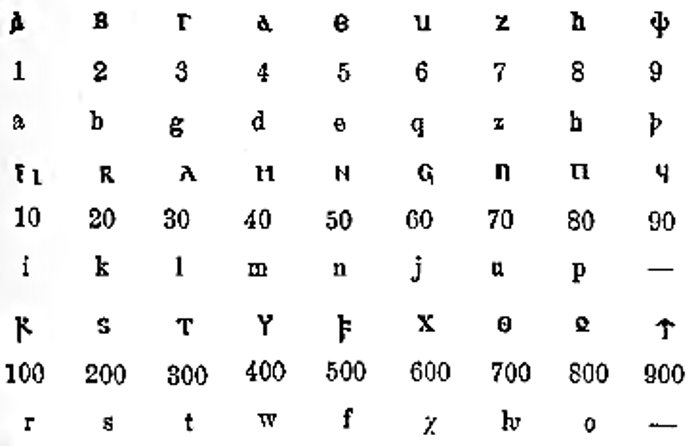
Aba, m. (108, n. 1), husband, man;
Lu. II, 36.
Abiaþar, pr. n., Abiathar; dat. -a;
Mk. II, 26. [< Ἀβιάθαρ.]
Abraham (61, n. 3), pr. n., Abraham.
[< Ἀβραάμ.]
af (56, n. 1), prep. w. dat. (217), of,
from, out of, away from, off; Mt.
V, 18. 42. Mk. III, 22. II. Cor.
III, 5. [OE. of, ME. of, off, a, o,
NE. of, off, a- (as in 'adown').]
af-aikan, rv. (179), to deny, curse.
afar, prep. (217), (1) w. dat.: after,
according to; Mk. I, 7. 17. 20. II.
Cor. V, 10. (2) w. acc.: after (only
of time); afar dagans, after sum
days; Mk. II, 1; afar þatei, after
that, when; Mk. I, 14. Skeir. VII, c.
[< af + compar. suff. -ar. OHG.
avar, abur, MHG. aver, aber, NHG.
aber- (in compos.), further, again,
aber, conj., but. Cf. OE. eafora, m.,
posterity, child.]
afar-gaggan, anv. (179, n. 3; 207),
to go after, follow; w. miþ w. dat.;
Mk. V, 37.
af-daubnan, wv. (194), to becum def,
grow dul; II. Cor. III, 14.
af-dôjan (26, a), wv. (187), to tire
out, vex, harass.
af-dumbnan, wv. (194), to becum
dum, hold one's peace; Mk. IV, 39.
af-êtja (56, n. 2), m. (108), voracious
eater, glutton. [-êtja < √ of itan +
suff. -jan-.]
af-gaggan, stv. (179, n. 3; 207), to
go away, depart; w. faírra w. dat.;
Lu. II, 37.
*af-haimeis, adj. (127), away from
home, absent; II. Cor. V, 6. 9.
[-haimeis < haims. Cf. anahaimeis.]
af-hamôn, wv. (190), to take off
clothes, to unclothe; II. Cor. V, 4.
af-hlaþan, stv. (177, n. 1), to lade,
load.
af-ƕapjan, wv. (188), w. acc., to
choke; Mk. IV, 7. 19.
af-ƕapnan, wv. (194), to choke (intr.),
be choked; Mk. V, 13.
af-iddja, prt. of afgaggan.
af-lageins, f. (124), a laying aside,
remission; Mk. I, 4. [< af-lagjan
+ suff. -ei-ni-.]
af-laílôt, prt. of aflêtan.
af-leiþan, stv. (172, n. 1), to go away,
depart; w. af w. dat.; Mk. I, 42;
du w. dat.; Mk. III, 7.
af-lêtan (-leitan; 7, n. 2), rv. (181),
w. acc. of pers. or th., to leav, forsake,
put away (a wife); Mt. V, 24.
31. 32; w. dat. of pers. and acc. of
th., to let off, forgiv; Mt. VI, 12.
14. 15; to let one hav; Mt. V,
40.
af-lifnan (56, ns. 1. 4), wv. (194),
to remain, remain over and abuv;
Skeir. VII, c.
af-linnan, stv. (174, n. 1), to depart.
af-maitan, stv. (179), to cut off; w.
acc. of th.; Mt. V, 30.
af-marzeins, f. (103, n. 1), offense,
deceitfulness; Mk. IV, 19. [< af-marzjan
+ suff. -ei-ni-.]
af-môjan (26), wv. (187), to weary,
fatigue.
af-niman, stv. (170; 175), w. acc.,
to take away, remove; II. Cor. III,
16; and dat.; Mk. IV, 25; or af w.
dat.; Mk. II, 20. 21.
af-satjan, wv. (187), w. acc., to put
away (a wife), divorce; Mt. V, 32.
af-skiuban (56, n. 1), stv. (173, n. 1),
to shuv away, put away, reject.
af-slauþjan, wv. (188), to amaze; in
pass.: to be in despair; II. Cor. IV, 8.
af-slauþnan, wv. (194), to becum beside
one's self, be amazed.
af-standan, stv. (177, n. 3), to fall
away, renounce; w. dat.; II. Cor.
IV, 2.
af-stass, f. (103, n. 3), a standing off,
falling away; afstassais bôkôs, a
writing of divorcement; Mt. V, 31.
[< stem -stassi- < stat-ti-< stat
(< √ of standan +-t) + suff. -ti-.]
af-stôþum, prt. of afstandan.
af-swaggwjan, wv. (188), to make
despondent; afswaggwiþs wisan, to
despair; II. Cor. I, 8 (note).
afta, adv. (213, n. 2), behind. [< af
+ suff. -ta. OE. æft, again, behind.]
aftana, adv. (213, n. 2), from behind;
Mk. V, 27. [< afta + suff. -na. OE.
æftan, ME. æfte, NE. aft; cf. abaft
< a, on, + bi, by, + aft.]
aftarô, adv. (211, n. 1), from behind,
behind. [< af + adv. compar. suff.
-tarô.]
aftra, adv., back, backwards, behind;
Lu. II, 43; again; Mt. V, 33.
[< af + adv. compar. suff. -tra. OE.
æfter, ME. æfter, after, NE. after.]
aftuma, superl. adj. (139), the last.
[< af + superl. suff. -tu-ma-n-.]
aftumists, superl. adj. (139, n. 1), the
last; aftumist haban, to lie, or be,
at the point of deth; Mk. 5, 23.
[< aftuma + superl. suff. -ist-a-.
OE. ME. æftemest, NE. aftermost
(by influence of after and most; s.
aftra and maists).]
aggilus, m. (120, n. 1), angel, messenger;
Lu. II, 9. 10; dat. -au; Lu.
II, 13. 21; acc. -u; Mk. I, 2; pl.
nom. -jus; Lu. II, 15; or -eis; Mk.
I, 13. [< ἄγγελος, messenger, angel.]
aggwiþa, f. (97), anguish; II. Cor. II,
4. [< aggwus + suff. -iþô-.]
*aggwjan, wv. (188), in ga-aggwjan.
[< aggwus.]
aggwus, adj. (68; 131), narrow.
[OE. ange, ME. ang, OHG. engi (ja-stem),
MHG. enge, NHG. enge, eng,
adj. narrow.]
agis, gen. agisis, n. (35; 94), aw,
fear; Mk. IV, 41. Lu. II, 9. II. Cor.
V, 11. [< agan (s. un-agands) +
suff. -is-a-. OE. ege (or i-stem; see
Brgm., II, p. 421, § 132, Rem. 2),
ME. eᵹe, ON. agi > ME. aghe, awe,
NE. aw.]
*agjan, wv. (35), in us-agjan. [< *ags,
awful, fearful, < -agan; s. agis.]
aglait-gastalds (88a, n. 1), adj. (124),
greedy of filthy lucre, greedy. [-gastalds
< ga- + -stalds < √ of
staldan.]
aglaiti, n. (95), lasciviousness, unchastity.
[< *aglaits, adj., lascivious;
cp. agls, adj., indecent.]
aglaiti-waúrdei (88a), f. (113), indecent
language, filthy talk. [< aglaiti-waúrds,
adj.; -waúrds < waúrd.]
-agljan (14, n. 1), wv. (188), to
trubl, in us-a. [< aglus. OE. eglan,
ME. eile, NE. ail.]
aglô, f. (112), tribulation, anguish,
distress; Mk. IV, 17. II. Cor. I, 4.
8. II, 4. IV, 17. [< aglus.]
aglus, adj. (131), difficult, hard.
[< √ of agis + suff. -lu-. OE. egle
(jô-stem), ME. egle, trublsum, <
eglan, ME. eile, NE. ail.]
Agustus, pr. n., Augustus; dat. -au;
Lu. II, 1. [Αὔγουστος.]
ahaks, f. (103, n. 2), duv; Mk. I, 10.
Lu. II, 24.
ahma, m. (108), the Spirit, the Holy
Ghost; Mk. I, 8. 10. 12. 23. 25. 26.
27. II, 8. 11. 29. 30. V, 2. 8. 13.
Lu. II, 26. 27. 40. II. Cor. I, 22.
II, 13. III, 3. 6. 8. 17. 18. IV, 13.
V, 5. [< √ of ahjan, to think, +
suff. -man-.]
ahs, n. (94), ear (of grain); Mk. II,
23. IV, 28. [OE. êar (< *eaur, *eahur,
*ahur), ME. ear, er, NE. ear (of
grain; for ear, the organ of hearing,
s. ausô).]
ahtau, indecl. num. (141), eight; Lu.
II, 21. [OE. eahta, ME. eighte,
NE. eight.]
ahtau-têhund, indecl. num. (143),
eighty; Lu. II, 37.
ahtuda, ord. num. (146), the eighth.
[< aht-au + suff. -u-da-n-. OE.
eahtoða, ME. eighte, NE. eighth.]
aƕa, f. (97), river, stream, water;
Mk. I, 5. [OE. êa (< *au, *ahu,
*ahwu), f., ME. æ, river, water, >
OE. îg, iland, lit. 'belonging to the
water', and in composition: îgland,
ME. iland, NE. iland.]
aibr, n. (94), an offering; Mt. V, 23.
[No doubt a corrupt form for *tibr
= OE. tifer, n., OHG. zebar, victim,
sacrifice; cf. MHG. un-ge-zibere,
un-zifer, NHG. ungeziefer, n., vermin,
prop. 'an animal unfit for a
sacrifice'.]
áigan (áihan), prt.-prs. (203), to
own, hav, possess.—Cpd. faíráihan
(203). [OE. âgan, ME. aghe,
owe, NE. ow.—Prt.: Gothic áihta,
OE. âhte, ME. âhte, ouhte, NE.
ought.]
áiginôn, wv., in ga-aiginôn. [< aigin
(< √ of aigan + suff. -ina-), n.,
property.]
áihts (20, n. 2), f. (103), property,
possession; in pl. goods, things.
[< √ of aigan + suff. -ti-. OHG.
êht, f., property, goods, in compos.
frêht (= Goth. *fra-aihts), gain,
wages; cf. LG. fracht, Du. vracht
> ME. fraht, fraught, cargo, freight,
> frahte, fraughte, to load, pp.
fraught, NE. fraught. Of G. or
Du. origin is the ML. frecta, fretta,
> OF. *freit, fret > ME. freit,
freight (the gh being due to
'fraught'), NE. freight.]
aíƕa-tundi (64), f. (98), brambl-bush,
bush. [< aíƕa = OE. eoh (< *eohu),
m., horse; -tundi < *tindan > the
caus. tandjan, to kindl, OE. tendan,
ME. tende, NE. tind.]
*aikan, rv. (179), in af-aikan.
aíkklêsjô, f. (111), church. [<
ἐκκλησία.]
Aíleisabaíþ (23), pr. n., Elisabeth.
[< Ἐλισάβεθ.]
aílôê (6, n. 1), my God! [< Ἐλωί
< the Hebrew.]
ainaha, weak adj. (132, n. 2), only.
[< ains + suff. -(a)ha-n-.]
ain-falþei, f. (113), simplicity; II.
Cor. I, 12. [< ainfalþs.]
ain-falþs, adj. (148), 'one-fold', singl;
Mt. VI, 22.
ain-ƕarjizuh, prn. (165, n. 1), every
one, each one; Luc. II, 3. II. Cor.
V, 10.
ain-ƕaþaruh, prn. (166), each of
two.
*ainlif (56, n. 1), num. (141), eleven.
[< ains + -lif, left, over. OE. and-,
end-leofan, -leofen, (for ân-leofan,
etc., -leofan being the dat. of-lif),
ME. end-, en-, el-leven, NE. eleven.]
ain(n)ôhun, acc. sg. of ainshun.
ains, num. (140), (I) one, a singl
one, (1) alone; II. Cor. V, 15; (2)
w. a sb., (a) follg.; Mt. V, 18. 36;
(b) preceding; Mt. V, 18. 41; (c)
understood; Mk. IV, 8; (3) w. a
partit. gen. follg.; Mt. V, 19. 29.
30. VI, 29; (4) ains—anþar, the
one, the other; Mt. VI, 24. (II)
indef., one, sum one, an, a, w. a
partit. gen. follg.; Mk. V, 22. (III)
only, alone, (1) w. a sb., (a) prec.;
Skeir. VII, c; (b) follg.; Mk. II, 7.
26; (2) w. a prn. prec.; Mt. V, 46.
[OE. ân, one, ME. on, an, ane, a,
one, o, (shortend when uzed as a
proclitic), one, alone; an, NE. one;
an, a.]
ains-hun, indef. prn. (163, c), only in
negativ sentences, not any one,
none, (1) alone; II. Cor. V, 16; (2)
w. a partit. gen. follg.; Mk. V, 37.
aípiskaúpus, m. (120, n. 1), bishop.
[< ἐπίσκοπος, bishop.]
aípistaúlê, f. (120, n. 3), epistl, letter;
II. Cor. III, 2. 3. [< ἐπιστολή,
message, letter.]
áir, adv. (214, n. 1), erly; Mk. I, 35.
[OE. *âr > the compar. æ̂r; see
áiris.]
áirinôn, wv. (190), to be a messenger,
an ambassador; w. faúr w.
acc.; II. Cor. V, 20. [< áirus.]
áiris, comp. adv. (212), erlier. [<
áir + suff. -is. OE. æ̂r, ME. er,
sooner, erlier, before, NE. ere.]
áiriza, comp. adj. (136), of old time,
living formerly; in pl. uzed substantivly;
Mt. V, 21. 33. [< áir +
suff. -iz-an-. OE. æ̂ror, ME. erer,
former.]
aírþa, f. (97), erth, ground, land;
Mt. V, 18. 35. VI, 10. 19. Mk.
II, 10. IV, 5. 8. 20. 28. 31. Lu.
II, 14. [OE. eorðe, ME. erthe,
NE. erth.]
aírþa-kunds (88a), adj. (124), erthy,
born of the erth.
aírþeins, adj. (124), of erth, erthen;
II. Cor. IV, 7. erthly; II. Cor. V,
1. [< aírþa + suff. -eina-. ME.
eorthen, erthen, NE. erthen.]
áirus (20, n. 2), m. (105), messenger,
ambassador. [OE. âr (of the o-declension),
m., messenger. Cf. OE.
æ̂rende, n., ME. erand, NE. errand.]
aírzeis, adj. (128), astray, led astray.
[OE. yrre, eorre, ME. eorre, irre,
angry, OHG. irri, MHG. NHG. irre,
adj., astray, confused.]
*ais (for which aiz, 78, n. 1; occurs
only onse; Mk. VI, 8), n. (94),
brass, bronz, muney. [OE. âr, f.,
brass, bronz, copper, ME. ôr, NE.
ore.]
aiþei, f. (113), mother; Mk. III, 31.
32. 33. 34. 35. V, 40. Lu. II, 33.
34. 43. 48. 51. [OHG. eidi, eide,
mother.]
aiþs, gen. aiþis, m. (91), oath; Mt.
V, 33. [OE. âð, m., ME. oth, NE.
oath.]
aíþþau (20, 3; 71, n. 1), conj. (218),
or; Mt. V, 17. 18. 36. VI, 31. Mk.
III, 4. 33. IV, 17. 21. 30. Lu. II,
24. II. Cor. I, 13. 17. III, 1;
jabai ...aíþþau, either ... or; Mt. VI,
24; else, otherwise; Mt. VI, 1. [Cf.
OE. oððe, North æththa, or.]
Aiulf, prn. n. (65, n. 1).
aiw, adv. (prop. acc. sing. of aiws,
q. v.), ever, always with ni: never;
Mk. II, 12. 25. III, 29. [OE. â (for
*âw), ME. â, ô, ON. ei > NE. aye.]
aíwaggêljô, f. (112), gospel; Mk. I,
1. 14. 15. [< εὐαγγέλιον.]
aiweins, adj. (124), eternal; Mk. III,
29. II. Cor. IV, 17. 18. V, 1. [<
aiws + suff. -ein-a-.]
aiwiski, n. (95), shame, dishonesty;
II. Cor. IV, 2. [< *aiwisks (in un-aiwisks,
that need not be ashamed).
OE. æ̂wisc, ashamed.]
aiws, m. (91, n. 5), time, life-time,
age, world, eternity; II. Cor. IV, 4;
in aiwins, forever; Mt. VI, 13.—S.
also aiw.
aiz; see ais.
ajukduþs (21, n. 2), f. (103), time,
eternity. [< ajuk- (perhaps < aiws)
+ suff. -du-þ-i-.]
ak, conj. (218), but, for; Mt. V, 17.
39. VI, 13. 18. Mk. I, 45. II, 17.
22. III, 26. 29. IV, 17. 22. V, 19.
26. 39. II. Cor. I, 9. 12. 19. 24.
II, 4. 5. 13. 17. III, 3. 5. 6. 14.
IV, 2. 5. 18. V, 4. 12. 15. Skeir.
VII, a. c. [OE. ME. ac, but.]
Akaïja, pr. n., Achaja; dat. -ai; II.
Cor. I, 1. [< Ἀχαΐα.]
akei, conj. (218), but; II. Cor. I, 9.
III, 15. IV, 8. 9. Skeir. VII, a; yet;
II. Cor. V, 16. [< ak + ei.]
akeits, m. (? 91, n. 2), vinegar. [<
Lt. acêtum, vinegar.]
akran, n. (94), fruit; Mk. IV, 7. 8.
20. 28. 29. [OE. æcern, n., ME.
akern, acorn, NE. acorn.]
akrana-laus, adj. (124), fruitless, unfruitful;
Mk. IV, 19.
akrs, m. (91, n. 1), field. [OE. æcer,
m., field, ME. aker, NE. acre.]
aqizi, f. (98), ax. [OE. æx, eax, f.,
ME. æx, NE. ax.]
alabalstraún (24, n. 5; 46, n. 2),
indecl. sb. n. (120, n. 2), alabaster
box. [< ἀλάβαστρον.]
ala-mans, m. (117, n. 1), all men,
the hole human race. [For ala-, s.
alaþarba; mans is nom. pl. of manna.]
alan, stv. (177), to grow. [OE. alan,
to nurish.]
ala-þarba, adj. (132, n. 2), very poor,
very needy. [ala- stands for alla-
(< alna- < √ of alan + ptc. suff.
-na-), stem of alls, all; þarba, needy,
< √ of þaúrban.]
Albila (54), pr. n., Albila.
alds (73; 74, n. 3), f. (103), age,
generation, life, world. [< √ of
alan + suff. -di-. OE. ieldu (orig.
i-stem), ME. elde, NE. eld (poet.),
age. Cf. alþeis.]
aleina, f. (97), el, cubit; Mt. VI, 27.
[OE. eln, f., ME. (< the inflected
cases) elne, elle, NE. el.]
alêw, n. (119), oliv, oil; Mk. VI, 13.
[< Lt. oleum, oil.]
Alfaius, pr. n., Alpheus; gen. -aus;
Mk. II, 14. III, 18. [< Αλφαῖος.]
alhs, f. (116), templ; Lu. II, 27. 37.
46. [OE. alh, ealh, m., templ.]
alja, (1) conj., than, except, unless;
II. Cor. I, 13. (2) prep. w. dat.
(217), except. [< stem of aljis.]
alja-kuns, adj. (130), foren, strange.
[alja < aljis; kuns < kuni.]
alja-leikôs, adv. (212, n. 2), otherwise.
[From stems of aljis and
-leiks + adv. compar. suff. -ôs.]
aljar, adv. (213, n. 1), elsewhere.
[< stem of aljis + suff. -r.]
aljaþ, adv. (213, n. 1), in another
direction. [< stem of aljis + suff. -þ.]
aljaþrô, adv. (213, n. 1), from elsewhere.
[< stem of aljis + suff. -þrô.]
aljis, adj. (126), other, another; II.
Cor. I, 13. Skeir. VII, b. [OE. elles
(gen. sg. n.), ME. elles, NE. else.]
allaþrô, adv. (213, n. 2), from all
directions, from every quarter; Mk.
I, 45. [< stem of alls + suff. -þrô.]
allis, (1) adv. (215), in general, holely,
at all; ni—allis, not at all. (2)
conj. (218), never at the beginning,
for; Mk. III, 35; for neither, for
not; Mk. IV, 22. [Prop. gen. sg.
n. of alls. OE. ealles, ME. alles,
adv., holely.]
alls, adj. (122, n. 1), all, every, hole,
(1) alone, w. or without the prec.
or follg. art. or dem. prn.; Mt. V,
18. VI, 32. Mk. I, 5. 27. 37. II,
12. IV, 11. 34. V, 20. 40. Lu. II,
3. 19. II. Cor. II, 9. IV, 8. 15. V,
15. 17. 18. (2) w. a pers. prn. prec.
or follg.; II. Cor. II, 3. III, 18. V,
10. (3) w. a poss. prn. follg.; Mk.
V, 26. (4) w. attraction of a rel.
prn. (see 'Explanatory Notes'); Lu.
II, 20. (5) w. a ptc.; Mk. I, 32.
Lu. II, 18. 38. 47. (6) w. a follg.
adj. prec. by the art.; II. Cor. I, 1.
(7) w. an adv. frase; Lu. II, 39.
(8) w. a sb., w. or without the art.;
Mt. VI, 29. Mk. I, 5. 28. 33. 39.
IV, 1. 13. V, 12. 33. Lu. II, 1. 10.
31. 51. II. Cor. I, 1. 3. 4. II, 14.
III, 2. IV, 2; and a poss. prn.; Mt.
V, 29. 30. VI, 22. 23. (9) in gen.
pl. w. a superl.; Mk. IV, 31. 32.
(10) all (sing. n.) w. gen. sg.; Mk.
II, 13; allata þata w. gen. pl.; Mk.
III, 28. [< √ of alan + suff. -la
<-no-; cp. fulls. OE. eall, ME. all,
NE. all.]
all-waldands, m. (115), all-ruling, almighty.
[< all-s + prsp. of waldan.]
-alþan, rv. (179, n. 1), in us-alþan.
[Cp. alþeis.]
alþeis, adj. (128), old; n. pl. þô alþjôna,
(the) old things; II. Cor. V,
17. [Cp. alds; also OE. eald (w.
suff. -do-), ME. ald, old, NE. old.]
Amalaberga, pr. n. (54, n. 2).
Amalafrigda, pr. n. (3, n. 2).
amên, amen, verily; Mt. V, 18. 26.
VI, 2. 5. 13. 16. Mk. III, 28. II.
Cor. I, 20. [< ἀμήν < the Hebrew.]
ams, m. (91, n. 4), shoulder.
an, interr. particl (216), then.
ana, prep. (217), (1) w. dat., (a)
local, in, to, on, upon, over; Mk. I,
45. IV, 5. 16. 20. 38. V, 4. II. Cor.
III, 15; (b) of cause, especially w.
vs. of 'affection', in, for, at, over;
Mk. I, 22. Lu. II, 33. 47. II. Cor.
I, 4; ana þammei, for that; V, 4;
(c) w. vs. of 'knowing, showing',
and the like, on, by, from, in; Mk.
V, 29. Skeir. VII, c; (d) in other
relations, denoting 'inclination, reference',
and the like; Lu. II, 25. 40.
II. Cor. I, 23. IV, 10. (2) w. acc.,
local, on, upon, at, into; Mt. V, 45.
VI, 27. Mk. I, 10. 35. II, 21. III,
10. IV, 21. 26. 31. V, 23. Lu. II,
28. II. Cor. III, 13. [OE. an, ǫn,
ME. on, o, NE. on.]
ana-aukan, rv. (179), to ad, w. ana
w. acc.; Mt. VI, 27.
ana-biudan, stv. (170; 173), to command,
instruct, bid, (1) w. dat. of
pers.; Mk. I, 27. (2) w. acc. of th.;
Mk. I, 44. (3) w. dat. of pers. and
an obj. clause w. ei; Mk. V, 43.
ana-busns (15, n. 1), f. (103); command,
commandment; Mt. V, 19.
[< ana-biudan + suff. -sni- (the
radical d being dropt). OE. bysen,
bisen, ME. bisne, f., NE. (dial.) byzen,
exampl.]
ana-filh, n. (94), commendation;
anafilhis bôkôs, epistls of commendation;
II. Cor. III, 1. [< ana-filhan.]
ana-filhan, stv. (174, n. 1), to hand
down as tradition, commit to, commend,
w. acc. (dir. obj.); II. Cor.
III, 1; and dat. (indir. obj.); II. Cor.
V, 12.
*ana-haimeis, adj. (127), at home,
present; II. Cor. V, 8. 9. [-haimeis
< haims.]
ana-haitan, rv. (170; 179), w. two
accs.; II. Cor. I, 23.
ana-hamôn, w. v. (190), to put on
clothes, to clothe; II. Cor. V, 4.
ana-hneiwan, stv. (172, n. 1), to
bend down, stoop down; Mk. 1, 7.
ana-kaúrjan, w. v. (193) w. acc., to
press upon, overload; II. Cor. II, 5.
anaks, adv., suddenly, at onse; Lu.
II, 13.
ana-kumbjan (54, n. 1), wv. (187),
to lie down, recline, sit at meat;
Mk. II, 15. Skeir. VII, b.
ana-kunnains, f. (103, n. 1), a reading;
II. Cor. III, 14. [< ana-kunnan +
suff. -ai-ni-.]
ana-kunnan, wv. (193) w. acc., to
read; II. Cor. I, 13. III, 2.
ana-qiman, stv. (175, n. 1) w. acc.,
to cum near, approach; Lu. II, 9.
ana-laugniba, adv. (210), secretly, in
secret. [< analaugns + suff. -ba.]
ana-laugns, adj. (130), hidn, secret;
Mk. IV, 22. II. Cor. IV, 2. [< ana
+ -laugns < liugan + suff. -ni-.]
ana-leikô, adv., in like manner; Skeir.
VII, a. [< *analeiks (< ana + -leiks;
s. also galeikô) + suff. -ô; = OHG.
analih (anagilîh), MHG. anelîch,
NHG. ähnlich, adj., like, similar.]
ana-mêljan, w. v. (187), to write
down, enrol for taxation; Lu. II, 5.
-anan (78, n. 4), stv. (177, n. 1), in
us-anan, to breath out, giv up the
ghost. [< √ an, in OE. andian,
to be angry, OHG. andôn, MHG.
anden, NHG. ahnden, to punish.]
ana-nauþjan, wv. (188), w. acc., to
constrain, force, compel; Mt. V, 41.
ana-niujan, wv. (188), to renew; II.
Cor. IV, 16.
ana-praggan (51), rv. (178), to harass,
trubl.
ana-silan, wv. (193), to be silent, be
stil; Mk. IV, 39.
ana-siuns, adj. (130), visibl.
ana-stôdeins, f. (103, n. 1), beginning;
Mk. I, 1. [< ana-stôdjan + suff.
-ei-ni-.]
ana-stôdjan, wv. (188), intr., to begin;
Mk. superscr.
ana-trimpan, stv. (174, n. 1), to tred
upon, press upon.
and, prep. w. acc. (217), local, denoting
'motion over', along (orig.
opposit), to, into, on, in; Mk. I,
28. 39. and driusôn, down a slope;
Mk. V, 13. [Orig. *anda = anda-,
uzed w. sbs. and adjs. only; and-
also w. vs. and advs. OE. ME.
and-, ǫnd-, NE. an- (in answer).]
anda-; s. and.
anda-beit (in B, -bêt in A), n. (94),
reproach; II. Cor. II, 6. [< and-beitan.]
anda-hafts, f. (103), answer, reply;
sentence; II. Cor. I, 9. [-hafts <
hafjan + suff. -ti-.]
anda-nahti, n. (95), the time toward
night, evening; Mk. I, 32. IV, 35.
[nahti < nahts.]
anda-neiþs, adj. (124), contrary;
þata andaneiþô, contrariwise; II.
Cor. II, 7. [-neiþs < neiþ, n., envy,
OE. nîð, m., ME. nið, OHG. nîd,
MHG. nît (nîd-), NHG. neid, m.,
envy.]
anda-nêm (33), n. (94), a receiving.
[< and- (= anda-) niman.]
anda-nêms (33), adj. (130), plezant,
acceptabl. [< and-niman; cp.
prec. w.]
anda-numts (33), f. (103), a receiving,
acceptation. [< and-niman +
suff. -ti-; cp. prec. w.]
anda-sêts (34), adj. (130), abominabl.
[< and- (s. and) sitan, to fear, regard.
Cf. G. entsetzlich, terribl, <
(sich) entsetzen, to be amazed, <
ent-+ setzen, factit. of sitzen, to sit,
+-lich.]
anda-staþjis, m. (92), adversary.
[-staþjis < staþs.]
anda-staua, m. (107), adversary; Mt.
V, 25.
anda-þâhts, (209), adj. (124), vigilant,
cautious. [Prop. an old ptc.
in-to-, < and-þagkjan.]
and-augjô, adv., openly, publicly; Mk.
I, 45. [< and-augi (+ adv. suff.
-ô), n., face; -augi < aug- (in augô)
+ suff. -ja-.]
anda-waúrdi, n. (95), answer; Luc.
II, 47. [waúrdi < -waúrds (in
lausa-waúrds, etc.) < waúrd. OHG.
ant-wurti, n. f., MHG. ant-würte,
-wurt, NHG. antwort, f., answer.]
anda-wleizn, n. (94) or -wleizns, f.
(103), countenance, face; II. Cor.
III, 13. [-wleizn < *wleitan (= OE.
wlîtan, ME. wlite, to look) + (if f.)
suff. -sni-.]
and-bahti, n. (95, n. 1), service,
office, ministry, ministration; II.
Cor. III, 7. 8. 9. IV, 1. V, 18.
[< andbahts.]
and-bahtjan, wv. (187) w. dat. of
pers., to serv, minister; Mk. I, 13.
31; w. acc. of th., to perform, administer;
II. Cor. III, 3. [< andbahts,
andbahti.]
and-bahts, m. (91), servant, minister;
II. Cor. III, 6. officer; Mt. V, 25.
[Perhaps < L. ambactus, servant,
of Celtic origin.]
and-beitan, stv. (172, n. 1), w. acc.,
to rebuke, charge; Mk. I, 25. III,
12; in pass., to be perplext; II.
Cor. IV, 8.
and-bindan, stv. (174) w. acc., to
unbind, loose; Mk. I, 7; to explain;
Mk. IV, 34.
and-bundnan, wv. (194), to becum
loose, loosen.
andeis, m. (92, n. 1), end; Mk. III,
26; und, or in, andi, to the end;
II. Cor. I, 13. III, 13. [OE. ende,
m., ME. ende, end, NE. end.]
and-hafjan, stv. (177, n. 2), w. dat.
of pers., to answer; Mk. III, 33.
and-haitan, rv. (170; 179), to confess,
w. dat. of pers., to confess
(one's self) to, to thank; Lu. II,
38; w. dat. of th., to confess sumthing;
Mk. I, 5.
and-hausjan, wv. (187), to listen to
(and answer favorably), to hear;
pers. pass.; Mt. VI, 7.
and-hôf, prt. of andhafjan.
and-huleins, f. (103, n. 1), uncuvering,
revelation; illumination; Lu.
II, 32. [< and-huljan + suff. -ei-ni-.]
and-huljan, wv. (187), w. acc., to uncuver;
Mk. II, 4; to reveal; Lu. II,
35; pp. andhuliþs, uncuverd, open;
II. Cor. III, 18.
andi-laus (88a, n. 2), adj. (124), endless.
andizuh, conj. (218), otherwise, else.
[< andiz-, perhaps a compar. form
of and, anda-, orig. opposit.]
and-niman, stv. (170; 175), w. acc.,
to take, receiv, partake, accept; Mk.
IV, 20. 36. Skeir. VII, c; in the
prt. to hav receivd, to hav; Mt.
VI, 2, 16; and ana w. acc., to take,
take up in; Lu. II, 28.
Andraías, pr. n. Andrew; Skeir. VII,
a; gen. -ins; Mk. I, 29; acc. -an;
Mk. I, 16. III, 18. [< Ἀνδρέας.]
and-sakan, stv. (177, n. 1), to argue
against, speak against; Lu. II, 34.
and-standan, stv. (177, n. 3), w. dat.,
to stand against, resist; Mt. V, 39.
and-staúrran, wv. (193), to murmur
against.
and-tilôn, wv. (189), to serv, accomodate
one's self to; Skeir. VII, a.
and-þagkjan (gg; 67, n. 1), wv. (209),
prt. -þâhta (5, b), to consider, devise;
w. sik and gen. of th., to recollect,
remember; Skeir. VII, a; so
without sik; Skeir. VII, a.
and-waírþi, n. (95), presence, sight,
face; Mt. VI, 16. II. Cor. II, 17.
III, 18. IV, 2; person; II. Cor. II,
10; in managamma andwaírþja,
before many persons; II. Cor. I, 11.
in andwaírþja w. gen., in the presence
of, before; Mt. V, 24. VI, 1.
Lu. II, 31; faúra a. w. gen., before;
Mk. II, 12. [< and-waírþs.]
and-waírþs, adj. (124), present; II.
Cor. IV, 17. [-waírþs < waírþan.
OE. ǫnd-, and-weard, ME. NE.
-ward.]
Anna, pr. n., Anna; Lu. II, 36. [<
Ἀννα.]
Annas, pr. n., Annas. [< Ἀννας.]
*ans, m. (91, n. 4), beam. [ON. ǫss,
áss (from *ans), beam, pole, >
vindáss, windlass, > ME. windas,
NE. windlass (the l by influence of
windlass, a circuit, < the vb. wind
+-lass, for lace).]
ansteigs, adj. (124), gracious, favorabl.
[< ansts + suff. -eig-a-.]
ansts, f. (102), favor; Lu. II, 52;
grace; Lu. II, 40. II. Cor. I, 2. 12;
joy; II. Cor. I, 24. benefit; II. Cor.
I, 15. [OE. êst (ê is i-uml. of ô <
ǫn for an), m., ME. este, favor,
grace.]
anþar, adj. (122, n. 1; 124, ns. 1. 4;
146), another, second, (1) alone,
with or without the art.; Mt. V,
39. Mk. III, 21. V, 19; ains...
anþar, the one ... the other; Mt.
VI, 24; sum...anþaruþ þan,
sum ... sum; Mk. IV, 5; (2) w. a sb.;
Mk. IV, 36. II. Cor. I, 15. [OE.
ǫ̂ðer (ǫ̂ < ǫn for an), ME. other,
NE. other.]
apaústaúlus, m. (120, n. 1; apaústulus,
13, n. 1), apostl, messenger;
II. Cor. I, 1. [< ἀπόστολος.]
arbaidjan, wv. (187), to work, labor,
toil; Mt. VI, 28. [< arbaiþs.]
arbaiþs, f. (103), work, labor, toil.
[< *arban, to work (vB., 78) +
suff. -di-. OE. earfoð, earfeðe, n.,
ME. earfeð-, labor, pains, trubl,
OHG. arabeit, MHG. arebeit, arbeit,
f., labor, trubl, need, NHG.
arbeit, f., work, labor.]
arbi, n. (95), heritage, inheritance.
[OE. yrfe, ierfe (ie is i-uml. of ea),
n., ME. erfe, OHG. erbi, MHG.
NHG. erbe, n., heritage, inheritance.]
arbi-numja (88a), m. (108), one who
takes an inheritance, an heir.
[-numja < niman +-suff. -jan-.]
arbja, m. (108), heir. [< arb-i +
suff. -jan-.]
arbjô, f. (112), heiress. [< arbi +
suff. -jôn-. OHG. arbeo (-eo <-jo),
erbo, MHG. NHG. erbe, m., heir.]
Ariamirus (61, n. 1), pr. n.
Ariaricus (3, n. 2), pr. n.
arjan, rv. (179, n. 5), to til, plow,
cultivate. [OE. erian, ME. ere, NE.
ear, to plow.]
ark-aggilus (57), m. (105), archangel.
[< ἀρχάγγελος.]
arma-haírtiþa, f. (97), pity, mercy;
Mt. VI, 4. [< armahaírts (+ suff.
-iþô-), merciful, < arms = OE. earm,
ME. arm, OHG. aram, arm, MHG.
NHG. arm, adj. poor, miserabl;
+ -haírts < haírt-ô. Formd after
the Lt. misericors.]
armaiô (22, n. 3), f. (112), mercy,
pity; alms; Mt. VI, 1. 2. 3. [<
arman.]
arman, wv. (192), to show mercy.—Cpd.
ga-a. [< arms, adj.; s. armahaírtiþa.]
arms, m. (101), arm; Lu. II, 28.
[OE. earm, m., ME. arm, NE.
arm.]
arniba, adv. (130, n. 3; 210), surely.
[< *arni- (+ suff. -ba) = OE. *ærne-
> eorn-ost, ME. ernest, NE. ernest.]
arwjô, adv., without cause, freely,
for nought.
asans, f. (103), harvest, harvest time,
summer; Mk. IV, 29. [< √ as =
OE. ær in earnian, ME. arne, erne,
NE. ern.]
Asêr, pr. n., Aser; gen. -is; Lu. II,
36. [< Ἀσήρ.]
Asia, pr. n., f., Asia; dat. -ai; II.
Cor. I, 8.
asilus, m. f. (105), yung ass, ass.
[Lt. asinus (with change of suff.),
OE. esol, m., ass, OHG. esil, MHG.
esel, NHG. esel, m., ass.]
asneis, m. (92), servant, hired man,
hireling; Mk. I, 20. [< asans. OE.
esne, m., servant.]
asts, m. (91), branch, twig; Mk. IV,
32. [OE. *æst (> æstel, m., litl
branch, book-mark), OHG. MHG.
NHG. ast, m., branch, bough.]
at, prep. (217), (I) w. dat., (1) local,
(a) denoting nearness, at, by,
with, about; Mk. II, 2. 14. IV, 1.
V, 11. for (s. haban); Mk. III, 9;
in an abstract sense; Luc. II, 52.
II. Cor. I, 12. 17. II, 1 (the first).
17. V, 8; (b) the point or goal at
which anything arrives, after vs.
of 'cuming, bringing', and the like,
to; Mk. I, 33. 40. II, 3. III, 8. II.
Cor. I, 15. 16. II, 1 (the second).
Skeir. VII, b (the second); (2) temporal,
i. e. 'the time within which';
emfatic w. the dat. abs.; Mk. IV,
6. 35. Lu. II, 2. II. Cor. I, 11.
II, 12. V, 20. Skeir. VII, b (the
first and third). (II) w. acc., only
temporal, at, in; at dulþ, at the
feast; Lu. II, 41. [OE. æt, ME.
NE. at.]
at-augjan, wv. (187), (1) w. refl. acc.
(sik) and dat. of pers., to bring
before the eys, show (one's self to);
Mk. I, 44; (2) w. faúra w. dat.,
to show one's self, appear; II. Cor.
V, 10.
at-baíran, stv. (175), w. acc. of th.,
to bring; Mt. V, 24; to offer; Mk.
I, 44.
at-gaggan, anv. (179, n. 3; 207), to
go to, cum; Mt. V, 24. Mk. II, 18.
20; w. ana w. acc.; Mk. I, 10; du
w. dat.; Mk. V, 15; in w. acc.; Mk.
III, 20; aftana; Mk. V, 27.
at-giban (56, n. 1), stv. (176), (1) w.
acc. (in pass. the nom.), to giv over,
deliver up, deliver, put in prison;
Mk. I, 14; to bring forth; Mk. IV,
29; and in w. acc., to deliver unto;
II. Cor. IV, 11; (2) w. dat. (indir.
obj.) and acc. (dir. obj.), to deliver;
Mt. V, 25; in pass. w. dat. of pers.
(indir. obj.) and an inf. clause (subj.);
Mk. IV, 11.
at-haitan (69, n. 2), rv. (170; 179),
w. acc., to call to one; Mk. III,
13. 23.
Athanaildus (65, n. 1), pr. n.
Athanaricus (3, n. 2), pr. n.
at-iddja, prt. of at-gaggan.
atisk, n. (94) or m. (91; only acc.
sg., atisk, occurs), seed, cornfield;
Mk. II, 23.
at-kunnan, wv. (193), w. dat. of pers.
and acc. of th., to afford, grant,
award, giv.
at-nêƕjan, wv. (188), w. sik, to draw
near, (in prt.) to be at hand; Mk.
I, 15.
at-saíƕan (34, n. 1), stv. (176, n. 1),
w. inf., to take heed; Mt. VI, 1.
at-satjan, wv. (186), w. acc. (understood)
and faúra w. dat. (fraujin),
to present to the Lord; Lu. II, 22.
at-standan, stv. (177, n. 3), to stand
near, cum near; Lu. II, 38.
atta (69, n. 1), m. (108), father; Mk.
I, 20. V, 40. Lu. II, 48. (= God)
Mt. V, 45. 48. VI, 4. 6. 8. 9. 14.
15. 18. 26. 32. Lu. II, 49. II. Cor.
I, 2. 3; forefather, ancestor; Skeir.
VII, d. [OHG. atto.—< the language
of children.]
attaítôk, prt. of attêkan.
attaúhun, prt. of attiuhan.
at-têkan (ei for ê; 7, n. 2), rv. (181),
w. dat.; to tuch; Mk. I, 41. III,
10. V, 27. 28.
Attila, pr. n. (108), prop. 'litl father'.
at-tiuhan, stv. (173), to pul or draw
towards, to bring; s. inn-at-tiuhan.
at-þinsan, stv. (174, n. 1), w. acc.,
to draw towards.
at-wisan, to be present, be at hand;
Mk. IV, 29.
aþþan, conj. (218), always at the
beginning of the sentence, but, moreover;
Mt. V, 22. 28. 34. 44. VI, 16.
Mk. II, 10. 20. III, 29. IV, 15.
II. Cor. I, 6. 13. 18. 21. 23. II, 1.
5. 10. 14. III, 4. 7. 16. 17. 18. IV,
3. 7. V, 5. 8. 11. 18; for; II. Cor.
II, 4. IV, 5; aþþan ik...iþ is,
I (indeed) ... but he; Mk. I, 8.
Audericus (25, n. 2), pr. n.
auftô (24, n. 1; 211, n. 1), adv.,
perhaps, likely, surely; ibai auftô,
lest perhaps; Mk. II, 22. II. Cor.
I, 17. II, 7.
auga-daúrô (88a), n. (110), window,
lit. 'ey-door'. [The pl. f. daúrôns
means door; s. also daúr.]
augjan, wv. (187), to show.—Cpd.
at-au. [< stem auga- (s. prec. w.).
OE. æt-êawan, æt-ŷwan, ME. (at-)ewe,
to show.]
augô, n. (110), ey; Mt. V, 29. 38.
VI, 22. 23. Lu. II, 30. [OE. êage,
n., ME. eᵹe, eye, NE. ey.]
auhjôdus (aúhjôdus?), m. (105), noiz,
tumult; Mk. V, 38. [< aúhjôn +
suff. -ô-dus.]
auhjôn (aúhjôn?), wv. (190), to make
a noiz, cry aloud; Mk. V, 39.
*aúhns, m. (91, n. 2), oven; Mt. VI,
30. [OE. ofen (for the common
orig. of h and f, s. Brgm., I, p. 305
et seq.), m., ME. oven, furnace,
oven, NE. oven.]
aúhsa, m. (108, n. 1), ox. [OE. oxa,
m., ME. oxe, NE. ox.]
aúhuma, superl. adj. (139), w. a
compar. meaning, higher, > aúhumists,
aúhmists (a new superl.; 124;
139, n. 1), highest, chief. [OE.
ŷmest, highest.]
auk, conj. (in our 'Selections' after
the first, or two first closely connected
words of the sentence), for;
Mt. V, 18. 20. 29. 30. 46. VI, 7.
8. 16. 21. 32. Mk. I, 16. II, 15.
III, 10. 21. IV, 28. V, 42. II. Cor.
III, 9. 11. V, 1. Skeir. VII, c; jah
auk, for; II. Cor. V, 4; auk...-uþ
(= uh)-þan, for ... but; II. Cor.
II, 16 (in B). [OE. êac, ME. êk,
êke, also, likewise, NE. eke.]
aukan, rv. (179), to increase.—Cmpds.
ana-, bi-au. [OE. *êacan
(pp. êacen), to increase, > the caus.
ŷcan, *êcan, ME. eke, eche, to increase,
NE. eke (dial.), ech(e)
(Shak.).]
Aúnisimus (9, n. 1), pr. n.
aurahi (98, or aurahjô, 111? aú?
Only dat. pl., aurahjôm, occurs), f.,
tomb; Mk. V, 2. 3. 5.
aurâli (5, a), n. (98), napkin. [< Lt.
orale, napkin.]
Ausila (25, n. 2), pr. n.
ausô, n. (110), ear; Mk. IV, 9. 23.
[OE. êare, ME. êre, n., NE. ear.]
Austrovaldus (25, n. 2), pr. n.
auþeis, adj. (127; or auþs, 130, n. 2),
desert, waste; Mk. I, 35. 45. [ON.
auðr, OHG. ôdi, MHG. œde, NHG.
öde, desert, waste.]
auþida, f. (97), desert; Mk. I, 3. 4.
12. 13. Skeir. VII, d. [< auþeis or
auþs + suff. -idô-.]
awêþi (17, n. 1), n. (95), flock of
sheep. [Perhaps for *aweiþi (7,
n. 4), < *awi; s. awistr. OE. eowde,
n., ME. eowd, flock of sheep.]
awiliuþ (-d), n. (94), thanks; II. Cor.
II, 14. giving of thanks, thanksgiving;
II. Cor. IV, 15.
awiliudôn, wv. (190), to thank, giv
thanks; Skeir. VII, b; w. faúr w.
acc.; II. Cor. I, 11.
awistr (4), n. (94), sheepfold. [<
*awi (OE. eowu, a-stem, f., ME.
ewe, NE. ewe, yu) + suff. -stra.
OE. eowestre, n., sheepfold.]
azêts, adj. (124), easy; compar. azêtizô,
n.; Mk. II, 9.
azgô, f. (112), ashes. [Cf. OE. asce,
f., ME. asche, pl. -en (reg.) and es,
NE. ash, pl. ashes.]
azymus (77), occurs only onse, in gen.
pl. azymê, unlevend bred. [< ἄζυμος,
adj., unlevend, unmixt, azymê being
formd in accordance w. τῶν ἀζύμων,
gen. pl. of the n. adj. uzed substantivly.]
Badi, n. (95), bed; Mk. II, 4. 9. 11.
12. [OE. bed(d), n., ME. NE. bed.]
bagms (48, n. 1), m. (91), tree. [Cf.
OE. bêam, m., tree, ME. beom, bêm,
NE. beam.]
-bahtjan, wv., in and-bahtjan.
bai, num. adj. (140, n. 1), both. [OE.
*bâ (for which beᵹen; cp. my Compar.
Gloss., p. 583), m., bâ, f., ME. bâ,
bô, f. n., NE. bo-, in both.]
Baíaílzaíbul, pr. n. in acc., Beelzebub;
Mk. III, 22. [< Βεελζεβούλ.]
baíran, stv. (175), (1) to carry, bring
(a person); w. at w. dat.; Mk. II,
3; du w. dat.; Mk. I, 32. (a th.)
Mt. V, 23. (2) to bear; bring, bring
forth (a child); Lu. II, 6; w. akran,
fruit; Mk. IV, 8. 28.—Cpds. at-,
ga-, us-b. [OE. beran, ME. bere,
NE. bear.]
baírgan, stv. (174, n. 1), w. dat., to
hide, keep. [OE. beorgan, ME.
berᵹe, to keep, preserv, protect.]
baírhtaba, adv. (210), clearly, brightly.
[< baírhts + suff. -ba.]
baírhtei, f. (113), brightness, clearness;
baírhtein sunjôs, by manifestation
of the truth; II. Cor. IV, 2;
in baírhtein, openly; Mt. VI, 4. 6.
[< baírhts.]
baírhtjan, wv. (187), to make clear,
show.—Cpd. ga-b. [< baírhts.]
baírhts, adj. (124), bright, manifest.
[OE. beorht, byrht, ME. briᵹt, briht,
NE. bright.]
baitrs (20, n. 4), adj. (124), bitter.
[< bait (the √-form of the prt. sg.
of beitan) + suff. -ra-. OE. ME.
NE. bitter < bit-, the √-form of
the prt. pl. and pp.]
bajôþs, adj. (117, n. 1; 140, n. 1),
both. [Cf. bai.]
balgs, m. (100), lether bag, wine-skin,
botl; Mk. II, 22. [Orig. skin
of an animal. OE. bælg, m., a
lethern bag, pouch, belly, ME. bely,
NE. belly.]
balþei, f. (113), boldness; II. Cor.
III, 12. [< *balþs, bold, daring,
= OE. beald, ME. bald, bold, NE.
bold.]
balwjan, wv. (187), w. dat., to torment,
plague; Mk. V, 7. [< *balws,
pernicious, baleful, = OE. bealu,
adj., evil, pernicious, and n. sb.,
evil, sorrow, ME. bale, sb., bali,
adj., NE. bale, misery.]
bandi, f. (96), band, bond. [< bindan.
OE. bend, m. f. n., ME. NE.
bend.]
bandja (32), m. (108), one being
bound, prisoner. [< band-i + suff.
-jan-.]
bandwa, f. (97, n. 1), sign, token.
bansts, m. (101), barn. Mt. VI, 26.
[Cf. OE. bôs (< *bǫns < *bans), n.,
stable, ME. bôs, NE. boose.]
barizeins, adj. (124), of barley;
Skeir. VII, a. d. [< *baris (+ suff.
-eina-), barley, = OE. bere, m. (?),
ME. bere, barley, NE. bar-in barley.]
barn (33), n. (93), child; Mk. V, 39.
40. 41. Lu. II, 12. 16. 17. 27. 40.
Skeir. VII, b. [OE. bearn, barn,
ME. barn, n., child, NE. barn
(Shak.).]
barnilô, n. (110), litl child, sun; Mk.
II, 5. [< barn + suff. -i-lôn-.]
Barþaúlaúmaius (24, n. 5), pr. n.,
Bartholomew; acc. -u; Mk. III, 18.
[< Βαρθολομαῖος.]
batiza, compar. adj. (138), better,
w. dat. of pers. and a subj. clause;
Mt. V, 29. 30. [< *bat-, good, +
compar. suff. -iz-a-n-. OE. bet(e)ra,
ME. betere, bettre, NE. better.]
baþ, prt. of bidjan.
bauains, f. (103, n. 1), dwelling; Mk.
V, 3. II. Cor. V, 2. [< bauan +
suff. -ai-ni-.]
bauan (26), wv. (179, n. 2; 193, n.
1), to dwel, inhabit.—Cpd. ga-b.
[OE. bûan, ME. bue, OHG. bûan,
MHG. bûwen, to dwel, til, plant,
cultivate, NHG. bauen, to build,
cultivate, etc. Its √ is containd
also in NE. bower and-bor, in
neighbor.]
Baúanaírgaís (a by-name of James
and John), Boanerges; Mk. III, 17.
[< Βοανεργές.]
-bauljan (24, n. 1), wv. (187), to
cause to swel, in uf-b. [Cf. OE.
bŷle, f., ME. bile, bule, NE. bile,
boil, tumor.]
baúr (33), m. (101, n. 2), son. [<
baíran. OE. byre (< *buri-), m., son.]
baúrgs, f. (116), town, city; Mt. V,
35. Mk. I, 33. 38. 45. V, 14. Lu.
II, 3. 4. 11. 39. [OE. burh, burg,
f., ME. burgh, borugh, NE. borough.]
baúrgs-waddjus (88a, n. 3), f. (105),
town-wall.
beidan, stv. (172, n. 1), w. gen., to
abide, expect; Lu. II, 25.—Cpd.
us-b. [OE. bîdan, ME. bide, NE.
(a)bide.]
-beistjan, wv. (187, n. 3), to leven,
in ga-b. [< beist, n., leven. < √ of
beitan.]
beitan, stv. (172, n. 1), to bite.—Cpd.
and-b. [OE. bîtan, ME. bite,
NE. bite.]
bêrusjôs (bi-; 7, n. 3), pl. (sing.
*bêruseis; 33), m. (92, n. 2),
parents; Lu. II, 27. 41. [Orig.
perfect ptc. activ, < √ of baíran.]
Bêþlahaim (aí for a in Jo. VII, 42;
concerning the h, s. 61, n. 3), indecl.
pr. n., Bethlehem; Lu. II, 4.
15. [< Βηθλεéμ.]
bi, prep. (217), (I) w. dat., (1) local,
by. Mk. V, 41; (2) in abstr.
relations, by, on; Mt. V, 34. 35.
36. Mk. V, 7; after, according to,
in; Lu. II, 22. 27. 29. 39. 42. II.
Cor. I, 17. IV, 13. V, 16; bi
ufarassau, exceedingly; II. Cor. IV,
17. (II) w. acc., (1) local, against,
on; Mt. V, 39; about; Mk. I, 6.
III, 8. 32. 34. IV, 10. V, 4; (2) in
abstr. relations, about, over, for,
of, concerning; Mt. V, 44. Mk. I,
30. IV, 19. V, 16. 27. 33. Lu. II,
17. 27. 33. 38. II. Cor. I, 8. 11;
against; Mt. V, 23. Mk. III, 6;
because of, at, about; Mt. VI, 28.
Lu. II, 18.—bi sumata, in part;
II. Cor. I, 14. II, 5. [OE. bî, prep.,
bĭ-, be-, pref. ME. bi, by, bi-, be-,
NE. by, be-.]
bi-aukan, rv. (179), to increase; in
pass. w. dat. of pers., to ad to,
giv more; Mk. IV, 24.
bida, f. (97), request, prayer; Lu. II,
37; the pers. for whom the prayer
is made, is exprest by bi w. acc.;
II. Cor. I, 11. [< bidjan. OE. bedu,
f. (ge-bed, n.), ME. bede, OHG.
beta, bita, MHG. bete, bite, NHG.
bitte, f., prayer, request.]
bidjan, stv. (176, n. 5), to pray, ask,
desire, beseech, call on, beg, (1)
abs.; Mt. VI, 5. 6. 7. 9. Mk. I,
35; (2) w. acc. of the pers. addrest;
Mt. V, 42. VI, 8. Mk. I, 40. V, 12.
23; (3) w. du w. dat. of the pers.
addrest; Mt. VI, 6; (4) the pers.
for whom the prayer is made, is
exprest by bi w. acc.; Mt. V, 44;
(5) w. acc. of pers. and a dependent
clause introduced by ei (w. opt.);
Mk. V, 10. 18; or an inf. clause;
Mk. V, 17. II. Cor. II, 8. V, 20.
[OE. biddan, ME. bidde, NE. bid,
to pray, which represents also OE.
bêodan; s. biudan.]
bi-gaírdan, stv. (174, n. 1), to begird,
gird one's self.
bi-gat, bi-gêtun, prt. of bigitan.
bi-gitan, stv. (176, n. 1), to find,
meet with, w. acc.; Mk. V, 37.
Luc. II, 16. 45; w. two accs., the
second being a ptc. in agreement
w. the first; Lu. II, 12. 16 (barn).
46; in pass. w. nom.; Skeir. VII, c;
or two noms. (one being implied);
II. Cor. V, 3.
bi-hlahjan, stv. (177, n. 2), to laf
at, laf to scorn; Mk. V, 40.
bi-leiban (56, n. 1), stv. (172, n. 1),
to remain.
bi-leiþan, stv. (172, n. 1), to leav,
forsake, in pp.; II. Cor. IV, 9.
bi-maitan, rv. (179), w. acc., to circumcise;
Lu. II, 21.
bi-naúhan, prt.-prs. (201); impers.:
bi-nah, it is lawful.
bindan, stv. (174), to bind.—Cpds.
and-, ga-b. [OE. bindan, ME. binde,
NE. bind.]
bi-raubôn, wv. (190), to rob, strip,
despoil.
birusjôs; s. bêrusjôs.
bi-saíƕan (34, n. 1), stv. (176, n. 1),
w. acc., to look round about on;
Mk. III, 34.
bi-sauljan (24, n. 1), wv. (188), to
sully, defile.
bi-saulnan (24, n. 1), wv., to becum
soild, sullied, defiled.
bi-sitan, stv. (176, n. 1), to sit
about or near; only in prsp. uzed
substantivly (115): and allans bisitands
(acc. pl.) G., to 'all dwellers'
of G., i. e. round about G.; Mk.
I, 28.
bi-skeinan, stv. (172, n. 1), w. acc.,
to shine upon, shine round about;
Lu. II, 9.
bi-sunjanê, adv., about, round about,
near; Mk. I, 38. III, 34. [-sunjanê,
for *sundjanê, gen. pl. of the prsp.
of √ es- + suff. -jon- (Feist p. 19);
s. im.]
bi-swaírban, stv. (174, n. 1), to wipe.
bi-swaran, stv. (177, n. 1), to swear
to, to adjure, w. acc. of pers. and
bi w. dat.; Mk. V, 7.
Biþania (9, n. 1), pr. n., Bethany.
bi-þê and bi-þêh (153, n. 2; 154,
n. 2; for -h, s. -uh), (1) adv., after
that, then, afterward; Mt. V, 24.
(2) conj. (218), while, when, as, as
soon as; Mt. VI, 16. Mk. I, 42. II,
15. IV, 10. 17. 29. Lu. II, 15. 21.
22. 39. 42. Skeir. VII, d.
-biudan, stv. (170; 173), to offer.—Cpd.
ana-b. [OE. bêodan, ME. bede,
to offer, command, announce. NE.
bid represents both OE. biddan and
bêodan; s. bidjan.]
biugan, stv. (173, n. 1), to bow,
bend.—Cpd. ga-b. [OE. bûgan (û
for êo in the prs. forms), ME. buge,
bouwe, NE. bow.]
bi-ûhti, n. (95), custom; Lu. II, 27.
42. [< biûhts.]
bi-ûhts (15), adj. (124), accustomd,
wont.
biuþs (74, n. 2), m. (91, n. 2), table.
[Apparently < √ of biudan. OE.
bêod, m., table.]
bi-windan, stv. (174, n. 1), to wind
round, enwrap, swathe, w. acc.;
Lu. II, 7. (biwundans, wrapt) 12.
blandan, rv. (179, n. 1), to blend,
mix. [OE. blandan, blǫndan, to
mix, confused with blendan, to make
blind, to mix, ME. blende, NE.
blend.]
bleiþei, f. (113), mercy; II. Cor. I, 3.
[< bleiþs.]
bleiþs, adj. (130, n. 2), merciful, kind.
[OE. blîðe, happy, glad, frendly,
ME. bliþe, NE. blithe.]
-blêsan, rv. (179, n. 1), to blow, in
uf-b. [OHG. blâsan, MHG. NHG.
blasen, to blow.]
bliggwan (68), stv. (174, n. 1), to
beat, cut, w. acc. and instr. dat.;
Mk. V, 5. [OE. *blêowan (Kluge,
W., bläuen) (> ME. blowe, NE.
blow, a stroke, hit), OHG. bliuwan,
MHG. bliuwe, NHG. bläuen (now
connected with blau, blu), to beat.]
-blindjan, wv. (187), to make blind,
in ga-b. [< blinds.]
-blindnan, wv. (194), to becum blind,
in ga-blindnan. [< blinds.]
blinds, adj. (123), blind. [OE. blind,
ME. blind, NE. blind.]
blôma, m. (108), flower; Mt. VI, 28.
[< √ blô, to bloom, + suff. -man-.
OE. blôma, m., ME. blome, NE.
bloom.]
-blôstreis (69, n. 2), m. (92), wurshipper,
only in guþ-b. [< *blôstra-,
a sacrifice, < blôtan + suff. -stra-.]
blôtan, rv. (179, n. 1), to reverence,
wurship, w. acc. of pers. and instr.
dat.; Lu. II, 37. [OE. blôtan, to
sacrifice.]
blôþ (gen. blôþis; 94), n., blud; Mk.
V, 25. 29. [OE. blôd (w. -d), n.,
ME. blod, n., NE. blud.]
blôþa-rinnands, adj. (prop. prsp.;
133), blud-running. [< stem of
blôþ + prsp. of rinnan.]
bnauan (26), stv. (? 179, n. 2), to
rub. [For bi-n. ON. *bnûa < b-
+ nûa =-nûa in gnûa (later nûa),
to scrape.]
bôka, f. (97), letter; II. Cor. III, 6;
in pl. letters; epistl; anafilhis bôkôs,
letters of commendation; II.
Cor. III, 1. afstassais bôkôs, writing
of divorcement; Mt. V, 31.
[Probably nom. pl. of bôk, n., which,
at a later period, was mistaken for
a nom. sg. f. OE. bôc, n., uzually
f. (pl. bêc, w. i-uml.), ME. bok, NE.
book.]
bôkareis, m. (92), scribe; Mt. V, 20.
Mk. I, 22. II, 6. 16. III, 21. 22.
[OE. ME. bôcere, m., scribe, lit.
'booker'.]
bôtjan, wv. (187), w. acc., to boot,
profit, advantage. ni waíhtai bôtida,
nothing betterd; Mk. V, 26.
[< bôta (= OE. bôt, f., ME. bôte,
advantage, NE. boot, reparation).
OE. bêtan, ME. bête, NE. beet, bete,
to mend, make better.]
brâhta, prt. of briggan.
braidei, f. (113), bredth. [< braiþs.
OE. bræ̂du (the u for orig. î = Goth.
ei), ME. brêde, NE. bredth (the th
being due to sbs. w. orig. th =
Goth.) -þ- of the ful suff. -iþô-.]
*braiþs, braids (74, n. 2), adj. (124),
broad. [OE. brâd, ME. brâd, brôd,
NE. broad.]
brakja (33, n. 1), f. (97, n. 1), strugl.
[Orig. 'breach' (Brgm., II, § 63),
< brikan + suff. -jan-.]
-brannjan (80, n. 1), wv. (187), to
burn (tr.), in in-br. [Caus. of
brinnan (prt. brann). OE. brennan,
bærnan, ME. brenne, NE. burn (tr.).]
briggan (67, n. 2), anv. (174, n. 2;
208), to bring, lead, w. acc. and
in w. dat.; Mt. VI, 13; waírþana
b., to make or count wurthy; II.
Cor. III, 6. [OE. bringan (prt.
brǫ̂hte < *branhte = Goth. brâhta
< *branhta), ME. bringe, NE. bring.]
brikan (33, n. 1), stv. (175, n. 1),
to break.—Cpd. ga-b. [OE. brecan,
ME. breke, NE. break.]
brinnan, stv. (174, n. 1), to burn
(intr.).—Cpd. uf-b. [OE. brinnan,
beornan (< birnan for brinnan),
ME. berne, birne, NE. burn.]
brinnô, f. (112), fever; Mk. I, 31; in
brinnôn ligan, to lie sick of fever;
Mk. I, 30. [< brinnan.]
brôþar, m. (114), brother; Mt. V, 22.
23. 24. Mk. I, 16. 19. III, 17. 31.
32. 33. 34. 35. V, 37. II. Cor. I,
1. 8. [OE. brôðor, ME. broðer,
NE. brother.]
brôþru-lubô (88a, ns. 2. 3; 210, n. 1),
f. (112), brotherly luv.
brûkjan (15), anv. (209), to uze, partake
of, w. gen.; II. Cor. I, 17. III,
12. [< brûks.]
-bruknan, wv. (194), to break off
(intr.), in us-b. [< pp. stem of
brikan.]
brûks (15), adj. (130), useful, profitabl.
[OE. brŷce, ME. briche, useful,
< √ of Goth. *brûkan, OE. brûcan,
ME. brôke, brouke, to uze, enjoy,
NE. brook (v.).]
brunjô, f. (112), brestplate. [OE.
byrne (-yr-for-ry-), f., ME. brynie,
G. brünne, coat of mail.]
brunna, m. (108), wel, spring, issue;
Mk. V, 29. [OE. burna (-ur-for
-ru-), m., ME. burne, bourne, NE.
bourn(e).]
-brunsts (49), f. (103), in ala-brunsts,
holocaust, burnd offering. [<
brinnan + suff. -sti-.]
brusts, f. (116), brest. [OHG. MHG.
NHG. brust, f., brest. Cf. OE. brêost,
n., ME. brest, NE. brest.]
brûþ-faþs (88a, n. 1; gen. -fadis), m.,
(101), bridegroom; Mk. II, 19. 20.
brûþs (15), f. (116), bride, daughter-in-law.
[OE. brŷd, ME. bryde, brid,
NE. bride.]
bugjan, anv. (209), to buy, sel. [OE.
bycᵹan, ME. bugge, bigge, biᵹe,
beye, NE. buy.]
-bundnan, wv. (194), in and-b. [<
pp. stem of bindan.]
-Daban, stv. (177, n. 1), in ga-d.
[OE. *dafan > the verbal adj. dæft,
mild, gentl, ME. deft, daft, NE.
deft, fit, dexterous, neat.]
daddjan (73, n. 1), wv. (187), to
giv suck, suckl. [See Brgm., IV,
§ 707.]
Dagalaiphus (21, n. 1; 52), pr. n.
dags, m. (90), day; Mk. I, 9. 13. II,
20. IV, 35. Lu. II, 1. 6. 21. 22.
36. 44. II. Cor. I, 14; daga jah
daga, day by day, daily; II. Cor.
IV, 16; afar dagans, after (sum)
days; Mk. II, 1; himma daga, to-day;
Mt. VI, 11. 30. Lu. II, 11;
und hina dag, until (unto) this day;
II. Cor. III, 14. 15; naht jah daga,
night and day; Mk. IV, 27; nahtam
jah dagam, th. s.; Mk. V, 5.
Lu. II, 37. [OE. dæg, m., ME.
dæi, dai, day, NE. day.]
Daíkapaúlis, pr. n., Decapolis; dat.
-ein; Mk. V, 20.
dailjan, wv. (188), to deal. Cpd.
ga-d. [< dails. OE. dæ̂lan, ME.
dêle, NE. deal, v.]
dails, f. (103), deal, part, portion,
share. [OE. dæ̂l, m., ME. deal, dêl,
NE. deal, sb.]
dal, n. (? 94, n. 2), dale, valley.
[OE. dæl, n., ME. dale, NE. dale.]
dalaþ, adv. (213, n. 2), downward,
down. [< stem of dal + suff. -þ.]
dalaþa, adv. (213, n. 2), below. [<
dalaþ + suff. -a.]
dalaþrô, adv. (213, n. 2), from beneath.
[< stem of dal + suff. -þrô.]
daubiþa, f. (97), defness; d. haírtins,
hardness of hart; Mk. III, 5.
[< daufs, gen. daub-is, + suff. -iþô-.]
-daubnan, wv. (194, b), to becum
def, in af-d. [< *daufs, gen. daubis.]
-daudjan, wv. (188), in us-d. [<
-dauþs, zelous, in us-dauþs.]
*daufs (56, n. 1), adj. (124, n. 2),
def, hardend. [OE. dêaf, ME. dêf,
NE. def.]
daug, prt.-prs. in 3d pers. sg. prs.
ind. (198), it is fit, it is of use, it
profits. [OE. dêah, inf. dugan,
ME. duᵹe, dowe, NE. do (in the
frase 'that wil do'), prov. E. dow.]
daúhtar, f. (114), daughter; Mk. V,
23. 34. 35. Lu. II, 36. [OE. dohtor,
f., ME. douᵹter, NE. daughter.]
dauns, f. (103, n. 1), odor, savor;
II. Cor. II, 14. 15. 16. [ON. daunn,
m., odor.]
daupeins, f. (103, n. 1), baptism;
Mk. I, 4. [< daupjan + suff. -ei-ni-.]
daupjan, wv. (187), to baptize, (1)
abs.; Mk. I, 4. (2) w. acc. and in
w. dat.; Mk. I, 8. (pass.) Mk. I,
5. 9. [OE. dŷpan (ŷ for ie < êa +
-j = Goth. au + -j), to immerge,
baptize.]
daupjands, m., prop. prsp. of daupjan
(115); sa d., the Baptist.
daúr, n. (94), door, gate; Mk. I, 33.
II, 2. [OE. dor, n., OHG. MHG.
tor, NHG. thor, n., door, gate; s.
also auga-daúrô.]
-daúrsan, prt.-prs. (199), to dare, in
ga-d. [OE. *durran, prs. ind. sg.
dear (= Goth. -dars), ME. dar, der,
NE. dare.]
dauþeins, f. (103, n. 1), the dying;
II. Cor. IV, 10. [< dauþjan + (suff.
-ei-ni), to kil, < dauþs.]
-dauþnan, wv. (194), to die, in ga-d.
[< dauþs.]
dauþs, gen. dauþis, adj. (124), ded;
II. Cor. I, 9. [Prop. an old ptc.
< √ dau (containd in ON. dó, prt.
of deyja (Noreen, § 413), stv., to
die, > ME. deye, NE. die) + suff. -þo-.
OE. dêad, ME. dêd, ded, NE. ded.]
dauþus, m. (105), deth; II. Cor. I, 9.
II, 16. in pl. deths, i. e. dangers of
deth; II. Cor. I, 6. III, 7. IV, 11.
12. [< √ dau (s. dauþs) + suff.
-þu-. OE. dêað (orig. u-stem), m.,
ME. deaþ, deð, NE. deth.]
Daweid, pr. n., David; Mk. II, 25.
gen. -is: Lu. II, 4. 11. [< Δαυΐδ.]
-dêds; s. -dêþs.
deigan, stv. (172, n. 1), to knead.
[< √ dîg, in prt. daig = OE. dâg,
seen in dâg (Goth. daigs), dâh, m.,
ME. dah, dogh, NE. dough.]
-dêþs, -dêds (74, n. 2), f. (103), deed,
only in cpds.; cf. missa-dêþs. [<
√ dê (: dô > OE. dôn, ME. dô,
NE. do) + suff. -þi-. OE. dæ̂d, f.,
ME. dede, NE. deed.]
diabaúlus, diabulus (13, n. 1), m.
(105), devil. [< διάβολος, slanderer,
devil.]
dis-, inseparabl particl prefixt to vs.
(and verbal sbs.), (1) asunder,
apart; (2) uzed intensivly (cf. dis-haban).
[In meaning = Lt. dis-
(> NE. dis- and OE. des-)> NE. de-
(different from de-< Lt. de).]
dis-haban, wv. (192), w. acc., to
constrain (s. dis-); II. Cor. V, 14.
dis-hniupan, wv. (173, n. 1), to break
to pieces.
dis-kreitan, stv. (172, n. 1), to tear
asunder, rend (tr.).
dis-skritnan, wv. (194), to rend
(intr.).
dis-taíran, stv. (175, n. 1), w. acc.,
to tear asunder, burst; Mk. II, 22.
dis-wilwan, stv. (174, n. 1), to plunder
(completely), spoil; Mk. III, 27.
diupei, f. (113), depth, deep. [<
diups.]
diups, adj. (124), deep; Mk. IV, 5.
[OE. dêop, ME. dêp, NE. deep.]
dius, gen. diuzis, n. (94), beast; Mk.
I, 13. [OE. dêor, n., ME. dêr, der,
(wild) animal, NE. deer.]
diwan, stv. (176, n. 2), to die; þata
diwanô, that which is mortal, mortality;
II. Cor. V, 4. [Cp. dauþs.]
-dôjan (26), wv. (187), in af-d.
dômjan, wv. (187), w. acc., to deem,
judge; II. Cor. V, 14. [< dôms,
m., judgment (= OE. dôm, m., ME.
dôm, NE. doom). OE. dêman, ME.
dême, deme, NE. deem.]
-draban, stv. (177, n. 1), in ga-d.
dragan, stv. (177, n. 1), to carry,
load. [OE. dragan, ME. drawe,
draᵹe, NE. draw.]
dragk (32; -ggk; 67, n. 1), n. (94),
drink. [< drigkan, prt. dragk.]
dragkjan, wv. (188), to giv to drink.
[Caus. of drigkan. OE. drencan,
ME. drenche, NE. drench.]
draibjan, wv. (188), w. acc., to trubl;
Mk. V, 35. [Caus. of dreiban. OE.
-dræ̂fan, OHG. MHG. treiben, wv.,
to drive.]
draúhsna (drausna; 62, n. 4), f. (97),
crum, fragment. Skeir. VII, d. [OE.
drosn, ME. drosne, dregs.—?]
draúhtinassus, m. (105), warfare.
[< draúhtinôn + suff. -assu-, to
war, < stem of -draúhts (ga-draúhts,
m., soldier), < √ of driugan
+ suff. -ti-.]
-drausjan, wv. (188), to cause to fall,
in ga-dr. [Caus. of driusan.]
dreiban (-drêbi; 10, n. 5), stv. (172,
n. 1), to drive, in us-dr. [OE.
drîfan, ME. drive, NE. drive.]
drigkan (gg for g; 67, n. 1), (stv.
174, n. 1), to drink, (1) abs.; Mk.
II, 16. (2) w. acc.; Mt. VI, 25. 31.
[OE. drincan, ME. drinke, NE. drink.]
driugan, stv. (173, n. 1), to perform
military service, to war. [OE.
drêogan, ME. drege, dreᵹe, NE.
dree, to endure, suffer.]
driusan, stv. (173, n. 1), to fall, fall
down, w. ana w. acc.; Mk. III, 10;
du w. dat.; Mk. III, 11. V, 33.—Cpd.
ga-d. [OE. drêosan (> drêor
n., gore, blud, > drêorig, gory, sad,
ME. drery, NE. dreary), ME. drese,
to fall, > the NE. frequ. drizl.]
driusô (31), f. (112), slope; Mk. V,
13. [< driusan.]
drôbnan (56, n. 4), wv. (194), to
becum trubld. [< *drôfs = OE.
drôf, trubld, > OE. drêfan, ME.
dreve, to trubl, afflict, = Goth.
drôbjan, to stir up, trubl, OHG.
truoben, MHG. trüeben, NHG. trüben,
to make turbid, to afflict.]
drugkanei (32), f. (113), drunkenness.
[< pp. stem of drigkan.]
-drugkja (32), m., in weindrugkja.
[< drugk- (s. drugkanei) + suff.
-jan-.]
drus, m. (101, ns. 1. 2), fall; Lu. II,
34. [< driusan, pp. drusans. OE.
dryre, m., fall.]
drusun, prt. of driusan.
du, prep. w. dat., (1) local (especially
after vs. of 'saying, speaking', and
the like, denoting the pers. or th.
addrest), to, into, at, on, towards;
Mt. V, 23. VI, 6. 26. Mk. I, 5. 32.
37. 38. 40. 44. 45. II, 5. 8. 10. 11.
13. 14. 16. 17. 18. 24. 25. III, 3.
5. 7. 11. 13. 23. 31. 32. IV, 1. 13.
21. 24. 33. 35. 38. 39. 40. 41. V,
9. 15. 19. 21. 22. 31. 33. 34. 36.
39. 41. Lu. II, 10. 15. 17. 18. 20.
34. 48. 49. 50. II. Cor. I, 18. III,
7. 16. (2) abstr., to, unto, toward,
for; Mt. VI, 6. Mk. I, 4. 44. Lu.
II, 32. 34. II. Cor. I, 18. 20. II, 4.
III, 1. IV, 2. 6. 15. V, 5. Skeir.
VII, a; in; II. Cor. I, 9. 10. III, 4.
(3) w. inf., to; Mt. V, 28. VI, 1.
Mk. II, 9. III, 14. 15. IV, 3. Lu.
II, 6. 21. [In meaning (not in
form) identical w. OE. tô, ME. to,
NE. to, prep. (too, adv.).]
-dûbô (15), in hraiwa-dûbô. [OE.
dûfe, f., ME. douve, NE. duv.]
du-ginnan, stv. (174, n. 1), to begin,
w. inf.; Mk. I, 45. II, 23. IV, 1.
V, 17. 20. II. Cor. III, 1.
du-ƕê, adv., wherefore; Mk. II, 8.
18. IV, 40.
dulþs, f. (116 and n. 1), feast; Lu.
II, 41. 42. [OHG. tuld, MHG.
tuld, dult, f., NHG. (Bavarian)
dult, a fair.]
-dumbnan, wv. (194), in af-d. [<
dumbs.]
dumbs, adj. (124), dum. [OE.
dumb, ME. domb, dum, NE. dum.]
du-stôdjan, wv. (188), to begin; II.
Cor. superscr.
du-þê (duþþê, for duhþê, i. e. du-h-þê,
for du-uh þê; s. 62, n. 3), adv.
and conj. (153, n. 2), therefore;
Mt. VI, 25. Mk. I, 38. II. Cor. I,
20. II, 9. IV, 1; duþê ei w. indic.,
for, because; Lu. II, 4; w. opt.,
that, in order that; Mk. IV, 21.
II. Cor. III, 13.
dwals, adj. (124), foolish; dwala, m.
(107; cp. also 132, n. 2), fool.
[OE. dwal, dwol, dol, ME. dwal,
dul, adj., foolish, NE. dul.]
Ei, (1) conj. (218), (a) before subj.
clauses, that; Mt. V, 29. 30. VI, 7.
II. Cor. I, 18; (b) before obj.
clauses, after vs. of 'perceiving,
knowing, believing, hoping, saying,
commanding', and the like,
that; Mt. V, 17. Mk. I, 44. III, 9
(first). 12. V, 43. II. Cor. I, 10.
13. 23. II, 1 (appositional). V,
1; (d) before final clauses, after
vs. of 'willing, praying', and the
like, that, in order that; Mt. V,
45. VI, 2. 4. 5. 16. 18. Mk. I, 38.
II, 10. III, 2. 6. 9 (second). 10.
14. IV, 12. 21. 22. V, 10. 12. 18.
23. Luc. II, 3. 20. 24. 27. 35. II.
Cor. I, 4. 9. 11. 15. 17. II, 3. 4.
5. 9. 11. III, 13. IV, 4. 7. 10. 11.
15. V, 4. 10. 12. 15. 21; (e) causal,
sinse, for; Mk. I, 27. (2) enclitic,
forming, (a) rel. prns. (157,
158; S., 69): saei, ikei, etc.; (b)
rel. advs.: þarei, þadei, etc.; (c)
conjs.: akei, faúrþizei, etc.; (d)
adv. particls: waitei, wainei, etc.
[Cp. sai.]
Eila (65, n. 1), pr. n.
eils = hails (21, n. 1; 61, n. 1).
eisarn, n. (94), iron. See note to Mk.
V, 4. [OE. îsern, îren, n., ME. iren,
NE. iron. Of Keltic orig.]
eisarneins, adj. (124), of iron, iron;
Mk. V, 3. 4. [< eisarn + suff.
-eina-.]
ei-þan, conj. (218), therefore.
Erelieva (54, n. 2), pr. n.
Ermanaricus (20, n. 3), pr. n.
Ermenberga (20, n. 3), pr. n.
Esaeias, pr. n. m., Esaias; dat. Esaïin;
Mk. I, 2. [< Ἠσαΐας.]
Fadar, m. (114), father. [OE. fæder,
m., ME. fader, NE. father (th for d
may be due to the influence of
ON. faðir and to 'brother', which
hav orig. th).]
fadrein, n. (94, n. 4), paternity,
family. [Prop. adj. uzed as sb., <
fadar + suff. -eina-.]
fadreins, f. (103), lineage, family; Lu.
II, 4. [< fadar + suff. -eini-.]
faginôn (66, n. 1), wv. (190), to rejoice,
w. fram w. dat.; II. Cor. II, 3.
[< a lost adj. (cp. aiginôn). OE.
fæᵹnian (< fæᵹen, adj., glad), ME.
faine, to rejoice, NE. fain (obs.), to
wish, desire.]
fagrs, adj. (124), suitabl, fair. [OE.
fæᵹer, adj., fair, beutiful, ME.
fæiᵹer, fayr, NE. fair.]
fâhan (5 b), rv. (179), to cach, seiz.
[OE. fôn (< fôan < fôhan < fǫnhan
< fanhan; prt. fêng), ME. fon, fong
(by influence of the prt. forms w.
ng), to cach, > OE. ME. fang, NE.
fang (sb.).]
fahêþs (fahêds; acc. faheid; 7, n. 2),
f. (103), joy, gladness; Mk. IV, 16.
Lu. II, 10. II. Cor. II, 3. [< fah-
(cp. fag-inôn) + suff. -êdi-.]
-fahjan, wv. (188), in fulla-f. [<
fah-; s. fahêþs.]
faian (22, n. 2), rv. (? 182, n. 1),
to find fault with. [Cp. fijan.]
fáih (20, n. 2), n., fraud, deception.
-fáihôn, wv. (190), in ga-f. [< fáih.
Cp. OE. fâh, adj., hostil, ge-fâh, m.,
foe, ME. fâ, fô, adj., hostil, (i-) fâ,
(i-) fô, m. (sb.), NE. foe. See also
ga-fáihôn.]
faíhu (53), n. (106), catl, property,
muney. [OE. feoh, n., ME. fê, NE.
fee.]
*faíhu-þraíhns, m. (91, or -þraíhn,
n.; 94?), plenty of catl, riches.
[-þraíhns < þreihan + suff. -na-.]
faír-, inseparabl particl, w. vs. and
verbal derivativs which it intensifies.
[OE. for-, intensiv prefix, ME.
NE. for- (except in forfeit, where it
is) < Lt. foris, out of doors.]
faír-áihan, prt.-prs. (203), to partake.
faír-greipan, stv. (172), w. acc., to
take hold of, take; Mk. V, 41.
faírguni, n. (95), mountain; Mk. III,
13. V, 5. 11. [OE. firgen-, n.,
mountain, in f.-bêam, m., mountain-tree;
f.-holt, n., mountain-wood,
etc.]
-faírƕjan, wv. (188), in wai-f. [<
faírƕus.]
faírƕus, m. (105), the world; II. Cor.
I, 12. [OE. feorh, m. n., ME. vor,
life.]
faírina, f. (97), charge, cause; Mt. V,
32. [< faír- + suff. -inô- (?). OE.
firen (< *firenu), f., crime, sin.]
faírneis, adj. (128), old; Mk. II, 21,
22. [< *faírna- (< *faír-; cp. faírra)
+ suff. -na. OE. fyrn (cp. Siev.,
§ 302), ME. furn, former, OHG. firni,
MHG. virne, NHG. firn, old.]
faírra, adv. (213, n. 2; 217), far, far
off; uzed as prep. w. dat.; Lu. II,
15. 37. [< faír- + suff. -ra. OE.
feor(r), ME. feor, fer, adv. and adj.,
NE. far.]
faírraþrô, adv. (213, n. 2), far from,
afar off; Mk. V, 6. [< faírra +
-þrô.]
faír-weitjan, wv. (187), to look at,
behold stedfastly, fix the eys upon,
w. gen.; II. Cor. IV, 18; w. du w.
dat.; II. Cor. III, 7; in w. acc.; II.
Cor. III, 13.
falþan, rv. (179), to fold. [OE. fealdan,
ME. falde, folde, NE. fold.]
-falþs, adj. (148), -fold, in ain-f.,
fidur-f. [< falþan. OE. -feald, ME.
-fald, -fold, NE. -fold.]
fana, m. (108), a small piece of cloth,
a pach; Mk. II, 21. [OE. fana,
a piece of cloth, banner, ME. fane,
vane, NE. vane, flag.]
Fanuêl, pr. n., Phanuel; gen. -is; Lu.
II, 36. [< Φανουήλ.]
faran, stv. (177, n. 1), to fare, go.
[OE. faran, to go, travel, ME. fare,
NE. fare.]
Fareisaius, m., Farisee; nom. pl.
-eis; Mk. II, 16. 18. 24. III, 6;
gen. pl. -ê; Mt. V, 20. [< Φαρισαῖος.]
fastan, wv. (193), to hold fast, observ,
keep; to fast; Mt. VI, 16. 17.
18. Mk. II, 18. 19. 20.—Cpd. ga-f.
[< *fasts (= OE. fæst, adj., firm,
strong, ME. NE. fast). OE. fæstan,
ME. faste, to fasten, fast, NE. fast
(also fasten, ME. fæstne, OE. fæstnian
< OE. fæst).]
fastubni, n. (95), (1) a keeping, observance.
(2) fasting; Lu. II, 37.
[< fastan + suff. -ubnja-. OE.
fæsten, n., ME. fasten, festen, fasting.]
-faþs, m. (101), master; s. brûþ-,
synagôga-, þûsundi-faþs.
faúr, prep. w. acc. (217), (1) of space,
before, along, by; Mk. I, 16. II, 13.
IV, 4. (2) in abstr. relations, for,
for ... sake, concerning; II. Cor. I, 6. 11.
V, 15. 20.—Occurs also in composition
w. other words. [OE. for,
prep., before, for, ME. NE. for.]
faúra, faúr-, (1) adv. of space and
time, before. (2) prep. w. dat.
(217), (a) of space, before; Mt. VI,
2. Mk. I, 2. V, 21. Lu. II, 22.
II. Cor. V, 10; (b) in abstr. relations,
for, because of; Mk. II, 4.
f. andwaírþja w. gen., before; Mk.
II, 12.—Occurs also in composition
w. other words. [OE. ME. fore,
prep., for, before; cp. faúr.]
faúra-gaggja (67, n. 1), m. (108),
'fore-goer', guvernor, steward. [<
-gaggja < *gaggi < gaggan + suff.
-ja.]
faúra-ga-satjan, wv. (187), w. acc.,
to set before, to present; II. Cor.
IV, 14.
faúr-hâh (5 b), n. (94), curtain. [<
-hâh < hâhan.]
faúrhtei, f. (113), fright, fear; Mk.
V, 42. [< faúrhts. OE. fyrhtu (u
for orig. î), f., ME. frigt, friᵹt, NE.
fright.]
faúrhtjan, wv. (188), to fear, be
afraid; Mk. V, 36. [< faúrhts. OE.
fyrhtan, ME. friᵹte, a-friᵹt, pp.,
NE. fright (poet.), affright.]
faúrhts, adj. (124), fearful; Mk. IV,
40. [OE. forht, timid.]
faúr-lageins, f. (103, n. 1), a laying
before; hlaibôs faúrlageinais, show-bred;
Mk. II, 26. [< faúr-lagjan
+ suff. -ei-ni-.]
faúr-mûljan (15), wv. (188), to bind
up one's mouth, to muzl.
faúrþis, adv., first, beforehand, before;
Mt. V, 24. Mk. III, 27. II.
Cor. I, 15. [< faúr + adverbial
compar. suff. -þis (< -þiza-). OE.
furðor, ME. furðer, NE. further.]
faúrþiz-ei, conj. (218), before; Mt.
VI, 8. Lu. II, 21. faúrþizê (6, n.
4); Lu. II, 26.
*faus, adj. (124, n. 3), few. [OE.
fêa(w-), ME. fêwe (the-we is due
to the inflected forms), NE. few.]
-feinan, wv. (193), in in-f., to be
moved with compassion, to pity;
Mk. I, 41.
fêra (8), f. (97), region, side, part.
[OHG. feara, fiara, side, part.]
fidur- (15, n. 1; 24, n. 2; 141, n. 1),
num. (only in cpds.), four. [<
*fiþur. OE. fyðer-, ME. feðer-,
four; cp. fidwôr.]
fidur-falþs, adj. (148), four-fold.
fidwôr, num. (141), four; Lu. II, 37;
dat. -im; Mk. II, 3. [For *fidwôr(i)z.
OE. fyðer-, ME. feðer-. Cp.
OE. fêower (< *fewur, for *fehwur
= O. Icel. fjogor, fjugur, n., < an
erlier *kwekur-< *kwetur-; cp.
Brugm., III, p. 11), ME. foure,
NE. four. Cp. fidur.]
fidwôr-taíhun, num. (141). [OE.
fêower-tene, ME. fourtene, NE.
fourteen.]
fidwôr tigjus (cp. tigus), num. (142),
forty; Mk. I, 13. Skeir. VII, d
(= ·m·). [OE. fêowertiᵹ, ME.
fowwerrtiᵹ, vourti, NE. forty.]
figgra-gulþ (88a), n. (94), 'finger-gold',
finger-ring.
figgrs, m. (91), finger. [OE. finger,
m., ME. finger, NE. finger.]
fijan (fian; 10, n. 4), wv. (193), to
hate, w. acc.; Mt. V, 43. VI, 24.
[OE. fêon (< *fi(j)ǫn). Cp. fijands.]
fijands (fiands), m. (115), enemy;
Mt. V, 43. 44. [Prop. prsp. of
fijan, uzed as sb. OE. fêond (<
fi(j)ǫnd), m., ME. fênd, NE. fiend.]
filhan, stv. (174, n. 1), to hide, conceal.—Cpd.
ana-f. [OE. feolan
(< *feolhan), to hide, be-feolan, to
commit, ME. fele, to hide, be-fele, to
commit, OHG. bifel(h)an, to commit,
trust, recommend, also to hide,
bury, MHG. bevel(he)n, to trust,
commit, command, NHG. be-fehlen,
to command, commend, commit.]
Filippus, pr. n., Philip; Skeir. VII, a;
acc. -u; Mk. III, 18. [< Φίλιππος.]
-fill, n. (94), skin, hide, in þrûts-fill.
[< Germanic fella- (i. e. fel-la-; -la-
< orig. -no-; cp. Brgm., I, § 67).
OE. fel(l), n., skin, hide, ME. NE.
fel.]
filleins, adj. (124), made of skin,
lethern; Mk. I, 6. [< fill + suff.
-eina-.]
filu, adj. (131, n. 3), much, very;
II. Cor. I, 5; w. a sb. in the gen.;
Mk. III, 7. 8. IV, 1. V, 21. 24; as
adv., much, greatly; Mk. I, 45.
III, 12. V, 10. 23. 38. 43; w. a
compar.: filu mais, much more;
Skeir. VII, d; filaus (gen.) maizô,
(sumthing) much greater; Skeir.
VII, c; und filu mais, much more,
stil more; II. Cor. III, 9. 11; ƕan
filu, how much, how great; Mt.
VI, 23. Mk. III, 8. V, 19. 20.
w. advs.: swa filu, so much; Skeir.
VII, c. swa filu swê, as much as;
Skeir. VII, c. [OE. feolu, feola,
ME. fela, fele, OHG. filu, MHG.
vil(e), NHG. viel, much.]
filusna, f. (97), abundance; Skeir.
VII, c (the first); multitude; Skeir.
VII, b. c (the second). [< filu +
suff. -s-nô-; cp. Brgm. II, p. 141.]
filu-waúrdei, f. (113), much talking;
Mt. VI, 7. [< *filu-waúrds, adj.;
-waúrds < waúrd.]
filu-waúrdjan, wv. (188), to uze
many words, to speak much; Mt.
VI, 7. [< *filuwaúrds; s. prec.
word.]
fimf, num. (141), five; Skeir. VII, b;
fimf-taíhun (141), fifteen. fimf
tigjus (142), fifty. fimf þûsundjôs
waírê, five thousand (of) men;
Skeir. VII, b. [OE. fîf (< *fimf),
ME. fif, vive, NE. five.—OE. fîftene,
-tyne, ME. fiftene, NE. fifteen.—OE.
fîftiᵹ, ME. fifti, NE. fifty.]
fimfta-taíhunda, ord. num. (146),
the fifteenth. [OE. fîftêoða (<
fîfta-têoða, -têogeða), the fifteenth.]
finþan, stv. (174, n. 1), to find, find
out, know, w. acc.; Mk. V, 43.
[OE. findan, ME. finde, NE. find.]
fiskja, m. (107), fisher; Mk. I, 16.
[< fisks + suff. -jan-.]
fiskôn, wv. (190), to fish. [< fisks.]
fisks, m. (91), fish; Skeir. VII, a. b. c. d.
[OE. fisc, m., ME. fiss, fish, NE.
fish.]
fitan, stv. (? 176, n. 1), to travail
(in birth), to bear (children).
flôdus, f. (? 105, b), flud. [< √ flô
(also seen in OE. flôwan, ME.
flowe, NE. flow) + suff. -du-. OE.
flôd, m., ME. flôd, flod, NE. flud.]
flôkan, rv. (179 and n. 4), to lament,
bewail. [OS. -flôkan (stv.) in far-flôkan,
to curse, OHG. (far-)fluohhôn
(wv., but pp. farfluahhan),
MHG. (ver-)fluochen, NHG. (ver-)fluchen
(wv.), to curse.]
fôdeins, f. (103, n. 1), food; Mt. VI,
25. [< fôdjan + suff. -ei-ni-.]
fôdjan, wv. (188), to feed, nurish,
bring up, w. acc.; Mt. VI, 26.
Skeir. VII, d. [OE. fêdan (< *fôdian),
ME. fede, NE. feed.]
fôn (12, n. 3), n. (118), gen. funins,
dat. funin, fire; Mt. V, 22. [< √
fû (Goth. ô for û) + suff. -na,
-n-an-. In West-Germanic the suff.
-r-is added. OE. fŷr (< fû-ir),
ME. fir, NE. fire.]
fôtu-baúrd (88a), n. (94), foot-board,
foot-stool; Mt. V. 35. [< fôtus +
baúrd = OE. bord, n., board, shield,
table, ME. bord, NE. board.]
fôtus, m. (105), foot; Mt. V, 35.
Mk. V, 4. 22. [Stem fôtu-, orig.
fôt- (consonantal stem). OE. fôt,
pl., fêt, m., ME. fôt, fot, pl. fêt,
NE. foot.]
fra-, an inseparabl particl uzed w.
vbs. and verbal nouns. It chiefly
signifies 'separation, destruction,
loss, change', and the like. [A
variant of faír-.]
fra-gaf, prt. of fra-giban.
fra-giban (56, n. 1), stv. (176), w.
acc. of th. (dir. obj.) and dat. of
pers. (indir. obj.), to forgiv; II.
Cor. II, 7. 10; to giv, grant; Skeir.
VII, b. [OE. for-giefan, ME. forgive,
NE. forgiv.]
fra-gifts (56, n. 4), f. (103), a giving
away; espousal; Lu. II, 5. [<
fra-giban; s. -gifts.]
fraíhnan, stv. (176, n. 4), to ask, w.
acc. of the pers. askt and gen. of
the th. askt for; Mk. IV, 10; for
the gen. a dir. question; Mk. V, 9;
to ask questions; Lu. II, 46. [OE.
frignan, ON. fregna > ME. freine,
to ask; cp. OHG. frâgên, MHG.
vrâgen, NHG. fragen, to ask.]
fraisan, rv. (179), to tempt; Mk. I,
13. [Cp. OE. frâsian, wv., to
tempt.]
fraistubni, f. (98), temptation; Mt.
VI, 13. [< fraisti- (< fraisan +
suff. -ti-) = ON. freisti, f., temptation;
+ suff. -ubnjô-.]
fra-itan, stv. (176, n. 3), to eat up,
devour, w. acc.; Mk. IV, 4. [OE.
fretan (< *for-etan), to eat up,
devour, ME. frete, to devour, consume,
corrode, NE. fret, to eat
away.]
fraiw, n. (94, n. 1), seed; Mk. IV, 3.
26. 27. 31. [ON. fræ̂ (dat. fræ̂wi),
n., seed.]
fra-kunnan, prt.-prs. (199, n. 1), to
despise, w. dat.; Mt. VI, 24.
fra-qiman, stv. (175, n. 1), to expend,
spend, consume, w. dat.; Mk.
V, 26.
fra-qistjan, wv. (188), to destroy;
Mk. I, 24. II. Cor. IV, 9.
fra-qistnan, wv. (194), to perish;
Mt. V, 29. 30. Mk. II, 22. IV, 38.
II. Cor. II, 15. Skeir. VII, d.
fra-laílôt, prt. of fralêtan.
fra-lêtan (-leitan; 7, n. 2), rv. (181),
w. acc., to let free, dismiss, send
away; Lu. II, 29; to let down; Mk.
II, 4; w. dat. of pers. and an inf.,
to permit, suffer; Mk. I, 34. V, 37;
fralêt (imper.), let be, let alone;
Mk. I, 24.
fra-lêts, m. (91; or -lêt; n.; 94?),
forgivness; Mk. III, 29. [< fra-lêtan.]
fra-liusan, stv. (173, n. 1), to lose.
[OE. for-lêosan, ME. forlêse, NE.
*forleese (s. -liusan), pp. forlorn.]
fra-lusnan, wv. (194), to perish; II.
Cor. II, 15 (gloss). IV, 3.
fra-lusts, f. (103), loss, destruction.
[< fraliusan + suff. -ti-.] [OHG.
vir-lust, MHG. verlust, f., NHG.
verlust, m., loss.]
fram, prep. w. dat. (217), (1) local,
denoting, (a) 'separation', from,
away from; II. Cor. V, 6; (b)
'motion, direction', from; Mk. I, 9.
V, 35. (2) temporal, from, sinse;
Lu. II, 36. II. Cor. V, 16. (3) in
other relations, (a) after vs. of
'hearing, knowing, receiving, lerning',
of, from, about; Mk. III, 21;
(b) of 'cause or motiv', from; II.
Cor. II, 3; (c) denoting the 'source'
whense anything cums, from; Lu.
II, 1. II. Cor. I, 2. on the part of,
of; Mt. VI, 1; (d) concerning, on
behalf, for; Mk. I, 44. Lu. II, 24.
II. Cor. V, 12; (e) w. a pass. v., of,
by; Mt. VI, 2. Mk. I, 5. 9. 13. II,
3. Lu. II, 18. 21. 26. II. Cor. I, 4.
II, 6 (where a pp. may be added).
11. III, 2. 3. V, 4; or an act. v.
w. a pass. meaning; Mk. V, 26. II.
Cor. I, 16.—Occurs also in composition
w. other words. [OE. frǫm,
fram, ME. from, vram, NE. from.]
fram-aldrs, adj. (124), advanced in
age, very old; Lu. II, 36. [-aldrs
< *aldr, n. (= OE. ealdor, n., OHG.
altar, MHG. NHG. alter, n., age),
age, < alan + suff. -dra-.]
framis, compar. adv. (212), further,
onward; Mk. I, 19. [< fram + -is,
the adv. ending of the compar.]
fram-wigis, adv. (214), continually,
ever more, [-wigis is gen. sg. of
wigs.]
fra-slindan, stv. (174, n. 1), to swallow
up; II. Cor. V, 4.
fraþi (74, n. 3), n. (95), mind; II. Cor.
III, 14. IV, 4. [< fraþ- (in fraþjan).]
fraþjan, stv. (177, n. 2), to understand,
know; Mk. IV, 12; be in
right mind; Mk. V, 15; w. dat., to
understand; Lu. II, 50. [Cp. frôþs
(w. ablaut).]
-fraþjan, wv. (185), in fulla-f. [<
-fraþjis.]
-fraþjis, adj. (126), thinking, minded.
[< fraþ- (in fraþjan, stv.) + suff.
-ja-.]
frauja (1, n. 4), m. (108), lord,
master; Mt. V, 33. Mk. I, 3. II, 28.
V, 19. Lu. II, 29. II. Cor. I, 2. 3.
III, 17. IV, 5. [OE. frêa (for
*frêa(j)a), m., lord (especially Christ,
God), OHG. frô, MHG. vrô, lord,
king, God, NHG. frohn- (< OHG.
frôno, gen. pl.) in cpds.]
fraujinôn, wv. (190), to be lord, be
king, rule over; Lu. II, 29; w. dat.;
II. Cor. I, 24. [< frauja.]
fraujinônds, m. (115), ruler. [Prop.
prsp. of fraujinôn.]
fra-waírþan, stv. (174, n. 1), to go
to ruin, to corrupt (intr.).
fra-wardjan, wv. (188), to ruin, corrupt,
w. acc. (exprest or understood);
Mt. VI, 19. 20; to disfigure;
Mt. VI, 16; in pass. to perish; II.
Cor. IV, 16.
fra-waúrhts, adj. (124), evil-working,
sinful; (in our 'Selections') uzed as
m. sb., sinner; Mk. II, 15. 16. 17.
[Prop. pp. of fra-waúrkjan.]
fra-waúrhts, f. (103), sin; Mk. I, 4.
5. II, 5. 7. 9. III, 28. 29. IV, 12.
II. Cor. V, 21. [< fra-waúrkjan,
to work il, do evil, sin, + suff. -ti-.
OE. -wyrht (< *wurhti-), f., ME.
-wurht, deed, work.]
fra-weitan, stv. (172. n. 1; 197, n. 1),
to avenge, revenge.
fra-weitands, m. (115), revenger.
[Prop. prsp. of fra-weitan.]
frêhun, prt. of fraíhnan.
freidjan, wv. (188), to spare, w. gen.;
II. Cor. I, 23. [OHG. frîten, to luv,
foster, protect, > frît-in frîthof,
MHG. vrîthof, churchyard, cognate
with vride, enclosure, > NHG. friedhof,
m., churchyard, graveyard.
Cp. friaþwa, -friþôn.]
frei-hals (88a), m. (91, n. 4), liberty,
freedom; II. Cor. III, 17. [< freis
+ hals. OE. frêols (< *frêoheals <
*frîoheals, for *frijo-hals), liberty,
freedom, lit. the state of having a
free neck.]
freis, adj. (126, n. 2), free. [OE. frêo
(< frîo, *frijo), ME. frê, NE. free.—See
also friaþwa.]
frêtun, prt. of fra-itan.
frijaþwa, friaþwa (10, n. 4), f. (97),
luv; II. Cor. II, 4. 8. V, 14. [<
frija-, stem of freis, free, orig. dear,
(cp. Brugm., II, 61) + suff. -þwô.]
frijôn (10, n. 4), wv. (190), to luv,
w. acc.; Mt. V, 43. 44. 46. VI, 24;
w. inf.; Mt. VI, 5. [< stem of freis;
s. also frijaþwa. Cp. OE. frêogan,
to luv and to make free, ME. freoie,
to 'free', MHG. (prop. LG., Kl. W.)
vrîen, NHG. freien, to woo, marry.]
frijôndi, f. (98), a female frend. [<
frijônds.]
frijônds, m. (115), frend; Mt. V, 47.
[Prop. prsp. of frijôn. OE. frêond
(< fri(j)ǫnd), ME. frend, NE. frend.]
-fri-sahtjan, wv. (188), to make an
image, in ga-f. [< fri-sahts.]
-fri-sahtnan, wv. (194, n. 1), to be
formd, in ga-f. [< frisahts.]
fri-sahts, f. (103), image, exampl,
ridl; II. Cor. III, 18. IV, 4. [< fri-
(allied to faír-?) + -sahts (= OE.
saht, sæht, f., ME. sahte, sæhte,
reconciliation, peace) < sakan + suff.
-ti-.]
-friþôn, wv. (190), in ga-f. [< *friþus
(= OE. frioðu-< friðu-, m., later
frið, n., ME. frið, peace, luv, protection,
= G. friede, m., peace), <
√ fri (cp. friaþwa) + suff. -þ-. OE.
friðian, to make peace, treat kindly,
protect, ME. friðie, to keep in peace,
preserv. Cp. freidjan.]
frius, n. (94; or m., 91?), frost, cold.
[< *friusan = OE. frêosan, ME.
frêse, NE. freez.]
frôdei (74, n. 3), f. (113), wisdom,
understanding; Lu. II, 47. 52. [<
frôþs.]
frôþs (35), adj. (124, n. 2), wise,
prudent, skilful. [< fraþjan (prt.
frôþ). OE. frôd, wise.]
frôþun, prt. of fraþjan, stv.
fruma, superl. adj. (139 and n. 1),
the first (146). [< the adv. stem
fru- (cp. OHG. fru-o, MHG. vruo,
NHG. fruh, früh (by influence of the
adj. früh), erly), + suff. -ma-n-.
Cp. frum, n. (or frums, m.?), and
OE. fruma, m., ME. frume, frome,
beginning.]
fruma-baúr (88a), m. (101, n. 2), a
first-born; Lu. II, 7.
frumists, superl. adj. (139 and n. 1),
foremost, first (146); frumist, adv.
(212, n. 3), first. [< fruma + suff.
-ista-.]
fugls, m. (91), fowl, bird; Mk. IV, 4.
32. [OE. fugol, m., ME. foᵹel, fowel,
NE. fowl.]
fulgins (66, n. 1), adj. (124), hidn;
Mk. IV, 22. [< the stem of the pp.
of filhan.]
fulhsni, n. (95), that which is hidn,
a secret; Mt. VI, 4. 6. 18. [< filhan
+ suff. -snja- < -sni- + -ja-. ON.
fylsne, fylgsne, a hiding-place.]
fulla-fahjan, wv. (188), to please fully,
to satisfy, w. acc.; Skeir. VII, d.
fulla-fraþjan, wv. (185), to be fully
in right mind, be sober; II. Cor.
V, 13.
fulla-tôjis (88a), adj. (126), perfect;
Mt. V, 48.
fulla-weisjan, wv. (188), to inform
fully, to persuade, w. acc.; II. Cor.
V, 11. [< fullaweis < stem of fulls
+ -weis (s. un-weis).]
fulleiþ(s), f. (? 103, n. 2), fulness;
Mk. IV, 28.—Cpds. ga-, us-f. [<
fulljan + suff. -þi (for -ei-, cp. vB.,
79). OE. fylleð, f. (?), fulness.]
fulljan, wv. (188), to fil, fulfil.—Cpds.
ga-, us-f. [< fulls.]
fullnan, fulnan (80), wv. (195), to
becum ful, to fil (intr.), w. gen.;
Lu. II, 40.—Cpds. ga-, us-f. [<
fulls.]
fullô, f. (112), fulnes; Mk. II, 21. [<
fulls.]
fulls, adj. (122, n. 1), ful. [< an old
pp. in-no-, fulla- < ful-no-. OE.
ME. full, NE. ful.]
fûls (15), adj. (124), foul. [OE. fûl,
ME. foul, NE. foul.]
funins; s. fôn.
Ga-, inseparabl particl prefixt to vs.,
sbs., adjs., and advs. For its
various meanings, s. my 'Comparativ
Glossary', p. 113, or 'First
Germanic Bible', p. 343. [OE. ge-,
ME. ᵹe-, i- (in handiwork), e- (in
enuf).]
ga-aggwjan, wv. (188), to constrain,
distress; II. Cor. IV, 8.
ga-aiginôn, wv. (190), to take possession
of, get an advantage of;
II. Cor. II, 11.
ga-arman, wv. (192), to hav pity
on, to pity, w. acc.; Mk. V, 19; in
pass., to be pitied, receiv mercy;
II. Cor. IV, 1.
ga-baíran, stv. (175), w. acc., to
bring together, compare; Mk. IV,
30; to bear (a child); Lu. II, 7; in
pass. the nom.; Lu. II, 11.
ga-baírhtjan, wv. (188), to make
bright or clear, to manifest, show,
w. acc.; II. Cor. II, 14; in pass.
the nom.; Mk. IV, 22.
ga-bar, prt. of gabaíran.
ga-bauan (26), wv. (179, n. 2; 193,
n. 1), to dwel; Mk. IV, 32.
ga-baúr, m. (91, n. 4), a festiv meal.
[Lit. that which is brought together,
< ga-baíran, to bring together.]
ga-baúrþs, f. (103), birth. [< ga-baíran,
to bear, + suff. -þi-. OE.
ge-byrd, f., ON. burðr > ME. burth,
birth, burþ, NE. birth.]
gabei (34), f. (113), riches; Mk. IV,
19. [< giban.]
ga-beistjan, wv. (187, n. 3), to levn.
gabigs, gabeigs (17, n. 3), adj.
(124), rich. [< giban + suff. -i-ga-,
-ei-ga-.]
ga-binda (32), f. (97), band, bond.
[< ga-bindan.]
ga-bindan, stv. (174), to bind, w.
acc.; Mk. III, 27. V, 4 (gloss); and
instr. dat.; Mk. V, 3; in pass. w.
a subj. nom.; Mk. V, 4.
ga-biugan, stv. (173, n. 1), to bow,
bend; Mk. V, 4 (s. note).
ga-blindjan, wv. (187), w. acc.; to
make blind, to blind, w. acc.; II.
Cor. IV, 4.
ga-blindnan, wv. (194), to becum
blind; II. Cor. III, 14 (gloss in A).
ga-brak, prt. of gabrikan.
Gabriêl (6), pr. n., Gabriel. [<
Γαβριήλ.]
ga-brikan (33, n. 1), stv. (175, n. 1),
w. acc., to break; Mk. V, 4.
ga-bruka (33, n. 1), f. (97), a broken
bit, fragment; Skeir. VII, d. [<
ga-brikan.]
ga-bundi (32), f. (98), bond. [<
ga-bindan.]
ga-daban, stv. (177, n. 1), to becum,
fit, befall, happen.
ga-daila, m. (108), partaker; II. Cor.
I, 7. [< *ga-dails, adj., partaking;
-dails < sb. dails.]
ga-dailjan, wv. (188), to divide, separate,
w. acc. (in pass. the nom.);
Mk. III, 26; w. wiþra w. acc.; Mk.
III, 24. 25.
ga-daúrsan, prt.-prs. (199), to dare.
ga-dauþnan, wv. (194), to die; Mk.
V, 39.
Gaddarênus, pr. n. [< Γαδαρηνός.]
*ga-dôfs (56, n. 1), adj. (130, n. 2),
becuming, fit. [< ga-daban (prt.
gadôf). OE. ge-dêfe, adj.; suitabl,
fit. See also -daban.]
ga-draban, stv. (177, n. 1), to hew
out.
ga-draus, prt. of gadriusan.
ga-drausjan, wv. (188), w. acc., to
thrust down, cast down; pp.
gadrausiþs; II. Cor. IV, 9.
ga-driusan, stv. (173, n. 1), to fall,
w. ana (upon) w. dat.; Mk. IV, 5;
du (at) w. dat.; Mk. V, 22; faúr
wig, by the way side; Mk. IV, 4;
in w. acc., into, among, on; Mk.
IV, 7. 8; so in a pass. sense, to be
cast; Mt. V, 29. 30.
gaf, prt. of giban.
ga-fâhs (5 b), m. (91), a cach, haul.
[< ga-fâhan.]
ga-fáihôn, wv. (190), to defraud;
II. Cor. II, 11. [< *gafáihs adj.,
deceitful, hostil, < ga + -fáihs (=
OE. fâh, adj., hostil; ge-fâh, m.)
< fáih; s. also -fáihôn.]
ga-fastan, wv. (193), to hold fast,
keep; Lu. II, 19. 51.
ga-fáurs, adj. (130), sober, wel behaved.
ga-fraíhnan, stv. (176, n. 4), to find
out by inquiry, w. an obj. clause;
Mk. II, 1.
ga-frêhun, prt. of gafraíhnan.
ga-frisahtjan, wv. (188), to make an
image, engrave; II. Cor. III, 7.
ga-frisahtnan, wv. (194, n. 1), to be
formd.
ga-friþôn, wv. (190), to make peace,
reconcile, w. dat. of the pers. to
whom one is reconciled, and acc.
of the pers. reconciled; II. Cor. V,
18. 19.
ga-friþôns, f. (103, n. 1), reconciliation;
II. Cor. V, 18. 19. [< ga-friþôn.]
ga-fulljan, wv. (188), to fil, w. acc.,
the th. w. which anything is fild,
occurs in the gen., Skeir. VII, d.
ga-fullnan, wv. (194), to becum ful,
to fil (intr.), fil up (intr.); hense to
be fild; Mk. IV, 37.
ga-gaggan, anv. (179, n. 3; 207),
to cum together, gather together;
so w. the refl. sik; Mk. III, 20.
ga-ga-waírþnan, wv. (194, n. 1), w.
dat., to reconcile one's self to, be
reconciled to; II. Cor. V, 20. [<
*ga-waírþs; s. gawaírþi.]
gaggan, anv. (179, n. 3; 207), to
go, go one's way, walk, cum; Mk.
II, 9. III, 6. V, 42; w. inf.; Mt. V,
24. Mk. I, 44; w. afar w. dat. (to
go after, follow); Mk. II, 14. 15.
V, 24; du w. dat.; Mk. I, 38. 45.
II, 11. 13. V, 19; in w. dat.; II.
Cor. IV, 2; or acc.; Mt. VI, 6. Mk.
V, 34; miþ w. dat.; Mt. V, 41. VI,
6. Lu. II, 51; þaírh w. acc.; II.
Cor. V, 7; a final clause; Lu. II, 3.—Cpds.
af-, afar-, at-, du-at-,
inn-at-, ga-, þaírh-, us-g. [OE.
gǫngan, gangan, ME. gange, NE.
(Sc.) gang.]
ga-grêfts, f. (103), decree; Lu. II, 1.
[-grêfts < √ grêf (+ suff. -ti-) seen
in OHG. grâvo, MHG. grâve, NHG.
graf, m., erl, count.]
ga-gudei, f. (113, n. 2), piety, godliness.
[< gaguþs, adj., godly,
pious, < ga- + -guþs < guþ.]
ga-haban, wv. (192), to hav, possess,
hold; to lay hold on; w. acc.; Mk.
III, 21.
ga-hâhjô (5 b), adv., in order, connectedly.
[< *gahâhs, adj., connected,
lit. hanging together, < ga-
+ *-hâhs < hâhan.]
ga-hailjan, wv. (188), to heal, w.
acc. of pers.; Mk. I, 34. III, 10.
ga-hailnan, wv. (194), to becum hole,
be heald; Mk. V, 29.
ga-hait, n. (94), promise; II. Cor. I,
20. [< ga-haitan. OE. ge-hât, n.,
promise, ME. hat, hôt, promise,
OHG. gaheiȥ, m., MHG. geheiȥ, m.,
geheiȥe, n., NHG. geheiss, n., command.]
ga-hardjan (14, n. 1), wv. (197), to
harden.
ga-hausjan, wv. (187), to hear; Mk.
II, 17. IV, 9. 15. Lu. II, 18; w.
acc.; Mk. V, 36. Lu. II, 20 (s.
note); bi w. acc.; Mk. V, 27.
ga-hôrinôn, wv. (190), to whore,
commit adultery with, w. dat.;
Mt. V, 28.
ga-hraineins, f. (103, n. 1), a clenzing;
Mk. I, 44. [< ga-hrainjan +
suff. -ei-ni-.]
ga-hrainjan, wv. (188), to clenz;
Mk. I, 40.
-gâhts (5 b), f. (103), a going, in
cpds. [Stem -gâhti- (for-ganhti-)
< gangan + suff. -ti-.]
ga-hugds (81, n. 1), f. (103), thought,
mind; conscience. [< (*ga-)hugjan
+ suff. -di- (cp. Brgm., I, p. 405).
OE. gehygd, f. n., thought, mind.]
ga-huljan, wv. (187), to cuver, hide,
conceal, w. acc. (in pass. the nom.),
II. Cor. IV, 3.
ga-ƕeilains, f. (103, n. 1), a staying
for a while, rest; II. Cor. II, 13.
[< ga-ƕeilan + suff. -ai-ni-.]
ga-ƕôtjan, wv. (188), to threten,
rebuke, charge, w. dat.; Mk. I, 43.
ga-iddja, prt. of ga-gaggan.
Gaíaínna, m. (108), Gehenna; Mt. V,
22. 29. 30. [< γέεννα.]
gailjan, wv. (187), to make glad,
w. acc.; II. Cor. II, 2. [< *gails,
adj., = OE. gâl, ME. gal, gol, adj.,
proud, wanton, OHG. MHG. geil,
wanton, merry, gay, NHG. geil,
adj., lascivious, lewd, fat.]
Gaina (21, n. 1; 65, n. 1), pr. n.
Gaínnêsaraíþ (23), pr. n., Gennesaret.
[< Γεννησαρέθ.]
gaírda, f. (97), girdl; Mk. I, 6. [<
√ of -gaírdan. ON. gjǫrð, f., girdl,
girth, > ME. gerth, NE. girth.]
-gaírdan, stv. (174, n. 1), to gird, in
bi-g. [Cp. OE. gyrdan, wv., ME.
girde, NE. gird.]
gaírnjan, wv. (188), to yern for,
cuvet, desire, wish; II. Cor. V, 2.
[< -gaírns (= OE. georn, adj.)
(georne, adv.), ME. ᵹern, adj.,
zelous, eager (ᵹerne, adv.), OHG.
MHG. gern, adj., desirous, eager, >
OHG. gernô, MHG. gerne, NHG.
gerne, gern, adv., (gladly, willingly,
eagerly.) OE. geornian, ME. ᵹerne,
NE. yern.]
gairu (cp. 20, n. 2), n. (106, n. 1),
sting.
-gaisjan, wv. (188), in us-g. [ME.
(< Scand.) gâse, NE. gaze. Cp.
aghast for agast for agasted, pp.
of ME. agasten [Sk.] < OE. â- (=
Goth. us-) + gæ̂stan, to terrify, <
a lost sb. gæ̂st < *gâs- (= Goth.
gais-) + suff. -ti-.]
ga-juk, n. (94), that which is joind
in a yoke, a pair; Lu. II, 24.
ga-jukô, f. (112), that which is put
together for the sake of comparison,
hense a comparison, parabl; Mk.
III, 23. IV, 2. 10. 11. 13. 30. 33.
34. [< gajuk.]
ga-jukô, f. (110, n. 3), a female cumpanion.
[< gajuk.]
ga-kannjan, wv. (188), to make
known, w. acc. of pers. and dat. of
th.; Lu. II, 15; to make known
abroad, w. bi w. acc.; Lu. II, 17.
ga-krôtôn (12, n. 1), wv. (190), to
crush, grind.
ga-kunnan, prt.-prs. (199, n. 1), to
acknowledge one's inferiority or
subjection, to subject one's self.
ga-kunnan, wv. (193; 199, 1), to
recognize, know, consider, w. acc.,
Mt. VI, 28. II. Cor. I, 14.
ga-kusts, f. (103), proof, test. [<
ga-kiusan, to prove, test, + suff.
-ti-. -kusts = OE. cyst, f., ME.
cust, choice, quality.]
ga-qêmun, prt. of gaqiman.
ga-qiman, stv. (175, n. 1), to cum
together; Mk. II, 2; w. sik and du
w. dat.; Mk. V, 21.
ga-qiss, adj. (124, n. 1), consenting.
[< ga-qiþan + suff. -ta- (qissa- <
*qiþ-to-).]
ga-qiujan (42), wv. (187), to quicken,
giv life; II. Cor. III, 6.
ga-qiunan (42, n. 3), wv. (194), to
becum alive.
ga-qumþs, f. (103), a cuming together,
assembly, council; Mt. V, 22;
synagog; Mt. VI, 2. 5. [< gaqiman
+ suff. -þi-. -qumþs = OHG.
MHG. kumft, kunft (w. eufonic f
before which m changed to n), a
cuming, arrival, NHG. -kunft (in
cpds.).]
ga-lagjan, wv. (188), to lay, lay
down, w. acc. and in w. dat.; Lu.
II, 7. 12; or acc., to cast into; Mt.
V, 25. VI, 30.
ga-laista, m. (108), follower, cumpanion;
g. waírþan w. dat., to
follow; Mk. I, 36. [< *ga-laists,
adj., following; -laists < the sb.
laists; s. laistjan.]
ga-laiþ, prt. of ga-leiþan.
ga-laubeins (31), f. (103, n. 1), belief,
faith; Mk. II, 5. IV, 40. V, 34. II,
Cor. I, 24. IV, 13. V, 7. [< galaubjan
+ suff. -eini-.]
ga-laubjan (31), wv. (188), to believ,
(1) abs.; Mk. IV, 24. V, 36. II. Cor.
IV, 13. (2) w. in w. dat.; Mk. I,
15.—leitil galaubjands, litl-believing,
of litl faith; Mt. VI, 30.
*ga-laufs (56, n. 1), adj. (124),
precious, valuabl. [Cp. liufs.]
ga-lausjan, wv. (188), to loose, loosen,
w. acc. of th. and af w. dat.; Mk.
V, 4; to deliver, w. acc. of pers. and
us w. dat.; II. Cor. I, 10.
ga-leikan, wv. (193), to please; waíla
g., w. dat., to please, be acceptabl
to; II. Cor. V, 9; or in w. dat., to
take great plezure in, be wel pleased
in; Mk. I, 11.
ga-leikô, adv. (211), like, alike. [<
ga-leiks (= OE. ge-lîc, ME. i-lik, lik,
NE. like, similar) < ga + -leiks
(= OE. -lîc, ME. -lich, -li, NE. -ly)
< leik. OE. ge-lîce, ME. iliche, ylyke,
NE. like.]
ga-leikôn, wv. (190), (1) tr., w. acc.
of th. and ƕê (whereunto), to liken;
Mk. IV, 30. (2) intr., w. dat., to
be like unto, be conformd to; Mt.
VI, 8.
Galeilaia, pr. n., f., Galilee; gen. -as;
Mk. I, 9. 16. 28; dat. -a; Mk. I, 14.
III, 7. Lu. II, 4; acc. -an; Mk. I,
39. Lu. II, 39. [< Γαλιλαία.]
ga-leiþan, stv. (172, n. 1), to go,
cum; Mk. V, 20; w. afar w. dat.;
Mk. I, 20; ana w. acc.; Mk. I, 35;
du w. dat.; Mk. III, 13; faírra w.
dat.; Lu. II, 15; faúr w. acc.; Mk.
II, 13; hindar w. acc.; Mk. V, 17;
in w. acc.; Mk. I, 21. 45. II, 1. 26.
III, 1. 27. IV, 1. V, 12. 13. 38.
Lu. II, 15. II. Cor. I, 16. II, 13;
miþ w. dat.; Mk. V, 24; inn; Mk.
V, 40.
ga-lêsun, prt. of galisan.
ga-lêwjan, wv. (188), w. acc., to
betray; Mk. III, 19.
ga-ligri, n. (95), consummation of
marriage, lit. a lying-together. [<
*ga-ligrs, having the same bed with,
< ga + the sb. ligrs. OE. geligere,
adultery.]
ga-lisan, stv. (176, n. 1), to gather,
gather up; Skeir. VII, d; w. sik and
du w. dat., to gather, congregate
unto; Mk. IV, 1.
ga-liþun, prt. of galeiþan.
ga-liug, n. (94), a lie; g. taujan, to
falsify; II. Cor. IV, 2.
ga-lûkan (15), stv. (173, n. 2), to
shut, close, w. (instr.) dat.; Mt.
VI, 6.
ga-mainduþs, f. (103), communion,
fellowship. [< ga-mains + suff.
-du-þi-.]
ga-mains, adj. (130), common. [OE.
ge-mæ̂ne, ME. (i-) mene, NE. mean.]
*ga-maiþs (74, n. 2), adj. (124),
(bodily) weak, bruised.
ga-man, n. (94; 117, n. 1), fellow-man,
cumpanion, partner, communion.
ga-manwjan, wv. (188), to prepare,
make redy, w. acc.; Mk. I, 2. Skeir.
VII, c; and du w. dat.; II. Cor. V, 5.
ga-marzjan, wv. (188), to offend;
Mk. IV, 17.
ga-maudjan, wv. (188), to remind,
w. acc. of pers. and an inf.; Skeir.
VII, d.
ga-mêleins, f. (103, n. 1), a writing,
the scripture; II. Cor. III, 7. [<
ga-mêljan + suff. -ei-ni-.]
ga-mêljan, wv. (187), to write, (1),
w. dat. of the pers. addrest; II.
Cor. II, 4. (2) the th. writn is indicated
by the acc., to enrol for
taxation, to tax; Lu. II, 1. (3) w.
dat. of pers. and acc. of th.; II. Cor.
II, 3. (4) w. in w. dat.; II. Cor. III,
2; and swê; Mk. I, 2; or swaswê;
Lu. II, 23. (5) w. a final clause
w. duþþê...ei; II. Cor. II, 9; or
ei; II. Cor. II, 3. (6) inn g., to
inscribe; II. Cor. III, 3.—þata
gamêlidô (pp. uzed as sb.), that
which is writn; II. Cor. IV, 13.
ga-môstêdun, prt. of gamôtan.
ga-môtan, prt.-prs. (202), to hav or
find room, hav place; Mk. II, 2.
ga-môtjan, wv. (188), to meet, w.
dat.; Mk. V, 2.
ga-munan, prt.-prs. (200, n. 1), to
mind, remember, w. þatei; Mt. V, 23.
ga-nasjan, wv. (185), to make hole,
to heal, save; Mk. V, 34.
ga-naúha, m. (108), sufficiency, contentment;
Skeir. VII, b. [< ga-naúhan.]
ga-naúhan, prt.-prs. (201), to suffice;
ganah; it is enuf, it is sufficient, w.
dat. of pers.; II. Cor. II, 6.
ga-niman, stv. (170; 175), w. acc.,
to take, take with one; Mk. V, 40;
to receiv; II. Cor. V, 10; to conceiv;
Lu. II, 21 (pass.).
ga-nisan, stv. (176, n. 1), to becum
hole, be heald; Mk. V, 23. 28; to
be saved; II. Cor. II, 15.
ga-nists (34), f. (103), a becuming
hole, recuvery, salvation. [< ga-nisan
+ suff. -ti-.]
ga-niþjis, m. (92), kinsman; Lu. II,
44.
ga-nôhjan, wv. (188), to satisfy, w.
acc. of pers. and (instr.) dat.;
Skeir. VII, b. [< ga-nôhs.]
ga-nôhs, adj. (122, n. 1), enuf. [Cf.
ga-naúhan. OE. ge-nôh, ME. inôh,
inough, inow, NE. enuf.]
ga-raíhtei, f. (113), righteousness;
Mt. V, 20. II. Cor. III, 9. V, 21.
[< garaíhts.]
ga-raíhts, adj. (124), right, righteous,
just; Mt. V, 45. Lu. II, 25.
[OHG. gi-reht, right (not righteous),
MHG. gereht, NHG. gerecht, adj.,
right, righteous.]
*ga-raiþs (-raids; 74, n. 2), adj.
(124), commanded, appointed. [OE.
(ge-)ræ̂de (w. umlaut), ME. rede,
adj., redy, > (or < the Scand.)
ME. (i-) rædi, rædiᵹ, redy, w. suff.
-iᵹ, -i, OE. (ig), NE. redy.]
*ga-raþjan?, stv. (177, n. 2), to
reckon, number.
garda-waldands (88a, n. 2), m. (115),
master of the house. [-waldands
is prsp. of waldan.]
gards, m. (101), house, yard, household,
family; Mk. I, 29. II, 1. 11.
15. 26. III, 20. 25. 27. V, 19. 38.
Lu. II, 4. II. Cor. V, 1. [Properly
an enclosure, with or without a
building; < √ of -gaírdan. OE.
geard, m., enclosure, yard, dwelling,
ME. ᵹerd, ᵹard, yard, garden,
NE. yard (for yard, a mezure
s. gazds).]
ga-rinnan, stv. (174, n. 1), to run
together, cum together, gather together,
w. at w. dat.; Mk. I, 33.
*ga-riuþs (-riuds; 74, n. 2), adj.
(124), honest, honorabl, wel behaved.
[Prop. shamefully blushing;
< √ of rauþs.]
ga-rûni, n. (95), counsel, consultation;
Mk. III, 6. [< ga + rûna extended
by suff. -ja-.]
ga-runs, f. (103, n. 3), a place where
peple run together, street; Mt. VI,
2. [< ga-rinnan + suff. -si-.]
ga-saƕ, prt. of ga-saíƕan.
ga-saíƕan (34, n. 1), stv. (176, n. 1),
to see, behold, w. acc. (sumtimes
understood); Mk. I, 10. 16. 19. II,
5. 12. 14. 16. III, 11. V, 6. 15. 16.
38. Lu. II, 17. 20 (s. note). 48; in
pass., to appear, w. pred. nom.;
Mt. VI, 16. 18; —þô gasaíƕanôna,
the things seen; II. Cor, IV, 18.
ga-sakan, stv. (177, n. 1), to reprove,
ebuke, w. dat.; Mk. IV, 39; in pass.
w. nom.; Skeir. VII, a.
ga-sandjan (74, n. 3), wv. (187), to
unite in sending; hense to accumpany,
w. acc. of pers. and in w. acc.
of place; II. Cor. I, 16.
ga-satjan, wv. (187), to set, place,
w. acc.; namô g. w. dat. (indir.
obj.), to giv a name or surname;
Mk. III, 16 (s. note). 17.
ga-sêƕum, prt. of gasaíƕan.
ga-sibjôn, wv. (190), w. dat., to reconcile
one's self to, be reconciled
to; Mt. V, 24.
ga-siggqan, stv. (174, n. 1), to sink
(said of the sun); Mk. I, 32; w.
(instr.) dat., to sink under, be
swallowd up; II. Cor. II, 7.
ga-sinþja (gasinþa), m. (108), (traveling)
cumpanion, in pl. cumpany (for
the Grk. συνοδία); Lu. II, 44. [<
*ga-sinþs, adj.; -sinþs < the sb.
sinþs. OHG. gi-sindo (for gasindjo),
MHG. gesinde, m., traveling cumpanion,
servant, while OHG. gi-sind,
MHG. gesint(d), OE. ge-sîd (s.
sinþs), m., cumpanion, attendant,
are strong sbs.]
ga-sitan, stv. (176, n. 1), to set one's
self down, sit down, sit, w. in w.
dat.; Mk. IV, 1.
ga-skafts (51, n. 2), f. (103), creation,
creature; II. Cor. V, 17.
ga-skaidnan, wv. (194), to becum
parted, to depart.
ga-skapjan, stv. (177, n. 2), w. acc.,
to shape, make, create; in pass. w.
nom.; Mk. II, 27.
ga-skeirjan, wv. (188), to make clear,
explain, interpret; Mk. V, 41.
ga-slawan, wv. (193), to be silent;
Mk. IV, 39.
ga-smeitan, stv. (172, n. 1), to besmear,
annoint.
ga-sôk, prt. of gasakan.
ga-staldan, rv. (179), to win, gain,
possess.
ga-standan, stv. (177, n. 3), (1) lit.,
to stand, stand stil, stop; w. in w.
dat., to tarry, stay behind; Lu. II,
43. (2) trop., (a) to take position,
rize up, w. ana w. acc.; Mk. III, 26
(the first); to stand; Mk. III, 26
(the second); w. (loc.) dat.; II. Cor.
I, 24; (b) to be restored; Mk. III, 5.
gasti-gôþs (88a), adj. (124), good to
a stranger, hospitabl.
ga-stôjan (26), wv. (186), to judge,
determin, w. acc. and at w. dat.;
II. Cor. II, 1.
ga-stôþ, prt. of gastandan.
gasts, m. (101), stranger. [OE. gæst,
ME. gest, stranger, gest, enemy,
NE. gest.]
ga-suljan, wv. (188), to found,
ground.
ga-swalt, prt. of ga-swiltan.
ga-swikunþjan, wv. (188), to make
known, manifest, w. acc.; Mk. III,
12.
ga-swiltan, stv. (174, n. 1), to die;
Mk. V, 35. II. Cor. V, 15 (the
second); w. faúr w. acc.; II. Cor. V,
15 (three times).
ga-taíhun, prt. of ga-teihan.
ga-taíran, stv. (175, n. 1), to tear,
tear to pieces, break, destroy; Mt.
V, 17. 19; in pass., to be dissolvd;
II. Cor. V, 1; to be destroyd, be
done away; II. Cor. III, 14.
ga-tamjan (33), wv. (187), w. acc.,
to tame; Mk. V, 4.
ga-taujan (26), wv. (187), to do,
make, commit, (1) w. acc.; Mk. II,
25. II. Cor. V, 10 (s. note); astans
g., to shoot forth branches; Mk.
IV, 32; garûni g., to take counsel,
w. bi w. acc.; Mk. III, 6; w. two
accs., to make; Mt. V, 36; and faúr
w. acc.; II. Cor. V, 21; to do. (2)
w. dat. of pers. and ƕan filu; Mk.
V, 19. 20. (3) w. acc. and inf., to
make; Mk. I, 17. Skeir. VII, b. c.
ga-taúra, m. (108), tear, rent; Mk.
II, 21. [< ga-taíran.]
ga-taúrnan, wv. (194), to rend (intr.),
becum void, be done away, be abolisht;
þata gataúrnandô, that which
is transitory or void; II. Cor. III,
7. 11. 13.
ga-taúrþs, f. (103), destruction. [<
ga-taíran + suff. -þi-.]
ga-teihan, stv. (172, n. 1), to tel,
report, announce; w. in w. dat. of
place; Mk. V, 14; w. dat. of pers.
and a clause introduced by ƕan
filu; Mk. V, 19; or, in the pass., an
inf. frase as subj.; Lu. II, 26.
ga-têmiba (33), adv. (103, n. 3;
210), fitly. [< *ga-têms (= OHG.
gi-zâmi, MHG. gezæ̂me, adj., fit,
suitabl) + -ba; < √ of ga-timan.]
ga-timan, stv. (175, n. 1), to suit.
ga-timrjô, f. (112), building; II. Cor.
V, 1. [-timrjô < -timra (w. suff.
-ra-) = OE. timber (w. inorganic
b), n., ME. NE. timber, wood for
building; +-suff. -jôn-.]
ga-trauan (26), wv. (179, n. 2; 193),
to hav confidence, be confident, to
trust; II. Cor. V, 6. 8; w. in w.
dat.; II. Cor. II, 3.
ga-tulgjan, wv. (188), to confirm,
establish; pp. gatulgiþs, firm, stedfast;
II. Cor. I, 6.
gatwô, f. (112), street. [ON. gata
(acc. gǫtu), f., street, > ME. gate,
NE. (Sc.) gate, way, path.]
ga-þaírsan, stv. (174, n. 1), to
wither; Mk. III, 1. 3.
ga-þaúrbs (56, n. 3), adj. (124),
temperate. [< √ of (*ga-)þaúrban.]
ga-þaúrsnan (32), wv. (194), to dry
up, wither away; Mk. IV, 6. V, 29.
ga-þiuþjan, wv. (187), w. acc., to
bless; Skeir. VII, b.
ga-þláihan, rv. (179, n. 1), to cumfort,
console; II. Cor. II, 7; to exhort;
II. Cor. V, 20.
ga-þláihts, f. (103), a pleasing with
kind words, cumfort; consolation;
II. Cor. I, 3. 4. 6. 7. [< ga-þláihan
+ suff. -ti-.]
ga-þlaúhun, prt. pl. of ga-þliuhan.
ga-þliuhan, stv. (173, n. 1), to flee;
Mk. V, 14.
ga-þrafsteins, f. (103, n. 1), cumfort,
consolation; II. Cor. I, 5. [< gaþrafstjan
+ suff. -ei-ni-.]
ga-þrafstjan, wv. (188), to cumfort,
console, w. acc. of pers. and ana
w. dat.; II. Cor. I, 4; or þaírh w.
acc.; II. Cor. I, 4; in pass. the
nom. (exprest or implied), w.
(instr.) dat.; II. Cor. I, 4; or in w.
gen.; II. Cor. I, 6.
ga-þrask (32), n. (94), threshing
floor. [< √ of (*ga-)þriskan.]
ga-þulan, wv. (193), to suffer, endure,
w. acc. and fram w. dat.;
Mk. V, 26.
ga-þwastjan, wv. (188), to confirm,
restore, establish, w. acc. and in w.
acc.; II. Cor. I, 21.
gaumjan, wv. (188), to see, perceiv,
observ, behold, (1) abs.; Mk. IV,
12. (2) w. a clause w. þatei;
Skeir. VII, d.—in pass., to appear,
be seen, w. dat.; Mt. VI, 5. [OHG.
goumen and goumôn, MHG. goumen,
to pay attention to, observ.]
gaunôn, wv. (189), to lament.
gáurjan, to make sorry, to griev, w.
acc.; II. Cor. II, 5 (the second);
also abs., to cause grief; II. Cor.
II, 5 (the first).—sa gáurida (pp.;
134), he who is made sorry, w. us
w. dat.; II. Cor. II, 2. [< gáurs.]
gáurs (24, n. 3), adj. (124), sorry,
sorrowful, sad, grievd; w. in w.
gen.; Mk. III, 5; of a sad countenance;
Mt. VI, 16. [< √ gau, in
gau-n-ôn, to mourn, lament. Cp.
OHG. gôrag (w. suff. -a-ga-), adj.,
wreched.]
ga-waírþi, n. (95, n. 1), peace; Mk.
V, 34. Lu. II, 29. II. Cor. I, 2. [<
*ga-waírþs, adj., taking the same
turn; hense agreeing, < (*ga)-waírþan
(waírþan, orig., to turn) = OE.
geweorðan, to please, agree, OHG.
giwerdan, MHG. gewerden, NHG.
(dial.) gewäede, w. 'lassen', to let
alone.]
ga-waknan (35), wv. (194), to awake,
awaken.
ga-wandjan, wv. (188), to turn,
cause to cum back, (1) intr., w. du
w. dat.; II. Cor. III, 16. (2) tr.,
w. sik, to turn, turn back; Mk. V,
30; to be converted; Mk. IV, 12;
to return; Lu. II, 20; w. in w. acc.;
Lu. II, 39. 45; w. aftra; Lu. II, 43.
ga-wasjan, wv. (187), to clothe, w.
sik, to clothe one's self; Mt. VI, 29;
gawasiþs (pp.), clothed; Mk. V, 15.
II. Cor. V, 3. gawasiþs wisan, to
be clothed, w. (instr.) dat.; Mk. I, 6.
ga-waúrki, n. (95), work, business.
[< ga- + waúrk extended by suff.
-ja-.]
ga-waúrkjan, anv. (209), to work,
make to do; w. acc. of pers. and
du w. inf., to appoint, ordain; Mk.
III, 14.
ga-waúrstwa, m. (108), fellow-worker;
II. Cor. I, 24. [< ga- +
waúrstw extended by suff. -an-.]
gawi, n. (95), region, district, province,
cuntry. [OHG. gewi, gouwi,
MHG. göu, gou, n., NHG. gau, m.,
district.]
ga-widan, stv. (176, n. 1), to join
together.
ga-wigan, stv. (176, n. 2), to shake,
shake together.
ga-wiljis, adj. (126), willing, unanimous.
[-wiljis < wiljan.]
ga-wiss, f. (103), connection, joint.
[< ga-widan, to join together, (s.
-widan) + suff. -ti- (ss < dt).]
ga-wrisqan, stv. (174, n. 1), to produce
fruit.
gazds, m. (91), sting. [OE. gierd
(stem geardjâ-< gardjâ-, while
gazds is an a-stem), gird, f., ME.
yerde, twig, rod, NE. yard.]
-geisnan, wv. (194), in us-g., to becum
amazed. [Cp. -gaisjan.]
Gelimêr, pr. n. (6, n. 2).
giba, f. (96), gift; Mt. V, 24. II.
Cor. I, 11. [< giban. OE. giefu,
gifu, f., ME. gife, gift; cp. -gifts.]
giban (56, n. 1), stv. (176), to giv,
w. acc. of th.; Mk. IV, 7. 8. Lu.
II, 24; two accs.; II. Cor. I, 22;
w. dat. of pers. and acc. of th.;
Mt. V, 31. VI, 11. II. Cor. V, 12.
18; or two accs.; II. Cor. V, 5; for
the acc. an inf.; Mk. V, 43; w. dat.
of pers.; Mt. V, 42. Mk. II, 26; so
in pass.; Mk. IV, 25.—Cpds. at-,
fra-, us-g. [OE. giefan, gifan, ME.
gyve, NE. giv.]
gibands, m. (115), giver. [Prop.
prsp. of giban.]
gif, imper. of giban.
-gifts (56, n. 4), f., a giving, in fra-g.
[< giban and suff. -ti-. OE. gift,
f. n., ME. NE. gift.]
-gildan, stv. (174, n. 1), to pay, in
cpds. only. [OE. gyldan, geldan,
to pay, requite, ME. ᵹelde, NE.
yield.]
gilstr (75, n. 1), n. (94), tribute.
[< -gildan + suff. -tra (st < dt.)]
gilstra-mêleins, f. (103, n. 1), enrolment
for taxation; Lu. II, 2. [<
stem of gilstr + -mêleins < mêljan
+ suff. -ei-ni-.]
gilþa, f. (97), sickl; Mk. IV, 29.
[Cf. ON. gelda > ME. gelde, NE.
geld.]
-ginnan, stv. (174, n. 1), in du-g.,
to begin. [OE. -ginnan, ME. ginne,
NE. gin (obs.), cpd. begin (be-) =
Goth. bi-.]
Gisaleicus (21, n. 1), pr. n.
gistra-dagis, adv. (214), to-morrow;
Mt. VI, 30. [Either an error, for
afar-daga, or it means both yesterday
and to-morrow; cp. ON. ígær,
to-morrow, yesterday; OHG. êgestern,
day after to-morrow, day before
yesterday; gistra < gis- (cp. Lt.
hes-ternus, yesterday) + -tra; dagis
is gen. of dags.]
-gitan, stv. (176, n. 1), to get, in
bi-g. [OE. gietan, getan, ME. gete,
NE. get (also in cpds.).]
giutan, stv. (173, n. 1), to pour, w.
acc. and in w. acc.; Mk. II, 22.
[OE. gêotan, ME. ᵹete, to pour,
OHG. gioȥan, MHG. gieȥen, NHG.
giessen, to pour, cast.]
glaggwô, adv., (211), diligently, perfectly,
accurately, wel. [< *glaggwus
+ adv. suff. -ô.]
glaggwuba (4, b), adv. (131, n. 2;
210 and n. 1), diligently, accurately.
[< glaggwus + -ba.]
*glaggwus (68), adj. (131, n. 2).
[OE. glêaw, ME. gleu, adj., sagacious,
skild.]
glitmunjan, wv. (187), to glitter,
shine. [< *glitmuni, shine, splendor,
< *glitmun- (+ suff. -ja), splendor,
< *glit- (= glit-in E. glit-ter) +
suff. -mun-.]
gôljan, wv. (188), to greet, salute,
welcum, w. acc.; Mt. V, 47.
gôþs (gen. gôdis), adj. (124, n. 2;
138), good, meet, suitabl; Mt. V,
45. Mk. IV, 20. Lu. II, 14. [OE.
gôd, ME. gôd, god, NE. good.]
graba (35), f. (97), dich, trench. [<
√ of graban.]
graban (56, n. 1), stv. (177, n. 1),
to dig.—Cpds. uf-, us-g. [OE.
grafan, ME. grave, to dig, NE.
grave, to entomb (obs.), to cut,
engrave.]
gras (gen. grasis), n. (94), grass,
blade of grass, herb; Mk. IV, 28.
32. [OE. græs, n., ME. gras, gress,
NE. grass.]
grêdags, adj. (124), greedy, hungry;
Mk. II, 25. [< grêdus (= OE. græ̂d,
orig. u-stem, m., greed), m., greed,
hunger, + suff. -a-ga-. OE. græ̂dig
(w. suff. -ig-), ME. gredi, NE.
greedy.]
greipan, stv. (172), to seiz, take.—Cpds.
faír-, und-g. [OE. grîpan,
ME. gripe, NE. gripe.]
grêtan, rv. (181), to weep, lament;
Mk. V, 38. 39. [OE. græ̂tan, ME.
grête, NE. greet, to weep, lament.]
grêts, m. (101, n. 1), weeping. [<
grêtan.]
grinda-fraþjis, adj. (126), feebl-minded,
pusillanimous.
*griþs (grids; 74, n. 2), f. (103), step,
grade, degree.
grôba (35), f. (97), hole. [< √ of
graban. OHG. gruoba, MHG.
gruobe, NHG. grube, f., pit, hole,
dich.]
guda-faúrhts (88a, n. 1), adj. (124),
God-fearing, devout; Lu. II, 25.
guda-laus (88a, n. 1), adj. (124),
godless, without God.
gud-hûs (88a, n. 1), n. (94), house
of God, templ.
Gudi-lub (56, n. 1; 88a, n. 2), pr. n.
gudja, m. (108), priest; Mk. I, 44.
II, 26. [< guþ + suff. -jan-.]
gulþ, n. (94), gold. [OE. gold, n.,
ME. gold, NE. gold.]
guma, m. (107), man. [OE. guma,
ME. gome, NHG. -gam (in bräutigam,
bridegroom) < MHG. gome,
OHG. gomo, m., man.]
guma-kunds (88a), adj. (124), of the
male kind, male; Lu. II, 23.
Gumundus (65, n. 1), pr. n.
-gutnan, wv. (194), to pour (intr.),
in us-g. [< pp. stem of giutan.]
guþ (1, n. 4), m. (94, n. 3; 118, n. 1),
God (in pl. guda, gods); Mt. V, 34.
Mk. II, 7. IV, 11. 26. 30. Lu. II,
13. 20. 28. 40. 52. II. Cor. I, 1.
2. 3. 9. 12. 19. II, 15. 17. III, 4.
IV, 2. 4. 6. 7. 15. V, 1. 5. 11. 18.
19. 20. 21. [OE. god, m., God; n.,
god, ME. god, NE. God, god.]
guþa-skaunei (88a, n. 1), f. (113),
the form of God. [-skaunei <
skauns.]
guþ-blôstreis (88a, n. 1; cp. 69, n. 2),
m. (92), wurshipper of God.
Haban, wv. (192), (1) to hav, possess,
(a) abs.; Mk. IV, 25; (b) w. acc.;
Mt. V, 46. VI, 5. Mk. I, 22. 32
(s. unhulþô). 40. III, 1. 3. 11. 15.
22. 26. 29. 30. IV, 5 (the first).
6. 9. 23. 40. V, 15. II. Cor. I, 15.
II, 13. III, 4. 12. IV, 1. 7. 13.
Skeir. VII, a; and bi w. acc.; Mt.
V, 23; fram w. dat.; Mt. VI, 1.
II. Cor. II, 3; in w. dat.; Mk. IV,
17. V, 3. II. Cor. I, 9; miþ w.
dat.; Mk. II, 19; us w. dat.; II. Cor.
V, 1; wiþra w. acc.; II. Cor. V, 12.
(2) to hold, take, take hold of,
keep; habaiþ wisan, to be held, be
redy for; Mk. III, 9. (3) to 'hav
evil', be sick; Mk. I, 32 (the first).
34. II, 17; waírs h., rather to be
wurse; Mk. V, 26; aftumist h., to
lie at the point of deth; Mk. V, 23;
ufarassau h., to hav in abundance;
II. Cor. II, 4.—Cpds. dis-, ga-h.
[OE. habban, ME. habbe, have,
NE. hav.]
hafjan, stv. (177, n. 2), to heav, lift
up, bear; Mk. II, 3.—Cpds. and-,
us-h. [OE. hebban, ME. hebbe,
heve, NE. heav.]
-hafnan (35), wv. (194), to heav
(intr.), in ufar-h. [< pp. stem
haf-ans < hafjan.]
hâhan (5, b), rv. (179), to hang.
[OE. hôn (< *hôan < *hôhan <
*hanhan; prt. hêng, pp. hangen;
cf. hangian, wv.), ME. *hôn (prt.
heng, pp. hange), and hange, NE.
hang (by infl. of the forms w. ng
and ang).]
Haíbráius (23; 61), pr. n., Hebrew.
[< Ἑβραῖος.]
haíhait, prt. of haitan.
háihs (20, n. 2), adj. (124), with
one ey.
hailags (21, n. 1), adj. (124), holy.
[< hails + suff. -ga-. OE. hâliᵹ (w.
suff. iᵹ for eᵹ), ME. hali, holi, NE.
holy.]
hailidêdi-u, prt. of hailjan + -u.
hailjan, wv. (188), to heal, (1) abs.;
Mk. III, 2. (2) w. acc. of disease;
Mk. III, 15.—Cpd. ga-h. [<
hails. OE. hæ̂lan, ME. hele, NE.
heal.]
-hailnan, wv. (194), to heal (intr.),
in ga-h. [< hails.]
hails, adj. (124), hale, hole, sound,
w. af w. dat.; Mk. V, 34. [OE.
hâl, ME. hol, NE. hole.]
haims, f. (103, n. 4), village, town,
cuntry; Mk. I, 38. V, 14. [OE.
hâm, m., ME. hôm, home, dwelling,
in acc. uzed as adv., NE. home,
-ham, Ham-, in names of places.]
háiraísis (23), heresy, in nom. pl.
-eis. [< αἵρεσις, pl. -εις.]
haírda, f. (97), herd, flock; Mk. V,
11. 13. Lu. II, 8. [OE. heord, f.,
ME. herde, NE. herd.]
haírdeis, m. (90), herd, shepherd;
Lu. II, 8. 15. 18. 20. [< haírda.
OE. hierde, hyrde, and heorde
(without uml.), ME. herde, NE.
herd, -herd (in shepherd = 'sheep-herd').]
haírtô, n. (109), hart; Mt. V, 28.
VI, 21. Mk. II, 6. 8. III, 5. IV,
15. Lu. II, 35. II. Cor. I, 22. II,
4. III, 2. 3. 15. IV, 6. V, 12.
[OE. heorte, f., ME. herte, hert,
NE. hart.]
haírus, m. (105), sword; Lu. II, 35.
[OE. heoru, m., ME. here, sword.]
haitan, rv. (170; 179), to name, call;
to call, bid, invite; Mk. I, 20. III,
31; to command, w. inf.; Mk. V,
43; in pass., to be calld, w. pred.
nom.; Mt. V, 19. Lu. II, 21. 23.—Cpds.
ana-, and-, at-h. [OE.
hâtan (in pass. hât-te = Goth. haitada),
prt. heht (= Goth. haíhait),
ME. hate, hote, prt. hêt, (for)heht,
hight (< OE. *hiht; i for ie < eo
by influence of the palatal, orig.
guttural, h; eo < e before ht) >
NE. hight (poet.); hense, prop., a
prt. form.]
haiþi, f. (98), heath, field; Mt. VI,
28. 30. [OE. hæ̂ð, f., ME. hêth,
NE. heath.]
haiþiwisks, adj. (124), wild; Mk. I,
6. [< haiþi + suff. -i-ska- (= E.
-ish), the w between the two
vowels being intrusiv.]
halba, f. (97), the half, a part; in
þizai halbai, in this respect, in this
behalf; II. Cor. III, 10. [Prop., f.
of halbs uzed as sb. OE. healf (<
*half), ME. half (behalfe, for be
halfe, NE. behalf), NE. half, side.]
halbs, adj. (122, n. 1), half. [OE.
healf, ME. half, NE. half.]
haldan, rv. (179), to hold, keep,
feed; Mk. V, 11. 14. [OE. healdan,
ME. halde, holde, NE. hold (notice
its various meanings).]
haldis, adv. (212), rather, more.
[Prop. compar. adv. Cp. OE. ge-healdre,
ME. helder, G. halt (w.
loss of suff.), rather, more.]
halja, f., (97, n. 1), hel. [Apparently
< √ of *hilan (s. huljan) + suff.
-jô-. OE. hell (< *halja), f., ME.
helle, NE. hel.]
hals, m. (91, n. 4), neck. [OE. heals,
hals, m., ME. hals, NE. halse (obs.),
OHG. MHG. NHG. hals, m., neck.]
hamfs (53), adj. (124), maimd.
[OHG. hampf, adj., maimd.]
-hamôn, wv. (190), to clothe, in
af-, ana-, ufar-h. [< a sb. = OE.
hǫma, hama, m., ME. hame, coat,
cuvering (lic-hame, OE. lîc-hama,
body), NHG. -am, for ham, in leichnam,
m., corpse, MHG. lîchname,
OHG. lîhhinamo (lîhhin is gen. of
*lîhho, prop. weak adj. = Goth.
-leika, in man-leika, m., OE. man-lica,
m., ME. manliche, human form;
Goth. -leika < -leiks; s. ga-leikan),
m., corpse.]
hana, m. (108), cock. [OE. hǫna,
hana, m., cock, ME. *hane, han-
(in cpds.), OHG. hano, MHG. han,
NHG. hahn, m., cock.]
handugei, f. (113), wisdom; Lu. II,
40. II. Cor. I, 12. [< handugs.]
handugs, adj. (124), wise. [< hand-
(not allied to handus; s. Kluge,
Stammbildungslehre, 203) + suff.
-u-ga (the u by influence of handus).
OE. hendig (w. suff. -ig), ME.
hendi, NE. handy (a for e by influence
of hand), adj. skilful.]
handus, f. (105), hand; Mt. V, 30.
Mk. I, 31. 41. III, 1. 3. 5. V, 23.
41. [OE. hǫnd, hand, f., ME.
hand, NE. hand.]
hansa, f. (97), multitude, cumpany,
band of men. [OE. hôs (ô < ǫn <
an), f., band of men, OHG. hansa,
f., multitude, MHG. hanse, a commercial
leag, NHG. hanse, f., Hanseatic
leag.]
hardjan (14, n. 1), wv. (187), to
harden, in ga-h. [< hardus.]
harduba, adv. (210 and n. 1), hard,
severely, grievously. [< hardus +
-ba.]
hardu-haírtei, f. (113), hard-hartedness.
[< stem of hardus + haírtei
< -haírts, adj.; s. armahaírtiþa.]
hardus, adj. (131), hard, severe.
[OE. heard, ME. hard, NE. hard,
-ard (as in drunkard).]
harjis, m. (90), army, multitude,
legion; Lu. II, 13. [OE. here (<
*heri < *hæri < *hari), m., army,
multitude, ME. here, host, army, NE.
her- (in heriot), har- (in harbor).]
hatis, n. (gen. hatizis; 94 and n. 5),
hate, hatred, wrath, anger. [<
hatan + suff. -iz-a. OE. hete (i-stem,
orig. iz-stem; s. however
Brugm., II, 421), m. (orig. n.), hate,
persecution, ME. hete, hate, NE.
hate.]
hatizôn (78), wv. (190), to be angry.
[< hatis.]
hatjan (and hatan; 193, n. 1), wv.
to hate, w. acc.; Mt. V, 44. [<
hat-, consonantal stem of hatis.
OE. hatian, ME. hate, NE. hate.]
haubiþ, n. (93), hed; Mt. V, 36. VI,
17. [OE. heafod, n., ME. heaved,
heved, NE. hed.]
háuhei, f. (113, n. 1), height. [<
háuhs. OHG. hôhi, MHG. hœhe,
NHG. höhe, f., height.]
háuheins, f. (103, n. 1), lit. a heightening,
a raizing on high; hense
honor, glory, praise. [< háuhjan
+ suff. -ei-ni-.]
háuhis, compar. adv. (212), higher.
[< háuhs.]
háuhisti, n. (95), the highest height,
the highest; Lu. II, 14. [< háuhista-,
superl. stem of háuhs.]
háuhjan, wv. (188), to raiz on high,
exalt, glorify, w. acc.; Mt. VI, 2.
Mk. II, 12. [< háuhs. OE. hêan,
hêgan, ME. heie, OHG. hôhjan,
hôhen, MHG. hœhen, NHG. (er-)höhen,
to make high, raiz.]
háuhs, adj. (124), high; superl. háuhista,
the highest; Mk. V, 7. [OE.
hêah, ME. heigh, NE. high.]
háuns, adj. (130, n. 2), humbl, base.
[OE. hêan, ME. hêne, adj., base,
vile, poor; cp. G. hohn, m., scorn,
disgrace.]
haúrds, f. (103), door; Mt. VI, 6.
II. Cor. II, 12. [OHG. hurt, pl.
hurdi, f., hurdl, MHG. hurt, pl.
hürte, hürde, f., hurdl, door, > NHG.
hürde, f., hurdl, pen, fold; cp. also
OE. hyrdel (w. l-suff.), m., ME.
hurdel, NE. hurdl.]
haúrn, n. (94), horn. [OE. ME. NE.
horn, n.]
haúrnja, m. (108), horn-blower,
trumpeter. [< haúrn + suff. -jan-.]
haúrnjan, wv. (187), to blow a horn;
Mt. VI, 2. [< haúrn.]
hausjan, wv. (187), to hear, listen,
harken, (1) abs.; Mk. IV, 3. 9. 12.
23. (2) w. gen. of pers.; Lu. II, 47.
(3) w. dat. of pers. (to listen to,
hear); Lu. II, 46. (4) w. acc. of th.;
Mk. IV, 16. 18. 20. 24. (5) w. fram
w. dat.; Mk. III, 21. (6) w. þatei;
Mt. V, 21. 27. 33. 38. 43.—Cpds.
and-, ga-, uf-h. [OE. hîeran, hŷran,
hêra(n) (ie, etc., < êa (= Goth. au)
before orig. j), ME. here, NE. hear.]
hausjôn, wv. (187, n. 3; 190), to
hear; Mk. IV, 33. [= hausjan
having gone over to the second
weak conjugation.]
hawi, n. (dat. hauja; 95), grass; Mt.
VI, 30. Skeir. VII, b. [Prop., a
thing to be cut (< √ hau, seen in
OE. hêawan, rv., ME. hewe, NE.
hew). OE. hêg, n., ME. hei, hai,
NE. hay.]
hazeins, f. (103, n. 1), praise. [<
hazjan + suff. -ei-ni-.]
hazjan, wv. (187), to praise, w. acc.;
Lu. II, 13; and in w. gen.; Lu. II,
20. [OE. herian, ME. herie, NE.
herry (obs.), to praise.]
hêr (8), adv. (213, n. 1), here, hither.
[OE. hêr, ME. hêr, NE. here.]
Hêrôdês (61), pr. n., Herod. [<
Ἡρώδης.]
Hêrôdianus, pr. n. m., Herodian; dat.
pl. -um; Mk. III, 6. [< Ἡρωδιανός.]
hêþjô, f. (112), chamber; Mt. VI, 6.
hidrê, adv. (213, n. 1), hither. [<
pronominal stem hi-, in himma, +
suff. -drê. Cp. OE. hider, ME. hider,
ON. heðra (to which seems due the
th of) NE. hither.]
Hildericus (61, n. 1), pr. n.
Hildibald (54, n. 2; 61, n. 1).
hilpan, stv. (174, n. 1), to help; w.
(instr.) dat. and bi w. acc.; II. Cor.
I, 11. [OE. helpan, ME. helpe, NE.
help.]
himina-kunds (88a), adj. (124), hevenly;
Lu. II, 13.
himins, m. (91), heven; Mt. V, 18.
19. 20. 34. 45. 48. VI, 1. 9. 10.
14. 20. 26. 32. Mk. I, 10. IV, 32.
Lu. II, 15. II. Cor. V, 1. 2. [ON.
himinn, m., heven. Cp. OHG. himil
(w. suff. -l-), MHG. himel, NHG.
himmel, m., heven.]
himma, hina, hita (155), forms of a
defectiv prn., this; himma daga, to-day;
Mt. VI, 11. 30. Lu. II, 11;
und hina dag, until this day; II.
Cor. III, 14. 15. [< a pronominal
stem hi-, this, as in OE. him, dat.;
hine, acc. m.; hit, n., ME. hin and
him (by confusion with the dat.),
hit, it, NE. him, it.]
hindana, adv., uzed as a prep. w.
gen., behind, on the further side of,
beyond; Mk. III, 8. [< hin- (= OE.
hin-, in cpds., = G. hin, away) +
-dana; hin- < a pronominal stem
hi-, as in himma. OE. hindan, adv.
(be-hindan, adv., behind, and prep.,
behind, after), ME. hinde- (in cpds.
behinde, adv. and prep.), NE. hind,
hind- (in cpds.; behind, adv. and
prep.).]
hindar, prep. (217), behind, on the
further side of, on that side of, beyond,
(1) w. dat.; so after qiman;
Mk. V, 1. (2) w. acc.; Mk. V, 17.
21. [< hin- (s. hindana) + compar.
suff. -dar. OE. hinder, adv. and
prep., behind, ME. hinder- (in cpds.),
hind, OHG. hintar, MHG. NHG.
hinter, prep., behind.]
hindumists, superl. adj. (149, n. 1),
hindmost, uttermost. [A dubl superl.
form, < hinduma (+ suff. -ist-a-) <
hin- (s. hindana) + suff. -dum-a(n)-.
OE. hin-dema, superl. adj., hindmost,
last. NE. hindmost < hind
(s. hindana) +-most, for *-mest;
s. aftumists.]
-hinþan, stv. (174, n. 1), to cach, in
cpds. only. [Cf. OE. hendan (wv.),
ME. hende, NE. hend (obs.), to seiz.]
hiri (20, n. 1), interjectional imper.
(187, n. 4; 219), cum here! dual
hirjats, cum here (you two); Mk.
I, 17. [< *hirjan (cp. Brgm., 'Morph.
Unters.', p. 414 et seq.) < *hir, adv.,
< hi- (+ suff. -r); s. himma.]
hiufan, stv. (173, n. 1), to mourn,
lament. [OE. hêofan (str. and wv.),
to lament.]
hiuhma (hiuma; 62, n. 4), m. (108),
crowd, multitude. [< √ of háuhs
+ suff. -man-.]
hlahjan, stv. (177, n. 2), to laf.—Cpd.
bi-h. [OE. hliehhan (ie < ea,
by i-uml., < a before h, which was
dubld before the orig. j), hlæhhan,
ME. laghe, laughe, lauᵹwe, NE.
laf.]
hlaifs (gen. hlaibis; 56, n. 1), m.
(90), bred, loaf of bread; Mt. VI,
11. Mk. II, 26. III, 20. Skeir.
VII, a. b. c. d. [OE. hlâf, m., ME.
lôf, NE. loaf.]
hlaiw (42), n. (94), tomb, grave.
[Stem hlaiwa-, orig. *hlaiwaz, -iz.
OE. hlâw and (w. i-uml.) hlæ̂w,
ME. lawe, lowe, mound, hil, cave,
NE. low, hil. Its √ appears (w.
abl.) in OE. hli-n-ian, intr., hleonian,
to lean, hlæ̂nan, tr., to make to
lean, ME. leonie; læne, lene, NE.
lean, to incline.]
-hlaþan, stv. (177, n. 1), in af-h.
[OE. hladan, ME. lade (stv.), NE.
lade (wv., but str. is the pp. laden).]
-hlaupan, rv. (179, n. 1), in us-h.
[OE. hlêapan, ME. lêpe, lepe (stv.),
NE. leap (wv.).]
hleiduma, superl. adj. (139), left;
uzed as sb., left hand; Mt. VI, 3.
[Lit. hanging down most, < √ hlei
(cp. hlaiw). For the suff., s. hindumists.]
hleis, m., (only in acc. pl., hlijans),
tent, tabernacl. [< √ hlei; cp.
hlaiw. Cp. OE. hlêo, hlêow, m.,
protection, roof, ME. lêwe, lew,
shelter, NE. lee, lew (prov.), a
shelterd place, a place defended
from the wind, (a nautical term,
probably due to) ON. hlé, lee (of a
ship).]
hleiþra, f. (97), hut, tent; II. Cor.
V, 1. 4. [< √ hlei (cp. hlaiw) +
suff. -þrô-. ON. hleiþra, tent.]
hleiþra-stakeins (88a), f. (103, n. 1),
feast of tabernacls, lit. 'tent-sticking'
[-stakeins < a lost v. *stakjan
(= OHG. MHG. NHG. stecken, wv.,
to stick, put, set), to stick, put,
put up.]
hlifan, stv. (176, n. 1), to steal; Mt.
VI, 19.
hlijans; s. hleis.
hliuma, m. (108), hearing, ear. [<
hliu- (+ suff. -man-) = OE. hlêo-,
in hlêoðor, n., that which is herd,
a sound, voice. Its √ is containd
also in OE. hlûd (orig. pp., herd),
ME. lud, loud, NE. loud; and in
OHG. Hludwîg (-wîg < √ of Goth.
weihan), NHG. Ludwig, Louis.]
hlûtrei, f. (113), purity, sincerity;
II. Cor. I, 12. [< hlûtrs. OHG.
hlût(t)rî, lût(t)ri, MHG. liuter, f.,
purity.]
hlûtriþa, f. (97), purity, sincerity;
II. Cor. II, 17. [< hlûtrs + suff.
-i-þô-.]
hlûtrs (15), adj. (124), pure. [< √
hlût + suff. -ra-. OE. hlût(t)or,
ME. lutter, OHG. (h)lût(t)ar, MHG.
lûter, NHG. lauter, adj., pure, clean,
etc.]
hnaiwjan, wv. (187), to abase.
[Caus. of hneiwan (prt. hnaiw).
OE. hnæ̂gan (< hnâg, prt. of
hnîgan), OHG. MHG. NHG. neigen,
wv., to bend, press down.]
hnaiws, adj. (124), low, humbl. [<
√ of hneiwan (prt. hnaiw).]
hnasqus, adj. (131, n. 1), soft, tender.
[OE. hnæsce, hnesce, ME. NE.
nesh (obs.), soft, tender.]
hneiwan, stv. (172, n. 1), to bend
downwards, decline, bow.—Cpd.
ana-h. [OE. hnîgan (For Goth. w
and OE. g, s. Brgm., I, §§ 443 and
444). OHG. nîgan (for hnîgan),
MHG. nîgen, stv., to bow, incline,
NHG. neigen, wv. (due to neigen
= Goth. hnaiwjan.)]
-hniupan, stv. (173, n. 1), in dis-hn.,
to tear or break to pieces, to break.
hnûþô (15; hnûtô in B), f. (112),
thorn, sting. [ON. hnúða.]
hôrinôn, wv. (190), to whore, commit
adultery; Mt. V, 27. 32.—Cpd.
ga-h. [< hôrs.]
hôrs, m. (91), whoremonger, adulterer.
[ON. hórr, m., adulterer,
hóra, f., adulteress, > ME. hôre,
NE. whore (w. inorganic w).]
hraineins, f. (103, n. 1), purification;
Lu. II, 22. [< hrainjan + suff.
-ei-ni-.]
hrainja-haírts (88a, n. 2), adj. (124),
pure in hart, pure-harted. [-haírts
< hairt- in haírtô; s. armahaírtiþa.]
hrainjan, wv. (187), to purify, clenz.—Cpd.
ga-h. [< hrains. OHG.
hreinnan (for hreinjan), reinen,
MHG. reinen, to make clean. NHG.
MHG. reinigen, to clean, < reinic(g),
adj., < reine + suff. -ic, -g; s. hrains.]
hrains, adj. (130), pure, clean; h.
waírþan, to becum clean, be clean;
Mk. I, 41. to be clenzd; Mk. I, 42.
[OHG. reini (r for hr), MHG. reine,
NHG. rein, adj., clean.]
hraiwa-dûbô, f. (112), turtl-duv; Lu.
II, 24. [Stem hraiwa- is in form
= OE. hrâ(w), beside hræ̂(w),
OHG. hrêo (ê before w = Goth. ai;
o < w final), rê(o), MHG. rê,
corpse.]
hrôpjan, wv. (188), to call, cry, cry
out; Mk. III, 11. V, 5; w. (instr.)
dat.; Mk. I, 26. V, 7.—Cpd. uf.-h.
[< hrôps, m., outcry, clamor. (< √
of OE. hrôpan, rv., ME. rôpe, NE.
(Sc.) roup, to cry, shout, OHG.
ruofan, MHG. ruofen, NHG. rufen,
to call, cry). OHG. ruofen, MHG.
rüefen, wv., to call, cry out.]
hrôt, n., (94), roof; Mk. II, 4. [Cf.
OE. hrôst (st < t-t), m., ME. rôst,
NE. roost, a perch (for fowls).]
hrôþeigs, adj. (124), victorious,
triumfant; II. Cor. II, 14. [<
*hrôþi- (< √ hrô, seen in OHG.
(h)ruom, MHG. ruom, NHG. ruhm,
m., fame, glory, + suff. -þi-) = OE.
hrêð, f., fame, + suff. -ei-ga-. OE.
hrêðig, adj., triumfant.]
hrûkjan (15), wv. (188), to crow.
[Cf. OE. hrôk, m., ME. rôk, NE.
rook, a kind of crow.]
huggrjan (66, n. 1; 67, n. 1), wv.
(188), to hunger. [< stem hungru-;
s. hûhrus. OE. hyngran, ME.
hungre, NE. hunger.]
hugjan, wv. (188), to think, be minded,
believ, w. acc.; Skeir. VII, a;
w. acc. and inf.; Lu. II, 44; w. ei;
Mt. V, 17; waíla h., to think wel
towards, agree with, w. dat.; Mt.
V, 25. [< hugs, m. (= OE. hyge,
m., ME. hyᵹe, hiᵹe, mind, thought).
OE. hycgean (< *huggjan), ME.
huᵹie, to think.]
hûhrus (15; 66, n. 1), m. (105),
hunger. [< stem *hunhru- (*hungru-;
s. huggrjan). OE. hungor (transferd
to the a-declension), m., ME.
hunger, NE. hunger.]
hulistr, n. (94), a cuvering, veil; II.
Cor. III, 13-16.—Cpds. and-, ga-h.
[< huljan + suff. -s-tra-. ON. hulstr,
m., case, cuvering, Du. holster, case
for a pistol, > NE. holster.—OE.
heolstor, cuvering, cave, is a primary
formation < √ of helan; s. huljan.]
huljan, wv. (187), to cuver, veil.
[< *hulja (= OHG. hulla, MHG.
hülle, f., cuvering, raiment, NHG.
hülle, f., cuvering, veil, < *hilan,
OE. helan, ME. hele, OHG. helan,
MHG. heln, stv., NHG. hehlen, wv.,
to conceal, but verhohlen, adj., orig.
pp., conceald, unverhohlen, unconceald,
frank). OHG. hullan, MHG.
NHG. hüllen, to envelop, cuver, veil.]
-hun, enclitic particl (163), any. [Cp.
-gin = OE. -gen in hwergen, hwærgen
(ƕær, where), anywhere. OHG.
*hwargin, wergin, io (= aiw) wergin
> iergen, MHG. (MG.) iergen, NHG.
irgend (w. inorganic d), anywhere.
Cp. Kl. W., irgend.]
hund, n. (144), a hundred; occurs in
the pl. only, hunda; cp. also hunda-faþs,
chief of hundred men, centurion.
[OE. ME. hund, NE. hund-,
in hundred, < ME. OE. hundred
(-red = Goth. *raþ in raþjô).]
hunsl, n. (94), sacrifice; Lu. II, 24.
[OE. hûsl (< *hunsl), n., offering,
eucharist, ME. hûsel, NE. housel.]
hunsla-staþs (88a), m. (101), a place
where sacrifices ar offerd, an altar;
Mt. V, 23. 24. [< stem of hunsl
+ staþs.]
hups, m. (101), hip, loin; Mk. I, 6.
[OE. hype, m. f., ME. hupe, hipe,
NE. hip.]
-hûs (15), n. (94), house, in gud-hûs,
house of God. [OE. hûs, n., ME.
hus, hous, NE. house.]
huzd, n. (94), trezure; Mt. VI, 19.
20. 21. II. Cor. IV, 7. [OE. hord,
n. m., ME. hord, NE. hoard, store,
trezure.]
huzdjan, wv. (188), to lay up trezure,
w. acc.; Mt. VI, 19. 20. [< huzd.]
Ƕa, n. of ƕas.
ƕaírban, stv. (174, n. 1), to walk.
[OE. hweorfan (eo < e = Goth. aí),
ME. hwerfe, to walk about, OHG.
werban, MHG. werben, to walk
about, pursue, NHG. werben, to
sue for, woo, etc.]
ƕaírnei, f. (113), skul. [Cf. the
meaning of OHG. hirni (< *hirzni),
MHG. hirne, NHG. hirn, n., brain.]
ƕaiteis, m. (92), wheat. [OE. hwæ̂te,
m., ME. whete, NE. wheat.]
ƕaiwa, adv. (and conj.; 218), how;
Mt. VI, 28. Mk. II, 26. III, 23.
IV, 13. 40. V, 16; ƕaiwa mais,
how much more; Mt. VI, 30; rel.:
ƕaiwa managai (-ôs, -a), how
many, as many as; II. Cor. I, 20.
[< stem of ƕas. OHG. (h)wêo
(< hwêwu), later (h)weo, wio,
MHG. NHG. wie, adv. and conj.,
how, as.]
ƕammêh, dat. sg. m. n. of ƕazuh.
ƕan, adv. (214, n. 1), (1) in negativ
sentences: ibai, or nibai, ƕan, lest
at any time; Mt. V, 25. Mk. IV, 12.
(2) w. adjs. and advs., how, (a) in
dir. questions or exclamations: ƕan
filu, how great; Mt. VI, 23; (b) in
indir. questions: ƕan filu, how
much, what great things; Mk. III,
8. V, 19. 20. [< stem of ƕas. Cf.
OE. hwanne, hwænne, ME. hwanne,
whan, hwen, NE. when.]
ƕan-hun, adv. (163), ever, at any
time.
-ƕapjan, wv. (188), in af-ƕ.
-ƕapnan, wv. (194), in af-ƕ.
ƕar, adv. (213, n. 1), where. [<
stem of ƕas + loc. suff. -r. OE.
hwær-, hwer- (s. -hun), beside hwæ̂r,
hwâr, ME. hwer, wher, NE. where.]
ƕarbôn, wv. (190), to go about,
walk; Mk. II, 14; w. faúr w. acc.;
Mk. I, 16. [OE. hwearfian, ME.
wharfen, to turn, wander about.
Cp. ƕaírban.]
ƕarjis, interr. prn. (160), who?
which? (of several). [< ƕar + suff.
-ja-.]
ƕarjiz-uh, indef. prn. (147, n. 1; 165),
every one, every; Lu. II, 3. II. Cor.
V, 10.
ƕas (ƕaz-), prn. (159), (I) interrogativ,
who?, what?, which?,
what sort of? ƕê (instr.), wherewith,
in what degree, by what,
whereunto, (1) in dir. questions;
Mt. VI, 31. Mk. I, 24. 27. II, 7.
III, 33. IV, 30. 41. V, 7. 9. 30. 31.
II. Cor. II, 16. Skeir. VII, a; w. a
prn. in the gen. pl.; Mt. VI, 27; —ƕê
managizô, what greater (or
more)? Mt. V, 47.—Sumtimes = Gr.
τί, Lt. quare, quomodo, why?; Mt.
VI, 28. Mk. II, 16. 24. V, 35. 39.
Lu. II, 48. 49; (2) in indir. questions;
Mt. VI, 3. 25. Mk. II, 25. IV, 24.
V, 14. (II) indef. (116, n. 2), any
one, any thing; Mt. V, 23. 39. 41.
Mk. IV, 23. II. Cor. II, 5. 10. III,
5. V, 17; w. an adj. (uzed as sb.)
in the gen. sing.; Mk. IV, 22. [OE.
hwâ, m. f., whæt, n., ME. hwa,
hwo, who, m. f., hwæt, hwat, what,
n., NE. who, what.]
ƕas-hun, indef. prn. (163), any one.
ƕassei (76, n. 1), f. (113), sharpness,
severity. [< stem *ƕassa (in ƕassaba,
adv., sharply) = stem of OE. hwæs,
OHG. (h)was, MHG. was, adj.,
sharp. Stem ƕassa- < *ƕat-ta-<
*ƕat (= OE. hwæt, ME. hwat,
hwæt, sharp) + suff. -ta-.]
ƕaþ, adv. (213, n. 1), whither. [<
stem of ƕas + suff. -þ.]
ƕaþar, interr. prn. (124, n. 1. 4; 160),
whether, which of two?; Mk. II, 9.
[< stem of ƕas + suff. -þar. OE.
hwæðer, which of two, ME. hweðer,
wheðer, NE. whether.]
ƕaþar-uh, indef. prn. (166), each of
two, each.
ƕaþrô, adv. (213, n. 1), whense, from
whense. [< stem of ƕas- + -þrô.]
ƕaz-uh, indef. prn. (147, n. 1; 164),
f. ƕôh, n. ƕah, each, every, (1) as
sb.; Mt. V, 22. Lu. II, 23. (2) as
attrib.; Lu. II, 41; = ƕ. saei, whoever,
whosoever; Mt. V, 28. 31. 32.—See
also sa-ƕ. and þis-ƕ. For
[ƕaz-: ƕas, s. 78, c.]
ƕê, instr. of ƕas.
ƕêh, instr. of ƕazuh (164, n. 2), uzed
as adv., at least, only.
ƕeila, f. (97), while, hour, time,
season; Mk. II, 19.
ƕeilaƕaírbs, adj. (124), enduring but
for a while, transitory. [-ƕaírbs
< √ of ƕaírban.]
ƕeilô-hun, adv. (97, n. 2; 163, n. 1),
for a while. [ƕeilô- is the stem of
[hv]eila.]
ƕeits, adj. (124), white; Mt. V, 36.
[OE. hwît, ME. whyte, hwit, NE.
white.]
ƕêlauþs, interr. prn. (161), how
great, what? [< ƕê + -lauþs, adj.,
grown up, < √ of liudan.]
ƕileiks, interr. adj. and prn. (161),
what, what sort of?, in dir. questions;
Mk. IV, 30. [< ƕi- (161, n. 1)
+ -leiks. OE. hwilc (< *hwi-lîc),
ME. hwilc, hwilch, which, NE.
which.]
ƕô, f. of ƕas.
ƕôftuli (51, n. 2), f. (98), rejoicing,
boasting, glory; II. Cor. I, 12. 14.
V, 12. [< ƕôpan + the composit
suff. -tul-jô-.]
ƕôpan, rv. (179), to boast, glory;
II. Cor. V, 12.
ƕôtjan, wv. (188), to threten, rebuke,
charge.—Cpd. ga-ƕ. [< ƕôta, f.,
thret, thretening. Cp. -ƕatjan, to
sharpen, incite, < *ƕat; s. ƕassei.]
Iaírusalêm, pr. n. f., Jerusalem; dat.
-êm; Lu. II, 22. 25. 43; acc. -êm;
Lu. II, 41. 45. [< Ἱερουσαλήμ.]
Iaírusaúlyma, pr. n. f., Jerusalem;
gen. -ôs; Lu. II, 38; dat. -ai; Mt.
V, 35. Mk. III, 22; acc. -a; Lu.
II, 42. [< Ἱεροσόλυμα.]
Iaírusaúlymeis, pr. n. in pl., Jerusalem;
also the peple of Jerusalem;
Mk. I, 5. [< Ἱεροσολυμίτης, inhabitant
of Jerusalem (cp. Iaírusaúlymeitês
in Jo. VII, 25).]
Iakôb (54), pr. n., Jacob. [< Ἰακώβ.]
Iakôbus, pr. n., James; gen. -aus;
Mk. III, 17; or -is; Mk. V, 37; dat.
-au; Mk. I, 29. III, 17; acc. -u; Mk.
I, 19. III, 18. V, 37. [< Ἰάκωβος.]
Iarêd (6), pr. n., Jared. [< Ἰαρέδ.]
Iaúrdanês, pr. n., the river Jordan;
dat. -ê; Mk. I, 5. 9; also nom. -us;
gen. -aus; Mk. III, 8. [< Ἰορδάνης,
Ἰόρδανος.]
ibai (iba), (1) interr. particl (216), in
dir. questions, a negativ answer
being expected, perhaps, but uzually
remains untranslated in English;
Mk. II, 19. IV, 21. II. Cor.
III, 1; so w. auftô; II. Cor. I, 17.
(2) conj. (218), lest, lest by any
means; Mk. II, 21; ibai auftô, lest
perhaps; Mk. II, 22. II. Cor. II, 7;
iba ƕan, lest at any time; Mt. V,
25. [OE. *if (in gif; s. jabai), OHG.
ibu, conj. (prop. instr. of iba, f.,
dout; cp. Kl. W., ob), beside oba,
MHG. obe, ob, NHG. ob, if,
whether.]
ibnassus, m. (105), evenness, equality.
[< ibns + suff. -assus.]
ibns, adj. (124), even, flat. [< ib-
(apparently = ib in ib-dalja, descent,
ibuks, backwards) + suff. na-.
OE. efn, ME. even, NE. even.]
iddja (73, n.), weak prt. (207), I
went; Mk. I, 45. II, 13. 15. V, 24.
42. Lu. II, 3. 51.—Cpds. af-, at-,
ga-, us-i. For citations, s. the
respectiv cpds. of gaggan. [OE.
êode, ME. eode, ᵹede, ᵹeode, NE.
yede, yode, (obs.).]
idreiga, f. (97), repentence; Mk. I, 4.
idreigôn, wv. (190), to repent, do
penance; Mk. I, 15. [< idreiga.]
Idumaia, pr. n. f. in dat., Idumea;
Mk. III, 8.
Iêsus (1, n. 4), pr. n., Jesus (Christ);
Mk. I, 9. 14. 17. 25. 41. 42. II,
5. 8. 17. 19. III, 7. IV, 1. V, 13.
20. 30. 36. Lu. II, 21. 43; gen.
Iêsuis; Mk. I, 1. V, 22. II. Cor. I,
1. IV, 5; dat. Iêsua; Mk. II, 15.
V, 15. 21; or Iêsu; II. Cor. I, 2;
acc. Iêsu; Mk. V, 6. 27. Lu. II,
27. II. Cor. IV, 14; voc. Iêsu; Mk.
I, 24. V, 7. [< Ἰησοῦς.]
iftuma, superl. adj. (139), the next.
[< if + superl. suff. -tu-ma-n-.]
igqara (iggqara; 67, n. 1), pers. prn.
2nd pers. du. gen.; dat. acc.
ig(g)qis; s. þu. [OE. gen. incer,
dat. inc, acc. inc(it); ME. gen.
incer, dat. acc. inc(k).]
igqis, acc. du. of þu.
ija, acc. sg. of si.
ik, pers. prn. 1st pers. nom. sing.
(150), I, (1) emfatic, w. vs.; Mt.
V, 22. 28. 32. 34. 39. 44. Mk. I,
2. 7. 8. II. Cor. I, 23. II, 2; jah
ik, and I, I also; Lu. II, 48. II.
Cor. II, 10; gen. meina; dat. mis;
Mk. I, 7. 17. II, 14. V, 7. 30. 31.
II. Cor. I, 17. II, 1. 2. 12; acc.
mik; Mk. I, 40. Lu. II, 49. II.
Cor. I, 16. 19. II, 2. 5; dual nom.
wit, we two; dat. ug(g)kis; acc.
ug(g)kis, ugk; pl. nom. weis, we,
(1) w. vs. (emfatic); Mt. VI, 12.
II. Cor. I, 4. 6. IV, 11. 13. V, 16.
21; (2) jah weis, and we, we also;
II. Cor. I, 6; weis allai; II. Cor.
III, 18; or allai weis; II. Cor. V,
10; gen. unsara; dat. uns; Mt. VI,
11. 12. Mk. I, 24. Lu. II, 48. II.
Cor. I, 8. 9. 11. 19. III, 2. 3. 5.
IV, 12, V, 5. 12 (in B). 18. 19;
or unsis; Lu. II, 15. II. Cor. IV,
7. 17. V, 5 and 12 (in A); acc.
uns; Mt. VI, 13. Mk. I, 24. V, 12.
II. Cor. I, 4. 5. 8. 10. 11. 14. 19.
20. 21. 22. II, 14. III, 1. 6. IV, 2.
5. V, 5. 11. 12. 14. 18. 20. 21; or
unsis; Mk. V, 12. II. Cor. I, 21.
IV, 14. V, 14. 18 (in A B). [OE.
ic, ME. ic, ich, i, y, NE. I. See also
meina, weis, unsara.]
im, anv. (204), 1st pers. sing. pres.
indic.; s. wisan. [OE. eom, eam,
am, ME. eom, æm, am, NE. am.
The remaining forms of the prs.
indic. and opt. (Goth. is, is-t;
sijau, etc., OE. ear-t, is; sîe, etc.)
ar from the same √.]
im, prn.; s. is.
imma, prn.; s. is.
in, prep. (217), (1) w. gen., on account
of, for ... sake, about, thru,
by; Mk. II, 27. III, 5. 9. IV, 17.
Lu. II, 20. II. Cor. I, 6. II, 10. 12.
III, 7. IV, 5. 11. 15; in þis, in-uh
þis, on this account, for this cause;
II. Cor. II, 8. IV, 16. V, 9; in
þiz-ei, because, for the reason that;
Mk. IV, 5. II. Cor. IV, 13. (2) w.
dat., both concrete and abstr., and
after vs. of motion and rest, (a)
local, in, into, within, among, on,
at, towards, to, before; Mt. V, 19.
20. 25. 28. 45. 48. VI, 1. 2. 5. 9.
10. 13. 18. 23. Mk. I, 2. 4. 9. 11.
13. 14. 15. 19. 20. 23. 29. 39. II,
1. 6. 8. 15. III, 3. IV, 1. 17. 28.
36. V, 1. 3. 5. 13. 14. 20. 27. 30.
Lu. II, 3. 7. 8. 11. 12. 14. 16. 19.
21. 22. 24. 25. 27. 34. 38. 43. 44.
46. 49. 51. II. Cor. I, 8. 9. 11. 19.
20. 23. II, 3. 8. 14. 15. III, 2. 3.
7. 10. 14. IV, 3. 4. 11. 12. V, 1.
4. 6. 11. 19. Skeir. VII, b. d; (b) temporal,
in, at, during, within, by, for;
Mk. I, 9. II, 20. III, 4. IV, 35.
II. Cor. I, 14; (c) in other relations
of which sum may be regarded as
belonging under (2), (a), chiefly in
an abstr. sense, indicating a 'state'
or 'condition', in, of, with; Mt. VI,
6. 13. 18. 29. Mk. I, 23. 30. V,
25. II. Cor. I, 4. 12. II, 1. III, 8.
V, 17; or 'manner', in, with; Mt.
VI, 4. 6. 29; or 'instr.', 'means';
Mk. I, 5. 8. IV, 2. 24. V, 13. 21.
Lu. II, 27. II. Cor. I, 21. II, 12. 17.
III, 7. 14. V, 19. Skeir. VII, c (the
first); or 'reason', 'cause', because
of, for; Mt. VI, 7. II. Cor. V, 2.
in þammei (= þamma ei), because;
II. Cor. II, 13; with regard to, according
to, in, after; Mk. I, 11. 15.
II. Cor. II, 3. 9. IV, 8. Skeir. VII, e.
(the second). (3) w. acc., (a) of
place, in, into, on, among, to, toward,
down to, up to; Mt. V, 25.
29. 30. VI, 6. 26. 30. Mk. I, 12.
21. 45. II, 1. 22. 26. III, 1. 13. 20.
27. IV, 1. 7. 8. 18. V, 12. 13. 18.
38. Lu. II, 4. 15. 39. 41. 42. II.
Cor. I, 16. II, 13. III, 13. 18; (b)
of time, in, for; Mt. VI, 13. Lu. II,
1; (c) in other relations, expressing
'disposition', 'feeling', 'direction', or
'action towards', toward, against,
to, unto, in; Mt. V, 22. Mk. V, 34.
II. Cor. I, 5. 11. IV, 11.—Occurs
often in composition w. vs., sbs.,
and adjs. [OE. in, ME. in, inn,
NE. in.]
ina, prn., s. is.
in-brannjan, wv. (187), to set on fire,
set fire to, burn.
in-feinan, wv. (193), to be moved
with compassion, to pity, w. du w.
dat.; Mk. I, 41.
in-ga-leikôn, wv. (190), to change
into the likeness of; II. Cor. III, 18.
in-kilþô, f. adj. (132, n. 2), with
child; Lu. II, 5. [-kilþôn- < a sb.
= OE. cild, n. (m.), ME. child, NE.
child.]
inn, adv. (213, n. 2), in; Mk. V, 40.—Occurs
in many cpds. [< in. OE.
in(n), ME. NE. in, adv.]
inna, adv. (213, n. 2), within, in;
II. Cor. III, 3. [< inn + -a. OE.
ME. inne, NE. in, adv., coinciding
with in = Goth. inn.]
innana, adv. (213, n. 2), within, inside.
[< inna + -na. OE. innan,
ME. innen, NE. in (coinciding with
in = Goth.) inn, inna.]
inn-at-gaggan, anv. (179, n. 3; 207),
to enter, enter into, go or cum into;
Mk. IV, 19. V, 39.
inn-at-tiuhan, stv. (173), w. acc., to
bring in; Lu. II, 27.
innaþrô, adv. (213, n. 2), from within,
within, inwardly. [< inna + suff.
-þrô.]
inn-gaggan, anv. (179, n. 3; 207), to
go in, enter, w. in w. acc.; Mk. V, 18;
inng. framis, to go on; Mk. I, 19.
innuma, superl. adj. (139), inner,
innermost, inward; II. Cor. IV, 16.
[< inn + suff. -u-ma-n. Cf. OE.
ME. innem-est (= Goth. *innumist-s,
a dubl superl.; cp. hindumists), NE.
inmost (-ost for-est by influence of
most; s. maists).]
ins, prn.; s. is.
in-saian (-saijan; 22, n. 1), rv. (182),
to sow into, w. acc. and in w. dat.;
Mk. IV, 15.
in-saíƕan (34, n. 1), stv. (176, n. 1),
to look upon, behold, w. du w.
dat.; Mt. VI, 26.
in-sailjan, wv. (188), to let down by
means of a rope, let down with
cords; Mk. II, 4.
in-sandjan, wv. (188), to send into,
send off or forth, send, (1) w. acc.;
Mk. IV, 29; and faúra w. dat.; Mk.
I, 2; or in w. acc. and a clause w.
ei; Mk. V, 12; or inf. of purpose;
Mk. III, 14. (2) without obj., w.
du w. dat.; Mk. I, 2.
inuh, prep. w. acc. (217), without;
Mt. V, 32. Mk. IV, 34. Skeir.
VII, b. [Also inu. Cf. OHG. âno,
MHG. ân, âne, NHG. ohne, prep.,
without.]
in-wait, prt. of inweitan.
in-weitan, stv. (172, n. 1; 197, n.
1), to wurship; Mk. V, 6.
in-winds, adj. (124), turnd aside;
hense distorted from the right;
perverse, unjust, unrighteous; Mt.
V, 45. [-winds < √ of -windan.]
Iôdas (11, n. 2), pr. n., Juda. [<
Ἰούδας.]
Iôhannês (61, n. 3), John; Mk. I, 4.
6. 14; gen. -is; Mk. II, 18; dat.
-ê; Mk. I, 9. III, 17; or -ên; Mk.
I, 29; acc. -ên; Mk. V, 37; or -ê;
Mk. I, 19. [< Ἰωάννης.]
Iôsêf, pr. n., Josef; Lu. II, 4. 33. 43;
acc. Iôsêf, pr. n., Josef; Lu. II, 16.
[< Ἰωσήφ.]
is, pers. prn. 3d pers. sg. m. (152),
nom., uzed alone and w. vs., for
emfasis, he; Mk. I, 8. 45. II, 15.
25. III, 8. 13. IV, 27. 38. V, 4. 34.
40. Lu. II, 28. Skeir. VII, d; gen.
is; Mt. V, 35. Mk. I, 7. 16. 19.
22. 28. II, 15. 16. 23. III, 5. 27.
IV, 32. V, 27. 28. 31. Lu. II, 21.
33. 34. 41. 43. 47. 48. 51. II. Cor.
II, 11. III, 7. Skeir. VII, a. c;
dat. imma; Mt. V, 25. 39. 40. 41.
Mk. I, 5. 13. 18. 26. 27. 30. 36.
37. 40-45. Lu. II, 24; acc. ina;
Mt. VI, 8. Mk. I, 12. 25. 26. 34.
37. 40. 43. Lu. II, 7. 45. II. Cor.
V, 16; pl. nom. eis; Mk. III, 4.
Skeir. VII, b; gen. izê; Mt. VI, 14.
15. Mk. I, 23. 39. II, 5. III, 5.
IV, 15. V, 37. Skeir. VII, d; dat.
im; Mt. VI, 1. 7. Mk. I, 31. 38.
44. III, 4. II. Cor. IV, 4. Skeir.
VII, b; acc. ins; Mt. VI, 26. Mk.
I, 20. 21. 22. Skeir. VII, b. c; f.
sg. nom. si; gen. izôs; Mt. V, 28.
Mk. I, 31. V, 29; dat. izai; Mt. V,
28. 31. Mk. V, 34. 41. 43. Lu.
II, 6. 7; acc. ija; Mk. I, 30. V, 33;
neut. sing. nom. ita; Mk. IV, 37;
acc. ita; Mt. V, 29. Mk. IV, 16;
pl. nom. ija; Lu. II, 50; dat. im;
Lu. II, 42 (?). 49. 50. 51. [All
but si < a pronominal stem of the
3d pers., i-.]
is, ist, anv. (204), 2nd and 3d pers.
sing. prs. indic. of wisan.
Iskariôtês, pr. n., Iscariot; acc. -ên;
Mk. III, 19. [< Ἰσκαριώτης.]
Israêl, pr. n., Israel; gen. -is; Lu.
II, 25. II. Cor. III, 7. 13; dat. -a;
Lu. II, 32. [< Ἰσραήλ.]
Israêleitês, pr. n. (120, n. 2), Israelite.
[< Ἰσραηλίτης.]
ist, 3d pers. prs. ind. of wisan.
ita, prn.; s. is.
itan, stv. (176, n. 3), to eat.—Cpd.
fra-i. [OE. etan, ME. æte, ête,
NE. eat.]
iþ, conj. (218), continuativ and more
or less adversativ; so always at
the beginning of the sentence, (1)
but; Mt. V, 19. 21. 22. 29. 32. 33.
37. 39. VI, 3. 6. 15. 17. 20. 23.
27. Mk. I, 8. 14. 30. 41. 45. II,
18. III, 4. IV, 10. 11. 34. V, 33.
34. 36. 40. Lu. II, 19. 40. II. Cor.
I, 12. III, 6. IV, 5. 18. V, 11. 16.
Skeir. VII, a. b. (2) and; Mt. VI,
24. (3) iþ...nu, then, therefore;
Mt. V, 19.
Iûdaia, pr. n., Judea; dat. -a; Mk.
III, 7; acc. -an; Lu. II, 4; or -a;
II. Cor. I, 16. [< Ἰουδαία.]
Iûdaia-land, pr. n., the cuntry of
Judea; Mk. I, 5.
Iûdas or Jûdas, pr. n., Judas; acc.
-an; Mk. III, 19. [< Ἰούδας.]
iup, adv. (213, n. 2), upwards, up.
[Cf. OE. ûp, upp, ME. up, NE. up.]
iupa, adv. (213, n. 2), abuv, on high.
[< iup + suff. -a.]
iupana, adv. (213, n. 2), from abuv,
again. [< iup + suff. -a-na.]
iupaþrô, adv. (213, n. 2), from abuv.
[< iupa + suff. -þrô.]
izai, izê, izô, izôs, prn.; s. is.
iz-ei (78, c; izê), rel. prn. (157, n. 3),
he who, he that; II. Cor. I, 10. III,
6; f. sei (< si ei); Lu. II, 4. 5. 10;
þana izei, him who; II. Cor. V, 21.
sa izê, he who; Mt. V, 32.
izô, izôs; s. izai.
izwar, poss. prn. (124, n. 1. 4; 151),
m.; izwara, f.; izwar, n., your, in
our 'Selections' always w. a sb.,
(1) preceding and, (a) without the
art.; Mt. V, 37. 44. 45. 48. Mt. VI,
1. 8. 14. 15. 21. 25. 26. 32. Mk.
II, 8. II. Cor. I, 14. 24. II, 9. IV,
5. V, 11. (b) w. the art.; Mt. V,
47. (2) following; so always without
the art.; Mt. V, 20. II. Cor. I,
6. 24. [< stem of izwara. OE.
êower, ME. NE. your.]
izwara, izwis, pers. prn.; s. þu. [2nd
pers. gen. and dat. acc., respectivly.
OE. gen. êower, dat. êow, acc.
(êowic), êow, ME. gen. ᵹure, dat.
acc. ᵹou, ᵹow, > NE. you.]
izwizei (i. e. izwiz-ei), rel. prn.; s.
þu-ei.
Ja, adv. (216), yes; Mt. V, 37. II.
Cor. I, 17. 18. 19. 20. [OE. iâ, geâ,
ME. ᵹea, ᵹe, NE. yea.]
jabai, conj. (218), if, whether, even
if, altho, (1) w. prs. indic.; Mt. V,
46. 47. VI, 14. 15. 22. 23. Mk.
III, 24. 25. IV, 26. V, 28. II. Cor.
II, 2. 10. III, 9. 11. IV, 3. V, 1.
17; untê jabai...aíþþau, for
either ... or; Mt. VI, 24. (2) w. prs.
opt.; Mt. V, 29. 30. 39. 41. Mk.
IV, 23.—jabai swêþauh jah, if only,
even tho; II. Cor. V, 3. (3) w.
pret. indic.; Mk. III, 26. II. Cor.
II, 5. III, 7. V, 16. [< pron. stem
ja- (cp. Brgm., I, § 123) + -bai (for
ibai?); cp. OE. gif (for ge-if), gief,
ME. yif, yf, NE. if. S. also ibai.]
Jaeirus, pr. n., Jairus; Mk. V, 22.
[< Ἰάειρος.]
jah (the h being often assimilated to
a follg. sound; 62, n. 3), conj.
(217), (1) and (καί); Mt. V, 18. 19.
20. 23. 24. 25. 29. 30. 32. 38.
41-45. 47 (the 1st). VI, 2. 4. 5.
6. 12 (the 1st). 13. 17-20. 25.
26. 28. Mk. I, 4-7. 9-13. 15-26.
27 (the 1st). 29 (the 1st)-38 (the
1st and 2nd). 39-45. II, 1-4. 6.
8. 9. 11-14. 15 (all but the 2nd)-25.
26 (the 1st and 2nd). 27.
III, 1-8. 9. 11-19 (the 1st). 20-28.
31-34. IV, 1. 2. 4-9. 11. 12.
13. 15-21. 24. 25 (the 1st). 26.
27. 30. 32. 33. 35-41 (all but the
3d). V, 1-7. 9. 10. 12-26. 29-34.
37-43. Lu. II, 3. 7-10. 12.
13. 14. 15 (1st and 3d). 16. 18.
20. 21. 22. 24-28. 30. 33-40. 42-52.
II. Cor. I, 1. 2. 3. 6. 10. 12.
15-22. II, 2. 3. 4. 7. 12. 14. 15.
16. III, 2. 13. IV, 7. 14 (the 2nd).
16. 17. V, 2. 6. 8. 12. 15. 18. 19.
Skeir. VII, a (the 1st and 3d). b.
c (the 3d). d. (2) also (καί); sumtimes
it is merely emfatic: even,
indeed, or may remain untranslated
in E.; Mt. V, 39. 40. 46. 47 (the
2nd). VI, 10. 12 (the 2nd). 14.
21. 24. Mk. I, 27 (the 2nd). 38
(the 3d). II, 15 (the 2nd). 26 (the
3d). 28. III, 19 (the 2nd). IV, 25
(the 2nd). 41 (the 3d). Lu. II, 15
(the 2nd). II. Cor. I, 5. 7. 8. 11.
13. 14. II, 10. III, 6. IV, 6. 11.
13 (the 2nd). 14 (the 1st). V, 3.
4. 5. 11. Skeir. VII, a (the 2nd).
c (the 1st and 2nd). (3) and, but
(δέ); Mt. VI, 30.—in þizei jah,
and therefore; II. Cor. IV, 13.—jah...jah,
both ... and; II. Cor.
V, 5 (But s. note). Cp. also Mk.
III, 35. [OHG. joh (ahd gr., 25,
n. 1), MHG. joch, and, also.]
jainar, adv. (213, n. 1), there; Mt.
V, 23. 24. Mk. I, 35. 38. II, 6.
III, 1. V, 11. Lu. II, 6. [< jains +
loc. suff. -r.]
jaind, adv. (213, n. 1), there, thither.
[< jains + loc. suff. -d. Cf. OE.
geond, ME. yond, NE. yond (obs.),
adv., yonder.]
jaindrê, adv. (213, n. 1), there,
thither. [< jains + suff. -drê. ME.
NE. yonder.]
jains (20, n. 4), dem. prn. (156),
that, w. a sb., (1) without the
art.; Mk. I, 9. II, 20. IV, 35. Lu.
II, 1; jainis stadis, to the other
side; Mk. IV, 35. (2) w. the art.;
Mk. III, 24. 25; jainaim þaim ûta,
to them (that ar) without; Mk.
IV, 11. [OE. geon, ME. ᵹon, NE.
yon.]
jainþrô, adv. (213, n. 1), thense; Mt.
V, 26. Mk. I, 19. [< jains + suff.
-þrô.]
jaþþê (62, n. 3), conj. (153, n. 2;
218), and if, jaþþê...jaþþê,
either ... or, whether ... or; II. Cor. I, 6.
V, 9. 10. 13. [< jah (þ for h; s.
jah) + þê, instr. of þata; s. sa.]
jau, interr. adv. (216), whether, if.
jêr, n. (94), year; Mk. V, 25. 42.
Lu. II, 36. 37. 41. Skeir. VII, d.
[OE. geâr, gêr, ME. yêr, NE. year.]
jôta, m. (108), iota, jot; Mt. V, 18.
[< ἰῶτα, iota.]
ju, adv. (214, n. 1), now, alredy;
Mt. V, 28. Lu. II, 15. [OE. iû,
giû, adv., alredy, onse, formerly.]
juggs (124), adj. (124), new, fresh;
Mk. II, 22. yung; Lu. II, 24.—sa
jûhiza (15; 66, n. 1), compar.
(135, n. 1), the yunger. [OE. geong,
giung, ME. ᵹong, ᵹung, NE. yung.]
juk, n. (94), yoke, pair. [OE. geoc,
gioc, n., ME. ᵹok, NE. yoke.]
jus, pers. prn. 2nd pers. pl.; s. þu.
[Cf. OE. nom. gê, gen. êower, dat.
êow, acc. êowic; ME. nom. yê, gen.
your, dat. you, acc. you (prop.
dat.), NE. nom. ye, you (prop.
dat.), (gen. your, poss., s. izwara),
dat. you, acc. you (prop. dat.).]
ju-þan, adv., alredy; Mk. IV, 37;
juþan ni, no longer, no more; Mk.
I, 4. 5. II, 2.
Kafarnaum, indecl. pr. n., Capernaum,
in acc.; Mk. I, 21. II, 1. [< Καπερναούμ.]
kaisar, m. (91, n. 4; 119), Cesar;
dat. -a; Lu. II, 1. [< καῖσαρ.]
Kajafa (52), pr. n., Cajaphas. [<
Καϊαφάς.]
kalbô, f. (112), female calf, hefer.
[OHG. chalba, kalba, MHG. kalbe,
f. Its orig. stem appears in OE.
cealf-ru, pl., but cealf, sing. (without
the orig. s: z: r-suff.), ME. cælf,
kalf, NE. calf.]
kalds, adj. (124), cold. [Orig. a ptc.
(da- being suff.), < √ kal, in OE.
ME. côle, w. abl., NE. cool, OE.
ceald, ME. cald, cold, NE. cold.]
kalkinassus, m. (105), adultery, fornication;
Mt. V, 32. [< kalk- (seen
in kalk-jô, or kalk-i, harlot, whore)
+ suff. -in-assu-.]
Kananeitês, pr. n. m., Canaanite; Mk.
III, 18. [< Κανανίτης.]
kann, kan(n)t; s. kunnan, prt.-prs.
kannjan, wv. (188), to make known.—Cpds.
ga-, us-k. [Factit. of
kunnan. OE. (ge-)cennan, ME. (i-)
kenne, to make known, and (by
influence of ON. kenna, to know)
to know, NE. ken, to know, recognize.]
kara, f. (97; karist; 204, n. 3), care;
kara wisan, to concern, w. acc.;
Mk. IV, 38 (without ist). [OE.
cearu, f., ME. care, care, grief, NE.
care.]
karkara, f. (97; 119), prison; Mt. V,
25. [< Lt. carcer, m., prison.]
kas, gen. kasis, n. (94), vessel, picher,
pot; II. Cor. IV, 7; in pl. also goods
(so in the E. version; gerät in G.).
Mk. III, 27. [OHG. char, MHG.
kar, n., vessel, dish.]
kaupatjan, wv. (187, n. 1), to strike
with the palm of the hand, to cuf,
buffet.
Kaúrazein (57), pr. n., Chorazin. [<
Χοραζείν.]
kaúrei, f. (113), weight, burden; II.
Cor. IV, 17. [< kaúrus.]
Kaúrinþaíus, pr. n., a Corinthian;
dat. pl. -aíum; II. Cor. superscr.
(in B); or -ium (in A). [< Κορίνθιος.]
Kaúrinþô, pr. n., Corinth; dat. -ôn;
II. Cor. I, 1. 23. [< Κόρινθος.]
kaúrjan, wv. (188), to press, burden,
trubl, w. acc., in pass. the nom.
(implied); II. Cor. I, 8. V, 4.—Cpd.
ana-k. [< kaúrus.]
kaúrn, n. (94), corn, grain; Mk. IV,
28. [OE. corn, n., a grain, corn,
ME. NE. corn.]
kaúrnô, n. (110), corn, grain of corn;
Mk. IV, 31. [< kaúrn.]
kaúrus, adj. (131, n. 1), hevy, weighty,
burdensum.
kawtsjô (39, n. 1), f. (112), security.
[< Lt. cautio, security.]
Kêfas (6), pr. n., Cephas.
keinan, stv. (172, n. 2; 195, n. 2),
to germinate, spring up, grow; Mk.
IV, 27. [OE. cînan, ME. chine, to
split, crack, burst, > NE. chink
(w. k-suff.).]
kilþei, f. (113), womb. [S. inkilþô.]
kindins, m. (91), guvernor; k. wisan,
to be guvernor, to guvern; Lu. II, 2.
kinnus, f. (105), cheek; Mt. V, 39.
[OE. cin- (in composition), chin (but
cheek in cin-bân, n., cheek-bone, cintôð,
m., cheek-tooth), ME. chin,
NE. chin.]
kintus, m. (105), farthing; Mt. V,
26. [Perhaps < a vulgar form of
Lt. quintus, one fifth (of an 'as');
cp. MHG. quentîn (quintîn) one
fourth (perhaps orig. one fifth of a
'lot' = about ½ ounce), < Vulgar
Lt. quintînus < Lt. quintus, fifth.]
kiusan, stv. (173, n. 1), to test,
prove, choose. [OE. cêosan, ME.
chese, chose > NE. choose.]
kniu, n. (94, n. 1), knee; Mk. I, 40.
[OE. cnêo, ME. kne, NE. knee.]
knôþs (74, n. 2), f. (103), race, stock.
[OHG. chnôt, chnuat, f., race. Its
stem, knô, = OE. cnô-, in cnôsl (w.
suff. -sla-), race, kin.]
knussjan, wv., to kneel down; Mk. I,
40. [< *knussus, a kneeling, <
stem knu-:kniw-, extended kniwa-
> kniu.]
Krêks (8), m. (119), a Greek. [<
Lt. Græcus.]
Krêta (6), pr. n., Crete. [< Κρήτη.]
kriustan, stv. (173, n. 1), to gnash.
-krôtôn (12, n. 1), wv. (190), in
ga-k.
krusts, m. (101, n. 1), gnashing.
[< kriustan.]
-kumbjan (54, n. 1), wv., in ana-,
miþ-ana-k. [< Lt. -cumbere, in
ac-c., to lie down, recline.]
kûmei, arise!; Mk. V, 41 [< κόυμι,
arise!, < the Syrian.]
-kunds, adj. (124), denoting origin
or kind, in aírþa-, guma-, himina-,
qina-kunds. [Prop. an old ptc. <
√ of kuni. OE. -cund (as in god-cund,
divine), extended cynde, ME.
kynde, kinde, natural, suitabl, kind,
NE. kind.]
kuni, n. (93), kin, race, tribe; Lu. II,
36. [OE. cyn(n), n., ME. kin, kun,
NE. kin.]
kunnan, prt.-prs. (199), to know, w.
acc.; Mk. I, 34. IV, 11. 13. II. Cor.
II, 4. (in pass. the nom.) III, 2.
V, 16. 21. Skeir. VII, a; and an
indir. question; Mk. I, 24; or bi w.
dat.; II. Cor. V, 16.—Cpds. fra-,
ga-k. [OE. cunnan; prs. sing. can,
cǫn, ME. cunne, kunne, conne; prs.
con, kan, can > NE. can.]
-kunnan, wv. (199, n. 1), in ana-,
at-, ga-, uf-k. [< kunnan, abuv.
OE. cunnian, ME. cunne, to try to
find out, to try, test, NE. con
(obs.), to consider, cun (Sc.).]
kunþa, prt. of kunnan, prt.-prs.
kunþi, n. (95), knowledge; II. Cor.
II, 14. IV, 6. [< kunþs. OE.
cŷð(ð), f. (?), ME. kith, MHG.
künde, n., knowledge.]
-kunþjan; s. -swi-kunþjan.
kunþs, adj. (123; prop. pp.), known;
II. Cor. III, 2; kunþa, sb. m. (107),
acquaintance; Lu. II, 44. [<
kunnan. OE. cûð (û < un), ME.
cuth, adj., known, NE. -couth, in
uncouth.]
kustus, m. (105), proof, trial, test;
II. Cor. II, 9. [< kiusan + suff.
-tu-. OE. cost (for cyst, s. ga-kusts),
m., manner, ME. cost, cust,
choice, quality, manner, OHG.
chost, m., judgment, decision, >
chostôn, MHG, NHG. kosten, to
taste, try.]
Kyreinaíus, pr. n., Cyrenius; dat.
-au; Lu. II, 2. [< Κυρήνιος.]
-Qaírnus (105), in asilu-qaírnus, milstone
(lit. 'ass-mil', i. e. a mil turnd
by an ass), mil. [OE. cweorn,
cwyrn, f., mil, ME. cwern, quern,
NE. quern, hand-mil.]
qaírrus, adj. (131), meek, gentl. [ON.
kvær (stem *kverru-) beside kvirr
(stem *kvirria-), stil, quiet, OHG.
*churri, *cwirri, MHG. kürre, MG.
kurre, kirre, NHG. kirre, adj., tame,
familiar, submissiv.]
qam, prt. of qiman.
Qartus (59), pr. n., Quartus.
qaþ(-uh), prt. of qiþan (+ -uh).
qêmjau, qêmun, prt. of qiman.
qêns (qeins; 7, n. 2), f. (103), woman,
wife; Mt. V, 31. 32. Lu. II, 5. [OE.
cwên, f., ME. quene, wife, woman,
queen, NE. queen. Cp. qinô.]
qêþun, prt. of qiþan.
qiman, stv. (175, n. 1), to cum, arrive,
both lit. and trop.; Mt. VI,
10. Mk. I, 7. 9. III, 31. IV, 4. 15.
17. V, 22. 23. 33. II. Cor. II, 3;
w. af w. dat.; Mk. III, 22. II. Cor.
I, 16; at w. dat.; Mk. I, 40. II, 3.
III, 8. II. Cor. I, 15. 16. II, 1;
fram w. dat.; Mk. V, 35; hindar
w. dat.; Mk. V, 1; in w. dat.; Mt.
V, 20. Mk. I, 14. 29. V, 1. Lu. II,
27. 51. II. Cor. I, 23. II, 12; nêƕa
w. dat.; Mk. II, 4; us w. dat.; Mk.
I, 11; duþê (therefore); Mk. I, 38;
a final clause w. duþê ei; Mk. IV,
21; inf. of purpose; Mt. V, 17. Mk.
I, 24. II, 17. V, 14; a ptc.; Mk. I,
14. 40. II, 3. V, 35. Lu. II, 16;
an acc. of time; Lu. II, 44.—Cpds.
ana-, fra-, ga-, us-q. [OE. cuman
(< *cwuman < *queman), ME. cume,
come, NE. cum.]
qina-kunds (88a), adj. (124), female.
qinô, f. (112), woman; Mt. V, 28.
Mk. V, 25. 33. Skeir. VII, a. [OE.
cwene, f., woman, lady, ME. quene,
wife, woman, quean, NE. quean,
OHG. quena, chone, MHG. kone, f.,
woman. Cp. qêns.]
-qiss (76, n. 1), f., in cpds. [< qiþan
+ suff. -ti (ss < þt). OE. -cwiss,
in gecwiss, f., harmony.]
qistjan, wv. (188), to destroy, in fra-,
us-q. [< stem *qis-ti, destruction,
= OHG. quist, f., destruction.]
-qistnan, wv. (194), in fra-q. [Cp.
qistjan.]
qiþan, stv. (176, n. 1), to say, speak,
tel, name, call, (1) w. acc. of the
th. said; Mk. I, 42 (in pass. the
nom.). Lu. II, 21; (2) w. a dependent
sentence or frase, (a) dir.;
Mt. V, 27. 38. 43. VI, 31. Mk. I,
7. 24. 25. 27. III, 30. 33. 34. IV,
9. 26. 30. V, 7. 30. Lu. II, 13. 28.
Skeir. VII, a; (b) w. þatei; Mt. V,
31. Mk. I, 11. 15. II, 12. III, 11.
21. 22. V, 23. 28. 35. (3) w. acc.
and inf.; II. Cor. IV, 6. (4) w. dat.
of the pers. addrest and, (a) an
acc. of th.; Mk. V, 33; or a voc.;
Mt. V, 22 (raka, indecl.); (b) a dir.
obj. sentence; Mt. V, 18. 21. 26. 33.
44. VI, 2. 25. Mk. I, 17. 41. II, 9.
11. 19. 27. IV, 2 (and in w. dat.).
11. V, 8. Skeir. VII, d; (c) an obj.
clause w. þatei; Mt. V, 20. 22. 28.
32. 33. VI, 5. 16. 29. Mk. III, 28;
(d) a final clause w. ei; Mk. III, 9;
(e) an inf.; Mt. V, 34. 39; (f) bi w.
acc.; Mk. I, 30. (5) w. du w. dat.
of the pers. addrest, and, (a) a dir.
sentence; Mk. I, 38. 44. II, 5. 8.
10. 14. 16. 17. 18. 24. 25. III, 3.
4. 5. 23. 32. IV, 13. 21. 24. 35.
38. 39. 40. 41. V, 9. 19. 31. 34.
36. 39. 41. Lu. II, 10. 15. 34. 48.
49; (b) an obj. clause w. þatei;
Mk. I, 37. 40. (6) w. swaswê and
in w. dat.; Lu. II, 24.—Cpd. us-q.
[OE. cweðan (prt. cwæð), ME.
queðe (prt. quað, quoð), NE. (be-)queath
(prt. quoth).]
qiþus, m. (105), womb; Lu. II, 23.
[ON. kviðr, m., stomach.]
-qiujan (42), wv. (187), to quicken,
in ga-q. [< qius. OE. cwicjan,
ME. quike, to make alive, OHG.
quicchan in ir-qu., MHG. erquicken,
to cause to revive, to refresh, NHG.
erquicken, to refresh.]
-qiunan (42, n. 3), wv. (194), in
ga-q., to becum alive. [< qius.]
*qius, adj. (124, n. 3), quick, living,
alive. [< stem qiwa-. Cf. OE.
cwic (o-stem); cwicu and cucu (<
stem in -u), NE. quick.]
qrammiþa, f. (97), moisture.
qums, m. (101, n. 1), a cuming,
arrival. [< qiman. OE. cyme, m.,
ME. cume, kime, a cuming.]
Lag, prt. of ligan.
laggei, f. (113), length. [< laggs.
OE. lengu (str., for *lengî, weak,
by change of declension), f., ME.
lenge, OHG. lengî (likewise str.),
MHG. lenge, NHG. länge, f., length.]
laggs, adj. (124), long (said of time
only); Mk. II, 19. [OE. lǫng, lang,
ME. NE. long.]
lagjan, wv. (187), to lay, lay down,
put, place, giv, w. acc. and ana w.
acc.; Mk. V, 23. II. Cor. III, 13; to
communicate, commit, w. acc. and
in w. dat. (or acc.?); II. Cor. V,
19.—Cpd. ga-l. [Caus. of ligan.
OE. lecᵹan, ME. legge, leie, NE.
lay.]
laígaíôn, legion; Mk. V, 9. 15. [<
λεγεών, legion.]
laikan, rv. (179), to leap, leap for
joy. [OE. lâcan, to leap, play, ME.
lake, to play.]
laíktjô (57), f. (always in the margin,
in B, opposit the passage to
be red in church); II. Cor. III, 4.
V, 11. [< L. lectio, a reading.]
laílôt, prt. of lêtan.
laílôun, prt. of lauan.
lais (30), prt.-prs. (197), I know.
[Cp. laisareis, laisjan.]
laisareis, m. (92), teacher, master;
Mk. IV, 38. V, 35. Lu. II, 46.
Skeir. VII, a. [< *laisa (= OE. lâr,
f., a teaching, ME. lare, lore, NE.
lore) < lais. OHG. lêrari, MHG.
lêrære, lêrer, NHG. lehrer, teacher.]
laiseins, f. (103, n. 1), a teaching,
doctrin; Mk. I, 22. 27. IV, 2. [<
laisjan + suff. -ei-ni-.]
laisjan (30), wv. (188; 197), to
teach, (1) abs.; Mk. IV, 1. (2) w.
acc. of pers.; Mt. V, 19. Mk. I, 21.
22. II, 13; and acc. of th.; Mk. IV,
2. [Caus. of lais. OE. læ̂ran, to
teach, ME. lere, to teach, lern, NE.
lear (obs.). OHG. MHG. lêren, to
teach, lern (rare), NHG. lehren, to
teach.]
laistjan, wv. (188), to follow, follow
after, w. afar w. dat.; Mk. I, 18.
III, 7. [< laists (< lais + suff. -ti-
= OE. lâst, m. o-stem, ME. last,
lest, NE. last), m., foot-print, track.
OE. læ̂stan, to perform (by following
a track), stand by, ME. laste,
leste, NE. last.]
Laíwweis, pr. n., Levi; acc. -i; Mk.
II, 14. [< Λευίς.]
lamb, n. (94), lamb, sheep. [OE.
ME. lǫmb, lamb, n., NE. lam.]
land, n. (94), land, cuntry, region;
Mk. V, 1. 10, Lu. II, 8. (þata
bisunjanê land, the cuntry round
about; Lu. IV, 37); landis (215),
gen. uzed adverbially, a portion of
land, far away. [OE. lǫnd, land,
n., ME. land, NE. land.]
lasiws (42, n. 1), adj. (124), feebl,
weak. [< stem las-. Cf. OE. læ̂ssa,
compar. adj., ME. lesse, NE. less.]
laþôn, wv. (190), to invite, call, w.
acc.; Mk. II, 17. [OE. laðian, ME.
laðie, OHG. ladôn, MHG. NHG.
laden, to invite, summon.]
laþôns, f. (103, n. 1), a calling, invitation,
consolation; Lu. II, 25.
redemption; Lu. II, 38. [< laþôn.]
*lauan (22, n. 2; 26, n. 2), rv. (179,
4), to revile.
-laubjan (31), only in ga-, us-l.
[< a sb. = OE. lêaf, f., ME. lêve,
NE. leav, permission, (ge-)liefan,
-lêfan, (< *-lêafian), ME. (i-, be-)lêve,
NE. believ.]
laufs (56, n. 1), m. (91), leaf, the
leavs, foliage. [OE. lêaf, n., ME.
lêf, NE. leaf.]
laugnjan (31), wv. (188), to deny.
[< -laugns (in ana-l.), adj., hidn.
OE. lêgnian(?), lŷᵹnian, (< *lêagnian),
ME. leine, laine, OHG. louginen,
lougnen, MHG. löugenen,
NHG. läugnen, to deny.]
lauhatjan, wv. (187, n. 1), to lighten.
lauhmuni (-moni; 14, n. 3), f., (98)
lightning. [< lauhmun- (+ suff.
-jô) < √ of liuhaþ + suff. -mun-.]
Lauidja (26, n. 1), f. (97) pr. n.; in
dat. -ai. [< Λωίς, dat. Λωίδι.]
laun, n. (94), pay, reward; Mt. VI,
1. [OE. lêan, n., ME. lean, OHG.
MHG. lôn, m. n., NHG. lohn, m.,
pay, reward.]
laus (78, n. 2), adj. (124), empty.
[< √ of liusan. OE. lêas, ME. lês,
empty, free from, false, NE. -less,
ON. lauss, free, > ME. los, NE.
loose.]
lausa-waúrds (88a, n. 1), adj. (124),
speaking loose words, talking
vainly. [-waúrds < waúrd.]
laus-handus (88a, n. 1), adj. (131, n.
1), empty-handed.
lausjan, wv. (188), to loose, redeem,
deliver, w. acc. and af w. dat.; Mt.
VI, 13.—Cpd. ga-l. [< laus. OE.
lŷsan, lêsan, ME. lese (NE. loose,
ME. lose < los; s. laus), OHG. lôsen,
MHG. lœsen, NHG. lösen, to
loose.]
laus-qiþrs (88a, n. 1), adj. (124),
with empty stomach, fasting.
-leiban (56, n. 1), stv. (172, n. 1),
in bi-l. [OE. (be-)lîfan, OHG. (bi-)lîban,
MHG. blîben, NHG. bleiben,
to remain, stay.]
leihts, adj. (124), light; II. Cor. IV,
17. [OE. lîht, ME. liht, NE. light.]
leihts, m. (? 90), lightness; II. Cor.
I, 17. [< leihts, adj.]
leiƕan, stv. (172), to lend; l. sis, to
borrow; Mt, V, 42. [OE. lêon (<
lîhǫn), to lend, OHG. lîhan, MHG.
lîhen, NHG. leihen, to lend, also
borrow.]
leik, n. (94), body; Mt. V, 29. 30.
VI, 22. 23. 25. Mk. V, 29. II.
Cor. IV, 10. V, 6. 8. 10; flesh; II.
Cor. I, 17. IV, 11. V, 16. [OE.
lîc, n., ME. lik, lich, NE. like (obs.),
person, corpse, lich- (in lichgate,
lichwake, etc.), Lich- (in Lichfield),
OHG. lîh (hh), f. n., body, flesh,
MHG. lîch, lîche, f., body, corpse,
NHG. leiche, f., corpse, leich- (in
leichdorn, corn on a toe, leichnam,
corpse; s. -hamôn).]
-leikan, wv. (193), to please, in
ga-l. [< -leiks. OE. lîcian, ME.
like, NE. like (obs.), to please. The
signification of the simpl v. seems
due to the compound (s. galeikan).]
leikeins, adj. (124), bodily, fleshly;
II. Cor. I, 12. III, 3. [< leik +
suff. -eina-.]
-leikjan, wv. (188), in silda-l. [<
-leiks.]
-leikôn, wv. (190), in in-ga-l. [<
(ga-)leiks; s. galeikô.]
-leiks; s. galeikô.
leitils, adj. (124; 138), litl, short;
Mt. VI, 30. Mk. I, 19. [Cf. OE.
lŷtel, lîtel, ME. litel (infl. litl-), NE.
litl.]
-leiþan, stv. (172, n. 1), to go, in
af-, bi-, ga-, us-l. [OE. lîðan, ME.
liðe, to go, > the OE. caus. læ̂dan,
ME. lede, NE. lead.]
leiþu, n. (? 106; n. 1), a strong drink.
[OE. lîð, m. (o-stem), potion, wine,
OHG. lîd, MHG. lît, lîd-, n. m., a
wine-like drink.]
lêkeis (leikeis, 7, n. 2), m. (92),
fysician; Mk. II, 17. V, 26. [OE.
læ̂ce, m., ME. lêche, NE. leech,
fysician (now obs.), a blud-sucking
wurm.]
lêtan (leitan, 7, n. 2), rv. (181), w.
acc., to let, suffer, permit, allow,
leav; Mk. V, 19.—Cpds. af-, fra-l.
[OE. læ̂tan, ME. lete, NE. let, to
permit (let, to hinder, = Goth. latjan
< lats, slothful, lazy).]
lêw, n. (94, n. 1), opportunity, occasion;
II. Cor. V, 12. [Cf. OE.
læ̂wa, m., betrayer; s. lêwjan.]
lêwjan, wv. (188), to betray.—Cpd.
ga-l. [< lêw. OE. læ̂wan, ME.
be-lewe, to betray.]
libains, f. (103, n. 1), life; II. Cor. II,
16. IV, 11. 12. V, 4; world; Mk.
IV, 19. [< liban + suff. -ai-ni-.]
liban, wv. (193), to liv; Mk. V, 23.
II. Cor. I, 8. III, 3. IV, 11. V, 15
(the first); w. dat. of advantage;
II. Cor. V, 15 (the second); w. miþ
w. dat.; Lu. II, 36. [OE. libban,
lifian, ME. libbe, livie, live, NE. liv.]
-lifnan, wv. (194), to remain, in af-l.
[Cf. -leiban, pp. libans.]
ligan, stv. (176, n. 1), to lie, w. ana
w. dat.; Mk. II, 4. II. Cor. III, 15;
du w. dat.; Lu. II, 34; in w. dat.;
Mk. I, 30. Lu. II, 16; þarei; Mk.
V, 40. [OE. licgan, ME. ligge, lie,
NE. lie.]
ligrs, m. (91), couch, bed; Mk. IV,
21. [< ligan + suff. -ra-. OE. leger,
m., couch, ME. leir, NE. lair.]
-linnan, stv. (174, n. 1), to cease, in
af-l. [OE. linnan, ME. linne, NE.
lin (obs.; cpd. blin = *be-lin, OE.
blinnan, ME. blinne), to cease.]
lisan, stv. (176, n. 1), to gather,
collect, w. in w. acc.; Mt. VI, 26.—Cpd.
ga-l. [OE. lesan, ME. lese,
NE. lease, to glean, = G. lesen, to
gather, read.]
lists (30), f. (? 103, n. 2), wile,
craftiness. [< lis- (seen in lis-ans,
pp. of lais) + suff. -ti-. OE. ME.
list, skil, cunning, OHG. MHG. list,
m. (f.), wisdom, craftiness, NHG.
list, f., craft, cunning.]
liþus, m. (105), lim, member; Mt. V,
29. 30. [< √ of leiþan. OE. lioðu-
(only in cpds.), m., lið, n. (o-stem),
ME. lith, NE. (Scot.) lith, lim.]
liudan, stv. (173, n. 1), to grow,
grow up; Mk. IV, 27. [OE. lêodan,
to grow. Its √ appears also in OE.
lêod, m. f., pl. lêode, ME. leode, lede,
OHG. liut, m. n., pl. liuti, MHG.
liute, NHG. leute, peple, men, servants.]
liufs (gen. liubis; 31; 56, n. 1), adj.
(124, n. 2), beluvd, dear; Mk. I, 11.
[OE. lêof, ME. lêf, NE. lief (poet.),
OHG. liob, MHG. liep, lieb-, NHG.
lieb, beluvd, dear.]
liugan (31), stv. (173, n. 1), to lie.
[OE. lêogan, ME. lyᵹe, liᵹe, NE. lie.]
liugan, wv. (192, n. 1; 193), to
marry, w. acc.; Mt. V, 32. [< liuga,
f., marriage.]
liugn (31), n. (94), lie. [< liugan
+ suff. -na-.]
liugnja (31), m. (108), liar. [< liugn
+ suff. -jan-.]
liuhadei, f. (113 and n. 2), light,
illumination; II. Cor. IV, 4 (-eins,
partit. g., in A; -ein in B; s. note).
6. [< liuhaþ.]
liuhadeins, adj. (124), ful of light,
shining, bright; Mt. VI, 22. [<
liuhaþ + suff. -eina-.]
liuhaþ, gen. liuhadis, n. (94), light;
Mt. VI, 23. Lu. II, 32. II. Cor. IV,
6. [< √ liuh + suff. -ada-.]
liuhtjan, wv. (188), to giv light, to
light, shine; II. Cor. IV, 4. 6. [<
*liuhts (< √ of liuhaþ + suff. -to-),
adj. (= OE. lêoht, ME. licht, NE.
light). OE. lŷhtan, ME. lihte, NE.
light.]
-liusan, stv. (173, n. 1), in fra-l.
[OE. (for-)lêosan, ME. (for-)lêse,
NE. leese (obs.), to lose, pp. (for-)lorn.]
liuta, m. (108), dissembler, hypocrit;
Mt. VI, 2. 5. 16. [Prop. weak form
of the adj. liuts < √ of OE. lûtan,
ME. lute, loute, NE. lout (obs.), to
bend, bow, stoop. Cf. also OE.
lyteg (w. suff. -eg), ME. luti, shrewd,
cunning.]
lôfa, m. (108), the palm of the hand.
[ON. lófi, Scot. loof, the palm of
the hand.]
lubains (31), f. (103, n. 1), hope.
[< *luban, to hope, (+ suff. -ai-ni-),
< √ of liufs.]
lubja-leisei (30), f. (113), wichcraft.
[< lubjaleis, adj., skild, < lubja-
(= OE. lyb, f.?, poison; cf. also
cêse-lib, ME. cheselep, NE. cheeselep.
The orig. meaning of lubja-
was probably 'a strong essence,
vegetabl juice') + -leis < √ of
lais.]
-lubô (31), f. (111), in brôþru-(-a-?)lubô,
brotherly luv. [< √ of liufs.
OE. lufe (later lufu, a-declension),
f., ME. lufe, luve, love, NE. luv.]
ludja, f. (97), face, countenance; Mt.
VI, 17. [< √ of liudan + suff. -jô-.]
luftus, m. (105), air. [OE. lyft (i-stem),
m. f. n., ME. luft, lift, NE.
lift (Scot.), air.]
-lûkan (15), stv. (173, n. 2), to lock,
in ga-, us-l. [OE. lûcan, ME. louke,
luke, to lock. Its √ occurs w. abl.
in -luks, m., an opening; cf. OE.
loc, n., loca, m., ME. loke (> the
vb. lokke, NE. lock), inclozure, lock,
NE. lock.]
lukarn, n. (94), light, candl; Mt. VI,
22. Mk. IV, 21. [< Lt. lucerna, f.,
lamp, candl.]
lukarna-staþa, m. (108), candl-stick;
Mk. IV, 21. [< stem of lukarn +
-staþa < staþs, sted, place, < √
of standan + suff. -þi-.]
lûns (15, n. 1), f. (102), or lun, n.
(94, n. 2), ransom.
-lusnan, wv. (194), in fra-l. [< pp.
stem of liusan.]
lustôn, wv. (190), to desire, lust
after, w. gen.; Mt. V, 28. [< lustus.
OHG. lustôn, MHG. lusten, to desire,
NHG. lüsten, MHG. lusten, lüsten,
(OHG. lustjan, lusten, = OE. lystan,
ME. liste, NE. list, to please, < lust,
f., OE. lyst, f., desire).]
lustus, m. (105), lust, desire; Mk. IV,
19. [OE. lust (a-stem), m., ME.
lust, NE. lust.]
Magan, prt.-prs. (201), to be abl, be
abl to do, w. inf.; Mt. V, 36. VI,
24. 27. Mk. I, 40. 45. II, 4. 7. 19.
III, 20. 23-27. IV, 32. 33. V, 4.
II. Cor. I, 4. III, 7. [OE. *magan,
prs. mæᵹ; prt. meahte (Goth. mahta),
mihte, ME. prs. mai, may, prt.
miht, NE. prs. may, prt. might.]
magaþei, f. (113), virginity; Lu. II,
36. [< magaþs.]
magaþs, f. (103), maid, virgin. [<
stem mag-a- (s. magus, stem mag-u-)
+ suff. -þi-. OE. mægð, f., virgin,
OHG. magad, virgin, MHG. maget,
virgin, maid, female servant, NHG.
magd, f., female servant.]
magula, m. (108), litl boy, lad; Skeir.
VII, a. [< magus + dim. suff.
-lan-.]
magus, m. (105), boy, child, servant;
Lu. II, 43. 48. [< √ of magan.
OE. magu (-o), m., sun, servant.]
mahta, prt. of magan.
mahteigs, adj. (124), mighty, strong.
[< mahts + suff. -eiga-. OE.
meahtig, mihtig, ME. mihty, NE.
mighty.]
mahts (66, n. 1), f. (103), might,
strength, power, virtue; Mt. VI, 13.
Mk. V, 30. II. Cor. I, 8. IV, 7.
Skeir. VII, a. c. [< √ of magan
+ suff. -ti-. OE. meaht, miht, ME.
miht, NE. might.]
maidjan, wv. (188), to corrupt, deform,
falsify; II. Cor. II, 17. [<
-maiþs (in ga-maiþs; cp. ME. mad,
NE. mad). OE. mæ̂dan, to deform,
confuse, ME. mæde (madde), to
confuse, derange, NE. mad (Shak.),
to make mad.]
maíhstus, m. (105), dung, dung-hil.
[< √ of OE. mîgan, ME. miᵹe, to
urin. OHG. MHG. NHG. mist (for
*mihst), m., manure.]
mais, adv. (212), more, rather; II.
Cor. II, 7. V, 8; w. dat., more
than; Mt. VI, 25; w. another compar.;
Mt. VI, 26. Mk. V, 26. filu
m., much more; Skeir. VII, d; und
filu m., much more, so much the
more; II. Cor. III, 9. 11; ƕaiwa
m., how much more; Mt. VI, 30;
ƕaiwa nei m., not much more; II.
Cor. III, 8. [< ma- + adv. compar.
suff. -is. OE. mâ, ME. ma, mo,
NE. mo(e) (obs.), more.]
maist, adv. (212, n. 3), most. S.
maiza.
maitan, rv. (179), to cut, cut off,
cut down.—Cpds. af-, bi-m. [OHG.
meiȥan, MHG. meiȥen, to cut, hew.
Cf. also G. meissel (w. l-suff.), m.,
chisel.]
maiþms, m. (91, n), gift. [< verbal
stem maiþ- + suff. -ma-. OE. mâðum,
ME. maðem, gift, trezure.]
maiza, compar. adj. (138), more,
greater; filaus maizô, much more;
Skeir. VII, b; superl. maists (138),
greatest. [< stem ma- + suff. -iza.
OE. mâra, superl. mâst, ME. mare,
more, superl. most, NE. more,
superl. most.]
Makaídonja (or i for aí, 11, n. 1),
pr. n., Macedonia; dat. Makaídonjai
(in B; i for aí in A); II. Cor. I, 16;
acc. -a; II. Cor. I, 16. II, 13 (in
A; i for aí in B). [< Μακεδονία.]
malan, stv. (177, n. 1), to grind in
a mil. [OHG. malan, MHG. maln,
NHG. mahlen, to grind.]
malô, f. (112), moth; Mt. VI, 19. 20.
[Lit. 'grinding insect', < √ of malan.]
mammôna, m. (108), mammon, riches;
Mt. VI, 24. [< μαμμωνᾶ(ς) < the
Hebrew.]
managduþs, f. (103), abundance [<
manags + suff. -du-þi-.]
managei, f. (111; 113), crowd,
multitude, the peple; Mk. II, 4.
III, 9. IV, 36. V, 27. 30. An adj.,
ptc., or prn., referring to m., uzually
agrees w. it in gender and
number; Mk. V, 31. Lu. II, 10.
31. 32. The v. either agrees w.
m.; Mk. III, 20. Lu. II, 13. Skeir.
VII, c; or m. stands in the sg. and
the v. in the pl.; Mk. III, 32; so
all, or filu, m., Mk. II, 13. III, 7.
8. IV, 1. V, 21. 24. [< manags.
OE. menigu (orig. -î), f., ME. manye,
NE. many (sb.; as, a great 'many').]
managnan, wv. (194), to increase,
abound; II. Cor. IV, 15. [< manags.]
manags, adj. (124), often uzed as
sb., much, many; Mk. I, 34. II, 2.
15. III, 10. IV, 2. 5. V, 9. 26.
Lu. II, 34. 35. 36. II. Cor. I, 11.
II, 4. III, 12. Skeir. VII, a. b;
swa m., so many; Skeir. VII, b;
swa m. swê, as many as; Mk. III,
11; swa m. swaswê, as many as;
Mk. III, 28; swaleikai m. swaswê,
many such as; Mk. IV, 33; ƕaiwa
m., how many; II. Cor. I, 20.—compar.
managiza (136), more,
greater; Mt. V, 20. II. Cor. II, 6.
7. IV, 15; w. dat. (as abl.); Mt. V,
37; ƕê m., what (i. e. in what degree
or manner) more; Mt. V, 47.
[OE. manig, mǫnig, ME. mani, NE.
many. Cp. managei.]
mana-maúrþrja (88a, n. 3), m. (108),
man-slayer, murderer. [-maúrþrja
< maúrþr + suff. -jan-.]
mana-sêþs (88a, n. 3; gen. -sêdais),
f. (103), 'man-seed', peple, multitude;
world; II. Cor. V, 19. [sêþs
< √ of saian + suff. -þi- (-di-). OE.
sæ̂d, m. n., ME. sêd, NE. seed.]
man-leika (88a, n. 3), m. (108),
image. [Prop. weak adj. uzed as
sb.; -leika < -leiks. OE. manlîca,
m., ME. manliche, effigy, image.]
manna, m. (117), man; Mt, V, 19.
VI, 1. 2. 5. 14. 15. 16. 18. Mk. I,
17. 23. II, 10. 27. 28. III, 1. 3. 5.
28. IV, 26. V, 2. 8. Lu. II, 14.
15. 25. 52. II. Cor. III, 2. IV, 2.
16. V, 11. Skeir. VII, b; ni m. or
m. ni, no man, nobody; Mt. VI,
24. Mk. II, 21. 22. III, 27. V, 3.
4. 43. [< stem mann-. OE. mǫnna,
manna, and mǫn(n), man(n), ME.
man, NE. man.]
manna-hun, indef. prn. (163), always
in neg. sentences: ni m., no one;
Mk. I, 44.
manwjan, wv. (188), to prepare,
make redy, w. acc.; Mk. I, 3. 19.
Lu. II, 31. Cpd. ga-m. [< manwus.]
manwuba, adv. (210), in rediness.
[< manwus + adv. suff. -ba.]
manwus, adj. (131), redy.
marei, f. (113), sea; Mk. IV, 41; du
marein, to the sea; Mk. III, 7;
faúr, or faúra, marein, near the
sea; Mk. I, 16. II, 13. V, 21; hindar
marein, on the other side of
the sea; Mk. V, 1. 21; in marein
(dat.), in the sea; Mk. IV, 1 (the
second), acc., to, or into the sea;
Mk. I, 16. IV, 1 (the first). [OE.
mere, m. (orig. n.), ME. mere, sea,
lake, NE. mere, a pool or small
lake, OHG. mari, meri, m. n., MHG.
mere, NHG. meer, n., sea.]
Maria (Marja), pr. n., Mary; Lu. II,
19. dat. Mariin; Lu. II, 5. 34; acc.
Marian; Lu. II, 16. [< Μαρία.]
marikreitus, m. (119), perl. [Coind
< μαργαρίτης, perl. So, also, OE.
meregreot < the Lt. margarita >
ME. margarite, NE. margarite
(obs.), perl.]
marka, f. (97), border, boundary,
coast; Mk. V, 17. [OE. mearc, f.,
ME. merk, mark, NE. mark, border,
boundary.]
Markus, pr. n., Mark; acc. -u; Mk.
superscr. [< Μάρκος.]
martyr (39), m., martyr. [<
μάρτυρ, witness.]
marzjan, wv. (188), to offend, w.
acc.; Mt. V, 29. 30.—Cpd. ga-m.
[OE. -merran, -myrran, in â-m., to
provoke, offend, ME. merre, marre,
NE. mar.]
matjan, wv. (188), to eat; (1) abs.;
Mk. V, 43 (matjan as obj.). Skeir.
VII, c. (2) w. acc.; Mt. VI, 25.
31. Mk. I, 6. II, 26. III, 20; miþ
w. dat.; Mk. II, 16. [< mats.]
mats, m. (101), meat, food. S. also
nahta-m. [OE. mete, m., ME. mete,
NE. meat.]
Matþaius, pr. n., Matthew; acc. -u;
Mk. III, 18.
maþl, n. (94, n. 2), assembly, market,
market-place. [OE. mæðel, n., council,
meeting.]
maudjan, wv. (188), to remind.—Cpd.
ga-m.
maúrgins, m. (91, n. 1; 214), morn,
morning. [OE. morgen, mergen,
ME. morᵹen, morn (> morning, w.
suff. -ing, NE. morning), morwe,
NE. morn, morrow.]
maúrnan, wv. (194), to be anxious
or trubld; Mt. VI, 27. 31; w. dat.;
Mt. VI, 25. [OE. murnan, ME.
murne, mourne, NE. mourn.]
maúrþr, n. (94), murder. [< √ maúr
+ suff. -þra-. OE. morðor (murðor),
n., ME. morther, morder, NE. murder,
murther (obs.).]
maúrþrjan, wv. (188), to murder,
kil; Mt. V, 21. [< maúrþr. OE.
myrðrian, ME. murd(e)re, NE. murder.]
mawi (42), f. (94), maid, maiden,
damsel; Mk. V, 42. [< magw- =
magu-, stem of magus.]
mawilô, f. (112), yung maiden, damsel;
Mk. V, 41. [< mawi + suff. -lôn-.
OE. mêowle (< *mewilô), yung
maiden, maid.]
mêgs, m. (91, n. 1), sun-in-law. [OE.
mæg, m., mæ̂i, mai, OHG. mâg,
MHG. mâc (g-), NHG. mage, m.,
kinsman.]
meina, pers. prn. in gen.; s. ik. [OE.
mîn, dat. mĕ; acc. mec, mĕ (prop.
dat.); ME. gen. wanting; dat. acc.
me; NE. dat. acc. me.]
meins, poss. prn. (151), (alone or)
w. a following or preceding sb., w.
or without the art.; Mk. I, 2. III,
33. 34. 35. V, 23. Lu. II, 30. 49.
[< meina. OE. ME. mîn, mî, NE.
mine, my.]
mêl, n. (94), (orig. point or mezure
of time or space), time (hour, season,
in pl., writings, scriptures); Mk. I,
15. [OE. mæ̂l, n., time, mezure,
(food taken at one time; hense)
meal, ME. mêl, NE. meal.]
mêla, m. (108), mezure, bushel; Mk.
IV, 21.
mêljan, wv. (187), to write, w. acc.;
in pass. the nom. (implied); Lu. II,
3; and dat. of pers. (indir. obj.);
II. Cor. I, 13.—Cpds. ana-, ga-m.
[< mêl, pl. mêla, writings. OE.
mæ̂lan, to mark, OHG. malôn, -ên,
(of different conjugations), to mark,
paint, MHG. mâlen, to paint, write,
NHG. malen, to paint.]
mêna, m. (108), moon. [OE. mǫ̂na,
m., ME. mone, NE. moon. Cf.
mênôþs and Brgm., II, § 123,
p. 393.]
mênôþs, m. (117), month. [OE.
mǫ̂nað, ME. moneð, m., ME. month.]
mêriþa, f. (97), fame, report; Mk. I,
28. [< -mêrs. OE. mæ̂rðu, mæ̂rð,
f., fame, glory.]
mêrjan, wv. (188; mêrjands, m.; 115),
to make known, proclaim, noiz
abroad, preach, (1) abs.; Mk. I, 7.
38. 39. III, 14. V, 20; w. in w.
dat.; Mk. I, 39. (2) w. acc.; Mk.
I, 4. 14. 45. II. Cor. IV, 5. (3) w.
an obj. clause and in w. dat.; Mk.
V, 20.—Cpds. waíla-, waja-m. [<
-mêrs. OE. mæ̂ran, OHG. mâren,
MHG. mæ̂ren, to make known,
praise.]
*mêrs, adj. (130, n. 2), known, famous,
in waíla-m., praisewurthy,
of good report. [OE. mæ̂re, ME.
mere, famous, OHG. mâri, famous,
> mârî, f., mâri, n., rumor, fame,
MHG. mæ̂re, n. f., tale, NHG. märe,
f., news, tidings, report, > märchen
(w. dimin. suff. -chen), n., tale,
story, fable.]
mês (8), n. (94), table. [Cf. OE. mêse
(gen. -an), f., table, perhaps < Lt.
mensa (mêse < *mense), f., table.]
midjis, adj. (122, n. 1; 125), midl;
Lu. II, 46. [OE. ME. mid(d), adj.,
midl, NE. mid- (as in midday, midnight,
etc.).]
midjun-gards, m. (101), erth, world;
Lu. II, 1. [Prop. 'midl-world', between
heven and hel. midjun- <
stem of midjis. OE. middaneard for
middangeard, m., ME. middaneard,
world.]
*miduma, f. (97; 139, n. 1), midst;
Mk. III, 3. [Prop. superl. adj. uzed
as sb., < mid- (cp. midjis) + superl.
suff. -u-ma-n-. OE. meoduma.]
midumônds, m. (115), mediator.
[Prop. prsp. of *midumôn < miduma.]
mik; s. ik, meina.
mikilduþs, f. (103), greatness. [<
mikil- (< mikils) + suff. -duþi-.]
mikilei, f. (113), greatness. [<
mikils.]
mikiljan, wv. (185), to magnify,
glorify, praise, w. acc.; Mk. II, 12.
Lu. II, 20. [< mikils.]
mikilnan, wv. (194), to becum great.
[< mikils.]
mikils, adj. (138), great, much; Mt.
V, 19. 35. Mk. IV, 32. 37. 39. 41.
V, 42. Lu. II, 9. 10. Skeir. VII, a.
b; strong, loud; Mk. I, 26. V, 7.
[OE. micel, mycel, ME. mikel,
mychel, muchel, NE. mickle (Sc.).]
mildiþa, f. (97), mildness, kindness.
[< -milds (in friaþwa-, un-m.), adj.,
mild, kind, + suff. -i-þô-.]
milhma, m. (108), cloud.
miliþ, n. (94), huney; Mk. I, 6. [Cf.
OE. mele-, mil-, huney, in mele-,
mil-dêaw, m., ME. mildew, NE.
mildew.]
miluks, f. (116), milk. [OE. meolc,
f., ME. NE. milk.]
*mims (mimz; 78, n. 1), n. (94), flesh,
meat.
minnists, superl. adj. (138), very
small, least; Mt. V, 19. 26. Mk.
IV, 31. [< stem minn- (< minw-;
cp. Brgm., I, § 180) + superl. suff.
-ista-. OHG. minnist, MHG. minnest,
NHG. mindest (the d from the
compar.; cp. Kl. W., minder), least.]
minniza, compar. adj. (138), smaller,
less. [< stem minn- (s. minnists) +
compar. suff. -iza. OHG. minniro,
MHG. minner, minre, NHG. minder
(w. eufonic d), smaller, less.]
mins (minz; 78, n. 1), adv. (212,
n. 1), less. [< minn- (s. minnist)
+ adv. compar. suff. -s for -is.]
mis; s. ik, meina.
*missa-dêþs (-dêds), f. (103), misdeed,
trespass, sin; Mt. VI, 14. 15. II.
Cor. V, 19. [miss(a)- = OE. ME.
NE. mis- (not = mis-, as in mischief,
< Lt. minus).]
missa-leiks, adj. (124), various, divers;
Mk. I, 34.
missô, adv. (211, n. 1), reciprocally,
one another, w. a pers. prn.; sis
m.; Mk. I, 27. IV, 41. Lu. II, 15.
[< missa- + adv. suff. -ô.]
mitan, stv. (176), to mezure; Mk.
IV, 24.—Cpd. us-m. [OE. metan,
ME. mete, NE. mete.]
mitaþs, f. (116), mezure; Mk. IV, 24.
[< mitan + suff. -a-þi-(-di-).]
mitôn, wv. (190), w. acc., to consider,
reason upon, think over,
think; Mk. II, 8; and refl. dat.;
Mk. II, 8; to purpose, intend; II.
Cor. I, 17. [Perhaps < a lost sb.
OHG. meȥôn (< meȥ, n., mezure,
way, manner), to mete, moderate.]
mitôns, f. (103, n. 1), consideration,
thought; Lu. II, 35. [< mitôn +
suff. -ô-ni-.]
miþ (mid; 74, n. 1), (1) prep. w.
dat. (217), (a) denoting 'accumpaniment,
community, connection',
with, together with, among,
amid; Mt. V, 25. 41. Mk. I, 13.
20. 29. 36. II, 16. 19. 25. 26. III,
6. 7. 14. IV, 10. 36. V, 18. 24. 40.
Lu. II, 5. 13. 36. 51. II. Cor. I, 1.
21. IV, 14; (b) 'way' and manner';
Mk. III, 5. IV, 16. (2) adv.,
along (with). [Cf. OE. ME. mid,
prep. and adv., with, along, NE.
mid- (in midwife).]
miþ-ana-kumbjan (54, n. 1), wv.
(188), to lie down together with,
sit at table with; Mk. II, 15.
miþ-garda-waddjus (88a, n. 2), f.
(105), partition wall, midl wall.
miþ-þan-ei, conj. (218), (lit. 'with
that that'), when, while, as; Mk.
IV, 4. Lu. II, 6. 27. 43. II. Cor.
III, 15. 16.
miþ-wissei (30), f. (113), a 'knowing
with', conscience; II. Cor. I, 12.
IV, 2. V, 11. [< *miþwiss < miþ
+ -wiss (in un-wiss, not known,
uncertain), prop. an old ptc. in-to-,
< stv. witan (ss < tt < d-t). -wiss
= OE. -wis, in ge-wis (ge = Goth.
ga), adj., certain, ME. (i-) wiss,
adj., certain, and adv., certainly,
NE. ywis (obs.), certainly.]
mizdô, f. (112), reward; Mt. V, 46.
VI, 2. 5. 16. [OE. meord, mêd (by
lengthening of e + z to ê; cp. Brgm.,
I, § 538), ME. mede, mêde, NE.
meed.]
môdags, adj. (124), wroth, angry;
Mt. V, 22. [< môþs + suff. -aga-.
OE. môdig (w. later suff. -ig, for
orig. -eg = Goth. -ags. Cp. my
remarks on this point in 'Transactions
of the Wis. Academy of
Sciences, Arts, and Letters', vol.
VIII, p. 167), adj., proud, brave,
ME. mody, NE. moody.]
*môjan (26), wv. (187), in af-m.
[OHG. muo(j)an, MHG. müe(j)en,
to trubl, make angry, NHG. mühen,
to trubl.]
Môsês, pr. n., Moses; Mk. I, 44. II.
Cor. III, 13 (in B). 15; Môsêz; II.
Cor. III, 13 (in A); gen. Môsêzis;
Lu. II, 22. II. Cor. III, 7. [<
Μωσῆς.]
môta, f. (97), toll, custom; the place
where customs ar paid, receipt of
custom; Mk. II, 14. [OHG. *muoȥa,
MHG. muoȥe, NHG. (Bavarian)
mŭess, toll, multure, (LG. mûta >)
OHG. mûta, MHG. mûte, NHG.
maut, f., toll, custom.]
-môtan, prt.-prs. (202), in ga-m.
[OE. *môtan, prs. ind. môt, may;
prt. môste, ME. prs. mot, môt,
may, must, 2nd prs. most (OE.
môst); prt. most(e) > NE. must.]
môtareis, m. (92), toll-taker, publican;
Mt. V, 47. Mk. II, 15. 16.
[< môta + suff. -arja-.]
-môtjan, wv., to meet, in ga-m. [<
*môt (= OE. môt, n., ME. môt,
meeting). OE. mêtan, ME. mete,
NE. meet.]
môþs (gen. môdis; 74, n. 2), m. (91,
n. 2), wrath, anger; Mk. III, 5.
[OE. môd, n., mind, curage, pride,
ME. môd, NE. mood.]
mûka-môdei (15), f. (113), meekness.
[mûka- = ON. mjúkr > ME. meoc,
meke, NE. meek.]
-mûljan (15), wv. (188), in faúr-m.
[< mûla-, n., mouth, cf. OHG. mûla,
f., MHG. mûl, mûle, n., mûle, f.,
NHG. maul, n., mouth.]
munan, prt.-prs. (200), to mean,
suppose, think.—Cpd. ga-m. [OE.
(ge-)munan, prs. ind. man, mǫn,
prt. munde, ME. (i-) mune, prs.
man, prt. munde, remember, think.]
munan, wv. (200, n. 1), to think,
intend. [< muns. OE. mynnan,
ME. mynne, munne, to remember.]
muns, m. (101), thought, mind, purpose;
counsel, device; II. Cor. II,
11. [< stv. munan. OE. myne,
memory, luv, ME. mune, mind,
memory.]
Naen (6), pr. n., Nain. [Ναΐν.]
-nah, in bi-, ga-; s. -naúhan.
nahta-mats (88a, n. 3), m. (101),
supper (lit. 'night-food'); Skeir.
VII, b.
nahts, f. (116), night; gen. nahts, in
the night, by night; Lu. II, 8; dat.
sg. naht, by night; Mk. IV, 27;
dat. pl. nahtam, by night; Mk. V,
5. Lu. II, 37. [OE. neaht, niht,
ME. niht, NE. night.]
naiteins, f. (103, n. 1), blasfemy;
Mk. II, 7. III, 28. [< -naitjan (in
ga-n.), to blasfeme, + suff. -ei-ni-.]
naqaþs, gen. naqadis, adj. (124),
naked; II. Cor. V, 3. [OE. nacod
(w. an unlabialized guttural), ME.
naked, NE. naked.]
namnjan, wv. (187), to name, call.
[< stem of namô (for the mn, s.
Brgm., I, § 215). OE. nemnan
(beside namian, ME. name, NE.
name), ME. nemne, OHG. MHG.
nemmen, nennen, NHG. nennen, to
name, call.]
namô, n. (110, n. 1), name; Mt. VI,
9. Mk. III, 16. 17. V, 9. 22. Lu.
II, 21. 25. [OE. nǫma, nama, m.,
ME. nome, name, NE. name.]
naseins, f. (103, n. 1), salvation;
Lu. II, 30. II. Cor. I, 6. [< nasjan
+ suff. -ei-ni-.]
nasjan, wv. (185), to save; Mk. III,
4.—Cpd. ga-n. [Caus. of -nisan.
OE. nerian, nergan, to save, OHG.
ner(j)an, MHG. nerigen, nern, NHG.
nähren, to nurish.]
nasjands, m. (115), the Savior; Lu.
II, 11. [Prop. prsp. of nasjan.
OE. nergend, m., savior.]
nati, n. (95), net; Mk. I, 16. 18. 19.
[OE. net(t), n., ME. NE. net.]
Naþan (70), pr. n., Nathan. [<
Ναθάν.]
Naúbaímbaír (54, n. 1), November.
[< Lt. November.]
naudi-bandi (88a), f. (96), fetter, lit.
'need-band'; Mk. V, 3. 4. [naudi-
< stem of nauþs.]
Naúêl (26, n. 1), pr. n. [< Νῶε.]
naúh, adv., stil, yet; Skeir. VII, c;
ni naúh, not yet, not as yet; Mk.
IV, 40. [< nu + -uh. OHG. MHG.
noh, NHG. noch, yet, stil.]
-naúhan, prt.-prs. (201), in bi-, ga-n.
[OE. -nugan, in 3d pers. sg. -neah
(= Goth. -nah), in be-, ge-n., it
suffices.]
naúh-þanuh, adv., stil, yet; Mk. V, 35.
naus, m. (101, n. 3), a ded man,
corpse.
nauþjan, wv. (188), to force, press,
compel, in ana-n. [< nauþs. OHG.
nôtan, nôten, MHG. nôten, nœten,
to urge, compel.]
nauþs, f. (103), need, necessity. [OE.
nîed, nêad, nêd, f., ME. nede, nêd,
NE. need.]
Nazaraiþ, indecl. pr. n., Nazareth;
Mk. I, 9. Lu. II, 4. 39. 51. [<
Ναζαρέτ.]
Nazôrênus, pr. n., one of Nazareth.
voc. (onse in) -ai (Gr. infl.); Mk. I,
24. [< Ναζωρηνός.]
nê, adv. (216), no, nay; Mt. V, 37.
II. Cor. I, 17. 18. 19. [Cf. ni.]
nêƕ (64), adv., near. [OE. nêah,
nêh, ME. neih, neiᵹe, NE. nigh.]
nêƕa, adv. (216), near; uzed as prep.
w. dat., near; Mk. II, 4. [< nêƕ.]
nêƕis, compar. adv. (212), nearer.
[< stem of nêƕ + adv. compar.
suff. -is.]
nêƕjan (sik), wv. (188), to draw
near, approach.—Cpd. at-n. [<
nêƕ. OHG. nâhan, nâhen, MHG.
næhen, to bring near, beside nâhen,
NHG. nahen, to approach, be near.]
nêƕundja, m. (108, neighbor; Mt. V,
43.) [< stem of nêƕ + suff. -und-jan-.]
nei, interr. particl, not?; II. Cor. III,
8. [< ni + ei.]
neiwan, stv. (172, n. 3), to hav a
quarrel against.
ni, neg. part. (216), not, (1) joind
to vs. (a) in declarativ sentences;
Mt. V, 17. 18. 26. 34. 36. 39. VI,
1. 15. 18. 26. Mk. I, 7. 34. 45. II,
2. 12. 17. 18. 19. III, 9. 12. 20.
24. 25. 26. IV, 5. 6. 12. 13. 17.
22. 25. 27. 34. V, 19. 37. 39. Lu.
II, 7. 26. 37. 43. 50. II. Cor. I, 8.
9. 23. II, 1. 3. 5. 11. 13. 17. III,
7. 10. 13. IV, 1. 2. 4. 16. V, 4.
16. 21. Skeir. VII, b. d; so also
w. a pred. ptc.; Mk. II, 24. 26; or
a prs. ptc.; Mk. II, 4. Lu. II, 45.
II. Cor. IV, 18. V, 19; (b) in prohibitiv
sentences; Mt. V, 7. 8. 17. 21.
27. 33. 42. VI, 2. 3. 5. 7. 13. 16.
19. 25. 31. Mk. V, 7. 36. Lu. II,
10. (2) joind to other words (sbs.,
adjs., ptcs. uzed as adjs., etc.), chiefly
in antithesis and hypothetical sentences,
and often w. other particls;
Mt. V, 20. 30. VI, 15. 24. Mk. I,
22. II, 27. IV, 40. V, 26. II. Cor.
I, 12. 13. 24. II, 4. 5. III, 3. 5. 6.
IV, 5. 7. 8. 9. V, 3. 7. 12. 15. 16.
Skeir. VII, a. b. c. [OE. ME. ne,
NE. ne (obs.), adv., not. Also containd
in no, neither, not, etc.]
niba, nibai (10, n. 2), conj. (218),
except, but, if not, unless, save;
(1) w. sbs.; Mk. II, 7. 26. V, 37.
II. Cor. II, 2. (2) w. vbs.; Mt. V,
20. Mk. III, 27; nibai ƕan, lest at
any time; Mk. IV, 12. [< ni + iba,
ibai.]
nidwa, f. (97), rust; Mt. VI, 19. 20.
nih (20, n. 1; 62, n. 3), conj. (218),
and not, not even; Mt. VI, 29; in
a negativ sentence it merely intensifies
the negation or is either copulativ
or disjunctiv: ni..nih,
not ... and not, not ... nor, (or not
even, not as much as); Mt. VI, 20.
25. Mk. II, 2. III, 20. Skeir. VII,
a; ni..nih..nih, not ... nor ...
nor; Mt. VI, 26; nih..ak, not ...
but; II. Cor. I, 19. Skeir. VII, a;
nih þan..ak jah, for not ..., but
also; Skeir. VII, c; ni..nih..ak,
not ... nor ... but; II. Cor. IV, 2;
nih allis ƕa..nih..ak, for
nothing ... neither ... but; Mk. IV, 22;
nih..nih, neither ... nor, not ...
nor; Mt. VI, 20. 28; ni..allis
ni ..nih..nih..nih, not at all,
neither ... nor ... nor ... neither; Mt.
V, 34. 35. 36. [< ni + -h, i. e.
-uh. OHG. nih-, in nih(h)ein, nechein,
MHG. nehein, nechein, nekein,
short hein, kein, NHG. kein, adj.,
not any, no.]
Nikaúdêmus (23, n. 1), pr. n., Nicodemus.
niman, stv. (170; 175), to take,
accept, receiv, take away, w. acc.;
Mt. V, 40. Mk. II, 9. 11. IV, 16.
Skeir. VII, b.—Cpds. af-, and-,
ga-, us-n. [OE. niman, ME. nime,
to take, seiz, NE. nim (Shak.), to
steal.]
-nisan, stv. (176, n. 1), in ga-n.
[OE. gi-nesan, to be saved, OHG.
gi-nesan, MHG. genesen, to remain
alive, be saved, be deliverd (of a
child), NHG. genesen, to recuver.]
niþan, stv. (176, n. 1), to help. [Its
√ (w. abl.) appears in OHG. ginâda,
f., mercy, grace, MHG. gnâde,
genâde, NHG. gnade, f., grace, etc.]
niþjis, m. (92), kinsman, cuzin. [OE.
nið-in pl. niððas, m., persons, men.]
niþjô, f. (112), female cuzin. [Extended
< stem of niþjis.]
ni-u, interr. part. (216), in dir.
questions, not? (= Lt. 'nonne');
Mt. V, 46. 47. VI, 25. 26. Mk. IV,
21. 38. Lu. II, 49; ni aiw, never?;
Mk. II, 25.
-niujan, wv. (187), to renew, in
ana-n. [< niujis.]
niuja-satiþs (88a, n. 1), pp. uzed as
sb., m. (134), a novice. [satiþs <
satjan.]
niujis, adj. (126), new, yung; Mk. I,
27. II, 21. 22. II. Cor. III, 6. V,
17. [OE. nîewe, nîwe, < nêowe
(+ suff. -ja-), ME. niwe, new(e),
NE. new.]
niu-klahei, f. (113), puerility, pusillanimity;
Skeir. VII, a. [< niuklahs,
adj., under age, childish; niu- =
OE. nêo-we; s. niujis.]
niun, card. num. (141), nine. [OE.
nigon (the g being intrusiv), nigen,
ME. niᵹen (infl. niᵹene > the contracted)
nine, NE. nine.]
niunda, ord. num. (146), ninth. [<
niun. OE. nigoða (< *nigonða),
ME. nieþe, nynt, NE. ninth (by influence
of 'nine').]
niuntêhund, num. (143), ninety. [<
niun + -têhund. Cp. Brgm., III,
§ 179.]
niutan, stv. (173, n. 1), to enjoy.
[OE. nêotan, OHG. gi-nioȥan (=
Goth. ga-n.), MHG. genieȥen, NHG.
geniessen, to enjoy.]
-nôhjan, wv. (188), in ga-n. [<
(ga)-nôhs.]
nôta, m. (108), hinder part of a ship,
stern; Mk. IV, 38.
nu, (1) adv. (214, n. 1; 218), now,
even now, just now; Lu. II, 29;
uzed as sb.: fram þamma nu, henseforth;
II. Cor. V, 16. (2) conj.
(218: so never at the beginning of
a sentence), now, then, therefore;
Mt. V, 19. 23. 48. VI, 2. 8. 9. 22.
23. 31. II. Cor. I, 17. III, 12. IV,
12. 13. V, 6. 11. 20. [Cf. OE. nû,
ME. nu, nou, NE. now.]
nuh, adv. (216; 218), occurring
always in questions, now, then,
therefore. [< nu + -h, i. e. -uh-.]
-numja (33), m., one who takes, in
arbi-numja, heir. [< niman + suff.
-jan-.]
nunu, conj. (218), now, then, therefore.
[< nu + nu.]
nuta, m. (108), cacher, fisher; Mk. I,
17. [< niutan.]
Ô, interj. (219), o! oh!
ôgan (35), prt.-prs. (202), to fear,
be afraid, (1) abs.; Mk. V, 15. 33.
Lu. II, 10; ôgan agisa mikilamma
(instr. dat.), to fear exceedingly;
Lu. II, 9. (2) w. refl. dat. (sis)
and a cognate acc. (agis mikil), to
fear exceedingly; Mk. IV, 41. [<
*agan; s. unagands.]
ôgjan (35), wv. (188), to terrify,
frighten. [Caus. of ôgan.]
ôhtêdun, prt. of ôgan.
ôsanna (61), Hosannah. [< ὠσαννά,
pray, help!, < the Hebrew.]
Paida (51), f. (97), coat; Mt. V, 40.
[Prob. a foren w. (51, a). OE. pâd,
f., OHG. pheit, MHG. pheit, pfeit,
f., gown.]
paíntêkustê (13, n. 1), Pentecost.
[< πεντηκοστή, fiftieth (i. e. the 50th
day after the Passover.)]
Paítrus, pr. n., Peter; Mk. III, 16;
acc. -u; Mk. V, 37. [< Πέτρος.]
paraskaíwê (39), f. (113), the day of
the preparation. [< παρασκευή, f.,
preparation.]
paska, f. (97), (the feast of) the
Passover; Lu. II, 41. [< πάσχα
< the Hebrew.]
Paúntius (24, n. 5), pr. n., Pontius.
[< Πόντιος.]
paúrpura, paúrpaúra (24, ns. 2. 5),
f. (97), purpl. [< Lt. purpura.]
Pawlus, pr. n., Paul; II. Cor. I, 1.
[< Παῦλος.]
peika-bagms (51), m. (91), date-palm.
Peilâtus (5, a), pr. n., Pilate. [<
Πειλᾶτος.]
Phaeba (52), pr. n.
pistikeins (51), adj. (124), genuin,
pure. [< πιστικός, faithful, honest,
+ Goth. suff. -eina-.]
plapja, f. (97, n. 1), street; Mt. VI, 5.
[Occurs only onse, in gen. pl. plapjô,
which is prob. an error, for *platjô
< Lt. platea < Grk. πλατεῖα, a
broad way, street.]
plats, m. (91, or 100? or plat, n.,
94?), a piece of cloth, pach; Mk. II,
21. [< Old Slavonic platu, pach.]
plinsjan (51), wv. (188), to dance.
[< Old Slavonic plesati, to dance.]
-praggan (51), rv. (178), in ana-p.
[< Old Slavonic. Cf. Dutch prangen,
to press.]
praitôriaún, n. (120, n. 2), Pretorium.
[< πραιτώριον, Pretorium.]
praúfêteis, f. (92), profetess; Lu. II,
36. [< προφήτις, profetess.]
praúfêtus (praúfêtês), m. (105; 91),
profet; dat. -au; Mk. I, 2; acc. pl.
-uns; Mt. V, 17. [< προφητής,
profet.]
puggs (51), m. (91; or pugg, n.,
purse.) [Borrowd <? Cf. OE. pung,
m. (?), ME. pung, purse.]
pund (51), n. (94), pound. [< Lt.
pondo, indecl. sb.; pound; cf. Lt.
pondus, weight.]
Q. See K.
Radagaisus (21, n. 1), pr. n.
raginôn, wv. (190), to guvern, be
guvernor; Lu. II, 2. [< ragin (=
OE. regn-, in composition), n., judgment,
decree, counsel, (> also ragineis
(92), m., counselor). OE.
regnjan, to plan, arrange.]
rahnjan, wv. (188), to reckon, count,
w. acc. of th. and dat. of pers., to
impute anything to; II. Cor. V, 19.
raíhtis, adv. conj. (218) uzed as an
enclitic, for, however, indeed; Mk.
IV, 4. [< raíhts + adv. compar.
suff. -is; s. 212.]
raíhts, adj. (124), straight, right;
Mk. I, 3. [Prop. an old ptc. in-to-,
< √ of reiks. OE. riht, ME. ryght,
riht, NE. right.]
-raisjan, wv. (188), to cause to rize,
to raiz, in ur-r. [Caus. of -reisan.
OE. ræ̂ran (r < z < s), ME. rere,
NE. rear.]
raka (indecl.), raca; Mt. V, 22. [<
ῥακά < Hebrew râkâ, wurthless
fellow.]
-rakjan, wv. (188), to strech, in uf-r.
[OHG. recchen, MHG. NHG. recken,
Du. rekken, to strech, > NE. rack.]
rann, prt. of rinnan.
-rannjan (32), wv. (188), to cause
to run, in ur-r. [Caus. of rinnan.
OHG. rennan, rennen, MHG. rennen,
to cause to run (especially a horse),
NHG. rennen (intr.), to run, race.]
rasta, f. (97), stage (of a jurney),
mile; Mt. V, 41. [< √ ras, to stay
(> also razn (w. suff. na), n., house)
+ suff. -tô-. OHG. rasta, MHG.
raste, rast, f., rest, stage of a
jurney, NHG. rast, f., rest, repose.
Cf. OE. rest, ræst (w. suff. -ti-), ME.
NE. rest.]
-raþjan (?), stv. (177, n. 2), in ga-r.
raþjô, f. (112), number, account. [<
√ of -raþjan + suff. -jôn-. OHG.
redia, reda, MHG. rede, f., account,
speech, NHG. rede, f., speech. ra-þ-
= E. -red; s. hund. (Cp. Brgm., I,
§ 214; II, § 300.)]
-raubôn, wv. (190), to rob, in bi-r.
[OE. (bi-)rêafian, ME. (bi)reve, NE.
(be-)reav.]
raupjan, wv. (188), to pluck, w. acc.;
Mk. II, 23. [OHG. roufen, MHG.
roufen, röufen, NHG. raufen, to
pluck, pul.]
*rauþs (gen. raudis; 74, n. 2), adj.
(124), red. [OE. rêad, ME. rêd,
NE. red.]
Reccarêd (6, n. 2), pr. n.
-rêdan, rv. (181), (only in cpds.), to
counsel, deliberate. [OE. ræ̂dan,
ME. rede, reade, to advise, rule,
NE. rede, read (Shak.), > OE. ræ̂d,
m., ME. rede, reade, NE. (obs.)
read, rede, advice, counsel, > OE.
ræ̂dan (wv.), ME. rêde, to interpret,
NE. read.]
reiki, n. (95), power, authority, rule.
[< reiks, sb. OE. rîce (rîci), n., ME.
riche, rike, reign, kingdom, NE. -ric
(ME. -rich, OE. -rîce), in bishopric.]
reikinôn, wv. (190), to rule, guvern.
[< reiks, sb.]
reiks, m. (117), ruler, prince. [Stem
reik-, reika-, < Keltic rîg-, ruler.
Cp. reiks, adj.]
reiks, adj. (130, n. 2), mighty, noble,
honorabl; superl. (sa)reikista, (the)
mightiest, prince; Mk. III, 22. [OE.
rîce, powerful, mighty, of high rank,
ME. riche, rice, powerful, also rich
(by confusion w. the Fr. riche), NE.
rich. Cp. reiks, sb.]
reiran, wv. (193), to trembl; Mk.
V, 33.
-reisan, stv. (172, n. 1), to rize, in
ur-r. [OE. rîsan, ME. rise, NE.
rize.]
rignjan, wv. (188), to rain; Mt. V,
45. [< rign, n. (= OE. regn, m.,
ME. rein, NE. rain). OE. regnian,
ME. reine, NE. rain.]
rikan, stv. (176, n. 1), to heap up,
collect. [Its √ appears (w. abl.)
in OE. raca, m. (or racu, f.?), ME.
rake, NE. rake, an instrument for
scraping erth.]
riqis, riqiz (78, n. 1), n. (94), darkness;
Mt. VI, 23. II. Cor. IV, 6.
[ON. rökkr, n., darkness.]
riqizeins, adj. (124), dark, darkend;
Mt. VI, 23. [< riqis + suff. -eina-.]
rinnan, stv. (174, n. 1), to run; Mk.
V, 6; w. in w. acc.; Mk. V, 13.—Cpds.
ga-, ur-r. [OE. rinnan, uzually
irnan, eornan, iernan, ME.
rinne, renne, rynne, eorne, NE. run.]
rinnô (32), f. (112), brook. [<
rinnan. OHG. rinnâ, f., aqueduct,
MHG. rinne, f., aqueduct, gutter,
NHG. rinne, f., gutter.]
*riureis (127; or riurs?; 130 and n.
2), adj., temporal, mortal; II. Cor.
IV, 11. 18. [ON. ryrr, adj., small,
poor.]
rôdjan, wv., (188), to speak, (1)
abs.; Mk. I, 34. V, 35. II. Cor. IV,
13; so w. dat. of pers.; Mk. IV,
34; or bi w. acc., and in w. dat.;
Lu. II, 38; or us w. dat., and in
andwaírþja w. gen.; II. Cor. II, 17;
or du w. dat. of pers.; Lu. II, 20.
(2) w. acc. of th. (in pass. the
nom.; s. also below); Mk. II, 7. V,
36; and bi w. acc.; Lu. II, 33.
(3) w. acc. of th. and dat. of the
pers. addrest; Mk. II, 2; or du w.
dat. of the pers. addrest; Lu. II,
17. 18. 50; and instr. dat.; Mk.
IV, 33. [OE. rêdan, ME. rede, to
speak.]
Rûma (15, n. 2), pr. n., Rome. [<
Ῥώμη.]
Rûmôneis (15, n. 2), pr. n., Romans.
[< Ῥωμαῖοι.]
-rûmnan (78, n. 4), wv. (194), in
ur-r. [< rûms.]
rûms (15), m. (? 91), room, place;
Lu. II, 7. [OE. rûm, n., ME. roum,
NE. room. Cp. Brgm. I, § 59.]
rûna (15), f. (97), mystery, counsel;
Mk. IV, 11. [OE. rûn, f., mystery,
counsel, rûne, ME. roune, NE. roun
(obs.; rûne < the Scand.).]
runs (32; 49), m. (101, ns. 1. 2), a
running, issue; Mk. V, 25. [<
rinnan. OE. ryne, m., a running,
course, ME. rune, NE. run.]
Sa, m., sô, f.; þata, n. (153), (1)
dem. prn. (for οὕτος, ἐκείνος, etc.),
this, that, (for αὐτός) he, she, it,
-self—(S. my Gothic Syntax, § 63
et seq.)—, (a) uzed alone; Mt. V,
30. 32. 37. VI, 8. 26. 29. 32. Mk.
I, 19. 25. 27. 31. 42. II, 7. 8. 21.
III, 35. IV, 4. 7. 18. 20. 30. 41.
V, 12. 23. 32. 43. Lu. II, 6. 12.
34. II. Cor. I, 12. 17. II, 16. V,
2. 5. 15. Skeir. VII, a. d. For in
þis inuh þis, s. in, (1); (b) w. sbs.
or adjs. (follg. or prec.); Mt. V, 19.
Mk. IV, 13. Lu. II, 15. 17. 19.
25. 38. 51. II. Cor. I, 15. III, 10.
IV, 1. 4. 7.—þata silbô, this same
thing; II. Cor. II, 1. 3; (c) w. a
rel. prn.; Mt. V, 32. Mk. V, 15.
Lu. II, 33. II. Cor. V, 21. Skeir.
VII, d. (2) art. (for ὁ, ἡ, τό), the,
(a) w. sbs. (unmodified; cp. b, β,
and e, β, below), (α) appellativs;
Mt. V, 20. 25. 47. VI, 2. 23. Mk.
I, 10. 13. 15. 20. 22. 29. 31. 34.
42. 45. II, 4. 5. 6. 9. 10. 16. 20.
21. 22. 28. III, 9. IV, 7. 15. 16.
17. 19. 20. 27. 28. 33. 36. 39. V,
4. 8. 11-14. 22. 29. 31. 35. 36.
38-42. Lu. II, 7. Skeir. VII, b.
c; (β) pr. ns. (where the E. often
omits it, especially when the pr. n.
occurs alone); Mt. V, 20. Mk. I,
16. III, 6. 17. Lu. II, 7. 10. 13.
15. 17. 20. 25. 27. 40. 43. 50. II.
Cor. I, 4. 11. 12. III, 16. IV, 1.
2. 7. V, 1. 4. 5. 8. 17; (b) w.
adjs. (poss. prns. or is), (α) alone
(chiefly uzed as sbs.; so, sumtimes,
w. other adjs. or ptcs.); Mt. V, 21.
33. 37. 39. 47. Mk. III, 27. V,
15. 16. II. Cor. II, 6. 7. III, 10.
IV, 15. 17. V, 10. 17; (β) w. sbs.
(the art. prec. the adj. and its sb.);
Mt. V, 26. 35. Mk. I, 24. II, 21
(sc. plat). Lu. I, 8. II. Cor. I, 6.
III, 13. 18. IV, 13. V, 1. Skeir.
VII, d. (the art. standing between
the sb. and its adj.) Mt. V, 19. 29.
VI, 11. Mk. I, 11. 26. 27. II, 22.
IV, 20. V, 7. 13. Lu. II, 26. II.
Cor. I, 6. (or between the adj. and
its sb.) Mk. V, 33. Lu. II, 19. (the
art. standing before the sb. and its
adj.) Mk. II, 9. III, 5. 9. 27. V,
34. Lu. II, 41. 48. II. Cor. I, 18.
III, 5. (the art. prec. the first of
two qualifying adjs.) Skeir. VII, d;
(c) w. nums., (α) alone; Mk. IV,
10; (β) attributivly; Skeir. VII, b;
(d) w. advs. or adv. (prep.) frases,
(α) without sb.: Mk. I, 7. 19. 36.
38. II, 25. 26. IV, 10. 11. 15. 16.
18. 31. V, 40. II. Cor. I, 4. 20.
V, 2. 16; (β) w. other words; Mt.
V, 45. 48. VI, 1. 23. Mk. I, 38.
IV, 19. 31. V, 4. II. Cor. III, 10.
IV, 16; (e) w. a ptc. (chiefly uzed
as sb.; so sumtimes w. an adj.),
(α) without sb.; Mt. V, 40. 44. 46.
Mk. I, 32. II, 17. III, 22. 34.
IV, 3. 14. 16. 20. 24. V, 14. 32.
Lu. II, 18. 21. 38. 47. II. Cor. I,
1. 20. II, 2. 14. 15. III, 11. 13.
IV, 3. 4. 13. 14. 18. V, 4. 12.
18; (β) w. sbs. or adjs. uzed as
sbs. (the art. preceding the sb.
and its ptc.) Mk. V, 30. 33.
36. Lu. II, 16. (and another art.
before the ptc.) Mk. III, 3. II.
Cor. I, 1. (or the ptc. and its sb.)
Skeir. VII, d. (the art. standing between
the sb. and its ptc.) Mk. III,
22. IV, 15. Lu. II, 15. 21. II. Cor.
I, 1. 8. 9. III, 7; (f) w. a sb. or
prn. in the gen., a sb. being easily
understood; Mt. V, 46. VI, 7. Mk.
I, 19. II, 14. III, 17. 18. Lu. II,
49; (g) a n. art. may precede any
word or words and even a hole
sentence uzed substantivly (cp. b,
α, and d, abuv); II. Cor. I, 17. 20.
II, 6. [This prn. refers to two
Indo-Germanic stems, so-: sâ- and
to-d. The former is found in sa,
sô, and in OE. sĕ (chiefly art., but
occasionally and orig. dem. prn.),
m., ME. se. See also si and þata.]
sabbatô (indecl.) or sabbatus, m. (120,
n. 1), the Sabbath; Mk. II, 27;
dat. sg. -ô; Mk. II, 28; gen. pl. -ô;
Mk. I, 21. II, 23. 27. III, 2. [<
σάββατον < Hebrew shabbáth, rest,
sabbath-day.]
sa-ei, rel. prn. (157) m.; f. sôei, sei
(157, 3); n. þatei (for *þataei);
that, who, whosoever, (1) for ὅς;
Mt. VI, 8. Mk. I, 2. 7. 44. II, 4.
24. 26. III, 13. 17. 19. IV, 9. 16.
24. 31. V, 3. 33. 41. Lu. II, 11.
15. 20. 25. 31. 50. II. Cor. I, 4. 6.
10. 13. 17. 19. II, 3. 4. 10. IV, 4.
V, 4. 10. Skeir. VII, a. b. c. d.
(2) for ὅς ἄν (w. subj.), w. prs.
indic.; Mt. V, 21. 22. Mk. III, 35.
IV, 25; w. prs. opt.; Mk. IV, 22.
(3) for ὅστις; Mk. IV, 20. Lu. II,
4. 10. (4) for the Gr. art. (w. prs.
ptc.), w. prs. or prt. indic. or opt.;
Mt. VI, 4. 18. Lu. II, 33. II. Cor.
I, 4. II, 2; (w. aor. ptc.) w. prt.
indic.; Mk. V, 16. 18. Lu. II, 17.
II. Cor. IV, 6. V, 5. (w. sb.), w.
prs. opt.; Mt. VI, 12.—When a rel.
clause contains two vs., both may
occur in the indic. mood, or the
first stands in the indic. and the
second in the opt.; Mt. V, 19.—The
rel. saei is sumtimes preceded by
the dem. (art.) sa; see sa, (1), (c).—It
is uzually assimilated to the
case of its antecedent; Lu. II, 20.—For
its function as a conj., s.
afar; in, (1) and (2), (c); þaírh;
und; also þammei, þizei, and
þatei.
saggws, m. (101), song, singing. [<
siggwan. OE. sǫng, m., ME. songe,
sang, NE. song.]
sa-h, dem. prn. (154) m.; f. sôh; n.
þatuh (for þata-uh), and this, and
that, and he; this, that, the same;
he; who, which, (1) referring to a
prec. rel. clause; Mt. V, 19. (2)
follg. sum other antecedent; Lu. II,
38; so often as a connectiv before
accessory clauses; Lu. II, 36. 37.—sah
occurs frequently with þan;
Mk. III, 11. Lu. II, 2. 37. II. Cor.
I, 17. IV, 15. [< sa + uh.]
sa-ƕaz-uh, indef. rel. prn. (164, n. 1);
s. þisƕazuh.
sai, interj. (204, n. 2; 219), see! behold!
lo!; Mk. I, 2. II, 24. III, 32.
34. IV, 3. V, 22. Lu. II, 10. 34.
48. II. Cor. V, 17; suns sai, immediately;
Mk. I, 12. [< sa + -i
(a mutilated form of -ei), prop. a
dem. particl attacht for emfasis.]
saian (saijan; 22 and n. 1), rv. (182),
to sow, (1) abs.; Mt. VI, 26. Mk.
IV, 4. (2) w. acc. (nom. in pass.);
Mk. IV, 14. 15 (nom. implied). 32.
(3) w. instr. dat. (fraiwa); Mk. IV,
3.—Followd by ana w. dat.; Mk.
IV, 16. 20; or acc.; Mk. IV, 31; in
w. acc.; Mk. IV, 18; —prs. ptc.
(uzed as sb.) saiands, sower; Mk.
IV, 3. 14.—Cpd. in-s. [OE. sâwan;
(cp. waian), ME. sowe, NE. sow.]
saíhs, card. num. (141), six. [OE.
seox, six, ME. NE. six.]
saíhsta, ord. num. (146), sixth. [<
saíhs. OE. sixta, ME. sixte, NE.
sixth (the th by influence of the
numerals w. regular th).]
saíƕan (34, n. 1), stv. (176, n. 1),
to see, look, behold, take heed, take
heed to, (1) abs.; Mt. VI, 4. 6. 18.
Mk. IV, 12. (2) w. acc.; Mt. V, 28.
Mk. IV, 24. V, 22. 32. Lu. II, 15.
26. 30; and a ptc. in acc.; Mk. V,
31. (3) w. faírraþrô (afar, afar
off); Mk. V, 6. (4) w. du w. inf.;
Mt. V, 28. (5) w. an indir. question;
Mk. IV, 24. V, 14. (6) w. a clause
introduced by ei; Mk. I, 44.—Cpds.
at-, bi-, ga-, in-, þaírh-, us-s.
[OE. sêon (< *sehwǫn), ME. see,
NE. see.]
-sailjan, wv. (188), to cord, in in-s.
[< *sail (= OE. sâl, m., ME. sôl,
OHG. MHG. NHG. seil, n., rope,
cord). OE. sæ̂lan, to fasten with
a cord.]
sáir (20, n. 2), n. (94), sorrow,
travail. [Prop. n. adj. uzed as sb.
(m. *sairs = OE. sâr, ME. sore, NE.
sore, painful, >) OE. sâr, n., pain,
ME. sore, NE. sore.]
saiwala, f. (97), soul, life; Mt. VI, 25.
Mk. III, 4. Lu. II, 35. [OE. sâwol,
sâul, f., ME. sawle, soule, NE. soul.]
saiws, m. (101, n. 1), sea, lake,
marsh. [OE. sæ̂ (infl. also sæ̂w-),
m. f., sea, lake, ME. sê, NE. sea.]
sakan, stv. (177, n. 1), to strive,
quarrel, rebuke.—Cpds. and-, ga-s.
[OE. sacan, ME. -sake (in cpds.),
to strive, contend. Cp. frisahts and
sakjô.]
sakjô (35), f. (112), strife. [< sakan
+ suff. -jôn-. Cf. OE. sæc(c), f.
(jâ-stem), strife, contest; sacu, f.
(â-stem), strife, hostility, ME. sake,
strife, litigation, gilt, cause,
(for ... sake =) NE. (for ...) sake.]
sakkus (58, n. 1), m. (105), sack,
sackcloth. [< Lt. saccus (or) <
Grk. σάκκος < Hebrew saq, sackcloth,
sack for corn.]
salbôn, wv. (189), to salv, anoint;
w. acc.; Mt. VI, 17. II. Cor. I, 21.
[< *salba (= OE. sealf, f., ME.
salfe, salve, NE. salv, sb.). OE.
sealfian, ME. salfe, salve, NE. salv,
vb.]
salbôns, f. (103, n. 1), salv, ointment.
[< salbôn + suff. -ô-ni-.]
saltan, rv. (179, n. 1), to salt. [OE.
sealtan, OHG. salzan, MHG. salzen,
(NHG. salzen, wv., but pp. gesalzen),
rv., to salt. Cf. OE. sealt,
ME. salt, n. (also adj.), NE. salt
> ME. salte, NE. salt, wv.]
sama, adj. prn. (132, n. 3; 156),
same, the same, (1) without sb.,
and with the art.; Mt. V, 46. 47.
Skeir. VII, d. (2) w. a sb., and
with the art.; Lu. II, 8. II. Cor.
I, 6. III, 14. IV, 13. [ON. samr,
adj., > ME. same, NE. same. Cf.
OE. sǫme, same, adv.: swâ s.,
just as.]
sama-fraþjis, adj. (126), like-minded.
sama-lauþs (74, n. 1), adj. (124), of
the same size or quantity, as much.
[-lauþs < √ of liudan.]
sama-leikô, adv., equally, likewise;
Mk. IV, 16. Skeir. VII, c. [<
sama-leiks = OHG. samolîh, samelîh,
MHG. same-, seme-, sem-lîch,
alike, agreeing together. For -leiks,
s. galeikô.]
samaþ, adv. (213, n. 2), to the same
place, together. [< sama + suff. -þ.
OE. sǫmod, samod, ME. samed,
OHG. samet, MHG. NHG. samt,
adv., together, and prep., together
with.]
sandjan (74, n. 3), wv. (187), to
send.—Cpds. in-, us-s. [Causal of
*sinþan, to go. OE. sendan, ME.
sende, NE. send.]
Satana, pr. n., Satan; Mk. III, 26;
or Satanas; Mk. III, 23. IV, 15;
dat. -in; Mk. I, 13. II. Cor. II, 11;
acc. -an; Mk. III, 23. [< Σατανᾶς
< Hebrew sátán, enemy.]
satjan, wv. (187), to set, place, put;
Mk. IV, 21.—Cpds. af-, at-, ga-,
faúra-ga-s. [Causal of sitan. OE.
settan, ME. sette, NE. set.]
saþs, gen. sadis (74, n. 3), adj. (124),
sated, ful; s. waírþan, to be fild;
Skeir. VII, d. [Prop. an old ptc.
in-to-. OE. sæd, ME. sad, sed,
NE. sad (obs.) satiated.]
saúhts (58, n. 2), f. (103), sickness,
disease; Mk. I, 34. III, 15. [< √
of siuks + suff. -ti-. OE. suht (?),
f., ME. suht, disease, ilnes, OHG.
MHG. suht, NHG. sucht, f., disease,
malady.]
sauil (26), n. (94), sun; Mk. I, 32.
Saúlaúmôn, pr. n., Solomon; Mt. VI,
29. [< Σολομών.]
-sauljan (24, n. 1), wv. (188), to
soil, in bi-s. [Cp. OE. sylian (<
sol, orig. *sul-, n., mire), ME. sulie,
NE. sully.]
-saulnan (24, n. 1), wv. (194), in
bi-s.
Saúr (24, n. 5), pr. n., a Syrian; dat.
pl. -im; Lu. II, 2. [< Σύρος.]
saúrga, f. (97), care; Mk. IV, 19.
sorrow, grief; II. Cor. II, 1. 3. 7.
[OE. sorh, sorg, f., ME. sorwe, NE.
sorrow.]
saúrgan, wv. (193), to sorrow, be
grievd; II. Cor. II, 4; w. bi w. acc.,
to be anxious about, take thought
for; Mt. VI, 28. [< saúrga. OE.
sorgian (transferd to the Second
Conjugation), ME. sorwe, NE. sorrow.]
sauþs, m. (101), sacrifice. [ON.
sauðr, m., sheep, prop. an animal
to be immolated, a victim, < √ of
sjóða (prt. sauð) = OE. sêoðan
(prt. sêað), ME. sethe, NE. seeth.]
sei, f. prn. (157, n. 3); s. saei.
Seidôna, pr. n. f., Sidon; acc. -a;
Mk. III, 8. [< Σιδών.]
Seimôn, Seimônus, pr. n., Simon;
Mk. I, 36; gen. -is; Mk. I, 16. 29.
30; dat. -a; Mk. III, 16; acc. -a
(Gr. infl.); Mk. III, 18; or -u; Mk.
I, 16. [< Σίμων.]
seina, refl. prn. gen.; dat. sis, acc.
sik, uzed for all genders and numbers,
(I) alone, (1) where the Gr.
has no corresponding prn., (a) m.,
(α) sing.; Mt. V, 42. VI, 29; (β)
pl. Mk. II, 6. IV, 12. 41. Lu. II,
20. 43; (b) fem., (α) sg.; Mk. III,
20; (β) pl.; Mk. IV, 1. V, 21; (c)
n., (α) sg. (not found in our 'Selections.')
(β) pl.; Lu. II, 39. 45;
(2) for ἑαυτῴ, αὑτῴ, αὐτῴ, etc., (a)
m., (α) sg., Mk. II, 26. III, 14. 25.
34. V, 4. 5. 30. 37. 40. II. Cor.
V, 19. Skeir. VII, a; (β) pl.; Mk.
II, 8. 19. IV, 17. II. Cor. V, 15.
(II) w. silba, m., (α) sg.: sis silbin,
sik silban, himself; Mk. III, 26. V,
30; (β) pl.: sis silbam, (sik silbans),
themselvs; II. Cor. V, 15. (III) w.
missô: seina missô, one another;
sis missô, one another; m. pl.; Mk.
I, 27. IV, 41. Lu. II, 15. [Wanting
in E., but see under seins.]
OHG. gen. sg. (only m. n.) sîn;
dat. wanting; acc. sih (sg. and pl.),
MHG. gen. sg. sîn, acc. sg. and pl.
sich, NHG. gen. sg. sein (poet.); dat.
acc. sich (for all genders and numbers).
seins, poss. prn. (151), uzed for all
genders and numbers, his, theirs,
their, etc., (1) alone, referring to a
f. in sg.; Mk. V, 26. (2) w. a sb.,
referring, (a) to a m. in sg.; Mt. V,
22. 28. 32. 45. VI, 27. 29. Mk. I,
6. 41. III, 7. 9. IV, 2. 3. 34. Lu.
II, 3. 28. II. Cor. II, 14. Skeir.
VII, c. d; (b) to a m. in pl.; Mt.
VI, 2. 5. 7. 16. Mk. I, 5. 20. II,
6. V, 17. Lu. II, 8. 39; (c) to a
f. in sg.; Lu. II, 7. 19. 36. 51. [<
stem of seina. OE. sîn (referring to
all genders and numbers;) OHG. sîn
(referring to a m. or n. sg. only),
MHG. sîn, NHG. sein, his, its.]
seiteina (17, n. 2).
seiþus, adj. (131), late. [Cf. -seiþs
(s. þanaseiþs).]
sêls, adj. (130), good, kind. [OE.
sæ̂l, ME. sel, adj., good, >-sæ̂lig,
ME. seli, happy, blessed, (NE. silly),
OHG. sâlig, MHG. sæ̂lec (-g-), NHG.
selig, adj., happy, blessed.]
sêtun, prt. of sitan.
si, pers. prn.; s. is. [Cf. OE. sêo (<
si + the fem. ending-u), ME. sche,
NE. she. (Cp. Brgm., II, § 110.)]
sibja, f. (97, n. 1), relationship. [OE.
sib(b), f., ME. sib, sibbe, NE. sib
(obs., but dial.), relationship, frendship,
luv, peace.]
-sibjôn, wv. (190), in ga-s. [< stem
of sibja. OE. ge-sibbian, wv., to
appease, please.]
sibun, indecl. num. (141), seven; Lu.
II, 36. [OE. seofon, ME. seven,
NE. seven.]
sibuntêhund, num. (143), seventy.
[< sibun + têhund. Cp. Brgm., III,
§ 179.]
sidôn, wv. (190), to practis. [<
sidus. OHG. (gi-)sitôn, to do, prepare.]
sidus, m. (105), custom, manner.
[OE. siodu, m., custom, manner,
morality, ME. side-, in side-ful, adj.,
modest, OHG. situ, m., MHG. site,
m., f. (rare), NHG. sitte, f., custom,
manner.]
siggwan (68), stv. (174, n. 1), (1)
abs., to sing. (2) w. acc. (nom. in
pass.), to read (aloud); II. Cor. III,
15.—Cpd. us-s. [OE. singan, ME.
singe, NE. sing.]
sigis, n. (94), victory. [OE. sigor,
m. (from stem in -iz; hense orig. n.),
beside sige, m. (as if < sigi-z; cp.
Brgm., II, § 132, Rem. 2), ME. siᵹe,
victory, OHG. sigi, -u, m., MHG.
sige, sic (-g-), NHG. sieg, m., victory.]
Sigis-mêres (6, n. 2), pr. n.
sigqan (siggqan), stv. (174, n. 1), to
sink.—Cpd. ga-s. [OE. sincan
(intr.), ME. sinke, NE. sink (tr. and
intr.).]
sigljan, wv. (188), to seal, w. acc.;
II. Cor. I, 22. [< Lt. sigillare, to
seal.]
sigljô, n. (110), seal. [< sigljan.]
sihu? (20, n. 1), acc. n. (106), victory.
[Cf. sigis.]
sijau, siju, sijum, etc., v. (204).
sik, refl. prn.; s. seina.
-silan, wv. (193), in ana-s. [Cognate
with, or < Lt. silere, to be silent.]
silba, prn. (132, n. 3; 156), self, (1)
uzed alone; II. Cor. I, 4. 9. (2) w.
a poss. prn., where it stands in the
gen. (like Lt. ipsius w. a poss. prn.);
Lu. II, 35. (3) w. a pers. prn.;
Mk. I, 44. III, 26. V, 30. II. Cor.
I, 9. III, 1. 5. IV, 2. 5. V, 12. 15.
(4) w. a dem. prn.; as, þata silbô,
this very thing; II. Cor. II, 1. 3.
(5) w. a sb. Mk. IV, 28. [OE. seolf,
self, ME. seolf, self (infl. -v-), NE.
self.]
Silbânus (5, a; 54, n. 1), pr. n.,
Silvanus; acc. -u; II. Cor. I, 19.
[< Σιλουανός.]
silba-wiljis, adj. (92, n. 4), of one's
own accord. [-wiljis < wiljan.]
silda-leikjan, wv. (188), to be astonisht,
be amazed, to wonder,
marvel; Mk. I, 27. V, 20. Lu. II,
48; w. ana w. dat.; Lu. II, 33; bi
w. acc.; Lu. II, 18. [< sildaleiks
(= OE. sellîc, for seld-lîc, ME. sellich),
adj., strange, wonderful, marvelous,
< silda- (OE. seld, adj., rare, strange,
ME. selde, pl., few; cp. OE. seldan,
ME. selde, prop. dat. of seld) +
-leiks.]
silubr, n. (94), silver, muney. [OE.
seolfor, siolfur, ME. seolver, silver,
NE. silver.]
simlê, adv. (214, n. 1), onse, formerly.
[OE. simle, symle, ME. simle, adv.,
ever, always.]
sinaps, m. (91; or sinap, n.? 94),
mustard; Mk. IV, 31. [< σίναπι,
n., mustard.]
sineigs (10, n. 5), adj. (138 and 139),
old, elder. [< *sina- (s. sinteins),
adj., old, + suff. -eiga-.]
sinteinô, adv., ever, always, continually;
Mk. V, 5. II. Cor. IV, 10.
11. V, 6. [< sinteins + suff. -ô.]
sinteins, adj. (124), daily; Mt. VI, 11.
[< sin- (for sina-; s. sineigs), ever,
+ -teina-; sin- = OE. sin-in sin-niht,
f., eternal night; sin-grêne, ME.
sin-, sen-grene, NE. sengreen, the
houseleek, lit. 'evergreen'.]
sipôneis, m. (92), pupil, disciple; Mk.
II, 15. 16. 18. 23. 24. III, 7. 9.
IV, 34. V, 31. Skeir. VII, d.
sipônjan, wv. (187; 188), to be a
disciple. [< sipôneis.]
sis, prn.; s. seina.
sitan, stv. (176, n. 1), to sit; Mk. II,
6. V, 15; w. at w. dat.; Mk. II, 14;
bi w. acc.; Mk. III, 32. 34; in w.
dat.; Lu. II, 46.—Cpds. bi-, ga-s.
[OE. sittan (< *sittjan; the j occurs
in the prs. tense only; prt. sæt,
etc.), ME. sitte, NE. sit.]
siujan, wv. (187), to sew; Mk. II,
21. [< a lost sb. OE. siowian,
seowian, ME. sewe, NE. sew.]
siukan, stv. (173, n. 1), to be sick,
be il, be weak.
siuks, adj. (124), sick, il, diseast,
weak. [OE. sêoc, ME. sêk, sek, sic,
NE. sick.]
siuns (42, n. 3), f. (103), the sense
of sight, sight; II. Cor. V, 7. [<
saíƕan + suff. -ni-; cp. Brgm., I,
§ 441.]
siuþ = sijuþ; s. sijau.
skaban, stv. (177, n. 1), to shave.
[OE. sceafan, scafan, ME. schave,
NE. shave.]
skadus, m. (105), shade, shadow;
Mk. IV, 32. [OE. sceadu (follg. a-
or wa-stems, but orig. < stem in
-u-), f., ME. schadowe, schade, NE.
shadow, shade.]
-skadweins (14, n. 1), f. (103, n. 1),
a shading, in ga-sk. [< skadwjan
+ suff. -ei-ni-.]
-skadwjan (14, n. 1), wv. (188), to
cast a shade or shadow, in ufar-sk.
[< skadus. OE. sceadwian, ME.
schadowe, NE. shadow.]
skaidan, rv. (179), to sever, separate,
put asunder. [OE. sc(e)âdan, ME.
shede, wv., NE. shed, to part, pour,
spil.]
-skaidnan, wv. (194), to becum parted,
in ga-sk. [< skaidan.]
skalkinôn, wv. (190), to serv, do
service; Mt. VI, 24. [< skalks.]
skalks, m. (91), servant; Lu. II, 29.
II. Cor. IV, 5. [OE. scealc, m., ME.
schalk (= NE. -shal, in marshal <
French < G.), OHG. scalch, servant,
MHG. schalc, servant, bondman,
NHG. schalk, m., wag, rogue.]
skaman, wv. (193), always w. sik,
to be ashamed, w. inf.; II. Cor. I,
8. [< *skama, f. (= OE. sceomu,
sceamu, ME. schame, NE. shame).
OE. sceǫmian (of the Second, orig.
Third Class), sceamian, ME. schame,
NE. shame.]
-skapjan, stv. (177, n. 2), to shape,
make, in ga-sk. [OE. scieppan (<
scieppjan; ie < ea < a), scyppan,
ME. scheppe, schape, stv., schapie,
wv., NE. shape.]
skattja (80), m. (108), muney-changer.
[< skatts + suff. -jan-.]
skatts (69, n. 1), m. (91), muney,
coin. [OE. sceat(t), scat, m., ME.
scat, OHG. scaz, m., coin, muney,
MHG. schaz (-tz-), NHG. schatz, m.,
trezure, sweet-hart.]
skaþjan, stv. (177, n. 2), to do scath,
do wrong. [OE. sceððan, sceaðan,
str. and wv., to harm, > sceðð, n.,
sceaða, m., ME. scathe, NE. scath,
harm.]
skauda-raips, m. (91; or -raip, n.?
94), shoe-lachet; Mk. I, 7. [Lit.
a string for fastening a cuver, <
skauda- (cp. MHG. NHG. schôte, f.,
husk, pod) + -raips = OE. râp, m.,
ME. rôp, NE. rope.]
skauns, adj. (130, n. 2), beutiful.
[Lit. wurth seeing, noticeabl (cp.
Brgm., § 95; also us-skaus and the
follg. w.), OE. scêone (for *scêane)
> scîene, scêne, ME. schene, adj.,
NE. sheen, adj. (beutiful, fair;
poet.) and sb.]
-skawjan (42, n. 2), wv. (188), to
behold, see, in us-sk. [< -skaus;
s. us-skaus.]
skeinan, stv. (172, n. 1), to shine;
II. Cor. IV, 6.—Cpd. bi-sk. [OE.
scînan, ME. schine, NE. shine.]
skeireins, f. (103), a making clear,
explanation, interpretation. [<
skeirjan + suff. -ei-ni-.]
-skeirjan, wv. (188), to make clear,
in ga-sk. [< skeirs.]
skeirs (78, n. 2), adj. (129, n. 1),
clear, evident, plain. [< √ of skein-an.
OE. scîr, ME. shire, bright,
clear, pure; cp. ON. skærr, sheer,
bright, > ME. schere, NE. sheer.]
skêwjan, wv. (188), to go, walk;
Mk. II, 23. [Cf. ON. skæva, to go,
stride along.]
skip, n. (94), ship, boat; Mk. I, 19.
20. III, 9. IV, 1. 36. 37. V, 2. 18.
21. [OE. scip, n., ME. schip, NE.
ship.]
-skiuban (56, n. 1), stv. (173, n. 1),
to shuv, push, in af-sk. [OE. scûfan
(irreg. only in the pres., but
later also scêofan), ME. shuve,
(NE. shuv < ME. (schowwyn =)
schove, OE. scofian, to shuv),
OHG. scioban, MHG. schieben,
NHG. schieben, to shuv.]
skôhs, m. (91?), shoe; Mk. I, 7.
[OE. sceôh, scôh, m., ME. shô, NE.
shoe.]
-skreitan, stv. (172, n. 1), to shred,
tear, rend (tr.), in dis-sk. [OS.
scrîtan, to tear. Cp. Swiss schrîssen,
to pull, tear.]
-skritnan, wv. (194), to rend (intr.),
in dis-sk. [< -skreitan.]
skuggwa (68), m. (108), mirror.
[< √ of skaus, which is containd
also in OE. scûwa, m., shade, and
in OHG. scûchar, mirror.]
skula, m. adj. (132), gilty; sb.
(108), detter; Mt. VI, 12; sk.
wisan w. acc. of th.: þatei
skulans sijaima, that for which we
ow, our dets; Mt. VI, 12; the
crime being indicated by the gen.:
to be gilty of, be in danger of;
Mk. III, 29; the punishment being
indicated by the dat.; Mt. V, 21.
22; or in w. acc.; Mt. V, 22. [<
skulan. OE. (ge-)scola, OHG. scolo,
MHG. schol, ge-schol, m., detter.]
skulan, prt.-prs. (200), (1) w. inf.,
to be about to be, to be one's duty,
to be obliged, ow, shal, must; Lu.
II, 49. II. Cor. II, 3. V, 10. (2)
skuld ist, it behoovs, it is lawful;
Mk. II, 24. III, 4. 26. [OE. sculan,
prs. indic. sceal, prt. sceolde,
ME. schal, prt. scholde, schulde,
NE. shal, should.]
skûra (15), f. (97), shower; sk.
windis, storm of wind; Mk. IV, 37.
[Cf. OE. scûr, m., ME. shur,
schowre, NE. shower.]
slahan, stv. (177, n. 1), to strike,
beat, smite. [OE. slêan < *slahǫn
< *slahan, to strike, slay, ME.
slê (= slæ̂), NE. slay.]
slahs, m. (101), stroke, stripe;
plague; Mk. V, 29. 34. [< slahan.
OE. slege, m., ME. sleᵹe, blow;
OHG. slag (a-stem; in comp. also
i-stem: slegi-), MHG. slac (-g-),
NHG. schlag, m., blow, stroke.]
-slauþjan, wv. (188), to cause to
slide, in af-s.
-slauþnan, wv. (194), in af-s. [Correlativ
to -slauþjan.]
slawan, wv. (193), to be silent, hold
one's peace.—Cpd. ga-s.
slêpan (78, n. 3), rv. (179), to sleep,
fall asleep, be asleep; Mk. IV, 27.
V, 39; w. ana w. dat.; Mk. IV, 38.
[OE. slæ̂pan (st. and wv.), ME.
slepe (st. and wv.), NE. sleep (wv.),
OHG. slâfan, MHG. slâfen, NHG.
schlafen, stv., to sleep.]
slêps, m. (91, n. 2), sleep. [<
slêpan. OE. slæ̂p, m., ME. slep(e),
NE. sleep.]
-slindan, stv. (174, n. 1), to devour,
in fra-s. [OHG. (far)-slintan, MHG.
ver-slinden, NHG. verschlingen (ng
for nd by influence of schlingen,
to wind, twist), to devour.]
sliupan, stv. (173, n. 1), to slip. [OE.
slûpan (for *slêopan; cp. -skiuban),
ME. (æt)-slupe, OHG. sliofan, MHG.
sliefen, NHG. schliefen, to slip. Cp.
also E. slip.]
smakka (58, n. 1), m. (108), fig. [A
foren word. Cp. Old Bulgarian
smoky, fig.]
smals, adj. (124), small, litl. [OE.
smæl, ME. smal, NE. small.]
-smeitan, stv. (172, n. 1), in ga-s.
[OE. smîtan, to strike, be-s., to
soil, pollute, ME. smite, to strike,
be-s., to soil, pollute, NE. smite.]
snaga, m. (108), garment; Mk. II,
21.
snaiws, m. (91, n. 1), snow. [OE.
snâ(w), m., ME. snow, NE. snow.]
sneiþan, stv. (172, n. 1), to cut,
reap; Mt. VI, 26. [OE. snîðan,
ME. sniðe, OHG. snîdan, MHG.
snîden, NHG. schneiden, to cut.]
sniumjan, wv. (188), to hasten, make
haste; Lu. II, 16. [< an adj. =
OHG. sniumi, quick, fast (sniumo,
adv., = OE. snêome, snîome, adv.,
quickly, immediately), < √ of sniwan.]
sniumundôs, compar. adv. (212, n.
2), more quickly. [< sniumundô,
adv., quickly, (< adj. stem sniumunda-
+ adv. suff. -ô) + compar.
suff. -is, < sniumun- (+ suff. -da-)
< √ of sniwan + suff. -mun-.]
sniwan, stv. (176, n. 2), to hasten,
go. [Cf. ON. snúa, stv., to turn;
and OE. sneowan, wv., to hasten.]
snutrs, adj. (124), wise. [< stem
snut- + suff. -ra-. OE. snot(t)or,
snoter, ME. snoter, adj., wise, prudent.]
sôh, f. of sah.
sôkjan (35), wv. (186), to seek, seek
for, ask for, desire, long for, (1) w.
acc.; Mt. VI, 32. Mk. I, 37. III,
32. Lu. II, 44. 45. 48. 49. IV,
42. (2) w. miþ w. dat., to question
with; Mk. I, 27. [OE. sêkan, ME.
seke, (bi)seche, NE. seek, beseech.
Cp. sakan.]
sôkns (35), f. (103), serch, inquiry,
question. [< √ of sôkjan + suff.
-ni-. OE. sôcen (w. suff. -na-), f.,
ME. soken, a seeking, inquiry.]
spaíkulâtur (5, a; 24, n. 2), m., spy,
executioner. [< Lt. speculator,
spy.]
sparwa, m. (108), sparrow. [OE.
spearwa, ME. spar(o)we, NE. sparrow.]
spaúrds, f. (116), stadium, furlong,
race-course. [OHG. spurt, f. (?), a
stadium.]
spêdumists, superl. adj. (139, n. 1),
the last. [< stem *spêduma(n)-
(< spêþs + suff. -u-ma-n-) + suff.
-ista; spêþs = OHG. spâti, MHG.
spæ̂te, NHG. spät, adj., late.]
speiwan, stv. (172, n. 1), to spit.
[OE. spîwan, ME. spiwe, OHG.
spîwan, spîan, MHG. spîen, NHG.
speien, to spit. Cp. also OE. spiwian,
speowan, ME. spewe, NE.
spew.]
spilda, f. (97), (writing-) tablet; II.
Cor. III, 3. [Cf. OE. speld, n., ME.
speld, splinter, chip.]
spillôn, wv. (189), to tel a tale, tel,
narrate; Mk. V, 16; to bring (good)
tidings; Lu. II, 10. [< spill (=
OE. spell, n., a saying, narrativ,
story, ME. spell, speech, preaching,
NE. spel, an incantation). OE.
spellian, ME. spelle, NE. spel.]
spinnan, stv. (174, n. 1), to spin;
Mt. VI, 28. [OE. spinnan, ME.
spynne, NE. spin.]
sprautô, adv. (211, n. 1), quickly,
soon; Mt. V, 25.
stafs (56, n. 1), m. (101), element,
rudiment. [OE. stæf, m., ME. staf,
twig, staff, letter, NE. staff.]
staiga, f. (97), path, way, highway;
Mk. I, 3. [< steigan. OHG. steiga,
MHG. steige, f., an ascending road,
NHG. steige, f., stile, staircase.]
stainahs, adj. (124), stony; Mk. IV,
5. 16. [< stains + suff. -ha (:ga).
OHG. steinag, -ac, MHG. steinec
(-g-), NHG. steinig, adj., stony.]
staineins, adj. (124), of stone, stony;
II. Cor. III, 3. [< stains + suff.
-eina-. OE. stæ̂nen, ME. stenen,
OHG. steinîn, MHG. steinen, NHG.
steinen (uzually steinern, w. dubl
suff. -er-n), of stone.]
stains, m. (91), stone, rock; Mk. V,
5. II. Cor. III, 7.—Also uzed as a
pr. n., Peter; Skeir. VII, a. [OE.
stân, m., ME. stôn, NE. stone.]
staírnô, f. (112), star. [OE. steorra
(rr < rn), m., ME. sterre, NE. star,
OHG. sterno, sterro, MHG. sterne,
sterre, also stern, a-stem, m., NHG.
stern, m., star.]
-staldan, rv. (179), in ga-st.
standan, stv. (177, n. 3), to stand,
stand firm; Mk. III, 24. 25; w. in
w. dat.; Mt. VI, 5; w. ûta; Mk. III,
31.—Cpds. af-, and-, at-, ga-,
twis-, us-st. [A nasalized form <
√ stat extended < sta. OE. stǫndan,
standan, ME. stande, NE.
stand. The orig. √ is seen in OHG.
MHG. stân, stên, NHG. stehen, stv.,
to stand; and in staþs.]
staþs, gen. stadis (74 and notes), m.
(101), sted, place; Mk. I, 35. 45.
II. Cor. II, 14. Skeir. VII, b; an
inn; Lu. II, 7; —jainis stadis (215),
unto the other side (of the lake);
Mk. IV, 35. [< √ of standan + suff.
-þi-. OE. stede, m., ME. stede, NE.
sted (insted = in sted).]
*staþs, gen. staþis, m. (? 91, n. 2),
shore, land; Mk. IV, 1. [< √ of
standan + suff. -þa- or -þi- (?).
OE. stæð, n., bank, shore, ME.
staðe, NE. staith.]
staua (26), f. (97), judgment; Mt. V,
21. 22. [< √ stâw: stôw; cp.
stôjan.]
staua (26), m. (108), judge; Mt. V,
25. [< staua, f., + suff. -an-.]
staua-stôls, m. (91), judgment-seat;
II. Cor. V, 10.
-staúrran, wv. (193), in and-st. [<
a lost adj. (cp. OE. styrne, = Goth.
*staúr-ni-, ME. sterne, NE. stern).
OHG. storrên, MHG. storren, to be
rigid, stand forth stif.]
stautan, rv. (179, n. 1), w. acc. and
bi w. acc., to strike, smite; Mt. V,
39. [OHG. stôȥan, MHG. stôȥen,
NHG. stossen, to thrust, push.]
steigan, stv. (172, n. 1), to mount,
climb up.—Cpds. ufar-, us-st. [OE.
stîgan, ME. stie, styᵹe, NE. sty,
to mount, ascend.]
stibna, f. (97), voice; Mk. I, 3. 11.
26. V, 7. [OE. stefn, f., ME. steven,
voice, NE. steven (obs.), an outcry.]
-stiggan, stv. (174, n. 1), to sting,
in us-st. [OE. stingan, ME. stinge,
NE. sting.]
stigqan (gg; 67, n. 1), stv. (174, n. 1),
to thrust, strike. [ON. stökkva
(for *stekkva), to jump, leap.]
stilan, stv. (175, n. 1), to steal; Mt.
VI, 20. [OE. stelan, ME. stele, NE.
steal.]
stiur (78, n. 2), m. (91, n. 4), steer,
calf. [OE. stêor, m., ME. stêr, NE.
steer.]
stiwiti, n. (95), endurance, patience;
II. Cor. I, 6.
-stôdjan, wv. (188), only in the cpds.
ana-, du-st. [< √ of standan.]
stôjan (26), wv. (186, n. 2), to judge,
in ga-st. [< staua (cp. Brgm., I,
§ 179). OHG. stôwan, stouwan
(prt. stôwida), MHG. stouwen, to
scold, accuse.]
stôls, m. (91), stool, seat, throne;
Mt. V, 34. [< √ of standan + suff.
-la. OE. stôl, m., ME. stôl, NE.
stool.]
straujan (42), wv. (187), to strew,
spred. [< a sb. = OE. strêa(w),
North. strê, n., ME. strâ(we), NE.
straw. OE. strêge, strêawian, ME.
streᵹe, strewe, NE. strew.]
striks, m. (91 or 100?), stroke, title;
Mt. V, 18. [< √ of *streikan (=
OE. strîcan, to move, go, ME. strike,
NE. strike). OHG. strih, MHG.
NHG. strich, m., stroke, line.]
stubjus, m. (105), dust. [OHG. stuppe,
MHG. (ge)stüppe, (ge)stuppe, NHG.
gestüpp, n., dust.]
-suljan, wv. (188), in ga-s. [< √ of
OE. syll, f., ME. sille, NE. sil; and
of Goth. suljô (prob. not < Lt.
solea).]
suman, adv. (214, n. 1), onse, in
times past. [< stem of sums.]
sums, indef. prn. (162), (1) alone,
sum one, pl. sum; II. Cor. III, 1.
(2) adj., certain, sum. (3) w. partit.
gen., certain, sum; Mk. II, 6. V, 25.—sums..sums-uþ
þan, the one ...
the other; II. Cor. II, 16; sum
raíhtis..anþaruþ-þan..jah sum,
sum ... other ... and sum; Mk. IV,
4-8.—bi-sumata, in part; II. Cor.
I, 14. II, 5. [OE. ME. sum, NE.
sum.]
sundrô, adv., asunder, alone, privately;
Mk. IV, 10. 34. [Cf. OE. sundor,
ME. sunder, adv., especially, apart,
OHG. suntar, MHG. sunder, adv.,
separately, especially; conj., but,
rather; prep., without, NHG. sonder,
prep., without.]
sunja, f. (97, n. 1), truth; Mk. V, 33.
II. Cor. IV, 2; acc. sg. is uzed adverbially
(215). [< sunjis.]
sunjaba, adv. (210), truly, verily.
[< sunjis + suff. -ba.]
Sunjai-friþas (88a, n. 2), pr. n.
sunjis, adj. (126), tru. [stem sunja-
for *sundja-< *sund- (< √ of im,
sijau; s. wisan) = OE. sôð (for
sǫnð), ME. sôth, NE. sooth.]
sunjôn, wv. (190), to verify, excuse.
[< sunja.]
sunnô, f. (112), n. (? 110, n. 2), sun;
Mt. V, 45. Mk. IV, 6. [OE. sunne,
f., ME. sunne, NE. sun.]
suns, adv., soon, at onse, suddenly,
immediately; Mk. I, 10. 12. 18. 20.
21. 28-31. 42. 43. II, 2. 8. 12.
IV, 5. 15. 16. 29. V, 2. 13. 42.
[Prop. compar. adv., < *sunis (cp.
mins) < stem suna- + adv. compar.
suffix -is. Cf. OE. sǫ̂na, ME. sone,
NE. soon.]
suns-aiw, adv., soon, immediately,
straightway; Mk. III, 6. V, 29.
30. 36.
suns-ei, conj. (218), as soon as, when.
sunus, m. (104), sun; Mt. V, 45. Mk.
I, 1. 11. II, 10. 19. 28. III, 11. 17.
28. V, 7. Lu. II, 7. II. Cor. I, 19.
[OE. sunu, m., ME. sune, sone,
NE. sun.]
suts (15, n. 1), adj. (130), sweet,
suitabl, patient. [OE. swête (jo-stem),
ME. swete, NE. sweet.]
swa, adv., so, (1) alone; Mt. V, 19.
VI, 9. 30. Mk. II, 7. 8. 12. IV, 40.
Lu. II, 48. (2) correlativ: swaswê..swa
jah, as ... so also; II. Cor.
I, 5; swa..swaswê, so ... as; Mk.
IV, 26. (3) w. an adj. or adv.;
Skeir. VII, a. b. c. (4) swa swê,
w. an adj. or adv. between them:
swa filu swê, as much as; Skeir.
VII, c; swa lagga ƕeila swê, as
long as; Mk. II, 19; swa managai
swê, as many as; Mk. III, 10; swa
managôs swê, Mk. III, 28. [OE.
swâ, ME. swa, swo, so, NE. so.]
swa-ei, conj. (218), so that, that,
therefore, (1) w. prs. indic.; Mk.
II, 28. (2) w. prt. indic.; Mk. I,
27. Skeir. VII, c. (3) w. prt. opt.;
II. Cor. III, 7. (4) w. acc. and inf.;
II. Cor. II, 7.—wherefore, therefore;
II. Cor. IV, 12. V, 16. 17.
-swaggwjan, wv. (188), to cause to
swing, in af-sw. [Caus. of *swiggwan
(= OE. swingan, ME. swinge,
NE. swing). OE. swengan, ME.
swenge, NE. swinge (for *swenge,
as singe for *senge).]
swaíhra, m. (108), father-in-law.
[Cf. OE. swêor (< sweohor < *swehur,
a-stem), m., father-in-law,
OHG. swehur, m., father-in-law,
later also brother-in-law, MHG.
sweher, NHG. schwäher, m., father-in-law.]
swaíhrô, f. (112), mother-in-law; Mk.
I, 30. [Extended < stem *swaíhrô-.
Cf. OE. sweger, f., OHG. swigar,
MHG. swiger, NHG. schwieger
(rare; uzually schwiegermutter), f.,
mother-in-law.]
-swaírban, stv. (174, n. 1), to wipe,
in bi-sw. [OE. sweorfan, to rub,
file, polish, ME. swerve, NE. swerv,
to turn aside.]
swa-lauþs, adj. (161), so great, so
much, such. [For -lauþs, s. sama-lauþs.]
swa-leiks, adj. (161), (1) alone; so
w. the art., such a one; II. Cor.
II, 6. 7. (2) w. a sb., without the
art., such; Mk. IV, 33. II. Cor. I,
10. III, 4. [OE. swelc, swilc, <
swâ-lîc, ME. swiche, swuch, NE.
such.]
swamms (swams; 48; 80, n. 1), m. (91),
spunge. [OE. swam, m., fungus,
OHG. MHG. swam (mm), NHG.
schwamm, m., spunge, fungus.]
swaran, stv. (177, n. 1), to swear,
w. bi w. dat.; Mt. V, 34. 35. 36.—Cpds.
bi-, ufar-s. [OE. swerian
(the i, = j, occurs in the prs. tense
only; prt. swore, pp. sworen), ME.
swere, NE. swear.]
swarê, adv., without a cause, in vain;
Mt. V, 22.
swartis (in A) or swartizl (in B), n.
(? 94), that which is black, ink; II.
Cor. III, 3. [< swarts + suff. -iz-
(-zla- = NHG. -sal, -sel).]
swarts, adj. (124), black; Mt. V, 36.
[OE. sweart, ME. NE. swart.]
swa-swê, (1) adv., as, just as, as it
wer, in like manner as, like, (a)
uzed alone; Mt. V, 48. VI, 2. 5. 7.
12. 16. Mk. I, 22. II. Cor. II, 17.
III, 5. Mk. I, 22. IV, 33. Lu. II,
20. 23. II. Cor. I, 5. 14. II, 17.
III, 5. 13. 18. IV, 1; swaswê jah,
even as, as also; II. Cor. I, 14;
swaswê qiþan ist, as (= according
to that which) is said; Lu. II, 24;
(b) correlativ: swaswê..jah,
as ... (so) also; II. Cor. I, 7. (2) conj.
(218), so that, insomuch that, (a)
w. prt. ind.; Mk. I, 45. II, 2. 12.
III, 10. 20. IV, 32. 37; (b) w. prt.
opt.; II. Cor. I, 8; (c) w. acc. and
inf.; Mk. IV, 1.
swê, (1) adv., (a) in comparison,
as, just as, like; Mt. VI, 29. Mk. I,
2. 10. 22. IV, 27. 31. II. Cor. II,
17. III, 1. V, 20. Skeir. VII, b; —analeikô
swê, in like manner;
Skeir. VII, a; swê..jah; Mt. VI,
10; (b) before numerals, about;
Mk. V, 13. (2) conj. (218; temporal),
as, when; Mk. IV, 36.
swêgnjan, wv. (188), to rejoice,
triumf. [< a lost adj. or sb.
*swêgna- < sweg- (cf. OE. swôgan,
to sound, rustl; swêg, m., sound)
+ suff. -na-.]
sweiban (56, n. 1), stv. (172, n. 1),
to cease. [Cf. OHG. (gi)-swiftôn,
to be stil, be quiet; MHG. swiften
(= OHG. *swiftjan), to silence,
appease, stil; NHG. be-schwichtigen
(prop. Low G., w. ch for f), to
silence, appease, stil.]
swein, n. (94), swine, pig; Mk. V,
11-14. 16. [Orig. adj., < *sû (=
OE. sû, f., ME. sowe, NE. sow) +
suff. -îna-. OE. swîn, n., hog, (wild)
boar, (pl. swine), ME. swin, NE.
swine.]
swêrs (78, n. 2), adj. (124), hevy,
weighty; hense, grave, honord.
[OE. swæ̂r, adj., hevy, difficult,
OHG. swâri, MHG. swæ̂re, adj.,
hevy, grave, noble, NHG. schwer,
adj., hevy, difficult, grievous.]
swês, adj. (124, n. 1), one's own;
II. Cor. V, 10 (see note). [< swê-
(allied to sei-na) + suff. -sa-. OE.
swæ̂s, adj., one's own, domestic,
intimate.]
swê-þáuh, adv. and conj. (218), yet,
indeed, however; jabai sw. jah (s.
jabai); II. Cor. V, 3; untê sw., for
indeed, II. Cor. V, 19.
-swikunþjan, wv. (188), in ga-sw.
[< swikunþs.]
swikunþs, adj. (124), evident, manifest,
open; II. Cor. V, 11; sw.
waírþan, to becum or be made
manifest, appear; Mk. IV, 22. II.
Cor. IV, 11. [< the pref. swi-
(allied to swês) + kunþs.]
swiltan, stv. (174, n. 1), to die.—Cpd.
ga-sw. [OE. sweltan, to die,
ME. swelte, to faint, die, > the
freq. sweltere, to faint away, NE.
swelter, to be overcum with heat.]
swinþnan, wv. (194), to grow strong;
Lu. II, 40. [< swinþs.]
swinþs, adj. (124), strong; Mk. III,
27. hole, helthy; Mk. II, 17.—Compar.
swinþôza, mightier; Mk.
I, 7. [OE. swîð (< *swinð), ME.
swiþ, strong, OHG. *swind (in pr.
ns.), MHG. swint (d-), strong,
quick, NHG. schwind (obs., but
dial.), ge-schwind, quick.]
swistar, f. (114), sister; Mk. III, 32.
35. [OE. sweostor, swustor, ME.
suster and sister (by influence of
ON. systir), NE. sister.]
swôgatjan, wv. (188), to sigh, groan;
II. Cor. V, 2. 4. [Intensiv v. <
swôg- in (OE. swôgan, ME. swowe
> swoᵹne, swoune, NE. swoon)
-swôgjan, to sigh; -atjan = OE.
-ettan, NHG. -ezzen.]
swumfsl (80), n. (94), swimming-bath,
pool. [For swumsl (so in
MS., an amended form of swumslf.
But the f is merely eufonic) <
swimman (+ suff. -sla) = OE. swimman,
ME. swimme, NE. swim.]
Symaíôn (39), pr. n., Simeon; Lu. II,
25. 34. [< Συμεών.]
synagôga-faþs, gen. -fadis, m. (101),
ruler of a synagog; Mk. V, 22. 35.
36. 38. [< synagôgê + -faþs (only
in cpds.), chief, master; s. brûþ-faþs.]
synagôgê (39), f., synagog; (gen.
-ais;) dat. (-ai; or) -ein; Mk. I,
29 (-ên for -ein; 17, n. 1); or -ê
(Gr. infl.); Mk. I, 23; acc. (-ein;
or) -ên (Gr. infl.); Mk. I, 21. III,
1; dat. pl. -im; Mk. I, 39. [<
συναγωγή, congregation.]
Syria, pr. n., Syria; gen. -ais; Lu.
II, 2. [< Συρία.]
Tagl, n. (94), a singl hair, hair;
Mt. V, 36. Mk. I, 6. [OE. tæᵹ(e)l,
m., ME. tayl, NE. tail.]
tagr, n. (94), tear; II. Cor. II, 4.
[OE. têar, teagor (< *taur, for
*tahur), m., drop, tear, ME. tere,
têr, NE. tear.]
tahjan, wv. (188), to tear, rend, w.
acc.; Mk. I, 26.
taíhswa, f. (prop. str. adj.; Mk. XVI,
5. Col. III, 1), the right hand. [<
taíhsws.]
taíhsws, adj. (124; uzually weak;
132; so also without the art.; cp.
prec. word), right (not left); Mt.
V, 29. 30. 39.—taíhswô (sc. handus),
the right hand; Mt. VI, 3.
[OHG. zeso (infl. zesw-), MHG.
zese (infl. zesw-, zesew-), adj., right.]
taíhun, card. num. (141), ten. [OE.
tên (< *teen for *tehen), têo (North.),
ME. ten, NE. ten (-teen; s. fimf).]
taíhunda, ord. num. (146), the tenth.
[< taíhun + suff. -da.] [OE. têoða
(for *têonða), ME. tenþe (by influence
of ten), NE. tenth.]
taíhun-têhund and -taíhund, card.
num. (143; cp. 148), a hundred.
taiknjan, wv. (188), to betoken,
point, show.—Cpd. us-t. [< taikns.
OE. tâcnian, ME. tokne, to show,
betoken, signify, NE. token (Shak.),
to foretel, betoken, to make known.]
taikns, f. (103), token; sign, wonder,
miracl; Lu. II, 12. 34. [< taik-
(= OE. tâc-in *tâcian, to show,
= tæ̂can, ME. teche, teache, NE.
teach) + suff. -ni-. OE. tâcen (w.
suff. -no-), n., token, mark, wonder,
ME. tokne, NE. token.]
tainjô, f. (112), a basket of twigs,
basket; Skeir. VII, c. d. [< tains
+ suff. -jôn-. OHG. zein(n)â, f.,
MHG. zeine, f. m., a basket of
twigs.]
tains, m. (91), twig, branch. [OE.
tân, m., twig, rod, staf, ON. teinn
> ME. tein, staff.]
taíran, stv. (175, n. 1), only in dis-,
ga-t. [OE. teran, ME. tere, NE.
tear.]
taítôk, prt. of têkan.
taleiþa, f. (97), damsel; Mk. V, 41.
[< ταλιθά < the Chaldean.]
talzjan, wv. (188), to teach, instruct.—talzjands,
m. (prop. prsp.; 115),
teacher. [< -tals (in un-tals, indocil,
disobedient) < √ tal seen in OE.
talu, number, narrativ, speech, ME.
tale, NE. tale.]
-tamjan (33), wv. (187), to tame, in
ga-t. [< an adj. = OE. tam, ME.
tame, NE. tame; < √ of -timan.
OE. tamian, temian, ME. tame,
teme, NE. tame.]
taui (gen. tôjis; 26), n. (95), deed,
work. [< taujan.]
taujan (26), wv. (187), (1) w. acc.
(sumtimes understood), to do,
make; Mt. V, 19. 46. 47. VI, 3.
Mk. II, 24. III, 8. V, 32; armaiôn
t., to do alms; Mt. VI, 1. 2. 3.
(2) w. dubl acc., to make; II. Cor.
IV, 2. (3) waíla t., to do wel, do
good; Mt. V, 44. (4) w. bi w. acc.,
to do, make; Lu. II, 27. (5) w.
acc. and inf., to make, cause; Mt.
V, 32. (6) þiuþ t., to do good;
Mk. III, 4; unþiuþ t., to do evil;
Mk. III, 4; galiug t., to falsify,
handl deceitfully; II. Cor. IV, 2.—Cpd.
ga-t. [< √ of OE. tôl (w.
instr. l-suff.), n., ME. tôl, NE. tool.
Cf. OE. tawian, to prepare, dress,
get redy, ME. tawe, to work, act
upon, NE. taw, to prepare skins,
curry, toil.]
-taúrnan, wv. (194), to rend (intr.),
in ga-t. [< pp. stem of taíran.]
tawidêdeina, prt. of taujan.
-teihan, stv. (172, n. 1), to show, in
ga-t. [OE. têon (for tîon, for
*tîhǫn), OHG. zîhan, MHG. zîhen,
NHG. zeihen, to accuse of, charge
with.]
Teimaúþaîus, pr. n., Timotheus; II.
Cor. I, 1; acc. -u; II. Cor. I, 19.
[< Τιμόθεος.]
Teitus, pr. n., Titus; acc. (-u or)
-aún (Gr. infl.); II. Cor. II, 13.
[< Τίτος.]
têkan (ei for ê; 7, n. 2), rv. (181),
to tuch, w. two dativs; Mk. V, 30.—Cpd.
at-t. [ON. táka (prt. tók)
> ME. take, NE. take.]
Theodemîr, Theodomirus (6, n. 2;
70, n. 1), pr. n.
Theodoricus (18, n. 1; 70, n. 1),
pr. n.
Theudes (18, n. 1), pr. n.
Theudicodo (18, n. 1), pr. n.
*tigus, m. (142), a decad, in num.
cpds. [OE. -tig, ME. -tiᵹ, -ti, NE. -ty.]
-tilôn, wv. (189), to aim, fit, in
and-t. [< -tils (in ga-tils, adj.,
convenient; < √ ti + suff. -la-. Cp.
til, n., aim, fit time, opportunity,
= OE. til, n. fitness; and ON. til,
prep., to, > ME. NE. til) = OE. til,
adj., fit, suitabl. OE. tilian, to aim,
strive for, labor, ME. tile, NE. til,
to cultivate.]
-timan, stv. (175, n. 1), to be fit, in
ga-t. [OHG. (ga)-zeman, MHG.
(ge)zemen, stv., NHG. (ge)ziemen,
wv., to be fit, behoov. Cp. -tamjan.]
timrja, m. (108), builder, carpenter.
[< *timr (= OE. timber (the b being
eufonic), n., material to build with,
building, ME. NE. timber) + suff.
-jan-.]
tiuhan, stv. (173), to pul.—Cpds.
at-, inn-at-, us-t. [OE. têon (<
*têohan), ME. te, to pul, draw,
OHG. ziohan, MHG. ziehen, NHG.
ziehen, to pul, draw, bring up.]
-tôjis (26, a), adj. (126), doing, only
in cpds. [< √ of taujan.]
trauains, f. (97), trust, confidence;
II. Cor. I, 15. III, 4. [< trauan +
suff. -ai-ni-.]
trauan (26), wv. (179, n. 2; 193),
to trust; w. du (in) w. dat.; II.
Cor. I, 9.—Cpd. ga-tr. [OE. trûwian
(26, b), orig. *trûwan, (the
w being eufonic, as in) OHG. trûwên,
beside trûên, MHG. trûwen,
NHG. trauen, to trust, believ. OE.
trêowian, to trust, believ, < trêowe
= Goth. triggws.]
Trauas (26, n. 1), pr. n., Troas; dat.
Trauadai; II. Cor. II, 12. [<
Τρῳάς, gen. Τρῳάδος.]
trausti, n. (95, n. 1), cuvenant.
[Extended < stem *trausta- (in
OHG. MHG. NHG. trôst, m., consolation),
< √ traus- (by-form of
trau-; cp. trauan) + suff. -ta-.]
triggwa, f. (97, n. 1), cuvenant; II.
Cor. III, 6. 14. [OE. trêow, f., ME.
trewe, OHG. triuwa, MHG. triuwe,
NHG. treue, f., faithfulness.]
triggws (68), adj. (124), tru, faithful,
reliabl; II. Cor. I, 18. [OE.
trêowe, ME. trewe, NE. tru. Cp.
trauan.]
-trimpan, stv. (174, n. 1), to tramp,
tred, in ana-tr. [Its corresponding
prt. stem occurs in ME. trampe,
NE. tramp.]
triu, n. (94, n. 1), tree. [OE. trêo(w),
ME. tre, NE. tree.]
trudan, stv. (175, n. 2), to tred.
[Cf. OE. tredan (Fifth Ablaut Class),
ME. trede (pp. also troden, as if
belonging to the Fourth Ablaut
Class), NE. tred.]
tuggl, n. (94), constellation, star.
[OE. tungol, n. m., constellation,
star.]
tuggô, f. (111), tung. [OE. tunge,
f., ME. tunge, NE. tung.]
tulgjan, wv. (188), to confirm, establish,
w. acc.; II. Cor. II, 8.—Cpd.
ga-t. [< tulgus.]
tulgus, adj. (131), stedfast, firm,
strong. [Cf. OS. tulgo, adv., very.]
tunþus, m. (105), tooth; Mt. V, 38.
[< √ of itan (cp. Brgm., II, § 126).
OE. tôð (ô < ǫn < an; pl. têð),
m., ME. toþ (pl. teþ), NE. tooth
(pl. teeth).]
twai, card. num. (140), f. twôs, n.
twa, two; Mt. V, 41. VI, 24. Mk.
V, 13. Lu. II, 24. Skeir. VII, a. b.
d (=·b·). [Cf. OE. twegen, m.,
twâ, f., tû, twâ, n., ME. tweien,
two, twa, for all genders, NE.
twain, two. Cp. Brgm., I, § 142;
III, § 166.]
twalib-wintrus (88a, n. 1), adj. (131),
twelv years (lit. 'winters') old; Lu.
II, 42. [-wintrus < wintrus, m.
(= OE. winter, m. n., ME. NE.
winter). OE. twelfwintre, twelv
years old.]
twalif (56, n. 1), card. num. (141),
twelv; Mk. III, 14. IV, 10. V, 25.
42. Skeir. VII, c (=·ib·; so in) d.
[OE. ME. twelf, NE. twelv.]
tweifls, m. (91, n. 2), dout. [OHG.
zwîfal, MHG. zwîvel, m., uncertainty,
distrust, despair, NHG. zweifel,
m., dout.]
tweihnai, distrib. num. (147), two
apiece. [< tweih- (= OE. twîh,
uzually betwîh, between) + suff.
-na-. Cf. OE. twêone, dubl, two,
> twêonum (prop. dat. pl.), uzually
betwêonum, -an, ME. betwenen,
NE. between.]
twis-standan (twistandan; cp. 78,
n. 5), stv. (177, n. 3), w. dat., to
depart from one, bid farewel to;
II. Cor. II, 13.
Tykêkus (6, n. 1), Tychicus. [<
Τυχικός.]
Tyra, pr. n., Tyre; acc. -a; Mk. III, 8.
[< Τύρος.]
Þaddaius, pr. n., Thaddeus; acc. -u;
Mk. III, 18. [< Θαδδαῖος.]
þadei, adv. (213, n. 1), where, wheresoever,
whither. [< *þaþ (-d-; <
stem of þata + -þ; cp. ƕaþ) + -ei.]
þagkjan (gg; 67 and n. 1), anv. (209;
prt. þâhta; 5, b), to think, consider,
ponder, reason; w. acc. and af sis
silbin; II. Cor. III, 5; w. a dir.
question (so w. sis); Mk. II, 6; w.
acc. (understood) and in haírtin
seinamma; Lu. II, 19; w. a dependent
clause introduced by þatei,
and bi w. dat., to purpose; II. Cor.
I, 17.—Cpd. and-þ. [OE. ðencan,
(prt. ðǫ̂hte; ǫ̂ < ǫn < an), ME.
þenche, þenke (prt. þohte), NE.
think (by influence of ME. þinke,
NE. methinks; s. þugkjan).]
þahan, wv. (193), to be silent, be
stil, hold one's peace; Mk. I, 25.
III, 4. [OHG. dagên, MHG. dagen,
to be silent, be stil.]
þâhô (5, b), f. (112), clay, πηλός.
[OE. ðǫ̂ (< *ðǫ̂-e < ðǫ̂he < *ðanhe),
f., OHG. dâha, MHG. dâhe, tâhe,
(weak) f., NHG. (than, tahen, then
< the oblique cases; later) thon
(str.), m., clay.]
þai, þaiei, þaih, nom. pl. of sa, saei,
sah.
þaim, þaim-ei, dat. pl. of sa, saei.
þaírh, prep. w. acc. (217), (1) of
space: thru, thru the midst of;
Mk. II, 23. II. Cor. I, 16. IV, 15.
(2) indicating the 'instrument' or
'means', 'author' or 'agent': thru,
by, by means of, (a) w. names of
persons; Mk. superscr. II. Cor. I,
5. 11. 19. 20. II, 14. III, 4. IV,
14. V, 18. 20; (b) w. names of
things; II. Cor. I, 1. 4; —þ. þôei,
because of; Skeir. VII, a; (c) denoting
a state or condition: with, by;
II. Cor. II, 4. III, 11. V, 7.—Occurs
also in eight compound vs.
[Cf. OE. ðurh, ME. þurᵹ, þuruh,
NE. thru, thuro.]
þaírh-gaggan, anv. (173, n. 3; 207),
to go thru, to pierce thru; Lu. II,
35; w. þaírh w. acc., to go thru;
Mk. II, 23; w. und w. acc., to go
on, proceed to; Lu. II, 15.
þaírh-saiƕan (34, n. 1), stv. (176,
n. 1), to see thru, behold as in a
glass, w. acc.; II. Cor. III, 18.
þaírh-wakan (63, n. 1), stv. (177,
n. 1), to keep wach (thruout); Lu.
II, 8.
þaírkô, n. (110), a hole thru (anything),
the ey of a needl. [Allied
to þaírh.]
-þaírsan, stv. (174, n. 1), to wither,
in ga-þ. [The corresponding √-form
(þars) of the pret. occurs in OHG.
darra (rr < rz: rs), MHG. NHG.
darre, f., a kiln for drying grain,
meal, etc. Cp. -þaúrsnan.]
þamma, þamm-uh, dat. sg. m. and n.
of sa, sah.
þamm-ei, dat. s. m. and n. of saei.
Sumtimes uzed as conj.; so w. in,
because; II. Cor. II, 13.
þan, adv. and conj. It is often preceded
by the enclitic -uh (s. especially
under (II), below). There is
no distinction in sense between þan
and -uh þan; the latter, like þan
(which occurs oftener), stands after
verbal forms of any kind; -uh þan,
never þan, is inserted between a
sb. and its prep., also between a
prep. and a v., and is frequently
found after sums, anþar, ni, rarely
after sbs. or adjs. (I) adv., (1)
dem., then, thereupon; Lu. II, 42;
jah þan, and then; Mk. II, 20; (2)
rel., when, whenever, as long as,
(a) w. prs. ind.; Mk. II, 20. IV, 16.
31. 32. (Cp. Lu. II, 42); —jah þan,
and when, but when; Mk. IV, 15;
(b) w. prt. ind.; Mk. I, 32. II, 25.
III, 11; (c) w. prs. opt.; Mt. VI,
2. 5. 6. (II) conj. (continuativ),
therefore, then; but, farther, also;
Mt. V, 31. 37. VI, 7. 29. Mk. I,
6. 28. 32. II, 5. 6. III, 32. IV, 5.
6. 35. V, 6. 11. 13. Lu. II, 1. 4.
6. 17. 47; —jah þan, and then;
Mk. III, 6. 31; and also; Lu. II,
35; for; II. Cor. II, 10; and; Mk.
IV, 36; —-uh þan, for; Mt. VI, 32;
but, and, now; Mt. V, 31. 37. VI,
7. 29. Mk. I, 6. II, 6. IV, 5. V,
11. 13. II. Cor. II, 16. Skeir. VII,
c; —sah þan, and this, and he, etc.;
Lu. II, 2. 37. II. Cor. I, 17; for
this; II. Cor. IV, 15. [< stem of
þata. Cf. OE. ðǫnne (for ðanne),
ðǫn (for ðan), ME. þanne, ðan,
NE. than, then.]
þana, þanei, acc. s. m. of sa, saei.
þana-mais, adv. (153, n. 2), further,
henseforth, yet, stil; Mk. V, 35.
[þana- < stem of þata.]
þana-seiþs, adv. (212, n. 1), longer,
stil; ni þ., no more, no longer;
niþ (= nih-h) þan þ., no more, no
longer; II. Cor. V, 15; ni þ. ni, no
more, no longer; II. Cor. V, 16.
[þana < stem of þata; -seiþs (for
*seiþis, compar. adv. to seiþus) =
OE. sîð (< *sîðiz), compar. adv.,
later, late; also prep., sinse, ME.
sið, NE. sith (Shak.), OHG. sîd,
adv., later, MHG. sît, prep., adv.,
conj., NHG. seit, prep. and conj.,
sinse.]
þandê (þandei), conj. (218), (1) if
(prop. causal: sinse); Mt. VI, 30.
(2) because, sinse, for; Lu. II, 30.
((3) while, until). [OHG. dantâ,
therefore, because. Cf. OE. ðenden,
ðendǫn, while, until, meanwhile.]
-þanjan, wv. (187), to strech, in
uf-þ. [OE. ðennan, ME. þenne,
OHG. MHG. den(n)en, NHG. dehnen,
to strech.]
þan-nu, conj. (218), then, so then,
therefore, so that, for; Mk. IV, 41.
II. Cor. V, 15.
þan-uh, adv. and conj. (218), (1)
adv., then. (2) conj., but; Mk. IV,
29. Skeir. VII, d; therefore, then;
Skeir. VII, d.
þans, acc. pl. m. of sa.
þanz-ei, acc. pl. m. of saei.
þar, adv. (213, n. 1), there. [< stem
of þata + loc. suff. -r. Cf. OE. ðæ̂r
(= Goth. *þêr), ME. þere, NE.
there.]
þar-ei, adv., where; Mt. VI, 19. 20.
21. Mk. II, 4. IV, 5. 15. V, 40.
II. Cor. III, 17.
þarihs (20, n. 1), adj. (124), not yet
fuld, new.
þar-uh, adv. and conj. (218), (1)
adv. there; Mt. VI, 21. II. Cor. III,
17. (2) conj. (continuativ, for
καί, οὖν, δέ), and, then, so, therefore,
but; Lu. II, 25.
þata, dem. prn. n.; s. sa [< stem
þa-t- + -a (as in þan-a, in-a, ƕana),
which caused the retention of
the originally final t (see sa; cp.
also þar). OE. ðæt, ME. þat, NE.
that.]
þat-ain-ei, adv., only; Mt. V, 47.
Mk. V, 36. Skeir. VII, b. [<
þatain (< þat-a + the n. sg. of
ains), that one, that only, + -ei.]
þata-ƕa-h, nom. sg. n. of saƕazuh.
þat-ei, n. sg. of saei, uzed as conj.
(218), (1) that; so after vs. of
'saying, thinking, knowing, perceiving
(seeing, hearing, etc.)', and
the like, chiefly w. ind. Like ὅτι,
it often introduces a dir. discourse;
Mt. V, 20-23. 27. 28. 31. 32. 33.
38. 43. VI, 5. 16. 29. 32. Mk. I,
15. 37. 40. II, 1. 8. 10. 12. III,
11. 21. 22. 28. V, 23. 28. 29. 35.
Lu. II, 11. 23. 49. II. Cor. I, 7.
12. II, 3. III, 3. IV, 14. V, 1. 6.
15. Skeir. VII, d. (2) causal, because,
for, that; Mk. II, 16. Lu.
II, 49; —ni þatei w. opt., not that,
not because, not as; II. Cor. I, 24.
III, 5. (3) afar þatei w. a finite
v., after; Mk. I, 14. Skeir. VII, c.
þaþrô, adv. (213, n. 1), (1) local,
thense. (2) temporal, afterwards,
then. [< stem of þata + suff. -þrô.]
þaþrô-h, adv. (213, n. 1), (1) local,
thense. (2) temporal, sinse that
time, afterwards, then; Mk. IV, 17.
28. [< þaþrô + -h = -uh. (Cp.
also 62, n. 3).]
þau, þáuh (i. e. þau + -uh), (1) conj.
(218), (a) after a compar., than;
Mt. V, 20; (b) introducing the
second part of a disjunctiv question,
or; Mk. II, 9. (2) adv. (216), perhaps,
stil; or untranslatabl; in the
apodosis of a conditional sentence
(in most cases for ἄν): ni þau w.
prs. ind.; Mt. V, 20. VI, 15. [OE.
ðêah, ME. þeh, ðeh, ðoh (by influence
of ON. þó, contracted <
þáuh), NE. tho.]
þáuh-jabai, conj. (218), even if, tho;
II. Cor. IV, 16.
þaúrban, prt.-prs. (199), to hav need,
to need, want, lack, (1) abs.; Mk.
II, 25. (2) w. gen.; Mt. VI, 8. 32.
Mk. II, 17. II. Cor. III, 1. [OE.
(be)ðurfan (cp. 56, n. 3), ME.
(be)þurfe, to hav need, to need,
want, OHG. (bi)durfan, to hav
need, to want, lack, MHG. dürfen,
durfen, to hav reason or cause, to
need, want, dare, be permitted, be-d.,
to need, want, NHG. dürfen, to
dare, be permitted, be-d., to want,
need.]
þaúrfts (56, n. 4), f. (103), need,
necessity. [< þaúrban + suff. -ti-.
OHG. MHG. durft, f., NHG. -durft
(in composition), f., need, want.]
þaúrnus, m. (105), thorn; Mk. IV,
7. 18. [OE. ðorn, m., ME. þorn,
NE. thorn.]
þaúrp, n. (94, n. 2), field. [OE. ðorp,
n., village, ME. þorp, NE. thorp,
a small village, now chiefly uzed
in names of places (-thorp, also
-throp).]
-þaúrsnan (32), wv. (194), to dry,
wither, in ga-þ. [< þaúrsus. ON.
þorna, to wither.]
þaúrstei (32), f. (113), thirst. [<
*þaúrst, adj., thirsty, + suff. -ein-,
< √ of -þaírsan, þaúrsus, -þaúrsnan,
+ suff. -ta-. Cf. OE. ðurst
(w. orig. tu-suff.), ðyrst (w. suff.
-ti-), m., ME. þurst, NE. thirst.]
þaúrsus (32), adj. (131), dry,
witherd. [< √ of -þaírsan (pp.
-þaúrsans). OE. ðyr, OHG. durri
(ja-stem), MHG. durre, NHG. dürr,
adj., dry, witherd.]
þê, instr. of þata. [Cf. the OE. instr.
ðŷ, North. ðy, ðê, ME. ði, þê, NE.
the in 'the more'.]
þê-ei, conj. (157, n. 1; 218), that,
for the reason that, always w. ni,
not that; II. Cor. II, 4.
þei, (1) rel. prn. (= þatei; 157, n. 2);
so after þataƕah, þisƕaduh, þisƕah,
þisƕaruh, þisƕazuh (164, n. 1).
(2) conj., that; in order that; Mt.
VI, 26. [< *þa (a by-form of þata)
+ -ei.]
þeihan, stv. (172, n. 1), to thrive,
profit, increase, advance, w. (loc.)
dat.; Lu. II, 52. [OE. (ge)ðêon
(for *ðîon, contr. < *ðîhǫn), ME.
þee, NE. thee (Spenser), to thrive,
prosper.]
þeiƕô, f. (112), thunder; Mk. III, 17.
þeina, gen. sg. of þu.
þeins, poss. prn. (151); f. þeina; n.
þein, þeinata, thy, thine, (1) alone
(predicativ); Mt. VI, 13. Mk. V,
19. (2) w. a prec. sb., (a) without
the art.; Mt. V, 23. 29. 30. 33. 36.
40. 43. VI, 3. 4. 6. 10. 17. 18. 22.
23. Mk. I, 44. II, 5. 9. 11. 24.
III, 32. V, 19. 34. 35. Lu. II, 29.
30. 32; ƕa namô þein, what (is)
thy name?; Mk. V, 9; (b) w. art.;
sa..þeins; Mt. V, 24. VI, 4. Mk.
II, 9. 11. III, 5. V, 34. Lu. II,
48. (3) w. a follg. sb., (a) without
art.; Lu. II, 35; (b) w. art.;
Mk. II, 18; (c) between adj. and
sb.; Mt, V, 30. 39. [< þeina. OE.
ðîn, ME. þin, þi, NE. thine, thy.]
-þinsan, stv. (174, n. 1), to draw,
in at-þ. [OHG. dinsan, MHG.
dinsen, to draw, pul, expand, NHG.
*dinsen, pp. gedunsen (uzed as adj.),
bloated, puft up.]
þis, gen. sg. m. n. of sa, þata.
þis-ƕaduh, adv. (164, n. 2); w.
þadei or þei, withersoever, wheresoever.
[< þis (here adv.), < stem
of þata, + ƕaduh < ƕaþ (-d-) +
-uh.]
þis-ƕammêh, dat. s. m. n. of þisƕazuh.
þis-ƕaruh, adv. (164, n. 2); w. þei,
wheresoever. [< þis (s. þisƕaduh)
+ ƕaruh < ƕar + uh.]
þis-ƕazuh, prn. (164, n. 1) m.; þisƕah,
n. (164, n. 1); folld. by the
rel. ei, þei, or saei; uzually w. opt.:
þ. ei, whoever; þ. þei, whosoever,
n. whatsoever; þ. saei, whosoever,
whatsoever; Mk. IV, 25. [< þis
(s. þisƕaduh) + ƕazuh.]
þiubjô, adv. (211), secretly, in secret.
[< stem þiubja-, secret; cp. þiufs.]
þiubs, s. þiufs.
þiuda, f. (97), peple, nation; in pl.
(uzually) 'the Gentiles'; Mt. VI, 32.
Lu. II, 32; þai þiudô, those of the
heathen; Mt. V, 46. VI, 7. [OE.
ðêod, ðiod, f., ME. þede, peple, population,
OHG. diot(a), MHG. diet,
peple, NHG. *diet; cp. Diedrich,
pr. n.]
þiudan-gardi (88a, n. 1), f. (98),
kingdom; Mt. V, 19. 20. VI, 13.
Mk. I, 14. 15. III, 24. IV, 11. 26.
30. [-gardi < gards.]
þiudanôn, wv. (190), to be king, to
rule, reign. [< þiudans.]
þiudans, m. (91), king; Mt. V, 35.
[< þiuda + suff. -ana-, OE. ðêoden,
m., king.]
þiudinassus, m. (105), kingdom; Mt.
VI, 10. [< þiudanôn (-in-) for -an-
by influence of the sbs. in -in-assus
w. regular -in-, formd < vs. in
-in-ôn the -in- of which refers to
the weakend suff. of stems in -an
(cp. fraujinassus) < fraujinôn <
frauj-in-, weakend stem of frauja.]
þiufs, þiubs (56, n. 1), m. (91), thief;
Mt. VI, 19. 20. [OE. ðêof, m.,
ME. þêf, NE. thief.]
þiu-magus (88a, n. 1), servant.
*þius, m. (91, n. 3), servant. [OE.
ðêo (contr. < *ðe-u, for *ðew <
ðewo-, gen. ðeowes, contr. < ðe-uwes,
the u having developt itself
before the w; hense also nom.)
ðêow, m., ME. þeow, servant, OHG.
deo, m., servant, cpd. deo-muoti,
MHG. demuot, NHG. demut, f.,
humility, humblness.]
þiuþ, n. (94), good, in pl. good
things; II. Cor. V, 10; þ. taujan,
to do good; Mk. III, 4.
þiuþi-qiss (88a, n. 2), f., blessing.
þiuþjan, wv. (187), to bless, (1) w.
acc.; Mt. V, 44. Lu. II, 34. (2)
w. dat.; Lu. II, 28; —pp. þiuþiþs,
blest; II. Cor. I, 3.—Cpd. ga-þ.
[< þiuþ.]
þiwi, f. (98, n. 1), maid-servant,
hand-maid. [< stem of þius + suff.
-jô-.] [OE. ME. ðêowe, f., female
servant, maid.]
þizai, þizai-ei, dat. sg. f. of sa, saei.
þizê, þizê-ei, gen. pl. m. n. of sa,
sa-ei.
þiz-ei, gen. sg. m. n. of sa-ei; s. also
in (1).
þizô, þizôs, gen. pl. and sg. f. of sa.
þiz-uh, gen. sg. m. n. of sa-h.
-þláihan, rv. (179, n. 1), to cherish,
fondl, in ga-þl. [Cf. OHG. flêhan,
flêhôn (fl < þl), to caress, flatter,
entreat, MHG. vlêhen, to entreat,
NHG. flehen, to beseech, entreat.
Root flaih is also seen in OE. flâh,
adj., deceitful, crafty.]
þlaqus, adj. (131), soft, tender.
þliuhan, stv. (173, n. 1), to flee.—Cpd.
ga-þl. [OE. flêon (contr. <
*flêohan; fl < þl; cp. þláihan), ME.
flee, NE. flee.]
þô, þô-ei, acc. s. f. and nom. acc. pl.
n. of sa, sa-ei.
þôs, þôz-ei, nom. acc. pl. f. of sa,
sa-ei.
Þômas, pr. n., Thomas; acc. -an;
Mk. III, 18. [< Θωμᾶς.]
þrafstjan, wv. (188), to console, cumfort.—Cpd.
ga-þr.
þragjan, wv. (188), to run. [OE.
ðrægan, to run, race.]
þraíheina, prt. of þreihan.
þramstei, f. (113), locust; Mk. I, 6.
þreihan, stv. (172, n. 1), to throng,
crowd round, press upon, afflict;
Mk. III, 9. V, 24. 31. II. Cor. I, 6;
pp. þraíhans, trubld; II. Cor. IV, 8.
[< *þrinhan. OE. ðringan, ME.
þringe, OHG. dringan, MHG. NHG.
dringen, to urge, press.]
þreis, card. num. (140), three; Lu.
II, 46. [OE. ðrî, m., ðrêo, f. n.,
ME. þrê, NE. three.]
þridja, ord. num. (146; 149, n. 1),
third. [< (þri-, the short form of
the stem of þreis) + -dja. OE.
ðridda, North. ðirda, ME. þridde,
thyrde, NE. third.]
þriskan, stv. (174, n. 1), to thresh.
[OE. ðerscan (for *ðrescan), ME.
þreshe, NE. thresh.]
-þriutan, stv. (173, n. 1), to urge,
trubl, in us-þr. [OE. â-ðrêotan
(â = us), to be weary, OHG. bi-,
ir-drioȥan, MHG. be-, er-, beside
ver- (= Goth. faír-), drieȥen, to
excite disgust or weariness, NHG.
ver-driessen, to griev, vex. The √
of OE. ðrêat (prt., = Goth. *þraut)
occurs also in OE. ðrêat, m., ME.
þrete, NE. thret.]
þruts-fill (15, n. 1; 88a, n. 3), n. (94),
leprosy; Mk. I, 42; þr. habands (for
λεπρός), leper, lit. (one) having
leprosy; Mk. I, 40. [< þruts, prob.
< √ of -þriutan. Cf. OE. ðrûstfell;
also ON. þrútinn, swoln.]
þu, pers. prn. 2nd pers. (150), thou,
uzed alone or w. vs., for emfasis,
(1) sg., (a) nom. þu; Mt. VI, 6. 17.
Mk. I, 11. 24. III, 11; w. a prec.
voc.; Mt. VI, 9; (b) gen. þeina (or,
tho for σοῦ, poss. prn.; s. note);
Mt. VI, 13; (c) dat. þus; Mt. V,
26. 29. 30. 40. 42. VI, 2. 4. 6. 18.
23. Mk. I, 2. 24. II, 5. 9. 11. V,
7. 19. 41; (d) acc. þuk; Mt. V, 23.
25. 29. 30. 39. 41. 42. VI, 3. Mk.
I, 24. 37. 44. III, 32. IV, 38. V,
7. 19. 31. 34. Lu. II, 48. (2) dual,
(a) nom. (wanting); (b) gen. iggkara
(wanting in our 'Selections');
(c) dat. igqis, iggkis (wanting in
our 'Selections'); (d) acc. igqis; Mk.
I, 17. (3) pl., (a) nom. jus, ye,
you; Mt. V, 48. VI, 8. 9. 26. II.
Cor. I, 14. III, 2; (b) gen. izwara;
Mt. VI, 27. II. Cor. I, 23. II, 3. 10.
IV, 15; (c) dat. izwis; Mt. V, 18.
20. 22. 28. 32. 34. 39. 44. VI, 2.
5. 14. 16. 19. 20. 25. 29. Mk. III,
28. IV, 11. 24. Lu. II, 10. 11. 12.
II. Cor. I, 2. 11. 12. 13. 15. 16.
18. 19. 21. II, 1. 3. 4. III, 1. IV,
12. 14. V, 12. 13; (d) acc. izwis;
Mt. V, 44. 46. VI, 30. Mk. I, 8.
II. Cor. I, 6. 8. 16. II, 2. 5. 7. 8.
[OE. ðû, gen. ðîn, dat. ðê, acc. ðec,
ðê (prop. dat.); ME. þou, þu, gen.
þin, dat. acc. þe, the; NE. thou,
dat. acc. thee.—For du. and pl.,
s. igqara and jus.]
þugkjan, anv. (209), (1) impers.:
þugkeiþ mis, 'methinks', I think;
so w. ei, that; Mt. VI, 7. (2) pers.
(not in our 'Selections'): to think,
suppose, intend, seem. [OE. ðyncan
(< *ðuncjan), prt. ðûhte (< *ðunhte,
pp. ðûht); mê ðynceð, it seems to
me, ME. þunche, þinche, ðinche; me
ðincð, NE. methinks (cp. þagkjan).]
-þûhts (15, b), adj., thinking; s.
háuh-, mikil-þûhts. [Prop. pp. of
þugkjan.]
þûhtus (15, b), m. (105), thought,
wisdom. [< *þunhtus < √ of
þugkjan + suff. -tu-.]
þuk; s. þu.
þulains, f. (103, n. 1), sufferance,
patience, suffering; II. Cor. I, 5. 6.
7. [< þulan + suff. -ai-ni-.]
þulan, wv. (193), to tolerate, suffer,
bear.—Cpd. ga-þ. [OE. (ge)ðolian
(transferd to the Second Weak
Conjug.), ME. (i)ðole, to suffer, endure.
Cp. the verbal abstr.: OHG.
gedult (w. t-suff.), MHG. (ge)dult
(-d-), NHG. geduld, f., patience.]
þus; s. þu.
þûsundi (15), card. num. (145), a
thousand, uzually f. sb. (98); Mk.
V, 13. Skeir. VII, b. [OE. ðûsend,
n., ME. þusend, NE. thousand.]
þûsundi-faþs (88a), m. (101), leader
of a thousand, captain, high captain.
þuz-ei, dat. of þu-ei (158).
þwahan, stv. (177, n. 1), to wash,
w. acc.; Mt. VI, 17; to wash one's
self. [OE. ðwêan (contr. < *ðwaǫn,
for ðwahǫn), OHG. dwahan, MHG.
twahen, zwahen, zwagen, NHG.
(dial.) zwagen, to wash (cp. zwehle,
w. l-suff., f., towel).]
-þwastjan, wv. (188), to secure, in
ga-þw.
-u, an enclitic uzed in asking a question
(216 and n. 1), (I) in simpl
questions, (1) dir., (a) attacht to
a v.: skuldu (ptc.) ist, is it lawful?;
Mk. III, 4; (b) to a prn.; (c) to an
adv. (2) indir., w. opt., affixt to
a v.; II. Cor. II, 9. (II) in disjunctiv
questions, both dir. and
indir.; —abu (= af + u) þus silbin
þu þata qiþis, sayest thou this
(thing) of thyself?; Jo. XVIII, 34.—After
the pref. ga-: ga-u-laubjats,
believ ye?; Mt. IX, 28; ga-u-ƕa-sêƕi,
if he saw aught; Mk. VIII, 23.—Cp.
niu.
Ubadamirus (40, n. 1), pr. n.
Ubadila (40, n. 1), pr. n.
ubilaba, adj. (210), evilly, il; u. haban,
to be il, be sick; Mk. II, 17. [<
ubils + suff. -ba-.]
ubils, adj. (124; 138), evil, il, bad,
useless; Mt. V, 45.—The n. ubil
is often uzed as sb.; so also þata
ubilô, the evil, an evil thing; Mt.
V, 37. VI, 13; ubil haban, to be il,
be sick; Mk. I, 32. 34. [OE. yfel,
ME. yfel, ivel, evel, NE. evil.]
ubil-tôjis, adj. (126), evil-doing, mischievous.
ub-uh, i. e. uf-uh.
uf (56, n. 2), prep. (217), (1) w.
dat., (a) local, under, beneath;
Mk. IV, 32; (b) temporal, in the
time of; Mk. II, 26. (2) w. acc.,
local, under; Mk. IV, 21.—Occurs
also in numerous cpds. [Cf. OE.
ufe- (in ufeweard, higher), OHG.
oba, MHG. obe, ob, NHG. ob, prep.
(rare), over, ob-, prefix in cpds.,
over.]
uf-aiþeis (56, n. 2), adj. (130, n. 2),
under an oath.
ufar, prep. (217), (1) w. dat., local,
over, abuv, beyond; u. himinam,
'over (the) hevens', hevenly; Mt.
VI, 14. 26. 32. (2) w. acc., trop.,
abuv; II. Cor. I, 8. Skeir. VII, b;
u. filu wisan, to be 'over much', to
abound; II. Cor. I, 5.—Occurs also
in numerous cpds. [< uf + compar.
suff. -ar. OE. ofer, ME. ofer, over,
NE. over.]
ufarassjan, wv. (188), to cause to
abound, increase excessivly, w. acc.;
II. Cor. IV, 15. [< ufarassus.]
ufarassus, m. (105), overflow, abundance,
excellency; II. Cor. IV, 7. 17.
u. wulþaus, abundance of glory,
glory that excels; II. Cor. III, 10.—The
dat. ufarassau is uzed adverbially:
abundantly; II. Cor. I,
8. 12. II, 4.—ufarassus wisan w.
gen. and in w. dat., to abound in
(the gen. becuming the subj. in E.);
II. Cor. I, 5. [< ufar + suff. -assu-.]
ufar-hafnan (35), wv. (194), to exalt
one's self.
ufar-hamôn, wv. (190), to put on
clothes over, be clothed upon, w.
(instr.) dat.; II. Cor. V, 2.
ufar-ist, 3d pers. sg. prs. ind. of
ufarwisan.
ufarô, (1) adv. (211, n. 1), abuv,
thereon. (2) uzed as prep. (217),
(a) w. gen., upon, abuv; (b) w.
dat., over, abuv; Lu. II, 8. [<
uf + compar. suff. -ar + adv. suff.
-ô. Cf. OHG. obaro, MHG. obere,
NHG. ober(e), upper.]
ufar-skadwjan (14, n. 1), wv. (188),
to overshadow.
ufar-steigan, stv. (172, n. 1), to
mount over, grow higher, grow up;
Mk. IV, 7.
ufar-swaran, stv. (177, n. 1), to
overswear, forswear; Mt. V, 33.
ufar-wisan, stv. (176, n. 1), to be
over, exceed, abound; II. Cor. III, 9.
uf-bauljan (24, n. 1), wv. (187), to
pul up, blow up, be highminded.
uf-blêsan, rv. (179, n. 1), to blow
up, puf up.
uf-brinnan, stv. (174, n. 1), to burn
up, scorch, (intr.); Mk. IV, 6.
uf-graban (56, n. 1), stv. (177, n. 1),
to dig up, dig after, dig thru; Mt.
VI, 19. 20.
uf-hausjan, wv. (187), to listen with
submission, to obey, be subject to,
w. dat.; Mt. VI, 24. Lu. II, 51; —uf-h.
in allamma, to be obedient
in all (things); II. Cor. II, 9.
uf-hrôpjan, wv. (188), to cry out,
cry; Mk. I, 23. w. (instr.) dat.;
Mk. I, 26.
uf-kunnan, wv. (prt. ufkunþa, onse
ufkunnaida; 199 and n. 1), to recognize,
acknowledge, know, (1)
abs.; II. Cor. I, 13 (second). (2)
w. acc. of th.; II. Cor. I, 13 (first);
and an interr. sentence; II. Cor. II,
9; or in w. dat.; Mk. V, 30. (3) w.
acc. of pers. and bi w. dat.; II.
Cor. V, 16. (4) w. þatei and ana
w. dat.; Mk. V, 29; or (loc.) dat.;
Mk. II, 8.
uf-rakjan, wv. (188), to strech out,
strech forth, put forth, w. acc.;
Mk. I, 41. III, 5.
ufta, adv. (214, n. 1), oft, often;
Mk. V, 4. [Cf. OE. oft, ME. oft, extended
ofte, often, NE. oft, often.]
uf-þanjan, wv. (187), to strech.
uf-wôpjan (63, n. 1), wv. (187), to
cry out.
-uh, -h (the h being frequently assimilated
to the initial consonant of
a follg. word; 24, n. 2; 62, ns. 3
and 4), enclitic particl (218), but,
and, now, therefore; Mk. II, 11. V,
41; inuh þis, on this account; II.
Cor. II, 8. IV, 16. V, 9.—With
prns. and other particls it often ads
intensity to the signification; s.
andizuh, duhþê (s. duþê), (ƕanuh),
nih, nuh, sah, sumzuh (= sums-uh),
(swah), þaþrô-h, þanuh, þaruh,
þau-h.—Modifications by means of
-uh (164 et seq.) ar seen in ƕarjizuh,
ƕaþaruh, ƕazuh, ƕêh, þisƕaduh,
þisƕaruh.—For uh þan
(or uþ þan), s. þan.
ûhteigô (15, n. 3), adv. (211), in
season, at a fit time. [< ûhteigs
+-suff. -ô.]
ûhteigs, ûhtiugs (15; 19), adj. (124),
in season, at leisure for. [< ûht-
(s. ûhtwô) + suff. -eiga-, -iuga-.]
ûhtwô (15), f. (112), daybreak,
dawn; áir ûhtwôn, before daybreak;
Mk. I, 35. [< *unhtwô-,
-twô-n-being suff. (cp. Brgm. III,
§ 61). OE. ûhte (ûht-, in cpds.),
n., ME. uhte, dawn.]
ulbandus, m. (? 105), camel; Mk. I,
6. [< Lt. elephantus < ἐλέφαντ-,
stem of ἐλέφας, elefant, < Hebr.
aleph, eleph, ox.]
un-, inseparabl particl, in meaning =
our un-, in-, dis-, -less. [OE. ME.
un-, NE. un-.]
un-agands (35), ptc. adj. (202, n. 2),
not fearing, fearless. [-agands, inf.
*agan, stv., prt. *ôg; s. ôgjan.]
un-and-huliþs, ptc. adj. (134), not
uncuverd; II. Cor. III, 14.
un-and-sôks (35), adj. (130, n. 2),
irrefutabl. [-sôks < √ of sakan (prt.
sôk).]
und, prep. (217), (1) w. dat., in return
for, for; Mt. V, 38. (2) w.
acc., denoting 'direction toward',
or 'the point' or 'goal at which
anything, in its direction, arrives',
unto, to, until, as far as, up to,
down to, (a) of space; Lu. II, 15;
(b) of time; II. Cor. I, 13. III,
14. 15; —und þatei (218), til,
until, as long as, while; Mt. V, 18.
25. Mk. II, 19; (c) of degree; und
filu mais, so much the more, much
more; II. Cor. III, 9. 11. [OE. un-
(for *und; s. Sk., unto), ME. un-,
NE. un- (as in unto, until).]
undar, prep. w. acc. (217), under;
Mk. IV, 21. [< und + compar. suff.
-ar. OE. ME. under, NE. under.]
undarô, adv. (211, n. 1), below, beneath;
uzed as prep. w. dat. (217),
under. [< undar + adv. suff. -ô.]
und-greipan, stv. (172), to gripe,
seiz, take, lay hold on, w. acc.;
Mk. I, 31.
un-fáurs, adj. (130), not wel-behaved
(for φλύαρος, tatler).
un-frôþs (35; 74, n. 4), adj. (124,
n. 2), unwise, foolish.
un-ga-hôbains (35), f. (103, n. 1),
incontinency. [gahôbains < gahaban
(w. ô-abl) + suff. -ai-ni-.]
un-ga-laubjands, ptc. adj. (133), unbelieving;
II. Cor. IV, 4.
un-ga-saíƕans, ptc. adj. (134), not
seen, invisibl; II. Cor. IV, 4. 18.
[OHG. ungesehan, MHG. NHG. ungesehen,
not seen.]
un-handu-waúrhts, ptc. adj. (124),
not wrought by hand, not made
with hands; II. Cor. V, 1. [-handu-waúrhts
< stem of handus + pp.
of waúrkjan.]
un-hrains, adj. (130), unclean; Mk.
I, 23. 25. 26. 27. III, 11. 30. V,
2. 8. 13. [OHG. un-(h)reini, MHG.
unreine, NHG. unrein, adj., unclean.]
un-hulþô, f. (112), evil spirit, unclean
spirit, devil; Mk. I, 32. 34. 39. III,
15. 22. V, 12. [Prop. weak form
of the adj. *unhulþs (< un- + hulþs,
gracious, = OE. ME. hold, OHG.
hold, MHG. holt (-d-), NHG. hold,
adj., gracious, affectionate) = OE.
ME. OHG. unhold, MHG. unholt
(-d-), adj., ungracious, hostil, NHG.
unhold, adj., disaffectionate, ungracious.
OHG. unholdâ, MHG. unholde,
f., fiend, sorceress, wich.]
un-karja, weak adj. (132, n. 3),
careless, neglectful; Mk. IV, 15.
[karja < kara + suff. -ja-n.]
un-kaúreins, f. (103, n. 1), a refraining
from being a burden, a thing
without charge. [-kaúreins < kaúrjan
+ suff. -ei-ni-.]
*un-lêþs (74, n. 2), adj. (124), poor.
[OE. un-læ̂d(e), ME. unlede, adj.,
poor, wreched.]
un-mana-riggws (68), adj. (124), inhuman,
fierse.
uns; s. ik.
unsar, poss. prn. (124, ns. 1 and 4;
151), our, (I) uzed alone. (II) w.
sbs., (1) prec., (a) without art.;
Mt. VI, 9. 11. Mk. I, 3. II. Cor. I,
2. 3-6. 8. 12. 14 (ƕôftuli understood).
22. III, 2. IV, 3. 6. 10. 11.
17. V, 2; (b) w. art.: sa..unsar,
our; Mt. VI, 12. II. Cor. I, 18. III,
5; (2) follg., (a) without art.; (b)
w. art., II. Cor. V, 1. [< stem of
unsara (= OE. ûser, ûre; dat. ûs;
acc. ûsic, us (prop. dat.), ME. gen.
ure; dat. acc. us; NE. us. OE. ûser,
ûre, ME. ure, oure, NE. our).—Cp.
ik, weis.]
unsara; s. ik, also unsar.
un-sêls, adj. (130), wicked, evil; Mt.
VI, 23; uzed as sb.; Mt. V, 39.
unsis; s. ik.
untê, conj. (218), (1) temporal, (a)
til, until, (as long as, while), w.
prs. ind.; Mt. V, 18. 26; (2) causal,
because, for, sinse; Mt. V, 34. 36.
45. VI, 5. 13. 14. 24. Mk. I, 22.
34. 38. III, 30. IV, 6. 25. 29. 41.
V, 4. 8. 9. 28. Lu. II, 10. II. Cor.
I, 5. 8. 12. 13. 14. 19. 24. II, 2.
11. 15. 17. III, 6. 10. 14. IV, 6.
17. 18. V, 2. 7. 10. 13. 14. 19. 21.—ni
untê..ak untê, not
because ... but because; Lu. II, 7.
un-þiuþ, n. (94), evil; Mk. III, 4.
II. Cor. V, 10.
un-wâhs (5, b), adj. (124), blameless.
[-wâhs < stem *wanha-. OE.
wǫ̂h (wǫ̂g), ME. woh, adj., crooked,
wrong, > wǫ̂gian, to woo, lit. to
incline, ME. wowe, NE. woo.]
un-weis, adj. (124), unlernd, ignorant;
II. Cor. I, 8. [< un + -weis
(= OE. ME. wîs, NE. wise.—Germanic
stem wîso-< wît-to,
prop. verbal adj. to witan, to know).
OE. ME. unwîs, NE. unwise.]
un-witands, ptc. adj. (133), unknowing,
ignorant; II. Cor. II, 11. [witands
is prsp. of witan, to know.]
ur-; s. us.
ur-raisjan, wv. (188), to raiz up,
raiz, lift up, w. acc.; Mk. I, 31; to
rouse up, wake; Mk. IV, 38; to
raiz, raiz up (the ded); II. Cor. I,
9. IV, 14.
ur-rann, prt. of urrinnan.
ur-rannjan, wv. (188), to cause to
rize (lit. to cause to run out); Mt.
V, 45.
ur-reisan, stv. (172, n. 1), to arize;
Mk. II, 9. 11. 12. III, 3. IV, 27.
39. V, 41. 42. II. Cor. V, 15.
ur-rinnan, stv. (174, n. 1), to run
out, go out, w. du w. inf.; Mk. IV,
3; w. us w. dat. and in w. acc.;
Lu. II, 4; to go up, rize (said of
the sun); Mk. IV, 6; to spring up,
grow up (said of seed); Mk. IV, 5.
8. 32; to go out (i. e. to be issued);
Lu. II, 1.
ur-rists (30), f. (103), arizing, resurrection.
[< ur-reisan + suff. -ti-.
OHG. urrist, f., resurrection.]
ur-rûmnan (78, n. 4), wv. (194), to
expand, enlarge (intr.).
ur-runs (78, n. 4), m. (101, n. 1),
a running out; hense outlet, draft;
also dayspring, east.
us (uz- before ê, ô, u; 78, c; ur- before
r; 78, n. 4; sumtimes u- for
us- before s; 78, n. 5), prep. w. dat.
(217), (1) of space, out, out of,
from, forth from; Mk. I, 10. 11.
25. 26. 29. III, 7. 8. V, 2. 8. 10.
30. Lu. II, 4. 35. II. Cor. I, 10.
V, 8. (2) indicating a going out
or forth, a cuming or springing out
of any thing, and the like, from,
of, out of, with, by; Lu. II, 4. 36.
II. Cor. II, 2. 16. 17. III, 1. 5.
IV, 6. 7. V, 1. 18. Skeir. VII, d.
(3) designating 'circumstances, way,
and manner in which anything
takes place or with which it is
connected', of, out of, with, in; Mt.
V, 37. II. Cor. II, 4. III, 9 (in B).
V, 2.—Occurs also in many cpds.
[OE. or-, â-, ME. or-, a-, NE. or-
(cp. ordeal), a- (cp. arize).]
us-agjan (35; 78, n. 4), wv. (188),
to frighten utterly.
us-agljan (14, n. 1), wv. (188), to
trubl exceedingly.
us-alþan, rv. (179, n. 1), to grow old.
us-anan (78, n. 4), stv. (177, n. 1),
to breath out, giv up the ghost.
us-baíran, stv. (175), to carry out,
bring forth; to exclaim, answer;
Skeir. VII, a.
us-beidan, stv. (172, n. 1), to expect
patiently, abide for, w. acc.; Lu.
II, 38.
us-beisns (75, n. 1), f., expectation.
[< usbeidan + suff. -sni-; cp. Brgm.,
II, § 95.]
us-bruknan, wv. (194), to break off
(intr.), be broken off.
us-daudjan, wv. (188), to strive, endevor,
labor, w. inf.; II. Cor. V, 9.
[< usdauþs.]
us-dauþs (74, n. 2), adj. (124), diligent,
zelous, forward.
us-dreiban (-drêbi; 10, n. 5), stv.
(172, n. 1), to drive out, cast out,
send away, w. (instr.) dat. and us
w. dat.; Mk. V, 10.
us-drusts, f. (103), a falling away,
(said of) a ruf way. [< us-driusan,
to fall out, fall away, + suff. -ti-.]
us-faírina, wa. (132, n. 2), without
fault, blameless.
us-filma, wa. (132, n. 2), amazed,
astonisht, w. ana w. dat.; Mk. I,
22. [-filma-, -an-, < -fil- (s. -fill)
+ suff. -ma-.]
us-fulljan, wv. (188), to (fil completely,
fil up, supply, accomplish)
fulfil; Mt. V, 17.
us-fullnan (180), wv. (194), to becum
ful; to be fulfild, accomplisht;
Mk. I, 15. Lu. II, 6. 21. 22.
us-gaggan, anv. (179, n. 3; 207),
to go out, cum out, go forth, go
up, cum up; Mk. I, 35. 45. II, 12.
V, 13; w. and w. acc.; Mk. I, 28;
du w. dat.; Mk. I, 5; in w. acc.;
Lu. II, 42; us w. dat.; Mk. I, 10.
26. 29. V, 2. 8. 30; ût us w. dat.;
Mk. I, 25; jainþrô; Mt. V, 26; w.
inf.; Mk. III, 21.
us-gaisjan, wv. (188), to strike agast;
in pass. to be beside one's self; Mk.
III, 21.
us-geisnan, wv. (194), to becum or
be amazed, agast, astonisht, affrighted;
Mk. II, 12. II. Cor. V,
13; w. (instr.) dat.; Mk. V, 42;
w. ana w. dat.; Lu. II, 47.
us-giban (56, n. 1), stv. (176), to
giv out, giv away, w. dat. (indir.
obj.), to reward; Mt. VI, 4. 6. 18;
w. acc. (dir. obj.), to giv, pay; Mt.
V, 26; w. both dir. and indir. obj.,
to giv, render, perform; Mt. V, 33.
us-graban (56, n. 1), stv. (177, n.
1), to dig out, to break up or thru;
Mk. II, 4.
us-grudja, wa. (132, n. 2), weary,
faint; II. Cor. IV, 1. 16.
us-gutnan, wv. (194), to be pourd
out, be spild, flow out; Mk. II, 22.
us-hafjan, stv. (177, n. 2), to take
up, lift up, w. acc.; Mk. II, 12.
us-haista (69, n. 2), wa. (132, n. 2),
very poor.
us-hlaupan, rv. (179, n. 1), to leap
up, rize quickly.
us-iddja, prt. of us-gaggan.
us-kannjan, wv. (188), to make
known; w. dat. (indir. obj.) and
acc. (dir. obj.), to commend one to
one; II. Cor. V, 12.
us-kunþs, adj. (124), wel known,
evident, manifest; II. Cor. IV, 10.
us-qiman, stv. (175, n. 1), to kil, (1)
abs.; II. Cor. III, 6. (2) w. (instr.)
dat.; Mk. III, 6.
us-qistjan, wv. (188), to destroy, kil,
w. acc.; Mk. III, 4.
us-qiþan, stv. (176, n. 1), to proclaim,
w. acc.; Mk. I, 45.
us-laubjan (31), wv. (188), to permit,
suffer, giv leav, w. dat.; Mk.
V, 13.
us-leiþan, stv. (172, n. 1), to go out,
cum out, go away from, (1) w.
gen. of aim; Mk. IV, 35. (2) w.
hindar w. acc.; Mk. V, 21; us w.
dat.; II. Cor. V, 8; —to pass away;
Mt. V, 18. II. Cor. V, 17.
us-liþa, m. (108), one with useless
lims, one sick of the palsy; Mk. II,
3. 4. 5. 9. 10. [Prop. wa. uzed
as sb.; cf. liþus.]
us-lûkan (15), stv. (173, n. 2), to
unlock, open, w. acc.; Mk. I, 10.
Lu. II, 23. II. Cor. II, 12; pp.
uslukans (uzed as adj.), opend,
open; Mk. I, 10.
us-mêt (34), n. (94), manner of life,
conversation, behavior. [< us-mitan.
-mêt = late MHG. mâȥ,
NHG. mass, n., mezure, degree,
manner.]
us-mitan, stv. (176), to behave; II.
Cor. I, 12.
us-niman, stv. (170; 175), w. acc.,
to take out, take away; Mk. IV, 15.
us-saíƕan (34, n. 1), stv. (176, n. 1),
to look out, look round about on,
w. acc.; Mk. III, 5.
us-sandjan (74, n. 3), wv. (187), to
send out, send forth, w. acc.; Mk.
I, 43.
us-siggwan (68), stv. (174, n. 1), to
read (lit. 'to sing out'), w. an
indir. question; Mk. II, 25.
us-skaus (42, n. 2; 124, n. 3), cautious,
wakeful, awake. [Its √ appears in
OE. scêawian (tr. and intr.), ME.
schewe, NE. shew, show.]
us-skawjan (42, n. 2), wv. (188), w.
sik, to awake; in pass. to recuver
one's self.
us-standan, stv. (177, n. 3), to stand
up, rize up, arize; Mk. I, 35. II, 14;
w. ana w. acc., to rize up against;
Mk. III, 26.
us-stass, f. (ustass; 78, n. 5), f. (103,
n. 3), a rizing up or again, resurrection;
Lu. II, 34. [stem -stassi-
< stat-ti-< √ stat (s. standan) +
suff. -ti-.]
us-steigan (ust-; 78, n. 5), stv. (172,
n. 1), to mount up, go up, ascend,
w. in w. acc.; Mk. III, 13.
us-stiggan, stv. (174, n. 1), to pluck
out, w. acc.; Mt. V, 29.
ustaig = us-staig (s. us), prt. of us-steigan.
us-taiknjan, wv. (188), (1) w. acc.
of pers., to point out, appoint.—us-t.
sik du w. dat., to commend
one's self to; II. Cor. IV, 2. (2) w.
acc. of th. and ana w. dat., to
show, designate; Skeir. VII, c. (3)
w. dubl acc., to show, expose,
make; II. Cor. II, 14.
us-taúhun, prt. of ustiuhan.
us-tiuhan, stv. (173), w. acc. (sumtimes
understood; in pass. the nom.),
(1) to lead out, put forth; w. acc.
and in w. acc., to drive into; Mk.
I, 12. (2) to perform, finish, accomplish,
fulfil; Lu. II, 39. 43.
us-þriutan, stv. (173, n. 1), to trubl,
uze despitefully, w. acc.; Mt. V, 44.
us-waírpan, stv. (174), to cast out,
(1) w. acc. (in pass. the nom., or
pers. pass.); Mk. I, 34. 39. III, 15.
23. (2) w. (instr.) dat.; Mk. III,
22. V, 40.
us-wakjan, wv. (187), to wake up,
awake from sleep.
us-wandjan, wv. (188) w. dat., to
turn one's self away from; Mt.
V, 42.
us-waúrhts, adj. (124), just, righteous;
Mk. II, 17.
us-waúrpa (32), f., a casting away.
ût (15), adv. (213, n. 2), out, always
w. vbs. of motion; Mk. I, 25. [OE.
ût, ME. out, ut, NE. out.]
ûta, adv. (213, n. 2), out, without;
Mk. I, 45. III, 31. 32. IV, 11.
[OE. ûte, ME. ute, NE. out, without,
abroad.]
ûtana, adv. (213, n. 2), without, on
the outside, from without; sa ûtan
unsara manna, our outward man;
II. Cor. IV, 16. [OE. ûtane, ûtan,
ME. uten, outside, externally, NE.
-out, in about, ME. abute, abouten,
OE. a-, ǫn-bûtan (ǫn < an = Goth.
ana), prep., about.]
ûtaþrô, adv. (213, n. 2), from without.
[< ûta + suff. -þrô-.]
-uþ-; s. -uh.
uz-êta (us-êta? 78, n. 4), m. (108),
manger, lit. 'a thing to eat out of';
Lu. II, 7. [< us + -êta < √ of
itan.]
uz-u, uz-uh, i. e. us + -u, -uh.
-Waddjus (73, n.), f. (105), wall, in
baúrgs-, grundu-, miþgarda-w. [<
primitiv Germanic wajus (w. suff.
-ju-). Cf. ON. veggr (m. i-stem);
OE. wâg, wâh, m., ME. waghe,
wowe, wall. Cp. Brgm. I, § 142,
p. 127.]
wadi, n. (95), pledge, ernest; II. Cor.
I, 22. V, 5. [OE. wed (for *wedd,
stem *wadjo-), n., ME. wed, pledge,
NE. wed- (in wedlock).]
wadja-bôkôs (88a), f., bond, handwriting.
*waggareis, m. (92; or waggari, n.,
95—?), pillow; Mk. IV, 38. [<
*waggô (= OE. ME. wange, wǫnge,
n., cheek, jaw, NE. wang, rare or
vulgar; cpd. wang-tooth, obs., jaw-tooth)
+ suff. -arja-.] [OE. wangere,
m., ME. wonger, pillow.]
wahsjan, stv. (177, n. 2), to wax,
grow, increase; Mt. VI, 28. Mk.
IV, 8. Lu. II, 40. [OE. weahsan,
ME. waxe, NE. wax, to grow.]
wahstus, m. (105), a waxing, growth,
increase; Mt. VI, 27. Lu. II, 52.
[< wahsjan + suff. -tu-. ON. vǫxtr,
m., growth. Cf. OE. wæstm (for
*wæhstm, w. an additional m-suff.),
m., ME. wastme, growth, fruit.]
*wahtwô (58, n. 2), f. (112, or -a;
97—?), wach; Lu. II, 8. [< wakan
+ suff. -twôn- (or -twô-). OHG.
wahta (by loss of w), MHG. wahte,
waht, NHG. wacht, f., wach.]
wai, interj. (219), woe! [OE. wâ,
ME. wa, wo, NE. wo.]
waian (22), rv. (182), to blow. [OE.
wâwan (cp. saian). Cf. OHG. wâjan,
wâen, MHG. wæ̂jen, wæ̂n, NHG.
wehen (wv.), to blow.]
wai-dêdja (21, n. 2), m. (108), woe-doer,
evil-doer, malefactor. [-dêdja
< dêþs + suff. -jan-.]
wai-faírƕjan, wv. (188), to wail;
Mk. V, 38.
waíhsta m. (108), corner; Mt. VI, 5.
waíhts, f. (116 and n. 1), a whit,
thing, (in our 'Selections') always
w. ni (or a negativ v.): ni w. or
w. ni, sumtimes separated by other
words, no whit, naught, nothing;
Mk. I, 44.—ni (in) waíhtai or w.
ni, in nothing, nothing at all; Mk.
V, 26. Skeir. VII, b (ni..w.). c.
d. ni waíht (116, n. 1) mikilis, no
great thing, lit. 'nothing of great';
Skeir. VII, a. [OE. wiht, wuht, f.,
ME. wight, wiᵹt, NE. wight, person,
creature. To the Goth. waíht,
n. (s. waíht in my 'Compar. Glossary'),
answers OE. wiht, n., ME.
wiht, NE. whit (for *wiht the h of
which had lost its sound).]
waíla (20, n. 3), adv., wel; s. under
galeikan, hugjan, taujan. [Cf. OE.
ME. NE. wel.]
waíla-mêrjan, wv. (188), to bring
glad tidings, proclaim, preach the
gospel; w. acc. (in pass. the nom.),
to preach, w. in w. dat.; II. Cor. I,
19 (mêrjada, as in A, seems preferabl).
waíla-wizns, f. (103), wel-living,
food; Skeir. VII, b. [-wizns <
wisan, to eat, feast, be merry, +
suff. -ni-; cf. wizôn, to liv (I. Tim.
V, 6).]
waír, m. (91, n. 4), man; Skeir.
VII, b. [OE. wer, m., ME. were,
wer-, NE. wer-, were- (in werewolf,
ME. werwolf, OE. were-wulf, lit.
'man-wolf').]
waírpan, stv. (174), to cast, throw,
(1) w. acc. and in w. acc.; Mk. I,
16; and af w. dat. (the dir. obj.
being understood); Mt. V, 29. (2)
w. (instr.) dat. and ana w. acc.;
Mk. IV, 26.—Cpd. us-w. [OE.
weorpan, ME. werpe, OHG. werfan,
MHG. NHG. werfen, to cast, throw.]
waírs, compar. adv. (212, n. 1),
wurse; Mk. V, 26. [For *waírs-s
(cp. 78, n. 2), i. e. *waírs-is (-is
being adv. compar. suff.), OE. wiers,
wyrs, ME. wurs, wers, NE. wurse.]
waírsiza, compar. adj. (138), wurse,
wurser; Mk. II, 21. [< waírs- +
compar. suff. -iz-an-. OE. wiersa,
wyrsa, ME. wurse, werse, NE.
wurse (> wurser, a dubl comparison).]
waírþan, stv. (174, n. 1), (I) principal
v., (1) to be born, arize, becum,
cum forth, appear; Mk. IV,
37. 39. (2) to cum to pass, happen,
be done or fulfild; Mt. V, 18.
VI, 10. Mk. IV, 11. V, 14. 16.
Lu. II, 15 (second). Skeir. VII, c;
sumtimes the prs. must be renderd
by the future in E.; Lu. II, 10; the
impers. warþ (prt.) often introduces
a narration, either without a
connectiv or folld. by jah: it came
to pass; Mk. I, 9. II, 15. IV, 4.
Lu. II, 1. 6. 15. 46; so w. dat.
and inf.; Mk. II, 23.—Of time: to
cum, cum on; Mk. I, 32. IV, 35.—With
dat., to be givn to, cum to;
II. Cor. I, 8. (3) to be, w. in w.
dat.; II. Cor. III, 8; miþ w. dat.;
Lu. II, 13. (4) to becum, be, (a)
w. a pred. adj. (especially wa. discharging
more or less the function
of a sb.); Mt. V, 20. 21. 22. VI,
16. 22. 23. Mk. I, 22. 36. 41. 42.
II, 21. IV, 22. 32. Lu. II, 2. II.
Cor. I, 7. III, 7. IV, 1. 11. 16.
V, 17. Skeir. VII, d; —w. twalib-wintruns
(sc. alþeis), to be twelv
years old; Lu. II, 42; (b) w. a
pred. sb.; Mt. V, 45. Mk. I, 17.
II. Cor. V, 21. Skeir. VII, c; (c)
w. adv.: sundrô; Mk. IV, 10; ja
jah nê..ja; II. Cor. I, 19. (II)
auxiliary v., w. a pp.; Mk. I, 14.
II. 27. III, 26. II. Cor. IV, 1.—Cpd.
fra-w. [OE. weorðan, ME.
wurðe, worthe, NE. wurth, to becum,
be, as in frases: 'woe wurth
the day', or 'the man' (indir. obj.).]
waírþida, f. (97), wurthiness, dignity,
sufficiency; II. Cor. III, 5.
Skeir. VII, a. [< waírþs + suff.
-i-dô- (72). OHG. wirdida, f.,
wurthiness.]
-waírþnan, wv. (194, n. 1), in ga-ga-w.
waírþs, adj. (124), wurth, wurthy,
able, w. du w. dat.; II. Cor. II, 16;
w. inf.; Mk. I, 7. II. Cor. III, 5;
w. a clause introduced by ei; Mt.
III, 11; —waírþana briggan w.
gen., to make or count wurthy,
make able; II. Cor. III, 6. [OE.
weorð, wurð (the u by influence
of the w), adj., ME. worth, wurth,
NE. wurth.]
wait, prs. of the prt.-prs. witan.
waja-mêreins, f. (103; 113, n. 1), a
blasfeming, blasfemy. [< waja-mêrjan
+ suff. -ei-ni-.]
waja-mêrjan (21, n. 2), wv. (188),
to blasfeme, w. acc.; Mk. III, 28.
29. [waja- < wai.]
wakan, stv. (177, n. 1), to wake,
wach.—Cpd. þaírh-w. (63, n. 1).
[OE. wacan, to arize, cum to life,
be born, ME. wake, NE. wake. The
wv. refers to OE. wacian, prt. wacode,
ME. wakie, prt. wakede.]
-wakjan, wv. (187), to wake (tr.),
in us-w. [OE. (â)wecc(e)an (<
*wacjan), ME. (a)wecche, OHG.
(ir)wecchen, MHG. NHG. (er)wecken,
to wake up, rouse from sleep.]
-waknan (35), wv. (194), to awake,
in ga-w. [< pp. stem of wakan.
OE. wæcnan (intr.), to arize, be
born, ME. wakne (intr.), NE. waken
(tr. and intr.).]
Valamir (6, n. 2; 40, n. 1), pr. n.
waldan, rv. (179, n. 1), to wield,
rule, guvern. [OE. wealdan, ME.
wealde, welde (rv.), NE. wield
(wv.).]
waldufni, n. (95, n. 1), power, might,
authority; Mk. I, 22. 27. Skeir.
VII, a; —w. haban w. inf.; Mk. II,
10; or du w. inf.; Mk. III, 15. [<
waldan + suff. -ufnja-.]
waljan, wv. (187), to choose, be
willing, w. inf.; II. Cor. V, 8. [OHG.
wellen, MHG. weln, wellen, NHG.
wählen, to choose, elect.]
waltjan, wv. (188), to roll, beat upon,
dash; Mk. IV, 37. [OE. wyltan,
weltan (< weoltjan < weolt, prt.
of wealtan, ME. walte, = OHG.
walzan, MHG. walzen, stv., NHG.
walzen, wv., to roll, revolv), OHG.
MHG. welzen, NHG. wälzen, to
(cause to) roll.]
wamba, f. (97), womb, belly; Lu. II,
21. [OE. wamb, wǫmb, ME.
wombe, NE. womb.]
wamm, n. (94), spot. [Prop. n. adj.
(cf. ga-, un-wamms). OE. wamm,
n. m. (adj. wam, wǫm), spot, >
OE. wemman, ME. wemme, to
stain, defile, < wemme, wem, NE.
wem (obs.), spot, blemish.]
wandjan, wv. (188), to wend, turn,
w. dat. of pers. and acc. of th.; Mt.
V, 39.—Cpds. ga-, us-w. [Caus.
of -windan. OE. wendan (prt. wende,
for *wend-de), ME. wende (prt.
wende, wente), to turn, turn one's
self, go, NE. wend (rare; prt. went),
to go.]
waninassus, m. (105), want; Skeir.
VII, c. [Like wanains (w. suff.
-ai-ni-), a waning, diminishing, <
*wanan (< *wans, lacking, wanting,
= OE. wan, wǫn, ME. wan, ON.
vanr, n. vant, deficient, > ME.
want, adj., deficient, and sb., NE.
want) + suff. -inassu-.]
*war (s. 78, n. 2), adj. (124, n. 1),
wary, cautious, sober. [OE. wær,
ME. war, adj., cautious, NE. ware
(obs., but in beware = be-ware),
extended wary (w. suff. -y).]
-wardjan, wv. (188), in fra-w. [Caus.
of fra-waírþan, to go to ruin, corrupt
(intr.)] [OE. wyrdan (<
*weardian), werdan, ME. werde,
to spoil.]
warei, f. (113), wariness, craftiness;
II. Cor. IV, 2. [< war + suff. -ein-.]
wargiþa, f. (97), condemnation, judgment;
II. Cor. III, 9. [< -wargs
(in launa-wargs, an unthankful
person. -wargs = OE. wearg, m.,
outlaw, criminal, wolf, ME. wari,
weri, villain.) + suff. -iþô-. OE.
wergðu, f., condemnation, punishment.]
warjan, wv. (187), to forbid, thwart.
[OE. werian, ME. wer(i)e, to defend,
ward off, OHG. werian, weren,
MHG. wern, to hinder, protect,
defend, NHG. wehren, to protect,
defend.]
warmjan, wv. (188), to warm, cherish.
[< *warms (= OE. wearm, ME.
warm, NE. warm). OE. wyrman
(< *wearmjan), ME. werme, warme,
NE. warm.]
warþ, prt. of waírþan.
was, prt. of wisan.
wasjan, wv. (187), to vest, clothe,
put on, dress, (1) tr., w. acc. and
swa; Mt. VI, 30. (2) intr., w.
instr.; Mt. VI, 25. 31.—Cpd. ga-w.
[OE. werian (< *wazian), ME. were,
wv., NE. wear (stv., by influence
of bear).]
wasti, f. (98), garment, cloak; Mt.
V, 40. Mk. V, 27. 28. 30; in pl.
also raiment; Mt. VI, 25. 28. [<
wasjan + suff. -tjô-.]
was-uþ-þan; s. the components.
watô, n. (110, n. 1), water; Mk. I,
8. 10. [Cf. OE. wæter (w. r-suffix),
n., ME. water, NE. water.]
waúrd, n. (93), word; Mt. V, 37.
Mk. I, 45. II, 2. IV, 14-20. 33.
V, 36. Lu. II, 15. 17. 19. 29. 50.
51. II. Cor. I, 18. II, 17. IV, 2.
V, 19. [OE. ME. word, n., NE.
word.]
-waúrdjan, wv. (188), in filu-w. [<
waúrd. OHG. -wurten, in ant-wurten
(= Goth. and-waúrdjan),
MHG. and-würten, NHG. antworten
(by influence of antwort, f., answer),
to answer.]
waúrkjan, anv. (209), (1) abs., to
work (intr.), becum effectiv, w. in
w. dat.; II. Cor. IV, 12. (2) w.
acc. (in pass. the nom.), to work
(tr.), do, make, produce, prepare,
and dat. of pers.; Mk. III, 35. II.
Cor. IV, 17; w. dubl. acc.; Mk. I, 3.
Skeir. VII, b.—Cpd. ga-w. [OE.
wyrcan (prt. worhte, pp. worht),
ME. werke, worche (prt. wrohte,
pp. wrocht, wrogt), NE. work (prt.
and pp. wrought and worked).]
waúrms, m. (101), serpent. [OE.
wyrm, wurm, serpent, ME. worm,
wurm, NE. wurm.]
waúrstw, n. (94), work, deed. [For
*waúrhstw < waúrkjan + suff.
-s-twa-.]
waúrstweigs, adj. (124), effectiv,
effectual; II. Cor. I, 6. [< waúrstw
+ suff. -ei-ga-.]
waúrstwja, m. (108), workman, laborer.
[< waúrstw + suff. -jan-.]
waúrts, f. (103), wurt, root; Mk. IV,
6. 17. [OE. wyrt, f., herb, plant,
root, ME. wort, NE. wurt.]
waúrþum, prt. of waírþan.
wêgs, m. (91, n. 5), a violent movement,
as of billows; hense tempest;
in pl. billows, waves; Mk. IV, 37.
[< wigan. OE. wæ̂g, m., wave,
billow, flud, sea, OHG. wag, MHG.
wâg(-g-), m., flud, wave, river, sea,
NHG. woge, f., wave, billow.]
weiha, m. (108), priest. [< weihs.]
weihan, stv. (172), to fight, strive,
contend. [OE. wîgan (the g, for
h, being due to the forms with
grammatical change), OHG. wîhan
(wîgan), MHG. wîgen, to contend,
fight. The prsp. (uzed as a m. sb.,
= Goth. weihands) is seen in OE.
wîgend, OHG. MHG. wîgant, NHG.
weigand, m., warrior; cp. also OE.
wîg, m., ME. wiᵹ, fight, batl.]
weihnan, wv. (194), to becum holy,
be hallowd; Mt. VI, 9. [< weihs.]
weihs, adj. (124), holy; Mk. I, 8.
III, 29. Lu. II, 25. 26. II. Cor. I,
1; w. gen.; Mk. I, 24. Lu. II, 23.
[OHG. wîh, MHG. wîch (-h-),
NHG. weih-, adj., holy, in weihnachten,
Christmas, (lit. 'holy
nights'), weihrauch, incense (lit.
'holy smoke').]
wein, n. (94), wine; Mk. II, 22.
[< Lt. vinum > also OE. wîn, n.,
ME. win, NE. wine.]
weina-basi (88a, n. 1), n. (95), wineberry.
[-basi = OHG. beri (r < s
= z), n., MHG. bere, n. f., NHG.
beere, f., berry; an extended form
is OE. berige, f., ME. berie, NE.
berry.]
weina-triu (88a, n. 1), n. (94, n. 1),
'wine-tree', vine.
wein-drugkja (88a, n. 1), m. (108),
wine-drinker, wine-bibber.
weipan, stv. (172, n. 1), to crown.
[OHG. *wîfan, MHG. wîfen (stv.),
to swing, wind, prt. weif > the
caus. weifen, to swing, reel, NHG.
weifen, to reel.]
weis, pl. of ik.
-weisjan, wv. (188), to make wise,
in fulla-w. [< -weis (s. unweis).
OE. wîsian (prt. wîsode; Second
Weak Conj.), ME. wise, OHG. wîsen
(< wîsjan), MHG. wîsen, NHG.
weisen, to direct, gide, show, instruct,
lit. 'to make wise'.]
-weitan, stv. (172, n. 1; 197, n. 1),
to see, only in fra-, in-w. [OE.
wîtan, ME. wîte, to see, look, rebuke,
NE. wite (Sp.), to reproach,
blame.]
-weitjan, wv. (188), in faír-w. [<
-weit, in fraweit (< fra-weitan),
n., revenge, MHG. ver-wîȥ, NHG.
verweis, m., rebuke, reproof; and
id-weit, n., reproach, = OE. idwît,
n., ME. edwit, reproach, blame.]
weitwôdei, f. (113), witness, testimony;
II. Cor. I, 12. [< weitwôþs.]
weitwôdiþa, f. (97), witness, testimony;
Mk. I, 44. [< weitwôþs +
suff. -iþô-.]
*weitwôþs, weitwôds (30; 74, n. 2),
m. (117), witness. [< √ of -weitan,
witan. Cf. Brgm., II, § 136, 5.]
wênjan, wv. (188), to hope, trust,
expect, (1) w. acc. and inf.; II. Cor.
V, 11. (2) w. a clause introduced
by ei; II. Cor. I, 13; so w. du w.
dat.; II. Cor. I, 10. [< wêns. OE.
wênan, ME. wene, wêne, to suppose,
NE. ween (obs. or poet.).]
wêns, f. (103), expectation, hope;
II. Cor. I, 6. III, 12. [OE. wên,
ê is i-uml. of ô, for (West-Germanic)
â = Goth. ê, f., hope, expectation,
ME. wene, OHG. MHG. wân,
opinion, belief, hope, NHG. wahn,
m., delusion, fancy.]
wêsi, wêsun (-uþ = -uh); prt. of
wisan (204).
-widan, stv. (176, n. 1), to bind, in
ga-w. [OHG. wetan, MHG. weten,
to bind, join, yoke. Its √ is containd
also in OE. wæ̂d, f., wæ̂de,
n., ME. wêde, NE. weed, garment.]
widuwô, f. (112), widow; Lu. II,
37. [OE. widewe, widwe, f., ME.
widewe, NE. widow.]
-wigan, stv. (176, n. 1), to move,
shake up, in ga-w. [OE. wegan,
ME. weye, to carry, bear, move,
weigh, NE. weigh.]
wigs, m. (91), way; Mt. V, 25. Mk.
I, 2. 3. IV, 4. 15. Lu. II, 44. [OE.
weg, m., ME. wei, wey, NE. way.]
wileis, prs. opt. of wiljan.
Wilia (40, n. 1), pr. n.
wilja, m. (108), wil; Mt. VI, 10.
Mk. III, 35. Lu. II, 14. II. Cor.
I, 1. [< wiljan. OE. willa, m.,
ME. wille, NE. wil.]
wilja-halþei (88a), f. (113, n. 2),
special favor. [< *wiljahalþs, adj.,
< wilja- (stem of -wiljis, in cpds.,
willing, < wiljan) + -halþs = OE.
heald, adj., inclined; cp. OHG.
halda, MHG. NHG. halde, f., declivity.]
wiljan, anv. (205), to wil, wish, (1)
abs.; Mk. I, 40. 41. (2) w. acc.;
Mt. V, 40. Mk. III, 13. (3) w.
swa filu swê; Skeir. VII, c. (4) w.
inf.; Mt. V, 40. 42. II. Cor. I, 15.
V, 4. Skeir. VII, c; w. acc. and
inf. (wisan being understood); II.
Cor. I, 8. [OE. willan (prt. wolde,
wulde), ME. wille (prt. wolde),
NE. wil (prt. would).]
wilþeis, adj. (127), wild; Mk. I, 6
(gloss). [OE. wilde, ME. wild, NE.
wild.]
wilwan, stv. (174, n. 1), to plunder,
rob, w. acc.; Mk. III, 27.—Cpd.
dis-w.
-windan, stv. (174, n. 1), to wind,
only in bi- (du-, ga-, us-) w., to
wind round, inwrap, swathe, w.
acc.; Lu. II, 7; pp. biwundans,
wrapt; Lu. II, 12. [OE. windan,
ME. winde, NE. wind.]
winds, m. (91), wind; Mk. IV, 37.
39. 41. [OE. wind, m., ME. NE.
wind.]
winnan, stv. (174, n. 1), to suffer,
sorrow, (1) abs.; Lu. II, 48. (2)
w. acc.; II. Cor. I, 6. [OE. winnan,
to fight, strugl, toil, ge-w., to (obtain
by fighting), win, ME. winne,
to fight, acquire, win, NE. win.]
wis, n. (94), a calm; Mk. IV, 39.
[< wisan.]
wisan, stv. (176, n. 1), (1) to dwel,
abide, remain; II. Cor. III, 11. 14.
V, 6. (2) to be, be present, exist,
liv. (In this and the follg. senses
wisan supplies the defects of the
sb. v.: im, is, ist, sijau, etc.; s. 204.
It is frequently understood.—For
nist, etc., s. 10, n. 2; 4, n. 1); Mt.
VI, 30. Lu. II, 25. 36. II. Cor.
IV, 7. Skeir. VII, b. ufarassus
w., to abound; II. Cor. I, 5. (3)
w. dat. (as in Gr. which sumtimes
has the gen.), to be, belong or
pertain to; hense to hav; so occasionally
folld. by a partit. gen.;
Mk. I, 24. V, 7. Lu. II, 7. (4) w.
a gen. in the pred., to be of, belong
to, (a) poss.; II. Cor. II, 3, (b)
qualitativ; Mk. V, 42. (5) to be
anything or in any manner, (a) w.
an adv. in the pred.; Mt. VI, 25.
Mk. IV, 26. 36; (b) w. a prep. in
the pred.; Skeir. VII, a; (c) the
pred. is a complete sentence or an
elliptical frase (as in Gr.), (α) in a
dir. quotation; Mt. V, 37. II. Cor.
I, 18; (β) introduced by a rel. particl:
þatei; Mk. II, 16; þarei; Mk.
IV, 15; swaswê; Mt. VI, 5; (d)
the pred. is a prsp. denoting duration;
Mt. V, 25. Mk. I, 4. 22.
39. II, 6. 18. IV, 38. V, 5. 40.
Lu. II, 8. 33. 51. II. Cor. I, 9.
II, 9. 11. 17. V, 19; (e) the pred.
is a pp., (α) w. an act. meaning;
Mk. I, 33; cp. II, 24. 26. III, 4.
II. Cor. IV, 10. V, 10; (β) w. a
pass. meaning; Mk. I, 6. V, 11.
Lu. II, 26. II. Cor. IV, 3; preceded
by the art.; Mk. IV, 16. 18.
20. V, 14; wisan being auxiliary
v.; Mt. V, 21. 27. 31. 33. 38. 43.
Mk. I, 2. 5. 9. III, 9. 21. IV, 11.
V, 4. Lu. II, 3. 11. 17. 20. 21. 23.
24. 33. II. Cor. I, 4. 8. Skeir. VII, c;
(f) the pred. is a rel. clause (cp. (c),
abuv); Mk. IV, 22. II. Cor. II, 2.
Skeir. VII, d; (g) the pred. is an
adj.; Mt. V, 29. 30. 48. VI, 22. 23.
26. Mk. I, 7. II, 9. 25. III, 29.
IV, 17. 31. 40. V, 18. 34. Lu. II,
5. 25. II. Cor. I, 18. II, 16. III,
3. 5. 10. IV, 18. V, 6. 8. 11.—Cp.
also 5, e, α, abuv; (h) the pred. is
a sb., either alone or w. an attribute;
Mt. V, 34. 35. VI, 12. 22.
23. Mk. I, 11. 16. II, 28. III, 11.
35. IV, 38. V, 9. Lu. II, 2. 11. 12.
25. 37. II. Cor. I, 7. 12. 14. 19.
24. II, 15. III, 2. 3. 9. 17. IV, 4;
(i) the pred. is a prn., (α) interr.;
Mk. I, 24. 27. III, 33. IV, 41. V,
9; (β) poss.; Mt. VI, 13; (j) the
pred. is a num., (α) def.; Mk. V, 13;
(β) indef.; Mk. II, 15. V, 9. (6)
to be, be calld, mean: þat' ist, that
is (to say); þatei ist, which is, that
is (to say); Mk. III, 17. V, 41;
ƕa ist þatei, how is it that?; Mk.
II, 16. (7) to be, be present, be
found, (a) w. an adv.: hêr; Skeir.
VII, a; jainar; Mk. III, 1. V, 11.
Lu. II, 6; þarei; Mk. II, 4. V, 40.
II. Cor. III, 17; þaruh; Mt. VI, 21.
II. Cor. III, 17; ûta; Mk. I, 45;
(b) w. a prep.: ana; Mk. I, 45.
IV, 1. 38. Lu. II, 25. 40; at; II.
Cor. I, 17; faúra; Mk. V, 21; fram;
II. Cor. I, 2; in; Mt. V, 25. VI, 4.
Mk. I, 13. 23. II, 1. IV, 36. V, 5.
25. Lu. II, 5. 8. 25. 44. 49. II.
Cor. I, 1. V, 4. Skeir. VII, b; miþ;
Mk. I, 13. II, 19. 26. III, 14. IV, 36.
V, 18; ufar filu wisan, to abound;
II. Cor. I, 5; us; Mt. V, 37. Lu.
II, 4. II. Cor. III, 5; wiþra; Mk.
IV, 15.—Cpds. at-, ufar-w. [Goth.
wisan, prt. was, etc., < √ wes.
OE. wesan, prsp. wesende, imper.
sg. wes, pl. wesað; prt. 1st and 3d
pers. sg. wæs, 2nd pers. wæ̂re, pl.
wæ̂ron; subj. sg. wæ̂re, pl. wæ̂ron;
ME. inf. wese, prt. 1st and 3d pers.
sg. wæs, was, 2nd pers. wære, were,
pl. wæren, weren; subj. wære, were;
NE. prt. sg. was, pl. wer.—Goth.
im, siju, sijau, etc., < √ es:-s.
OE. 1st pers. sg. eom, eam, am
(North.), 2nd pers. eart, 3d pers.
is, pl. sind (t), siondun, sindun,
North. aron beside sint (d), sindon;
subj. sg. sîe, sî, etc.; ME. 1st pers.
sg. eom, eam, am, 2nd pers. eart,
art, 3d pers. is, pl. sind, sinden,
aren, are; subj. sg. seo, si, pl. seon,
sion, sien; NE. 1st pers. sg. am,
2nd pers. art, 3d pers. is, pl. ar.]
wissêdun, prt. of witan, prt.-prs.
wit, dual of ik.
witan, wv. (197, n. 1), to look at,
giv attention, observ, wach, w.
dat.; Mk. III, 2; w. wahtwôm
ufarô w. dat., to keep wach over;
Lu. II, 8. [< √ of witan, to know.
OHG. (ga-, ir-) wiȥên, to pay attention,
observ.]
witan (30), prt.-prs. (197), to know,
(1) abs.; Mk. IV, 27. Lu. II, 43.
(2) w. acc.; Mk. IV, 13. V, 33. II.
Cor. V, 11. (3) w. a clause introduced
by þatei; Mt. VI, 32. Mk.
II, 10. Lu. II, 49. II. Cor. I, 7.
IV, 14. V, 1. 6. (4) w. an indir.
question; Mt. VI, 3. [OE. witan, 1st
and 3d pers. sg. prs. ind. wât (Goth.
wait), prt. wiste, ME. wite, prs.
wot, prt. wiste, NE. wot, wist; to
wit < ME. to wite(n), OE. tô
witanne, gerund.]
witôþ (gen. witôdis), n. (94), law;
Mt. V, 17. 18. Lu. II, 22. 23. 24.
27. 39. [< a lost v. witôn (= OE.
witian, ME. witie, to destin) + suff.
-da; < √ of witan, to know.]
witubni (30), n. (95), knowledge.
[< witan, to know, + suff. -ubnja.]
witum, pl. of wait.
wiþra, prep. w. acc., (1) local, over
against, by, near, to; Mk. IV, 1.
15. II. Cor. V, 12. (2) metaforical,
(a) in a frendly sense, to, toward;
(b) in a hostil sense, against, to,
for; Mk. III, 24. 25. [OE. ME.
wiðer, prep., against, NE. wither-
(in the cpd. withernam, a law term
in England, a second or reciprocal
writ, a writ of reprisal; -nam <
niman = Goth. niman), OHG. widar,
MHG. wider, NHG. wider, prep.,
against, wieder, adv., again, back.]
wiþrus, m., lam. [OE. weðer, m.,
ME. NE. wether.]
wlaitôn, wv. (190), to look round
about; Mk. V, 32. [< a lost sb.
(= ON. leit, f., inquiry, serch) <
*wleitan. OE. wlâtian, to look.]
wlits, m. (101, n. 1), face, countenance;
II. Cor. III, 7. [< *wleitan
(s. andawleizn). OE. wlite, m.,
ME. wlite, figure, look.]
wôkains (35), f. (103, n. 1), waching.
[< *wôkan (+ suff. -ai-ni-), to wach,
< a lost sb. < wakan.]
wôkrs, m. (91, n. 2), uzury. [Apparently
< √ of wakan (prt. wôk)
+ suff. -ra-. OE. wôcor, f., progeny,
posterity, OHG. wuohhar, MHG.
wuocher, m. n., produce, fruit, profit,
uzury, NHG. wucher, m., uzury.]
wôpjan, wv. (187), to cry aloud, cry
out, cry; Mk. I, 3.—Cpd. uf-w.
(63, n. 1). [OE. wêpan (stv., w.
the prs. in-jo-), to cry aloud, complain,
bewail, ME. wepe (stv.), NE.
weep (wv.).]
wôþeis, adj. (128), sweet, mild,
plezant; dauns wôþi, sweet savor;
II. Cor. II, 15. [OE. wêðe, adj.,
sweet, mild.]
*wôþs, wôds (74, n. 2), adj. (124),
mad, possest; Mk. V, 15. 16. 18.
[OE. ME. wôd, NE. wood (obs.),
mad, possest, furious.]
wrakja, f. (97), persecution; Mk. IV,
17. [< wrikan + suff. -jô-.]
wratôn, wv. (190), to go, jurney;
Lu. II, 41. [ON. rata, to jurney,
travel.]
wrêþus (wriþus; 7, n. 3), m. (205),
herd. [OE. wræ̂ð, f., herd, troop.]
wrikan, stv. (176, n. 1), to persecute,
w. acc.; Mt. V, 44; wrikans, persecuted;
II. Cor. IV, 9. [OE. wrecan,
to drive, urge; avenge, punish, ME.
wreke, NE. wreak.]
-wrisqan, stv. (174, n. 1), in ga-wr.,
to produce fruit. [ON. *reskva, pp.
roskenn, grown.]
wrôhjan, wv. (187), to accuse, w.
acc.; Mk. III, 2. [< wrôhs, f., accusation.
OE. wrêgan (< wrôgian),
ME. wreie, OHG. ruogen (< ruege,
f. jô-stem), MHG. rüegen, to accuse,
NHG. rügen, to reprove.]
wulan, stv. (173, n. 2; 175, n. 2),
to wallop, boil; be fervent. [Cf.
OE. weallan (prt. wêoll), ME.
walle, OHG. wallan (prt. wial),
MHG. wallen (prt. wiel), NHG.
wallen (wv.), to bubl, boil; also
OE. wellan, wv., ME. welle, NE.
well, to issue forth, spring.]
wulfs, m. (91), wolf. [OE. wulf (pl.
wulfas), m., ME. wulf (pl. wulves,
wolves), NE. wolf (pl. wolves).]
Wulfila, pr. n. (108; 221). [Prop.
'litl wolf', < wulfs + suff. -ilan-.—Οὐλφίλας.]
wulla, f. (97), wool. [OE. wull, f.,
ME. wulle, wolle, NE. wool.]
wulþags, adj. (124), gorgeous, honorabl,
glorious; II. Cor. III, 7. 10.
[< wulþus + suff. -a-ga- (a for the
stem-vowel u).]
wulþrs, adj. (124), of wurth, of consequence;
mais wulþriza wisan, to
be of more wurth, be better; Mt.
VI, 26. [< wulþus + suff. -ra-.]
wulþus, m. (105), glory; Mt. VI, 13.
29. Lu. II, 9. 14. 32. II. Cor. I,
20. III, 7-11. 18. IV, 4. 6. 15.
17. [< stem wul (cf. ON. Ullr—ll
< lþ—, name of a god) + suff.
-þu-.]
wundufni, f. (98), wound, plague;
Mk. III, 11. [< wundôn (< wunds,
adj., = OE. ME. wund, OHG. wunt,
MHG. wunt, -d-, sore, wounded,
NHG. wund, adj., sore; -wundôn
= OE. wundian, ME. wounde, NE.
wound) + suff. -ufnjô-.]
Xristus (1, n. 4), pr. n. m. (105 and
n. 2), Christ; Lu. II, 11; gen. -aus;
II. Cor. II, 10. 12. 15. III, 3. IV,
4. V, 10. 14; dat. -au; II. Cor. I,
21. II, 14. 17. III, 14. V, 19;
acc. -u; Lu. II, 26. II. Cor. I, 5.
III, 4. V, 16. 18. 20.—Iêsuis-aus
(gen.); Mk. I, 1. II. Cor. I, 1. 3.
14. IV, 6; Iêsu-au (dat.); II. Cor.
I, 2; Iêsu-u (acc.); II. Cor. IV, 5.
[< Χριστός.]
Y; s. § 39.
Zaíbaídaius, pr. n., Zebedee; gen.
-aus; Mk. I, 19. III, 17; acc. -u;
Mk. I, 20. [< Ζεβεδαῖος.]
Zakarias (43), pr. n., Zacharias. [<
Ζαχαρίας.]