In the book of Genesis it is written: “Jubal, he was the father of all
such as handle the harp and organ.” It is not to be understood that the
word organ in this passage meant an instrument anything like that heard
in our churches at the present day. In fact, as St. Augustine tells us,
there was a time when all musical instruments were called organs.
The Germ of the Organ.—The invention of the organ is veiled
in deepest darkness. Its development from its earliest forms to its
present state has occupied a period of almost two thousand years.
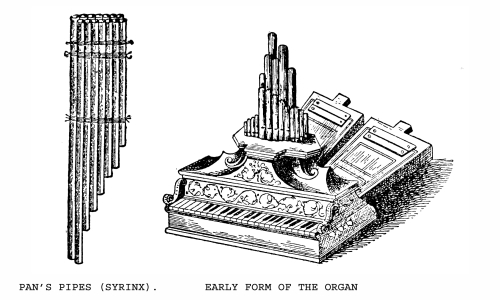
Doubtless, the first idea of a wind instrument was suggested by the
breeze blowing across the open ends of broken reeds, the discovery
naturally following that reeds of different lengths gave forth sounds
of varying pitch. In course of time, reeds or pipes, differing in
length, began to be joined together, conveniently arranged so as to
produce a succession of musical sounds, the players blowing them with
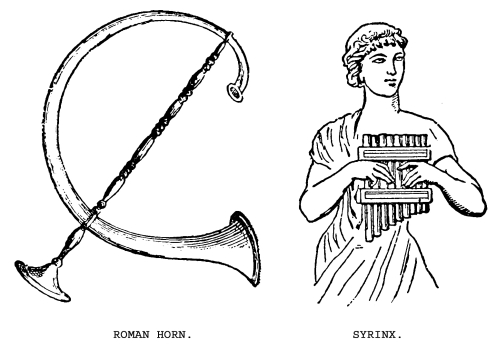
the mouth. These instruments were called Pan’s Pipes, the
Syrinx of the ancient Greeks.
The First Stage of Development.—As the number of pipes was
increased, the moving of the head back and forth in order to blow them
became difficult. The pipes were then placed in a sort of box or wind
chest, a tube being added through which the player could blow, the
pipes not intended to sound being closed by the fingers. Furthermore,
as the pipes were increased in number and in size, it became necessary
to employ various mechanical accessories to furnish adequate wind
supply, and to open and close the pipes at will, the breath and fingers
of the player proving insufficient. A device was invented in the form
of a slide, rule or tongue of wood, which was placed beneath the
aperture of the pipe, and perforated so as to shut off or admit wind to
the pipe as it was drawn back or forth. The earliest form of bellows
might be suggested by the leathern bag of the bagpipe. In this the wind
pressure was unsteady and the tone necessarily disconnected.
The Hydraulic Organ.—The first attempts to secure regular or
steady wind pressure were made by Ctesibus, who lived at Alexandria,
about 180 B. C. To him is ascribed the invention of the so-called
“Hydraulic Organ.” This term seems somewhat of a misnomer,
since the water was used merely to give the necessary pressure to
the bellows, and to regulate the wind supply. This method was never
developed, since the device did not seem applicable to instruments of
any considerable size. The trend was rather toward a wind supply from
a bellows operated on the same principle as that of the blacksmith’s.
In the Hydraulic Organ the water was thus applied: An inverted air
receiver, into which the wind was forced by a bellows, was immersed
in a tank of water, the pressure of the water around and above the
receiver forcing the air through an aperture at the top into the pipes,
the pressure being regulated by the volume of water in the tank. The
hydraulic organ continued more or less in use up to the early part of the 14th century.
The Earliest Organs.—The organ developed little as to size or
mechanical improvements during the first ten centuries of the Christian
Era, and it is difficult to trace the progressive stages in point of
time, place or mechanical invention. The first organ known to the
people of Western Europe was a present from the Byzantine emperor,
Constantine, to Pepin the Short, Major-Domo of the Frankish Kingdom, in
742. It had brass pipes and the “keys” were struck by hands and feet.
Eastern organs also came into France in the time of Charlemagne, son
of Pepin. The first organ used in Germany was made in 812, modelled
after the one just mentioned. In 880, the Pope ordered an organ and
an organ builder from Germany, which seems to indicate that the art
had found support there at an early date. Although not considered
absolutely indispensable, the organ from that time on seems to have
been generally adopted for use in churches. Its many imperfections gave
ground for criticism, yet today it is considered, par excellence, the
ecclesiastical instrument.
Increase in the Size of Organs.—The organ builders of these
early days were mostly monks, Pope Sylvester II (1003) being eminent,
under the name of Gerbert, prior to his election to the papacy. They
built small organs called “Portative,” and large organs called
“Positive.” The old hydraulic organ, owing to its excessive
weight, was called “Positive” to distinguish it from the “Portative” or
portable organ, and these terms have been perpetuated to the present
time. An organ built for the Cathedral at Winchester, England, had ten
keys, four hundred pipes and twenty-six bellows, which were operated
by seventy men, “in the sweat of their brows.” Since forty pipes were
attached to a single key, it may be readily understood why its tone was
compared to thunder. The keys were very large, having a deep fall, and
required the whole force of the hand to press down a single one.
Mechanical Improvements.—The pipes in the early organs were
made of copper, lead, tin, silver, glass, ivory and various woods, but
experiments finally showed tin or wood to be best suited
for the purpose. The earliest organs had about twelve pipes, and the
larger instruments three octaves, but without the chromatic intervals.
The pipes were arranged according to the sequence of tones in the old
Church modes, the octave containing but three semitones: between
E-F, A-B flat and B-C. The chromatic tones were added gradually, the
breadth of the keys being correspondingly reduced as the increased
number of keys occupied the same space as before. Heretofore, the
wind had usually been forced from the bellows by the
weight of men standing upon them, but in the 10th century use began
to be made of a lever, the bellows presumably being weighted.
The Keyboard is Adopted.—In the 11th century, the keyboard
appeared, supplanting the levers and slides, previously in use. The
first organ containing this marked improvement was made for the
Cathedral at Magdeburg, Germany. It had sixteen keys. In 1350, a monk
at Thorn built an organ with twenty-two keys, and in 1361 an organ was
built for the Cathedral at Halberstadt with fourteen diatonic and eight
chromatic tones in a compass extending from B, second line, bass staff,
to A, second space, treble. This organ had three keyboards, now termed manuals.
The Pedals.—The invention of pedals is variously ascribed
to Albert Van Os (about 1120), to Van Valbeke, of Brabant, and to
a German named Bernhard (1470), an organist of Venice. The
latter probably improved, but did not invent the pedals. The pedals at
first did not exceed the compass of an octave, and were used only for
sustaining prolonged tones. They were fastened to the broad manual
keys by stout cords, thus enabling the performer to draw down the
desired key with the foot. About the year 1418 the pedals began to be
attached to independent pedal-pipes, thus imparting to the organ
a certain dignity and sonority, still a chief characteristic of the
instrument. After 1475, all important organs were built with pedal keyboard.
The Introduction of Stops.—Up to the 14th century, the
different registers (set of pipes with uniform tone quality) could not
be sounded separately, that is to say: all the pipes belonging to
any one key sounded when that key was depressed. At the close of the
14th century it was found possible to add valves to the pipes
in such a manner as to cause the wind to pass through or be cut off
from any series of pipes at will. The opening and closing was managed
through a spring. The next improvement was to introduce a slide
to open or close the passage of wind into the pipes. With these
improvements it became possible for builders to set themselves to the
improvement of the various “stops” or registers.
Improvements in Stops.—In the 15th century, pipes of sixteen
and thirty-two feet in length began to be used, necessitating a greatly
enlarged bellows. Pipes were closed at the top, thereby lowering
the pitch an octave. They were given smaller diameters, producing a
softer tone quality. The shapes of the pipes were varied, giving
additional variety in tone quality.
Thus began the broad classifications of “Open” and
“Stopped” pipes in all their varieties. The “Reeds”
(pipes containing a vibrator or tongue to set the column of air
in motion) were familiar to the earliest performers, but were not
introduced into the organ until as late as the 14th century. Further
improvements were made in the bellows at the beginning of the 16th century.
St. Mary’s, Lübeck.—In 1561, a three-manual organ was in
use in St. Mary’s, Lübeck, Germany. To this organ all the important
improvements were successively added at various intervals until it
had, at the beginning of the 18th century, in the three manuals,
respectively, thirteen, fourteen and fifteen stops, and in the pedal,
fifteen stops. It was to hear the famous Buxtehude play upon this organ
that Sebastian Bach walked fifty miles in 1705.
Design of Improvements.—Great improvements have been made in
organ building since the time of Bach, all designed to give the player
greater resources, and increased facility in the handling and control
of the resources, which in the present day are simply enormous.
The Organ in the American Colonies.—Although the first organs
heard in America were probably introduced by the Spaniards, of these
there are no authentic records. According to reliable historic data,
the famous old “Brattle” organ was “the first organ that ever pealed
to the glory of God in this country.” It was imported from London, in
1713, by Mr. Thomas Brattle, who bequeathed it to the Brattle Street
Church, Boston, directing that the parish “procure a sober person that
can play skilfully thereon with a loud noise.” This organ became the
property of King’s Chapel, Boston, and was used until 1756.
No Art in Early Organ Playing.—The organs of the early
Christian period were of such a character that playing, in the sense
in which we now understand the word, was out of the question. For
some time the span of the hand possible to players did not exceed the
distance of a fifth. If an octave was to be struck, a second player was
necessary. Only with the narrowing of the keys did artistic playing
become possible. In fact, organ playing has invariably reflected the
style and development of contemporary musical art.
Early Organists.—The credit of being “father of organists” is
given to Francesco Landino, of Florence (1325-1390), and after
him to Bernhard, mentioned as the inventor of the organ pedals.
The oldest organ compositions are some works by Konrad Paumann
(1410-1473), who was born blind, yet, like many others since, became
a thoroughly trained musician in spite of his affliction. He also
played other instruments and was a fine contrapuntist. Another of the
early organists is Benedictus Ducis (or Hertoghs), born at
Bruges, about 1480. He was a pupil of Josquin des Pres. From Ducis,
representing the second Flemish school, as founded by Okeghem, there is
a chain almost of master and pupil, between the early masters of organ
playing and polyphonic writing and Bach, who in these arts became the
master of all. Paumann’s pieces show the style of composing for the
instrument that was considered appropriate. They are essentially
transcribed, but elaborated, vocal works. The compositions of the next
organists of fame, Willaert, of Venice (1490-1562), and Cyprian di Rore
(1516-1565), pupil of the former, have distinct names. Ricercari,
Intonationi, Contrapunti, Toccati, Praeambula, and Canzoni,
but the character remains the same, vocal pieces, elaborated and
freely embellished with runs and other passage work. Later the term
Ricercari came to mean a sort of fantasia in fugal form, often on
a popular air; Toccata became a free fantasia with brilliantly
figurated passages, and a Praeambulo a prelude to a larger piece.
Other famous organists of this period were Bernhard Schmidt
(1520-?), German; Claudio Merulo (1532-1604), organist at
Venice, and his successors, the two Gabrieli’s.
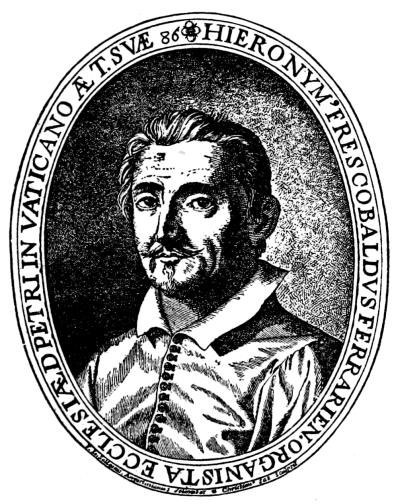
Frescobaldi and His Successors.—The greatest of all the
organists of the earlier days, to whom the title of “Father of true
organ playing” has been given, was Girolamo Frescobaldi,
born in 1583 at Ferrara, in Italy, educated in Flanders, and from
1608 to his death in 1644 organist at St. Peter’s, Rome. His fame
was so great that the spacious cathedral was often filled when he
gave an organ recital. His compositions, many of which have been
preserved, have a very decided contrapuntal character, whence some
have called him the inventor of the organ fugue. Two prominent German
organists, whose compositions were studied by Bach, were Caspar
Kerl (1627-1693), and Jacob Froberger (———1667), both of
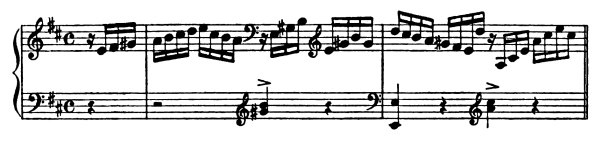
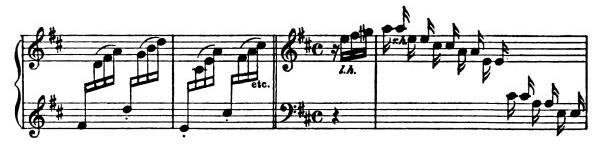
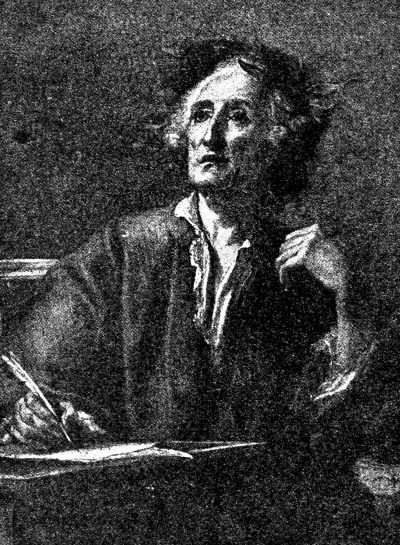
whom lived in Vienna. The most eminent organist of the 17th century
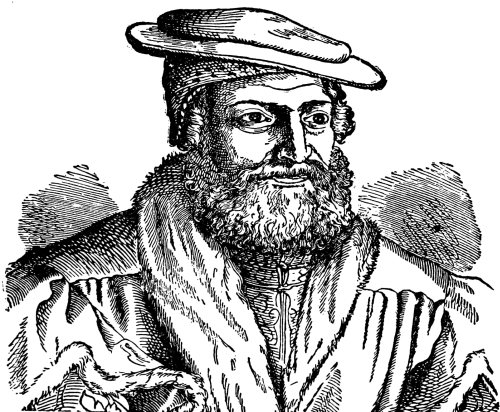
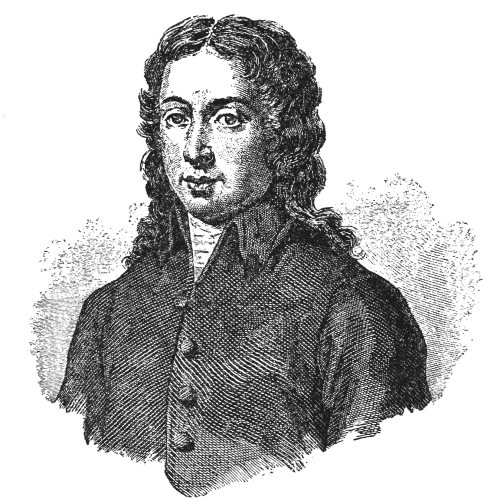
was Johann Peter Sweelinck (1562-1621), pupil of Zarlino,
the famous Italian theorist, and of Andreas Gabrieli, organist of
Venice. Sweelinck occupied the position of organist at the Cathedral
in Amsterdam, and gave much attention to the development of the fugal
style of composition. His compositions are of the highest importance
historically, since they exhibit the first known examples of the
independent use of the pedals in a real fugal part. He was the most
eminent organist of his time (being called the organist maker), and
was the teacher of the following noted players: Jacob Praetorius
(died at Hamburg in 1651); Heinrich Scheidemann (1596-1663),
also located at Hamburg; Jan Adams Reinken (1623-1722), from
1663 organist and successor to Scheidemann at the Catherine Church,
Hamburg (Bach came to Hamburg several times to hear Reinken play and to
learn his style); Samuel Scheidt (1587-1654), organist at Halle.
Some of their compositions are accessible.
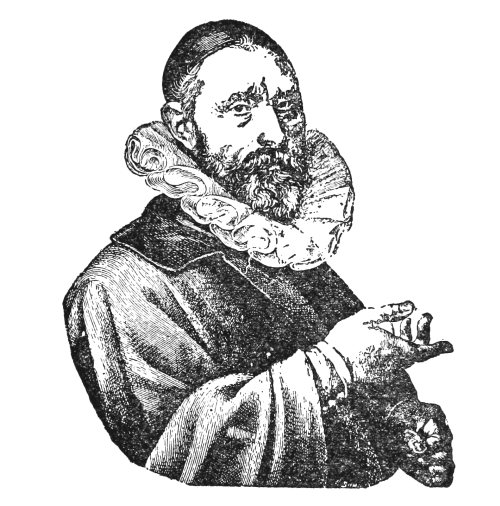
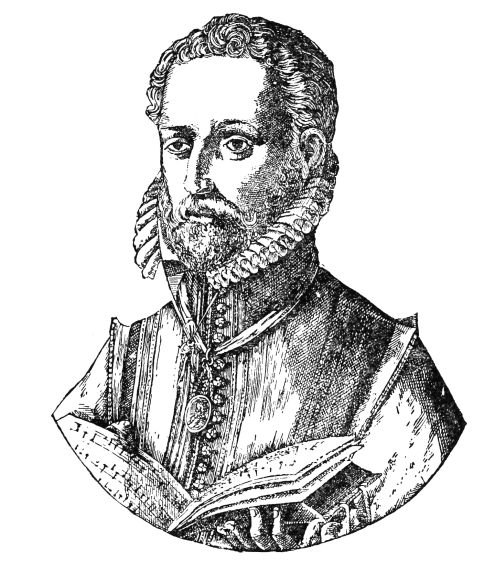
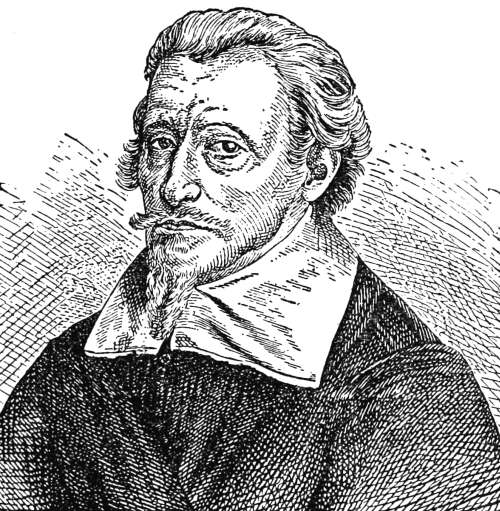
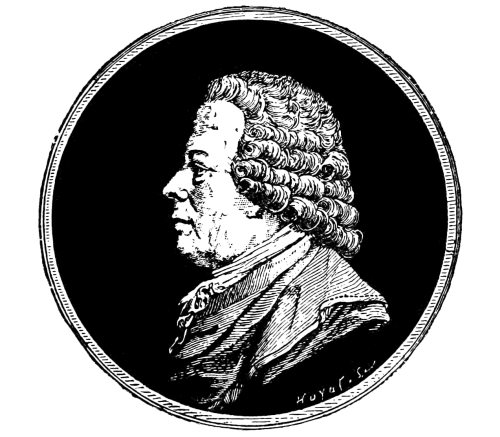
Johann Peter Sweelinck.
Other famous organists of this period were Johann Pachelbel
(1653-1706), located at Nuremberg (Bach studied his works as a
lad); Dietrich Buxtehude (1637-1707), organist at Lübeck for
thirty-nine years. One of the most important names of this period
of development is that of Johann Joseph Fux (1660-1741). His
“Gradus ad Parnassum,” published in 1725, a treatise on counterpoint
based on the practice of the great masters, played an important part in
the training of Haydn, Mozart and Beethoven.
English Organists.—In the history of English organ playing,
the first great name to engage our attention is that of Thomas
Tallys, born about 1520. He is called the “Father of English
church music.” He served under Henry VIII, Edward VI, Queen Mary and
Queen Elizabeth, as organist of the Chapel Royal. English organists
of distinction contemporary with and succeeding Tallys were John
Merbecke, Richard Farrant, William Byrd, John
Bull, Thomas Morley, Orlando Gibbons (a contemporary
of Frescobaldi), Matthew Lock, John Blow and Henry
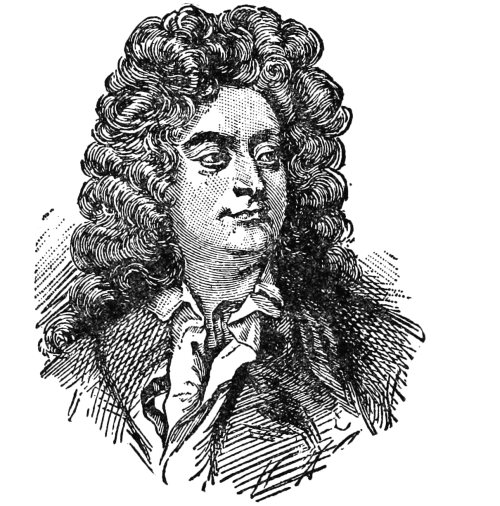
Purcell. The last mentioned, born in 1658, became organist of
Westminster Abbey in 1680. The name of Purcell is one of the strongest
in the history of English music. It was his ambition to found a
distinctive school of English composition. Although not successful in
this, he made a lasting impression on English church music and produced
many charming secular works. It is on record that he stood high in the
estimation of his European contemporaries.
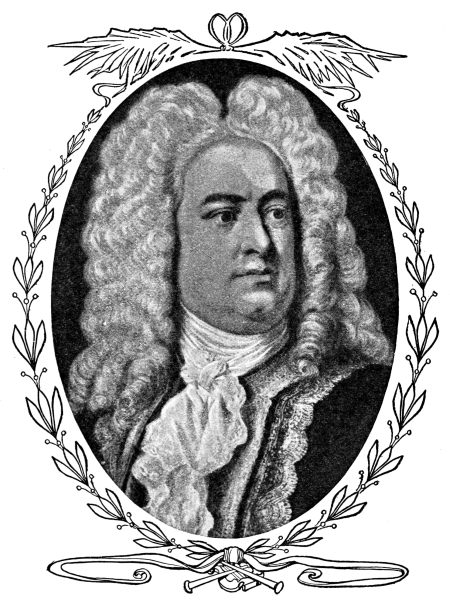
Culmination in Bach and Handel.—The Polyphonic Period
culminated in Bach and Handel, both born in 1685. These two, who
never met, and who worked upon dissimilar lines, were the most famous
organists of their day, in addition to their greatness in composition.
The Organ and Polyphonic Music.—Bach must be regarded as the
source of modern organ composition and playing. In him polyphonic
composition attained its highest perfection and the organ stands as the
centre of the Polyphonic school. The development of the Opera and its
influence towards a freer style in vocal and instrumental composition
and the tendency of instrumental music to develop along harmonic lines
had the effect of relegating polyphonic music to the Church with the
organ as its chief vehicle. It is only of comparatively recent years
that the organ has become a concert instrument. Bach’s treatment of
the instrument serves as a model for the composers of all time and the
study of his works is indispensable to the development of technical
command of the organ and the cultivation of the true organ style.
Handel’s permanent contribution to organ literature consists of sets of
Concertos. These concertos, a number of which are still played
and admired, excited the enthusiasm of Sir John Hawkins, who gives
a glowing account of them in his history. Bach was appointed
Cantor at the St. Thomas Schule, Leipzig, in 1723, and it was here
that much of his greatest work was accomplished. In addition to his
duties at the school, he directed the music in the Churches of St.
Thomas and St. Nicholas. As to the relative superiority of Bach and
Handel as organists, contemporary opinion seems to have differed
widely. Each undoubtedly had a style of his own as shown in his
published compositions. Each excelled in improvisation.
The Chorale in Protestant Organ Music.—In addition to his
incomparable preludes and fugues, toccatas, fantasias and pieces in the
larger forms, Bach made the polyphonic treatment of the chorale
an art peculiarly his own. In fact, the German style of organ playing
may be said to have developed from the chorale and from the music of
the Reformation. This furnished a fresher and very different source
of inspiration from the Gregorian chant which had been handled so
effectively by Frescobaldi and his Italian successors.
Marchand.—One of the most renowned of early French organists
was Louis Marchand (1671-1732). In 1717, while living under
banishment in Dresden, he was to have entered into a trial of
skill with Bach, but lost courage and departed on the morning of
the appointed day. A certain triviality has at times characterized
the French school of organ music, undoubtedly a reflection of the
prevailing style and taste in other branches of musical composition. Of
later years, however, a more serious and exalted style has developed.
The German School.—To return to the German organists. A name
familiar to all students of the organ is that of Rinck. Johann C. H.
Rinck (1770-1846) was a pupil of Kittel, who in turn was a pupil of
J. S. Bach. Rinck’s reputation is based largely on his “Practical Organ
School,” a work still in use. Another name of importance is that of
Johann Gottlob Schneider (1789-1864). He has had the reputation
of being one of the greatest German organists since the time of
Bach. Of the great composers since Bach, Mendelssohn stands
conspicuous as an organist and composer of organ music. Haydn, Mozart
and Beethoven, although occasionally using the organ in their scores,
did not compose for the instrument. Mendelssohn developed a decided
fondness for the organ, which he played admirably. His six sonatas and
three preludes and fugues are masterpieces. Among the representative
German organists and composers should be mentioned: Adolph Hesse
(1809-1863), author of the “Practical Organist” and a prolific
composer; Karl August Haupt (1810-1891), a celebrated teacher,
numbering among his many pupils from all countries such prominent
American organists as Eugene Thayer, Clarence Eddy and J. K. Paine;
Carl Ludwig Thiele (1816-1848) composer of some of the most
difficult known works for the organ; Gustav Merkel (1827-1885),
a prolific composer, whose sonatas are numbered among the standard
works for the instrument; J. G. Rheinberger (1837-1901), one of
the finest organists and best teachers of his time and a composer of
great ability, whose twenty sonatas form a permanent addition to the
best organ literature. A number of American organists were among his pupils.
The French School.—Prominent among organists of the French
school in the 19th century may be mentioned: L. J. A.
Lefébure-Wély (1817-1869) and Antoine Eduard Batiste
(1820-1876). The works of both these organists are still widely played
and have won much popularity. Wely has been called the “Auber of the
organ.” His works display fertility of melodic invention and a piquancy
of harmonic treatment, but are entirely lacking in the polyphonic
element. Much the same may be said of Batiste, who was a fine player
and teacher, and who equalled Wely in tunefulness but not in
musicianship. Nicholas Jacques Lemmens (1823-81), a great player
(especially of Bach) and author of the celebrated “Ecole d’Orgue”
may
be said to have laid the foundation of the modern French school.
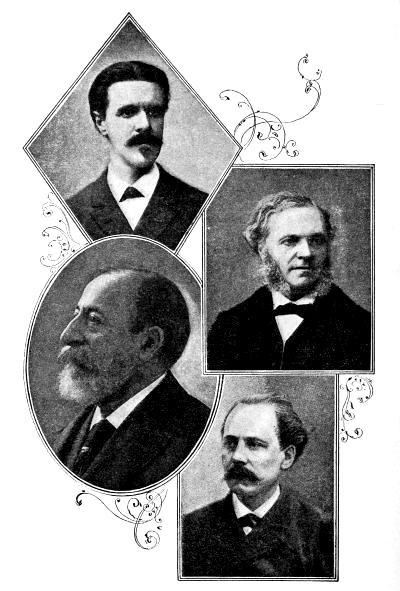
Conspicuous among his successors have been: Camille Saint-Saëns
(1835-——), a most versatile musician and a noted organist; Théodore
Dubois (1837-——), Théodore Salome (1834-——) and Felix
Alexandre Guilmant (1837-——). Guilmant, one of the most noted
organists and composers of the present day, was a favorite pupil of
Lemmens. He has been one of the most prolific composers since the time
of Bach, is a master of all the resources of the modern organ, and
has a fertility of invention and a fluent command of contrapuntal
resources. Another eminent French organist is C. M. Widor (1845-
——), also a composer of distinction. A powerful influence was exerted
on modern organ music, as well as general composition, by the eminent
organist and composer, César Franck, who was, for a number of
years, in charge of the organ class at the Paris Conservatoire.
The Italian School.—Among recent Italian organists Filippo
Capocci (1840-——) and Enrico Bossi (1861-——) are worthy
of mention. Both are splendid organists and prolific composers. They
are leaders in the revival of good organ playing in Italy, where a
determined effort is being made to restore the art to its former supremacy.
The English School.—England has furnished a long line of
19th century organists of ability, prominent among whom are: Sir
John Goss (1800-1880), Henry Smart (1813-1879), E. J.
Hopkins (1818-1901), S. S. Wesley (1810-1876), Dr. Wm.
Spark (1825-1897). Foremost among English organists stands the
name of Wm. T. Best (1826-1897). He was one of the most famous
concert organists of his time, but is best known to organ students
by his “Arrangements from the Scores of the Great Masters,” in which
he demonstrated that the organ is in itself capable of reproducing
certain orchestral effects without transcending its proper functions
or descending to trickery. “The Organ,” by Sir John Stainer
(1840-1901), is one of the most widely used elementary works for
instruction in organ playing. Dr. Stainer was the successor of Sir John
Goss, at St. Paul’s, London, and was appointed Professor of Music at
Oxford University in 1889. Frederic Archer (1838-1901) has been
considered one of the greatest of organ players. After a successful
career in England, he came to America in 1880. He did much towards
popularizing and elevating the art of organ playing in this country.
Prominent among contemporary English organists stands Edwin H.
Lemare (1865-——), who succeeded Frederic Archer as organist of
Carnegie Hall, Pittsburg, in 1902. He is a skilful virtuoso, a composer
of originality, and a leading representative of the modern English school.
Modern Organ Music.—Organ playing and composition have kept
pace with the mechanical and artistic evolution of the instrument,
and the lines between the various schools are becoming less closely
drawn. The tendency of builders to imitate orchestral tone and effects
has had influence on composers and players alike. This tendency is
less noticeable in the works of the German school, where a modified
polyphony still flourishes, based on the principle of the classic
treatment of the chorale and growing out of the music of the Lutheran
Church. The organ compositions of the modern French school are
characterized by grace, refinement and originality, coupled with a
certain dignity and elegance. They combine free harmonic treatment and
modern polyphony, together with certain ornate characteristics, growing
out of the elaborate ceremonial music of the Latin Church, and bringing
into play all the resources of tone color and expressive treatment
of the modern instrument. Much the same may be said of the modern
English school, which nevertheless still shows traces of the early
English style, based on the dignity and purity of cathedral use and
tradition. The orchestral tendency, both in composition for the organ
and in the transcription of orchestral works for the instrument, shows
itself more or less in all schools, and the organ, in addition to its
position in the church, is becoming more and more a concert instrument.
The compositions of the American organists reflect, in a measure, the
characteristics of the schools in which they have been trained, and in
particular show traces of the styles of the masters with whom they have
chiefly studied.[9]
- References.
- Grove.—Dictionary of Music and Musicians. Articles on the Organ,
- and Organists mentioned in this lesson.
- Williams.—Story of the Organ.
- Lahee.—The Organ and its Masters.
- Matthews.—Handbook of the Organ.
- Pirro.—J. S. Bach: The Organist and His Works.
- Audsley, G. A.—The Art of Organ Building, 2 vols.
Questions.
In what early instrument is the germ of the organ found? Describe its
gradual development.
Describe the general character of the early organs.
Describe the various mechanical improvements.
When and by whom were pedals introduced?
Mention some of the early organists.
In whom did the Polyphonic Period culminate? Who is the source of
modern organ composition and playing?
Mention some German organists since the time of Bach.
Mention some prominent French and English organists of the 19th century.
Describe the modern tendencies in organ composition.
Suggestions for a Review of Lessons VIII to XVI.
Get a clear idea of the period, which includes the years between 1100
and the death of Palestrina in 1594, almost 500 years. The lesson on
the organ and organ playing belongs to this period, chronologically, in
part only.
The difference between the monophonic and polyphonic styles must
be clearly appreciated in order to get a clear grasp of the two
fundamental styles in music. Illustrations from the masters are to be
placed in contrast. Polyphony developed from melodic principles, the
simultaneous sounding of several melodies. Monophony depends upon a harmonic basis.
Indicate the steps in the growth of Polyphony.
How did the Church contribute?
What political and other conditions made Paris the centre of Europe in
the 12th century?
What is the force of Imitation as a principle to secure Unity in musical
composition? How was it used by the composers of the Paris school?
What advances in the use of Imitation did the men of the Gallo-Belgic
school make?
Indicate certain historical events and name prominent personages of the
periods included in this section.
Why did the early English school exercise so little influence on music?
What noted musical composition is credited to the English school? What
kind of work is it?
What historical periods coincide with the English school as described
in this section?
Compare the Gallo-Belgic and the Netherlands schools. What did the
former contribute to the latter?
What is the musical value of the principle of the Canon?
Why did the musical centre shift respectively from Paris to Belgium, to
the Netherlands and then to Italy?
Make a list of the composers of the different schools of this period
and trace the connection between them.
Give a sketch of Palestrina and show his contribution to church music.
Describe the madrigal. Compare a madrigal with a modern part-song and
note the difference in style.
Give the classification of musical instruments. Examples in each class.
Give a sketch of the development of the viol.
What is the germ of the principle of the organ?
What is the necessity for the use of a bellows?
What are the successive steps in improving the organ?
Mention the important players in chronological order.
Classify them in the proper schools.
Compare the German, French and English schools.