Dear Reader:
Let me add a few more pages to the brief
sketch you have just read of my life, which was
written over four years ago. It was a great undertaking
for me to publish for perusal by the public
a history of my life, and then offer it for sale. I
shrunk from it, and could never have done so, had
it not been really necessary for me to do something
for my own maintenance. But though sometimes
chilled by averted looks and want of sympathy, I
have found many ready and willing to extend the
helping hand; many earnest, true friends who have
aided and encouraged me. The son of Mr. Barns,
my former publisher, (who is a true gentleman, has
also been afflicted with deafness, though not mute,)
and the printers in the Tribune office, made me a
present of the first thousand copies of my little
book and a few dollars in money to help me on.
Words fail to express my gratitude for this kindness,
but I shall ever cherish for them the most
grateful remembrance. By this means I was enabled
to secure a home for myself and mother.
R. N. Rice, a gentleman widely known for his
Christian virtues and his benevolence, has gained
my gratitude by doing much to assist me.
And now I will tell you what I have seen in my
travels. Many things very interesting and
wonderful to me. Thank Heaven for sight, precious
sight! To the deaf it is both hearing and
speech. I have only the full enjoyment of one eye,—the
other is still so dim that I cannot distinguish
objects with it. But the sight I do have is invaluable
to me. Some of my blind friends seem very
cheerful, and even happy. Yet pleasures which
sight secures can never be theirs. The faces of
beloved friends, beaming with smiles of affection—the
green fields—the beautiful flowers—the trees
waving in the summer winds, white with blossoms
or laden with ripe fruits—the broad, winding river
sparkling in the sun, while boats of every shape and
size glide over its bosom. How endless are the
objects presented to the eye of a traveler. How I
love to watch the changes in the beautiful blue sky
bending so lovingly over us; now so clear that
scarcely the softest shadow of a cloud is seen;
then covered with white, fast-sailing clouds or
clouds at rest, tinted with the hues of the rainbow.
Then we have the fierce dark rain clouds, with
vivid lightning passing through them. Then at
night when the sky is clear how all ablaze it seems
with its millions of stars. These objects are familiar
with all, but I am afraid we do not think as
much as we should of Him who made them. Oh
how we ought to love and adore One whose wisdom
and goodness is so manifest in all His works. The
most wonderful sight I ever beheld, a sight that
made me tremble and worship God, was the Falls
of Niagara. Such a great river, pouring over such
a descent! It makes me dizzy to look at it; and it
shook the earth far and near. What a dreadful
thing it must be to go over the Falls. As I stood
upon the bank and watched the foaming spray,
and heard its awful thunder—for even the deaf can
hear that—my guide pointed out the log just above
the falls, that Mr. Avery clung to in despair, out of
reach of all human help. Thousands of spectators
gathered on the shore anxious and eager to
extend assistance, but in vain. The tide was so
rapid it would have been madness to attempt to
reach him with a boat; no ropes could be thrown
far enough, and after remaining there for many
hours, the strength of the unfortunate man failed,
and he went over, down, down, into the foaming
cataract many hundred feet, and was never seen
more.
My guide told me, also, of the fate of the
steamer Caroline. Fired by the Canadians and
sent over the Falls. He said it was enveloped in
flames and it looked grand as it was plunged into
the foaming abyss.
We saw Fereni walk a tight-rope across the
river while at the Falls. A great many people assembled
to witness the feat. Fereni walked away
steadily until half way across—then he fell! We
all thought he was gone forever. But by a dexterous
movement he caught by one hand and saved
himself. Then he got upon his feet again and
walked across. I could hardly breathe until he was
safe upon the ground again. I do not like to see
people get into such dangerous places. It seems
to me as if they were defying death. But this man
had walked across many times without accident,
and he had grown careless.
We saw many Indians and Squaws sitting
about on the shore, with their little children playing
about them. Many of them were nearly white and
very pretty. They were employed with bead-work,
which they wrought with great ingenuity, and
offered for sale to visitors. I brought away several
little relics which I prize highly.
The Suspension Bridge is a wonderful structure.
In the distance it looked like a spider-web.
It seems almost incredible that such a bridge could
be built strong enough to bear up a heavily loaded
train of cars. Yet it is true. It would be fearful
to fall at such a time!
At the Suspension Bridge we found an Asylum
for the deaf, dumb, and blind. It was a private
school kept by Dr. Skinner and his wife. The
Doctor had been blind two years—his wife, though
she could see, was a mute. This worthy couple,
though white themselves, were deeply interested
in the poor colored children afflicted like themselves,
and their pupils are all colored. Those who
could see had bright sparkling eyes, and were quiet
and respectful. The blind were very tidy and attentive.
They all seemed very contented and
happy, and it was interesting to see the dumb
scholars converse with their blind associates.
The institution is supported partly by donations
and contributions from those who sympathize in
the good work, and partly by the publication of a
paper—the work is done by the pupils who are
printers and compositors.
We came away much pleased with our visit,
and praying for the success and prosperity of the
Asylum, and for the welfare of the generous instructors
and founders.
At the Suspension Bridge we took the cars for
Portage, passing, on our road, Perry, Wyoming and
several other little villages. When we left the cars
and took a carriage, our way lay along a high
ridge of hills. The carriage track was very narrow,
with scarcely a foot space between it and a
frightful precipice on one side, and a high, steep
bank on the other. I trembled and clung to the
side of the carriage, fearing every moment to be
dashed to destruction—a single mis-step of the
horses, or mismanagement on the part of
the driver, making such a result inevitable.
But we passed over safely. Every now and then
entering some densely wooded dingle or tangled
wild, which made it seem as if we were hundreds
of miles from any human habitation, and then a
sudden turn in the road would reveal the most enchanting
little village imaginable, nestled in a
warm valley at our feet; we could look directly
down upon the roofs of some of them. It seemed
to me like fairy land. Thus we were several times
surprised and delighted during our ride.
The Portage Falls, though much smaller than
the Niagara, looked very beautiful, flying and
flashing in the sunlight, and pouring its sheet of
white foam down the rocks.
Messenger’s Hollow was another beautiful town,
situated at the foot of the Alleghany Mountains.
Indeed, I could fill a large book, describing what
I saw through that country, but I can only briefly
allude to them here. All along this delightful tour
I found much pleasure in conversing with some of
my fellow passengers, thanks to Monsieur Gallaudet,
the noble benefactor of his race, who first
became interested in the happiness of the poor
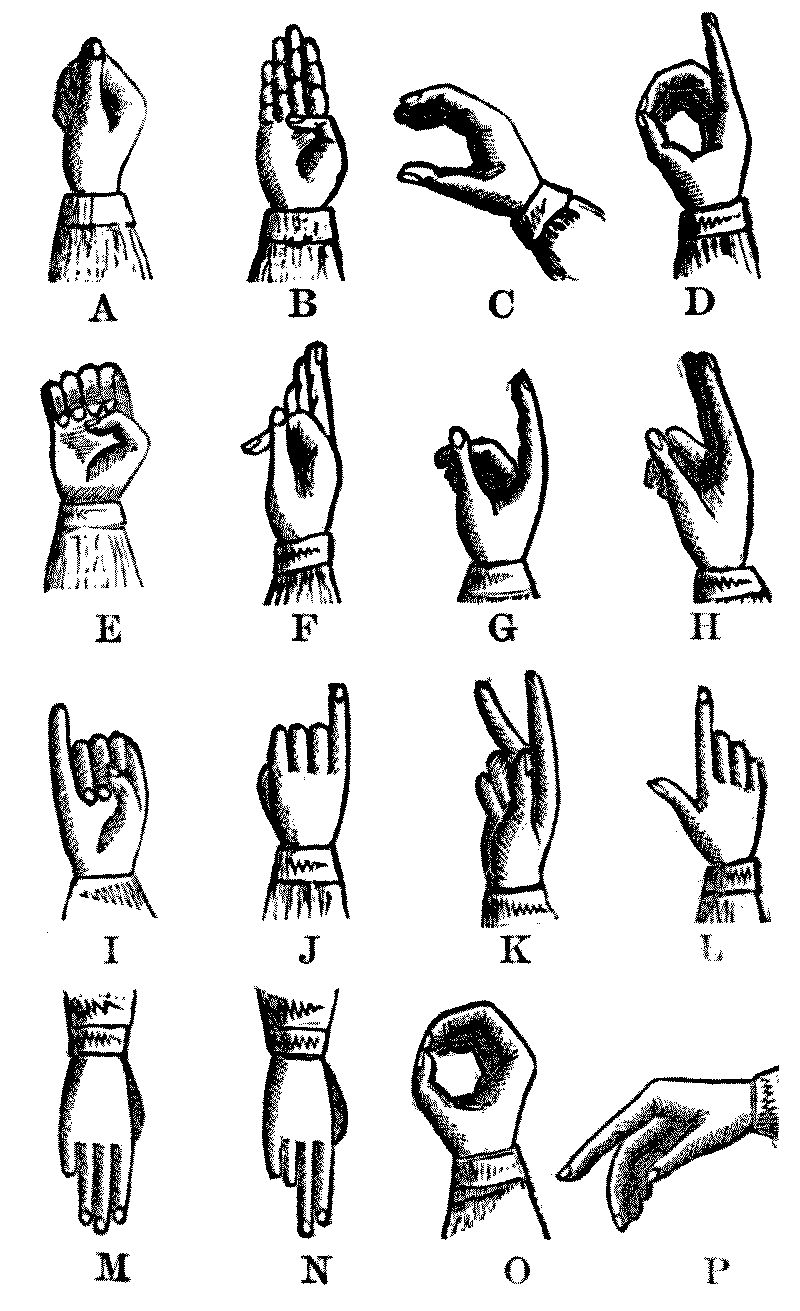
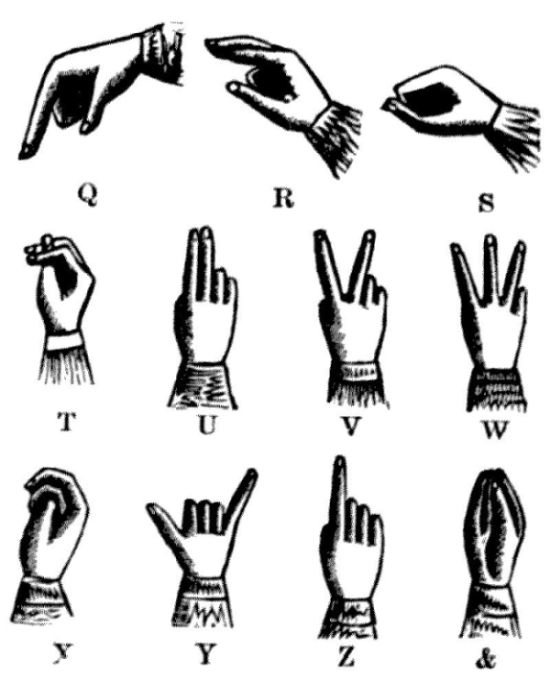
mute and invented a language by which we can
converse with others, and be cheerful and happy.
Those who could not understand the sign language
could write, and I also made frequent use of my
pencil.
Leaving Nunda, we pursued our way to the
village of Mount Morris—the early home of my
mother. She was much surprised at the great improvement
and the changes everywhere so apparent.
It was almost a wilderness then, with here
and there a solitary farm house. Now, thriving
little villages are scattered all along our way; and
the place called Mount Morris was now a town of
considerable importance. Here the cars and the
canal afforded opportunities for travel. We took
the cars for Cayuga at this place, passing through
Bloomfield, Canandaigua, Geneva, and in view of
Seneca Falls—another cataract worthy of note. It
looked very beautiful, and the scenery around it
passes my power of description.
At Cayuga village we rested for the night, and
the next morning went on a steamer to Genoa,
about twenty miles off. The Lake was only two
miles wide, and we could very plainly see the shore
on either side. On one side the shore was very
near to us much of the way.
We passed a burial ground three miles above
Cayuga Bridge. Its white monuments and tablets
gleamed through the trees. It was a lovely, peaceful
spot. Here, my mother told me, the body of
my grandmother had slept for many years. She
died when my mother was very young.
Arriving at Genoa, we went to visit uncle’s
family, who received us with much joy, and my
young cousins did all they could to make our visit
pleasant. We remained a week, and when we set
out on our return my aged grandfather and his
wife accompanied us and spent the winter with us.
My beloved Aunt Lucy—my mother’s only sister—was
very ill, and the following spring, hoping she
might be benefitted by the change, we induced her
to come to our home in Michigan. But she grew
no better, and after watching and attending to her
with great care and affection for several months,
she died, and was buried but a little way from my
home, where I have visited her grave often. My
grandfather returned home in the fall, and my
young cousin joined the army. So my mother and
myself are left alone again.
Two years ago the Principal of the Indiana
Asylum sent me an invitation to visit the institution
and remain a pupil.
Miss Almena Knight accompanied me. We
had a very pleasant visit, and were treated with
great respect by the teachers. The process of
teaching is similar to that of Flint; and the exercises
in the schools were very interesting. We remained,
however, but a few days, for I was not
able to meet the expenses of tuition there.
And now for the present, dear readers, adieu.
At some future time I may tell you more. My
home is not yet free from incumbrance, and could
I emerge from indebtedness, I shall be forever
grateful to all who, by purchasing my little book,
enable me to do so. It is still a great trial for me
to offer my book for sale, for though on one hand I
meet with sympathy and kindness, on the other,
coldness, slight and discouragement chill me. Still
I will hope for the best. May the dear Lord, who
was ever a friend to the poor, bless ever the tender,
generous heart, is the sincere and constant
prayers of
ADELE M. GEORGE.
And now, again, after the lapse of five years, I
present you with a continuation of my simple history.
I have drank bitterly of the cup of sorrow,
since my marriage; but I cannot here speak of
the trials that have fallen to my lot. I am a
member of the Baptist Church, and my home at
present is in Ann Arbor, with my mother, who is
still spared to me.
She is my good, faithful—my only friend; and
were it not for her I know not what would become
of me and my little helpless children. She has
charge of them while I do what I can to support
myself and them. Please do not regard me with
coldness and distrust. As truly as I hope for the
protection and blessing of my Heavenly Father, I
have always striven to do right in his sight, and to
be worthy of the love and respect of my fellow
beings. I have a little son, also a mute, and two
darling little girls who can see and hear; and all
who will aid me to secure a comfortable living for
them, will make the burden lighter for the afflicted
mother.
MRS. ADELE M. JEWEL.