When Webster defined a desert as a “dry, barren region, largely treeless and
sandy” he was not thinking of the 50,000 square mile Great American Desert of
the southwestern United States and northern Mexico. Most of it is usually dry and
parts may be sandy, but as a whole, it is far from barren and treeless. Heavily vegetated
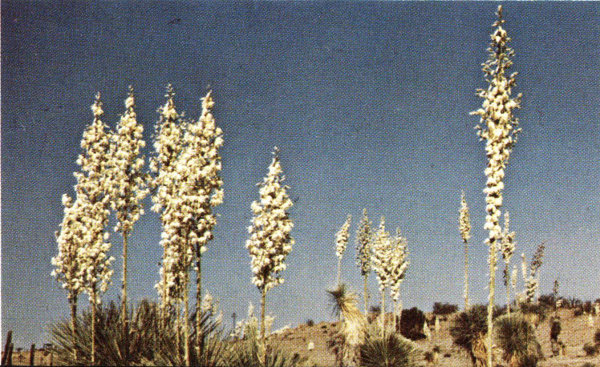
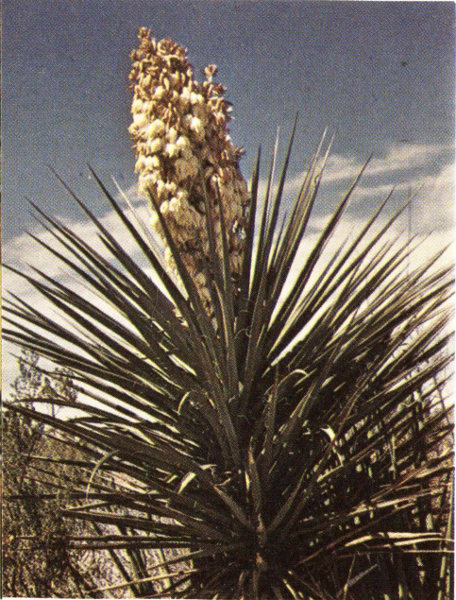
with gray-green shrubs, small but robust trees, pygmy forests of grotesque
cactuses and stiff-leaved yuccas, and myriads of herbaceous plants, the desert, following
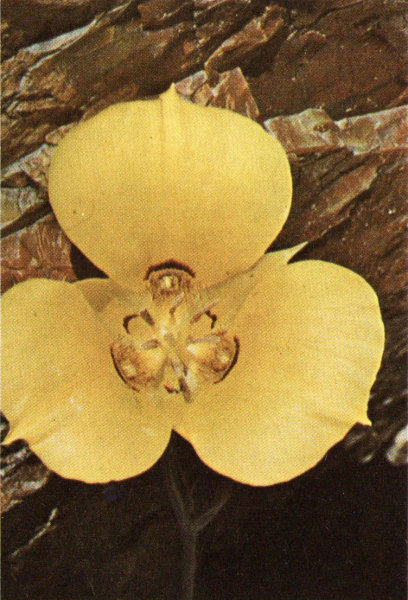
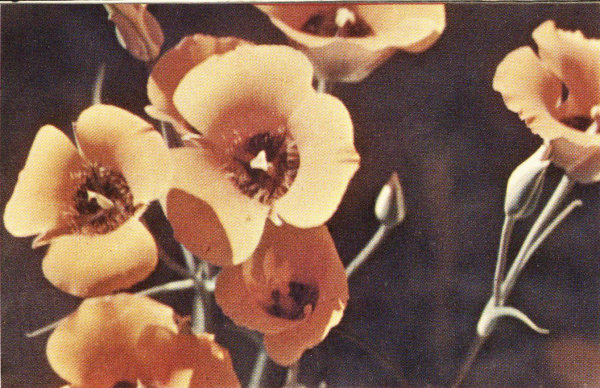
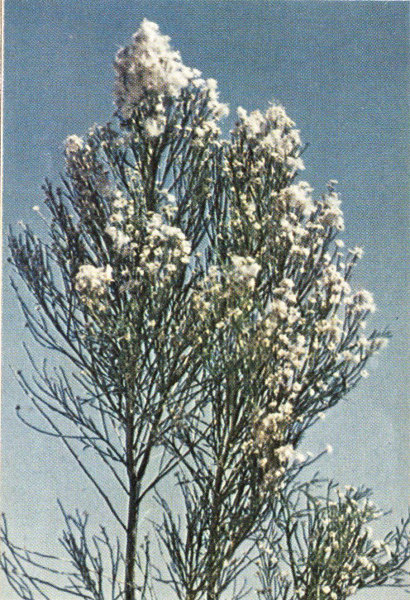
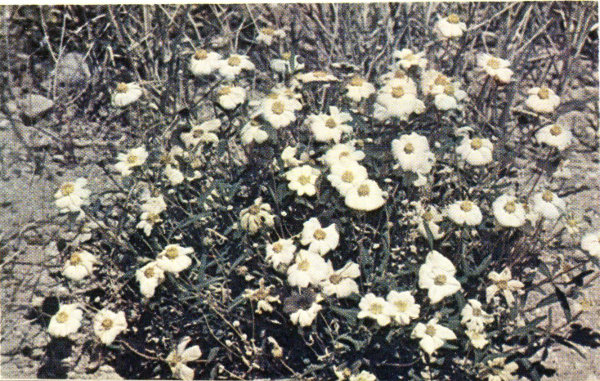
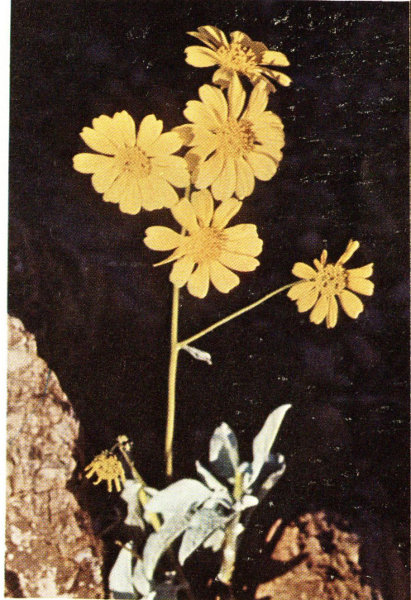
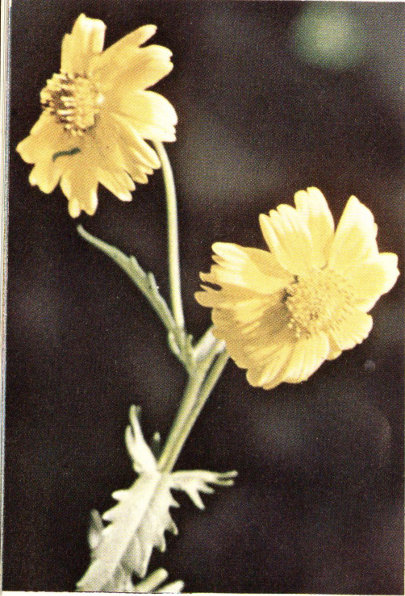
rainy periods, covers itself with a blanket of delicate, fragrant wildflowers.
Edmund C. Jaegar, author of several books on deserts, reports that the California
deserts alone support more than 700 species of flowering plants.
The late Dr. Forrest Shreve, for many years Director of the Desert Laboratory
of the Carnegie Institution near Tucson, Arizona, defined a desert as “a region of
deficient and uncertain rainfall.” He divided the Great American Desert into four
major sections: (1) Chihuahuan (chee-WAH-wahn), including the Mexican States
of Chihuahua and Coahuila (coa-WHEE-lah), southwestern Texas, and south-central
New Mexico; (2) Sonoran, including Baja California, southwestern Arizona, and
northwestern Sonora; (3) Mojave (moh-HAH-vee), Colorado, including south-eastern
California and extreme southern Nevada; (4) Great Basin, including Nevada,
Utah, southwestern Idaho and southeastern Oregon.
Since the steppes and mesas of the Great Basin Desert have generally lower
temperatures, higher elevations, and greater precipitation than the other three sections,
we are not including its flowers in this work.
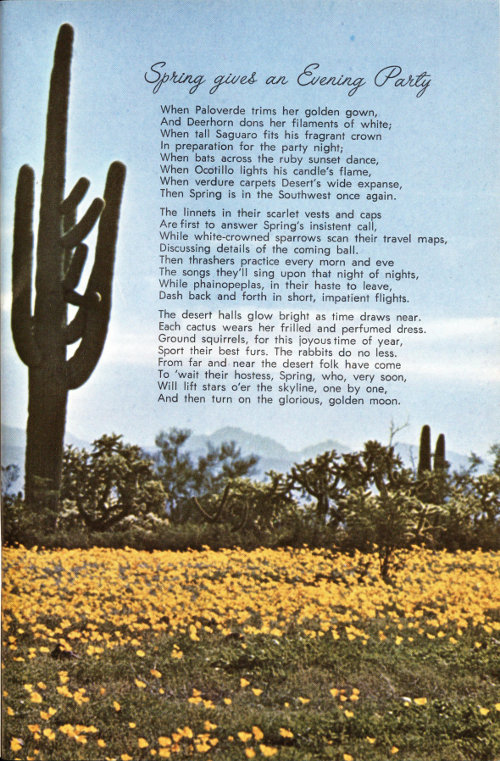
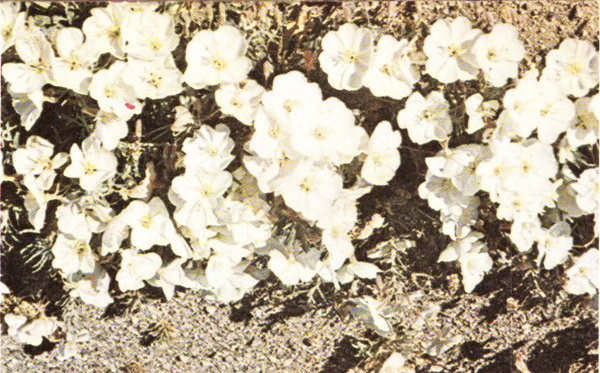
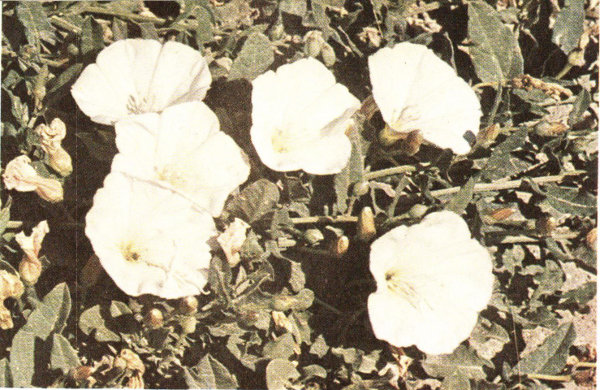
The Great American Desert produces, when conditions are favorable, a gorgeous
exhibition of wildflowers. Trees, shrubs, and herbs all contribute to the splendor of
the display. Soil composition, slope and exposure, suitable temperatures, and adequate
moisture are essential to plant growth and flower production.
Moisture is the uncertain factor, and years may pass without enough rainfall to
stimulate plant growth. Rain of less than 0.15 inch is wasted as far as desert plants
are concerned, for the moisture evaporates before penetrating the soil. Some annuals
produce seeds having water-soluble germination inhibitors in their coverings, hence
fail to sprout, even after rain, unless the moisture totals at least half an inch.
When soil moisture from December and January rainfall is enough to support
potential plants it dissolves the seed coats, and the desert floor is soon carpeted with
eager green seedlings. When winter rains are scant, as is so often the case, the
dormant seed population fails to germinate and the spring flower display doesn’t
appear. There is no sure way to forecast a spectacular blossom year, for a sudden
cold wave or period of drying winds may literally nip in the bud a potential season
of brilliant bloom. A great flower year may occur only once in a decade.
3
Perennials are more dependable than annuals, since some of them, particularly
cactuses and other succulents, have water storage tissues in their stems or roots.
These perennials may be counted on to blossom each year, but with much less
abandon than after winters of above normal precipitation. Many perennials have
surprisingly extensive root systems.
Fascinating are the ways by which plants manage to thrive under severe conditions
of desert heat and drought. As we have seen, most annuals lie dormant as seeds
until suitable moisture and temperature occur. Then they grow very rapidly, to bloom
and mature seeds while the soil still has moisture. Winter rains produce spring-blooming
ephemerals, and summer showers produce summer “quickies.”
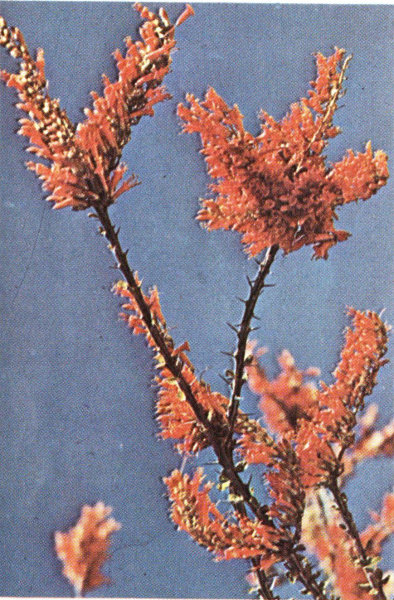
Another group of plants, including the ocotillo (oh-koh-TEE-yoh), slows down
life processes to become dormant during dry periods, even to dropping all leaves.
When rains come they put on new leaves, several times a year if necessary.
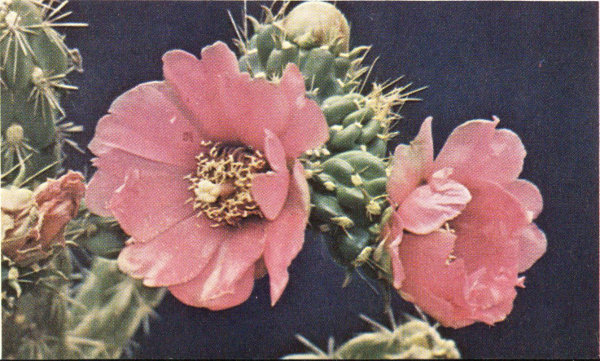
Cactuses and other succulents gorge themselves with water when the soil is wet,
releasing moisture very sparingly from storage tissues during the “long dry.” Some
have discarded or reduced foliage, or have covered leaf surfaces with varnish or wax,
to decrease to a minimum the loss of vital moisture through transpiration.
Unless you are a botanist, identification of flowers by measuring and counting
their various parts, as described in technical keys, is generally too complicated to be
practical. Several years ago, recognizing this problem, I authored a book, Flowers of
the Southwest Deserts, illustrated by Jeanne R. Janish and published by the Southwestern
Monuments Association, designed to aid the wildflower fancier in plant
identification by color-grouping the flowers. With Mrs. Janish’s superb illustrations
pointing out each plant’s most obvious characteristics, it has proved an excellent field
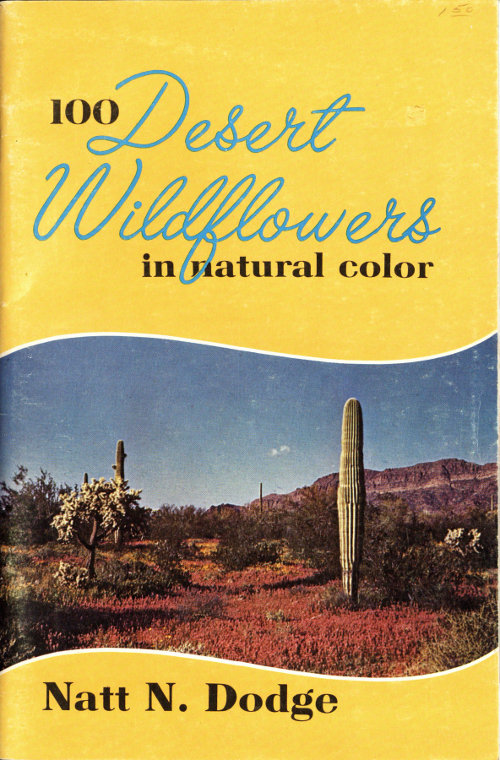
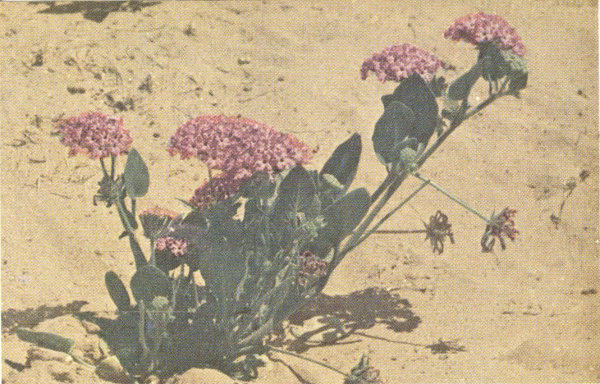
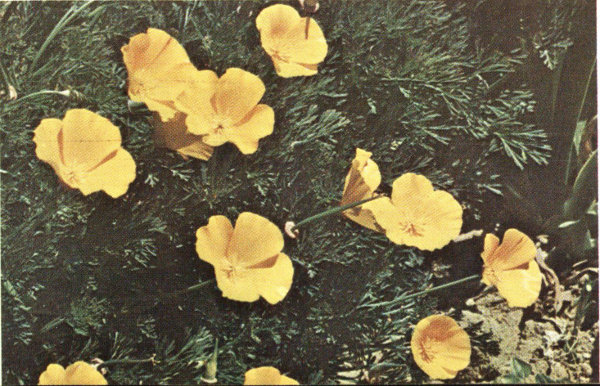
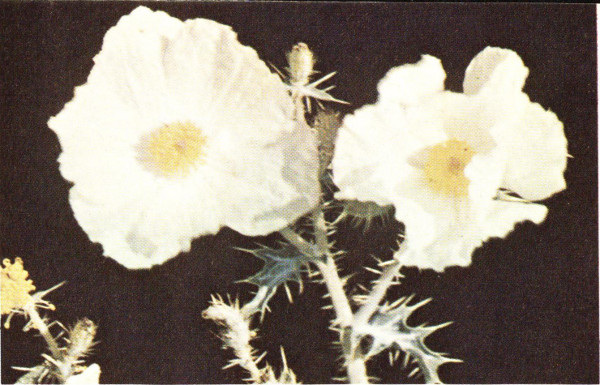
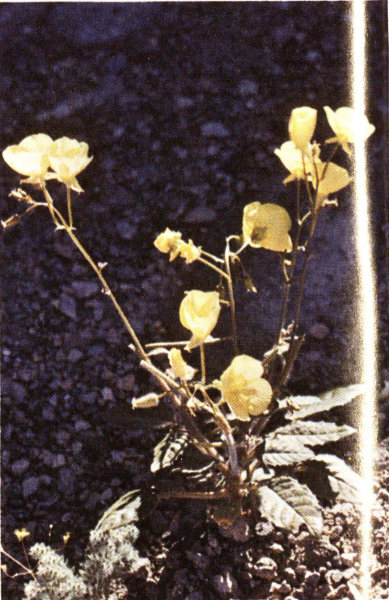
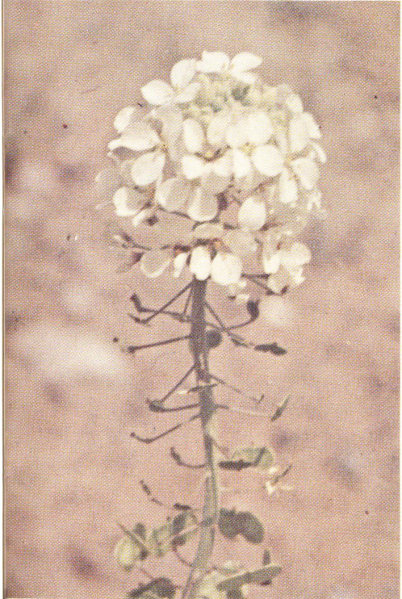
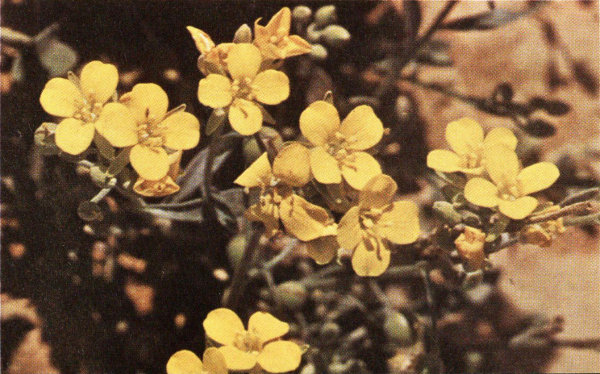
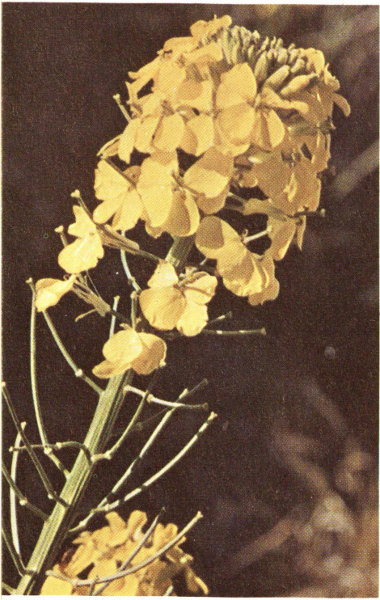
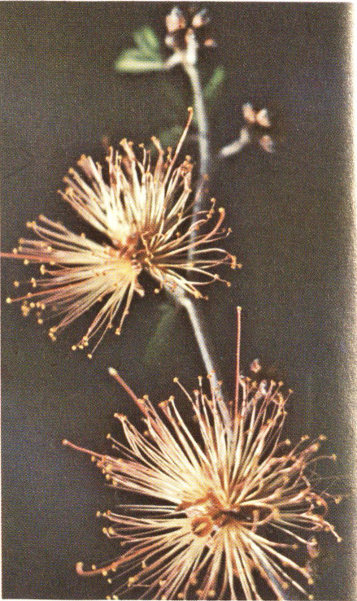
guide. However, the demand for natural color flower portraits could not go unheeded,
and this book is the result. The two books complement each other, although each
fills a need in its own right. Used together, they make you more positive of some
identifications.
Probably the best way to become acquainted with a flower is to be introduced
to it by someone. But there is one catch to this method—one plant may be known
by many aliases.
When the Spaniards came into the Southwest over 400 years ago they found
Indians had names for some flowers in their own languages. The Spaniards added their
names, and later the Americans added English names. Some of these names were of
similar-appearing but quite different flowers they had known “back East.” Later,
scientists studied the desert plants, and gave them all Latin names.
To assist in standardizing names of desert flowers, this booklet gives preference
in its headings to scientific and common names found in Arizona Flora, by Kearney
and Peebles, Second Edition, 1960. Common names found in Texas Plants, A Checklist
and Ecological Summary, 1962, by F. W. Gould, also have been used. In addition,
placed within the text, are some of the more widely used common names that we have
encountered. Tree names, both common and scientific, follow the Checklist of Native
and Naturalized Trees of the United States, by Elbert L. Little, Jr., 1953.
There are many desert flowers, some quite common, for which there was not
space in this booklet. If you wish to broaden your acquaintance to include more, we
recommend, for added reading publications listed in the back.
The author wishes to express here sincere thanks to Mrs. Pauline M. Patraw,
Santa Fe botanist, for assistance in identifying many of the flowers pictured here. For
assistance in checking identifications, the author is indebted to Miss Barbara Lund,
Park Naturalist, National Park Service; to Dr. Charles T. Mason, Jr., Curator of the
Herbarium, University of Arizona Tucson; and to Dr. W. B. McDougall, Curator of
Botany, Museum of Northern Arizona, Flagstaff.
4